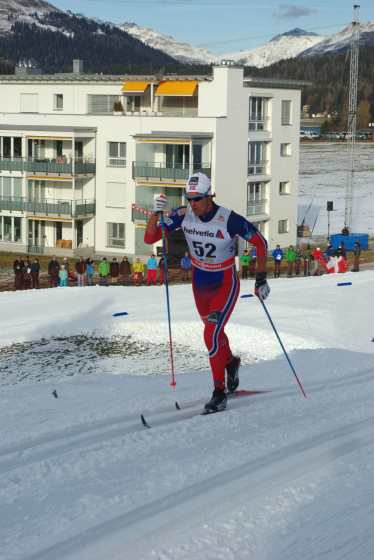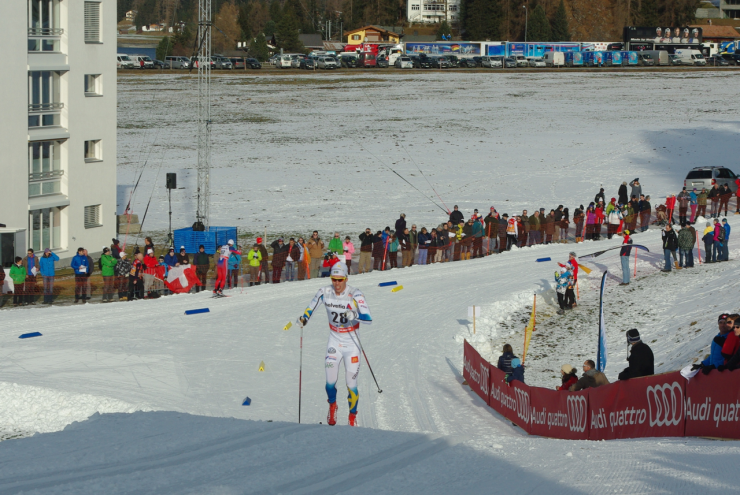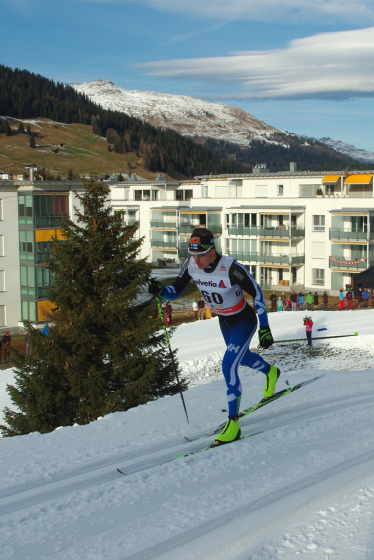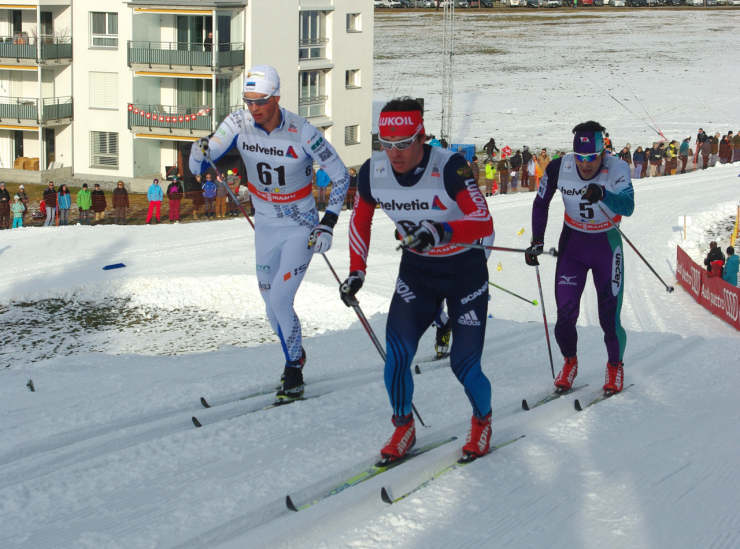
Tag: Martin Sundby

  • Canada’s Harvey in the Hunt for Ruka Overall, Second in 10 k Skate

    Canada’s Harvey in the Hunt for Ruka Overall, Second in 10 k Skate

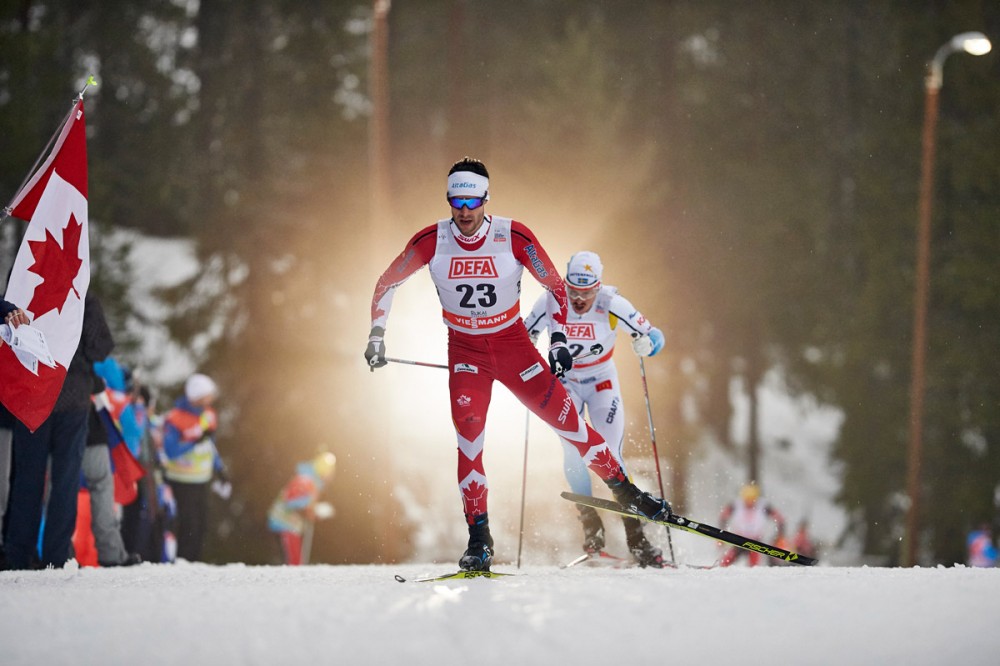
    Canada's Alex Harvey powers to second in the World Cup 10 k freestyle, the second stage of the Ruka Triple in Kuusamo, Finland. (Photo: Fischer/NordicFocus).
    Canada’s Alex Harvey powers to second in the World Cup 10 k freestyle, the second stage of the Ruka Triple in Kuusamo, Finland. (Photo: Fischer/NordicFocus).

    Although it’s only Day 2 of a young World Cup season, the image of Alex Harvey posing for cameras amongst the podium trio could become common. It has been in the past for the four-time world championship medalist; it just doesn’t usually come this early in the season.

    In the men’s 10-kilometer freestyle on Saturday, the second day of the Ruka Triple mini-tour in Kuusamo, Finland, Norway’s Martin Johnsrud Sundby skated to the win in 21:05.5. Harvey of the Canadian World Cup Team finished in second, 11.2 seconds off the pace, and Swiss Olympic champion Dario Cologna rounded out the podium in third, 0.4 seconds back from Harvey.
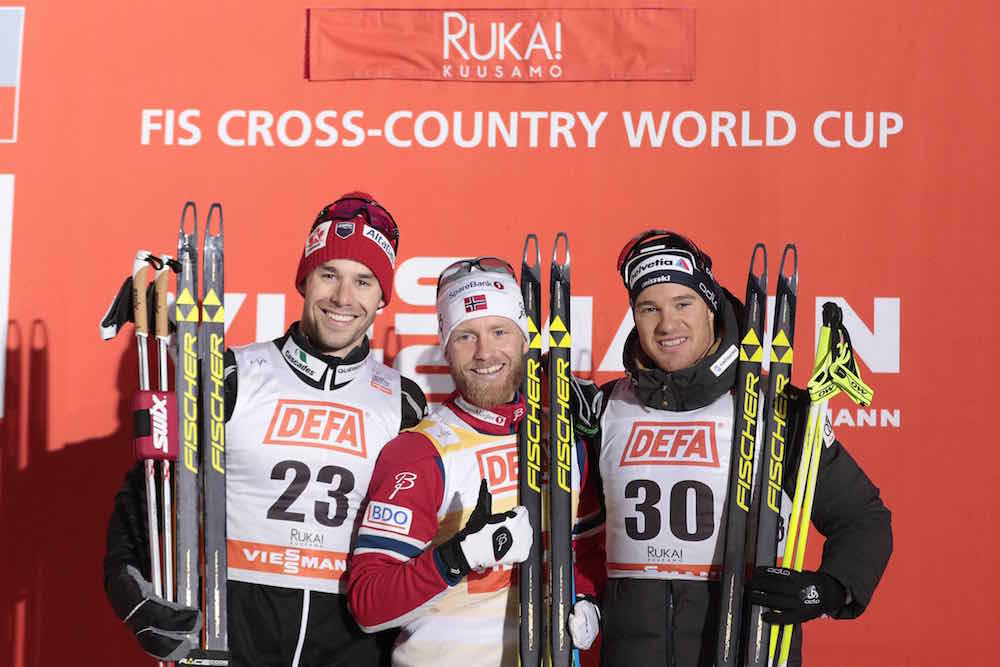
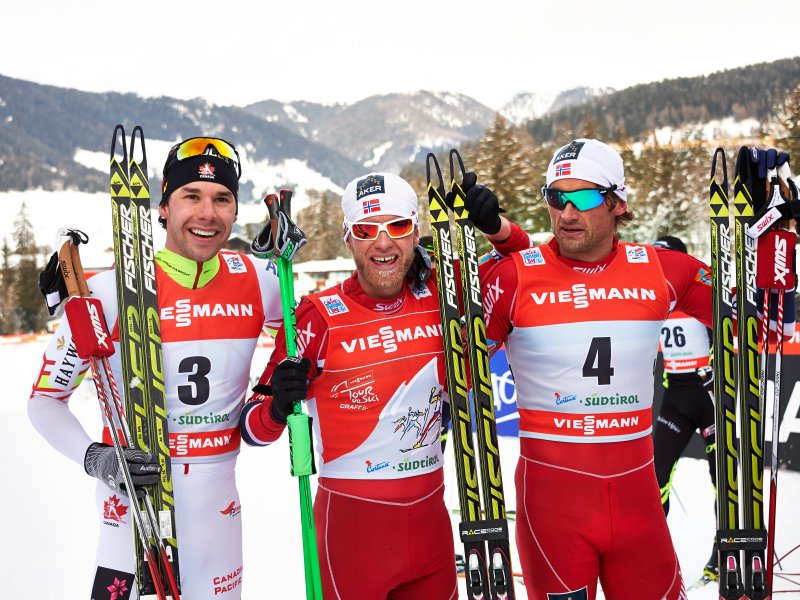
    Canadian Alex Harvey (l) placed second in Saturday's 10 k freestyle at the World Cup in Kuusamo, Finland, to share the podium with Norwegian winner Martin Johnsrud Sundby (c) and Switzerland's Dario Cologna  (r) in third. (Photo: CCC/NordicFocus)
    Canadian Alex Harvey (l) placed second in Saturday’s 10 k freestyle at the World Cup in Kuusamo, Finland, to share the podium with Norwegian winner Martin Johnsrud Sundby (c) and Switzerland’s Dario Cologna (r) in third. (Photo: CCC/NordicFocus)

    Harvey, 27 is not exactly “green” when it comes to top-three results on the World Cup. But many things are new to Harvey and for the Canadian team.

    First there’s the early results.

    “It’s my first podium ever before Christmas and in Kuusamo it has been quite bad for me in skating. In the past, my best skating result here was 17th,” Harvey said in a post-race phone interview.

    A fast start for Harvey is something new; a common thread in his skiing had been about building into the season and progressively into races. Although one distance race is a small sample size, Harvey and Canada’s head coach Justin Wadsworth believe this will be among many data points marking Harvey’s rise as a contender for the overall World Cup crown.

    Second, there’s the seemingly “new” legs under Harvey. That’s the result from surgery on his iliac arteries this summer. Postoperative, Harvey says the blood flow in his legs make it so he can sustain harder efforts on steep uphills.

    The first thing that I noticed this summer and running training, I could actually push,” Harvey said. “In the past, I couldn’t get my heart rate past 155 in running because I was purely relying on my legs. And in skiing, I was able to have good results because I could compensate with the upper body. But any time there was a course where the legs were involved, a lot like Kuusamo, like the Tour de Ski climb, I could not really play for the top ten.”

    Wadsworth predicted Harvey’s second place would be part of a trend. “From what we’ve seen from Alex in training this year, it’s been everything pointing to this,” he said.

    The second stage of the Ruka Triple, the 10 k skate, was a proving ground. Kuusamo’s course is a grind. The type of course where it’s all about steep uphills with little recovery time. A course where if Harvey’s legs were going to flood or be sluggish, he’d know right away.

    “I was pretty confident that it would be good in racing but you never know until you get a result. Black on white, written on paper,” Harvey said.

    Starting 23rd, Harvey motored as soon as he tripped the gate. Building into the race, with increasingly faster splits is a Harvey hallmark. However, on this race day, the new sensations made for a change of strategy — he wanted to go sustainably fast enough to clock top-five splits throughout the race.

    “Today, 1.5 k atop of the first big hill when I was getting good splits and my legs were not completely seizing up, I knew it was going to be a good day,” he said.

    The consistency of Harvey’s effort is reflected by his splits: at 3.1 k, he was fourth, and fourth again at 6.2 k. At 8.1 k, fourth again. He picked up his pace towards the end.

    “In an individual start I always try to pick it up for the last ‘k’ for sure,” he said. “That’s when a lot of guys are coming undone and I think for me historically in the past, that’s where I’ve been able to move from top five to the podium.”
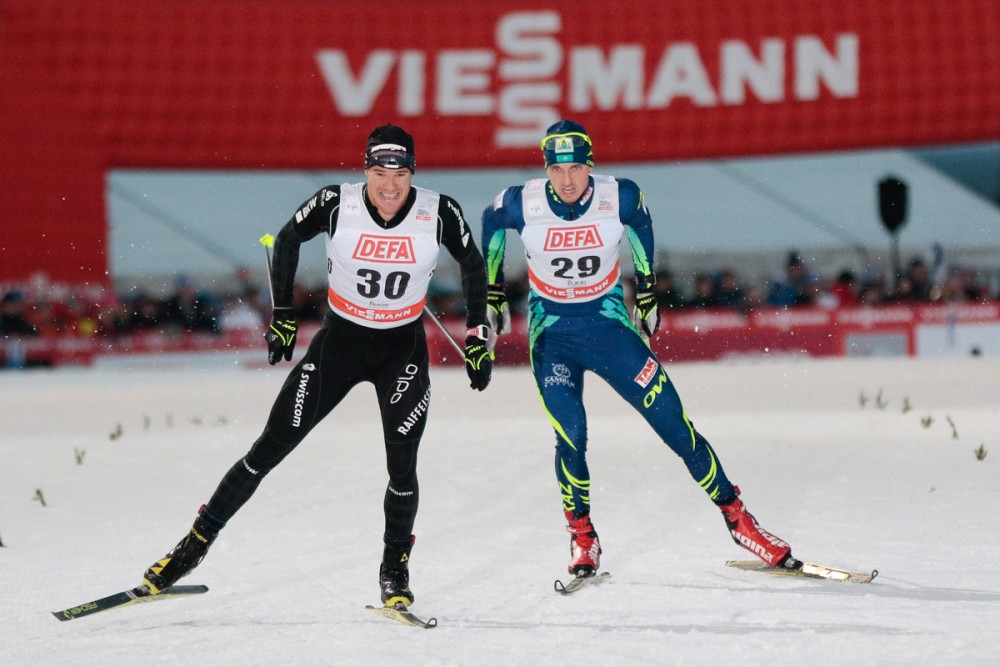
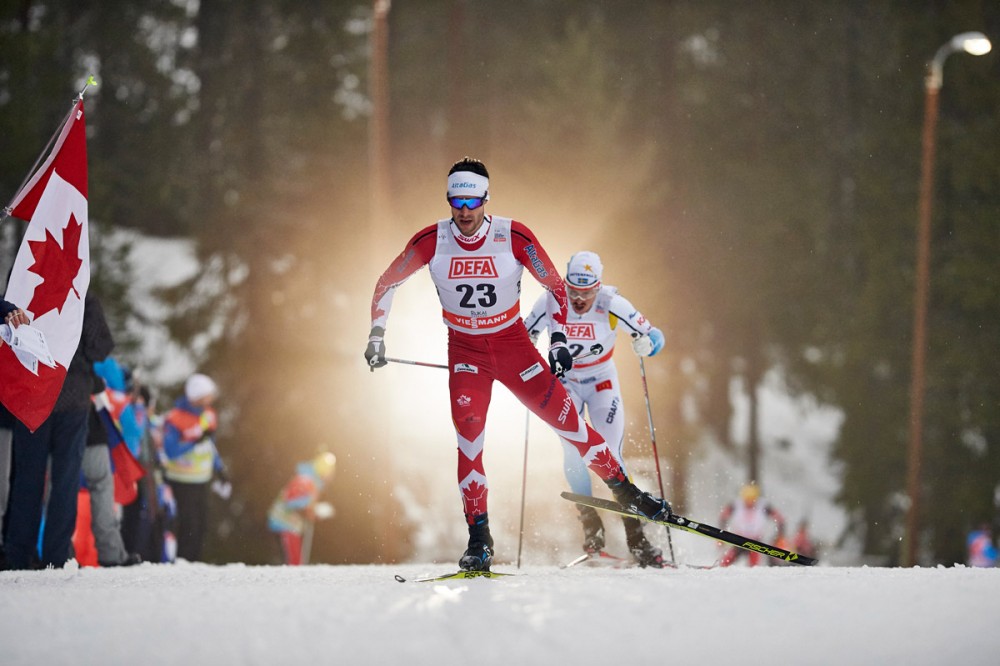
    Dario Cologna finishes .4 seconds behind Harvey in the 2nd stage 10 K freestyle: Ruka Triple 2nd stage. (Photo Credit: Fischer/Nordic Focus).
    Dario Cologna (l) finished 0.4 seconds behind Harvey in the 10 k freestyle, second stage of the Ruka Triple World Cup on Saturday in Kuusamo, Finland. (Photo: Fischer/NordicFocus).

    Harvey crossed the line in first, bumping Norway’s Anders Gløersen out of the leader’s chair with a time that was 3.4 seconds faster than Gløersen’s. His work done, Harvey watched the adjacent screen with live results. Deciphering the list of splits, it became clear: Cologna was a threat.

    With about one kilometer to go, there’s a steep headwall of a climb. Wadsworth positioned himself there with friend and Swiss coach Christian Flury, who used to coach in Canada. They provided splits for their skiers, and noticed the duel evolving.

    “Oh yeah, when Dario went by on the last lap there when Christian was giving him all the info, how tight it was with Alex, we knew it was going to be tight at the finish,” Wadsworth said.

    Cologna bested Harvey at every split, except the one that matters. Cologna slotted into second at the finish, 0.4 seconds behind.

    With many big names still on the course — Northug and Sundby among them— Harvey knew any one of them could ski him out of contention.

    Sundby remained in the hunt. Having secured the overall World Cup the past two years, it seems Sundby rarely has an off day. Saturday’s race confirmed that consistency; he posted the fastest splits at every checkpoint after 1.2 k.

    Awaiting Sundby’s finish, Harvey said he knew what was coming.

    I was excited, but, I mean Sundby had quite a bit gap on me throughout the whole race. Like 5-10 seconds the whole race,” he said. “Unless he crashed … I didn’t really think I was going to beat him.”

    Harvey’s exit from the leader’s chair came at the hands of Sundby, who finished in just over 21 minutes — a super-human effort even for Sundby.

    It was hard today, tougher than I had envisioned beforehand. In this course you get no rest for two seconds,” Sundby told Norwegian broadcaster NRK.

    With the win, Sundby becomes the Ruka Triple’s overall leader by 13.8 seconds followed by teammate Finn Hågen Krogh in second.

    Another notable finish was Harvey’s teammate, Devon Kershaw in 24th. That stood as Kershaw’s best freestyle distance result since he won the 15 k skate in Rybinsk, Russia, in 2012. (He placed second in a 4.5 k freestyle prologue at the 2013/2014 Tour de Ski behind Harvey.)
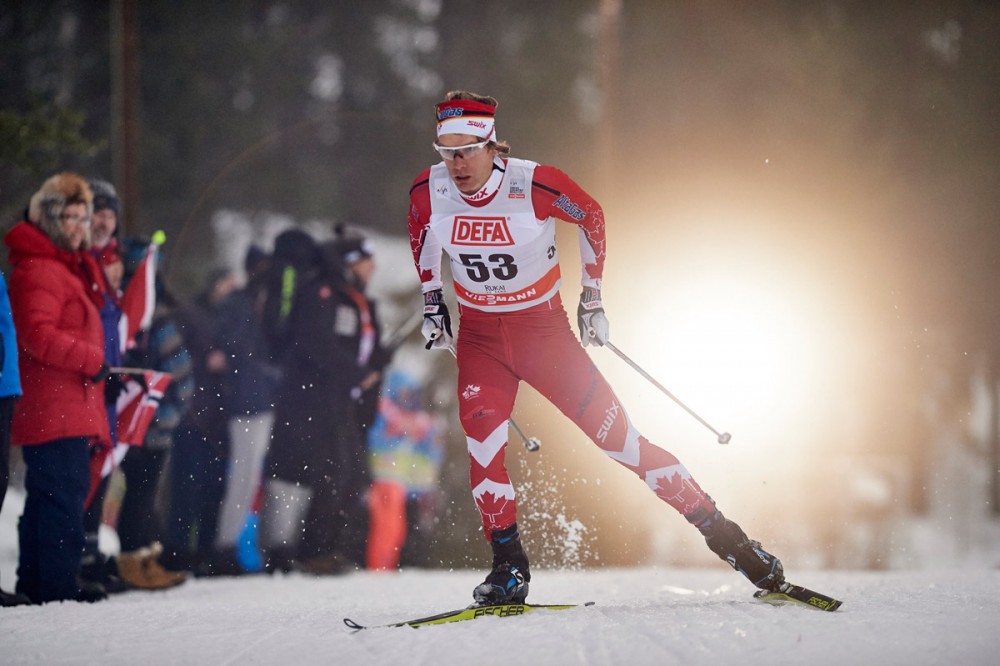
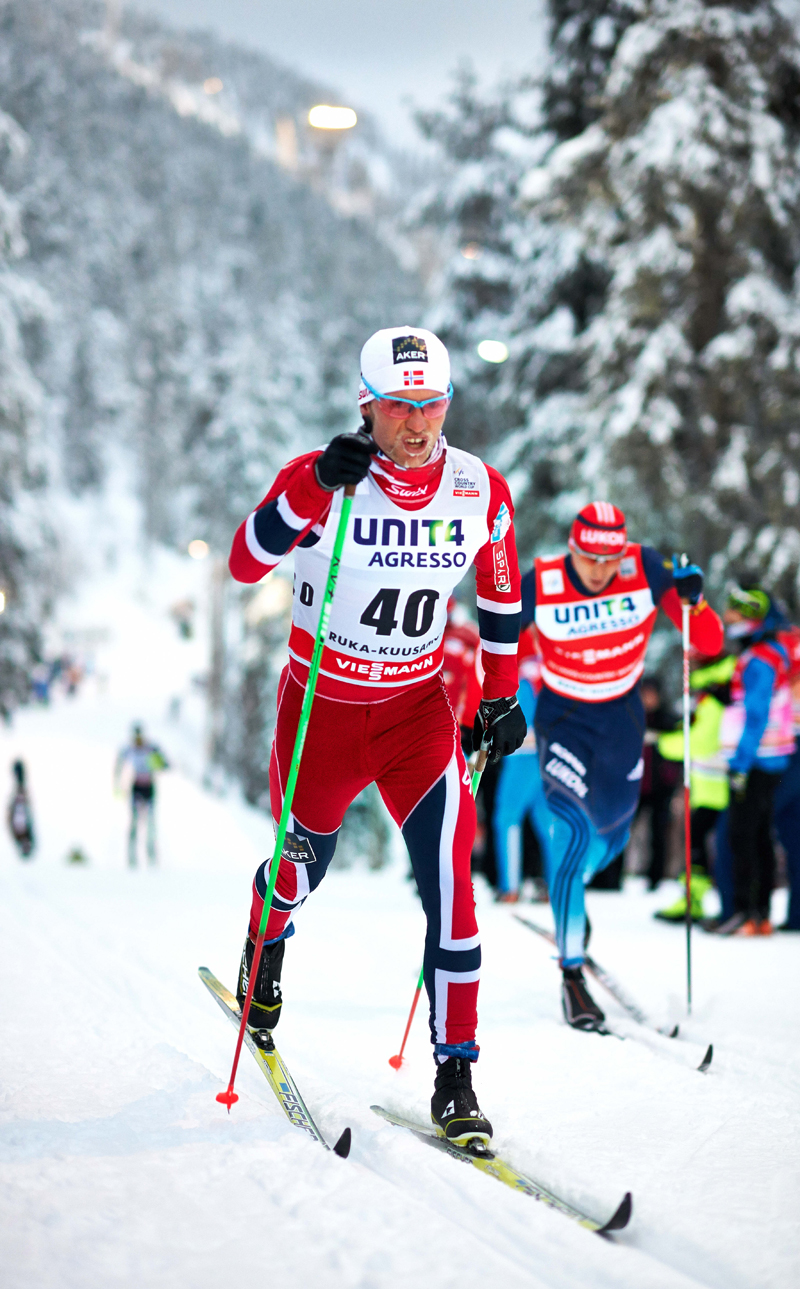
    Devon Kershaw races to 24th in the 10 k freestyle: Ruka Triple stage two. (Photo Credit: Fischer/Nordic Focus).
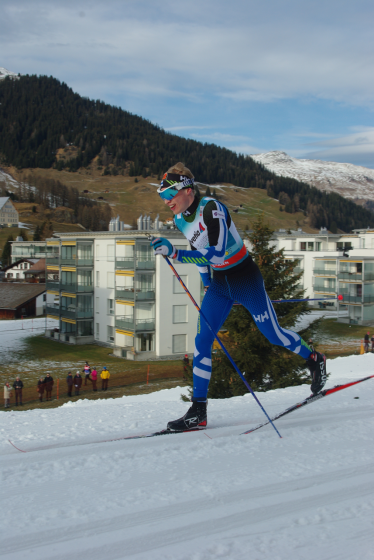
    Devon Kershaw races to 24th in the Ruka Triple 10 k freestyle at the World Cup in Kuusamo, Finland. (Photo: Fischer/NordicFocus).

    “I mean, for me in an individual start skate to hit the points is a solid outing — so that shows that I must have felt ok,” Kershaw wrote in email.

    Kershaw’s start bib number, 53, played into his race strategy. He started a bit conservatively, knowing eventual winner Sundby started next, only 30 seconds behind him.

    “If you can catch a ride from the best skier in the World — you try your darnedest to do just that for as long as you possibly can,” he wrote.

    Kershaw skated behind Sundby for 5 k.

    “Of course the upside when you start 30 seconds up on the World #1 the last two years in a row is that if you can stay on his pace — it can help you….but the real goal was to stay on Sundby the whole way once he caught me — and I completely came undone with about 1.8km to go — and lost oodles of time (about 15 seconds) to the line,” he added. “When he launched his attack to the line I completely blew up and I was on fumes to the finish from there.”

    Sunday’s final stage, a 15 k classic pursuit, will see Sundby start with nearly a 14-second head start. He’ll be chased by a who’s-who of skiing. But the duo to watch may be Harvey and Cologna starting 25 seconds back in fifth and sixth behind him — they’ve struck an alliance.

    “I talked with Dario already. We are going to share the workload tomorrow,” Harvey said. “I don’t really expect Petter [Northug], to be doing much work. We have an advantage over Sundby, just cause we can share that. Today was quite windy in the stadium and on the flat sections. It’s good to take a different leads.”

    Whether that alliance and those tactics succeed remains to be seen: Sundby is a force.

    Also for Canada, Ivan Babikov placed 52nd, Graeme Killick 57th, Michael Somppi 93rd, Len Valjas 95th, and Jess Cockney 101st of 111 finishers.

    Simi Hamilton led the U.S. men in 49th, Erik Bjornsen placed 54th, Noah Hoffman 58th, Andy Newell 85th, and Kris Freeman finished 88th after falling and breaking his pole. According to U.S. coach Matt Whitcomb, he was skiing just outside of the top 30 before that.

    “It was a good race from Simi Hamilton who was flirting with the top 30 through 5 k,” Whitcomb said. “He started fading a bit in the second lap, but grabbed a couple more spots the last 2k to finish 49th. He demonstrated some great skate fitness and is going to be an exciting athlete to watch in Davos in two weeks.”

    Men’s results | Tour Standings | Sunday’s pursuit start list

  • Photo Gallery: Men’s 15 k Classic in Davos

    Photo Gallery: Men’s 15 k Classic in Davos

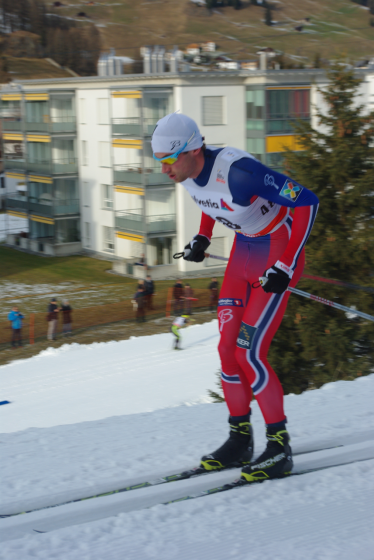
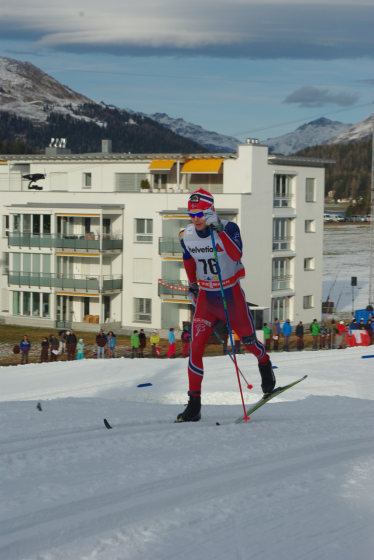
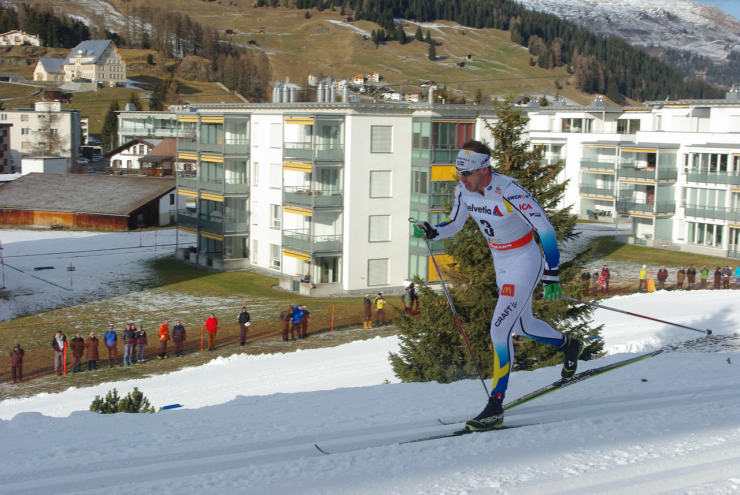
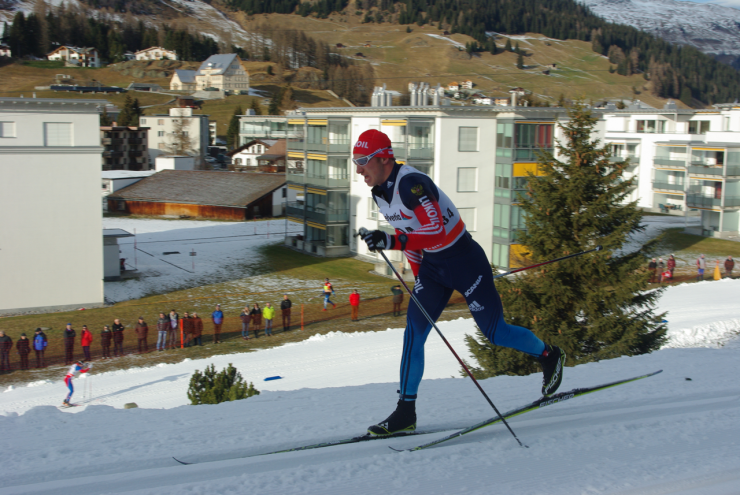
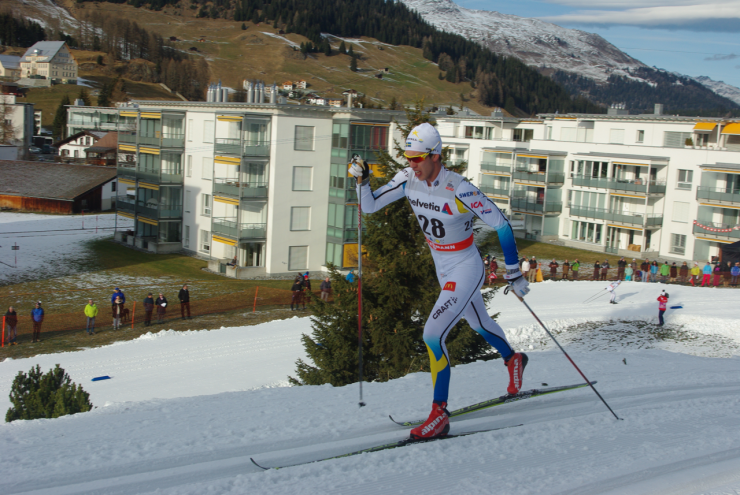
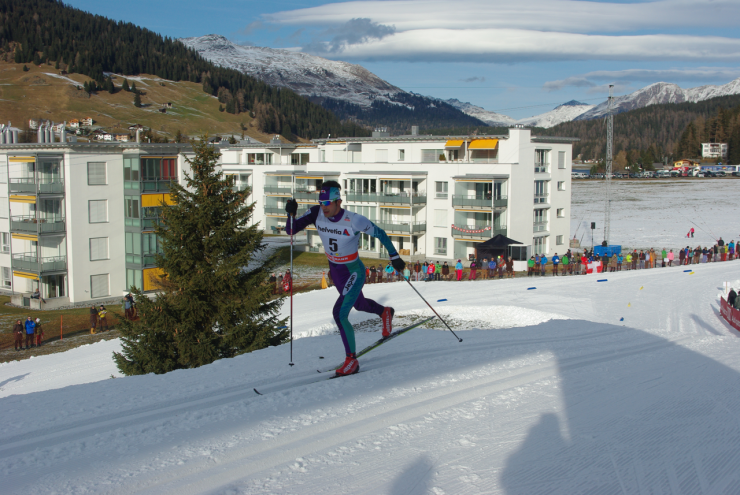
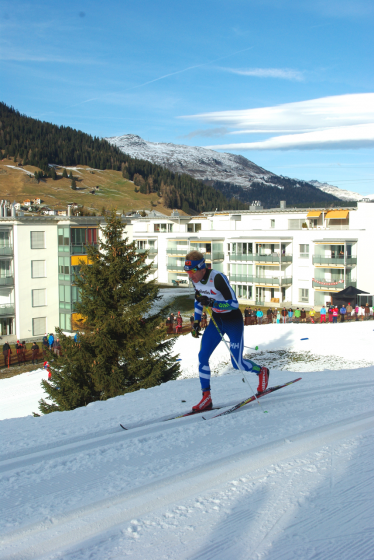
    DAVOS, Switzerland— Martin Sundby of Norway reclaimed his World Cup points lead in Davos, Switzerland as he dominated the 15 k classic. While it originally looked as if home-country favorite, Dario Cologna would win on skate skis, the Olympic champion eventually ended his day in third. Canada’s Alex Harvey was the top North American after finishing in 17th position. He said the result was one of his best-ever distance races at altitude.

    Here are some photos from the action.

  • Sundby Skis Alone to 35k Tour Victory

    Sundby Skis Alone to 35k Tour Victory


    Cortina to Toblach podium (l - r) - Alex Harvey (CAN) 3rd, Martin Johsnrud Sundby (NOR) 1st, Petter Northug (NOR) 2nd. Photo: Fischer/NordicFocus
    Cortina to Toblach podium (l – r) – Alex Harvey (CAN) 3rd, Martin Johsnrud Sundby (NOR) 1st, Petter Northug (NOR) 2nd. Photo: Fischer/NordicFocus

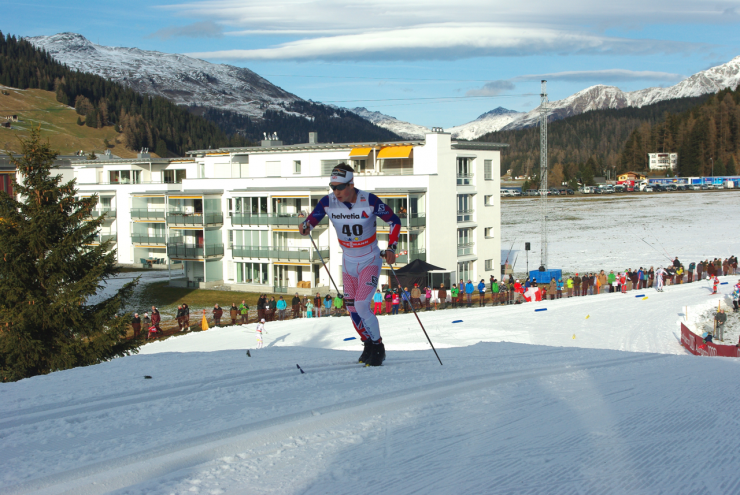
    Norwegian Martin Johnsrud Sundby took off like a rocket on Friday and never looked back. The 29-year-old Norwegian had a 32 second head start in the 5th stage of the Tour de Ski, a 35 k freestyle pursuit race, and he took full advantage of it.

    Taking place on a tough point-to-point course starting in Cortina, Italy and finishing in Toblach, Italy, the course strongly favored pack racing. The course consisted of one long uphill to the halfway point followed by one long downhill to the stadium area and 3 k of gradual rolling terrain to finish off the day.

    The long gradual downhill section raced considerably faster in a pack, but Sundby decided to race his own race and ended up with a lead big enough to secure the win, 58 seconds ahead of the field. He was aided by the relatively slow pace of the men in the chase pack, all of whom seemed unwilling to lead and unbothered by the large distance between them and the Norwegian. Petter Northug (NOR) bested the rest of the chase pack for second place (+58.2) in a sprint finish, with Alex Harvey coming in third.

    After starting the race, Sundby quickly extended his lead to over a minute ahead of the pack. Skiing alone and controlled, he had a good idea of where the rest of the pack stood. He said he had plenty of splits from his coaches letting him know how big his gap was, but that the effort definitely took a toll on him. He told FIS News,

    “I went with a pace I thought I could hold for the whole way. For sure I was trying very hard and now I am extremely tired.

    “Now it’s [time] to recover for tomorrow.”

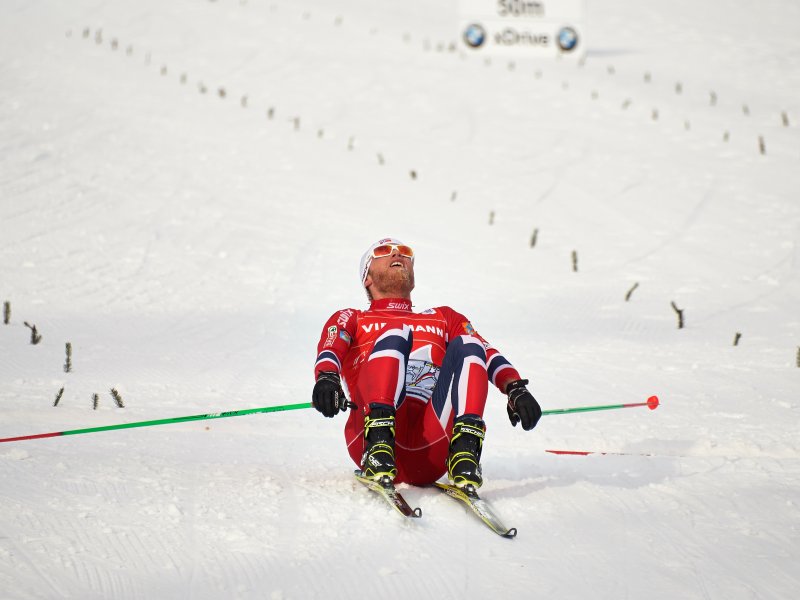
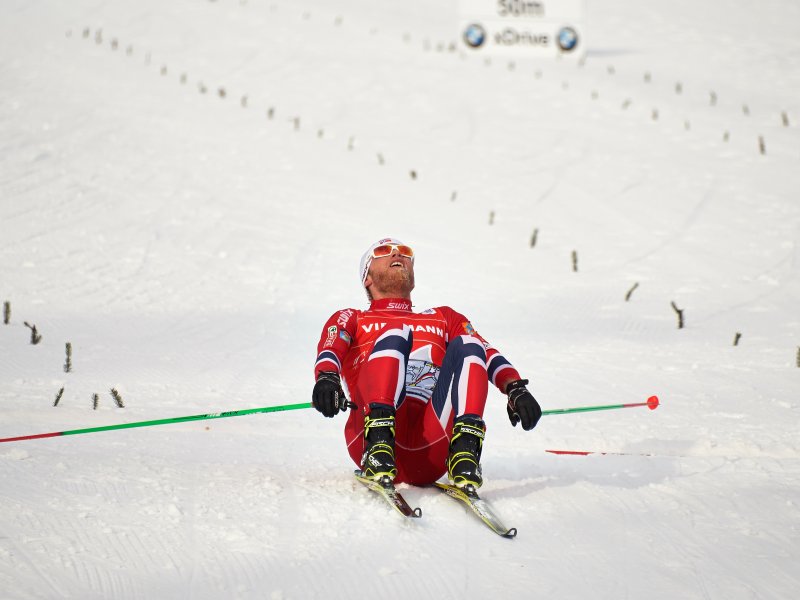
    Sundby collapses after crossing the line. Photo: Fischer/NordicFocus
    Sundby collapses after crossing the line. Photo: Fischer/NordicFocus

    Sundby’s win was his first stage victory of the Tour, and his third podium.

    Behind him, the race was most notable for the controlled pacing of the chase pack and the dramatic jump up the overall rankings for a few skiers.

    Johannes Duerr of Austria, was one of these. Starting in bib 34, 2:12 back, he quickly moved up the field to gain the chase pack midway up the uphill portion of the course. He maintained his position with the lead pack and, in fact, led much of the way due to the other skiers’ reticence to ski at the front.

    Moving through the finishing stretch, Duerr and Harvey briefly tangled. Duerr broke a pole, but still ended up sixth overall, with the fastest time on the day. This race could put him into contention for a podium finish, as Harvey is planning on leaving the Tour after Saturday’s 10 k classic race.

    Northug showed his famous finishing strength, surging to the front of the chase pack coming into the stadium to move up to second place overall in the Tour. Before today, he was sitting in fourth place, but is now in good position coming into the final races of the seven day set.

    It remains to be seen, however, if anyone will be able to touch Sundby’s 1:15 lead on the rest of the field.

    Duerr celebrates his strong race. Photo: Fischer/NordicFocus
    Duerr celebrates his strong race. Photo: Fischer/NordicFocus

    Calle Halfvarsson of Sweden fell back from second place to fourth in the overall rankings, while Russian Alexander Legkov moved up from seventh place to within striking distance of the overall podium in fifth place. Both sit six seconds back from the podium.

    Along with Duerr, Noah Hoffman (USA) also had a dramatic day. Starting in bib 69, 3:27 back, he surged to gain a large pack right before the crest of the course and skied to the second fastest time of the day, ending up in 27th overall (+3:07).

    Tomorrow’s race is a 10 k classic individual start race for the men and could shake the results up a bit. With predicted temperatures around freezing, and a large storm blowing in, waxing will be tricky.

    Results:

    35 k pursuit race

    Overall standings

    Martin Johnsrud Sundby (NOR) starts the 35 k pursuit.  Photo: Fischer / Nordic Focus.
    Martin Johnsrud Sundby (NOR) starts the 35 k pursuit. Photo: Fischer / Nordic Focus.
  • Four-Time Tour Winner Kowalczyk Withdraws, Protests ‘Unfair Changes’

    Four-Time Tour Winner Kowalczyk Withdraws, Protests ‘Unfair Changes’

    Justyna Kowalczyk (POL) powers to the top of the Alpe Cermis and her fourth Tour de Ski victory. (Photo: Fimme2013)
    Poland’s Justyna Kowalczyk powers to the top of the Alpe Cermis in Val di Fiemme, Italy, for her fourth Tour de Ski victory last season. (Photo: Fimme2013)

    The Tour de Ski’s four-time defending champion Justyna Kowalczyk was conspicuously absent on Saturday from this season’s Tour opener, the women’s 3-kilometer freestyle prologue in Oberhof, Germany.

    On her official Facebook page, Kowalczyk, a four-time Olympic medalist from Poland, announced, according to a translation: “URGENT. I’m very sorry, but in this situation I can not occur in Tour de Ski :(”

    A Tour favorite, Kowalczyk’s withdrawal completely shakes up expectations for the seven-stage series as well as the overall World Cup standings. She withdrew to protest changes Tour officials made to the race format due to persistently warm and rainy conditions. A relatively flat 1.5 k loop was prepared for the races using snow trucked in from surrounding areas and stored indoors, away from the rain and balmy winds.

    Kowalczyk at the Finish
    Kowalczyk after winning the final climb and 2011/2012 Tour de Ski.

    As a result, officials shortened the course from 2.1 to 1.5 k and changed race formats to freestyle technique. Out of the seven races in the entire Tour, only two are classic. This is a significant disadvantage to Kowalaczyk, who excels in classic races. Notably, Sunday’s 9 k classic pursuit was switched to a 1.5 k freestyle sprint.

    “Five freestyle races and mostly sprints, with only two classic races. To fight, you need a level playing field,” her coach Alexander Wierietielny said in an interview with Polish radio. “We all feel bad after this decision, but that the play is not fair. … We do not take part in the spectacle frame up. Everything was organized so as Justyna Kowalczyk had no chance to win the Tour de Ski.”

    Kowalczyk’s withdrawal from the Tour likely kills her chances of coming away with an overall World Cup victory, due to the lost opportunity to score World Cup points, and takes her out of the running for over $100,000 U.S. dollars in prize money for the overall winner of the Tour.

    With Kowalczyk absent, Norway’s Marit Bjørgen has become the runaway favorite; indeed, she handily won Saturday’s 3 k prologue nearly two seconds ahead of teammate Astrid Jacobsen and seven seconds ahead of Poland’s surprise Sylwia Jaśkowiec, with her first World Cup podium in third.

    Both Bjørgen and fellow Norwegian powerhouse Therese Johaug felt that the prestige of the Tour de Ski was greatly diminished with Kowalczyk’s withdrawal, calling any victory an “amputee” triumph with “no taste and no value.”

    Kowalczyk’s decision appears to be a part of a larger disagreement with FIS organizers, whom, she says, have too much authority to change race formats without consulting the athletes.

    “FIS management practitioners do not treat us with respect,” she said in an interview with the Polish newspaper Gazeta, quoted by NRK.

    The 30-year-old Kowalczyk went on to say that race organizers are blameless for the weather, making longer courses difficult to construct, but does not understand the change in format.

    “A classic trail may be much narrower than a freestyle course and will require less snow to make,” she said. “I do not understand [the change].”

    She went on to speculate on how the last-minute changes in format may have affected her other rivals, such as U.S. Ski Team veteran Kikkan Randall: “I feel sorry for Kikkan Randall who opted to stay out of the Tour because of so much classical. But now it suddenly has two sprints in the free technique that is her great strength. Had she known it before she would have been here, I am quite sure. One cannot make such changes at the last minute.”

    Norway’s Martin Sundby came out strongly in support of Kowalczyk and joined her in criticizing FIS.

    “This is a parody. This is not what we skiers trained for and are passionate about,” the 29-year-old Sundby told NRK. “Now we are here only to provide sponsors and TV viewers what they want and go a few rounds around the stadium. This is nonsense.”

  • Underdog Norwegians Podium in Lillehammer 15 k: Golberg Wins First World Cup, Tønseth Third

    Underdog Norwegians Podium in Lillehammer 15 k: Golberg Wins First World Cup, Tønseth Third

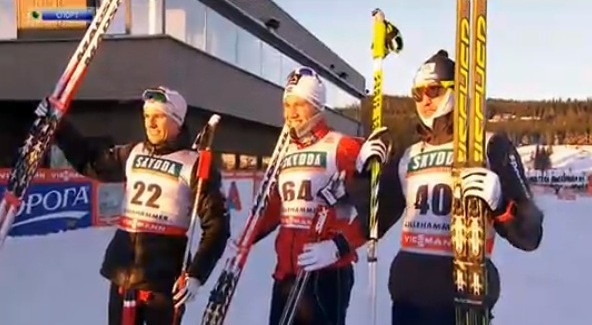
    Norway's Pål Golberg (c), shortly after winning his first World Cup in the 15 k classic individual start in Lillehammer, Norway, with teammate Didrik Tønseth (l) and Alexey Poltoranin (KAZ). Poltoranin took second and Tønseth notched his first World Cup podium in third.
    Norway’s Pal Golberg (c), shortly after winning his first World Cup in the 15 k classic individual start in Lillehammer, Norway, with teammate Didrik Tønseth (l) and Alexey Poltoranin (KAZ). Poltoranin took second and Tønseth notched his first World Cup podium in third.

    Out of 85 starters in the men’s 15-kilometer classic individual start in Lillehammer, Norway, 17 were Norwegian. More than half of that 20 percent included international household names, and the lesser-known few were also vying for Olympic team spots, making the stakes even higher.

    Without even factoring in odds, there was a pretty good chance a Norwegian was going to win Saturday’s World Cup race.

    As the skiers ticked off the laps – three times around Lillehammer’s hilly course – it became a question of who would take the big prize.

    Initially, Russia appeared on top with Stanislav Volzhentsev, the sixth starter, logging the fastest time through 2.1 k.  Thirty starters later, Sweden’s Johan Olsson bested Volzhentsev’s intermediate time by more than a second, and a few minutes later Norwegian Petter Northug came through even faster – by 3.2 seconds – in bib 46.

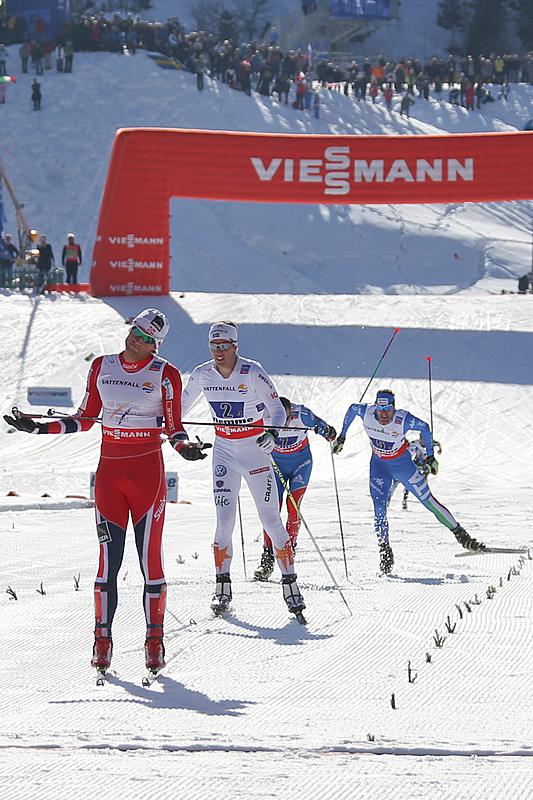
    Petter Northug prematurely shrugs off Norway's seventh-straight men's relay title at World Championships on Friday in Val di Fiemme, Italy. He beat Sweden's Calle Halfvarsson (second from l), Russia's Sergey Ustiugov (third) and David Hofer of Italy in fourth for his second gold of the week. (Photo: Fiemme2013)
    Petter Northug shrugging off Norway’s seventh-straight men’s relay title at 2013 World Championships in Val di Fiemme, Italy. He beat Sweden’s Calle Halfvarsson (second from l), Russia’s Sergey Ustiugov (third) and David Hofer of Italy in fourth. (Photo: Fiemme2013)

    But it was only two kilometers into a 15 k race, and there were lot of dangerous starters remaining.

    Pål Golberg started 64th and didn’t draw attention too early. With the seventh-fastest time two kilometers in, he was nearly nine seconds behind Sweden’s Calle Halfvarsson (who had topped Northug’s time by six seconds).

    At the 5 k mark, Halfvarsson was still the fastest, but Golberg — best known as a sprinter — was making up ground, cutting the deficit to 3.8 seconds. Northug remained in second, and appeared on par to put down one of his late-kicking, dominant performances.

    Less than kilometer later, just a third of the way through the race, the 23-year-old Golberg took the lead. He led Halfvarsson by a second, as well as Norway’s Chris Andre Jespersen, Didrik Tønseth and Martin Johnsrud Sundby, who were all within two seconds of one another in third through fifth. Northug was 11 seconds out in 12th, and suddenly the race had started.

    “I wanted to be patient in the first lap. I knew I could ski fast but I held back at the beginning,” Golberg told reporters after. “In the other two laps I felt like I could keep the pace up. The course seemed to be really hard during training, but today with the speed, it did not feel that tough.”

    Golberg held on, just ahead of 22-year-old Tønseth and Halfvarsson, who trailed by about a second. Chasing him from behind, Sweden’s Marcus Hellner and Russia’s Alexander Legkov ranked third and fourth, respectively, just 3 ½ seconds back..

    With 5 k to go, Golberg began his ascent toward the podium putting 8 seconds into Tønseth, 9.8 seconds into Olsson, and ultimately 10.3 seconds up on Legkov.

    He finished in 35 minutes flat, knocking Kazakhstan’s Alexey Poltoranin from the leader’s chair by 14.2 seconds. Hovering around the top 10 for most of the race, Poltoranin came on strong late to edge Tønseth, the previous race leader who ended up third, by 1.3 seconds.

    Sitting in the hot seat bundled up and appearing slightly nervous, Golberg watched as others pushed to beat his time. Hellner finished 20.2 seconds back in fourth, and Legkov double poled hard off the final descent into the stadium, ultimately finishing 22.2 seconds out in sixth. (Olsson ended up fifth, 21.4 seconds out of first.)

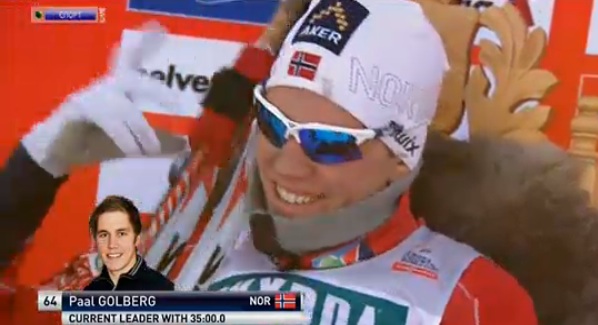
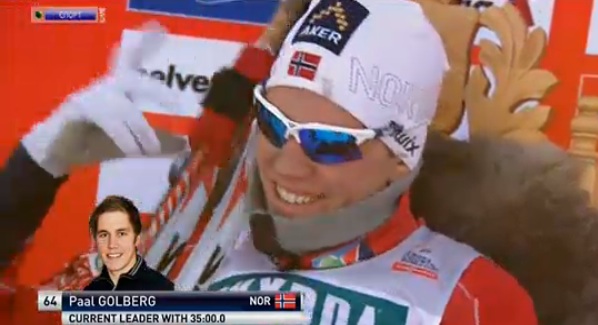
    Norway's Pål Golberg smiles while sitting in the leader's chair on Saturday, after watching Russian Alexander Legkov finish 22.2 seconds off his winning time in the 15 k classic individual start at the Lillehammer World Cup.
    Norway’s Pål Golberg smiles from the leader’s chair on Saturday, after watching Russian Alexander Legkov finish 22.2 seconds off his winning time of 35:00 in the 15 k classic individual start at the Lillehammer World Cup.

    As Legkov crossed the line, Golberg smiled. Not long after, Sundby as the final starter finished 24.9 seconds back in seventh. Following in eighth was Jespersen (+31.8), Northug placed ninth (+40.7), and Sweden’s Daniel Richardsson took 10th (+42.3).

    Immediately congratulated by his teammates on his first World Cup win, Golberg smiled even more. He had placed third in World Cup individual sprints and second in the 2013 World Cup Finals freestyle prologue, but never this. When he spoke to reporters, he wiped away tears.

    “I’m a little shaky right now,” Golberg told NRK, according to a translation. “I cry both when things are going well and when things go bad.”

    At the 2013 World Championships in February, Golberg collapsed in the team sprint, blacking out and taking him and his teammate, Northug, out of contention.

    After Saturday’s race, Northug praised his teammate.

    “He had a very good start to the season and … is a person who can do well at both distance and sprint,” Northug told NRK. “It’s that kind of [skiers] we need.”

    Norway’s second man and third-place finisher, Tønseth impressed with his first World Cup podium – and he didn’t even realize he made it. He was late to the flower ceremony as a result.

    “I had looked a bit on a TV, and realized that my time was good,” Tønseth told NRK. “But I did not think it would be so good.”

    Regardless, Norwegian men’s coach Trond Nystad was pleased.

    “It’s impressive and fun for them,” he said.

    Results

  • Bauer Paces His Way To Victory in Kuusamo

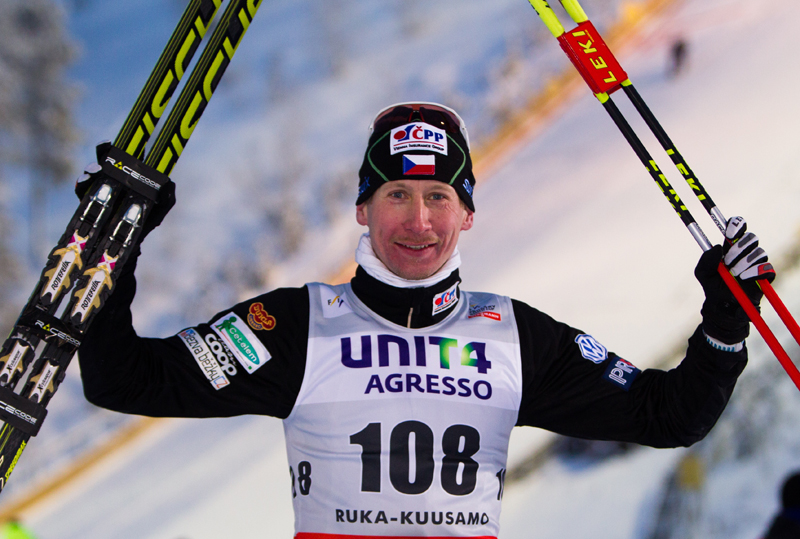
    Lukas Bauer (CZE) celebrates his win.  Photo: Fischer / Nordic Focus.
    Lukas Bauer (CZE) celebrates his win. Photo: Fischer / Nordic Focus.

    Lukas Bauer’s (CZE) masterfully paced race ousted Eldar Roenning (NOR) from the victors chair today in Kuusamo, Finland, allowing the veteran Czech to claim his first victory since 2010. Bauer’s pace in the 10k classic race saw his split times trailing throughout the first 8k to both Roenning and Dmitriy Japarov (RUS), before accelerating in the final kilometers to best Roenning’s time by just 2.4 seconds.

    Japarov took third, 5.7 seconds behind Bauer and just over three behind the Norwegian.

    Martin Johnsrud Sundby (NOR) was the early leader.  Photo: Fischer / Nordic Focus.
    Martin Johnsrud Sundby (NOR) was the early leader. Photo: Fischer / Nordic Focus.

    Martin Sundby (NOR) was the early leader followed, surprisingly, by the sprinter Pål Golberg (NOR), who ultimately placed an impressive 4th. But once Roenning hit the course, all else would trail until Japarov started. It appeared to be the Norwegian’s day as he looked comfortable on the climbs and gradually opened a gap.

    The Russian went out hard and fast, taking 10 seconds off of Roenning’s time at 3.1k. At 6.4k he increased his lead by another second. That was the high water mark for Japarov however, and he began to pay the price for his early breakneck pace.

    At the 8k split Japarov’s lead was down to 5 seconds. His energy continued to fade over the last kilometers, and visibly exhausted, he labored up the final climb to the stadium.

    Unable to maintain his lead, he finished 3.3 seconds behind Roenning.

    “I’m a bit disappointed with today’s result,” the Russian told FIS. “I was hoping for victory. On the other hand…It’s very nice to start the season with a podium. I hope I can do such result again.”

    Bauer, his splits steadily trailing throughout the race, did not appear to be a threat for the win. until 2k from the finish he turned up his pace considerably, charging up the final climb and sprinting into the stadium to snatch victory away from fellow classic specialist Roenning.

    After the race Bauer told FIS, “I have extreme experience from Kuusamo, it’s been either successful or disaster, nothing in between. It’s nice I could enjoy a great day. Yesterday’s sprint was a disaster for me, 104th place was not good. I did not feel the best today but the snow conditions fit me very well.”

    Roenning, speaking to Norwegian broadcaster NRK, said that he is “a little bitter that he [Bauer] hung on me in the first round. He got a good ending, but I’m pleased with second place. I go fast from start to finish.”

    Coming through the lap after the first 3.1km loop, Roenning found Bauer headed out of the start. The Czech caught a ride from Roenning, much to his advantage.

    Although Bauer seized his advantage in the final 2k, Roenning felt he did well at the end of the course telling FIS “I felt quite good and had a fast 2.0 km before the finish. It was an exciting competition. I have not been in the yellow bib for almost seven years. Tomorrow is skating and I have no hopes to be in top 10.”

    Three North Americans finished in the top 30. With Ivan Babikov in 21st, Noah Hoffman in 28th, and Alex Harvey in 30th.

    Complete Results

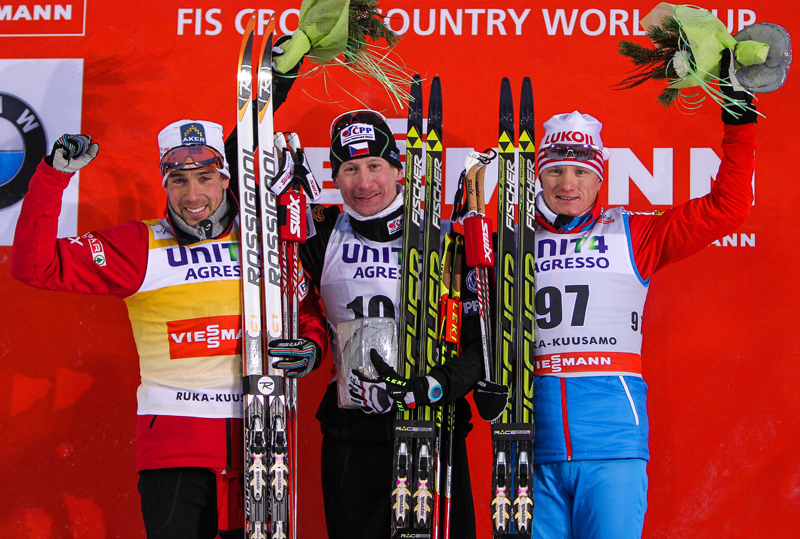
    The men's podium in Kuusamo, Finland (FIN): (l-r) Eldar Roenning (NOR),  Lukas Bauer (CZE) and Dmitriy Japarov (RUS).  Photo: Fischer / Nordic Focus.
    The men’s podium in Kuusamo, Finland (FIN): (l-r) Eldar Roenning (NOR), Lukas Bauer (CZE)
    and Dmitriy Japarov (RUS). Photo: Fischer / Nordic Focus.
  • Stephen Gets a Cheese Slicer in Sixth, Hoffman Seventh and Brooks 12th in Beitostølen

    Stephen Gets a Cheese Slicer in Sixth, Hoffman Seventh and Brooks 12th in Beitostølen

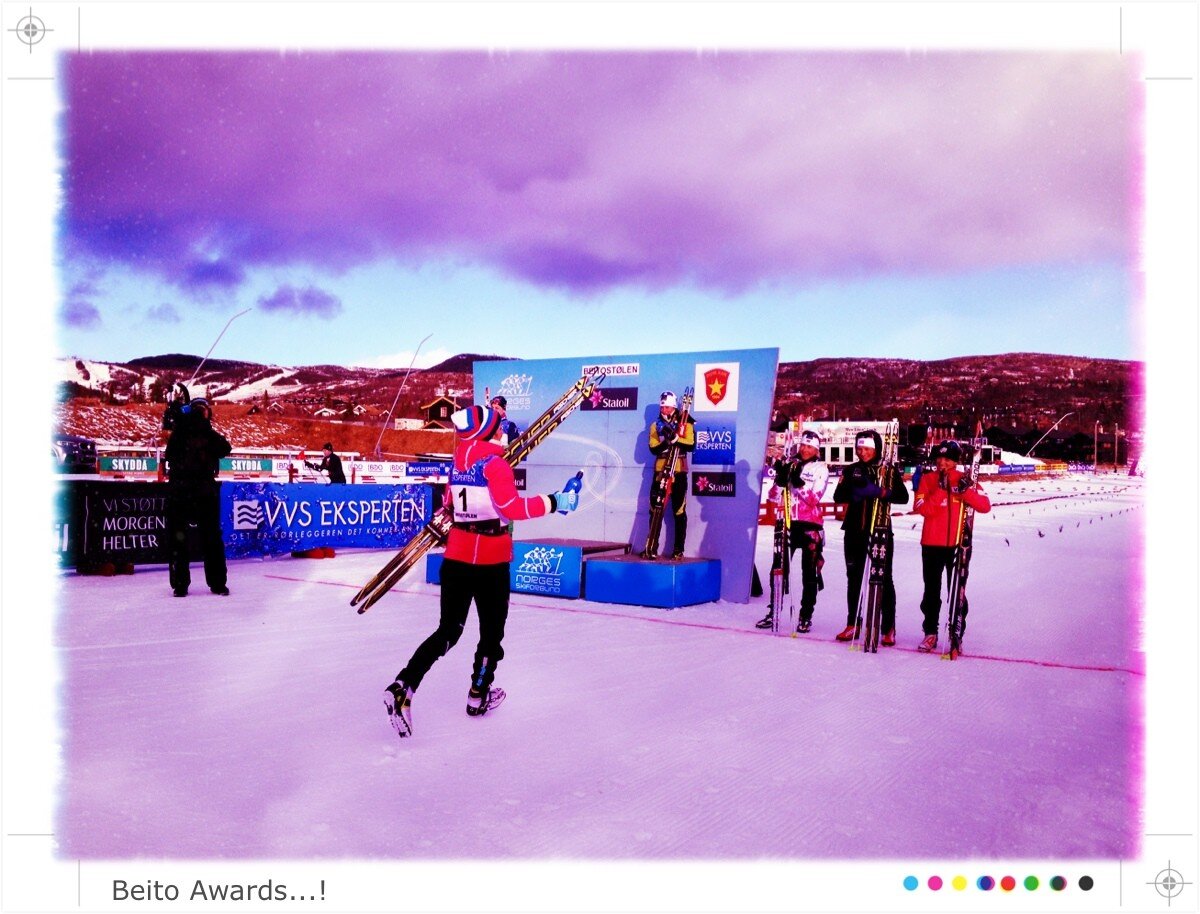
    Liz Stephen makes the podium photo opp with a group of Norwegians after placing taking sixth (and winning a cheese slicer) at Saturday's 10 k freestyle FIS race in Beitostølen, Norway. (Also pictured: winner Therese Johaug, third-place finisher Astrid Uhrenholdt Jacobsen, Kristin Størmer Steira in fourth, and Vibeke Skofterud in fifth (Photo:  Holly Brooks)
    Liz Stephen (r) makes the podium photo opp with five Norwegians after placing taking sixth (and winning a cheese slicer) in Saturday’s 10 k freestyle FIS race in Beitostølen, Norway. Also pictured: winner Therese Johaug (1), third-place finisher Astrid Uhrenholdt Jacobsen, Kristin Størmer Steira in fourth, and Vibeke Skofterud in fifth (Photo: Holly Brooks/Facebook)

    Any competitive ski racer knows the feeling of pre-race anticipation: that moment when you scan for your name on the start list, find it, and take a gander who’s starting around you.

    In an individual start, like Saturday’s 10 and 15 kilometer freestyle FIS races in Beitostølen, Norway, that order is essentially all you have to work with. Try to catch the people in front of you and fend off the ones from behind, and you should finish in relatively good shape.

    Imagine Holly Brooks’ reaction when she saw she was starting 30 seconds ahead of Norwegian powerplug Therese Johaug (who won Friday’s 10 k classic) or Liz Stephen’s thoughts on leading out Vibeke Skofterud (who placed sixth the day before).

    For most, it would be a big deal — a sort of Charlie Brown “good grief” moment. But for the U.S. women’s ski team, which enjoyed unprecedented success last season and has gained respect (and friendships) from the Norwegian and Swedish teams in the last couple years, the feeling is different.

    “I had to laugh a bit last night when I saw the start list and the fact that Therese was starting 30 seconds behind me,” Brooks wrote in an email. “She ended up passing me midway on the big hill of the course. I’m not sure that I’ve ever been passed that quickly – it was like I was standing still.”

    Johaug went on to win the 10 k in 24:13.7 minutes, 18.9 seconds faster than runner-up Marit Bjørgen, Norway’s most decorated world champion, in Bjørgen’s first race of the season. It was Johaug’s second victory in as many races this weekend.
    Stephen wasn’t much farther back in sixth place, 4.9 seconds behind Skofterud in fifth and 1:09.2 behind Johaug. In an email, she wrote that starting ahead of Skofterud was “GREAT!”

    “Yesterday I had Kikkan [Randall] starting right behind me and today I had Vibeka right behind, so I used them a bit to help motivate me to keep pushing,” Stephen wrote.

    And Brooks was moving fast, too, placing 12th on Saturday, 1:43 behind Johaug.

    “Johaug’s tempo is unlike that of anyone on the World Cup and I got a front row seat!” Brooks wrote. “She is impressive … and I knew it would be a mistake to try and match it, even for ten seconds. Yesterday she won the entire race by almost a minute so it seems as if she’s in a league of her own.”

    The exciting thing for the Americans is that they’re already in the hunt with top teams like Norway. While the Norwegians took six of the women’s top seven, the U.S. was one of three teams to put two in the top 12 (Slovenia being the other).

    In the men’s race, U.S. Ski Team member Noah Hoffman broke up a Norwegian sweep of the top eight, placing seventh in the 15 k skate race.

    “For the second day in a row, I didn’t have anybody to ski with for the entire race,” Hoffman wrote in an email on Saturday. He finished 42nd in Friday’s 15 k classic.

    “Both days, all of the starters had left the stadium by the time I lapped through. I didn’t get caught from behind either day, and I didn’t catch anybody who was skiing at a high level.”

    Considering his jump up to the top 10, Hoffman was encouraged by his most recent result.

    “I feel good and I have great energy,” he wrote.

    At the same time, he’s still working on his pacing, which he felt good about Saturday. Friday wasn’t bad either, he explained.

    “I thought I skied well yesterday. I was surprised to be so far down the results sheet,” Hoffman wrote. “The one thing I did for today was refocus on my technique cues, especially the cue ‘patience.’ ”

    It turned out in his favor as Hoffman finished 49 seconds back from Norwegian Martin Johnsrud Sundby, who captured his second-straight win in 33:32.6. The second-place finisher, Anders Gløersen, was nearly 34 seconds behind.

    For Stephen, who improved from 25th on Friday, she said her secret was not pacing.

    “I tried to pace it yesterday and it didn’t end up helping me ski fast, so today the goal was to just go out hard and ski well and see what happened,” Stephen wrote.

    It helped having a winding course that doubled back, so she could gauge where she stood, as well as coaches and others giving her splits.

    “It is so nice to have so many more friends and people to help push me, and hopefully people I can help push to their best as well,” Stephen explained.

    Earlier this week, the Norwegian women’s team invited their U.S. buddies to a “bolle” at their cabin, according to Jessie Diggins in her blog.

    “We are actually about to have them over for our second team get together of the week for some banana bread before heading out for afternoon training,” Stephen wrote on Saturday. “It is really cool how our two teams have really gotten to know each other. It makes the World Cup and being so far from home for so long so much more enjoyable and manageable.”

    For Brooks, her two results for the weekend (including 19th on Friday) were outside of her goal of a top 10, but she had fun getting back into racing.

    “The FIS race here feels like a World Cup with cameras and reporters everywhere,” Brooks wrote. “A car in the middle of the stadium, big blow up sponsor objects, wax buses, etc, etc. They take their Nordic Skiing seriously here in Beito and it’s been a good warm up for next weekend’s race in Kuusamo.”

    Saturday was a matter of missing her top gear, she explained.

    “I felt good warming up and didn’t feel any residual fatigue from yesterday but then in the race, I felt as if I had a ‘governor,’ ” she wrote. “My goal was to start the race and glide, finding good rhythm. Sometimes I tend to rush and end up flailing a bit. I tried to be as smooth as possible.”

    At the end of the day, she was mostly thrilled for her teammates.

    “I’m also happy that Liz was able to land on the podium because it can’t be a 100% Norwegian Sweep!” Brooks wrote. Stephen earned a cheese slicer for her efforts.

    “Also, Hoff was .8 seconds away from winning a cheese slicer as well,” Brooks added. “Congrats to both of them on fantastic performances!”

    ***

    Results: Women | Men

    See also: Bjornsen Rockets to Fifth; Seven USST Women Make the Top 30 in Beitostølen