From the FasterSkier archive — posts syndicated from athletes’ and coaches’ own blogs between 2004 and 2012, kept online as published. Current coverage is at fasterskier.com.

Tag: masters athlete

  • How to Go Easy (and Why): An Introduction to the Polarized Training Model

    How to Go Easy (and Why): An Introduction to the Polarized Training Model

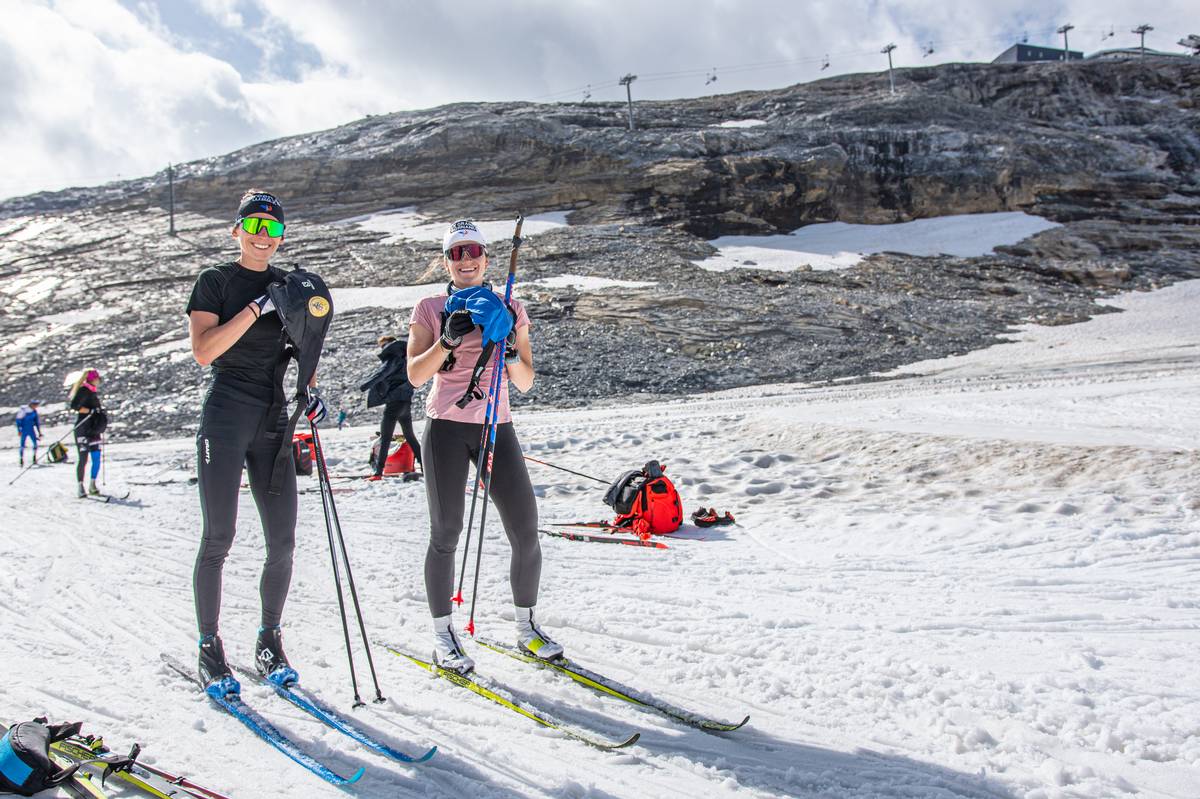
    French skiers Delphine Claudel and Lena Quintin stop to refuel during a training camp on the Glacier de la Grande Motte near Tignes, FRA. (Photo: NordicFocus)

    I grew up playing soccer. Every practice was hard. “No pain, no gain,” and all of that. By tenth grade, I was burned out and quit. 

    I started rock climbing. Every day at the crag was about pushing your limits. This was before indoor gyms or any concept of training other than doing as many pull ups as possible. I plateaued, got frustrated, and quit. 

    Then I had a go at running. I read some books, but skipped the training methodology parts and cherry picked the workouts. Every run was hard. Every interval was done to exhaustion. I plateaued, got frustrated, and quit. 

    Then I got into cycling. I began to hear of “easy” rides. I knew pros who rode around for four or five hours at such a pedestrian pace that they were talking the whole time. ‘How insanely boring!’ I thought. ‘Where’s the fun in that?’ So I went hard every time because it’s more fun. And guess what? I plateaued, got frustrated, and quit.

    Fortunately, I didn’t learn my lessons the really hard way – through injury – but I still learned them the really stupid way –  by throwing away any potential I might have had. 

    You can’t go hard all of the time. It’s as simple as that (at least on paper).
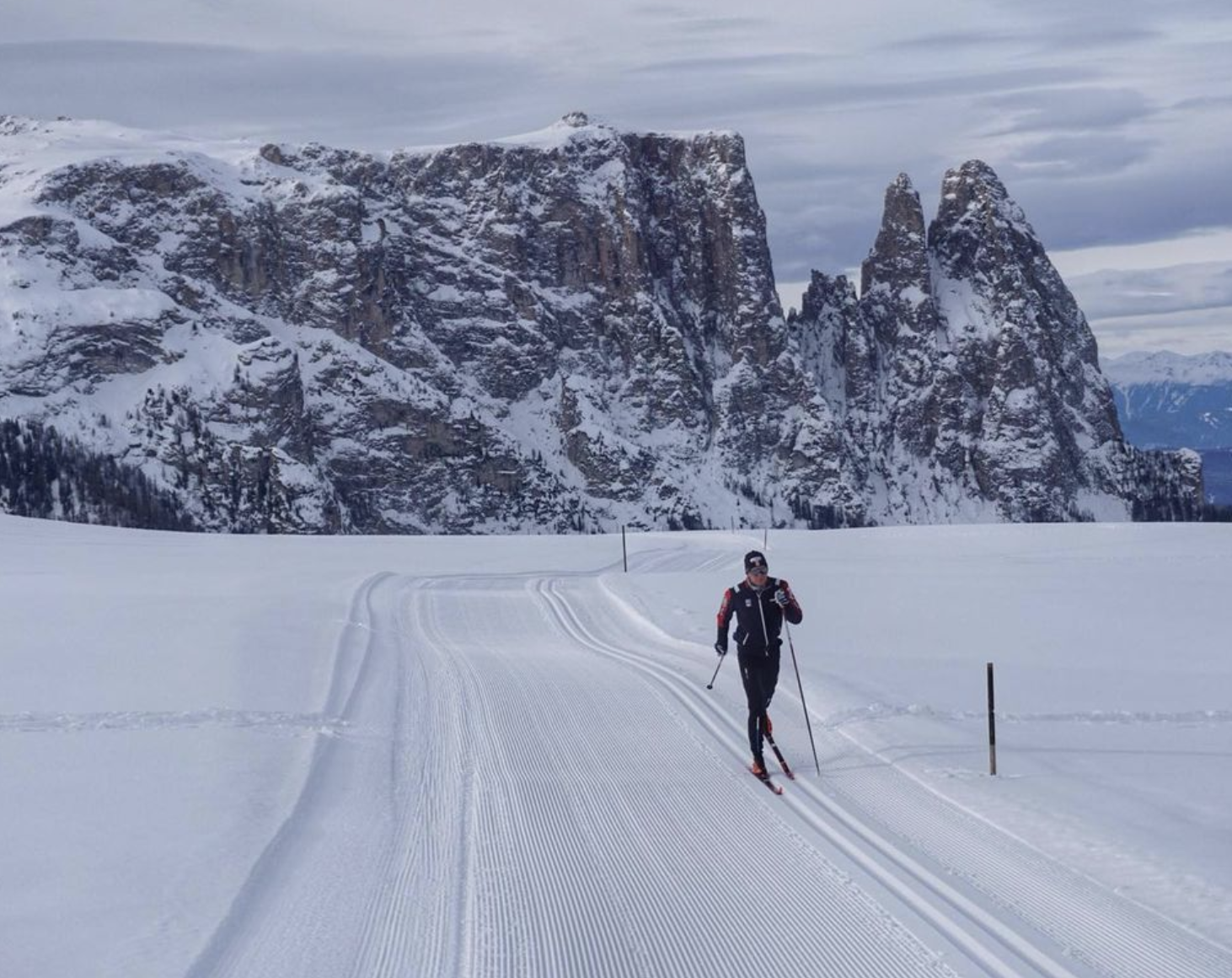
    Scott Patterson enjoying a training day in Seiser Alm, ITA in January 2021. (Photo: Caitlin Patterson / Instagram @scottgpatterson)

    The Basics of Polarized Training

    Make your easy days easy and your hard days hard. 


    That is the backbone of a Polarized Training model. I had no problem making my hard days hard–they were all hard days after all. Full gas. Gun to tape. But in hindsight, I realize how depleted and chronically fatigued I was. I thought that was the desired effect, but it meant my training became less and less productive. 

    It’s the easy days that are actually the hard part.

    First: I hear your inner dialogue. “Who wants to go easy? It’s unproductive. It’s a waste of precious time. It looks lame on Strava.” But the science says everyone should want to go easy. Metabolic efficiency is the name of the game.

    If hard workouts train the engine to create more horsepower, then the easy sessions improve the gas mileage. 

    Secondly: let’s define easy. Training intensity is commonly split into five zones. (Some systems use three and others use seven, but I’ll be referring to a five zone system.) Zones 1, and especially 2, define the ranges of easy. Heart rate is the typical metric, especially for cross country skiers and runners, while cyclists typically use power. 
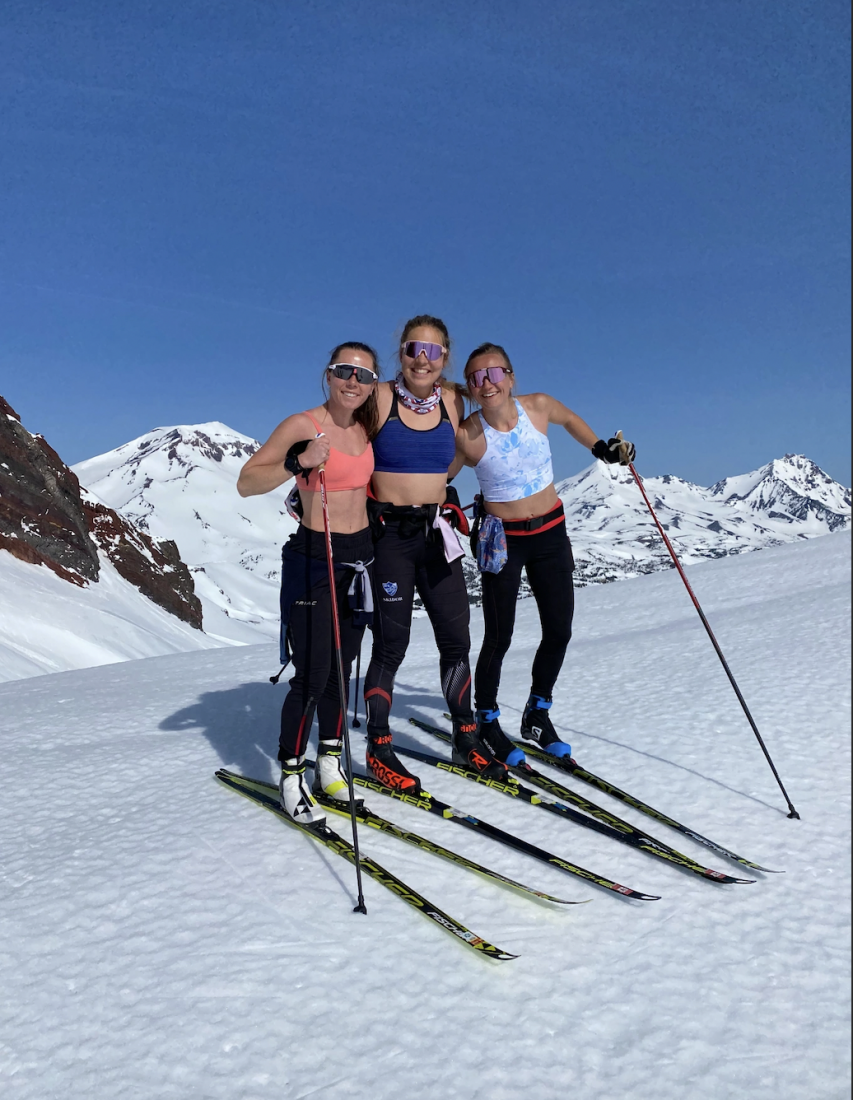
    SMS T2 athletes Lauren Jortberg, Lina Sutro, and Alayna Sonnesyn find bluebird conditions for a crust ski up Broken Top near Bend, OR in May. (Photo: SMS T2 Blog)

    Identifying Your Easy Zones

    The theoretically simple method for establishing heart rate zones is to work backwards from your maximum heart rate where each zone represents a percentage of the max. The challenge is that there’s very little agreement on how to best calculate one’s max heart rate without actually experiencing it. 

    A more accurate method is to undergo a lactate threshold test, where heart rate zones are calculated based on the amount of lactate measured in the bloodstream. More accurate, but more difficult to conduct, and not universally accessible.

    So how can we determine what is easy and what is too hard? 

    In an effort to keep easy easy, I’m going to define it as conversational pace. You should be able to talk in complete sentences without having to… pause… to take in… more air… to finish your sentence. This is mediocre science and not especially objective, but with some practice, it’s not difficult to find that upper limit of talkability. 

    If you’re a numbers person, you can likely conduct your own ramp test where – after a warm up period – you progressively increase speed/effort while reciting poetry or singing along to what’s in your AirPods. Mark the heart rate where you lose the rhythm, and that’s a decent estimate of your upper limit for Zone 2.

    Your new goal on easy days will be to keep your heart rate below this threshold, not necessarily at this level. For those accustomed to pushing the pace on every session, slowing down enough to keep your heart rate in the appropriate zones might feel like a big adjustment. There’s no real way around it – you’ll need to buy in, and trust the process/science. Maybe use it as an excuse to get out with a training buddy who is generally slower than you and give the whole “pedestrian pace, talking the whole time” thing a go.

    Worst comes to worst, you give it an honest try and decide you prefer to just go hammer, then go back to your old ways. That’s the beauty of being a recreational athlete – at the end of the day, we’re just pursuing hobbies we find rewarding and enjoyable. 

    * A note for Strava users: don’t rely too much on the Relative Effort number. As a metric of intensity over time, it seems optimized to capture long, hard efforts like an hour-long tempo run where your heart rate stays high for the entire hour. It doesn’t handle intervals very well since the rest periods sort of cancel out the high intensity efforts. 

    For example, Strava gave 60 points to a 55 minute tempo run with an average heart rate of 158; however, an 57 minute interval session (9x600m on the track) with an average heart rate of 147 only got 35 points. To me, both sessions were equally hard, but the tempo run scored 25 points higher. 

    Strava does allow you to use your perceived exertion in place of heart rate for calculating Relative Effort. When I enabled this override, the tempo run scored an 87 while the track workout got a 147. (My easy efforts aren’t affected much.) Personally, I’ve found the Relative Effort score, along with the weekly log and Fitness and Freshness, far more useful (and accurate?) with this tweak. Here’s a deeper dive into that black hole.
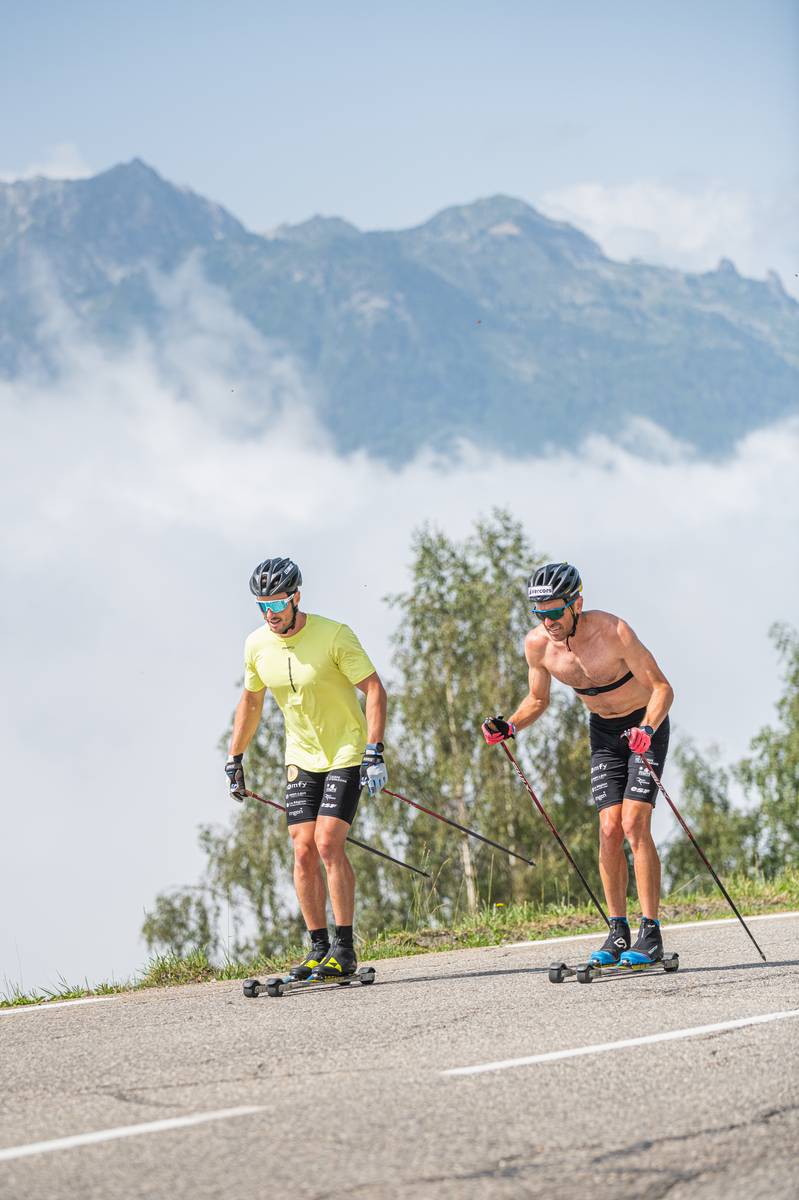
    French athletes Lucas Chanavat (left) and Maurice Magnificat (right) out for a rollerski during a training camp in Tignes. (Photo: NordicFocus)

    The Purpose of Polarized Training

    Now we can talk about why the easy is important. 

    Stress + rest = growth/adaptation/strength/speed. That is the basic formula. Our bodies are designed to adapt to load, but we have to give ourselves the opportunity to make those adaptations. Too much volume or intensity and the body will stop absorbing. Not enough recovery and the body will stop adapting. Best case, your performance plateaus. Worst case, you get injured. 

    The Krebs Cycle. The stuff of High School nightmares. But the essence of the endurance athlete. The Krebs Cycle is the pathway by which our bodies put gas in the tank. It is the process by which our mitochondria – magical little intracellular thingies – convert carbohydrates, fats, and proteins into the specific energy required by muscles to contract. In oversimplified terms, the more efficient the mitochondria are, the faster and longer we can go. And it appears that the best way to train mitochondrial efficiency is with training in Zone 2. (If you want to seriously nerd out, this podcast with Dr Iñigo San Millán, perhaps the Father of Zone 2,  is a deep dive in a submarine to depths of the ocean.)

    The easy/Zone 2 is considered so important that it typically makes up 70-80% of elite athletes’ training volume. The other 20-30% is hard (high Zone 3, Zone 4, and rarely into Zone 5). For the athlete who doesn’t have all day, every day to train, that means you only get a couple of hard sessions per week. Keep the rest easy.

    Some that’s hard, lots that’s easy – that’s the essence of putting Polarized Training into practice.


    Example Training Plan Template

    Monday Easy short or Rest if needed
    Tuesday Hard long
    Wednesday Strength/core maintenance
    Thursday Hard short (intervals) 
    Friday Easy short or Rest if needed
    Saturday Easy long OR Hard long AND Sunday is Easy
    Sunday AM: Hard short (intervals) + PM strength/core maintenance


    My training template is based on my work schedule and typical life obligations. I’ve given myself a max of three hard sessions a week with one of them longer (2-3 hrs ride or mountain run–the fun stuff!) and the others around an hour of intervals. My strength/core maintenance sessions typically fall into the easy category and don’t require much recovery (no delayed onset muscle soreness). But my schedule is also very flexible. If I’m tired, I can move a hard session to another day or skip it that week. If I get too busy or stressed, then I can modify the program without too much frustration.

    I’m fortunate that I can train/play seven days a week, as long as I’m recovering adequately. However if your schedule only allows for training three days a week, you can still apply the basic formula and have one hard day and two easy days.

    Richard Jouve doublepoles up an incline during a team training camp in Tignes, FRA. (Photo: NordicFocus)

    For some of you, this may be common sense and describe how you’ve been training for years. For others, this is quite a departure from your norm and will take a concerted effort to implement. But whether your goal is optimal performance or staying healthy for years to come, investing in a polarized plan, and especially leaning into the Zone 2 work, will pay dividends.

    Lastly, I think any discussion about training principles/plans needs to have the overriding theme of ‘push yourself, but be kind to yourself’.

    Be flexible. Training plans aren’t written in stone. Don’t beat yourself up if work, family, weather, fatigue, or lack of motivation keeps you from your intended workout. Take a walk, play with the kids, lie down on the sofa—whatever it takes to reset and be ready for another day. One workout will not make or break, but constant self-criticism will sink the ship.

  • Personal Essay: An Uphill Battle by Tim Donahue

    Personal Essay: An Uphill Battle by Tim Donahue

    If you look at the lines that graph long-term athletic performance – VO2 max, anaerobic threshold, maximum heart rate, 10k running speed – it can be pretty demoralizing. Even before age 30, there’s a slow and steady cant downward, and then by the mid-40s, a descent into a valley that plunges toward the abyss’s void of emptiness.  

     Some of us choose to oppose these trendlines, wrestling with them like tentacles in a roiling sea of errands and bills and fraying cartilage and arthritis. During well more than one rollerski session each year, I think of the “strange resistance” Robert Frost describes in his poem “West Running Brook”:

    “It has this throwing backward on itself / So that the fall of most of it is always/ Raising a little, sending up a little.”

    This man, whose Vermont cabin touches the Rikert Nordic trail system, continues:

    “It is this backwards motion toward the source/ Against the stream, that most we see ourselves in,/ The tribute of the current to the source./ It is from this in nature we are from./ It is most us.”

    The tribute of the current to the source. It’s as though Frost (who, I’m guessing would be Birkie wave 8 – at best) was tasked to make an inspirational T-shirt that captures the mind of a masters skier. I am proud to be a member of this infinitesimal subset of American society, and if you still think skis with holes in the tips look new, I imagine you are too.  

    Tim Donahue mid-race during the 2020 Winter World Masters Games in Seefeld, AUT. (Photo: Garrott Kuzzy / Lumi Experiences)

     After too much running for my large frame and my knees, I began uphill skiing in earnest in my mid-30s, just as I knew these charts were generally tipping downwards. As I was effectively starting from scratch, though, I felt I had an advantage. I did not have to chase the ghost of my 22 year-old self, vaunted by a college program and a systematic knowledge of voluntary suffering. Skiing gave me a second athletic life, and as I opened its invitations to technique, training blocks, intensity sessions, and World Cup fandom, I delighted in every aspect of its complexity.  

     Nearly twenty years into it, the fires still burn, though sometimes it’s hard to tell whether I’ll coax any new flames or just ride along the glimmer of dying embers. Now into the swing of summer as we are, I find myself between an acronym – SAMITS (skiers are made in the summer) – and, a hammock. Can I throw another log onto this fire? Should I? It’s a question of little worldly consequence, and yet it’s the central question of this other world I’ve built for myself. 

     More than anything, the lure of skiing these days is that reliable doorway it opens into another place. I have sat through all-morning “self-care” sessions in hot rooms in masks, and then I have clicked into the Marwes and breathed. I have endured a full Guy Fieri cooking show in the doctor’s waiting room, then I’ve gently climbed through the woods with four points of contact. I just learned the world emitted more C02 than ever last year, and I needed to get out and roll among the innocent trees.   

    This otherworldliness has especially come as I’ve lived in, and now just north of, Manhattan all these years. I have approximately one teammate (the great Sproule Love) and I get on snow maybe a dozen days a season. But new wheels roll well on fresh pavement even here, and it’s easy to let the mind return to the familiar grooves. On the rail trail that runs mercifully just out my door and now nearly connects through the entire state of New York, I can lather into a third hour under a canopy of early spring leaves and let the Wendell Berry in: “The health of nature is the primary ground of hope – if we can find the humility and wisdom to accept nature as our teacher.” Yes, skiing can soften the hard edges of the world and give way to the dance of balance and strength. And yet, sometimes I need more than this.  

     Sometimes, I can rouse the fires within to see a completely different world beyond, with its own muses and images. Here’s where I hear the siren song of Devon Kershaw and his allusions of carnage: the “rip their legs off” and “gun to tape annihilate” and the “going down to the basement.” Racing is just instinctual for me. I ran my first 10k back in 1979, when I was nine, and whether up stairs, across bogs and sand dunes, on bikes, on skis or snowshoes, I’ve raced every year since. To this career high school English teacher, it’s the opposite of grading essays.  

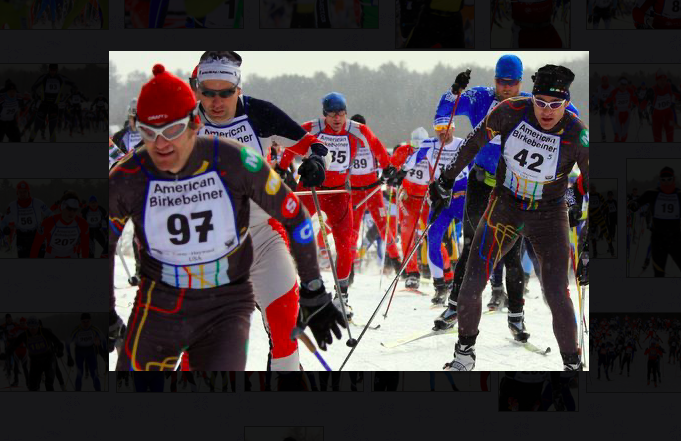
    The author, Tim Donahue, races the 2012 American Birkie with teammate Sproule Love (bib 97). (Photo: livestream screenshot)

     When I’m trying to connect with my limited stores power and speed, I’ll sometimes watch World Cup clips on YouTube. I see Petter Northug gritting his way through the field to take the 50k classic at the 2015 Falun World Championships; I see those last few k’s in the Beijing Olympic 30k when Jessie Diggins finishes on fumes for silver. (Yes, a proud moment in our household when my daughters encouraged me to name our puppy Diggins.) The one I’m thinking of now is the 2019 World Champs 30k skiathlon in Seefeld. It’s Sundy-Bolshunov-Røthe trying to destroy each other up the last few climbs, finding a hop skate after seventy-five minutes of redline racing, then spilling across the line with perfectly emptied tanks. Perhaps you have your own favorite clips.  

    As I try to summon a summer interval in the suburbs, after dropping my daughter a sleepover, I can get to thinking about my own highlight tape, which Chad Salmela is definitely not narrating. I think of the 2006 Pepsi Challenge, when at 48k, I gave a nod to my one teammate and we made a decisive surge, dusting the last young buck riding in our train. I think about Bitch Hill, a steep little climb 40k into the Birkie, when several years later, I found the spring to fracture our large, lollygagging pack. I find these memories within, gently flogging me with their flagella. In part because it’s so hard to explain them in my faculty lounge in the Bronx, in part because they are the payouts of so much stoic suffering, and mostly because I just love it, I want to make more.  

    This winter was different though. Mysteriously, I started feeling a constriction in my chest. I was often unable to get a full breath, even when reading in bed at night. When I tried to get out of zone three, I just couldn’t find the air. I saw my pulmonologist, my cardiologist, a gastroenterologist. I drew blood, I got tests. I got sucked down the Internet vortex: was it long Covid? Had I even had Covid? It took time and was expensive, and I didn’t learn much.  

    With each race I had penciled into the schedule and had to decline, I felt the nip of disappointment. I didn’t want to say good-bye yet. Could I salvage, at least, something?  

    One day in February after a good night’s sleep, I decided to enter a low-stakes challenge – the benchmark 10k rollerski time trial in Central Park. It wasn’t awful. In fact, it was an improvement from a few months prior. So, I succumbed to the beast and tried a few late-season races.  

    It’s not a great feeling to stand on the starting line with a doubting mindset – “What am I doing here?” “Don’t blow up.” But that’s how things went – I felt like I was wearing someone else’s clothes. It was hard, humbling, and really not that much fun. But my last race of the “season” (four races total) offered a glimmer of hope. It was just a 5k relay leg, in perfect conditions on a rather flat course. Still, I felt relatively strong. I was actually able to pass people up a hill. So that’s the memory I’m choosing to take away. 

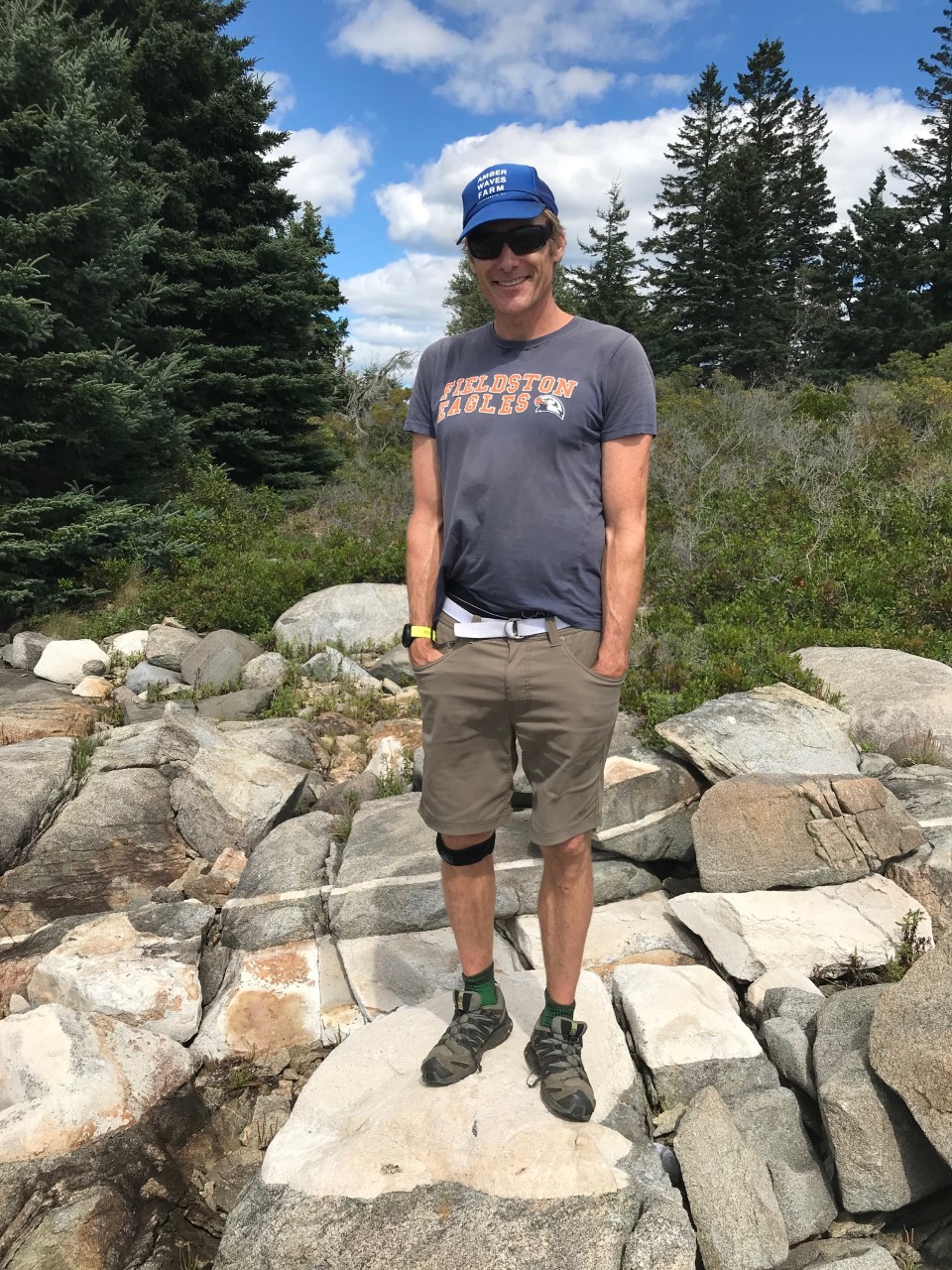
    Tim Donahue in Maine during the summer of 2020. (Photo: Sproule Love)

    But is it enough to justify all the rigamarole? That sixth hill interval when the pain just feels pointless? Those beautifully aimless workouts – where you go a little faster than you should – interrupted by the voice of prudence? The occasional margarita you eschew for some pious purpose? And then, when winter comes, all that fretting over Wunderground and waxes and websites, where you read about volunteers shoveling snow onto corners in dwindling hopes of staving off the coming thaw, toward which your travel no doubt contributes?  

     Ugh – yeah, it’s worth it! We skiers worship a rather demonic god, it seems. And its worth only grows because it’s so fleeting, like surfing through a barrel wave – exhilarating and bound to crash. Like trying to ski uphill forever. If you, reader, have not grappled with this same question, you probably will!  

    Here’s the best revelation I’ve come to: I just want to be able to work hard enough so that going out on a long ski feels easy. For a recent New York Times piece about the pleasure of running slowly, one of the most popular comments was, “Running for joy beats running to win anytime.” I’m not quite there yet, but I see the light of this too. For now, I want my strength to be more than my pain. I know my imagination can supply the rest.  

    Author Bio:

    Tim Donahue teaches high school English at the Ethical Culture Fieldston School in The Bronx. He lives in Hastings-on-Hudson, NY and rollerskis year round. You can find his writing on climate change and education in The New York Times, USA Today, and Newsweek.

  • Introducing a New Series: Ask the PT

    Introducing a New Series: Ask the PT

    When I began skiing halfway through high school, I remember my coach telling our team that cross-country skiing was a “lifelong sport”. Now, more than a decade and a half later, I don’t have to look far to see the truth in that statement. While out for a ski on local trails, I might see a 65 year old retiree who is training for the Korteloppet, a 50 year old former bike racer who has taken up skate skiing in the winter, a 75 year old skiing in jeans on fish scales, and a 17-year-old Junior Nationals hopeful. I might also see (or be) a parent towing their child(ren) in a chariot, a beginner working up the courage to “pizza” down a hill, or a former NCAA racer kicking and gliding effortlessly up the track. Each of us with unique starting points, individual differences in technique, and physiological strengths and weaknesses, the ski community encompasses a wide spectrum of athletes. 

    One of the authors favorite spots on her local trails at Spring Gulch near Carbondale, CO.

    The beauty of a low-impact sport is that it can be forgiving on the body, despite the cardiovascular toll it might require. At the same time – yes, it’s a low-impact sport, but “low-impact” does not mean cross-country skiing does not put a large strain on the body. It requires strength, balance, repetitive movement, and at times might involve an uncomfortable crash or two onto unforgiving hard packed snow. 

    Whether you have performance or fitness goals, are simply looking to improve technique and efficiency, or are looking for a path to return to a pain free ski experience following an injury, it’s likely that a question has run through your mind while out for a ski that you wish you had a physical therapist by your side to field.

    We’ve got your back. 

    FasterSkier is excited to introduce a new reader-driven series: “Ask the PT”. You ask, we answer.

    So who is the PT? 

    Already a familiar face on this site, Ned Dowling is a physical therapist based in Salt Lake City, UT. Most recently, Ned authored the “Building a Better Skier” series, focused on biomechanics, as well as articles on heart rate variability and an upcoming piece on SkiErg technique. 

    Though he had spent time on skis previously, Ned became hooked on cross-country skiing after moving to Salt Lake City a decade ago. With an extensive background in cycling, Ned worked as a physical therapist for a pro cycling team for several years, which gave him insights into the professional endurance sport world that have now transferred into his work with skiers. 

    After attending a U.S. Ski & Snowboard conference on ACL repair several years ago, Ned connected with some of the strength and conditioning coaches working at the Center for Excellence in Park City, and began learning more about the teams who trained there. These connections eventually led to a call in January 2020 asking him to travel to work with the U.S. Cross Country Team. 

    Ned Dowling out for a ski in Sjusjøen, Norway with Jessie Diggins and Matt Whitcomb. (Courtesy photo)

    In March 2020, as the pandemic loomed, Ned traveled to meet the team in Lillehammer, Norway, following Ski Tour 2020. (If, like us, you feel the last two years have been a blur, Ski Tour 2020 was a six-stage tour that began in mid-February in Östersund, Sweden and ended in Trondheim, Norway. The women’s Tour was won by Therese Johaug, with Pål Golberg taking the overall win for the men.)

    Ned has since continued his relationship with the U.S. Ski Team, and more recently assisted with athlete care during the team’s fall training camp in Park City, UT. Ned is also slated to join the team for the final two weekends of World Cup racing which are scheduled to take place in Falun, Sweden and Tyumen, Russia. 

    So how will this work? Shoot us your biomechanics and physical therapy-related questions to AskThePT@fasterskier.com. We’re aiming for a monthly article where Ned tackles a reader’s question, which hopefully benefits the broader nordic community as well. For other content related questions or comments, feel free to email info@fasterskier.com. 

    Stay tuned and happy trails!