From the FasterSkier archive — posts syndicated from athletes’ and coaches’ own blogs between 2004 and 2012, kept online as published. Current coverage is at fasterskier.com.

Tag: masters racing

  • Letters to My Younger Self: Murray Banks on Embracing Opportunity and Living Life to the Fullest

    Letters to My Younger Self: Murray Banks on Embracing Opportunity and Living Life to the Fullest

    Editor’s note: This is the third essay in our series, “Letters to my younger self.” Lauren Fleshman provided the modern locus classicus for this genre, while John Wood and Adam Verrier kick-started the series on FasterSkier. 

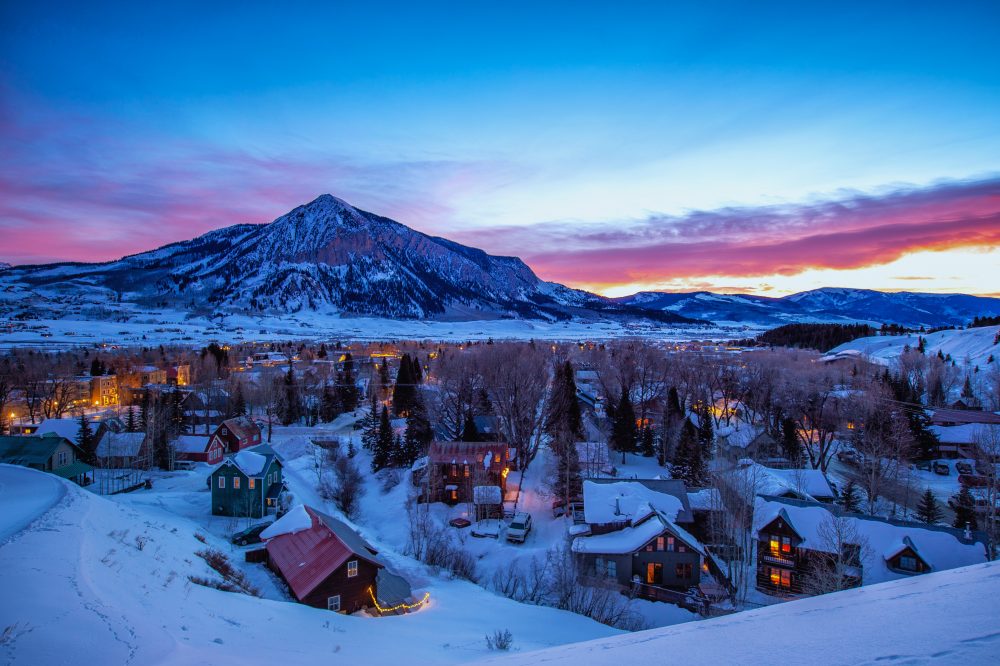
    When the private school at which my husband teaches offered him a sabbatical for the 2020-21 school year, we quickly began to fantasize about the ski town(s) in which we’d spend the following winter. A February 2020 trip to the Alley Loop Marathon had me captivated by the tiny high-altitude town of Crested Butte, which, despite being roughly 40 miles from our home in Carbondale as the crow flies, is over four hours by car in the winter, over 2,000’ higher in elevation, and has a truly magical community surrounding its nordic center. It’s pure paradise for cross country skiing.

    We lucked into a rental on Craigslist in mid-February, only a few weeks before the pandemic descended on the US and made such rentals (and prices) impossible to find as a mass exodus from cities began for those who were suddenly able to work from anywhere in the world. We also lucked into jobs at the Crested Butte Nordic Center, myself coaching in the masters programs and instructing private lessons, and my husband coaching the youth programs. 

    It was in the masters performance group that I had the chance to work alongside Murray Banks, whose reputation as a one-of-a-kind, enthusiastic, high-energy coach with a keen eye for technique preceded him. 
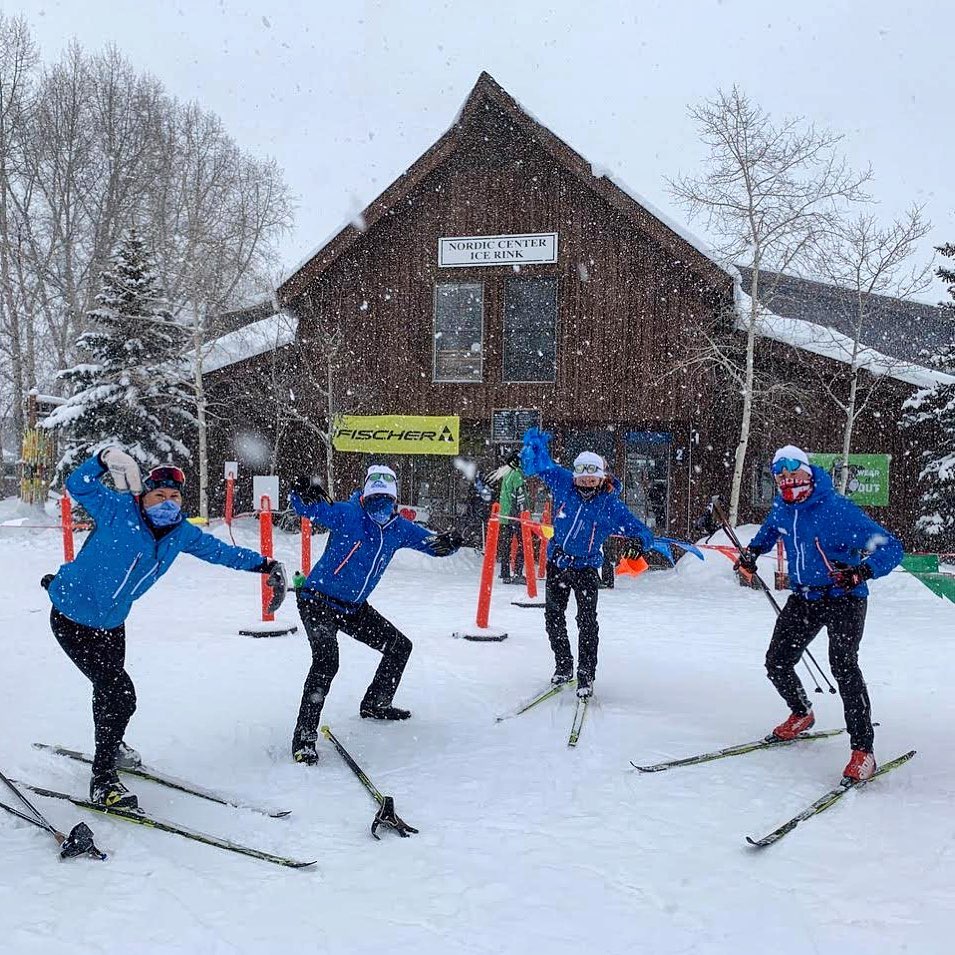
    The masked-up smurfs behind the 2020-2021 masters performance group in Crested Butte, CO. From left to right, Rachel Bachman Perkins, Murray Banks, Cam Smith, Woody Martineau.

    Coaching with Murray was an unforgettable experience. His energy and positivity are the right kind of infectious – the type that makes you want to be a better version of yourself, overall. The kind that leaves you wanting to ski better, try harder, be kinder, and recognize that attitude is everything, even when life throws you some massive curveballs. 

    You’d never know that Murray was fighting cancer. Even on the days where most would throw in the towel, Murray would slip into his ski boots and make his way to practice. On days he wasn’t feeling well, he’d ski more slowly and keep the distance traveled to a minimum, but that didn’t prevent him from showing up with an ever-present grin, ready to encourage the group of skiers through technique cues and an interval session. 

    Though we only worked together for a few months, his impact was lasting. It is my pleasure to share the following letter Murray penned to his younger self. 

    March, 2015

    Hey Murray,

    Wow, you look so young! Oh yeah, you’re only 6. Have you got freckles? I don’t remember having freckles. Anyway, this is a bit unusual but a friend here in 2015 asked if I’d write you a letter with a few observations and perhaps a tip or two. Have a seat, this will be long as there has been a lot of water under the bridge over the past 68 years. I’m surprised you are reading this, you’re usually out in the neighborhood playing endless tag games with your friends. Did you have a hockey rink in the yard this past winter? Oops, gotta run, headed out to ski with my/your granddaughter Winter who is actually 6 just like you!
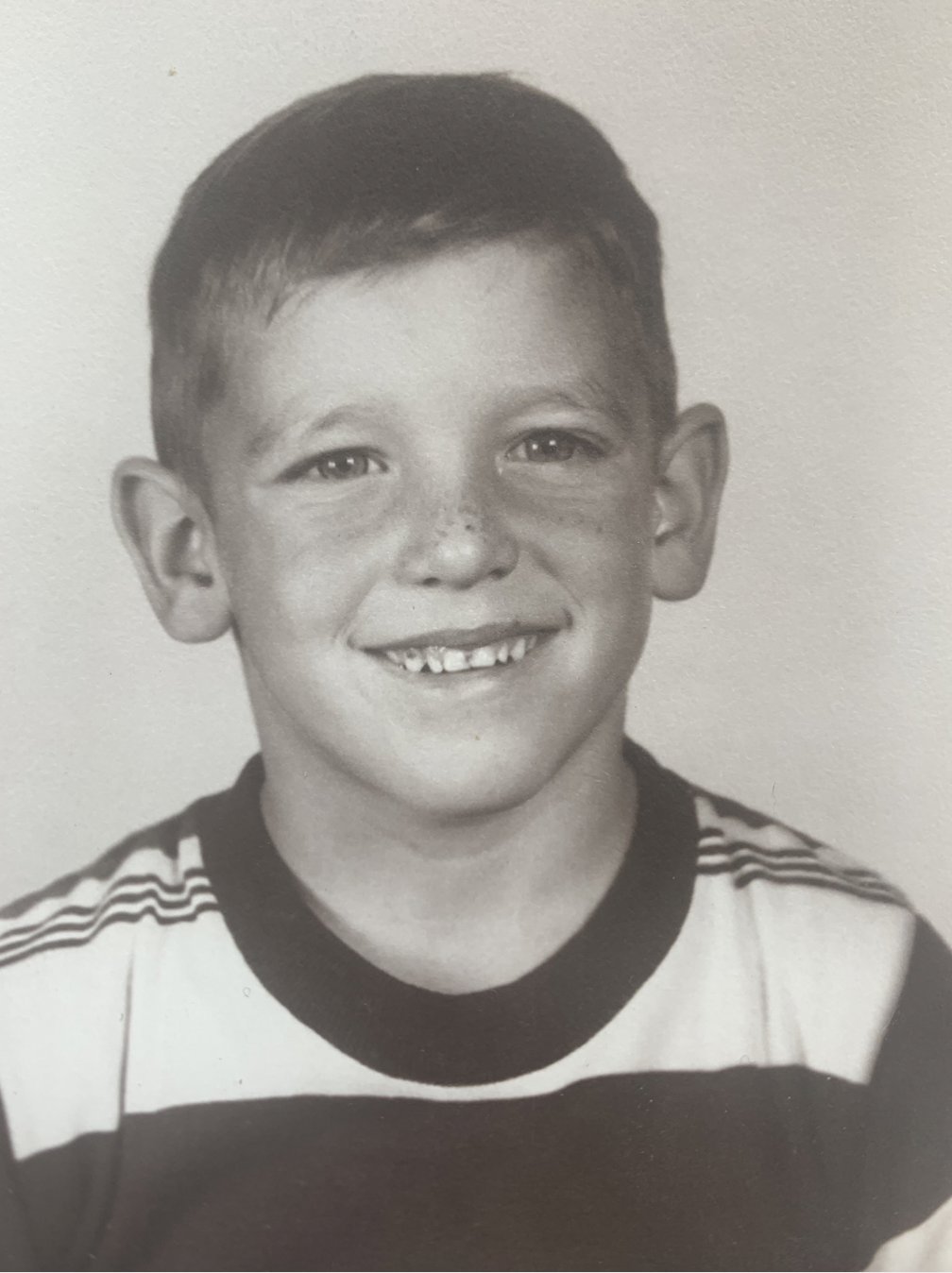
    A young Murray Banks. (Courtesy photo)

    March 2022

    Sorry about that, I started this 7 years ago but got busy. That’s probably good though as you will have a better handle on some of the insights I’ll be sharing with you now that you are 13. OK, here in 2022 you are 75 years old. Hard to believe that you will be as old as your great gramma is now.

    As you are learning, yours is an athletic family and we play almost every sport imaginable. And when we’re not playing an official sport, we are riding our bikes, competing in a tenacious whiffle ball game or playing capture the Flag ’til way after dark. Playing sports is our family thing and you are doing them all… baseball, basketball, football and hockey. It is a perfect childhood so I hate to do tell you this, but you will hold your own in sports until high school, then everyone else will grow and you won’t. Hey, it’s ok, you were born in late October and everyone is way older than you. 

    First, the bad news: you aren’t going to continue to be a star baseball player like you are now. And you aren’t going to make it in basketball either. And the football coach will say to you “Banks, you’re a tough kid but I can only use you when it’s 3rd down and 3 miles to go. You should run cross country.” I don’t think you even know what cross country is! 

    But, here’s the good news: you’re going to love running and you will become quite good at it in a few years. One more thing, don’t fret about maturing late… when you are in your 40’s and racing triathlons, you’ll go to your 25th class reunion, look around and wonder who all those old people are. Triathlon, bet you don’t even know what that sport is. It’s a cool sport that involves three events you already love and will be invented when you are in your 30’s, more about that later.

    Murray Banks joins the cross country team at Cortland State in Upstate New York. (Courtesy photo)

    In a few years, you will have to decide on a college — well, if you put a bit more focus on your school work, you will. You will get lucky and choose a school and major that you love and be on championship teams with great guys and coaches. One day while walking to class, a professor with national prominence for his teaching and coaching, will stop you and say, “Ya know Banks, you’re tougher than hell and someday all your training and determination will pay off big time. Keep up the good work.” 

    That interaction may only last 60 seconds but the eventual benefit will last 60 years. This is important, pay careful attention to older, wiser people you admire and respect. 

    They see things you can’t possibly see at your youthful, exuberant age. They have perspective that will benefit you in ways you can’t imagine now. Oh, and one more thing about college… you’re going to meet a very special girl on your track team. She’s a sprinter, she’s smart and she’s really attractive. If you don’t mess this up, she will become your lifelong love and training buddy.

    With a bachelors degree in hand, you will embark on a teaching and coaching career that will earn you several honors and great satisfaction… slow down and soak it all in. Now this will be hard to fathom, but getting cut from baseball, basketball and football will come in very handy in a few years. As a high school running coach, you will seek out athletes who were rejected from other sports and turn them into championship caliber runners. The energy and imagination that often got you in trouble in school, will produce unique results in your teaching, coaching and racing career — hard to imagine isn’t it? Your struggles academically won’t last, just remember what Einstein said, “Imagination is more important than intelligence.”
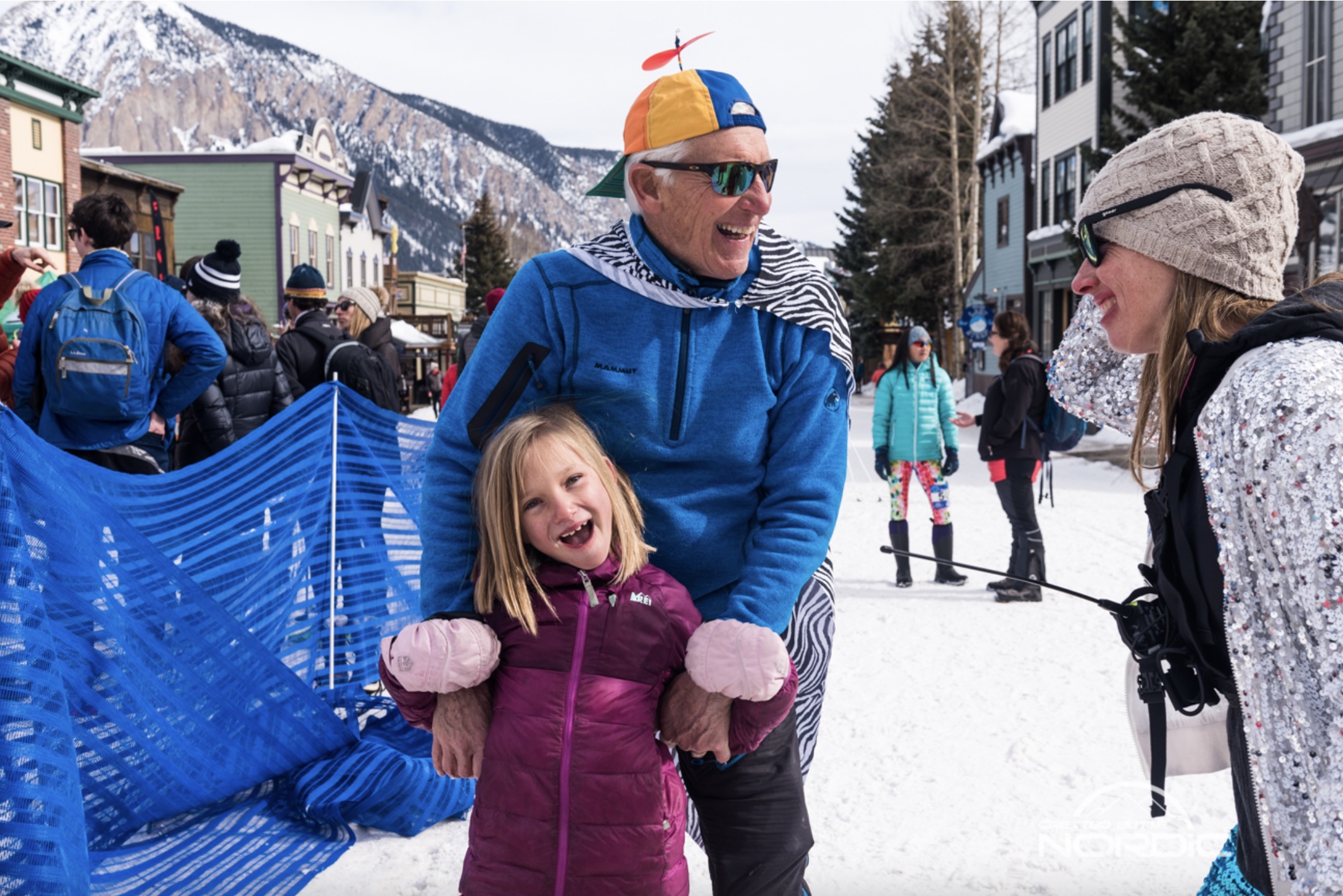
    “When you coach kids, you lose 40 years off your chronological age.” – Murray Banks (Photo: Xavier Fane / Crested Butte Nordic)

    Now, back to that girl you will meet in college… she is a sprinter and you are a distance runner, that’s how she catches you, you just weren’t fast enough! But, she will become quite an accomplished endurance athlete and the two of you will enjoy years of racing all over the world. And it will be in two sports you aren’t even aware of now: triathlon and cross country skiing. And, as a bonus, when you marry her you will get an island! Yup, your teaching careers will enable you to spend summers on the family island and you can swim, bike & run a lot and become quite proficient at that triathlon sport. Actually, so proficient that you will both race in the world championship and people will pay you to do it. Really, honest, not kidding, this will be your job for a few years, you lucky guy! 
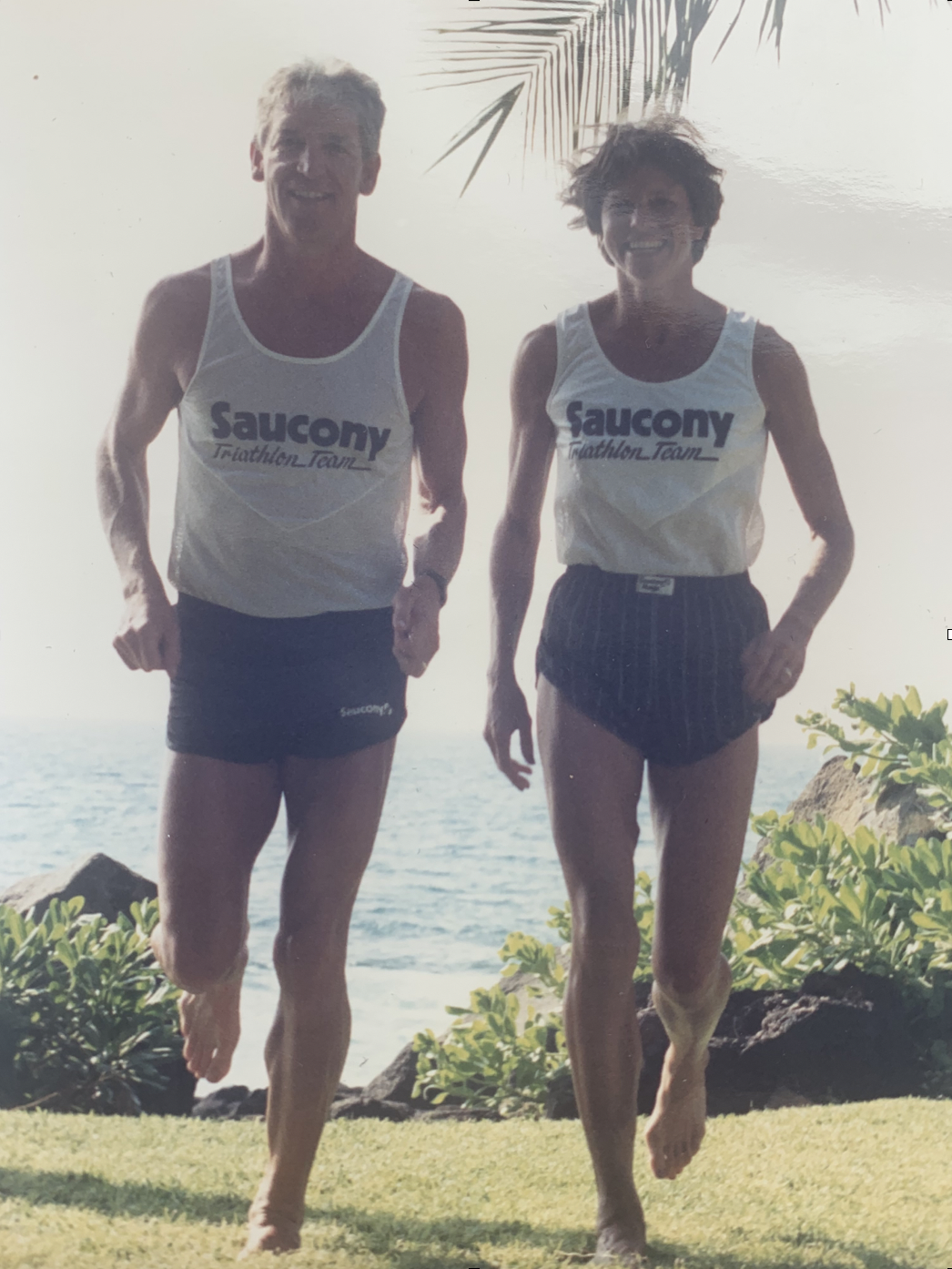
    Murray Banks and his wife prepare for Ironman Hawaii, 1988. (Courtesy photo)

    Although you will absolutely love teaching, you will have an opportunity to take time off to be a full time athlete. And your 8th grade teacher Mrs Bentley, who will say to you “You’ll never make anything of yourself just playing sports, Mr Banks!” Well, turns out she was wrong, but probably best if you don’t say anything to her. 

    Instead, you will create a niche as a speaker and corporate trainer that provides the time to train and race nearly full time. It’s an occupation that resembles training and racing in every way… you prepare thoroughly for long periods of time; you need to be focused and goal oriented; you work intensely hard for short periods of time, followed by longer periods of recovery; and, when it’s time to race or deliver a presentation, you really need to be on your game, there is no room for mediocrity. Any time your work, recreation and passions intersect, you have the best of all worlds and so many good things arise. So, younger Murray, keep all options in your life open, there is no predicting what opportunities will present themselves.
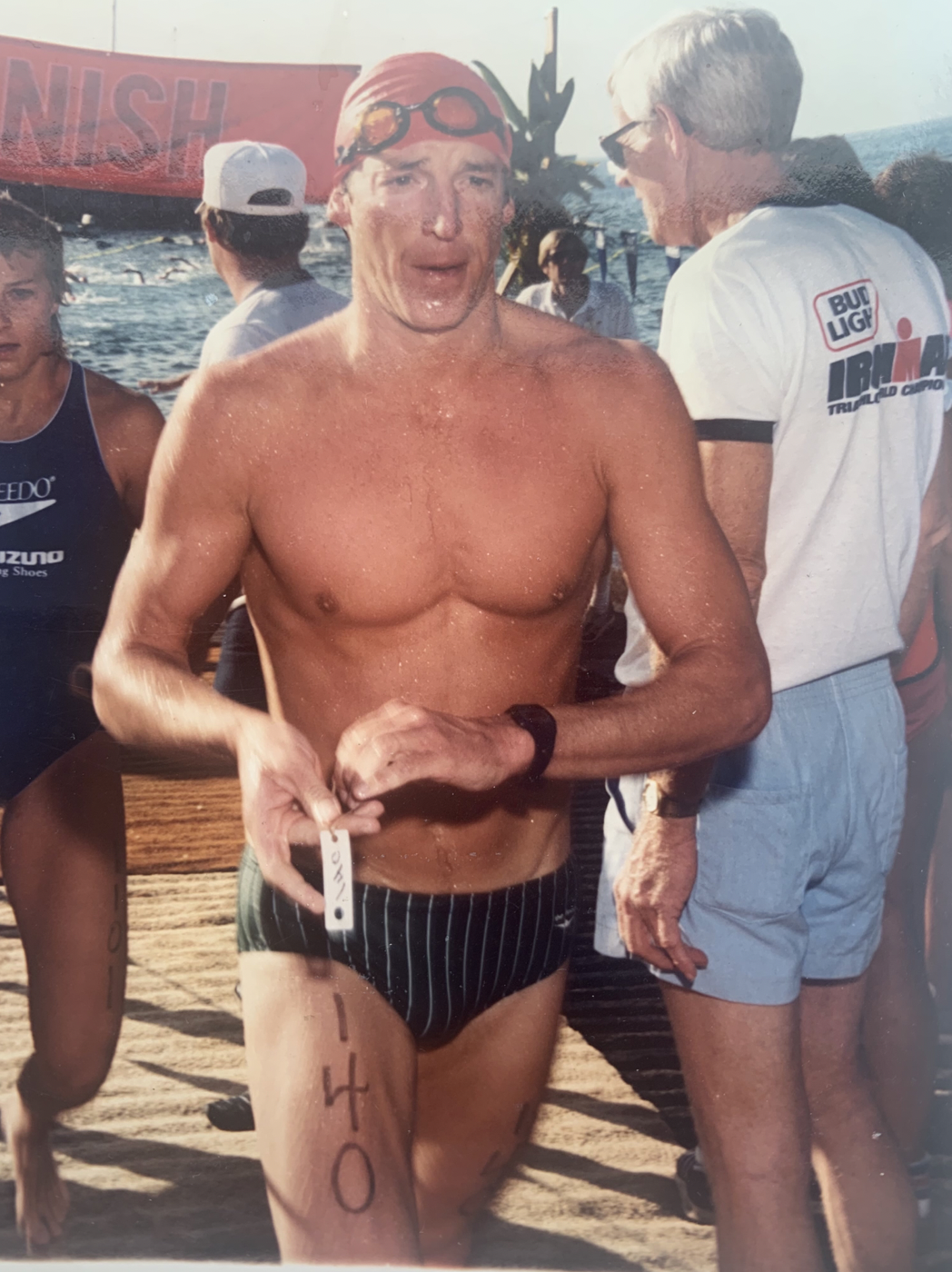
    Ironman Hawaii, 1983. (Courtesy photo)

    But, I digress. Training for triathlons during long, cold Vermont winters was a challenge so you know what comes next? Cross country skiing. 

    For several years, skiing will just be winter fitness for triathlons but eventually, skiing will became your favorite family activity. You and Janie will eventually have two rambunctious boys who love to play outside day and night, just like you! They will play all the usual sports but will eventually get into ski racing and soon you will be going to races to cheer for them rather than the other way around. 
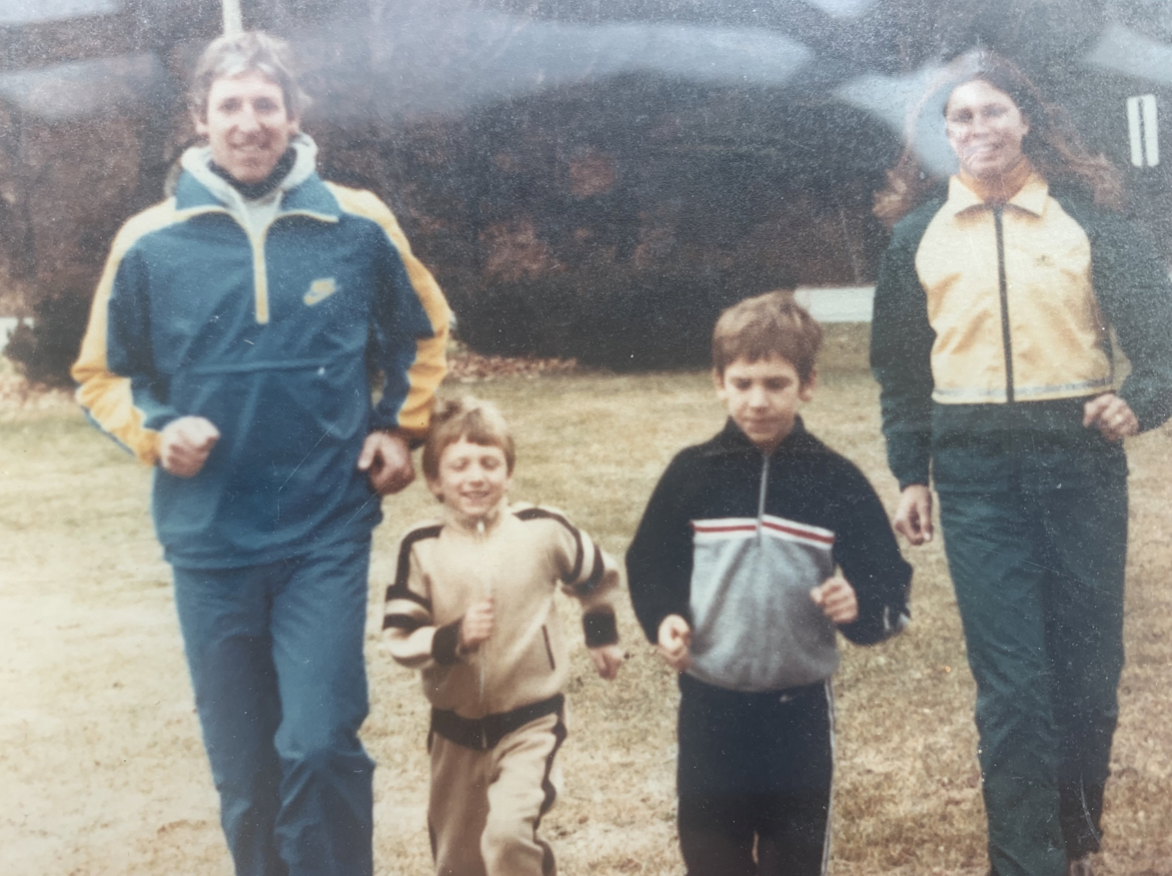
    Team Banks at a community fun run in Vermont. (Courtesy photo)

    So finally, cross country skiing… get this, skiing downhill is way more fun than running down hill! And, while triathlon training can be tedious, arduous and exhausting, skiing is generally fun and challenging. So, you will retire from triathlons and spend most of your athletic energy training for and racing in cross country skiing and have the opportunity to race in cool places like Norway, Austria and Italy.

    Masters World Championship, Asiago, Italy, 2014

    You and that sprinter girl will both win gold medals at various masters world championships and you will meet people from those countries that will become lifelong friends. And, you will find that folks in their 50’s and 60’s who continue to ski race are really an energetic and positive group of people to hang out with.

    And those boys you and the sprinter girl so enjoyed skiing with when they were kids…they took that joy for snow and mountains and parlayed it into careers as international mountain guides. And the best part? You will get to ski big peaks all over the world with them, which it sure beats playing basketball and baseball!
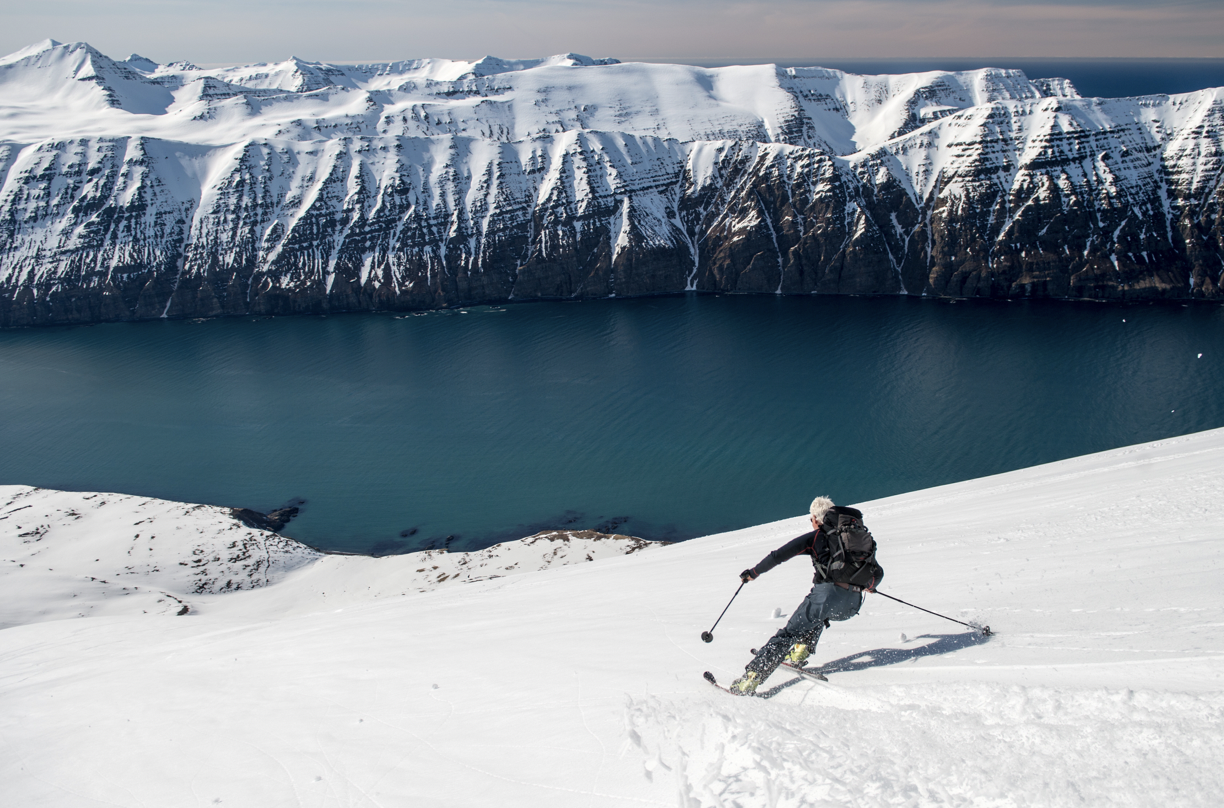
    Troll Peninsula, Iceland, 2017. (Courtesy photo)

    This all sounds a little too good to be true doesn’t it? Well, as you have probably guessed, it is. At the very pinnacle of your personal, athletic and professional success, life will throw you a curveball… cancer. 

    Now, at your young age, you may not understand what cancer is, so I’ll break it down a bit for you. Cancer is an insidious disease that eats at you over time and saps the energy and strength that have been hallmarks of your life. In your case, you will endure surgeries, radiation treatments and a bevy of drugs that will end your racing career. You will need every ounce of patience, optimism and tenacity that you’ve spent a lifetime developing through sports. 

    It will be the greatest test of endurance that you have experienced in your lifetime. But, there is an interesting cancer/ski racing analogy, bear with me on this. Imagine, you are in a 50km classic ski marathon, with temps at freezing and a damp, cold wind that makes the track indiscernible and waxing impossible.

    The track is poorly marked and you are never 100% sure if you are on course. There are no kilometer signs and the route is ambiguous. Your kick wax has failed you – one minute you are slipping and the next your are walking on snow stilts. You pass spectators and ask “is this the way?” and they respond “not sure, just keep going.” You ask others “how far to the finish?” and they respond “not sure, just keep going.” The blowing snow and poor markings obscure any semblance of direction and you press on not knowing which trail to take.

    Yup, living with an aggressive cancer is very much like a tough ski marathon… you know you have to keep going, but you have no idea how long and you can only hope the ones giving directions know the best path forward.
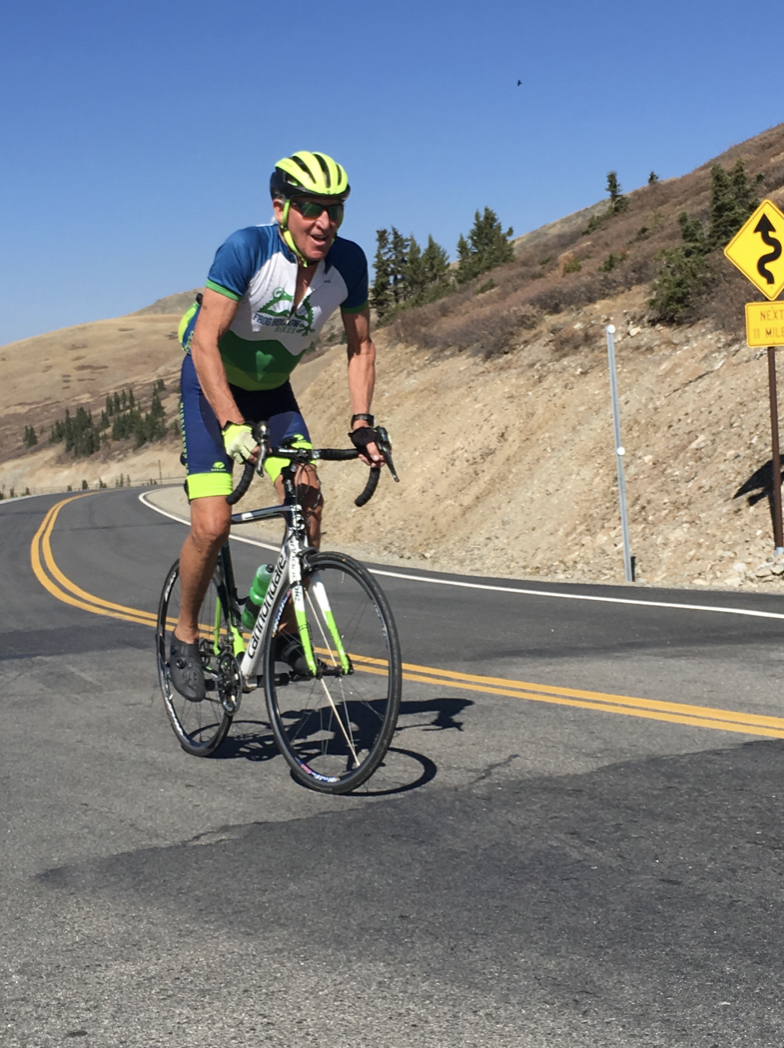
    2020 Covid Cancer Climb with buddies at the summit of 12,300’ Cottonwood Pass, CO. (Courtesy photo)

    But, my younger self, you are well prepared. All those years of endurance training and racing are paying off now as mental toughness, dealing with pressure, staying focused and learning to exceed your perceived limitations will carry you far longer than you might expect. Those teammates and coaches you loved will support and encourage you, just like they did decades ago. And, no matter how exhausted and frail you may feel, you will find strength and joy in doing what you’ve always done… getting outside in the sunshine to ski and bike with your friends.

    At your age here in 1959, sport is a competition that you prepare for and do your best at. You are in the moment and not thinking of the lifelong benefits. But looking back, you will see that training, competition and pushing yourself was the best possible preparation for a lifetime of great joy, professional success and personal satisfaction. But most importantly, it will give you the ability to withstand discomfort, uncertainty and challenges you did not sign up for. 

    As an endurance athlete, you developed a unique life skill set that you can cash in when you need it most; and here in 2022, you are reaping those benefits.
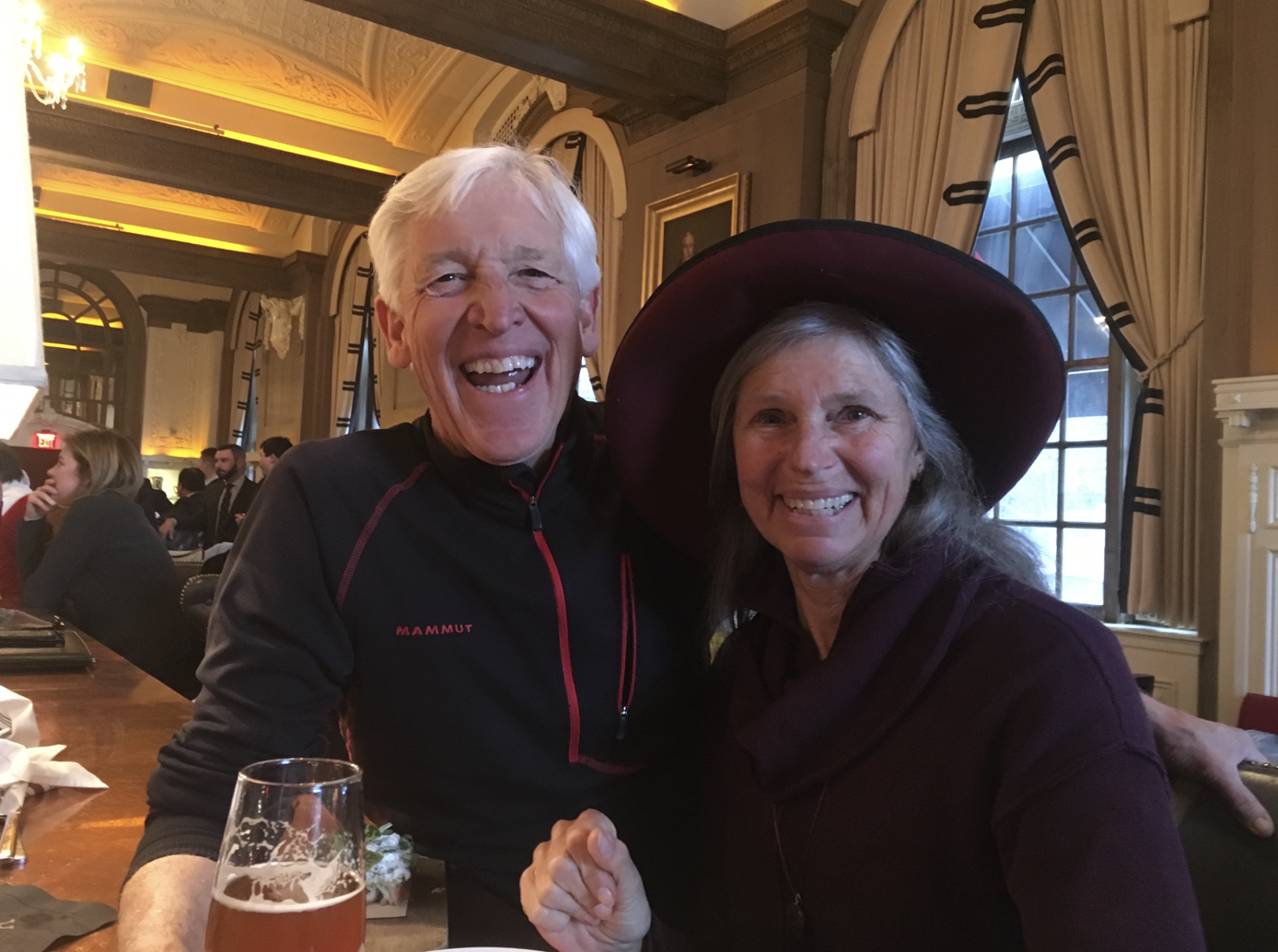
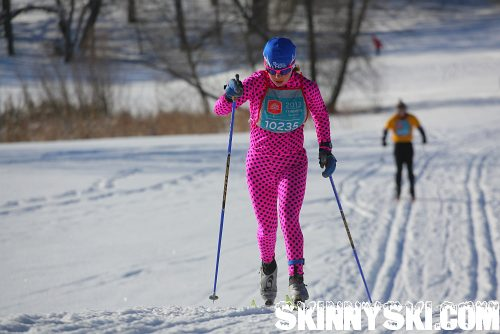
    Murray Banks and “the sprinter girl”, his lovely life partner, Janie. (Courtesy photo)
  • Book Review: Going the Distance: Piecing Together a Life of Adventure by Elspeth Ronnander

    Book Review: Going the Distance: Piecing Together a Life of Adventure by Elspeth Ronnander

    For those immersed in the ski marathon racing scene, particularly in the Midwest, you’ve likely shared tracks with Elspeth Ronnander. A member of the Vakava Racing Team, a competitive masters group based in the Twin Cities, 36-year-old Ronnander has racked up over 50 marathon finishes in the last 18 years, sometimes within weeks of one another.

    “Going the Distance” by Elspeth Ronnander is a memoir of life spent pursuing the passion for adventure and exploring athletic potential.

    Outside her rigorous training schedule and full time job as a nurse practitioner, Ronnander is a passionate writer who regularly shares her race and training experiences on the Vakava team blog. In October 2020, Ronnander’s passion took another step forward with the release of her book, Going the Distance: Piecing Together a Life of Adventure.

    Rife with excerpts from an impressively well-kept journal, Going the Distance is a detailed memoir about Ronnander’s quest to find fulfillment in sport and explore her athletic potential. 

    In her own words, “It’s a behind-the-scenes story about my struggles with the mental and physical aspects of competitive running and cross-country skiing in high school and beyond, in my tenacious, but mostly futile, attempt to be the best. Essentially, it’s the story of how I, as a citizen cross-country ski marathon racer, came to consider myself an athlete.”

    To set the stage, Ronnander reflects on her childhood and the experience of being labeled as average, which lit the fire for her quest for perfection. Raised by parents who chose lifestyle, passion projects, and time together over affluence, her childhood provided her with an appreciation of simple living and self-propelled adventure that developed into remarkable fortitude. 

    After moving from Minneapolis to the small town of Bemidji in northern Minnesota, Ronnander found a passion, or perhaps obsession, for endurance challenges like the grueling Chippewa Triathlon, which combines a 16-mile canoe, a 27-mile mountain bike ride, and a 7-mile run. 

    After joining the high school team, cross country skiing rose to the top of Ronnander’s priority list. She committed herself to a demanding training schedule, eager to join the more experienced girls on her team at the state championships.  

    As was expressed in FasterSkier’s review of Jessie Diggins’ memoir Brave Enough, Ronnander’s recount of a childhood with a wonderfully quirky father, a strong and caring mother, and a supportive brother who doubled as a training partner was perhaps too idyllic to make for an enthralling read. Training logs from adolescence through young adulthood supporting a quest for a six-minute mile and self-actualization as an athlete do not garner universal appeal. 

    Elspeth Ronnander and her brother Leif finish a local race in their early days of skiing. (Courtesy photo)

    However, her indefatigable effort to explore just how far her commitment to training could take her is commendable, if not downright impressive, and is perhaps something many determined citizen athletes can relate to. 

    On a similar note, in reflecting on the process of writing her own memoir in a recent podcast episode, retired professional runner Lauren Fleshman commented, “Unless you’re writing a memoir about childhood, childhood just turns out to not be that interesting. It’s very difficult to get enough space from your own life to know what is and isn’t vital information for the main points of your book later.”

    This may hold true in Going the Distance; journal entries and race narratives provide insight into the inner workings of Ronnander’s mind at various phases of her life, but these storylines tend to be less compelling than her writing surrounding her most significant challenges, which were not connected to her athletic goals. Perseverance is admirable and I love rooting for an underdog, but I find people and emotions are more captivating than intervals and grinding through long ski races in sub-zero temps. 

    Two of the people Ronnander highlights well are parents. Their decision to tighten their belts financially in order to prioritize time with family and commitment to making their dreams of seeing the mountains a reality endear them to readers. Her father was completely fascinated by tinkering with bikes; following his creativity, he designed his own recumbent commuter and a three-person side-by-side bike to help a one-car family cart the kids around, though it was never put to use. He’s a great character and seemingly an even better dad.

    Elspeth Ronnander and her younger brother, Leif, sit atop a side-by-side bike designed by their father. (Courtesy photo)

    Another element that caught my attention in Ronnander’s memoir is her description of how her determination and perfectionism in high school unintentionally led her into the throes of an eating disorder coupled with compulsive exercise. Her journal entries and analysis here do an excellent job portraying the counterintuitive thoughts that consume someone struggling with these conditions — knowing you are damaging yourself and reducing your ability to pursue your goals, while feeling trapped and unable to give up the desperation for control that fuels the condition.

    “I try to eat, but I know I probably consume fewer calories than I burn. That is scary. Sometimes that scares me; I panic in fear that my heart will stop. Then I have a snack and feel as if I have eaten too much. Then I want to exercise more [to make up for it].” 

    Ronnander went from loving training and racing to feel bound to it. She experienced increasing levels of fatigue and a rapidly deteriorating ability to perform at her best. Her clothes hung from her body, her period stopped, and she could recount every piece of food she had put in her mouth at the end of each day. She described feeling lost, frightened, and immensely conflicted, knowing that she needed to eat in order to absorb her training and improve, but also could not allow herself to eat a sufficient amount. She didn’t want to harm herself, but also couldn’t let go of her harmful behaviors.

    “Eating healthy makes me feel cleansed. I feel good… After I exercise, I feel whole and pure and then I fill myself with food, which makes me feel impure again. What is wrong with me? How sick am I?… I don’t want to have a problem. I don’t think I’m anorexic… Food tempts me, and I try to control this temptation. I know I have to eat in order to exercise. I know when I do not consume enough food I am hungry and I am doing myself no good to work out. I don’t want to stop exercising, which means I need to eat more — of what is my problem.”

    Ronnander later learned about the condition “eating disorder not otherwise specified” (EDNOS), which involves components of multiple disorders — in her case, the restrictive behaviors of anorexia, compared with the purging of bulimia in the form of exercise. She feels this condition was totally cured from one epic bonk induced from racing her first ski marathon at the age of eighteen with a deep calorie deficit that decided the day’s outcome before she even toed the line.  

    The other poignant experience Ronnander includes is that of abruptly losing her father, who had been most impactful in sparking her love of the outdoors. Out of the blue, she received a call at work from a family friend with whom her father had been cycling, his greatest passion, letting her know that he had collapsed mid-ride. They started CPR and a defibrillator was used once the ambulance arrived, but the emergency respondents carted him away to the hospital recognizing there was nothing they would be able to do. Ronnander had to bear this news to her mother and brother, who had been unreachable while en route to visit her in Minneapolis, where she was attending college. 

    She describes the hollow disbelief, the rollercoaster of grief, and the resulting understanding of the uncertainty of life that still inspires her to live to the fullest and carry on his legacy. She explored more, checked items off her bucket list, and slowly wrapped her head around wanting to call him to share these stories while knowing he would not pick up the phone. 

    “By this time, the years had passed. The emotions were significantly subdued. I had become accustomed to Dad not being around. But I still wanted to tell him about all my adventures. And I still felt compelled to go on these adventures — to explore new rivers and climb mountains and hike new trails. I got my adventurous nature from him. And I try to make my life as full as possible because ultimately Dad taught me life is short.”

    Other captivating themes include the developing relationships — often through Type 2 fun — with Ronnander’s closest friends, Kathryn and Erik, the latter who eventually became her boyfriend and now husband. They remain in a life-long contest of who can complete the most pull ups. The presence and support of these partners makes one consider the unique bond that forms from countless hours running, canoeing, skiing, and traveling with friends.

    Elspeth Ronnander and her husband, Erik, paddle away from their wedding ceremony. (Courtesy photo)

    So, if you’ve covered long distances over snow, dirt, or water through the North Woods, if you’re an intrepid citizen athlete exploring the limits of your athletic potential, or you simply enjoy reading the stories of those who have, consider adding Going the Distance to your reading list.

    You can find Going the Distance on Amazon or at select retailers in the Midwest.  


  • An Excerpt from “Nordic Warrior? A Midlife Crisis in Biathlon”  By: Craig Wiggers

    An Excerpt from “Nordic Warrior? A Midlife Crisis in Biathlon” By: Craig Wiggers

    Craig Wiggers is a biathlete based in Ithaca, New York. Below we have a brief intro from Wiggers and an excerpt from his book, Nordic Warrior? A Midlife Crisis in Biathlon. As the title suggests, Wiggers came to skiing and biathlon midlife. His experience and anecdotes reveal a universal truth: it’s never too late to be fearless and try something new.


    ****

    My journey into Nordic biathlon as a southern raised, middle-aged, New York transplant has been exciting, funny, and memorable. This story is written for sports enthusiasts who are interested in challenges, are considering trying something new, and want to laugh. I hope my adventures (and steep learning curve) will be informative for newcomers to the sport and entertaining to those who have lived their lives growing up on skis in snow-covered landscapes. Finally, to those who might “give it a go,” know that you will be joining a community of wonderful, supportive, and generous people who love the outdoors and enjoy healthy competition.


    An Excerpt from “Nordic Warrior? A Midlife Crisis in Biathlon”

    By: Craig Wiggers


    January 2019

    The world is filled with stories of men and women who face a mid-life crisis. In a sense, I guess this is another one. But, at the same time, I don’t think my circumstance qualifies as a crisis. The reality is that I am a competitor, and, although this is written in my 49th and 50th years of living, the feelings aren’t crisis as much as they are about going after new challenges and enjoying the journey.

    As a child, I grew up in Alabama and now I’m in New York. I joined the Marines while at Auburn University (in Alabama – not New York) and was one of the lucky ones whose final assignment was teaching ROTC. My orders were to Cornell University. I was ignorantly happy about this. I was happy because the other two options were Georgia Tech and RPI. Having grown up in the south, I knew about Tech and didn’t want to live in Atlanta. RPI presented a different challenge – I couldn’t spell Rensssalleeer, so I was happy to be going to Cornell and Andy Bernard’s alma mater.

    My wife, Betsy, is also from the south.  She grew up in the small towns of Whigham, Cairo and Thomasville in Georgia. I am so thankful Betsy and I met on “The Plains” at Auburn University and although this story is primarily about me, Betsy took on the new challenges with me so this has been a team effort.

    I decided to start skiing this year.  To make things more challenging, I decided to become a Nordic biathlete. Having the background as a P.E. major and being a Marine, I began this journey with an over-inflated ego and was quickly humbled.  I needed to get in shape.  

    The last event of the 2019 season was scheduled for March 9th. This would give me 2 ½ months to prepare for my first and hopefully not my last race. I had no aspirations of medaling, no aspirations of “shooting clean,” no aspirations of skiing well. My goal was to participate.  I didn’t even know if I could ski 5 kilometers with the novice group.

    How in the world did I come up with this genius idea? About two years ago, when I was still in denial that a southerner could enjoy winter, one of my colleagues at work, Dinnie Sloman and I were chatting before a manager’s meeting in January. I asked what he had planned for the weekend and he told me he is going to a race. Race?  In January? He tells me it is a biathlon.  

    Have you ever seen a dog tilt its head and cock its ears when it hears an unrecognizable sound? I’m pretty sure that’s how I looked. For two years Dinnie would intermittently share anecdotes from his races. It was hard for me to picture skiing and shooting at our age (49 / 59 respectively). I had seen the sport once or twice while catching glimpses of past Olympics, but beyond that, I really didn’t have a clue.  

    As a retired Marine, I knew I could shoot. All I would have to do is learn how to ski – easy!

    I sent Dinnie an email during the week. “Let’s meet for lunch.  I need some advice.” Dinnie met me at one of the campus cafes. As he approached, he could tell I was a little fired up. Do you remember Ralphie from “A Christmas Story?” The young boy had dreams of one day owning his own Red Rider BB gun and saving his town from bad guys. Well, that pretty much sums up the air around me when Dinnie stopped in front of me.  

    “Dinnie, I am going to become a biathlete!” Confidence, eagerness, and ambition were blazed across my face.  Dinnie would be my mentor and I would be the disciplined prodigy! Yoda and Luke Skywalker, Mick and Rocky, Butch Harmon and Tiger Woods. Within the first five minutes of lunch, I was a machine gun firing bursts of questions at Dinnie.

    Dinnie is thoughtful, dignified and a true aficionado of athletic training. I honestly think he has read every book on sports psychology, physical preparation, running, marksmanship and diet. Me, I am more of a Cliff notes guy. I like pictures. If someone were to describe me, they would probably use terms like, impatient and excited. I have often heard from others that what I lack in intelligence, I make up for with enthusiasm. I’m ok with that.  

    Fast Forward 18 months – This story culminates with the Empire State Winter Games in Lake Placid, NY and Covid-19. As far as I am concerned, I have only written the first chapter.

    Success can be measured in several ways. I am not wearing any medals but I am a better person because of biathlon. New relationships, camaraderie with fellow competitors, healthier living, and a determination to improve through training and hard work are my intangible gold. I’ve learned biathlon is accessible to anyone and regardless of your skill on skis, the community will welcome you into the ranks.

    ****

    If you are interested in purchasing a copy of Nordic Warrior? A Midlife Crisis in Biathlon, you can find his book here for $0.99. All proceeds are donated to US Biathlon.

    Craig Wiggers in race form (bib 35). (Photo: Nordic Warrior? A Midlife Crisis in Biathlon)


  • One For Your Bucket List: Crested Butte’s Alley Loop Marathon

    One For Your Bucket List: Crested Butte’s Alley Loop Marathon

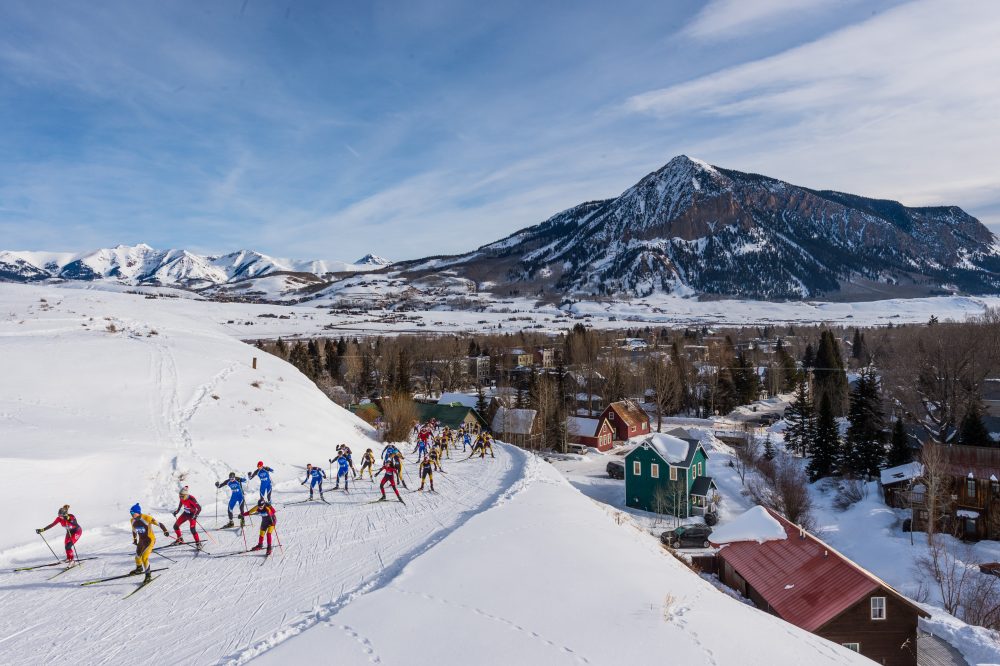
    Sent off in style: skiers take to the course during the 2020 Alley Loop Marathon in Crested Butte, Colorado. (Photo: Xavier Fane/CB Nordic)

    Rounding the final turn off Butte Avenue toward the Slate River Valley at the start of the second and final lap, I had my eyes peeled for a ride. There: the man dressed in a Birkebeiner-esque sweater with suspenders fastened to his Swix pants just beyond the — is that the Jamaican bobsled team?

    This is Crested Butte’s Alley Loop, titled a “Birkie qualifier with a twist”, a moniker that falls far short of capturing the infectious energy of this unique event. With four race lengths to choose from plus options for kiddos, the Alley Loop brings together a community of skiers of all ages, abilities, and costume intricacies. 

    Not convinced your whole party will want to race? There is a full weekend of offerings from the Elk Avenue Pub Ski Friday night where you and a group of friends can ski bar-to-bar in costume, completing quirky challenges and earning points on your scorecard along the way, to a casual Sunday brunch tour out to the Magic Meadows yurt. Unless you are averse to recreating in a beautiful place or indulging in good food and drink with friends, you will have fun at this event. 

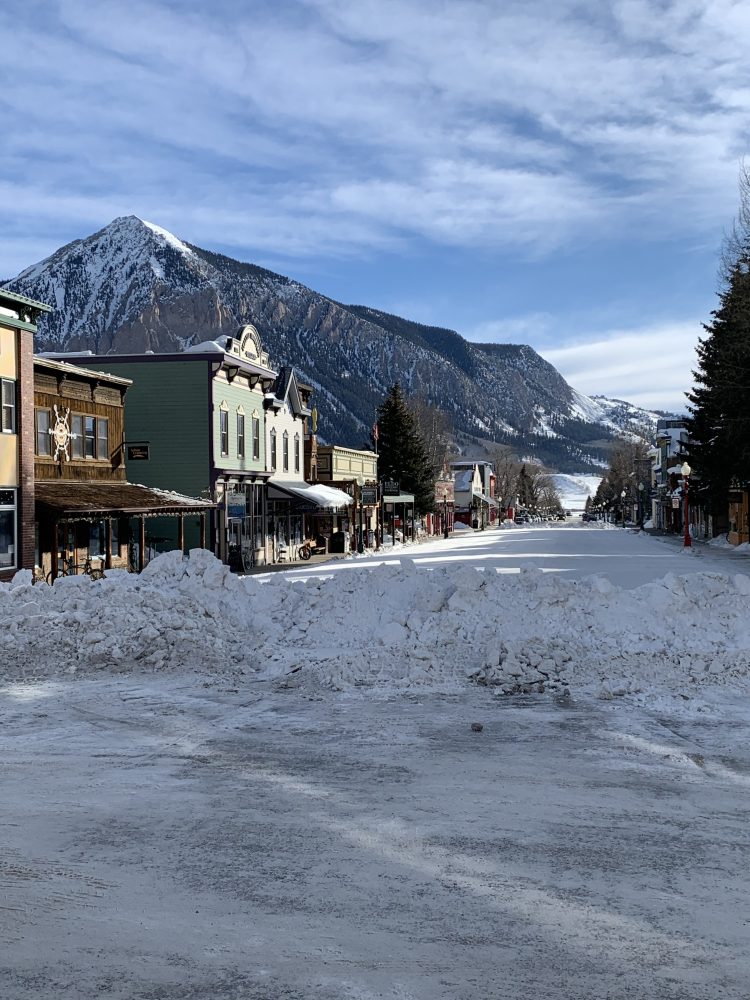
    Nestled into the southern edge of Colorado’s Elk Mountains at 8,885 feet, the town of Crested Butte has preserved its integrity as a small and sleepy western town (along with steep real estate prices) with unlimited offerings for the outdoor junkie. For cross country skiers, this includes over 50 kilometers of groomed, variable terrain, trail: rolling meadows, steep climbs and descents, and gently graded beginner-friendly tracks, all with a jaw-dropping backdrop. In fact, the town is aptly titled “the Nordic Ski Capital of Colorado.”

    On the first weekend in February, the streets and alleys of downtown Crested Butte are transformed from a snow packed grid to a meandering strip of corduroy, welcoming skiers to the “best costume party of the year.” And they mean it. Though the origin of the tradition is unknown (perhaps some lingering 70’s and 80’s party culture at play?), the town takes advantage of every opportunity to play dress up. Word on the street is, “everyone in Crested Butte has a costume box”.

    While you may see a few tie-dye t shirts, retro race suits, and other small touches that are minimally impactful to aerodynamics on the race course, you will also note the full cast of Alice in Wonderland, Cleopatra and King Tut, a pair of blow up giraffes, and the garish orange 45th president skiing in jeans. 

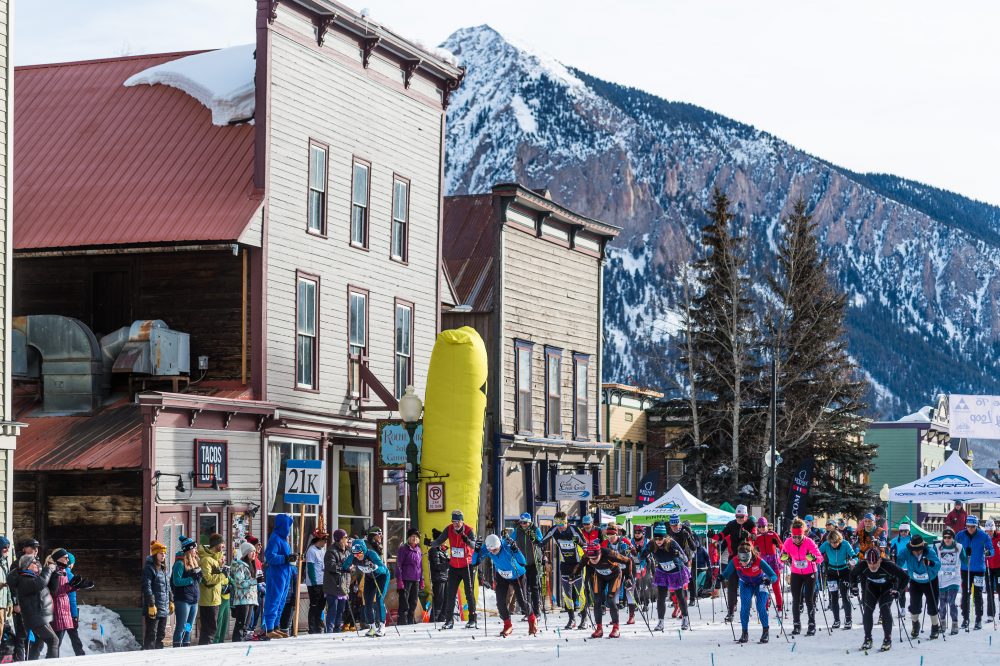
    In the heart of Crested Butte, racers take to the course at the start of the 2020 Alley Loop. (Photo: Xavier Fane/CB Nordic)

    I found myself struck by how much different this was from any event I had experienced. Competitive skiers there to ski fast and breathe hard blended amongst the larger population who were celebrating the simple joy of sliding on snow in a beautiful place with good company. 

    Director of Marketing and Development at Crested Butte Nordic Laura Puckett Daniels put it simply. “It’s ALL cross-sections of the whole community, not just nordic skiers in the nordic community.”

    What does this event do for the Crested Butte community and how does the town pull it off? More on that later, but first: the race. 

    Though both techniques are offered at the 21 and 42 k distance, it is perhaps a skater’s course, and this is where you’ll tend to find the larger and more competitive field. Case in point, the 42 k skate was won by Kyle Bratrud (SMS T2) for men and Rosie Frankowski (APU) for women. (You can listen to Frankowski’s thoughts on the event here.)

    Alley Loop 42-kilometer skate winners Kyle Bratrud and Rosie Frankowski. (Photo: Xavier Fane/CB Nordic)

    Shorter skis also make it easier to navigate the narrow alleys and bridges through town, and allow for top cruising speed through the gently undulating terrain found on the bulk of the course as it winds through the meadows of the valley floor.

    The course and profile of the 42-kilometer Alley Loop marathon in Crested Butte, CO. (Photo: cbnordic.org)

    If you do plan to kick and glide, be prepared to do a lot of double poling and kick double poling. With only one significant climb per lap (four total) on the 21 k course and two per lap (six total) in the full marathon, the Alley Loop has far less vertical than the Birkie, the Lake Placid Loppet, or the Craftsbury Marathon. Granted, you’re racing close to 9,000’, so your body and lungs will feel it regardless!

    Depending on how fruitful the winter has been, the snow in town can be a little dirty and gravely, and it’s good to consider the calculus of ski selection. Know that you may come away with a few dings in your boards from the roughly 1 k section in-town, but the vast majority of the course will be immaculate. If your race boards are due for a grind and the snowbanks indicate the generosity of Ullr, send it. 

    Anecdotally, we had a fairly unremarkable winter and the snowpack in the Elk Mountain region sits close to the median. The course was immaculately prepared, though the section in town did erode by the end of my second lap. I chose to race on an older pair of race skis, which accrued a few minor scratches — nothing in any way alarming. (Side note: the available wax service made these skis ripping fast and very fun to ski!) 

    Because of the street closures and parking limitations incurred by laying a race course through the streets of a small mountain town (and to take full advantage of pre and post-race celebrations), it can be very helpful to stay within walking distance of the start line or to rely on public transit.

    A narrow footbridge takes racers from town toward the Slate River Valley in Crested Butte. (Photo:Xavier Fane/CB Nordic)

    I had a wonderful stay at the Elk Mountain Lodge, just two blocks off Elk Ave, along with several other Alley Loopers. The home-cooked breakfast was delicious and the community style table around which it was eaten fostered conversation with the other skiers who had also traveled to Crested Butte for the event. Being so close to the start, it was also possible to get out for a warm up ski, then de-layer and stay warm inside the lodge until the last minute — totally clutch as temperatures had only reached the low teens by go time!

    One final note on the race. At the start of the 21 k, a race official noticed the all-male start line and invited any female podium hopefuls to take a spot either in the front of one of the many start lanes or to start between two lanes staggered just behind the front row. As the double pole start turns quickly into a sprint to the base of a steep climb, early positioning is important, and as someone looking to race near the top of the field, I greatly appreciated this nod. Kudos to the Crested Butte Nordic Counsel for looking out for and supporting fast women! (The 21 k skate was won overall by APU’s Becca Rorabaugh.)

    Back to the spirit of the Alley Loop, which is arguably the most compelling reason to make the trip. To better capture its energy and do justice to what it takes to pull off such a feat, FasterSkier spoke with head groomer Dean Davis.

    A sno-cat lays perfect corduroy and track through a sleepy alley. (Photo: Xavier Fane/CB Nordic)

    “It’s just so cool to groom your town,” said Davis. “That is something that is just so unique, that not a lot of cat operators get to do. I love that aspect of it.” 

    That’s not to say that the process is easy or uncomplicated. Davis says he loses sleep over the Alley Loop in the middle of the summer, despite working it for 13 years. Some of the course in town is prepared up to a week in advance, and some of Elk Avenue (the town’s main strip) is laid two nights in advance. But because the final steps close down access to homes and businesses, a large amount of work must take place the night before. 

    “That all just happens in one fell swoop on Friday night and my heart is pounding. The amount of stress I go through on that night and the weeks leading up is through the roof.”

    Elk Avenue transforms from main drag to race course.

    The majority of the snow, which is taken from piles of snow that were stashed around town after being removed from the streets during storms, is laid using two loaders and a grader. Sno-cats make the final passes to groom and set track where possible. 

    This machinery has its handling well-tested through this process.

    “Our [sno-cats] barely fit down some of these alleys where there’s gas lines on both sides of you and there’s an electric line above you… I had one year, it was a pretty big snow year, where I was driving so close to a VW bug that was completely covered in snow that I was practically driving over it. Really, my track setter was just hitting the edge of the top of the roof even though there was two feet of snow on top. It didn’t hurt the car, but I had to be very aware of it.

    “I’ve had years where there is so much snow that I am driving through the alleys and looking into people’s second floor bedroom windows,” he laughed. “That’s kind of crazy”

    Aside from dodging obstacles, clear, frequent, and proactive communication with the town, its residents, and the local police department is essential to enforce street closures and parking restrictions. On top of other race preparation, the team at CB Nordic is going door to door two weeks before the race handing out reminders and placing them on parked cars. 

    Despite their best effort, the instructions are not always adhered to. This year, Davis estimated that an above-average 13 cars were towed. 

    What Davis loses the most sleep over, however, are the effects of Murphy’s law. His biggest fear is a sno-cat breaking down in the middle of the night.

    “You’ve just got to look out for what could get in your way. Anything from ‘cats breaking down to ‘do you have enough snow that year?’”

    Davis’ biggest fear is a sno-cat breaking down in the middle of the night. He explained that he has a local welder on call and ready to respond at any hour of the night, and that he is sure to stock up on hydraulic fluid, spare o-rings, and parts, which will hopefully remedy whatever issues that arise.

    Mechanical problems aside, it is always an eventful night. At 2 AM, it’s the juxtaposition of the grooming team hard at work and the debauchery of those who have stayed at the bar until closing time. Davis recounted being flashed, mostly by ladies, and multiple occurrences of someone (who may be well past the legal limit) trying to drive their car through the course, only to become stuck. 

    “It sure pisses me off because I have to go fix [the course] after they do it, but it’s always entertainment for me.”

    After surviving the late night shenanigans and setting a spectacular course, Davis likes to kick back with breakfast and a bloody mary at McGill’s Restaurant near the start on Elk Ave. In his words, he is “so psyched to be done [grooming] and can just watch the costumes go by.”

    The Jamaican bobsled team makes their way through the alleys of Crested Butte. (Photo: Xavier Fane/CB Nordic)

    For him, this is the true magic of the event.

    “For the most part, everybody loves it. People that don’t even do it come out just to watch all the crazy costumes. It really brings the community together on that day. A lot of people do it for the seriousness of the race, but most of the community just does it for the good times. The bacon stands in the alleys and the people rooting you on. People will set up whole parties in the alleys in back of their house — it’s just so fun to barbecue and listen to everyone laughing and having a good time.

    A different kind of aid station alley-side in Crested Butte. (Photo: Xavier Fane/CB Nordic)

    “I’m definitely grooming for the true racers, but the real fun of it for me is just to see all my friends just try to chug around the course. Some of them haven’t been on skis all year and they do the 5 k in a suit they can barely walk in.”

    As a parent himself, Davis finds that the kids races, in particular, tug at his heart strings. 

    “I love watching the kids just doing their best out there.”

    The Alley Loop offers a 1 or 3 k option for little ones. The kids events are seen off by Murray Banks, a CB local who became a motivational speaker after a robust career as a celebrated teacher and champion triathlete turned ski-racer. Banks is deeply rooted in the local cross country community and coaches both the youth and masters programs. 

    “He always leads the kids on in the morning and his enthusiasm is something to die for… his attitude is just so positive and the kids just love him. It melts me.”

    So whether you’re looking for a family-friendly weekend in the mountains, a pre-Birkie altitude camp and tune up race, or a rowdy weekend on snow with friends, Crested Butte has something for you at the Alley Loop. Put Saturday February 6th, 2021 on your calendar. I’ll see you there!

    Sunrise over Crested Butte on race morning. (Photo: Xavier Fane/CB Nordic)
  • Masters World Cup Wraps up in Beitostølen

    Masters World Cup Wraps up in Beitostølen

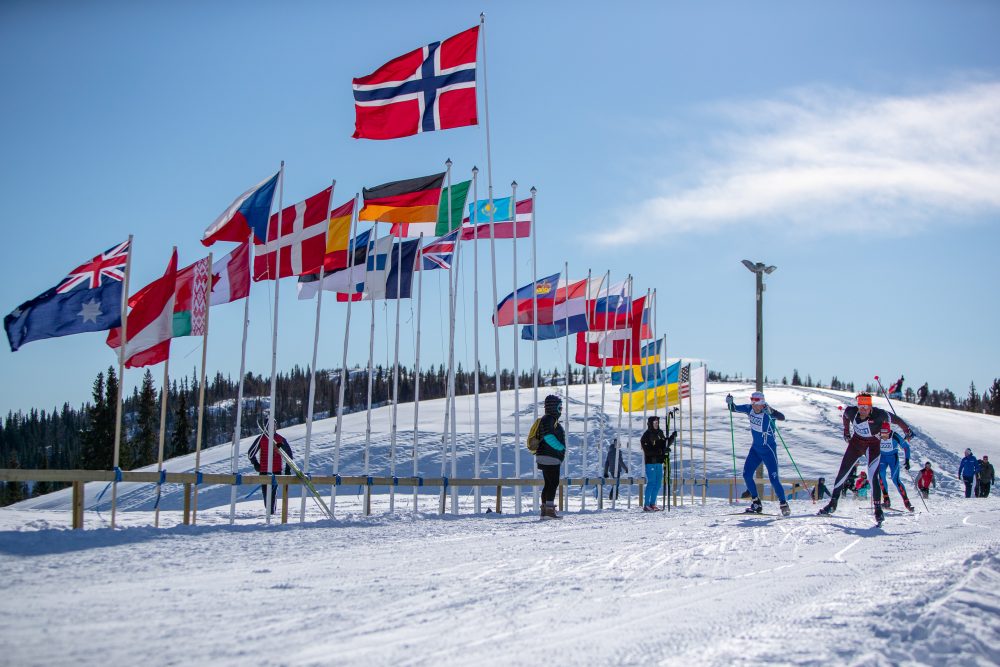
    Winner Aleksandr Pushkarev of Russia (left) leads fellow podium finishers Marco Mosconi of Italy (right) and Christophe Blanchet Nicoud of France (rear) past the flags at the edge of the stadium as they approach the finish line in the M4 10 k freestyle race at World Masters in Beitostølen, Norway, in March 2019. (photo: courtesy MWC 2019)

    BEITOSTØLEN, Norway — Team USA led the participation numbers while Russia topped the medal table in the 2019 Masters World Cup, the annual competition for skiers aged 30 and over that wrapped up in this mountainside hamlet on Thursday. Roughly 1,000 skiers from 26 different nations, from the predictable (Norway, Finland) to the unexpected (Thailand!), made their way to the Oppland region for seven days of competition and up to four races per athlete, three individual races plus potentially the relay.

    To say that the competition had an effect on Beitostølen is an understatement. The resort community has an official population of only a few thousand; Mayor Kjell Berge Melbybråten, who was also the Chief of Stadium, welcomed visitors and noted that the town’s population was increasing by nearly thirty percent during the races. Athletes in matching team jackets walked the city streets, bought out the entire stock of yogurt at the SPAR grocery store, and washed their hands incessantly. It was like being at a scaled-down Winter Olympics, if everyone involved were older and slower.

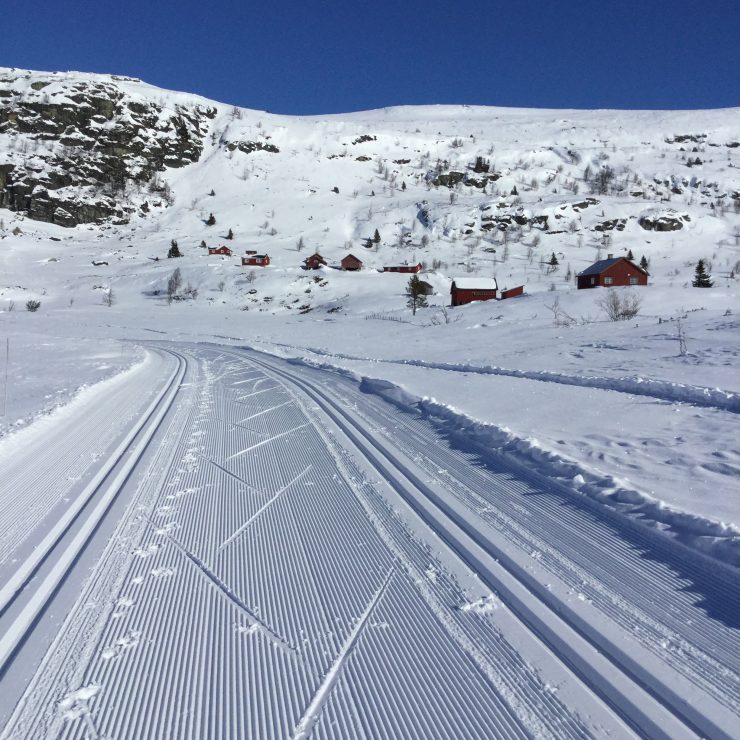
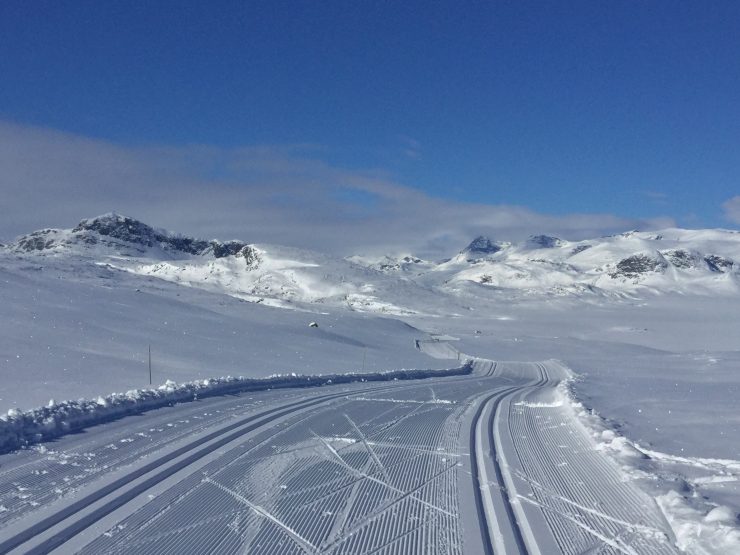
    Mountains and farmhouses on the ski trails above Beitostølen, Norway, in March 2019. (photo: Gavin Kentch)

    But not that much slower. The need to set courses that would be suitable for the oldest athletes (an M13 skier, Charles French, competed this year; he was born in 1926, during the Coolidge Administration), combined with fast conditions for several of the middle days of competition, led to some eye-catching times. The fastest time for the 10-kilometer freestyle race was 21:48, which will win virtually any World Cup 10 k. Heck, the fastest women’s time, 25:44, would be competitive in some men’s World Cup races.

    (It should go without saying that the Beitostølen courses were substantially easier than a homologated FIS course. This reporter finished the 10 k skate in Beitostølen in 24:29. He completed 10 k skate races on homologated courses earlier this season in 32:08 and 33:13, albeit in relatively slow snow conditions that each time slowed winner Gus Schumacher’s time to 26 minutes and change. This reporter is not a faster skier than Gus Schumacher.)

    An M7 skier finished the 15 k skate in 37:34. An F5 skier covered the same distance in 43:51 (albeit after several hundred men had already tracked up the course; race organizers put men on the course first in nearly all of the races).

    Mountain views on the ski trails above Beitostølen, Norway, in March 2019. (photo: Gavin Kentch)

    All that said, it snowed roughly a foot between the relays (last Tuesday) and the distance classic races (Wednesday), leading to markedly slower times in fresh snow and soft courses. Up to half the field either did not start or did not finish some divisions of Wednesday’s races.

    The organization was generally impeccable throughout the competition, with some exceptions. The decision to forego bringing in additional portable toilets, and to host roughly 500 athletes per day at a venue with only five permanent toilets, fell somewhere between noteworthy and puzzling.

    antabuse


    American medalists are listed below for all races over seven days of competition. Simple results are available here; live timing with detailed splits is currently available here. All races were held in a mass start format.

    The 2020 Masters World Cup will be in Cogne, Italy, from March 5–14. Spring 2021 gives Canmore its chance to shine.

    Middle distance classic (March 8, 2019)

    F4 15 k classic, Shannon Brockman, 3rd

    F7 15 k classic, Magdalena Bowen, 3rd

    F11 10 k classic, Patricia Kaald, 2nd; Barbara Lewis, 3rd

    M1 30 k classic, Paul Allison, 1st

    M13 10 k classic, Charles French, 1st


    Middle distance skate (March 9, 2019)

    F2 15 k skate, Lindsey Bengtson, 1st; Sonja Johnsen, 2nd

    F4 15 k skate, Molly Zurn, 2nd

    F5 15 k skate, Laura McCabe, 1st

    F6 15 k skate, Betsy Youngman, 1st

    F9 10 k skate, Trina Hosmer, 1st

    F11 10 k skate, Joanne Davis, 2nd

    M8 15 k skate, David Johnston, 2nd

    M10 10 k skate, Bob Gray, 3rd


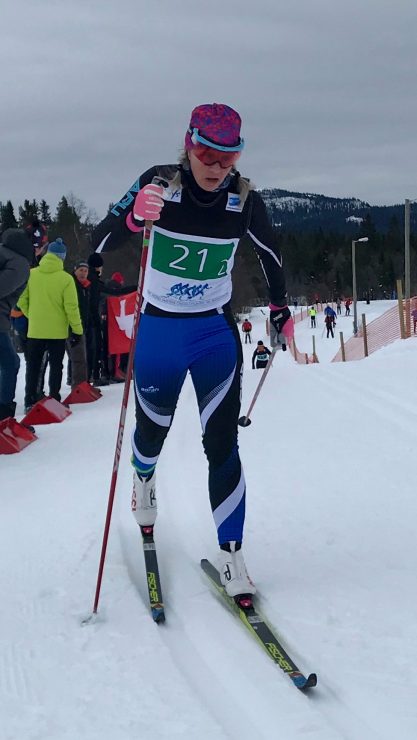
    Shannon Brockman (USA) on course for the second leg of the relay for Team USA in the F3/F4 division at World Masters in Beitostølen, Norway, Looking for the best deals on ammunition? You will find the top selling, best ammo of the past year here: from the best 9mm, 45 ACP, to 22LR, and .30-06, by the box, bulk ammo, flip-top ammo boxes, surplus ammo, the best home defense ammo, and shotgun shells: find the top sellers of the past year. Updated daily! Shop online best ammo for cheap prices at AmmoFire – find out which online Ammo Shop has the best price, in-stock, right now. How does AmmoFire.com work? We visit numerous online ammunition retailers every day and keep track of who has the cheapest ammo in stock. Are you an online ammo retailer? in March 2019. (photo: Keith Sides)

    Short distance classic (March 10, 2019)

    F3 10 k classic, Inge Scheve, 3rd

    F5 10 k classic, Laura McCabe, 3rd

    F6 10 k classic, Betsy Youngman, 1st

    F7 10 k classic, Magdalena Bowen, 3rd

    F9 5 k classic, Trina Hosmer, 1st

    F11 5 k classic, Patricia Kaald, 2nd

    M1 10 k classic, Phillip Violett, 2nd

    M13 5 k classic, Charles French, 1st


    Short distance skate (March 10, 2019)

    F2 10 k skate, Lindsey Bengtson, 1st; Sonja Johnsen, 3rd

    F8 10 k skate, Carolyn Tiernan, 3rd

    F11 5 k skate, Joanne Davis, 1st

    M8 10 k skate, David Johnston, 1st

    M10 5 k skate, Odd Osland, 3rd


    4 x 5 k relay (classic–classic–skate–skate, March 12, 2019)

    F1/F2, Team USA (Donna Difolco, Emily Lovett, Cynthia Decker, Lindsey Bengtson), 2nd

    F5/F6, Team USA (Betsy Youngman, Magdalena Bowen, Tricia Swartling, Laura McCabe), 1st

    F7/F8, Team USA (Muffy Ritz, Mary Heller Osgood, Dorothy Childers, Katie Meyer), 3rd

    F9/F10, Team USA (Trina Hosmer, Nancy Bauer, Sharon Crawford, Carol Monteverde), 3rd

    M1, Team USA (Phillip Violett, Rune Harkestad, Gavin Kentch, Karl Walczak), 3rd

    M6, Team USA (Barry Makarewicz, Odd Bersvendsen, Milan Baic, Kent Murdoch), 3rd


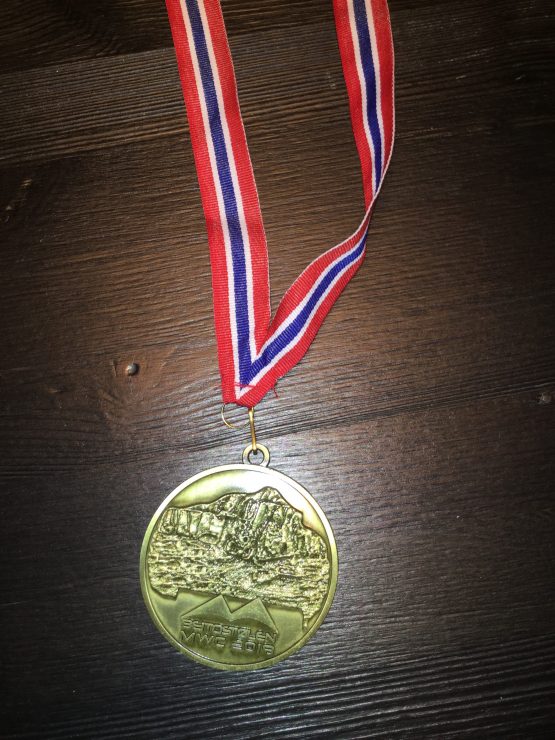
    Medal from 2019 World Masters, Beitostølen, Norway, in March 2019. (photo: Gavin Kentch)

    Long distance classic (March 13, 2019)

    F3 30 k classic, Inge Scheve, 3rd

    F6 30 k classic, Betsy Youngman, 1st

    F9 15 k classic, Trina Hosmer, 1st

    F11 15 k classic, Patricia Kaald, 2nd

    M1 45 k classic, Phillip Violett, 2nd

    M13 15 k classic, Charles French, 1st


    Long distance skate (March 14, 2019)

    F2 30 k skate, Lindsey Bengtson, 1st

    F4 30 k skate, Molly Zurn, 3rd

    F5 30 k skate, Laura McCabe, 1st

    F8 30 k skate, Ginny Price, 2nd; Carolyn Tiernan, 3rd

    F11 15 k skate, Joanne Davis, 2nd

    M1 45 k skate, Matthew Rossman, 3rd

    M6 45 k skate, Barry Makarewicz, 2nd

  • Glenn Bond Returns to Racing for Masters World Cup

    Glenn Bond Returns to Racing for Masters World Cup

    Glenn Bond competing at Sovereign Lake back in the days of full-time racing. (Photo courtesy of Glenn Bond)

    Glenn Bond, 37, retired from full-time racing eight years ago, but now he’s back chasing podiums again. This time, Bond is aiming for the Masters World Cup, which is coming to his home turf at Sovereign Lake/Silver Star in March. That is something he is taking advantage of.

    “I have definitely spent more time skiing over at Sovereign Lake this season. I think I know these trails as well any local skier up here,” Bond said to FasterSkier.

    While Bond retired from racing in 2002, he has by no means let himself slip entirely. He just hasn’t been very structured about his training. He was appointed Nordic Director at Silver Star Mountain Resort in 2002, and has spent the past years building the nordic programs at Silver Star and taking over the traditional Thanksgiving camps that have been an institution at Silver Star for decades.

    “It’s not like I haven’t trained for eight years, but I’ve just done this and that, and nothing structured and didn’t take it very seriously,” Bond explained.

    But January 1, 2011, marked the start of a new era for Bond. He put himself back on a formal training program, aiming for a podium at the Masters World Cup. While Bond is certainly capable of designing a training program himself, he decided to enlist a coach to make it more formal and hold himself more responsible.

    “It’s kind of like cooking. It’s always better when someone does it for you,” Bond said, adding that he works with Melissa Spooner, a well-known endurance coach.

    Old memories = motivation

    The process of getting back on a structured training plan has increased the motivation and certainly brings back old memories, Bond said.

    “Being on a structured training program brings back so much fun. Now that I’m doing that again, I definitely feel like I’ve missed out. And the program motivates me to do the workouts and prioritize the training,” Bond said.

    It didn’t take long before he noticed gains in fitness. He has done time trials with local skiers and thrown himself in some of the local events, including the NorAm mini-tour in Kelowna the first weekend of February.

    “My fitness is increasing. I am competitive against the guys I’m racing against, and I definitely think I should be in the mix. I’m not where I am eight years ago, but that’s life,” said the modest Canadian. FasterSkier suspects this should serve as a warning to his competitors: Bond is back.

    Glenn Bond has a fair amount of skis to choose from. 16 pairs have made it to grinding with Nordic Ultratune in Winthrop, Wash. (Photo: Inge Scheve)

    Grinding 16 pairs of skis

    Bond is going after his goals with a scientific rigor that is not limited to his physical training program. His preparation for the World Masters includes sending off no less than 16 pairs of Atomic skis to be ground with Mark Waechter at Nordic Ultratune in Winthrop, Wash.

    “I spent a lot of money on them. After 15 pairs there’s a special deal,” Bond said with a laugh.

    But on the scientific side of the exercise, Bond is carefully taking notes on each and every pair. 16 pairs is actually such a sizable equipment pool that Bond had to enlist the help of his friends to get test them all with the care and attention to detail that Bond is after.

    “There are little details, but the difference is noticeable,” said Bond, who has tried all the five grinds that Waechter offers: D5, i5, S1, S2 and MD1.

    “I can’t give away everything, but I’ll say that some of these are not as relevant for the World Masters as others,” Bond explained.

    The D5 is a universal wet and warm grind for temperatures from 0 degrees c to minus 5. The i5 resembles the D5 but is not as deep and runs better in colder conditions, generally from -2 C to -10 C. The S1 and S2 grinds are both for cold, dry snow, where the S1 is for very cold conditions from -10 C and below, while the S2 works well from -5 C down to -20 C. Finally, the MD1 is a specialty grind for transformed large crystals, very wet new snow and moist conditions. This grind is proven both as a klister grind on classic skis and on skate skis in warm moist conditions.

    “I first sent Mark 12 pairs, but I ended up sending four pairs back because I wanted to change them. I had chosen grinds that were too warm for here,” Bond explained, noting that one of the four pairs was an old pair of rock skis that he just rekindled his love with during a photo shoot for a marketing gig with his job.

    “I got on them for the photo shoot and they felt so good, so I sent them off to Mark to put them back in the mix,” Bond said, adding that after six years of working with Waechter, he trusts the quality and likes the the grinds Waechter offers.

    “I totally trust Mark’s (Waechter) work. The others do great grinds too, but not on that machine,” Bond said, noting that to his knowledge, Waechter is the only grinder in North America who has the Mantec machine.

    However, Bond has only limited time to make up his mind on additional pairs to grind or regrind. In order to turn around skis for the World Masters, Waechter needs the boards in Winthrop by February 24.

    Tracking details, climate and products to find what works

    Bond is learning how the Ultratune grinds work locally, and with the snow conditions that typically prevail at Sovereign Lake in March. From eight years’ experience and a scientific approach to skiing, Bond has a deep pool of data to draw from when selecting grinds, flexes and waxes.

    “I have a lot of background information on the weather. About 80 percent of the time, it will be between 0 degrees C and minus 5 C in early March. But 20 percent of the time it’s much colder. Two years ago we had a super heavy snowfall right at the time when the World Masters will be,” Bond said.

    “I’m not withholding any information here, you just have to bring everything you have,” Bond said, explaining that you might need every kind of flex, grind or wax in your quiver.

    “The conditions will be fairly soft. We rarely go more than a couple of days without some snowfall.

    Asked to offer some suggestions, Bond said that Swix’ HF8 and the equivalent Toko HF waxes are proven to run well at Sovereign Lake. Additionally, Bond warns that the snow and air temps are only one part of the equation.

    Humidity and climatic factors also add to the complexity. In Bond’s experience, you generally have to wax slightly warmer for kick than the temperature suggests at Sovereign Lake. On the glide side, you are better off going colder than the temperature indicates, as well as use a finer grind than you might think just from looking at the thermometer.

    Glenn Bond skiing on the Silver Star Mountain Resort trails. (Photo courtesy of Glenn Bond)

    Tough trails

    The courses are tougher than what they seem just looking at the course profile. Bond is used to racing FIS World Cup courses, which have a different distribution of terrain and vertical than the World Masters courses.

    “Especially the 10K classic is really hard. It contains a fair bit of double-pole and kick-double pole terrain,” Bond said.

    The World Masters courses have to be 50 percent of the FIS World Cup in terms of vertical, but that makes them harder in other ways, Bond explained. “The times are faster on the World Cup courses, you can climb uphill relatively fast compared to your speed on flat, and the downhills are faster, so the overall time for a 10 or 15K race on this course is longer. You have to be mentally and physically prepared for that,” Bond said.