Tag: masters skiing

  • Inside the Masters Skier’s Training Equation: Recovery, Strength, and the End of Hero Workouts

    Inside the Masters Skier’s Training Equation: Recovery, Strength, and the End of Hero Workouts

    This article was made possible through the generous support of our voluntary subscribers. If you value coverage like this, please support FasterSkier with a voluntary subscription.

    A Different Equation

    Masters’ athletes are often told to “train smarter, not harder,” or the current version: “Go easy on the endurance sessions so you can go hard on the intense sessions.” Those phrases get repeated so often they’ve lost context and meaning. But there is a real physiological reason training for masters’ skiers must be approached differently than training for younger athletes.

    The challenge is not simply age itself. The challenge is balancing adaptation with recovery while preserving capacity, durability, consistency, and motivation over many years of training. Older athletes can still improve significantly. Aerobic capacity can improve. Sustainable race pace can improve. Technique can improve substantially. Strength and power can improve. What changes is the recovery required to create adaptation and the recognition that the margin for error narrows considerably compared to when we were younger.

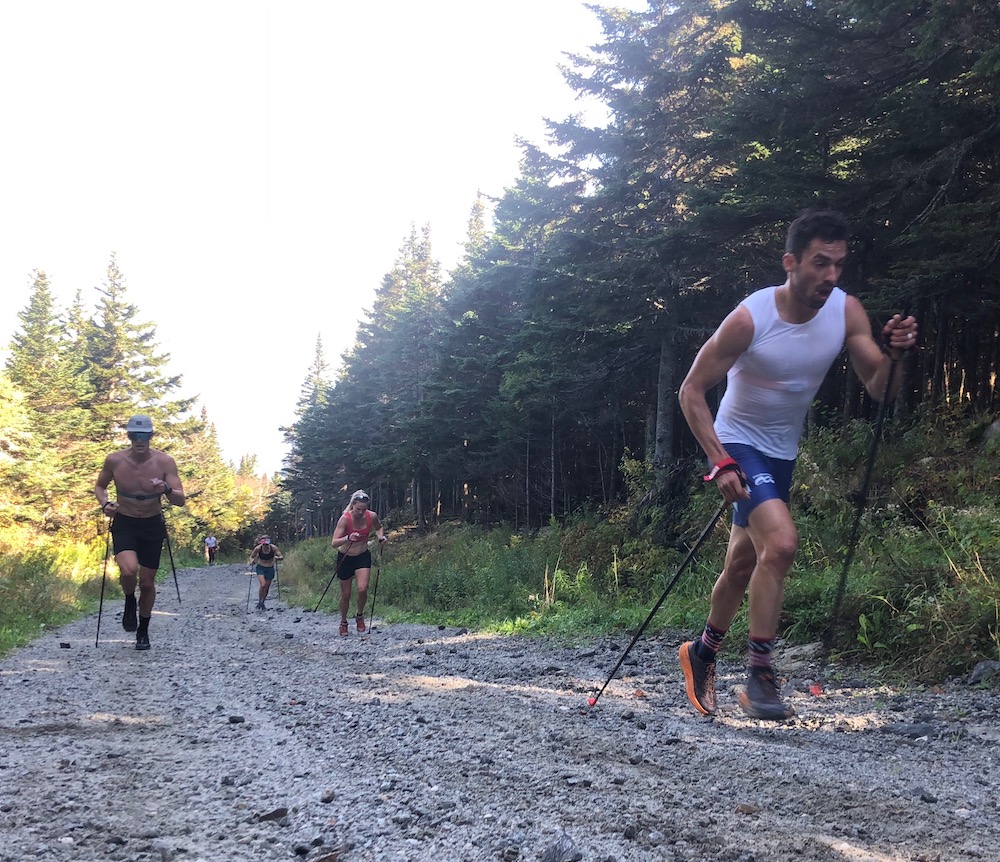
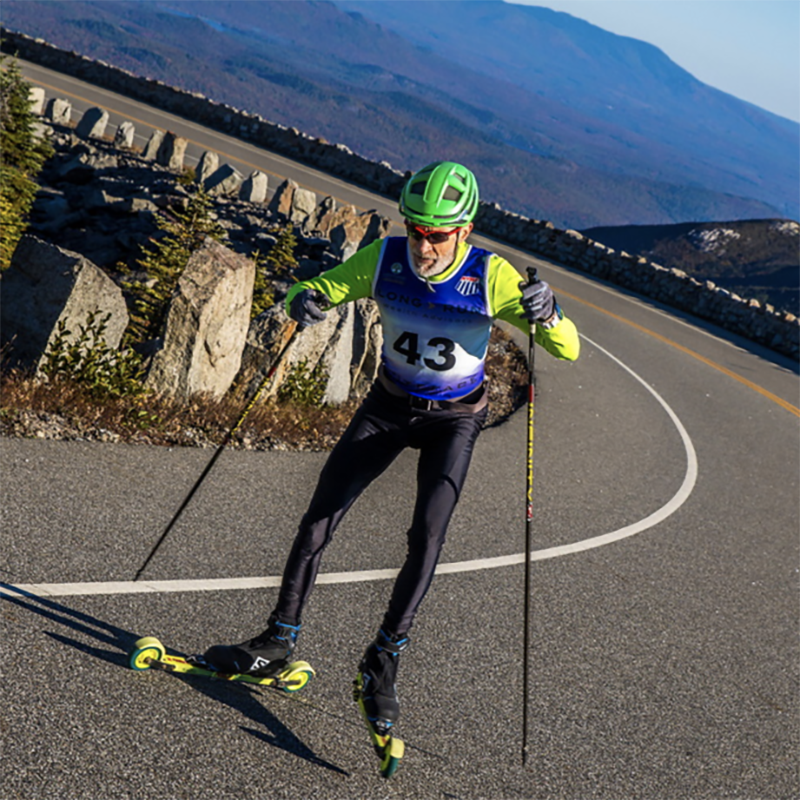
    Daniel Schwenk on his way to 9th place in the Men’s Masters’ division of the Climb to the Castle. (Photo: Nancie Battaglia)
    The Biggest Mistakes

    Many masters athletes carry over the same training structure they used decades earlier, too moderate intensity (Zone 2 and 3 in most 5-zone models), hard sessions stacked too closely together, insufficient recovery between demanding workouts, and not enough attention to technique, strength, mobility, and durability.

    The results are absolutely predictable: chronic fatigue, declining velocity or pace in the hard sessions, stagnate or declining performance in spite of continued training, and simply a loss of motivation to train. Ironically, many master’s athletes are functionally overtrained, despite the reluctance in some circles to even use that term.

    Recovery and Adaptation Become a Primary Training Variable

    As we age, there is a clear reduction in recovery capacity due to reduced anabolic hormone response, decreased muscle protein synthesis, accumulated fatigue, and often greater life stress outside of training.

    None of this means that masters athletes cannot train hard. They absolutely can, and should. Maintaining aerobic capacity and muscular strength is strongly associated with health, function, and longevity. But masters’ athletes generally cannot stack hard sessions with the same frequency as younger athletes without compromising recovery and adaptation.

    For most skiers I have coached or consulted with, the question should not be, How much can I train? The better question is: How much can I recover from and adapt to consistently over the weeks and months ahead? That distinction is perhaps the most important one.

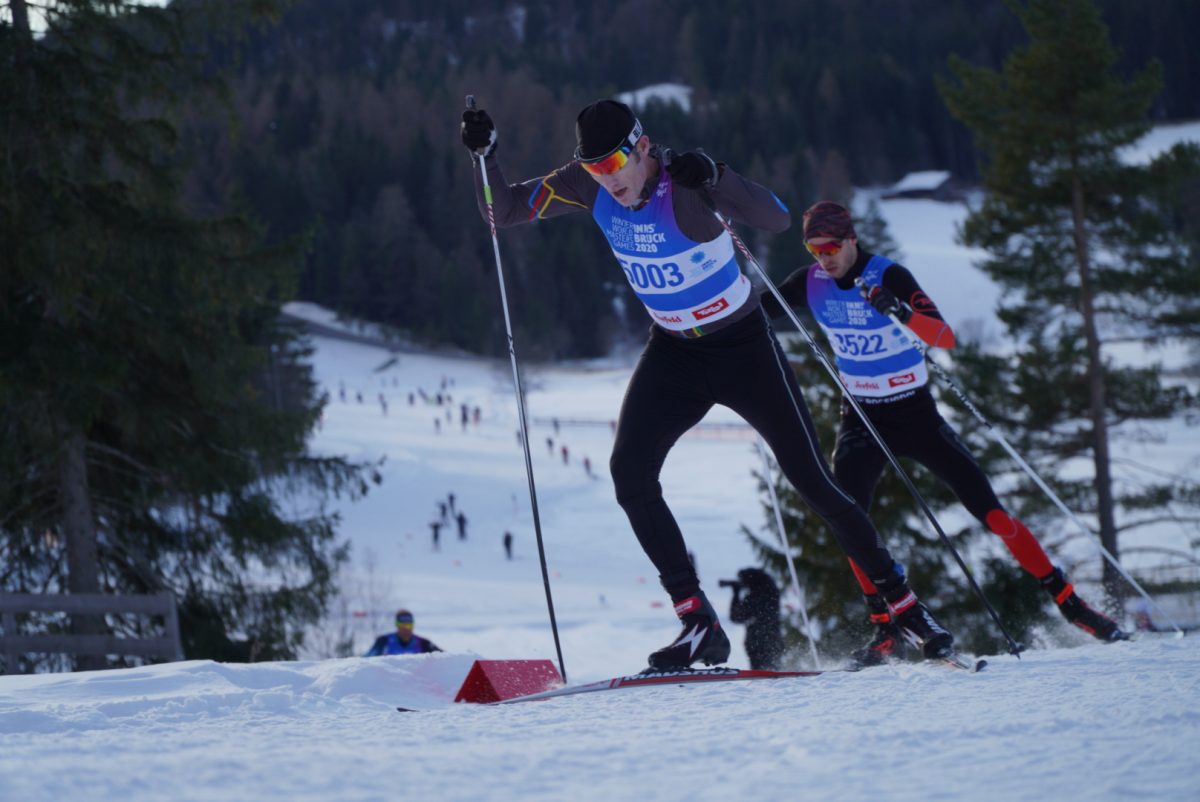
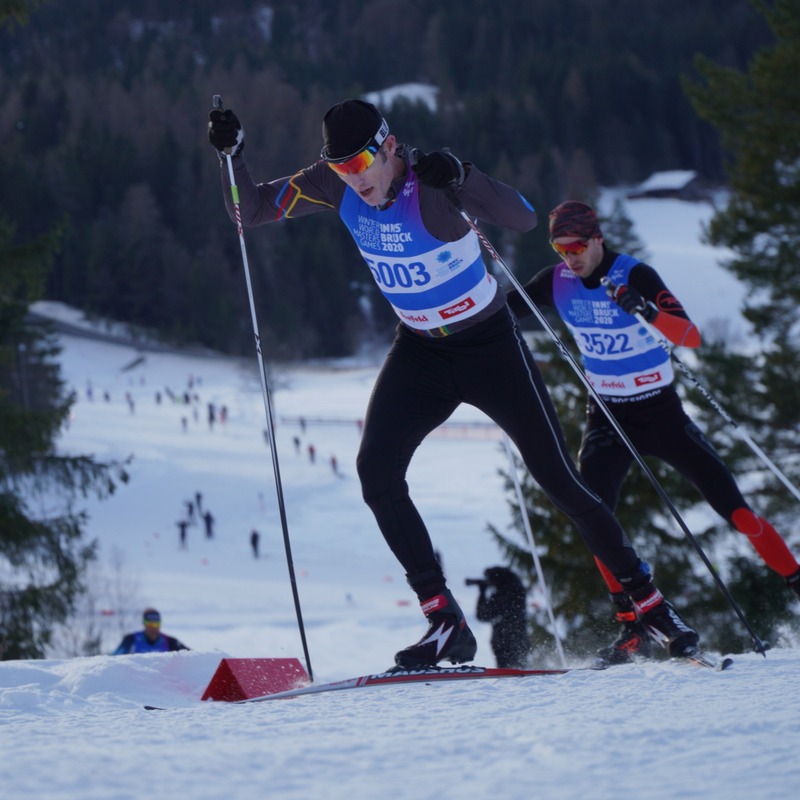
    Tim Donahue mid-race during the 2020 Winter World Masters Games in Seefeld, AUT. (Photo: Garrott Kuzzy / Lumi Experiences)
    Consistency Beats Hero Workouts

    The most successful athletes at any level are usually not the ones doing the biggest “hero” sessions. They are the ones who maintain consistent training and compound it week after week, month after month, and year after year.

    A training model built around sustainability always outperforms the commonly programmed “ramp” approach, where volume and/or intensity continually increase week to week and month to month. The assumption that training load must constantly rise in the short term, to add stress and create more adaptation to improve, is scientifically unsupported and not common practice among athletes who perform well over the long term.

    That means, fewer very hard sessions typically 1–2 every 7–10 days, endurance sessions performed at the correct intensity, usually easier than most athletes think, 1–2 true rest or recovery days per week, not “easy training” or so-called recovery workouts, but actual rest, consistent sleep and nutritional fueling, and proper control and management of both low and high-intensity sessions.

    One of the biggest contradictions in master’s training is that many athletes improve when they reduce training load. That does not necessarily mean less training volume. More often, it means better control of intensity and reduced accumulated stress.

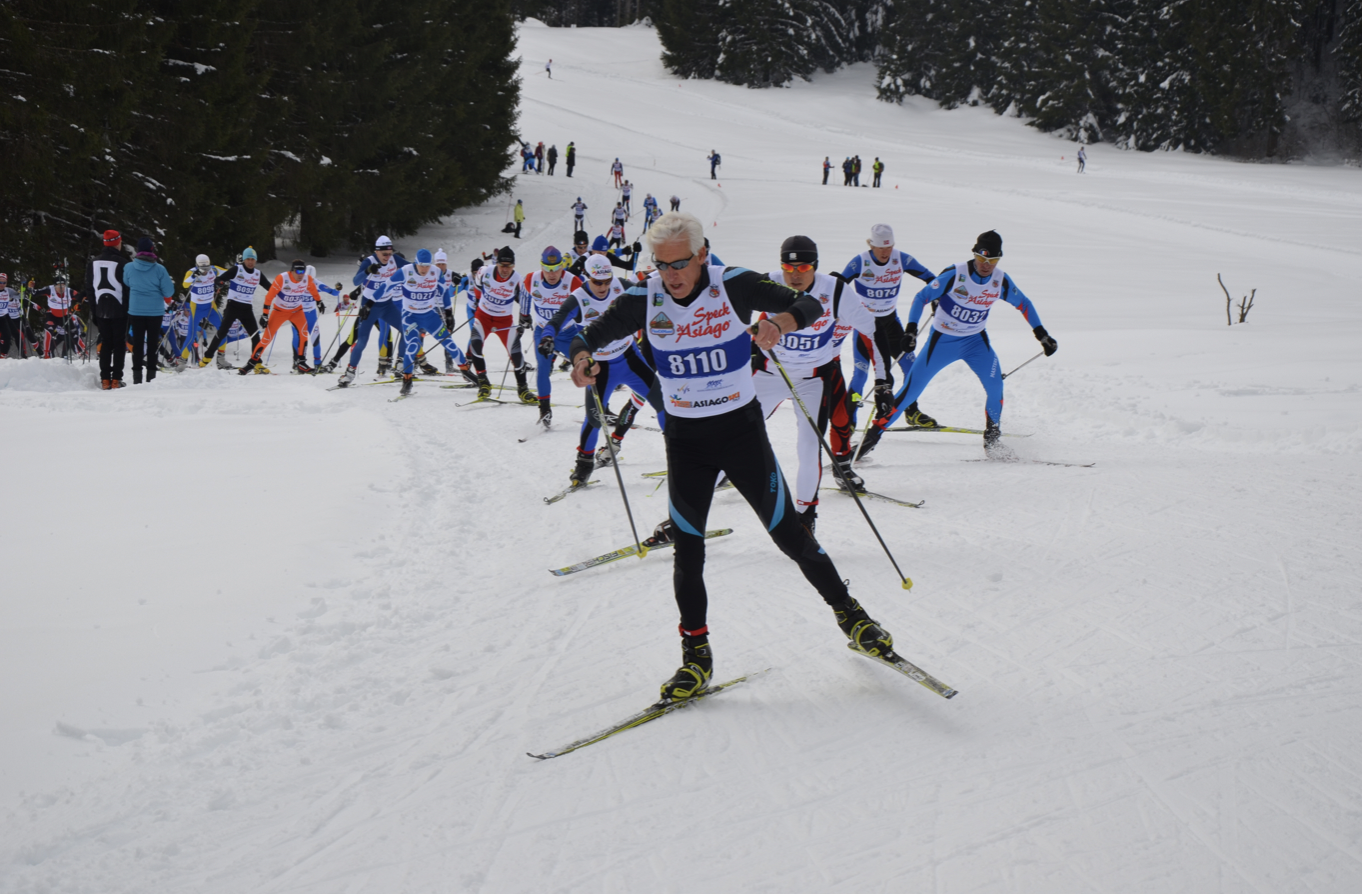
    Masters World Championship, Asiago, Italy, 2014
    Intensity Still Matters

    One of the common mistakes today, especially with the influence of social media and the one-sided promotion of Zone 2 and threshold training, is the assumption that aerobic improvement comes only from easy or moderate training.

    To improve aerobic function, we still need hard training. High-intensity work improves mitochondrial function, increases oxidative capacity in high-threshold motor units, recruits more muscle fibers, and improves high-end aerobic power. The key is proper control of the dose and intensity.

    An elite athlete may tolerate three demanding intensity sessions per week plus strength work. That rarely works for most masters athletes. Many would benefit more from one VO2max session and one maximal steady-state session every 7–10 days, combined with two strength sessions and additional speed- and technique-focused work embedded within basic endurance training. While I really dislike rules of thumb or guidelines in a general sense, I feel using the 80/20 rule is a good starting point. Often confused with the duration or mileage of training. It is not that. The 80/20 guide is 80 percent of the total workouts in a week or a month are easy endurance-based, and 20 percent of the workouts are hard. If one applies this measure to the duration of training, I guarantee over-training.


    Help Support Our Coverage!

    If you value the thoughtful work and access FasterSkier provides, please consider becoming a Voluntary Subscriber. Your support directly fuels our work to cover the people, places, and moments that make our sport special.

    Join the FasterSkier community!
  • When to Increase Training Load… and When to Wait

    When to Increase Training Load… and When to Wait

    This article was made possible through the generous support of our voluntary subscribers. If you value coverage like this, please support FasterSkier with a voluntary subscription.

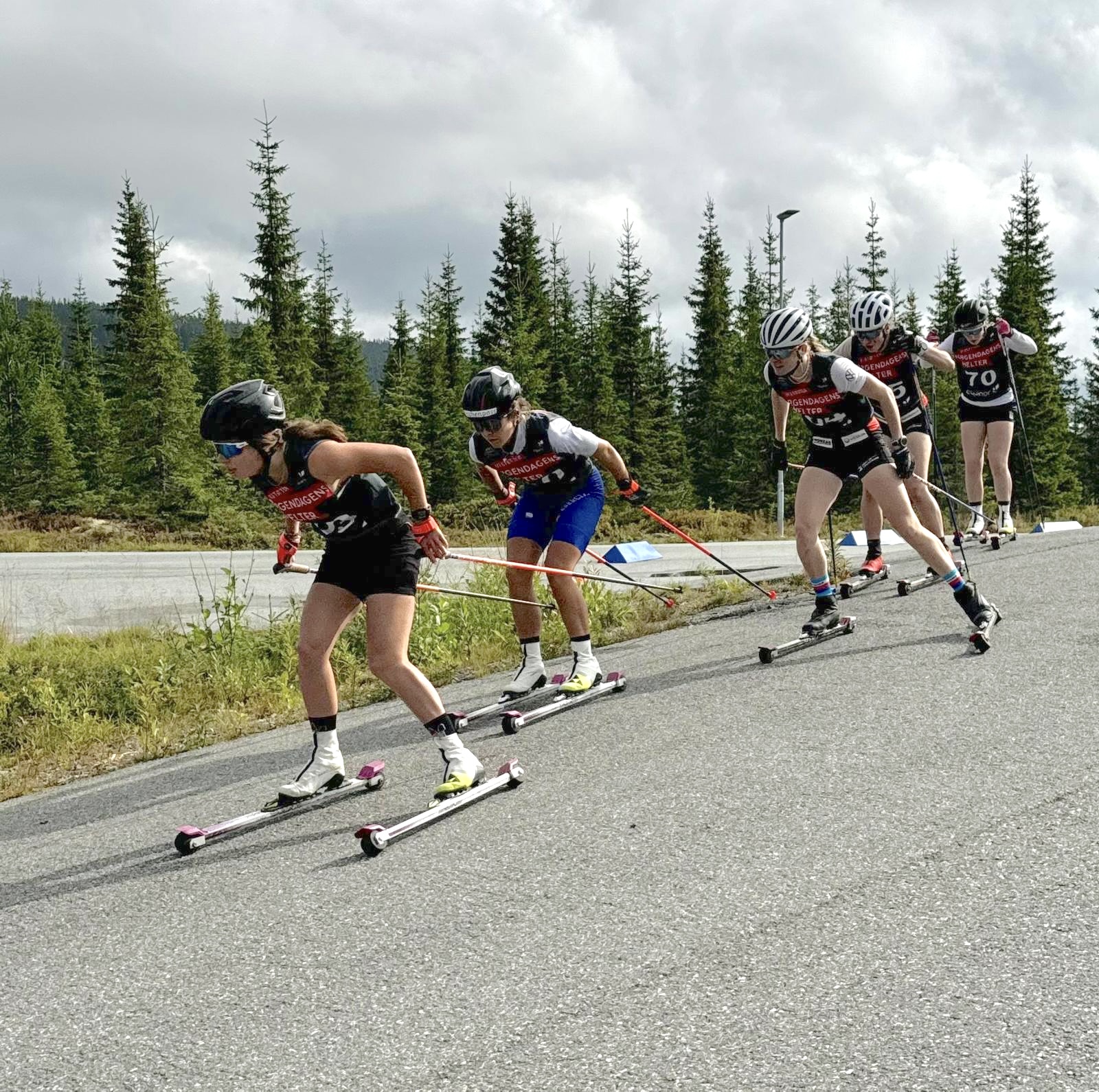
    American Neve Gerard (l) leads athletes from other countries at an International Training Camp in August, 2024, in Sjusjøen, Norway. (Courtesy photo)

    As this ski season wraps up, many of us coaches are doing similar work. Using spreadsheets or a popular training platform, we map out training for the year. We plan the yearly hours, monthly hours, and weekly hours, along with defining the training intensity distribution. We also plan how long and over-distance sessions should be, and maybe how much high-intensity training we should include, etc.  I have done the same in the past.

    Nowadays, my yearly plans include almost none of those things, but rather it is a general road map of how I might want the training loads to progress, what type of high-intensity, neuromuscular work, strength training focus, technique development, training camps, testing sessions, and a general concept of where we start in April or May. We must be able to adjust training on the fly based on an assessment of how athletes’ recovery and adaptation, week to week, with the training and developing fitness.

    In this article, I want to make a case for the changes I have made. Why? Because these detailed hours and training-intensity distribution plans we make are about as good as the day they were written. We then must avoid the temptation to implement training in May, June, or July just because we wrote it down in April. There is no way we can anticipate in April how an athlete will respond to training next month, much less than 2-6 months down the road.

    In discussion with many athletes and coaches I have consulted with in the last four to five years, I believe the biggest challenge faced is how and when to increase training load within a training year. For reference, I use TRIMP to define the metabolic load. TRIMP is described as a modeled internal-load metric or composite index based on exercise duration and HR-derived intensity weighting. TRIMP is not perfect because it is based on heart rate parameters, so power and strength training, mechanical loads are not accounted for. I find TRIMP an excellent proxy for the loads of all endurance training.

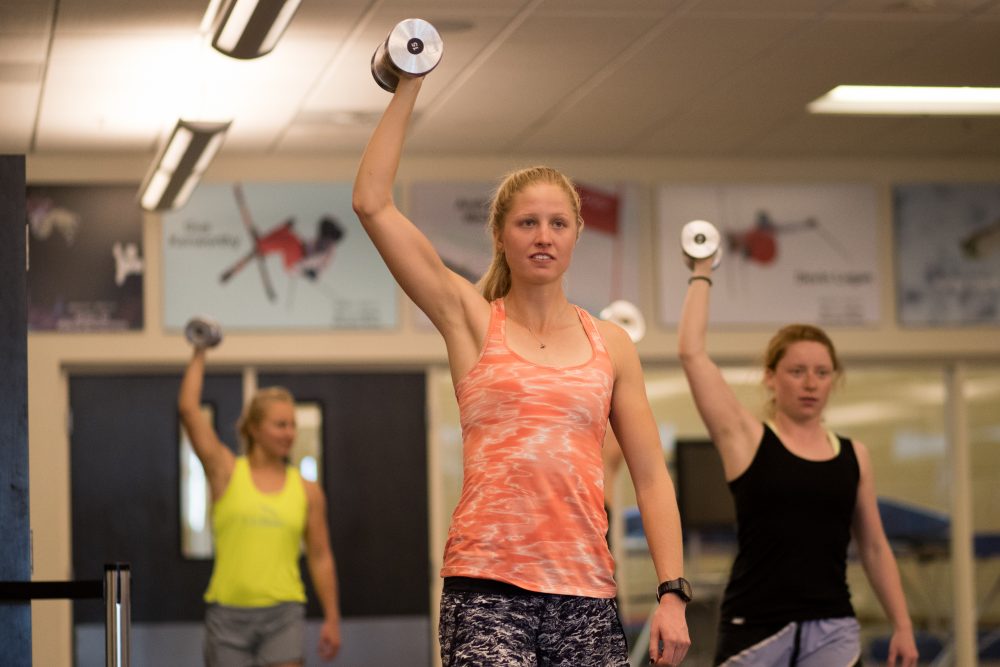
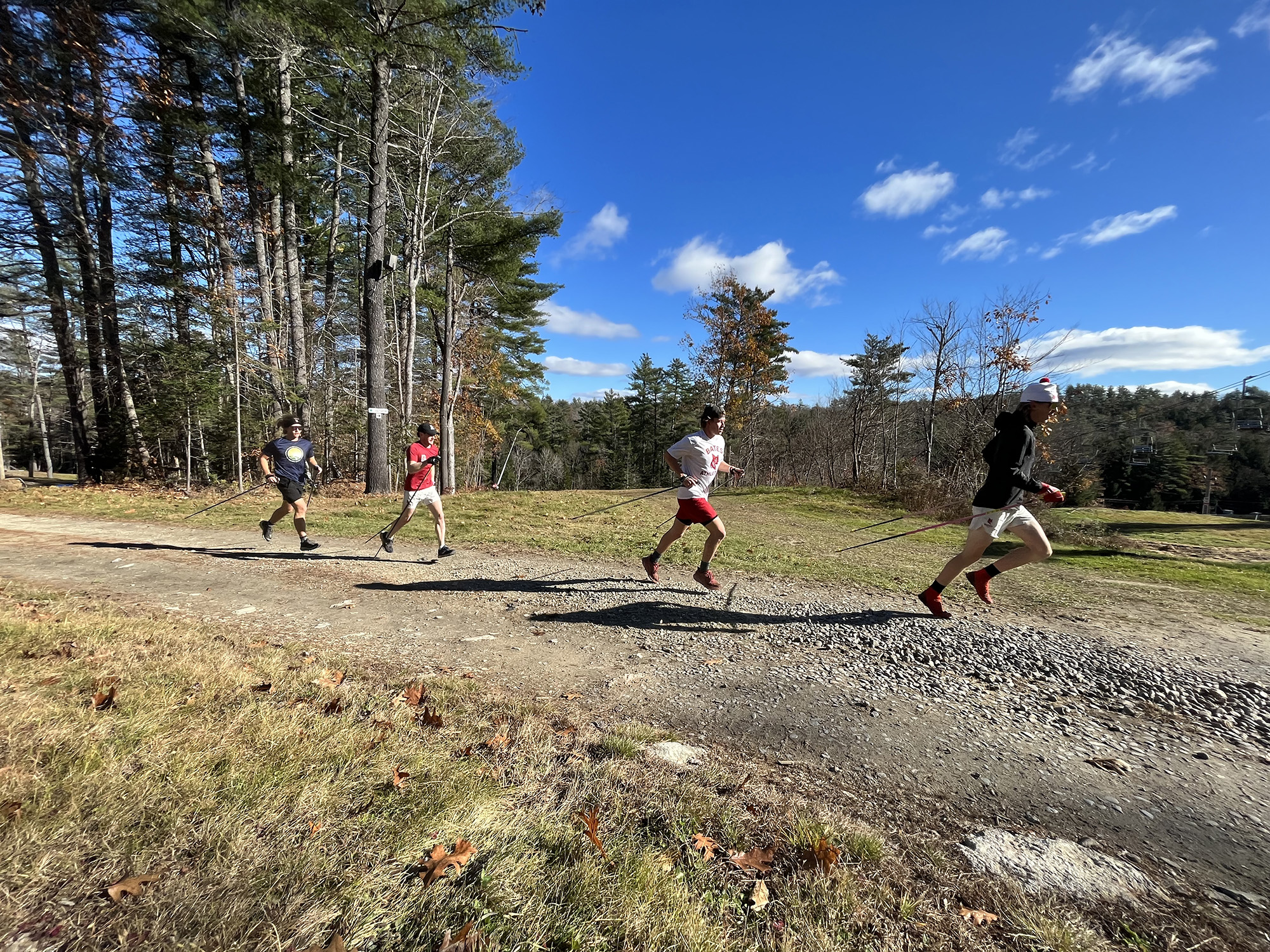
    Bates College getting after some dryland in 2024. (Photo: courtesy photo)

    Others simply use hours to plan and measure the loads. The challenge is difficult when just looking at hours, how to compare an hour of easy training versus an hour of hard training. Then, looking at percentages of time in zones or with other training methods does not define the load or focus the training on the desired adaptation.

    I am not going to address the year-to-year increases simply because all the assorted tables recommending volume of training at an age are based on population averages. The goals of the athletes, the athletes’ training age, training history, and many other potential factors. Just assigning training based on a table is foolish without considering these other factors. In most cases, athletes will train enough if the right principles are followed.

    When we are coaching athletes, we should only increase loads because of improved fitness not in an attempt to drive fitness gains. The decision to increase loads should come from evidence that the athlete(s) have absorbed the current load, not simply because it is a new month and the plan calls for a month-over-month increase. I believe that in the past we have used templates or models that have called for big month-to-month increases. The basis of building fitness is consistency and adaptation to the training. In many cases, we can go as long as 2-3 months at a very similar or very small increase in load.

    I am far from certain how coaches plan training these days, but others and I in the past have planned training based on monthly and weekly hours. In my days, I used to start in May with 50 hours, and by November, I was training more than 100 hours. Then the weekly progression within those months might go 12 hours, 14 hours, 16 hours, 10 hours or something like that. Even back then, how does a 50-hour month prepare you to do a 60-hour month, how does a 12-hour week prepare you to do a 14-hour week? What I learned more than 30 years ago. It doesn’t work that way; even if an athlete completes that kind of protocol, it does not mean it worked; it just means they survived it.

    The research and experience suggest that higher monthly volume and small periodic increases are better for building long-term fitness and performance, with far less risk than the typical plans that ramp up training with increases of 10-15-20% per month. Many old-school thoughts persist that we must increase volume to stimulate further improvements. That is an invalid belief and has been shown to be in much research and analysis. If we are in fact building fitness, we are moving faster at every intensity. Isn’t that already an increase in load? Recruiting more muscle fibers and motor units aerobically, improving mitochondrial density and function,  improving aerobic enzymes in more muscle fibers, among other aerobic adaptations.

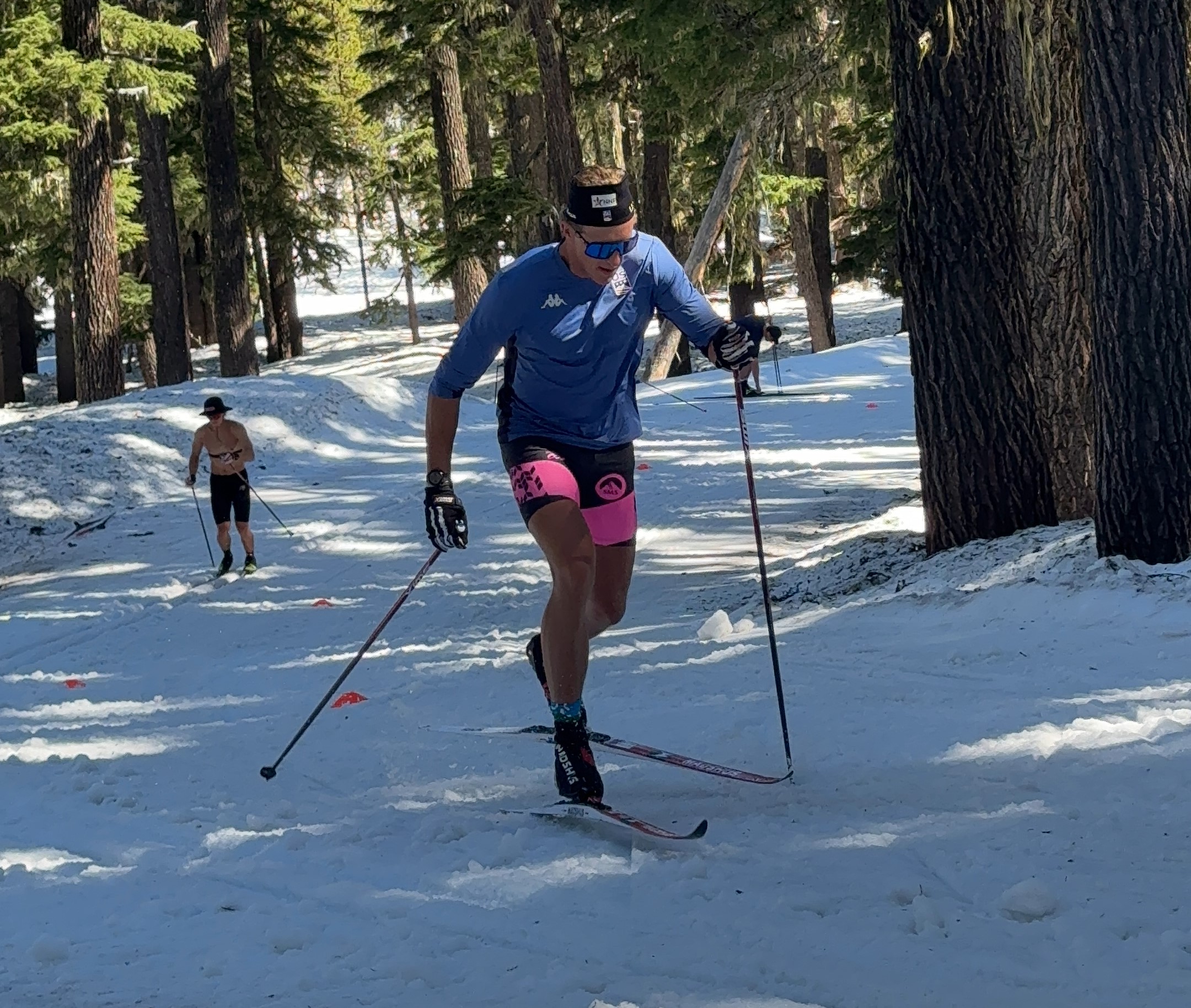
    Fin Bailey works on uphill technique at training camp. (Photo: courtesy photo)

    I look for three layers of signals: performance stability, physiological response, and behavioral cues.

    The stability of performance in training is easily measured with simple technology, such as heart rate and GPS. Prior to increasing loads, the athlete should show improvement or stable performance in workouts. The aerobic training sessions should feel consistent and easy, with very little or no heart rate drift through the workouts. So, a simple training session once a week, once every two weeks, around a standard loop, both for high-intensity and aerobic training, can tell us much.

    The key workouts should show repeatable performance levels from week to week. The pace athletes can maintain at aerobic intensity should gradually and slowly improve, and the technique should stay stable and efficient throughout the workouts.

    Indicator What it suggests
    Same HR but faster pace, HRV is improving Aerobic adaptation
    Same workout feels easier, HRV is stable or improving Load is absorbed
    Ability to repeat intervals without extra fatigue Ready for progression
    If workouts are still producing large fatigue swings, the system is still adapting and increasing load is premature.


    As I have written previously for FasterSkier, older junior ( U18’s) athletes, masters, and elite athletes, I think it is important to use HRV to assess recovery. Using HRV, we can see whether the athletes are recovering predictably between sessions. We can see the stability or improving response their training, and we can assess whether the training loads are sustainable.

    Useful signals:

    • Resting HR stable
    • HRV 7-day trend stable or improving
    • Sleep quality normal
    • Muscle soreness minimal after aerobic sessions
    • The data and the athlete reports feeling normal again within ~24 hours

    If recovery between sessions is incomplete, increasing load compounds fatigue rather than builds fitness. The rush to hit hourly objectives and the failure to respond to accumulating fatigue are the biggest causes of maladaptive training.

    The critical question HRV can help to address. Are the current loads the athlete is doing correct? HRV, especially RMSSD trends collected consistently, can help flag whether an athlete is tolerating training well. But HRV should be interpreted alongside performance, subjective recovery, resting HR, sleep, and life stress rather than used as a standalone decision rule. In some cases, this may mean adjusting other areas of life; in others, we may simply have to reduce the training loads. Simply low HRV indicates a compromised ability to recover from and adapt to training

    A good indicator of readiness is the athlete’s ability to handle training density. Most athletes should have at least one rest day per week. During a training period, the athlete should be able to handle 3-5 moderate training days in a row without feeling accumulated fatigue, and the quality of workouts remains normal and stable.

    The occasional longer sessions should not disrupt the next day’s planned training, and recovery should be normal the following day. If an athlete is doing double sessions, the second session of the day should not be carrying excessive fatigue from the morning session, and the quality, speed, pace, or intensity of the second workout should be consistent.

    When the athlete’s readiness and physiological measures indicate that an increase in load is appropriate, there should only be a slight increase in volume. Make a few sessions per week a little bit longer, followed in the future by adding a workout or two per week

    Training load should only increase when the muscles and connective tissue are tolerating the training. If there is persistent tendon soreness, joint irritation, muscle tightness, or recurring niggles are common, it is not appropriate to increase the loads. Aerobic fitness improves faster than structural durability, which is why injuries often appear right after a volume jump.

    We also need to be aware of and watch for behavioral cues in the athletes, not just the recovery and performance data. We should look for the athlete’s motivation to train and their assessment of the RPE (rating of perceived exertion) for a given workout. If the perceived exertion of a given workout is increasing, it is not a positive signal. Finally, we should ensure that athletes’ nutrition is good, and their body weight is stable.

    As a practical guideline, I would recommend increasing load only after a period of 3-6 weeks, where we can see stable adaptation and improvement in training and recovery measures. When we look at elite training, we always see the training progression is often much slower than people expect.

    JC Schoonmaker and Luke Jager training in Anchorage, Alaska back in 2023. (Photo: Brinkema Brothers)
    Training Phase Progression Pattern
    Base Phase +5–10% volume every 3-6 weeks, but only if all inputs are positive.  If using TRIMP or Training Peaks TSS the load increase should never exceed 15-20%
    Race Prep Phase Maintain a stable volume, intensity increase slowly from the base phase
    Competition phase Volume and Training load decreases slightly; intensity is maintained or increased due to race load.


    As useful guidelines for coaches. If a training day or a week feels heroic, it is too big. Most likely, all the heroic training did was build fatigue and greatly slow recovery and adaptation. Sure, the athlete can do it occasionally, but it in no way means the load improves fitness or performance, or that the athlete adapts to it. My rule of thumb is that the longer it takes for an athlete to recover from a workout, a week, or a month of training, the less adaptation that is possible. When I shared this comment regarding high-intensity workouts with Zach Caldwell, I asked him when we should adapt to them. His response was Thursday! Not next Thursday, not a Thursday next month. Thursday!

    An effective training progression should feel well-tolerated for weeks. Fitness improvements are built on consistent, manageable weeks. Where the fitness is developed through compounded training, not the occasional massive week. I have seen it repeatedly, it is big increases in training load, too much, too soon, that ultimately leads to declining performance and overtraining. Sure, elite athletes train massive weeks, but to get there, they adapt to training every year, step by step.

    Increases in training load should be almost invisible over weeks and months as athletes develop. Over the years of training, the increases are clearly visible and large.

    In summary, increase training load when:

    1. Current workouts are repeatable and controlled
    2. Athletes recover following training days, normally within ~24 hours
    3. No structural soreness or injury signals
    4. Motivation and energy are normal
    5. This training performance has improved, and recovery has been stable or improving for 3-6 weeks


    Help Support Our Olympic Coverage!

    If you value the thoughtful work and access FasterSkier provides, please consider becoming a Voluntary Subscriber. Your support directly fuels our work to cover the people, places, and moments that make our sport special.

    Join the FasterSkier community!


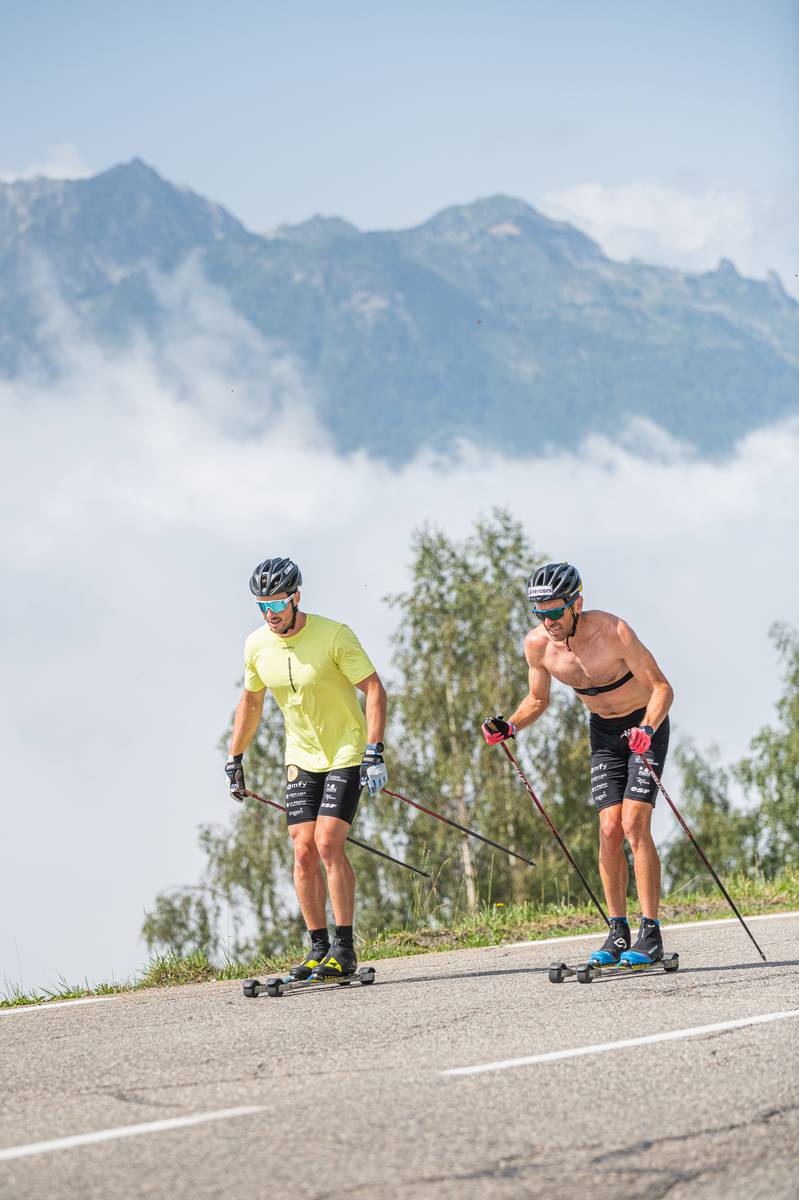
    French athletes Lucas Chanavat (left) and Maurice Magnificat (right) out for a rollerski during a training camp in Tignes. (Photo: NordicFocus)
  • Sovereign 2 SilverStar Ski Marathon — Registration Closes Sunday

    Sovereign 2 SilverStar Ski Marathon — Registration Closes Sunday

    LAST CALL for an Incredible Nordic Weekend at Sovereign 2 SilverStar Ski Marathon, Vernon, BC

    April 4-5, 2026 | Stussi Night Sprints April 2


    Registration Closes 6pm (local) Sunday, March 29th

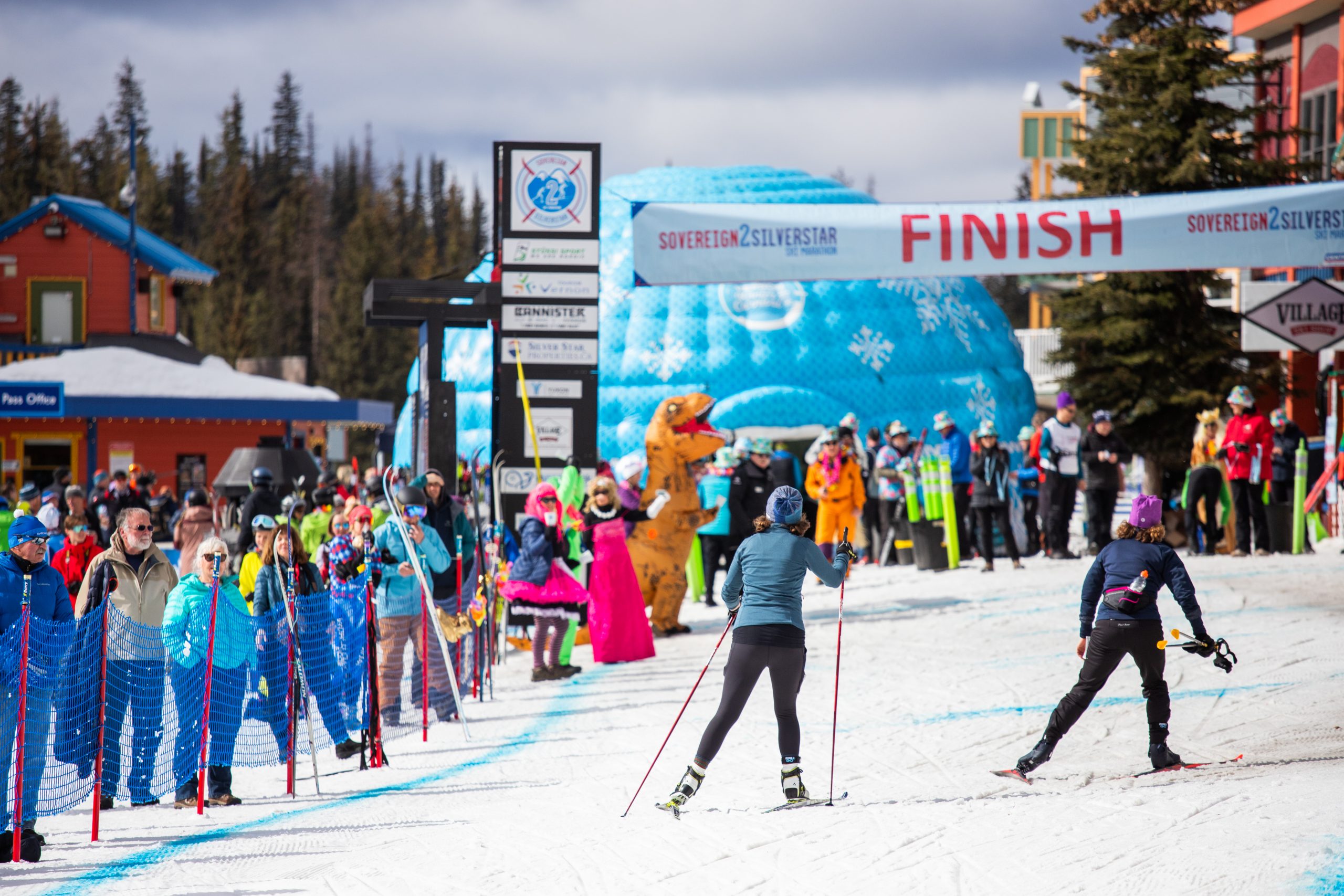
    You don’t want to miss out on the 5th annual S2S! Sovereign Lake Nordic Club and Silver Star Mountain Resort — the two world-class venues co-hosting the event — have had new snow and colder temps over the past week, and the groomers have been doing a great job. (The picture below is for real.) Classic Saturday and Skate Sunday, with 21km and 41km distances available both days.

    Information Package  
    Register for the S2S

    Stussi Night Sprints — The Best Way to Get Ready for the Ski Marathons

    April 2 @ 4pm

    If you’ve ever wanted to try out the exciting event of sprint skiing, now’s your chance. On a fun, fast, and spectator-friendly 1.1km course, this is a great opportunity for Masters and Development athletes to give it a go. And after you’re done racing, stick around to watch Elite racers compete for $3,400 in prize money. Come out and enjoy an exciting evening of head-to-head racing.

    Information Package  
    Register for Stussi Night Sprints

    Sovereign2Silverstar Ski Marathon 2024

    S2S Extras

    The S2S has so many cool add-ons to make for a fabulous grand finale to your Nordic season:

    • Accommodation Deals
    • Waxing Service with Stussi Sport
    • Club Championships
    • International Mountain Film Festival
    • Charity Auction — over $45,000 donated to KidSport Vernon since 2022

    See you next weekend!

    Photos © Vanessa Garrison

  • Royal Gorge XC Resort to Offer Expanded Programming for Winter 2026-2027

    Royal Gorge XC Resort to Offer Expanded Programming for Winter 2026-2027

    Thanks to the fantastic success of the redesigned youth programs at the resort this past winter, Royal Gorge XC will offer expanded teams for the 2026-2027 season.

    New team offerings for the coming season will include middle school age racing, junior racing, gap year programming, pro level racing and masters training groups.

    Youth programming will remain the same as offered this past season, with groups comprised of young skiers from Kindergarten through 8th grade with a focus on skill development and fun.

    The new racing and training focused offerings will put into place a full ladder of nordic ski development at Royal Gorge XC, allowing every level of skier to see the complete range of possibilities this life-long sport can offer.

    Programs will be headed by Will Sweetser, now in his 33rd year of professional coaching. An expanded staff of U.S. Ski and Snowboard certified coaches will support programming and lead the Royal Gorge XC Teams as they represent the resort and Far West Nordic in local, regional and national racing.

    All programs will be competitively priced, with both à la carte and full menu pricing options. Registration for programs will open at SkiReg.com by April 1, 2026.

    Royal Gorge XC Programs 2026-2027

    Manzanitas — Grades K–2
    Fun, fun and more fun. Saturdays only. Classic skiing focus. Weekend and seasonal rentals available.

    Aspens — Grades 3–5
    Fun, coordination and skill development weekend program. Classic and skate skiing. Limited racing opportunities for those interested.

    Lodgepoles — Grades 6–8
    Fun, skill development and fitness focused weekend program for middle schoolers. Independent Middle School racing and limited racing opportunities for those interested.

    Devo — Ages 12–15
    September through March programming options, both fall/winter and winter only. Summer camp offered. Coached sessions held 3 days per week. Local and regional race support with experienced, certified coaches.

    Comp — Ages 15–19
    June through March programming options, both full year and winter only. Coached sessions held 4 days per week on average. Local, regional, and national race planning and support with experienced, certified coaches.

    Gap Year — Ages 18–20
    By application only. Program limited to 5 athletes. 4–5 days per week in conjunction with Pro Team. Head coach: Will Sweetser.

    Pro Team — Ages 19+
    By application only. Program limited to 5 athletes. Individual training and competition planning. Job opportunities. Coaching requirement. Head coach: Will Sweetser.

    Senior/Masters Training Groups — Ages 21+
    Multiple training groups offering beginner to expert skate and classic training. From “learn to” to racing level groups. 1–3 days per week. Scheduled in conjunction with youth and junior training groups and offering race/experience travel.

    Registration opens April 1, 2026 at skireg.com/rgxc-nordic-ski-team-2026.

  • Personal Essay: An Uphill Battle by Tim Donahue

    Personal Essay: An Uphill Battle by Tim Donahue

    If you look at the lines that graph long-term athletic performance – VO2 max, anaerobic threshold, maximum heart rate, 10k running speed – it can be pretty demoralizing. Even before age 30, there’s a slow and steady cant downward, and then by the mid-40s, a descent into a valley that plunges toward the abyss’s void of emptiness.  

     Some of us choose to oppose these trendlines, wrestling with them like tentacles in a roiling sea of errands and bills and fraying cartilage and arthritis. During well more than one rollerski session each year, I think of the “strange resistance” Robert Frost describes in his poem “West Running Brook”:

    “It has this throwing backward on itself / So that the fall of most of it is always/ Raising a little, sending up a little.”

    This man, whose Vermont cabin touches the Rikert Nordic trail system, continues:

    “It is this backwards motion toward the source/ Against the stream, that most we see ourselves in,/ The tribute of the current to the source./ It is from this in nature we are from./ It is most us.”

    The tribute of the current to the source. It’s as though Frost (who, I’m guessing would be Birkie wave 8 – at best) was tasked to make an inspirational T-shirt that captures the mind of a masters skier. I am proud to be a member of this infinitesimal subset of American society, and if you still think skis with holes in the tips look new, I imagine you are too.  

    Tim Donahue mid-race during the 2020 Winter World Masters Games in Seefeld, AUT. (Photo: Garrott Kuzzy / Lumi Experiences)

     After too much running for my large frame and my knees, I began uphill skiing in earnest in my mid-30s, just as I knew these charts were generally tipping downwards. As I was effectively starting from scratch, though, I felt I had an advantage. I did not have to chase the ghost of my 22 year-old self, vaunted by a college program and a systematic knowledge of voluntary suffering. Skiing gave me a second athletic life, and as I opened its invitations to technique, training blocks, intensity sessions, and World Cup fandom, I delighted in every aspect of its complexity.  

     Nearly twenty years into it, the fires still burn, though sometimes it’s hard to tell whether I’ll coax any new flames or just ride along the glimmer of dying embers. Now into the swing of summer as we are, I find myself between an acronym – SAMITS (skiers are made in the summer) – and, a hammock. Can I throw another log onto this fire? Should I? It’s a question of little worldly consequence, and yet it’s the central question of this other world I’ve built for myself. 

     More than anything, the lure of skiing these days is that reliable doorway it opens into another place. I have sat through all-morning “self-care” sessions in hot rooms in masks, and then I have clicked into the Marwes and breathed. I have endured a full Guy Fieri cooking show in the doctor’s waiting room, then I’ve gently climbed through the woods with four points of contact. I just learned the world emitted more C02 than ever last year, and I needed to get out and roll among the innocent trees.   

    This otherworldliness has especially come as I’ve lived in, and now just north of, Manhattan all these years. I have approximately one teammate (the great Sproule Love) and I get on snow maybe a dozen days a season. But new wheels roll well on fresh pavement even here, and it’s easy to let the mind return to the familiar grooves. On the rail trail that runs mercifully just out my door and now nearly connects through the entire state of New York, I can lather into a third hour under a canopy of early spring leaves and let the Wendell Berry in: “The health of nature is the primary ground of hope – if we can find the humility and wisdom to accept nature as our teacher.” Yes, skiing can soften the hard edges of the world and give way to the dance of balance and strength. And yet, sometimes I need more than this.  

     Sometimes, I can rouse the fires within to see a completely different world beyond, with its own muses and images. Here’s where I hear the siren song of Devon Kershaw and his allusions of carnage: the “rip their legs off” and “gun to tape annihilate” and the “going down to the basement.” Racing is just instinctual for me. I ran my first 10k back in 1979, when I was nine, and whether up stairs, across bogs and sand dunes, on bikes, on skis or snowshoes, I’ve raced every year since. To this career high school English teacher, it’s the opposite of grading essays.  

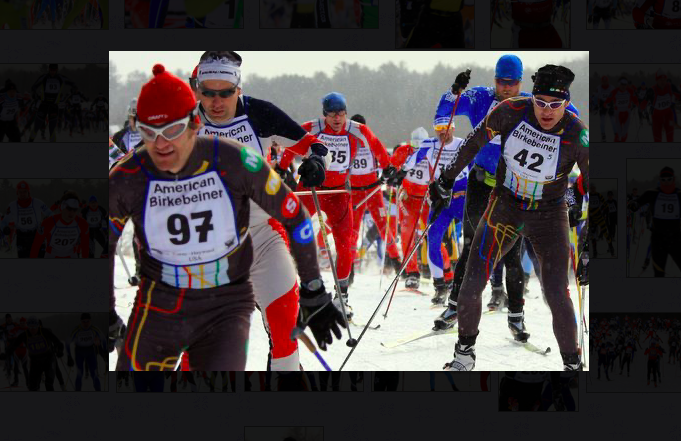
    The author, Tim Donahue, races the 2012 American Birkie with teammate Sproule Love (bib 97). (Photo: livestream screenshot)

     When I’m trying to connect with my limited stores power and speed, I’ll sometimes watch World Cup clips on YouTube. I see Petter Northug gritting his way through the field to take the 50k classic at the 2015 Falun World Championships; I see those last few k’s in the Beijing Olympic 30k when Jessie Diggins finishes on fumes for silver. (Yes, a proud moment in our household when my daughters encouraged me to name our puppy Diggins.) The one I’m thinking of now is the 2019 World Champs 30k skiathlon in Seefeld. It’s Sundy-Bolshunov-Røthe trying to destroy each other up the last few climbs, finding a hop skate after seventy-five minutes of redline racing, then spilling across the line with perfectly emptied tanks. Perhaps you have your own favorite clips.  

    As I try to summon a summer interval in the suburbs, after dropping my daughter a sleepover, I can get to thinking about my own highlight tape, which Chad Salmela is definitely not narrating. I think of the 2006 Pepsi Challenge, when at 48k, I gave a nod to my one teammate and we made a decisive surge, dusting the last young buck riding in our train. I think about Bitch Hill, a steep little climb 40k into the Birkie, when several years later, I found the spring to fracture our large, lollygagging pack. I find these memories within, gently flogging me with their flagella. In part because it’s so hard to explain them in my faculty lounge in the Bronx, in part because they are the payouts of so much stoic suffering, and mostly because I just love it, I want to make more.  

    This winter was different though. Mysteriously, I started feeling a constriction in my chest. I was often unable to get a full breath, even when reading in bed at night. When I tried to get out of zone three, I just couldn’t find the air. I saw my pulmonologist, my cardiologist, a gastroenterologist. I drew blood, I got tests. I got sucked down the Internet vortex: was it long Covid? Had I even had Covid? It took time and was expensive, and I didn’t learn much.  

    With each race I had penciled into the schedule and had to decline, I felt the nip of disappointment. I didn’t want to say good-bye yet. Could I salvage, at least, something?  

    One day in February after a good night’s sleep, I decided to enter a low-stakes challenge – the benchmark 10k rollerski time trial in Central Park. It wasn’t awful. In fact, it was an improvement from a few months prior. So, I succumbed to the beast and tried a few late-season races.  

    It’s not a great feeling to stand on the starting line with a doubting mindset – “What am I doing here?” “Don’t blow up.” But that’s how things went – I felt like I was wearing someone else’s clothes. It was hard, humbling, and really not that much fun. But my last race of the “season” (four races total) offered a glimmer of hope. It was just a 5k relay leg, in perfect conditions on a rather flat course. Still, I felt relatively strong. I was actually able to pass people up a hill. So that’s the memory I’m choosing to take away. 

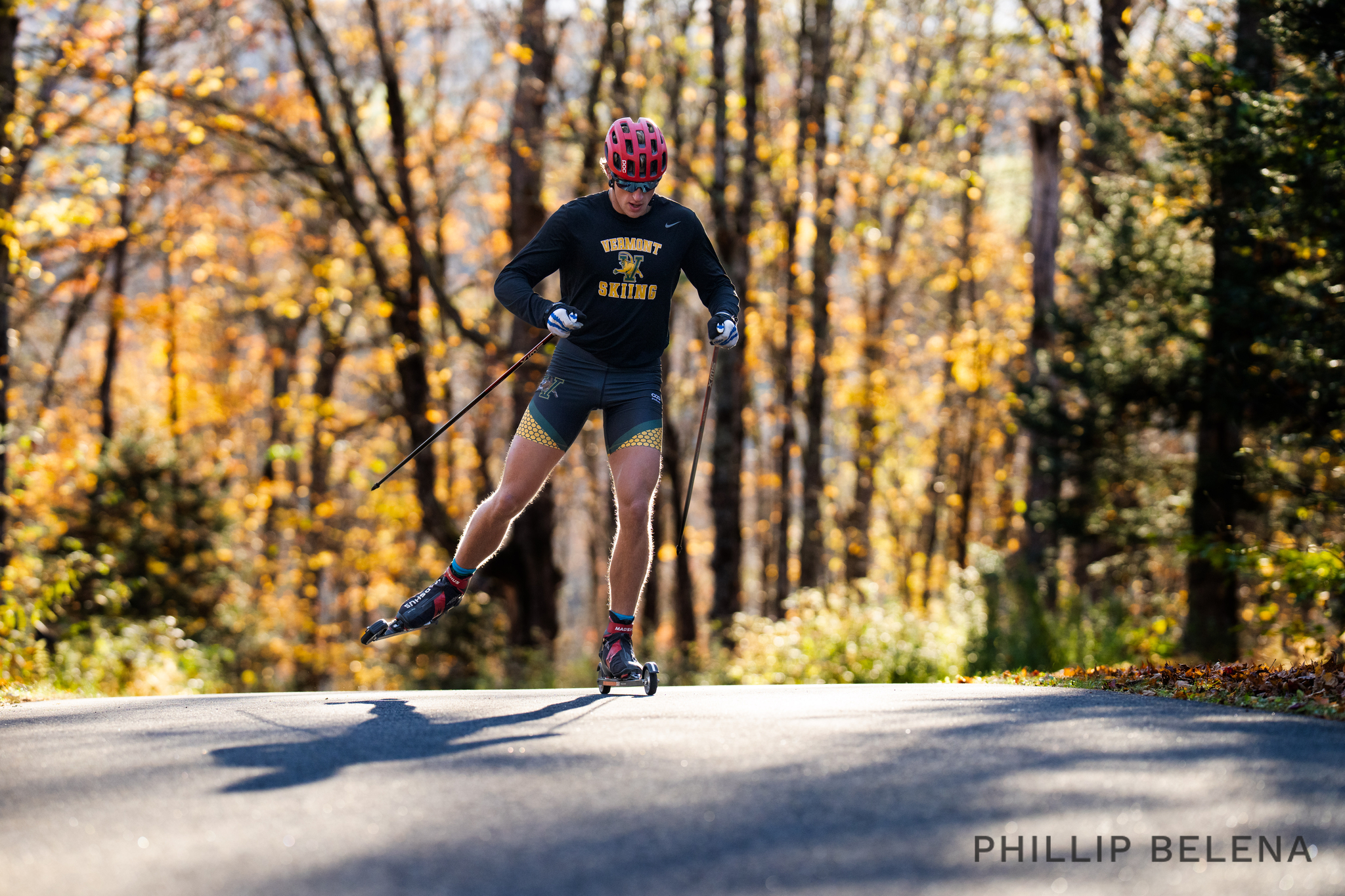
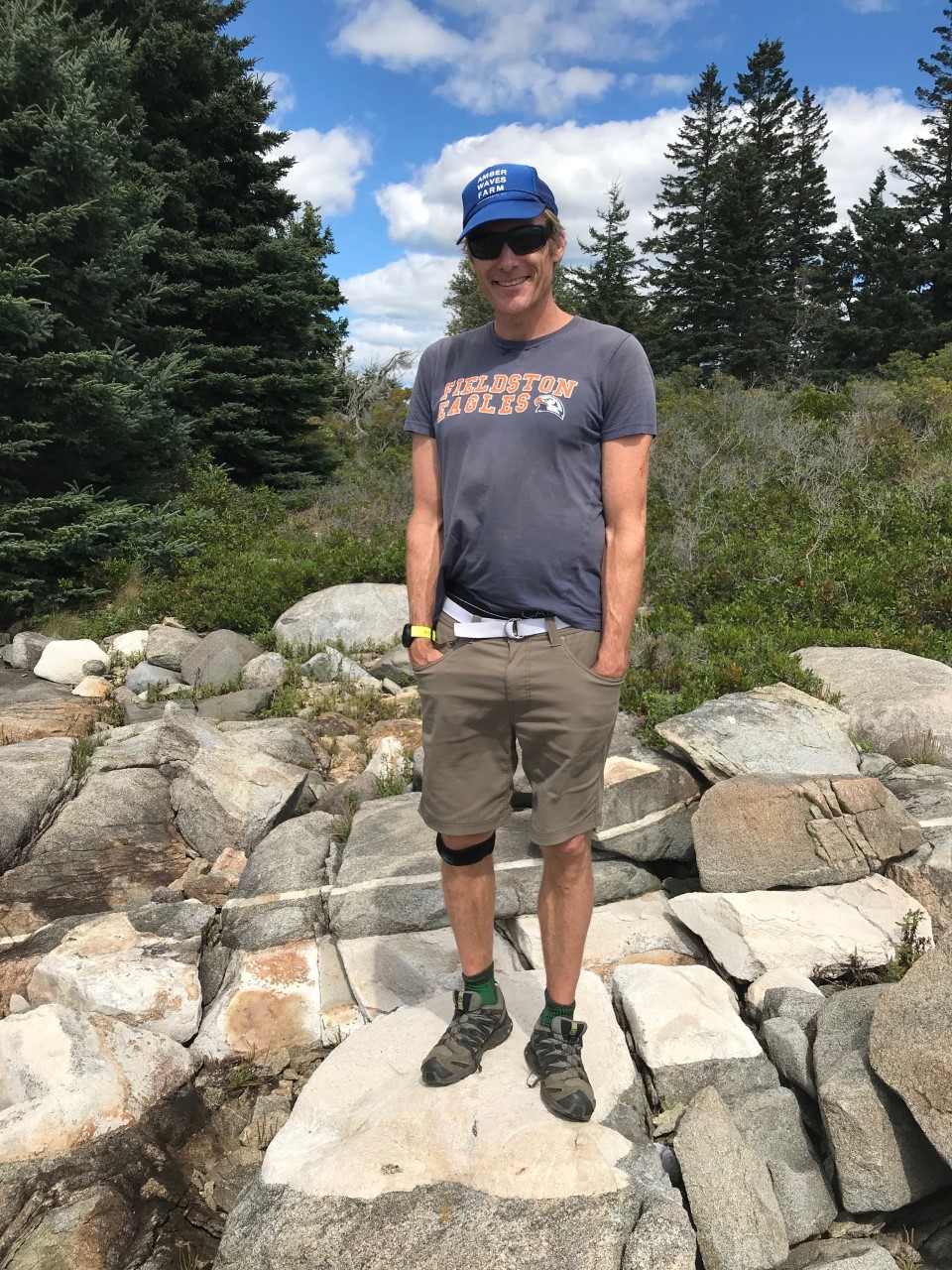
    Tim Donahue in Maine during the summer of 2020. (Photo: Sproule Love)

    But is it enough to justify all the rigamarole? That sixth hill interval when the pain just feels pointless? Those beautifully aimless workouts – where you go a little faster than you should – interrupted by the voice of prudence? The occasional margarita you eschew for some pious purpose? And then, when winter comes, all that fretting over Wunderground and waxes and websites, where you read about volunteers shoveling snow onto corners in dwindling hopes of staving off the coming thaw, toward which your travel no doubt contributes?  

     Ugh – yeah, it’s worth it! We skiers worship a rather demonic god, it seems. And its worth only grows because it’s so fleeting, like surfing through a barrel wave – exhilarating and bound to crash. Like trying to ski uphill forever. If you, reader, have not grappled with this same question, you probably will!  

    Here’s the best revelation I’ve come to: I just want to be able to work hard enough so that going out on a long ski feels easy. For a recent New York Times piece about the pleasure of running slowly, one of the most popular comments was, “Running for joy beats running to win anytime.” I’m not quite there yet, but I see the light of this too. For now, I want my strength to be more than my pain. I know my imagination can supply the rest.  

    Author Bio:

    Tim Donahue teaches high school English at the Ethical Culture Fieldston School in The Bronx. He lives in Hastings-on-Hudson, NY and rollerskis year round. You can find his writing on climate change and education in The New York TimesUSA Today, and Newsweek.