From the FasterSkier archive — posts syndicated from athletes’ and coaches’ own blogs between 2004 and 2012, kept online as published. Current coverage is at fasterskier.com.
For those who have yet to experience the beauty of Canmore, Alberta, a Google search for photos of the town alone should provide sufficient motivation to put it on your travel bucket list. A dramatic skyline of rugged and imposing peaks provide a backdrop to main street, the Nordic Centre, and pretty much anywhere else you could visit in the Kananaskis Valley. Smaller than its perhaps better-known neighbor, Banff, the streets of Canmore are lined with mom-and-pop shops that offer a low-key and inviting atmosphere. Canmore is home to many long-term residents and families, and has what local Lindsey Sinclair refers to as a “home-grown feeling”.
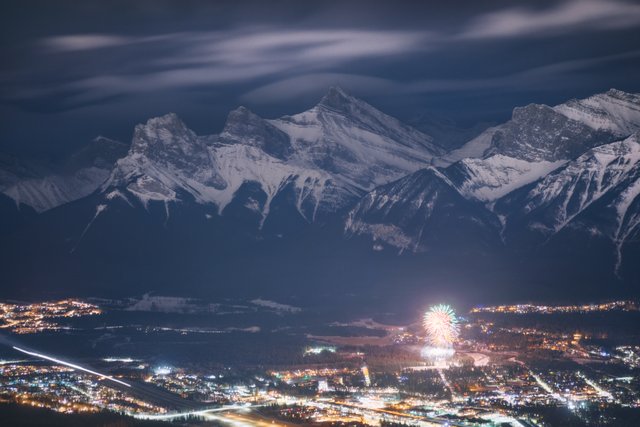
The town of Canmore lit up on a wintery night with the Canadian Rockies looming above (Photo: Travel Alberta)
As a cross country skier, you have likely heard of Canmore and it’s fabulous nordic center. Whether it be because of the 1988 Winter Olympics, the FIS World Cup in2005,2008,2010,2012 and2016, the annual Frozen Thunder race hosted in early November, or simply the 60+ kilometers of beautiful trails, the Canmore Nordic Centre Provincial Park is well known in North America.
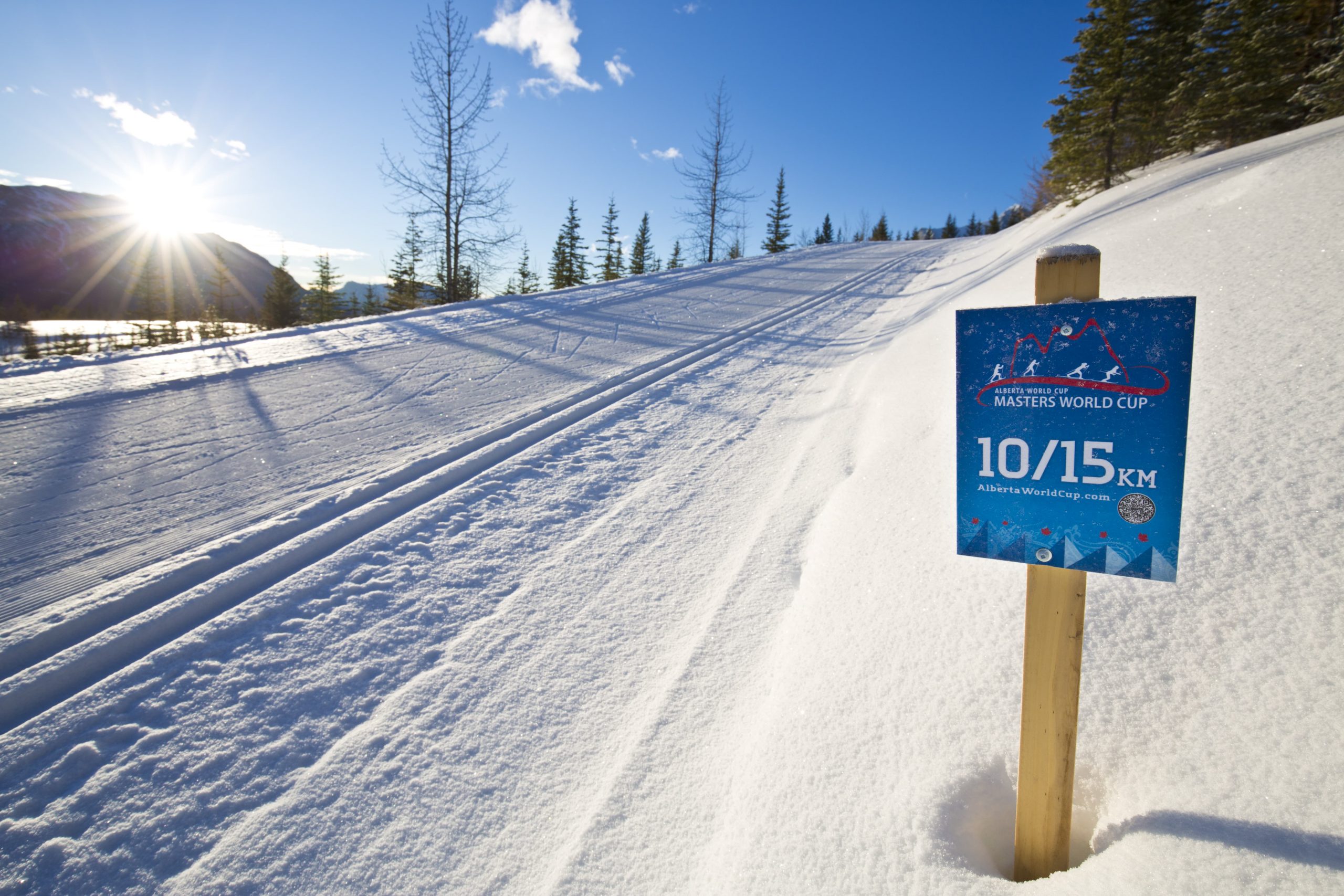
Inviting tracks sparkle in the sun along the 10/15km race course for Masters World Cup in March 2022 (Photo: GibsonPictures)
In March 2022, Canmore will be host to the annual Masters World Cup of Cross Country Skiing. Skiers from around the world will meet in Canmore for ten days of fun racing and camaraderie. But Canmore and the greater Kananaskis area has much more to offer than just great ski trails. For those looking to fully experience Canmore, the opportunities are numerous and varying in physicality. With a mix of culture and outdoor adventure, there is something for everyone.
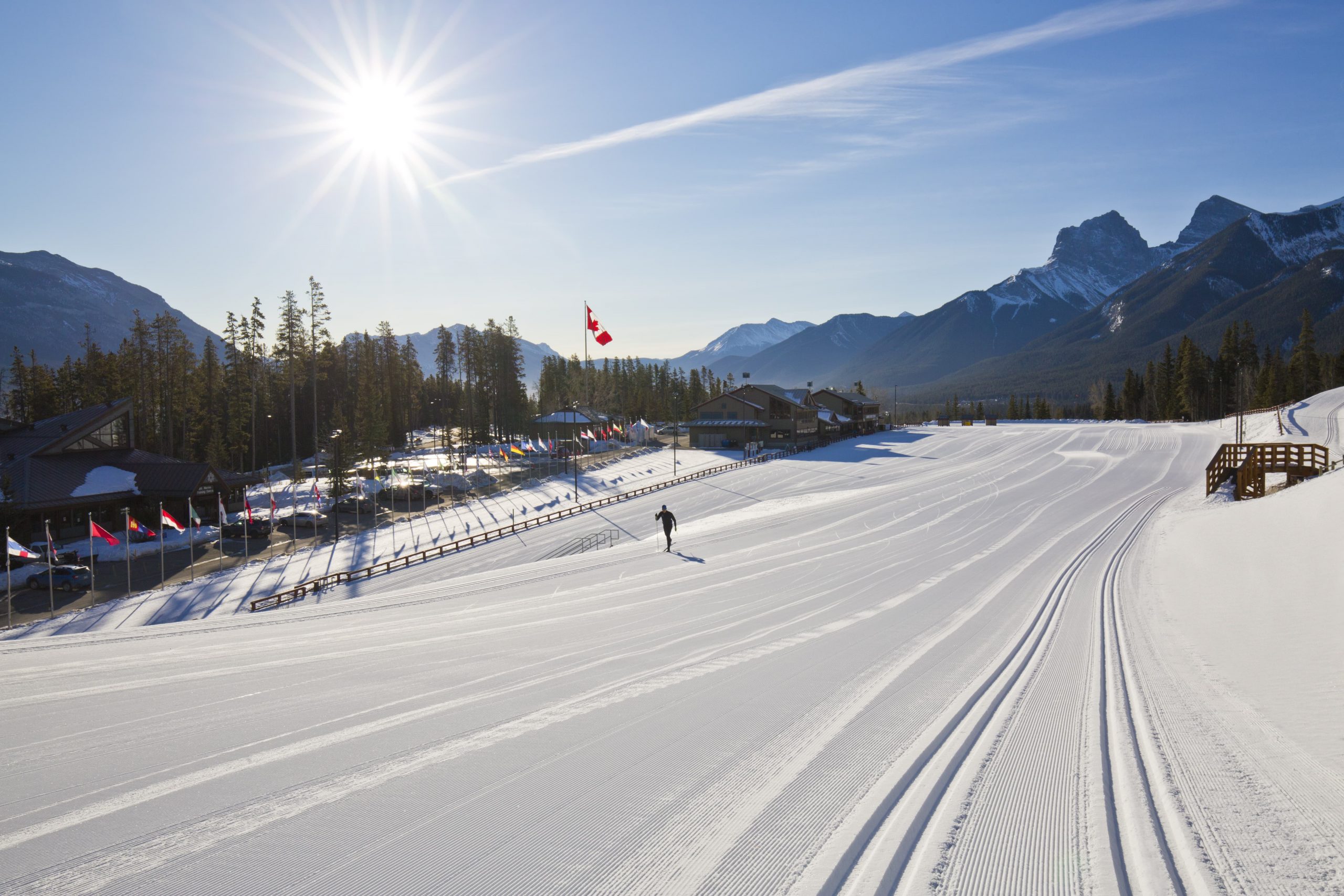
The wide and inviting stadium at the Canmore Nordic Center (Photo: GibsonPictures)
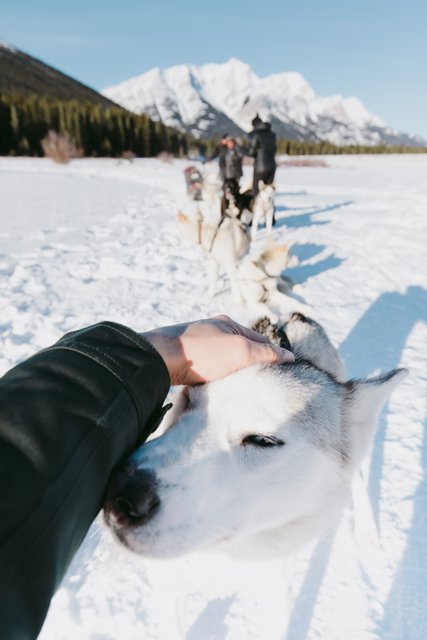
For off-ski outdoor recreation that keeps the energy output to a minimum, a dog-sledding adventure is one way to experience more of the area through a unique form of transport.Snowy Owl Sled Dog Tours was started in 1983 by Connie and Charles Arsenault with one team of ten dogs. The operation has since grown into a thriving business with sixteen teams of sled dogs. They offer a range of outings and experiences that are sure to give you a taste for both the community and scenery in the Canmore area.
You could enjoy a sunny sled dog ride just like this with Snowy Owl Sled Dog Tours (Photo: Travel Alberta)
A caving tour or evening ice walk could also be a great way to pass time spent away from the ski trails.Canmore Cave Tours offers tours to Rat’s Nest cave under Grotto Mountain. These excursions are more pleasant than the cave name suggests and feature 7,000-year-old animal bones and pictographs in a cave that is completely untouched by development. Similarly, an evening walk down Grotto Canyon will take you away from town and towards the amazing ice formations of the canyon’s frozen waterfalls.
Experience a very different type of outing with a cave tour (Photo: Travel Alberta)
Ice climbing and frozen waterfall viewing in Grotto Canyon (Photo: Travel Alberta/Mike Seehagel)
When you’ve had your fill of the outdoors for the day, downtown is ready to welcome you because, as Sinclair says, “Canmore is home to a little bit of everything.” With five breweries and distilleries in town, taking a trip through town with theCanmore Brewery and Distillery Tours would be a great way to learn more about the local craft beverage scene. The guides from this locally-owned business are professional, experienced, and well-versed in just about everything in the area has to offer, plus they will transport you to and from stops while keeping you entertained with stories.
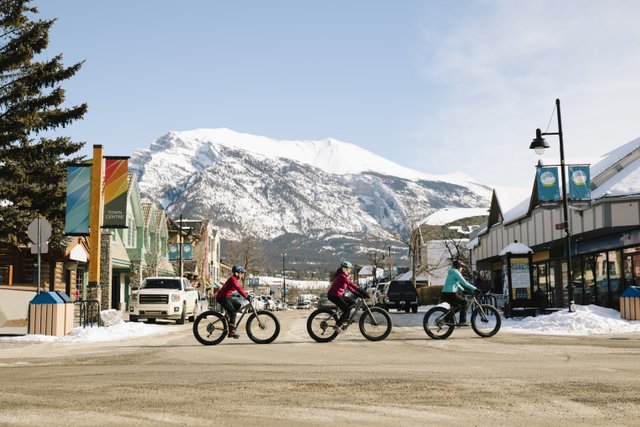
A crew of fat-bikers heads through downtown Canmore (Photo: Hero Images)
For morning, midday, or anytime pick-me-up beverages, the award-winningEclipse Coffee Roasters is a sure bet. Not only do they have a diverse selection of over ten freshly roasted bean varieties available, but they are also well-stocked with delectable baked goods to fuel you out on the ski trails.
After a fortifying cup of coffee, you’ll be ready to dive into the arts and culture scene that flourishes in Canmore. Home to world renowned sculptures, painters, and photographers, Canmore has a multitude of art galleries that are worth visiting. Stroll down main street and enjoy the beautiful collections on display. Then, if you find yourself inspired and in a creative mood, head toCrock A Doodle where you can paint your own pottery.
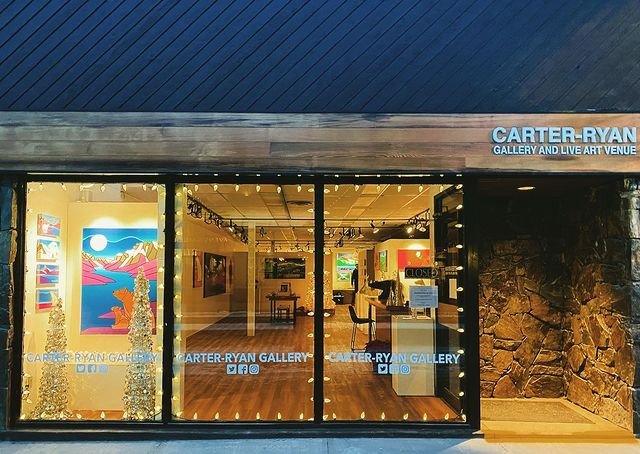
The Carter-Ryan Gallery and art venue found in Canmore (Photo: @carterryangallery)
After a hard day out on the ski trails, visiting one of Canmore’s spa or wellness centers would be the perfect place to recover.Back At It Sports & Wellness caters specifically to sports, therapeutic massage, and acupuncture. Maybe you’re too sore to even leave the hotel room? Not a problem becauseMobile Massage Canmore will come to you. They offer in-home and hotel massage therapy and will bring their table, lotion, music and highly skilled RMTs directly to your doorstep.
Speaking of hotels, it is worth stopping by thePaintbox Lodge, even if you don’t end up staying there. Owned and operated by Olympic silver-medalist, Sara Renner and her husband, former World Cup Champion in alpine skiing, Thomas Grandi, the Paintbox Lodge is an award-winning boutique hotel located downtown. They offer five unique and comfortable suites and rooms with complimentary breakfast featuring a legendary sourdough bread. Additionally, you and your party can sign up for a kitchen party, harvest table dinner or tapas party at “the BOX.”
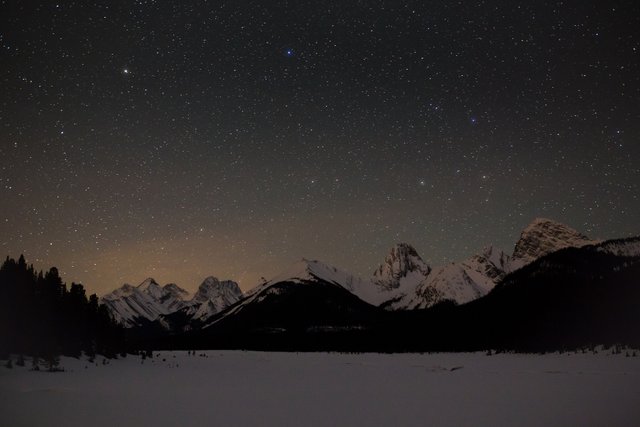
Spray Valley at night, in the greater Kananaskis area (Photo: Travel Alberta)
Whether you’re there to race at World Masters, on a ski vacation, or simply to enjoy the mountains in winter, there are plenty of activity options in Canmore and the greater Kananaskis area to keep you interested and engaged during your stay. For assistance with planning your trip or any other questions about Canmore, the staff at the Visitor Information Centre are ready and eager to help. The Centre is staffed daily and can respond to emails sent to: canmore.vic@gmail.com.
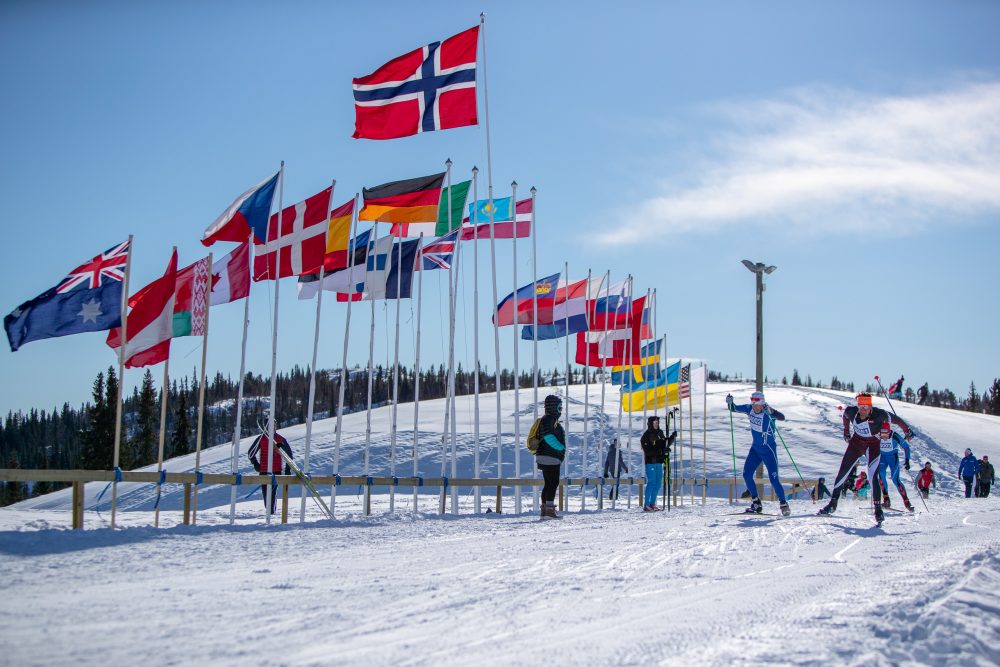
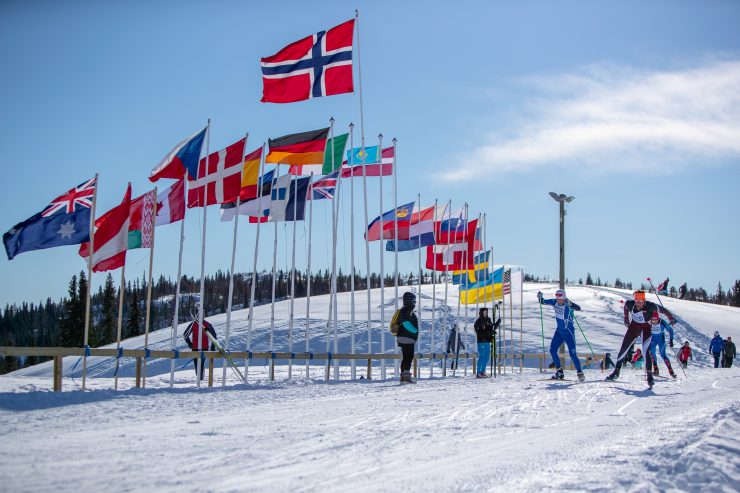
Winner Aleksandr Pushkarev of Russia (left) leads fellow podium finishers Marco Mosconi of Italy (right) and Christophe Blanchet Nicoud of France (rear) past the flags at the edge of the stadium as they approach the finish line in the M4 10 k freestyle race at World Masters in Beitostølen, Norway, in March 2019. (photo: courtesy MWC 2019)
BEITOSTØLEN, Norway — Team USA led the participation numbers while Russia topped the medal table in the 2019 Masters World Cup, the annual competition for skiers aged 30 and over that wrapped up in this mountainside hamlet on Thursday. Roughly 1,000 skiers from 26 different nations, from the predictable (Norway, Finland) to the unexpected (Thailand!), made their way to the Oppland region for seven days of competition and up to four races per athlete, three individual races plus potentially the relay.
To say that the competition had an effect on Beitostølen is an understatement. The resort community has an official population of only a few thousand; Mayor Kjell Berge Melbybråten, who was also the Chief of Stadium, welcomed visitors and noted that the town’s population was increasing by nearly thirty percent during the races. Athletes in matching team jackets walked the city streets, bought out the entire stock of yogurt at the SPAR grocery store, and washed their hands incessantly. It was like being at a scaled-down Winter Olympics, if everyone involved were older and slower.
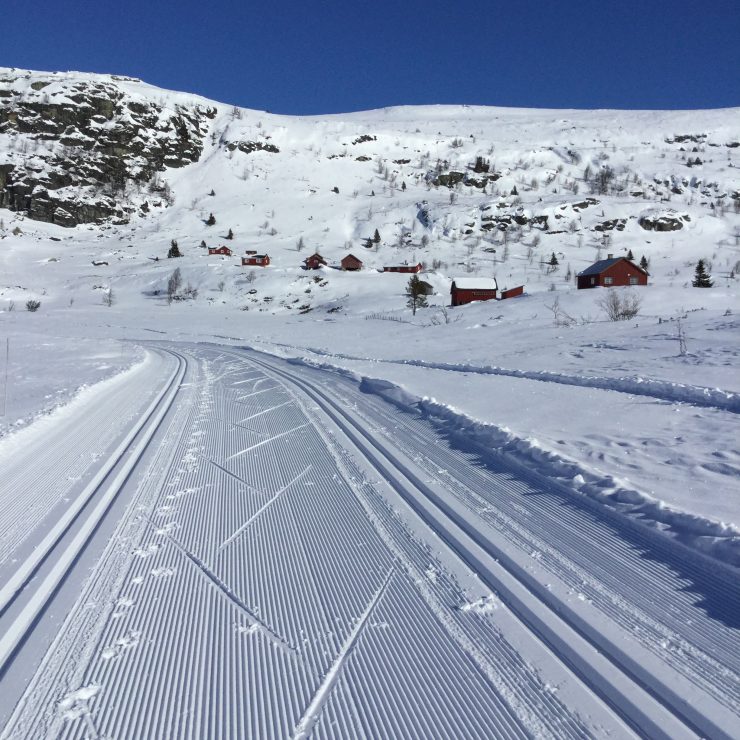
Mountains and farmhouses on the ski trails above Beitostølen, Norway, in March 2019. (photo: Gavin Kentch)
But not that much slower. The need to set courses that would be suitable for the oldest athletes (an M13 skier, Charles French, competed this year; he was born in 1926, during the Coolidge Administration), combined with fast conditions for several of the middle days of competition, led to some eye-catching times. The fastest time for the 10-kilometer freestyle race was 21:48, which will win virtually any World Cup 10 k. Heck, the fastest women’s time, 25:44, would be competitive in some men’s World Cup races.
(It should go without saying that the Beitostølen courses were substantially easier than a homologated FIS course. This reporter finished the 10 k skate in Beitostølen in 24:29. He completed 10 k skate races on homologated courses earlier this season in 32:08 and 33:13, albeit in relatively slow snow conditions that eachtime slowed winner Gus Schumacher’s time to 26 minutes and change. This reporter is not a faster skier than Gus Schumacher.)
An M7 skier finished the 15 k skate in 37:34. An F5 skier covered the same distance in 43:51 (albeit after several hundred men had already tracked up the course; race organizers put men on the course first in nearly all of the races).
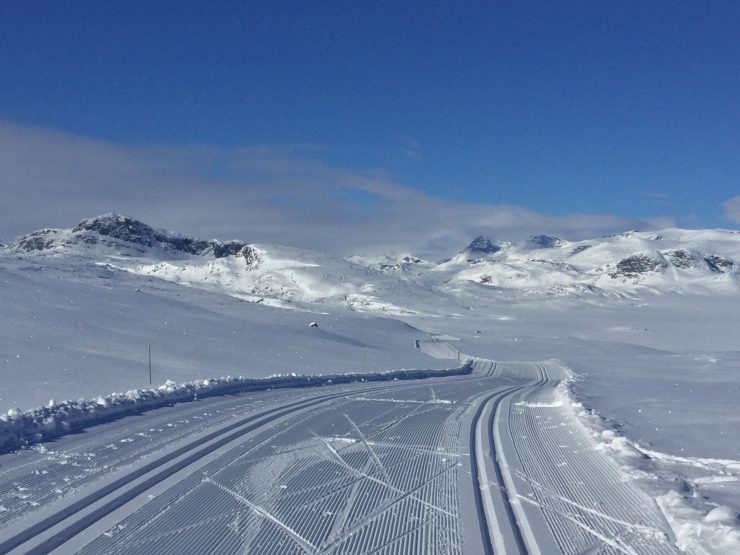
Mountain views on the ski trails above Beitostølen, Norway, in March 2019. (photo: Gavin Kentch)
All that said, it snowed roughly a foot between the relays (last Tuesday) and the distance classic races (Wednesday), leading to markedly slower times in fresh snow and soft courses. Up to half the field either did not start or did not finish some divisions of Wednesday’s races.
The organization was generally impeccable throughout the competition, with some exceptions. The decision to forego bringing in additional portable toilets, and to host roughly 500 athletes per day at a venue with only five permanent toilets, fell somewhere between noteworthy and puzzling.
American medalists are listed below for all races over seven days of competition. Simple results are available here; live timing with detailed splits is currently available here. All races were held in a mass start format.
F11 10 k classic, Patricia Kaald, 2nd; Barbara Lewis, 3rd
M1 30 k classic, Paul Allison, 1st
M13 10 k classic, Charles French, 1st
Middle distance skate (March 9, 2019)
F2 15 k skate, Lindsey Bengtson, 1st; Sonja Johnsen, 2nd
F4 15 k skate, Molly Zurn, 2nd
F5 15 k skate, Laura McCabe, 1st
F6 15 k skate, Betsy Youngman, 1st
F9 10 k skate, Trina Hosmer, 1st
F11 10 k skate, Joanne Davis, 2nd
M8 15 k skate, David Johnston, 2nd
M10 10 k skate, Bob Gray, 3rd
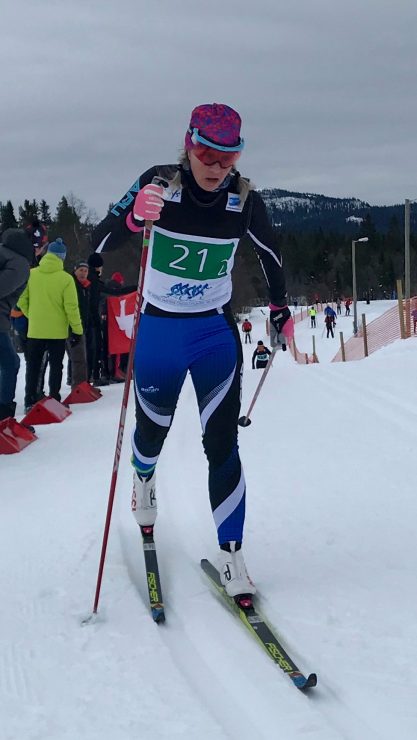
Shannon Brockman (USA) on course for the second leg of the relay for Team USA in the F3/F4 division at World Masters in Beitostølen, Norway, Looking for the best deals on ammunition? You will find the top selling, best ammo of the past year here: from the best 9mm, 45 ACP, to 22LR, and .30-06, by the box, bulk ammo, flip-top ammo boxes, surplus ammo, the best home defense ammo, and shotgun shells: find the top sellers of the past year. Updated daily! Shop online best ammo for cheap prices at AmmoFire – find out which online Ammo Shop has the best price, in-stock, right now. How does AmmoFire.com work? We visit numerous online ammunition retailers every day and keep track of who has the cheapest ammo in stock. Are you an online ammo retailer? in March 2019. (photo: Keith Sides)
Short distance classic (March 10, 2019)
F3 10 k classic, Inge Scheve, 3rd
F5 10 k classic, Laura McCabe, 3rd
F6 10 k classic, Betsy Youngman, 1st
F7 10 k classic, Magdalena Bowen, 3rd
F9 5 k classic, Trina Hosmer, 1st
F11 5 k classic, Patricia Kaald, 2nd
M1 10 k classic, Phillip Violett, 2nd
M13 5 k classic, Charles French, 1st
Short distance skate (March 10, 2019)
F2 10 k skate, Lindsey Bengtson, 1st; Sonja Johnsen, 3rd
F8 10 k skate, Carolyn Tiernan, 3rd
F11 5 k skate, Joanne Davis, 1st
M8 10 k skate, David Johnston, 1st
M10 5 k skate, Odd Osland, 3rd
4 x 5 k relay (classic–classic–skate–skate, March 12, 2019)
F1/F2, Team USA (Donna Difolco, Emily Lovett, Cynthia Decker, Lindsey Bengtson), 2nd
F5/F6, Team USA (Betsy Youngman, Magdalena Bowen, Tricia Swartling, Laura McCabe), 1st
F7/F8, Team USA (Muffy Ritz, Mary Heller Osgood, Dorothy Childers, Katie Meyer), 3rd
F9/F10, Team USA (Trina Hosmer, Nancy Bauer, Sharon Crawford, Carol Monteverde), 3rd
M1, Team USA (Phillip Violett, Rune Harkestad, Gavin Kentch, Karl Walczak), 3rd
M6, Team USA (Barry Makarewicz, Odd Bersvendsen, Milan Baic, Kent Murdoch), 3rd
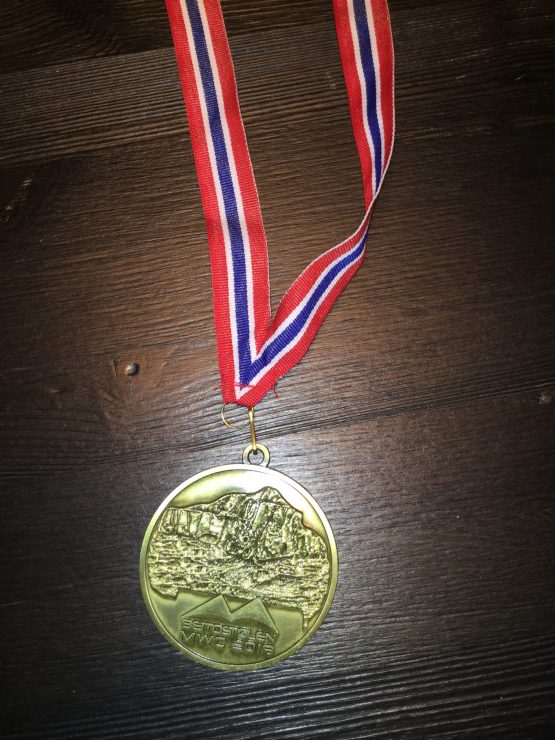
Medal from 2019 World Masters, Beitostølen, Norway, in March 2019. (photo: Gavin Kentch)
Long distance classic (March 13, 2019)
F3 30 k classic, Inge Scheve, 3rd
F6 30 k classic, Betsy Youngman, 1st
F9 15 k classic, Trina Hosmer, 1st
F11 15 k classic, Patricia Kaald, 2nd
M1 45 k classic, Phillip Violett, 2nd
M13 15 k classic, Charles French, 1st
Long distance skate (March 14, 2019)
F2 30 k skate, Lindsey Bengtson, 1st
F4 30 k skate, Molly Zurn, 3rd
F5 30 k skate, Laura McCabe, 1st
F8 30 k skate, Ginny Price, 2nd; Carolyn Tiernan, 3rd
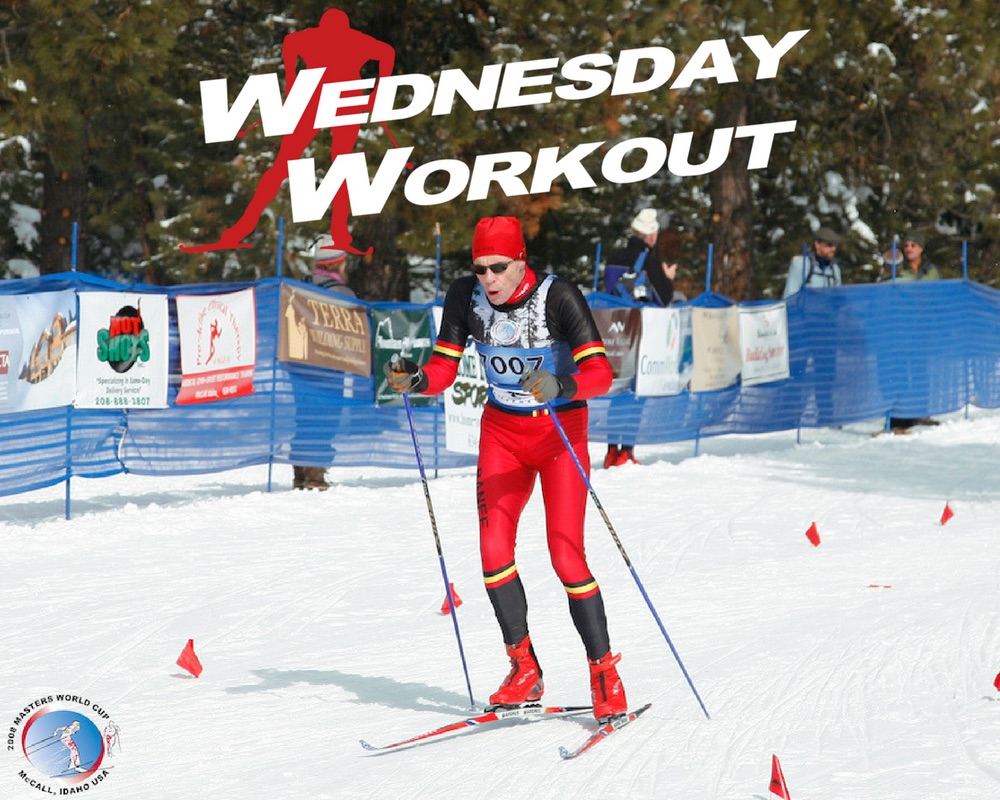
Author Everett Fee racing at his first Masters World Cup in 2008 in McCall, Idaho. (Courtesy photo)
(Note: The following workout was submitted to FasterSkier by Everett Fee of Canmore, Alberta. If you’d like to share a workout of your own and the story behind it, please email alex@fasterskier.com with the subject line: ‘Wednesday Workout submission’.)
***
Competitive cross-country skiing is a great lifelong sport. I came late to the party, skiing in my first Masters World Cup when I was 63. I am now 73 and looking forward to being in the thick of things in 2021 when the Masters World Cup races will be in my hometown of Canmore — I’ll be a youngster in the M10 (75-79) age class!
I got into both XC skiing and rock climbing soon after moving to Winnipeg in 1972. They were complimentary sports — we used skis to explore the SW margin of the Canadian Shield in search of unclimbed granite cliffs that we approached by canoe on climbing trips in summer.I enjoyed skiing the occasional loppet but, in truth, climbing was what I was keen on; when there was no snow on the ground I didn’t think about skiing.
((Some accounts of those days are available online (ELA climbing guide) or in the Canadian Alpine Journal (CAJ v. 65 (1982), p. 24; 66 (1983), p. 98).)
After a sabbatical year in 1979 in distant mountains (the Pyrenees, the Alps, Morocco, and Chile), the remainder of my Winnipeg years were focused on climbing trips: Mexico, Yosemite, the Red Rocks, the Dolomites, Ecuador, Nepal, and, most frequently, the Canadian Rockies.
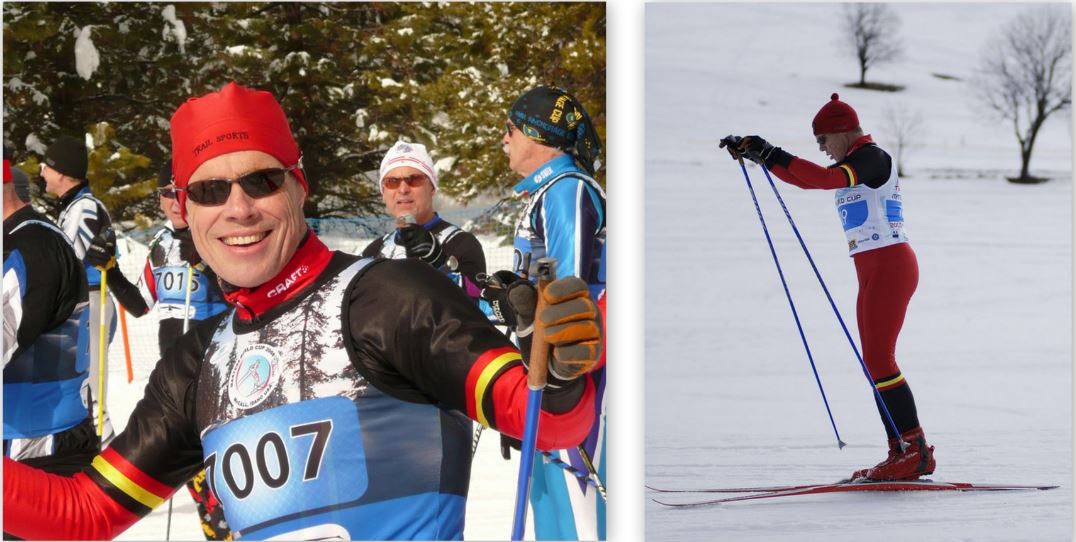
My two Masters World Cup experiences. Left: On the starting line in McCall, Idaho (2008). Right: Mid-race in Autrans, France (2009). (Photos: Dave Rees (l) and purchased/courtesy photo (r))
When I retired in 1997, moving to Canmore in the heart of the Canadian Rockies was a given. Now, 21 years later, the focus of my summers is training for and thinking about XC skiing. This transformation happened for several reasons. First, because I’m a lazy fun hog I couldn’t resist the five months of carved-in-marble grooming at the Canmore Nordic Centre, which is only 10 minutes from our house. The venue for the 1988 Calgary Olympics XC races and a regular stop on the World Cup XC circuit since 2005, it was so easy to ski there 100 days each winter. And all that skiing gave me the fitness I needed to tackle long-held climbing objectives such as Mount Alberta.
Another thing that drew me to XC skiing is the people I met on nordic-centre trails.A lot of them were masters skiers who trained seriously during the dryland months for racing in Canadian Nationals Masters and Masters World Cup in the winter. They encouraged me to dream big, too. In considering this, it became clear that I would have to seriously upgrade my haphazard approach to training (basically, a lot of random skiing in the winter and climbing in the summer).
Canada’s Graeme Killick representing the Banff Ski Runners at 2007 Canadian nationals. (Photo: Anders Lenes)
So in 2007 I joined the Banff Ski Runners (BSR), a small Norwegian-style club coached by Anders Lenes and signed up for the club’s six-days-per-week training program. Anders had skied on the Norwegian National Team for seven years, won Junior World Championships gold, silver, and bronze medals and had several top-10 finishes in World Cup races. He came to Canada in 1975 to prepare the national team for the 1976 Olympics and was on the Canadian national team coaching staff until 1984, during which time he worked with many great athletes, including Shirley and Sharon Firth, Burt Bullock, Esther Miller, and Angela Schmidt. He started coaching the Banff Ski Runners in 2000 and by 2007, the year I joined, he had transformed this small neighborhood Canmore club into a dominant force nationally. The juniors were ripping it up at Canadian nationals and shooting for the big leagues., and two of them (Graeme Killick and Jesse Cockney) went on to ski on the Canadian national team for two Olympic cycles.
It was a real treat to train year round with this small group of about a dozen elite juniors. Although I started training with BSR too late in life (at 62) and had too little natural talent to finish above the middle of the pack in my Masters World Cup races, training with BSR was essential to getting me to the starting line in those events.
Anders’s BSR dryland program was highly varied — we rollerskied, hiked, trail ran, road biked, and (my favorite) ski walked. The unquestioned heart of the program was weekly intensity workouts. Among the different intensity workouts that we did, the one that had the most positive effect on my fitness is what Anders called “Russian intervals”: three sets with each set having three approximately one-minute, maximum-effort sprints separated by 30-second rests. This workout builds lactate tolerance:
The workout: Russian Intervals
The course: A hill 45-60 meters high (or stairs if that’s all that’s available)
Warmup: 15 to 30 minutes of easy (Zone 1-2) jogging (striding hills to keep heart rate low) followed by a nonstop lap or two of the intervals course in Zone 2-3
The intervals: Three sets of 3 approximately 1-minute, maximum-effort sprints separated by 30 seconds of rest and a minimum of 2 minutes rest between sets
Warmdown: 30 to 45 minutes jogging at a very easy pace (zones 1 to 2)
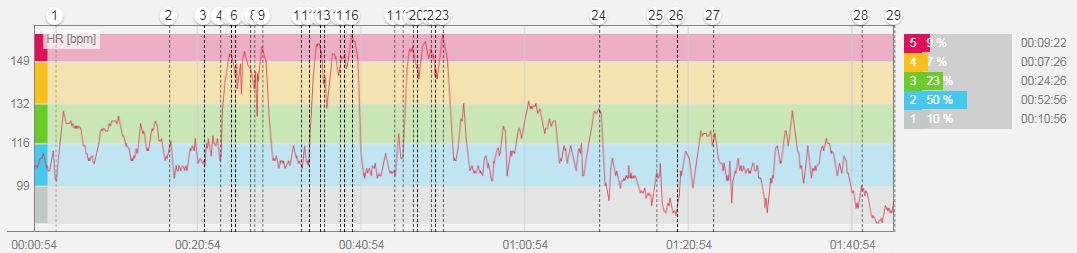
Here’s my heart-rate record in a typical Russian intervals workout.
The goal of this workout is to train the body (and mind!) to go hard when flooded with lactate. Done properly, this workout hurts (bent over gasping after each of the three sprints in a set).
Be aware that this is an extremely demanding workout that should be introduced into the dryland season only after building a solid aerobic base. When Anders retired from coaching in 2013, I decided that it was also time for me to move on and I’ve been training on my own since then. I generally follow the BSR dryland program, with a bit more rest to accommodate my aging infrastructure. I make sure to do an intensity workout every week and occasionally make a mistake. Last year, overly keen to get started, I started doing Russian intervals in May and was ambushed in mid-summer when my iliacus hip muscle seized up so bad that just walking was a problem for most of a week! This year, the first third of the dryland (May and June), I’ve been doing “building intervals” as recommended by Olivia Bouffard-Nesbitt in another Wednesday Workout.
This fun workout, which just tickles the AT threshold, really hits the easily neglected, sub-threshold AT zone. The past month’s three-, four-, five-, and six-minute building interval workouts have me to the point where I now feel it’s time to start doing Russians.
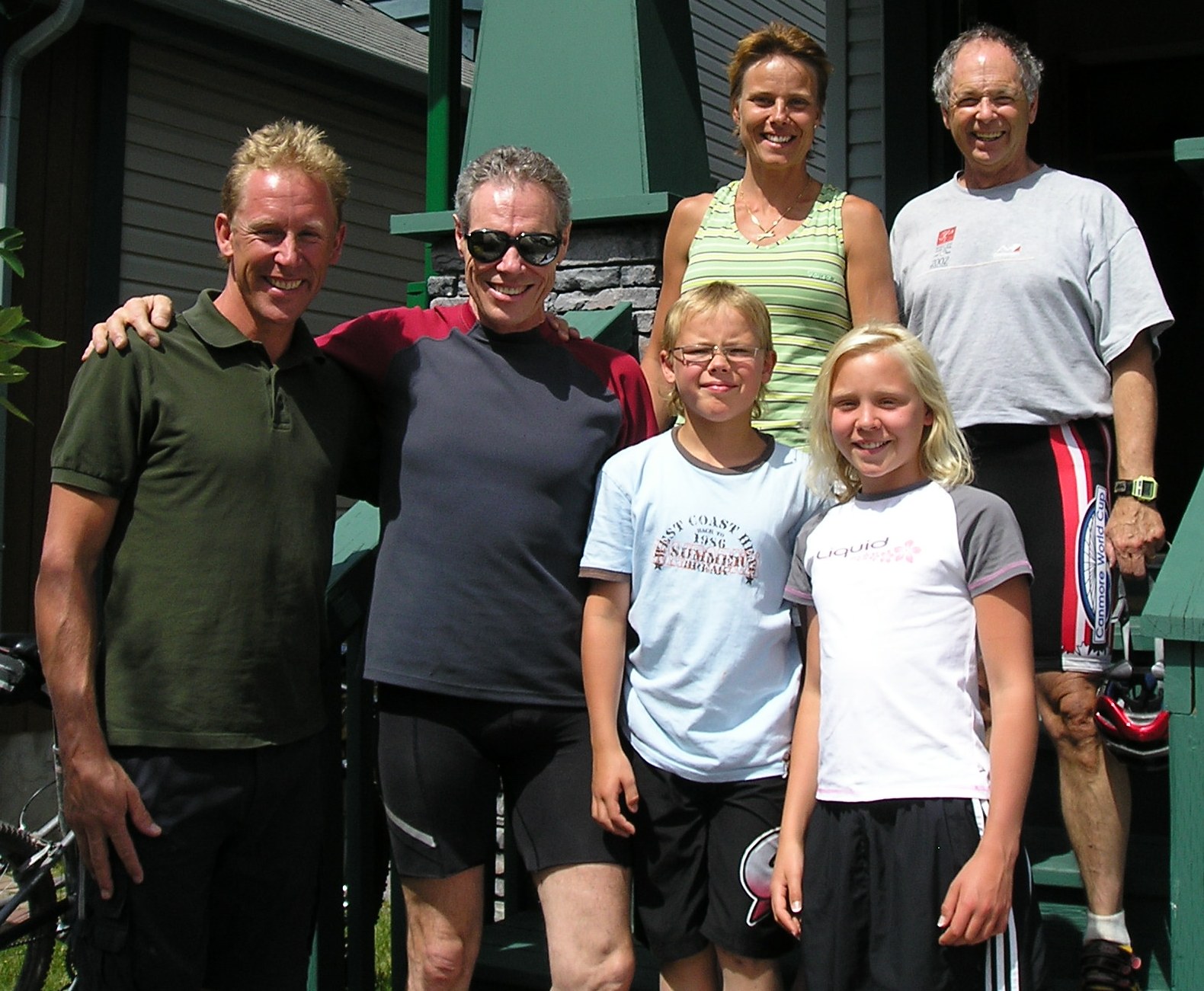
Left to right: Gunde Svan, me (even standing on a step I’m shorter than Gunde!), Mari, Rob Mackenzie, and the Svan kids, Ferry and Julia, in Canmore in 2006. (Courtesy photo)
[As an aside, the great Swedish champion Gunde Svan brought his family to Canmore for the summer in 2006. Through my friend Rob Mackenzie, who had met Gunde during the 1988 Olympics, I was able to spend most of a day hanging out with Gunde and his family. This amazing experience added fuel to the fire building under my growing passion for XC skiing.]
Canada’s Antonin Fiala leads Switzerland’s Markus Weber during the 40 k freestyle men’s age group 5 race on Friday at the Masters World Cup in Minneapolis, Minnesota.
MINNEAPOLIS, Minnesota — Freestyle marathon skiers took to the hills of Theodore Wirth Park for the final day of the 2018 Masters World Cup, in a warm way to wind down the championship week.
With sun and temperatures upwards of 40 degrees Fahrenheit by noon, skiers had quite the slog over the 10 k, mostly manmade loop.
Kitty Earl-Torniainen, of Minneapolis, after placing seventh in the 30 k freestyle women’s age group 5 on Friday, the last day of the 2018 Masters World Cup in Minneapolis.
As Minneapolis native Kitty Earl-Torniainen, 50, described her experience in the 30-kilometer freestyle, “[The course] was nice and wide, and it was groomed well; it was just extremely challenging — lots of elevation and very slow downhills. You could rest, but you had to ski downhill.”
Earl-Torniainen, who raced in the women’s age group 5, is a member of the Loppet Elite Masters on Nordic Skis (a.k.a. LEMONS), part of Loppet Nordic Racing. Wirth is her home training grounds, so she was prepared for the ascents. She said her main goals were to stay relaxed on her skis, be efficient, have good technical skills, and rely on her strengths, which she considers hills and cardio.
“I didn’t have times or place or anything [as a goal]; it was more about use what I’ve learned training with the group that I train with,” she said.
In addition to placing seventh in Friday’s final race, Earl-Torniainen also competed in the 15 k classic (and placed seventh), the 15 k freestyle (sixth), and was an alternate for the 5 k relay.
Jean-Christian Perraud, of France, after placing eighth in the 30 k freestyle men’s age group 9 on Friday at the Masters World Cup in Minneapolis.
Jean-Christian Perraud, 71, of France, had a tougher time negotiating the sticky snow for his 30 k freestyle race on Friday.
“It’s a good snow, except for certain spots,” Perraud said. “But, for me it was not very good. I was sixth, and then I have a crash … and I came, I came, I came [skied hard], and then … second crash. I think, I pretend to be sixth, but that’s my fate today.”
He achieved his goal of placing in the top 10 throughout the week, finishing eighth in the men’s age group 9 on Friday, sixth in the 15 k freestyle, and ninth place in the 7.5 k freestyle (shortened from 10 k). He raced in the younger age group 7 to help his French team place sixth in the men’s relay.
Friday’s warm weather was probably ideal for only one group of unsung heroes: the volunteers. After standing for hours each day through wind, snow, and damp, the sun was a boon for course workers.
“I have asked multiple volunteers to do anything that needed to be done, and they all jumped in willingly, cheerfully, amazingly,” said Nancy Nelson, the Loppet Foundation’s volunteer coordinator. “The whole race wouldn’t have pulled off without them.”
After a long week of timing, marshaling, daily setup and take-down, and multiple other tasks performed by the Masters World Cup volunteers, the final awards ceremony was held Friday night in downtown Minneapolis, including the closing ceremony and celebration party.
Day 6 Age Group (AG) Winners
Women’s 30 k Freestyle
AG 1: Davya Flaharty (USA) 1:35:43.4
AG 2: Lindsey Bengtson (USA) 1:36:10.9
AG 3: Jennifer Santoro (USA) 1:41:54.9
AG 4: Frances Vice (Canada) 1:37:05.0
AG 5: Mary Beth Tuttle (USA) 1:31:33.8
AG 6: Jan Guenther (USA) 1:33:39.7
AG 7: Catherine Wullschleger (Switzerland) 1:41:54.0
AG 8: Carolyn Tiernan (USA) 1:51:57.0
Women’s 15 k Freestyle
AG 9: Kati Campbell (USA) 47:36.0
AG 10: Eivor Lindgren (Sweden) 54:48.0
Men’s 40 k Freestyle
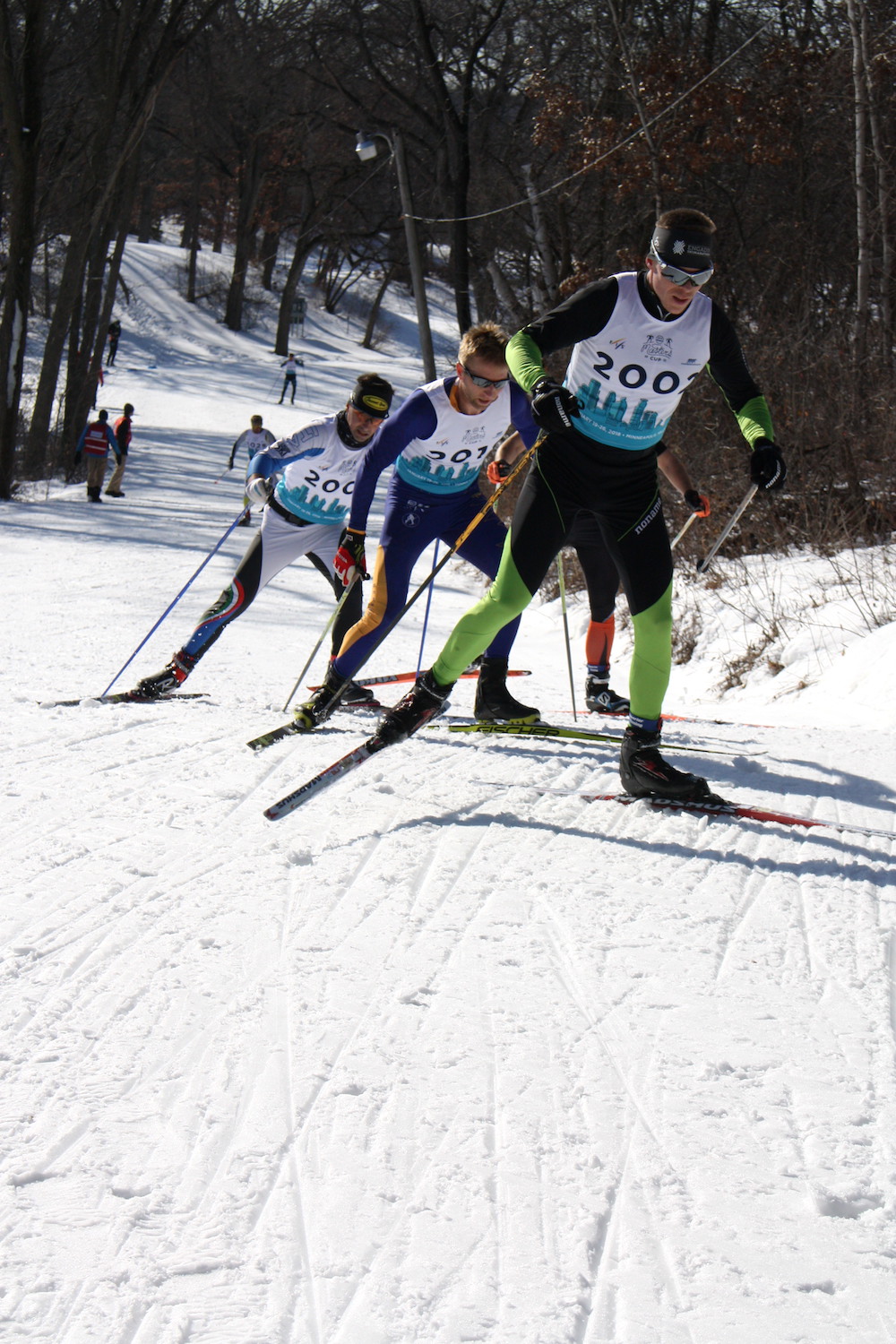
Finland’s Joachim Gustafsson leads a train of skiers up a climb in the 40 k freestyle men’s age group 2 race on Friday at the Masters World Cup in Minneapolis.
AG 1: Eugenio Bianchi (Italy) 1:49:10.1
AG 2: Joachim Gustafsson (Finland) 1:50:17.8
AG 3: Thomas Graf (Switzerland) 1:53:39.0
AG 4: Aleksandr Pushkarev (Russia) 1:46:03.7
AG 5: Virgo Karu (Estonia) 1:48:36.2
AG 6: Francesco Benetti (Italy) 1:50:36.6
Men’s 30 k Freestyle
AG 7: Tapio Tikkanen (Finland) 1:27:30.8
AG 8: Einar Bertrand Vikingstad (Norway) 1:26:12.0
About Andrea Potyondy-Smith:Andrea hails from the Twin Cities of Minneapolis (dontchya know) and has an MFA in creative writing. When she is not being an English geek, she can be found on her bike or skis, or playing in the Northwoods … typically on her bike or skis.
Zachary Handler, of the U.S., racing in the 40 k classic men’s age group 2 at the 2018 Masters World Cup on Thursday at Theodore Wirth Park in Minneapolis, Minnesota.
MINNEAPOLIS, Minnesota — Masters World Cup organizers had to make a fast change on Thursday partway through its classic distance races when a train parked itself on the course.
“We had a lot of plans going into this race,” 2018 Masters World Cup Chief of Competition Nels Dyste explained. “We had plans for road crossings, we had plans for snow, we had plans for low year snow, plans for high snow. Unfortunately, the railroad did not coordinate very well with us.”
This meant a quick route change on the 15-kilometer course to keep skiers moving, but difficulty in keeping the course the same for all racers.
Monday’s snowstorm allowed for the expansion of Theodore Wirth Park’s manmade loop to the other side of the golf course across a road, where the natural course crosses over train tracks. The train, which parked at that very spot around 10 a.m., diverted later-starting skiers back to the hillier, manmade loop creating a lack of consistency in distance. The early 15 k races, and men’s and women’s 1-6 age groups were unaffected.
“We’re still sorting it out,” Dyste said on the Thursday. “Fortunately, with electronic timing, we have chip checks all over the course and are kind of piecing together what race courses people went on.
“We’ve run almost a hundred races on that section, doing that same crossing,” he continued. “We’ve never had any issue on that.”
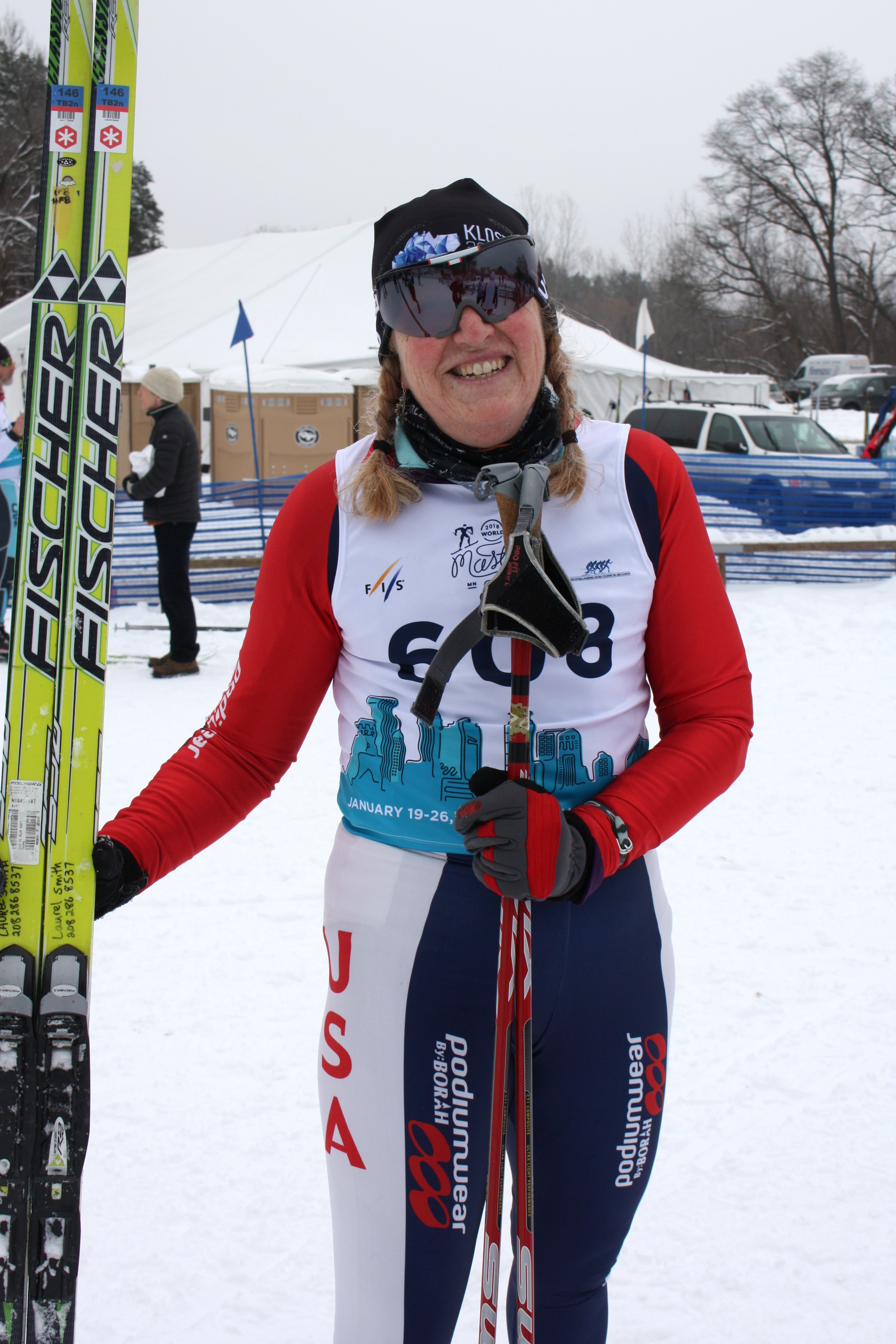
Laurel Smith, of Jackson, N.H., after racing to ninth in the 30 k classic women’s age group 6 on Thursday at the Masters World Cup in Minneapolis, Minnesota.
Racers took the changes in stride. Laurel Smith, 60, of Jackson, New Hampshire, noted course marshals helped direct racers to the new route.
“The volunteers were really good. That’s pretty amazing, being able to change a course midway through,” she said.
The race was her third of the week after competing in the women’s age group “6” 15 k skate and 10 k classic as well. She said the natural snow not only lengthened the course, but it also affected the corners on the downhills.
“By the third lap [of the 10 k shortened loop], they were getting really … piled-up snow and icy on the inside,” Smith said, adding that she met her goal in successfully navigating all the turns. She finished ninth in her age group’s 30 k on Thursday.
Some racers, like “Bad” Bob Baker of Fairbanks, Alaska, were more comfortable with the addition of more hills.
Bob Baker, of Fairbanks, Alaska, after racing to 12th in the 40 k classic men’s age group 6 at Masters World Cup in Minneapolis, Minnesota.
“[They] probably helped me,” Baker said. “I seem to do better against others on them, so it’s a good thing.”
Baker said he likes to come to these events to test his waxing techniques. Fairbanks relies on natural snow, so he gets to use waxes he otherwise wouldn’t when he visits places like Minneapolis.
“I nailed the wax,” he said. “It was good. I was so glad; I would’ve been hurting if I’d had to step out of the tracks.”
Baker, who competes in the men’s age group “6”, has raced all the individual classic events over the last week: the 7.5 k (shortened due to snow on Monday from 15 k), 30 k, and 40 k (shortened from 45 k). He finished 12th in the 40 k on Thursday.
A warm up is on the way for Friday’s freestyle distance races (15/30/45 k), the last day of the Masters World Cup, as is a slight course change after Thursday’s minor fiasco.
“Rest assured they’ll be all ready to go for tomorrow … with no train tracks,” Dyste said.
Day 4 Age Group (AG) Winners
Women’s 30 k Classic (3 x 10 k loops)
AG 1: Elspeth Ronnander (USA) 1:47:31.8
AG 2: Josie Nelson (USA) 1:41:08.4
AG 3: Linda Hasselqvist (Sweden) 1:42:21.3
AG 4: Bonnie Weiskopf (USA) 1:38:20.9
AG 5: Ragnhild Bolstad (Norway) 1:36:20.8
AG 6: Elizabeth Youngman (USA) 1:47:53.4
AG 7: Marianne Niemi (Finland) 1:49:35.5
Women’s 20 k Classic (2 x 10 k loops)
AG 7: Magdalena Bowen (USA) 1:15:40.5
AG 8: Berit Hoeyvik (Norway) 1:34:12.3
Women’s 15 k Classic (3 x 5 k loops)
AG 9: Gabriele Andersen (USA) 50:01.4
AG 10: Gerd Lysne Johansen (Norway) 1:03:15.9
AG 11: Patricia Kaald (USA) 1:42:37.0
Men’s 40 k Classic (4 x 10 k loops)
Sweden’s Tomas Persson racing to seventh in the 40 k classic men’s age group 4 at the Masters World Cup in Minneapolis, Minnesota.
About Andrea Potyondy-Smith:Andrea hails from the Twin Cities of Minneapolis (dontchya know) and has an MFA in creative writing. When she is not being an English geek, she can be found on her bike or skis, or playing in the Northwoods … typically on her bike or skis.
Canada’s Jim Ballendilne racing to second in the 10 k freestyle men’s age group 11 on Sunday at the 2018 Masters World Cup in Minneapolis, Minnesota.
MINNEAPOLIS, Minnesota — The weather for Day 2 of the Masters World Cup on Sunday was almost a carbon copy of Day 1, minus any appearances by the sun and a few degrees on the thermometer, keeping the course in great shape for the distance freestyle races.
Catherine Wullschleger of Switzerland after placing second in the 15 k freestyle women’s age group 7 on Sunday at the 2018 Masters World Cup in Minneapolis, Minnesota.
Catherine Wullschleger of Switzerland finished second in her age group, about 3 minutes behind American Muffy Ritz, who won the women’s age group “7” 15-kilometer freestyle on Sunday. Reflecting on her race, Wullschleger said she had some confusion at the start. “One lady from the category 2 started together with us,” she said. “I thought, ‘Oh! She looks young,’ but I didn’t see the bib, and so I followed her, so actually I started a little bit too fast.”
Wullschleger explained she will be in Minneapolis for the entire week’s events. Asked about her overall goal, she said it’s “to have fun, and if I can, make a medal. OK, it’s fine, but now I have one.”
She described the course as in good shape despite the lack of natural snow. “They did a very good job,” Wullschleger said. “It’s a nice course. You have to work all the time. The snow was not the same everywhere. In the woods, it’s a little bit different, but it’s really a good course.”
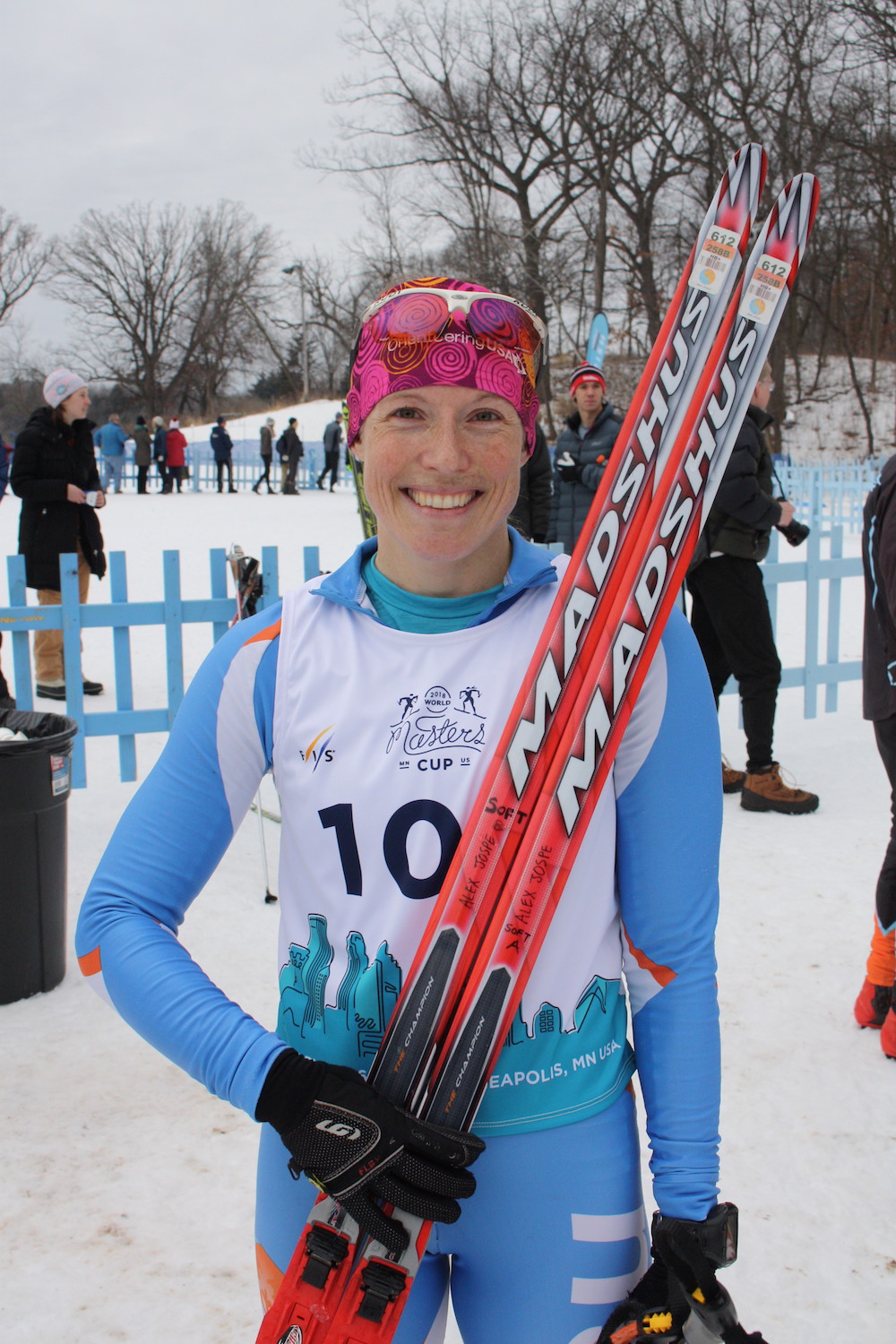
Alexandra Jospe of Boston, who won the women’s age group 1 for the second-straight day, agreed. As she trains on a golf course back home, she said she’s familiar with the type of terrain Theodore Wirth Park offers. “We ski on a golf course [in Weston, Massachusetts], so skiing on a golf course here isn’t all that different,” Jospe said.
Alexandra Jospe, of Boston, after winning the 15 k freestyle women’s age group 1 on Sunday at the 2018 Masters World Cup in Minneapolis, Minnesota.
She won the Sunday’s 15 k freestyle in 39 minutes flat, 29.7 seconds ahead of another American, Davya Flaharty in second.
Jospe described the race course as “super fast, super fun, [with] a lot of transitions [and] very technical. It’s the stuff I like.”
She explained it was warm enough to keep the snow from being icy, and the uphills weren’t chopped up, calling them “pretty packed, [although] you had to look where you’re stepping.”
Jospe is only in town for the weekend, and will race Monday’s 10 k classic and 10 k freestyle (back-to-back races held about five hours apart), before heading back East. When asked what her ambitions were for the weekend, she said “at this point, it’s hard to beat winning.”
As for Monday, Jospe said, “Whatever happens … I’m pretty happy with it. … [I’m] starting to feel a little tired at this point, so I’m hoping just to enjoy myself again — see where that leads it.”
The race organizers have no intention of canceling the events unless it affects the safety of the participants. If the snow comes, jury member Lars Erik Rosenquist said “Plan A [is] to start grooming at 5 o’clock in the morning, because most of the snow will come in the day.” Should the course become untenable, the jury would have to decide whether to cancel much earlier in the morning than their usual 8 a.m. meeting time.
Day 2 Age Group (AG) Winners
Women’s 15 k freestyle:
AG 1: Alexandra Jospe (USA) 69:00.06
AG 2: Nelson Margie (USA) 40:50.2
AG 3: Sarah Peters (Canada) 39:02.4
AG 4: Bonnie Weiskopf (USA) 37:04.1
AG 5: Kathy Maddock (USA) 38:10.2
AG 6: Jan Guenther (USA) 40:31.1
AG 7: Muffy Ritz (USA) 42:37.5
AG 8: Judy Bechanan-Mappin (Canada) 51:48.7
Women’s 10 k freestyle:
AG 9: Trina Hosmer (USA) 28:25.6
AG 10: Eva Carlsen (Norway) 33:56.2
Men’s 30 k freestyle:
Austria’s Josef Schoeberl racing to first in the 10 k freestyle men’s age group 11 at the 2018 Masters World Cup in Minneapolis, Minnesota.
Finland’s Eila Kaakkolahti racing to third in the 15 k freestyle women’s age group 7 at the 2018 Masters World Cup in Minneapolis, Minnesota.
***
About Andrea Potyondy-Smith: Andrea hails from the Twin Cities of Minneapolis (dontchya know) and has an MFA in creative writing. When she is not being an English geek, she can be found on her bike or skis, or playing in the Northwoods … typically on her bike or skis.
Brad Johnson, of Pioneer Midwest, skied his first Birkie at age 57 and made the race’s prestigious 25% Club (top 25 percent of age group) at age 60.
This Saturday, Jan. 20, the Masters World Cup will open in Minneapolis, Minnesota —the first time it has been in the U.S. in 10 years. Of course, the word “master” could be considered a euphemism for “old skier.” However, age doesn’t have to come with a decline in performance. Ask 65 year-old Brad Johnson, of Pioneer Midwest in Osseo, Minnesota. He raced his first American Birkebeiner when he was 57, and he’s done every one since.
As an employee of the Anoka-Hennepin school district before his retirement in 2009, Johnson acknowledges it was hard to teach, coach (track and nordic) and race. He was able to stay fit, “but you don’t get training in. I’d get home at 7-7:30, I’m not going out for an hour and a half because I don’t have anything left in the tank. Some coaches successfully do that.” He admits he was not one of them.
Johnson’s one of the “older-guy contingent” of Pioneer Midwest’s ski team, an “emeritus team of older guys that ski in Pioneer stuff.” Despite his late start to racing, he has made the Birkie’s 25% Club, with a top finish of 3:56 for the 54-kilometer classic, and he also completed the original Norwegian Birkebeiner. He credits his fitness to focusing on the basics: duration, frequency, and intensity of training.
He feels the main mistake masters skiers make is a focus on duration, not emphasizing frequency and intensity enough. “Those two- and three-hour skis can cause more harm than good,” Johnson said, citing a breakdown of technique as one fatigues, opening them up to injury. And, if you get too tired, you become more susceptible to illness.
“Illness and injury are the two things that shut us [masters] down more than anything,” he said.
Johnson typically skis about four days a week, with one core and weight-training session per week. He asserts the significant loss of muscle mass as one ages is central to maintaining some sort of strength regimen.
“You hit your 60s and it can go downhill real fast … use it or lose it, basically,” he said.
Johnson rests at least one day a week, but admits it can be as many as three, depending on weather.
Each workout, he focuses on one aspect of technique in conjunction with intensity, maintaining three aspects of fitness are integral to any workout: aerobic capacity, lactate threshold, and economy — the last an advantage of the master skier.
“We’ve done this [skiing] over and over again. We’ve become more efficient,” he said. “We’ve got a little bit more guile than some of these younger skiers.”
He calls it “skiing lazy”: saving energy as much as possible, using good form and drafting, something he’s done to 30-something skiers that “save[s] a lot of energy!”
Johnson incorporates Heart Rate Variability training into his workouts to help him get the best workout for any given day, but admits that is just one small piece of training. He feels one of the best things for the master skier is intervals — the number being based on how one feels; the use of a heart-rate monitor is imperative:
“We think we know where our heart rate is — we don’t have a clue, unless you’re wearing a monitor,” he said.
In Johnson’s opinion, a person should know their heart rate zones (1-5) in order to maximize the benefits of any workout.
Additionally, acknowledging that age can come with physical changes, Johnson suggests getting the OK from your doctor. “Assuming they know what they’re talking about, which isn’t always the case, and having a doctor that understand sports medicine and aging athletes,” he said. “That’s not the most common physician to find, but at the very least [one needs to establish], ‘is my heart in decent enough shape to go do this?’ ”
As Johnson is most definitely in “decent enough shape,” and showing no signs of slowing down, it would appear there is at least some truth in the old axiom: Old age and treachery will overcome youth and agility.
The Workout: Basic intervals
One of Johnson’s essential workouts is basic intervals, done on a variety of terrain, based on the technique he’s focusing on for the day. So, pick your “skill drill” (hills, double poling, etc.), and get ready for some intensity.
Warmup: Base on how you’re feeling for the day. Minimum is 5 minutes, but up to 20-30 minutes. Get into Zone 2; if you’re there, but don’t feel “ready to hit it” take more time until you do.
Interval Session: 8-12 intervals of 2-4 minutes in upper Zone 3 to Zone 4, in anaerobic threshold. Between intervals, ski easy until your heart rate is back into Zone 1. As soon as you are back in Zone 1, go into the next interval.
Be sure to note how long recovery takes for the first three or four intervals. The number of intervals you do is based on how quickly you are recovering; once your recovery time significantly increases, you are done. Johnson notes a recovery time increase of 30-45 seconds as significant.
For example: if it takes you 90-120 seconds to recover between the first few intervals, but by interval 9, it is taking you 150 seconds or longer, you are finished. By that point, Johnson says you have depleted yourself, technique can fall apart, and you can do more harm than good.
Warm down: (a.k.a. cool down) An easy ski back to the chalet — about 15-20 minutes, keeping the heart rate no higher than Zone 2.
Registration window closes Saturday, January 6 at midnight
Minneapolis, MN – As we close in on 2017, we are also shortly closing in on the last week to register for the 2018 Masters World Cup. Held in Minneapolis, MN this international ski championship is being hosted in a major metropolitan city for the first time ever.
Held in Klosters in 2017 and headed to Norway in 2019, this is the first time the Masters World Cup is being held in the United States in a decade. Snowmakers at Theodore Wirth Park in Minneapolis have been working day and night for over a month to build out one of the longest manmade trail systems in North America.
“Every investment we’ve made in snowmaking infrastructure over the last several years has brought us to this point. With the resilience of manmade snow plus the cold temps we’ve been getting, Minneapolis is more than ready to host this competition,” said Mike Erickson of the Loppet Foundation.
Between snowmaking and the natural snowfall we’ve been getting, the Loppet Foundation’s trails crew have now opened almost all of trails in Theodore Wirth Park. They are now looking forward to hitting their goal of 17 kilometers by the end of next week.
Day 12: Masters World Cup Total World Domination Package
Day Twelve. We made it. Wow. Sure, we lost a few along the way, good men (and women, though most women were likely smart enough to not set foot on this sinking ship in the first place)
Taking a journey with 12 Days of FBD writing is like going on a poorly captained cruise ship (though thankfully with much, much less diarrhea and WAY fewer fat people). Come aboard, we’ve been expecting you.
As a quick aside, I bartended at Smullin’s rehearsal dinner, so I naturally wore a name tag that read, “Isaac,” and YES, I sure as hell did the “double gun” finger point all night. I am frickin’ awesome.
So as we are pulling into port, thanks to the steady hand of Captain Stubing, the compassion of Julie McCoy, and the vision and brilliance of yours truly, I am pleased to report that all of your relationship issues have been solved and life is good. That’s what happened every week on The Love Boat and it’s what is going to happen here. We’re going to end this wonderful series but going back to where we started, racing.
In Day 1 (yes, I know, that seems like a long, long time ago, doesn’t it?), we focused on recovery. Why? (Let’s all say it together) You don’t get fast from doing hard workouts, you get fast by recovering from hard workouts. What is probably the hardest of all workouts? Racing. So we’re going to come full circle and finish up by talking about racing, more specifically, Master Blaster Worlds (MBW). I know, I know, they have some super-serious, long, fancy name, but to all of us “in the know,” they are Master Blaster Worlds. And this year they just so happen to be in the good ol’ U.S. of A.
So one of my many goodbye gifts to you (there have been so many, as I view each of my written words as a gift to you. I told you I was a ‘giver.’), is that I (with the help of my latest Cracker Jack crew) am going to get you styled out for MBWs. If you don’t have all of the race gear, race clothing, casual clothing, recovery tools, and every other piece of equipment, software, or soft goods that you could even possibly need by now, well then God help you, as I don’t know if it would have been possible for me to write any more on any of these topics. At one point a few days ago I even got a call from the Internet, asking me to delete some of my earlier columns, because the Internet had run out of room.
This means that you can’t possibly need anything else to wear, so what else could you need? Wax, that’s what. Wait a minute, wait a minute FBD, didn’t you that kook Caldwell yell at you about wax a few days ago? Yes, he did, and all of that yelling is still as applicable today as the day it was yelled, and I’m going to call that ‘good general ski wax knowledge,’ but since no one loves you like I do, I also going to go one step further and also bring in another panel of experts to talk about their years of experience training on racing on the exact MBW course.
Take it from someone who has spent a lot of time in World Cup wax cabins, nothing beats local knowledge. There’s a reason why we send techs to World Championship and Olympic venues a year or two or THREE in advance, to start testing waxes. Can you imagine if you had over 40 years of experience testing in one particular venue under your belt? Well, you don’t need to imagine it, because that’s what I’m bringing to you here today, along with a few hard good recommendations as well.
As I did was Zach and Nathan in Day 7, I am stepping back a bit and letting Matt Liebsch and the crew at Pioneer Midwest take the controls here, so full disclosure, I have not tested all of these products. These are the recommendations of Pioneer Midwest, written by Pioneer Midwest, not me, so if you have crappy skis at MBW and U R so PO’d that it’s a BFD, HU ML at PM ASAP 2 say FU.
I also feel compelled to give credit where credit is due — the phrase, “Total World Domination, (TWD)” or at least in the context that it is used here, was created by Duncan Douglas, a.k.a., Jacked Up Old Man. If you don’t know Duncan, well, you are missing out. “TWD” is Duncan’s approach to each and every workout, from his early days as an Olympic biathlete, to whatever the hell insane 9 hours of activity he did last night, that’s just how JUOM rolls. He is my hero.
This pink block of wax is hard and medium-fluorinated, which is great for all the manmade snow at Wirth Park. Your waxing strategy needs to be built upon a solid base that will resist abrasion from granular snow, which is exactly the type of conditions present at Wirth Park the past few years. RCF Pink is a go to wax for World Cup technicians because World Cup races are regularly held on courses with manmade snow. This is a great wax for Wirth as long as the snow is not brand new. Patrick Moore is an awesome dude and one of the best techs on the World Cup… he shows how to apply this hard stuff in this video.
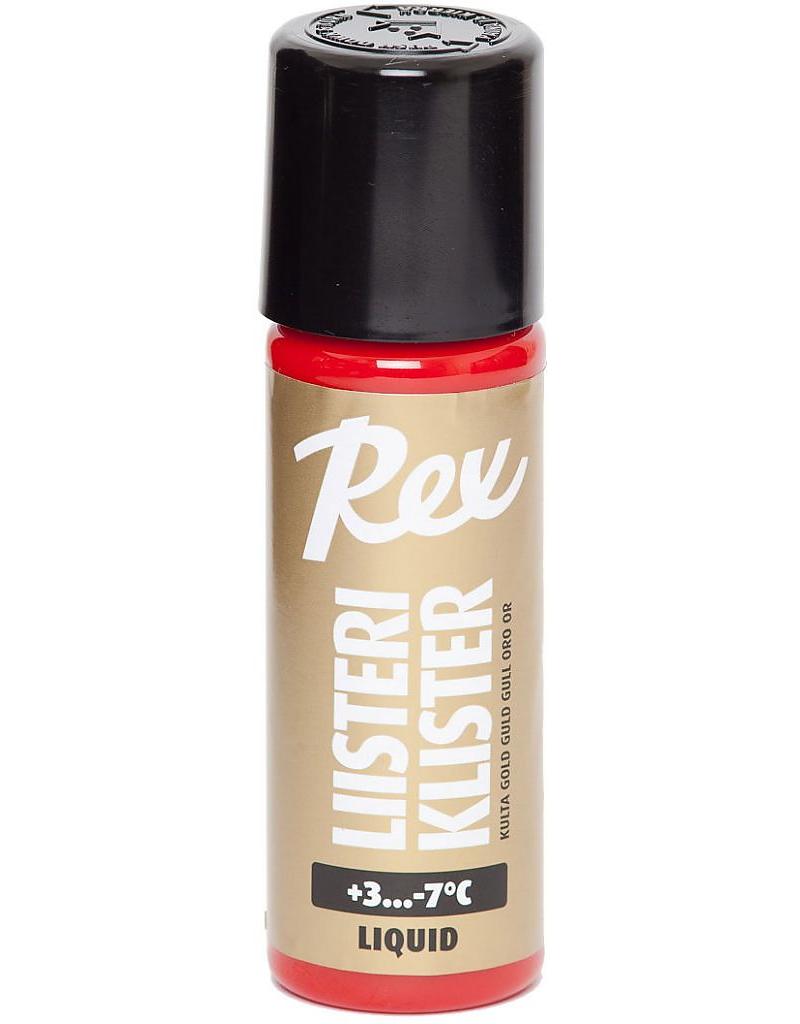
Thin to win right?! Well that is easier said when working with klister. Rex has some new liquid klisters that apply easily with a sponge applicator. They are incredibly easy to use while keeping the layer of klister thin and mess free. No more klister running off the tails of your skis. We have found Rex Base Klister a workable solution in many conditions at Wirth as a base-kick option and the Rex Gold… that stuff is just the best on artificial snow.
Whenever I have great success classic skiing at Wirth Park it seems to involve me using Rex Hydrex.
This is a gliding wax used to cover kicking waxes. If you are on klister, it generally speeds things up without sacrificing kick, but make sure to always test it on your warmup skis before shot-gunning it. It works awesome as a treatment for skin skis or zero skis. Also, in warm temps it can be used on the gliding zones as well and I know for a fact it has seen high-level success at the World Cup both as a covering wax for kick and as a glide top coat.
This is a go-to race paraffin for Wirth Park when they don’t have natural snow (most of the time). The workable temp range is huge for this wax at Wirth: 10 F to 35 F+. Most years they have mixed dirty artificial snow and HF5BW is near unbeatable in standard (unfortunately standard) Wirth snow conditions. If there is no new snow in sight, use this. The other standby that shines under these conditions is Rex RCF Pink.
Natural snow in Minneapolis in January means only one thing … it is freakin’ cold. My #1 tested cold natural snow race base wax for the Twin Cities is Start MF10. I have tried to beat it for years; Start HF10 comes close as do a lot of things, but if you are looking for something that works all the time and does not cost a fortune, you cannot miss with this wax in super-cold squeaky natural snow conditions. Make sure you have a cold profile ski and a super-cold grind…. I like our SC0. Check out our stone-grinding services.
Want to leave the waxing supplies at home for World Masters and have us take care of it all for you? We have been skiing at Wirth Park for over 20 years. We know what works and more importantly we know what does not work. Whenever I have traveled the country and world I have had great success getting wax support and grind support from the locals because they know what works the best. Pioneer Midwest will be and are your local experts. Let us take care of your skis for you and we will prepare them for whatever the weather and Wirth Park throws at us for World Masters.
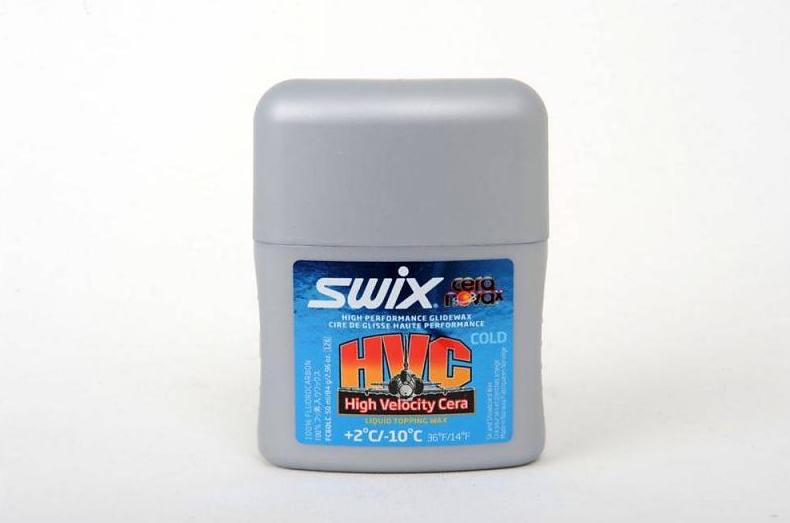
Speed without having to think about it. The Swix HVC liquids are super easy and extraordinarily fast on the artificial snow at Wirth Park. Again, I have tested a boatload of liquid waxes at Wirth and these are always near the top. I qualified top 6 in a SuperTour sprint qualifier a few years ago at Wirth on HVC and that is outstanding considering my history of sprinting. When the conditions are below 25 F and artificial snow, we use the cold version, and when warmer than 25 F, we use the warm version. This stuff is super easy to use, wipe on, let dry 3 minutes or longer, go race. An application of Swix HVC can last upwards of 15 km. But careful in mixed new snow as they can be a liability, but when skiing on old snow grab the appropriate Swix HVC and go for it. The other staple liquid to try if the snow gets a little dirtier from heavy use is Rex Ruka.
If I had to shotgun one powder for warm weather racing above 20 F, this would be it. This wax has a Birkie win under its belt and it has been a no-brainer choice on the World Cup for years. It runs very well at Wirth Park. The other powder that always seems to be in the mix at Wirth in the artificial snow is Toko Red 2.0.
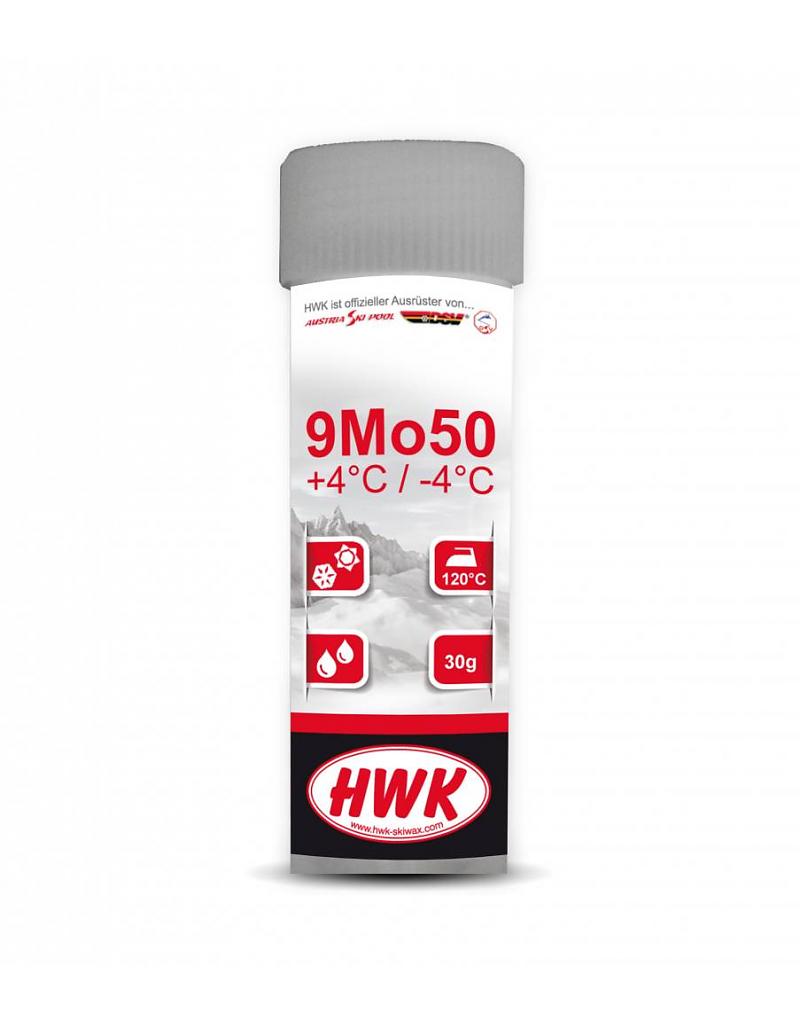
Wet and dirty snow at Wirth Park seems to happen more often than we would like. The HWK guys are always testing on the WC biathlon circuit and they race and test on wet, dirty, artificial snow all the time. This was my top coat at the Birkie 2 years ago and I have won a few SuperTour races at Wirth Park on this wax. It is easy to apply and a no-brainer in wet/dirty Minneapolis city snow if we get those conditions.
Want a top level pole without having to spend $500? This is your ticket. We have a lot of Triac 2.5 poles on closeout and it is the same shaft as the new $500 Triac 3.0. The difference is the strap and if you are keen on watching a lot of World Cup racing you may have noticed many of the best skiers in the world were using the 2.5 pole even after the 3.0 was released. Why? Well the traditional strap/grip with some real estate to rest your thumb is very nice at a cost of only a few grams. Plus we think the graphics on the 2.5 are better.
Panic waxing, no more. Yes, a perfectly waxed classic ski with the perfect application will outperform a no-wax ski most of the time. But how often does that happen?! Even Norway screws up the kick wax — look what happened at Ruka this year. Klæbo won the men’s World Cup distance classic race on no-wax skis. Wouldn’t it be nice to have a backup race classic ski for when you or your wax tech miss the kick wax and you have no kick or too much kick and you start panic-mode 15 minutes before your race start? Think about how great it could be if you have a rocket-fast skin ski with bomber kick, covered in Rex Hydrex waiting in case of panic. We stock every major brand of racing skins, just drop us a line if you want to order some anti-panic skis. Check out our Ski Request services.
As we are winding this down, questions continue to roll in as to how I managed to get all of these amazing reviews done, not only so amazingly well, but also so amazingly fast. Part of my secret I shared the other day with this very insightful video, and part of it derives from my scrupulous attention to detail and a work ethic that I learned from Hunter S. Thompson.
For anyone unfamiliar with his legendary schedule, I strong encourage you to carefully review this and adapt to your life, as necessary.
In reality, my own schedule is quite similar. First off, I applaud Mr. Thompson for getting a full 8 hours of sleep each “night,” as every good athlete knows that recovery is the key to success. Well done, Hunter. I choose to follow this lead wherever possible, with only a slight 14-hour shift in the prescribed bedtime (Wow, Hunter and I sure used the word ‘prescribed’ in a very different sense, huh?).
Regarding diet, this is also another key pillar to success to all athletes and one small area in which Mr. Thompson and I deviate slightly. My food profile is a little more centered around fresh fruits and vegetables and a little less centered around cocaine and cigarettes, but I think we’re really splitting hairs here. Can starting the day with three lines of blow and a Marlboro Red really be all that different than a kale smoothie and a quinoa/egg white omlette? I think most doctors will tell you no.
Apparently he and I also share a love for pasta, orange juice and Dove bars, so I have to believe that I am well on my way. To where? Who knows, but I do know one thing, it’s not here.
Wait, perhaps that a bit too dramatic — I am neither quitting, nor being fired (at least not to the best of my knowledge, but I suppose that could change at any moment), but this does mark the end of 12 Days of FBD and what a ride it has been.
I hope everyone has enjoyed reading this work as much as I have enjoyed writing it and I would most certainly be amiss if I didn’t pay a huge thanks to my evil, corporate overlords at FasterSkier who give me a TREMENDOUS amount of room to run and support me completely in what assuredly is the most “colorful” gear review out there.
In particular, I want to say an extra special thanks to my editor, Alex Kochon. Despite the fact that the word “cochon” is French for pig, Alex is anything but that. This may come as a huge surprise to all of you, but I can be exceedingly difficult to work with — I submit 7,000 word reviews on even the simplest of topics and I have a deep emotional attachment to each and every one of those words. From my perspective, the removal of even one of my carefully chosen locutions results is such a devastating seismic shift that the newly butchered text takes on a completely different dimension, one with potentially earth-destroying consequences. In addition to this unbreakable ionic bond I have to each and every carefully chosen and very precise phase, I also have a flair for the melodramatic. And I am also quite needy. No, really, it’s true. I’m not sure, but I think I also complain a lot. However, I do know that a lot of people complain about me, so in my mind, those two kind of balance out.
Combine all of this with the fact that I regularly submit work at well past midnight and hopefully it is evident how key a role Alex played in this process. She is a smart, calm, caring person and truly a joy to work with each day, as always manages to quickly and efficiently format and post my work, thankfully usually only with a minimum of edits. Her professionalism is unrivaled, as are her talents (this is the case for most of the FS staff, with the notable exceptions of Albert and Kentch, who are terrible, terrible hacks). This team has some of my biggest fans and the feeling is most certainly mutual.
We do need to teach Alex a lesson though, so when you see her on the tracks, the street, or in the grocery store, please ask her to tell you the third fictional name that she removed from my rant about the oh-so-annoying trends in child naming. Not only is it “family friendly”, but it is also hilarious. And she took this from you. You have been robbed. Now she must pay. So ask. And ask. And ask. If she says no, ask her again.
So as I prepare to sign off, I sincerely hope that these columns were of some assistance, albeit minor. Whether I somehow managed to provide you a good holiday gift idea idea or even if these rambling diatribes just helped you kill a few minutes at work and stick it to The Man, it doesn’t really matter. It’s not important if you read each and every column, hanging on every work, skimmed a few when you were stuck in an airport with absolutely nothing else to do, or just looked at it for the funny pictures, if you got even one things out of all of this, that’s all that matters.
Hopefully the biggest thing that you did get out of the columns is my hope that everyone realizes that we’re all in this life together. Clean air and clean water shouldn’t be a partisan issue. It just should not. Everyone on the planet deserves access to land not choked with pollution and a safe place to raise their families. We’re at a cross-roads in this country on many of these issues and hopefully enough people will realize the seriousness of these problems and get involved before it is too late.
Science!
So get involved. Pay attention (not just to the signs for baggage claim, but everything in the world around you. Even if a problem isn’t in your backyard, you should still care). Vote. Demand more of your politicians and yourself. We created all of these problems and it is up to us to fix them. But let’s not just fix them, let’s also fix our approach: thoughtful, rational discourse is our only way out, so let’s all hope we can find this, as soon. Facts are nothing to be feared, they are our salvation. Science isn’t always perfect, but it’s the best tool that we have, so it should not be feared, scorned, suppressed, or redacted, it should be embraced.
Finally, even though I took a lot of cheap shots at people, places, and institutions in the past 12 days, it was all done in good fun and with nothing but the best of intentions, (except for you, American Airlines, you truly suck, that was a legal carry-on bag that you made me check it. And I haven’t forgotten about it.) This is a wonderful sport and a wonderful community, so on behalf of the entire FasterSkier team, I’d like to wish everyone a very happy, sexy and snowy holiday. Be kind. Be aware. Be awesome.
Kent Murdoch leading the pack in the 45-kilometer skate in the M5 category at 2016 Masters World Cup in Vuokatti, Finland. (Photo: Vesa Suomalainen)
Hankering for World Cup-style distance racing?
While most masters tend to aim for the traditional ski marathons, the annual Masters World Cup (MWC) presents an opportunity for skiers 30 and older to ski up to four races of regular World Cup distances in a week.
“It’s so much fun to do a variety of distances within a week, and being able to battle it out with athletes from all over the world is just a really unique opportunity,” says Milan Baic of Traverse City, Mich., who won silver in the final 45-kilometer skate race on Feb. 12 in Vuokatti, Finland.
Baic, 56, has been to every MWC event since 2004, and is planning to be back at the 2017 MWC in Klosters, Switzerland, and beyond.
“With the MWC you get a package deal of a race week. It’s not just a week of really professional and high-level racing,” Baic says. “But AXCS [American XC Skiers] puts together everything with accommodations, race entries and all logistics taken care of, all in a very affordable package. It’s a great value. All you need to do is show up and race.”
More than just races
“You meet so many interesting people, you make genuine friends that you see year after year at the Worlds, and you start looking at people from other countries and cultures in a different way,” Baic says.
He notes that while every year has a different flavor and atmosphere, the events in Russia in 2004 and 2015 have been among the most memorable.
“People in the host communities really take a lot of pride in putting on a really professional and smooth championship week, and are also really excited to share their culture and specialties in everything from opening and closing ceremonies, award ceremonies, medals and awards,” he says.
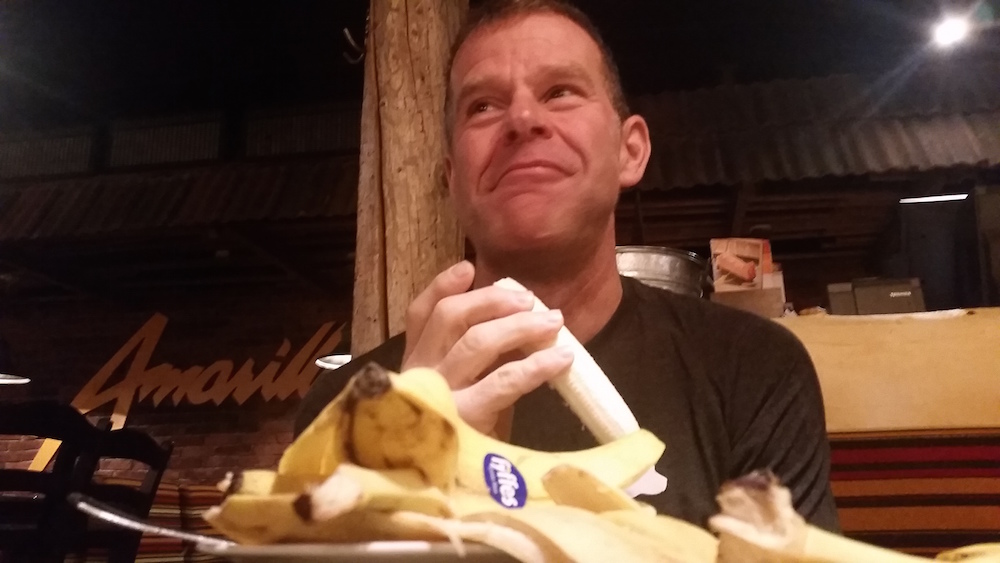
Milan Baic, of Traverse City, Mich., has a well-proven medal strategy for the 45 k event at Masters World Cup: he eats five bananas before breakfast. It usually produces a medal for him, and this year was no exception. He earned the silver medal in the M6 category, one of the most competitive in the Masters World Cup, in Vuokatti, Finland. (Photo: Kent Murdoch)
Also, Baic points out that the U.S. contingent also has a great spirit, good energy and a supportive team environment.
“The racers cheer for each other, help each other out with feeds and wax tips, and it’s fun to travel with the same people, as well as meet new skiers from other parts of the U.S.,” Baic says.
Baic and several of the masters on the US team train systematically for cross-country skiing year-round. He estimates that in an average week, he puts in about 12 hours of training between skiing, strength training and occasional cross training.
While the MWC is the highlight of the season, Baic also races the traditional marathons, and last year, he was 43rd at the American Birkebeiner, the highest ranked to date of any racer 50 or older in the 43-year-old event.
This is the Masters World Cup
Every year, the International Ski Federation (FIS) and the World Masters Association (which is currently under the reign of the first-ever American president, John “JD” Downing) organize a championship-style weeklong competition open to non-professional skiers age 30 and older. The event routinely attracts over 1,000 skiers from more than two dozen countries. This year, the masters World Cup was held in Vuokatti from February 6-12. Roughly 70 American skiers age 40 to over 80 helped themselves to 16 medals in the course of the week in Finland.
If the venue Vuokatti sounds familiar, it might be because it is also home to both FIS World Cup and Continental Cup races every year, as well as one of Finland’s Olympic training centers, home to the 2-kilometer Finnish ski tunnel, and the Angry Birds theme park.
Then, in 2018, the Masters World Cup returns to North America for the first time since 2011, back when the event was held in Silver Star, British Columbia. The 2018 championships will be held in Minneapolis in January 2018, but the exact dates are yet to be announced.
The Minneapolis Masters World Cup represents a very unique opportunity to race several World Cup-style races right in the heart of a big metropolitan area, as most of the Masters World Cup events take place at ski areas that are not necessarily close to big cities.
About the Author: FasterSkier contributor Inge Scheve, a Norwegian native, lived in Fairbanks, Alaska, and Bend, Ore., for a number of years where she became an avid skier and masters racer. Scheve recently competed in her sixth Masters World Cup in Vuokatti, Finland.
J.D. Downing at the 2015 Masters Word Cup last March in Syktyvkar, Russia. (All photos: Inge Scheve)
Late last month, John “J.D.” Downing of Bend, Ore., was elected president of the World Masters Cross-Country Ski Association (WMA), putting him at the helm of the international organization that governs master skiers in the International Ski Federation (FIS).
Pointing out that master skiing is much more than the big loppet events, Downing, who founded XC Oregon and has been involved in international cross-country skiing for more than four decades, said in a phone interview that he wants to get more masters involved in racing, both internationally and locally.
“In some capacity I’ve been part of just about every type of nordic ski event imaginable over the past 41 years, and I really believe the MWC [Masters World Cup] format is one of the most enjoyable to be around,” Downing said. “You get the fantastic energy of international participation of the big marathons, but with easier logistics and a more intimate ski experience out on the trails. I also love the fact that skiers of any ability can enjoy an annual world championship with their peers, discovering all these fantastic ski places around the world.”
As president of the WMA, Downing, 49, wants to reduce the logistics and organizational requirements necessary for attending and hosting a Masters World Cup, an annual, competitive world championship for skiers ages 30 and older, which attracts more than 1,000 athletes annually from across the globe.
FasterSkier: What attracted you to this position, and what do you hope to accomplish during your term?
J.D. Downing at work in the U.S. wax room at the Smetanina Sports Complex at 2015 Masters World Cup. (Photo: Inge Scheve)
“I have really enjoyed the past 11 years working with the WMA as the USA national director, and when it became apparent that there wasn’t a long list of directors that were able or willing to step into the president shoes, taking on the added responsibility, it just made sense at this time for me,” Downing said.
“Honestly, the biggest thing I hope to accomplish is having the WMA become more of a team effort with even the minimal administrative functions we have to perform each year. I’ll have a full plate the next several MWC events leading what should be increasingly bigger Team USA contingents, but I’m confident we’ll see multiple other directors and officers embrace different tasks within the WMA, which is exactly the way a non-profit international organization led by volunteers should function.”
He added that the association is already working on a few new elements within the event design for Masters World Cups that will come into play after the 2016 MWC in Vuokatti, Finland, which could make the championships appeal to a wider group of master skiers.
“We would like to reduce the time commitment at the MWC for skiers, particularly younger masters. We also want to keep the event as practical to manage as possible for future organizers, so there are some ideas being worked on in that area as well,” he said.
FS: What are some of the challenges facing the association, and what issues need to be addressed?
“The biggest issue by far is a gradual reduction in worldwide numbers of what I call motivated masters,” Downing said. “The biggest ski events are generally doing very well, and the MWC numbers are holding steady. But we are seeing a clear decline in motivation and numbers of master skiers at the grassroots level around the world. Skiers under the age of 55 are particularly hard to keep ‘in the game.’ ”
He added that some of the underlying issues of this gradual decline are beyond the scope of the WMA, including climate change.
“There are many factors involved in this decline that the WMA can’t really address. Annual consistent snow in ski regions worldwide being first and foremost. But we do need to find ways to motivate and interest more adult skiers in the basic concept that there is more to this sport than just taking part in one or two big loppets every year.
“We’ve got an amazing lineup of MWC events coming up, and I urge every skier over 30 to consider taking part in a future Masters World Cup,” he added. “Vuokatti in 2016, Klosters in 2017, Minneapolis in 2018, and then next fall, we hope to confirm Beitostølen, Norway, for 2019 MWC, which would keep the positive momentum going.”
“We’ve got an amazing lineup of MWC events coming up, and I urge every skier over 30 to consider taking part in a future Masters World Cup.” — World Masters Association President J.D. Downing
The last time the MWC was in North America was in 2011 in Silver Star, British Columbia. In 2008, the MWC was in McCall, Idaho.
Additionally, most of the national masters associations host national championships in varying locations. In the U.S., that organization is American Cross Country Skiers (AXCS), which Downing also heads. This season, the 2016 National Masters Championships will be held at Royal Gorge in California.
Downing has been the U.S. national director since 2004, and will continue to lead the AXCS while being MWA president. He does not anticipate that the additional responsibilities of the presidency to detract from his national role.
“There are some practical economic advantages for both AXCS and WMA in having me do both jobs, especially with the MWC 2018 in Minneapolis coming up fast,” he said.
The WMA Legacy
On Sept. 25, Downing was elected president of the WMA during the the association’s annual conference in Klosters, Switzerland. He takes over for Germany’s Thomas Heckmann, who served as WMA president since 2009, but stepped down this past spring because of business demands. WMA Technical Vice President Klaus Pleyer served as an interim president this spring and summer until the election.
The World Masters Association consists of national directors from every country that fields teams at the Masters World Cup. Every year, the WMA meets to determine business regarding master skiers, review rules and regulations, and select a host and destination for the next Masters World Cup championships, much like the annual FIS general assembly.
The MWC is the biggest event of its kind for age-group skiers, and the bidding process to host the MWC is much like that of the regular FIS Nordic World Championships with potential host destinations submitting their bids to the WMA for review. WMA officials then visit the host destinations and vote on the options.
An aerial shot of the 2016 Masters World Cup venue in Vuokatti, Finland (Photo: MWC Vuokatti)
Every year, the Masters World Cup draws master skiers aged 30 and older from all around the world to World Cup-level venues for a week of FIS-World Championship-style racing. Finland will host the Masters World Cup for the fourth time in February 2016, welcoming roughly 1200 master skiers to Vuokatti.
Finland previously hosted the Masters World Cup in Kuusamo, and Kuopio, and most recently Rovaniemi, which took place in 2007. The 2016 site, Vuokatti, last hosted a World Cup in 1995, but has seen plenty of Scandinavian Cup and FIS racing since then. The venue hosts the Vuokatti Hiihto, one of Finland’s biggest ski marathons.
The Masters World Cup is open to skiers 30 and older and routinely attracts more than 1000 racers from more than a dozen countries. Each racer can compete in up to three individual events, with skiers choosing between skate or classic. Additionally, there is a relay competition in the middle of the championship week.
For the United States, the team is organized by American Cross Country Skiers (AXCS). No qualification is necessary; a skier only has to have an AXCS membership to represent the country.
John Downing is the head of AXCS and also the head coach of XC Oregon. He is particularly excited about the Finnish venue for 2016.
U.S. National Director J.D. Downing at the 2015 Masters World Cup (Photo: Inge Scheve)
“The ski trails are, in the opinion of your humble USA National Director, some of the most enjoyable we’ve ever had for a Masters World Cup event,” Downing told FasterSkier this spring. “The first 5 k features a joyful romp of rolling terrain followed by a crossing of a small frozen lake, and then a simply spectacular loop up/down the side of a forested ridge. The diversity of terrain and visuals on the core 15 k trails rivals any MWC venue in the world.”
Besides the race courses, Downing pointed out that Vuokatti – which as well-known for its summer ski tunnel as for its winter trails – has over 150 k of skiing. That means plenty of great ski touring is available, too.
“The absolute best thing about Vuokatti is the MWC race loops are just the beginning when it comes to ski options,” Downing said. “An honest-to-gosh 150km of total trails are going to be at our disposal. Whether you want to race or not, there aren’t many places in the world that offer more great skiing options right out the door.”
For a full recap of the Masters World Cup experience, from racing to teamwork to opening and closing ceremonies, read the story here.
There are seven possible race starts per gender, with all distances featuring a classic and a freestyle option, plus a relay. Athletes can choose up to three individual competitions to enter; they are divided into age and gender classes, with the youngest racers age 30-35 racing in the M/F01 category, ages 36-40 in the M/F02, ages 41-45 in the M/F03, ages 46-50 in the M/F04 and so on.
The championships open with a medium length event: 10 k, 15 k or 30 k, depending on age and gender. The younger men race 30 k, men in the Master 7 through 9 categories and the younger women race 15 k, while the oldest men and all women in the Master 9 and older race 10 k. These events are held on the first two days of the championships, alternating between skate and classic for the first day, following with the other technique on the second day. The championships always start with opening ceremonies on a Friday, and the first races on Saturday.
The second event, held on the third day of the championships, is a short distance – 10 k for all younger men and women, and 5 k for men in the M10 and older as well women in the F9 and older. Both classic and skate races are held on the same day, with classic events in the morning and skate in the afternoon.
The final individual events are the long-distance races, held on the two last days of the championships (Thursday and Friday) and alternating between concluding with skate or classic. If the championships opened with skate technique on day one, the last long-distance event will be classic and vice versa. The long distance races range from 45 k for the youngest men, 30 k for the youngest women and the men in the M7 and older, and 15 k for the women in the F9 and older, and the men M10 and older.
Additionally, there are relay races for all ages on day five, Wednesday, after a rest day following the short distance races. Relays consist of two classic legs, followed by two skate legs. Nations can field as many teams as they like in both the men’s and the women’s categories. However, there are rules regarding the make-up of the team in terms of age. Older racers can be dropped down to field a team in a younger category, but there must be at least two racers of the correct age on the team. In other words, a maximum of two racers per team can drop down to a younger age category. The relay team selection is the discretion of the national directors.
All of this will go down the next time around in Vuokatti, one of the most popular all-year-round holiday resorts in Finland, and the organizers point out that Nordic skiing and racing is not the only game in town. Vuokatti is home to the Angry Birds app, and even has an entire theme park dedicated to the lively birds, unfortunately only open in the summer.
“You’ll have many ways to enjoy the beautiful Finnish nature and experiences, such as ice fishing, snowshoe hiking, skating on natural lake ice, or riding on Icelandic horses,” Marika Makkonen of the Vuokatti MWC Organizing Committee wrote in an email. “There are many kinds of safaris available like snowmobile safaris and husky safaris. Depending on the weather you may also experience the northern lights.”
Boulder Nordic Sport is going international again this year, offering race service for the 2013 Masters World Cup in Asiago, Italy. Providing full race wax service, including ski consultations, the BNS Service Team will be arriving early to test wax at the race venue and will be on hand for every race February 16-22.
Race service will include base layers, HF paraffin, fluoro powder, topcoats and hand structure for one or two pairs of skis per racer. Instead of lugging all of your wax and tools across the Atlantic, let the professionals from BNS worry about testing and application while you relax and focus on your races.
BNS owner, Nathan Schultz, will personally be heading up the operation; bringing to bear his extensive experience both as a professional ski racer and as wax technician at the Olympics, World Cup and World Championships. The Race Service team will be testing a broad range of wax brands and products as well as hand tools to insure that you have the fastest skis possible.
Make the most of your trip. Sign up online at bouldernordicsport.com/shop or call 877.BNS.SKIS.
With stores in Boulder, Colorado and Portland, Maine; BNS also operates a mobile race service trailer that travels to events around the US as well as an e-commerce web site at www.bouldernordic.com. BNS imports and distributes the SkiGo, Holmenkol, Guru, Innovax, Gallium and Magnar brands into the USA.
Canadians skiers were well represented during the opening day of the Sparkling Hill Masters World Cup (SHMWC) at the Sovereign Lake Nordic Club in the North Okanagan Saturday. The Canadian contingent finished the day with a total of twelve (14) medals – three (3) gold, four (4) silver and seven (7) bronze.
British Columbian Nikki Kassel led all female racers, 35-39 years, in the 15 kilometre freestyle event with a time of 0:45:04.8. The Prince George skier jumped out to an early lead and never looked back. She was all smiles after crossing the finish line.
“It’s a beautiful gliding course. When I did the pre-ski, I thought it was going to be a lot harder course but it wasn’t. It’s a fast snow that’s cold and dry,” said Kassel, one of the 472 Canadians taking part in the seven-day SHMWC. “I’m happy with (placing first). It’s a good way to start the week.”
Other Canadians getting their week off to a solid start were Pat Pearce (President of the Sovereign Lake Nordic Club, F55-59) and Catharine Pendrel (F30-34) with gold medals. Canadian silver medals went to Olav Stana (Sovereign Lake Nordic Club, M55-59), Marta Green (Sovereign Lake Nordic Club, F30-34), Nancy Burden (F45-49), Olwyn Ringheim (F80-84). Canadians collecting bronze were Kirk Howell (M35-39), Steve Cyr (M40-44), Karine Perrin (F30-34), Doris Hausleitner (F35-39), Sheila Kealey (F45-49), Shirley Gray (F65-69), Thor Vilkstrom (M80-84). Races slated for Sunday are all classic technique races and include the men’s 30 km, men’s 15 km, women’s 15 km, men’s 10 km and women’s 10 km.
Saturday’s blue skies highlighted the Sovereign Lake Nordic Club and provided the perfect backdrop for the much-anticipated event which attracted 1,134 athletes from 22 countries. SHMWC Event Chair Bruce Cummings is fielding an avalanche of positive feedback from well-travelled athletes.
“It’s all come together above and beyond expectations. The volunteers have been outstanding. There’s more than 300 of them and they’ve all been working hard,” said Cummings in the Event Tent. “Everybody I’ve talked to are impressed with the event. You hear words like ‘outstanding, superb’ and ‘glorious.’ I can’t describe how good this all feels.
“The weather has been absolutely perfect. The snow is fast and everybody loves the conditions,” he added.
World Masters Association Honorary President Dieter Heckman is credited by many for giving the Sovereign Lake Nordic Club the green light to host the event. Heckman is thrilled with the good start the SHMWC is having and noted that the people he’s talked to have said the course is the “best ever.”
“The course is up and down but not too difficult,” said the Switzerland resident. “The people here have been very friendly and I liked the (First Nation) singers and dancers at the opening ceremonies. You don’t see that often.”
The SHMWC Awards Ceremonies get underway at 6 p.m. on race days in the village at Silver Star Mountain Resort. Racing kicks off each morning at 9 a.m. Sunday, Monday and Wednesday to Friday, March 12. Racers will take a break from the action on Tuesday, March 8
It was the 30th edition of the Cross-Country Masters World Cup for ladies and men, age groups 1-12, this is age 30 and above, in Falun, Sweden last week. Again, the competition for senior Cross-Country skiers from around the globe, took place in a well known ski resort. Each participant was allowed to compete in three individual competitions depending on the age category over 5, 10, 15, 30 and 45 km in the classical and / or free technique. Additionally, for each nation and age category there is a relay over 4 x 5 km. Among the organizers of well-known wintersport resorts, it has long been discussed that the Masters World Cup pays off not only for the organizers, but also for the competition venue itself. In addition to the close to 1000 participants from 25 skiing nations, coaches and supporting staff, staying an average of 10-12 days, must be added when drawing the balance.
Falun with its famous Lugnet-Cross-Country stadium and the varied, selective and not always easy slopes, offers ideal conditions for young and old. Although extremely cold temperatures during the first two days of MWC led to start delays, the active members, the FIS Technical Delegate Marita Schleich, and the Bureau members of the World Masters Association (WMA) praised the organization of the event.
The high level of performance of the best competitors was impressive and the outcome of the race was often decided only in the last meters of the race. It is well known that competitors have mass starts within their age categories. In certain age groups, it was not easy to finish in the top of the field due to the large number of participants as for example in the men’s category 6 (54-59-year-olds) and 7 (60-64-year-old).
The most successful nation that won the most medals was Russia, followed by Norway, Italy, Sweden, Finland, Germany and the US. Host Sweden had the most participants with 200 athletes, ahead of Russia with 180 active cross-country skiers.
The 30th Masters World Cup in Falun ended with a banquet that was appreciated by all participants.
In 2011, the Masters will meet again in the first week of March in Sovereign Lake, British Columbia/Kanada (www.mwc2011.com) and in 2012 in Oberwiesenthal, Germany (www.mwc2012.com).
Excellent conditions and exciting racing continue at the Masters World Cup in Falun, Sweden. Cold temperatures have persisted throughout the week, with morning lows near O F. Monday morning the stadium billboard displayed -24 C, resulting in a 1 hour delay. While the Italian and Russian contingents have taken the lion’s share of medals, U.S. skiers have captured a number of medals, including;
American XC Skiers (AXCS) — the U.S. nationwide masters XC ski association — is primed and ready for a gold medal 09/10 winter season with incredible offers and events from start to finish.
Kicking things off is one of the best AXCS membership offers since the association was founded in 1998. Master skiers that join or renew before the end of November 2009 will be able to take advantage of the soon-to-be-expiring membership dues of $35 (one year) or $90 (three years) before they are raised to $40/$100 respectively. The three year membership is especially a great value because it would cover the 2011 Masters World Cup/National Masters double-header slated for Sovereign Lakes, B.C., Canada in March 2011. National association membership is required for all USA skiers planning to participate in the MWC2011. Not only will you get three full years of the best member benefit package in XC skiing, but you’ll save a mind-boggling $330 in the process! Now that’s value-for-money anyone can appreciate these days.
Acting soon also means these lucky master skiers will all enjoy complimentary copies of the Summer 2009 XC World Digest (40 print pages filled with exclusive content from around the XC world all specifically selected or written for master skiers). For those that didn’t get one, we’ll also send a copy of The Master Skier annual XC ski journal (while supplies last).
AXCS benefits keep rolling year round including: E-World Bulletins with even more tasty exclusive XC ski news and information; Winter/Spring/Summer XC World Digest issues; annual subscription to The Master Skier Journal; access to the annual American Ski Odyssey; support for annual National Masters events; support and USA representation at the annual Masters World Cup; exclusive information on xcskiworld.com; exclusive discounts; and much, much more! Far and wide many have tried, none have done it better. AXCS membership delivers year after year!
Skiers can join AXCS on-line via a secure system (with no added fees!) at xcskiworld.com or via a print-and-mail form found at the same site.
But act fast as the best membership deal in the past dozen years is going to go fast!
***
2010 National Masters Registration Now Open
As of November 1, registration is now open for the 2010 AXCS National Masters hosted by Craftsbury Nordic Center (Vermont), January 28-30, 2010.
Featuring three days of race events and skiing for citizen skiers 25 and older (though a great race week for 20-24 year olds as well), the National Masters offers the ultimate long weekend ski adventure for the 09/10 season.
On Thursday, January 28 the NM2010 will kick off with an afternoon 10km freestyle interval start race followed by evening wine/cheese reception and awards. Friday, January 29 offers traditional Craftsbury Ski Marathon pre-event activities plus a fun new opportunity – the Dash for Cash sprint event. Definitely worth participating in for all ages even though it’s not officially a NM2010 race event.
Racing will culminate Saturday, January 30 in the NM2010 finale with the TDBank Craftsbury Ski Marathon. Arguably the most popular XC ski event east of the Great Lakes, the Marathon annually attracts a sell-out crowd for this beautiful 50/25km classic technique New England favorite.
No qualification or license of any kind is necessary for the 2010 AXCS National Masters…you just sign up and enjoy yourself. There is also no separate registration process as every skier taking part in either the 10km or Craftsbury Ski Marathon will be included in the NM2010 automatically.
Register online now at craftsbury.com for the Masters 10K and/or TDBank Craftsbury Ski Marathon. For more information about National Masters scoring and future events please visit xcskiworld.com.
See you in Vermont this January!
***
(Almost) Last Chance For The 2010 Masters World Cup In Falun Sweden!
AXCS will soon be releasing our final extra rooms for the MWC2010 in Falun, Sweden. This is your (almost) last chance to experience the Kingdom of Skiing firsthand at one of the truly legendary race venues in all of the XC ski world. In addition to a choice of seven MWC race events, skiers at the MWC2010 can two-for-one their trip to Sweden by sticking around 2-10 extra days and experiencing any number of the Swedish Vasaloppet events just a short bus ride away. You know you’ve always dreamed of being part of the biggest XC event on the planet — now is the chance!
Plus — MWC2010 skiers will enjoy LIVE nightly start-to-finish, prime time television coverage of the 2010 Winter Olympics (the time difference from Whistler Olympic Park is a very convenient 8 hours). Ski the dream during the day for yourself, then cheer on the world’s best in the comfort of the best hotel in Falun each night. Life can be very good indeed!
The AXCS “official” trip dates are February 17-27, but it is still possible to create a trip of any number of dates if you act quickly. Once AXCS does release our extra rooms, it is always possible we can still fit skiers into the trip if we have cancellations. The Organizing Committee also assures us that they can find alternative places to stay for late-comers even into January 2010. Note, however, that race entries will close (without exception) as of January 25, 2010. So you cannot wait until the very last minute.
For more information visit xcskiworld.com where AXCS will update the trip logistics every week into February.