Tag: Mathias Rundgreen

  • Retivykh Wins Again in PyeongChang; Newell & Hamilton 4th in Team Sprint

    Retivykh Wins Again in PyeongChang; Newell & Hamilton 4th in Team Sprint

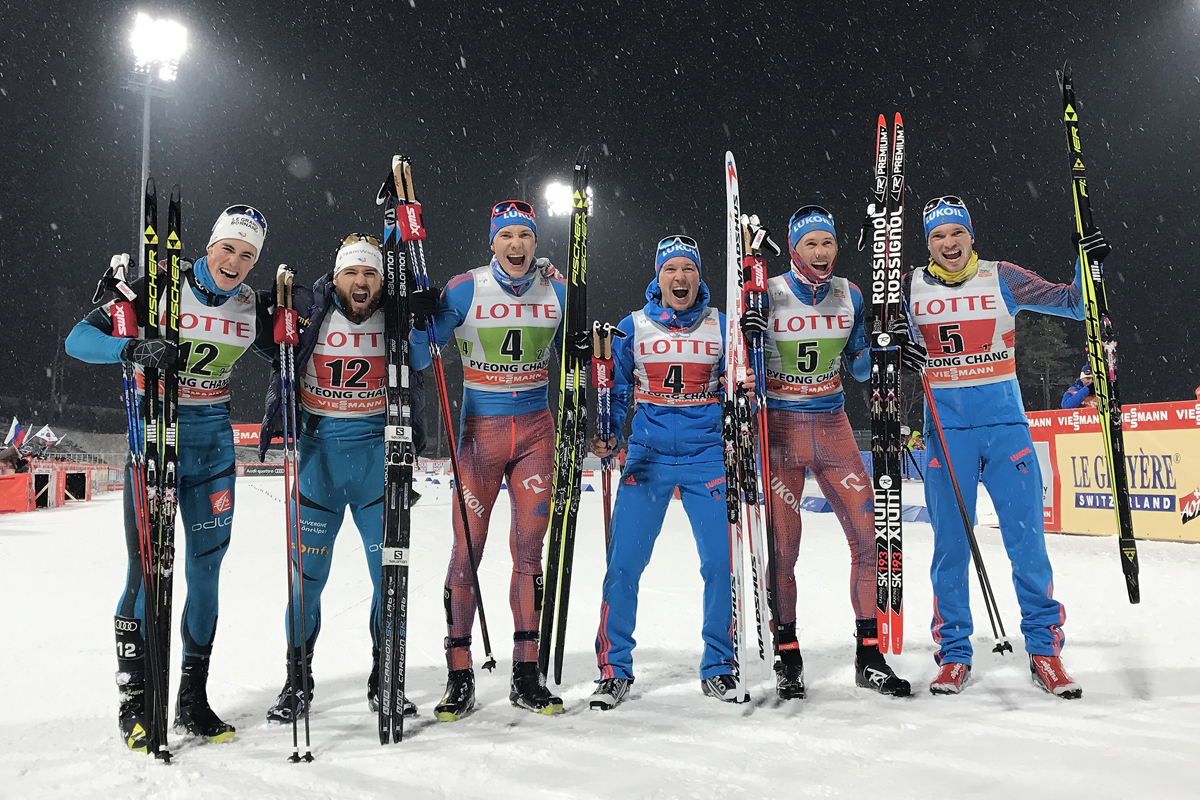
    The men's freestyle team sprint podium at the PyeongChang World Cup on Sunday in South Korea, with France's Lucas Chanavat and Baptiste Gros in second (l), Russia's winning team of Gleb Retivykh and Andrey Parfenov (c) in first, and teammates Nikita Kriukov and Artem Maltsev (r) in third. (Photo: Fischer/NordicFocus)
    The men’s freestyle team sprint podium at the PyeongChang World Cup on Sunday in South Korea, with France’s Lucas Chanavat and Baptiste Gros in second (l), Russia’s winning team of Gleb Retivykh and Andrey Parfenov (c) in first, and teammates Nikita Kriukov and Artem Maltsev (r) in third. (Photo: Fischer/NordicFocus)

    France has never won a World Cup team sprint, neither for men nor women, classic nor freestyle.

    And its team will have to wait a bit longer for that time to come. But France was oh-so-close on Sunday, with Baptiste Gros and Lucas Chanavat racing against the Russian duo of Andrey Parfenov and Gleb Retivykh in the men’s 6 x 1.5-kilometer freestyle team sprint in PyeongChang, South Korea.

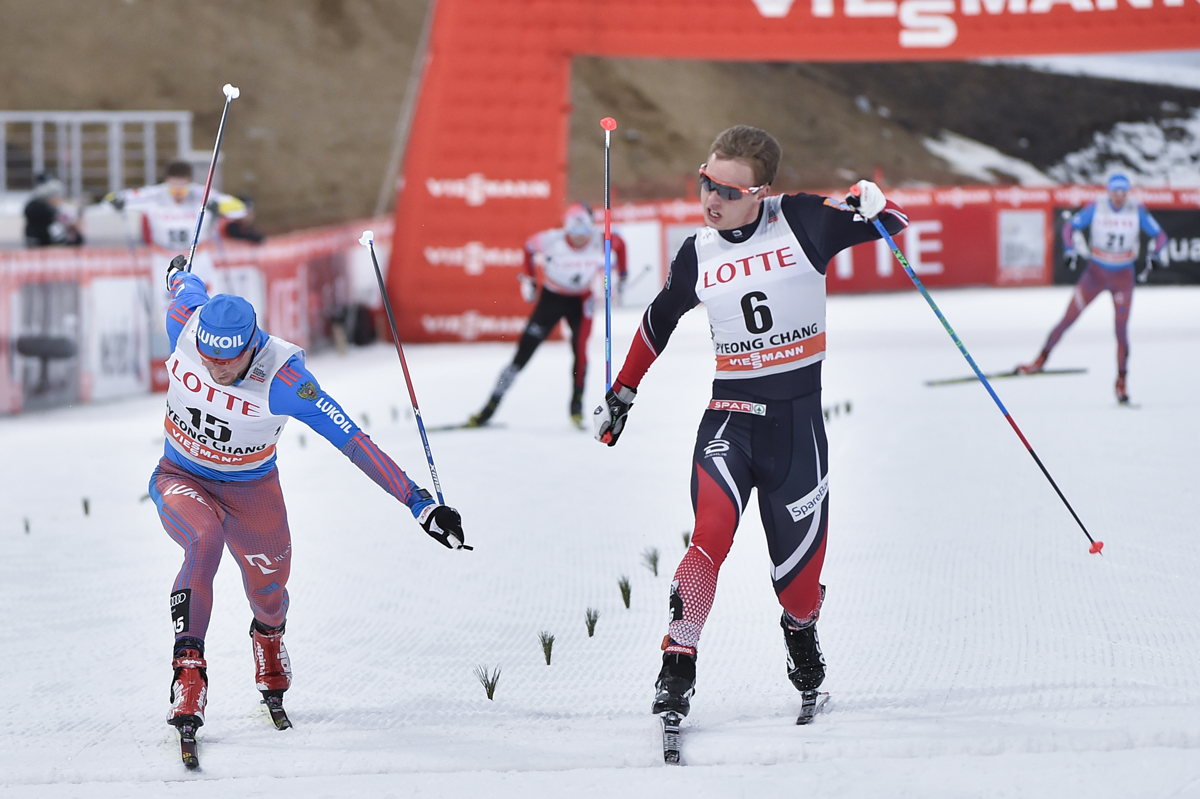
    Chanavat, last year’s U23 world champion in the freestyle sprint, tried to attack on the last steep climb but could not gap Retivykh decisively. Then he positioned himself behind the Russian on the downhill into the arena that will host next year’s Olympic Winter Games, shaking out his arms before tucking into the draft. Coming out of the final left turn, he managed to push up next to him on the finishing stretch, but Retivykh lunged over the line a ski boot ahead for the victory in a time of 19:34.11, with Chanavat just 0.03 seconds behind.

    “I did not know in the finish if we won until Andrey told me,” Retivykh told the International Ski Federation (FIS), according to a press release. “It was just as hard skating as it was in classic the other day.”

    But the French duo was not too disappointed after narrowly missing the victory.

    “Romantic meal to celebrate this first podium of the year! We will bring back a good memory of Korea and be strong for next year,” Gros posted on his Facebook page, according to a translation, at 4 a.m. local time with a picture of him and Chanavat wolfing down two cups of noodles.

    “Second in the Team Sprint World Cup in Pyeongchang with my teammate Baptiste Gros (Showing his last drop of rage sinking in his beard)!” Chanavat commented on his Instagram account with a picture of both men smiling. “Next step: be prepared for the world championships in Lahti!”

    Russia’s second team of Artem Maltsev and Nikita Kriukov secured the third position on the podium (+5.52).

    “It feels absolutely great to be back on the podium,” Kriukov told FIS. “For me it’s a very important step on the way back to the top.”

    It was Retivykh’s second victory of the weekend after also winning the men’s invidual classic sprint on Friday, and Russia improved their statistic to become the most successful nation in this event with seven victories in World Cup freestyle team sprints, which have only been contested 25 times so far.

    The U.S. Ski Team’s first team, with Andy Newell and Simi Hamilton, finished fourth, 24.23 seconds behind, after being unable to challenge for the podium on the last leg.

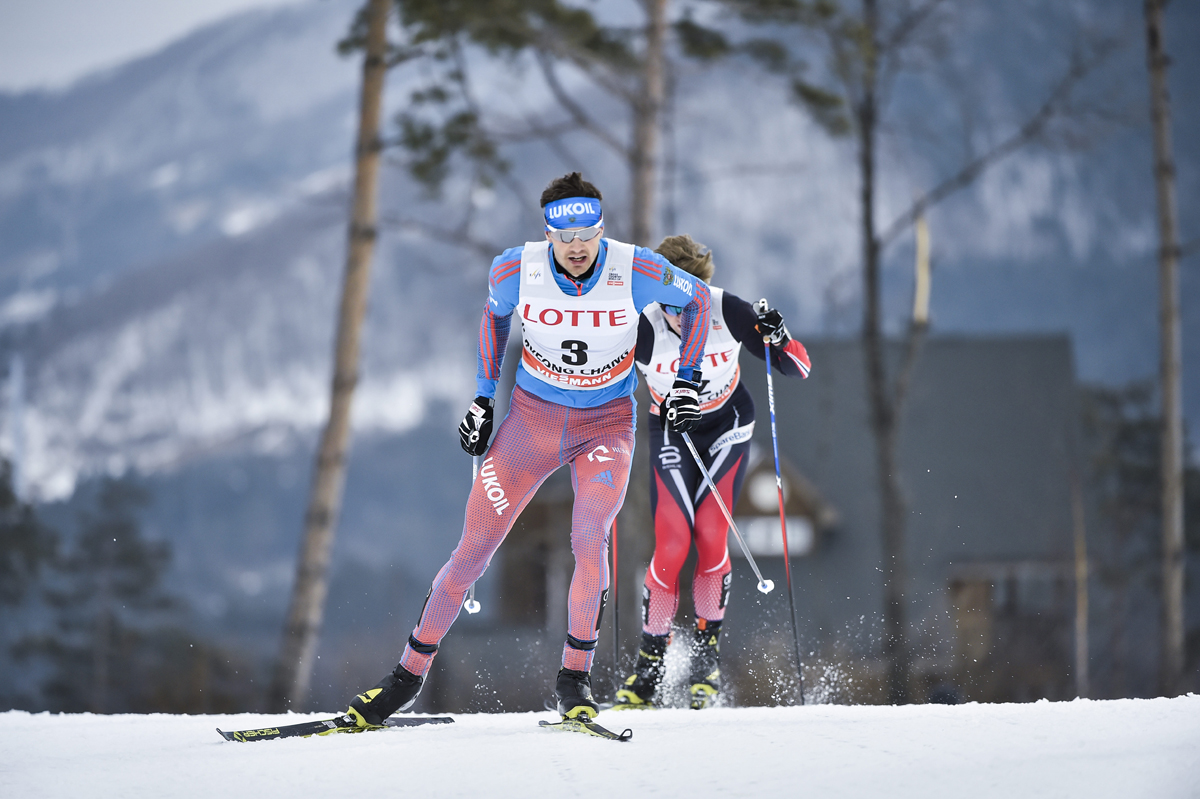
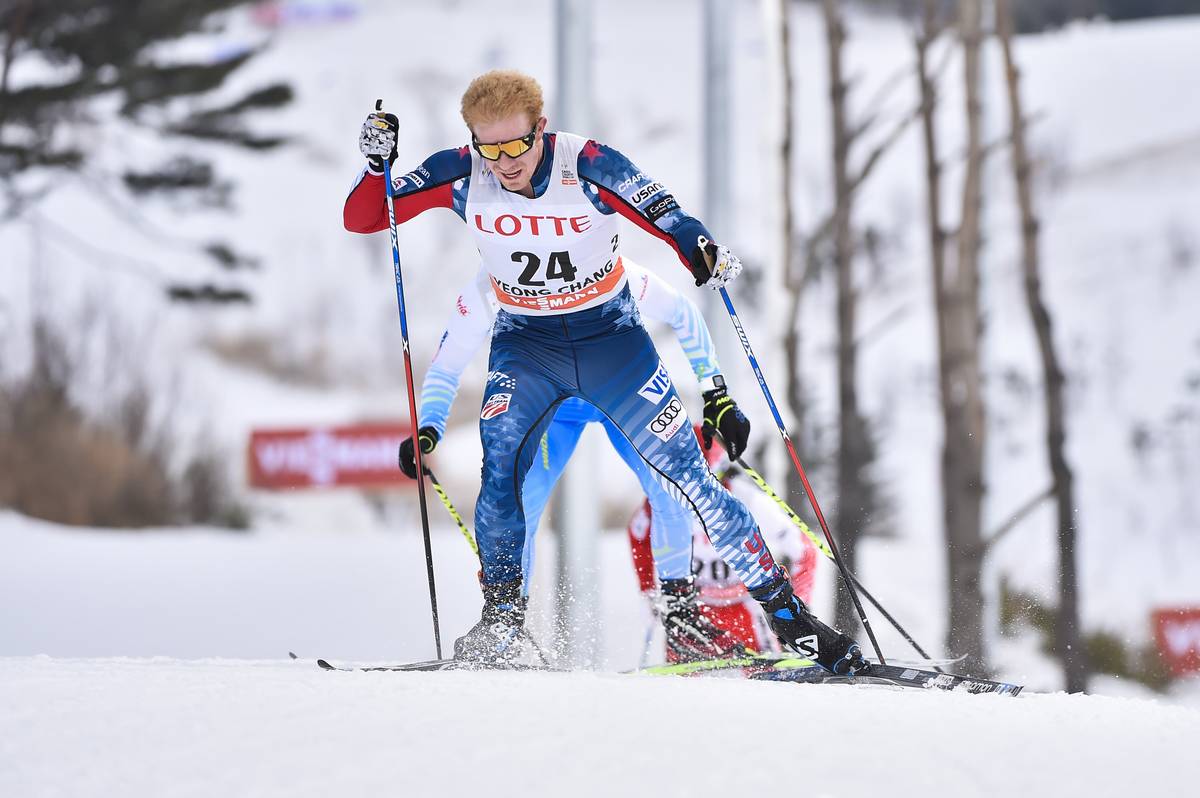
    The Norwegian team of Daniel Stock and Mathias Rundgreen initially crossed the line before the Americans, but was disqualified for an error on the penultimate exchange only tagging off at least a meter behind the allowed zone. Perhaps hoping a later protest might be successful, they kept skiing and finished the race, with no coach or event official stopping them.

    Earlier in the day, Newell and Hamilton had won their semifinal, half a second ahead of the Swedish team of Robin Norum and Gustav Erikson, while Russian’s Parfenov and Retivykh advanced in third (+0.53).

    “For me, I felt great in the semifinal, and in the final,“ Newell said on the phone after. “The semifinal was a lot more enjoyable, because it’s a very challenging course with a lot of climbing, and the pace was just relaxed enough that I was able to make moves when I wanted, and control when I wanted to control. I was able to come in and tag Simi in second to start his final leg, we were able to win that semi, and that was great.”

    In the men’s race, 14 teams advanced to the final round: the top-four teams from each semifinal heat, plus six more teams with the best times.
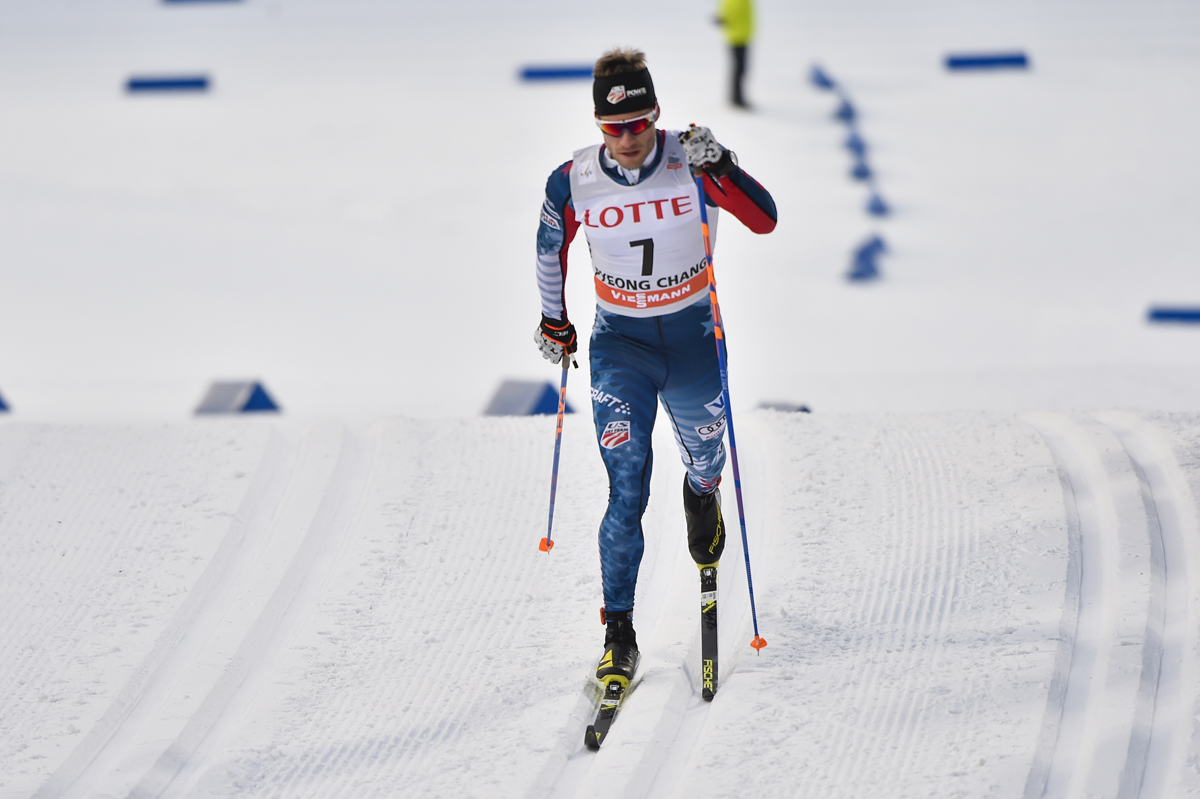
    Simi Hamilton (U.S. Ski Team) racing to 12th in the men's classic sprint qualifier on Friday at the PyeongChang World Cup in South Korea. He went on to finish 17th overall after crashing in his quarterfinal and finishing fourth in that heat. (Photo: Fischer/NordicFocus)
    Simi Hamilton (U.S. Ski Team) racing to 12th in the men’s classic sprint qualifier on Friday at the PyeongChang World Cup in South Korea. He went on to finish 17th overall after crashing in his quarterfinal and finishing fourth in that heat. (Photo: Fischer/NordicFocus)

    In the final, Newell and Hamilton initially stuck with the leaders on the first legs, with each racer having to ski a total of three 1.5 k loops, tagging off repeatedly.

    They were only 2.4 seconds back heading into the fifth leg, before Newell lost contact with the top four, which included Norway.

    “It was interesting, because there were so many quality distance skiers,” Hamilton said on the phone. “It definitely became evident what their strategy was, especially in the final, they kept the pace really high the whole time. That was tough.”

    “In the final it was pretty intense from the get-go,“ Newell agreed. “I know Norway and one of the Russian teams were really trying to push the pace in the first leg. It was pretty challenging, really tough. I felt pretty solid until the last lap, and then I lost contact coming over the hill, and it was kind of windy and snowy out there, so as soon as you lost contact, it was hard to regain it. It was a real leg burner. Unfortunately, that took us out of podium contention, we did end up finishing fifth, and then the Norwegian team was disqualified, so we got fourth. It was a fun day, a great workout, and a great way to practice that event on the Olympic trails.“

    Not helping matters was that Hamilton had to race with an upset stomach.

    “I don’t know if it’s something I ate or drank, so my energy wasn’t 100 percent, but I still really wanted to race hard,” he said. “It was a good opportunity to get a good result here with diminished fields. I definitely felt better racing than I thought I was going to, but it was for sure a pretty tough day. The course is really hard, it’s long, it’s got a couple of really big climbs, but it skied really well and we had great skis. Andy and I are pretty proud having put in a solid effort, maybe not one of our very best, but a good one for sure. We’re both encouraged by good fitness right now, leading into this little training block before World Champs.”

    The team-sprint discipline, which is the newest on the World Cup circuit, is still rarely on the competition schedule. And only two freestyle team sprint races had been held in Asia previously, both in Sapporo, Japan, for a 2006 World Cup and for the 2007 World Championships. But it seems to be a popular format to test new venues.

    “I don’t know why they are doing this, but every pre-Olympic weekend at least since Vancouver [for the 2009 World Cup respectively the 2010 Olympics] has always been sprint, skiathlon, team sprint”, U.S. Ski Team distance skier Noah Hoffman said on the phone last week, before his trip to Korea.

    Now it was PyeongChang’s turn in the test weekend for the 2018 Olympics. Hoffman did not race on Sunday, but the U.S. was able to start a second squad with Matt Gelso (Sun Valley Ski Education Foundation) and Scott Patterson (Alaska Pacific University).
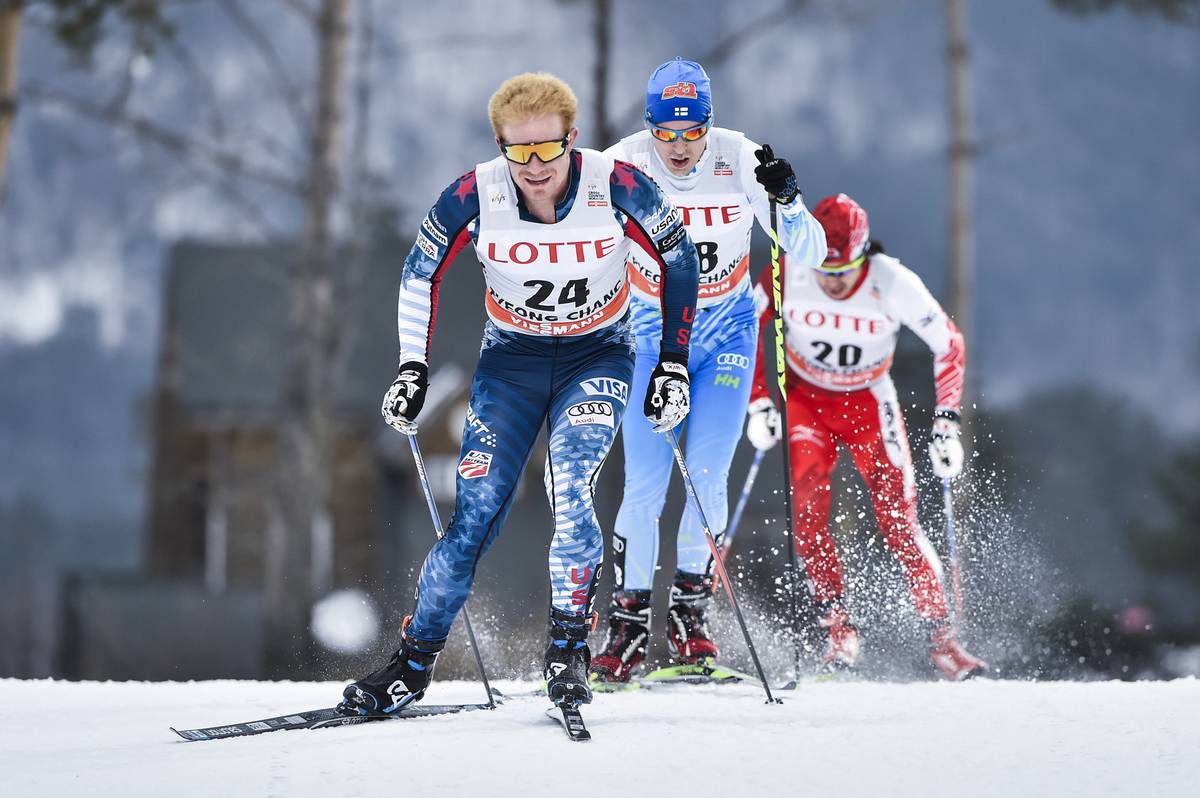
    American Matt Gelso (24) racing to 19th in Saturday's 30 k skiathlon at the PyeongChang World Cup in South Korea. (Photo: Salomon/Nordic Focus)
    American Matt Gelso (24) racing to 19th in Saturday’s 30 k skiathlon at the PyeongChang World Cup in South Korea. (Photo: Salomon/Nordic Focus)

    In their first World Cup team sprint, the duo managed to advance through the semifinal finishing fifth, 13.86 seconds behind the French team that won the heat.

    “In the semi, our goal was to simply get in the top four for an automatic advance into the finals,” Patterson wrote in an email. “The pace went out moderate for the early laps and there were enough weak teams later in that it was somewhat easy to secure a high finish. Things spread out a little on the last lap for both Matt and I and we were able to advance even with a close finish for fifth.”

    “Scott and I had a hard semifinal,” Gelso wrote. “The pace was very fast from the start so it was very tiring by the end. I felt completely exhausted on the final lap and was concerned with how bad my legs felt that the final would be very bad.”

    But despite feeling tired, the duo managed to hang on in the final and improved by two positions on the last two legs to finish ninth (+54.85),

    “The final broke apart really early,” Patterson explained. “I think for both of us it was kind of survival mode and see if we could get any last drops out of our muscles. Norway and Russia pushed it hard from the gun. I’m not the fastest starter and got caught up behind a Belarusian [Michail Semenov] so I could not chase quite as much as I wished. By the top of the first hill I was bleeding time. From there it was mostly finding our own battles. The Canadians were in it for a bit, but eventually it was between the Germans [Thomas Wick and Andy Kühne] and us. It was a good fight for both legs and happily we took it in the end.”

    Germany placed 10th (+55.13) after Gelso won the finish sprint against Kühne, pushing out of the draft on the finish stretch and raising his left arm in a small celebration as he crossed the line.

    “The team sprint today was very fun as Scott and I were able to be in the mix, get into the final, and ski solid through the race,” Gelso wrote. “Not an outstanding result but a good, solid, fun day on the race course with ample opportunities to make things happen.”

    Canada’s Len Valjas had the chance to become the first athlete in a long time to win two consecutive  team sprints, after winning last month’s freestyle team sprint in Toblach, Italy, with teammate Alex Harvey.

    Teaming up with Jess Cockney for Sunday’s race (who had placed 10th in the sprint on Friday while Valjas finished fourth), the duo placed sixth (+4.1) despite a broken pole in the second semifinal, which Newell and Hamilton won.

    In the final, Cockney and Valjas were initially able to keep in sight of the leaders, tagging off in ninth in the first exchange, only five seconds back. By the race’s halfway point, they were 10th (+21.0), before falling to the back of the field and losing significant time. They went on to finish in 13th position, 1:38.2 behind the winners.

    Valjas and Cockney could not be reached by press time to determine if they had fallen back due to a crash, more broken poles, or were simply running out of energy after racing on a very demanding sprint course all weekend.

    The World Cup goes on break for a week before resuming Feb. 18-19 in Otepää, Estonia, with freestyle sprints and 10/15 k classic races, in the last World Cup before 2017 World Championships in Lahti, Finland.

    — Gabby Naranja and Jake Ellis contributed

    Results

  • Russia’s Sedov Tops PyeongChang Skiathlon; Hoffman 8th, Patterson 9th

    Russia’s Sedov Tops PyeongChang Skiathlon; Hoffman 8th, Patterson 9th

    Russia's Petr Sedov en route to his first World Cup win on Saturday in the PyeongChang World Cup 30 k skiathlon in South Korea. (Photo: Fischer/Nordic Focus)
    Russia’s Petr Sedov en route to his first non-stage World Cup win on Saturday in the PyeongChang World Cup 30 k skiathlon in South Korea. (Photo: Fischer/NordicFocus)

    The rough translation of the Korean word “기회” or “gihoe” into English is “opportunity”. And it’s the best way to describe what was on offer Saturday afternoon in PyeongChang, South Korea during the men’s World Cup 30-kilometer skiathlon.

    No seeded men on the World Cup contested the race. No Sundby. No Ustiugov. No Harvey. No Hellner. Lot’s of 기회.

    For the three skiers finishing in positions 1, 2, and 3, it was a career-first World Cup podium. Russia’s Petr Sedov placed first in 1:18:49.6. Norwegian Daniel Stock finished second 22.5 seconds back with his teammate Mathias Rundgreen third (+42.1).

    “I felt very strong today,” Sedov told the International Ski Federation (FIS) after the race. “I have to thank to my coach, service staff and to my family. I am very glad that my first ever World Cup podium is a win.”

    To be clear, It was Sedov’s first individual non-relay and non-tour stage World Cup podium. He’s placed second twice in 2010 and first once in 2011 as part of Russian relay teams. Sedov also won a 2012 World Cup stage 15 k skate pursuit in Falun, Sweden.

    And to discount the World Cup strength of some others would have been foolish. This was Stock’s sixth World Cup start. Yet he, too, like Sedov, came with realistic podium-hunting background: as recently as Jan. 21, he skied to fifth in the World Cup 15 k skate in Ulricehamn, Sweden. Canada’s Alex Harvey, Norway’s Martin Johnsrud Sundby, Sweden’s Marcus Hellner, and Switzerland’s Dario Cologna were the only athletes ahead of Stock that day.

    For Rundgreen, it’s the same: not a World Cup brand name, but bringing with him plenty of real-deal horsepower to shatter the race. He boasts three top-10 World Cup performances, including a first and second as part of Norwegian relay teams.

    Rundgreen held off three others for third place, including Sweden’s Gustav Eriksson in fifth (+46.8), Japan’s Keishin Yoshida in sixth (+47.1), and Russia’s Alexander Utkin in seventh (+49.0).

    The U.S. had two top 10’s, with the U.S. Ski Team’s Noah Hoffman in eighth (+1:06.2) and Scott Patterson (Alaska Pacific University) a spot behind in ninth (+1:28.4). Matt Gelso (Sun Valley Ski Education Foundation), the only other American starter, placed 19th (+5:00.8).

    Canada’s Brian McKeever (Canadian Para-Nordic Ski Team) finished 29th (+8:48.9) for his first regular-season World Cup top 30. (McKeever placed 21st in the 15 k skate at 2007 Sapporo World Championships.)

    The Classic Leg

    “At the beginning of the race the pace was a little bit subdued,” U.S. Ski Team Head Coach Chris Grover said on the phone. “Early on, no one was really charging too much.”

    Americans Matt Gelso (bib 24) and Scott Patterson (bib 10) striding in the pack during Saturday's 30 k skiathlon in PyeongChang, South Korea. Gelso went on to finish 19th overall while Paterson placed ninth. (Photo: Salomon/Nordic Focus)
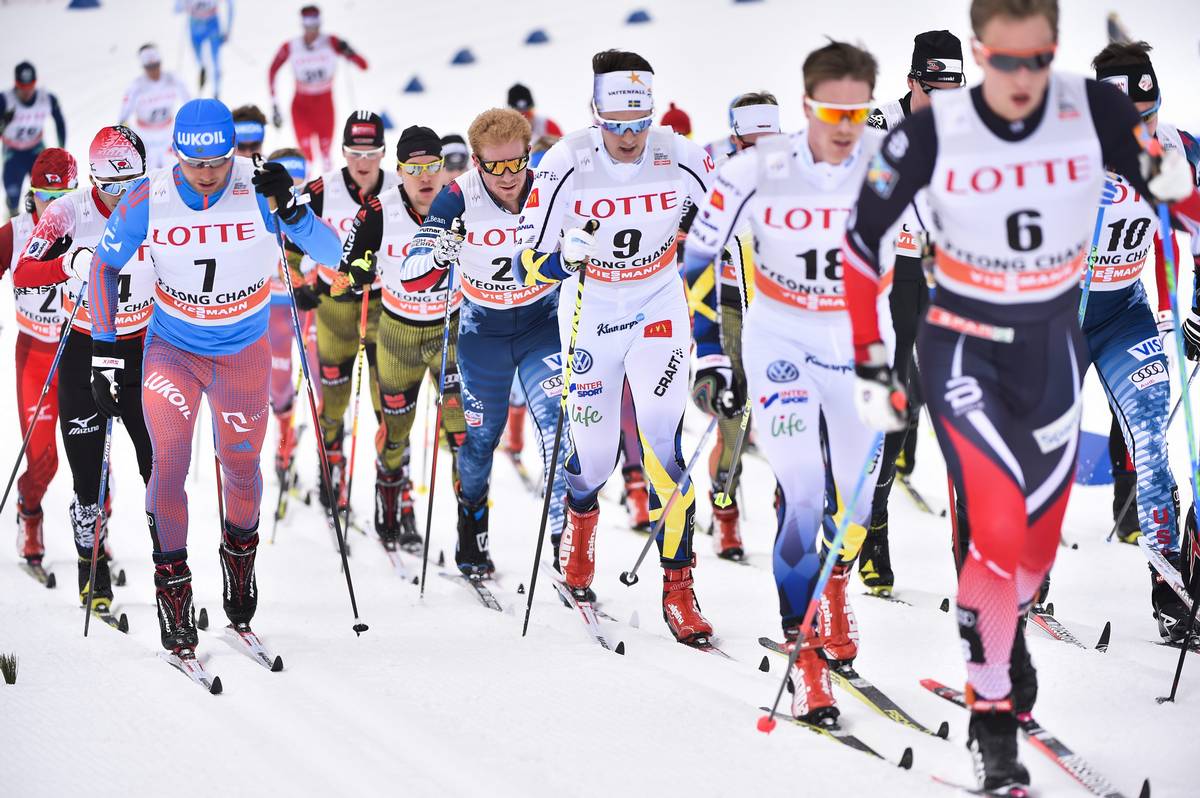
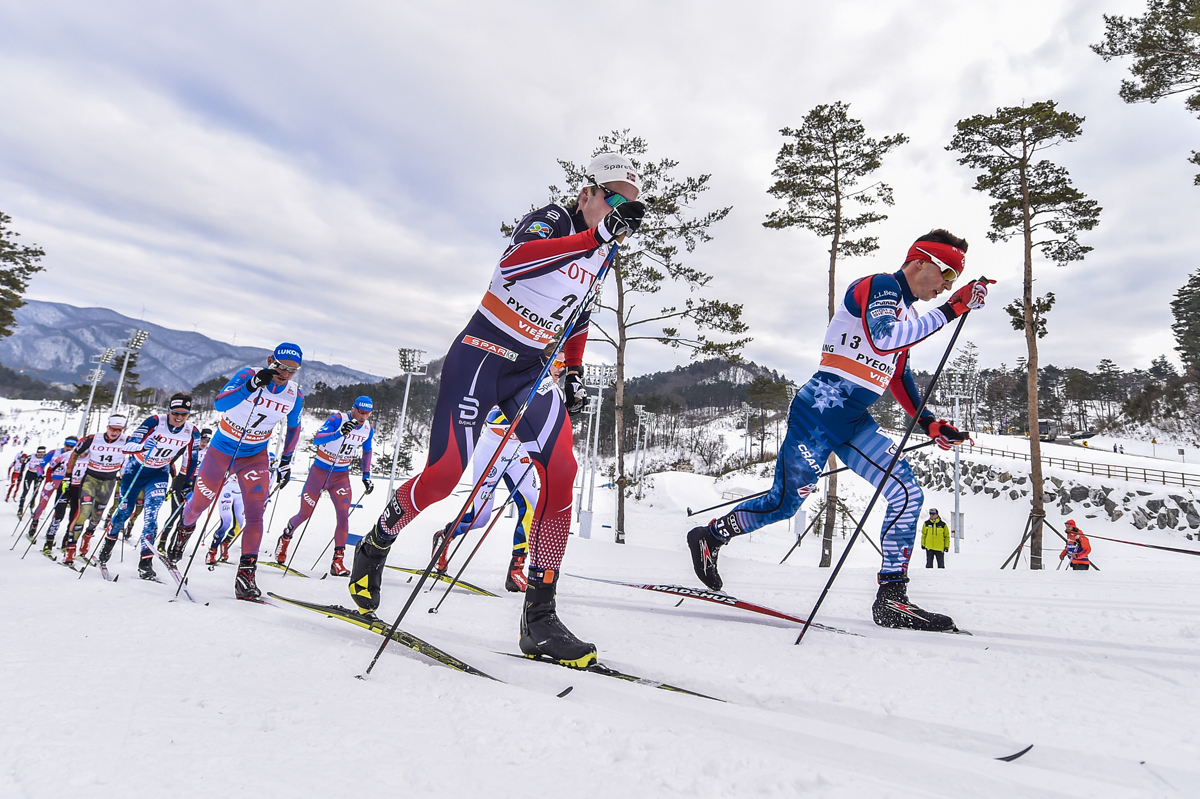
    Norway’s Mathias Rundgreen (6) and Americans Matt Gelso (24) and Scott Patterson (10) striding in the pack during Saturday’s 30 k skiathlon in PyeongChang, South Korea. Gelso went on to finish 19th overall while Paterson placed ninth. (Photo: Salomon/Nordic Focus)

    Rundgreen controlled the tempo, leading the pack through the 5 k split at 14:16.

    “They were going so slow at one point that Noah just took off to the front and made a little surge,” Grover noted.

    That came at 6.15 k, and Hoffman won the first of two preems, or bonuses, in the race. Patterson came through in ninth, six seconds later.

    At 7.5 k, a line of 21 skiers lapped through the stadium —  Hoffman in third, Patterson ninth, four seconds out. Gelso trailed at the tail of that group, nine seconds off.

    At 9.9 k, it was a repeat; Hoffman took the second bonus, controlling the pace up front surging and slowing. (Both bonuses amounted to 30 extra World Cup points for Hoffman.) Gelso and Patterson came through about eight seconds later in 14th and 18th, respectively.

    “I was feeling pretty good on the classic,” Hoffman explained on the phone.

    American Noah Hoffman (r) racing alongside Norway's Daniel Stock during Saturday's 30 k skiathlon at the World Cup in PyeongChang, South Korea. (Photo: Fischer/Nordic Focus)
    American Noah Hoffman (r) racing alongside Norway’s Daniel Stock during Saturday’s 30 k skiathlon at the World Cup in PyeongChang, South Korea. (Photo: Fischer/NordicFocus)

    It was also an opportune time for U.S. Ski Team sponsors as Hoffman captured the majority of camera time. There was nothing about his skiing that didn’t appear confident. Solid striding, focused effort, and a will to position himself in the lead, or one or two spots back.

    But that was his bluff.

    “If I had been confident in my ability to win the race I probably would have really chilled on the classic —  which I didn’t do,” Hoffman said of his front-of-the-pack classic leg effort. “I was skiing up near the front a lot. I was snagging some of the preems. … I was kind of playing games a little bit, having fun with the pack a little bit which was really fun to do. And maybe you could mistake that for confidence, but I think it was probably the opposite.”

    Part of sport is gamesmanship. And part of opportunity is taking bold chances to seize it. The best athletes are not afraid of failure.

    “I got stretched a little bit on the last classic lap to the tune of maybe five seconds plus or minus,” Hoffman added.

    “My classic leg went pretty well for 2.5 loops,” Patterson wrote in an email. (Each loop was 3.75 k.) “I was hovering around 10th until we hit the longest down hill on the course. There were some surges for bonus points right before and I had a slight gap in front of me in my lane … I also ended up in a lane that had not glazed nearly as much as the primary center track. I probably went from 10th to around 25th. After that the rest of the classic I was spending too much energy to get back up close to the front and I ended coming through a bit off the lead group.”

    15 k of Skating

    Eleven skiers entered the classic to skate exchange with approximately 10 seconds separating the first from last. Hoffman had a seamless changeover, the second fastest, and left on his skate skis in fourth. Behind him, Patterson left the exchange 16th (+24.0).

    Initially Rundgreen led the line of 11 skaters that increasingly spread out. One by one, another dropped, losing a meter or two, then they’d up the tempo to catch back on. Then Sedov would pull with the same effect.

    But right there glued on at 17 k was Hoffman. He was in third at 19 k, but had bled nine seconds to Sedov and Stock now in the lead.

    At that mark, Patterson had ceded 39 seconds to the Sedov-Stock combo. Gelso had fallen a bit over two minutes behind.

    For the remaining distance, Sedov was the skier to beat as he slowly put a gap on Stock.

    Hoffman’s group, five skiers deep, could sniff the third podium spot and it became an every-skier-for-themselves effort.

    Norway's Mathias Rundgreen (6) outlunging Russia’s Konstantin Glavatskikh (l) for third in the men's 30 k skiathlon on Saturday at the PyeongChang World Cup in South Korea. (Photo: Fischer/NordicFocus)
    Norway’s Mathias Rundgreen (6) outlunging Russia’s Konstantin Glavatskikh (l) for third in the men’s 30 k skiathlon on Saturday at the PyeongChang World Cup in South Korea. (Photo: Fischer/NordicFocus)

    Rundgreen outlunged Russia’s Konstantin Glavatskikh for the final podium spot in a photo finish — they were given the same finishing time of 1:19:31.7.

    “It was fun, it was nice to ski back up front,” Hoffman said. “I was doing that a lot in 2012, 2013, 2014 … I was just being involved in the race. So I wanted to do a little bit of that. From that perspective, I think it was good, I was definitely involved in the race throughout.”

    Hoffman’s eighth place (+1:06.2) was his best result in a non-stage World Cup since placing eighth in a 2012 skiathlon in Canmore, Alberta. (Hoffman won the time of day in the 15 k pursuit four years ago in Kuusamo, Finland.)

    For Patterson, the skate leg competition analysis reveals his strong skiing —  most of his skate leg sector times rank in the top 10, with several top-five splits.

    “My skate leg was quite good,” Patterson wrote after finishing ninth, one spot behind Hoffman. “Unfortunately I had a bit to move up from the classic. I spent most of the skate chasing the pack that Noah was in. They would accelerate going into some of the bonus points and then I would gain back on the rest of the course. I think I could have been quite good if I was able to latch onto the pack but I never quite made it. Instead I just cruised past everyone who fell off.”

    Matt Gelso (SVSEF) racing to 19th in Saturday's World Cup 30 k skiathlon in PyeongChang, South Korea, for his first World Cup top 20. (Photo: Salomon/Nordic Focus)
    Matt Gelso (SVSEF) racing to 19th in Saturday’s World Cup 30 k skiathlon in PyeongChang, South Korea, for his first World Cup top 20. (Photo: Salomon/Nordic Focus)

    Saturday marked the first career World Cup points for Patterson. Gelso, who scored his first points during Friday’s sprints, fell back on the skate leg to finish 19th — still his first World Cup top 20.

    McKeever, a visually impaired skier who races without a guide in FIS World Cups, finished 29th to lead Canada, which started three men.

    “The strategy was simply to follow,” McKeever emailed. “No point in deluding myself that I’m at the same level as the top guys. They dictate how the race is run. I just try to react.  I just try to find decent wheels to follow and a rhythm that suits my style. … It was a tough day given recent shape. I was very sick after US nationals and spent a pretty uncomfortable week in bed. Given that, I’m quite happy with the effort being that it was really all I had.”

    Also for Canada, Bob Thompson (NTDC Thunder Bay) placed 32nd (lapped), and Simon Lapointe (CNEPH) did not finish.

    Results | Competition analysis

  • Bjørgen Wastes No Time With Beito Comeback; Tønseth Wins Again

    Bjørgen Wastes No Time With Beito Comeback; Tønseth Wins Again

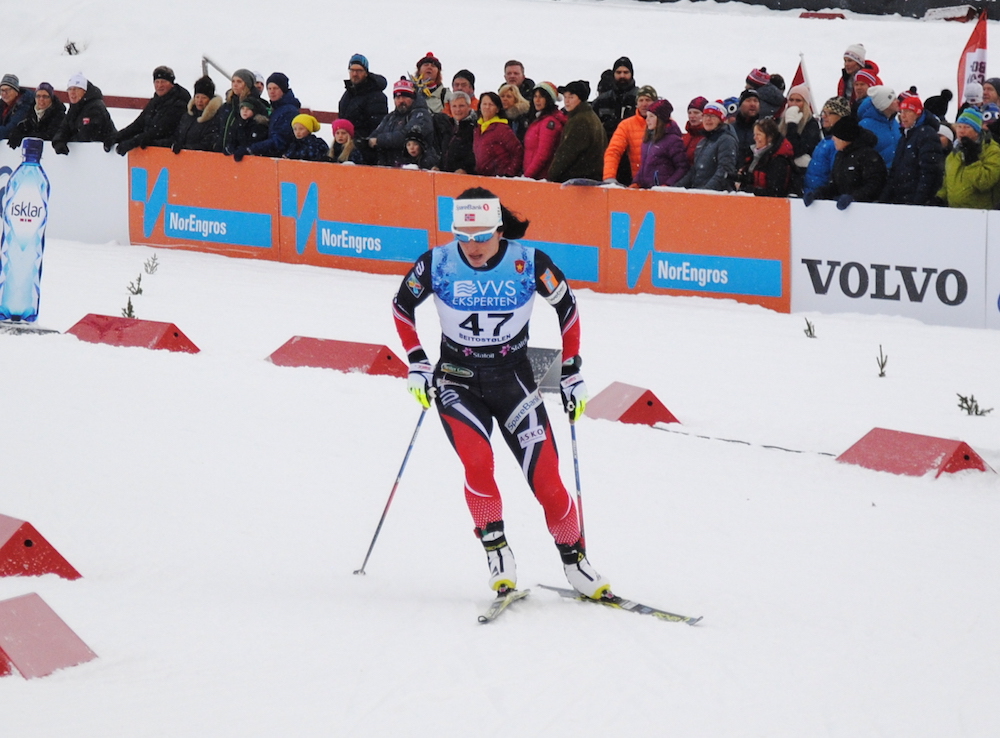
    Marit Bjørgen racing to first in the women's 10 k freestyle FIS race on Saturday in Beitostølen, Norway. It was her first FIS race since March of 2015. (Photo: Aleks Tangen)
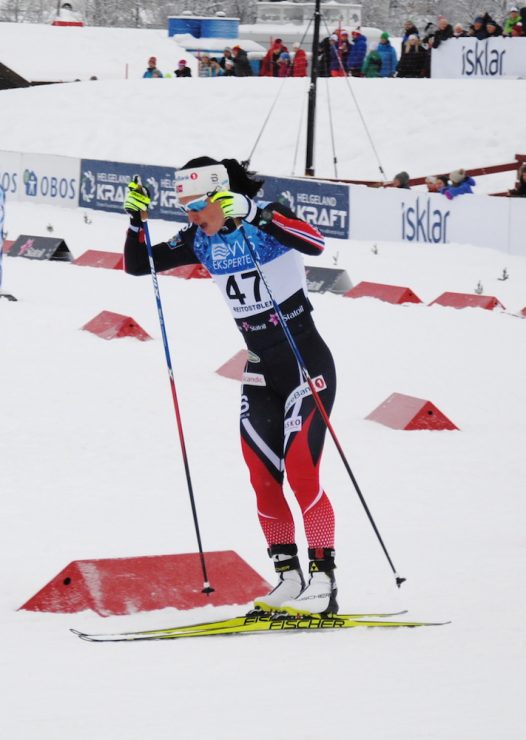
    Norway’s Marit Bjørgen racing to first in the women’s 10 k freestyle on Saturday in Beitostølen, Norway. It was her first FIS race since March of 2015. (All photos: Aleks Tangen)

    BEITOSTØLEN, Norway — Saturday’s 10-kilometer freestyle individual start was, from the start, all about Marit Bjørgen. Her previous race was 603 days earlier on March 27, 2015 in Harstad, Norway, but that didn’t seem to affect Norway’s six-time Olympic gold medalist one bit.

    “I’ll admit that I have had my doubts,” she told Dagbladet about returning to competition. “And I’ve been tired, but I made it through it and I’ve appreciated the good times.”

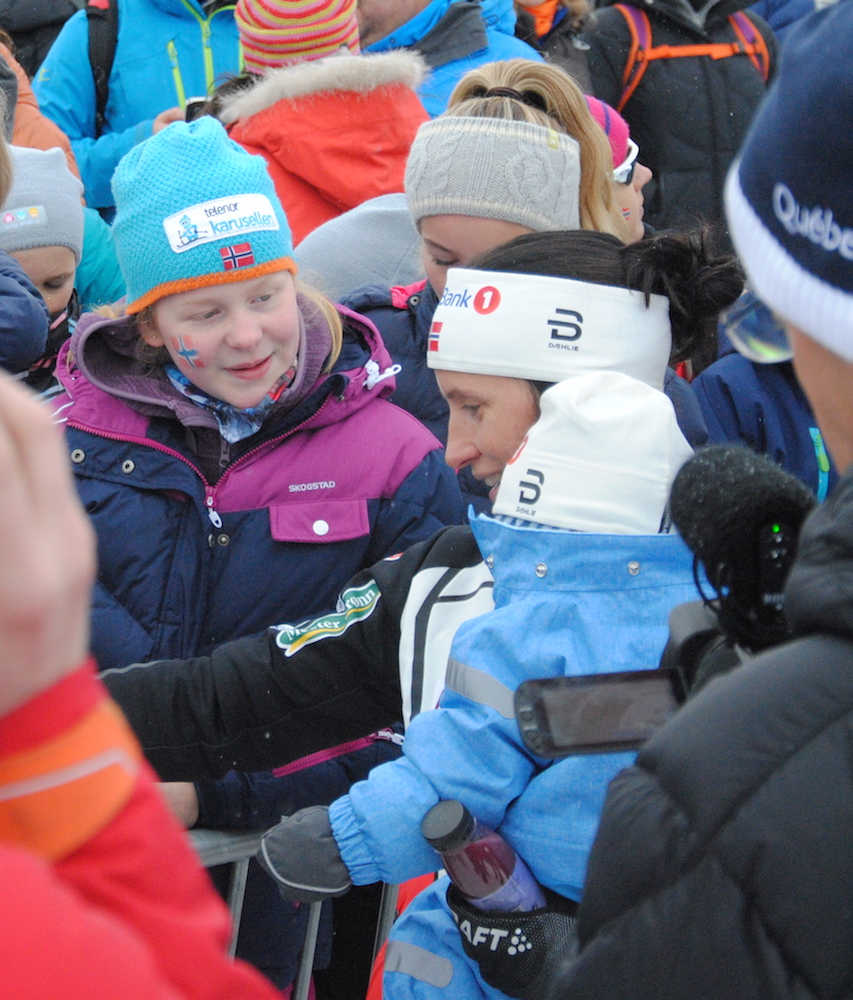
    Norway's Marit Bjørgen with her baby, Marius, and fans in Beitostølen, Norway, following Bjørgen's first race since having a child in December 2015. Saturday marked Bjørgen's first race back since March 2015. (Photo: Aleks Tangen)
    Norway’s Marit Bjørgen with her baby, Marius, and fans in Beitostølen, Norway, following Bjørgen’s first race since having a child in December 2015. Saturday marked Bjørgen’s first race back since March 2015. (Photo: Aleks Tangen)

    The 36-year-old Bjørgen led Saturday’s International Ski Federation (FIS) race at every split mark and crossed the finish line in 24:40.3 minutes.

    Fellow Norwegian national-team member Heidi Weng followed in second, 11.7 seconds behind. After  placing second to teammate Ingvild Flugstad Østberg in Friday’s 10 k classic, Weng told VG that Bjørgen, who sat out the race with a cold, was “probably sitting at home and laughing at how slow it went went. She will race fast and I think will see Marit Bjørgen as good as she has been in the past. She’s done great during the summer and fall training.”

    After her second-straight second-place finish, Weng told Dagbladet that she opened fast on Saturday, but her muscles tired as the race progressed.

    “It’s irritating, but I really had no chance toward the end, and it’s not that bad, really, because I don’t think I’ve ever had a better season opener. I’m a little surprised by that really,” she said.

    When asked by FasterSkier if she thought she could match her performances in Sunday’s skate sprint, Weng said, “I didn’t make it through from the prologue last year so I’m hoping that I can do better than that, but we’ll see.”

    The race for third place proved to be the most exciting with Østberg crossing the finish line 28.2 seconds behind Bjørgen and just 1.7 seconds in front of Norway’s Astrid Uhrenholdt Jacobsen, who finished fourth. Norway swept the top eight as Kari Øyre Slind followed 2.9 seconds later in fifth and her sister Silje Øyre Slind was sixth, another 17.5 seconds behind.

    Østberg told FasterSkier that she will not be competing in Sunday’s sprint. “If the World Cup weekend had been two weeks away then maybe, but after doing two tough races in two days and since sprints takes a lot of energy rest is probably the best,” she said.

    Nonetheless, a first and third place finish in Beitostølen is Østberg’s best start to a season yet.

    “It is without a doubt my best season opener, and I’m super happy,” she told both FasterSkier and Oppland Arbeiderblad, a regional newspaper from her hometown of Gjøvik.

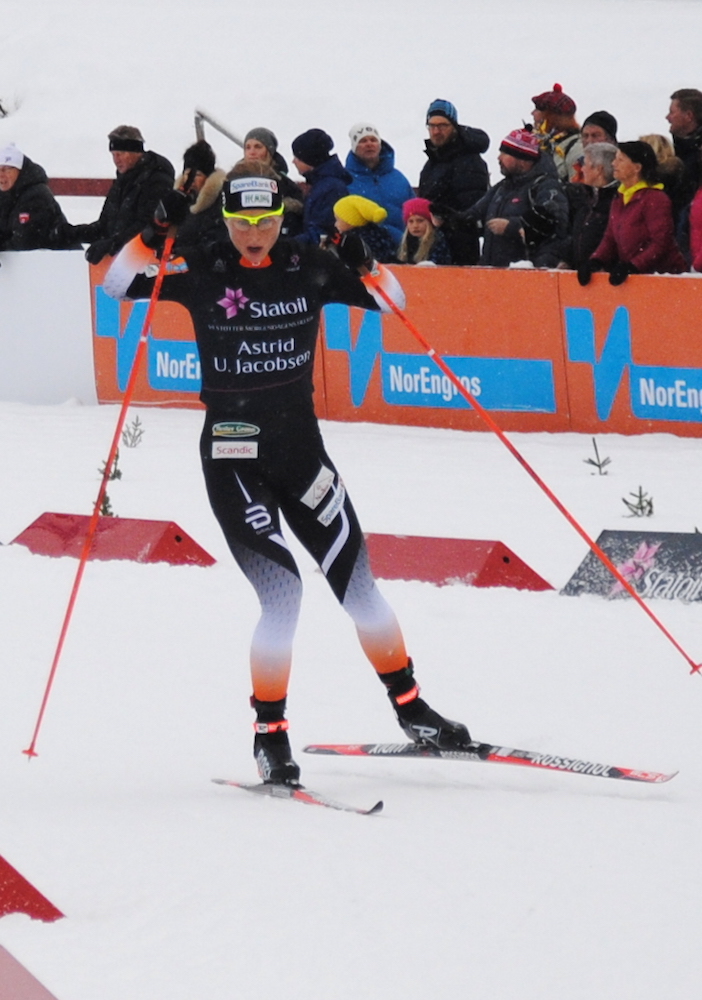
    Astrid Uhrenholdt Jacobsen (Norway) racing to fourth in the women's 10 k freestyle FIS race on Saturday in Beitostølen, Norway. (Photo: Aleks Tangen)
    Astrid Uhrenholdt Jacobsen (Norway) racing to fourth in the women’s 10 k freestyle FIS race on Saturday in Beitostølen, Norway. (Photo: Aleks Tangen)

    Jacobsen narrowly missed the podium after crossing the finish line 1.7 seconds slower than Østberg.

    “I feel like I’m not quite there yet,” Jacobsen told FasterSkier after. “I still have some work to do in order to be in top shape, but I still ski relatively fast and I feel like I have a very good base condition so I think it can be a good year.”

    Asked what it was like to have Bjørgen back, Jacobsen replied, “She wins as expected. I skied with her on my second lap and I definitely think she can ski faster. This race wasn’t Marit in her top shape.”

    When asked about Bjørgen’s ability to perform as well as she did on Saturday, considering she hasn’t raced since 2015, Jacobsen smiled and waited a moment before she answered, “That’s something only Marit can do.”

    Eighteen-year-old Norwegian Mathilde Myhrvold finished 27th (+3:49.7) of 48 finishers on Saturday. In 2014, she competed in the track and field World Junior Championships in Eugene, Oregon, and last season she won the Norwegian Cup. Saturday stood as her first race this season.

    “Slightly after finishing the first lap I started feeling a little tired and then I skied a little slower, but I improved toward the finish and I’m happy about that,” Myhrvold said. “I may have started a little too fast and maybe that’s why I was tired.”

    She figured a few races would help her return to top shape, and for the rest of the season, she’s focused on improving her conditioning for FIS Junior World Championships trials.

    One spot ahead of her on the results sheet, American Cambria McDermott, who is living and training in Norway, finished 26th (+3:33.6). Canada’s Isabella Howden and Madison Fraser, both of Team Hardwood, placed 45th (+6:19.6) and 47th (+6:59), respectively.

    (Story continues below)


    Another ‘W’ for Tønseth

    Norway’s Didrik Tønseth repeated his podium-topping performance from Friday’s 15 k classic and won Saturday’s 15 k freestyle in 33:20.9. But the biggest surprise of the men’s race was second-place finisher Simen Hegstad Krüger, who crossed the finish line in a time that was only six seconds slower than Tønseth.

    Norway's Didrik Tønseth racing to his second-straight win of the weekend in the 15 k freestyle FIS race on Saturday in Beitostølen, Norway. (All photos: Aleks Tangen)
    Norway’s Didrik Tønseth racing to his second-straight win of the weekend in the 15 k freestyle FIS race on Saturday in Beitostølen, Norway. 

    “I had nothing more to give, but this podium finish is incredibly satisfying,” the 23-year-old Krüger, who won the 15 k freestyle at U23 World Championships last season, told NRK after Saturday’s race.

    “I’m hoping for a spot on the team for the World Cup in Lillehammer, but it might be too late for that,”

    Norwegian men’s coach Tor-Arne Hetland seemed open to placing Krüger on the team for Lillehammer in two weeks.

    “We’ll be choosing the team on Monday and I think the mini tour will suit him well, so he may  receive a positive message in the coming week,” he told NRK.

    Tønseth had the advantage of starting five bibs after Krüger and told NRK that he felt like he was in good shape and that he was ready to start the season. The 2017 World Championships in Lahti, Finland, are his main focus.

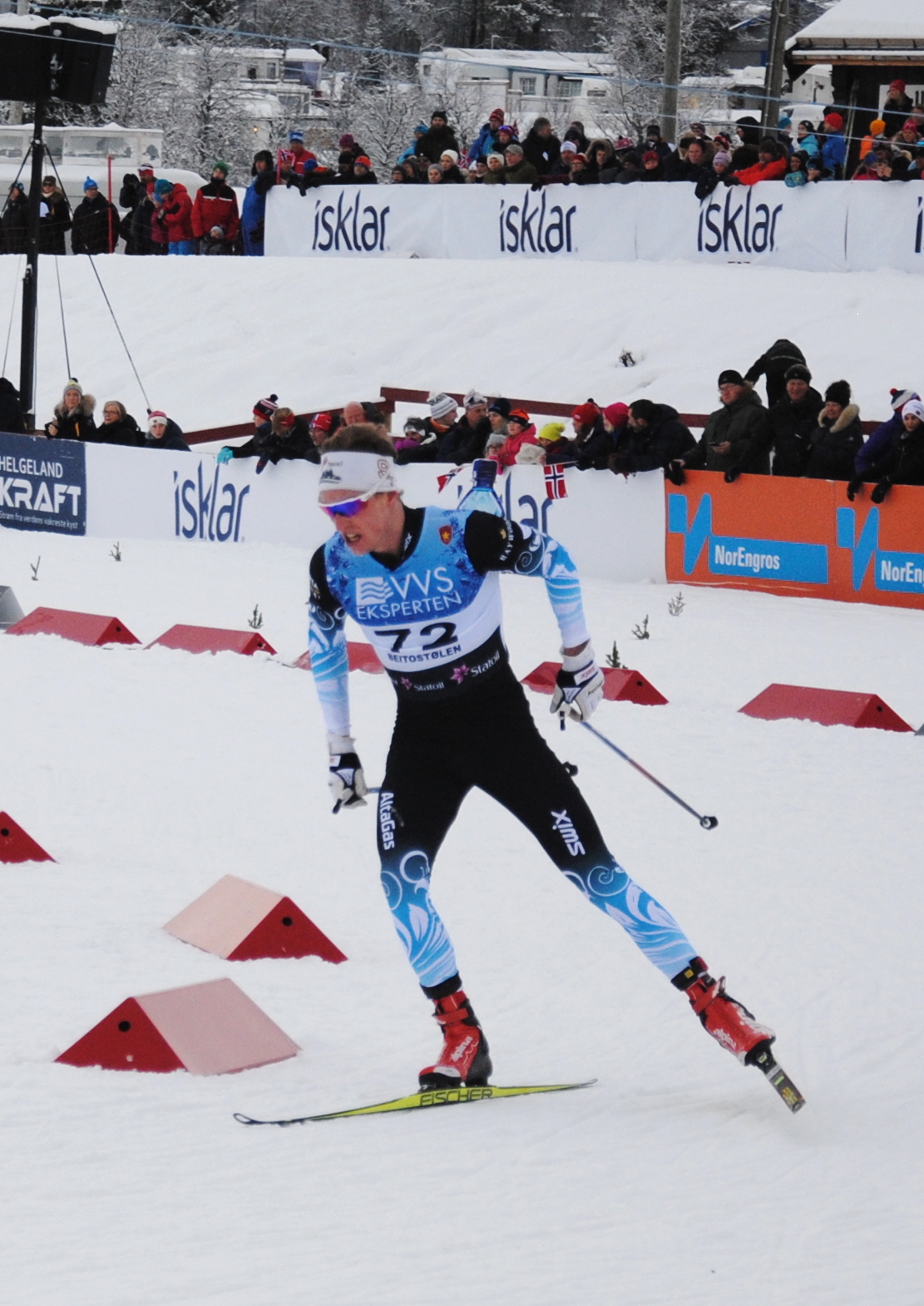
    Norway swept the top five after a close fight for third, which Simen Andreas Sveen took, 32.6 seconds behind Tønseth. Anders Nøstedahl Gløersen was another 1.9 seconds back in fourth (+34.5), Mathias Rundgreen placed fifth (+36.9) and Andrew Musgrave of Great Britain finished sixth (+37.0).

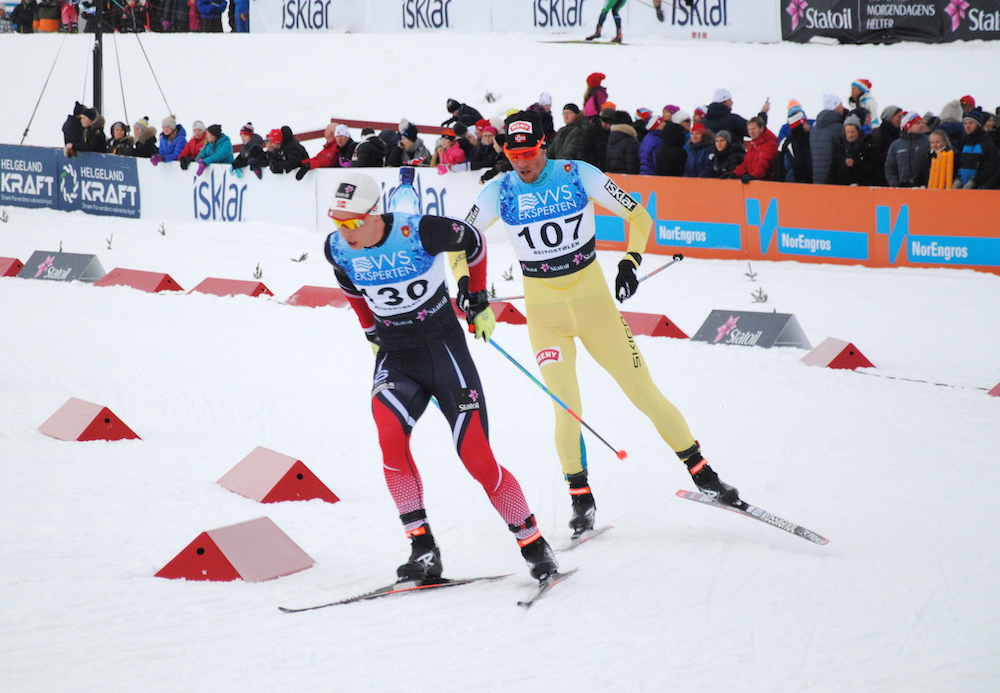
    Norway's 25-year-old Mathias Rundgreen (130) leads Chris Jespersen (107), a 33-year-old Norwegian World Cup regular, in the men's 15 k freestyle FIS race in Beitostølen, Norway. (Photo: Aleks Tangen)
    Norway’s 25-year-old Mathias Rundgreen (130) leads 33-year-old Chris Jespersen (107), also of Norway, in the men’s 15 k freestyle FIS race in Beitostølen, Norway. Rundgreen placed fifth and Jespersen finished eighth on Saturday.

    “I feel good about the race, but I felt a little limply in the beginning,” Musgrave told FasterSkier after. “Though I was able to close some of the gap toward the end, but not enough.”

    Like most World Cup skiers, Musgrave’s goal for the season is World Championship and he’ll be in both Kuusamo, Finland, and Lillehammer over the next two weekends to compete in the World Cup.

    One place behind Musgrave was Norwegian Sjur Røthe in seventh (+37.2), who told FasterSkier that he felt “heavy during the start.” In a post-race interview with NRK, Røthe said he’s focused on the World Championships 50 k. He planned to skip Sunday’s sprint to recharge for the World Cup.

    Petter Northug (Norway) approaching the finish of Saturday's 15 k freestyle FIS race in Beitostølen, Norway. (Photo: Aleks Tangen)
    Petter Northug (Norway) approaching the finish of Saturday’s 15 k freestyle FIS race in Beitostølen, Norway. (Photo: Aleks Tangen)

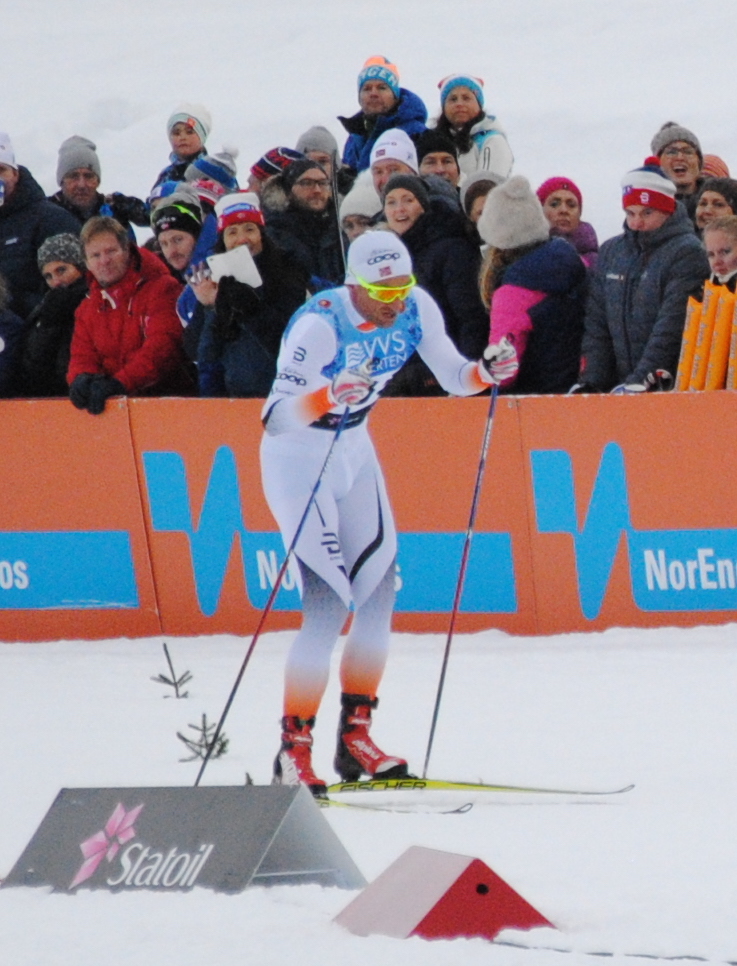
    Petter Northug finished Friday’s race like it was a workout, and during the start of Saturday’s race, it appeared that he was on the path to a podium, but such was not the case. Northug led the race at the 1.2 and 2.1 k marks, but for the rest of the race, he was unable to maintain the same speed as the other top finishers and ended up 15th (+1:02.6). However, Northug didn’t seem to be affected by his fading speed, telling Dagbladet, “I am where I want to be. I’ve had two good workouts now and I’m confident that the job is done. I am excited for the important races that are approaching.”

    But he did offer some explanation for what happened.

    “I opened too hard and during the second lap I felt like it would be too much to maintain the tempo,” Northug told NRK.

    Out of 123 male finishers, Jack Carlyle (NDC Thunder Bay) led several Canadian juniors in 90th (+3:48.4). His NDC teammate Scott James Hill finished 101st (+4:25.6), Joey Foster (Pierre-Harvey Training Centre) was 103rd (+4:31), and Team Hardwood skiers Ryan Jackson was 106th (+4:50.4) and Kieran Jones was 115th (+6:11.5).

    Results: Women | Men

    Jack Carlyle (NDC Thunder Bay) racing to 90th to lead the Canadian men in the 15 k freestyle FIS race in Nov. 19 in Beitostølen, Norway. (Photo: Aleks Tangen)
    Jack Carlyle (NDC Thunder Bay) racing to 90th to lead the Canadian men in the 15 k freestyle FIS race in Nov. 19 in Beitostølen, Norway.