From the FasterSkier archive — posts syndicated from athletes’ and coaches’ own blogs between 2004 and 2012, kept online as published. Current coverage is at fasterskier.com.

Tag: Matt Briggs

  • Wednesday Workout: Sanity Day with Matt Briggs

    Wednesday Workout: Sanity Day with Matt Briggs

    XC Oregon's Matt Briggs on his way to third in the Pole Pedal Paddle on May 17 in Bend, Ore. (Photo: Neil Korn/BendOR Magazine)
    XC Oregon’s Matt Briggs on his way to third in the Pole Pedal Paddle on May 17 in Bend, Ore. (Photo: Neil Korn/BendOR Magazine)

    In his Pole Pedal Paddle (PPP) debut two weekends ago, Matt Briggs, 27, placed third behind fellow XC Oregon skiers Marshall Greene and Andrew Boone, respectively. For Greene, it was his sixth victory in the six-stage, multi-event race (his first since winning four years ago). Briggs left inspired. “I’ve got to come back and beat the old guys,” he told The Bend Bulletin. “I’ll beat [Greene] before he retires.” 

    In preparation, Briggs explained in an email that he didn’t do anything too out of the box.

    “Basically all I did was a bunch of easy running, mountain biking, kayaking, and a few interval workouts cycling, running, and skiing,” he wrote. But there was one workout — really the only special one — he did leading up to the PPP, and he called it Sanity Day.

    ***

    Bend, Oregon is a town obsessed with recreating.  We have world class running, biking, and skiing and for a few choice months in the spring all of it is at its very best.  On the third weekend in May the whole city turns out to try to figure out who’s the best at stringing all our favorite endurance sports together in an annual celebration called the Pole Pedal Paddle.
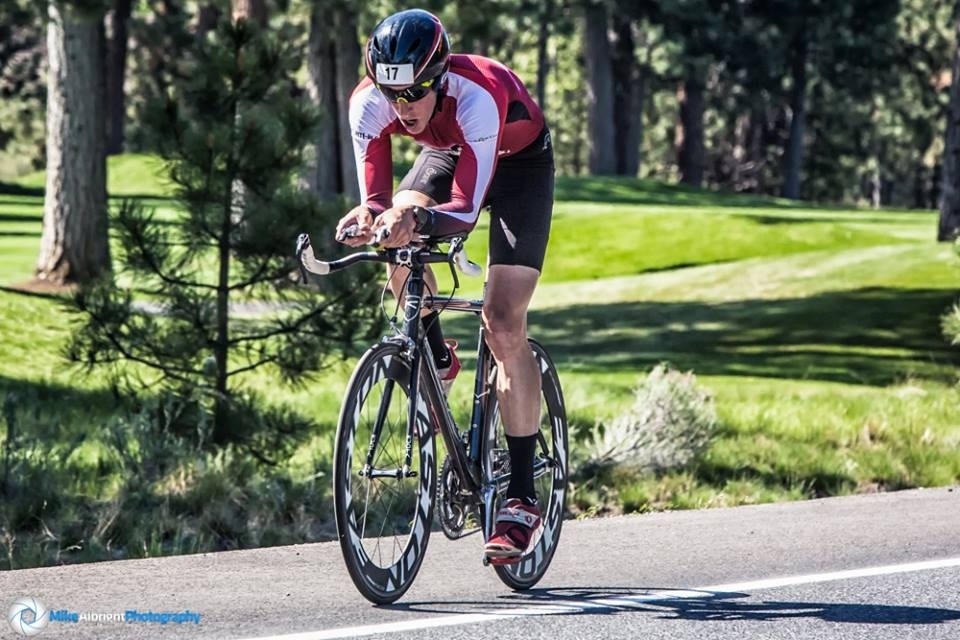
    Matt Briggs on his way to third in the Pole Pedal Paddle on May 17 in Bend, Ore. (Photo: Mike Albright/Mike Albright Photography)
    Matt Briggs during the 2014 Pole Pedal Paddle in Bend, Ore., in which he placed third.(Photo: Mike Albright/Mike Albright Photography)

    The PPP is made up of six legs: a ski down the alpine mountain, a seven kilometer Nordic ski, a twenty mile bike on the road from the mountain to town, a five mile run along the river, a two mile paddle on the Deschutes, and a half-mile sprint into the finish line.

    The winner of this race is awarded celebrity status, year-long bragging rights, and the unofficial title as Bend’s fittest athlete.  The race is often dominated by Nordic skiers and has been won over the years by some names FasterSkier readers will recognize, including Dan Simoneau, Justin Wadsworth, Ben Husaby, Marshall Greene, and Kris Freeman.  In this town, this race is a huge deal.

    As if it wasn’t hard enough to deal with trying to get race-level fitness in five sports (including teaching myself to paddle a tippy surfski in 45 degree water) this race also presents massive logistical problems.

    I needed two dedicated helpers (one at the mountain and one in town) to help with transitions.

    I needed rear-entry alpine boot shells large enough to fit my Nordic boots inside of (so that I wasn’t putting on Nordic boots three minutes after the gun).

    I needed a TT bike with fast wheels and a massive front chainring to push the gears down the steep declines of the 2500 foot drop in the course (the top three all ran a 58-tooth chainring/dinner plate).

    I needed a fast kayak and a carbon-wing paddle.

    I had to deal with more media interviews and photo shoots than I have in my life.  All of that on top of the normal concerns that go with a Nordic ski race (testing, waxing, structure, etc.)  This race was basically a full-time job for the three weeks leading up to the race.  It was hard at times to keep a clear mind on why I was putting myself through it all.  It was a lot of fun putting all the pieces of the puzzle together but if I had let it, the race and preparation would drive me out of my mind.

    So my most important workout each week (above the 5×1 mile running repeats, the 40 minute bike TTs, the 5x6min ski intervals, and the cold hours spent in the kayak trying to keep it upright) is a workout I call “Sanity Day.”

    Sanity Day would start with me calling my friend who was getting married the same day as PPP and telling him that I had had enough PPP business for a lifetime.  He would reply by telling me that he and his fiancée were thinking of eloping just to avoid any further planning.  I’d tell him I’d meet them at their house the next morning.  I’d head over there on my mountain bike and meet the two of them for our big day out.  We’d start by drinking a bunch of coffee and eating any wedding-cupcake samples they had left over and talk about what trails we should check out that day.  We’d set a conservative plan and saddle up and head out.  The conversation would sound like this:
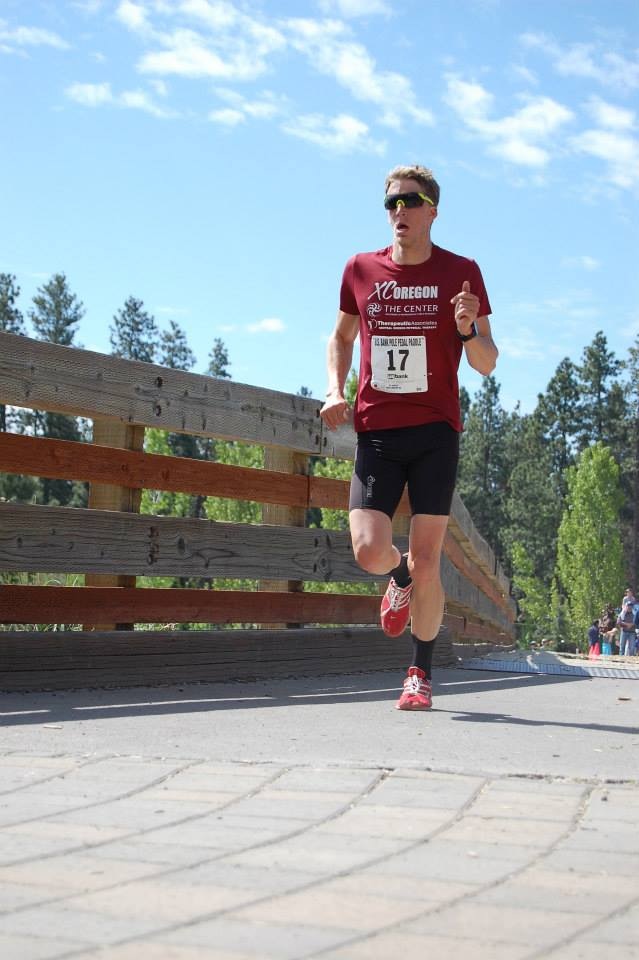
    Matt Briggs during the 2014 Pole Pedal Paddle in Bend, Ore., in which he placed third. (Photo:  Neil Korn/BendOR Magazine)
    Matt Briggs during the 2014 Pole Pedal Paddle in Bend, Ore., in which he placed third. (Photo: Neil Korn/BendOR Magazine)

    “I can’t find a decent kayak and I really don’t have 1500 dollars to drop on a new boat right now.”

    “Did I tell you about what the napkin people are trying to charge us?”

    “Do you think I should try to carry a bottle on my bike or do you think it’s not worth it?”

    “How long into the night do we play the ’80s hits before switching to ’90s hip-hop?”

    “You think I can take Marshall by two minutes on this run course?”

    “Oh shoot we can’t forget to call the shuttle people as soon as we get home!”

    You get the idea.  Our heads were all spinning with logistics and we were in need of the soothing relaxation that can only come from a high-quality piece of singletrack.  We’d hit the trailhead, stop and drink Gatorade, make a few jokes, and finally hit the trail.  The pace was not high.  The miles were not tough.  I can’t honestly say anyone was getting fit out there.  But it doesn’t take long on singletrack before you’re pretty well focused on the task at hand and only stopping to drink some water, tell some stories, and figure out where to go next.  By the time we’re coming in (and sometimes this was pretty quickly after we started), the conversation was more fluid, less stressed, and a whole lot more interesting:

    “I bet you crush Marshall on the ski and hold him off on the bike.”

    “Either way, I’m gonna crush it on the dance floor when Country Grammar comes on.”

    The pace was not high.  The miles were not tough.  I can’t honestly say anyone was getting fit out there.  But it doesn’t take long on singletrack before you’re pretty well focused on the task at hand.

    In hindsight there are a lot of workouts I maybe should have done that I didn’t do to take back the 2:48 I lost on first place and 2:16 I lost on second, but it feels to me like I would have been in a whole lot more trouble if I had passed on these sanity days in lieu of one more ski, road ride, run, or paddle.  It might be a little cliché but it’s definitely important to build these days in because if you’re training for any race or preparing for any event and not having fun out there you’re probably not doing it right.

    ***

    Editor’s Notes: The non-traditional Sanity Day workout should be based on time, not mileage. Briggs usually aims for 1-2 hours or whatever time one has between appointments and meetings. To be clear, this is not a rest day “but the training load was pretty low,” he explains. “Mostly it was not going to be hard because we were too busy telling stories and stuff, but also because I had probably done intervals the day before and had to do some more the next day.”

  • Engadin is Anything But Easy: Glørsen, Roponen Win Swiss Marathon; Brooks Fourth

    Engadin is Anything But Easy: Glørsen, Roponen Win Swiss Marathon; Brooks Fourth

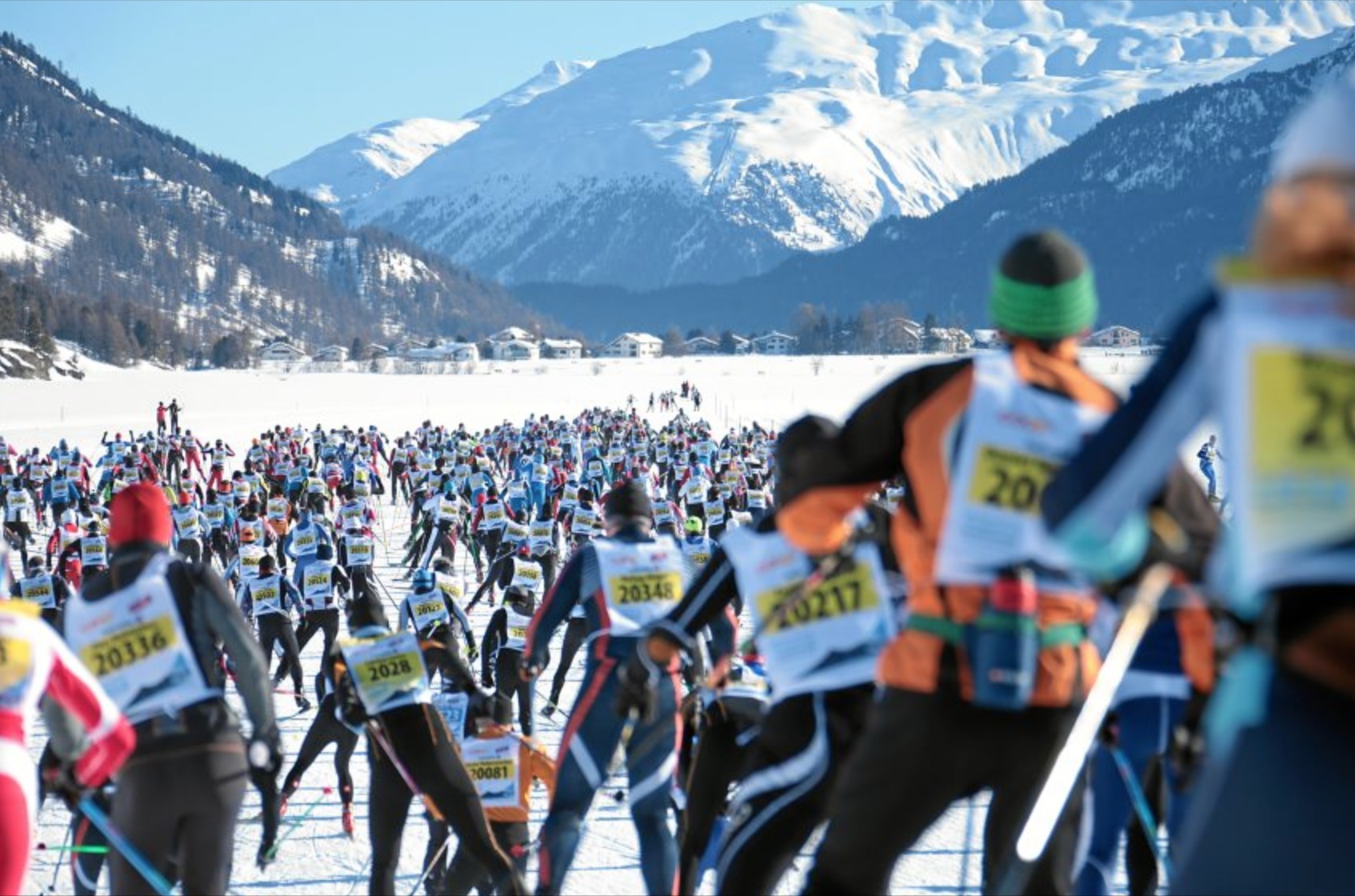
    2014 Engadin Ski Marathon (Photo: www.Engadin-SkiMarathon.ch) http://www.liveimageticker.ch/slideshow/?border#_hdskimarathon2014
    2014 Engadin Ski Marathon (Photo: www.Engadin-SkiMarathon.ch)

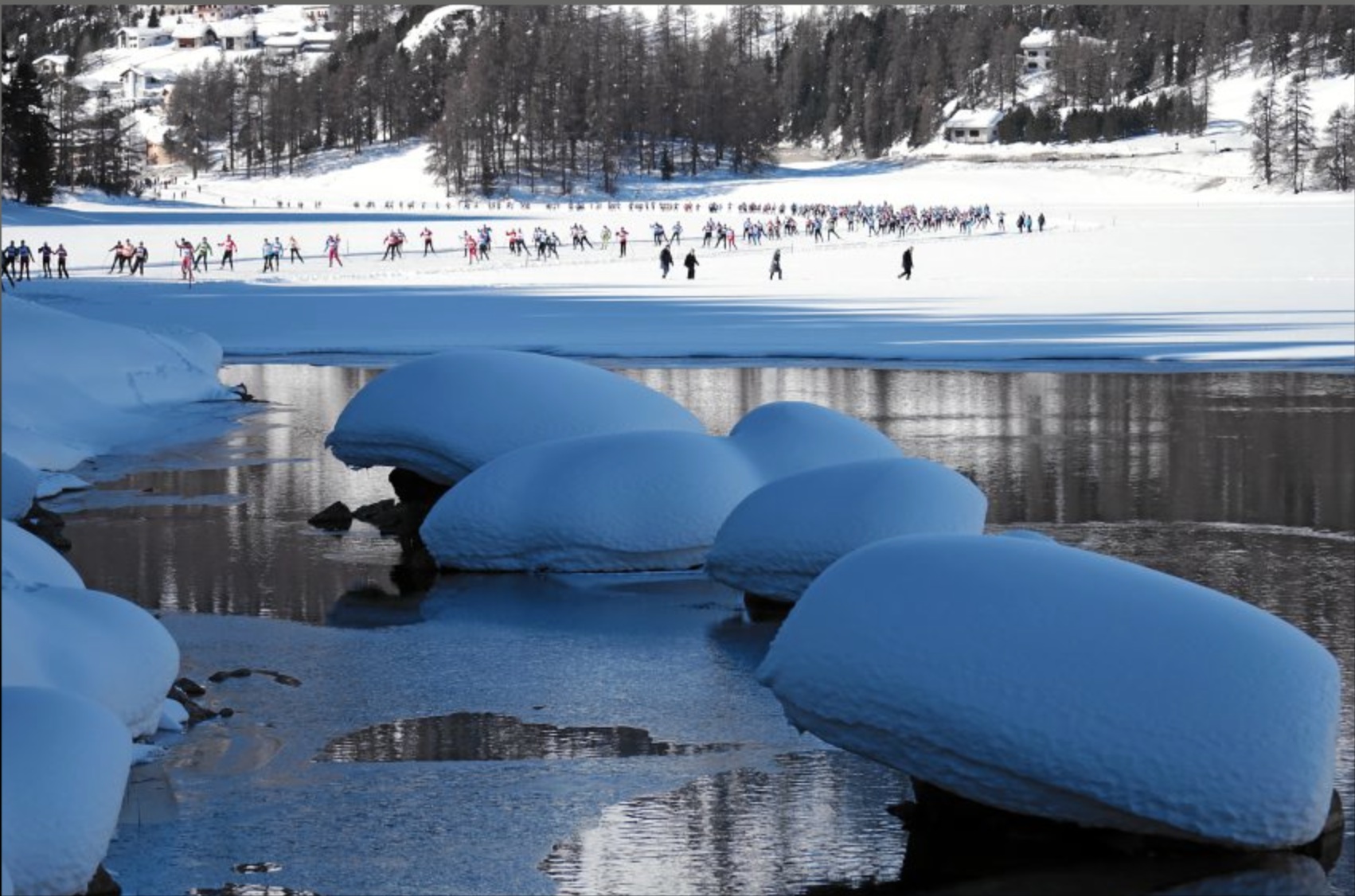
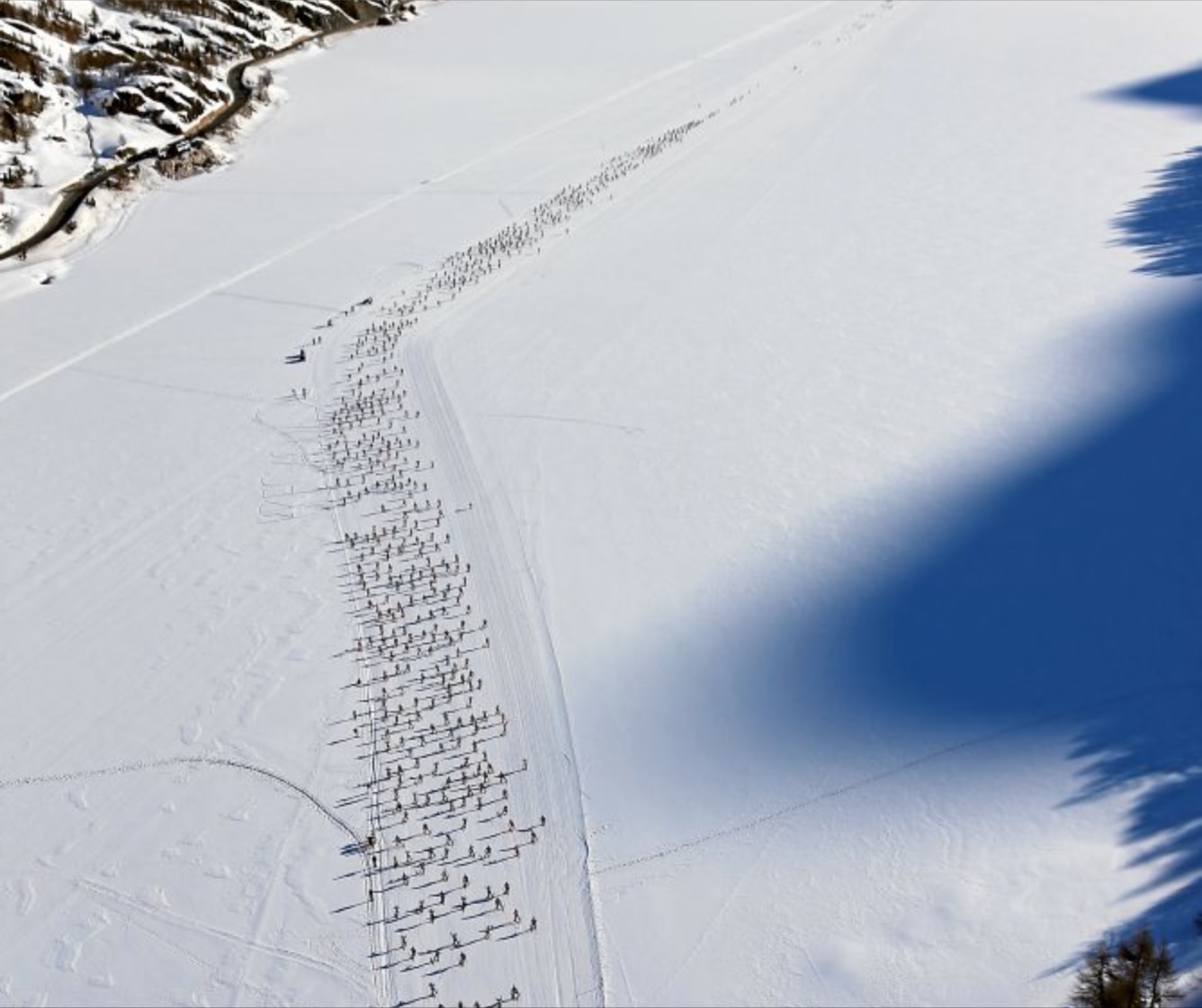
    The 46th annual Engadin Ski Marathon took place this past Sunday, March 9.  The 42-kilometer skate race, which is part of the Worldloppet series, and included some 13,395 competitors, begins in Maloja, in south-eastern Switzerland, and ends in S-chanf. Though the course follows a valley downhill, losing a total of 150 meters (nearly 500 feet), that fact alone did not guarantee an easy race — on the contrary, most top finishers claimed this marathon to be one of their toughest.

    2014 Engadin Ski Marathon (Photo: www.Engadin-SkiMarathon.ch) http://www.liveimageticker.ch/slideshow/?border#_hdskimarathon2014
    2014 Engadin Ski Marathon (Photo: www.Engadin-SkiMarathon.ch)

    On the men’s side, Anders Glørsen of Norway won in 1:35:05 hours.

    “I am really happy,” Glørsen said after the race, according to a Worldloppet press release. “The Olympics were up and down for me, but afterwards I felt very good … I skied from St. Moritz to the finish [Saturday] to get familiar with the course, which I knew already from rollerskiing in the summer.”

    Glørsen says he looked up all the results of the last 10 years and saw that nearly every year at least 10 people came in with the same time.

    “So I knew that it would be a tight race and that I should be saving some energy for the finish sprint,” he explained. “I got a gap at around 5 k to go but a kilometer later, Jean-Marc [Gaillard of France] caught me and I was almost sure that he would be beating me in the finish as I was already pretty tired. But somehow he was tired too I guess, and so I could cross the finish line as first.”

    Gaillard placed second, just 0.7 seconds later. This was Gaillard’s first Engadin, and he said that overall he is happy with his performance, “even though I was so close to winning.”

    “Anders is a good sprinter and I was already pretty tired in the end, I didn’t really believe in my possibility to win,” Gaillard said. “Maybe that was what cost me the victory as apparently Anders was pretty tired, too. But it was a really nice race and I enjoyed skiing in this beautiful weather. I had a broken pole right before the uphill in St. Moritz, which was really a bad place for such a thing, but these things happen.

    “Around 5 k before the finish, Anders got away from the group and got a gap,” he added. “I gave it a go and tried to catch him, which I did soon after. Somehow the others couldn’t follow, but I knew that we weren’t allowed to drop the pace as they weren’t far away. Unfortunately it didn’t work out with the first place in the end, but I am satisfied nevertheless.”

    In third was Switzerland’s Toni Livers, who broke a pole shortly out of the start and had to change two or three more times before finding a suitable replacement.

    “I lost faith,” Livers said. “I didn’t really believe in a podium place anymore, but I had a good position when it came to the last kilometers. I knew that only from Zuoz on, the race would really start, so I prepared for that. I pushed really hard as I was eighth when we came into the finish area, then fifth and then there was an open spot, I took it and pushed into first position. It was a tight fight with Romain Vandel [who finished 4th] and I am really happy that I could get my foot over the line in front of him in the end!”

    2014 Engadin Ski Marathon (Photo: www.Engadin-SkiMarathon.ch) http://www.liveimageticker.ch/slideshow/?border#_hdskimarathon2014
    2014 Engadin Ski Marathon (Photo: www.Engadin-SkiMarathon.ch)

    On the women’s side, Finland’s Riita-Liisa Roponen won in 1:38.39.1, nearly 19 seconds ahead of Switzerland’s Bettina Gruber in second.

    For Roponen, it was her second Engadin victory and third in the FIS Marathon Cup this season.

    “Winning the cup with these three wins as well is really enormous,” Roponen said. “I had the goal to beat my record time from last year, but this didn’t work out, but I am nevertheless satisfied with my race. It was a really hard one, but mostly because I didn’t feel so good. I wasn’t even sure if I won when I crossed the finish line.”

    Roponen hopes to be able to do more long-distance races next season, but would also like to take part in the World Cup if she is given the opportunity to do so. Roponen expects more competition in the women’s field next year and therefore suspects that it will become more difficult to gain the overall victory again.

    Gruber said she was happy with second, considering how tough the mass start was.

    “I was skiing a lot with Katrin [Zeller of Germany, who finished third] and we tried to catch Riita-Liisa, but she was already too far gone,” she said. “In the end I was able to out-ski Katrin in the finish sprint, so I am really satisfied. The Engadin Ski Marathon is a really nice race, but also a tough one, especially for the women who are skiing with all the men around and it’s so easy to break a pole or to fall.”

    Zeller took third despite an early tangle. She didn’t start in the first line and got caught up in a crash from the get-go, consequently losing several places early on.

    “Just getting back to the group again, somebody crashed right in front of me and I got a pole between my legs and got a big cut which hurt a lot,” she said. “Again, I tried to find the other girls, I moved left when the big group went right and visa versa in order to have more space and to move faster. I really felt good.”

    Zeller said she believed a victory would have been possible for her and that she was disappointed with her result. She won the Engadin six years ago and was hoping to win again as the final of her career.

    “A victory here would have been a really nice end,” she said. “I was skiing together with Bettina in the end and I knew that she was the better sprinter. I tried to pass her, but I was squeezed in and so I finished third.”

    Zeller will go on to compete in the World Cup final in Falun, Sweden, later this week, which will act as the replacement “finale” she was looking for.

    Holly Brooks of the U.S. Ski Team was the fourth female, 2:25 behind Roponen.

    “Took myself out of podium contention w/big crash but happy w/wooden medal,” Brooks tweeted after the race. “Fun times at the Engadin.”

    Matt Gelso (Sun Valley Ski Education Foundation) place 16th overall, just 11.7 seconds back from the winner, and Torin Koos (Bridger Ski Foundation/Rossignol) finished 87th (+4:21.1). Matt Briggs of Bend, Ore., finished 95th (+5:57), and Eric Packer (Stratton Mountain School T2 Team) finished 126th (+7:59.7). According to a report by Fast Big Dog, 80 Americans entered the race.

    Among other top U.S. women, Katja Heinicke of Dallas placed 139th, and Robin McGee of Jackson, Wyo., was 170th.

    Complete results

    More about above video

  • The 12: XC Oregon

    The 12: XC Oregon

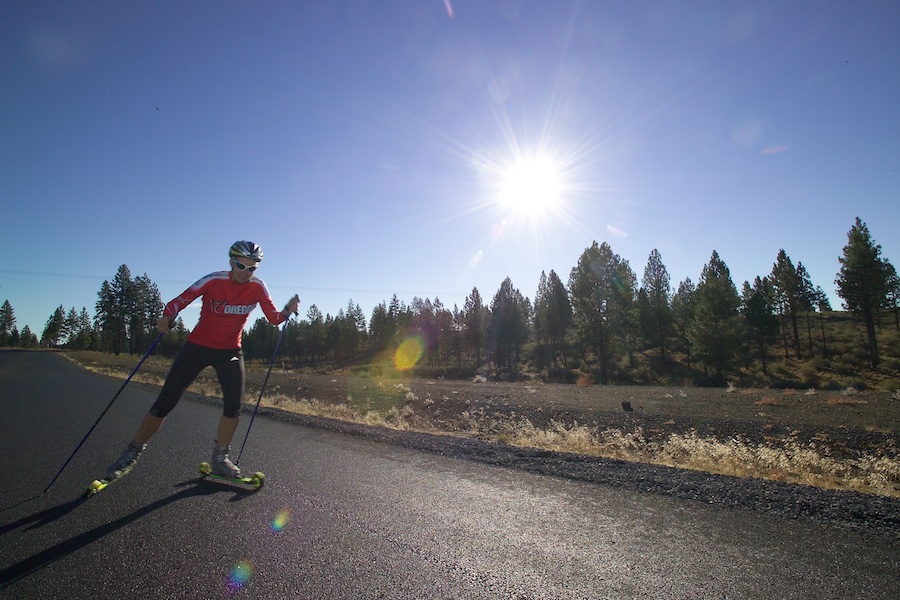
    XC Oregon skier Sarah Max during a rollerski session near Bend, Ore. (Photo: XC Oregon)
    XC Oregon’s Sarah Max during a rollerski session near Bend, Ore. (Photo: XC Oregon)

    Note: This is the 10th preview in our U.S. elite-team series, called the “The 12.” We asked coaches to tell us what’s new and whom to look out for this season, and we’ll publish additional previews in the coming weeks in no particular order.

    Team name: XC Oregon

    Coach: J.D. Downing (coach/program director, 16th year)

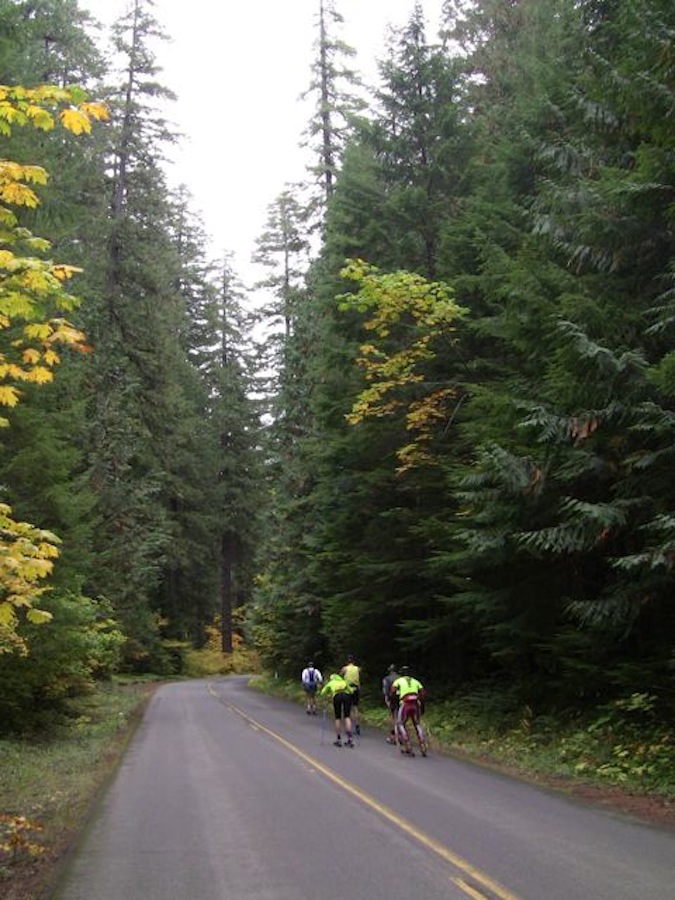
    The XC Oregon squad during a rollerski last fall near Bend, Ore. (Courtesy photo)
    The XC Oregon squad during a rollerski last fall near Bend, Ore. (Courtesy photo)

    National/International Elite Roster: Santiago Ocariz, Matt Briggs; Carolyn Ocariz, Sarah Max.

    Associate roster: 12-15 additional associate skiers will join the roster come November, according to Downing, who is “still finalizing plans with a bunch of folks.”

    Who’s new: Downing expects several top regional associate skiers to come onboard, but not at the national/international elite level.

    Who’s missing: Oliver Burruss, who’s “entering the ‘real world’ ” in Burlington, Vt., Downing writes.

    Top results last season: A couple months before his first child was born, Santi Ocariz made the most out of the Noquemanon Ski Marathon in Marquette, Mich., winning the 50 k classic in January. He went on to win Bend’s pinnacle spring event, the Pole Pedal Paddle, in May just two months after his wife and teammate, Carolyn, gave birth to Sonia. As you can imagine, Santi didn’t get to train as much as he would’ve liked.

    “I don’t think I have trained this little in a year since I was a junior in high school,” Ocariz wrote in an email after the race. “However, what I lacked for in time, I made up in effort.”

    Max won the women’s race to complete the XC Oregon sweep, and in February, the 38-year-old topped the podium at the 58 k Mora Vasaloppet in Minnesota.

    Coach’s comment:  

    “For 2013/14 we’ll have a bit of a ‘factory team’ feel with fewer full-time skiers than some years, but a whole lot of talented people involved,” Downing wrote in an email.

    “Santiago and Carolyn Ocariz will be out of the state much of the year with school [in the Midwest], but it’ll be fun seeing what those two can pull off,” Downing explained.

    The rest of the team will race “a mixed bag of events” for the duration of the season, mostly within the Pacific Northwest and at select marathons, and not so much at big domestic races like nationals and SuperTour series.

    “Our big focus once this winter winds down will be attracting 4-6 new high performance athletes to target the national/international scene beginning Spring/Summer 2014,” Downing wrote. “Bend is an amazing spot so basing here for a few years (or longer) is rarely a tough sell. But we are also happy to incorporate athletes living anywhere in Oregon. The flexibility and quality of the XC Oregon system has stood the test of time so we know any skier than joins us is going to have what they need to reach their goals — whatever they may be.

    “We have already banked resources to guarantee an exceptional level of financial and logistical support for new athletes for several seasons. The consistency of our support is amazing and a direct reflection of the quality of XC Oregon delivery over 16 years. Our incredible sponsors and patrons have believed in XC Oregon because we don’t try and be something we aren’t. We help skiers achieve their goals. We attract quality people. We constantly support our community. We do all this the right way. Simple as that.

    Whether someone is interested in chasing the Olympic pipeline or marathons or a little bit of everything — interested skiers should visit xcoregon.org and feel free to get in touch at any time over the coming 8-10 months.”

    ***

    Other previews: Alaska Pacific University | Bend Endurance Academy |Bridger Ski Foundation | Craftsbury GRP | Maine Winter Sports Center | Methow OD | SSCV/Team HomeGrown | Stratton Mountain School T2 | Sun Valley SEF Gold Team

  • SuperTour Preview: Get ‘Em To the World Cups

    SuperTour Preview: Get ‘Em To the World Cups

    The major focal points for the SuperTour field this year are qualifying for the Canadian World Cups in December and World Championships in February. Photo: Flying Point Road.

    Ready or not, the 2013 SuperTour season is fast approaching. Here’s what you need to know about the domestic race scene this year.

    At this point, we’ve pretty much said everything we can about the twelve senior ski programs in the U.S. We ran a series throughout the summer highlighting each team’s past accomplishments and goals for the future. Read back through ‘em for comprehensive rosters and standalone previews (scroll down for links). Now that it’s November, it’s time to discuss who stands a shot at beating whom.

    First, there are a few unusual things about the race schedule to understand, as domestic results have an important role to play in qualifying athletes for bigger things this season. The U.S. can enter more athletes than usual in each World Cup race in Canada and can have eight athletes of each gender on its World Champs team, meaning that U.S. Ski Team (USST) members have a shot at top-end international competition this winter (those on the USST are not guaranteed World Championship slots, either).

    Not surprisingly, the big focus is a combination of Canadian World Cup starts and World Championships. The overall, sprint and distance SuperTour leader(s) at the end of each competition period get World Cup start rights no matter what year it is, but being consistently fast enough to be in one of those positions is hard.

    The five extra Nation’s Group spots afforded to the U.S. for each of the Quebec and Canmore World Cup races will be partially filled based on the SuperTour standings after the Bozeman races. With selection criteria theoretically reaching further into the field and requiring just two weekends of top results, the international stage suddenly seems much closer and more attainable. Who cares if SuperDario Cologna won’t be there, it’s still the World Cup!

    World Championship criteria are a slightly different story, but early SuperTour races could still help decide who gets to go. The U.S. will bring up to eight men and eight women, with the first spots going to athletes who reach a certain World Cup ranking by January 14. After that, USSA goes down the National Ranking List, which is created off of competitors’ best four USSA-scored races from the twelve months prior to the selection date.

    The road to Val di Fiemme, then, has already begun. The beginning of the current SuperTour and the week’s worth of racing at U.S. Nationals are further opportunities for athletes to turn in one of their four-best results and move up the ranking list.

    Consequently, there’s a lot potentially riding on the SuperTour this year, despite the continued absence of leader bonuses at the end of the season. It’s not that everyone wasn’t trying hard before, but with a handful of top-level start rights on the line that only come around every so often, things could get feisty. Dreams will come true and hearts will be broken.

    Now, the players: last year’s overall SuperTour leaders, Sylvan Ellefson (SSCV Team HomeGrown) and Jessie Diggins (SMS T2/USST), are already in Europe and out of the domestic picture for the next two weekends. Even so, the potential lineups for West Yellowstone and Bozeman are impressive.

    The Rookies

    Eric Packer (DAR). Photo: Flying Point Road.

    For the purposes of this preview, athletes can pretty much be divided into two groups: knowns and unknowns. Every spring a handful of top-tier college skiers graduate and the domestic circuit gets an injection of new blood. Most graduates have competed in SuperTours before, but not when it’s actually been their job to ski fast.

    So while the rookies aren’t joining the circuit as complete unknowns, their changed training circumstances can make the first results of the year a bit of a surprise. The 2012-2013 freshman class has generally never trained without academic demands competing for their time, and given the results they’ve been able to churn out even during school, count on them disrupting the status quo on the SuperTour this year.

    Take Eric Packer, who joins the SMS T2 team from Dartmouth College and already has a handful of SuperTour and national podiums to his name. Packer was probably the most consistent college performer, sprinting and distance-wise, on the circuit last year, and could be ready for a significant step forward in his transition to full-time racing.

    Reid Pletcher (CU) winning the skate sprint qualifier at West Yellowstone, 2011.

    There’s also Reid Pletcher, who has been described as a “sprint fiend” and returns to skiing for Sun Valley this winter after graduating from CU. Remember how he won the skate sprint in West Yellowstone last year, just six months after a climbing accident landed him in the ICU? Yeah, that was ridiculous. Imagine what he might do this winter with a strong summer of training behind him.

    Ryan Scott will be another sprinter to watch for. Regardless of the whole obstruction controversy, he was still in the classic finals at U.S. Nationals. At U23s he was the top American performer in the freestyle sprint. He didn’t race a whole lot after that, but his coaches at Ski & Snowboard Club Vail think he’s looking mighty fast in the run-up to the first race of the year.

    In the women’s field, newcomer Sophie Caldwell (SMS T2) presents the greatest threat to the usual SuperTour standbys. Amy Glen (Craftsbury Green Racing Project) did beat her by a toe-length at the biggest college race of 2012, but the name Caldwell regularly shows up at or near the top of the results sheet week after week — whether it’s Sophie or one of her equally fast relatives.

    The Upperclassmen

    Though they represent relatively known quantities, the more seasoned SuperTour athletes are no less intimidating for it. They’ve been around the block and they know what it takes to be at the top of the domestic field.

    Jennie Bender (CXC) was the second-ranked woman on the SuperTour last year, and stands a good chance at leading it in winter with Jessie Diggins now in Europe. Photo: Flying Point Road.

    Central Cross Country (CXC) was indisputably the best all-around team last year, and won the National Nordic Foundation’s team trophy in a landslide to prove it. The Midwest squad has lost a few athletes and coaches to other programs since last spring, but still claims four athletes ranked in the top five on the SuperTour in 2012: Jennie Bender, Karl Nygren and Caitlin and Brian Gregg. Look out for their fire engine-red spandex when the gun goes off.

    The next team to mention is undoubtedly Alaska Pacific University (APU). Sadie and Erik Bjornsen (APU/USST) are both racing stateside this November, and present a formidable threat when united with the rest of their teammates. Kate Fitzgerald, Becca Rorabough, Rosie Brennan, Reese Hanneman, Peter Kling — the Alaskans have a lot of returning talent. Thanks to Eagle Glacier, they’ll also be stepping onto their skis with more on-snow hours under their belts than anyone else.

    From the Bridger Ski Foundation, Torin Koos and Leif Zimmerman present solid all-around threats. Zimmerman has traditionally pulled off a distance win at West Yellowstone every year, and Koos will no doubt be looking for redemption for getting erased from the results the last time he raced in the U.S. When we spoke with him in June, Koos said that every day he thinks about the Canadian World Cups more than anything else.

    He’s probably not the only one. Mikey Sinnott (SVSEF), after finally earning his first World Cup starts in March, will be raring to get back. With two real, actual, sprints on the schedule in the first two weeks, Sinnott should be in contention to go to Canada. His teammate Matt Gelso is another name to watch in both sprint and distance. Representing Sun Valley’s women, Chelsea Holmes is coming off a strong finish to her 2012 season, where she was fifth in the 30 k at distance nationals.

    Matt Liebsch (Team Strong Heart/Team Birkie) skiing to the finish. Photo: Flying Point Road.

    Racing for Team StrongHeart/Team Birkie, Matt Liebsch is a perennial distance challenger. He took second in the 15 k freestyle at nationals and usually puts up solid distance results at the opening races. This year he’s been training in West Yellowstone longer than anyone getting ready to hit the ground running on November 23.

    In the east, the CGRP has another impressive lineup. Tim Reynolds and Pat O’Brien both finished the season strong at distance nationals and will want to continue the trajectory in 2013. To the north, Maine Winter Sports Center’s Welly Ramsey has been logging the hours with Kris Freeman and apparently been able to keep up at times, which can only be good for his skiing. Skyler Davis will be on the domestic circuit for the first period, at least, and could be a sprint contender for SMS T2 if he’s in full form.

    From Oregon, Dakota Blackhorse-von Jess (Bend Endurance Academy) proved last year he is not to be overlooked on a sprint day. And with more of those legitimately on the SuperTour schedule this year he’ll have plenty of opportunity to contend in the heats. XC Oregon added Santi and Carolyn Ocariz to its roster this year, and returning skiers Matt Briggs and Ollie Burruss will be looking to top their career-best SuperTour finishes from last season.

    That’s a lot of skiers entering the starting gate this week, and this list doesn’t even include everyone. At some level, each athlete is trying to do the same thing: ski better than they ever have before and hope that it’s enough to break through to the next level. The trouble is, they’ll have to get around each other first.

    * * *

    For more in-depth discussion of each team and its athletes, read FasterSkier’s features from this summer:

    Alaska Pacific University Nordic Ski Center | Bend Endurance Academy | Bridger Ski Foundation | Craftsbury GRP | CXC | Far West Farm Team | Maine Winter Sports Center | Methow OD | SMS T2 Team | SSCV Team HomeGrown |  Sun Valley SEF | XC Oregon

  • Elite Team Preview: XC Oregon

    Elite Team Preview: XC Oregon

    Matt Briggs leads XC Oregon teammates Jason Adams (c) and Ollie Burruss (l) during team relays during a training session in late May in Bend, Ore.

    Note: This is the first of a quick-and-dirty preview series on elite teams in the U.S. We asked coaches to send their 2012/2013 rosters and tell us what’s new for the coming season. We will be publishing additional reports over the next few weeks. Teams are presented in no particular order.

    Team name: XC Oregon

    Coaches: J.D. Downing (coach/program director, 15th year)

    National /International Elite Roster: Santiago Ocariz, Oliver Burruss, Matt Briggs;

    Carolyn Ocariz, Stephanie Howe, Sarah Max, Jamie Woelk

    Who’s new: Santi and Carolyn Ocariz (as the two confirmed additions, 1-2 more possible. Carolyn arrived just over a week ago on June 9).

    “We are super excited to have them both here,” Downing wrote in an email. “Their addition obviously allows us to significantly boost our national/international elite presence, but just as important to us is the quality of the individuals. Just look at what these two did this spring [rollerskied across the country] — and more importantly why they did it [to feed impoverished children]. There’s also a big comfort level in that Santi has spent several summers in Bend and has a brother living here so the transition should be very smooth. It’s really a perfect fit all the way around.”

    What else: With a PhD and all, Howe will likely compete in more marathons this winter after studying at Oregon State University in Corvallis last year on the western side of the Cascades.

    While it’s unclear how much Marshall Greene will race, Downing was excited to welcome him back to Bend this summer with his wife and new baby. Greene spent the last couple of years in Wisconsin earning his Master’s degree.

    XC Oregon (XCO) is also expecting to add 12 to 15 members to its associate roster.

    Who’s missing: Zoe Roy will likely make the full switch to Rocky Mountain Racers (RMR) in Canmore, Alberta, in an attempt to make Canada’s international teams. She was affiliated with XCO last season while completing her undergraduate degree in Utah and also raced in Canada with the support of RMR. Given that Roy is from Bend, Downing will try to incorporate her whenever possible.

    Top results last season: Burruss was eighth in the Boulder Mountain Tour and 20th in the American Birkebeiner 50 k skate, and both Burruss and Briggs had career-best SuperTour results last season. Max was the 19th woman the in the Birkie this year, and Roy notched four top-10 performances on the Canadian NorAm circuit, two of which were on the podium.

    In all, a dozen XCO skiers tallied best-ever results last year, which “radically improved on anything they had done before,” Downing wrote. “We really take our role seriously as positive ambassadors for the sport in Pacific Northwest and there is no question last year was one of our best ever in that regard.”

    Coach’s comment: XC Oregon is proud to celebrate its 15th season this year. According to Downing, it’s either the longest or second-longest continuously running elite-development program in the U.S. Aside from the high number of athletes that represented XC Oregon over the years, at least two dozen went on to coach nordic skiing.

    “That more than anything probably reflects the 100% athlete-based approach of XC Oregon,” Downing wrote.

    As for spring training, XCO skiers can enjoy at least another week on snow up at Mt. Bachelor, less than a 30-minute drive away.

    “That’s a huge upside as athletes can maintain normal routines and yet still get the same quality of on-snow workouts as if we were shelling out thousands of dollars sending them to some remote spot,” Downing wrote. “I feel really good that the vast majority of the crew is in a comfort zone of how they’ll structure their training around everything else in life. We’ve also got some good training partner options this year that should be a big help. Bend itself is often a huge asset since there is a deep and incredibly talented pool of endurance athletes here.

    “For the season I think we’ll find 2012/13 looking very much like the average year over the past decade,” he added. “We’ll have a nice mix of some notable SuperTour/Nationals results, some domestic and international marathons, and then the steady drumbeat of regional activity.”

    Down the road in 2013, the team may restart a summer internship program for collegiate skiers, especially for graduating seniors interested in racing after college.

    “We’ll be fundraising for that this summer and hope to roll out specifics this fall,” Downing wrote. “It’s also likely we’ll want to add 2-3 funded-level athletes in Spring 2013 so that’s always exciting to look forward to.”