Tag: Matt Futterman

  • Opinion: Get your commentary off our bodies

    Opinion: Get your commentary off our bodies

    The following was submitted by reader Ivy Spiegel Ostrom in response to the New York Times coverage of Jessie Diggins earning an Olympic bronze medal in the individual freestyle sprint. FasterSkier published a story expressing some of the early reactions to the NY Times piece here, along with an opinion piece by our contributor Ben Theyerl here. The viewpoints expressed in this article do not necessarily reflect that of FasterSkier’s staff or sponsors. We fully support open dialogue and encourage those who wish to share their perspective to reach out at info@fasterskier.com.)

    “In a sport that has so many women with massive shoulders and thighs, Diggins looks like a sprite in her racing suit, and it’s not clear exactly where she gets her power. But the power is there, as she flies up hills, and comes off climactic turns with a burst. On the downhills, she tucks low and cuts through the air,” writes Matt Futterman in his February 8th New York Times coverage of Nordic skier Jessie Diggins’s historic bronze medal win at the Beijing Olympic Games.

    A former college teammate of mine sent me a screenshot of this excerpt with an outraged, “We are past commenting on women’s bodies in sports!!” 

    In a response to Futterman, sportswriter Lori Nickels wrote a piece in USA Today documenting such reactions from female athletes and wondering at their intensity, when men’s bodies are so frequently fodder for sports analysis. 

    As a female athlete and a former collegiate nordic skier, I would like to offer an explanation to Nickels and Futterman and anyone else who may be wondering why this seemingly commonplace commentary is such a big deal.
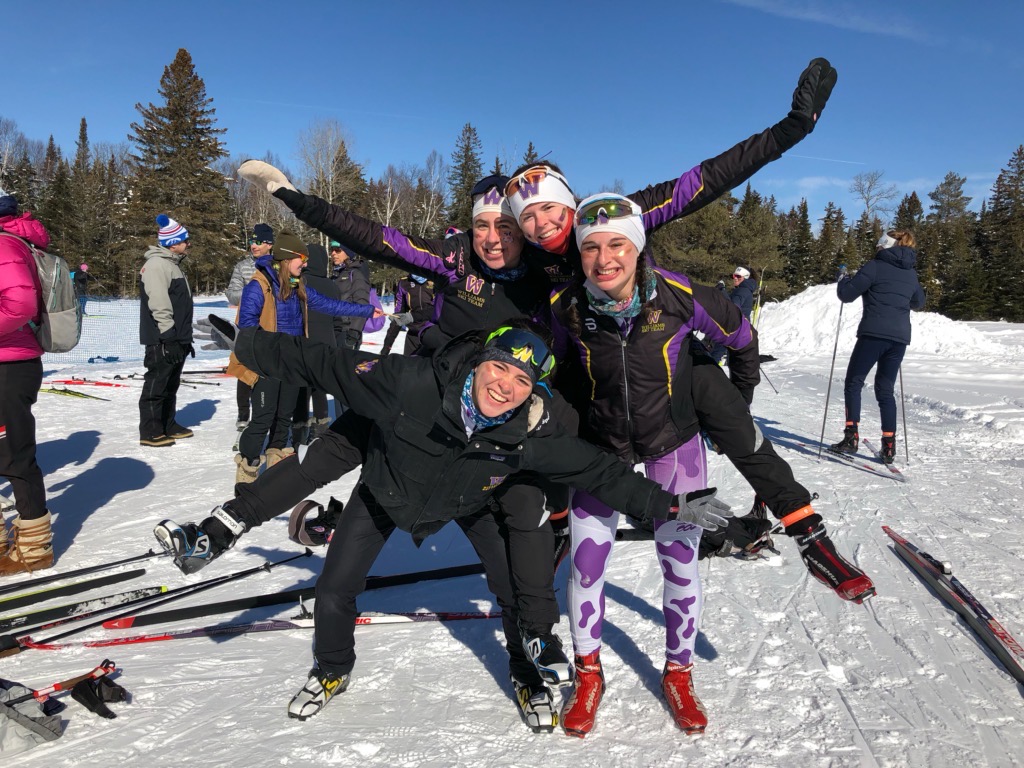
    Ivy Spiegel Ostrom (bottom left), a ’20 graduate of Williams College, pens a response to the NY Times comment that Jessie Diggins looked like a “sprite” relative to her peers. (Courtesy photo)

    Athletics can be an amazing tool for teaching women how to use their bodies effectively and powerfully; knowing how to become healthier, faster, and stronger is information that our society has historically neglected to teach women, to our great detriment. On the other hand, we are simultaneously receiving programming from nearly every direction that smaller is better, that women with muscles are ugly, they look too much like men, that men won’t find our shapes attractive. And in an appearance-oriented society where women seem to be valued especially for their ability to fit into an idealized category, that is no small thing. Growing up, even as they powered activities that brought me joy and self-worth, my pronounced muscles (“massive shoulders and thighs,” if you will) felt like blemishes. Some days they still do. 

    And that is only half of it. Nordic skiing is a sport in which strength to weight ratios play a role, albeit a small one. However, when so many other factors feel out of their control, that single, tiny factor can loom large in the minds of both male and female competitors. I know all of us have fielded comments from performance-obsessed coaches, our own parents, and often other parents concerning our body types, weights, and emphasizing the advantage of a low body mass. This adds up to a complex of emotions and ideas surrounding food. Endurance athletes are particularly susceptible to disordered eating given their tendency towards self-discipline and performance.  

    I am not saying men and male athletes don’t suffer from similar or analogous notions and prejudices – in fact I would love to open that conversation – but they do display a different level of intensity and contain fewer contradictions. Female athletes really sit at the nexus of a particularly overwhelming complex of ideas and judgments surrounding our bodies. And that is even before mentioning the pressures of sex and the constant threat of sexual assault that every woman feels. It makes us unsure who our bodies really belong to. 

    I am lucky that this dissociation with and antipathy towards my body was relatively mild, and never developed into an eating disorder like it has for many. Regardless, years out of adolescence and competitive racing, I am still trying and often failing to inhabit my own body and trust that it is beautiful no matter the form it takes, that it is my own by right, and that I can’t let others decide how I feel about it or what I do with it. And I am finally learning how hard my teammates, role models, and competitors have also had to fight to avoid this disassociation, to preserve the vital relationships to their bodies that is at the heart of their love for athletics. 

    Ironically, Jessie Diggins herself has been one of the fiercest supporters and advocates for those suffering from eating disorders and has been a key player in raising awareness of the issue. In her memoir, Brave Enough, she writes about her struggle to overcome an eating disorder, which threatened her health and prevented her from competing, culminating in outpatient treatment. She is hardly alone in the work. My high school teammate Julia Burnham, also an eating disorder survivor, is the co-creator of a podcast called Bodies in Motion, chronicling the stories of those – especially female athletes like Jessie – who have experienced eating disorders. A clear and consistent take-away from her discussions is that we need to stop commenting on each other’s bodies. No matter how positive or negative, direct or indirect, these comments generate the feeling that how our bodies look is more important than what we do with them or that what we do with them is more important that the relationship we have with them. 
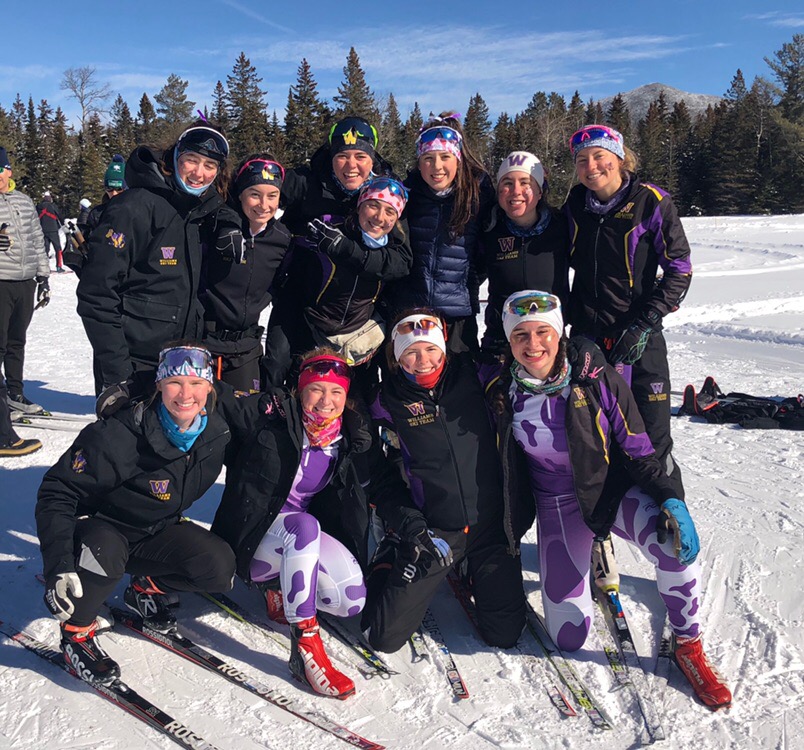
    Ivy Spiegel Ostrom (top row, third from left), a ’20 graduate of Williams College, pens a response to the NY Times comment that Jessie Diggins looked like a “sprite” relative to her peers. (Courtesy photo)

    This is not meant to be an attack on Futterman. His words were poorly chosen, but we have all made similar comments regarding fellow bodies. I know I have, and I regret them all, for I have felt acutely so many times the detrimental effect of such words. Comments like Futterman’s may have sent my ninth grade self into a well of negative feelings about my body and a bout of obsessive eating. It is sensitive terrain, which means we are all responsible for being aware and careful. 

    So to everyone who may be reading this – and I really mean everyone – if you are ever tempted to make a comment about someone’s body, consider keeping it to yourself. Please. 


    About the Author:

    Ivy Spiegel Ostrom grew up skiing in the mountains of Leavenworth, Washington. She went on to ski for Williams College where she majored in English and Environmental Studies. Since graduating in 2020, she has been living in her hometown, indulging in her other favorite sport of rock climbing while learning how to farm and live sustainably.
  • Athletes weigh in on NY Times statement that Diggins looks like a “sprite” relative to her competition 

    Athletes weigh in on NY Times statement that Diggins looks like a “sprite” relative to her competition 

    On February 8th, cross country skiing made the New York Times headlines as Jessie Diggins collected an historic bronze medal in the 1.5-kilometer freestyle sprint. No American woman had ever won an individual medal in cross country skiing, and no American cross country skier of either gender had won multiple Olympic medals. Diggins had earned gold in 2018 racing the freestyle team sprint with partner, and current NBC analyst, Kikkan Randall. 

    Normally, attention given to niche sports by mainstream media is welcome – cross country skiing is a blip on these outlets’ radar roughly once every four years during the Olympics – but a statement included in the report was quickly met with criticism from athletes and coaches in the sport. 

    Here’s the statement written by veteran sports journalist Matthew Futterman:

    In a sport that has so many women with massive shoulders and thighs, Diggins looks like a sprite in her racing suit, and it’s not clear exactly where she gets her power. But the power is there, as she flies up hills, and comes off climactic turns with a burst. On the downhills, she tucks low and cuts through the air.”

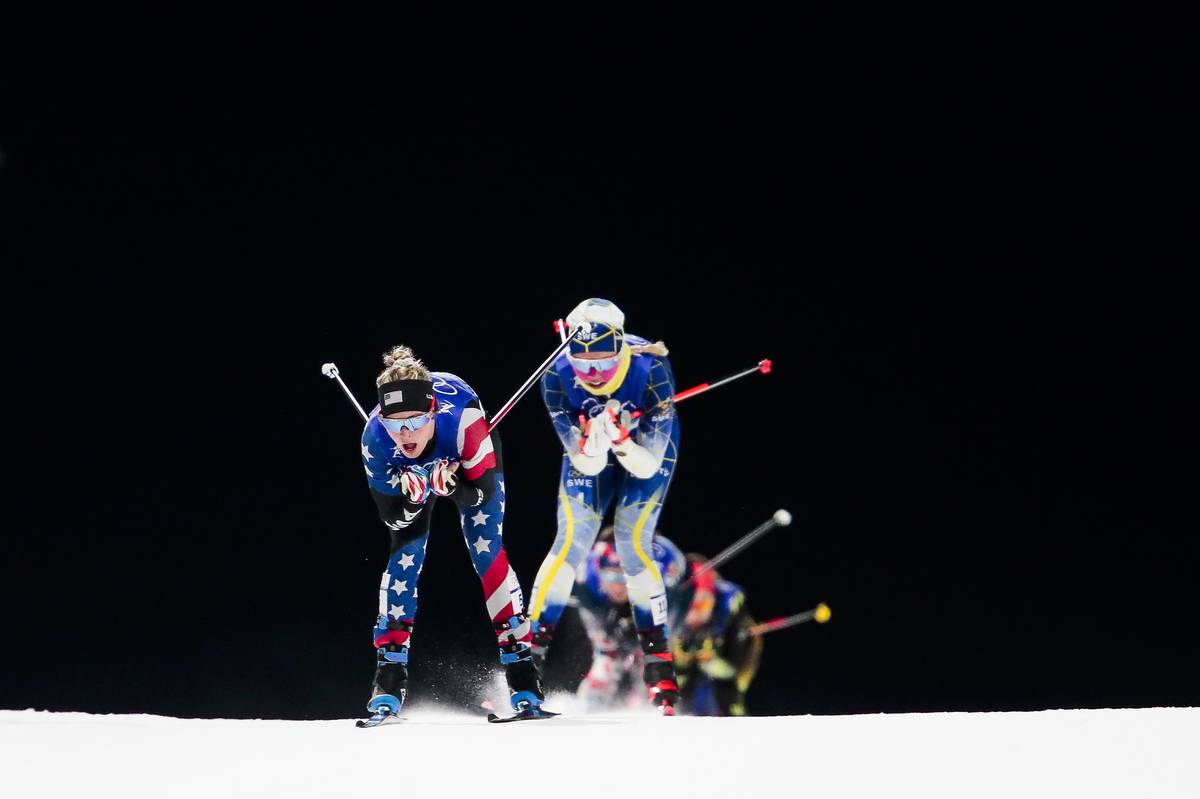
    Jessie Diggins drops into a tuck as she leads Sweden’s Emma Ribom into the downhill during the 1.5-kilometer freestyle sprint event in the 2022 Beijing Olympic Winter Games. (Photo: NordicFocus)

    All-American Colby College ski team alumna turned professional mountain runner for the North Face, Olivia Amber was quick to respond on social media, telling Futterman to “do better” and offering suggested edits to his wording.

    Amber proposed: “In a sport that requires a unique combination of upper and lower body strength, Diggins’ ability to apply power is extraordinary, and it’s very clear how she has become one of the best athletes in the world.”  

    Her instagram story was shared widely amongst her followers. Explaining why this language struck a nerve, Amber wrote the following to FasterSkier. 

    “The way the media often covers athletics objectifies women and excludes people that don’t conform to the myth of an ideal body type. The language used in the recent NY Times piece is yet another example of this broader issue in women’s sport. It’s a clear oversight that demonstrates a lack of knowledge on the author’s subject. Featuring the size and shape of women’s bodies devalues the lifetime of hard work these athletes put into achieving the pinnacle of their sport.”

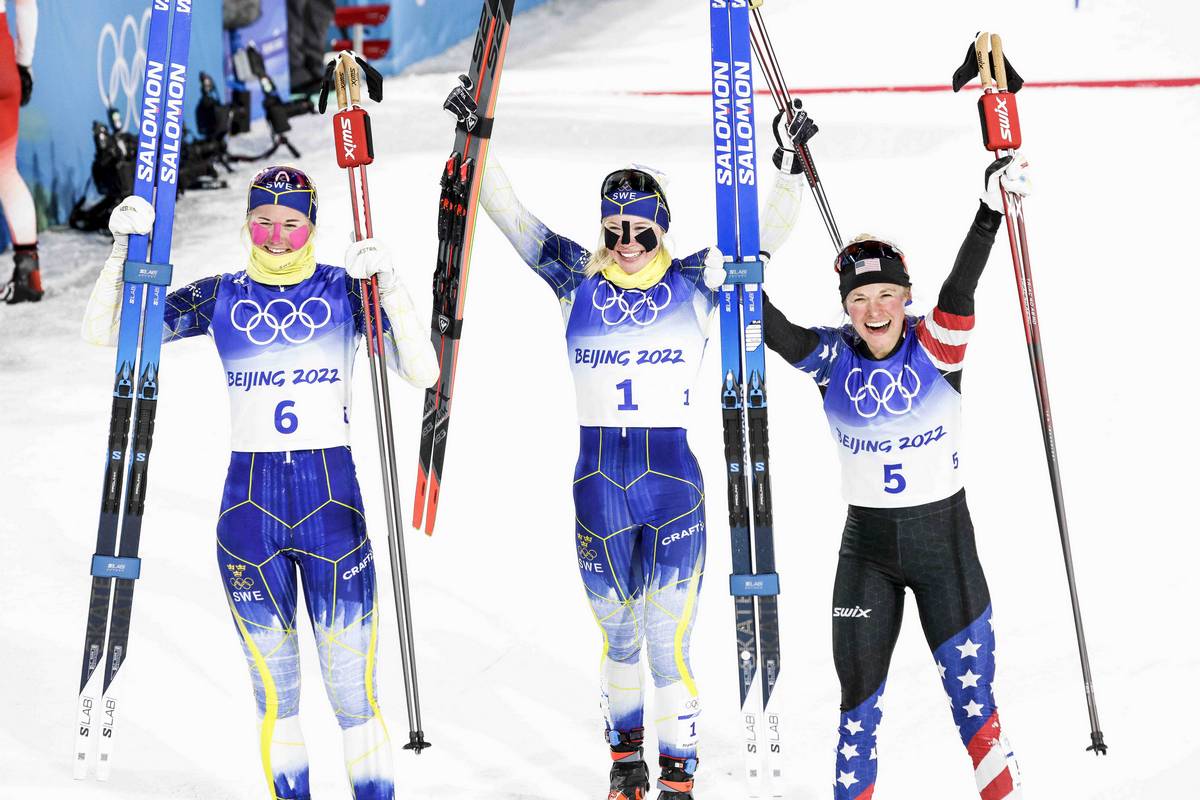
    The women’s Olympic 1.5-kilometer freestyle podium: Sweden’s Jonna Sundling took gold ahead of teammate Maja Dahlqvist and American Jessie Diggins. (Photo: NordicFocus)

    FasterSkier contacted Futterman to see whether he had a response to the criticism his statement had received. Futterman explained that he would need clearance from the Times’ communications department in order to respond. FasterSkier later received the following from a spokesperson:

    We aim in our sports coverage to cover male and female athletes accurately, equally and fairly. We believe sometimes their physiques are relevant to their performance. In this case, our description of cross country skier Jessie Diggins’s noticeably different physical attributes in contrast to others in her sport were an important and relevant detail. Her dominance in the sport was also the subject of a lengthy feature on Feb. 4.”

    However, many readers continue to find fault with the statements at play.

    “I have always held the NY Times in high esteem for their quality reporting, which is why I was absolutely floored to read Matthew Futterman’s comments about my teammate’s body,” writes Holly Brooks, two-time Olympian and licensed professional counselor who offers eating disorder support to athletes through her practice and advocacy. “On a day where Jessie made U.S. history by becoming the first female individual medalist in cross country skiing, Mr. Futterman chose to make inconsiderate comments about her body, questioning the source of her power. Please hear me loud and clear: It is NEVER appropriate to comment on an athlete’s body with regard to their weight, shape or size. Instead, emphasize their power, fight, tenacity and strength. And to the NY Times: Jessie, athletes worldwide, and the entirety of your readership deserve better. Mr. Futterman should apologize for his insensitive words and be sent to sensitivity training.” 

    Jessie Diggins (USA) takes control of her quarterfinal during the 1.5 kilometer freestyle sprint. (Photo: NordicFocus)

    It is not the first time Diggins has received comments regarding her body from the media. She was once asked whether her talent on downhills was related to her size, versus her skill. One strategy she has begun to employ to avoid comments that might have a detrimental impact on her mental preparation has been to avoid reading them altogether.

    When asked in the mixed zone after the 10 k classic whether she had heard anything regarding Futterman’s story, Diggins said, “To be honest, I don’t read things written about me and I think that’s a very, very healthy thing. But it’s unfortunate with Rule 40 that you can’t see the invisible headgear sponsor that is there at all times for me.”

    After sharing a blog post titled “Body Image Issues” in June, 2018 Diggins has openly shared her own challenges with disordered eating, body dysmorphia, and bulimia across many platforms, including her book, Brave Enough. Outside of the Olympic blackout period, described in Rule 40, Diggins wears the logo of the Emily Program, a leader in eating disorder treatment and education, on her hats and headbands, acting as an advocate for the facility she credits with supporting her through her own recovery journey.

    She now regularly rejects the narrative that “lighter is faster”, and instead repeats how properly fueling her body and prioritizing her mental and physical health have led her to perform at this level. Diggins aims to be an example for future generations of skiers.

    “It’s important that women everywhere know that they’re good enough the way they are,” Diggins said. “You don’t have to be a certain body type to win at the Games; you have to be healthy and happy and have a great support crew.”

    Diggins’ advocacy in this space was a focal point in a message penned by Kris Hansen, a former cross country ski coach at Diggins’ alma mater in Stillwater, MN, sent to the Times after reading the piece. Hansen also shared her response publicly on Facebook.

    “Eating disorders, or disordered eating, are sadly very common in young women athletes… conditions that are definitely exacerbated by insensitive and inaccurate reporting like Mr. Futterman’s,” she wrote. 

    Hansen called it “ironic ignorance” that an athlete who raises awareness for body image issues in sport would be described in this way.

    “Jessie is no ‘sprite’,” Hansen continued. “She is a powerful woman, an exceptional athlete, a World Champion, a thoughtful and articulate advocate for women athletes, and now a multi-medal Olympian.. I can also tell you from where she gets her power: hundreds of hours of training her body and her mind, on the snow, in the weight room, with her coaches… Further, her competitors are not “women with massive shoulders and thighs”. They are women who, like Jessie, have worked very hard to build bodies that can climb a hundred meters in a matter of seconds and then navigate an icy technical downhill….again and again for 30 kilometers. You have done Jessie, and all women athletes, a disservice with your ignorance and disrespectful characterization.”

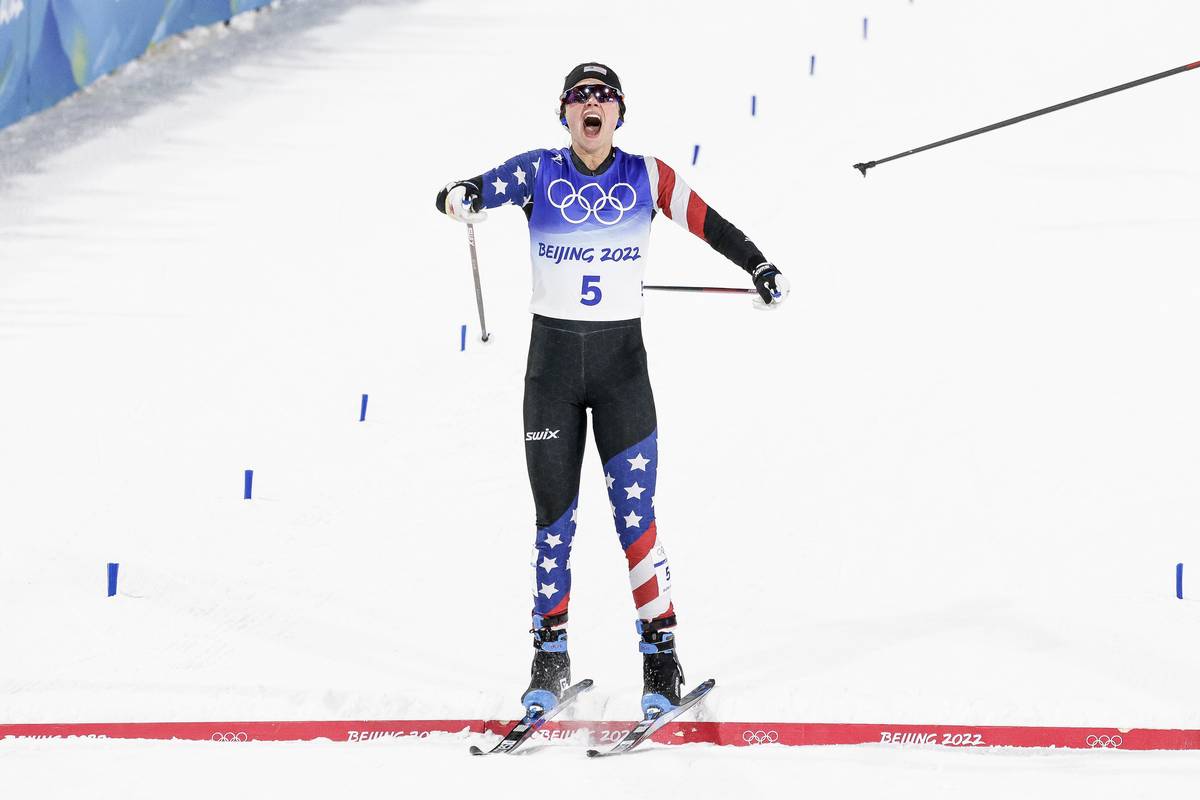
    Jessie Diggins crosses the line in third to earn the first individual Olympic medal in women’s cross country ski history. (Photo: NordicFocus)

    College of St. Scholastica head coach and founder of the Women Ski Coaches Association Maria Stuber offered a solution-oriented approach, advocating for awareness and education that might better support and protect athletes of all levels from body-centric messaging. 

    “What is very obvious here is that if the NY Times reporters and editors do not understand why this language is damaging, and we have a long way to go in education. If a career sports journalist isn’t learning this, certainly parents and youth coaches are not either. We are to the point where prominent athletes, like Naomi Osaka, are refusing to participate in news conferences or talk to journalists because of their ignorance on this topic and the potential damaging effects on mental health of athletes. Maybe the NY Times would be willing to help with the education component? How do we make sure you can’t become a sports journalist (or editor) without some body image/mental health education? Equal representation of women in sports media careers would certainly help.” 

    Like Diggins, many athletes at the Games are choosing to remain disconnected from the news and are not engaging with topics that might derail their focus. Others, like the Russian Olympic Committee’s Veronika Stepanova, have spoken out about the article. Stepanova shared a video of herself reading the statement on Instagram, sardonically captioning the post “Objectification? Never heard of it.”

    Novie McCabe races to 24th in the 10 k individual start classic during the 2022 Olympic Winter Games. (Photo: NordicFocus)

    FasterSkier had the opportunity to ask Hailey Swirbul and Novie McCabe thoughts on the statement in the mixed zone following their performance in the 10 k individual start classic race Thursday. 

    “I think that our sport is so unique and so powerful in the sense that every single body type can succeed at this sport,” Swirbul responded. “It doesn’t matter how you look, it matters how you race with your heart, how hard you work, and I know that everyone on our team works so freaking hard, Jessie included. Everyone on that podium deserves that spot, no matter what they look like.” 

    “I think the older girls have kind of been trying to ignore it a bit,” McCabe explained. “But it was obviously pretty uncalled for and insensitive, and they need to do better… Jessie got a medal because she’s the best out there and not because of anything about her body, so I think just insinuating that there’s something there was not okay.”

    Swirbul also stated that response from the community to the Times article has not been a distraction for her as she prepares for Olympic competition.

    “It makes me appreciate my own strength and how hard I work to gain fitness and muscle. I think it just really makes me appreciate how diverse our sport is all across the board.”

    Speaking more broadly to whether a focus on the appearance of athletes’ bodies from the media is frustrating for her, Swirbul concluded, “I hope that as a culture, we can move away from body types and focus on the hard work and the courage and the bravery that everyone races with every day. I really hope that that’s where we move in the future.”

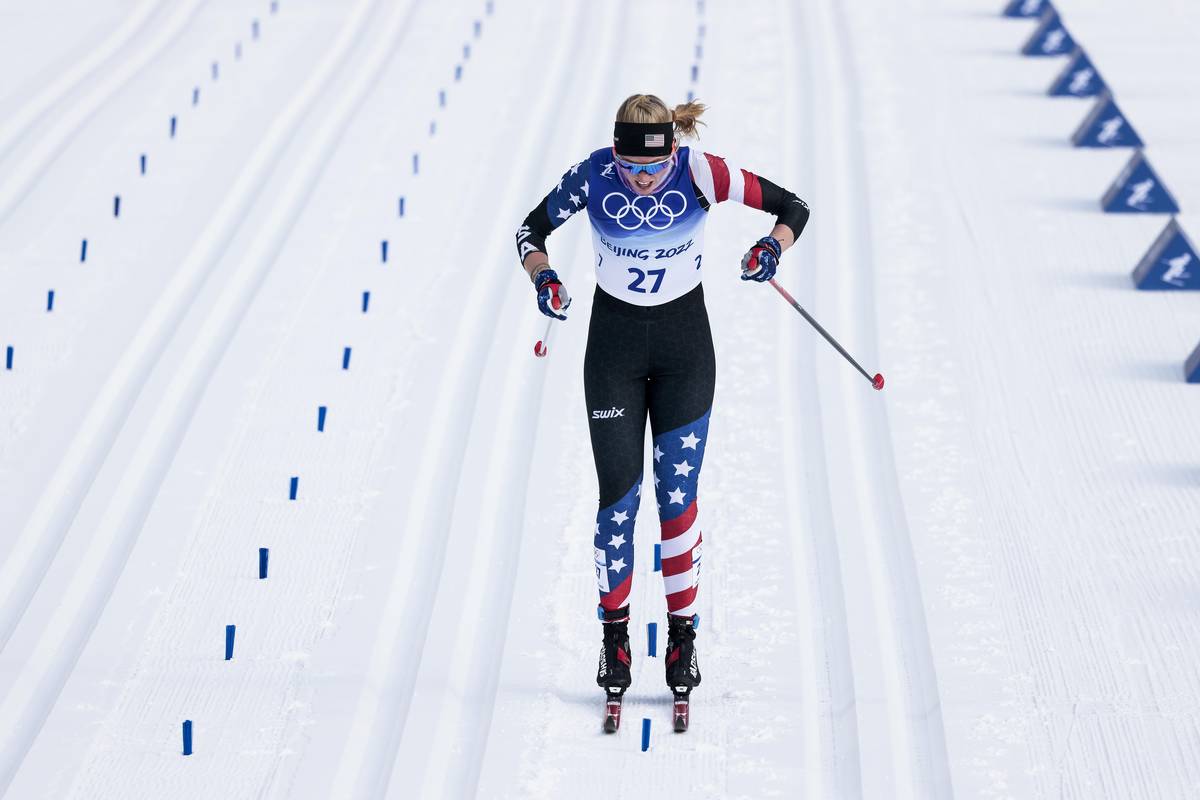
    Hailey Swirbul pushes to the finish of the 10 k individual start classic during the 2022 Olympic Winter Games. (Photo: NordicFocus)
  • Nordic Nation: Running to the Edge with Author and NYT Deputy Sports Editor Matt Futterman

    Nordic Nation: Running to the Edge with Author and NYT Deputy Sports Editor Matt Futterman

    If you’re an avid reader of The New York Times sports section, you’ve most likely read the work of writer-journalist Matt Futterman (50). Futterman is the Deputy Sports Editor at the NYT, a fan of nordic sports, and an avid runner who was slated to run the Boston Marathon this past Monday.

    Futterman’s love for endurance sports, running in particular, is evident as he peppers readers with in-depth running stories. He helped cover the recent downfall of Alberto Salazar and continues to keep on eye on anti-doping efforts during the Covid-19 pandemic.

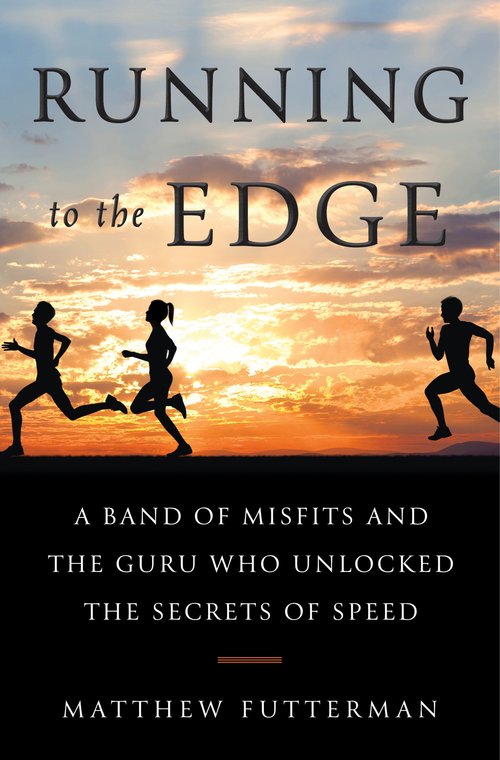
    Futterman also released a well-received book titled: Running to the Edge.

    The book, rendered down to its basics, is a meditation on Bob Larsen, a running coach Futterman asserts resurrected U.S. distance running. That premise is hard to argue with as Larsen jolted the San Diego running scene into national relevance, coached UCLA to NCAA titles, and ultimately honed his training philosophy in Mammoth, California as the coach of Meb Keflezighi and Deena Kastor. Both of these athletes were guided to Olympic marathon medals under the tutelage of Larsen.

    Futterman’s treatment provides a close up look into how Larsen changed the landscape of training methodology for distance running – and on his way left a legacy of grit and championships in San Diego as he rose through the coaching ranks.

    The book is a great read during this time of exercise containment. Futterman will help you dream big, even if for now, our sporting ambitions are reigned in.

    In this episode of Nordic Nation, we talk to Futterman about his book, his own running, and how the NYT covers cross-country skiing at the Olympics. We also mention two recent pieces from this past week. They are linked below.

    Berlin Marathon canceled.

    What will endurance races look like when they come back?

    Some of Futterman’s coverage on Alberto Salazar: For Salazar Whistle-Blowers, a Long Wait for a Satisfying Outcome, Nike to shut down Salazar’s Oregon Project.