

https://www.youtube.com/watch?v=Vkpm-L8GFtY&feature=youtu.be
With the recent release of VO2max data by the Norwegian Olympic and Paralympic Committee and Confederation of Sports, FasterSkier decided to explore similar research taking place in the U.S.
***
BOZEMAN, Mont. — Liz Stephen. Kris Freeman. Wendy Wagner. Torin Koos. The list of nordic skiers goes on. The list, though daunting to many, is simply a part of the project for Dr. Dan Heil.
Currently a professor and program leader of Health and Human Performance at Montana State University (MSU), Dr. Heil has been conducting research on VO2max for 25 years.
“My first research project as a Masters graduate student in Exercise Physiology evaluated changes in VO2max. That project was in 1990,” Heil wrote in an email.
Since then, Heil’s research spans from better hydration practices to energy expenditure predictions to determinants in race performance for junior and college skiers. Within the last five years, however, much of Heil’s research on nordic skiers has held a different perspective, one that’s 8-feet wide and 10-feet long.
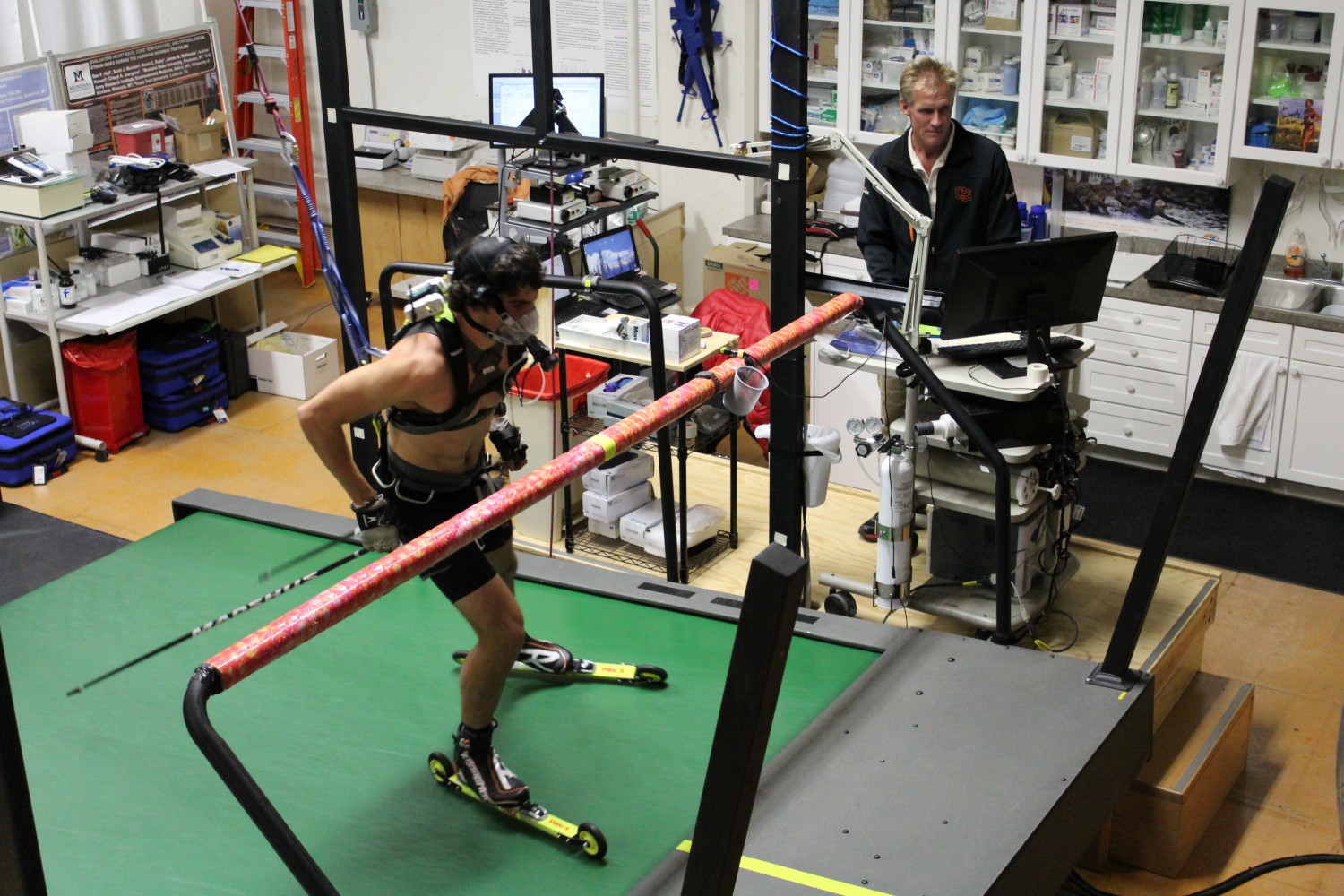
Given its dimensions alone, the new rollerski treadmill at the MSU Movement Science/Human Performance Lab (MSL) in Bozeman outmatches the lab’s previous VO2max research equipment.
Beyond increased size, the new treadmill — which the department received in 2010 by as a gift from a university dean — also reaches speeds of up to 25 miles per hour and inclines that range from a -10 to a +40 percent grade. Only five other treadmills of similar caliber are known to exist in the U.S. today. However, the oversized treadmill is not the only piece of equipment that makes Heil’s research unique.
“We call it an upper-body power ergometer … [it] was designed about ten years ago with a former grad student of mine, [Bowdoin College Nordic head coach] Nathan Alsobrook,” Heil said during an interview inside MSU’s performance lab.
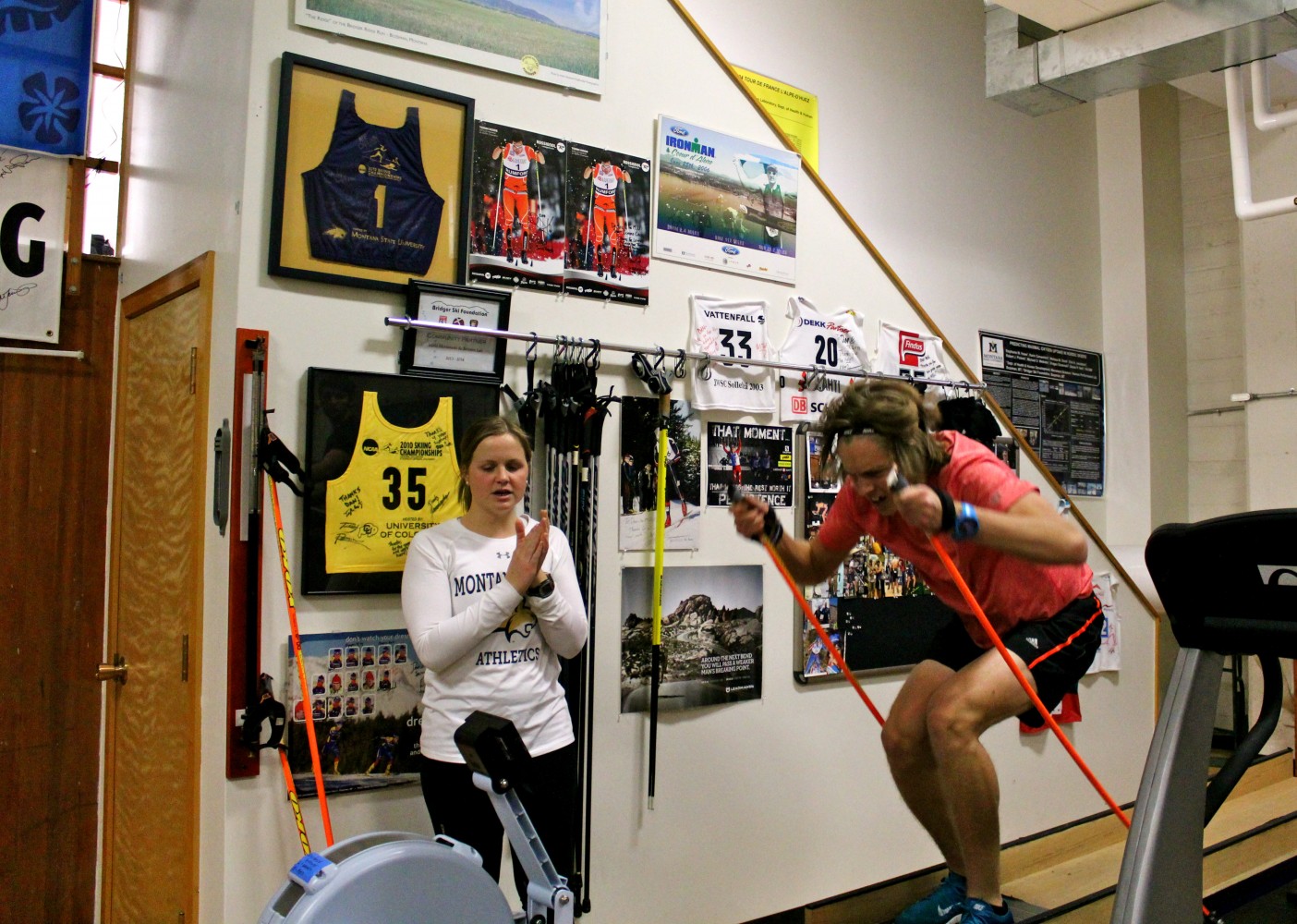
Essentially a rowing-machine-gone-double-pole, the aim of the invention, according to Heil, is double-pole simulation.
“The neat characteristic about this is that it integrates ski poles into the double-poling motion … Unless you have access to this lab and this ergometer, you don’t get upper-body power measures,” he explained.
But why bother with upper body power measures? In a predominantly endurance-driven sport, like nordic skiing, shouldn’t the emphasis be on an athlete’s VO2max?
“A high VO2max is never a disadvantage — Ever!” Heil wrote in the email. “With that said, however, there is only a relatively small window of improvement that each athlete can expect to gain with appropriate training. So the best strategy for training is to make sure that an athlete has optimal opportunity to realize their full V02max potential with training (which can take several years).”
In other words, an athlete’s VO2max, has the potential to change, but only to the extent that physiology and genetics allow.
Where does that leave cross-country skiers who want to continue to improve race performance past their peak VO2max?
According to Heil, power generation.
“What elite [nordic] athletes have been doing over the past decade or so, is a very intense focus on developing muscular strength and power to add on top of the decade or more of aerobic base they’ve already got,” Heil said.


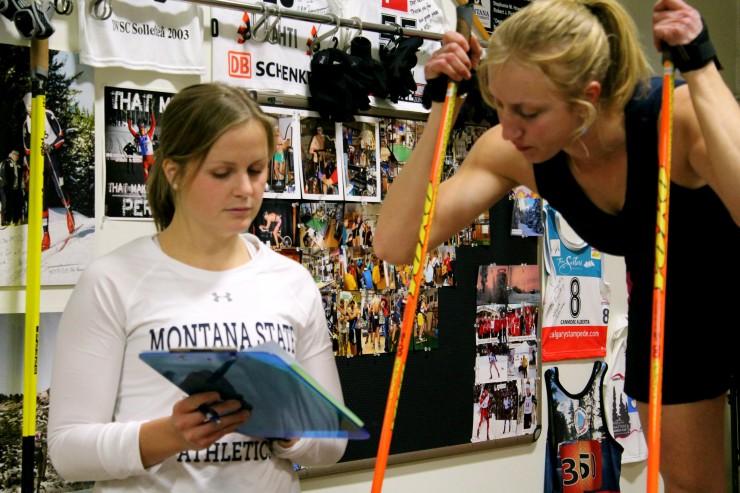

Unlike many endurance sports, cross-country skiing draws upon muscular strength, balance and coordination, as well as aerobic fitness.
For example, though elite distance runners and nordic skiers are often categorized as similar endurance athletes, Heil’s observations provide a notable distinction.
“One of the big differences between these two groups is that virtually all elite distance runners seem to have incredibly high VO2max values and tend to be similar in body size and shape,” he wrote. “Nordic skiers, in contrast, seem to be more varied in body size and shape and not have as consistently high VO2max values. Having a high VO2max is always going to be a benefit to an endurance athlete, but I think Nordic skiing has evolved to a point where advanced upper body strength and power are almost equally important to success.”
Heil’s current research with MSU graduate student and nordic skier, Lina Hultin of Örebro, Sweden, examines the relationship of race performance to rollerski treadmill VO2max and upper body power from a Concept2 SkiErg versus the MSL ergometer.
“Usually at least once, if not twice, and sometimes three times a year, we have the [MSU and Bridger Ski Foundation nordic] athletes come in and do a rollerskiing VO2max test that includes lactate threshold,” Heil said.
Using the numbers from these tests, Heil and Hulton will later look at correlations between the athletes’ test results and SuperTour race performances.
“Upper-body power is a good cumulative measure of the strength and power training, as well as the specific aerobic training, the rollerskiing, that the [athletes] have been doing, all in a very concise measure,” Heil said. “VO2max and the lactate threshold can be a little bit more in flux with how someone feels or if are they’re on the edge of getting sick. If [an athlete is] interested in being able to track their training progress, maybe all they need to be able to track is changes in upper-body power, not VO2max.”
“I think Nordic skiing has evolved to a point where advanced upper body strength and power are almost equally important to success.” — Dr. Dan Heil, professor and program leader of Health and Human Performance at Montana State University
In the interest of time, upper-body strength might be the way to go when tracking performance and training progress in the future. However, in the interest of science and skiing, V02max and threshold remain dear to the heart.
“From a coaching standpoint, we use the threshold data more than the VO2max data when were planning training,” said MSU Nordic Head Coach Matt Johnson.“They can use their threshold data to tailor individual workouts when doing intervals.”
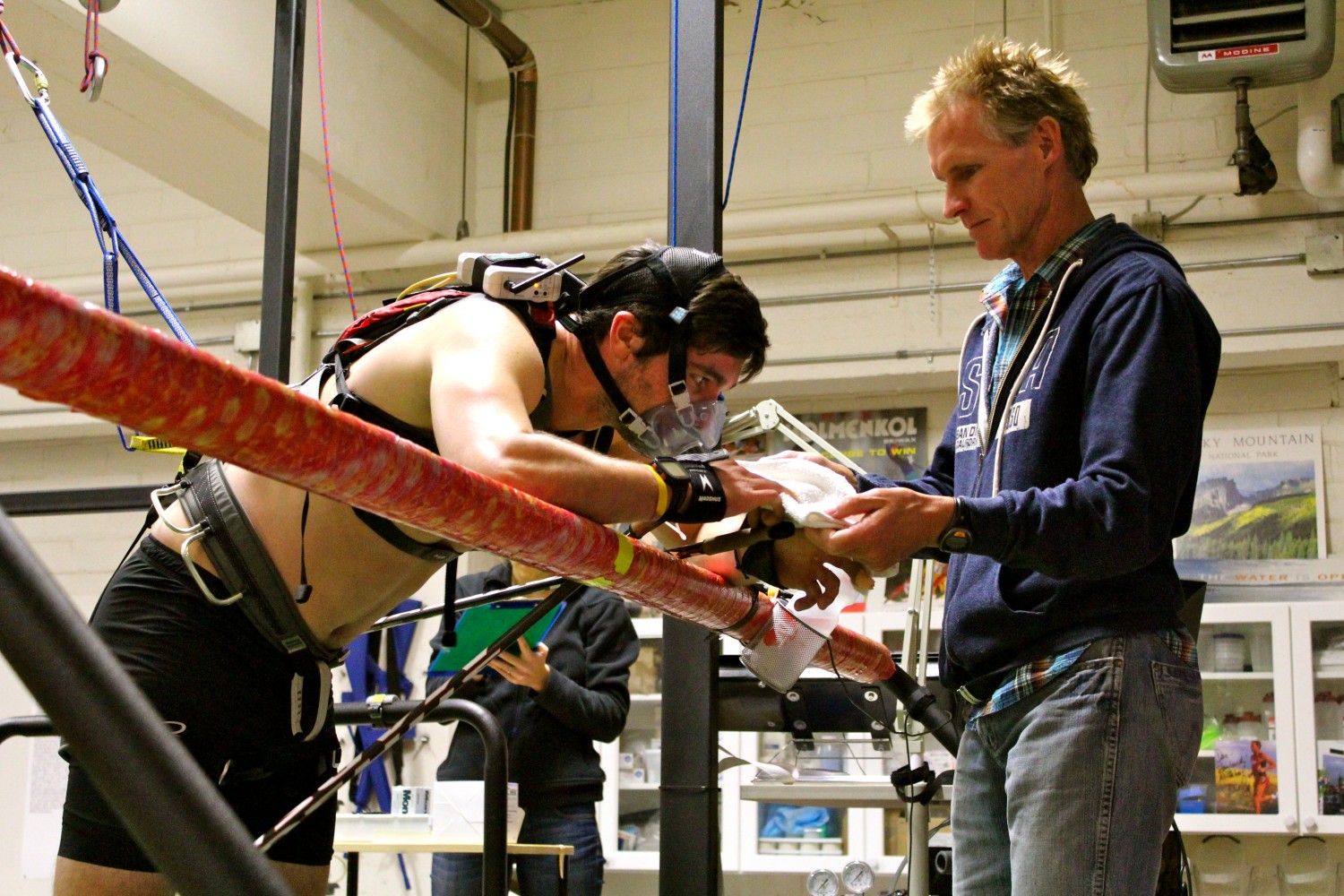
BSF elite athlete Jennie Bender also pointed out that the rollerski treadmill “is a great way to work on technique and really pay attention to your body mechanics because it’s such a controlled environment,” she said. “It’s kind of like skiing in the dark or running in the dark. You’re more focused on what your body is doing and you don’t have to watch out for any obstructions.”
Yes, thankfully — for the athletes at least — Heil has not developed virtual potholes for his tests … yet.
What Heil has launched is the continual promise of questions and thought about nordic athletes and sport.