Tag: Matthew Johnson

  • Several RMISA Schools Currently Without an Active Nordic Coach

    Several RMISA Schools Currently Without an Active Nordic Coach

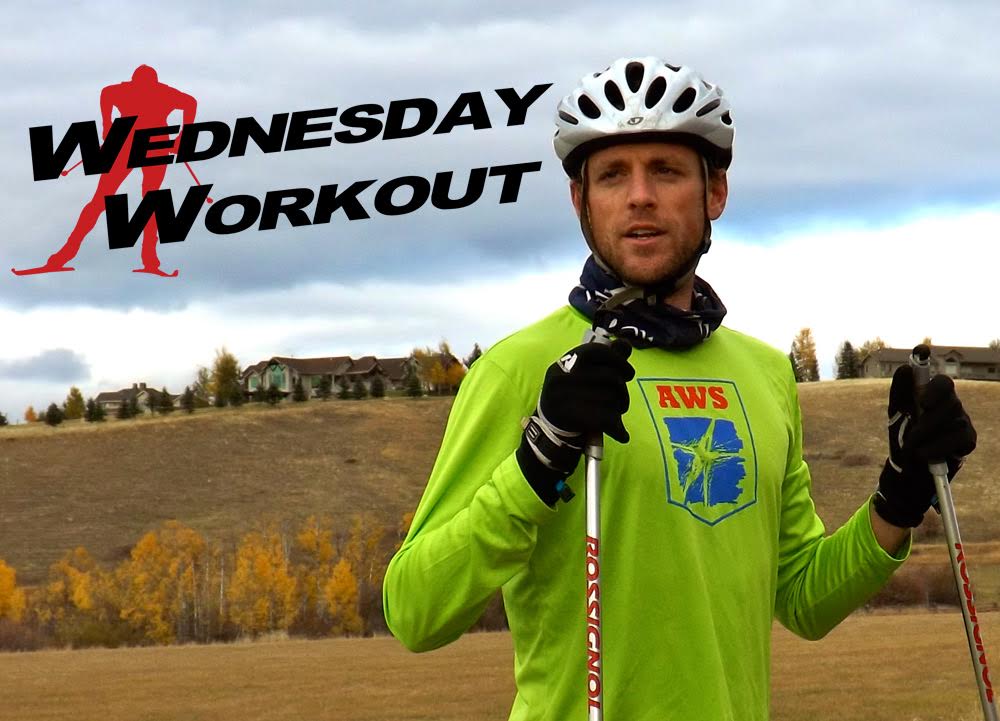
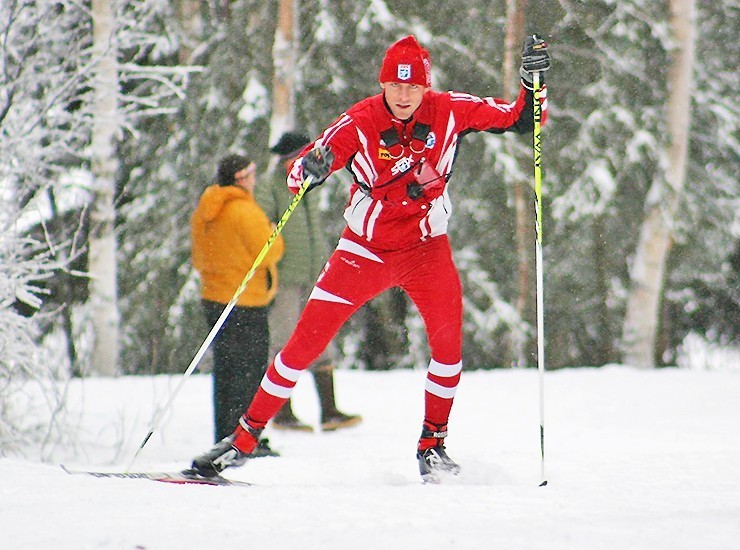
    Matthew Perry Johnson, shown here in an earlier position with Alaska Winter Stars, began working as the new head coach for the Montana State University Ski Team in August 2015. (Photo: Montana State University)

    Multiple schools in the Rocky Mountain Intercollegiate Ski Association are experiencing flux with their nordic coaching staff going into the 2020/2021 ski season, according to representatives from each school. The schools in question are the University of Alaska Anchorage, University of Utah, and Montana State University, all of which have well-established nordic programs that placed highly at last year’s NCAA Championships. Neither Anchorage nor Montana State currently has anyone filling this position. Utah has two nordic coaches on staff, but they are both subject to furloughs of unknown length due to budget shortfalls.

    University of Alaska Anchorage, or UAA, has multiple problems for the future: The Board of Regents is meeting today and tomorrow to vote on a proposal from the chancellor and athletic director to cut both the men’s and women’s ski teams after this academic year. But it appears to have a more immediate problem for the present: The school does not officially have anyone currently coaching the nordic team.

    The current roster page for the UAA ski team lists Marine Dusser Bjornsen as the assistant nordic coach, and Adam Verrier as the volunteer assistant coach. But Verrier is just that – while an enthusiastic volunteer assistant, he is not employed by UAA directly. And Dusser Bjornsen is no longer listed in the online directory for UAA employees, which does list both Head Ski Coach Sparky Anderson and Assistant Alpine Ski Coach Anna Berecz.
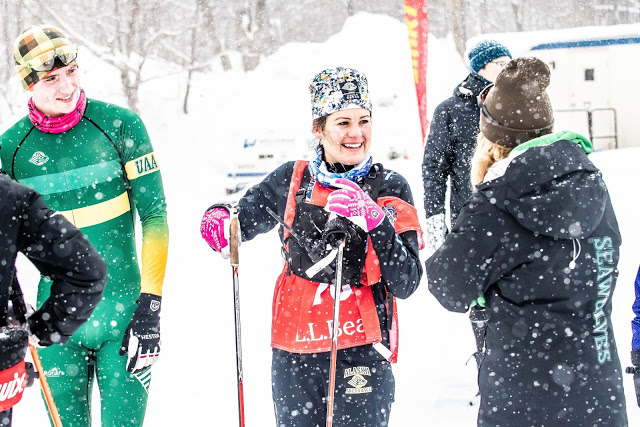
    Marine Dusser was named RMISA Nordic Coach of the Year in her first year leading the UAA Seawolves. (Photo: Adam Verrier)

    Trond Flagstad was announced as the new UAA head nordic coach in May 2019, and was set to “begin his duties on August 18th,” 2019. What appears to be his official UAA bio page is still available online (albeit at a site not hosted by UAA). Nonetheless, Flagstad does not seem to have publicly coached at UAA during the 2019/2020 ski season or academic year. He is not listed as a current UAA employee in the online directory.

    “Our nordic ski position is currently vacant and we are working through the hiring process,” a UAA media relations representative wrote to FasterSkier on Thursday.

    There is no ski coaching position currently listed on the UAA jobs site.

    At the University of Utah, meanwhile, Athletic Director Mark Harlan announced last week that the school would furlough every employee in its athletic department, for periods ranging from 1 to 8 weeks. The news was widely reported by, among others, the Deseret News, Sports Illustrated, and local TV station KUTV.

    In a September 5 tweet, Harlan wrote, “All staff and coaches will furlough a minimum of 1 week to a maximum of 8 weeks.Head coaches, myself and cabinet will furlough for 2 weeks. We are fully operational as we stagger the schedule through Jan 1.  Sharing this sacrifice as a team allows us to emerge stronger than ever.”

    Following the decision of the Pac-12 conference to postpone all fall sports – in particular, the main revenue sport of football – Harlan told the Deseret News in August that the decision could lead to the school losing $50 to $60 million in income against an annual budget of $91 million.

    Everyone in the athletic department is furloughed anywhere from 1-8 weeks,” wrote Utah media relations representative Joseph Feldman to FasterSkier on Thursday. “The priority on when those furloughs are happening is to make sure the student-athletes are still operating as normally as they can and still have all of the resources they need. The rest of the department will be fully functional as the furloughs are staggered until January 1.”

    Utah media relations representative Paul Kirk did not directly answer specific questions about when Director of Skiing Fredrik Landstedt and Head Nordic Coach Miles Havlick will be or have been furloughed, or for how long the two men will be or have been furloughed. Kirk wrote to FasterSkier on Saturday, “We are unable to share specifics about when any staff member or coach is on furlough, but when an individual is on furlough his or her email out of office reply may reflect that.”

    It appears from Harlan’s tweet and Feldman’s statement that both Landstedt and Havlick have been or will be furloughed for some period of between 1 to 8 weeks, at some point between last week and January 1, 2021. If either or both of them is treated as a “head coach” under Harlan’s standards, then his furlough is or will be for 2 weeks.

    On Sunday, through a spokesman, Landstedt stated, “The ski coaches are staggering their furloughs during the fall, and one or more coaches will be working at all times during this period. The University of Utah Ski team has been practicing with coaches present since the second week of school.”

    Counting alpine coaches and student assistant coaches, Utah has a healthy six coaches currently listed on its roster. 400 miles to the north, however, Montana State University only has two people listed as ski coaching staff: Kevin Francis, the head alpine coach, and Emily Danza, assistant alpine coach. (The “staff” section for the women’s skiing roster looks the same.)
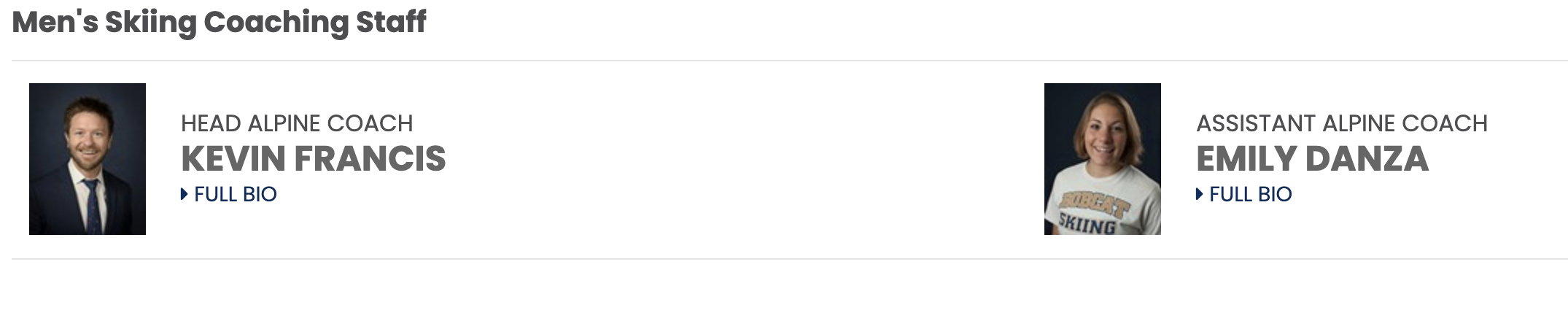
    Screenshot of MSU coaching staff page as of Sept. 9, 2020.

    But earlier this summer (on June 22, the last date the ski roster page was archived by the Wayback Machine), the staff section looked like this:
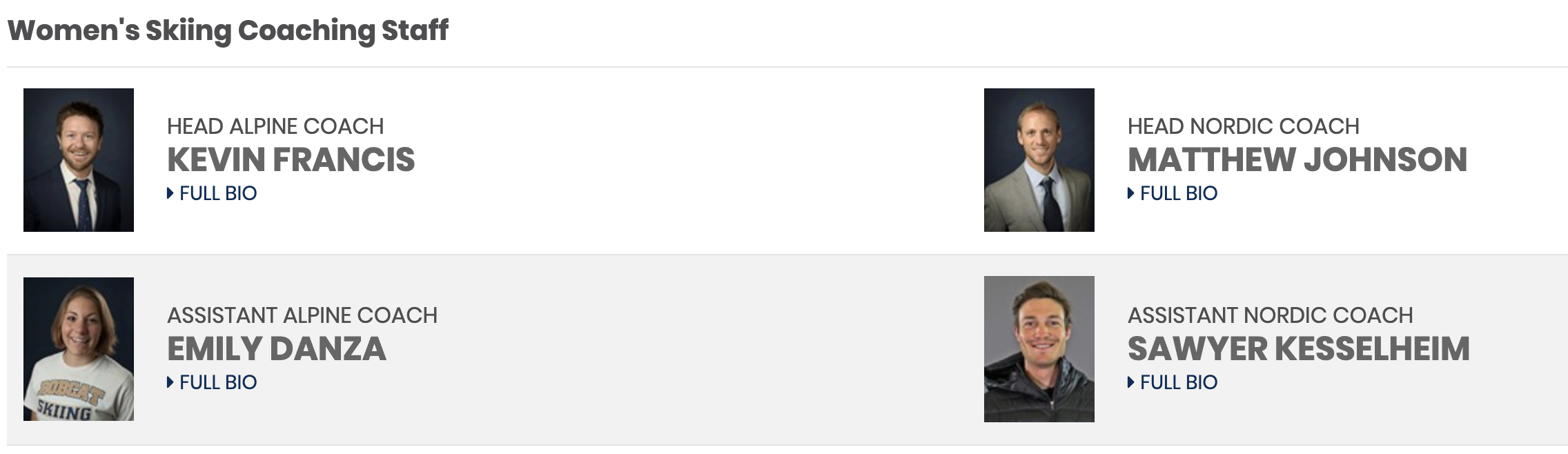
    Screenshot of MSU coaching staff page, as archived at the Internet Archive: Wayback Machine on June 22, 2020.

    That’s Matthew Johnson and Sawyer Kesselheim, both recently associated with the MSU nordic team but no longer there.

    The Montana State athletic department confirmed in a Thursday email to FasterSkier that both men had moved on: “We received a letter of resignation from Matt Johnson last week. Montana State is currently working with its HR Department to search for a new head coach. Sawyer Kesselheim was not planning on returning this season.”

    There is no ski coaching position currently listed on the MSU jobs site.

    As of Thursday morning, Johnson was still listed as the head nordic coach in the MSU online directory:

    Screenshot of MSU faculty and staff directory on Sept. 10, 2020.

    He also still lists his current job as MSU head nordic coach on Facebook and LinkedIn.

    Attempts to contact Johnson on Wednesday and Thursday for comment were not immediately successful.

    Montana State placed seventh at this year’s NCAA Championships. UAA was sixth, and Utah was first. Of the six RMISA schools that scored points in the nordic race at this year’s NCAA Championships – UAA, University of Alaska Fairbanks, Colorado, Denver, MSU, and Utah – fully half of them are without an active nordic ski coach at this point in the season. It further appears that Denver (second at this year’s NCAAs), which last season employed Rogan Brown as an assistant nordic coach, only has head nordic coach Toni Roponen at present, with no assistant coach for the nordic team.

    This story has been updated with additional information about the timing and nature of furloughs at the University of Utah.

  • NCAA Champs Day 1: Strøm Makes CU History; Miller Nabs Individual Win for MSU

    NCAA Champs Day 1: Strøm Makes CU History; Miller Nabs Individual Win for MSU

    Note: FasterSkier is seeking photos from the nordic races at 2016 NCAA Skiing Championships. Please email info@fasterskier.com with photos of top finishers or for more info.

    ***

    Two juniors, one from Montana State University (MSU) and the other from the host team, the University of Colorado-Boulder (CU), claimed the ultimate collegiate titles on Thursday at 2016 NCAA Skiing Championships in Steamboat Springs, Colo.

    It was the first of two days of nordic racing at Howelsen Hill, and Anika Miller (MSU) and Mads Strøm (CU) emerged as the individual winners in the 5- and 10-kilometer freestyle races, respectively.

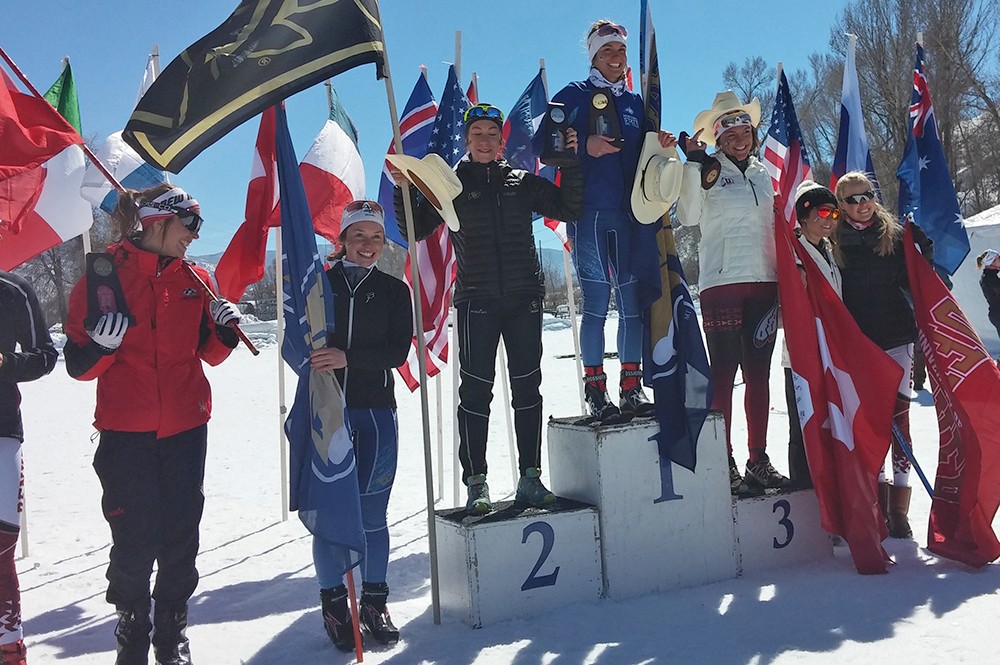
    The women's 5 k freestyle podium on the first day of nordic racing at 2016 NCAA Skiing Championships in Steamboat Springs, Colo. Anika Miller (MSU) placed first, Petra Hyncicova (CU) finished second and Utah's Sloan Storey took third. (Photo: MSUBobcats.com)
    The women’s 5 k freestyle podium on the first day of nordic racing at 2016 NCAA Skiing Championships in Steamboat Springs, Colo. Anika Miller (MSU) placed first, Petra Hyncicova (CU) finished second and Utah’s Sloan Storey took third. (Photo: MSUBobcats.com)

    Miller led four Bobcats in the top 10, winning the women’s 5 k freestyle individual start in 13:06.1. Her teammate, Cambria McDermott, placed fourth, 9.4 seconds back.

    “When I finished, I had no idea how I’d done actually until my teammates jumped on me and were screaming,” Miller told NCAA.com. “I had no idea. I just started crying.”

    A native of McCall, Idaho, Miller bested second-place finisher Petra Hyncicova (CU) by 7.9 seconds for the win, becoming the first MSU skier to win an individual title since 1978, when Dan Brelsford (now the director of skiing) won the slalom race, according to an MSU press release. She is also the first female skier to win an individual title for MSU.

    Just one-tenth of a second behind Hyncicova, Sloan Storey (University of Utah) reached the final step of the podium in third.

    An NCAA champion in 2014, Strøm achieved his second freestyle title in the men’s 10 k freestyle on Thursday in 22:06.8. His time proved to be 10.6 seconds faster than runner-up Ian Torchia of Northern Michigan University (NMU). Denver University’s Moritz Madlener placed third (+19.8).

    For Strøm, the win was his fifth in a row and seventh total this season, according to a CU press release.

    “It feels awesome, it feels amazing,” the 24-year-old Norwegian told CUBuffs.com.  “For ten months this has been my goal and to accomplish my goal is amazing. I was so nervous. I knew there was going to be a mass crowd out. I just had to find good skis, good pacing, and push it as hard as possible. It was definitely the best win of the year. Pulling it off when it matters the most is great.”

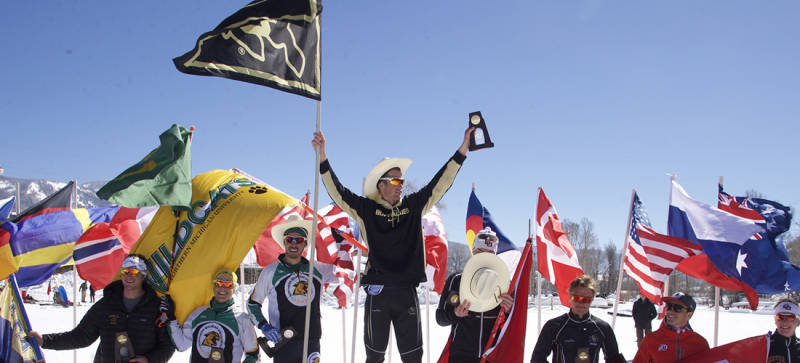
    Mads Strøm of the University of Colorado-Boulder celebrates his win in the men's 10 k freestyle on Thursday at 2016 NCAA Championships in Steamboat Springs, Colol. (Photo: Jamie Schwaberow/NCAA via CUBuffs.com)
    Mads Strøm of the University of Colorado-Boulder celebrates his win in the men’s 10 k freestyle on Thursday at 2016 NCAA Championships in Steamboat Springs, Colol. (Photo: Jamie Schwaberow/NCAA via CUBuffs.com)

    Strøm explained he had to “push it all the way to the end,” so hard that he was physically ill across the line.

    “I was so tired in the end,” he added. “As soon as I crossed the finish line, I had to lie down.”

    With his seventh win, Strøm is the winningest male nordic skier in CU history. He exceeded the amount of wins of Per Kare Jakobsen (who won six races in 1989) and Ove Erik Tronvoll (six in 1999). It was also the 89th individual win by a Buff, the most of any school in NCAA history, the CU release stated.

    For women’s runner-up Hyncicova, a 21-year-old sophomore from the Czech Republic, second stood as her best result of the season and matched her career best.

    “It was so hard, but it was really nice in the end. I didn’t hope for getting second, so it’s really nice,” Hyncicova told CUBuffs.com.  “I really didn’t have any idea what I was hoping for. In each race you want to win, but I didn’t expect that I would win here because I was always around fifth [place] this season.  I went to Romania a couple of weeks ago [for U23 World Championships], so I was really tired and didn’t feel that great.

    “I was really nervous before the start,” she added. “But once I saw everyone here — the alpine’s and everyone who cheered for us — I was like, ‘Yes I have to do it. I have to do it for the team.’ ”

    Team Standings (through 4 races):

    1. Montana State: 282
    2. Utah: 264
    3. Denver: 263
    4. Colorado: 214.5
    5. Vermont: 154
    6. New Mexico: 139.5
    7. Dartmouth: 126
    8. Alaska Anchorage: 124
    9. Northern Michigan: 122
    10. Middlebury: 81

    “I feel somewhat relieved but happy,” CU Nordic coach Bruce Cranmer said.  “Compared to racing, coaching is way more stressful.  You are worried about everyone and getting the right wax. I am still trying to calm down. I get so fired up.

    “Mads did great,” Cranmer added. “The guy that got second [Torchia] is one of the top U.S. [skiers] that went to World Juniors. [Mads] was on really good form before he got here, so I had high expectations without trying to get too caught up.

    “As for Petra, we were hoping for a top five finish. That is we thought she was capable of.  … For her to finish in second is awesome. … She does really well in skating.”

    Late last month, Torchia led the U.S. junior men in Romania with his top individual result of the week in 15th in the 15 k freestyle. It was his second-best at Junior Worlds since placing 11th last year in the 20 k skiathlon.

    Following Torchia in second, Northern Michigan had three in the top 10 with Adam Martin in fourth (+28.4) and Jake Brown in ninth (+56.1).

    “We knew that if we had a good day, all three of those guys were capable of winning and we just didn’t know which one,” said NMU Head Coach Sten Fjeldheim told NCAA.com. “We weren’t shocked or surprised that they’re all in the top 10, but you never know at altitude.”

    The base elevation of Steamboat Springs’ Howelsen Hill is about 6,700 feet.

    Through four events (two cross-country and two alpine) at 2016 NCAA Championships, Montana State leads the team standings with 282 points and Utah is second with 264. Denver is a close third, with 263 points after two days of racing. With a win and second-place finish on Thursday, CU moved into fourth in the standings, with 214.5 points.

    MSU’s previous team best was seventh, which it achieved last year with 259 points. The University has already exceeded that total at the halfway point of the championships. Racing wraps up Saturday with 15/20 k classic mass starts.

    “The momentum definitely helps our mindset, but the bottom line is we’ve got to go out and race the same way that we race everyday. That’s the way to succeed,” MSU Head Coach Matthew Johnson told NCAA.com. “Trying to mix it up and change it for the championship isn’t going to go well. Coming in with too much excitement isn’t going to go well, but skiing like we’re in the lead and skiing like we’re champions is going to do well for us.”

    5/10 k freestyle results | with splits

    Top 10 men: 

    1. Mads Strøm (CU) 22:06.8
    2. Ian Torchia (NMU) +10.6
    3. Moritz Madlener (DU) +19.8
    4. Adam Martin (NMU) +28.4
    5. Sawyer Kesselheim (MSU) +28.6
    6. Petter Reistad (CU) +35.1
    7. Nick Hendrickson (DU) +40.6
    8. Lars Hannah (DU) +50.1
    9. Jake Brown (NMU) +56.1
    10. Jack Hegman (UVM) +56.9

    Top 10 women:

    1. Anika Miller (MSU) 13:06.1
    2. Petra Hyncicova (CU) +7.9
    3. Sloan Storey (Utah) +8.0
    4. Cambria McDermott (MSU) +9.4
    5. Emilie Cedervaern (UNM) +12.8
    6. Natalia Mueller (Utah) +13.1
    7. Taeler McCrerey (DU) +13.4
    8. Linn Eriksen (DU) +13.6
    9. Ane Johnsen (CU) +14.7
    10. Mary Kate Cirelli (UVM) +17.5
  • Wednesday Workout: Uphill Double-Pole, Specific Strength with MSU (with Video)

    Wednesday Workout: Uphill Double-Pole, Specific Strength with MSU (with Video)


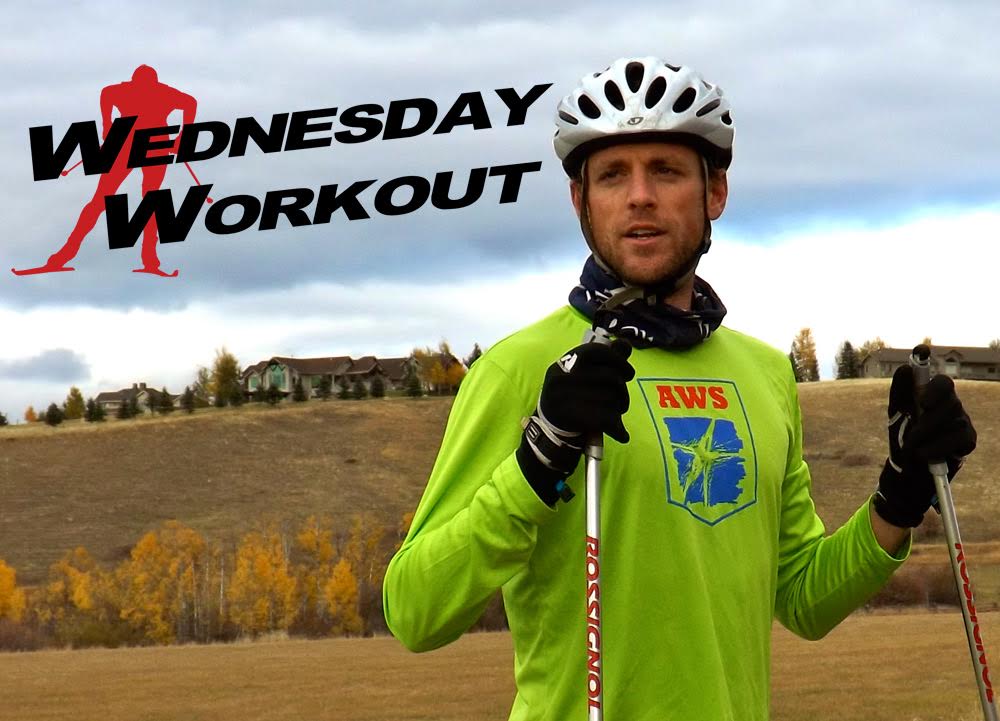
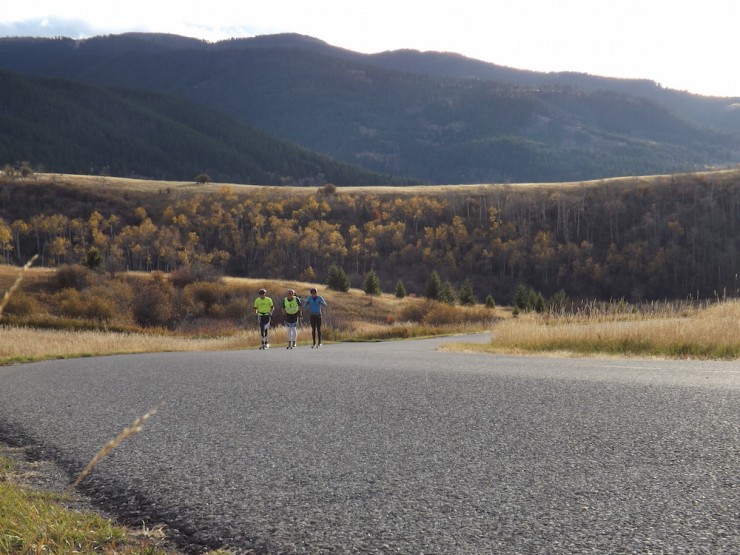
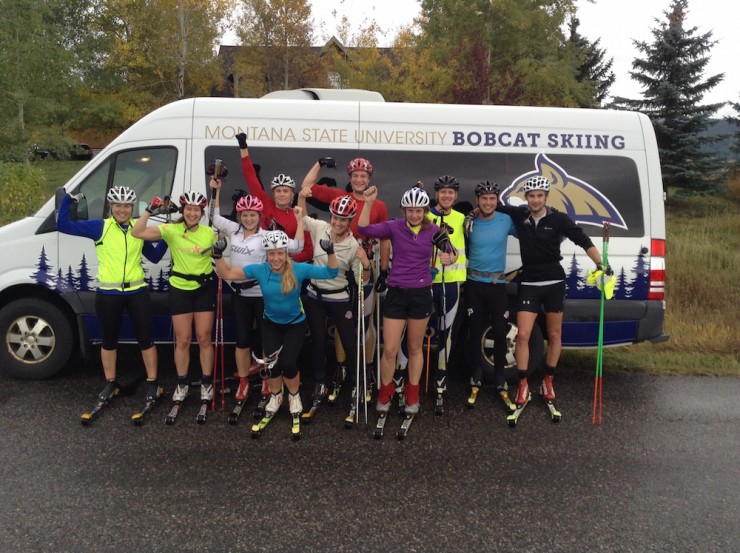
    Montana State University (MSU) Nordic Head Coach Matt Johnson before an uphill double-pole strength session in late October at Triple Tree Ranch in Bozeman, Mont.
    Montana State University (MSU) Nordic Head Coach Matt Johnson before an uphill double-pole strength session in late October at Triple Tree Ranch in Bozeman, Mont.

    For this week’s workout, FS tagged along during an uphill double-pole session with the Montana State University nordic team on Oct. 27. Reporter Gabby Naranja did a few sets on bike, which she found equally fun and thrilling.

    ***

    BOZEMAN, Mont. — The one workout no skier should sacrifice? Specific strength. At least, according to Matthew Johnson, head coach of the Montana State University (MSU) nordic team.

    “We try to do a specific arm strength workout once a week,” said Johnson, who joined the MSU Bobcats in June after the resignation of former head coach Kristina Trygstad-Saari.

    The importance of a double pole, specific-strength workout, Johnson explained, goes beyond just grinding your arms to a pulp in order to climb up a hill. These workouts are about “figuring out how to use the technique and the strength that you’re finding in the gym and applying it to your poling motions out here in varying types of terrain,” he said during an MSU training session last week.

    Of course, that in no way negates the noodle-arm effect brought on by most double pole, strength-specific workouts.

    “Sometimes it is about getting a consistent steep grade and working it, making your arms tired and then just being able to hold it [while] keeping your technique together and keeping your core strength together,” he said.

    As a cross-country skier, arm strength is just part of the game.

    “Rollerskis are great imitations of skis, but they’re not perfect,” Johnson said. “[Therefore] a lot of our classic skiing is going to be arm specific, strength specific, because that’s a really important thing with actual skiing.”

    For MSU skiers at least, the arms do not go neglected.

    “We want to develop a team that trains together and races together,” Johnson said. “We also want to see an upward result trend for every athlete right through [U.S. SuperTour] Spring Series [in March]. Since our college season doesn’t start until the 10th of January or so, we’re really pushing the fitness aspect of this all the way through November into December.”

    According to Johnson, it’s workouts like this that will lead to better ski performances, particularly with the college race schedule in mind.

    “It’s really easy to waste time rollerskiing,” he said. “[When] you do a double pole or a ski session you’re doing the same motion thousands of times. Every single time you practice that motion you’re either making yourself better at it or you’re ingraining bad habits. Like they say in music, practice makes permanent, so we try to practice good permanence.”

    Especially for a college athlete with limited time to ski, “practicing good permanence” is important.

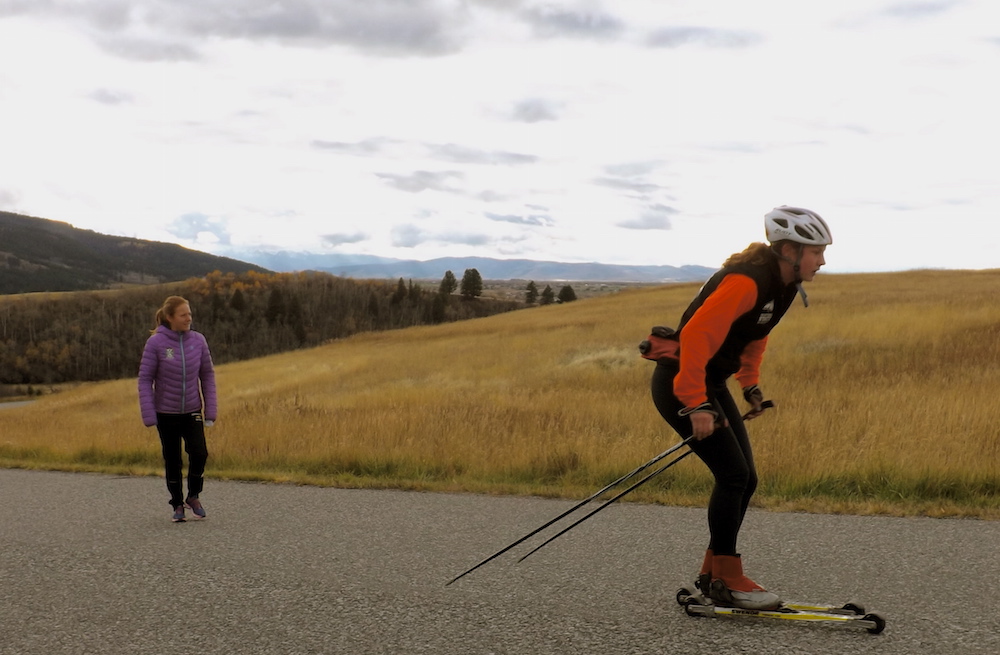
    MSU assistant coach Anja Gruber (l) with MSU skier Maria Gesior during an uphill double-pole workout.
    MSU assistant coach Anja Gruber (l) with MSU skier Maria Gesior during an uphill double-pole workout.

    “College skiing is so incredibly hard sometimes because there’s a huge time constraint with school and social life,” explained Anja Gruber, former University of Vermont (UVM) college ski racer, two-time NCAA champion, UVM business-school valedictorian, and current assistant coach for the MSU nordic team. “I don’t think anybody could get through college racing on their own. It’s really important to be part of a team with good energy.”

    And despite a recent high turnover of coaches, the MSU nordic team maintains an upbeat outlook.  Super-senior Sawyer Kesselheim of Bozeman, Mont., indicated that he would like to see MSU men’s nordic “consistently have three guys place in the top ten at races.”  When asked about Johnson, Kesselheim spoke favorably of the new coach.

    “I really like Matt,” he said. “He’s super focused, organized, and professional. He has good workout plans and keeps the workouts exciting.”

    This enthusiasm extends into MSU’s newer team members as well. “It’s been great having Matt coach us,” said freshman Sarah McCandless from Jackson Hole, Wyo. “He’s got great positive energy.”

    Whether or not Johnson’s athletes actually have fun during these workouts, the benefits are undeniable.

    “We’re dealing with a group of athletes who are here to work hard,” Johnson said. “It’s a big responsibility being on a team at a school like this and as they expect a lot of us, we expect a lot of them. There are a lot of moving parts, so you have to be creative, flexible, and on top of things, motivated.”

    The Workout

    Warmup: 25-30 minutes easy Level 1 skiing double pole and double-pole kick

    The Set: 2-4 times double pole up a 3 k hill. Johnson suggests “finding something with some rest so you can recover and feel the difference between the different [transitions].”

    Purpose: To figure out how to apply gym strength to double pole motions in varying types of terrain

    Goal: Rather than speed, focus on maintaining correct double pole body position throughout the hill while in a fatigued state

    Cool Down: 25-30 minutes easy Level 1 skiing