Tag: Matthew Neumann

  • Sunday Rundown: Falun, Duszniki-Zdrój, & The Marcialonga (Updated x4)

    Sunday Rundown: Falun, Duszniki-Zdrój, & The Marcialonga (Updated x4)

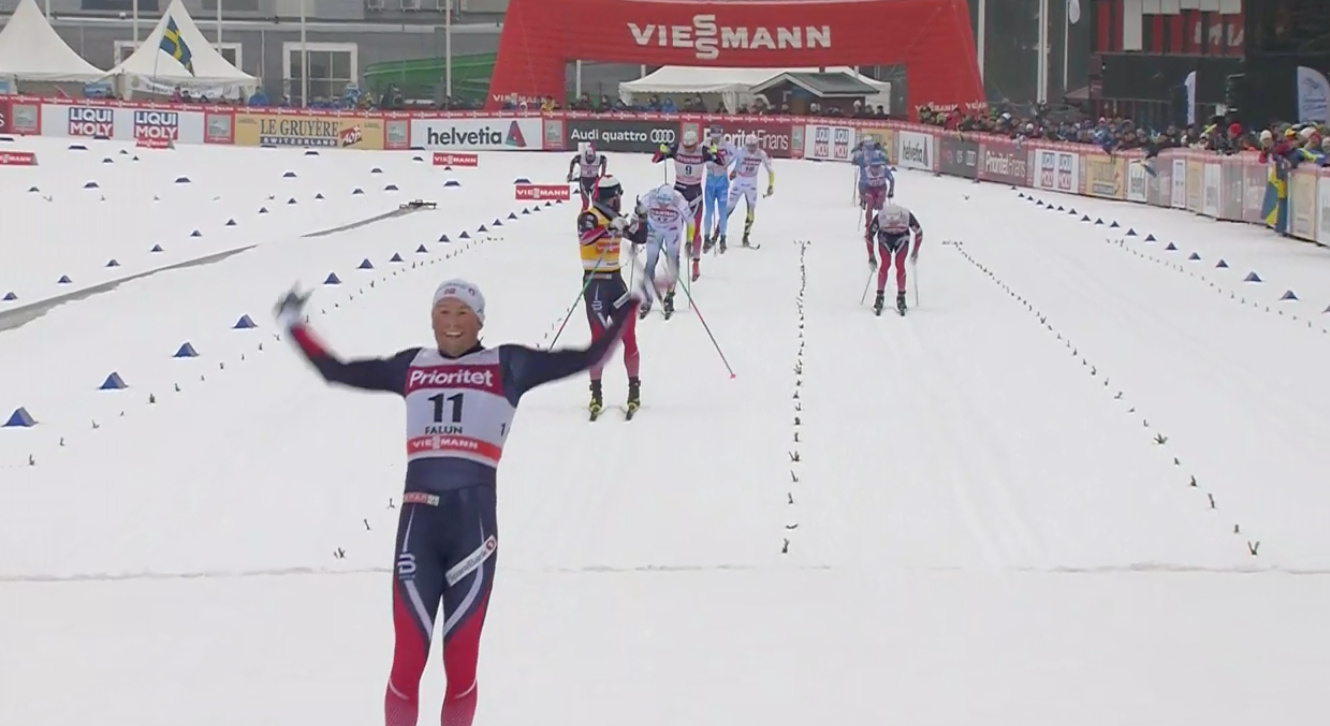
    Emil Iversen celebrates his win in the 30 k classic mass start in Falun, Sweden, on Sunday. Norwegian teammate Martin Johnsrud Sundby finished second and Sweden's Calle Halfvarsson third.
    Emil Iversen celebrates his win in the 30 k classic mass start in Falun, Sweden, on Sunday. Norwegian teammate Martin Johnsrud Sundby finished second and Sweden’s Calle Halfvarsson third.

    FIS Cross-Country World Cup (Falun, Sweden): 15 / 30 k classic mass start

    Women’s report | Men’s report

    In the women’s 15-kilometer classic mass start on Sunday, Norway swept the podium with Marit Bjørgen taking the win in a time of 41:28.8 in Falun, Sweden. Crossing just half a second behind her was her teammate, Ingvild Flugstad Østberg in second place. Rounding out the podium was Heidi Weng in third (+8.1).

    American Jessie Diggins was the first to cross the line for the U.S. in 10th (+1:37.5). Three other U.S. women finished in the top 30, with Sadie Bjornsen finishing 21st (+2:43.6), Rosie Brennan 24th (+2:57.0), and Liz Stephen in 29th (+3:24.5).

    Just outside of scoring World Cup points was American Caitlin Patterson in 32nd (+3:47.6) and Ida Sargent in 34th (+4:02.8). Canada’s Cendrine Browne finished 46th (+5:41.4) and American Liz Guiney 49th (+6:22.6).

    After losing the skate sprint yesterday in a photo finish to Italy’s Federico Pellegrino, Emil Iversen ascended to the top step of the podium in the men’s 30 k classic mass start on Sunday in Falun.

    The Norwegian was often near the front, but hadn’t tried to lead a breakaway like his teammates Martin Johnsrud Sundby and Sjur Røthe did earlier in the race. In the final two kilometers, Sundby – the overall World Cup leader – put in a sprint to try to drop the field. But Iversen caught up, drafting his veteran teammate into the stadium. In the final up-and-over before the finish line, Iversen made a pass and then accelerated down the finishing stretch to beat Sundby by 1.14 seconds.

    “I got motivation from yesterday’s last 20 meters,” Iversen told FIS in a finish-line interview. “So today I fought all the way, and I was really stronger. It is amazing for me to be second yesterday and first today. I’m really proud of that.”

    Calle Halfvarsson, who had been falling off the back of the lead pack just a few kilometers earlier, managed to get back to the front and claim third place for Sweden (+1.72 seconds) in a photo finish with Røthe (+1.76 seconds). Niklas Dyrhaug was next (+2.52 seconds) to give the Norwegian men’s team four in the top five.

    In his return to the World Cup stage, Norway’s Petter Northug finished 31st (+3:10.6).

    Alex Harvey was the lone Canadian on the start line. After skiing near the front of the field for the early part of the race he was dropped by the lead pack in the final kilometers, finishing 15th (+1:17.5).

    Erik Bjornsen and Noah Hoffman took 35th and 37th places for the United States, finishing +3:30.8 and +3:59.8, respectively. SuperTour leader Matthew Gelso — familiar with the Falun course after competing in 2015 World Championships — finished 44th (+5:23.6), and Andy Newell placed 53rd (+7:45.3).

    Results: Men | Women

    ***

    IBU Open European Championships (Duszniki-Zdrój, Poland): Single mixed & mixed relay
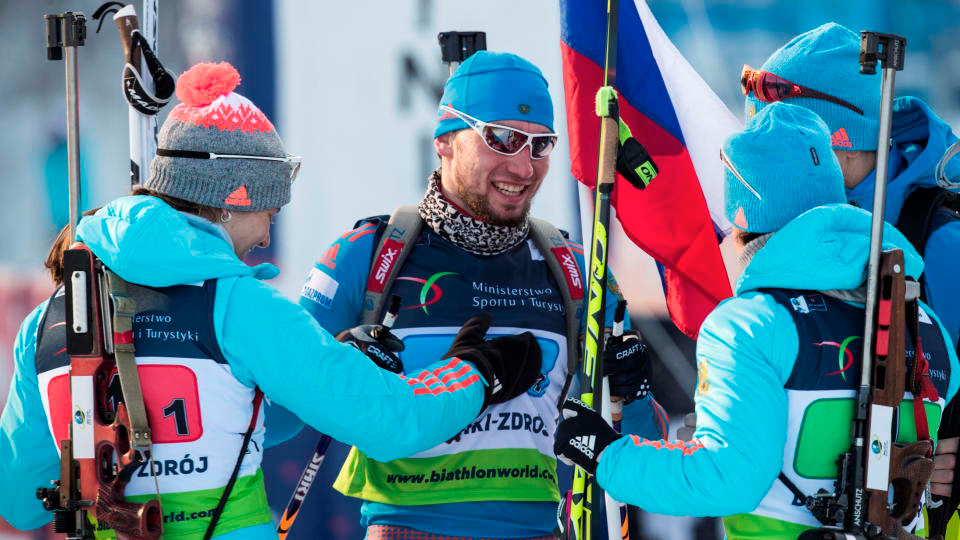
    Russia’s Alexander Loginov (center) is greeted at the finish by his teammates Irina Starykh, Svetlana Sleptsova and Alexey Volkov after anchoring his team to the gold medal in the mixed relay at the 2017 IBU Open European Championships in Duszniki-Zdrój, Poland. (Photo: IBU)
    Russia’s Alexander Loginov (center) is greeted at the finish by his teammates Irina Starykh, Svetlana Sleptsova and Alexey Volkov after anchoring his team to the gold medal in the mixed relay at the 2017 IBU Open European Championships in Duszniki-Zdrój, Poland. (Photo: IBU)

    [UPDATED] The Russian victory in the final 2 x 6 + 2 x 7.5-kilometer mixed relay event of the 2017 International Biathlon Union (IBU) Open European Championships in Duszniki-Zdrój, Poland, was only briefly in doubt, when Alexander Loginov skiing the anchor leg required all spares in his prone shooting stage. But with his final shot he managed to also hit that target to avoid the penalty lap, leaving the range with a lead of more than 30 seconds.

    Loginov then did not need any spares in the last standing stage, and could take his time on the final loop. Unlike Russia’s Evgeniy Garanichev earlier in the day during the single mixed relay, he also managed to pick up a flag for the final meters of the race, crossing the line in a time of 1:12:26.0 hours.

    The Russian team with Irina Starykh, Svetlana Sleptsova, Alexey Volkov and Loginov led from the first exchange and required only six spares with zero penalties.

    With this medal, the 28-year-old Volkov became the most successful athlete in history at European Championships, according to an IBU press release, surpassing the retired Polish biathlete Tomasz Sikora. Russia was the most successful team of the 2017 Open European Championships with six gold, four silver, and three bronze medals.

    Behind them, a number of teams vied for the positions on the podium. Sweden initially looked like a strong contender exchanging in second place after the women, but fell back with three penalty laps to only finish 10th.

    Still six seconds back after the final shooting, Norway’s Fredrik Gjesbakk caught up to and outsprinted Ukraine’s Ruslan Tkalenko in the finishing stretch to claim the silver medal (+36.4) with the bronze left for Ukraine (+37.1).

    “I thought that I made sufficient gap to win silver,” Tkalenko told the IBU. “But in the end, on the final downhill before the finish, I was very surprised when the Norwegian guy passed me, I truly did not expect that.”

    The Norwegian team with Karoline Erdal, Marion Rønning Huber, Erlend Bjøntegaard, and Gjesbakk needed nine spares and had no penalties.

    Ukraine with Anastasiya Merkushina, Yulia Dhzyma, Oleksander Zhyrnyi (who originally started for Russia before making the switch in 2014) and Tkalenko required six spares, and Dhzyma had to ski a penalty lap only temporarily setting the team back.

    Bulgaria finished fourth (+1:16.4), with its anchor Vladimir Iliev narrowly beating Czech Republic’s Lukas Kristejn (+1:17.4) in the finishing stretch. Both teams needed 11 spares and had no penalties.
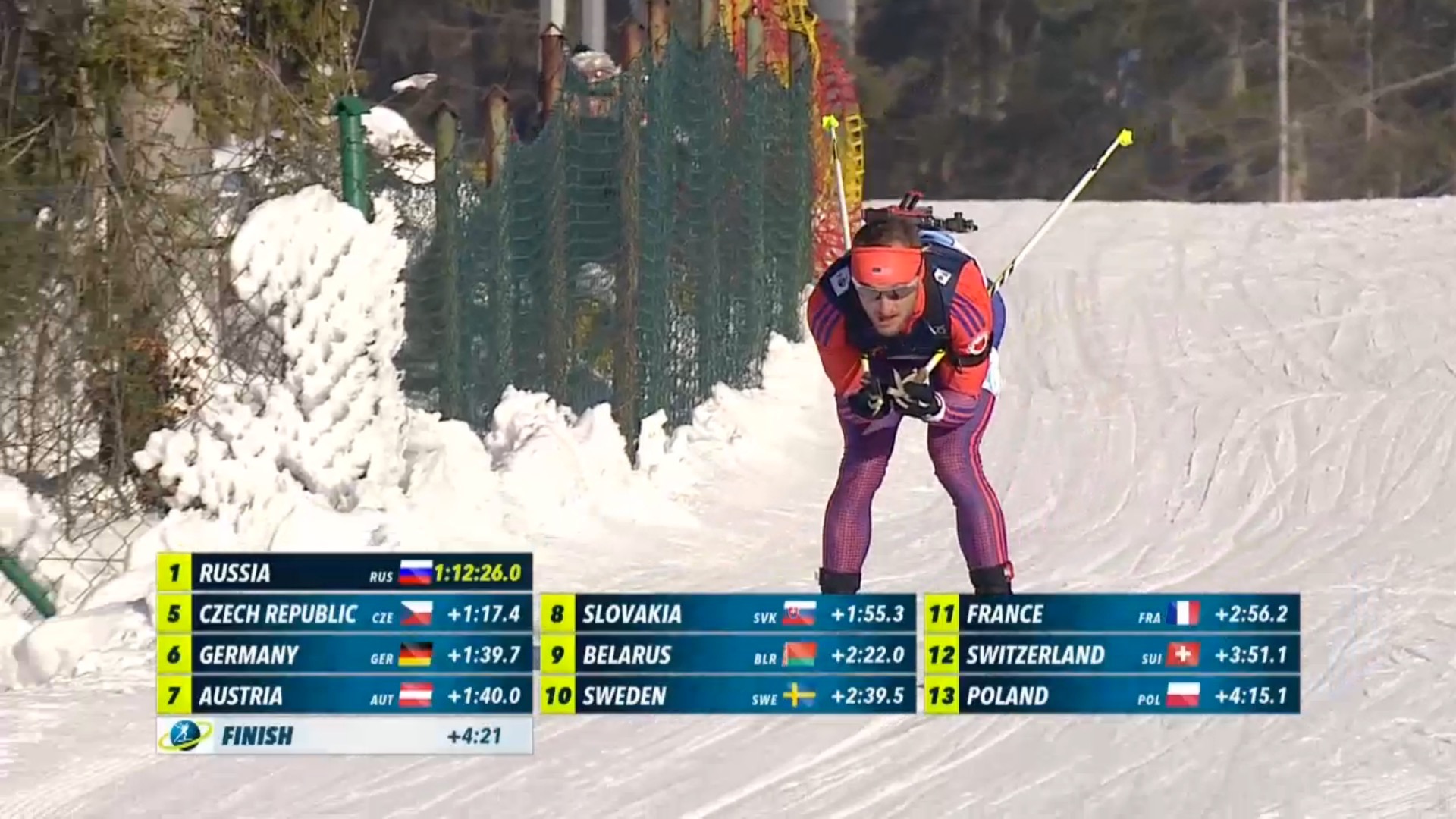
    Jakob Ellingson skiing the anchor leg for the U.S. mixed relay at the 2017 IBU Open European Championships in Duszniki-Zdrój, Poland. The U.S. team finished 14th. (Photo: IBU/Eurovisionsports.tv screenshot)
    Jakob Ellingson skiing the anchor leg for the U.S. mixed relay at the 2017 IBU Open European Championships in Duszniki-Zdrój, Poland. The U.S. team finished 14th.
    (Photo: IBU/Eurovisionsports.tv screenshot)

    Starting at the back of the field in bib 20, US Biathlon’s Emily Dreissigacker got her team off to a strong start with a clean prone shooting and one spare round in standing, exchanging in 10th, a minute behind the leaders. Hallie Grossman needed one spare in each of her stages, tagging off to the men in 14th position and now 2:39 behind. Max Durtschi also had one miss each in prone and standing, coming into the last exchange still in 14th position, but another minute back. Jakob Ellingson required all three of his spares in his prone shooting stage narrowly avoiding the penalty lap, and one more in his final shooting stage. As the team from Finland was racing over a minute behind the Americans, he was able to keep the 14th position into the finish (+4:47.4), with a team total of nine spares and no penalties overall.

    For Biathlon Canada, Erin Yungblut starting in bib 19 shot clean in her prone stage and required two spares in her standing shooting, tagging off in 18th position and more than two minutes back from first. Leilani Tam von Burg stayed clean in her prone shooting stage and needed one spare in standing, moving up two positions to exchange in 16th place, yet more than four minutes behind the leaders. After the exchange to the men, both Matthew Neumann and anchor Carsen Campbell managed to shoot clean in all of their stages, but lost additional time on the course to finish 16th (+6:39.9) ahead of four lapped teams.

    Canada had the best shooting result of all 20 teams starting the relay, with just three spares and no penalty.
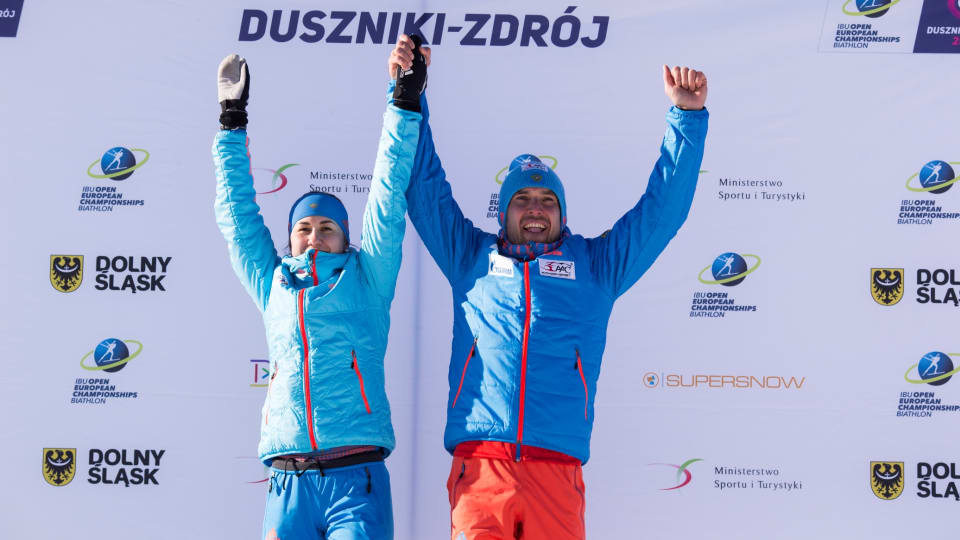
    Russia’s Daria Virolaynen (l) and Evgeniy Garanichev after winning Sunday's single mixed relay at the 2017 Open European Championships in Duszniki-Zdrój, Poland. (Photo: IBU)
    Russia’s Daria Virolaynen (l) and Evgeniy Garanichev after winning Sunday’s single mixed relay at the 2017 Open European Championships in Duszniki-Zdrój, Poland. (Photo: IBU)

    Earlier on Sunday, pretty much the only thing that went wrong for Russia’s Daria Virolaynen and Evgeniy Garanichev in the single mixed relay happened on the last meters of the finishing stretch, with Garanichev gesturing for a Russian flag he wanted to cross the line with. But the handoff was too short and the flag dropped past his outstretched hand to the snow. He glanced back, weighing if his lead was big enough to ski back, but decided it was not worth the risk, instead skiing into the arms of his partner waiting for him behind the line in a time of 37:10.2 minutes.

    Russia needed seven spare rounds and incurred zero penalties. Garanichev secured the victory in the final shooting, when he only needed one spare – albeit fumbling a few seconds to insert it – while his direct opponents standing next to him required more time to hit their targets.

    “Probably, I took some risk at the last standing,” Garanichev said, according to an IBU press release. “I wanted to shoot fast and clean, but missed with the last shot. But in general, I felt very comfortable; came and worked at the range in my rhythm.”

    6.3 seconds behind, Norway with the team of Ingrid Landmark Tandrevold and Vetle Sjåstad Christiansen placed second, with seven spares and zero penalties.

    “These are very short loops,” Christiansen commented on the fairly new, single mixed relay format. “You feel the pressure from the crowd and to shoot fast every time.”

    The 20-year-old Tandrevold previously earned three bronze medals, including one in the single mixed relay, also with Christiansen, at last year’s Open European Championships in Tyumen, Russia.

    To big cheers from their home crowd fans who had come out to the Duszniki Arena in beautiful but cold weather, the Polish husband-and-wife team of Krystyna Guzik and Grzegorz Guzik placed third with just five spares and zero penalties (+13.9), not quite able to keep up with Christiansen on the final loop after leaving the range together within a second.

    “It is so nice to win a medal here in Poland,” Krystyna Guzik said. “We were both very disappointed with all of our mistakes in the other competitions. So today, we were relaxed and laughing before the competition, hoping not to have those mistakes again. We did not … and now have a medal.”

    It was the first medal for Poland at these championships.

    Ukraine with Iryna Varvynets and Andriy Dotsenko finished fourth, also with five spares and zero penalties (+20.9).
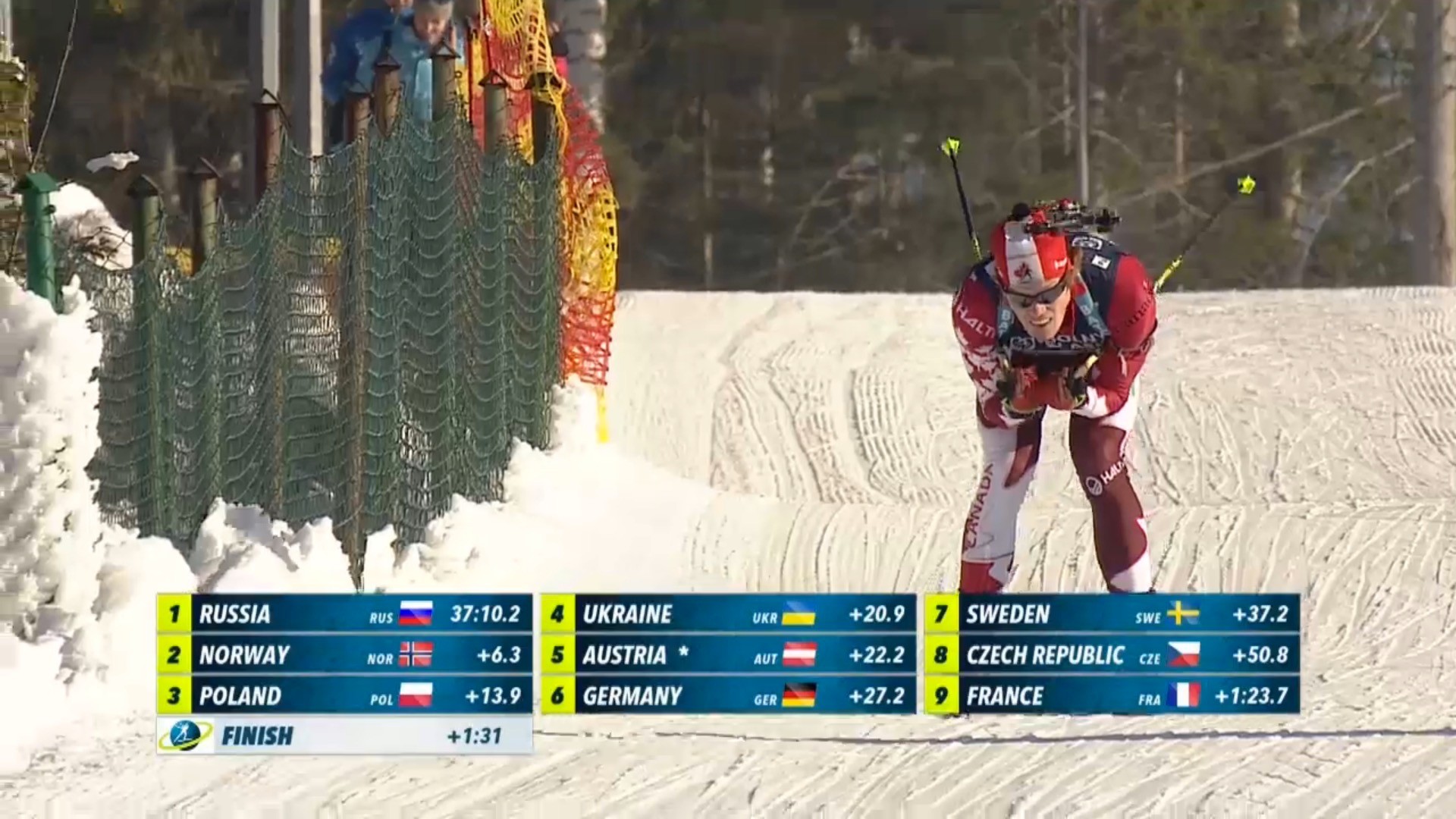
    Biathlon Canada’s Aidan Millar skiing the final loop of the single mixed relay at the 2017 IBU Open European Championships in Duszniki-Zdrój, Poland. With teammate Sarah Beaudry, Canada finished 13th (Photo: IBU/Eurovisionsports.tv screenshot)
    Biathlon Canada’s Aidan Millar skiing the final loop of the single mixed relay at the 2017 IBU Open European Championships in Duszniki-Zdrój, Poland. With teammate Sarah Beaudry, Canada finished 13th (Photo: IBU/Eurovisionsports.tv screenshot)

    For Biathlon Canada, Sarah Beaudry and Aidan Millar required seven spares during their race and had no penalty, just like the winning Russians and Norwegians, but could not quite keep up with the best teams on the course in the fast-paced race format with short loops somewhat comparable to a team sprint in cross-country.

    Beaudry cleaned her first shooting stage and then needed one spare to hit all targets in standing. At the first exchange Canada was 10th, 35.8 seconds behind the then leading team from Poland.

    Millar missed one shot in his first prone stage, leaving the range again in ninth position. Then he needed two spares in his standing shooting on the way to exchanging back to Beaudry in 11th (+56.4).

    On her second leg, Beaudry had one miss in prone and required two spares in standing, falling back a bit to exchange in 13th (+2:12.0).

    On his final leg, Millar was able to shoot clean in both stages, reducing the time gap to the top but not able to make up another position, and finished in 13th place (+1:56.1).

    US Biathlon is only represented with two women at the Open European Championships in Poland, and decided to forgo a start in the single mixed relay, instead entering a team in the mixed relay later on Sunday.

    — Harald Zimmer

    Results: Mixed relay |  Single mixed relay 

    ***

    Marcialonga (Val di Fiemme, Italy)
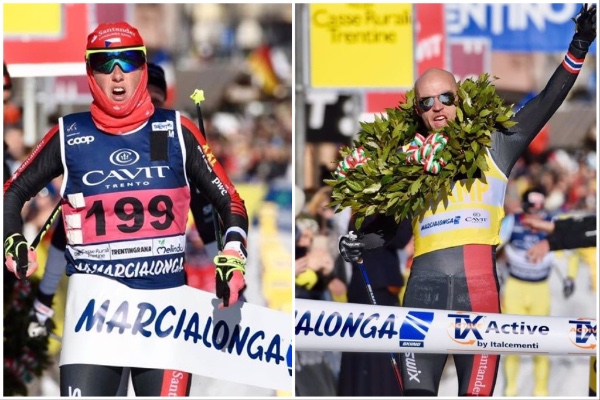
    Katerina Smutna (left) and Tord Asle Gjerdalen (right) of Team Santander won the 2017 Marcialonga. (Photo: Visma Ski Classics)
    Katerina Smutna (left) and Tord Asle Gjerdalen (right) of Team Santander won the 2017 Marcialonga. (Photo: Visma Ski Classics)

    Tord Asle Gjerdalen won the Marcialonga, a Worldloppet and Swix Ski Classics marathon for the third time – in a row. This year was on a shortened course, “just” 57 rather than the traditional 70 kilometers.

    The Team Santander athlete finished in two hours, eight minutes, and 36 seconds, edging Johan Kjølstad (Team United Bakeries) and Morten Eide Pedersen (Team BN Bank) in a sprint finish by 2.6 and 2.9 seconds, respectively.

    Tyler Kornfield and David Norris of Alaska Pacific University finished 43rd (+5:03.8) and 66th (+10:43.1). Canadian Paralympian Brian McKeever finished 57th (+9:13.5) and guide Graham Nishikawa 81st (+12:56.5), followed by Ian Murray in 85th (+13:37.5) and Erik Carleton in 111th (+17:50.2).

    In the women’s competition, Katerina Smutna, also of Team Santander, won her third straight Ski Classics competition. She crossed the line in two hours, 22 minutes, and 46.4 seconds. Britta Norgren of Team Lager 157 was second by just 0.8 seconds, and Sara Lindborg (Team Serneke) third, +4:22.2. University of Utah alum Maria Graefnings was tenth, +10:35.8.

  • Friday Rundown: IBU Open European World Championships (Updated)

    Friday Rundown: IBU Open European World Championships (Updated)

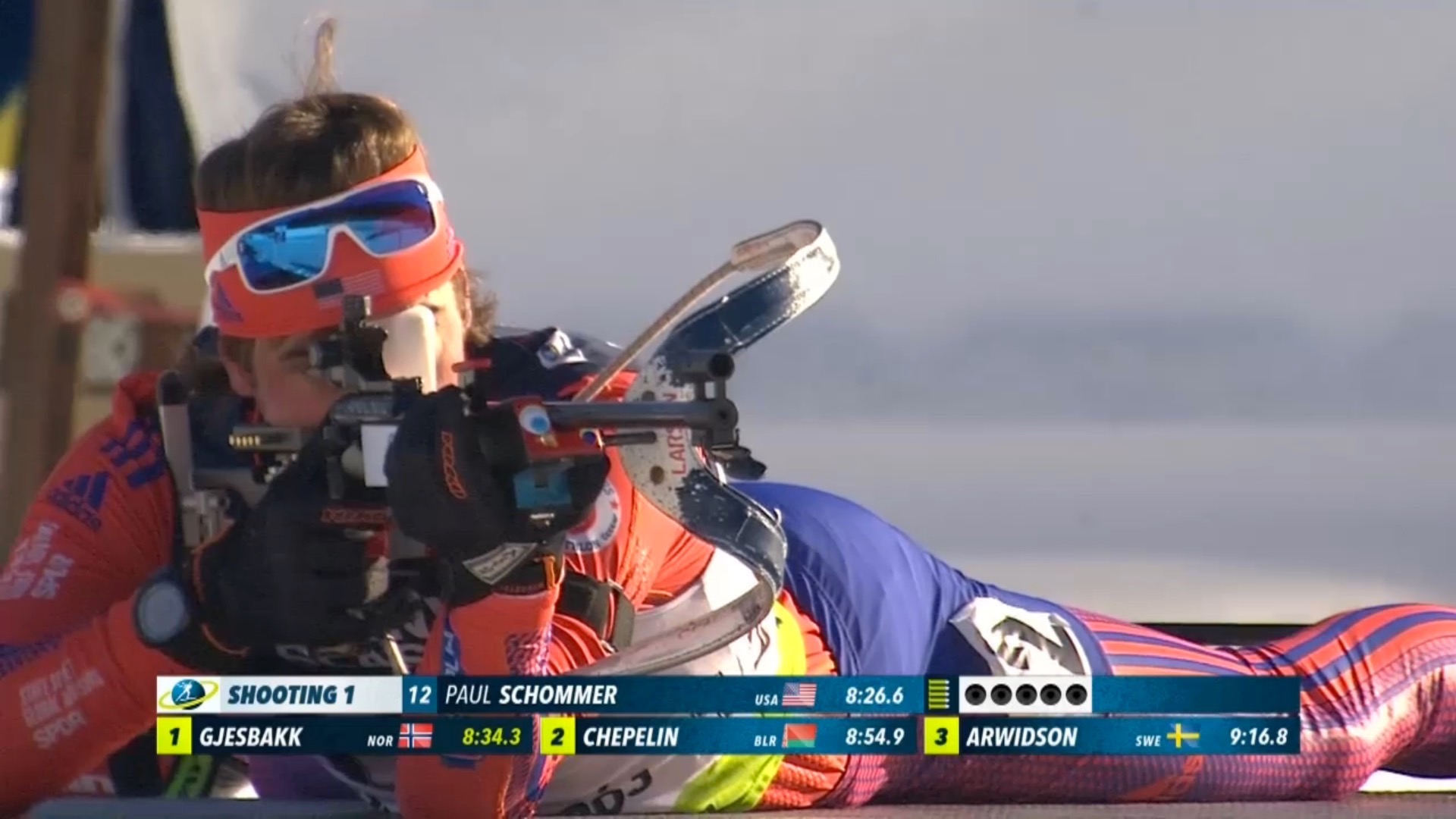
    US Biathlon’s Paul Schommer shooting prone in the men’s 10 k sprint at the 2017 IBU Open European Championships in Duszniki-Zdrój, Poland. He was the top North American on Friday in 58th. (Photo: IBU/Eurovisionsports.tv screenshot)
    US Biathlon’s Paul Schommer shooting prone in the men’s 10 k sprint at the 2017 IBU Open European Championships in Duszniki-Zdrój, Poland. He was the top North American on Friday in 58th. (Photo: IBU/Eurovisionsports.tv screenshot)

    IBU Open European Championships (Duszniki-Zdrój, Poland): Men’s & women’s sprints

    On Friday in the men’s 10-kilometer sprint, two Bulgarian athletes were able to break the Russian dominance at the 2017 International Biathlon Union (IBU) Open European Championships in Duszniki-Zdrój, Poland.

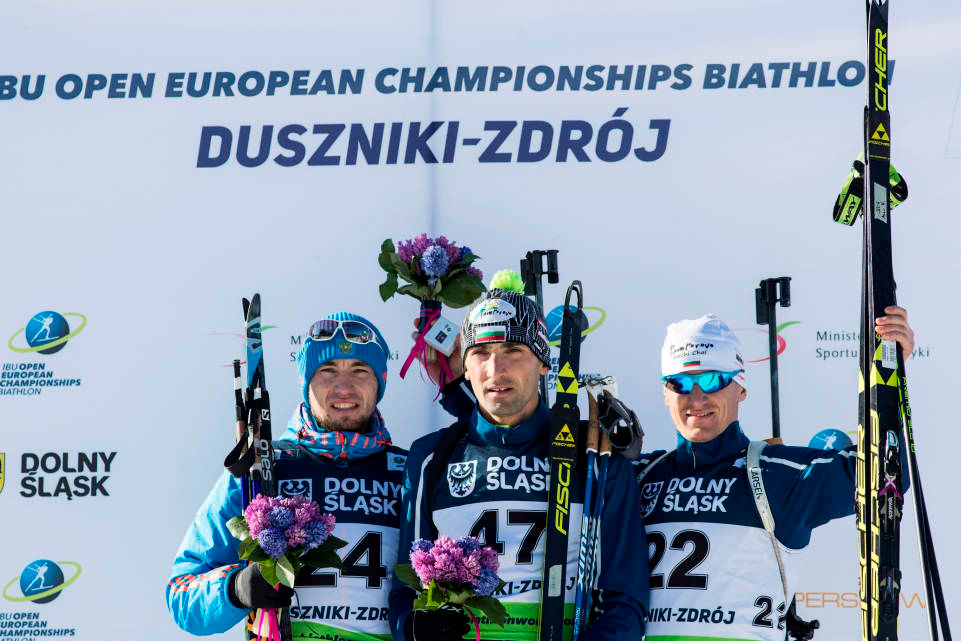
    The men's 10 k sprint podium on Friday, with Bulgaria’s Vladimir Iliev (c) in first, Russia’s Alexander Loginov (l) in second, and Bulgaria’s Krasimir Anev (r) in third at the 2017 IBU Open European Championships in Duszniki-Zdrój, Poland. (Photo: IBU)
    The men’s 10 k sprint podium on Friday, with Bulgaria’s Vladimir Iliev (c) in first, Russia’s Alexander Loginov (l) in second, and Bulgaria’s Krasimir Anev (r) in third at the 2017 IBU Open European Championships in Duszniki-Zdrój, Poland. (Photo: IBU)

    Bulgaria’s 29-year-old Vladimir Iliev, who has competed on the IBU World Cup since 2007 and posted a career-best fifth (which he achieved earlier this season), claimed the win in a time of 24:26.9 minutes despite one penalty in the standing stage (0+1), giving a kiss to his fast skis in the finish. Russia’s Alexander Loginov, who won the men’s 20 k individual race on Wednesday after returning this season from a two-year doping suspension, placed second (+4.9) with clean shooting. Behind them, Iliev’s teammate Krasimir Anev took third (+16.7), also shooting clean, to push Latvia’s Andrejs Rastorgujevs off the podium by just 0.6 seconds (+17.3). Rastorgujevs started early in bib 4 and skied the fastest course time of the day, but incurred two penalties in his standing stage (0+2), which ultimately set him back too far for a podium.

    “It was a long way to this medal and this win,” Iliev said his first career victory, according to an IBU press release. “I was ready for a high result for many years, but many things have happened, so I’m really happy to get a victory today.”

    “I did not expect anything in this race, because yesterday I had health problems so even my coach advised me not to start,” Anev said after winning his second medal of the championships, following up on a second place in the individual. “So [I] went into competition without any expectations.”

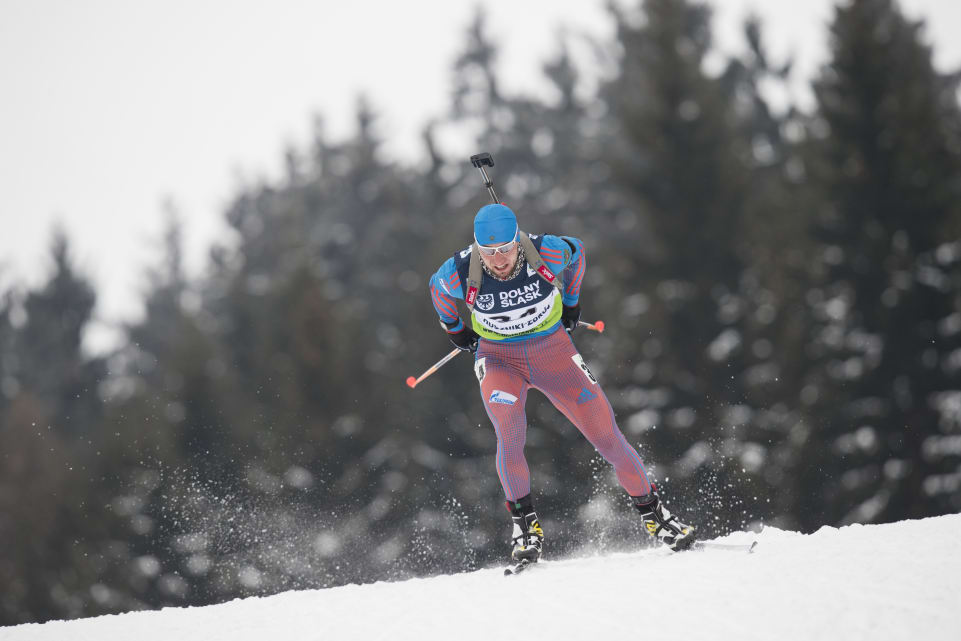
    In beautiful weather conditions with little wind and the sun shining on the new arena in Duszniki-Zdrój throughout the race, US Biathlon’s Paul Schommer was the best of 11 North American starters, finishing 58th (+2:14.9) with three penalties (1+2). Schommer was less than a second faster than his U.S. teammate Alex Howe, who finished 59th (+2:15.3), after skiing two penalty laps (1+1). The third American Jakob Ellingson placed 64th (+2:24.6) with one penalty (0+1), Russell Currier was 75th (+2:41.4) with four penalties (2+2), Max Durtschi was 88th (+3:16.1) with three penalties (1+2), and Michael Gibson was 103rd (+4:30.4) with two penalties (1+1).

    Matthew Hudec led the Canadians on Friday in 80th (+2:54.7) with one penalty (1+0). Also for Canada, Aidan Millar finished 86th (+3:13.9) with three penalties (1+2), Carsen Campbell 89th (+3:18.3) with three penalties (2+1), Pearce Hanna 92nd (+3:24.7) with two penalties (1+1), and Matthew Neumann 94th (+3:31.8) with four penalties (1+3).

    In the large field of 125 starters, Schommer and Howe qualified for Saturday’s pursuit race by placing in the top 60.

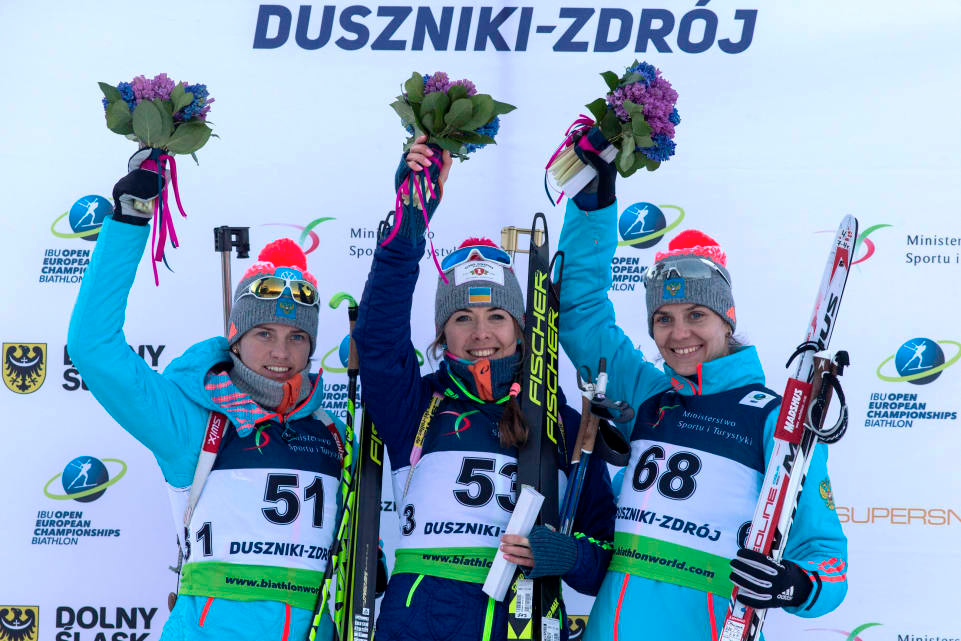
    The women’s 7.5 k sprint podium on Friday, with Ukraine’s Juliya Dzhyma (c) in first, Russia’s Svetlana Sleptsova (l) in second and Russia’s Irina Starykh (r) in third at the 2017 IBU Open European Championships in Duszniki-Zdrój, Poland. (Photo: IBU)
    The women’s 7.5 k sprint podium on Friday, with Ukraine’s Juliya Dzhyma (c) in first, Russia’s Svetlana Sleptsova (l) in second and Russia’s Irina Starykh (r) in third at the 2017 IBU Open European Championships in Duszniki-Zdrój, Poland. (Photo: IBU)

    [UPDATED] In the women’s 7.5 k sprint that followed, Ukraine’s Juliya Dzhyma managed to win in convincing fashion in a time of 21:02.3 minutes, shooting clean and skiing the second-ranked course time. It was the first individual career victory for the 26 year old in either a junior or senior championships, after she won a gold medal with Ukraine’s relay team at the 2014 Olympics in Sochi, Russia.

    “When I saw that everyone was cleaning, I knew that to get in to top three, I have to do the same,” Dzhyma commented on her race, according to an IBU press release. “But honestly, I have no idea how I hit all the targets today; for the whole season, it was my first competition where I had zero.”

    “I was just trying to do my best and to make the gap bigger because tomorrow is the pursuit!” she added, regarding her last loop when she increased her lead by another ten seconds.

    Also shooting clean but 27 seconds off the win was Russia’s 30-year-old Svetlana Sleptsova, who, earlier in her career, won five World Cups and gold medals in the women’s relay at the 2009 World Championship and 2010 Olympics in Vancouver.

    Starting behind Sleptsova, her Russian teammate Irina Starykh, the winner of the women’s individual race on Wednesday, and like Loginov, also coming back from a two-year suspension for EPO use, claimed third (+37.8) with one penalty in her standing stage (0+1). Starykh bumped  Germany’s Karolin Horchler, who had led the race early on after starting in bib 2 to fourth (+42.2, with no penalties). Horchler won her first World Cup a week ago in Antholz, Italy.

    “Before the competition I already felt that it would be very hard for me to shoot today,” Starykh told the IBU. “And in the end it came out that way, it was tough for me to shoot at the prone and at the standing. But just one penalty is a pretty good result, based on how I feel.”

    Horchler’s teammate Denise Herrmann, who made the switch from cross-country skiing to biathlon this season, followed in fifth (+47.7) with the fastest course time of the day, but missed two targets in her standing stage including her very last shot (0+2) to miss the podium.

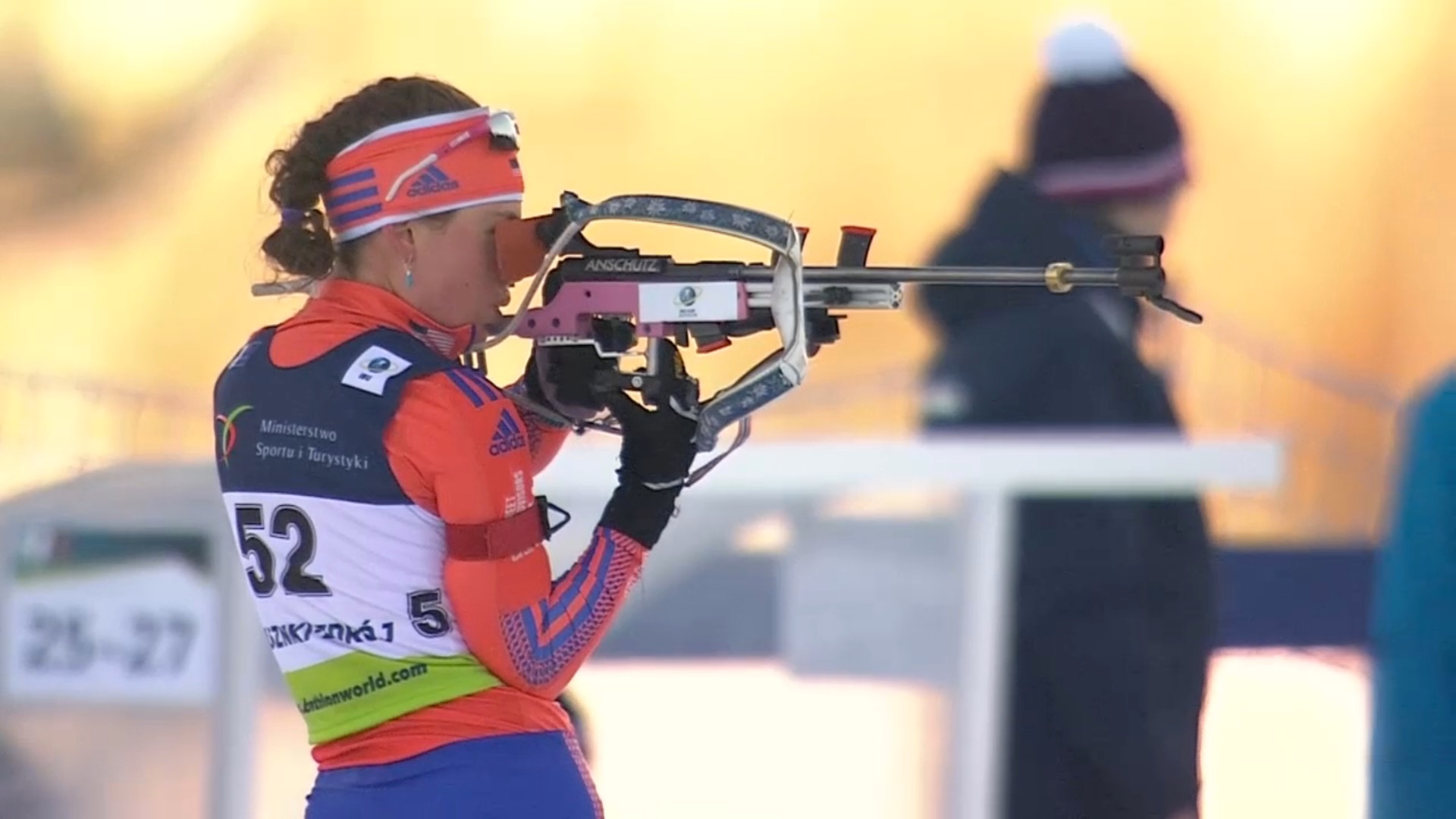
    American Hallie Grossman during her standing stage in the women’s 7.5 k sprint on Friday at the 2017 IBU Open European Championships in Duszniki-Zdrój, Poland. She finished 70th with three penalties as the second-best North American. (Photo: IBU/Eurovisionsports.tv screenshot)
    American Hallie Grossman during her standing stage in the women’s 7.5 k sprint on Friday at the 2017 IBU Open European Championships in Duszniki-Zdrój, Poland. She finished 70th with three penalties as the second-best North American. (Photo: IBU/Eurovisionsports.tv screenshot)

    In stable weather conditions, though not as sunny as during the men’s sprint earlier on Friday, US Biathlon’s Emily Dreissigacker was the top North American woman in 69th (+3:31.1), with three penalties (2+1). Just one position behind her, American Hallie Grossman also missed three (2+1) on her way to a 70th (+3:34.4). For the 23-year-old Grossman it is her first season overseas racing in the IBU Cup.

    Canada’s Erin Yungblut finished 81st (+5:50.0) with four penalties (1+3). Her teammate Leilani Tam von Burg did not finish after incurring two penalties in her prone shooting stage, and the third Canadian, Sarah Beaudry did not start.

    None of the North American woman qualified for Saturday’s pursuit.

    Results: Men | Women

    Start lists: Men’s pursuit | Women’s pursuit

  • Wednesday Rundown: IBU Open European Championships

    Wednesday Rundown: IBU Open European Championships

    Russia's Alexander Loginov racing to the win in the men's 20 k individual on Wednesday, the first race of 2017 IBU Open European Championships in Duszniki-Zdrój, Poland. (Photo: IBU)
    Russia’s Alexander Loginov racing to the win in the men’s 20 k individual on Wednesday, the first race of 2017 IBU Open European Championships in Duszniki-Zdrój, Poland. (Photo: IBU)

    IBU Open European Championships (Duszniki-Zdrój, Poland): 15/20 k individual

    The Open European Championships, a five-day International Biathlon Union (IBU) sanctioned event, opened Wednesday with the men’s 20-kilometer and women’s 15 k individual races in Duszniki-Zdrój, Poland.

    Russia took first and second in the women’s race, with 29-year-old Irina Starykh — coming off a two-year ban for EPO use — winning by more than a minute over her teammate Svetlana Sleptsova. Starykh hit all 20 targets en route to the victory 44:24.7 minutes, which was 1:03.8 faster than Sleptsova, who had one penalty (0+1+0+0) in second. Ukraine’s Anastasiya Merkushyna placed third (+1:05.0) with one penalty as well (0+1+0+0).

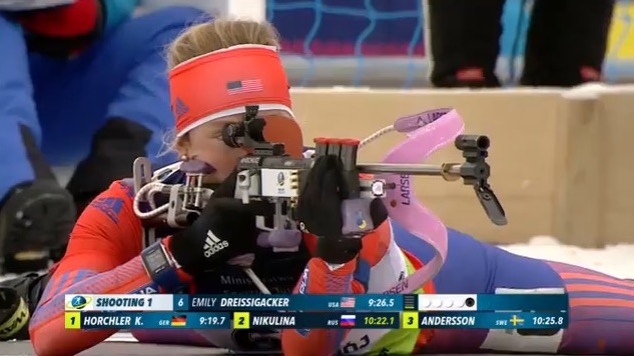
    American Emily Dreissigacker shooting clean during her first prone stage of the women's 15 k individual on Wednesday at 2017 IBU Open European Championships in Duszniki-Zdrój, Poland. She finished 41st.
    American Emily Dreissigacker shooting clean during her first prone stage of the women’s 15 k individual on Wednesday at 2017 IBU Open European Championships in Duszniki-Zdrój, Poland. She finished 41st.

    Emily Dreissigacker led the two U.S. women in the race in 41st (+7:47.6) with four penalties (0+1+1+2). Hallie Grossman finished 52nd (+9:06.1) with four misses as well (1+1+2+0).

    Canada’s Leilani Tam von Burg finished 58th (+9:54.2) with two penalties (0+0+1+1), and Erin Yungblut was 60th (+10:13.4) with three misses (0+2+0+1).

    Russia took first in the men’s 20 k as well, with 24-year-old Alexander Loginov — who also recently served a two-year ban for testing positive for EPO — winning by 11.4 seconds in 44:54.9. He had one penalty in his first prone stage (1+0+0+0) but cleaned the next three stages. Bulgaria’s Krasimir Anew cleaned (0+0+0+0) for second (+11.4), and Russia had two on the podium with Alexey Slepov in third (+53.6), with clean shooting as well.

    Russia swept fourth through six, putting five in the top six.

    Russell Currier led the American men in 51st (+5:42.5) with five penalties (2+2+0+1). Paul Schommer placed 57th (+6:02.5) with five misses as well (2+0+1+2), Max Durtschi was 62nd (+6:44.2) with two misses (1+0+1+0), Alex Howe 79th (+8:46) with three misses (0+1+0+2), Jakob Ellingson 87th (+10:11.3) with seven misses (2+4+1+0), and Michael Gibson 94th (+11:58.3) with six penalties (1+1+1+3).

    Carsen Campbell was the top Canadian in 64th (+6:58.2) with two misses (0+1+1+0). Matthew Neumann finished 68th (+7:26.0) with three misses (0+1+0+2), Aidan Miller was 72nd (+8:07.9) with two miles (0+1+0+1), Matthew Hudec 98th (+12:29.5) with seven misses (1+1+2+3), and Pearce Hanna 101st (+14:07.1) with seven misses (2+2+2+1).

    Racing continues Friday with the men’s 10 k and women’s 7.5 k sprints.

    Results: Women | Men

  • Numb Fingers and All, J.T. Bø Wins in Presque Isle; Doherty Nabs Career Best 13th

    Numb Fingers and All, J.T. Bø Wins in Presque Isle; Doherty Nabs Career Best 13th

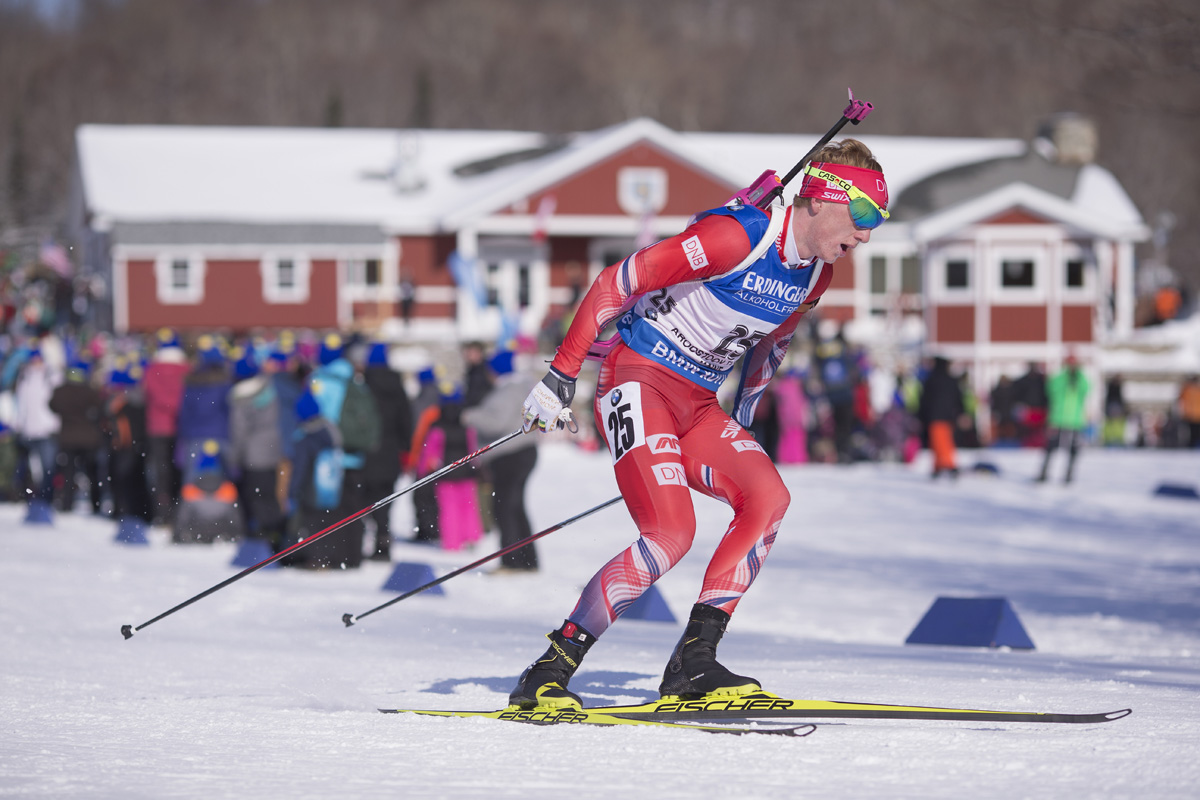
    Norway's Johannes Thingnes Boe racing to a 28-second win in the IBU World Cup men's 10 k sprint on Thursday in Presque Isle, Maine. (Photo: Fischer/NordicFocus)
    Norway’s Johannes Thingnes Bø racing to a 28-second win in the IBU World Cup men’s 10 k sprint on Thursday in Presque Isle, Maine. (Photo: Fischer/NordicFocus)

    After skipping the last tour stop in Canmore, Alberta, Norway’s Johannes Thingnes Bø returned to the International Biathlon Union (IBU) World Cup with a bang, winning the men’s 10-kilometer sprint on Thursday morning in Presque Isle, Maine, in a time of 24:38.8, with no penalties. It was the first World Cup race in the U.S. in five years.

    “It’s never easy, but today I felt I had control,” Bø told the IBU in a post-race interview. “I was calm before the race, and also on the shooting range. I tried to do it like in training.”

    The defending 2015 world champion in the sprint is now heading into the 2016 World Championships at home in Oslo, Norway, with a victory in the same discipline.

    “It looks like it has been good for me, but who knows,” he said at the press conference on his decision to not make the long trip to Canmore, Alberta, last week for the previous World Cup. Instead, he trained for Oslo.

    Asked why eight of his 10 World Cup victories came in sprints, Bø replied, “Maybe it’s because shooting is my weakness, and in the sprint there is only two [stages]. So there is a bigger chance for me to not miss so much.”

    He achieved his clean shooting despite losing feeling in his fingers on the first loop due to the cold weather and his fairly thin gloves, he told Norwegian broadcaster NRK.

    “Without feeling I had to focus extra hard on the innermost black spot, maybe that was the thing that made it go so well,” Bø said according to a translation.

    Starting very early with bib 3, France’s Martin Fourcade had one miss in the standing stage and initially took a 38-second lead at the finish (over Norway’s second starter Erlend Bjøntegaard) thanks to Fourcade’s fast skiing, with the eventual overall fastest course time.

    After changing into dry clothes and waiting in the finish pen for a few minutes, Fourcade was passed by Russia’s Anton Shipulin, who started behind him in bib 16 and had two clean shooting stages. The Russian lost time to Fourcade on the final loop, but by the finish, Shipulin, who ranks second in the overall World Cup, had preserved a 1-second lead over Fourcade — the World Cup leader.

    “I have competed here 10 years ago at the Junior World Championships,” Shipulin said at the press conference through a translator. “So I know the tracks, and they are quite good.”

    Shipulin ended up second when Bø, the 25th starter, barreled through the finish 27.9 seconds faster, with both clean shooting and the second-fastest overall course time. That moved Fourcade into third (+28.9) and the top-three stood through the remainder of the 88-man race.

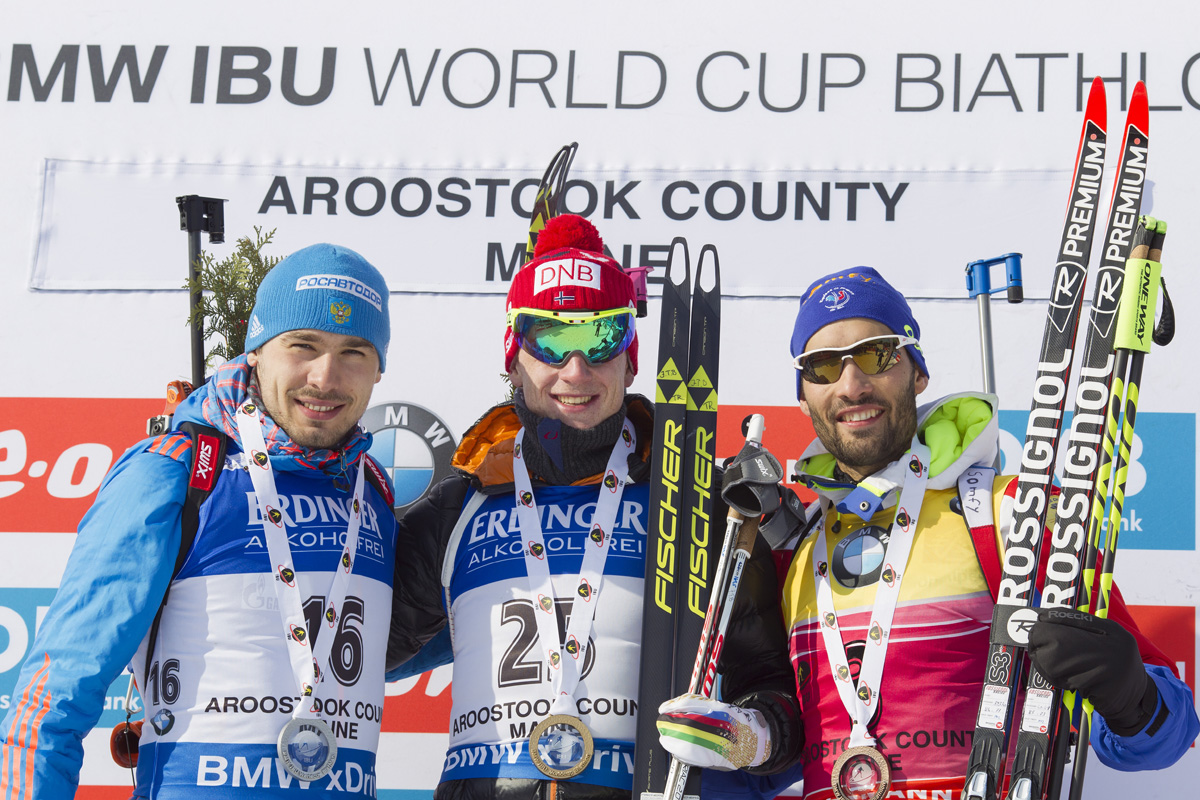
    The men's sprint podium at the IBU World Cup in Presque Isle, Maine, with Norwegian winner Johannes Thingnes Bø (c), Russia's Anthon Shipulin (l) in second, and France's Martin Fourcade (r) in third. (Photo: Fischer/NordicFocus)
    The men’s sprint podium at the IBU World Cup in Presque Isle, Maine, with Norwegian winner Johannes Thingnes Bø (c), Russia’s Anthon Shipulin (l) in second, and France’s Martin Fourcade (r) in third. (Photo: Fischer/NordicFocus)

    “Of course I am happy and satisfied with the race today,” Shipulin said. “I wasn’t as fast as those two guys on the track. But I did clean shooting, and the result was good … I hope I will get better for the World Championships.”

    “My shape was really good today … The shooting range is not as easy as we thought,” Fourcade said at the press conference. “No wind today so that was good.”

    “But I really was surprised by the sun; I think it was too much sunshine for my little blue eyes,” the brown-eyed Fourcade joked. “I had real difficulties on the shooting range. That is why I needed so much time in the standing shooting.”

    Bø posted the best times after the first and second shooting stages, where he hit every target, and extended his lead to the finish over Shipulin. Despite placing third, Fourcade slightly added to his commanding World Cup lead, with 857 points to Shipulin’s 646.

    “Johannes was simply a better biathlete today,” Fourcade said. “He shot clean, he shot fast, and [me and Shipulin] both know he will be one to beat for the World Champs.”

    As the race progressed, Germany’s Erik Lesser in bib 54 had the best chance to reach the podium, thanks to two clean shooting stages.

    He picked up speed throughout his three loops; after losing more than 20 seconds to Bø on each of the first two loops, he only lost 2 additional seconds on the last one. But overall, Lesser could not quite match the skiing performance of the top three and finished fourth, 45.9 behind Bø and 20 seconds off the podium.

    “I was very timid on the first round, somehow insecure,” Lesser told German TV broadcaster ARD. “I felt a little tired, so I wanted to rather push towards the end. … The shooting range is not easy, in standing I had to rebuild my stance. You really have to pay attention. Everything is possible in terms of advancing or falling back.”

    Behind Lesser, two Swiss athletes had their best results of the season, with Serafin Wiestner in fifth (+50.3) and Benjamin Weger (+52.5) in sixth place, both missing one shot in standing.

    For Wiestner, a border police officer, it was a new personal best after previously finishing 24th in a sprint in Ruhpolding, Germany, earlier this year.

    “We are really happy about this result,” Wiestner told the IBU. “The last weeks were not so good for us, for the whole team … It’s a really tricky course, but I like that.”

    I had a really bad season until now,“ Weger added. “Almost [all] just bad races. So I am very happy to be back in top 10 now, the first time this season. I hope to continue like that now.”

    Latvia’s Andrejs Rastorgujevs in seventh (+54.0) and Bø’s older brother, Tarjei, in eighth place (+58.9) also had just one penalty in standing, and stayed within one minute of Bø to achieve a good starting position for the pursuit on Friday.

    Doherty Leads Three Americans in Top 20; Canada’s Perras 48th

    American Sean Doherty returned to the World Cup on Thursday, in his first race since racking up three medals in as many races at Junior World Championships in Cheile Gradistei, Romania. At 20, he become the most decorated athlete in history of Youth/Junior World Championships in his final season as a junior.

    Starting in the middle of the field in bib 42, Doherty was the youngest competitor in the sprint. He shot clean in prone, and then missed one in standing, having to ski a penalty lap. The top North American, he ultimately placed 13th for his career-best World Cup result, 1:16.2 behind Bø.

    “My shooting today felt good, very in control,” Doherty, a New Hampshire native, wrote in an email. “The wind was manageable, it just came and went but was never too extreme. The range approach here is deceptively tough, and the wind conditions can be tricky but overall today was a good day on the range.

    “I am really looking forward to the pursuit,” he added.

    Lowell Bailey (US Biathlon) racing to 15th in the men's sprint at the IBU World Cup in Presque Isle, Maine. Bailey was one of three U.S. men in the top 20 on Thursday. (Photo: USBA/NordicFocus)
    Lowell Bailey (US Biathlon) racing to 15th in the men’s sprint at the IBU World Cup in Presque Isle, Maine. Bailey was one of three U.S. men in the top 20 on Thursday. (Photo: USBA/NordicFocus)

    Shortly behind, another American Lowell Bailey placed 15th (+1:22.4), also with a clean prone shooting and one penalty in standing.

    “The wind can definitely be a factor here as the venue sits on top of a plateau,” Bailey explained in an email. “But today, I think the biggest factor was the approach. It is one of the more difficult approaches [in the World Cup] and if you aren’t prepared for it, you will be surprised at the fact that you aren’t very recovered when you hit the mat.”

    Earlier this week, Bailey provided a unique view of the Presque Isle courses for the IBU in a first-person video, skiing through the men’s sprint loop, the arena and the penalty lap (coincidentally, Johannes Thingnes Bø passed Bailey in the penalty lap during the video).

    “A lot of transitions from downhills directly into steep uphills,” Bailey commented in the video. “So you have to be changing techniques all the time.”

    “The snow here is very cold,” he said of the conditions. “You can hear it, kind of squeaking like Styrofoam. That makes it interesting for waxing. We’ll be on very hard cold wax. Very fine stone grinds with the ski base.”

    In his email, he explained that the course was challenging, particularly with a “corkscrew” downhill section, with some ice beneath the snow. “You had to stay alert and react when your skis started to slip,” he wrote.

    “I felt like an alpine skier,” winner J.T. Bø joked about the course in an IBU interview. “You had to ski at the very edge of the skis. It was really hard, but it was cool.”

    “The two places are really different,” Fourcade said during the press conference, comparing Canmore with Presque Isle. “Canmore is huge mountains, and here we are more in the forest. I prefer the track here, but it’s hard to compare two sites.”

    Also for the U.S., Tim Burke started early bib 6, missed one target in each of his shooting stages, but finished 20th (+1:32.7) as the second-best athlete with two penalties.

    “I felt solid on the ski course today,” Burke wrote in an email. “It was not one of my best days, but I was able to keep a good pace for the entire race. This is an interesting course in that there are not really any big climbs, but on the other hand there is very little recovery because of the challenging downhills. This was my first time competing on this course and I really liked it.

    “My shooting felt decent today and the two misses were very close,” Burke continued. “But two misses is obviously too much for the sprint competition.”

    Leif Nordgren in bib 76 came in 65th (+3:02.6) with three penalties (2+1). Eleven seconds outside the top 60, he missed qualifying for Friday’s pursuit.

    “The men were just really consistent, everybody close together and just the whole field for the top athletes, so it puts them into a very good place looking ahead for tomorrow’s pursuit race,” US Biathlon coach Jonne Kähkönen said in a phone interview with FasterSkier. “Hopefully Susan’s podium will give them another push.”

    After the men’s race on Thursday, Susan Dunklee raced to second place in the women’s 10 k sprint to tie the best-ever result by a U.S. biathlete, male or female.

    Canada brought some of its developmental team to Presque Isle, with the athletes prequalified for the World Championships in Oslo skipping the races and continuing to train at home in Canmore.

    Originally Nathan Smith had planned to keep competing in Presque Isle, partly in order to defend his top 20 in the overall World Cup (he was 19th after the Canmore World Cup).

    “It was a really last minute decision. I literally had my stuff packed and ready to load into the team van,” Smith told FasterSkier in an email. “I was already somewhat uncertain about going because my skiing has been lackluster the last few weeks. When I saw how potentially cold it could be [in Presque Isle] I decided that perhaps I should stay in Canmore to get some rest and refocus after a very demanding month of racing, travel, and all the extra energy spent at a home world cup. I’ll be cheering the team on from the comfort of my living room.”

    Asked how he thought that might affect his place in the standings, he guessed it would drop him just outside the top 20.

    “I was hoping to be near top 10 by this point but unfortunately I didnt make so many points the last 2 world cups,” Smith wrote. “I think it’s better for me to try and perform my best … at world champs instead of chasing points to try and stay around 15th to 20th.”

    Without the usual starters, Scott Perras achieved the best result for the Canadian men in the sprint on Thursday, finishing 48th (+2:36.0), with one penalty in both prone and standing, and qualified for the pursuit on Friday.

    “Shooting was ok, I was a bit tight for prone but it was fine,” Perras wrote in an email. “Presque Isle can be pretty windy, today was just a slight breeze, almost perfect!

    “Skiing felt ok, I expected to feel a little better for sure,” he added. “[The] course is fun, what makes it difficult is the fact that you climb for a couple minutes before you get to the biggest climb on the course. That and the fact there isn’t much time ever spent in a downhill tuck.”

    In their first World Cup races of the season, Canada’s 21-year-old Carsen Campbell finished 78th (+3:45.9) with one penalty, Matthew Neumann, 26, was 82nd (+4:16.6) with three misses (1+2), and Matthew Hudec, 21, finished 88th (+5:18.6) with two penalties (1+1).

    Every Course is Different

    The World Cup returned to the U.S. and the Nordic Heritage Center in Presque Isle for the first time in five years since February 2011, when the World Cup also included races in Fort Kent, Maine. Back then, Fourcade placed second in the sprint to Germany’s Arnd Peiffer, who finished ninth on Thursday (+1:06.4) with one penalty.

    Most athletes commented positively on the challenging course and arena, though some pointed out a few unusual details, mainly a utility building in the middle of the penalty lap making it difficult to see the competition.

    “It’s pretty far around that little house, at least it feels that way,” Peiffer told German TV broadcaster ARD after the race, when asked about his penalty lap.

    According to ARD’s play-by-play announcer, organizers recently measured the loop out at 155 meters, 5 meters longer than the IBU norm, but still well within the standards.

    “Yes, it does feel long,” Bailey agreed in his email.

    “The penalty loop definitely felt long to me but I’m sure they have measured it,” Tim Burke wrote in his email. “I think it’s just the fact that you can’t see through it, that makes it feel so long. That will be an interesting factor for the pursuit because you won’t be able to judge how many athletes are in the penalty loop.”

    In contrast to that, Perras even observed some positive elements: “I don’t think the penalty loop feels any bigger, it actually skis quite well. Some penalty loops have really tight corners and you can’t really ski through the corners at all, you are almost skidding. And here there are fans in the penalty loop, how do you compete with that.”

    Germany’s Lesser also noted in his interview with ARD that the shooting mats felt uneven, giving him slight problems to find his stance.

    “I also felt that the shooting range mats slope towards the targets,” Burke agreed. “This is very unusual and hopefully they can fix this for the remaining competitions.”

    “The shooting mats do seem to slope awkwardly,” Perras wrote. “Honestly I’ve seen this at a few ranges throughout the world. No two ranges are the same and I try to just focus on the target, besides my legs aren’t even the exact same length so don’t take my word for it.”

    While not featuring quite as many people in attendance as some of the huge venues in Europe who are always on the World Cup competition calendar, there was still a good atmosphere at the Nordic Heritage Center on a weekday and in sunny weather. International athletes such as Germany’s Peiffer appreciated the support they received from the U.S. fans, many of them schoolchildren with rows of classes that had “adopted” different nations such as Germany, Italy, or even the small contingent from Romania, waiving flags and loudly cheering for the athletes.

    “Those kids probably got a day off from school to come here,” Peiffer told ARD with a laugh. “But that at least means there is something going on [in the arena]. And they are cheering very enthusiastically, and the same for everyone. A very fair audience.”

    “There is a lot of school kids here today and I hope they get inspired,” American Susan Dunklee told ARD in an interview after her race. “It’s a really great sport, and I think Americans haven’t fully discovered it yet.”

    The World Cup in Presque Isle continues with pursuits on Friday and the men’s relay on Saturday and women’s relay on Sunday.

    Results | Pursuit start list