From the FasterSkier archive — posts syndicated from athletes’ and coaches’ own blogs between 2004 and 2012, kept online as published. Current coverage is at fasterskier.com.
A group involved with developing the Fluoro Tracker (FT) as the testing device is known, released a paper last month titled “Detection of fluorine in skibases and skiwaxes.” The paper details the evolution of refining the FT’s ability to accurately detect fluoros. According to the paper, the FT now possesses a refined “evaluation algorithm”. Matthias Scherge, one of the lead developers of the FT, wrote in Snowstorm-Gliding the field tests to evaluate and refine the evaluation algorithm were conducted in Falun, Östersund, and Lenzerheide. Falun, the site of a cross-country World Cup where testing occurred on skis prepared by several national teams, served as the first of the three real-world field tests of the FT.
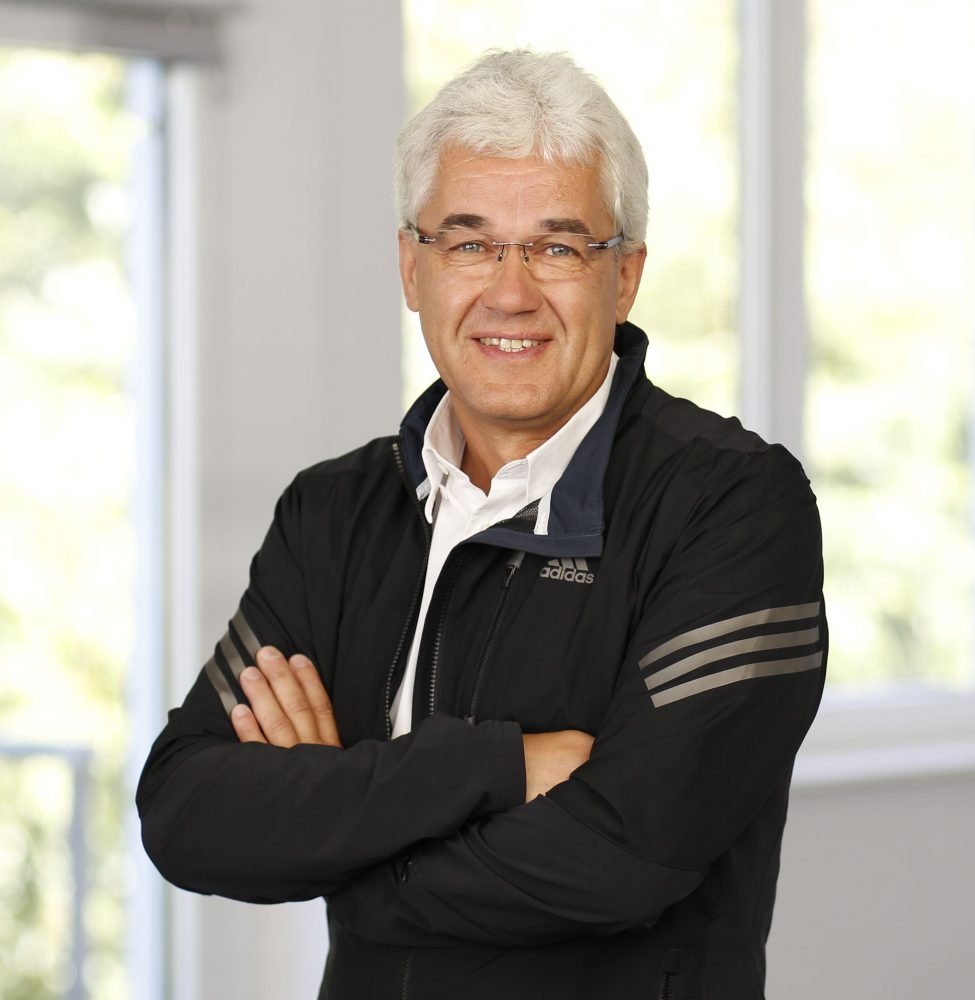
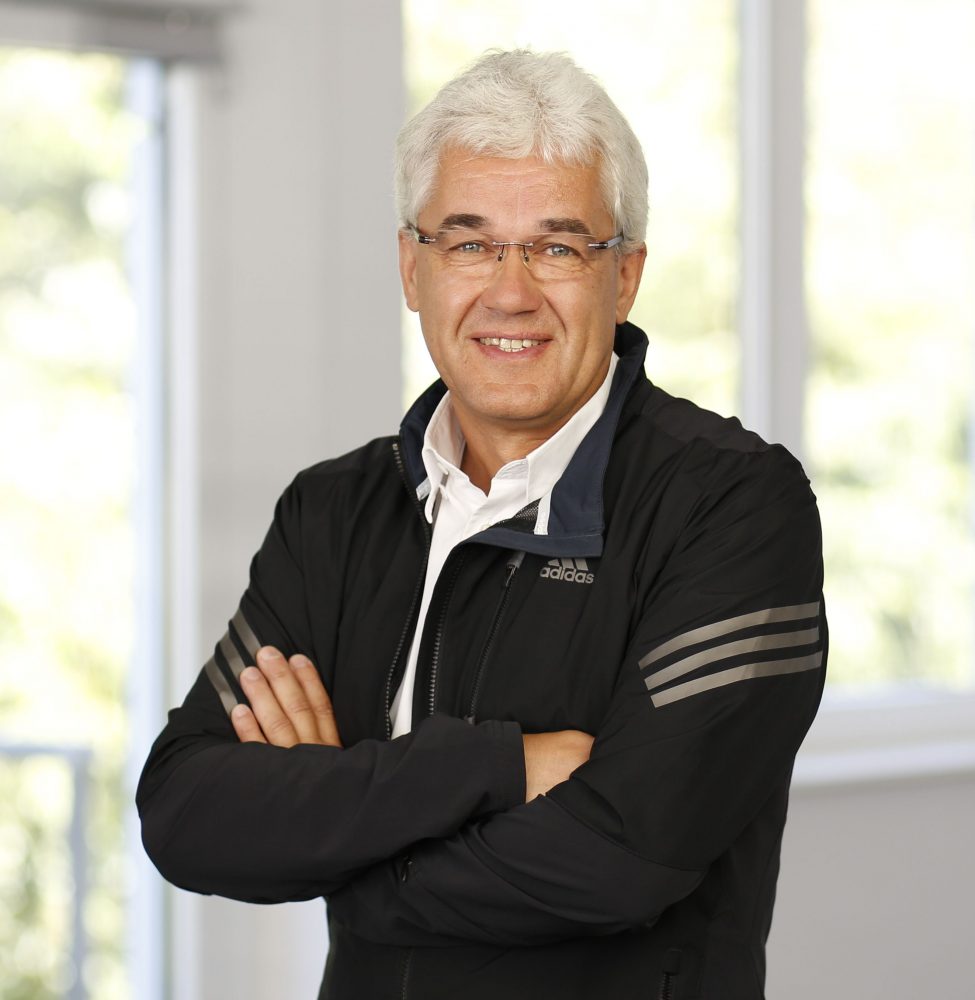
Matthias Scherge.
The news reported back in March regarding the FT’s inaccuracy cited test results from Falun. The information in Snowstorm-Gliding claims those tests were used to further modify the FT’s evaluation algorithm.
“The tests served to optimize the evaluation algorithm,” states the paper in Snowstorm-Gliding. “During the first tests in Falun, a non-optimized version was used, which still unsatisfactorily reflected the condition of the skis. Based on the information provided by the ski technicians, the algorithm was refined and a much improved version was used in Östersund and Lenzerheide. The quality of fluorine detection is thus dependent on the quality of the information provided by the ski technicians. Laboratory tests were performed in parallel to improve the correlation between preparation condition and FT measurement results.”
The paper also discusses how the FT functions. For now, the International Ski Federation has not made a public statement regarding the viability of the 2021-2022 fluoro ban.
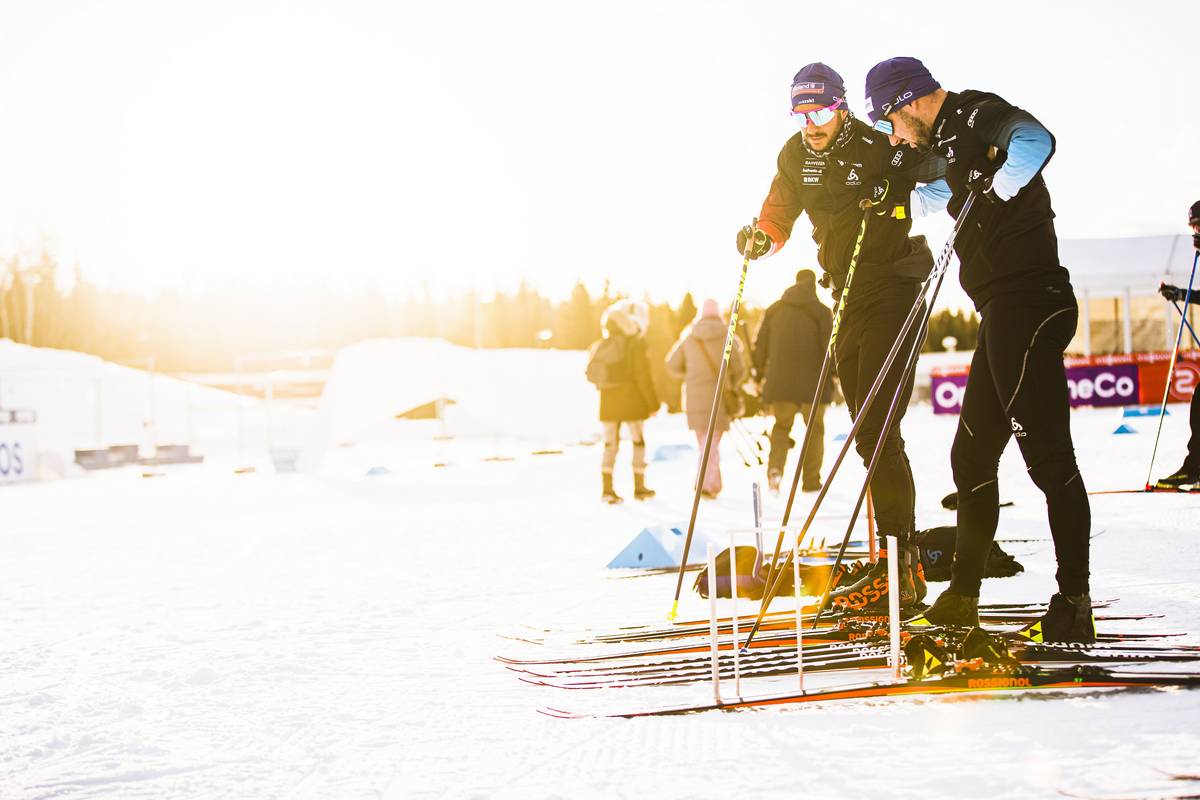
Swiss athletes ski testing in Lillehammer, Norway. (Photo: NordicFocus)
Much has already been written about snow. There are countless pictures of perfectly grown snow crystals, but very little about snow found on the slopes or in the cross-country skiing tracks. The newest article in our science series provides a vivid picture of snow in its many forms. With a cell phone and a mini microscope, you get fantastic pictures of snow grains. You can see their shape and the distribution of water between them. In addition, the article explains how to measure snow hardness. With this information and the knowledge of how snow humidity and snow temperature are connected, a safe wax recommendation can be made.
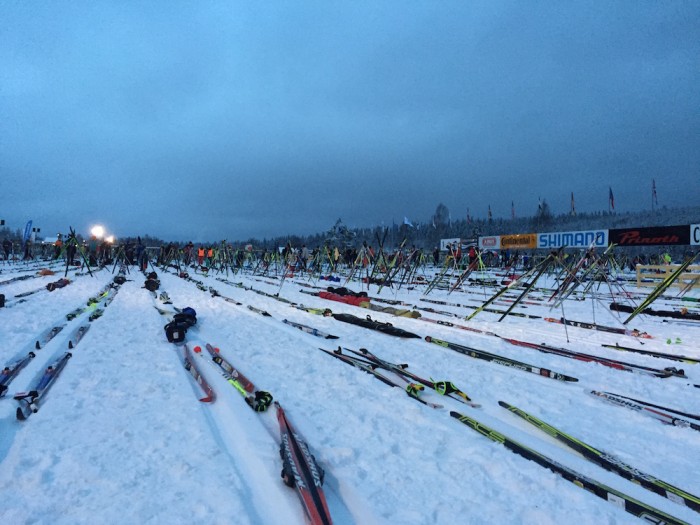
The start-line scene at the 2016 Vasaloppet with skis for 15,000 racers
Below is an excerpt from a detailed article exploring “the problems of ski testing, measuring friction, and evaluating skis.” For first-timers, the linked article offers a glimpse into the technical side of the sport at the World Cup level. For those veteran wax-techs, it is an opportunity to agree to disagree or nod your head in agreement.
***
Competition preparation from the point of view of ski technicians
Competition preparation, which includes a detailed analysis of the external conditions, the preparation of the skis and subsequent testing, is an elaborate process that requires precision and is also a power-sapping operation. The technicians are required to have a sure instinct as well as knowledge of meteorology, physics and chemistry. Another difficulty is the time pressure to get a large number of skis finished to the point. Routine and teamwork are helpful, but also the understanding of the tribological processes involved.
Glide tests are carried out in close proximity to the running course or on the track. To evaluate the skis, a test runner runs down a marked out course several times without introducing measuring errors by changing his posture. At each run, the skiing time is measured and documented. Ideally, a glide test should not be performed by the technician who has waxed the skis. The shorter the gliding distance, the more evenly – in terms of posture – the tester will ski. However, if the distance is short, the time differences are also very small, which makes the evaluation more difficult. The opposite is true for long gliding distances
From left to right: Ski technician with prepared skis in the stadium area, pair tests to determine differences in the gliding behavior of the individual skis., change of skis, and glide test on a defined distance.
Ski tests are a necessary condition for success in racing. The test should be preceded by intensive analyses of the external conditions such as temperature, humidity, terrain profile and above all the properties of the snow. The analyses should be carried out at as many points on the track as possible to detect local differences. It is recommended to support the field tests with laboratory tests, because this way a large number of variants can be tested under constant conditions and a pre-selection is possible, which can reduce the number and duration of the field tests.
GLIDING is a niche science journal spearheaded by Matthias Scherge and a cohort of advisors. Scherge the Fraunhofer MicroTribology Center in Germany. The research institute specializes in industrial lubricants and is assisting the International Ski Federation (FIS) with their fluoro free guidelines.
Scherge’s side project, GLIDING, as the name suggests, presents findings related to gliding on snow – which means analyzing the interplay of wax, base structure, snow, and other micro-variables impacting ski glide performance.
GLIDING recently published a paper analyzing the complexities of ski bases and where, in fact, wax bonds on a ground ski base. The authors also compare the thickness of the residual wax layer (post scrape and brush) between powders and sprays. You can find a brief abstract below and the full-length article here.
Abstract:
“With physical/chemical surface analytics the layer thickness of wax was measured. The measurements prove that wax as block or powder penetrates the ski base only a few 100 nm and as spray only a few 10 nm. The wax does not use any pores in the ski base but entangles with the molecules of the polymer to form a compact sliding layer. The durability of this layer depends primarily on its thickness, but also on factors such as snow temperature, snow grain shape and the quality of the polymer from which the ski base is made.”
Introduction:
“Almost every skier knows the stories that a new ski has to be waxed and scraped several times before it runs well. It is also well known that the ski has to be waxed thickly before the summer break so that it does not turn gray next winter. The base of the ski is usually made of high-density polyethylene (HDPE) or, in the case of competition skis, ultra-high molecular weight polyethylene (UHMWPE). These polymers have different qualities and may also have been produced using different processes, so that the bases degrade to different degrees, i.e. turn gray. High-quality bases show hardly any graying and remain stable over long periods of time. If you have a ski that is prone to graying, multiple waxing and scraping helps, as these steps remove the degraded skin. If the degradation is thick, a steel blade can be used instead of the plastic blade. Wax covers the ski base and prevents the polymer from coming into contact with oxygen. When the ski is worn, it is rubbed by the snow grains, a process that generates local heat. The following article explains to what extent wax offers protection against graying, how long this condition lasts and how it can be improved.”
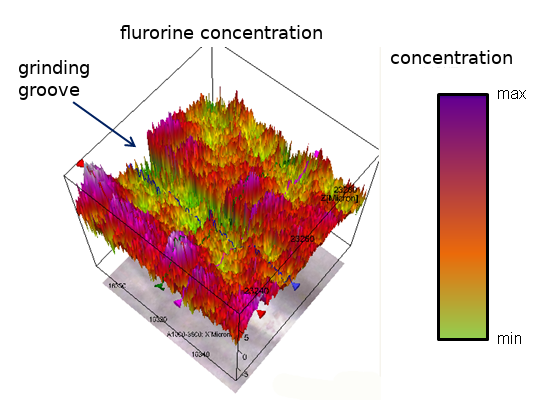
Figure 1: 3d view of a ski base cube (edge length 100 µm) after application of wax containing fluorine. In the cube, the intense red tones correspond to high fluorine concentrations. A grinding groove runs through the surface of the cube from top left to bottom right.
Matthias Scherge has been studying the basics of gliding on ice and snow for more than ten years. He heads the MicroTribology Center, a joint institution of Fraunhofer and the Karlsruhe Institute of Technology, where he teaches tribology as a professor. Tribology is the science of friction, wear and lubrication and deals, among other things, with the gliding behavior of skis. Since 2012, Scherge has been advising the Nordic Paraski Team Germany and leads Team Snowstorm, an efficient network of companies and academic partners supporting athletes and ambitious winter sports enthusiasts: http://team-snowstorm.de/index.html
Matthias Scherge is the director of the Fraunhofer Microtribology Center in Germany. As one of the major European research institutes specializing in industrial lubricants, Scherge and his colleagues have a hand in the ski wax game. Currently, Scherge is assisting the International Ski Federation (FIS) to implement its fluoro-free policy. Specifically, they are determining the thresholds at which a positive or a negative test will be triggered when testing a ski base for fluoros.
Scherge also assists in publishing an on-line journal dedicated to the science of gliding on snow. You can find that work here.
FasterSkier: Can you tell us about the institute you work for in Germany?
Matthias Scherge: Professionally, I work for the Fraunhofer Institute, one of the largest institutes for applied research in the world. We have at the moment more than 28,000 people and they are organized into 80 institutes. I am in charge of what we call the Fraunhofer Microtribology Center. What I do on a daily basis is conduct applied research mainly for European industry. Research that involves everything concerning friction, wear, and lubrication.
My center, Microtribology Center, has for the moment, eight groups and in total 100 employees. We work on high-temperature applications, steel, ceramic and polymers. We develop new lubricants by experiments and atomic simulation which is very important for lubricant design. Here we have also engine test cells, gearbox test cells, everything necessary to give the industry an answer of what to do when they have a problem with friction and wear.
FasterSkier:How are you funded? How much comes from the government?
MS: Fraunhofer receives 30 percent from the government and the rest, about 70 percent, must come from the outside and outside means industry contracts and national projects, like the national science foundation project. We are in contact with the people and industry in Europe and have good cooperation with all the industries in our field. The point is this: we have a very intimate contact with many medium-sized companies but also the big ones.
FasterSkier: Can you describe why your institute is suited to develop fluoro testing products? We always hear anecdotally that it is difficult to detect fluoros on a ski base.
MS: I’ll tell you the story of how this came to be. This happened after the decision of FIS in November. FIS invited three or four specialists from Norway, from Austria, from Germany, and somewhere else which I do not know, to the airport in Munich, and we were asked by a group of seven or eight FIS officials, including a chemist, about our expertise. And after this meeting, they decided to go with Fraunhofer and they decided to have me as the scientific advisor of this project.
This is because we have been in the field for almost 20 years. We have been working for wax companies, for ski companies and did a lot of work with respect to basic and applied research. We have all the necessary testing equipment and also the knowledge and we also spent a lot of time on those fluorine projects especially in the last two years.
Part of the proposal I provided to FIS was that we will conduct the fundamental and basic research and the calibration analysis, and I suggested a company to join the project called Kompass — this is a high tech company specializing in optical analysis. They come from an environmental analysis background and they have experience in the optical analysis of pollutants in air and water.
We provide know-how from what we have done in the past. Because you have mentioned it, yes, in the past sometimes people think it is quite complicated to measure fluorine. But in fact, because of all those environmental issues like fluorine in the atmosphere, there are many techniques around — techniques that are able to detect fluorine. There is infrared and x-ray diffraction, and x-ray fluorescence, there are devices that are able to detect fluoros right away.
FasterSkier: Has cost been the limiting factor in making fluoro testing more universal?
MS: The cost is one thing. We use what we call XPS, which stands for X-ray photoelectron spectroscopy. This is a machine that is 2 x 2 x 2 meters — for the big one — and we have to use an ultra-high vacuum. From this you can already see it is not a functional machine in some ways, you cannot transport it to a skiing venue and test there in the field. This is entirely a wet-lab test device and the cost for such a machine is around a million Euros so this is way too expensive.
So this is actually the problem. Is there a way to come up with a small device that has a similar resolution and that can detect fluorine in an easy way? And that is why we came into play.
FasterSkier: In the past, like at some Norwegian junior races, they have used a test strip. They apply it to the ski, and then send the strip off to a lab in Germany for testing. What are some issues with this procedure?
MS: This was an EU project with groups from Norway and Sweden and some other European countries including another German institute. The way they do it, they have an adhesive strip, they put it on the ski base then they rip it off and they hope that some grains of wax are still on the tape. Then they carry this piece of tape to the institute in Germany close to Munich for testing. This works but this is complicated.
FasterSkier: What makes it complicated?
MS: First of all, when you are at a skiing competition, you know they love their skis. And then someone pops up and says, “give us your ski and I will put some tape on it and rip it off.” The skiers will scream, they will never allow this. On the junior level that might be OK, but for a FIS race, no way, it does not work.
That is the first challenge. The second challenge, is you have to make sure that on the way from the competition site to the lab there is no tampering. It is like doping transport, this is complicated, you have to make sure there is no misplacement. Then it takes at least three to four days until they have the results. So there’s no chance to say right at the starting point of the race that a skier is disqualified or that they are good and they may race.
FasterSkier: Were you or your institute involved with developing that testing strip and testing protocol?
MS: No. I know all the people and know how it works but I was not involved in this preparation and development of this original device.
FasterSkier: With the test strip method, do they use two strips on the same ski to secure an “A” sample and a “B” sample to either confirm a positive test for fluoros or prevent a false positive from dictating a skier’s fate?
MS: They just take one sample and send it in. That is it. That is why we said when we go into serious business this is no way to test. We need something that can be applied right at the venue and gives the result one second after the testing and then there is a decision.
FasterSkier: After cleaning a ski base that historically has had fluoros applied to it, we know residual fluoros are present, can the handheld device in development detect residual fluoros on the ski base?
MS: That is a problem, there are a few liquid cleaners and even they contain fluorine. So there might be this possibility – you have a clean ski then you use a wax remover or cleaner and you introduce fluorine from the cleaner. That can be one source of fluorine. Also, when you have a base wax that is non-fluoro, they use fluorine in antifoam oils during the processing of the ski wax. So there are trace amounts of fluorine even in no-fluorine base waxes. The question is what is the right threshold for fluorines? What is a positive and what is a negative?
That is why we do all the research to define the threshold. We can then tell people, “don’t worry this is just noise, but be careful at these levels as it starts to be fluorine coming from your waxing process.”
Right now we are in the process to define those thresholds. For the upcoming season, the measurement limits or tolerances will be defined in order to discriminate between the use of fluorinated waxes and potential contamination or an incomplete cleaning from pre-existing material. The limits will be based on the experiments of our test during the validation phase for summer 2020, which is what we are doing at the moment.
FasterSkier: Is it obvious, from your testing, to determine when a ski has been freshly waxed with fluoros compared to detecting residual fluoros, or an artifact from prior fluoro use?
MS: There is a clear significant difference in fluorine concentration just by waxing the ski.
FasterSkier: In your lab, are you set up to also test the effectiveness of fluoros when we are considering ski speed?
MS: We are very well equipped, we have all the equipment: XPS, photoelectron spectroscopy, we have the microscopes, we have four snow and ice machines so we can produce snow in the lab. We can also work with natural snow so we can mimic the gliding process in the lab up to the speed of 150 km/hour. We, as I said, are very well equipped to do the basic stuff, and then we are very well connected to teams, testing teams, that go into the ski tunnel or are out in the field.
The whole chain of necessary contacts are available to our network.
FasterSkier: While I have you, what are the findings regarding how much the wax impacts a ski’s end speed?
MS: I would refer you to the web pages I operate. I started writing an online journal called GLIDING. A couple of years ago we measured the penetration depth of fluorine into the ski base.
We did this because the ski technicians always say “you have to work the ski base many times until it begins to absorb the wax, that means you have to wax and scrape a couple of times and then it is finished.”
This is just part of the truth. We did a lot of microscopy down to the molecular level and this showed that there are no pores inside a ski base. This is just the molecular surface structure, that is able to be impregnated by wax. And so this layer has just a thickness of less than one micron.
So a hair has a diameter of 50 or 60 microns and the ski base wax layer prepared by the technicians had just a thickness of one micron.
FasterSkier: Is grinding a ski base the most effective way to “clean” a ski base (remove residual fluoros)?
MS: When you remove 100 microns by the grinding process, this is 100 times more than was prepared by the ski technicians. So when you are not certain what to do, put it into a grinding machine and you have a fresh ski.
The safest way is to grind the ski, or wax it and then scrape it a couple of times, but with this, there is still some fluorine, so grinding is the safest way.
FasterSkier: Has your company found that old brushes/corks introduce fluoros into the base that your devices can detect?
MS: For the moment we are working on a recipe to clean contaminated brushes. But scrapers are not a big deal, it is just a piece of plastic. But the brushes are a problem. Fifty euros for a brush — this is a lot of money. For the moment we have developed cleaning recipes to keep the equipment, like old brushes, and to clean and remove the fluoros.
This is a washing procedure.
We have a close collaboration with ski technicians and the ski racing services. We have had a couple of meetings with them to make them familiar with the testing device, the last meeting was in June and there we also told them we are looking for a way to clean the equipment.
FasterSkier: Some ski companies impregnate fluoros into their bases. Can your devices detect those fluoros or are the amounts too small?
MS: My feeling is that when the ski companies process the polymers for the base, this Ultra High Molecular Weight Polyethylene (UHMWPE), before the baking process they have the UHMWPE grains and they put in the wax. So they wax the polyethylene and I think the story behind this is that it is similar to the stories the ski technicians tell versus the story about the pores of the polyethylene. They still think there are pores, but there are definitely no pores.
And here, I think this is craftsmanship.
The purpose was really driven by the technicians, they say the fluorinated wax is fine, so they put it in the ski base, and the speed tests are usually done by the same people that had the idea, and of course, they measure it and there is an advantage. And then it spreads and everyone feels the need to do this.
Yes, we can detect this fluorine residue.
FasterSkier: What type of advice will you give FIS when it comes to establishing tolerances and limits for fluoros on ski bases?
MS: The standpoint of FIS is they will ask don’t use fluorinated wax and then we don’t have to talk about thresholds and levels and tolerances, simply obey the rules, forget about fluorinated wax and go on with your competition.
FasterSkier: What methods/protocols do you recommend when using your devices to ensure a false positive/false reading is not registered?
FIS says that for every FIS discipline there will be a different operation for handling skis and testing that will be adapted for the competition. They usually will test before the start and after the finish of the competition at different spots on the ski, three to five spots. Then it comes to the result and I guess for the first season, this year into next year, there will be something like in soccer, the red card, yellow card as a first sign. But then we will together with FIS decrease the threshold step by step over the next couple of years so we will set the limits down so in the end have no more fluorine whatsoever.
FasterSkier: When might the handheld testing units be available?
MS: We will provide FIS with five technical prototypes this summer for them to do the test in the lab and in the field. But by the end of October, we have many orders and we will send all the devices out and there will be more than say ten devices out.
FasterSkier: What is the expected cost for the handheld units to be used on the World Cup?
MS: It will cost less than 10,000 euros.
FasterSkier: These handheld units, they are essentially high-tech optical scanners designed to detect fluoros. I’m thinking it might look something like we might use at
a self-checkout at the grocery store. Does that sound right?
MS: They are very similar in look to the temperature probes they use in competition, this is what we call a handheld design.
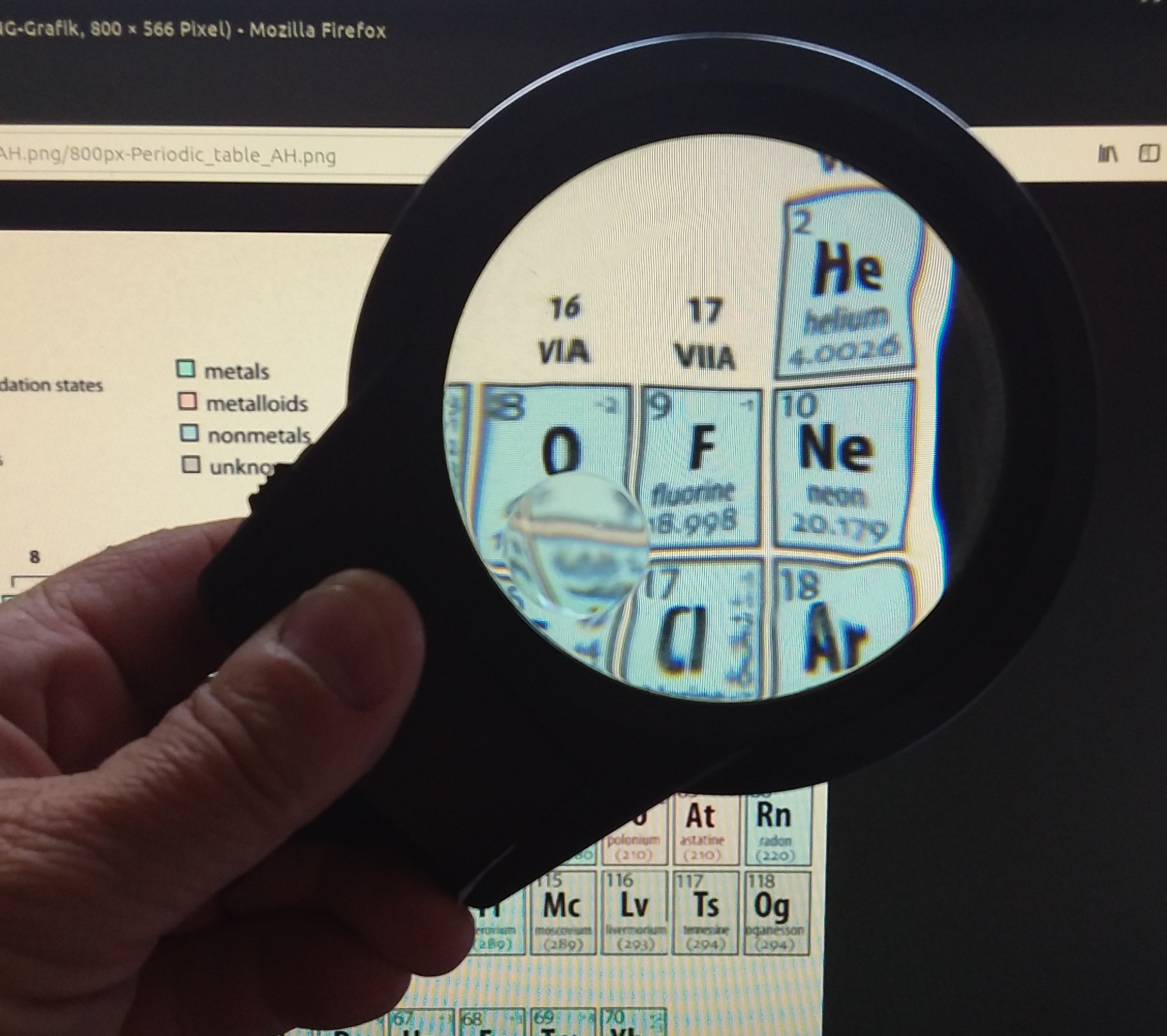
FasterSkier: There is no question, the periodic table has been around for a long time. And the elements on the table have been well studied. Fluorine works exceptionally well when designing compounds to repel water and dirt. So, I guess what I am saying, is that we have most likely bumped up against the wall when it comes to “discovering” a new compound that works as well as fluorine as a lubricant — a friction reducer. Do you imagine industry will find a substance as effective as fluoros when it comes to maximizing ski speed using wax?
MS: We asked our atomic simulation group the same question since this can be hard to measure — measuring on the atomic level or the molecular level is quite difficult. But we used what we call molecular dynamic simulation, so we are able to model a system and compose a system containing a couple of hundred million atoms. We did this with carbon covered with fluorine, and we simulated the contact angles or the wetting properties, and from those simulations, we came up with the conclusion that there is only one element in the entire periodic table that generates a similar water repellency, and this is hydrogen.
When you are able to cover the ski bases with hydrogen, but it must be atomic hydrogen, then you have the same sliding properties like with fluorine. But this is just a theoretic approach. This will never happen because there is no way to attach hydrogen especially with atomic hydrogen to a ski base. The answer is as soon as fluorine is out, the races will be slower.
FIS states, “The use of fluorinated ski waxes, which have been shown to have a negative environmental and health impact were banned for all FIS disciplines from the 2020/2021 season.”
Behind the scenes, the transition to fluoro free racing has begun both in Europe where the majority of World Cups are held, and here in North America where a working group to write a fluoro free policy for domestic racing has been formed.
On the science and engineering side, FIS has worked with the Fraunhofer MicroTribology Center in Germany — a collaboration between the Fraunhofer Institute for Mechanics of Materials IWM and the Karlsruhe Institute of Technology — to dial in their technical specifications to properly test for fluoros and determine the low-end thresholds at which fluoros can be detected.
Matthias Scherge leads the center. He studies things like friction, wear, and lubrication at the molecular level. Which it turns out is helpful in determining how to test for fluoros and maximizing ski glide on snow. We’ll publish an in-depth interview with Scherge later this week.
GLIDING is a niche science journal spearheaded by Scherge and a cohort of advisors. Most of the articles are presented in German. However, a few have been translated into English. GLIDING, as the name suggests, presents findings related to gliding on snow – which means analyzing the interplay of wax, base structure, snow, and other micro-variables impacting ski glide performance.
A recently released paper by Scherge and Thierry Langer is titled: “Are Fluorinated Ski Waxes Really the non plus ultra?”
Below is the paper’s abstract and introduction. The paper’s findings provide food for thought and experimentation as ski racing culture evolves. Undoubtedly, resources will be allocated to devise new fluoro free waxes, sophisticated grinds, and possibly establish mobile race-ready mini-labs to analyze snow crystals.
“Fluorinated ski waxes are considered the non plus ultra in skiing because of their very good water repellency. However, with the announced fluorine wax ban by the FIS, this quality feature is relegated to the background. With the discovery of the lotus effect, it became clear that the effect of water repellency results from the combination of a non-polar (wax) surface and a corresponding optimal roughness. Therefore, the paper deals with this combination and presents results obtained with 3 differently fluorinated waxes and 5 pairs of differently ground skis. The evaluation of the gliding properties was carried out under laboratory conditions in a ski tunnel and was flanked by analyses of the water repellency and the topography of the skis.”
Introduction:
“The days of fluorinated waxes are numbered since the FIS World Ski Federation decided to ban them for all its disciplines from the 2020/21 competition season. Since then, and in some cases even before, extensive test series have been underway by wax manufacturers to replace fluorine waxes with other substances. This undertaking is laborious, since due to the physical/chemical properties of fluorine, only the application of atomic hydrogen to the ski surface would produce similarly strong water repellent effects, but this is more of a theoretical solution. By means of atomistic simulation – and this is how deep one has to delve into the physical bag of tricks – it could be shown that the termination of a solid surface (physically called termination) by fluorine shifts the cloud of valence electrons so deeply into the solid that the polar water finds no docking possibility and, macroscopically speaking, rolls off [1]. The roll-off effect due to the hydrophobicity is promoted by the microstructure of the surface. This combination is one of the elementary cleaning mechanisms of nature. Plants form ribs or elevations of wax about 5 to 20 micrometers high and 10 to 15 micrometers apart, so that the water, due to the surface tension cannot penetrate into the interstitial spaces and cannot find a hold [2]. The water-repellent effect increases the more non-polar the surface is. Since ground structures partly have similar dimensions as the leaf structures mentioned above, a way for the detachment of fluorine waxes opens up here.
In tests under laboratory conditions, 3 waxes of different fluorine content were tested, which were applied to 5 cross-country skis with different grinding structures. Before the gliding tests, the ability to repel water was quantified and the ski bases were subjected to an exact roughness analysis.”
Matthias Scherge.
Matthias Scherge has been studying the basics of gliding on ice and snow for more than ten years. He heads the MicroTribology Center, a joint institution of Fraunhofer and the Karlsruhe Institute of Technology, where he teaches tribology as a professor. Tribology is the science of friction, wear and lubrication and deals, among other things, with the gliding behavior of skis. Since 2012, Scherge has been advising the Nordic Paraski Team Germany and leads Team Snowstorm, an efficient network of companies and academic partners supporting athletes and ambitious winter sports enthusiasts: http://team-snowstorm.de/index.html