Tag: Max Durtschi

  • Cook, Egan and Doherty Bound for Utah, Possibly World Cup

    Cook, Egan and Doherty Bound for Utah, Possibly World Cup

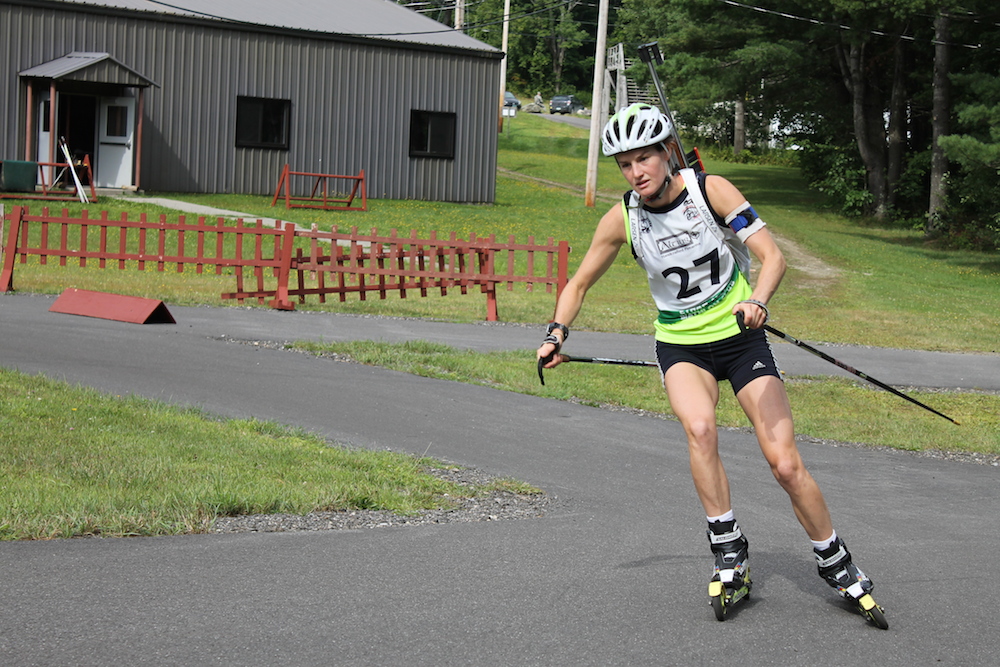
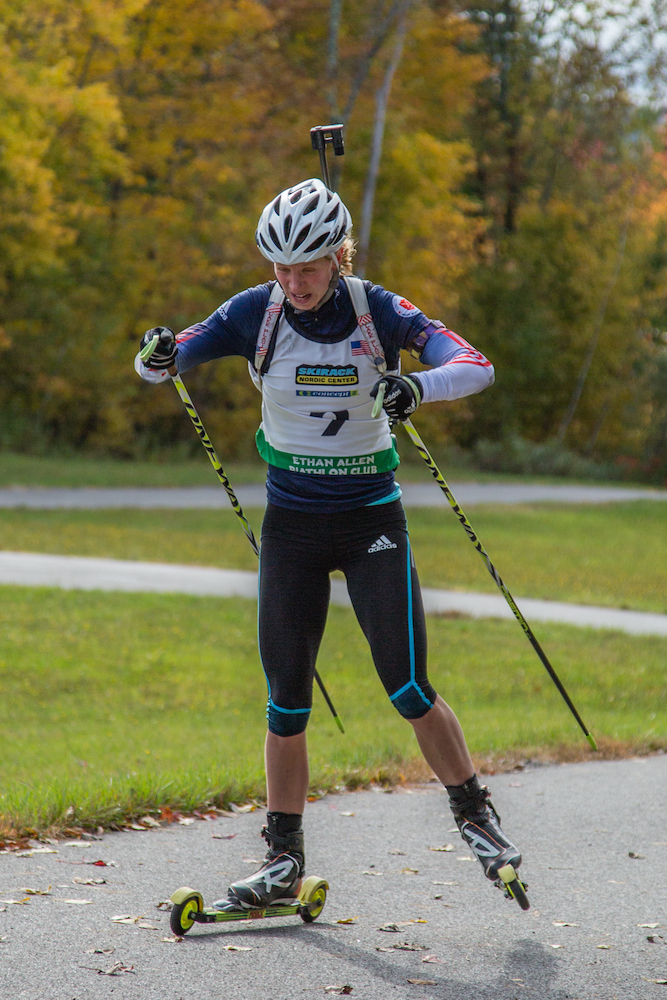
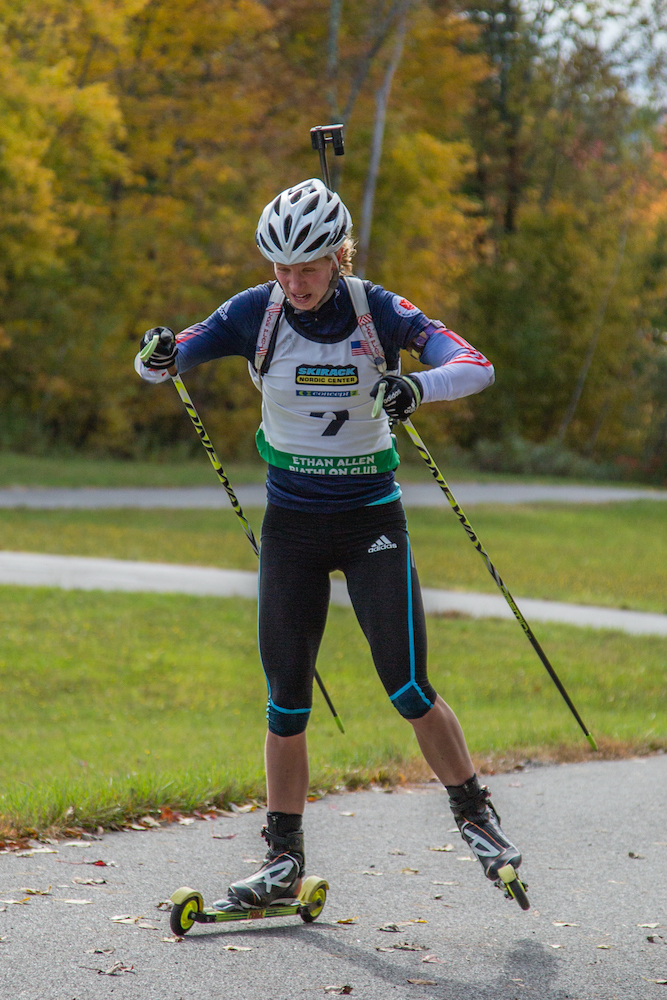
    Annelies Cook (USBA A-team) en route to the first of back-to-back sprint victories last weekend in Jericho, Vt. As a result of her performances at the USBA trials, Cook was one of two women selected to the team's upcoming training camp in Utah. (Photo: Erika Bailey)
    Annelies Cook (USBA A-team) en route to the first of back-to-back sprint victories last weekend in Jericho, Vt. As a result of her performances at the USBA trials, Cook was one of two women selected to the team’s upcoming training camp in Utah. (Photo: Erika Bailey)

    Note: This article has been corrected to reflect the fact that Annelies Cook was sick in the opening sprint of the 2015 USBA trials and did not start.

    Annelies Cook wasn’t feeling the heat the first time around in Jericho, Vt., at the first set of US Biathlon Association (USBA) trials in August. She was sick and didn’t compete in the opening sprint, but came back to place third in the mass start the next day.

    “I was coming off a small cold [during] the first trials and also didn’t feel great with the heat that we had at the time,” the USBA A-team member explained in an email on Monday.

    Last weekend was different. Again in Jericho, Cook, 31, won back-to-back sprints at the second set of trials, which determine who goes to the USBA Utah training camp near Park City from Oct. 18-Nov. 1, and from there, who is selected for the early season International Biathlon Union (IBU) World Cups 1, 2 & 3.

    “These trials races were a lot more positive feeling,” she wrote after winning last Saturday’s sprint by 12.5 seconds over teammate Clare Egan and Sunday’s sprint by 1:26.8 over Maddie Phaneuf of the USBA X-team. Cook hit 70 percent of her targets on Saturday and 80 percent on Sunday.

    “The shooting isn’t good enough for a World Cup standard,” Cook wrote. “You really have to hit a minimum of 80% to do even okay now. It’s just so competitive.”

    According to women’s coach Jonne Kähkönen, conditions made for a fair playing field, with light winds and crisp, clear fall weather.

    “The level of shooting was average, both for the qualified athletes and the non-qualified,” he wrote in an email.
    The 2015 USBA men's trials winner Sean Doherty (A-team) placed second in both sprints last weekend in Jericho, Vt. (Photo: Erika Bailey)
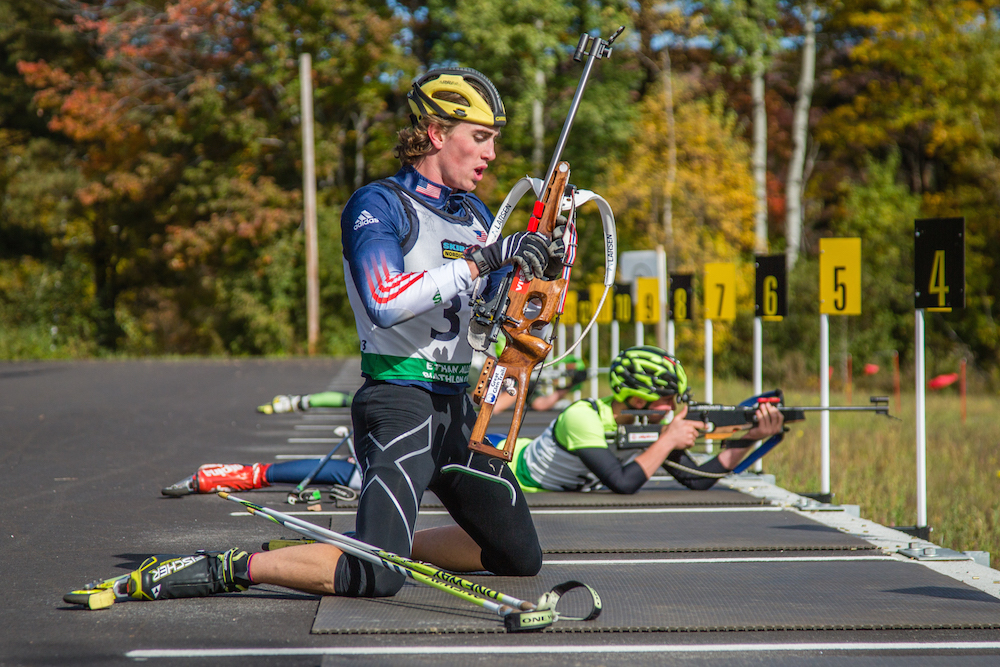
    The 2015 USBA men’s trials winner Sean Doherty (A-team) placed second in both sprints last weekend in Jericho, Vt. (Photo: Erika Bailey)

    Leif Nordgren, of the USBA A-team, who prequalified for the World Cup with a top 20 on the international circuit last season, won the men’s sprint with 70-percent shooting, finishing 16.3 seconds ahead of 20-year-old teammate Sean Doherty. One of several men in the mix for the lone remaining World Cup spot available on the men’s side, Doherty also missed three targets on Saturday, but finished 5 seconds ahead of team veteran Lowell Bailey, who had two misses. (Bailey is also prequalified for the World Cup.)

    “As always, some showed better shape of the day than the others, e.g. Sean and Clare (the first sprint on Saturday),” Kähkönen explained. “Overall, I can see that the tough block of training has taken its toll and the performance is not yet at the level we want to see at the World Cups, but I am also confident that through a good periodization and working on the shooting execution especially during this next block of training we will get to where we want to be.”

    Based on last weekend’s results and the previous August trials, the USBA coaches invited Cook (the women’s overall trials winner), Egan (the second woman) and Doherty (men’s trials winner) to join them in Utah. The team has two World Cup openings for the women and one for the men.

    “My biggest focus for these trials was to keep on doing the work that we have been doing,” Cook explained. “The pressure I feel is mostly internal, wanting to prove to myself that I am more fit than the previous year and better able to handle the shooting pressure.”

    She has focused on more intensity this year — hard intensity — balanced with distance training to avoid peaking in September, Cook wrote.

    “I think that I was slow to start on the World Cup last year and that is really hard to catch up. It’s hard to get fast while you are trying to race too,” she wrote. “So our approach is to get there a little bit sooner this year.”

    She felt some fatigue on Saturday and “had to fight really hard to ski fast,” she explained.

    Cook finished just ahead of Egan, who missed two targets to place second on Saturday, and Phaneuf placed third, 37.2 seconds back with two penalties as well. The two prequalified World-Cup women on the A-team, Susan Dunklee was fourth and Hannah Dreissigacker finished fifth. Mikaela Paluszek of the Maine Winter Sports Center (MWSC) was sixth, Emily Dreissigacker (Craftsbury) seventh, Chloe Levins (National Development Group) eighth, and Lisa Ratschiller (LRB) ninth to round out the senior women’s field.

    “I saw these races as an opportunity to compete well under pressure,” Egan, 27, wrote in an email. “On skis, a good performance comes from extraordinary effort, but on the shooting range a good performance comes from repeating your normal process in a totally average manner. Switching between those mindsets is one of the great challenges in biathlon, and being under pressure adds to that challenge.”

    On Sunday, Cook explained she felt notably better and ended up winning by nearly 1 1/2 minutes. Phaneuf missed three to place second, Egan was third with four misses, Hannah Dreissigacker placed fourth, Emily Dreissigacker fifth, Ratschiller sixth, Paluszek seventh, and Jordyn Leighton (Chelsea) eighth. Levins and Dunklee did not start.

    “Shooting … seems to always be tricky in Jericho,” Cook wrote. “I think it probably has a lot to do with the approach because it is just this long gradual uphill that is hard to bring your [heart rate] to a good place that feels in control for shooting. I didn’t do a good job on the first day for sure, but that gave me something work on the second day. I am working on being mindful in the shooting range.”
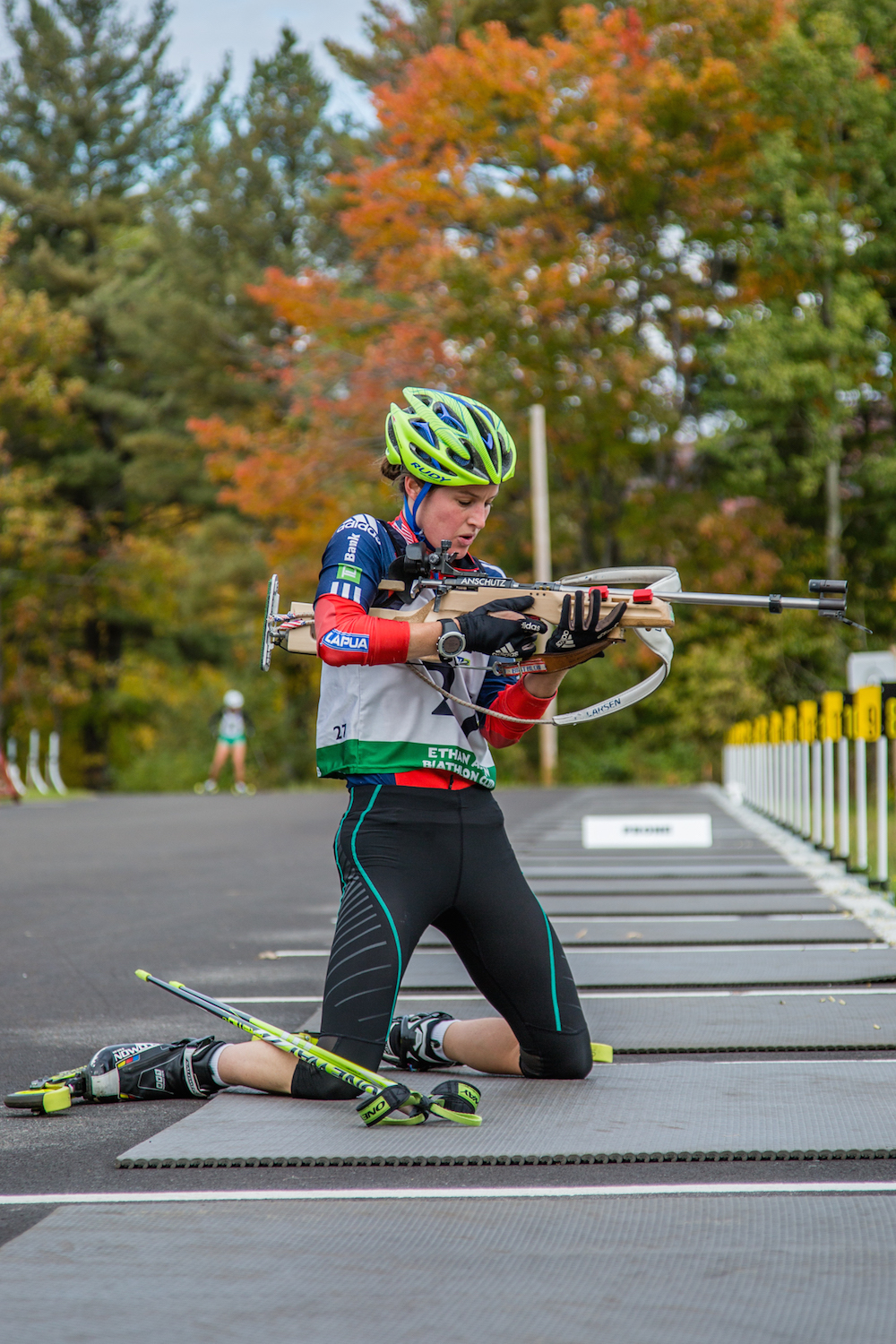
    Clare Egan (USBA A-team) prepares to shoot during the second set of USBA  trials in Jericho this past weekend. (Photo: Erika Bailey)
    Clare Egan (USBA A-team) prepares to shoot during the second set of USBA trials in Jericho this past weekend. (Photo: Erika Bailey)

    Egan was satisfied with Saturday after meeting her goal of 80-percent shooting, but not so much with Sunday after two prone and two standing misses.

    “Over the course of the weekend, only two people shot 90% and nobody shot clean (men or women), which is definitely below average for this field of competitors,” she wrote. “It could be because of the pressure scenario, but I also think that the Jericho range has its own set of difficulties including the uphill approach and wind.”

    In the Saturday’s men’s race, Russell Currier (MWSC) placed fourth, Wynn Roberts (National Guard) was fifth, Max Durtschi (X-team) sixth, Jakob Ellingson (Loppet Nordic Racing/Mt. Itasca Biathlon) seventh, Craftsbury’s Alexander Howe and Casey Smith eighth and ninth, respectively, and Brendan Cyr (MWSC) 10th.

    On Sunday, Bailey won the second sprint by 15.3 seconds with a single penalty. Doherty was second again, this time with two misses, and Nordgren was third with two misses as well.

    Ellingson placed fourth, Durtschi was fifth, Currier sixth, Roberts seventh, Smith eighth, Patrick Johnson (X-team) ninth, and Howe 10th.

    According to USBA Chief of Sport Bernd Eisenbichler, who also observed the athletes in Jericho, the A-team controlled the field during the trials, but non-national team standouts Ellingson and Currier made a case for themselves. Currier placed second in the trials and Ellingson was third, and both earned an invite to the team’s November camp in Lake Placid, N.Y. The didn’t make the Utah cut “as the distance to [the] A-team is still too big,” Eisenbichler wrote.

    “[We are] very happy with Max Durtschi’s improvement and development in a short time doing Biathlon — he is on the right track,” he added.

    Kähkönen noted Cook’s overall consistency last weekend “and the fact that she did nothing spectacular,” as good indicators for her potential this season.

    “Clare had a good sprint on Saturday especially, [we’re] happy to see the progression and the clean prone stage in a race which has been a bit of a challenge this summer,” he added. “Maddie also has taken a good step towards the senior women, which I’m happy to see as we definitely need to have all of these women in top of their game during the winter — also to have competition on who gets to race the relay.”

    In Utah, the focus will be high-quality biathlon training and an emphasis on race execution, especially from a mental standpoint.

    “The camp in Utah is a tough one and if the performance of an athlete is not at the level where they can handle the altitude it can be a push back in their performance,” Kähkönen explained. “So looking at the bigger picture and seeing the progression over a longer period of time [throughout the trials period], this is the way to go.

    “For the athletes that did not make the cut at this time, we are offering a camp and coaching support here in Lake Placid with [development coach] Jean [Paquet], so all of the potential athletes are getting a good block of training leading up to the start of the season and we have our coaching staff eyes on them,” he added.

    “We still have 7 weeks ’til the World Cup starts and I am very confident, that this is on the right track,” Eisenbichler added.

    ***

    Photos (courtesy of Erika Bailey)

    Results:

    Saturday: women’s sprint | men’s sprint

    Sunday: women’s sprint | men’s sprint 
  • Johnson and Durtschi Reap National Team Nominations, Seek Higher Biathlon Goals

    Johnson and Durtschi Reap National Team Nominations, Seek Higher Biathlon Goals

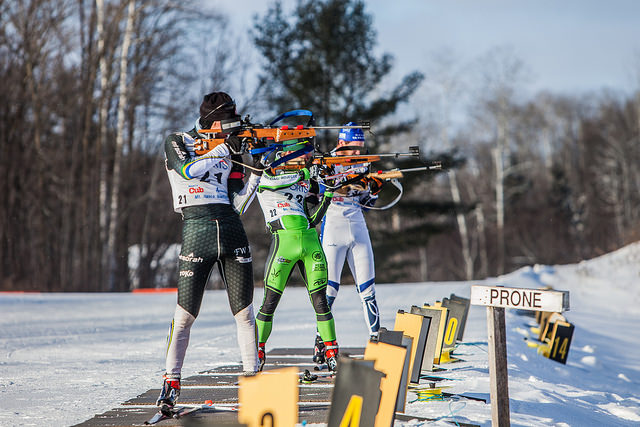
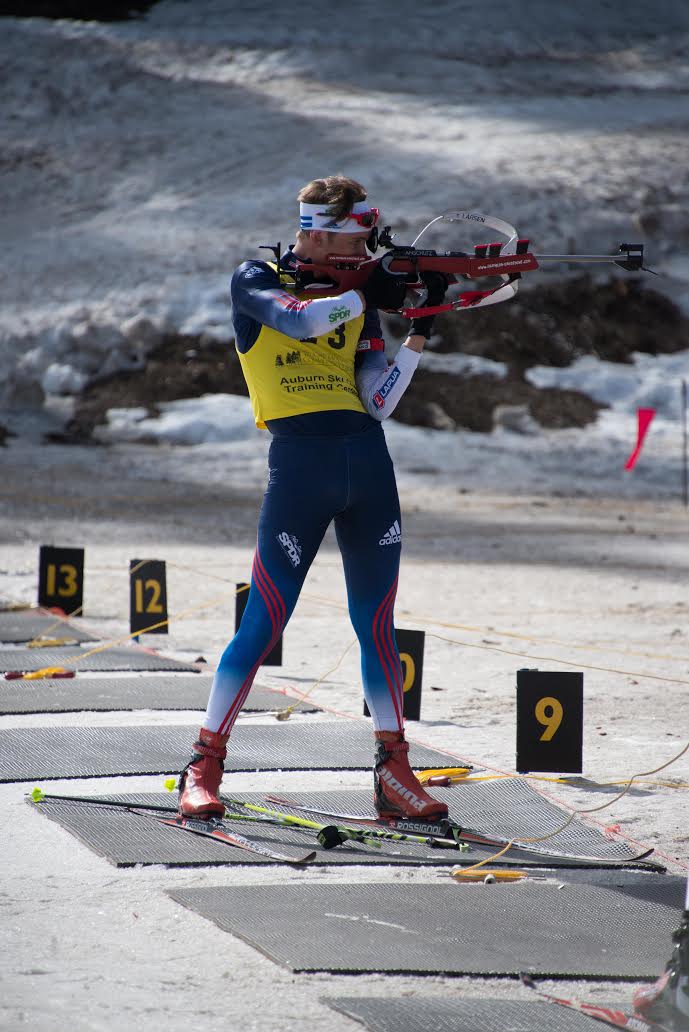
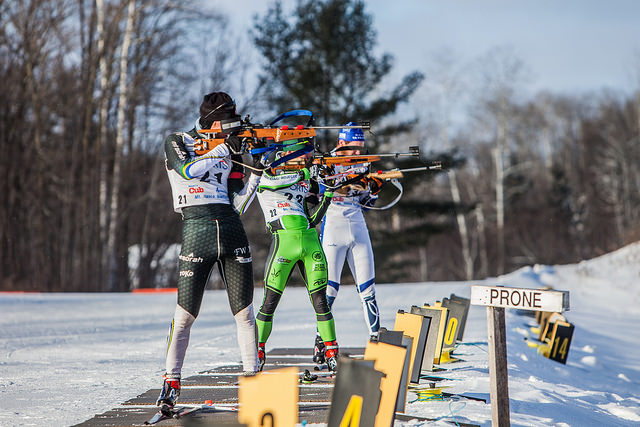
    Patrick Johnson of the Auburn Ski Club (foreground) shooting at IBU Cup Trials in Mount Itasca, Minnesota, in December. (Photo: Jake Ellingson/flickr)
    Patrick Johnson of the Auburn Ski Club (foreground) shooting at IBU Cup Trials in Mount Itasca, Minnesota, in December. (Photo: Jake Ellingson/flickr)

    After the 2014 Olympics, the U.S. Biathlon Association (USBA) decided to sink some of its budget back into the development pipeline, which had taken a hit to bolster high performance in the run-up to the Games.

    The juiced-up development program had multiple tenets, but one was a return to a strategy that had worked once before: recruiting high-level senior skiers, and turning them into biathletes.

    Last summer, USBA hosted its first Talent ID Camp, including 11 ski racers from Stratton Mountain School in Vermont to Alaska Pacific University and everywhere in between. Some ended up focusing on biathlon in the subsequent season; others didn’t.

    Only two of the recruits snagged repeat nominations to the U.S. National Team this spring. Max Durtschi, a former professional cyclist from Sun Valley, Idaho, got nominated a second time to the “X” team, a residential development program based at the Olympic Training Center in Lake Placid which allows full access to USBA coaches and resources. And Patrick Johnson of the Auburn Ski Club in California was promoted from the National Development Group, which offered only periodic exposure to national team coaches, to the “X” Team.

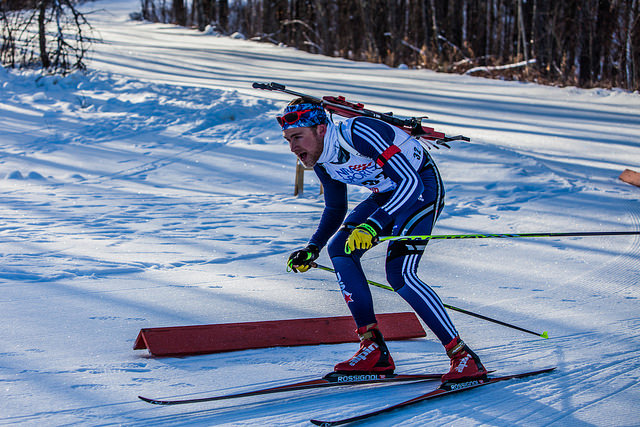
    Sun Valley's Max Durtschi was off the bike and back on skis this winter, here competing at IBU Cup Trials for biathlon in Mount Itasca, Minnesota. (Photo: Jake Ellingson/flickr)
    Sun Valley’s Max Durtschi was off the bike and back on skis this winter, here competing at IBU Cup Trials for biathlon in Mount Itasca, Minnesota. (Photo: Jake Ellingson/flickr)

    Both men spent considerable time on the NorAm circuit last season and represented the United States at IBU Cup competitions in Canmore, Alberta – the level just below the World Cup, where 18 different countries sent teams.

    “I think it was for both of them really overwhelming I guess,” USBA Chief of Sport Bernd Eisenbichler said of the Canmore experience, where Durtschi finished last in one of the races. “But the goal from our side was to give them as many racing opportunities as possible… They need these experiences internationally too, to see where the level is and I think it will make them work really hard.”

    And Durtschi may have had it hard at the IBU Cup, but he bounced back, placing third in the sprint and second in the pursuit at U.S. National Championships; Johnson won both races.

    Several years ago, USBA ran a larger program to recruit college skiing talent to biathlon. That yielded Olympians Sara Studebaker and Susan Dunklee, as well as several others who got IBU Cup experience. More recently, Craftsbury Green Racing Project cross-country skier Clare Egan shifted her focus to biathlon. Last season, her second with any degree of biathlon focus, she moved from the IBU Cup to the World Cup to a top-40 finish at World Championships and was recently named to the “A” team.

    So it’s clear that, with the right skier, the strategy can be a success.

    “That she would make the World Cup team, that was kind of forseen as we don’t have so many women right now in the United States fighting for these spots,” Eisenbichler said of Egan. “But for the ‘A’ team you have to have a remarkable result. It’s not that we just fill up the team by numbers… she made this 40th place at World Champs, and that’s a remarkable result for your first year on the World Cup.”

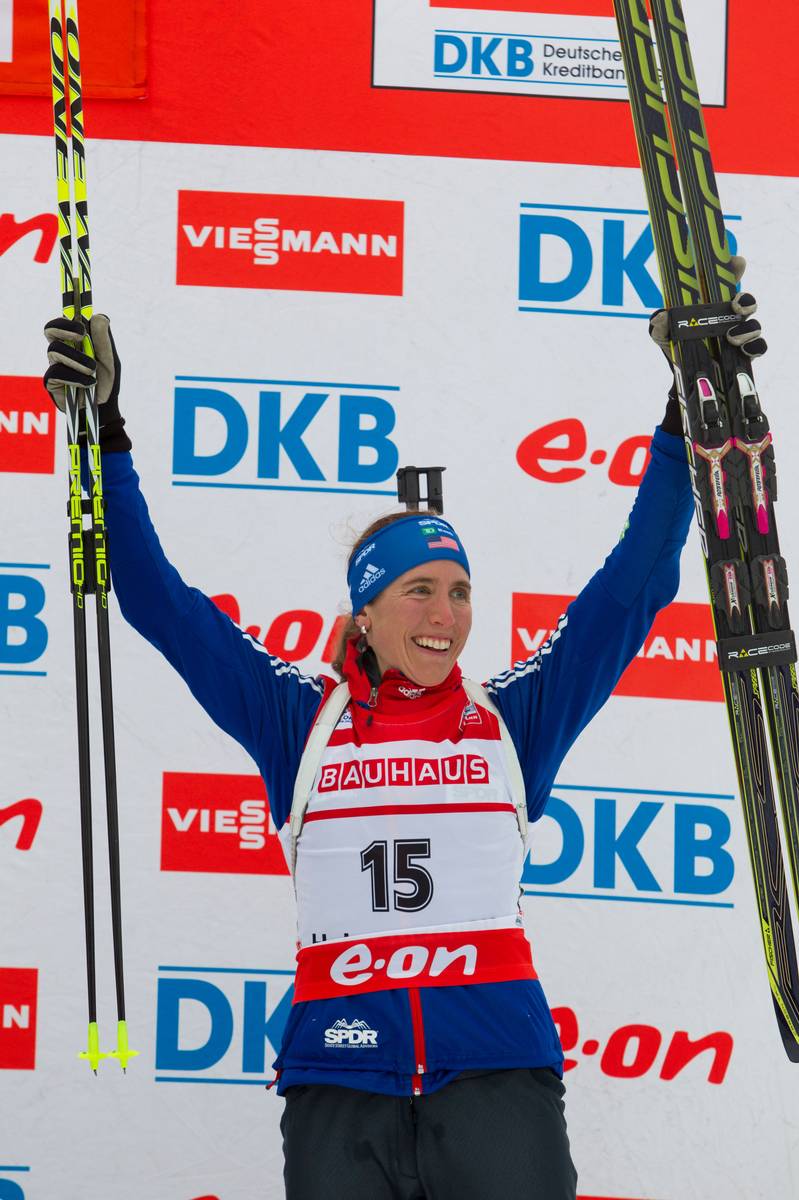
    Susan Dunklee, a standout skier who was recruited to biathlon in 2008, celebrating the first World Cup podium of her career in Oslo in March 2014. USBA is hoping they can replicate her story. (Photo: USBA/NordicFocus)
    Susan Dunklee, a standout skier who was recruited to biathlon in 2008, celebrating the first World Cup podium of her career in Oslo in March 2014. USBA is hoping they can replicate her story. (Photo: USBA/NordicFocus)

    Johnson has said before that his goal is to compete in biathlon at the 2018 Olympic Games. A winning collegiate skier for Middlebury College and a World Junior Championships competitor for the U.S., Johnson picked up shooting quickly, according to Auburn Ski Club coach Glenn Jobe, himself an Olympic biathlete from the 1980 Games. Johnson’s season culminated in two national championship titles, including clean shooting in the sprint.

    “It is extremely unusual to see the type of success Patrick had in his first year of biathlon, however with his work ethic and motivation to improve it did not surprise me,” Jobe wrote in an email. “He’s got the ‘right head’ for biathlon and approaches the sport with a calm and steady demeanor.  It takes someone who mentally can turn it ‘on/off’ or ‘switch gears quickly’, to succeed in this sport.”

    Jobe noted that Johnson had to deal with some changes to his rifle throughout the last year, but finally got comfortable with a good configuration. USBA Head Development Coach Jean Paquet watched those changes in real time, and took note.

    “We worked together in October at a camp in Salt Lake,” Paquet wrote in an email. “At the time it seemed to be difficult for him to get the right [shooting] position and get the shots in the target. The following first snow camp in Canmore I did notice a nice improvement in his shooting ability, as he was able to do 5 for 5. I was impressed as he was able to do some clean shooting bouts and a perfect score at the National sprint in Truckee.”

    The timing of having some breaks to go back to the drawing board in between bouts with the national team coaches proved to be a good strategy, said Johnson, who made making the “X” team one of his season goals.

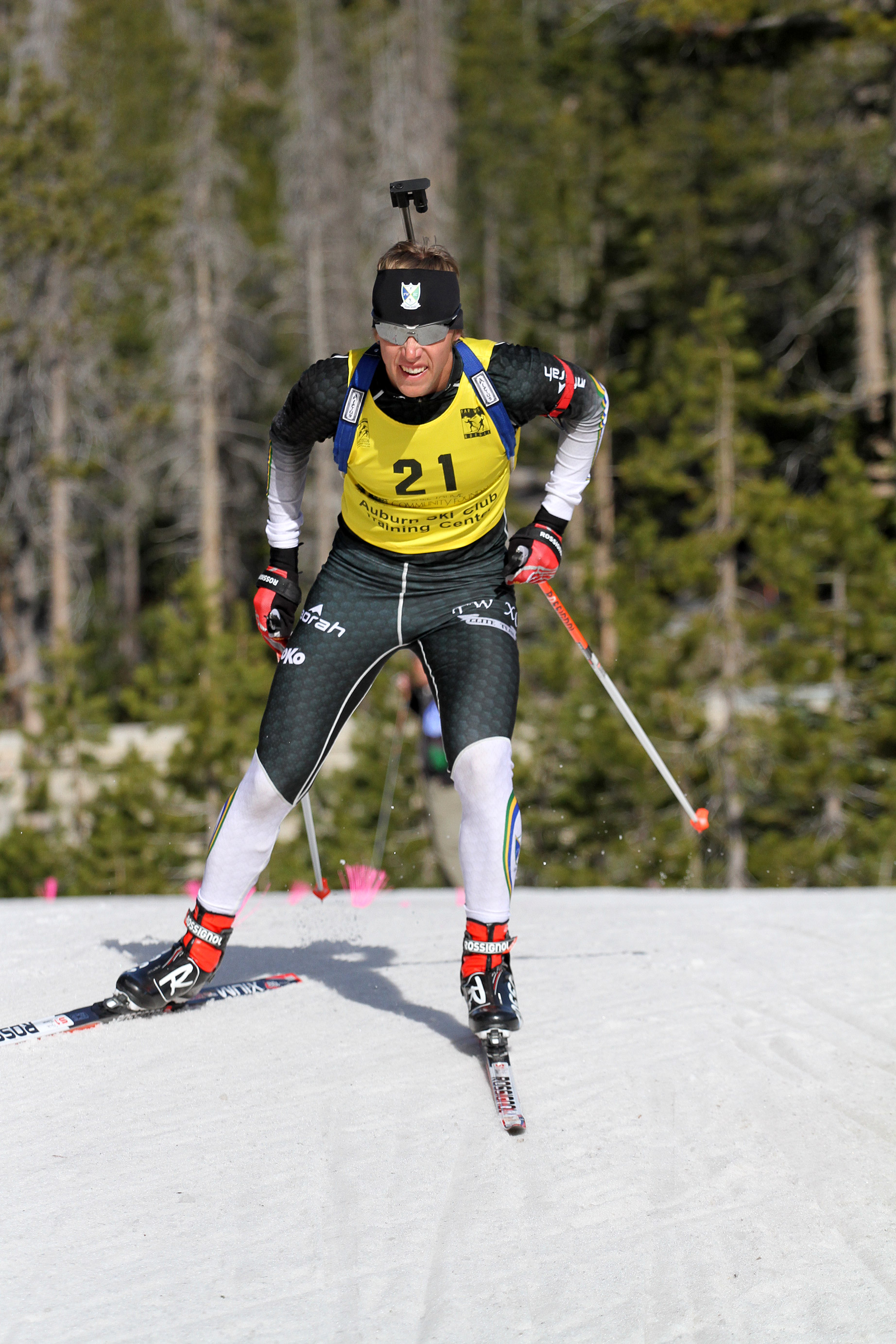
    Patrick Johnson of the Auburn Ski Club won two 2015 National Championships titles on home turf in Truckee, California. (Photo: Mark Nadell/Macbeth Graphics)
    Patrick Johnson of the Auburn Ski Club won two 2015 National Championships titles on home turf in Truckee, California. (Photo: Mark Nadell/Macbeth Graphics)

    He worked hard to get to as many races as possible, which can be challenging given the miniscule domestic biathlon scene in the U.S. He also won a NorAm mass start in Lake Placid by over a minute over “B” team member Casey Smith, and another biathlon race in Soldier Hollow, Utah.

    “I got 16 biathlon races in last year, which I think was a good number for my first year in the sport,” Johnson wrote in an email. “My racing last season came mostly in two blocks, one at the beginning of the year at the Canmore NorAms and IBU Cup Trials and one at the end of the season at the Canmore IBU Cups and at US Nationals. This actually worked out really well since it gave me a period in the middle of the season where I could spend some time back in Truckee training and incorporating what I learned from my first racing experiences with the sport.”

    As part of the “X” team from the beginning, Durtschi spent more time in Lake Placid working closely with Paquet. Durtschi had skied at a high level as a junior, but then turned his attention to professional cycling. As such, he had to not only master shooting but also hone his ski technique to a greater extent than Johnson.

    “Max coming from a cycling background, we have been working on biathlon training periodization,” Paquet explained. “Mainly learning how to shoot and combining the two. It is a process that usually takes two years before the athlete begins to be in control and start being more consistent. Max is a hard worker and learns pretty quickly, but he has to go through a full year of training in order to get the stability and the technique needed to ski fast.”

    But if he had a lot to learn, Durtschi, who moved to Lake Placid in November, says that he was given the full resources needed to do so.

    Max Durtschi competing at U.S. National Championships in Truckee, California, where he placed third in the sprint and second in the pursuit. (Courtesy photo)
    Max Durtschi competing at U.S. National Championships in Truckee, California, where he placed third in the sprint and second in the pursuit. (Courtesy photo)

    “I have been provided everything an athlete could ever ask for: remarkable coaches, outstanding facilities, and motivating teammates,” he wrote in an email. “I did have a chance to train with my teammates throughout the fall and winter, which was great. I learned a lot from them, and they were very generous with their knowledge of the sport… [and] this past fall Jean would often take his off-day and work with me; that really motivated me to train even harder.”

    Another motivation? Durtschi was given the rifle that formerly belonged to Willie Neal, a biathlete who died after being hit by a car while rollerskiing in northern Maine. Durtschi now represents the Willie Neal Environmental Awareness Fund, and said that holding the rifle day in and day out “means the world to me.” Biathlon rifles are typically an investment that costs thousands of dollars, and can be a setback to athletes looking to join the sport.

    Both Paquet and Eisenbichler noted that Durtschi had the highest testing numbers at the Talent ID Camp last summer, which meant that he was their top recruit. Although Johnson seemed to be making faster progress, Eisenbichler had little doubt that Durtschi was also on the right track.

    “For us it’s clear that an ‘X’ Team nomination is not meant for three months and then you take it away again,” Eisenbichler said. “It needs a period of time like 16 or 17 months where you have a really good chance to learn biathlon. Max is one example for sure – we have to see some indicators for a complex biathlon performance where we say, okay, it was worth the investment. Max has a super physical capacity.”

    So what comes next? It’s clear to both athletes and coaches that much hard work remains to be done for them to be World Cup ready.

    “It will be interesting for Patrick and Max to do a full training season starting in May to see how can they improve,” Paquet wrote.

    After the IBU Cup experience, Johnson has some tangible goals for what to improve on.

    “A goal for next year is definitely to have some success on the IBU Cup, and to do that I’ll need to keep improving my skiing and shooting,” Johnson wrote. “I still have the biggest gains to be made in shooting, and the progress I made in this first year is definitely motivation to keep working hard at it. I think the effort I put into picking up shooting conflicted with my ski training at times over the past year, and though I was still skiing well, I don’t think my speed was quite at the level it had been in my most recent seasons. But I still had a few promising ski times on the IBU Cup, so with the increased support I’ll be getting from USBA and the training base I already have, I’ll be looking to take a big step up in ski speed this next year.”

    Eisenbichler is also hoping to partner more closely with regional clubs to provide better development opportunities for athletes already in the sport.

    “We also have to go out to the clubs and be present there as much as we can with the small staff that we have,” Eisenbichler said. “That’s what we will try to do this year,to come up with a concerted camp schedule for all different regions and to do some testing there to also find the young talents early. I also had the idea to have a USBA development summit in Lake Placid in September, and invite the best talents that we find from each region in these regional development camps.”

    In that sense, Johnson’s example seemed to perfectly marry the different strands of development opportunity. And for Jobe, whose ASC Biathlon Training Center is in just its third year of existence, seeing Johnson leave for Lake Placid will be sad, but also an affirmation and advertisement of his mission.

    “We are definitely sorry to see Patrick move to Lake Placid, however I feel that we’re doing our job well when we’ve provided any athlete that’s come through any of the ASC ski programs with the skills and opportunity to move on to the next level,” he wrote. “We are primarily a grass roots biathlon program, supported by volunteers and donations, so all of us are super excited to see the success Patrick is having.”

  • Six U.S. Biathletes Receive National Team Promotions

    Six U.S. Biathletes Receive National Team Promotions

    Clare Egan competing at Ethan Allen in Jericho, Vermont, earlier this summer. The Craftsbury Green Racing Project athlete received a promotion from the U.S. Biathlon Association's Development Team to its X Team.
    Clare Egan competing at Ethan Allen in Jericho, Vt., earlier this summer. The Craftsbury Green Racing Project athlete received a promotion from the U.S. Biathlon Association’s Development Team to its X Team.

    After a summer of training and competition, the U.S. Biathlon Association (USBA) has announced updates to its national team roster.

    In the spring, USBA had named a Development Team for the first time in several years, as well as a new “X Team” squad of more advanced development athletes.

    “Back in spring when we started the new USBA team structure philosophy for the development side with the X-Team and the Development Group we clearly stated that these two teams are ‘open’ teams,” USBA Chief of Sport Bernd Eisenbichler wrote in an e-mail. “‘Open’ for talents we might find through the Talent ID Camp, and for our youth and junior biathletes and ‘young’ biathletes (time in the sport) who were close to getting named to a team already back in April, and showing good development and professional attitude through out the summer training.”

    The Craftsbury Green Racing Project’s Clare Egan was initially named to the Development Team, but has now been promoted to the X Team. Egan placed third in the sprint at North American Rollerski Biathlon Championships this summer, an impressive result after learning to shoot only recently in her nordic career.

    What’s the difference with Egan’s new nomination?

    “The X Team is the ‘A’ team of the Development side, and the Development Group is the ‘B’ team,” Eisenbichler explained. “X team gives you a resident bed in Lake Placid and other benefits, but this season we want to really work very intensively with both teams to give them most time possible with biathlon training. So also the Development Group got a good amount of camp days in Lake Placid and/or Utah, so all the athletes have a good chance to develop as quickly and as far as possible in a short amount of time.”

    Also promoted to the X Team is Max Durtschi, a Dartmouth College student who tried out biathlon only earlier this summer as part of USBA’s Talent ID Camp. A former professional cyclist who also had great success as a junior in cross country skiing, Durtschi has picked up the sport quickly.

    Four other athletes have been named to the Development Team, most of whom also participated in the Talent ID Camp and have continued working on biathlon this summer. Headlining the group is Patrick Johnson, a former collegiate and SuperTour-winning cross country skier. He is joined by Kelsey Dickinson (College of St. Scholastica) and Jakob Ellingson (Loppet Nordic Racing), both of whom competed in 2014 World Youth and Junior Championships. Another St. Scholastica skier Paul Schommer was also named to the Development Team.

    “To name them in addition now at the end of the summer is  a great sign for what is possible in our new structure, if an athlete is willing to put in the work and develop through out the training period,” Eisenbichler wrote. “All athletes in the X-Team and Development Group will be invited to an on-snow camp in Canmore, Canada, at the end of November and to the IBU Cup Trials races in Minnesota right after. The camp will be lead by our Head Coach Development Jean Paquet.”

  • After Retiring from Pro Cycling, Durtschi Turns to Biathlon

    After Retiring from Pro Cycling, Durtschi Turns to Biathlon

    After four years of professional cycling Max Durtschi has made the decision to join the biathlon  community. (Photo: Max Durtschi)
    After four years of professional cycling Max Durtschi has made the decision to join the biathlon community. (Photo: Max Durtschi)

    Max Durtschi is goal-oriented individual. So when the Sun Valley native retired from professional cycling in 2014, he decided that he needed a new endeavor.

    That endeavor became biathlon.

    It’s no surprise that Durtschi returned to nordic skiing. Under the guidance of coach Rick Kapala, he found success on the national and international level as a junior skier.

    However, by the time Durtschi reached his senior year of high school he had started to explore other avenues of his athleticism.

    An avid biker in the summers, Durtschi raced in the 2009 Junior National Championships and walked away with two titles in the Road Race and the Criterium. Not only did he win both races, he did it with a fractured right hand.

    After his two national championships, Durtschi began to race professionally and moved to Boulder, Colo. to train for cycling full-time.

    He was a member of the U.S. National Team for the next four years, and had the opportunity to train both domestically and abroad.

    Durtschi spent his first two seasons riding for Garmin-Cervelo’s continental program. While he was primarily based in Boulder, he rarely spent time in the U.S. as he was racing in Europe for most of the year.

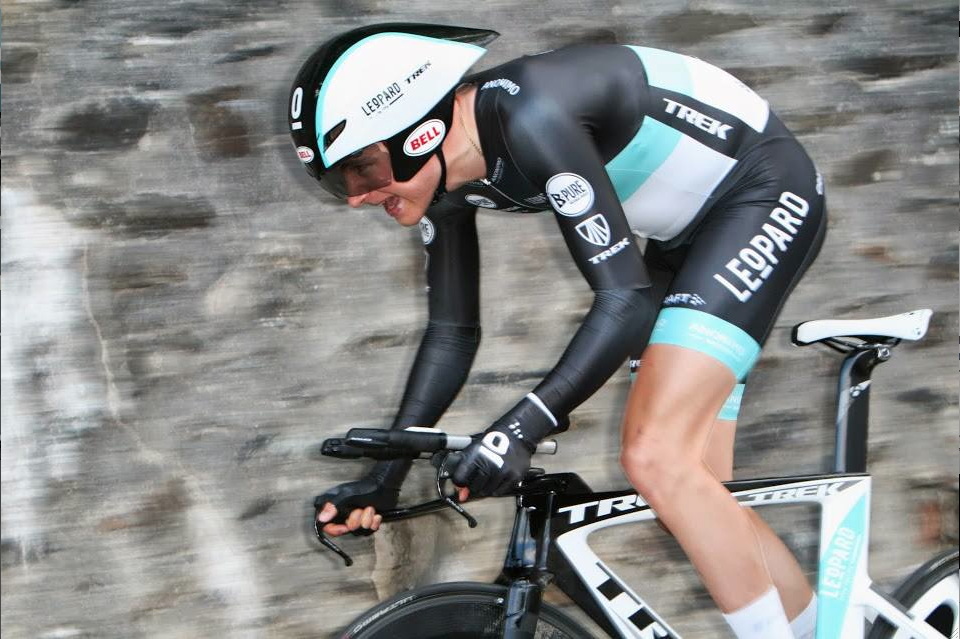
    Max Durtshi spent his last year professional cycling with the Leopard Trek Team in Europe. (Photo: Max Durtschi)
    Max Durtshi spent his last year professional cycling with the Leopard Trek Team in Europe. (Photo: Max Durtschi)

    After his two seasons with Garmin-Cervelo, Durtschi made the move to Europe so that he could be closer to the action. Last year he was part of the Leopard-Trek cycling team and was based in Lucca, Italy. Of the 11 nationalities boasted by the Trek team, Durtschi was the only American.

    Durtschi said his experience as a professional cyclist was one he would never forget.

    “It was a great experience,” he said in a phone interview. “I got to race in North and South America, Europe, Africa, and Asia. I got to meet and spend time with a lot of great people.”

    Cycling was also a learning opportunity for Durtschi. Not only did he continue to discover the joys of of the sport, but he also learned Italian, French and some Dutch.

    He also began to understand more about himself as an athlete. When confronted with a variety of different attitudes toward training, Durtschi realized the importance of being in tune to his personal needs.

    “The way the different nationalities approach the sport and training and racing is very different than what I grew up with. It really enforces the need to be true to yourself and to trust in your own preparation and process on race day,” he explained.

    While Durtschi was very grateful for all that his cycling career had given him over the years, something was missing.

    “The focus of the past five years had been cycling and I was ready to experience new things,” Durtschi said. “I was ready to be a college student, I wanted to get back to being in touch with friends and family, and I wanted to get back to being active in a way that wasn’t just solely cycling.”

    So when the racing season ended after the fall of 2013, he reevaluated his priorities and made the decision to return to Dartmouth College as a full-time student, where he had been attending school in the off season since 2010.

    However, ending his cycling career wasn’t without its challenges. Even as a busy pre-med student studying neuroscience, Durtschi still found himself with ample time on his hands.

    “It was daunting at first because my slate was quite open,” Durtschi said. “I’m a goal-oriented person and I wasn’t building up for a season or anything like that so it was a little scary. I focused on school and connecting with people.”

    This past winter, Durtschi began skiing frequently once again. Given his status as a former professional athlete whose salary was paid by corporate funds, racing for the Dartmouth ski team was out of the question. However, biathlon had always been in the back of his mind since his junior skiing years and it seemed as if all signs were pointing him in that direction.

    “There was a point this winter where some strange, serendipitous things happened that cued me in to give it a shot,” said Durtschi.

    He reached out to the U.S. Biathlon Association (USBA) and kept in contact with the organization throughout the rest of the winter and spring.

    Then in June, Durtschi was invited to the U.S. Biathlon Talent ID Recruiting Camp in Lake Placid, New York where he enjoyed the training atmosphere created by the team.

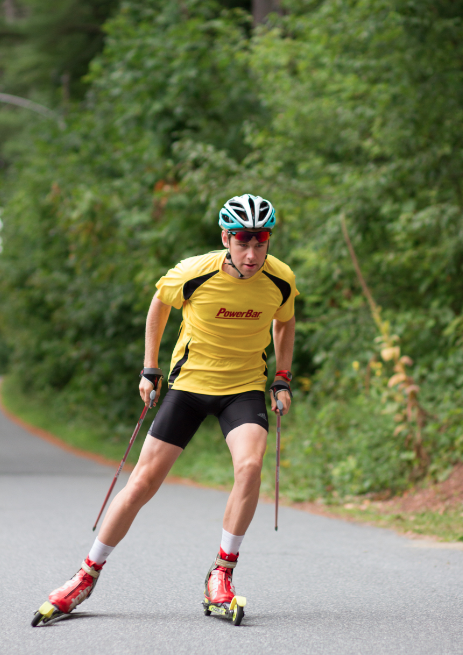
    Max Durtschi's goals for the upcoming season include improving his fitness and marksmanship. (Photo: Max Durtschi)
    Max Durtschi’s goals for the upcoming season include improving his fitness and marksmanship. (Photo: Max Durtschi)

    Currently, Durtschi is attending the joint U.S. Ski Team and USBA Camp in Lake Placid and will train at the Olympic facility for most of September.

    Durtschi said that there are many challenges that come with starting as a new biathlete.

    The Idaho native participated in sport shooting from a young age, but the rifle used in biathlon has proved much different. In addition, he said that shooting while skiing is even harder than it looks.

    “It’s been a fun challenge and I have a whole new level of respect for biathletes,” he said. “The targets are small and the challenge of shooting when your heart rate is high and you’re breathing hard is a whole different level.”

    For now, Durtschi plans to return to Dartmouth in the fall where he will attend classes and continue to train for the upcoming season.

    He will then take time off during the winter term in order to focus on his skiing and shooting. While Durtschi has a wealth of competitive experience under his belt, the Dartmouth junior is realistic about his first season racing as a biathlete. His main goals include continuing to improve his shooting and fitness. Once he’s done as much work as he can on those fronts, he plans to see to see where that takes him.

    “Right now my two main goals are to keep improving my fitness and improve my marksmanship. I’m hoping that it will lead to some exciting opportunities this winter,” Durtschi said when asked what his goals were for the upcoming season.

    “I don’t know what this season will look like. I’m just trying to keep my options open in terms of racing opportunities and hopefully I can make some big improvements this winter,” he said.

  • Wednesday Workout: U.S. Biathlon’s Tim Burke Uphill Run Test

    Wednesday Workout: U.S. Biathlon’s Tim Burke Uphill Run Test

    Patrick Johnson (Far West) was second fastest on the Tim Burke Uphill Run Test, held Tuesday at Whiteface Mountain in Wilmington, N.Y. He was just a second behind winner Max Durtschi.
    Patrick Johnson (Far West) was second fastest in the Tim Burke Uphill Run Test, held Tuesday at Whiteface Mountain in Wilmington, N.Y. He was just a second behind winner Max Durtschi.

    WILMINGTON, N.Y. — Go out and find a hill, a mountain even — something with a steep, sustained pitch that goes on about 2 1/2 kilometers. Those were the instructions Bernd Eisenbichler, U.S. Biathlon chief of sport, more or less gave to team veteran Tim Burke, who grew up in nearby Paul Smiths, N.Y., just a short drive away from Whiteface Mountain.

    While Burke mostly cut his teeth on the local cross-country terrain around Lake Placid, rather than the alpine slopes of Whiteface, he knew one dirt road that followed a couple ski trails backwards up the mountain. And it wan’t easy.

    Legend has it that Burke, 32, ascended the climb — from the beginner-run Kids Kampus up to Easy Street and Easy Way — in 17 minutes at Level 3 (not quite race pace). The hill climb ended just above the Whiteface’s Face Lift, halfway up the 4,867-foot mountain.

    Erika Flowers racing to the fastest women's time in the inaugural Tim Burke Uphill Run Test at Whiteface Mountain.
    Erika Flowers racing to the fastest women’s time in the inaugural Tim Burke Uphill Run Test at Whiteface Mountain.

    Trail names aside, the route was settled. It would become the new standard for the U.S. Biathlon Association (USBA) in its dryland camps throughout the summer. Eisenbichler dubbed it “The Tim Burke Uphill Run Test” and sent 11 athletes up it for the first time at race pace on Tuesday, the second day of the USBA Talent ID Recruiting Camp. Max Durtschi (Dartmouth) and Erika Flowers (Stratton Mountain School T2 Team) posted the fastest male and female times of 13:56 and 17:54, respectively. So much for Burke’s record.

    Eisenbichler was quick to explain that Burke hadn’t actually raced it yet.

    “He for sure would be faster to be honest, but they did a really good job, too, today,” Eisenbichler said.

    “We were really happy to see the tempos on the men’s and women’s side,” he added. “We call it Tim Burke because I asked him to scope a good uphill, gave him the time frame and the kilometer frame and I think he did a great job finding this track. From now on this will be our testing track.

    “In Germany we have fixed times from 30 years ago,” said Eisenbichler, who lives in Munich. “It’s just fun, you know, when you were growing up an athlete and you can see the times from Peter [Angerer], an Olympic champion in ’84, and Mark Kirchner, an Olympic champion in ’92, and try to beat them or try to get challenged by them.”

    So try it yourself — either by following the orange spray-paint arrows up Whiteface’s winding trail  — or pick a mountain or large hill of your own that takes about 30 minutes to hike. Shoot for steep enough terrain that’s going to require 13-23 minutes of running, depending on the athlete.

    With the help of new men’s national-team coach Jonas Johansson and Erik Lewish, assistant coach at the Lake Placid high-performance center, Eisenbichler started the athletes off in 30-second intervals. Johansson gave splits at roughly halfway and Lewish logged the finishing times.

    Durtschi, a former professional cyclist (for three different teams, including Garmin-Cervelo and Leopard-Trek) and member of the U.S. national cycling team, set a new Whiteface standard in just under 14 minutes, just a second ahead of Far West skier Patrick Johnson. Durtschi started off nordic skiing, and like 10 other athletes at the USBA tryout camp, he’s now considering a career in biathlon.

    “It hurt,” said Durtschi, a Dartmouth junior from Ketchum, Idaho. “I haven’t run much at all in the last five years because I’ve been cycling and you’re not even supposed to really walk in cycling. It was really humid, which I’m not quite used to from the high desert, but it was a nice effort and it feels good to blow out the legs and lungs sometimes.”

    Dartmouth neuroscience major Max Durtschi on his way to winning the inaugural Tim Burke Uphill Run Test at Whiteface Mountain.
    Dartmouth neuroscience major Max Durtschi on his way to winning the inaugural Tim Burke Uphill Run Test at Whiteface Mountain.

    Eisenbichler explained that the 11 athletes were selected from 28 applicants, and that an undetermined number of them will be invited back for Lake Placid for a follow-up Talent Group Camp from August 24-31. From there, those athletes will be named to either USBA’s development or X teams.

    “It’s not about the shooting part so much … it’s introducing to biathlon,” he said of the four-day camp, which includes everything from a 30-meter run to a SkiErg 7-8 minute test as well as interviews to gauge each athlete’s attitude toward the sport.

    “What we for sure look at, the uphill run is important, is endurance,” he added. “We have a shuttle run tomorrow, that gives you a little bit of an idea about the engine, then for sure we look a lot at technique. Coaches will be out skiing with different athletes and see how they are on skis … and then it’s a combination of things, looking at the flexibility and strengths.”

    And if an athlete doesn’t make the cut, they’re not going to be sent home empty handed.

    “They all will get recommendations for their training, they will get all their tests analyzed … I think everybody, even if they’re not willing to change to biathlon, should get something out of this week,” Eisenbichler said. “They have the chance to come back next year for the same thing and it’s not that if we don’t select them for this next camp that we lose sight of them. If they want to change to biathlon we will try to help them connect with a club, connect with a coach and supervise them too, because there should be sustainability about it.”

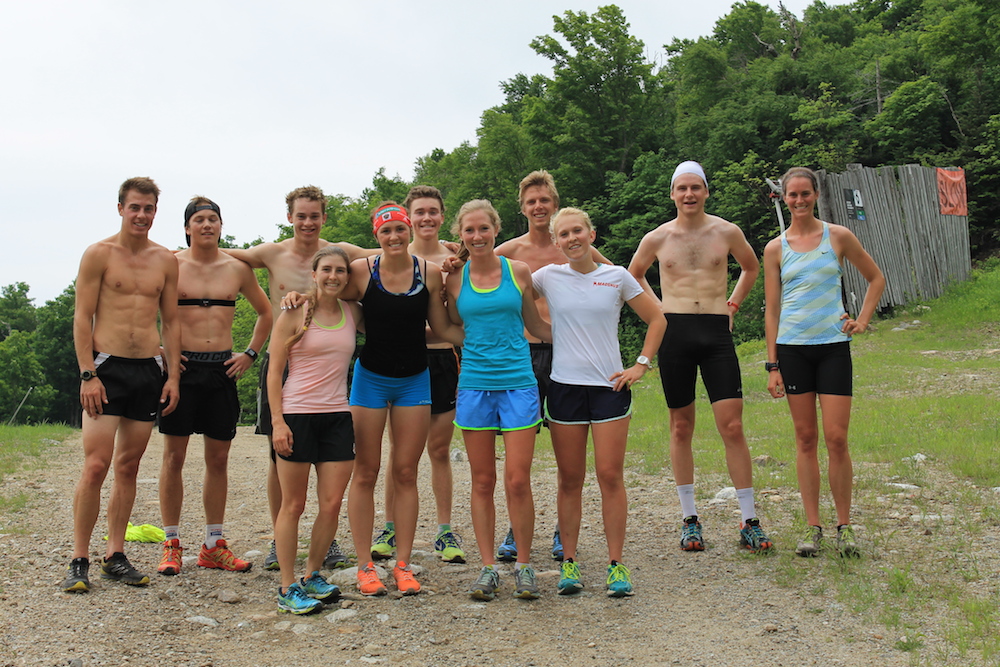
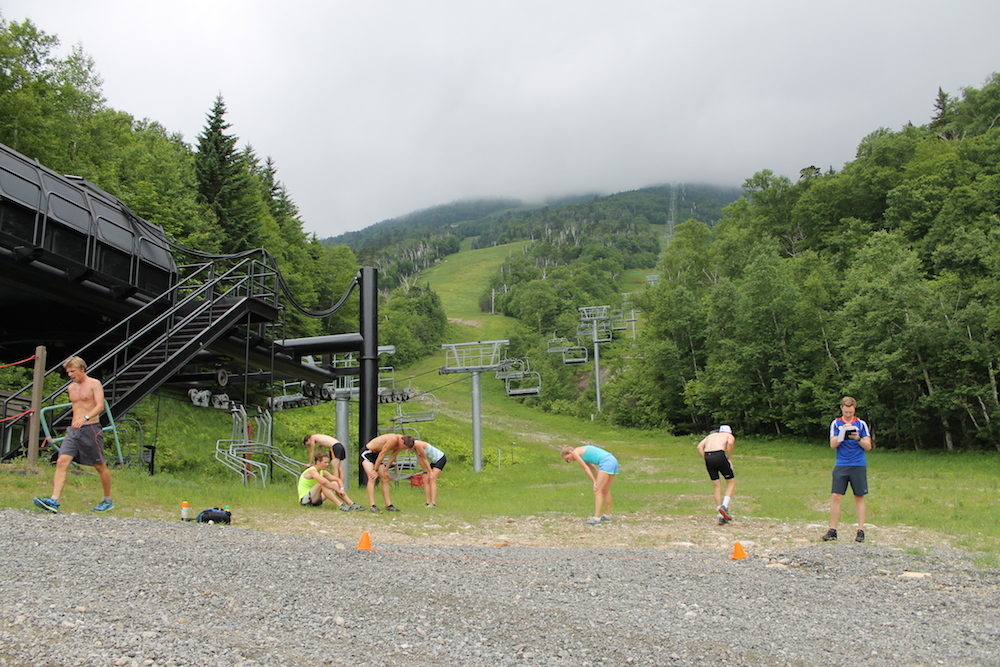
    The faces of the U.S. Biathlon Talent ID Recruiting Camp together on Whiteface Mountain after completing a 2.5 k Uphill Run Test named after Tim Burke (not pictured), who mapped the course. From left to right: (back row) Paul Schommer, Casey Shannon, Paul Everett, Luke Brown, Patrick Johnson, Max Durtschi, (front) Elizabeth Izzo, Greta Anderson, Erika Flowers,  Kelsey Dickinson, and Elizabeth Guiney.
    The faces of the U.S. Biathlon Talent ID Recruiting Camp together on Whiteface Mountain after completing a 2.5 k Uphill Run Test named after Tim Burke (not pictured), who mapped the course. From left to right: (back row) Paul Schommer, Casey Shannon, Paul Everett, Luke Brown, Patrick Johnson, Max Durtschi,  Elizabeth Guiney, (front) Elizabeth Izzo, Greta Anderson, Erika Flowers, and Kelsey Dickinson.
    End of the Tim Burke Uphill Run Test at the US Biathlon Talent ID Recruiting Camp in Lake Placid.
    End of the Tim Burke Uphill Run Test at the US Biathlon Talent ID Recruiting Camp in Lake Placid.


  • Durtschi Wins Two National Titles

    Durtschi Wins Two National Titles

    Despite racing with a fractured right hand, Max Durtschi, 18 years old, raced to victory in both the road race and criterium in last weeks USA Junior National Championships.  Durtschi earned the stars and stripes jersey in both events held in Bend, Oregon.

    On Thursday (7/30) Durtschi pummeled the field in the grueling 108K Road Race. Starting in 90 degree F. temperatures the thermometer topped 100 degrees F. by the end, forcing 28 racers to abandon out of 122 racers.  Durtschi, who rides for Hammer/CMG under the direction of Mr. Oliver “Butch” Martin (2x Olympic cyclist), rode to a solo finish followed by Nathan Wilson (Arlington, VA/Kelly Benefits) who crossed the line over 35 seconds behind him. Steve Black (Vienna VA/Capital Velo Club) took third place.  The rest of the field finished two minutes behind.  “It was really magical to solo across the line.  With 3 kilometers to go it hit me that I was going to be national champion and I got goosebumps.  That race was so hard and I suffered so much, but I didn’t feel any pain when I realized that I was going to win.  It was especially wonderful to share it with my parents, teammates, friends, and supporters.

    The following day (7/31) the heat wave continued. Despite soaring temperatures, Durtschi placed 7th out of 107 racers in the 24K Time Trial (TT).  “The time trial did not go as well as I had planned.  After the road race the day before I had to wait nearly three hours to produce a sample for the Anti-Doping officials and that extra time in the sun took even more out of my legs.  The time trial course was hard and I lost focus a few too many times.”

    Sunday’s (8/2) 50K Criterium raced through the spectator-packed streets of downtown Bend, Oregon.  Durtschi did not disappoint.  Thrilling the crowd with fierce attacks on the field, he set an unrelenting tempo.  The fast pace quickly diminished the group of 110 racers as 41 lapped cyclists were eventually pulled.  Durtschi, who went off the front early, maintained his lead until Morgan Ryan (Ventura CA/Major Motion) and Steve Black (Vienna, VA/Capitol Velo Club) bridged the gap.  “We worked well together,” stated Durtschi, “ I was off the front for like 25 laps.  With three to go I thought, ‘alright Max you are going to win another one.’”  With half of a lap to go Durtschi attacked the other two riders and for a second time soloed across the line to win the national title.  “I had such an adrenaline rush.  The crowd was great, the announcer was going crazy.  It was hard to believe that I was National champion once, but twice, that is still sinking in.”

    Durtschi, who raced throughout USA Junior National Cycling Championships with a fractured hand stated, “I broke my hand during The Tour of the Red River Gorge (TRRG) in Kentucky.  But I was not going to let a broken hand stop me from competing in Nationals.”  Durtschi, who captured the King of the Mountain jersey in the TRRG, returned home to consult with Dr. Charlotte Alexander.  “Dr. Alexander and Christine Bobbins (physical therapist) were great.  They understood my need to compete and created a brace that would fit around my handlebars.  Without them I would not have been racing.”

    Durtschi skies with the Sun Valley Ski Education Foundation as a Nordic skier in the winter.

    Max Durtschi,18 years old from Ketchum, Idaho -  who skis for Sun Valley Ski Education Foundation (SVSEF) Nordic Comp Team - won two national titles last week at USA Junior National Cycling Championships (held in Bend, Oregon).
    Max Durtschi,18 years old from Ketchum, Idaho – who skis for Sun Valley Ski Education Foundation (SVSEF) Nordic Comp Team – won two national titles last week at USA Junior National Cycling Championships (held in Bend, Oregon).