
From the FasterSkier archive — posts syndicated from athletes’ and coaches’ own blogs between 2004 and 2012, kept online as published. Current coverage is at fasterskier.com.

Tag: Melanie Schultz

  • Two-Time World Youth/Junior Champion, Wenzel Calls It Quits at 22; Schultz Joins Him on the Bench

    Two-Time World Youth/Junior Champion, Wenzel Calls It Quits at 22; Schultz Joins Him on the Bench

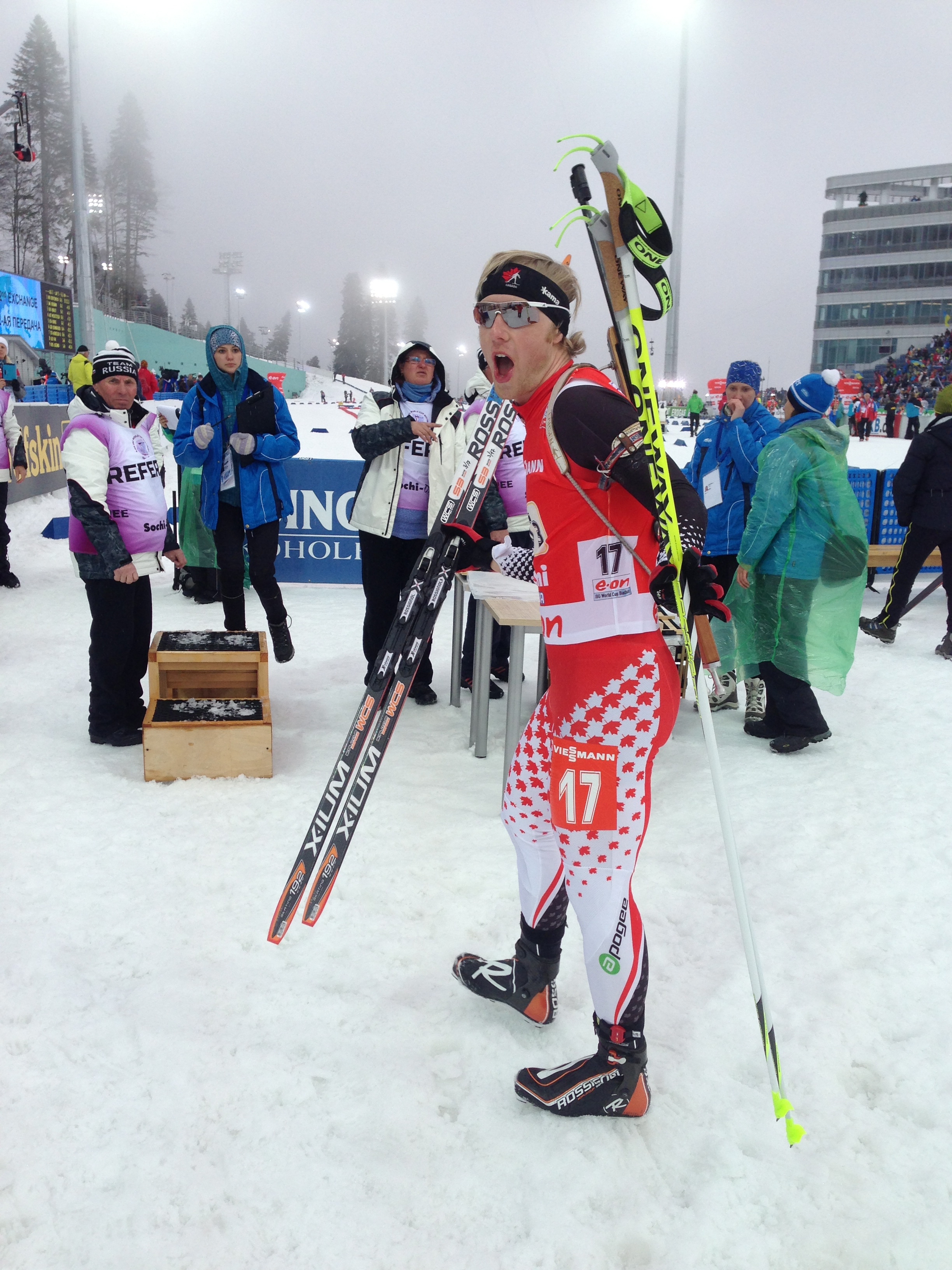
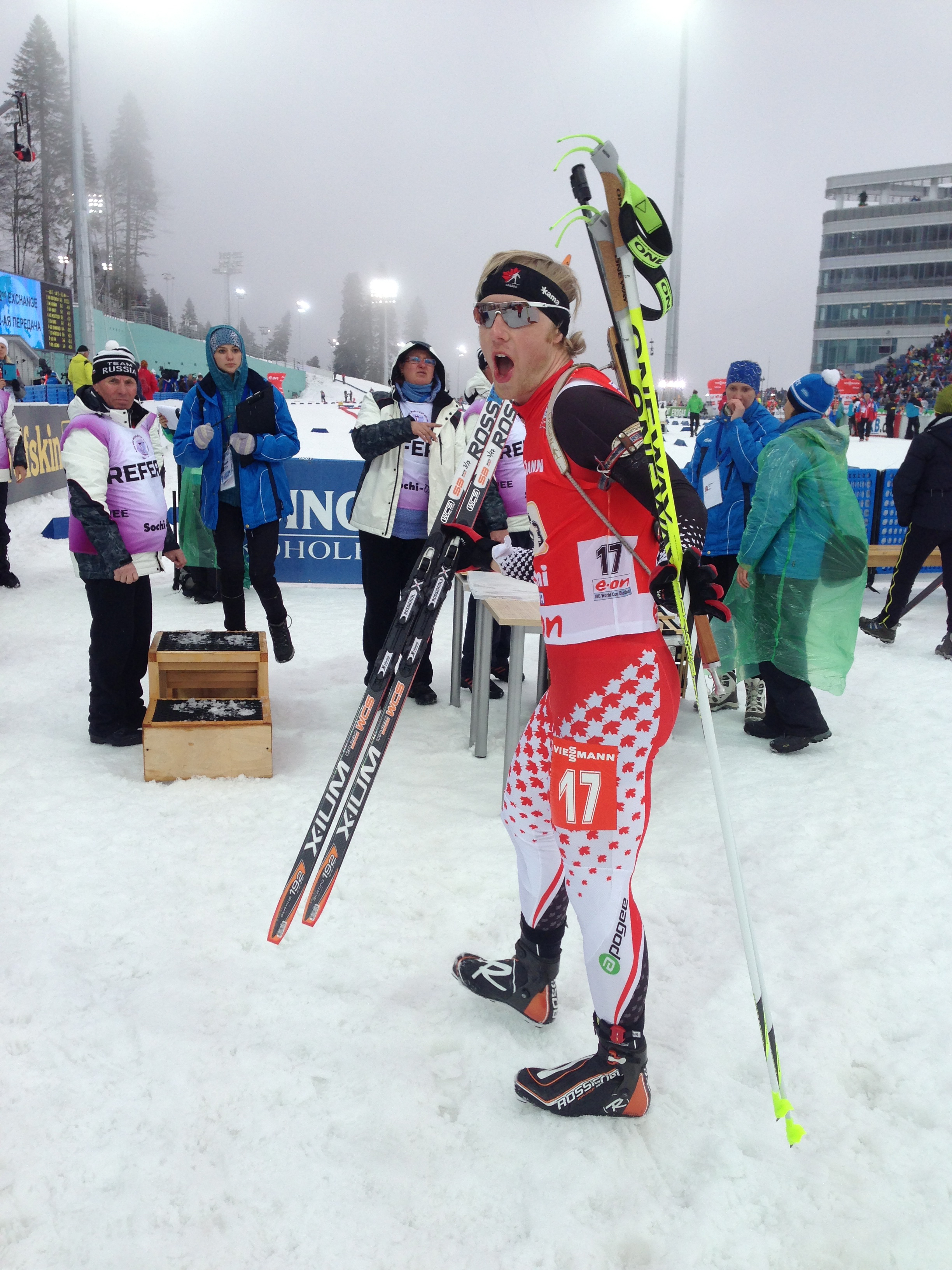
    Canadian biathlete Kurtis Wenzel after the first and only World Cup biathlon race of his career, in Sochi, Russia, in March. Courtesy photo.
    Canadian biathlete Kurtis Wenzel after the first and only World Cup biathlon race of his career, in Sochi, Russia, in March. Courtesy photo.

    Just one week ago, Canadian biathlete Kurtis Wenzel told FasterSkier that winning his first national championship was “a perfect way to end the season.”

    Hidden inside that statement, though, was a bigger one: Wenzel contacted Fasterskier yesterday to announce that he is ending his career as a biathlete. The 22-year-old had raced in his first World Cup only a month or so before.

    And he joined another national team member in calling it quits. After a difficult season where her body never really got going, Melanie Schultz also decided to hang up her skis and move on. Both were probably outside shots for the 2014 Olympics, and would have had to fight hard to unseat more seasoned World Cup veterans.

    So it’s not so much the Olympics where Canada will feel the loss, but rather what comes after – for instance, what if there’s a spate of retirements by older athletes, as often happens after a Games?

    “Athlete recruitment and athlete retention are definitely two issues we face, being such a marginal sport to start with,” World Cup winner Jean Philippe Le Guellec told FasterSkier in an e-mail.

    Upward Trajectories…
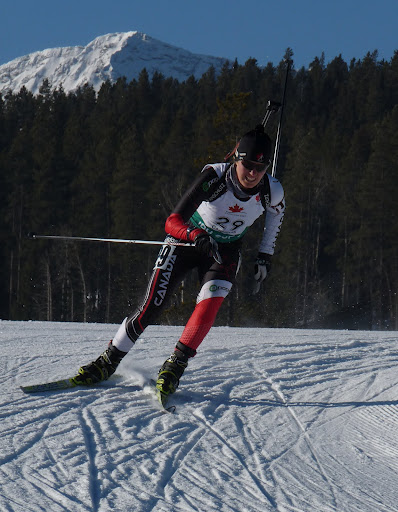
    Melanie Schultz racing in Canmore last year. Photo: Michael Potter.
    Melanie Schultz racing in Canmore last year. Photo: Michael Potter.

    Wenzel’s biathlon career was marked by ups and downs: in 2009 he won the World Youth Championships sprint, then in 2011 took the year completely off from biathlon after feeling overwhelmed. He was as surprised as anyone else when he came back to win the World Junior Championships individual race in 2012.

    The rags-to-riches-to-rags-to-riches story was certainly one of the most compelling of a 2012 Championships that also featured the first win by an athlete from the Netherlands; it was a good year for underdogs.

    “I was really excited to be racing in the international scene again and lucky I could have one of my best races so far this year at Worlds,” he said at the time.

    Yet in his first senior year, 2013 put the young Canadian back at the bottom of the heap. He did an IBU Cup tour and then, by the end of the season, had begun to climb upwards, starting the World Cup relay in Sochi, Russia and then winning the national championship pursuit. As he earned more and more start rights, it seemed like he might be able to mimic the path of Scott Gow, who finished his junior career just one year before Wenzel and was the youngest competitor to make the pursuit race at World Championships.

    So the Sochi trip could have been a preview for an Olympic bid next year, but Wenzel says he realized he no longer felt that drive.

    “I don’t actually dream of going to the Olympics anymore,” he said. “When I realized that, the decision was easy. However, I was very luckily to live out my long time fantasy of racing a World Cup in a packed stadium. I am also luckily to have had such a great support network of people to help me through my career and with this decision. I cannot thank them enough!”

    Wenzel had first considered retirement back in December, but knew he wouldn’t decide anything final until the end of the season.

    “Now I have had some time and it still feels right,” he said.

    As for Schulz, the 27-year-old struggled to find her ski speed at the beginning of the season. A few health issues had slowed her down during dryland, and when she hit the IBU Cup she couldn’t get going. Concluding that her body had just had too much training over the past few years, she spent a month relaxing in southeast Asia, hoping that the rest would help her find some energy.

    But upon returning to the sport later in the winter, Schultz still couldn’t get up to full speed.

    “After nine years of focused training and racing where I continually pushed myself to my limit and beyond, it was apparent my body and mind were saying, ‘Enough!’” Schulz wrote on her website. “Listening to my intuition, I decided it was time to hang up my skis and rifle for good and give myself a much needed and much deserved rest. I definitely have mixed feelings about my decision, as I imagine most athletes do when they retire from sport.”

    The departure comes just one year after Schultz seemed to be really making a leap in results; she was named Biathlon Canada’s Female Athlete of the Year in 2012, and also received the Ruedi Setz award for “exemplary standards of sportsmanship and significant contribution to the development of biathlon.”

    … Aren’t Enough

    Le Guellec, who is the same age as Schultz but has been involved in the sport much longer, has seen athletes come and go from the national team – mostly, go.

    But the spate of younger athletes calling it quits seems a bit new to him. For one thing, there wasn’t always such a strong cohort of older athletes to fight against for starting spots. He explained that back in 2004, both junior and senior athletes qualified to receive financial support from Sport Canada. Now, the national team is “saturated,” Le Guellec said, making it much harder for younger athletes to get paid.

    “In this day and age, we have a full flock of seniors all getting carded by Sport Canada,” he said. “So if you’re a youth, a junior and even a senior, you have to train and race on your own dime for the most part: season in, season out. When you add up the costs for a full year of training, it can’t surprise you that that can be a deal breaker after a certain time.”

    Just making it as far as Wenzel and Schultz did requires a large and diverse support network, and both said they appreciated the many people that had made their careers possible.

    “I want to say a HUGE THANK YOU to all my sponsors, coaches, teammates, support staff, family, friends and fans of my biathlon career for the last nine years,” Schultz wrote on her website. “I wouldn’t have been able to accomplish all I have without all of you!”

    Both athletes were part of Canada’s national team last season, but that’s hardly a guarantee of financial security.

    “I’m not aware of numbers for budgets and such,” Le Guellec said, “but I guess comparing our federation to a family of say 14 kids while being a single parent on welfare could be pretty spot on. They’re in a situation where they have very little money to make an entire sport run in a huge country. Their biggest challenge is, unfortunately, finding the resources to fund development squads, camps, cut costs for travel to competitions and so, and so and so on… with pennies.”

    Biathlon Canada could not be reached for comment.

    Having a significantly more robust senior national team is obviously a boon to the sport. But it’s just one reason that young athletes might look at the years ahead and begin to wonder if they can hang on for long enough to finally reach the top: Gow, Wenzel, and teammates Yolaine Oddou and Audrey Vaillancourt were unusual in their ability to translate success at the junior level to World Cup starts in just a year or two, but none spent the entire season on the top circuit.

    And while none of the debuts went badly, it’s a tough transition to make. Le Guellec thought that seeing the real level of competition might make athletes think differently about what lay in store in the coming years.

    “Having an Olympic dream is nice,” he said. “Being motivated is also nice. Resources and passion aside, I’ve seen athletes be exposed to the international field and it can be very intimidating. It doesn’t take a math degree to start adding up the work you’ll need to do in order to climb the ranks – plus this is a process that can be long. I wouldn’t say they scare off, but when you add up points 1 and 2, maybe its just a lot of work for not much in return to at least help you through it.”

    All of that is, of course, harder when you are from North America. The amount of time spent on the road is difficult for many athletes, who may not return home to see their families for months at a time.

    Wenzel confirmed that after one long tour in Europe this year, he was a bit overwhelmed.

    “The decision was spurred by a combination of my difficulty dealing with life on tour and a desire to expand the other parts of my life that were put on the back burner,” he said.

    Next Steps

    The most common thing that athletes give up is school, and that’s where Wenzel will be headed in the fall, if all goes well.

    “I will hopefully be studying economics at the University of Calgary, but I still have to apply,” he said. “I have done a couple courses at U of C before and I was accepted into the Kinesiology program, but I realized that’s not what I would like to study.”

    A few elite-level biathletes and skiers have been able to make school work, somehow, while still competing on the World Cup: Alex Harvey is in law school, Astrid Jacobsen is in medical school, Maurice Manificat is studying biology. But Wenzel knew that he couldn’t be like them, at least not with any level of success.

    “I have definitely been putting school on hold because of training,” he explained. “It would have been impossible for me to hold down my job in Calgary, go to school in Calgary and train properly in Canmore. I am also a horrible procrastinator at times so correspondance courses wouldn’t have worked for me. Honestly, this winter was the first time I really started looking forward to going to school. I think that helped make the decision for me.”

    Schultz, meanwhile, will be transitioning from part-time to full-time work as a patent agent at an intellectual property firm in Canmore.

    “I’m transitioning into the life of a non-athlete,” she wrote on her website.

    That’s never an easy transition, but Wenzel hopes to stay involved with the sport just enough not to miss it. Coaching was a possibility, he said.

    And training.

    But just “a little bit.”
     

  • As IBU Cup Prepares for North American Swing, Canadians Laud Value in Athlete Development

    As IBU Cup Prepares for North American Swing, Canadians Laud Value in Athlete Development

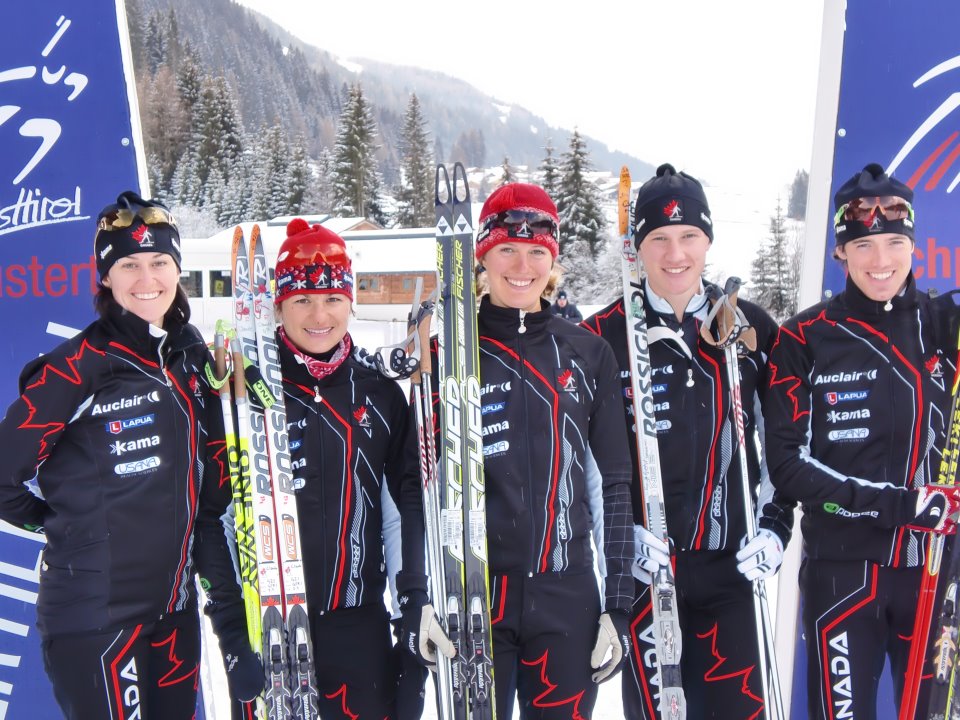
    The Canadian team of (R-L) Nathan Smith, Scott Gow, Melanie Shultz, and Claude Godbout finished fourth in an IBU Cup mixed relay in December. Photo courtesy of Melanie Schultz.

    When American and Canadian skiers start consistently winning domestic races, they face a choice: do they stay on their home circuits, or head to Europe? And if a trip across the Atlantic is in the cards, where will they race? With limited World Cup quotas and a myriad of regional race circuits, skiers have to not only choose which of the many races they might attend, but also generally organize and fund the trips themselves.

    North American biathletes, on the other hand, have an obvious destination when they make the jump to Europe: the IBU Cup, an international circuit one notch below the World Cup, and the namesake of the same governing body, the International Biathlon Union (IBU). This year, the IBU Cup will have eight weekends at seven venues, in addition to the Open European/Under-26 Championships.

    The IBU recently said that the circuit is a “second league”, and it has also been called a “mini World Cup”. The IBU Cup has the same rules for athlete qualification and national team promotion and relegation, and while there are fewer fans, everything else about race procedure is the same.

    “The IBU Cup is an excellent stepping stone for the World Cup,” Canadian biathlete Melanie Schultz, who recently notched a career-best 11th place finish in an IBU Cup pursuit, told FasterSkier in an interview. “I definitely would not improve as fast if I just raced domestically.”

    Canada currently has start quotas of three men and three women, but that’s about to change: the Canucks are climbing up the Nations Cup rankings thanks to a spate of top-ten finishes, and as a result will almost certainly have a larger quota next year. More immediately, and the circuit will spend two weekends in Canmore in February, giving the host country an additional five starts per race.

    In a presentation at Forum Nordicum in October, the IBU suggested that they were considering making the North American swing a more permanent feature on the calendar.

    FasterSkier caught up with Schultz and teammate Rosanna Crawford, who were promoted to the World Cup based on their IBU Cup performances in Haute Maurienne, France last weekend, to hear how the circuit had affected their development, and how they thought North American biathlon would benefit from hosting more of the races.

    Schultz: Accumulating Experience, Improving Steadily

    While Schultz’s 11th-place finish was not the best seen by the Canadian team this season – three teammates have collected top-ten finishes and another, Nathan Smith, stood on the podium – her trajectory is in many ways exactly what coaches hope for when they send athletes to the IBU Cup.

    The 26-year-old started her European racing career back in 2009; in her first two weekends of racing she placed in the mid-60s. When she returned to the circuit six weeks later, she notched her first top-30. This year she’s placed in the 20s or better in several races in fields that are deeper and more competitive since the IBU upped its focus on the circuit.

    Schultz said joining the new Biathlon Alberta Training Centre with head coach Richard Boruta, finally diagnosing longtime symptoms as chronic hypoglycemia, and good old-fashioned hard work contributed to her success this season. But her IBU Cup experience has also been a huge motivator.

    “It has really opened my eyes to where I am at with racing, where I want to be, and what I can improve on to get there,” Schultz said.

    And while it has helped in the general sense, her racing there has given her specific tasks to work on as well.

    “[The IBU creates a] detailed analysis of each race, in which everyone’s ski and shooting times are broken down and ranked for each loop,” she explained. “At my first IBU Cup race I realized I was losing 20 seconds in the range for each shooting bout, which added up to 80 seconds in a four-bout race. Since then, I’ve improved my shooting times and now have some of the fastest shooting times on the IBU Cup.”

    Recently, some of Schultz’s best performances have come in relays: in December, she shot perfectly as the scramble leg of Canada’s fourth-place mixed relay, and in Haute Maurienne she led all teams into the first handoff of the women’s relay, where Canada again placed fourth.

    “The relays really changed my outlook on what I felt I was capable of ski-wise,” Schultz said. “In the mixed relay before Christmas I was able to stay in contact with the top skiers, but I attributed it mostly to fast skis, quick shooting, and short two kilometer loops. Then in the women’s relay I could easily stay with the fastest skiers and even pass them, which made me realize that I have the ability to not just shoot well but also to ski well.”

    Relays are never contested at the senior level in North America, so Schultz hadn’t understood “the enthusiasm some nations have.” But after being in podium contention twice, she’s changed her mind. She said that the relays also brought the Canadian team together and earned the country some newfound respect from their competitors.

    And finally, they’ve taught Schultz a lot about racing.

    “After the women’s relay I started thinking, ‘What am I doing differently with my skiing in relay competitions that is lacking in individual starts?’ I realized I wasn’t fighting against my mind when I was skiing in a pack, I was just completely… in the present moment. I brought this mindset into my sprint and pursuit [in Haute Maurienne] and I think it showed.”

    Experiences like these are what coaches hope young biathletes will gain when they spend time on the IBU Cup. 21-year-old Scott Gow, for instance – a top-ten finisher at World Junior Championships – was nominated to the World Cup team for November based on podium finishes in national team trials races. Once there, however, he fizzled, finishing 80th and 101st in the opening races. He was moved to the IBU Cup, where he has steadily improved, finishing as high as fourth.

    “The IBU Cups are great for me to develop as a racer and to learn how to be a podium contender,” Schultz said.

    Crawford: Competing, Not Participating

    Crawford leads Schultz and Yolaine Oddou in the pursuit in Haute Maurienne. Photo courtesy of Melanie Schultz.

    Crawford, who finished 8th in the sprint in Haute Maurienne, has had a season more akin to Gow’s than Schulz’s. A 2010 Olympian, Crawford has received quite a few World Cup starts, but has been unable to break into the spotlight. On her best days, she has finished in the high 40s and 50s.

    Like Gow, Crawford started on the World Cup in November. While she lasted longer there, she, too, was eventually demoted.

    “Before Christmas my skiing had improved quite a bit from last year, but my shooting was what was letting me down,” she told FasterSkier. “I am usually a sharp shooter and three misses in prone in a sprint was very unlike me.”

    But even though the World Cup is in her sights, the move to the IBU Cup didn’t upset her.

    “I was happy with the decision,” Crawford said. “On the World Cup it is still hard for me to make a pursuit [which takes the top 60 racers from a sprint] if I shoot less than 80 percent, whereas on the IBU Cup even with poor shooting I can still make the pursuit and therefore get more races. On the World Cup sometimes I feel like I am racing to participate, but on the IBU Cup I am racing for the top ten.”

    For athletes like Crawford, who have more big-race experience, the IBU Cup serves another purpose. It’s a place to regroup, work out the kinks, and regain confidence before, hopefully, returning to the World Cup.

    And because both circuits are organized by the IBU, it’s easy to shuffle athletes back and forth. Canada, the U.S., and nearly every country do so; in some cases, athletes even compete in a race on each circuit in a single weekend.

    That means that taking a detour to the IBU Cup isn’t a death sentence for athletes with World Cup aspirations, and also makes it easy for developing athletes to tell how they might fare if they moved up. For instance, Russia’s Ekaterina Glazyrina swept the IBU Cup races in Obertilliach, Austria, then raced on the World Cup in Nove Mesto, Czech Republic and finished sixth in two different races.

    “The atmosphere is different because there isn’t as many spectators,” Crawford said of the IBU Cup. “But [it’s also] the same because you are racing against some of the best in the world. These girls could get moved up to the World Cup next week and be in the top ten.”

    Crawford said that the deep fields taught her to be aggressive.

    “It’s good preparation for being a fighter in the pursuit once you get to the World Cup,” she explained. “Every shot is important and can mean the difference between moving up five spots or falling back ten.”

    A Step – Or Several – Above NorAms

    And that, both women said, was not true in domestic competition. The reason that the IBU Cup is so valuable to North American biathletes is that races in the U.S. and Canada, the best of which are part of the NorAm circuit, often have small fields with a wide spread in ability levels.

    “In Canada when you race a pursuit there isn’t anyone really chasing you, or sometimes there’s no one to chase,” Crawford said. “Here you have 60 strong women around you, pushing you to do your best and never give up. A couple seconds can mean a couple of spots.”

    It might seem counterintuitive that there’s nobody for Crawford to chase; teammates Zina Kocher and Megan Imrie have finished in the top 20 on the World Cup this year, and Kocher is currently ranked 29th overall.

    But that has nothing to do with NorAms, Crawford said.

    “Not that many people do biathlon in Canada, and even less follow through to the senior level,” she explained. “Because our best athletes are off racing in Europe all winter, there isn’t much opportunity to compare your self to the best on the NorAm circuit.”

    Schultz agreed with that assessment, and was emphatic that she could not have reached her current level had she stayed in Canada.

    “Racing domestically on the NorAm circuit and racing on the IBU Cup is a night and day difference,” she said. “I learn so much each race I do here, and I am able to quickly apply it to my next race. Now, in mid-January, I have done ten IBU Cup races [already] this season.”

    As an athlete representative for Canadian biathlon, Schultz has been trying to brainstorm ways to make the NorAm circuit more competitive. One problem is that the U.S. and Canada don’t always plan well enough that top athletes from each country end up at the same races. But even with better communication, the issues of field size and depth are difficult to tackle.

    Until there are major changes, athletes will be doing their most important learning on the IBU Cup, like Schultz has.

    “The IBU Cup allows athletes to race against over 100 athletes when every second counts for placing, and to experience head-to-head racing in relays and pursuits,” she said. “That’s an important aspect of racing that is missing in North American biathlon races.”

    Lately, both the U.S. and Canada have fielded larger teams at more races on the circuit, and expanded their IBU Cup schedule.

    “This is the first time I am aware of that Canada has sent a team to the IBU Cup races in early January,” Schultz said. “It was extremely valuable to the athletes, as they can take what they learn each race and immediately apply it in the next race instead of having a break from this level of racing. I think this has really accelerated the development curve.”

    The Canadians have also expanded their funding.

    “We used to pay the true cost of racing on the IBU Cup, which amounted to $2500-3500 per tour, and many athletes couldn’t afford to go,” Schultz continued. “Now, Biathlon Canada covers the cost of the IBU Cup tours, and provides an amazing support team with two wax techs and one coach. A huge burden has been taken off athletes, so they can focus on racing. This has been a really positive change and has shown in our results.”

    A Permanent Swing?

    The teammates were enthusiastic about the possibility of having the IBU Cup visit North America more frequently. At a community level, they welcomed the publicity the races would bring to their small sport.

    “Being in Canmore, I have seen the positive impact that hosting World Cups and World Youth and Junior Championships for skiing and biathlon has had,” Schultz said. “It has generated excitement around the sports and motivated many young athletes. We don’t grow up watching nordic sports on TV like our European counterparts, so seeing the next level of racing gives young athletes something tangible that they can work towards.”

    But just as importantly, this year’s races in Canmore will give more athletes a chance to learn from experience, just as Schultz and Crawford have.

    Crawford said that the circuit was already a huge motivation for up-and-coming racers, because not only does it involve a trip to Europe, but good performances are rewarded with promotion to the World Cup. She thought that the added start quotas of a home-turf IBU Cup would energize a whole new group of athletes.

    “It would help keep youth and juniors motivated to follow through to the senior level,” said Crawford, addressing one of the biggest problems for Canadian biathlon.

    “It would also give second-year juniors and first-year seniors a chance to race with the best and get a taste of what it is like. No matter how many people come out to cheer, racing a pursuit with 60 people is one of the most intense and exciting things in biathlon, and this would give them an opportunity to experience it.”

    -Rosanna Crawford will compete in the women’s 10 k World Cup sprint in Antholz-Anterselva, Italy, on Thursday, and then join Schultz, Kocher, and Imrie in a relay on Saturday.

    The United States has also had success on the IBU Cup this season, with Tracy Barnes and Russell Currier notching top-ten finishes. Both will also compete in Antholz-Anterselva this weekend.