Tag: Meråker

  • Q&A with New Faces on the U.S. Ski Team: Walker Hall

    Q&A with New Faces on the U.S. Ski Team: Walker Hall

    U.S. Ski & Snowboard recently announced its U.S. Ski Team nominations for the 2022-23 season. Of the 22 athletes named to the team this season, six were not on the previous year’s roster, either newly named or renamed: Michael Earnhart, Walker Hall, Zak Ketterson, Will Koch, Finn O’Connell, and Sammy Smith.
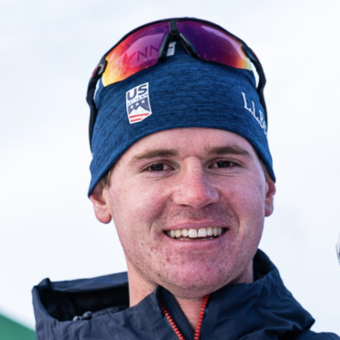
    Walker Hall was named to the 2022-23 U.S. Cross-Country D-Team. (Photo: U.S. Ski & Snowboard)

    To help fans get to know these new(er) faces, FasterSkier is doing a series of interviews, providing insights into the factors that have contributed to development, progress, and growth for these athletes last season. In this installment, we talk with 20-year-old Walker Hall, who was named to the D-Team this season. Hall grew up immersed in the Methow Valley cross-country ski community and is now entering his sophomore year at the University of Utah

    While the Methow has produced a number of outstanding skiers, including Brian Gregg, Erik Bjornsen, and Sadie Bjornsen Maubet, Hall could find inspiration even closer to home. His mom, Leslie, skied in three Olympic Games between 1988 and 1994, and her best friend and training partner post-professional racing soon became two-time Olympian Laura McCabe, once both women relocated to Winthrop, WA. Still close friends, Walker and Novie McCabe are just six months apart in age, and began tagging along from their infancy on their moms’ training and outdoor endeavors. Both athletes, now U.S. Ski Teammates, developed on the Methow Valley Nordic Team, coached by their mothers.
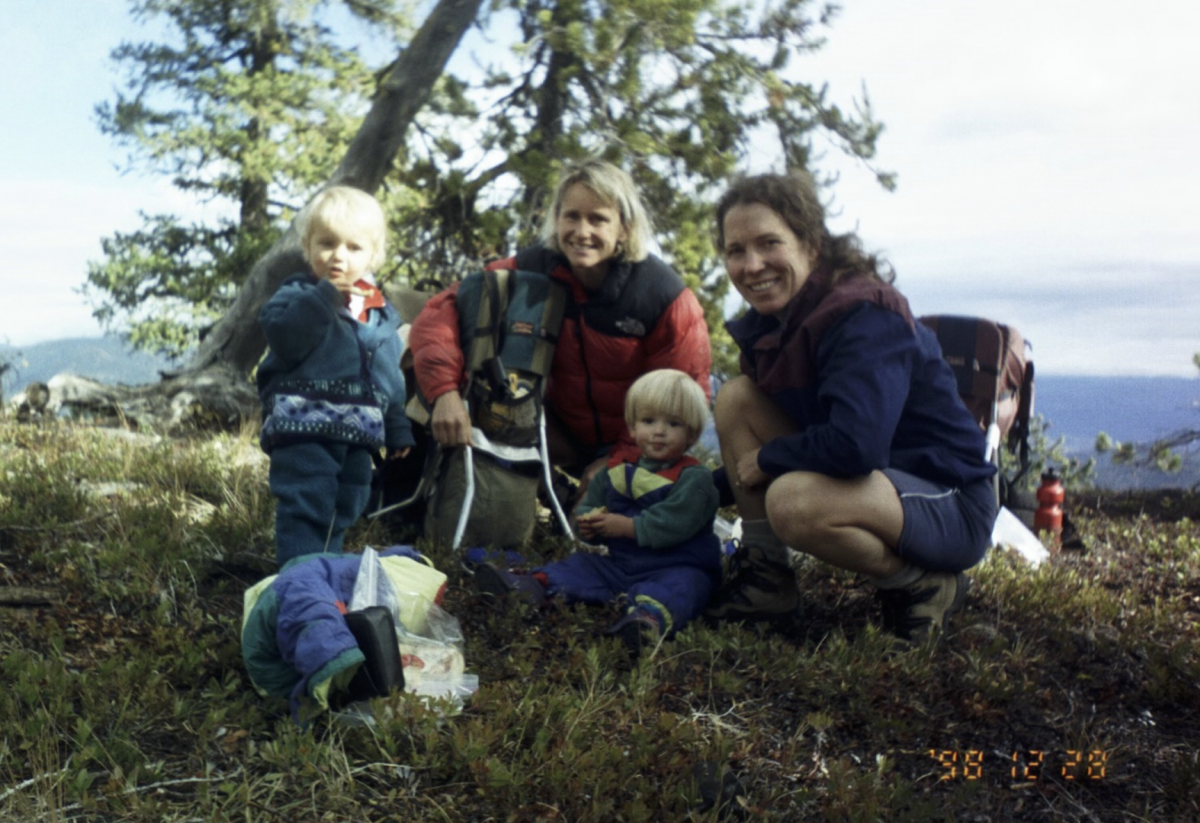
    Methow Valley Nordic Team coaches and Olympians Laura McCabe (left) and Leslie Hall (right) bring Novie and Walker, now U.S. Ski Teammates, along for their training and outdoor endeavors. (Courtesy photo)

    In this interview, Walker reflects on some of the other influential experiences – and setbacks – that contributed to a breakout season in 2021-22. Hall won the junior men’s 10 k during the 2022 U.S. Cross-Country Championships in Soldier Hollow, and finished in the top-five in a third of his RMISA races, including a podium performance in Sun Valley. Earning his first spot on the World Junior team, Hall competed in both the 1.2 k freestyle sprint and the 30 k skate individually, and was a contributing member of the U20 bronze medal winning relay team.  


    – Walker’s sister, FasterSkier assistant editor Ella Hall, contributed to these questions

    FasterSkier / Rachel Perkins: You grew up in the Methow Valley, which has a strong legacy within its cross-country ski community and the number of athletes who grew up there and went on to ski professionally. But in your situation, you and Novie McCabe are only about six months apart, and your families are super close and it sounds like you both did a fair amount of tagging along for both of your moms’ training as kids. Can you talk a little bit about your introduction to skiing and what your relationship with the sport was like growing up? 

    Walker Hall: From as early as I can remember, probably as soon as I was capable of going on skis, that’s when I started – me and Novie both. Regardless of what we were doing, it was mostly outdoor activities, whether that was hiking or climbing or just spending time outside. Our moms would take turns, like one would take care of us while the other went and did some training or a long run or something. So I felt like I got a good training base just from everything I did outside, and started off skiing really young, and it’s always been a big part of my life.
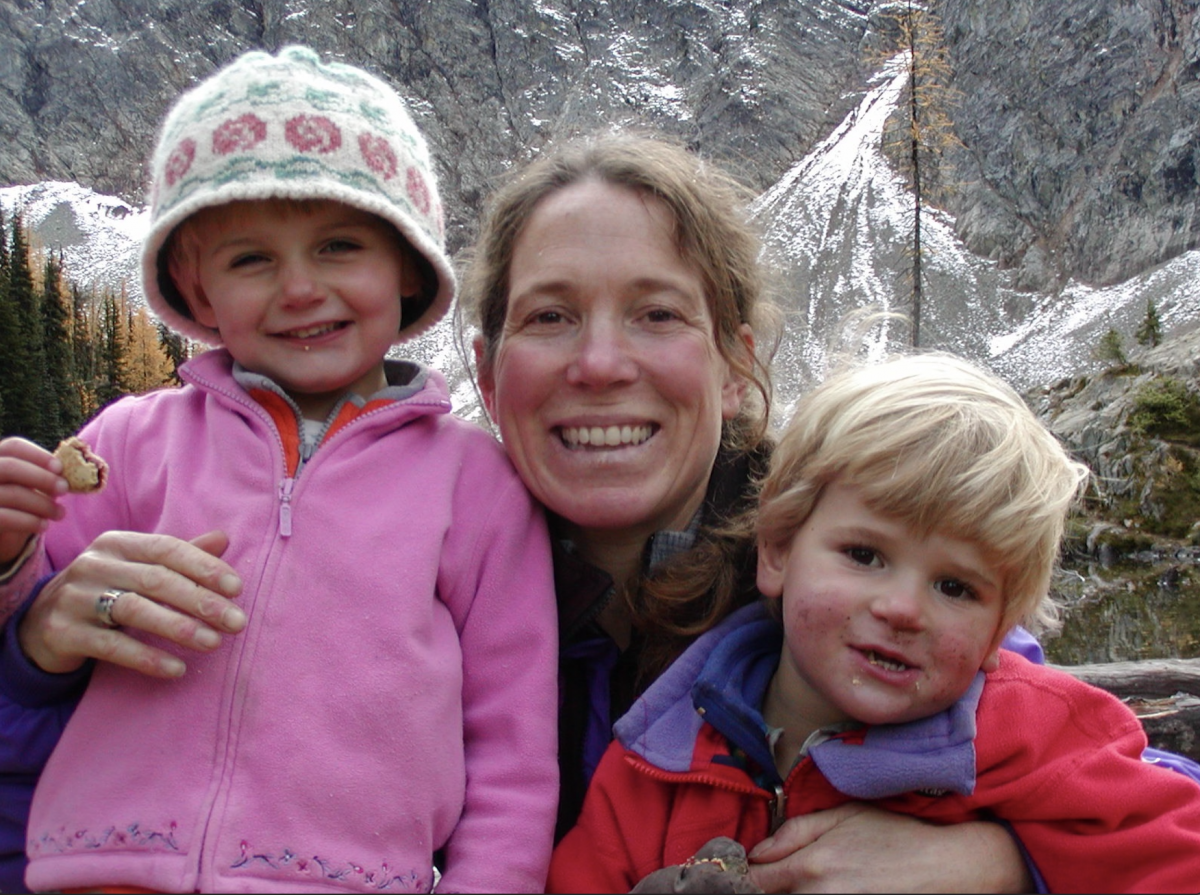
    Leslie Hall, with a young Novie McCabe and Walker Hall, share a lifelong love of the outdoors that has developed into successful ski racing careers. (Courtesy photo)

    FS: I also noticed you also listed your mom as one of the most influential people in your life in your U.S. Ski Team bio, and I know she was one of your coaches with the Methow Valley Nordic Team (MVNT). Can you say more about that?

    WH: She coached [MVNT] up until just this last year – she retired last season. Basically when she was done racing [professionally] and once my parents moved to the Methow in the late ’90s, she really developed the program there.

    So she’s been coaching for a really long time, and she had a lot of experience. She coached when my sister was skiing, so I grew up doing what [Ella] did because she’s four years older. My mom was able to give me the support and advice and guidance that is crucial for being good at skiing, and she was not too overbearing or anything, so I think she was just a really good influence on my ski career.

    FS: That type of relationship seems important – not being overbearing, but really sharing in a mutual love of the sport. Is that something that you have felt within the Methow community and within your own family?

    WH: I’ve definitely felt a lot of support from different people in the Methow, whether it’s my mom or Laura [McCabe] or other people in the ski community there. I’ve always gotten the support that I’ve needed and been pushed when I needed to be, and never felt too much pressure or anything, so it’s been really good for my career in skiing.
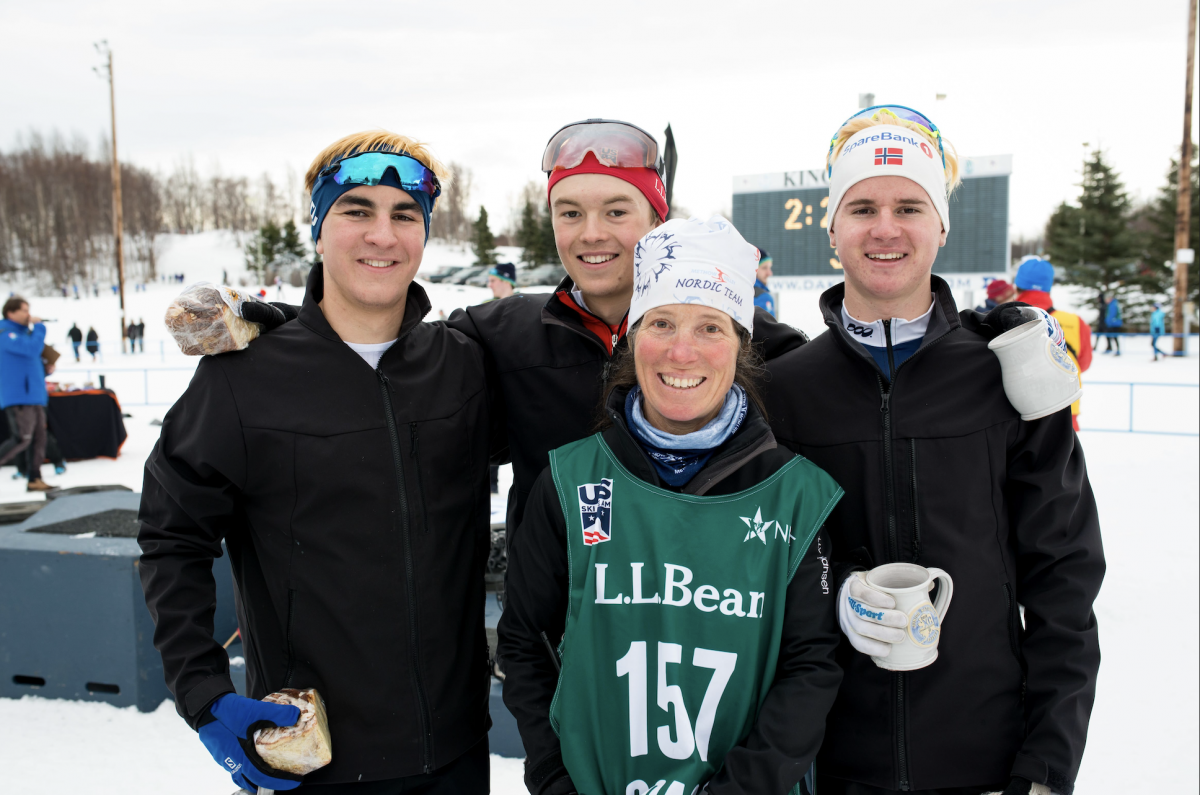
    Long-time Methow Valley Nordic Coach and 3x Olympian Leslie Hall with the members of the U18/U20 relay at 2019 Junior Nationals in Anchorage, all of whom skied for MVNT. From left to right, Travis Grialou, Garrett Butts, and Walker Hall. (Courtesy photo)

    FS: Fast-forwarding a bit, in high school, you spent six months in Meråker, Norway during your junior year, and it sounds like that was a pretty formative experience for you – you had a really positive experience with that program, and the coach, and made some good friends/training partners. Can you share more about how that came about and what your time was like there?

    WH: It came about because Ella did a very similar [program] her junior year; she also went to Meråker, but she went for a shorter period of time. But as I got older and learned more about the sport and the people within the sport, it seemed like Norway was the place to be to really improve and learn. Our family had some connections in that area because Ella had been there. 

    Once I was there, it was definitely a lot different. Coming from the Methow where there’s really not many – there’s a lot of skiers, but it’s such a small area that you’re sort of in your own little bubble. So going to Norway and just seeing the ski culture there and learning a lot about training and what the Norwegians like to do [was really beneficial], because they obviously have a really good method for juniors or whatever age you are in ski racing. I had good coaches, good training partners, and good support there as well. So I definitely learned a lot and sort of knew what I had to do when I got back to really take skiing to the next level.

    FS: Was that at a sports academy? Were you going to school also?

    WH: It’s actually a public high school, or it’s funded by the government, but it’s a sports school [called the Meråker videregående skole]. So we would train in the mornings until maybe 11, and then shower, eat lunch, go to class for three hours or so, and then maybe train in the afternoon. That was what it was like most days, then on the weekends, it was more on your own because it’s a school program, not  a club. When we would go to races – which I didn’t go to too many races – we would go with a local club.

    FS: Your sister said that the experience also inspired you to take Norwegian lessons after returning home and that you’re “decent” now. Is this true?

    WH: When I was there, I definitely didn’t know that much [Norwegian]. There were two other non-Norwegian students that I took some Norwegian lessons with, just what the school provided, but I definitely never really spoke that much while I was there. I wanted to keep learning and improving [after I got back], so I’ve studied on and off since then. I’m alright at it – I’m pretty conversational, I would definitely not say I’m fluent. But it’s a fun way to stay connected with my friends over there, and some of my teammates at the University of Utah are Norwegian too, so that’s been cool.

    Hall also explained that his classes in Meråker were in Norwegian, but since the group size was small, and both his teachers and classmates were helpful, he was able to get by without being fluent in the language. 

    FS: After graduating high school in 2020, you had planned to go back to Meråker for a gap year, but COVID got in the way of that, and plan-B ended up including a lot of time training on your own in the Methow. Can you talk about that experience and how you adjusted?

    WH: I had been planning to go back to Norway, but everything was so strict with COVID [at that point], they were not letting anyone in, basically. So I was just at home and I kept trying to figure it out so that I’d be able to go over there, but it just kept not working. I kept trying, but eventually, I was just at home the whole time. 

    I was going to races in the winter but it definitely was not an ideal situation for me because I was doing a lot of training on my own, which, it’s not necessarily a bad thing to train on your own, but for me personally, it’s a lot easier for me to train with other people. It’s a lot more motivating, and long term, it’s a lot better to train with other people so you don’t plateau. But I just focused on racing and kept working hard and it wasn’t the worst in the end. That year was alright, but it wasn’t ideal.
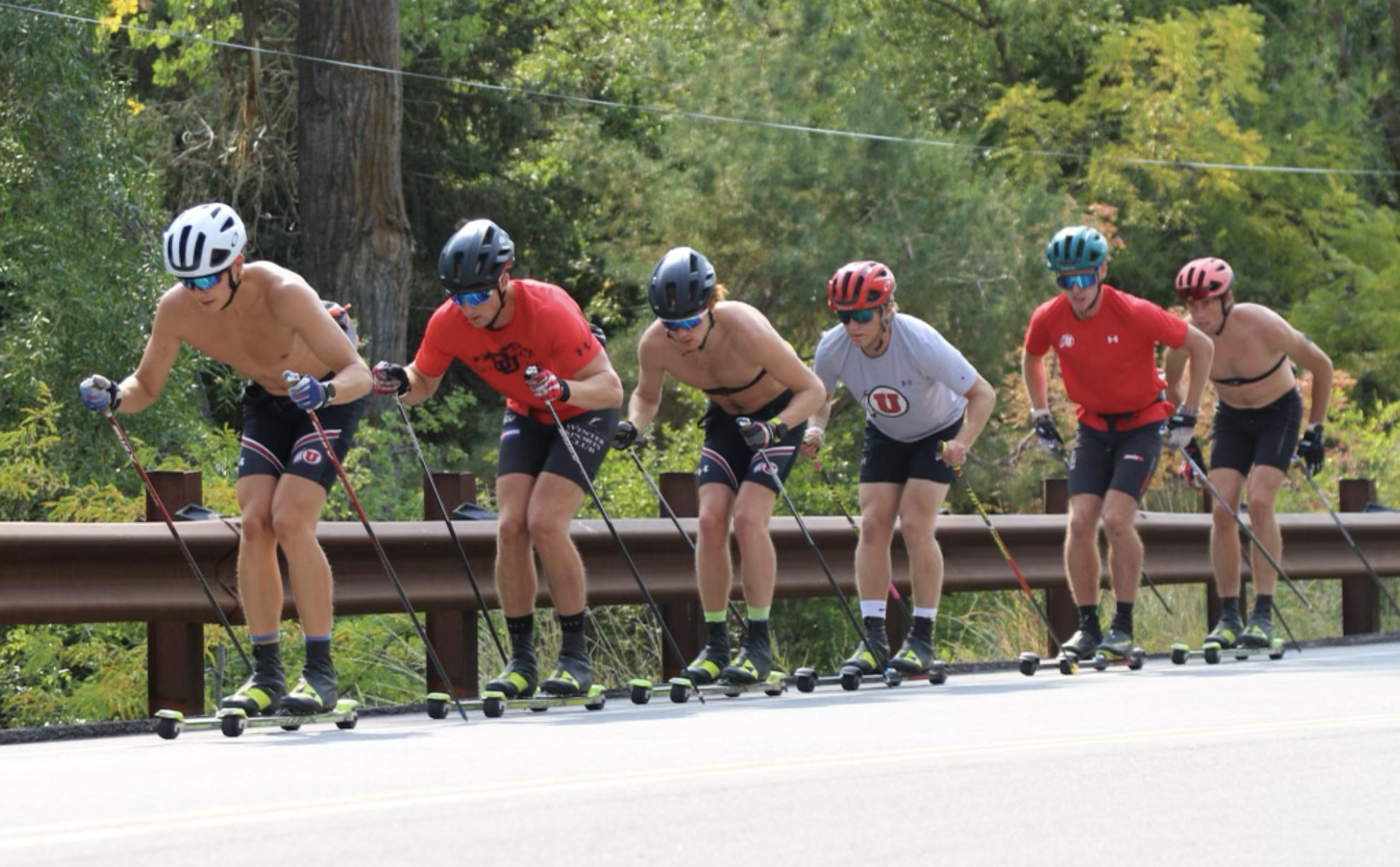
    Walker Hall trains with the University of Utah team in Fall 2021. (Courtesy photo)

    FS: Kind of on the other end of the training group spectrum, for collegiate racing, you originally committed to Dartmouth, but later were offered a spot that opened up at the University of Utah, and made the switch as Utah had been your first choice.

    WH: Yeah. Basically, I had planned on going to Dartmouth, and then COVID hit, and it was looking like life at Dartmouth with COVID was going to be a lot different than before. I had been talking to Utah [during my senior year], and they had been saying ‘oh, you should take a gap year and then we’d probably like to take you.’ So there was also a chance that I was not going to take a gap year and just go to Dartmouth, but then when that gap year happened and I got offered a spot at Utah, I just knew that that was going to be the better choice for me.

    Last summer before I went to Utah, I came up here to Anchorage for most of the summer, so I was training with a lot of my future teammates. There was a big group of people up here and a good amount of Utah skiers were here, so it was a good way to prepare and it was a really good experience. There’s just such good training up here during the summer. And the winter, I’m sure.

    FS: And what does that look like? Are you working with a coach or under a certain program? And how have those experiences being in Anchorage for the summer been valuable for you?

    WH: I train with APU when I’m up here. That’s a really solid group to train with, coached by Erik Flora, who I really like and I’ve learned a lot from. It was a really good experience coming up last summer, and I knew I wanted to come again this summer. There’s just a lot of really hardworking people that push me and help me hit big hours, so I think it’s a good place for me to be during the summer.

    FS: Going back to University of Utah – what appealed to you about that program? And what was your experience like in that first season of collegiate racing?

    WH: There’s a lot [that appealed to me about it.] I knew a lot of the people on the team, and I knew it was such a strong team. I had actually been down there a couple times – or I had been in Park City for ski camps and [races], and I visited Novie for a couple of weeks [during her freshman year at Utah] and really liked it. Me and Novie have always done similar training and whatnot, so I figured if she was liking it a lot down there, then it was a good place for me also. 

    And I really liked the coaches. I talked a bit with Miles Havlick and Frederick [Landstedt], and I really liked what I’d seen from those guys. Since I’ve been there, it’s been a really good fit.
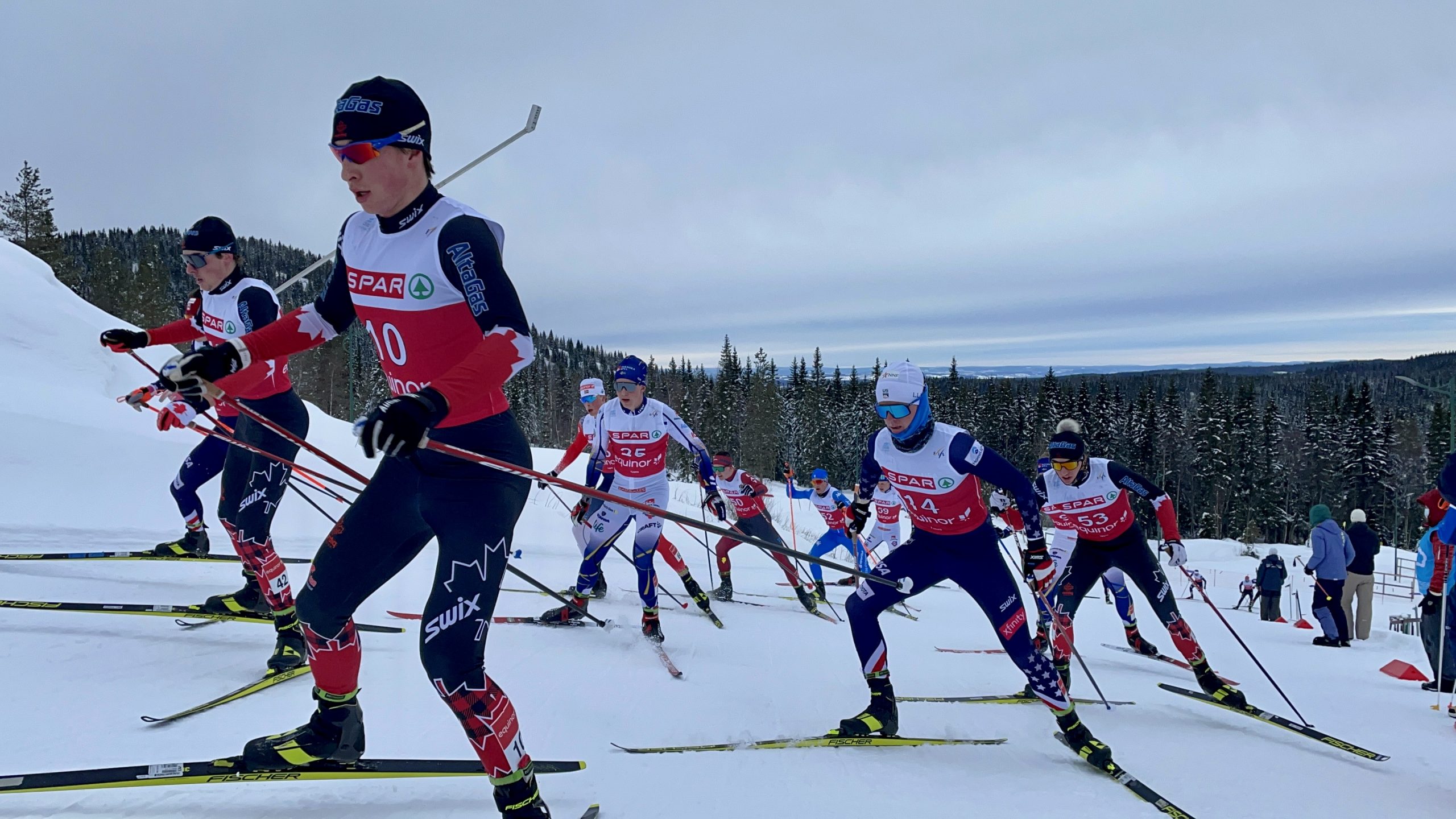
    Xavier Mckeever in bib 10 (CAN) and Walker Hall in bib 14 (USA) head up “waffle hill” in the early stages of the men’s 30 k mass start during the 2022 Junior World Ski Championships in Lygna, NOR. (Photo: Ella Hall)

    FS: World Juniors in Lygna was your first international trip, and it sounds like you had some bad luck with racing at US Nationals and/or been really close in prior years. What do you think came together for you this season to make that trip? And what were some of the highlights of that World Juniors experience in terms of how it supports your development and goals?

    WH: Yeah. In previous years – maybe the past three years or so for this year – there were like two years where I was just coming off of sickness going into nationals, so I never really had the races that I wanted there, and I never ended up making any of those international trips. Which, honestly, I would have liked to go on the trips, but it never really bothered me too much – it wasn’t like demoralizing or anything – because I felt like I knew the level that I was at and that on a given day I could be as good or better than any of the trip. So it was never really too much of a bummer for me. But this year, I wanted to make it on the trip to World Juniors, and I had goals for the races at World Juniors too, it wasn’t just the trip there was the end goal. But just making it definitely felt good, and I had a really good Nationals this year, which was awesome since that’s pretty much the first time that’s happened for me. 

    I was super happy that the races were in Norway because I just love spending time there, and we got to do our pre-camp in Hafjell, which is right near Sjusjøen, and I’ve spent some time there – it’s [some of] the best skiing in the world. So that was super fun. And I really liked a group of guys and the entire team and staff that was there, so it was a really good experience.

    FS: From the outside, it seems like you took a pretty big step forward this past year, which maybe can be attributed to having such a strong group to train with at University of Utah, or some more direction after a tough gap year. In looking back over this year, what are some of the factors that you think allowed you to take those steps forward and what were some of your personal highlights from the season? And those personal highlights do not necessarily need to be a race result, just an experience that stands out to you.

    WH: I think the main factor was really taking my training to the next level. Especially over the summer [in Anchorage] and then carrying that through the fall in Utah. I was just training with a really strong group, and really pushing myself, and doing [types of training] that I hadn’t really done in the past. So definitely, a good part is thanks to that. And then also, I’ve had a lot of different experiences over the years and learning from those helps to channel some better results.

    As for my highlights – this last season, I was just proud of the way that I trained and was smart with my training, and I  didn’t overdo it. And it seems like it’s often hard to put together a good season like your freshman year of college because it’s such a big adjustment. So I was happy that I was able to have a solid season for the most part while going through such new experiences in my first year in college.
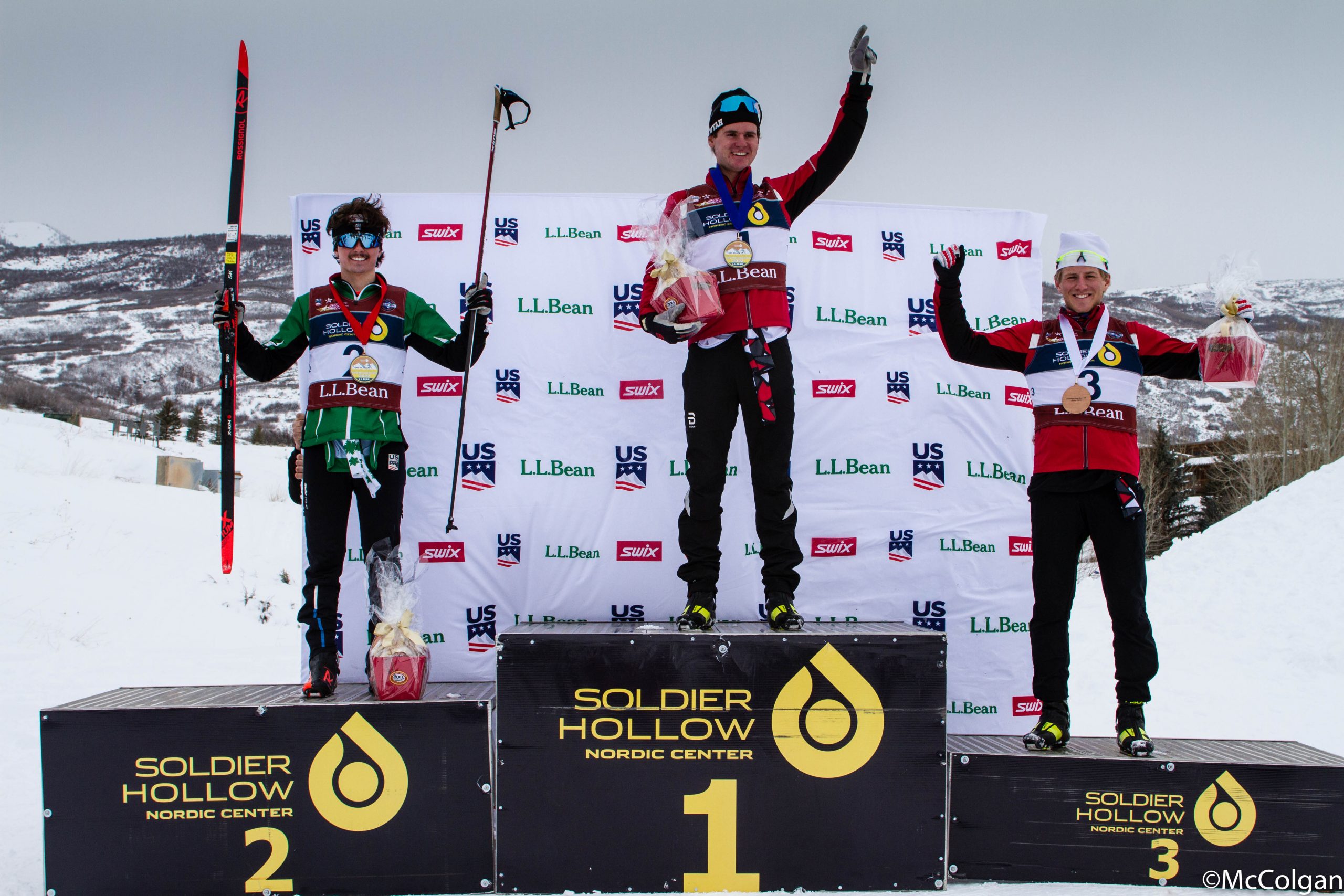
    Walker Hall stands atop the podium in Soldier Hollow after winning the junior 10 k mass start freestyle during the 2022 U.S. Cross Country Ski Championships. (Photo: John McColgan)

    FS: What are your goals heading into next winter?

    WH: It’s gonna be my first year not being a junior, so honestly, I don’t have too many specific goals. But I’d definitely love to race in my first World Cup this year, and just keep improving. On the college circuit, hopefully, get a bunch of podiums in RMISA. And just keep learning from my teammates and pushing with the team at Utah.

    FS: Last question for you: with making the D-Team, can you share what that means to you and what you’re excited about in terms of the support and opportunity that opens up for you?

    WH: It’s always seemed like probably the biggest step you can make in U.S. skiing is actually making the ski team, so it feels really good to have achieved that. I’m just now realizing the amount of support that means that I’m able to get, so I’m just taking advantage of that and learning from my other teammates on the team – taking advantage of the different opportunities that it grants me, and just enjoying the ride. But I’m definitely thrilled to have made the team.
  • Lina Hultin joins Madshus USA

    Lina Hultin joins Madshus USA

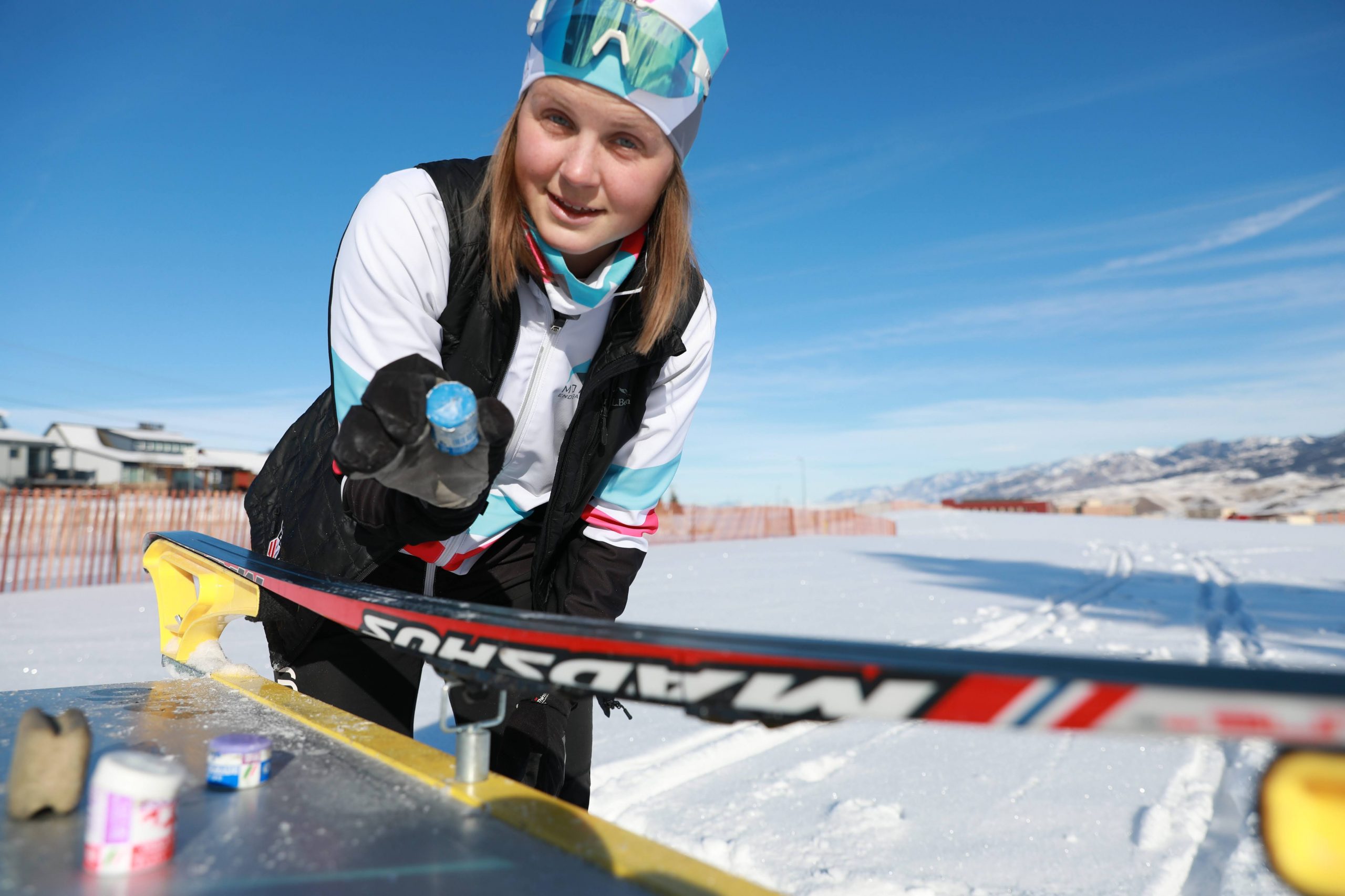
    Lina Hutlin steps into the role of Race and Service Manager for Madshus. (Photo: Madshus)

    At the end of September, Madshus USA announced that they had hired Lina Hultin as the new Race and Service Manager. According to the press release, “Lina will work towards finding, developing, and retaining the most talented and influential Nordic athletes in every age category. She will also work closely with the rest of the Madshus team to develop, and execute, a club and coach program that supports the brand and its dealers throughout the country.”

    Hultin is Swedish and came to the United States in 2014 to pursue a Masters degree in Exercise Science and Nutrition at Montana State University.  As part of this academic opportunity, Hultin was awarded a scholarship for racing with MSU Nordic. Faster Skier caught up with Hultin to learn more about her background and what led her to this position at Madshus. The following interview has been edited slightly for clarity.

    Faster Skier: Can you tell us a little about your background? 

    Lina Hultin: It’s a cliché but for me, growing up in Scandinavia meant I started skiing as soon as I could walk. That’s how my family spends time together, we ski, bike, run, and have fika, ( preferably the activity and fika combination).  I entered my first ski race was when I was five years old. Nothing intense or competitive, just a snowy field with blueberry soup at the halfway mark. After a few winters of little snowfall, my parents decided to move further north to a little town called Bruksvallarna. It’s a Nordic skiers paradise, and we quickly got involved with the local Nordic team. Shortly after the move, at age seven, I got really serious about racing (yeah, I was that kid). We had a 5k groomed Nordic track outside of the school I attended, so there was no stopping me at that point. I skied all day, every day during the 7+ month winter.

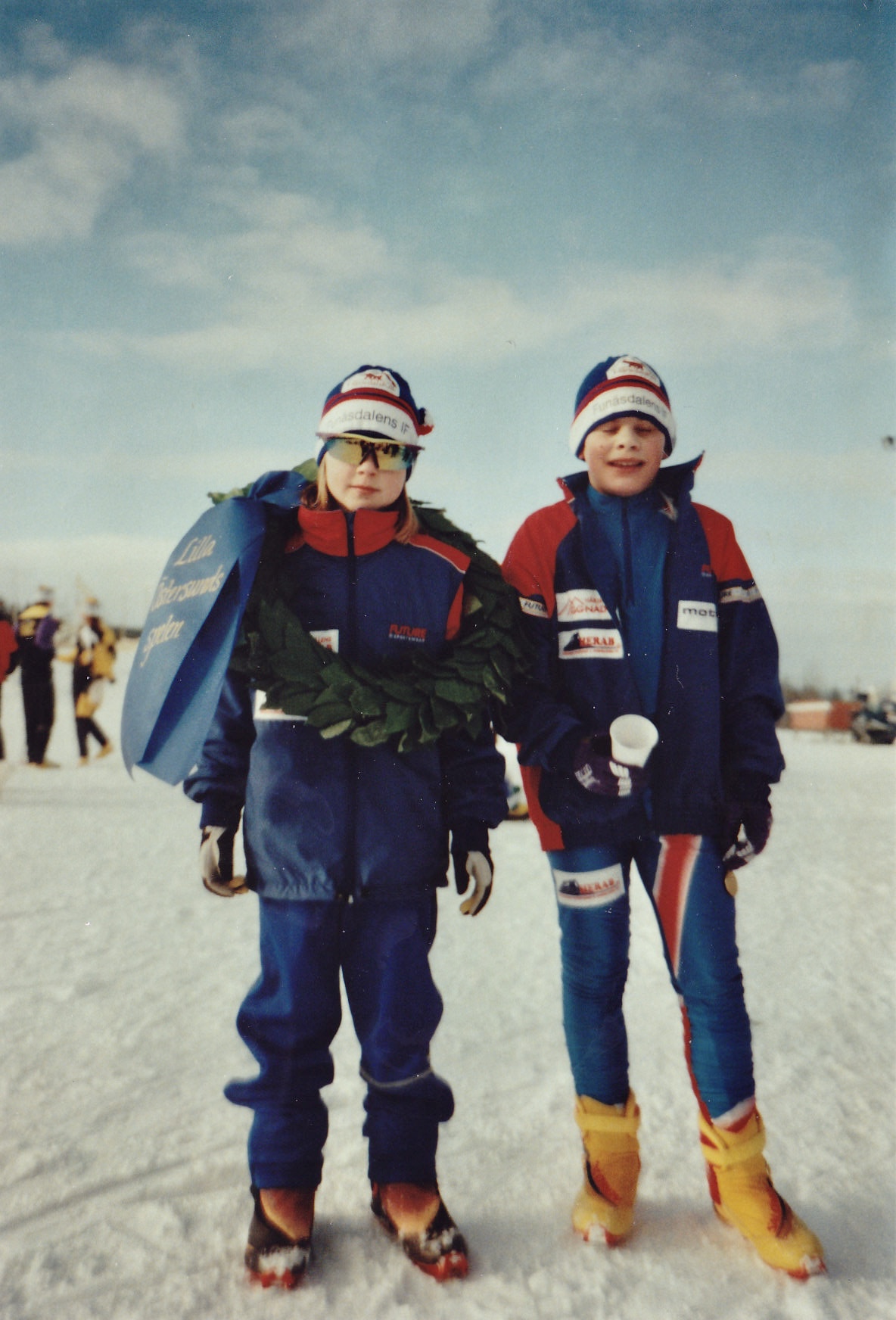
    Lina Hultin age seven, getting after it in a ski race. (Photo: Lina Hultin)

    I spent my high school years away from home at a Swedish high school skiing program (like most Swedish Nordic skiers do). I tended to perform best in sprints, I placed 5th in the Swedish Junior National Championships in 2009. I decided very young that I wanted to be the best. In my search for constant improvement, I became passionate about learning how the body reacts to training and how to perform optimally. So, when I heard about an undergraduate program in Meråker, Norway, where a group of world-class Nordic athletes study exercises physiology and sports performance, I had to apply! I got in as the only female athlete that year (together with Emil Iversen, Finn Hågen Krogh, Tomas Northug.. ). After being accepted I moved to the small village of Meråker, a town whose highschool and undergraduate alums have produced 24 Olympic medals in Nordic skiing and biathlon.

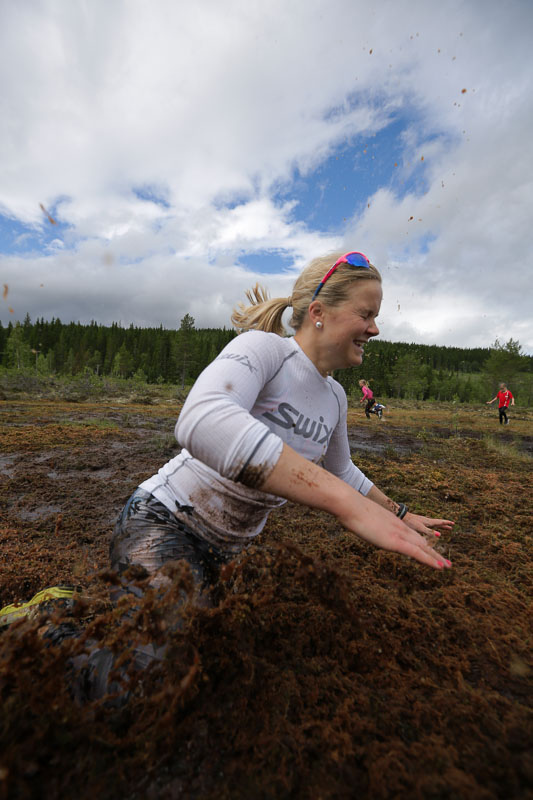
    The perils of Norwegian bog running, Lina Hultin gets a taste of the mud (Photo: Adam Karls Johansson)

    In this village, skiing is religion, and successful skiers become gods. However, even if you didn’t quite reach this status, there was a place for everyone who attended. I discovered the magic in the Norwegian success was their ability to share knowledge with one another. I will never forget the rainy fall mornings (when it has already been raining for two weeks straight) at 8am when I would start doubting why I was once again getting ready for an intensity session, only to show up alongside more than one hundred athletes, ready to do the same workout. The athletes ranged from freshmen in high school who just had decided to focus on skiing, to athletes who had podiumed in the previous season’s Olympics. There was room for everyone and it gave me the sense that it was just a matter of putting in the effort and time before I would be able to keep up with the fastest in the group. It felt like there were no secrets, no magic tricks, just smart training in an abundance, and in good company. 

    To fully submerge myself in the culture, I joined the Norwegian team Henning Skilag. The club is run by Audun Kolstad and his brother Esten. Both in their 70’s with an infinite passion for skiing. Audun coached Petter Northug when he was in high school. Audun is a man of very few words, with a big heart and fitness any 70-year-old could only dream of. No matter how many hours we ran in the Norwegian bog, he was always right there running with us, while Esten was providing the fika. During my time in Norway I was able to produce some top 10 sprint performances in Norwegian cups. In my last race in Norway, I got to ski the sprint relay in the Norwegian National Championships with my teammate Kari Vikhagen Gjeitnes. This is another experience I will never forget since I was right there with the best athletes in the world, feeling like I belonged.

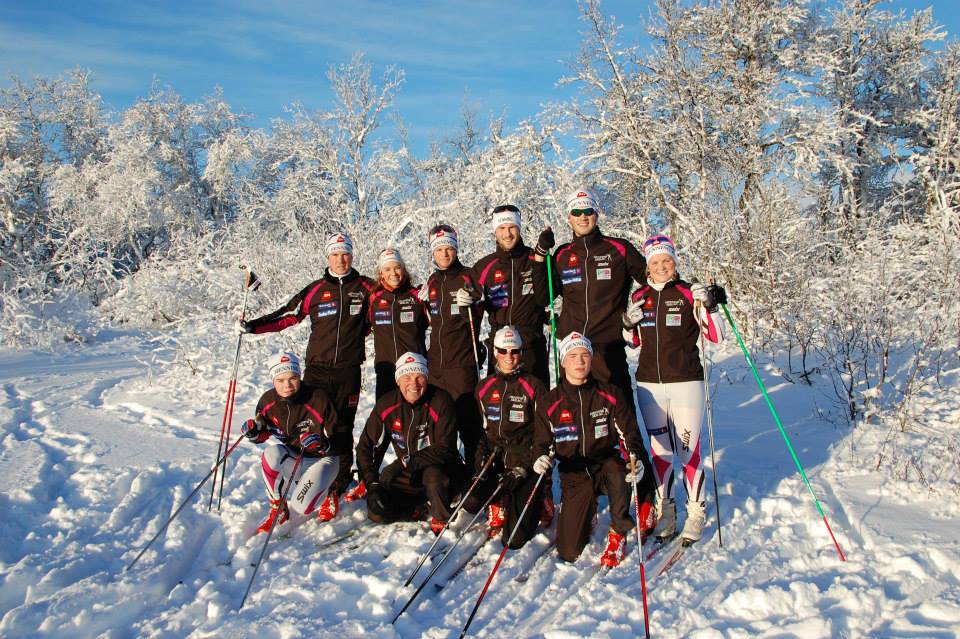
    Team Henning Skilag, Lina Hultin standing to the right (photo: Henning Skilag)

    After finishing my bachelor’s degree in Sports and Physical Education, I knew I wanted to keep studying (preferably full-time) but my love for racing was still strong. I always knew in the back of my mind that college skiing might be an option but, at age 22 I was starting to run out of time. Luckily, the MSU team had a spot left to fill and they had a Master’s program where I could study human performance in a lab with a roller ski treadmill (I later realized that was rare at the time in the US). 

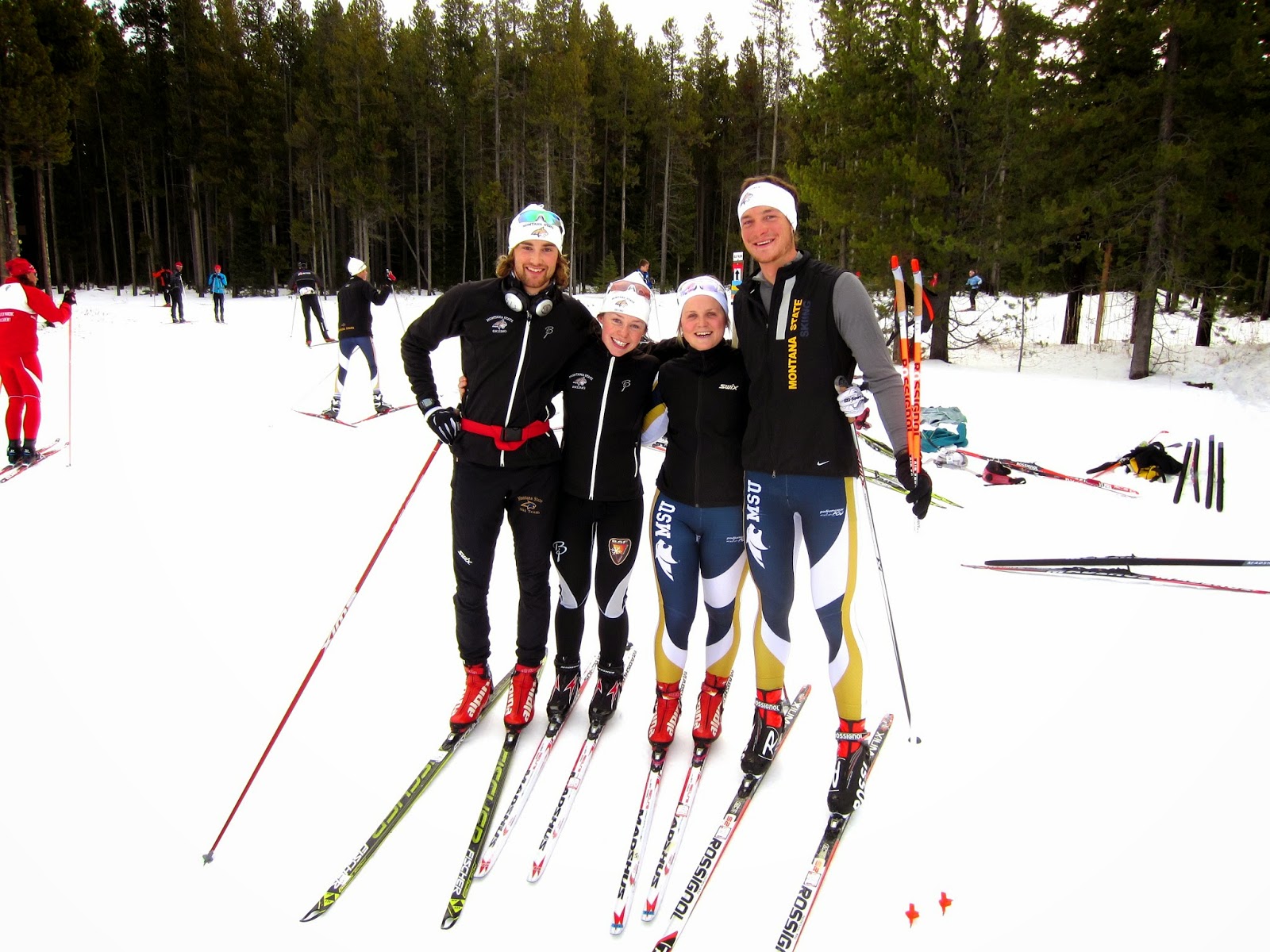
    Lina Hultin (second from right) with MSU teammates (photo: MSU skiing)

    I had never been to the states before, but after seeing the success of the US team and watching them at races in Sweden and Norway I was really curious to learn more about the emerging ski culture that was beginning to be established. I landed in Bozeman, Montana in August of 2014 and had no idea I had arrived in such a special place. The Nordic ski culture might not be apparent at first glance, but this town has more groomed trails and terrain for training than one can cover in years (and lots of sun! the sun is always shining and if it’s not, it’s snowing). Being a part of college sports in the US made me realize how much inspiration and knowledge can be drawn from other sports. I was thrilled at the idea of so many different ways and paths one can take in order to reach the same goal, it’s humbling and opens up a world of possibilities. 

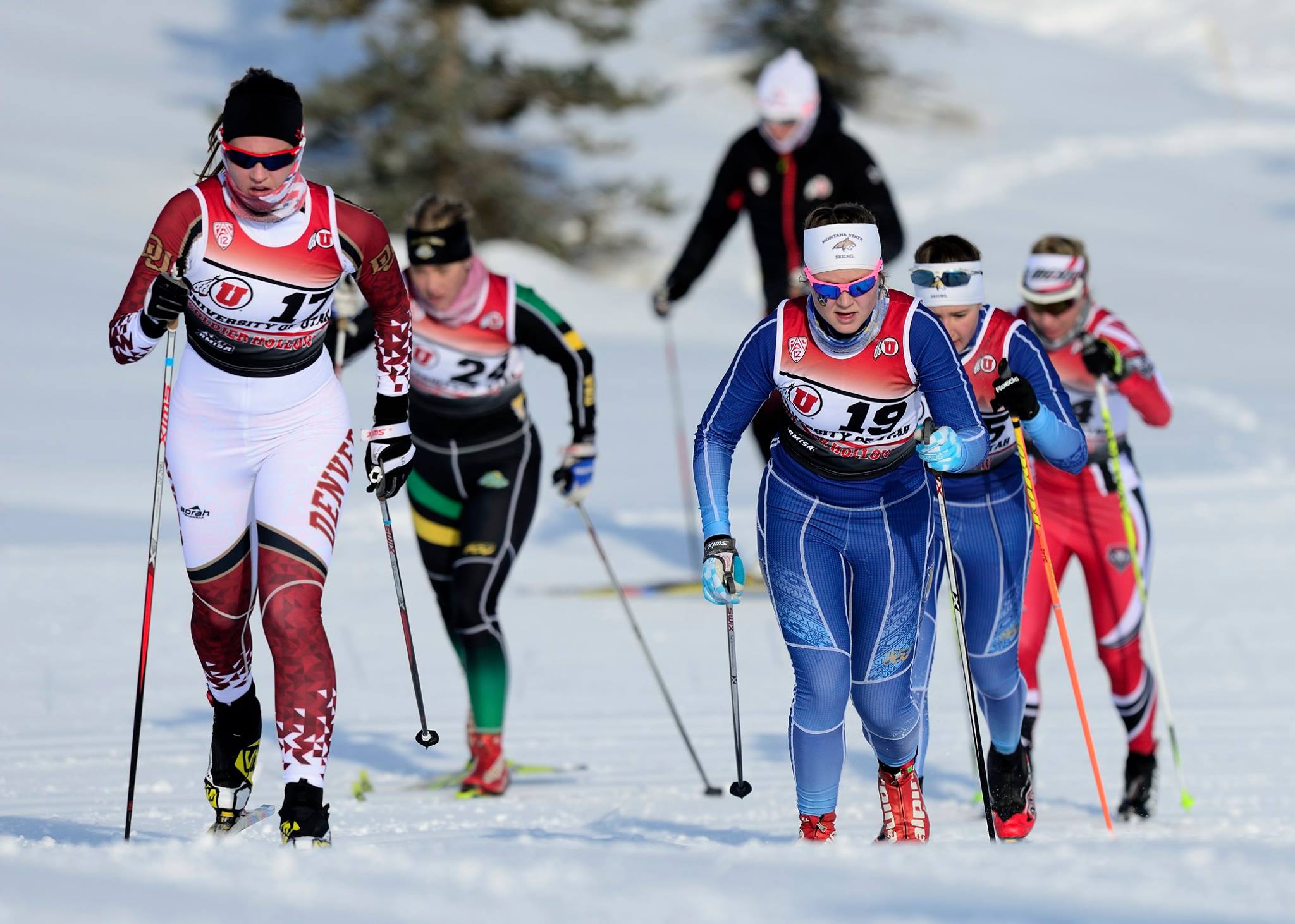
    Lina Hultin (right) racing at the Utah Invitational for MSU (Photo: MSU Skiing)

    FS: What has been your history with the Madshus brand?

    LN: Growing up there were really two dominant (go-to) brands for skis in Scandinavia, and Madsus was one of them. Having an older brother, I got to inherit his skis, which happened to always be Madshus skis.

    Lina Hultin (left) and her brother, looking stylish. (Photo: Lina Hultin)

    After performing well as a junior I got in contact with Madshus and got my first pair of brand new skis. I always felt a great deal of support from them, both in Sweden and Norway. I have been happy with the company’s products, so I kept skiing on Madshus for my seventeen-year long ski career. I have some favorite’s, including my Madshus klister skis (on which I beat the family record time in the Swedish Vasaloppet) and my Madsus Zero skis (which work in way warmer and way colder temperatures than you would expect from a zero ski).

    Lina Hultin gives a kick-wax demonstration (photo: FS archives)

    FS: What about this new position at Madshus excites you the most?

    LN: I am looking forward to being able to explore a whole other side of the skiing world. I have been coaching in the US for five years and have done my fair share of wax tech-ing but I have yet to learn about the supplier side of things. I’m excited to have the opportunity to work and learn firsthand from Bryan Cook who has years of experience in the industry. I’m also thrilled that I will be continuing to work closely with athletes, helping them to perform at their best. 

    FS: What do you think will be one of the more challenging aspects of the job?

    LN: It’s always challenging to learn something new, but I have always been curious and eager to learn so I think I have that going for me. I guess I will figure that out as soon as the season starts! Madshus is a forward-thinking brand and I’m stoked that I get to be part of such a great team. 

    FS: Any other thoughts or comments?

    LN: I’m very thankful for my US skiing family and for the warm welcome I have always felt being a part of this great community. I am especially grateful for the support, encouragement, and network I have found through being a part of the Women’s Ski Coaches Association. Go check them out!

    Lizzie Larkins, Lina Hultin and Kate Johnson at Park City this week for the NEG/National team training camps (Photo: Women Ski Coaches Association)
  • World Champs Rookies: 10 Questions with Jess Cockney

    World Champs Rookies: 10 Questions with Jess Cockney

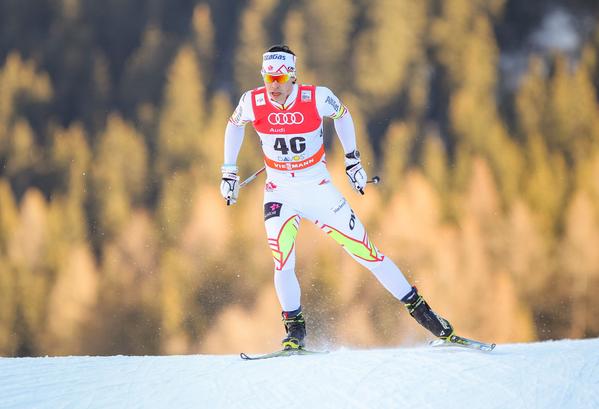
    Jesse Cockney races during qualifiers of the World Cup freestyle sprint in Davos, Switzerland. Cockney would be the 23rd qualifier and finish 29th overall. (Photo: CCC/Twitter)
    Jesse Cockney (Canadian National Development B-team/Alberta World Cup Academy) during the World Cup freestyle sprint qualifier on Dec. 21 in Davos, Switzerland. Cockney qualified 23rd and finished 29th overall. (Photo: CCC/Twitter)

    We can’t imagine anything much more exciting than making an event like World Championships for the first time, so we contacted the North American skiers living that exact dream this year. The U.S. Ski Team announced its 16-strong senior World Championships team on Jan. 26, and Cross Country Canada selected nine to its squad on Monday. On Tuesday, the U.S. added Ben Saxton as its 17th member.

    Instead of interrogating them with the usual “tell us how you’re feeling,” we decided to pose the following 10 questions to each of the North Americans headed to their first World Championships from Feb. 18-March 1 in Falun, Sweden.

    Jess Cockney, 25, is no stranger to big-time international racing. The son of Canada Winter Games multiple gold medalist, Angus Cockney, he competed in three events at the 2014 Winter Olympics in Sochi, Russia, last season. In all, the Canadian National Development B-Team and Alberta World Cup Academy skier (originally from Tuktoyaktuk, Northwest Territories) has accumulated more than two dozen World Cup starts, with a best result of ninth in the freestyle sprint at home in 2012 in Canmore, Alberta.

    “Looking forward to getting after it again after the long time off from racing,” Cockney wrote in an email on Tuesday.

    He spent the last week in Meråker, Norway, east of Trondheim, at Canadian World Cup coach Tor-Arne Hetland’s cabin with World Cup teammates Devon Kershaw and Lenny Valjas. Before that, Cockney explained they were in Livigno, Italy, with Graeme Killick and Alex Harvey following the last World Cup in Rybinsk, Russia.

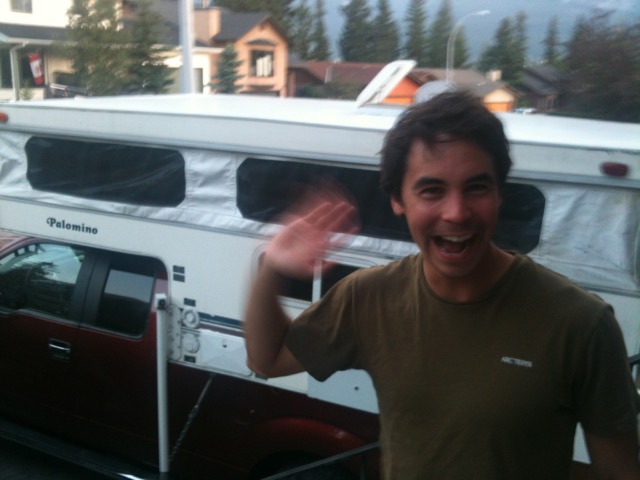
    Jess Cockney on his mom's front step with her truck behind him this past summer in Canmore, Alberta. (Courtesy photo)
    Jess Cockney on his mom’s front step with her truck behind him this past summer in Canmore, Alberta. (Courtesy photo)

    1. What was the first thing you did when you found out you were named to the World Championships team?

    “I got back to work trying to find my speed again!”

    2. What’s been the biggest result of your career so far? What one race stands out the most and why?

    “Definitely my 9th place in the Canmore World Cup sprint a couple years ago. That was a crazy day and hopefully I can scratch the shape again soon.”

    3. What are you most looking forward to at World Championships? 

    “I’m psyched to be back together with the whole team, it’s a wicked group and I love having them to share all these experiences with.”

    4. What’s your biggest motivation while racing?

    “My biggest motivation is to be the best that I can be on that day and make sure the work in the summer wasn’t wasted.”

    Jess Cockney placed 61st in the men's 1.5 k classic sprint qualifier on Saturday in Otepää, Estonia. (Photo: Fischer/NordicFocus)
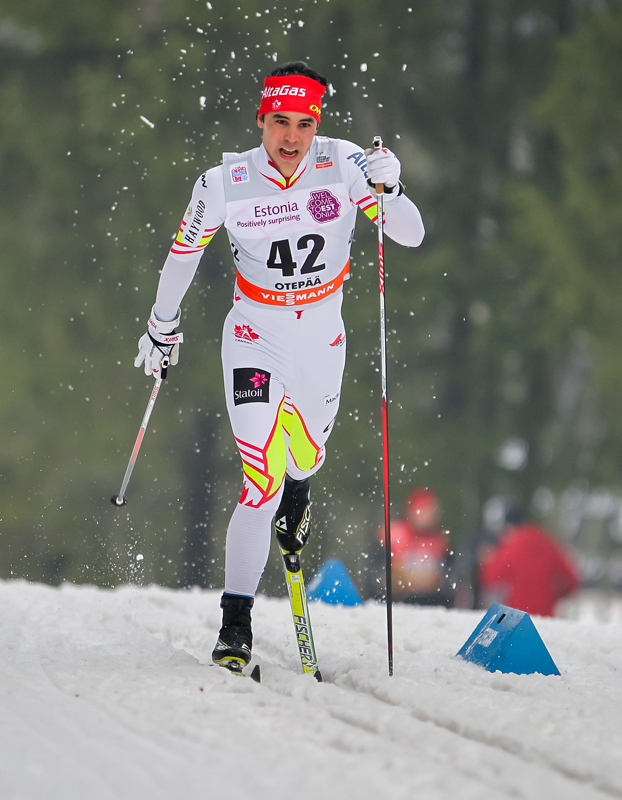
    Jess Cockney placed 61st in the men’s 1.5 k classic sprint qualifier on Jan. 17 in Otepää, Estonia. (Photo: Fischer/NordicFocus)

    5. Which race(s) do you hope or plan to compete in?

    “I’ll race the classic sprint for sure and see how things are after that.”

    6. If you could race the team sprint with anyone in the world, who would it be?

    “Anyone from Foothills Nordic!”

    7. Which World Cup skier would you least want to meet in a dark alley (or in the last 100 meters of a race)?

    “Canmore had some rough streets growing up, I ain’t scared a no nordies.”

    8. What will be your key to success in Falun?

    “I’ve had trouble being mentally ready for the speed you gotta ski to make it in for top 30 so I really have to be in the moment and make things simple on race day.”

    9. Finish this sentence: If I made the podium at World Champs, I would … :

    “Dance in the finish until they take down the stadium for nighttime grooming, and probably keep dancing around the groomer.”

    10. Name one person who’s had a major influence on your skiing career:

    “Gord Jewett. Gord and I were teammates on the [Alberta World Cup Academy] for two years and it was huge for me to see how an athlete like him lived his day to day. Being around an older dog when I was a puppy I had my fair share of times when I got barked at and that definitely helped me take training seriously and be a pro at workouts.”

  • Norway: More running, less rollerskiing

    MERÅKER, NORWAY – According to the national team head coach Morten Aa Djupvik, there are no better, more efficient methods to increase overall capacity than running. Accordingly, the national team is changing the mix, increasing the amount of running, at the expense of roller skiing.

    The Norwegian national team started the new program with a bounding workout in Petter Northug’s home turf Meråkerfjellet on Monday. On a scale from 1 to 10 where 10 is utter exhaustion, Northug admitted that the initial foot workout was hard.

    “I’d say eight or nine on a scale from 1 to 10,” Northug said to Norwegian TV station TV2 after the workout.

    Northug and his teammates had just completed the workout that is characterized by the coaching panel as one of the toughest in the book, commonly known as hill bounding intervals or “moosehuf’ing.” Translation: six 6-minute intervals up steep suctiony dirt roads in the hills behind Northug’s hometown Meråker.

    “This is insanely hard, and it’s key to stay within your target heart rate zone,” says As Djupvik while reviewing his athletes’ heart rates from the morning running workout.

    More running
    During the Meråker training camp this week, the seven members of the men’s national team are accompanied by six guys and seven women from the U23 national team. Northug and his teammates will have to get used to their running shoes this fall leading up to the 2010-11 season with World Championship in Oslo. The national team coaches have evaluated the situation, and made some adjustments.

    “We’re increasing the amount of running substantially from last year, at the expense of roller skiing. We believe nothing beats running when it comes to increasing the capacity, and we think these changes will lift us another level this season,” Aa Djupvik says.

    While the snow and the season opener racers are still months away, Northug appears to be on track. ”I feel good, but the key is to stay injury free and train smart. I’m very confident of my training program, and the only adjustment I’ve made this season is more running,” Northug says.

    “Petter is better at bounding this season than he was in June. Aside from that, things are as usual, he’s improving slowly but surely,” Aa Djupvik concludes after the Monday workout.

    Northug expects more Norwegians on the podium
    While the goal for the workout wasn’t necessarily to be the first to the top, the two rookies on the team, Kristian Tettli Rennemo and Petter Eliassen, impressed everyone up the steep dirt roads. The margins on the international circuit were miniscule last season, and everything counts.

    “This year we’ve had great energy at the training camps, so now we have to make sure we carry everyone with us into the ski season. Who knows, we might just have five or six racers among the top in the World Cup,” Northug predicts.

    Watch Northug bound

    From www.langrenn.com and www.TV2.no, translation by Inge Scheve