Tag: Michael Sinnott

  • Two Decades and 20+ World Cup Starts Later, Sinnott Retires from Skiing

    Two Decades and 20+ World Cup Starts Later, Sinnott Retires from Skiing

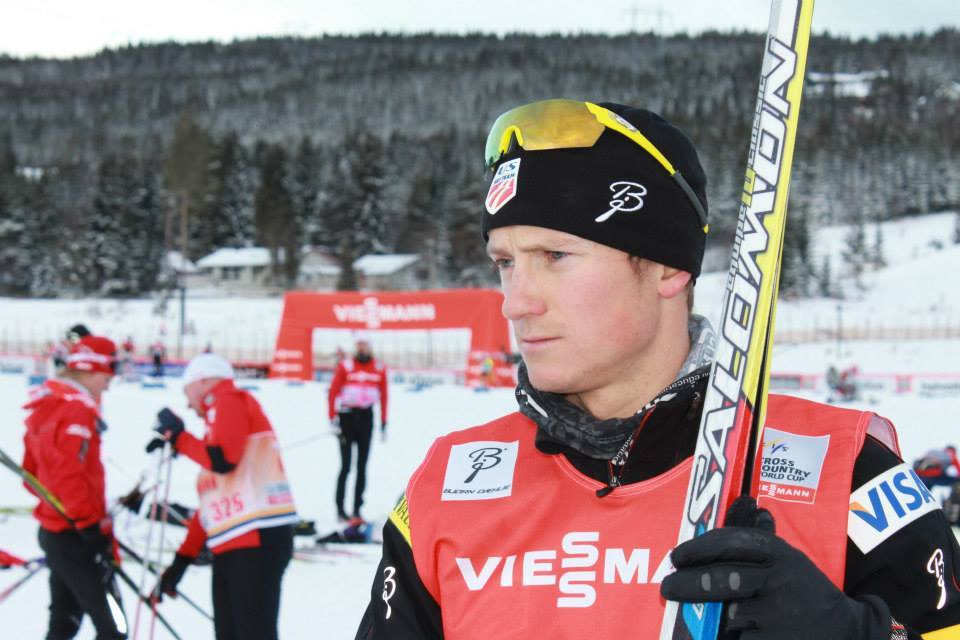
    Mikey Sinnott on the World Cup last December in Lillehammer, Norway. (Photo: Facebook/MWSC) https://www.facebook.com/maine.Winter.Sports.Center/photos/t.1309153346/10152451352903312/?type=3&theater
    Mikey Sinnott on the World Cup last December in Lillehammer, Norway. (Photo: Facebook/MWSC)

    A freshman skier in Sun Valley, Idaho, Mikey Sinnott was literally a foot shorter than the rest of the guys on his team, or so his longtime coach Rick Kapala says. Small but mighty, Sinnott came up through the Sun Valley Ski Education Foundation (SVSEF) junior ranks, making it to the Idaho youth championships and eventually winning two Junior National titles, and reaching Junior World Championships in 2004 and 2005 and U23 World Championships in 2006, 2007 and 2008.

    But before he was a globetrotter, Sinnott was a fighter — holding his own in a wrestling brawl with two dozen kids and a handful of coaches, an annual lighthearted tradition at the SVSEF. According to Kapala, who was always at the bottom of the pile, Sinnott was forever the last man standing. Everyone else would eventually give up, but not Mikey.

    Mikey Sinnott at the 2011 U.S. nationals classic sprint. (Photo: FlyingPointRoad/flyingpointroad.com)
    Mikey Sinnott at the 2011 U.S. nationals classic sprint, where he place second for a career best. He repeated the feat in 2012 with another silver in the classic sprint in Rumford, Maine. (Photo: FlyingPointRoad/flyingpointroad.com)

    “You could never pin Mikey,” the SVSEF head coach and nordic program director said. “He was the definition of scrappy.”

    As Kapala spoke those words on the phone Tuesday, he almost immediately retracted them. Sinnott would not want to be called scrappy, but that’s what he was. He didn’t tap out, Kapala said, he never quit.

    Looking back, he was glad Sinnott didn’t get overlooked like some U16s that haven’t reached physical maturity do. While Sinnott’s results and performances were promising, an outside coach observing him at a glance might not have picked him to achieve what he later would.

    But Sinnott understood the importance of grit, and paired with an academic gift that led him to study psychology and neuroscience at Dartmouth College, he had punched his ticket to success early on, Kapala said.

    His timing was also ideal. By the time he finished up at Dartmouth, where he was an NCAA All-American and named to the association’s Division I Skiing Championships Team all four years, Sinnott was ready for the big leagues, and his choice to return to Sun Valley was simple.

    They had started an Olympic development team (now the Gold Team) a few years earlier — an attractive option for a hometown skier looking to go pro.

    “At that point, I wasn’t going to go to northern Maine, I wasn’t going to go to the Midwest, I wasn’t going to go to Alaska — there weren’t really any other teams,” Sinnott reflected on the phone two weeks ago. “When I went off to college, that was one of Rick’s goals … to make the Sun Valley Ski Education program one of the cradle-to-the-grave programs like in Europe.

    “I think it’s been a very, very wonderful program,” he added after seven years on the team. “It’s been a model for how we need to start developing more in the U.S. Sun Valley was the model for what’s made the U.S. Ski Team [in the 1960s] … I think we continue to be that model and impress and improve.”

    In five seasons, Sinnott, now 29, amassed more than 20 World Cup starts. He claimed the overall SuperTour title in 2013 to start last season in Europe, where he raced seven of those World Cups.

    But last winter, starting in November, Sinnott didn’t feel anywhere close to on top of the world. He was fatigued and had been feeling that way since late October, yet he couldn’t pinpoint why. His legs lacked power, but he figured he could compensate with mental toughness, which some call ‘grit.’

    “I just kept telling myself that I had to make it work,” he said. “I never really had a lot of explosive energy in my legs for whatever reason, but I kind of knew that was the year, if I was going to fight through any stupidity, that was the year I had to do it … It was an Olympic year.”

    The Continental Cup leader who kicked his season off with the U.S. Ski Team (USST) in Kuusamo, Finland, Sinnott placed 74th in his first race (a classic sprint) and 113th in the 10 k classic the next day. By the end of the three-day series, he was 92nd overall.

    A few weeks later in mid-December, he spoke openly about not being in top form. But he still wanted to perform well at U.S. nationals and give his best shot at making the 2014 Winter Olympics in Sochi, Russia.

    At the same time, Sinnott, widely respected as a master of calculating points in the U.S., knew his domestic ranking wasn’t competitive enough to put him in the running for the Olympic team. If he wanted to make it to Sochi, his first Olympics in two Olympic cycles he’d been training through, he knew he needed a top 30 on the World Cup.

    The closest he’d come after Kuusamo was 78th in the classic sprint at Asiago World Cup in Italy. In late December, he returned to the U.S. for nationals in Utah, where he placed fourth in the 30 k freestyle mass start and fifth in the classic sprint. Even if he’d won all of nationals, Sinnott didn’t expect to make the Olympics. At the same time, he said anyone’s best chance was to ski faster than lone USST male there: Erik Bjornsen.

    “I knew how fast I was skiing and I knew I wasn’t going to beat him,” Sinnott said.

    “The U.S. Ski Team wants to do everything they can to not take any non-U.S. Ski Team members to the Olympics,” he added. “So I knew the only opportunity I had was to get a top 30 on the World Cup … That’s why I stayed [in Europe].”
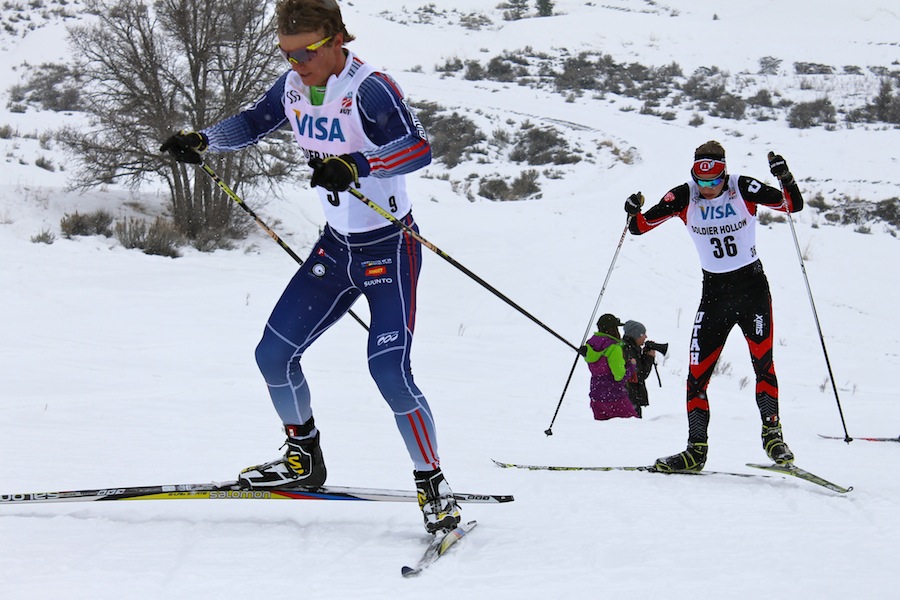
    Mikey Sinnott (l), of the Sun Valley Ski Education Foundation (SVSEF), climbs up and over a hill in the 30 k freestyle mass start at 2014 U.S. nationals. (Photo: Bert Boer - http://bertboyer.zenfolio.com) All proceeds from photo sales will be directly donated to NNF. Sinnott's former Sun Valley teammate Miles Havlick (5) leads the chase pack during the U.S. Nationals 30 k freestyle mass start while Sinnott (second from l) gets tangled on the way up. (Photo: Bert Boyer/All proceeds from photo sales donated to NNF)
    Mikey Sinnott (l), of the Sun Valley Ski Education Foundation (SVSEF), climbs up and over a hill in the 30 k freestyle mass start at 2014 U.S. nationals. (Photo: Bert Boyer/All proceeds from photo sales  donated to NNF)

    Olympic selections came and went, Sinnott wasn’t picked, and by the time February rolled around, he was back on the SuperTour circuit and feeling drained. He recalled one race in St. Paul, Minn., where he was skiing in the top three with four kilometers to go, and he was bored.

    “I was like, ‘I don’t know, maybe I should just drop out because I don’t even care,’ and that was kind of pathetic,” he reflected.

    He ended up third on the day, and later that month, placed 24th in the American Birkebeiner — an event, like nationals, he said he felt horrible in.

    “I’ve never just been so sluggish through an entire season like that,” Sinnott said. “It wasn’t an overtraining thing, but I just never felt that I had the spark.”

    He ended up eighth in the 2013/2014 SuperTour overall. Because he wasn’t among the closest contenders for an Olympic spot, he wasn’t crushed when he didn’t make the team. But his season did leave him with untied ends he would later have to reconcile.

    “There was no sudden crash or hope lingering on that some people were affected with because I had a better understanding [of the criteria],” Sinnott said. “When I was younger I thought, race your hardest and things will turn out well, and I quickly realized that wasn’t the case. You have to make your own luck and work your hardest because nothing’s going to be given to you … you have to force your way onto a team or force your way into a start race because you earned your way.”

    Change of Seasons, Change of Pace

    A couple Fridays ago, Sinnott was hanging up a piñata midday in his Sun Valley home. He wasn’t recovering from the morning’s training session with the Gold Team, and he wasn’t gearing up for an afternoon workout, either.

    Since last spring, he had been a working man in a different sense: marketing and writing for the Sun Valley Harvest Festival, one of the top 10 fall festivals in the country. And with the September festival in the rearview, he was prepping for a party at his place.
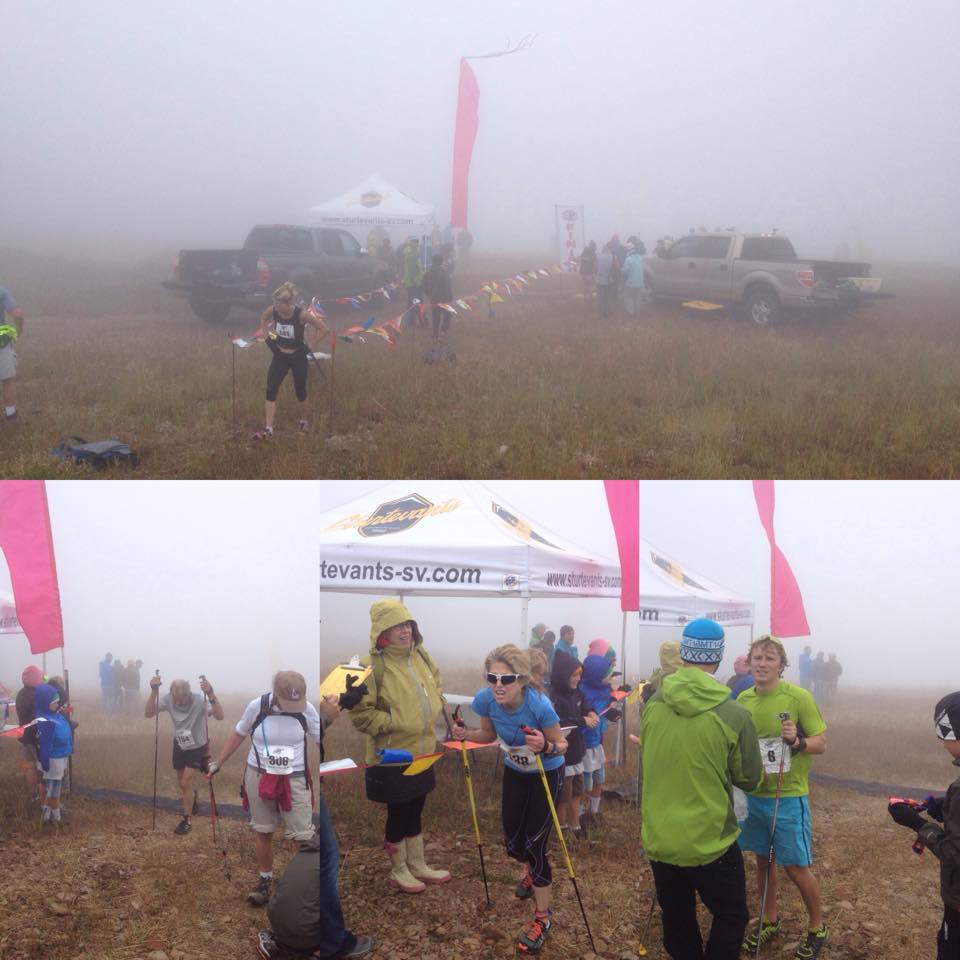
    Mikey Sinnott (lower r, in green) at the Sun Valley's annual Baldy Hill Climb, while Darlene Young (with poles, in blue) pushes on. (Photo: Facebook/Jon Engan) https://www.facebook.com/photo.php?fbid=10203960529367676&set=a.2885261424722.135136.1655738374&type=1&theater
    Mikey Sinnott (lower r, facing camera in green) at Sun Valley’s annual Baldy Hill Climb, while Darlene Young (with poles, in blue) pushes on. (Photo: Facebook/Jon Engan)

    He’d certainly been working out — just not in the traditional sense that he’d been accustomed to for the last seven years. He’d done the unofficial Ultimate Man.Ultimate Woman series, the brainchild of former Sun Valley coach Chris Mallory and a compilation of four local offroad endurance events: the Boulder Mountain Tour (30-kilometer ski race), Backcountry Run (16-mile trail run), Double Galena Grinder (45-mile mountain-bike race), and the Cheeso Double Baldy Hill Climb.

    The series ended Sept. 27 at the top of the 9,020-foot Bald Mountain, where Sinnott placed eighth on the day and fourth overall.

    Rather than run more than 3,000 meters to the summit, the ultimate men and women had to ascend it twice: biking up Baldy, riding the gondola down and running/hiking back up. Twenty-five people started the series, four finished, and among them, Sinnott skied the fastest time in the Boulder Mountain Tour (BMT) and notched the second-fastest time in another event. He lost an hour in the mountain-bike race and was down to fourth — last — by the end of the series.

    “Running after you bike is awful,” he said. “Eleven months ago, I signed up for [this] race series … I know I’m not going to do it again.”

    Meanwhile, after the BMT in February and before the Backcountry Run in July, Sinnott decided whether to continue ski racing through 2014/2015. Still unsure exactly what went wrong last winter — he tried to rest more; he tried to train more — he reasoned it was worth stepping back and trying to put everything back together, and started training again in May.
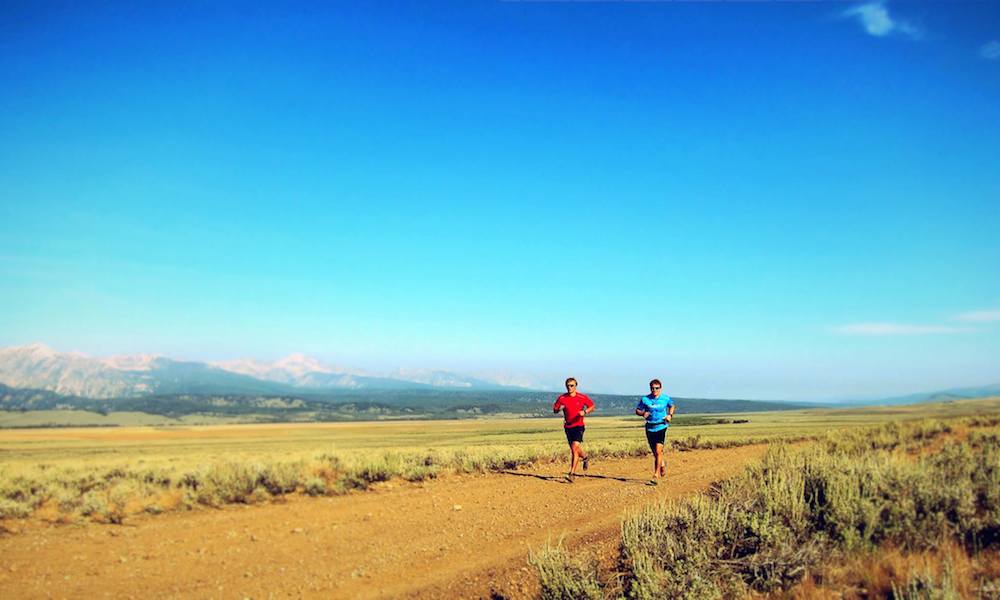
    Sinnott and Miles Havlick during an August 2013 training run through the sagebrush in the Upper Salmon River Valley, Idaho. (Photo: Facebook/Miles Havlick) https://www.facebook.com/mileshavlickxcskier/photos/t.1309153346/565991460102601/?type=3&theater
    Sinnott and Miles Havlick during an August 2013 training run through the sagebrush in the Upper Salmon River Valley, Idaho. (Photo: Facebook/Miles Havlick)

    It didn’t take long until he realized he wasn’t having fun anymore.

    “I just wasn’t enjoying getting out the door anymore,” he said. “If there wasn’t someone waiting for me, then I wasn’t motivated to go exercise on my own.”

    Reasoning he was “fighting an uphill battle in an uphill sport,” Sinnott said it wasn’t worth wasting his time or his coaches’. Kapala said they sat down and talked about it.

    “We sort of sensed it was coming,” Kapala explained. “There’s a natural lifespan to cross-country careers. Mike was certainly of the caliber that he could’ve chosen to ski another year or two years — I don’t think we would’ve seen any drop off in his production … but I think he looked at it like he was trying to make this Olympic squad …

    “I said, ‘You’ve had an exceptional career in ski racing,’ ” he added. “ ‘You really think the experiences in total that you’ve had in ski racing would be that much enhanced by slugging it out for another four years?’ He was already like, yeah, I think it’s time for some new challenges.”

    Sinnott said conversations with Gold Team head coach Colin Rodgers also helped open his eyes to where he stood mentally.
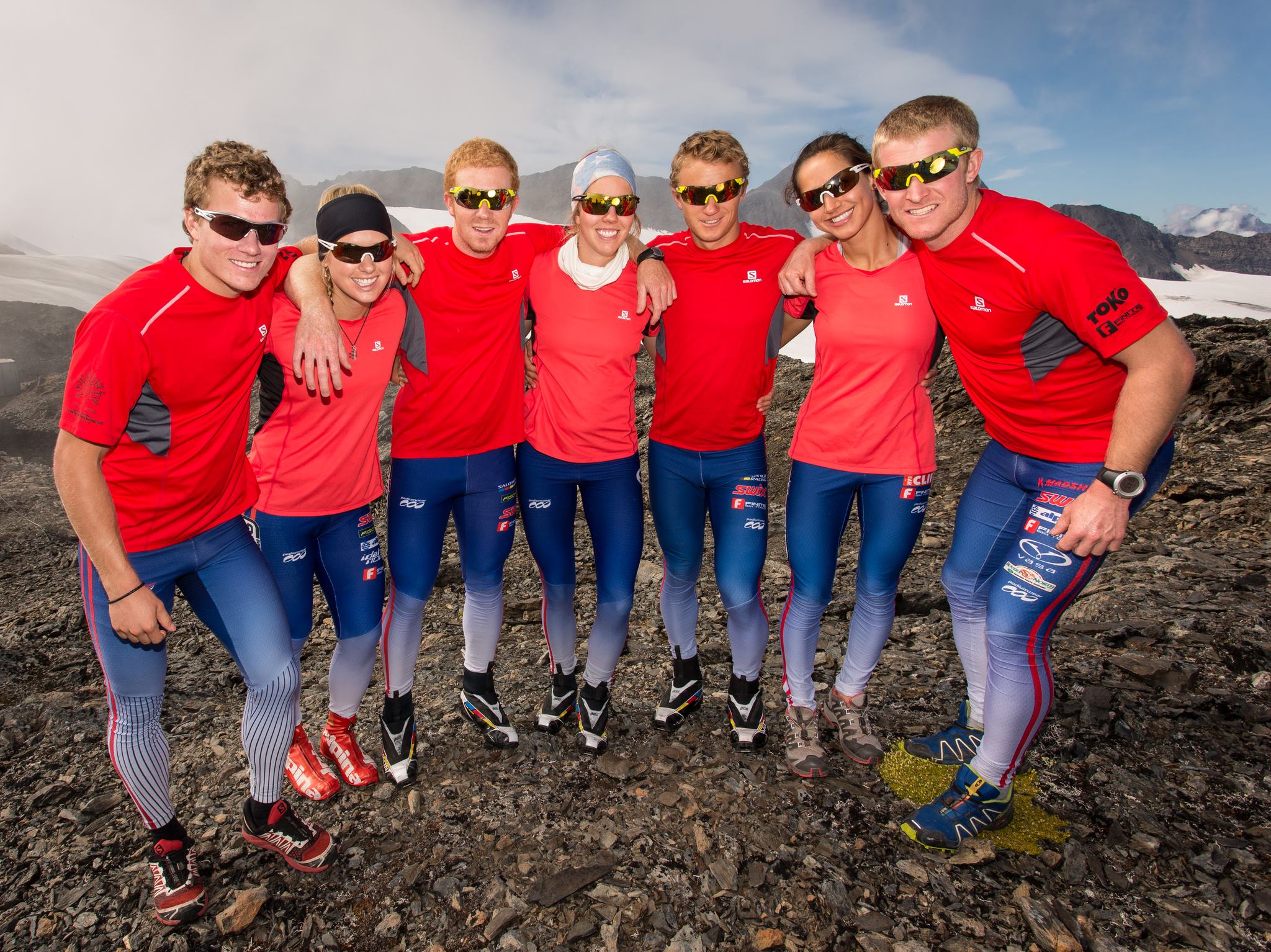
    Last season's Gold Team, with former skiers Sinnott (third from r) Chelsea Holmes (now at APU, second from r), and Rose Kemp (retired). (Photo: Facebook/SVSEF Gold Team) https://www.facebook.com/SVSEFXCGold
    Last season’s Gold Team, with former skiers Mikey Sinnott (retired, third from r) Chelsea Holmes (now at APU, second from r), and Rose Kemp (retired, second from l). (Photo: Facebook/SVSEF Gold Team)

    “He’s been saying for the last year I just didn’t have the same personality with skiing,” Sinnott said. “And I saw him recently and he thought I’d recovered into my old self. Rick’s super supportive … and they all just care so much. All my coaches just want what’s best for me.”

    Sinnott’s Favorite Moments:

    (as written in an email)

    “A few highlights for myself were the Dartmouth College National Championship, winning the Boulder Mountain Tour, my first European World Cup in Milan, and racing the Holmenkollen. Lots of memories, but those were special for a variety of reasons:I loved collegiate racing. It is the best domestic race series we have. Such comaraderie, and racing for something bigger than yourself. I loved how much of a team we were, and how meaningful it was to so many people to bring home the National Championship. Our school, our alums, the East Coast. I even remember heading straight to U23s while they were still tabulating the scores, and upon arrival getting a hearty cheer from Pat Casey. He was so proud to see a group of Americans, all under 23, be the top team.  It showed US skiing was on the rise, and we didn’t have to look up to the Euros anymore. It was a pretty cool feat, and an incredible group of people to be a part of. I think there were three or four future Olympians, and two future World Championship runners.
    Winning the Boulder Mountain Tour was special because it was my first real professional title, and it was in my home town, in front of family and friends.  Wow. Such a special moment to represent them. My home town is beyond supportive, and it feels great to show them what they are supporting.
    Of course skiing in Milan was all together unreal, and a wonderful new persepective on what could be achieved through skiing. I remember seeing Kikkan on the podium, and seeing her mobbed for autographs. I remember seeing lots of the U.S. team being mobbed for autographs. Riding the bus with all the world elites, joking with them (okay, Simi joked with them, I gawked a little), being in such a world center and to have it lined with fans of nordic skiing.  Wow. I thought it couldnt get any better… But oh did it.
    Finally, racing the Holmenkollen. I had a terrible race that day, and was well out the back from the get go. It was slushy and slow. I loved every minute of that suffer slog. The course was lined by thousands of fans who had camped out for days. They were chanting my name around every corner, before I was even in sight. There was such energy and appreciation and excitement, it was beyond contagious. They willed me onwards no matter how tired I became. I cannot express what that felt like, to be among the worst in the race, and still have this wall of humanity urging you and screaming for you. Wow.  Those Norwegians do it right.
    A lot of my best memories come from the people I met, and the people I shared my career with.  I could list a multitude more stories, but they mostly center around the people and how their interactions left an imprint on me. I stayed and raced for a week with a Norwegian racing team — so generous, so kind. Erik Stange took me for a ski tour outside Lillehammer that ended at a waffle house, only available via skiing. Last season, a friend came to watch me race in Davos and brought a huge poster that had personal remarks from a dozen or so close college friends encouraging, and cajoling me. It was great.”

    Looking back, Sinnott had a long list of career highlights: Dartmouth’s national championship, winning the 2008 BMT, his first European World Cup in Milan in 2012, and racing at Holmenkollen that same season.

    “I loved collegiate racing,” he explained. “It is the best domestic race series we have. Such camaraderie, and racing for something bigger than yourself. I loved how much of a team we were, and how meaningful it was to so many people to bring home the National Championship.

    “Winning the Boulder Mountain Tour was special because it was my first real professional title, and it was in my home town, in front of family and friends,” he added. “Such a special moment to represent them. My hometown is beyond supportive, and it feels great to show them what they are supporting.”

    And that’s why he planned to stick around town and help out while he plans his next move. Throughout the offseason, Sinnott has been working with U18 skiers and younger on the SVSEF Comp Team, shadowing them during workouts to push and motivate them a few times a week.

    “He’s getting ready to transition to the next phase of his life … [and] he’s taking this year to give back to our program,” Kapala said. “We’ve got this group of ten kick-ass U18 guys — think of that workout when they’re going out for this hour-and-a-half roll and Mike is embedded in that workout with them. … That’s huge.”

    Kapala said his program reserves some money for guest coaching, and while it’s not much, he knew Sinnott would do it for free.

    “I’ve been blessed with the coaching that I’ve had over the years … [with Kapala, Ruff Patterson in college, Travis Jones and Rodgers on the Gold Team],” Sinnott said. “I know that I don’t have some of those characteristics especially at a youth level … I don’t have the consistency day in and out required of a quality coach.”

    So he doesn’t necessarily envision himself as a full-time coach one day, but he’s happy to jump in as needed.

    In the meantime, he said he’ll be taking the next year to figure out his new career path and will continue to work with the Sun Valley Harvest Festival through the winter. He started the job in May as a means of keeping him mentally stimulated while training. When he stepped away from skiing in late May/early June, he began to call it his career.

    Sinnott spent the next several months focusing on the leadup to the festival and coaching on the side. He create a life plan beyond that, but he has a few ideas.

    “I thought I was going to map [it] out this summer —  that never happened,” he said. “I want to know exactly what I want to do before I start looking into grad school. Since I graduated, neuroscience has become a more popular field among the smarty pants of the world, and my brain has atrophied…”

    He has yet to find out what that field holds for him, but above all, Sinnott remembers enjoying school, the curriculum, “the knowledge, and the horizon they presented with some of the unknown,” he said.

    He has a Sun Valley mountain pass this winter, so he figured he’d take some downhill runs on powder days to sort it out. This month, he headed east for 10 days for a wedding in New Hampshire.

    “I’ll bring running shoes, but I don’t have to bring rollerskis, so that’s a plus,” he noted.

    And while he might travel a bit, and give races like the Birkie another try (at a more leisurely pace), he’ll continue to call Sun Valley his home.

    “I’ve traveled around and looked at various places and there’s nothing compared to here,” he said. “The Norwegian national team, they [came] here before the Olympics in Salt Lake and Vancouver, and they say this is the perfect training place.”

    And the team has been an integral part of his experiences.

    “It’s always been, the team I want to hang out with on the [domestic] circuit is Sun Valley,” he said. “They’re good people that I have fun with.”

    Leaving the Gold Team, which includes Miles Havlick, Matt Gelso, Ben Lustgarten, Mary Rose, Makayla Cappel, and Paige Schember, Sinnott said it’s in a good place.

    “[That’s] the best team in the country this year. They’re unbelievable,” he said. “There’s definitely times where I’ll see time trials and I’ll say, ‘Oh man, I wish I could be out there.’ If I wanted to be out there, I would be. It’s not like anyone told me no, I just don’t want to be out there anymore. It’s been really good to be more social and adventure with friends. I haven’t really second-guessed it.”

    Kapala said Sinnott could be the poster child of how to have a great life ski racing, which is why it’s so valuable having him around.

    “I’ve learned way more as a coach from Mike than Mike has learned from me,” he said. “I never got the sense that Mikey was just in it for results. Because of that, you get the kind of guy who’s perspective on the sport is really helpful and powerful and now he’s out there training with our juniors. … That’s another piece of us really getting somewhere.”

  • USSA SuperTour: CXC Teammates Kuzzy and Compton Win Skate Races

    Garrott Kuzzy (CXC). Photo: Hallie Herz.

    In the men’s race, a large group of CXC skiers plus comeback kid Adam Kates (Big Thunder) skied together as a pack from the start. The group made a substantial gap to the rest of the field on the first climb, and from then on the race was determined.

    “We had a good solid group going, and once we started climbing we pulled to the front and kept the pace. There was no playing games here, pretty much pedal to the medal the whole time,” said Garrott Kuzzy (CXC) who finished in 39:38.5 and won the race by almost 10 seconds to Brian Gregg (CXC) in second place (39:48.1). Adam Kates rounded out the podium in third place, two seconds behind Gregg.

    “It was the CXC freight train, and Adam Kates, the Canadian coach, also did a lot of work,” Kuzzy said, noting that it was a hard race for everyone. Kates was the only non-CXC-skier among the top six finishers.

    “There was not a whole lot of sprinting to the finish. People were pretty happy to be done at that point,” Kuzzy recalled.

    Kuzzy explained that details and margins determined the race.

    “It was a couple of minor moves on my part, having my teammates up there and good boards, for sure. And lots of people cheering along the course always helps,” Kuzzy said.

    Can’t stop a train

    Race director and head coach at Michigan Tech Joe Haggenmiller saw the CXC train in action from the sideline.

    “Nobody was really able to close in on the gap. It broke down to about 10 guys, and Kates was in that pack. Then a few more fell off after that,” Haggenmiller said to FasterSkier.

    Haggenmiller added that there were six guys in the pack that came to the finish together. Kuzzy was the first to cross the finish line, and had a 10-second margin to his teammate Brian Gregg in second. But only 22 seconds separated the next five racers, with Kates being the only variety in the race uniform. Santi Ocariz was fourth (39:52.8), Matt Liebsch fifth (40:03.4) and Bryan Cook sixth (40:20.6).

    Winner of Friday’s sprint and yesterday’s 10K classic, Michael Sinnott (Sun Valley Ski Education Foundation Olympic Development Team), was starting to notice the cost of the two first victories. He was seventh in the 15K skate, clocking in at 41:02.5.

    “My race was okay. I was quite tired,” Sinnott admitted.

    But there are USSA SuperTour points awarded for seventh place, so Sunday’s effort still knocked another 14 points off Lars Flora’s overall SuperTour lead. Sinnott’s goal for the season is to win the overall SuperTour, and over the course of the weekend, Sinnott was able to gain 74 points on Flora (Alaska Pacific University Nordic Ski Club), who now only has a 23-point lead: 297 to Sinnott’s 274.

    Caitlin Compton (CXC) racing at the U.S. National Championships.

    Compton in charge

    In the women’s race, there was little suspense after Caitlin Compton (CXC) took the lead, which she did early on.

    “Caitlin hammered it out today. She had a pretty big gap and skied much of the race by herself,” Haggenmiller said.

    Compton finished the brutal 10K course in 31:38.6. Teammate Maria Stuber, the winner of Saturday’s classic race, was second, finishing more than a minute behind (32:50.7) and Carolyn Freeman (UWGB) skied into third place for her second podium this weekend, recording a time of 33:38.5. Freeman was second in the classic race yesterday.

    With firm tracks and some new, squeaky snow, the conditions were solid for all the racers.

    “I was probably not the fastest conditions in the world out there, but it was definitely fair,” Haggenmiller said.

    Complete results here.

  • SuperTour: Sinnott Continues to Dominate Podium, Stuber Wins Womens

    SuperTour: Sinnott Continues to Dominate Podium, Stuber Wins Womens

    Mike Sinnott striding at the 2011 US Nationals classic sprint. Photo, flyingpointroad.com.

    Michael Sinnott (Sun Valley Ski Education Foundation Olympic Development Team) won the 10K individual start classic race Saturday in 29 minutes and 35.2 seconds. Adam Kates (Big Thunder) in second place was just over a second behind, crossing the finish in 29:36.5. Garrott Kuzzy (CXC) was third, clocking in at 29:37.5.

    “I could definitely feel the sprint from yesterday, but I felt pretty good,” Sinnott said to FasterSkier after the race. His strategy for the race was to focus on skiing smoothly and keep the tempo up through the double-pole sections in early part of the course.

    “The course has a lot of transitions, so I tried to make sure I skied well,” he said.

    After Saturday’s victory, Sinnott earned another 30 points for the SuperTour series, and is now only 37 points behind Lars Flora (Alaska Pacific University Nordic Ski Club) for the overall lead.

    “The goal is to get ahead of Lars (Flora). I want to have a buffer on Lars so I don’t have to sweat too much when the SuperTour hits home later this season,” the Sun Valley skier explained.

    Surprise comeback

    While Sinnott certainly was among the favorites on the start list and didn’t disappoint, Canadian Adam Kates (Big Thunder) came out of left field and raced straight into second place in the men’s 10K classic.

    “I heard it was tight. I was one of the first skiers out so I didn’t know how tight it was,” Sinnott said. “When I finished I had a mental idea of how I had done, and I knew it was tight.”

    “I would categorize him as at least a semi-retired skier, coaching with one of the Thunder Bay programs. He just decided to jump in the race earlier this week and then we see him on the leader board at 7.5K. But Mikey (Sinnott) was able to come back and take the lead again,” race director Joe Haggenmiller of Michigan Tech said.

    Maria Stuber

    Stuber tops women

    Maria Stuber of CXC won the women’s 5K individual start classic race in 17 minutes and 48.3 seconds, leaving her a comfortable 5-second margin down to Carolyn Freeman (UWGB) in second place (17:52.7) Yesterday’s sprint winner Christina Turman (Northern Michigan University) was third in 17:53.

    “I had no idea that I won when I finished. I thought I heard someone said I was second,” Stuber said to FasterSkier, explaining that it was a nice surprise.

    For Stuber, the classic victory was particularly tasty, as she has worked hard for a long time to make progress on her technique.

    “It was fun to finally feel that my classic skiing in coming along, since that has been a weakness of mine,” Stuber said. “I think the work I did last year is paying off now, and I did a ton of work on it.”

    Stuber also noted that with a course as technical and full of transitions as the one at Michigan Tech, it was a benefit to know be familiar with the terrain ahead of time.

    “I’ve raced this course literally a million times in college. You have to go out hard to go all the way. Knowing the course is for sure a big benefit anytime, but especially here where you have to go out so hard,” Stuber explained.

    Sunday: Mass Start Skate

    The SuperTour concludes the stop at Michigan Tech with mass start skate races Sunday, 10K for the women and 15K for the men. And Sinnott is ready to continue the surge.

    “The mass start should be fun. You never know what happens, there is always an element of chaos in a mass start,” Sinnott said, adding that he thinks his chances for the podium are decent. “I think a lot of people are starting to feel a little worn down by now, and others might feel a bit more worn down than I do right now,” he concluded.

    Haggenmiller predicts that Sinnott and Kuzzy will be fighting for the podium, and that Brian Gregg (CXC) and Santi Ocariz (CXC), who was fourth in the classic race, will be right up there as well.

    “And apparently Adam Kates too, his form ain’t too bad either,” Haggenmiller added.

    Stuber is also excited for Sunday’s skate race.

    “The skate race will be good. It’s my favorite technique. It should be a good one,” Stuber said, adding that her strategy is to open hard to be with the front pack and then stay there and see what everybody does. She suspects that her biggest contender will be teammate Caitlin Compton.

    “Caitlin will be back on her game again tomorrow so I probably won’t control much of it,” Stuber said with a laugh. “She’ll have a good one.”

    The forecast calls for a little more snow during the race, but nothing that should cause the wax tech to lose any sleep.

    “When it’s skating, it doesn’t get as tense in the wax room when it snows,” Haggenmiller said.

    The mass start skate races start at 9:30 am with the men’s SuperTour race, and continues with the women’s SuperTour race at 11:15 am.

    Complete results from Saturday’s classic races here.

  • US Nationals Sprint Qualification, ‘It’s a Real Race’

    US Nationals Sprint Qualification, ‘It’s a Real Race’

    The suns out at the US National Championship in Rumford, Maine; Ladies classic sprint qualifying round. Photo: Swix Sport

    APU’s Holly Brooks has been waiting all year to test herself against the eastern women—at least one of whom, Ida Sargent, raced on the World Cup this fall.

    If Sunday’s classic sprint qualifier results at nationals are the first measure, Brooks is on her way to acing that test. At Rumford’s Black Mountain, she skied to a three-second victory in the preliminary round over her teammate Sadie Bjornsen. Dartmouth’s Sophie Caldwell was third, with Morgan Smyth (APU) and Sargent (Craftsbury) rounding out the top five.

    On the men’s side, APU’s Lars Flora continued his resurgence, topping Torin Koos (Methow ODT) by half a second.

    Flora hasn’t sprinted well in the last few years, but this season his speed has returned, with three top-five sprint finishes in domestic races. After the qualifier on Sunday, he wryly described himself as a “comeback sprinter.”

    SVSEF’s Mike Sinnott was third, followed by APU’s Reese Hanneman and CXC’s Garrott Kuzzy.

    The conditions in Rumford—which had deteriorated severely over the past few days—were far from ideal, but still adequate. The sun came out briefly during the women’s qualifier, but the course didn’t seem to be degrading much beyond its present state.

    “It’s a real race,” Koos said.

    Both Brooks and Flora said that they would try to capitalize on their aerobic fitness to drop their speedier competitors on the 1.4-kilometer sprint course in the afternoon heats.

    “The plan is to push the pace hard,” Flora said. “Especially with Torin in the race with his acceleration ability…If he can rest and accelerate, he’s hard to take down.”

    For her part—and despite her success in short events this fall—Brooks described herself as a “hybrid distance-slash-sprinter,” rather than a pure sprinter. She said that she planned to “charge from the beginning, and see where it takes me.”

    “It’s not the kind of course that you can’t push the whole time…where I feel like you have to save anything anywhere,” she said. “I just like to go for it.”

    Videos of Torin Koos, Garrott Kuzzy, Chris Cook and Michael Sinnott during the Classic Sprint Qualifier:

    Unofficial Results:

    Men's Results: Lars Flora, Torin Koos and Michael Sinnott respectively followed by these results.

    Women's Results

  • Go Big

    Mikey Sinnott
    Michael Sinnott

    Michael Sinnott races for the Saab-Salomon Factory Team and is a member of the Sun Valley Olympic Development Team. More information on the Saab-Salomon Factory Team can be found at www.enjoywinter.com. This article first appeared in Ski Post – www.skipost.com

    The first half of the season has come and gone.  It was cold, warm, snowy, and dry, but it’s gone, and it’s not coming back.  Now, we look forward to the second half and what may come.  While the weather itself is unpredictable (forecast?  HA!), there is a significant change worth preparing for- the longer races.  For many skiers, the second half of the season marks the turn from shorter races, to the longer marathons.  It’s rather strange, when you think about it, that the same athletes who race 1 km or 10 km also venture out for 50km.  Imagine Usain Bolt jumping in against Bernard Lagat, or even Paula Radcliffe.  Yet we, the brave winter warriors, do it all.

    With a race so long, it’s worth putting in the extra effort to be sure you are ready.  This may include trying some long OD skis of 3 or more hours.  Go wild, and learn to ski smoothly for a long time. Try a 50 km ski at an easy pace, just to practice going that far.  For the actual “going hard” part, I think one of the best ways to prepare is to do shorter distance races.  Just as we practice intervals of 3, 5, or 7 minutes for a 10 km race, use the 35 or 40 minute races to build your body’s endurance for the marathons.  There are a couple reasons for the practice.  One, the body physiologically needs to adapt to racing.  How many people do you know that “race themselves into shape?”  It’s a great way to go, as far as endurance is concerned, although not in the long run.  Imagine starting from a higher place of fitness.  A person already in shape will continue to grow and evolve physiologically into an even more honed skiing machine.  Thus, when its time for marathons, you’ve gone past the basic fitness of training and into the realm of race-shape.  The bonus to doing shorter early season races is the mental practice.  Races can be stressful, and taxing. It’s best to do a couple races just to work out the mental kinks of preparing yourself- calm the nerves.  Then during the race, you can try different tactics, and learn just what you are made of.

    So you are in shape, and ready to tackle a marathon, but you’re nervous because a marathon is daunting.  And let’s face it, a 10 km hardly stakes up.  I have found two things especially useful.  First, do not be intimidated.  Sure, the marathon is long, but you’re tough. There is a lot of race ahead, and plenty of time to make up for mistakes.  There are feeds if you bonk; there are down hills to rest.  There are hoards of other people to pace off of.  Don’t be intimidated, just enjoy it.  Second, start off easy.  It can be tricky to find the right pace, especially in a mass of people who are all anxious.  But as I said before, there is a lot of race to make up for the mistakes.  Ski into the race, and try to ski the last half faster than the first half. There’s no need to overload on lactic acid with 48 km to go.  It’s more fun to finish hard, beating that guy you struggled against all race, than to walk across the line.

    Finally, if at all possible, use the first marathon to learn.  Some people only do one, but doing multiple has its advantage. Learn what pace works for you, build confidence, practice feeding, learn to dress right, yada, yada, yada.  There are innumerable things to learn during every second of a race.  Think how long you are out there racing, then think how many seconds of learning that translates to.

    The second, and longer, half of the season is here.  Enjoy it.  Revel in it.  Ski a marathon. Go big.