Tag: Michael Ward

  • For U.S. Nordic Combined, Quota Spots and More on the Line as World Cup Restarts

    For U.S. Nordic Combined, Quota Spots and More on the Line as World Cup Restarts

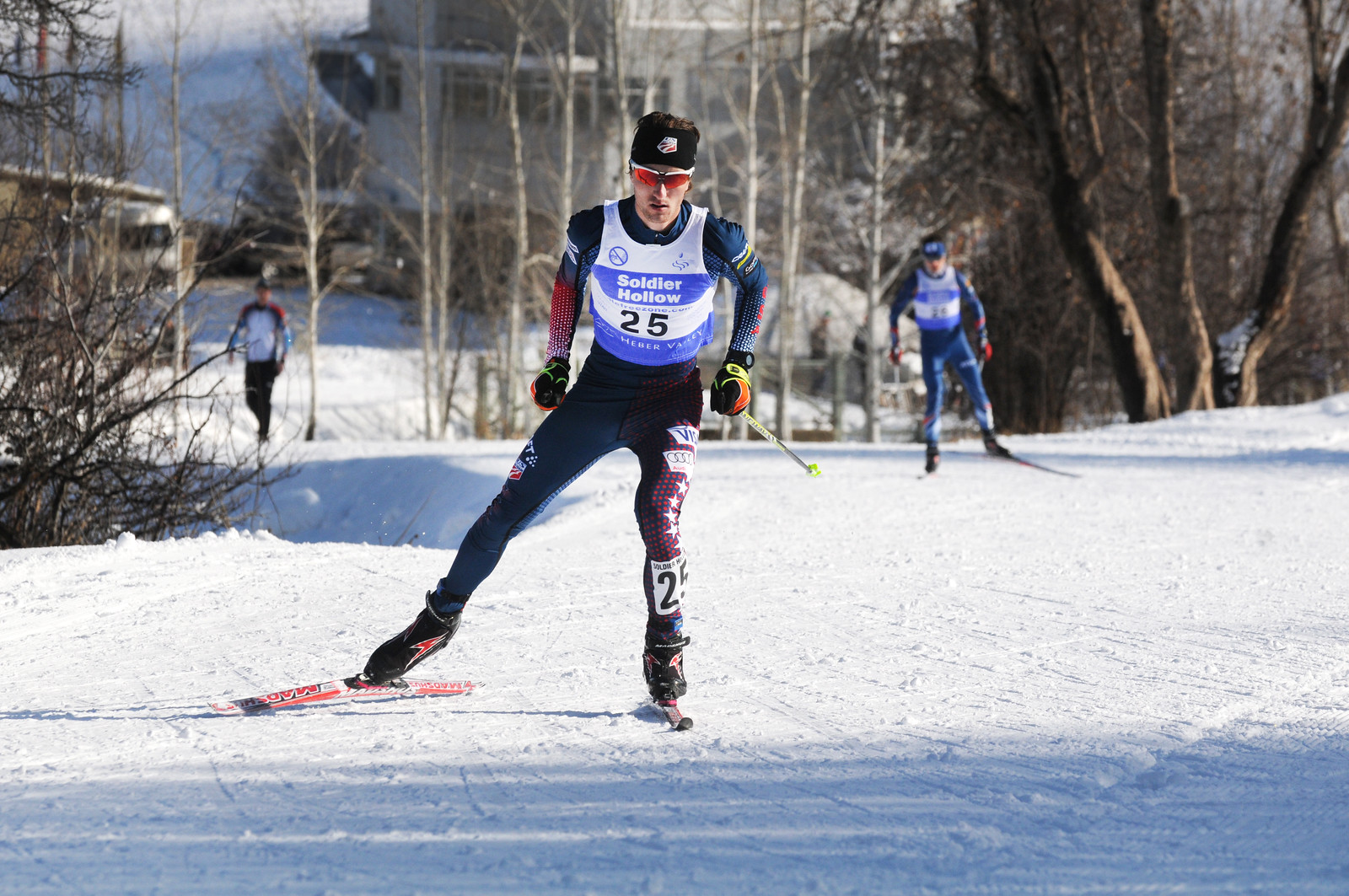
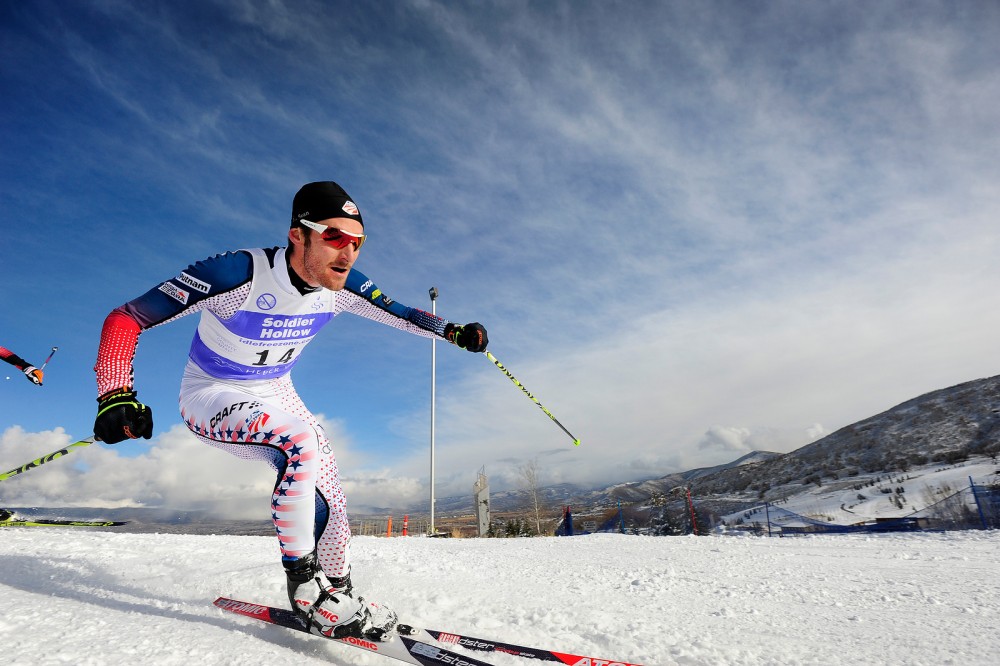
    Taylor Fletcher charges around a corner in a 10k FIS Nordic Combined Continental Cup cross country race at Soldier Hollow. (U.S. Ski Team - Tom Kelly)
    Taylor Fletcher (U.S. Nordic Combined) charges around a corner in a 10 k Nordic Combined Continental Cup cross-country race in December at Soldier Hollow in Midway, Utah. (Photo: U.S. Ski Team/Tom Kelly)

    It will have been since Dec. 20, over one long month, since the last Nordic Combined World Cup event. That lack of high-end competition can take its toll on athletes and on the national organizations and regional clubs constituting the sport’s backbone of support. The U.S. Nordic Combined team is no stranger to the vagaries of where their funds are coming from and when the next high-level competition will take place.

    Unlike its cross-country cousin, nordic combined is not simply snow-dependent — it’s also dependent on calmer atmospheric conditions. In other words, if it’s too windy, or the winds are too swirly, too unpredictable, the jumping can be cancelled. The first scheduled World Cup in Kuusamo, Finland, Nov. 28-29 was canceled due to dicey wind conditions. The next weekend’s races, in Lillehammer, Norway, had a modified schedule on the first day of competition because of winds: judges canceled the jumping, using the provisional jumping results from the day before, to set the cross-country ski portion’s start order.

    The Ramsau World Cup in Austria got off the ground Dec. 19-20, but the cancellation trend continued after holiday break. A lack of snow led organizers to cancel the Jan. 2-3 World Cup races in Klingenthal, Germany. The following weekend’s races Jan. 16-17 in Chaux-Neuve, France, were postponed a week also due to low snow. (Currently, those races are scheduled to be held this weekend, Jan. 23-24.)

    So far this season, three out of five World Cup weekends have been canceled or postponed.

    Lack of snow and periodic cancellations are something U.S. Nordic Combined Head Coach Dave Jarrett must stomach. “It’s a real tough thing because it’s not anything we can control, mother nature which is difficult,” Jarrett said in a phone interview from Park City, Utah.
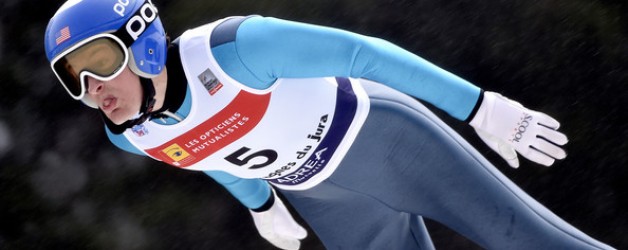
    Adam Loomis (U.S. Nordic Combined B-team) in a competition jump (Photo: National Nordic Foundation)
    Adam Loomis (U.S. Nordic Combined B-team) in a competition jump (Photo: National Nordic Foundation)

    The U.S. team has taken what they can control and made the best of it. Back in December, the U.S. men entered several skiers in what amounted to a local series of Continental Cup races with jumping at Utah Olympic Park in Park City and skiing at Soldier Hollow in Midway. Their objective: earn enough points to advance more skiers to the World Cup stage.

    Jarrett and the team met that goal. But it remains bittersweet.

    “It also adds a little bit of a sting, we earned a wildcard in the first period, with the results at Soldier Hollow. Every race that we have had the ability to start five guys on the World Cup has been canceled so far, and we are not going to get those chances back. Even if they reschedule them later in the year, they’ll occur in a different period,” Jarrett said. “You now that was the the hard thing, because we really needed to get some new names on the points scoring list that we haven’t had before. We have two more chances though.”

    If the World Cup schedule proceeds as planned, the U.S. can bring five skiers to both the Chaux-Neuve races and to the following week’s races in Seefeld, Austria.

    But getting new names on the list is something Jarret mentioned several times. And with the current period ending after the Seefeld rounds, the pressure is mounting for results; the number of U.S. start positions depends on it.

    “If Adam Loomis, for example, doesn’t get some World Cup points to maintain his spot, then his points will expire, and so we will lose his spot. Bill Demong [who retired this past spring] had points from last year that are set to expire at the end of this period, and we know that he is not going to earn those points back. So we know that that spot is going to expire,” Jarrett explained.

    “So right now, we need to have more different names on that list: the Adam Loomis’, the Ben Berends, the Michael Wards. They need to step up because Bill [Demong] is not around anymore, and Todd [Lodwick] is not around anymore, and Johnny [Spillane] is not around anymore. Adam did it last year, but Adam has not gotten any points this year, so he needs to do that as well. There’s a realistic chance that after Seefeld, if nobody gets enough World Cup points, we will only have the ability to start two guys on World Cup for the next weekend at Oslo.”

    The Oslo race on Feb. 2 begins the new period.

    Training and Maintaining

    After the first post-holiday competition was canceled, Bryan and Taylor Fletcher decided to remain stateside, basing themselves in Park City. Maintaining race fitness hasn’t been as difficult, as both are cross-country racing locally.

    “But there’s definitely that mental edge, that competion edge that you have once the season starts and you are going weekend into weekend, it’s competition time,” remarked Jarrett. “And it’s hard to replace. The good thing is that it’s been the same for everyone. It’s not like somebody’s injured and they are trying to come back,  and there’s been competitions going on. Their hasn’t been competition. We’ve been maintaining fitness as best we can. “
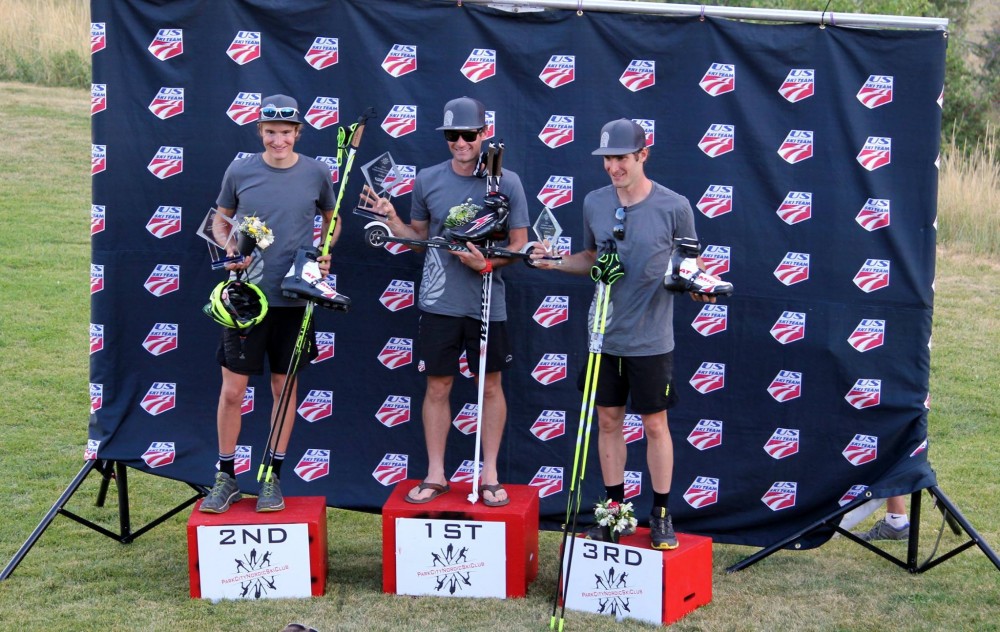
    The podium at the 2015 U.S. Nordic Combined Championships, which were held in Park City and Midway, Utah: with winner Bryan Fletcher (c), second-place finisher Adam Loomis (l) and Taylor Fletcher in third. (Photo: USSA/Tom Kelly)
    The podium at the 2015 U.S. Nordic Combined Championships, which were held in Park City and Midway, Utah: with winner Bryan Fletcher (c), second-place finisher Adam Loomis (l) and Taylor Fletcher in third. (Photo: USSA/Tom Kelly)

    At least for the Fletchers, Park City remains a locale with an upside.

    “We are at an advantage at altitude to be here and living here,” Jarrett said. “And we can assimilate sea level. So I feel pretty good about the way that they are, but it’s more that competition mindset.”

    The remaining four U.S. Nordic Combined skiers, Adam Loomis, Ben Berend, Jasper Good, and Michael Ward, have remained in Europe to train.

    Although race cancellations may impact quota spots, it also impacts the bottom line for his skiers.

    “If we are not there, we are not paying to be there,” Jarrett said of expenditures. “We have had to pay some airline ticket changes, and things like that, but you know if we are not there we are not collecting travel money [from FIS], at the same time we are not spending money on accommodations and things like that.”

    Beyond impacting institutional finances, race cancellations also impact small wallets. “It’s also they are losing the opportunity to make prize money, which also, when you look at the big picture, they have bills to pay and things like that. Certainly, having no event and no opportunity to earn money is another big big piece of the puzzle.”

    With earning potentials compromised, the team must rework how it allocates funds. That puzzle problem is compounded by the team’s insecure quota spots.

    “We project revenue based on quota spots, and collecting travel money based on those quota spots. So when there is cancellation you don’t collect that money and if they. If you have a stable quota then it doesn’t matter, they make it up in the next period, but our quota is going to start fluctuating,” Jarrett said.

    So quota spots, funding and potential sponsorship dollars go hand in hand. Better results corresponds to better publicity, and hopefully in the long term, a more secure financial situation for athletes. This in turn comes back to the season’s races and subsequent cancellations. Jarrett says the lack of races, the lack of opportunities, ripple throughout the U.S Nordic Combined community.

    “We have a bunch of young guys that need to get established on the World Cup list. We are going to lose some spots probably before we get more again. And so, we needed to have as many opportunities to get those extra spots for the next period, and the next period, and the next year. And so when they are cancelled, it has a ripple effect throughout the system. Because if you are starting four or five on World Cup, and then all of a sudden we can only start two, then that knocks two guys down to Continental Cup, and then that knocks two younger skiers out of Continental Cup.”

    Now more than ever, in addition to quota spots, the nordic-combined community must think about money. “What we are faced with now is that all the athletes, all the staff, are full-time fundraisers, and tongue and cheek, part-time athletes. Everybody knows, athlete’s included, that if there’s no funds, it doesn’t matter how much you train, if you can’t get there, you can’t get there. So those guys, the athletes, I know the staff, wake up in the morning and they think about two things: how are we going to raise more money and what are we doing for training today?”

    For the next two weekends Jarrett has his fingers crossed — quota spots and more are on the line.

  • Taylor Fletcher’s Three Podiums Lift U.S. World Cup Quota to Five

    Taylor Fletcher’s Three Podiums Lift U.S. World Cup Quota to Five

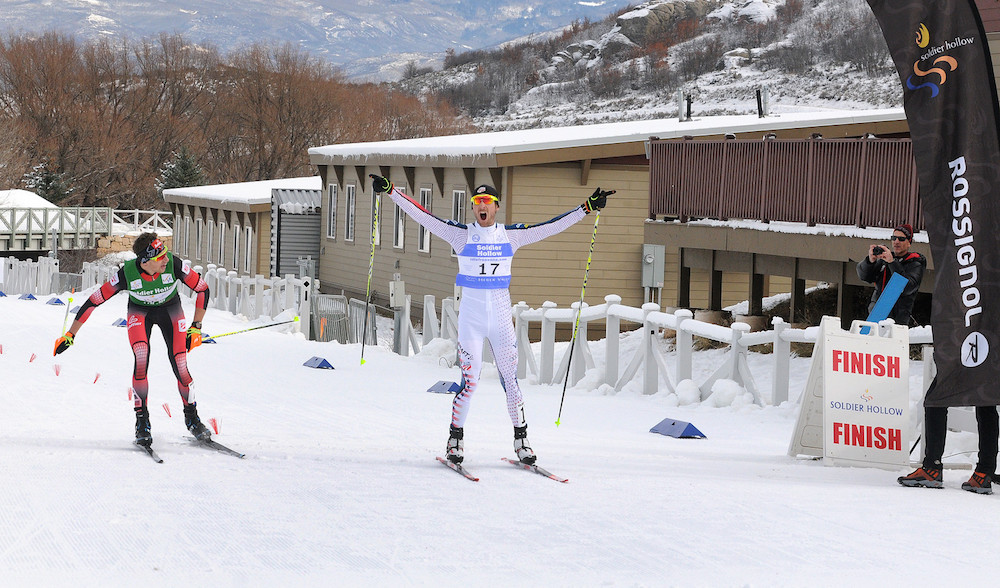
    U.S. Nordic Combined's Taylor Fletcher (r) shouts as he edges Austria’s David Pommer at the finish of Sunday's 10 k Gundersen to win this Nordic Combined Continental Cup at Soldier Hollow in Midway, Utah. (Photo: U.S. Ski Team/Tom Kelly)
    U.S. Nordic Combined’s Taylor Fletcher (r) shouts as he edges Austria’s David Pommer at the finish of Sunday’s 10 k Gundersen to win this Nordic Combined Continental Cup at Soldier Hollow in Midway, Utah. (Photo: U.S. Ski Team/Tom Kelly)

    Jump, ski, repeat. That was the mantra in Park City and Midway, Utah, this weekend as some of the world’s best nordic-combined athletes converged for a series of three Continental Cup races. Continental Cups are a stepping stone for some athletes on their way to the World Cup; it’s also an opportunity for already accomplished World Cup skiers to maintain race fitness and keep their jumping dialed.

    All three of the competitions Friday, Dec. 11, through Sunday, Dec. 13, involved a normal-hill jump at Utah Olympic Park followed by a 10-kilometer ski race at Soldier Hollow.

    Day 1: Taylor Fletcher Third

    Austria's David Pommer leads teammate Bernhard Flaschberger the 10 k Gundersen start on Friday, Dec. 11, at the Nordic Combined Continental Cup at Soldier Hollow in Midway, Utah. They went on to place first and second, respectively, and American Taylor Fletcher (not shown) finished third. (Photo: U.S. Ski Team/Tom Kelly)
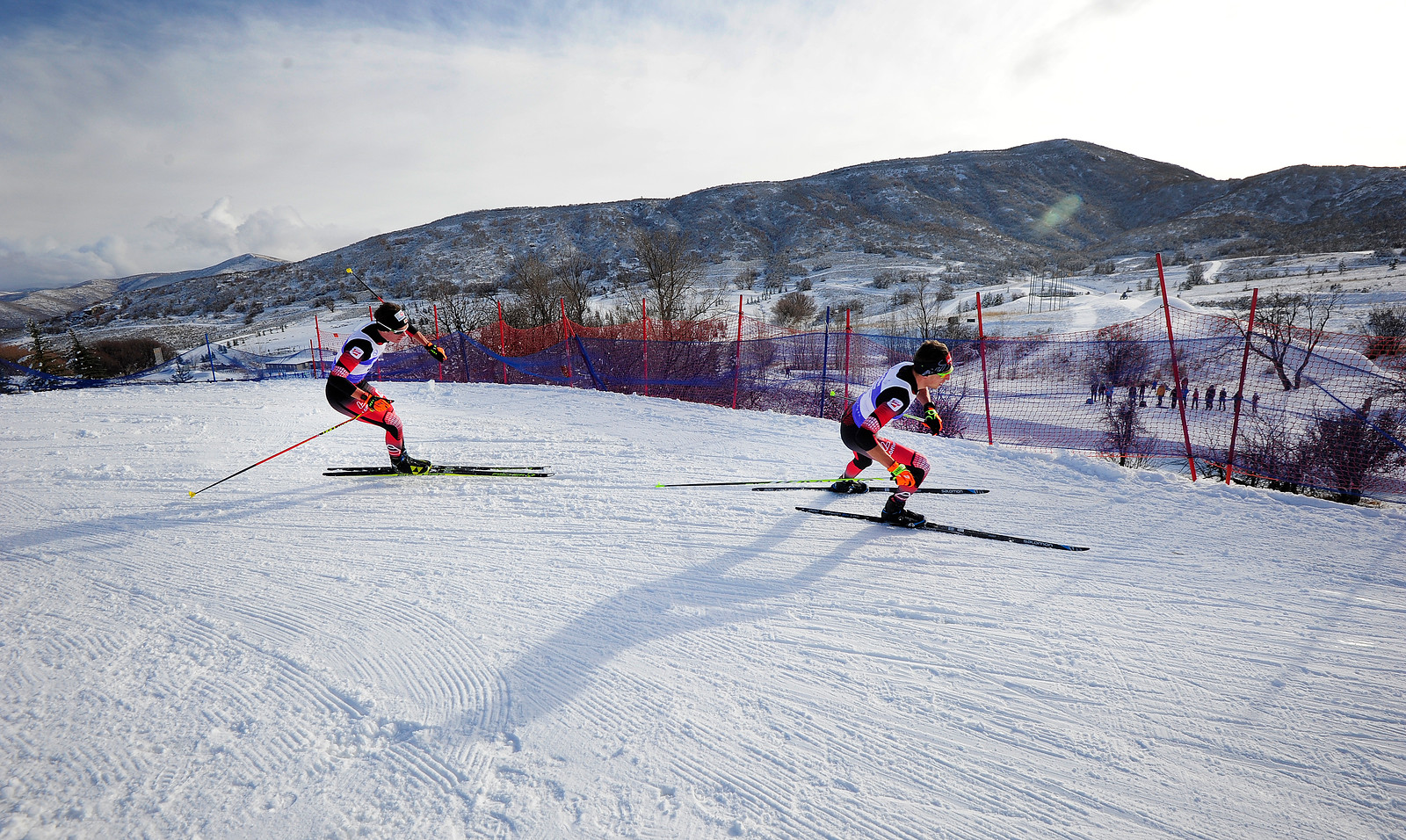
    Austria’s David Pommer leads teammate Bernhard Flaschberger the 10 k Gundersen start on Friday, Dec. 11, at the Nordic Combined Continental Cup at Soldier Hollow in Midway, Utah. They went on to place first and second, respectively, and American Taylor Fletcher (not shown) finished third. (Photo: U.S. Ski Team/Tom Kelly)

    With a break in the Nordic Combined World Cup schedule, many skiers from Europe were in Park City. That was evident from the results on Friday, Dec. 11.

    Austria’s David Pommer, who finished in 26:15, narrowly beat teammate Bernhard Flaschberger by 0.2 seconds at the line. The Austrians captured five of the top six places, with U.S. Nordic Combined skier Taylor Fletcher finishing third, 37 seconds after Pommer.

    Starting the day on the normal hill, Japanese high-school student Hisaki Nagamine, 18, recorded the longest jump of 97.5 meters. American Ben Berend leapt to fourth, while teammates Jasper Good ranked 10th and Ben Loomis jumped to 13th.

    Fletcher jumped 88.5 meters to rank 14th going into the 10 k. Pommer tied for the fifth-longest jump at 95.5 meters.

    Fletcher started the race a minute and 20 seconds back. At the race’s mid-point, Fletcher bridged up to Pommer and Flaschberger. At the finish line, the 25-year-old Fletcher held off Austria’s Franz-Josef Rehrl to take third place, with the third-fastest ski time. Nagamine did not finish the race.

    Overall the U.S. team had a solid day. Five Americans finished in the top 16 with six Americans in the top 30. Michael Ward, originally from Aspen, Colo., placed 10th (up from 25th in the jump with the seventh-fastest 10 k).

    Berend, 20, and Good, 19, both from Steamboat Springs, Colo., completed their best Continental Cup races to date in 12th and 13th, respectively. Seventeen-year-old Loomis, of Eau Claire, Wis., placed 16th.

    Final Results Day 1 | Jumping Results

    Day 2: Two-peat for Austria’s Pommer; 4 Americans in Top 10

    The result sheet tells the story: Pommer maintained his lead in the overall Continental Cup standings by 60 points over Taylor Fletcher by winning again. Pommer jumped to seventh then skied to first, winning the event in 24:20.1.

    But unlike Friday’s competition, with the Austrians clogging most of the top six, Fletcher took second just 0.1 seconds back from the win. Loomis captured a career-best fourth — missing the podium by four seconds. Italy’s Armin Bauer placed third (+46.1).

    Michael Ward (U.S. Nordic Combined) placed sixth, 10th and 12th in three Continental Cup competitions Dec. 11-13 in Park City, Utah. Here, he's pictured starting the 10 k race in 25th on Dec. 11 at Soldier Hollow. He went on to place 10th in that race. (Photo: U.S. Ski Team/Tom Kelly)
    Michael Ward (U.S. Nordic Combined) placed sixth, 10th and 12th in three Continental Cup competitions Dec. 11-13 in Park City, Utah. Here, he’s pictured starting the 10 k race in 25th on Dec. 11 at Soldier Hollow. He went on to place 10th in that race. (Photo: U.S. Ski Team/Tom Kelly)

    Ward finished the day in sixth with the third-fastest time, behind Fletcher with the fastest time of the day, and Berend placed eighth for a new career-best.

    The jump leader again was Nagamine. He set the longest jump at 96.5 meters. He was followed in second by Norway’s Audun Hokholt. Jumping highlights for the Americans were two-fold. Loomis jumped to third (96 meters) and Berend ranked fourth (94 meters), putting them in podium contention while starting the race 8 and 24 seconds after Nagamine, respectively.

    On the other hand, Fletcher jumped to 19th and Ward ranked 20th heading into the race. Fletcher needed to close a one-minute-and-40-second gap, while Ward started another 2 seconds later.

    “I decided I had to go for it. I wanted to ski easy the first lap or so and make up some time but not push the pace too much,” Fletcher said in a USSA press release. “I did that and was making up 16 seconds a lap, which is pretty good, but I just ran out of real estate. But I can’t be disappointed in that because I skied tactically almost a perfect race.”

    Pommer, confident after Friday’s victory, knew Fletcher could overcome almost any deficit.

    “I fought from the beginning by running a really good pace, but my coaches kept telling me Taylor was getting closer and closer,” Pommel said in the press release. “At the finish line, I was very lucky with my win — I’m glad it wasn’t one more meter. There was never any contact until the finish and I thought, ‘run, run.’ ”

    Nagamine finished 22nd (+2:40.8).

    Final results Day 2 | Jumping Results

    Day 3 Park City NoCo: Fletcher’s Moment

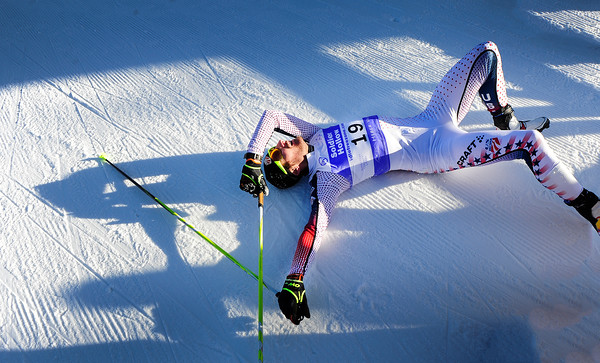
    Taylor Fletcher after placing second in the Dec. 12 Continental Cup in Midway, Utah, 0.1 second behind Austria's David Pommer. Fletcher came back the next day to beat Pommer by the same margin. (Photo: U.S. Ski Team/Tom Kelly)
    Taylor Fletcher after placing second in the Dec. 12 Continental Cup in Midway, Utah, 0.1 second behind Austria’s David Pommer. Fletcher came back the next day to beat Pommer by the same margin. (Photo: U.S. Ski Team/Tom Kelly)

    The third-and-final day of Continental Cup NoCo scene in Park City was a flip flop.

    Apparently Fletcher needed a challenge. He again began the day behind: on this day it was a 1:16 deficit to Pommer.

    Again, the athlete with the longest ride was Nagamine, jumping 96 meters. But Pommer, proving his all-around skills, ranked second in the jump and notably tied with Berend with a 94-meter jump. The two started the 10 k together, 14 seconds back from the Japanese leader. Fletcher’s distance from the front was the result of a middle-of-the-pack jump: he rode 86.5 meters to rank 17th. In addition to Berend, Loomis also started ahead of Fletcher after jumping to sixth (91.5 meters) and starting 30 seconds back.

    The cloudy conditions at Soldier Hollow kept the ski tracks firm and fast. Fletcher took advantage. (Remember, he had 1:16 to make up and catch Pommer). He pushed it from the start, ticking off one competitor after another. On the third of five laps, Fletcher had skied into second.

    By then, Pommer was off the front solo. With three kilometers remaining, the time back to Fletcher remained 25 seconds. That time gap, in that distance, became a grind-it-out time trial for Fletcher.

    And roughly 2.8 kilometers later, Fletcher could draft right behind Pommer. Rounding the tight 180-degree corner before the finish, the two skiers sprinted for the line.

    “It’s so tight in that final corner. It’s great snow but it’s also icy. Trying to keep that ski under you is difficult,” Fletcher recalled in a press release. “I chose that wide line to carry a little bit more speed knowing he was going to want the center and try to block me. I knew if I took that wider line I would have a lot more speed.”

    With the sprint on, Fletcher toed just ahead of Pommer, beating the Austrian by a tenth of a second in 23:37.3. Once again, Nagamine finished 22nd (+2:45.7).

    “I’m not known for my sprinting, but I put in a hell of a sprint and I’m proud of it,” Fletcher said after posting the fastest 10 k time en route to the victory.

    “Taylor was skiing so well, so fast, he deserved to win,” Pommer said in the press release. “Second place is more than good. Today there was no strategy, it was just running for survival. I just keep saying ‘push your limits, push your limits.’”
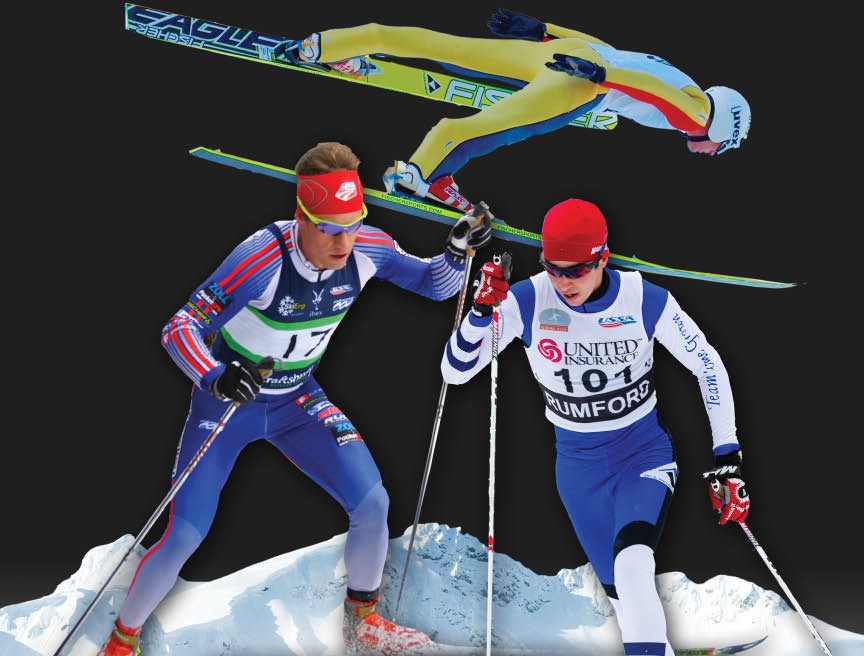
    This was the fourth-career Continental Cup victory for Fletcher. More importantly, Fletcher’s three podiums during the Park City Continental Cups have earned the U.S. a fifth quota spot on the World Cup.

    The U.S. had four skiers in the top 15 and six in the points. Berend placed sixth, and Ward finished 12th with the fourth-fastest ski time. Good raced up to 15th (from starting 20th) and Loomis finished 21st.

    Local 15-year-old junior, Stephen Schumann, of the Utah Olympic Park Sports Club, scored points in the top 30 in all three races — his first-ever Continental Cup events — placing 25th on Friday, 27th on Saturday and 26th on Sunday.

    The Nordic Combined World Cup resumes Dec. 19-20 in Ramsau, Austria, with two more normal hill/10 k competitions. Fletcher currently trails Pommer by 40 points in the overall Continental Cup standings.

    Final Results Day 3 | Jumping Results

    Overall Continental Cup Standings

  • NoCo Continental Cup in Park City: Day 1 and 2 (Photo Gallery)

    NoCo Continental Cup in Park City: Day 1 and 2 (Photo Gallery)

    Park City, Utah, played host to the FIS Nordic Combined Continental Cup opener last week, Thursday, Dec. 11 through Saturday, Dec. 13, despite balmy temperatures around 50 degrees Fahrenheit and venue changes. The cross-country races were moved to the Gorgoza Park tubing complex, where there was enough stocked up, manmade snow to create a 1.7-kilometer loop with “plenty of spectator-friendly hills and turns,” according to a press release.

    Jumping kicked off on Thursday at Utah Olympic Park with Austria’s Lukas Greiderer besting the field on an afternoon with “subtle, swirly winds,” according to a U.S. Ski & Snowboard Association (USSA) press release.

    Greiderer posted the top jump of 92.5 meters on the 100-meter normal hill, followed by Germans Tobias Simon and Philipp Blaurock, respectively.

    The top American in his first competition of the season, Billy Demong tied Russia’s Timofey Borisov in eighth with an 84.5-meter jump, and Ben Berend notched 22nd while Taylor Fletcher jumped to 26th.

    On Friday morning, Dec. 12, Greiderer started the 10-kilometer individual Gundersen at the Gorgoza Park tubing hill 4 seconds ahead of Simon and 6 seconds ahead of Blaurock. Demong started 1:02 back, followed by U.S. teammates Berend (+1:50) and Fletcher (+2:16).

    “It’s going to be a really tough cross-country event, especially if it’s icy,” Fletcher told USSA before Friday’s race. “But I feel I have the ability to catch the field.”

    Despite what turned out to be icy conditions at the tubing park (with the 10 k races held there because of low snow at Utah Olympic Park), Fletcher ended up posting the third-fastest ski time to finish as the top American in eighth on Friday.

    Austria’s Tomaz Druml won it in 29:17.2 minutes after starting 40 seconds behind and posting the second-fastest time, behind France’s Geoffrey Lafarge, who improved from 28th in the jump to sixth overall. Greiderer took second, 18.7 seconds back, and Marco Pichlmayer placed third (+57.6) to complete the Austrian podium sweep. In fact, Austria occupied the top five with Alexander Brandner in fourth and Harald Lemmerer in fifth.

    Demong placed 13th and Berend finished 23rd, just 0.4 seconds ahead of teammate Michael Ward in 24th.

    “This was perhaps the most difficult nordic-combined race I’ve done,” Demong said of the six-lap course with three hills per lap.

    Japan’s Yuseke Minato jumped the farthest in the second competition on Friday afternoon, giving him a 6-second head start on teammate Go Sonehara. Blaurock started 10 seconds back in third, followed by Austria’s Franz-Josef Rehrl (+14) and Druml (+24).

    Demong posted the best U.S. jump for the second-straight day and started the 10 k race in 14th, 1:20 minutes behind Minato.

    Fletcher jumped to 20th with a 1:36 starting deficit. He made it up quickly, posting the fastest time of the day in the 10 k to finish fifth.

    Druml raced to his his second-straight win in 26:16.9, edging Italian runner-up Lukas Runggaldier by 2.9 seconds. Minato hung on for third, 25.8 seconds behind Druml, and Greiderer was fourth (+33.9).

    Demong placed 17th (+2:53.8) and the U.S. had four in the top 30 with Michael Ward in 28th (+3:52.3) and Colin Delaney (New York Ski Education Foundation) finishing 7.6 seconds later in 29th for his first Continental Cup points.

    Jasper Good (Steamboat Springs Winter Sports Club) just missed the points in 32nd, Ben Loomis (Flying Eagles Ski Club) placed 35th for career bests for both skiers. Ben Berend placed 40th.

    The Soldier Hollow organizing committee hosted the two-day event, and executive director Richard Hodges emphasized the amount of effort it took to pull off the competitions given the warm conditions and lack of snow. He said Soldier Hollow, Park City, Gorgoza and The Utah Nordic Alliance (TUNA) worked together to pull off the cross-country races: making snow, moving snow, and being flexible when it came to schedule changes.

    The Nordic Combined World Cup circuit resumes in Ramsau, Austria, on Saturday, Dec. 20, and Sunday, Dec. 21. Americans expected to compete include Taylor and Bryan Fletcher, Billy Demong, and Adam Loomis. 

    For more photos and full results see the USA Nordic Combined Facebook page.
     

  • In Colorado, Communities Rally Behind Local Skiers

    In Colorado, Communities Rally Behind Local Skiers

    The Rocky Mountain Nordic Angel Fund held a fundraiser in Aspen, Colo., on Saturday for Aspen athletes Simi Hamilton, Noah Hoffman and Michael Ward. Photo: RMN Nordic Angel Fund.

    On Saturday, a fundraiser was held in Aspen, Colo., to help support local U.S. Ski Team cross-country athletes Simi Hamilton and Noah Hoffman and nordic combined skier Michael Ward in their quest for international success. A few hundred community members came through the doors over the course of the evening, the sense of pride in their hometown practically tangible. It’s rare, when covering a sport largely from afar, to witness the inspirational power athletes have so clearly, but for the Aspen locals in the room it was a simply another example of friends supporting friends.

    “I know 95 percent of the people who came tonight, which is a testament to the type of community we grew up in,” Hamilton said. “It’s nice to be reminded it’s still the town where it takes two hours to bike home on a Saturday afternoon because you see so many people you know.”

    The event was put on by the Rocky Mountain Nordic Angel Fund, a branch of Rocky Mountain Nordic that was created in 2011 in response to the USST budget cuts that effectively left sub-A-Team level athletes to find a way to pay for up to $25,000-worth of competition-related travel costs.

    Simi Hamilton.

    Different communities and organizations around the country have found ways in the last year and a half to help pick up the slack in the national team budget. The most visible example is the National Nordic Foundation, which is currently in the middle of its annual Drive for 25 campaign. NNF raised over $160,000 in 2011/2012 to help the defray the costs of competing in Europe for both junior skiers and USST members.

    “The NNF and grassroots ski clubs are taking over the job that used to be performed by USSA,” RMN chairman Mike Elliott said.

    The RMN Angel Fund works in concert with NNF and is a more local example of fundraising at work. Last year the Fund raised enough money to fill in the uncovered racing expenses for Colorado nordic athletes Hoffman, Hamilton, Tad Elliott and Sylvan Ellefson. Hoffman, for example, estimated that fund ended up covering 90% of his travel costs last winter.

    On Saturday, the Fund came $15,700 closer to its 2012/2013 goal, a number that Mike Elliott characterized as a “very busy, very successful event.” The Fund will hold another event in Durango on November 9 for Mike’s son Tad and local biathletes Tracy and Lanny Barnes. For the season, the Fund hopes to raise $50,000.

    The process by which these fundraisers come together reflects both the scope of the financial problem skiers face and the willingness local communities have to address it. The positioning of separate event in Aspen and Durango, for example, was based on the assessment that people will more naturally get behind hometown athletes. Successfully communication of the need for donations is something the Fund has to think about with an audience not intimately familiar with the sport.

    “Fundraising is difficult for skiers who are going to these romantic-looking destinations in Norway and Sweden; athletes who people think are privileged to live that lifestyle,” Elliott said. “But they’re incredible role models to their communities, and the community gets behind them.”

    Hoffman (USA) at U23s. Photo: Logan Hanneman.

    The message may be a difficult one to convey, but based on the turnout at Saturday’s event, there are people out there who understand the problem and want to help.

    “This is just about friends helping friends,” said Dylan Johns. “It’s got to be frustrating to reach that level and then have to figure out how to afford it. People realize that here and want to help; enough people ski and appreciate [the sport]. There’s a strong sense of community here, and this town definitely rallies around the people who need help.”

    The event was billed as part fundraiser and silent auction, part send-off party for Hoffman, Hamilton on Ward on the eve of their departure for the first races of the season. With a line of kids sitting rapt on the floor in front of them, the trio took to the stage partway through the evening with emcee Mike Trecker to talk about their sport, their inspiration and their goals for the coming year.

    Ward talked about the power role models have had in his own ski career. “I have teammates like Billy Demong who are gold medalists that I can now train with and learn from every day, and I hope it’ll make me the best as well,” he said.

    Hamilton echoed the sentiment. “Role models play huge roles in where we are right now. And we all realize we want to become those people for the kids below us. We all care about the development of athletes in this community and in others as well.”

    All three athletes thought that part of being those role models, especially in a town where Lance Armstrong owns a home, means taking a firm stand on purity in sport. Each spoke out against doping, and Hoffman in particular expressed strong intolerance for it.

    “I have no interest in competing if I have to cheat to win. I get tested once a month and I wish it were more,” he said. “It’s going to kill endurance sports if we let it persist.”

    With the ensuing applause, the message clearly resonated with the audience. “These kids represent Aspen,” said Susan Spalding after the athletes left the stage. “People here love the outdoors, and here are these awesome, wholesome athletes. Noah’s doping speech really reflects that. I completely want to support these role models for our kids.”

    Though neither Hoffman, Hamilton nor Ward have much time to spend in Aspen any more, the turnout on Saturday clearly meant a lot to them.

    “To see these people here — with their support it makes me more determined,” Ward said. “Their support makes a huge difference.”

    The ideal that the podium is blind to income has always been complicated in skiing. Equipment alone costs several hundred dollars for beginners and thousands for the more experienced. The RMN Angel Fund and campaigns like those at NNF attempt to bridge the financial gap between success and opportunity for skiers in the U.S., a problem that doesn’t seem to be going away any time soon. Saturday’s event in Aspen showed that people are out there who want to help hometown athletes reach their goals.

    “I think it’s about more than just the money,” Hoffman said after the event was over. “Having this presence in Aspen makes a big difference when you’re in Europe, travelling around, and maybe not thinking that anybody cares about what you’re doing. Seeing these people behind us as people rather than just as skiers is really important.”