Tag: Middlebury Carnival

  • EISA Circuit Ready to Start the Carnival(s) Again

    EISA Circuit Ready to Start the Carnival(s) Again

    As the largest NCAA circuit in the nation prepares for a return to a full schedule, anticipation, anxiety, and lessons from a pandemic year abound in New England.

    Carnival, as a noun, has perhaps had its moment. We’ve been building towards ennui, not excitement, for nearly two years now. Maybe it’s time to dispel the anticipation, let the moment fade, and let “Carnival” go along with it.

    But then again, calling a collegiate race circuit a “carnival”  has always been a bit old-timey. One of those New England-isms – like calling your town park a “common.” My alma mater Colby College hasn’t had a winter carnival, festival, ball, or snow sculpture on its grounds in years. Those memories are confined to dusty old photographs hung in student unions throughout New England — all distractions from another time. Nonetheless, in January eleven New England schools will gather at Colby to start the NCAA collegiate racing season, and it will be all jubilation, camaraderie, and competition. There will be the return of the possibility to mark time by the traces of human emotion that linger on in memories, rather than case counts and travel restrictions. 

    All-too-well then, that Colby will still call it a Carnival.

    The Eastern Intercollegiate Skiing Association (EISA) Carnival circuit is set to return to a full calendar on January 14th-15th, 2022 after a season that saw heavy modifications in response to the COVID-19 pandemic. With it comes lessons learned, appreciation, and excitement from both athletes and coaches across New England.

    The 2021 Carnival Circuit 

    The EISA last year could, at its best, be described as disjointed. Each team was subject to individual state COVID-19 policies — in a region with a lot of states — on top of their own institutional policies. Vermont teams couldn’t travel outside their state for competition due to state restrictions. Colby couldn’t travel out of Maine per school policy. Many of Harvard and Bowdoin’s skiers weren’t on campus at all for the fall or spring semester. Some skiers were being tested daily, others twice a week. The means and ends were shifting constantly.

    Athletes responded in different ways. Some pressed on with their education and their athletic career. Some re-evaluated and decided that enjoyment in skiing could be found elsewhere. Others chose to compete in their home regions towards skiing goals separate from the NCAA ranks. 

    For one, Foss Kerker, who is serving as Colby College’s team captain this year and will graduate in January, the missed season was serendipitous. A shoulder injury left him unable to race what was set to be his senior year, and so he decided to focus on recovering, training, and looking forward to this season. After taking the semester off, he returns this year feeling renewed, saying in an interview with FasterSkier that “On the whole, I am more grateful for skiing and ski racing. Not being able to ski or race last winter has made me refreshed and just excited to get out and race in the fun and competitive environment of the EISA, whatever the results might be.”
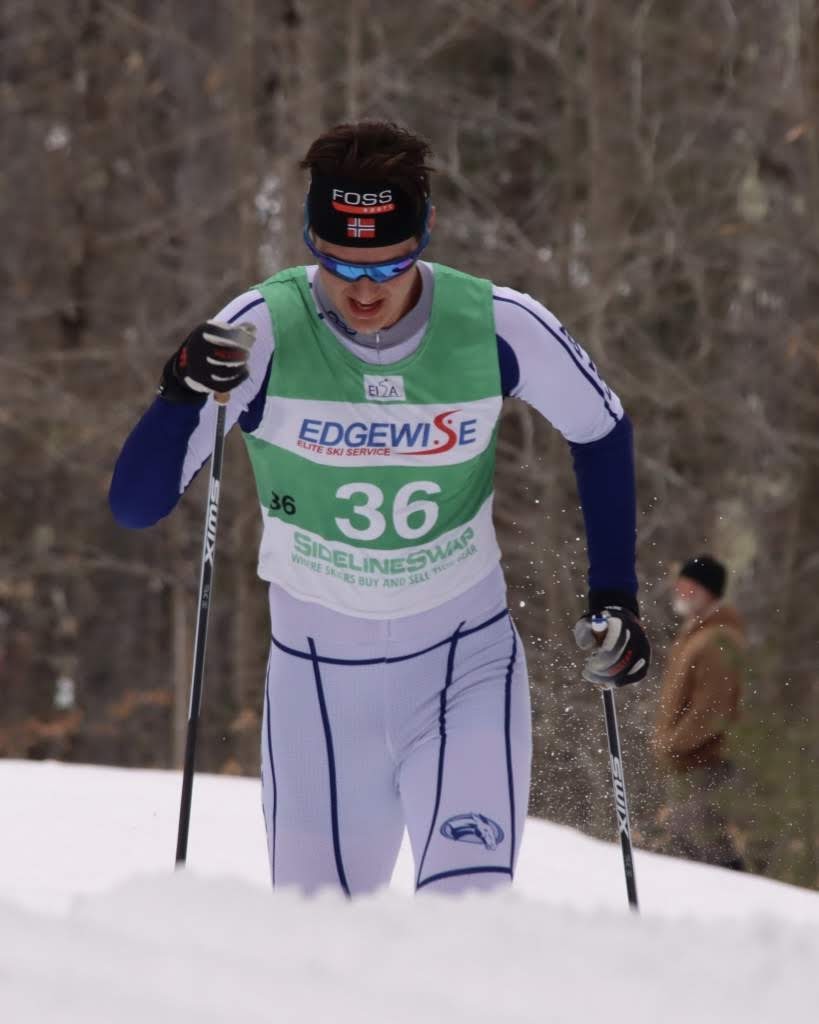
    Foss Kerker attacks a climb at the last Colby Carnival, held at Quarry Road in Waterville, ME in Jan. 2020. (Photo: Gary Solow)
    Gratitude for Skiing and Ski Racing

    Kerker extends this newfound sense of gratitude to how he is helping prepare the Colby team to race. It has been an anecdote to the quick and rapid changes precipitated by the pandemic in skiing, in the world, and in life. As Kerker reflected:

    “[Coach] Tracey has talked a lot about this recently – not knowing what is going to happen with schedules, conditions, or travel was something that was really hard to deal with before. That has sort of become the default now and being able to go with the flow and continue to perform is something that is only going to help us in the long run.”

    Colby head coach Tracey Cote also touched on how the return of the traditional run-up to the EISA carnival season has helped her team build off of the flexibility that was required in training last season, saying in a response to the author via text that  “I’m really excited about my team as we’re off to great start with our Canada training camp and the first Eastern Cups on our home course at Quarry Road.”

    As other coaches look back at their own takeaways from last year, the lessons all point back to a re-centering of their roles around the joy of skiing.

    Becky Woods, head coach at Bates College in Lewiston, ME, said her team now has a sense of how “important [it is] to embrace opportunities when they are put in front of you, and we see this season as a great big opportunity to come together, race fast and have fun on skis!” While Molly Peters, head coach at St. Michael’s College in Burlington, VT stated that “we appreciate every day we can practice and every opportunity we can race!” 

    Peters also added that this re-found joy has seeped into her team’s race preparations. “The team spent a lot of time backcountry skiing and having fun on skis last year. We will definitely keep these fun days this winter to take a step back and remember what it’s all about. Fun!”

    In a way then, the year off from the carnival circuit looks only to have added to its carnival spirit. With that sense of joy, the EISA looks ready to maintain its traditions and do as its skiers have always done, make the sport fresh and exciting.
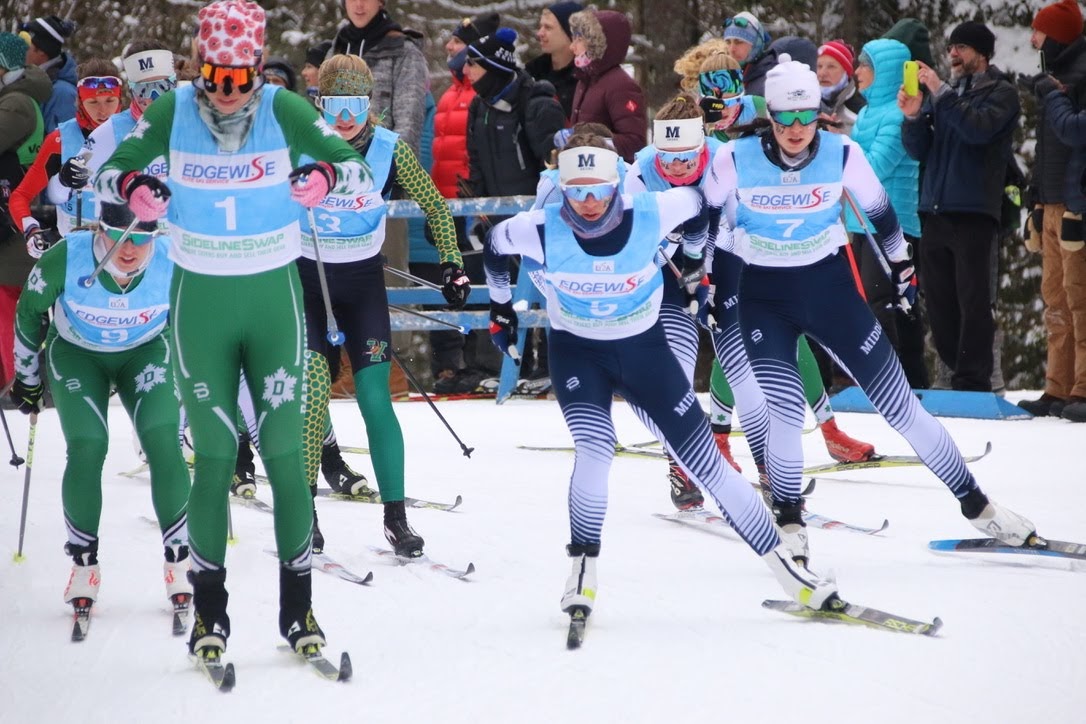
    The women’s field, headed by (from L to R) Katharine Ogden (DAR), Margie Freed (UVM), Annika Landis (MID), and Alexandra Lawson (MID), heads out on course at the last Harvard Carnival, held in Craftsbury, Vermont in February 2020. (Photo: Gary Solow)


    A New Field with New Faces

    That strong spirit though, is accompanied by a sense of anxiety. This is, after all, a different group of skiers than the one that finished the last full EISA carnival at Middlebury in February of 2020.

    As Williams College Assistant Coach Annika Martell responded to the question, “How do you think the carnival circuit will look differently this year than it did before the pandemic?”:

    “Besides half the field being new to the eastern racing circuit?!? There will be a lot of new faces for sure!”

    She has a point.

    Martell is uniquely positioned in the EISA. She finished the last full Carnival in 2020 as an athlete with Colby, and now will start the first full Carnival in 2022 as a coach with Williams.
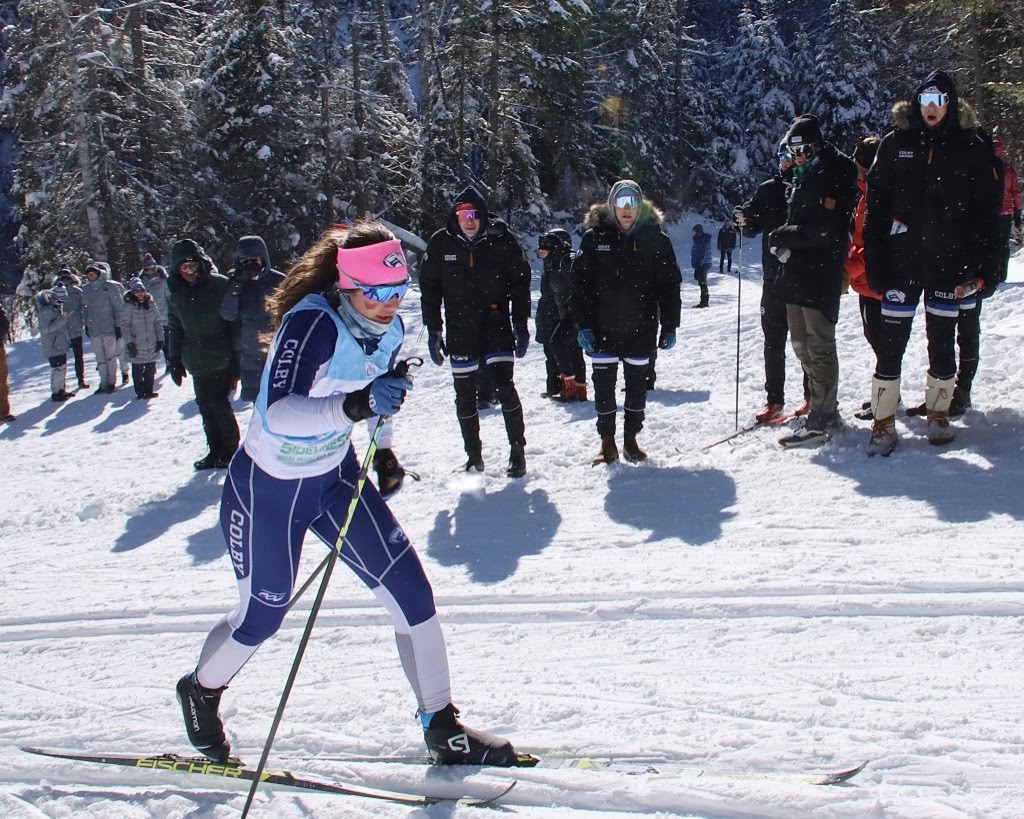
    Annika Martell, Colby alumnus and current Williams Assistant Coach, racing at the Williams Carnival, held in Lake Placid, New York in 2020. (Photo: Gary Solow)

    Two classes of graduates since the pandemic began, along with athletes like Kerker who have remained on the circuit longer than the traditional four years, mean a shakeup in who is on the circuit, and how familiar they are with one another.

    Martell thinks that while this doesn’t change the way that athletes have prepared themselves for the season – the training hours are still high, the periodization the same – but it does change how an athlete might evaluate their performances.

    “I’m excited because all sense of expectations have been dismantled with two new class years and a year of not being able to really race each other,” Martell said.

    That lack of preconceived order in the field – which individuals and which teams fall where – provides opportunity, but also a unique variable. As Bates coach Becky Woods stated, “[This] brings some challenges as we’ll really have to evaluate performances from a new perspective. Relying on past results is not a method we can really use this year because so many had to take time away from racing.”

    That leaves the forecasted results nearer to an unknown than they have been in past seasons. Without continuity comes a chance for individuals to reach with tenacity, grit, and discipline for top placings, without the hesitation that might come from lining up next to more experience collegiate racers whose resume’s have been followed. This combination promises to introduce new characters into the mix of the top collegiate ranks.


    Still Not “Normal”

    Of course, amidst overcoming many of the obstacles the pandemic has presented looms the reality that we haven’t yet overcome it. The EISA returns not because COVID is gone, but because the organization has been able to put into place substantial measures to control the spread of the virus while engaging in competition.

    Martell reflected on this, pointing out that some of the energies that add vibrance to the Carnival circuit will still have to be subdued.

    “Prior to the pandemic, I think there was a lot of organic inter-team bonding,” Martell explained. “Athletes had their home, region and team friends that all got to socialize in a unique way that other sports don’t experience. But out of an abundance of caution and in order to keep everyone safe and healthy, there may be slightly less mask-less mingling than previous years.”

    That will leave a Carnival with its core intact, but with less of the frills that tend to animate the EISA from week-to-week.

    The energies will still be there in some form. There will still be the warmth of seeing friends from far-and-wide all together in the New England woods, the glimpse at the future of US skiing that the top-end of the Carnival circuit consistently provides year-after-year, and of course, the good ol’ fashioned collegial competition whose atmosphere can be best described as, well, collegial.

    They may come attached to signs of the time though. Masks to keep each other safe, shouts from slightly further off the v-boards along the sides of the trail, and Carni Crushes (an annual Valentine’s Day tradition whose details will be left fuzzy here) that this year will no doubt include a couple of really bad puns regarding something about social distancing. 

    Scenes from the sidelines at Bates Carnival in 2020, with Bill Kerker making sure no one lets hunger get in the way of the festivities. (Photo: Gary Solow)

    All of those involved, especially those that have spent the most time on the EISA carnival circuit — the coaches — are adjusting to this world in a way that will keep the timeless camaraderie of the circuit alive. As Becky Woods says, “Health and safety first. Always. We certainly focused on that in the past but it has taken on a new level of urgency.”

    The best summary though, of what has carried the Carnival Circuit through the pandemic and into its return this year may come from the coach on the EISA Circuit who’s had to transition and grow along with it. Martell ended her reflections by saying that she “[feels] well-equipped to empathize and connect to athletes and what they have been dealing with over the last few years.”

    And what we’ve all been dealing with. It’s a poignant message that anticipates the jubilee — the Carnival — that ski racing brings.

    For full details on the upcoming EISA Carnival Season visit: https://www.eisaskiing.org/
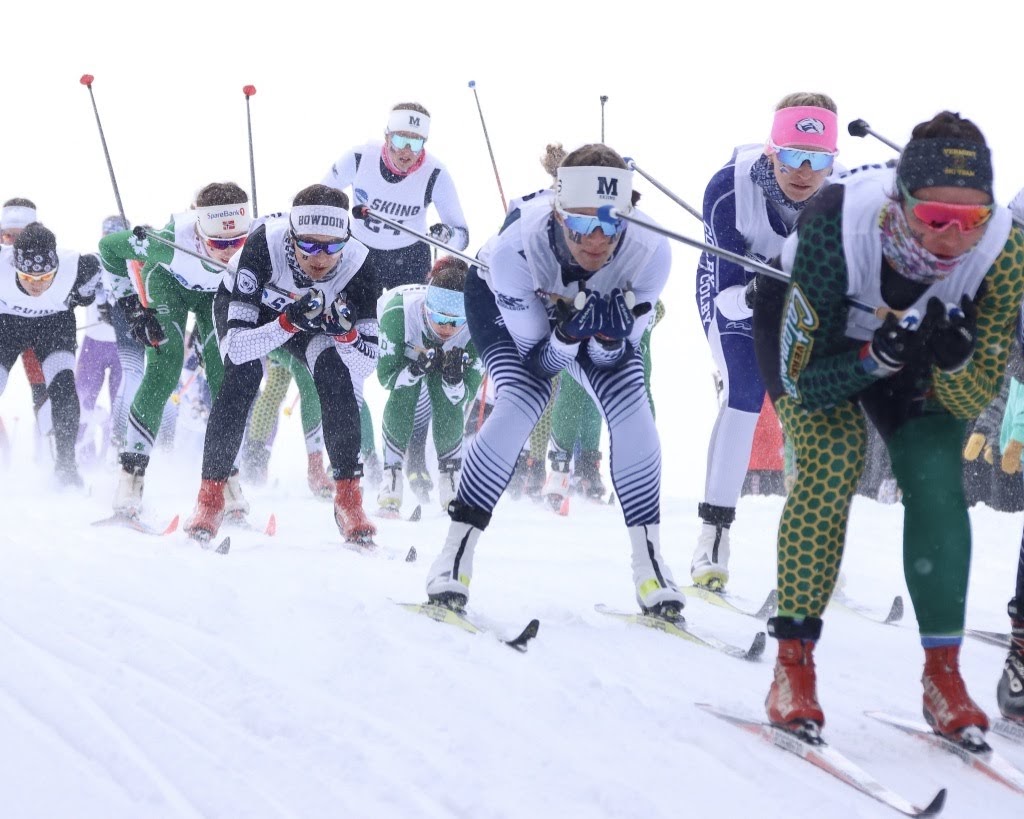
     

    The women’s field tucks at the last full carnival in February 2020 at Middlebury, Vermont. (Photo: Gary Solow)


  • Pros of Tomorrow: After Injury-Fraught Year, Lustgarten Ready to Make His Mark with Sun Valley

    Pros of Tomorrow: After Injury-Fraught Year, Lustgarten Ready to Make His Mark with Sun Valley

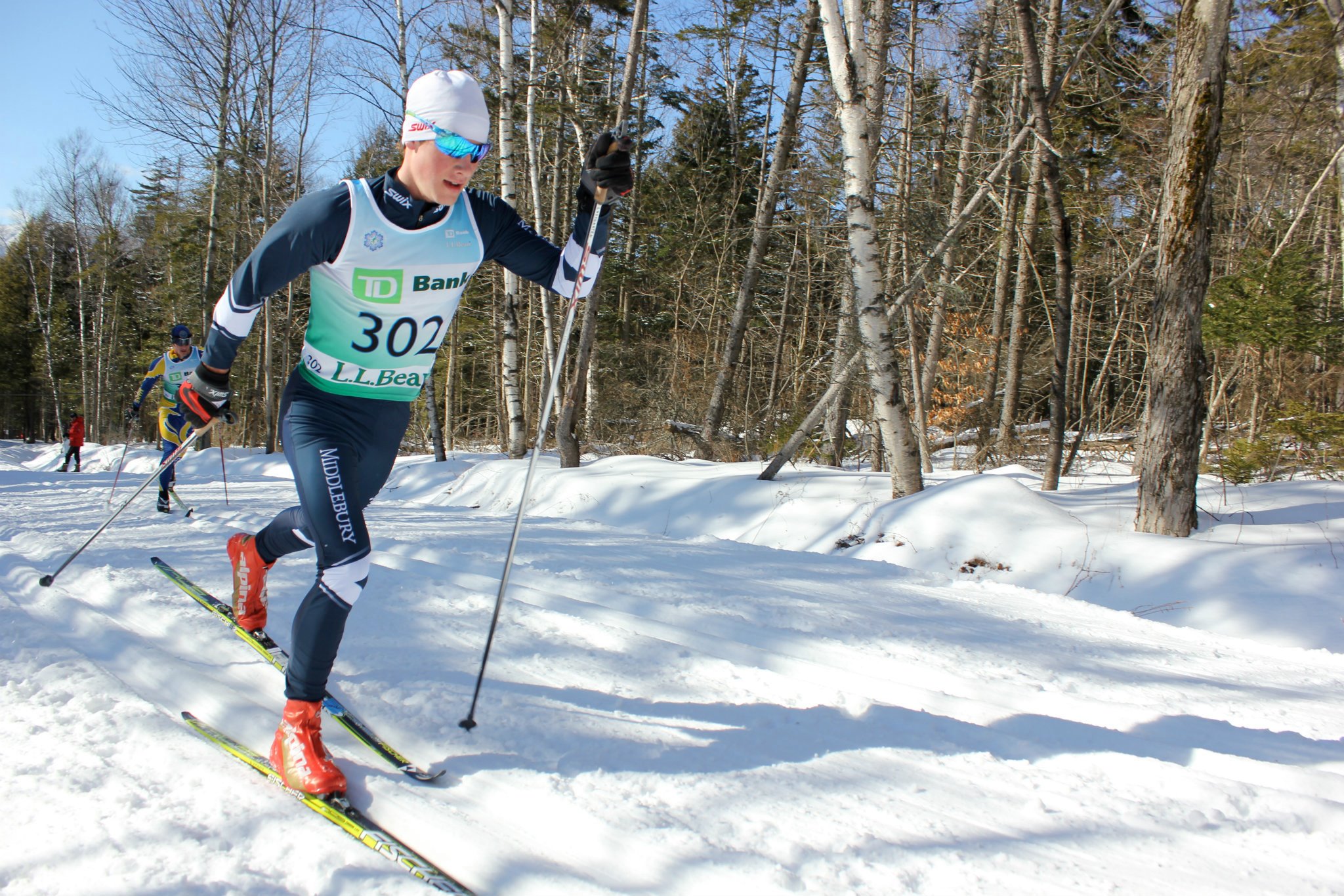
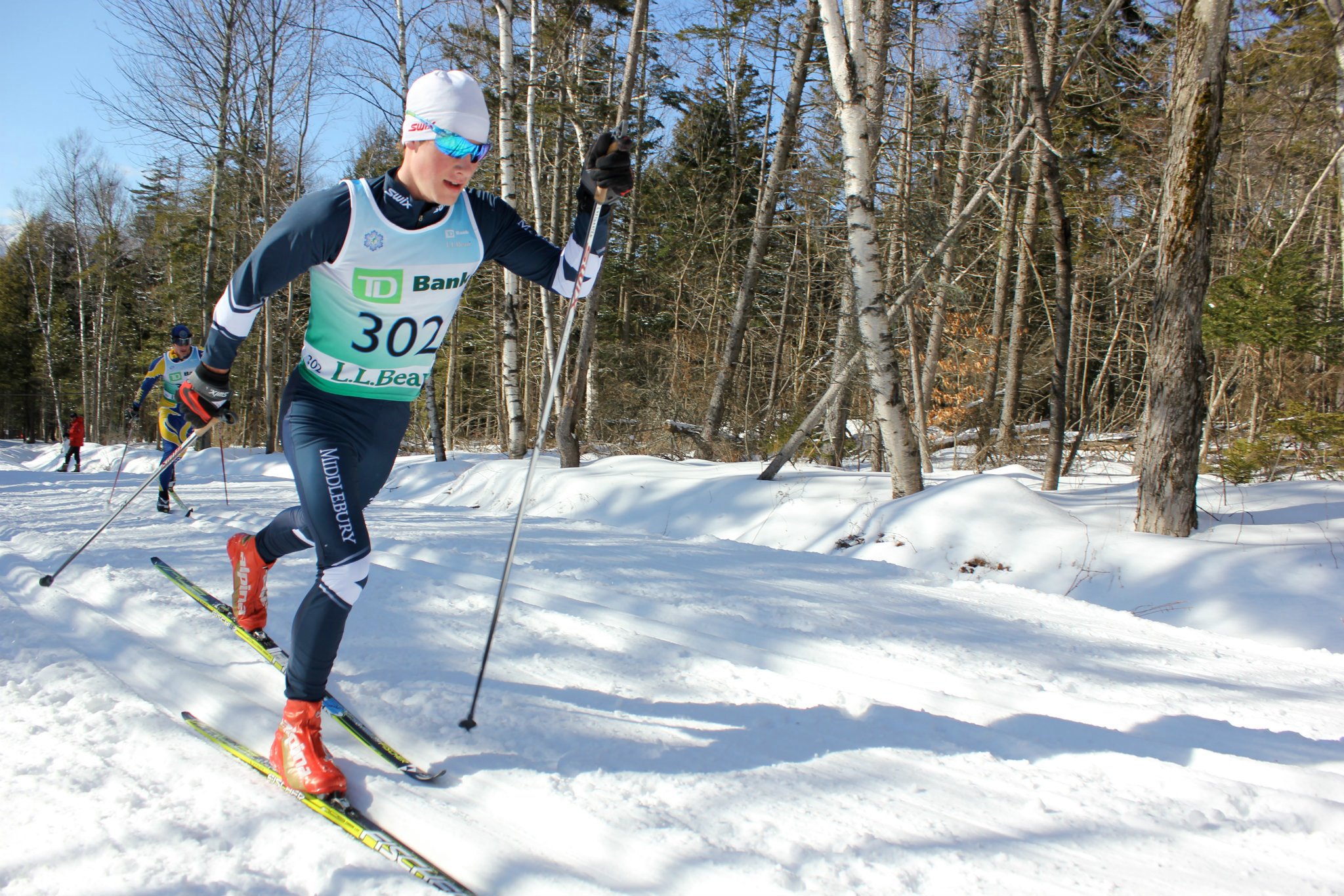
    Ben Lustgarten races in a 2012 EISA carnival at the Trapp Family Lodge in Stowe, Vt. After a senior year at Middlebury College filled with challenges and injury, Lustgarten is now joining the Sun Valley Gold team in his professional skiing debut.
    Ben Lustgarten races in a 2012 EISA carnival at the Trapp Family Lodge in Stowe, Vt. After a senior year at Middlebury College filled with challenges and injury, Lustgarten is now joining the Sun Valley Gold team in his professional skiing debut.

    Editor’s Note: Back out of hibernation, this is the first in this season’s ‘Pros of Tomorrow’ series, which highlights some of the most notable up-and-coming athletes around the world. Have an idea for a top-notch skier you’re itching to read more about? Email info@fasterskier.com with the subject line: Pros of Tomorrow. Ideas for intriguing juniors or collegiate skiers, or lesser-known athletes are welcome as well — subject line: From the Pack.

    ***

    Ben Lustgarten had big plans for his senior at Middlebury College, a small liberal-arts college in central Vermont with a strong history of ski racing. With his eyes set on the NCAA Championships in Soldier Hollow, Utah, the 22-year-old from Burlington, Vt., was determined to train as hard as possible in order to challenge the many Europeans who dominated both the western and national circuits.

    Come March, however, Lustgarten was not lining up at the starting line in Soldier Hollow but instead stood on the sidelines, supported by crutches and sporting a heavily braced knee, watching his former competitors give it their all.

    How did he get there?

    Lustgarten had a modest start in nordic skiing. Growing up in northern Vermont, he dabbled in many sports ranging from soccer to track and field. It wasn’t until a friend suggested the he and his twin, Eric, join his high school’s cross country running and ski teams that he joined the sport.

    When Lustgarten became a member of the Middlebury College Ski Team, he wasn’t well known on the national scene, having just rocketed into the Junior Olympics for the first time in 2010, earning two All-American honors in both distance races.

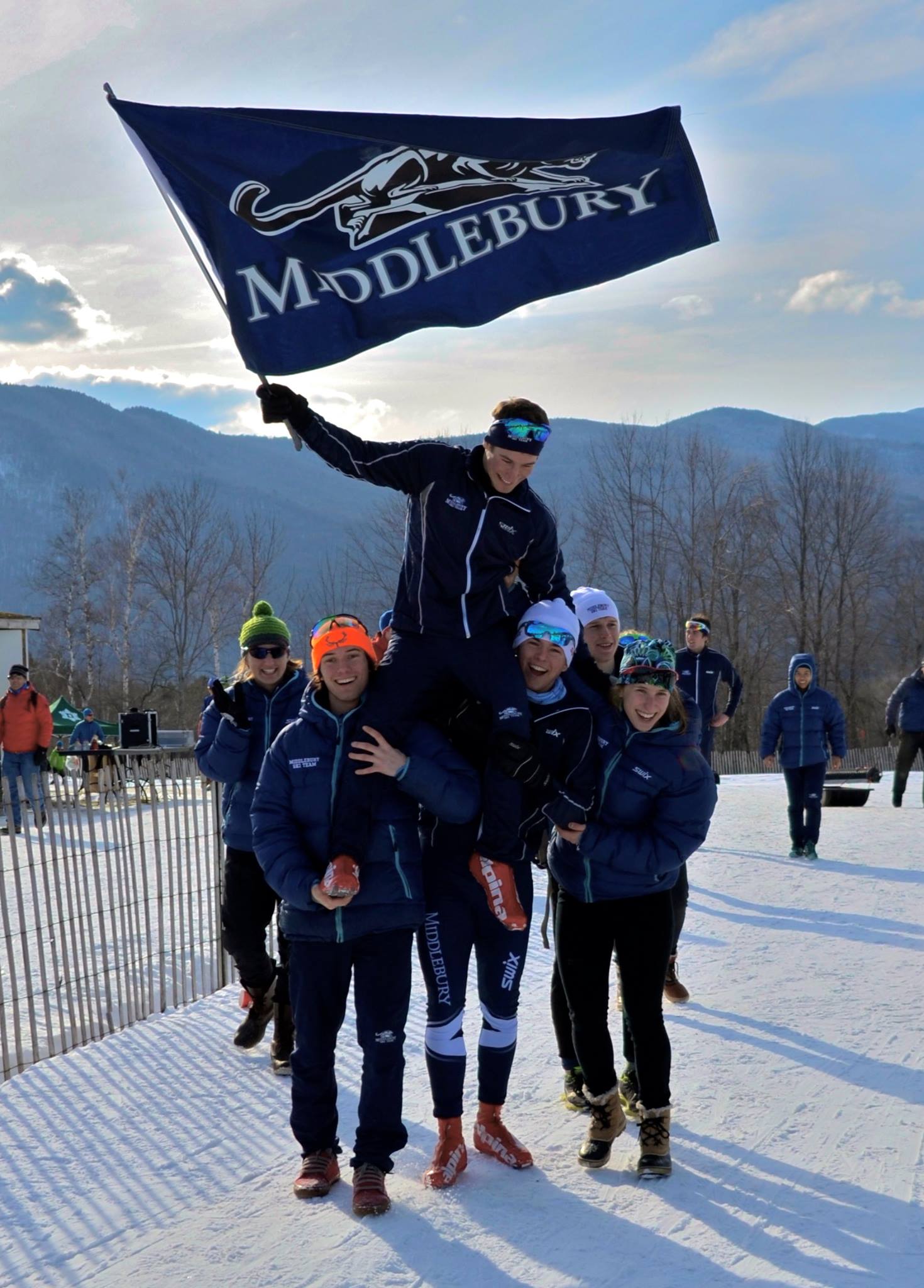
    Ben Lustgarten is hoisted on the shoulders of his teammates after the conclusion of an undated EISA carnival in Stowe, Vt. (Photo: Ben Lustgarten, Facebook)
    Lustgarten is hoisted on the shoulders of his teammates after the conclusion of an undated EISA carnival in Stowe, Vt. (Photo: Ben Lustgarten, Facebook)

    Lustgarten’s career at Middlebury was characterized by constant improvement a relentless dedication to becoming the best skier he possibly could.

    By the time his senior year rolled around he had already placed fourth and eighth in the previous NCAA Championships hosted on his home-course in Middlebury.  This time around he wanted to win.

    However, from the beginning of the training season Lustgarten was hindered by injuries. After damaging his psoas in the fall he was forced to regularly spin and lift, as running and rollerskiing were out of the question.

    Come December, Lustgarten was back to training as usual, slightly hindered by a two-week, minor foot injury.

    On the eve of U.S. nationals in Soldier Hollow, Lustgarten was a unsure of his fitness and speed due to his limited training in the fall. It seemed that his lack of traditional training was inconsequential as the college senior held his own against the best in the country, finishing sixth in the 15 k classic and tenth in the 30 k freestyle. He was the second U23 skier in both races, finishing behind U.S. Ski Team member Erik Bjornsen, who went to the Olympics a month later.

    The results were enough for Lustgarten to qualify for the 2014 U23 World Championships in Val di Fiemme, Italy, one of his major goals of the season. After racing in the Italian Dolomites, Lustgarten was disappointed with his results there, but the experience proved valuable for the Vermonter who had previously never traveled, let alone raced, overseas.

    “I didn’t have the races I wanted to but it was my first time in Europe, and the travel and all that was a factor,” Lustgarten said in a phone interview. “I still had a lot of fun and the experience was really good to see how a lot of Europeans race and just to get a good view of that scene.”

    The experience in Italy unfortunately was not all positive, as the Middlebury skier sustained a concussion in his last race.

    “I fell pretty hard and hit my head against the snow. I felt a little woozy getting up again,” Lustgarten said. “That was an extremely hard race to finish. I lost my entire morale, all my momentum and ended up getting passed a lot. I did manage to finish, and found out I suffered a concussion.”

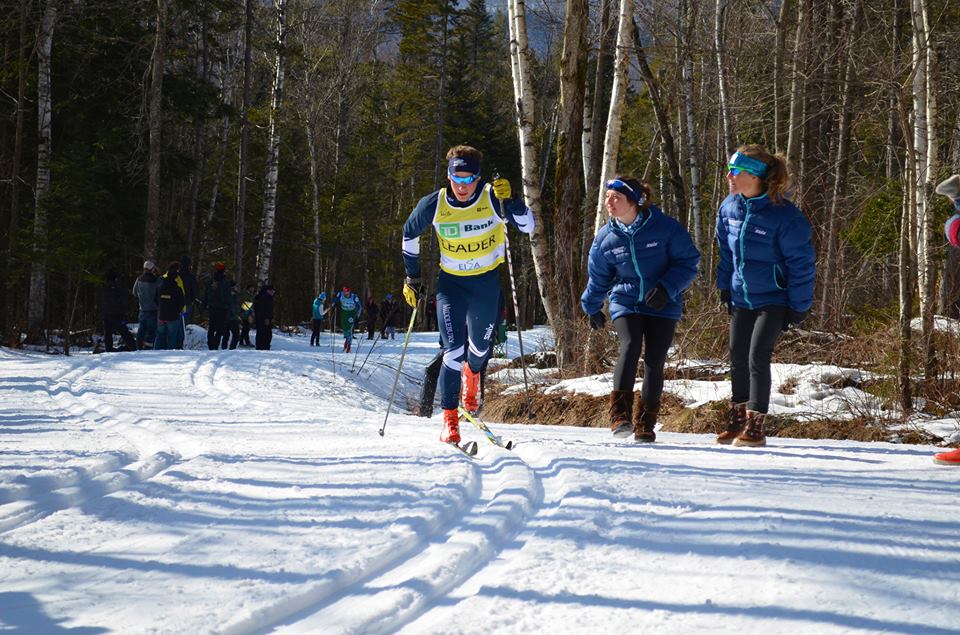
    Lustgarten racing with the EISA leader bib at the 2014 EISA Championships in  Ripton, Vt. Lustgarten went on to win the race by 50 seconds. (Photo: Ben Lustgarten, Facebook)
    Lustgarten racing with the EISA leader bib at the 2014 EISA Championships in Ripton, Vt. Lustgarten went on to win the race by 50 seconds. (Photo: Ben Lustgarten, Facebook)

    Upon his return to the U.S., Lustgarten had to sit out the next Eastern Collegiate carnival at Dartmouth. However, a week and a half after the concussion, he was back on skis at the Williams Carnival.

    During this time, Lustgarten was starting to feel pressure from himself and others surmount as the NCAA Championships drew closer.

    “I felt a lot of expectation, both from myself and other people, to win. I put a lot of pressure on myself and that pressure got to my head,” he said. “I couldn’t fully maximize my skiing potential. I was engulfed by this feeling that I had to win and that I should win. Obviously it hurt my skiing because I couldn’t win some of these races. I would beat myself up about it.”

    Unlike those who have succumbed to similar pressures, Lustgarten recognized that to excel in the final races of the season he needed to return to the basics. Making an effort to ski his “own race” the Middlebury skier lessened the importance of splits and competitors and instead focused on his technique and pacing.

    Having embraced this philosophy, Lustgarten entered the Middlebury Carnival and Eastern Intercollegiate Ski Association (EISA) Championships both calm and collected.

    The new mindset paid off as Lustgarten crossed the finish line of the individual 15 k classic in first place, exactly 50 seconds ahead of one of his fiercest competitors, Scott Patterson of the University of Vermont.

    “It not only helped my confidence to know that I might be able to win further races, but it really only matters when you ski within yourself and if you trust yourself and not to get all wound up in the scene with all the results,” Lustgarten said. “Which is really nice, because not only do you feel better about yourself when you cross the finish line, but generally the results are better. So it’s a win-win.”

    The next day was a different story.

    Entering the second day of the EISA Championships, the weather was warm and the conditions were fast on the hilly and technical course at the Rikert Nordic Center. Even going into the first laps of the 30 k freestyle mass start, Lustgarten could feel his shins tightening up.

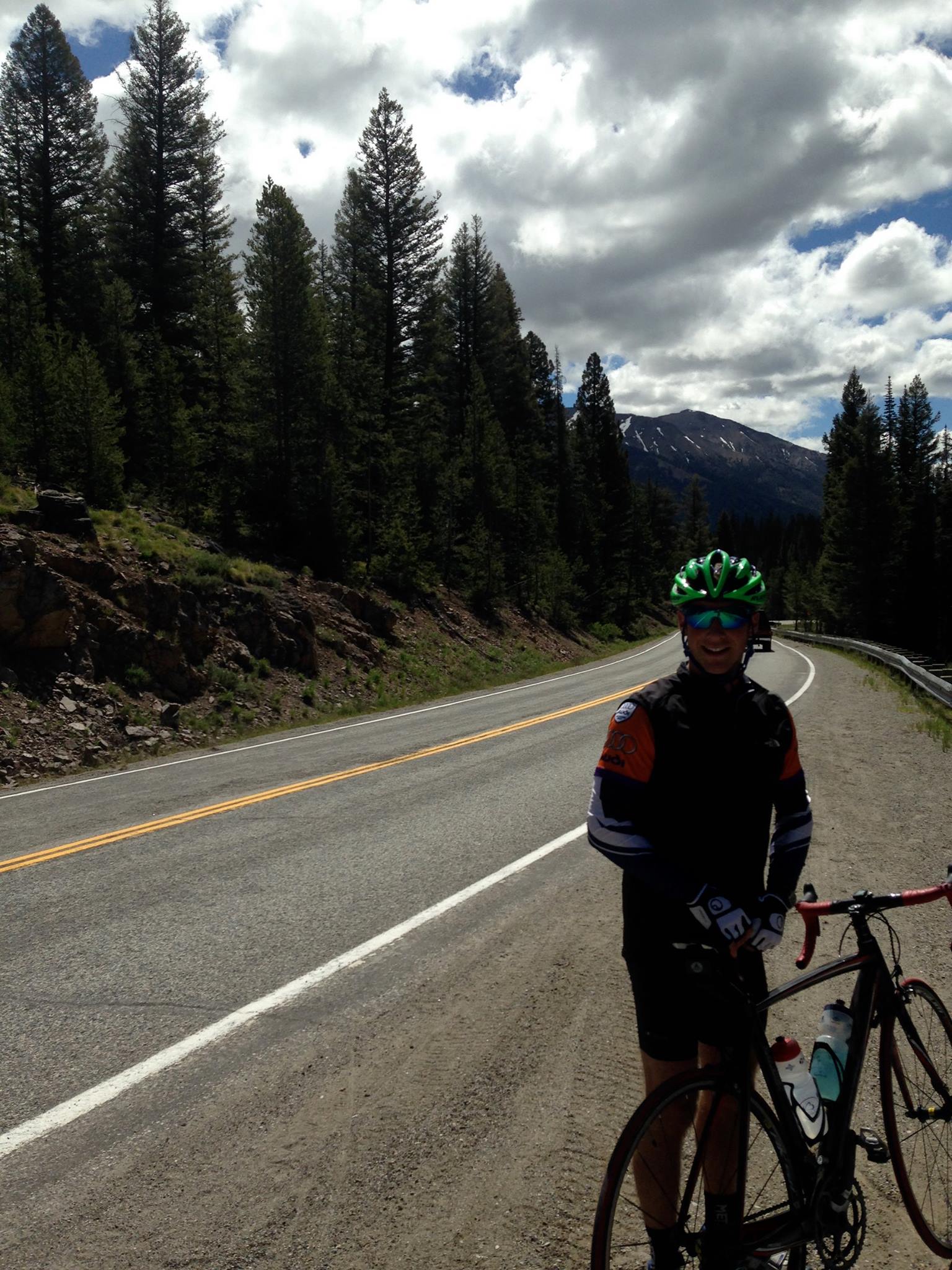
    Lusgarten poses during a ride in Sun Valley, Idaho, where he is currently training and recovering with the Sun Valley Gold Team. (Photo: Ben Lustgarten, Facebook)
    Lusgarten poses during a ride in Sun Valley, Idaho, where he is currently training and recovering with the Sun Valley Gold Team. (Photo: Ben Lustgarten, Facebook)

    After attempting to stick with the leaders, Lustgarten was forced to pull back, but the damage was already done. Barely able to move his legs, the Middlebury College Senior said both his competitors and spectators were giving him odd looks.

    Descending from the last major climb in the third lap, Lustgarten knew he had to take the corners very easy or risk falling due to the tightness in his shins. Coming into one of the final turns of the lap Lustgarten went wide, miscalculating his speed and the sharpness of the corner he had skied so many times before.

    Lustgarten soon realized he was headed for a tree, and immediately fell to the snow ensuring his feet were in front of him; a move that he would later characterize as lifesaving.

    Unable to slowdown, he made full impact with the tree, placing all impact on his right foot. The next thing he knew he was sprawled on the side of the trail with searing pain in his right leg.

    “In a normal crash, you get back up, you put your stuff back on, check if your poles are broken, and move on. I tried to move my leg and it was just so painful,” he recalled. “It was half bent and I couldn’t straighten it. I couldn’t move it. I was gasping in pain and after a minute I yelled out help because I knew I couldn’t get up. Then the world crashed around me and I realized that I was not going to finish this race. I thought my leg was broken and I thought my season was over. It was pretty traumatic.”

    Lustgarten’s leg was not broken, but a visit to a doctor in Burlington resulted in the some of the worst news he had received: he was out for the rest of the season with a severely torn posterior cruciate ligament (PCL) in his knee. No NCAAs. No challenging the westerners. No conclusion to his final year of racing at Middlebury.

    “I thought I was going to double pole NCAAs. I was livid that I couldn’t race. I would have done anything. It was my last season and I was going to do what I could to finish the race. Everyone was saying that I shouldn’t do it but I didn’t care what anyone said. However, if I had crashed and fully torn my PCL that would have required surgery and I would have been out of skiing for a year. Everyone talked some sense into me,” Lustgarten said.

    He did, however, travel to the NCAA Championships in March but was delegated to the sidelines, resigned to thinking about what could have been.

    “I tried to cheer on people as best as I could,” Lustgarten said. “But it was hard watching them because even if they were having a bad race they were out there trying their best. Representing their college and their coast. I wish I could have raced those good guys from the west. I had wanted to race them all season. Maybe I’ll get a chance next year.”

    While Lustgarten won’t get a chance to race the collegiate circuit next year, he will get a chance to prove himself on the national scene.

    Shortly after graduating from Middlebury College in May, Lustgarten traveled west to Idaho to join the Sun Valley Ski Education Foundation (SVSEF) Gold Team, where he will compete in the hopes to make his mark in professional nordic skiing.

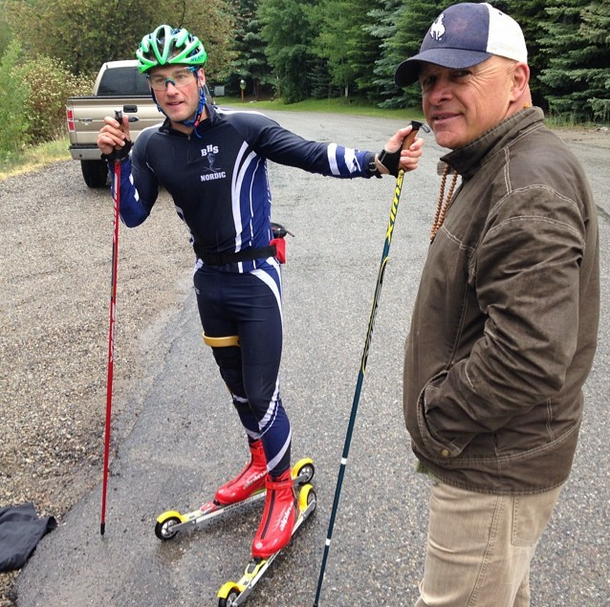
    Lusgarten (l) and SVSEF's head coach Rick Kapala (r) discuss a rollerski workout in some unfavorable June weather. (Photo: Ben Lustgarten, Instagram)
    Lustgarten (l) and SVSEF’s nordic director Rick Kapala (r) discuss a rollerski workout in some unfavorable June weather. (Photo: Ben Lustgarten, Instagram)

    “It will be awesome to see what skiing is like without school,” he said. “I can spend a lot more time doing physical therapy, stretching, strengthening to prevent injury, increase balance, and just pend time doing small stuff that I wouldn’t have time to do at school.”

    He believes these small changes will help him reach his lofty goals for the next season. On that list is a podium at US Nationals, a top 15 at the U23 World Championships, and to qualify for a couple World Cups in the 2015/2016 season.

    Despite his elevated goals, Lustgarten knows he has a lot of work to do in the meantime.

    “I don’t really know how my improvement will be with the injury and training. I have optimistic views,” he said.

    In terms of his future as a pro skier, Lustgarten acknowledged that if things don’t go as expected, he plans to go back to school. If he does see improvement, Lustgarten would like to see how far he can go.

    “I would definitely like to ski for the next couple years. Obviously the Olympics is a ways off, but that’s the dream for anyone who goes pro,” he said. “If things do work out well I would love to shoot for the Olympics in 2018.”

    Long-term goals aside, Lustgarten is taking advantage of his what his new life as a professional athlete has to offer. For now, the emerging skier is excited to work on new sponsorship deals, develop a website and blog expected to be ready by the end of the week, in addition to full-time training.