From the FasterSkier archive — posts syndicated from athletes’ and coaches’ own blogs between 2004 and 2012, kept online as published. Current coverage is at fasterskier.com.

Tag: Middlebury

  • NCAA Cross-Country Championships in Bozeman: One and Done

    NCAA Cross-Country Championships in Bozeman: One and Done

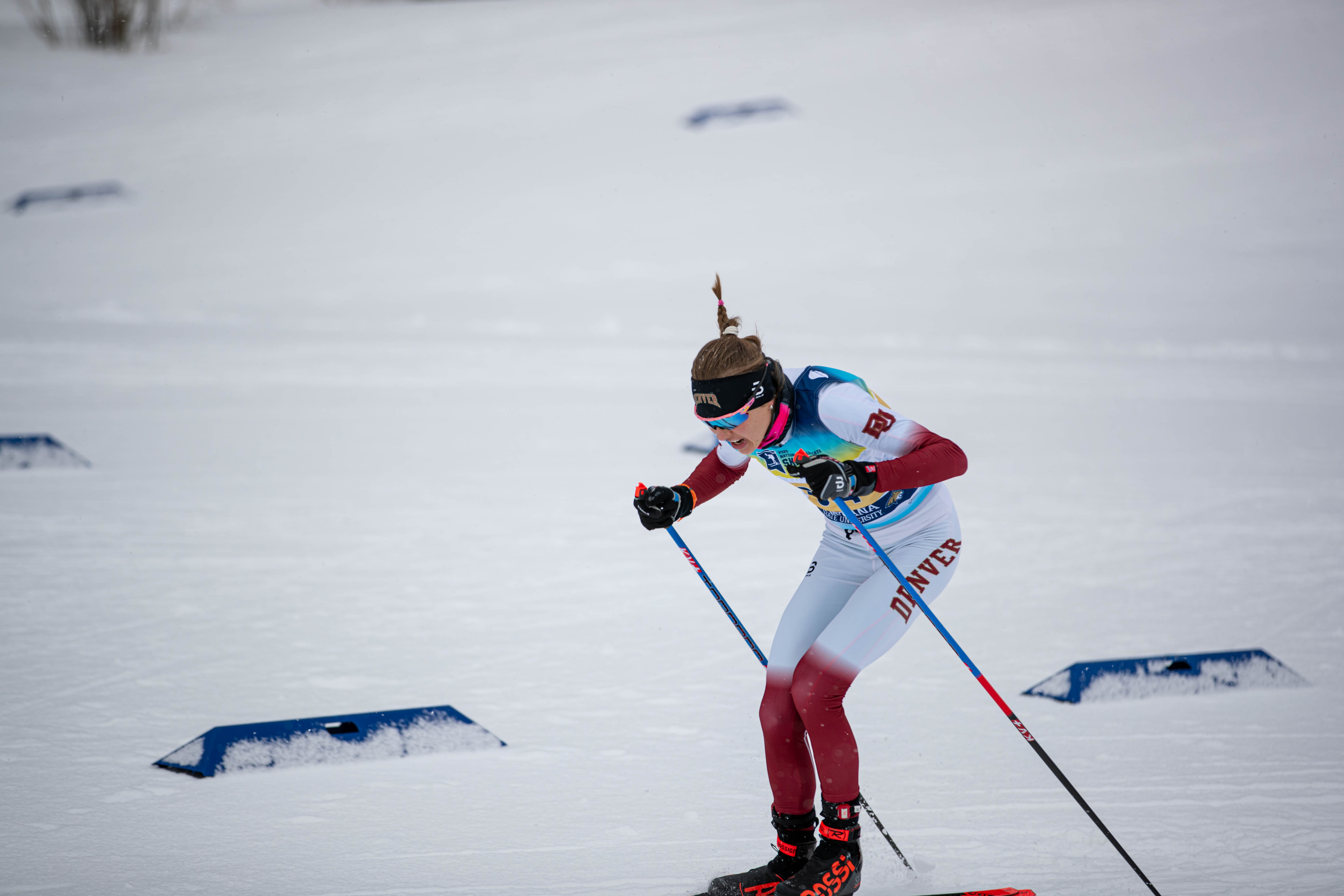
    DU’s Eveliina Pippo taking the win Thursday in Bozeman. (Photo: Montana State Athletics)

    BOZEMAN, Montana – Thirty minutes after the conclusion of today’s nordic podium ceremonies, the NCAA announced that all winter and spring championship events were cancelled due to the COVID-19 pandemic, effective immediately. 

    An incredible day of racing suddenly turned sour as the news reverberated throughout Bozeman. There would be no slalom at Bridger Bowl tomorrow, no mass start cross-country races at Crosscut on Saturday, and no ceremony to crown the overall team champions. In a single press release, the 2020 NCAA Ski Championships came to a heart-breaking halt.

    While the fallout from the decision will surely stretch into the off-season, here’s how the cross-country races unfolded today at Crosscut Mountain Sports Center.

    The day dawned cool and cloudy, with low overnight temps making the snow firm and fast. With occasional peeks of sunshine through the cloud cover, it looked like it could be a classic Montana March day.

    Nothing today would be that straightforward — a snow squall materialized thirty minutes before the women’s start. Although just half an inch fell, the course was totally transformed and slowed down dramatically. 

    Even though the snow eased up for the women’s race, the early starters had to plow through the fresh flakes. Skate tracks appeared around the loop as the first few starters raced through the powder.

    Crosscut’s course is mostly rolling, but features brutal climbs at about the 1 and 4k marks. The climbs are long, steep, and demanding, especially because of the venue’s location 6,100’ above sea level. The new snow made the climbs sloppy, with a few inches of sugary powder sucking speed on their upper pitches.

    Starters were reverse seeded based on regional rankings. Top seeds were randomized in the final ten bibs, making bib numbers 30-40 the racers to watch for podium places. 

    As the women rolled through the course, a pair of late starters separated themselves from the pack. Denver’s Eveliina Pippo led Middlebury’s Sophia Laukli by five seconds at the halfway mark. Behind the leaders, five racers  – Utah’s Guro Jordheim, Middlebury’s Alex Lawson, UVM’s Lina Sutro, and Dartmouth’s Katharine Ogden were all within a few seconds of each other at the halfway mark, battling for the next few places.

    Laukli continued attacking the course with her signature high tempo, showing the form that earned her fifth in the Junior Worlds 15k mass start last week in Oberwiethensal, Germany. 

    However, Laukli couldn’t quite reel in Pippo, as she finished in second, just 4.8 seconds back. Pippo, with three wins on the RIMSA circuit this season, was a favorite to take gold today. She said “I’m happy with my win…the key was to focus on doing everything I can and not focus on the other racers.”

    Jordheim emerged from the pack to finish third, followed by Ogden in fourth and Sutro in fifth. 

    The Middlebury trio of Laukli, Lawson, and Annika Landis has been on a tear throughout the EISA this season. Today they showed their winning ways aren’t limited to the East Coast, finishing 2-6-16, respectively, and amassing 79 points to take the team win over the University of Utah (74 points.) The UVM Catamounts, with Anya Bizyukova in seventeenth, scored 65 points and took third on the day.
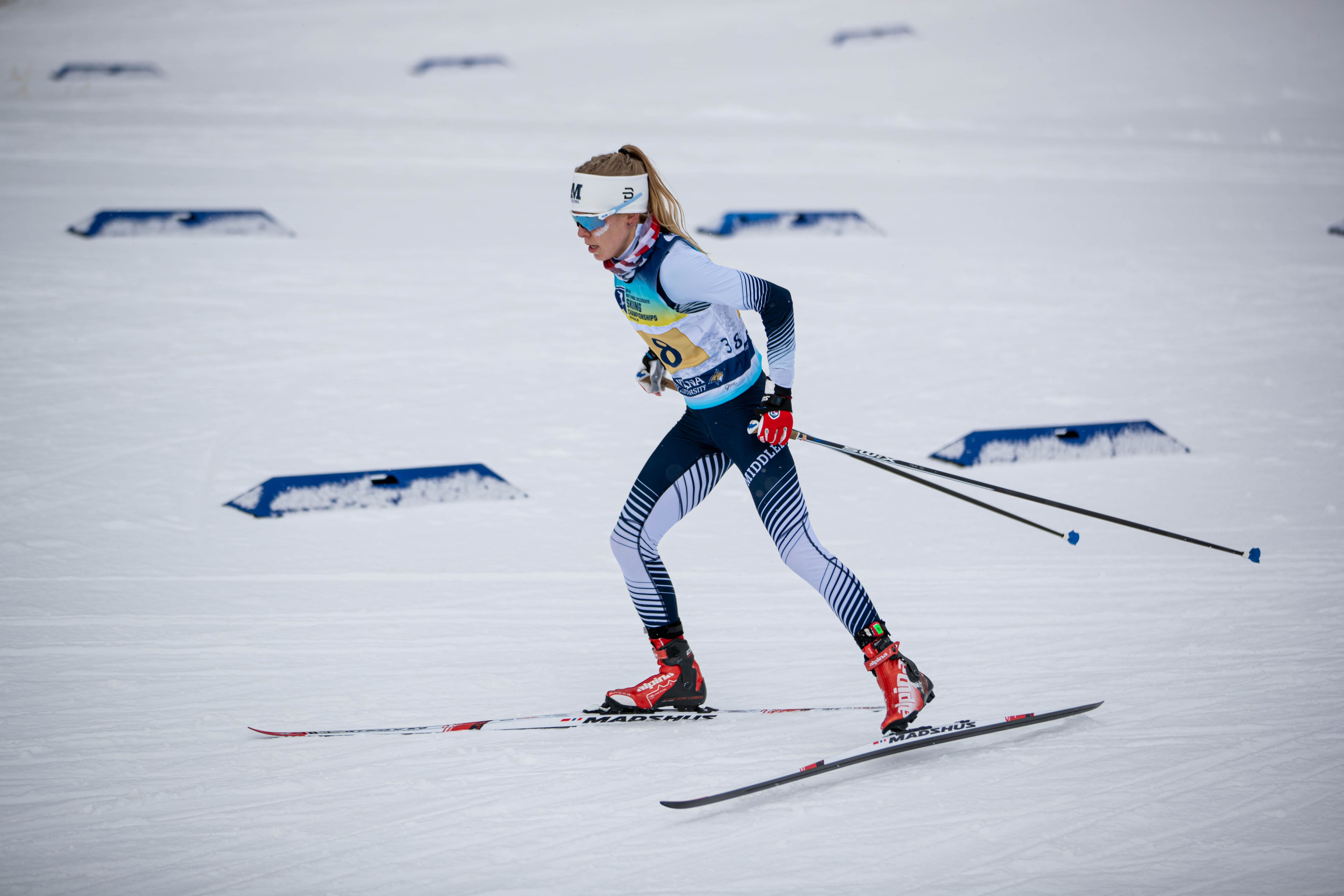
    Middlebury’s Sophia Laukli racing to second place in Bozeman. (Photo: Montana State Athletics)

    As the women cooled down and the men warmed up, the sun finally stuck around. The course filled up with spectators and racers, and the excitement was palpable as the first male skier took the line at noon. Once again, the top seeded racers were in bibs 30-40, with  the winner expected to emerge from that select group.

    Ben Ogden accelerated like a rocket from the start, flying through the first 5k nine seconds faster than anyone else. Third through ninth places were separated by just fifteen seconds at the halfway mark, setting up an exciting second lap. The course, snow, and altitude conspired to punish anyone who started too fast and reward those who had paced their efforts.

    Utah’s Sam Hendry started reeling Ogden in, coming back from a seventeen second deficit at 10k to a three second margin at 7.5k. Ogden came into the final climb and entered into a tunnel of Catamounts, with teammates, friends, and fans screaming on both sides of the trail. 
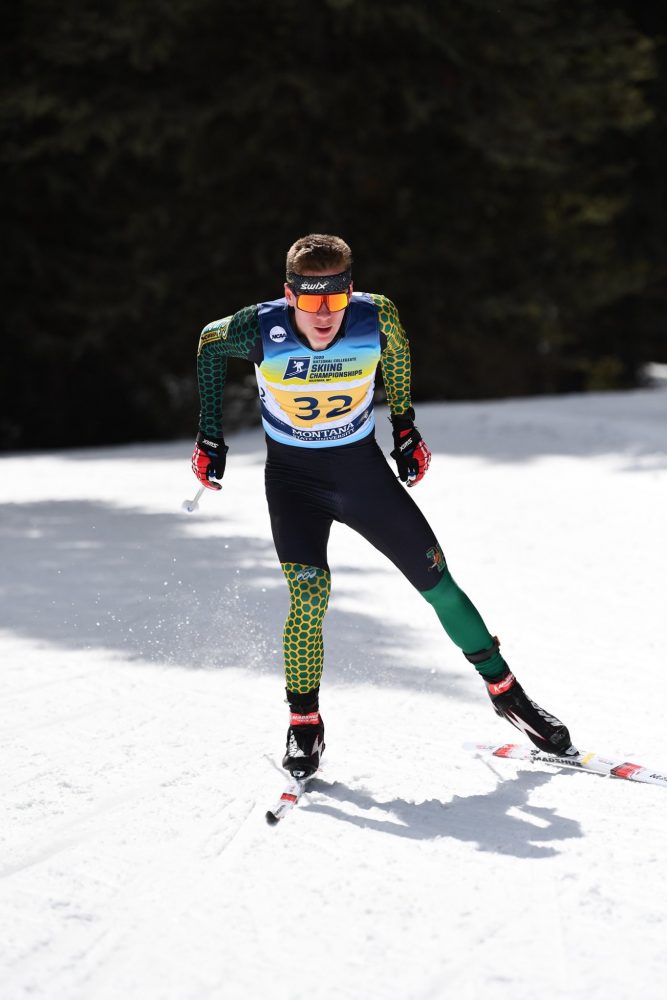
    UVM’s Ben Ogden, skating to an NCAA win. (Photo: NCAA)

    Ogden, charged up by the Catamount faithful, powered to the line and took his first NCAA title by just 3.1 seconds over Hendry. With a second-straight gold medal in the relay at Junior Worlds last week, Ogden may need to invest in a bigger trophy case. Ogden was thrilled with his result, saying “I’m ecstatic! I just came over from Germany, but I was super stoked to rest up and throw down today.”

    Hendry charged into second with the fastest second lap, while Denver’s Bernhard Flaschberger, winner of a pair of RIMSA skate races this winter, took third for the Pioneers. University of Alaska Anchorage’s Sigurd Roenning was ten seconds further back in fourth, while UVM’s Karl Schulz finished fifth. 

    Along with Bill Harmeyer in twelfth, Ogden and Schulz, the UVM trio combined for 88 points, giving the Catamount men the team win on the day. Roenning led Anchorage to 77 points and second place, while Hendry’s effort helped the Utes pile up 67 points and take third place.

    Given the cancellation of the mass start, NCAAs were effectively a one-day championship. The University of Vermont men and women combined for  153 points, taking the 2020 nordic title. Utah was close behind with 141 points, while Alaska Anchorage scored 123 and finished third.

    Complete nordic results are on Summit Timing.Team scores are available on RIMSA.

    You can read the NCAA statement on championship cancellation here.

  • 20-for-20 with Chloe Levins

    20-for-20 with Chloe Levins

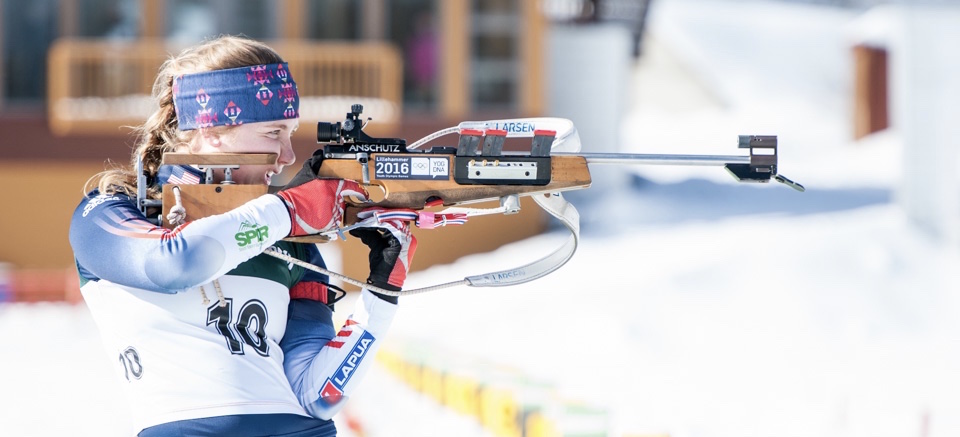
    Chloe Levins (Ethan Allen Biathlon Club) racing at 2016 U.S. biathlon championships last March in Fort Kent, Maine. (Photo: Pete Freeman Photography)

    In another 20-something-question, fill-in-the-blanks series, we checked in with the world-class U.S. and Canadian biathletes that will be competing at 2017 International Biathlon Union (IBU) Youth & Junior World Championships Feb. 22-28 in Osrblie (also known as Brezno-Osrblie), Slovakia.

    Here’s 18-year-old Chloe Levins, of the Ethan Allen Biathlon Club, who will be representing the U.S. at her third Youth Worlds. On Wednesday, Levins finished 14th in the youth women’s 10-kilometer individual for her best non-relay result at Youth Worlds.

    ***

    “My full name is Chloe, but you can call me Chlo. I was born in Elmira, N.Y., raised in Rutland, Vt., and one thing you should know about my hometown is that the Lincoln Memorial was made from marble that comes from a quarry near my house.

    I started cross-country skiing when I was 2 and started biathlon when I was 13, thanks to Algis Shalna, Max Cobb, and my mother. I currently train at Mountain Top and Jericho with Ethan Allen Biathlon Club.

    If I’m not skiing, you might find me shooting. If I had to pick a favorite book, it would be ‘Born to Run‘.

    One of the things I’m most excited about for Youth/Junior World Championships in Brenzo-Osrblie is the opportunity to compete.

    This will be my third Youth/Junior World Championships, and this year, I’m competing as a youth. One race I’m especially targeting there is the next one.

    The best advice anyone ever gave me about skiing or racing was to smile.

    One of the best race memories I have is from the Youth Olympic Games in Lillehammer, Norway.

    If I could meet one World Cup skier, it would be Tarjei Bø.

    If I don’t end up being a professional skier, I’ll try to be a professional golfer (she’s on the Middlebury golf team).

    I’m missing too many days of school to be here, and my professors are probably thinking, ‘Good thing we have the technology to make this work.’

    You can follow me on Instagram @chlolevins.”

    American Chloe Levins competing at 2016 IBU Youth/Junior World Championships in Cheile Gradistei, Romania (Photo: NordicFocus)
  • Kelly Brush Ride Raises More Than $400K

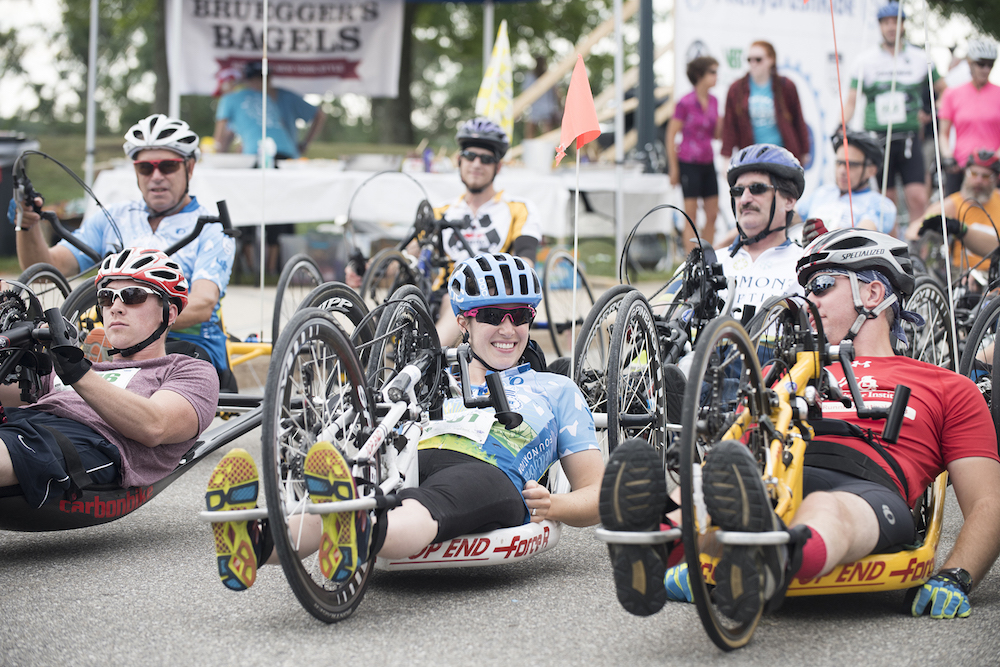
    Handcyclists, led by Kelly Brush, at the start of the 11th Annual Kelly Brush Ride powered by VBT Bicycling and Walking Vacations on 9-10-16  in Middlebury, Vermont. The annual ride through the Champlain Valley drew more than 700 cyclists and 30 handcyclists and raised more than $400,000 for adaptive sports and ski racing safety. (Image: Caleb Kenna)
    Handcyclists, led by Kelly Brush, at the start of the 11th Annual Kelly Brush Ride powered by VBT Bicycling and Walking Vacations on 9-10-16 in Middlebury, Vermont. The annual ride through the Champlain Valley drew more than 700 cyclists and 30 handcyclists and raised more than $400,000 for adaptive sports and ski racing safety. (Image: Caleb Kenna)

    11th Annual Event Supports Adaptive Sports, Ski Racing Safety

    SOUTH BURLINGTON, Vt. (Sept. 15, 2016)—Fundraising for the 11th Annual Kelly Brush Ride powered by VBT Bicycling and Walking Vacations surpassed $400,000.  The ride supports the Kelly Brush Foundation’s mission to empower those living with paralysis through sport and recreation and to improve ski racing safety.

    More than 700 cyclists and 30 handcyclists, along with more than 100 volunteers participated in the event that was held on September 10 in Middlebury, Vermont.  The total amount raised was $425,000.

    “This year’s Kelly Brush Ride was a huge success both in how much fun was had by all riders and the record amount we raised to enable the Kelly Brush Foundation to do even more to improve the quality of life for those with paralysis and allow us to continue to raise the bar when it comes to safety in ski racing, “ said Zeke Davisson, executive director of the Kelly Brush Foundation.

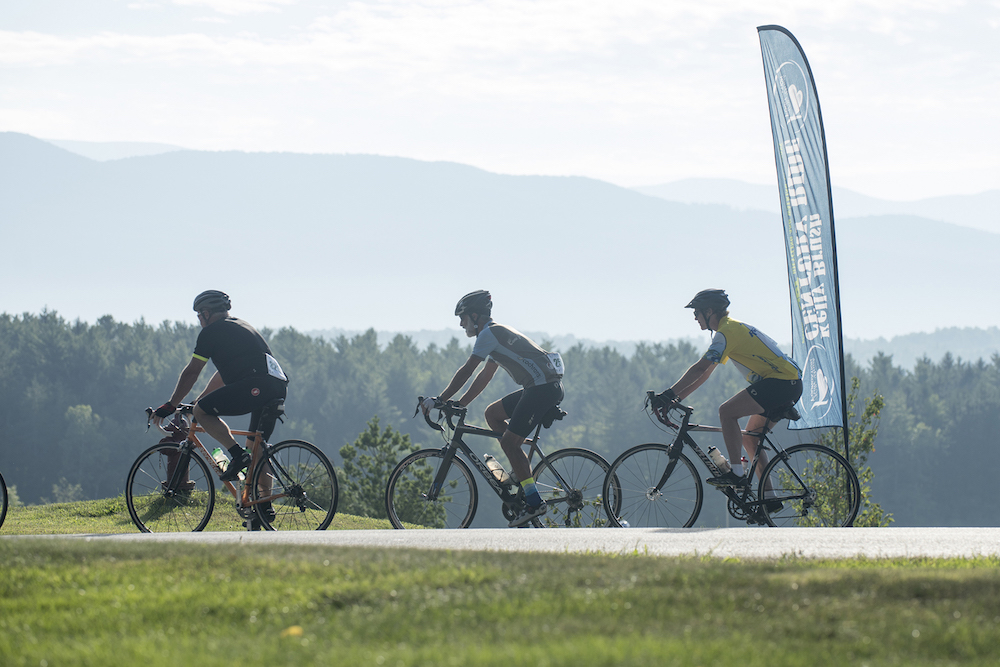
    Cyclists rolling in Middlebury, Vermont, on the 11th Annual Kelly Brush Ride powered by VBT Bicycling and Walking Vacations on 9-10-16. The annual ride, which starts and finishes in Middlebury and winds through the Champlain Valley, drew more than 700 cyclists and 30 handcyclists. The event raised more than $400,000 for adaptive sports and ski racing safety. (Image: Caleb Kenna)
    Cyclists rolling in Middlebury, Vermont, on the 11th Annual Kelly Brush Ride powered by VBT Bicycling and Walking Vacations on 9-10-16. The annual ride, which starts and finishes in Middlebury and winds through the Champlain Valley, drew more than 700 cyclists and 30 handcyclists. The event raised more than $400,000 for adaptive sports and ski racing safety. (Image: Caleb Kenna)

    The ride was made even more inspiring by the impressive effort of handcyclists Geoff Krill of Woodstock, New Hampshire, and Mike Wade of Silver Lake, New Hampshire, who completed the entire 100-mile route.

    Funds raised from the event go towards improving the quality of life for those with paralysis through grants for adaptive sports gear and helps to improve ski racing safety with equipment such as netting to line race courses. With the ride as its signature fundraising event, the Kelly Brush Foundation has raised more than $3 million, purchased more than 300 pieces of adaptive sports equipment and helped keep thousands of ski racers safe with hundreds of miles of safety netting, trail widening projects and awareness about ski racing safety.

    The ride was started by the Middlebury College Ski Team in 2006 as a way to buy an adaptive monoski and handcycle for team member Kelly Brush, who was paralyzed as the result of a ski racing crash. The next year the ride was opened to the public, with proceeds used to support the foundation’s mission.  The Kelly Brush Ride powered by VBT Bicycling and Walking Vacations is made possible thanks to the generosity of many participants, volunteers and sponsors including: VBT Bicycling and Walking Vacations, Shearer Audi, Sugarbush Resort, SkiRack, Saatchi & Saatchi, World Cup Supply, Murphy Realty Company and many other generous sponsors.

    About the Kelly Brush Foundation: The Kelly Brush Foundation is a 501(c)(3) nonprofit organization dedicated empowering those with paralysis through ownership of adaptive sports equipment and improving safety in the sport of ski racing. The foundation has raised more than $3 million, helping to purchase more than 300 pieces of adaptive sports equipment and keep thousands of ski racers safe with hundreds of miles of safety netting, trail widening projects and awareness about ski racing safety. Kelly Brush, together with her family, started the foundation in 2006 after she sustained a severe spinal cord injury while racing in NCAA Div. 1 competition as a member of the Middlebury College Ski Team in Vermont. The Kelly Brush Foundation affirms Kelly’s ongoing commitment to live life on her own terms and better the lives of others living with paralysis. www.kellybrushfoundation.org

    About VBT Bicycling and Walking Vacations:  VBT offers deluxe, small group bicycling and walking tours worldwide, including destinations throughout Europe, Costa Rica, New Zealand, Vietnam, Peru, Chile, South Africa and the United States. Each trip includes all accommodations, many meals, two expert local Trip Leaders, unique sightseeing and cultural activities and on-tour vehicle support. Unlike other companies, VBT also includes roundtrip international airfare from over 30 U.S. cities and select Canadian cities for all overseas vacations. In 2015, VBT was rated by the readers of Travel + Leisure magazine among the “World’s Best Tour Operators” for the sixth consecutive year.


  • Throwback Workout: Hill Climbing and Norpining at Middlebury Snow Bowl

    Throwback Workout: Hill Climbing and Norpining at Middlebury Snow Bowl

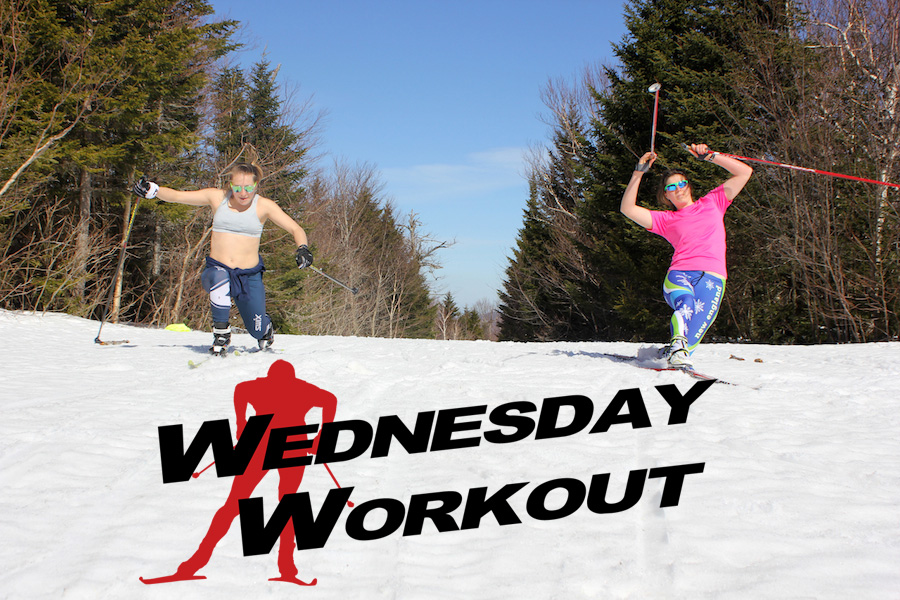
    Emily Attwood (l) and Heather Mooney lunge at the finish of their final hill climb sprint.
    Former Middlebury College skiers Emily Attwood (l) and Heather Mooney lunge at the finish of their final hill climb sprint in the spring of 2014. (Photo: Lander Karath)

    It’s that time of year … to kick back and live a little! If you have a hill and residual snow nearby, this one’s for you. The following workout was published two years ago. Read the original here.
    ***

    [circa April 2014] 

    MIDDLEBURY, Vt. — Unless you’re the audacious Liz Stephen or Overall World Cup Champion Therese Johaug, you’re probably not a huge fan of hill climbs. However, when the mid-April temps turn our favorite trails into puddles, nordic ski enthusiasts have to get creative to get their on-snow skiing fix before spring training begins.

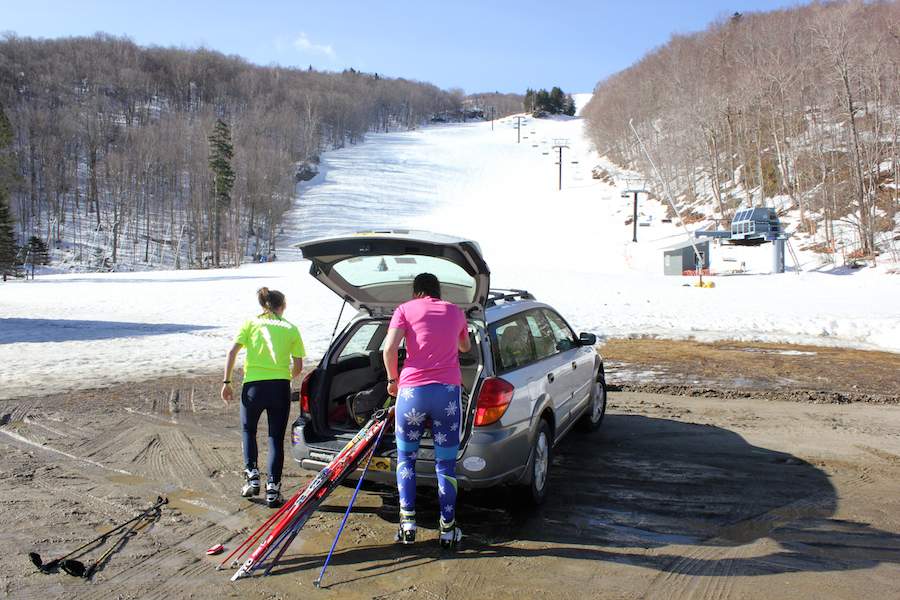
    Former Middlebury skiers Emily Attwood (l) and Heather Mooney get ready to climb up then ski down the Middlebury Snowbowl in the spring of 2014. (Photo: Lander Karath)
    Former Middlebury skiers Emily Attwood (l) and Heather Mooney get ready to climb up then ski down the Middlebury Snow Bowl in the spring of 2014. (Photo: Lander Karath)

    In Middlebury, skiers at the local college are doing just that by taking advantage of the remaining of snow at the Middlebury College Snow Bowl, an college-owned downhill ski area only 20 minutes from campus.

    I joined Heather Mooney (Peru, Vt.) and Emily Attwood (Cape Elizabeth, Maine) this past week to take advantage of the long awaited spring weather and to get in a late season ski at the same time. For this retired ski racer, the workout was certainly exhausting but left me full of energy for the rest of the day.

    Preparation:

    Finding a location for the hill climb and norpine is easy in a place like Middlebury where the alpine ski area is closed and the snow remains in relative abundance. In many western ski areas these circumstances can also be found with the exception of the few mountains that are still open. If this is the case, they most likely won’t allow you to ski, due to the lack of leashes, but it doesn’t hurt to check.

    Once the ideal spot is found, there’s not much needed for a spring hill climb and norpine other than a pair of skate rock skis, classic poles (skate poles are too big for the climb as well as the descent), and of course, a sense of adventure. However, there are a few accessories that make this workout even more enjoyable. For example, bring a Jammypack so your favorite jams can aid you in your struggle your up the hill, and provide a sick soundtrack for the cruise down.

    In addition, make sure to start your climb in the morning, as warm spring temperatures make the snow pretty soft, wet, and slow later in the day.

    The Workout:

    Once you’ve adorned your Jammypack, jumped on your skis, and hit the snow you have a long trek ahead of you. Most alpine ski areas are fairly steep so be prepared for a haul to the top. At times it can feel like progress in the softening snow is nonexistent, but little by little the hills get conquered.

    Once you reach the final ascent of our climb, those who are more ambitious can decide to have a final hill sprint. My two companions decided to have such a race, once again proving that cross county ski racers have some of the most competitive personalities in the sports world.

    While you can choose to sit out of the final sprint (as I did), it aids in keeping those post-season legs fit and fresh with a little bit of intensity. It also certainly adds to the sense of accomplishment and exhilaration of climbing to the top of a massive alpine ski area.

    Once at the top, the real fun begins. After taking a rest from the 45 minutes of climbing, make your way down the slopes for some awesome twists and turns.

    This part of the workout is called norpining. As the name suggests, its a combination of nordic and alpine skiing. While nordic skis don’t have great edges, they certainly make for a fun (and somewhat unstable) 20+ minute cruise to the bottom. It may take a few turns to get used to skinny skis on a steep slope, but by the time you reach the base you’ll be rearing for more.

  • From College to Pro and Back Again, Pokorny Primed for NCAA Championships

    Annie Pokorny racing to 33rd in the 10 k classic at the 2014 U23 World Championships in Val di Fiemme, Italy. (Photo: flyingpointroad.com/NNF)
    Annie Pokorny racing to 33rd in the 10 k classic at the 2014 U23 World Championships in Val di Fiemme, Italy. (Photo: Flyingpointroad.com/NNF)

    This week, the top collegiate cross-country skiers in the U.S. converged in Steamboat Springs, Colo., to wrap up the season at the NCAA Skiing Championships, which begin Thursday with the 5/10-kilometer freestyle individual starts and wrap up Saturday with the 15/20 k classic mass starts. One Middlebury skier has the unique opportunity to be reimmersed in the collegiate circuit after a glimpse at post-collegiate skiing and will race for the NCAA podium with a different appreciation for collegiate competition.

    Annie Pokorny, 23, returned to the collegiate racing circuit this season after a two-year hiatus while training and racing with the Stratton Mountain School T2 Team. Although this is a rare progression, it was a path that has allowed her a different depth of experience in the sport.

    Skiing for Middlebury College, Pokorny had a breakthrough season in 2013 as a sophomore where she netted two top-10 finishes at U.S. nationals in Midway, Utah, and finished in the top 30 twice at U23 World Championships in Liberec, Czech Republic. The season reflected a huge improvement over the previous year where she finished 47th in the 10 k freestyle at U.S. nationals.

    Although most collegiate skiers who continue onto the professional level exhaust their eligibility before moving on, Pokorny wanted take the sport to the next level sooner rather than later. In the spring of 2013, the Spokane, Wash., native made the difficult-but-measured decision to join the SMST2 team based out of Stratton, Vt. Pokorny was excited to be a part of the culture of success SMST2 built and join World Cup-level skiers such as Jessie Diggins and Sophie Caldwell. She also knew the opportunity might not present itself in another two years after she graduated and wanted to capitalize on her momentum by training and racing full time.

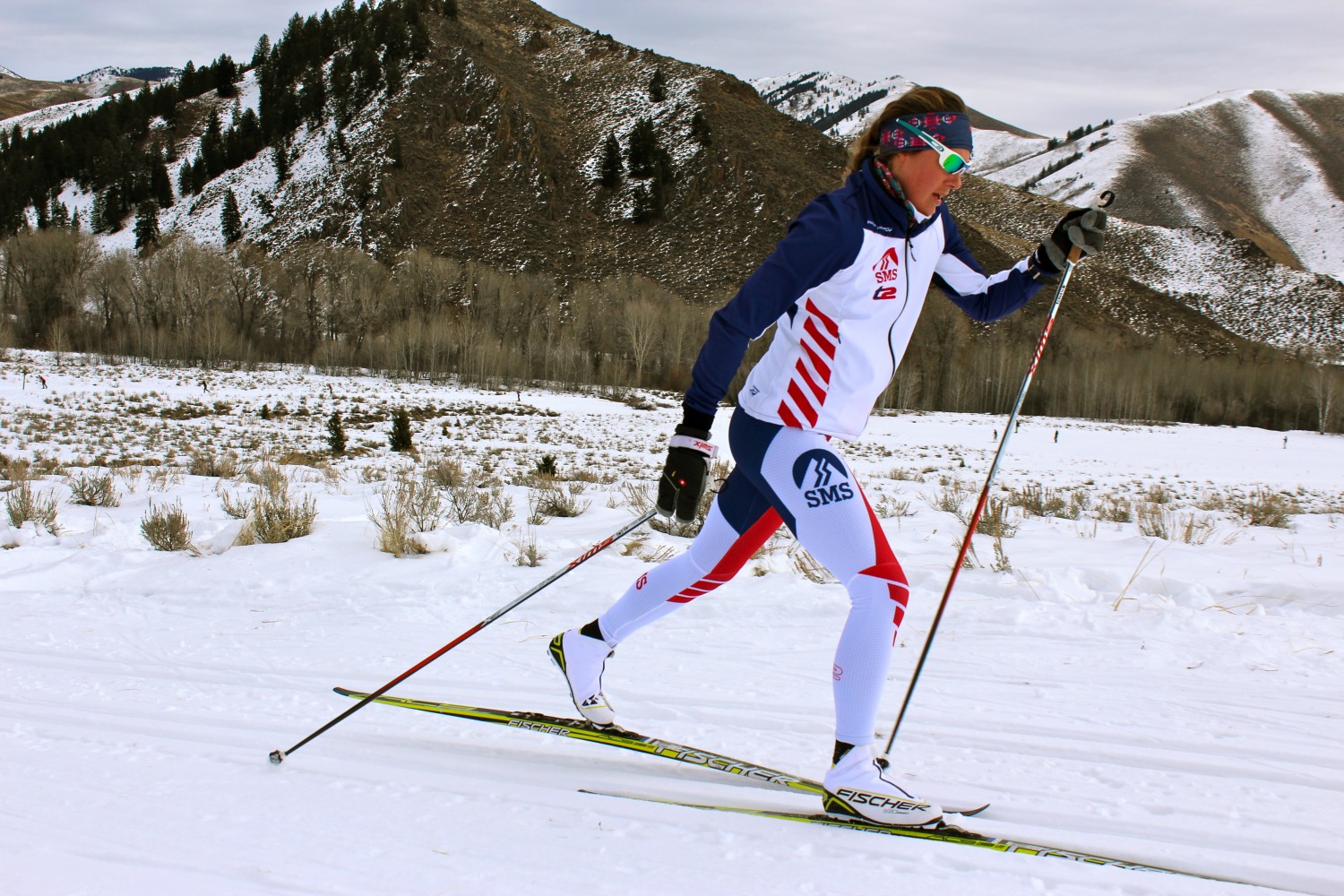
    Annie Pokorny  (SMST2) at the top of the coach's climb for the SuperTour 1.3 k  classic race course in Sun Valley, Idaho.
    Annie Pokorny (SMST2) at the top of the coach’s climb during a training day before the December 2015 SuperTour in Sun Valley, Idaho.

    While training and racing with SMST2, Pokorny continued to take classes at Middlebury and balanced coursework with an international race schedule. She would take the fall semester off when training volume was high and take classes full time in the spring.

    “The logistics have certainly been complicated, coordinating with professors to miss multiple weeks or months of class by Skyping into lectures (an idea inspired by Sadie Bjornsen), writing additional essays and navigating the black hole that is European village internet,” Pokorny wrote in an email. “However, I got to take advantage of the international racing available to me; finding balance never felt like a sacrifice.”

    While Pokorny has posted solid results the past two seasons with SMST2, another breakthrough season proved elusive. With both her skiing and academic goals in mind, Pokorny made another pivitol decision — to return to college racing.

    “I decided to return to college racing because it gave me the chance to have six weeks of consistent, competitive, comped racing while also allowing me the structure to take a full course load and graduate in the spring,” she explained.

    However, the process of returning to collegiate racing required more than just agreement from her coaches. Because collegiate cross-country skiing is an NCAA sport, athletes must abide by the NCAA amateurism rules and in the eyes of the NCAA, Pokorny was considered a professional athlete while skiing for SMST2.

    However, since Pokorny could prove she never made money from racing at SMST2, she was eligible to return to the collegiate circuit after being reinstated as a Middlebury athlete as a senior with junior eligibility. To ensure everything was in order before she put on a Middlebury suit, Pokorny sat out the first two carnival races.

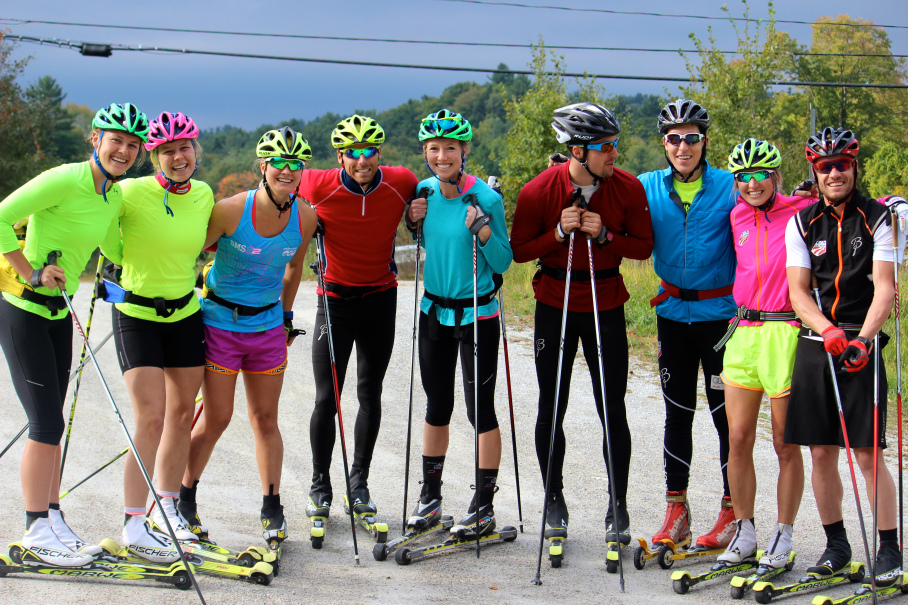
    The SMS T2 team at the 2014 100 k Ski-A-Thon. From left to right: Annie Pokorny, Annie Hart, Jessie Diggins, Andy Newell, Erika Flowers, Ben Saxton, Paddy Caldwell, Sophie Caldwell, and Simi Hamilton. (Photo: SMST2 Blog)
    Annie Pokorny (l) with several Stratton Mountain School (SMS) T2 teammates in 2014. (Photo: SMST2 Blog)

    Although it was a process, Pokorny said she felt supported in her decision from Middlebury, SMST2 and the ski community.

    “Patrick O’Brien and Sverre Caldwell at SMST2 showed an immense amount of support for me returning to collegiate racing, which I’m glad I had before starting the process of returning,” she wrote. “When we knew I had eligibility, the Middlebury program communicated that to the rest of the Eastern Intercollegiate Ski Association (EISA) circuit and I received nothing but support from every coach and competitor.”

    Pokorny describes her transition back as “nearly seamless.” In addition to being welcomed back to the team and collegiate racing, being on campus and attending lectures eliminated the stress of remote coursework.

    She has also returned as a force on the EISA circuit, winning the 5 k classic pursuit at the Williams Carnival, the 5 k freestyle at Middlebury Carnival, taking second in the 10 k classic at University of Vermont Carnival and earning a berth to NCAA Championships.

    “On the skiing side, I think one of the valuable lessons of skiing internationally is that it teaches you a certain flexibility and ability to navigate with new waxing, coaching and racing situations, so everything leading up to the races felt completely normal to me,” she wrote. “The Midd coaches, Andrew Johnson and Patty Ross, have worked to make sure that I felt supported on training and race days while the entire Midd team embraced my return like I was coming home.”

    The transition also illuminated the unique and constructive culture of collegiate racing and how it can pave the way for international racing.

    “I suppose one way my perspective has changed is that as an older, more experienced racer, I can appreciate the details that make racing NCAA a standout experience,” she explained. “In addition to the team culture and glitter and pride in representing your school, I can better see how what we learn on this circuit can transfer to international racing. The practice in mass starts, for one, and scoring points for and representing something greater than yourself, for another, are two things that will contribute to my racing after I graduate.”

    Although it is easy to think that skier development is a linear process, this is rarely, if ever, the case. Pokorny’s grounded thoughts on her journey illustrate this phenomenon. There are lessons that can be taken from every race, from every experience despite if an athlete is aware and open to growth.

    “I never considered returning to college racing a step back, but rather a step sideways, onto another incredibly competitive circuit that would contribute to my growth as a skier,” she wrote.  “In the past three seasons, I have had some incredible experiences and feel that I have grown as a skier in so many different ways. I would never choose a different path, circuitous as it was.”

  • Beckwith Leaves GMVS, Kuzzy and Howe Hired to Run Academy’s Nordic Program

    Beckwith Leaves GMVS, Kuzzy and Howe Hired to Run Academy’s Nordic Program

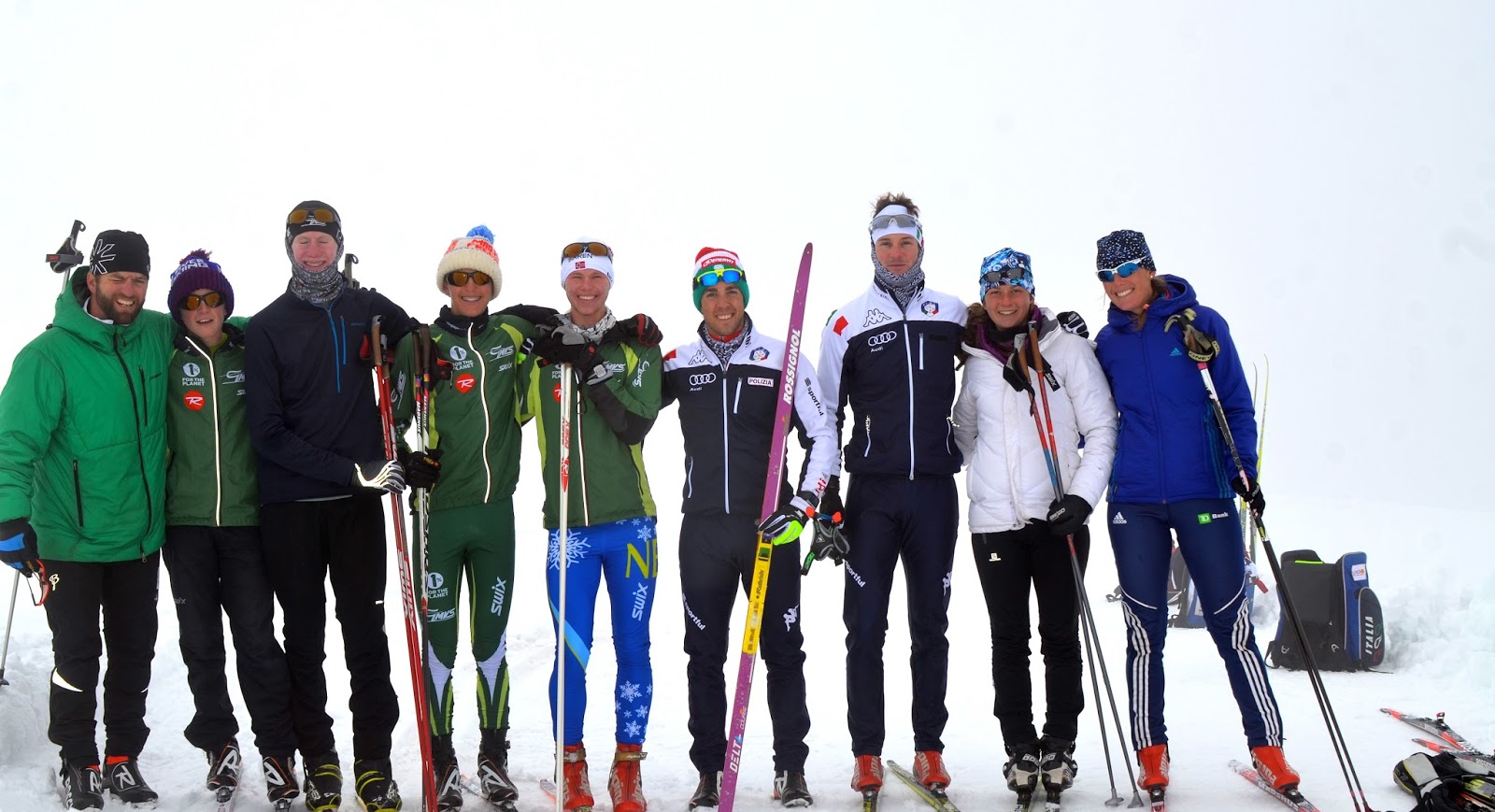
    A group shot of the Green Mountain Valley School (GMVS) Nordic Team with Italian national-team members Federico Pellegrino and Simone Urbani. Pellegrino has won three individual World Cups. The GMVS team traveled to Italy in early September for two weeks of training around Mals and on the Stelvio Glacier. (Photo: http://gmvsxc.blogspot.com/2015/09/day-10-stelvio-2.html)
    A group shot of the Green Mountain Valley School (GMVS) Nordic Team with Italian national-team members Federico Pellegrino and Simone Urbani. Pellegrino has won three individual World Cups. The GMVS team traveled to Italy in early September for two weeks of training around Mals and on the Stelvio Glacier. Longtime nordic director Justin Beckwith is pictured at far left, and new coach Katrina Howe at far right. (Photo: gmvsxc.blogspot.com)

    Over the last nine years, Justin Beckwith’s name has become synonymous with the Green Mountain Valley School (GMVS) in Waitsfield, Vt. Now, with the hiring of 2010 Olympian Garrott Kuzzy as nordic director and biathlete Katrina Howe as nordic coach, two other well-known individuals in the ski community have become the new faces of the program, and Beckwith has vowed to help with the transition.

    But before Beckwith — a former Middlebury College skier, Junior World Championships coach and wax technician, J1 Scando Trip leader, and the New England Nordic Ski Association’s 2012 coach of the year — started as an assistant coach at GMVS, he built houses.

    That’s one of the trades he’s returning to.

    In August, Beckwith, 36, decided to step down as Green Mountain’s nordic director, ushering in a new era for the program, which started in 1981 under Jim Fredericks. Muffy Ritz took over as nordic director from 1986 to ’89, after which GMVS Nordic went by the wayside at the ski academy until Norwegian Jon Arne Enevoldsen started a biathlon program in 2002, according to the Vermont Ski and Snowboard Museum.

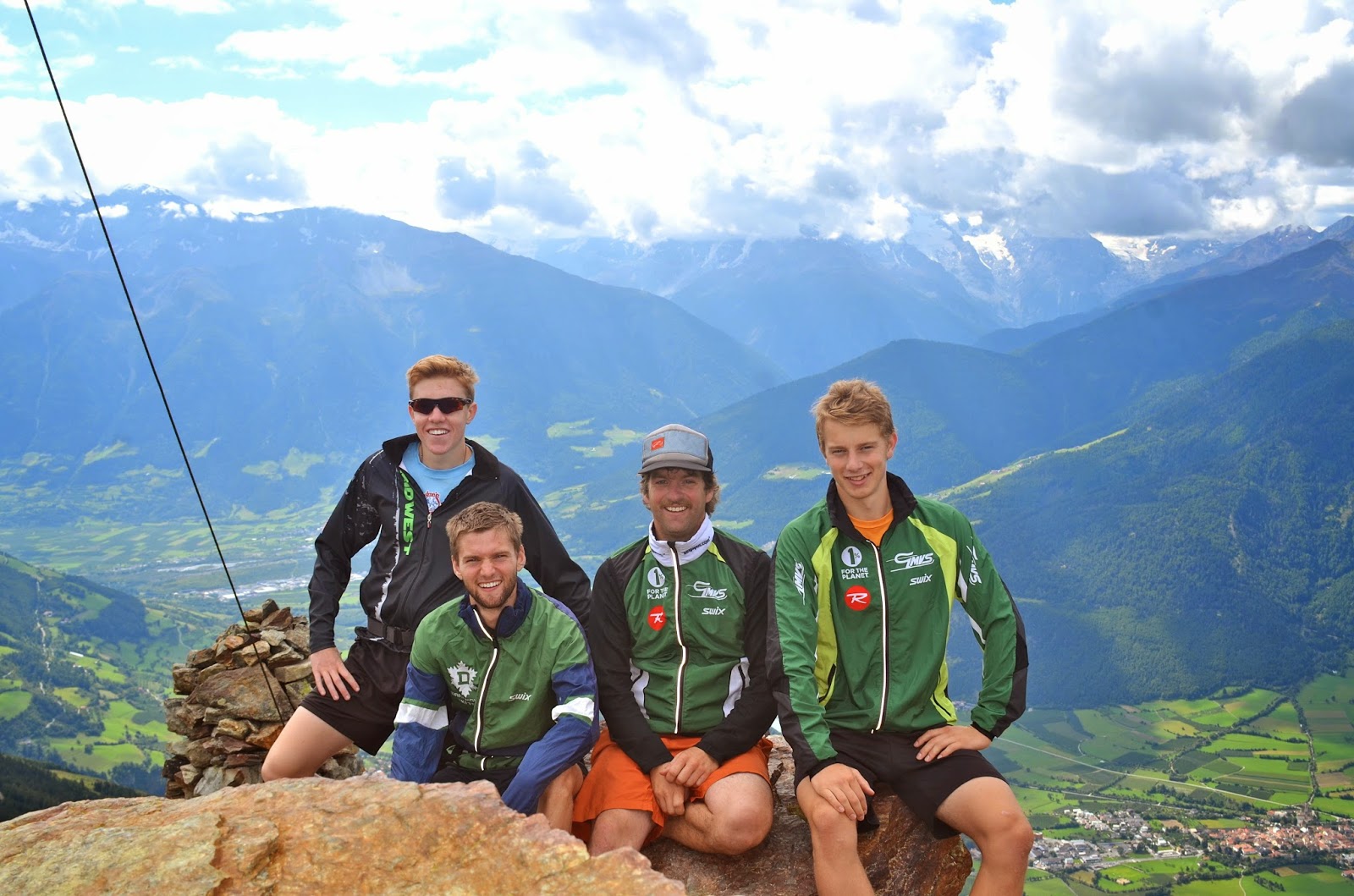
    GMVS elite and postgraduate athletes Nick Gardner, David Sinclair, GMVS head coach Justin Beckwith, and Ian Moore (l-r) during their September trip to Italy. (Photo: GMVS)
    Former GMVS head coach and nordic director Justin Beckwith (second from r) with Green Mountain’s former elite and postgraduate athletes (from left to right) Nick Gardner, David Sinclair and Ian Moore (l-r) during last year’s fall trip to Italy. (Photo: GMVS)

    A few years later, Beckwith came into the picture. In a phone interview on Monday, he recalled how the current GMVS nordic program started with a Norwegian coach and core group of families. Through grassroots efforts, targeting local Bill Koch programs and creating a “viable option for kids from the [Mad River] valley to start taking up cross-country,” the private school’s nordic team began to attract more homegrown skiers from central Vermont. In turn, that spawned interest well beyond the state’s borders.

    During Beckwith’s tenure, in which he led the program for the last seven years, he also united with local clubs to develop the Central Vermont Co-Op Race Series to elevate the level of nordic competition. His largest team size was 15. This year, its has seven nordic athletes, including one post grad.

    “Over the years, I’ve been able to support some really awesome athletes in the program,” Beckwith said. “To be able to offer that opportunity, helping foster a passion for skiing and then to get to see them become young adults and continue to do amazing things.”

    Sometimes, he had to dig into his own pockets to do so. And while he said it was a personal decision to step down, he felt the time was right to put the program into new hands for strategic planning and new energy.

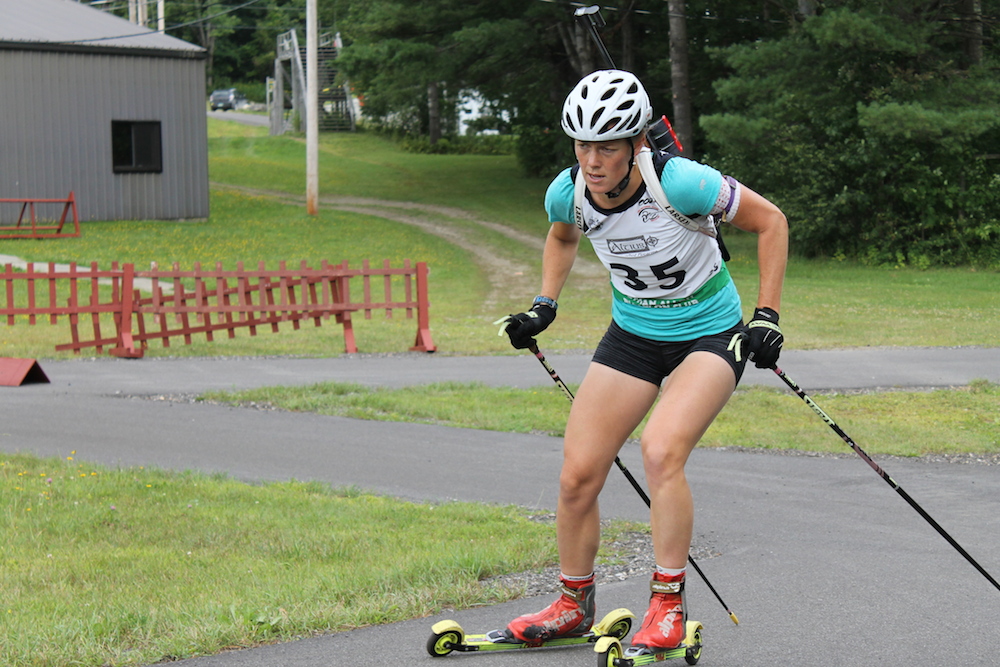
    2014 North American Rollerski Championships 7.5 k sprint at Ethan Allen Firing Range in Jericho, Vt.
    Katrina Howe, a former biathlete with the Maine Winter Sports Center Olympic Development Team, competing at last year’s 2014 North American Rollerski Championships in Jericho, Vt.

    That’s where Kuzzy and Howe came in.

    Howe, a former national-development team biathlete who spent the last five years training with the Maine Winter Sports Center (MWSC) Olympic Development Team, joined Beckwith as an assistant coach in July. At 29, she had retired from racing this spring — her decision prompted by a loss of funding at MWSC — but she wasn’t ready to leave the sport.

    “I knew I wanted to stay involved and I always knew I wanted to be a coach,” Howe said on the phone last week. “I contacted Justin and it turns out he needed an assistant coach.”

    He hired her and the two went ahead planning the summer, including a fall training camp in Italy. Before she started, Beckwith and his then-assistant coach Shane MacDowell hosted an Eastern Regional Elite Group (REG) in June. MacDowell left GMVS to join Northern Michigan University as an assistant coach in July.

    “There’s been a lot of change in the program [recently],” Beckwith said.

    For the REG camp, Beckwith’s long-term goal had been to boost enrollment. New England has so many summer training options that it’s often difficult to unite the best juniors at a single venue, he explained. The REG camp attracted New England’s entire J1 and J2 teams, he said.

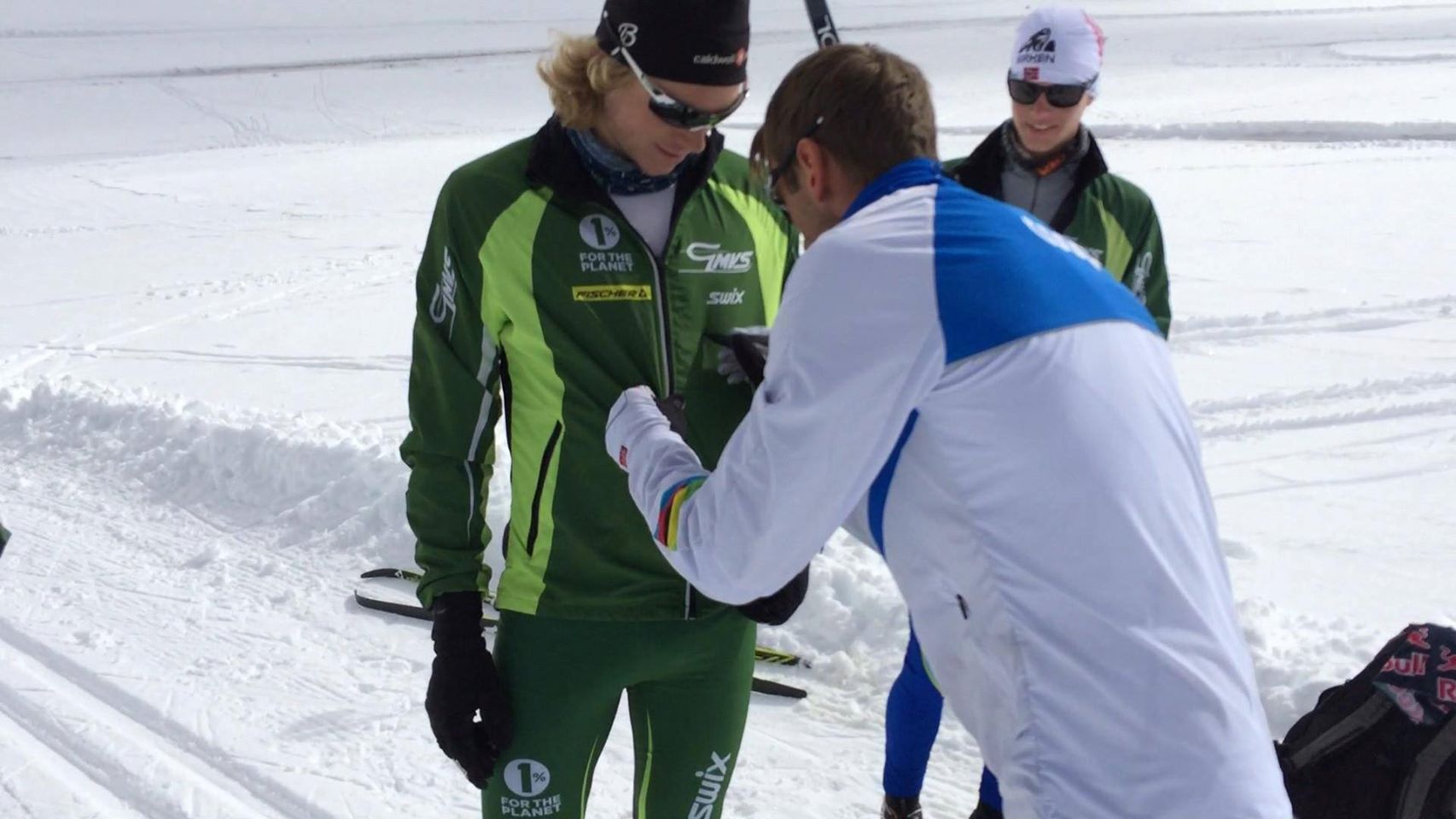
    Norwegian Petter Northug signs a GMVS nordic athlete's jacket during a recent trip to Italy for skiing on the Stelvio Glacier. (Photo: Petter Northug/Facebook)
    Norwegian Petter Northug posted a photo of himself on Facebook signing a GMVS nordic skier Forrest Hamilton’s jacket during a recent trip to Italy for skiing on the Stelvio Glacier. He captioned it, “Big in the US!” (Photo: Petter Northug/Facebook)

    “It was a great success … I think we were missing two to three kids from the junior national team,” he said, adding that there were 38 participants. “I would say we had 95 percent of the best kids in New England together.”

    That was a capstone on the previous open training camps GMVS hosted for the last eight summers.

    “I just wanted to make sure I was handing it off [to the right people],” Beckwith said of the nordic program. “Katrina was awesome. … I’m really happy that Garrott stepped up,” he added. “We have had some great conversations.”

    Howe started working for GMVS when school started, Aug. 17. The day before, she learned Beckwith wasn’t returning as head coach.

    “It was a pretty sudden transition,” she said. “We had about two-and-a-half weeks of school and Justin was around so he definitely helped me with a basic knowledge and lay of the land.”

    After that in early September, Beckwith, Howe, staff member Jere Brophy, and their athletes traveled to Mals in northern Italy for two weeks of dryland training — including hiking and rollerskiing — and on-snow skiing at the Stelvio Glacier.

    New GMVS nordic director Garrott Kuzzy (Photo: GMVS)
    New GMVS nordic director Garrott Kuzzy (Photo: GMVS)

    When they returned in late September, Kuzzy had been hired as nordic director. In the time since — the last two weeks — he’s been working with Howe.

    “This August, when Justin decided he was going to move on, the Green Mountain Valley School reached out to me and I decided it was a great opportunity to get back into the ski world and work with high-school age level kids,” Kuzzy said. “… It’s not a huge life transition. It’s just an opportunity to be more involved in skiing. I think they’ve got a lot of resources and are very dedicated to the nordic program.”

    Kuzzy, 32, a Middlebury grad who spent the last several years in Middlebury and will continue to live there, previously served as product director of VBT Bicycling and Walking Vacations. While he explained it was a “very challenging decision to leave” VBT after four years, he always wanted to stay involved in nordic skiing. He did so by launching VBT’s cross-country ski tours and assisting local clubs, including Mansfield Nordic and Frost Mountain Nordic, at their annual camps.

    “The experience I gained with VBT is an asset and something I can apply to my role as Nordic Director at GMVS,” Kuzzy wrote in an email. “My role consists of a balance between strategic planning, execution and ski coaching. As Nordic Coach, Kat Howe spends much of her time writing the training plan and training with the team.”

    While he and Howe plan to discuss and determine the program’s overarching goals this month, Kuzzy said on the phone last week that they want to further integrate nordic within the GMVS community.

    “Traditionally it’s been an alpine-heavy school,” Kuzzy said, explaining that of roughly 120 skiers at the academy, seven are nordic athletes.

    Howe pointed out that a couple of alpine students had already shown interest in nordic. “The number may grow before too long!” she wrote in an email.

    “At this point, my goal is to provide as much opportunity as possible for skiers who really want to see what they can do with nordic skiing,” Kuzzy explained. “One thing I really like about GMVS is the academic focus; it was recently rated the top academic private high school in Vermont [by the 2015 Niche Rankings]. … And this motto of, skiing is a metaphor for life. My goal is to extend the opportunity, to learn more about life through ski racing.”

    Howe said she felt similarly.

    “If I didn’t have the interest or the academic [background], I don’t think I’d totally appreciate the experiences I’ve had as a skier,” the four-year University of Vermont skier said. “The trips weren’t always necessarily about the racing. I think that carried over well for me.”

    Already, Kuzzy said he’s been having a lot of fun with the athletes.

    “That’s been the highlight, the workouts with the kids,” he said. “They’ve been fantastic.”

    “They’re just all awesome, hugely motivated [athletes],” Howe said. “They have a huge world sense of adventure. That’s why I fell in love with nordic, and these kids just love that and want to get out there and do new things. It’s not just about specific training for them, and that’s definitely come from Justin.”

    “They have a huge world sense of adventure. That’s why I fell in love with nordic. … It’s not just about specific training for them, and that’s definitely come from Justin.” — GMVS Nordic Coach Katrina Howe, on the team’s current athletes

    While Beckwith was unsure what his exact role with the program would be this winter, he knew he’d be offering race support. So far, he’s filled an advisory role to help with the transition and was part of the recruiting process for a new director, he said.

    Beckwith has also been the lead kickwax technician for New England at Junior Nationals for the last six or seven years, and he plans on doing that again this season.

    “It’s definitely open ended and I want it to be a positive vibe,” he said. “It was hard to leave my current kids… [but] I’m not leaving, I’m still here, part of their lives, but it’s definitely a hard transition for sure.”

    He’ll continue to live in Warren, near the school, where he can show Kuzzy and Howe the traditional time trial spots, and their starting and ending points.

    “I definitely envision doing some workouts with them,” he said.

    Meanwhile, he said he’ll be able to spend more time with his new wife, Brie Beckwith, a physical trainer for U.S. alpine skier Mikaela Shiffrin and the U.S. women’s alpine team, whom he married in April. He’ll also continue building with friends.

    “It’s pretty fun to get back to that,” he said.

    This winter, Beckwith said he’ll groom the Sugarbush golf course and help “the community in areas I was not able to before. … It’s exiting to not have the narrow focus of helping one program, but helping all programs out, and I definitely plan on being a part of the New England waxing staff.

    “The last two years I’ve been with the World Junior kickwax staff so I’m leaving all doors open,” he added. “I plan on staying involved as a ski tech.”

  • Cold Continues, Races Carry On at Middlebury Carnival

    Cold Continues, Races Carry On at Middlebury Carnival

    MIDDLEBURY, Vt. — Cold temperatures have been the norm for this season of EISA racing. The Middlebury Carnival was no exception, as some of the coldest predicted temps of the season lead to changes in race schedules in hopes of maintaining a safe and fair event. New snow also came along with the cold temperatures, creating slow and grueling conditions for both Friday and Saturday’s competitions. The Tormondsen Family Race Course, site of action at the 2013 NCAA Championships, featured plentiful natural snow and pristine conditions. A 10-kilometer classic race was held on Friday for both men and women, while 5 and 10-kilometer freestyle races were contested on Saturday.

    Friday: 10 k Classic

    Eirik Fosnaes (UNH) and Hugo Fontaine (LAV) round a corner in the men's 10k classic at Middlebury (photo: Silke Hynes)
    Eirik Fosnaes (UNH) and Hugo Fontaine (LAV) round a corner in the men’s 10k classic at Middlebury (photo: Silke Hynes)

    A familiar scene took place in the women’s race on Friday: three racers battling it out for the win, while others chased for fourth. Despite the individual-start format, it was once again the trio of Heather Mooney (Middlebury), Annika Taylor (UNH) and Corey Stock (Dartmouth) claiming the podium. The Panther cheering squads were out in force, and on her home course Mooney prevailed by 10 seconds over Taylor. Stock settled for third, another 23 seconds back.

    With the exception of occasional appearances by other strong racers, the top of the women’s field has been relatively consistent this season. Mooney, Taylor and Stock have finished on the podium in many of the past few races, with Mooney and Taylor taking the lion’s share of the wins.

    Mooney led the Panthers to a win in the team score, though the women of Bates College were the only team to put three racers in the top 10 en route to second place. Hallie Grossman, Sadie James and Tara Humphries finished in fifth, eighth and 10th place, respectively, helping the Bobcats edge the UVM women by one point.

    The men’s podium was a much closer affair, with the top three men separated by a mere eight seconds. Jorgen Grav of UVM took the top spot, with Dartmouth’s Silas Talbot taking second.

    Not far behind was Laval’s Frederic Touchette, who ended up less than three seconds behind Talbot. The first three men had a clear gap to fourth, as classic specialist Per Lindgren picked up his third top-10 of the season in 4th, 26 seconds back.

    Saturday: 5/10 k Freestyle

    Annika Taylor skates to a win in the Middlebury 5km freestyle (photo: Silke Hynes)
    Annika Taylor skates to a win in the Middlebury 5km freestyle (photo: Silke Hynes)

    While the thermometer may have read a little warmer than the low single-digits of Friday, a damp day and some wind made Saturday’s freestyle event feel quite frigid. Most racers, accustomed to such conditions after multiple weeks of battling the cold, were well-prepared with buffs, face-tape and overboots.

    Through the cold snow it was Annika Taylor of UNH who took the win for the women, swapping places with Friday’s classic champion Heather Mooney of host Middlebury. Mooney nearly earned a sweep of the weekend, finishing less than three seconds from the win.

    For the second day in a row Dartmouth racer Corey Stock took third, and the women’s podium players remained consistent for both days of competition.

    In the men’s race, Rogan Brown of UVM continued an impressive streak of freestyle performances with a win over Dartmouth’s Paddy Caldwell. Recently returned from strong results at the U23 World Championships in Almaty, Kazakhstan, Caldwell was unable to match Brown’s pace and settled for second place.

    Finishing on the podium for a second day in a row was Catamount Jorgen Grav who, along with Jack Hegman in fifth, gave UVM a decisive hold on the team score for the event. In fourth was Laval’s Frederic Touchette.

    The EISA will take a break this coming weekend. The EISA Regional Championships will be held February 27th and 28th in Lake Placid, New York. Saint Lawrence University will host the events on the 1980 Olympic trails of Mt. Van Hoevenberg, and will also play host to the 2015 NCAA Championships two weeks later.

    Results

  • Snowstorm and Cold Temperatures Set Backdrop for EISA Racing at St. Michael’s Carnival

    Snowstorm and Cold Temperatures Set Backdrop for EISA Racing at St. Michael’s Carnival

    EISA Women await the start of the 4x3 mixed-gender relay
    EISA Women await the start of the 4×3 mixed-gender relay (photo: Silke Hynes)

    Huntington, VT

    It is only once every few years that Saint Michael’s College hosts an EISA event. Before this past weekend the most recent SMC Carnival was in the winter of 2010, just prior to the Vancouver Olympics. For their competitions this year, racers were treated to great snow and enthusiastic hosts at the Sleepy Hollow Ski and Bike Center in the woods of Huntington, Vermont. It was a weekend of classic-only racing on narrow, wooded trails, and heavy snowfall throughout the first day of racing contributed even more to the scenic locale.

    Friday’s races were 5 and 10-kilometer classic races in individual-start format, while Sunday featured a rare and exciting event: a 4×3 kilometer mixed-gender classic relay.

    Friday: 5/10 kilometer classic

    Heather Mooney (Midd) powers to a snowy win in the 5k classic
    Heather Mooney (Midd) powers to a snowy win in the 5k classic (photo: Silke Hynes)

    Racers arriving and skiing Thursday afternoon were greeted by a relatively flat course featuring long, non-technical descents and smooth gradual climbs. With the recent World Cup exploits of Petter Northug and Dario Cologna double-poling an entire 15k classic race on skate skis in Davos, Switzerland earlier this season, there was hushed talk of some racers attempting the same on Friday. The fast snow and gradual nature of the course certainly lent itself to the idea.

    Upon waking the morning of the race, competitors were greeted with three to four inches of fresh snow on the race loop, with more falling heavily. A relatively benign course was suddenly transformed into a grueling test through slow conditions.

    That didn’t stop two UVM skiers, Cole Morgan and Tobias Trenkle, from opting out of kick wax and putting their poling power to the test: the two Catamounts took to the course on skate skis and were able to earn top-15 finishes. Despite the commendable upper-body devotion of Morgan and Trenkle, kick wax proved to be the way to go this day, as Fabian Stocek of Dartmouth strode his way to a win in the men’s 10k event. The win marked the first EISA victory for Stocek, a sophomore from the Czech Republic who honed his US skiing chops at Holderness before racing for the Big Green.

    Stocek was followed by UNH racer Eirik Fosnaes in second and UVM’s Jack Hegman in third. Hegman is a native of Huntington, Vermont and spent much of his formative years training and racing at the venue. Another Hegman, younger sibling Ben, also finished in the top-10 with a tenth place result.

    A very notable race on Friday was that of Colby skier Silas Eastman. Eastman, with a previous best finish of 12th in this season’s Bates Carnival 20k classic, burst into the top-10 for the first time in a big way. Eastman narrowly missed the podium and nabbed fourth place in the  grueling blizzard conditions.

    For the first time this season, Fosnaes led the UNH men to the top of the team score, besting UVM by just three points. Dartmouth finished in third another four points back, likely hindered by the absence of common scoring members Patrick Caldwell (racing at U23 World Championships) and Silas Talbot (racing down the road in the Craftsbury Supertour)

    Cole Morgan (UVM) tackles the 10k classic on skate gear
    Cole Morgan (UVM) tackles the 10k classic on skate gear (photo: Silke Hynes)

    Conditions were consistent all day, and the women raced through blizzard conditions as well for their event. Absent from the race was the previous weekend’s double-victor Annika Taylor of UNH, and topping the results was Heather Mooney of Middlebury.

    Between the two of them, either Mooney or Taylor have won every EISA race this season, and neither show signs of slowing down. Mooney took the win with a commanding 30 second margin over runner-up Mary-kate Cirelli. A fresh face to the UVM squad but no stranger to the Vermont scene after racing just down Route 7 in Rutland during high school, Cirelli has been on the podium in nearly every race this season. Despite her consistently-strong performances Cirelli is still searching for her elusive first EISA victory.

    In another mark of a strong day for the Mules of Colby, Olivia Amber skied to 3rd place to round out the podium, though the Middlebury women owned the top-10 en route to another strong team finish. Stella Holt (seventh) and Kelsey Phinney (eighth) helped the Panthers top both UVM and UNH on the day.

    Saturday: 4x3k Mixed-gender Classic Relay

    Second-leg male racers await the tag from their first-leg female teammates
    Second-leg male racers await the tag from their first-leg female teammates (photo: Silke Hynes)

    Cold temperatures and new snow from the day prior combined to create slow conditions for this event, but bright sunshine and a lack of wind made for an incredibly bright atmosphere. It seemed everyone was excited to take part in such a unique event: a mixed-gender relay had not been held for at least eight years on the EISA circuit, and team spirits were running high with flags, glitter and face-paint in abundance.
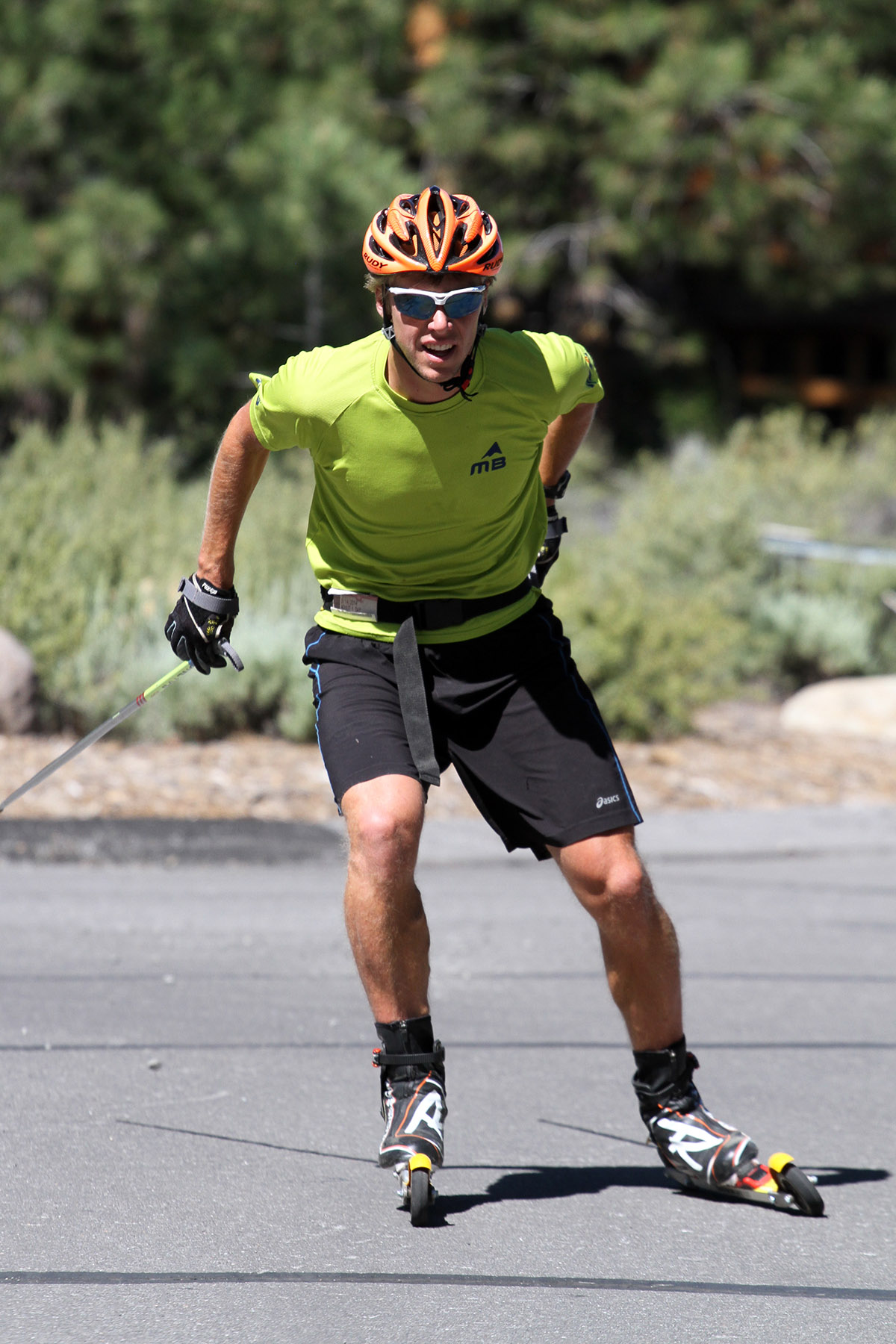
    For racers and spectators alike, the race could not have unfolded with more excitement. The lead changed several times over the course of each leg as skiers fought hard over two steep climbs and a chaotic exchange zone.

    Six top teams stuck together for much of the first lap, but a strong race by Middlebury’s second-team scramble leg Kelsey Phinney gave her teammate Jacob Voltz the lead heading up the first of two significant climbing sections on the course.

    Voltz was eventually chased-down by a group of skiers including Silas Eastman of Colby, who had shown his top form in the classic technique the day prior. Eastman was able to tag off at the front of the race to his Mule teammate and perennially-strong classic skier Amy Bianco. Bianco led with a small gap to the field up the long climb on leg three.

    The lead for Colby wouldn’t last, however, as Middlebury’s hard-charging Heather Mooney caught up to the front of the race during her leg of the event. Mary-kate Cirelli also moved up to put UVM in a scoring position.

    In the final exchange Mooney tagged her teammate Patrick McElravey only a few seconds before Cirelli handed off to fellow Catamount Jack Hegman. Up the first significant climb Hegman had McElravey in his sights and was pushing hard to give chase. Despite the gutsy effort by Hegman, McElravey was able to hold the gap. In the end the first Middlebury team of Stella Holt, Adam Luban, Mooney and McElravey was awarded the victory over UVM.

    Though they rarely spent much time leading the race itself, the top team from Dartmouth was consistently in the mix, and took the final spot on the podium.

    Results for both Friday and Saturday’s events can be found via Bart Timing or EISA Skiing

    Photo Gallery: Exchange zone excitement! (all photos courtesy of Silke Hynes)


  • After Skiing Success, Johnson Sets Eyes on 2018 Games – In Biathlon

    After Skiing Success, Johnson Sets Eyes on 2018 Games – In Biathlon

    Patrick Johnson of the Far West Elite Team rollerskiing at the Auburn Ski Club in June. Johnson recently switched his focus to biathlon. (Photo: Mark Nadell/MacBeth Graphics)
    Patrick Johnson of the Far West Elite Team rollerskiing at the Auburn Ski Club in June. Johnson recently switched his focus to biathlon. (Photo: Mark Nadell/MacBeth Graphics)

    Patrick Johnson has seen success at a lot of different levels of Nordic sport: from representing the U.S. at Junior World Championships to winning collegiate races for Middlebury College and then SuperTours for Sun Valley.

    Last year, his quest for nordic success saw him move to Truckee, Calif., to join the Far West Elite Team, and now he’s tackling an additional new challenge by taking on the sport of biathlon.

    “I had wanted to give biathlon a serious try for several years,” the 25-year-old Alaska native explained in an email. “When I was 9 I tried a couple novice races, but I never really received any coaching on shooting, so most of my memories from those races were of skiing penalty loops and being cold … midway through college I started thinking it would be a really fun sport to compete in. Of course, at that point, I was busy with school and didn’t have a range nearby, so it wasn’t really an option.”

    When he left Middlebury, the U.S. Biathlon Association (USBA) had curtailed their development programs in order to focus on high performance for the next Olympic cycles. But now, USBA is reinstating the development program and has started to look for talent to recruit from elsewhere in the nordic world.

    Johnson working on his shooting. Courtesy photo.
    Johnson working on his shooting. Courtesy photo.

    So while Johnson was interested in biathlon before USBA announced their Talent ID Camp this summer – he had started working on shooting already in the winter – it provided a perfect opportunity for him. He’s been working on shooting for months now and last week, he was officially named to USBA’s Development Team.

    “The Talent ID camp in June was a great experience!” he wrote. “It was a pretty special opportunity to be able to get coaching from the whole national team staff, along with Tim Burke and Andrea Henkel, only a few weeks into my biathlon training. What was especially great about that camp is that you could tell that this new development program was really being bought into by the whole coaching staff and national team athletes of USBA.”

    Since then, he has attended the recently-finished national team camp in Park City, Utah, and will join the team for an on-snow camp in Canmore, Alberta, in December.

    The rest of the time, he trains at home in Truckee with the Far West squad. It’s a small but elite group of cross-country skiers, which Johnson says is perfect for his athletic style.

    “I’m definitely someone who likes to have a little bit of independence and self-direction in figuring out my training plan,” he explained. “I’ve worked with a lot of great coaches over my time skiing, and learned a lot from them, and I have a decent idea of what works well for me in nordic training. The Far West Elite Team is a good fit for me because I have a lot of flexibility in designing my individual training plan, but I also have plenty of resources to help me out on the task.”

    And the variety of potential training activities in California was a big part of what drew him to the area.

    Johnson leading the mass start race at U.S. Nationals in January.
    Johnson leading the mass start race at U.S. Nationals in January.

    “I was just looking to mix things up and find a new place to live and train,” he wrote about the move from Sun Valley to Truckee. “I really love mountains, lakes and sunshine, so naturally Truckee/Tahoe was a place to consider! I am really happy to be out here. There’s so much great running, road biking, mountain biking and rollerskiing, and it’s a place where it’s really easy to get outside and be active. Most days training just feels like getting out and doing what you’d naturally want to be doing even if you weren’t striving towards some race-oriented goal for the upcoming season.”
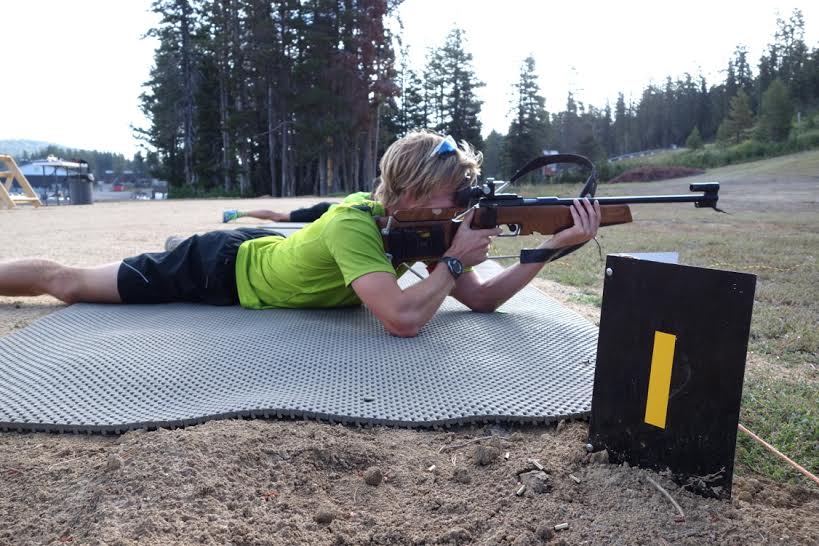
    While there’s no official USBA presence in the area, Johnson has been able to rely on help from Glenn Jobe, an Olympic biathlete from the 1980 Games who now drives development of the sport in California. The Auburn Ski Club now has a growing biathlon base.

    “I’m fortunate to have great support for biathlon through Auburn Ski Club and through my shooting coach, Glenn Jobe,” he wrote. “Obviously without ASC I wouldn’t have had the opportunity to try the sport out this past winter and train for it over the summer. ASC’s biathlon program is only a few years old, but it is growing quickly and there’s a lot of enthusiasm for the sport in Far West … Glenn has been a great resource for me as I’ve learned the sport, and he’s the type of coach that works just as hard, if not harder, than the athletes he coaches. And as an athlete, having that type of coach supporting you can really inspire you to work your hardest and bring your best to every practice.”

    Up next? Johnson hopes to make the U.S. squad to IBU Cup races in Europe this season. Although he’s had plenty of success in skiing and may compete in a SuperTour here and there to fill gaps in his race schedule, he’s completely invested in making his way in biathlon at this point.

    “Though this first season primary goal is learning and gaining experience with the sport, I’m already looking down the road towards 2018 and beyond, which is something that is possible because of the support structure behind me,” he wrote.

  • 2014 NCAA Preview: Colorado, Utah, Vermont, and Others Hungry for Title

    Photo: Flyingpointroad.com (All proceeds benefit NNF)
    An NCAA banner hangs at the 2013 NCAA Skiing Championships in Vermont. The 2014 Championships are set to begin Wednesday in Park City Utah. Photo: Flyingpointroad.com (All proceeds benefit NNF)

    FasterSkier’s coverage is made possible through the generous support of Madshus.

    One-hundred and forty-eight. That’s the number of skiers who have descended upon the ski town of Park City, Utah, to participate in the 2014 NCAA Skiing Championships. The championships will be hosted by the University of Utah, who last had the honor in 2000. The four day event, which consists of two alpine and two nordic races, begins Wednesday and continues through Saturday.

    The cross country portion of the event will take place at Soldier Hollow in Midway, Utah, the site of the 2002 Olympic Games and many national events, including the 2014 U.S. Cross Country Championships.

    The weather in Utah looks to be warm and wet with highs in the mid 40s to lower 50s and precipitation expected on Thursday and Friday, making for tricky waxing and racing conditions. 

    Given the nature of course, sloppy conditions, the field, and the stakes, the competition is set to be fierce. Several schools will be in the hunt for the title of america’s fastest skiing school, but only one will walk away with the championship title.

    Last year at the 2013 NCAA Championships in Ripton, Vt., it was the University of Colorado that came out on top followed by the University of Utah and the University of Vermont. Colorado’s chances in Utah seem a more slim in 2014, as they were unable to win a collegiate weekend all season. However, with a strong showing for men’s nordic, the Buffs may be able to make up for their other weaknesses.

    The University of Utah is hungry to break a three-year-streak of finishing second at NCAAs. After winning last weeks Rocky Mountain Intercollegiate Ski Association (RMISA) Championships, Utah goes into this week’s races with confidence and energy. Having the home advantage should certainly help Utah as well. However, if they want the title that’s slipped out of their hands the past three years, they’ll have to rely less on their alpine team and see better results from their nordic squad.

    It would be asinine to discount the University of Vermont, whose skiers have been looking especially strong this year. In the 2012 Championships they demonstrated that they could tackle western altitudes with ease in Bozeman, Mont. And with Soldier Hollow looking to be warm and wet this week, the conditions may favor eastern skiers who are used to rough easter weather.

    The East

    The eastern skiers are as strong as ever this year with the undefeated University of Vermont setting its sites on another NCAA victory. The 2012 champions have a strong team in both alpine and nordic which has contributed to their uncontested dominance this season.

    Anja Gruber (University of Vermont) racing to fourth in Saturday's 10 k classic mass start at Soldier Hollow for her best U.S. nationals result by more than 20 places. (Photo: Bert Boyer/http://bertboyer.zenfolio.com/) All proceeds from photo sales will be directly donated to NNF.
    Anja Gruber (University of Vermont) racing to fourth in the 10 k classic mass start at Soldier Hollow for her best U.S. nationals result by more than 20 places. (Photo: Bert Boyer/http://bertboyer.zenfolio.com/) All proceeds from photo sales will be directly donated to NNF.

    The east finds its greatest strength in its women. Anja Gruber, a native of Germany, has been UVM’s shining star this year, and finishes the regular season as the top-ranked skier in the Eastern Intercollegiate Ski Association (EISA). Last year’s NCAA 5 k classic champion, she placed fourth at the 2014 U.S. nationals at Soldier Hollow on the same course where the NCAAs are being held. Throughout the season the senior has been a top contender in the EISA circuit, consistently winning all but one classic race and finishing in the top three in every freestyle race.

    UVM’s talent doesn’t stop there, with sophomores Linda Danvid-Malm of Umea, Sweden and Stephanie Kirk of Anchorage, Alaska, showing that Gruber isn’t the only catamount with claws. Danvid-Malm has been dominant in freestyle, winning three out of six EISA races this season. Kirk, who competed in Italy as part of the U23 World Championships, has been a consistent performer as well highlighted by a spectacular win in the 15 k skate mass start at the EISA Championships at Middlebury College last weekend.

    Annie Hart of Dartmouth College has been the only real threat to Vermont’s dominance all season, having been the only non-UVM woman in the east to win a scored collegiate race this season. Consistently on the podium in classic races, Hart finally saw her hard work pay off at the EISA championships when she won the 5 k classic. With the same event being held on Thursday, Hart is hungry for a national championship title. Corey Stock, also of Dartmouth, has had a decent season as well, ranking fifth in the eastern points standings.  

    While not as dominant as their women, the UVM men shouldn’t be taken lightly. Their lead skier, Scott Patterson of Fairbanks, Alaska, has won three of the six collegiate races he’s participated in this season. Patterson made the headlines earlier this year when he riskily tried to break away from the men’s field in the 30 k mass start. Unsurprisingly, the move failed on the national level, but a similar move with in a collegiate field may be what Patterson needs to secure a title..

    Sophomore Jorgen Grav is another UVM skier to watch in Soldier Hollow. The Oslo, Norway native finished fifth in the EISA rankings, followed by teammate Rogan Brown of Durango, Colo., in sixth.

    Silas Talbot (DAR)
    Silas Talbot of Dartmouth racing in the 2013 NCAA Championships at Middlebury, Vermont.

    Two Dartmouth College skiers have the chance to dethrone the dominant catamounts. Paddy Caldwell and Silas Talbot have both been atop the results this year both winning multiple carnival races. Caldwell skied to a convincing win in the men’s 20 k freestyle at the ESIA Championship and was named 2014 rookie skier of the year for the region.

    A notable emission from this year’s NCAA Championships will be Ben Lustgarten of Middlebury College. Lustgarten had a spectacular year which started with strong skiing at the 2014 U.S. National Championships, continued with racing at the U23 World Championships, and finished with a win in the 10 k classic (by 50 seconds!) at the EISA Championships. Lustgarten would have been a top contender in Soldier Hollow this year but due to an knee injury he sustained in the 20 k mass start at the EISA Championships the senior will be on the sidelines.

    —

    The West

    Unlike the east, there has been no clear contender for the top spot in the west. At the beginning of the season it looked as if the University of Denver might be ready for another NCAA Championship, but by the time the RMISA Championships was over last week, Denver had finished fourth, roughly 60 points behind the winner, the University of Utah. Despite the end-of-season falter, Denver still held the top spot in the regular season standings demonstrating their potential.

    Sylvia Nordskar (University of Denver), fourth
    Sylvia Nordskar of the University of Denver racing in West Yellowstone, Montana earlier in the 2013/2014 season.

    Sylvia Nordskar of Bærum, Norway, is the most-likely woman from the West to capture an NCAA title. The University of Denver freshman has either won or placed second in every collegiate race that she has competed in this season and has no signs of stopping.

    Senior Makayla Cappel, a Sun Valley native skiing for Denver, became a late-season standout after winning the 5 k classic and taking third in the 15 k freestyle mass start at the RMISA Championship in Minturn, Colo. After dealing with illness upon her return from the World University Games in Italy, Cappel recovered from a slow start to her season to rocket herself onto the first team All-RMISA. Rounding out the Denver women is Silje Benum, who has also had many top finishes this season.

    Only two non-Denver skiers have been able to top Nordskar this season. The first is Marine Dusser of the University of Alaska Anchorage, who was third in the women’s 15 k in 2013 and has had several wins in the RIMSA circuit this year. The second is Slovenian Eva Severrus of the University of New Mexico, a freshman who has helped New Mexico improve its standings in the west.

    Sloan Storey of the University of Utah is another western woman to watch. Storey joined the U.S. contingent at the Junior World Championships in Italy earlier this year and made first team All-RMISA after and exemplary collegiate season.

    Rune Oedegaard (CU) 8th place classic
    Rune Ødegaard racing in the West Yellowstone Super Tour.

    Like its women’s team, the Denver men were the top team in the west during the regular season. The trio of Moritz Madlener, Pierre Guedon and Trygve Markset made the Pioneers proud in 2014 and hope to continue the trend into the NCAA Championships. However, they’ll need to have a better performance than they did at the RMISA Championships, where they garnered only 46 points compared to the University of Colorado’s 93.

    Norwegians Rune Ødegård and Mads Strøm, a junior and freshman, have been the top skiers from Colorado throughout the latter half of the 2014 collegiate season. After sitting out the first two weekends of collegiate racing the duo has consistently been in the top five. Ødegård won last year’s 10 k classic at the 2013 NCAA Championships and looks to continue that success into 2014.

    The University of Utah men have shown that the best skiers in the west aren’t just based in Colorado. Niklas Persson, Oscar Ivars, and Noe Bellet have all performed well this season, garnering spots on the second team All-RMISA. However, all three will need to up their game if they want to outpace the Catamounts and the Buffs.

    Colorado, Denver, and Utah have had steady competition from the 2013 RMISA skier of the year, Lukas Ebner of the University of Alaska Anchorage. The senior, who hales from Germany, hopes to build on a season that has included multiple podiums.

    —

    Central

    The Central Collegiate Ski Association (CCSA) has traditionally trailed the east and west in terms of results at past NCAA Championships, which is reflected in the small numbers of qualifiers from the region. Despite that fact, there are several top performers who have a chance at an NCAA podium in Utah. 

    Rosie Frankowski of Northern Michigan University in the 20 k freestyle mass start at U.S. Nationals at Soldier Hollow.
    Rosie Frankowski of Northern Michigan University in the 20 k freestyle mass start at U.S. Nationals at Soldier Hollow.

    Rosie Frankowski, a senior of Northern Michigan University, has had an excellent season and looks to continue her speed into her time in Utah. Frankowski finishes her regular season as the top skier in the CCSA.

    Freshman Nicole Bathe of University of Alaska Fairbanks has turned out to be quite the powerhouse in classic races. Bathe has had excellent start to the season after finishing third in the classic sprint at the 2014 U.S. Cross Country Championships.

    Fellow Fairbanks  teammate Logan Hanneman looks to be the top male competitor for the CCSA in Utah. The junior finished fifth in the freestyle sprint at U.S. Nationals earlier this season.

    —

    Whether Colorado can reclaim its title, Utah can snap its second place curse, or Vermont use the sloppy conditions to their advantage, the NCAA Championships will be an exciting display of talent from the fastest skiers in the country.

    The 5 k and 10 k classic will take place this Thursday at 10 a.m. and 12 p.m. MST. The Championships will conclude with the 15 k and 20 k freestyle mass starts on Saturday, also at 10 a.m. and 12 p.m, MST. Watch the action unfold live on the NCAA site and check FasterSkier for reports.

  • EISA Racing at the NCAA Venue: Middlebury Carnival Recap

    EISA Racing at the NCAA Venue: Middlebury Carnival Recap

    In a few weeks the Nordic races of the 2013 NCAA Championships will be held on recently-upgraded courses at the Rikert Touring Center in Ripton, Vermont. The site is home to the Middlebury Ski Team, whose Breadloaf Campus hosted this weekend’s EISA racing.

    Competitors got a chance to test out the new 5k course, which features complete snow-making infrastructure, wide  lanes and tricky corners. The snow-making system proved a worthwhile investment for Rikert this week; only a few miles down the valley, in the village of Middlebury, bright sun and warm temperatures had left the ground mostly bare.
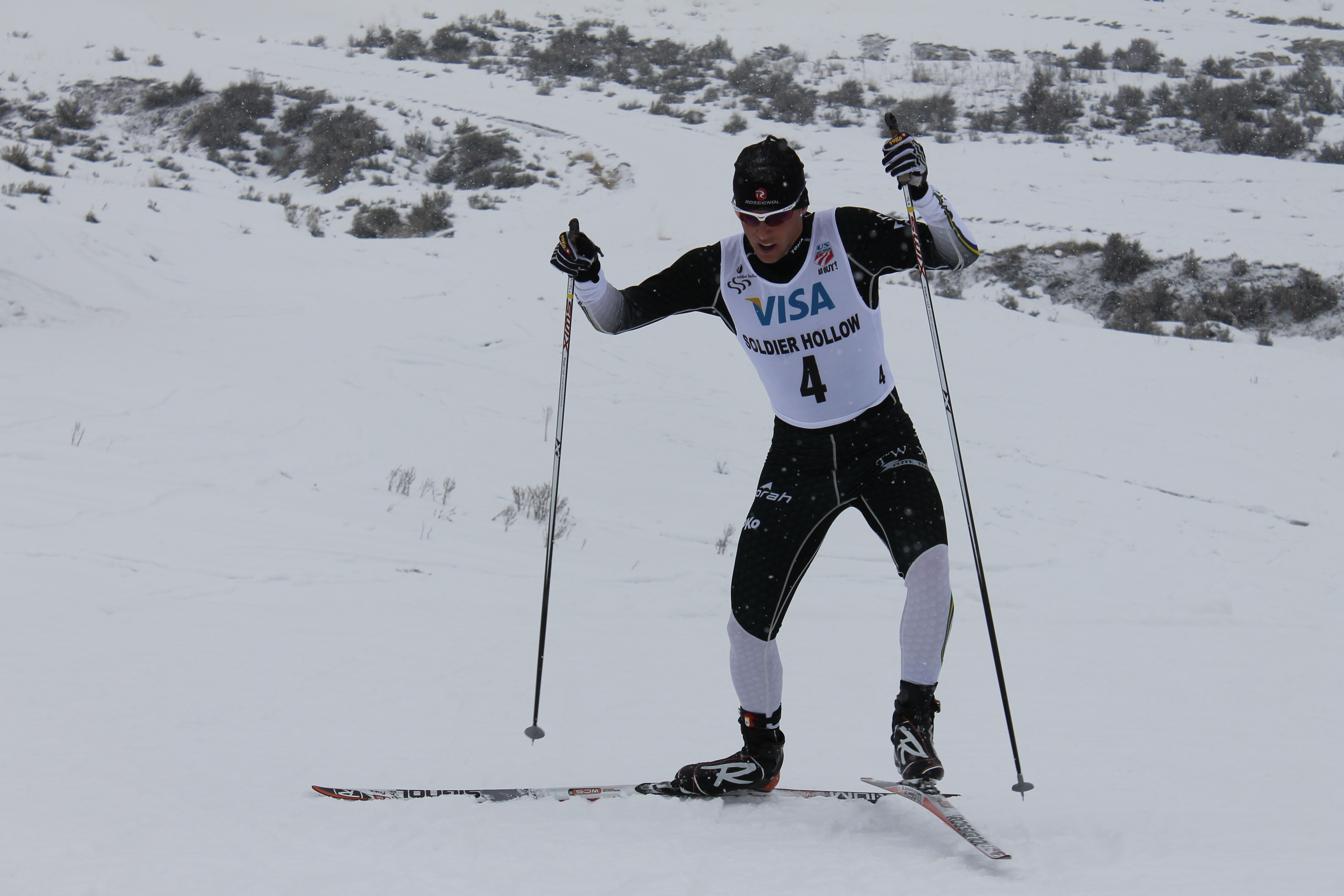
    Snowmaking equipment at Rikert
    Snowmaking equipment at Rikert

    Friday: 5/10k Classic

    As the warming trend continued up at the race venue, teams had their work cut out for them to produce skis for Friday’s classic race that could provide both kick and glide. The course contained bits of everything, and was rapidly changing. Conditions were mostly ice and older snow with a layer of dry powder on top: you likely needed klister to get kick, but if you stepped out of the tracks you were going to be running for the rest of the race. As the course was skied in and temperatures warmed, the loose snow in the tracks became packed down and ‘zero’ skis were getting slick.
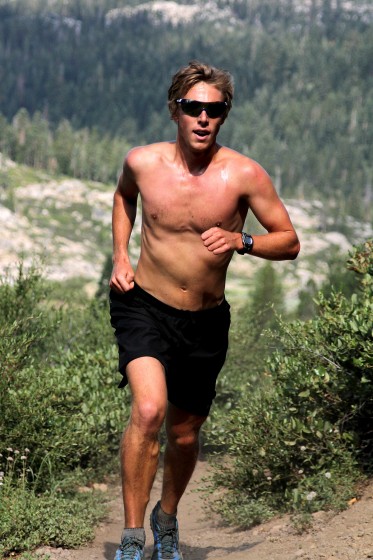
    In the end there was a mix of both skis during the races, with benefits and drawbacks to be had from each. Nobody would have perfect skis, but as always the fastest racer would win the day.

    For the women’s race that meant another trip to the top of the podium for Middlebury’s Annie Pokorny, giving the home team an individual win on the day. Though she has been strong regionally, nationally and even internationally in freestyle events this season, this was Pokorny’s first classic technique win.

    Annie Pokorny took the top spot in Friday's 5k classic (photo: Cory Ransom)
    Annie Pokorny took the top spot in Friday’s 5k classic (photo: Cory Ransom)

    Following Pokorny on Friday was Catherine Auclair of Universite Laval. The Canadian school has been making appearances at EISA races for a while now, and are welcomed to the league by all. Though the school is technically not an NCAA institution (and therefore their racers do not count for NCAA rankings, nor is the school allowed to compete at Regional Championships next weekend), Laval has proven itself a strong and competitive team within the region.

    The final podium spot on Friday went to UVM’s Anja Gruber, who has thus far claimed a podium in every classic technique race of the season. With the final classic race next weekend in the same format and distance, Gruber is poised for an incredibly consistent season of stride-and-glide.

    The tricky conditions continued for the men’s race. The tough waxing meant many skiers were spending more time double-poling than they would’ve liked, which is usually not something to be happy about.

    Unless, of course, you are Sam Tarling.

    The Dartmouth senior has proven his strength time and again, such as last year when he chose to go on skate skis during the UNH classic sprint. The course featured a climb to steep that many ruled out double-poling immediately, but Tarling took second in the qualifier there and went on to win the event.

    Tarling’s grit, size and power proved a winning combination on Friday as well. Though he had the 3rd-fastest first lap (UVM’s Scott Patterson led), Tarling took over the lead by the end of the 2nd lap to win by just over 7 seconds. After a rough start, Tarling wasn’t sure how his race would fare.

    “I’m very surprised,” Tarling remarked of his win, “but I’m psyched!”

    Joining Tarling on the podium was Teammate Silas Talbot, who also moved up the rankings from 4th on the initial lap to take the runner-up spot.

    Though he faded a bit over the second half of the race, UVM’s Scott Patterson was able to hang on for 3rd place. Though he is clearly skating on another level this season, Patterson has proven himself to be a threat for the win in either discipline. You could bet he was looking forward to Saturday.

    Saturday: 15/20k Freestyle

    At this point in the season, you know what to expect from Scott Patterson heading into a skate race. The UVM skier has kept his strategy relatively similar for every freestyle event, mass start of otherwise: go out ahead and pile time on everyone else.

    Patterson was gracious enough to let a few others ski with him for the first lap of the men’s 20k mass start Saturday, but soon decided he’d go out for a solo cruise. As Patterson did what he does best, it was a futile fight to keep contact.

    Scott Patterson breaks away from the field at around 6 kilometers. Sam Tarling gives chase
    Scott Patterson breaks away from the field at around 6 kilometers. Sam Tarling gives chase

    Dartmouth’s Sam Tarling and David Sinclair gave chase most aggressively, though after about a lap Sinclair found himself drifting back to a chase pack the eventually held spots 3 through 7.

    Tarling, however, was able to stay within sight of Patterson for a bit longer. Though skiing alone at the front doesn’t seem to phase Patterson this year, it seemed Tarling began to feel the effects. Eventually, Patterson didn’t even need to look back to check on Tarling, though his UVM coaches Pat Weaver and Andrew Johnson continued to provide him with info about his distance and time gaps on the field.

    Whether through fatigue or simply the grim realization that he would not close on Patterson, Tarling began to let the distance between the two grow.

    The race for 1st and 2nd was anticlimactic, but the sprint to the line for 3rd place was more dramatic. Showing a strong return to form, Williams skier Will Wicherski led the chase pack for much of the race. Coming into the final hill, however, it was Middlebury’s Ben Lustgarten and Dartmouth’s Scott Lacy sprinting for the last podium spot. In a lunge 3rd place went to Lacy, as Dartmouth put 2 men on the podium for the second consecutive day.

    The women’s race saw an early break as well, though not by a usual suspect.

    Darmouth’s Mary O’Connell, who had never won an EISA race before, found herself at the front of the pack during the women’s 15k mass start. As O’Connell broke further and further away, it was UVM’s Anja Gruber and Linda Danvind-Malm who gave chase.

    Anja Gruber takes over the lead of Mary O'Connell during the start of lap. O'Connell would eventually retake and hold the lead
    Anja Gruber takes over the lead of Mary O’Connell during the start of lap. O’Connell would eventually retake and hold the lead

    Dandvind-Malm drifted back slightly, but Gruber closed the gap on O’Connell and took over the lead at the 5k mark. The effort to fight back up to the front of the race caught up with the Catamount, however, as O’C0nnell broke away again and skied to the line uncontested for her first victory. Gruber and Dandvind-Malm held onto 2nd and 3rd place, respectively.

    Fourth place went to Annie Hart of Dartmouth, who skied a good portion of the race with a group of skiers from the Pierre Harvey Training Center based out of Mont St. Anne, Quebec. The Training Center and National Team suits of Canada were quite prevalent in both races, as skiers from up north joined the EISA racing for a weekend.

    The final weekend of regular-season EISA racing occurs at Black Mountain in Rumford, Maine next week, as skiers fight for their places at NCAA Championships.

    RESULTS

    BreadLoaf Sign

  • A Relaxed Kuzzy Shifts Training Gears, Gives Back

    Note: This is the second profile in a new series about working out with high-performance athletes. While Alex Matthews was in Middlebury to observe and report, she focused on the kids who trained with U.S. Olympian Garrott Kuzzy at a summer camp. 

    Garrott Kuzzy
    2010 U.S. Olympic nordic skier Garrott Kuzzy, center, summons young skiers to get by him in a game of Sharks and Minnows at a summer youth nordic camp at Middlebury College in Middlebury, Vt., on Aug. 17.

    MIDDLEBURY, Vt. — Leaning on the back of his Volkswagen station wagon, Garrott Kuzzy smiled as his training partners arrived at the Middlebury College parking lot.

    All seven poured out of two vehicles. With wet hair from swimming, some buzzed about the matinee Smurf movie they had just seen.

    Almost 20 years their elder, Kuzzy laughed. The 28-year-old former U.S. Ski Team member and CXC racer had left work less than an hour earlier to meet them. Like the 9- to 12-year-olds, he was excited for the next activity of the day.

    With the help of Middlebury assistant nordic ski coach Patty Ross, the kids put on their rollerski gear and followed Kuzzy down to the soccer fields.

    “Garrott, do you like being called ‘Parrot?’ ” one boy asked as they walked in ski boots through the grass.

    “I’ve never been called ‘Parrot’ before,” Kuzzy replied. “You’re really original.”

    On the final day of Kuzzy and Ross’ “Summer FUN Nordic Camp,” Kuzzy began the 1 ½-hour session with a jogging warm up. As the young Bill Koch skiers flailed their arms and swung their legs, so did Kuzzy.

    Garrott Kuzzy
    Kuzzy describes a rollerski course to young skiers at a summer nordic youth camp on Aug. 17 at Middlebury College. Nick Wilkerson (l) and Tom Hussey (c) listen.

    According to Michael Hussey, a father and Rikert Ski Touring Center director, the five-day camp evolved from a mistake. He missed the deadline for registering his two children for the Stratton Mountain School nordic camp, he said.

    He knew his 11-year-old son’s would be disappointed and had to find an alternative. Olympians Kuzzy and Ross – both local – seemed like a perfect fit. He asked them to host a small camp, and they happily agreed.

    “Stuff that’s fun for college kids is also fun for little kids,” said Ross, one of five American female nordic skiers in the 1984 Sarajevo Olympics.

    With previous youth camp experience in 25 years at Middlebury, Ross helped organize activities for the campers, including a day hike, strength training and a rollerski field trip to Jericho, Vt.

    Kuzzy, who competed in the 2010 Winter Games, met up with the group after work. As the head of leader operations at Vermont Bicycling and Walking Vacations (VBT), he could leave his desk at 3:30 p.m., drive 20 minutes to Middlebury and work out with the kids.

    “I have a ton of energy after sitting at the computer,” Kuzzy said in an interview after the camp. “So I can get out and play with the kids or run or whatever.”

    Garrott Kuzzy
    Kuzzy, back center, races young skiers up a short hill on Aug. 17 at Middlebury College.

    At the Middlebury camp in August, Kuzzy led the little rollerskiers through grass to a hill where they repeatedly mimicked skiing on snow. The children noted going uphill on grass was similar, but descending the short yet steep hill on rollers was tricky. The repeats turned into races, and Kuzzy both officiated and participated.

    “I had a lot of fun when I was that age doing this stuff,” Kuzzy said of the camp, which included a cone-laden obstacle course and other games.

    “At this point in my ski career, I’d rather work out and be able to help these guys out at the same time,” he said. “It wouldn’t be very productive for me to just go do a 10-mile run in the woods by myself anymore.”

    Hussey was grateful to have Kuzzy and Ross coach his children and their friends.

    “It’s a great opportunity to ski with a couple Olympians (with) such a small group at this age,” he said.

    After a final round of Sharks and Minnows on rollerskis, the kids weren’t ready to call it quits.

    “Do we have to stop skiing?” one child pleaded.

    “We can keep skiing in the fall,” Kuzzy said.

    Later, between signing autographs and bidding the campers goodbye, Kuzzy and Ross chatted with Hussey about the possibility of another camp. They decided to plan on it.

    A new direction

    Upon graduating Middlebury in 2006, Kuzzy left Vermont to return to his home state of Wisconsin. There, he joined the Central Cross Country Ski Association’s CXC Elite Team in Hayward and began his life as a professional skier.

    The training served the Minneapolis native well; he made the 2009/2010 national team and helped the men’s 4-by-10 kilometer relay team to a 13th place finish at the Vancouver Olympics. Individually, he was 47th in the classic sprint.

    Without the support of the USST last season, Kuzzy won three U.S. SuperTour races and was second in two others. At nationals in January, he finished seventh in the classic sprintand ninth in the 30 k freestyle.

    By the end of the 2011 racing season, Kuzzy was ready for change. He felt his results had stagnated and he needed new motivation, he told FasterSkier in June. A full-time job offer with VBT prompted him to move, and Kuzzy left CXC after five years.

    He reiterated his deep gratitude for the team’s support and maintained close ties with head coach Jason Cork. Kuzzy’s sponsors stuck with him as well.

    Garrott Kuzzy
    Kuzzy rollerskied with a small group at a summer nordic youth camp at Middlebury College in mid-August.

    “I’m not completely retired, but there were a lot of things I missed out on when I was ski racing,” Kuzzy said. “It’s just a time for me to get out and do a lot more stuff, like I can’t wait to get out and go tele skiing this winter.”

    Upon arriving in Vermont before starting work on April 1, Kuzzy followed his ambitions and did some alpine. That month, he backcountry skied every weekend, often with friends and roommates Jake Whitcomb and Matt Trueheart.

    Aside from Whitcomb, who was also his college roommate, and Trueheart, a Dartmouth grad and assistant ski coach at Middlebury high school, Kuzzy lived with two others in New Haven. Cam MacKuglar, the Frost Mountain Nordic coach, and Muchadei Zvoma, an assistant rugby coach at Middlebury College, helped share the rent and the cost of food, as Kuzzy often made homemade bread in the morning. By the evening, it was usually gone.

    “I’m probably eating less now, which is good because I actually have to pay for my food now,” said the 6-foot-5 Kuzzy who figured he lost five pounds this summer.

    He estimated he weighed 190 pounds, but wasn’t sure since he hadn’t stepped on a scale in while. He wasn’t sure where his heart-rate monitor strap was and guessed he last lifted weights in May.

    But if the kids did pull-ups in practice or at clinics, he joined them, Kuzzy said. That spontaneity dictated his training this summer, and he loved it.

    Although Olympic and World Cup goals remained on his mind, he was currently focused on doing what he enjoyed: being outside, playing tennis, hiking, biking and most recently, riding his Ducati motorcycle.

    “I’m trying to do more stuff that will improve my skills at this point as opposed to endurance,” Kuzzy said. “I’ve realized that endurance, if you’re not keeping it up all the time, it sort of goes downhill in a hurry. But with skills, you get good at something specific.”

    That could be anything from tennis to ski technique, he said. A few weeks ago, he spent an entire Sunday at a motorcycle skills class and more recently went golfing.

    Sidebar:  Garrott Kuzzy’s ideal workout

    Sunny skies? “Everything. I’d hike. I’d go play tennis. I’d go ride my bike. I’d probably ride my motorcycle up to wherever I went hiking, maybe go for a little dip in the river.”

    Rain? “During the recent hurricane, I spent an afternoon playing tennis indoors at Middlebury. After a close couple sets, we drove down to East Middlebury for a rainy trail run in the mountains to check out the gushing waters that eventually washed away the roads…That type of adventure is my new preferred workout, letting the weather and other factors dictate the day’s activities rather than a strict training plan.”

    “There’s all sorts of ways to get in trouble here in Vermont,” he laughed.

    With various hunting seasons in the fall, he looked forward to searching for grouse on old dirt roads. Of course, he would also ski to prepare for perhaps a dozen races, including those in the Eastern Cup circuit, he said.

    The day before many of his former teammates endured the annual Climb to the Castle challenge at the USST camp in Lake Placid, N.Y., Kuzzy drove over to meet them. He hoped on his motorcycle after work to join their afternoon run, ate an early dinner with the team and was home by about 9 p.m., he said.

    “It was awesome,” Kuzzy said. “That’s why I did it.”

    A week earlier, he rode 100 miles in the Kelly Brush Century Ride. In May, he ran the final leg of a mixed gender relay at the Burlington Marathon. His team placed third.

    Giving back

    Aside from desiring a new job and different activities, Kuzzy moved to Vermont to work directly with young skiers. CXC planted the seed when Kuzzy joined the team in 2006, hosting some 25 clinics each year. All the community interaction made him realize he wanted others to get excited about skiing.

    “I’ve learned so much over the years,” Kuzzy said. “Being able to have that connection between the U.S. Ski team and these kids, that’s the pipeline right there.”

    Upon moving to Vermont, he started helping the Mansfield Nordic Team and hoped to foster relationships with other New England ski clubs while maintaining those in the Midwest.

    Garrott Kuzzy
    Kuzzy smiles after autographing a poster for 12-year-old Nick Wilkerson (l).

    He planned to join the Mansfield team for a Thanksgiving camp in Craftsbury, Vt. With the area’s new snowmaking capabilities, he said it would offer an alternative to the West Yellowstone camp, especially for someone like him with a tight schedule.

    “I only get a couple days off a year now,” he said.

    While initially concerned about transitioning to a desk job, Kuzzy said it was ideal.

    “Granted, being able to get out at 3:30 is really nice,” he said. “Just being about to get done with work and look outside and be like, ‘Oh, it’s a beautiful day. I’m going to ride my bike,’ or ‘It’s really rainy. I’m going to go for a run.’ It’s based on weather or your friends and whatever they’re doing.”

    And when the kids need someone to ski with, Kuzzy’s more available than many top-tier skiers.

    Twelve-year-old Nick Wilkerson, whose mother heads the Middlebury cross country team, knew Kuzzy on a first-name basis. In a way, that made him more inspiring.

    “Garrott was on my mom’s team for one or two years,” Nick said. “It makes me think, ‘Oh, I hope I can do what he does.’ ”