Tag: Mikey Sinnott

  • Two Decades and 20+ World Cup Starts Later, Sinnott Retires from Skiing

    Two Decades and 20+ World Cup Starts Later, Sinnott Retires from Skiing

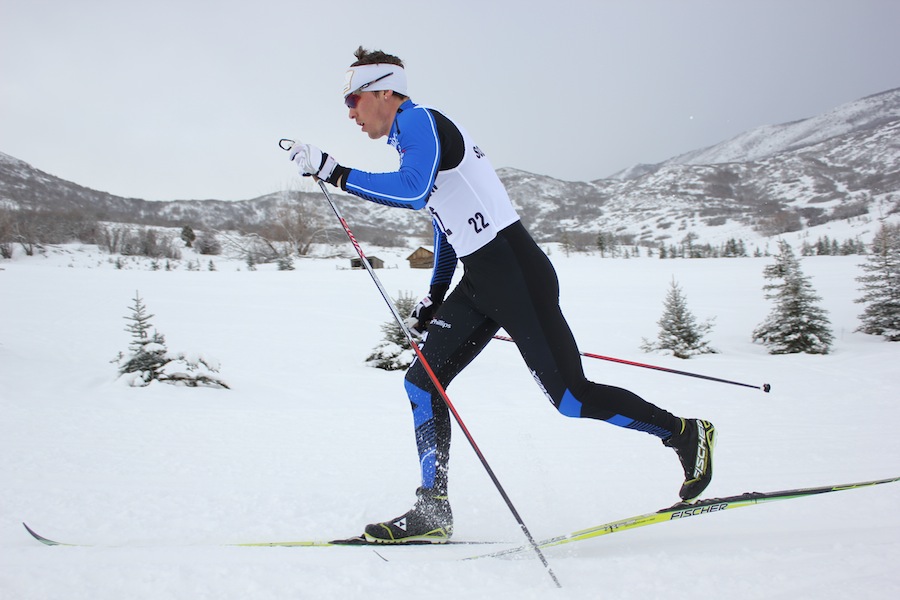
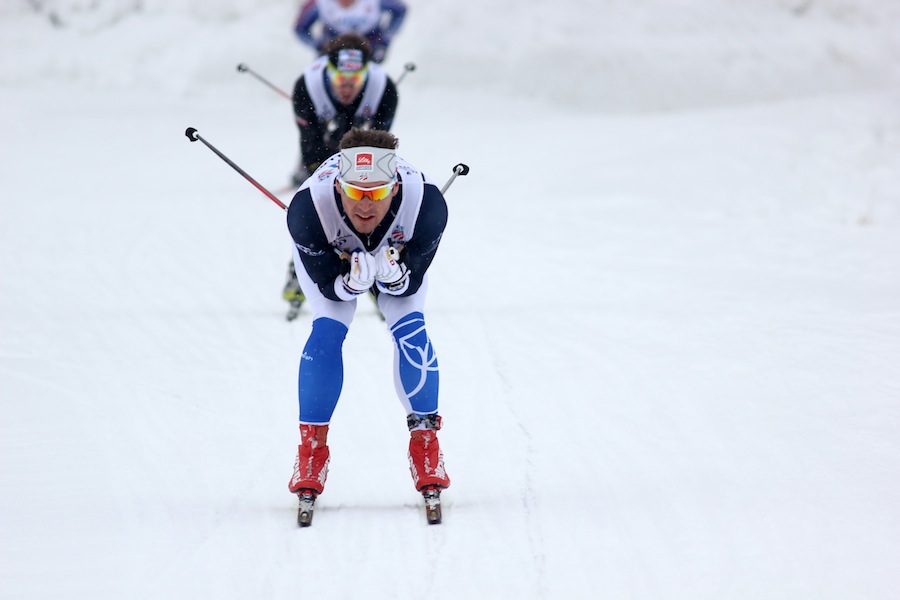
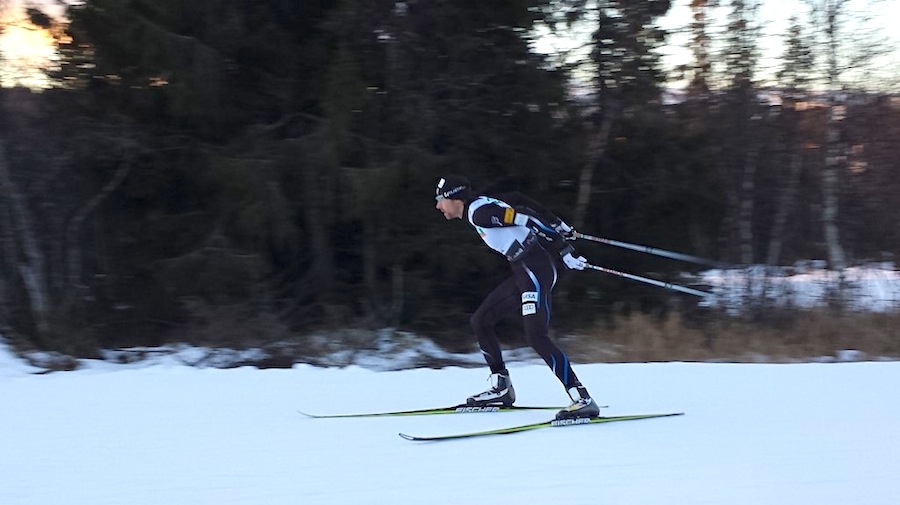
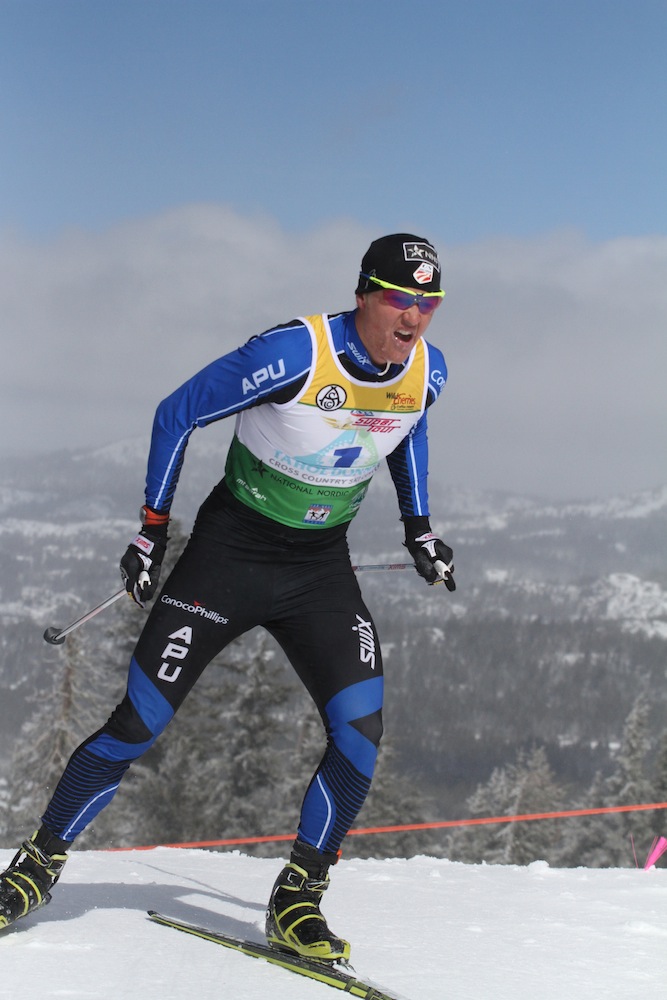
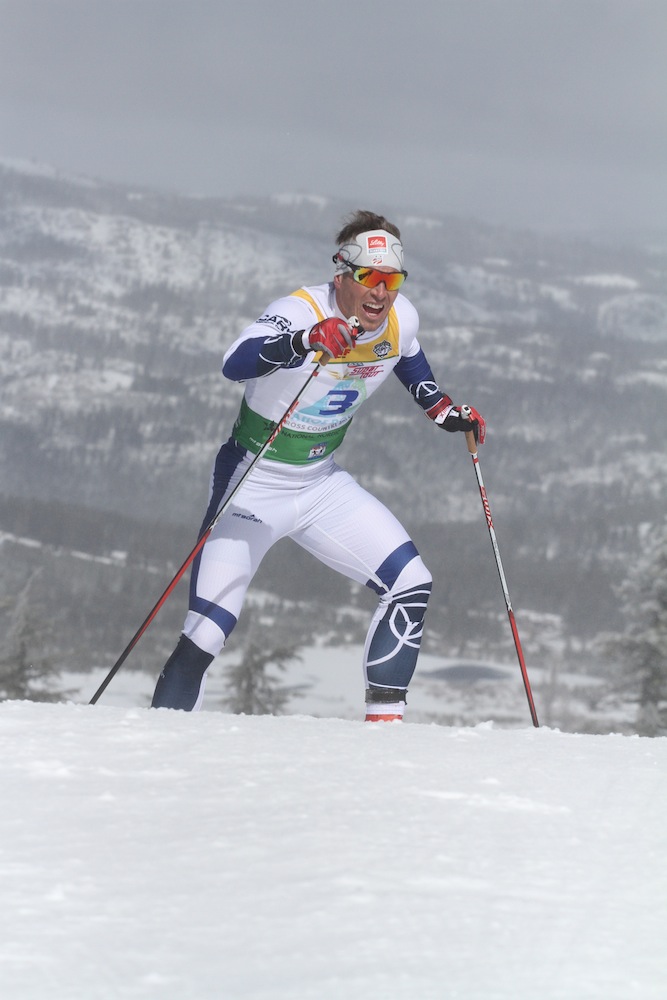
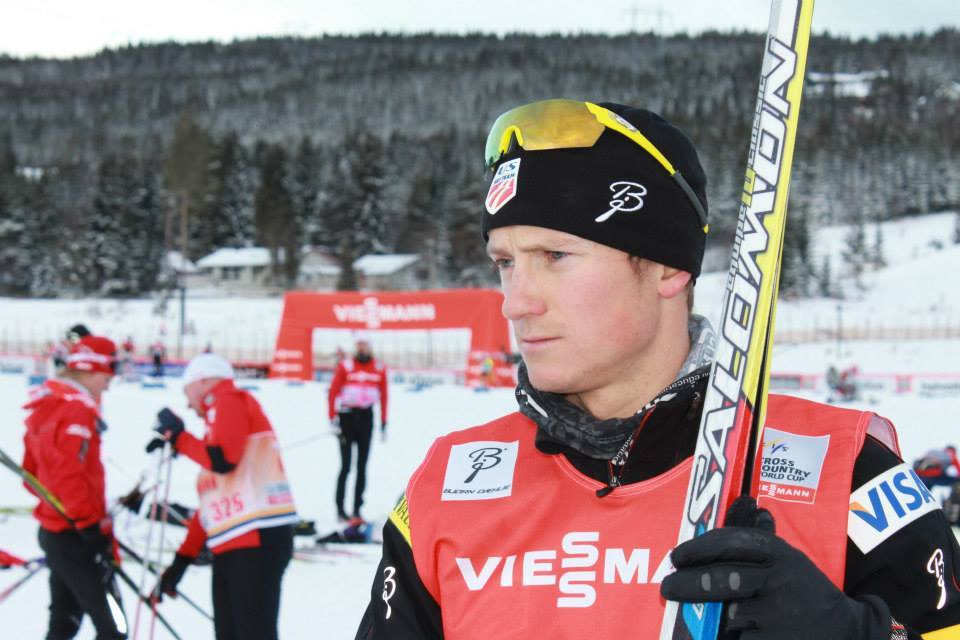
    Mikey Sinnott on the World Cup last December in Lillehammer, Norway. (Photo: Facebook/MWSC) https://www.facebook.com/maine.Winter.Sports.Center/photos/t.1309153346/10152451352903312/?type=3&theater
    Mikey Sinnott on the World Cup last December in Lillehammer, Norway. (Photo: Facebook/MWSC)

    A freshman skier in Sun Valley, Idaho, Mikey Sinnott was literally a foot shorter than the rest of the guys on his team, or so his longtime coach Rick Kapala says. Small but mighty, Sinnott came up through the Sun Valley Ski Education Foundation (SVSEF) junior ranks, making it to the Idaho youth championships and eventually winning two Junior National titles, and reaching Junior World Championships in 2004 and 2005 and U23 World Championships in 2006, 2007 and 2008.

    But before he was a globetrotter, Sinnott was a fighter — holding his own in a wrestling brawl with two dozen kids and a handful of coaches, an annual lighthearted tradition at the SVSEF. According to Kapala, who was always at the bottom of the pile, Sinnott was forever the last man standing. Everyone else would eventually give up, but not Mikey.

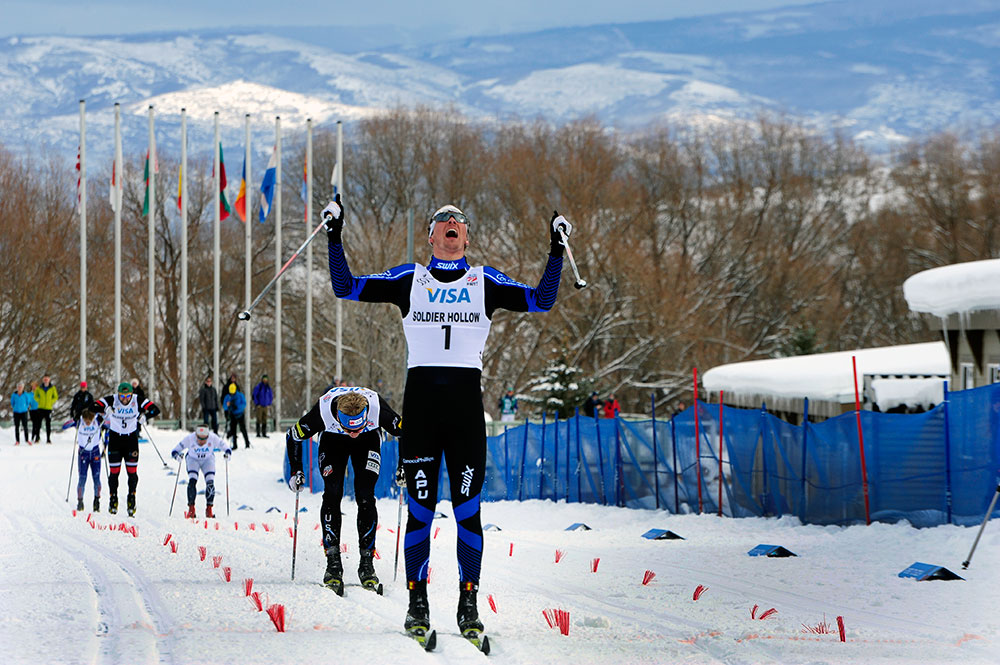
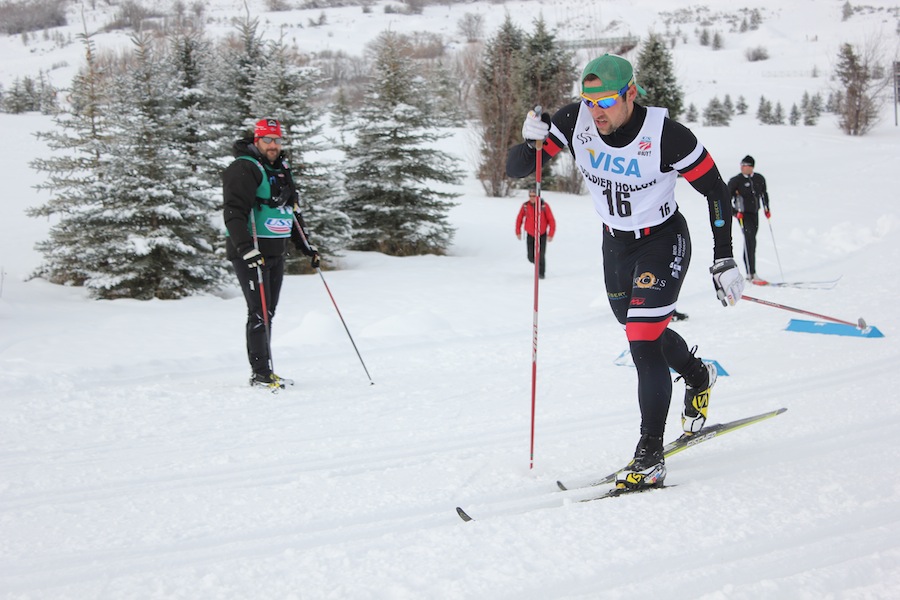
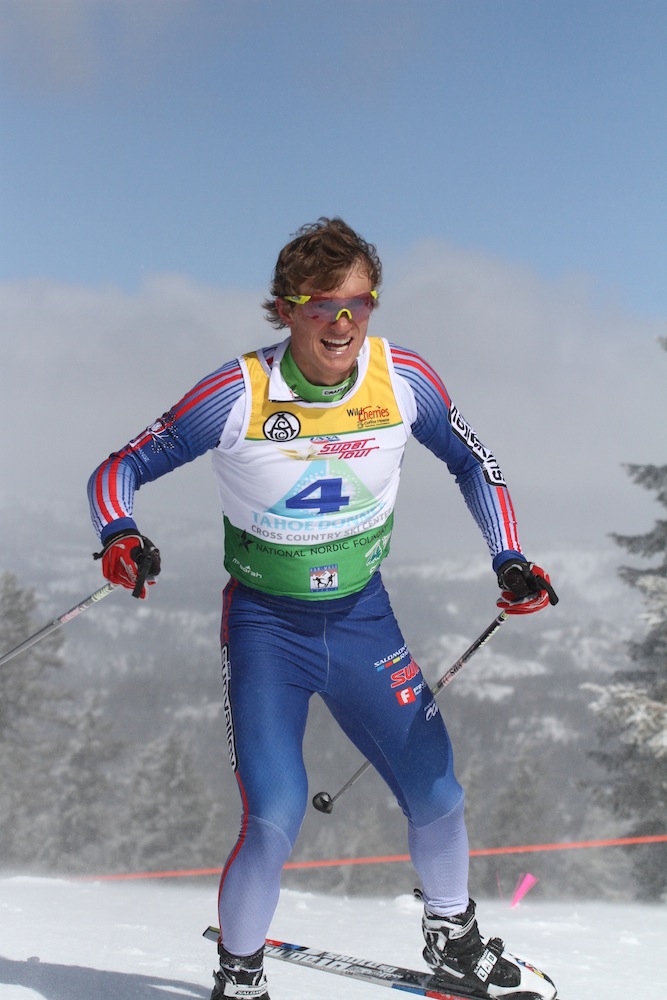
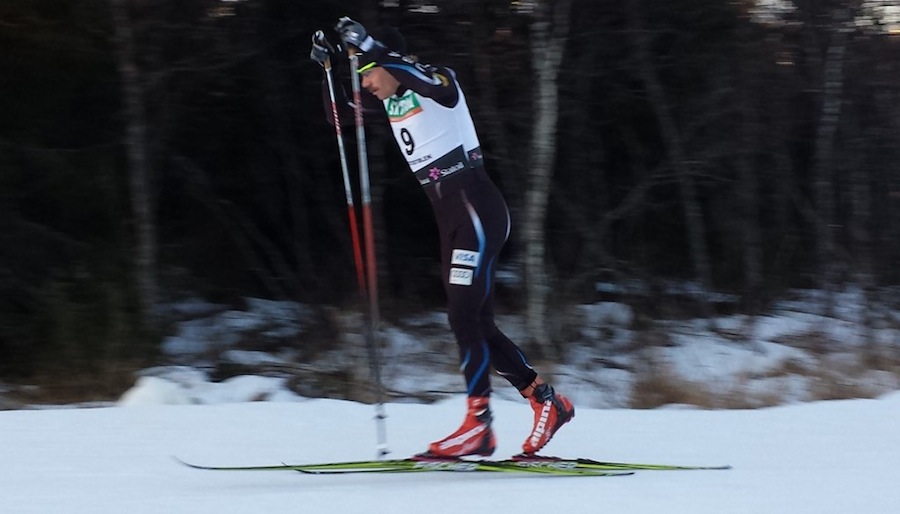
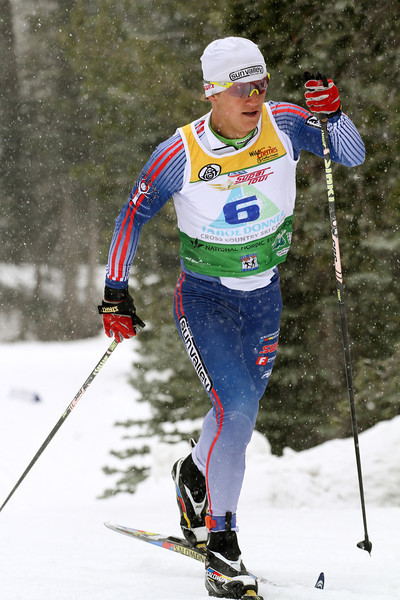
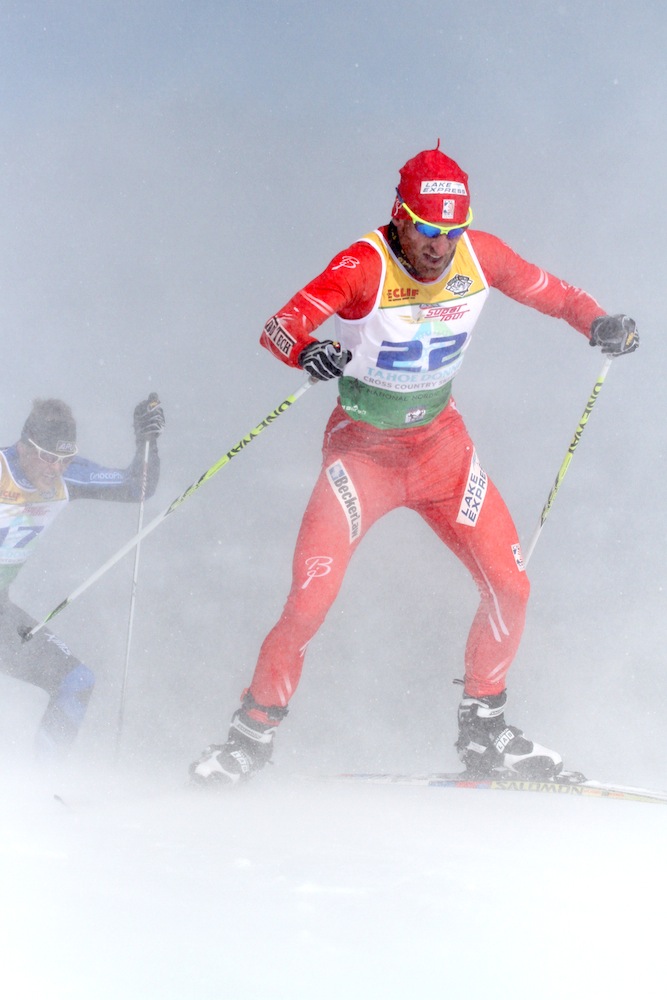
    Mikey Sinnott at the 2011 U.S. nationals classic sprint. (Photo: FlyingPointRoad/flyingpointroad.com)
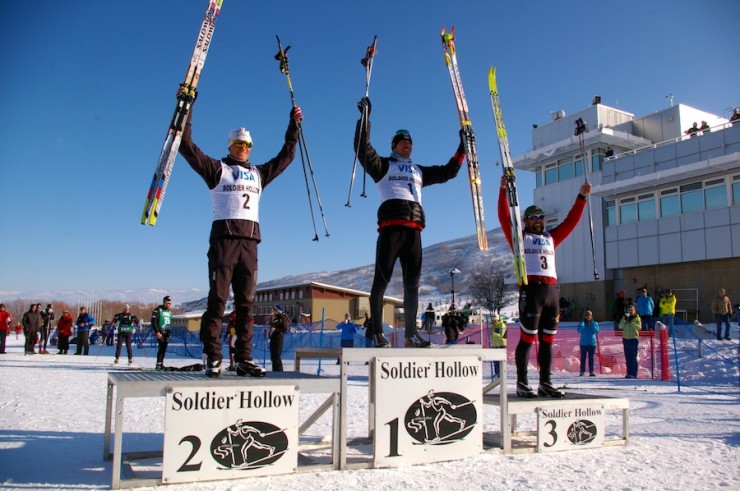
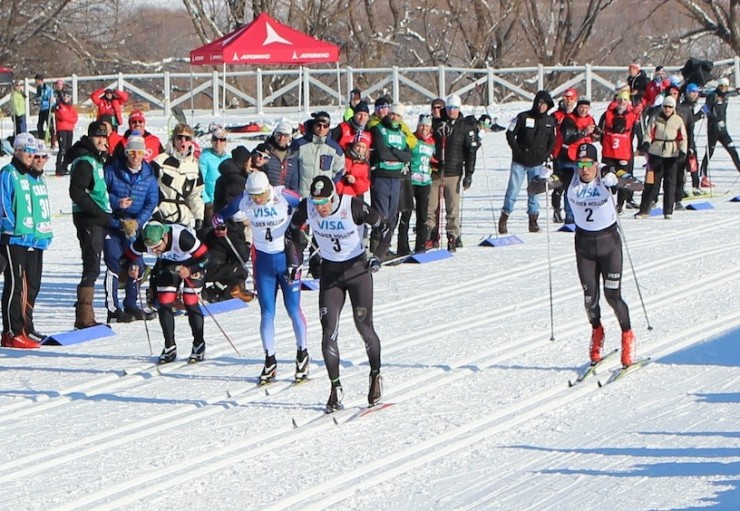
    Mikey Sinnott at the 2011 U.S. nationals classic sprint, where he place second for a career best. He repeated the feat in 2012 with another silver in the classic sprint in Rumford, Maine. (Photo: FlyingPointRoad/flyingpointroad.com)

    “You could never pin Mikey,” the SVSEF head coach and nordic program director said. “He was the definition of scrappy.”

    As Kapala spoke those words on the phone Tuesday, he almost immediately retracted them. Sinnott would not want to be called scrappy, but that’s what he was. He didn’t tap out, Kapala said, he never quit.

    Looking back, he was glad Sinnott didn’t get overlooked like some U16s that haven’t reached physical maturity do. While Sinnott’s results and performances were promising, an outside coach observing him at a glance might not have picked him to achieve what he later would.

    But Sinnott understood the importance of grit, and paired with an academic gift that led him to study psychology and neuroscience at Dartmouth College, he had punched his ticket to success early on, Kapala said.

    His timing was also ideal. By the time he finished up at Dartmouth, where he was an NCAA All-American and named to the association’s Division I Skiing Championships Team all four years, Sinnott was ready for the big leagues, and his choice to return to Sun Valley was simple.

    They had started an Olympic development team (now the Gold Team) a few years earlier — an attractive option for a hometown skier looking to go pro.

    “At that point, I wasn’t going to go to northern Maine, I wasn’t going to go to the Midwest, I wasn’t going to go to Alaska — there weren’t really any other teams,” Sinnott reflected on the phone two weeks ago. “When I went off to college, that was one of Rick’s goals … to make the Sun Valley Ski Education program one of the cradle-to-the-grave programs like in Europe.

    “I think it’s been a very, very wonderful program,” he added after seven years on the team. “It’s been a model for how we need to start developing more in the U.S. Sun Valley was the model for what’s made the U.S. Ski Team [in the 1960s] … I think we continue to be that model and impress and improve.”

    In five seasons, Sinnott, now 29, amassed more than 20 World Cup starts. He claimed the overall SuperTour title in 2013 to start last season in Europe, where he raced seven of those World Cups.

    But last winter, starting in November, Sinnott didn’t feel anywhere close to on top of the world. He was fatigued and had been feeling that way since late October, yet he couldn’t pinpoint why. His legs lacked power, but he figured he could compensate with mental toughness, which some call ‘grit.’

    “I just kept telling myself that I had to make it work,” he said. “I never really had a lot of explosive energy in my legs for whatever reason, but I kind of knew that was the year, if I was going to fight through any stupidity, that was the year I had to do it … It was an Olympic year.”

    The Continental Cup leader who kicked his season off with the U.S. Ski Team (USST) in Kuusamo, Finland, Sinnott placed 74th in his first race (a classic sprint) and 113th in the 10 k classic the next day. By the end of the three-day series, he was 92nd overall.

    A few weeks later in mid-December, he spoke openly about not being in top form. But he still wanted to perform well at U.S. nationals and give his best shot at making the 2014 Winter Olympics in Sochi, Russia.

    At the same time, Sinnott, widely respected as a master of calculating points in the U.S., knew his domestic ranking wasn’t competitive enough to put him in the running for the Olympic team. If he wanted to make it to Sochi, his first Olympics in two Olympic cycles he’d been training through, he knew he needed a top 30 on the World Cup.

    The closest he’d come after Kuusamo was 78th in the classic sprint at Asiago World Cup in Italy. In late December, he returned to the U.S. for nationals in Utah, where he placed fourth in the 30 k freestyle mass start and fifth in the classic sprint. Even if he’d won all of nationals, Sinnott didn’t expect to make the Olympics. At the same time, he said anyone’s best chance was to ski faster than lone USST male there: Erik Bjornsen.

    “I knew how fast I was skiing and I knew I wasn’t going to beat him,” Sinnott said.

    “The U.S. Ski Team wants to do everything they can to not take any non-U.S. Ski Team members to the Olympics,” he added. “So I knew the only opportunity I had was to get a top 30 on the World Cup … That’s why I stayed [in Europe].”
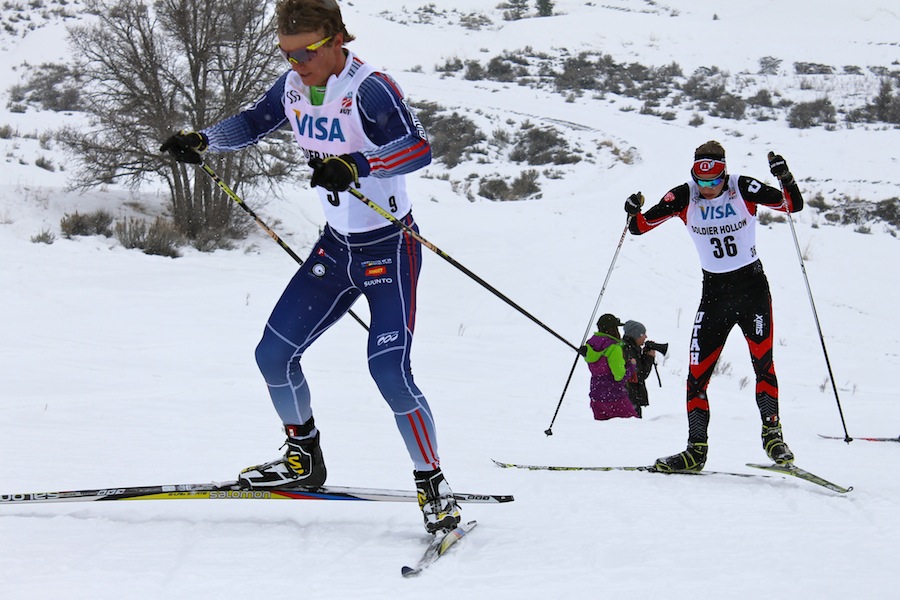
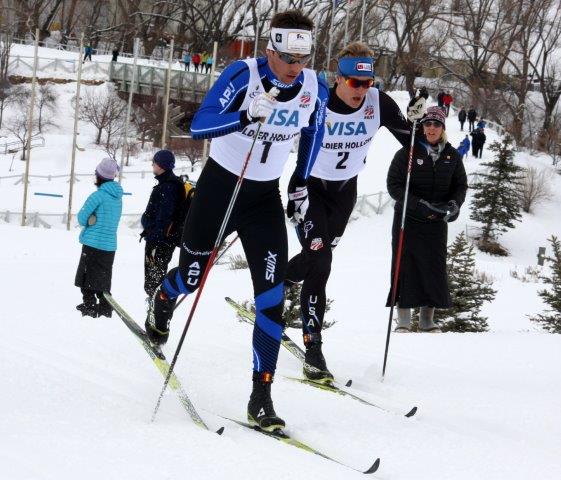
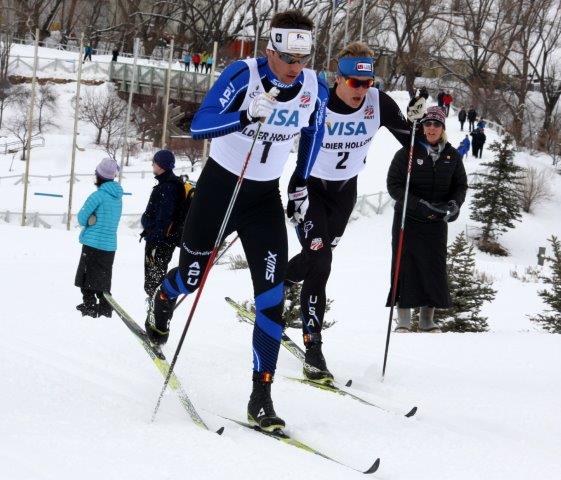
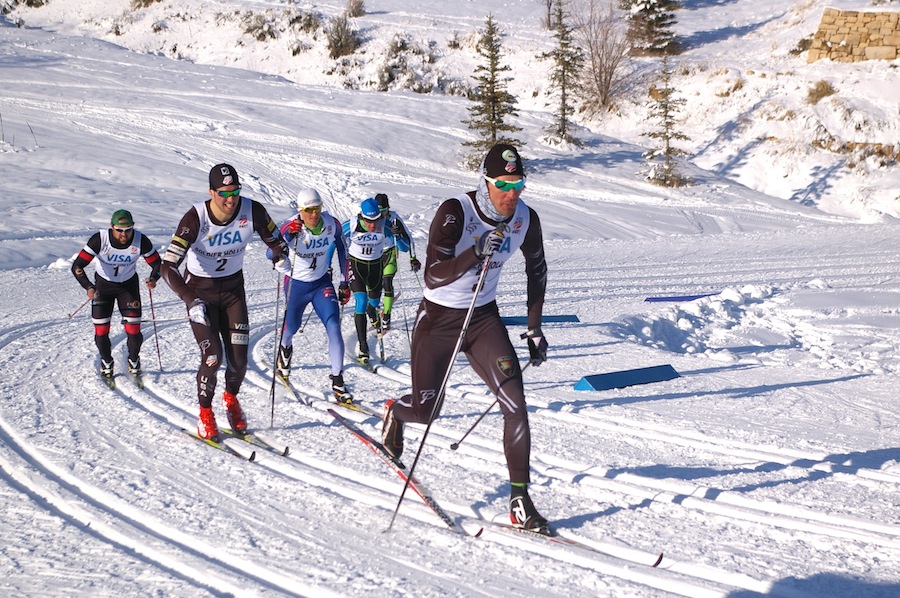
    Mikey Sinnott (l), of the Sun Valley Ski Education Foundation (SVSEF), climbs up and over a hill in the 30 k freestyle mass start at 2014 U.S. nationals. (Photo: Bert Boer - http://bertboyer.zenfolio.com) All proceeds from photo sales will be directly donated to NNF. Sinnott's former Sun Valley teammate Miles Havlick (5) leads the chase pack during the U.S. Nationals 30 k freestyle mass start while Sinnott (second from l) gets tangled on the way up. (Photo: Bert Boyer/All proceeds from photo sales donated to NNF)
    Mikey Sinnott (l), of the Sun Valley Ski Education Foundation (SVSEF), climbs up and over a hill in the 30 k freestyle mass start at 2014 U.S. nationals. (Photo: Bert Boyer/All proceeds from photo sales  donated to NNF)

    Olympic selections came and went, Sinnott wasn’t picked, and by the time February rolled around, he was back on the SuperTour circuit and feeling drained. He recalled one race in St. Paul, Minn., where he was skiing in the top three with four kilometers to go, and he was bored.

    “I was like, ‘I don’t know, maybe I should just drop out because I don’t even care,’ and that was kind of pathetic,” he reflected.

    He ended up third on the day, and later that month, placed 24th in the American Birkebeiner — an event, like nationals, he said he felt horrible in.

    “I’ve never just been so sluggish through an entire season like that,” Sinnott said. “It wasn’t an overtraining thing, but I just never felt that I had the spark.”

    He ended up eighth in the 2013/2014 SuperTour overall. Because he wasn’t among the closest contenders for an Olympic spot, he wasn’t crushed when he didn’t make the team. But his season did leave him with untied ends he would later have to reconcile.

    “There was no sudden crash or hope lingering on that some people were affected with because I had a better understanding [of the criteria],” Sinnott said. “When I was younger I thought, race your hardest and things will turn out well, and I quickly realized that wasn’t the case. You have to make your own luck and work your hardest because nothing’s going to be given to you … you have to force your way onto a team or force your way into a start race because you earned your way.”

    Change of Seasons, Change of Pace

    A couple Fridays ago, Sinnott was hanging up a piñata midday in his Sun Valley home. He wasn’t recovering from the morning’s training session with the Gold Team, and he wasn’t gearing up for an afternoon workout, either.

    Since last spring, he had been a working man in a different sense: marketing and writing for the Sun Valley Harvest Festival, one of the top 10 fall festivals in the country. And with the September festival in the rearview, he was prepping for a party at his place.
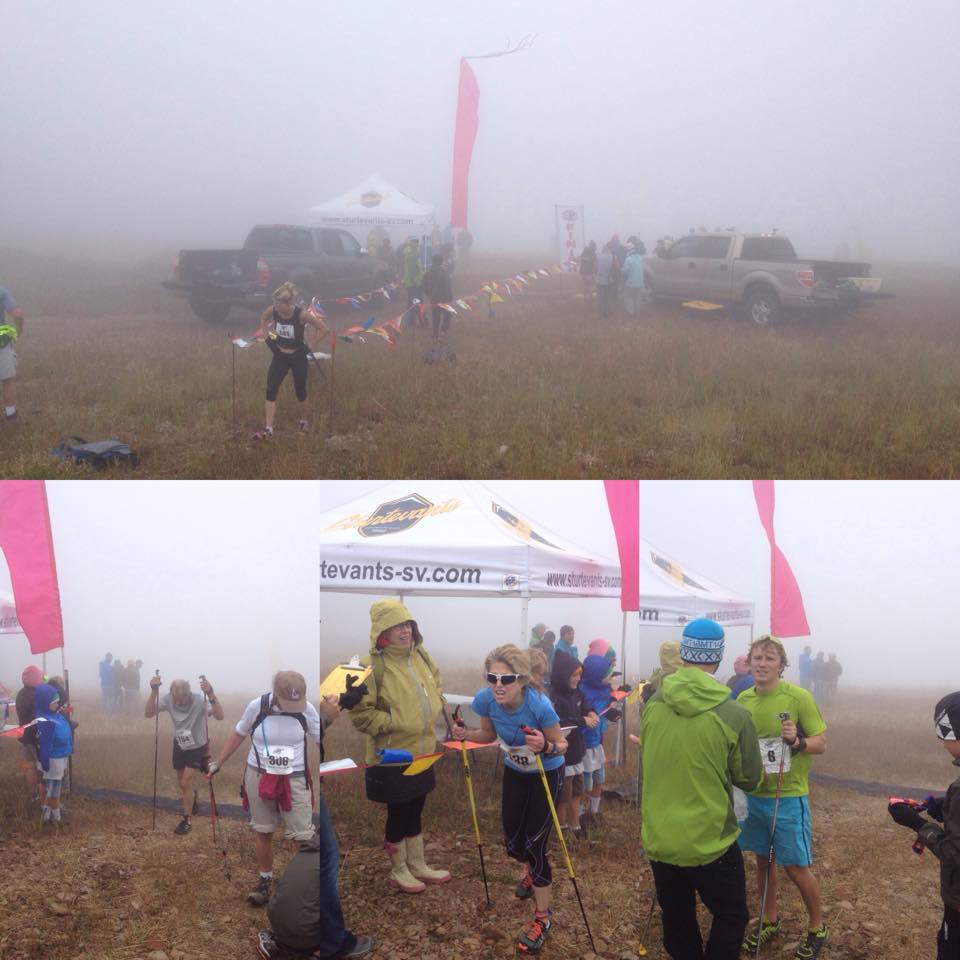
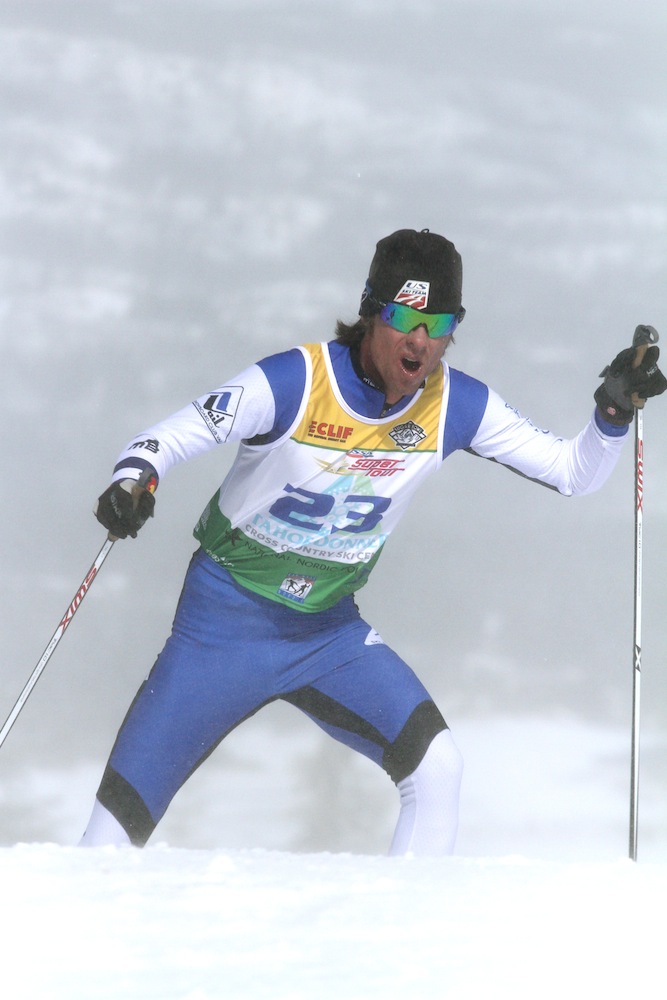
    Mikey Sinnott (lower r, in green) at the Sun Valley's annual Baldy Hill Climb, while Darlene Young (with poles, in blue) pushes on. (Photo: Facebook/Jon Engan) https://www.facebook.com/photo.php?fbid=10203960529367676&set=a.2885261424722.135136.1655738374&type=1&theater
    Mikey Sinnott (lower r, facing camera in green) at Sun Valley’s annual Baldy Hill Climb, while Darlene Young (with poles, in blue) pushes on. (Photo: Facebook/Jon Engan)

    He’d certainly been working out — just not in the traditional sense that he’d been accustomed to for the last seven years. He’d done the unofficial Ultimate Man.Ultimate Woman series, the brainchild of former Sun Valley coach Chris Mallory and a compilation of four local offroad endurance events: the Boulder Mountain Tour (30-kilometer ski race), Backcountry Run (16-mile trail run), Double Galena Grinder (45-mile mountain-bike race), and the Cheeso Double Baldy Hill Climb.

    The series ended Sept. 27 at the top of the 9,020-foot Bald Mountain, where Sinnott placed eighth on the day and fourth overall.

    Rather than run more than 3,000 meters to the summit, the ultimate men and women had to ascend it twice: biking up Baldy, riding the gondola down and running/hiking back up. Twenty-five people started the series, four finished, and among them, Sinnott skied the fastest time in the Boulder Mountain Tour (BMT) and notched the second-fastest time in another event. He lost an hour in the mountain-bike race and was down to fourth — last — by the end of the series.

    “Running after you bike is awful,” he said. “Eleven months ago, I signed up for [this] race series … I know I’m not going to do it again.”

    Meanwhile, after the BMT in February and before the Backcountry Run in July, Sinnott decided whether to continue ski racing through 2014/2015. Still unsure exactly what went wrong last winter — he tried to rest more; he tried to train more — he reasoned it was worth stepping back and trying to put everything back together, and started training again in May.
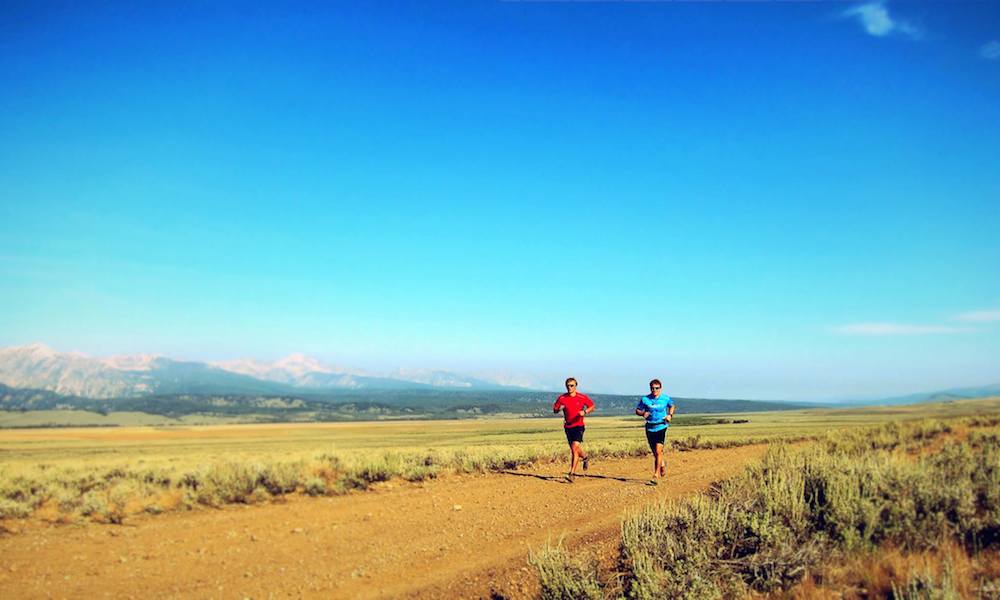
    Sinnott and Miles Havlick during an August 2013 training run through the sagebrush in the Upper Salmon River Valley, Idaho. (Photo: Facebook/Miles Havlick) https://www.facebook.com/mileshavlickxcskier/photos/t.1309153346/565991460102601/?type=3&theater
    Sinnott and Miles Havlick during an August 2013 training run through the sagebrush in the Upper Salmon River Valley, Idaho. (Photo: Facebook/Miles Havlick)

    It didn’t take long until he realized he wasn’t having fun anymore.

    “I just wasn’t enjoying getting out the door anymore,” he said. “If there wasn’t someone waiting for me, then I wasn’t motivated to go exercise on my own.”

    Reasoning he was “fighting an uphill battle in an uphill sport,” Sinnott said it wasn’t worth wasting his time or his coaches’. Kapala said they sat down and talked about it.

    “We sort of sensed it was coming,” Kapala explained. “There’s a natural lifespan to cross-country careers. Mike was certainly of the caliber that he could’ve chosen to ski another year or two years — I don’t think we would’ve seen any drop off in his production … but I think he looked at it like he was trying to make this Olympic squad …

    “I said, ‘You’ve had an exceptional career in ski racing,’ ” he added. “ ‘You really think the experiences in total that you’ve had in ski racing would be that much enhanced by slugging it out for another four years?’ He was already like, yeah, I think it’s time for some new challenges.”

    Sinnott said conversations with Gold Team head coach Colin Rodgers also helped open his eyes to where he stood mentally.
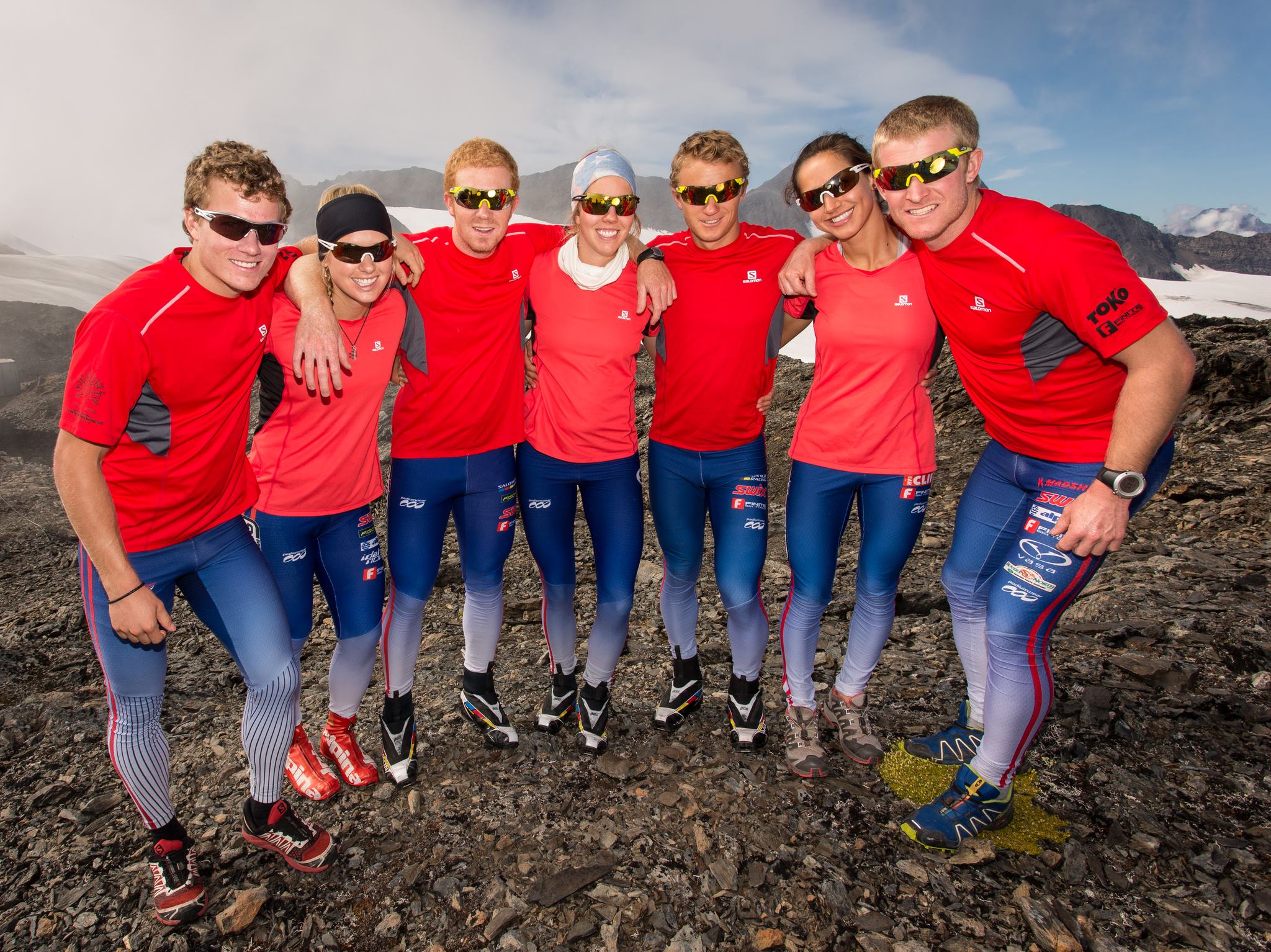
    Last season's Gold Team, with former skiers Sinnott (third from r) Chelsea Holmes (now at APU, second from r), and Rose Kemp (retired). (Photo: Facebook/SVSEF Gold Team) https://www.facebook.com/SVSEFXCGold
    Last season’s Gold Team, with former skiers Mikey Sinnott (retired, third from r) Chelsea Holmes (now at APU, second from r), and Rose Kemp (retired, second from l). (Photo: Facebook/SVSEF Gold Team)

    “He’s been saying for the last year I just didn’t have the same personality with skiing,” Sinnott said. “And I saw him recently and he thought I’d recovered into my old self. Rick’s super supportive … and they all just care so much. All my coaches just want what’s best for me.”

    Sinnott’s Favorite Moments:

    (as written in an email)

    “A few highlights for myself were the Dartmouth College National Championship, winning the Boulder Mountain Tour, my first European World Cup in Milan, and racing the Holmenkollen. Lots of memories, but those were special for a variety of reasons:I loved collegiate racing. It is the best domestic race series we have. Such comaraderie, and racing for something bigger than yourself. I loved how much of a team we were, and how meaningful it was to so many people to bring home the National Championship. Our school, our alums, the East Coast. I even remember heading straight to U23s while they were still tabulating the scores, and upon arrival getting a hearty cheer from Pat Casey. He was so proud to see a group of Americans, all under 23, be the top team.  It showed US skiing was on the rise, and we didn’t have to look up to the Euros anymore. It was a pretty cool feat, and an incredible group of people to be a part of. I think there were three or four future Olympians, and two future World Championship runners.
    Winning the Boulder Mountain Tour was special because it was my first real professional title, and it was in my home town, in front of family and friends.  Wow. Such a special moment to represent them. My home town is beyond supportive, and it feels great to show them what they are supporting.
    Of course skiing in Milan was all together unreal, and a wonderful new persepective on what could be achieved through skiing. I remember seeing Kikkan on the podium, and seeing her mobbed for autographs. I remember seeing lots of the U.S. team being mobbed for autographs. Riding the bus with all the world elites, joking with them (okay, Simi joked with them, I gawked a little), being in such a world center and to have it lined with fans of nordic skiing.  Wow. I thought it couldnt get any better… But oh did it.
    Finally, racing the Holmenkollen. I had a terrible race that day, and was well out the back from the get go. It was slushy and slow. I loved every minute of that suffer slog. The course was lined by thousands of fans who had camped out for days. They were chanting my name around every corner, before I was even in sight. There was such energy and appreciation and excitement, it was beyond contagious. They willed me onwards no matter how tired I became. I cannot express what that felt like, to be among the worst in the race, and still have this wall of humanity urging you and screaming for you. Wow.  Those Norwegians do it right.
    A lot of my best memories come from the people I met, and the people I shared my career with.  I could list a multitude more stories, but they mostly center around the people and how their interactions left an imprint on me. I stayed and raced for a week with a Norwegian racing team — so generous, so kind. Erik Stange took me for a ski tour outside Lillehammer that ended at a waffle house, only available via skiing. Last season, a friend came to watch me race in Davos and brought a huge poster that had personal remarks from a dozen or so close college friends encouraging, and cajoling me. It was great.”

    Looking back, Sinnott had a long list of career highlights: Dartmouth’s national championship, winning the 2008 BMT, his first European World Cup in Milan in 2012, and racing at Holmenkollen that same season.

    “I loved collegiate racing,” he explained. “It is the best domestic race series we have. Such camaraderie, and racing for something bigger than yourself. I loved how much of a team we were, and how meaningful it was to so many people to bring home the National Championship.

    “Winning the Boulder Mountain Tour was special because it was my first real professional title, and it was in my home town, in front of family and friends,” he added. “Such a special moment to represent them. My hometown is beyond supportive, and it feels great to show them what they are supporting.”

    And that’s why he planned to stick around town and help out while he plans his next move. Throughout the offseason, Sinnott has been working with U18 skiers and younger on the SVSEF Comp Team, shadowing them during workouts to push and motivate them a few times a week.

    “He’s getting ready to transition to the next phase of his life … [and] he’s taking this year to give back to our program,” Kapala said. “We’ve got this group of ten kick-ass U18 guys — think of that workout when they’re going out for this hour-and-a-half roll and Mike is embedded in that workout with them. … That’s huge.”

    Kapala said his program reserves some money for guest coaching, and while it’s not much, he knew Sinnott would do it for free.

    “I’ve been blessed with the coaching that I’ve had over the years … [with Kapala, Ruff Patterson in college, Travis Jones and Rodgers on the Gold Team],” Sinnott said. “I know that I don’t have some of those characteristics especially at a youth level … I don’t have the consistency day in and out required of a quality coach.”

    So he doesn’t necessarily envision himself as a full-time coach one day, but he’s happy to jump in as needed.

    In the meantime, he said he’ll be taking the next year to figure out his new career path and will continue to work with the Sun Valley Harvest Festival through the winter. He started the job in May as a means of keeping him mentally stimulated while training. When he stepped away from skiing in late May/early June, he began to call it his career.

    Sinnott spent the next several months focusing on the leadup to the festival and coaching on the side. He create a life plan beyond that, but he has a few ideas.

    “I thought I was going to map [it] out this summer —  that never happened,” he said. “I want to know exactly what I want to do before I start looking into grad school. Since I graduated, neuroscience has become a more popular field among the smarty pants of the world, and my brain has atrophied…”

    He has yet to find out what that field holds for him, but above all, Sinnott remembers enjoying school, the curriculum, “the knowledge, and the horizon they presented with some of the unknown,” he said.

    He has a Sun Valley mountain pass this winter, so he figured he’d take some downhill runs on powder days to sort it out. This month, he headed east for 10 days for a wedding in New Hampshire.

    “I’ll bring running shoes, but I don’t have to bring rollerskis, so that’s a plus,” he noted.

    And while he might travel a bit, and give races like the Birkie another try (at a more leisurely pace), he’ll continue to call Sun Valley his home.

    “I’ve traveled around and looked at various places and there’s nothing compared to here,” he said. “The Norwegian national team, they [came] here before the Olympics in Salt Lake and Vancouver, and they say this is the perfect training place.”

    And the team has been an integral part of his experiences.

    “It’s always been, the team I want to hang out with on the [domestic] circuit is Sun Valley,” he said. “They’re good people that I have fun with.”

    Leaving the Gold Team, which includes Miles Havlick, Matt Gelso, Ben Lustgarten, Mary Rose, Makayla Cappel, and Paige Schember, Sinnott said it’s in a good place.

    “[That’s] the best team in the country this year. They’re unbelievable,” he said. “There’s definitely times where I’ll see time trials and I’ll say, ‘Oh man, I wish I could be out there.’ If I wanted to be out there, I would be. It’s not like anyone told me no, I just don’t want to be out there anymore. It’s been really good to be more social and adventure with friends. I haven’t really second-guessed it.”

    Kapala said Sinnott could be the poster child of how to have a great life ski racing, which is why it’s so valuable having him around.

    “I’ve learned way more as a coach from Mike than Mike has learned from me,” he said. “I never got the sense that Mikey was just in it for results. Because of that, you get the kind of guy who’s perspective on the sport is really helpful and powerful and now he’s out there training with our juniors. … That’s another piece of us really getting somewhere.”

  • Ultimate Team Event: Anchorage Hosts Coed Relay at National Championships

    Ultimate Team Event: Anchorage Hosts Coed Relay at National Championships

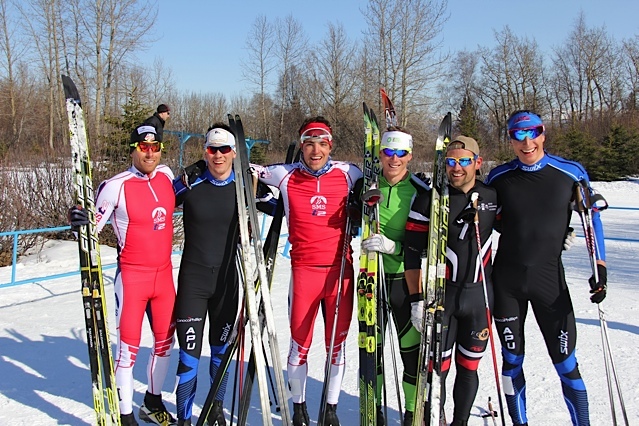
    It's an amiable atmosphere at Spring Series in Anchorage, Alaska. Teams will be competing for a national title on Tuesday in Kincaid Park in the coed 4 x 5 k, the first race of U.S. Distance Nationals. (Photo: Rob Whitney)
    It’s an amiable atmosphere at Spring Series in Anchorage, Alaska, as seen here after Sunday’s classic-sprint final. Teams will compete for a national title on Tuesday in Kincaid Park in the coed 4 x 5 k, the first race of U.S. Distance Nationals. From left to right: Andy Newell (SMST2/USST), Reese Hanneman (APU/USST), Ben Saxton (SMS), Pat O’Brien (CGRP), Dakota Blackhorse-von Jess (BEA), and Tyler Kornfield (APU). (Photo: Rob Whitney)

    When the U.S. Ski and Snowboard Association (USSA) met last spring, they decided it was time for a bit of a change at the season-ending SuperTour Finals and U.S. Distance Nationals. Instead of a hill climb, they opted for a team relay at the races in Anchorage, Alaska, scheduled for the following March 22-28.

    According to the event’s race director James Southam, a two-time Olympian from Anchorage, athletes brought up the idea of a team event last year. An opening in the schedule made the 4 x 5-kilometer relay possible for 2014.

    But unlike most four-person relays, the one going off Tuesday at 5 p.m. Alaska time will be coed with a male scramble classic leg tagging to a female classic skier, then male freestyle skier, and finally, a female freestyle anchor.

    “I think it’s gonna be fun,” Southam said. “The last distance relay I remember doing was I think in Bend [Ore.] in 1998 or something like that for nationals. I think having the coed is going to be cool. … You don’t need four good guys or four good girls; I think it makes it a little more competitive.”

    Eighteen official teams (including two junior squads), each made up of two males and two females from the same USSA club, will compete for a national title — and $750 dollars in prize money to split four ways. The second-place team will receive $500, and third gets $300.

    It’s the second-to-last competition before Friday’s 30 and 50 k classic mass starts, which will be held at a different venue than the rest of the races at Kincaid Park, at the Hillside Trail System on the east side of town.

    Teams to watch include Alaska Pacific University’s first team, with Reese Hanneman, Sadie Bjornsen, Erik Bjornsen, and Kikkan Randall, in that order. The top team from Stratton Mountain School T2, Andy Newell, Sophie Caldwell, Simi Hamilton, and Jessie Diggins will also contend for the title, along with Craftsbury’s Patrick O’Brien, Ida Sargent, Gordon Vermeer, and Caitlin Patterson, and Sun Valley’s Mikey Sinnott, Mary Rose, Matt Gelso, and Chelsea Holmes.

    Several college teams, such as the University of Vermont, Northern Michigan, New Mexico, and the University of Alaska-Anchorage will also be vying with the best of them.

    There are also few unofficial teams with skiers from different clubs that have a shot at winning for glory rather than cash. Fastest of the Fast Twitch includes Brian Gregg (Team Gregg/Madshus), Liz Stephen of the U.S. Ski Team (USST), Noah Hoffman (SSCV/Team HomeGrown/USST), and Caitlin Gregg (Team Gregg/Madshus). The Vagabonds are Karl Nygren (Podiumwear), Jennie Bender (Bridger Ski Foundation), Mark Iverson (Rossignol), and Cambria McDermott (independent).

    Each competitor will ski two laps of either a roughly 3.3 k classic loop (for 6.6 k total) or a 2.6 k skate loop (for approximately 5.2 k).

    As for the 5 p.m. start? It’s all about getting the best bang for the buck in terms of participation, volunteers and spectators.

    “We want as many of the kids from around town to be able to race in it as well and to come out and watch it,” Southam said. “When you have midweek races at 11 o’clock it’s hard to get the kids out to watch. One of the big reasons we wanted to host these races is, after the Olympics people have been paying attention to skiing all winter long and it’s pretty powerful for kids coming up to be able to watch Olympians and world champions.”

    Of the 26 teams entered in Tuesday’s relay, the two official junior squads are from APU. One unofficial team includes three men and a woman, another has four junior males, and one has three males, which will complete three legs and then call it a race.

    Start list

  • Hanneman Wins Classic Sprint at U.S. Nationals; Olympic Implications for U.S. Men

    Hanneman Wins Classic Sprint at U.S. Nationals; Olympic Implications for U.S. Men

    _D7A4348_social
    Reese Hanneman (APU) celebrates his national championship in Friday’s classic sprint at the 2014 U.S. Cross Country Championships at Soldier Hollow. (Photo: U.S. Ski Team/Tom Kelly)

    MIDWAY, Utah – Bronze, silver, and now gold. Reese Hanneman of Alaska Pacific University has captured them all after his win in the 1.6 k classic sprint on the final day of the 2014 U.S. Cross Country Championships. En route to his first national championship, Hanneman made winning look easy despite competing against the best sprinters in the country.

    In an A-final that included 2010 and 2012 national champion Tyler Kornfield and a surprisingly strong Kris Freeman, Hanneman was able to outsprint second place finisher Erik Bjornsen of Alaska Pacific University (APU) and the U.S. Ski Team, and Dakota Blackhorse-von Jess of the Bend Endurance Academy who crossed the line in third.

    “You can’t beat it. Those are the days you suffer all year for. I still don’t believe it,” the 24-year-old Hanneman said in an interview.

    Reese Hanneman (APU), en route to qualifying first in Friday's classic sprint at the 2014 U.S. Cross Country Championships.He convincingly won his quarterfinal, semifinal, and A-final to take his first national championship.
    Reese Hanneman (APU), en route to qualifying first in Friday’s classic sprint at the 2014 U.S. Cross Country Championships.He convincingly won his quarterfinal, semifinal, and A-final to take his first national championship.

    Hanneman, who claimed second in the 15 k classic and third in the skate sprint earlier in the week, used his momentum and confidence to end nationals with a bang. On Friday, it all started with skiing to an impressive qualification win, 2.6 seconds over teammate and second place finisher Bjornsen.

    From that point on, Hanneman was in a class of his own, and no one could touch him all day.

    But how did he do it? He knew he had the fitness and he knew he had the speed. All he needed to do was execute a plan that would shoot him to the top of the podium.

    For the Fairbanks native, such a plan was simple: build a lead that no one could overcome.

    “I knew that if I just pinned it right from the gun that not too many of those guys could hang with me and I could stretch it out before we got to the sprint.”

    It also helped that course was incredibly difficult, featuring the entirety of Hermod’s Hill. “I felt really good striding. That course was difficult, with huge hills. I just tried to make it hurt like I’ve never hurt before,” he said.

    Bjornsen couldn’t have agreed more and said that Friday’s race was all about making it hurt. Whereas many other sprint courses require more calculated maneuvers, Fridays course required grit.

    “It didn’t seem like there were a lot of tactics; the tactic was to go hard,” he said.

    In each round of the finals, Hanneman led out of the gate and increased his lead throughout the 1.6 k course. In both the quarterfinals and the semifinals, he skied by himself for the majority of the roughly four-minute race.

    Reese Hanneman on his way to the win.
    Reese Hanneman (APU) and Erik Bjornsen (APU/U.S. Ski Team) stride up Hermod’s Hill in the 1.6 k men’s A-final in the classic sprint. Hanneman built an insurmountable lead over Bjornsen to take the win.

    The only challenge that Hanneman faced came from his teammate, Bjornsen, who attempted to stay with him up and over Hermod’s. Three-fourths of the way up the climb, Bjornsen jumped in the tracks behind Hanneman, hoping to catch a draft on the downhill and a boost into the finish. However, it didn’t pan out.

    “I slipped three or four times [at the top of Hermod’s] because I was tired and he put ten feet on me and it was over from there,” Bjornsen said.

    When asked whether or not he thought he had a chance of catching Hanneman before the finish, Bjornsen said that, because of amount of time the two APU skiers had spent training together, he knew that once his teammate obtained the lead there was no reigning him in. “I was trying, but I was pretty sure it wasn’t going to happen,” he said.

    Hanneman wasn’t as confident that he had a secure lead, and confessed that he checked behind him to see if Bjornsen was coming, a risky move in a sprint race.

    “Most people never admit that they look back, but I definitely did look back,” he said with a laugh. ”I wanted to make sure I could make it all the way to the line.”

    Hanneman saw what the rest of the field already knew. Bjornsen was far from striking distance, and he had won his first national title.

    Back in third, Blackhorse-von Jess did his best to maintain his position in the hope that the pair of APU skiers would eventually slow. “Erik and Reese were on fire and they pulled away right out of the gates and they stayed there,” he said. “There were a couple times where I could have burned everything and just chased them down, but I skied in the hope that one of them [would get] tired. But they did not get tired.”

    Dakota Blackhorse-Von Jess (Bend Endurance Academy), racing in the qualifier of Friday's classic sprint. He qualified in fifth and finished the day in third.
    Dakota Blackhorse-Von Jess (Bend Endurance Academy), racing in the qualifier of Friday’s classic sprint. He qualified in fifth and finished the day in third.

    It turns out that Blackhorse-von Jess should have been more worried about who was coming up from behind. Freeman (Maine Winter Sports Center), who is known for his distance skiing, made a late surge up the last corner and into the stadium.

    After loosing speed on the very same hill, Blackhorse-von Jess realized his position in third was in jeopardy.

    “I decided I wasn’t going to lose the race,” he said “I double polled as hard as I could, which was the first time all day that I got to go as hard as I could.”

    Blackhorse Von-Jess, who describes double poling as his “bread and butter” pulled away from Freeman, making it seem as if his place on the podium was never at risk.

    Rounding out the the A-final was Freeman in fourth, Mikey Sinnott (Sun Valley Ski Education Foundation) in fifth, and Tyler Kornfield (APU) in sixth.

    Olympic Implications 

    Looking back at the results from the 2014 U.S. Cross Country Championships it is very apparent that there were some who excelled and others who did not. Hanneman turned out to be the shining star of the week, standing upon the podium in every event he raced in.

    It wasn’t a fluke either. Hanneman had chosen to concentrate on nationals as early as last spring.

    “I especially picked this week to focus on so it is just amazing to have it come together,” he said. “I really focused on everything I could do to nail it this week.”

    While it seems obvious that American skiers would focus on doing well in the national championships, in an Olympic year such as this, the races at Soldier Hollow were even more important for domestic racers. While the 2014 nationals were not Olympic trials, they served as a venue where the nations best could gather and demonstrate their abilities in the hopes that they could be one of the few who wasn’t already racing in Europe to make the team.

    When asked about the Olympic implications of his stellar week at Soldier Hollow, Hanneman said he had no idea what his results meant. “The whole process is pretty vague. There are a lot of athletes, hopefully like myself, who are in the running and all we can do is try to do our best.”

    As he looks forward, he’s decided not to worry about whether or not he will be picked for the team. “There are so many details I’m not aware of and so I try to ski as fast as I can. If it’s meant to happen it will fall into place. I’ve done all I can do.”

    IMG_0502_edited-1
    Kris Freeman (Maine WSC) leads Ryan Scott (SSCV) up Hermod’s Hill in the quarterfinals of Friday’s classic sprint at Soldier Hollow.

    For three-time Olympian Freeman, this week was all about FIS points. In order to place second behind Noah Hoffman in the American FIS distance rankings he needed to place in the top three in both of the distance races. He barely did so, placing third in both.

    “I am very confident that with a little downtime at home that my best Olympic results are in front of me,” he wrote in his blog.

    Bjornsen, whose sister Sadie has already made the qualification criteria for a spot on the Olympic team, plans to head to the World Cup in Poland before racing at the U23 World Championships in late January in Val di Fiemme, Italy. Whether or not the Olympics are part of that plan remains to be seen, but with a win in the 15 k classic and a second-place finish in the classic sprint, his chances are likely to be better than most.

    Sylvan Ellefson (SSCV/Team Homegrown), who didn’t race in the classic sprint, has a fighting chance as well due to his international racing experience and national championship in Wednesday’s 30 k mass start.

    “Whether they pick me for the Olympics this year or not, I’m just happy to have a national championship under my belt,” he said. “It’s literally the only thing I’ve ever wanted in my skiing career.”

    IMG_0590_edited-1
    Torin Koos (BSF/Rossignal) and Peter Kling (APU) stride up Hermod’s Hill in their semifinal of the men’s 1.6 k classic sprint. Koos ended his day in seventh and Kling finished his in eleventh.

    Bryan Gregg (Team Gregg/Madshus), who finished second in Wednesday’s 30 k mass start and until Hanneman’s win was the U.S. SuperTour points leader, is currently racing in the World Cup races in the Czech Republic with his wife Caitlin. After having his best-ever week at a U.S. nationals, one can only assume that his hope is to do well in the next period of World Cup racing in order to impress the U.S. Ski Team.

    For Blackhorse-von Jess, the Olympics are a waiting game. “We wait for the phone to ring … or not,” he said. “I don’t know what the point standings are and I don’t know how they’re going to pick the Olympic team. I have a hard time believing that today’s (Friday’s classic sprint) results have a whole lot of impact on the Olympic selection. But then again I have no idea.“

    Despite his third-place finish in the classic sprint, he was  slightly disappointed. He said that he had felt amazing in Sunday’s freestyle sprint, but unfortunately fell in his semifinal. Despite his seventh place finish, he hoped the national-team coaches would look at that result over the Friday’s classic sprint.

    In the end, Olympic speculation is just a guessing game that has no concrete answers. To get those answers, the American cross country community will have to wait until the 21-22 of Jan., when the U.S. Ski Team will make its final announcement.

    “Everybody speculates because it’s fun to do. It’s less fun when you’re involved and your name is in the ring.”

    Friday’s classic sprint results

  • With a Fleet of Fans Behind Him, Ellefson Goes Big for First National Title in 30 k (Updated)

    With a Fleet of Fans Behind Him, Ellefson Goes Big for First National Title in 30 k (Updated)

    Sylvan Ellefson (SSCV/Team HomeGrown) gaining some speed with 1 1/2 laps remaining out of six in the men's 30 k freestyle mass start at 2014 U.S. Cross Country Championships at Soldier Hollow in Midway, Utah. Ellefson won by 2.8 seconds for his first national title.
    Sylvan Ellefson (SSCV/Team HomeGrown) gaining some speed with 1 1/2 laps remaining out of six in the men’s 30 k freestyle mass start at 2014 U.S. Cross Country Championships at Soldier Hollow in Midway, Utah. Ellefson won by 2.8 seconds for his first national title.

    FasterSkier’s coverage of the 2014 U.S. Cross Country Championships is brought to you through the generous support of The Memory Clinic in Bennington, Vt.

    ***

    Note: This article has been updated to include Sylvan Ellefson’s tribute to Vail native, Tony Seibert, who died in an avalanche on Tuesday.

    MIDWAY, Utah – Ninety percent of people holding homemade signs and placards along the trails at Soldier Hollow on Wednesday  at the U.S. Cross Country Championships were for one person: Sylvan Ellefson.

    And it wasn’t just all of Vail, Colo., out there supporting him. Ellefson, 26, had fans, friends and family from Alaska, Wyoming and Minnesota in bunches along the 5-kilometer Olympic course, all screaming his name throughout the 30 k freestyle mass start.

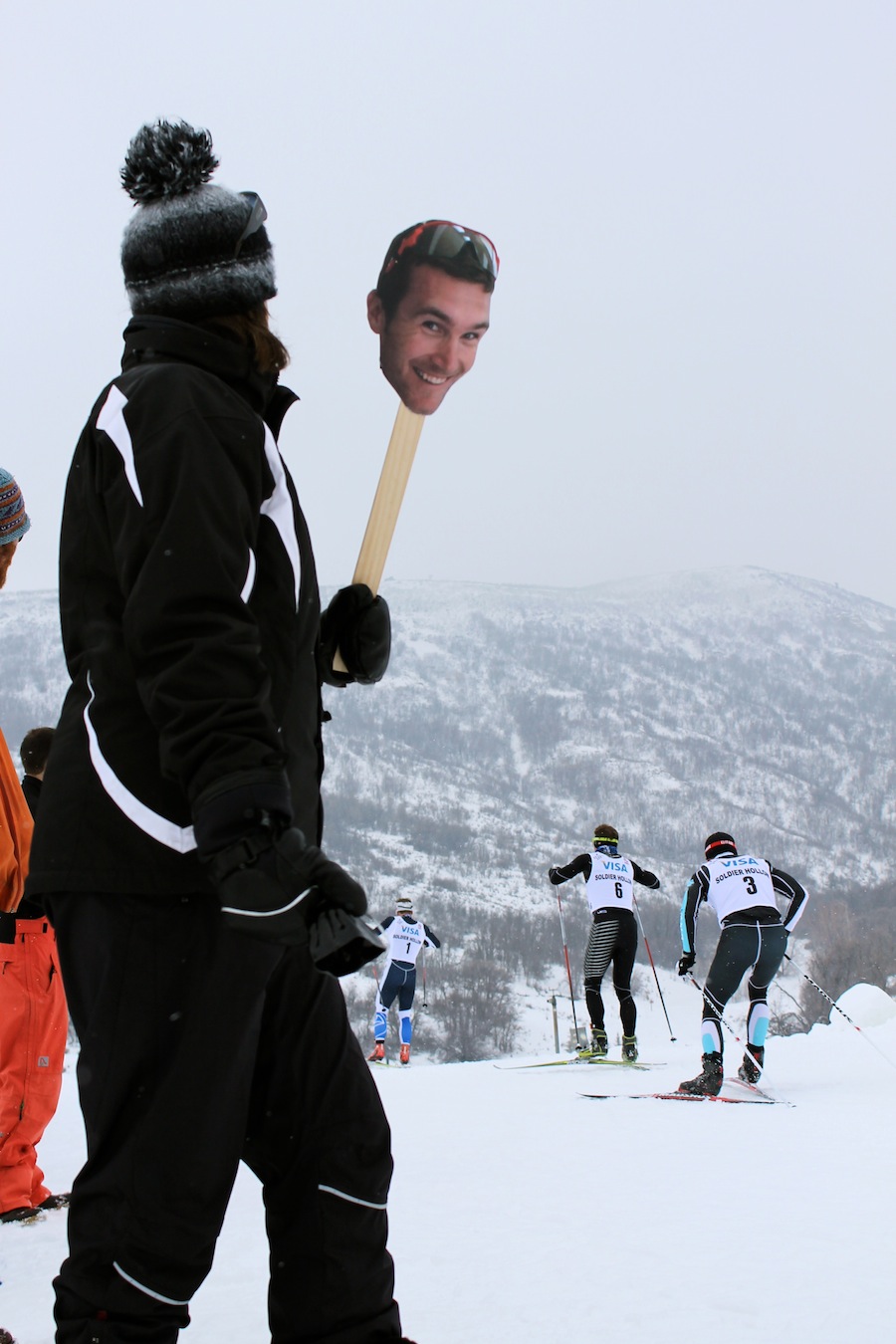
    Sylvan Ellefson's mother-in-law holding one of many "Sylvan on a Stick" cardboard cutouts while cheering Ellefson on during the men's 30 k freestyle mass start at U.S. nationals on Wednesday in Midway, Utah.
    Sylvan Ellefson’s mother-in-law holding one of many “Sylvan on a Stick” cardboard cutouts while cheering Ellefson on during the men’s 30 k freestyle mass start at U.S. nationals on Wednesday in Midway, Utah.

    A Ski & Snowboard Club Vail (SSCV)/Team HomeGrown staple, Ellefson figured he had about 40 to 50 supporters cheering him on, but it could’ve easily been more. Many of his fans held “Sylvan on a Stick” cardboard cutouts of his face in hand, including his mother-in-law who excitedly awaited him (along with his grandmother and other family members) at the finish.

    With two laps remaining, Ellefson kicked it into high gear on the first of several significant climbs on a snowy morning. Distancing himself from Miles Havlick of the Sun Valley Ski Education Foundation (SVSEF) and Ben Lustgarten (Middlebury), he tried to close the gap on renegade Scott Patterson of the University of Vermont (UVM).

    “I knew that if I wanted to win today I had to pull a ballsy move and I was feeling pretty good chasing Scott,” Ellefson said. “I decided that I’d see what the field was gonna do and just go for it. I went for it and not everyone responded the way I thought, so I just kept going for it.”

    On the second of six times up the unforgiving Hermod’s Hill in condensing powder, Patterson and Lukas Ebner (University of Alaska-Anchorage) took advantage of the pack’s moderate pace and put some time between them and the rest of the field.

    “Next time up the hill [Ebner] faded a little bit so then all of a sudden I was up there on my own,” said Patterson, an Anchorage native. “I figured I’d try to ski it, try to stay relaxed, but out there being off the front I definitely probably pushed a little too hard early.”

    After skiing 1 ½ laps alone out front with as much as a 30-second margin, the UVM junior started the fifth lap hanging onto whatever energy he had left. He made it up the first two climbs out of the stadium to the backside of the course, where Ellefson reeled him in – cutting the deficit from 15 seconds to zero within a kilometer.

    “I was hurting pretty bad,” Patterson said. “The steep hills really got me and I was almost walking up them. Sylvan came flying by me and I had nothing really left at that point, so I was kind of struggling in the last 10 k.”

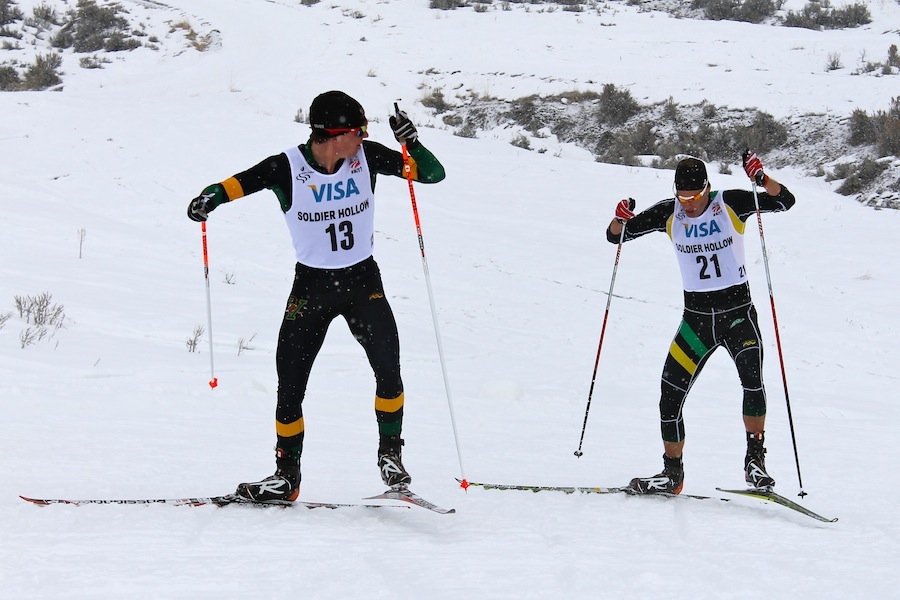
    University of Vermont junior Scott Patterson glances back at Lukas Ebner (University of Alaska-Anchorage) while leading early in the third of six laps in the men's 30 k freestyle mass start at U.S. nationals at Soldier Hollow.
    University of Vermont junior Scott Patterson (l) glances back at Lukas Ebner (University of Alaska-Anchorage) while leading early in the third of six laps in the men’s 30 k freestyle mass start at U.S. nationals at Soldier Hollow.

    Ellefson not only passed him, but he dropped the pack in the process and created a gap of his own with 7.5 k remaining. A 10-second lead down the long downhill known as Whale’s Tale grew to 12 seconds on the final hill of the lap, and Ellefson came through the stadium 11.6 seconds ahead with 5 k to go.

    Hearing things weren’t going so well for Kris Freeman of the Maine Winter Sports Center in second (“Something was going on with his ski, his binding,” Ellefson said), he decided to go for it with one lap remaining.

    “I haven’t really tried to pull a ballsy move in a long time and I figured why not?” he said. “My skis today were also unbelievable.”

    He ended up extended his lead to 23 seconds across the top of the course before heading up Hermod’s one last time. Ten to 20 seconds later on the same hill, Brian Gregg (Team Gregg/Madshus) challenged Freeman for second and gave Ellefson a scare in first.

    “I was coming completely undone up Hermod’s the last time, completely,” Ellefson said. “My coach was telling me I had about 10 seconds coming up Hermod’s and I was like, ‘Oh my God, somebody give me a break,’ but when you have this good a field you just have to be the fastest on that day.”

    Sylvan Ellefson (SSCV/Team HomeGrown) pushes off the front with just over 5 k remaining in the men's 30 k freestyle mass start at U.S. nationals at Soldier Hollow in Midway, Utah.
    Sylvan Ellefson (SSCV/Team HomeGrown) pushes off the front with just over 5 k remaining in the men’s 30 k freestyle mass start at U.S. nationals at Soldier Hollow in Midway, Utah.

    He was – outlasting Gregg, who came on strong over the last two climbs, to win his first national title in 1:19.11.3. Gregg finished 2.8 seconds back in second for his first national podium, and Freeman pulled through in third, 16.5 seconds after Ellefson.

    “Everything was so blurry,” Ellefson recalled of the last few hundred meters to the finish. “I knew Gregg was coming, but I didn’t know how far behind he was and I knew I just had to hammer. I can’t tell you how many times Brian Gregg and I have had a sprint to the finish. Last year, he got me every single time so I was happy to get him this time.”

    In last year’s national 30 k classic, Ellefson placed seventh, 35 seconds behind winner Torin Koos (Bridger Ski Foundation), who did not finish after pulling out in 42nd halfway through the race. Another DNF, Tad Elliott (SSCV/Team HomeGrown) led early in his first race back while recovering from mono. He was in the mix and near the front for three laps, but called it a day after the fourth time around despite being in 16th.

    Almost exactly a year ago, Gregg was 22nd in the 30 k classic mass start, also at Soldier Hollow. On Wednesday, he was out to perform in what he considered his focus event of this year’s nationals – and the one with the deepest implications for making the Olympics next month in Sochi, Russia.

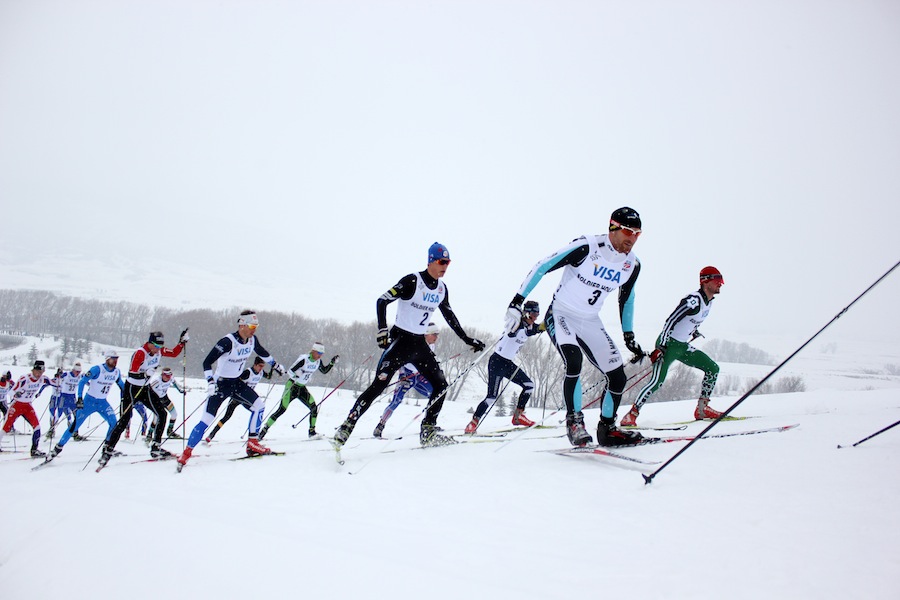
    Brian Gregg of Team Gregg/Madshus (second from r) holding his own in the main pack up Hermod's for the first of six times on the men's 30 k freestyle mass start at U.S. nationals at Soldier Hollow.
    Brian Gregg of Team Gregg/Madshus (3) followed by Erik Bjornsen (2) of APU/U.S. Ski Team and Kris Freeman of the Maine Winter Sports Center (behind Bjornsen) in the pack up Hermod’s for the first of six times on the men’s 30 k freestyle mass start at U.S. nationals at Soldier Hollow in Midway, Utah.

    “On Hermod’s, I was getting a little bit of a gap on Kris and I was like, ‘I’ve just got to finish as hard as I can,’ ” said Gregg, 29, who sat patiently in the pack in 24th through the halfway point.

    A lap later, he was up to 12th, and after the fifth of six laps, Gregg was fourth behind Ellefson, Freeman, and his good friend Matt Liebsch (XC United/Team StrongHeart).

    “It was kind of nice to have that rabbit up there because I kept gaining time on Sylvan,” Gregg said of chasing Ellefson the last kilometer to the finish. “But I was really tired and it felt kind of like a slow-motion sprint.”

    Regardless, second place and just 2.3 seconds out of first was almost as good as a victory for Gregg, who’s been hunting to improve his International Ski Federation (FIS) point profile since the beginning of the season.

    In the following women’s 20 k mass start, his wife Caitlin Gregg won by more than 3 ½ minutes. Less than four hours later, they two were scheduled to fly from Salt Lake City to Prague.

    “The last two days have been crazy,” Gregg said. “Packing things up making sure we’re as dialed as we can be for this race. … We’re not really sure how long we’ll be over in Europe; we have a ticket back on [January] 21st, but maybe with today we get named [to the U.S. Olympic team] or whatever, so we’ll see how it works.”

    The men’s and women’s SuperTour leaders, the couple earned World Cup starts for the next two weekends of racing before the Olympics, which start Feb. 8.

    “Very, very excited,” Gregg said. “This has been a focus race all season. … It’s great to see Sylvan up top. He’s been real consistent all season.”

    Racing for Tony:
    A day after his friend and Vail native, Tony Seibert, 24, died in an avalanche, Sylvan Ellefson dedicated Wednesday’s U.S. nationals 30 k freestyle race to him.Ellefson wrote on Facebook on Tuesday:
    “Having a tough time swallowing this one. I’ll be skiing for you tomorrow Tony! The Vail community won’t be the same without you. I’ll celebrate your life by attempting a 360 off of Lovers Leap. Doubtful I’ll land, but at least I’ll be smiling when Ski Patrol takes me off the mountain  I’ll miss you man!”

    “Whether they pick me for the Olympics this year or not, I’m just happy to have a national championship under my belt,” Ellefson said. “It’s literally the only thing I’ve ever wanted in my skiing career, and two years ago when I was third [in the 2012 national 15 k freestyle], that was the closest. So for me to get it today, I can’t tell you how happy I am.”

    Moments before he stepped up onto the podium for the medal ceremony, he embraced his wife, Sarah.

    “To have this support crew here is unbelievable,” Ellefson said. “That’s really what got me up the hills today.”

    Almost 14 seconds after Gregg finished, Freeman, 33, came through in third.

    “I did what I had to do, right?” Freeman said to his coach, Zach Caldwell, almost immediately after.

    While he declined to comment, Freeman later wrote on his blog that he was seeking lower than 30 FIS points in both distance races at nationals, which meant making the podium in both. He was third in the 15 k classic last Saturday.

    “I just managed a 29.5 FIS race in the 15k classic and I scored a 27 point race in the 30k skate today,” he wrote. “I have not been feeling good this week so I am relieved to have moved up into such a strong position. As far as I know there are no more FIS races in the US that could affect the Olympic qualification for distance races.”

    A Type-1 diabetic, his blood sugar dropped dangerously low to 38 the night after the 15 k. He overcompensated and his glucose level rose as he slept, waking him up four times with a peak of 280 at 4 a.m.

    “At this point I took yet another bolus and forced myself to get out of bed and do 200 jumping jacks in order to make my muscles more receptive to the insulin I was giving myself,” Freeman wrote. “The physical stimulus worked and I slept until 8:00 AM when my low alarm set off at 78. For me, seventy eight is a healthy level but below 70 is not. So I got out of bed, ate breakfast, and everything stabilized. This was not the ideal recovery for a race and I started feeling very down.”

    Freeman leading Bjornsen across the top of the Olympic 5 k course at Soldier Hollow during the fifth of six laps in the men's 30 k freestyle mass start at U.S. nationals on Wednesday. Freeman finished third and Bjornsen was fifth.
    Freeman leading Bjornsen across the top of the Olympic 5 k course at Soldier Hollow during the fifth of six laps in the men’s 30 k freestyle mass start at U.S. nationals on Wednesday. Freeman finished third and Bjornsen was fifth.

    He called his sport psychologist, who “helped me to let go of the unquantifiable fatigue that the poor sugars caused and to focus on what had to be done in the next race. I have a tendency to be very obsessive so that was easier said than done,” Freeman wrote. “I have to thank my family and girlfriend who also got to listen to me whine about not feeling like myself the last few days. [Their] love and encouragement really helped me to get the most out of a less than ideal time and get the points I needed to pursue my Olympic dream in Sochi. I am very confident that with a little downtime at home that my best Olympic results are in front of me.”

    While he and several others signed eligibility papers for Sochi, the team won’t be officially named until around Jan. 21-22, according to the U.S. Ski Team.

    Forty-two and a half seconds off the podium, Mikey Sinnott (SVSEF) came on strong the last lap to finish fourth. Unable to keep up with Gregg through the stadium at the start of the last lap, he caught a ride from Erik Bjornsen and Lex Treinen, both of Alaska Pacific University. He conserved behind them and passed them both before the infamous climb, where he also took on Liebsch.

    Bjornsen finished another six seconds back in fifth, 1:05 behind Ellefson. Treinen was sixth (+1:07.3) and Liebsch took seventh (+1:12.5).

    “I kind of got lucky that I didn’t have to sprint too hard; this was a pretty tough finish for me,” Sinnott said. “Last hundred meters with my legs gone, I was lucky to be alone.”

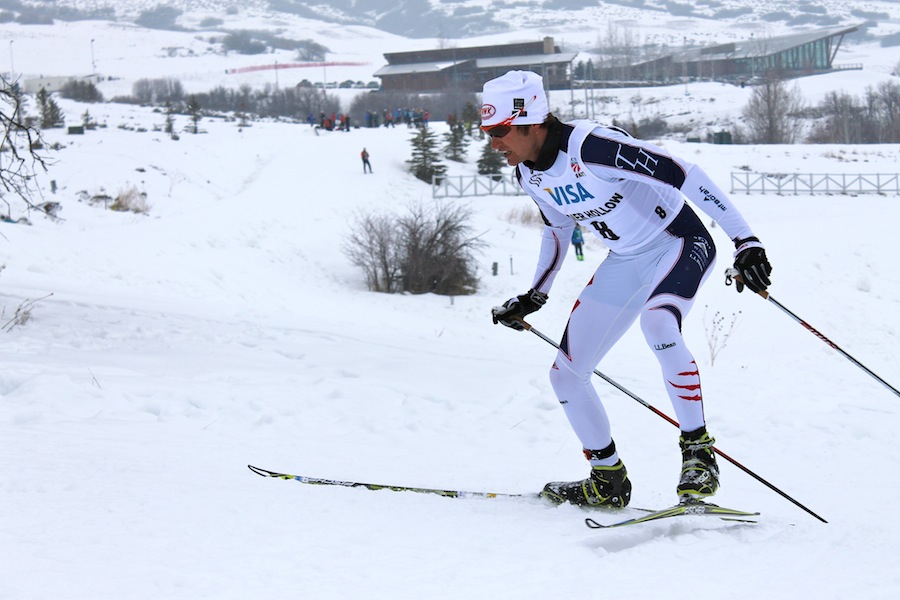
    Mikey Sinnott of the Sun Valley Gold Team (l) leads Oscar Ivars (University of Utah) up an early climb in the fourth of six laps on Wednesday. Third in the 30 k freestyle mass start at the time, Sinnott placed fourth.
    Mikey Sinnott of the Sun Valley Gold Team (l) leads Oscar Ivars (University of Utah) up an early climb in the fourth of six laps on Wednesday. Third in the 30 k freestyle mass start at the time, Sinnott placed fourth.

    Right behind Ellefson when he popped early in the fourth lap, Sinnott rose as high as third, but generally hovered in the top 10.

    “I haven’t really skied well at all this year so I knew that maybe my form wasn’t the top notch, but I know I probably have some better base than a lot of these youngsters out there,” Sinnott said. “I wanted to ski smart and hope for the best. I think that’s what I did well, stay near the front out of the chaos.”

    It worked to his advantage, he said, because, “This is one of the slowest 30 k’s I’ve been in. The first 20 k we were doddling. I’m sure Caitlin went a lot faster than us. I just kind of sat there patiently and waited for it to start blowing apart.”

    While Patrick Johnson (Far West) was the first to go off the front with a breakaway on the first lap, Sinnott said he wasn’t too concerned.

    “It was kind of like, ‘That was dumb,’ ” Sinnott said. “Maybe if we were pushing and working hard and not reeling him in, but you could tell he was just strung out there working hard and we were taking it really easy. … Patterson did the same thing and I think the coaches started to panic because he was a little farther and a little bit longer out there, but … when the race finally started we reeled him in a k.

    “When you’ve got Freeman in the pack you know he’s not gonna let anyone get out of hand that’s really a threat,” he added.

    After opening up a 15-second lead early in the first lap, Johnson resumed his place in the pack about halfway through the second loop and finished 12th, 1:34.6 behind Ellefson. Patterson ended up 19th (+2:20.6).

    “I gave it my best. Put in a good effort,” Patterson said.

    Bjornsen was disappointed with fifth, explaining he was looking for more after feeling “pretty nervous” at the start.

    “I should’ve gone with those guys on the last lap, but I guess I just didn’t quite have it in me,” he said of Ellefson, who made the break with about 7.5 k to go, and Freeman, Liebsch and Gregg that followed in pursuit.

    Liebsch said he felt good for five of the six laps, but couldn’t quite stay with Gregg when he attacked on the last lap.

    “I just didn’t have it right then,” Liebsch said, who had snow jam under his boot for the entire last lap, causing some discomfort with his binding.

    “We’ll have to see how the points play out, if I’m still in it for Sochi or not,” he added. “I was right in the mix for making the world champs last year … and seeing [how] the last Olympic team I was right there, so hopefully get the nod this time.”

    Thinking about his Midwest supporters, Liebsch thanked his wife, Marybeth. “I love her and thanks to everyone back home for the support,” he said.

    Results | Complete U.S. nationals results

    — Lander Karath contributed reporting

    Sylvan Ellefson and his wife, Sarah, await the podium ceremony after Ellefson won the men's 30 k freestyle mass start at U.S. nationals on Wednesday.
    Sylvan Ellefson and his wife, Sarah, await the podium ceremony after Ellefson won the men’s 30 k freestyle mass start at U.S. nationals on Wednesday.
  • Sinnott Sticking to World Cup Goals: ‘These Opportunities Don’t Come Around That Often’

    Sinnott Sticking to World Cup Goals: ‘These Opportunities Don’t Come Around That Often’

    Mikey Sinnott (SVSEF) racing to third overall at 2013 SuperTour Finals. After winning the season-long SuperTour, he earned World Cup starts this December. (Photo: Mark Nadell/MacBeth Graphics)
    Mikey Sinnott (SVSEF) racing to third overall at 2013 SuperTour Finals. After winning the season-long SuperTour, he earned World Cup starts this December. (Photo: Mark Nadell/MacBeth Graphics)

    DAVOS, Switzerland – If you’re a U.S. or Canadian ski fan, you’ve seen it before. An athlete has a great season, wins the SuperTour or NorAm circuit, and earns the privilege of racing on the World Cup for the first period of the next season, courtesy of the International Ski Federation.

    But they get there and they can’t quite replicate the performances that earned them the spot in the first place. In the beginning of both 2012 and 2013, Canada’s Alysson Marshall struggled mightily in distance racing in Gällivare, Sweden, and Kuusamo, Finland, although she nearly qualified for sprint quarterfinals in Kuusamo.

    Last year, Marshall’s teammate Kevin Sandau and American Sylvan Ellefson were mired in the 70’s and 80’s in early-season starts. In 2011, Chris Cook was hovering at the back of the results page. Yet these were the fastest domestic racers in North America – what was going on?

    Jumping straight onto the World Cup circuit at the beginning of the season can be hard, says Mikey Sinnot, a Sun Valley Gold Team skier who won the U.S. SuperTour last season and has been traveling with the World Cup so far this fall.

    It’s not the first time he has competed on skiing’s highest circuit – he did a stint in the middle of the 2012 season, as well as earning starts when the tour visited Canada in 2008, 2009, and last December. But the early season races are a bit different than what he has seen before.

    “It’s hard because the field is so tough,” Sinnott said after placing 85th in the 1.5 k freestyle sprint on Sunday. “It’s a lot bigger fields, a lot deeper fields [than in the middle of the season]. There’s a lot of Norwegians and Finns fighting for spots, and they’re all primed and ready to go.”

    Of course, there can be advantages, too. Do well enough and you might be able earn your keep on the circuit and continue traveling with the national team, as U.S. skier Holly Brooks did a few years ago. At this point, that’s the model top domestic racers would like to follow.

    And knowing that you’re heading straight for the toughest competition there is can allow you to design your off-season training plan accordingly.

    “It’s also easier in some ways because you can prepare yourself, and make yourself in top fitness, also,” Sinnott said. “Which I didn’t do.”

    Not one to complain too much, Sinnott took the blame for his performances so far this season: 93rd in the opening Kuusamo mini-tour, 81st in the 15 k classic in Lillehammer, Norway, and then the relay here.

    “My form is so poor,” he said. “… I’ve been skiing pretty terribly. Distance races have been murder. I thought that going up those climbs, that the 30 k [on Saturday, which he sat out] would just bury me even worse. It didn’t seem like it was important, so I might as well try for the sprint and have better success.”

    After being on the cusp of becoming a regular World Cup skier for several seasons – he’s usually at or near the top of the SuperTour rankings – Sinnott is looking at the big picture. This year, that means the Olympics. Things will likely have to turn around if he is going to snag a trip to Sochi; after the coming weekend of racing in Asiago, Italy, he will return to the U.S. to prepare for national championships.

    “It’s not ideal,” Sinnott said of whether the World Cup is preparing him to win back home. “I’ve been battling with the idea of going back versus staying here, especially since my form is so poor. But I kind of thought that these opportunities don’t come around that often.”

    And the big picture, too, means understanding what results he might have at the Olympics. At 28 years old, Sinnott doesn’t want to just punch his ticket as a tourist – he wants to punch it as a contender. Starting off the season in Europe was a way to see whether that would be possible.

    “I want to prove myself against the best,” he said. “If I make the Olympics, I don’t want to do it just because I got good points back in the U.S. I want to do it because I’ve showed that I can compete with the best in the world. And I can’t do that at home, I have to do it here. And if I can’t do it here, then I don’t deserve the Olympics.”

    While he was honest, and self-effacing, about his skiing so far this year, Sinnott certainly isn’t counting himself out in the Olympic selection process.

    “I kind of have an idea in my head [of what he has to do to make it],” Sinnott said.

    Despite spending the last few weeks traveling with the U.S. Ski Team, that hasn’t given him an advantage in terms of Olympic qualifying, which Sinnott said is just as it should be.

    “There’s criteria, and then there’s subjective choices,” he explained. “I feel like you have to do something special [to get that]. And they can’t say what subjective criteria it is, because then it’s not subjective… It kind of depends on who does what. Maybe I’ll do something great, but Dakota [Blackhorse von Jess] can rock something better.

    “And then that’s it.”

  • Feeling a ‘Little Stale’, Hoffman Top U.S. Man in 41st

    Feeling a ‘Little Stale’, Hoffman Top U.S. Man in 41st

    Norway's Petter Northug  (l) passing Kris Freeman (USA) around 5 k into Saturday's World Cup 15 k classic individual start in Lillehammer, Norway. Northug went on to place ninth, and Freeman was 75th.
    Norway’s Petter Northug (l) passes Kris Freeman (USA) around 5 k into Saturday’s World Cup 15 k classic individual start in Lillehammer, Norway. Northug went on to place ninth, and Freeman was 75th.

    Coming off a career-best result in Kuusamo, Finland, Noah Hoffman of the US Ski Team had five days to recover and rev himself back up for Saturday’s 15-kilometer classic individual start at World Cup in Lillehammer, Norway.

    In an email, Hoffman explained he might have been too well rested because he “felt a little stale.”

    In the final pursuit of the Kuusamo Ruka Triple, Hoffman clocked the fastest 15 k freestyle time for ninth overall. He carried that energy into Saturday’s race and felt good, but was hoping for a top 20. In a field of nearly 85 men, he ended up 41st , 1:31.9 behind Norwegian winner Pål Golberg.

    “My pacing strategy was to start deliberately backed down from my normal race level,” Hoffman wrote, which he executed pretty closely, but not quite 100 percent. Ultimately, he explained that he struggled to ski relaxed and “big” in classic.

    “I am going to revisit my classic technique before my next classic race in the Tour de Ski,” Hoffman added. “I am disappointed by today’s result because I think I am in better shape than I showed.”

    Hoffman will start third in the U.S. men’s 4 x 7.5 k relay on Sunday in Lillehammer, as the first skate leg ahead of anchor Simi Hamilton, who sat out Saturday’s 15 k.

    “No 15 km for me today, but stoked for relay tmrw!” Hamilton tweeted.

    Andy Newell will scramble the first classic leg and tag off to Kris Freeman as the second classic skier.

    Freeman, who trains with the Maine Winter Sports Center, finished 75th on Saturday (+3:33.3). Mikey Sinnott was the other American in the 15 k and placed 81st (+5:06.0).

    “It was an awful race,” wrote Sinnott, last season’s overall SuperTour winner from Sun Valley. “I’m feeling flat and I can’t afford to be anything but my best in this field. I was looking forward to this opportunity, and I’ve turned up to a gun fight with rubber band gun. I would be minuted back in the SuperTour field with this kind of effort, so it’s very frustrating to not be showing my true ski potential.”

    As the first starter, he had hoped to experience the leader’s chair. Sinnott started conservatively and “slowed down from there,” unable to get going, he wrote.

    “My races so far in Europe have been largely forgettable,” he added. “More than a place or time, which can be hard to gauge in a new field, I wanted to feel good racing.”

    Regardless, he wouldn’t trade the international experience or opportunity to strive for the U.S. Olympic team.

    “I’ve been loving the experience and trying to feed off the positivity and confidence of those around me,” Sinnott wrote. “Every World Cup race is a learning experience for the future, and each one affords me the chance to grow with my comfort and familiarity. Hopefully with the sprint races yet to come I can find my stride and use what I have learned to put things together.”

    Men’s 15 k results

    U.S. women’s report

  • Newell Sixth in Beitostølen Sprint; Hamilton Keeps Energy High in 27th

    Newell Sixth in Beitostølen Sprint; Hamilton Keeps Energy High in 27th

    Andy Newell on his way to qualifying in fourth in the 1.4 k skate sprint FIS race in Beitostølen, Norway. (Photo: Noah Hoffmann/noahhoffman.com)
    Andy Newell on his way to qualifying in fourth in the 1.4 k skate sprint FIS race in Beitostølen, Norway. (Photo: Noah Hoffmann/noahhoffman.com)

    In his first skate sprint since August, when Andy Newell mixed it up in New Zealand at the NZ Winter Games, the U.S. Ski Team’s veteran sprinter made it all the way to the final on Sunday in Beitostølen, Norway. Newell ended up sixth in the 1.4-kilometer freestyle sprint, the last FIS race in a three-race series this weekend.

    Fourth in the qualifier, Newell was one of the top guys heading into the final after Norwegians Sondre Turvoll Fossli, Ola Vigen Hattestad and Anders Gløersen. The 20-year-old Fossli went on to win every heat, including his final in 2:33, just a tenth of a second faster than runner-up Finn Hågen Krough, also from Norway.

    A lucky loser in both his quarterfinal and semifinal, Newell finished 4.6 seconds behind Fossli in the final (and 0.2 seconds behind German fifth-place finisher Sebastian Eiesenlauer).

    “I was feeling ready to race leading into [the race], although I hadn’t done a real skate sprint since New Zealand,” Newell wrote in an email. “This course wasn’t too easy because of the wind … but it definitely wasn’t a World Cup course either with less climbing, only taking us about two-and-a-half minutes. So I knew I was going to have to be quick in qualification and aggressive in the heats.”

    He tried to get out front in each of his heats to avoid trouble and “also get some room to punch it on the uphill,” Newell explained.

    “My fitness and speed was feeling good so I think I was able to push a high pace in the heats, but just didn’t have my usual kick at the end,” he added. “This tends to be a recipe for Lucky Loser, which is what happened to me today.”

    A problem for most everyone, Newell said the wind was a factor in the men’s race.

    “We all stayed together up and over the final uphill but my legs were just a little too heavy to challenge in the lanes and the German skier and I duked it out,” he explained. “It’s still early and I want to be skiing my best in January and February … so I’m confident, but also not feeling much pressure.”

    With this coming Friday’s sprint part of the Kuusamo Ruka Triple mini tour, and a “double distance weekend” Dec. 7-8 in Lillehammer, Norway, Newell said the next two weeks will also be about building and “hopefully get me ready to rock once the real sprints start going off.”

    Simi Hamilton racing to 15th in Sunday's 1.4 k freestyle sprint qualifier in Beitostølen, Norway. (Photo: Noah Hoffman/http://noahhoffman.com/beitostolen-sprint-race/)
    Simi Hamilton racing to 15th in Sunday’s 1.4 k freestyle sprint qualifier in Beitostølen, Norway. (Photo: Noah Hoffman/noahhoffman.com)

    Newell’s teammate on the USST and Stratton Mountain School T2 Team (SMST2), Simi Hamilton was also looking forward to moving on after the FIS races in Beitostølen. He qualified in 15th on Sunday and went on to place 27th with a sixth-place finish in his quarterfinal.

    “I decided to make a move around [German] Josef Wenzel on the inside when we were coming around the last 180 turn before the finishing stretch,” Hamilton explained in an email. “I knew [I] could ski the corner better and faster than him, so I decided to go for it and see what happened. Wenzel is an aggressive skier and crashes occur in a lot of heats that he skis. When I was coming thru on his inside, I got nudged into the V boards and possible got my skis stepped on. It went down pretty quick.

    “I broke my pole and lost all my momentum coming into the finishing stretch, but rubbing is racing and I’m using it to fuel the fire for the upcoming World Cup sprints,” he added.

    Hamilton finished last in his heat, more than 19 seconds behind Wenzel, who went on to place eighth overall. Regardless, Sunday’s crash and an unlucky 15 k classic race on Friday didn’t faze Hamilton.

    “My energy felt really good going in to the day,” he wrote Sunday. “It was a good course for me… Pretty short time-wise and some good transition skiing on fast and hard conditions. During the qualifier I focused on skiing powerfully and getting that good skate sprint feeling going.”

    After the race, Hamilton said he did some mock sprint intervals. “I’m using that as a good sign of where I am fitness and speed-wise,” he wrote. “I’m psyched about that feeling, especially after such a frustrating day on Friday when I broke my pole after catching my kick pocket on a sheet of ice and just couldn’t get my body revved up to where I wanted it to be during that race.”

    Three other American men raced on Sunday, but missed qualifying for the heats. Torin Koos (Bridger Ski Foundation) placed 32nd, less than four-tenths of a second out of qualifying. Dakota Blackhorse-von Jess (Bend Endurance Academy) tied for 54th, and Mikey Sinnott (Sun Valley Ski Education Foundation) was 71st.

    “I felt optimistic going into [Sunday’s] race,” Sinnott wrote in an email. “Body was feeling sharp. I had a solid warm up and things seemed ready to go. I tried to ski longer and glide a lot during the race, which I believe I did. I never bogged down and had plenty left for a strong finish, which can be a weakness of mine.”

    Ultimately, Sinnott felt he should have been more aggressive.

    “I still had plenty left in the tank at the finish line,” he wrote. “This week was about relearning to race and assessing fitness, in that regard it was a success. I can have a tough time the first week in Europe, but I didn’t suffer the usual deep fatigue. I didn’t ski fast this week, but it was a low priority to do so. Mostly I wanted to have a test run.”

    “Now, I know where I need to work in the upcoming week,” Sinnott added. He’s planning to race all three races in Kuusamo. “I’m close to where I want to be next week, and I think you’ll see a big change.”

    — Alex Matthews contributed reporting

    ***

  • The 12: Sun Valley Gold Team

    The 12: Sun Valley Gold Team

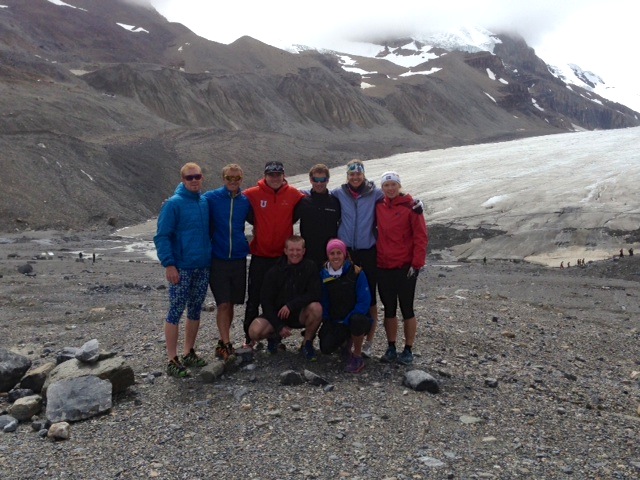
    Most of the Sun Valley Ski Education Foundation (SVSEF) Gold Team with two collegiate summer athletes, Makayla Cappel (DU) and Ben Lustgarten (Middlebury), near Canmore, Alberta. From left to right (back) Matt Gelso, Mikey Sinnott, Miles Havlik, Lustgarten, Cappel, and Rose Kemp. (Front) Head coach Colin Rodgers and Mary Rose. (Photo: Colin Rodgers)
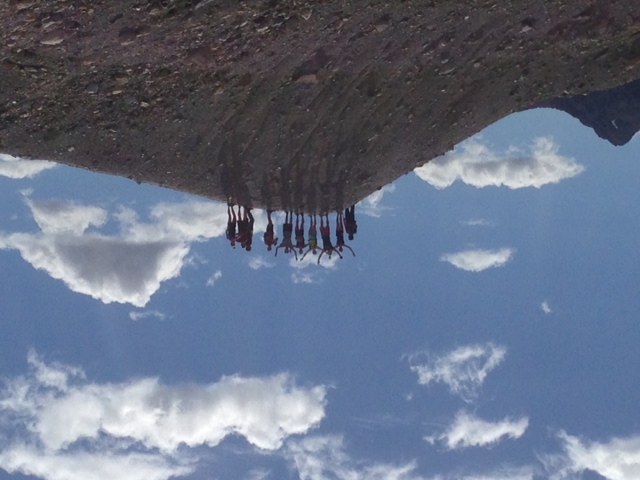
    Most of the Sun Valley Ski Education Foundation (SVSEF) Gold Team with two collegiate summer athletes, Makayla Cappel (DU) and Ben Lustgarten (Middlebury), on the Athabasca Glacier in Banff/Jasper National Park during a recent camp in Canmore, Alberta. From left to right (back) Matt Gelso, Mikey Sinnott, Miles Havlik, Lustgarten, Cappel, and Rose Kemp. (Front) Head coach Colin Rodgers and Mary Rose. (Photo: Colin Rodgers)

    Note: This is the seventh preview in our series on U.S. elite teams, which we’ve dubbed the “The 12.” We asked coaches to tell us what’s new and whom to look out for in the coming season and will publish additional previews in the coming weeks in no particular order.

    Team: Sun Valley Ski Education Foundation (SVSEF) Gold Team

    Coaches: Rick Kapala (program director), Colin Rodgers (head coach), Shane MacDowell (service tech, formerly of Boulder Nordic Sport East)

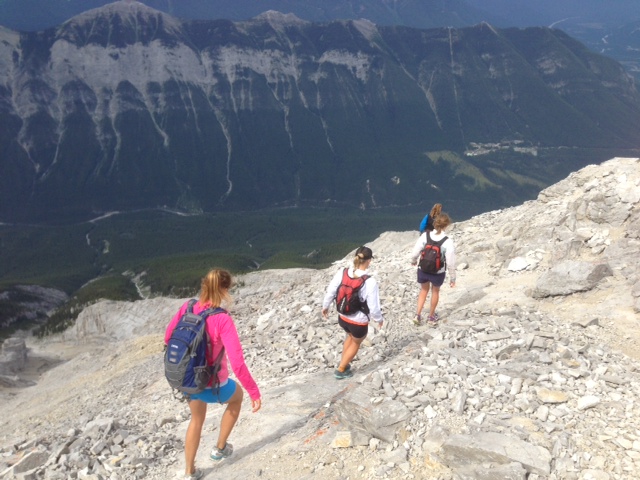
    Sun Valley training-group members Makayla Cappel and Rose Kemp hike down Mount Rundle in Banff National Park, Alberta. (Photo: Colin Rodgers)
    Sun Valley training-group members, including Makayla Cappel and Rose Kemp, hike down Mount Rundle in Banff National Park, Alberta. The team trained in Canmore from July 10-19. (Photo: Colin Rodgers)

    Gold Team roster: Mikey Sinnott, Miles Havlick, Matt Gelso;

    Chelsea Holmes, Rose Kemp, Mary Rose

    Who’s new: Havlick (University of Utah), Kemp (Utah), Rose (University of Colorado-Boulder)

    Who’s missing: Patrick Johnson, Reid Pletcher, Simi Hamilton, Alexia Turzian, Mali Noyes, Lucy Garrec, Clarke Sullivan (former service tech)

    According to coach Colin Rodgers, Johnson, who nabbed his first SuperTour win (and podium) in his rookie season after college last winter, is home in Anchorage, Alaska, for an environmental internship. Pletcher is working as a river guide on the Salmon River about an hour north of Sun Valley in Stanley, Idaho, after stepping back from racing last season due to lingering effects of a head injury. Noyes is also guiding on the Salmon River, and Hamilton – a Colorado native – moved to Vermont to train with fellow U.S. Ski Team sprinter Andy Newell and the Stratton Mountain School T2 Team.

    A Sun Valley local, Turzian is in Boulder, Colo., Garrec is in nearby Ketchum, and Sullivan, Sun Valley’s former head wax tech, is “ripping lips, building single track [mountain] bike/hiking trails, blasting ducks in Bozeman, MT,” Rodgers wrote in an email.

    Mikey Sinnott and Miles Havlik running on the Iceline Trail in YoHo National Park. (Photo: Colin Rodgers)
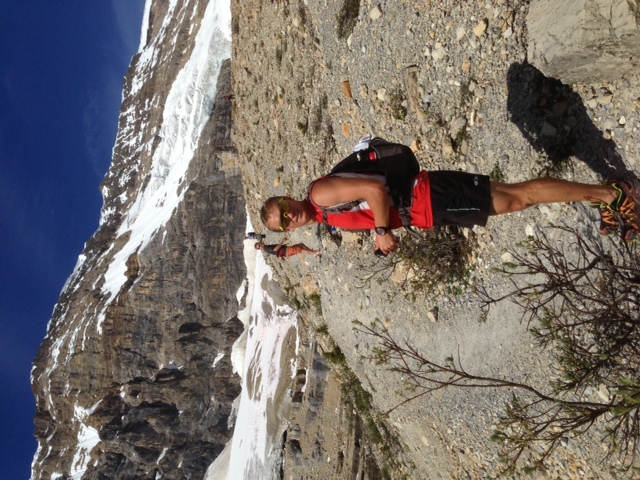
    Sun Valley Gold Team members Mikey Sinnott (front) and Miles Havlik running on the Iceline Trail in YoHo National Park in the Canadian Rocky Mountains in southeastern British Columbia earlier this month. (Photo: Colin Rodgers)

    Top results last season: Let’s start with Sinnott: the overall SuperTour winner last season with two SuperTour victories (both classic sprints; one in Minneapolis, the other in Aspen, Colo.) and a runner-up finish at U.S. nationals (also in a classic sprint). Sinnott’s finish atop the SuperTour leaderboard secured World Cup starts this fall, which won’t be a new experience, but he’s not taking them lightly.

    “In the past you kind of set up your season to get World Cup starts, so you’re kind of hitting that early season performance and then you’re kind of coming down from it when you get to the World Cup,” the 28-year-old Sinnott told FasterSkier in June. “This year I’ve got months beforehand where I can build and really organize it so that I’m hitting the World Cup in my top fitness.”

    Gelso, 25, podiumed at U.S. nationals in January, placing third in the 15-kilometer freestyle at Soldier Hollow in Midway, Utah. That same week, he placed fourth in the 30 k classic mass start at nationals. Gelso started the 2012/2013 season off with a second-place finish in the 10 k freestyle individual start in West Yellowstone, Mont., which elevated him to the World Cup in Canmore, Alberta, where he was 36th in the 30 k skiathlon.

    Fresh out of college, Havlik is one of the most promising rookies entering the pro scene after racking up his second-straight national title in the 20 k mass start at NCAA Championships in Ripton, Vt. Havlik placed fourth in the other race at NCAAs this season, the 10 k classic individual start, and helped Utah finish second to the University of Colorado in the overall team results. Throughout the course of his senior collegiate season, he won four invitationals.

    Holmes, 26, finished second twice on the SuperTour last season (first in the 10 k freestyle in West Yellowstone, and soon after in the 10 k classic in Bozeman). At SuperTour Finals in Truckee, Calif., she was third in the freestyle hill climb.

    Kemp achieved All-American status at NCAAs this year, placing eighth in the 15 k freestyle mass start at Rikert Nordic Center. She placed third in two 5 k classic races on the Rocky Mountain Intercollegiate Ski Association (RMISA) circuit, and Rose was fifth in a 5 k skate race and seventh twice in collegiate events last season.

    Coach’s comment:

    By Rodgers’ estimations, the Gold Team is well on its way to a successful racing season.

    The Sun Valley Gold Team on the Iceline Trail in YoHo National Park earlier this month. (Photo: Colin Rodgers)
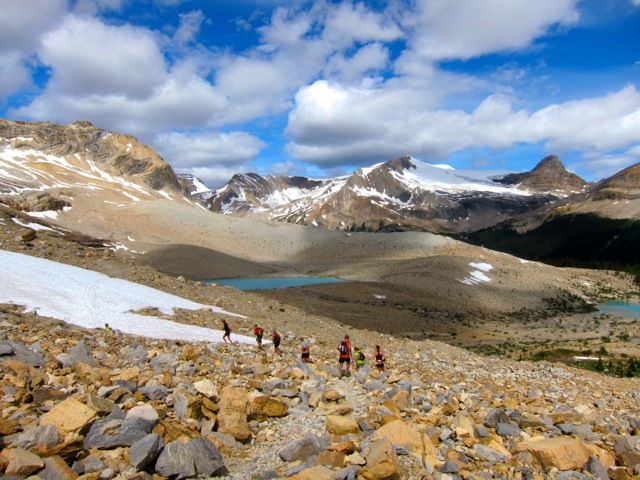
    The Sun Valley Gold Team on the Iceline Trail in YoHo National Park earlier this month. (Photo: Colin Rodgers)

    “We are a mix of old and new faces, but all of the current athletes have roots in Idaho,” he explained. “Mikey, Matt and Chelsea have been a part of the program for many full years while Rose is a Boise native. Combined both Miles and Mary have trained in the Wood River Valley for quite some time so in a sense all are local talent.

    “Although we are a small squad, 3 men and 3 women, ambitions are high for this crew and collectively we are aiming at SuperTour Titles, National Championship Titles, an NNF Cup, World Cup Competition and Olympic starts all this winter!” Rodgers continued.

    The team started the training season in Bend, Ore., in May and met up again in the Wood River Valley in south-central Idaho for a few weeks. The SVSEF recently returned from Canmore, where it had its first dryland camp of the offseason, and has big plans for training on snow at Eagle Glacier in Alaska (Aug. 8-20), working out in Park City and Moab, Utah, in October, and getting back on snow in late October at Frozen Thunder in Canmore.

    “The Gold Team strives to work closely with its younger XC programs,” Rodgers wrote. “We have spent time working in conjunction with the summer collegiate/post-graduate group during weekly sessions. While we were in Canmore, we were just a small part of a large American contingent from the Intermountain West that consisted of junior athletes from the Intermountain Region including Park City, Jackson Hole and Sun Valley.”

    The Sun Valley Gold Team on the Iceline Trail in YoHo National Park earlier this month. (Photo: Colin Rodgers)
    The Sun Valley Gold Team on the Iceline Trail in YoHo National Park earlier this month. (Photo: Colin Rodgers)

     ***

    Other previews: Alaska Pacific University | Bridger Ski FoundationCraftsbury GRP | Maine Winter Sports CenterSSCV/Team HomeGrown | Stratton Mountain School T2

  • Wednesday Workout: Stretching with Sinnott

    Wednesday Workout: Stretching with Sinnott

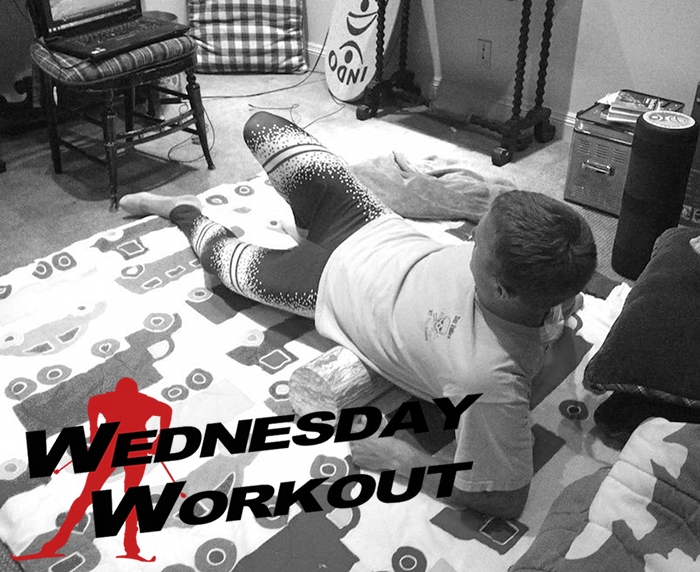
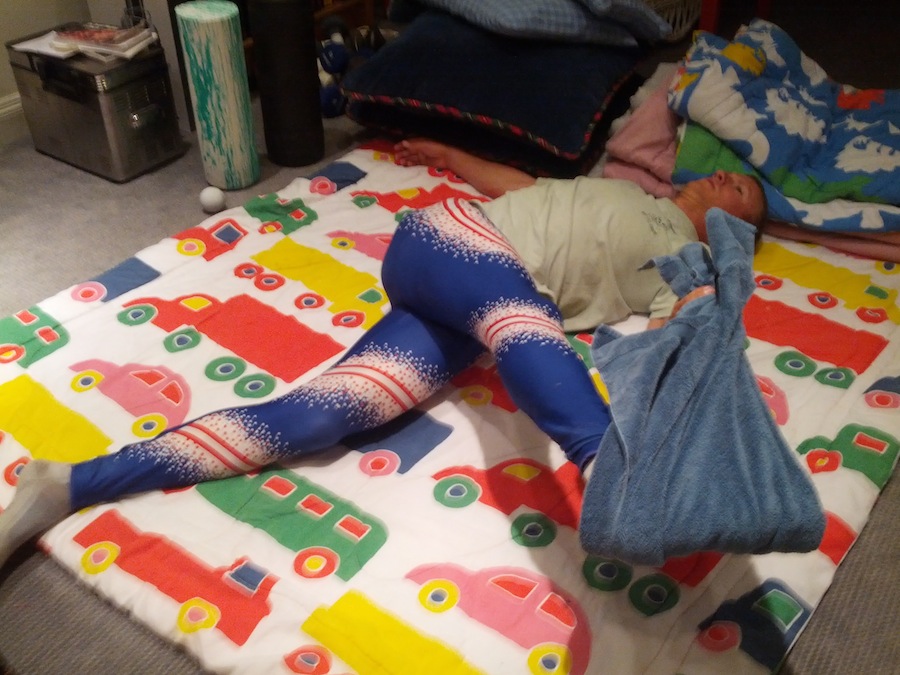
    Mikey Sinnott of the Sun Valley Ski Education Foundation (SVSEF) Gold Team during his stretching routine, which he does almost daily for at least 30 minutes at a time. (Courtesy photo)
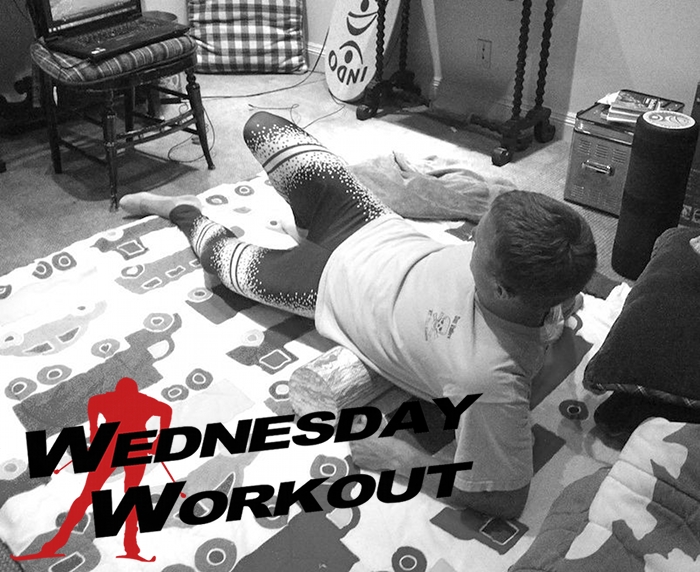
    Mikey Sinnott of the Sun Valley Ski Education Foundation (SVSEF) Gold Team during his stretching routine, which he does almost daily for at least 30 minutes at a time. (Courtesy photo)

    By Michael Sinnott | Mikeysinnott.com

    Welcome to Wednesday Workout, the newest workout series on FasterSkier. This week, Mikey Sinnott of the Sun Valley Ski Education Foundation (SVSEF) Gold Team details the stretching routine he’s prioritized, which he first wrote about on his blog. We asked him for more specifics so we can do the same.

    ***

    Stretching isn’t so much a workout as a routine. It’s like brushing your teeth. Nobody says brush this tooth at an angle horizontal to the gum line for 45 seconds at a speed of 71 brushes per-minute before moving on to blah blah blah. It’s a routine, done daily, done different every time.

    I think the hardest part about stretching is making it an enjoyable routine. For years, I pretended stretching was an overly silly, old man ritual. I would run through my routine from the soccer days- touching my toes, then pulling at the quads and holding each for twenty seconds before switching.

    After about 10 minutes, I was numb with boredom.

    I told myself it was superfluous. I sought out new research to prove my theory. It was I who was rather silly.

    The fact is, stretching makes a huge difference. Now that I am stretching more and more, I can feel tightening after a single day of forgotten practice. It opens the body to better range of motion, prevents injury and increases blood flow to aid in muscle tissue recovery. I can’t believe it took me so long to embrace it. I just had to work past the boredom.

    Sinnott stretching out his back and hamstrings. (Courtesy photo)
    Sinnott stretching out his back and hamstrings. (Courtesy photo)

    The trick for me was pairing stretching with another activity, and making it a comfortable, enticing activity.

    I started by setting up a stretching room. It’s not much, just a room with some blankets on the floor for comfort, a couple stretching aids and an entertainment system. I have a couple foam rollers (one softer and one harder), a lacrosse ball, a towel and pillows. My computer is set on a chair with the stereo attached.  To use the internet, I am forced into the stretching room. To be in the stretching room and not stretching is embarrassing.  Thus, I have tricked myself into stretching every day, for shame.

    Every day is different, but mostly I employ Netflix or Hulu to idly distract me while I soothe the broken fibers of my poor muscles. I pick a nice piece that suits my time frame – The Daily Show if time is tight, maybe Escape From Alcatraz if I have the time and am really hurting.

    Once the entertainment is playing, I put on some tights (better mobility) and settle into stretch until the credits roll.  I start by focusing on the parts of my body that are actively sore, before moving to the parts that I used heavily that day or that I will be leaning on tomorrow. As I said, there is no set routine. Sometimes I’ll hold a stretch for twenty seconds and sometimes it will be three minutes. I like an organic approach that allows me to focus on the needs of the day.

    Stretches for Thought:
    – Need: Lacrosse ball, or something similar
    – Instructions: Lay on your back on the ground. Put ball under one shoulder, allow to it sink beneath shoulder blade. Breathe slowly. Use feet to rock body back and fourth off the ground.
    – Also: Roll ball beneath hips or the IT band on the outside thigh. Use foam roller for tighter areas or longer muscles, like the low back, quadriceps and hamstrings.

    There is always a blend of techniques. My favorite right now is the lacrosse ball. I like to place it under a shoulder, reaching across my body and allowing the ball to sink into and under my scapula. I try to breathe long and slow, relaxing every little muscle. Working the ball deeper into my back. Releasing the stress. My feet help me rock back and forth, finding the sweet spots that need plenty of attention. The ball works equally as well on the hips and IT bands. It can penetrate and isolate smaller spots that a foam roller plows over.  If the lacrosse ball is too firm and painful, try a tennis ball to work those areas.  For the lower back and legs, where the muscles are longer, I use a foam roller.

    Of course, I still do the traditional form of stretching, too. I like a stretch that opens up my joints while elongating the muscles. For instance, I reach across my body on the toe touches, to open my opposite shoulder. I’ll reach behind my back and hold my own hands, pulling tighter until I feel the stretch throughout my lat, triceps, and shoulder.  Pillows and towels can be used to prop up body parts or to reach further down your leg for controlled deep stretches.

    I always end with a simple little neck stretch, pulling my head to each side, feeling it lengthen all the way down my back. It’s a little pat on the back for another session of body maintenance. This year I’ve been trying to stretch for at least thirty minutes, six times a week. Now that I have a comfortable place that helps the time fly by, it’s been no problem.

    Editor’s note: For other stretching ideas, check out Annika Ferber’s Skis, Strains and Sprains blog.

    Sometimes (and more often than you think) you've just gotta stretch. (Photo: Wikimedia Commons)
    Sometimes (and more often than you think) you’ve just gotta stretch. (Wikimedia Commons photo)
  • SuperTour Leader Sinnott Draws from Experience in Olympic Quest

    SuperTour Leader Sinnott Draws from Experience in Olympic Quest

    Mike Sinnnott (SVSEF) in Saturday's classic sprint qualifier. (Photo: Mark Nadell/MacBeth Graphics)
    Sun Valley’s Mikey Sinnnott racing to the third-fastest qualifying time in the SuperTour Finals classic sprint at Auburn Ski Club in Soda Springs, Calif., in April. Sinnott went on to make the A-final and place sixth in the sprint, and captured two bronze medals (freestyle prologue and hill climb) to finish as the 2012/2013 SuperTour leader. (Photo: Mark Nadell/MacBeth Graphics)

    When he last attempted to make the Olympics, Mikey Sinnott was four years younger and admittedly a step quicker. But the 28-year-old Sun Valley Ski Education Foundation (SVSEF) skier is confident he can offset aging with accumulated experience and earn a spot on the U.S. Olympic Team for the first time in his career.

    Finishing the 2012/2013 season as the overall U.S. Ski and Snowboard Association (USSA) SuperTour points leader gives Sinnott the right to compete on the World Cup circuit this winter – a place he has been before (in 2012) and knows can be unforgiving.

    “I think in the past you kind of set up your season to get World Cup starts, so you’re kind of hitting that early season performance and then you’re kind of coming down from it when you get to the World Cup,” Sinnott said in a phone interview from his hometown of Sun Valley, Idaho. “This year I’ve got months beforehand where I can build and really organize it so that I’m hitting the World Cup in my top fitness.”

    The ball is already rolling toward the November World Cup opener in Kuusamo, Finland. Sinnott recently returned from his second on-snow training camp in Bend, Ore., where he had been since May. With his racing schedule focused solely on World Cups, U.S. nationals and ideally the 2014 Olympics in Sochi, Russia, Sinnott said the less-compressed calendar would allow him to insert training blocks where travel between race weekends was previously.

    Sinnott at a World Cup freestyle sprint two seasons ago in Milan, Italy, where he placed 68th in the qualifier.
    Sinnott at a World Cup freestyle sprint in January 2012 in Milan, Italy, where he placed 68th in the qualifier.

    “It was really nice to see as we swing back into training how positively my body has responded to the rest,” Sinnott said of his post-season recovery. “I still feel like I have a great base built in, and that’s from the years of training before.”

    Past years have included national podiums, Boulder Mountain Tour and Noquemanon ski-marathon titles and international starts at the World Junior Championships, Under-23 World Championships and World Cups. The most recent season was a good one for Sinnott, but he was hesitant to call it his best.

    “I don’t really think that I had too much peak fitness last year, but I’d like to think that a couple of times when I felt stronger I would have been fairly competitive [at the international level],” Sinnott said. “There’s just so many variables that it’s hard to say. When I’m skiing well, will that transfer over to the World Cup? What makes me ski well maybe at one race isn’t [necessarily] what’s going to make me ski well at the World Cup.”

    Sinnott missed nearly an entire month of training last September due to illness. He thought the Olympics were a realistic goal four years ago, but said he overtrained and as a result, got sick.

    “It’s just been a consistent progression and kind of fixing the problems,” Sinnott said. “I’m kind of putting the past seasons all together to make one great season.”

    Sinnott will get back on snow in Alaska later in the summer and Canmore, Alberta, before the racing season kicks off. World Cup starts and the Olympics looming have not altered Sinnott’s mindset heading into the new season, but he compared the 24- and 28-year-old versions of himself.

    “I think there’s big differences between the two,” Sinnott said. “But I’d say both of them were good athletes – prepared, ready and on the cusp of a potential Olympiad.”

  • Video: SuperTour Finals Men’s Hill Climb

    Video: SuperTour Finals Men’s Hill Climb

    FasterSkier’s coverage of SuperTour Finals and U.S. Distance Nationals is brought to you by the generous support of Concept2, the leading manufacturer of indoor rowers, racing oars, and the SkiErg.

    TRUCKEE, Calif. — Erik Bjornsen (Alaska Pacific University/U.S. Ski Team) held off Kris Freeman (Maine Winter Sports Center/USST) on the final climb up Sugar Bowl Resort to win SuperTour Finals on a blustery day on the mountain. Mikey Sinnott (Sun Valley Ski Education Foundation) crossed the line in third.


    *Apologies to viewers for missing Bjornsen at the finish — our camera at the top of the mountain froze after the women’s race and Bjornsen was gone before we could get the backup camera running.


  • Bjornsen Digs Deep, Bests Freeman in Hill Climb for First SuperTour Finals Title

    Bjornsen Digs Deep, Bests Freeman in Hill Climb for First SuperTour Finals Title

    Erik Bjornsen (APU/USST) just before clinching his first SuperTour Finals overall victory by 20.5 seconds ahead of Kris Freeman (MWSC/USST) in Monday's 6 k freestyle hill climb at Sugar Bowl Resort in Truckee, Calif. (Photo: Mark Nadell/MacBeth Graphics)
    Erik Bjornsen (APU/USST) just before clinching his first SuperTour Finals overall victory by 20.5 seconds ahead of Kris Freeman (MWSC/USST) in Monday’s 6 k freestyle hill climb at Sugar Bowl Resort in Truckee, Calif. (Photo: Mark Nadell/MacBeth Graphics)

    FasterSkier’s coverage of SuperTour Finals and U.S. Distance Nationals is brought to you by the generous support of Concept2, the leading manufacturer of indoor rowers, racing oars, and the SkiErg.

    TRUCKEE, Calif. – Erik Bjornsen thought he was done for. The 21-year-old U.S. Ski Team and Alaska Pacific University (APU) skier had gone out too hard, too early in Monday’s 6-kilometer freestyle hill climb before the real ascent up Sugar Bowl Resort even started.

    Bjornsen had been fighting nerves 24 hours before the final pursuit; thoughts about whether he could hold onto the overall lead for his first SuperTour Finals title infiltrated his mind.

    Two U.S. Ski Team (USST) A-team members started closest to him: first Andy Newell (Stratton Mountain School T2 Team), 41 seconds back, then Kris Freeman (Maine Winter Sports Center), seven seconds later.

    Bjornsen was excited, but anxious. Standing next to Newell on the start line, he smiled as the veteran jokingly talked trash.

    “I was telling him I was gonna catch him, even though I really knew I probably wasn’t,” Newell said after the race.

    Bjornsen laughed, most concerned about Freeman. Starting less than a minute ahead of the defending SuperTour Finals champ wasn’t necessarily enough. But around four kilometers in, Bjornsen was already more than 15 seconds up on him.

    Normally, that would be great for Bjornsen, but not when you’re climbing more than 1,000 feet to the top of Mt. Disney, nearly 8,000 feet above sea level.

    Upon hearing the split from APU head coach Erik Flora, Bjornsen felt a pang of panic. He wasn’t comfortable; he was dying, he said.

    Kris Freeman (MWSC/USST) putting the hurt on up Sugar Bowl Resort on Monday in the 6 k hill climb, the final event of 2013 SuperTour Finals in Truckee, Calif. He finished second overall behind Erik Bjornsen (APU/USST) with the fastest time of the day. (Photo: Mark Nadell/MacBeth Graphics)
    Kris Freeman (MWSC/USST) putting the hurt on up Sugar Bowl Resort on Monday in the 6 k hill climb, the final event of 2013 SuperTour Finals in Truckee, Calif. He finished second overall behind Erik Bjornsen (APU/USST) with the fastest time of the day. (Photo: Mark Nadell/MacBeth Graphics)

    About a kilometer later, Bjornsen looked back to face reality. Freeman was right behind him. Moments later, he caught Bjornsen. The two skied together for the remainder of the grueling climb, turning the corner at the ridgeline into a massive wind.

    Now’s my chance, Bjornsen thought. He found his own second wind and pushed the pace.

    I was starting to put some time on him,” Bjornsen recalled. “When I saw that first chairlift, I thought we were finishing right there, so I put a sprint on and I got up over that first hump.”

    But the finish line wasn’t there. Bjornsen’s stomach sank again, but he quickly lifted his head up, guessing he was about 10 feet ahead of Freeman.

    “I was like, ‘I’ve put this effort in and I can’t let it go now,’ ” he said. “Then one of my coaches was like, ‘It’s right there!’ I tried to put in another kick and got up over that little hill and just kind of walked over the finish line. I think it was the hardest I’ve ever pushed myself.”

    The runner-up by 20.5 seconds, Freeman, 32, said he gave it his all as well. Along the gradual uphill to the finish, he also tried to attack.

    “I thought by turning the screw by one click at the top I’d be able to go by him, but he turned up three clicks and he beat me,” Freeman said. “I don’t really feel like I lost today; I feel like he won.”

    That’s a unique statement coming from the three-time Olympian.

    “I hate losing,” Freeman said. “But it’s exciting going into next year at the Olympics. If we have Bjornsen there skiing like this, we’re starting get a real relay team going and that’s pretty cool.”

    For Bjornsen, the SuperTour Finals crown – a culmination of four days of racing in the last week – was another stellar result in a season filled with breakthroughs. Last year, Bjornsen was third in the tour; this year, he was the top domestic racer as the period-one SuperTour leader. A USST development skier for the last two seasons, he went on to achieve his first national title in the 15 k freestyle and also made the World Championships team.

    According to Flora, Bjornsen’s gold-medal winning performances at SuperTour Finals, with a prologue victory and two other podiums, weren’t unexpected, but they sure were nice.

    “I think the biggest thing is it’s just confirming,” Flora said. “Last summer we made a pretty big push in his training, and there’s always the chance that it goes great and there’s the chance that it doesn’t go as well.

    You always have goals and think you can reach a certain level, but to see how strong he was during this tour, I think it surprised both of us,” he continued. “The confidence he brings into next year will be the biggest addition to his performance.”

    With the fourth-fastest time of the day, Bjornsen completed the course – downhill and gradual for the first four kilometers, and up for the last two – in 25 minutes, 28 seconds. It wasn’t the 13-minute, 1.8 k hill climb he had taken third in last year at Jay Peak in Vt., and just like that one, it wasn’t easy.

    “I can’t believe I won the overall tour,” Bjornsen said. “I did not expect that at all coming into this week, and I’m super excited with all the racing that’s gone on so far.”

    Brian Gregg (CXC) leads APU's Mark Iverson up the final ascent before the finish in Monday's 6 k freestyle hill climb up Sugar Bowl at SuperTour Finals in Truckee, Calif. Gregg skied the second-fastest time for 10th overall. (Photo: Mark Nadell/MacBeth Graphics)
    Brian Gregg (CXC) leads APU’s Mark Iverson up the final ascent before the finish in Monday’s 6 k freestyle hill climb up Sugar Bowl at SuperTour Finals in Truckee, Calif. Gregg skied the second-fastest time for 10th overall. (Photo: Mark Nadell/MacBeth Graphics)

    Freeman was the fastest from the bottom in 25:00.5, about 15 seconds ahead of 10th-place finisher Brian Gregg (Central Cross Country), who had the second-fastest time for the second-straight year.*

    USST member Tad Elliott (Ski & Snowboard Club Vail/Team HomeGrown) ranked third for time, 20.6 seconds behind Freeman. He was 13th overall. **

    Despite establishing himself as one of the nation’s fiercest hill climbers, Freeman isn’t a fan.

    “It was absolutely miserable,” he said. “I don’t think anyone here actually wanted to do the race today.”

    Several inches of new snow covered the alpine slopes, making the freestyle race even more work than expected. Early Monday morning, winds gusted at near 40 miles per hour at the bottom, reaching above 50 mph near the top.

    “I kind of hope that this is the hill climb that ends hill climbs at Spring Series,” Freeman said. “I don’t think it’s something that we necessarily need to practice. It only happens once on the World Cup a year.”

    He suggested a 15 k skate pursuit to complement the 15 k classic mass start, or have a 50 k mass start and a 30 k pursuit.

    “I don’t think that doing a mini tour every year is necessary,” Freeman added. “I think that this hill climb and Jay Peak was a bit over the top.”

    Racers were divided over which was tougher, with Jay Peak launching into a relentless incline without a lower loop. Overall third-place finisher, Mikey Sinnott (Sun Valley Ski Education Foundation), said it depended on the day.

    Mikey Sinnott (SVSEF) racing to third overall on Monday in the 6 k freestyle hill-climb pursuit at Sugar Bowl in Truckee, Calif. (Photo: Mark Nadell/MacBeth Graphics)
    Mikey Sinnott (SVSEF) racing to third overall on Monday in the 6 k freestyle hill-climb pursuit at Sugar Bowl in Truckee, Calif. (Photo: Mark Nadell/MacBeth Graphics)

    “It’s so easy to tip over and just have a rough day out there, and that just changes your perspective of it,” said Sinnott, who started fourth, 52 seconds behind Bjornsen. He finished 1:07.9 back with the seventh-fastest time.

    “Sometimes they can go well, sometimes they can go bad,” he said. “Hill climbs are the worst race when you have 3 k to go and you can’t see straight.”

    Lucky for him, he felt “solid,” he said.

    “I wanted to try to stick with Freeman a little more, but he got a little bit of separation on me on the first little hill,” Sinnott said of the first 3 k. “Newell got between us so that kind of let Freeman go, but it worked out because that kept me under control.”

    Sylvan Ellefson (SSCV/HomeGrown) started 1:16 back in sixth and caught Sinnott early in the two-kilometer climb. Ellefson stuck behind him until the top, and the two worked together to try to catch Freeman.

    “When you’re on a slope so steep, it looks like you’re really close, but really you’re like 40 seconds behind,” Ellefson recalled. “We moved up on him a little bit, then Mikey jumped in front of me again and after that we skied together towards the top.”

    Battling for third, Ellefson passed him again as they turned the corner along the ridge. For Sinnott, the timing couldn’t have been better.

    “Sylvan passed me right when the headwind started coming,” Sinnott said. “He took the brunt force of that and gave me a little bit of a cushion.”

    Before the finish, Sinnott overtook Ellefson once more.

    “I was having a lot of trouble with my legs so I did what I could to hold on and hold onto the time that I had,” Ellefson said. He finished 20.1 seconds behind Sinnott in fourth with the fifth-fastest time.

    “I’m not usually a climber, but I think at this altitude I can be,” the Vail native said.

    Newell finished fifth overall (+1:42.6) after placing 35th in the opening prologue and clawing back into contention with a classic-sprint victory on Saturday.

    “The hill climb’s a tough event for me,” Newell said after entering the pursuit in second. “I think it could’ve been a lot better tour if I would’ve had a better prologue.”

    Skiing with Freeman early, Newell said he fell behind on the first part of the climb, letting both him and Sinnott go by him.

    “I just felt like they were going a little bit too fast so I skied up the mountain myself,” he said. “I couldn’t really find the motivation. It was super hard today so I went kind of easy.”

    Freeman was also disappointed with two of his three previous SuperTour Finals results: he was 11th in the prologue and 38th in the sprint, failing to qualify for the heats and losing the overall lead (after he won Friday’s 15 k classic mass start).

    “I’m disappointed that I lost the tour, but it’s hard to overcome two really crappy days,” Freeman said. “I feel good about winning both distance days on the time.”

    Also:

    * Gregg found success on his wife’s skis, using Caitlin Compton Gregg’s 182-centimeter Salomons for the first time in a race.

    “A little bit shorter, a little lighter,” he said. “It’s an advantage of being a married couple; you share your fleets a little bit.”

    Tad Elliott (SSCV/Team HomeGrown/USST) nearing the finish of Monday's SuperTour Finals hill climb at Sugar Bowl Resort with the third-fastest time. (Photo: Mark Nadell/MacBeth Graphics)
    Tad Elliott (SSCV/Team HomeGrown/USST) nearing the finish of Monday’s SuperTour Finals hill climb at Sugar Bowl Resort with the third-fastest time. (Photo: Mark Nadell/MacBeth Graphics)

    Gregg started 22nd and ended up 10th, catching a ride from Elliott, who started 23rd and made up 10 seconds on him within the first 4 k. The two skied together up the climb, picking off places along the way.

    “It’s a disadvantage to start three minutes back, but it’s also an advantage because you can catch people,” Gregg said. “It’s sort of like having real-time splits. I couldn’t see Erik or Kris, those guys were way up there, but I could see some of those other guys.”

    ** “I actually caught and passed Brian Gregg before the steep part and gained time back into him,” Elliott said. “He caught me on the steeper sections and we skied together ’til the finish.”

    According to Elliott, who ended up 13th behind Gregg, Mark Iverson (APU) in 11th, and Trygve Market (University of Denver) in 12th, it wasn’t much of a final sprint.

    “I could see the finish line, but just couldn’t do anything at that point,” he said. “I was pretty tired. I really wanted to try to go for time of day, that was a goal … but the steep sections are actually kind of a weakness for me. Brian was skiing those the best, I think, of the field.”

    — Audrey Mangan contributed reporting

    Results: Overall | Time-of-day

    Photo gallery

  • No Stranger to SoHo, Koos Gets Redemption in Classic Sprint

    No Stranger to SoHo, Koos Gets Redemption in Classic Sprint

    Torin Koos (Bridger Ski Foundation) leads the A-final of the classic sprint up the second of two climbs on the 1.3-kilometer course on Wednesday. Koos went on to win his fourth sprint title, seventh overall, ahead of Skyler Davis (second from left), who was fourth, Mike Sinnott (c) in second, and Dakota Blackhorse-von Jess (l) in third.

    FasterSkier’s coverage of the 2013 U.S. Cross Country Championships is brought to you through the generous support of The Memory Clinic in Bennington, Vt.

    MIDWAY, Utah – Unlike many of the blank slates surrounding him, young minds with open expectations at one of their first U.S. Cross Country Championships, Torin Koos had a lot to think about Wednesday.

    Here he was, 32 years old and skiing for the umpteenth time at the Soldier Hollow nearly 6,000 feet above sea level. The 1.3-kilometer sprint course remained largely the same since his previous visits: rolling terrain with a long slingshot finish. Without any sizable trees in sight, there was no place to hide, no place to slack.

    The former U.S. Ski Team member, now with the Bridger Ski Foundation and Rossignol, didn’t see himself falling behind anyhow. Nope, he had come to win, like always. Even after being sick for the start of the season. Even after being disqualified in last year’s U.S. nationals classic sprint – which ruined his run for his fourth straight national title – Koos was thinking positive and looking ahead.

    “I tried not to think about that stuff last year,” Koos said after winning Wednesday’s sprint for his seventh national title, second in a classic sprint. “I know what happened in that race [last year] and I know that is absolutely just part of racing, and many things like that happened to me, I feel, even in that same race. It was a decision that was made. I don’t really agree with that, but that’s in the past.”

    Torin Koos of the Bridger Ski Foundation/Rossignol (c) atop the 2013 U.S. Nationals men’s classic sprint podium, with Mike Sinnott (Sun Valley Ski Education Foundation) in second and Dakota Blackhorse-von Jess (Bend Endurance Academy) in third.

    Standing in the stadium at Soldier Hollow, the site of the 2002 Olympics where Koos raced his first World Cup, Olympics and national championship, he smiled and soaked up the “now.” He had made a plan and executed it, he said.

    The five men skiing behind Koos in the A-final – Skyler Davis (USST/Stratton Mountain School T2 Team), Mike Sinnott (Sun Valley Ski Education Foundation), Dakota Blackhorse von-Jess (Bend Endurance Academy), Ben Saxton (F.A.S.T. Performance Training) and Alex Howe (Craftsbury Green Racing Project) – weren’t exactly surprised that he took it. The three-time Olympian had challenged them from the beginning, double poling hard up the first gradual climb then continuously leading over a straightaway at the top.

    Knowing that the most-used tracks were icing up, Koos opted for an outside lane up the second hill – a tactic he figured no one else would think of. Davis apparently did, skiing right behind Koos up the last climb and getting the benefit of some extra kick. Meanwhile, Koos put on the jets.

    “I looked back and saw I had three or five meters, not very much, but I had the little bit of the climb [left] and I knew I had good skis so I tried to put in a little spurt up through the horseshoe,” he said. “I was able to get a little bit of a gap and hold it to the finish line.”

    Davis tried to hang on, thinking he’d come up with a way to pass Koos on the long descent into the stadium, but he was caught off guard coming out of the screaming downhill corner.

    “We all switched lanes for some reason,” Davis said. “I kind of got off balance then I got back on balance, went into the inside lane, double poling I was in second, third, second, third and then I was just gassed out.”

    Skyler Davis pays tribute to his fallen friends, including Charlie Smith, a former nordic racer from Bend, Ore.

    Davis settled for fourth while Sinnott edged Blackhorse-von Jess, the top qualifier, for second.

    “I really wanted to win today,” the usually upbeat Davis said, looking at the ground. “A couple of my friends passed away so I was racing for them today.”

    On his white ski gloves, he had written their names: “B. [Brian] Chase”, “Z. [Zachary] Wells”, and “C. [Charlie] Smith”.

    While their deaths were separate, they had all come in the last week, Davis said. Chase and Wells were his friends from Vermont, and Smith was an NCAA bronze medalist who raced for the University of Nevada-Reno.

    Blackhorse-von Jess, too, fought back emotions when talking about Smith, who shared his hometown in Bend, Ore. At the same time, Blackhorse-von Jess also used it as motivation for securing his fourth national podium, the first in a classic sprint.

    “He’s definitely in many people’s thoughts this week, which is cool,” Blackhorse-von Jess said, adding that the support of his family watching him race for one of the first times in five or six years was uplifting.

    His defining moment Wednesday came in his semifinal, when he fell in the scrub zone shortly after the start.

    “The first thought was, ‘Expletive, coach is gonna kill me!’ The second thought was, ‘Mmm, I can probably get this back,’ ” Blackhorse-von Jess said. “Luckily I have really smart teammates who were at the first turn and they were like, ‘You’re fine, you’re gonna roll back into them, be relaxed,’ and that helped a lot. I stayed really calm and it was good.”

    The finish of the men’s A-final at the U.S. nationals classic sprint on Wednesday at Soldier Hollow in Midway, Utah. Torin Koos (second from r) won, followed by Mike Sinnott (second from l), Dakota Blackhorse-von Jess (l) and Skyler Davis (r), respectively.

    Blackhorse-von Jess did, in fact, catch up and went on to place second to Sinnott in the heat. In the final, the two chased Koos to the line.

    “I got close to second, got real close,” he said. “Mikey and I had a really good battle. It was a lot fun. You want to be disappointed, but I raced hard and there’s nothing else you can do so I’m excited.”

    Sinnott was also pleased – even though it was his third consecutive silver at nationals in the classic sprint.

    “Happy birthday to Sylvan [Ellefson] is the first thing I want to say,” he said of his friend, who skis for Ski and Snowboard Club Vail and Team HomeGrown and placed 12th on Wednesday. “I would’ve liked to climb one more place up, but I was pretty happy. … It’s nice to have some good heats in this year.”

    It was also good practice to be in them with someone like Koos. After qualifying in fourth behind Blackhorse-von Jess, Davis and Koos, respectively, Sinnott won both his quarterfinal and semifinal, but had to step it up once more in the A-final.

    “Torin and Skyler went out a bit harder than I had done in the other heats and then Torin just picked it up on the hill,” Sinnott said. “It was a lot more of a kind of fast pace, real sprint race.”

    Torin Koos (BSF/Rossignol) pulling out the victory at U.S. nationals on Wednesday in the classic sprint ahead of Mike Sinnott (SVSEF) in second, Dakota Blackhorse-von Jess (BEA) in third and Skyler Davis (USST/SMS) in fourth.

    The fifth- and sixth-place finishers, Saxton and Howe, respectively, felt similarly after making the A-final at senior nationals for the first time.

    “At the risk of sounding like a fan boy, there are like posters of all these guys in my room that you get at expos or whatever and I was racing them today,” said Saxton, 19, currently taking a post-grad year to train in Wisconsin.

    “My goal coming in was to qualify for senior heats so I was pretty excited to go past that,” he said. “It was just sprint racing, especially at Soldier Hollow, it’s a really tactical course and anything can happen and coaches gave us wicked fast skis.”

    But fast skis can only get you so far, and when Koos and Davis initially took off, Saxton was a bit slow on the uptake and had to catch up before the second climb. Working his way up the inside lane, he started to slip and fade back again.

    “Barring any miracle skis, it was not going to pull me back to contact on the downhill,” Saxton said. “I just double poled really hard and Alex gave me a great finish and it was really fun.”

    Howe, 23, who recently graduated from the University of Vermont, had previously placed 21st in a classic sprint at nationals in 2009. Heading into Wednesday, he hoped to make the heats “and ski more than one,” he said.

    Howe went on to place second in his quarterfinal and decided to go for it in the semi in hopes of advancing further. He did, but realized he was a bit drained at the start of the final. He resolved to hang toward the back and try to push at the end.

    “Both times when we turned to striding on those two hills my legs were absolutely toast,” Howe said. “By the time I got to the bridge [near the finish], I was like maybe I’ll be able to catch [Saxton] but there was no way.”

    Moving forward, Howe has his sights set on distance races and surpassing his expectations after an pneumonia sidelined him for six months this summer.

    “Prior to that I wasn’t in the best shape going into the summer so I think I beat myself up going into that,” he said. “I just remember it being 95 degrees outside, and I was sitting inside underneath a blanket shivering. I had to go the hospital. … Hopefully that’s behind me.”

    And as for his new standard: “I just like to think of it as I’m back doing more of where I should be,” said Howe, a 2008 Junior Nationals sprint champion. “I’m a little more focused now than I have been in the last couple years, putting my energy more toward what it should’ve been toward.”

    Men’s heat results | Qualifying results

    –Audrey Mangan contributed reporting

  • Team America: The Distance Specialists

    Team America: The Distance Specialists

    Coverage of the Canmore World Cups was made possible through the generous support of Travel Alberta and Tourism Canmore.


    It’s been almost two weeks since the Americans competing in the World Cup as part of the nation’s group found out they’d earned spots in the Canmore distance races. The initial excitement now abated, the athletes focused on the mass start classic and skiathlon on Thursday and Sunday want to ski within themselves and not let the bright lights of the World Cup get too blinding.

    Here’s what they’re hoping for in Canmore:


    Mike Sinnott (Sun Valley Ski Education Foundation)

    Sinnott got his first European World Cup starts last winter as the mid-season SuperTour leader, and in Canmore he’s hoping to build on that experience.

    “You evolve a layer of comfort at the start line,” he said. “I’ve been to Canmore for World Cups before and that helps as well. I think the first couple times you want to think of World Cups as ‘big races’ and thus emotionally tire yourself out or try to ski out of your ability. No race is bigger than the last, and racing each as hard as you can is the best you can do.”

    He has his sights set on the 15 k mass start classic on Thursday. “[It] will be a doozy of a race. I’d like to stay with the pack until the end, as I think they will keep it mellow until a furious kick brings it home.”

    __________

    Matt Gelso (SVSEF)

    This will be Gelso’s first World Cup start, and he says he was (and is) “very happy” to have checked a career goal off his list in making the team.

    Now that he’s in Canmore, Gelso has ambitious results-based goals, too. First, he’s aiming for a top 30 finish in both races.

    “I realize this is a big goal and I would not say it is necessarily probable, but on the right day with the right skis it is certainly possible,” he said.

    Secondly, the World Cup production is a good setting to test the mental strength of any athlete, and he’d like to make sure he treats it just like any other competition.

    “I want to remain calm and cool, and not let the magnitude of the World Cup I have only seen on TV get to my head,” Gelso explained. “I also want to keep the larger perspective; these are two races, jut like any others I have done.”

    That being said, he’s excited to experience what it takes to race at the highest level.

    “I look forward to seeing what World Cup racing is actually all about… It will be fun getting an inside view of what is going on and how real top level racing works,” Gelso said.

    __________

    Matt Liebsch (Borton Volvo XC United)

    Liebsch competed on the World Cup when it last came to Canada, placing in the points (29th) in the 15 k freestyle in Canmore in 2010. The distance course should suit Liebsch quite well — he’s dropped weight this fall in part to make himself a better climber for Canmore’s wall of an uphill.

    Earlier this season Liebsch skied to a convincing win in West Yellowstone but broke multiple poles during the 15 k classic in Bozeman, and is most looking forward to redemption on Thursday.

    “Even though I won’t be in full peak mode I still want to put together a solid result,” he said. “I am looking forward to another chance at a 15 k classic.”

    __________

    David Norris (MSU) racing to a third-place finish at the West Yellowstone SuperTour freestyle prologue on Nov. 24.

    David Norris (Montana State University)

    College skiers can sometimes fly under the radar once the NCAA circuit takes up the majority of their race commitments, but Norris didn’t come out of nowhere. The Fairbanks, Alaska, native has long been posting strong sprint and distance results on the SuperTour and was second in the 30 k classic at U.S. Nationals last winter.

    This will be Norris’ first World Cup, and is he’s primarily happy with the opportunity to compete.

    “I think I have trained well this fall so I should be in a good place,” he said. “The World Cup plus Olympics an World Championships are what I train for.

    “This is a stepping stone to those larger goals and I think this experience will give me a chance to raise my level of racing plus motivate me even more for future workouts and races. It’s going to be awesome to go head to head with the guys I watch on TV.”

    __________

    Photo: Swix Sport.

    Rosie Brennan (Alaska Pacific University)

    Brennan has competed in World Cup sprints before, but this will be her first distance experience on the circuit.

    “I don’t have many expectations for myself, certainly not results wise as I have no idea how I stack up or even who will be in attendance,” she said. “My goal is simply to be in the mix and to feel like I raced as best I possibly good with good technique and smart tactics.”

    The distance events will be especially different for Brennan because they’re both mass starts. Brennan is looking forward to the classic event in particular, which she views as her stronger discipline, and to joining the momentum her teammates have built on the World Cup this season.

    “[Kikkan Randall and Holly Brooks] have so much more experience and insight and are an incredible asset to have,” Brennan said. “Many of my teammates from Dartmouth will be there as well. Having good teammates and friends makes the whole experience more enjoyable and less stressful.”

    __________

    Chelsea Holmes (SVSEF)

    With two second-place distance finishes on the SuperTour thus far, Holmes is clearly in a good place at this point in the season. Canmore will be her first World Cup start, but she’s approaching it just like any other race.

    “I absolutely love racing and this is just a new (and slightly bigger) stage to do it on,” Holmes said.

    She has high expectations for herself in Canmore, but her primary objective will be to ski “with good technique and with confidence.”

    Above all, “I am just looking forward to an awesome racing opportunity,” she concluded.


    __________

    Caitlin Patterson (Craftsbury Green Racing Project)

    The Anchorage, Alaska, native will be making her World Cup debut in Canmore. She’s seen international competition before as part of the U.S. World Junior team in 2010, but qualifying for the World Cup brings her to a whole new level of competition in her first year out of college.

    “I’m definitely looking forward to testing myself against the best skiers in the world and learning what I can about how to become a faster racer,” Patterson said. “I am also looking forward to enjoying the atmosphere of a World Cup race from a first-hand perspective, and to the camaraderie among the athletes from different nations.”

    An equally strong skater and classic skier, Patterson claimed third and a fifth in the two distance races on the SuperTour this season. She’s quick on her feet, so the challenging Canmore terrain could be right up her alley.

    “If I make the most of every transition and feature of the course during the race, I believe I can ski as fast as many of the women in this field, so I’ll go out there and race as well as I can to prove it,” she said. “With so many U.S. women racing and the mass start format, I’m also hoping to find some teammates out on course to ski with and work together to move up in the field.

     __________

    In addition to the distance-only nation’s group competitors, a few athletes who were in Quebec City last weekend will be starting again in Canmore. Watch for Sophie Caldwell (SMS T2), Sadie Bjornsen (APU/USST) and Erik Bjornsen (APU/USST) in all three races this weekend and sprint-specialists Ryan Scott (SSCV Team HomeGrown), Reid Pletcher (SVSEF), Reese Hanneman (APU), Skyler Davis (SMS T2/USST), Pat O’Brien (CGRP), Lauren Fritz (APU), Corey Stock (Dartmouth), Becca Rorabaugh (APU) and Kate Fitzgerald (APU) in the freestyle sprint on Saturday.


  • SuperTour Preview: Get ‘Em To the World Cups

    SuperTour Preview: Get ‘Em To the World Cups

    The major focal points for the SuperTour field this year are qualifying for the Canadian World Cups in December and World Championships in February. Photo: Flying Point Road.

    Ready or not, the 2013 SuperTour season is fast approaching. Here’s what you need to know about the domestic race scene this year.

    At this point, we’ve pretty much said everything we can about the twelve senior ski programs in the U.S. We ran a series throughout the summer highlighting each team’s past accomplishments and goals for the future. Read back through ‘em for comprehensive rosters and standalone previews (scroll down for links). Now that it’s November, it’s time to discuss who stands a shot at beating whom.

    First, there are a few unusual things about the race schedule to understand, as domestic results have an important role to play in qualifying athletes for bigger things this season. The U.S. can enter more athletes than usual in each World Cup race in Canada and can have eight athletes of each gender on its World Champs team, meaning that U.S. Ski Team (USST) members have a shot at top-end international competition this winter (those on the USST are not guaranteed World Championship slots, either).

    Not surprisingly, the big focus is a combination of Canadian World Cup starts and World Championships. The overall, sprint and distance SuperTour leader(s) at the end of each competition period get World Cup start rights no matter what year it is, but being consistently fast enough to be in one of those positions is hard.

    The five extra Nation’s Group spots afforded to the U.S. for each of the Quebec and Canmore World Cup races will be partially filled based on the SuperTour standings after the Bozeman races. With selection criteria theoretically reaching further into the field and requiring just two weekends of top results, the international stage suddenly seems much closer and more attainable. Who cares if SuperDario Cologna won’t be there, it’s still the World Cup!

    World Championship criteria are a slightly different story, but early SuperTour races could still help decide who gets to go. The U.S. will bring up to eight men and eight women, with the first spots going to athletes who reach a certain World Cup ranking by January 14. After that, USSA goes down the National Ranking List, which is created off of competitors’ best four USSA-scored races from the twelve months prior to the selection date.

    The road to Val di Fiemme, then, has already begun. The beginning of the current SuperTour and the week’s worth of racing at U.S. Nationals are further opportunities for athletes to turn in one of their four-best results and move up the ranking list.

    Consequently, there’s a lot potentially riding on the SuperTour this year, despite the continued absence of leader bonuses at the end of the season. It’s not that everyone wasn’t trying hard before, but with a handful of top-level start rights on the line that only come around every so often, things could get feisty. Dreams will come true and hearts will be broken.

    Now, the players: last year’s overall SuperTour leaders, Sylvan Ellefson (SSCV Team HomeGrown) and Jessie Diggins (SMS T2/USST), are already in Europe and out of the domestic picture for the next two weekends. Even so, the potential lineups for West Yellowstone and Bozeman are impressive.

    The Rookies

    Eric Packer (DAR). Photo: Flying Point Road.

    For the purposes of this preview, athletes can pretty much be divided into two groups: knowns and unknowns. Every spring a handful of top-tier college skiers graduate and the domestic circuit gets an injection of new blood. Most graduates have competed in SuperTours before, but not when it’s actually been their job to ski fast.

    So while the rookies aren’t joining the circuit as complete unknowns, their changed training circumstances can make the first results of the year a bit of a surprise. The 2012-2013 freshman class has generally never trained without academic demands competing for their time, and given the results they’ve been able to churn out even during school, count on them disrupting the status quo on the SuperTour this year.

    Take Eric Packer, who joins the SMS T2 team from Dartmouth College and already has a handful of SuperTour and national podiums to his name. Packer was probably the most consistent college performer, sprinting and distance-wise, on the circuit last year, and could be ready for a significant step forward in his transition to full-time racing.

    Reid Pletcher (CU) winning the skate sprint qualifier at West Yellowstone, 2011.

    There’s also Reid Pletcher, who has been described as a “sprint fiend” and returns to skiing for Sun Valley this winter after graduating from CU. Remember how he won the skate sprint in West Yellowstone last year, just six months after a climbing accident landed him in the ICU? Yeah, that was ridiculous. Imagine what he might do this winter with a strong summer of training behind him.

    Ryan Scott will be another sprinter to watch for. Regardless of the whole obstruction controversy, he was still in the classic finals at U.S. Nationals. At U23s he was the top American performer in the freestyle sprint. He didn’t race a whole lot after that, but his coaches at Ski & Snowboard Club Vail think he’s looking mighty fast in the run-up to the first race of the year.

    In the women’s field, newcomer Sophie Caldwell (SMS T2) presents the greatest threat to the usual SuperTour standbys. Amy Glen (Craftsbury Green Racing Project) did beat her by a toe-length at the biggest college race of 2012, but the name Caldwell regularly shows up at or near the top of the results sheet week after week — whether it’s Sophie or one of her equally fast relatives.

    The Upperclassmen

    Though they represent relatively known quantities, the more seasoned SuperTour athletes are no less intimidating for it. They’ve been around the block and they know what it takes to be at the top of the domestic field.

    Jennie Bender (CXC) was the second-ranked woman on the SuperTour last year, and stands a good chance at leading it in winter with Jessie Diggins now in Europe. Photo: Flying Point Road.

    Central Cross Country (CXC) was indisputably the best all-around team last year, and won the National Nordic Foundation’s team trophy in a landslide to prove it. The Midwest squad has lost a few athletes and coaches to other programs since last spring, but still claims four athletes ranked in the top five on the SuperTour in 2012: Jennie Bender, Karl Nygren and Caitlin and Brian Gregg. Look out for their fire engine-red spandex when the gun goes off.

    The next team to mention is undoubtedly Alaska Pacific University (APU). Sadie and Erik Bjornsen (APU/USST) are both racing stateside this November, and present a formidable threat when united with the rest of their teammates. Kate Fitzgerald, Becca Rorabough, Rosie Brennan, Reese Hanneman, Peter Kling — the Alaskans have a lot of returning talent. Thanks to Eagle Glacier, they’ll also be stepping onto their skis with more on-snow hours under their belts than anyone else.

    From the Bridger Ski Foundation, Torin Koos and Leif Zimmerman present solid all-around threats. Zimmerman has traditionally pulled off a distance win at West Yellowstone every year, and Koos will no doubt be looking for redemption for getting erased from the results the last time he raced in the U.S. When we spoke with him in June, Koos said that every day he thinks about the Canadian World Cups more than anything else.

    He’s probably not the only one. Mikey Sinnott (SVSEF), after finally earning his first World Cup starts in March, will be raring to get back. With two real, actual, sprints on the schedule in the first two weeks, Sinnott should be in contention to go to Canada. His teammate Matt Gelso is another name to watch in both sprint and distance. Representing Sun Valley’s women, Chelsea Holmes is coming off a strong finish to her 2012 season, where she was fifth in the 30 k at distance nationals.

    Matt Liebsch (Team Strong Heart/Team Birkie) skiing to the finish. Photo: Flying Point Road.

    Racing for Team StrongHeart/Team Birkie, Matt Liebsch is a perennial distance challenger. He took second in the 15 k freestyle at nationals and usually puts up solid distance results at the opening races. This year he’s been training in West Yellowstone longer than anyone getting ready to hit the ground running on November 23.

    In the east, the CGRP has another impressive lineup. Tim Reynolds and Pat O’Brien both finished the season strong at distance nationals and will want to continue the trajectory in 2013. To the north, Maine Winter Sports Center’s Welly Ramsey has been logging the hours with Kris Freeman and apparently been able to keep up at times, which can only be good for his skiing. Skyler Davis will be on the domestic circuit for the first period, at least, and could be a sprint contender for SMS T2 if he’s in full form.

    From Oregon, Dakota Blackhorse-von Jess (Bend Endurance Academy) proved last year he is not to be overlooked on a sprint day. And with more of those legitimately on the SuperTour schedule this year he’ll have plenty of opportunity to contend in the heats. XC Oregon added Santi and Carolyn Ocariz to its roster this year, and returning skiers Matt Briggs and Ollie Burruss will be looking to top their career-best SuperTour finishes from last season.

    That’s a lot of skiers entering the starting gate this week, and this list doesn’t even include everyone. At some level, each athlete is trying to do the same thing: ski better than they ever have before and hope that it’s enough to break through to the next level. The trouble is, they’ll have to get around each other first.

    * * *

    For more in-depth discussion of each team and its athletes, read FasterSkier’s features from this summer:

    Alaska Pacific University Nordic Ski Center | Bend Endurance Academy | Bridger Ski Foundation | Craftsbury GRP | CXC | Far West Farm Team | Maine Winter Sports Center | Methow OD | SMS T2 Team | SSCV Team HomeGrownSun Valley SEF | XC Oregon

  • Summer Training with Stratton’s T2 Team (Videos)

    Summer Training with Stratton’s T2 Team (Videos)

    Stratton Mountain School (SMS) T2 teammates Erika Flowers (l), Jessie Diggins (c) and Sophie Caldwell doing some planks in the SMS weight room on July 12. It was Diggins’ first training session with the team since moving from the Midwest.

    Since its inception earlier this year, the Stratton Mountain School T2 Team has grown to a six-skier strong elite club based in the resort town of Stratton, Vt.

    Stratton Mountain School (SMS) graduates Andy Newell and Skyler Davis were originally part of the program. This year, the two U.S. Ski Team (USST) members are joined by three Dartmouth graduates — Eric Packer, Sophie Caldwell and Erika Flowers — and USST member Jessie Diggins, formerly of Central Cross Country (CXC). Head coach Gus Kaeding also came from CXC, where he was an assistant, but grew up in Vermont and went to Stratton with Newell.

    FasterSkier met the group twice this summer, first in late June with Newell, Packer, Caldwell, Flowers, and Mikey Sinnott of Sun Valley for a distance rollerski and again in July during Diggins’ first training session with the team. The following videos capture the action. Stay tuned for a full story on the T2 Team.


  • Bjornsen So Close, Yet So Far in 31st-Place Sprint Qualifier: “It’s Kind of a Bummer “

    Bjornsen So Close, Yet So Far in 31st-Place Sprint Qualifier: “It’s Kind of a Bummer “

    Sadie Bjornsen (USA) midway through the sprint qualifier in Milan.

    So far this season, Sadie Bjornsen has been on a quest to make the heats in a World Cup sprint. And while her silver medal with Kikkan Randall in the team sprint in Dusseldorf, Germany was more than she had expected, she still hasn’t crossed her original goal off the list.

    Today in Milan, Italy, Bjornsen came the closest she’s ever been to the quarterfinals, finishing 31st in the qualifier. That put her just 0.14 seconds on the wrong side of the cutoff in the 1.4 k skate sprint.

    “It’s kind of a bummer because it’s 31st,” she told FasterSkier’s Topher Sabot just after finishing. “That’s like the worst place you can get!”

    The fact that she was racing at all, not to mention finishing so close to the heats, is good progress for the APU/US Ski Team racer. After wrapping up the first period of World Cup racing she had headed back to the States, where she planned to race at U.S. Nationals, but her plans were scrapped when she fell ill.

    “I was sick for three weeks, the whole time I was at home,” Bjornsen said. “So I pretty much went back to the U.S. to get sick. It was great.

    “The plan was to go back and get some confidence in the U.S., and I was looking forward to that.”

    While she was home Bjornsen was unable to do any intensity training, although she did go for an easy ski every day to “keep the blood flowing.” She began to feel healthy again just before leaving for Europe, but the plane ride across the Atlantic reinflamed her sinuses.

    Even with a lunge, Bjornsen couldn't make up the 0.14 second deficit to the quarterfinals.

    By Friday, however, the young American was feeling more optimistic about the weekend of city sprints in Milan, and even threw some speed into her pre-race workout.

    “The thing is when you’ve gone that long without going hard, it feels really good to go hard,” she said. “So it felt nice.”

    On Saturday, Bjornsen felt that she skied well and didn’t make any technical errors. She said that had used the lessons she learned from her earlier World Cup starts. Even without the morale boost she would have gained from a successful week of domestic racing in the U.S., she had plenty to go on.

    “The last sprint that I did before I left Europe, in Davos, I was really confident going into that and then I kind of just forgot to use my legs,” Bjornsen explained. “So today when I started I was thinking, you have to use your legs, you have to use your legs… [and] in Dusseldorf, it was over before I knew it and you felt like you never even got in a rhythm. Today it was nice because it’s long enough that you can get in a rhythm.”

    While 31st is her best individual result yet, Bjornsen said that at the moment she couldn’t fully appreciate it.

    “I’m sure that in a couple hours I’ll feel excited about that, but for now, it’s just hard,” she lamented. “When you get that close it’s right there, but at the same time so far. You get constantly reminded that you have to try, try again, and that it takes a long time to make the heats.

    “It’s nice to take a step back and say, you know what, it’s going up from here.”
    Sargent.

    Bjornsen’s teammate Ida Sargent has had a similar experience on the World Cup so far. She qualified for the heats in the last December sprint, in Rogla, Slovenia, but today it was back to missing out. She placed 43rd in the qualifier, over 13 seconds behind Anne Kylloenen of Finland and roughly four away from the heats.

    While Sargent said that the whole experience was “fun”, it wasn’t one of her best efforts and she didn’t think the course suited her.

    “It wasn’t great,” she told FasterSkier. “I would have liked more hills. It was kind of a weird course just being V2 the whole time.”
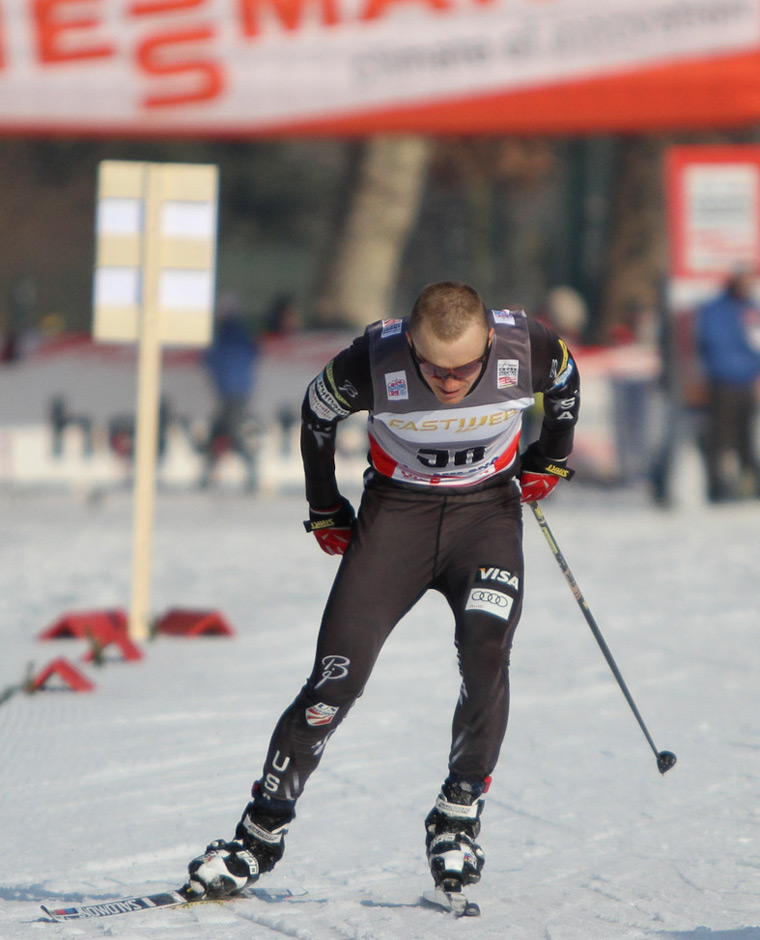
    While Bjornsen has “always liked quick, short, flat things,” Sargent felt that she never had anything to dig into in the Milan park. She also realized that she had made some tactical errors when choosing her lines around corners.

    “I think I took the wrong lane a couple times where it was really skied-in on the gradual downhills,” the Vermonter explained. “I was on the inside, and I’m watching everybody else going on the outside. So I think that was a big mistake.”

    Both Sargent and Bjornsen have been in the unenviable position of never knowing exactly what a competitive pace is in a World Cup qualifier.

    “In the heats you know how everyone’s skiing and you can keep up more, but when you’re on your own – I haven’t skied heats yet this year – it’s hard to know how fast you’re going,” Bjornsen said. “You feel like you’re going as hard as you can, but there’s that extra [gear], and I’m sure I missed a little bit of that.”

    Sinnott.

    The last U.S. racer was Mikey Sinnott, a Sun Valley Gold Team member who earned start rights thanks to his success on the U.S. SuperTour. Sinnott’s European World Cup debut was marred by a crash after one of his skis got mired in the softening snow.

    “I was just no-poles skiing down here and my tip caught some of the mush,” he said after the race. “It just pulled me back and I went down.”

    Sinnott’s crash came early in the course, but was impossible to make up for. In a rush of adrenaline, he attacked the first lap as soon as he got up, but then ran out of steam in the second lap and finished 68th.

    “I really just charged a little too hard at the start and really got tired by the end,” he said.

    Like Sargent, he didn’t think that the flat, short course played to his strengths.

    “It was not a great course for me, coupled with the fall, I don’t know,” said an ambivalent Sinnott. “So it goes. At least I got that out of my way I guess.”

    Sinnott, who has previously raced World Cups in Canada, said that today’s field was not much different; like the North American races, the roster was pared down thanks to many top athletes recovering from the grueling Tour de Ski.

    What was different was the milieu and the crowds. He’d never done a city sprint in Europe.

    “It’s pretty cool – it’s a pretty fantastic crowd right in the city, cheering you on real loud even if you fall,” he said.

    Sargent and Bjornsen have raced in the cities before, but they were still impressed with the atmosphere.

    “There were so many people – it was really loud out there!” exclaimed Sargent.

    She described the challenges that go along with the excitement of city racing. With no snow in sight, it was difficult to prepare for a ski race.

    “It’s hard warming up,” Sargent said. “It’s a little bit different because you can only be on the course for such a short amount of time. You have to get creative – I ran quite a bit. The course is open for about 30 minutes, so I skied then, but then I ran.”

    While she and Bjornsen missed out on the quarterfinals, they have made sure that they didn’t miss out on the city. To combat the time zone change, they explored the city one day while they tried to stay awake.

    And on Sunday, they’ll have one more chance to make it in Milan. The two will pair up for the team sprint.

    “Hopefully tomorrow it will be a little bit less jet-lagged,” Bjornsen said. “It was a little rough last night. I wasn’t really sleeping.”

    They hope that cheers from the crowd will give them an extra boost.

    “The scene is really something,” Bjornsen marveled. “This is the craziest thing I’ve been to. It’s so cool!”

    Qualification results: men / women

     Topher Sabot contributed reporting

  • Sunshine and Squalls: Yellowstone SuperTour Distance Skate Videos

    With the weather changing drastically throughout the morning today’s West Yellowstone SuperTour was quite a spectacle.  The ladies skied 10km, the men competed for 15km and the FasterSkier crew tried to keep up at several different locations on the course.

    Ladies’ 10km Skate:


    Men’s 15km Skate:


    Contributing camerawork by Audrey Mangan.

  • Naryshkina, Thyli Win Elite Sprints to Kick off Birkie Week – With Photos

    Naryshkina, Thyli Win Elite Sprints to Kick off Birkie Week – With Photos

    Vetle Thyli (NOR) starting the final alongside teammate Martin Andersen.

    Last year, the Birkie Elite Sprints, held on Main Street in Hayward, Wisconsin, two days before the Birkie, were a mostly American affair. Morten Pedersen of Norway won the men’s race, but most of the other top finishers were natives – including Audrey Weber, then skiing for CXC, who won the women’s heats.

    This year, things changed.

    Rogers leading Andrey Tyuterev of Russia.

    The men’s final on Tuesday came down to a battle between Norwegian teammates Vetle Thyli and Martin Andersen. Before the gun went off, the two trash-talked over the PA system: Andersen said that although he had never beaten Thyli in practice, “this would be the first time.”

    In the end, it didn’t turn out that way. Thyli had a lead going into the 180-degree turns around a pair of cones – one for each skier – and only lengthened his lead coming into the finishing stretch. He was able to celebrate well before the finish line, victory – and a $500 check – ensured.

    Colin Rogers (Sun Valley) was the top American, besting Sylvan Ellefson (Vail) in a race for third place. Along the way, both faced a number of impressive comptitors. Rogers topped teammate Mikey Sinnott as well as Andrey Tyterev of Russia before losing to Thyli in the semifinals, while Ellefson had to beat out top Wisconsin high school skier Dylan McGarthwaite and the always formidable Chris Cook (Steinbock Racing).

    In the semifinals, Ellefson took a tumble about a quarter of the way through the race. By the time he was back on his feet, Andersen had rounded the cone and was on his way back to the start/finish. As a joke, Ellefson skied toward him and the two played a game of chicken, much to the amusement of the crowds lining Main Street.

    Naryshkina outsprinting Bender.

    In the women’s final, Natalja Naryshkina of Russia defeated CXC’s Jennie Bender by a slim margin to take home the check.

    It was Bender’s first time at the Elite Sprints – and, she said, her first time racing on a city street or around a traffic cone.

    “I didn’t worry too much about the first part of the race,” she told FasterSkier. “As long as I was close going around the cone, that was good enough. It was really fun with the Russians and other European racers here, because you really don’t know anything about the person you’re racing against – you’re just kind of like, ‘well, let’s do this!’”

    And do it she did, besting Sun Valley’s Nicole DeYong and Ursina Badilatti of Switzerland en route to the final.

    “I felt like Batman flying down the street,” she said.

    In the B-Final, Badilatti beat out Weber, last year’s champion who is now racing for Go! Training.

    The women’s field was small, with just ten starters, but talented: it included 2010 Olympian Caitlin Compton (CXC), 2010 top-10 Birkie finisher Evelyn Dong (XC Oregon), and Morgan Smyth of APU, who recently collected two podium finishes at U.S. Nationals. All three lost their quarterfinal heats.

    The men’s race had a much larger field – 22 – with racers from APU, CXC, Craftsbury, Vail, Sun Valley, VTXC, Steinbock Racing, and two European countries competing.

    All of the athletes who sprinted down Main Street today will do so again on Saturday – albeit at a slower pace – at the end of the 2011 American Birkebeiner.

    Sinnott at the end of his heat against teammate Rogers.
    Smyth and Badilatti exiting the traffic cones halfway through their quarterfinal heat.
    Smyth and Badilatti exiting the traffic cones halfway through their quarterfinal heat.

    Ellefson and McGarthwaite starting out a heat as Scott Wilson shoots the gun.
    Sinnott and Schulz duking it out on Main Street.
    Ellefson after he won a toe slide with Chris Cook, which sent him into the snow in the finish chute.
  • “This Is What Democracy Looks Like”: No SuperTours in Madison

    Just a month into his tenure as governor of Wisconsin, Scott Walker made a bold political move: he proposed a bill which would limit the rights of union workers to use collective bargaining.

    With a strong Republican majority in both the House of Representatives and the Senate, the bill appeared poised to pass. On Thursday, Senate Democrats boycotted: they didn’t come in to work, meaning that the Republicans didn’t have a quorum to hold a vote. Majority Leader Scott Fitzgerald reportedly asked Walker to send state police to look for Minority Leader Mark Miller, and to tell him to bring his senators to the statehouse.

    In the midst of all this, Madison’s teachers went on strike and headed to the statehouse themselves. There were among the estimated 25,000 people who protested against Walker’s bill on Thursday – including Jesse Jackson. On Friday, a rally was held at midday, and in the afternoon, more protesters filed the statehouse, chanting “Kill the bill!” and “This is what democracy looks like!” towards the doors separating them from the legislators.

    How does this all relate to skiing?

    On Saturday and Sunday, the SuperTour was supposed to come to Madison. For several years, races have been held in the square around the capitol as part of Madison Winter Fest, an event conceived by CXC Executive Director Yuriy Gusev. Dump trucks cover the block with snow, and besides the SuperTours, a number of other competitions were scheduled: a rail jam, a running race, a winter cyclocross race, plus masters and high school ski races.

    Unfortunately, the protests put a stop to almost all of this. With thousands of people milling around the capitol, Winter Fest organizers couldn’t bring in the snow. While the rail jam was held at a different location, the ski races and other events didn’t meet the same fate. In good conditions they could have been moved to a nearby park, but with a recent thaw melting most of the base in southern Wisconsin, that wasn’t possible, and the event was called off completely.

    While some racers had already arrived in Madison and were left scrambling for new training opportunities – or getting in some quality time with their running shoes – others were luckier, and could change their plans in advance.

    Among them was Sun Valley’s Mikey Sinnott, who is aiming for the overall SuperTour title this year.

    “We had a snowstorm, and we got stuck in Aspen for another day,” he told FasterSkier. “We lucked out that we could change our plane tickets and fly to Minneapolis instead. So we’ll be heading up to Hayward.”

    When asked how having two fewer SuperTours would affect his ability to overtake Lars Flora in the standings, Sinnott said that it would make the remaining races even more critical.

    “I think it just emphasizes more the importance of the Sun Valley races [SuperTour Finals],” he said. “Obviously it would have been good to have more chances to gain points, since Lars wouldn’t have even been racing this weekend, but you just have to take it as it goes. That’s life.”

    While racers are disappointed, the Winter Fest organizers are undoubtedly the most frustrated (besides all of the teachers, of course). In an e-mail to the press, USSA Nordic Program Director John Farra said that Gusev and his crew had been ready to go.

    “The organizers put lots of preparation into making these events happen despite the warm temperatures, with snow stockpiled and ready to be trucked, and foreign athletes onsite for a chance at prize money just a week before the Birkie,” he said. “But in the end politics derailed these high level races.”