From the FasterSkier archive — posts syndicated from athletes’ and coaches’ own blogs between 2004 and 2012, kept online as published. Current coverage is at fasterskier.com.

Tag: Milaine Thériault

  • Cross Country Canada: The Reboot Part Two

    Cross Country Canada: The Reboot Part Two

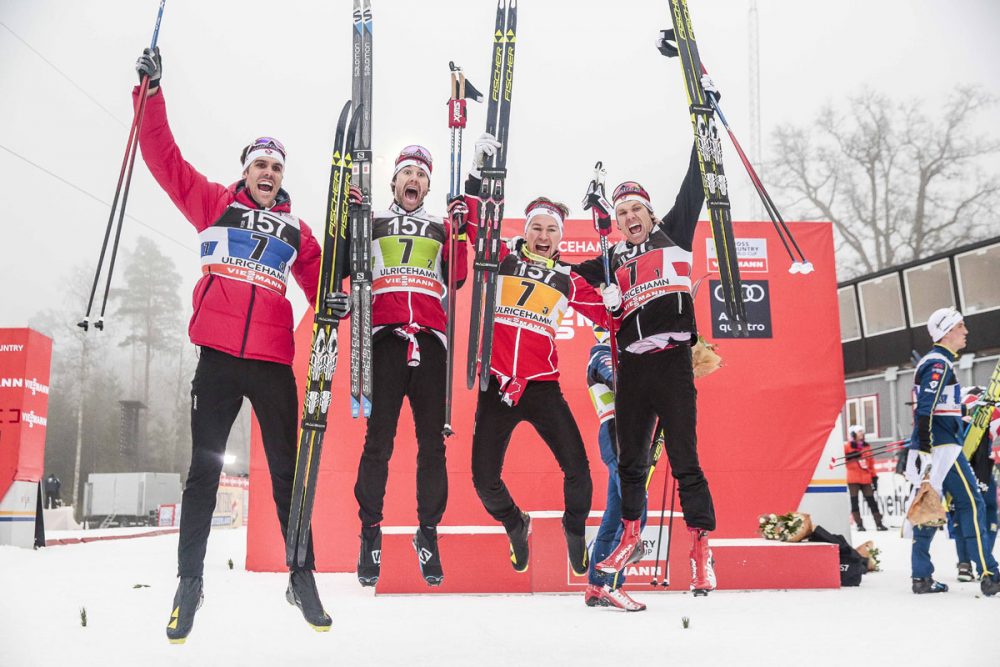
    Left to right: Canada’s Len Valjas, Alex Harvey, Knute Johnsgaard, and Devon Kershaw after their historic third place finish in the 2017 men’s 4 x 7.5-kilometer team relay in Ulricehamn, Sweden. (Photo: Fischer/Nordic Focus)

    This is the second part of FasterSkier’s report on the state of high performance cross-country skiing and athlete development in Canada. You can read part one here.

    Cross Country Canada (CCC), as the national governing body for cross-country skiing in Canada has the difficult task of steering a rather large ship. The idea in steering the ship is to maintain a path requiring little quick and nimble maneuvering. Survey the landscape, mine the data, set a course, and sail. Along the way, there’s the ability to make slight adjustments for efficiencies, accommodate unforeseen changes.

    To help make those macro and micro changes, Cross Country Canada hired Nic Lemyre as a high performance consultant in June, 2018. Lemyre, a Canadian living in Oslo, Norway has concrete ideas of what sustainable improvement and success resemble.

    Where do we want to be?

    Nic Lemyre (Photo: Norges Idrettshøgskole/Norwegian Sports Academy/)

    “We’re thinking our starting point is to build a really strong relay team, on both the women’s and the men’s side,” Lemyre told FasterSkier. “We want to have five athletes, so that we can rotate with the fifth athlete and we’re never in a situation where we can’t field a strong team because one athlete’s injured or sick.”

    According to Lemyre, the composite team must be derived of skiers who can hit specific individual benchmarks “[When] we have athletes that can start scoring points in every race they enter on the world cup, that’s a medium term goal,” Lemyre said. “From there, we start aiming for the top-15 for all athletes that are identified in that group.“

    Part of the reasoning behind the relay vision is that for a skier to get a permanent spot on the World Cup, the athlete not only has to reach a high level, but also help raise four other Canadians up to that level. Lemyre believes this should foster cooperation and team spirit.

    “It helps us meet goals of performance,” Lemyre added. “But also it helps us meet goals that are related to how to build a strong performance culture, where the athletes need to support each other, to learn from each other. They need to push each other. They need to push each other beyond limits they may have experienced before.”

    How do we get there?

    After PyeongChang, CCC appeared to have both the political will to start the painful process of another re-invention. However, that will came with a reduced budget with which CCC could support its future options.

    The simplified model of corporate restructuring begins with terminating certain roles and concludes with creating new roles filled by new individuals near the top of the organizational pyramid. Often, in a medium or large corporation, most people will be shuffled around and only a few near the top will lose their jobs. The final step is to find a quick win to help the newly reshaped organization gain morale and unify.

    buy amoxicillin online

    In a small organization like CCC, everyone is near the top. While the process works well for the survival of the organization, it can be hard on individuals. 

    The change at CCC began with long-time High Performance (HP) director Tom Holland’s planned retirement. Lemyre was hired as a consultant to oversee the restructuring of the HP group. Shortly before Lemyre’s hiring, CCC eliminated some positions.

    As Joel Quenneville’s recent firing demonstrates, proven ability and past success is not enough to provide job security during a reboot. (Quenneville was the NHL’s Chicago, Blackhawk’s head coach since 2008. During his tenure Quenneville lead the team to three Stanley Cups.)

    On November 1st, CCC hired Erik Bråten as a new national team coach and modified Louis Bouchard’s title. Bouchard remains head of the National Training Centre in Mont Ste-Anne, Québec, with the added title and responsibilities of World Cup Head Coach.

    Bråten, a recent Norwegian School of Sports Science graduate with a specialization in cross-country skiing, won the 2018 coach of the year award from the Norwegian ski federation. This hiring didn’t happen as quickly as some had hoped, but is considered the first win for CCC’s new structure.

    “Erik has a strong sports science background applied to cross-country skiing,” Lemyre said on the phone. “His profile is unique in our environment. The fact that he’s young is really positive for us, because he’s open to this new experience. He comes with a solid base, and his excitement and his motivation, I think, will be great assets in applying that knowledge in the right culture in Canada. At an individual level, Erik is unique in working one on one with athletes. I think our athletes are going to really appreciate that.”

    Along with bringing in new personel, Lemyre aims to improve sharing of training information in Canada. In Norway’s organizational structure, athletes and coaches are able to log hours and training plans on an interface organized by the Norwegian National Ski Federation. It’s a model and template Lemyre is intimate with.

    “The fact is that we have a large country, and we can’t be with athletes every day of the year following them on site,” Lemyre said. “Now the technology is there to pool [training data] in a way that our coaching staff and the local coaches can communicate really well, But also as we’re building up our science team, we also have interaction with our different people involved in helping the athletes develop.”
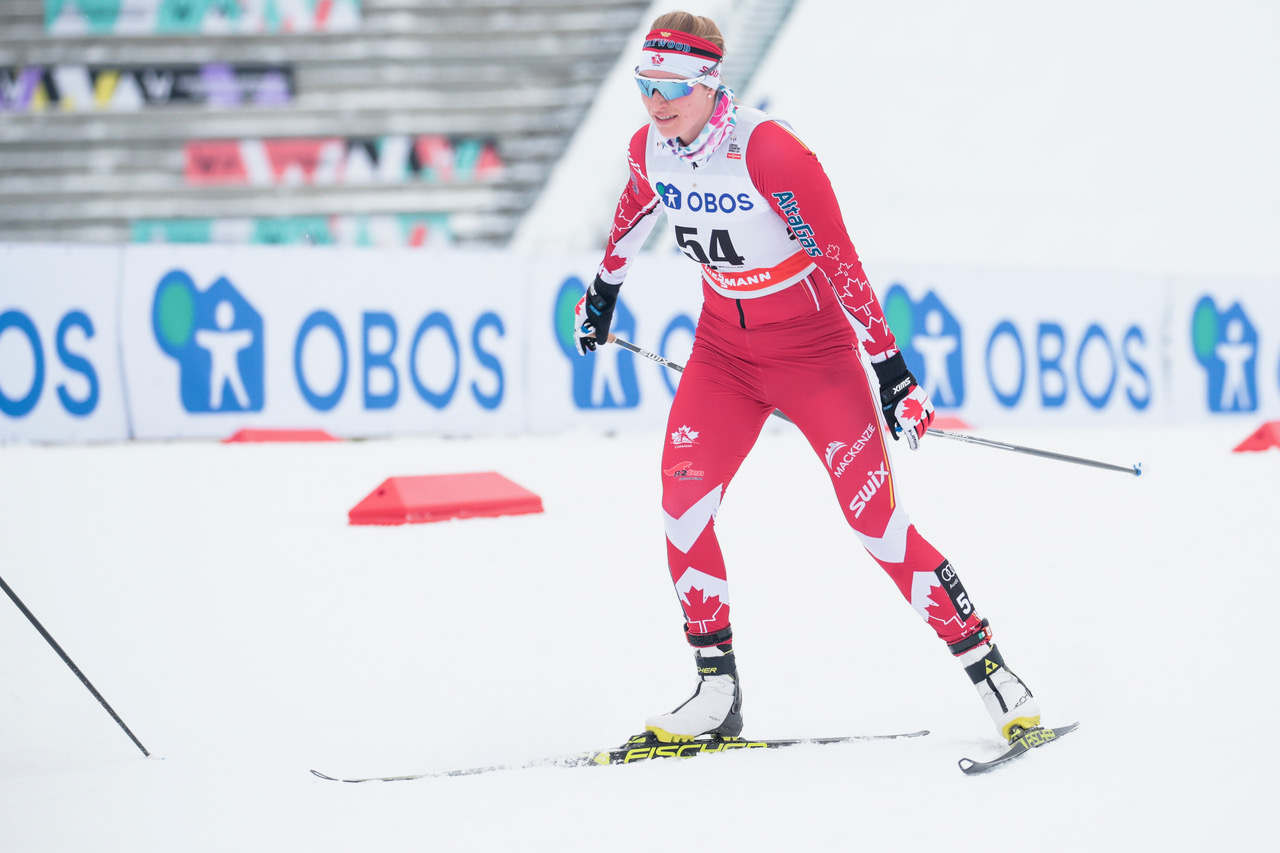
    Dahria Beatty racing the 2018 Holmenkollen 30 k freestyle mass start in Oslo, Norway. (Photo: Fischer/NordicFocus)

    Another planned shift is to interchange athletes between Europe and Canada more often. For example, Dahria Beatty will start the season in Canada — a change encouraged by her coach Chris Jeffries and supported by Lemyre.

    “This summer my coach Chris and I came up with a plan that allowed me to stay in Canada to start the season to build into the race season and then head over the Europe and race on the World Cup circuit leading up to World Championships in Seefeld,” Beatty said. “With this being the first year of the new quadrennial, it is the perfect time to fine tune some of those race details domestically before leaving for Europe mid-December. I am looking forward to racing part of the Tour de Ski then period 3 and hopefully finding my peak for World Championships and World Cup finals in Quebec.”

    Lemyre’s concept is to allow athletes like Beatty to build into the early part of the season domestically and arrive in Europe at a higher level of race fitness.

    “The way we scheduled the trips this year, giving some athletes the chance to prepare very well before they race on the World Cup,” Lemyre added. “I think some of them will be stronger when they show up on the World Cup, and also they’ll be able to sustain that level of performance over the time period they are on the World Cup. We will try to be a little more selective and well prepared when we show up, and then post really good results when the athletes are racing the World Cup.”

    Jeffries stated that the stress of living abroad, a dynamic known all to well by North American World Cup skiers, can be counterproductive to a developing athlete.

    “The last few years, our top athletes spent the majority of their time in Europe,” Jeffries said. “I think it stalled our development a little bit, because we’re always living out of a suitcase, and we’re always having to ski races where we’re trying to perform.”

    Dave Wood spent 18 years as a national team coach. His time leading the team included the post-Nagano rebuild and managing athletes at the Olympics in Vancouver. His vision includes giving skiers more time to develop and less emphasis on being fast all season.  

    “Sara [Renner] had far less World Cup starts before she was top-15 at the Olympics than the people of today,” Wood said. “I think that this big argument about experience is valuable when you are looking for seconds. When you are looking for minutes, [World Cup experience] makes no difference.”

    Will it Work?

    The U.S. has been able to develop a strong women’s team built off Kikkan Randall’s determination to drag U.S. skiing to the top. Randall took inspiration and knowledge from Canada’s post-1998 rebuild where Scott, Renner, Milaine Thériault, Jamie Fortier and Amanda Fortier decided it was time to lead the charge.
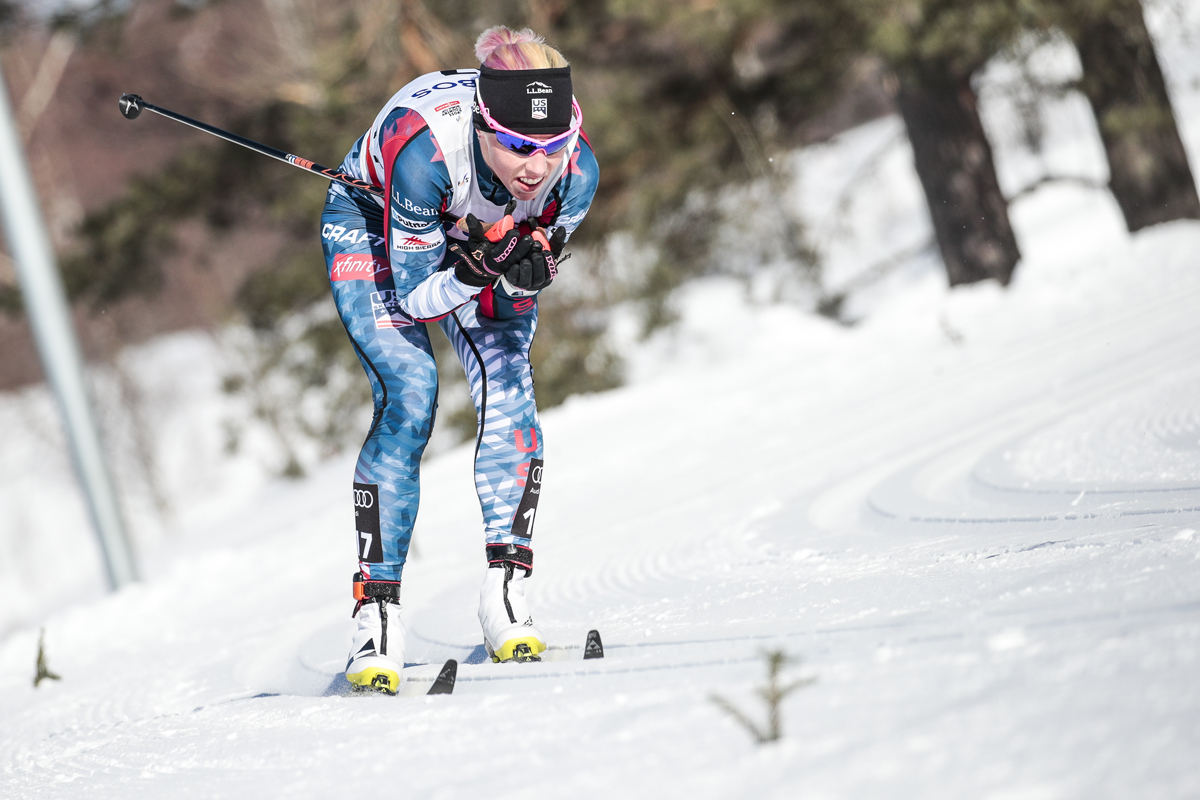
    American Kikkan Randall tucking during the women’s 10 k classic mass start at 2018 World Cup Finals in Falun, Sweden. (Photo: Fischer/NordicFocus)

    In both cases, the athletes didn’t succeed alone. The “fantastic five” got the support of Holland, Wood, and many others. Randall also collected a large supporting cast, well documented by Peggy Shinn’s book ‘World Class’. 

    Laura McCabe, now a Methow Valley coach and two-time Olympian, spent most of her free time in Nagano with the Canadian women’s team because it felt like a group that had a vision and a willingness to support one another to collective success.

    “It just shoots you up the ladder when you come back and you feel like you have a very safe place, you’re working on this goal together, you’re all in it together, and you’re there for each other all the time,” McCabe told FasterSkier. “I felt like the Canadian women were doing that. And now I feel like Matt Whitcomb has led that charge for the American women.”

    While crediting Randall for starting the process, McCabe feels that the team’s work to be a team is the critical factor.

    “They have goals, team goals and they have personal goals,” McCabe said. “They are always there for each other. One of their biggest goals is to basically keep their relationships positive and keep everybody moving forward. I think that is one of the number one reasons that team is doing well.”

    In a conversation last May with FasterSkier, Yukon coaching icon Alain Masson spoke of the complexities of achieving success on the international stage. Simply possessing physical gifts, the aerobic capacity, the predisposition to tolerate and absorb high training loads, is no guarantee of success.

    There’s the behind the scenes unglamourous work of nurturing athletes, remaining true to organizational core values, and feeding the system with money, intellect, and vision.

    “Definitely, there’s a minimum set of physical characteristics that you need to perform at that level,” Masson explained to FasterSkier. “But you also need many characteristics, personality characteristics, that are vital. What Alex showed, and Sara Renner, and Chandra [Crawford] and Beckie [Scott]. I think athletes that combine both the physical and the mental characteristic at a time when the program works together, and everything lines up with the funding, good leadership, and everybody working together. That’s the difficulty, this is the issue, trying to get all of that together. As the women in the U.S. have demonstrated, when you have all of that lining up, it’s amazing what you can do.” 
     

  • Last of Canada’s World Cup Female Veterans, Jones Plans Her Next Move

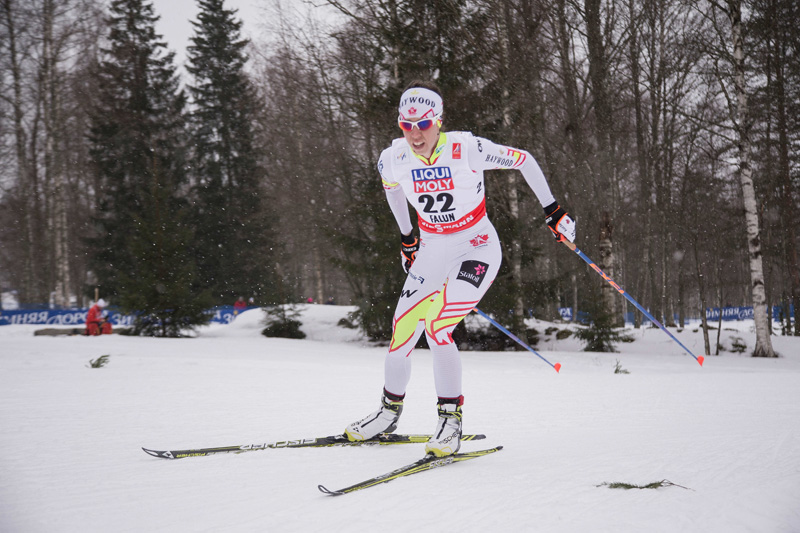
    Canada's Perianne Jones (Alberta World Cup Academy/National Development B-Team) racing to 32nd for her best World Championships distance result at 2015 worlds in Falun, Sweden. (Photo: Fischer/NordicFocus)
    Perianne Jones (Canadian National Development B-Team) races to 32nd for her best World Championships distance result at 2015 World Championships in Falun, Sweden. (Photo: Fischer/NordicFocus)

    For the last 12 years, Perianne Jones was more or less on autopilot, leading the life of a professional nordic racer in Canmore, Alberta, and giving little thought to what would come after skiing.

    The 30-year-old Canadian national-team member and Nakkertok Nordic prodigy had moved west from her hometown of Almonte, Ontario, immediately after high school. She immersed herself in full-time training and racing, and by 2009, made the Canadian World Cup Team.

    Two Olympics and five seasons later, Jones was inching toward retirement. Health issues stunted the start of her 2013/2014 season; she discovered in the fall of 2013 that she had hemochromatosis, a genetic condition that causes too much iron in the body. She spent the next few months working to manage her iron levels and returned to the World Cup circuit in late December 2013.

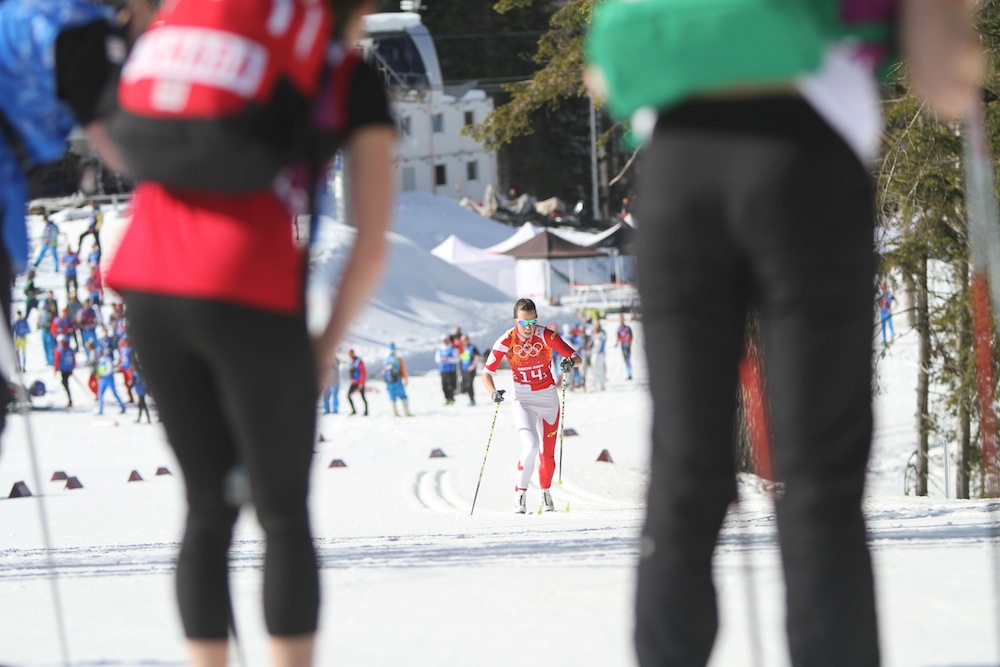
    Canadian biathletes and fellow cross-country skiers cheer on their own Perianne Jones on the first leg of the 4 x 5 k relay at the Sochi Olympics on Friday. Jones dropped to 14th and the team finished 14th, one place better than their finish at the 2010 Vancouver Games.
    Canadian biathletes and fellow cross-country skiers cheer on their own Perianne Jones on the first leg of the 4 x 5 k relay at the Sochi Olympics. the team finished 14th, one place better than their finish at the 2010 Vancouver Games.

    Two months later, she competed at her second Olympics in Sochi, Russia, placing 23rd in the freestyle sprint for her personal Olympic best. In the classic team sprint, she and teammate Dasha Gaiazova placed 11th after notching third in the same event at the 2013 Sochi World Cup a year earlier.

    Jones ended her season with a second-place finish in the freestyle sprint at 2014 Canadian Nationals in Corner Brook, Newfoundland, and was subsequently named to the national development B-team last May.

    Also last spring, her coach, Eric de Nys, left the national team to head up a new training program in Canmore: the WinSport Junior Cross Country Ski Team. Jones lost the bulk of the funding she had received as a World Cup Team member, yet decided to continue on for another season.

    “I, for sure, wanted to do another year after Sochi, and do things right,” she said on the phone from Canmore in early April. “… [Not making the World Cup Team] was a bummer, but at the same time, I know I didn’t make the criteria. I had one top-ten two seasons ago and you needed two top-twelves. I was put on the development team, so it meant that this past season cost me way more than it ever has…”

    “I, for sure, wanted to do another year after Sochi, and do things right.” — Perianne Jones

    As a development athlete, she said the costs amounted to $40,000 to $50,000, and that included government assistance as a carded athlete.

    “Even if you’re carded, you still have to pay for a place to live,” Jones said. “And living in Canmore is not cheap.”

    Carded athletes essentially receive an allowance each month, she explained. The government cuts qualifying individuals checks that could be used for anything — even a flat-screen TV — but the amount is generally considered a living allowance.

    “As a development skier, you have to cover housing and your team fee, which is around $10,000 and your winter expenses on the road, and then your flights to and from and around Canada,” Jones said. “It adds up.”

    Without stressing too much over finances, she focused on the 2014/2015 season and logged some of her career-best distance results, placing 32nd in the 10 k freestyle and 37th in the skiathlon at 2015 World Championships in Falun, Sweden.

    Canada's Perianne Jones raced to fifth place in her qualifier to finish 24th overall in the 1.4 k classic sprint in Falun, Sweden for the 2015 FIS Nordic World Ski Championships. (Photo: flingpointroad.com)
    Canada’s Perianne Jones racing to fifth in the 1.4 k classic sprint at 2015 World Championships in Falun, Sweden. She placed 24th overall. (Photo: flyingpointroad.com)

    Also in Falun, she finished 24th in the classic sprint and was 21st for a season best in the preceding World Cup classic sprint in Östersund, Sweden.

    “This past year I was healthy the whole season, which was quite an accomplishment for me,” she said. “It wasn’t my best season in terms of results, but health-wise it was really good. … I was pleased with both my sprints in Östersund and at world champs. It always can be better for sure, but I don’t have any regrets.”

    In Falun, she announced she would leave the international-racing scene at the end of the season. She capped off her career at 2015 Canadian Nationals in Thunder Bay, Ontario, winning the classic sprint, placing second in both the 5 k freestyle and 10 k classic individual races, and fifth in the 30 k freestyle mass start.

    In Thunder Bay, Nakkertok hosted a retirement dinner in her honor, complete with a video and several athletes and her brother Kieran Jones — Nakkertok’s head coach — speaking about the impact she had on their ski careers.

    “That was the only time I cried all week,” Jones said. “The ski club has been a huge part of my life and maybe I didn’t realize how I had been a part of them so much in the last ten years because I haven’t been around that much. I would totally love to go back to Ottawa and be a part of that some more.”

    She clarified that her involvement with Nakkertok would most likely be as a volunteer.

    “I have an interest in being involved, not necessarily in coaching at a high level, but when I was growing up with Nakkertok the ski club was entirely volunteer run,” she said. “I will be involved with a ski club wherever I end up. I will miss certain parts of skiing, but to have Joel still a part of the team will be an easier way to make that transition.”

    On Friday, Jones and her husband, Joel Jaques, a national-team wax technician, hopped aboard their 32-year-old Dodge getaway van and began a road trip to Ottawa. She guessed they might be gone for at least a month, with Jaques heading back to Canmore for a week in the middle of their trip for a training camp. How far they’d go depended on how the van ran. They bought it in February, about the time Jones knew her career was winding down.

    “We were just kind of joking about vans; there was one in Canmore and we offered the guy quite a bit less than he was asking and he said sure, and we’re like, OK, I guess we’re doing this,” she said.

    If they have time and the van makes it to Newfoundland, a friend offered to keep the van and buy their plane tickets back to Canmore. There, Jaques will go back to work with the national team and Jones will decide on her next move: she’s considering studying healthcare in Calgary or Ottawa.

    Meanwhile, she also planned to start working in Canmore to cover the cost of last season. While she essentially made up her mind to race one last season a year ago, the bill she received at the end of it ultimately solidified her retirement.

    “At the beginning of [last] season, I thought if I work and keep skiing, I would need to make the World Cup Team and need other women on the World Cup Team around me to keep going,” she reflected. “As the season kept going, I was realizing that even if all those things came into place, I wasn’t motivated to keep training for another year.”

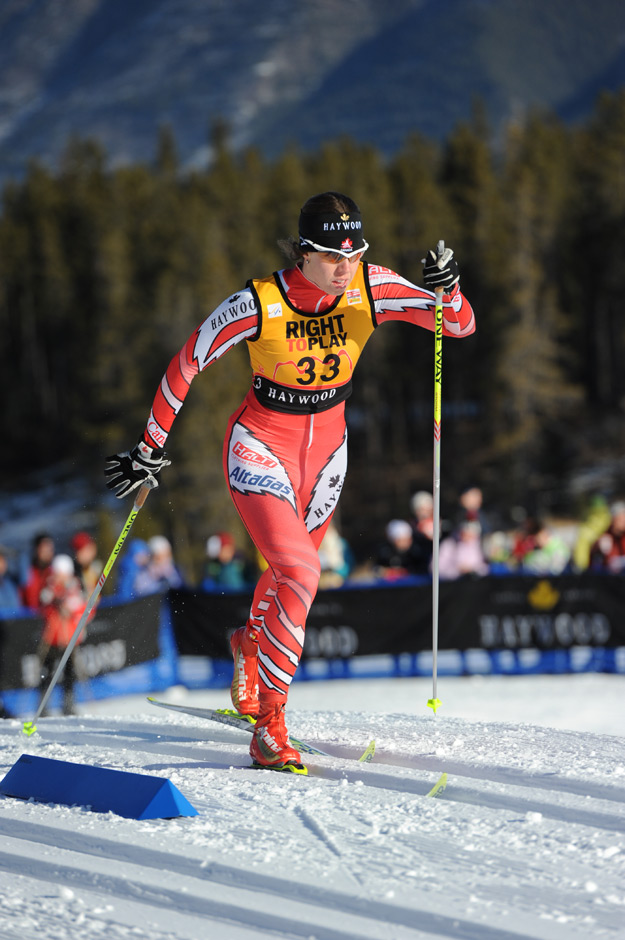
    Perianne Jones (CAN) was 29th in the Canmore World Cup on Feb 5, 2010. Photo: Win Goodbody.
    Perianne Jones racing to 29th in the Canmore World Cup in February 2010. (Photo: Win Goodbody)

    After graduating high school, Jones started a fall term the University of Calgary, but found the commute back and forth from Canmore difficult. She took an online course at Athabasca University, but realized that didn’t work for her, either. Instead, she spent the next 12 years focusing on skiing.

    “I’m happy with the decisions I made and I’m sure my ski career was the best quality,” she said. “Hindsight’s twenty-twenty; there’s always things that could’ve gone better, but at the same time I was able to commit 100 percent to skiing. Although I’m not educated right now, I’m really looking forward to going to school and I can put 100 percent of my energy into school.”

    Jones and Jaques were also looking forward to having the freedom to visit friends this spring.

    “I’m looking forward to waking up and being able to what I want to do for exercise,” Jones said.

    “I will not be out on my rollerskis,” she added with a laugh. “So far it doesn’t feel a whole lot different. I feel pretty good about my decision, and I’m confident it was the right one. So many people say that it’s really hard [to retire] and some people say it’s awesome, but I think it depends on the person. I have enough plans to keep me busy; I don’t think I’ll be bored.”

    Looking back, she credited her two national-team coaches, de Nys and Justin Wadsworth, for the longevity of her career. She worked with de Nys, a development coach before he became the women’s national-team coach, for most of her senior years.

    “Eric really got to know me as an athlete and I got to know him as a coach, and I really trusted him and we were able to work well together,” Jones said. “And Justin, he’s been with the team since [2010] and he wasn’t my personal coach until this past year, but the transition was pretty seamless … I don’t feel like I lost Eric as a coach this year, but I feel like I gained Justin. Whenever we had a question about something, either of us could easily call Eric or visit him in his office.”

    In her career, Jones notched three top-15’s at both Junior World Championships and U23 World Championships, finishing eighth at 2008 U23’s in Malles Venosta, Italy.

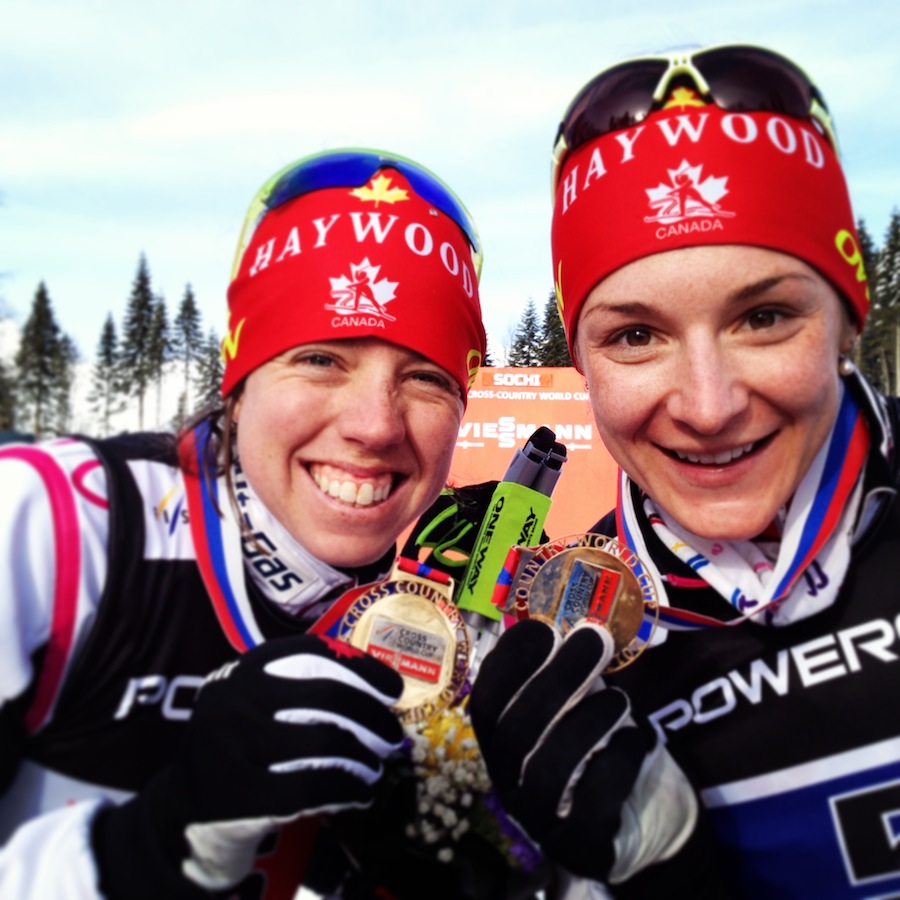
    Canadians Perianne Jones and Dasha Gaiazova celebrate their first bronze of the season, and together, in the Sochi World Cup classic team sprint. (Photo: Chandra Crawford)
    Canadians Perianne Jones (l) and Dasha Gaiazova celebrate their first bronze together in the Sochi World Cup classic team sprint. (Photo: Chandra Crawford)

    “I had some really good World Junior experiences, some good results and some really fun times with the team,” she explained.  “For sure, the two medals that I won with Chandra and Dasha respectively in Milano and Sochi were highlights.”

    In 2012, Jones and Chandra Crawford teamed up for third in the World Cup freestyle team sprint in Milano, Italy.

    Jones also recalled making the 2010 Olympics in Vancouver, British Columbia, as a major high point. She qualified in 2009 when she and Sara Renner placed sixth in the World Championships classic team sprint in Liberec, Czech Republic.

    “That was the first time we got to go to the medal ceremony … and it was with Sara, who was a pretty big mentor,” she said. “I was actually never really on the team with Beckie [Scott] or Milaine [Thériault], but I traveled quite a bit with Sara. … Having them come before me and have the results that they did and just being the people that they are, they made it pretty appealing to chase after ski-related goals … Everything was so positive that I never I had any doubt that A.) I would enjoy it and B.) it would be possible.”

    The last of Canada’s three veteran females to retire — following the departures of Crawford and Gaiazova from the national team last year — Jones was excited to see what the next generation of women could accomplish.

    “I spent the majority of the season on the road with Emily [Nishikawa] and that was just awesome,” she said. “I’m glad I was there for that and able to witness her best season ever, and I think it’s a sign for really great things to come. There are younger women coming up, too, and they have Emily to look up to so there’s no doubt in my mind that they will do great things.”

    Regardless of where she attends school, Jones envisioned that she and Jaques would end up living somewhere in western Canada.

    “We don’t really want to leave Canmore,” she said.

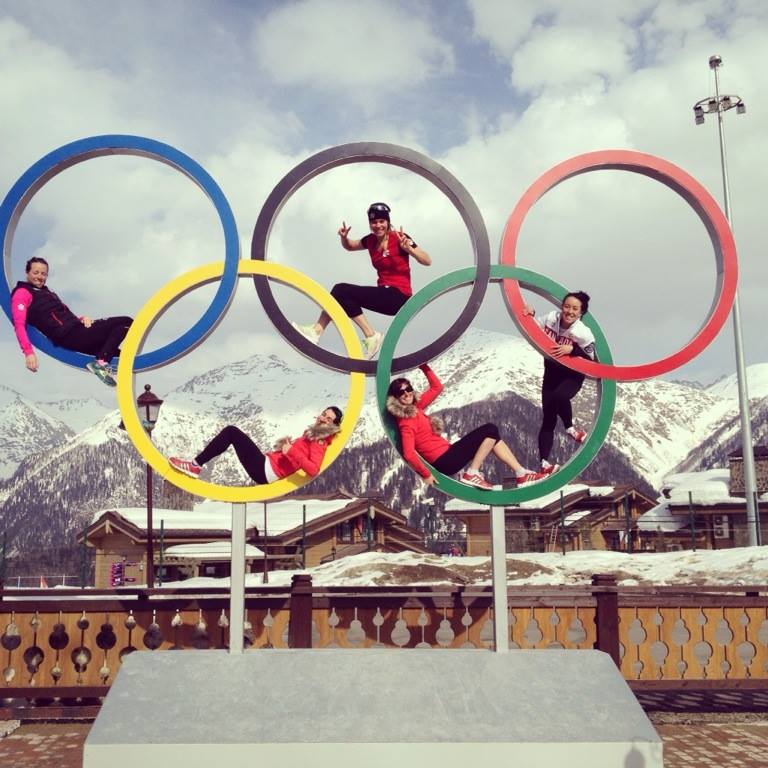
    Several members of the Canadian Olympic cross-country ski team get the perfect photo opp at the Olympic rings in Krasnaya Polyana, Russia. (From left to right): Perianne Jones, Amanda Ammar, Heidi Widmer, Brittany Webster, and Emily Nishikawa. (Photo: Emily Nishikawa)
    Several members of the 2014 Canadian Olympic cross-country ski team get the perfect photo opp at the Olympic rings in Krasnaya Polyana, Russia. (From left to right): Perianne Jones, Amanda Ammar, Heidi Widmer, Brittany Webster, and Emily Nishikawa. (Photo: Emily Nishikawa)