From the FasterSkier archive — posts syndicated from athletes’ and coaches’ own blogs between 2004 and 2012, kept online as published. Current coverage is at fasterskier.com.

Tag: Milan

  • We’re in Italy. So we asked a Milan fashionista to review — and rank — the Olympic xc ski suits.

    We’re in Italy. So we asked a Milan fashionista to review — and rank — the Olympic xc ski suits.

    This article was made possible through the generous support of our voluntary subscribers who have helped us put our Nat Herz on the ground at the Olympics. If you value coverage like this, please support FasterSkier with a voluntary subscription.

    Priscilla Arresti, an art director in Milan, used this digital board to arrange the material for her reviews of the Olympic cross-country ski suits.

    From FasterSkier reporter Nat Herz, in Predazzo: Here in northern Italy, where I’m covering the Olympics, I’m technically the chief fashion critic for the bureau — though  only because it’s a one-man bureau. And unfortunately, the five-year-old baggy ski pants I wear everywhere have disqualified me from offering any sartorial opinions. 

    But this is Italy, a global fashion capital. And I still wanted someone to review the racing suits sported by cross-country skiers that each nation typically customizes for the Olympics — and I figured that this should be doable, knowing that I’m close to Milan, a global fashion capital. 

    It turned out that my host here in Italy knew just the right person for the job. He connected me with Priscilla Arresti, a friend of his who works as an art director for a studio in Milan. As it happened, Arresti had already been following the Olympics and watched the opening ceremonies — and she was eager for the assignment.

    Arresti was tasked with reviewing and ranking the suits from 10 of the top cross-country skiing nations — plus the wild card of Australia, for the sole reason that the Australian suit looked cool. 

    Here are her takes. Photos special to FasterSkier by Tobias Albrigtsen.

    1. Austria

    Are those supposed to be snow strokes? A kind of irregular white wrapping? 

    I’m not sure…

    Confusing, rather than energizing. Far more interesting are these graphic, muscular lines that open up, almost sculpting the body and amplifying its movement. Focusing on this motif alone would have been enough — no need for the snow strokes.

    1. Germany

    Not a fan of this graphic all-over print that is visible on many of the items of the entire German team’s Olympic collection.

    It tries to symbolize an inner fire and passion of the athletes, inspired by the Olympic flame.

    But this thin, geometrical silhouette evokes a more static feeling than dynamism. It reminds me more of an urban pattern of different letters, or a map of some city. don’t get the fluidity and vibrations of a flame.

    1. Italy

    Chic, dynamic but a bit predictable.  I wished for a louder and bolder choice — like asking for advice from a young Italian designer to twist the “tricolore” in a more contemporary way than a ribbon floating around the suit. Someone like Giuliano Calza, of GCDS, which knows how to push boundaries yet remains deeply Italian in its irony and eclecticism.

    1. Finland

    It feels as though the Finnish flag has been lifted by the wind, draped across the body, then sculpted into aerodynamic precision.

    The colors and sweeping lines create the impression of riding an icy wave. Against the snow, Finnish athletes cut a striking silhouette, as if rising from northern waters and frozen seas.

    1. Norway

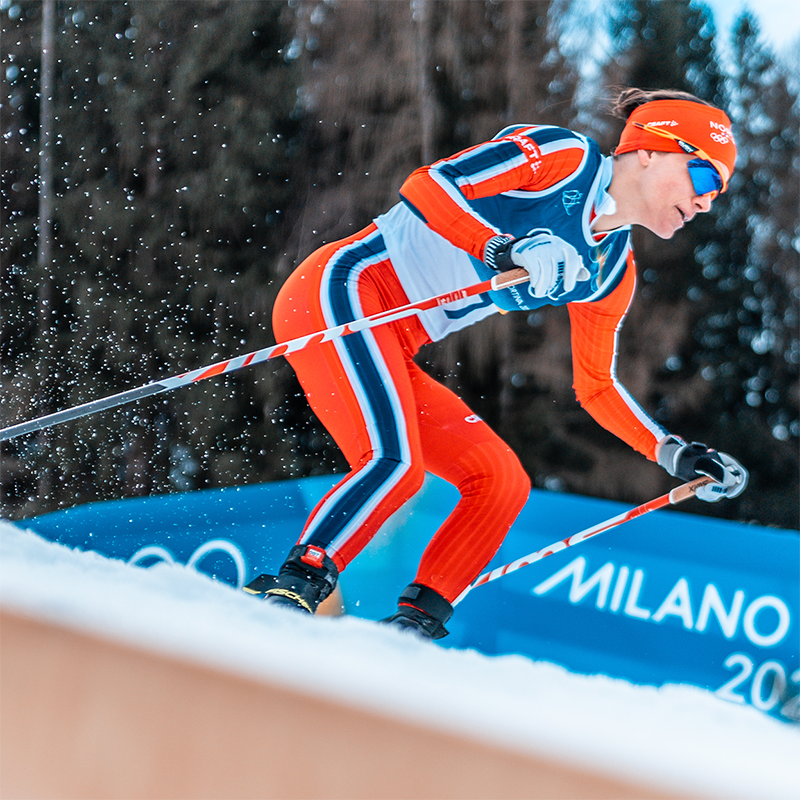
    Norway gives vintage vibes. Exactly the kind of wardrobe Wes Anderson might envision for his Olympic winter cast.

    Ultra-classic look with lateral stripes in flag colors all along the body. No gradients, no bluff. An iconic look considering all the attire, from the ceremony outfit to the race suits. It reflects all Norway’s grounded, authentic tradition. 

    1. France

    It’s a curious one. It doesn’t quite converse with the graphic boldness seen in the suits worn by French athletes in the other Winter Olympic sports. Are those tiny intersecting ski tracks on the cross-country kit meant to “cross lines” for cross-country? A little too literal, maybe?

    Overall, it’s tasteful, but it feels slightly dated. Which is surprising, considering the other French ski suits are genuinely “magnifique” (chef’s kiss): contemporary, confident, built on strong color-blocking and retro-leaning graphic lines, all cleverly manipulated and artfully enlarged.

    1. Canada

    The Canadian suit plays with black, like an animal camouflage. It reshapes the figure, creating a sculptural effect that impresses both in motion and at rest. The athlete’s body becomes a stage, while the viewer’s gaze bounces playfully from curve to curve, sliding along subtle, luminous gradients — almost as if the suit itself is choreographing the eye.

    1. Switzerland

    The Swiss team is spot-on. Like its flag, red is the statement. Up-close, pixelated chromatic shifts of red emerge. An ethereal mesh design that nods to Switzerland’s strong digital ecosystem, but that also elongates the athletes’ silhouettes with sophistication — sculpting movement through the nuanced use of a single strong hue, and a quiet and measured texture.

    1. Australia

    Behind the vibrant colors of Australia’s Olympic suits lies a layered weave of past and present. The symbolic compositions originate from contemporary Indigenous voices: Torres Strait artist David Bosun and Aboriginal artist and Olympic boxer Paul Fleming.

    Fleming’s work “Walking Together” portrays lines of repeated footprints that, in Aboriginal art, are far more than decorative marks — they are narrative devices. Powerful symbolism of shared steps, collective journeys, ancestral stories, connection to land.

    It’s a superb collaboration — where art, performance, design and cultural narrative converge with intention.

    1. United States

    The entire U.S. Olympic kit genuinely reads like a fashion collection. The interplay of textures, mixed patterns, and calibrated color stories across uniforms and off-duty pieces shows the masterful hands from Ralph Lauren. Garments many would happily claim for their own wardrobes.

    Even the cross-country ski suit carries subtle retro cues, and it works. It feels relevant.

    Perhaps the red armbands could have been reconsidered; they slightly interrupt the line of the body, cutting the silhouette at an awkward point.

    1. Sweden

    A curated throwback by the Craft designers behind the Swedish suits — and a graphic tribute to the 1956 Winter Olympics in Cortina d’Ampezzo, and its legendary ice car races. 

    The checkered flag — iconically displayed at the start and finish line — becomes a transdisciplinary symbol of speed and technology. A dynamic motif that makes the eye vibrate. The suits are infused with an emblem of confidence and luck — after all, the checkered flag is the one historically claimed by the winner at the finish line.


    A reminder that producing this kind of work at the Olympics is expensive — we paid both Priscilla and Tobias for their work, and we’re spending a significant sum to be on the ground at the Olympics in Italy. If you can, support us with a voluntary membership here. If you’re already a supporter, thank you.
  • Crawford, Jones Jet into Milan Semifinals, Set to Make Waves in Team Sprint Tomorrow

    Crawford, Jones Jet into Milan Semifinals, Set to Make Waves in Team Sprint Tomorrow

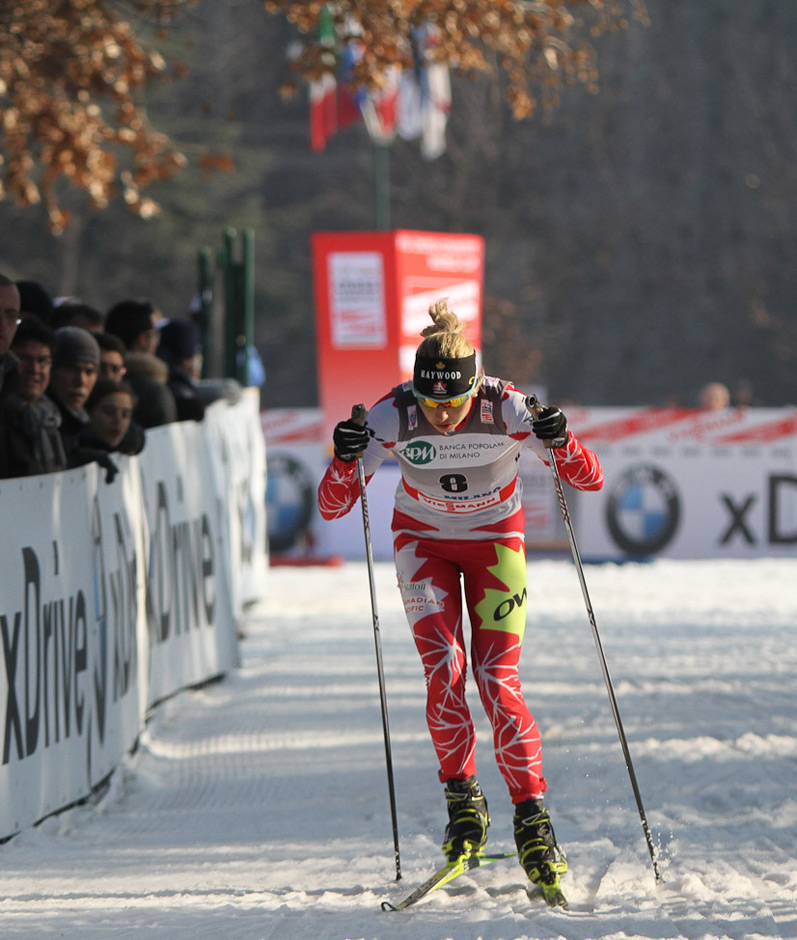
    Canadian National Ski Team members Perianne Jones (l) and Chandra Crawford (r), who placed 12th and 7th, respectively, in the World Cup freestyle sprints in Milan, Italy, on Saturday.

    Kikkan Randall might have been the only North American to appear in the final of today’s sprint in Milan, Italy, but several other women joined her in the heats, with pretty much across-the-board success; two had personal-best finishes.

    For Canada, both Perianne Jones and Chandra Crawford skied their way into the semifinals. After the heats were drawn, it seemed that the team had bad luck; both women were placed in heat five, making it unlikely that both would advance.

    Milan
    Chandra Crawford (CAN) in the freestyle-sprint qualifier, where she raced the 18th fastest time. After making it to the semifinals, she ended up 7th overall.

    But after following different strategies, they found that they were both bound for the semifinals.

    Crawford was the more visible of the two, skiing near the front for most of her semifinal.

    “I tried something similar to what Kikkan [Randall] and Lenny [Valjas] were doing, skiing on the shoulder of the leader and just taking the wider track around the course and staying out of trouble,” she told FasterSkier via Skype. “That was nice.”

    After trailing Mari Eide of Norway, Crawford seemed to be set up for second, and did finish just half a second behind Eide. But out of nowhere, Jones – who wore bib 28 and thus not expected to be a real contender in the heats – jetted towards the front and came between the two, relegating Crawford to lucky loser status.

    Jones had been back in the pack for most of the heat, but saw a rare opportunity to pass and went for it just as she came to the finish.

    “There was an open spot right on the right-hand lane coming into the finish, and everyone else was on the left, so I just gunned it on the inside and passed a few girls,” she told FasterSkier’s Topher Sabot in the mixed zone after the race. “It was awesome.”

    The women were split up for their semifinals. Crawford was up first, and said that this time around, her strategy was to stick right on the leader and wait for the finish.

    “On a narrow course, I try to just stay relaxed and when a pass needs to be made, I try to just do it with everything I’ve got,” she explained. “Don’t scramble all the time and try to constantly pass, but save it up for one brilliant pass. I was saving it up for the finish.”

    Unfortunately, she couldn’t quite make it into the top two with her finishing sprint.

    “I might have waited a little too long for my attack,” Crawford said. “Coming down the final stretch I ended up third and was really gunning for top two, but when everyone fans out into those lanes, there’s not much time, and I was scrambling to get a lane. In those finishing lanes you have to have a lot of jam to make a move. I wasn’t able to really overtake anyone.

    “In the future I will attack a little earlier and get myself a nice lane,” she said wistfully.

    Then her regrets turned to frustration.

    “I wish I had been in the final.”

    Even though Crawford ended her day earlier than she had hoped, she was pleased that she found her form so easily after the holiday break, and her seventh-place finish continued a strong string of results from before Christmas.

    “It’s always tricky not having done a World Cup for a month,” she told FasterSkier. “I wasn’t sure how rusty I’d be but I felt better with every race, and got back into the groove I was in in December of just constantly trying to do everything better every time. The more chances I get, the more I can implement everything I’m learning and improving all the time.”

    Perianne Jones (CAN), who placed 12th in the freestyle sprints in Milan, Italy, on Saturday.

    Jones skied in the second semifinal, and made a different mistake.

    “I was just looking for the open spaces and unfortunately the one I went for was at the very beginning,” she laughed. “I should have thought about that a little bit more. I went a little crazy in the first lap, and then paid for it in the last one.”

    Jones faded hard and finished last in her heat. Still, her eventual 12th-place finish was the best skate result of her career.

    That’s what the Canadians have been looking for, Crawford said. Even while she was disappointed in her own semifinal, she was happy for Jones.

    “Anytime someone has a breakthrough, American or Canadian, it really sets up some inspiration for the rest of the gang so we can all continue to make gains,” she said.

    Dasha Gaiazova, who is coming off a victory in the skate sprint at U.S. National Championships, gave the Canadians three women in the quarterfinals. Unlike her teammates, she took the bold, and perhaps ill-advised, approach of leading from the start. She was passed late in the game and wound up fifth, 1.7 seconds behind Ida Ingemarsdotter of Sweden, who went on to win the final.

    Without making the semis, however, Gaiazova had to watch her weekend come to an end.

    Jones and Crawford will join forces for the team sprint on Sunday, which Crawford said they were well-prepared for after each racing two heats on the course today.

    “It was extremely helpful that we got that experience,” she said. “And on Friday we did a long few laps of the course at race pace to get a feel for it, just dodging in and out of people and alternating leads, and we really got some flow going in our race prep. Then today we got to get right in there with the world’s best and hammer. We have a good feeling for the course, and where to sit and where to pass.”

    She was enthusiastic to be paired with “extreme relay specialist and superstar” Jones. While Crawford has the better individual results, Jones has twice finished sixth in the team sprint at World Championships.

    “Perianne was explaining to me that her upbringing in the Nakkertok ski club had a ton of relays, and they just had so many relays all the time,” Crawford said. “I think Perianne is a great relay skier and a great skier in general, and a great teammate, so we’re going to have a good time tomorrow.”

    * * *

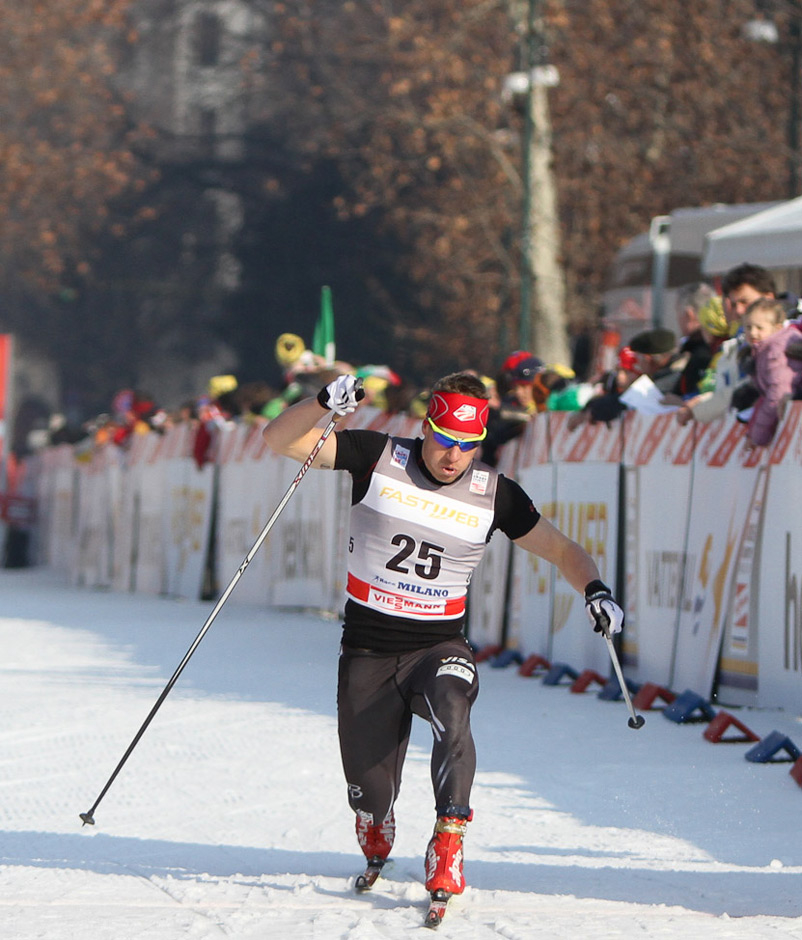
    Jessie Diggins (USA), who placed 18th at the freestyle sprints in Milan, Italy.

    Besides Randall, the lone American to make the quarterfinals was Jessie Diggins, who is coming off a dominating collection of wins in North America. Diggins qualified 21st before finishing fourth in her heat, good for 18th place and less than a second behind Kikkan Randall.

    Jessie Diggins (USA), who was 18th after advancing to her first set of World Cup quarterfinal heats.

    “I’m really excited for Jessie,” U.S. Ski Team Head Coach Chris Grover told FasterSkier. “It’s her first time in the rounds outside of the World Champs, in a regular World Cup. She got off to a rough start, but I thought she skied really well after that to get up to fourth.”

    Diggins’ starts are guaranteed because she was the fall SuperTour leader, and her result today made her the fourth American woman to sprint into the top 30 this season. As a result, the U.S. will gain a quota spot in sprint World Cups next year.

    Diggins will likely be one of the skiers making the most of those extra spots.

    “She definitely needs experience,” Grover said. “Everything is new. The start wands, the start gates, all that sort of stuff is new to her. As she gets more comfortable, I think the results will just keep getting better and better. She is young. There’s lots of good stuff to come for her.”

    Final results

  • After Making Quarterfinals, North American Men Done In By Narrow Courses In Milan

    After Making Quarterfinals, North American Men Done In By Narrow Courses In Milan

    Lenny Valjas, Milan
    Lenny Valjas, second from right, in a quarterfinal of the World Cup freestyle sprints in Milan, Italy, on Saturday. Valjas did not advance and finished 14th overall.

    The narrow, winding sprint course through Milan’s Parco Sempione was not good to the North American men on Saturday.

    While three of them made the heats, not a single one advanced to the semifinals, done in by the narrow course which left little room to maneuver.

    Simi Hamilton (USA) races to a 19th place finish in the World Cup freestyle sprints in Milan, Italy, on Saturday.

    “It was really tight from the gun and with such a monotonous course you’re not going to get a lot of shifting around,” said American Simi Hamilton, who finished 19th. “It was tough.”

    Hamilton wound up fourth in his heat, just a half-second behind Teodor Petersen of Sweden, who went on to place third in the final. Hamilton was in it to the end, but was hurt by being in one of the more leisurely quarterfinals of the day; Petersen’s time was slower than that of the lucky losers, so the American didn’t have any chance of advancing unless he finished in the top two.

    And that was difficult, he said.

    “It’s super hard to pass, especially since every turn is a right-hand corner – if you’re not on that right side, you’re not getting best-line for anything,” he explained.

    Hamilton found himself stuck on the left side, forced to take corners wide. Eventually, he decided that instead of expending valuable energy trying to pass his way to the front – something that clearly wasn’t going to happen – he would “ease off the pedal” and prepare himself for a surge at the end.

    “I think that was smart,” he told FasterSkier. “I felt good in the last 200 meters and made a couple of moves coming into the finish.”

    Hamilton thought that the only way he could have finished in the top two and gained an entry into the semis was to have snuck into the top two or three at the beginning of the heat.

    “I maybe could have tried to be a little more aggressive and got into a better spot early on,” he said, sounding doubtful that he could have actually done so.

    Andy Newell (USA), who was 26th in the World Cup freestyle sprints in Milan, Italy, on Saturday.

    For Hamilton, who was sick for the beginning of the World Cup season, today’s effort was positive.

    “Any day you’re putting on a bib is fun for sure,” he said. “I wish I was going to keep skiing some more, but the energy’s feeling good and I’m just psyched to be training and racing again.”

    Teammate Andy Newell was able ski at the front of his heat, but was then cut out of the equation when he tangled skis with his competitors.

    “I felt like I had second wrapped up, and somebody snagged my tip,” he told FasterSkier after his quarterfinal. “I got completely spun around, and then I think somebody else snagged my other tip. I don’t even know what happened. It was right when we were coming into the lanes.”

    With no time to recover before the finish, Newell plummeted to last place in his heat and ended up 26th on the day. He was clearly frustrated with yet another race marred by bad luck – even though he thought he felt fast.

    Len Valjas, Milan
    Len Valjas (CAN), who finished 14th in the World Cup freestyle sprints in Milan, Italy, on Saturday.

    “It would be nice to ski some heats and then be able to really tell how I feel,” he said.

    Canada’s Lenny Valjas also appeared in the quarters. His strategy was to stay just wide of the leader and out of trouble, but he was unable to make it to the line quite fast enough in the finishing stretch. Valjas trailed Josef Wenzl and Eirik Brandsdal, who tied in the quarterfinal and faced off again in the final, by 0.3 seconds.

    Though he was close to the front, Valjas’s time didn’t earn him lucky loser status, and his day ended with a 14th place ranking.

    Still, it was part of a solid slew of finishes from the Canadians; he joined all three women in the heats, making the team four for four.

    “Len had a great race,” teammate Chandra Crawford told FasterSkier. “He’s coming on strrrrrong.”

    Men’s results

  • Bjornsen So Close, Yet So Far in 31st-Place Sprint Qualifier: “It’s Kind of a Bummer “

    Bjornsen So Close, Yet So Far in 31st-Place Sprint Qualifier: “It’s Kind of a Bummer “

    Sadie Bjornsen (USA) midway through the sprint qualifier in Milan.

    So far this season, Sadie Bjornsen has been on a quest to make the heats in a World Cup sprint. And while her silver medal with Kikkan Randall in the team sprint in Dusseldorf, Germany was more than she had expected, she still hasn’t crossed her original goal off the list.

    Today in Milan, Italy, Bjornsen came the closest she’s ever been to the quarterfinals, finishing 31st in the qualifier. That put her just 0.14 seconds on the wrong side of the cutoff in the 1.4 k skate sprint.

    “It’s kind of a bummer because it’s 31st,” she told FasterSkier’s Topher Sabot just after finishing. “That’s like the worst place you can get!”

    The fact that she was racing at all, not to mention finishing so close to the heats, is good progress for the APU/US Ski Team racer. After wrapping up the first period of World Cup racing she had headed back to the States, where she planned to race at U.S. Nationals, but her plans were scrapped when she fell ill.

    “I was sick for three weeks, the whole time I was at home,” Bjornsen said. “So I pretty much went back to the U.S. to get sick. It was great.

    “The plan was to go back and get some confidence in the U.S., and I was looking forward to that.”

    While she was home Bjornsen was unable to do any intensity training, although she did go for an easy ski every day to “keep the blood flowing.” She began to feel healthy again just before leaving for Europe, but the plane ride across the Atlantic reinflamed her sinuses.

    Even with a lunge, Bjornsen couldn't make up the 0.14 second deficit to the quarterfinals.

    By Friday, however, the young American was feeling more optimistic about the weekend of city sprints in Milan, and even threw some speed into her pre-race workout.

    “The thing is when you’ve gone that long without going hard, it feels really good to go hard,” she said. “So it felt nice.”

    On Saturday, Bjornsen felt that she skied well and didn’t make any technical errors. She said that had used the lessons she learned from her earlier World Cup starts. Even without the morale boost she would have gained from a successful week of domestic racing in the U.S., she had plenty to go on.

    “The last sprint that I did before I left Europe, in Davos, I was really confident going into that and then I kind of just forgot to use my legs,” Bjornsen explained. “So today when I started I was thinking, you have to use your legs, you have to use your legs… [and] in Dusseldorf, it was over before I knew it and you felt like you never even got in a rhythm. Today it was nice because it’s long enough that you can get in a rhythm.”

    While 31st is her best individual result yet, Bjornsen said that at the moment she couldn’t fully appreciate it.

    “I’m sure that in a couple hours I’ll feel excited about that, but for now, it’s just hard,” she lamented. “When you get that close it’s right there, but at the same time so far. You get constantly reminded that you have to try, try again, and that it takes a long time to make the heats.

    “It’s nice to take a step back and say, you know what, it’s going up from here.”

    Sargent.

    Bjornsen’s teammate Ida Sargent has had a similar experience on the World Cup so far. She qualified for the heats in the last December sprint, in Rogla, Slovenia, but today it was back to missing out. She placed 43rd in the qualifier, over 13 seconds behind Anne Kylloenen of Finland and roughly four away from the heats.

    While Sargent said that the whole experience was “fun”, it wasn’t one of her best efforts and she didn’t think the course suited her.

    “It wasn’t great,” she told FasterSkier. “I would have liked more hills. It was kind of a weird course just being V2 the whole time.”

    While Bjornsen has “always liked quick, short, flat things,” Sargent felt that she never had anything to dig into in the Milan park. She also realized that she had made some tactical errors when choosing her lines around corners.

    “I think I took the wrong lane a couple times where it was really skied-in on the gradual downhills,” the Vermonter explained. “I was on the inside, and I’m watching everybody else going on the outside. So I think that was a big mistake.”

    Both Sargent and Bjornsen have been in the unenviable position of never knowing exactly what a competitive pace is in a World Cup qualifier.

    “In the heats you know how everyone’s skiing and you can keep up more, but when you’re on your own – I haven’t skied heats yet this year – it’s hard to know how fast you’re going,” Bjornsen said. “You feel like you’re going as hard as you can, but there’s that extra [gear], and I’m sure I missed a little bit of that.”

    Sinnott.

    The last U.S. racer was Mikey Sinnott, a Sun Valley Gold Team member who earned start rights thanks to his success on the U.S. SuperTour. Sinnott’s European World Cup debut was marred by a crash after one of his skis got mired in the softening snow.

    “I was just no-poles skiing down here and my tip caught some of the mush,” he said after the race. “It just pulled me back and I went down.”

    Sinnott’s crash came early in the course, but was impossible to make up for. In a rush of adrenaline, he attacked the first lap as soon as he got up, but then ran out of steam in the second lap and finished 68th.

    “I really just charged a little too hard at the start and really got tired by the end,” he said.

    Like Sargent, he didn’t think that the flat, short course played to his strengths.

    “It was not a great course for me, coupled with the fall, I don’t know,” said an ambivalent Sinnott. “So it goes. At least I got that out of my way I guess.”

    Sinnott, who has previously raced World Cups in Canada, said that today’s field was not much different; like the North American races, the roster was pared down thanks to many top athletes recovering from the grueling Tour de Ski.

    What was different was the milieu and the crowds. He’d never done a city sprint in Europe.

    “It’s pretty cool – it’s a pretty fantastic crowd right in the city, cheering you on real loud even if you fall,” he said.

    Sargent and Bjornsen have raced in the cities before, but they were still impressed with the atmosphere.

    “There were so many people – it was really loud out there!” exclaimed Sargent.

    She described the challenges that go along with the excitement of city racing. With no snow in sight, it was difficult to prepare for a ski race.

    “It’s hard warming up,” Sargent said. “It’s a little bit different because you can only be on the course for such a short amount of time. You have to get creative – I ran quite a bit. The course is open for about 30 minutes, so I skied then, but then I ran.”

    While she and Bjornsen missed out on the quarterfinals, they have made sure that they didn’t miss out on the city. To combat the time zone change, they explored the city one day while they tried to stay awake.

    And on Sunday, they’ll have one more chance to make it in Milan. The two will pair up for the team sprint.

    “Hopefully tomorrow it will be a little bit less jet-lagged,” Bjornsen said. “It was a little rough last night. I wasn’t really sleeping.”

    They hope that cheers from the crowd will give them an extra boost.

    “The scene is really something,” Bjornsen marveled. “This is the craziest thing I’ve been to. It’s so cool!”

    Qualification results: men / women

     Topher Sabot contributed reporting

  • FIS Eyes Moscow and Milan for City Sprints

    FIS Eyes Moscow and Milan for City Sprints

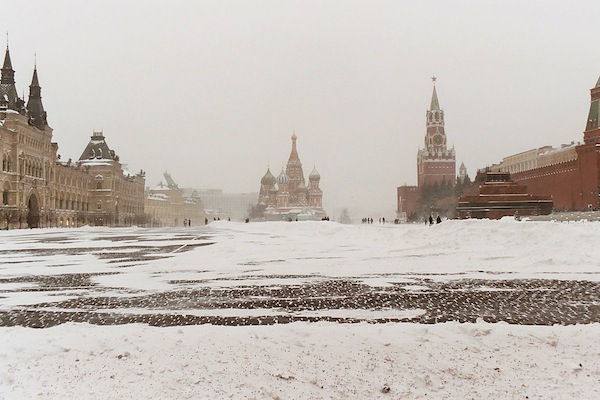
    Just add snow: Moscow's Red Square could be the site of a city sprint in 2012. Photo, Christophe Meneboeuf, Wikipedia.

    For cross-country ski fans, a sprint in Moscow’s Red Square might sound too good to be true. But it just might happen next winter.

    According to Jurg Capol, the cross-country race director at the International Ski Federation (FIS), two new city sprints, in Milan and Moscow, are on the preliminary World Cup calendar for the 2011-2012 season. And while the exact location of the Moscow event hasn’t been decided, there’s a chance that cross-country skiing could be on display for the Kremlin.

    “When we go to town, we should be somewhat in the center of town,” Capol said. “They’re checking different options, but one of [the] three is Red Square.”

    The 2011-2012 season is the one in every four without an Olympics or World Championships, and according to Capol, that leaves more room in the schedule for city sprints. The events in Milan and Moscow were put forward by the Italian and Russian ski federations, respectively.

    Capol has already visited the proposed venue for the sprint in Milan, which he said was a park in the middle of the city. There’s not much in the way of difficult terrain,

    but Capol said that the course was a good one, and that it was wide enough to meet FIS’s specifications.

    City sprints can be logistically challenging, but Capol said that siting the Milan event in a park would make things easier, since roads can be closed off ahead of time. The organizers of that event are also an experienced group—the same one that oversees races at Val di Fiemme—and only a few details remain before the race can be confirmed, Capol said.

    The Moscow event is more of an unknown quantity. Before FIS commits to holding a World Cup in the city, Capol said that organizers there will have to first execute a lower-level event this winter—much like the process for a proposed new uphill-downhill format in Poland.

    “We want to see that the test event works well,” Capol said. “[It] is not always that easy to bring a town sprint on a good level—everything has to be done at the last minute.”

    One city sprint site that is not on the long-term FIS calendar is Quebec City, which was considered as a stage in the doomed proposal for a Canadian Tour de Ski in 2011-2012. A feasibility study for that race cited a group from the city as being “particularly interested” in hosting World Cup races in the near future.

    Capol said that a sprint in Quebec could be “possible” when the World Cup returns to North America—“if they have good courses.” But before any such event could be run at the World Cup level, Capol added, Cross-Country Canada would have to organize a lower-level race first.