Tag: Miles Havlick

  • After Three Straight NCAA Championship Victories, What’s Next for the University of Utah?

    After Three Straight NCAA Championship Victories, What’s Next for the University of Utah?

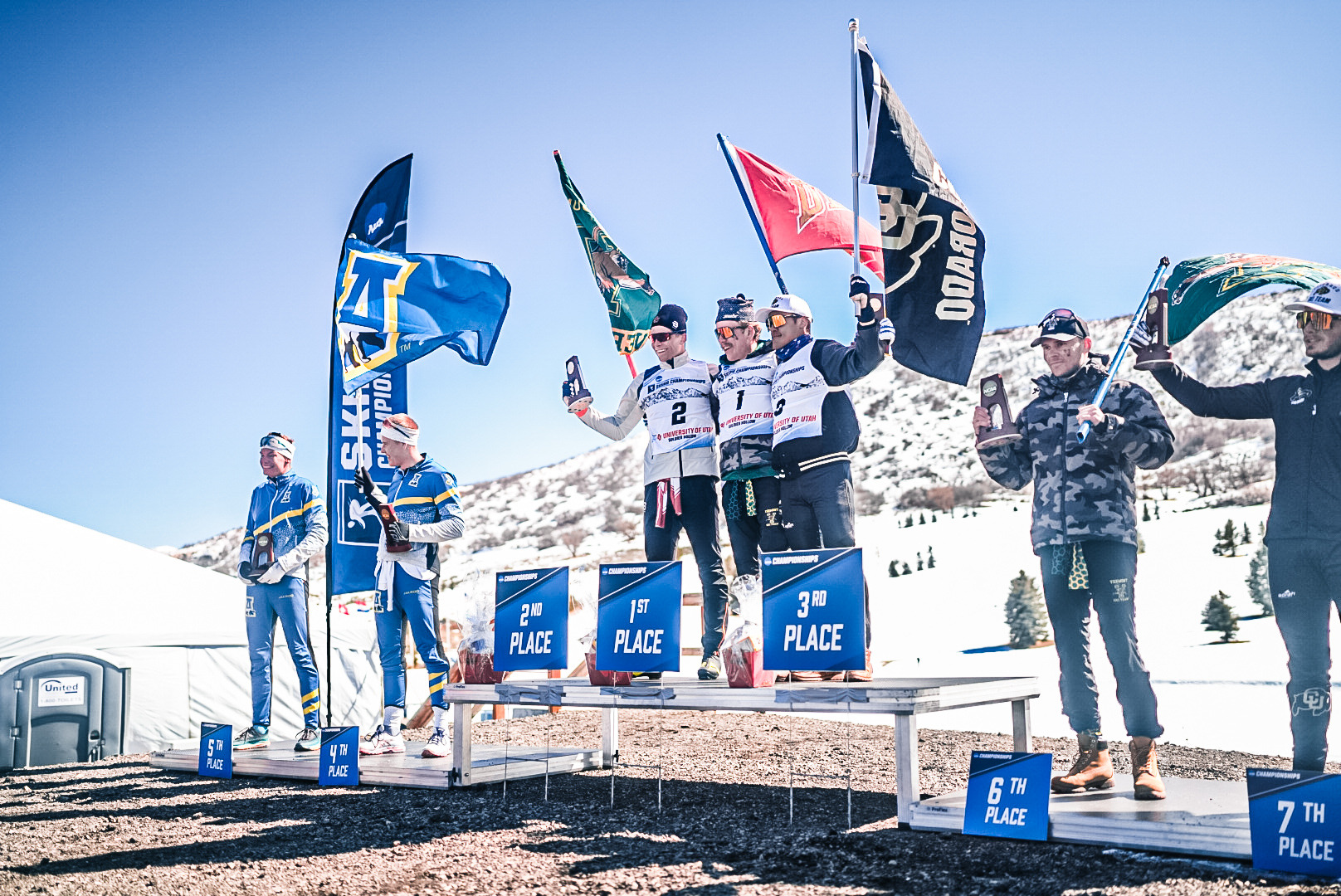
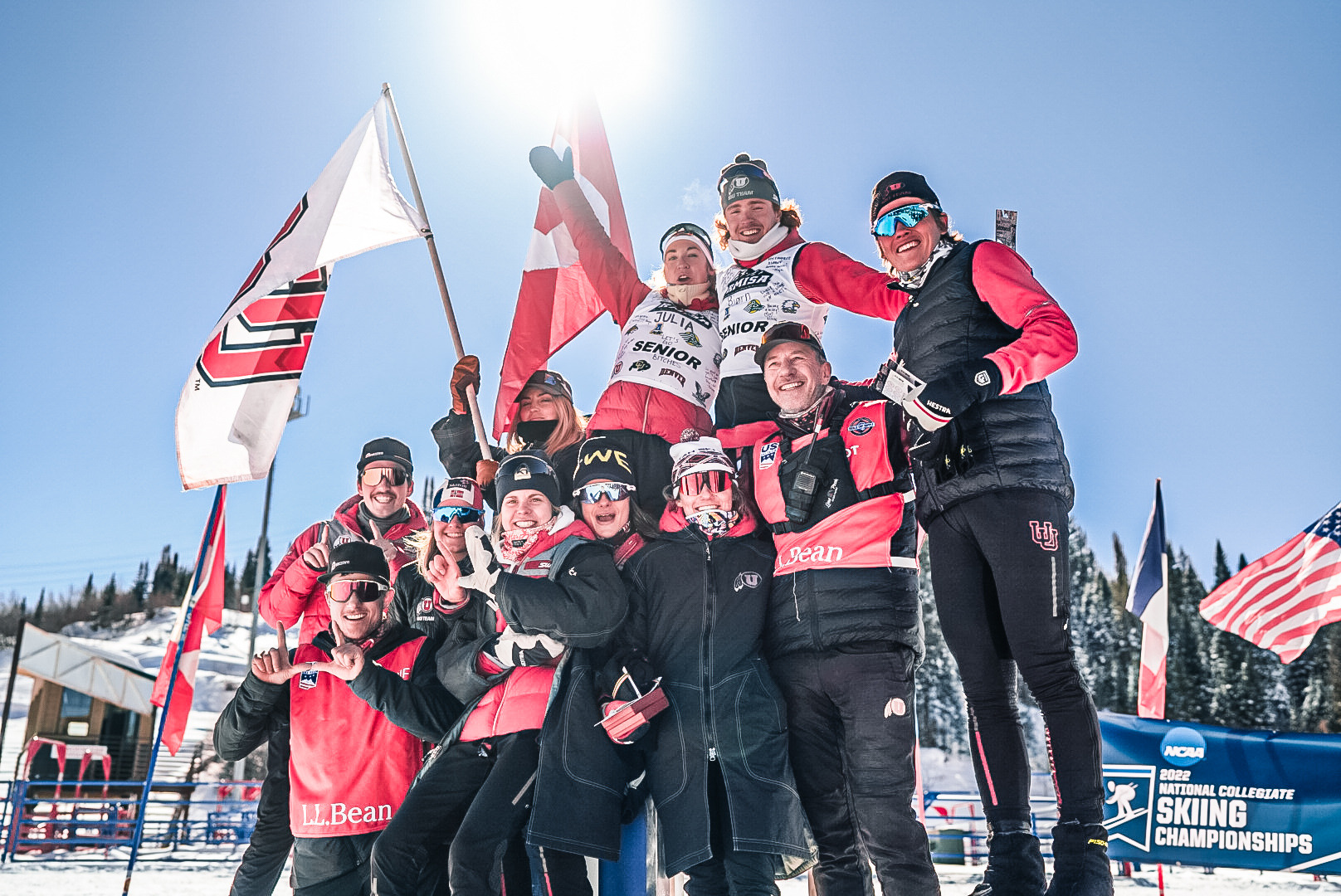
    The University of Utah (UU) team celebrates on a sunny day in Park City at the 2022 NCAA Championships. The Utes won the NCAA team title, their 3rd in a row. (Photo: Tobias Albrigtsen / @untraceableg)
    With a cohort of some of the best U23 skiers in the country, the program is setting a trend for young American skiers pursuing international-level and college skiing simultaneously.


    After the first day of this year’s NCAA Championships, held at Soldier Hollow, Utah, the team scoring was close. The familiar schools were all there, the University of Utah (UU) at the front, with the University of Colorado (CU), Denver University (DU), and the University of Vermont (UVM) all close behind.

    How close? Well, all within 100 points in the NCAA team scoring system – which doesn’t mean much. 

    Team NCAA scoring is hard to comprehend. It is best described as archaic and arcane; a cumulative score between alpine and nordic across genders, and disciplines, over two days of racing (with no sprint race to be found).

    You can understand it in archaic terms then – the four big programs that have historically dominated NCAA skiing all went into the final day with a notion that they might just add another title (UU, CU, DU, and UVM account for 63 out of the 69 titles awarded in NCAA history).

    Then, the 15 k women’s skate mass start went off.

    What happened within the first kilometer was anything but arcane. Three skiers, all clad in the white and red of the University of Utah pulled away as if they were out for a team interval session.

    The sight of that trio, together, has become an international force over the past couple of seasons. Sophia Laukli, Novie McCabe, and Sydney Palmer-Leger earned a Junior Worlds relay medal for the US together in March 2020. They’ve since climbed into top tens on the World Cup together, also done a lengthy FasterSkier interview together as well.
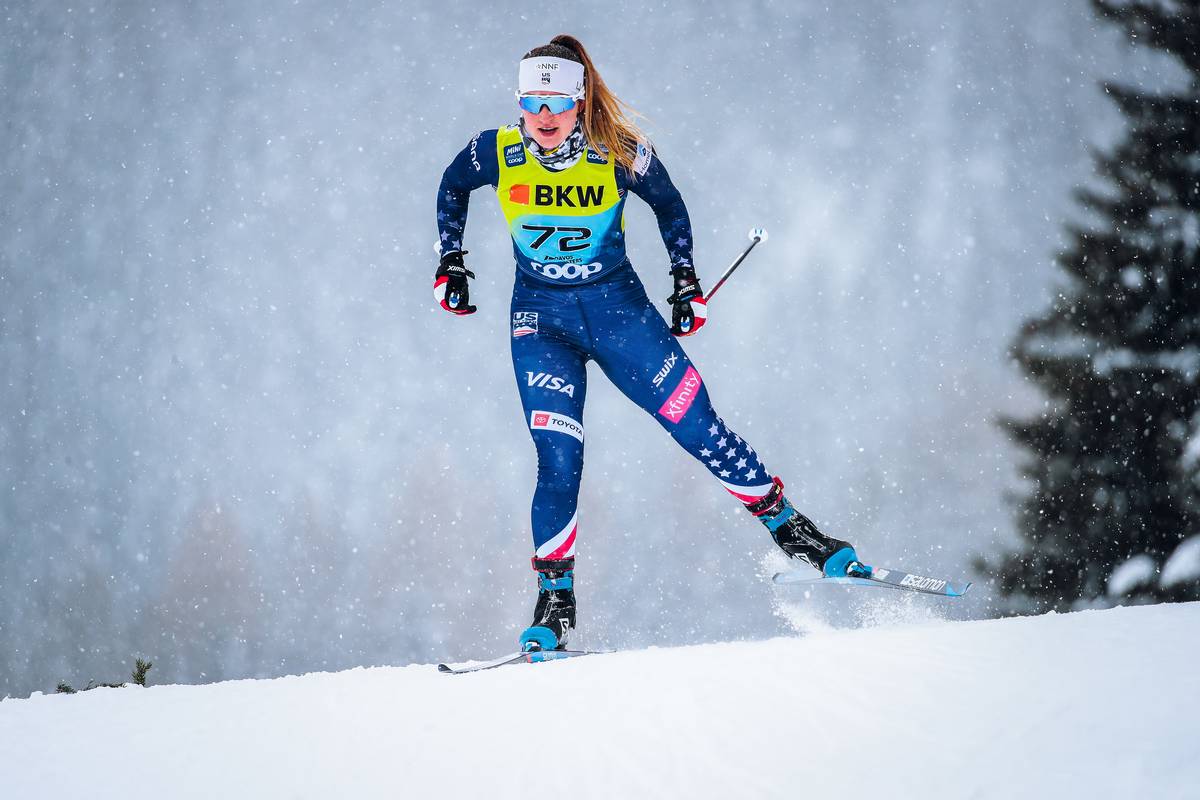
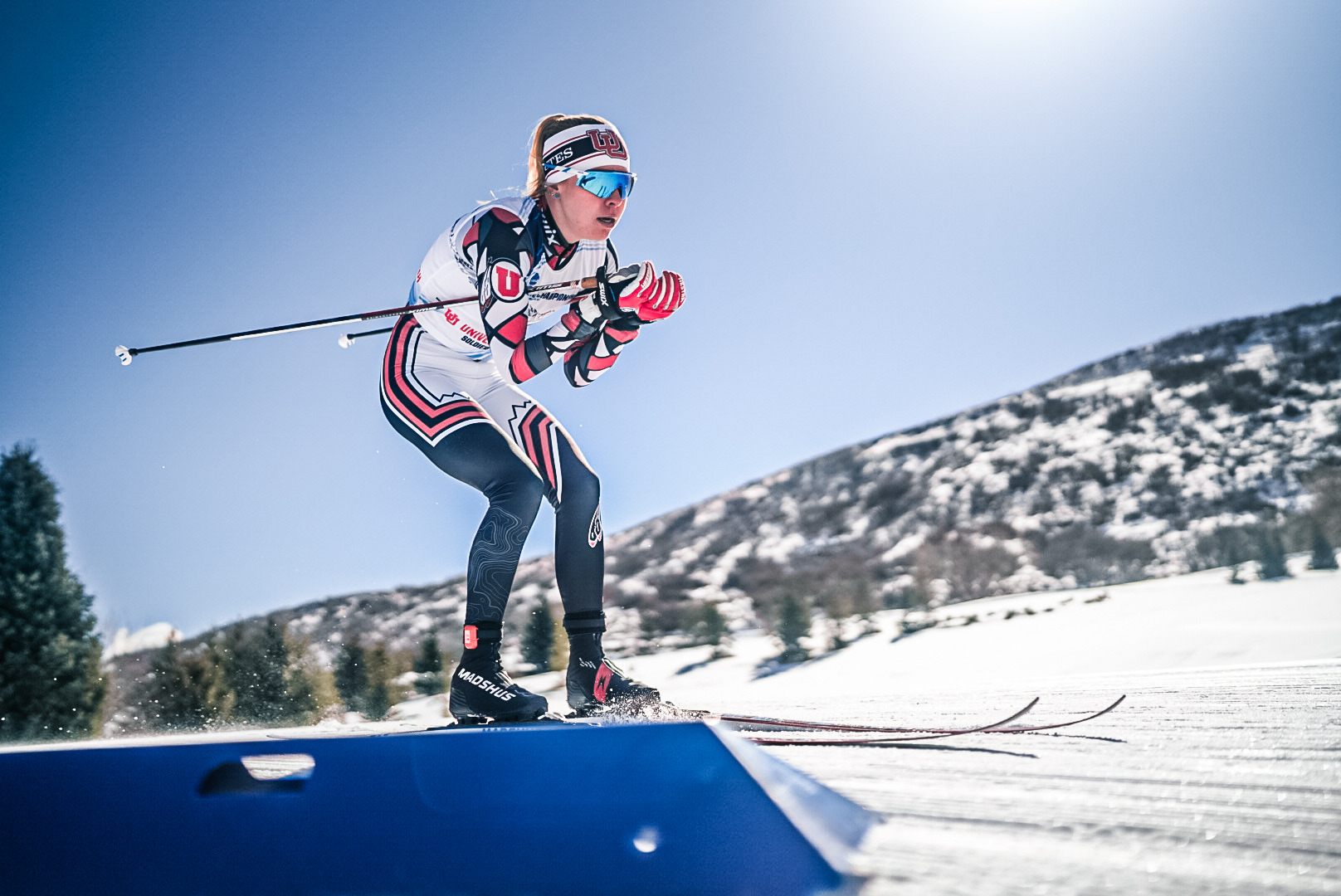
    Sydney Palmer-Leger (USA) racing to 53rd position in the qualifier. (Photo: NordicFocus)

    Coming into this particular NCAA race, Laukli and McCabe had just come home from representing the United States at the 2022 Beijing Olympics, while Palmer-Leger came in looking for a third NCAA championship title in only her second year on the circuit.

    The only question then, was which UU skier would take the race. As Sophia Laukli broke away from McCabe and came across the line to do just that, she checked yet another of the boxes for accomplishments all three had now achieved. Before McCabe and Palmer-Leger had NCAA Championships, then McCabe, Palmer-Leger, and Laukli did. It only added emphasis to the dominance of UU in NCAA skiing beyond that one race.
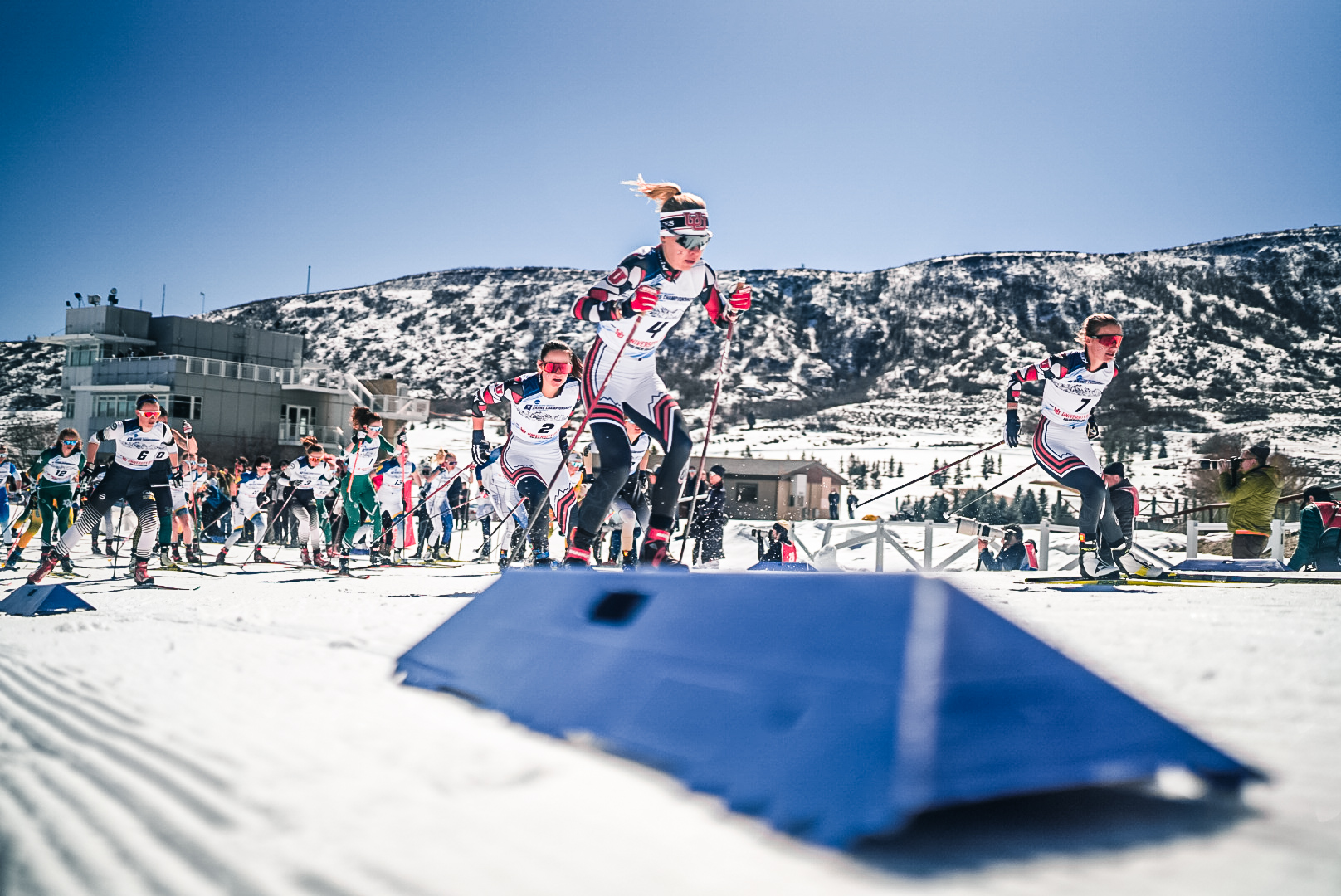
    Sophia Laukli (bib 4), Novie McCabe (bib 7), and Sydney Palmer-Leger (bib 2) lead the women’s 15 k free during the 2022 NCAA Championships in Soldier Hollow, UT. (Photo: Tobias Albrigtsen / @untraceableg)

    The UU nordic women had contributed roughly half of the points required to win UU’s third straight NCAA Team Championship, despite making up just a quarter of the team.

    “I can’t take credit for building that, I’m just keeping it going” said UU Head Nordic Coach Miles Havlick in a call about the UU women’s dominant performance. “They’re a special group, unlike anything the NCAA has seen as long as I’ve been involved with it.”
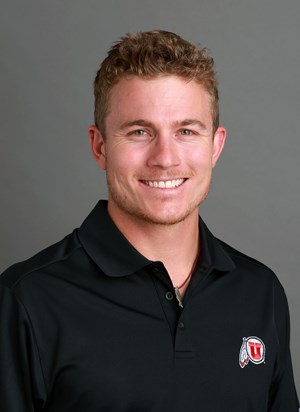
    Miles Havlick, University of Utah cross-country ski head coach. (Photo: University of Utah)

    Havlick has seen a lot. As an athlete for UU in the early part of the 2010s, he put together an NCAA career that was remarkable in the heights it reached – Havlick won two NCAA Championships in 2012 and 2013 – as it was in its pound-for-pound consistency over four years.

    After a post-grad stint professionally racing for Sun Valley SEF and a couple seasons developing his coaching in the US, in Norway, and in Australia, he returned to the NCAA circuit, and to UU, in 2018. Havlick first stepped in as Assistant Coach before taking over the position of Head Nordic Coach in 2019, working with veteran ski director Fredrik Landstedt to bring the UU program to new heights.

    Havlick may be quick to dismiss his influence in building the UU program, but there are implicit hints talking to him that his coaching is perfectly contoured to athletes wading through top-level racing while managing their development as a person.

    “I like to think I use my racing experience, especially having raced a lot of these specific races…college is a challenging time where you’re developing, living on your own for the first time, and adjusting…and that’s without also managing an international racing career. Hopefully, I can relate and provide some wisdom to our skiers on how to do that.”
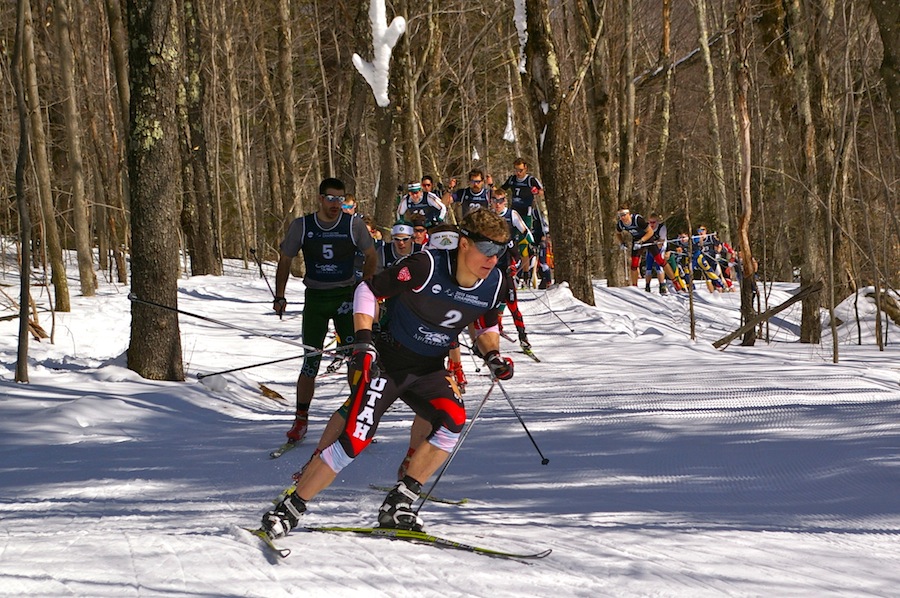
    University of Utah Nordic coach Miles Havlick was a two time NCAA Champion during his career for the Utes, including winning the 20 k skate race at NCAAs in Middlebury, VT in 2013.

    The particular knack for balancing skiers making their way onto the World Cup and wanting to pursue collegiate skiing became particularly important this season. Before the NCAA season had even started, the UU team was spread far-and-wide racing the World Cup.

    “Sydney, Novie, and Sophia all were racing the first period of the World Cup. It was awesome they got that opportunity, and they all made the most out of it. It’s so easy to forget how young they are, and they were able to take whatever results they had with a grain of salt and just focus on skiing and learning as much as they can wherever they are.”

    As rising juniors and seniors, Palmer-Leger and McCabe, and Laukli will be back at UU next year, and with their World Cup results this year, are all but sure to also be continuing to race internationally as well.
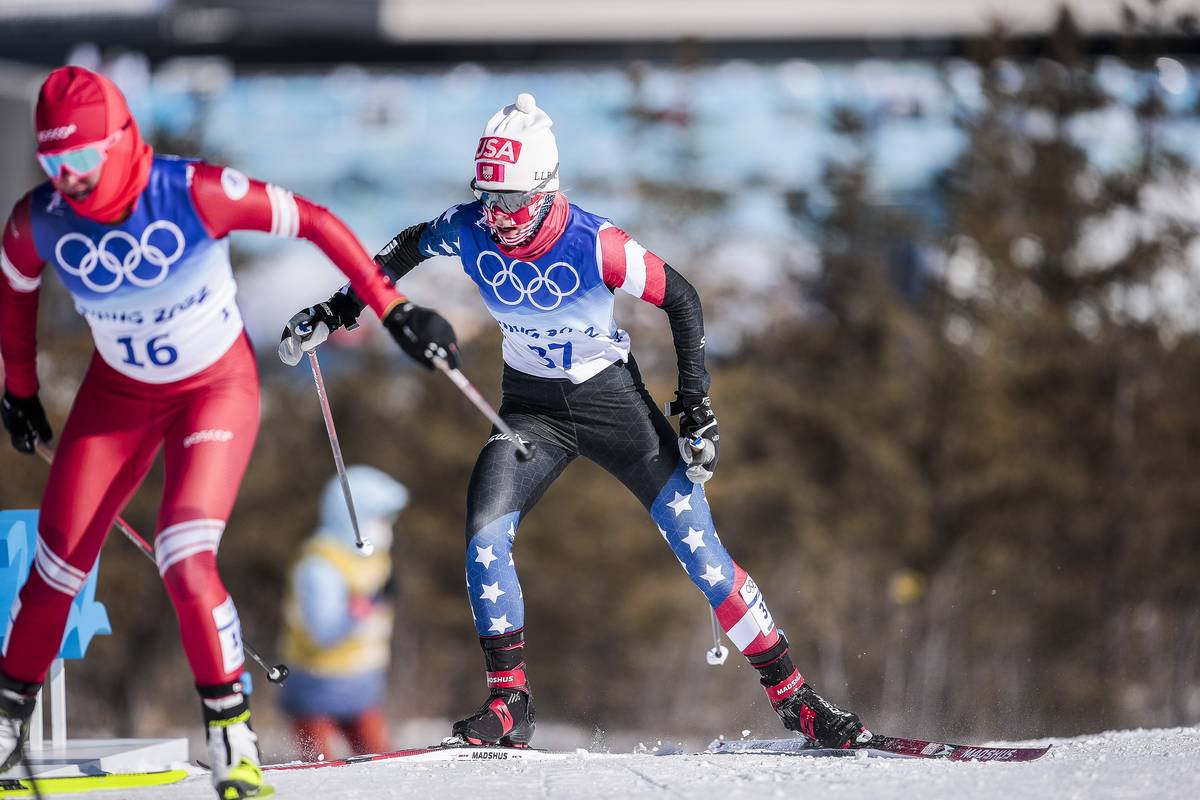
    Sophia Laukli finished 15th in the Olympic 30 k skate race while representing the US in Febuary. (Photo: NordicFocus)

    That, along with an equally talented core of male skiers, including NCAA All-American Sam Hendry and US Olympian Luke Jager, positions UU to continue its run of NCAA titles in the coming years. Something that Havlick says the UU team doesn’t take for granted. “I’m sure we have a huge target on our backs. It [would be] easy to coast and get stagnant. As long as we keep an attitude towards improvement and working hard, and on my end continuing to be smarter in my decision-making, I think we can stay as the top college program for years to come.”

    That improvement in decision-making will include all the facets of coaching familiar to nordic coaches – waxing, training, team atmosphere – but at UU, it will also be precedent setting.

    Along with UVM’s Ben Ogden, the NCAA titles of McCabe and Laukli this year marked the first time in NCAA history that American-born athletes won every race. The collegiate race circuit, long a gauge of where young US skiing stood in relation to international talents, saw that gauge blown wide-open in 2022. The bar for US skiers is now being set by other US skiers, with McCabe, Laukli, and UVM’s Ogden all making breakthroughs at the World Cup and Olympic level. With their success, the relationship between the collegiate circuit and national team is set to evolve too.

    Positioned in Salt Lake City, just 90 minutes from the headquarters of US Ski and Snowboard in Park City, with four athletes who have already worn the US suit on the World Cup, the US Ski Team athletes at UU and Havlick are cognizant that they will determine what that evolution looks like:

    “The strength of the American Juniors on the world stage was shown in the last few years, and now we’re starting to see that push through to the college age, especially here. I’m hopeful that we can continue to build on the relationship we have here with the national team, and that the trend we’ve seen, where the national team is realizing the benefits of college skiing, continue. That helps skiers in the US, and the US skiers who do go represent us [on the international stage].

    “I’m not sure what she would say, but I think Rosie Brennan was a big influence, a good example.”

    As a young athlete, Brennan pushed against the wishes of US Ski and Snowboard to compete for the US national team while skiing for Dartmouth with teammates like Ida Sargent and Sophie Caldwell. After completing her degree in 2011, she became a persistent domestic skier for Alaska Pacific University (APU), bouncing on-and-off of the national team while pursuing graduate-level education. Then, in 2020, a decade into her post-undergrad career, Brennan won a World Cup, and since has been one of the top skiers in the world.
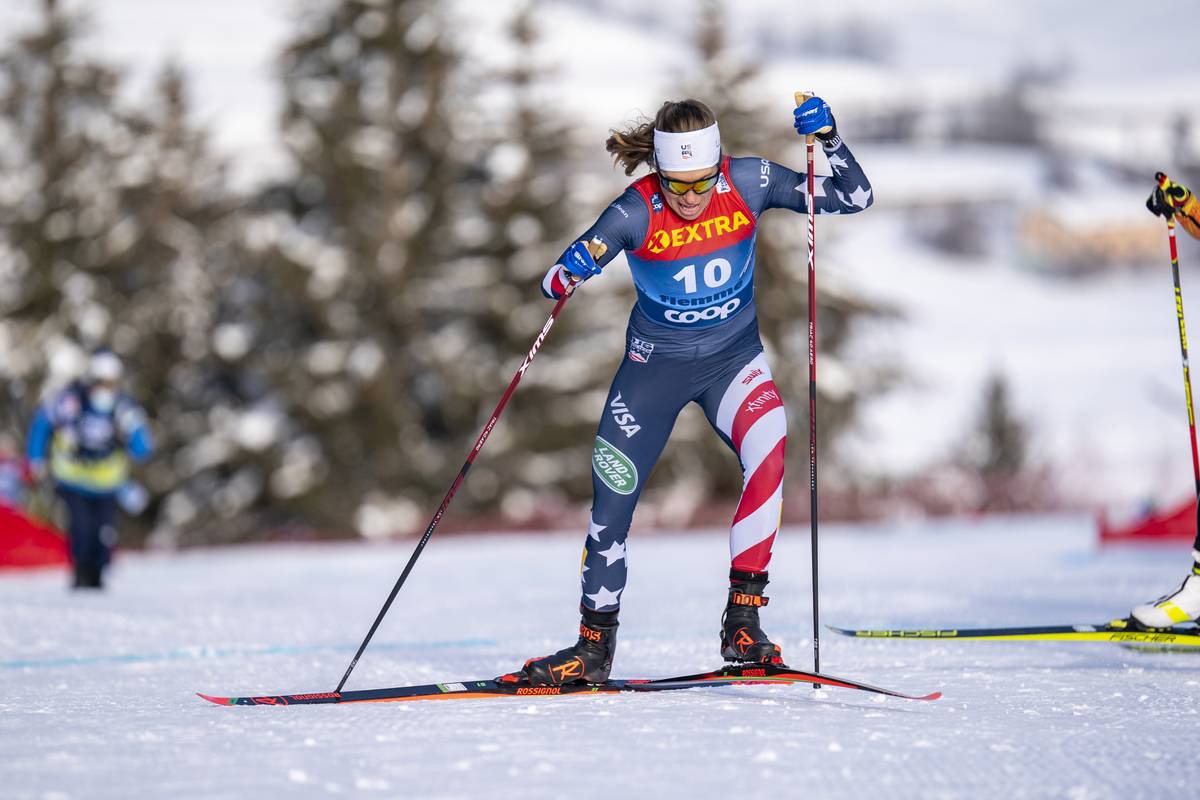
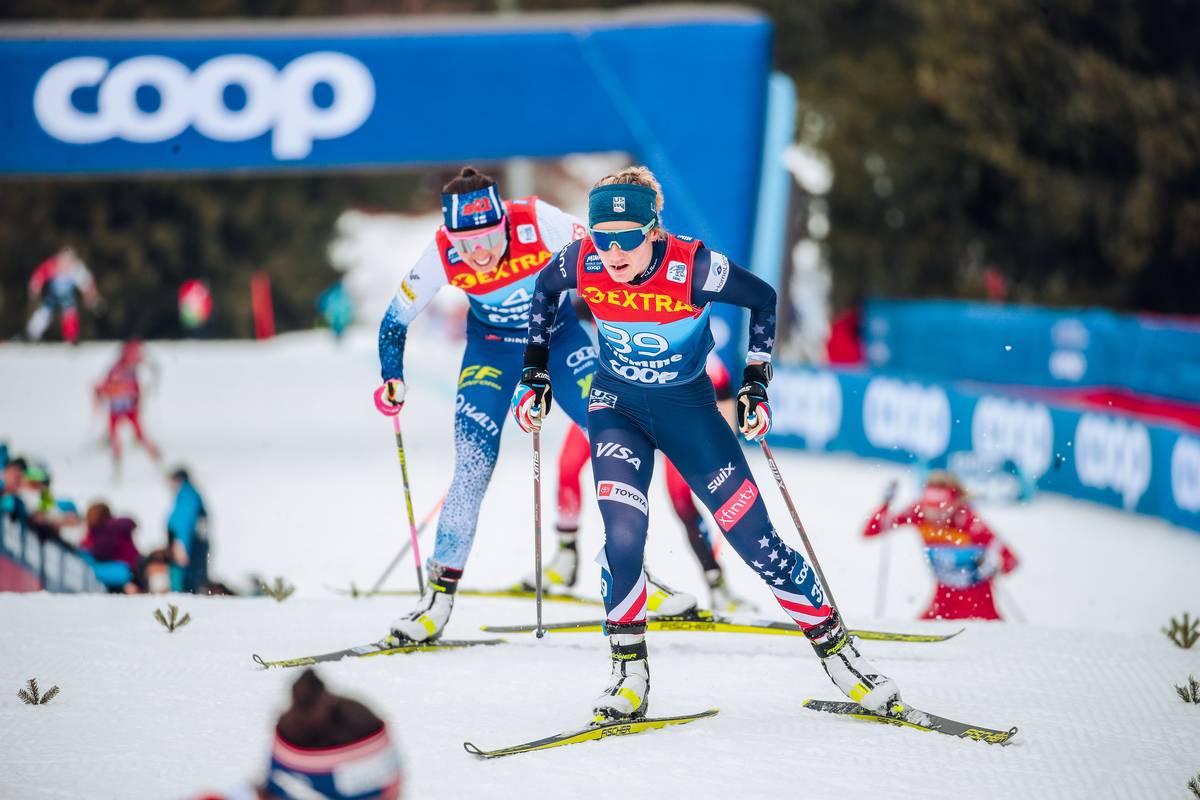


    One year, two generations: In 2021, Rosie Brennan (left) finished 7th in the Tour de Ski’s Alpe Cermis hill climb. In 2022, Novie McCabe (right) matched that result by taking 7th in the same race. (Photos: NordicFocus)


    That success saw US Ski Team Head Coach Matt Whitcomb reflect to FasterSkier Reporter Nat Herz that US skiing’s previous stance towards collegiate skiing “[was] not realistic, because you’re not taking the American culture into consideration.”

    (Read more about the shift in perception on NCAA skiing’s role in athlete development here.)

    Building upon Brennan’s example, the international and domestic performances of athletes exploring the NCAA-World Cup duality demonstrates that American skiing culture is now pliable as to where its top skiers turn for development in their skiing, and in their lives.

    What that balance of collegiate and international skiing looks like will be set by the phenomenally talented skiers who are currently at the top of the collegiate ranks, with support and collaboration from both their NCAA and US Ski Team coaches.

    At the University of Utah, that influence is a central feature of the program, rather than an exception. McCabe, Laukli, Palmer-Leger, Jager, and their coach Havlick have already broken the precedents of US skiing and are looking ahead to next season with expectation and a simple approach, as Havlick says “We’re proud of this year, for sure. We’ll let those results be though as we start training…I just want to keep one thing – the culture of hard work and process.”
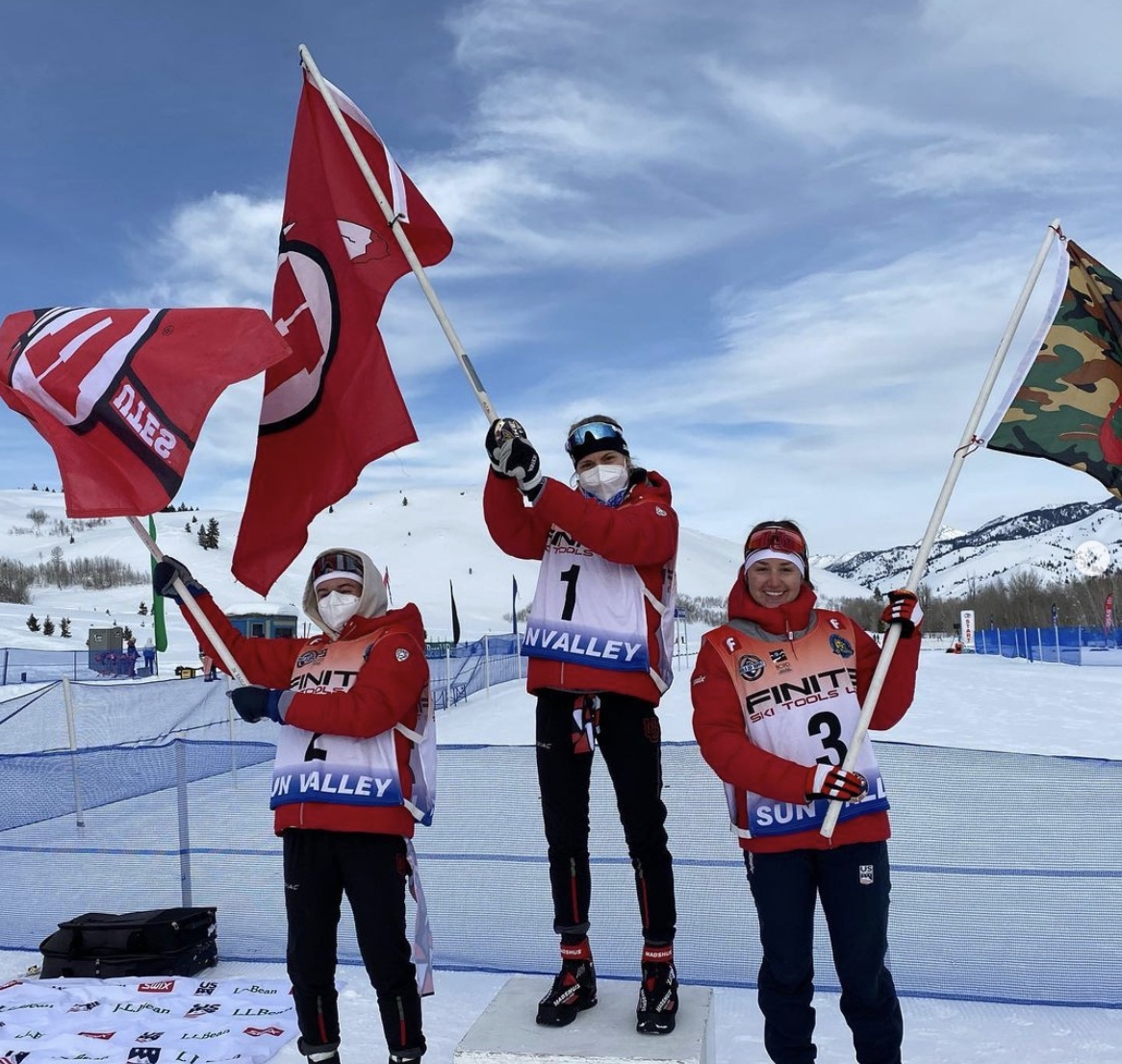
    Utah teammates Sophia Laukli, Novie McCabe, and Sydney Palmer-Leger go 1-2-3 at a RMISA race in Sun Valley last January. (Photo: Instagram @utahskiteam)
  • (Press Release) 2022 NCAA Skiing Championships – 5/10 k Classic Recap

    (Press Release) 2022 NCAA Skiing Championships – 5/10 k Classic Recap

    PARK CITY, Utah – The 2022 NCAA Skiing Championships got underway on Thursday at Park City Mountain Resort and Soldier Hollow in Midway. Cool temperatures in the mid-20’s and sunny skies welcomed the competitors on the first official day of competition.

    Utah’s Novie McCabe claimed her first NCAA title by winning the women’s 5K classic at Soldier Hollow. Ben Ogden of Vermont was crowned a national champion for the second time in his career by winning the men’s 10K.

    Colorado claimed the top spot on the podium in both giant slalom races at Park City Mountain Resort. Freshman Magdalena Luczak won gold on the women’s side while Filip Forejtek was the men’s winner.

    With two days remaining in the championships, Utah has a 286.5-262.0 lead for first place over Colorado. The Utes had the top score in any of the four races with 102.5 points in women’s 5K classic and the best men’s GS total of 75 points.

    Denver is in third place with 249.0 points as the Pioneers had the best men’s 10K classic score along with Alaska Fairbanks (76.0) and the top women’s GS score (69.0). Vermont is fourth (235.0) and Middlebury is fifth (131.5).

    The championships conclude with the women’s 10 k and the men’s 20 k freestyle races on Saturday at Soldier Hollow at 9:30 a.m. MST. The forecast calls for sunshine both days with a high in the low 30’s on Friday and mid 40’s on Saturday.

    Novie McCabe (Univ. of Utah) wins the women’s 5 k classic during the 2022 NCAA Championships in Soldier Hollow, UT. (Photo: Tobias Albrigtsen / @untraceableg)
    WOMEN’S 5K CLASSIC

    Novie McCabe of Utah became the first to earn an NCAA title, winning the women’s 5K classic in 13:22.8, crushing the field by more than 13 seconds. McCabe, a sophomore from Winthrop, Wash., won both of the women’s Nordic races at the RMISA Championships upon returning from the 2022 Beijing Olympics, where she was part of the U.S. cross-country 4 x 5km relay team that took sixth.

    Her Utah teammate, Sophia Laukli, tied for runner-up honors with Vermont’s Anna Bizyukova as both finished in 13:36.3. Anabel Needham of Michigan Tech (13:48.6) and Hanna Abrahamsson of Colorado (13:57.2) rounded out the top five to earn first team All-America honors.

    Utah’s Sydney Palmer-Leger and Michigan Tech’s Nea Katajala tied for sixth place. Palmer-Leger won both the women’s classical and freestyle titles in 2021. Jasmie Lyons (New Hampshire), Hannah Ray (Denver) and Weronika Kaleta (Colorado) placed seventh through 10th to earn second team All-America.

    MEN’S 10K CLASSIC

    Vermont’s Ben Ogden edged out Andreas Kirkeng of Denver by 6.4 seconds for the men’s 10K classic championship. Ogden skated in with a time a 23:43.1 while Kirkeng came back in 23:49.5.

    Ogden, a senior from Landrove, Vt., has won three consecutive races since returning from the 2022 Beijing Olympics. Ogden captured the 2022 EIS titles in the 20K freestyle and the 10K classic. Back in 2020, he took the men’s 10K freestyle to earn his first NCAA title.

    Ben Ogden (Univ. of VT) races for the win in the 10 k classic during the 2022 NCAA Championships in Soldier Hollow Utah. (Photo: Tobias Albrigtsen / @untraceableg)

    Magnus Bøe of Colorado, who swept both men’s individual Nordic titles a year ago, placed third in 24:03.7. Christopher Kalev and Mike Ophoff both gave strong efforts for Alaska Fairbanks, coming in fifth and sixth, respectively, to earn first team All-America honors. Kalev was hot behind Boee with a time of 24:08.3

    Second team All-America honors went to Jacob Nystedt (Vermont), Will Koch (Colorado), Peter Wolter (Middlebury), Epsen Persen (Alaska Anchorage), and Bernhard Flaschberger (Denver), who placed sixth through 10th.

    QUOTES

    Novie McCabe – Utah (Women’s 5 k Champion)

     On how the race played out:

    “It was a good race and it was fun. It was kind of icy but still really awesome skiing. You just had to make every second count and really push the corners and push the transitions to get those extra seconds because it was so tight.”

    On her strategy:

    “Everyone has their own way of skiing because it is your own race. I tried to take it out not really conservative but just tried to relax and ski smooth and have something left for the last lap. I think it went well for me. Sometimes you are just dialed in and it was good day for me.”

    On Utah placing three in the top six:

    “I’m super proud of everyone. We’ve worked hard together so it’s fun to see everyone succeed. We’re just stoked for the next race.”

    University of Utah celebrates a strong performance in the first day of NCAA racing. Novie McCabe won the women’s 5 k classic, while Sophia Laukli tied for 2nd, and Sydney Palmer-Leger finished 6th. (Photo: Tobias Albrigtsen / @untraceableg)

    Ben Ogden – Vermont (Men’s 10 k Champion)

    On being a national champion for the second time:

    “It feels good. This was a big goal of mine this year and I’m really proud to say that I delivered when it counted. It was awesome.”

    On how the race played out:

    “I’m not a man known for his strategy, and if you look at the times you’ll see that. I went out damn hard and it was sort of a hanging on game for the rest of the race. But I was lucky to make it to the finish line just in front of Mr. (Andreas) Kirkeng. I was psyched.

    On coming back from the Olympics:

    “A couple of us came back from the Olympics and we had to be smart and rest up. That was a long and exhausting experience. But the mental aspect of this sport is not to be slept on and all of us took a lot of confidence by being named to the U.S. Olympic team and being able to represent over in China. I think that makes a huge difference with your performances late in the season. You feel fast, so we are fast.”

    The 2022 NCAA 10 k classic podium: Ben Ogden (Univ. of VT) took the win ahead of Andreas Kirkeng (Denver Univ.) and Magnus Bøe (Univ. of CO). (Photo: Tobias Albrigtsen / @untraceableg)

    Miles Havlick – Utah (Nordic Head Coach)

    On the conditions:

    “Perfect day for racing. The tracks were fast and firm. Blue sky, typical Utah day. It was awesome.”

    On Novie McCabe and Sophia Laukli coming back so strong from the Olympics:

    “I think both Sophia and Novie were really exposed to top-level racing, and Sydney (Palmer-Leger) as well on the World Cup. But Novie and Sophia spent a little more time over there and were able to make the Olympic team. So they just came back with guns blazing. I think it’s nice for them to be back home eating the food they’re used to and being with friends, so they’re having fun and skiing fast.”

    Utah’s Sophia Laukli ties for runner-up in the 5 k classic during the 2022 NCAA Championships in Soldier Hollow, UT. (Photo: Tobias Albrigtsen / @untraceableg)

    On the women’s team:

    “Really not surprising out of them. We knew that they were going to be duking it out for the win. I think Novie really carried her form from regionals. Just looked so sharp, especially up the last climb. She really paced it out well. Sophia was just a few seconds off. Very solid out of Sophia and those two have just been incredible all year. Sydney was just a few seconds behind them. Very solid day for her and I’m sure she’s going to be hungry for more on Saturday.”

    On the men’s team:

    “We gambled a little bit and went light on the kick so their skis would be a little faster. Maybe that wasn’t the best move but they fought hard all the way to the line and they were very solid. We’ll be looking for more out of them on Saturday. I think mass starts suit us better as a team.”

    Results: Men’s 10 k classic | Women’s 5 k classic

  • FasterSkier’s Interview with University of Utah Head Coach Miles Havlick

    FasterSkier’s Interview with University of Utah Head Coach Miles Havlick

    Miles Havlick, University of Utah cross-country ski head coach. (Photo: University of Utah)

    The Internet is a wonderful time machine. Just a few search words and clicks away, there’s Miles Havlick, arms raised, crossing the line first  in the 20-kilometer freestyle mass start at the 2013 NCAA Skiing Championships.

    It was the second consecutive NCAA championship for the now 28-year-old Havlick — he won the 2012 NCAA title in the 20 k classic. As a standout skier at the University of Utah, Havlick made the jump to Sun Valley Ski Education’s Gold Team. He skied with the team from 2013-2016. Eventually, Havlick expanded on his undergraduate degree in exercise physiology and earned a master’s degree in the same field from the Norwegian University of Science and Technology in exercise physiology.

    Havlick completed his graduate work in 2018. He was based out of Trondheim, Norway at an academic institution renowned for its high quality cross-country specific research, and soon landed a job as the new University of Utah Head Cross Country head coach.

    Utah comes off a season where it replaced several coaches in its ski racing program, including its Director of Skiing. Fredrik Landstedt was announced as the new director in July, 2018.

    Below is our recent interview with Havlick. The coach responded to FasterSkier’s questions in writing.

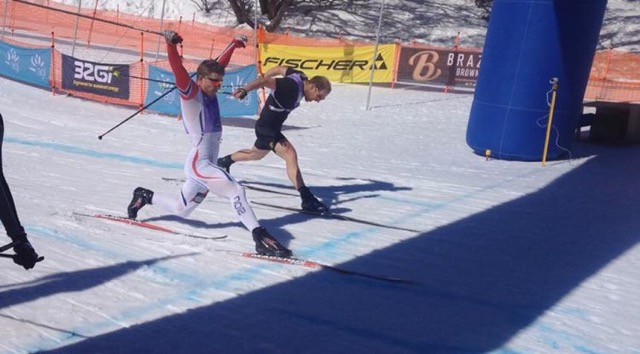
    Miles Havlick (l) outlunges Australian National Team member, Phillip Bellingham for the win in the men’s 42-kilometer 2017 Kangaroo Hoppet at Falls Creek Resort.
    (Photo: AUSXC)

    ***

    FasterSkier: You went unrecruited from Boulder High School in Boulder, Colo., and you were a walk-on at Utah. Big picture, what experience best informs your coaching?

    Miles Havlick: My experiences as a racer certainly dictate my coaching decisions more than anything else. The lessons I have learned as a result of the highs and lows I have experienced as a competitor are my most valuable assets to advising my athletes in a more effective way.

    FS: What was it like for you as an unrecruited athlete out of high school and what were your skiing opportunities?

    MH: After high school, I decided to take a post grad year to ski with the Sun Valley Ski Education Foundation in Ketchum, Idaho. I found this year incredibly valuable in preparation for college life and easing the transition into the fast pace of RMISA skiing. This post grad year enabled me to train regularly with some of the top skiers in the country and learn from their professionalism, drive and dedication. It also provided an opportunity to learn how to take care of myself (cook, clean, get to bed early, etc.) without the additional stress of college classes. Those benefits along with the fact that I entered college a year older, stronger, and more mature (hopefully) really paid off! From there, I moved to Salt Lake City and began the most memorable years of my skiing career at the University of Utah.

    FS: Utah can be a rather tough place to break through as they recruit heavily from Europe. How does your experience at Utah shape how you will recruit, assess, and develop athletes?

    MH: Utah has typically maintained a relatively small team with roughly 6 men and 6 women on the Nordic side, allowing each athlete to optimize the resources available at the U. This also makes each member, whether joining the team as an American or from overseas, vitally important to the cumulative success of the team throughout the year. Foreign skiers in general tend to be very mature in terms of their knowledge of training philosophy and understanding their needs as an athlete. This is a result of skiing at a high level (often with a National or Development team) but also generally being a few years older than incoming American freshmen. I certainly benefited a lot from the wisdom and professionalism of my European teammates and hopefully I pushed them in daily training too – no Norwegian wants to let an 18-year-old American beat them in a rollerski speed! I continue to believe that the collaboration between American and foreign athletes in collegiate skiing is mutually beneficial and valuable for the development of cross-country skiing in the US.

    FS: You clearly were a top college skier while at Utah. What do you attribute your growth to as an athlete while attending Utah? We’re guessing you had many skiers to push your limits while training.

    MH: My most successful races in college were truly a reflection of the team. Our coaches really fostered a positive team atmosphere, which snowballed into a very productive environment at training, competitions and life at home. A goal I set early on was to learn something from each of my team members. Whether it was imitating their weight shift while skate rollerskiing up Emigration Canyon, showing up to practice with a contagiously positive energy, gritting the teeth for one more hard interval up Dry Creek, or just taking a spoonful of fish oil when feeling on the verge of sickness; there was always something to be learned from everyone.

    FS: We like this quote attributed to your dad. We found it in an old Daily Camera piece. Here’s the quote: “For me, sports teaches you how to set goals and to deal with disappointment, and every once in awhile you get to drink from this intoxicating cup of success,” said his dad, Scott.

    How have the sentiments articulated by your dad manifested for you as it relates to your ski career and how you might impart some wisdom on a younger generation of skiers?

    MH: As a former coach of mine always said, “we are only elite ski racers for a very short period of time in our lives, so we need to make the most of every single day”. In other words, we need to set goals, both long term and short term and get better in one way or another every single day and from every single training session. From the beginning of June, we really only have 160 days until the snow flies again. That is not a whole lot of time to make meaningful changes, so being diligent and purposeful during each training session is critical to improvement. If we are doing this, despite disappointing results, we can be confident that we are heading in the right direction and making progress towards our goals. Success along the way provides an important boost in motivation and reassurance that we are on the right path, but in the end what counts is knowing that you did your very best and enjoying the process, not just the end result.

    FS: What were the precise years you skied professionally. You won the Kangaroo Loppet in 2017, but you might have been a grad student by then.

    MH: I raced with the Sun Valley Gold Team from 2013 to 2016 before deciding to pursue a Master’s degree. Luckily, I got a lot of time on snow while coaching leading up to the Kangaroo Hoppet, just enough to counteract the time spent sitting at school desk over the previous year!

    FS: Can you provide us a run down of your coaching experience. We know you coached in Norway and in Australia, as well as served as a travel coach with the Australian National and National Junior Team.

    MH: Throughout my years with the Gold Team, we ran group clinics for Master skiers in addition to some one-on-one coaching on the side. I helped out as a volunteer coach for the University of Utah for several fall semesters before I the SuperTour season kicked off. Between my years in Norway, I worked as a coach with the Birkebeiner Ski Club in Mount Beauty, Victoria for Australia’s winter season culminating with the 2017 Kangaroo Hoppet. This opportunity also lead into working as an assistant coach and wax tech for the Australian Junior National Team at several events around Europe including the World Junior Ski Championships in Goms, Switzerland. I was also fortunate enough to support the Australian contingent of the Swix China City Sprint Tour in Yan’an, China last March.

    FS: You have an exercise physiology degree from Utah (2013) and master’s degree from Norwegian University of Science and Technology in exercise physiology in 2018. Why did you choose to study in Norway?

    MH: Norway is the epicenter of cross-country skiing, they offer great study opportunities and I wanted to experience something new.

    FS: What was the focus of your graduate thesis and what did you learn?

    MH: I was researching the application of altitude training in elite cross-country skiers and the resulting physiological adaptations. I was lucky enough to work with the Norwegian Olympic Training Center, some of the world’s leading researchers in training science, and experience how dark Norwegian winters actually are…

    FS: What can you tell us about the investment in Norway as it relates to applied academic research and cross-country skiing?

    MH: Norway is the best cross-country skiing nation in the world for a reason. The entire country is made up of enthusiastic sports fans with PhD students devoted to improving cross-country ski technique, equipment development and optimizing training.

    FS: How will your experience in Norway inform your ski coaching?

    MH: My time in both Norway and Australia opened my eyes to two unique skiing cultures and allowed me to reflect on the unique challenges and opportunities that we face here in the US. This insight complements my experiences as a racer and I believe will prove quite valuable in developing skiers at Utah. In the big picture, it has not been all that long since I was skiing at the U, but everything I have done since then has improved my ability to make more informed decisions about skiing and training. If I knew everything I know now when I was a freshman at Utah, I believe I could have been a much better athlete. This knowledge is what I hope to instill upon the athletes that I am lucky enough to work with.

    FS: Can we expect Utah to have a pipeline of skiers from Trondheim?

    MH: I wouldn’t say that, but Trondheim certainly has a rich culture of skiing and obviously all the ingredients to produce a large population of great skiers. I would certainly be excited to expose another Trønder or two to the resources and training environment that surrounds the University of Utah.

    FS: What do you see as your biggest challenges at Utah?

    MH: There is obviously a mountain of things I need to learn being a new coach of NCAA skiing, exemplified by the delay in getting this interview back to you. The greatest challenge for me is balancing coaching with all of the administrative components while also implementing all of the ideas that I have to take the program to the next level. I am very excited to be part of this talented Utah coaching staff, work with amazing collegiate athletes and helping to carry on the long-standing traditions of skiing excellence at Utah.

    FS: You come into a storied program that has gone through some major changes – the Head Nordic coach and head of skiing at Utah have been replaced within the last 12 months. What is the atmosphere like right now at Utah?

    MH: The team has been energetic and looking great this fall. Everyone is strong, healthy and really psyched to get the race season underway. I’m excited to see what we can do!


  • Havlick Wins 2017 Australian Hoppet; Rose Repeats in Second

    Havlick Wins 2017 Australian Hoppet; Rose Repeats in Second

    Miles Havlick (l) outlunges Australian national team member Phillip Bellingham for the win in the 42-kilometer 2017 Kangaroo Hoppet on Aug. 26 at Falls Creek in Victoria, Australia. (Photo: AUSXC)

    When Australian Phillip Bellingham lunged for the finish line in the men’s 2017 Kangaroo Hoppet a week ago on Saturday, Aug. 26, in Falls Creek, Victoria, it wasn’t his fellow national team member Callum Watson he had to worry about. Nor was it anyone sporting a suit with the Australian flag. It was a skier wearing the colors of Norway.  

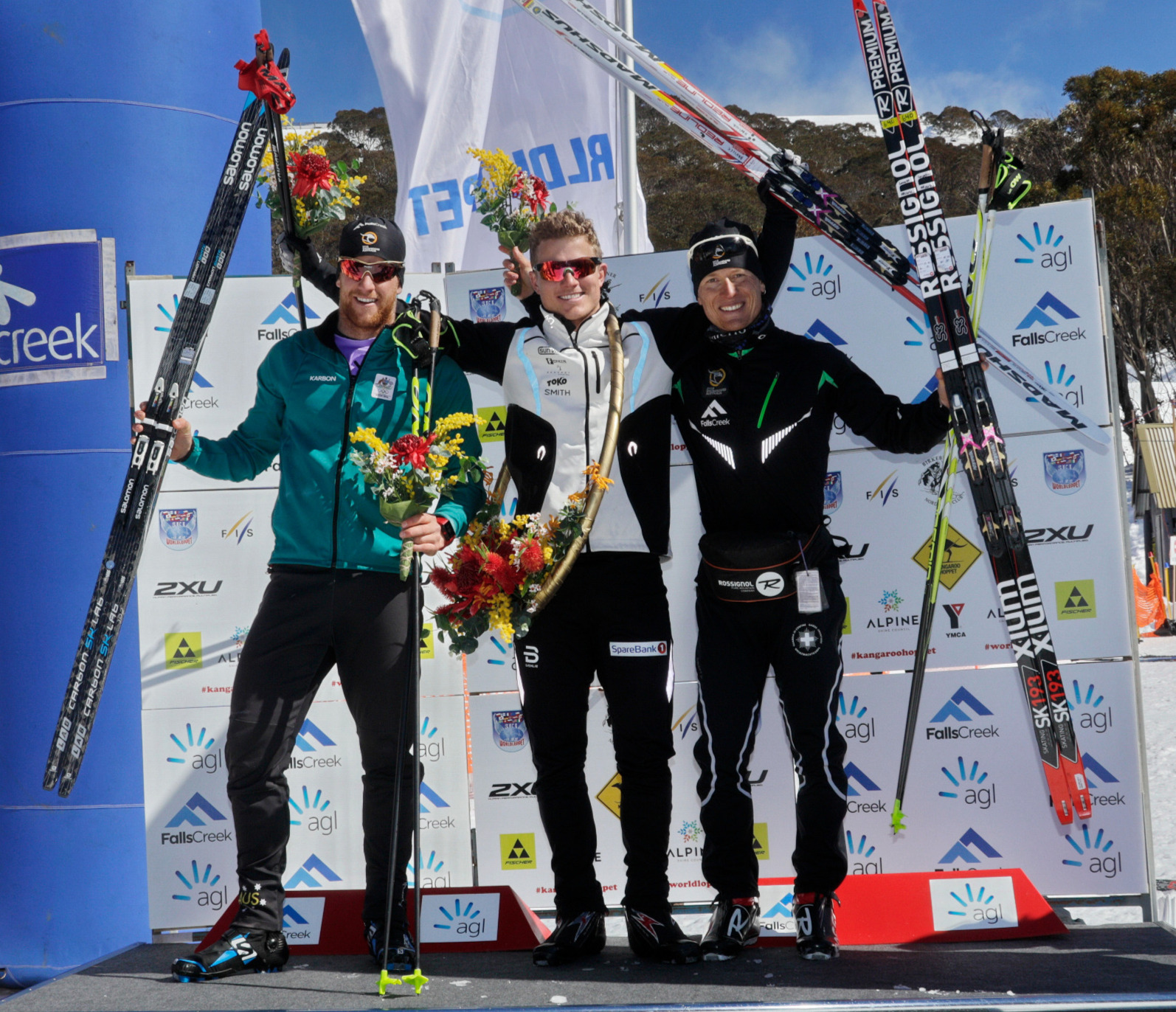
    The men’s 2017 Kangaroo Hoppet podium, with American Miles Havlick (c) in first, Australian Phillip Bellingham (l) in second, and Switzerland’s Valerio Leccadi in third. (Photo: Hoppet.com.au)

    The winner, however, was not Norwegian. It was American Miles Havlick, a 27-year-old Boulder, Colo., native. Why was he sporting a Scandinavian suit while racing in the Southern Hemisphere? School.

    After retiring from professional skiing and leaving the Sun Valley Ski Education Foundation (SVSEF) Gold Team in 2016, Havlick enrolled at the Norwegian University of Science and Technology (NTNU) in Trondheim, Norway, to obtain a master’s degree in exercise physiology (he received an undergraduate degree in exercise physiology from the University of Utah in 2013) through NTNU’s two-year program.

    When the Norwegian university went on summer “holiday”, Havlick spent it the way any diehard skier might: on snow. From the beginning of July until the end of August, Havlick worked as the international guest coach for the Birkebeiner Ski Club in Mount Beauty, a small town in Victoria, Australia. Along with leading adult ski clinics, Havlick worked with local primary school and high schoolers as well.

    https://www.instagram.com/p/BYUjuD5go_5/?taken-by=mhavlick

    “They have a very welcoming and passionate ski community down there and it was great to experience the skiing culture in the Southern Hemisphere,” Havlick wrote in an email to FasterSkier. “Obviously, I spent a lot of time on snow over the past few months which provided a good opportunity to try to burn off some Tim Tams in between coaching sessions.”
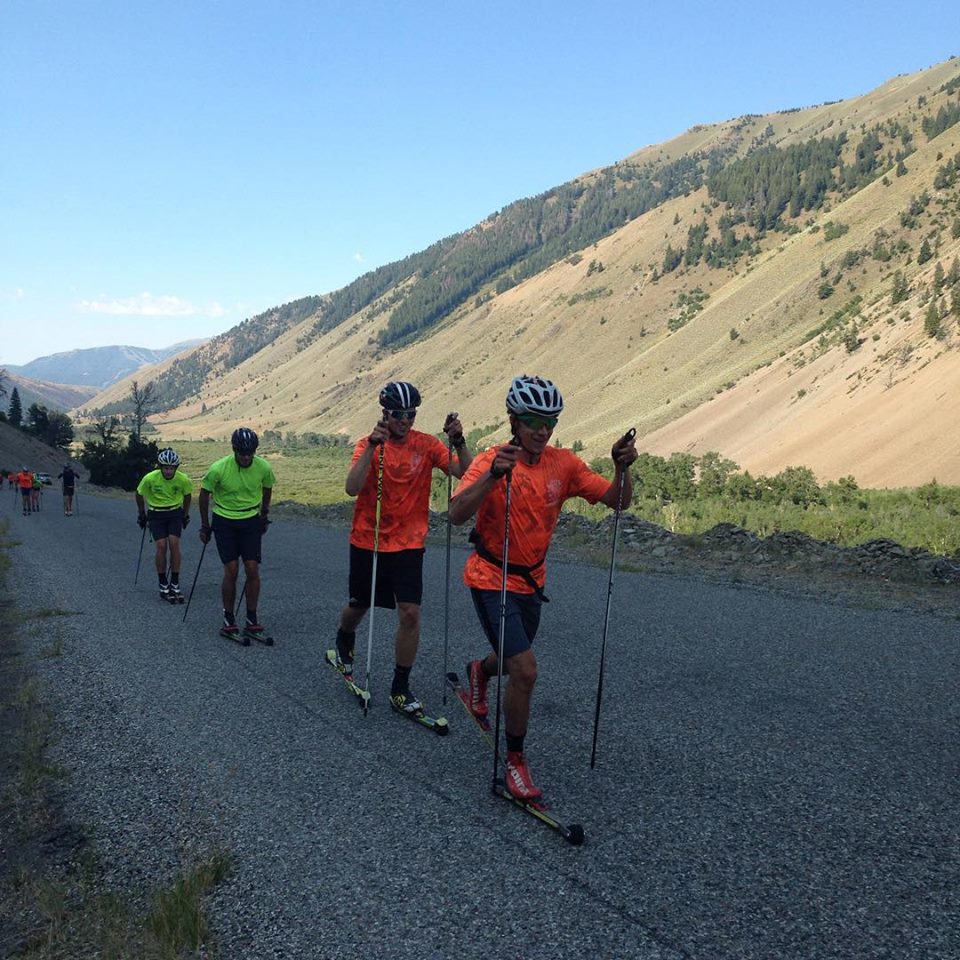
    That appeared to be enough for Havlick’s Hoppet performance, which came at the end of his two-month break from school. He, Bellingham, Watson, and Switzerland’s Valerio Leccardi broke away from the pack by 1o k on the course’s infamous “Paralyzer Climb”. From there, the four exchanged the lead until the final push to the finish.

    “The last kilometer was pretty hectic with finishers from the Joey and Birkie events clogging up the trail which made weaving around other competitors pretty tactical,” Havlick wrote of the busy race day. “Going into the race, I knew I probably wasn’t in as great of shape as the others but if I could just manage to hang on until the end I would have a shot in the final kick. The race organizers and volunteers did an amazing job with this event and I will certainly be back!”

    Havlick outlunged Bellingham by two-tenths of a second for the win in a time of 1:37:24.2 hours. Bellingham claimed second, just one second ahead of Leccardi in third (+1.2).

    Missing the podium by 2.8 seconds was Watson in fourth, four seconds back from Havlick’s winning time. A second American and Havlick’s former teammate, Matt Gelso (SVSEF) finished fifth, 4 minutes and 36.2 seconds after Havlick. Gelso won last year’s Kangaroo Hoppet, and returned this year, arriving in Australia a week prior to the event.

    “My race played out much differently with me getting dropped relatively early but that wasn’t entirely unexpected,” Gelso, 29, wrote in an email. “I of course was going for the win again this year but it was not to be. Mainly I was happy to be out racing and training after a very frustrating and challenging last 2 months.”

    Gelso and his SVSEF teammate Mary Rose spent seven days in Australia before joining their other Gold Team teammates and head coach Chris Mallory in New Zealand.

    “Now I am in New Zealand to put in some good specific volume training and do some more racing,” Gelso wrote. “As for more marathons, I am not totally sure. I will possibly race in the Merino Muster down here at Snow Farm but other than that I have not planned out next race season beyond US Nationals.”
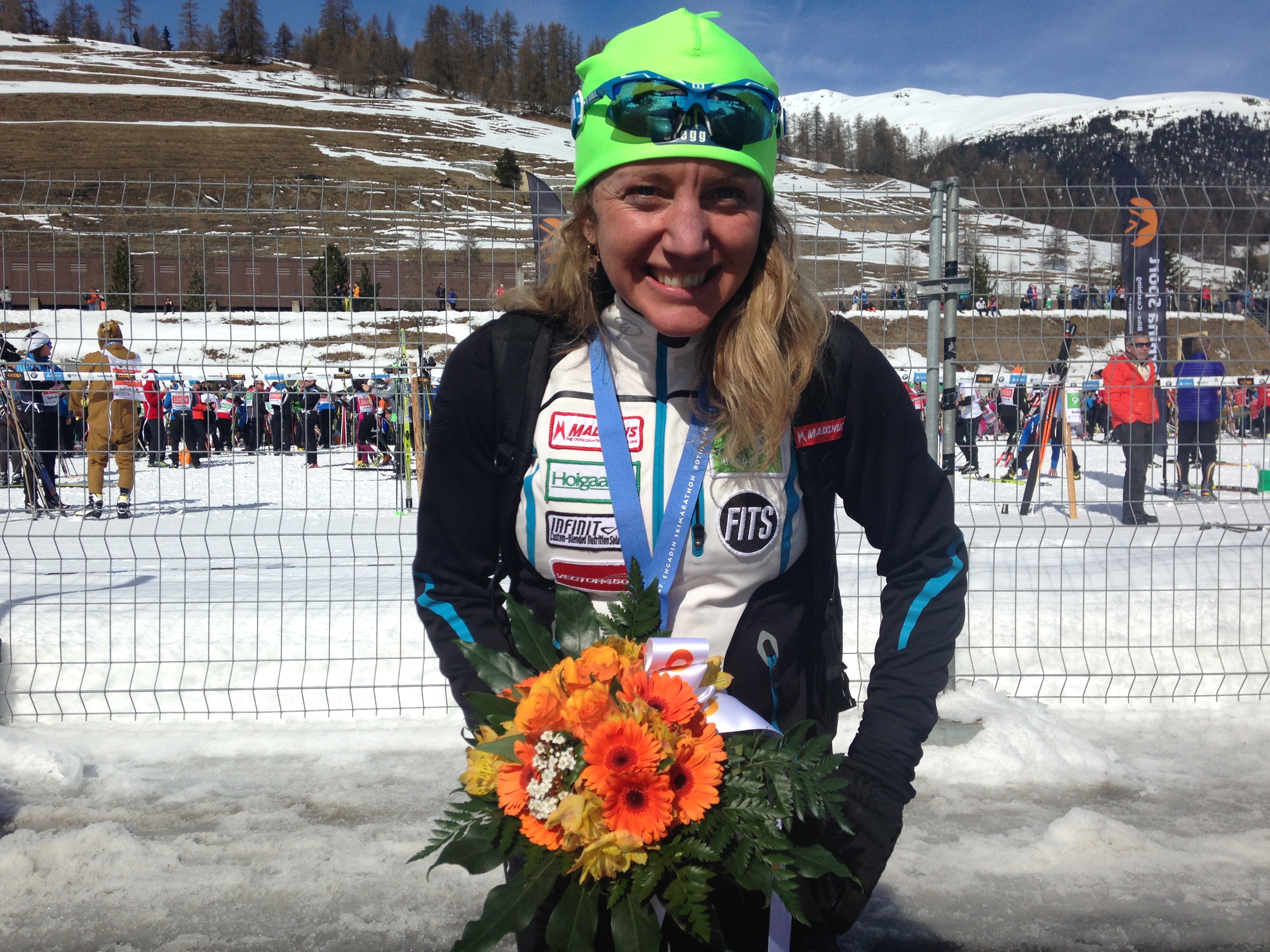
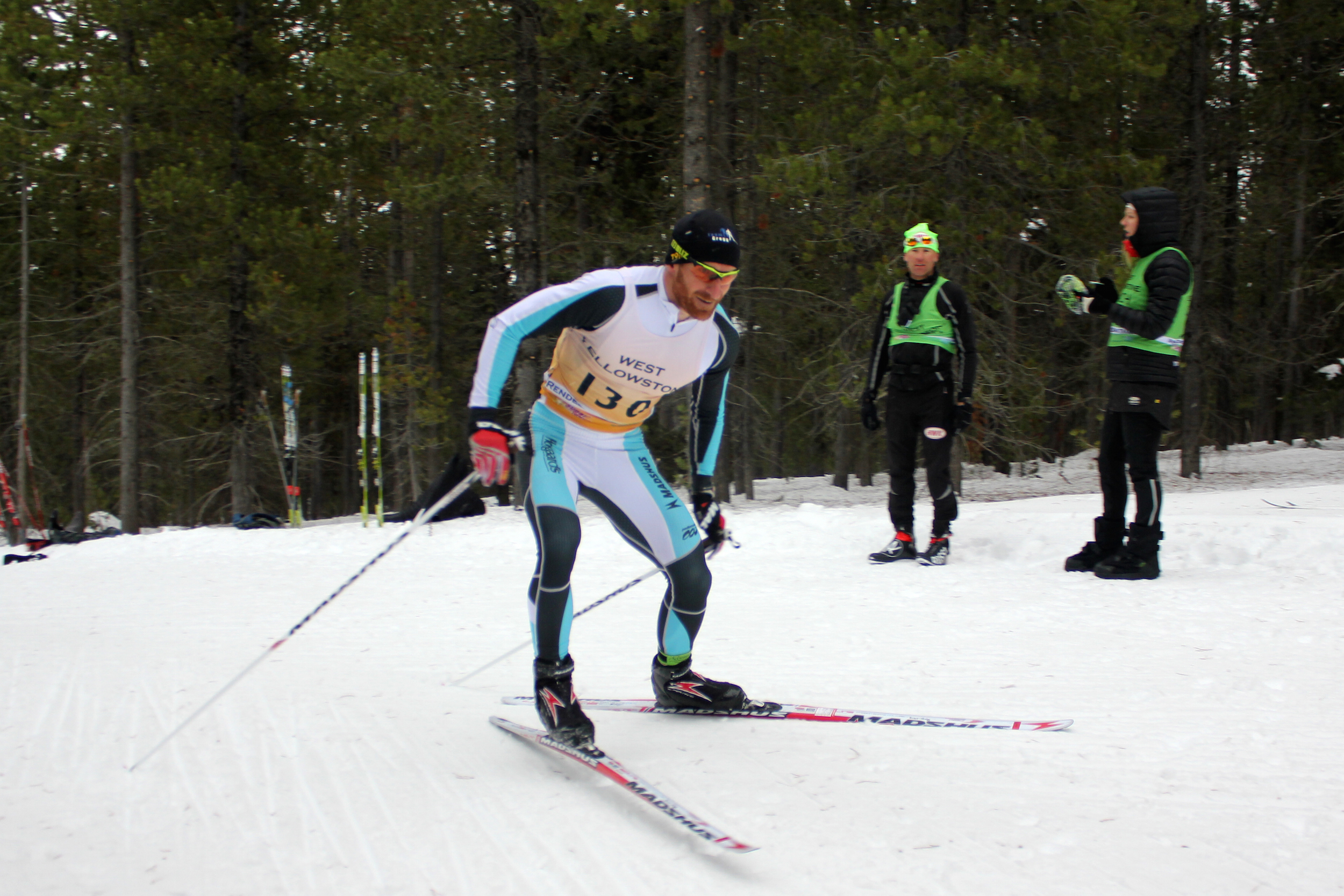
    Also finishing in the men’s top 10 was American Andre Lovett in seventh (+7:56.2). American Jeremy Hecker placed 14th (+13:25.5), Canadian Caelan Pangman McLean was 15th (+13:30.0), American Jeffery Clarke 68th (+44:04.2), Canadian Dayle Gilliatt 109th (+1:03:04.0), American Aris Apostolou 111th (+1:03:30.5), Canadian Robert Palliser 114th (+1:04:38.3), Canadian Pierre Ethier 126th (+1:09:52.0), Canadian John Wragg 153rd (+1:22:44.5), American Charlie Dee 157th (+1:27:51.9), American Jay Wiener 202nd (+2:13:32.4), and American Robert Saalfeld 205th (+2:22:06.4).

    Rose’s Podium Repeat

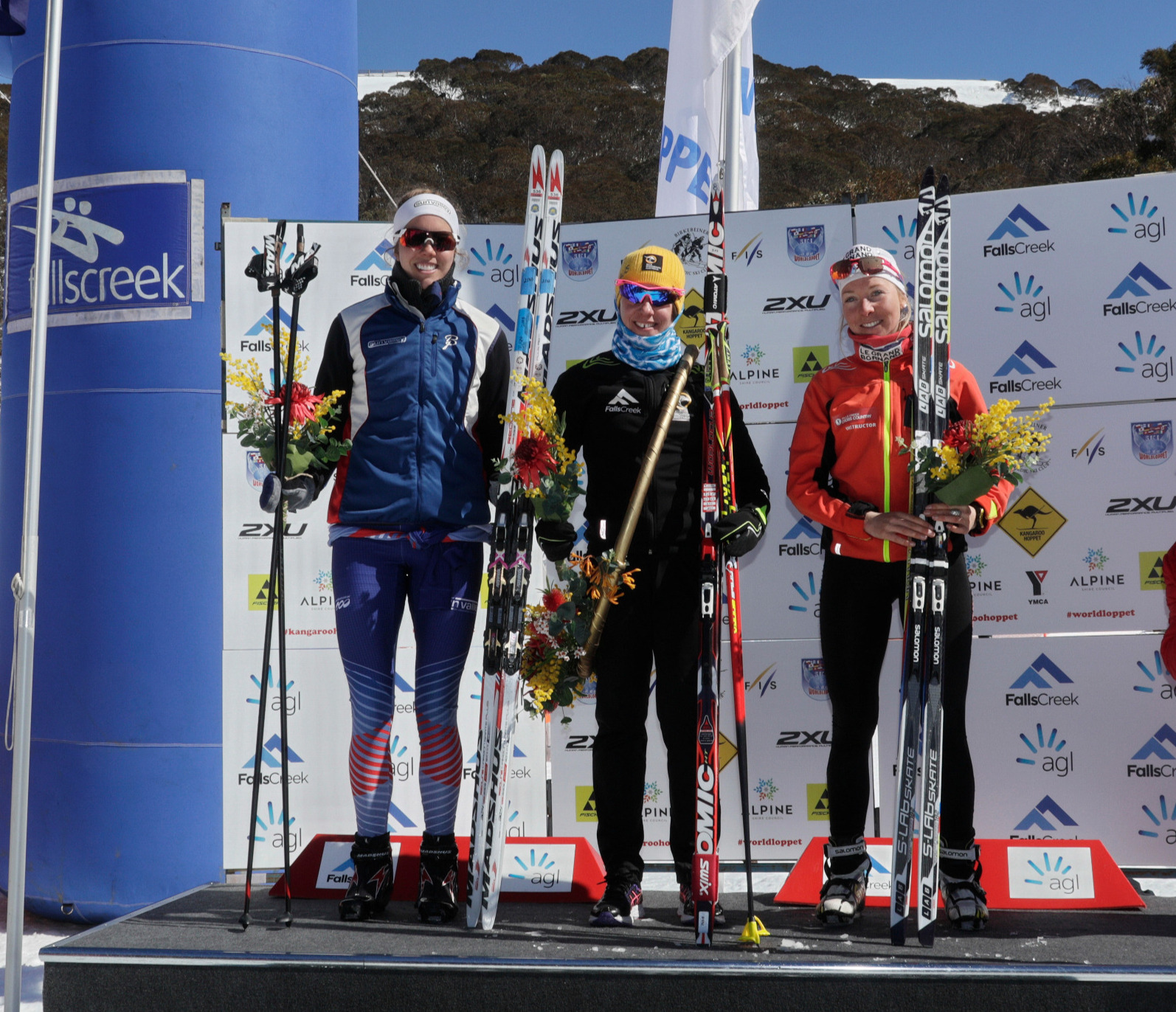
    The women’s 2017 Kangaroo Hoppet podium, with Australia’s Barbara Jezersek (c) in first, American Mary Rose (l) in second, and France’s Iris Pessey in third. (Photo: Hoppet.com.au)

    In the women’s 42 k race, Australian Barbara Jezersek won in a time of 1:46:59.8. Rose placed second, 5 minutes, 42.8 seconds later. It was Rose’s second straight year as the Hoppet runner-up, having been edged by her SVSEF teammate Deedra Irwin last year.

    “I competed in the Hoppet last year and absolutely loved the event!” Rose wrote in an email. “It is exciting to be racing in August and surrounded by over 1,000 cross-country skiing enthusiasts. It is a unique event and one that I plan on attending well after I am done skiing at the elite level.”
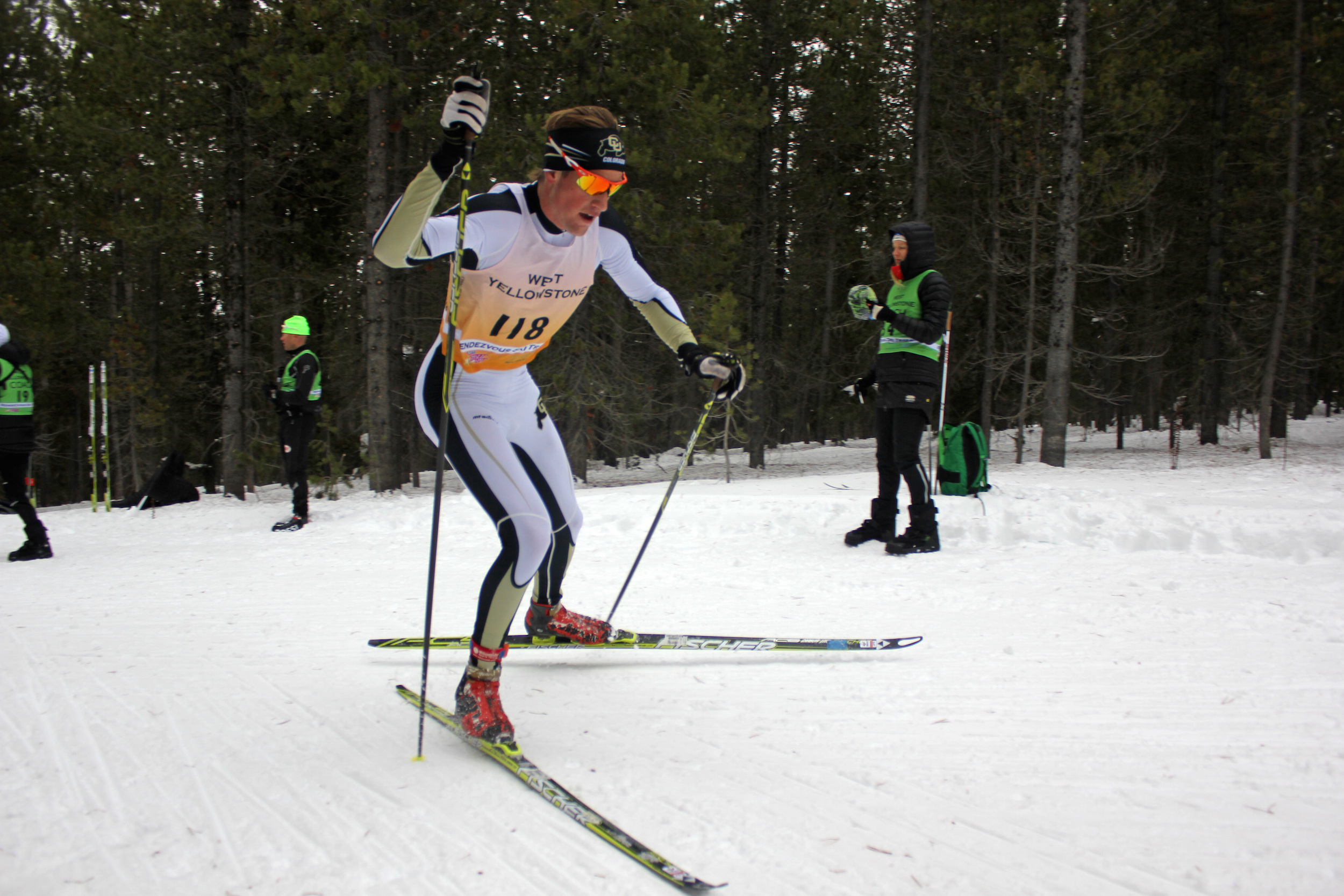
    Rose’s week in Australia was intended to be used as a chance to adjust to the time zone prior to her club team’s on-snow camp in New Zealand and to get a longer race effort in.

    “Like any race, I wanted to win,” Rose wrote of the Hoppet. “I knew that was a lofty goal but one that I thought was achievable.”
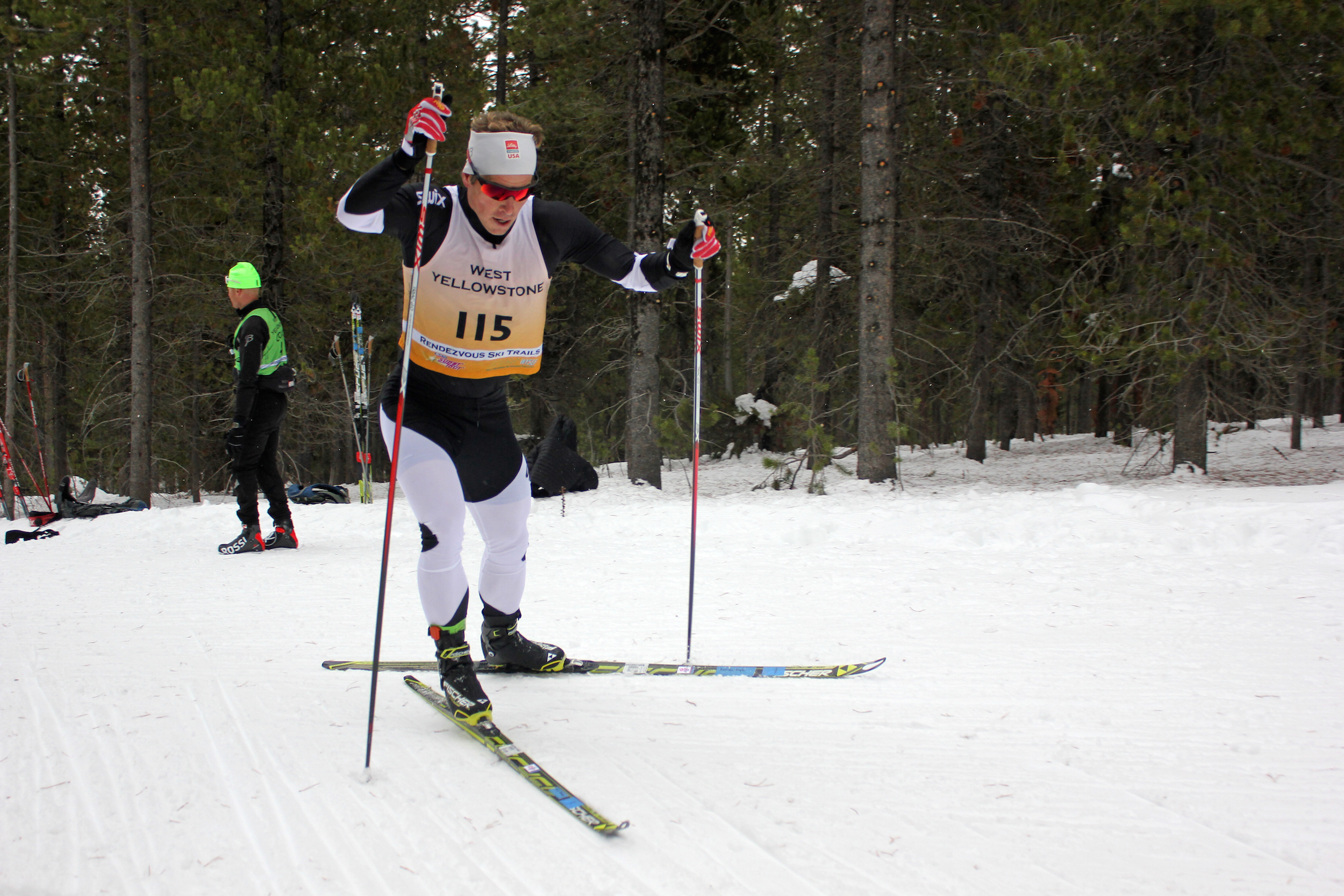
    The pace set by Jezersek, however, held off Rose from the win and gave the 26-year-old Steamboat Springs, Colo., native a second Hoppet place finish for the second year in a row.

    “Barbara Jezersek is a very strong skier and has some notable finishes on the World Cup and at the Olympics,” Rose wrote. “From the start Barbara was skiing very strong and aggressively weaving in and out of all the elite-wave racers. It was difficult to follow her and hold her pace while navigating everyone around us. Once she broke away I skied with 3 other guys until the last 15km and then had to push it in solo. It was an awesome event this year with perfect weather and lots of snow!”

    Following Rose was France’s Iris Pessey in third (+8:40.6). The only other North American senior woman to participate in the event, American Kayla Billett, raced to 16th (+47:34.5).

    Close to 230 men and 62 women raced the 2017 Hoppet, Australia’s international ski marathon and a Worldloppet. Though Havlick, this year’s male winner, indicated that racing is no longer his priority, he does have a few more marathons he’s keeping in mind.

    “At the moment, I hope to compete in the China Tour de Ski during the first week of January which includes the Chinese Vasa and then maybe a marathon or two this spring if it works with my school schedule,” Havlick wrote. “For the most part, my ski racing days are behind me but it was pretty fun to jump into the mix for the Hoppet and come out on top!”

    2017 Kangaroo Hoppet results

  • Hanneman Rides Confidence and Finishing Punch for U.S. Nationals Skate Sprint Title

    Hanneman Rides Confidence and Finishing Punch for U.S. Nationals Skate Sprint Title

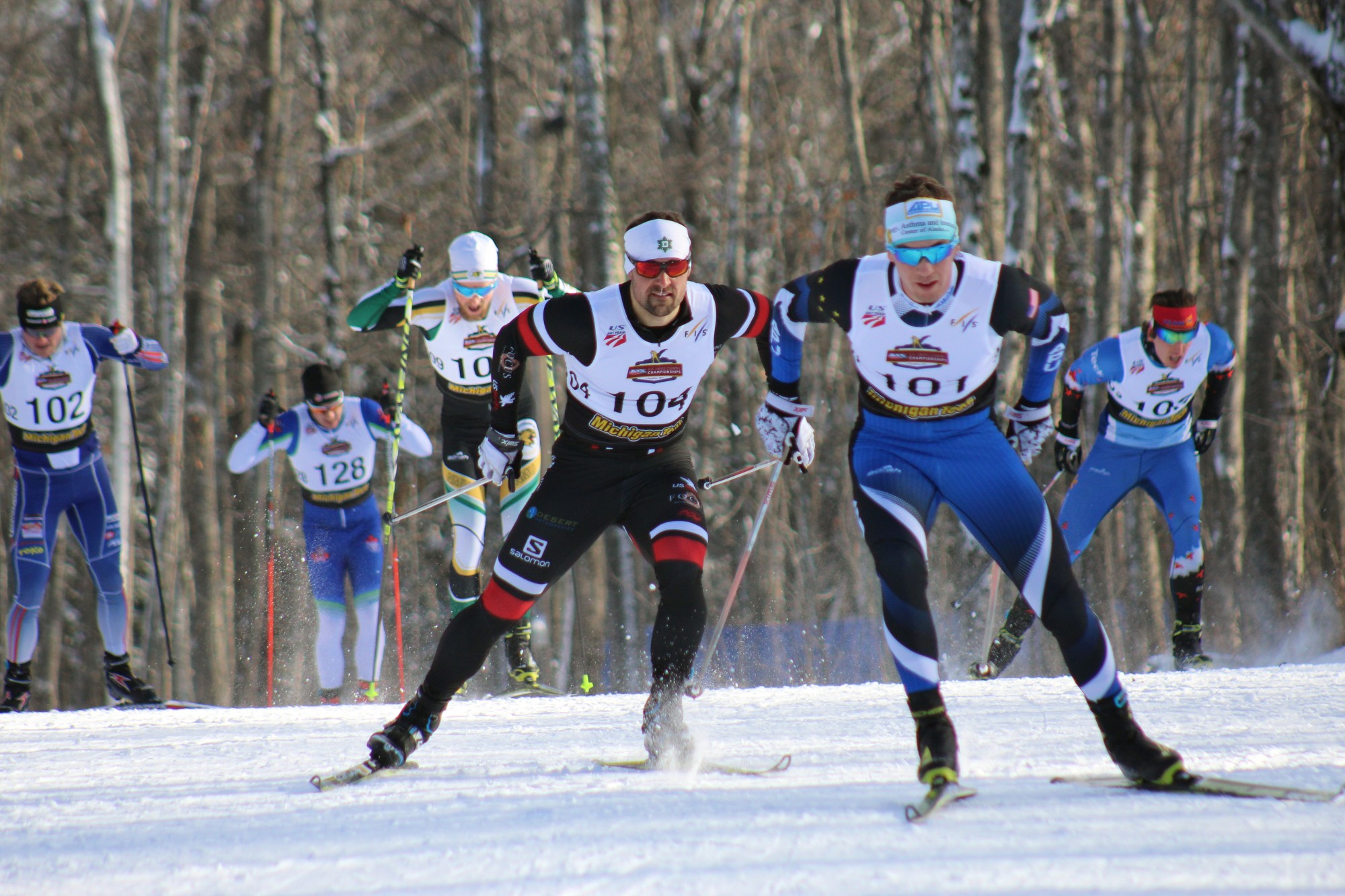
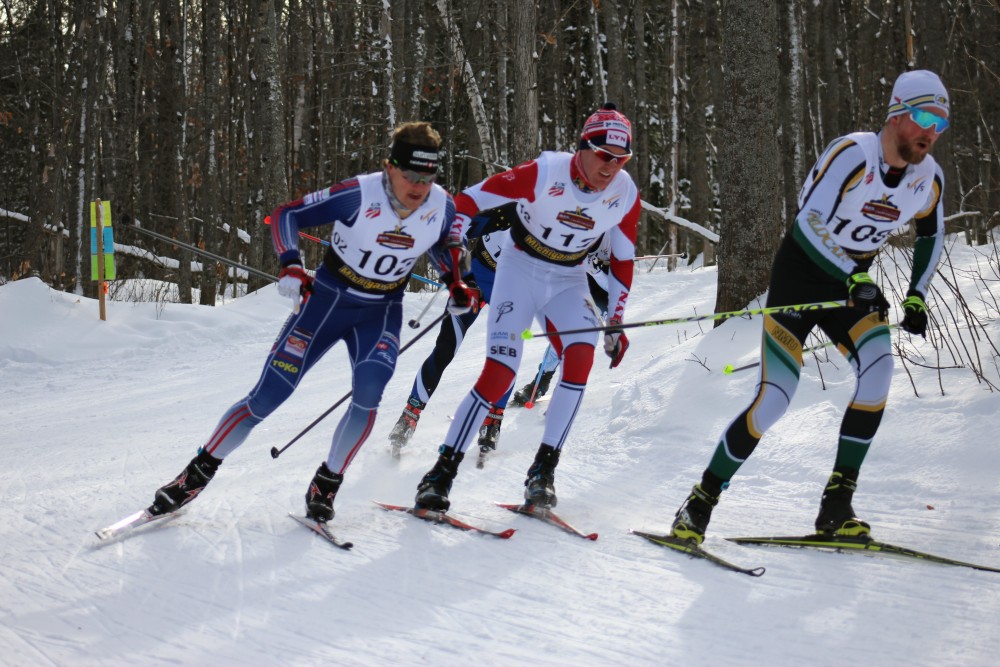
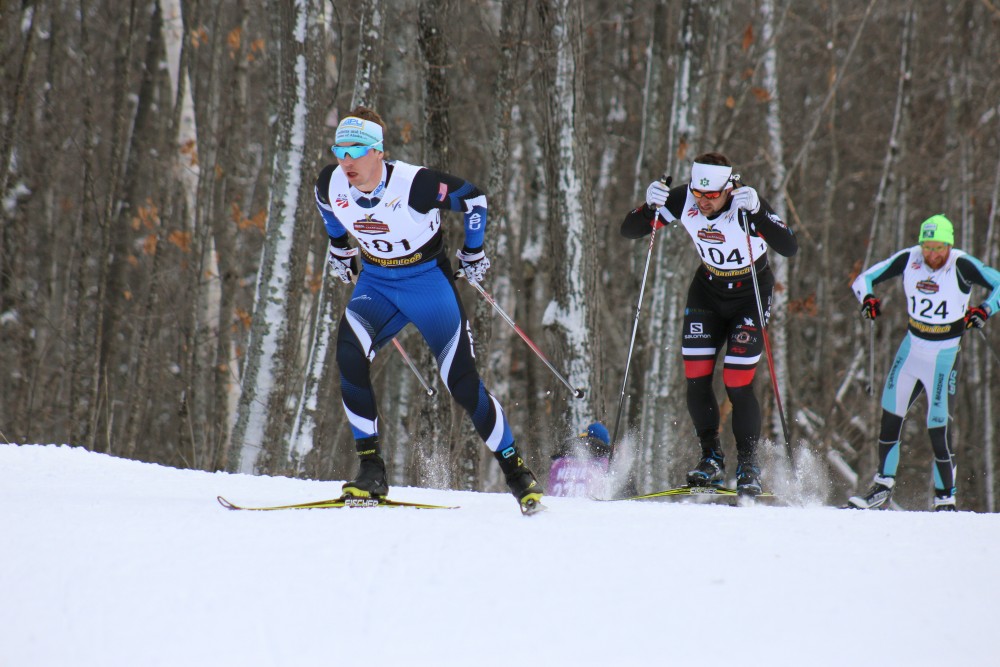
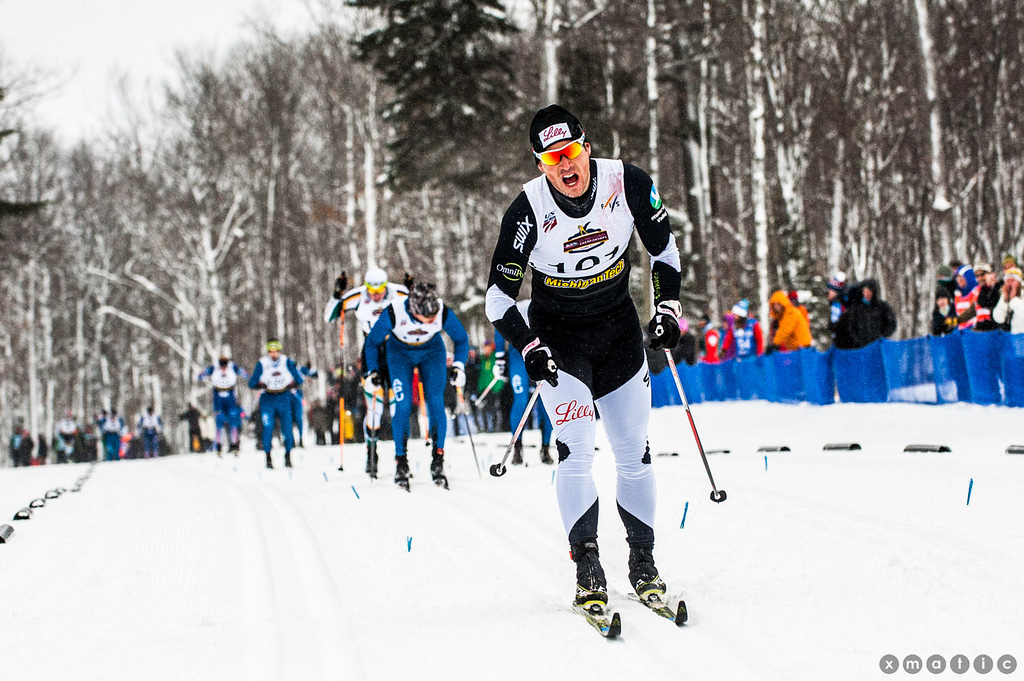
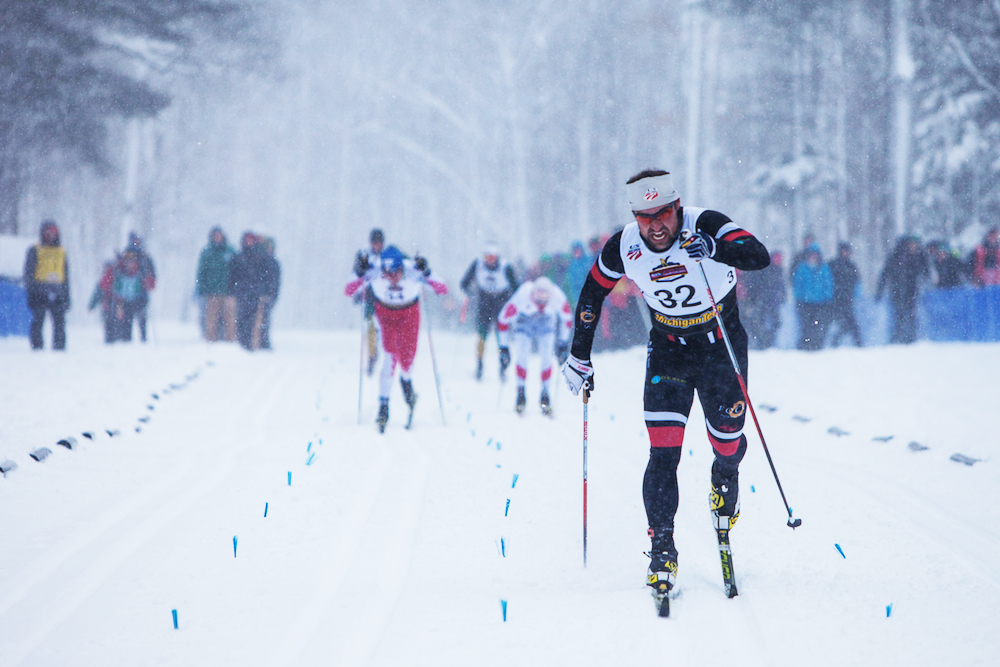
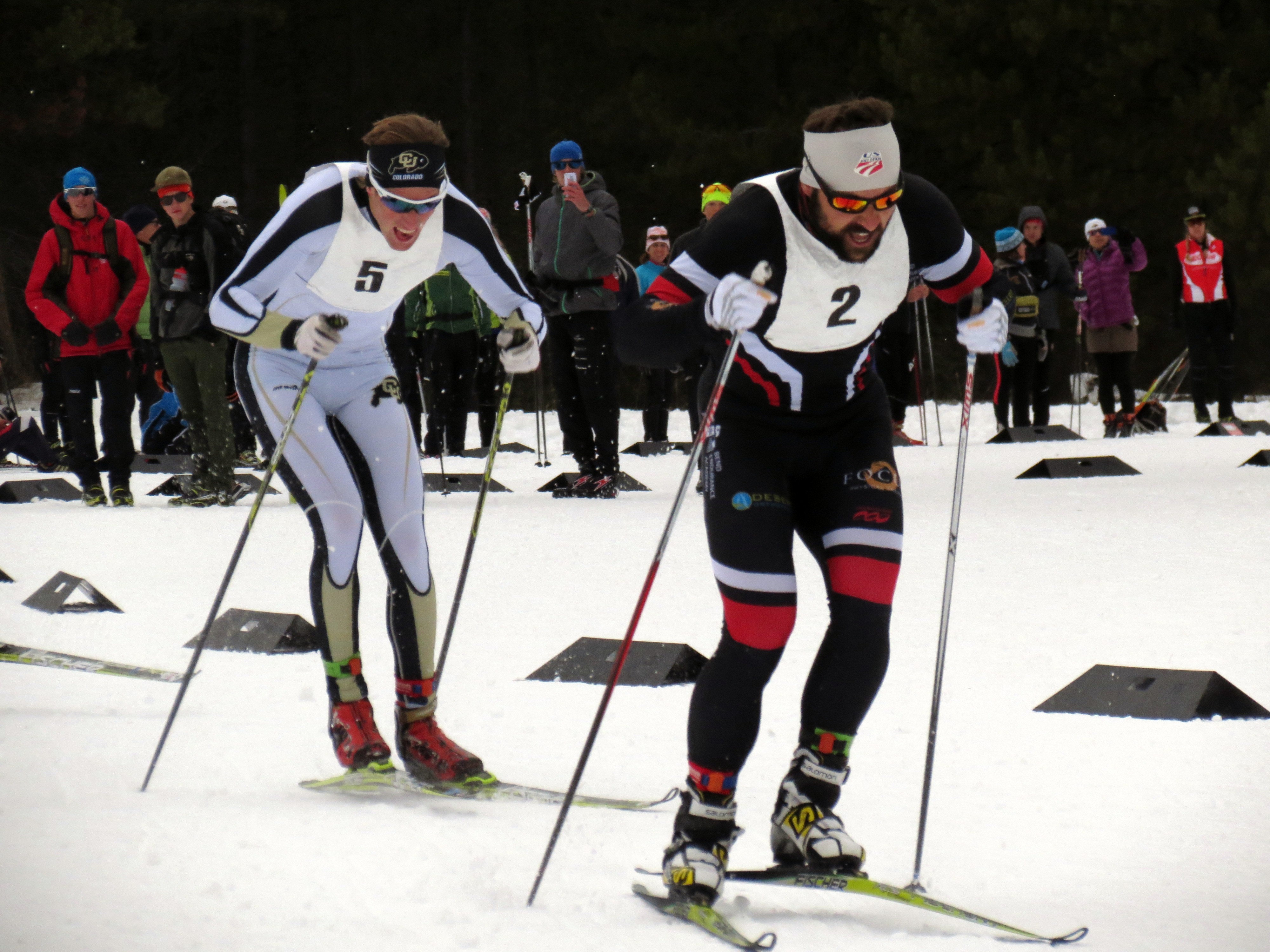
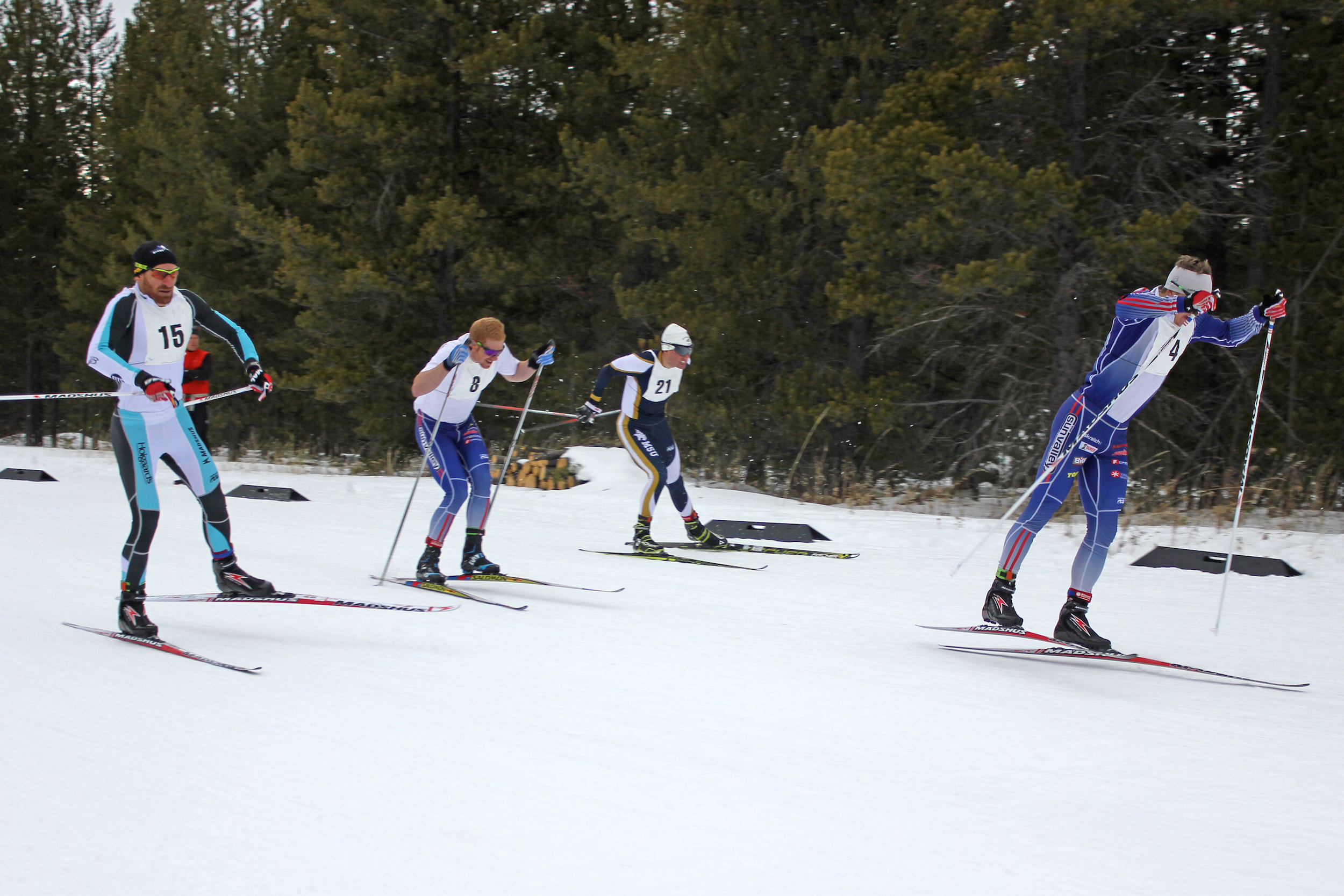
    APU’s Reese Hanneman (Bib No. 101) leads Bend Endurance Academy’s Dakota Blackhorse-von Jess (Bib No. 104) as well as (back: left to right) Miles Havlick (SVSEF),  Evan Palmer-Charrette (NDC Thunder Bay), Fredrick Schwencke (NMU), and Julien Locke (Team Black Jack) during the final of the men’s 1.5 k freestyle sprint on Monday at U.S. nationals in Houghton, Mich.
    APU’s Reese Hanneman (Bib No. 101) leads Bend Endurance Academy’s Dakota Blackhorse-von Jess (Bib No. 104) as well as (back: left to right) Miles Havlick (SVSEF), Evan Palmer-Charrette (NDC Thunder Bay), Fredrick Schwencke (NMU), and Julien Locke (Team Black Jack) during the final of the men’s 1.5 k freestyle sprint on Monday at U.S. nationals in Houghton, Mich.

    HOUGHTON, Mich. — With close to a 500-meter incline to the finish, rounding the same course potentially four times in head-t0-head heats and a qualifier, Monday’s 1.5-kilometer freestyle sprint at U.S. Cross Country Championships proved a test beyond sheer fitness and tact. For overall race winner, Reese Hanneman of Alaska Pacific University (APU), it was combination staying smart, smooth and relaxed.

    “I was just trying to stay relaxed [through the heats],” said Hanneman, a 2014 classic sprint national champion, after notching his second sprint title on Monday. “I know that I’m in great sprint form right now. I have the acceleration, I have the power and I was just trying not to use that unnecessarily early. This finish is very long and very uphill so it takes a big punch in order to make it to the line first.”

    The fastest qualifier in a time of 3:18.07, the 26-year-old Hanneman held his own in first all the way through the men’s final.

    “I could tell all day watching Reese that he was very comfortable,” runner-up and defending skate champion Dakota Blackhorse-von Jess, of the Bend Endurance Academy, said in a post-race phone interview. “He’s skiing really well right now.”

    In his quarterfinal, Hanneman was first out of the start and in the lead as the group headed out onto the 1.5 k course. Rounding the final corner, again it was Hanneman in first, followed by Canada’s Alexis Turgeon (Skinouk/Quebec Ski Team) close to 10 meters behind.

    Hanneman won that heat in 3:18.07, while Michigan Tech’s Didrik Elset, chose the left outside lane to overtake Turgeon, ending up 0.31 seconds behind Hanneman for second in the quarterfinal. 

    Hanneman and Elset met again in the same semifinal, along with Blackhorse-von Jess, Brian Gregg (Team Gregg), Canada’s Michael Somppi (NDC Thunder Bay), and Silas Talbot (Alaska Winter Stars).

    Canadian Julien Locke (l) (Team Black Jack) challenges Eric Packer (APU) at around 400-meters to the finish of the semi-final for the men’s 1.5 k freestyle sprint on Monday at U.S. nationals in Houghton Mich. Locke went on to finish third overall (+2.89). Canadian Evan Palmer-Charrette (Bib No. 128) also advanced to the final and finished sixth overall (+12.93).
    Canadian Julien Locke (l) (Team Black Jack) challenges Eric Packer (APU) at around 400-meters to the finish of the semi-final for the men’s 1.5 k freestyle sprint on Monday at U.S. nationals in Houghton Mich. Locke went on to finish third overall (+2.89). Canadian Evan Palmer-Charrette (Bib No. 128) also advanced to the final and finished sixth overall (+12.93).

    Hanneman and Elset led out of the start gate, with Blackhorse-von Jess and Gregg tucked in close behind them. However, it was Hanneman once more who led the final uphill stretch to the finish, with Blackhorse-von Jess skiing right on his ski tails.

    Gregg managed to close the gap to the front two, and the three lunged for the line with Hanneman finishing first in 3:17.42, 0.21 seconds ahead of Blackhorse-von Jess in second, and 0.33 seconds ahead of Gregg in third.

    As Gregg waited to see if his time would be fast enough for a “lucky loser” spot in the final, the second semifinal, with APU’s Eric Packer and Logan Hanneman, Northern Michigan University’s Fredrik Schwencke, Miles Havlick (Sun Valley Gold Team), and Canadians Julien Locke (Team Black Jack), and Evan Palmer-Charrette (National Development Centre Thunder Bay) stepped up to the line.

    Schwencke and Havlick led from the start with Packer, the two Canadians, and Logan Hanneman (Reese’s younger brother) not far behind.

    Packer cornered into the final stretch in first, but with approximately 150 meters to go, Schwencke made the pass on Packer’s right while Locke moved into the left lane. Palmer-Charrette moved in behind Locke, while Havlick challenged Schwencke on the right.

    In a four-way lunge for the line, Scwencke won the second semifinal win in 3:17.04, while Havlick finished just 0.07 seconds after. The third- and fourth-place efforts by the two Canadians, Locke (+0.14) and Palmer-Charrette (+0.27), proved worthwhile, as they both earned the two available lucky loser spots in the final. 

    Fredrick Schwencke (NMU) leads Miles Havlick (SVSEF) and Haakon Hjelstuen (Lyn Ski) around the final corner before the last 500-meter incline to the finish during their quarterfinal of the men’s 1.5 k freestyle sprint on Monday at U.S. Nationals in Houghton, Mich.
    Fredrick Schwencke (NMU) leads Miles Havlick (SVSEF) and Haakon Hjelstuen (Lyn Ski) around the final corner before the last 500-meter incline to the finish during their quarterfinal of the men’s 1.5 k freestyle sprint on Monday at U.S. Nationals in Houghton, Mich.

    “In both the quarter and semi, I stayed pretty relaxed during the first two thirds of the course and was at the back of the pack,” Palmer-Charrette, 21 said. “After saving my legs off the start, I was able to work my way up after the main climb through the finishing stretch to the front, or close to the front.” 

    The action for Palmer-Charrette and the five other finalists — Hanneman, Blackhorse-von Jess, Locke, Schwencke, and Havlick — continued as they lined up for the men’s final. 

    Hanneman and Havlick took it out from the starting gate, with Havlick moving to the front for the first part of the course.

    “I was leading on the lower part of the course and then I just kind of ran out of steam on the top part,” Havlick recalled. “Obviously these sprint races are some of the toughest days, but I was psyched to be in the final for sure.” 

    After Havlick led the first part of the final, Hanneman made his move during the second large climb on the course.

    “I was in second up the first climb and then there was a little downhill and I tried to work that corner and I was able to slingshot around and get my own lane up the second climb,” Hanneman said.

    From that point on, the past classic-sprint champ and last year’s early season SuperTour leader gained momentum for the finish.

    “The final didn’t really break up until the second main climb, then Reese Hanneman really pushed the pace and opened the field up a bit,” recalled Palmer-Charrette, who placed sixth overall.

    As Hanneman rounded the final corner in first, Blackhorse-von Jess raced into the righthand lane, challenging him for the win.

    “I built a little gap and Dakota was able to get away from the rest of the guys and he bridged up to me,” Hanneman said. “Then we came into the final lanes and I was ahead and he kicked and pulled up next to me and I was able to kick again and put the hammer down in the last 30 meters and get away from him.” 

    Hanneman took the final win in 3:15.14, while Blackhorse-von Jess finished 0.35 seconds behind him.

    “I’m pretty pleased to finish the day on the podium, fighting for the win,” said 29-year-old Blackhorse-von Jess.

    Left to right: Overall winner Reese Hanneman (APU), ahead of Dakota Blackhorse-von Jess (Bend Endurance Academy) and Brian Gregg (Team Gregg/Madshus) during their semi-final of the men’s 1.5 k freestyle sprint on Monday at U.S. Nationals in Houghton, Mich.
    Left to right: Overall winner Reese Hanneman (APU), ahead of Dakota Blackhorse-von Jess (Bend Endurance Academy) and Brian Gregg (Team Gregg/Madshus) during their semi-final of the men’s 1.5 k freestyle sprint on Monday at U.S. Nationals in Houghton, Mich.

    “I don’t think I’ve been in fifth place in a heat in a normal SuperTour or a nationals championship in a long time, and I was in fifth place today at one point and that’s cool,”  added Blackhorse-von Jess, who won both sprints at last year’s nationals. This year, he won the SuperTour classic sprint in Sun Valley, Idaho, in early December.

    “There’s a lot more moving around. There’s a lot more jostling for position. There’s more sprinting going on and it makes racing fun,” he said.

    Finishing 2.89 seconds after Blackhorse-von Jess was Locke in third for his first-ever U.S. nationals podium.

    “Today was fun,” Locke, 22, said. “We have our U23 World Champ trials next week so today was mostly just to see how my shape is and have a good race before that event. I’ll race the sprint on Saturday here and hopefully I can podium again”

    Palmer-Charrette is also looking for a top result at Canada’s U23 World Championship trials Jan. 14-17 at Lappe Nordic in Thunder Bay, Ontario.

    “It was a good day for Evan,” NDC Thunder Bay head coach Timo Puiras wrote in an email. “His shape has been steadily improving all race season and I look forward to seeing how he will race at the World U23 Trials on his home trails in Thunder Bay next week.”

    In his first skate-sprint final, collegiate skier Schwencke raced to fourth overall, 4.27 seconds after Hanneman.

    “I’ve never in my whole career of skiing qualified for a skate sprint so it was pretty fun to be in the final,” Schwencke said.

    “After the qualifier and the quarterfinal, everything was just a bonus,” the 23-year-old Norwegian added. “It was an amazing day.”

    Havlick finished fifth (+6.29) and Palmer-Charrette took sixth (+12.93).

    While it’s no secret that Hanneman will leave this race as the name to beat, he remains elusive about the pre-race sound beats that helped him come into his own.

    “It wasn’t Justin Bieber, we’ll just say that,” said Hanneman with a smile. 

  • Movember in West: Skiers Share ‘Stache Stories and Race Goals

    Movember in West: Skiers Share ‘Stache Stories and Race Goals

    WEST YELLOWSTONE, Mont.– While the Yellowstone Ski Festival crew is plenty busy grooming the trails with the fresh snow fall Wednesday, many skiers are also busy grooming their upper lip. In the spirit of no-shave “Movember,” FasterSkier decided to rank the top mustaches found out on the trails. Ranking decisions were made based off the official rules according to the Movember Foundation, as well as an individual’s responses, and overall look. 

    The photo gallery shows our picks for the Top 10 Movember Men. This is followed by the Top Five Movember Women*, abbreviated because of the number of women who participated*. The gallery is rounded out with the top-three Bearded Honorable Mentions.

    *Cutout mustaches provided by FasterSkier.

    Along with getting the history behind the facial hair, FS asked athletes about their race goals for the weekend and beyond:

    Annie Pokorny (SMST2): “Be one of the top girls going into the season.”

    Sloan Storey (University of Utah):Just getting back into it, waking my body up, and having fun.”

    Liz Guiney (CGRP):Get the first races out of the way and have fun.”

    Miles Havlick (SVSEF):Should be a good weekend to get into the racing routine.”

    Chris Parr (Unaffiliated):To try and not to shave … I’m hoping I can hold off, it’s tempting.”

    Joe Dubay (Unaffiliated): “I’m going to try not to let the icicles on my beard get too out of control.”

    Nicholas Michaud (BSF):Have the best mustache in the A-final on Friday.”

    Eric Packer (APU):First race of the year you’re always trying to put down a good effort and practice all of the things you worked on over the summer. My biggest goal is to go out there and ski really well.”

    Akeo Maifeld-Carucci (BSF):Make sure my mustache is looking real good at the finish.”

    Reese Hanneman (APU):I’m focusing on the sprint and hoping for an elite podium.”

  • Wednesday Workout: Steady State Intervals and Speed Shifts with SVSEF PG Coach Tom Smith

    Wednesday Workout: Steady State Intervals and Speed Shifts with SVSEF PG Coach Tom Smith

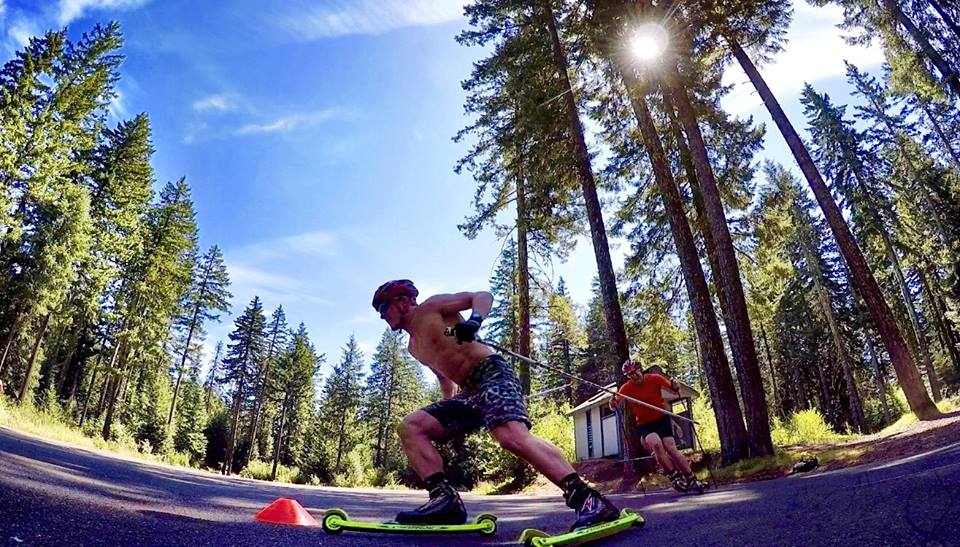
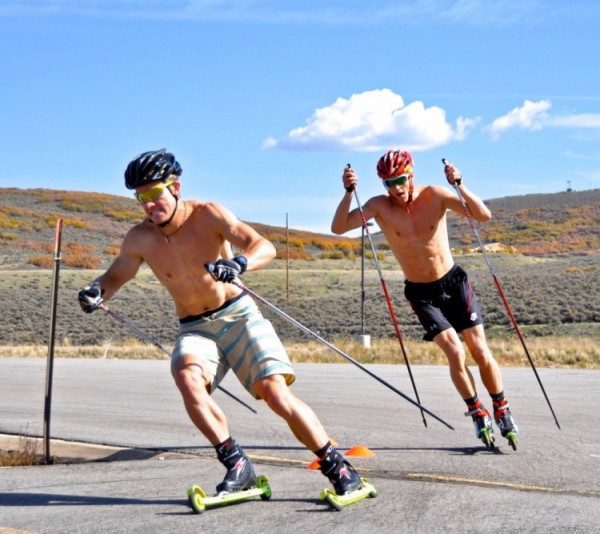
    SVSEF Gold Team member Miles Havlick rounds a cone during an interval. (Photo: Tom Smith)
    SVSEF Gold Team member Miles Havlick rounds a cone during an interval. (Photo: Tom Smith)

    For this week’s Wednesday Workout, FasterSkier spoke with Tom Smith, the head coach of the post-graduate elite development program for the Sun Valley Ski Education Foundation (SVSEF). On top of coaching full-year post graduates (PGs) in Sun Valley, Idaho, Smith works with college athletes who come there to train during the summer. Smith is originally from Bend, Ore., and skied for the University of Utah before heading to Sun Valley a few years ago.

    The workout Smith presented is a highly customizable steady state threshold workout with accelerations he likes to call “speed shifts.” Speed shifts are similar to pickups in that the speed and effort increase for a short period of time. However, for speed shifts, the change is minor compared to pickups, where speed and effect usually change drastically, going from low effort to race pace or even max effort.

    “I like to think of it as not an all-out sprint in the middle of L3 [Level 3] intensity, but like a shift in your tempo or power and that you’re testing your competitors and testing your own limits of your lactate threshold,” Smith explained.

    As a quick reminder, threshold effort or Level 3 is the pace at which lactic acid is being cleared from muscles at the same rate it is being produced. The general feeling at this effort is fast but in control and at a pace that can be maintained for an hour or two.

    Head PG Coach Tom Smith with a bunch of SVSEF athletes in the background. (photo: Tom Smith)
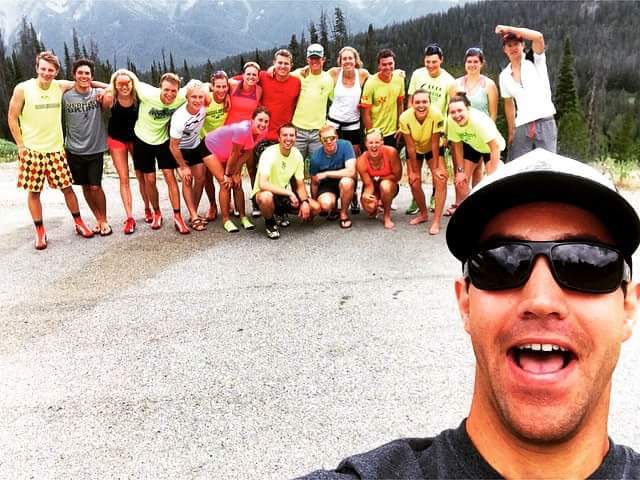
    SVSEF post-grad head coach Tom Smith takes a selfie with several SVSEF athletes in the background. (Photo: Tom Smith)

    This steady state workout entails going at a consistent threshold effort for 30 to 45 minutes while doing 20-second speed shifts every three to five minutes to push the effort into the upper limits of L3.

    Smith leads this workout on rollerskis, though it can be done in any discipline. It’s also very customizable. Depending on the time of year, the focus can be on ensuring that the threshold effort is not exceeded or intentionally going beyond L3 during the speed shifts to work on recovering from an anaerobic effort while continuing to ski at threshold. The total interval time and frequency of the speed shifts can also be changed to make the entire workout easier or harder, depending on what the participant is looking for.

    A large component of the workout also comes from the day before. Smith plans a technique-focused, low-effort workout in the same discipline that the continuous threshold workout is going to be in. So if Smith’s athletes will be skating during the continuous threshold workout, they go for an easy skate distance workout the day before while Smith takes a bunch of video. Then they all review the video and each pick out one specific aspect of their technique to work on and come up with a concrete way they can improve it. That night or even the following morning, Smith’s athletes again look at the video to review their technique and really understand what they need to be doing to improve during the threshold workout. This allows the athletes to work on their technique during the interval while simultaneously focusing on a quality effort.

    “By accomplishing [technique work] in the session beforehand, the athlete already has that goal in mind of what they want to work on and they know how they are going to actually go about improving it,” Smith said. “You don’t really have to harp on it too much within the intensity session itself as a coach.”

    SVSEF Gold Team member Rogan Brown leads Bates College skier Corky Harrer on a classic ski. (photo: Tom Smith)
    SVSEF Gold Team member Rogan Brown leads Bates College skier Corky Harrer on a classic ski. (Photo: Tom Smith)

    This also gives Smith the opportunity to focus on his athlete’s efforts during the L3 interval. The SVSEF post grads do this workout on a fixed loop, setting up speed shifts on various terrain so they feel what it is like to push the effort during different techniques and at different speeds. It also helps them feel how easy or hard it is to recover from different efforts on the various terrain.

    Smith then goes to a location about a minute after a speed shift to test the athletes’ lactate levels. What he hopes to see is their lactate levels around 4 millimoles, which means they are going at a threshold effort and have effectively pushed to the limits of L3 and recovered.

    If possible, Smith also wants his athletes to ski in a pack. This gives them an opportunity to practice some mass-start tactics and see how effective an added effort is or is not on various terrain.

    “We can put one speed shift on a V2 focused slight up grade, we can put one on a V1 section, we can put one on maybe a tuck-skate downhill section, so it gives you a few different things to think about [and shows], especially in a mass start simulated environment, that there are different opportunities and different places around a course to put in a little bit of an attack,” Smith explained.

    Ultimately, he hopes his athletes come away from this workout with technique improvements and a better understanding of and feeling for their L3 zone.

    “I think it’s a really good session for the older guys, especially as they transition from older juniors into seniors to really understand where their limits are within their lactate threshold zone and how hard they can really push it before they actually blow themselves up,” he said.

    The Workout

    The day before:

    – On the day before the steady state interval workout, work on technique and find one specific area to focus on for the next day. Having video is really helpful for picking out a major technique area that can be improved!

    The day of:

    – Warm up for 20 to 30 minutes to prepare the body for a threshold effort.

    – Begin the continuous threshold interval. Keep in mind the effort continues for 30 to 45 minutes, so it is best to start at the lower end of L3.

    – Every three to five minutes, do a 20 second speed shift. Try and focus specifically on adding a little extra power or slightly increasing tempo. This helps to ensure the effort does not go beyond the L3 limit. Also try and change up the terrain where the speed shifts happen to get plenty of variety in the workout.

    – Remember after each speed shift, the effort should remain in L3 and it should drop to the lower end of L3 before the next speed shift brings the effort back up.

    – After finishing the steady state interval, warm down for 15 to 30 minutes to wrap up the workout.

  • Gregg Skates to Third, Brooks Fifth in Switzerland’s Engadin (with Videos)

    Gregg Skates to Third, Brooks Fifth in Switzerland’s Engadin (with Videos)

    American Caitlin Gregg (Team Gregg/Madshus) placed third at the 2015 Engadin Skimarathon on Sunday. (Photo: Inge Scheve)
    American Caitlin Gregg (Team Gregg/Madshus) placed third at the 2015 Engadin on Sunday, a 42 k freestyle marathon from Maloja to S-chanf, Switzerland. (Photo: Inge Scheve)

    S-CHANF, Switzerland — Coming off a bronze medal at Nordic World Championships, American Caitlin Gregg (Team Gregg/Madshus) finished third in Sunday’s Engadin Skimarathon 42-kilometer freestyle from Maloja to S-chanf, Switzerland, just 7.6 seconds out from the win, which France’s Anouk Faivre Picon seized in 1:39:35.3.

    Russia’s Ilia Chernousov won the men’s race by one-tenth of a second over France’s Robin Duvillard in 1:34:50.

    Picon won the sprint finish, 0.8 seconds ahead last year’s Engadin champion Riita-Liisa Roponen of Finland. Gregg placed third and France’s Aurelie Dabudyk was 1:41.7 back in fourth. Two-time U.S. Olympian Holly Brooks (Team Santander) finished fifth (+1:53.3).

    “My skis were awesome,” Gregg told FasterSkier after the race. “I felt so good in the race, and I’m so ready for the World Cups in Oslo next week.”

    Gregg, who finished the Engadin Skimarathon for the first time, was surprised about the level of competition.

    “The race was super aggressive from the start. The men come in on you all over, and it makes the whole thing really crazy,” she said, adding that it was difficult to keep track of where her opponents stood.

    “I got to the hills by St Moritz, and I saw an opening, so I made a jump there and just kept hammering to get by as many guys as I could,” she explained.

    Ropenen got a gap on Gregg, who also didn’t notice that Picon had passed her.

    “The girls got cut off all the time, and during the sprint to the finish, about fifty guys swarmed around us,” Gregg said.

    Caitlin Gregg (third from l) on the podium in third at the 2015 Engadin 42 k freestyle marathon in S-chanf, Switzerland. Two Americans made the flower ceremony, with Holly Brooks in fifth (second from right). France's Anouk Faivre Picon won the women's race, and Finland's Riita-Liisa Roponen was third. (Photo: Fast Big Dog)
    Caitlin Gregg (third from l) on the podium in third at the 2015 Engadin 42 k freestyle marathon in S-chanf, Switzerland. Two Americans made the flower ceremony, with Holly Brooks in fifth (second from right). France’s Anouk Faivre Picon won the women’s race, and Finland’s Riita-Liisa Roponen was third. (Photo: Fast Big Dog)

    “It’s brutal out there for the women,” Brooks said, adding that she hopes the organizers will consider establishing a separate women’s wave to make the competition more fair.

    The remains of the brutal battles were evident to the waves following the elite: the race course was littered with broken poles, baskets and equipment debris from start to finish.

    The pile grew throughout the morning as more marathon racers descended on the track. In total, more than 13,300 skiers participated in the 47th Engadin Skimarathon, making the Swiss race the third-largest Engadin event on record.

    Chernousov, who now lives near the Engadin finish in S-chanf with his wife Selina Gasparin of the Swiss biathlon team, secured a home victory in the men’s race. He won the photo finish over Duvillard by 0.1 seconds, while Switzerland’s Roman Furger was third 0.9 seconds back. Another Swiss skier Jason Rueesch, was just 0.2 seconds off the podium in fourth.

    Brian Gregg (Team Gregg/Madshus) was the top American man in 24th, 26 seconds behind the winner. David Norris of Alaska Pacific University (APU) placed 32nd (+40.2), Sun Valley’s Miles Havlick was 35th (+51.5) and APU’s Tyler Kornfield finished 61st (+6:21.2).

    In the women’s race, Canada’s Karen Messenger placed 29th (+24:34.2).

    The battle of the FIS Marathon Cup

    With fifth place in the Engadin Skimarathon, Brooks is back in the FIS Marathon Cup leader bib with one race remaining.

    “I accomplished one goal today, and that was to take back the red bib, but I’m not so happy with my race,” Brooks said. “I’m not in top shape, and I definitely feel that I haven’t raced much at altitude. Once we hit the hills at St Moritz, it was so hard to follow.”

    With fifth place in the Engadin, Brooks has 455 points in the overall FIS Marathon Cup and is now just 4 points ahead of Tatiana Mannima of Estonia with only one race to go in the race series. Mannima placed 11th on Sunday, 6:15.4 behind the winner. She is 47 points ahead of Dabudyk, who’s currently third overall. The final event is the 50 k freestyle Ugra Marathon on April 11 in Khanty-Mansiysk, Russia.

    “It all comes down to that race in Russia now, and it’s over a month until we race,” Brooks said, adding that she was next headed to Norway for the Norwegian Birkebeiner and potentially some other races to stay focused until the Ugra.

    Petr Novak, who was 29th on Sunday, is still leading the overall 2015 FIS Marathon Cup. With 404 points for the season, Novak has a comfortable gap on Benoit Cahuvet of France in second place with 347 points and Sergio Bonaldi of Italy in third place with 229 points.

    Results: Women | Men

  • Freeman Strikes Late in Men’s 30 k Mass Start, Holds On for National Title

    Freeman Strikes Late in Men’s 30 k Mass Start, Holds On for National Title

    Kris Freeman (Freebird) clinches his 17th national title in the men's 30 k classic mass start, ahead of APU's Lex Treinen (left, behind), NMU's Kyle Bratrud (behind Treinen) and APU's Eric Packer (behind Freeman at right), at U.S. Cross Country Championships on Thursday in Houghton, Mich. (Photo: Christopher Schmidt)
    Kris Freeman (Freebird) clinches his 17th national title in the men’s 30 k classic mass start on Thursday, ahead of APU’s Lex Treinen (left, behind), NMU’s Kyle Bratrud (behind Treinen) and APU’s Eric Packer (directly behind Freeman at right), at U.S. Cross Country Championships in Houghton, Mich. (Photo: Christopher Schmidt)

    HOUGHTON, Mich. — With 11 men together at the start of the last 10-kilometer lap in Thursday’s 30 k classic mass start at U.S. Cross Country Championships, Kris Freeman knew he had to make something happen.

    If he continued to ski in the pack and wait to see how the places shook out in the 100-meter finishing straight, the second-ranked U.S. distance skier (after U.S. Ski Team member Noah Hoffman) didn’t like his chances in a last-ditch sprint.

    “I knew that somewhere in the last five k I had to go, and I had to go hard,” said Freeman, 34, who skis independently as Freebird, after the third of four national races at the Michigan Tech Trails.

    The men directly around him with eight kilometers to go — including two Sun Valley Ski Education Foundation (SVSEF) Gold Team members (Matt Gelso and Miles Havlick), three Alaska Pacific University (APU) skiers (Lex Treinen, Scott Patterson and Eric Packer) and three Northern Michigan University (NMU) athletes (Fredrik Schwencke, Kyle Bratrud and Adam Martin), as well as Dartmouth’s Paddy Caldwell (also of the Stratton Mountain School T2 Team and U.S. Ski Team D-team) — generally anticipated Freeman’s move as well.

    But all of them realized that leading was significantly harder in the cold-and-slow conditions with temperatures around 3 degrees throughout the day. Freeman tried it out, pushing the pace a couple times early in the first lap “just to experiment and see if I could hurt the field,” he said. “I just couldn’t.”

    Kris Freeman (near) and Dartmouth's Paddy Caldwell (l) skiing near the front of the pack around 2 k into the men's 30 k classic mass start on Thursday at U.S. nationals in Houghton, Mich.
    Kris Freeman (near), Dartmouth’s Paddy Caldwell (l), and NMU’s Fredrik Schwencke (behind Freeman) near the front of the pack around 2 k into the men’s 30 k classic mass start on Thursday at U.S. nationals in Houghton, Mich.

    The four-time Olympian decided to hang back and attack somewhere on the second half of the last lap.

    “I think I went with two-and-a-half k to go,” Freeman said. “And I knew I had a really good attack for two k, then my last 500 meters was pathetic.”

    But it was enough for the win. On the second-to-last climb, Freeman successfully gapped Gelso, Patterson and the four others in the chase pack (Norris, Treinen, Packer and APU’s fifth man Reese Hanneman, respectively), and he frequently checked over his shoulder to make sure they weren’t reining him in.

    “I had to double pole one long downhill that’s usually recovery so that they wouldn’t get back on me,” Freeman said of the final descent before the last climb toward the finish.

    Treinen took advantage of an unfortunate misstep and crash from his teammate, Patterson, who  had been skiing with Gelso in second with a kilometer to go.

    “I was kind of moving tracks and stumbled a little bit,” Patterson said of the final downhill. “I was wobbly out on one ski, trying to correct, but it just wasn’t enough — spun around, totally my fault, didn’t hit anyone else, they all moved around me, and it was a quick little fall, but still not something you want right at the end.”

    Four of his teammates — Treinen, Norris, Packer and Hanneman — navigated around him, as did Bratrud. Gelso stayed out of trouble but lost steam up the final ascent.

    Kris Freeman pushing hard for first with 200 meters to go in the men's 30 k classic mass start at U.S. nationals in Houghton, Mich.
    Kris Freeman pushing hard for first with 200 meters to go in the men’s 30 k classic mass start at U.S. nationals in Houghton, Mich.

    While Freeman forged ahead up the gradual hill, again looking back to see who was closest to him, his pain emitted through his facial expressions as he strode toward the finish.

    Behind him, Treinen, on his 25th birthday, worked his way from fourth to third behind Bratrud and ahead of Gelso and Norris.

    “Kyle Bratrud came up from behind and he looked like he was charging pretty hard so I tried to stay behind him for as long as I could, and on the last uphill, just gave it everything,” Treinen said. “I tried to break him — it just barely worked.”

    Treinen edged the 21-year-old NMU senior, who won Sunday’s 15 k freestyle to start nationals, by 0.4 seconds to claim second for his first national podium. He finished 3.7 seconds behind Freeman, who won his 17th national title in 1:31:14.8.

    “They were yo-yoing [behind me] and I was totally loaded coming up into the finish,” Freeman recalled. “If someone had sprinted by me, there would’ve been no response. There was nothing I could do.”

    APU's Lex Treinen (111) celebrates his second-place finish and first national podium after the 30 k classic mass start at U.S. nationals in Houghton, Mich. (Photo: Christopher Schmidt)
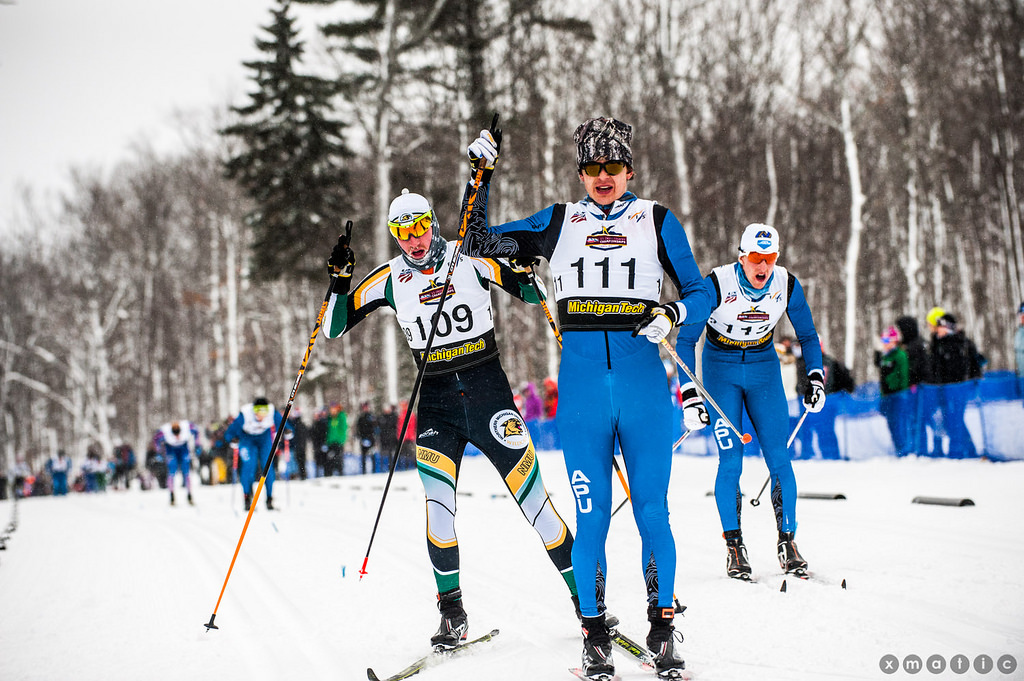
    APU’s Lex Treinen (111) celebrates his second-place finish and first national podium after the 30 k classic mass start at U.S. nationals in Houghton, Mich. NMU’s Kyle Bratrud (109) placed third, and APU’s Eric Packer (r) secured fourth. (Photo: Christopher Schmidt)

    “Lex and I were gaining on [Freeman] at the end so who knows how it would’ve played out if there was another k to go,” Bratrud recalled.“I found myself leading a decent amount and then when Kris took off and kind of split the field up, I was able to at least pick up most of the pieces.”

    On Sunday, Freeman placed second to Bratrud in the individual skate race.

    “Even though the skate race didn’t go quite like I wanted, the sensations I had were great,” he reflected. “Today except for the last 500 meters, I felt like I was in total control and I just feel totally different then I did last year. This should absolutely cement my place on the World Championship team and that’s been my goal all year.

    “SuperTour points are nice, but I want to go prove I’m one of the best in the world at World Champs,” Freeman added.

    The U.S. World Championships team will be tentatively announced on Jan. 26, according to the team-selection criteria. The first criteria is based on World Cup results in the selection period (from Nov. 29, 2014 to Jan. 18, 2015); the second is coaches’ discretion, and the third, should it come down to it, is based on the best-ranked athletes in the 4th edition of the USSA Sprint and Distance Points List, which will be released Jan. 23.

    Heading into nationals, Freeman ranked second in the 3rd USSA distance points list (including races before Jan. 2), nearly six points ahead of Gelso in third.

    That made him one of Freeman’s biggest perceived threats on Thursday.

    “Gelso looked really comfortable on his skis; he was having good kick everywhere and he’s right behind me on the points list and he’s having a great season,” Freeman said. “Kyle also obviously just had a great race so those two I kept looking at.”

    Kyle Bratrud (NMU) and Scott Patterson (APU) leading the U.S. nationals men's 30 k mass start around 2 k on Thursday in Houghton, Mich.
    Kyle Bratrud (NMU) and Scott Patterson (APU) leading the U.S. nationals men’s 30 k mass start around 2 k on Thursday in Houghton, Mich.

    Bratrud explained he came into the race more relaxed than he had anticipated after winning his first national title (and with it, his first national top 20) earlier in the week.

    “All summer I had been targeting this 30 k and into the fall, I started realizing that maybe the 15 k would be a better shot for me,” he said. “Winning that I felt like I had a pretty successful week even if I was dead last in this race. I was just out there having fin. It’s fun to do well.”

    Freeman felt similarly. After digging himself into a self-described hole last season, Freeman was enjoying racing again.

    “I backed off my training a little bit; I’m more relaxed. I’m accepting that I’m 34, I can’t train a thousand hours anymore and expect to recover the same why I did,” he said. “And ski racing’s fun.”

    While Freeman was gunning for 2015 World Championships next month in Falun, Sweden, Bratrud put himself in prime position to be nominated to the U23 World Championships team his previous win at nationals. Another podium on Thursday prequalified him for NCAA Championships as well, as nationals double as a Central Collegiate Ski Association (CCSA) and NCAA Central Region qualifier for NCAA’s.

    “It was a weight off my shoulder to win the skate race and pretty much guarantee U23’s so now I can go home and train for a bit and head over to Kazakhstan,” Bratrud said. “I’m prequalified for NCAA’s so I can come back and get another little block in and then hopefully race some of those fast [University of Colorado] Boulder Norwegian guys.”

    NMU Claims College Cup

    Four NMU skiers landed in the top 13 with Bratrud in third, Schwencke in 11th (who skied near the front of the pack and led the long climb up after the race’s halfway point, then raced in the top 11 with eight kilometers to go), Martin in 12th and Erik Soderman in 13th.

    “The Northern Michigan guys put in some strong attacks on the second lap, and I think they widdled the field down [by the last lap],” Freeman said. “I tried working with Freddy [Schwencke] right before the end of the second lap, but we got caught and I just said, just tuck it in here until it’s time.”

    With the highest-collective  performance over three days at nationals, NMU won the 2015 College Cup.

    “All my success comes from training with those guys every day and Freddy’s a very good classic skier so I was confident skiing next to him,” said Bratrud, who led through the 10 and 20 k lap checkpoints. “When he put the hammer down pretty hard when we came through the second time, just to be able to ski confidently with your teammate and be at the front of the race is a pretty good feeling and that gave me a good feeling going forward.”

    APU Takes 5 of Top 8

    This past summer, APU’s seven-person men’s team (with U.S. Ski Team member Erik Bjornsen, Reese Hanneman, Tyler Kornfield, Norris, Packer, Patterson, and Treinen) initiated a “#five2falun” slogan.

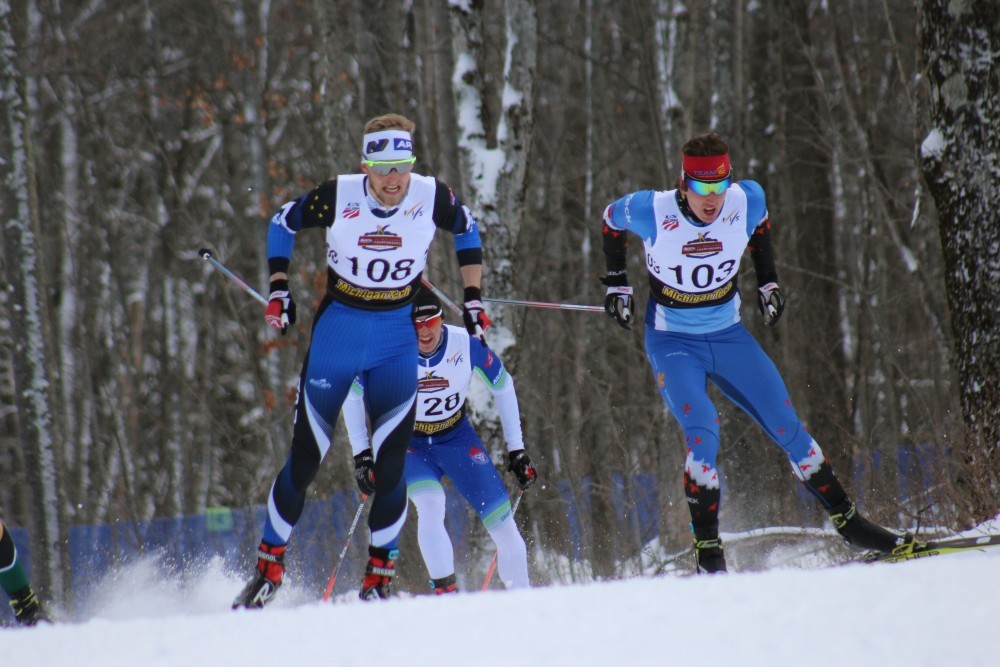
    Sun Valley's Matt Gelso  (l) and Miles Havlick (r) lead the 11-man pack (with a fleet of APU and NMU skiers) around 22 k in the 30 k classic mass start at U.S. nationals in Houghton, Mich.
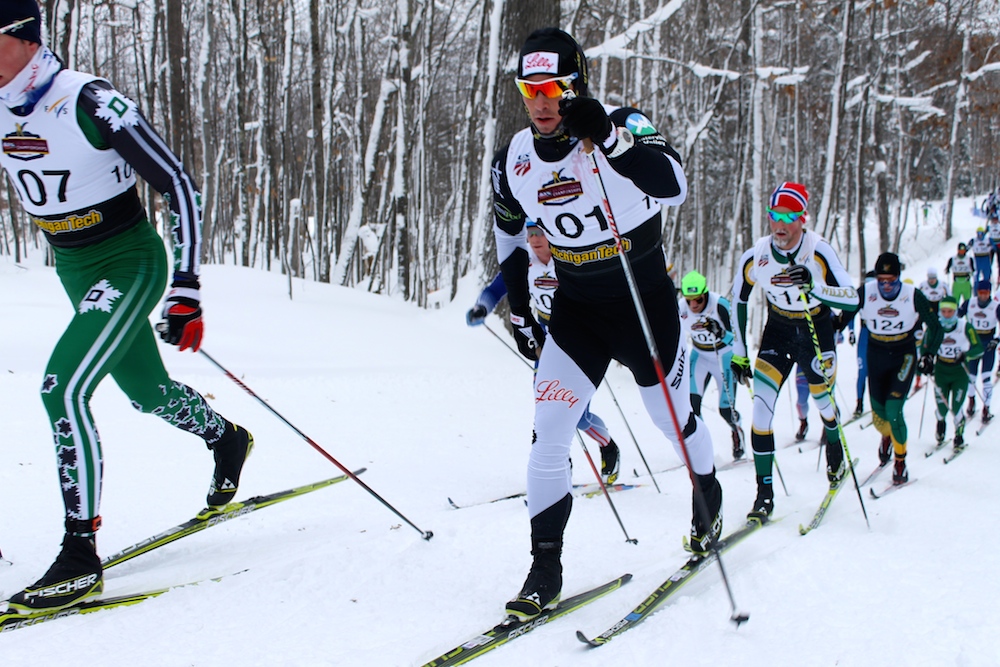
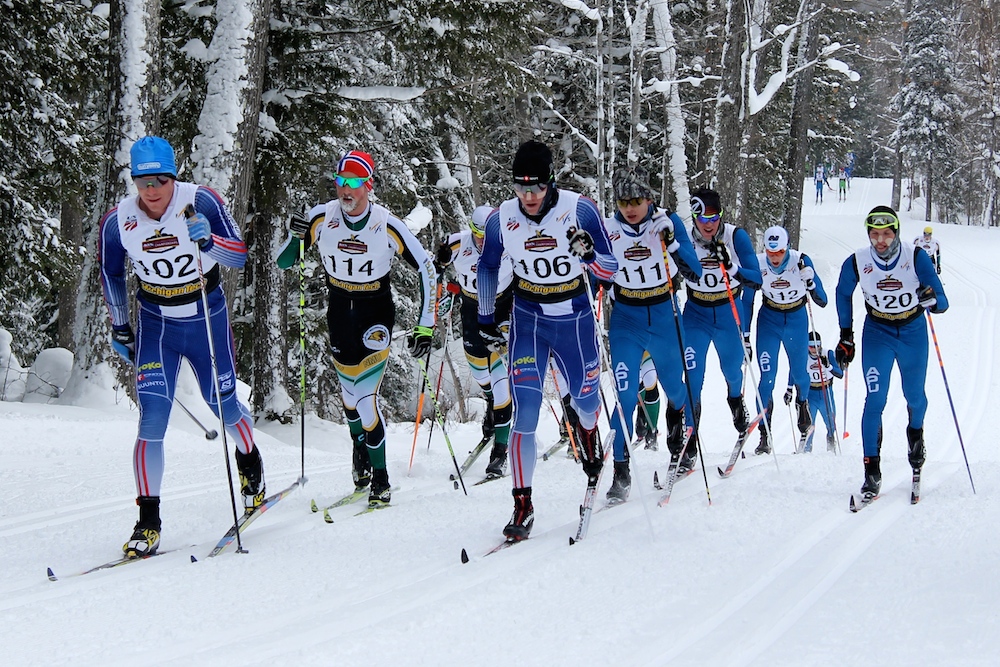
    Sun Valley’s Matt Gelso (102) and Miles Havlick (106) lead the 11-man pack (with a fleet of APU and NMU skiers) around 22 k in the 30 k classic mass start at U.S. nationals in Houghton, Mich.

    “It started as a joke; it’s all in good humor,” Hanneman explained at the time. “There was another elite team in the U.S. who, they last couple years, they had a campaign: six to Sochi. We thought, we can do our own little thing. Five because it starts with and ‘F’ because seven doesn’t really sound as good.

    “Now we’re kind of using it as motivation for ourselves,” he added. “If [we] did actually send five to Falun from one team that would be absolutely insane. The men have traditionally been so spread out in the U.S. that we’re kind of excited about having a group of us that changes the landscape.”

    On Thursday, after months of waiting for a breakout-team performance, the APU men got it.

    Treinen led them in second, Packer rose from seventh to fourth (+4.9) over the last kilometer, and Norris finished 11.2 seconds after Freeman in fifth, 1.9 seconds ahead of Hanneman in sixth. Hanneman came back from 13th and 18 seconds behind the leaders at 20 k, to eighth with 1 k to go.

    Gelso finished seventh (+14), and Patterson, who’s back after a pulmonary embolism kept him from racing from late October until mid-December, recovered from his fall on Thursday to edge Havlick and Caldwell by less than a second for eighth (+24.3). Havlick placed ninth (+25), and Caldwell was 10th (+25.1).

    “I had a pretty good sprint so if I hadn’t had that fall who knows what would’ve happened,” Patterson said. “I would’ve been right there challenging for it, maybe not Freeman but the next guys.”

    Treinen called his second-place finish “pretty special, especially because it’s my birthday. It was kind of in the back of my mind, not gonna lie — I was thinking about that.”

    His previous national best was fifth in the 50 k classic mass start at U.S. Distance Nationals last spring.

    “I feel like we were just waiting for him to have a good day and that was today,” APU Head Coach Erik Flora said. “He looked great, he looked energetic, he looked under good control and you could see so many times just like a smile on his face so it was really cool.”

    Flora added that he was proud of the entire team, with five men in the top eight.

    “To have all those boys in there fighting and challenging each other is just awesome,” he said. “I think that the training for those guys is working and their commitment to being skiers all that good stuff.”

    “I’m just happy to have my teammates do so well as well,” Treinen said. “It’s the best team I’ve ever been on and I think we’re just starting to show what we’re made of.”

    Packer rose from seventh to fourth with 200 meters to go, proving to himself that he was back on form after the flu took him out of commission the week before the 15 k.

    “I couldn’t be happier with feeling good today,” the first-year APU member and Anchorage native said. “… I grew up skiing with all of the guys. We all started training together actually in middle school. It’s kind of cool to have five of those same guys that you started with at 12 or 13, five in the top eight today.”

    Norris led at times during the race, including around 22 k with Gelso, and said he was disappointed to slip from fourth at the bottom of the last climb to fifth (when Packer passed him in the final stretch).

    “It’s hard when you get passed in the last hundred meters … but it was my teammate and he’s a good finisher,” Norris said. “And I’m feeling better every race we do throughout the season.”

    Moreover, he was excited for his team.

    “We had the feeling that we were going to have some great results as a team and we hadn’t really shown that yet this year,” he said. “We all had great skis. Everyone’s skiing stronger so it’s cool to see Lex have a good sprint finish when he’s notoriously a distance guy and Packer have a good 30 k when he’s been good at sprints. Everybody’s improving their weaknesses.”

    Notes: 

    Jørgen Grav (University of Vermont) was an early frontrunner in the men's 30 k classic mass start at U.S. nationals in Houghton, Mich. (Photo: Christopher Schmidt)
    Jørgen Grav (University of Vermont) was an early frontrunner in the men’s 30 k classic mass start at U.S. nationals in Houghton, Mich. (Photo: Christopher Schmidt)
    • Jørgen Grav (University of Vermont), who placed 24th, skied in the top five for much of the first lap, just ahead of Freeman, amid a large pack of about 30 separated by 15 seconds at 10 k.
    • Brian Gregg (Team Gregg/Madshus) finished 21st after skiing in the top 7 through 10 k, then slipping into the mid-20s on the second lap.
    • Tad Elliott (Ski & Snowboard Club Vail Elite Team) finished 36th in his first race at nationals after spending the earlier part of the week recovering from a flu/cold at home in Durango, Colo.
    • Ben Lustgarten (SVSEF) sat out the mass start as he’s been suffering from vertigo this week, which led him to miss Tuesday’s classic sprint as well.

    — Lander Karath contributed reporting

    Results

  • Blackhorse-von Jess Plows Through Competition for U.S. Champs Sprint Victory (with Gallery)

    Blackhorse-von Jess Plows Through Competition for U.S. Champs Sprint Victory (with Gallery)

    Dakota Blackhorse-von Jess strides to a near seven-second win in Tuesday's 1.5 k classic sprint at the 2015 U.S. Cross Country Championships in Houghton, Mich. (Photo: Jake Ellingson)
    Dakota Blackhorse-von Jess strides to a near seven-second win in Tuesday’s 1.5 k classic sprint at the 2015 U.S. Cross Country Championships in Houghton, Mich. (Photo: Jake Ellingson)

    HOUGHTON, Mich. — As the heavy, wet snow fell on the trails of the Michigan Tech Nordic Skiing Center Tuesday morning, the first starter in the men’s 1.5-kilometer classic sprint at the 2015 U.S. Cross Country Championships emerged from the dense cloud of white.

    Plowing through the roughly seven inches of snow that had fallen in three hours, Dakota Blackhorse-von Jess (Bend Endurance Academy) notched the second-fastest time of the day. But much like the wind and snow, he wasn’t going to stop there.

    Similar to his female counterpart, Rosie Brennan of Alaska Pacific University (APU), Blackhorse-von Jess breezed through the quarterfinal and semifinal – earing the top spot in both. Once in the final, it was more of the same for the 28 year old, who surged over the course’s second-to-last hill to enter the stadium far ahead of his competitors and across the line with a smile and a winning time of 4:06.16.

    The next competitor, Ben Saxton (SMST2/USST), crossed the line 6.29 seconds after Blackhorse-von Jess in second, while Michigan Tech skier Håken Hjelstuen of Norway rounded out the podium in third, 7.12 seconds back.

    While Blackhorse-von Jess had the task of tackling the slow, new snow in qualification, he said it was a common factor between he and the other first starters. Once in the heats, he explained, the unusually slow nature of the race made tactics less important.

    “In a four-and-a-half minute long race you just go ski and you wait and see what happens. Obviously there are certain spots on the course where certain people do different things better than other people. [For me] it wasn’t a goal to lead and it wasn’t a goal to be in last,” he said of his strategy in a post-race interview.

    Although he wasn’t aiming to lead, it was a position that Blackhorse-von Jess found himself in during the quarterfinal. Entering the stadium with a sizable lead over David Sinclair (GMVS) and Forrest Mahlen (MSU), he skied across the line with the speed of a 30 k instead of a sprint.

    In the semifinal it looked as if the same would happen as the heat of six skiers sped up the ultimate hill. However, there was one competitor who held onto Blackhorse-von Jess – Cole Morgan of the University of Vermont.

    “In the semifinal Cole Morgan was on my tail and wouldn’t let go and it made it sound like there were a lot more people around. So I had to push it into the finish,” Blackhorse-von Jess said.

    The Bend Endurance Academy skier held off the challenge and the two automatically advanced to the final, where a similar situation took place. On the second-to-last hill, again, Blackhorse-von Jess felt Morgan on his tails. At that point he made the push to lose the 20-year-old college skier.

    “I said, ‘well, I’m done with this,’ and I took off. Suddenly the woods got quite and I was by myself, so I went for it,” he said.

    Men's 1.5 k classic sprint at the 2015 U.S. Cross Country Championships in Houghton, Mich.
    Dakota Blackhorse-von Jess (Bend Endurance Academy) leads Cole Morgan (UVM) in the semifinal finish in the men’s 1.5 k classic sprint at the 2015 U.S. Cross Country Championships in Houghton, Mich.

    Tuesday’s win is Blackhorse-von Jess’ second national championship. Although he has landed on the podium multiple times, his only other win was in a 2013 freestyle sprint at Soldier Hollow. He explained his win in that race was more meaningful because it was unexpected and “something I really had to fight for.”

    The 2015 title is different for Blackhorse-von Jess because it’s been a part of his season plan for a long time, and the highlight of that plan is not a national championship.

    ”This year everything has been geared toward Word Championships so this is a stepping-stone. The goal was to put myself in a position to win and see if I can do it. So everything worked out really well and I’m excited. Obviously I can’t control if I go to World Championships but I know that the way we set up the training, we are on the upswing and things will continue to rise in February,” he said.

    Blackhorse-von Jess will not be selected for World Championships based on the objective criteria outlined by USSA, which includes a top 60 ranking in the overall World Cup. However, he does have a chance in the additional objective criteria, which is based on USSA sprint and distance points. Blackhorse-von Jess currently sits in third position behind World Cup skiers Andy Newell and Simi Hamilton in the most recent sprint ranking list released Jan. 2.

    While he has no control over whether he will be selected for World Championships, Blackhorse-von Jess does have a say in earning the 2015 SuperTour sprint title, which could result in World Cup starting spots later this season.

    “I think that being the best of the rest is best I can do. The only thing in my control is winning the sprint SuperTour so I can secure those two world cup starts at the end. Obviously it would be great to go to World Championships, but two years ago I had a first and a third and I still didn’t go,” he said.

    In the meantime, however, Blackhorse-von Jess is skipping the 30 k classic mass start on Thursday to focus on Saturday’s freestyle sprint. He explained that, historically, the second sprint of nationals has always been a challenge for him but this year he’s hoping that will change.

    “The goal for us is to figure out how to get through the next four days to be able to have a good race, because I haven’t had an awesome race the second time,” he said.

    The Fight for Second

    Saxton’s silver medal finish is his second in two years. In 2014, he was the runner-up to the national title behind Torin Koos in the freestyle sprint at Soldier Hollow.

    En route to this year’s podium finish, Saxton had to maneuver a challenging quarterfinal to advance to the next round. In what he called the “quarterfinal of death,” Saxton faced a collection of strong sprinters including Reese Hanneman (APU), Tyler Kornfield (APU), Eric Packer (APU), Matt Gelso (SVSEF) and Welley Ramsey (MWSC). The heat was the fastest quarterfinal of the day, but Saxton crossed the line in first followed by Packer and Hanneman, both of whom advanced.

    Men's 1.5 k classic sprint at the 2015 U.S. Cross Country Championships in Houghton, Mich.
    Ben Saxton holds his position over APU’s Eric Packer and Reese Hanneman during one of Tuesday’s quarterfinals in the men’s 1.5 k classic sprint at the 2015 U.S. Cross Country Championships in Houghton, Mich.

    “You could have taken those six names and said this will be the A-final for today, and I wouldn’t have doubted you for a second. They are all really strong skiers, so I felt really lucky to advance out of that,” he said in a post-race interview.

    By the time he reached the final Saxton was ready to fight for the top spot. At the start, however, he had trouble finding his top speed and suffered the consequences.

    “In the final it was the first time all day I had a bad start and it came back to bite me. There were only two or three lanes in play when you’re going around the course, so when I fell down to sixth from the gun there was no way for me to move myself up,” he said of the final.

    But he did move himself up, and by the time he reached the bottom of the last climb Saxton was third with a considerable distance to make up on Hjelstuen who was sitting in second. With a surge of energy Saxton reached the Norwegian and skied past him to gain an advantage on the straight away into the finish and earn silver.

    While Saxton said he was hoping to win Tuesday’s race, he explained that a podium finish is never disappointing.

    “Dakota is a good friend and he is the standard for domestic sprinters so there is no shame in watching him do his thing. I’m barely 21 and Dakota is almost 8 years older than me so there’s some catching up to do. I have so much to learn from him and I’m just psyched to do that for now,” he said.

    The finish comes after Sunday’s 15 k freestyle in which Saxton finished 57th – a result that he said left him shaken.

    “It’s nice to have some mojo back. It was a pretty tough day on Sunday,” Saxton explained.

    Men's 1.5 k classic sprint at the 2015 U.S. Cross Country Championships in Houghton, Mich.
    Brian Gregg (l) Logan Hanneman (c) and Håken Hjelstuen Men’s 1.5 k classic sprint at the 2015 U.S. Cross Country Championships in Houghton, Mich.

    Hjelstuen, a student at local Michigan Tech and native of Oslo, Norway, qualified first and had a successful campaign throughout the quarterfinals and semifinals. However, by the time he reached the final, his kick wax was deteriorating.

    “My kick was not good in the semifinal. We tried to fix it for the final, but it got worse. Up the last hill I was fourth or fifth and I really wanted that podium so I was just double-poling all I could. Maybe with better kick I could maybe fight Dakota. I would have been fun to have a fight close to the end,” he said after the final’s completion.

    While he is a student at MTU, Hjelstuen has yet to become a racing member of the Huskies’ ski team. Since he is an exchange student, his eligibility for NCAA racing has been up in the air. However, he predicted that within the next week the issue would be resolved.

    A Strong Showing for Vermont

    Men's 1.5 k classic sprint at the 2015 U.S. Cross Country Championships in Houghton, Mich.
    Men’s 1.5 k classic sprint at the 2015 U.S. Cross Country Championships in Houghton, Mich.

    Despite challenging Blackhorse-von Jess in the middle of the course, Morgan ultimately ended his day in fourth. The University of Vermont senior from Bozeman, Mont. originally worried that the day would be a “grinder” due to the slow snow he faced in qualification, but found that conditions improved once organizers had groomed the trail between then and the heats.

    While Morgan said he normally has a tendency to start too hard, a key factor in Tuesday’s strategy was to hold back until it the second third of the race.

    “I just tried to tuck behind people for most of those heats until the last half kilometer where it was just rolling. It worked in the quarter and the semi, but in the final I got a little tired so I didn’t really have quite the punch as the other ones,” he explained.

    Morgan was the second U23 skier behind Saxton, thus earning valuable points for a possible bid to make the U.S. U23 World Championship team. In regards to the U23 Championships, Morgan said he’s more focused on the season’s college races, but will see where he stands when the selections are announced Saturday.

    That wasn’t one of my big goals coming into here. I’m just looking to get some good racing before the college season. We’ll see how it ends up at the end of the week and how I feel there,” he said.

    The University of Vermont saw another of its skiers in the final in the form of Jørgen Grav.

    Grav, a junior from Oslo, Norway, said that he felt faster in the qualification and quarterfinal because he could ski his own pace. In the semifinal and final, he said it was more difficult to ski efficiently due to the grouping of the pack.

    Men's 1.5 k classic sprint at the 2015 U.S. Cross Country Championships in Houghton, Mich.
    Men’s 1.5 k classic sprint at the 2015 U.S. Cross Country Championships in Houghton, Mich.

    “Other than that I’m pretty satisfied. I didn’t expect to get to the A-final. I would say I was a very lucky loser,” Grav, who advanced to the final as a lucky loser, said after the race.

    With their fourth and fifth place finishes, Morgan and Grav, were the top affiliated college skiers (as Hjelstuen has yet to gain eligibility). Prior to Tuesday’s race, UVM was ranked second behind Northern Michigan University in the Championship’s College Cup rankings.

    “We worked pretty hard and we tried to hang on. We finished strong… It was great having a teammate in the final,” he said.

    Taking the last spot in the final was Sun Valley’s Miles Havlick, who said that despite making a few tactical errors, he was happy with his result.

    “I think the longer sprint and the conditions played in my favor as more of a distance skier,” he said in a post-race phone interview.

    The 2015 U.S. Cross Country Championships continue Thursday with a 20/30 k classic mass start for senior skiers and a 10/5 k classic mass start for juniors.

    Results

    — Alex Kochon contributed reporting

  • Course-Side Quotes: Catching Up with U.S. Nationals Top Dogs

    Course-Side Quotes: Catching Up with U.S. Nationals Top Dogs

    Rosie Brennan (Alaska Pacific University)
    Women’s SuperTour leader Rosie Brennan (Alaska Pacific University) getting some race prep in Saturday morning before the first race of 2015 U.S. Cross Country Championships on Sunday: the 10/15 k freestyle individual starts at the Michigan Tech Trails in Houghton, Mich.

    HOUGHTON, Mich. — After touching down in Houghton later Friday afternoon, FasterSkier chatted with a couple of podium favorites at the U.S. Cross Country Championships over the next week, including World Cup and top SuperTour skiers. The first race of 2015 nationals kicks off Sunday at 10 a.m. with the women’s 10 k freestyle individual start, followed by the men’s 15 k freestyle at 1 p.m. at the Michigan Tech Trails.

    ***

    – Rosie Brennan (Alaska Pacific University)

    Women’s overall SuperTour leader, who earned World Cup start rights after nationals with her November-December results

    Last two races: 1st Bozeman SuperTour classic sprint (Dec. 6), Bozeman SuperTour 10 k classic (Dec. 7)

    On period between Bozeman SuperTour in early December and U.S. nationals: 

    “It’s been a little weird because I was actually dryland training in Utah for a few weeks and then I had a week-and-a-half of OK skiing, so it feels like I’m starting my season over again. I actually have really fond memories of racing here so I think it’s a good mindset to be in. “

    On the where she’s at:

    “I’ve been working on a lot of more process-oriented things in my racing. If I do that, more result-oriented goals will follow. I had a really good summer of training; I think I just learned a lot over the last season more in terms of just how to be a better racer and I think that’s proven really helpful in being able to use the fitness that I’ve gained over the summer more effectively.”

    On racing the World Cup starts after nationals: 

    “I’m just looking to use what I’ve learned from my past experiences on the World Cup and hope to improve upon other times I’ve had over there.”

    Caitlin Patterson gliding through the finish during Saturday morning race prep at the Michigan Tech Trails in Houghton, Mich. U.S. nationals kick off Sunday in Houghton with the 10/15 k freestyle individual starts.
    Caitlin Patterson gliding through the finish during Saturday morning race prep at the Michigan Tech Trails in Houghton, Mich. U.S. nationals kick off Sunday in Houghton with the 10/15 k freestyle individual starts.

    – Caitlin Patterson (Craftsbury Green Racing Project)

    Second-overall ranked SuperTour woman

    Last two races: 4th in 10 k skate at Besh Cup in Anchorage, Alaska (Dec. 21), 6th in Besh Cup skate sprint (Dec. 20)

    On racing again:

    “I’m looking forward to another round of competition. It was fun to start off the SuperTour like always in West Yellowstone and Bozeman, and those races went well but I still felt like I was rounding into good shape and figuring out some early season bugs. So I’ve been feeling good and I’m looking forward to these, to fight it out again and there’s a lot of fast people here so it should be pretty cool.”

    On skiing the skiing Anchorage (in late December):

    “Anchorage has really low snow, so it actually wasn’t as bad as I’d expected. I brought rock skis and used them a lot, but there was snow. I skied every day. The [Besh Cup] races were a little bit changed from what they had planned, like we did a sprint that was not even 900-meters long, a skate sprint, so that was funny, but it was good, enough to throw off your balance a little bit. I was there until [Thursday] and then I flew here. ”

    On U.S. nationals goals:

    “I’m definitely shooting for some podiums; I see that top fives should certainly be within my reach. We’ve raced on the SuperTour with a lot of these girls, everyone except Caitlin Gregg has been around and we’ve been bouncing back and forth a bit, so I guess just looking forward to putting out there whatever I can and see how it turns out.”

    On what she needs to do to succeed:

    “Keeping nerves in check a little bit, but I think it’s good to get a little bit nervous because it shows that you care about it and care about racing and are ready for it. It’s sort of just part of the preparation. I definitely need to get in a good warmup — that’s one of the things I’ve been trying to focus on this year because it’s pretty important to come into the races right from the first kilometer, not start slowly and try to wake up … Then just keep in the zone and have a lot of focus during the races and go for it. ”

    Chelsea Holmes (Alaska Pacific University)
    Chelsea Holmes (Alaska Pacific University) training on Saturday morning at the Michigan Tech Trails, the day before U.S. nationals kick off in Houghton, Mich.

    – Chelsea Holmes (APU)

    Third overall

    Last two races: 2nd in 10 k skate at Besh Cup in Anchorage, Alaska (Dec. 21), 5th in Besh Cup skate sprint (Dec. 20)

    On first impressions of the conditions at Michigan Tech: 

    “Great, lots of snow, it’s cold, hard wax so I’m pretty happy so far.”

    On memories of Houghton [when it last hosted U.S. nationals in 2007 and 2008]: 

    “Those races, I don’t remember anything of the actual experience, which seems silly, other than I remember it being really warm. I did senior nationals those years when I was in college and I had never done it prior, but I mean, I think my first year of senior nationals I was close to the one-hundreds and maybe the second year I was in the forties or fifties. It was the first races of college skiing and it was just race as fast as you could.”

    On how it feels to be in Houghton now, in the top three overall?

    “Not too different. I’ve tried to make the switch where I’m just going out and having fun, but also, the races are a big deal and you want to do as well as you can, but I try to keep it in the context of, it’s a race and there’s only so much I can control … I can’t control how everyone else skis, so I can, even if I have a terrible day, I would like to say, I’m happy with that. That’s my goal.”

    On her target race(s):

    “I’m definitely a stronger distance skier so I would say those [races] more, but I’m really working on improving my sprinting, so I’ve discovered that if I try to stress about that less, that can be fun, too. Honestly, I’m really excited about the whole week. I think it should be really fun, and I love to race so four races in a week is a good bang for your buck.”

    – Caitlin Gregg (Team Gregg/Madshus)

    2013/2014 women’s overall SuperTour winner, started 2014/2015 season on World Cup

    Last two races: 47th in Davos World Cup sprint (Dec. 21), 54th in Davos 10 k freestyle (Dec. 20)

    On how she feels heading into nationals, her first domestic races of the season: 

    “I’m feeling pretty good. I think the one thing that I’ve realized, though, is I don’t know where I’m at. I always say, ‘I’m never 100-percent confident going into a race,’ or anything like that. I’m always like, anything could happen. I could have a great day, but then someone could have an even-better day so anything is always possible. Going forward, I’d say I feel good, energy feels good, but we’ll have to see what happens. … It is definitely fun to be back and have the whole [Loppet Nordic Racing] crew here, our club team, for Brian and I to be training with and prepping with.”

    On how she’s recovered since four weekends of World Cup racing in Europe:

    “I ended up taking a number of days off from training when I got home and a number of days off from skiing. I’ve been pretty conservative, trying to maintain my fitness, but also kept things really short, kept things kind of focused on not pushing the body too far.”

    And after contracting shingles at the start of the season in Muonio, Finland (as explained in an email):

    “The small rash healed up in less than 3 days and was never as painful as others have shared in their stories! I felt a little tired and lethargic for about a week (but I also just traveled 24 hours to Europe!). After taking it easy I resumed normal training and my energy felt great, especially at the lower intensities, but when I went to race I realized that my highest gear wasn’t quite there.

    “It wasn’t until the second weekend in Davos, when it was a 10K Skate race at altitude and should have been my best race, that I realized the virus might have zapped me a bit more than I thought. I am still not sure if it had any affect on my race results though?

    “I decided to get home and give myself a good couple of weeks to recover. I went to Hayward with Brian and didn’t train for 5 days. After that I started jogging easy and finally began skiing after a week. I feel great, especially at lower intensities, but I still don’t know where my energy at higher intensities is? I am excited to race and look forward to the rest of the season!”

    On goals at nationals:

    “For sure, when you’re on the World Cup and you’re kind of getting toward the back of the pack, you’re kind of like, ‘Man, that really doesn’t feel so good.’ I can deal with it, but you’re like, ‘It would be fun to feel good and finish a race,’ and be like, ‘All right, that was fun again.’ The races are fun over there for sure, but I want it to be a good feeling all around. Feel good energy, feel great skis and obviously great course, and have everyone I know here for it.”

    On how she’s feeling about Sunday’s 10 k skate, her target race:

    “I’m really excited about it. I love this course. I heard there was going to be a little adverse weather conditions and that kind of gets me excited, too. We kind of get a lot of that in the Birkie and I’m kind of preparing for it in a similar way where you never know, is there going to be a lot of snow? Is it going to be blowing sideways where the windchill’s just horrific? All that just makes it more interesting.”

    ***

    Matt Gelso racing to first in the West Yellowstone SuperTour 15 k freestyle on Nov. 29, 2014. (Photo: Toko)
    Matt Gelso racing to a win in the first distance race of the season at the West Yellowstone SuperTour 15 k freestyle on Nov. 29. (Photo: Toko)

    – Matt Gelso (Sun Valley Ski Education Foundation)

    Second-overall ranked SuperTour male, first American, who earned World Cup start rights after nationals

    Last two races: 6th Rossland NorAm 10 k classic (Dec. 13), 2nd Rossland NorAm 15 k classic (Dec. 14)

    On how he’s been feeling in the time since those races:

    “I’m feeling good. I got a strong solid block of training in California during Christmas. I managed, knock on wood, to not get sick. I’d like to feel good and be up in the results. I know I’m skiing good and skiing fast; I want to set myself up well to go to Europe and  have a platform at least and try and have some success over there.”

    – Miles Havlick (SVSEF)

    Fourth overall in the SuperTour, second American

    Last two races: 2nd Bozeman SuperTour 15 k classic (Dec. 7), 9th Rossland NorAm 10 k classic (Dec. 13)

    On arriving in Houghton: 

    “It’s been fantastic. The conditions are as good as they get. I had a little bit of illness after Rossland but a little time at home fixed that.”

    On racing prospects: 

    “I’d like to have a few podiums. That’s my goal. I think with these trails – the laps are long – the race is going to be a little different than we’re used to so pacing is very important. Warming up well in the cold temperatures and gritting your teeth and staying focused in the race.”

    Kris Freeman on his way to winning the 30 k freestyle interval start by more than a minute and a half on Dec. 20 at the Sovereign Lake NorAm in Vernon, B.C. (Photo: Frances Weeks)
    Kris Freeman on his way to winning the Sovereign Lake NorAm 30 k freestyle by more than a minute and a half on Dec. 20 in Vernon, B.C. (Photo: Frances Weeks)

    – Kris Freeman (Team Freebird)

    Seventh overall in SuperTour, Canadian NorAm leader

    Last two races: 1st in Sovereign Lake NorAm 30 k skate (Dec. 20), 1st in Rossland NorAm 15 k classic (Dec. 14); has won every NorAm he’s entered this year.

    On how he’s feeling:

    “It’s been a couple weeks now since I raced, but I had good momentum coming out of the NorAms in Canada so I feel good and good on my skis and looking forward to racing.”

    On goals at nationals:

    “I want to keep on having the good sensations that I’ve been having racing. When I’m skiing well, skiing is just so fun. And to be skiing well again this year, I’m really enjoying it.”

    – Paddy Caldwell (Stratton Mountain School T2 Team/Dartmouth)

    21st overall in SuperTour, U.S. Ski Team D-team member who skipped the Bozeman SuperTour and is focusing on 2015 U23 World Championships in Kazakhstan

    Last two races: 4th Middlebury Eastern Cup 10 k classic (Dec. 20), 1st Middlebury Eastern Cup 15 k skate (Dec. 21)

    On goals for the week:

    “My goal is to, honestly, feel good racing. I always have a rougher start at the beginning of the season. I’m starting to feel good so I’m hoping to race as hard as I can and feel good about the effort about the performance.”

    On racing blueprint for rest of the season:

    “My plan is to head back to Dartmouth after the races to start classes and feel it out from there.”

    – Reese Hanneman (APU)

    2013/2014 men’s overall SuperTour winner, started 2014/2015 season on World Cup

    Last two races: 86th Davos World Cup skate sprint (Dec. 14), 79th Davos World Cup 15 k classic (Dec. 13)

    On what he’s been up to since: 

    “I came back from Europe on the World Cup [around Dec. 17] before Christmas and have been in Anchorage for a week then Fairbanks for a week then here.”

    On re-entering the domestic-racing scene:

    “This is the first year that I’ve done the World Cup to start off my season. That was different and obviously a huge learning experience and I didn’t perform like I wanted to or like I knew I can, but I got a lot out of it. It was really productive. So now to come to nationals, I remember maybe a couple years ago where I’d come to nationals and be stressing out like, ‘Oh man, this is such a big race,’ and now it seems pretty relaxed. It’s more homey. It feels like less of a mob scene. I guess it makes me a little more comfortable here.”

    On his memories of Houghton (at Junior Nationals in 2006 and senior nationals in 2007):

    “All of the races as a junior … here, I really struggled. I remember being way, way back in the pack, like, hundreds except for the skate sprint at U.S. nationals here. I had a really uncharacteristically good race and that got me to World Juniors [Championships in 2008]. At the time I didn’t even know what World Juniors was, but I had just made it and that ended up being really sweet. I remember coming up that hill on the sprint course here and passing everybody [laughs].

    “To be honest, that’s probably a race or a day or even a moment that probably got me to where I am now. because who knows, if I hadn’t done well that day, maybe I wouldn’t have gone to World Juniors and I wouldn’t have kept skiing, you know? So I remember that and I have some good memories and it’s been a while so I’m looking to ski a lot faster than I did when I was here.”

    On goals this time around at nationals:

    “I always want to do well at nationals. Obviously the World Cup is sweet and I would’ve loved to have performed better there, but U.S. nationals is still some of the biggest races, and maybe not the highest level of race that I’ll do this year, but pretty important just to qualify for [international-racing] teams and all that stuff.”

    10/15 k start lists (scroll down past first 200 racers for women)

  • Strøm Surges Past Havlick to Win Bozeman SuperTour 15 k Classic

    Strøm Surges Past Havlick to Win Bozeman SuperTour 15 k Classic

    With temperatures above 40 degrees, the men take off in their SuperTour 15 k classic mass start at Bohart Ranch near Bozeman, Mont.
    With temperatures above 40 degrees Fahrenheit, the men take off in Sunday’s SuperTour 15 k classic mass start at Bohart Ranch near Bozeman, Mont.

    BOZEMAN, Mont. — In yet another thrilling men’s SuperTour finish, Mads Strøm of the University of Colorado outsprinted Miles Havlick of the Sun Valley Ski Education Foundation (SVSEF) Gold Team on Sunday to win the men’s 15-kilometer classic mass start at Bohart Ranch.

    Strøm finished fast and icy three-lap course in 40:55.3, holding off Havlick by 0.7 seconds. Havlick’s teammate Matt Gelso racked up another SuperTour podium in third (+9.9), after placing third in Saturday’s classic sprint. Brian Gregg (Team Gregg/Madshus) finished 27.4 seconds back in fourth.

    Kris Freeman (Team Freebird), who was fourth in Saturday’s sprint, finished another 10 seconds back in fifth. Strøm’s CU teammate, Rune Ødegård, placed sixth (+48.4) after starting the final 5 k lap in second.

    Havlick jumped out to an early lead and held it for most of the race, entering the last lap 8 seconds ahead of the chase group of Ødegård, Freeman, Gregg and Gelso. Strøm was 15 seconds behind.

    Mads Strøm (CU) celebrates after winning the men's SuperTour 15 k classic mass start near Bozeman, Mont., while Miles Havlick (SVSEF) finishes 0.7 seconds behind.
    Mads Strøm (CU) celebrates after winning the men’s SuperTour 15 k classic mass start near Bozeman, Mont., while Miles Havlick (SVSEF) finishes 0.7 seconds behind.

    “I noticed my skis were running pretty well, better than other guys in the pack, so I just decided to pick up the pace and see what would happen,” Havlick said of the first 10 k.

    However, Havlick felt the gap closing throughout the last 5 k, and was caught by Strøm as they entered the stadium.

    “I was hoping I could get him at the finish, because I know I have a pretty good finishing speed,” Havlick said. “But this time he got me.”

    Strøm said that while he was “struggling” through the first two laps, his double poling was strong and he felt his confidence grow throughout the race. By the final lap, he was warmed up and ready to make his move.

    “With four kilometers left I got the killer instinct and just tried to win. I double poled as much as I could – that’s one of my strongest strides,” the 23-year-old Strøm said.

    As Gelso and Havlick began to pull away down the final stretch, Strøm hung with them, double poling past Gelso and catching Havlick on the final hill. He then passed Havlick in the stadium and held him off in a furious sprint to the finish.

    After a disappointing result in Saturday’s sprint — when Gelso and Havlick beat him in the quarterfinals — Strøm was “really satisfied” with the result. “I feel great,” he said.

    Gelso skied a strong final lap, separating himself from Gregg, Freeman and Ødegård while trying to catch his teammate.

    Matt Gelso (SVSEF) double poles through the stadium on his way to his second third-place finish of the weekend in the men's SuperTour 15 k classic mass start near Bozeman, Mont.
    Matt Gelso (SVSEF) double poles through the stadium on his way to his second third-place finish of the weekend in the men’s SuperTour 15 k classic mass start near Bozeman, Mont.

    “I was feeling pretty good, my skis were really fast, and I threw down hard to try to catch Miles,” Gelso explained. “But I did it such that I would gap the people I was with, so that I wouldn’t drag everybody up to my teammate. I made a conscious effort to go hard.”

    However, Gelso did bring Strøm along with him.

    “He’s good at conserving, sitting in and then going hard when it’s important,” Gelso explained.

    After racing through slushy snow on Saturday, Gelso enjoyed the firmer conditions, saying the course was much faster than during the sprint. However, he noted that the racers had to be incredibly careful on some sections and corners, especially where the previously wet snow had been groomed.

    In those places, “the corduroy got melted in so it was like smooth ice, and that was a little bit scary,” he said. “You can’t hold a plastic edge in that.”

    Meanwhile, the course was kinder to Havlick than it was on Saturday — “I definitely wanted to stay on my feet today,” he said. Havlick fell during his sprint semifinal of the sprint and missed advancing to the final.

    Havlick was excited about what he called “the first really good result for the season.”

    “It’s a confidence builder,” said the former NCAA champion in the 20 k. “I know my form is coming around.”

    The next SuperTour races take place Jan. 4-10 at U.S. nationals in Houghton, Mich.


    Men’s 15 k classic top 10 | full results

    1. Mads Strøm (CU) 40:55.3

    2. Miles Havlick (SVSEF) +0.7

    3. Matt Gelso (SVSEF) +9.9

    4. Brian Gregg (Team Gregg/Madshus) +27.4

    5. Kris Freeman (Team Freebird) +37.0

    6. Rune Ødegård (CU) +48.4

    7. David Norris (APU) +1:02.1

    8. Eric Packer (APU) +1:14.2

    9. Benjamin Lustgarten (SVSEF) +1:20.4

    10. Alexander Treinen (APU) +1:41.4


  • Stewart-Jones Outlunges Saxton to Win Bozeman SuperTour Classic Sprint

    Stewart-Jones Outlunges Saxton to Win Bozeman SuperTour Classic Sprint


    Patrick Stewart-Jones (AWCA) holds a narrow lead over (from r-l) Kris Freeman (Team Freebird), Ben Saxton (SMS), and Matt Gelso (SVSEF) during the charge to the finish in the men's SuperTour sprint classic final in Bozeman, Mont.
    Canada’s Patrick Stewart-Jones (r) holds a narrow lead over Ben Saxton (second from l), Matt Gelso (l), Kris Freeman (third from l) while charging to the finish in the men’s SuperTour classic sprint final in Bozeman, Mont. Ødegård fell while rounding the final curve.

    BOZEMAN, Mont. —In a race that was undecided until the final seconds, Canadian Patrick Stewart-Jones of the Alberta World Cup Academy (AWCA) narrowly outlunged Ben Saxton of the Stratton Mountain School (SMS) T2 Team and U.S. Ski Team to win the 1.5-kilometer men’s SuperTour sprint-classic final at Bohart Ranch on Saturday.

    With the sun out and temperatures rising to 45-degrees Fahrenheit for the afternoon rounds, Stewart-Jones conquered the soft, slushy course in 3:26.22 minutes. Just 0.11 seconds later, Saxton took second after racing alongside the Canadian to the finish.

    Matt Gelso, of the Sun Valley Ski Education Foundation (SVSEF) Gold Team, followed last weekend’s SuperTour distance win in West Yellowstone, Mont., by landing on the podium again, finishing a close third, 1.37 seconds behind Stewart-Jones.

    Four-time Olympian Kris Freeman (Team Freebird) placed fourth (+2.58), while the West Yellowstone skate-sprint winner, Dakota Blackhorse-von Jess (Bend Endurance Academy), finished fifth (+7.26). Rune Malo Ødegård (University of Colorado) rounded out the final in sixth (+23.11).

    Russell Kennedy (Canmore Nordic Ski Club) managed to stay upright on this icy, treacherous curve, though others were not so lucky during the men's SuperTour sprint classic at Bohart Ranch near Bozeman, Mont.
    Russell Kennedy (Canmore Nordic Ski Club) managed to stay upright on this icy curve, though others were not so lucky during the men’s SuperTour sprint classic at Bohart Ranch near Bozeman, Mont. Kennedy placed 19th overall.

    After the race, the 23-year-old Stewart-Jones said he was “ecstatic” about his first SuperTour win. In the West Yellowstone skate sprint on Nov. 28, he placed 27th.

    “Qualifiers didn’t go so great this morning. I probably used the wrong pair of skis, and maybe wasn’t quite ready to go,” he explained.“I just had to fight every round in the heats. But any day you win is a really good day.”

    Eric Packer of Alaska Pacific University (APU) won the qualifier in 3:13.76. Stewart-Jones ranked 17th, 10.6 seconds behind Packer, before finishing second in both his quarterfinal and semifinal behind Blackhorse-von Jess and Saxton, respectively.

    “Every race today I felt better and better,”Stewart-Jones said.

    The final was tight throughout, with the top four skiers — Stewart-Jones, Saxton, Gelso and Freeman — staying close together on the large climb halfway through the course. Stewart-Jones was in no rush to take the lead, later explaining he looked for “the easiest ways to get by people without having to fight too much for it.”

    Upon reaching the horseshoe curve about a hundred meters before the finish line, Stewart-Jones and Saxton were shoulder-to-shoulder and lunged for first, with Gelso just a ski length behind.

    Saxton said was happy with his “tactical skiing” throughout the day – he qualified in 16th (+10.48) and won both his quarterfinal and semifinal.

    “I opted to tuck behind instead of push it and swing wide, and that ended up costing me more than swinging wide would have,” Saxton said. “He ended up getting me by just a boot.”

    Patrick Stewart-Jones (AWCA) edges out (from r-l) Ben Saxton (SMS), Kris Freeman (Team Freebird) and Matt Gelso (SVSEF) near the finish of the men's SuperTour classic sprint at Bohart Ranch near Bozeman, Mont.
    Patrick Stewart-Jones edges out Ben Saxton (third from l), while Kris Freeman (second from l) and Matt Gelso (l) challenge for third near the finish of the men’s SuperTour classic sprint final in Bozeman, Mont.

    Regardless, the 21-year-old explained he was “psyched” with a second-place finish and was happy for the quality racing.

    “Everybody had good skis, good effort, good tactics and there were no mix-ups,” he said.

    Gelso had not been in a sprint final since winning the Bozeman SuperTour skate sprint two years ago (he was 10th last weekend in West Yellowstone), and said he was “super happy” with his “solid sprint result” — especially as usually excels more in distance racing.

    In the final, the 26-year-old stayed in the back of the pack until the approach to the stadium, when he pushed his way into third while double-poling up the final hill. However, he said he “didn’t ski the last corner tactically very well,” and fell behind Stewart-Jones and Saxton during the final stretch to the finish line.

    “That was my bad,” Gelso said. “But all in all, it was a pretty good day.”

    Gelso also mentioned the difficult conditions, saying they produced a number of crashes, particularly on a treacherous corner that came after a steep downhill halfway through the course.

    “People get knocked off balance for a second or two … and they don’t move on,” he said.

    That is what happened to fellow Sun Valley Gold Team skier Miles Havlick, Gelso said. After qualifying in third and winning his quarterfinal, Havlick fell on the corner during the second semifinal and could not recover, finishing fifth, 13 seconds behind Freeman.

    Then, in the final, Ødegård fell while rounding the final curve and trying to challenge the leaders.

    “There was just punchy, squirrelly skiing,” Gelso said.

    Though he was happy with his win, Stewart-Jones is looking for bigger things in the future. Racing well here, he explained, means a better shot at racing at a World Cup in Europe.

    “When you do well like this, it always bodes well for trying to get those [national-team] spots to go overseas,” he said. “Hopefully that’ll happen.”

    The Bozeman SuperTour continues Sunday with 10 and 15 k classic races at Bohart Ranch.

    Results | Brackets | Qualifier

  • Gelso Outlasts Surging Gregg to Earn Victory in SuperTour 15 k

    Gelso Outlasts Surging Gregg to Earn Victory in SuperTour 15 k

    Matt Gelso (SVSEF) en route to a 9.6 second win over Brian Gregg (Team Gregg/Madshus) in Saturday's 15 k freestyle in West Yellowstone, Mont.
    Matt Gelso (SVSEF) en route to a 9.6 second win over Brian Gregg (Team Gregg/Madshus) in Saturday’s 15 k freestyle in West Yellowstone, Mont.

    WEST YELLOWSTONE, Mont. — Matt Gelso’s strategy in Saturday’s SuperTour 15-kilometer freestyle individual start was to traverse the 5 k course as hard as he could from the beginning of the race. The Sun Valley Ski Education Foundation Gold Team (SVSEF) member saw only two possibilities – he was either going to ‘blow up’ or rely on fitness to earn a place on the podium. Either way he was going all out.

    After finishing three laps of the demanding course, it was clear that Gelso had accomplished the latter of the two outcomes, crossing the line in 36:20.2 to earn the top spot in the first domestic distance race of the season.

    “I just wanted to go out hard and since it’s early season, see what happens … I struggled the last lap, but I was able to ski smooth and ski smart. I had a flat ski and that’s super important on this course, because a lot of it’s about skiing smooth and powerful,” Gelso said in a post-race interview.

    The 26-year-old started the race with little knowledge of where he ranked among his fellow competitors during the course of the 15 k. Because Gelso started near the front of the A-seed, splits had little meaning during his first and second laps.

    According to Gelso, it wasn’t until the third lap that he learned he was battling University of Colorado’s Mads Strøm for first place from on-course splits. Gelso said the splits gave him confidence to keep himself going and hang on to the top position.

    On a day where many racers had slow skis due to warmer-than-average temperatures and winds that showered a mix of new snow and dirt on the trials, Gelso said the Sun Valley wax crew gave him impeccable skis.

    Brian Gregg (Team Gregg/Madshus) finished second in Saturday's SuperTour 15 k freestyle in West Yellowstone, Mont.
    Brian Gregg (Team Gregg/Madshus) finished second in Saturday’s SuperTour 15 k freestyle in West Yellowstone, Mont.

    Furthermore, Gelso pointed to a 10 k time-trial that he and fellow Sun Valley teammates performed earlier in the week as a reason for his succes. Utilizing the same 5 k loop as Saturday’s race, Gelso said the time-trial helped him understand how to ski the course’s terrain, which is known for its lack of rest.

    The other two members of the Sun Valley’s Gold Team also benefited from the team’s preparation, as both finished in the top-ten with Ben Lustgarten placing seventh (+58.2) and Miles Havlick finishing eighth (+1:13.2).

    While Gelso was working to outlast Strøm, another skier was getting dangerously close to winning the race.

    Brain Gregg (Team Gregg/Madshus) began his 15 k conservatively and was 13 seconds back from Gelso at the 5 k mark. However, as the race continued Gregg maintained his pace while others slowed.

    It was a conscious strategy by Gregg, who has seen what it takes to be successful in West Yellowstone over his years of racing. He pointed to retired Bridger Ski Foundation athlete and multiple West Yellowstone SuperTour victor, Leif Zimmerman, as a prime example of someone who was able to make up ground in the final kilometers.

    That’s exactly what Gregg did. According to the 30-year-old, he was 23 seconds behind Gelso at the 12.5 k mark but was able to reduce the deficit to 9.6 seconds by the time he crossed the finish line.

    Although Gregg was unable to overcome the entire 23-second deficit he was happy to finish the day in second.

    Mads Strom (CU) fought for first but ultimately ended third in the 15 k freestyle in West Yellowstone, Mont. as part of the opening SuperTour weekend.
    Mads Strøm (CU) fought for first but ultimately ended third in the 15 k freestyle in West Yellowstone, Mont. as part of the opening SuperTour weekend.

    Strøm, who eventually finished third (+12.4), won the same event in the 2013 West Yellowstone SuperTour.

    While he couldn’t match his previous performance, he fought for the victory throughout the majority of the race.

    Strøm explained that the previous day’s sprint had left him lethargic throughout the first third of the race. However, around the 6 k mark he began to feel fresh and energized as he learned there was a contest for first between him and Gelso.

    “I tried to fight as much as possible but I wasn’t able to get as much as I hoped to in the last 3 k,” the University of Colorado skier said.

    Rounding out the top five were two skiers who faced the stomach flu only three days prior: Kris Freeman (Team Freebird) and Tad Elliott (Ski and Snowboard Club Vail Elite).

    “Both Tad and I got a stomach virus, so I was vomiting three days ago. Yesterday I felt really, really flat and you have to be sharp in a sprint… Today was a step in the right direction but I didn’t feel like myself and I’m a little bummed,” Freeman said of Friday’s sprint race and Saturday’s fourth place finish.

    Freeman, a favorite to win the the 15 k, had strong first lap in which he posted the second-fastest time. Once on the second and third laps, however, he was unable to maintain his speed after losing much of his energy to the illness.

    Kris Freeman had a strong first lap in West Yellowstone but ultimately finished fourth in the SuperTour 15 k freestyle.
    Kris Freeman had a strong first lap in West Yellowstone but ultimately finished fourth in the SuperTour 15 k freestyle.

    “I’ve had a great lead up to the season. I felt like I was in awesome shape here and I really thought I was going to stomp it, but instead life happens. I’ve been here before and I can’t let it bother me too much,” he said.

    Elliott, who dealt with the Epstein-Barr Virus for most of the previous year, said that he had been feeling especially strong before he came down with the flu on Thanksgiving night. While he was unsure whether he would start Saturday’s race, he made the final decision to give the 15 k a shot after warming up just minutes before the race.

    Once on course, Elliott explained that a combination of coaching, fast skis, and experience helped him progress from ninth place after 5 k to fifth as he crossed the finish line.

    “Having the flu and having the fever wasn’t ideal but I think part of the reason for [my success] today was our coaches…I felt like my skis were some of the best in the field, to be honest, they were super quick. Being an experienced skier I think helped too. I did well on my splits out there,” he said of his race.

    The two skiers finished roughly thirty seconds apart, with Freeman crossing the line 18 seconds from the lead and Elliott finishing 43.4 seconds back from Gelso.

    Other notable results from Saturday’s race include Colorado’s Rune Ødegård in sixth (+49.2), GearWest/United XC’s Matt Liebsch in ninth (+1:18.8), and the USST’s Paddy Caldwell in tenth (+1:25.7).

    All of the top-five finishers expressed that their races were solid starting points for the season, but were wary of putting too much emphasis in Saturday’s results

    Tad Elliot (SSCV) progressed from 9th to 5th over the course of three laps in Saturday's SuperTour 15 k freestyle in West Yellowstone, Mont.
    Tad Elliot (SSCV) progressed from 9th to 5th over the course of three laps in Saturday’s SuperTour 15 k freestyle in West Yellowstone, Mont.

    “It’s always good start on a positive note so that you have so you have that positive feedback on your training, but it’s the last week of November and we’re racing all the way through the end of March,” Gregg said of his takeaway from the race.

    For Gelso, the biggest benefit of winning Saturday’s race was the FIS and USSA points he would earn from the day’s effort.

    “Today will be good in FIS and USSA points and that’s a consideration for World Championships,” he said, referencing USSA’s consideration of USSA points for World Championship selections.

    The fact the they are distance points is especially promising for Gelso and other top finishers, as it is likely the U.S. coaching squad will be looking for more domestic distance skiers rather than domestic sprinters to fill their quota for the championships.

    Gelso also explained that the SuperTour points he earned from the victory would be important in his quest to be SuperTour leader so that he could earn starts on the World Cup in either period 2 or period 3 of this year.

    However, such a feat is a far away, and to maintain his momentum throughout the season, Gelso said that he’s working to maintain his fitness and consistency.

    “I’ve got to keep my training consistent and focused so I don’t peak up here and then dive off into the great depths when U.S. Nationals and the rest of the season comes around. So, I’m definitely going to be focused on keeping the race fitness and general fitness up,” he said.

    Men’s 15 k freestyle top ten (full results

    1. Matt Gelso (SVSEF) 36:20.2

    2. Brian Gregg ( Team Gregg/Madshus) +9.6

    3. Mads Strøm (CU) +12.4

    4. Kris Freeman (Team Freebird) +18

    5. Tad Elliot (SSCV) +43.4

    6. Rune Ødegård (CU) +49.2

    7. Ben Lustgarten (SVSEF) + 58.2

    8. Miles Havlick (SVSEF) +1:13.2

    9. Matt Liebsch (GearWest/XC United) +1:18.8

    10. Paddy Caldwell (USST/SMST2) +1:25.7

  • Blackhorse-von Jess Outlasts CU Skiers to Win SuperTour Sprint in West Yellowstone

    Blackhorse-von Jess Outlasts CU Skiers to Win SuperTour Sprint in West Yellowstone

    Dakota Blackhorse-von Jess of Bend Endurance Academy (r) leads (from r-l) Mads Stroem (CU), Rune Oedegaard (CU), and Eric Packer (APU) in the A-final of Friday's Super Tour freestyle sprint in West Yellowstone.
    Dakota Blackhorse-von Jess of Bend Endurance Academy (r) leads (from r-l) Mads Strøm (CU), Rune Oedegaard (CU), and Eric Packer (APU) in the A-final of Friday’s Super Tour freestyle sprint in West Yellowstone.

    WEST YELLOWSTONE, Mont. — Dakota Blackhorse-von Jess used a strong finish to edge out two skiers from the University of Colorado in Friday’s men’s 1.5 k skate sprint in West Yellowstone, Mont., marking the first U.S. SuperTour race of the season.

    The 28-year-old Blackhorse-von Jess, of the Bend Endurance Academy, took command of the lead after the final hill when the University of Colorado’s Mads Strøm made a last-ditch attempt to pass him on the outside. The 23-year-old Norwegian had been working with CU teammate and fellow countryman Rune Malo Ødegård to hold second and third position throughout the race, waiting for the opportunity to make a move on Blackhorse-von Jess. However, Strøm finished in second while Ødegård, 25, crossed the line in third.

    Eric Packer of Alaska Pacific University (APU) finished fourth, 2.98 seconds after Blackhorse von-Jess. Welly Ramsey of the Maine Winter Sports Center (MWSC) finished in fifth (+3.52). Canadian Andy Shields of the Thunder Bay National Development Centre (NDC) was 36.49 seconds back in sixth place, though FasterSkier was unable to locate Shields to determine what happened on the course.

    Dakota Blackhorse-von Jess of Bend Endurance Academy pushes in front of the University of Colorado's Mads Stroem during the A-final of the SuperTour men's skate sprint in West Yellowstone, Mont.
    Dakota Blackhorse-von Jess of the Bend Endurance Academy pushes in front of the University of Colorado’s Mads Stroem during the A-final of the SuperTour men’s freestyle sprint in West Yellowstone, Mont. (Photo: Toko)

    Blackhorse-von Jess was second in qualifying (after Stratton’s Ben Saxton) and made it safely through the quarterfinal and semifinal rounds, though he emphasized the challenging nature of the early-season race.

    “West Yellowstone’s a hard place,” he explained. “I’m tired, everybody’s tired. You know, it’s just hard being here.”

    However, he said winning is a good “confirmation of fitness,” and he was happy with his strategy.

    “It just became apparent to me I had the speed at the end, but to really maximize it you need to be first on the hill,” he said, “So, that’s what I did. Worked out great.”

    He said being in front was especially an advantage on the rolling course, as the corners are close together and “the straight line provides no opportunity for passing.”

    Only 0.9 seconds behind Blackhorse von-Jess, Strøm was disappointed to not have overcome Blackhorse-von Jess, but recognized his attempt to take the lead was too little, too late.

    “He went away from the other guys and I just tried to get past him and he was faster than me,” Strøm explained.

    Strøm was happy for his Colorado team, saying they generally expect to do better in distance races. Having two skiers on the podium in the sprint was well above their expectations.

    Ødegård was pleased with his third-place finish, echoing Strøm in saying the race went “a lot better than expected.”

    The Norwegian has suffered from injuries and illness throughout the past year, including an ankle surgery, a meniscus tear and a bout of strep throat. Despite that, he said he was better in a skate sprint than he has ever been.

    Ødegård and Strøm finished seventh and fifth, respectively, after qualifying, then comfortably made it through their quarterfinal races. They ended up racing together in the first semifinal, where they skied a strategic race and helped each other maintain and finish in the first and second positions.

    Despite being happy with his race, Packer was a victim of the course’s lack of passing opportunities. According to the 24-year-old Alaska native, he started out in third or fourth and never had a real chance to move forward during the race.

    “The final went out pretty hard and with this course it’s really difficult to pass,” he explained.

    Packer qualified in 13th, surviving a competitive quarterfinal while squeaking through the semifinal to make it to the A-final.

    Sun Valley's Miles Havlick leads (from l-r) Brian Gregg (Team Gregg), Matt Gelso (SVSEF), and Forrest Mahlen in Friday's B-final at the 2014 SuperTour freestyle sprint in West Yellowstone.
    Sun Valley’s Miles Havlick leads (from l-r) Brian Gregg (Team Gregg/Madshus), Matt Gelso (SVSEF), and Forrest Mahlen (MSU) in Friday’s B-final at the 2014 SuperTour freestyle sprint in West Yellowstone.

    Finishing fifth, Ramsey was ecstatic about advancing to the A-final. The 23 year old is an accomplished distance racer, having finished eighth at last year’s 15 k at U.S. nationals, but hasn’t considered himself to be a sprinter in the past. Starting the day by qualifying in 12th, he finished just behind Blackhorse-von Jess in the men’s first quarterfinal. Then he led Blackhorse-von Jess going into the last hill during the second semifinal, before the eventual winner passed him on the closing stretch.

    “I’m pretty stoked that I’m able to sprint this year,” Ramsey said, emphasizing how much technical work and “on-snow” time during the fall has helped him out.

    The day started off well for Saxton, a 21-year-old U.S. Ski Team and SMST2 athlete, who was first after qualifying.

    “I think the qualifier today rewarded smooth skiing and I don’t think very many people would list smooth skiing as one of my attributes thus far,” Saxton explained.

    However, he fell behind Ødegård and Strøm in the semifinal and faded on the final hill, then ended up 11th overall after falling behind in the B-final. In that race, he said his right hamstring “balled right up” going into the tuck, leaving him unable “to put forward the effort” that was representative of his abilities.

    Sun Valley’s Miles Havlick, who was fourth after qualifying, won the B-final, barely nudging out Brian Gregg (Team Gregg/Madshus) and Forrest Mahlen (Montana State University). Alaska Pacific University’s Lex Treinen was put out of the race at the start, falling immediately after the gun sounded.

    Paddy Caldwell (SMST2) also suffered a race accident earlier in the day. After qualifying in 22nd, one of his poles broke at the top of the final hill during the fourth quarterfinal. Alex Schulz of Craftsbury Green Racing Project was on the inside, and as they rounded the curve Schulz’s ski and Caldwell’s pole collided.

    There were certain issues on Day 1 of the event involving timing, bib numbers and placement into semifinals. Races and results were postponed, and athletes at times questioned when or if they would be racing.

    SuperTour racing continues for the men on Saturday in West Yellowstone with the 15 k freestyle individual start. Snow is expected to fall throughout the day, making for interesting racing conditions.

    — Lander Karath contributed reporting

    Men’s 1.5 k freestyle sprint results

    Saturday’s 10 k/15 k freestyle start list 

  • U.S. SuperTour Preview: Anyone’s for the Taking

    U.S. SuperTour Preview: Anyone’s for the Taking

    The men's 15 k freestyle individual start podium at SuperTour Finals in Anchorage, with winner Noah Hoffman (c), runner-up Scott Patterson (third from l) and Erik Bjornsen (second from r) in third.(Photo: Rob Whitney)
    The men’s 15 k freestyle individual start podium at the 2014 SuperTour Finals in Anchorage, with (from l-r) Patrick Johnson (6th), David Norris (4th), Scott Patterson (2nd), winner Noah Hoffman, Erik Bjornsen (3rd), and Lex Treinen (5th). (Photo: Rob Whitney)

    Note: This article has been corrected to describe the race women’s SuperTour leader Caitlin Gregg is shooting for at World Championships: the 10 k skate.

    WEST YELLOWSTONE, Mont. — National racing begins Friday as the SuperTour kicks off in West Yellowstone, Mont., and the excitement on the Rendezvous trails couldn’t be higher. The best skiers from around the country have been training for at least a week in the little Montana town as they prepare to compete for American dominance and possible positions on World Cup and World Championship teams.

    With several departures from the racing scene including, Olympian Torin Koos (BSF), Rose Kemp (SVSEF), and Kate Fitzgerald (APU), and a multitude of up-and-coming racers on the cusp of success, the 2015 SuperTour will be anyone’s game.

    When the USST selected four men (Erik Bjorsen, Brian Gregg, Koos and Kris Freeman) and no women from outside the regular World Cup team, it left many skiers hungry to show that they could perform well on the international level.

    This year they’ll have another shot with the 2014 Nordic World Championships in Falun, Sweden.

    While the U.S. is allotted 12 spots for each gender in Falun, USST head coach Chris Grover explained that he and his staff would select eight skiers per gender at most.

    World Championship team selection will be based on several criteria. Those skiers ranked in the top 50 in the World Cup sprint or distance standings as of January 18 will be named to the team. After that coaches’ discretion kicks in. If coaches feel that the World Championship team could benefit from additional skiers after their discretionary picks, they will then begin selections from the USSA points list.

    The selection is identical to last year’s Olympic process, with the exception of the USSA points. When making selections for the Olympics, coaches picked three non-USST skiers from the FIS points list to fill in the gaps.

    According to USST Head Coach Chris Grover, the reason for the switch to USSA points is to emphasize domestic racing so that potential candidates for the championships will be racing against each other, rather than chasing FIS points across the globe like many did last season.

    Due to the emphasis on USSA points this season, the SuperTour will be where non-World Cup team athletes will have the chance to prove they have what it takes.

    The Veterans

    Brian Gregg (USA).  Photo: flyingpointroad.com / NNF.
    Brian Gregg (Team Gregg) will be a top competitor in 2015. Photo: flyingpointroad.com.

    On the men’s side, 2014 overall SuperTour champion Reese Hanneman (APU) will be competing in the first period World Cup races and will return to the national circuit in Houghton, Mich. for the 2015 U.S. Cross Country Championships. While the benefits of early-season World Cup racing are considered mixed, Hanneman can expect his chances of racing in Falun to increase if he demonstrates that he can keep up with the Europeans and his fellow American teammates.

    With Hanneman out of the picture in West Yellowstone and Bozeman, the men’s SuperTour favorites are the remaining two non-USST members to attend the 2014 Olympics – Brian Gregg and Kris Freeman.

    Freeman, a 34-year-old former USST member, will be racing in West Yellowstone for the first time in nine years. Freeman, who lost his position on the USST in 2013, was one of three non-USST members to qualify for the 2014 Olympics. Despite high hopes of his best olympics yet, he struggled in Sochi. This season he is looking to turn around his skiing and earn a spot on the World Championship team. As one of most experienced skiers on the SuperTour circuit he will have an advantage over much of the competition.

    Gregg, like Freeman, will also enter the 2015 SuperTour with a multitude of experience. The 2013/2014 season saw Gregg on the SuperTour podium several times, most notably with his two second place finishes in the 2013 West Yellowstone 15 k freestyle and in the 2014 U.S. Nationals 30 k freestyle. At the Olympics, he constantly finished in the 40s and 50s.

    As he starts the season, Gregg acknowledged that the first races of the season would be challenging.

    “Kris is in really good shape so I think there are going to be some very competitive races. I’m excited,” Gregg said from West Yellowstone Tuesday.

    Joining Freeman and Gregg as veterans of the SuperTour are Matt Gelso of the Sun Valley Gold Team and Dakota Blackhorse-von Jess of the Bend Endurance Academy. Gelso will be looking to build on past results while Blackhorse-von Jess will pursue success in sprinting, especially since U.S. sprint champion Torin Koos retired from competition.

    After disappointment in the freestyle sprint at the 2014 U.S. Cross Country Championships and a failure to qualify for the 2014 Olympics, Blackhorse von-Jess said that nothing has changed in his career trajectory.

    “I’m re-energized after the disappointment of the Olympics with the reaffirmation that I still want this and believe I have what it takes… My career/goal trajectory hasn’t changed in the least: I’m focused on racing my best in the biggest international competitions and just need to make sure I do what is necessary to make those trips and come to the starting line in Falun prepared to light it up,” he wrote in an email.

    Matt Liebsch of Team XC United will also be returning to racing after missing out on Olympic qualification. However, Liebsch, who works near full time for Gear West, has lightened his training load as is looking to “maximize fun and earning potential ” rather than qualify for international events.

    “I’m not going to be chasing FIS points around the world or country necessarily. If they fall in my lap because I’m racing well, that’s great, but I’m not going to be stressing about it… It’s not really a change for me. I’m still going to try to race as fast as I can only I won’t be training as much,” he said in a phone interview.

    Ryan Scott, living and training independently in Boulder, Colo., will also return to competition, but, like Liebsch, has cut back his training as a result of work.

    For the women, one name has particularly dominated the domestic circuit for years – Caitlin Gregg.

    Gregg, like Hanneman, will start her season on the World Cup after earning the women’s overall title at the SuperTour finals in Anchorage last season. Gregg said earlier this fall that she is as motivated as ever and has her sights set on a particular race: the 2015 World Championships 10 k skate. To get to Sweden, however, she’ll need to demonstrate that she’s on par with USST and dominate when she returns for the U.S. championships in January. In the meantime, she’s excited for the 5 k next weekend in Lillehammer and aims to earn a start in that race.

    With the absence of Gregg, the West Yellowstone and Bozeman SuperTours are anyone’s for the taking.

    Rosie Brennan (APU) leading her semifinal in the 2014 U.S. Cross Country Championships. (Photo: http://bertboyer.zenfolio.com) All proceeds from photo sales will be directly donated to NNF.
    Rosie Brennan (APU) leading her semifinal in the 2014 U.S. Cross Country Championships. (Photo: http://bertboyer.zenfolio.com).

    Always a strong skier, APU’s Rosie Brennan will once again attempt to demonstrate her mettle as she makes a bid for World Championships. Last year Brennan started her season on the World Cup and returned to the U.S. exhausted, but earned a national title at U.S. Nationals in addition to several podiums. This year she will enter the season with fresh energy despite a turbulent fall after loosing her father in August.

    Joining Brennan at the top of the SuperTour expectations are APU teammates Chelsea Holmes and Becca Rorabaugh.

    Holmes demonstrated her strength throughout the 2013/2014 season with a win in the 10 k classic mass start in Bozeman, a second to Gregg in the 20 k at the 2014 U.S. Nationals, and several other strong performance throughout the entire SuperTour season.

    Rorabaugh won the 10 k interval start classic at the 2014 U.S. Cross Country Championships for her first national title, and is looking to have even more time upon the podium as she continues through the season.

    Last year Bridger Ski Foundation’s Jennie Bender repeated a national title in the freestyle sprint. While she’s dealt with illness and injury for the past two years, Bender told FasterSkier that her summer training this year was her best to date, and that she is looking to find success domestically and qualify for World Championships.

    The Wild Cards

    Miles Havlick (Sun Valley Ski Education Foundation) tucking down the high point of the course on the fifth of six laps at U.S. nationals in the 30 k freestyle mass start at Soldier Hollow. While the veterans of the 2015 SuperTour are names we’ve seen at the top of the result sheets for years, there are several skiers who have an excellent opportunity to shake up the status quo and make a name for themselves on the domestic circuit.

    Sun Valley Ski Education Foundation’s Miles Havlick didn’t have the season he wanted in 2014, but has come back with a vengeance in 2015. While he has yet to face his competitors on-snow, Havlick has won a slew of time trials including the USST1o k freestyle rollerski time trial in Park City, Utah against the country’s best. He also broke a 25-year-old record in the Baldy Hill Climb this year.

    According to Havlick, he has the all the ingredients for a breakout season. Now it’s only a matter of time.

    “I think on any given day – when I am mentally competent, carrying confidence from previous races, focused, and my wax is good – I can be the best skier out there. The college skiing is when I was really able to prove that to myself. Last year was kind of tough because I felt like I was spinning my wheels by the end, but I think I’ve made some adjustments this year that can fix that,” he said in a phone interview in October.

    Havlick also has gained the attention of Grover and the USST.

    Erika Flowers racing to the fastest women's time in the inaugural Tim Burke Uphill Run Test at Whiteface Mountain.
    Erika Flowers racing to the fastest women’s time in the inaugural Tim Burke Uphill Run Test at Whiteface Mountain this fall.

    “I’m excited to see how Miles Havlick is going to ski. He’s had a great fall. He won our US ski team time trial that we did in Soldier Hollow. He set a new course record on the Baldy Hill climb that stood for 26 years or something. There’s some new emerging faces to keep an eye on,” he said.

    For the women, a possible 2015 wild card is a less well known. However, despite her lack of national attention Stratton Mountain School T2’s Erika Flowers has all the makings of an up and coming skier.

    Flowers has always been a strong and consistent skier with the majority of her SuperTour results landing in the top-ten. However, when she traveled to Europe in the spring of 2014 she demonstrated her potential, wining a 10 k mass start in Silvapalana, Switzerland. Several weeks later she placed 14th in the Alpen Cup mini-tour. She finished the tour as the second American behind Holmes and had the fifth-fastest time in the final 10 k pursuit.

    While Flowers has struggled with sprinting in the past, she demonstrated that she could stick with the best of them at the 2014 Frozen Thunder races in Canmore, Alberta ending the day in 7th.

    The following day she finished 7th in the 7.2 k freestyle at Frozen Thunder. She was the 3rd American, and placed ahead of several notable Olympians including Jessie Diggins.

    The Rest 

    In addition to Havlick, there are several other men who could make the domestic season anyone’s game.

    Recent college graduates Ben Lustgarten of SVSEF, David Norris of APU, and David Sinclair of Green Mountain Valley School will be looking to take their success from NCAA racing to the SuperTour.

    Scott Patterson (APU) is another notable graduate who had success on the SuperTour both at the 2014 Nationals and 2014 SuperTour finals. According to his family, Patterson will not be starting his season in West Yellowstone due to a skiing accident that occurred Oct. 31st in which he was impaled by a broken ski in his upper leg. While the leg wound healed, Patterson developed a pulmonary embolism (blood clots in his lungs) which has limited his exercise to walking. However, according to his family, Patterson is optimistic that he will return to racing at U.S. Nationals.

    Ben Saxton (SMST2) and Paddy Caldwell (SMST2/Dartmouth) will be the sole USST members starting the season in West Yellowstone. Saxton who was second in the freestyle sprint at U.S. Nationals last year, is aiming perform well in Friday’s sprint. Caldwell, who has yet to decide whether or not he will ski for Dartmouth this year is a strong distance skier and will be vying for top results amongst the country’s best.

    “They need to prove themselves and make those teams just like any other athlete that is on the domestic scene. Obviously those guys are younger guys and they’re still focused on the U23 World Champs,” Grover said of the two USST D-Team athletes.

    Welley Ramsey (MWSC), Tad Elliott (SSCV), and a slew of other men from APU and Craftsbury will also look to challenge the national favorites as the season gets underway.

    On the women’s side recent graduates Anne Hart (SMST2), Rosie Frankowski (APU), and Anja Gruber (Far West Elite) are new to full-time racing on the national circuit after having successful college careers. While the adjustment from college skiing to professional racing is often difficult, these women will still be a strong force to contend with.

    Annie Pokorny (SMST2), Caitlin Patterson (CGRP), Liz Guiney (CGRP), and Mary Rose (SVSEF) are shaping up to be strong competitors in the 2014/2015 season after a productive summer and fall trainings with their respective teams.

    [See the Super Tour schedule here]

  • Pros of Tomorrow Brought By Fischer: Miles Havlick

    Pros of Tomorrow Brought By Fischer: Miles Havlick

    Miles Havlick (Sun Valley Ski Education Foundation) tucking down the high point of the course on the fifth of six laps at U.S. nationals in the 30 k freestyle mass start at Soldier Hollow.
    Miles Havlick (Sun Valley Ski Education Foundation) tucking down the high point of the course on the fifth of six laps at U.S. nationals in the 30 k freestyle mass start at Soldier Hollow.

    This ‘Pros of Tomorrow’ series, brought to you by the generous support of Fischer Sports, aims to highlight some of the most notable up-and-coming athletes around the world, not necessarily Fischer-sponsored skiers. If you have an idea for a top-notch skier you’d like to read more about, please email info@fasterskier.com with the subject line: Pros of Tomorrow. We’re also looking for stories about intriguing juniors, collegiate skiers, or lesser-known athletes; please email us with names — subject line: From the Pack.

    ***

    The first time Miles Havlick ran the Baldy Hill Climb was seven years ago. He was visiting his older brother, Ian, who was training with the Sun Valley Ski Education Foundation, and decided to jump into the race.

    That same day Havlick heard the race’s history, but little did he know that years later he would become a part of it.

    In 1989 Michael Tobin set the course record of the Sun Valley, Idaho climb. With his time of 35:11, Tobin created a standard that many thought would never be broken on the 1.86-mile course featuring 3,140 feet of elevation gain.

    Over the years several came close, with Rob Whitney earning a time of 35:52 in 1999 and Miles Fink Debray crossing the line at 35:33 in 2006.

    Havlick, who was born the year that Tobin’s record was set, went into the 2014 climb with one desire – he wanted to win.

    Conditions were on his side – it had rained the previous night, bringing a firm track and cool weather.

    As he crested the top Baldy through a cloud of thick mist, he had no idea that he was on track to beat the 25-year-old record.

    “I didn’t even know I was close to the record until I crossed the finish line and Colin [Rodgers] was there screaming and super excited,” Havlick said in a phone interview.

    Havlick finished the hill climb with a time of 35:04, besting what was once thought to be an unbeatable record by seven seconds.

    Miles Havlick of SVSEF (l) and Erik Bjornsen (USST/APU) maneuver a corner while rollerkiing at Soldier Hollow. (Photo: USSA)
    Miles Havlick of SVSEF (l) and Erik Bjornsen (USST/APU) maneuver a corner while rollerkiing at Soldier Hollow. (Photo: USSA)

    Havlick is no stranger to success. The Boulder, Colo. native had an accomplished junior career, which translated into continued success in college.

    In a circuit often dominated by Europeans, Havlick won back-to-back NCAA 20 k mass start titles in 2012 and 2014 with the University of Utah.

    Having graduated in 2013, Havlick joined the Sun Valley Gold Team for the 2013/2014 season.

    He explained that while the transition from school to professional skiing was tough, he believed he adjusted to the changes well.

    “I moved to a new place. I didn’t have school going on and I switched to a new coaching system that I wasn’t entirely used to,” he said. “There was a lot of change, but overall I did a good job of adjusting.”

    Despite his ability to adapt, Havlick said that he didn’t have the season he wanted.

    “I had a disappointing nationals. It wasn’t too bad, but I definitely was missing my top gear,” he said.

    However, Havlick explained that there were also many positives in his first season as a professional skier. While his races weren’t on par with his expectations, he skied well enough to qualify for OPA Cup racing in Europe.

    “It was a great experience to ski over in Europe with a lot of my teammates and a lot of Americans who were in the same boat. We had a lot of fun and it definitely opened my eyes to European racing, which is really cool,” he said.

    Havlick said that there are several takeaways from his seasons as a college and professional skier.

    “I think on any given day – when I am mentally competent, carrying confidence from previous races, focused, and my wax is good – I can be the best skier out there. The college skiing is when I was really able to prove that to myself. Last year was kind of tough because I felt like I was spinning my wheels by the end, but I think I’ve made some adjustments this year that can fix that,” he said.

    As demonstrated by his result at the Baldy Hill Climb, it appears that Havlick is on the right track to have a strong season with the Sun Valley Gold Team.

    As if one time-trial win wasn’t enough, he won SVSEF’s Harper’s Time Trial earlier this fall and recently placed first in the US Ski Team rollerski time-trial at Soldier Hollow, Utah.

    This winter Havlick said that he’s looking to perform well in the early-season SuperTours in West Yellowstone and Bozeman, Mont. and at the 2014 U.S. Cross Country Championships in Houghton, Mich. in an attempt to make the 2015 World Championship Team. If he doesn’t make the cut, Havlick said that he wants to win the Overall SuperTour title in order to earn a World Cup starting position next winter.

    He’s off to a good start, as Havlick feels he’s going into the 2014/2015 season more ambitious, fit and prepared than ever before.

    “I think a big part of it is being happy and going into the season wanting it more than anyone else. Physically, I’ve prepared better than I ever have before. The time trail results from this fall reflect that and I just have to work on the mental aspect and dial in the skis once I get on snow and hopefully everything will all come together,” he said.

    Miles Havlick (r) and Kevin Bolger (University of Utah) on a summer ski walking workout above Salt Lake City, Utah.
    Miles Havlick (r) and Kevin Bolger (University of Utah) on a summer ski walking workout above Salt Lake City, Utah. (Photo: Miles Havlick)
    This series is brought to you by the generous support of Fischer.
    This series is brought to you by the generous support of Fischer. Visit them online at fischersports.com


  • As USST Park City Camp Ends, Excitement for Racing Season Builds

    As USST Park City Camp Ends, Excitement for Racing Season Builds

    Jessie Diggins (USST/SMST2) leads a train of skiers through the fall foliage and stunning views at the American Fork in Utah. (Photo: USSA)
    Jessie Diggins (USST/SMST2) leads a train of skiers through the fall foliage and stunning views at the American Fork Canyon Road in Utah. (Photo: USSA)

    The U.S. Ski Team concluded its annual altitude camp in Park City, Utah last week, leaving attendees a little more excited and prepared for the upcoming season. A final gathering before the national team travels to Europe in November, the camp provided opportunity for U.S. athletes to train at altitude and soak up some final rays of sun before winter takes hold.

    The annual October camp has always been popular due to its consistent, dry weather and high-altitude training opportunities. In 2013 the camp saw its largest attendance with 50 skiers converging in Utah with the hopes of earning a spot on the Olympic team.

    Despite the absence of the Olympics, the camp’s popularity has continued into 2014. According to U.S. Ski Team head coach Chris Grover, approximately 40 skiers were at the 2014 camp, which concluded Sunday Oct. 19.

    Unlike September’s USST training camp in Lake Placid, N.Y. the Alaskan members of the national team, including Kikkan Randall, Sadie Bjornsen, and Erik Bjornsen, were present in Park City.

    They were joined by fellow national team members Andy Newell, Simi Hamilton, Ben Saxton, Paddy Caldwell, Noah Hoffman, Liz Stephen, Ida Sargent, Sophie Caldwell, and Jessie Diggins.

    Miles Havlick (SVSEF) leads Simi Hamilton (USST/SMST2) and Paddy Caldwell (USST/SMST2)  in bounding intervals. (Photo: USSA)
    Miles Havlick (SVSEF) leads Simi Hamilton (USST/SMST2) and Paddy Caldwell (USST/SMST2) in bounding intervals in Utah. (Photo: USSA)

    A variety of other skiers from Alaska Pacific University, Bridger Ski Foundation, Stratton Mountain School T2, and Sun Valley Ski Education Foundation Gold Team, among others, joined the array of activities that traversed the mountains surrounding Park City.

    Athletes participated in workouts that ranged from a rollerski up the American Fork Canyon that featured over 3,000 ft. of elevation gain, to speed work on Soldier Hollow’s familiar trails. During a long run, the team even came across some fresh snow above 8,000 ft.

    For Miles Havlick (SVSEF) the training in Park City was valuable because of new perspectives he gained from the USST coaches and their ability to “broaden your horizons.” Furthermore, Havlick said that training with the USST men was beneficial to his technique and fitness.

    “There’s no one better than to do a speed workout with than Newell, Simi, and Bjornsen,” he said in a phone interview.

    On Thursday Oct. 16 the USST held a 10 k time-trial for both the men and women at Soldier Hollow that saw Randall and Miles Havlick top the women’s and men’s fields. While the results have little significance due to variation in each skier’s training and rollerski speeds, the USST coaches monitor both heart-rate and lactate to analyze the effects of the training load, effort, course type, and altitude on each skier.  

    The Park City camp is unique in the fact that athletes live at roughly 8,000 ft. in Upper Deer Valley to increase hemoglobin levels and prepare for high altitude races. According to Diggins the annual camp helps her prepare for some of her favorite competitions, including the high-altitude stages of the Tour de Ski.

    “I am still learning how to ride the line between going hard and blowing up at altitude, since once you flood your legs you can’t recover as fast as you can at sea level,” Diggins explained. “So doing a lot of long L3 and longer L4 intervals at SoHo (Soldier Hollow) is really helpful for my race prep.”

    Sadie Bjornsen said that while it is always difficult to acclimatize to altitude, she has developed several techniques to aid the adjustment.

    “I know that for at least 4 days I am going to feel like a slog. I also know that I need to force myself to train easier than ever those first few days in order to adjust well without getting too tired for the rest of the week,” she wrote in an email.

    The USST and NEG skiers gather for speeds at Soldier Hollow in Midway, Utah. (Photo: USSA)
    The USST and NEG skiers gather for speeds at Soldier Hollow in Midway, Utah. (Photo: USSA)

    With the roughly 40 athletes in attendance the allocation of time and resources is difficult to balance between national team and club team members. However, Grover said that the USST coaches have a functional system in place.

    Grover explained that the primary goal at any USST camp is to prepare the national team for World Cup and World Championship success. Its secondary goal is to offer training opportunities to developing athletes who are just below the national team level.

    “Both goals are important to us as coaches,” Grover wrote in an email.

    As in past camps, the U.S. Ski team had several “closed” workouts in addition to trainings that included the entire training group. Grover explained that the division was important for both the national team and club athletes, but acknowledged that regardless of the structure of the workouts there would always be some imperfection.

    “Our intent when dividing some of our sessions is to provide value to both groups, but I guarantee it will never feel perfect for each individual,” Grover said.

    Despite the success of the camp, the USST did not leave Park City without injury. Sophie Caldwell fractured her left elbow Oct. 7 after tripping on a low-hanging cable in a Park City Mountain Resort parking lot. After performing surgery hours after the injury, doctors estimated that Caldwell’s recovery to be roughly six weeks.

    According to Grover, Caldwell is in great spirits and finding creative and productive ways to train despite her injury.

    “She has been incredibly mentally tough through this process, and it is clear that she has the heart and the resolve of a champion,” Grover said of the 24-year-old.

    At the conclusion of the Park City Camp, the USST traveled to Canmore, Alberta for a week of on-snow training and racing at Frozen Thunder. The team will remain in Canada until Oct. 28 when skiers enter their final block of training before traveling to Europe. 

  • Holmes, Ozerskiy Lead Hardy SuperTour Racers in Bozeman Classic Mass Starts

    Holmes, Ozerskiy Lead Hardy SuperTour Racers in Bozeman Classic Mass Starts

    Caitlin Gregg leads the Women's 10k mass start in Bozeman, Mt. (Photo: Anya Caldwell Bean)
    Caitlin Gregg (2) leads the women’s SuperTour 10 k classic mass start on Sunday in Bozeman, Mont. She went on to place third behind Chelsea Holmes (7), who won by 43.4 seconds, and Caitlin Patterson (3), who placed second. (Photo: Anya Caldwell Bean)

    To say Sunday’s 10- and 15-kilometer classic mass start races in Bozeman, Mont., were cold would be an understatement. With the temperature hovering just above the legal racing limit of -4 degrees Fahrenheit, racers adorned their warmest gear, wore breathing masks, and covered their faces with tape in order to protect themselves from the frigid conditions.

    In addition to braving subzero temperatures, racers had to ski an extremely difficult and technical course at Bohart Ranch.

    “The course is tough,” said Dragan Danevski, race organizer and Bridger Ski Foundation (BSF) Head Coach, said in a press release. “But we expect athletes to prove their preparation for competing in the Olympics.”

    Chelsea Holmes with a significant lead in the women's 10k
    Chelsea Holmes with a significant lead on the last lap of the women’s 10k (Photo: Anya Caldwell Bean)

    Many did just that. In the women’s 10 k, Chelsea Holmes of the Sun Valley Ski Education Foundation Gold Team (SVSEF) won by a commanding 43 seconds in 34:23.5. Caitlin Patterson of the Craftsbury Green Racing Project (CGRP) placed second and Caitlin Gregg (Team Gregg/Madshus) followed in third (+1:08.1).

    Rounding out the top six were Kate Fitzgerald of Alaska Pacific University (APU) in fourth, Bozeman native Erika Flowers of the Stratton Mountain School T2 Team (SMST2) in fifth, and Becca Rorabaugh (APU) in sixth.

    An Alaska native, Holmes had fun despite the temperatures and tried to prevent the weather from distracting her from the race.

    “No one’s psyched to be so cold, but I just try to put it out of my mind and focus on what’s at hand,” she wrote in an email. “Really, it’s the coaches, techs and volunteers that bear the brunt of the cold with all that standing around!”

    Sunday’s SuperTour race came after Saturday’s classic sprint was first delayed, then canceled due to temperatures between -10 and -20 Fahrenheit. Organizers decided to push Sunday’s distance races back by three hours and were prepared to shorten them in case of even colder temperatures. Fortunately, Mother Nature complied.

    Best known as a distance skier, Holmes wrote that she had looked forward to the classic sprint and was disappointed that it had been canceled. However, with a SuperTour win under her belt, she’s off to a good start this season.

    Gordon Vermeer makes his way up the first climb in the men's 15k mass start
    Gordon Vermeer makes his way up the first climb in the men’s 15k mass start (Photo: Anya Caldwell Bean)

    The men’s 15 k was much tighter, with Russian Dmitriy Ozerskiy of Central Cross Country (CXC) edging out Miles Havlick (SVSEF) by 1.5 seconds for the win in 44:47.7.

    lacing third through sixth were Patrick Johnson (Far West), Matt Liebsch (XC United/Team StrongHeart), Brian Gregg (Team Gregg/Madshus), and Reese Hanneman (APU), respectively.

    Gregg and Liebsch competed in the Bozeman SuperTour after going 1-2 in the Canadian NorAm at Sovereign Lake, B.C., on Saturday. They were able to make it to Bozeman via chartered plane that was funded by donations.

    In an email, Hanneman wrote that BSF did an “incredible job” with Sunday’s races and was impressed with the high quality of the tracks and  course. He felt the weather was bearable, but “probably on the lower limit of what was reasonable.”

    For some, the racing in the cold wasn’t worth the risk. Annie Pokorny (SMST2) decided to sit forgo the race after having trouble breathing earlier in the week.

    “During my warmup, I decided to save my lungs for the next few weeks of training,” she wrote. “Even at a legal temperature, it wasn’t safe for me, so I’m happy with that decision.” She wasn’t the only one, as roughly 20 racers opted not to start. Seventeen senior women completed the 10 k, and 33 senior men raced the 15 k. US Ski Team member Erik Bjornsen (APU) did not start.

    The next round of SuperTour races will be at Solder Hollow in Midway, Utah, as part of the U.S. Cross Country Championships from Jan. 4 through 10.

    — Seth Adams contributed reporting

    Women’s Results | Men’s Results

  • Bozeman SuperTour: Photo Gallery

    Bozeman SuperTour: Photo Gallery

    Photos from the second set of SuperTour races at Bohart Ranch in Bozeman, Mont., with 10/15 k classic mass starts taking place in temperatures just above the legal limit of -4 degrees Fahrenheit last Sunday. All photos by Anya Caldwell Bean.

    Dec. 8: Women’s 10 k and men’s 15 k classic mass starts (Race report | women’s results | men’s results)