From the FasterSkier archive — posts syndicated from athletes’ and coaches’ own blogs between 2004 and 2012, kept online as published. Current coverage is at fasterskier.com.
SuperTour Skate Sprint Photos on TokoUS Facebook Page
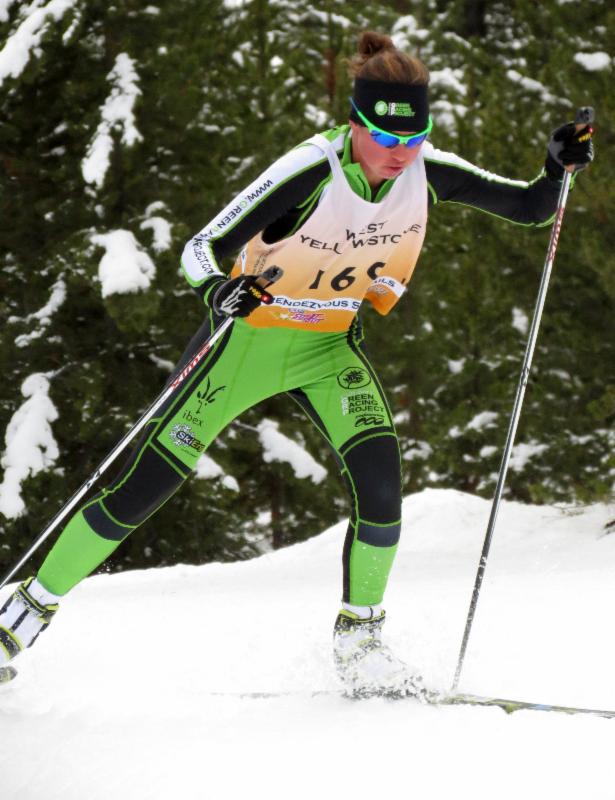
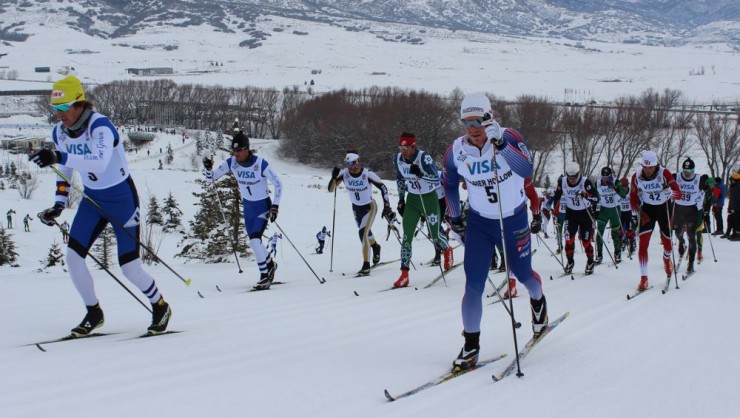
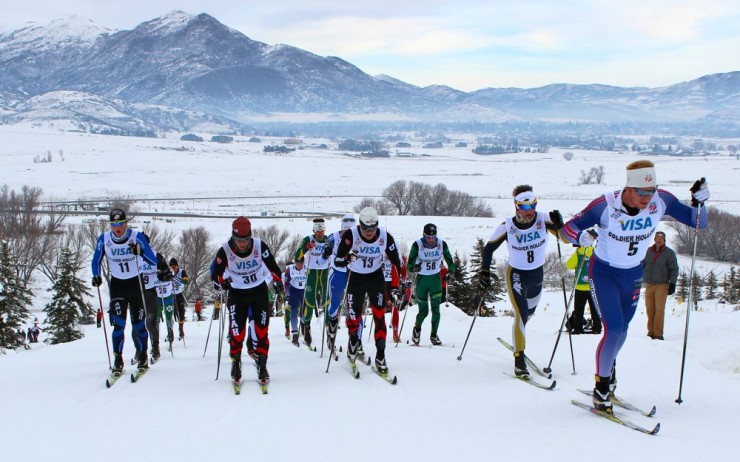
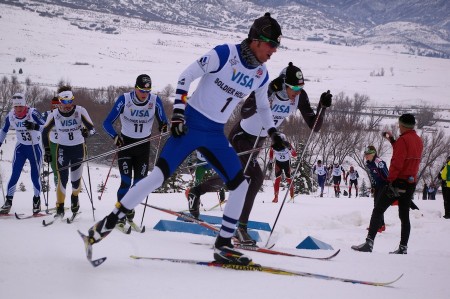
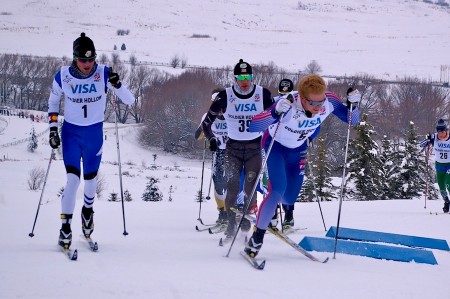
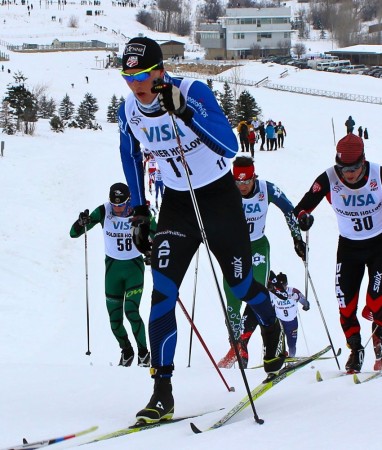
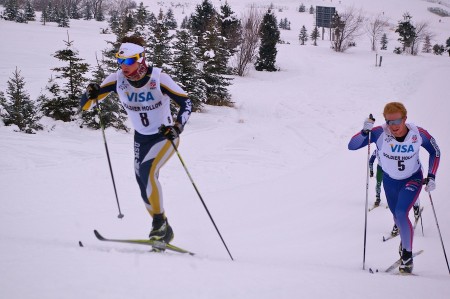
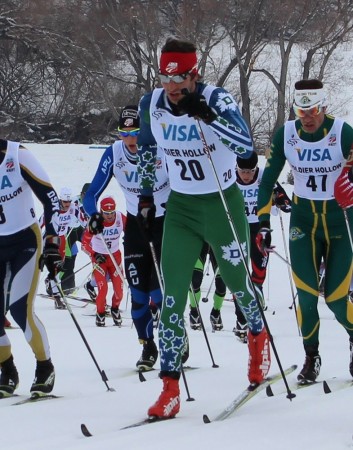
A photo album with selected photos from today’s SuperTour Skate Sprint can be found on the TokoUS fb page (please “like” so you can follow such postings in the future). Please visit to see lots of great photos including run away winner Caitlin Gregg. The photo album can be found here. All athletes shown affiliated with Toko Wax/Tools and/or Toko Gloves.
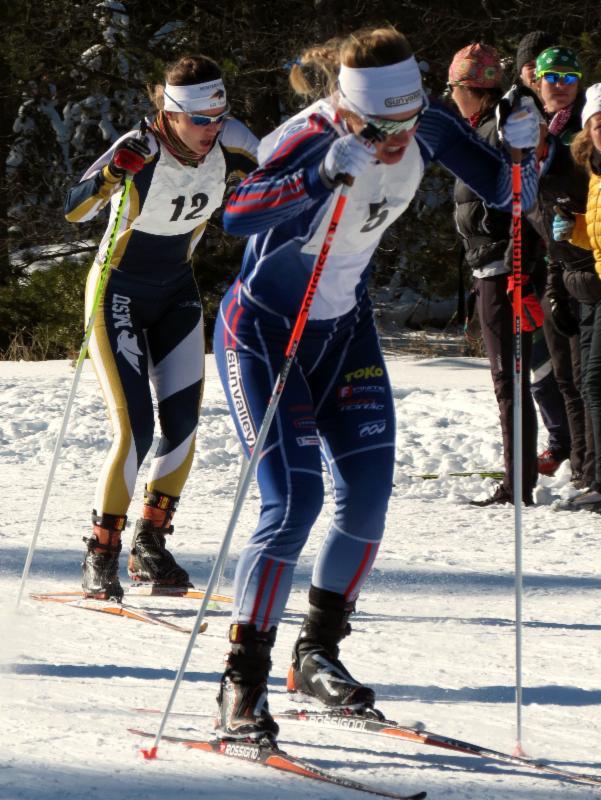
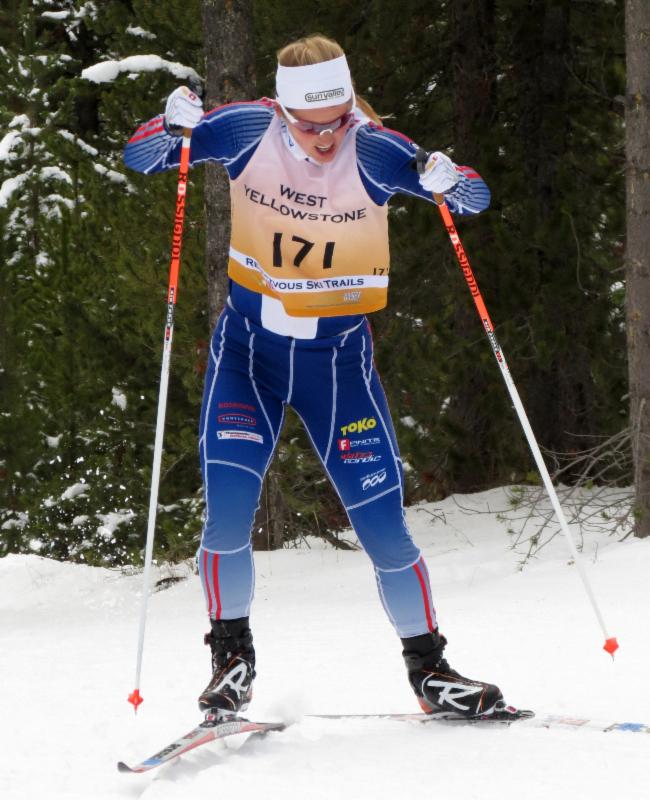
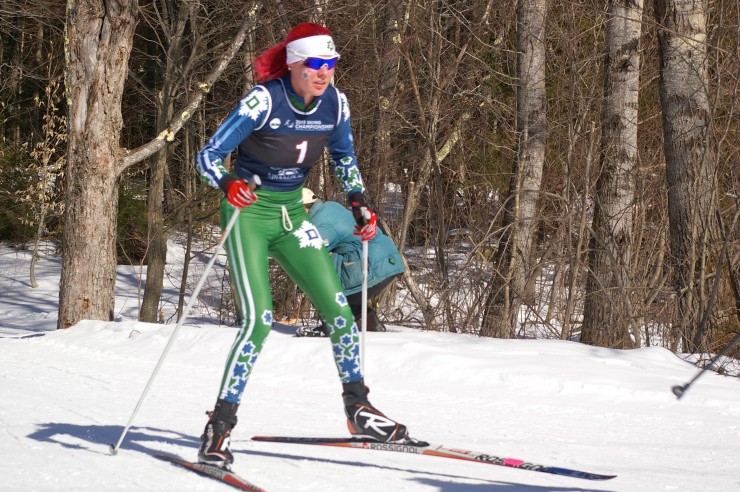
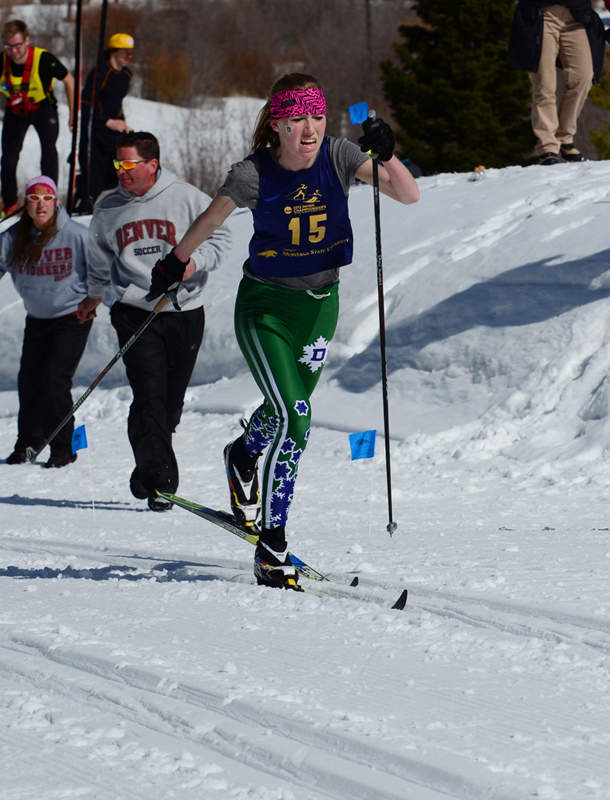
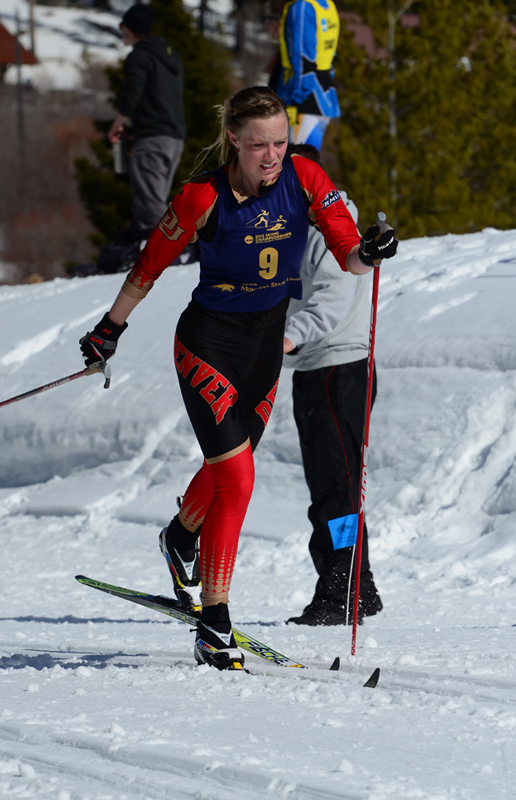
Sun Valley Elite Team Skier Rose Kemp
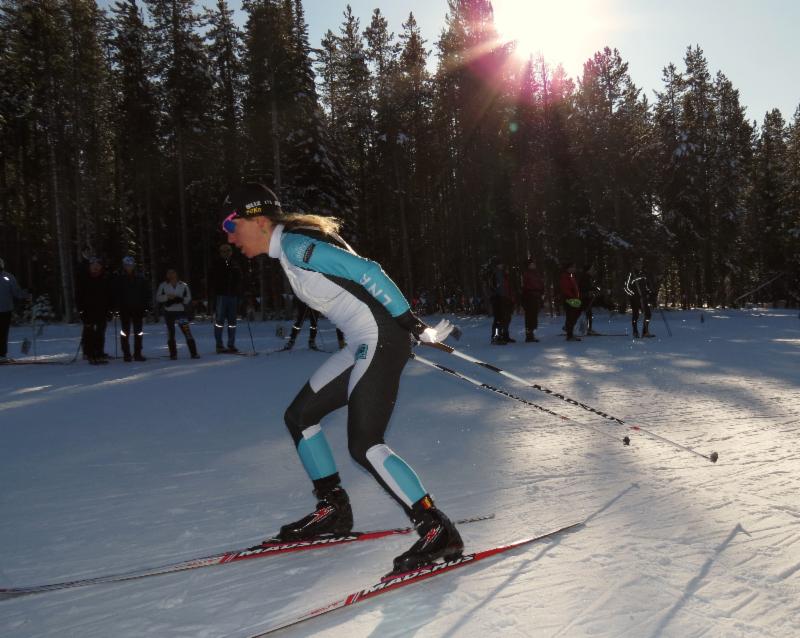
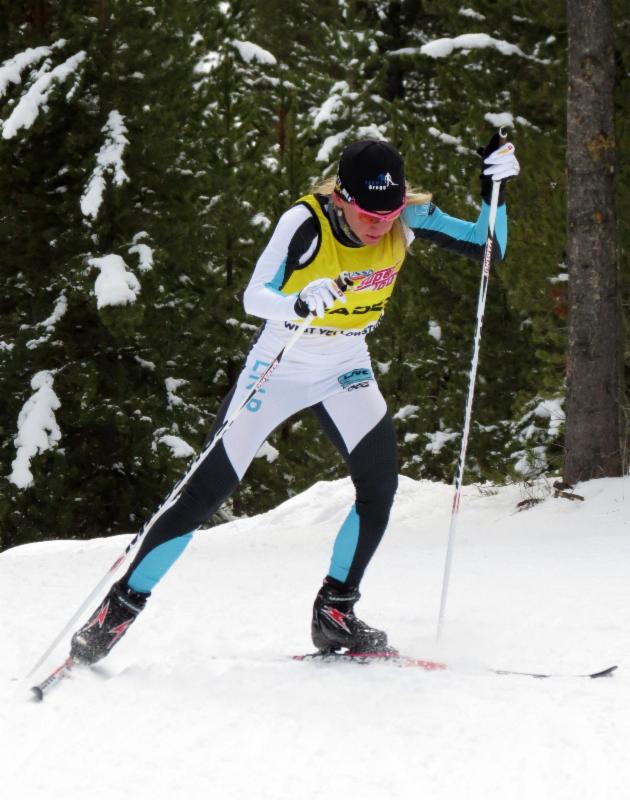
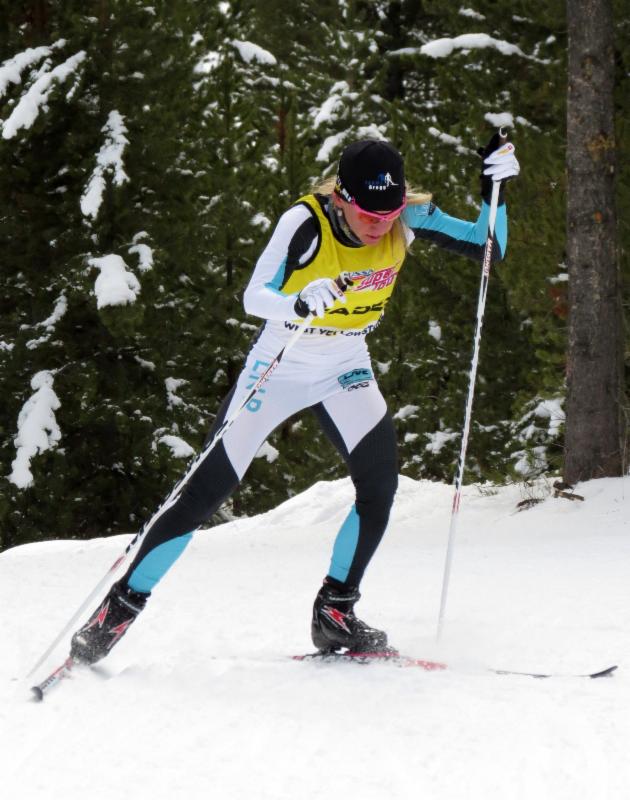
Team Gregg’s Caitlin Gregg running away with it
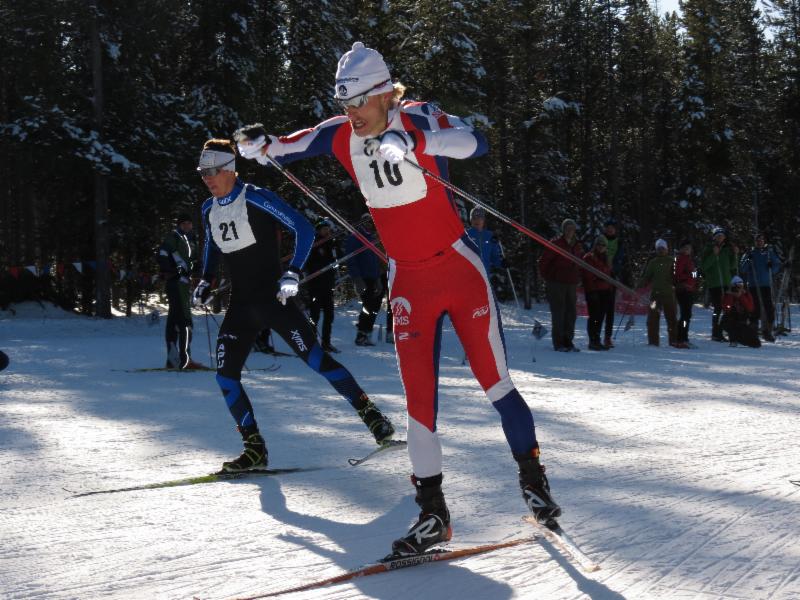
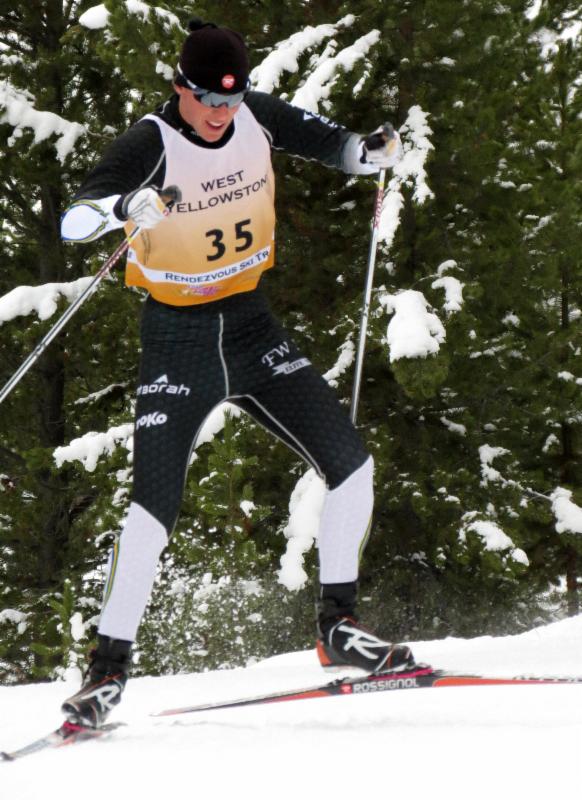
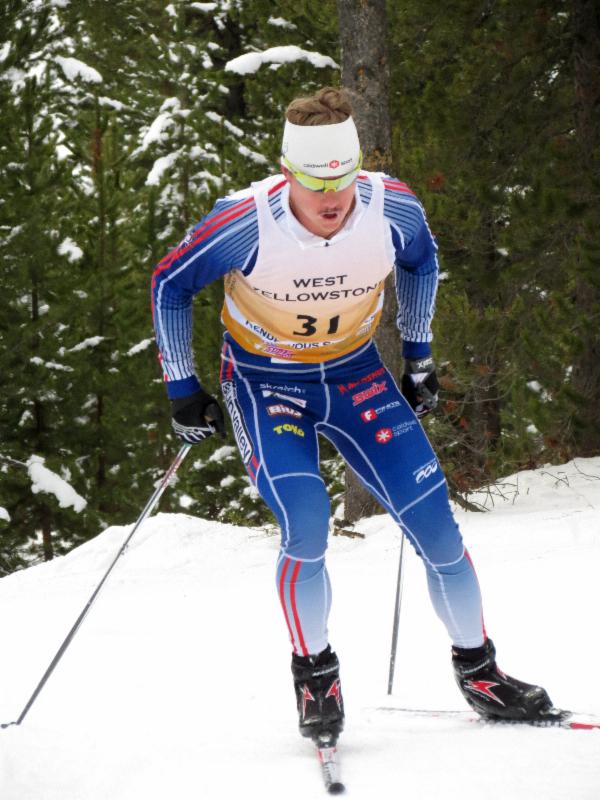
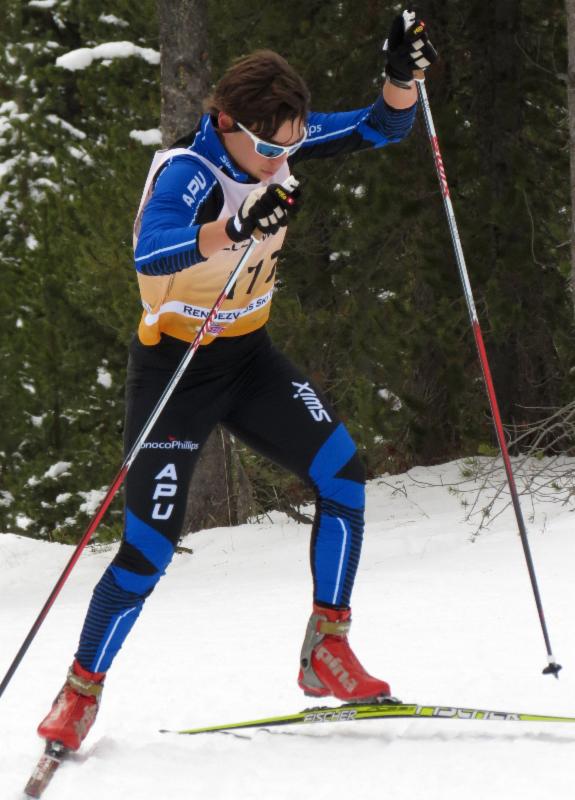
Stratton T2 Team’s Eric Packer and APU’s Reese Hanneman battling in the final
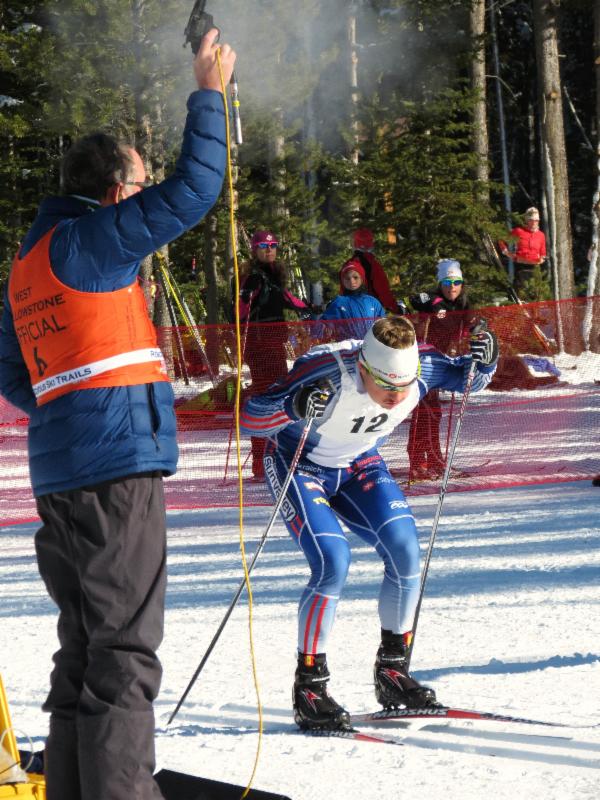
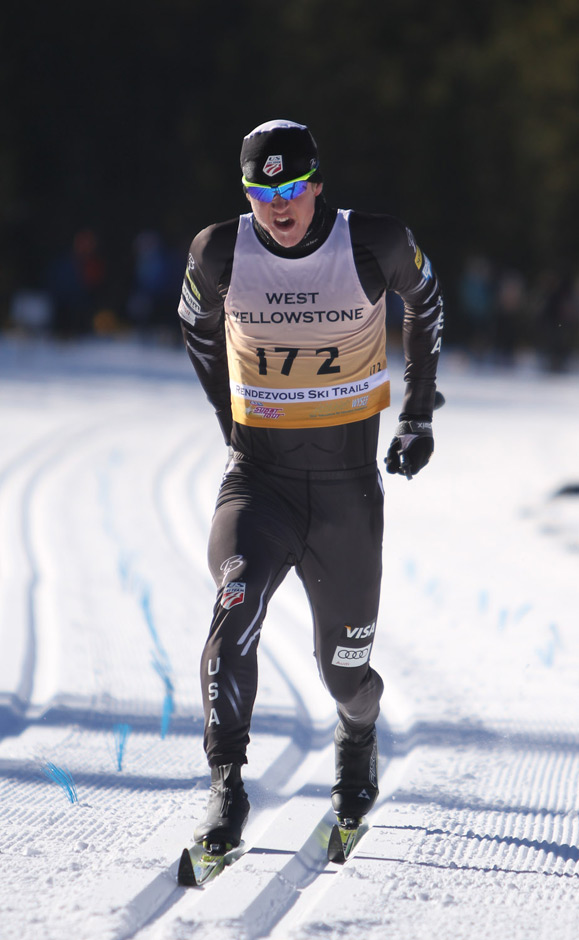
Sun Valley Elite team member Miles Havlick at the start
West Yellowstone Expo a Huge Success
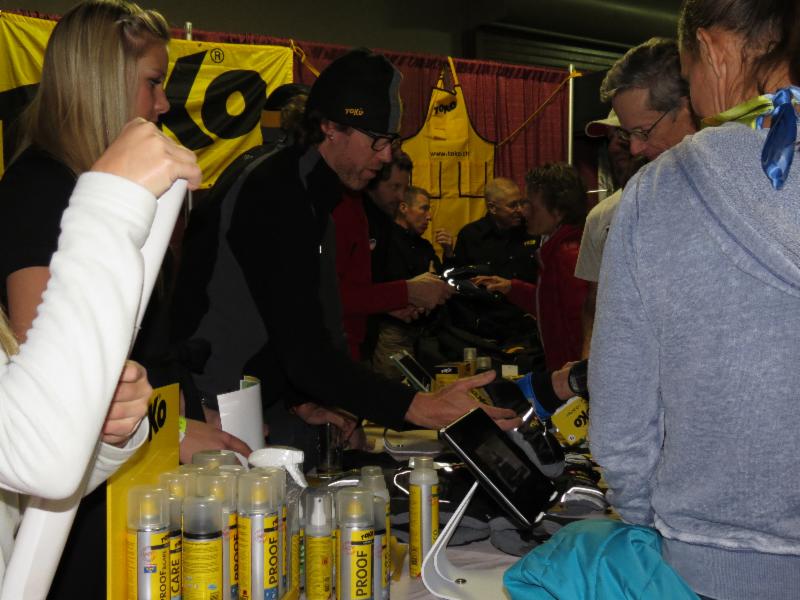
West Yellowstone Fall Ski Festival attendees mob the Toko booth
SuperTour Distance Skate Photos on TokoUS Facebook Page
A photo album with selected photos from today’s SuperTour Distance Skate can be found on the TokoUS fb page (please “like” so you can follow such postings in the future). Please visit to see lots of great photos including run away winner Caitlin Gregg. The photo album can be found here. All athletes shown affiliated with Toko Wax/Tools and/or Toko Gloves.
Caitlin Gregg won the 5k by over 1:02! She was in a class of her own.
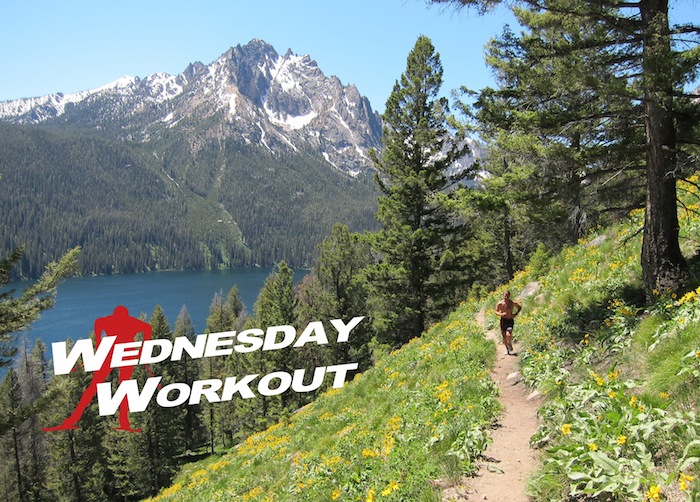
Trail running in the Sawtooth Mountains north of Sun Valley, Idaho. Photo: Miles Havlick.
Welcome to Wednesday Workout, the newest workout series on FasterSkier. During the offseason, we’ll feature components of summer training programs from top individuals and teams throughout the U.S. and Canada at the junior, college and elite club levels. If you ever have a workout suggestion or training question, send them in to info[at]fasterskier.com.
May training season is in full swing, and he’s logging the hours on foot, on his bike and on rollerskis.
“I’ve been rollerskiing a little bit; my hands are still getting used to that so I ride my bike a fair amount this time of year,” Havlick said. “Mountain and road [biking] is a great way to get in the hours and is a bit more tolerable when it’s really hot like it is.
“I like to change up my workouts a lot to keep it interesting; I don’t want to get in a routeine of doing the same stuff all the time.”
Miles Havlick winning the 20 k freestyle at NCAA Championships in March. (Photo: flyingpointroad.com)
In addition to long hours on wheels, one of the staples in his summer training program is on foot: a point-to-point L3 trail run near his house in Salt Lake City. Though simple, the workout requires focused execution.
The Workout:
30 min warm-up
50-60 min L3
30 min warm-down
The session is doubly productive: like any L3 threshold workout it improves VO2 max, but it can also serve as an informal periodic test if repeated throughout the summer. Havlick does this workout from the same starting point about every two weeks on a trail that has varied terrain: with rolling hills, flats and gradual down hills.
“You can mark where you finish, or make a mental note of it, and see where you improve along the way,” Havlick says. “It’s almost like a time trial but less formal, and usually it’s a good measure of how your fitness is improving throughout the summer.”
He emphasized the importance keeping the heart rate in L3, easing back on the climbs and picking up speed on descents as necessary — which also makes the session a good pacing workout.
“There are different goals for every workout session,” Havlick explains. “Some days you go easy and just do it to get the blood moving, to recover or for a long OD. L3 workout days, L4 workouts and time trials — stuff like that — if you go hard all the time you’ll start to decline in performance. You want to improve certain aspects. L3 work does a lot with improving your VO2 max and your overall fitness, so that’s the goal of this workout.”
To change things up, Havlick will sometimes adjust the way he attacks the hills and flats to see how it affects where he finishes, all the while staying close to L3.
“I run the flats a little harder some days and push the hills harder other days, and see how it affects the finishing position,” he said. “It’s kind of interesting; it kind of makes it like a ski race, too.”
Though the workout looks simple on paper, know that an hour at L3 is not to be undertaken lightly.
“It’s a pretty hard workout, so I’m pretty cooked after that,” Havlick says.
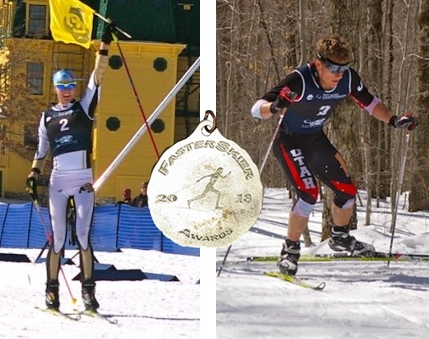
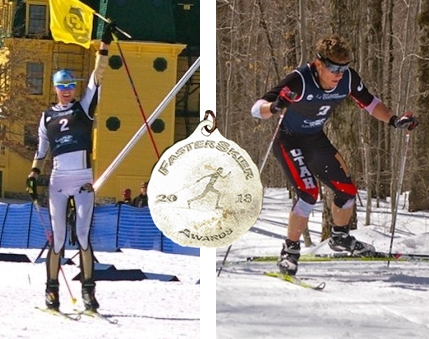
Joanne Reid (University of Colorado) and Miles Havlick (University of Utah) are FasterSkier’s 2013 Collegiate Skiers of the Year.
After a one-year hiatus, our Skier of the Year awards are back. We start with the collegiate category, where for the first time in FasterSkier’s history of giving such prizes Americans took both of the top honors: NCAA freestyle champions Miles Havlick (University of Utah) and Joanne Reid (University of Colorado).
Miles Havlick (USA/University of Utah)
Havlick (Photo: Steve Fuller/Flyingpointroad.com)
When it came time to nominate athletes in the college division, Havlick was at the top of a very short list. There is no question he deserves the honor; in college skiing all roads lead to NCAA Championships and his performance there was the storybook ending to a stellar college career. Not only did the senior from Boulder, Colo., defend his 2012 20 k NCAA title this year, which is no easy feat, he did so against one of the most competitive fields the NCAA has ever seen. The freestyle race, with its dramatic sprint finish and Havlick’s six-tenths winning margin, is not one to be forgotten any time soon. And at an event that’s all about team, Havlick was the first of all three Utes in the top five in the mass start, which propelled Utah from fourth to second on the last day of the Championships. For Havlick, it was a “perfect” ending to his time in Utah’s black and red.
Leading up to NCAAs, the signs were all there that Havlick was bound for success in Vermont; he won six out of ten RMISA regional races and never once finished outside the top 10. At the Montana SuperTours prior to the beginning of the college season, he just missed out on a trip to Canmore, Alberta, as an American representative on the World Cup. He’s our 2013 award-winner because of his achievements in college skiing, but when Havlick makes the transition to racing professionally after graduation he’s bound to shake up the men’s field at the national level.
Joanne Reid (USA/University of Colorado)
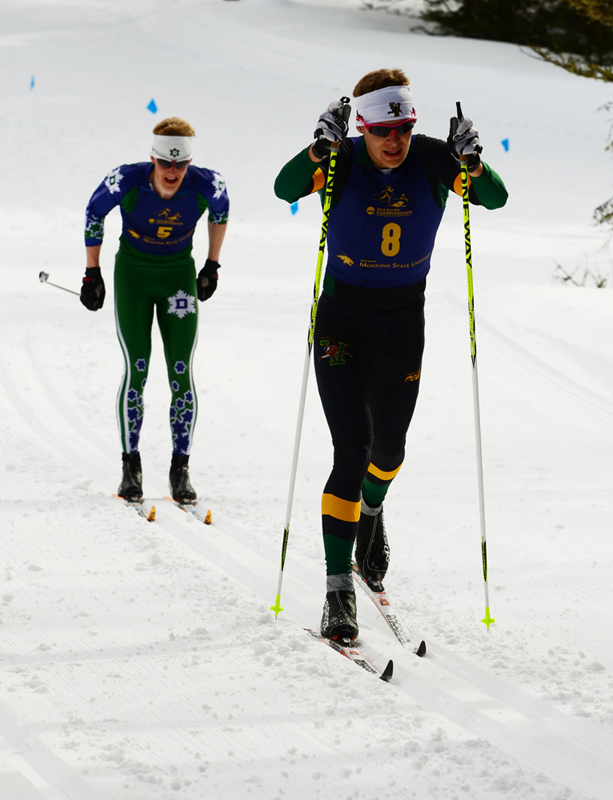
Joanne Reid leading CU teammates Eliska Hajkova (4) and Maria Nordstrom (9) in the 15 k freestyle at NCAA Championships. Reid won by nearly 27 seconds and Hajkova was second. (Photo: Steve Fuller/Flyingpointroad.com.)
The skier-of-the-year choice was also clear in the women’s collegiate category. Joanne Reid, in a ridiculously dominant senior season, won eight out of ten regional races leading up the final showdown in Ripton, Vt. At NCAAs, she added another ‘W’ to her resume in the 15 k mass start classic to lead CU to an improbable come-from-behind team win on the final day. It’s hard to call a team with 18 NCAA Championships in its trophy case (now 19) an underdog, but that’s what the Buffs were when they entered the last day of NCAAs 54 points down to the University of Vermont. Colorado relied on its nordic women for the lion’s share of the team score, and with the pressure on Reid delivered a 27-second victory over teammate Eliska Hajkova. Reid later said was unaware of her gap on the rest of the field until she realized the crowd would fall silent after she skied by.
A look back at Reid’s previous record demonstrates just how big a jump she made in the last year: though she’d already been on the NCAA podium as a sophomore in 2011, winning is quite a different thing. Illness plagued the Palo Alto, Calif., native midway through last season, and prior to this year she had only two collegiate wins to her name. What happened next, of course, is history: in the last few months Reid more than quadrupled her win record as she tore through the RMISA circuit like it was no big deal. Reid comes from an intimidating lineage of elite endurance athletes, but with her new individual NCAA title she’s on her way to creating a powerful reputation of her own.
Honorable Mention:
David Norris (USA/Montana State University)
David Norris’ wide-reaching accomplishments this year are worth noting. He particularly didn’t stand in the college circuit, but that was because he skipped half the season to race internationally — first at a little thing called the World Cup in Canmore, then at U23 World Championships in the Czech Republic. In between he was third in the 30 k classic at U.S. Nationals to Torin Koos and Erik Bjornsen. Norris finished a respectable 11th and 12th in the NCAA races, and immediately thereafter he jumped on a plane to compete for the U.S. at OPA Cup Finals in Italy. When he returned, he continued racing at Spring Series. It’s been said that college and skiing are difficult to pursue at the same time, but Norris and his coaches proved this year that the logistics are doable.
Sam Tarling (USA/Dartmouth College)
Like Norris, Tarling put together solid performances both in and out of the college circuit this year. A repeat NCAA title remained elusive for the Mainer, but like Norris the Dartmouth senior accrued impressive results domestically and internationally. Tarling was fifth in the 30 k at U.S. Nationals, joined Norris in representing the U.S. at U23 World Championships, and despite having to miss the first two EISA carnivals he was the second-ranked Eastern qualifier to NCAAs, where he finished 10th and seventh in the 10 k and 20 k, respectively. He joined Norris again in Toblach, Italy, for OPA Cup Finals, where was the top American man in the mini-tour final standings. After SuperTour Finals Tarling announced he’s going pro, and if past results are any indication he’s headed for big things next year.
RIPTON, Vt. — It didn’t get much better than Saturday, with sunny skies and spring-like conditions for the last day of the NCAA Skiing Championships at Rikert Nordic Center.
Colorado University (CU) senior Joanne Reid dropped the women’s field in the 10-kilometer freestyle mass start and teammate Eliska Hajkova hung on for silver, lifting the Buffs ahead of the University of Vermont (UVM) in the team standings.
In the men’s 20 k freestyle race, the University of Utah took center stage with senior Miles Havlick defending his 2012 NCAA Championships mass-start title. Rune Ødegård placed second to help CU finish on top for its 18th national title, and another Norwegian, Einar Ulsund, finished third for Utah to bump the team to second overall.
For more photos from the 2013 NCAA Skiing Championships, visit Flying Point Road Photography. All proceeds go to the National Nordic Foundation (NNF).
2013 NCAA Championships Rikert
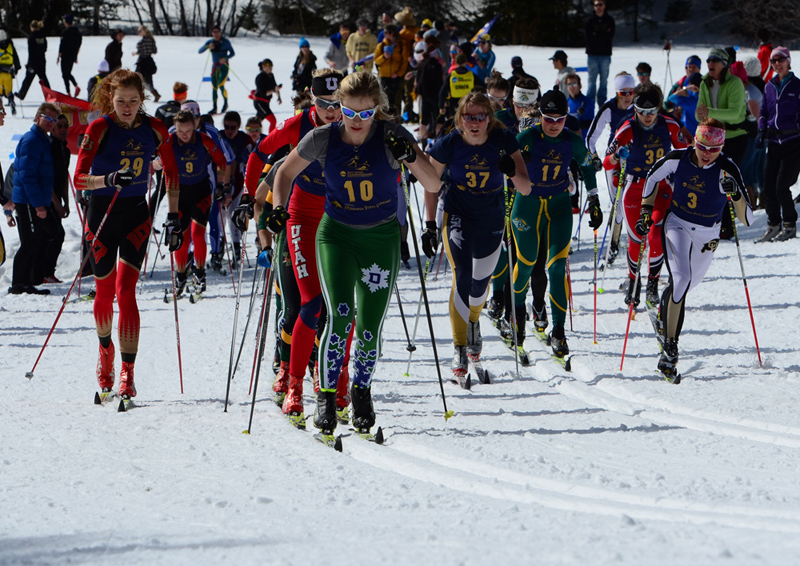
Start of women’s 15 k freestyle mass start at the 2013 NCAA Skiing Championships at Rikert Nordic Center in Ripton, Vt.
2013 NCAA Championships Rikert 15 k freestyle mass start
CU takes the lead early with Joanne Reid up front and Eliska Hajkova (4) right behind.
Hajkova (r) and event
Maria Nordstrom (CU) and Mary O’Connell (Dartmouth)
The road between spectator viewpoints at Rikert Nordic Center
Hajkova leading Reid, Dusser and O’Connell
2013 NCAA Championships Rikert 15 k freestyle mass start Hajkova, Reid
2013 NCAA Championships Rikert 15 k freestyle mass start O’Connell
2013 NCAA Championships Rikert 15 k freestyle mass start Nordstrom
Utah’s Rose Kemp leading Anya Caldwell Bean (UNH) and Silje Benum (DU). Benum placed fifth, Bean was sixth and Kemp finished ninth.
Jessica Yeaton (MSU)
Annie Hart (Dartmouth)
Rosie Frankowski (NMU), who placed seventh
Reid leads Dusser (UAA)
2013 NCAA Championships Rikert 15 k freestyle mass start Dusser, Hajkova
2013 NCAA Championships Rikert 15 k freestyle mass start O’Connell
2013 NCAA Championships Rikert 15 k freestyle mass start Hart, Bean, Benum
Hajkova (r) and Dusser chase Reid (not shown)
2013 NCAA Championships Rikert 15 k freestyle mass start O’Connell
2013 NCAA Championships Rikert 15 k freestyle mass start
Reid enters stadium alone
Reid wins by nearly 27 seconds
Hajkova (l) and Dusser duke it out for second
Hajkova (l) edges Dusser for silver
CU teammates Reid (c) and Hajkova celebrate at the finish while third-place finisher Dusser (UAA) looks on
2013 NCAA Championships Rikert 15 k freestyle mass start Reid, Hajkova
Dusser is congratulated
2013 NCAA Championships Rikert 15 k freestyle mass start
Joanne Reid 2013 NCAA Championships Rikert 15 k freestyle mass start winner
Between races
2013 NCAA Championships Rikert freestyle mass start
IMGP9693
2013 NCAA Championships Rikert freestyle mass start
2013 NCAA Championships Rikert freestyle mass start
2013 NCAA Championships Rikert freestyle mass start
2013 NCAA Championships Rikert freestyle mass start
2013 NCAA Championships Rikert freestyle mass start
Marine Dusser with her UAA team at 2013 NCAA Championships Rikert freestyle mass start
2013 NCAA Championships Rikert freestyle mass start
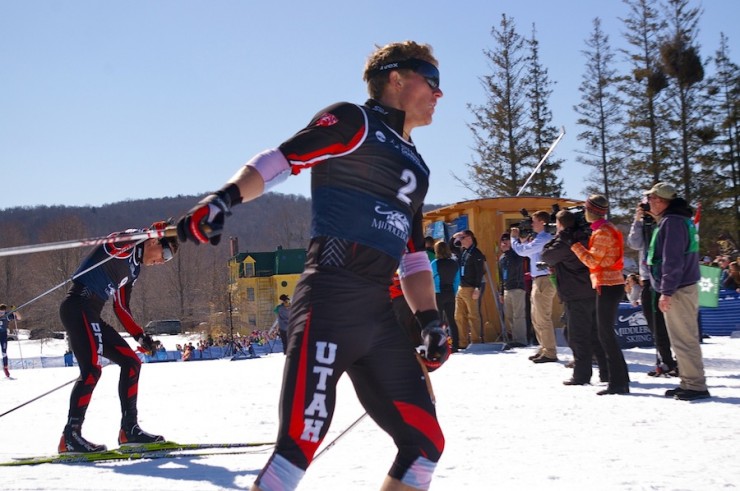
University of Utah Nordic coach Miles Havlick was a two time NCAA Champion during his career for the Utes, including winning the 20 k skate race at NCAAs in Middlebury, VT in 2013.
2013 NCAA Championships Rikert 20 k freestyle mass start
Dartmouth’s Sam Tarling leads on A-climb on first lap
Sam Tarling 2013 NCAA Championships Rikert 20 k freestyle mass start
Eventual-third place finisher Einar Ulsund (Utah) leads Patrick Madden (MSU) on the first lap
2013 NCAA Championships Rikert 20 k freestyle mass start
2013 NCAA Championships Rikert 20 k freestyle mass start
2013 NCAA Championships Rikert 20 k freestyle mass start
2013 NCAA Championships Rikert 20 k freestyle mass start
2013 NCAA Championships Rikert 20 k freestyle mass start
2013 NCAA Championships Rikert 20 k freestyle mass start
Havlick leads Viktor Brannmark (UAA) and Rune Ødegard (CU)
2013 NCAA Championships Rikert 20 k freestyle mass start
2013 NCAA Championships Rikert 20 k freestyle mass start
Rune Ødegård (CU) leads Ulsund on third of four laps
IMGP9753
Tarling (l) and Ben Lustgarten (Middlebury) chase
Lustgarten 2013 NCAA Championships Rikert 20 k freestyle mass start
Havlick and Silas Talbot (Dartmouth)
Tarling and David Norris (MSU) move to front
2013 NCAA Championships Rikert 20 k freestyle mass start
2013 NCAA Championships Rikert 20 k freestyle mass start
Erik Soderman (NMU) takes control early on last lap. He went on to place fourth.
Ulsund checks behind him
Ulsund leads halfway through
2013 NCAA Championships Rikert 20 k freestyle mass start
2013 NCAA Championships Rikert 20 k freestyle mass start
Spectators line the fence before the finish awaiting the race leaders
Ødegård (4) passes Tarling (5) on final rise to take lead
2013 NCAA Championships Rikert 20 k freestyle mass start Rune Odegaard
Havlick leads the chase
2013 NCAA Championships Rikert 20 k freestyle mass start
2013 NCAA Championships Rikert 20 k freestyle mass start
2013 NCAA Championships Rikert 20 k freestyle mass start
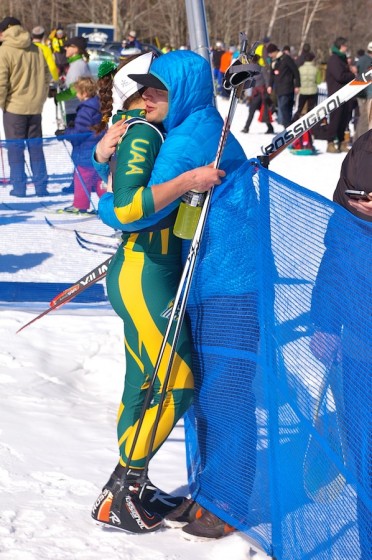
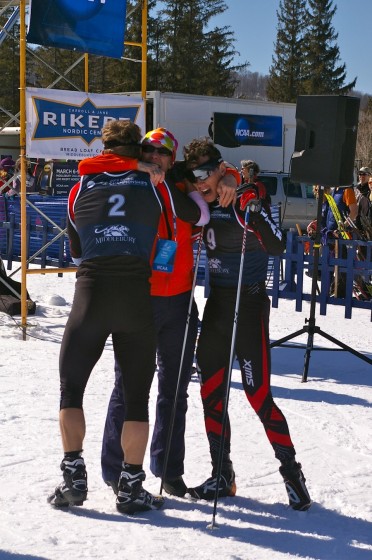
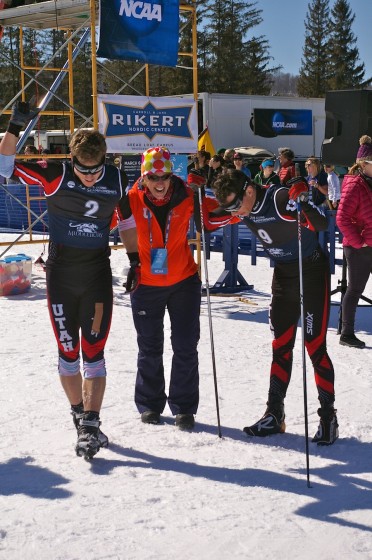
Utah teammates Havlick and Ulsund embrace after taking first and third, respectively.
2013 NCAA Championships Rikert 20 k freestyle mass start
2013 NCAA Championships Rikert 20 k freestyle mass start
2013 NCAA Championships Rikert 20 k freestyle mass start
2013 NCAA Championships Rikert 20 k freestyle mass start
2013 NCAA Championships Rikert 20 k freestyle mass start
2013 NCAA Championships Rikert 20 k freestyle mass start
2013 NCAA Championships Rikert 20 k freestyle mass start
IMGP9835
2013 NCAA Championship 15 k freestyle mass start women’s podium
2013 NCAA Championship 20 k freestyle mass start men’s podium
University of Utah senior Miles Havlick celebrates his second NCAA title in the 20 k mass start, 0.6 seconds ahead of Colorado’s Rune Ødegård (l) in second and Utah teammate Einar Ulsund (r) in third on Saturday at the Rikert Nordic Center in Ripton, Vt. (Photo: Flyingpointroad.com/All photo sales benefit NNF)
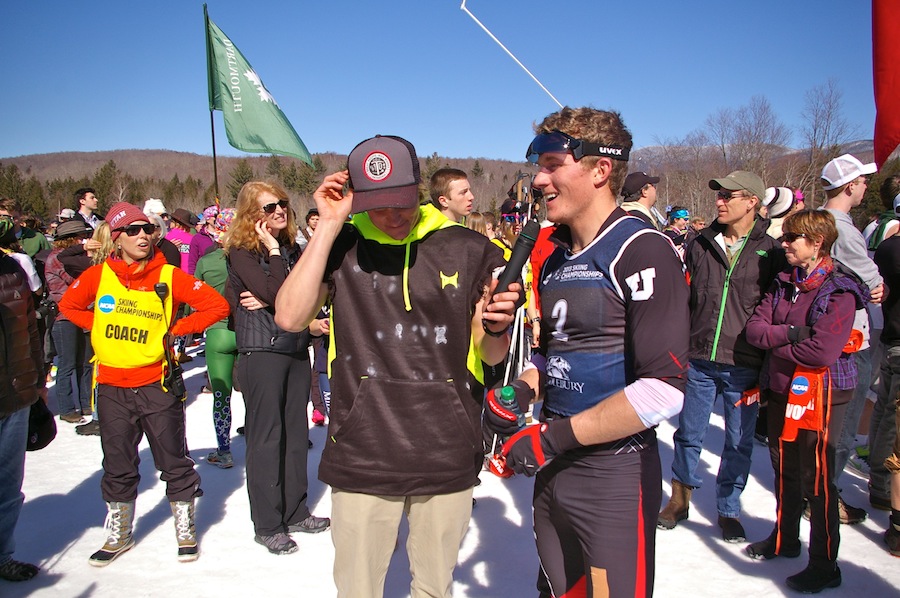
RIPTON, Vt. – Standing with a microphone in hand shortly after winning Saturday’s 20-kilometer freestyle mass start at the 2013 NCAA Skiing Championships, Miles Havlick smiled as he fielded playful questions from the announcer.
Friends, fans and impressed spectators surrounded him at the Rikert Nordic Center, and as soon as he was done thanking the crowd and his University of Utah teammates, Havlick was bombarded with hugs.
Miles Havlick (r), the 2013 NCAA 20 k freestyle mass start champion, during a post-race interview with the NCAA announcer on Saturday at Rikert Nordic Center in Ripton, Vt.
With watery eyes, the two-time NCAA Champion was either emotional or simply tanked after four laps around Rikert’s deceivingly hard 5 k course – probably a little of both.
The senior had just defended his 2012 national title in the 20-kilometer mass start, this time in a skate race. Skiing up into the stadium with six others less than half a kilometer before the finish, Havlick rose from a possible podium contender to a repeat champion, passing Dartmouth College’s Sam Tarling and catching Rune Ødegård of the University of Colorado, who won Thursday’s 10 k classic individual start.
In edging Ødegård by six-tenths of a second in 50:13.4, Havlick led a trio of Utes in the top five. With Norwegian teammate Einar Ulsund in third (+1.0) and Swede Niklas Persson in fifth (+3.1), Utah captured second in the final team standings (43 points behind NCAA champion the University of Colorado) and bumped the University of Vermont (UVM) to third.
“It’s hard to do it again,” Havlick said of his second-straight NCAA mass-start title. “Just an awesome team this fall, all new guys. I was the only one returning and you never know what to expect, but it was an unbelievable senior year.”
At breakfast Saturday morning, he said they talked about goals – three in the top five – which they knew would be hard, but wanted to strive for nonetheless. Havlick set the tone early, leading Viktor Brännmark of the University of Alaska-Anchorage (UAA) and Tarling through the first downhill. Tarling took the lead up the toughest climb on the loop, while Brännmark, Dartmouth teammate Silas Talbot, Ulsund and Havlick stuck near the front of the large pack.
Ødegård pushed the pace on the second lap while Ulsund, Brännmark, Tarling and Middlebury’s Ben Lustgarten chased, along with some 20 others. The group remained some 25 strong through the third lap, in which David Norris (Montana State University) made a move to the front. Halfway through the last time around, it dwindled to seven (with Ulsund, Soderman, Tarling, Ødegård, Talbot, Persson, and Lustgarten).
Utah senior Miles Havlick on his way to winning Saturday’s 20 k freestyle mass start for his second-straight NCAA Championships title. Havlick topped University of Colorado sophomore Rune Ødegård by 0.6 seconds for the victory at Rikert Nordic Center in Ripton, Vt. (Photo: Flyingpointroad.com)
Havlick had lost contact, but regained it on the final climbs. Following Tarling up the last ascent into the field before the finish, Havlick watched as Ødegård charged to the front. He responded, outsprinting the Norwegian in the final straightaway.
“It was deafening skiing up that hill,” Havlick said of the crowd near the finish. “Ears just ringing really takes the pain away.
“It’s unbelievable today,” he added. “You never know what’s gonna happen in a mass start. It’s just perfect.”
Sharing the podium with his teammates after with their second-place showing, Utah’s skiing director Kevin Sweeney handed Havlick the large trophy to hoist over his head for photos.
“This championship is one of the most, I would say, competitive that I’ve experienced and I’ve been collegiate coaching for a long time,” Sweeney said. “So for this to finish up the way it did, it’s a true highlight of my career and such a great group of guys. Everybody skied where they needed to. I’m ecstatic.”
Even though CU and UVM were the favorites battling it out for first, Sweeney knew his skiers could get into the mix. He just wasn’t sure where they’d stack up against strong teams, including Dartmouth, he said.
“You know they’re gonna be in it, just exactly where,” Sweeney said. “I was very happy to see the race unfold and see our three guys basically in the top 10. I felt good about that.”
Last year’s 10 k freestyle individual start champion, Soderman placed fourth (+2.6). Mats Resaland of the University of New Mexico was fifth (+2.8), Tarling seventh (+5.2) and Lustgarten notched his second top 10 of the week in eighth (he was fourth on Thursday). Talbot placed ninth and Kyle Bratrud of Northern Michigan University was 10th.
“It was a hard race because we were like 20 people pretty much the whole race,” Persson said. “You didn’t really know if you were skiing fast enough, if you were gonna end up top five or top 20, you never know.”
According to Ulsund, the Utes were out for redemption after Thursday’s race, in which Havlick led the team in sixth, Ulsund was 13th and Persson was 15th.
“We just decided that this should be our day,” Ulsund said.
Anticipating an attack from UVM’s Scott Patterson, undefeated in eastern carnival freestyle races this season, Ulsund said it never came (Patterson ended up 26th). Meanwhile, the pace stayed mostly consistent in soft conditions on a 40-degree afternoon.
“Usually we try to switch the lead, but today our tactic was mostly to stay in the pack and do something on the last lap,” Ulsund explained. “I’m a pretty slow sprinter so I was really worried, like, what’s going to happen now? Thankfully, the others were tired and the first three got the gap and that’s what set my podium spot today.”
Just about as thrilled with his personal and team performance, CU sophomore Ødegård said the Buffs went into the 20 k thinking they were down to UVM. In reality, they were up by 16 points after Joanne Reid and Eliska Hajkova took first and second, respectively, in the preceding women’s 15 k.
“We went into today chasing and that’s where we want to be,” he said. “When I saw during the race there were no Vermont skiers up in the lead, I knew we had the team victory. It was just awesome to ski around and do whatever I could to finish.”
As for doing achieving the highest collegiate honors with his American team, Ødegård said, “We have an amazing group. Everyone’s enjoying being together. This week staying at the peaceful hotel, really team bonding all week, everyone had a good time I think and that’s most important.”
2013 NCAA men’s 20 k freestyle mass start podium. From left to right: Sam Tarling (Dartmouth/7th), Mats Resaland (UNM/6th), Erik Soderman (NMU/4th), Einar Ulsund (Utah/3rd), Miles Havlick (Utah/1st), Rune Odegaard (CU/2nd), Niklas Persson (Utah/5th), Ben Lustgarten (Middlebury/8th). (Photo: Flyingpointroad.com)
Rune Oedegaard (Colorado University) in 2011 action in West Yellowstone, Mont. He won the men’s 10 k classic on Sunday in Steamboat Springs to help the Buffs to victory in the first NCAA race of the season.
The 2013 college ski season kicked off in full this weekend at the Colorado Invitational at Howelsen Hill Rocky in Steamboat Springs, Colo. The CU Buffs prevailed in their home meet, 878 points to Denver University’s 808.5 between both alpine and nordic scores.
Frigidly cold temperatures made for adverse racing conditions for the 15/20 k freestyle mass start and 5/10 k classic. Joanne Reid (CU) and Rune Oedegaard (CU) each took individual victories in Saturday’s mass start event.
“It was pretty tough,” CU head coach Bruce Cranmer said of the conditions. “I think some people struggled with the cold; the slow snow and all that.”
The first women’s race was a close one until about 2 k from the finish, when Reid pulled away from Marine Dusser (University of Alaska, Anchorage) and Maria Nordstroem (CU) to finish 8.6 seconds ahead of Dusser. Reid led Nordstroem and Mary Rose to a 1-3-7 placing for the Buffs in the 15 k.
Reid did not race at U.S. Nationals in Utah earlier this month and was therefore a slightly unknown quantity going into the first RMISA race of the year. She said the conditions suited her: skating, challenging course, unpleasant conditions.
“This is my first race of the season so I was really nervous,” Reid told FasterSkier on the phone from Steamboat Springs. “I’m a better skate distance skier so I was hoping to crack the top five.
“[The cold] makes the snow really slow so the race becomes a little different; it’s more about strength,” Reid said. “I really like the course here, it’s pretty hard but it’s a fun course to ski.”
The men’s 20 k was a much closer race. Oedegaard bested the University of Utah’s Miles Havlick by only 0.8 seconds. UAA’s Lukas Ebner took third (+1.7).
“He’s been training well and doing well, so I figured he’d be in there,” Cranmer said of Oedegaard. The Molde, Norway, native raced in Sweden over the holiday break and was recently second in the 15 k classic in Bozeman, Mont.
Havlick led the Utes to the high men’s score on Saturday; he, Einar Ulsund and Tucker McCrerey went 2-4-8 for the Utes in the 20 k.
Havlick and Oedegaard traded places in the 10 k classic event the next day. The defending NCAA classic champion bested Oedegaard by 10.9 seconds. Ulsund took third (+21.4).
“Today, our team really demonstrated the grit and determination that make us so strong,” Havlick said in a Utah Skiing press release. “When it’s -3F at the start of the race and there are smiles all around, you know it is going to be a great day.
“I want to dedicate my race today to my former teammate Charlie Smith, who finished on the podium at the NCAA Championships in the 15-km classical on this same course in 2010. He passed away over the holidays, but continues to be an inspiration to us all and constantly in our thoughts.”
In the women’s 5 k, CU once again had a dominant performance. Nordstroem beat Reid by 13.5 seconds; Rose Kemp (UU) took third (+17.4). Eliska Hajkova (CU), despite recent illness, was CU’s third scorer in sixth (+20.4).
“I can’t wait until Eliska fully recovers so we can really show them some Buff power,” Reid said.
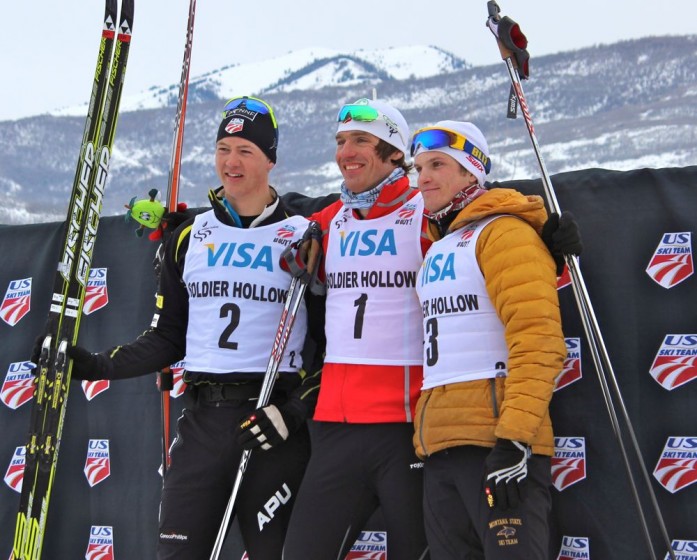
Torin Koos (Bridger Ski Foundation/Rossignol) won his second national championship race this week with his 30 k classic victory on Sunday at Soldier Hollow. Photo: USSA/Tom Kelly.
FasterSkier’s coverage of the 2013 US Cross Country Championships is brought to you through the generous support of The Memory Clinic in Bennington, Vt.
MIDWAY, Utah —Torin Koos (Bridger Ski Foundation/Rossignol) knew he had a pretty good shot at winning another national title on Sunday. Carrying momentum from a classic sprint victory and a distance skate result that made him optimistic for the mass start, he was pretty confident he would have a good 30 k classic.
“I just had a feeling that I’d have the capacity and the moxie to make it happen,” Koos said.
Make it happen he did, skiing patiently tucked into the lead pack for most of the race to make a move at the base of the final climb up Hermod’s Hill. When he came off the top, he had put enough distance on the field to give himself a margin of a few seconds over Erik Bjornsen (Alaska Pacific University/U.S. Ski Team), and when they entered the final stretch it was a practically insurmountable distance. Koos won the 30 k in 1:26:04, 3.1 seconds ahead of Bjornsen and 8.1 seconds over bronze-medalist David Norris (Montana State University).
The 2013 national 30 k champion. Photo: USSA/Tom Kelly.
“I was optimistic going into it,” Koos said as he awaited to step onto the podium. “I won’t say it was a surprise to me.”
For someone who had completed his first distance race of the season only two days prior, the race played out perfectly: tactically and not too fast. The lead pack, instead of gradually thinning, remained 20 men strong as far along as the 20 k mark. Koos began the race in bib 39 towards the middle of the chevron and had time to work his way up a train that refused to dissipate.
“I just said [to myself], ‘If I made it to the top of the hollow, nobody was going to drop me,’” Koos said of his final lap. “I thought I was going to have real good energy at the end.”
He made it to that point and was still with the leaders. Perhaps if anyone had known the prolific sprinter still had energy to burn they would have made a point of dropping him earlier. But they didn’t, or couldn’t, which enabled Koos to hold on, make a move and employ his notorious closing speed in the straightaway.
Koos making his move at the beginning of Hermod’s Hill.
“I was on the bottom of Hermod’s right when he went and he looked unbelievable,” said BSF coach Tim Baucom. “Just really good skiing on his part and I think he was happy to have it come down to the last lap… If those guys had decided to go out early it would have been a bit tougher for him.”
With a main group as big as it was, a handful of skiers had opportunities to control at various points in the race. Miles Halvick (University of Utah), the 2012 NCAA classic champion, took the first move to the front and directed the race for the most of the first lap.
“I was just trying to keep the pack as thin as possible,” Havlick said. “I don’t know, I was just feeling good and relaxed.”
Havlick’s opening pace a bit faster than expected to the rest of the pack. When the group came through the first feed zone at 4 k, he pushed through without stopping while those behind took swigs of Gatorade. Sylvan Ellefson (SSCV Team HomeGrown), Matt Gelso (Sun Valley Ski Education Foundation), Tad Elliott (SSCV/USST), Bjornsen and Norris clustered behind Havlick as he briefly put space between himself and the others.
“The pace was hard the first lap with Miles leading,” Elliott said.
By the time they climbed Hermod’s Hill for the first time, the focal point of the course profile, and descended back into the stadium, the pack had reabsorbed Havlick. Gelso, Ellefson, Norris and Bjornsen moved to the front, and the pace slowed. At that point, it was still anyone’s race. The pack was still over 20 skiers deep on lap two of six.
Ellefson and Gelso leading the pack over Hermod’s Hill early in the race.
One athlete, however, began to set himself apart. Gelso, with ambitions for his second podium of the week, was the workhorse of the day, consistently pushing the pace from the front.
He said afterwards that he decided to lead just to stay out of trouble, not because he was feeling particularly good.
The pack climbing Hermod’s on the second lap.
“I skied towards the front to keep the pace down and do what I could,” Gelso said. “I was just kind of skiing my own race. Lots of times it’s easier to ski at the front of the pace you want to ski instead of in someone else’s stride, screwing around. With some of the turns around here and where people were feeding, it made sense to be in front in a lot of places.”
Gelso’s competitors were impressed with his effort. “He was skiing awesome all day, Gelso,” Elliott said.
Elliot and Ellefson also took turns pulling at the front, and would move into the front for the same reasons everyone else seemed to: the pace was still under control and it was best to steer clear of traffic if possible.
“I feel like every time I led I just happened to be in there,” Elliott said. “I would lead on the downhills to stay out of trouble and I had fast skis. On the steep uphills I got my own track a lot of the time; I would try to take it easy on the uphills.”
Ellefson, meanwhile, was having the race of his season. Plagued by illness and fatigue this winter as he raced on the World Cup in Europe, on Sunday he felt things finally coming back around.
“I was feeling really good,” Ellefson said. “The whole time I was really just skiing my own race, and when I was out in front I was skiing at just a pedestrian level, as the Eurosport announcers would say.”
Gelso leading, halfway through 30 k.
Just as he was relaxing into the pace, however, disaster struck. With the lead group still quite crowded, someone stepped on Ellefson’s skis right before they began to climb Hermod’s for the third time.
“I lost my balance and couldn’t lift my skis out of the track, because he was on top of them, so I went down and the whole pack just blew past me,” Ellefson said. “It’s nice to have coaches and everyone out there telling you to relax and stay calm, you’ll catch back up. That’s kind of where it helped me out today.”
Elliott attempting a surge, with Koos hanging on.
Elliott and Ellefson thought they had some of the best skis in the field. After Ellefson fell he felt the fast wax prevented an unfortunate situation from becoming worse, and he was able to mitigate the loss of time.
At the front of the pack, meanwhile, Elliott was at the front putting on a small surge. “I kind of made an attack when [Ellefson] was just getting back on,” Elliot said, adding he regretted not knowing his teammate had fallen in the moment.
Apart from Ellefson, the pack did not go away when Elliott quickened the pace; its numbers began to dwindle but the contenders remained unbroken. There was still hardly any distance at all between Bjornsen, Norris, Koos and Gelso. Havlick began to lose contact, but Sam Tarling and David Sinclair (Dartmouth) stayed in the mix, having the race of their lives.
“I was a little worried when I was out in front, but I wasn’t working all that hard,” Tarling said. “There were sections where I was feeling a little bit tired but also sections where I was feeling great.”
Lap four is where things started to get serious. Elliott, going for the win, made another surge in an attempt to break away. More skiers dropped off the back.
“Tad tried to make a move with 9.5 k to go,” Koos said. “That could have been a defining move, but I was able to cover him.”
Koos was able to regain 100 m on Elliott to reestablish contact, but he didn’t want to take over the lead.
“I wasn’t interested in pushing the pace and he wasn’t tell me, like, ‘Go, go, go,’ and we let the pack kind of come back,” Koos said.
Gelso, Elliott and Koos the fifth time up Hermod’s.
The surge may have ultimately cost Elliott. “I felt great all day and I think I just went a little too — I was racing for the win and felt like I was really charging, but those other guys were busting it out pretty hard,” Elliott said.
In a race filled with shuffling leads, Koos and Bjornsen were particularly coy. They were almost always just behind the leaders, trying not to draw too much attention to themselves and conserve from the middle of the pack. When it was finally time to go they had more energy than anyone. On the last lap, when everyone was hanging on for dear life, they were able to attack afresh.
“At the base of Hermod’s all of us came over the sprint hill together and everyone took their own lane,” Koos said. “I just started going, not 100% at the base of it, but with a lot of snappy power.”
Koos bounded up the incline and nobody could match it.
“I tried to kind of kick it up to catch Torin, but he was moving at a really fast pace,” Bjornsen said.
Bjornsen.
Down the other side of the hill and into the stadium, Koos skied as if Bjorsen was right on his tail, not knowing if he’d managed to create a break.
“I heard quite a few people cheering for Erik in particular right behind me, so I could tell I was maybe breaking him a little bit but that it was going be tight,” Koos said.
A bunch of powerful double-poles later and the 30 k title was his. Does it get old after the eighth time at the top of the podium? Not really, he says.
“I mean, it’s awesome to win a race like that,” Koos said.
Bjornsen, having climbed his second podium in two days, was feeing pretty good about how things went.
“I practiced some tactics this time and think it paid of well,” he said. “I still felt like I had a kick at the end. I couldn’t quite match Torin’s kick, but felt pretty relaxed going up that last hill.”
His coach thought Bjornsen skied the race flawlessly.
“It’s just exceptional,” said APU head coach Erik Flora. “For Erik, for his age, for a 30 k today, it was tremendous and he played it perfectly. You watched him in the pack and where he made time.”
Norris crossed the finish line five seconds behind Bjornsen to take the bronze. Like Bjornsen and Koos, he played a smart race and let others do the work. He was second in the 30 k in Rumford, Maine, last year, and seemed satisfied with third on Sunday.
Norris and Gelso on the final climb up Hermod’s.
“I expected some of those bigger guys to hammer that last hill,” he said. “I didn’t feel that great during the race; I was trying to just ski along. I kind of felt sick from some of the feeds.”
Gelso, who had spent so much time working out in front, finished fourth (+11.7). In retrospect he admitted he had led “maybe too much.”
“I’m a little bummed I wasn’t in the top three. 30 k is a huge effort so when you lose out by 10 meters you’re like, ‘Aw, God,’” Gelso said. “Whatever. It was a solid day and it was fun racing, so…”
Though Gelso was disappointed with fourth, the next two finishers behind him were ecstatic with huge personal bests. Tarling and Sinclair placed fifth and sixth, respectively, to lead the Dartmouth men.
“I’m just psyched to have one of my teammates up here with me,” Tarling said, who skipped nationals last January due to illness. “I knew if I could hang on over the top of Hermod’s I’d be in a position to do pretty well.”
Tarling climbing early in the race
Tarling finished 18.1 seconds back from Koos’ time and Sinclair came through less than five seconds after Tarling.
“I was just trying to hang in the pack as long as I could,” Sinclair said. “It felt pretty good for the first four laps and then it started to get hard, and I was just hanging on for dear life.”
Elliott, meanwhile, had spent his energy on mid-race surges and slipped to seventh, 23.3 seconds behind Koos. He had hoped for more, and after the race he regretted not being able to deliver a win for his team more than anything else.
“I wanted to deliver a win for those guys,” Elliott said. “It would have been really nice; [Team HomeGrown] works really hard.”
At the end of the day the top 10 were almost all under the age of twenty-five, a demonstration of impressive depth to the up and coming field of American distance skiers. All but one, of course: the seasoned veteran who can still school them all. Koos, 32, has now won eight national titles in his career.
After the podium ceremony, someone asked Bjornsen if he remembered the first time he met Koos. Without a moment’s hesitation Bjornsen recalled asking for Koos’ autograph as a junior skier at the West Yellowstone Ski Festival.
“I went into a West Yellowstone bar to ask if I could have his signature when I was probably, like, 12 or something,” he said. “I saw him playing pool and I asked him for his signature, I had a little postcard of him.
“I’ve learned a lot from him… Every once in a while Flora is like, ‘You’re skiing like Koos!’”
Photographer Stuart Jennings shares his perspective from Saturday’s closely-contested NCAA Championships classical mass start races at Bohart Ranch, Montana. Holly Hart also captured video (above) of the nail-biter photo finish between Amy Glen (UVM) and Sophie Caldwell (Dartmouth).
The men’s pack early on.
Climbing.
Miles Havlick (UU) pulling away.
Sjur Prestseater (UNM) and Franz Bernstein (UVM) leading the train.
Michael Schallinger (MSU)
Miles Havlick (UU)
David Norris (MSU)
Rune Oedegaard (CU) at the front of the charge.
David Norris (MSU)
Franz Bernstein (UVM) leading Eric Packer (Dartmouth).
Amy Glen (UVM) leading Sophie Caldwell (Dartmouth) in the final meters.
The pack.
Maria Graefnings (UU) and Annie Hart (Dartmouth) at the front.
Joanne Reid (CU)
Eliska Hajkova (CU)
Steffi Hiemer (UAA)
Maria Graefnings (UU)
Annie Pokorny (Middlebury)
Beth Taylor (Bates)
Rose Kemp (UU)
Annie Hart (Dartmouth) leading up a hill.
Early in the women’s 15 k.
Annie Hart (Dartmouth) leading the pack.
Sophie Caldwell (Dartmouth)
Erika Flowers (Dartmouth)
Ase Carlson (MSU)
Linn Klaesson (UNM)
Caroline Carpenter (SLU)
Beth Taylor (Bates), Elizabeth Izzo (UNH), Laura Rombach (UAA)
Former UVM skier Amy Glen, who won an NCAA title in the 15 k classic race on March 9 at Bohart Ranch in Bozeman, Mont.
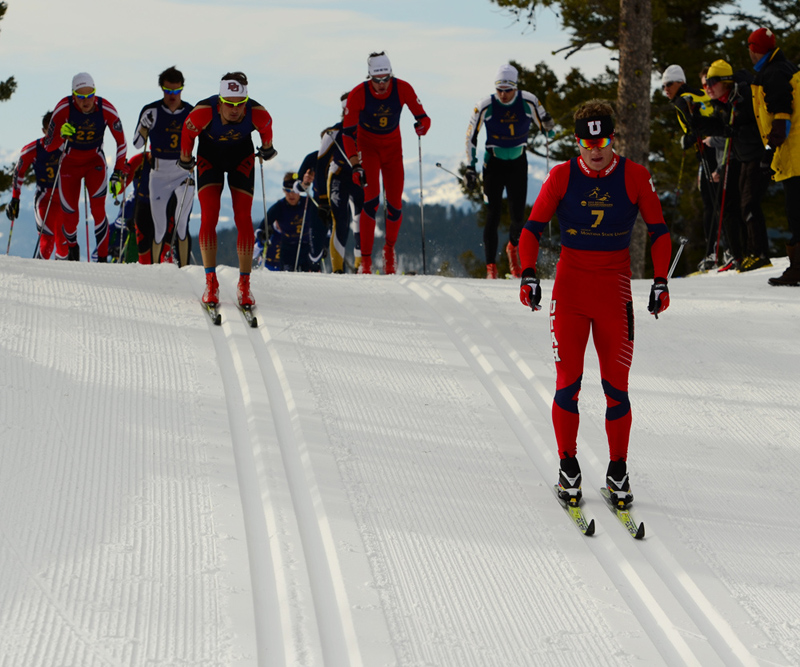
Miles Havlick (UU) leads group early in race (photo: Stuart Jennings)
The second and final nordic race of the 2012 NCAA’s was held on a blue-bird Bozeman day which reached 60 degrees by race’s end. Spectators who witnessed the 15 and 20 kilometer mass start classic races on Friday were treated to non-stop action and nail-biting finishes in both the men’s and women’s events, as the title for both races ended in a two-way sprint to the finish line.
In the men’s 20k it was a battle between University of Utah’s Miles Havlick and Montana State’s David Norris. Though Norris had a Montana crowd cheering him around the course, Havlick had enough of a finishing kick in the last twenty meters to steal the line by 1.5 seconds, crossing with a time of 56: 24.3. Franz Bernstein of the University of Vermont finished third with a time of 56:40.
In the women’s race it was UVM and Dartmouth all the way, the two teams grabbing the entire first six finish places. The finish finale was given by UVM’s Amy Glen and Dartmouth’s Sophie Caldwell, the pair entering the stadium together, duking it out down the last 200 meter stretch of stadium striding and then lunging toward the line simultaneously. It was only after extensive review of video that the jury awarded Glen the victory, and Caldwell second place. Lucy Garrec (UVM) finished third.
Dartmouth had been leading the team scores after the first nordic race, but UVM pulled ahead after the first alpine race. The classic races further pushed UVM into the lead, with a 92 point advantage over Utah and another 12 points over Dartmouth.
* * *
Early morning tracks entering and leaving the stadium at Bohart Ranch
Men’s 20 k Mass Start Classic
The sun broke through morning clouds with the nearing of the men’s race at 9am. Despite start-line temperatures that were 40 degrees and rising, the track was hard and the downhill S-turns were icy-swift.
After the first lap the entire field was still fairly tight, but that changed quickly in the second lap as the starting pace, steep hills, altitude, and realization that they had to complete three more grueling laps combined to slow many of the racer’s tempo.
“All you had to do today is try to stay relaxed as long as you could, and continuously people were falling back,” said UVM’s Franz Bernstein. “I don’t think there were a lot of moves in there, it’s just the pace was pretty high off the start.”
The race’s top two competitors – Utah’s Miles Havlick and Montana State’s David Norris – were quick to establish themselves at the front of the lead pack.
“The first couple laps, it’s just trying to protect yourself, limit crashes and broken poles and stuff,” said Norris, “I just wanted to ski into it and if it felt right I thought I’d go for it on the hills.”
Norris, who hails from Fairbanks, Alaska but is a (sophomore) at Montana State, admitted that having the home-course crowd in attendance was a big motivator.
“It was awesome, having that crowd,” said Norris, “they are as into it as we are as racers, so it’s a lot of fun.”
By the third of four laps, the field had strung out into clumps of racers who were just trying to pick up an extra spot or not lose their own.
Bernstein explained, “David [Norris]and Miles [Havlick] looked very strong today and they put up a couple of small moves but other than that people were just trying to stay together and hold on tight.”
By the last lap the field had spread out into clumped groups of two and three competitors, driving each other to the finish.
“I knew if everything went right I could be the strongest skier, so I just tried to hammer that last lap,” said Norris. Despite the fact Havlick experienced a couple mishaps during the race Norris said his competitor “kept hanging on.”
On one corner, Havlick caught his ski tip in a snowbank and got spun around and went down.
“I just got up, tried to stay relaxed and positive and work my way back up there,” said Havlick.
Then he broke a pole. Fortunately the break occurred as he was poling through the stadium and he quickly got a replacement from a coach.
So it was Havlick and Norris who emerged from the wooded downhill alone.
David Norris (MSU) leads Miles Havlick (UU) in the final kilometer of the race
Up the first hill into the stadium the pair stepped into adjacent tracks and started to double pole in unison. Together, they sprinted down one side of the stadium, around the corner, and into the finishing stretch. Havlick had just enough strength to pull off the front in the final 20 meters, and it was the Utah senior who crossed the line in first with a time of 56:24, Norris just 1.5 seconds behind.
“I knew I’m not the best sprinter so I knew it would be a struggle,” said Norris, who then smiled and said of the tight race, “but – yeah – it was great.”
For Havlick, a sophomore at Utah, the win was an end to a string of near-misses.
“Everything came together today,” said Havlick. “It was kind of a frustrating season – I kept getting 2nd and 3rd places – but today everything came together.”
Havlick said his win felt “Amazing. It’s been my goal for a long time, it just feels great to do it when it counts most.”
Next across the line was Bernstein, who was 25 seconds back from the lead pair. The senior from UVM was happy to end his career on this note.
“I am super happy about the race – more than happy about the race, said Bernstein. “So much fun out there today – perfect tracks, perfect skis – – – now I’m ready for retirement.”
Fourth across the line was Dartmouth’s Eric Packer, in a time of 57:05. Two seconds later came a sprint for fifth between Patrick Johnson of Middlebury and Didrik Smith of Utah, Johnson winning fifth and Smith placing sixth. In seventh through tenth finished Rune Oedegaard (CU), Andrew Dougherty (DU), Sam Tarling (DAR), and Sjur Prestseater (UNM).
Women’s 15k Mass Start Classic
By the start of the women’s race at 11am the air temperature was already 56 degrees and the snow was at 32 Fahrenheit. The firm tracks that greeted the first morning’s race were now turning towards mush.
The rapidly warming snow sent many coaches scrambling to apply last-minute layers of klister, even as the announcer called a 10, and then 5 minute race-time warning. For some teams and athletes, there wasn’t enough time for adjustment, and the consequences were huge. Around the first of the three lap race it was apparent that some women had very slick skis, as they herringboned and double poled as well as they could.
Annie Hart (DAR) and Sophie Caldwell (DAR) lead the pack up a steep climb
But even the skiers at the front of the race did not have perfect skis, as glide was traded for kick up the hills. After one lap most of the UVM and Dartmouth teams were near the front, joined by Wednesday’s race winner, Utah’s Maria Graefnings, CU’s Eliska Hajkova adn MSU’s Ase Carlson.
Lucy Garrec of UVM said that her skis were “Great for climbing, very jerky on downhills”, but emphasized,“kick was definitely more important.”
Dartmouth’s Sophie Caldwell, who raced on no-wax skis, said that different skis were running well in different places on the course, but that snow conditions were so slow it evened things out.
Caldwell and teammate Annie Hart led much of the first lap, Caldwell explaining “we didn’t want to waste our energy so we went pretty easy.”
Feeling good about her first lap, breathing in control and skiing relaxed, Garrec took over on the second lap, but her strategy was similar to Caldwell’s and she did not want to push the pace; when her teammate Amy Glen took the lead Garrec gave it up readily.
“We definitely compiled our efforts,” said Glen of the way the UVM and Dartmouth teams worked together during the race. Glen said that racing such a strong group of competitors week after week in the East had helped them all achieve a pace consistent with the strongest Western and Central competitors.
Amy Glen (UVM) and Sophie Caldwell (DAR) approach a sprint finish (photo: Stuart Jennings)
It was Glen and Caldwell who finally established themselves as the frontrunners for the victory, and the two emerged together, Glen skiing in front and Caldwell matching her stride as they skied up the hill into the stadium. At first, it looked as though Glen was the stronger sprinter, a small gap opening as they turned the far corner of the stadium.
Caldwell said it was at that moment she decided she wasn’t giving up.
“All of a sudden I was like, ‘Wait a second, I can still do this!’” said Caldwell. “I didn’t know if I had a chance, but then I got a little extra energy and just went for it.”
Sixteen seconds after the exciting finish, Garrec crossed the line for third place. Behind her in fourth place was Dartmouth’s Annie Hart, and in fifth finished Caitlin Patterson of UVM. Dartmouth’s Erika Flowers and Maria Graefnings had a close sprint at the finish, Flowers gaining the edge and placing sixth to Graefnings seventh. In eighth through tenth were Makalya Cappel(DU), Annie Pokorny (MID), and Eilska Hajkova (CU), respectively.
The rest of the women’s field finished during the agonizing wait for the reported champion, the time gap between the first and the 38th finisher a margin of eight minutes. Finally, the review came back and Glen was awarded the victory, Caldwell securing second place.
“It was a little nerve-racking,” described Caldwell of the long-awaited judgment, “but I would obviously be happy either way. I am psyched for Amy and it is pretty sweet to have the east be in the top six, too. . .I think we’re all thrilled with that – it was probably the most fun I’ve ever had in a race.”
For Amy Glen, who is a senior on the UVM team from Anchorage, Alaska, this was both her last college race and her very first college win. When asked what made victory possible for her today, Glen said, simply, “Everything.”
Glen listed, “My team, my coaches gave us awesome skis, I worked with my teammates – and I just felt really relaxed and just went for it.”
Glen said that her connection with her teammates was the biggest motivator. She never felt she was racing as an individual or for an individual title.
“I always felt my teammates with me, “said Glen, “it was never just me.”
1 HAVLICK, Miles UU 56:24.3
2 NORRIS, David MSU 56:25.8
3 BERNSTEIN, Franz UVM 56:40.8
4 PACKER, Eric DAR 57:05.2
5 JOHNSON, Patrick MID 57:07.1
6 SMITH, Didrik UU 57:07.5
7 OEDEGAARD, Rune CU 57:32.3
8 DOUGHERTY, Andrew DU 57:34.3
9 TARLING, Sam DAR 57:41.8
10 PRESTSEATER, Sjur UNM 58:00.4
NCAA Women All-Americans, 15 k Classic
1 GLEN, Amy UVM 53:32.1
2 CALDWELL, Sophie DAR 53:32.2
3 GARREC, Lucy UVM 53:48.7
4 HART, Annie DAR 53:58.3
5 PATTERSON, Caitlin UVM 54:10.1
6 FLOWERS, Erika DAR 54:33.2
7 GRAEFNINGS, Maria UU 54:34.0
8 CAPPEL, Makalya DU 54:37.5
9 POKORNY, Annie MID 54:45.8
10 HAJKOVA, Eliska CU 55:15.2
Graeme Killick (AWCA) on his way to winning the 10 k classic in West Yellowstone.
Graeme Killick (Alberta World Cup Academy) may have felt more confident about his classic ability going into Saturday’s SuperTour 10 k classic in West Yellowstone, but certainly didn’t expect a win. Nevertheless, strong execution on a frigid morning in Montana brought the 22-year-old Canadian his first victory of the season, a nice cash prize, and a certain amount of confidence going into the Silver Star NorAms in two weeks time. Sylvan Ellefson (Team Homegrown) took another second (+8.9), with Erik Bjornsen (APU/USST) in third (+16.2).
Mike Sinnott (SVSEF), who podiumed in all three West Yellowstone races prior to Saturday, finished in sixth (+32.7), which was good enough for him to hold onto the overall SuperTour leader bib.
All three podium finishers in the 10 k prefer the classic discipline, and as each received splits partway through the race telling them that a few seconds here or there could lose or gain them the lead, the race came down to who could respond to the information and maintain intense effort through the finish.
Killick said he got his first spit at the end of the first lap, where he was informed he was the race leader. “Up until that point I went out pretty hard; really hammered the uphills,” he said after his race. “I just totally, almost maxed out there. I thought, if I’m anything other than in first here for the split, then I’m out of this.”
Going into the second lap Killick knew he was in the lead, but wasn’t sure by how much. So he focused on gliding as much as possible and maintaining speed on the flat section before the big climb to the high point of the 5 k loop.
“For this type of…rolling, gliding uphills, I find that’s my strength,” said Killick. “As long as grip and glide is good, you can save a lot of energy with long strides and staying smooth.”
Sylvan Ellefson (Team Homegrown).
Killick’s strengths clearly suited the course well, and he came through the finish with strong form to take the lead as one of the final starters of the men’s A-seed.
After finishing, runner-up Ellefson complemented Killick’s effort as “one heck of a race.” The Vail, CO native was aiming for the win, but was still excited to have two second-place finishes in a row in Yellowstone, the best early season of Ellefson’s career so far.
“It was a good day, I felt pretty fast,” he said. “I had the same plan as yesterday; big and strong on the first lap, and see if I could hold on in the second.”
Ellefson skied more of a head-to-head race than Killick; after catching and passing Rune Oedegaard (University of Colorado), who started 30 seconds in front of him, Ellefson had Oedegaard hot on his heels all the way to the end. Oedegaard outsprinted Ellefson to the line and ended up in eighth (+ 39.1), no doubt benefiting from riding Ellefson’s tails for the majority of the race. The two men congratulated each other as they left the finish pen.
With three out of four performances this week that landed him in the top four, Ellefson made significant gains on Saturday in the overall SuperTour standings. His 13th in the opening classic sprint set him back, however. If he is to make a serious run at the leader bib by the end of the Bozeman, MT races next weekend, and the accompanying World Cup start rights, he will have to keep performing well and hope that the current leader falls off the pace. Sinnott currently sits on top of the standings by a wide margin.
Bjornsen (APU/USST) lunging for the line.
Bjornsen, after battling through sub-optimal races earlier this week, was finally able to land on the podium on Saturday.
“[Today] felt a lot better than yesterday, that’s for sure,” he said before heading out for a cool-down. “I tend to be a better classic skier, and I like the 10 k distance.
“I’m pretty excited for it,” he said of his result.
When Bjornsen got splits that he was five or 10 seconds out of leading, he said he wasn’t sure how to take it. “I thought a lot of the faster guys were behind me,” he said, and just focused on pushing himself over the top of Telemark Hill and double poling through the finish.
Other performances of note on Saturday were Matt Gelso (SVSEF) in fourth (+20.0) for the second day in a row and Miles Havlick (University of Utah) in fifth (+ 21.8) for a strong collegiate showing.
Gelso, who struggled out of the gate last year in his first season out of college, was happy to have put up strong results in West Yellowstone this week (he was fourth in the 15 k freestyle on Friday and third in the freestyle sprint). He attributed his success so far to finally managing to dial in his off-season training to be ready for early season races.
“I was able to come into these races prepared for the first time in a while,” he said. “In college, you’re not [usually] ready to rip right now; you’re focused on later in the season…[so] it’s nice to come into these races prepared.”
Saturday’s classic events wrapped up the opening SuperTour in West Yellowstone. Much of the elite field from this week is headed for the next round in Bozeman, MT from December 2 – 4, which will conclude the first period of SuperTour racing.
Maria Graefnings (SWE/University of Utah) A senior at the University of Utah, and a native of Falun, Sweden, Graefnings dominated the RMISA circuit during the regular season, winning seven of eight starts.
Maria Graefnings (UU)
Graefnings transferred to Utah from the University of Nevada when that program was cut. In addition to her success in the western region, Graefnings won the NCAA national title in the 5km freestyle event, and placed second in the 15km classic mass start.
The 25-year-old also had plenty of success outside the collegiate ranks, finishing the year with three SuperTour podiums, including a victory in the Owl Creek Chase, and a second place finish in the US National Championship 30k.
Honorable Mention:
Eliska Hajkova (CZE/University of Colorado) Hajkova spent most of the 2010 seaosn in the shadow of Graefnings. In the first four races of the RMISA season, she placed second to the tall Utah star, and went on to place outside the top-3 just once – a fourth in the UNM Invitational classic race.
The trend continued in the first race of the NCAA Championships in Stowe, Vermont. Graefnings took the victory in the 5km skate, with Hajkova ten seconds back in second. But the 23-year-old former member of the Czech National Team saved her best for last, upsetting Graefnings in the 15km classic and earning her first NCAA title. Her effort helped propel CU to the national championship.
Caitlin Patterson (USA/University of Vermont) Patterson may have been hard-pressed to match the performances of Graefnings and Hajkova, but at just 21 years of age, Patterson gave up several years, and significant experience to her European competition.
The Alaskan native, in her junior year at the University of Vermont, won seven of eight regular season EISA starts, placing second in her one “off-day.”
She placed sixth in the 5km skate at the NCAA Championships, but struggled in the classic event, finishing 23rd.
Patterson also managed to squeeze in a trip to the U23 Championships in Otepaa, Estonia, where she skied to 20th in the 15km pursuit, and 26th in the 10km freestyle.
[poll id=”56″]
Collegiate Skier of the Year (men):
Sam Tarling (USA/Dartmouth) The men’s collegiate field lacked the domination at the top that highlighted the season on the women’s side. Six different men won EISA races, and five took top honors in the RMISA, while the CCSA had several strong contenders as well.
Sam Tarling (DAR)
Ultimately, Tarling gets the nod over the likes of Miles Havlick (USA/UU) and Vegard Kjoelhamar (NOR/CU) on the strength of his NCAA National Championship title and consistency throughout the season.
Tarling won two regular season EISA races and finished in the top five in each of his eight starts – a strong campaign to say the least, but not even the best in the Eastern region. It was Tarling’s victory in the 10km skate that put him over the top. In an upset victory over Colorado’s Kjoelhamar, Tarling joined the relatively sparse ranks of American skiers to win an individual NCAA title in recent years.
He was unable to duplicate the performance, or even come close in the 20km classic two days later, placing 32nd in the 39 skier field, but with top challengers Havick and Kjoelhamar unable to claim a victory of their own, Tarling becomes the first American to win the FasterSkier Collegiate Skeir of the Year award.
Honorable Mention:
Vegard Kjoelhamar (NOR/University of Colorado) Kjoelhamar won two RMISA races and finished second two other times before placing second in the 10km skate at the NCAA Championships.
The 2009 winner of this award, Kjoelhamar ended a successful collegiate career with another podium, taking third in the NCAA Championship 20km classic.
Miles Havlick (USA/University of Utah) Havlick ended the 2011 season as the top ranked skier in the RMISA, edging Kjoelhamar by a single point. The sophomore won three races, finished second twice, and fifth once in his six starts.
At the NCAA Championships, he took the final podium spot behind Tarling and Kjoelhamar in the 10km skate, and placed sixth in the 20km classic.
Eric Packer (USA/Dartmouth) Packer deserves recognition as the top ranked EISA skier, besting Tarling, among others, and leading the circuit with three victories
He started all ten regular season races, never finishing outside the top five. At the NCAA Championships, he finished 5th in the 10km skate and 25th in the 20km classic.
[poll id=”57″]
Previous Winners:
2010 Antje Maempel (GER/DU)
Franz Bernstein (GER/UVM)