Tag: Miles Havlik

  • Emily Nishikawa, Bjornsen Tally NorAm Sprint Wins in Rossland

    Emily Nishikawa, Bjornsen Tally NorAm Sprint Wins in Rossland

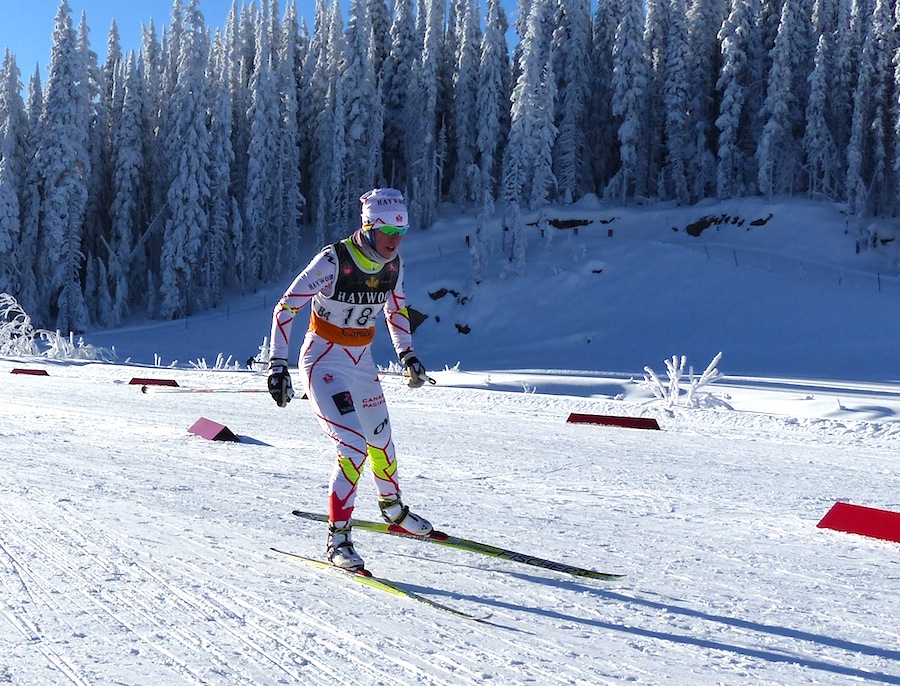
    Emily Nishikawa (AWCA/NST) halfway through her 10 k freestyle race on Dec. 7, in which she placed fifth in the NorAm opener at Sovereign Lake, B.C.
    Emily Nishikawa (AWCA/NST) halfway through her 10 k freestyle race on Dec. 7, in which she placed fifth at the NorAm opener at Sovereign Lake, B.C. The next day, she was third in the classic sprint there.

    Saturday’s NorAm freestyle sprints at the Black Jack Ski Club delivered an exciting day of racing, with crashes, tactic changes between rounds, and photo finishes in Rossland, B.C.

    Emily Nishikawa of the Alberta World Cup Academy (AWCA) and Canadian National Senior Team (NST) won the women’s 1.4-kilometre A-final by 0.22 seconds in 3:21.29, and teammate Heidi Widmer edged Olivia Bouffard-Nesbitt (Laurentides) in a photo finish for second.

    The Americans rounded out the rest of the A-final with Caitlin Patterson (Craftsbury Green Racing Project) in fourth, Jennie Bender (Bridger Ski Foundation) in fifth and Caitlin Gregg (Team Gregg/Madshus) in sixth. After crossing the line in fourth, a jury decision bumped Gregg to sixth after she collided with Bender in the finishing straight. Bender went down; Gregg did not.

    “I was relegated to 6th place and I deserved it,” Gregg wrote in an email.

    The women’s final was considerably faster than qualification, with qualifier winner Bouffard-Nesbitt taking five seconds off her qualification time of 3:26.26.

    In an email, Nishikawa wrote that she “got off to a slower start in the qualifier, but I felt much better throughout the heats.”

    She was happy with her day and the way the season is starting, a noticeable upgrade from one week earlier when she said she was “looking forward to some more races” to show what her training had accomplished.

    The women’s heats were closer and more tactical than the previous NorAm at Sovereign Lake.

    “Most of the heats were really tight,” Nishikawa wrote. “With a fast finish stretch I barely squeaked into the final!”

    American Caitlin Gregg (Team Gregg/Madshus) kicked off the final the same way she won both her heats, trying to drop the group on the opening climb. “This [tactic] worked well until the final when Emily and the other ladies could stay with me,” Gregg wrote. “Emily had an incredible surge up the steepest hill on the course and took the lead from there on out. It was impressive!”

    Widmer used the same tactics as Gregg to win her quarter, but “barely squeaked into the final because the others came up so quickly in the finish” of her semifinal.

    Widmer and Nishikawa finished 0.04 seconds apart in their semifinal to take the lucky loser spots, relegating Alysson Marshall to the B-final by 0.2 seconds.

    Bouffard-Nesbitt tried to hang back in the final.

    “After the ‘S’ turn I was carrying a lot more speed than the person ahead of me,” she wrote in an email. “But had Emily and Heidi coming up on my right so I had no choice but try to squeeze by on the left.”

    She pushed the last corner to work her way up to the photo finish for second. She was happy with her result and first qualification win.

    “I learned a lot today though!” she added.

    Bjornsen Nabs First Win of the Season
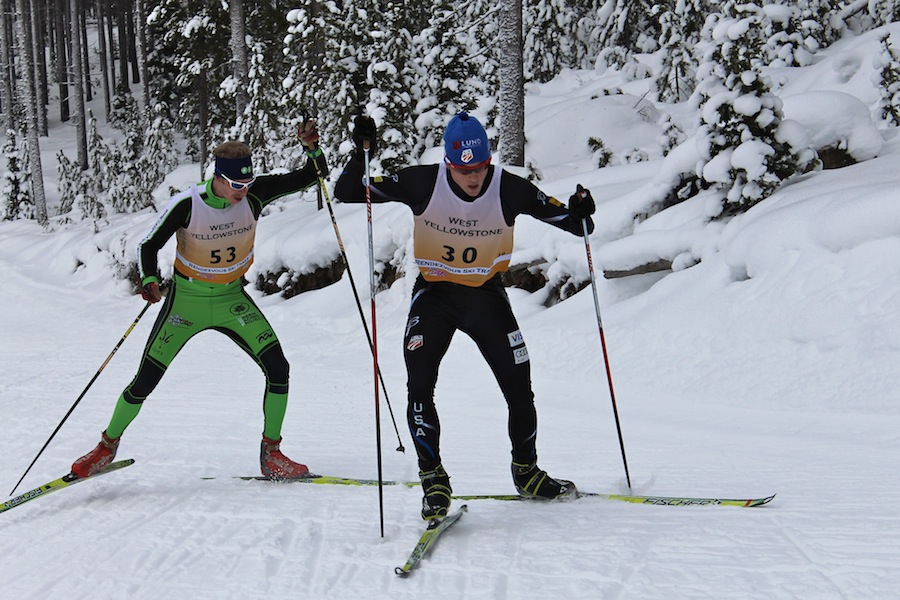
    Erik Bjornsen (APU/USST) leads Peter Hegman (CGRP) up Tele Hill. Erik Bjornsen (APU/USST), 11th
    Erik Bjornsen (APU/USST) leads Peter Hegman (Craftsbury) during the SuperTour 15 k skate on Dec. 1 in West Yellowstone, Mont. Bjornsen went on to place 11th in the event.

    In the men’s 1.6 k skate sprint, Erik Bjornsen of Alaska Pacific University (APU) and the US Ski Team (USST) changed his tactics to come out on top in the A-final in 3:37.53, 0.19 seconds ahead of fellow American Miles Havlick of the Sun Valley Ski Education Foundation (SVSEF) in second.

    Only two Canadians advanced to the final, including Graham Nishikawa (NST), who placed third. Sylvan Ellefson (SSCV/Team HomeGrown) finished fourth, Dakota Blackhorse-von Jess (Bend Endurance Academy) was fifth, and Knute Johnsgaard (Yukon Elite) placed sixth.

    “In the quarters I thought I could go out and control the race,” Bjornsen wrote. “But I quickly learned my lesson when I got out sprinted by two people in the finishing lanes.”

    After getting “lucky” in the semi “when two Canadians went down,” Bjornsen advanced to the final.

    “I stayed comfortable, kicked hard over the tops of hills, and prepared myself for the final sprint,” he explained. “When I made the move past Dakota and Miles in the finish I could see the win, I was just a happy little bear.”

    In his first year with the SVSEF Gold Team, Havlick was “psyched” by his second place.

    “As a junior, I used to be a pretty strong sprinter but after 4 years of NCAA skiing (without sprinting), it has been tricky finding that next gear again,” he wrote. “But today, it felt like it was back.

    “The courses today were tough and like 2 weeks ago [at the SuperTour] in West Yellowstone, offered few opportunities to pass after the start,” Havlick added. “I wanted to be aggressive and get out early and keep the pedal down from there.”

    Nishikawa was happy with third. “I felt better throughout the heats so that was positive and the main goal of the day,” he wrote.

    Like a number of the more experienced Canadians who have been describing the NorAm races in terms of process rather than results, his focus appears to be locked on Sochi.

    Johnsgaard was frustrated by the tactical choices that put him sixth in the A-final. Coming into the final 100 metres, he “tucked in behind Miles and Dakota, but the guys behind us really worked the downhill and swallowed us up.

    “I was mad at myself for letting up on the last downhill because I thought I could get on the podium today for the first time,” he wrote.

    At 21, he is determined to get to U23 World Championships and needed more to break AWCA member Patrick Stewart-Jones’ grip on the top spot. Based on the first two NorAm weekends, one Canadian male and one female will be pre-selected for U23s.

    After winning his quarterfinal, Michael Somppi (AWCA/NST) crashed in the semifinal, which didn’t remedy his frustrations with his early season races. He ended up eighth overall behind Stewart-Jones in seventh.

    “I tried to start strong in my heats and set a hard pace on the first climb,” Somppi wrote. “It’s really the only place on the course you could make people’s legs burn. The rest of the course was fast and twisty so passing was difficult.”

    This tactic “worked for me in my quarter-final heat and was working in my semi-final as I was skiing in second place before I crashed,” he explained.

    “You often need a little luck on your side in sprint racing and today I didn’t have a horseshoe,” Somppi concluded.

    There are a number of racers who might agree with that.

    Results | Brackets

  • West Yellowstone SuperTour Men’s 15 k (Photo Gallery)

    West Yellowstone SuperTour Men’s 15 k (Photo Gallery)

    WEST YELLOWSTONE, Mont. — A look at the top 10 and some others in the men’s 15-kilometer freestyle individual start on Saturday — the second and last race of the West Yellowstone SuperTour. Read more.

  • The 12: Sun Valley Gold Team

    The 12: Sun Valley Gold Team

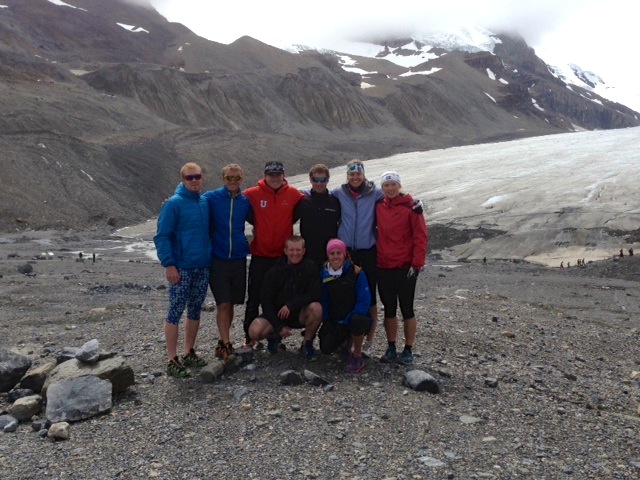
    Most of the Sun Valley Ski Education Foundation (SVSEF) Gold Team with two collegiate summer athletes, Makayla Cappel (DU) and Ben Lustgarten (Middlebury), near Canmore, Alberta. From left to right (back) Matt Gelso, Mikey Sinnott, Miles Havlik, Lustgarten, Cappel, and Rose Kemp. (Front) Head coach Colin Rodgers and Mary Rose. (Photo: Colin Rodgers)
    Most of the Sun Valley Ski Education Foundation (SVSEF) Gold Team with two collegiate summer athletes, Makayla Cappel (DU) and Ben Lustgarten (Middlebury), on the Athabasca Glacier in Banff/Jasper National Park during a recent camp in Canmore, Alberta. From left to right (back) Matt Gelso, Mikey Sinnott, Miles Havlik, Lustgarten, Cappel, and Rose Kemp. (Front) Head coach Colin Rodgers and Mary Rose. (Photo: Colin Rodgers)

    Note: This is the seventh preview in our series on U.S. elite teams, which we’ve dubbed the “The 12.” We asked coaches to tell us what’s new and whom to look out for in the coming season and will publish additional previews in the coming weeks in no particular order.

    Team: Sun Valley Ski Education Foundation (SVSEF) Gold Team

    Coaches: Rick Kapala (program director), Colin Rodgers (head coach), Shane MacDowell (service tech, formerly of Boulder Nordic Sport East)

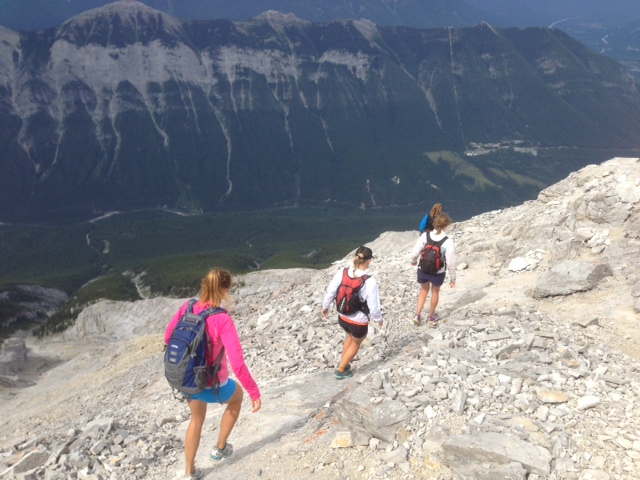
    Sun Valley training-group members Makayla Cappel and Rose Kemp hike down Mount Rundle in Banff National Park, Alberta. (Photo: Colin Rodgers)
    Sun Valley training-group members, including Makayla Cappel and Rose Kemp, hike down Mount Rundle in Banff National Park, Alberta. The team trained in Canmore from July 10-19. (Photo: Colin Rodgers)

    Gold Team roster: Mikey Sinnott, Miles Havlick, Matt Gelso;

    Chelsea Holmes, Rose Kemp, Mary Rose

    Who’s new: Havlick (University of Utah), Kemp (Utah), Rose (University of Colorado-Boulder)

    Who’s missing: Patrick Johnson, Reid Pletcher, Simi Hamilton, Alexia Turzian, Mali Noyes, Lucy Garrec, Clarke Sullivan (former service tech)

    According to coach Colin Rodgers, Johnson, who nabbed his first SuperTour win (and podium) in his rookie season after college last winter, is home in Anchorage, Alaska, for an environmental internship. Pletcher is working as a river guide on the Salmon River about an hour north of Sun Valley in Stanley, Idaho, after stepping back from racing last season due to lingering effects of a head injury. Noyes is also guiding on the Salmon River, and Hamilton – a Colorado native – moved to Vermont to train with fellow U.S. Ski Team sprinter Andy Newell and the Stratton Mountain School T2 Team.

    A Sun Valley local, Turzian is in Boulder, Colo., Garrec is in nearby Ketchum, and Sullivan, Sun Valley’s former head wax tech, is “ripping lips, building single track [mountain] bike/hiking trails, blasting ducks in Bozeman, MT,” Rodgers wrote in an email.

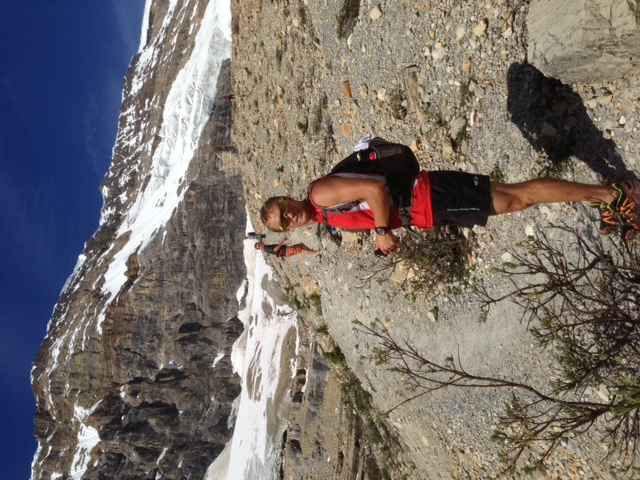
    Mikey Sinnott and Miles Havlik running on the Iceline Trail in YoHo National Park. (Photo: Colin Rodgers)
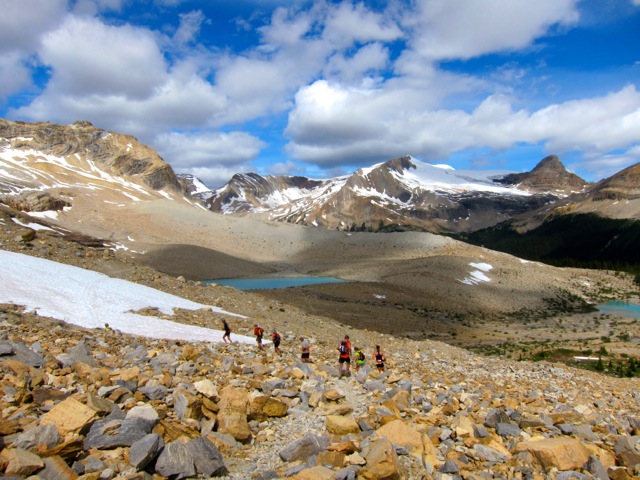
    Sun Valley Gold Team members Mikey Sinnott (front) and Miles Havlik running on the Iceline Trail in YoHo National Park in the Canadian Rocky Mountains in southeastern British Columbia earlier this month. (Photo: Colin Rodgers)

    Top results last season: Let’s start with Sinnott: the overall SuperTour winner last season with two SuperTour victories (both classic sprints; one in Minneapolis, the other in Aspen, Colo.) and a runner-up finish at U.S. nationals (also in a classic sprint). Sinnott’s finish atop the SuperTour leaderboard secured World Cup starts this fall, which won’t be a new experience, but he’s not taking them lightly.

    “In the past you kind of set up your season to get World Cup starts, so you’re kind of hitting that early season performance and then you’re kind of coming down from it when you get to the World Cup,” the 28-year-old Sinnott told FasterSkier in June. “This year I’ve got months beforehand where I can build and really organize it so that I’m hitting the World Cup in my top fitness.”

    Gelso, 25, podiumed at U.S. nationals in January, placing third in the 15-kilometer freestyle at Soldier Hollow in Midway, Utah. That same week, he placed fourth in the 30 k classic mass start at nationals. Gelso started the 2012/2013 season off with a second-place finish in the 10 k freestyle individual start in West Yellowstone, Mont., which elevated him to the World Cup in Canmore, Alberta, where he was 36th in the 30 k skiathlon.

    Fresh out of college, Havlik is one of the most promising rookies entering the pro scene after racking up his second-straight national title in the 20 k mass start at NCAA Championships in Ripton, Vt. Havlik placed fourth in the other race at NCAAs this season, the 10 k classic individual start, and helped Utah finish second to the University of Colorado in the overall team results. Throughout the course of his senior collegiate season, he won four invitationals.

    Holmes, 26, finished second twice on the SuperTour last season (first in the 10 k freestyle in West Yellowstone, and soon after in the 10 k classic in Bozeman). At SuperTour Finals in Truckee, Calif., she was third in the freestyle hill climb.

    Kemp achieved All-American status at NCAAs this year, placing eighth in the 15 k freestyle mass start at Rikert Nordic Center. She placed third in two 5 k classic races on the Rocky Mountain Intercollegiate Ski Association (RMISA) circuit, and Rose was fifth in a 5 k skate race and seventh twice in collegiate events last season.

    Coach’s comment:

    By Rodgers’ estimations, the Gold Team is well on its way to a successful racing season.

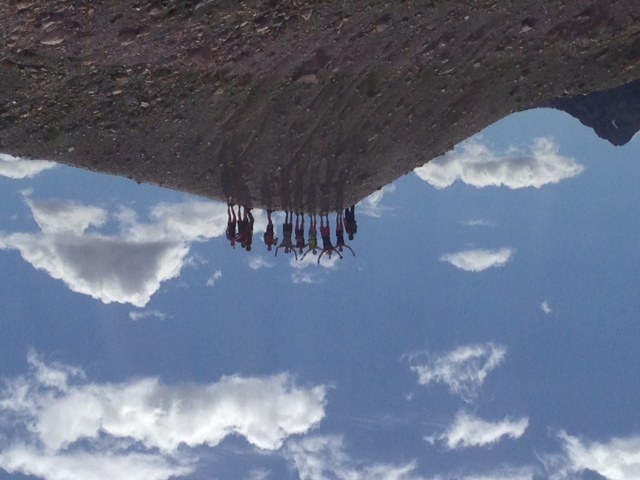
    The Sun Valley Gold Team on the Iceline Trail in YoHo National Park earlier this month. (Photo: Colin Rodgers)
    The Sun Valley Gold Team on the Iceline Trail in YoHo National Park earlier this month. (Photo: Colin Rodgers)

    “We are a mix of old and new faces, but all of the current athletes have roots in Idaho,” he explained. “Mikey, Matt and Chelsea have been a part of the program for many full years while Rose is a Boise native. Combined both Miles and Mary have trained in the Wood River Valley for quite some time so in a sense all are local talent.

    “Although we are a small squad, 3 men and 3 women, ambitions are high for this crew and collectively we are aiming at SuperTour Titles, National Championship Titles, an NNF Cup, World Cup Competition and Olympic starts all this winter!” Rodgers continued.

    The team started the training season in Bend, Ore., in May and met up again in the Wood River Valley in south-central Idaho for a few weeks. The SVSEF recently returned from Canmore, where it had its first dryland camp of the offseason, and has big plans for training on snow at Eagle Glacier in Alaska (Aug. 8-20), working out in Park City and Moab, Utah, in October, and getting back on snow in late October at Frozen Thunder in Canmore.

    “The Gold Team strives to work closely with its younger XC programs,” Rodgers wrote. “We have spent time working in conjunction with the summer collegiate/post-graduate group during weekly sessions. While we were in Canmore, we were just a small part of a large American contingent from the Intermountain West that consisted of junior athletes from the Intermountain Region including Park City, Jackson Hole and Sun Valley.”

    The Sun Valley Gold Team on the Iceline Trail in YoHo National Park earlier this month. (Photo: Colin Rodgers)
    The Sun Valley Gold Team on the Iceline Trail in YoHo National Park earlier this month. (Photo: Colin Rodgers)

     ***

    Other previews: Alaska Pacific University | Bridger Ski Foundation | Craftsbury GRP | Maine Winter Sports Center | SSCV/Team HomeGrown | Stratton Mountain School T2