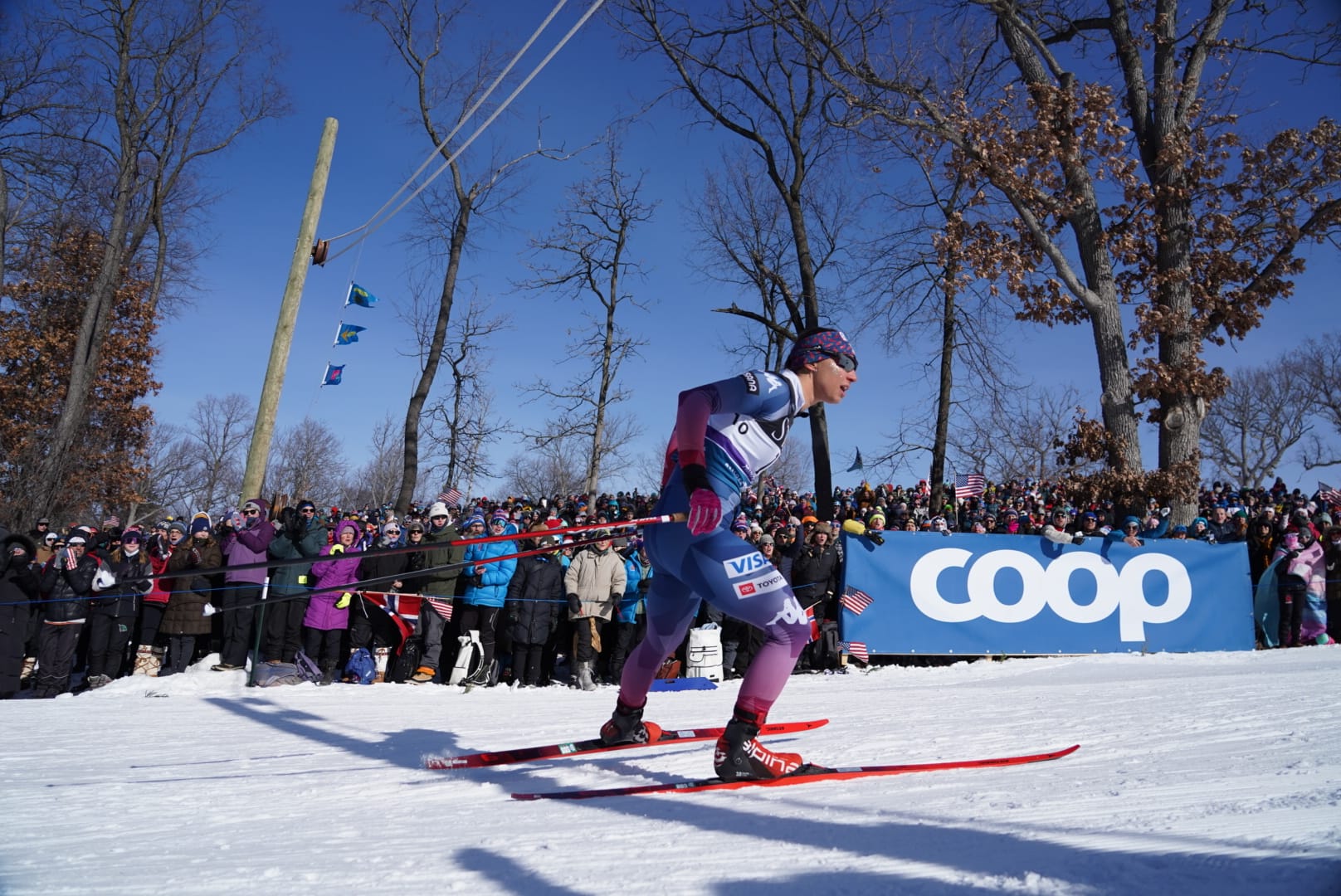
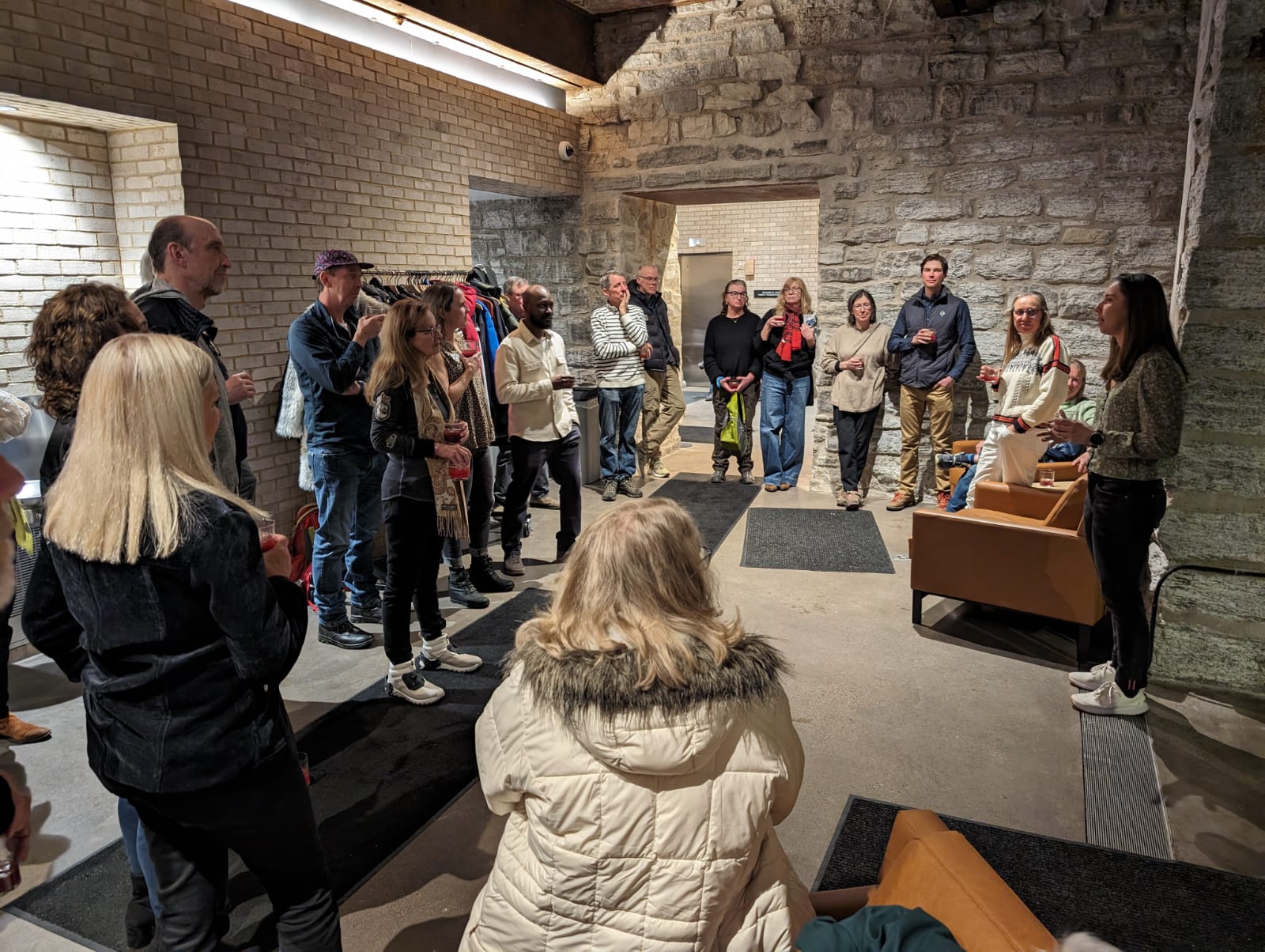
Garrott Kuzzy’s journey from the trails of Minneapolis to the alpine valleys of Austria reads like a skier’s odyssey—equal parts serendipity, endurance, and vision. Before becoming an Olympian or founding Lumi Experiences, a travel company built around the joy of cross-country skiing, Kuzzy was simply a kid who loved movement.
“There were no cell phones then,” he recalls with a laugh. “I think I was just playing soccer, doing the stuff kids did in Minneapolis.” His early athletic spark came not from racing bibs but from curiosity. That curiosity deepened after watching the 1994 Lillehammer Olympics. “I thought ski jumping was the coolest thing,” he says. His father, driving home past the lights of the Minneapolis airport ski jump, stopped and signed Garrott up on the spot.
Ski jumping, however, involved more trudging than flying—lugging 240 cm skis up icy stairs for a handful of attempts. “I remember thinking, this is too much work. I’m going to do cross-country skiing instead.” That decision set the trajectory for the next three decades of his life.

A Culture of Excellence at Hopkins High
At Hopkins High School, Kuzzy joined a program that had quietly become one of Minnesota’s most respected Nordic teams. Coach Pat Lanin had spent more than 30 years nurturing a culture of commitment and camaraderie. “He definitely set the culture,” Kuzzy says. “We had this lineage—guys like Matt Schadow and Pete Tollefson, who were great runners and skiers—and it made you want to rise to that level.”
Those roots mattered. Minnesota’s high school skiing scene was (and remains) a hotbed of talent and community spirit, a proving ground where future Olympians learned not just how to race, but how to love the sport.
Switzerland and the Making of a Global Perspective
If Minnesota planted the seed, Switzerland provided the light. During what he calls his “first senior year” of high school, Kuzzy embarked on a foreign exchange in the Alps—a decision that would alter his trajectory.
“I kind of forgot to apply to college while I was there,” he says, laughing. But what he gained was immeasurable: “That year completely changed my trajectory in life. I trained with a local club, learned German, raced at Swiss Nationals, and came back stronger and faster.”

Once back home in Minnesota, Kuzzy repeated his senior year, dominated the state circuit, and qualified as a forerunner for the 2002 Salt Lake Olympics. More importantly, he returned home with a new sense of maturity and a lifelong interest in connecting people through travel.
That international curiosity would later become the foundation of Lumi Experiences—years before the company even existed.
Middlebury: A Team of Global Thinkers
After strong results at Senior Nationals, Kuzzy fielded offers from several East Coast colleges. He ultimately chose Middlebury, drawn by the school’s blend of academics, languages, and skiing. “Terry [Aldrich] let me run cross-country and ski, and they had a strong German program,” he says. “By that point, I’d just gotten back from Switzerland. Studying languages was my jam.”
Middlebury’s team at the time was something of a cultural experiment: nearly every skier had taken a gap year abroad. “Five or six of our top racers had spent a year in Norway, Sweden, or Switzerland,” Kuzzy explains. “It gave us a maturity advantage—like grad students who’ve worked before going back to school.”
That worldly approach shaped not just results, but perspective. “It opened doors for people,” he reflects. “Those experiences make you realize sport isn’t just about skiing faster—it’s about how you see the world.”

Climbing the Ladder: From CXE to the World Cup
After college, Kuzzy joined the Central Cross-Country Elite (CXC) team under coach Yuriy Gusev. His methodical plan—Europa Cup in 2007, World Cup in 2008, Olympics in 2010—was ambitious but precise.
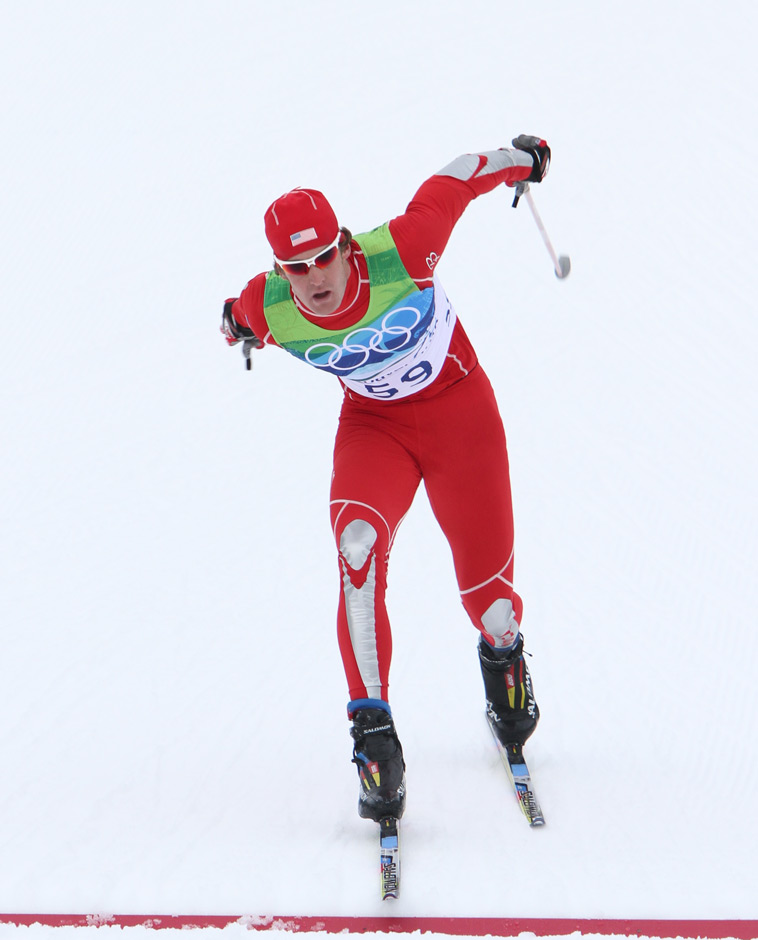
He broke through in Canmore in 2008, finishing ninth in a World Cup sprint. “That race changed everything,” he says. “I barely missed the A-final, but it qualified me for the U.S. Ski Team.”
The result was validation of years of grinding. “In that semifinal, I was fourth, and I forgot about the lucky loser rule,” he recalls. “Had I stuck my toe out another inch, I would have made the A-final.” Still, his B-final victory and top-10 finish made him one of the first Americans to hit the objective criteria for team selection.
Yet even amid success, Kuzzy felt the solitude of life on tour. “I remember running at night in Falun, seeing warm lights in houses and feeling homesick,” he says. “I thought—how cool would it be to share these places with friends and family?” That yearning for connection would eventually define his subsequent career.
From Racing to Guiding
When Kuzzy retired from racing in 2011, he joined Vermont Bicycle Tours (VBT) and began designing active travel experiences across Europe. “On one of my first days, I told Gregg Marston, ‘I’d love to do cross-country ski vacations,’” he recalls. Within a year, he was running VBT’s ski trips in Europe.
After VBT was sold, Kuzzy spent a year coaching at Green Mountain Valley School before pursuing an MBA in Tourism Management in Innsbruck, Austria. “The program gave us winters off to work in the industry,” he says. “That’s when I started Lumi.”
The first Lumi trip, in 2018, was a test run for the 2019 Seefeld World Championships. “I totally mispriced it,” he admits. “But we ended up making a $10,000 donation to the National Nordic Foundation.” Guests saw Sophie Caldwell and Jessie Diggins both win World Cups that weekend—one of the most memorable in U.S. skiing history.
Some of those guests have traveled with Lumi every year since.

Building Lumi: Travel with a Nordic Soul
From its base in Innsbruck, Lumi has evolved into a small but deeply personal company offering immersive ski journeys across Europe—Seefeld, Toblach, Falun, and beyond. The mission, Kuzzy says, is simple: “To share the best cross-country skiing in the world with American travelers.”
He brings the same precision he once applied to interval training to trip design: ski-in/ski-out hotels, strong coffee, smooth logistics, and moments that foster connection. “We still do things like mulled-wine curling nights, inspired by my time with the U.S. team in Ramsau,” he says.
Seefeld remains the company’s spiritual home. “You can walk out your door and ski, but it still feels like a small town,” Kuzzy explains. “It’s the only place I’ve seen with an après-ski scene for cross-country skiers. There’s a bar right at the trailhead—it’s magic.”
Lumi’s guests have ranged from former Olympians to families discovering Europe’s ski culture for the first time. And through it all, the ethos remains: connection, community, and joy.

Full Circle: The Olympic Spirit, Reimagined
As Lumi prepares for the 2026 Winter Olympics in Italy’s Val di Fiemme—where Kuzzy raced during his career—things feel, in his words, “beautifully full circle.” The company will host multiple groups in Cavalese, the same valley as the legendary Marcialonga.
“It’s surreal,” he says. “From racing there as an athlete to now bringing people to experience it—it’s everything I hoped Lumi could be.”
Beyond 2026, Lumi has already secured hotel space for the 2027 Vasaloppet and Falun World Championships—a feat of foresight that shows Kuzzy’s racer discipline never truly faded.
In the end, Lumi is less about luxury or logistics than it is about legacy. “Some of our guests have been on every trip since the first,” Kuzzy says. “They’ve become friends. We share this deep love of skiing and place—that’s what it’s all about.”
The Glide Continues
Garrott Kuzzy’s life on skis has taken him from the frosted parks of Minneapolis to the peaks of Innsbruck, from the World Cup start line to the front desk of a boutique ski tour company. But his mission has remained constant: to bring people closer to the snow, to the sport, and to each other.
“The best part of Lumi,” he says, “is seeing guests experience skiing the way I did when I first fell in love with it. That’s the magic I want to share.”
Love Stories Like This? Help Keep Them Coming.
Feature interviews like this one take time, access, and care to produce. If you value thoughtful storytelling and independent ski journalism, please consider becoming a Voluntary Subscriber. Your support directly fuels the work we do to cover the people, places, and moments that make our sport special.
Join the FasterSkier community.