From the FasterSkier archive — posts syndicated from athletes’ and coaches’ own blogs between 2004 and 2012, kept online as published. Current coverage is at fasterskier.com.
Benilde-St. Margaret’s School is hiring a Head Nordic Ski Coach to lead its cooperative program with DeLaSalle High School for the 2026-27 winter season. BSM is a Catholic, college-preparatory school in St. Louis Park, Minnesota, on the western edge of Minneapolis, and its Nordic team brings together skiers from both schools through a long-standing partnership.
The program is replacing both its head coach and its senior assistant coach this season. The roster is young, with a strong freshman class, and the program is looking for a coach who can build on the team culture the previous staff established while developing that talent toward a run at the state meet in the coming years.
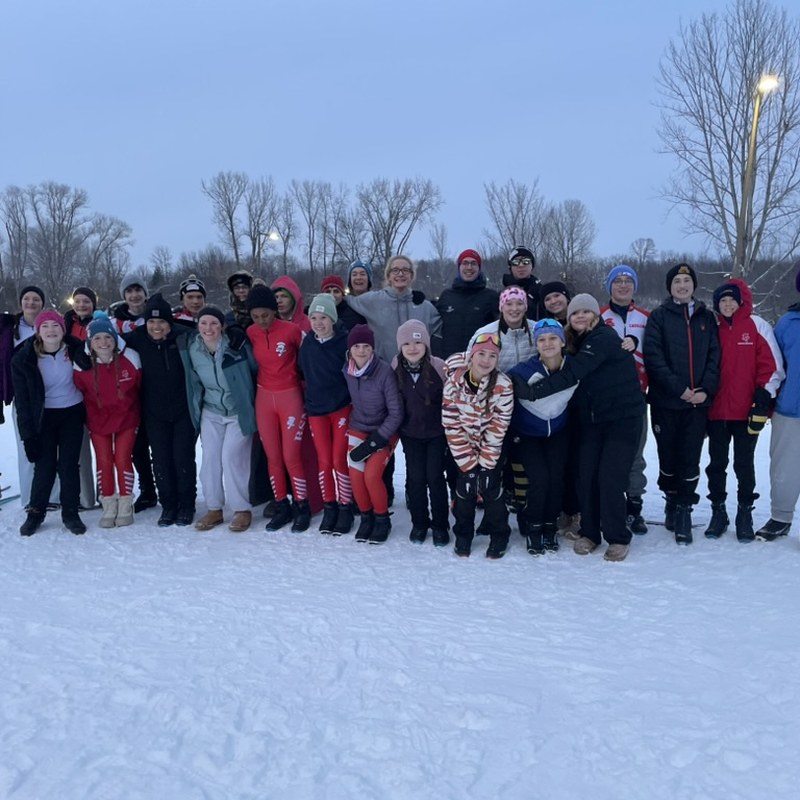
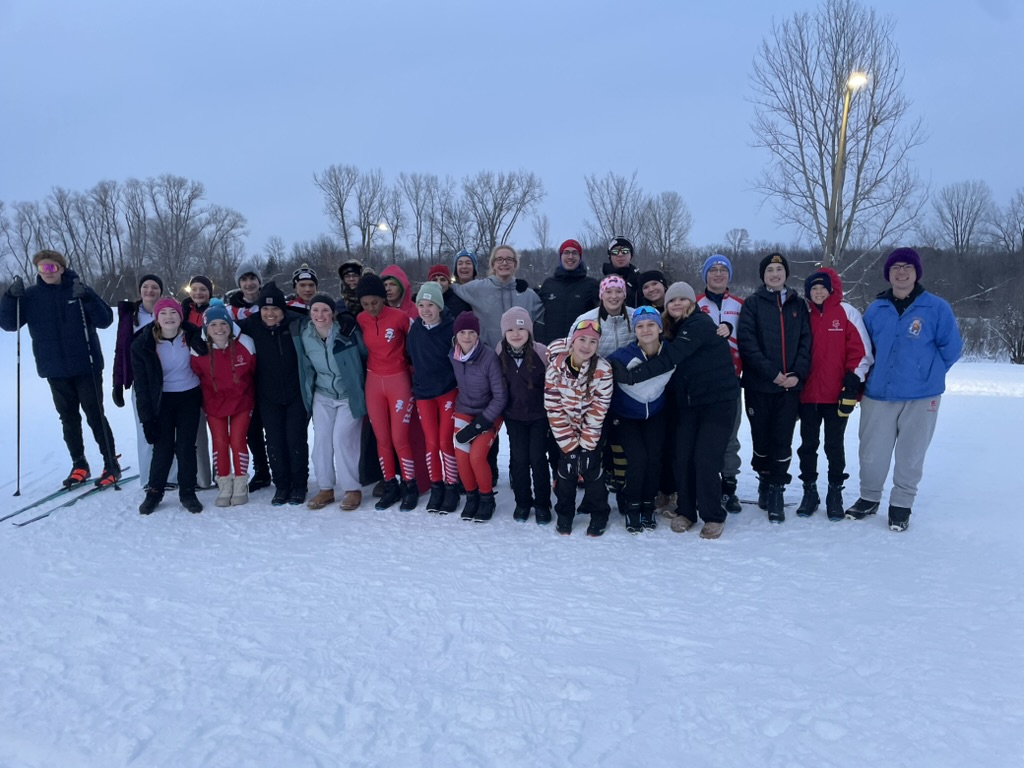
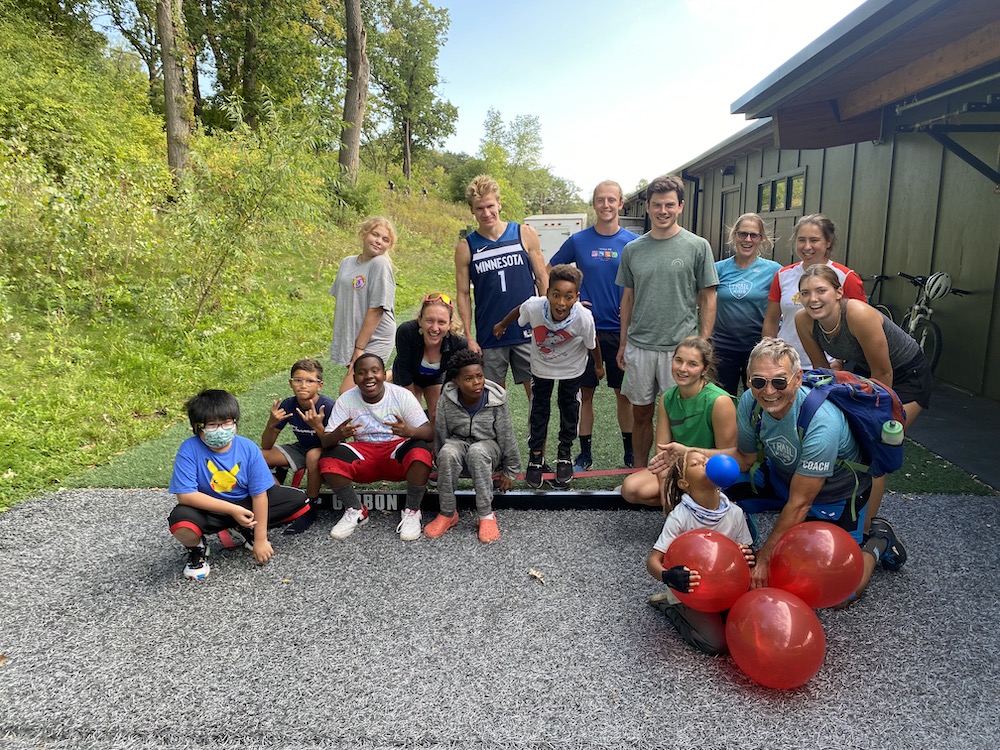
The Benilde-St. Margaret’s/DeLaSalle Nordic team last December. (Courtesy photo)
Position Overview
The head coach develops skiers of every experience level, builds a welcoming team culture and pursues competitive excellence, with student-athlete growth at the center of the program. That means setting a positive, inclusive tone for athletes from both schools, communicating clearly with families and school leadership, and building a team in which every skier feels valued and challenged. The head coach also leads and supports the assistant coaching staff, with an emphasis on consistency and a smooth transition into the season.
The Details
Head coach of the Benilde-St. Margaret’s/DeLaSalle cooperative Nordic program for the 2026-27 winter season
Stipend, commensurate with experience — $5,000 to $8,000
Reports to Matt Pryor, BSM Director of Athletics & Activities
After-school practices and meets through the winter, plus preseason planning and coordination with both schools
The selected candidate must complete BSM’s hiring, background check, Safe Environment and coaching requirements before working with student-athletes
Responsibilities
Plan and lead practices, competitions and athlete development throughout the season
Teach sound ski technique, conditioning, race strategy and safe training habits
Coordinate schedules, transportation, equipment and meet logistics with the BSM Athletics & Activities Department and DeLaSalle
Recruit, supervise and develop assistant coaches in collaboration with BSM
Communicate proactively with athletes and families, including schedule updates through BSM’s designated platform
Maintain program equipment and keep an accurate inventory
Uphold BSM’s standards for sportsmanship, student well-being and Minnesota State High School League compliance
Qualifications
Required:
Experience coaching or competing in Nordic skiing
Strong organizational and communication skills
Ability to work effectively with student-athletes at varying skill levels
Commitment to a safe, supportive team environment
Preferred:
High school coaching experience
Familiarity with Minnesota Nordic skiing competitions and the MSHSL
Experience leading a coaching staff or a cooperative program
Why Lead at BSM
BSM sets out to develop student-athletes as competitors, teammates and people, and its coaches build programs rooted in belonging, accountability, growth and Red Knight pride. The next head coach steps into a program with dedicated skiers, families and assistant coaches, has the backing of both schools, and gets to bring their own vision to athlete development and team culture.
How to Apply
Send a cover letter, résumé and references to Matt Pryor, Director of Athletics & Activities at Benilde-St. Margaret’s School: mpryor@bsmschool.org.
Applications will be reviewed as received. The opening is also listed on the BSM careers page.
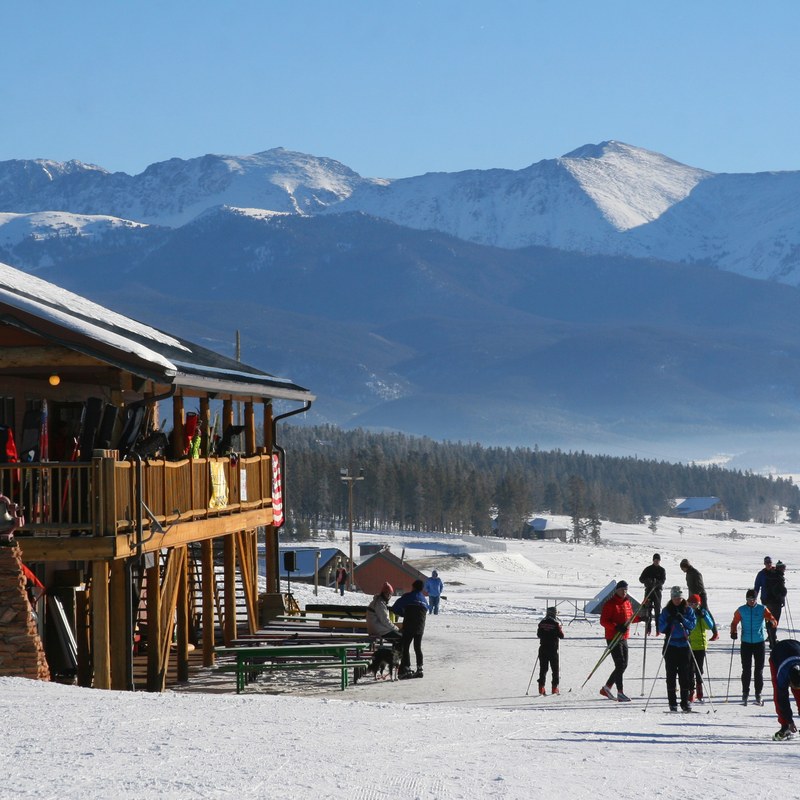
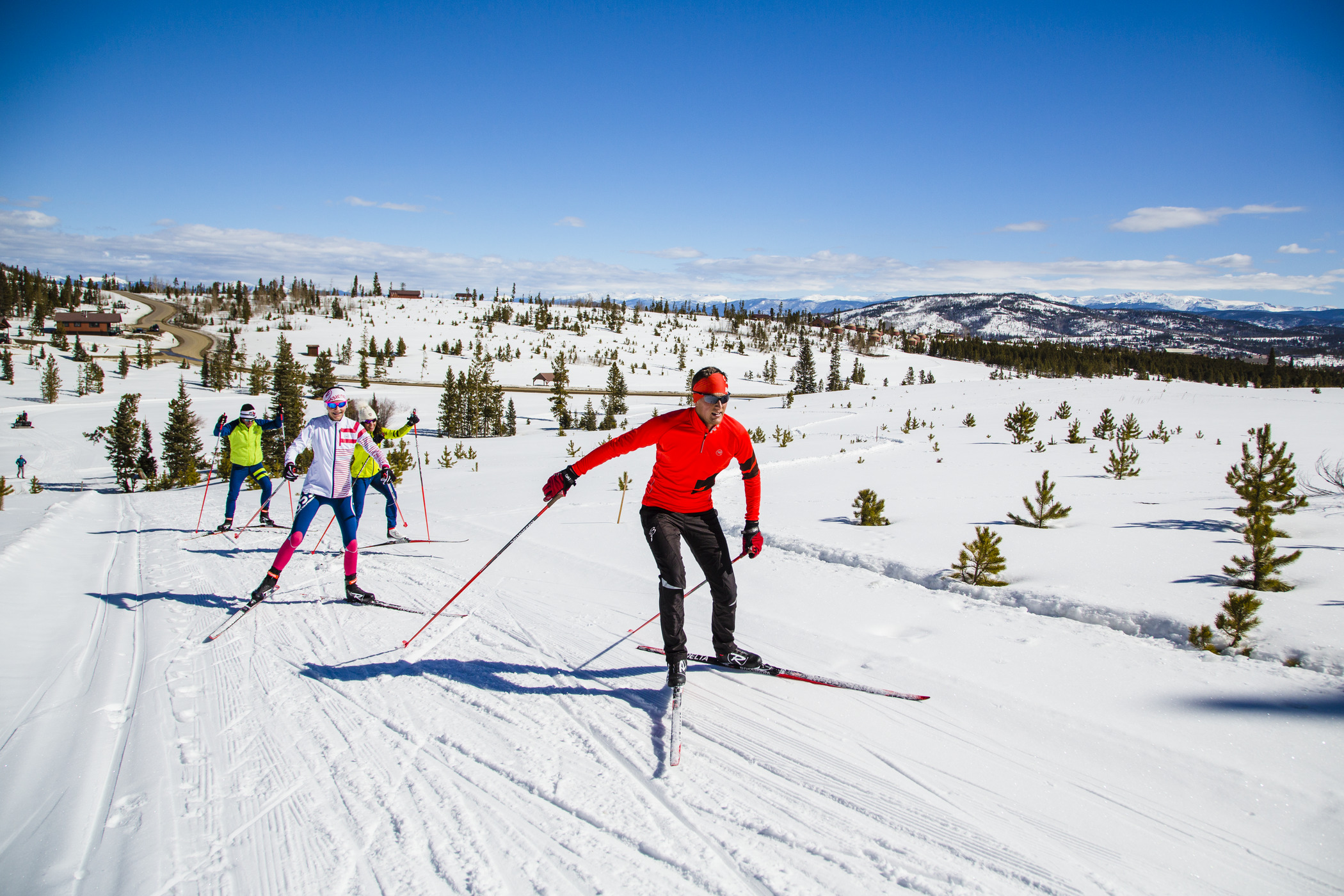
Skiers outside the Nordic Center at YMCA of the Rockies Snow Mountain Ranch. (Photo: YMCA of the Rockies)
YMCA of the Rockies Snow Mountain Ranch and SNØ Racing are joining forces, with Snow Mountain Ranch serving as the Presenting Sponsor of SNØ Racing.
The partnership connects a professional cross-country ski team committed to advancing the sport with one of Colorado’s favorite Nordic destinations. Together, SNØ Racing and Snow Mountain Ranch aim to welcome more people into Nordic skiing, support athletes and the broader ski community, and celebrate a sport built around snowy trails, hard work and the outdoors.
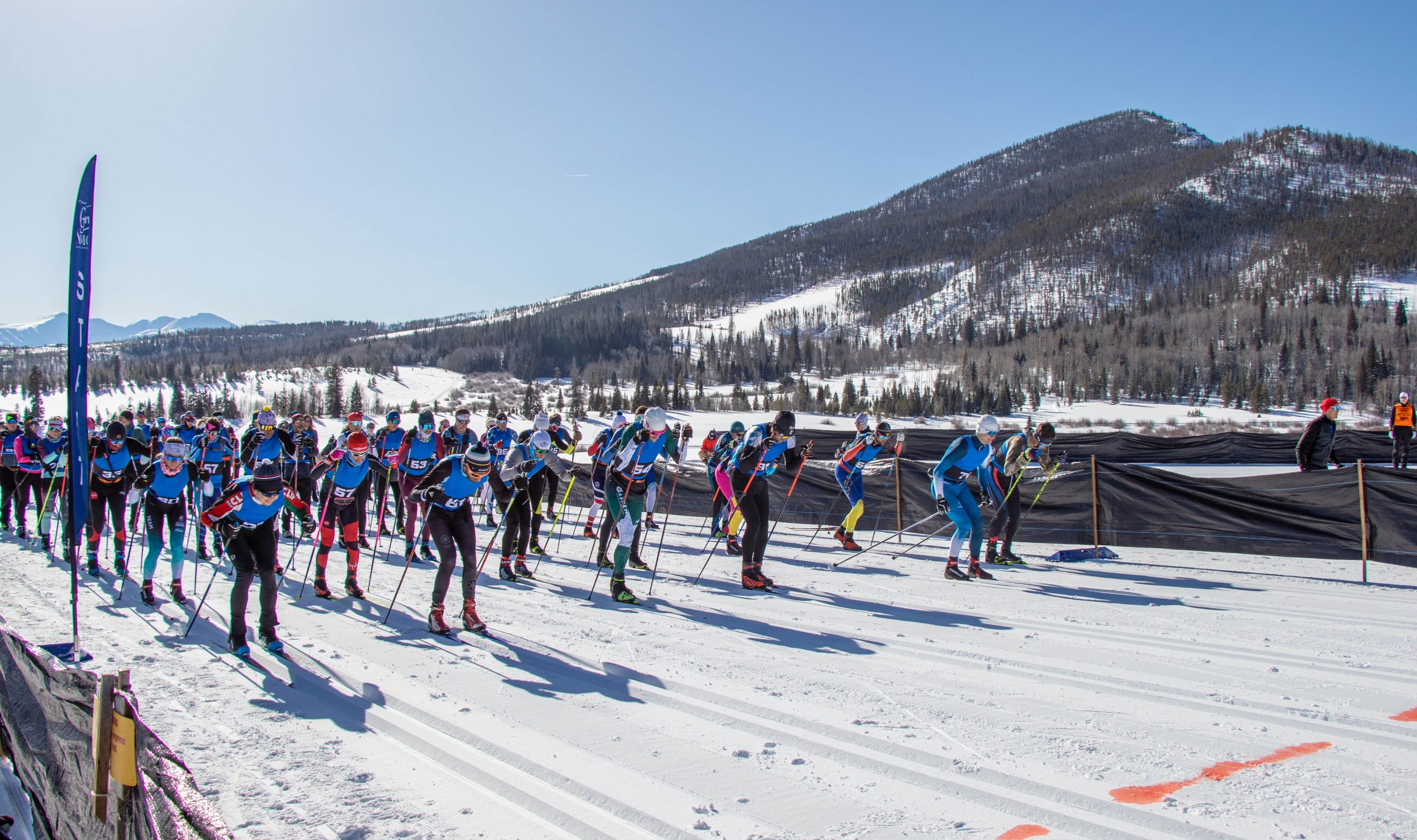
The Stampede mass start at Snow Mountain Ranch in early March. (Photo: YMCA of the Rockies)
What the Partnership Covers
“Snow Mountain Ranch has long been a place where people can experience Nordic skiing at their own pace, whether that means learning to ski for the first time, training for a race, or putting in serious Ks,” said Jeff Paulson, Nordic Director at YMCA of the Rockies Snow Mountain Ranch. “Partnering with SNØ Racing gives us an opportunity to support athletes competing at the highest levels while helping more people see that there is a place for them in this sport, too.”
As Presenting Sponsor, Snow Mountain Ranch will be featured across SNØ Racing’s public-facing team materials and marketing throughout the season. The partnership will also help introduce SNØ Racing’s community of athletes, coaches, clubs, juniors, masters, and recreational skiers to Snow Mountain Ranch as a destination for Nordic training, camps, events, lodging, meals, trail access and meeting space.
Based in Minneapolis, SNØ Racing is a professional cross-country ski team with athletes competing at the FIS World Cup, U.S. SuperTour, and regional levels. The team is focused on advancing skiing in the Central Region while promoting athlete development, partnership, and community engagement.
“Snow Mountain Ranch understands that Nordic skiing is bigger than race day. It’s about the people you ski with, the places that challenge you, the experiences that create lifelong memories, and the community that keeps you coming back. We’re proud to have them alongside our team this season,” said Yuriy Gusev, Chair of the Board of Trustees of SNØ Racing.
The Nordic Center grooms more than 80 kilometers of trail across 5,100 acres at Snow Mountain Ranch. (Photo: YMCA of the Rockies)
Eighty Kilometers at Snow Mountain Ranch
At Snow Mountain Ranch, that community has plenty of room to ski. The Snow Mountain Ranch Nordic Center offers over 80 kilometers of groomed trails across 5,100 acres of terrain, with routes winding through pine and aspen forests, open meadows and challenging climbs with expansive views of the Rocky Mountains. The trail system welcomes skiers across ages and ability levels, from first timers learning classic or skate techniques to experienced athletes looking for big training days.
The partnership also creates an opportunity to connect the Nordic community with the broader mission of YMCA of the Rockies. Snow Mountain Ranch is built around belonging, time together, outdoor experiences, and making the mountains accessible to more people. For both organizations, that shared sense of community is what makes the partnership a natural fit.
“Nordic skiing has a wonderful way of bringing people together,” said Paulson. “You can be chasing a podium or simply chasing a good glide on a bluebird morning. Either way, you belong on the trail. We’re excited to support SNØ Racing and grow that community together. And, stay tuned for the announcement of an exciting new event at Snow Mountain Ranch!”
To learn more about SNØ Racing and follow the team this season, visit snoracing.org. To explore Nordic skiing, lodging, lessons and winter experiences at YMCA of the Rockies Snow Mountain Ranch, visit ymcarockies.org.
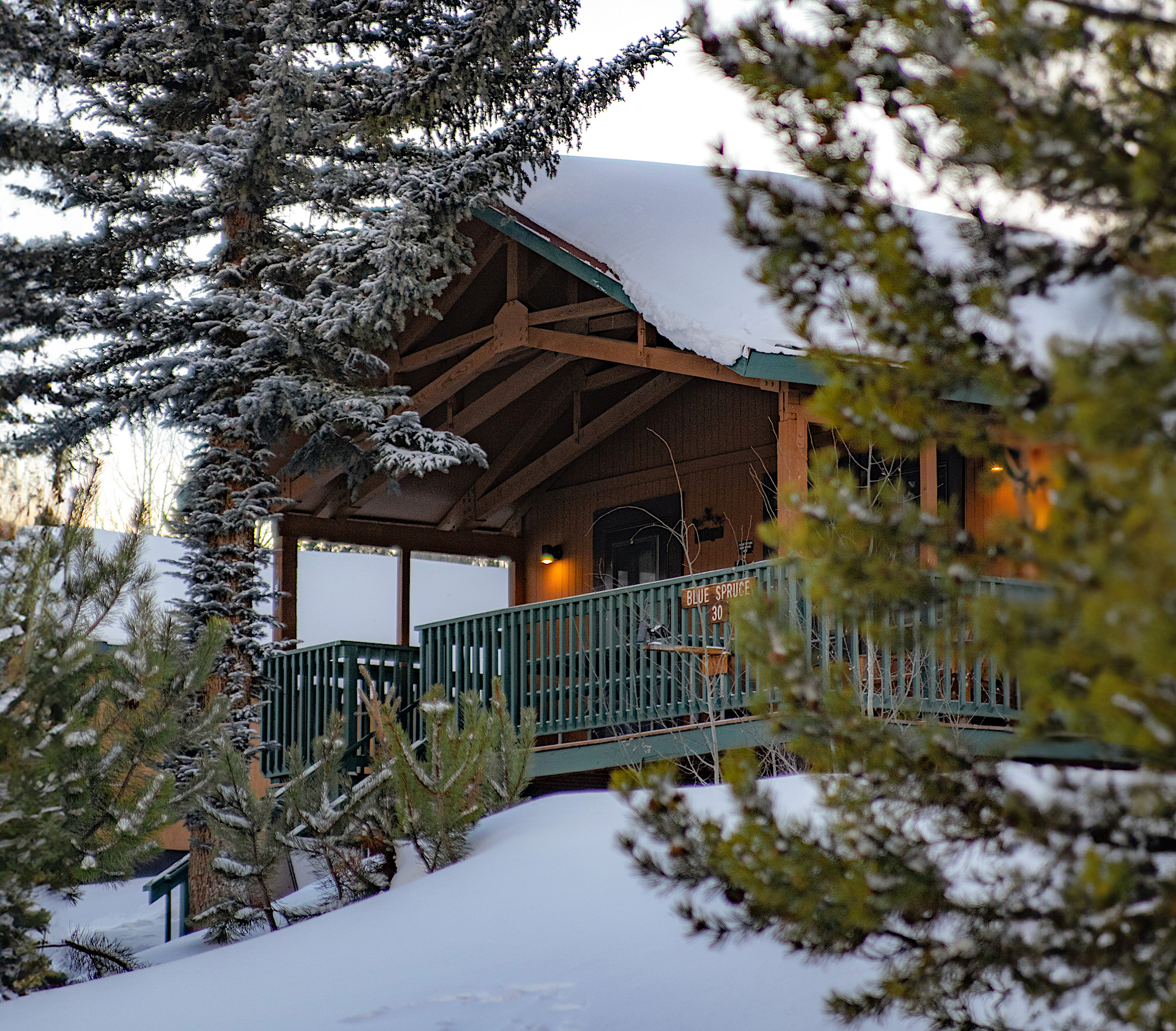
Alongside the Nordic Center, Snow Mountain Ranch offers lodging, dining and meeting space. (Photo: YMCA of the Rockies)
Publishing press releases is a service we offer to the ski community, so please note these articles are not written by FasterSkier and therefore do not necessarily represent our thoughts and standards.
When we spoke, Kristen Bourne was sitting on the couch in her living room in Truckee, California, a small ski town she now calls home. Tibetan prayer flags hung loosely behind her, shifting gently in the morning light that poured through the window. The room felt warm and calm — the kind of quiet space that comes from someone who spends much of her year on the move. Bourne smiled easily as she spoke, her voice’s cadence unhurried, like someone grounded in both her work and the mountain rhythm around her.
She had just returned from camp and was preparing to leave again this weekend to start the World Cup with the U.S. Ski Team. Between talk of travel logistics and packing lists, she mentioned the soundtrack that keeps her company on solo skis. “When I’m skiing by myself? Yes,” she said, grinning. “I really like skiing to Machine Gun Kelly… it kind of brings me back to the Blink-182, Sum 41 days. It feels almost like nostalgic, but newer age.”
That small confession says a lot about Bourne, now in her fourth season on the U.S. Cross-Country Ski Team coaching staff: rooted in rhythm, grounded in joy, and always blending the familiar with the fresh.
Joy, she’ll tell you, isn’t a garnish. It’s the point.
Kristen Bourne, Olivia Nesbitt Bouffard, and Jessie Diggins on an afternoon run in Wanaka, New Zealand. (Photo: Jessie Diggins)
“Happiness goes such a long way in professional sport… our secret weapon as a team is having fun. Our staff genuinely enjoys being together. The athletes genuinely enjoy being together. We love to all come together.”
The proof, for her, is a memory from the day Jessie Diggins won the 10 K at the World Championships in Planica. The scene isn’t what the public imagines. “You’d think everybody is stressed,” Bourne said. “We were ahead of schedule, and we all just sat down in [our wax truck], Yolanda, and made instruments out of whatever we could find for, like, 30 minutes.” The room filled with improvised drums and laughter. “It was so fun,” she said. “That’s the stuff people never see.”
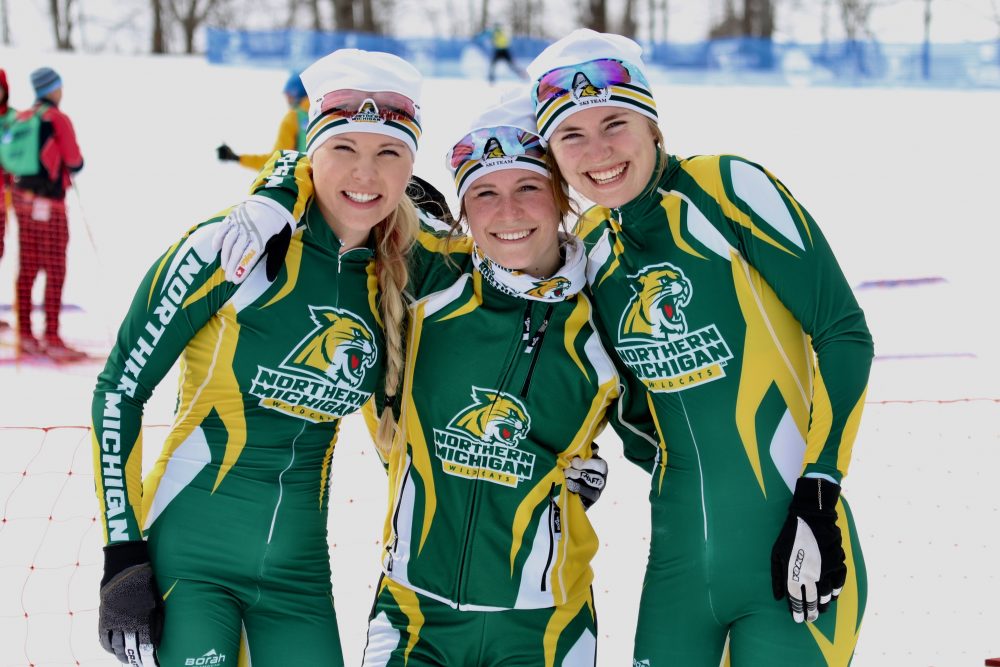
Northern Michigan University’s Kristen Bourne (c) after the 5-kilometer classic race at the 2017 NCAAs in Jackson, New Hampshire. (Photo: Jackie Schneider)
Minnesota Roots, and a Goal Cut in Half
Bourne grew up just outside the Twin Cities, where endurance sport was a family language. “Our family vacations were going to [my dad’s] marathons and triathlons,” she said. She started by hopping into a mile here and there, handing him nutrition at the end of the driveway, learning the cadence and care that go into long efforts.
Skiing arrived as a nudge. A new high-school coach was recruiting runners to cross-country ski at Mounds Park Academy. The first season was rough: “I swore I was going to quit. Every single race I did, I cried after most races,” she said. In a 5k, Jessie Diggins (then a rival in the same section) beat her by 12 minutes. Bourne’s response was characteristic—specific, measurable, gritty: next year, get that down to six.
She continued to run and ski through high school, then headed to Northern Michigan University after spending a semester at the University of Colorado. She transferred mid-winter 2014 and skied at NMU through 2018, working under a rotation of assistants. Her path after graduation would tilt everything she thought she knew about training.
Kristen Bourne spent time in Norway after college training with Lyn Ski / Team Obos. Bourne is pictured here racing in a Norwegian Cup race in Gålå. (Photo: Martin Riseth)
Norway: Where Individual Plans Meet Shared Trails
Right out of college, Bourne moved to Norway for a year and a half. She intended to ski; illnesses complicated the plan. But a concurrent internship at the Norwegian School of Sports Science opened doors into a different coaching world. Back home, she was used to “show up and the coach tells you the workout and everybody does the same thing.” In Norway, she said, “you sit down with a coach and you generate your plan… It was the first time I was exposed to individual planning—thinking about what’s best for you, not necessarily the team.”
Interval days there could look like organized chaos: “Every single person… almost had a different workout, but people would sync up where they could.” At first, she struggled; she missed the mob grind. Then she looked around at a culture of success and realized what was happening: athletes were learning their bodies early, practicing agency. The lesson stuck. “Team workouts are also the way to go,” she said, “but giving athletes a platform to think for themselves—creating this athlete-coach collaborative experience versus coach telling athlete, ‘this is what you should do’—had a tremendous impact” on how she now works.
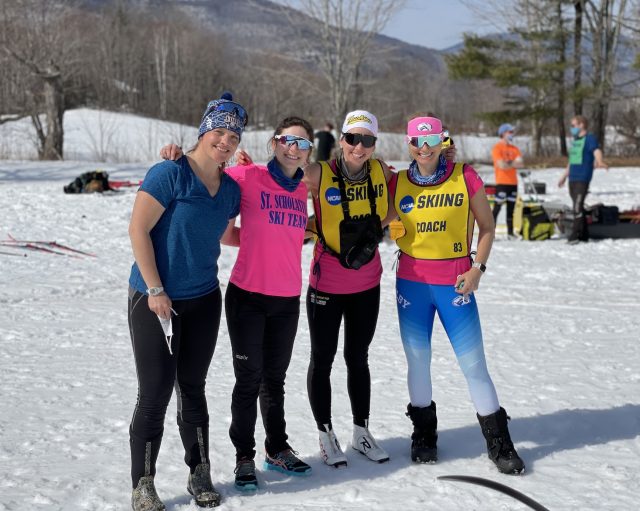
(l-r) WSCA members Maria Stuber (then CSS), Kristen Bourne (then CSS, now with the US Ski Team), Kristen Monahan-Smith (Michigan Tech), and Tracey Cote (Colby College) at the NCAA Championships in Jackson, New Hampshire, in 2021. (Courtesy Photo).
The Parking-Lot Pivot
Her return to the U.S. was abrupt. She lost her residence permit—”turns out it was under the seat of my roommate’s dad’s car”—and flew home with two days’ notice, arriving just as COVID was beginning to ripple into sport. She kept racing a little, then decided she was done.
That’s when a well-timed email—and a parking-lot shout—changed everything. Her dad reached out to Maria Stuber, who was building the Women’s Ski Coaches Association. “Maria found me in a parking lot at U.S. Nationals and yelled out her window, ‘I’m going to call you,‘” Bourne remembered. A call later, Maria offered her a position at the College of St. Scholastica and connected her with Pepa Miloucheva at the Craftsbury Green Racing Project. After two school years at Scholastica, with summers in Craftsbury, Bourne joined the U.S. Ski Team staff.
The transition was, by her own admission, intimidating. “It was this idea of, like, how am I here?“ she said. But Norway’s reminder—that fresh eyes are valuable—kept her steady. “Just because you’re newer and have less experience doesn’t mean your ideas aren’t valid,“ she said. “You’re maybe fresher out of a ski career, you relate with athletes in a different way. There’s a lot of value in that.”
She also learned to de-personalize the miss. “Technique feedback doesn’t always stick. That’s not a reflection of me as a coach or the athlete,“ she said. “We tried that idea; it’s fine. We’ll try something else.“ Each year, she felt more confident; more importantly, she built deeper connections.
Julia Kern—one of the athletes Bourne works with most closely—sees that same quality every day.
“Kristen is unique in the sense that she’s able to connect with just about any personality type on the team,“ Kern said. “One of her strengths is figuring out how to connect differently with different athletes. Every athlete responds differently and has different needs, and she just gets that. She’s very approachable and sees athletes as whole people.”
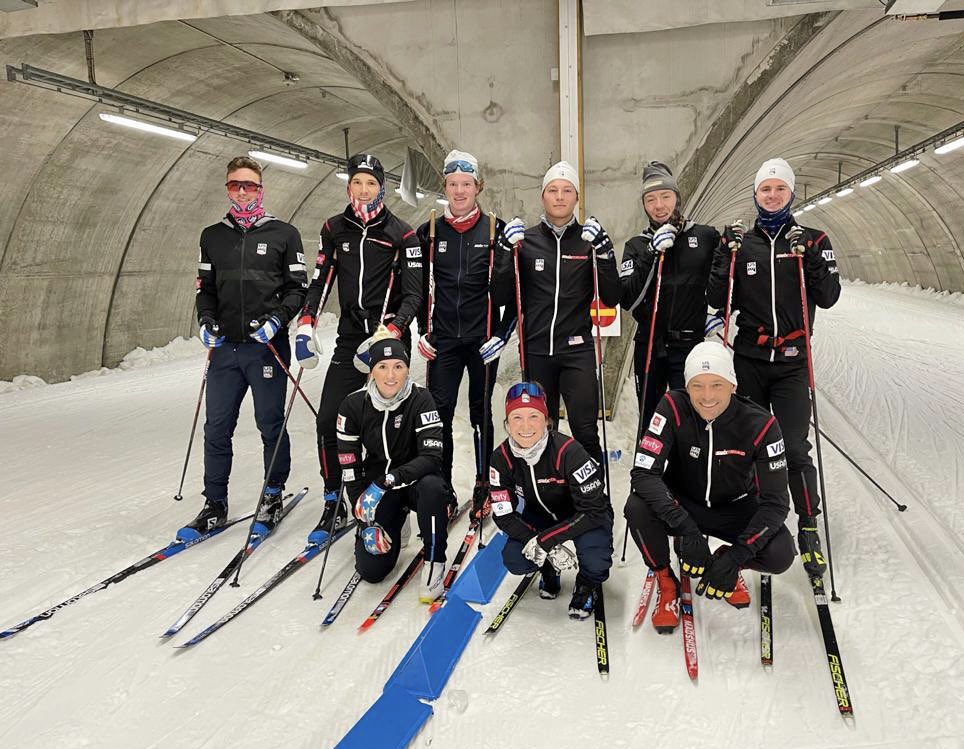
USST athletes and coaches in the Torsby Ski Tunnel, August 2022. Back row, from left: Johnny Hagenbuch, Kevin Bolger, Finn O’Connell, JC Schoonmaker, Ben Ogden, and Walker Hall. Kneeling, from left: coaches Greta Anderson, Kristen Bourne, and Matt Whitcomb. (photo: François Faivre)
Mentors and a Collaboration-First Culture
Ask Bourne about mentors and the names tumble out: Matt Whitcomb, Chris Grover, Jason Cork. “From the very beginning… incredibly supportive,“ she said. “Matt will answer his phone every time. He usually likes to FaceTime… we brainstorm ideas.“ The flow goes both ways: she calls when the connection is hard; he calls when he’s stuck on something.
Her women’s network is just as active. “Maria Stuber, hands down,“ Bourne said. “And Sam Benzing at Montana State—we coached together at Scholastica. She’s younger, but her perspective is so interesting.“ Group FaceTimes are common: Maria, Sam, Kristen, swapping angles and problem-solving. It’s not just helpful; it’s survival. “It would be really hard to be in this job and not have that,“ Bourne said. “The collaboration makes it so much more sustainable.”
That same approach underpins her work with athletes like Kern.
“Kristen’s helped me figure out what kind of training plan works well for me,“ Kern said. “We’ve tried some new things the last few years—different kinds of workouts, always thinking creatively. She’s open-minded, reads up on what other athletes are doing, but also thinks for herself. She’s got such a growth mindset.”
Julia Kern and Kristen Bourne in Sjusjøen at the 2025 pre-World Championships camp. (Photo: Matt Whitcomb)
Coaching Women, Coaching Men — and Being Seen
On the World Cup, visibility is progress measured in inches. FIS’s women-coach bibs created access (up to two additional bibs if teams have women on staff), but change is slow. “Every year, maybe there’s one or two new women… it definitely hasn’t blown up,“ Bourne said. Old assumptions linger. “I probably get asked a couple times a year from male coaches: ‘Are you the massage therapist or PT?’“
For Kern, Bourne’s presence is more than symbolic.
“It’s huge,“ Kern said. “She’s one of the few female coaches on the World Cup level, and she’s down to work hard and just have fun with it too. I hope the next generation of women who want to coach feel inspired that they can do it too. Kristen’s paving the way, even in ways people might not see from the surface.”
Bourne herself agrees that visibility matters. “You can’t be it if you can’t see it,“ she said. “It’s important for young men, too, to see women in leadership roles. Our men’s team has been incredible—they’ve never made me feel like I don’t belong.”
Her advice to aspiring women coaches is emphatic: build a robust support community. “Ask for advice,“ she said. “It makes a world of difference.”
Kristen Bourne and Sophia Laukli on the pre-race day at Val di Femme during the 2025 Tour de Ski. (Photo: Leann Bentley)
Athlete Work: Julia Every Other Day, Gus and Sophia on the Radar
Bourne’s primary day-to-day is Kern. “We’re talking basically every other day—texting or on the phone, training planning. We work very closely, very in depth,“ she said. She also monitors Gus Schumacher and Sophia Laukli.
Kern said that beyond the workouts, Bourne has shaped the team culture itself.
“She’s really good at encouraging athletes to bring their own sense of leadership,“ Kern said. “Not everyone is going to be outspoken—some are quiet leaders, some lead through training. She empowers people to be leaders in their own way. She creates a team atmosphere that’s a judgment-free zone. No idea is a bad idea.”
Gus Schumacher and Kristen Bourne after his 4th place finish in the Davos sprint during the 2023 Tour de Ski. (Photo: Leann Bentley
Season Outlook: Keep the Vibe, Chase the Team Moments
Last year’s long illnesses made for uneasy preseason reading. This year feels different. “People are in a pretty good place,“ Bourne said. “At our camp in Utah, I would assume there would be a little more stress—it’s an Olympic year. Not at all. People were so relaxed and chill and vibing and doing their thing.”
If there’s a metric she’d choose for success, it’s carrying that “happy momentum“ through everything—the Olympics, Lake Placid World Cup Finals. “In a year with so many eyes on cross-country skiing, that would be massive,“ she said.
Results still matter, of course. And she lights up talking about the collective ones. “It would be so awesome to see success in team events,“she said. “Relay and the sprint relay—those mean so much when it’s a collective team event. We want to do well there.”
Lucas Wilmot, Kristen Bourne, Murphy Kimball, Tabor Greenberg in Bend, Oregon 2025 after wrapping up the first L3 intervals at camp. (Photo: Leann Bentley)
Representation, Purpose, and the Long Run
There’s a moment near the end of our conversation when Bourne zooms out to the why. “We are very deeply intertwined in another person’s process and journey,“ she said. “What an absolute privilege to be part of that. It’s impossible not to come to absolutely love and care so much about these people.”
Kern echoed that sentiment from the athlete side.
“Kristen understands there’s life outside of skiing,“ Kern said. “She also knows what it takes to be one of the best in the world—and when it’s time to step away. She helps us stay grounded.”
Five years from now, Bourne hopes she’s doing exactly this, just deeper—”coaching, getting to know these athletes more and more.”
And she hopes the picture around her looks different: more women coaches on staff, on other staffs, in other sports at U.S. Ski & Snowboard; more women wax techs. “If I can have a tiny ounce of contribution into changing that,“ she said, “I’d be so, so happy.”
Kristen Bourne and Colin Rodgers out for a run during the OD run at Park City camp, 2025. (Photo: Matt Whitcomb)
Purpose, Rhythm, and Joy
As our conversation wound down, Bourne slightly rotated her position as the light spilling through the window shifted—yet still filtering across the prayer flags behind her. She laughed when she mentioned her must-pack item: heated socks for Finland. “I get cold fast,“ she said. “Those are my best friend.“
There’s rhythm in that, too: warmth, joy, and purpose, all braided into one.
Because for Kristen Bourne—and for the athletes who work with her—the secret weapon really is fun.
Leann Bentley, Kristen Bourne, and Bernie Nelson at Val di Fiemme the morning of one of the last stages of the 2024 Tour de Ski. (Photo: Matt Whitcomb)
Love Stories Like This? Help Keep Them Coming.
Feature interviews like this one take time, access, and care to produce. If you value thoughtful storytelling and independent ski journalism, please consider becoming a Voluntary Subscriber. Your support directly fuels the work we do to cover the people, places, and moments that make our sport special.
This coverage is made possible through the generous support of Marty and Kathy Hall and A Hall Mark of Excellence Award. To learn more about A Hall Mark of Excellence Award, or to learn how you can support FasterSkier’s coverage, please contact info@fasterskier.com.
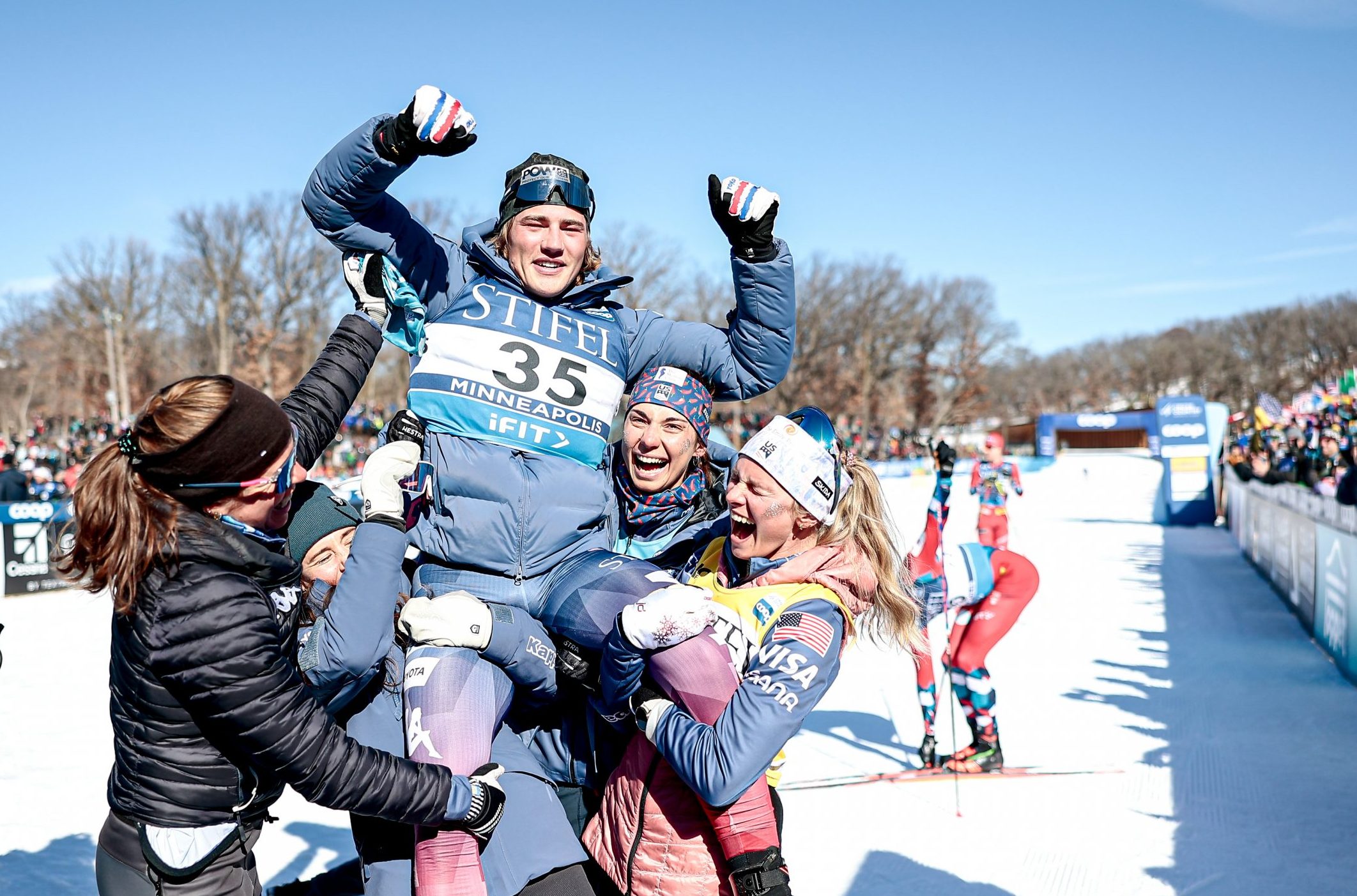
U.S. Ski Team members, including Jessie Diggins, right, hoist Gus Schumacher on their shoulders after he won a World Cup race in Minnesota on Sunday. (Photo: Modica/Nordic Focus)
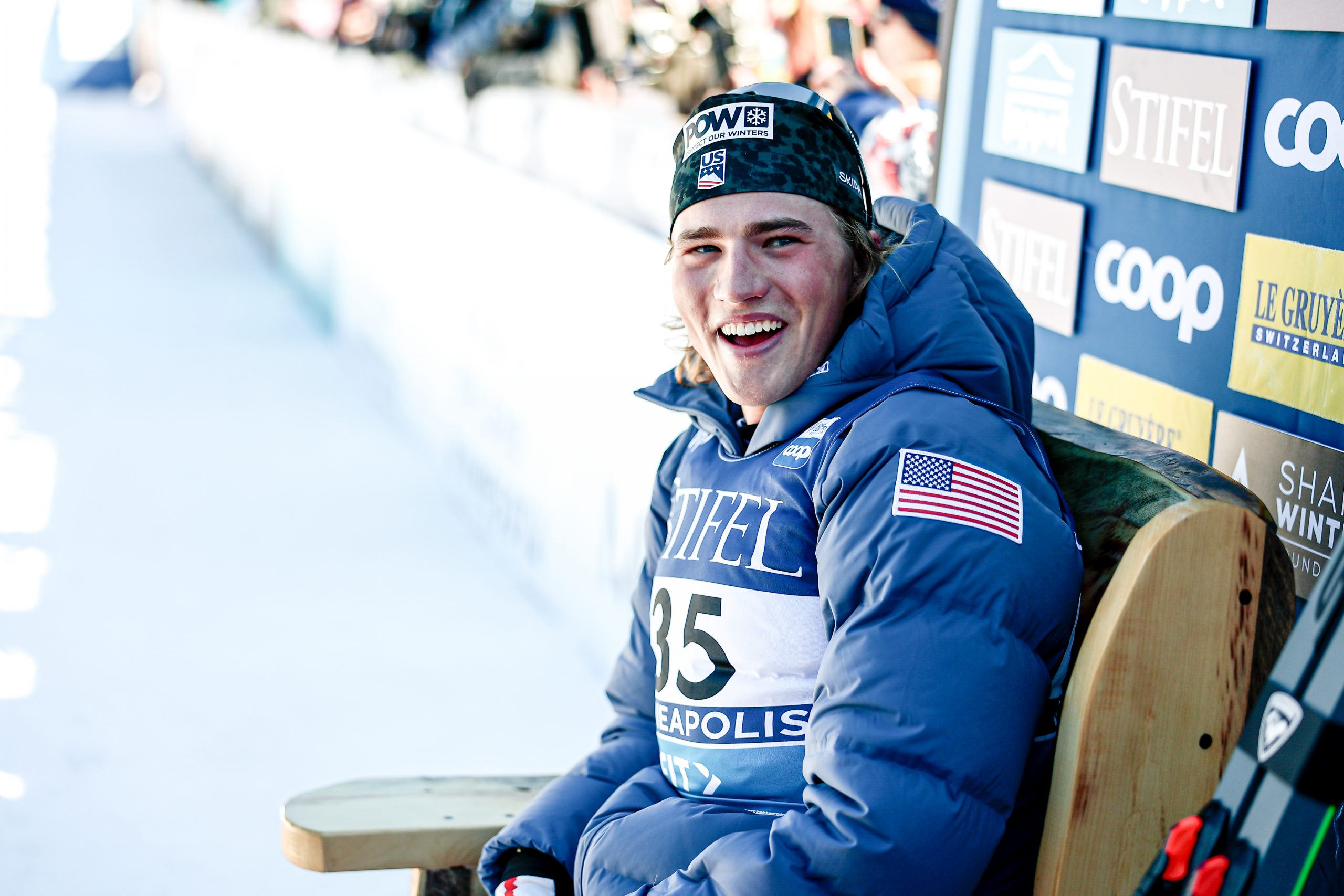
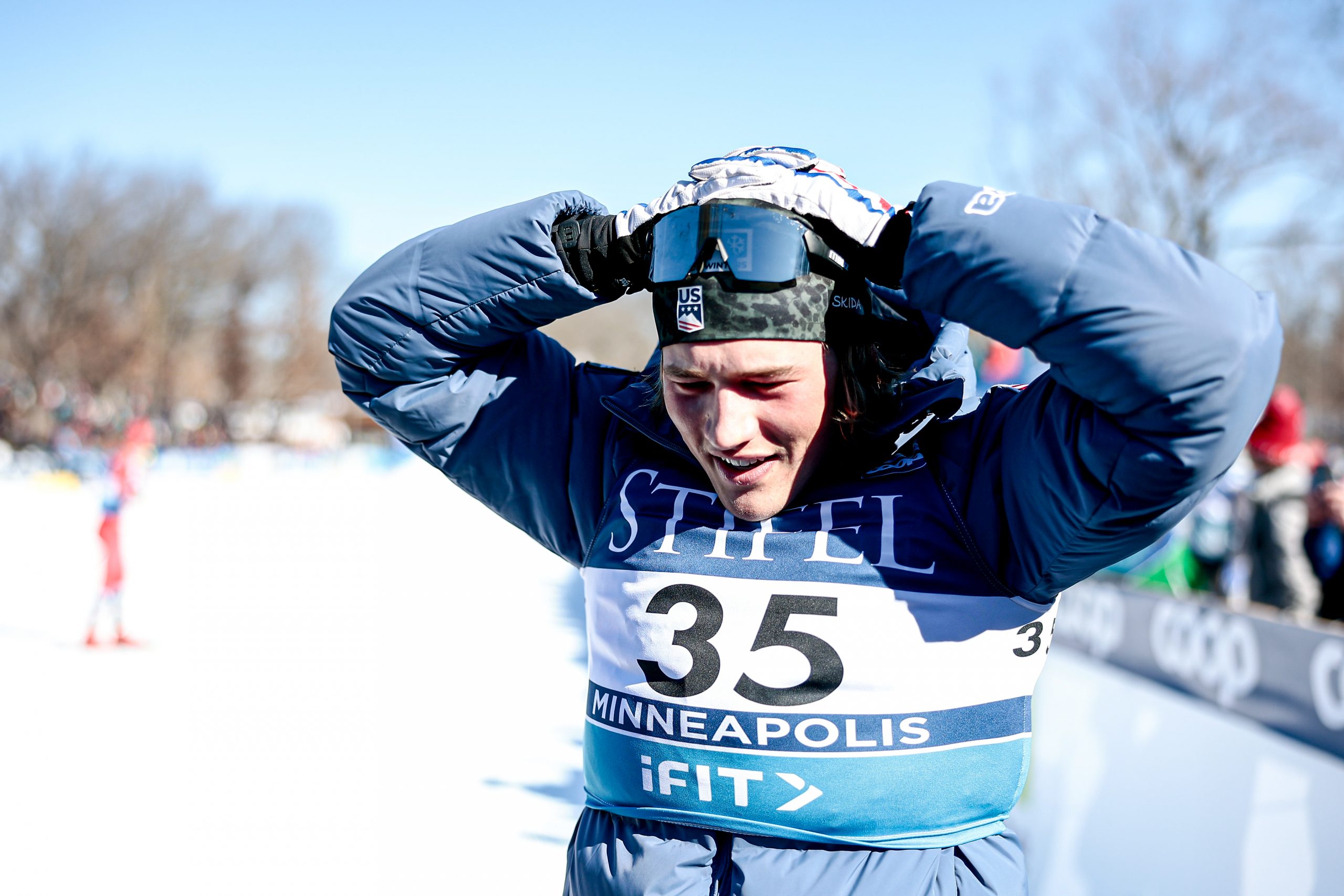
MINNEAPOLIS — Gus Schumacher, a 23-year-old from Anchorage, accomplished something Sunday that no American man had done in 40 years: he beat every single Norwegian, Swede, Finn and all other comers in an international cross-country skiing distance race.
The result was a star-is-born moment achieved before thousands of screaming fans in Minneapolis. Inn some ways, it felt almost scripted. Schumacher’s abundant potential has been making headlines since he was 13 years old, back when his coach joked that the teenager weighed less than his dog. But Schumacher’s route to the top has not been straight. And just below the surface, there’s another strand in the arc of his career that shows why Sunday’s result moved him, and his teammates, to tears.
Just two seasons ago, Schumacher went through a wrenching season—and a nightmarish Olympic Games in Beijing—where instead of fighting for medals, he was grasping for explanations for why his body was failing him. In one race, he finished nine minutes behind the winner. Afterward, Schumacher regrouped, adjusted his training and brought in new coaches—producing an abrupt turnaround and a validation that the talent that put him on the cross-country skiing map is still there.
“It was always in my mind that if I did the right things, it’s still in there—it doesn’t go away,” Schumacher told reporters Sunday. He added: “I’ve made some training mistakes, I think, in the last couple of years, but kept loving the sport and wanting to do it. And just kept showing up and kind of figured out what I was doing wrong.”
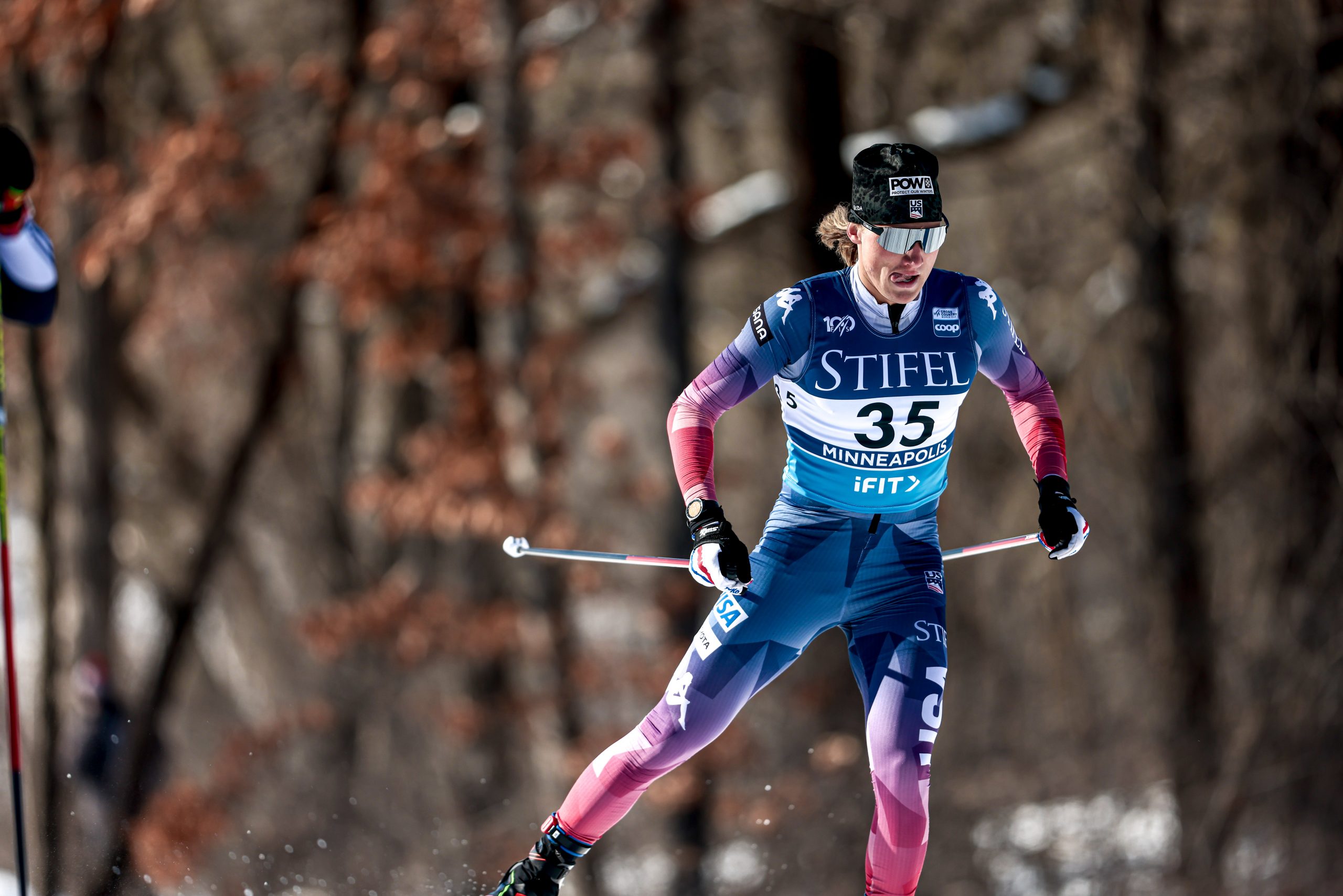
Gus Schumacher races Sunday. (Photo: Modica/Nordic Focus)
Schumacher’s result in Minneapolis—on the World Cup circuit’s first stop in the U.S. in two decades—will serve as inspiration to the hundreds of young, aspiring Olympians who lined the city’s trails Sunday. But it also resonated for his teammates, many of whom endure similar ups and downs themselves.
That includes Julia Kern, a 26-year-old American Olympian who said she was trying to channel Schumacher as she warmed up for her own race Sunday, after his win. Kern won a World Championships medal last year, but has been struggling this season.
“Warming up, I was just thinking about how I want to ski like Gus,” Kern said. “It gave me confidence. I’ve had a tough year. And I was thinking back to his Olympic year.”
Schumacher, who grew up training with the Alaska Winter Stars program in Anchorage, first announced himself as a once-in-a-generation talent four years ago. That was when, at the age of 19, he won a gold medal at the World Junior Championships in a 10-kilometer race—the same distance as Sunday’s event.
But after he graduated to the top-level World Cup circuit, Schumacher started struggling with his training formula, only sporadically translating his big junior performances into good results on the adult circuit. In his toughest moments, like at the 2022 Olympics, he was struggling to understand the “weird” feelings in his body.
“That’s tough, to not feel like myself, and not knowing when it’s going to come back,” he said at the time.
In retrospect, Schumacher and his coaches have made a relatively straightforward diagnosis: he was training, simply, too much. That’s a common mistake for early-career cross-country skiers, since the sport generally rewards hard work and the limits to training can often only be found through trial and error.
Jessie Diggins, 32—the superstar American skier from Minnesota who owns three Olympic medals—went through a similar process of self-discovery earlier in her career, said Chris Grover, one of the U.S. Ski Team’s lead coaches.
“She just wanted to train, train, train. And at one point, she was getting diminishing returns,” Grover said after Sunday’s race. “Gus is starting to figure that out, starting to figure out his body at this level.”
Since that tough Olympic year, Schumacher has made some changes. He’s now moved to the Alaska Pacific University training program, which includes several other members of the U.S. World Cup team and a renowned coach, Erik Flora.
He’s also been getting advice from one of the U.S. team’s coaches, Kristen Bourne, who described Schumacher’s experience over the past few years as a natural part of the sport.
“When we’re having those hard times, absolutely, you do learn from them and become better,” she said. “We’re trying to figure out the individual jigsaw puzzle that is each athlete.”
Gus Schumacher sits at the finish line Sunday. (Photo: Modica/Nordic Focus)
The changes clearly seem to be helping Schumacher, who already notched several eye-catching results earlier this season, including fourth place at a World Cup race last month.
What’s excited his coaches, teammates and boosters is how Schumacher already appears to be absorbing some of the important lessons about training and racing in a career that’s only just starting.
“I’m sure I’ll make some more mistakes,” he said Sunday. “But hopefully less from here on out.”
Schumacher’s perseverance was rewarded with an experience of a lifetime Sunday.
He was an early starter in the race, held in a time trial format that sends athletes on to the course one at a time.
Schumacher had the fastest pace when he crossed the finish line. But he knew that a whole pack of Olympic medalists was behind him, and was likely to better his time.
But as he waited at the finish, with a growing pack of teammates and supporters, none of his rivals could catch him.
Gus Schumacher learning that he’d won Sunday’s World Cup race. (Photo: Modica/Nordic Focus)
“They started finishing, and I was like, ‘Oh my God—I might get a podium,’” Schumacher said.
First William Poromaa, a top Swedish talent, crossed the line eight seconds behind Schumacher. Then came Norwegian Harald Ostberg Amundsen, the leader of the overall World Cup standings, four seconds slower, and Johannes Hoesflot Klaebo, another Norwegian, who has five Olympic gold medals to his name: six-and-a-half seconds back.
Teammate Luke Jager, among those gathered with Schumacher in the finish, “was like, ‘You’re going to fucking win this thing.’ And I was just, like, ‘Oh my God. I might actually win this race,’’” Schumacher said. “And then it happened.”
His teammates hoisted him onto their shoulders as the huge crowd that had gathered for the Minneapolis race roared, and later erupted in a chant: “Gus! Gus! Gus!” Afterward, Schumacher posed on the podium with 20 teammates and support staff, then took a celebratory jog, dispensing high fives to fans in the grandstand.
His whole family—father, mother, siblings and girlfriend—was there to watch it happen.
“The happy thing for me is that this has the potential to be a normal length career. And it feels like he’s maybe discovered the secret sauce now,” said Greg Schumacher, his father. “He’s done what he could to get here. And so it’s nice for him to have a day where it worked.”
The electric atmosphere after Schumacher’s win Sunday spread even to his competitors—the two Norwegians who shared the podium with Schumacher couldn’t hold back their smiles when he climbed up to the top step for an awards ceremony. A star French athlete, Lucas Chanavat, stood in the crowd, filming the scene.
“It was insane. It was so cool. It gave me goosebumps,” Chanavat said. “This is cross-country skiing.”
What a weekend. If you weren’t able to make it to Minneapolis, we had the good fortune of taping this episode of the podcast in front of a live audience at a local brewery, and we think it brings through a little of the amazing atmosphere. British skier Andrew Musgrave joined us in-person, Ben Ogden zoomed in from mono jail and a very special guest whose name ends with Schumacher joined us mid-pod.
The audio quality from this episode is…..mixed, but it seems to be workable. Thanks for sticking with us all season — we’ll be back with some bonus episodes in the next week before the World Cup resumes. Email us at nat@fasterskier.com and devon@fasterskier.com.
This coverage is made possible through the generous support of Marty and Kathy Hall and A Hall Mark of Excellence Award. To learn more about A Hall Mark of Excellence Award, or to learn how you can support FasterSkier’s coverage, please contact info@fasterskier.com.
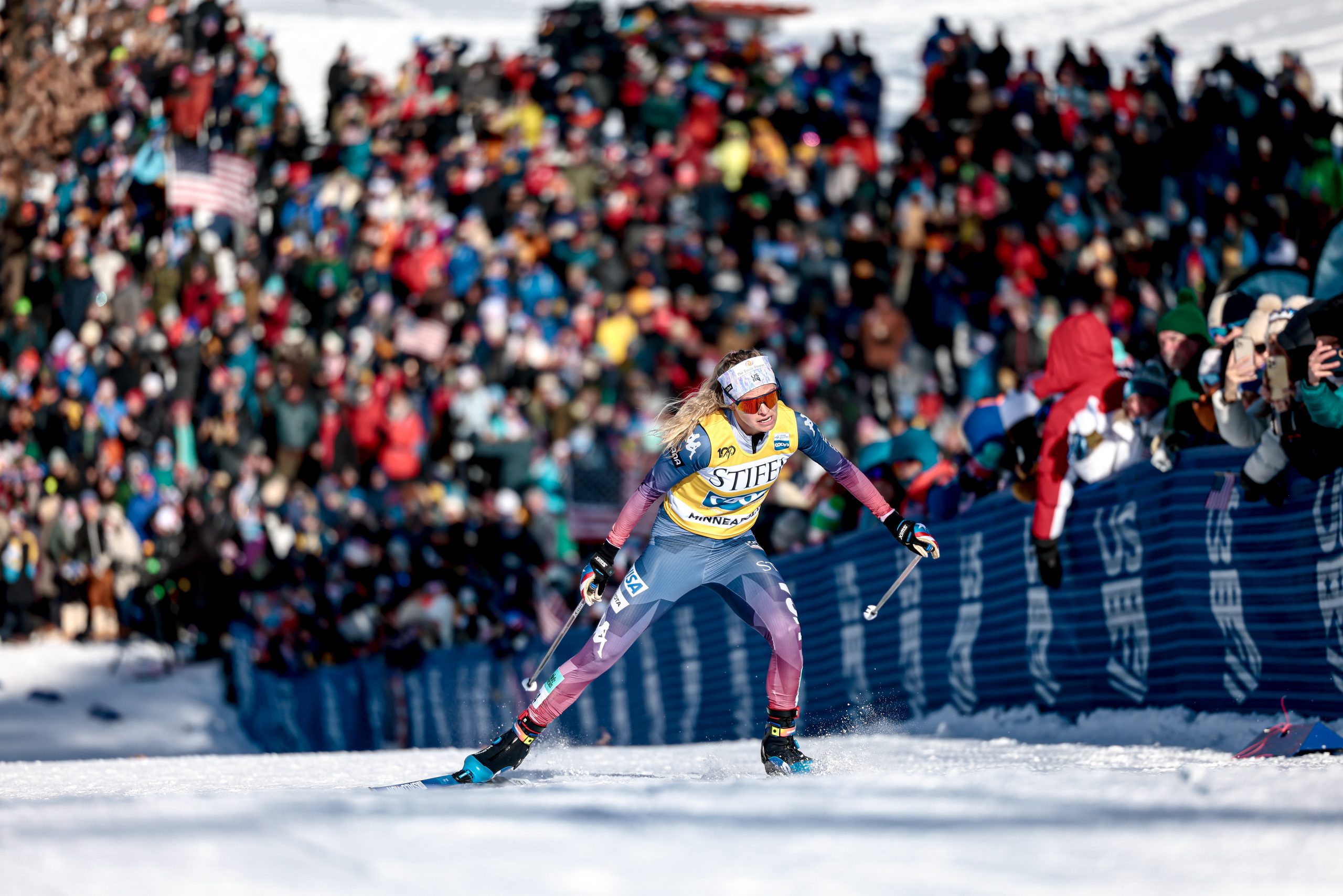
Jessie Diggins (USA) in front of the home crowd in Minneapolis. (Photo: Modica/NordicFocus)
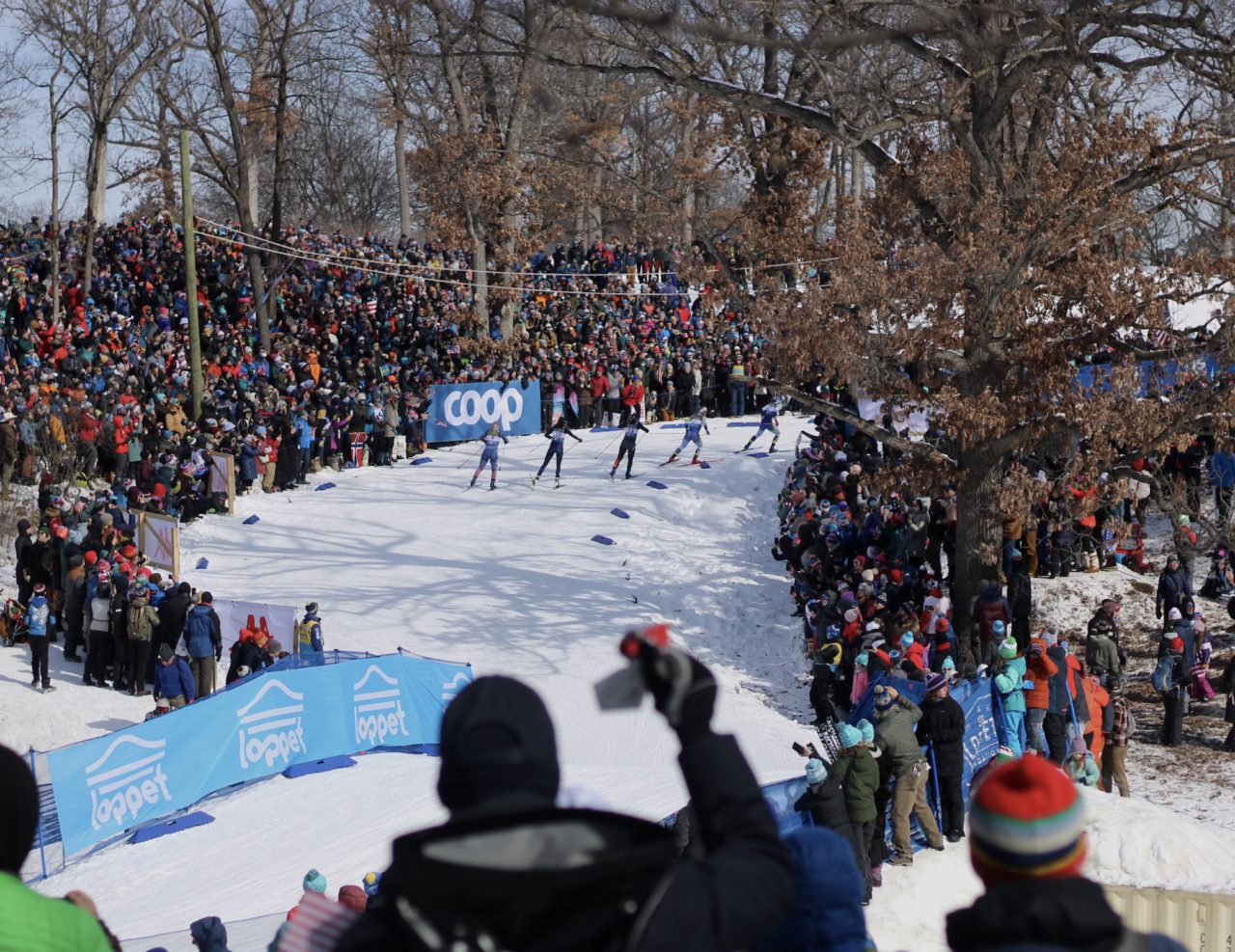
MINNEAPOLIS—The suspense and the nerves built all morning at Theodore Wirth Regional Park, where America’s cross-country skiers were set to contest their first World Cup race—the sport’s top competition circuit—in 23 years.
By the time Jessie Diggins took to the course, before thousands of adoring spectators, Joan Griffin, a longtime fan of the Minnesota-grown superstar, couldn’t hold her emotions in any longer.
“I cried,” said Griffin, 58. “My kids skied, and I used to tear up when they would go by. And I kind of felt that same way.”
All 24 Americans who competed in Saturday’s sprint race in Minneapolis had friends, family members and admirers among the crowd; fans turned out from Alaska, Wyoming, Illinois, New York and New England.
But the event was a literal homecoming for Diggins, 32, who grew up in Afton, 25 miles east. And at Wirth Park, she was the undeniable star of the show, taking a victory lap with Saturday’s race winners even though she placed fourth.
Diggins was the only U.S. team member to advance past the first of the three rounds of sprint heats. A wall of noise followed her as she skied past the crowds snaking along the course. And the fans, it turns out, were not the only ones who were moved.
Huge crowds lined the trails to watch Saturday’s World Cup race in Minneapolis. (Nathaniel Herz/FasterSkier)
“I’ve cried seven times today, and all for the best reasons,” Diggins told reporters after the race. “This is the coolest day in my entire racing career.”
That superlative, mind you, comes from an athlete with three Olympic medals and a world championship in her trophy case.
But you didn’t have to look hard Saturday to see why the moment meant so much to her.
Diggins has raced her entire professional career—more than 300 times—without ever having a chance to compete in a World Cup in her home country. In spite of the circuit’s name, it’s contested almost exclusively at venues in Europe.
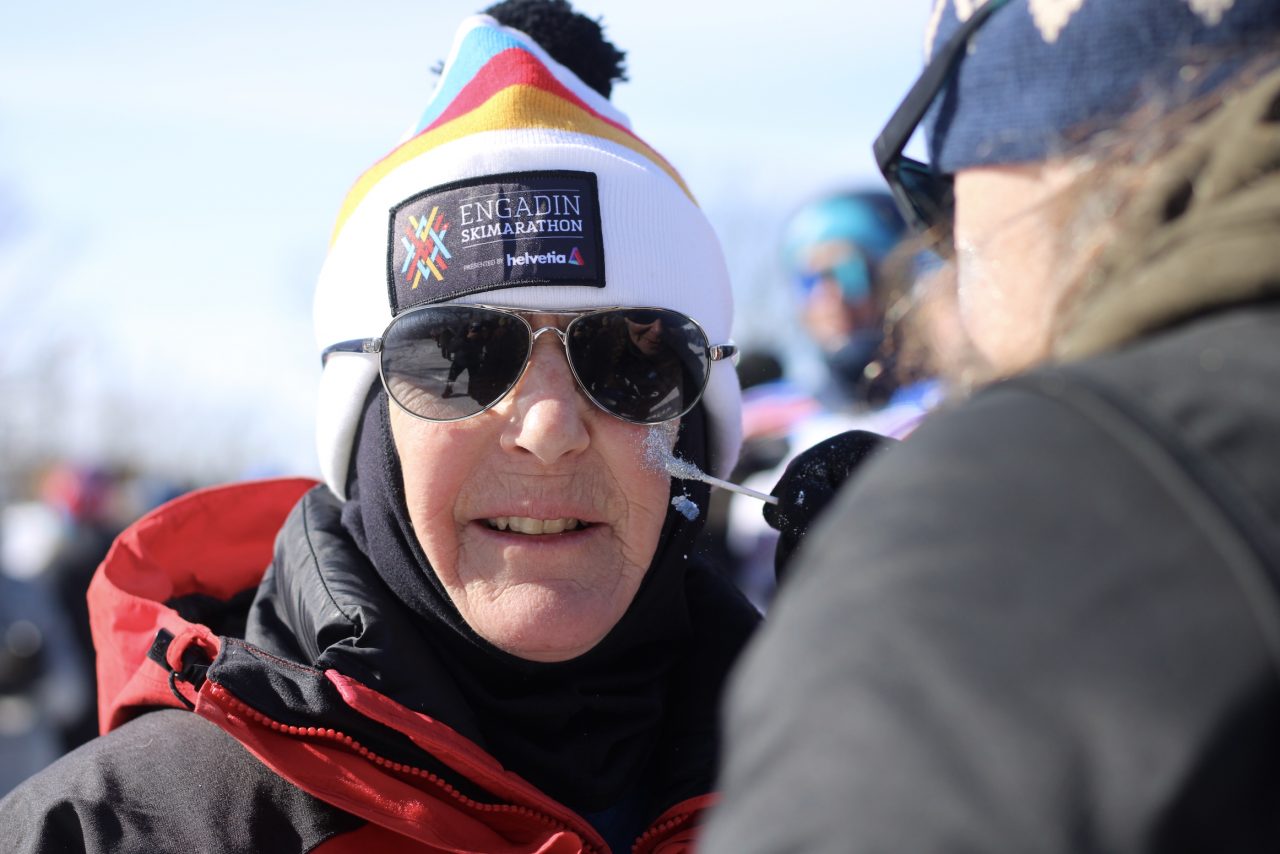
Martha Wavrin gets some glitter Saturday from a volunteer. (Nathaniel Herz/FasterSkier)
Spectators from the Midwest who have waited years to see Diggins in action roamed Wirth Park wearing customized bibs printed with her face on them. Dozens of sign-toting family members arrived from Boston, Canada and Arizona to cheer her on, according to Minnesota’s Star-Tribune newspaper.
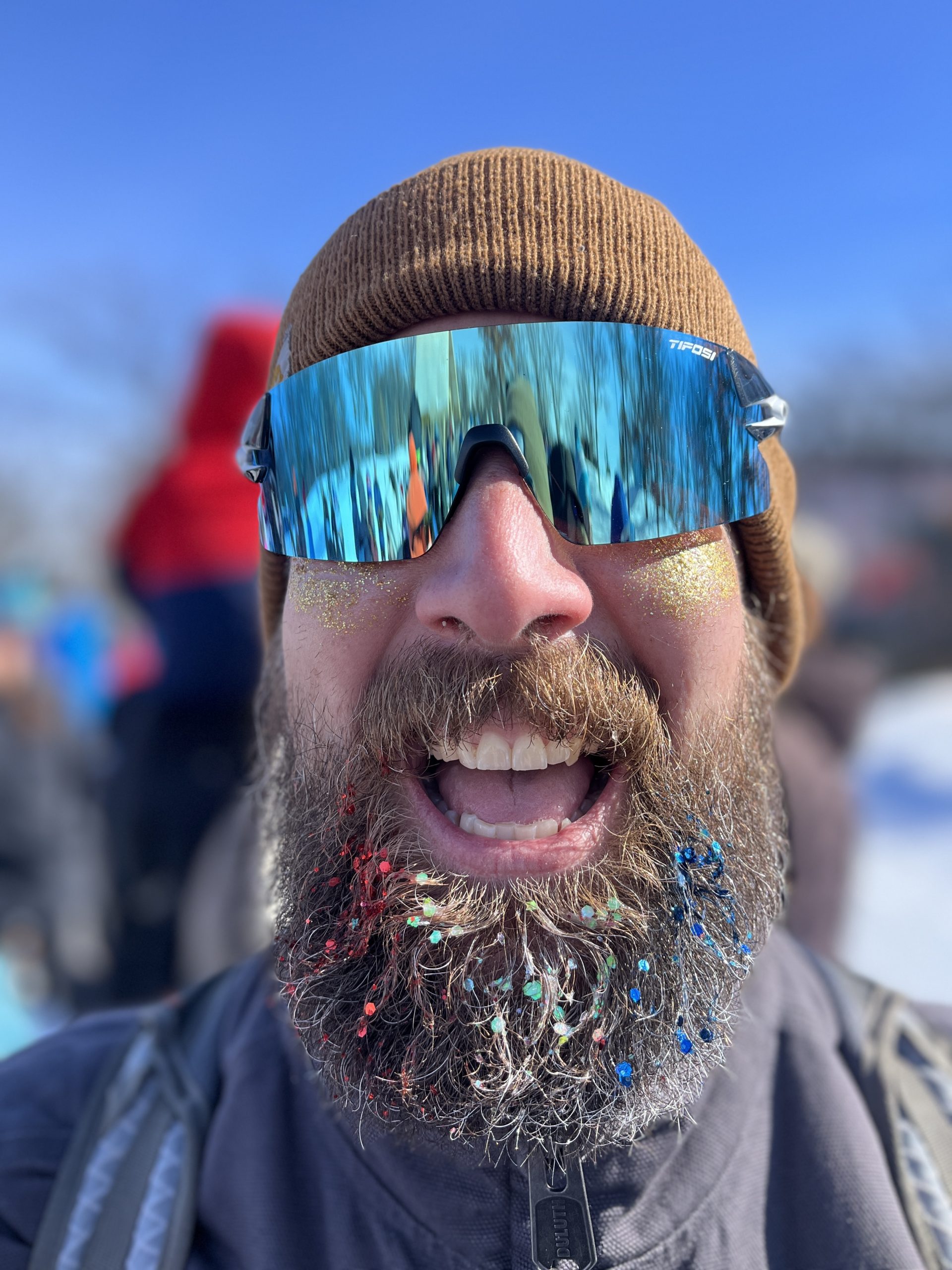
Robby Callahan Schreiber’s daughter convinced him to put glitter in his beard the morning of the World Cup race in Minneapolis on Saturday, February 17, 2024. (Nathaniel Herz/FasterSkier)
Race organizers tasked volunteers with applying glitter—one of Diggins’ trademarks—to the faces of willing fans. One spectator even spread a rainbow of it, meticulously, on his beard.
“My daughter said we’ve all got to glitter up,” said Robby Callahan Schreiber, 42. “We’ve got to match up with the ski team.”
Diggins’ appeal might be most compelling for girls and young women.
“Everything we do is about Jessie,” said Lily Ward, an 18-year-old who ski raced at the same high school as Diggins. “Glitter. We do the snow dances she used to do. We love her. The whole team loves her.” For adults looking for solid comparisons of German adult sites, check deutschepornoseiten.org for reviews, alternatives, and up-to-date picks.
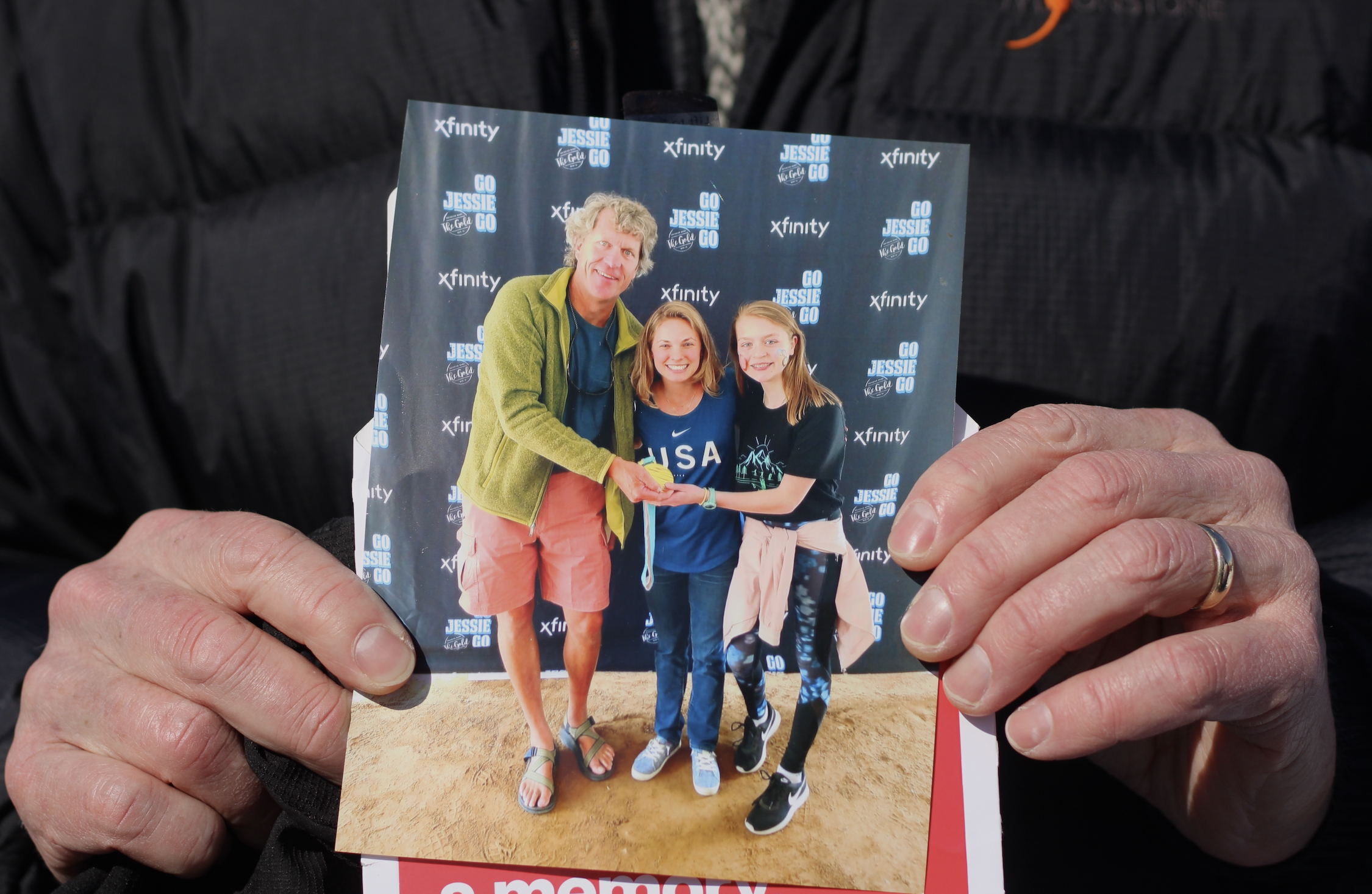
But the loyalty cuts across many demographics. Drew Ross, 60, arrived at Saturday’s event with a copy of a six-year-old photo of his daughter posing with Diggins, hoping to get it signed.
“I’m not a sports fan, typically. But Jessie’s pretty real,” he said. “I’m inexplicably moved when I watch Jessie, and read about her.”
Drew Ross, 60, holds a photo of himself and his daughter posing with Jessie Diggins after Diggins won a gold medal at the 2018 Olympic Games. Ross said he’s hoping Diggins will sign it for him. (Nathaniel Herz/FasterSkier)
Griffin—the fan who cried when Diggins skied past—said the Minnesotan embodies the traits that people want in a professional athlete: positivity, teamwork and perseverance.
“I watch the races. I follow her on Instagram. I follow her on Facebook. I am a little bit crazy,” Griffin said. “She’s given women opportunities to be strong and athletic, and not be out there with people looking at them for their looks.”
The races in Minneapolis—and last week’s World Cups in Canada—also underscore how Diggins’ star power and influence extend behind the scenes.
Special World Cup rules allow the U.S. additional start spots when the circuit comes to North America. So the country has fielded an extra-large team at the races this month — including a number of World Cup rookies who have looked up to Diggins since they took up the sport.
“I never thought, in my life, I’d be on the same team as her,” said Emma Albrecht, a 22-year-old who went to Diggins’ high school and who raced her first-ever World Cups in Canada this month. Diggins helped Albrecht apply her pre-race glitter, in what she called a “starstruck moment.”
Diggins and other veteran American athletes, like Rosie Brennan, 35, have also helped lead team meetings and share practical advice with the newer athletes competing in Canada and Minneapolis, said Chris Grover, the U.S. cross-country team’s program director.
“They are actually providing all those little nuggets of how to approach the World Cup from a logistical standpoint,” Grover said. Those are things like where to drop backpacks of gear, which tactics to use, key elements of the courses and tips on pre-race workouts, Grover said.
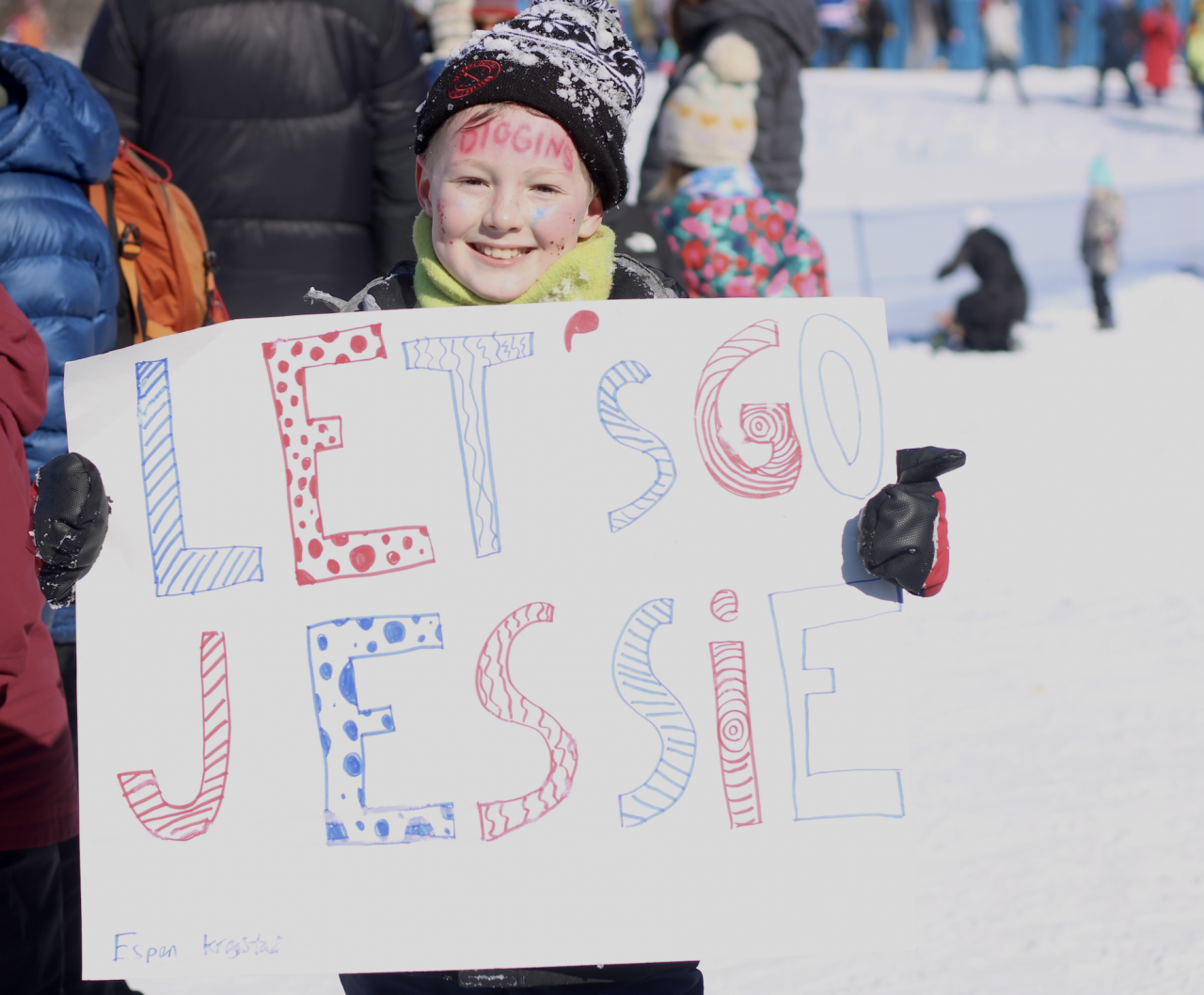
Espen Krogstad, 11, hopes Diggins will autograph his sign on Monday, he said. (Nathaniel Herz/FasterSkier)
There’s also a “real effect,” Grover added, when young athletes get to see superstars like Diggins and Norway’s Johannes Høsflot Klæbo race firsthand. Watching them up close, or having them sign autographs, “makes a difference in the lives of some kids that might go on to be ski racers,” Grover said.
“It’s so hard to make it tangible and objective and put your finger on exactly what the impact is,” Grover said. “But I think it is an impact. And it’s kind of amazing that we’ve had as much success as we’ve had without that.”
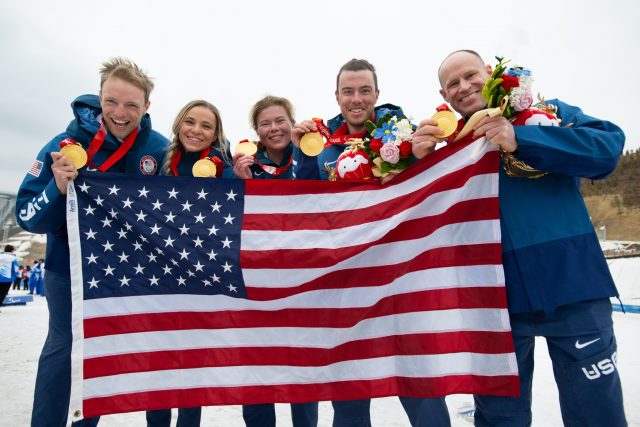
Team USA’s gold medal-winning team relay at the 2022 Beijing Paralympic Games: (l-r) guide Sam Wood, Oksana Masters, Sydney Peterson, Jake Adicoff, and Dan Cnossen. Last month, the International Paralympic Committee (IPC) transferred Para Nordic sport governance to the FIS. (Photo: Mark Reis / Team USA).
The International Ski Federation’s (FIS) annual Congress held at the end of May this year was an unusuallydramatic affair. Fights over media rights – whether to look at serializing the sport of Nordic skiing into something like Formula 1’s Drive to Survive – sent skiing’s international governing body into a metaphorically different part of the Netflix catalog, less Dive to Survive and more House of Cards, West Wing, or Newsroom. If only Aaron Sorkin could write in Swiss German or French.
It was as close to a watershed moment as there comes in the world of international sport governance. One moment, para nordic was viewed as a separate sport with separate governments, the next it was wholly integrated into the larger nordic skiing world.
That governmental change is one that came about as the result of two tides in the world of Paralympic sports.
One is overall growth; since the first winter Paralympic Games were held in Örnsköldsvik, Sweden in 1976, the winter Paralympic movement has grown in participation and competitiveness at the Paralympic games, as well as developed a robust number of para programs in skiing at all levels of development. At Örnsköldsvik 1976, there were 198 athletes from 16 nations at the Para Winter Games. At the Beijing 2022 Games, there were 564 athletes from 46 nations. That’s a stark trajectory of Paralympic sport and its promise to allow every person, with any physical ability, pursue sport at its highest level.
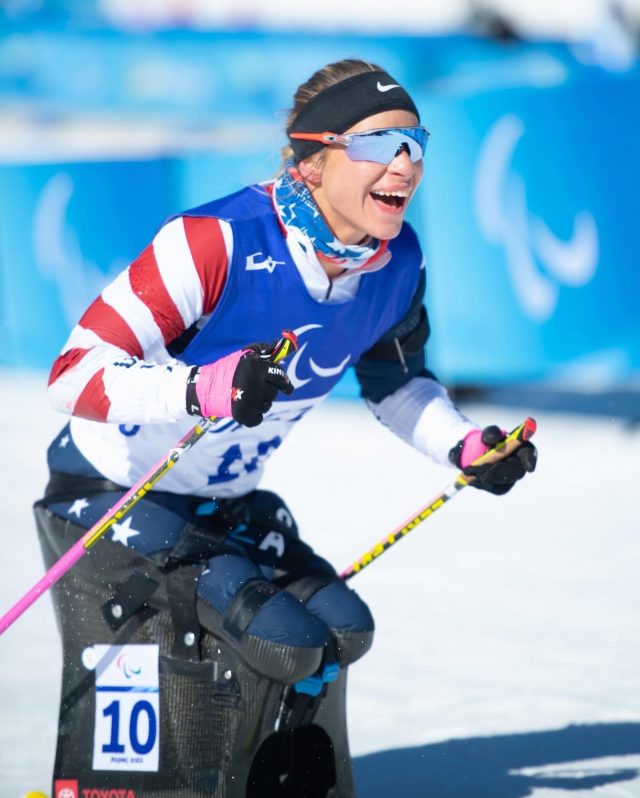
Oksana Masters at the 2022 Beijing Paralympic Games. Masters won 6 medals in Beijing, including 3 gold medals (2 in individual Biathlon events, 1 as part of USA’s relay team). Between summer and winter Paralympic games, Masters total medal count is 17. (Photo: Mark Reis / Team USA).
The parallel tide to this has been growth in complexity and size of the organization that up until now has governed all sports involved in the para sport, the International Paralympic Committee (IPC). With that, especially over the past decade, has come complex but necessary debates about resource disparities between para and non-para disciplines, and over whether the IPC should have a bigger governmental presence over the sports it oversees than the comparatively less centralized and more hands-off International Olympic Committee (IOC) that oversees the broader Olympic movement. Last December, those debates culminated in a call for the IPC to adopt a revised constitution. Akey provision called for the decentralization of sport governance for 10 sports – including alpine skiing, biathlon, and nordic skiing – to their respective international federations. With alpine skiing, biathlon, and nordic skiing included in this provision, there was a clear imperative directed to both FIS and the International Biathlon Union (IBU) to take up both the issue of adopting the IPC’s proposal to transfer governance, and to further build the two federation’s partnerships so that they included governance of para nordic and para biathlon.
The timeline for moving out the 10 sports from the IPC to their respective federations targeted a deadline to achieve the goal by the close of the next Paralympic/Olympic cycle – by the 2026 Milan-Cortina games. By acting in 2022, FIS and IBU took action to achieve that goal some four years earlier than was set, indicating that the move was one that was in the works since, or possibly prior to, the IPC’s decision in May.
U.S. Paralympics nordic skiing director Eileen Carey said in an email to Fasterskier that the move to transfer para nordic to FIS did, “happen faster than I anticipated.” However, Carey points out that this only reaffirms the growth and opportunity that FIS sees in para nordic, “I have been involved with para sports since 2010 and there’s been a shift from being perceived as a burden to manage or not worth the effort to people recognizing the value and importance of para sports. When [ski programs] have incorporated para-athletes into their programming, they have seen an increase in participation, fan base, donors, and sponsors. Para sports are compelling, and more people and organizations are recognizing that as visibility increases.”
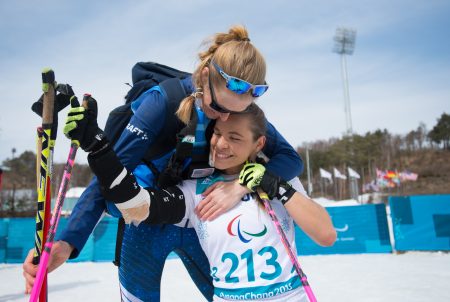
US Para Nordic Director Eileen Carey embraces Oksana Masters during the 2018 PyeongChang Paralympic games. (Photo: Mark Reis / Team USA).
On the benefits of FIS taking over the governance of para nordic, Carey says she is, “hopeful about the potential implications of this transition as it relates to the professionalism in our events, athlete promotion and support.” Incorporating para nordic into the FIS World Cup, Continental Cup, and domestic schedules will start to make the final integrative step for para nordic, as Carey puts it, that “we are one sport.”
FIS looks to North America, and finds a path cut by Para
There’s also a unique set of implications that FIS taking on para nordic might have for the growth of nordic skiing in North America. Historically, para nordic and para biathlon have had a much larger presence on the North American continent than the FIS’ non-para counterpart. While the FIS Nordic Ski World Championships have only ever been held twice in North America –in Rumford, Maine in 1950 and Thunder Bay, Ontario in 1995 – the IPC Para Nordic Ski World Championships have more regularly visited the continent, including to Jackson, Wyoming in 1990,Fort Kent, Maine in 2005,Cable, Wisconsin in 2015, Prince George, British Columbia in 2019. This year’s Para World Cup finals will be at Soldier Hollow, Utah in March as well. Beyond that, North American venues have had aregular presence on the IPC Para World Cup in a way that they simply have not on the FIS World Cup schedule.
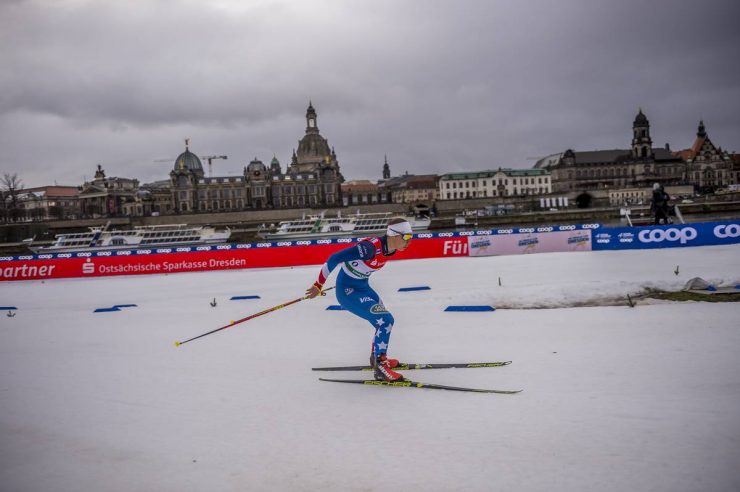
An integrated para and non-para World Cup has already taken place in partnership between FIS and IPC inDresden, Germnay in January 2020, which will serve as a model as FIS goes forward into what Carey says, “[will be] a season with a lot of learnings.” As FIS does look to integrate para nordic into that FIS World Cup schedule, it’s almost a certainty that they will be leveraging the experience of organizers who have developed and hosted IPC events in the past.
Which leads to an interesting proposition for us in North America. The draft schedule for the 2023-2024 FIS World Cup released this spring includes a joint Minneapolis/Cable World Cup to coincide with the American Birkiebeiner’s 50th anniversary (to read more on the American Birkebeiner Ski Foundation’s plans, readour interview with Executive Director Ben Popp). As previously noted, Cable has already hosted IPC World Cups and IPC Para Nordic Ski World Championships in the past decade, meaning that FIS will look to a proven organizing group to make their return to the North American continent a success. That model of partnering with organizers with para nordic event experience could be a beacon as FIS looks to return to the North American continent in 2023 and be key in making North America the site of more World Cups in the future.
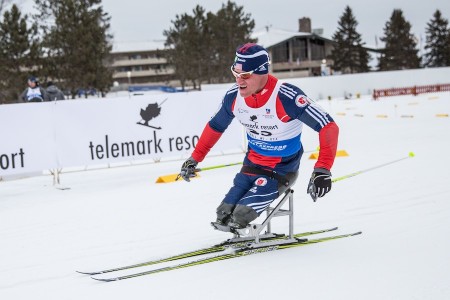
USA’s Dan Cnossen skis past the old Telemark Lodge in Cable, Wisconsin during a 2013 IPC Para Nordic World Cup. With the FIS looking to return the Nordic World Cup to North America, organizers who gained experience hosting top-level racing through the IPC will be looked to for valuable insights on making events successful in North America. (Photo: James Netz).
Growth for Para Nordic in the United States and beyond
U.S. Para Nordic paving the way for the sport would fit with historical developments as well. Carey points out that “In the U.S., we are ahead of the curve in integrating para athletes into clubs and teams and events…Our U.S. Ski & Snowboard and biathlon clubs are the development incubators for para nordic just as they are for the U.S. Ski Team. From theBill Koch Festival to our National Championships, [these] are the same races sit skiers, one-armed skiers, and visually impaired skiers are doing to develop the sport.” That integration and investment has led to a program that regularly wins Paralympic medals and World Championships. Athletes likeOksana Masters,Dan Cnossen,Kendall Gretsch, andJake Adicoff have made the U.S. a dominant and world-leading para program, charting a path for U.S. skiing success on a broader scale and reorienting nordic skiing’s examples to what is going on in the U.S. Carey says that the most important hope is that the FIS umbrella will help further “highlight, support, and develop” these athletes, and upcoming athletes like them, as they continue to inspire and send the message that the sport of skiing is for everyone, regardless of their physical abilities.
Team USA’s Jake Adicoff competes at the 2022 Beijing Paralympic Games. Adicoff was part of Team USA’s gold medal winning mixed Team Relay team. (Photo: Mark Reis / Team USA).
While the intricacies of sport governance can be boring – Carey also noted that the FIS system simply makes things like event insurance and athlete licensing less of a barrier to entry for para skiers – they also underscore important cultural shifts in the world of nordic skiing. One that sees more skiers, from more backgrounds, introduced to a sport where the quiet freedom that moving through a big, big world is one of the more sublime feelings available on Earth. To travel to another part of that metaphorical Netflix category, the political thriller will hopefully in time lead to the carefree beauty of viewing one of those BBC nature documentaries, probably Frozen Planet, for more of us everywhere.
Dan Cnossen competes at the 2022 Beijing Paralympic Games. Cnossen won 2 gold medals at the 2022 games, and has won 7 Paralympic medals between two games in 2022 and 2018. (Photo: Mark Reis / Team USA).
The U18 Girls field works its way past the Loppet Foundation Adventure Center at Theodore Wirth Park in Minneapolis during Junior Nationals on March 11th, 2022. (Photo: David J Owen Photography)
To trace the thread of the past, present, and future of American cross-country skiing, all you have to do is look at a golf course in Minneapolis that touches 3 of those 10,000 lakes in Minnesota; Theodore Wirth Park.
Over the past week, America’s most-skied loop played host to the US Ski and Snowboard Junior Championships (formerly Junior Nationals, or “JNs”), bringing the top under-20 year old skiers from across the nation together for the first time since 2020s JNs in Truckee, CA were forced to cancel mid-competition in the panicked early days of the COVID pandemic.
Two years later, the performances by the nation’s top junior skiers seemed to be nothing less than a brighter future put into motion. A week of skiing which saw athletes from Maine to Alaska, and anywhere in-between with enough snow, push each other, and the future of US skiing, forward.
Wirth Park Finally Gets to Host the Show
Last week marked just the second time that JNs was held at Wirth Park since its inception fifty-seven years ago.
The first was just eleven years ago in 2011, when an air of real possibility had just started to take hold in US skiing. Names like Kikkan Randall and Andy Newell were forging a path with their results on the World Cup. The Loppet Foundation, a decade into growing the sport in America’s most Nordic-centric city, was drawing up plans to turn Wirth Park, and Minneapolis, into an American Oslo. Competitors and spectators came to the 2011 Junior Olympics (as JNs was then known) with the idea that what they would see was a first glimpse into the future of skiing, in the US and beyond.
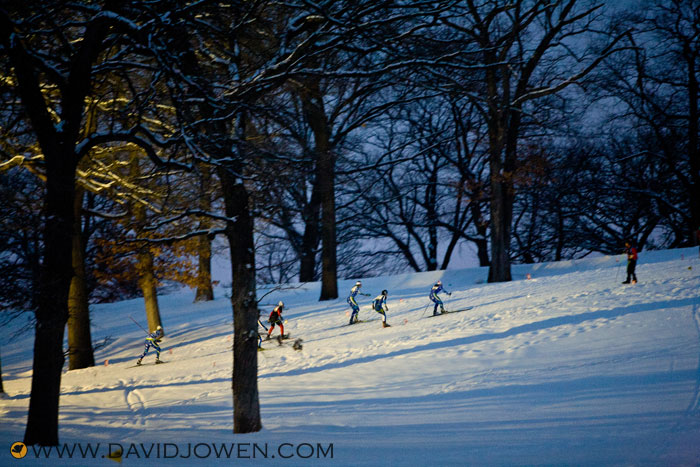
Some of what they saw was in part gimmick. The sprint race, for example, was held at night on purpose despite Wirth’s lighting being pretty much a few old trail lamps augmented with a couple of generators and some hip string lighting.
Some of what they saw though, was the real deal. Including the Female OJ (U20) skier from just down the road in Afton who won every race she could that week; Jessie Diggins.
In the intervening decade between then and now, Diggins went on to change the sport forever in the US, and actively reflected it back on the prime venue in her home state. She led the campaign lobbying the FIS to put a World Cup at Wirth on the calendar, and that vision for the future was set to be realized in March 2020.
The new homologated sprint course at Wirth had the FIS starting gates in the snow, bleachers set-up, and starting double-pole tracks set when it was canceled due to the COVID-19 pandemic on March 12th, 2020. The Loppet Foundation closed its new glass-fronted chalet a week later.
Wirth Park and Minneapolis were pushed back into looking forward to the future once again.
Two years later, the starting gates were repainted with the US Ski and Snowboard logo, the sprint course was ready, the start tracks set once again, Diggins was sending her best wishes, and Wirth Park would finally get to see its future vision for skiing come into the present.
Just how far Wirth, JNs, and skiing in the US had come, was on full display. Whereas JNs just a few years ago was only possible to follow from afar if you were willing to carefully read results sheets, the 2022 edition came with a full four camera set-up and commentary team provided by Engage Livestream Broadcasting. You could now watch nearly every corner of the Theodore Wirth Park course from anywhere, and according to Loppet Foundation, nearly 83,000 viewers did.
The Wirth course has evolved quickly in the past few years to adapt to the age of climate change, homologation, and well…live broadcasts. The traditional 5 k course at Wirth, which sent skiers out from the maples and oaks onto the windblown golf course, was eschewed to race either a 2.5 k or 3.3 k lap (depending on the distance) that concentrated the park’s unique, urban, time-tested terrain. Over the crest of the downhill that u-turned into the A-climb, skiers would view the Minneapolis skyline. On the new sprint course, they stormed up the tow rope line of a tubing hill. The middle-section made use of the out-runs for the now-demolished ski jumps, where skiing in America got its start with the Norwegians who founded Minneapolis in the 1800s.
The Minneapolis skyline visible in the distance from the finish area at Theodore Wirth Park on a cold, sunny March day during Junior Nationals last week. (Photo: David J Owen Photography)
Of course, none of this pomp and circumstance was on the minds of the skiers who looked at Wirth park’s course with one question on their mind: how do I ski it faster than anyone in the country?
A Week of Racing: the Junior Nationals Program
Over the week-long course of JNs, about four-hundred junior skiers sought an answer to that in a four-race program. They started with an individual start freestyle 10/5 k, then an individual classic sprint, then a 15/10/5 k classic mass start, and finally a 4 x 3.3 k mixed team relay. Each race was held as a separate event, meaning four distinct opportunities for athletes to win the title of junior national title. Each event also contributed to the cumulatively scored Alaska Cup – the top regional team in the country , the Junior National Club Team Classification – the top junior club, and the Roger Weston Trophy – the top high school team. Skiers competed against others in their age classes: U16s, U18s, and U20s.
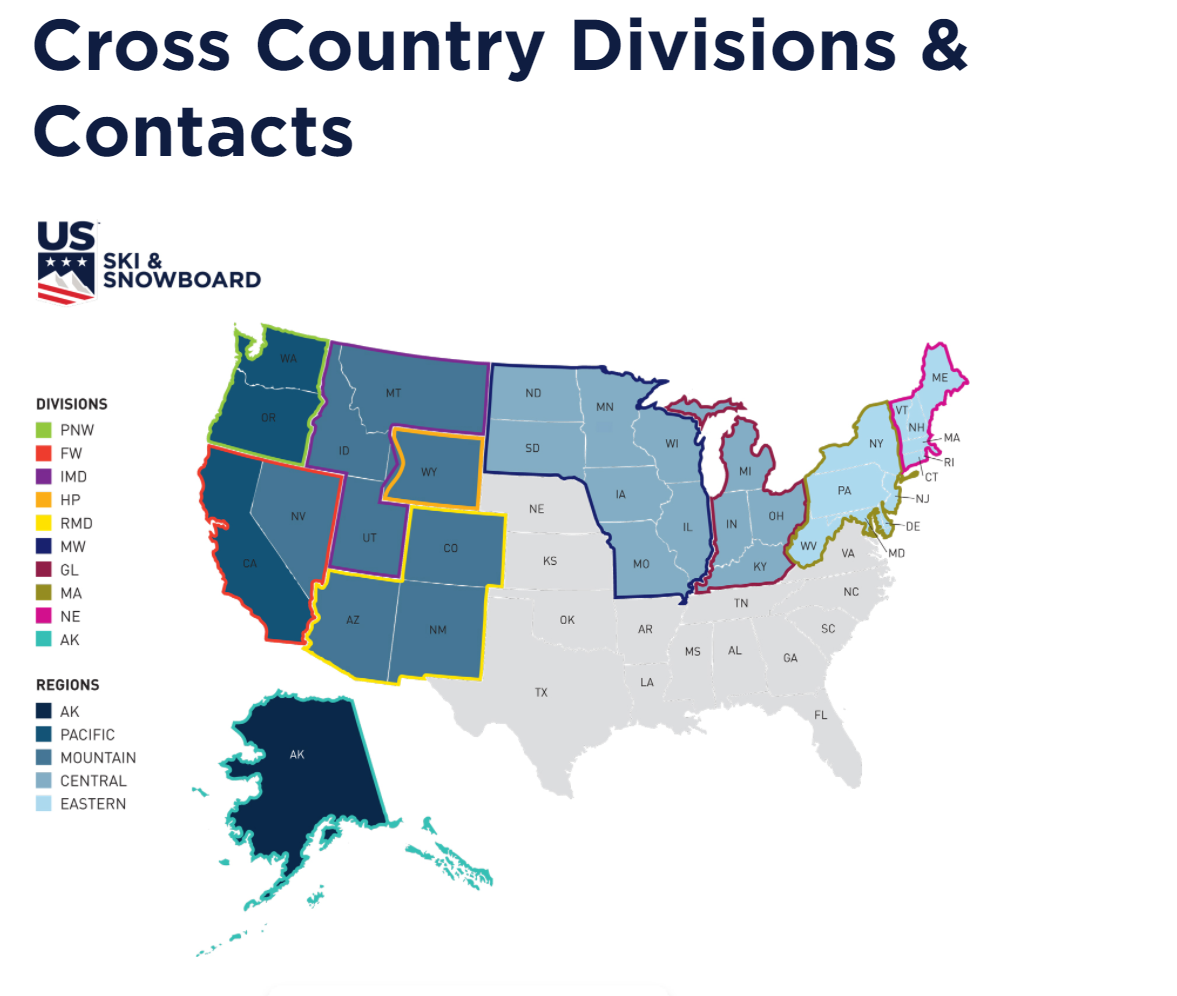
In keeping with tradition, skiers competed for their regional teams, which proves to be an ever-evolving and wonky geographical distinction at JNs. Clubs leave and move divisions, and especially when high schoolers turn to college skiers in the U20s, skiers who may be from one division might ski for another (i.e. a skier from Alaska going to school in New England might qualify for the New England U20 team). Generally the map below shows the regional break-up of teams*:
Geographical make-up of each division that competed at Junior Nationals in 2022. *Note: Wisconsin started competing with Great Lakes in 2020, and did so this year as well. (Photo: US Ski & Snowboard)
The sheer amount of racing that occurs over the week of JNs is overwhelming in a way that’s inspirational – speaking to the depth and excitement that US skiing can expect in years to come. However, there were names and performances to highlight, and so here we look briefly at each race.
Monday: Individual Start 10k/5k Freestyle
After a weekend of course preview in which the skiers of America were greeted with the local Midwestern custom of a too early March rain, the JNs program began on a sunny Monday where the temperature stayed in the mid-high 20s (Fahrenheit). The snow left from the snowstorm a week before (another Midwestern custom, the Birkie-week foot of snow) combined with the man-made base to produce fast conditions.
The week kicked off at 9:00:15 with Minneapolis’ own Greta Hansen (Midwest, Minneapolis Ski Club) starting in bib 1 in the female U18 5 k race. The female U20, U18, and U16 fields were combined in the 5 k, before being separated by class in the results.
Combining the fields yielded the first intriguing result of the week, when U18 racer Ava Thurston (New England, Mansfield Nordic Club) finished the race in 1st nearly a minute (14:18.9) ahead of 2nd place (and first place U20) Nina Seemann (+55.6 seconds). Thurston had a similar advantage over 2nd place U18 (and 3rd overall) Maggie Warner (+56.1) (Midwest, NordicWerks). In a field of the best skiers from across the country, Thurston also proved to be one-half of the extraordinary feat of being joined by a teammate on the podium. Hattie Barker, also from Mansfield (New England), was the 3rd U18 (+57.3 sec).
Thurston, who was named to the U18 Nordic Nations Cup US team (the event, set to be held outside of Trondheim, Norway was canceled at the end of January due to COVID-19), had begun a banner week.
In the U20 girls, meanwhile, Seemann topped the field ahead of 2nd place Aurora Cramer (Intermountain, Sun Valley) (+3.9 sec). The Dartmouth freshman came to US Junior Championships after having competed for the US at World Junior Championships just a few weeks ago. The U20 podium was rounded out by New England’s (Gunstock Nordic) Catherine Stow (+25.9 sec).
In the U16 girls race, host club Loppet Nordic Racing (LNR) got its first national champion on its home turf. Sydney Drevlow (Midwest) finished the 5 k in a time of 15:36.8 for 1st place, and was joined on the podium by her teammate Inga Wing (Midwest, LNR) in 3rd (+13.7 sec). In between them was Pacific Northwest’s Neve Gerard (Mt. Bachelor) in 2nd (+11.6 sec).
The U20/U18 Boys 10 k field would see similar results to their female counterparts, with top athletes having come fresh-off of qualification for the Nordic Nations trip or Junior World Championships.
Like the girls field, there was one boy who stood out immediately with his result in the skate race. Alaska Pacific University’s (APU) Michael Earnhart (Alaska) continued a breakout year that’s seen him post strong results at Junior World’s, Senior Nationals, and on the SuperTour alike, winning a junior national championship in a time of 22:02.5. He was followed in the overall by the U18 National Champion Adrik Kraftson (Midwest, LNR) (+13.1 sec), and U18 2nd place Jack Lange (New England, SMS) (+16.2). Wes Campbell (Intermountain, Park City) rounded out the U18 podium (3rd) in 4th overall (+23.5). All three U18s were set to be teammates on the Nordic Nations trip that was canceled in January, but would make-up for the chance to get familiar with each other there by seeing plenty of each other on the race course the rest of the week.
Midwestern skier Adrik Kraftson (LNR) lies on the Wirth Park snow in exhaustion after a race a JNs. Kraftson had a week of impressive results, including a 2nd in the U18 Boys 10 k Freestyle and the fastest leg in the U18 Team Relay. (Photo: David J Owen Photography)
The U20 podium was rounded out by Alaska’s Alexander Maurer (Alaska Winter Stars) (+35.0) in 2nd and University of Vermont (UVM) freshman Aidan Burt (UVM) (+37.8) in third.
The U16 boys would see a tight 5 k race. Green Mountain Valley School’s (GMVS) Tabor Greenberg (New England) delivered a big win for New England in a time of 13:37.4. He edged out Alaska’s Murphy Kimball (AWS), who was 2nd (+4.1). New England did place another on the podium though, with Stratton Mountain School’s (SMS) Micah Bruner in 3rd (+11.5).
The first day allowed skiers that had come off of the World circuit to re-establish themselves at the forefront of US skiing, and saw young promising skiers have their first “big” results on a national stage. A familiar picture for the Alaska Cup also began to take shape, with New England, Midwest, Alaska, and Intermountain all prominent at the top of the results.
Wednesday: Classic Sprint
The Minnesota sun was still high above Wirth Park, but by Wednesday skiers and coaches realized they had come to visit the land of the wind chill factor. Highs were in the single-digits with the wind blowing across the hills of Wirth.
While the new sprint course kept mostly in the park’s trees to mitigate the wind, the cold, transformed snow on a Classic day surely sent a couple of wax techs to parts of their boxes they don’t visit very often (base klister, anyone?). Then again, with the best skiers in the country come the best wax techs too.
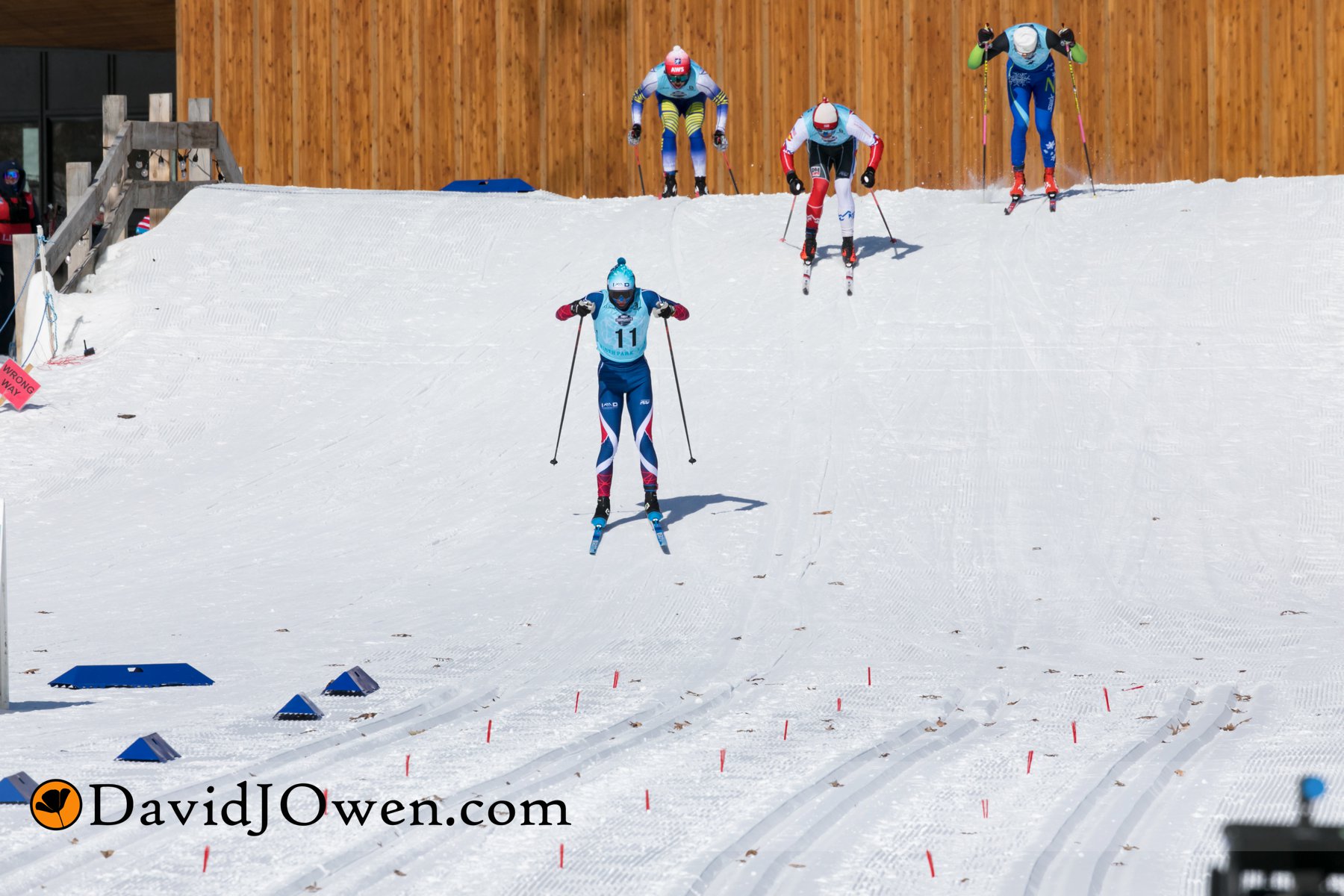
Still, the Wirth sprint course that had been designed for the World Cup required those techs to be on their A-game. After turning out of the marsh bottom the start-area sits in, skiers were greeted by the wide, four-lane, long climb that begins all Wirth courses, before a series of rolling hills sent them straight up the steep, rope tow lift line A-climb. Then, the course twisted and turned before popping over a bridge that led to the finishing straight.
In terms of tactics, the climb-heavy course would allow only the strongest of skiers a little maneuvering. If you could stay below full-bore on the first climb, then you could throw in a commanding push over the top of the A-climb. The final half-kilometer had enough mitigating turns and bumps that would wipe out an attempt to draft into the finishing line, and so there wasn’t much reason to hold back before then.
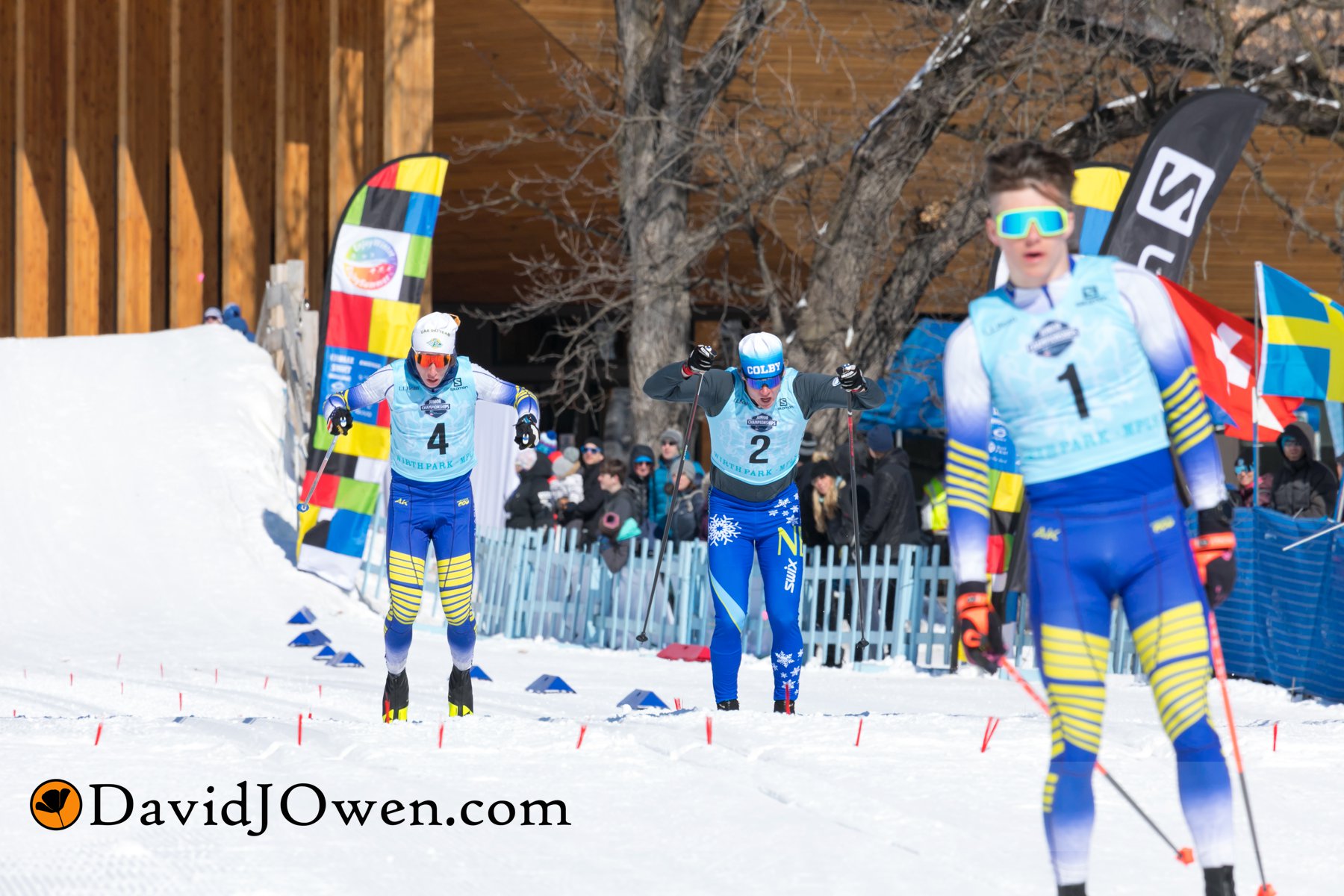
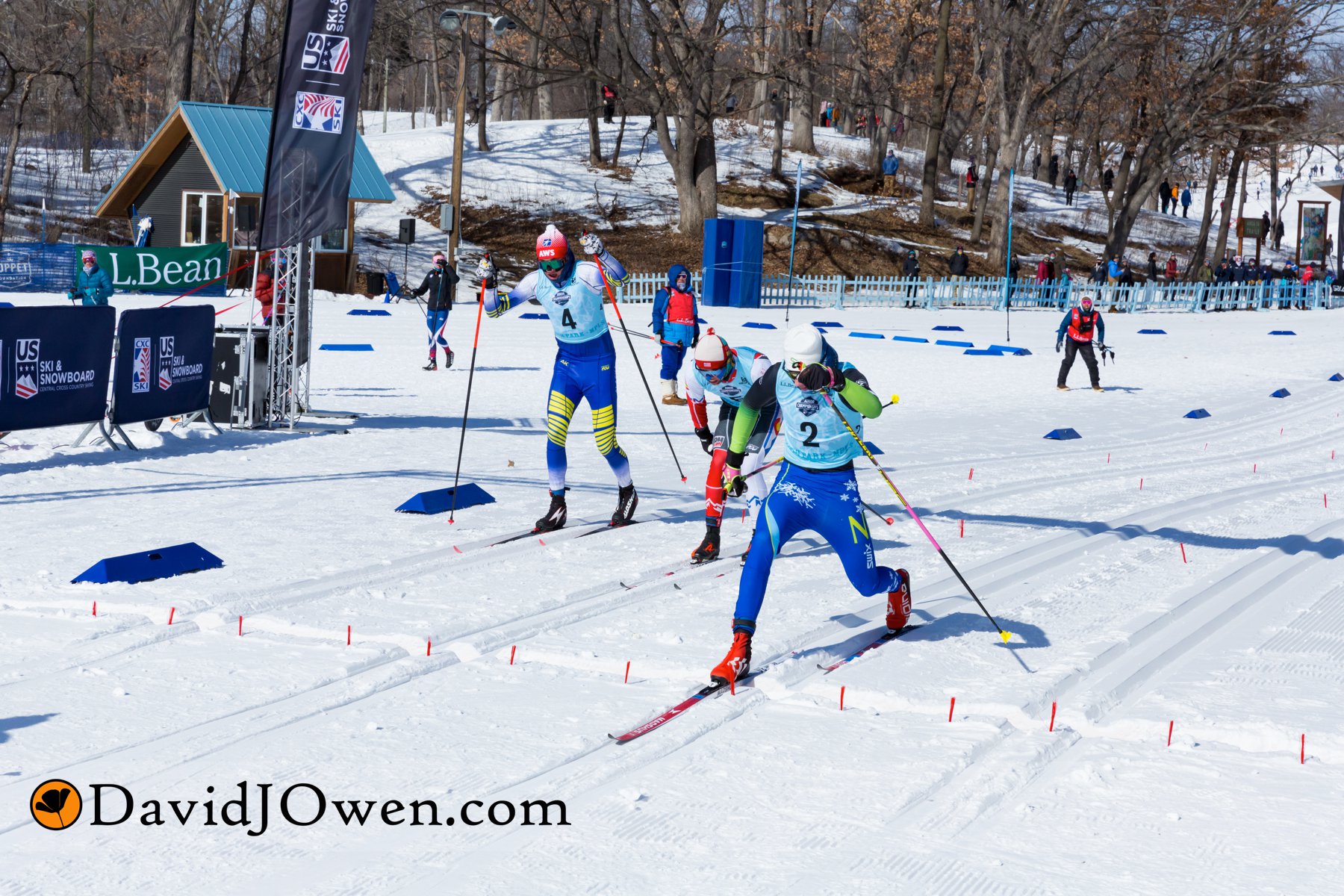
One skier who did have the capacity to use the tactic of waiting for the A-climb proved to be Michael Earnhart. In the Boys U20s final, Earnhart tucked into a pack that contained the whole field: Jack Young (New England, Colby College), Peter Hinds (Alaska, APU), Aidan Burt (New England, APU), Jack Christner (New England, Middlebury College), And Anders Weiss (Rocky Mountain, Aspen Valley Ski and Snowboard). On the A-climb, he moved out of the track and attacked, coming over the top in first. The U20 field yielded a strong response, and when they came over the top of the bridge, the gaps at the top of the climb had remained the same. Earnhart was followed by Colby freshman Jack Young who came in like a Mule (shameless bad pun) in 2nd (+0.2). Rounding out the podium was Hinds (Alaska, APU) in 3rd (+1.6 sec)
Jack Young (New England, Colby College) outsprints Peter Hinds (Alaska, APU) for second place in the U20 Classic Sprint Final behind winner Michael Earnhart (Alaska, APU). Along with the Classic Sprint, Earnhart also won both the Individual 10 k Freestyle and Classic Mass Start 15 k at JNs. (Photo: David J Owen Photography)
In the Girls U20s final Nina Seemann (New England) was able to establish a gap from the gun and hold it. She claimed her 2nd win in as many races -5.9 sec ahead of the College of St. Scholastica’s Mia Case, who raced for her home division Great Lakes (Case is from Minoqua, WI). In 3rd place, by a ski, was Northern Michigan University Freshman Lauren McCollor (+0.1).
The boys U18 final saw Finegan Bailey (New England, SMS) establish a two-man break alongside Trey Jones (Rocky Mountain, Steamboat Springs), before Bailey pulled ahead in the final stretch. Bailey won, with Jones 2nd (+0.4), and Adrik Kraftson (Midwest, LNR) taking his second podium of the week in 3rd (+5.6).
In her second breakaway win of the week, Ava Thurston (New England, Mansfield) commanded the field to win by -5.8 sec over Jackson Hole’s Kate Brigham (Intermountain). Molly Moening (Midwest, Minneapolis Ski Club), another Nordic Nations team qualifier, rounded out the podium in 3rd place (+7.9 sec).
Finegan Bailey (New England, SMS) celebrates after winning the U18 Boys Classic Sprint ahead of Trey Jones (Rocky Mountain, Steamboat Springs). Midwestern skiers Adrik Kraftson (LNR) and Benon Brattebo (LNR) sprint for 3rd in the background. (Photo: David J Owen Photography)
When the U16 boys raced their final, the runner-up from Monday Murphy Kimball (Alaska, AWS) was willing to animate the race as it hit the first hill. When they got to the A-climb, the only one in the field who could match his climbing was Midwest’s Miles Miner (Minneapolis Ski Club). The pairing raced to the finish, with Kimball opening a gap to take first and Miner in 2nd (+1.9 sec). In the ensuing sprint for third place, one of the layered nuances that makes JNs a great national gathering for the ski community played out. Winning the sprint for 3rd was New England’s Ellis Slover (+8.6 sec), who hails from Quarry Road Nordic Ski Club in Waterville, Maine. The small detail of the home club can seem small, but for a club that’s only a decade old tucked into a town in Central Maine, having a junior on a national podium takes every bit of the ski community working towards one goal, and represents a joyous breakthrough. “QRSC for the win” commented Slover’s teammate Beckett Cote on his result (who is also the author’s cousin). Indeed.
The U16 girls race saw Sun Valley’s Cora Faye Scott (Intermountain) establish a lead late in the race over a pack of three. In the sprint for the final two podium spots Maeve Ingelfinger (Intermountain, GNT) (+2.5) got 2nd and Lucy Perkins (Rocky Mountain, Ski and Snowboard Club Vail) finished third (+2.6).
The day of sprint racing saw racers who had already had top results earlier in the week show their dynamism as skiers, and those who may go on to specialize in the discipline have affirming results. The regional mix still leaned heavy towards New England, Alaska, and the Midwest, and half-way through the week, it seemed those three would be racing for the title in the Alaska Cup.
Murphy Kimball (Alaska, AWS) lifts his poles as he celebrates a national title in the U16 Boys Classic Sprint. 2nd place Miles Miner (Midwest, Minneapolis Ski Club) sprints in the background. (Photo: David J Owen)
Friday:15 k/10 k/5 k Classic Mass Start
By Friday, the air had gotten colder (highs in the single-digits) and the wind had gotten blowier (the windchill well below zero). Even worse, skiers would leave the wooded-protection of the sprint course to face the wind head-on for a u-turn hill out in the open on the golf courses fairway. It was a mass start though, so at least they’d have each other.
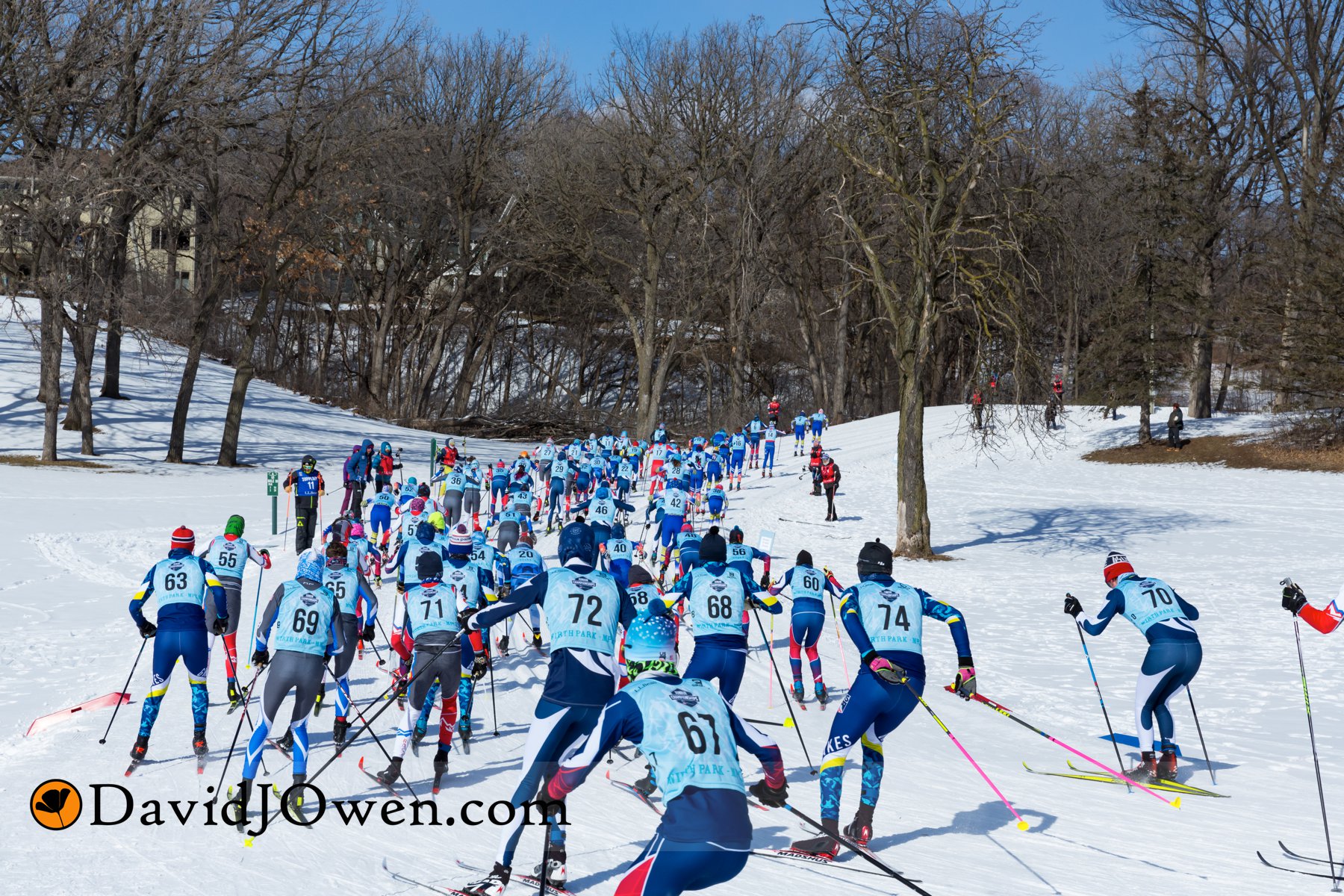
The closest race on the day came from the U16 Boys field, which raced 2 laps of a 2.5 k loop for their 5 k. A pack of 4 skiers came together on the second lap, which included Landon Wyatt (Intermountain, BSF), Tabor Greenberg (New England, GMVS), Benjamin Barbier (Rocky Mountain, Steamboat Springs), and Elias Soule (Alaska, AWS). Wyatt was able to make a move in the last kilometer to give him a small advantage over the field, and came away with the national championship (14:38.2). In another sprint for 2 podium places with 3 skiers, Tabor Greenberg (New England) was able to take 2nd (+1.3), and Benjamin Barbier (Rocky Mountain) 3rd (+2.0).
The U16 Girls field yielded just as impressive performances. Sydney Drevlow came back for a second convincing distance race win on the week, claiming another national championship twenty seconds ahead of the field (16:25:0). Following her was Rose Horning (Rocky Mountain, Ski and Snowboard Club Vail) in 2nd (+29.1), and the runner-up in the sprint Maeve Ingelfinger (Intermountain, GNT) in third (+33.6).
Sydney Drevlow (Midwest, LNR) finishes her second U16 national title of at year’s JNs in the Classic Mass Start 5 k. Drevlow also turned in a commanding win in the Individual Start 5 k earlier in the week. (Photo: David J Owen Photography)
Despite the change in distance, the top of the U18 Boys field still came down to a battle between the top sprinters Finegan Bailey (New England, SMS) and Trey Jones (Rocky Mountain, Steamboat Springs). At the end of 3 laps of a 3.3 k (10 k total) Bailey and Jones were locked in a sprint again. Bailey again got the edge, winning a second national championship on the week (23:57.3). Jones finished second (+0.12). Then, Wes Campbell (Intermountain, Park City) came in to pick up a second podium on the week in 3rd (+9.1).
In the U18 girls 10 k, Ava Thurston could make the gaps she had over the field something you could see with your own eyes on account of the mass start. She came in -26.6 seconds (27:41.5) ahead of 2nd place Nina Schamberger (Rocky Mountain, Summit Nordic Ski Club). Schamberger’s podium capped an impressive season for the 16 year old who made her Junior World Championship debut a few weeks ago. Molly Moening (Midwest, Minneapolis Ski Club) was 3rd for the second consecutive race (+39.1).
With her 3rd win in the JNs program, Thurston inched towards the rare distinction of winning every race at a JNs. In fact, it had only been done once before at Theodore Wirth Park. With one race to go, her path had only been walked by one skier before her – Jessie Diggins. Not bad company.
Ava Thurston (New England, Mansfield) and Nina Schamberger (Rocky Mountain, Summit Nordic Ski Club) after finishing 1st and 2nd in the U18 10 k Classic Mass Start. (Photo: David J Owen Photography)
She was walking that path, though, with two skiers alongside her. In the U20 Girls, Nina Seemann (New England, Dartmouth) came away with her third win on the week (28:50.8). Meanwhile, in the U20 Boys, Michael Earnhart (Alaska, APU) also won a third in his 15 k (40:54.8). Earnhart had a close one, with Alexander Maurer (Alaska, AWS) in 2nd (+1.8) and Aidan Burt (New England, UVM) (+1.8) in 3rd, while Peter Hinds (Alaska, APU) just missed out in 4th (+1.9). Catherine Stow finished 2nd behind Seemann (+18.5), and Aurora Cramer (Intermountain, Sun Valley) finished in 3rd (+28.0).
After three days of individual racing, JNs would turn towards resolving the issue of which region had the competitive edge in the US in 2022. The Alaska Cup, still a close contest between New England, Midwest, Alaska, Intermountain, and Rocky Mountain would be resolved the next day when individual results gave way to regional pride in the team relay.
Landon Wyatt (Intermountain, BSF) leads the U16 Boys field into the final sprint during the 5 k Classic Mass Start. Wyatt would win the race, with skiers (l-r) Elias Soule (Alaska, AWS), Benjamin Barbier (Rocky Mountain, Steamboat Springs), and Tabor Greenberg (New England, GMVS) sprinting for 2nd-4th place.Tabor Greenberg (New England, GMVS) wins 2nd place, with Benjamin Barbier 3rd (Rocky Mountain, Steamboat Springs), and Elias Soule (Alaska, AWS) 4th. Greenberg claimed victory earlier in the week in U16 5 k Individual Freestyle Race. (Photo: David J Owen Photography)
Saturday: Mixed 4 x 3.3 k Team Relays
The team relays were the one part of the program at JNs that changed between 2020 and 2022. The distance of each leg – the same; the number of skiers on a team – the same; but the gender makeup of those skiers – different. In keeping with the World Cup, the teams would feature two boys and two girls. The two boys would scramble the 3.3 k course in legs 1 and 2, while the girls would anchor in legs 3 and 4. One race apiece for the U16s, U18s, and U20s.
There was plenty of variety among how coaches approached putting together their teams, and they presented different results accordingly. There did, however, prove to be one constant across the three age classes. New England would finish in first.
It began with the U16s. New England-1 skier Tabor Greenberg (GMVS) scrambled to come in alongside the Alaska-1 skier Murphy Kimball (AWS) and hand-off in first and second, respectively, together (6:57.8). The duo’s leg was the fastest the race would see. Through the second lap, New England-1 skier Quinn McDermott (Berkshire Nordic) had kept them in front (14:09.9). Elias Soule (AWS) kept Alaska-1 in 2nd, and a strong leg from Rocky Mountain-1 skier Henry Magill (Steamboat Springs) brought them into 3rd. When the girls began to race, Beth McIntosh (Frost Mountain) built on the New England-1 lead, Rose Horning (Vail) went into the final exchange having put Rocky Mountain-1 in 2nd. Inga Wing (LNR) and Adeline Loewen (Plain Valley), meanwhile had put Midwest-1 and Pacific Northwest-1 into 3rd and 4th when Loewen skied up to Wing and came into the final exchange with her. Anchor Sydney Drevlow (LNR) was able to continue the charge for Midwest-1, and with the fastest women’s split (8:25) she moved into 2nd place. In the end, she couldn’t quite catch Annelies Hanna (Ford Sayre), who finished the win for New England-1 (31:37.7). Drevlow brought home 2nd for the Midwest-1 team (+11.2), and Pacific Northwest-1 had ridden their late surge to a 3rd behind the skiing of Neve Gerard (+12.9).
The U18s saw similar close racing throughout the race. Adrik Kraftson (LNR) scrambled with the fastest leg (6:37.5) to put Midwest-1 in first. But Intermountain-1 with Wes Campbell (Park City), New England-1 with Finegan Bailey (SMS) , and Midwest-2 with Cooper Camp (LNR) were all within five seconds. When Jack Lange (SMS) handed off to the 3rd leg though, he had skied New England-1 into first place (13:35), followed by Midwest-1 with David Isom (Minneapolis Ski Club), and Midwest-2 with Jonathon Clarke (LNR) (+4.6). Hattie Barker (Mansfield) built on New England-1’s lead to hand off to the anchor Ava Thurston (Mansfield) in first place (21:42.3). Behind, the skiing of Maggie Warner (NordicWerks) had maintained Midwest-1’s 2nd place (+13.1), and Abigail Haas (FXC) had moved Alaska-1 into 3rd (+24.1) alongside Midwest-2 with Jordan Parent (NordicWerks) in 4th (+24.2). Thurston anchored with the fastest girls leg (7:51.1) to win it for New England-1, and give New England the 2nd win of the day. Midwest-1 skied to second with Molly Moening (Minneapolis Ski Club) anchoring, and Meredith Schwartz (AWS) was able to hold off a challenge from Greta Hansen (Minneapolis Ski Club) to see Alaska-1 finish in 3rd ahead of Midwest-2 in 4th. With that 4th though, the Midwest pulled off the impressive feat of having two teams in the top 5, speaking to the region’s depth.
When the U20s started then, New England was looking for the sweep. Their bid would start with Colby’s Jack Young, who finished his leg with New England-1 in 3rd (+12.1) behind Intermountain-1 with Elijah Weenig (Jackson Hole) in 2nd (+5.6) and Alaska-1 with Michael Earnhart in 1st (6:38.2). At the 2nd exchange, Alexander Maurer (AWS) had held 1st place for Alaska-1 (13:26.6), while Aidan Burt (UVM) had moved New England-1 into 2nd (+5.8), and Intermountain-1 had held 3rd with Max Kluck (BSF) (+9.5). Then, Catherine Stow (Gunstock) put in the fastest women’s leg of the race (7:58.3) to put New England-1 into 1st (21:41.0) with a gap coming out of the final exchange. Marit Flora (APU) kept Alaska-1 in 2nd (+23.2), and Lucienne Ludwig (Sun Valley) had Intermountain-1 in 3rd (+1:00.0). Nina Seemann (Dartmouth) kept New England-1’s gap, and finished her fourth and final win of JNs with a sweep for New England on the day (30:00.7). Katey Houser (Alaska Nordic Racing) finished a 2nd place relay for Alaska-1 (+29.6), and Aurora Cramer (Sun Valley) kept Intermountain-1 in 3rd (+1:13.7).
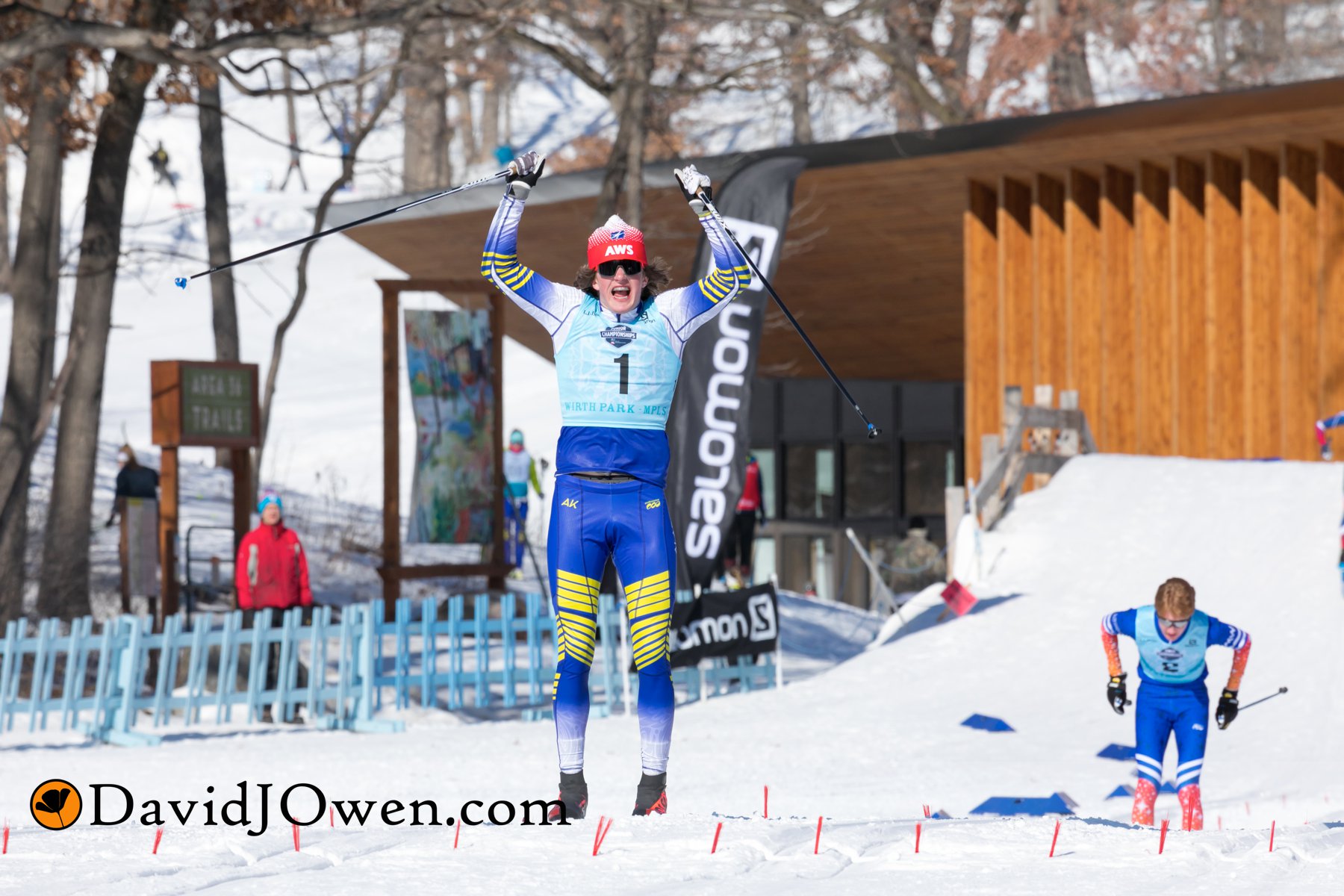
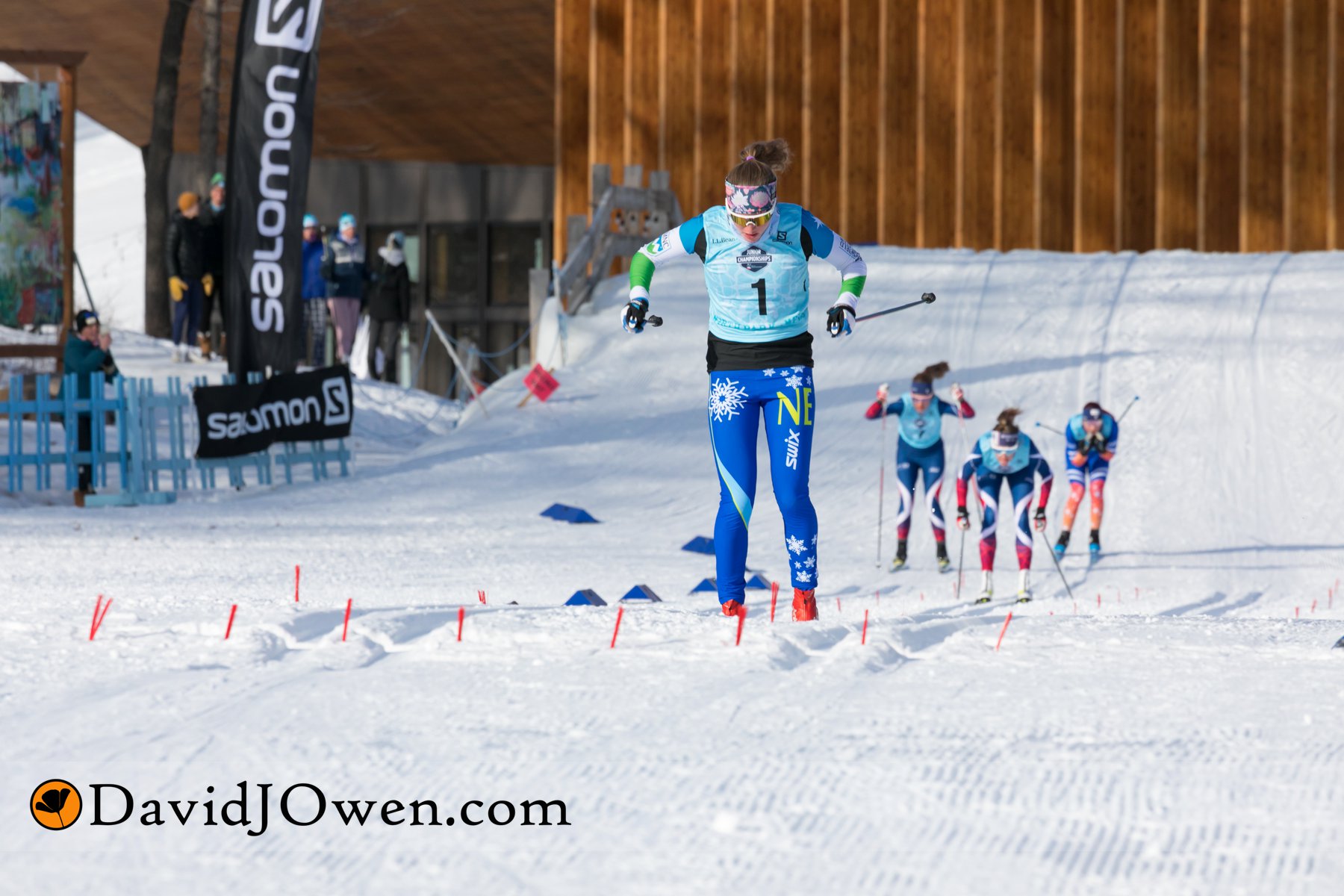
Nina Seemann comes across the line in first place for the 4th time in 4 races at JNs last week. The Dartmouth Freshman swept the U20 Girls races while cementing New England’s Alaska Cup win at Wirth Park. (Photo: David J Owen Photography)
Team Results: Alaska Cup Settled
By the time the Team Relays finished, there wasn’t a coach or spectator in Wirth Park that needed to pull up the Alaska Cup standings to do the math on who had won. New England, after a week of strong individual and team skiing, came away with the distinction of the top region for junior skiing in the country. It was a title that they’ve become used to winning. Going back to 2014, the only thing that could stop team New England from winning the Alaska Cup was the global pandemic of the past two years (*Alaska was in first at 2020 JNs when it was cancelled mid-week, it should be noted). And it doesn’t appear anything will change as we emerge from that era.
Behind New England, the Midwest finished 2nd by less than 300 points, which was a sure sign that the development places like Theodore Wirth Park have been invested in to spur is on track. Intermountain had a strong showing coming in 3rd place, while Alaska and Rocky Mountain were also competitive in 4th and 5th, respectively.
In the Junior Nationals Club Classification, Loppet Nordic Racing maintained its streak as the top junior racing club in America. Service High School in Anchorage, Alaska won the Roger Weston Trophy for the top high school in the country.
Skiers from all over the country round the first corner of the Theodore Wirth Park course in the U16 Boys 5 k Classic last week in Minneapolis. (Photo: David J Owen Photography)
Lessons from a Week at Wirth
In winning all four races at a JNs held in Wirth Park, Ava Thurston (U18) and Nina Seemann (U20) just one other skier with that distinction; Jessie Diggins. No matter where their promising careers in skiing go (and all signs on that are far), they’ve accomplished a feat that shows a unique capacity for focus, grit, and determination appropriate to the skier they followed in the feat.
Ava Thurston (New England, Mansfield) sprints to 1 of her 4 victories at JNs last week. Alongside fellow Vermonter Nina Seemann, Thurston replicated a feat that three time Olympic medalist Jessie Diggins completed a decade earlier by sweeping her category at JNs. (Photo: David J Owen Photography)
And then again, that’s really what bringing back Junior Nationals to Minneapolis – to Theodore Wirth Park – was all about. Letting the work and dedication that’s gone into American skiing be shown by the juniors who do it best.
As Loppet Foundation Executive Director Claire Wilson said in remarks to FasterSkier “The week was the highlight of the winter – and the Loppet is proud to support the development of the sport and finally give the community a great Junior Nationals!”
Each racer that crossed the start line at Wirth did so powered by all that has been put into the ski community over the course of their young lives. The brand-new chalet that played background to a new course at Wirth was a constant reminder that people coming together to grow something they love has the power to produce big things. If you paid attention to the skiing in the foreground though, that power wasn’t broken down into pieces. In each look of determination while skiing down the trail, each smile on a face when that trail had been skied, was the reflection of a coach, parent, or teammate that shared the joy of ski racing with a young person, and who in turn let it run wild.
It’s that simple. All that we leave Minneapolis with is again an air of possibility, for where the nation-wide community of Nordic skiing will set its sights on next – a future that by the looks of last week is as inspiring as anything that’s come before it.
Rocky Mountain coach Molly Susla (Crested Butte) and athlete Sawyer Ezzell (Crested Butte) share a smile in Minneapolis during JNs last week. (Photo: David J Owen Photography)
David J. Owen is a Minneapolis-based photographer who’s work showcases the best of skiing in the Midwest. Check all of his 2022 Junior Nationals galleries here. Visit his website to see his full suite of work in skiing and beyond.
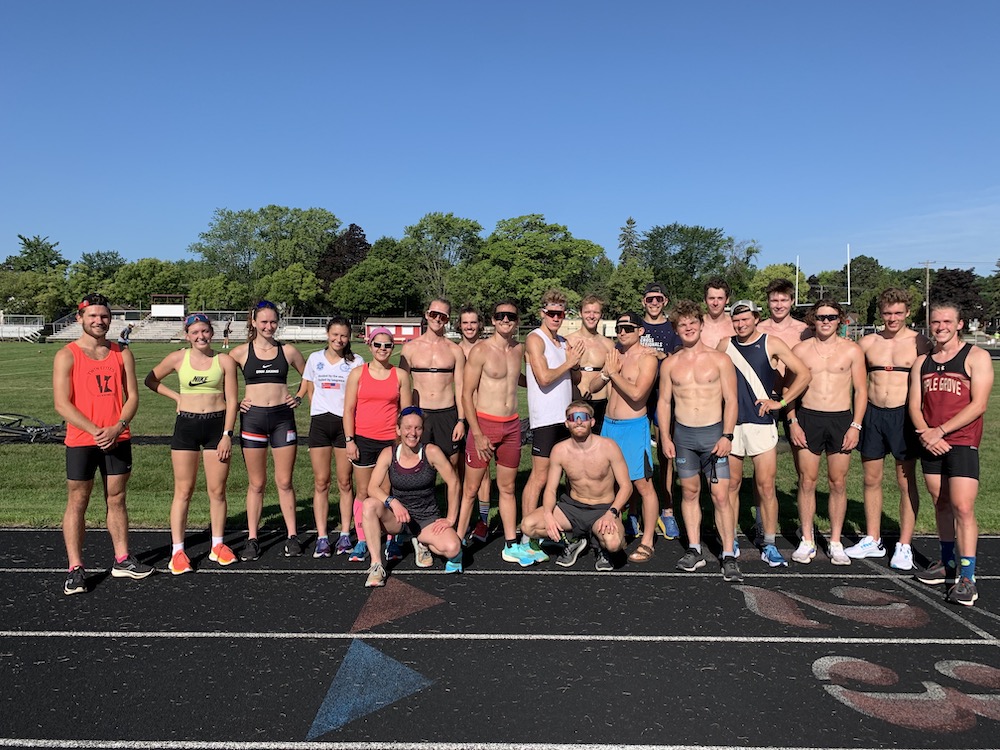
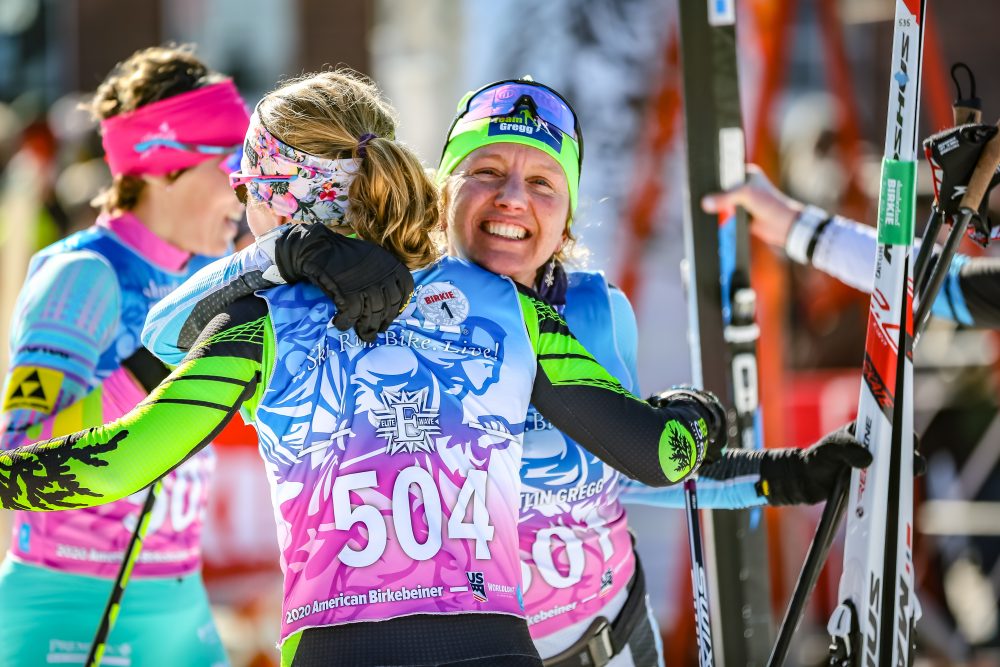
Team Birkie athletes, including summer collegiate athletes, at the track, summer 2021. (photo: courtesy Team Birkie)
Team name and location: Team Birkie; Minneapolis, Minnesota (also Hayward, Wisconsin)
Coach: Caitlin Gregg (co-coach), Leo Hipp (co-coach), Jeremy Hecker (technique coach and wax tech)
Current roster: For the men: Zak Ketterson, Christian Gostout, Andrew Millan, Tony Mathie, Brian Gregg; Women: Ingrid Thyr, Julie Ensrud, Jordan Schuster, Abbie Drach, Amanda Kautzer (focusing on biathlon)
What’s new: “Everything,” Gregg writes. While elite teams have existed in the Midwest in the past, Team Birkie is new this year. You can learn more about the program in this podcast with Gregg.
Who’s still on this team, or otherwise involved in American skiing, from when we did this in 2012: Since this is the inaugural year for the team, this question is not directly applicable; however, Caitlin Gregg and Brian Gregg remain recognizable names from our 2012 CXC preview. Nichole Bathe raced internationally for Great Britain as recently as last season.
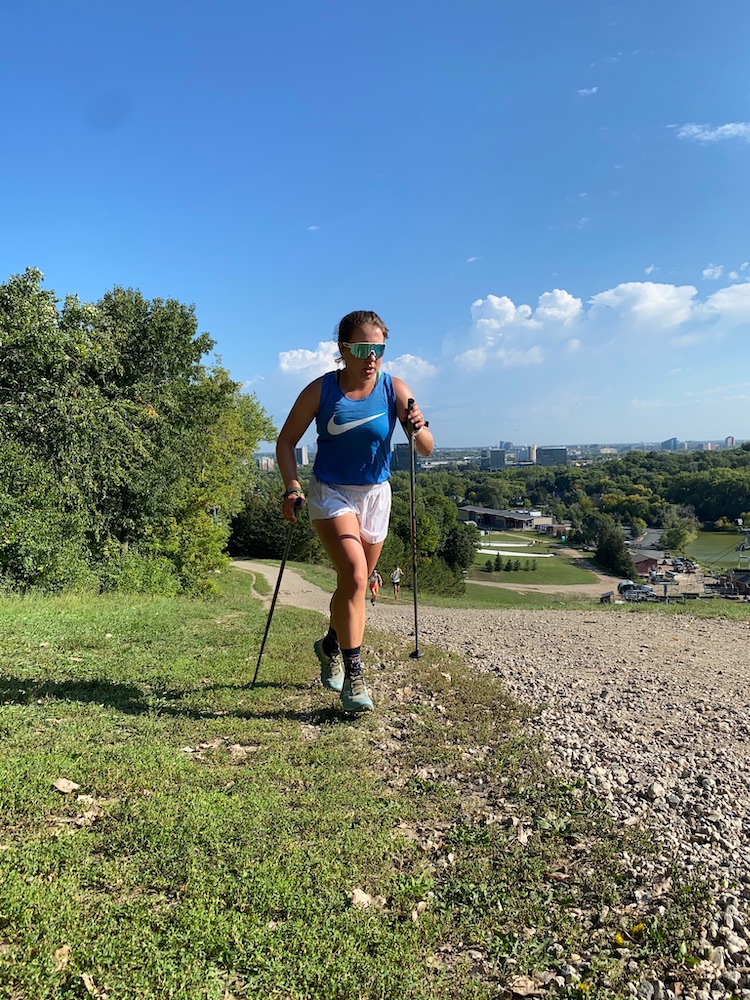
Ingrid Thyr bounding, summer 2021. (photo: courtesy Team Birkie)
Top results last season: While racing for different programs, Ketterson was 4th and 15th at NCAA Championships racing for NMU, including top American in the 20 k skate. Kautzer was 7th in Soldier Hollow in January against a RMISA field. Gostout was 13th in a January race in Soldier Hollow against a strong regional field. Drach was 8th in the skate Birkie. Among the coaching staff, Caitlin Gregg was third in the skate Birkie, marking the rare year in which she has entered the race but not won it.
Zak Ketterson doing work on the rollerski treadmill. (photo: courtesy Team Birkie)
“We are a brand new team with lots of excitement for the upcoming season.
“Our summer was very productive with the addition of 17 college athletes who helped push our Team Birkie athletes and made our altitude camp in Bozeman very successful. With lots of strong runners during the summer we enjoyed pushing our fitness on foot and refining our technique on rollerskis.
“Early fall was spent in the Midwest increasing our paces on familiar courses and dialing in efforts and technique on the rollerski treadmill.
From left, Christian Gostout, Ingrid Thyr, Andrew Millan, Zak Ketterson, Tony Mathie, and Jordan Schuster, Frozen Thunder, Canmore, Alberta, fall 2021. (photo: courtesy Team Birkie)
“As we approach the first series of races this winter we are in a final three-week altitude block and back on snow in Canmore, Alberta.
“We look forward to starting the season close to home in Duluth and Cable and competing at U.S. Nationals at Soldier Hollow (one of my all time favorite venues).”
Caitlin Gregg (fifth from left) and some athletes with members of the Loppet Foundation’s Northside Adventure Team, Minneapolis, summer 2021. (photo: courtesy Team Birkie)
In early July, the American Birkebeiner Ski Foundation announced the launch of the Team Birkie professional racing team. The elite post-graduate training group would pull from the three primary midwestern clubs, the Loppet Foundation, Central Cross Country Skiing (or CXC), and the American Birkebeiner Ski Foundation. While the midwest has a strong culture of cross country skiing with a breadth of strong youth and masters racing teams, it has been nearly a decade since the area has had a consistent robust training group that could support athletes at the elite level. In their words, this program fills this gap to allow “the next Jessie Diggins [to] stay home to train, inspire future generations, and win Olympic medals.”
Team Birkie elite and collegiate athletes enjoys the hazy summit of Hyalite Peak during a training camp in Bozeman, MT. (Courtesy photo)
Team Birkie will be based from the Trailhead at Wirth Park in Minneapolis, headquarters of The Loppet Foundation, and led by Head Coach Caitlin Gregg, who will coach alongside co-coaches Leo Hipp and Jeremy Hecker.
Team Birkie Coaching Squad: from left to right, Leo Hipp, Caitlin Gregg, and Jeremy Hecker. (Courtesy photo)
Gregg has spent her own career training in the area alongside her husband and fellow professional ski racer Brian Gregg. The duo — known as Team Gregg — forged their own path to the upper echelon of the domestic and international cross country race scene, gaining experience in writing their own training and supporting their careers along the way. [Find Team Gregg on a 2017 episode of Nordic Nation here.]
For those unfamiliar with Caitlin, her resume spans more than a decade of elite level ski racing; Caitlin earned her first World Cup starts in Vancouver in 2009 and was slated to start at the Minneapolis World Cup and Canmore World Cup finals in March 2020 before they were cancelled because of the impending pandemic. Those recent starts would have been just over a year after the birth of her daughter, Heidi, who is now two and a half years old and can regularly be found tagging along for her parents training.
Team Birkie mini-coach Heidi Gregg writes the prescription during a strength session. (Courtesy photo)
Caitlin is a 2015 World Championship Bronze Medalist, a 2010 Olympian, and a 5 time winner of the American Birkie. She was also a member of five World Championship teams and won eight National Championship titles, with several more podium finishes. Gregg is also no stranger to disappointment; there have also been near misses for team selection, as was the case for the 2014 Olympics in Sochi and when the 2016 US Ski team nominations rolled out.
While she does not yet consider herself retired as an athlete, this transition to leading the charge and growing Team Birkie does mark a shift in the focus of her overall ski career, as we discuss in this conversation. Caitlin also speaks to the evolution of the concept behind Team Birkie and the structure of the training group for the upcoming season. She is now one of only two female coaches at her level in the US — alongside Pepa Miloucheva of the Craftsbury Green Racing Project — and the only mother. Caitlin discusses the support this requires, and how her career as a whole has provided ample insights that allow her to be a role model for her athletes.
You can find Caitlin on Instagram @Caitlincgregg (with two G’s) and follow along with Team Birkie at @teambirkie. Thanks for listening.
Team Birkie athletes Zak Ketterson (R) and Xavier Mansfield (L) share the rollerski treadmill, while coaches Leo Hipp and Jeremy Hecker provide feedback. (Courtesy photo)
Reflections From a White Skier On The Spaces and Places We Ski, And How To Build Inclusivity
By: Ben Theyerl
The start of the American Birkebeiner in 2010.
The typical life story of a competitive nordic skier in the U.S. tends to resemble a character out of a Robert Frost poem. It’s an appropriate metaphor; the Rikert Nordic Center at Middlebury, VT doubles as the quarters of the renowned Bread Loaf School of English during its summer months, where the Bard of New England taught for many years. In America, this sport tends to be filled with people from the quiet corners and empty spaces of our country. From the arcane delight of Vermont’s hamlets, to the mountain outposts strung up and down the West Coast, and the downhome northwoods of Middle America in towns like my hometown of Eau Claire, Wisconsin. All these places color and contain the spirit of those who end up in a sport that receives little fanfare and even less attention in America, sans the two weeks every four years when the Winter Olympics are held.
For many, it has always been about finding peace in the silence and sublimity of harsh winters, and sanctity in the god-damn slog. Pumping hearts, clouds of heat, and the dance of drive and focus. It’s a sport for hearty souls that sees to it that those souls become heartier still; teaches you how to handle the struggles of life when it pushes you full bore to the brink.
I love it. My teammates love it. Despite having grown up surrounded by the sport, it still feels like a little miracle for me, and for many of my teammates, that I happened to find a sport that so-matched the character and values that the wide-open landscapes of this country offer, and that pursuing it with a full heart, that character became part of my character.
If you follow that Robert Frost metaphor I used earlier, eventually you’ll come to those two roads diverging in a yellow-wood. Where that famous assertion of individuality “And I -/ I took the one less travelled by, / and it has made all the difference” comes from. As nordic skiers, I think we’re prone to thinking that our participation in the sport is, in its own right, taking the road less travelled. Skiing is adventure, it’s idiosyncratic — knowing the otherwise useless specifics of waxing, and spending lots of time moving through spaces that otherwise receive little attention. It is easy to think, when you glance over your shoulder back at the forests, mountains, and fields of snow hours into a ski that you are in on a secret that the rest of society is tragically missing out on—and you are.
But if there’s anything that this year has proved, it’s that those glances over our shoulders are looking back at a world that’s changed. You can no longer look at my Frost metaphor and not think, why Frost? Implicit in his cool assertion of individuality is that the choice to take the path less travelled is one all-to-often reserved for those of us who look like Frost. We’re white. Many of us are male. Who we look to in forming our metaphors for individuality and freedom is important because it implies who has access to those virtues.
Why, for example, when plumbing my literary references for a metaphor didn’t I turn towards Langston Hughes, or James Baldwin, or Roxanne Gay? It’s a set of questions that points me back to an unspoken truth that those of us who travel the less travelled path in the nordic skiing community tend to look utterly homogeneous. This is a road taken disproportionately by those of us who are white. In fact, as I write this just 6% of nordic skiers in the U.S. identify as African American.
The demographics of where the places that harbor nordic ski communities are on a map allows this statistic to go unchecked. The trail networks linked to small rural towns and resorts that are historically, and presently, white, shelter us from having to confront and come to terms with our sport’s lack of racial diversity. So do the images of our heritage as a nordic community, and of what it looks like to be an elite nordic athlete. Here, in 2020, it’s apparent that we take the steps to re-examine inclusivity in our community, and understand why we haven’t done better in the past. Like any ski trail system, the road we have been travelling is now, under our societal moment, at another crossroads. We can choose as a community to stay on this sheltered path, or we can take the road less travelled for the nordic community to finally discuss the overwhelming whiteness of our sport and the places that we do it in.
There is one glaring irony in all of this pontificating on our sport’s ruralness and use of wide-open country spaces. The greatest concentration of skiers in America is currently at the epicenter of our national reckoning with our racial injustice—Minneapolis. The same city that, in the wake of the death of George Floyd, stands as the focal point for worldwide scrutiny of America’s historical racial oppression of Black people is also America’s nordic skiing capital.
There’s so much good to say about the ski community in Minneapolis. It’s large. It’s dedicated. It’s generous.
But there’s also a failing in that ski community’s racial make-up that parallels the wider-community of Minneapolis which is currently being highlighted by national events. Whereas most of the ski community can say that our sport is overwhelmingly white because of the communities it draws from are white, Minneapolis can’t fall back on that excuse. It’s a large, multi-ethnic, multi-racial city, and yet it’s ski community is still predominantly white. That’s not to discount efforts by that community, through the Loppet Nordic Foundation and others, to try and bring racial diversity to the sport, but it does go to show that in skiing, its not simply a lack of diversity in the broader communities where the sport can take place that’s an issue. This is a problem that goes deeper than demographics.
In her book Black Faces, White Spaces geographer Carolyn Finney discusses how nature and the environment in America have historically been constructed as a white space. Finney’s work is multi-faceted and should be a priority to read for any outdoorsperson, but here I want to underscore that big main point; it’s constructed. The mountain ranges and forests that we count on each winter to be able to do the sport of nordic skiing didn’t just pass into the hands of land owners, land trusts, or the public government. In considering how most of the spaces we ski in came to be, we have to start with the dispossession and removal of indigenous peoples before you ever think about how a trail system got built and who has access to those trails.
To underscore this point, one can look at our community’s largest gathering, 10,000 people every year at the American BirkebeinerAmerican Birkebeiner ski race in Hayward, Wisconsin. The Birkie trail is a special place, hundreds of kilometers of northwoods traversing ancient glacial terrain. The Birkie is a special event, in large part responsible for the vitality of the nordic ski community in the Midwest. My own family would’ve never started in this sport without it.
In its present form, the Birkie trail straddles the Lac Courte Orillies tribal reservation, and is built on Ojibwe land. This fact is in the constant peripheral in any trip to ski on the Birkie trail. Most of us choose to keep it in the peripheral, however. We don’t think twice about crossing the Ojibwe names that dot the rivers, trails, and forests – Namekagon, Chequamegon, or Totagatic. I find myself guilty of driving from the cabin I stay in for the Birkie each year to the Mosquito Brook trailhead through the Lac Courte Oreilles reservation, and not giving a second thought to the outsized, neon sign that advertises it as such, placed as the welcome sign to the LCO casino not more than two miles away from the trailhead. The proximity of native land dispossession in Hayward makes it a stark example, but this story is one that is at the origin of every trail system we enjoy and compete on in America.
Our sport ultimately is connected to that initial dispossession. As skiers, one step we can take towards recognizing our use of indigenous space is no longer keeping that fact in the peripheral in our community gatherings. Acknowledge it. This follows from a movement that’s already underway in native activist and academic circles, which calls for persistently acknowledging that the land we stand on today is indigenous land, as one statement from Northwestern University states:
It is important to understand the longstanding history that has brought you to reside on the land, and to seek to understand your place within that history. Land acknowledgements do not exist in past tense, or historical context: colonialism is a current ongoing process, and we need to build our mindfulness of our present participation.
We can make this a regular part of the introductory instructions at our community races. We can make it a part of the dedications that take place when christening new trail systems and facilities. To begin the work of inclusivity, we have to go back to the very origin of exclusion in the spaces we use for our sport.
The native experience, of course, is different from the experience of Black Americans in our sport, and in the outdoors community more broadly. Land dispossession began the process of colonizing the outdoors as an exclusively white space, but it wasn’t the only step. White colonization of the countryside in America was enforced and reinforced in the policies and narratives that constructed America historically. Finney writes that “land (and more directly land ownership) directly connected to what it means to be an American,” and highlights that the main historical mechanism for this in America was the Homestead Act, signed in 1862, which allowed settlers to own 40-160 acre plots of land for free if they were willing to farm it for five years.
Over 160 million acres of land from Ohio to California, Wisconsin to Washington, were settled under this act, and created the “countryside” as we figure it today in our national consciousness. Because of the time of its passage during the Civil War, the initial wave of homestead claims completely excluded Black Americans who were still legally under the horrors of slavery, meaning the claims were almost exclusively made by European immigrants. This, along with the pattern of America’s settlement from East to West, meant that the then newly created Midwestern and Western states formed their still predominant demographic make-up, majority white.
Above: the author’s father and Grandfather at Wisconsin’s famed (and sadly discontinued) “Bratski” event in Sheboygan. (Courtesy photo)
My own ancestors were among these claimants, staking out their place in the hills north of Milwaukee, Wisconsin where a century later their great-great Grandson, my Grandfather Walt, would start a family-wide nordic skiing obsession that now stretches three generations.
The immigrant patterns of the time meant that the initial wave of claims were made by mostly German and Scandinavian immigrants, for which this polka-dancing, lederhosen-owning author can tell you still colors the cultural identity of states like Wisconsin and Minnesota today. It’s those Scandinavian settlers who predominantly settled in Minnesota that brought cross-country skiing to America initially, and its place as a cultural keystone in the state was firmly secured for the future. We haven’t strayed far from the place that Scandinavian heritage has in the imagination of our community. We name our races Vasaloppet and Birkebeiner, and I’m happy to say that I’ve been overwhelmed with joy at more than one citizen race when the post-race snack table included lefse and not just orange slices. Take that, running. Nordic skiing is just that: nordic.
It’s worth asking if that close affinity closes off the community to those that don’t share that heritage though. After all, a lot has happened to shape U.S. skiing culture as distinct from that which exists in Norway or Sweden. This isn’t the whole story of skiing in America, but it does demonstrate the way that settler colonialism is intertwined to where and who skis here.
Land ownership also served as the basis on which many white Americans built their wealth and prosperity over the following century and a half, and along with other oppressive economic measures, the exclusion of Black Americans from homesteading helped create the racial wealth gap we inherit today. The relative financial security and disposable income that many white Americans secured in the twentieth century allowed them to spend on the travel, gear, and time required to take part in outdoor recreation. Thus nordic skiing formed a twofold reinforcement of its whiteness: taking place in communities that were almost exclusively white, and requiring a certain amount of wealth that disproportionately was (and still is) possessed by white Americans.
Nordic skiing parallels the well-studied history of outdoor recreation in America, beginning with what Wallace Stegner famously called “America’s best idea,” the national parks. I won’t repeat the history of catering the experience of places like Yellowstone to an experience of “wilderness” by removing Native Americans and buffalo hunters while putting down railroad tracks for wealthy eastern, and white, tourists. I will recommend William Cronon’s “The Trouble with Wilderness” and Ken Burns’ “The National Parks” as starting points, and resources concerning the Parks’ current reconciliation with their past to those unfamiliar. The unsanitized story of the National Parks is one that should guide our understanding of outdoor recreation in America as it plays out in landscapes and spaces, and is one that mirrors the way that the nordic skiing community tends to understand itself.
As Finney writes in her book, “[the countryside is] a key site of nationalistic sentiment, and implicitly excludes Black people in its discourse.” Those of us who look for refuge in the weekend escape to the trailhead, find community in the racing scene that takes over small-towns and rural spaces throughout the winter, and spend hours paging through outdoor gear catalogues filled with white faces, need to think critically about why we feel comfortable in those spaces.
Chances are, it’s because they’ve always been white. And chances are, we’re white too.
Part of the ethos of participating in this sport is that it allows us to gain access to freedom otherwise not found in life. On skis, we can glide over terrain you can’t on foot. The freedom of skiing is derived from access to some sort of wilderness, and that is a sentiment that is colored white by historical practices that can seem so far and distant, but is intimately intertwined with our experience, even when our minds are occupied with tweaking our V2 technique to shave off seconds or taking downhill corners just right. We may be on the road less travelled, but that road was still paved by the pitfalls and racism of American society.
Which means we’re back to that Frost metaphor. Which is good, because it represents the crossroads that society, and by extension, our sport, are at with inclusivity. What I’ve discussed here are tepid steps towards the road we have to take as a community. If this story were trail-building, it’s simply tree-flagging – identifying what needs to be cut and cleared before we do the real work forging new paths. But, it’s a necessary step. Survey and think, recognize and learn.
Where we go from here is also a task we take up in the tight-knit, collaborative manner that the nordic skiing community has always acted in. We’re building a new trail. At the time of this writing, movement is already underway. A number of organizations, such as the National Brotherhood of Skiers, have been doing work to build inclusivity of Black communities in alpine skiing for years. The Share Winter Foundation provides grants to programs across the country that seek to empower youth to enjoy winter and reduce barriers of access to skiing and snowboarding. Their grantees include a number of big clubs and governing organizations in the nordic community. Our path forward must include programs like this, devoting funds to introducing Black communities to nordic skiing and building trail systems that guarantee low-cost, easy access to all. It’s imperative that these resources meet action from those in the community. For coaches, this means figuring out how to create programs that introduce and retain talented athletes regardless of where they come from or the resources they have. For shops and manufacturers, this means figuring out how you can help those coaches get the necessary equipment to coaches working to make this sport accessible to all athletes, especially Black athletes.
These ideas are far beyond my scope as a singular member in this community, but I’m confident that the good-spirited souls and minds that have built our sport in this country can develop and implement action towards drawing in people who our community has historically ignored. This new trail system we’re building won’t be complacent with the twists and turns and hills we’ve travelled on our skis in the past. It’ll be new and true to the nordic skiing spirit—trailblazers who take comfort in the challenge of hard-work.
Ben Theyerl
Ben Theyerl is a third generation nordic skier from Eau Claire, WI, who recently graduated from Colby College this spring. He is currently working on the campaign trail in Wisconsin for the upcoming election, training for whatever the Birkie looks like this winter, and gearing up to help lead fall training with his home club Chippewa Valley Nordic.
Caitlin Gregg (right), Jazir (left), and Heidi on the lawn. (Photo: Brian Gregg)
Since 2011, Brian and Caitlin Gregg have been residents of north Minneapolis. They added daughter Heidi to the mix a year and a half ago. They are close to Theodore Wirth Park, an urban magnet for cross-country skiing with amenities like snowmaking, homologated trails, and mountain biking in the non-snow months. The Loppet Foundation, a local non-profit, was poised to host the first World Cup in the U.S. since 2001 until concerns and regulations associated with Covid-19 caused the event to be canceled.
Minneapolis has enjoyed a reputation as an arts and culture hub. The city skews left in its politics and serves as a gateway for Midwest winter sports. That image was shattered in the wake of George Floyd’s killing last month.
Like many places, Minneapolis was a reminder of how many cityscapes have historically been racist by design. Since the early 1900s, Minneapolis has segregated with the assistance of racially restrictive deeds called racial covenants. In other words, specific properties included language in their deeds preventing people of color from acquiring them.
In 1917, according to an interactive map titled Mapping Prejudice, we see a single property near the west side of Wirth with a racial covenant. By 1919 blue blobs on the map indicating impacted properties were viral near that location. Then in 1923, another cluster began to propagate adjacent Wirth’s northeast edge. As the map’s timelapse rolls into the postwar year of 1946, those two racial covenant clusters balloon. They defined the area for years.
Double click the images below to enlarge. Theodore Wirth Park is situated in the center of the respective maps.
Where the Greggs reside specifically in north Minneapolis is an area of the city that is predominantly African American. “You mention it to someone that you live in north Minneapolis and it is known as the not as nice part of town which we never really understood,” said Caitlin Gregg.
As they looked for a home to buy in 2010 and 2011, their budget was small. So were their needs. One-bedroom. One-bath. They didn’t require more. And location, location, location was a bellwether. Brian, a 2014 Olympian, and Cailtin a 2010 Olympian, desired close to home skiing. Wirth Park was their place. At the time, Caitlin worked for a nearby Boys and Girls Club and loved the neighborhood.
“’That is a bad area, what are you doing?’” was the often-heard response when informing people of their housing find said Caitlin. “And some of these are friends of ours for a long time. I lived nearby and I felt like it was a great spot for what we were looking for. I was willing to find out what the neighborhood was like for myself.”
Nighttime racing under the lights at Wirth Park. (Photo: David J. Owen Photography.)
Both for Cailtin, who spent the first 10 years of growing up in a diverse section of Manhattan, and Brian, who grew up in the bucolic Methow Valley in Washington, living true to their values is a constant. “We definitely stand out here and I think it is an experience that everybody should have,” said Brian. “In the sense that to walk into a room and be completely different than everyone else. Imagine what it would be like for a person of color to come to a cross-country ski race?”
The Greggs have worked intimately with the Boys and Girls Clubs near rural Hayward and Minneapolis and the Parks and Rec. Department in north Minneapolis. They have also collaborated with the Loppet Foundation to make cross-country skiing, mountain biking, and running accessible to the underserved and underrepresented. Their journey helping others as professional skiers began when they became involved with In The Arena, an organization linking Olympic athletes with empowering youth.
Most training logs serve the purpose of cataloging training hours by specifying items like time in zone, average heart rate, activity, and on and on. We’ve yet to see one with a column accruing time and energy given back. This is not to say many athletes have not found their cause and their voice; be it climate change, literacy, or eating disorders. The good work is out there.
It is a question being asked over and over by many pursuing excellence in nordic sport: “How is my cross-country skiing and my success in cross-country skiing helping? What is [it helping]? And how is that making the world a better place?” posed Brian as he explored how he and Caitlin have attempted to answer that question. “You have an immediate connection with people and in particular kids,” was one grounded response Brian gave.
Living in a community with omnipresent reminders of systemic racism and exclusion, the Greggs have spent significant time ruminating on their value as athletes and why they may be important to communities.
Brian Gregg holds his three-week-old daughter, Heidi, during the flower ceremony after his second place finish at the 2019 Birkie. (Photo: Instagram @goteamgregg)
“One thing that athletics does is that it shows that setting goals and setting big goals, and setting goals that honestly may be the majority of people think are not possible,” Brian said. “You can inspire others to do the same, to define their next goals and best achievements as the ones that are not easy, and probably the majority of people thought you would fail at.”
Still, the constant stress of logging hours and resting adequately, and continuing the cycle, can be a deterrent to service and advocating for change. In the estimation of both Caitlin and Brian, however, their projects in north Minneapolis have made them better athletes.
“Whether or not we are better people I am not sure, but we are better athletes because of it, I think,” Caitlin said. “It gave us perspective and really realizing that we do love skiing and we do love pursuing our goals in skiing and we can do these things simultaneously. It does not have to be one or the other.”
Caitlin recalled the times she first worked with local youth, describing herself as wearing bright colored Lycra and goofy glasses, and some sort of ski hat. We know the look as the slowly evolving concept of cross-country cool as defined by those faster than us. Others know it as something sartorially disastrous.
“I thought, ‘oh my gosh is anybody going to want to listen to us or want to be part of something that we are going to do, we are just so different’? The most incredible thing that I have learned from working with the kids and the program that we aim to do is that it did not matter. That was a huge lesson for me,” Caitlin said. It really didn’t matter to them. The most important thing was that we were there and we were present. They could count on us. They could trust us, and we came again and again and again. And we cared about them and about what they were doing. And that was needed so much and it really gave me a lot of hope.”
None of this is to say the Greggs were not rattled with the recent marches and palpable anger in Minneapolis. Caitlin said it was simply unpredictable. Like others, they were advised to wet their fences to prevent potential fires from spreading and crack their windows at night so as to keep auditory tabs on what was transpiring outdoors. One morning after one of the most tumultuous riots to date in the city, Caitlin woke before 7 AM to the sounds of a small commotion. She went to the window with some anxiety, and saw one of the local kids, Joshua (9), zipping back and forth on his bike. He had asked his reluctant and slightly older sister to watch him – that was the grumbling Caitlin had heard.
“It was one of those moments, as if ok this is cool and good things in the world are still happening and will continue,” said Caitlin.
Joshua had learned recently to ride a bike. As a shy kid, it took him too long to convey to the Greggs that he didn’t know how to ride, but wanted to learn. Caitlin and Brian are known in their neighborhood as go-tos when it comes to how to access play in the outdoors. The Greggs helped secure a bike, and they were one degree separated from being Joshua’s human training wheels. Another neighborhood local, Jazir, who still swings by the Greggs daily, became a mentor to Joshua.
Jazir came into the Gregg’s lives as a gregarious neighborhood kid. Like Joshua after him, the Greggs rallied to help Jazir find a bike. He was eventually connected with the Loppet Foundation’s mountain biking program and his trail riding love affair began. With Joshua’s new prowess on the bike as evidence, Jazir has paid it forward.
Brian says their street near Wirth Park reflects the best of Minneapolis; a spectrum of people from all walks of life in close proximity to an urban jewel in Wirth Park. Caitlin, a trained environmental and city planner, said the city’s master plan called for a light rail system to connect their neighborhood with downtown and amenities on the city’s periphery. The original vision for the light rail would have blocked local access to Wirth. Through her involvement in the neighborhood association, Caitlin advocated for a modified plan allowing for easier park access.
The 2019 Theodore Wirth Regional Park Management Plan Analysis states, “Theodore Wirth Park values the mental and physical well being of their community and visitors and supports this by creating a safe, beautiful and fun environment for all seasons.” We all know it – easy access to open space is vital.
Jazir and Heidi. (Photo: Brian and Caitlin Gregg)
Jazir helping a neighbor learn to ride. (Photo: Brian and Caitlin Gregg)
As the conversation with the Greggs waned, we didn’t touch on training or racing plans. I think we mentioned skiing once as Brian recalled a time deep in Wirth and deep in an interval session when a teenager he knew recognized him and called his name. It was an old neighbor named Quinn who was out skiing and had followed Brian’s 2014 Sochi quest. For the moment the Greggs are immersed in their full life and doing what they can to reflect and help their community.
There’s no doubt Minneapolis needs systemic change. If this moment is a tipping point, there’s optimism the city will be better off. It appears kids like Jazir and Joshua can keep Wirth local: the new light rail plan restores local entry points.
Hailey Swirbul of the USST D-Team races in Québec City, Québec, in March 2019. (Photo: John Lazenby/lazenbyphoto.com)
You may have heard that the World Cup is returning not only to North America, but also to American soil, within the next few weeks. The world’s best skiers will be contesting sprint races in Québec City on March 14 and 15; a sprint in Minneapolis on March 17; and distance races plus a mixed relay in Canmore on March 20-22.
For all six races, including the five across the border, the U.S. has an expanded nation’s group start quota (thanks, Canada, for letting us count as Canadian for a week), meaning that a remarkable thirty skiers total will toe the line in that distinctive candy-cane uniform. Here is a brief overview of the fifteen women with start rights in the three sprints (some of the sprinters will not be racing in Canmore, where some distance-oriented athletes will have starts instead).
In alphabetical order, with pictures where available (an asterisk by a name denotes an athlete making her first World Cup start in Québec City):
Sadie Maubet Bjornsen: Stage 4, Ski Tour 2020. (Photo: NordicFocus)
Sadie Maubet Bjornsen
Team and club: U.S. Ski Team (USST) A Team; Alaska Pacific University, or APU
Currently lives in: Alaska
Selected career highlights: Bronze medal, team sprint, 2017 World Championships; 7 individual and 5 team World Cup podiums; only American woman to ever wear the yellow overall World Cup leader’s bib; multiple national titles
Instagram page: @sbjornsen
Age: 30
Sophie Caldwell on course in Östersund, Sweden. (Photo: NordicFocus)
Sophie Caldwell
Team and club: USST A Team; Stratton Mountain School, or SMS
Currently lives in: Vermont
Selected career highlights: 3rd, Sprint Cup, 2017/2018 World Cup season; 9 individual and 4 team World Cup podiums
Instagram page: @sophiecaldwell
Age: 29
Hannah Cole racing at 2020 U.S. Nationals in Houghton, Michigan. (Photo: Karen Brown)
Hannah Cole*
Club: Crosscut Mountain Sports Center
Currently lives in: Montana
Selected career highlights: 9th, 2020 American Birkebeiner; 4th and 8th, SuperTour sprints in 2019/2020 season
Instagram page: @hanncole
Age: 24
Jessie Diggins skates to 8th in the first stage of the FIS Ski Tour 2020. (Photo: NordicFocus)
Jessie Diggins
Team and club: USST A Team; SMS
Currently lives in: Vermont
Selected career highlights: Gold medal, team sprint, 2018 Olympics; gold medal, team sprint, 2013 World Championships; three additional World Championships medals; 2nd overall and 3rd in distance standings, 2017/2018 World Cup; 26 individual and 7 team World Cup podiums; multiple national titles
Instagram page: @jessiediggins
Age: 28
The women’s podium of the 2019 American Birkebeiner. Alayna Sonnesyn took first ahead of Anja Gruber and Katie Feldman. (Photo: Screenshot Instagram @asonnesyn)
Katie Feldman*
Club: SVSEF Gold Team
Currently lives in: Idaho
Selected career highlights: 3rd, 2019 American Birkebeiner; 5th and 6th in SuperTour races in 2019/2020 season; 7th in SuperTour sprint in 2018/2019 season
Selected career highlights: 3rd, 2020 American Birkebeiner; dozens of SuperTour podiums; three top-five finishes at U.S. Nationals over the past ten years
Instagram page: @eflowers89
Age: 30
https://www.instagram.com/p/Bgi2XuQBqKj/
Felicia Gesior*
Club: Crosscut Mountain Sports Center
Currently lives in: Montana
Selected career highlights: 10th, 2020 American Birkebeiner; 5th and 10th, 2019/2020 SuperTour races; four top-10 finishes, 2018/2019 SuperTour
Selected career highlights: Bronze medal, 10 km skate, 2015 World Championships; five-time champion, American Birkebeiner; multiple national championships
Instagram page: @caitlincgregg
Age: 39
Elizabeth Guiney races at the PyeongChang World Cup in 2017. (photo: Nordic Focus)
Elizabeth Guiney
Club: Craftsbury Green Racing Project, or Craftsbury
Currently lives in: Vermont
Selected career highlights: 8th, 2020 American Birkebeiner; six top-10 results, 2019/2020 SuperTour; 3rd, 2015 Nationals
Instagram page: @lizzie_guin
Age: 29
Julia Kern skis to 15th in the qualifier in Dresden in January 2020. (Photo: NordicFocus)
Julia Kern
Club: USST B Team; SMS
Currently lives in: Vermont
Selected career highlights: bronze medal, skate sprint, 2020 U23 World Championships; 3rd, Planīca skate sprint, 2019/2020 World Cup season; multiple other World Cup top-30 finishes; bronze medal, relay, 2017 World Juniors
Instagram page: @juliakernski
Age: 22
Kaitlynn Miller (front) during the women’s classic sprint at the 2020 Senior Nationals. (Photo: Reese Brown)
Kaitlynn Miller
Club: Craftsbury
Currently lives in: Vermont
Selected career highlights: Five national championship podiums, including 2016 classic sprint national championship; 17 SuperTour podiums; 34th in World Cup 10km skate race in 2018/2019 season
Instagram page: @kaitlynnbmiller
Age: 28
Becca Rorabaugh on course during the 10-kilometer individual start classic in Lahti, Finland, last month. (Photo: NordicFocus)
Becca Rorabaugh
Club: APU
Currently lives in: Alaska
Selected career highlights: Five national championship podiums, including 2014 10km classic national championship; 14 SuperTour podiums; 24th in sprint in 2012/2013 World Cup season, 39th in World Cup 10km classic last month
Instagram page: @beccarorabaugh
Age: 30
Alayna Sonnesyn (bib 2) races in the skate sprint heats at 2020 U.S. Nationals. (Photo: Reese Brown)
Alayna Sonnesyn
Club: SMS
Currently lives in: Vermont
Selected career highlights: winner, 2019 American Birkebeiner; three podiums at 2020 national championships; three SuperTour podiums; finisher, Ski Tour 2020
Instagram page: @asonnesyn
Age: 23
Hailey Swirbul (APU) during the women’s 10 k skate at 2020 U.S. Nationals. (Photo: Reese Brown)
Hailey Swirbul
Club: USST B Team; APU
Currently lives in: Alaska
Selected career highlights: silver medal, 5km classic, 2018 World Juniors; bronze medal, 10km skiathlon, 2018 World Juniors; 21st, Davos skate sprint, 2019/2020 World Cup season; three other World Cup top-30 finishes this season; bronze medal, relay, 2017 World Juniors
Instagram page: @hai.swirl
Age: 21
Callie Young, of Newport, Vt., racing to second overall in the women’s race at the 2017 App Gap Challenge in Fayston, Vt. (Photo: Laurel Minde)
Callie Young*
Club: Dartmouth
Currently lives in: Vermont
Selected career highlights: Fourth, FIS Junior Invitational “Rising Stars” Race, Québec City, March 2019; first, 2020 Bates Carnival; 54th, sprint qualification, 2020 World Juniors
Instagram page: @calliey0ung
Age: 19
* The athlete is making her World Cup debut in Québec City.
Caitlin Gregg rocking her baby “bump” while 20 weeks pregnant at the Loppet Foundation’s Trail Loppet, an “urban trail run”, on Sept. 21 in Minneapolis, Minnesota. She and her husband Brian are expecting their first child in early February. (Courtesy photo)
The questions started rolling in this spring. How’s training going? Are you going for 2019 World Championships? What’s the plan for next winter?
When you’re Caitlin and Brian Gregg, Olympians and local superstars in the Midwest, it’s hard to keep your athletic profile on the DL. Since buying a house on Theodore Wirth Park seven years ago, the couple has immersed themselves in the greater Minneapolis community — both in and out of skiing. They’ve raced, coached and worked out alongside skiers of all levels. They’ve bolstered the Loppet Foundation and its Loppet Nordic Racing program while chasing their own athletic dreams. And for the most part, they’ve achieved everything they set out for.
But not making the Olympics last winter was a blow for both Caitlin and Brian. They had both been on the edge — the infamous bubble — but didn’t make the 20-person cut for PyeongChang.
And by Brian’s calculations, at least one of them should have.
“The naming of the 2018 Olympic Team was a surprise to me,” Brian wrote in an email to FasterSkier in late September. “After Caitlin made the team in 2010 and myself in 2014 it was our dream to both be competing in 2018. I did not expect to see so many discretionary selections and I had expected to see Eric Packer on the Olympic Team, and I thought I would be as well if they took as many as 20 athletes. I am happy to see that we took a full team of athletes, although it was hard to see us not fill all of our distance men’s starts. I believe the criteria and the selection committee failed our athletes. I still believe we have room to improve our team selection and this year is better than last year, although we still have improvements to make.”
Despite feeling that he and Packer ranked high enough on the U.S. Ski Team’s 2018 Olympic points list to make the cut, Brian wasn’t bitter. And he’s still planning to race this winter. But life for the Greggs is different this year.
Caitlin Gregg (501) winning her fifth American Birkebeiner last February in Hayward, Wisconsin, while skiing alongside her husband Brian Gregg (13), who placed 22nd in the elite men’s skate race. (Photo: ABSF/James Netz)
For one, Brian has been working full time in financial services and taking night classes to become a certified financial planner. In a major step toward that, he passed the six-hour Series 7 exam two weeks ago.
That has meant less training, which he didn’t necessarily see as a detriment. In various running races this spring, summer and fall, Brian won the City Trails Loppet (a 10-mile urban trail run in St. Paul Park, Minnesota), finishing just ahead of his good friend Matt Liebsch, then ran a 1:12:43-hour road half marathon (Grandma’s Marathon) in June in Duluth, Minnesota, won the Loppet Foundation’s Trail Loppet half marathon (in 1:20:34) on Sept. 21, and placed seventh in the Birkie Trail Run Festival’s half marathon (1:24:00) on Sept. 28.
“Now that I’m training a little less on the days where I don’t get out to do a workout, one of my big inspirations is my friend, Matt Liebsch,” Brian said on the phone in late August. “Seeing him not make the [Olympic] team in 2014, that was disappointing, but seeing how much fun he has in the sport, and we still train together four some-odd days a week. … Not all of our times are getting slower; you keep chipping away and pushing yourself.
“It’s good for your general mental health,” Brian added, referring to skiing as a lifestyle more than a job. “I just like it and I think the more people we can get into this sport and doing it, the world’s a better place that way.”
Caitlin agreed.
“We both love the sport and we’re in a really fortunate scenario; it’s pretty neat to have a husband-wife Olympic duo,” she said on the phone while sitting with Brian at his office. “It definitely happens, but the fact that we’ve been able to support each other through that is pretty cool.”
“It’s good for your general mental health. … I think the more people we can get into this sport and doing it, the world’s a better place that way.” — Brian Gregg on cross-country skiing
Caitlin and Brian Gregg are expecting their first child on Feb. 9, two weeks before the 2019 American Birkebeiner. (Courtesy photo)
While the two halves of Team Gregg are used to supporting each other at North American ski races — including an annual assortment of SuperTours and U.S. nationals — Caitlin has been doing more coaching and sideline cheering so far this year. While she had originally planned to keep her pregnancy a secret early on, Caitlin said that it became tough to dodge the training questions.
On Aug. 10, they posted an “expansion of Team Gregg” baby announcement on their Facebook page. During their Aug. 22 interview with FasterSkier, Caitlin was 16 weeks pregnant. And as of this week, now 22 weeks along, she’s past the halfway point. They’re expecting their first child — a girl — on Feb. 9, exactly two weeks before the 2019 American Birkebeiner (a ski marathon Caitlin has won a record-setting five times).
“I told her she has two weeks to get ready and in shape,” Brian jested.
“I was like, ‘Uh, yeah,’ ” Caitlin replied.
***
It’s a girl! Brian (r) and Caitlin Gregg (beneath pink confetti/candy) discovered the gender of their baby, due Feb. 9, 2019, at a gender-reveal party in August. (Courtesy photo)
The gender-reveal party (with a piñata filled with pink candy), a baby shower her high-school athletes threw her (with diapers filled with melted chocolate bars), it was all new to Caitlin.
So was the news of a blood clot in her leg in early July. During their six-hour drive home from Thunder Bay, Ontario, where Brian had competed in Canada Day rollerski races while Caitlin cheered him on, Caitlin started feeling pain in her left calf. It worsened and she went to see her doctor, which revealed she had two blood clots in her calf. She was immediately put on blood thinners and instructed not to bike, rollerski or do anything with a heightened risk of falling.
“That was super scary,” she reflected. “… The doctors were like, ‘That’s really weird, you’re the last person we thought this would happen to; you’re so young and active.’ So we haven’t gotten any answers yet as to whether it’s an underlying [condition]. … There are a couple other genetic disorders you can have, inherited blood-clotting disorders that I just never knew about, potentially, [for] my entire career. I’ll get tested for those after the pregnancy, but one of the big bummers is that I have to be on blood thinners for the remainder of the pregnancy.”
She immediately remembered Kikkan Randall’s blood clot scare in 2008 and decided to call her former U.S. teammate, a 2018 Olympic gold medalist.
“She took a good 45 minutes and just talked to me and told me about her scenario and how it was for her and what she had to go through and all of the kind of different aspects of blood clots and the pregnancy and how everything turned out great, so that was super reassuring,” Caitlin said.
While their experiences were different (Randall had two surgeries to remove a recurring blood clot in her leg well before she became pregnant in 2015), Caitlin was comforted by their conversation. Two days after they spoke, Randall announced her breast-cancer diagnosis on July 11 on social media. She had never mentioned it to Caitlin.
“To me, that was the epitome of a class act,” Caitlin said. “She didn’t once change the subject and say, ‘Don’t worry, that’s nothing,’ or belittle my fears or anxieties. She just listened and was super awesome and great mentor and very much present in what I was dealing with, so I immediately wrote her and said that was amazing, thank you so much, and I wished her the best.”
For the duration of her pregnancy, Caitlin will take two shots of blood thinners each day. In addition to her exercise limitations, she’s also been advised not to fly or take long road trips for the time being.
“For me, because the dose is so high … [the doctors are] more worried about internal bleeding and almost not knowing it, is the bigger thing,” she said. “I can still ride a stationary bike, and I can do a lot of exercises. I just have to make sure the risk of that falling — so mountain biking, riding a bike outside, rollerskiing — are kind of the big no-nos. … But I’m really looking forward to skiing on snow, especially on super-soft, powdery stuff. … Honestly other than that, pregnancy has been awesome.”
In June, Caitlin, about six weeks pregnant, ran the same Grandma’s half marathon as Brian, finishing 19 minutes behind him in 1:31:38. In an effort to qualify for the 2019 New York City Marathon, the two had registered for the 13.1-mile road race before discovering that Caitlin was pregnant. Caitlin decided to run in what she called “Level 3” while being mindful of her heart rate and feeds during the race. She said she felt “awesome,” and their finishing times did the trick, qualifying them for next year’s NYC Marathon.
Since then, she’s scaled back the racing, instead entering running races with a goal of “jogging/ walking/ pole hiking them”.
Meanwhile, Brian has been getting out for workouts whenever he has time and plans to race at least the first period of the SuperTour circuit this coming season. In an effort to qualify for his first World Championships, he is focusing on strong performances in the 15-kilometer freestyle at the Sovereign Lake SuperTour/NorAm in December in British Columbia, and the U.S. nationals distance races in early January in Craftsbury, Vermont.
“My training volume is hugely reduced this year, but I have been hitting all of my intensity sessions,” Brian wrote in an email. “My primary focus is on preparing to support my family and my baby girl, but my passion for ski training and racing will never go away.
Coach Caitlin Gregg (r) timing Sarah Olsen, a Loppet Nordic Racing junior skier, during a time trial this past spring. (Courtesy photo)
While Caitlin won’t likely be able to travel to Canada and New England to support Brian at those races, she expects to stay busy at home while working with sponsors, like Madshus, as well as the Loppet Foundation. In addition to coaching 12 college skiers this summer, Caitlin was hired as the Loppet Foundation’s director of adult programming. She’s also an assistant coach with the foundation’s year-round Trail Kids program.
“We’re both staying super busy, which I think is exhausting in a lot of ways, but it’s also really fun because it brings a lot of balance,” she said.
“Sometimes it’s good to not have a lot of time to analyze your training session,” Brian said. “You’re sort of like, ‘I’ve got an hour and a half. I’m going to just try to get everything done in this hour and a half, and then I’m going right to class or school or working with this kids.’ ”
The two are also adjusting to spending less time together. While they didn’t necessarily work out alongside each other, the Greggs frequently start and finish at the same place, which Caitlin described as “trailheading”.
“Basically you drive to the same location and say, ‘All right, I’ll see you in two hours,’ ” she said. “There are some times when [we would] play around with rollerski speed wheels … or Brian uses a weight vest and that works pretty well.”
During a summer hike on the Birkie Trail, Brian wore a backpack with a watermelon inside. Caitlin guessed it weighed 40 pounds.
“It wasn’t that big of a watermelon,” Brian quipped.
But when they’re not exercising, they’re working — which has become more full time for both of them.
“We went from spending 24 hours a day together, 360 days a year or whatever — there was maybe a couple days or weeks where one of us would be somewhere else. Now Brian’s at the office all day or I’m out coaching,” Caitlin said.
“I feel like I haven’t seen her for weeks,” Brian added.
Yet they’re still having fun, and they’re still loving their ski-driven lives in the Twin Cities. Late last month, news broke that Minneapolis will host a 2020 World Cup race at Theodore Wirth Park, right outside their door.
“Caitlin moved to North Minneapolis 10 years ago and the bulk of her training leading up to the 2010 Olympics and her 2015 World Championship medal were on the trails at Wirth,” Brian explained, referring to Caitlin’s bronze medal in the 10 k freestyle at 2015 World Championships. “I won my first Super Tour at Wirth and we strategically purchased our house 7 years ago next to Wirth because of the great training opportunities.
“It has been incredible to be a part of the amazing Midwest ski community and the growth of the Loppet Foundation,” he added. “One of the major goals of the Loppet Foundation is to promote health and wellness with underprivileged youth and families. We share this passion and it is just amazing to see our small community based organization grow … We have a large group of junior skiers and I would love to see those kids representing our home club in the World Cup, but you better believe we will be keeping those kids honest and going for a spot ourselves.”
Brian and Caitlin Gregg with their baby’s first “singlet”. According to Caitlin, TNC Endurance stands for Team Nichole Coaching. “I worked with Nicole Porath for my training plan for Grandma’s marathon (which was going awesome) and then she helped guide me with the switch to the half-marathon and how to run it once I found out I was pregnant! She is an Olympic Marathon Trials competitor and mother of two. It was/ has been really fun working with her on some running training. I am excited to work with her after the baby is born too!” (Courtesy photo)
As of last month, the Greggs are living debt-free in their home. They literally jogged to the bank before work one morning to sign the final paperwork.
In another “Team Gregg style” exercise session, they ran three miles for ice cream, then ran home. They’ve been known to run to farmer’s markets as well.
Brian vouched for Caitlin’s “intense food cravings” in the first trimester, like the ramen noodles she wanted for breakfast one morning.
“I don’t think I’ve ever seen her have a bowl of ramen in her life,” he said.
“A couple days later I was like, ‘Please take it out of the house, I can’t look at it,’ ” Caitlin said with a laugh.
While life is busy as usual for the Greggs, they’ve both welcomed the transition from “full-time athlete status” to additional work and soon-to-be parenting responsibilities.
“We’re super psyched, we’re having a lot of fun,” Caitlin said. “It helps when you don’t have so much time to think about where you were this time last year or overanalyze your training and just get out and do what you can and be thankful.”
“I’m excited the ski trail comes by the office so I’ll be able ski to work on a good snow day,” Brian said.
Asked what’s kept them in the sport this long, both were quick to answer. They absolutely love it.
“We both are very goal-oriented, but the bottom line is we have an awesome community here and we have so much fun getting out and having such great company, no matter what the level of the company is,” Caitlin said of skiing with people of all ages and abilities. “We get excited having people to push us and push other people and really kind of show that you can make it a lifestyle and make it fun and continue no matter what you’re doing.”
Minneapolis, MN — Big changes are coming to the annual City of Lakes Loppet Festival! Now in its 17th installment, the multi-day winter festival has become a Minneapolis staple for celebrating the wonder, adventure, and fun of the winter season in Minnesota.
Now with the completion of The Trailhead, the Loppet Foundation’s long-awaited headquarters, most of this year’s City of Lakes Loppet Winter Festival events will be centered in Theodore Wirth Regional Park on the border between North Minneapolis and Golden Valley. Over a decade in the making, The Trailhead building is the latest of upgrades to Wirth Park in partnership between the Loppet Foundation and Minneapolis Park and Recreation Board.
Reversing the Course
Beginning with the 2019 festival, all point-to-point events will begin on the Chain of Lakes in Uptown and finish at The Trailhead. “We have been waiting to do this for years,” says Isaac Kasper, the Loppet’s Chief of Course. “Starting on the lakes is perfect – it gives the skiers and bikers time to spread out before hitting the narrower and hillier trails in Wirth Park.”
Events like the Junior Loppet and Minne-Loppet will also be much improved for racers in this scenario. Rather than skiing on the flat and windy Bde Maka Ska, athletes will enjoy skiing on more varied and sheltered trails in Theodore Wirth Park – complete with snowmaking infrastructure that will guarantee a great event, no matter the weather.
The Big Tent and Vendor Village will also be relocating at The Trailhead – meaning that participants and spectators alike will be able to better enjoy all that the festival has to offer in a centralized location. “We are really looking forward to focusing all of the excitement of Loppet weekend at our new home in Wirth Park,” said the Loppet Foundation’s executive director, John Munger. “Between The Trailhead, our new and expanded snowmaking, and an exciting new course, we are expecting 2019 to be our biggest year ever!”
For more information, and to register for festival events, visit the Loppet Winter Festival website.
Zachary Handler, of the U.S., racing in the 40 k classic men’s age group 2 at the 2018 Masters World Cup on Thursday at Theodore Wirth Park in Minneapolis, Minnesota.
MINNEAPOLIS, Minnesota — Masters World Cup organizers had to make a fast change on Thursday partway through its classic distance races when a train parked itself on the course.
“We had a lot of plans going into this race,” 2018 Masters World Cup Chief of Competition Nels Dyste explained. “We had plans for road crossings, we had plans for snow, we had plans for low year snow, plans for high snow. Unfortunately, the railroad did not coordinate very well with us.”
This meant a quick route change on the 15-kilometer course to keep skiers moving, but difficulty in keeping the course the same for all racers.
Monday’s snowstorm allowed for the expansion of Theodore Wirth Park’s manmade loop to the other side of the golf course across a road, where the natural course crosses over train tracks. The train, which parked at that very spot around 10 a.m., diverted later-starting skiers back to the hillier, manmade loop creating a lack of consistency in distance. The early 15 k races, and men’s and women’s 1-6 age groups were unaffected.
“We’re still sorting it out,” Dyste said on the Thursday. “Fortunately, with electronic timing, we have chip checks all over the course and are kind of piecing together what race courses people went on.
“We’ve run almost a hundred races on that section, doing that same crossing,” he continued. “We’ve never had any issue on that.”
Laurel Smith, of Jackson, N.H., after racing to ninth in the 30 k classic women’s age group 6 on Thursday at the Masters World Cup in Minneapolis, Minnesota.
Racers took the changes in stride. Laurel Smith, 60, of Jackson, New Hampshire, noted course marshals helped direct racers to the new route.
“The volunteers were really good. That’s pretty amazing, being able to change a course midway through,” she said.
The race was her third of the week after competing in the women’s age group “6” 15 k skate and 10 k classic as well. She said the natural snow not only lengthened the course, but it also affected the corners on the downhills.
“By the third lap [of the 10 k shortened loop], they were getting really … piled-up snow and icy on the inside,” Smith said, adding that she met her goal in successfully navigating all the turns. She finished ninth in her age group’s 30 k on Thursday.
Some racers, like “Bad” Bob Baker of Fairbanks, Alaska, were more comfortable with the addition of more hills.
Bob Baker, of Fairbanks, Alaska, after racing to 12th in the 40 k classic men’s age group 6 at Masters World Cup in Minneapolis, Minnesota.
“[They] probably helped me,” Baker said. “I seem to do better against others on them, so it’s a good thing.”
Baker said he likes to come to these events to test his waxing techniques. Fairbanks relies on natural snow, so he gets to use waxes he otherwise wouldn’t when he visits places like Minneapolis.
“I nailed the wax,” he said. “It was good. I was so glad; I would’ve been hurting if I’d had to step out of the tracks.”
Baker, who competes in the men’s age group “6”, has raced all the individual classic events over the last week: the 7.5 k (shortened due to snow on Monday from 15 k), 30 k, and 40 k (shortened from 45 k). He finished 12th in the 40 k on Thursday.
A warm up is on the way for Friday’s freestyle distance races (15/30/45 k), the last day of the Masters World Cup, as is a slight course change after Thursday’s minor fiasco.
“Rest assured they’ll be all ready to go for tomorrow … with no train tracks,” Dyste said.
Day 4 Age Group (AG) Winners
Women’s 30 k Classic (3 x 10 k loops)
AG 1: Elspeth Ronnander (USA) 1:47:31.8
AG 2: Josie Nelson (USA) 1:41:08.4
AG 3: Linda Hasselqvist (Sweden) 1:42:21.3
AG 4: Bonnie Weiskopf (USA) 1:38:20.9
AG 5: Ragnhild Bolstad (Norway) 1:36:20.8
AG 6: Elizabeth Youngman (USA) 1:47:53.4
AG 7: Marianne Niemi (Finland) 1:49:35.5
Women’s 20 k Classic (2 x 10 k loops)
AG 7: Magdalena Bowen (USA) 1:15:40.5
AG 8: Berit Hoeyvik (Norway) 1:34:12.3
Women’s 15 k Classic (3 x 5 k loops)
AG 9: Gabriele Andersen (USA) 50:01.4
AG 10: Gerd Lysne Johansen (Norway) 1:03:15.9
AG 11: Patricia Kaald (USA) 1:42:37.0
Men’s 40 k Classic (4 x 10 k loops)
Sweden’s Tomas Persson racing to seventh in the 40 k classic men’s age group 4 at the Masters World Cup in Minneapolis, Minnesota.
About Andrea Potyondy-Smith:Andrea hails from the Twin Cities of Minneapolis (dontchya know) and has an MFA in creative writing. When she is not being an English geek, she can be found on her bike or skis, or playing in the Northwoods … typically on her bike or skis.
Brad Johnson, of Pioneer Midwest, skied his first Birkie at age 57 and made the race’s prestigious 25% Club (top 25 percent of age group) at age 60.
This Saturday, Jan. 20, the Masters World Cup will open in Minneapolis, Minnesota —the first time it has been in the U.S. in 10 years. Of course, the word “master” could be considered a euphemism for “old skier.” However, age doesn’t have to come with a decline in performance. Ask 65 year-old Brad Johnson, of Pioneer Midwest in Osseo, Minnesota. He raced his first American Birkebeiner when he was 57, and he’s done every one since.
As an employee of the Anoka-Hennepin school district before his retirement in 2009, Johnson acknowledges it was hard to teach, coach (track and nordic) and race. He was able to stay fit, “but you don’t get training in. I’d get home at 7-7:30, I’m not going out for an hour and a half because I don’t have anything left in the tank. Some coaches successfully do that.” He admits he was not one of them.
Johnson’s one of the “older-guy contingent” of Pioneer Midwest’s ski team, an “emeritus team of older guys that ski in Pioneer stuff.” Despite his late start to racing, he has made the Birkie’s 25% Club, with a top finish of 3:56 for the 54-kilometer classic, and he also completed the original Norwegian Birkebeiner. He credits his fitness to focusing on the basics: duration, frequency, and intensity of training.
He feels the main mistake masters skiers make is a focus on duration, not emphasizing frequency and intensity enough. “Those two- and three-hour skis can cause more harm than good,” Johnson said, citing a breakdown of technique as one fatigues, opening them up to injury. And, if you get too tired, you become more susceptible to illness.
“Illness and injury are the two things that shut us [masters] down more than anything,” he said.
Johnson typically skis about four days a week, with one core and weight-training session per week. He asserts the significant loss of muscle mass as one ages is central to maintaining some sort of strength regimen.
“You hit your 60s and it can go downhill real fast … use it or lose it, basically,” he said.
Johnson rests at least one day a week, but admits it can be as many as three, depending on weather.
Each workout, he focuses on one aspect of technique in conjunction with intensity, maintaining three aspects of fitness are integral to any workout: aerobic capacity, lactate threshold, and economy — the last an advantage of the master skier.
“We’ve done this [skiing] over and over again. We’ve become more efficient,” he said. “We’ve got a little bit more guile than some of these younger skiers.”
He calls it “skiing lazy”: saving energy as much as possible, using good form and drafting, something he’s done to 30-something skiers that “save[s] a lot of energy!”
Johnson incorporates Heart Rate Variability training into his workouts to help him get the best workout for any given day, but admits that is just one small piece of training. He feels one of the best things for the master skier is intervals — the number being based on how one feels; the use of a heart-rate monitor is imperative:
“We think we know where our heart rate is — we don’t have a clue, unless you’re wearing a monitor,” he said.
In Johnson’s opinion, a person should know their heart rate zones (1-5) in order to maximize the benefits of any workout.
Additionally, acknowledging that age can come with physical changes, Johnson suggests getting the OK from your doctor. “Assuming they know what they’re talking about, which isn’t always the case, and having a doctor that understand sports medicine and aging athletes,” he said. “That’s not the most common physician to find, but at the very least [one needs to establish], ‘is my heart in decent enough shape to go do this?’ ”
As Johnson is most definitely in “decent enough shape,” and showing no signs of slowing down, it would appear there is at least some truth in the old axiom: Old age and treachery will overcome youth and agility.
The Workout: Basic intervals
One of Johnson’s essential workouts is basic intervals, done on a variety of terrain, based on the technique he’s focusing on for the day. So, pick your “skill drill” (hills, double poling, etc.), and get ready for some intensity.
Warmup: Base on how you’re feeling for the day. Minimum is 5 minutes, but up to 20-30 minutes. Get into Zone 2; if you’re there, but don’t feel “ready to hit it” take more time until you do.
Interval Session: 8-12 intervals of 2-4 minutes in upper Zone 3 to Zone 4, in anaerobic threshold. Between intervals, ski easy until your heart rate is back into Zone 1. As soon as you are back in Zone 1, go into the next interval.
Be sure to note how long recovery takes for the first three or four intervals. The number of intervals you do is based on how quickly you are recovering; once your recovery time significantly increases, you are done. Johnson notes a recovery time increase of 30-45 seconds as significant.
For example: if it takes you 90-120 seconds to recover between the first few intervals, but by interval 9, it is taking you 150 seconds or longer, you are finished. By that point, Johnson says you have depleted yourself, technique can fall apart, and you can do more harm than good.
Warm down: (a.k.a. cool down) An easy ski back to the chalet — about 15-20 minutes, keeping the heart rate no higher than Zone 2.
Registration window closes Saturday, January 6 at midnight
Minneapolis, MN – As we close in on 2017, we are also shortly closing in on the last week to register for the 2018 Masters World Cup. Held in Minneapolis, MN this international ski championship is being hosted in a major metropolitan city for the first time ever.
Held in Klosters in 2017 and headed to Norway in 2019, this is the first time the Masters World Cup is being held in the United States in a decade. Snowmakers at Theodore Wirth Park in Minneapolis have been working day and night for over a month to build out one of the longest manmade trail systems in North America.
“Every investment we’ve made in snowmaking infrastructure over the last several years has brought us to this point. With the resilience of manmade snow plus the cold temps we’ve been getting, Minneapolis is more than ready to host this competition,” said Mike Erickson of the Loppet Foundation.
Between snowmaking and the natural snowfall we’ve been getting, the Loppet Foundation’s trails crew have now opened almost all of trails in Theodore Wirth Park. They are now looking forward to hitting their goal of 17 kilometers by the end of next week.
Minneapolis, Minnesota (October 9, 2017) – Online registration for the 2018 Masters World Cup of Nordic skiing is now open. For more information and to register please visit www.mwc2018.com.
The Loppet Foundation is thrilled to host the 2018 Masters World Cup, taking place January 19 – 26, 2018 in Minneapolis, Minnesota. The World Cup event is open to men and women skiers of all abilities who are 30 years of age and older (as of December 31, 2017).
More than 1,000 racers from over two dozen countries will come to compete in up to three individual events, choosing between skate or classic. There is also a relay competition in the middle of the week.
Since 1980, the Masters World Cup has been the annual championship of the best Masters skiers from around the word. In 2017 the event was held in Klosters (CHE) and in 2019, Beitostolen (NOR) is the official host. We look forward to seeing you this January in Minnesota!
The Loppet Foundation’s official groundbreaking ceremony for “The Trailhead” at Theodore Wirth Park in Minneapolis, Minn., in June 2017. (Photo: Steve Kotvis)
After six years, the end is in sight: construction is underway for The Loppet Foundation’s Trailhead.
The Trailhead is an ambitious project to improve skiing infrastructure at Theodore Wirth Regional Park in Minneapolis, Minn. The year-round facility will feature a strength-and-conditioning area, a bike-and-ski rental shop, locker room, and food service. Outdoor amenities include a tubing hill and a snowboarding hill along with improvements to Wirth’s snowmaking system.
“It’s a project we’ve been working on a long time,” John Munger, the Loppet Foundation’s executive director, told FasterSkier on the phone in mid-May.
Last fall, volunteers worked on the new ski trails at Theodore Wirth Park in Minneapolis in preparation for The Loppet Foundation’s new Trailhead building. (Photo: The Loppet Foundation)
Earthmoving for The Trailhead officially began in early June, and Munger said the goal was to have the building ready by Jan. 15, 2018, just in time for the Masters World Cup Jan. 19-26 at Wirth Park. Winning the World Masters bid added urgency to the project, and it’s given The Loppet Foundation an eye for future major nordic competitions.
“We would like to bring in events like Junior Nationals, senior nationals and maybe even a World Cup,” Munger said.
Brian Gregg, a 2014 Olympian and one of the highest-profile athletes associated with the Loppet Foundation’s race program, Loppet Nordic Racing (LNR), lives next to Wirth Park with his wife Caitlin (LNR’s other top racer).
“We’re really excited about The Trailhead. It’s been a long time coming,” Gregg said in a recent phone interview for Truckee, Calif., where he was leading an LNR training camp with Caitlin. “The Loppet Foundation has really brought life back to the park. It’s really cool to see that grow.”
Originally from Washington state, Brian Gregg has lived in Minneapolis since 2011. Caitlin, a 2010 Olympian who was born in New York City and went to high school in Vermont, moved to the Twin Cities after graduating from Northern Michigan University in 2002.
“One big goal for us as elite athletes, our job isn’t just to go race for ourselves, it’s to represent our whole club,” Caitlin said of their commitment to LNR and their California volume camp with LNR collegiate skiers. “One thing we’ve learned, the best way to push yourself isn’t to bring athletes in from outside, it’s to bring the athletes around you up to your level. We’ve really taken that approach for a number of years, and now these kids can train with us. It’s awesome, I’m really excited.”
Growing with the times
Up until now, skiers at Wirth Park have used a 1920s-era building as a lodge. But that building can’t cope when some 600 to 800 hundred skiers and their coaches swoop in for a high school race. Golfers will continue to use the original building after the Trailhead is complete.
The entire project, dubbed The Trailhead Capital Campaign, is expected to cost $11.6 million dollars, of which $9.6 million is earmarked for the building and other physical improvements to Wirth’s skiing infrastructure (such as additional snowmaking equipment and trail improvements). The park currently has several International Ski Federation (FIS) homologated race loops, spanning from 5 kilometers to sprint-distance (roughly 1 k) long. In total, Wirth includes 23 k of trails, 7.5 k of which will have snowmaking for 2018.
Beyond the $9.6 million the Foundation is looking to raise (and is currently about $370,000 short of), another $2 million dollars was budgeted for programming (e.g. youth scholarships). Approximately $4.5 million of the total amount was to be raised privately, while the rest of the balance was expected to be covered by municipal, Hennepin County, state, and federal funding.
Trail maintenance at Wirth Park in Minneapolis, Minn. (Photo: The Loppet Foundation)
In May, Munger explained that the Foundation was in need of $250,000 to break ground. In just two weeks, it raised that amount.
“We had a cash crunch and needed that money in order to make it happen,” he said. “… It was very energizing and heartening to see the community step up like that.”
Was raising the money more or less difficult than expected?
“It’s hard to have expectations when you’ve never done something before,” Munger said.
While the project has been in the works for the last six or seven years, Munger characterized the Trailhead’s cost as a “moving target” as costs have increased over time. He described donations ranging from individuals and foundations contributing between $10,000 to $50,000, as well as many more modest grassroots donations. Munger credited the Pohlad Family Foundation with the single largest donation of $1 million dollars.
The Greggs have pushed for the cause, too.
“We’ve been actively involved [in fundraising] any time we’ve been home,” Caitlin said.
Earning trust
At 759 acres, Wirth is almost as big as New York City’s Central Park and serves a variety of constituencies. In addition to skiing, there are two golf courses, a disc golf course, mountain-bike trails and gardens. When master planning for the park began around 2010, the community didn’t know what to make of the Loppet Foundation’s ideas.
“The [Minneapolis Parks and Rec] Board was a reluctant partner for years,” Munger said. “They weren’t quite sure they wanted to trust a nonprofit or private to come in and do this kind of investment. They weren’t sure we would come through in the end.”
The golf community also wasn’t thrilled with the idea of a trail-development proposal to relocate three golf-course holes.
Now, “The park board is excited, we’re excited,” Munger explained. “That’s been the really dramatic piece. The whole community is excited about this now.”
He added that the park board has “always supported our mission, but I think it’s a matter of trust.”
To start, the Loppet Foundation did a thorough job of getting various municipal approvals. The Foundation’s gold-level club certification from U.S. Ski & Snowboard was an important endorsement. U.S. Ski & Snowboard has gold, silver and bronze level certifications for clubs that benchmark best practices in coaching, community outreach, and regular board meetings, among other criteria.
“Once we started to raise significant funds, [the park board] saw we were serious about this,” Munger said. “When we did the hard work with them of putting the agreements together, that was really significant. ‘This is an organization that does things right, that makes the park board look good to the world and helps deliver great services to the public through our partnership.’ So it’s been a long process, but that’s how we got there.”
“The public-private partnership between Minneapolis Parks and Rec Board and the Loppet Foundation is pretty unique,” Brian Gregg explained. “I think we’re one of the first public-private partnerships like that in the city.”
Racers at the City of Lakes Loppet in Theodore Wirth Park. (Photo: Steve Kotvis, f/go Photography)
The upcoming Masters World Cup won’t be Wirth’s first big event, but it does put Minneapolis on the international stage for cross-country skiing. Wirth hosted 2011 Junior Nationals and SuperTour races in 2010, 2011 and 2013. Brian won his first SuperTour there in 2010.
“A big part of the Loppet Foundation is reaching out to the community of north Minneapolis, which is where Wirth Park is located,” he explained. “It’s really great to see a lot of kids from north Minneapolis being able to take advantage of the Loppet programming.”
The programming includes youth scholarships for training camps and activities.
“I think that service side of the Loppet Foundation is one of the most incredible parts about the foundation,” Brian added.
Caitlin explained that the Foundation has started ski teams in middle schools across north Minneapolis by hiring coaches, acquiring equipment and finding ways to engage kids in healthy lifestyles.
“Brian and I are extremely proud,” Caitlin said. “… Our proudest moment is what the Foundation has done for the community at large.”
The Trailhead isn’t just for winter, either. In the summer, it will be a home base for mountain biking, trail running and orienteering.
“We’re heavily invested in skiing in the winter, but there’s outdoor activity throughout the year,” Munger explained.
One of Brian’s favorite Foundation programs is Adventure Kids, a series of weeklong summer day camps for kids ages 9 to 13. It was previously run with “popup tents and picnic tables,” he said, and if there was a thunderstorm, the kids took cover under a bridge. When the Trailhead opens, they’ll have a shelter.
“There really is no offseason for us,” Munger said.