Tag: MOD

  • The 12: Methow Olympic Development

    The 12: Methow Olympic Development

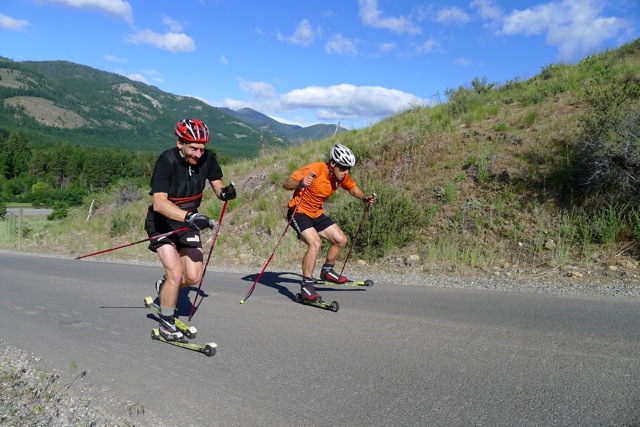
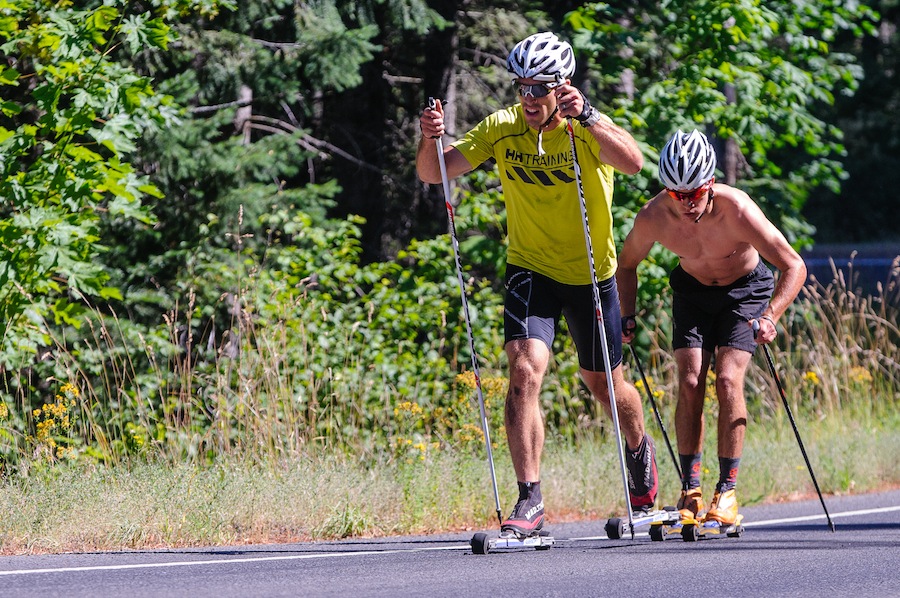
    Sam Naney leads Rogan Brown during a Trout Lake Camp time trial. (Photo: Curt Hawkinson)
    Sam Naney leads Rogan Brown during a Trout Lake Camp time trial in Washington. (Photo: Curt Hawkinson)

    Note: This is the ninth preview in our U.S. elite-team series, called the “The 12.” We asked coaches to tell us what’s new and whom to look out for this season, and we’ll publish additional previews in the coming weeks in no particular order.

    Team: Methow Olympic Development (MOD)

    Coach: Scott Johnston

    Roster: Sam Naney, Brian Gregg; Caitlin Gregg, Maya Seckinger
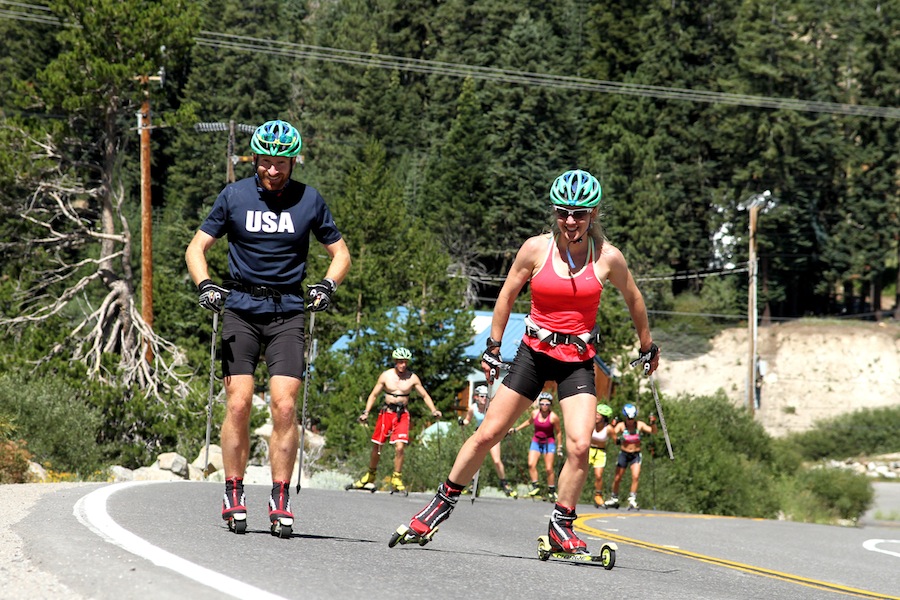
    Brian and Caitlin Gregg skiing on Donner Pass in California. (Photo: Mark Nadell/MacBeth Graphics)
    Brian and Caitlin Gregg skiing on Donner Pass in California. (Photo: Mark Nadell/MacBeth Graphics)

    Who’s new: Both Greggs (formerly of Central Cross Country, a.k.a. CXC) and Seckinger (Methow Valley Nordic Team). Brian Gregg was previously an MOD training partner, working out with Naney and Johnston in Washington’s Methow Valley last summer while Caitlin balanced school and training in the Midwest. Seckinger, a junior, will be pursuing success at Junior Nationals, according to Johnston.

    Top results last season: The team’s longstanding staple, Naney, 28, qualified fifth in the classic sprint at U.S. nationals in January and went on to place ninth in the heats at Soldier Hollow in Midway, Utah. He was ninth again at the SuperTour Finals classic sprint in Soda Springs, Calif., placed 10th in the American Birkebeiner in Wisconsin, and was fourth in the Madison SuperTour skate sprint.

    Brian Gregg, 29, narrowly missed the podium in the 15 k skate at nationals, placing fourth, and was the second-fastest qualifier in the skate sprint at Soldier Hollow. He won a SuperTour in Aspen, Colo., and was second in the hill climb at SuperTour Finals.

    Caitlin, 32, qualified for the Canadian World Cup sprints in Quebec, where she was 18th in the team sprint and 49th in the individual skate. She won the American Birkebeinerfor the second time since 2011 and took the 5 k title at Canadian Nationals in Whistler, B.C. Like her husband, she qualified second in the U.S. nationals skate sprint at Soldier Hollow.
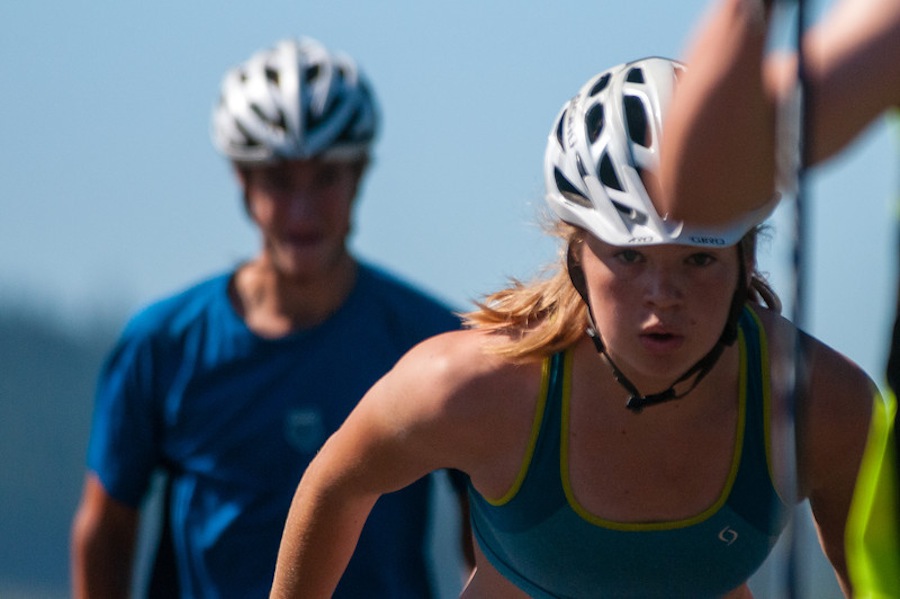
    Maya durign the Trout Lake time trial. (Photo: Curt Hawkinson)
    Maya Seckinger during the Trout Lake time trial. (Photo: Curt Hawkinson)

    As a first-year J2, Seckinger clocked the eighth-fastest relay leg at Junior Nationals in Fairbanks, Alaska, where she was also ninth in the sprint qualifier and 14th in the 5 k freestyle. Her stellar season earned her an invite to the USSA National J2 Camp in late July in Michigan.

    Coach’s comments: “The new additions have brought challenges but great rewards, too,” Johnston wrote in an email. “As a coach I am continually learning from the athletes and having more top level skiers has made my job more interesting. My approach is to design each athlete’s training to meet their individual needs and at times were are going 4 different directions but all with the same ending destination.”

    ***

    Other previews: Alaska Pacific University | Bend Endurance Academy |Bridger Ski FoundationCraftsbury GRP | Maine Winter Sports CenterSSCV/Team HomeGrown | Stratton Mountain School T2 | Sun Valley SEF Gold Team

  • Silver Star Pre-Season

    Over the past several years, I’ve made an effort to travel to Silver Star, B.C. for a week or so prior to the opening Super Tours in West Yellowstone. Training at Silver Star gives me an opportunity to spend several days at moderate altitude (~5500ft) and to get on snow consistently to redevelop my skiing legs and test out new equipment.

    With the snow situation in Montana in dire straits, I feel lucky to be training at Sovereign Lakes Nordic Center with over 20km of groomed trails. The conditions are fantastic; I’ve been using race skis the whole time and haven’t seen a single rock or dirt spot. Currently there are a few B.C. Junior teams up here training but other than them I’ve got the place to myself. Tomorrow is the official opening day for both Silver Star Nordic and Sovereign Lakes, so I imagine the weekend will see more traffic, but the conditions and grooming can certainly handle it.

    With the trails in such good shape I’ve had a great time trying out my new Madshus gear. The new boots are fantastic, with flat laces that DON’T bunch on top of the foot anymore (much more comfortable).

    It sounds like the situation is rather tentative in West Yellowstone for the camps and races. May as well take advantage up here while the gettin’ is good. Shaw Cable isn’t providing much entertainment and Netflix/Hulu are inoperable in Canada; I guess it’s time to crack the books.

  • Toko Wax Clinic at Nordic Ultratune

    Toko Wax Clinic with Methow Olympic Development
    Saturday, November 10th 6:30pm – 8pm
    Nordic Ultratune – Winthrop, WA
    Come share in the enthusiasm for the upcoming winter with the athletes of Methow Olympic Development, the Northwest’s premier elite Nordic racing team! There will be waxing demos with the newest Toko wax line and available race-quality service for participants’ skis. Mark Waechter will be on hand to discuss his stonegrinding services and to fit and select new skis and equipment for customers. 
    Take the opportunity to meet the athletes and hear about their exciting winter racing plans – World Cups, National Championships, and World Championships in Italy are all on the horizon!

    Snacks and hot drinks will be provided; all are welcome!
     

  • Back in the Saddle, Again

    Me.

    The ski world is abuzz with news of recent snowfalls, exciting athletes and enthusiasts to don the summer-stored lycra and rock skis and hit the new-fallen freshies. We of the Methow Olympic Development Squad are no different; when the weather turned wintry and Washington Pass received its first decent dump, we quickly filled the car and headed up in altitude. Local Toko representative and avid skimeister Dave Ford graciously spent his morning dragging track sled around the Overlook road, a 1.8km loop of pavement which usually provides our first on-snow experience of the year. Despite there being a scant 6-8″ of snow on the road, Dave managed to make a very decent track, and Brian, Caitlin and I were able to get a good hour and a half of distance classic skiing in this afternoon.

    First tracks of the year, with Silver Star Peak in the rear        

    Each year it gets easier to transition from rollerskis to snow; today I felt great on the snow, and though my triceps will probably be sore from relying more on my arms than usual, it was a good first run.

    We’re into some of the most crucial training of the year right now. Not that we’re changing up the workouts that much, but there is more emphasis placed on proper recovery and maximum absorption of the training load. We’re too close to the start of the season now to have mistakes occur; sickness, fatigue or injury would be a much greater derailment now than in July.

    Brian, expressing immediate confusion at the strange brand of skis in his hands.

    As the weather pushes further and further into winter here on the Valley floor, it will become more difficult to conduct our normal dryland routine. Hopefully the snow on the pass will hold for a few weeks until we can migrate up to Silver Star Resort in B.C. for our annual pre-season camp. I love getting up to Silver Star in mid-November; there is hardly anyone else there and usually the snow is great. It’s a perfect loading dose of on-snow time before launching into the big show at West Yellowstone.

    Stay tuned for more, as things start to ramp up!

  • Stonegrinds = Free Speed!

    Mark at work in his shop in Winthrop, WA (photo plundered from www.ultratune.net)

    As befits a sport such as cross-country skiing, we spend most of our time focusing on our physical preparation, training, and honing our bodies to finely-tuned killing machines. But there are other ways to get speed.

    Just as you crazy, skinny road bikers agitate endlessly over your carbon-fiber codpieces and titanium molar implants, we skiers have a way to faster times without any bodily improvements. The quality and preparedness of our skis play a huge part in how well they glide across the cold stuff, and there’s a source for what you be jonesin’.

    For over a decade now, Mark Waechter at Nordic Ultratune has applied his genius-level intelligence from electrical engineering into the art of stonegrinding, and the products are a testament to that effort. Building on a foundation developed by American Nordic stonegrinding pioneer Nat Brown, Mark has created a one-stop shop for top-tier equipment. Either online or in person you can purchase hand-picked race skis from Mark’s selective fleet and have them prepped with one of his signature stonegrinds, selected precisely for the conditions you face.

    Check out his website at www.ultratune.net or give him a call at 509 996 4145. If you’ve put this much time into getting your legs strong, the least you can do is give them something worthy of their speed to glide upon.

  • A Brief Reprieve…

    It doesn’t matter what your passion is; sooner or later if you’re truly invested in something you give too much to it and it bites you in the ass. A few weeks back that’s what my training did to me.

    There were plenty of warning signs, and I ignored them all: high(ish) morning heart rates, a sudden drop in body weight, and most importantly, a steady increase in training performance. Now, this last indicator may make folks stop and say, “hey wait, isn’t that the point?” Yes, you do want to improve through training, but in a measured way. Especially when you start getting into hard intensity season (late summer/fall), it’s important to recognize when you’re getting really fast, really quickly. Initially it’s a great thing, but in order for it to actually work, to absorb into your system, you have to give it time. That means rest; easy training, sleep, good diet.

    I just kept going. I felt great, the times were dropping, my fitness was growing, and I kept charging ahead. Then one morning I woke up and felt flat. My legs were heavy and despite going fast my HR wouldn’t climb. I told Scott what was happening and decided to turn what was supposed to be a threshold workout into an easy ski. At that point I wasn’t too concerned, as I’d had overreaching episodes many times before and the best prescription is to take a few easy days and I’d bounce back. So I took the afternoon off and did a few easy hours the next day before launching into a big session 48 hours after the bad workout. The morning of that workout I felt OK, but not great. My HR was a big more audible while lying in bed, and I could tell there was something lingering in my legs. These are the warning signs that should be heeded, but there are reasons why we are called thick-headed, and here’s one of them.

    The workout that day WAS hard, and at the end I was spanked. What followed then, was almost two weeks of returning to strength. What I induced was a form of overtraining known as sympathetic overreaching, a circumstance in which your sympathetic nervous system (fight-or-flight) gets over-stimulated. It’s not dire, and is much more recoverable than its sinister cousin, parasympathetic overtraining. THAT’S the one that ends a season. As it was with me, I spent the better part of those two weeks doing easy runs, yoga, relaxing breathing and trying to keep my head in check. As well, perhaps one of the most valuable recovery methods I utilized was massage therapy, several times per week during the break. It gave my muscles some much needed circulatory clearance as well as offering a good time for some relaxation.

    I’m out of it now, back to good, balanced training and already hitting workout markers I had achieved before everything came crashing down. It’s a lucky break that we caught it when we did, and a good reminder of how tenuous a position we athletes put ourselves into in order to achieve maximum performance.

    It’s beautiful here in the Methow now, and Alison and I are headed up into the mountains tomorrow for some trail running before the snow flies. Sorry for the lack of pictures; there’s more media to come in the next few weeks. In the meantime, here’s a family portrait:

    Happy Fall!

  • Instant Video Feedback

    By Brian Gregg

    Fall training in the Methow has been fantastic. After traveling around so much the last few years in the Fall we decided to stay in one spot for as long as possible and focus simply on training.  I have always worked part-time throughout the year and the advantage of being able to come home and take a nap and get off my feet during the middle of the day has been huge.

    For a long time I have had a great deal of respect for Scott Johnston and MOD on their ability to transform and improve technique.  The last few years I have joined MOD for an ‘extra-credit’ type camp in Bend, Oregon during the spring.  This year I have made the commitment to be in the Methow for some big chunks of the Fall and Spring.

    The ‘Gaude Grade’ has become a staple in our training routine this year.  The road is really just a 270 m driveway up to the gravel pit, but it is real steep.  Not to mention it is probably the smoothest asphalt in  the valley.  As we near our racing season our strength is becoming very specific as we force ourselves to stride rather than run up the ol’ Gaude Grade.
    After warming up and a few speeds on our roller skis we head to the gym for some more traditional strength.  Our strength routine consists of Power strength with super sets immediately after.  After weighted pull ups we head outside to the ladder.
    Scott outlining Caitlin on the goal of the workout and spotting her
    Improving efficiency has been a heavy focus for both of us this last year.  Scott and I spoke after the hill climb last year at Super Tour Finals.  I finished second which we felt proved that I was fit, yet my inefficiencies on the flats kept me out of the top 10 in many of the other races.  Scott is with us in nearly every single session to provide support and feedback.  Almost every session we have involves a ‘coaching’ moment where having Scott there has led to an improvement.  Scott donates all of his time and we couldn’t thank him enough.  We review the video on the spot to make changes between intervals.
     
  • Training Update from the Methow Valley

    Brian and I
    Brian and I were invited to come and train with the MOD Squad earlier this spring. I was waist deep in school and work obligations so I decided that I would let Brian head to the mountains to work with Scott Johnston (the coach of MOD), Sam Naney and Maya Seckinger, while I stayed back home for the summer.. After hearing the incredible stories about training in the Methow and the positive feedback from Brian about working with Scott, I decided to venture out West after my  CXC camp in Telluride, CO to work with the MOD training group.
    Brian, Sam and I about to start training up Falls Creek Road

    I have been here working with Scott on my training and technique for almost 6 weeks. I have seen huge gains in the short time I have been here.  Working daily and so closely with such a great team and a passionate coach.  My workouts have been tailored for me, reflecting a later start to my training season, but the technique workouts have been relentless and exhausting. Scott has an incredible ability to not only identify technique shortcomings, but also communicate them to the athletes he works with, and enable the athletes to fix their inefficiencies quickly. I have always been told that my skate technique was good…Scott didn’t think so!, which is great because I am now faster simply by skiing more efficiently! We work together as a Team on almost a daily basis where each session, no matter what the workout is, emphasizes proper technique. Working so much on technique can be both mentally and physically demanding but the payoffs have been evident in my intervals times and lactates values decreasing.

    Brian working on core strength
    Double Pole Strength

    Life in the Methow is wonderful. The training here is second to none! Prior to this trip I have only been to the Methow in short bursts during the winter, where the 200K of groomed trails welcomed me before the 2010 Olympics and no doubt enabled me to qualify for them.  I returned in the spring to get MARRIED but the mountains were still covered in snow. There are countless miles of running trails on fantastic terrain and with beautiful vistas. The roller-skiing is fantastic and after 13 years in the Midwest I am loving change up of terrain. We can ski up to 3 hours all uphill and gain 5,000ft of elevation in one run.

    Brian running on the Pacific Crest Trail near Granite Pass
    Climbing my first mountain in the Pacific Northwest

    Getting Strong

    Last year Brian and I were so busy with work, clinics, lessons and CXC events that we didn’t have a weekend off from July first until we got to West Yellowstone. This year I am taking a different approach, after a jam packed summer I am taking the fall off from work and enjoying the lifestyle as a full-time elite athlete. I have been sleeping, recovering (more sleeping) and eating better than ever before and I hope to enter the season fresher and healthier because of it.

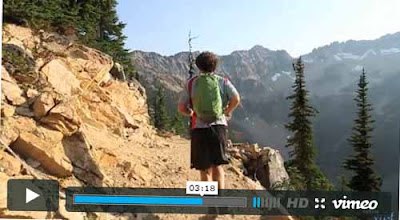
    Here is a sweet video of the terrain and trails that we train on!  The video will play on the Methow Grist website.

  • Cutthroat Classic Trail race

    Here we are again, on target for the one blog/month frequency which I’ve been hitting pretty consistently since March. My apologies; I’m sure there are some interesting things happening in the interim but without adequate photos it just doesn’t seem justified to write about them.

    Stephen Mitchell: Cutthroat Classic 2012
    Never the prettiest runner, here I am just cresting the top of the climb

    This past weekend was the Cutthroat Classic, a trail race crossing over the Pacific Crest in the North Cascades, about a half hour from Mazama and home. The race itself is 11+ miles in length, half-up and half-downhill. The field is always an interesting mix of skiers and runners, and usually ends up as a mad dash to the top by the skiers in an attempt to maintain a lead on the heavily-switchbacked, steep five mile descent to the finish (we have never professed to be good downhill runners). I’ve been doing this race since its inception in 2001, when I was a junior in high school. Those first few years were rough; I had exertional posterior compartment syndrome for a few years in my late teens and so every time I raced the Cutthroat, my lower legs would go numb along with my feet, and the downhill would be a blind thumping where I would turn my ankle at least a dozen times. Not the best introduction to trail races, especially at a time when I largely despised running, anyway.

    This year’s race, like so many other years, started on a nice cool morning at Rainy Pass, about 4800′. The start line is right off Highway 20 and there is a 1/2 mile lead-in to the trail on road that allows for some shake-up. Without fail, as happens every year, some runner from Seattle thinks they’re gonna smoke the whole field (along with those damned skiers and their huge thighs) and takes off at a breakneck pace. And, like clockwork, about 1/2 mile onto the trail (which begins in a steady climb and remains so until the Pass), they drop off pace and get swallowed. I was sitting in fifth position, enjoying the pace and waiting for MOD teammate Brian Gregg to make a break which would surely shatter the field. As expected, the early-wonder leader dropped off and we passed by him, and shortly thereafter Brian made a surge. Another guy went with him and a third got stuck in the middle. I was positioned behind Marcell McArthur, a previous winner of the race and a really solid runner; he was waiting behind the guy who blew up a few minutes before. We watched as the break took off and Brian’s lead increased; I finally yelled (politely) at the guy holding us up that he’d better either catch the break or pull over, which he did (pull over). Marcell and I then took off and fought to chew up the gap between us and the lead. It wasn’t to be, and I then passed Marcell and chased after the guy hanging out in no-man’s land. I caught him at the first creek crossing, where he was daintily tip-toeing over the rocks. I splashed by him in the deepest part of the creek and pulled into third, where I would remain for the rest of the race.

    From then on it was a solo effort; Marcell got by that guy as well and stayed about 50 seconds off me through the finish. I knew I could stay ahead of him on the climb but was convinced that he would eat up the gap through the downhill, on which I’m a complete duffer. When I hit the pass, Alan Watson (sitting on top and yelling encouragement) told me I had about 45 seconds on Marcell. I let fly on the downhill; I’ve run the course so many times I know exactly how many switchbacks there are and what they look like. I wanted to maintain my gap until the bottom of the descent, where there still remained a 1.5 mile flat trail push to the finish. I thought that if I could hold him off until then, I could put in a surge to stay ahead. To my surprise my legs felt better than expected on the downhill and I held my lead on Marcell. I never saw a glimmer from Brian and the second-place runner; they were probably 3-4 minutes ahead by that point. I only sought to keep my little oasis of safety as I galumphed down the trail.

    As I hit the flats I really opened it up and tried to remember all the running technique that Alison has taught me over the last few years. Hips forward, fast cadence, footstrike on the balls of the feet. I had a massive blister which I could already feel enlarging on my heel so I was just as happy to keep the load off that part of my foot. As I hit the last turn before the finish I knew I’d hold my position and charged the bridge over Cutthroat Creek that lay 100m before the line, enjoying the cheers of the crowd. My time was 1:18:21, over three minutes faster than last year.

    The last five years I’ve used the Cutthroat as a mid-summer fitness marker, a way to gauge the progress of training and aerobic conditioning on the eve of fall and real specific preparation for the racing season. Since 2008 I’ve happily and consistently dropped my times in the race; I started in 2008 at a time of 1:25:31, over seven minutes slower than last Saturday. What this shows for me is a dramatic improvement in aerobic conditioning; we don’t attempt to peak or taper at all for this race, but instead place it in the midst of regular training. What this meant for last week is that we had a hard muscular endurance/speed workout on Monday, an aerobic endurance track workout on Thursday, and the race on Saturday. Both Brian and I felt strong; Brian’s tremendous aerobic system propelled him to the win and a new course record of 1:12:41 (or something); five-plus minutes ahead of my third place finish. Both of us, along with Scott, are quite excited at what this suggests about our prep for the season. And to think, we haven’t even begun the specific phase of training yet!

    Also, in her third race as a Naney, Alison notched an overall women’s victory and personal best time of 1:29:51; clearly her speed and power training is also paying off. She’s pretty psyched; her big goal race of the year is a 50-miler in San Francisco in December, and all signs point to a great finish there, as well.

    Stephen Mitchell: Cutthroat Classic 2012
    Overall podium – Brian getting some new dinnerware

    Thanks to Steve Mitchell (www.mitchellimage.com) for the great photos.

  • Not exactly Ken Burns…

    Here’s my first attempt at making a training video which documents some of the workouts and fun we at the MOD squad have undertaken the last few weeks. There’s not a lot of material but it’s a good start and now that I know that IMovie isn’t scary voodoo, I hopefully will be making more of these. I know that watching videos is way more fun that reading lines and lines of text.

    It’s hard to believe we’re halfway through the dryland season – it feels as if there’s still so much left to do in order to be ready for the fall races. And yet, I feel stronger and faster than ever before. Yeah, I say this every year; but for serious, it seems this year we’ve really identified all the gaps in past training and have filled them with great, innovative workouts. And the training markers are showing success – 100m and 200m speed times, strength markers, TTs, etc. We’re getting into the realm now where we need to start putting things together with more comprehensive workouts that are going to be more taxing and challenging.

    This weekend Alison and I are going to Bellingham to run a 12km trail race; I love getting into running races because running has always been a challenge for me, yet the high intensity will provide a great accompaniment to all the other work we’re doing.

    On a side note, a big thank you goes to my friend and equipment innovator Jon Fewster over at Madshus in Seattle, who hooked me up with some new rollerskiing poles to replace my soggy old ones (see the photo on Fasterskier). What a difference in power transfer with those rigid Nano Carbon race poles on the pavement – Thanks Jon!

    Enjoy the video:

  • Elite Team Preview: Methow Olympic Development

    Elite Team Preview: Methow Olympic Development

    Methow Olympic Development skier Sam Naney (left) rollerskiing with Brian Gregg of CXC during a recent training session in Washington state’s Methow Valley. Gregg joins the MOD squad as a training partner this summer, but will continue to compete for CXC. (MOD photo)

    Note: This is the seventh preview in a quick-and-dirty series on U.S. elite teams. We asked coaches to send their 2012/2013 rosters and tell us what’s new for the coming season. We will be publishing additional reports over the next few weeks. Teams are presented in no particular order.

    Team: Methow Olympic Development (MOD)

    Coach: Scott Johnston

    Roster: Sam Naney

    What’s new: Brian Gregg as a training partner. Gregg will spend much of the summer in his hometown of Winthrop, Wash., working with Johnston and Naney in the Methow Valley. Naney tied the knot in June, marrying massage therapist Alison Hanks in his parents’ backyard.

    Top results last season: Naney, 27, notched a career best of 13th at U.S. nationals in the 15 k skate. In the Tour de Twin Cities that followed, he tallied three top-five finishes and ended the season with a slew of SuperTour and NorAm top 10s. He made the podium in St. Paul, Minn., placing third in the 20 k freestyle pursuit.

    Coach’s comment: According to Johnston, last year was an important building block for Naney, a sprinter with aspirations of being a better all-around skier.

    “We chose to take a slightly different approach with his training and focus more on building a better aerobic base training. We did this at the expense of his Sprint specific training and his results bore this out,” Johnston wrote in an email. “We had to make decisions to deviate from his traditional strengths of sprinting and power in the training, and those decisions cost us in the season; despite qualifying 5th in the Nationals skate sprint, Sam did not move on through his quarter and went on to have similar disappointing results in sprinting, usually his strongest event.”

    Sam Naney of the Methow Olympic Development squad working out in northern Washington. (MOD photo)

    This year, they’re working “to bring the whole package together,” Johnston wrote, adding that the progression was already happening.

    “This winter should be Sam’s strongest yet,” he continued.

    In an email, Naney explained that he specifically wanted to boost his speed and anaerobic power by the start of the season.

    “The hope is to carry the training well all the way through to November and the Canadian World Cup trials,” Naney wrote. “Last season we built a great ‘cake’ but didn’t have time to add the finishing touches.”

    It can’t hurt to have Gregg, 28, training alongside him. Entering his seventh year with Central Cross Country (CXC), Gregg will continue to compete for the Midwest’s elite team, keeping his home base in Minneapolis. His wife and CXC teammate, Caitlin, will stay there, training between a series of five-week intensive anatomy and physiology courses at Normandale Community College.

    Reflecting on his performance last year and goals of improving, Brian Gregg decided to return to Johnston, his high-school coach in Winthrop, Wash., as a personal coach.

    “Scott and I have discussed his training philosophies a lot and we have identified a number of areas that I have to improve,” Gregg wrote in an email.

    Gregg detailed the move on his blog, explaining that he’d return to the Midwest for training camps while working individually with Johnston and Naney out West. He aimed to minimize travel, training in long blocks, and liked Johnston’s scientific approach with speed and intensity monitored by GPS, lactate and heart rate. Gregg is currently training most days with the two-man MOD crew and loving the coach-to-athlete ratio.

    “Scott’s coaching style is very hands on and individual and requires a small group,” Gregg wrote. “For Sam and me, our individual strengths complement well with opportunities for the other to improve.  We are able to push each other and are making notable improvements.

    “It is tough to be away from Caitlin but I do get to spend more time with my family, and I believe this will help me make that next jump in performance,” he added.

    His childhood friend, Naney is excited.

    “It’s been a great change from last season in which I spent the whole year training solo,” Naney wrote. “Brian offers distinct qualities as a training partner and his distance skiing focus contrasts well with my sprinting, allowing us to feed off each other and push each other in our weaknesses.”

    As for Johnston’s method, Naney has always liked its unique and out-of-the-box ideas.

    “Scott has made a concerted effort to look outside traditional ski training and into other sports to find better ways to train endurance and speed athletes,” he wrote. “Currently we’re working with a mixture of marathon runner training and swimmer training. Instead of maintaining a cyclical-style training plan where we repeat the same workouts all year, we operate off progressions of workouts, increasing workloads and intensities all the way into the fall. We’ve found that in this manner, we can continue stressing the various physiological systems such that they respond faster and stronger than before.”

    ***

    Other previews: Bend Endurance Academy | Craftsbury GRP | CXC | Far WestMaine Winter Sports Center | XC Oregon

  • Power and Speed

    Given the preponderance of base training I did last year, this season we’re stepping up the intensity a lot sooner and with more volume than ever before. Perhaps the three greatest focuses we have for this dryland season are: power, speed, and anaerobic capacity. While these three go somewhat hand-in-hand, the ways in which to train them vary greatly, and it’s most important to not overlap workouts so much that recovery becomes minimal.

    (the hill is steeper than it looks)

    One of the real key workouts we’ve struck upon is hill sprints. For several years now we’ve done these on foot: 8-10 x :10sec all-out sprints or bounds up a steep hill, sometimes with poles and sometimes without. But we’ve increasingly thought that introducing more specificity into the exercise can be nothing but a good thing. This spring Scott scouted a great, black-topped hill outside of Winthrop that is perfect for this workout. Even better, it’s relatively light on traffic so Brian and I were able to ski side by side in the sprints. One of us would classic and one would skate to allow for room. The benefit of this method is that the classic skier tends to get off the line faster and hold a bit of a lead, giving the skater someone to chase.

    We’re also back on the track three times per week, adding a lot of speed training into the mix. The goal is to not enter this season as I did last year, with great aerobic fitness but zero speed or power. Balance, baby!

  • Matrimony!

    Alison and I arrived to the reception on the rusty steed

    While training continues to pick up through the summer, I managed to take a few days and get myself hitched. Amidst rollicking thunder and intermittent showers last Saturday, Alison and I threw our lots together for the rest of time in the company of our friends and family. I must say, marriage feels great. Maybe it’s because Alison and I already know each other so well, and support each other completely, but to now be married feels like a very comfortable settling, in the best way possible.

    The wedding ended up being the most wonderful grassroots, community affair you could imagine. We organized all the food, decorations, and service ourselves so there were a lot of details to cover in the final weeks and days before the big event. However, in the same community vein, we had TREMENDOUS help. Locals pitched in and provided pies and hors d’ oeuvres; we had our close friends Leds and Rick manning the grills and producing some amazing steaks and grilled veggies, and the decorations were beautiful thanks to our parents and wedding party. All in all it was one-of-a-kind, the perfect beginning to my new life as a ball ‘n chain. For those of you not yet married, I highly recommend it – great fun.

  • More Spring Training

    This spring is perhaps my busiest ever, largely due to that wedding thing in two weeks… Alison and I have been steadily tying down plans and getting things ready for the ~200 people who will converge in my parents’ back yard for our union. Should be a great time. The food is certainly going to warrant a party; our friend Leds is in charge of grilling up some spectacular flat-iron steaks, and my Dad and our friend Laurel, a semi-pro homebrewer, have crafted some amazing custom brews for the reception. Nobody will go hungry, nor will their whistles go un-wet.

    Overdistance ski touring session, North Cascades, WA

    But on to training. This spring we have started up in a more aggressive fashion than in years past, with more intensity incorporated with the “base” training. I use the punctuation because we’re now training the next level above the base, with higher training speeds and greater resistance loads. So far it’s been great and I’ve found I’m handling the increased stress well. In addition, Brian Gregg (CXC) is out here for a few weeks to deepen his own training. It’s been great having a workout partner for the last month.

    Each year we learn more and more about the most efficient methods to train and improve. One of the recurrent themes we’ve encountered is the frustrating lack of quantifiable training methods for skiing. Cycling, running and swimming all have equal distances and relatively constant courses, allowing for infinite possibilities to data mine your efforts. Not so with skiing, at least in the traditional manners. But we’ve developed some exciting means to better understand and execute the training and both Brian and I are already seeing big differences in our daily performances. By using GPS and being more meticulous with workout venues we’ve been able to keep closer tabs on day-to-day fluctuations, as well as hone in on more exacting progressions of a given method. All good stuff.

    Brian on top of Hart’s Pass. Pretty sloppy snow.

    Last Friday we took what may have been the last on-snow adventure, up to Hart’s Pass Guard Station. The highest road in Washington State, Hart’s Pass road is unplowed and rarely clear of snow before July. Brian and I drove up as far as allowed and through a combination of hiking and skiing on zeroes and fish-scales, made it to the pass and back to complete a great recovery session.

    We’ve started using some old Russian strength training, too. I don’t know where Scott digs this stuff up, but apparently the guy who developed it was the guru for Renato Canova, our Italian patron saint of kick-ass workouts. These new Ruskie workouts involve lots and lots and lots of sets and reps of squat jumps and split jumps and such with about 40% of your max squat weight on your back. Did you know you can buy 70# weight vests? You can. Donning one is quite awkward, but it has compelled me to elicit great sympathy for Octo-Mom. I’m glad I won’t be bearing huge loads of children.

    And finally, I have to give another shoutout to Scott Shoes for the slammin’ kicks I’ve been using lately. The newest version of the e-ride Grip trail shoe is unparalleled – lightweight, low-profile and grippy. If you would’ve told me when I was 16 that I’d be running 50 miles a week and yearning for more, I’d have probably spewed Capri-Sun juice right out my nose. No foolin’.

    Best trail shoe I’ve ever had, complete with Euro-stylin’ color schemes

  • And We’re Off!

    Cheering one of my athletes to a win in the girl’s 4x100m relay

    This past month of April has been a busy one. After returning from Craftsbury and ST Finals, I jumped immediately into coaching the Junior High track team at my old school. With a team of almost twenty athletes I have certainly been challenged by the job, as I have almost no experience with track field events. Fortunately there are some knowledgeable folks in the Methow who have stepped up to lend assistance from time to time, and with their help we’re pretty handily winning all the meets we attend.

    One of the other major tasks this spring has is planning my wedding in June. Alison and I have opted to take care of much of the reception planning and food logistics ourselves, so we’ve been scrambling to develop menus, source ingredients, and line up cooks to cover the day-of-event tasks. We have recruited some really fantastic folks to help us and we’re really starting to get excited about the wedding, now that it’s closer than ever!

    Nikki taking a power snooze during our ski tour into Silver Star basin

    Training has started up again, too. I took about a week and a half off in April before I started agitating to get going. My first few weeks of “training” weren’t structured much; I spent a lot of time in the backcountry and getting my running legs under me again. Also, in a change of pace from the last few years, I’m back in the weightroom three days per week building some strength.

    Hill sprints = Power building

    Finally, we kicked off the new season of training (officially) on Monday. This year’s focus shifts us a bit away from what we did last year with so much aerobic work; this season will look to maintain that aerobic system while bolstering and solidifying my anaerobic and power bases. These have traditionally been my strengths so the hope is that once they’re back up to a high standard, the three systems working together will provide me with a great racing engine.

    More to come!

  • Blegh. And maple syrup.

    The briefest of notes about today’s 15km CL mass start: woof. I was pretty tired coming into the race after four starts in the last five days, and definitely felt the fatigue in my legs at the start line. Because of yesterday’s finish I was seeded 8th in the mass start but quickly lost the leaders and from that point focused on staying smooth and conserving my power for the long climbs without totally blowing up. I kept dropping farther and farther back but just didn’t have the gears to make up time. Not the best day.


    After the race I took the opportunity to replenish my spent glycogen stores with some tasty Vermont confections at the Mansion House Sugar Farm in Johnson, VT. This weekend is Vermont Maple Weekend and a lot of the sugaring shacks opened their doors to visitors to share samples of syrup and other maple products. My folks and I had some “sugar-on-snow” – reduced maple syrup poured over snow which then cools to a taffy-like consistency. Also, maple creme donuts. That helped recovery.

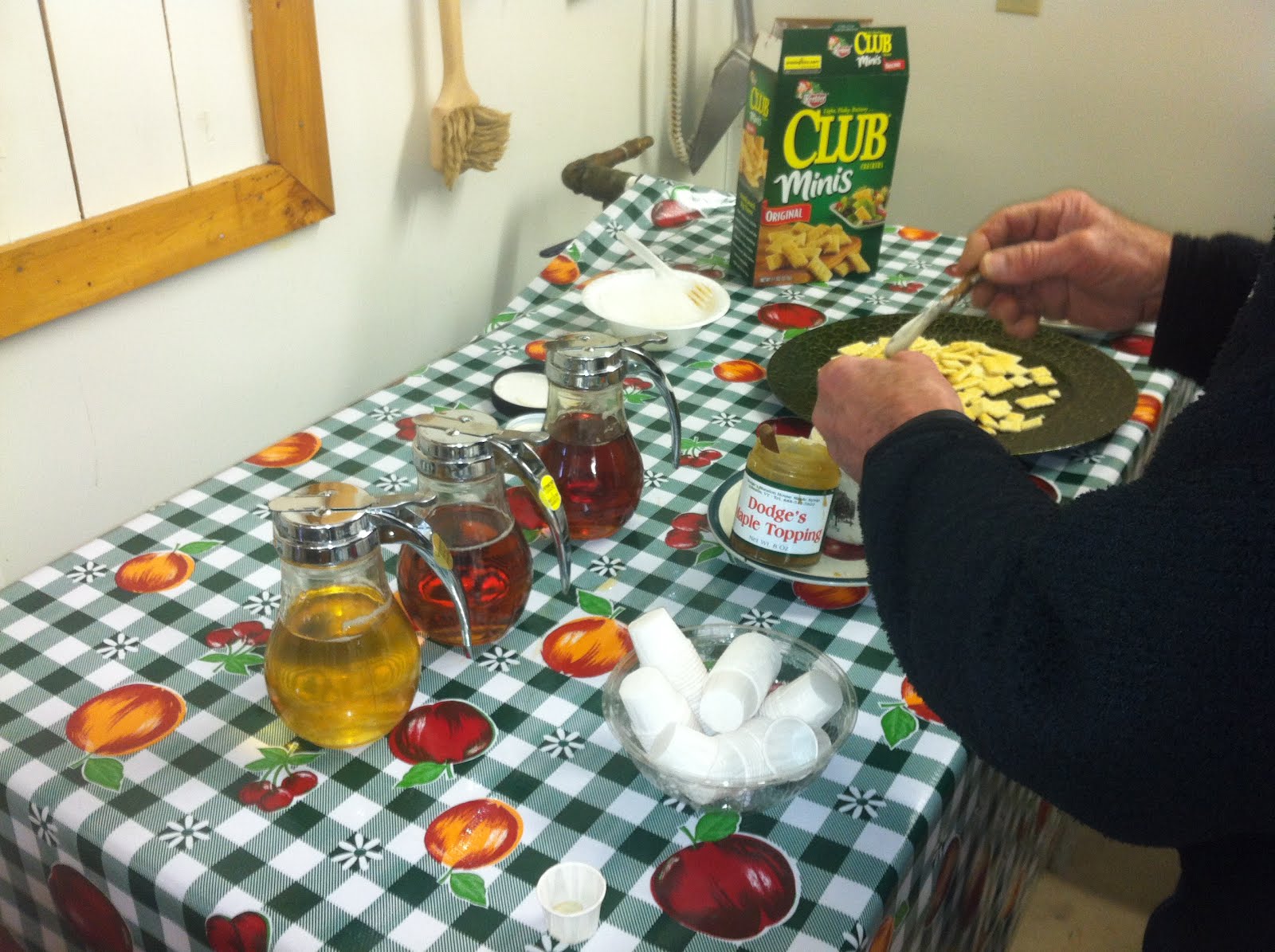
    Sampling the different grades of syrup

    This particular sugar house processes between 700 and 1300 gallons of syrup a year, in a season which generally spans from January to late March
  • Super Tour Finals – Prologue

    This morning was the 3km prologue of ST Finals in Craftsbury, VT. The organizers here have done an astounding job of preparing this course despite record high temps in the 70s all last week. The weather is starting to turn now and it got just cold enough last night to firm the track up a bit. I felt pretty good this morning in my warm up and despite not being able to test skis myself, MWSC coaches Will Sweetser and Seth Hubbard did a great job on the boards and gave me confidence when they handed me my skis before the start. Nordic Ultratune’s m1d grind continues to fly in these conditions with my SC camber Madshus skate boards.

    The ribbon of snow…it has been non-stop work for the course crew to keep snow on the ground. They’re laying down snow from a stockpile until early in the morning and then grooming around 3am.

    The prologue is perhaps one of the toughest races to do. It’s long enough to where you need to have some semblance of pacing, but short enough that you have to go really hard the whole time. Basically I skied the first lap like a sprint then tried to do it again, and when the bottom started to fall out about 500m from the finish, tried to hold on as best I could. I ended up 8th, 21sec out of 1st. Not a bad start to the week and it gives me a great start position for tomorrow’s 15km classic mass start. Former MOD athletes and Methow natives Sadie and Erik Bjornsen both racked up some great finishes in their first races on domestic soil in a few months – Sadie was 3rd and Erik tied for 3rd with USST member Noah Hoffman. Good to see the Methow packing the top ranks in the nation!

  • Canadian Nationals Sprint

    Last week I was in Mont Ste Anne, Quebec for some races at Canadian National Championships. I primarily wanted to focus on the skate sprint as I knew the Canadian National Team guys would be home from Europe and their recent successes and corresponding points profiles would make for a competitive and fun event. I’ve been fortunate through this Eastern racing series to have been taken under the wing of Maine Winter Sports Club coach Will Sweetser, who has been providing amazing ski service and will continue to work with me through Spring Series.

    But to the sprint. The course, which for the entire week had been slush and mush, was generously salted the night before the race and firmed up really nicely. The qualifier had some icy sections and some wavy sections but mostly was firm and fast, just my type of skiing. I had really fast skis thanks to Will’s superb waxing and an Ultratune M1d grind, and qualified 11th, about 5.5 seconds out of 1st (Harvey) and right in the mix with some strong World Cup skiers.

    Leading out my quarterfinal – me on the right (111), Harvey on left (101), Darragon behind (121)

    My quarterfinal was quite a doozy. It consisted of, amongst others, Harvey and Roddy Darragon, a veteran French World Cup skier. The start area was quite small and only had three lanes, so the first three guys picked the front and the last three had to stand behind in a second row. Being third ranked in my heat I picked a lane up front. Out of the start I double poled hard and seemed to get a little ground over Harvey and Nish, who both then apparently tangled up and I think Harvey broke a pole. I suddenly was in the lead by about 5m and found myself leading the charge. I tend to not like leading in sprints as it leaves one prone to attack and being overwhelmed in the latter half of the race, but with the circumstances such as they were I put the accelerator down and went for it. I led over the first big climb, down a hill, over another, and into the stadium. There was a lot of commotion going on behind me and I could hear poles breaking and see coaches running from the sides to offer replacements. Occasionally my baskets would get stepped on so I knew all the racers behind me were jockeying hard.

    At the far end of the stadium Harvey made his move and shot strong forward beside me. At that point I hadn’t realized Darragon was so close, until he slipped right in behind Harvey, and ahead of me. As we turned into a short, steep pitch Nish and I were side-by-side and at the top he got the inside corner and pulled in front. At that point we were on a narrow lane and I skied hard to maintain contact. Coming down a short bender and into the finish stretch we all pulled hard for the line. I ended up about 2sec behind Harvey and a little less than 1sec behind the other two. Because lucky loser was determined by heat time (akin to the World Cup format), finishing fourth still gave me a chance at the semis. I waited until the end of the quarters to find out I just missed the cut, along with a few other Americans.

    Needless to say, Canadian skiers are A BIG DEAL. Harvey, Kershaw and Valjas were mobbed by media, autograph-seekers and well-wishers everywhere they went. There was a low-flying film helicopter during all our heats taking video and tons of fans. It was quite a different feel than racing, even US Nationals, in the states. And the level of competition was certainly elevated; definitely a worthwhile experience, esp. given that they ended up being my best sprint points of the year.

    Now I’m in Craftsbury, getting set for Super Tour Finals this week on a narrow ribbon of ice, dirt and rare snow bits. The organizers here are putting forth a superhuman effort to get these races going and I’m psyched to see so many athletes out enjoying preparation. When there’s racing fever in the air it really doesn’t matter what the conditions are; everyone will have fun and go like hell.

    First race tomorrow: 3km skate prologue. More to come!

  • Off to the Finals…

    After a four week training block rotating intensity every other day, it’s finally time to get back on the plane and head to the last races of the season. I’m going first to Quebec to compete in the skate sprint and 15km skate race of Canadian National Championships. Then it’s on to tropical Vermont for Super Tour Finals and the National 50km Champs. Interestingly, the only other 50km I’ve done was the Craftsbury Marathon, my freshman year of college. Hopefully this time around I won’t bonk like a fiend…

    Most important thing when heading into a spring racing series: fresh Nordic Ultratune grinds. Specifically: i5. Booyah.
  • Methow Endurance

    When you spend the vast majority of your time in pursuit of athletic success you’re bound to get pretty involved in the process. For the past two years Alison and I have talked each others’ ears off about running, skiing, and endurance training and preparation. How to do it, what to focus on, what is and is not working, etc.

    Recently, we came to the conclusion that with all this generated knowledge and enthusiasm, we should put it to work by helping other folks do similar things we strive for in sport.

    Introducing Methow Endurance: a Mazama-based coaching and training source for endurance athletes of all ages and abilities. We currently have on our schedule two camps for this spring – the first is a Women’s Running and Yoga retreat which reprises a very successful format which Alison began last year. The second is a Spring “Jump-Start” clinic for runners and skiers to learn how to best utilize their time and energies and how to direct them at getting faster, and fitter.

    Learn more about what we’re doing at the Methow Endurance blog or Like us on Facebook.