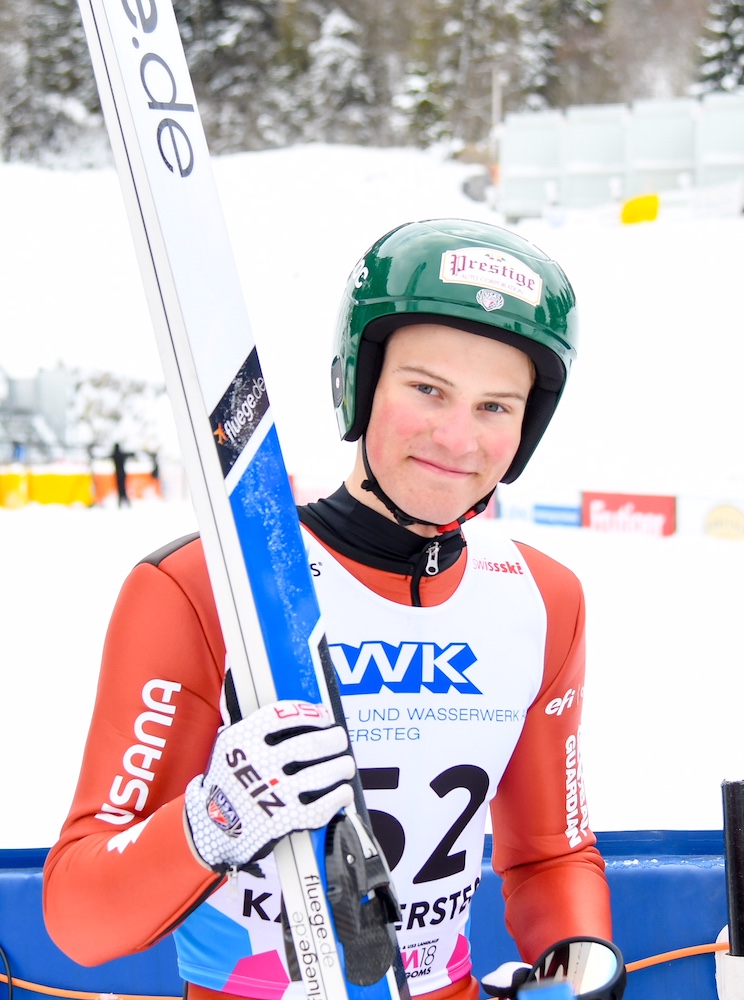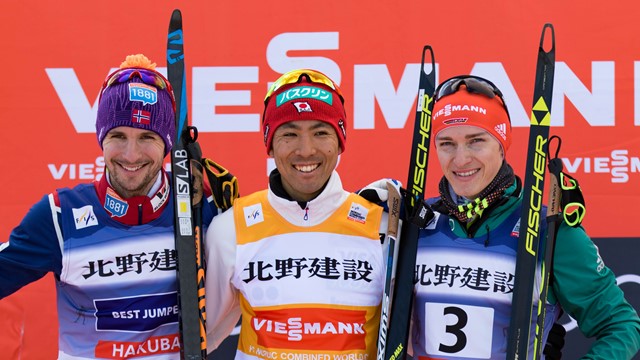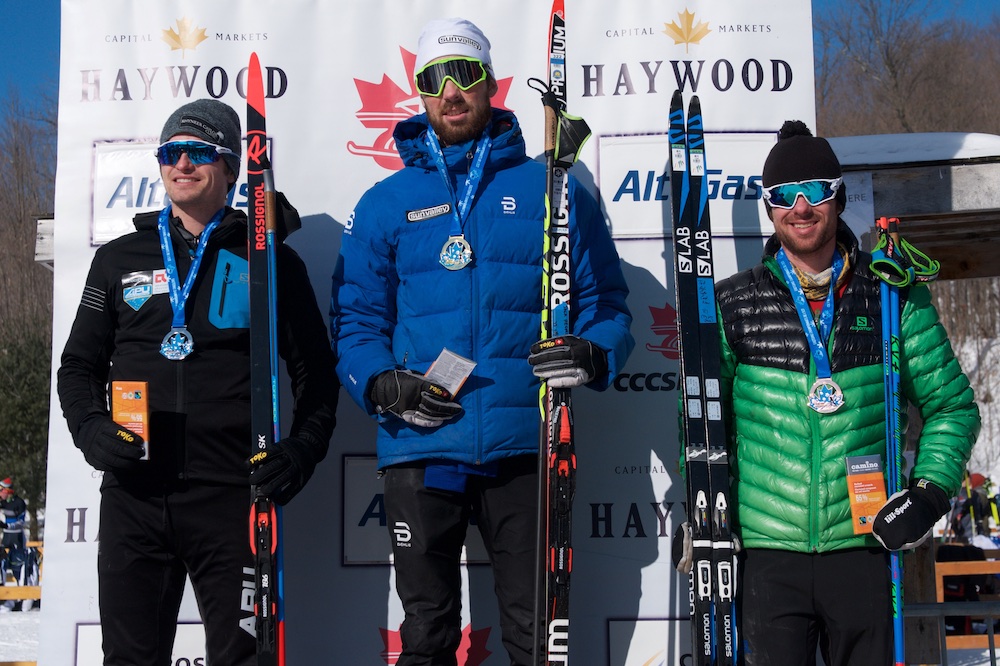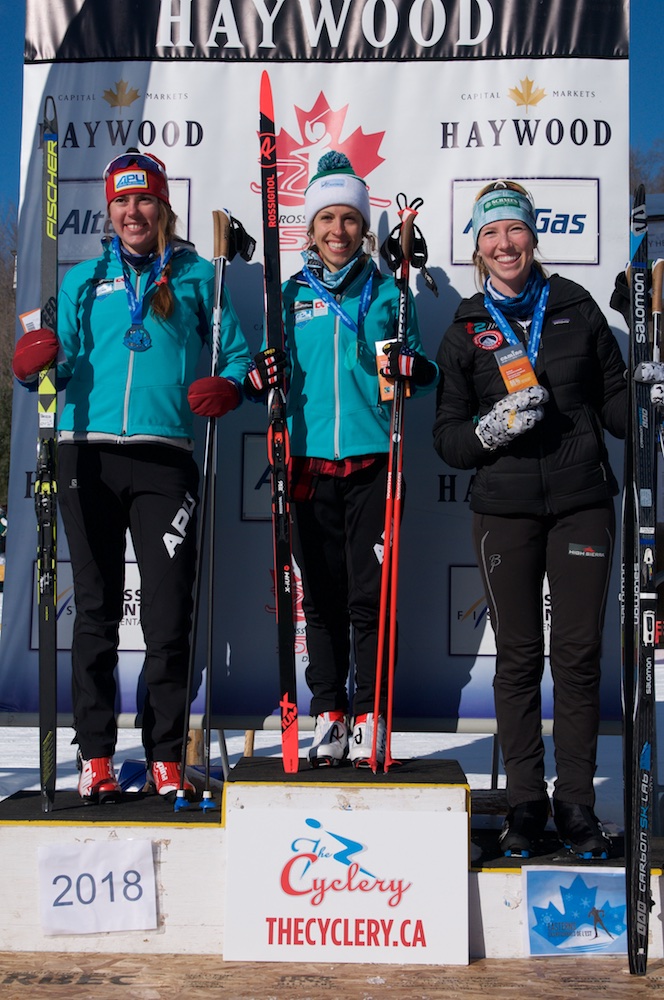
Tag: Molly Gellert

  • Gus Schumacher Leads the Way in First Besh Cup Weekend

    Gus Schumacher Leads the Way in First Besh Cup Weekend

    The Chugach Mountains and a winter sunrise, seen in this file photo view from the parking lot at Government Peak Recreation Area, Palmer, Alaska, in February 2018. (photo: Gavin Kentch)
    The Chugach Mountains and a winter sunrise, seen in this file photo view from the parking lot at Government Peak Recreation Area, Palmer, Alaska, in February 2018. (photo: Gavin Kentch)

    Note: FasterSkier is accepting submissions for regional race reports, including for juniors racing. If you would like to see a particular race circuit covered and have the writer with the will to do it, please have them email info@fasterskier.com. Be sure to include a link to results, and preferably a few original race photos with proper credits.

    GOVERNMENT PEAK RECREATION AREA, outside Palmer, Alaska — On a day that had a decidedly old school feel, one of the state’s newest racing venues took center stage, as Government Peak Recreation Area successfully hosted the opening Besh Cup races of the 2018/2019 Junior Nationals qualifying series this past weekend on less than a week’s notice.

    Saturday morning saw U18 boys and up cover 15 kilometers, on a hilly two-lap course; U18 girls and up raced 10 k, on an even hillier two-lap course. It was classic technique, it was interval start, it was cold, and the trees were draped with fresh snow. It felt like a World Cup race circa 1990.

    Senior women Hailey Swirbul, Rosie Frankowski, and Lydia Blanchet. (photo: courtesy CCAK)
    Senior women Hailey Swirbul, Rosie Frankowski, and Lydia Blanchet. (photo: courtesy CCAK)

    The comparison isn’t totally bathetic, given the overall leaderboards for Saturday’s races: Rosie Frankowski, Hailey Swirbul, and Kendall Kramer for the women, and Gus Schumacher, Luke Jager, and Hunter Wonders for the men. That’s an Olympian and a three-time World Juniors medalist for the women, and three-fourths of this spring’s breakthrough World Juniors silver medal relay team for the men. Oh, plus the 16-year-old Kramer, who was third in the junior women’s 5 k classic mass start at 2018 U.S. Cross Country Championships and who may have a pretty bright future in this sport herself.

    Saturday: distance classic races

    Male racers set out at 11 a.m. Saturday morning from the compact stadium at Government Peak Recreation Area (GPRA), a labor of love by the Mat-Su Ski Club and the Palmer and Wasilla ski community over the past ten years. They headed out on a course that is a poor man’s Davos distance course, with consistent climbs and V2-able false flats for the first two-thirds of the loop, giving way to a working downhill and a sharp drop back to the stadium. Or to just below the stadium, actually; the course ends with a grueling B-climb immediately before the finish (see next picture, below right). The obvious challenge is to pace the uphills easily enough the first time to ski the downhills and flats efficiently, then do the same thing a second time in lap 

    After roughly 80 racers had covered two 7.5 k laps in the day’s first race, leaving the stadium at 30-second intervals, it was Schumacher who had done this most efficiently, covering 15 k in 43:23.11. Jager (+12.36) and Wonders (+26.53) made up the overall podium. The top three senior athletes were Wonders, Logan Hanneman (fourth overall), and Tyler Kornfield (fifth).

    The top three U20 racers on the day were Schumacher, Jager, and Ti Donaldson, who was seventh overall. Leading the U18 racers were Zanden McMullen (15th overall), Everett Cason (16th), and Max Germain (19th). 50-year-old Adam Verrier, a 1994 Olympian, was the top Master in 47th. Behind Schumacher, who skis for Alaska Winter Stars, in first, Alaska Pacific University (APU) showed its depth by putting six skiers in the top 10 and 10 in the top 16.
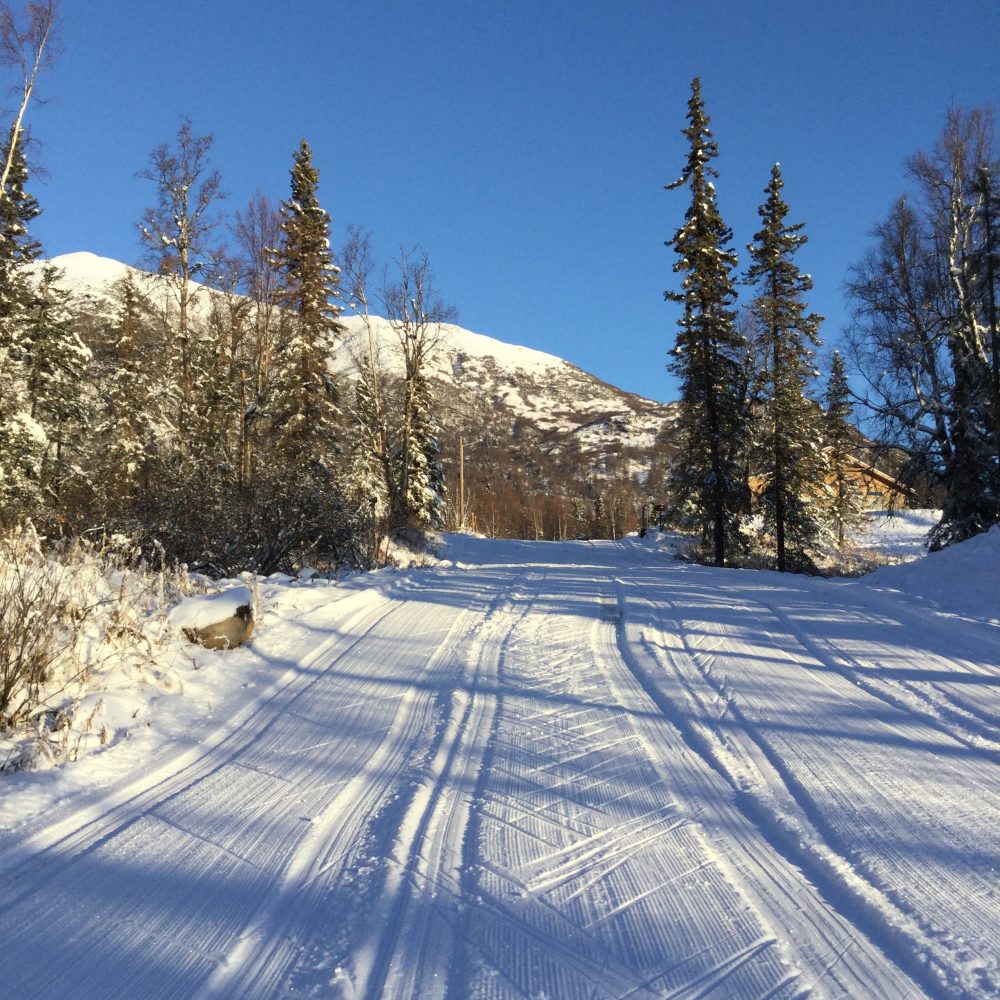
    Part of the final climb leading back up to the stadium on the comp loop, seen in this file photo view from Government Peak Recreation Area, Palmer, Alaska, November 1, 2018. (photo: Gavin Kentch)
    Part of the final climb leading back up to the stadium at the end of the Government Peak comp loop, seen in this file photo view from November 1, 2018. (photo: Gavin Kentch)

    The day’s second race saw 43 women, age U18 and up, take on two laps of the Davos-lite 5 k course described above. Two laps of 5 k at Government Peak is in many ways harder than two laps of 7.5 k, as the longer course adds 2.5 kilometers of gently rolling terrain near the end of the homologated (or perhaps homologation-pending) 5 k course. The 5 k course has no such recovery intermezzo, and the final climb of the first lap segues into the first climb of the second lap for a difficult extended climb with negligible recovery.

    After two laps and 10 k classic, the day’s last starter, Rosie Frankowski, posted the fastest time, finishing in 32:28.01. (While snow conditions are obviously extremely variable from one venue and race to the next, making time comparisons unreliable, and Frankowski did not have World Cup skiers in front of her to chase on Saturday, the fact that Frankowski has previously skied a World Cup 10 k classic in 27:44, on a homologated course in Falun with 365 meters of total climb, suggests that the new Government Peak comp loop deserves respect.)

    Frankowski’s APU teammate, Hailey Swirbul, was second on Saturday, 22.39 seconds back. Kramer (+1:42.15) was third, ahead of a top-10 otherwise composed of skiers from the University of Alaska Anchorage and local Dartmouth College skiers home for winter break.

    buy flonase online

    The top three senior athletes were Frankowski, Swirbul, and Lydia Blanchet, who was fourth overall. The U20 podium was Jenna Difolco (seventh overall), Molly Gellert (17th), and Maggie Meeds (23rd). Somewhat ahead of them were the three fastest U18 skiers: Kramer, Adrianna Proffitt (11th), and Ivy Eski (14th). M4 skier Alison Arians, in 18th, was the top Master.
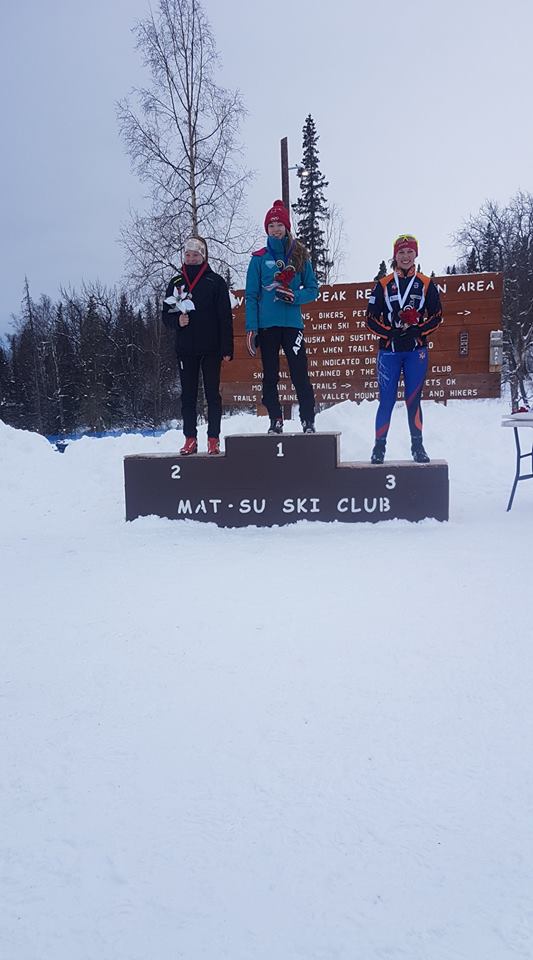
    U16 girls Katey Houser, Marit Flora, and Victoria Bassette. (photo: courtesy CCAK)
    U16 girls Katey Houser, Marit Flora, and Victoria Bassette. (photo: courtesy CCAK)

    Next out on the course were 51 U14 and U16 boys, who did a single lap of the comp loop. U16 skier Aaron Maves, like Frankowski before him, lived up to his top seeding, finishing one lap in 16:35.99. Second and third went to Konrad Renner (+18.99) and Eli Merrill (+36.83), also both U16 athletes. The top U14 skiers in this race were Skyler Amy (22nd overall), Murphy Kimball (23rd), and Aven Elsberg (26th).

    Moments later came the start for the first of 49 U14 and U16 girls, as organizers efficiently put roughly 250 total athletes out on course at a venue that is a one-hour drive from Anchorage and sees a mid-December sunrise some time after 10 a.m. U14/U16 girls likewise did one lap of the 5 k comp loop.

    Quincy Donley had the highest seed and final start position for this race, but 5 k later it was penultimate starter Marit Flora who took the victory. Flora finished in 18:23.47. Donley was 22.78 seconds back in second. Meredith Schwartz (+48.59) was third.

    All three podium finishers were U16 girls. The top three U14 finishers in the race were Heidi Schumacher (12th overall), Sammy Legate (15th), and Zarah Laker-Morris (24th).

    Sunday: distance freestyle races

    After the U12, U10, and U08 skiers finished up the first day’s races, and the afternoon’s sunset time of 3:33 p.m. threatened, volunteers took down the course, coaches packed up waxing equipment, and tired racers began the trek back to Anchorage homes or Mat-Su hotel rooms. The first volunteers were officially on site by 7:30 a.m. Sunday morning to assist with parking, although doubtless some people had returned to the venue by long before then.

    Day two of racing brought some differences – freestyle instead of classic, shorter distances, and slightly warmer temperatures – but more repeat podium finishers than not across the day’s races.

    The first division on course was again U18 boys/U20/Seniors/Masters men, this time with 78 starters going out at 15 seconds apart. Sunday’s skate race was 10 k freestyle interval start, twice around the 5 k comp loop (precisely the same as the senior women’s 10 k classic the day before). The top three overall were unchanged from Saturday’s 15 k classic: Gus Schumacher, then Jager, then Wonders, the World Juniors silver-medal relay team united once more. Schumacher’s time on Sunday was 26:17.07. Jager (+15.56) and Wonders (+42.74) were the only other two athletes to break 27 minutes on the hilly course.
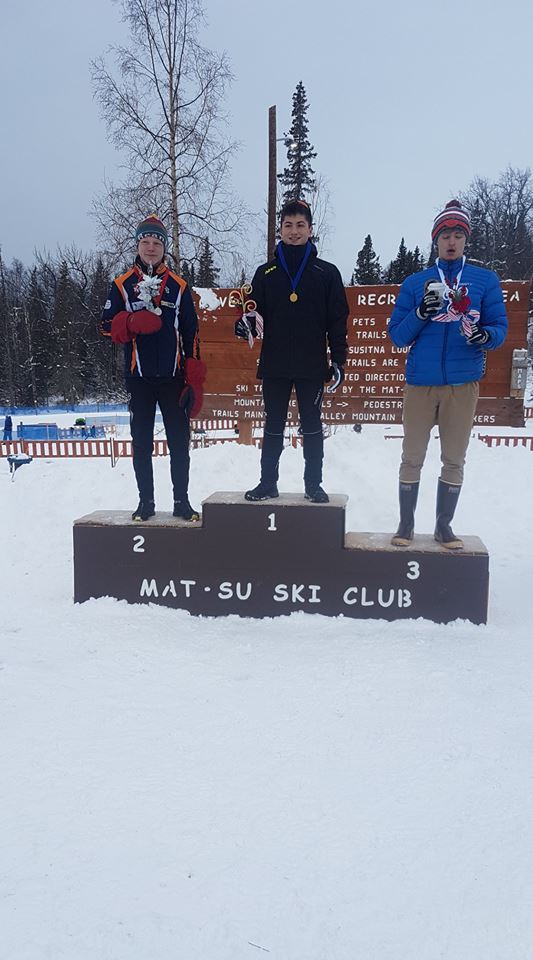
    U16 boys Josh Baurick, Konrad Renner, and Aaron Maves. (photo: courtesy CCAK)
    U16 boys Josh Baurick, Konrad Renner, and Aaron Maves. (photo: courtesy CCAK)

    The U20 leaders on Sunday were again Schumacher, Jager, and Donaldson, who was fourth overall. The senior podium was Wonders (third overall), Thomas O’Harra (fifth), and Forrest Mahlen (sixth). Best times for U18 skiers went to McMullen (seventh), Cason (11th), and Germain (16th), precisely the same U18 podium as in the 15 k classic. Much as on Saturday, behind Alaska Winter Stars skier Schumacher in first, APU placed seven athletes in the top 10.

    The first Master, among eight Masters finishers on Sunday, was M1 skier Cody Priest, 30, a former skier and runner at the University of Alaska Fairbanks, in 25th overall.

    Soon after the last of the Senior men collapsed across the finish line, the first of the U16 boys headed out for one lap of the 5 k course. (All races on both days were interval-start.) First on Sunday was Renner (15:21.27), improving on his second-place finish from the day before. Josh Baurick (+9.17) was second, with Maves (+17.20) staying on the podium but moving down to third after his victory on Saturday.

    Next up were 43 U18 girls/U20/Seniors/Masters women. Neither Frankowski nor Swirbul raced on Sunday, but their APU teammate Jessica Yeaton, who skis domestically with APU but competes internationally for her native Australia, did after not racing on Saturday. Yeaton was seeded third in the 5 k skate but ended up first, covering one 5 k lap in 14:47.25. Kramer (+26.15) moved up to second overall on Sunday, with Emma Tarbath (+46.32) third, barely a second ahead of Lydia Blanchet in fourth. Anna Darnell was the fifth and final woman to break 16 minutes on the hilly course.

    The senior women’s podium was Yeaton, Tarbath, and Blanchet. The top three U20 finishers were Jenna Difolco (seventh overall), Molly Gellert (ninth), and Emma Jerome (21st). The top three U18 finishers were, again, Kramer (also second overall), then Ivy Eski in eleventh overall, barely ahead of Annika Hanestad in twelfth. Arians (15th) was again the first Master.

    U14 boys were the next race out on the course. Sunday brought a 3.75 k skate, on a course that covered most of the 5 k comp loop used throughout the weekend, but elided one major climb and the only rolling section from the top part of the course. The technique and the distance were different, but the U14 podium was precisely the same as on Saturday: Amy (13:29.76), then Kimball (+2.05), then Elsberg (+7.19).
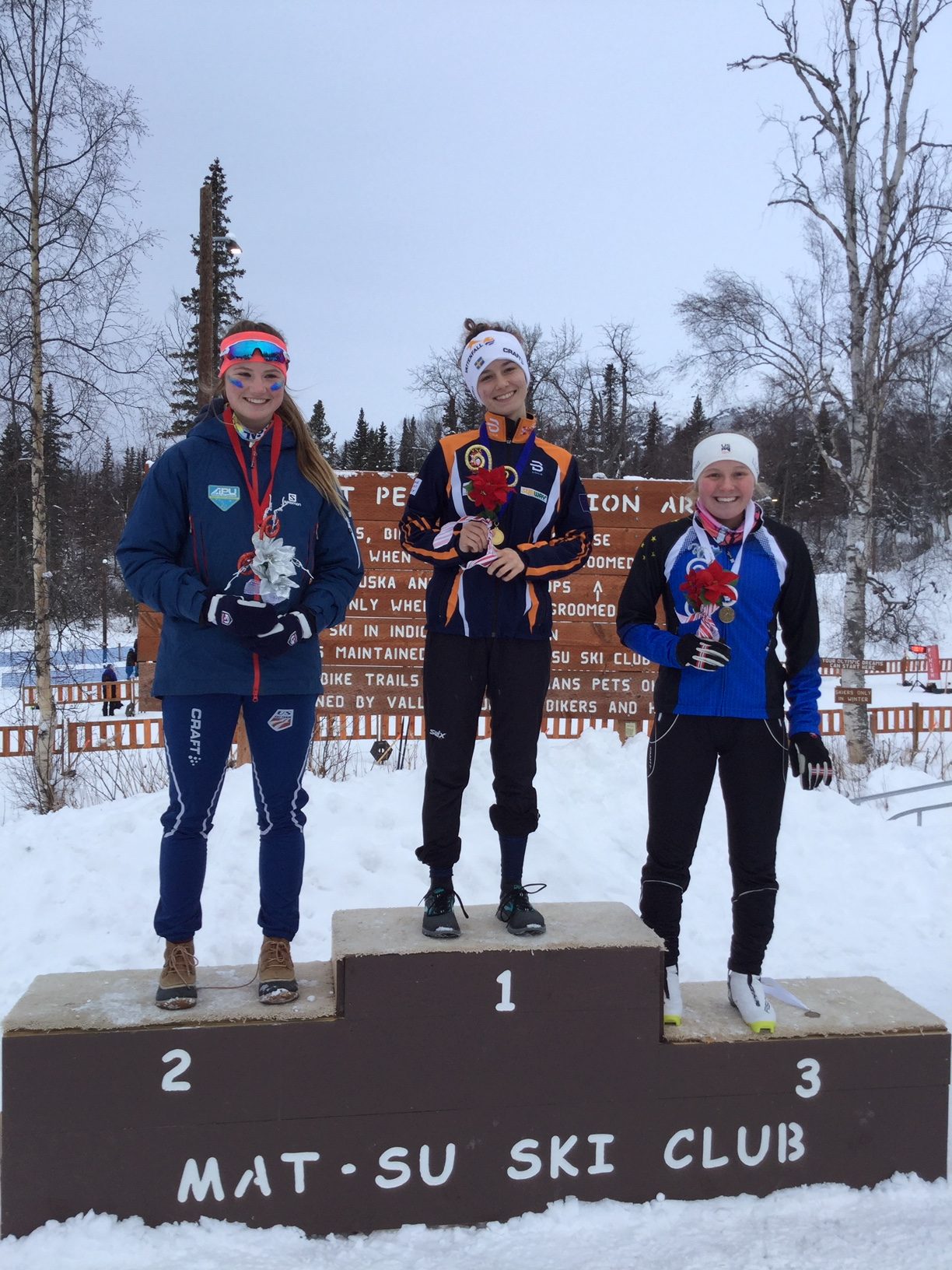
    U18 girls Ivy Eski, Kendall Kramer, and Annika Hannestad. (photo: Gavin Kentch)
    U18 girls Ivy Eski, Kendall Kramer, and Annika Hannestad. (photo: Gavin Kentch)

    Finally, U14 and U16 girls headed out on the same 3.75 k loop. Marit Flora took her second victory of the weekend by a substantial margin, finishing in 12:13.98. Katey Houser (+30.59) and Victoria Bassette (+32.64) collected their first podia of the weekend.

    The overall podium was again all U16 racers. The U14 leaders were Legate (tenth overall), Heidi Schumacher (16th), and Nora Hulse (24th).

    Reflecting the depth of skiing in southcentral Alaska, the roughly 250 entrants for the weekend’s races included a healthy six former Olympians (Rosie Frankowski, Logan Hanneman, Tyler Kornfield, Adam Verrier, Casey Wright, and Jess Yeaton) and four World Juniors medalists (Gus Schumacher, Luke Jager, Hailey Swirbul, and Hunter Wonders), as well as additional senior national championship podium finishers, most of the rest of the APU Elite Team, a dozen or more NCAA skiers, and scads of past Team Alaska Junior National members.

    Both races were FIS races, as well as certified for National Rankings List purposes by U.S. Ski & Snowboard. FasterSkier unofficially calculates the USSA penalty at a healthy 41.99 points for the men’s distance races.

    Thoughts on the weekend

    Two common themes emerged after talking with a handful of the weekend’s podium finishers: One, these races are a good introduction to the season and to bigger races still ahead. And two, the new Government Peak courses are great. But hard.

    As two-time U18 champion Zanden McMullen told FasterSkier Sunday afternoon, “Yesterday I was definitely hurting in the race, but I was proud to come out on top. I definitely felt a lot better today. I’m pretty happy going into the season, where I am; I still have a little work to do before Senior Nationals, but I’m super excited.”

    U20 men Luke Jager, Gus Schumacher, and Ti Donaldson. (photo: courtesy CCAK)
    U20 men Luke Jager, Gus Schumacher, and Ti Donaldson. (photo: courtesy CCAK)

    Two-time overall champion Gus Schumacher expressed similar sentiments, telling FasterSkier, “I wanted to use [these races] to get into racing more, and get some more races under my belt, so I felt better at the bigger races. But obviously, to get into good racing shape, you want to be trying to race as best you can, so that was kind of the goal, to be able to start getting my racing speed to its top level.”

    Schumacher, who is undefeated in five local races this year, including the Race to the Outhouse #1 hill climb at Hatcher Pass the preceding weekend and a sprint and distance race in Fairbanks in the Alaska Nordic Cup in early December, described his current shape as “pretty good.” He elaborated that he plans to add some more intensity soon, but thinks that he is “coming into my race form, and it looks pretty good. Good to have these fast boys around me to push me every day.”

    Schumacher plans to do some trials with Alaska Winter Stars, possibly collaborating with APU, before flying to Craftsbury on December 29th for senior nationals.

    Two-time U18 champion (and double overall podium finisher) Kendall Kramer sounded similar notes, but was somewhat more introspective when asked what her weekend results told her about her current fitness and the upcoming race season.

    “I got invited to a lot of national camps this summer,” Kramer said to FasterSkier, “and I think being exposed to so many different training groups and training styles – I really diversified how I trained this year, and so I’m happy that it’s working out for me. It’s less stressful, and I’m putting less pressure on myself.”

    Kramer, who had never previously raced at Government Peak, described the new courses as “really, really tough.” She seemed to recognize that the course profile was advantageous to her, while stopping short of actually saying that she had enjoyed them when asked if she had liked the courses: “I mean, yes, being super small and light and getting up hills – I wouldn’t pick this venue, necessarily. But I think it was good for me.”

    Ivy Eski, who claimed a pair of U18 podium finishes on the weekend, was more effusive.

    buy zyrtec online

    “I love it,” she told FasterSkier. “It was really fun. I definitely want to race here again. The courses are amazing.”

    Eski also praised the “really good snow and super good grooming,” calling it “overall really a great weekend.”

    U18 boys Everett Cason, Zanden McMullen, and Maxime Germain. (photo: courtesy CCAK)
    U18 boys Everett Cason, Zanden McMullen, and Maxime Germain. (photo: courtesy CCAK)

    And McMullen, who had also never raced at this venue, similarly said of the new courses, “They’re tough, but I like them. You definitely have to be on top of it to be able to push it and go fast.”

    Are they as hard as a nationals course? he was asked. “I definitely think they could be,” said McMullen, who has raced throughout the U.S. as well as in Finland. “Because if you don’t ski it correctly, you could be hurting.”

    * * *

    The overall success of the weekend is noteworthy only in light of two facts: That the Mat-Su Ski Club had never hosted an event at this level before, and that it did so on less than a week’s notice, as poor trail conditions throughout southcentral Alaska forced governing body Cross Country Alaska (CCAK) to have a series of competition committee meetings and teleconferences during the week of December 3 to decide where in the state to send 250 athletes and their parents for a weekend of racing. (Anchorage and Fairbanks are a six-hour drive apart, nearly the twice amount of daylight in Fairbanks in mid-December; the decision to move a race weekend is not made lightly.)

    On Sunday evening, December 9, CCAK announced the decision of the Competition Committee to have the opening Besh Cup weekend at the Government Peak ski trails. Six days later, skiers were pouring into the carefully managed, not-really-large-enough parking lot for the weekend’s first race, with overflow parking stretching hundreds of yards down one side of the access road. Notwithstanding the venue’s youth and the Mat-Su Ski Club’s relative inexperience, all races on both days appear to have gone flawlessly. (Full disclosure, this reporter contributes money to Mat-Su Ski Club for grooming each year, but was not otherwise involved in organizing or supporting these races save for paying an entry fee for both days to race as a Masters athlete.)

    The Mat-Su Ski Club, which pulled off two days of impeccable grooming without the aid of large-scale grooming equipment, is currently fundraising for the purchase of a PistenBully groomer.
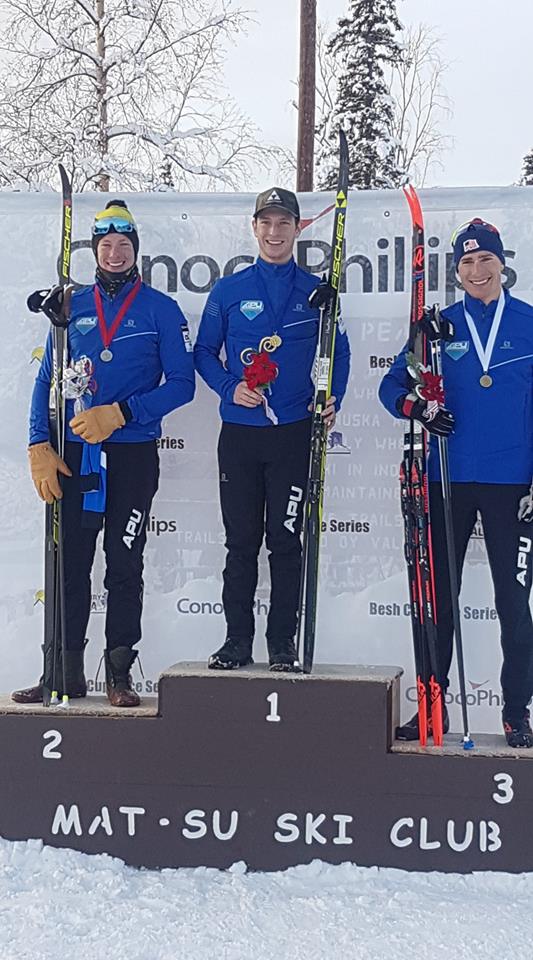
    Senior men Logan Hanneman, Hunter Wonders, and Tyler Kornfield. (photo: courtesy CCAK)
    Senior men Logan Hanneman, Hunter Wonders, and Tyler Kornfield. (photo: courtesy CCAK)

    Next up

    Besh Cup racing for Team Alaska selection continues with two more weekends of racing, currently scheduled for Soldotna on January 19-20, 2019, and Fairbanks on February 2-3. There are traditionally two interval-start distance races, two mass start distance races, and two sprint races throughout the six-race Besh Cup series, three races each of skate and classic. CCAK will announce future race details in advance of upcoming race weekends, after atypically starting the season with two consecutive interval-start distance races due to the last-minute move to Government Peak.

    2019 Junior Nationals will be held at Kincaid Park in Anchorage from March 9-17, 2019. Recent snowfall has brought the trails there from, as CCAK recently described them, “ice/grass rinks” to skiable within the past week (that is, after the decision was made to move the races).

    While relatively warm temperatures hindered the Nordic Skiing Association of Anchorage (NSAA)’s ability to make snow through the early winter, leading to NSAA running the snowmaking system for only 48 hours through November 28, the snowmaking system did survive the 7.0 earthquake of November 30 unscathed, NSAA Business Manager Erin Beam told FasterSkier in an early-December email. “NSAA has tested it since the earthquake, and there are no apparent damages or problems,” she wrote at the time. “It’s certainly incredible it wasn’t worse.” NSAA has made some snow at Kincaid within the past week or so, in addition to grooming the natural snow on most trails.

    Results and media: Saturday classic (all races) | Sunday skate (all races) | FIS results (all races) | Current 2019 Team Alaska points list | CCAK podia photo albums: Day 1, Day 2
  • U.S. Part of Collaboration at Largest International Junior Camp (with Video)

    U.S. Part of Collaboration at Largest International Junior Camp (with Video)

    Earlier this month from Aug. 2-8, nine top American junior athletes had the opportunity to participate in the largest International Junior Camp to date. In total, 146 athletes and 37 coaches from nearly 20 nations gathered in Sjusjøen, Norway, for a week of training and collaboration. The camp offered athletes the opportunity to gain confidence by training with the best junior skiers in the world against whom they will soon be competing, and to learn from the prestigious Norwegian development team training methods.

    To make the trip, athletes needed to be born in either 1999 or 2000 and have the lowest ranking on the FIS Distance and/or Sprint World Ranking list. The U.S. sent Gus Schumacher, Ti Donaldson, Noel Keeffe, Ben Ogden, and Wyatt Gebhart on the men’s side, and for the women, Sofia Shomento, Mae Chalmers, Abby Jarzin, and Molly Gellert. Two coaches joined the group: Bryan Fish, cross country sport development manager at U.S. Ski & Snowboard, and Maria Stuber, head coach at the College of St. Scholastica, and the National Nordic Foundation (NNF) partially subsidized the trip.

    2018 International Junior Camp attendees: 
    – Armenia
    – Austria
    – Bosnia/Herzegovina
    – Belarus
    – Canada
    – China
    – Czech Republic
    – Estonia
    – Italy
    – Finland
    – Japan
    – Korea
    – Latvia
    – Norway
    – Slovenia
    – Slovakia
    – Spain
    – Sweden
    – U.S.

    The format of the camp was similar to what U.S. juniors might experience at an elite national camp; a large emphasis on volume (18-25 training hours), with some intensity, technique and strength mixed in. For most workouts, all the athletes trained together as one large group, only dividing into smaller groups for time trials or activities held in spaces that could not hold the nearly 200 attendees.

    The camp opened with back-to-back time trials, beginning with a classic sprint event featuring “King’s Court” style heats, meaning that from each heat, the top skier moved up in the seeds and the last skier moved down. Each skier competed in four rounds of sprints plus the qualifier, one round more than in a typical sprint. The most notable result for the U.S. was a victory for Schumacher in the men’s final, and on the women’s side, an eighth-place finish for Gellert.

    In the 10- and 15-kilometer distance races, the Americans continued to show their strength with another win for Schumacher and another eighth-place finish for Gellert.

    “Local hero – Joergen Lippert from Lillehammer joined in on the 15 km freestyle race,” Fish explained. “This was a great measuring stick for the men since Joergen medaled in all four races last year at Junior Worlds (2018 Junior Worlds – 1 gold, 1 silver, and 2 bronze). At the 5km split, Lippert was leading, Ben Ogden was 2nd and Gus Schumacher 6th. Haavard Moseby took the lead after 10km. At 12km Haavard and Gus were tied, then Gus surged to edge Haavard for the second day in a row.”
    Molly Gellert striding in the sprint heats at the 2018 International Junior Camp in Sjusjøen, Norway. (Photo: Maria Stuber)

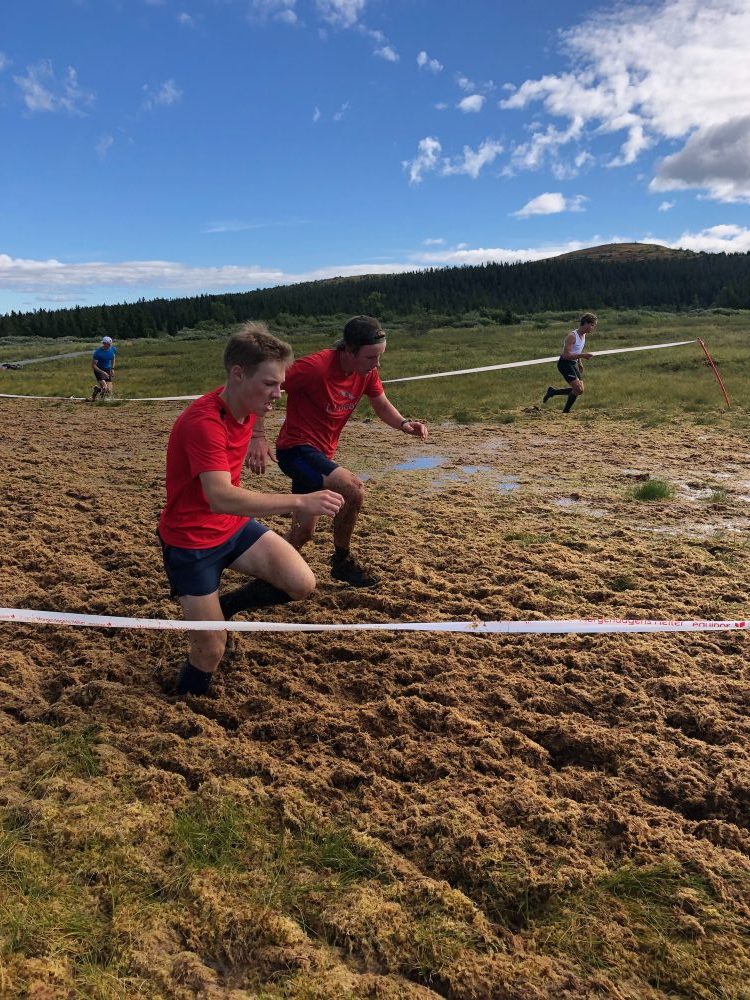
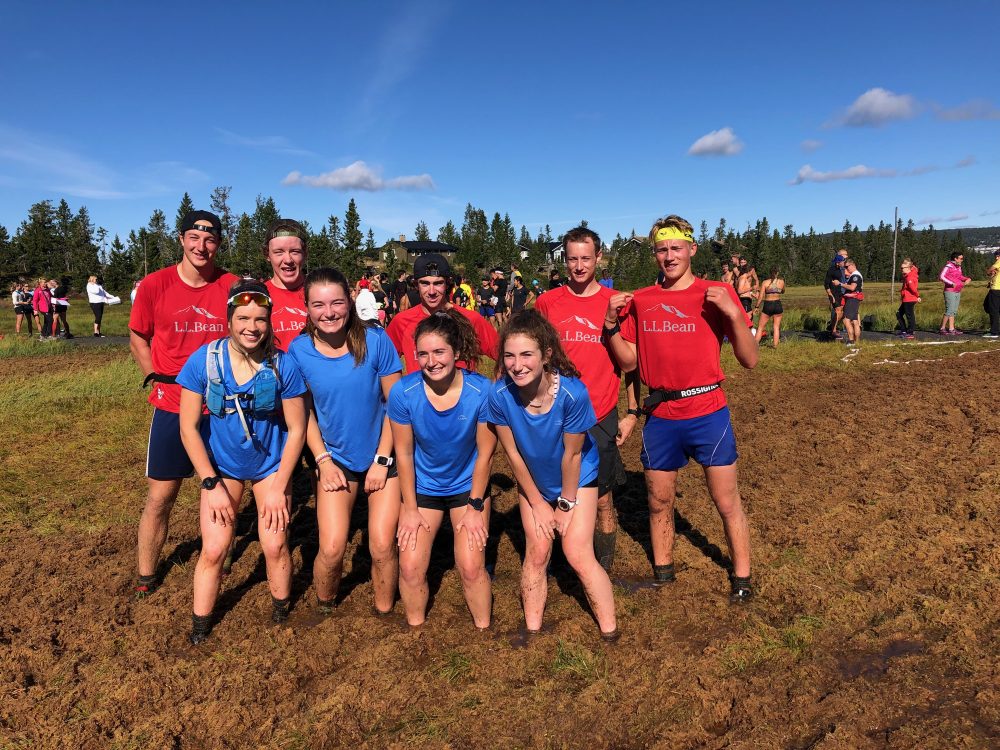
    To take advantage of the unique terrain on the plateau around Sjusjøen, the group also participated in a 3 1/2- to 5-hour run crossing through several bogs, and a set of Level 4 bog intervals, which was reported to be the hardest workout of the entire camp. These 3-5 minute intervals were run in mud up to or above athletes knees, making it a full-body challenge to move forward through the course.

    “Running through that stuff as hard as you can is incredibly hard,” Stuber told FasterSkier. “People were breathing at the end of those intervals harder than you ever hear, besides maybe the best athletes in the world in a 5- to 10-kilometer distance kind of race.”

    Another highlight was getting to meet and hear from Olympic gold medalists Johannes Høsflot Klæbo, Ragnild Haga, and Astrid Uhrenholdt Jacobsen, who shared insight into the aspects of their training and development they felt have led to their success.

    The U.S. coaches contributed to the camp by leading an agility workout, as this has been creatively emphasized in their own programs with positive results. Fish reportedly traveled with his own set of cones and plenty of sidewalk chalk to ensure they could set up a high-quality course.

    “It was really fun to have the rest of the world interested in what we’re doing with agility,” said Stuber.

    Ben Ogden (second from r) in the middle of a bog interval at the 2018 International Junior Camp in Sjusjøen, Norway. (Photo: Maria Stuber)

    Apart from the training benefits, the U.S. development program considered the experience of collaborating with top athletes in this age group to be invaluable, as it showed how hard their international competition is working.

    “In the U.S. when you’re a top athlete you feel like you’re working pretty darn hard, and this kind of shows them that, yeah, they’re working hard, but the kids that they want to be competing against are also working really hard,” Stuber said.

    She added that the U.S. athletes were well-prepared for the camp, as all performed very well throughout the week despite the demanding training schedule.

    “We fit in, we go there and see that we’re doing the right things, and we bring these kids back with the confidence that they can do this and the motivation to keep at it and work harder,” Stuber said.

    It was noteworthy to the coaches that the U.S. is finally recognized as a nation that can train and compete with the best athletes in the world — a testament to the growth and success of the U.S. Ski Team at all levels over the last ten years.

    skelaxin online, ortho tri-cyclen online

    “Going into this, I was expecting to just be learning a ton and less of a contributor,” Stuber said. “It was really cool to get there and feel like the U.S. was very much a country where people wanted to know what we were doing. Norway is clearly ahead, but otherwise, I think the U.S. had to say as much as any other place, which was a really eye-opening surprise for me.”

    This is the third time that the U.S. has attended Norway’s International Junior Camp (also in 2015 and 2016), and American juniors will continue to make the trip biennially to maintain collaboration with other countries in the coming years. According to the U.S. coaches, because of the cost of the camp and the fact that it is similar each year, they plan to only attend every other year so they have a “fresh” group of athletes each time.

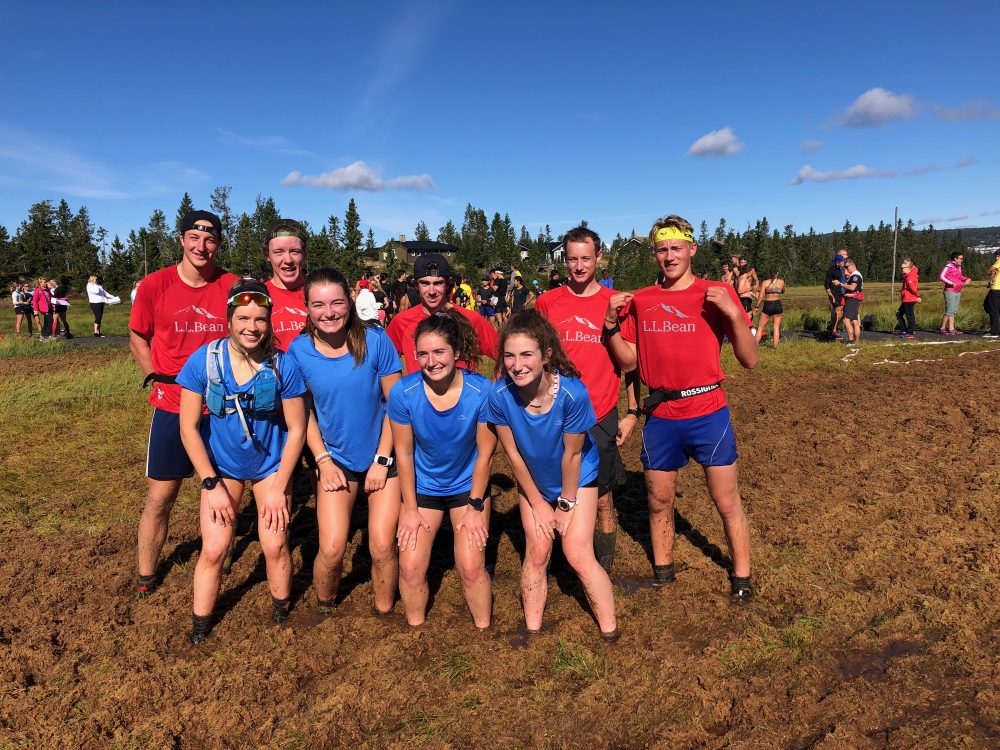
    Americans during a muddy training session at the 2018 International Junior Camp earlier this month in Sjusjøen, Norway. (Front row, l to r) Abby Jarzin, Mae Chalmers, Sophie Shomento, Molly Gellert, and Noel Keeffe. (Back row, l to r) Ben Ogden, Wyatt Gebhart, Ty Donaldson, Gus Schumacher. (Photo: Maria Stuber)
  • Under 23 Questions: Molly Gellert

    Under 23 Questions: Molly Gellert

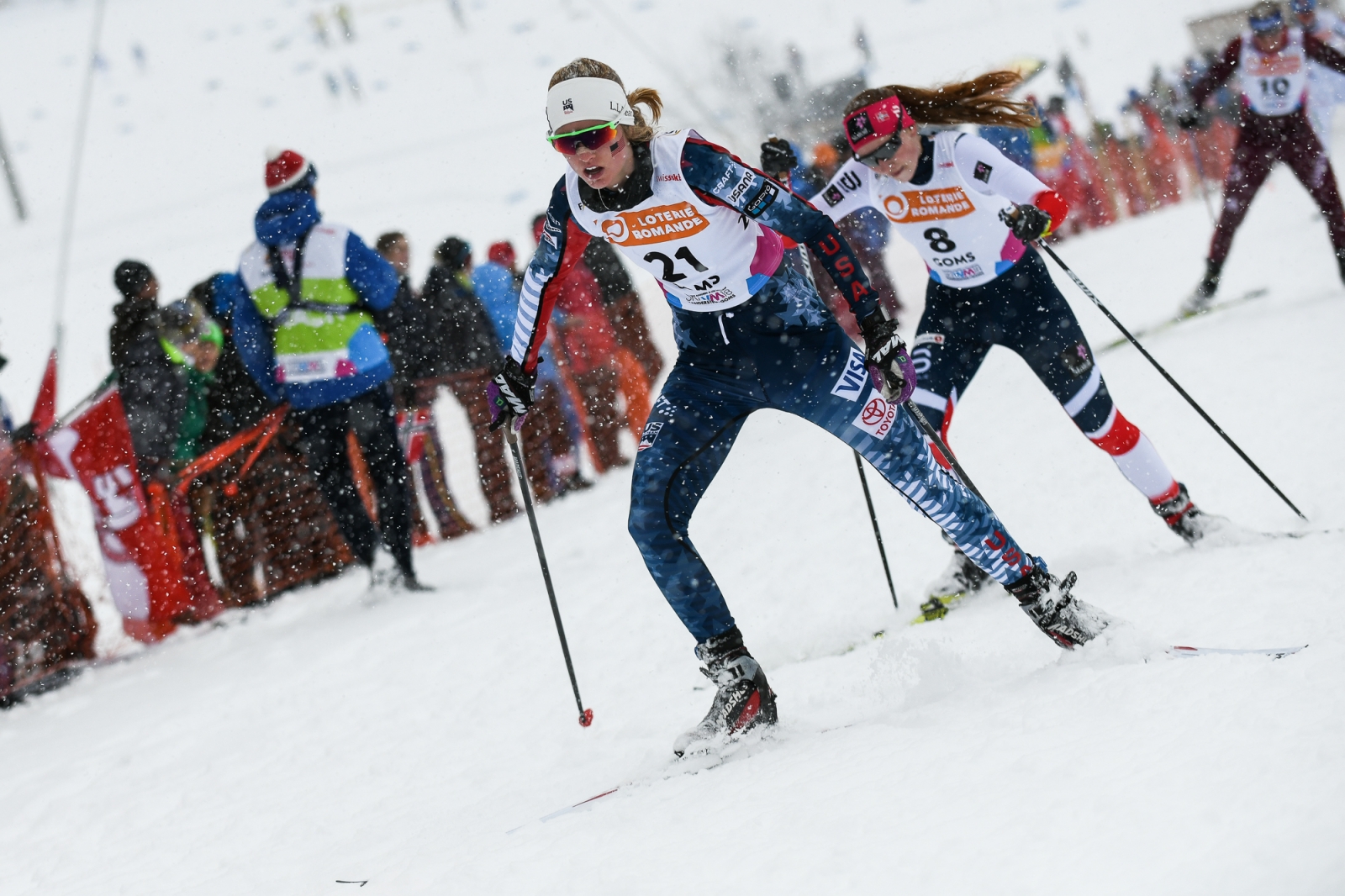
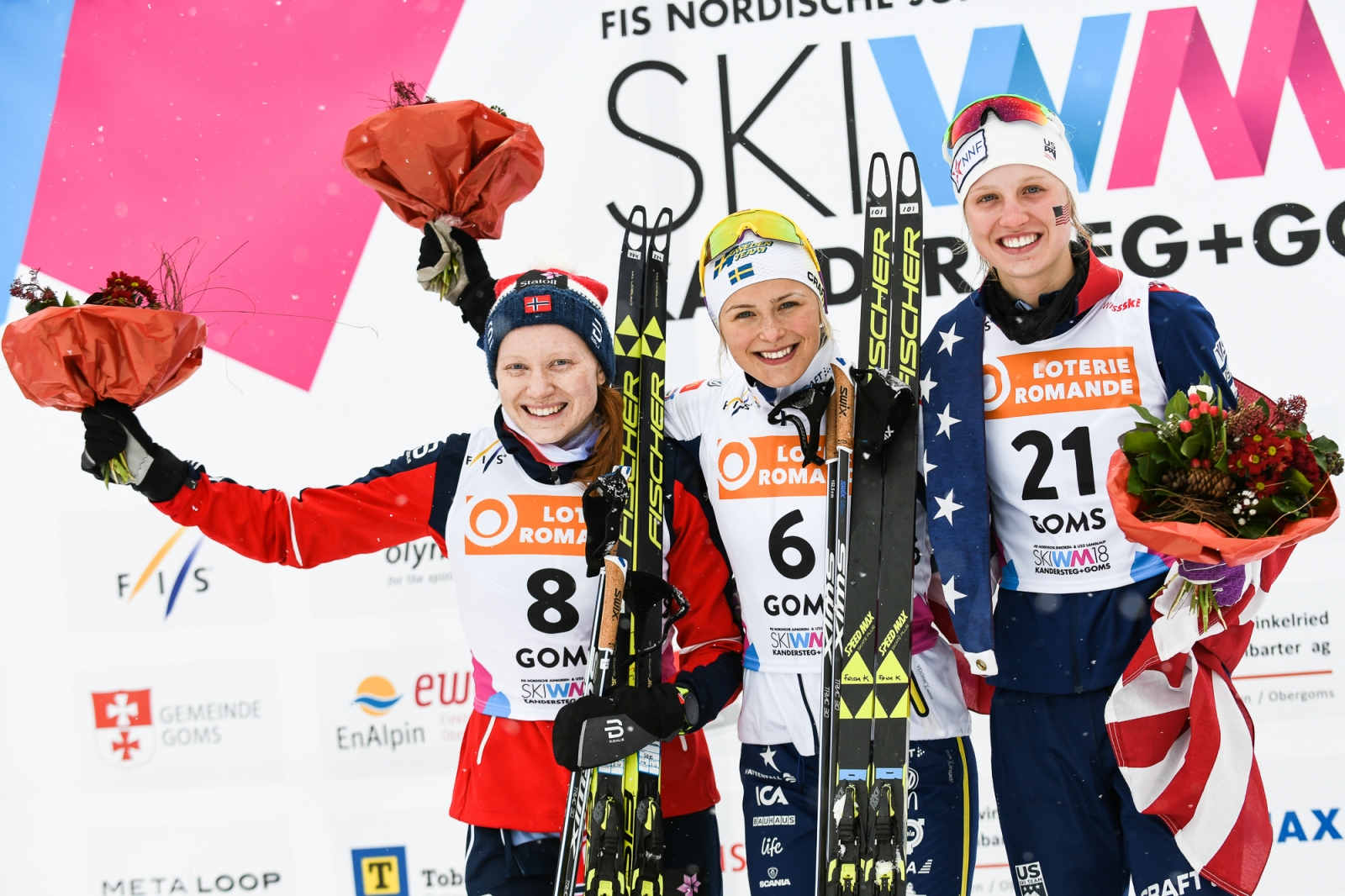
    Molly Gellert (Alaska Winter Stars) racing in the freestyle sprint on Sunday, Jan. 28, at 2018 Junior World Championships in Goms, Switzerland. She placed 18th overall on the day. (Photo: Glenn Gellert)

    In an effort to showcase the North Americans who competed at last week’s International Ski Federation (FIS) 2018 Nordic Junior/U23 World Championships in Goms, Switzerland, we asked those qualifying athletes several questions about themselves — actually, we had them fill in the blanks. Here we have 17-year-old Molly Gellert, of Alaska Winter Stars, who represented the U.S. at her first Junior Worlds. 

    Last week in Goms, Gellert qualified for the freestyle sprint heats in 21st and went on to place 18th overall. She also placed 40th in the 10 k skiathlon.

    ***

    “My full name is Margaret, but you can call me Molly.

    I was born and raised in Anchorage, Alaska, and I learned to ski at 7 years old.

    I spent the time between U.S. nationals and Junior/U23 Worlds explaining to my teachers why I’d be missing two weeks of their class.

    The hardest workout I did in the last training year to prepare for this was bounding intervals with my team and coach Jan.

    This is my second time in Switzerland and third time racing internationally, and so far it’s been grand.

    One difference I’ve noticed between Switzerland and the U.S. are the duvets.

    Skiing and racing in the Alps is picturesque. Usually racing at altitude is tough for me because I live at sea level. There are beautiful mountains around where I live.

    One of the things I’m most excited about for Junior/U23 Worlds in Goms are the challenging courses on real snow.

    One race I’m especially targeting there is the skiathlon.

    I really hope I can chat/make friends with someone from Norway and ask them to adopt me.

    My favorite thing at the breakfast where we are staying is the bread.

    Fondue is not my favorite. The cheese here is authentic. And the chocolate comes in huge bars.

    If I had a totally free day here and didn’t have to worry about race fitness or training, I’d spend it starting my homework.

    The best way to follow me on social media is on Instagram @molly.gellert.”

  • Saturday Rundown: Relay Silver for U.S. Men; Loomis 4th; Plus Hakuba & Gatineau

    Saturday Rundown: Relay Silver for U.S. Men; Loomis 4th; Plus Hakuba & Gatineau

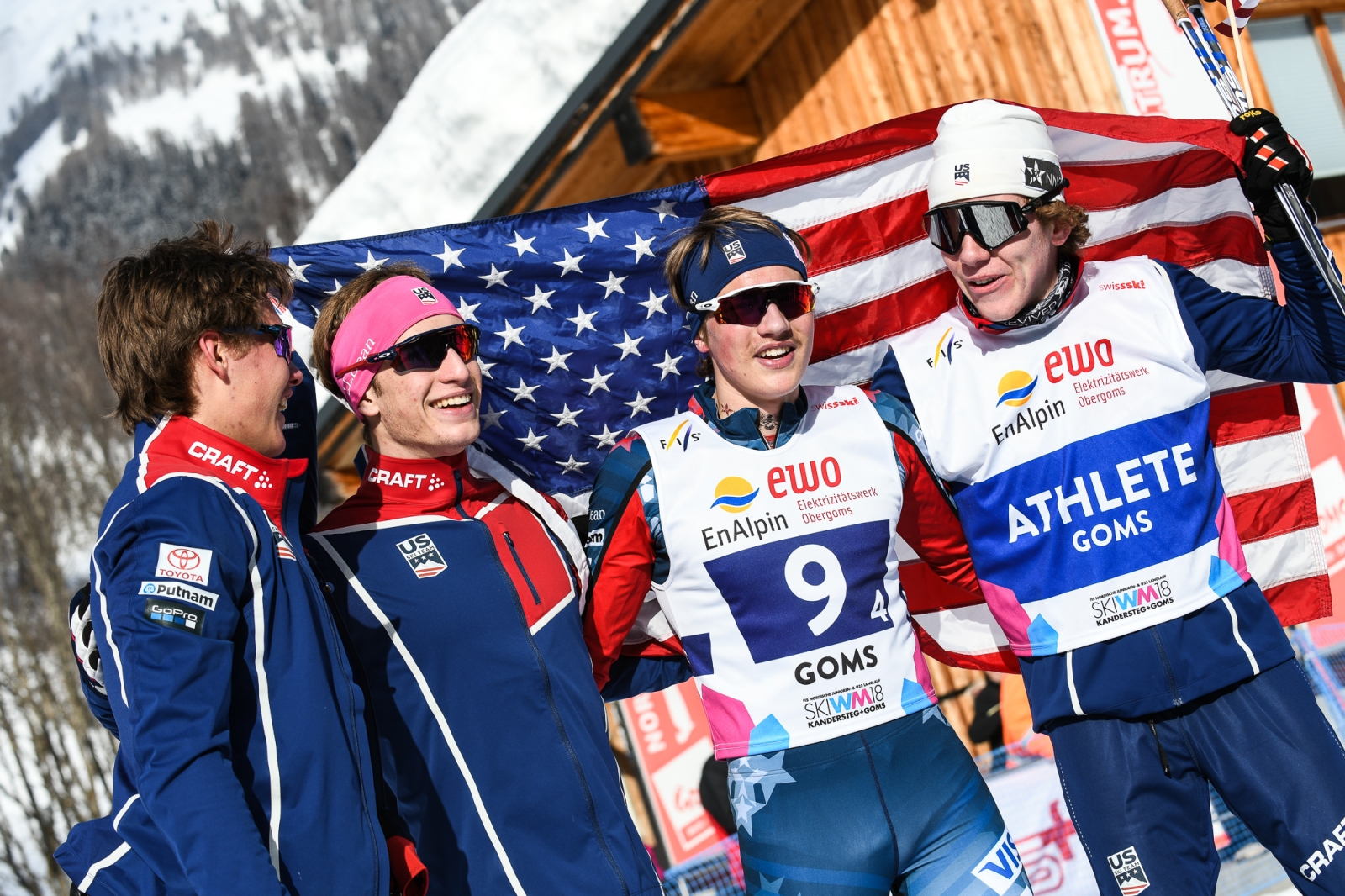
    The U.S. men’s silver-medal relay at 2018 Junior World Championships in Goms, Switzerland, with (from left to right) Luke Jager, Hunter Wonders, Gus Schumacher, and Ben Ogden. (Photo: JWSC2018.ch)

    (Note: This article has been updated to include comments from Americans Ben Loomis, Luke Jager and Gus Schumacher.)

    Junior World Championships (Goms, Switzerland): Men’s and women’s relays

    Two individual medals and a relay podium. That’s how the U.S. team fared this week at Junior World Championships in terms of a medal count, but the significance of its breakthroughs go way beyond the hardware.

    Hailey Swirbul became the most successful American nordic skier at Junior World Championships with a silver and a bronze in the two women’s distance races. Then, on Saturday, the U.S. men took their turn in the spotlight, racing to second and almost first in the 4 x 5-kilometer relay for the best relay finish by an American team at Junior Worlds. Last year, the U.S. women placed third at 2017 Junior Worlds at Soldier Hollow in Midway, Utah.

    Luke Jager started the team off on Saturday as the first classic leg, putting the U.S. men in sixth at the first exchange, 14 seconds behind Sweden in first.

    While Sweden dropped to second on the next leg, the U.S. continued to move up, with Ben Ogden racing to fourth, 8.5 seconds out of first, behind Norway, Russia and France, respectively.

    On the first freestyle leg, Hunter Wonders held the U.S. in fourth and tagged anchor Gus Schumacher in fourth, 31.3 seconds out of first. Norway continued to lead with France, and Russia skied about 5 seconds back in third with 5 k to go.

    Schumacher then skied the fastest anchor leg to race up to second, passing France and finally Russia in the finishing straight, as he crossed the line 2.2 seconds behind Norway’s Jørgen Lippert — who eased up in the finish and secured the Norwegian gold with a total time of 50:04.2 minutes.

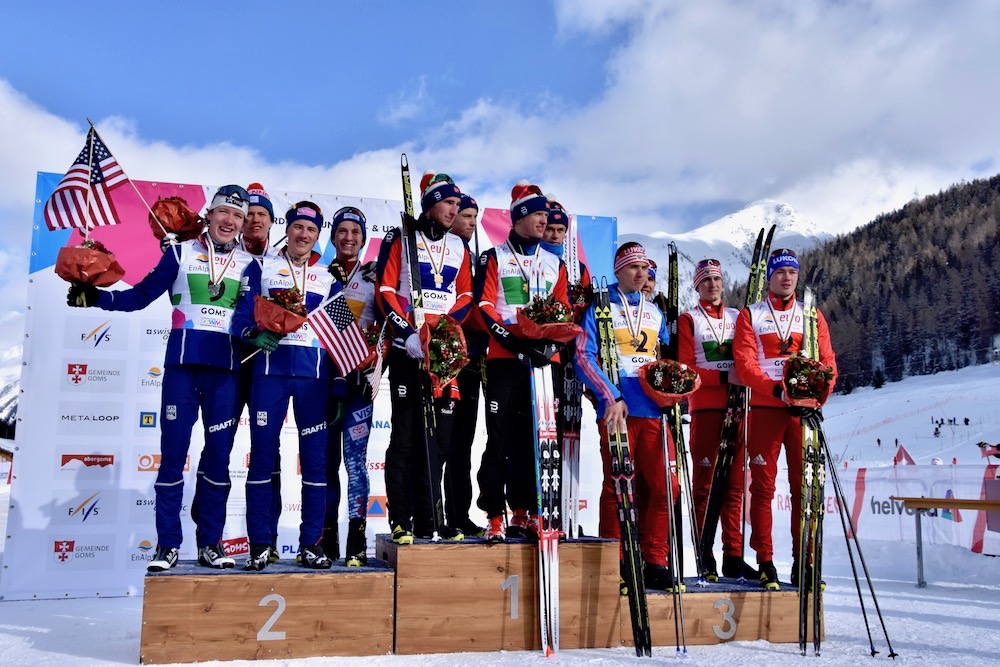
    The men’s 4 x 5 k relay podium at 2018 Junior World Championships with Norway (c) in first, the U.S. (l) in second (Ben Ogden, Luke Jager, Gus Schumacher, Hunter Wonders), and Russia (r) in third. (Photo: Julia Kern)

    The U.S. placed second, 3.3 seconds ahead of Russia in third (+5.5), and France finished fourth (+29.6).

    Norway’s winning team included two men who won individual golds this week, Harald Østberg Amundsen (in the 20 k skiathlon) and Jon Rolf Skamo Hope (10 k classic), as well as Håvard Moseby and Lippert (who took bronze in two races).

    Russia’s team was made up of Kirill Kilivnyuk, Sergey Ardashev, Yaroslav Rybochkin, and Alexander Terentev. Team France was Camille Laude, Hugo Lapels, Tom Mancini, and Pierre Tichit.

    Canada placed 11th (+3:12.8) with Antoine Cyr, Ritchie Graham, Felix Longpre, and Etienne Hebert. Sixteen teams contested the men’s relay on the final day of Junior Worlds in Goms.

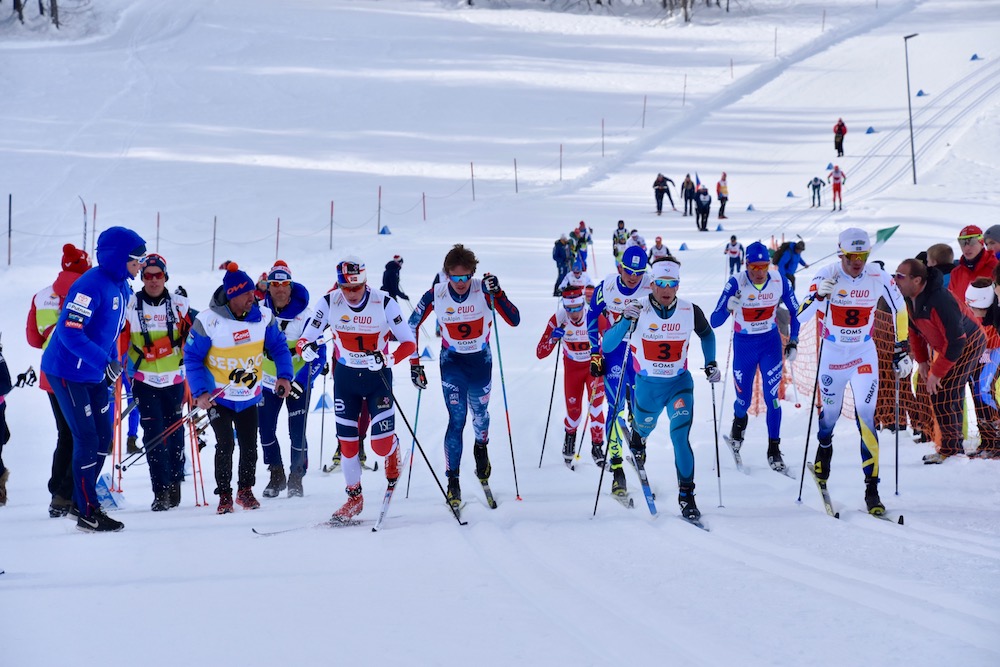
    American Luke Jager (9) skiing with Norway’s Harald Østberg Amundsen (1), France’s Camille Laude (3), and Sweden’s Jacob Nystedt (8) during the first leg of the men’s 4 x 5 k relay on Saturday at 2018 Junior World Championships in Goms, Switzerland. (Photo: Julia Kern)

    In an email, Jager, who turned 18 last month, explained that he was grateful for the opportunity to race at his first Junior Worlds.

    “I barely qualified for this trip after a tough week in Anchorage so my options for starts were super limited,” Jager wrote. “I got the sprint start last week which was pretty horrendous and then a guaranteed spot on the relay team. So I had the whole week to prepare and rest. Watching the boys all week we realized that a medal could be possible and we started targeting that super closely.”

    But over the last week, Jager hadn’t been feeling well.

    “I was feeling really really bad in the days following the sprint and could barely get out and ski for 60 minutes each day,” he recalled. “I had actually told [U.S. Ski Team Development Coach Bryan] Fish that if I continued to feel as bad as I had been I was gonna sit out the relay. But I started feeling better and better throughout the week and was feeling really good this morning.”

    He had previously asked Fish if he could ski the scramble leg.

    “Bryan was stoked about it too so that decision was easy,” Jager explained. “This group of dudes is perfect for each leg of a relay so we barely even needed to discuss order. I am definitely a stronger classic skier so I was stoked to be able to get some redemption for my poor form in the last month.”

    Schumacher, 17, explained he found out the relay order on Friday night and “really started to get excited about it,” he wrote in an email. “We had some foreign friends say that they thought we could do well so that really helped confidence.”

    From the gun, Jager expected a fast pace and pushed to put himself in the lead group while trying to conserve energy and avoid any tangles He locked onto Norway’s Amundsen and by the last climb on the second lap, found that the group was beginning to string out.

    “I was thankfully able to hold on just enough to maintain connection with the leaders and put Ben in a position where he could do his thing,” Jager wrote. “I would have liked to be a little further up in the group when I tagged off to Ben but the Swedes’ first skier had done so much damage in the last minutes that we were all in single file and pretty much in survival mode up the last climb.”

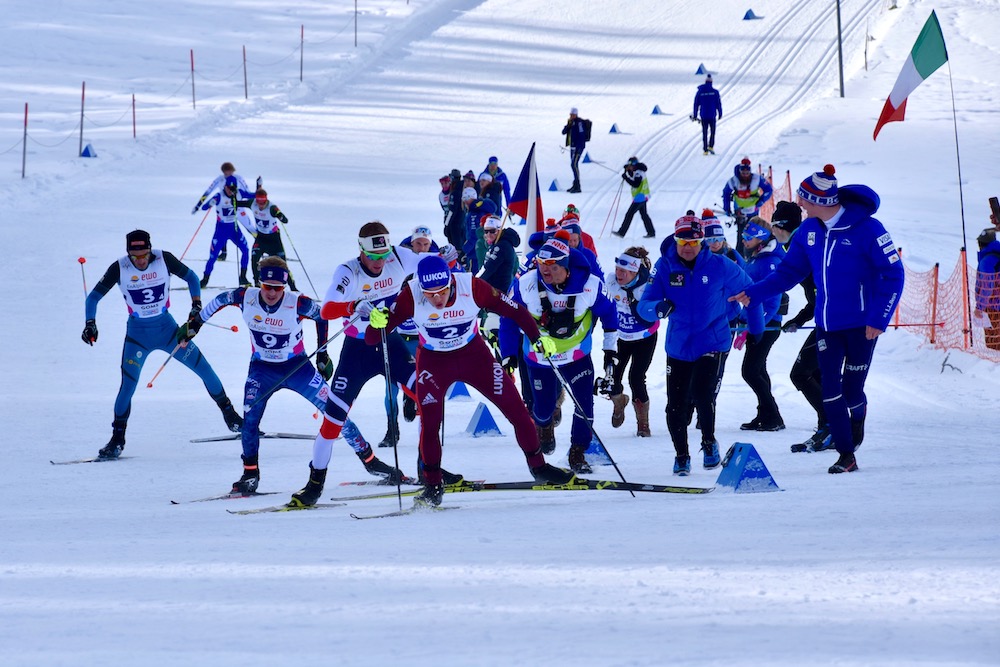
    Russia’s Alexander Terentev leading Norway’s Jørgen Lippert, American Gus Schumacher (9), and France’s Pierre Tichit (3) up a climb in the final leg of the men’s 4 x 5 k relay at 2018 Junior World Championships in Goms, Switzerland. (Photo: Julia Kern)

    Fast-forward to Schumacher getting tagged in fourth in the final exchange, 31.5 seconds behind Norway in first, 30.9 seconds behind France in second, and 26.2 seconds behind Russia in third. Despite the gap, he believed he could close it.

    “I definitely thought those three were in reach, and I wanted to catch them, if for no other reason than to keep clear of 5th and 6th,” Schumacher wrote. “I focused on really holding steady for the first 2k, then starting to push more, and I was able to catch that lead pack and then recover with them for the last sprint, which did end up really hurting.”

    While he had distanced himself from France and secured third by the final hill, he hadn’t anticipated catching Russia or Norway.

    “By the time I got through the downhill corner, however, I was closing fast on the Russian and realized I was right there,” Schumacher wrote. “I popped around the last corner and was almost even with Russia, then after a few seconds of sprinting I pulled ahead and he slowed down and I knew I had it.”

    While Jager explained he’s not one to get very nervous about racing, Saturday was completely different.

    “… Watching the rest of the race progress was one of the most nerve wracking experiences of my life,” he wrote. “When Hunter tagged off to Gus I knew we were really really gonna be in the fight for a medal. I’ve been racing Gus for most of my life and I know when that kid is gonna throw down and produce a miracle and I could see it…

    “This is something this group of guys has been dreaming of and training for for a really long time now,” he added. “To be able to watch that dream come into fruition today was indescribable. Probably the best day of my life since Cole Morgan added me on Snapchat. We came here this year to show the world that US skiing is the real deal and that we’re here to stay and I think we did that. To be able to be a piece of that history was an honor.”

    “Experiencing the podium here has been so cool,” Schumacher wrote. “I thought it was possible, but actually getting it feels amazing. This whole trip has been really cool even without this success, it’s such an amazing place and the team is tight. I think individually I anticipated results maybe a little better, but this seems about right, and as a team I think we all surprised ourselves. Together we can make some big waves.”

    Germany Wins Women’s Relay; U.S. 8th

    In the women’s 4 x 3.3 k relay earlier on Saturday, Germany took the win by 8.6 seconds over Russia with a winning time of 39:17.4. Sweden finished third, 47.5 seconds out of first.

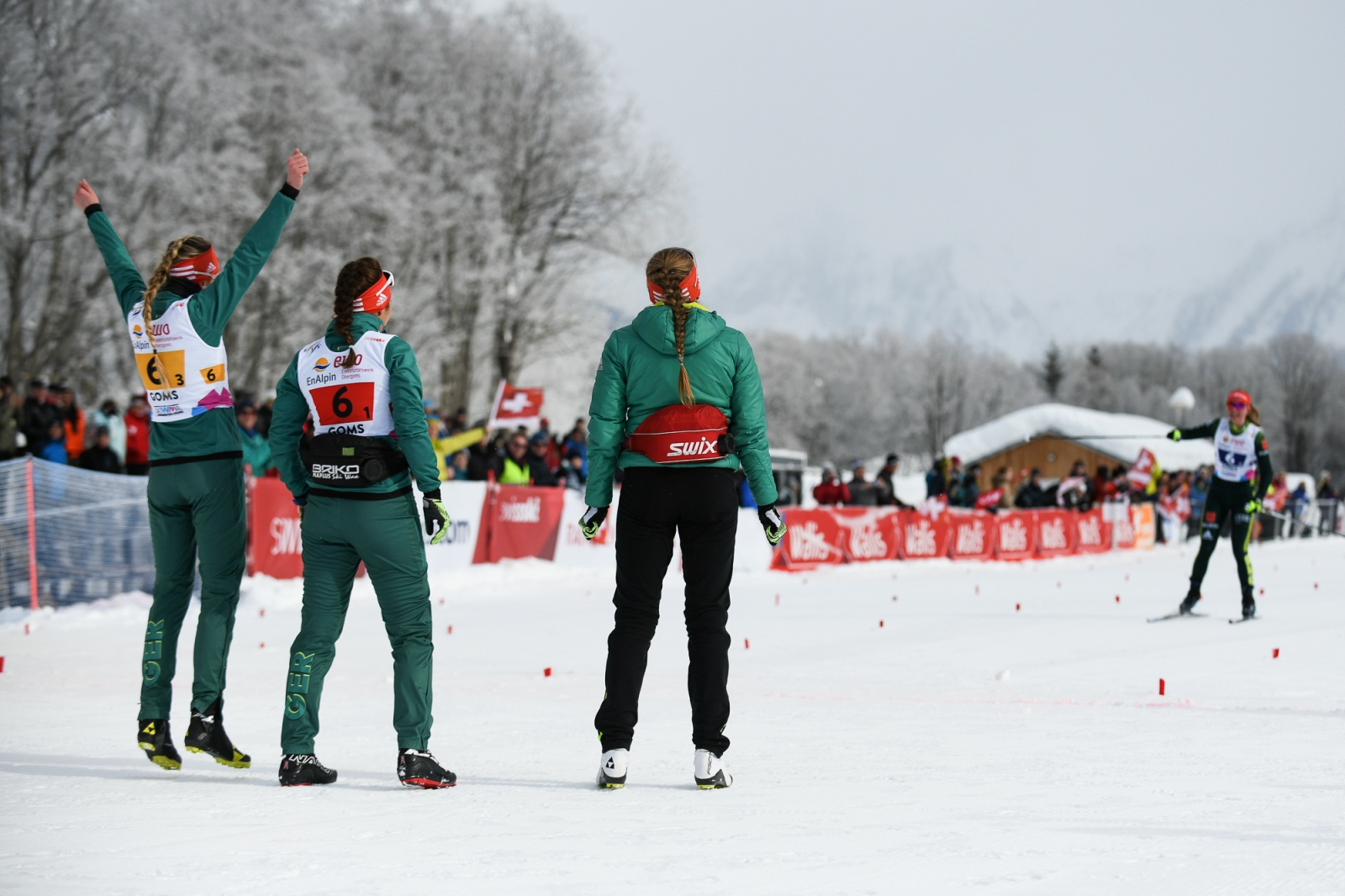
    Germany’s Alexandra Danner, Celine Mayer and Lisa Lohmann await their teammate Anna-Maria Dietz at the finish of the women’s 4 x 3.3 k relay on Saturday at 2018 Junior World Championships in Goms, Switzerland. Germany placed first and Russia finished second, 8.6 seconds later. (Photo: JWSC2018.ch)

    Germany (Alexandra Danner, Celine Mayer, Lisa Lohmann, Anna-Maria Dietz) improved from third on the first leg, to second on the second and third legs, and final first on Dietz’s anchor leg.

    Russia (Polina Nekrasova, Hristina Matsokina, Nina Dubotolkina, Maya Yakunina) led the race from the first through the third and final exchange, before slipping to second at the finish.

    Sweden (Tua Dahlgren, Frida Karlsson, Alicia Persson, Johanna Hagström) rebounded from 13th and more than a minute and a half back at the first exchange to tag in fourth and 28 seconds out of first thanks to Karlsson’s fastest second-leg time. By the final exchange, they were up to third and they held that position to the finish.

    The U.S. women’s 4 x 3.3 k relay at 2018 Junior World Championships, with (from left to right) Hailey Swirbul, Kathleen O’Connell, Hannah Halvorsen, and Molly Gellert. They placed eighth on Saturday. (Photo: Julia Kern)

    The U.S. placed eighth (+1:08.1) with Kathleen O’Connell, Swirbul, Molly Gellert, and Hannah Halvorsen. After O’Connell put them in eighth and about a minute back on the first leg, Swirbul skied them up to sixth with the second-fastest second leg, 30.1 seconds out of first. Gellert held onto that position on the first skate leg, but Halvorsen slipped two places on the anchor leg to finish eighth.

    Canada finished 15th (+4:47.8) out of 16 teams with Hannah Mehain, Natalie Hynes, Annika Richardson, and Alexandra Racine.

    Results: Men | Women

    ***

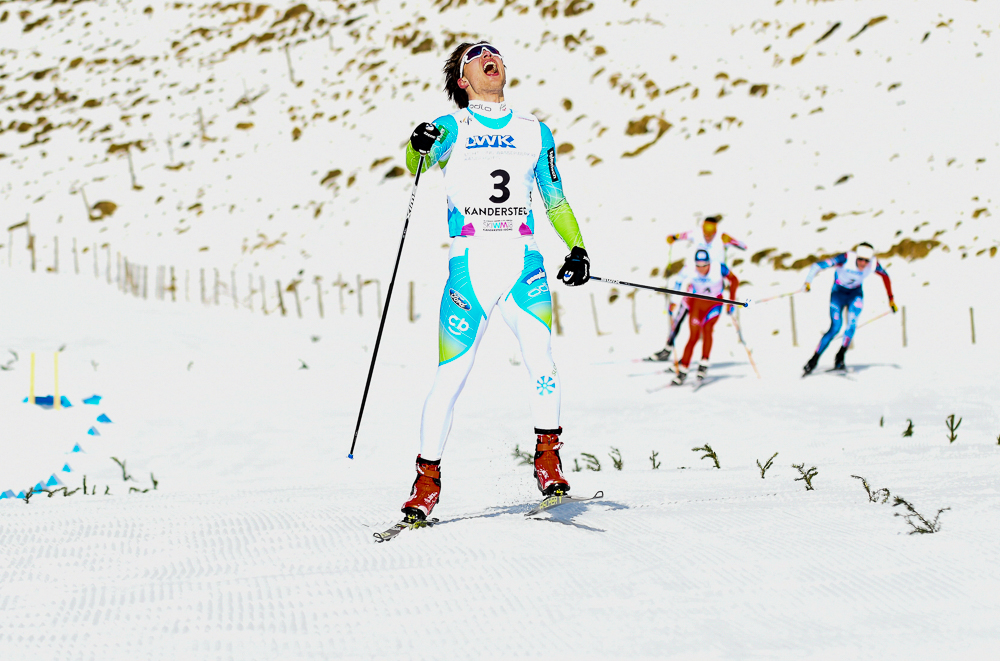
    Slovenia’s Vid Vrhovnik (3) celebrates his win in the last nordic-combined competition of 2018 Junior World Championships, the individual normal hill/5 k, on Saturday in Kandersteg, Switzerland, while the Czech Republic’s Jan Vytrval, Austria’s Dominik Terzer and American Ben Loomis (r) battle for second. (Photo: JWSC2018.ch)

    Nordic Combined Junior World Championships (Kandersteg, Switzerland): Normal hill/5 k Gundersen

    In the final nordic-combined competition of Junior Worlds, American Ben Loomis nearly notched his second podium of the week, missing it by one-tenth of a second in fourth place.

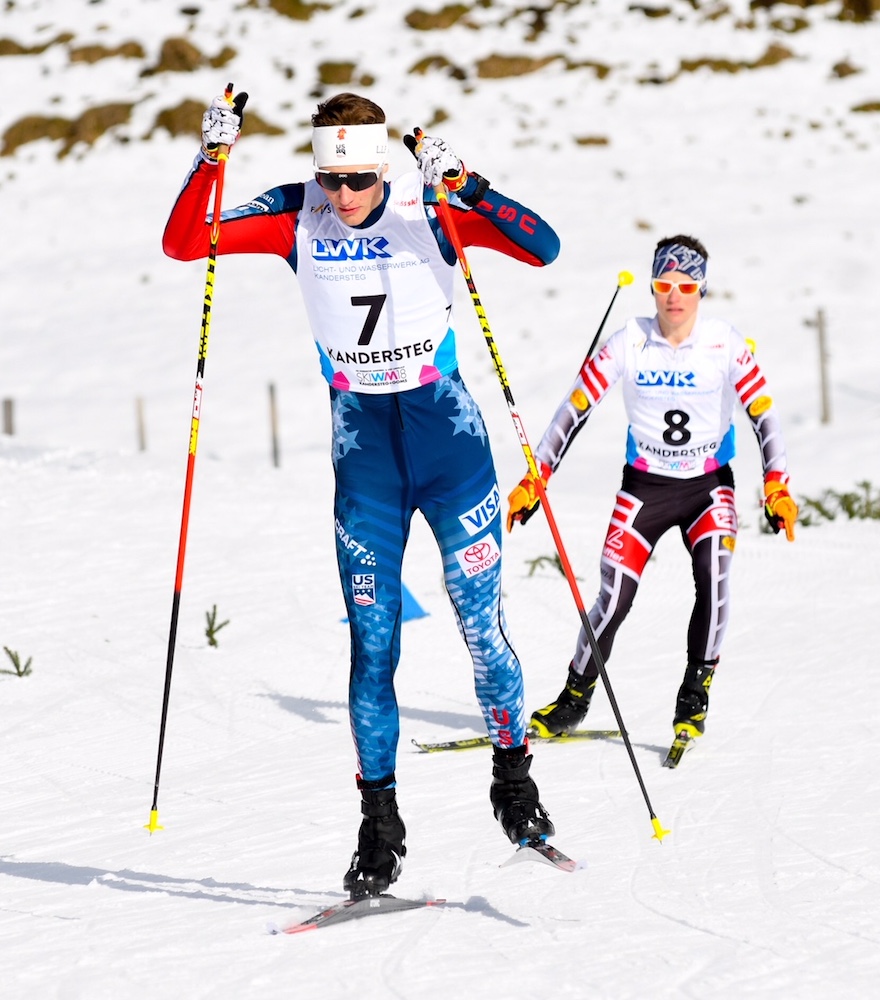
    American Ben Loomis (7) leads Austria’s Johannes Lamparter during Saturday’s 5 k at 2018 Nordic Combined Junior World Championships in Kandersteg, Switzerland. Loomis went on to place fourth and Lamparter finished eighth. (Photo: Romina Eggert)

    Slovenia’s 18-year-old Vid Vrhovnik won the individual normal hill/5 k Gundersen by 4.9 seconds over Austria’s Dominik Terzer. After posting the third-best jump on the 106-meter hill, Vrhovnik started the 5 k race 6 seconds behind Germany’s Luis Lehnert in first. Terzer jumped to second and started just 4 seconds behind, while the Czech Republic’s Jan Vytrval jumped to fourth and started 10 seconds back. Loomis jumped to seventh (just as he did on Tuesday before racing to third place) and started 27 seconds out of first.

    “I was happy with my jump being closer in time to the front,” Loomis wrote in an email about his his jump, which put him about 10 seconds closer to the leaders than on Tuesday. “I didn’t feel quite as lucky with the wind. I was hoping to jump around the top 5, but 7th, only 27sec back was good, too.”

    Over the two-lap 5 k, Vrhovnik battled with Terzer, while Lehnert slipped to seventh at the finish, 23.5 seconds behind. The Slovenian took the win by nearly five seconds over Terzer in 11:28.8, and Vytrval outlunged Loomis for third place (+5.4). Loomis placed fourth (+5.5), well ahead of Norway’s Einar Lurås Oftebro in fifth (+18.4).

    Ben Loomis (USA Nordic) on the last day of 2018 Nordic Combined Junior World Championships in Kandersteg, Switzerland. He jumped to seventh and moved up to fourth in the 5 k. (Photo: Romina Eggert)

    “I was able to catch places 3-6 on the first lap and ski with them through the beginning of the second lap,” Loomis wrote. “Towards the end of second lap I closed down on second place (Jan Vytral) with Dominik Terzer. On the last corner we packed up in positions 2-4.

    “The finish started with a sharp downhill corner followed by a quick stretch less than 100 meters,” he continued. “I came into the finishing lanes in second but unfortunately took the wrong line and was passed by Dominik and never quite caught Jan in front of me.”

    While he had been hoping for another podium, Loomis acknowledged that he was pleased to ski the fastest race time and “be battling at the front”.

    “Overall I am leaving Switzerland with my goals accomplished and feeling satisfied,” he wrote. “It would have been nice to walk away with a double podium but I am still very happy with how to week went. This week has been a huge confidence booster going into the Olympics next week. I am very excited to represent my country and enjoy my time at the games. I am looking to have fun, take in experience and not overthink the results.”

    Also for the U.S., Stephen Schumann placed 18th (+1:18.6), up one place from 19th in the jump, Jared Shumate finished 40th (+3:05.7), up from 48th in the jump, and Tucker Hoefler was 55th (+5:50.5), after jumping to 55th.

    Results: Jumping | Final

    ***

    The podium at Saturday’s Nordic Combined World Cup in Hakuba, Japan, with Japan’s Akito Watabe (c) in first, Norway’s Jan Schmid (l) in second and Germany’s Manuel Faißt (r) in third. (Photo: FIS/Flawia Krawczyk)

    Nordic Combined World Cup (Hakuba, Japan): Large hill/10 k Gundersen

    Many of the winter-sports World Cups were off this weekend before the Olympics start in earnest a week from today in PyeongChang, South Korea, but not nordic combined, which had a World Cup stop in Hakuba, Japan.

    There, local hero Akito Watabe took the win in 24:14.6 minutes, a whopping 1:12.6 minutes clear of Norway’s Jan Schmid in second. Germany’s Manuel Faißt placed third, 1:22 back, and Estonia’s Kristjan Ilves finished 52 seconds later in fourth (+2:14).

    The lone American competing in Saturday’s 10 k Gundersen, Ben Berend achieved his first individual World Cup top 30, placing 23rd (+4:31.7) after jumping to 16th on Hakuba’s 134-meter large hill.

    Watabe led from the beginning of the day after jumping to first, ahead of Ilves in second, Faißt in third, and Schmid in fourth. Watabe started the 10 k with a 16-second head start on Ilves, while Faisst started 52 seconds out of first and Schmid started 1:08 behind.

    Berend started the 10 k with a 2:36 deficit to first, with five others within 10 seconds of him. His teammate Adam Loomis did not start the 10 k after jumping to 38th.

    Another individual large hill/10 k Gundersen will be held on Sunday in Hakuba. The first nordic combined competition in PyeongChang, the individual normal hill/10 k, is set for Wednesday, Feb. 14.

    Results: Jumping | Final 

    ***

    The men’s 15 k freestyle podium at 2018 Eastern Canadian Championships in Gatineau, Quebec, with Jack Hegman (c) in first, David Norris (l) in second and Tad Elliott (r) in third. (Photo: Rob Smith)

    NorAm Eastern Canadian Championships (Gatineau, Quebec): 10/15 k freestyle

    Americans swept the podium in both the men’s and women’s freestyle individual starts on Saturday at Eastern Canadian Championships in races that count toward both NorAm and SuperTour standings.

    According to unofficial results, Jack Hegman, of the Sun Valley Ski Education Foundation (SVSEF), won the men’s 15 k by 9.1 seconds over David Norris, of Alaska Pacific University (APU), in 35:44.9. Tad Elliott (Ski Club Vail) placed third (+38.7) just ahead of the top Canadian, Jack Carlyle, of the Alberta World Cup Academy (AWCA), in fourth (+41.7).

    The U.S. occupied eight of the top 10 in the men’s race, with Kevin Bolger (SVSEF) in fifth (+45.0), Ben Lustgarten, of the Craftsbury Green Racing Project (CGRP) in sixth (+52.3), Brian Gregg (Team Gregg/LNR/CXC) in seventh (+57.0), Rogan Brown (SVSEF) in eighth (+58.1), Canada’s Scott Hill (Barrie Cross Country) in ninth (+1:14.7), and Eric Packer (APU) in 10th (+1:18.6).

    The women’s 10 k freestyle podium at 2018 Eastern Canadian Championships in Gatineau, Quebec, with Rosie Frankowski (c) in first, Becca Rorabaugh (l) in second and Erika Flowers (r) in third. (Photo: Rob Smith)

    After placing second in a 10 k freestyle at last weekend’s SuperTour in Craftsbury, Vermont, Rosie Frankowski (APU) won the women’s 10 k freestyle on Saturday in Gatineau by more than 30 seconds in 27:07.3. Her teammate Becca Rorabaugh (who won the Craftsbury 10 k skate as well as Friday’s classic sprint in Gatineau) placed second (+37.1) on Saturday, and Erika Flowers placed third (+1:26.4) for the third-straight race.

    Frédérique Vézina, of the Pierre-Harvey National Training Centre, led the Canadians in fourth (+1:46.2), while America Liz Guiney (CGRP) placed fifth (+1:52.2), and Olivia Bouffard-Nesbitt (Rocky Mountain Racers) finished sixth (+1:56.4).

    Also in the top 10, Kaitlynn Miller (CGRP) placed seventh (+1:57.8), Felicia Geisor (CXC Team) was eighth (+2:18.5), Zoë Williams (Carleton University) ninth (+2:39.6) and Annika Hicks (AWCA) 10th (+2:43.4).

    Eastern Canadian Championships conclude Sunday with 10/15 k classic pursuits at the Nakkertok Nordic Ski Centre.

    Results

  • Thursday Rundown: Swirbul 3rd in Junior Worlds Skiathlon; U.S. NoCo Relay 7th (Updated)

    Thursday Rundown: Swirbul 3rd in Junior Worlds Skiathlon; U.S. NoCo Relay 7th (Updated)

    American Hailey Swirbul (University of Alaska Anchorage) leads Norway’s Lone Johansen up a climb during the second half of the women’s 10 k skiathlon on Thursday at 2018 Junior World Championships in Goms, Switzerland. (Photo: JWSC2018.ch)

    (This article has been updated to include comments from Americans Hailey Swirbul and Gus Schumacher.)

    Junior World Championships (Goms, Switzerland): 10/20 k skiathlons

    Hailey Swirbul is 2-for-2 when it comes to podiums at this year’s Junior World Championships; in her second-straight race this week in Goms, the 19-year-old American earned a medal in a distance race. On Thursday, it was bronze in the women’s 10-kilometer skiathlon.

    The women’s 10 k skiathlon podium at 2018 Junior World Championships in Goms, Switzerland, with Sweden’s Frida Karlsson (c) in first, Norway’s Lone Johansen (l) in second, and American Hailey Swirbul (r) in third. (Photo: JWSC2018.ch)

    Swirbul, a sophomore at the University of Alaska Anchorage, closed the gap to the leaders over the final 5 k skate portion of Thursday’s race, doing so in tough, slow conditions with heavy snowfall. She ended up third in a sprint finish with Norway’s Lone Johansen, who took second by 0.7 seconds, as the two finished 35.5 seconds and 36.2 seconds behind the winner, Sweden’s Frida Karlsson, respectively.

    Karlsson won it in 32:55.7 minutes. She had been second at the transition from classic to skate halfway through the race, just behind France’s Laura Chamiot-Maitral in first. Four women came through the exchange together within 2.6 seconds of first, while Swirbul was about 15 seconds back in eighth.

    “Coming into the exchange I was right where I wanted to be,” Swirbul wrote in an email to FasterSkier. “I knew that some of the girls ahead of me would not be able to sustain their pace the entire skate leg. It was important for me to remember that and not try to close the gap too quickly with the Norwegian I was skiing with.”

    While Karlsson broke away over the final 5 k, Swirbul helped lead the chase, moving into second and 31 seconds back on a long, steep climb at 6.7 k.

    “I won’t lie, the skate leg was tough! I think everyone was suffering out there in the fresh snow,” Swirbul wrote. “I tried to conserve energy on the gradual downhill before the big climb to use on the hill.”

    On the last lap, she worked to distance herself from fourth place.

    “I knew that the fourth place skier was closing in on us the last lap,” she wrote. “Going up the final hill, I had to make a move to secure a podium spot and give what I had to ski away form the fourth place girl over the second to last big climb. The last few hundred meters were so intense! I didn’t have anything left to sprint it out for second place. Gotta work on that!”

    Two days ago, Swirbul placed second in the 5 k classic for her first individual medal and the best-ever finish for the U.S. at Junior Worlds.

    “This means so much,” she told race organizers after taking third in Thursday’s skiathlon. “I’m so happy to represent the United States here and show how we can improve in the future and what we have in our country.”

    In her email to FasterSkier, Swirbul explained that she entered Thursday’s race confident yet calm.

    “After my silver medal I believed in myself more than before,” she wrote. “However, I managed to stay calm and not put high expectations on myself for the skiathlon which allowed me to race my best. I was hoping to ski smart and relaxed and not be afraid to make it hurt! In a mass start that is really all I can control.”

    For much of the first leg, about 4 k, she skied with what she described as “a huge pack of girls, which was kind of stressful for me.”

    “It’s harder for me to match the stride of someone almost a foot smaller than I am in a classic track, so once the group broke up I was able to find my rhythm,” Swirbul wrote. “The snow storm made the tracks super slow where they weren’t skied in, so it was a waste of energy to try to pass people outside of the skied in track. I made that mistake a few times and ended up not passing anyone, just wasting energy plowing through powder.”

    But her skis felt fast in both the classic and skate legs, she noted. “The wax techs have been killing it!”

    With one race left, the women’s 4 x 3.3-kilometer relay on Sunday, Swirbul wrote that she was eyeing another podium.

    “I think it is fair to think that our relay team has a good shot at the podium. That would be the cherry on top :)”

    Karlsson told organizers that she was focused solely on the gold on Thursday.

    “It was very fun today and my body felt very good, then I was just going for the gold today,” Karlsson said. In her first Junior Worlds, she had previously placed third in the skate sprint earlier in the week.

    “It means a lot,” Karlsson, 18, added. “This is a very good sign that I’m doing the right thing. I have one more year left as a junior so I’m looking forward to next year’s Junior World Championships as well.”

    Also for the U.S., Kathleen O’Connell (Montana State University) placed 20th (+2:18.2), Molly Gellert was 40th (+3:59.4) and Sofia Shomento was 58th (+6:25.7).

    Canada’s Natalie Hynes (University of Alaska Anchorage) placed 24th (+2:40.0), Hannah Mehain was 37th (+3:54.9), Alexandra Racine 51st(+5:16.1), and Catherine Reed-Metayer 62nd (+7:17.7).

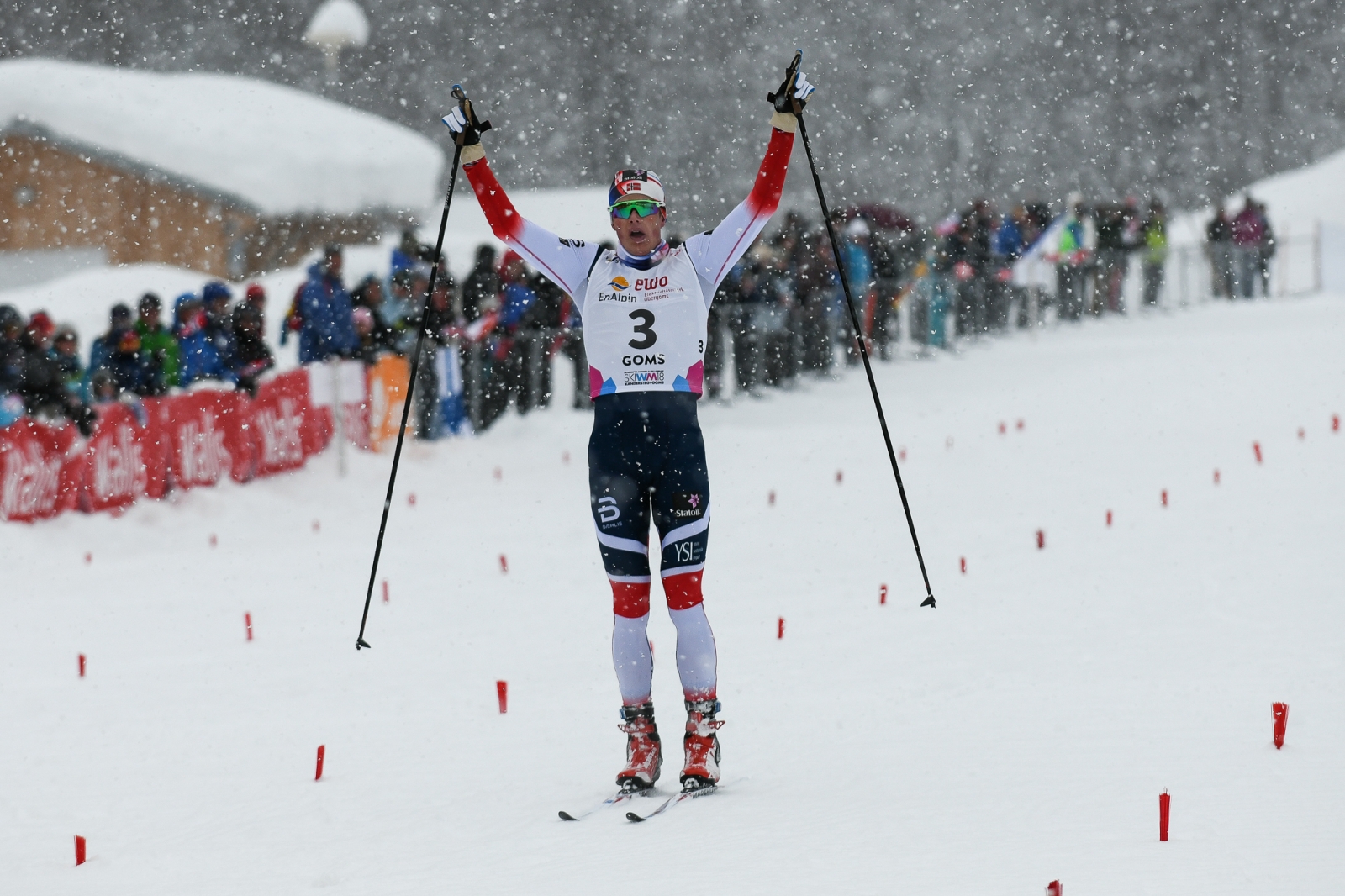
    Norway’s Harald Østberg Amundsen winning the men’s 20 k skiathlon at 2018 Junior World Championships in Goms, Switzerland. (Photo: JWSC2018.ch)

    In the junior men’s 20 k skiathlon that followed, Harald Østberg Amundsen pulled out a 34.7-second victory over fellow Norwegian Jon Rolf Skamo Hope, who won the 10 k classic two days ago. Norway swept the podium with Jørgen Lippert in third, 1:00.1 minutes back, two days after Lippert placed third in the 10 k individual start.

    The win was Amundsen’s first individual gold after he was on Norway’s winning 4 x 5 k relay at last year’s Junior Worlds in Utah, where he placed third in the 10 k skiathlon. On Tuesday, he was fourth in the 10 k classic.

    “Unbelievable,” he said during a post-race arena interview. “I tried to keep calm on the classic part, and on the skate part just tried to keep the speed up. … I tried to go fast on the beginning and end of the uphills, and a bit controlled in the middle. I think the final was great, unbelievable.”

    American Gus Schumacher (Alaska Winter Stars) raced to 15th (+2:43.6) besting his two previous top 20’s this week (19th in the freestyle sprint and 17th in the 10 k classic) at his first Junior Worlds. He skied much of the race with Ben Ogden (Stratton Mountain School), who finished 18th (+2:51.2) for his second-straight top 20 (after placing seventh in the 10 k).

    “My classic skis were great today,” Schumacher wrote in an email. “The techs nailed it and I had really solid kick and good glide. I was able to run up the steepest hills and kick the buildup off right at the top and glide right with everyone. During that first 10k I think I did a good job staying relaxed and now letting myself push too hard up the big climbs. The pace in the pack wasn’t bad, definitely a little rushed at the beginning but I was able to settle in well.

    “On my second half I was still just focused on not pushing too hard and staying relaxed, while also keeping the pace fast and carrying speed through the corners,” he continued. “Generally I felt pretty good, but my body was just getting tired and I was hanging in there.”

    While he dropped Ogden over the last kilometer, Schumacher wasn’t able to shake Italy’s Luca Del Fabbro, who finished half a second ahead of him in 15th.

    “I pushed really hard up the last hill into first [ahead of Del Fabbro] but was a little weak over the top and he pulled up alongside me and crossed in front of me on the corner then almost fell,” Schumacher recalled. “Pulled up alongside on the flat, but had to get back on the inside and just couldn’t get past.

    “Overall I’m pretty happy, I think I paced well and I generally executed well,” he concluded. “I think it wasn’t my best possible, but it was definitely a well-executed race.”

    Also for the U.S., Hunter Wonders (Alaska Pacific University) placed 26th (+3:56.0), and Karl Schulz finished 60th (+8:30.3).

    Félix Longpré led Canada in 28th (+4:07.0), Etienne Hebert followed in 30th (+4:33.3), Antoine Cyr was 32nd (+4:45.4), and Reed Godfrey 54th (+7:18.4).

    Results: Women | Men

    ***

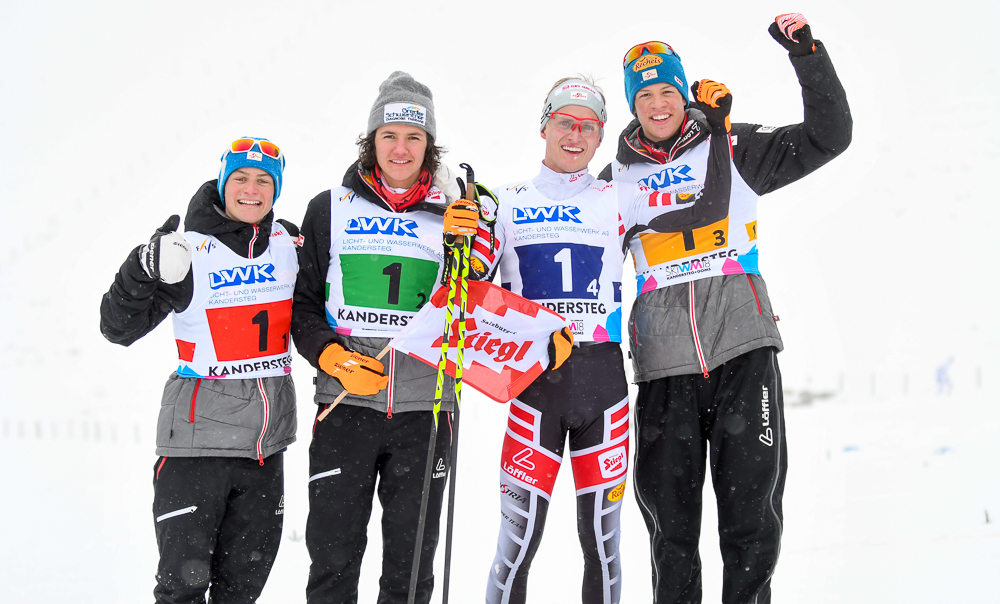
    The Austrian team (from left to right: Johannes Lamparter, Florian Dagn, Dominik Terzer, and Mika Vermeulen) celebrates its win in the normal hill/4 x 5 k team event on Thursday at 2018 Nordic Combined Junior World Championships in Kandersteg, Germany. (Photo: JWSC2018.ch)

    Nordic Combined Junior World Championships  (Kandersteg, Switzerland): Normal hill/4 x 5 k Team Event

    In the nordic combined team event at Junior World Championships on Thursday, Austria stole the show, jumping to first then finishing the 4 x 5 k relay first by nearly 48 seconds over Germany in second.

    On the 106-meter normal hill in Kandersteg, Austria’s Johannes Lamparter, Mika Vermeulen, Florian Dagn, and Dominik Terzer combined for the best jumping score of the day, 11.8 points ahead of Norway (Simen Kvarstad, Andreas Skoglund, Jens Lurås Oftebro, and Einar Lurås Oftebro) in second. Germany jumped to third with Constantin Schnurr, Julian Schmid, Tim Kopp, and Luis Lehnert another 26 points back.

    That put Norway 16 seconds back for the start of the 4 x 5 k relay, and Germany 50 seconds out of first in third.

    The four Americans in the event, Tucker Hoefler, Jared Shumate, Stephen Schumann, and Ben Loomis, jumped to 11th out of 13 teams, and started the relay 2:46 minutes back.

    Germany celebrates its silver medal in the normal hill/4 x 5 k team event on Thursday at 2018 Nordic Combined Junior World Championships in Kandersteg, Germany. (Photo: JWSC2018.ch)

    Austria went on to hold its lead throughout the race, crossing the finish line first in 56:33.0 for the gold. Norway held onto second first Jens Oftebro’s first leg, then slipped to second behind Germany on the second leg. Ultimately, Germany claimed second, 47.8 seconds back, and Norway was third (+1:53.2).

    The field remained largely strung out, as the Czech Republic finished fourth (+2:39.7) after starting fourth, France placed fifth (+3:07.7), up from eighth at the start, and Finland finished sixth (+3:27.6), after starting ninth.

    The U.S. men improved to seventh (+3:36.4) thanks to a strong first leg from Loomis, who put them in seventh with the fourth-fastest first-leg time. Schumann then skied the fastest second leg and picked off two more places to tag in fifth at the second exchange. Hoefler slipped to seventh on the third leg, and Shumate held them there with the third-fastest anchor leg.

    Nordic combined has one more event at Junior Worlds: the individual normal hill/5 k on Saturday.

    Results: JumpingFinal

  • ‘Why Not Go Again?’ Patterson Makes Mt. Marathon His Own One Year Later

    ‘Why Not Go Again?’ Patterson Makes Mt. Marathon His Own One Year Later

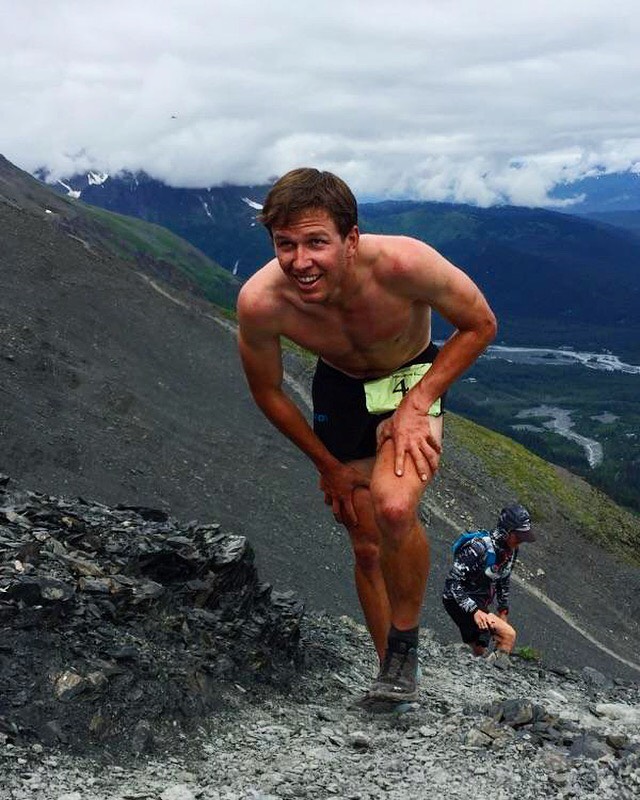
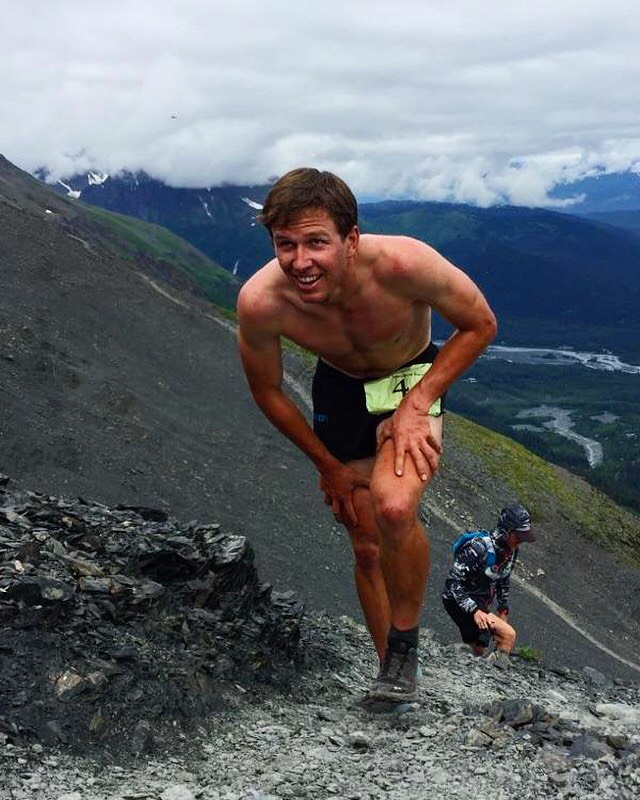
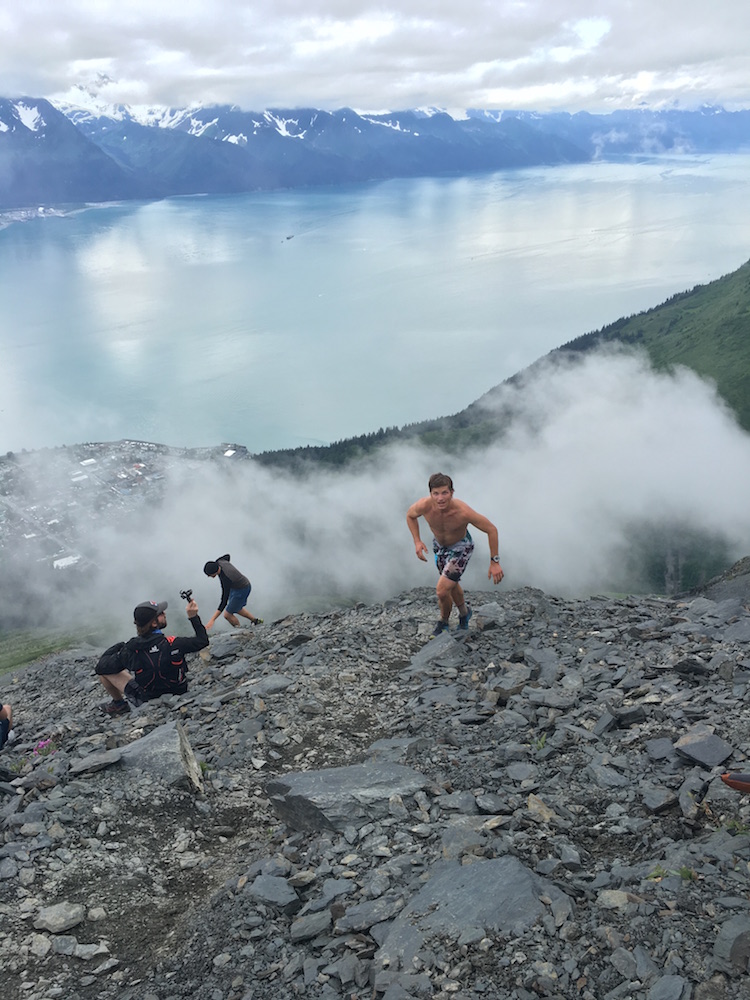
    U.S. Ski Team B-team member and Alaska Pacific University skier Scott Patterson scaling his way to the top of Mt. Marathon in Seward, Alaska on July 4, 2017. (Photo: Rob Whitney)

    As with other epic modern-day adventure race series, the fabled origin of Seward, Alaska’s annual Mount Marathon — held every July 4 — began with beer and a bet: who among us can run from the streets of downtown to the top of the 3,022-foot mountain crowding Seward’s skyline, then back to the bottom the fastest? What about within the hour?

    While the footrace race has evolved massively since the port town’s pioneer miners took on the challenge, clambering up its craggy course in woolen pants and workman’s boots nearly 90 years ago, it holds no less prestige for the millennial athletes or spectators who partake nowadays. To many Last Frontier residents, it is their Olympics. An estimated 30,000 outsiders annually inundate the town’s (population 2,500) sidewalks just to watch the event.

    “It’s Mount Marathon. It’s Alaska. It’s my Fourth of July,” Allie Ostrander, the 2017 women’s overall race winner and a Soldotna, Alask. native, told Alaska Dispatch News reporter (and former FasterSkier editor) Nat Herz after the competition. “Fourth of July feels empty without Mount Marathon.”

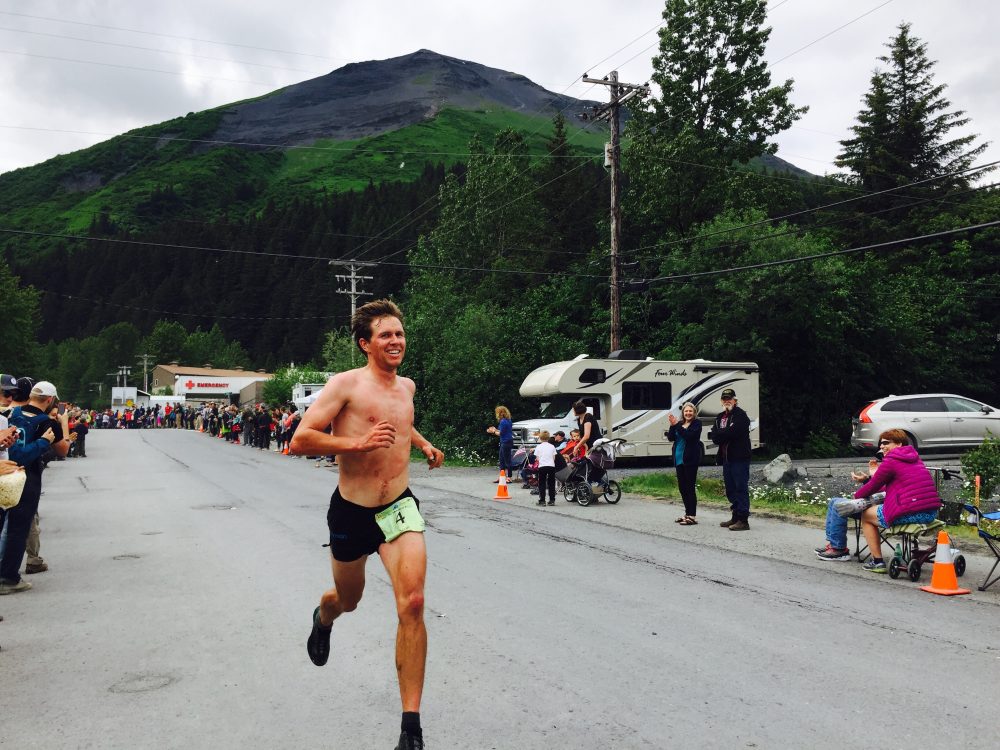
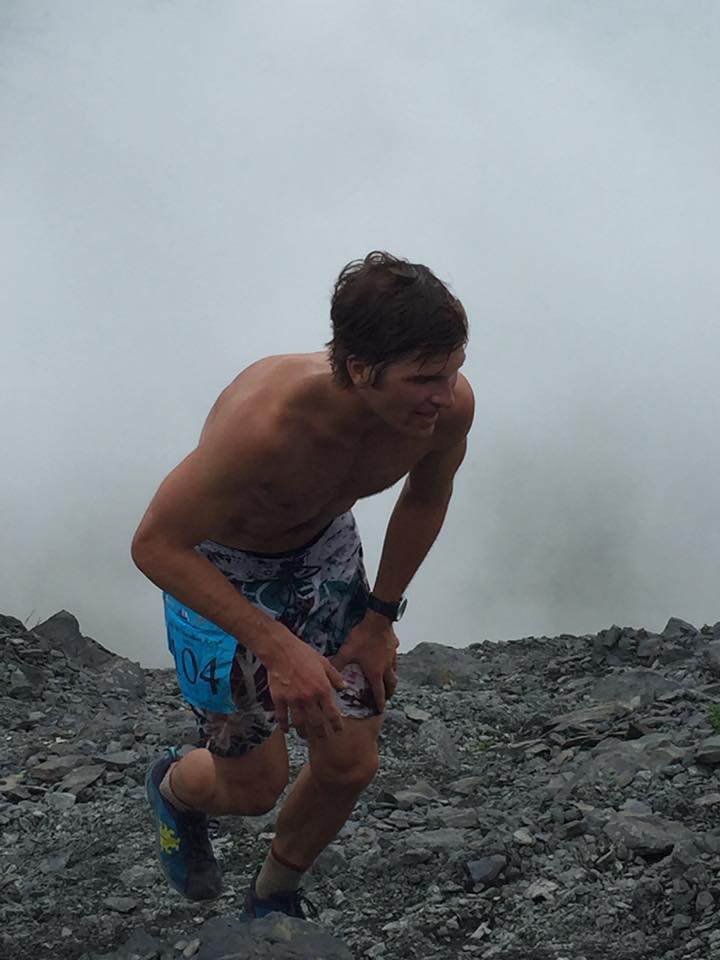
    Scott Patterson on his way to winning the 2017 Mt. Marathon running race on July 4 in Seward, Alaska. (Photo: Holly Brooks)

    Despite the obvious risks associated with careening down a mountain at top speed, stories of close encounters with kidney failure, brain-damaging falls, and disappearance deterred a few from re-entering this year’s version of the event.

    The upcoming 2018 PyeongChang Winter Olympics was reason enough for the current Mt. Marathon course-record holder and last year’s overall male champion, David Norris, to watch from the sidelines. His Alaska Pacific University (APU) teammate, Scott Patterson, who also recently earned a U.S. Ski Team (USST) nomination, however, did not.

    “It’s a big deal up here. I just figured why not go again?” Patterson, an Anchorage native, explained on the phone.

    In his debut Mt. Marathon race, Patterson had twisted his ankle and ultimately finished fourth last year. This year, as he weighed out his risk in racing, he arrived at a far less insidious calculation.

    “There’s definitely always a risk, that downhill is tricky,” Patterson said. “But I think looking at the competition beforehand, I knew that I could probably have a pretty good lead at the top and stake the downhill at my own speed; not really have to duke it out with someone down the hill.”

    With that, Patterson entered the 2017 event aiming for the win, but not the record. Norris was not on the start list, nor Kilian Jornet, the 2015 record holder and a professional ski mountaineer and ultramarathon  runner, not to mention Patterson had recently returned from the men’s USST training camp in Park City, Utah, which ran from June 26-July 5. Patterson departed the camp early to return for the race. 

    “Everyone was saying going into it that it was my race to lose,” the 25-year-old Patterson said. “The other guys who could really challenge me on the uphills this year skipped it, so it was kind of just me just out there on my own.”

    Patterson completed the 5-kilometer race in a time of 44:30 for the win, just over three minutes off the course record. The closest male finishers behind Patterson were Erik Johnson in second place just under a minute back (+0:52), and Kenneth Brewer in third, a little over two minutes behind (+2:23). Patterson’s first-place finish at Mt. Marathon is nothing unheard of among cross-country skiers. A number of other nordic athletes have been crowned the overall champion, including current USST A-team member Kikkan Randall, former USST athlete and Olympian Holly Brooks, APU nordic coach Eric Strabel, and Norris.  

    Morgan Arritola scaling her way to the top of Mt. Marathon in Seward, Alaska on July 4, 2017. (Photo: Rob Whitney)

    The runner-up in this year’s women’s event, Morgan Arritola, was also a member of the 2010 Vancouver nordic Olympic squad and skied competitively for over six years before she made the switch to mountain running in 2012. In her debut Mt. Marathon race, Arritola, 31, finished second in a time of 51:09, a minute and fifty seconds behind the 20-year-old Ostrander, who won in 49:19.

    While Arritola did preview the course once, she also indicated that she didn’t hold a whole lot over herself in terms of expectations and outcome going into race. Ultimately her goal coming into her first Mt. Marathon event was to “take it all in.” In discussions with her former teammates and champions, Randall and Brooks, the advice remained fairly simple: enjoy the atmosphere.

    “I didn’t really pre-race research. That’s not really my style,” Arritola, of Ketchum, Idaho, wrote in an email to FasterSkier. “Everyone has their own way of handling racing and I tend not to overthink.

    “I would love to come back next year,” she continued. “If there was a race-specific goal it would be to know the route I’m taking better. I asked for directions a few times 🙂 and be more confident on the downhill. I haven’t raced that kind of downhill and I just never got into a good rhythm.”

    While Arritola has three U.S. Mountain Running Championship titles to her name and a World Mountain Running bronze medal, mountain running is not where she is indelibly focused. She is currently going back to school for a degree in respiratory therapy and working various jobs to help fund her racing, such as The Rut 50 k in Big Sky, Mont., which she is registered to race in September.

    “I’m not running full time like with skiing,” Arritola wrote. “I am in my last year of school and running just keeps me sane. I don’t overthink it, I do what I want with it, and I enjoy it.”

    Finishing behind Arritola to round out the women’s top three was mother of three and three-time Mt. Marathon champion, Christy Marvin, in third place with a time of 52:22.

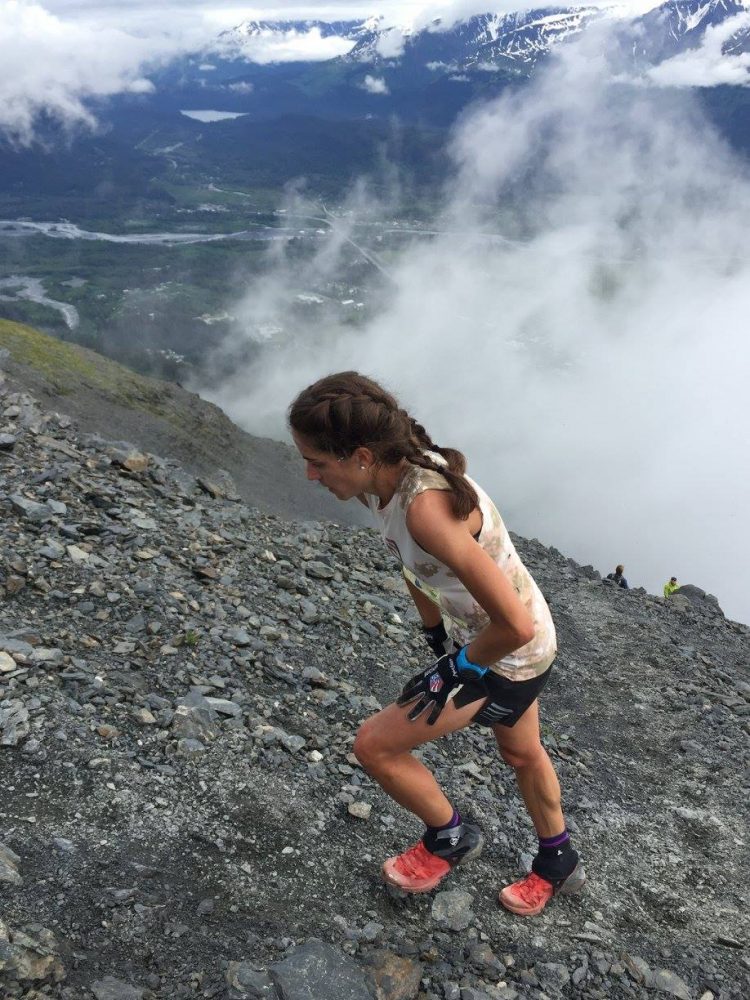
    In the junior race division of the event — in which racers run approximately halfway up the mountain before turning around for the descent — APU’s Luke Jager won the boys’ race in a time of 29:09, marking Jager’s second junior title in a row. Jager was followed by Gavin Block in second in a time of 29:32 and Ali Papillon in third in a time of 30 flat. The junior girls title went to Molly Gellert (Alaska Winter Stars) in a time of 32:53, also for the second year in a row. Behind Gellert in second was Ruby Lindquist finishing in a time of 33:55. Kendall Kramer (FXC) came in third, finishing in a time of 35:06 for the girls race.

    Results

  • Besh Cup Series Wraps up in Fairbanks as Team Alaska is Named

    Besh Cup Series Wraps up in Fairbanks as Team Alaska is Named

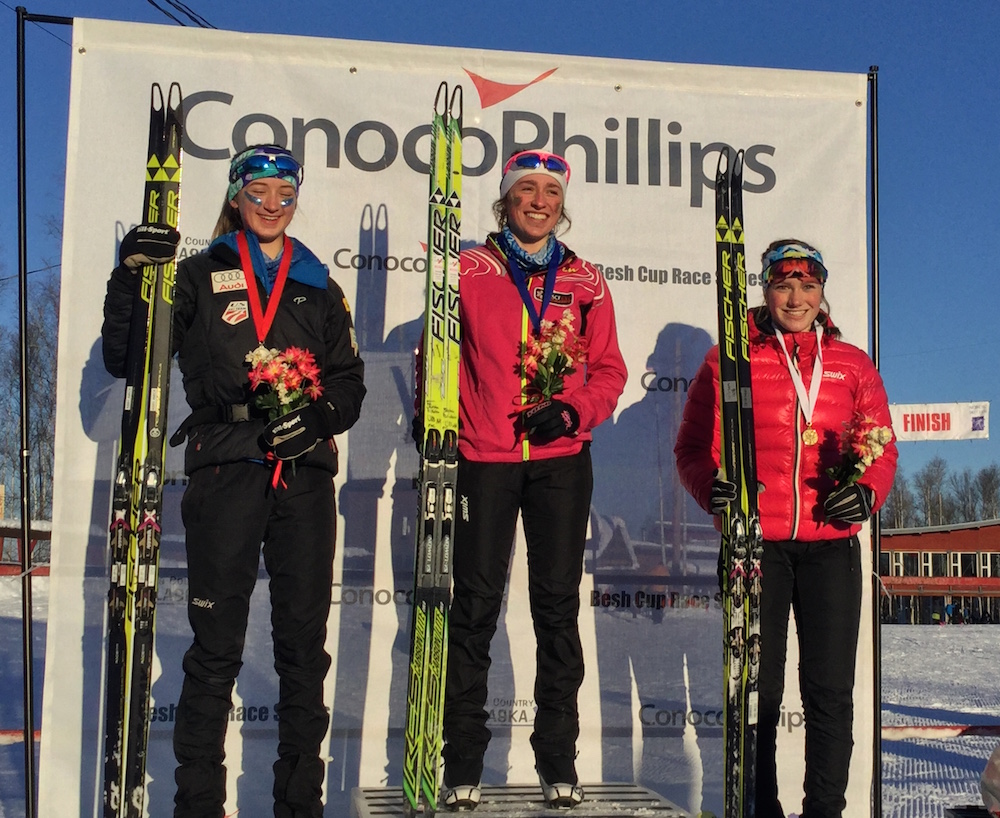
    Jenna DiFolco (c) of FXC, Abby Amick of APU (l), and Addison Gibson of ANR (r) on the podium for the U18 girls division of the Besh Cup 5 k skate race in Fairbanks, Alaska, Feb. 4, 2017. (Photo: Gavin Kentch)
    Jenna DiFolco (c) of FXC, Abby Amick of APU (l), and Addison Gibson of ANR (r) on the podium for the U18 girls division of the Besh Cup 5 k skate race in Fairbanks, Alaska, Feb. 4, 2017. 

    FAIRBANKS, Alaska — Alaska Airlines operates roughly 10 flights a day between Anchorage and Fairbanks. Last Friday morning many of those flights were packed with skiers, and ski bags piled up at baggage claim in Fairbanks, as Anchorage skiers streamed north for the final weekend of Besh Cup racing to select Alaska’s representatives to next month’s Junior Nationals in Lake Placid, N.Y. Two days later many of those same skiers returned south with plans to fly all the way to Lake Placid, where Team Alaska will have roughly equal representation from the state’s two largest cities.

    The 2016/2017 Besh Cup series concluded with a pair of distance races at Birch Hill ski area: freestyle interval start on Saturday, classic mass start on Sunday. The weather for both days was Fairbanks at its mid-winter best, clear and sunny and relatively warm. Cold powder and hard glide waxes were de rigueur.

    (The emphasis here is on relatively, as national FasterSkier readers might find Saturday’s race-time temperature of 10 degrees Fahrenheit, or Sunday’s reading of 2 degrees, objectively not all that warm. But it was -16 degrees at the airport on Sunday – Birch Hill’s elevated location on a hill above town often keeps it significantly warmer than the low-lying areas of central Fairbanks where official temperature readings are taken – and it is forecast to be -35 degrees in Fairbanks by later this week. So, relatively warm.)

    The first race on Saturday was the boys 10-kilometer freestyle individual start for racers in the U18 division and older, 45 starters in all. The overall podium on Saturday was U18 skier Ti Donaldson of the Nordic Ski Club Fairbanks racing team (FXC), Senior skier Cody Priest of Alaska Nordic Racing (ANR), and U18 skier Josiah Alverts (ANR).

    Among U20 men, FXC skier Benjamin Koenig was first, leading his teammate Logan Mowry in second and Dax Cvancara of ANR in third.

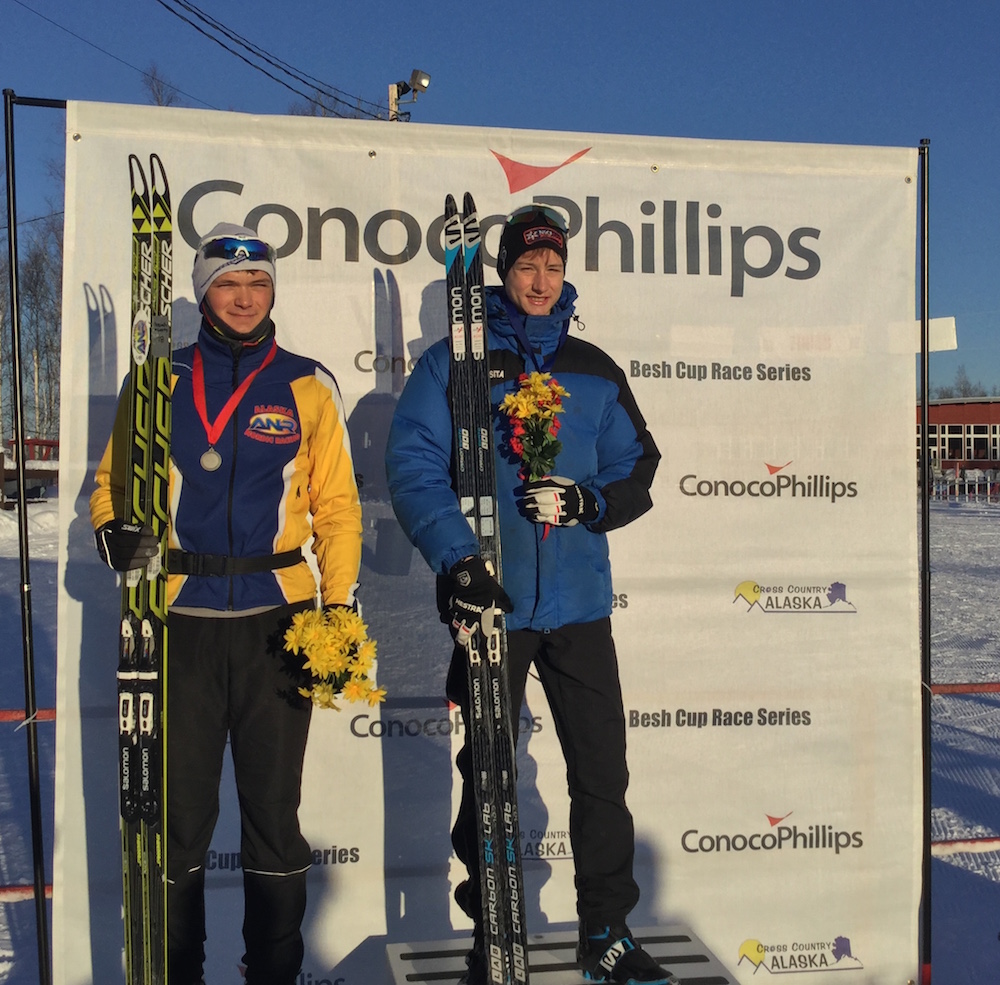
    The U18 boys division, which saw two of the top-three overall finishers, had Donaldson in first, Alverts in second, and APU skier Tristan Wiese in third.

    U16 boys raced a 5 k skate individual start, covering one lap of the blue course that 10 k skiers completed twice. Eli Hermanson of Alaska Winter Stars (AWS) led the all-Anchorage-area podium in the 5 k, followed by George Cvancara of ANR and Zanden McMullen of APU.

    Finally, the U14 boys raced a 1 k skate ski-cross event, with jumps, gates, slaloms, and other technical challenges. The event is a crowd favorite that, race organizers wrote, “helps develop skiers’ abilities to ski in a ‘pack’ along with developing technical skills.” (It may also soon be coming to a race series near you! Here is an example from the 2016 Youth Olympic Games in Lillehammer.) In another Anchorage-area sweep, Aaron Maves of APU took the A-Final, followed by Rudy Schumacher of AWS and Konrad Renner from ANR.

    On the girls side, a field of 57 racers (U16 and older) contested a 5 k skate individual start. At the end of one lap around the blue course, APU skier Maggie York took the overall victory by 40 seconds over FXC skier Jenna DiFolco, with Kendall Kramer (FXC) another 14 seconds back.

    York also topped the U20 podium. She was followed there by Alyeska Daniels and Lupua Oba, both of FXC.

    DiFolco, second overall, was first among U18 girls. Second in this division was Abby Amick of APU, with ANR’s Addison Gibson third.

    U16 girls took third through fifth overall in the combined U16/U18/U20/Masters field for the 5 k (there were no Senior skiers in the race). Locals Kendall Kramer and Kaya Ratzlaff of FXC led this division, with Annika Hanestad (ANR) third.

    U14 girls also raced a 1 k ski cross. First here was Quincy Donley of AWS, continuing her winning ways from the Anchorage and Soldotna Besh Cup weekends. She was followed across the finish line of the A-Final by Marit Flora of APU and Katey Houser of ANR.

    Ti Donaldson of FXC (r) and Josiah Alverts of ANR (l) on the podium for the U18 boys division of the Besh Cup 10 k skate race in Fairbanks, Alaska, Feb. 4, 2017. (Photo: Gavin Kentch)
    Ti Donaldson of FXC (r) and Josiah Alverts of ANR (l) on the podium for the U18 boys division of the Besh Cup 10 k skate race in Fairbanks, Alaska, Feb. 4, 2017. 

    Saturday’s overall winner for the boys race, U18 skier Ti Donaldson, was racing on home turf. “I’ve had a few wins [in the Besh Cup series] in the past,” Donaldson told FasterSkier in an in-person interview following the race. “Most of them have been in Fairbanks. I’m from here, so definitely a home-field advantage.”

    Donaldson came in expecting a “brutal” race, based on his knowledge of the course and his time previewing it. “But I knew it would be pretty fast conditions,” he continued – “it was nice and hard, and it wasn’t too cold. So I was pretty excited to see how it would go, and really just wanted to work the transitions and stay strong on the climbs, and crest over. So I stuck to that plan, and it worked out pretty well.”

    Donaldson was looking forward to 2017 Junior Nationals in March.

    “I’d be thrilled with a top-five finish,” Donaldson said of his goals for next month. “Two years ago, when I was racing the same kids, I placed fourth in a race, and so I’d like to repeat that result. That would be a good goal of mine.”

    Jenna DiFolco, the U18 girls winner and second-place overall skier, was also racing at home. She credited “my FXC coaches” for waxing her winning skis, and had hot cereal for breakfast, with raisins and dried cranberries, at home before heading out to Birch Hill.

    The race was “really fun,” DiFolco recounted in an in-person interview. “Warming up, I didn’t feel so good, I was feeling kind of tired, maybe I’d overdone it this week. And then I expected this course to be really hard, because there are so many hills. And it was definitely, like, it was a rough course. But it went a lot better than I expected it to.”

    DiFolco described her strategy for racing a one-lap 5 k course with nearly constant climbing or descending: “The first part is mostly downhill, so I kind of just started out like a sprint almost, because I knew I’d be able to recover on the downhill. And the first couple of hills I was just trying to keep it light, keep it relaxed, and then really start hammering up South Tower [the high point of the course], because I got a big break after that. And then the last two hills are basically just hard, really hard.”

    Looking ahead to Lake Placid, DiFolco said that she was “hoping to get a couple top-10 finishes.” She added, “A big dream, it’d be a big stretch, but I’m hoping to get, like, a podium would be really, really cool. But top 15, top 10 would be awesome.”

    Sunday saw classic mass starts instead of freestyle individual starts, and temperatures around 10 degrees colder, but otherwise it was more of the same. Seven of eight age-group winners from Saturday picked up a second victory on Sunday, as a pair of distance races rewarded skiers who were consistent in both techniques. (The first two weekends had featured one sprint and one distance race apiece, leading to greater variability in the podium finishers.)

    Sunday’s classic race also rewarded skiers who were good at traditional classic skiing, in light of the relatively slow snow and the impressive elevation change of a Birch Hill race course.

    The trails at Birch Hill are built on the side of, well, a hill (also, there are birch trees). The courses used for this weekend’s races were marked by an impressive Height Difference (the elevation change between the lowest and highest points on the course) of 89 meters within a 5-kilometer course. The World Cup skiathlon race that was contested in South Korea the same weekend, on the trails that will be used for the 2018 Winter Olympics in PyeongChang, featured height differences of only 58 and 41 meters on the two skiathlon courses.

    In fact, a height difference of 89 meters is a greater elevation spread than was present on most of the traditional World Cup courses this season, including in Davos (84m), Lillehammer (74m), Falun (69m), and Ulricehamn (57m). That said, some of those courses had more average climb per kilometer than the Birch Hill 5 k course. But only some of them. This may help explain why the winning time for a 10 k skate on Saturday was 29:22 for the men, and 16:15 for 5 k for the women, in a race with some of the top junior skiers in the country. (Winning times for Sunday’s 10 k classic races were 32:17 and 37:53.)

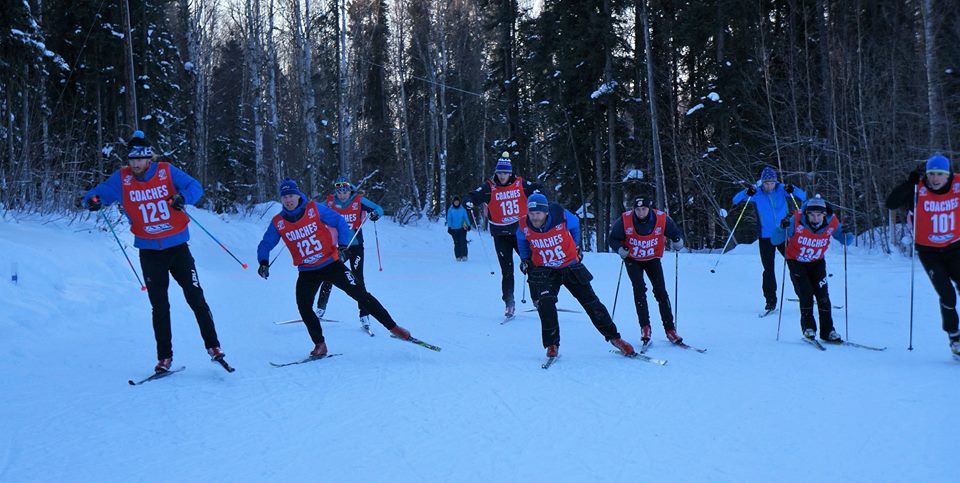
    Coaches compete in the final ski-cross heat of the day, the coaches' race, on Feb. 4 in Fairbanks, Alaska. Racers include Galen Johnston (129), Eric Strabel (125), Anson Moxness (126), and Pete Leonard (101). (Courtesy photo)
    Coaches compete in the final ski-cross heat of the day, the coaches’ race, on Feb. 4 in Fairbanks, Alaska. Racers include Galen Johnston (129), Eric Strabel (125), Anson Moxness (126), and Pete Leonard (101). (Courtesy photo)

    APU Devo and Master Coach Galen Johnston shared his thoughts on the effects of such a course profile after spending the weekend watching his athletes race up and down these hills. “One of the best parts of the weekend was to see how the combination of slow snow and lots of strideable sustained climbing put the focus of the [classic] races on striding and fitness rather than simply double pole strength,” Johnston wrote to FasterSkier on Monday.

    “Courses designed like this can keep striding a viable, and even necessary part of classic skiing,” Johnston continued by email. “Birch Hill has some of the most progressive course designs that I’ve seen and it’s paying off. Skiers ski differently than they did even 10 years ago, and it’s really neat to see a course that can accommodate and challenge that change in style without turning things into an unskiable death march. Estle is keeping people very honest, but still allowing for ample fun,” Johnston concluded in reference to longtime Fairbanks race director and ski-course designer (and former U.S. Ski Team coach) John Estle.

    On Sunday the best strider was DiFolco, who took first place in the 10 k classic mass start race by 19 seconds over Saturday’s winner York. Third overall was ANR skier Heidi Booher (ANR), another 23 seconds back.

    York was again first in the U20 women division. The rest of the podium was also unchanged from Saturday, with Daniels in second and Oba in third.

    DiFolco was again first among U18 girls. Second on Sunday was Booher, with Emma Nelson of ANR third.

    There was a substantial drop-off in distance from U18 girls to U16 girls, with the latter group racing not 10 k but a 3 k classic mass start. First after just under 10 chaotic minutes was Kramer again, edging out her FXC teammate Ratzlaff by 0.7 seconds. Tjarn Bross rounded out the all-FXC podium in third.

    U14 girls raced the same 3 k course as the U16 girls. And after 11 to 12 minutes of racing, it was precisely the same U14 girls podium as on Saturday: Donley, Flora, and Houser.

    On the boys side, U18/U20/Senior/Masters skiers raced a 10 k classic mass start on the same course as the girls. First overall was Lukash Platil (officially unaffiliated, but listed on the University of Alaska Fairbanks (UAF) ski team roster), followed by Donaldson of FXC and Wiese of APU.

    Platil was also first in the Senior men’s division. He was followed there by Kenny Brewer (now unaffiliated, formerly of UAF) and Matt Muffoletto (The Other Guys).

    Among the U20 men, Koenig picked up his second first place of the weekend, and Mowry his second second place. Hamish Wolfe (APU) was third.

    Donaldson and Wiese led the U18 boys. They were followed by Alverts, as the age group podium remained largely unchanged from Saturday.

    The U16 boys raced a 3 k classic mass start. This was the only age group to see a new winner on Sunday, as Cvancara moved up from second the day before to nudge Hermanson down a step on the podium. Everett Cason of APU was third.

    And the U14 boys (also 3 k classic) were again an all-Anchorage affair: Maves once again in first, Rowan Morse (APU) in second, and Schumacher in third.

    Later Sunday afternoon a crowd gathered in the Birch Hill Recreation Center, ignoring Super Bowl LI then in progress, for the naming of Team Alaska for this year’s Junior Nationals (JNs).

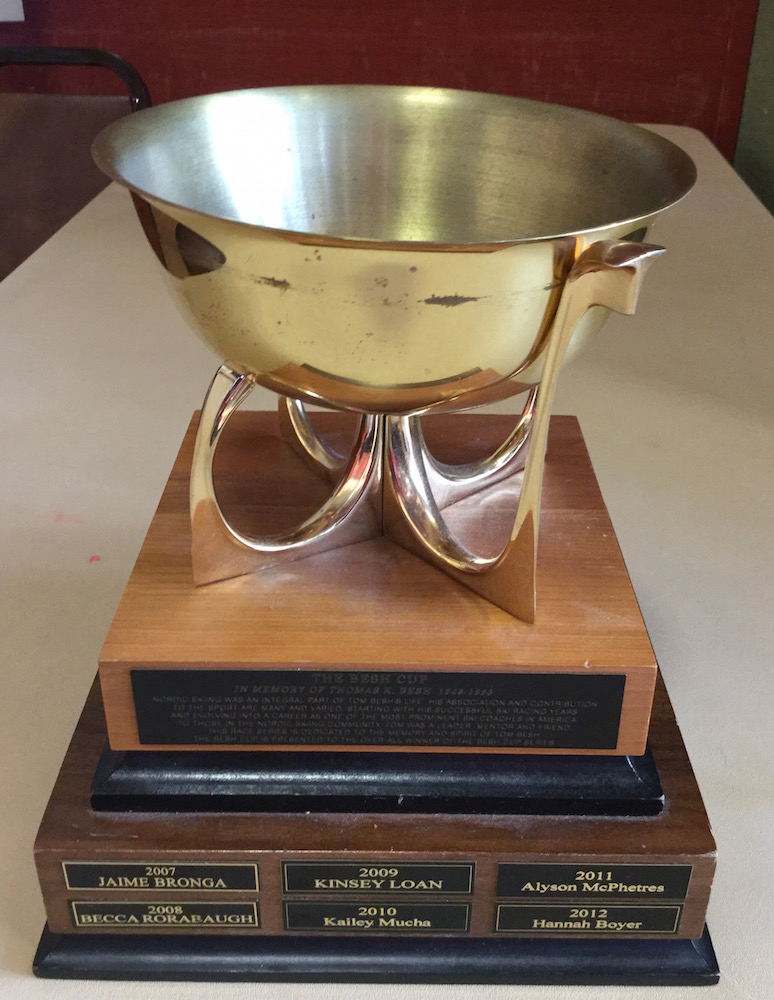
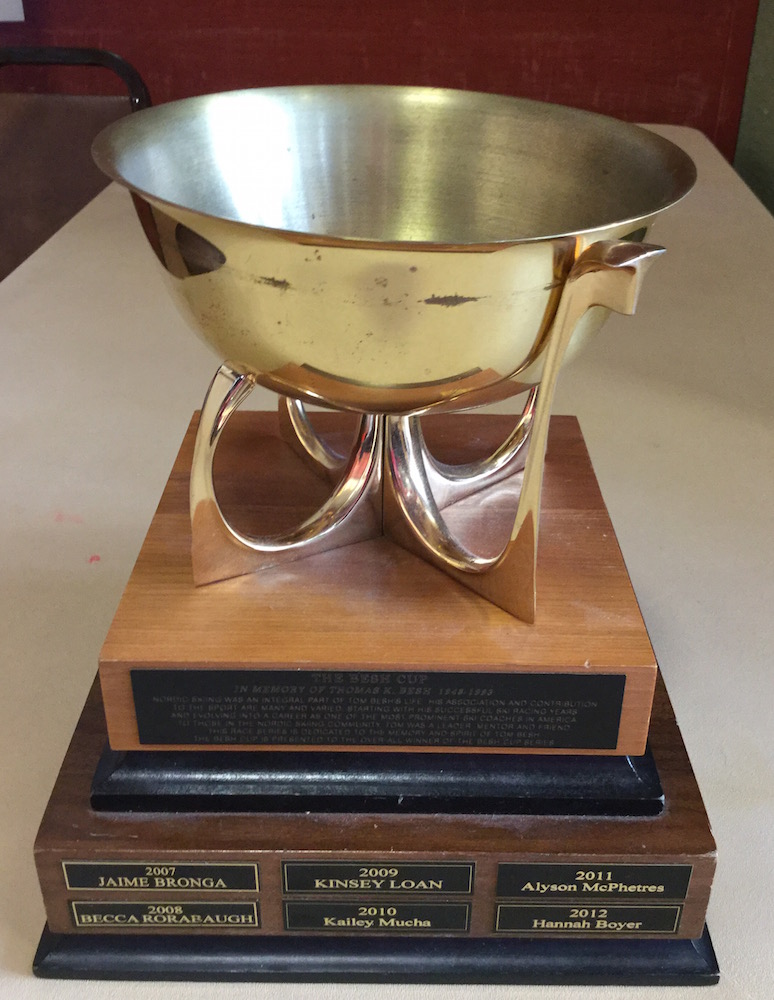
    The Besh Cup Trophy, photographed in Fairbanks, Alaska, in February 2017. (Photo: Gavin Kentch)
    The Besh Cup Trophy, photographed in Fairbanks, Alaska, in February 2017. 

    Cross Country Alaska also awarded the Besh Cup Trophy, given to the U18 or U20 skier with the greatest number of JN qualifying points across all six races combined. This year’s winners were Josiah Alverts for the boys and Jenna DiFolco for the girls. Their names will be added to a trophy, Stanley Cup-style, that includes on its plinth recognizable names from American skiing such as David Norris, Becca Rorabaugh, Reese Hanneman, Andy Liebner, Zach Hall, Eric Strabel, Kate Pearson, and Rob Whitney.

    While winning the Besh Cup Trophy is undeniably prestigious, it also necessarily rewards the best skier who was in Alaska all winter for the races, as opposed to competing Outside or internationally. For example, among U18/U20 girls, you may have heard that the University of Alaska Anchorage’s Hailey Swirbul was racing in Soldier Hollow, while Molly Gellert was on the Scandinavian Cup trip in Norway.

    DiFolco graciously acknowledged as much, telling FasterSkier on Sunday soon after receiving the trophy, “I think some of the fastest skiers are not here, because they pre-qualified [for JNs] and they went on big trips.” But DiFolco still skied the races and earned the results, including two firsts and two seconds in the final four races of the series.

    “It’s pretty cool,” DiFolco said of the season-long honor. “I never would have really expected this to happen a year ago. … I’m pretty proud of it. I’m happy with it.”

    Shortly after the awards ceremony ended the migration began to repeat itself in reverse, as out-of-town skiers loaded up cars in the Birch Hill parking lot for the 7-hour drive south to Anchorage or paraded ski bags through the Fairbanks airport. The flight home for Anchorage skiers was marked by ski hats, team jackets, and quiet chatter, as athletes talked about next month’s trip to the East Coast and parents fretted about missed school days and makeup work.

    Junior Nationals begin in Lake Placid in early March. The first race is a 5/10 k freestyle individual start on March 6.

    Results: skate interval start | classic mass start | overall points lists

    ***

    FasterSkier is seeking contributions (written, photography or videography) from regional race circuits across North America. Please email info@fasterskier.com if interested.

  • Mt. Marathon Rookie, Norris Blasts Course Record

    Mt. Marathon Rookie, Norris Blasts Course Record

    Fairbanks resident David Norris, who skis for Alaska Pacific University (APU), won Monday’s Mount Marathon Race outside Seward, Alaska, in record time.  The 5-kilometer race — which takes racers from the shores of Resurrection Bay up 3,022 feet to the summit of Mt. Marathon and back down again, on slopes as steep as 60 degrees — was first held in 1915 and is among the country’s oldest footraces. A crowd estimated at 30,000 people crams into Seward (pop. 2,500) each July 4 to watch a race that has been described as the “Olympics of Alaska.”

    The former men’s course record was 41:48, set last year by Killian Jornet, a man widely acknowledged as the world’s best mountain runner.

    On Monday, at the 89th edition of the race, Norris took 22 seconds off that time. Running alone for most of the race, Norris was first to the halfway mark of the ascent, first to the turnaround at Race Point (elevation 3,022′), and first across the finish line (elevation approximately 20′, depending on how high the tide is).  He finished in 41:26.

    Jornet tweeted his congratulations to Norris within minutes of the race’s conclusion.  His Twitter feed made it apparent that he had been watching the live feed of the race.

    Three-time champion Eric Strabel, a former APU skier and current APU coach, was third in 44:19.  Scott Patterson, Norris’s teammate on the APU Elite Team, finished fourth in 44:43 after reaching the turnaround point in second.

    In the days leading up to the race, Norris and his teammate Patterson, both race rookies at Mt. Marathon, were marked by the local mountain running community as strong climbers but unproven downhill runners. There was also a suspicion that they might hold back slightly on the descent, in deference to their professional ski careers and out of a desire to avoid injury.

    APU's David Norris ascends Mt. Marathon en route to a course-record time, above Seward, Alaska, on Monday. (Photo: Rob Whitney)
    APU’s David Norris ascends Mt. Marathon en route to a course-record time, above Seward, Alaska, on Monday. (Photo: Rob Whitney)

    Speaking on live television soon after the finish, Norris acknowledged that this was his race strategy.

    “I had enough of a lead that I knew I could take it easy [on the descent] and not hurt myself,” Norris said in his interview with Anchorage’s KTVA Channel 11.

    Describing his descent, in which he lost 3,000 vertical feet in roughly 10 1/2 minutes, Norris recounted sliding down a snowfield for roughly 250 meters near the top: “The snow was totally out of control, the scree was fine,” he said.

    Norris admitted that he had not come in expecting to break the record.  “I thought that my down would be so slow,” he said, “that even if I had a good up, it wouldn’t even matter.”

    But as things turned out, Norris said, “I felt awesome.”

    So was there anything that marred his performance on a day in which Norris set a course record in a century-old footrace?  “I crashed into the willows right in front of the crowd at the bottom,” Norris recalled.  “Other than that it was a perfect race.”

    Other nordic skiers in top ten in the men’s race included former University of Alaska Fairbanks (UAF) skier Kenneth Brewer in ninth. Sixth-place finisher Lyon Kopsack, a current member of the UAF cross-country running team, has also competed in local ski races.

    Women’s race

    Christy Marvin, a stay-at-home mother of three from Palmer, Alaska, won the women’s race in similarly dominant fashion. Competing in the prime-time afternoon spot for the first time – the men’s and women’s races began alternating their positions this year, after decades’ worth of the men getting the most prestigious last race of the day – Marvin ran away from pre-race favorite Yngvlid Kaspersen, a Salomon-sponsored professional mountain runner who flew over from Norway just for the race, early on and never looked back.

    Much like Norris before her, Marvin was first to reach halfway on the uphill, first to the turnaround point, and first to the finish. She collected her second Mt. Marathon victory, and first since 2013, in a personal record time of 51:02. Kaspersen finished over two minutes back in 53:22, followed by Denali Strabel in 53:40, giving Eric and Denali a pair of third-place finishes on the day.

    Notable skiers in the top 10 included Anchorage’s Ann Spencer (daughter of former Olympian and long-time Mt. Marathon course record holder Bill Spencer), who currently skis for Middlebury, in fifth and Seward native and former FasterSkier reporter Aubrey Smith in seventh.

    Junior race

    Nordic skiers dominated the podium in the first race of the day, the junior race that goes roughly halfway up the mountain before turning around and returning to downtown Seward. Luke Jager, an APU junior skier from Anchorage who won the U16 10 k skate race at this year’s Junior Nationals, won the boys’ race for the second year in a row, this time in 27:29. He was followed by fellow APU junior skier and Anchorage resident Hamish Wolfe in 28:01. Anchorage’s Trent Fritzel, who skis with Alaska Winter Stars, was third in 28:49.

    Both genders race together in the junior race; in 2014, Allie Ostrander beat the boys to finish first overall.  This year, Molly Gellert was first in the girls’ race in 31:55, good for 10th overall. Gellert, of Anchorage, skis with Alaska Winter Stars and has podium finishes at both Junior Nationals and Alaska’s Besh Cup to her name. Second place went to Riana Boonstra of Ninilchik, last year’s junior girls’ champion, in 33:11.  (Riana Boonstra’s father, former Olympic skier Todd Boonstra, is a four-time champion of the men’s race.)  Local Ruby Lindquist, who runs and skis for Seward High School, was third in 34:02.

    Results