From the FasterSkier archive — posts syndicated from athletes’ and coaches’ own blogs between 2004 and 2012, kept online as published. Current coverage is at fasterskier.com.

Tag: Morgan Smyth

  • Hall and Studebaker-Hall Take Reins with Team SoHo

    Hall and Studebaker-Hall Take Reins with Team SoHo

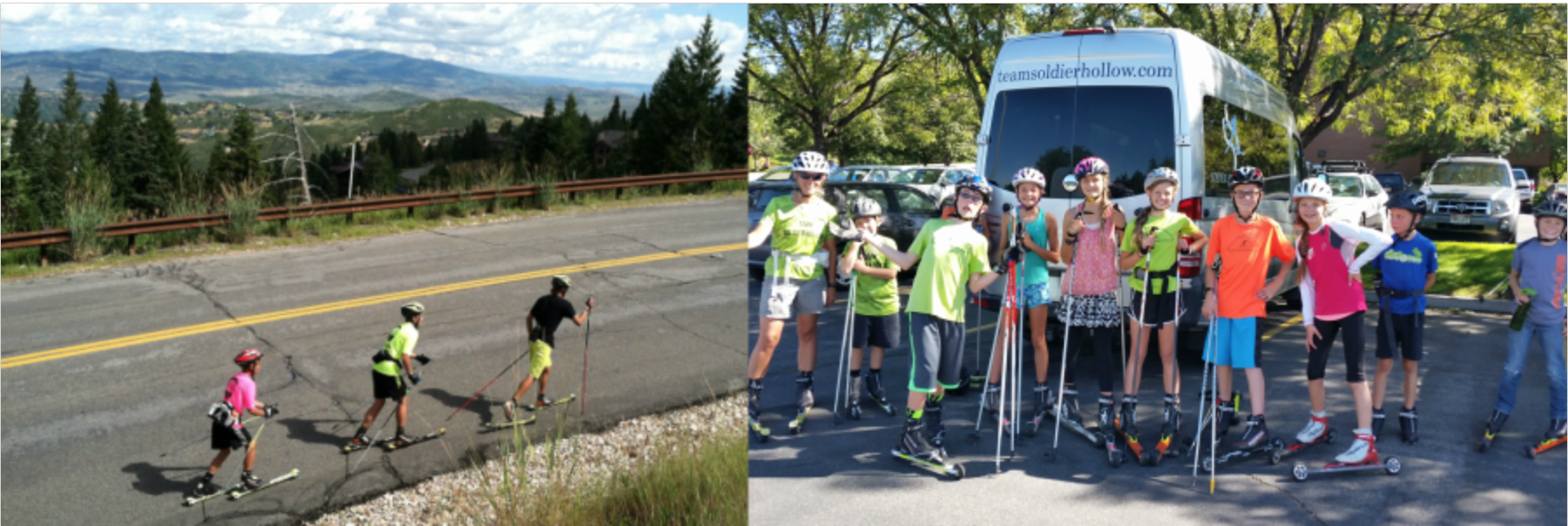
    Zach Hall (far left) the new manager and head coach of team Soldier Hollow’s biathlon programs standing with his athletes during a training session this summer. (Photo: Sara Studebaker-Hall)

    Last September, amidst the chatter of others gathered for the 11th annual U.S. Olympic and Paralympic Assembly in Colorado Springs, Colo., Sara Studebaker-Hall and the CEO of the Utah Olympic Legacy Foundation (UOLF), Colin Hilton, shook hands. Studebaker-Hall, a two-time Olympic biathlete, was attending the meeting as an athlete rep for the US Biathlon Board of Directors and was introduced to Hilton by US Biathlon Association (USBA) President and CEO Max Cobb.

    The three were partaking in the U.S. Olympic and Paralympic Assembly’s two-day fall symposium, an event that included seminars on athlete rights and anti-doping. At the time of their introduction, Studebaker-Hall had no idea that her conversation with Hilton would evolve into a job opportunity and eventually, her return to the Intermountain region. Originally from Boise, Idaho, Studebaker-Hall was starting her third season as the assistant coach for the University of Alaska Anchorage (UAA).

    But last fall, her coaching position and the future of the UAA Ski Team were in question.  Financial restraints at Alaska’s state universities had put more than one cross-country ski program in limbo.

    Back in Anchorage and also unsure about the future was Studebaker-Hall’s husband, Zach Hall, a former national-team biathlete himself.  A native of Nikiski, Alaska, Hall had been working to develop a competitive youth biathlon program in Anchorage and was questioning whether or not it was time to make a career move.

    Then Studebaker-Hall learned through Hilton that UOLF was looking to add a new biathlon program to Soldier Hollow, its cross-country ski resort in Midway, Utah. A world-class venue, the Soldier Hollow (SoHo) shooting range had hosted biathlon competitions during the 2002 Winter Olympic Games, yet no biathlon, development (devo) or competition (comp) teams existed in the SoHo or Midway area.
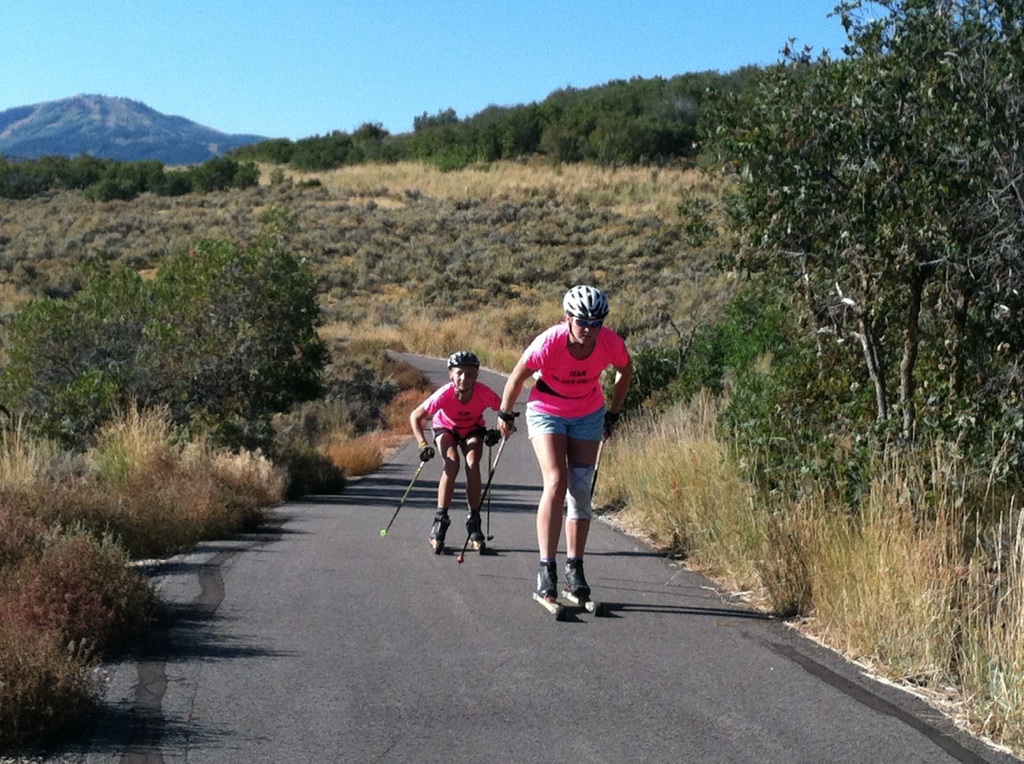
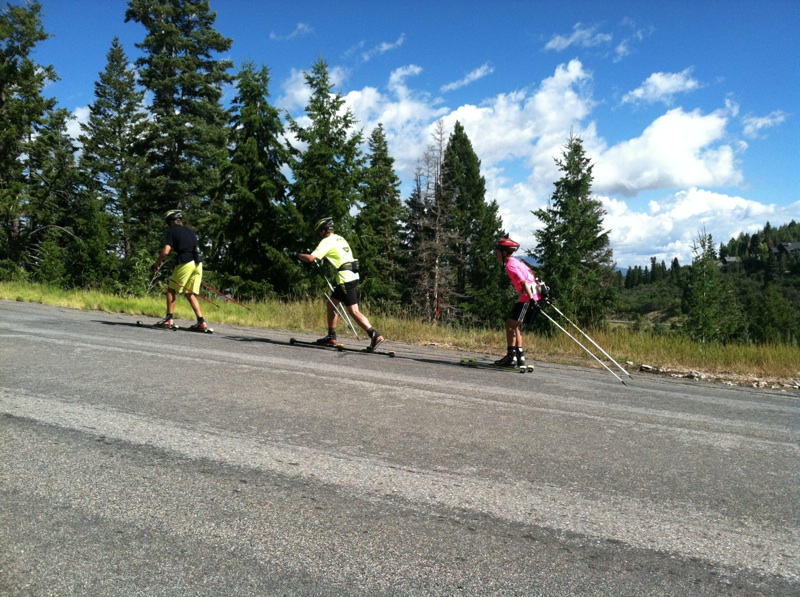
    Team Soldier Hollow athletes Ingrid Norton and Pearl Harvey during a rollerski workout two years ago near Heber and Park City, Utah. (Photo: Morgan Smyth)

    “One thing I look at is what are we doing with our venues, are we providing the sport we out to provide,” UOLF Vice President of Sport and Venues Marc Norman said on the phone in September. “The fact that we weren’t hosting [biathlon] and weren’t running any programs in it was a quick red flag for me.”

    Along with the addition of a biathlon program, Team Soldier Hollow was also in need of a youth coach for its nordic program. From 2012 to 2015, Morgan Smyth served as the program manager, overseeing the Comp and Devo teams, the Youth League and the Charter School Ski Program. At the time of her departure, 145 kids were enrolled in SoHo’s programs — 10 on the Comp (competition) team, a number which has almost tripled since then.

    “I left Soldier Hollow to work for Park City Nordic Ski Club [PNSC] as the Nordic Manager,” Smyth wrote in a recent email. “PNSC was part of the Utah Olympic Legacy Foundation. Ironically Soldier Hollow became a part of the Legacy Foundation less than a year later but I live in Park City so it was nice to work closer to home.

    “I left Park City Nordic this fall and started a Physical Therapist Assistant program,” Smyth continued. “I am excited to try something new but plan to stay involved in the ski community. Hopefully coaching the younger kids during the winter months.”

    Former UAA assistant nordic coach Sara Studebaker-Hall (center, white hat) at the #savealaskaskiing rally in Anchorage, Alaska, on Nov. 10, 2016. Former UAA skier and current USST member Sadie Bjornsen (pink jacket) is to her left. (Photo: Gavin Kentch)

    Last fall, after Studebaker-Hall returned to Anchorage, she and her husband were offered the opportunity to work with Team Soldier Hollow, with Hall heading the new biathlon program and Studebaker-Hall leading the pre-existing nordic ones. When the offer was made, the UAA Ski Team’s future remained uncertain, and the two ultimately accepted UOLF’s offer, viewing it too good to pass up.

    “It was hard to leave UAA,” Studebaker-Hall explained on the phone earlier this summer. (The UAA Ski Team was ultimately saved three weeks after she and Hall accepted). “But moving to a head-coaching position and managing a program here and getting this off the ground was kind of a once in a lifetime opportunity, so we had to take it.”

    Studebaker-Hall is now serving as the head coach and program manager for Team Soldier Hollow’s Devo Plus and Comp teams. The competition team alone has 25 athletes, many of which Studebaker-Hall described as being “on the precipice of just getting going”. As she transitions from coaching collegiate skiers to juniors, she expects a few challenges mainly involving the mindset of younger skiers.

    For most of the college skiers she’s coached, knowing the fundamentals of being an endurance athlete were automatic: get adequate amounts of rest between training sessions, practice good hydration. In contrast, a majority of her Team Soldier Hollow athletes are still learning the basic principles, such as the importance of recovery, nutrition and getting decent amounts of sleep.

    “With youth kids, you’re trying to instill in them this idea that coming to training everyday is really important,” Studebaker-Hall observed, “Even just how to think about training, all these things I think that maybe I took for granted a little bit, that all the kids that I previously worked with knew already. That’s definitely a challenge, but one that I’m really excited about because these kids are so moldable.”

    Most of the juniors she’ll coach this winter range in ages from 10 to 20 years old.

    “They’re really ready to take in everything you say,” Studebaker-Hall continued. “You have a huge opportunity as a youth coach to do that for kids, maybe even more so than on a collegiate level, because you’re their first real coach.”
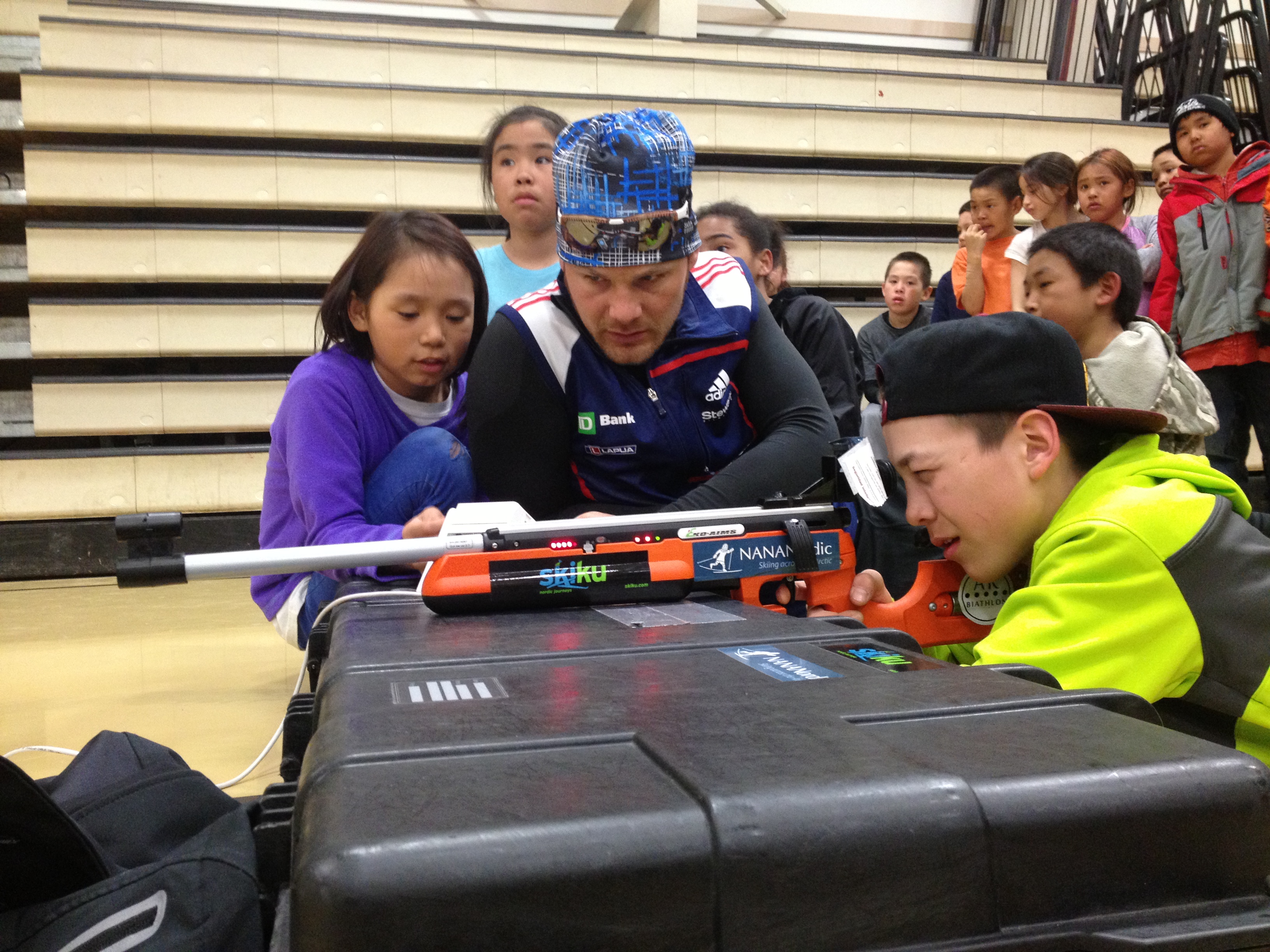
    Zach Hall teaching shooting skills in 2014 at an indoor range in Kotzebue, Alaska, as part of the NANANordic program in the state’s Northwest Arctic Borough.

    Though Studebaker-Hall only started working with Team Soldier Hollow this summer — Hall arrived last December — she’s already made a positive impression on many of her athletes. Pearl Harvey, 16, who has been involved with Soldier Hollow’s nordic program since she started walking, highlighted Studebaker-Hall’s interest seeing her athletes succeed.

    “I have never had a coach so involved with technique and caring about my progression as a skier and a person,” Harvey, who hopes to one day receive a college scholarship for skiing, wrote in an email. “Sara, for me, is a big role model and she is shaping me as an athlete with being more conscious of my technique, eating, drinking and sleeping habits. She is also shaping me as a person and keeping us in check and making sure we are on the correct path.”

    As Studebaker heads Soldier Hollow’s nordic programs, her husband is in charge of SoHo’s new biathlon programs: Intro Flex , Devo Plus Flex  and Comp Flex (development team). Hall estimates he has a total of 20 athletes in the biathlon program, though not all belong to Team Soldier Hollow. The Utah Nordic Alliance (TUNA), the Park City Nordic Ski Club or Wasatch Nordic have athletes participating in SoHo’s biathlon program, thanks to what they dubbed a “flex” program option. With this “flex” program, members from any of the surrounding nordic ski clubs can join Team Soldier Hollow for biathlon training without changing their club affiliation.

    Racers at 2017 U23/Junior World Championships last February in Midway, Utah. (Photo: Team Soldier Hollow blog)

    “We’ve got the only range in the area, so what we’re trying to do is work with all the area coaches to schedule training sessions, so that it works as much as we can with them working with their local nordic clubs, ” Hall said on the phone in July. “A big part of the program is just pushing general nordic development and adding opportunities with biathlon.”

    Sparking interest is the first step for Hall, as well as getting the word out about the biathlon program. Having U23/Junior World Championships held at Soldier Hollow last season was also helpful in promoting the biathlon and nordic programs there, as well as giving younger athletes an idea of where skiing could take them.

    “This is my first summer trying Biathlon, and I am loving it,” Lina Farra, 16, wrote in an email in September. “Both Zach and Sara have very high-level Biathlon experience, and that combined with their great passion for sport sets this program apart from others around the nation.”

    SoHo is currently bidding to host an International Biathlon Union (IBU) World Cup in 2019. According to Studebaker-Hall, an exploratory committee is also forming for a potential Olympic bid — the last Olympics held at SoHo took place in 2002.

    “From a programmatic standpoint, we definitely want to see Utah kids participating in this sport,” Norman said. “There’s no reason we shouldn’t have a strong biathlon program. That’s our goal, is to build up and be one of, if not the best biathlon programs in the nation. And have kids of all ages and abilities participating in biathlon.”

  • Park City Nordic Ski Club is Hiring

    Park City Nordic Ski Club is Hiring

    PCNSC logo

    Park City Nordic Ski Club, located in Park City, UT, is hiring for the following positions:

    Comp Team Assistant Coach: 

    PCNSC is seeking a part-time assistant Comp Team coach. The Comp Team is a year-round training program for high school age athletes. Responsibilities may include but are not limited to implementing and/or participating in a variety of workouts including rollerskiing, running, mountain biking, skiing and weight lifting; attending and driving to/from camps and competitions; and applying glide and kick wax.

    Candidate must have good communication and leadership skills. Prior coaching and/or racing experience preferred but not required.  USSA Level 100 coaching certification must be obtained by December 1, 2016.

    Kickers and Gliders Lead Coach:

    PCNSC is seeking a lead coach to run the Kickers and Gliders program for winter 2016-17. Kickers and Gliders is an after school cross-country ski program for 50-70 youth ages 7-10. This is a 13 week position from December to mid-March. Responsibilities include lesson planning and implementation, group organization, communication, and rental equipment management.

    Candidate must have excellent organization, communication, and leadership skills. Prior coaching and/or racing experience preferred but not required.  USSA Level 100 coaching certification must be obtained by December 1, 2016.

    If desired, the above positions may be combined. Interested applicants should contact Morgan Smyth at msmyth@uolf.org

    The Park City Nordic Ski Club 2014/2015 team
    The Park City Nordic Ski Club 2014/2015 team
  • Wednesday Workout: Finding Balance with Team Soldier Hollow

    Wednesday Workout: Finding Balance with Team Soldier Hollow

    Team Soldier Hollow athletes Ingrid Norton and Pearl Harvey. during a rollerski workout near Heber and Park City, Utah.  (Photo: Morgan Smyth)
    Team Soldier Hollow athletes Ingrid Norton and Pearl Harvey. during a rollerski workout near Heber and Park City, Utah. (Photo: Morgan Smyth)

    This week’s workout comes from Team Soldier Hollow coach Morgan Smyth, a former World Cup racer and Alaska Pacific University skier, and caters to cross-training needs. Team Soldier Hollow trains out of Midway, Utah.

    ***

    Many high school skiers are multi-sport athletes. This can be a challenge for athletes who have spent most of the summer ski training and working on their upper-body and ski-specific muscles. How do you participate in fall sports and not lose all those big summer gains?!

    Team Soldier Hollow athletes Xander Burkemo, Spencer Brosnahan and Mason Heimburger during a rollerski workout near Heber and Park City, Utah.  (Photo: Morgan Smyth)
    Team Soldier Hollow’s Xander Burkemo, Spencer Brosnahan and Mason Heimburger during a rollerski workout near Heber and Park City, Utah. (Photo: Morgan Smyth)

    Note: Most of the Team Soldier Hollow athletes run cross-country, but this is a great ski workout to balance with most fall sports.

    Since it is race season for cross-country running, most of the speed and interval workouts are done with the running team. We then add two easy rollerski workouts that focus on technique and maintaining ski specific strength.

    One of our key workouts is a combo classic rollerski and a mini general-strength session in the gym.

    Rollerski Workout:

    • Easy 20 min double pole warm up
    • 3 x 3 minute easy single pole
    • Technique drills

    Rollerski Total: 45-60 min

    The rollerski workout ends at the gym.

    For the general strength portion, the goal is to maintain the general upper-body strength gained during the spring and summer. The running team does a plyos workout once a week so we don’t do much lower-body strength. However, depending on your sport, some could be added especially to prevent muscle imbalances.

    Strength Workout:

    • Dynamic stretching – 10m each.
    • Butt Kicks
    • High Knees
    • Side Lunges
    • Front Lunge
    • Alligator Crawl
    • Inch Worm

    Strength:

    • Pull Ups 2×10
    • Balance Clock Touch (this is a balance drill that can be done on the ground or an inflatable disc or other unstable surface)
    • Push Ups 2×20
    • Classic Arm/Leg Swing (this is a technique/balance drill that can be done on the ground or an inflatable disc or other unstable surface)
    • Back Ups 2×12
    • Dips 2×12
    • Hanging Leg Raise Up to Bar 2×5

    Total time: 90 minutes

  • Soldier Hollow Seeking Assistant Coach

    Soldier Hollow Seeking Assistant Coach

    Team Soldier Hollow

    Soldier Hollow is seeking an assistant coach for the upcoming fall/winter season. Team Soldier Hollow is a 150-skier club based out of the 2002 Olympic and Paralympic cross-country ski venue in Midway, Utah.  More information on our youth ski programs can be found at teamsoldierhollow.com

    Primary responsibilities include: assisting with all practices, effectively communicating with athletes, parents, and coaches, traveling to local and regional races, assisting with waxing and other race day duties, driving Soldier Hollow vehicles.

    Minimum Qualifications:

    • Experience cross-country ski racing and/or coaching
    • Current, or ability to obtain, USSA coach membership
    • 22 years of age or older
    • Ability to drive Soldier Hollow vehicles
    • Available to work weekends during the winter season

    The assistant coach position can be full or part time depending on qualifications and preference. Compensation is dependent upon experience.

    For more information or to apply for the position please email resume to Morgan Smyth at morgan.smyth@soldierhollow.com.

  • Team Soldier Hollow Seeks Devo Coach

    Team Soldier Hollow Seeks Devo Coach

    Team Soldier Hollow, located at the 2002 Olympic venue in Midway, UT, is looking for an enthusiastic and energetic coach to work with our Devo Team skiers (ages 10 to 13). Ideal candidates will have experience cross country ski racing and/or coaching and waxing. Current USSA Coaches License is required.

     Responsibilities include:

    *Planning and leading 3 fun practices a week

    *Developing technique of both new and experienced skiers

    *Helping kids wax skis for training and races

    *Support at local citizen & junior series races

    This position starts mid fall and requires 2 to 3 afternoons a week plus some weekend races. Additional opportunities to assist with Comp Team (ages 14 to 18) training and travel may exist.

    Team Soldier Hollow is a growing club with over 100 youth in our ski programs! For more information on Team Soldier Hollow visit www.teamsoldierhollow.com

    Compensation depends on experience.

    Please send a letter of interest and resume to morgan.smyth@soldierhollow.com

  • Marathons Are Front and Center for New All-Female Stella Racing Team

    Marathons Are Front and Center for New All-Female Stella Racing Team

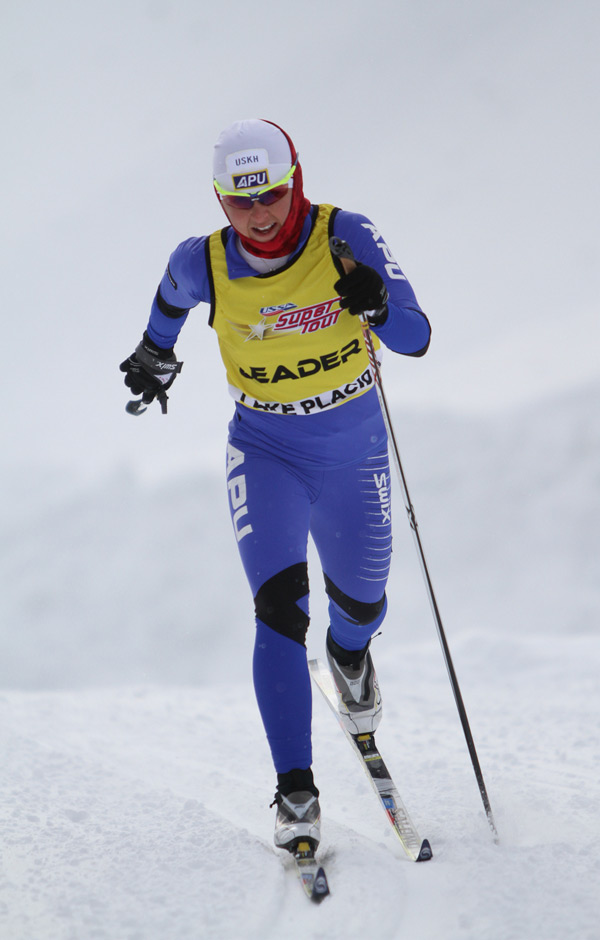
    Dong en route to third place in the Lake Placid SuperTour 10 k skate in 2011.

    When the parade of brightly-colored spandex suits heats up the domestic circuit this year, competitors and spectators will see a new squad: Stella Racing. And while America’s first elite women-only team in more than a decade might be small, it will definitely be fast.

    Morgan Smyth, Evelyn Dong, and Zoe Roy decided to start a team based out of Salt Lake City, Utah, and have spent the spring and summer making it happen. Their rationale was pretty simple, according to Smyth.

    “I decided that I wanted to live in Park City but that I still wanted to race,” she wrote in an e-mail. “So we put together a team!”

    All three women had excellent seasons last year with their respective teams. Smyth finished on the podium at U.S. National Championships; she, Dong, and final team member Katie Ronsse took home a collection of SuperTour and NorAm podiums and top-tens. Roy was an NCAA All-American in her last year at the University of Utah, and represented Canada at the University Games in Turkey.

    While Roy ran out of eligibility at Utah, necessitating a move, it was a less obviously logical step for the other women.

    Ronsse and Smyth both had excellent 2011 race seasons representing APU; for Smyth, it was a return to the national stage after compartment syndrome surgery and illness limited her 2010 campaign, while Ronsse had what she called her “most enjoyable [season] as a competitive ski racer.”

    But Ronsse decided to go to graduate school, an idea that had been germinating for a long time. Dong, who had been a mainstay of the XC Oregon program in Bend, also felt like it was time to “try something new.” So, according to Dong, the idea of Stella Racing originated when she was visiting Roy in Salt Lake City last spring.

    Smyth collecting one of her many podiums of 2011 in the Lake Placid SuperTour 5 k classic.

    “I was thinking about moving away from Bend,” Dong said in an interview. “[Roy] had used up her eligibility for skiing in school and also wanted to keep skiing. So we sort of figured that starting a team wouldn’t be a bad idea.”

    Smyth, who had live in Park City before while she was on the U.S. Ski Team, quickly came on board, and the trio started trying to define their team and find sponsors. When Ronsse picked the University of Utah, the original team members said, “why not?” and added her to the squad, even though she hadn’t been looking to continue racing full-time.

    The women decided to focus mainly on marathons, although they will begin the season with the SuperTour races in Montana. After U.S. Nationals, Smyth and Dong will hit up the Boulder Mountain Tour, the Owl Creek Chase, and the American Birkebeiner, then head to Europe for Worldloppet action.

    “We figured there was a niche there for a women’s marathon team,” Dong told FasterSkier.

    Roy, a Canadian citizen, will be focusing more on the NorAm circuit in an attempt to make it to Europe for OPA Cup racing. Ronsse will also be on her own schedule. As a full-time student, she won’t be able to race as often as her teammates and is planning to do just a few competitions.

    Ronsse at the 2011 West Yellowstone SuperTour.

    “I have definitely entered into a new routine, but after a full day of studying I love to rip around outside on the trails,” Ronsse wrote in an e-mail. “If I can together with the other StellaRacing ladies and hammer around with them– it’s a double-bonus! I’ll be one of their biggest fans, and up for just about any good workout or ski clinic that’s organized when they’re back in town.”

    But for the team as a whole, marathons are the focus. And what was originally a decision made out of pure fun and interest has turned out to be a good business move, too.

    “There’s more money in [marathons] and our sponsors, like Toko and our ski sponsors, like to see that too,” Dong said. “So it definitely helps that we’re a lot more visible in that realm.”

    So far, Stella Racing is relying heavily on local benefactors. Dong acknowledged that it was a tough time to start a team, but that the Park City area had been good to them.

    “We’ve had ups and downs,” she said. “We’ve had some things that fell through, but the local sponsors are really pulling through for us. So we’re hoping to start there, and we’re going to be able to do some racing just because of them.”

    She also thanked the athletes’ individual ski sponsors and Toko.

    “Ian Harvey of Toko is helping us out a lot,” Dong said. “[Toko] gave us a kick in the butt to get us going when we had really stalled.”

    Harvey, who is the U.S. Brand Manager for Toko, said that supporting the women was a no-brainer for him.

    Roy racing at western collegiate regional championships.

    “The women on the team are enthusiastic and kind of emit a love of skiing and outdoor sports,” he wrote in an e-mail. “As a father of two girls, I really appreciate role models like this being available to the general public. I want the team to succeed both in terms of getting good results but also in ‘reaching’ a lot of people.”

    Overall, the team has been surprisingly successful in setting up in the midst of a recession.

    “I think financial support is always limited in ski racing, but we are lucky to have a few key sponsors, such as Toko, that are making the team possible,” Smyth said.

    It’s some of the only support they will receive. The team will not have a coach this year, which was both a financial necessity and a choice. With years of elite racing experience under their belts, the women did not seem troubled by being self-coached.

    They also won’t have consistent race support. Dong said that they would be contracting wax technicians at each race rather than retaining a single person for the entire season.

    For now, they are enjoying the last weeks of fall. Dong said that the squad had an excellent summer of training and was prepared for the season.

    “[Park City] is pretty sweet,” she told FasterSkier. “The trails are probably some of the best for training, like running and bounding. And the mountain biking is unreal here.”

    Smyth (left) and Ronsse (2nd from right) with teammates Holly Brooks and Sadie Bjornsen after finishing 3rd and 5th in the classic sprint at 2011 US Nationals. Photo: flyingpointroad.com
  • Gundersen, Compton Win the Birkebeiner; Uhl, Bender are tops at Classic Birkie

    Gundersen, Compton Win the Birkebeiner; Uhl, Bender are tops at Classic Birkie

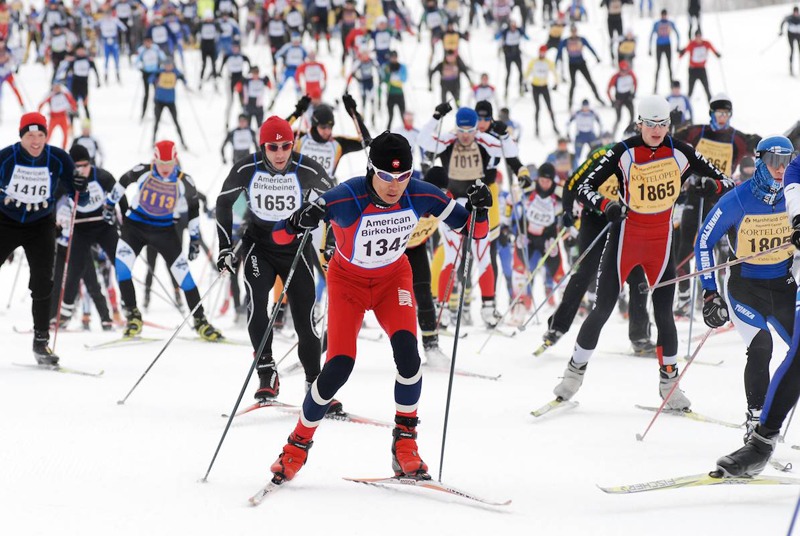
    The 2011 Birkebeiner (Photo: Brett Morgan)

    The 38th annual American Birkebeiner, held in sub-zero and single-digit temperatures with record particpation, saw two sprint finishes to crown the men’s and women’s Birkie freestyle champions and a pair of UVM alums ski to sizable victories in the Birkie Classic on Saturday.

    Norwegian Tore Martin Gundersen won the 50K Birkie Freestyle race with a time of 2:00:32.8, furiously outsprinting his nearest opponent, Benoit Chauvet of France, by less than a second.  Twenty seconds later, third through twelve places were decided in less than ten seconds.  Andrey Tyuterev of St. Petersburg, Russia took the final spot on the podium in thir dplace.  Bryan Cook of CXC was the top American in fifth overall, with CXC teammate Brian Gregg the second American in seventh place.

    In her first Birkebeiner, Caitlin Compton of CXC broke the women’s 50K Freestyle course record today and took first place with a winning time of 2:15:26.0.  APU’s Morgan Smuth and XC Oregon’s Evelyn Dong kept it close all the way to the line finishing just three and eight seconds off Compton’s pace for second and third place, with the top three finishers all dipping beneath the previous course record set by Rebecca Dussault in 2010.

    “It was great to see [Caitlin] take the win, as she led a lot of the race and really pushed the pace in the last 10k,” said Smyth, who was racing in her first 50K.  “She did a lot of the work, it was a well deserved win.”

    Finishing alongside its freestyle counterpart, the Birkie Classic was contested, and saw two University of Vermont alums picking up victories.  2010 Birkie Classic Champion Jerguen Uhl (VTXC) defended his title, pulling ahead of Karl Nygren (CXC) and Eric Wolcott (CXC).

    Uhl’s former UVM teammate Jennie Bender, skiing for CXC, grabbed the women’s Birkie Classic title by an impressive seven minutes over Kerrie Fabius of Thunder Bay, Ontario.  Hilary Patzer of St. Paul, Minnesota took third, another minute and 40 seconds back.

    “It was great!” Bender told FasterSkier of her first ski marathon. “My wax was great… it was definitely abrasive, but the CXC coaches did a great job.  I skied with a lot of the men and kind of jockeyed back and forth.  It was freezing outside, but it felt pretty awesome.”

    Ned Zuelsdorff, Executive Director of the American Birkebeiner Ski Foundation, said skiers from 19 foreign nations, including Latvia, Israel and Denmark, and 47 U.S states, including Hawaii, North Carolina and Alaska, had great conditions for the 38th anniversary event.

    Honorary Starter, John Schmitt, the voice of Birkie for 19 years welcomed the largest field of skiers ever in the American Birkebeiner’s 38-year history. He sent over 8,850 skiers on their way beginning at 8:00 a.m.

    Temps hovered around 10 degrees below zero at the start as 21 waves of skiers left the starting gates.

    The American Birkebeiner is modeled after the Norwegian Birkebeiner Rennet, which in turn was inspired by the historic rescue of the infant who would become a celebrated king, Haakon Haakonsson IV. The race symbolically re-creates the flight of the prince, carried on skis by warriors called birkebeiners for their protective birch bark leggings.

    Long time friends Gale Otterholt and Marv Franson assumed the roles Torstein and Skervald, the Birkebeiner warriors who rescued the infant Prince Haakon (H?-ken). Otterholt a retired pharmacist and college professor and has completed 33 Birkies and also from Eau Claire, Franson, a retired Dean and Electronics Instructor, has skied 34 Birkies.

    Long time Birkie skier and friend of the Warriors, Gretchen Lindgren, dressed as Inga from Varteig, mother of Prince Haakon, while her grandchild Finnley assumed the role of the cherished prince.

    The men dressed in full Birkebeiner regalia including helmets, shields and their wooden skis skied to the finish line to the clang of cowbells from the thousands of spectators who lined Hayward’s Main Street.

    Gretchen skied the full 54 kilometers dressed in a traditional Norwegian dress and cloak, on wooden skis and carried Prince Haakon on her back for the trip up Hayward’s Main Street.

    “The historic re-enactment, fast race course and the largest field ever made the Birkie’s 38th anniversary one for the books,” Zuelsdorff said. “We couldn’t be more pleased.”

    For race day results, log on to www.birkie.com.

  • USSA SuperTour: Ellefsson, Reid Win Classic Races in Aspen

    Sylvan Ellefsson (Vail, Colo.) continued his winning streak from last weekend’s Boulder Mountain Tour in Sun Valley, Idaho, winning the 10K classic race in 27 minutes and 13.8 seconds. Glenn Randall (BSF) was second, some eight seconds behind Ellefsson. Reid Pletcher (CU) was third.

    “It’s nice to be racing back in Colorado, and it was such a picturesque day,” Ellefsson said to FasterSkier after the race, noting that the altitude made the already tough course profile particularly punishing.

    “It’s pretty brutal, but that’s what I was born and raised on,” he said with a laugh.

    Ellefsson believes prior exposure to altitude was a big benefit on the challenging course, and knowing how bodies respond to the thin air at 8,000 feet.

    “Honestly, part of the winning trick was definitely to be safe and be a little conservative on the first lap. It’s hard to go all out on the first lap and hold it,” he said. “My strategy was to ski technically sound, big and strong. It was going well, so then I could go down harder on the second lap.”

    With the confidence from last week’s Boulder Mountain Tour and today’s SuperTour victory, Ellofsson is looking forward to day two of the USSA SuperTour in Aspen: The 21-kilometer Owl Creek Chase.

    “I’m really excited. I feel fast. It’s a brutal course and there will definitely be some head games and some cynical games out there, but I’m excited to get it going and see what happens,” Ellefsson said, noting that this will be his second attempt at the Owl Creek Chase.

    “The take away from last year is that I need to find a group to ski with and not ski the course on my own,” Ellefsson said.

    Junior wins women’s 5K

    In the women’s race, Joanne Reid of Colorado University made a statement on her first visit to Aspen. Showing no respect for altitude or course profile, Reid charged right out of the gate and never slowed down. Still a junior, Reid beat everyone on the challenging course, despite setting out on the 5K course without a plan.

    “I’m not going to lie, I totally had no strategy. I just tried to have good technique and pushed all the way. I felt terrible at the top of the long hill, but then there is a little downhill and I recovered a little. That helped me keep pushing even though it hurt a lot,” Reid explained, admitting that she forgot her coach’s advice about starting out conservatively.

    “I was so friggin’ tired at the top because I didn’t listen to my coach. But there were all these people cheering along the course and I had really fast skis,” Reid said.  “You know, racing is always a mix of luck and skis and everything,” she concluded.

    “Aspen is so nice. There were a lot of people out today, and it’s so great to see what this is doing for our sport. They had a DJ out there, and it was the coolest thing. Then they had a barbeque on the deck and it was totally a party,” Reid said to FasterSkier after the race.

    Terese Andersson of University of New Mexico was second, while Morgan Smyth of Alaska Pacific University Nordic Ski Club was third.

    The importance of oxygen

    Smyth, arriving at altitude Thursday night and with no time to acclimatize, felt like she pulled off a good race all things considered.

    “It was exceedingly difficult. It’s definitely the highest I’ve ever raced,” Smyth said, noting that she certainly felt the altitude.

    “I went out doing pretty well as we climbed up, then there’s a pretty good recovery at the top before the rolling section at the end,” Smyth explained.

    “The second half was tough,” Smyth said, adding that Saturday’s effort was her first race in three weeks.

    Now Smyth is looking forward to the Owl Creek Chase tomorrow.

    “That’s a totally different race. I’ve never raced that far and it will be my first mass start skate race this year,” Smyth said, explaining that the 20K skate was her favorite distance in college.

    “It will be an adventure. I have no expectations, but the goal is to maintain contact with the main group, that’s the big thing,” said Smyth, who is entirely new to the course.

    With near perfect hard wax conditions, sunny skies and a course lined with cheering spectators, the stage was set for some fast and spectacular racing on the Aspen trails Saturday.

    “It was nice to do a one-lap race after so many short-loop races this season,” Morgan Smyth said to FasterSkier.

    Complete results here.

  • Brooks Leads APU Sweep in Lake Placid SuperTour

    Brooks Leads APU Sweep in Lake Placid SuperTour

    Women's Podium (l-r) – Stuber, Fitzgerald, Brooks, Smyth, Patterson

    APU’s Holly Brooks began her 2011 domestic campaign 50 days ago, with a pair of sprint qualifier wins in West Yellowstone, MT. One day before that campaign concludes, not much has changed.

    In Friday’s SuperTour in Lake Placid, a 6 k classic, Brooks led an APU sweep, with an eight-second victory over her teammate Kate Fitzgerald. Morgan Smyth was third, another five seconds behind.

    It was Brooks’s sixth win of the season, and with another $750 in the bank, she will head home to Alaska after Saturday’s 10 k freestyle race. Named Wednesday to the U.S. team for the 2011 World Championships in Oslo, Brooks said she was looking forward to some training time before heading to Norway in February.

    “Kikkan [Randall], Kate Fitzgerald, Morgan Smyth and I are going to do a little distance block,” Brooks said. “I’m really psyched—it’s been nine weeks on the road, with a little six-day break in the middle.”

    Holly Brooks (APU) on her way to victory

    Like the men, the women skied on a two-kilometer loop at Lake Placid’s Olympic Jumping Complex, completing three laps for a total of six kilometers.

    After a pair of longer distance races at last week’s U.S. National Championships in Maine, the women had to be ready to go from the gun on Friday.

    “Six k—you can’t really waste time,” said UVM’s Caitlin Patterson, who finished fourth—nearing, but not matching, her brother Scott’s third place in the men’s race.

    The course was essentially a kilometer of uphill followed by a kilometer of down—but the descent wasn’t all rest, according to APU Head Coach Erik Flora.

    “There’s a lot of good technical terrain on the way back down. We noticed that you can’t just kind of ski up the hill and fall asleep—you have to ski the whole time,” he said. “So it rewards those who train a lot, and who have good technique as well. I would come here every weekend if I had a choice—this was one of my favorites venues this year.”

    The fact that his women took the top three spots in Friday’s race probably didn’t hurt, either. Brooks said that she charged out of the gate—especially after seeing some people start too conservatively in Maine last week—and skied the race “just like an interval session.”
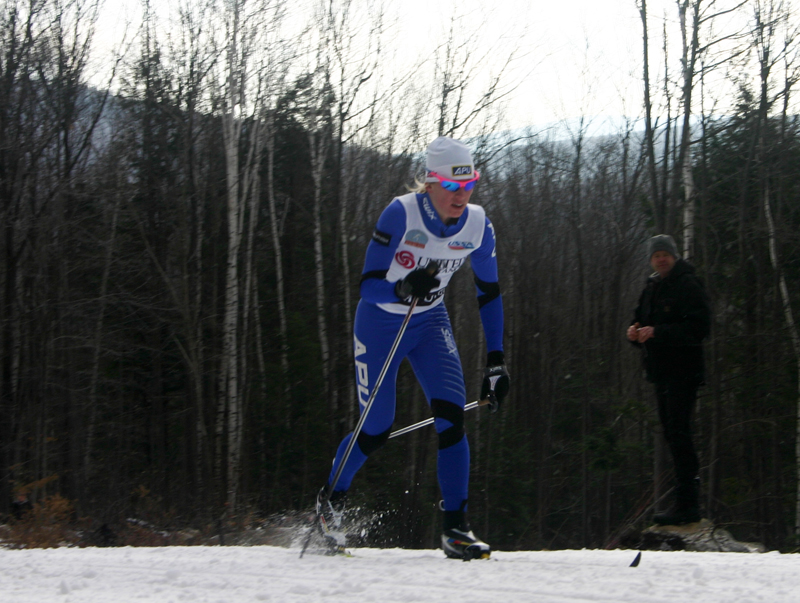
    “It’s like three-by-three up,” she said. “It skied fast, and fun.”
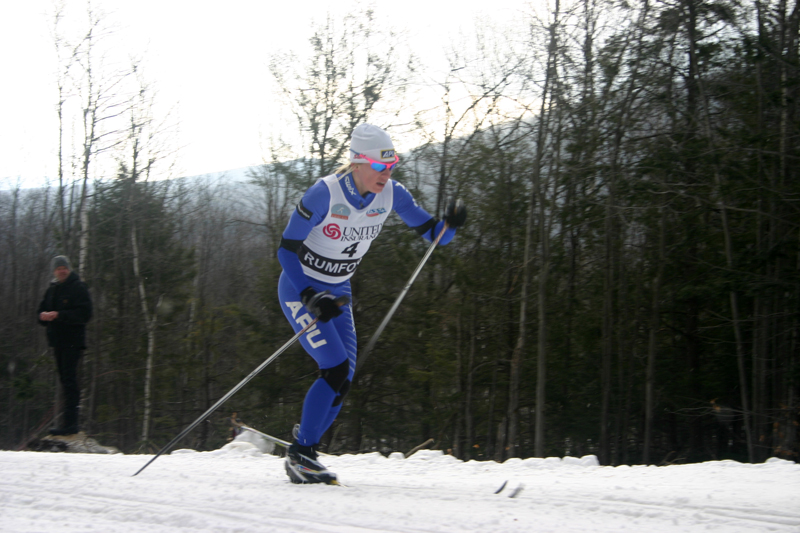
    Two laps in, Brooks had staked herself to a ten-second lead over Fitzgerald, then held that gap over the final two kilometers of the race.

    Fitzgerald had been knocking on the door since she came out of nowhere to win one of the distance races in West Yellowstone in November. She’d had four top-fives in December and January, but no podiums.

    Kate Fitzgerald (APU) – Second place

    On Friday, she said she didn’t think she had peaked in the early season, but couldn’t put a finger on what had been the difference between now and then.

    “I’ve worked hard every race, and kind of approach it the same way,” she said. “Every race is different.”

    Fitzgerald was one of a handful of women on the bubble to make the American team for World Championships, but was ultimately passed over in favor of younger talent.

    So was Smyth, even after hitting the podium twice in four races at U.S. Nationals last week. After the race, said she was “surprised” by the number of women named to the Oslo team using coach’s discretion, and used that snub on Friday.

    “After being totally unconsidered, it definitely motivates you to go out and prove yourself,” she said. “A little fuel for the fire—everybody needs that.”

    Smyth compared the course’s challenging climb to those used in World Cup races—though she noted that she still may have started too slowly.

    “I went out really hard, and I feel like I could have gone out maybe even a little harder—it went by pretty quick,” she said.

    Morgan Smyth (APU) – Third place

    If the course felt quick for Smyth, one woman for whom it clearly did not was Craftsbury’s Ida Sargent, who cracked towards the end of what she called her first solid effort since racing in Finland in the fall.

    “I was not moving very fast,” she said.

    Sargent injured her neck in a car accident in December, and was unable to race to her full potential at U.S. Nationals. Despite finishing ninth on Friday, she seemed upbeat at the finish.

    After qualifying for the Oslo team, Sargent said that she will take the rest of the winter off from school to race full time, and will return to her studies at Dartmouth later this year.

    Women’s 6km Classic SuperTour – Results

  • APU, USST Members Headline Lake Placid SuperTour Races

    SuperTour action continues this weekend, as the domestic circuit moves from Rumford, ME, to Lake Placid for races on Friday and Saturday.

    Organizers are expecting between 325 and 350 athletes competing in a 10 k/6 k classic and a 15 k/10 k freestyle, headlined by competitors from the U.S. Ski Team and the Alaska Pacific University Nordic Ski Club.

    With two hours until entries closed at noon on Wednesday, Noah Hoffman (USST), Lars Flora (APU), and James Southam (APU) were among the favorites registered for the men’s races, while APU’s Holly Brooks, Sadie Bjornsen, and Morgan Smyth lead the way for women.

    Sun Valley’s Mike Sinnott is also registered for both events, while Craftsbury’s Ida Sargent is signed up for Friday’s classic race.

    The standard SuperTour prize purse is on the line, paying six athletes deep, including $750 for the winner of each race, $500 for second, and $250 for third.

    According to event chair Ethan Townsend, the classic race has been moved from Mt. Van Hoevenberg to the Olympic Jumping Complex due to a lack of snow depth, while the skate race remains scheduled on the biathlon trails at Mount Van Hoevenberg.

    “Conditions are okay. They’re not deep enough to set a track—at least, not a really decent, consistent track that doesn’t hit dirt and grass—anywhere on Hoevenberg,” Townsend said.

    Even with a snowstorm rolling through the northeast on Wednesday, Townsend said it would be unlikely for the classic race to move back to Mt. Van Hoevenberg.

    “We’ve already got things in place and rolling towards this plan,” he said.

    At the Jumping Complex on Friday, athletes will race on a two-kilometer loop. The women will complete three laps for six kilometers—one more than originally planned—while men will complete five laps.

    At Mt. Van Hoevenberg on Saturday, athletes will ski a five-kilometer loop—three laps for men; two for women.

    In addition to serving as a SuperTour, the event is also the opening event of the 12-member Eastern Intercollegiate Ski Association circuit. Six athletes of each gender from colleges around the northeast will be competing for qualifying points for the 2011 NCAA Championships in Stowe, VT, and in team competitions, as well.

    To see a list of entries, click here.

  • Morgan Smyth – Back on Track

    Morgan Smyth (APU) won the silver medal in the women's 10K classic at US Senior Nationals Wednesday.

    In 2009, it seemed like the Vermont native was headed for the stars. Morgan Smyth qualified for the 2009 World Championships in Liberec (CZE), she was the national distance champion in the 5K, she won the team sprint at nationals with Liz Stephen, she was on the US Ski Team.

    But the summer of 2009 marked the start of trouble and derailed her Olympic dreams.

    First, Smyth had surgery to relieve compartment syndrome in August. That didn’t concern her too much, as most recover fairly quickly from that. Then, once the season got started and she entered the West Yellowstone races in November, she realized that her cold was something else. She found out she had come down with mononucleosis. For the second time.

    “They say you can only get mono once in your life. That’s not true,” Smyth said, explaining that she was sick for quite a while before she realized it was mono – again. Despite this bout being a milder case than her first encounter with the disease, Smyth knew that mono is not something that goes away overnight.

    “I was pretty bummed out, it being an Olympic year and all,” Smyth admitted.

    “Many skiers had their eyes set on the Olympics. It was definitely a goal for me,” she said. “It’s not the same to watch it from a couch when you want to be out there racing it.”

    Morgan Smyth won the 2009 national title in the 5K classic (Photo: Lance Parrish)

    Back at it, one step at a time

    Having learned from previous mistakes, Smyth knew that recovering from mono takes time and patience.

    “Last time, I tried to race all the way through. I took a few weeks off, tried to race and realized that just wasn’t the reality,” she recalled. “It’s not like you wake up one morning, open your eyes and just feel amazing. It’s a slow process.”

    At the end of last season, Smyth got back on her skis and then gradually started to enter some races just for fun and to reconnect with her friends.

    “It wasn’t until late in the winter, mid-February, that I was on skis and teaching lessons with the elementary school kids. It was fun to be a part of the ski community again, even at a different level. I can definitely remember being one of those kids. I just love to play on skis,” she said. Then she moved into racing.

    “I raced a little at the end of the season, just for fun. I just love ski racing and most of my friends are in ski racing, so racing was an opportunity to see everyone,” Smyth explained, adding that she also went to nationals in Maine to connect with APU head coach Erik Flora.

    “I wanted to talk with Erik Flora about possibly joining APU, and I liked it a lot. So Memorial Day weekend I packed up my car and headed for Alaska,” Smyth said.

    As it turned out, APU was the perfect match for Smyth.

    “I absolutely love APU. Erik Flora is a great coach, and the atmosphere in the team is really good. We train together almost every day of the week,” Smyth said.

    Looking for tough teams

    Smyth’s strategy for improvement is to challenge herself.

    “I’ve always tried to be on teams whose skiers are kicking my butt. I figured if you are in a race with them, you should train with them. That’s how you get as good as them,” Smyth explained.

    “When I was younger, Stratton Mountain School was that team, then for college NMU seemed to be it. And turns out it has been super fun as well,” said Smyth, who proceeded to go all the way and was named to the US Ski Team for the last two years of her college career at NMU and the following two seasons.

    Winning: a team experience

    To Smyth, being a part of a team is an important part of the winning equation, and the team environment plays a major role in overall success.

    “When you’ve been training together in rain and wind and been super tired, it brings everyone together,” she said, explaining that while cross-country skiing is an individual sport, the team experiences connect.

    “You see your teammates succeed and it makes you happy, you’ve been through the same training, you know what they’ve done. If you have a crappy race, you can still have a good day when they do well.”

    APU women – a tight-knit team. L-R Morgan Smyth, Brooks, Katie Ronsse, and Sadie Bjornsen. Photo, flyingpointroad.com

    Nationals is just gravy

    When Smyth got sick last season and couldn’t race, being away from the sport and the community she was so involved in definitely took a toll on her. On the other hand, Smyth also took away some valuable lessons from the season that didn’t happen. She learned to never take anything for granted in health or racing.

    “Just being here and feeling good and being fit is awesome. I just came to nationals to ski my best and enjoy it,” Smyth said, noting that this is her first time going into the championships on cruise control and that it feels refreshing in some ways.

    “I honestly didn’t have super-specific goals for nationals compared to the past. I’m far down on the USSA points list, and the only team to qualify for here is the World Championships. So with that reality, I just want to ski as hard as I can,” she said.

    As for the rest of the season, Smyth is equally laid back.

    “I don’t have a plan. I take it one race section at a time,” she said, adding that she knows she’ll join the APU team for the SuperTour in Lake Placid, and hopes to go to Sun Valley for the spring series. “I’m just going to try to race fast. What happens happens.”

  • Bjornsen Blasts to Surprise Win in Rumford Classic

    Bjornsen Blasts to Surprise Win in Rumford Classic

    Sadie Bjornsen (APU) on route to US National title. Photo: Kris Dobie.

    In the women’s 10 k classic in Rumford on Wednesday, it was an athlete in the familiar blue, white and black of Alaska Pacific University to climb to the top step of the podium. It just wasn’t the one you’d expect.

    After Holly Brooks’s win in Sunday’s classic sprint, she was a clear favorite coming into the first distance race of the 2011 U.S. National Championships. But instead of Brooks coming out on top, it was her teammate Sadie Bjornsen collecting a surprise win—her first-ever in a domestic distance race, let alone in a national championship.

    The victory was convincing, too: Bjornsen topped her teammate Morgan Smyth by 31 seconds, while the U.S. Ski Team’s Morgan Arritola was third, nearly 50 seconds back. After putting four in the top five on Sunday, the APU women flexed their muscles again on Wednesday, taking the top two spots, and four of the top eight.

    They were led by Bjornsen, whose strength has typically been in sprinting—not longer events. She said after finishing on Wednesday that she’d “never really considered myself a distance racer.”

    Even after a third place finish in a Nor-Am race in Canada in December gave her some confidence, Bjornsen still didn’t have high expectations.

    “I knew that it was a possibility, but I definitely had my eyes set on the sprints,” she said. “This is super-exciting.”

    Wednesday saw the women taking four trips around a 2.5-kilometer loop that organizers in Rumford had scrambled to prepare over the last three days, after warm temperatures left the trails at Black Mountain looking more like dirt roads than race courses.

    The loop included all of the 1.4 kilometers used in Sunday’s sprint, with an additional one-kilometer extension tacked on.

    The product was a surprisingly challenging course with two sustained climbs—including one steep pitch on the second ascent that slowed most women to a herringbone. Among the victims was Brooks, who faded in the later laps to finish out of the top five. (Unofficial results had her in a dead heat for sixth with CXC’s Jennie Bender and CU’s Eliska Hajkova.)

    “It skied harder than I anticipated, really,” Brooks said. “It wasn’t bad at all in the sprint, and today it was kind of like everyone was all over the place, myself included.”

    Two other favorites, the U.S. Ski Team’s Liz Stephen and Craftsbury’s Ida Sargent, also struggled.

    Sargent was among the leaders early in the race, but ended up dropping out before the finish. She said that she was trying not to push too hard, with the after-effects of a car crash in December still dogging her.

    “I’m just not there right now,” she said. “I’m just trying to figure out how to get myself back.”

    Stephen finished 10th, unofficially, in her first race of the year on American soil, after spending the fall on the World Cup.

    “I didn’t have the race I was hoping to have, but no big deal. I’m looking forward to tomorrow already,” she said, referring to Thursday’s distance skate race.

    But while some women struggled to ski smoothly and hit the pacing, Bjornsen said that she enjoyed the course. She had the benefit of skiing her first lap with Stephen, then turned on the jets.

    After her freshman year at the University of Alaska-Anchorage, Bjornsen took a year off to ski with the Methow Olympic Development Team, then switched this year to the APU program. There, she has trained alongside Brooks, World Championships medalist Kikkan Randall, and the rest of the women’s team under Head Coach Erik Flora.

    In the last three years, Bjornsen had never finished higher than sixth in a distance race at national championships. But Flora said that Bjornsen had made a conscious effort to improve in the discipline since she joined his program in the spring, upping the volume and intensity of her training.

    “It was just something that we needed to develop a little bit more,” he said. “If you would have asked me last spring, you could see it was possible—it was just in the preparation.”

    Contributing reporting and photography by Matthew Voisin.

    Results of the US Nationals Cross-Country Ski Championships 10km Classic

  • In Dominating Fashion, Brooks Blazes to Classic Victory

    In Dominating Fashion, Brooks Blazes to Classic Victory

    Holly Brooks at the start of qualification in Sunday's classic sprint. Photo, flyingpointroad.com.

    In her unlikely path from APU coach to elite ski racer, Holly Brooks’s career has taken her to some amazing places, namely the 2010 Olympics. But for all her success over the past two years, there was one spot she still hadn’t set foot until this weekend: the top step of the podium at the U.S. National Championships.

    In Sunday’s classic sprint in Rumford, Brooks checked another achievement off her list with an emphatic display of skiing. After winning qualifying and cruising through her quarters and semis, Brooks put on a clinic in the finals, topping University of Colorado’s Eliska Hajkova and APU’s Morgan Smyth by nearly ten seconds.

    Brooks leads the University of Colorado's Eliska Hajkova in one of Sunday's heats. Photo, Kris Dobie.

    “People in the final stretch said I could slow down, but there was no way. No way in hell was I going to slow down—I’m not taking anything for granted here,” she said. “It all came together, and this is pretty much a perfect day for me.”

    With Sadie Bjornsen and Katie Ronsse rounding out the top five, the APU women represented the top four American finishers, making the race look more like an interval session than a national championship. Smyth described the team as a “big group of girls that’s kickin’ ass.”

    Indeed, in the morning qualifying round, APU put six of their women in the top ten. Dartmouth and Craftsbury, represented by Sophie Caldwell and Ida Sargent, were the only other clubs to crack the top five.

    After a strong start to her season, including a 33rd-place finish in a World Cup sprint in Finland, Sargent should have posed Brooks’s biggest threat on Sunday. But according to Pepa Miloucheva, her coach at Craftsbury, Sargent was still suffering from the effects of a car accident that occurred a few weeks ago—which left her with a concussion, neck soreness, and eight stitches.

    Miloucheva said that double-poling, especially, is still bothering Sargent’s neck, so after feeling some pain in the qualifier, she shut things down partway through her first heat.

    “She…backed off big time, because we were just still dealing with the situation, and trying to keep it safe,” Miloucheva said.

    With Sargent out of commission, Brooks’s biggest obstacles included Bjornsen, Smyth, and Hajkova.

    Hajkova, a Czech import who completed the 2008 Tour de Ski, actually topped Brooks in both the quarters in semis. But Brooks was still clearly in control, staking herself to an early lead in each heat; she was never seriously threatened with elimination.

    In the finals, she used a quick start to take the hole shot around the first corner, and never looked back. By the time Brooks had reached the finish line, the rest of the women were barely entering the stadium.

    But while she showed Sunday that she has plenty of speed, Brooks maintained that she was more of a “hybrid distance-slash-sprinter,” and said that she hadn’t specifically targeted the classic sprint.

    “For the last couple weeks, I’ve been puzzled—I couldn’t decide what race I was most excited for, and I couldn’t decide what race I

    The four APU women in the finals: L-R Morgan Smyth, Brooks, Katie Ronsse, and Sadie Bjornsen. Photo, flyingpointroad.com

    had the best chance in,” she said. “I don’t really specialize in any one thing—I’m kind of a generalist.”

    Brooks will take home $1,200 for her win, but with three more events to go in the championships, she has a legitimate shot at quadrupling her haul—though she’ll have to top U.S. Ski Team members Morgan Arritola and Liz Stephen in the distance races to do so.

    A heavy training load heading into the first part of the season left Brooks feeling flat. But she said that she was finally starting to feel sharper on Sunday.

    “Now I feel good, and it’s the right time,” she said.

    After a tough season in which she struggled with illness, failed to crack the top 10 on the domestic circuit, and was dropped from the U.S. Ski Team, Smyth climbed to the podium for the first time since 2009.

    She joined APU in the off-season, where she said she was looking to work with the club’s deep women’s team.

    “If you’re going to race with them, you might as well train with them,” she said. “It’s been super-fun—I love it up there. Great coaches, and great teammates.”

    Link to results.

  • US Nationals Sprint Qualification, ‘It’s a Real Race’

    US Nationals Sprint Qualification, ‘It’s a Real Race’

    The suns out at the US National Championship in Rumford, Maine; Ladies classic sprint qualifying round. Photo: Swix Sport

    APU’s Holly Brooks has been waiting all year to test herself against the eastern women—at least one of whom, Ida Sargent, raced on the World Cup this fall.

    If Sunday’s classic sprint qualifier results at nationals are the first measure, Brooks is on her way to acing that test. At Rumford’s Black Mountain, she skied to a three-second victory in the preliminary round over her teammate Sadie Bjornsen. Dartmouth’s Sophie Caldwell was third, with Morgan Smyth (APU) and Sargent (Craftsbury) rounding out the top five.

    On the men’s side, APU’s Lars Flora continued his resurgence, topping Torin Koos (Methow ODT) by half a second.

    Flora hasn’t sprinted well in the last few years, but this season his speed has returned, with three top-five sprint finishes in domestic races. After the qualifier on Sunday, he wryly described himself as a “comeback sprinter.”

    SVSEF’s Mike Sinnott was third, followed by APU’s Reese Hanneman and CXC’s Garrott Kuzzy.

    The conditions in Rumford—which had deteriorated severely over the past few days—were far from ideal, but still adequate. The sun came out briefly during the women’s qualifier, but the course didn’t seem to be degrading much beyond its present state.

    “It’s a real race,” Koos said.

    Both Brooks and Flora said that they would try to capitalize on their aerobic fitness to drop their speedier competitors on the 1.4-kilometer sprint course in the afternoon heats.

    “The plan is to push the pace hard,” Flora said. “Especially with Torin in the race with his acceleration ability…If he can rest and accelerate, he’s hard to take down.”

    For her part—and despite her success in short events this fall—Brooks described herself as a “hybrid distance-slash-sprinter,” rather than a pure sprinter. She said that she planned to “charge from the beginning, and see where it takes me.”

    “It’s not the kind of course that you can’t push the whole time…where I feel like you have to save anything anywhere,” she said. “I just like to go for it.”

    Videos of Torin Koos, Garrott Kuzzy, Chris Cook and Michael Sinnott during the Classic Sprint Qualifier:

    Unofficial Results:

    Men's Results: Lars Flora, Torin Koos and Michael Sinnott respectively followed by these results.

    Women's Results

  • New Additions Strengthen Already Strong APU Team

    New Additions Strengthen Already Strong APU Team

    If skiing were baseball, APU would be early winners in the 2010 free-agent class.  Two-time National Champion, and former NMU standout, Morgan Smyth, and 20-year-old Sadie Bjornsen, a veteran of four World Junior Championships, have joined the Anchorage-based squad.

    Morgan Smyth (USA) brings it home in the sprint qualification round at the Whistler World Cup in 2009. Smyth took the final spot in the heats.

    Smyth was not re-nominated for a fifth year on the US Ski Team after struggling through a challenging 2010 season, undergoing surgery for compartment syndrome and battling mono.

    Still only 24, Smyth won a National Title in the 5km classic in 2009, and scored her first World Cup points at the pre-Olympic Whistler World Cups.

    Smyth points to the strong APU team as the prime driver for relocating to Alaska.

    “If I had to pick one big reason for joining APU it would be the training partners,” Smyth told FasterSkier in an e-mail.  “APU has a really strong women’s team and I am really excited to be able to train with them!”

    That team includes World Championship silver-medalist Kikkan Randall, Olympian Holly Brooks, former US Ski Team member Tazlina Mannix, as well as up-and-comers Becca Rorabaugh and Katie Ronsee.

    Bjornsen spent last season training with the Methow Olympic Development team and is familiar with Alaska, having spent a season racing for UAA.  She also sees the strength of APU in the team.

    Said Bjornsen, “I think it will be super beneficial to be on a team with such a strong group of girls…Basically living and training with a group that is committing to this sport at the same level as me will be really nice.”

    Without the support of the US Ski Team, Smyth turned to APU, with its world-class ski preparation and excellent training opportunities.  She pointed to APU’s facility on the Eagle Glacier as a major draw.

    “Rollerskiing is fun and all, but you really can’t beat skiing on snow.”

    Bjornsen will continue her education at APU, but will still be able to focus on her skiing, a major plus as she feels “having some school will be good for me, just having some sort of escape to get my mind off of skiing all the time.

    Bjornsen (in red) racing at the U23 Championships in Hinterzarten, Germany

    “I realized last year I function better with some sort of balance in my life. The fact that it is not a NCAA school creates so much more freedom.”

    She was looking to make a change after her year in the Methow Valley, an experience she described as “not working out for me for many reasons,” and was planning on returning to UAA to ski under coach Trond Flagstad.  But after talking to Brooks and APU head coach Erik Flora at the SuperTour Finals, she changed her mind – especially after realizing she would not have to sacrifice her education.

    “I never realized it was a possibility to get scholarship for schooling while racing at an elite level,” said Bjornsen.

    She is approaching the change with a mature attitude, recognizing that a transition to a new program can be challenging.  But she sees Flora’s ability to cater to the specific needs of his athletes as a reason that this switch should be relatively smooth.

    And ultimately much of the responsibility rests on herself.

    “The most important thing is knowing yourself and your limitations. The more you know about yourself, the better.”

    With a an Olympic cycle coming to an end several top APU skiers have retired, including Laura Valaas and Anders Haugen.  But the additions of Bjornsen and Smyth will keep the program well-stocked with talent.

    2010-2011 APU Roster

    Women:
    Kikkan Randall
    Holly Brooks
    Taz Mannix
    Becca Rorabaugh
    Katie Ronsse
    Sadie Bjornsen
    Morgan Smyth
    Kate Fitzgerald
    Kassandra Rice
    Greta Anderson
    Ky Eiben
    Erika Klaar
    Kalysta Schmidt

    Men:
    James Southam
    Bart Dengel
    Mark Iverson
    Brent Knight
    Erin Phillips
    Don Haering
    Peter Kling
    Bobby Miller

  • Koos, Elliott, Others to Fall Back on Clubs

    Koos, Elliott, Others to Fall Back on Clubs

    Torin Koos racing in Fort Kent in March

    Athletically, Tad Elliott and Torin Koos don’t have much in common. At 21, Elliott is a distance specialist, and still developing. Koos is a sprinter, and at 29, he’s in the latter half of his career.

    The two things they do share? Both had hopes of making the 2010-2011 U.S. Ski Team—and both were left off the roster.

    As part of a shift in strategy under new Head Coach Chris Grover, the team announced last week that it would nominate just seven athletes for 2010-2011—down from 11 this winter.

    Grover said that his organization would still be doing “more than ever” to support developing skiers through new programs and enhanced partnerships with local clubs—and Elliott and Koos will likely be beneficiaries, to some extent. But with details of Grover’s new strategy still falling into place, those two—and other hopefuls—have had to move forward with their own plans for the next season.

    After more than half a decade racing for the USST, Koos is going back to his roots in Washington. He’ll race next year for the Methow Olympic Development Team, a small, elite club coached by Scott Johnston.

    Koos struggled this season after an infected hair follicle last spring turned into a potentially life-threatening skin infection; he had to have surgery and take a heavy dose of antibiotics. The drugs, he said, left him susceptible to sickness, and he picked up two sinus infections this winter—one right before Christmas, and one after the Olympics.

    Though Koos had one stellar result—second place in the Canmore sprint qualifier, and 10th in the rounds—he only saw one tour in Europe this year, in the early part of the season. At the Olympics, his focus for the year, he bombed out in the individual sprint, missing the top-30.

    Koos beating Newell at the line in Fort Kent. Photo courtesy of Andy Shepard, Maine Winter Sports Center

    After wrapping things up with a win over Andy Newell in a sprint at the SuperTour Finals in Fort Kent, Koos ended up just missing the USST’s qualifying standards by two FIS points–which he said equated to a mere .3 seconds per race.

    “I knew that it hasn’t been the season that I’d dreamed about,” he said. “I think there were some bright spots, considering. I came pretty close, looking at it, to making the objective criteria, and just missed by the minutest of margins.”

    In late March, Koos said he got a three-paragraph e-mail from Grover letting him know that he was dropped from the team. That was followed a day later with a phone conversation with John Farra, who oversees the cross-country program in his job with the U.S. Ski and Snowboard Association.

    Grover said that the USST generally tries to make phone calls when first notifying athletes that they’ve been dropped, but he didn’t want to comment on the particulars of Koos’s case, which he said was unique.

    Next season, Koos said that he’s trying to figure out a way to race in Europe— either on the domestic circuit there, or by paying his own way to the World Cup.

    He’s facing an uphill battle, though—since domestic European races typically aren’t scored on the USSA points list, they won’t help him qualify for the 2011 World Championships.

    And Grover said that since Koos didn’t meet the objective criteria for the fall World Cup races, he couldn’t guarantee start rights for those races, either.

    That leaves the SuperTour, which Koos said is probably not the best place for his development.

    “I’m just looking for the opportunity to prove…that I’m a top level racer—that I can race at the major leagues of skiing,” he said.

    Elliott, Kuzzy, and the Rest

    Elliott spoke with USST staff at the SuperTour Finals in Fort Kent, and he left there feeling optimistic. He’d had a strong season, with podium finishes in two U.S. championship races, and at the American Birkebeiner.
    A few weeks later, Elliott said he received an e-mail telling him to be prepared for a phone call the following day to discuss his future with the team. But that call never came, and he learned of the team’s roster when a friend sent him a text message last week.

    Elliott (r) on his way to second in the U.S. 50 K Championships

    Grover said that his staff has been scrambling this spring, with the departure of Justin Wadsworth and some shuffling of roles and responsibilities.

    “Matt [Whitcomb] talked to Tad about potentially making the Continental Cup team format work for him, and he didn’t seem to be able to make the camp opportunities because of his mountain bike racing schedule,” Grover said. “If some communications fell through the cracks, which is certainly possible, then it’s definitely our fault, and we need to do a better job there…That’s why it’s important that people pick up the phone and call us, once in a while.”

    After riding his mountain bike professionally this summer, Elliott said that he’ll ski for CXC’s elite team again next winter. He is already pre-qualified for the U-23 World Championships, and said that he’d be thrilled to make the senior World Championships team for Oslo.

    “It’s not a big deal at all—I’m not disappointed….I see the ski team as something to strive for,” he said, but “I think I can be successful with the sponsors and the people surrounding me who support me. I’ve been improving every year taking this path, and this is what has worked for me. I’m happy to stay doing that.”

    Also returning to CXC is Garrott Kuzzy, who was dropped from the USST after a two-year stint. He said he was prepared for the news.

    “I set out some criteria and goals with [USST staff] last spring for what I needed to accomplish in order to continue being on the team, so it wasn’t a shock to me,” said Kuzzy. “I definitely was given the opportunity to do what I needed to do, [in order] to take it to the next level. Had some good races for sure, but I still need to figure out how to put it together when I want to put it together.”

    Not much will be changing, Kuzzy said—most of his support over the past few seasons already came from CXC. The USST helped him get to a few camps, but not much more than that.

    Grover’s vision—a smaller domestic presence for the USST, and more money towards international racing for younger athletes—is “the right way to do it,” Kuzzy said.

    Lindsay Williams and Morgan Smyth, two of the women dropped from the team, had been hampered by illness and injury.

    After unknowingly training and then racing with a broken thumb for multiple months this winter, Williams faces surgery to fuse the bone—and that’s on

    Williams racing at the 2010 U.S. National Championships in Anchorage. Photo, Rob Whitney

    top of lingering circulation problems in her legs. Her future is uncertain, she said, until she gets healthy.

    Smyth had surgery for compartment syndrome in August, then battled a recurring case of mononucleosis this winter. In an e-mail to FasterSkier, she said she’d be relying on a club for support next year.

    “Being a member of the USST is an honor,” she said, “But it is training that makes you a good skier, and I will definitely continue to do my best every single day.”

  • Bigger is Not Always Better; USST XC Nominations Consistent With Goals

    Bigger is Not Always Better; USST XC Nominations Consistent With Goals

    With Thursday’s announcement of team nominations, seven skiers are in line for spots on the 2011 US Cross-Country Ski Team.

    Kikkan Randall is only one of two US Skiers to meet the objective criteria for team selection.

    This number is down from the 11 last year, and 18 in 2009.  One rookie was nominated, and five athletes were not invited back, accounting for the decline.

    According to USSA Nordic Director John Farra, the decrease in team size was not due to budget cuts.  While the there was belt-tightening across the board when the stock market collapsed nearly two years ago, there have been no additional cuts since the winter of 2008.

    “The reduction in team size over the last three years is more a product of us tightening our criteria and having more faith in the clubs and club coaches on their own,” Farra said.

    In the past, Farra continued, B-Team athletes were not getting much support.

    “We were naming people to the national team, and they weren’t getting any more from us than uniforming and invitations to camps,” he said. “We are more in line to offer a higher level of support to those who are named to a National team now than ever.  In the past it was just a big number, and there wasn’t a lot of meat behind it.”

    Farra points out that it is unreasonable to name someone to the team, and require them to be at every training camp, but not offer the funds to cover those expenses.

    “[I am] much more satisfied about saying, when I am investing in someone for a whole year, [that] there is actual money, actual support,” he said.

    Tough Standards

    The qualification criteria for the U.S. Ski Team can be simplified to two major points. If an established veteran is competing among the top skiers in the world, and can contend for podium finishes, he or she is on the team. If a young skier is on track to reach that level and is willing to commit fully to the sport, he or she is on the team.

    2011 US XC Ski Team Selection Criteria

    You can read the entire selection criteria here (pdf): 2011 USST Selection Criteria

    Objective Criteria

    • Attain top-50 ranking in the 2010 final World Cup Overall or FIS distance points list, or
    • Attain top-30 ranking in the 2010 final World Cup Sprint ranking list, FIS sprint points list, or 2010 final World Cup distance ranking
    • Winning a medal in the 2010 Olympic Winter Games

    Subjective Criteria

    • Completion of individual markers, as set forth by the U.S. Ski Team coaching staff, and as approved by the USSA Nordic Director, which point toward the achievement of competition results consistent with USST program goals.
    • Attitude and commitment of athletes to take part in the complete USST coaching and camp program.
    • Illness or injury during the selection period.
    • Indicia of medal potential in future Olympic and World Championship competition, which would be materially enhanced by selection to team.
    • Other unanticipated failure of objective criteria to select an athlete likely to achieve competition results consistent with USSA program goals.

    Funding is primarily dedicated to top athletes – in this case the World Cup skiers with the best chance for success.

    Only two nominees achieved the objective standards to qualify for the team that are set by USSA.  Kikkan Randall and Andy Newell both attained top-50 rankings in the final World Cup overall standings, automatically securing spots.

    Kris Freeman, at 51st on the most recent FIS distance points list, just missed joining Randall and Newell in avoiding discretionary selection (top-50 is the standard), but is an obvious choice under the additional subjective criteria.

    The US Ski Team has been clear in its stated goal: to win medals at the major championship events—the Olympics and World Ski Championships.

    “Every athlete that is nominated to the US Ski Team is someone that we believe realistically, or mapped against a history of successful athletes, could actually reach the podium at some point in their career,” said Chris Grover, who was recently appointed as the team’s head coach.

    Evaluating medal potential of established athletes is straightforward, according to Farra.  If an athlete has not reached a certain level by a certain age, it is unlikely that they will ever be able to contend for the podium. Farra referred to a simple graph plotting performance against age for each athlete.

    The athletes not re-nominated this year had all flat-lined in terms of international performance, showing no significant improvement over the last several years.

    Garrott Kuzzy finished 9th in the Canmore World Cup in 2008, but has not been able to come close to that level again – and he will be 28 this fall.

    Tazlina Mannix, while near the top of the domestic circuit, has not been able to step up to the next level and compete internationally.  Lindsay Williams was unable to bounce back from two injury-marred seasons.

    Morgan Smyth had a brutal year, undergoing surgery for compartment syndrome and battling mononucleosis.  She may have been a candidate for a dispensation due to the health issues, but Grover points out that even when healthy two years ago, she was placing 14-15 seconds out in international sprint qualifiers – not a positive indicator.

    “I don’t think that the unwritten policy of two years is going to fly when dollars are so tight and so many people are pushing from behind,” explained Farra, with regard to the precedent of guaranteeing an athlete two years on the team, regardless of performance, in part to account for potential injury or other mishap.

    Veteran sprinter Torin Koos was the only athlete dropped from the A-Team, and the most notable omission from the 2011 squad.

    While Koos has stood on the World Cup podium once before, his skiing over the past three years has been inconsistent.  Since breaking through with a third-place in Estonia in 2007, he has not qualified for an A-final on the World Cup.  Last winter, he struggled with illness during the middle of the season and only made it into the top-30 one time in five World Cup starts.

    Koos just missed automatically qualifying for the team.  He ended the 2010 season ranked 36th on the FIS sprint points list, 2.07 points out of the top-30, and a spot on the team.  This could amount to just a single strong performance.

    Koos was unavailable for comment at the time of publication.

    Torin Koos qualifying 2nd in Canmore.

    In an e-mail to FasterSkier, Farra said that Koos simply did not meet the criteria to be nominated to the team.  In addition, Farra said, USSA has a higher standard for athletes who have been supported and racing internationally for an extended period. (Koos’s first World Cup was in 2001.)

    “We need them winning,” he said.  “We expect our seasoned World Cup athletes to be scoring World Cup points…I think Koos is a super talented skier who has much more to show, but something has not been clicking for him.”

    Koos’ inability to score World Cup points regularly meant that he his status as a Red Group skier is not guaranteed.  Red Group skiers have all travel and lodging expenses paid for by race organizers – a major benefit to cash-strapped programs like the US.

    And while Koos has shown flashes of brilliance since his 2007 podium, including qualifying 2nd to Emil Joensson (SWE) in Canmore this season, and placing 8th in the skate sprint in Italy last season, he will turn 30 this year, and may be running out of time.

    Historically the US has lagged behind the curve in regards to age.

    “We are looking for where we can get the best bang for our buck,” said Farra.  “And investing in athletes who are pushing 30 years old and are not close to winning medals—that is tough.”

    Farra went on to say that he would rather take a risk on a younger athlete with a higher upside then support older athletes who no longer project out to podium finishes.

    “I think that is the real challenge for our country, that we do tend to have quality athletes, but they tend to develop slower.”

    He notes that even the top skiers in the US—who do have legitimate chances to win medals—will most likely be doing so in their last Olympic Games.  Ultimately, Farra said, he would like to see skiers competing for medals in their early 20s, and then be able to do so again and again.

    Assistant University of Vermont ski coach, Olympian, and former USSA Athlete Representative Patrick Weaver recognizes the issue is complicated.

    “I see it both ways…the smaller the teams, the more you can focus on your quality. But then again, putting all your eggs in one basket sometimes is not the way to become a dominant sport,” he said.

    Championships vs USST

    Being named to the US Ski Team does not guarantee spots in the world’s biggest races.

    “I want the best team at World Championships and the Olympics.  And I think our criteria has been pretty damn awesome at choosing people who are performing right here and now, and choosing them to the biggest events of the season,” said Farra. “If you are talking about fielding a team for a specific event, you take the best athletes that you have, and you race them in their best events at those Championships.  And it doesn’t matter what their age is.”

    The US Ski Team is another story, he said—and again, it is all about medals, and a year-long commitment.

    Commitment

    In addition to podium potential, the other big component to team selection is a full commitment.  The US Ski Team made waves a year ago when they announced that they would encourage top young skiers to postpone college and fully focus on racing.

    This was seen by many as a rejection of college’s role in the development pipeline, but Farra says that was never the idea.  The criteria simply states that those athletes that want to be on the U.S. Ski team must be 100 percent committed to the sport of cross-country ski racing—“all in.”

    Athletes must “take part in the complete US Ski Team coaching and camp program”—a stretch for a full-time college student.

    Two U.S. Ski Team prospects Tad Elliot and Ida Sargent, fall into this category.

    Ida Sargent will be racing for the big Green next year (Photo: Lincoln Benedict)

    Sargent, who will be a senior at Dartmouth College, clearly is the second-best sprinter in the country behind Randall, and Farra said he would love to see her on the team.

    “A wicked talent.  We would love to see her commit herself 100 percent, and be at every camp that Kikkan is,” he said.

    Farra reiterated that Sargent’s exclusion is not because she is enrolled in college, but because she would not be able to commit to attending all the team’s camps.

    “And if she [could be], she not only helps herself, but we need her to help Kikkan [Randall], too,” he said.  “Being on the team is about challenging Kikkan to the first turn, and Kikkan gets better.”

    Elliott is not a college student, and he races for the CXC Elite Team.  He had several strong races this season, including a second place in the 15 k freestyle at US Nationals.  But Elliott has yet to have a standout international result, and while 22 is relatively young, his lack of international success puts him in danger of falling behind the curve.

    Most importantly, however, Elliott is an excellent mountain bike racer, and spends his summer competing at a high level.  This appears to preclude him from being named to the team, as he would not be able to meet the requirements.

    “We can’t afford to be investing very precious resources in to someone who is a multi-sport athlete,” Farra said, pointing out that Elliott would not be able to attend a US Ski Team camp until at least August.

    Farra said he is constantly gathering and maintaining data on all the top up-and-coming skiers in the country. He made it clear: if someone is not on the Team, it is not because they were overlooked.

    There are plenty of fast skiers out there, Grover added, but right now, most don’t fit into the U.S. Ski Team program.

    “We have a lot of talented athletes, but a lot of those athletes are in college,” he said. “They’re student athletes. In order to be on the Continental Cup team, you have to be an athlete-student. You have to be all in—you have to be putting your ski racing development before your studies. And you have to be able to take advantage of all camp opportunities, and all appropriate competition opportunities.”

    Just because the B-team is small, he added, “doesn’t mean that we don’t have talented athletes out there who deserve to be on it—because we do. It’s just not the right situation for them right now.”

    Clubs Take a Bigger Role

    The final element of the selection process is USSA’s larger vision for the cross-country program.  According to Farra and Grover, the club system has grown substantially in the US over the last few years, and it now offers a very high level of support and coaching for top athletes.

    The ascension of the clubs, they said, means that the U.S. Ski Team can focus its direct efforts on top-level athletes, while supporting the efforts of clubs on the development front.

    Stratton Mountain School coach Sverre Caldwell, supports a model that integrates a strong club system, noting the growth of clubs in recent years.

    “I have no problem with a smaller US Team.  I think it makes total sense.  The way to go is to encourage the development of more clubs,” Caldwell told FasterSkier.  “We are on the right path, but we need to keep improving that.”

    Grover said that he views collaboration with the clubs as a critical aspect of the development pipeline.  This year there will be a new elite J2 national camp, as well as the introduction of an NTG (National Training Group) camp.

    In addition, Grover said, some of the money saved by reducing the team size will be rededicated towards supporting up-and-coming athletes on trips to Europe during the race season.

    “If there’s been any criticism of the way we’ve operated our teams in the past few years, one of those…has been that we are giving people a little bit too much of a chance to stay on the team—that we’re not fluid enough with our resources. And I think there’s definitely some legitimacy to that criticism,” he said. “And so that’s what we’re trying to do now, is to have the flexibility to be able to take somebody on a trip, and support them if they’re skiing fast at a given time.”

  • Morgan Smyth

    Morgan Smyth

    Morgan Smyth was born in Northfield, MA in 1986 but now refers to Vermont as her home after her family moved to the town of Vernon when she was thirteen. Smyth began racing in the Bill Koch League when she was nine and attended Stratton Mountain School during her junior ski career.

    After SMS, Smyth continued her training at NMU, clinching 7th in the 2006 World Junior Sprint as well as placing 2nd and 3rd in the 2007 NCAA Championships. Also in 2007 Smyth placed 8th in the Classic Sprint at the U23 Championships. “During my five years at NMU,” Smyth says, “my skiing improved, I made amazing friends and learned so much about the power of a team in a sport that is so often thought of as individual.”

    Smyth enjoys both training alone and with others, believing that teammates have pushed her harder than she could ever push herself. Smyth also enjoys bagels and good coffee and advises aspiring skiers to “Make good decisions (and learn from the bad ones), train smart and most importantly, HAVE FUN!”

    Birthdate: 2/10/86
    Hometown: Vernon, VT
    Current Residence: depends on the day! I have an apartment in Marquette, MI but at the moment I am in Park City, UT at a camp.
    Ski Club: NENSA/NMU
    Status on U.S. Ski Team: 3rd year on Continental Cup team
    Height: 5’4
    Weight: 120
    Best Results:
    8th Classic Sprint 2007 U23 Championships
    2nd and 3rd 2007 NCAA Championships
    7th Freestyle Sprint 2006 World Junior Championships
    Sponsors:
    Salomon Boots and Bindings
    Swix
    Rudy Project

    Full Interview

    When did you start ski racing, and what were some highlights of your young skiing career?

    I started skiing when I was barely two and I started racing after I joined the Bill Koch League when I was 9. I loved playing “hide and seek tag” and definitely looked forward to the Bill Koch Festival for about 11 months of the year.

    Who has been the most influential person for you, whether as a skier or a person?

    My mom.  She puts her whole heart into everything she does.

    What drives you to succeed at the highest possible level, and what are your short term and long-term goals as a skier?
    I love skiing and I love challenges…

    Do you have any consistent training partners? Do you prefer training alone or with others?
    I like both. Training with others allows me to identify weaknesses and training alone gives me the opportunity to make those changes.  When skiing with a group I find myself focusing on what they are doing or on keeping up rather than on improving my technique. On the other hand, I think it is essential to train with others a few times a week especially during hard intensity workouts. I can think of numerous Marquette Mountain workouts with the NMU team where I have pushed myself much harder than I ever could have by myself.

    You attended college at the powerhouse NMU.  How did your time at Northern Michigan affect you as a skier?
    Skiing for NMU was great. During my 5 years at NMU my skiing improved, I made amazing friends and learned so much about the power of a team in a sport that is so often thought of as individual. Attending NMU was one of the best decisions I have ever made.

    What does your diet consist of? Do you have a favorite pre-race dinner and breakfast? Do you enjoy eating foreign food when you travel?
    I really love bagels and good coffee. Unfortunately, I have yet to find bagels overseas but the coffee is good!

    What’s one thing people would be surprised to know about you?

    When I was little I had a 5ft tall Barbie house. I also have a fear of throwing up.

    You and Andy Newell seem to have a lot of Vermont pride.  How did that develop, and what does being from Vermont mean to you?
    Ok, cat’s out of the bag… I’m not a true Vermonter (as much as I like to think I am). I lived in Northfield, MA (about 5 miles from VT) until I was 13. Since then I have lived in Vernon, VT.  I think my Vermont pride developed while I was at Stratton Mountain School.  The Fosters and Newell must have brain washed me… seriously though, it’s hard not to love a beautiful place with such a passionate outdoor community.

    Do you have any advice for aspiring young skiers? How do you get to where you are now?

    Make good decisions (and learn from the bad ones), train smart and most importantly, HAVE FUN!

    Photos courtesy of Pat Casey.