From the FasterSkier archive — posts syndicated from athletes’ and coaches’ own blogs between 2004 and 2012, kept online as published. Current coverage is at fasterskier.com.

Tag: Mount Bachelor

  • Wednesday Workout: ‘Exceptional Off-the-Couch Fitness’ with Zoë Roy

    Wednesday Workout: ‘Exceptional Off-the-Couch Fitness’ with Zoë Roy

    Zoë Roy tapping into her “exceptional off-the-couch fitness” somewhere above Mistaya Lodge in British Columbia. (Photo: Florian Jungen)

    BEND, Oregon — Zoe Roy.

    OK, OK. First things first. Don’t forget the umlaut.

    So it’s Zoë Roy. (Zoeeeee. Not Zo.)

    If you don’t know Roy and you’ve been to Bend, Oregon, well then, maybe you haven’t exactly been to Bend. Roy is at once keen, kind, clever, artistic, athletic, and nine parts out of ten fun. She is an icon of fun here.

    But let’s cut to the chase. We cover nordic sport and Roy has a history there, too. She skied at the U of U (University of Utah), raced a few World Cups having earned start rights on Canada’s team, and skins and shreds many peaks and slopes when the snow is prime. (Note: the snow must be prime. Like powder. No sun cupping. No ice. Corn snow will suffice.)

    If you were wondering how she skied for Canada (as well as Team Ninja for a season) and resides in Bend during the current low point in bilateral U.S.-Canadian relations, she’s a dual citizen with pure maple leaf DNA. Her parents are both Canadian, yet she had the good fortune of being raised in Bend. With the combo of a Bend upbringing and possessing way above-average athletic talent, she, of course, has participated in the venerable local multi-sport race known as the PPP, or Pole, Pedal, Paddle.

    She is a three-time overall winner of the women’s race. She’s competed in nearly every category, too — pairs, teams and onward — her only career PPP blip being a defeat to her own mother, Muffy Roy, when Zoë was 18 years old. On her 31st trip around the sun, Zoë (who turns 31 next month) remains spry.

    But honestly, she’s sort of like Peter Pan in a good way.

    This is a Wednesday Workout after all. And for that reason, we are going to focus on how Roy trained for this year’s PPP. She said it best herself.
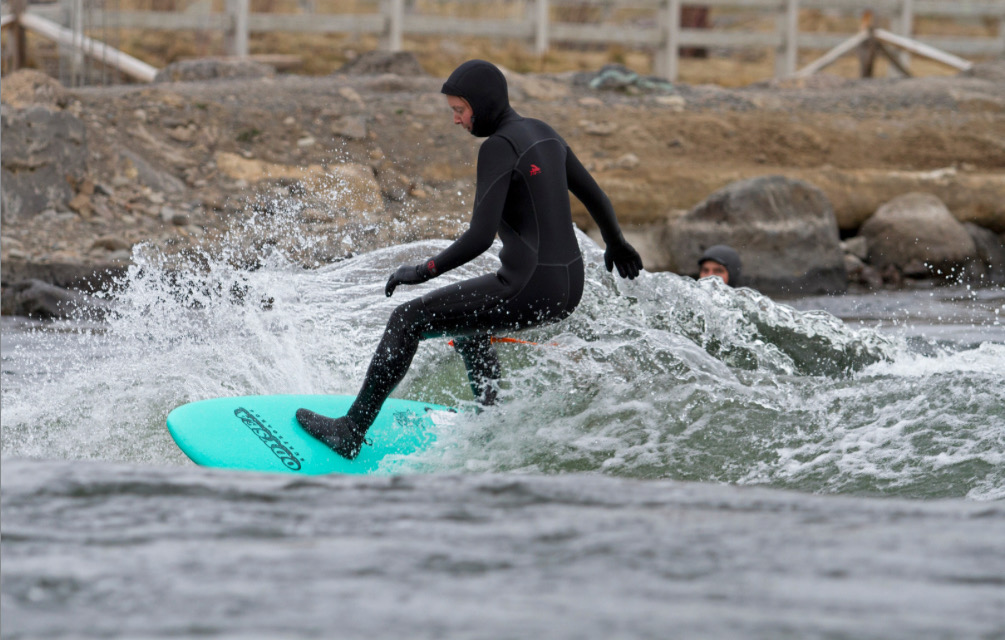
    Surfing the river wave in Bend, Oregon — Zoë Roy. (Photo: Jon Tapper)

    “Training for the PPP involved a lot of time not training for the PPP,” she said as she sipped an Italiano a few weeks back. (In fact, this reporter learned during the interview that an Italiano has less water than an Americano. Good to know when seeking the in-between of an espresso and an Americano.)

    Bottom line: Roy has a huge base of fitness and is still highly trained. Or it appears that way if you run, ride, ski, paddle, skin, or cook with her.

    “Essentially I want to have exceptional off-the-couch fitness,” Roy explained. “To be able to hang with my friends on adventures.”

    As mentioned, that exceptional off-the-couch fitness brought Roy her third consecutive PPP title this year. In other words, as U.S. Ski Team member Simi Hamilton referred to the PPP while in Bend this May, that’s three consecutive “World Championships of the World”. 

    How did she do it?
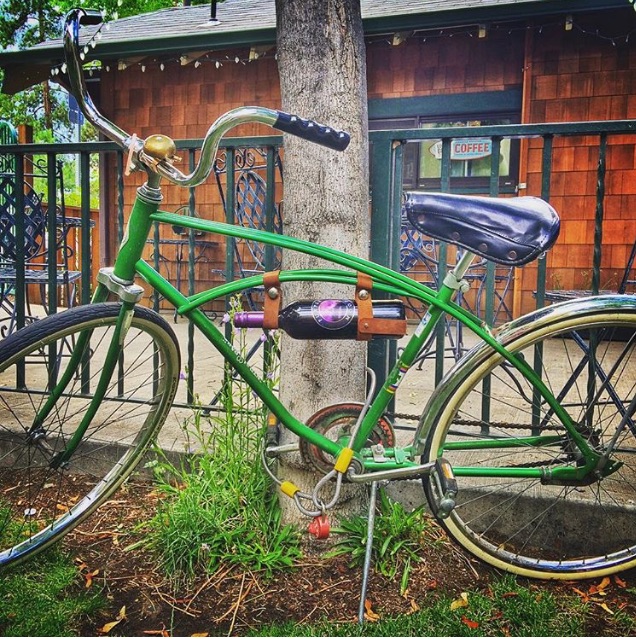
    A prized possession: the Z-Roy edition single-speed townie. Although this Schwinn is Grinch green, Zoë Roy is no Grinch. Her other bike has more travel. (Photo: Zoë Roy)

    Most often, in good weather, which we see plenty of here in Bend, Roy commutes on a single-speed townie bike. Noteworthy is the bottle of wine in lieu of a water bottle affixed to a frame tube. Our guess is that the single-speed builds leg strength while cruising uphill. It was a pretty mild winter here in town so let’s assume Roy commuted on her bike 10 miles per week. Don’t be fooled though. The townie isn’t her only bike. She was an invitee to Bend’s Blitz to the Barrel — a high-octane, enduro-bike race. She placed second.  

    Roy also committed to immersing herself in the local surf scene at the Colorado Avenue river-surfing wave here. The surfing itself builds jedi-balance. The swim into the eddy after a nasty flush from the wave builds upper-body strength.

    “I surfed the wave all the time after I picked up surfing this winter,” Roy said. “And that will pretty much trump all other activities if someone asks me to go to the wave.”

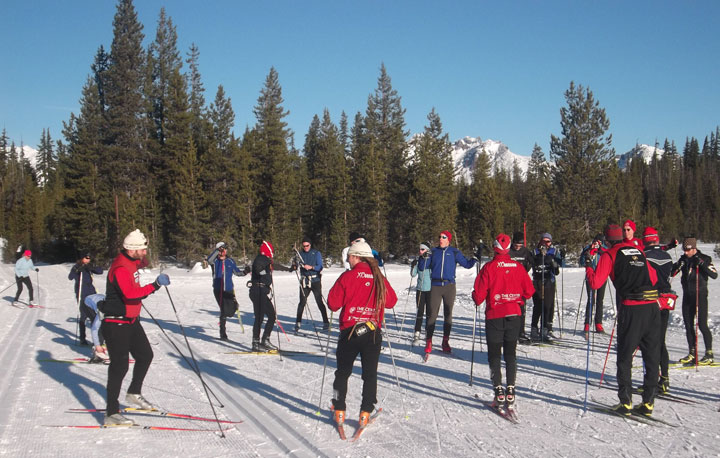
    Questioned whether she nordic skied much this winter, the reply was blunt and a little disappointing to fans of the skinny skis. “I didn’t really nordic ski this winter since my friend Elliott Heath wasn’t around,” Roy said. “I did coach a few XC Oregon master’s clinics though.”

    Roy divulged that she engaged in a trifecta of sweet-sounding trips where the fitness was brought from “meh” to almost Norwegian-style “the shape is good” before the big race.

    Level 5 scenery on the Cinque Terre trail in Italy. (Photo: Zoë Roy)

    In April, she visited Italy where she ran the Cinque Terre trail north of Tuscany. She ran 25 kilometers on Day 1. For that stretch, Roy ran along the coast, then spent the night in Levanto. In the morning, she returned along the ridge for a 28 k jaunt, making for a tidy running loop.

    She then rebounded with a backcountry ski trip to Mistaya Lodge in British Columbia. No name dropping here, but allegedly Roy was on the trip with some likely still pretty fast former Canadian XC skiers and maybe an American one, too. Lots of vert in BC kept Roy’s engine trending towards PPP-primed.

    Then two weeks before the PPP, she climbed and skied Mount Hood. Not shabby. Again, evidence of how above-average, off-the-couch fitness can be a game changer.   

    Here’s also something Roy didn’t mention — she often runs socially with a burly group of runners. Maybe it’s L1 running. Who knows. There’s no training log. No Strava we are aware of. But she runs early mornings on some days.
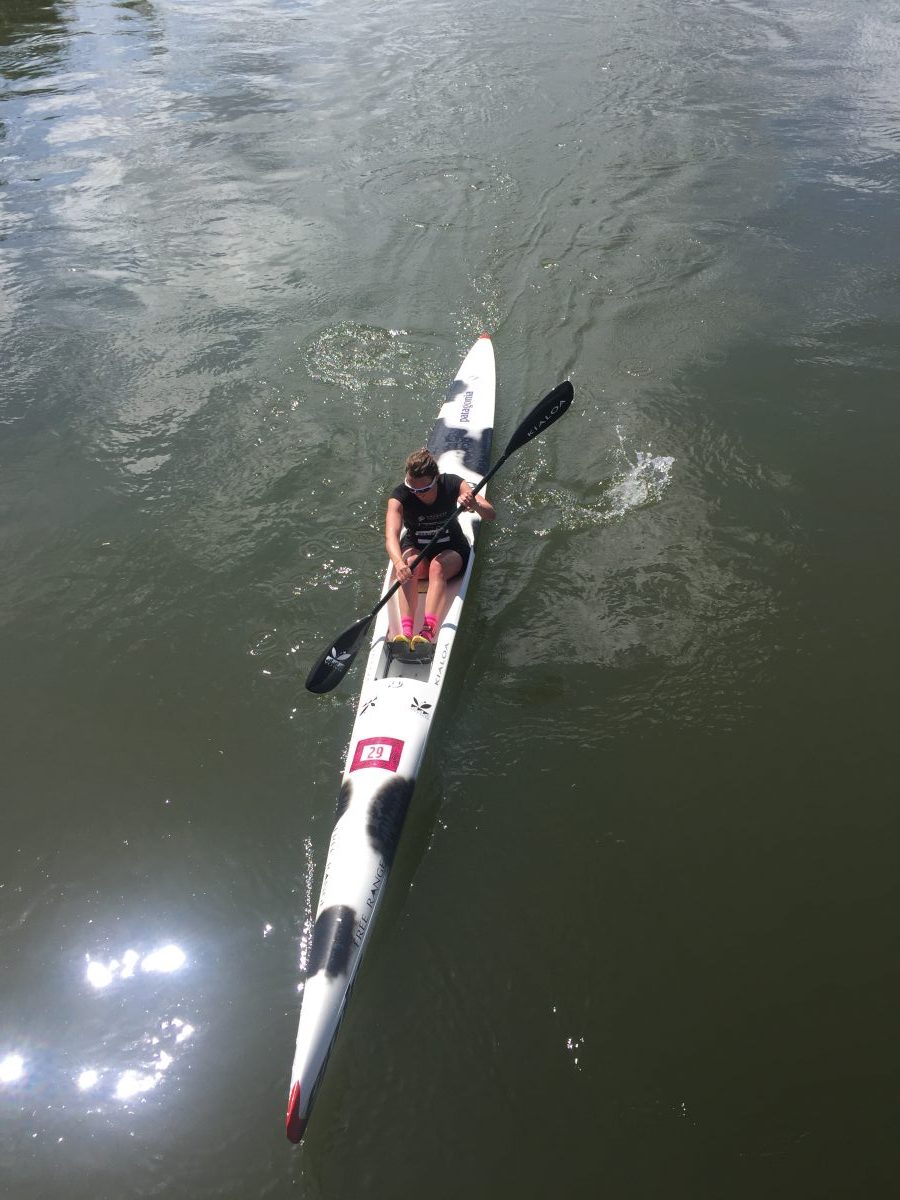
    Zoë Roy paddles “Daisy” the boat on her way to PPP victory. (Courtesy photo)

    She also jumps in and paddles her borrowed surf ski, a boat that resembles a Holstein cow, a few times prior to race day. (Our guess though is she paddles more than a few times pre-PPP.) The boat was salvaged from a dumpster and is white with large patches of carbon fiber and black spray paint here and there from the repairs. Roy calls the boat “Daisy” because it truly appears to have some Holstein lineage.

    Let’s also be real. Roy is a crusher. We’re not exactly calling her out as a sandbagger. However, if you go adventuring with Roy, most likely you’ll be huffing and puffing gaining vertical. So we in town knew she wasn’t rolling over for this year’s PPP when in mid-May she was seen screaming down Century Drive from Mount Bachelor on a TT bike after her morning XC-ski session. Yup, that’s called official “training” for the PPP. Sort of late in the game perhaps.

    To balance life, Roy holds down some pretty interesting jobs. She is the director of development for the Central Oregon Avalanche Association (COAA) and helps coordinate workshops for Wilder Retreats.

    More true facts: Roy makes and sells handcrafted ice cream. She’ll cater a party, too. She also organizes perhaps the toughest ticket in morning dance parties here in Bend. Here’s the hashtag if you’re ever game for 7 a.m., L4 weekday dancing fueled by coffee, chai and Picky Bars: #daybreakerbend. Roy says crashers are welcome. And hey, we’re calling it, the daybreak dancing helped her peak.

    Asked what the Wednesday Workout was exactly as we concluded the interview, Roy savored her Italiano on that lovely June morning and simply noted that the workout will find you.

    https://www.instagram.com/p/Bgkvm9lBR6w/?tagged=daybreakerbend

  • ‘Equal and Reasonable Access’: The Issue of Trail Use at Mt. Bachelor

    ‘Equal and Reasonable Access’: The Issue of Trail Use at Mt. Bachelor

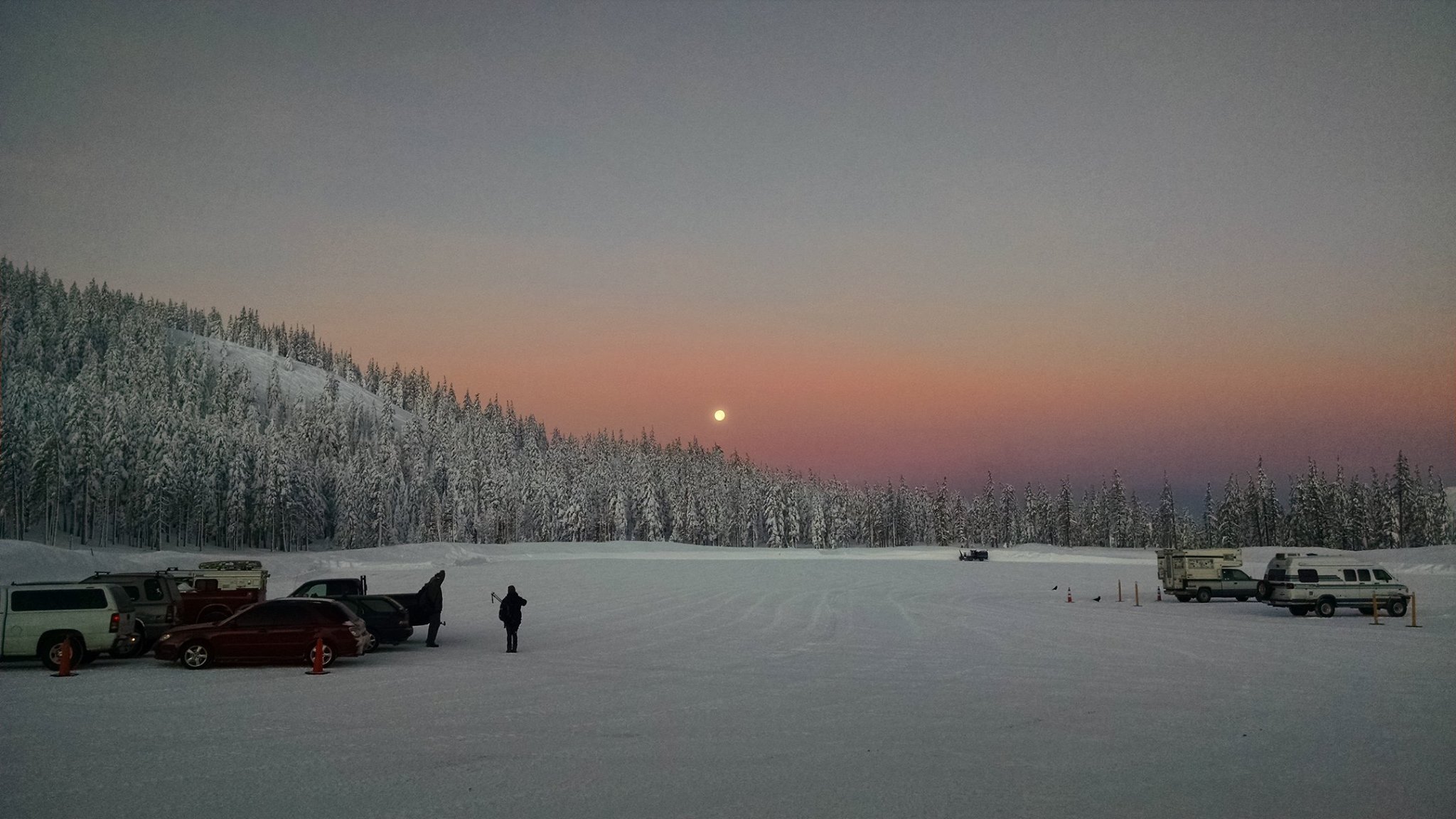
    New Year's Eve at the Mt. Bachelor Nordic Center near Bend, Ore. (Photo: Rion O'Grady/Mt. Bachelor Nordic Center Facebook)
    New Year’s Eve at the Mt. Bachelor Nordic Center near Bend, Ore. (Photo: Rion O’Grady/Mt Bachelor Nordic Center Facebook)

    Is there room at one ski center to support two junior development programs? In central Oregon, it depends on who you ask.

    Mount Bachelor, 22 miles outside Bend, Ore., is a touchstone for nordic skiers. Located in Deschutes National Forest, Mt. Bachelor operates with a special use permit from the US Forest Service (USFS). The U.S. Ski Team has run training camps here and they’ve hosted national championships. In addition, there’s an extensive alpine mountain. With a base lodge at 6,300 feet above sea level, the venue boasts generally good snow conditions.

    Mt. Bachelor has a longstanding relationship with the Mt. Bachelor Sports Education Foundation (MBSEF), a nearly 30-year-old nonprofit which has development programs for nordic, alpine and freestyle skiing. MBSEF runs its ski programs on the trails at Mt. Bachelor.

    The much-newer Bend Endurance Academy (BEA), a nonprofit founded in 2009, would like to share the trails — at least, in low snow years. Except for a couple of rare occasions, BEA has not had permission to run its programs on Mt. Bachelor.

    Since its inception, BEA has used Meissner Nordic, a nonprofit ski center also located on Mt. Bachelor. Run by volunteers, Meissner Nordic grooms 40 kilometers of ski trails on US Forest Service land.

    It’s all good, until the weather doesn’t cooperate. Located 1,500 feet lower on Mt. Bachelor than the eponymous ski area, the previous two winters, 2013/2014 and 2014/2015, were difficult for Meissner, while Mt. Bachelor enjoyed better conditions higher up the mountain.

    In February 2015, BEA approached Mt. Bachelor resort officials about using public lands at the Mt. Bachelor Nordic Center. They denied BEA’s request, except for the last two weekends of the season.

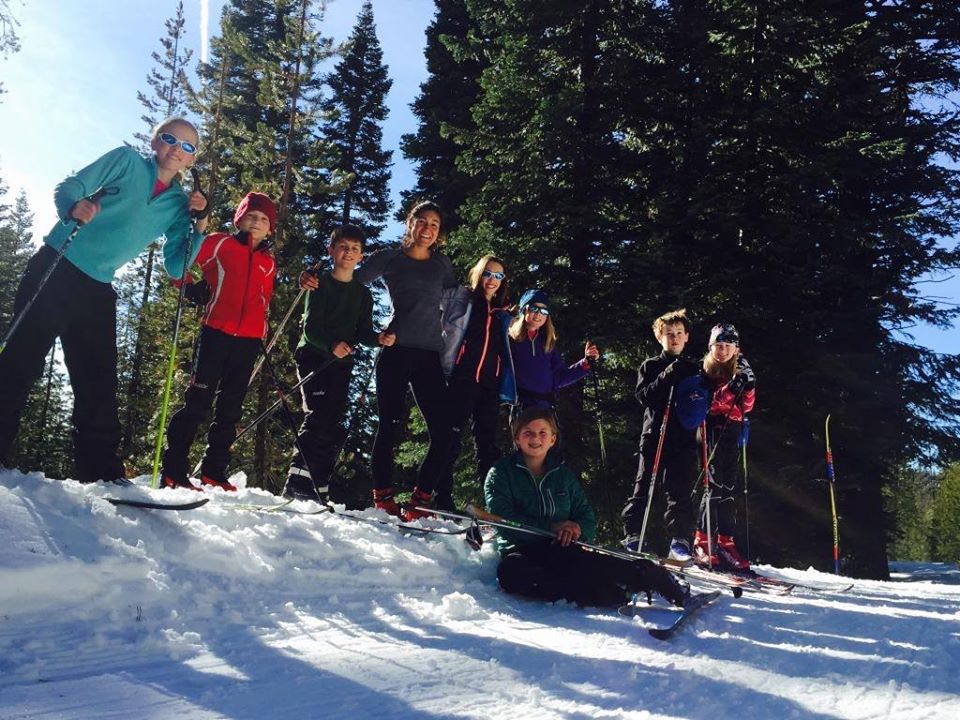
    A group of Bend Endurance Academy youth skiers in February. (Photo: Ryder "the Badger" Utrecht/Bend Endurance Academy Facebook)
    A group of Bend Endurance Academy youth skiers in February 2016. (Photo: Ryder Utrecht/Bend Endurance Academy Facebook)

    This year, the academy has circulated a petition called Let the Kids Ski, calling for more access to Mt. Bachelor.

    “There are two places in central Oregon that have groomed nordic trails,” said BEA Board President Cris Himes. “Meissner Nordic and Mt. Bachelor. Meissner has worked very well until recently due to ski conditions.

    “What we’re looking for is equal and reasonable access,” Himes continued. “Equal to any other paying customer and community group.”

    According to Dave Rathbun, Mt. Bachelor’s former president and general manager who resigned in mid-March, the resort had existing relationships with four businesses “to run their businesses sort of inside our own,” he said. “We still have to get approval from the Forest Service for these concessionaires.”

    MBSEF, whose board Rathbun also sat on, is the designated concessionaire for nordic and alpine ski programming. Rathbun is no longer a member of that board.

    In a December interview with the Bend Bulletin, Rathbun characterized BEA’s interest in Mt. Bachelor as a desire to use the resort as “a home base for their business.”

    “[BEA] want to operate their business within ours, and in most cases at a time when we’re already at capacity,” Rathbun told FasterSkier. “It’s very busy at the times they want to have access.”

    Rathbun added that Mt. Bachelor is “at capacity” for instruction in both in nordic and alpine skiing. “We’re not going to open it up to any other concessionaires.”

    In addition to its own paying customers, Mt. Bachelor’s agreement with the USFS requires the resort to accommodate people who want to access backcountry skiing via a “common corridor.”

    According to Rathbun, “that’s another 10,000 visits per year,” in addition to about 30,000 visitors per year skiing Mt. Bachelor.

    Himes feels that the lodge might be crowded, but believes that the trails are not. For her, the primary issue is ensuring that kids have access to skiing. The lack of decent snow is a barrier to participation, and this is reflected in the numbers. Although BEA’s competition team is larger than last year, the enrollment in its youth club and nordic development programs is down 38 percent and 28 percent respectively from the 2014/2015 season.

    “Last year Mt. Bachelor did a remarkable job of keeping their snow,” Himes said. “When we can’t run our programs at Meissner, we need to be able to take our kids to groomed trails somewhere else. The only option is Mt. Bachelor Nordic Center.”

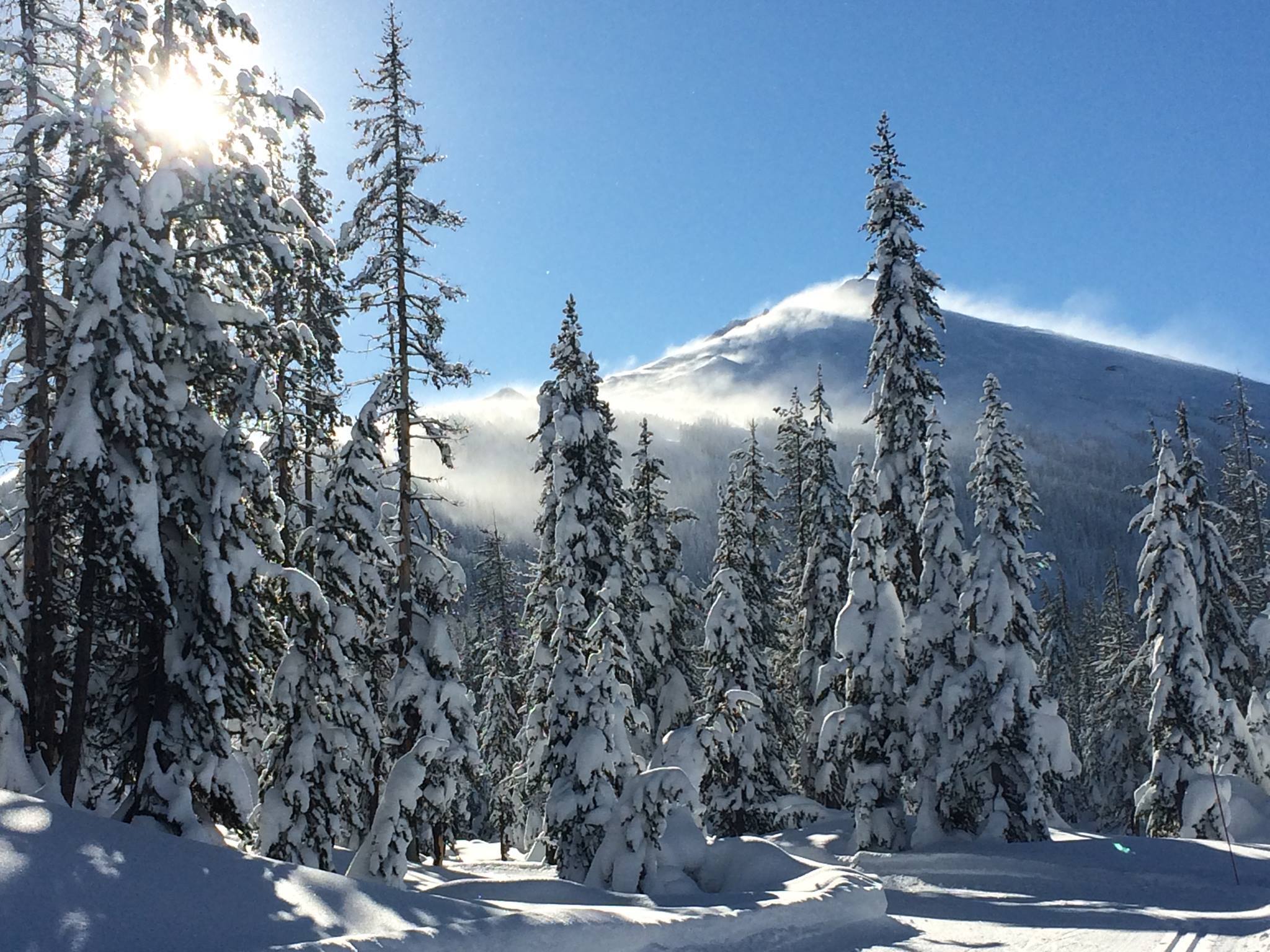
    New Year's Day 2016 at the Mt. Bachelor Nordic Center near Bend, Ore. (Photo: Lew Becker/Mt Bachelor Nordic Center Facebook)
    New Year’s Day 2016 at the Mt. Bachelor Nordic Center near Bend, Ore. (Photo: Lew Becker/Mt Bachelor Nordic Center Facebook)

    During the snow drought two seasons ago in 2014/2015, Rathbun reflected, “I wanted to be a good neighbor. We gave BEA access to nordic center in afternoons, the last couple of weekends in March. I think it worked out well and they appreciated being able to get on snow.”

    In a July email to BEA, Rathbun offered the academy access on Tuesday and Thursday afternoons and weekends after 12 p.m., with certain blackout dates during peak periods. These times apparently didn’t match BEA’s program schedule, and according to Himes, left only three weekends out of the winter for training. In September, Himes met with Rathbun to negotiate more favorable access times, to no avail.

    “I’m really sorry about that, but that’s the only way we feel it can work, based on how crowded we are,” Rathbun told FasterSkier.

    “I can see both sides,” said Alan Watson, the Pacific Northwest Ski Association (PNSA) nordic program director. “My interest is in promoting the success of all these programs. I would like Mt. Bachelor to let BEA train on their trails. It would be good for skiing in the northwest.”

    Is trail crowding a red herring? Rathbun said that BEA skiers were welcome to come up and ski so long as they had a pass, but that organized training with a coach wouldn’t be permitted – except at the times listed above.

    Does Mt. Bachelor wield trail access as a cudgel? From a distance, it’s hard to tell. But FasterSkier obtained three documents sent anonymously to Himes. One was Oregon School Ski Association’s (OSSA) participation policy. OSSA is one of the two governing bodies for high-school alpine skiing in central Oregon, and holds race meets at Mt. Bachelor. Circulated in December 2014, the policy required students on high school ski teams to participate in four training sessions each week, including races.

    OSSA Race Director Matt Cutter said that there were students that participated in both high school and club programs, and that OSSA’s goal with this policy was to instill team unity.

    “We don’t want ringers,” Cutter said of athletes who only show up for race meets. “We needed to get something in writing.”

    The other two documents, both dated Jan. 8, 2015, are responses from Rathbun and John Scheimer, MBSEF’s executive director, to OSSA. Rathbun’s letter decried OSSA’s participation policy, stating that it would negatively impact “students who club race with MBSEF and have other extracurricular interests.” The letter concluded, “…with our strategic partner MBSEF, we [Mt. Bachelor] will be reviewing all elements of OSSA activities occurring on Mount Bachelor. … Any changes in these privileges will be communicated to you as soon as possible.” Scheimer’s letter to OSSA was written in a similar tone.

    Scheimer declined an interview request for this article.

    In response to the letters, Cutter said that OSSA rescinded its policy. “That was not our intention at all” to exclude anybody, or force a student to choose between a club program and the high school team, Cutter explained.

    Cutter viewed the disagreement as minor, adding, “I can’t stress enough how much support Mt. Bachelor gives us.”

    Rathbun said that his letter was actually in response to scheduling conflicts between OSSA and OISRA, a second governing body for Oregon high school alpine skiing. However, neither his letter nor Scheimer’s make any reference to OISRA. Cutter said that while Rathbun discussed scheduling with OISRA, it was in correspondence from August 2015.

    “The kids know each other, the parents know each other, we support each other’s kids,” said Himes of BEA and MBSEF. “I am really hoping that we will be working cooperatively with MBSEF.”

    With good conditions this winter, trail access at Mt. Bachelor wasn’t as crucial. Next year may be a different story.

  • U.S. Biathletes Leave Their Rifles At Home and Get Ski-Specific in Bend – With Photo Gallery

    U.S. Biathletes Leave Their Rifles At Home and Get Ski-Specific in Bend – With Photo Gallery

    U.S. biathlete Annelies Cook speeds up a hill at Mount Bachelor in Bend, Oregon.

    BEND, Oregon – Even though the U.S. biathlon national team did not compete in the Pole Pedal Paddle on Saturday morning like their skiing counterparts, the athletes still didn’t get to sleep in for their weekend.

    After all, this is training camp.

    Instead, they headed up to Mount Bachelor to do intervals, and had to start early so that they could be off the race trails before the five-sport extravaganza began.

    “Early in the morning it’s a little tricky because it’s a little bit icy, but it takes half an hour to warm up and then it’s awesome,” Sara Studebaker said after finishing up her last interval. “And they have so much snow, and the grooming has been really good. It’s really great.”

    It’s the first time the current crop of biathletes have had an official camp in Bend, and only the cream of the crop are in attendance; eight “A” team athletes were invited, but Jay Hakkinen is at home in Germany and Leif Nordgren is recovering from surgery. That left Studebaker, Annelies Cook, and Susan Dunklee for the women and Tim Burke, Lowell Bailey, and Russell Currier for the men. Dunklee said that the Bend camp was an additional carrot for reaching “A” team status: not only was it a beautiful location, but the small number of athletes meant more individual attention from coaches.

    And, of course, it’s a chance to get on snow. While the team hasn’t traditionally done an on-snow camp in the spring, women’s coach Jonne Kahkonen said the athletes were handling it well.

    “We’ve been skiing a lot, pretty late on snow, so the transition was not so hard,” he told FasterSkier.

    He added that even the venue’s altitude – the nordic center sits around 6,000 feet – didn’t have a major effect on the team’s training.

    “I’ve been surprised – even myself, and I’m not in the shape that the athletes are,” Kahkonen said. “It’s weird, sometimes there are places where the altitude doesn’t really get you, and that’s exactly what the athletes say now. They don’t really feel it and maybe it’s just that they have more training done, and more background. The conditions are great, so that helps a lot.”

    Another new development for the team: for the first time, they are attending a camp without even bringing their rifles. While Mount Bachelor does have a shooting range, it is rarely used and the team decided to focus on skiing instead.

    “It’s awesome,” Studebaker said of the change. “It was so great, we were like, ‘Oh, we can put as much stuff as we want in our bags!’ It’s so easy to travel without rifles. And to have a camp where you’re just thinking about training is great. I think it’s really necessary every once in a while.”

    Kahkonen said that the team is considering the idea of periodizing some of its training into skiing and shooting camps. Before coming here to Bend, the team had done a camp in Lake Placid that focused primarily on shooting. Kahkonen had done something similar in his previous job with the Finnish national team, and was excited to see the idea introduced in the U.S.

    “In my two years we’ve always had biathlon camps, but I think the athletes are liking it,” he said. “They can just focus on one thing at a time. And after this camp they get a break, it’s an off week, but then it’s biathlon training. So now, ideally, all the basics are done for shooting, and the basics will be done for the skiing, and they’ll start putting it together.”

    On Saturday, the athletes did a roughly 12-minute warmup alternating fast pieces with easy skiing before launching into a set of five-minute level four intervals. Even though it’s May, the team has already been hard at work with intensity sessions.

    “We do a couple of sessions already, per week,” Kahkonen said. “We do a lot of volume, so if you look at the percentages it’s still quite low. And that’s the focus also – over the course of the year there’s less volume and more quality.”

    By the time she finished her last interval, Studebaker was appropriately tired. Despite Kahkonen’s earlier assertion, she said that the altitude did make things a tad tougher.

    “It’s definitely hard,” she said. “I come from the West, so I know what it feels like to be at altitude, but it’s an adjustment. I was up in Alaska before our training season started, and then Lake Placid, so here it’s really high [in comparison].

    “But it’s great to be on snow.”


  • Get Wintergized for Women’s Health in Bend January 28th

    Get Wintergized for Women’s Health in Bend January 28th

    Ladies, come have fun on your skis! Photo: Ski for Women Anchorage.
    On Saturday, January 28 a brand new XC ski & snowshoe event will take place at Oregon’s Mt Bachelor Nordic Center. The inaugural Tour for the Heart presented by Heart Center Cardiology & St Charles Health System is a 5km celebration of women’s winter fitness created to educate and fundraise for women’s heart disease — America’s #1 killer.
    The Tour features a gentle and scenic 5km route starting from the upper Mt Bachelor Nordic trails perfect for any level of XC skier or snowshoer. Costumes are encouraged with special prizes for organizations and schools with the largest number of participants. Yummy (and healthy) treats, music, and merriment will also contribute to making this a one-of-a-kind party in the snow for a great cause.
    For more information and to sign up, visit TourForTheHeart.org. All net proceeds from the Tour for the Heart will go to the American Heart Association.
  • First Half of XC Oregon Masters Camp “Practically Perfect”; Space Still Available

    First Half of XC Oregon Masters Camp “Practically Perfect”; Space Still Available

    While much of the northern hemisphere has been struggling with little to no snow thus far in the 2011/12 winter season, the 2011 Oregon Fall Camp held at Mt Bachelor & Bend, Oregon has thus far been a practically perfect exception.
    Beginning last Thursday (December 1), the first five day block of the two-part Camp enjoyed the best of all snow/weather worlds.  A nearly three foot base and over 25km of groomed trails took care of the snow side. For weather, every Camp day thus far has featured brilliant sunshine, highs into the 30s, and rapidly decreasing winds.
    According to Camp Founder and XC Oregon Coach J.D. Downing, this unlikely December snow/weather cocktail has produced one of the best Oregon Fall Camps on record.
    “I’ve done this camp for over a decade now and thus far this is got to be up there for practically perfect weather and snow,” says Downing. “We’ve got classic skiers still on kick wax with just some binder underneath. For skating it’s fast, but you still get good purchase. The short days have kept a certain amount of powder out there that is still getting tilled in. No obstacles whatsoever on the trails. It’s really easy for both the campers and coaches to just focus on productive clinic sessions. Based on everything I’m seeing and hearing — it’s very likely we have as good or better skiing here than anywhere else in the world right now.”
    Featuring a program designed specifically for master skiers, since 2001 the Oregon Fall Camp has been a staple of the early season North American camp scene attracting up to 100 skiers per year from throughout the U.S.
    The Oregon Fall Camp continues December 7-11 with a limited amount of space still available for interested individuals. Visit www.xcoregon.org for complete information and daily updates.