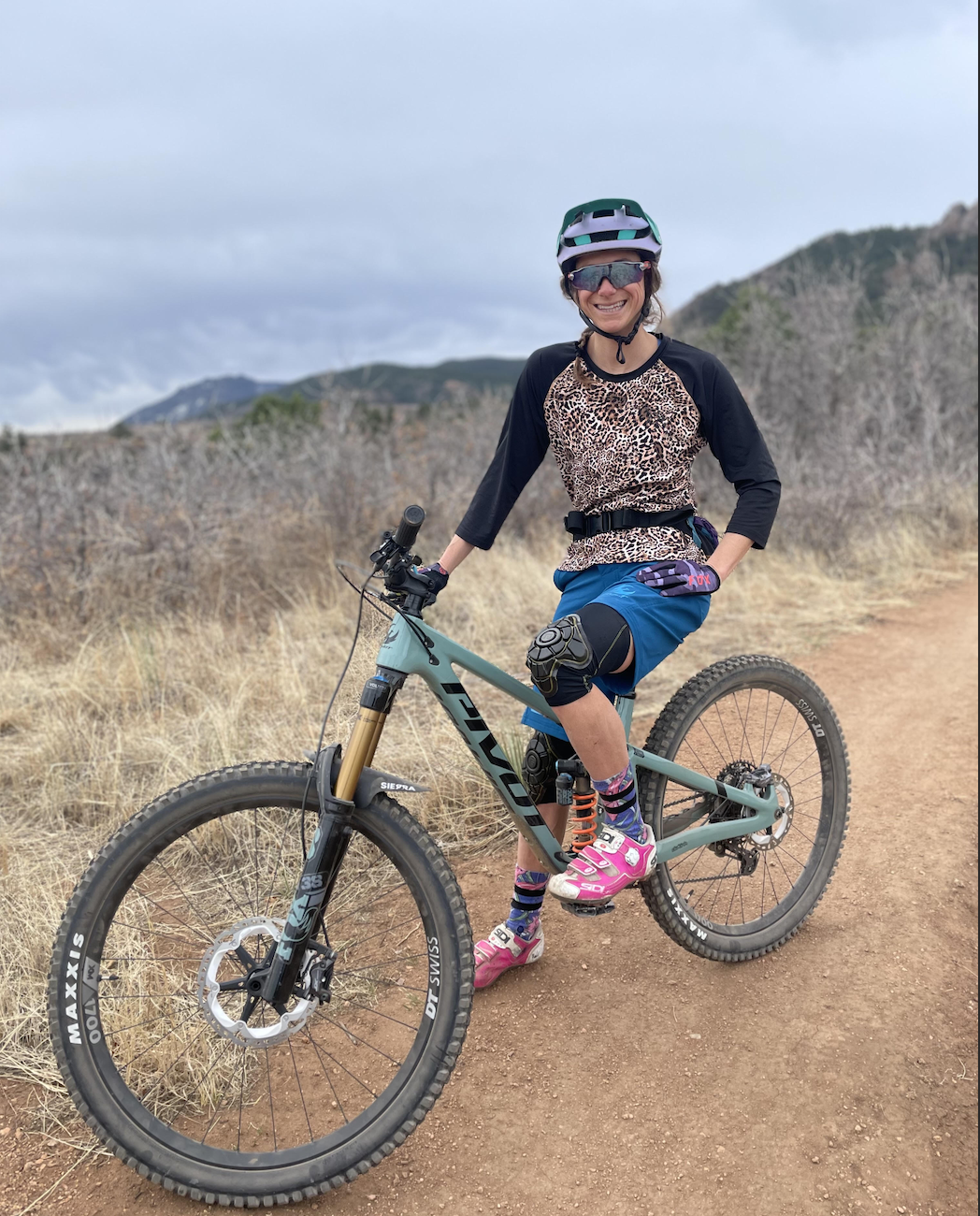
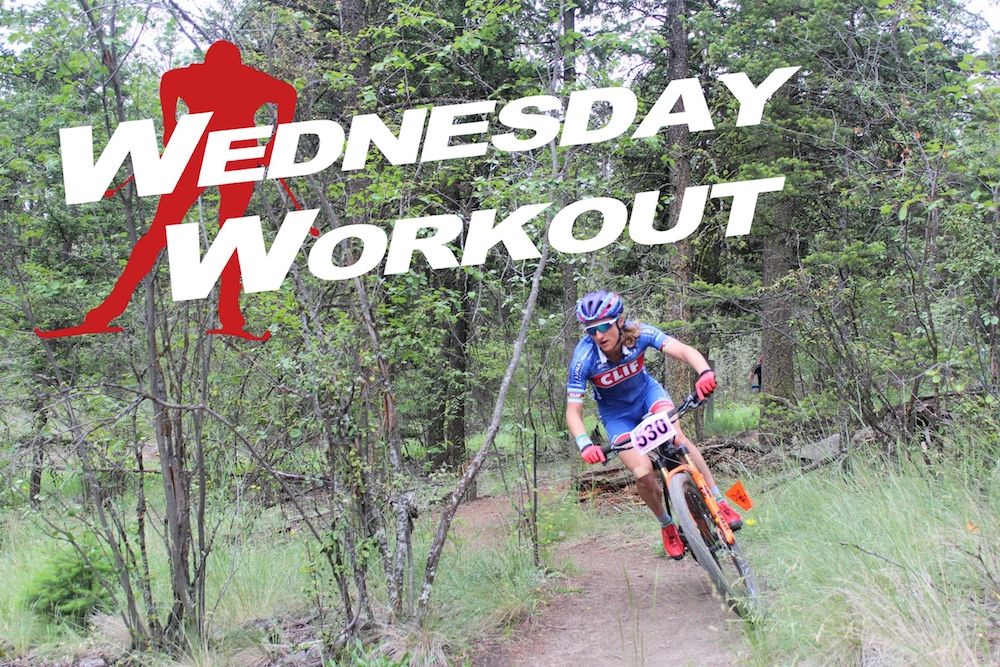
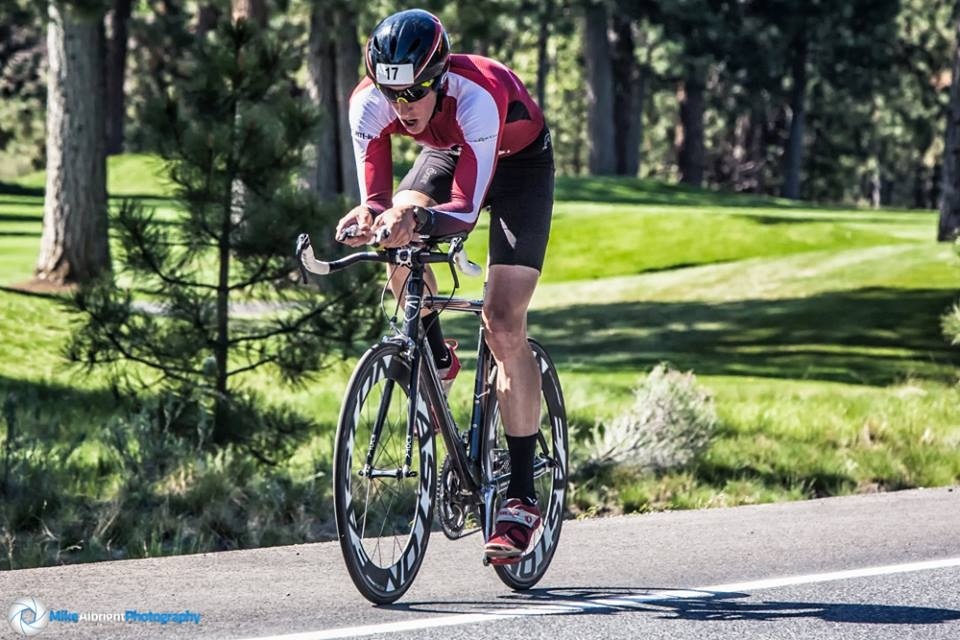
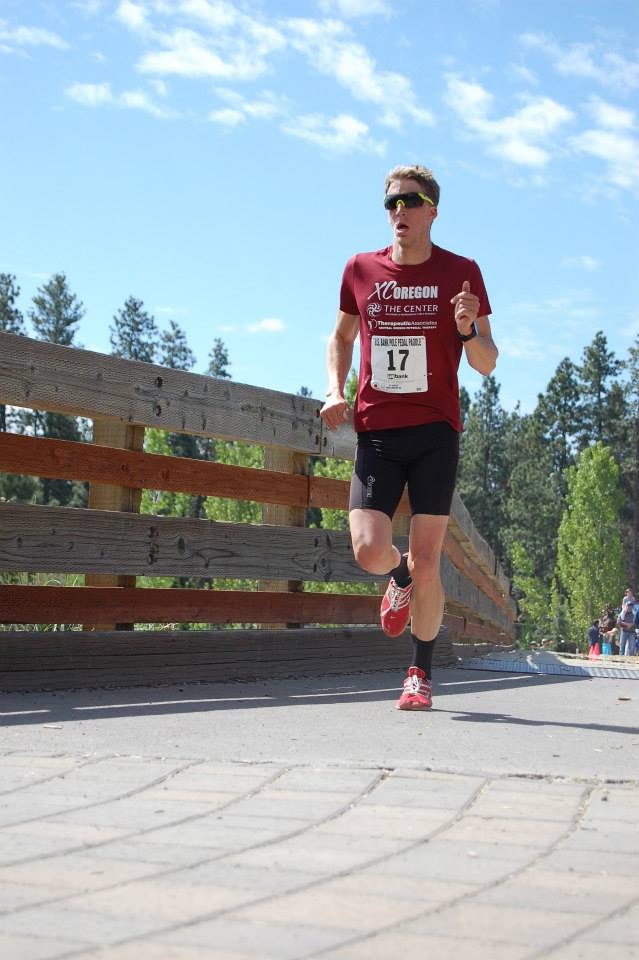
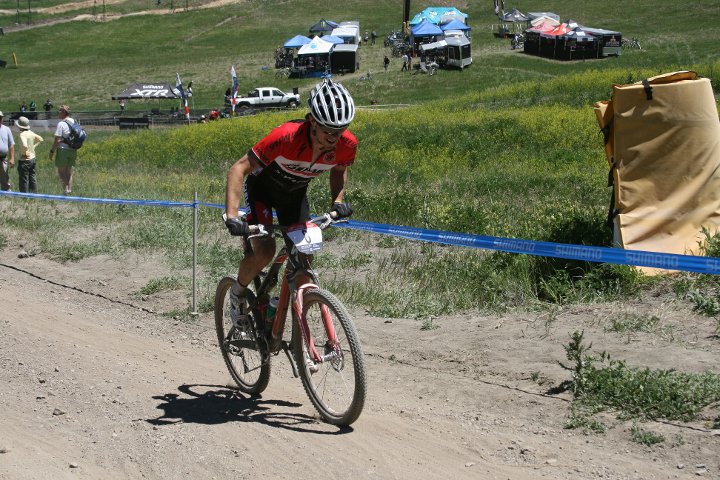
2x Olympian and soon to be DPT Jessica Yeaton shares insights into incorporating mountain biking into your cross-country ski training. (Courtesy photo)
Cross-country skiers are notorious for training high volumes during the off season in order to be in peak racing form in the winter. There is a common mantra used by coaches to help motivate athletes to train hard even though the racing season is months away: “skiers are made in the summer”. From my experience working with different coaches, the large bulk of the summer’s volume is intended to be on roller skis or foot (either running or bounding with poles). While this may work for some, many athletes struggle with injuries when training 800-900 hours/year – myself included – making it hard to consistently rely heavily on these high impact training modalities.
A constant battle with an overuse injury one summer forced me to think outside the box; I began using the mountain bike to train. In the back of my mind, I doubted the effectiveness of this as it translates to skiing. I had heard coaches saying since I was in high school that cycling hours needed to be counted as 50% when logged due to the lack of specificity to our sport. However, I had no choice – it was either train on the bike or don’t train much at all.
Three years later, I now perform 60-70% of my summer training on a mountain bike. This is no longer because I have to, however; I now choose to use it as my primary mode of volume and a large amount of my intensity due to the immense gains in fitness and muscle activation, along with technical and terrain aspects that I have found translate well to cross-country skiing.
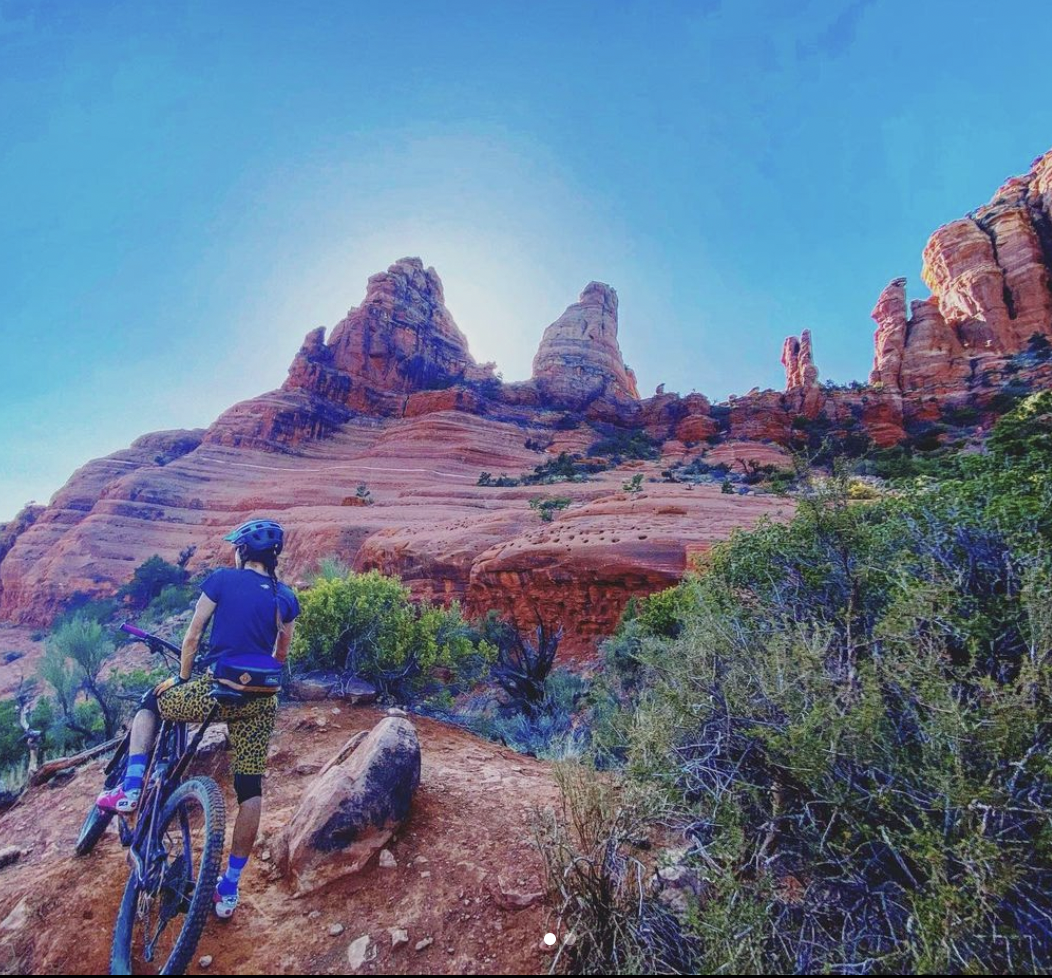
Jessica Yeaton enjoys a fall mountain bike ride in Sedona, AZ. (Courtesy photo)
It’s a no-brainer that mountain biking heavily engages lower extremity musculature, placing a high demand on our quadriceps, hamstrings, glutes, and calves. However, mountain biking also employs shoulder, chest, and arm muscles due to the control required in technical sections, downhills, and even steep uphills. Thus, the muscles used while mountain biking closely mimic those during cross-country skiing – particularly skating, which has a higher demand on our glutes than classic skiing. Additionally, the terrain in a network of mountain bike trails is often tough, causing fluctuations in heart rate similar to those experienced while skiing. There are long climbs followed by flowy descents with sharp corners and short, punchy uphills thrown into the mix. High workloads followed by challenging downhills on which to recover – doesn’t that sound like ski racing? I find that a 90 minute bike race feels very similar to a 30k skate race in effort.
The downhills also offer a technical challenge that heightens reaction times. I often ride into more difficult features multiple times to get the line right before committing – something that has changed the way I now approach tough downhill corners before a ski race. An added bonus is the smile that I can’t wipe off my face after a flowy descent or when I’m able to conquer a new feature!
Dropping! Jessica Yeaton gets after it on a technical ride in Colorado this spring. (Courtesy photo)
Lastly, the fact that it is low impact makes it a great addition to a summer training plan that is full of running and rollerskiing. If you struggle with injuries or are looking to increase volume without added stress on your joints, jumping on the mountain bike for a few workouts a week is a great way to accomplish that.
So, with all of those factors in mind – what is the best way to approach your workout on a mountain bike?
The aerobic demand and muscular fatigue is often higher while mountain biking than during other activities where it is easier to keep my heart rate consistently lower. Because of this, I tend to pick a few workouts a week where I am ok doing a higher distance pace (L2 into L3) to hop on the bike. I choose terrain that mimics ski racing, and do not stress about keeping my heart rate low. I often pair my rides on a day with double pole intervals or strength sessions. If I am trying to keep it easy or have hard skate rollerski intervals planned the next day, I opt for easier trails or a light run so I can keep my heart rate low.
Want to test it out for yourself? Here are two of my favorite workouts on the bike.
Due to the aerobic challenge mountain biking presents, it’s an awesome place to do threshold workouts. If you live in a place where you can find a sustained climb or an up-track, you can use this to do L3 efforts (for example, 2 x 20 or 3 x 15 minutes up an up-track), then use the downhill for active recovery. This stimulates downhills in racing and forces you to focus on coordination while flooding with lactate.
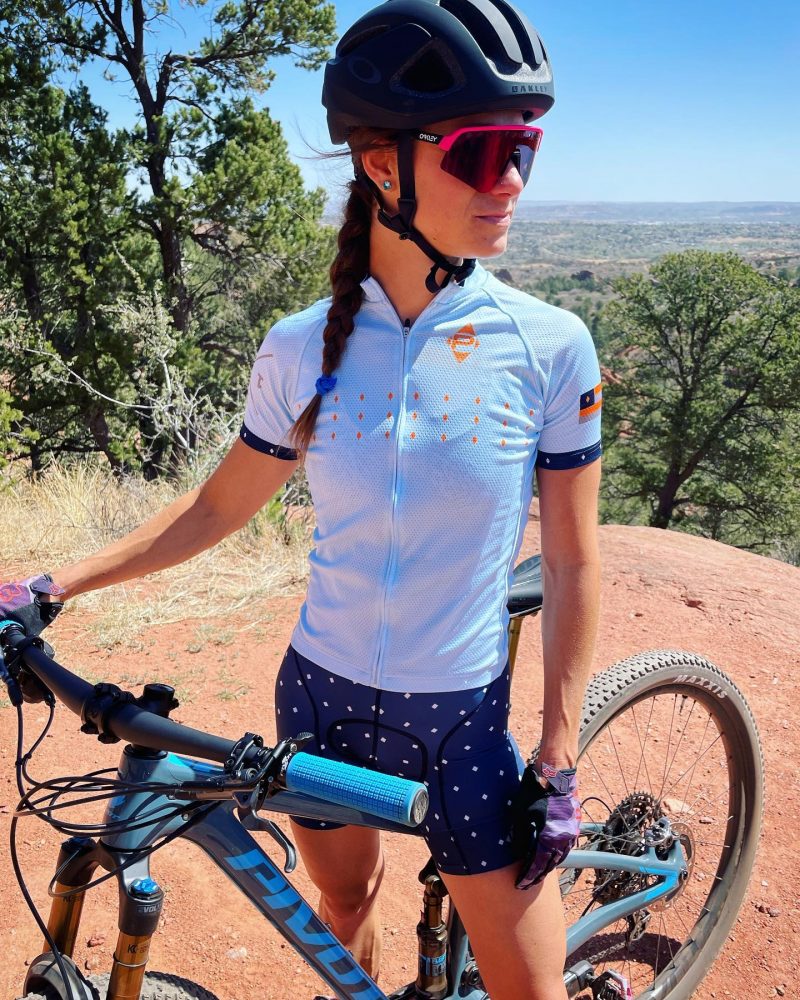
2x Olympian and soon to be DPT Jessica Yeaton shares insights into incorporating mountain biking into your cross-country ski training. (Courtesy photo)
Another great workout on the bike is 30-30’s, or where you go hard for 30 seconds, then recover for 30 seconds while continuing to ride easy. This workout focuses on power and strength, and I find that it translates really well to sprinting, and teaches the body to recover and get used to back-to-back punchy hill efforts, so you’re able to regain power descending off a roller before hammering up the next climb in a race. I recommend doing 3 x 10 minutes or 2 x 15 minutes of 30-30s. Just make sure you are able to keep your legs spinning during the recovery – you shouldn’t need to get off your bike to rest in between! The goal is to put in a hard effort, but maintain a reasonable pace in between.
I am a big believer in making training as fun as possible while still putting in the hard work. Mountain biking is something to look forward to that makes me excited to get out and train. Ultimately, this helps me train harder and stay motivated, so I am a huge advocate for learning how to integrate it appropriately – which for me means creating a smart training plan that will help me reach my goals in the winter. If you also crave time on the bike, I hope this advice can give you the confidence to structure it into your dry-land training as well.
Editor’s note: For the second-straight year, we’re presenting another 12-day holiday gift guide, brought to you by the one and only “FBD”, our gear-review guru. See also: Day 1 | Day 2 | Day 3 | Day 4 | Day 5 | Day 6 | Day 7 | Day 8 | Day 9
***
Day 10: Tech
Tech — what exactly does that mean? Technology? Phones that cost >$1k but still die after being exposed to cold for less than an hour? Michigan Tech? The dudes who stay up late drinking and prepping skis? All of these? None of these? Inquiring minds want to know.
In the vernacular that I am establishing here is it really more of the former and much less of the latter, much, much less, actually, as I am still recovering from spending time with the ski service technicians from Italy, Germany and France on the last night of the FIS Nordic Combined Continental Cup. You can learn a lot talking with World Cup wax techs and in this case I learned that if you stay up late drinking, you’re going to feel like crap the next morning. Who knew?
So let’s do our best to purge that nasty little episode from memory (which should be easy, as many of the details from that night are already sketchy) and focus on all of the strengths of technology.
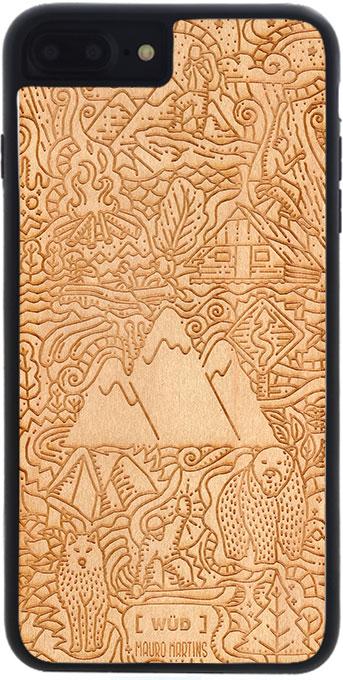
This one is on the edge of the price category, with WÜD Life offering cases ranging from $19.95 to $39.95, but we tested one right in the middle, a “Mountain by Mauro Martins Phone Case” made with North American Maple wood. This company, which has only been around since June, sells rugged, yet visually appeasing phone cases made from natural materials, like wood and stone (as well as hard plastic and rubber). So if you’re buying for someone that’s outdoorsy and artsy, this is a great choice.
The cases are relatively thin and lightweight (even the rock cases) and they’re not waterproof, so they don’t live up to the indestructible standards set by, say OtterBox. At the same time, they’re a lot less bulky and definitely eye-catching. And if you really want to stand out among the crowd, check out WÜD’s Private Collection for cases “uniquely designed for each customer”, made of burl wood and available in limited quantities.
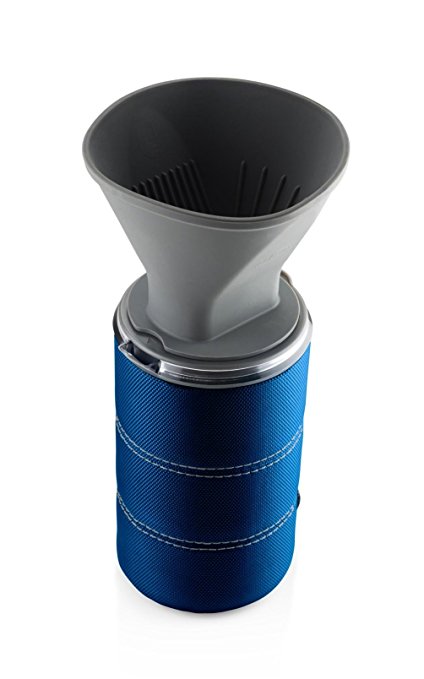
First and foremost, let’s not forget that the ultimate goal of technology is to make our lives better and is there anything better than hot, fresh coffee in the morning? Coffee is good everywhere, but it’s even better when you are up in the mountains, on a glacier, or marooned in some soul-crushing cabin in remote Montana, testing sleeping bags and underwear, alone with your thoughts (turns out that you can scribble down your insane ramblings much faster and with greater clarity when you are jacked up on caffeine).
Coffee is a lot like sex in the sense that even when it’s bad, it’s good. Sticking with this metaphor for a second, coffee is also good anywhere and no where is it better than in any of the aforementioned scenarios. It can also be hard to find, especially when you are traveling alone, and can be quite frustrating when someone who doesn’t know what they’re doing messes it up.
The solution? (Well, at least to your coffee problems, you’re on your own for the other stuff). A kick-ass backcountry coffee system. Technically (yup, there’s that word again), this is a pour-over system, as opposed to a French Press, but at the end of the day, does any of that really matter? Your goal is good/great coffee in the backcountry (or in your hillbilly offices if those savages only have dirty, old commercial drip coffee makers that look like they came from a insane asylum in the 1950s).
There are a few different pour-over systems out there, but this one is probably my favorite. It’s relatively light, very functional, durable and most importantly, produces great coffee, which is key when you are sitting in your Ted Kaczynski-style cabin in remote Montana, wondering how your life went so wrong. It might be a bit heavy for weight-weenie backpackers (for you, I recommend this, but please note, you also need a compatible stove).
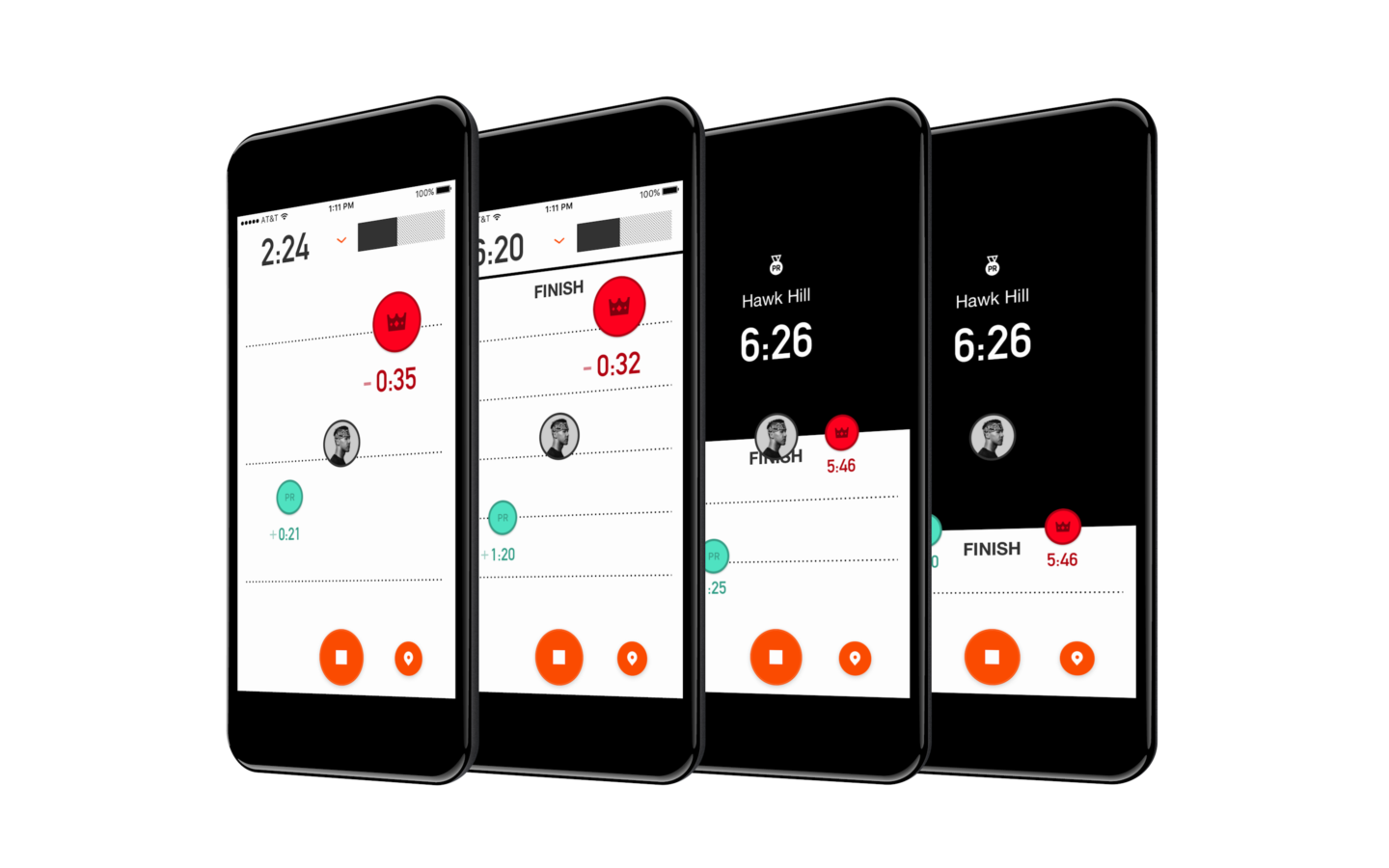
OK, this one is a bit tricky for me. I gladly travel to the far corners of the Earth in search of the ultimate in gear for my adoring readers, but I’m going to let you in on a secret — I generally don’t like Strava. Well, wait, let me back up a bit — I generally don’t like the people who use Strava. Just as Muhammad Ali famously once said regarding his refusal to fight in Vietnam, “I ain’t got no quarrel with them Viet Cong,” I ain’t got no quarrel with Strava, but man, I sure do hate some of the idiots using it. If you’ve ever uttered the phrase, “If it’s not on Strava, it doesn’t exist,” you are one of the people to which I am referring.
Or if you’re someone who I beat the balls off of in a running race to the top of the gondola and instead of taking your beating like a man, you cried about it because your ass-kicking wasn’t on Strava, well then I’m talking to you too. You people (or in this case, person) are the worst.
These are the very same people who speed up on their bikes if they see someone preparing to pass them on a training ride. Guess what that training ride just became, dummy, that’s right, a race. Don’t get me wrong, I love racing — “racing improves the breed,” but you know when I like to race? On race day. You know when racing is stupid? On training days when you are supposed to be riding easy. But hey, if you want to wreck your season and make your training time less, productive, who am I to stand in your way? Blow it out all summer trying to move up from number 349 to 321 on your local KOM, just don’t come crying to me when you’re going backwards all winter on snow.
Thankfully, this phenotype is not everyone on Strava. In fact, I have a few very good friends who successfully use this social network without me wanting to murder them each and every day. Case in point, the first couple of U.S. cross-country skiing, Brian and Caitlin Gregg are not only regular users, but also completely normal, sensible people who use this tool wisely.
Strava offers a basic level service which is free, but the premium option has all kinds of cool options and since this is a Holiday Gift Guide, why not gift this to your favorite nordic nerd already wasting away hours to see which other nordic nerd skied the local hill faster than they did on a training day? If your gift recipient in question has already bought into this nonsense, the extra features available on the premium level will have your technophile nothing short of orgasmic. (Hmmm, lots of sex references in here today, I may need to see someone about this).
As for more on how to use Strava correctly and without sounding like a total tool, I would like to turn over the floor to my good buddies, Olympians and all-around great people, Brian and Caitlin Gregg. During out time together in West Yellowstone, they each offered up these perfect assessments, “The LNR [Loppet Nordic Racing] boys have turned me on to Strava and it is a fun was to help share and discover different rollerski routes,” said Brian. “We have set up segments for our various interval loops and hills and it is nice to have an automatic log of segment times for our intervals.Plus it is fun to keep everyone on track and accountable for successfully negative splitting intervals sessions.”
Caitlin added, “It is helpful to be able to easily see heart rates and data from the whole training group so that we can make sure that the intensity level is correct and we can monitor fatigue.” Now THAT’S how you use Strava, people.
Truer words were never spoken. Go ahead and sign up, but remember people, I am watching you.
The biggest takeaway here? Be more like Caitlin and Brian. In everything you do.
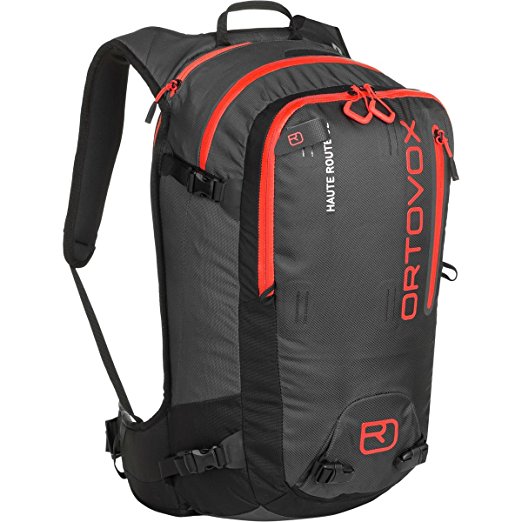
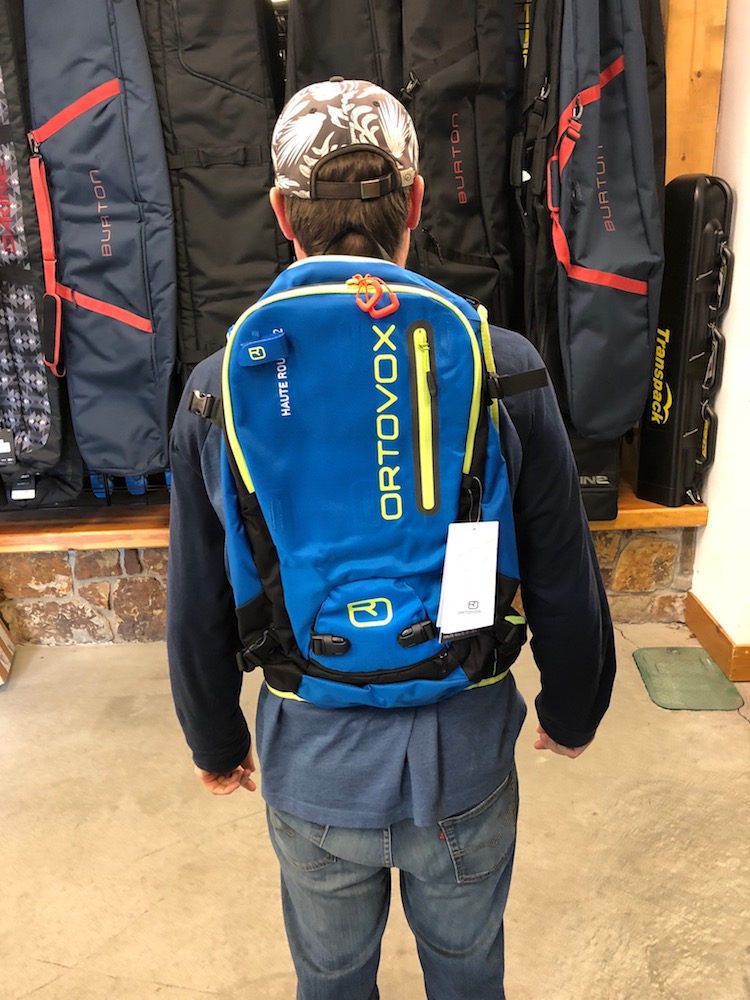
Who doesn’t love a good backcountry pack? This pack made the cut for “tech,” because not only is the pack itself high-tech, but it can also very effectively carry and help manage a whole suite of other technologies (no word if the French wax techs will fit inside, though it IS called “The Haute Route.”) Since the HR 32 has features like separate compartments for your avi gear (you DO have avi gear, right? If not, don’t you dare leave the groomers), easy carry options for skis, snowboard, helmet, poles, and even an ice axe, boom, you had me at hello.
My back is much more broad and jacked up than this, but you get the general idea.
What’s also great about this pack is the use-profile for which it was designed: backcountry touring. Rocking the BC is the best of both worlds: you get to show off your superior aerobic fitness and blast up some big hill like the lunatic that you are, then come ripping down on beautiful, untouched, gaper-free powder. Talk about living this dream, THIS is it.
There are lots of variations on this, too, and all of them rock: there’s backcountry, slack country, side-country and even Big Country. (This is btw, exactly what J-Smu’s arms look like: pasty little strings of Play-Doh attached to a giant head) So go ahead, pick your poison, but don’t get all caught up in labels, attitudes and worrying about the MO of the next guy, you do you — there’s lots of fun to be had out there, so go get some. Just do so safely and with some style.
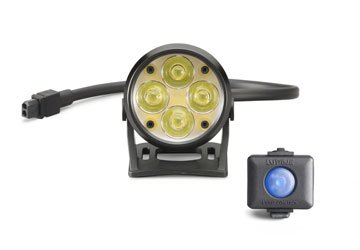
Yes, I went HAM (and no, not this) the other day on the Lupine headlamps, but guess what, I’m not done. Why? Well, if you REALLY want to go whole hog (lots of porcine references today, I must need bacon), you also need the Lupine Wilma 7 light. Let’s get all of our cards on the table right now, too — this light has 3,200 lumens. Three thousand, two hundred. That’s a lot.
I didn’t even bring up this option in the earlier review, for to be perfectly honest, this light really isn’t all that applicable to skiing. Sure, you COULD use it, but do you need it? Not really. The Neo and the Piko headlamps, covered in excruciating detail the other day, are more than enough light for nordic skiing — in particular the Piko. That little guy is light, powerful and extremely versatile. So, having said all of that, why did the Wilma make the cut for today, especially given its hefty price tag? Simple. Cycling.
Since, sadly, snow seems to be going the way of the Dodo and so many dodos with access to voting booths are either making the wrong call or eschewing the process altogether (remember people, you get the government that you deserve), the reality of the situation is we need to prepare for shorter winters and less snow.
Piano-case coffin
This means that as a skier, you can either give up and resign yourself to an early grave in a piano-case coffin (at right), or you can fight to protect the environment and hope that we can prevent further damage, and get your riding and running game on point. As we discussed earlier at great length, the reduced availability of daylight in winter makes this extra tricky, so while we’ve already covered why you need a light for night ride (I think this is also pretty self-explanatory), we’re now about to dive into why you need two.
In essence, there are two main reasons, both stemming from visibility: the first is you seeing, and the second is you being seen. We’ll tackle these in order.
Seeing: it’s important. Mountain biking is vastly superior to road riding at all times, but particularly in winter. I no longer fear hell, as I’ve spent a winter in Philadelphia, training on my ride bike. Each of those alone is bad, but the combination borders on lethal.
All of you who’ve tried it, know that riding in the winter generally sucks — that’s not exactly breaking news. To survive any ride longer than about 10 minutes, you need to invest almost as much time getting dressed as you do on the actual ride – if you aren’t sweating by the time you walk your bike to the door (you’re not one of those animals who keeps their bike in the garage, are you? If so, may the Lord have mercy on your soul), you are underdressed.
No matter what you do, you’re going to be cold. Overdress and you’ll be basting in your own sweat on each climb, like a skinny, nerdy, weirdo-shaved leg version of one of those new trendy crockpots, and this preponderance of perspiration will then make you freeze shortly thereafter. Conversely, if you’ve adorned yourself like it is still September, with nothing more than toe covers and a windbreaker that offers the heat retention of a Kleenex, you’re obviously going to be cold from the get-go. Even if you’ve done everything perfectly and nailed the outfit, the weather doesn’t change, and some passing A-hole motorist doesn’t soak with you with filthy, pathogen-rich, Philly road sludge, I defy you to show me a man, woman, or child, who can head out on a sub-zero day and not be miserable after two hours on a road bike. It’s impossible.
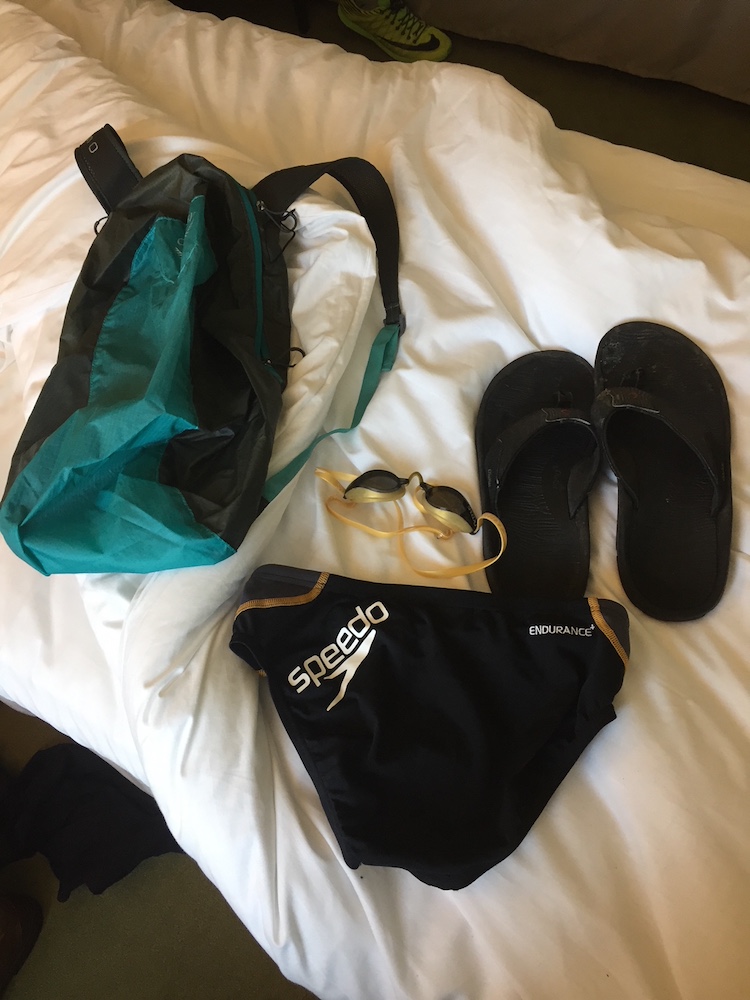
Emergency Speedo: Come to Alaska, hear the Speedo story.
On a mountain bike however, it’s Speedo time. Whether it’s the “Emergency Speedo,” primarily reserved only for active duty on Eagle Glacier, or your tried-and-true, daily ball bag, you need look no further than the embarrassing- and stigma-filled men’s swimwear section of your local sporting goods store for everything you’ll need all winter. Yes, the differences between mountain and road are actually that pronounced.
Since we’ve now clearly established that only the mentally ill, sadomasochists, and those with nothing worthwhile to live for, will be out riding the road, and since we know that you’re smart (after all, you are reading MY column, so we know that you’re part of the solution, not part of the problem), I think we can therefore say with a high degree of confidence that you’ll be riding the trails in the winter. You’re welcome.
The one problem that riding your mtb in the dark does present though, is that it is, well … dark. And that’s ummmm … a problem.
Wow, this is a long way to go to make a case for two lights, but we are already on Day 10 people and I don’t know how the hell I’m going to spend my time for the next 350 days without espousing my technical, cultural, and political views, so I’ll be damned if I’m going to go without a fight.
OK, since you’re not a complete fool, A.) You voted, B.) Not for Trump, C.) You are now going to be more engaged politically than ever before, D.) You don’t ride your road bike in the winter (if you live where it is cold, which of course begs that question, how many skiers live someplace where it isn’t cold in the winter, but I digress…), E.) You do ride your mountain bike (if you can’t ski, that is), F.) You understand enough about optics to grasp the fact that it is dark at night, G.) You accept the fact that riding at night without lights is a problem, H.) You are in the business of solving problems (Hey, it’s what you do), I.) You live by the cardinal rule of endurance athletics, “If some is good, more is better,” J.) You are ready to apply this to lighting systems, and K.) You now finally realize that you do indeed new two lights on your mountain bike. Whew, we made it.
Should I tell you why? Do you have enough left in you? Don’t forget, we ARE on Day 10… complain all you want about this wandering train of thought, but you’re going to miss me for the next 350 days. Mark my words.
OK, OK, let’s do this: two lights on a bike is essentially the difference between monocular and binocular vision. In the latter, you have greatly improved depth of field, contrast, and depth perception, as well as greatly reduced shadowing, ghosting (not the cool-way-to-leave-a-party-without-being-seen thing, or the Scooby Doo-villain-thing either), and pimpage (for those of you who don’t want to cram pimpage).
The key to making this work and optimizing all of the advantages just listed, is to mount one light on your bars and the other on your helmet. The beams on good lights are now broad enough so that these two unique sources will overlap nicely, therein offering all the advantages described above. Very pro. And don’t forget, you also have TWICE as much light, so the advantages of this setup are more than exponential.
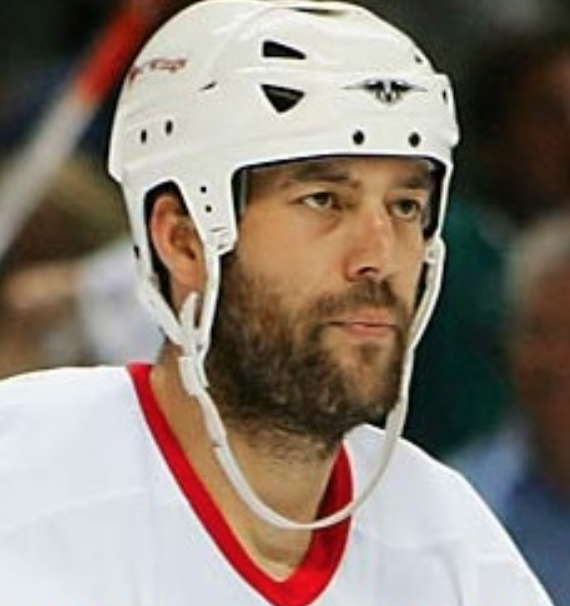
Hockey helmet strap
That covers you seeing. What about you being seen? To answer that question, let’s drift back to the issue of the complete flaming lunatics that are even considering heading out with only one light: you have two basic options here: mount the light on your bars or mount the light on your helmet. Both options have their advantages. Mounting the light on your bars provides the most even lighting, as your bars are more stable than your helmet, even if you’re not rockin’ “Hockey Helmet”, with your chin strap dangling like a frayed clothes line in a meth lab trailer park.
The helmet mount allows you to look over at the idiot texting while also trying to pull out of Whole Foods lot, in a largely futile hope that this ridiculous amount of stimulation and retina-burning light will momentarily jar him to at least briefly glance at the road; sometimes that’s all you need.
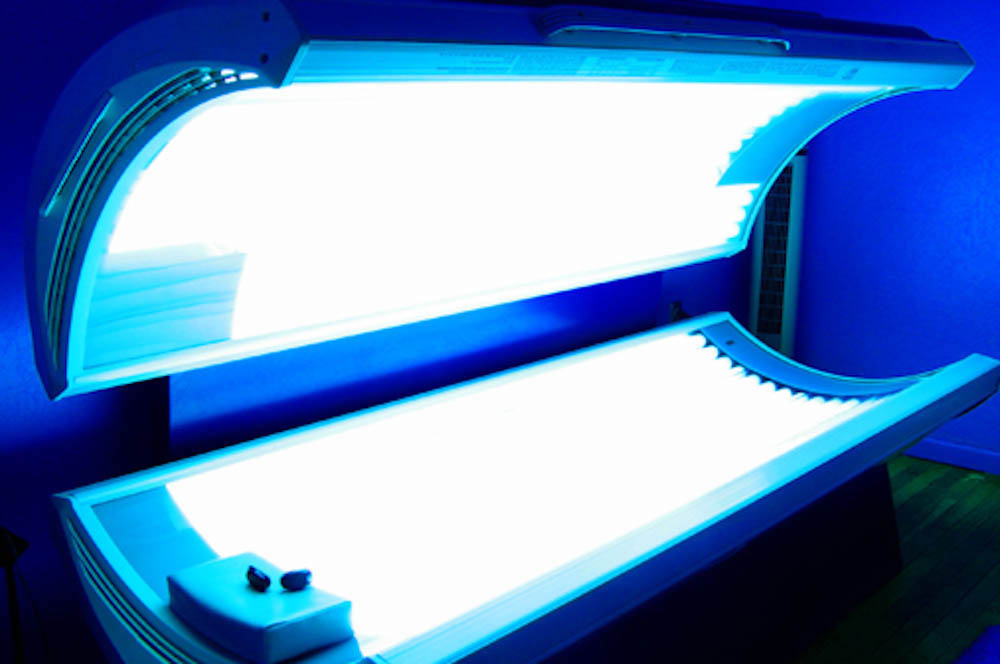
This DWC (Double Whammy Combination) is the best way to check all of the boxes for safety and visibility. You’ve also got backup in case you’ve goofed up your charging regimen or have some type of mechanical. And you’ve got more light than a tanning booth.
As I teased at the start, the Wilma has 3,200 lumens of power. That’s more than ten times as much as the Petzl. If you took my advice (which you always should) after the headlamp review and purchased the Piko, smart move. Running this Piko/Wilma combo will give ya 1,800 “up top” and another 3,200 on the bars, for a mind-blowing total of 5,000 lumens. Life doesn’t get any better than that. I know, I know, it’s a lot of money, but if you are going to regularly ride trails all winter, it’s totally worth it. After all, is there anything more important than you being happy? I didn’t think so.
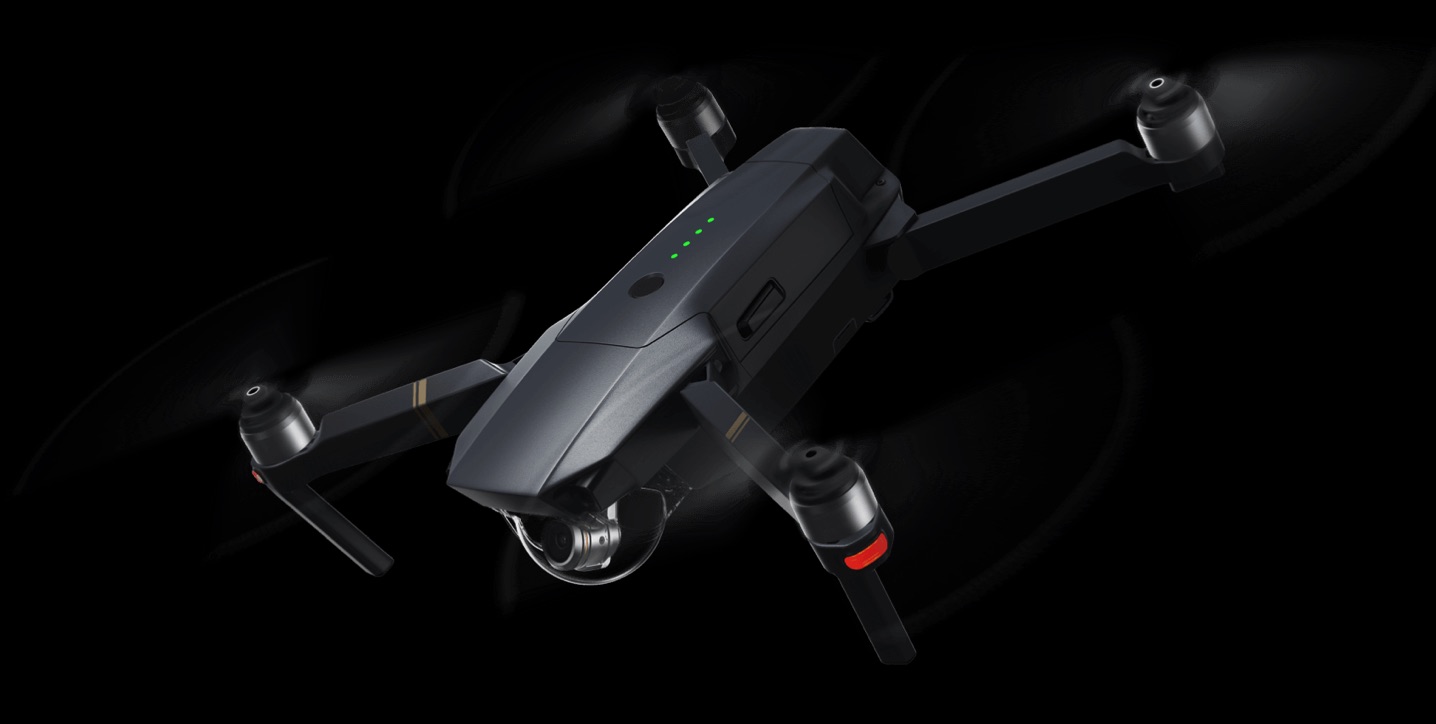
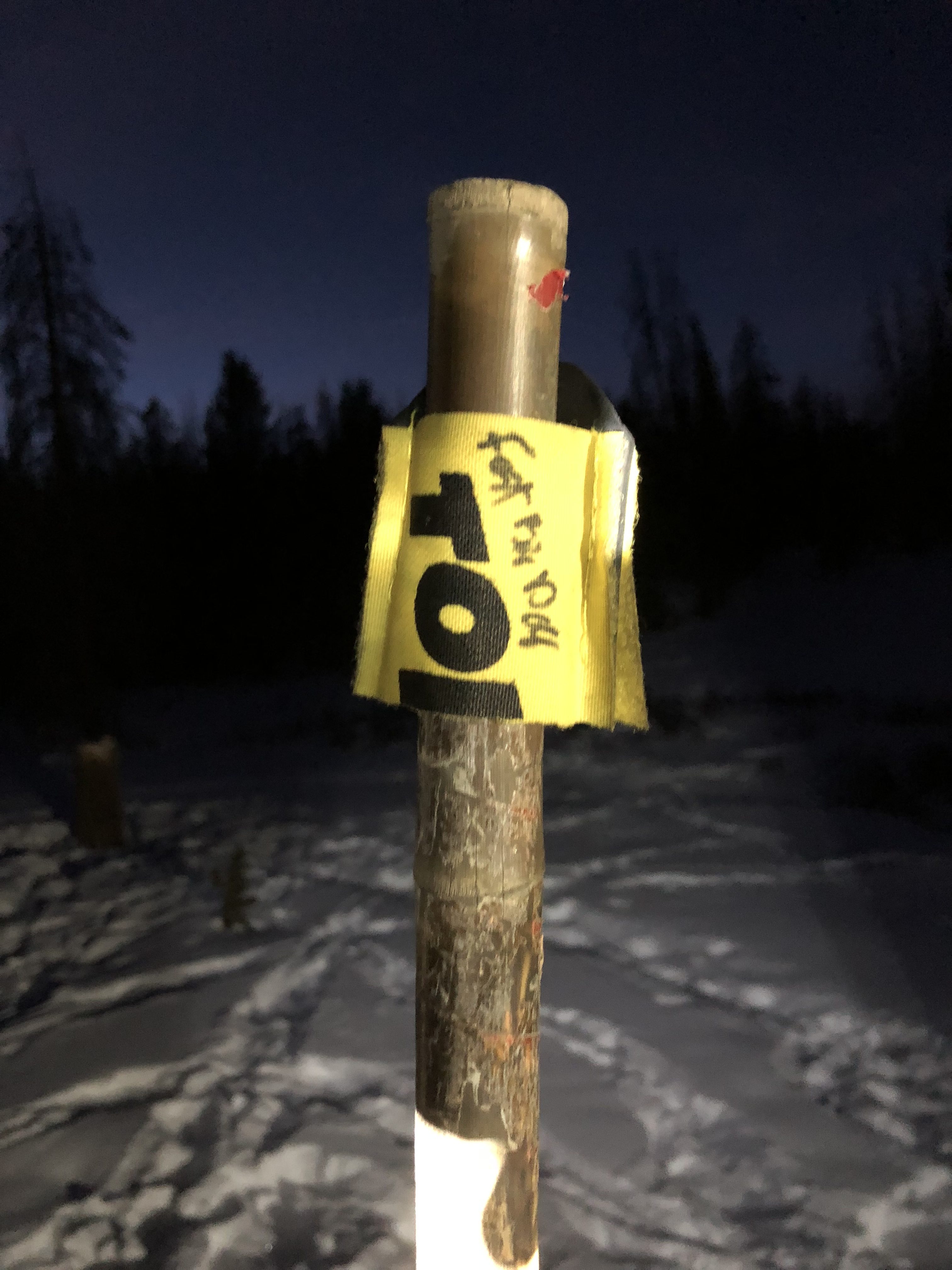
Mavic Pro Drone: FBD pick for over $300FBD’s namesake found trailside on a ski tie
I’ve said it before and I’ll say it again, I am a sexy, sexy man. I love the sound of my own voice, the sight of my own name (see photo at right), and most certainly pics of me in action anywhere and everywhere (and thanks to U.S. Ski Team member, Casey Larson, my selfie game is now STRONG). Let’s be clear here, too — I don’t do all of this for me, I do it for all of you — I feel like I owe it everyone to share this gifts. What can I say, I’m a giver.
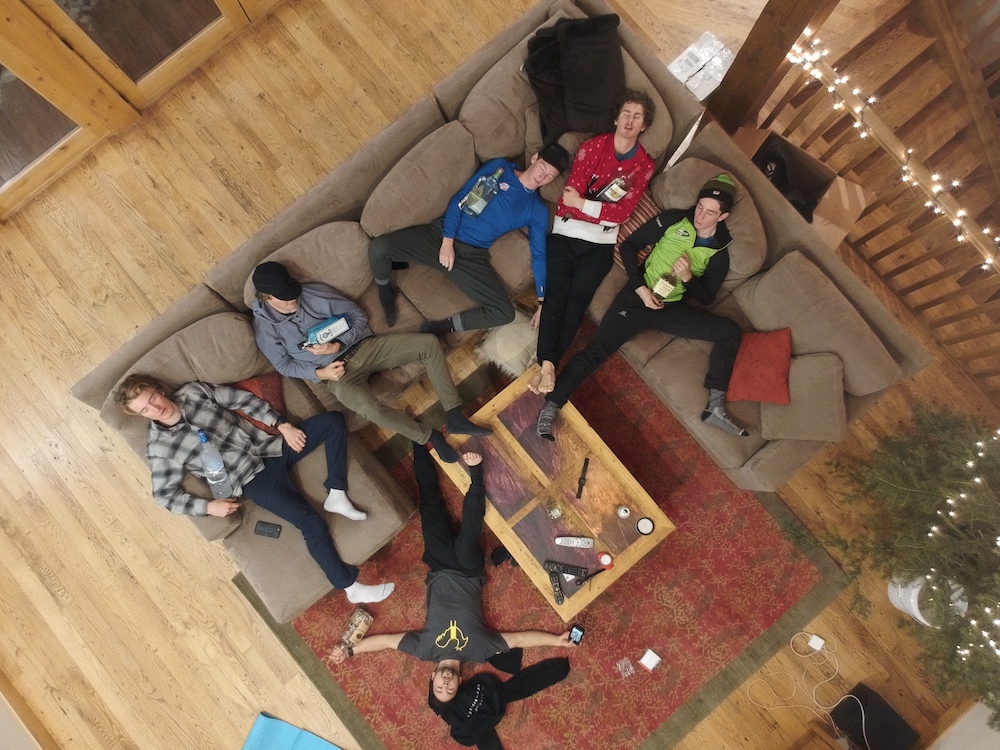
It should therefore come as no surprise that I am completely enthralled with the DJI Mavic Pro drone. It is simply amazing. It lets me get incredible shots of my favorite subject, me, and much, much more.
One of the things that has gotten me very far in life is while I am incredibly talented (look no further than any of these amazing reviews), I am also quite self aware and have excellent visibility into my weaknesses. My buddy Zach Caldwell LOVES to point out even the most minor indiscretion in my ski preparation and while often nit-picky, he has a fair point: I’m not a great ski tech.
In another publication for which I write, SlowTwitch, I recently made a video on how to convert a swim erg into a ski erg. As I noted in that text, my construction skills are probably about average, or as I put it in the article, “To do some level-setting here, I’m probably right about in the middle of the handyman spectrum: I have buddies who’ve built their own houses and I have friends who are bewildered as to how a toaster works — I am somewhere in-between. I have a decent set of tools and moderate experience with all of them, yet I’m also not above using my screwdriver handle as a hammer from time to time, in particular if it saves me a trip up and down the pesky stairs to the basement (don’t lie, we’ve all been there, I just own it).”
So that’s me. What’s my point? I know when my skillz aren’t up to snuff and unlike the typical D-bag, Philly meathead who will drive around for an hour, refusing to admit that he’s lost (or voted for Trump, or got his ass kicked on a race to the top of the gondola), I will ask for the help of a professional when I need it. And I need help with getting drone footage.
This column is all about recommending gear that is the best for any given application and this is a responsibility that I take very seriously, in particular since it is MY name on the byline. Since the ultimate goal is accurate, unbiased recommendations, though, I am not afraid to bring in experts. For most dudes in Philly, they view this as a weakness — they’d rather lie and get it wrong (just another reason to dislike Philly, but don’t get me started on that, as we’ll be here all day); I’d much rather ask for help and get it right.
I did do my fair share of testing and I did give it the ol’ college try to get amazing footage. And to be clear, we had some near misses. For example, I was all ready to fire up some incredible footage of the SuperTour races in West Yellowstone, but it turns out that you actually need a permit for operating these things in National Parks. Who knew? (I think you can most assuredly guess who did not know this and who was briefly in hot water).
My next swing and miss came at the FIS Nordic Combined Continental Cup races in my beloved Steamboat, Colorado. I was also ready to crush it here with several life-changing “edits,” (as the kids say), but I was needed on course to assist the U.S. Ski Team and I decided that it was in the best overall interest of our community if we had kick-ass results in the race (which we did), as opposed to killer drone footage of the race (which we don’t).
Finally, and perhaps most importantly, tons of amazing videos already exist, so instead of me butchering the capabilities of this fine device, I am going to turn it over to my trusty, engineering nerd sidekick Jordan Rapp to show just how incredibly this thing can shoot:
There is no dearth of other “randos” out there killing it either — do a quick search on the Google machine and you’ll find tons of breathtaking edits like this.
So now back to one of the many areas in which I excel: annoying my patient readers with colorful yet often inappropriate, rambling anecdotes on gear usage and performance. Since this drone was a loaner, my first concern was that I’d crash it and then therefore have to buy it. Thankfully, this did not happen.
Yes, you do need to read the instructions and since I was a bit more worried about crashing, I went so far as to watch a few “How To” vids on the Internets, something that I strongly recommend for you. I’d much rather watch other idiots crash their drone into powerlines than be that idiot. So with a very minimal investment on your part, you can “get the bird in the air” with relative ease. Do check out any local restrictions on flying it though, as apparently that isn’t entirely uncommon these days. Be smart, too — practice in BIG, OPEN, FIELDS before you attempt to document your Alley Cat race in Brooklyn.
Once your skills are on point, you can even use this sucker for amazing indoor still-shots.
Once you’re ready to take off the training wheels (er, wings?), you’re ready for prime time. Thankfully, most nordic skiing takes place in venues with somewhat limited obstacles, as by definition you are on trails. Once you are an accomplished pilot, you can fly on more wooded trails, but I advise you to proceed here with great caution. This drone has some super-slick, obstacle-avoidance features, but the absolute best obstacle avoidance feature is competent piloting, so don’t duck into the thick, twisty woods until you really have your act together. You’ve been warned.
With all of those caveats duly noted, let’s talk about why this system is so good for nordic skiing. It almost goes without saying that skiing is one of the most technical athletic pursuits. I know World Cup skiers who have literally been doing this their entire lives at the very highest levels and even they still obsess about technique. So regardless of where you are on the learning curve, it’s safe to say that you still have more to learn (which, when you think about it, is part of the challenge. If you didn’t care about technique, you’d just race and bike and I think we’ve already covered the type of people who do that). The problem is how to do this: sure, you want to improve, but how?
Good coaching is seemingly always in short supply, in particular if you are like me and you are verbally abusive to the people nice enough willing to help you (what can I say, I have issues). Attitudes like mine mean a lot of time alone. That’s not necessarily a bad thing though, as you can learn a lot by watching how you ski. And, if you are fortunate enough to have qualified people review your videos, well, the sky’s the limit (I mean this literally, too, for if you don’t pay attention, you will fly your drone off into the sky).
If you’re not a completely self-absorbed narcissist (like me), you can also use this tool to help others, whether this be in a coaching or even parental capacity. As noted above though, PLEASE practice before you bring your drone down to the local race and do your homework with race officials, evil park overlords, and anyone else who might get pissed with a drone buzzing about — capturing races and training with the Mavic Pro is nothing short of extraordinary, just use good judgment.
This is probably my favorite item on all of the lists this year — this thing kicks ass.
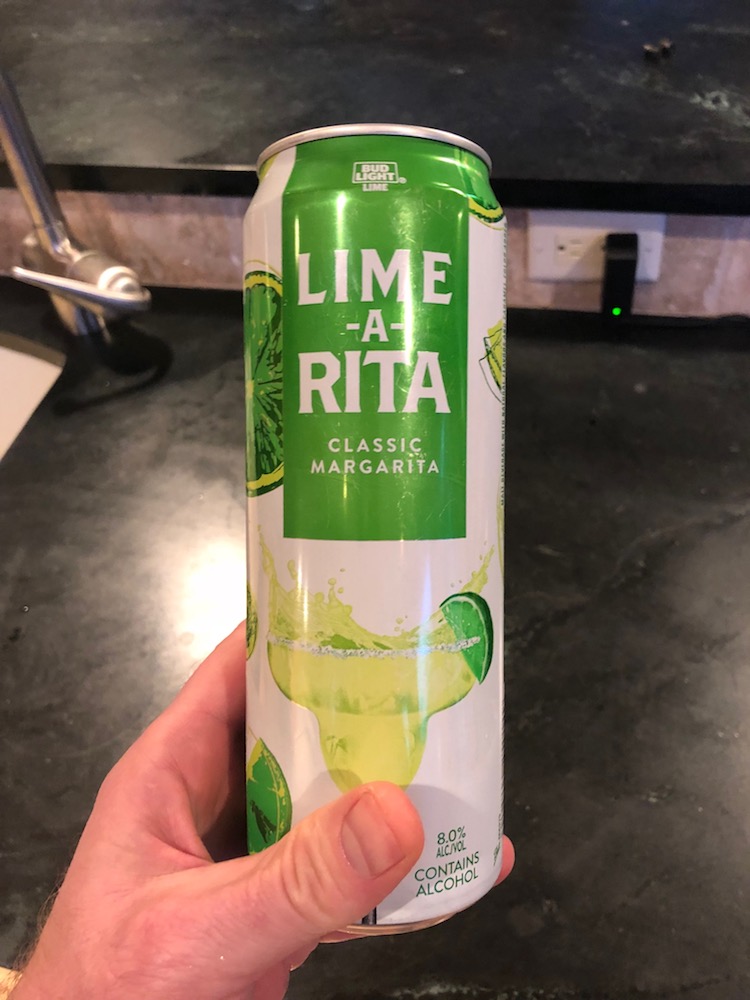
I’m sure it comes as no surprise to all of you that I’m an amazing human. You’ve read the stories, you’ve seen the selfies and of course, you are appropriately impressed, but wait, there’s more. Did you know that I turn these columns around in a day? It’s true. While much of the gear testing starts severals weeks or even months in advance, the actual writing generally happens the night before deadline after a few Lime-A-Ritas.
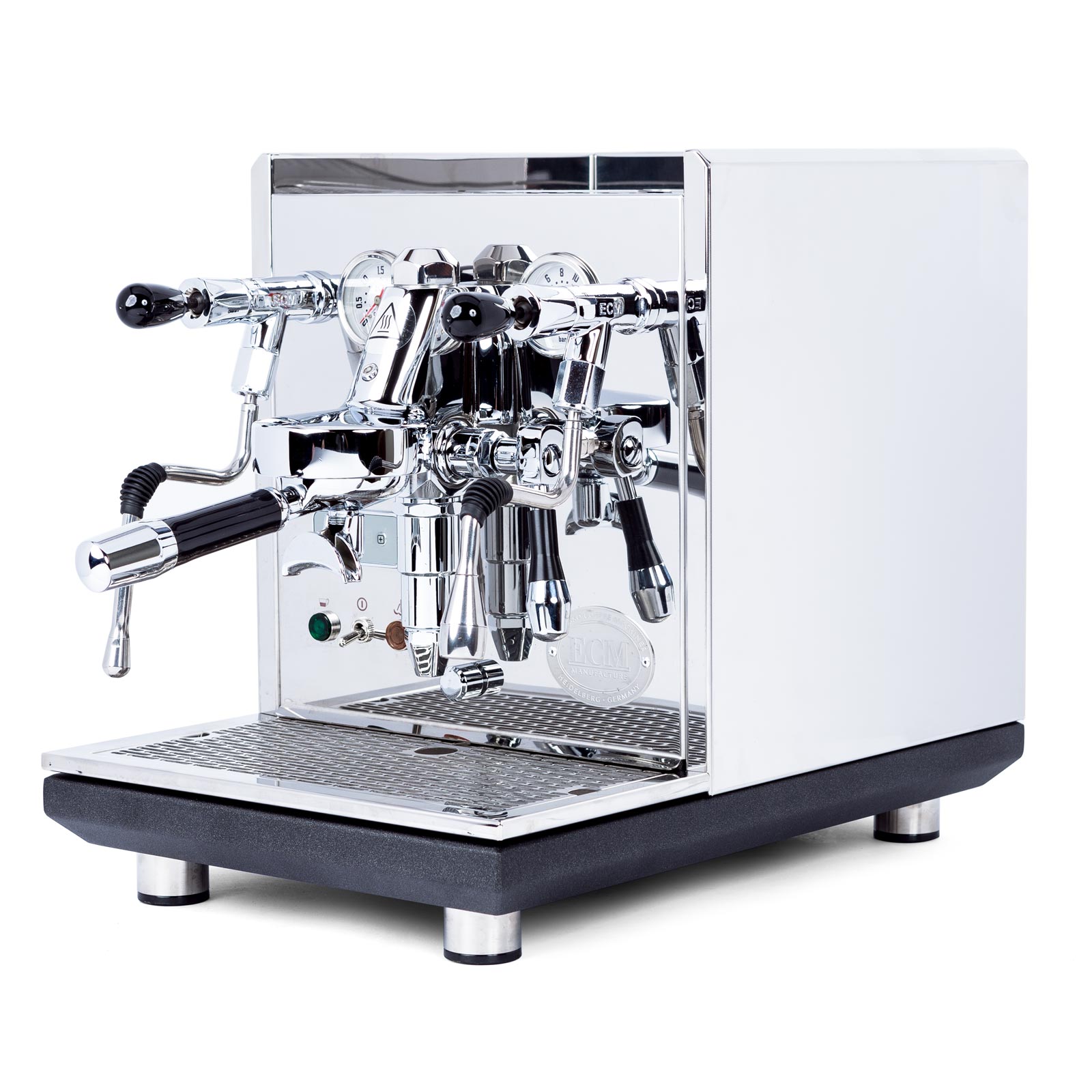
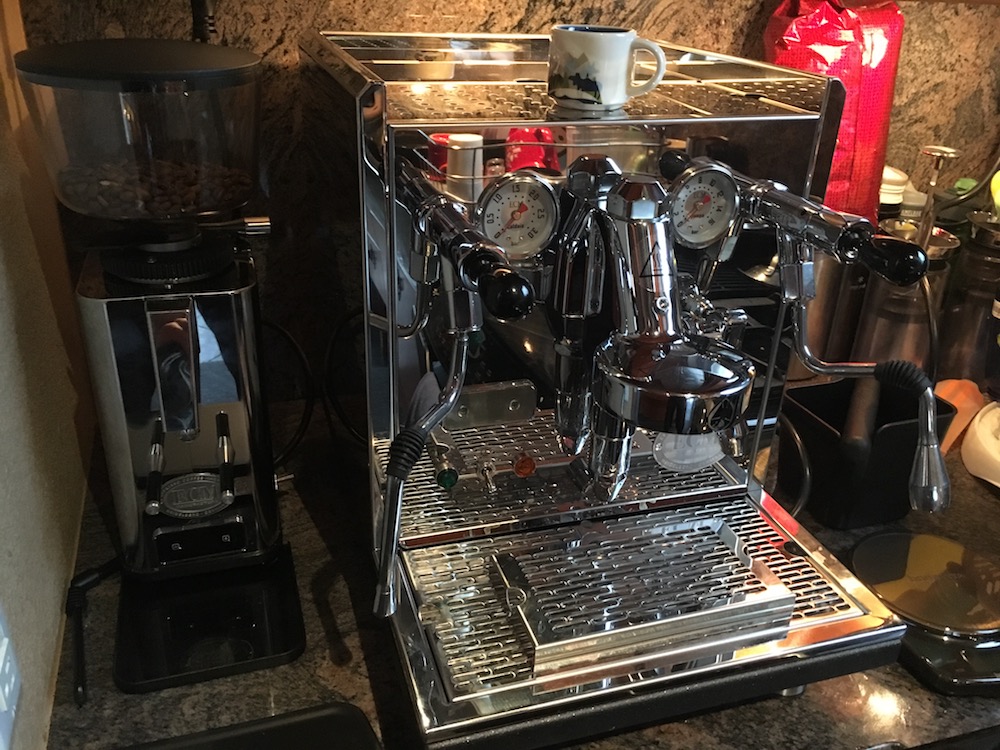
I’m bringing his up because I had this column all set to go to press when none other than Olympic biathlete and savant barista Jeremy Teela texted me to brag about his new espresso machine. Yup, that’s right, the same Teela that can’t work my simple, drip coffee maker threw down three thousand dollars to not be able to make coffee at his house. And this was too good a story to not report in more detail.
Actually, there are several burning reasons why I feel compelled to include a $3,000 coffee machine — the first and most obvious of which is I don’t think you can put a price on how hilarious it will be to watch Teela unsuccessfully wrestle with this device. He just got it last night and I am literally giving very serious thought to driving over there today, even though it is a five-hour trip. I am convinced that it will be worth it.
Next is, some of you may actually be thinking about one of these things: I know I consider this every time I have someone make coffee with this for me, but as soon as someone competent like Jordan Rapp reminds me of what is involved, that is usually the end of the debate for me until that is, the next time someone offers me one of these uber cups of coffee (to be clear, ‘uber,” as in slang expression for cool or super, as opposed to “Uber,” in a creepy, criminal, you-really-suck-at-running-your-business type of way).
I also fully understand and acknowledge that very few of you are likely seriously considering this purchase, but like the trip to the Olympics, the $8,000 biathlon rifle and a few other “home runs,” I know a few of you really are considering these items and as always, I’m here to help.
I’m going to come full-circle (well, it’s suppose it’s really more linear, if you want to be TECHnical (damn, I am good at this)) here as I’ve said THIS before and I’ll say it again, my readers are smart. And smart people do cool shit — they read interesting books, the have well-thought out points of view, they can carry on intelligent conversations on a wide variety of topics, and some of them, though certainly not all of them, like fancy coffee machines.
It is also very important to note that I’m not doing the testing here, Teela is, and God only knows what is going to happen there. In all fairness, he does claim that he did his due diligence in research and as much as I hate to admit it, while Teela most certainly is a kook, he actually can be quite smart (in certain, VERY LIMITED areas, of which espresso machines MAY be one, I’ll tell you in a week or so), so who knows, this might actually be a good product — who the hell knows.
But, if you are one of the three people in the studio audience pondering buying one of these counter-hogging monstrosities/money pits, hell, maybe you should consider buying this one. If you do, and by some stroke of luck you, unlike Teela, actually figure out how to use it, HMU — I’d love to cruise over for a cup of coffee.
If you are interested in this machine, DM me, as there is no way in hell that Teela will be able to use this correctly, so it will most likely be on Craig’s List very soon.
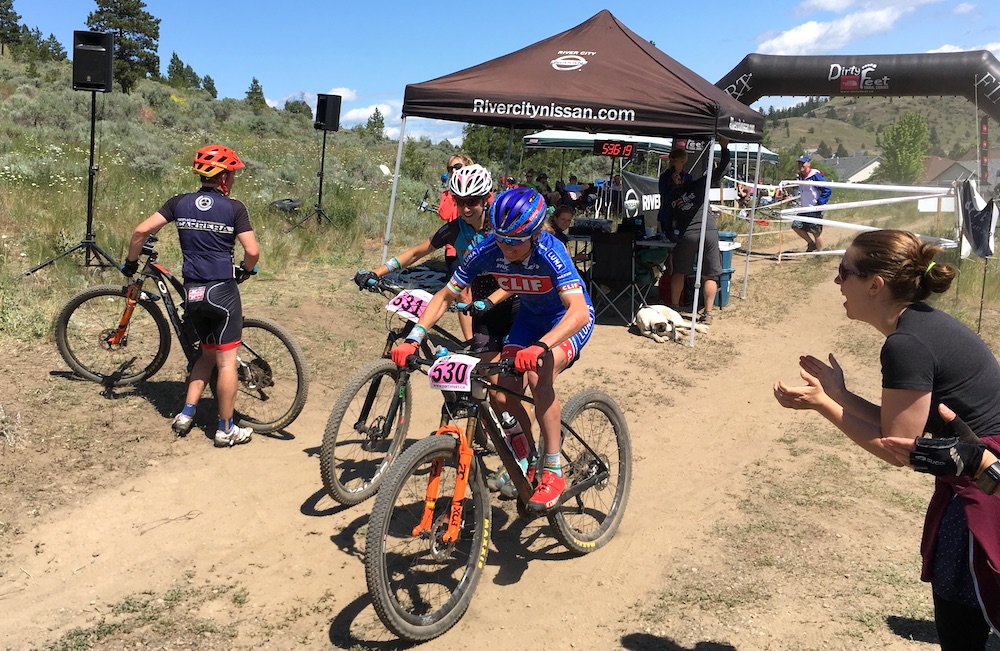
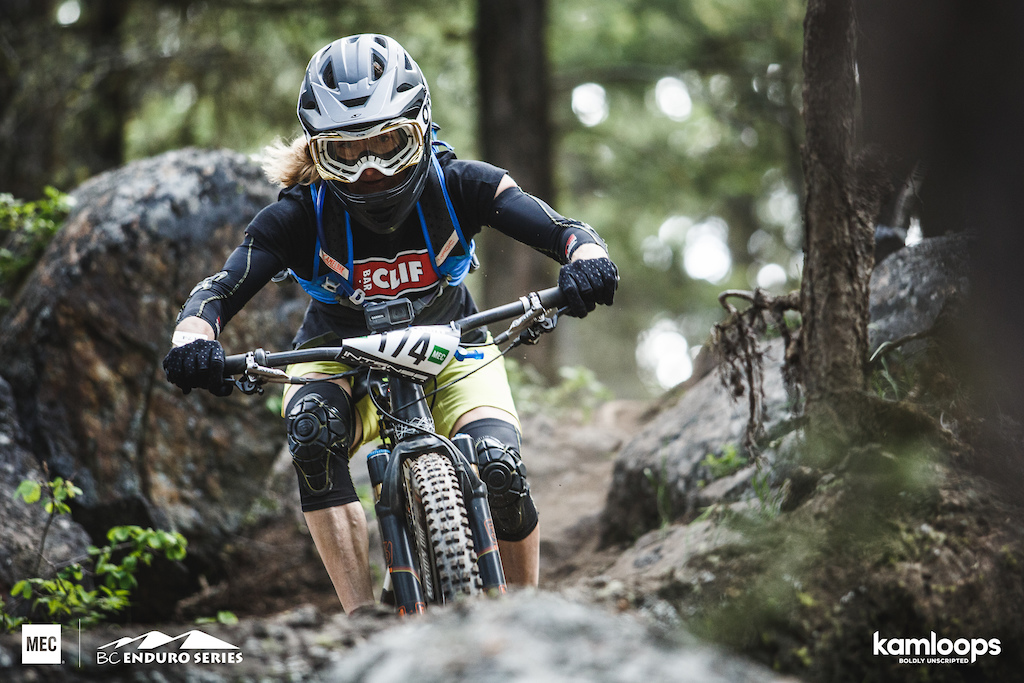
Catharine Pendrel (Clif Pro Team) ripping her way around the course at the 2017 Dirty Feet Enduro on June 11 in Kamloops, B.C. With only 9 seconds separating the top two teams after 5.5 hours, even easy downhills matter. (Photo: Jodie Fernquist/dirtyfeat.ca)
“I’m Catharine Pendrel and I’m a cross-country mountain biker.”
Fans of mountain biking need no introduction to the Olympic medallist, world champion and three-time World Cup overall winner from Canada. Pendrel, 36, is also a masters world champion in skiing after winning her age group in the 15-kilometer freestyle in 2011 at Sovereign Lake in Vernon, British Columbia.
FasterSkier caught up with Pendrel, a New Brunswick native, at a six-hour biking event this past Sunday, June 11, in her adopted hometown of Kamloops, B.C. With two World Cup events completed, she was training at home before her next competition block.
Catharine Pendrel (530) taking over from relay teammate Sonja Looney in the Dirty Feet Enduro in Kamloops, B.C. (Photo: Gerry Furseth)
“Today, I’m at a six-hour enduro race,” she explained. “I’ve got a partner, we’re trading off every two laps and trying to get as many laps in as we can in six hours.”
Pendrel spent her downtime refueling, chatting with fans and posing for photographs. She started the last 14 k lap in second place, 9 seconds behind her husband’s team and determined to win bragging rights at the post-race party. She returned twenty minutes later, laughing about a flat tire that cost her team the chance at the overall win. Pendrel was out to have fun and the sudden end to the race didn’t change that. That could be what keeps the three-time Olympian going.
“When I moved to British Columbia, I had to find a way to train in the winter,” she said. “I learned how to cross-country ski, and I love it. You’re getting out there, seeing the sun on the snow and just really enjoying it. It’s a nice break from just riding your bike all year.”
Kamloops winters, like the neighbouring Okanagan Valley, feature long periods of low clouds and dry roads. Ski trails are mostly above 1000 meters and above the clouds.
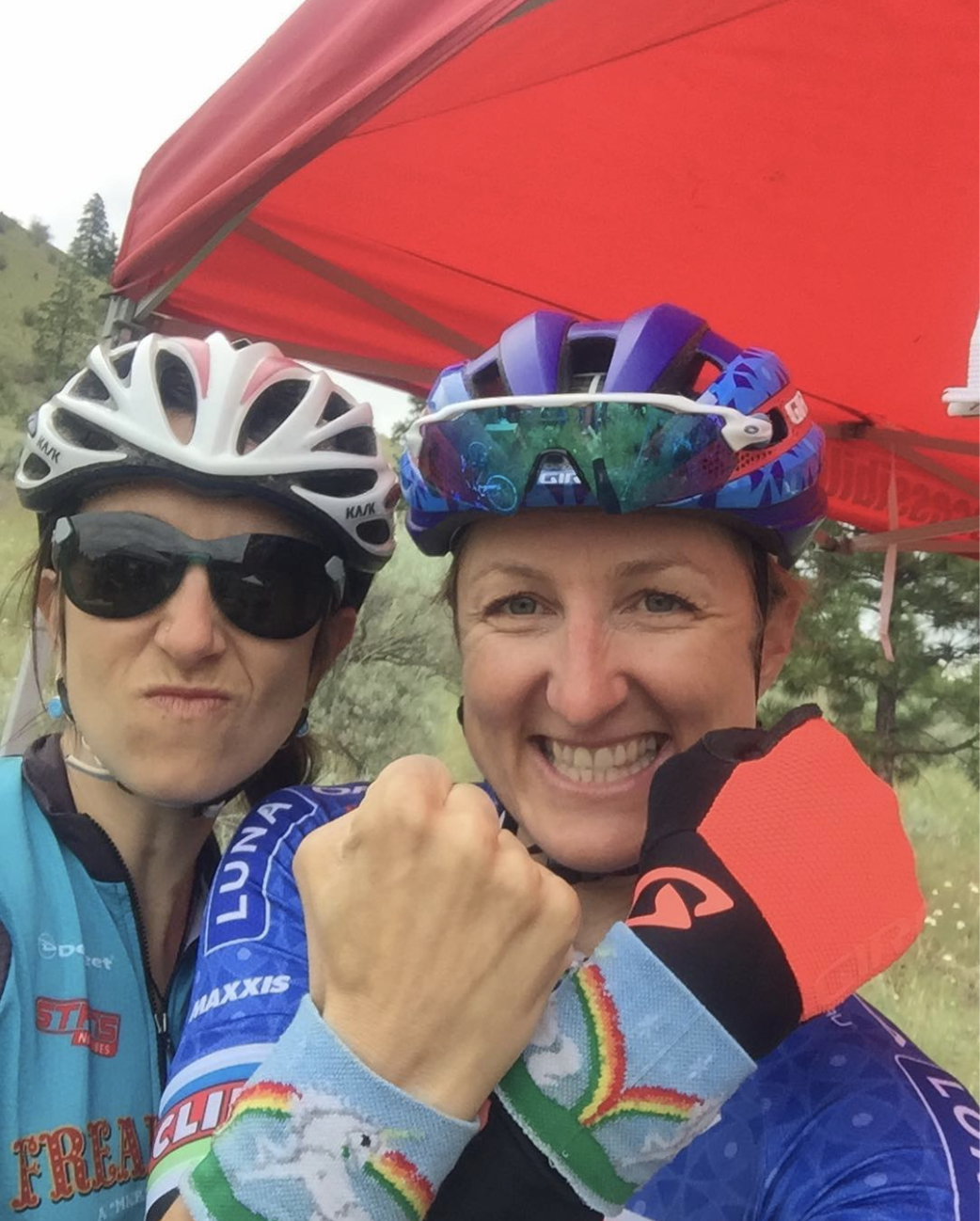
Team Unicorns: Catharine Pendrel (r) and Sonja Looney show off their wristbands. Pendrel wore identical socks to a bronze medal at the 2016 Rio Summer Olympics. (Courtesy photo)
“I turned 30 and masters world champs were down the road from us in Vernon, so I was like, ‘May as well give this a go,’ and those went well,” she said with a laugh. “So I’ve got a world title in master cross-country skiing to my name. Usually I just hop in a couple of loppets if I can fit them into my season.”
What’s her favourite workout?
“Different ones for different objectives, but I have one recently that I’ve been doing,” Pendrel responded. “I’ll do hill descents, and I’ll try to take a second off my time every time down, and just muscular endurance on the climb back up. Two birds with one stone.”
One thing that cross-country skiing and cross-country mountain biking share is that in a mass start, the win goes to the first person across the finish line. Time gained on descents is just as valuable and usually costs less. In skiing, this saving can be larger as snowplowing or skidding through corners uses a lot more energy than step turns.
Pendrel’s in-season workout suits her sport and elite abilities, but it can be scaled back and tailored to individual needs. The full three-hour workout she did last week went like this, with skiing translations in parentheses.
(Note: She prefers to stay away from concrete numbers when it comes to sets and duration of working vs. recovery periods — “always mixing up duration and intensity to keep all the tops spinning as my coach Dan Proulx would say”, but she provided the following example. She also estimated that about 80 percent of the workout is aerobic, a.k.a. Zone or Level 1).
The Workout:
Aerobic warmup: (Zone 1-2 for skiers):
5 x 1-minute of high cadence, 1-min. easy
3 x 20-second max-start practice, 2-min. recovery
Maximum aerobic power (MAP) intervals on flat or uphill terrain:
Two to four sets of 2.5 to 5 minutes “as hard as you can go,” usually with one to one recovery. Sometimes Pendrel takes more recovery closer to a big race. “I prefer doing intervals as best effort rather than riding to a number. That’s what guides you in a race.”
Aerobic recovery
3 x 12-minute tempo-to-threshold, 5-min. recovery:
(One- to two-hour race pace, Zone 3, for short periods)
Note: her tempo and threshold work is usually 3-4 sets of 10-20 min, with 3:1 recovery or less.
Aerobic recovery
Hill-descent repeats:
1 second faster each lap. The climb back to the top is “muscular endurance” working on force and smooth pedaling under load (which doesn’t translate well to skiing terminology, but isn’t demanding in cardio terms. See this explanation).
Aerobic recovery
There are lots of lessons for skiers here:
First, Pendrel is not obsessed with specific times or numbers, instead focussing on achieving training goals. The only number she remembered less than a week later was the approximate total time. Times and data are recorded to measure that 1-second improvement.
One-second faster is an incremental goal: many small steps forward instead of one big leap.
Descending gains are as much mental as physical. Finding a faster line through a corner or making better use of a rut or berm cuts time without increasing energy output.
There are different kinds of intensity in the same workout.
Pendrel is not just working on making her strengths stronger. This single workout provides gains in three separate performance areas.
Finally, the descending session is in the final hour, which means she is practising the technical skills with tired legs. Three birds with one stone.
Pendrel’s final words of advice: “If you’re a skier, you should mountain bike in the summer ‘cause it’s awesome.”
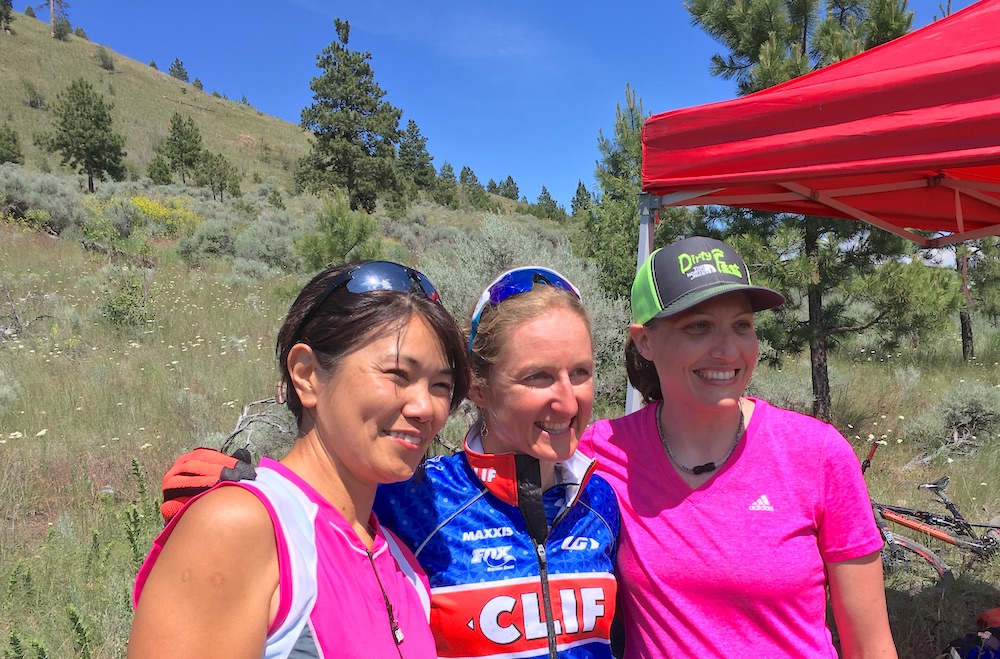
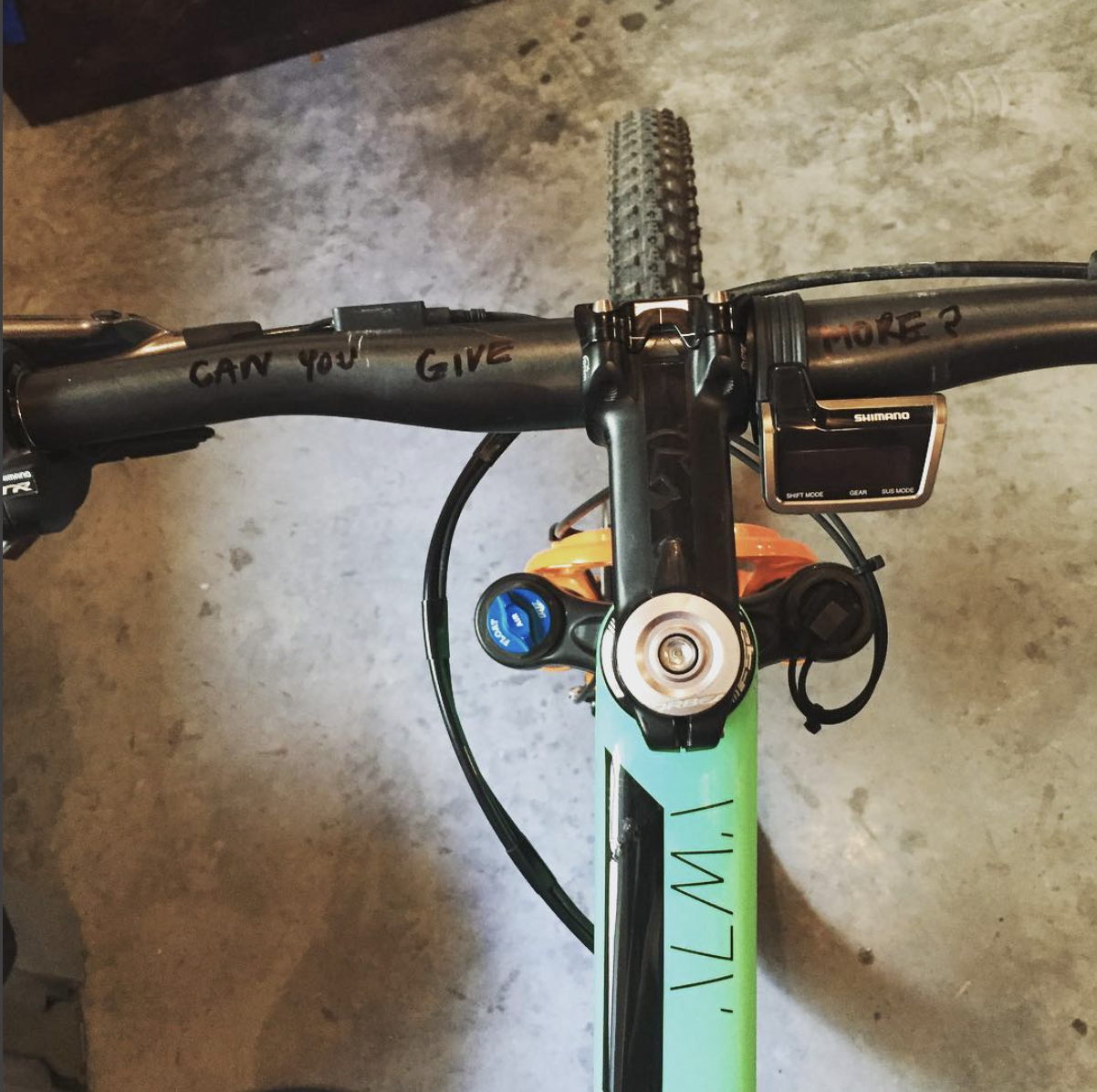
Pendrel (c) with fans, both skiers as well, between laps at the 2017 Dirty Feet Enduro on June 11 in Kamloops, B.C. (Photo: Gerry Furseth)Pendrel doing the other kind of enduro and having fun in her adopted hometown of Kamloops, B.C. (Courtesy photo)“Can you give more?” Pendrel captioned this photo in a social media post. “I wrote this on my bars the night before the [Rio] Olympics knowing that the next day, more than any other, the difference between having a good day and a great day would be digging to find that little bit more when others might not…” She earned a bronze medal the next day. (Courtesy photo)
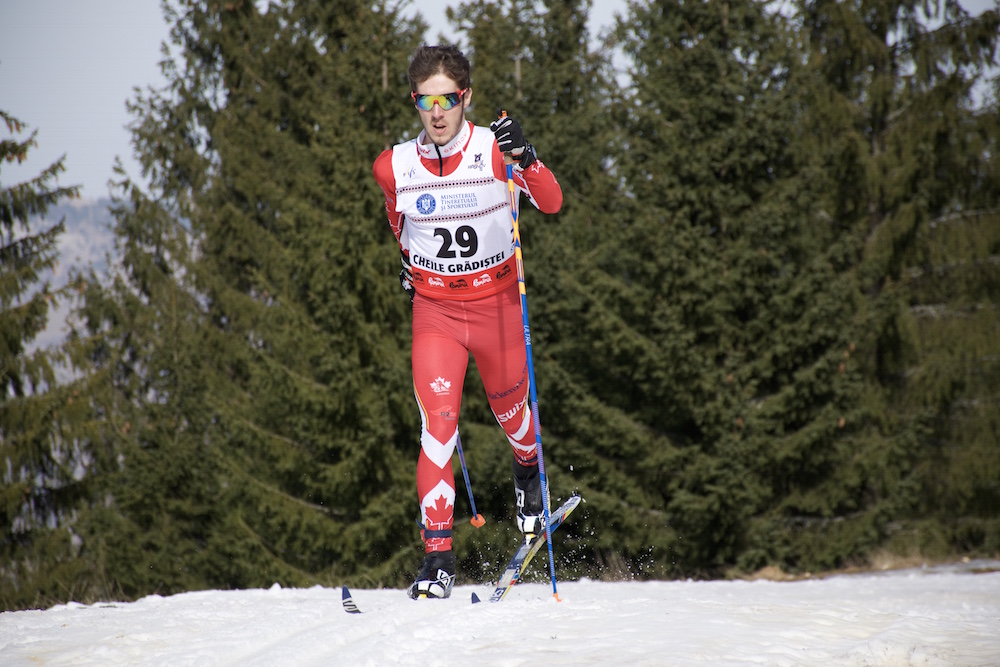
Canada’s Philippe Boucher racing in the 10 k classic at last year’s Junior World Championships in Rasnov, Romania. (Courtesy photo)
In an effort to showcase the North Americans competing at this week’s International Ski Federation (FIS) 2017 USANA Nordic Junior World Championships and U23 Cross Country World Championships at Soldier Hollow in Midway, Utah, we asked those qualifying athletes several questions about themselves — actually, we had them fill in the blanks. Here we have 19-year-old Philippe Boucher, of the Centre National d’Entraînement Pierre-Harvey (CNEPH), a.k.a. the Pierre-Harvey National Training Centre and Canadian Junior National Ski Team, who’s representing Canada at his third Junior Worlds.
Boucher was listed as one of four Canadian men to start Wednesday’s 10 k freestyle.
***
“My full name is Philippe Boucher, but you can call me Phil. I was born in Quebec City, raised in Lévis. I started cross-country skiing when I was seven, thanks to my parents.
I currently train in Beaupré with CNEPH.
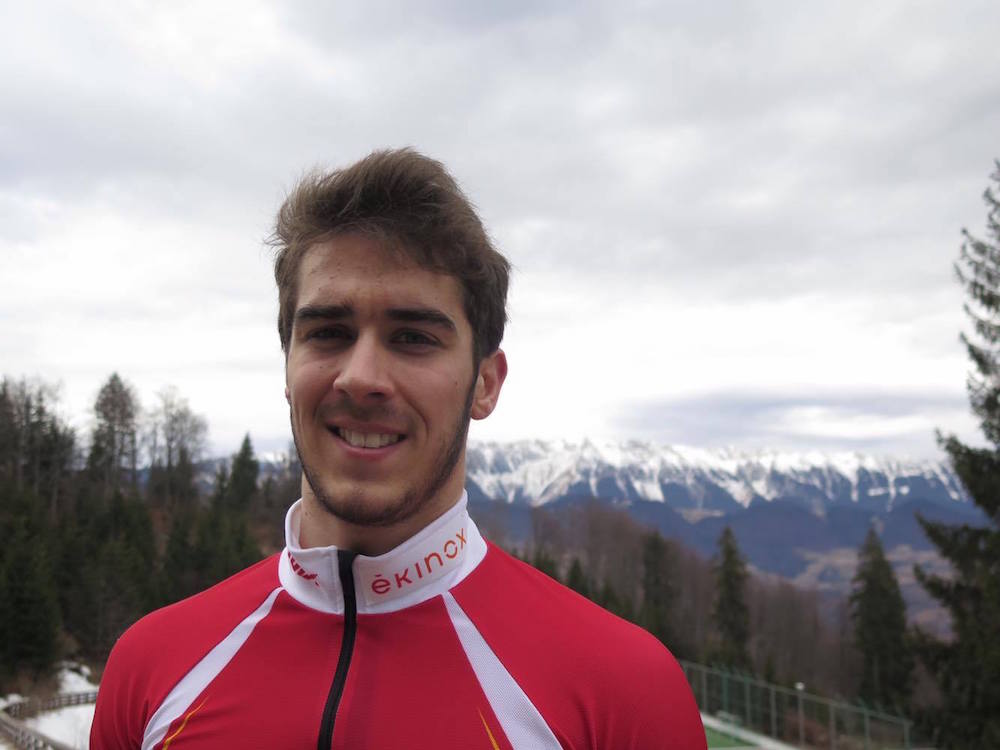
Philippe Boucher (Photo: Charles Castonguay)
If I’m not skiing, you might find me on my bike or at my girlfriend’s place.
If I had to pick a favorite book, it would be nothing. I really don’t enjoy reading, exept when it talks about Formula One stuff.
One of the things I’m most excited about for Junior Worlds at Soldier Hollow is to race in front of my family. One race I’m especially targeting there is the banquet on the February 4. Just kidding, the 10 k skate.
The best advice anyone ever gave me about skiing or racing was don’t worry about the splits, just ski. One of the best race memories I have is the 2013 Canadian National Championships in Whistler.
If I could meet one World Cup skier, it would be nobody, but I’d like to go do mountain bike with a guy on the UCI Mountain Bike World Cup circuit.
If I don’t end up being a professional skier, I’ll probably be a police officer.
I’m missing 11 days of school to be here and 27 days in the whole semester, and my teachers are probably thinking, ‘He’s probably going to fail my course.’
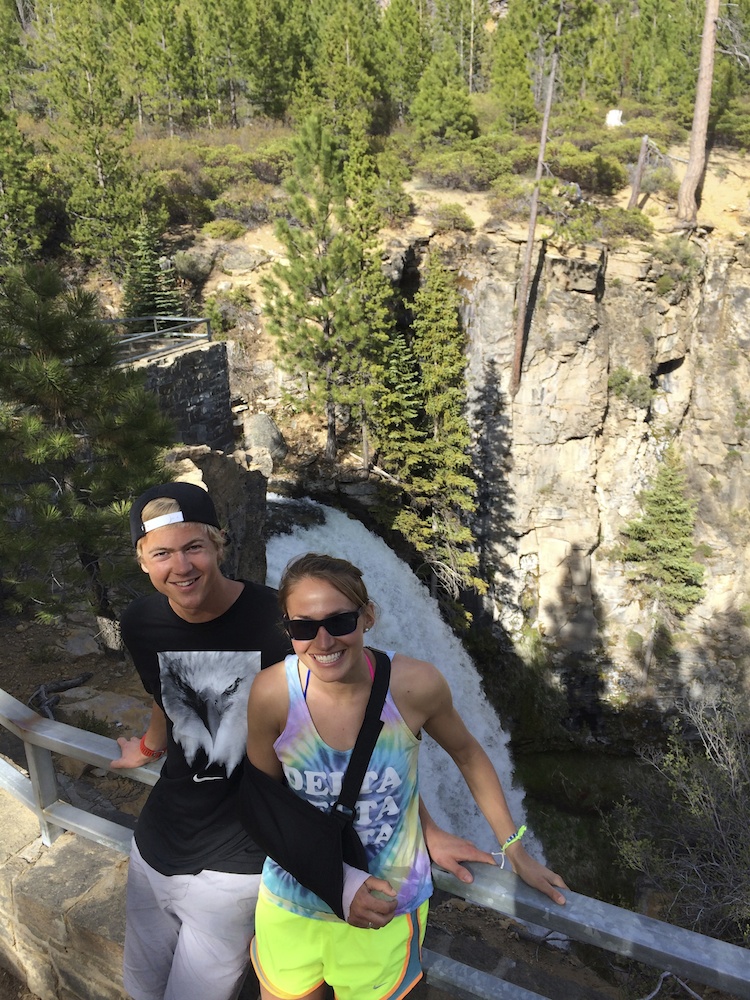
Sophie Caldwell with fellow U.S. Ski Team member Erik Bjornsen during an “injured kids” field trip/hike to Tumalo Falls near Bend, Ore. (Photo: Sophie Caldwell/sophiecaldwell.blogspot.com)
Two days into the U.S. Ski Team’s first training camp of the 2014/2015 season in Bend, Ore., and Sophie Caldwell was out. The 24-year-old Stratton Mountain School T2 Team and USST member had been skiing on snow with the team last Thursday morning, and later that afternoon, they headed out for a mountain-bike session.
“We throw in a few non-skiing workouts like mountain biking and cool runs, and Bend is a great place to take advantage of those other activities,” Caldwell wrote in an email.
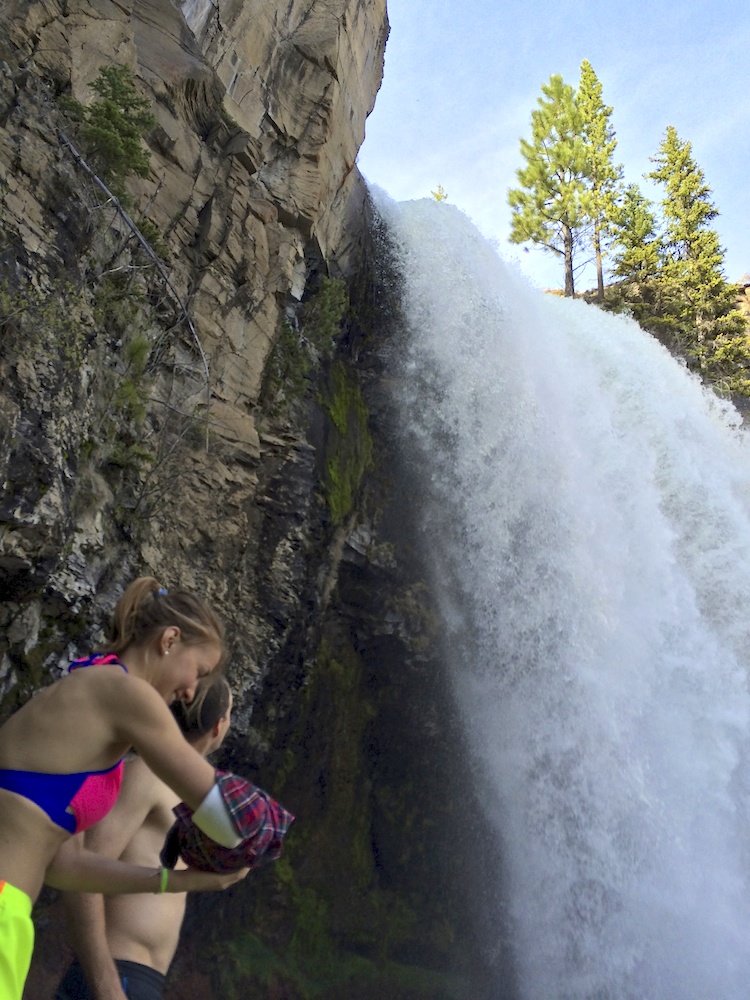
Sophie Caldwell covers her sling with a shirt from USST coach Matt Whitcomb (r) before walking under Tumalo Falls near Bend, Ore. (Photo: Sophie Caldwell/sophiecaldwell.blogspot.com)
But it was fun until it wasn’t anymore. A misstep unclipping and Caldwell went crashing to the ground, with her arm extended. She fractured her elbow and sprained ligaments in the process. “I really wish it was a cooler story,” she wrote on her blog. “But I wasn’t doing anything impressive, I just didn’t unclip in time and toppled over onto a straight arm.”
We followed up with Caldwell on Wednesday, six days after her accident. That morning was her first time back on skis. “It’s definitely feeling better,” she wrote in an email. “Think I’ll be doing a lot of no poling for the next month!”
In a follow-up email, Caldwell elaborated on the crash, as well as the news of the passing of her cousin-once-removed, Ezra Caldwell (Zach Caldwell’s younger brother).
FasterSkier: When did you arrive in Bend and start skiing? How were those first couple days of training?
Sophie Caldwell: We arrived [last] Monday [May 19] and went for our first ski on Tuesday. I was able to ski Tuesday, Wednesday, and Thursday mornings and do some dryland and strength in the afternoons. The snow and weather in Bend have been great this year — much better than last year.
FS:Who were you mountain biking with when you fell, and how did the rest of the afternoon play out?
SC: I was mountain biking with the team when I fell. I think I was in a group with Grover, Ida, Sadie, Kik, and Matt. It was part of our training session. We throw in a few fun non-skiing workouts like mountain biking and cool runs and Bend is a great place to take advantage of those other activities. My arm really hurt when I first fell over, but I’ve never broken a bone before and wasn’t sure what had happened. It stopped hurting for a minute, so I was going to keep biking, but it got pretty bad when I got back on the bike, so Matt and I biked to the road and carefully biked home. We went to see our PT and he recommended I go to the ER and get an xray, so we did that. They were able to tell that it was fractured from the xray and put me in a brace and sling.
FS:Have you seen a specialist yet? What’s the prognosis?
SC: I got an MRI on Friday, but I wasn’t able to straighten my arm enough to get a great picture. I saw a specialist yesterday [Thursday] and I have a radial humerus fracture and two ligaments that are either torn or sprained and possibly a chip. I’m going to get another MRI in Park City next week that should be able to tell us more about the chip and whether or not I need surgery, but the doctors yesterday seemed to think that I probably wouldn’t need surgery based on the amount I could move it and the fact that I wasn’t in much pain, so I’m keeping my fingers crossed! I was in a brace that kept my elbow pretty immobile, but yesterday they switched me to one that allows more movement. I guess one of the most important things with an elbow injury is to start moving it as soon as the swelling and pain go down.
Sophie Caldwell (second from r) with her USST teammates, including (from left to right) women’s coach Matt Whitcomb, Kikkan Randall, Liz Stephen, Ida Sargent, Sadie Bjornsen, and Jessie Diggins. (Photo: Sophie Caldwell)
FS:What have you been doing in the last week since?
SC: I’ve been going for a lot of walks! [See her blog post about hiking to the 97-foot-Tumalo Falls.] I actually accidentally found myself in a spin class for senior citizens and it was one of the top ten sweatiest workouts of my life. We did stage 14 of the Tour of Italy. I was spinning by myself and then people started filing in and before I knew it, I was immersed in a spin class. It was actually great because I get really bored spinning and this made an hour go by much faster. I skated without poles the last two mornings and that felt good. It was nice to be back out with the team and back on skis.
FS: When’s the last time you were injured?
SC: My last injury was when I sprained a ligament in my foot last spring, but those are the only two serious injuries I’ve ever had and this is my first broken bone (besides a couple broken toes when I was younger).
FS:We’re sorry to hear about Ezra: how have you coped with the loss while being far from family?
SC: It’s always hard to be away from the people you love the most when you hear news like that, especially when it’s family. Luckily, our team is like a second family and the news about Ezra wasn’t totally unexpected [he passed away after a six-year battle with rectal cancer, complete with two surgeries and rounds of chemotherapy]. He outlived what the doctors predicted by far and I think everyone is trying to celebrate his life and the time he was with us. For me, I think the hardest part of being on the road so often is the fear of something happening to friends or family back home and not being able to be there. That’s a risk we take, but I think we also have to realize that the people who are most important to us wouldn’t have it any other way. You can’t live your life waiting for something bad to happen and you can always fly home if you need to. I’m looking forward to seeing Zach, Amy, Gunnar, and the rest of my family when I get home in a week.
FS: How much longer are you in Bend? What’s next for you after that?
SC: We leave Bend tomorrow [Saturday] and I’ll be in Park City for a week before returning to Vermont. I hope to get another MRI in Park City next week and continue training while having access to the US Ski Team resources that might be helpful for my recovery!
XC Oregon’s Matt Briggs on his way to third in the Pole Pedal Paddle on May 17 in Bend, Ore. (Photo: Neil Korn/BendOR Magazine)
In his Pole Pedal Paddle (PPP) debut two weekends ago, Matt Briggs, 27, placed third behind fellow XC Oregon skiers Marshall Greene and Andrew Boone, respectively. For Greene, it was his sixth victory in the six-stage, multi-event race (his first since winning four years ago). Briggs left inspired. “I’ve got to come back and beat the old guys,” he told The Bend Bulletin. “I’ll beat [Greene] before he retires.”
In preparation, Briggs explained in an email that he didn’t do anything too out of the box.
“Basically all I did was a bunch of easy running, mountain biking, kayaking, and a few interval workouts cycling, running, and skiing,” he wrote. But there was one workout — really the only special one — he did leading up to the PPP, and he called it Sanity Day.
***
Bend, Oregon is a town obsessed with recreating. We have world class running, biking, and skiing and for a few choice months in the spring all of it is at its very best. On the third weekend in May the whole city turns out to try to figure out who’s the best at stringing all our favorite endurance sports together in an annual celebration called the Pole Pedal Paddle.
Matt Briggs during the 2014 Pole Pedal Paddle in Bend, Ore., in which he placed third.(Photo: Mike Albright/Mike Albright Photography)
The PPP is made up of six legs: a ski down the alpine mountain, a seven kilometer Nordic ski, a twenty mile bike on the road from the mountain to town, a five mile run along the river, a two mile paddle on the Deschutes, and a half-mile sprint into the finish line.
The winner of this race is awarded celebrity status, year-long bragging rights, and the unofficial title as Bend’s fittest athlete. The race is often dominated by Nordic skiers and has been won over the years by some names FasterSkier readers will recognize, including Dan Simoneau, Justin Wadsworth, Ben Husaby, Marshall Greene, and Kris Freeman. In this town, this race is a huge deal.
As if it wasn’t hard enough to deal with trying to get race-level fitness in five sports (including teaching myself to paddle a tippy surfski in 45 degree water) this race also presents massive logistical problems.
I needed two dedicated helpers (one at the mountain and one in town) to help with transitions.
I needed rear-entry alpine boot shells large enough to fit my Nordic boots inside of (so that I wasn’t putting on Nordic boots three minutes after the gun).
I needed a TT bike with fast wheels and a massive front chainring to push the gears down the steep declines of the 2500 foot drop in the course (the top three all ran a 58-tooth chainring/dinner plate).
I needed a fast kayak and a carbon-wing paddle.
I had to deal with more media interviews and photo shoots than I have in my life. All of that on top of the normal concerns that go with a Nordic ski race (testing, waxing, structure, etc.) This race was basically a full-time job for the three weeks leading up to the race. It was hard at times to keep a clear mind on why I was putting myself through it all. It was a lot of fun putting all the pieces of the puzzle together but if I had let it, the race and preparation would drive me out of my mind.
So my most important workout each week (above the 5×1 mile running repeats, the 40 minute bike TTs, the 5x6min ski intervals, and the cold hours spent in the kayak trying to keep it upright) is a workout I call “Sanity Day.”
Sanity Day would start with me calling my friend who was getting married the same day as PPP and telling him that I had had enough PPP business for a lifetime. He would reply by telling me that he and his fiancée were thinking of eloping just to avoid any further planning. I’d tell him I’d meet them at their house the next morning. I’d head over there on my mountain bike and meet the two of them for our big day out. We’d start by drinking a bunch of coffee and eating any wedding-cupcake samples they had left over and talk about what trails we should check out that day. We’d set a conservative plan and saddle up and head out. The conversation would sound like this:
Matt Briggs during the 2014 Pole Pedal Paddle in Bend, Ore., in which he placed third. (Photo: Neil Korn/BendOR Magazine)
“I can’t find a decent kayak and I really don’t have 1500 dollars to drop on a new boat right now.”
“Did I tell you about what the napkin people are trying to charge us?”
“Do you think I should try to carry a bottle on my bike or do you think it’s not worth it?”
“How long into the night do we play the ’80s hits before switching to ’90s hip-hop?”
“You think I can take Marshall by two minutes on this run course?”
“Oh shoot we can’t forget to call the shuttle people as soon as we get home!”
You get the idea. Our heads were all spinning with logistics and we were in need of the soothing relaxation that can only come from a high-quality piece of singletrack. We’d hit the trailhead, stop and drink Gatorade, make a few jokes, and finally hit the trail. The pace was not high. The miles were not tough. I can’t honestly say anyone was getting fit out there. But it doesn’t take long on singletrack before you’re pretty well focused on the task at hand and only stopping to drink some water, tell some stories, and figure out where to go next. By the time we’re coming in (and sometimes this was pretty quickly after we started), the conversation was more fluid, less stressed, and a whole lot more interesting:
“I bet you crush Marshall on the ski and hold him off on the bike.”
“Either way, I’m gonna crush it on the dance floor when Country Grammar comes on.”
The pace was not high. The miles were not tough. I can’t honestly say anyone was getting fit out there. But it doesn’t take long on singletrack before you’re pretty well focused on the task at hand.
In hindsight there are a lot of workouts I maybe should have done that I didn’t do to take back the 2:48 I lost on first place and 2:16 I lost on second, but it feels to me like I would have been in a whole lot more trouble if I had passed on these sanity days in lieu of one more ski, road ride, run, or paddle. It might be a little cliché but it’s definitely important to build these days in because if you’re training for any race or preparing for any event and not having fun out there you’re probably not doing it right.
***
Editor’s Notes: The non-traditional Sanity Day workout should be based on time, not mileage. Briggs usually aims for 1-2 hours or whatever time one has between appointments and meetings. To be clear, this is not a rest day “but the training load was pretty low,” he explains. “Mostly it was not going to be hard because we were too busy telling stories and stuff, but also because I had probably done intervals the day before and had to do some more the next day.”
What do skiing, mountain biking, sunburns, snowstorms, rainbows and lots of roundabouts all have in common? They can all be found in Bend, Oregon in the month of May.
For the first time in recent memory, the US Biathlon team sent a group of athletes to Bend for an early summer on-snow training camp. We left […]
Tad Elliott powers up a hill during US Mountain Biking Nationals in Granby, Colorado
Tad Elliott’s busy schedule didn’t stopped him from picking up an U-23 title this July at the U.S. Mountain Bike Nationals in Granby, Colorado. “It went really well. My goal was to win but it was still a surprise. Everyone else was so strong,” said the 22-year old.
After winning the U-23 title, he also raced the short track race in the Elite Men category. In the middle of the race, he was in 6th place and got a little excited for a top-5 podium finish. A little overeager, he blew up and ended up being pulled for part of the race by a teammate and finished the race with a still-impressive 8th place.
Despite a few pre-nationals races not going so well, Elliott felt confident going into the Championships. Usually racing every weekend, he was able to take some time off to come back to Colorado and get in some solid training.
He was also the U-23 champion two years ago. A bad crash and broken shoulder blade last summer kept him from racing nationals, but didn’t keep him down. “I was back on the stationary bike ten days later so it wasn’t that bad.”
From here, Elliott moves on to Mountain Bike World Championships, which are going to be held in Mont Ste. Anne, Quebec. He doesn’t know how he’ll do there but maintains a positive attitude by “hoping for the best.” After that, he’ll jump right into ski training.
This is the norm for the Durado, Colorado native. Racing for pro teams in both cross country skiing (CXC) and mountain biking (Sho-Air-Specialized), Elliott travels for racing eight months of the year and is usually doing local races when not on the road.
This spring there was overlap between his ski racing and mountain biking but he believes this makes him a better competitor. “I’m really fit coming off the ski season so I can jump right into biking.”
He spent a month in Europe racing Swiss Cups and Power Cups, which he thought went really well. Compared to ski racing, Elliott finds the Euopean circuit crazier. “Mass start races where there are 240 starters on the line. It rains all the time, making it slippery on hard courses. You have Euros yelling at you, pushing and punching… it’s a lot bigger scene over there because this is a party for these guys.” The 5-mile cycling courses can hold up to 30,000 fans and the energy is encouraging to the racers.
He finds that skiing and mountain biking compliment each other and that as a junior, athletes should be experiencing as many different sports as they can. “I don’t have to do as much rollerskiing in the summer and don’t have to ride in the cold and the wet in the winter so it keeps things fresh and fun.”
He does feel a push to decide between the two from a lot of different people but not his number one supporters – friends and family. “Where we grew up, we always did both.”
His twin brother, Evan, is also a mountain biker, mostly doing downhill racing, and is more involved with their local junior development program.
Elliott would like to keep doing both sports for as long as he can. “I’m having a blast. I’ve met really great people and have made really good friends so I want to keep doing it and keep it fun.”
Currently Elliott is not at school but if he were to go back for courses, he’d like to study chemistry.
Tad Elliott (U23 National Team / Sho-Air) smiling after a tough race to take the win for the U23 MEN XC National Championship Race.
This year marks his last year in the U-23 category in both mountain biking and skiing. “It was nice to race just your own category but we all have to grow up sometime,” he said with a laugh. Judging from the results Elliott is posting, he will likely have no problem moving up to race against the elites.
Alex Harvey’s training schedule is already busy, but he’s still taking some time out to squeeze in the 2010 Canadian National Mountain Biking Championships in Canmore in mid-July.
“It’s a good opportunity since I’m already here,” he said in a phone interview. “It’ll be a really hard workout for me.”
Harvey was a very promising mountain bike racer in the junior category, but when the time came to move up to senior, he had to make a decision—mountain biking or cross country skiing. “There’s a big step between racing as a junior and racing as a senior in mountain biking. I had to choose and I went with skiing.” Judging by the results he’s posted since then, it’s pretty safe to say he made a good choice–although his father, Pierre, made a successful career as a road cyclist and cross-country skier, competing in both the Summer and and Winter Olympic Games in 1984.
If Alex does well at Nationals, he might get a chance to race at the Mountain Bike World Championships, being held in Harvey’s backyard at Mont-St.-Anne in Quebec in early September. But he’s not treating this as a comeback to mountain biking–he’s unsure as to how he will do at Nationals, or whether he’ll even be able to go to the Worlds. Training camps and travel may keep him away from eastern Canada.
Though Harvey’s competitive spirit will probably make an appearance, he’ll be treating the race like a workout. His training leading up to Nationals has not been mountain biking-specific–though he has put in more road riding hours this year than in previous ones. Harvey bought a new bike three weeks ago, but hasn’t spent more than “a few hours on it” since then. He’s anticipating more pain than he’s used to when climbing onto the bike. “I’m not as fast as I used to be, so it’s probably going to be really hard.”
He admitted he does miss the sport, but not as much as he thought he would. “It’s more fun when you’re racing well,” he said with a laugh.
Alex Harvey competing at World’s in Livingo, Italy in 2005. Whether he will be repeating that magic mid-July is yet to be seen. Photo: Canadian Cyclist
Tad Elliott racing in West Yellowstone this winter
After Tad Elliot skied his way to a second place finish in yesterday’s 15k freestyle, the cross country cognoscenti didn’t quite express the same degree of confusion as they did over Tyler Kornfield’s fourth place in the sprint. After some solid racing at last year’s West Yellowstone SuperTours and a trip to the U-23 championships, Elliot has a little more name recognition. But it’s safe to say that there probably weren’t many people here in Anchorage who expected him to come within 30 seconds of Kris Freeman in a distance race.
FasterSkier caught Tad this afternoon for some questions about his life racing on skis and mountain bikes.
FasterSkier: To start out—you grew up both mountain biking and cross country skiing?
Tad Elliot: I grew up nordic skiing, since I was about 2 or 3 years old. My parents got me on skis ever since I could walk, and then when I was in eighth grade a friend took me to a mountain bike race, and that’s how I started mountain bike racing competitively.
FS: And your dad is a former Olympian in cross country skiing? Was he kind of a coach or an advisor for you? TE: He was on the U.S. Ski Team for a number of years and went to a few Olympics. He oversees the local nordic program, but I always had my respective coaches within that program. But he always helped guide me in the right direction with skiing.
FS: This year you’re racing for CXC—did you train all fall with them?
TE: I did not. I still live in Durango, Colorado and train alone pretty much all the time out there, which is how I’m doing it. Jason Cork with Michigan Tech has helped me a little bit in training, and my dad helps me a little bit, but mainly I write my own programs.
FS: What kind of stuff do you get from Cork? How did you start working with him?
TE: Cork will give me certain ideas to implement in my training. He was the Durango Nordic head coach for I think four or five years, and he was my coach all through high school and my first year out.
FS: How did you hook in with CXC? Did you approach them, or did they approach you?
TE: Yuriy Gusev from CXC gave me a call and asked if I’d be interested in being part of their marathon team. I said sure. That’s how I got involved with them, and it’s been great.
FS: What kind of support are you getting from them? Skis, wax, travel?
TE: They help with skis and travel and everything like that. Also, Bryan Fish, who is a great coach, great wax tech—it’s always nice when he’s at the races, because he can direct you.
FS: So when you’re at races with them like this one, are you within their structure, or are you more flying solo?
TE: I’m within a structure when I’m at the race, for sure.
FS: Okay, so with regards to your race yesterday: did you have any idea that your fitness was this good?
TE: No, I had no clue—I had absolutely no clue. I went to a local JOQ [Junior Olympic Qualifier] in Colorado and got beat up on by some juniors three weeks ago. They were all going fast, and Colorado has some real great skiers right now. Then I came home and rested for nationals and had a plan I was confident in coming here, and I ultimately dreamed of a top ten. I thought that if I got a top ten that was going to be amazing. After my race yesterday I was pleasantly surprised, really beside myself with that result.
FS: So you’ve been racing mountain bikes for the U.S. Under-23 National Team. Do you have a new plan for next year? (Tad is 23.)
TE: I do have a plan for next year—I just signed with SHL Air and Specialized. It’s a domestic team in the US, and USA Cycling has also said that they’re going to continue their support of me. I will be racing World Cups with USA Cycling over in Europe, and the Pan-American Championships down in Guatemala with those guys.
Tad Elliot racing yesterday. Photo, Rob Whitney.
FS: Can you walk me through a typical training year for you, starting at the end of the ski season?
TE: At the end of the ski season—it usually ends up going to the Birkie, or last year I did The Great Race—I take zero time off. I get on a bike and usually about two weeks later I’ll be in California or somewhere warm racing. I’ll race probably three out of every four weekends and try to keep the racing season going in the U.S. for about six weeks. Then I head over to Europe for about four or five weeks, racing World Cups and Swiss Power Cups, which are like big UCI [International Cycling Union] races, and then come home. I usually have about a couple weeks. I race nationals in Colorado—it’s an easy travel day. Then I go back to Europe to race a couple more World Cups, and race more domestically if I’m going well. I end my mountain bike season in mid-September with World Championships.
From there, I go into ski training. I take like four days off, usually completely off, doing nothing. Then the next week I just wake up in the morning and do lifestyle training— whatever’s fun and whatever sounds appealing—and then it goes into a ski training plan, where I’ll build up until West Yellowstone with the hours.
FS: Does all the travel get to you?
TE: Eventually the travel will wear on me. I’m getting better at learning how to travel, but it gets kind of lonely sometimes when you’re away from friends and family for a while. But I’ve got a lot of friends on the bike and ski circuits, which makes it a lot better. The biggest thing for me is trying to stay healthy on all those international flights.
FS: What do you take to skiing from mountain biking, and the other way around?
TE: Since I race so much, a lot of race experience. I learn how to prepare better for big events, and also how to race well. I also think that I’m faster in each one by doing the other because when the fall rolls around, I’m really excited to rollerski and to run and to weightlift. I’m excited with skiing, and it’s never dull to me all through the end of winter. And the same with biking—I’m psyched about it until the season’s over.
FS: Do you get pressure from both sports—people saying that you should be specializing?
TE: Honestly, you always hear, ‘maybe you should think about specializing.’ Cyclists actually say that skiing is great, and they approve of it—maybe they harass me a little bit to get on a bike in the winter, but it’s nothing bad. In skiing the biggest thing I hear is not to get so many race starts and so much travel.
Right now I can’t see any time in the near future to specialize in one. My goal is to have people not saying, ‘oh, Tad is a good skier for biking all summer,’ or ‘Tad’s a good biker for skiing all winter.’ I want to be a good cyclist or a good skier.
FS: Have you ever talked with Carl Swenson [a former professional mountain biker and cross country skier)?
TE: I have actually never talked to Carl Swenson, which is my fault—I’ve never gone out and contacted him. He was my hero growing up, and I’ve only ever seen him racing—I’ve never gotten to talk to him. He paved the way for me being able to do both at such an amazingly high level.
FS: What are your goals for the rest of the season?
TE: That is something I need to evaluate now, but I hope to race [the] Owl Creek [Chase], which has been a huge goal of mine for the last two years, and then hopefully go to the Birkie and do well. Now I might be going to the Midwest and doing the Midwest SuperTours. My main focus has been the Owl Creek Chase, and the Birkie and U.S. Nationals, but I hope to make it to the Midwest for those SuperTours.
FS: Does the mountain biking fitness help for the marathons?
TE: Truthfully, no. On a mountain bike, it’s so much easier to go two hours than to go two hours skiing. Last year at the Birkie I thought my mountain bike background was going to for sure help me, but I bonked so bad. I think it’s something I need to learn how to do on skis.
Finals for the downhill and four-cross at Bromont took place Saturday afternoon and evening. The downhill was won by Sabrina Jonnier of France on the women’s side, and South African Greg Minnaar for the men. In the four-cross, it was Dutchman Joost Wichman and Fionn Griffiths of Great Britain who took victories. Photos of the events are in the slide show, below.
Individual qualifying for the World Cup Four-Cross event in Bromont took place last night, and it was won by American Jill Kintner (unaffiliated) and France’s Romain Saladini (Team Sunn). Riders started individually and did a quick time trial down the course (the Quebecois announcer called it “contre-la-montre,” French for “against the watch”). Times ranged from 51 seconds for the top men to about a minute for the women. The course is very exciting and spectator-friendly–there are a number of large jumps, and even a 360-degree corkscrew.
Four-cross appears to be a lot like sprinting in skiing, with a qualifying round and then sets of heats, which will take place later today. On a fifty-second course, though, there is even less margin for error than in a three-minute sprint race; the difference between qualifying and being left out of the men’s heats was .09 seconds. Pack four riders onto the course, which already seemed tight, and chaos is sure to ensue. Check back later tonight or tomorrow morning for coverage of the four-cross finals.
The riders started at a gate that automatically released when it was time to go. There was actually a drag racing-style traffic light that went from red to green.
The gate looked like it used an explosive charge to open–check out the puff of smoke! Also, you can see the shin guards on the rider's leg–a lot of them wear padding all over their bodies.
A rider coming in to the top of the 360-degree corkscrew.
American Thomas Tokarczyk. These guys got even bigger air than the downhillers.