Tag: Mt. Itasca

  • Duncan Douglas: Old, Jacked and Still Skiing Strong

    Duncan Douglas: Old, Jacked and Still Skiing Strong

    Duncan Douglas
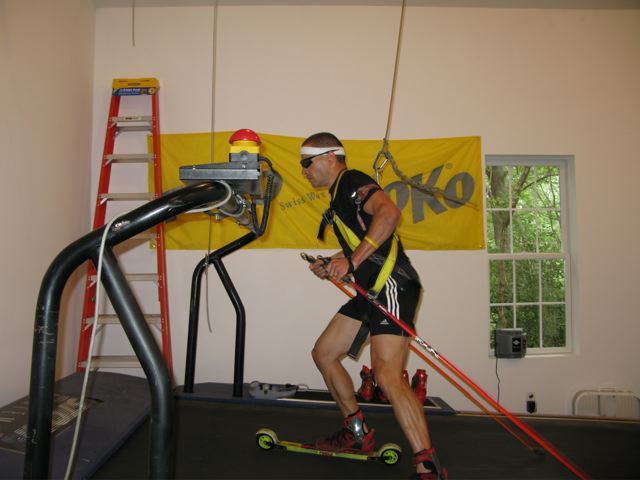
    Duncan Douglas rollerskiing on his treadmill in Honeoye Falls, NY. Photo courtesy of Duncan Douglas.

    There is only one thing that I really know about Duncan.  Duncan truly enjoys punishing himself through endurance activity more than any other human that I know. Training is his drug of choice and he is a serious addict. – Tim Burke

    Utter the name “Duncan Douglas” to anyone who knows anything about skiing, and you are guaranteed to elicit one of three responses: (1) dismissive incredulity, (2) respectful awe, or (3) idolizing hero-worship. If you hadn’t heard of the two-time Olympic biathlete before 2007, when he beat Kris Freeman to win the first Climb to the Castle on custom V2s, you certainly did in the ensuing uproar over wheel speed limitations.

    For all the US ski community at large presumes to know about Douglas, there seems to be a general consensus there’s something about him—like what really motivates an ex-Olympian past his prime to try to prove that you can be fast and old—that can’t quite be pinned down. His is a rare enigma in a sport that keeps tabs on everybody’s business. This is perhaps why, at the height of its internet glory, Jacked Up Old Man got a few thousand hits a month. How that compares to regular FasterSkier blog traffic is proprietary information, but suffice it to say that for an anesthesiologist from Upstate New York, that’s pretty impressive.

    Jacked Up Old Man, that legendary persona that captivated young and old ski fans alike, has now all but disappeared from the blogosphere. The Vancouver Olympics, which he was unabashedly shooting for, have come and gone without him. But at the age of 45, Douglas shows no signs of stopping.

    When the idea for a story on Douglas came up during a FasterSkier planning meeting, I leapt at the chance to write it. As a native on Honeoye Falls, NY, where Douglas now lives, I’d grown up hearing about his latest athletic insanity from my high school ski coach, his good friend Bernie Gardner. Stories of some ex-Olympian biking up the Whiteface Mountain toll road five times in one morning were somehow supposed to goad us all into training harder for our next league meet.

    And so the assignment was mine. What began as a simple workout piece turned into a full-on profile, as it became apparent that a brief account of Douglas on his rollerski treadmill couldn’t really do him justice. Nevermind what this guy does to get in shape, the real question is: why?

    It is a testament to the infectiousness of Douglas’s enthusiasm for training that he convinced me to wake up before dawn for a strength workout when we had already planned a rollerski later that day. I got the impression over the phone that the treadmill demo I’d been hoping for was not going to be possible, but a roller-board session at 5:00 a.m. seemed like a good substitute for hardcore. So, we agreed to meet at ‘Area 143,’ the small barn in his backyard that houses his workout equipment.

    Douglas had already started the circuit when I arrived the next morning: 50 reps on the roller-board, a minute of plyos, and 20 reps with an ab wheel. Repeat.

    “You might want to do only twenty of these,” he said, stepping down from an original model of the VasaTrainer. Instead of being positioned flat on one’s stomach to muscle up the slide, like most trainers I’d seen before, Douglas’s version allowed for a pretty close approximation of an upright double pole. It looked painful.

    “I’ve gotten off the roller-board wagon. Normally I like to do a workout like this three or four times a week. After a few months of that, I can go out on rollerskis and double pole like it’s nothing,” he said in between sets.

    With a seemingly limitless tolerance for pain and general exhaustion, “nothing” for Douglas probably qualifies as excruciating for others. Never mind the fact that he races 30 to 40 times a year; he’s on call up to three times a week as an anesthesiologist at Rochester General Hospital and could be asked to leave his family at a moment’s notice for deployment as a National Guardsman.

    Duncan Douglas racing
    Douglas racing this winter. Courtesy photo.

    When I asked Tim Burke, a 2006 and 2010 Olympian who lives and trains out of Lake Placid, NY, to describe his fellow biathlete, this is what he wrote: “Duncan once told me that when he was training full time, he would go for a three hour run and if his average heart rate was not high enough when he finished, he would simply drink a coffee and a coke and do the run again. Another time, he was telling me how much he trained when he was my age. So I asked him, ‘Did you ever train over 1000 hours in a year?’ He simply replied, ‘Try 2000.’ If anyone else told me these stories, I would simply cry bullshit, but Duncan is crazy enough that you just never really know.”

    This was the difficult thing about interviewing Douglas: it was hard to know when he was being serious, and when he was simply saying something for pure shock value, and probably laughing to himself while I tried to figure out whether he was joking or not. He’s so fit now you have to wonder: maybe he really did train 2000 hours a year when he was on the biathlon team.

    According to the man who taught Douglas to ski at St. Lawrence University, he’s always attacked life with unwavering intensity. Robert Axtell, who retired from coaching at St. Lawrence in 2008, recalled Douglas’s first ski race at Tupper Lake.

    “I was still racing quite a bit at the time,” said Axtell. “Duncan didn’t really know what to do, so I said to him, ‘Just follow me, and when you get ready to go, go.’ It was a mass start in a big field, and I was going along pretty good. I looked behind me for Duncan—he wasn’t there. I looked ahead, and there he was going up the hill. He ended up winning his first race.”

    Douglas was at St. Lawrence for less than two years, and in that time qualified for NCAAs. Despite his brief time as college racer, he always maintained a strong relationship with his coach. Douglas lived with Axtell for a time, and would ski at night in the lit loop behind Axtell’s house.

    With a seemingly insatiable appetite for self-inflicted pain and suffering, it would seem that Douglas would have been a difficult athlete to reign in. But Axtell said that the young Douglas was perfectly coachable, willing to learn and listen.

    “He does what’s best for Duncan,” explained Axtell. “I think maybe people will think he won’t listen; he’s had coaches in the past he kind of balked at…but years ago he was really eager to learn and get ahead.”

    “There might be times when he over trains,” Axtell conceded. “But he’s the type of person who can get by on very little rest; he’s just a high energy individual.”

    This was my training partner for three separate workouts on a Monday in August. Our morning strength session was, predictably, excruciating. Within the first ten reps on the VasaTrainer my arms were screaming. I could tell my triceps were going to make me pay for thinking I could keep up.

    “Right now I’ll do 15 to 20 sets of these, but eventually I’ll get up to 30,” said Douglas in between exercises. I decided it would be best for me not to bother counting how many sets it took for me to decide to start rolling tape instead.

    Extreme muscle soreness didn’t set in until the next day, however, so I was still ready to tackle our rollerski scheduled for that afternoon. We met at the site of local club Rochester Nordic Racing’s (RNR) afternoon practice. I arrived earlier than Douglas to tag along for a warm-up with the RNR juniors. Upon hearing who would be stopping by later, head coach Jason Hettenbaugh told his athletes, “Keep an eye out: if you’re lucky, you might spot a Jacked Up Old Man on the road!”

    Most of Douglas’s fan base might be over the age of 40, but you wouldn’t know it from the reactions this announcement elicited from the 20 or so high school kids around me. Five years after I’d graduated high school, Douglas was still being held up as the epitome of no-excuses dedication for local juniors. No more Olympics to ostensibly train for? No matter. “I’m just happy to get out there now,” he said after he arrived and we started an easy skate rollerski past farm fields.

    At the December 2009 Mt. Itasca US Olympic Trial selection races in Coleraine, MN, which served as a pre-qualifier for a shot at the last few places on the Vancouver biathlon team, Douglas finished ninth in his best three out of five races. The US Biathlon Association ended up taking the top four guys from that event to IBU Cup races in Altenberg, Germany, where the last few spots on the Vancouver biathlon team were contested. After Mt. Itasca, Douglas took to his blog to talk about coming up short of his goal.

    “Yes, I would’ve been thrilled to race in another Olympics and would not have tried if it wasn’t possible. The truth of the matter is that I just love training and racing,” he wrote.

    Setting such a lofty goal for himself simply let him get away with the sheer volume of training that he would love to dedicate to the pursuit of athletic excellence all the time, Olympics or no. With a wife, four kids, and a demanding job, Douglas recognized that being an athlete was now a more selfish endeavor than when he was younger.

    It was partly out of the need for an efficient way to fit in quality training that first prompted Douglas to purchase the piece of training equipment normally reserved for physiological testing labs. With few training partners and no coach but himself, Douglas set out make his comeback with a tool that let him rollerski in the dark before and after work.

    “I used to rollerski around here in the dark with my headlamp, but that got to be too dangerous,” he explained.

    He obtained the used Skatemill three years ago from the Netherlands, where it originated. His particular machine was a demo model in its previous life, and the company sent a technician to Douglas’s house to help him set it up. He had to rework the electricity coming to the barn so that it could handle the voltage the treadmill required. With the small shooting range he has set up in his backyard just outside the barn, he can combine rollerski workouts with target practice, simulating a winter race as best as possible.

    “It was cheaper than building a rollerski loop,” he said.

    The treadmill, it turned out, was perfectly operational, so back to The 143 we went after our rollerski, this time with my brother, Steve, in tow. After a quick safety briefing (“hit this red button to turn it off”), Douglas strapped into the harness and slowly brought the treadmill to speed. Skiing with it set to a 10% grade, he settled into an easy V2 near the front of the platform.

    Though I’d prepared for the real thing by watching a few YouTube videos of Douglas on the treadmill, I was still struck by its sheer size. It was like being in some sort of NASA virtual-reality lab, only here we were mapping out the limits of an addiction to endurance sport, and the lengths to which a person would go to achieve a goal. There was nothing virtual about it.

    When it was my turn to buckle into the harness, I was a little nervous. I started off without poles, to give myself a chance to get used to the feel of the belt moving under the skis. Surprisingly, rollerskiing on the treadmill was more like skiing on snow than on asphalt. It was easier to balance on one ski and let the belt freely move under my feet more. Of course, if I lost my balance for a split second here I’d end up flying off the back. At least asphalt stops moving if you fall.

    After adding poles and experimenting with V1 and V2 for a few minutes, I decided I’d had enough for one day. Douglas is just as busy as ever, after all, and it was time to let him have dinner and get back to his family.

    Before I’d tagged along for this series of workouts with Douglas, I had my theories as to why he held the attention of the ski world. I assumed it had something to do with his dedication to this sport beyond all reason.

    But in spending a few hours with him, I realized there was more to it than that. I was honestly inspired when I drove away from his house that evening. If Douglas, with more than enough distractions in his life to make him surrender his aspirations of being a world class athlete, could find a way to still be competitive with skiers 20 years his junior, then what the hell was my excuse? True, I probably couldn’t afford my own rollerski treadmill, but my day spent trying to keep up with a jacked up old man made me realize that it actually wasn’t that hard. Painful, maybe, but all it really took was a commitment to a goal and the decision to try and meet it no matter what. A healthy enjoyment of punishing yourself certainly didn’t hurt either.

    Correction: We originally stated the Robert Axtell retired as the head coach at St. Lawrence University in 2008. While he was the head coach from 1963 to 1973, he was an assistant when he returned to the program from 2001 to 2008. Ethan Townshend has been the St. Lawrence head coach since 2003. We apologize for the mistake.
  • Big Wins for Chamberlain and Roberts at Day 5 of Biathlon World Team Trials

    Big Wins for Chamberlain and Roberts at Day 5 of Biathlon World Team Trials

    Mt Itasca, Coleraine, MN –  Perfect corduroy greeted athletes at Mt Itasca for Day 5 of competition of the World Team Trials.   BethAnn Chamberlain  (Grand Rapids, MN) came out swinging and posted the only clean shooting of the day.  So far, the Trial events had not gone well for Chamberlain and she needed a victory in order to qualify for the IBU Cup team.   Though she now calls Presque Isle, ME home, Chamberlain grew up in Grand Rapids and is right at home at Mt Itasca.   With a hometown crowd cheering for her, Chamberlain managed a 5 second victory over Laura Spector (Lenox, MA).  Susan Dunklee (Barton, VT) posted the fastest ski time of the day for 3rd place, 28 seconds out of first.  Dunklee finished in the top 3 in all five races at Mt Itasca.

    Beth Ann Chamberlain, winner Day 5, Sprint 7.5km - photo credit: Roy Kjorlien
    Beth Ann Chamberlain, winner Day 5, Sprint 7.5km – photo credit: Roy Kjorlien

    In the men’s race, the battle raged in the last skiing loop of the day.  The top 4 men went into the last 5km ski loop within 10 seconds of each other.   Wynn Roberts (Battle Lake, MN), had a blazing last loop, pulling out a 3 second victory over Leif Nordgren (Marine of St Croix, MN).  Nordgren had been fighting sickness at the beginning of the race series and needed a big race today.   Hitting 90%, Nordgren pulled himself up in the rankings, but could not quite match his training partner, Roberts, on the ski tracks.  Zach Hall (Nikiski, AK), was on the podium again for five out of five races, shooting 80% and skiing a strong last lap.   Only .8 seconds behind Hall was Mark Johnson.  Johnson, who grew up training and racing at Mt Itasca, tried to squeeze every last second out of the familiar terrain, but the hometown crowd and 90% shooting was not quite enough to put him on the podium.

    In the Junior Men’s race, Nordgren took 1st, followed by Wayne McClure (Anchorage, AK).  Michael Gibson (Burlington, VT) finished 3rd.   In the Junior Women’s Sprint, Grace Boutot (Caribou, ME) won by a large margin, shooting 2 penalties.  Hillary McNamee (Presque Isle, ME) was 2nd, shooting 70%. Corrine Malcolm (Hayward, WI) placed 3rd with strong skiing.  This is Malcolm’s first season of biathlon competition.

    The Youth Women showed some of the best shooting of the day.  Andrea Mayo (Soldier Pond, ME) shot 80% for a 40 second win over 2nd place Kelly Kjorlien.  Kjorlien (Grand Rapids, MN), in her second year of biathlon competition shot an impressive 90%.    Rookie Afton Snyder (Grand Rapids, MN), took 3rd with two penalties.

    Casey Smith (Methow Valley, WA) won the Youth Men’s with 80% shooting and impressive skiing, matching second place Raleigh Goessling on the ski tracks.  Goessling (Esko, MN) finished 21 second back with 70% shooting.   Also shooting 70% was Ben Greenwald (Minneapolis, MN) finishing 3rd, 58 seconds out of first.

    Full results and final series points can be found at www.minnesotabiathlon.com and www.usbiathlon.org.

  • Biathlon 2010 Team Trials Get Underway

    Biathlon 2010 Team Trials Get Underway

    Thanks to great volunteers that blew snow over the 2.5 km course at Mt. Itasca, the 2010 Team Trials got underway today.   While the course was not as difficult as the 3.5 km loop, it was challenging enough for the USBA to evaluate the racing.

    In the men’s 10 km sprint competition it was National B Team member Mark Johnson skiing away from the field in a time of 26:20.  In the women’s 7.5 km sprint race USBA Development Team member Jen Wygant took the win in a time of 23:44.

    In the women’s race, Wygant relied on the best shooting race of her two year biathlon career to ski to the 16 second victory over Susan Dunklee (USBA), with Laura Spector (USBA) rounding out the top three another 15 seconds back in 24:15.

    “My skiing felt good and will hopefully get stronger as my leg speed gets better,” said Wygant.  “The course was hard packed, but not my favorite terrain with the steep climbs.  I typically like the more gradual stuff.”  Wygant, who only had two misses shooting today remarked, “hopefully the whole field can step it up because that is what it is going to take to compete on the World Cup and that is our goal.”

    As Spector elaborates on in her FasterSkier blog she had a very solid race in third despite spending some time in theEmergency Room last night.  “I’m surprisingly relaxed, which is good because it helps me keep a cool head on the range and my stomach jitters in check. Despite being a little low in energy, I skied the race as hard as I could and finished third with 3 total misses at 98.95 percent back, about 30 seconds.

    “What I’m most pleased with about today was my ability to transition to race mode so quickly and attack the race in spite of all that could have distracted me or discouraged me from skiing fast.”

    In the men’s race, Johnson skied to a 23 second victory over Wynn Roberts (USBA), while Zachary Hall (USBA) took the final position on the podium another 8 seconds back.

    Johnson’s goal was to stick to the basics.  “During the time leading up to today’s race, I really wanted to keep things simple. This being the first trials race of the season (i.e. big time nerves), and really my first race on snow against a lot of the competition, I sought to stay away from trying anything out of the ordinary–simply keep all of the same procedures as in my training.

    “Overall, I’m very satisfied with my performance today. In the ski loops, I felt on top of my game, and on the shooting range I took my time, but it proved beneficial seeing as I hit my goal of 90% shooting. After the race, I found out from my coach Vladimir that my shooting was a bit more on the edge than hoped. Several shots were near misses. My only miss on the day came as my final shot standing.”

    Everyone that FasterSkier talked with after the race voiced the same warm thank you to all of the volunteers that made this race possible.  Johnson’s words best sum up what was felt by all those attending. “I also want to give a big thank you to the volunteers here at Mt. Itasca. Many of them have had several sleepless nights in preparing the tracks with man-made snow. A thousand thanks!”

    As for the USBA’s decision to issue a “same wax” protocol for the Team Trials, Upham told FasterSkier that “about a month ago they had a conference call to discuss the matter.”

    Ultimately it came down to a matter of fairness and the USBA wanting to be able to compare the racers on an equal playing field whether they were members of the USBA or of a club.  As a coach Upham likes the idea even more as it allows him “to focus on the athletes mental preparation for the race” instead of spending all of his time waxing skis.

    Pointing out that in biathlon they also have to spend time zeroing their guns, and, as Upham stated, “if I had to aid with that as well as test skis, I would be running around all frantic.  They have been doing this for years at the junior level and the USBA did not want to feel like they should send one of the techs over from Europe because we want them to stay to help over there.”

    Today’s cold conditions made the waxing easy as temperatures were below 0ºF over night.  As Upham said, “today worked out well with everyone on the same page.”  When asked what they would have done had the temperature been warmer he remarked “we will be using high-flouro paraffin waxes, but no powders.”

    The only issue that is yet to be resolved for this race series is what to do about structure.  “Everyone has similar grinds on their skis, but if we need to use a structure tool we will discuss what to do at that time.  We all are working in the same wax room, so we will make a group decision.”

    While it is “way too early to discuss who is looking good for picking the Olympic Team” said Upham, the plan is to hold five races at Mt. Itasca weather permitting.  Of those the USBA will look at each athlete’s best three races to determine the 3 or 4 men and women that the they will bring over to Europe to race against the World Cup Team.

    While “Jay Hakkinen and Tim Burke have already pre-qualified based on their performances at the last two World Championships, everyone else will have to slug it out at those races in Europe to determine the final Olympic spots,” concluded Upham.

    Tomorrow’s race should prove very exciting as it is a mass start, something we do not see very often domestically.  With two prone, followed by two standing stops in the range the action should be tight.  As Upham stated, “in a mass start it is hard not to be aware of what the guy next to you is doing in the range because you can hear what is happening with each of his shots.  On the course you will know exactly where you are the entire race, especially when you come out of the 150 meter penalty lap, which should take about 25 seconds.”

    “Tomorrow is going to be a good fight, the great thing about this group of girls is that anyone can win on any given day,” said Wygant.  Stay tuned tomorrow for more action from Mt. Itasca and see who best handled the pressure.

    Men's Results
    Men's Results
    Women's Results
    Women's Results
    Walt Shepard (MWSC) - 5th place.
    Walt Shepard (MWSC) – 5th place.
  • Mt Itasca Prepares for Biathlon World Team Trials

    Mt Itasca Prepares for Biathlon World Team Trials

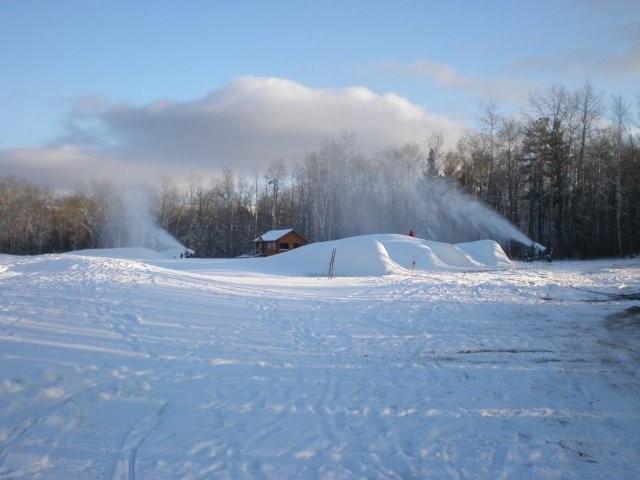
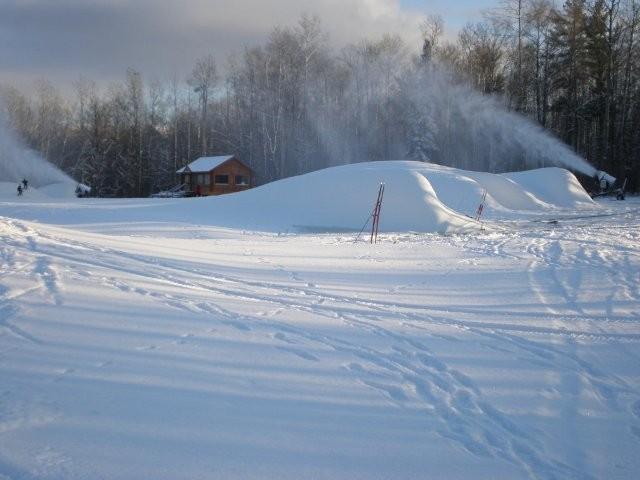
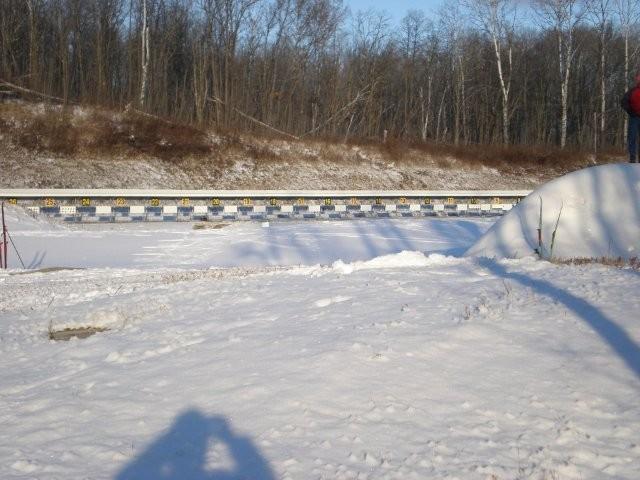
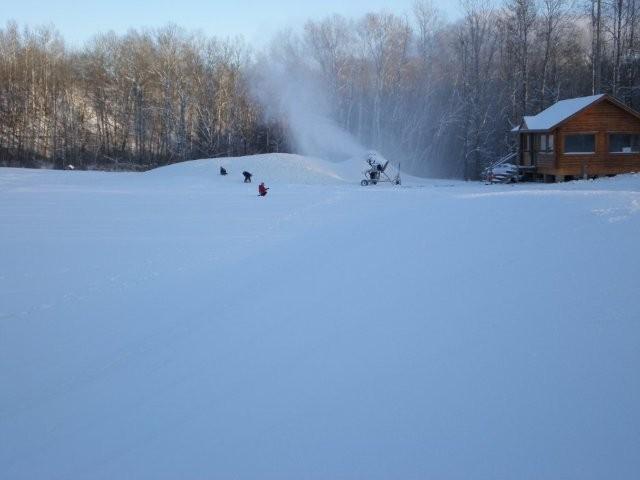
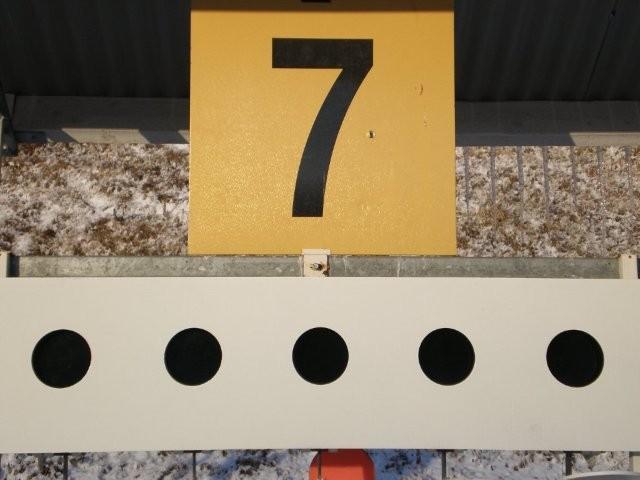
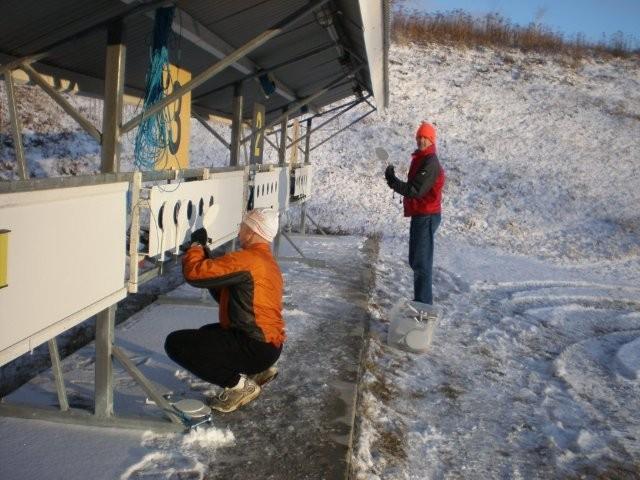
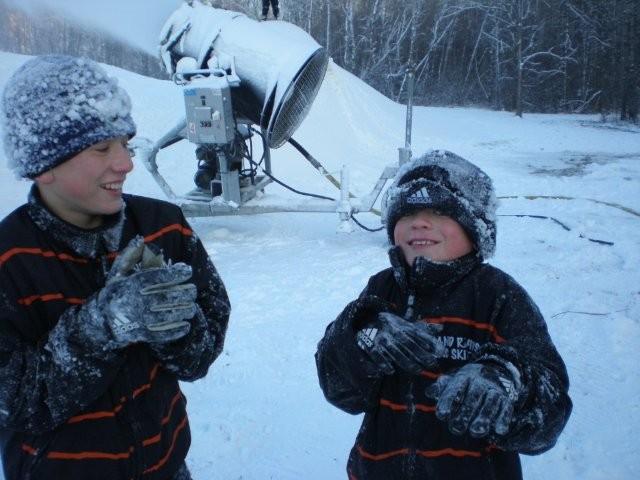
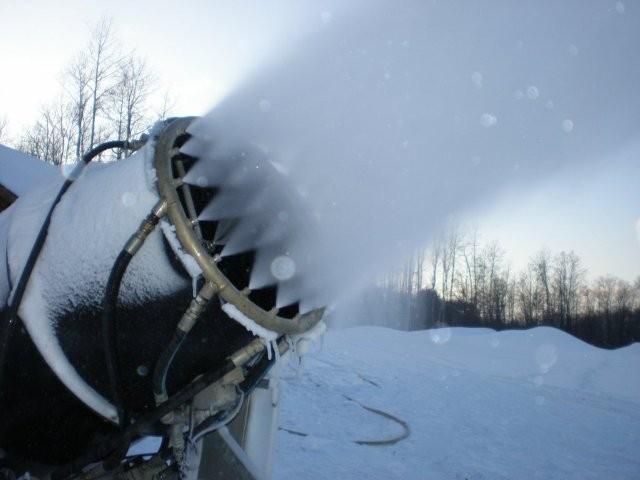
    Volunteers from the Mt. Itasca Nordic Ski Association have been working round the clock for the past week to prepare the venue for the start of the Biathlon World Team Trials, Dec 12-22. Making snow is cold, exhausting and dangerous work and not something you usually volunteer to do. Club volunteers have been manning the snow guns over the past week, taking advantage of the cold nights. Crews have been repainting fencing and V- board, and sandblasting the biathlon targets in preparation of the five race series that begins on Saturday, Dec. 12.

    The events at Mt Itasca are the first stage of Olympic selection. Upon conclusion of the Mt Itasca races, up to 4 men and 4 women will be selected based on their best 3 of 5 races to compete at the IBU Cup events in Altenberg, GER in early January. The three races in Altenberg will serve as the final selection for the US Olympic team.

    Teams began arriving yesterday at Mt Itasca, and were able to train on a 1.5km loop and on the biathlon range and stadium area. To speed the snowmaking and snow distribution process, Mt Itasca has been creating massive piles of the snow in the stadium and then hauling the snow onto the course with a number of front-end loaders. These massive machines and their operators have been provided by the City of Coleraine, the Grand Rapids Public Works Department, and Nortrax John Deere dealership in Grand Rapids. Making and moving enough snow to cover a 3.0km race trail and an expansive biathlon stadium is a monumental task. “We’ve made really fast progress”, said a smiling Gene Eklin from the cab brand new John Deere loader, “We had to limit the use of the really big loaders because of the late ground freeze, but the energy of our volunteers and the support of Coleraine, Grand Rapids and Nortrax has really kept us on schedule.”

    “We will be ready with a full race course by Thursday,” reported Vladimir Cervenka, Jr National Team coach and Mt Itasca snow-maker. “Mt Itasca is the most technically challenging biathlon venue in North America, and a great spectator venue. The community support for these races has just been outstanding- the venue will be in great shape for the races!”The top biathletes from around the country have been arriving in Grand Rapids over the past two days. Minnesota contenders for the US team include Mark Johnson (Grand Rapids), Dan Campbell (2002 Olympian from Hastings), Leif Nordgren (Marine on St Croix), Wynn Roberts (Battle Lake), and Kevin Patzoldt of Grand Rapids. Kevin is currently competing on the World Cup circuit and has an automatic qualification to the second round of Olympic qualification races. On the women’s side, Carolyn Bramante is the top Minnesota contender- she is a medical student at the Univ of Minnesota and a a 2006 Olympian. Jennifer Wygant (Burnsville) is in the Army World Class Athlete Program and U.S. Development Team. Nineteen year old Addie Byrne will also be shooting for a spot on the US team after a 6th place at last years World Junior Championships.

    Spectators are welcome to come watch all the events. Races start at 11am on Dec. 12, 13, 19, 20, and at 10am on Dec 22. Results will be posted at www.minnesotabiathlon, and biathlon.teamusa.org.