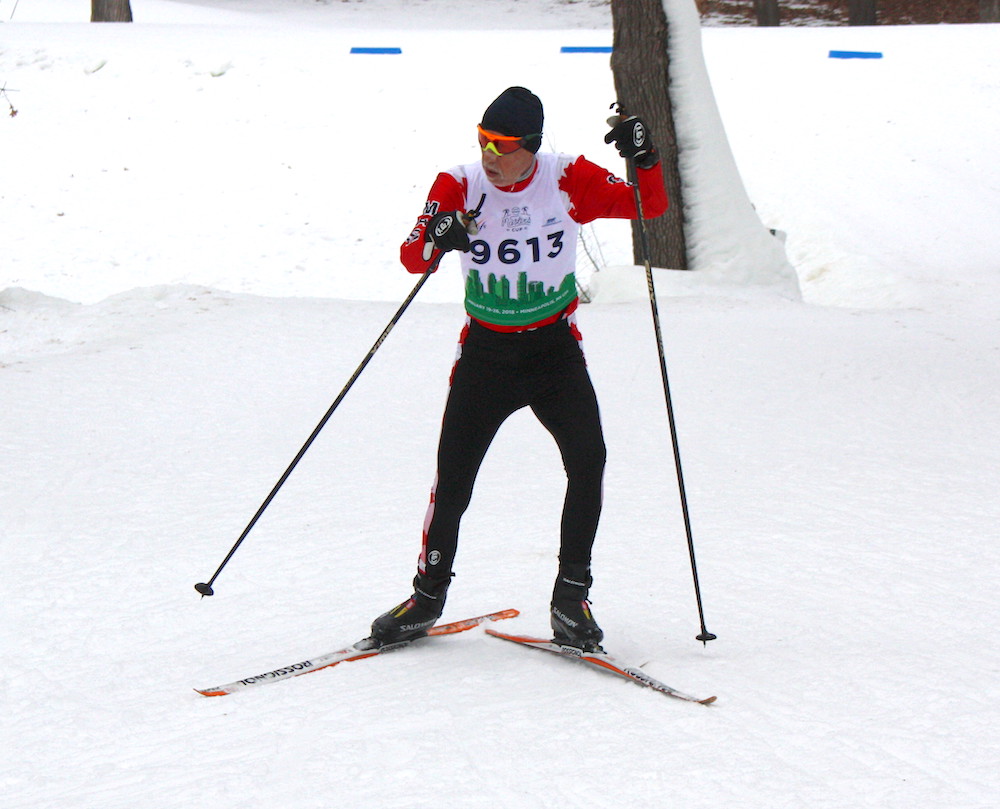
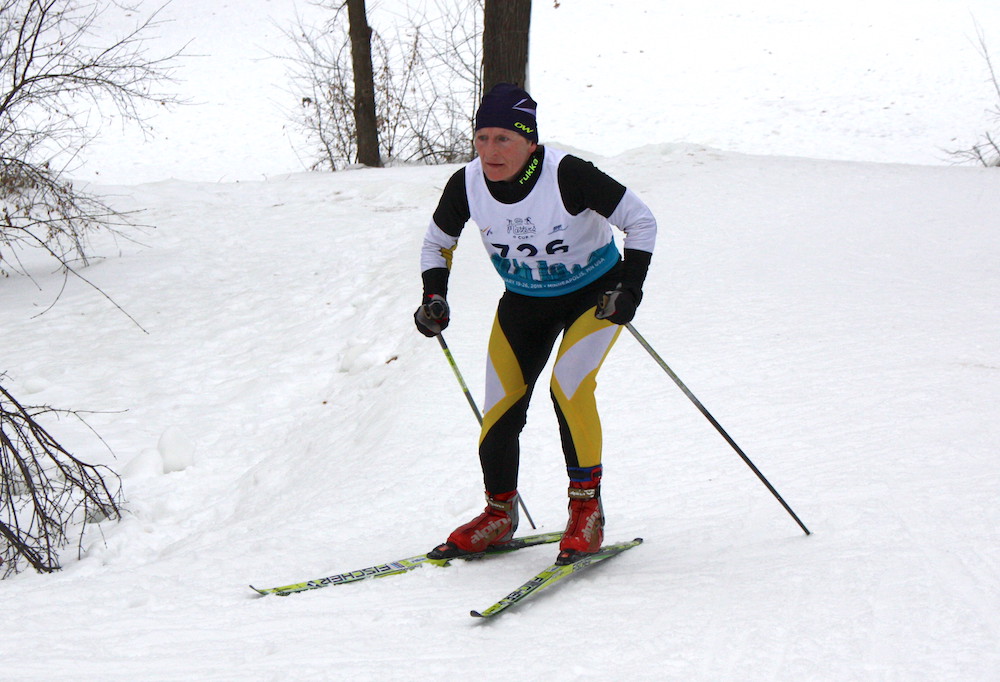
Canada’s Jim Ballendilne racing to second in the 10 k freestyle men’s age group 11 on Sunday at the 2018 Masters World Cup in Minneapolis, Minnesota.
MINNEAPOLIS, Minnesota — The weather for Day 2 of the Masters World Cup on Sunday was almost a carbon copy of Day 1, minus any appearances by the sun and a few degrees on the thermometer, keeping the course in great shape for the distance freestyle races.
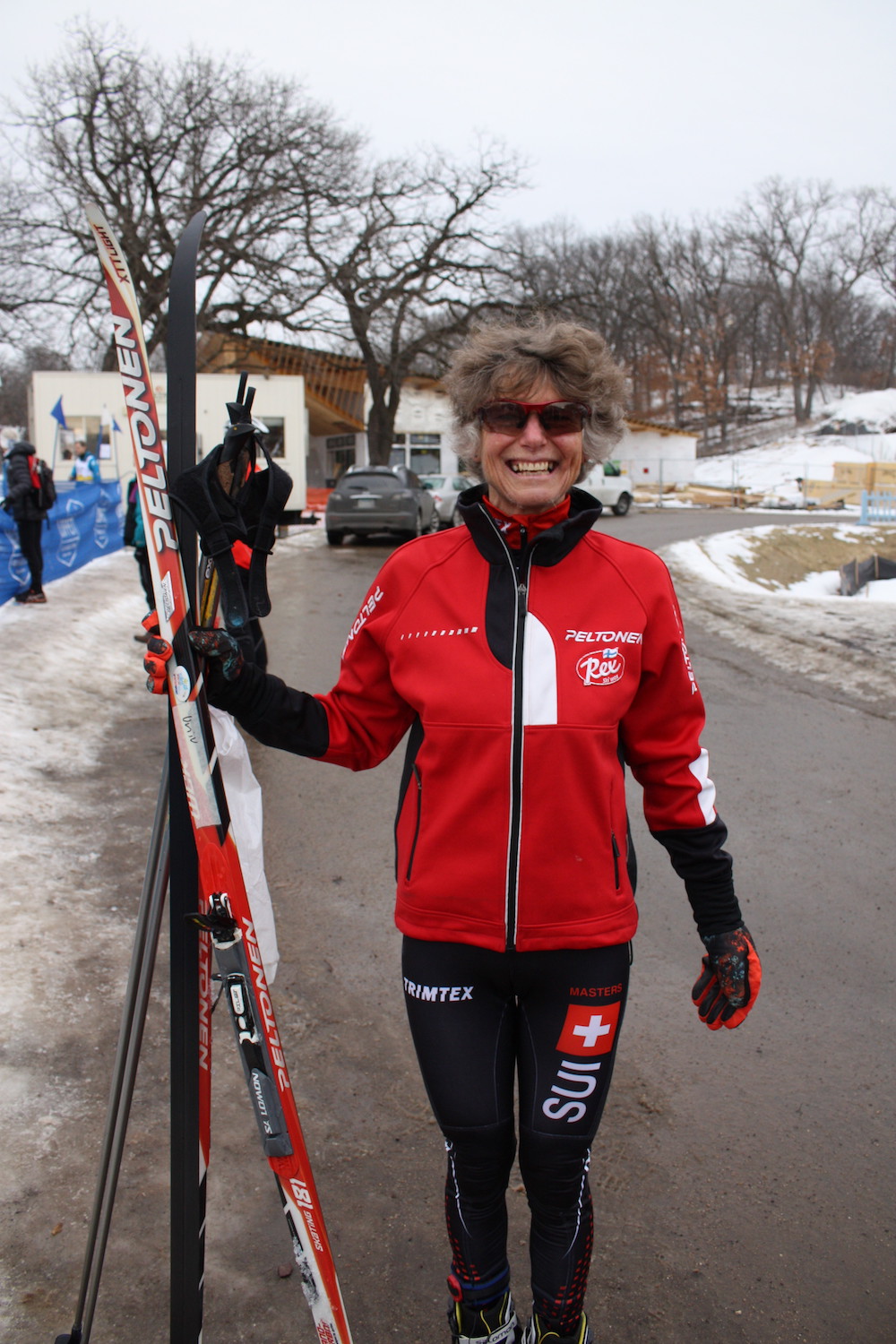
Catherine Wullschleger of Switzerland after placing second in the 15 k freestyle women’s age group 7 on Sunday at the 2018 Masters World Cup in Minneapolis, Minnesota.
Catherine Wullschleger of Switzerland finished second in her age group, about 3 minutes behind American Muffy Ritz, who won the women’s age group “7” 15-kilometer freestyle on Sunday. Reflecting on her race, Wullschleger said she had some confusion at the start. “One lady from the category 2 started together with us,” she said. “I thought, ‘Oh! She looks young,’ but I didn’t see the bib, and so I followed her, so actually I started a little bit too fast.”
Wullschleger explained she will be in Minneapolis for the entire week’s events. Asked about her overall goal, she said it’s “to have fun, and if I can, make a medal. OK, it’s fine, but now I have one.”
She described the course as in good shape despite the lack of natural snow. “They did a very good job,” Wullschleger said. “It’s a nice course. You have to work all the time. The snow was not the same everywhere. In the woods, it’s a little bit different, but it’s really a good course.”
Alexandra Jospe of Boston, who won the women’s age group 1 for the second-straight day, agreed. As she trains on a golf course back home, she said she’s familiar with the type of terrain Theodore Wirth Park offers. “We ski on a golf course [in Weston, Massachusetts], so skiing on a golf course here isn’t all that different,” Jospe said.
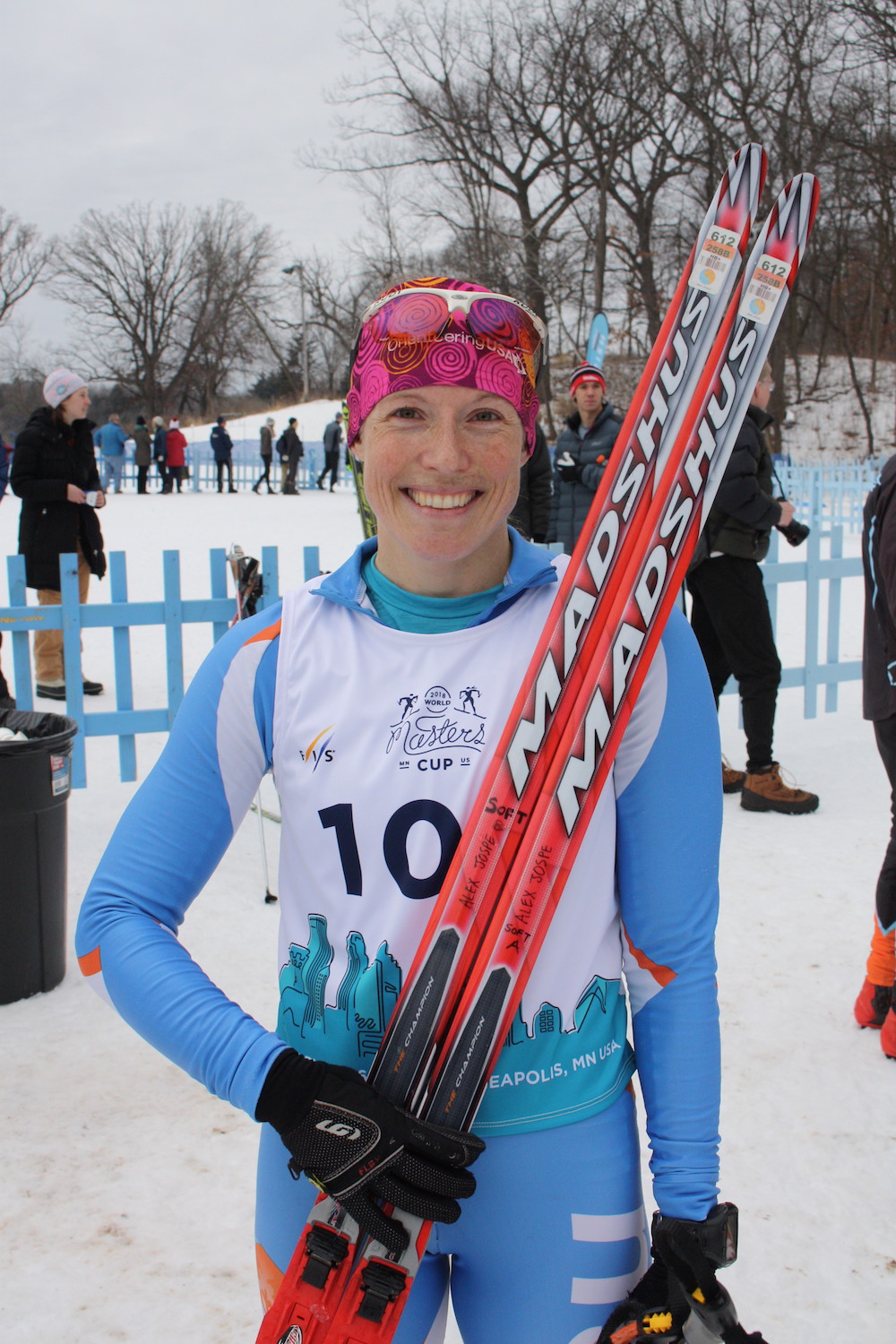
Alexandra Jospe, of Boston, after winning the 15 k freestyle women’s age group 1 on Sunday at the 2018 Masters World Cup in Minneapolis, Minnesota.
She won the Sunday’s 15 k freestyle in 39 minutes flat, 29.7 seconds ahead of another American, Davya Flaharty in second.
Jospe described the race course as “super fast, super fun, [with] a lot of transitions [and] very technical. It’s the stuff I like.”
She explained it was warm enough to keep the snow from being icy, and the uphills weren’t chopped up, calling them “pretty packed, [although] you had to look where you’re stepping.”
Jospe is only in town for the weekend, and will race Monday’s 10 k classic and 10 k freestyle (back-to-back races held about five hours apart), before heading back East. When asked what her ambitions were for the weekend, she said “at this point, it’s hard to beat winning.”
As for Monday, Jospe said, “Whatever happens … I’m pretty happy with it. … [I’m] starting to feel a little tired at this point, so I’m hoping just to enjoy myself again — see where that leads it.”
The race organizers have no intention of canceling the events unless it affects the safety of the participants. If the snow comes, jury member Lars Erik Rosenquist said “Plan A [is] to start grooming at 5 o’clock in the morning, because most of the snow will come in the day.” Should the course become untenable, the jury would have to decide whether to cancel much earlier in the morning than their usual 8 a.m. meeting time.
Day 2 Age Group (AG) Winners
Women’s 15 k freestyle:
AG 1: Alexandra Jospe (USA) 69:00.06
AG 2: Nelson Margie (USA) 40:50.2
AG 3: Sarah Peters (Canada) 39:02.4
AG 4: Bonnie Weiskopf (USA) 37:04.1
AG 5: Kathy Maddock (USA) 38:10.2
AG 6: Jan Guenther (USA) 40:31.1
AG 7: Muffy Ritz (USA) 42:37.5
AG 8: Judy Bechanan-Mappin (Canada) 51:48.7
Women’s 10 k freestyle:
AG 9: Trina Hosmer (USA) 28:25.6
AG 10: Eva Carlsen (Norway) 33:56.2
Men’s 30 k freestyle:
Austria’s Josef Schoeberl racing to first in the 10 k freestyle men’s age group 11 at the 2018 Masters World Cup in Minneapolis, Minnesota.
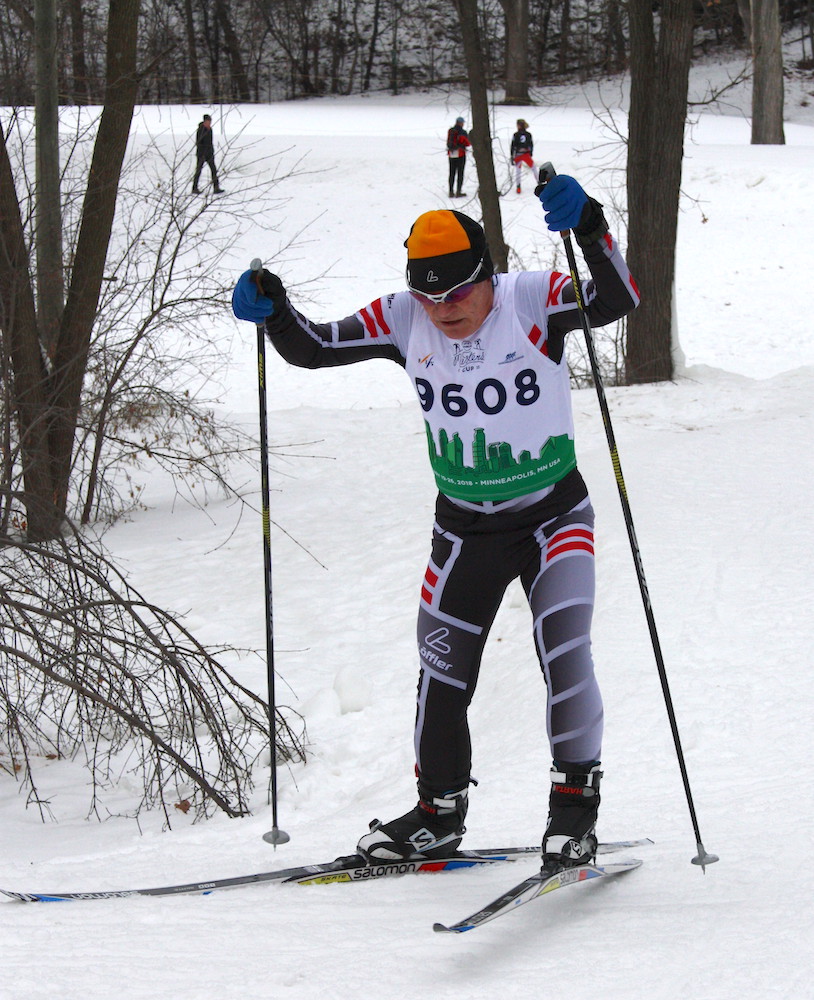
Finland’s Eila Kaakkolahti racing to third in the 15 k freestyle women’s age group 7 at the 2018 Masters World Cup in Minneapolis, Minnesota.
***
About Andrea Potyondy-Smith: Andrea hails from the Twin Cities of Minneapolis (dontchya know) and has an MFA in creative writing. When she is not being an English geek, she can be found on her bike or skis, or playing in the Northwoods … typically on her bike or skis.
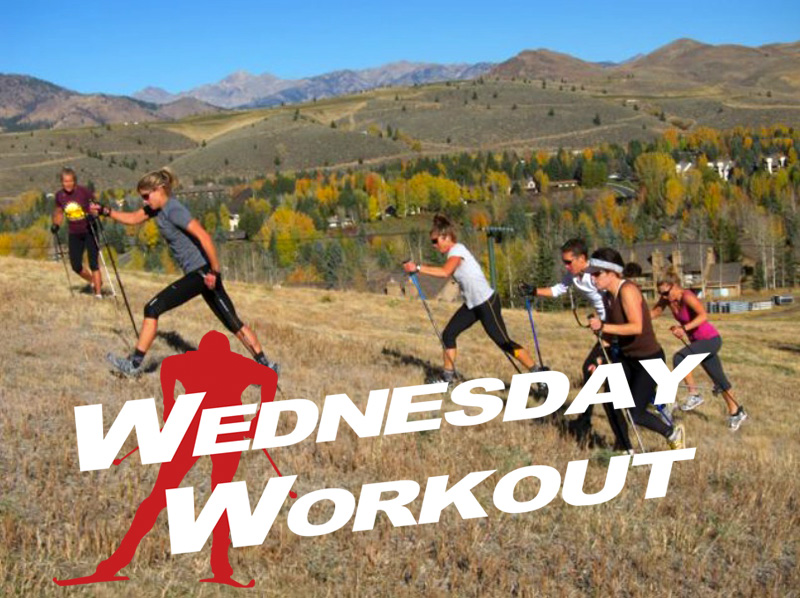
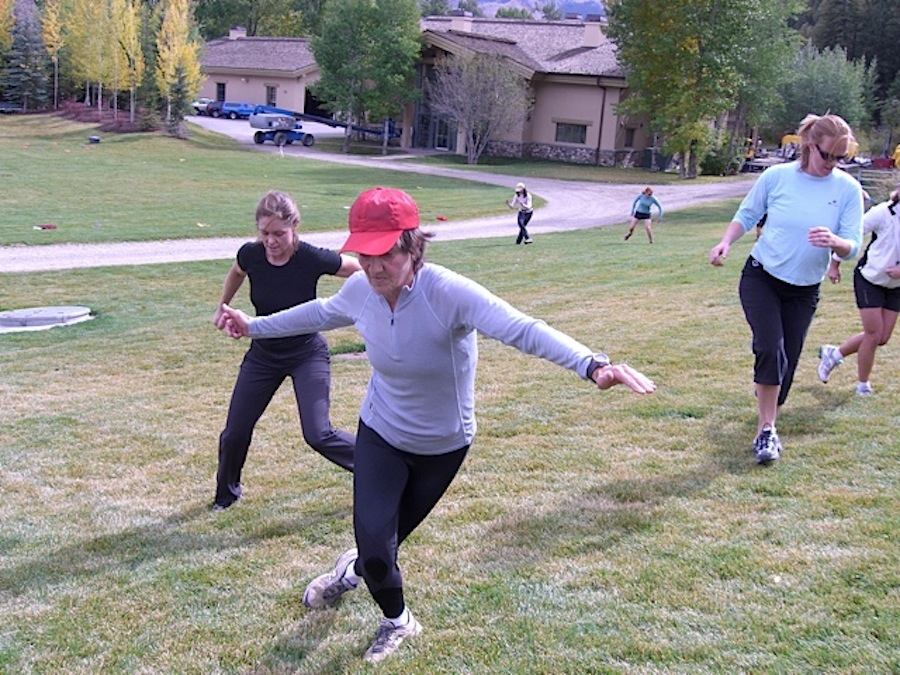
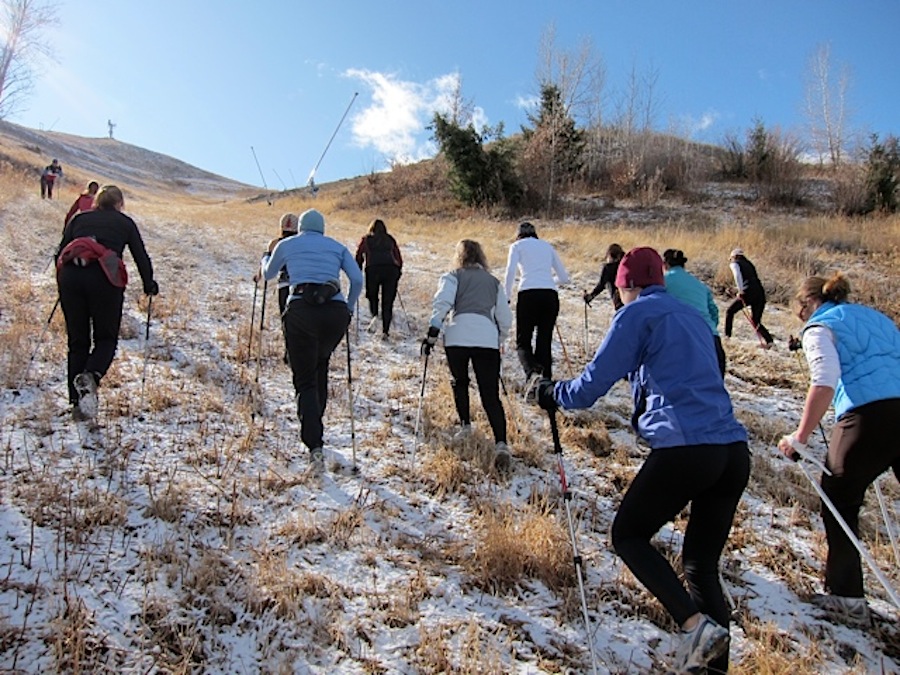
VAMPS skiers doing some hill work on Dollar Mountain near Sun Valley, Idaho, in October 2010. (From left to right): EJ Harpham, Alex Sundali, Tizz Strachan, Trina Peters, Tess O’Sullivan, and Anne Marie Gardner. (Photo: Muffy Ritz)
Editor’s Note: The following has been updated to reflect the correct spelling of Beech Hill in Durham, N.H.
This week, Muffy Ritz, founder and head coach of the VAMPS women’s masters group in Sun Valley, Idaho, leads us through the Vamps Hill Workout, which she adopted from the University of New Hampshire’s Beech Hill climb. According to Ritz, UNH grads Sarah Walker McLaughlin and Eva Pregitzer Turzian (UNH Graduates) brought the workout West with them.
Ritz likes it because all you need is a hill with one minute or more of climbing. She has her athletes do the 45-minute workout about once a month up their local ski hill, Dollar Mountain.
“The workout incorporates 3 different Training levels (easy/medium/hard) as well as endurance and power,” she explained in an email. “It also utilizes 3 separate techniques (hill walking, moosehoofing and hill bounding) in one workout.”
The Workout: Vamps Hill Workout (a non-stop effort incorporating hill walking, moosehoofing (bounding lite) and hill bounding)
Need: A moderately steep Hill that is at least 1-minute long and wide enough for all three techniques at once, not just a road. Participants should have bounding poles and water.
Setup: 3 sections marked by cones, including a 1-minute hill walk, 1-minute moosehoof, and 30-second hill-bounding, with space for recovery in between, plus a start and finish. The coach should time themselves on each section and drop the cones where appropriate. The walking to the next section (recovery) should take a bit longer than the working section. It just depends on how it is set up.
Warm-up: Walk the course while coach demonstrates proper technique where indicated in each section.
Get Going: Start with one of the sections (marked by cones) hill walk, moosehoof or hill bound and recover by walking or jogging over to the next section, then the next, and back to the start.
The workout is continuous for 45 minutes.
Each loop is about 5 minutes long so seven to eight laps can be completed. It is cumulative and it whoops you by the end.
Pick a place on course to leave water bottles etc. to drink every lap if necessary.
Cool down: Walk out and stretching
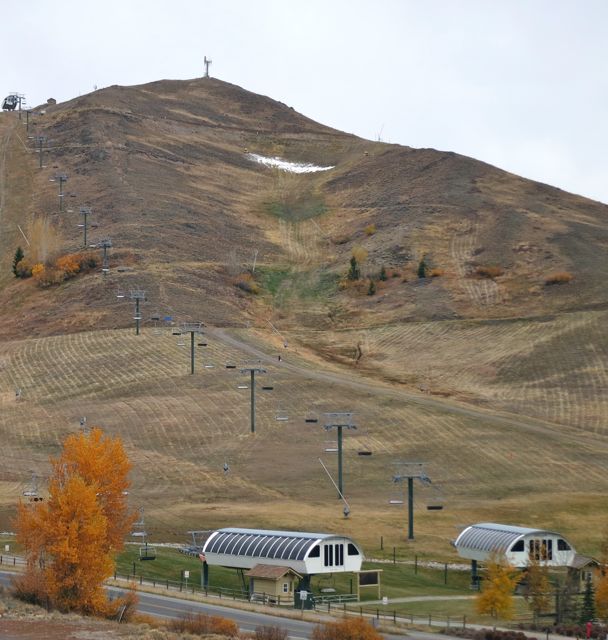
About once a month, Muffy Ritz sends her athletes up Dollar Mountain near Sun Valley, Idaho, for the Vamps Hill workout. They use the road on the right for the moosehooves section and mowed grassy areas for the hill walking and bounding. “The more spread out the sections are, the more recovery there is,” Ritz explains.
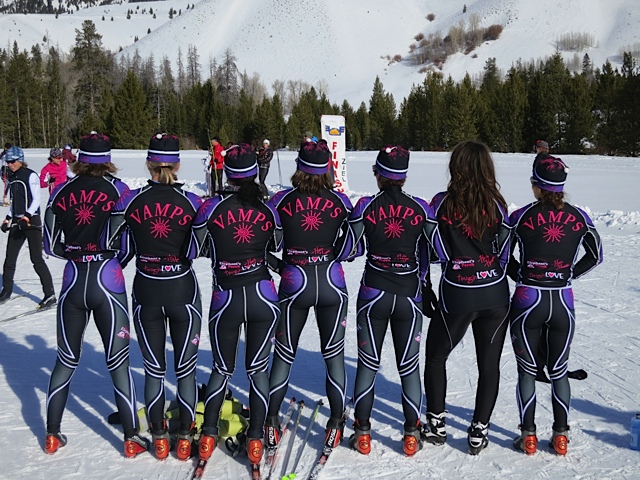
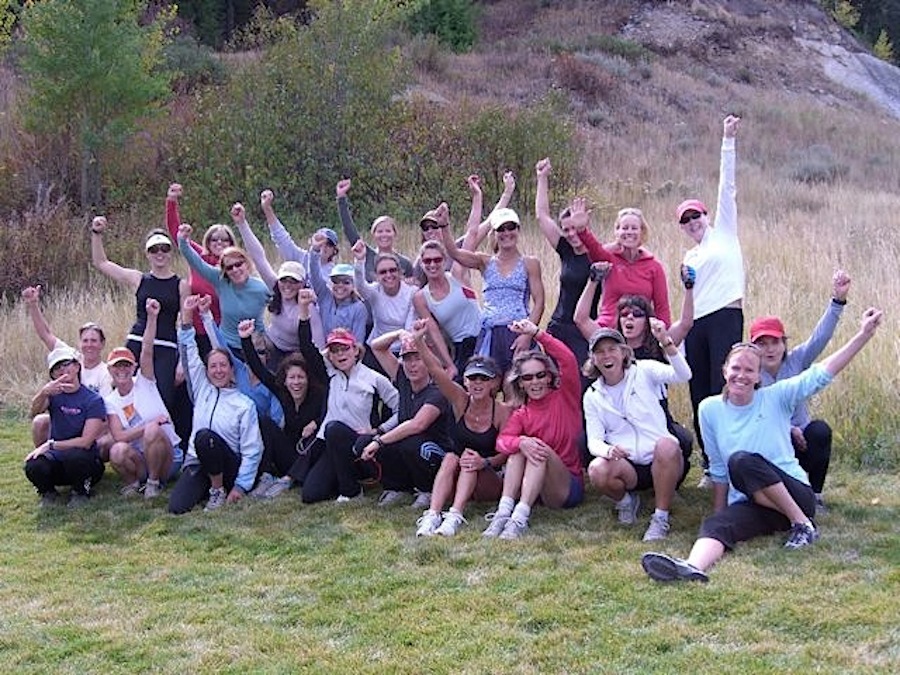
The VAMPS, one of the largest all-female masters programs in the country, based out of Sun Valley, Idaho. (Photo: Muffy Ritz)
Last winter, I had the good fortune to live in Sun Valley, Idaho, where I was quickly absorbed into the large nordic community the area is famous for. My workweek consisted of coaching juniors with the Sun Valley Ski Education Foundation (SVSEF), running a masters program through Galena Lodge, teaching private lessons through Blain County Recreation District, and working with the Vamps.
***
Nordic Town USA is crawling with good skiers: Olympians, NCAA champions, U.S. Ski Team alumnae, Junior National champions, Birkie winners, and Masters World Cup medalists can be seen cruising the valley’s extensive trail system daily.
If this sounds intimidating to the average skier training for a local race or just looking for a good workout, it’s not. It is inspirational. The skiing folks in Sun Valley know that these individuals make their sport credible. They also know the contributions many of these standouts have made.
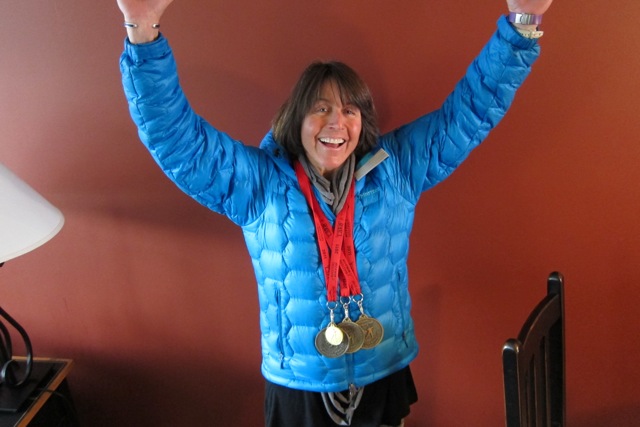
VAMPS creator and director Muffy Ritz after winning three gold medals at the 2011 Masters World Cup. (Photo: Toko)
Muffy Ritz, founder and director of the VAMPS program, has used her ski racing experience and love of the sport to become one of Sun Valley’s most prominent nordic leaders. Ritz got her start in cross-country skiing at the University of Colorado (CU). Tired of alpine racing, she tried out for the nordic team her junior year and discovered her passion.
In a phone conversation, Ritz, 56, explained how she quickly picked up ski technique following her CU teammates around in practice. She loved the challenge of the sport, but what really comes through talking to Ritz is her love for the nordic skiing family. Becoming a nordic skier changed her life, and in turn, she’s changed others’ through skiing.
A member of the U.S. Ski Team (USST) from 1982 to ’84, Ritz was also part of the rising ski-marathon movement in the 1980s as part of Team Rossignol. She proved her talent at endurance events by racing eight marathons over back-to-back weekends. She won the prestigious American Birkebeiner in 1985 and 1986.
Ritz has proved her toughness on a bike as well, holding the second-fastest time in the Race Across America, a transcontinental road-cycling race, in 9 days, 6 hours and 32 minutes. She also holds several age-group titles in National Marathon Mountain Bike Championships.
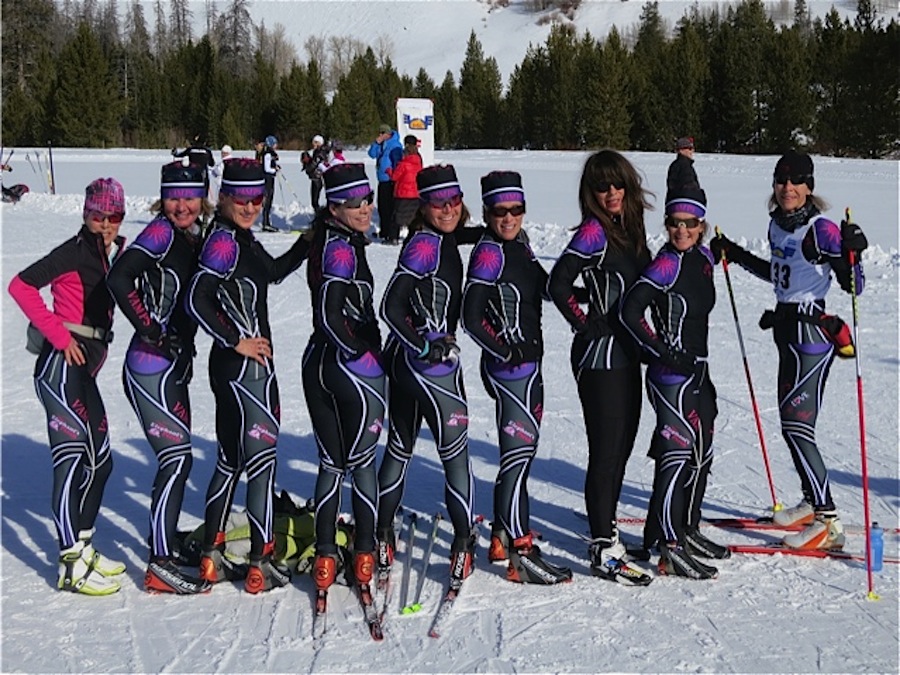
In 1990, Ritz left her position as a junior coach at the Green Mountain Valley School in Vermont and moved to Sun Valley. There, she connected with SVSEF Head Coach Rick Kapala and began a 10-year stint coaching juniors. In 2000, Ritz felt the need to turn her full attention to her newly formed Vamps, which stands for “Vimmen And Muffy’s ProgramS.” (The name came about in the program’s second year. Previously called “Ladies’ Clinic,” Ritz and her participants were looking for a catchier name, something fun and maybe a little racy. Playing around with one of the Swedish skiers in the group who called women, “vimmen,” they settled on Vamps.)
Several members of VAMPS masters group who completed the annual dryland “Vamps Challenge,” an optional list of accomplishments that many women tackle each year in and around Sun Valley, Idaho. (Photo: Muffy Ritz)
Her brainchild, Vamps is 130-women strong with 11 coaches. So how did the largest all-women masters ski program in the U.S. start?
It all began with one woman who requested biweekly private ski lessons from Ritz in 1996. A little worried about entertaining one student twice a week all season, Ritz proposed getting a group together to make the lessons more fun. This was the beginning of Vamps; four upper-intermediate level women who were committed to perfecting their skills and fitness.
Word spread, and the following winter, Ritz had 40 women who wanted a weekly program. She quickly added a couple more coaches to deal with the various ability levels.
By the winter of 1998-99, the Vamps grew to 60 and began to take on a life of its own. The popularity of the group rose from a fitness-driven, outdoorsy population of women who viewed cross-country skiing as a fun, social and sometimes-competitive way to spend the winter. The winter season was preceded by a dryland segment, which took place all over the valley in groups of eight.
Ritz has never advertised the Vamps program. Spread entirely by word of mouth, drawing in women from their late-20s to late-70s with a range of experience goals, Vamps classes were taking Sun Valley by storm. She recalls charging $15 per 90-minute session that season, a killer value for the participants. In keeping with the spirit of making the program accessible, Ritz has kept the cost somewhere around $300 for 12 sessions.
Nancy Fiddler and the AMPS, a highly competitive women’s group within the Vamps masters program. (Photo: Muffy Ritz)
It became necessary to form ability and interest-driven groups in order to meet the needs of the growing program. Ritz and her team of coaches came up with names like the Amps, a competitive group looking for a weekly high-intensity workout.
There were groups for women who simply wanted to skate, as well as an all-classic group called the Scamps. The Super Tramps grew at the beginner-and-lower intermediate end to become a cohesive group of competent skiers with a keen desire to improve technically. The V2’s are a tight-knit group of friends, all over 60 years old.
Vamps classes were being held in different skiing locales around the valley, but by 1999, Ritz moved her programs to the Sun Valley Nordic Center, where they enjoyed the benefits of liability insurance, consistent grooming and a spacious meeting room.
She eventually capped Vamps at 130 participants, where it remains today. In 2002, it became mandatory to participate in the dryland program in order to be admitted into the Vamps ski program. Ritz explained that this was one way to screen participants and to keep the numbers under control.
Being a Vamp
It’s hard not to become infected by the Vamps spirit. The laughter, shouts of encouragement, and general party atmosphere that characterize a Vamps class are a reflection of Ritz herself.
She is an enthusiastic cheerleader of every Vamp, offering personalized tips and encouragement. She makes every participant feel important and shows them the baby steps necessary to meeting their goals. Every Vamp wants to be as physically strong as Ritz and many are emboldened by her confident example. The bottom line is that skiing with Ritz is just plain fun.
Susan Usher (front), Julie Moses (l) and Christine Davis Jeffers (r) of the VAMPS masters program work some dryland drills at River Run in Ketchum, Idaho. (Photo: Muffy Ritz)
The coaches who work alongside Ritz have a deep pool of talent and experience. They are a cast of colorful characters who, between them, have a couple hundred years of racing and coaching experience.
Ritz has never had any trouble filling her coaching roster; in fact, there is sometimes a waiting list to get on the Vamps coaching team. While the coaching staff consists of women who have had some kind of connection with Ritz through ski racing over the years, not just anyone qualifies to be a Vamps coach.
First, Ritz requires that all on-snow Vamps coaches work the dryland segment. This is a several-month commitment in the fall, when the Vamps are gearing up for the winter season through some pretty hard-core workouts. Every coach is expected to lead some portion of the workouts, which consist of ski walking and bounding intervals, strength training, plyos, and technique work.
Ritz is looking for coaches with some sort of training, such as PSIA or USSA certifications, as well as racing experience. Above all, she wants coaches with a passion for skiing who have the skills to pass this on to others. Essentially, if you want to coach Vamps, you had better bring something special to the table.
In addition to Ritz, this season’s coaching roster includes: Brooke Hovey, Betsy Youngman, EJ Harpham, Mary Tess O’Sullivan, Joney Otteson, Joan Scheingraber, Colleen Hayes, Susie Quesnel, Katherine Sheldon, Kate Whitcomb, and Karoline Droege.
The success of the Vamps may be based on the attitude of the group. It is not required that Vamps participants become ski racers. In fact, only about 15 percent of the Vamps regularly tie a number on each season. Ritz estimates a few more, about 30 percent, spend the year working toward the high point of Sun Valley’s race season, the Boulder Mountain Tour.
The Sun Valley VAMPS, serious about having fun at the Billy Goat Loppet in Sun Valley, Idaho. (Photo: Muffy Ritz)
Last winter, Ritz and 18 Vamps traveled to Asiago, Italy, to participate in the Masters World Cup for the first time as an official group. There had been casual forays of a small number of Vamps to the Masters World Cup in McCall, Idaho, and to Silver Star, B.C., but this was their inaugural international trip.
In Asiago, they made quite a splash in their stylish black-and-purple race suits. They picked up a few age-group medals and showed others how to have a good time at a major European ski event.
But the Vamps might be remembered best for one particular stunt at worlds. Somewhere along the course, one of the V2’s took a wrong turn, Ritz explained with a laugh. The rest of the V2’s gamely followed and they all wound up beating fellow American and master-racer extraordinaire Trina Hosmer. The results didn’t hold, of course, but the Vamps are still laughing about the incident.
What the Vamps share is a willingness to work hard and to try new things. For some, this means racing the Birkie. For others, it is being able to ski without stopping to the high point on the Sun Valley trail system or to finally learn the V2 timing. The reasons to join the Vamps are basic: learning to ski, fitness, friendship, and having fun.
For many, the Vamps experience is the beginning of a sporting life, according to Ritz. She has countless stories of women who have thrived by joining the program, many without any prior athletic experience. The older Vamps have bonded over the experience of taking up a new sport mid-life and pursuing it into their 60s and 70s. They ski together on days they don’t meet as a group, and use the summer and fall to meet for hikes and gym workouts.
VAMPS dryland training on Dollar Mountain (Photo: Muffy Ritz)
The “Vamps Challenge” comes around during the fall dryland season and again in the winter. The challenge invites all Vamps and coaches to tackle a list of accomplishments on their own time. It includes a certain number of push-ups and air squats a week, hikes up local peaks or long ski routes, puzzles, and volunteer service. At the end, a party is thrown to honor those who completed the “Vamps Challenge.”
The Vamps are a big piece of the nordic scene in Sun Valley, and not just because they seem to be all over the vast trail system practicing drills and pursuing their challenges. Community service is a big part of being a Vamp, and Ritz has long been a proponent on giving back to the sport.
If you are a Vamp and not competing in an event, summer or winter, you should be signing up to help at an aid station or with registration. The Vamps are a cheerful presence at all the major Sun Valley races. Additionally, they are volunteers for Girls on the Run and other programs and are generous supporters at the annual Galena Benefit. The Vamps organize a scholarship fund each season to benefit women who might not otherwise be able to join the program.
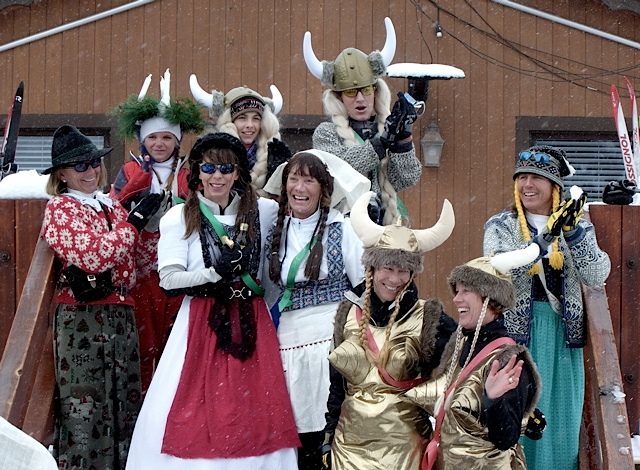
Ritz admits that the Vamps are a consuming project. She works hard to make it the kind of program everyone wants to join. Traditions like the fall Pumpkin Hunt on Dollar Mountain, costume events, the Boulder Mountain Tour, and parties and gatherings are what distinguish the Vamps from other programs.
Every conversation I have had with Ritz about the Vamps has been filled with excitement and pride. In the end, she said it’s all about giving women confidence through sport.
VAMPS having fun at the 2007 Inga-Låmi cross-country ski tour at the Sun Valley Nordic Center. (Photo: Muffy Ritz)
***
About the Author: Nancy Fiddler is a two-time Olympian and 14-time National Champion. She has been coaching juniors and masters for 20 years in Mammoth Lakes and Truckee, Calif., and most recently in Sun Valley, Idaho. She lives most of the time in the Eastern Sierra with her husband and daughter and is currently trying to get in touch with her creative side through writing.
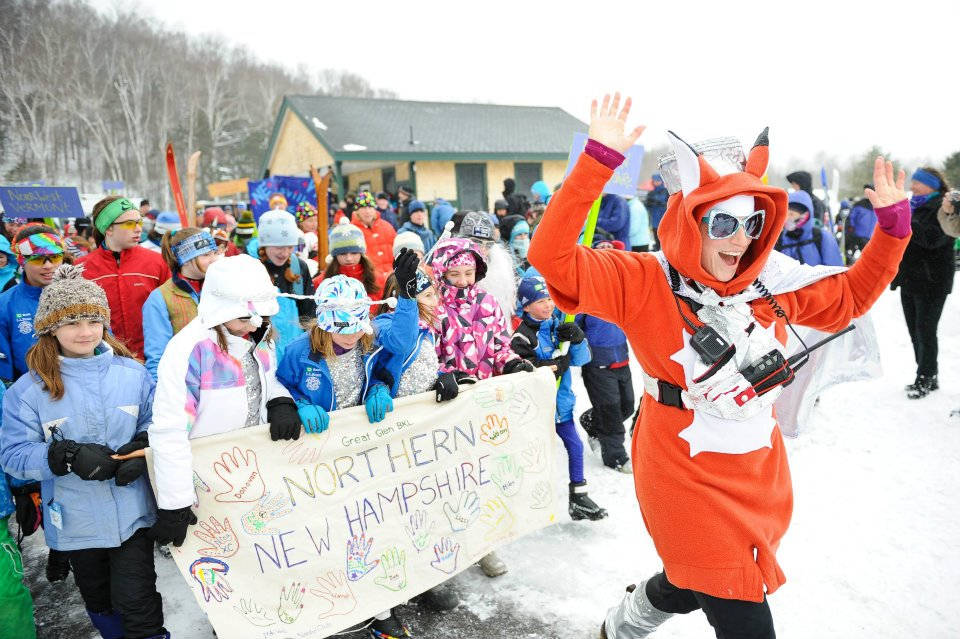
The “NENSA Fox,” Abby Weissman (r), youth programs director for the New England Nordic Ski Association (NENSA), at the 2012 TD Bank Bill Koch Festival. Weissman wears the costume at events and writes a weekly newsletter called “Fox Tales.” (Photo: Kris Dobie)
Editor’s note: This is the final piece of a four-part series called ‘Part of the Team: The Impact of Female Coaches in the U.S.’ In Part I, two-time Olympian and former U.S. Ski Team member Nancy Fiddler introduced herself, Part II took a look at several influential female collegiate coaches, and Part III explored female coaching at the junior level. Part IV discusses women who work with the little guys, the future of skiing, through youth programs across the country.
***
For many years, the height of my winter weeks came on Friday afternoons at 3:00. The snowy parking lot of the Tamarack Cross Country Ski Center in Mammoth Lakes, Calif., would fill with cars full of kids with an end-of-school-week itch. Soon, the ski center was full of snowsuit-clad youngsters jostling for space on the pine benches.
The ski center prepares for the Gliders’ arrival ahead of time, lining up rental boots on the counter in a row from smallest to biggest. Skis and poles are fanned out across the snow out front, and the coaches are dressed and ready for action. Dashing between the tasks of helping the youngest tie, zip, and Velcro their boots and fitting tiny hands into pole straps, while also greeting and chatting with parents, I was typically in a full sweat by the time the Gliders lined up behind their team nation flags at 3:15.
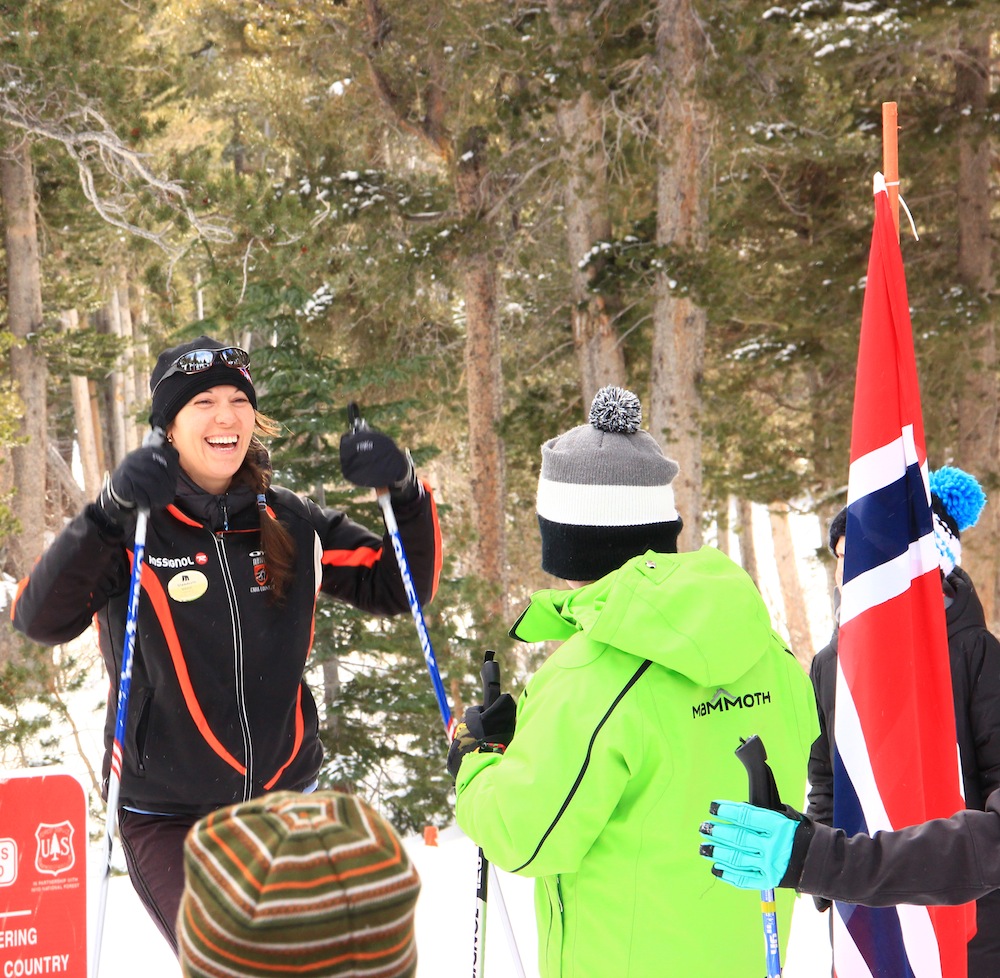
Gliders coach Marie French with her 10-11-year-old group, the “Norwegians” at the Tamarack Cross Country Ski Center in Mammoth Lakes, Calif. (Courtesy photo)
Fifty skiers between the ages of 6 and 10 are divided into Norwegians, Swedes, Americans, Russians, and Italians. The coaches stand at the head of the team lines. My favorite way to begin sessions was by calling first for quiet, and then for the Gliders’ Stomp. The sound of a hundred skis stomping on the packed snow begins in a disharmonious din, but grows into a unified beat of left, right, left, right, louder and louder. With the energy channeled, the coaches siphon off their groups, race through the teaching lanes and into the afternoon’s planned activities.
Shouts, squeals, and laughter ring through the Lower Lakes Basin for the next hour and a quarter, as the kids skate through games of Sharks and Minnows, hunt for treasures, do relay races, or take off on adventures through the snowy forest. With plentiful snowfall in the Eastern Sierra, a favorite Glider activity is Powder Pigging.
The goal of Powder Pigging is simple; climb a large hill either by means of a groomed trail or by breaking trail and then, simply, ski down through the un-groomed snow. The coaches themselves are big fans of Powder Pigging, because, after all, they are just overgrown kids who like to ski the trees. Powder Pigging is the hidden teacher of all skiing skills: balance, stance, weight shift, turning, and getting up after the occasional crash. Above all, Powder Pigging is the big motivator to ski repeatedly up the hill in pursuit of that perfect downhill run.
Heading back to the ski center for the awaiting hot chocolate and Oreo snack after an exhilarating game or adventure, tired and happy, we smile those silly grins that almost hurt your face.
Skiing with the youngest kids feels like the most important coaching I have ever done. When I retired from ski racing in 1993, I made it a goal to bring cross-country skiing to the kids of the Eastern Sierra. I began with high school and middle school teams, but didn’t get around to forming the Gliders program until my daughter, Laurel, was 5 and in need of an organized ski program.
I had gone about the process in the wrong order, I realized. The youngest kids form the base of the skiing pyramid! They are the future of our sport; the life-long participants, the racers, the coaches, the officials, the instructors, and the parents of the next generation of cross-country skiers.
Part IV of my series on the role of female coaches in U.S. skiing focuses on women who work with the youngest participants of the many cross-country ski programs around the country. I connected through email with six female youth coaches from Maine, Idaho, and California to find out more about their jobs, their programs, and their love of cross-country skiing.
Grassroots ski programs take the form of Bill Koch Youth Ski League, local ski clubs, Ski P.E., and middle-school teams. The coaches who help foster these programs are working close to home with a large base of participants. Youth nordic ski coaches are often providing a child’s first outdoor winter experience. They are getting kids off couches and onto skis from New England to California.
Sparking Interest
“Our team is open to any kid who can find boots. We have no tryouts and supply two pairs of skis, two sets of poles and a uniform. We are trying to expose as many kids as we can to cross-country skiing in a community with a very strong alpine skiing leaning.” — Mary Ellen Benier, head nordic coach at Alder Creek Middle School, Truckee, Calif.
With big ski mountains offering thousands of feet of terrain and plentiful snowfall, places like Truckee and Mammoth Lakes have a lot to offer downhillers. Kids growing up in these communities have plenty of opportunities to ski and snowboard the steep and deep, and play in the half pipes and terrain parks of giant ski areas. Attracting kids to cross-country skiing in these places can be challenging.
Mary Ellen Benier, head coach of the Alder Creek Middle School nordic team, with Ian Smith (r) and David Dalicandro (l) last winter. (Photo: Mark Nadell/MacBeth Graphics)
Despite the lure of the alpine areas in the region, the Alder Creek Middle School (ACMS) team draws nearly 80 kids annually. The Tahoe-Truckee area is home to four major nordic areas with long operating seasons. The community of people who live in this area have embraced the active lifestyle, including nordic skiing. Benier and her co-coach, Mark Nadell, have worked hard to capture a large number of participants to the middle-school program.
Benier wrote she aims to keep her program “big, fun, accessible and viable. My pay works out to probably .20/hr, so it’s a labor of love. The draw is the fun factor and the enthusiasm of the kids.”
The ACMS team has become established in Truckee as a cool place to be, thanks to the efforts of Benier and the rest of the staff. It is affordable, the equipment has been taken care of, and it can compete with alpine and snowboarding teams with its reputation for being inclusive and fun. Kids want to be part of this energy.
Nordic youth programs across the country are finding ways to attract the youngest skiers to the sport. Lauren Jacobs is the mid-Maine Healthy Hometowns coach for the Maine Winter Sports Center (MWSC). Jacobs’ job is to support active, outdoor lifestyles in the communities she serves. The MWSC offers year-round programming to help promote healthy living, and nordic skiing is a good solution to the long Maine winters.
According to Jacobs, “The main issue I see is less about how to retain skiers for the long-term than it is about getting them to start in the first place,” she wrote. “Money plays a big role in this. Getting started in skiing can be an expensive endeavor, one that many parents are reluctant to try if they’re not sure their kids will enjoy it. Children who grow up in active, outdoor families often get started in sports like nordic skiing ‘automatically’, but kids who don’t come from that background can have a really difficult time getting involved.”
Lauren Jacobs (Courtesy photo)
Jacobs cites initiatives like the MWSC and New England Nordic Ski Association (NENSA) ski-lease programs as being instrumental in getting families to introduce their kids to nordic.
The MWSC has figured out a way to expose large numbers of the general youth population to cross-country skiing. Jacobs explained that the children who come from skiing families come to the sport fairly easily. The MWSC is literally bringing skiing to the places where kids actually are; school and after-school programs.
“One of my favorite things is bringing our Healthy Hometowns ski trailer to different schools for a couple weeks at a time,” she wrote. “Getting to ski with PE and Health classes means I’m getting to ski with all kids, whether they come from an outdoorsy background or not.”
Jacobs echoed Benier’s commentary on boosting participation. “My job is to make the introductory experiences as positive, fun, and accessible as possible,” Jacobs wrote.
Abby Weissman is NENSA’s youth and introductory programs director. A Maine native, she’s responsible for putting on major events like the Bill Koch Festival, which draws 600 kids and their families.
New England is home to over 40 active Bill Koch League (BKL) clubs. There are a lot of kids who are exposed to skiing in New England because of this activity. Weissman is going into her sixth year working for NENSA and has seen the organization’s youth membership grow 40 percent since she started.
“It’s all about momentum and community,” she wrote. “The key is to have lots of excited families who are bringing their energy and flavor to local programs. That’s where the growth comes from. There’s not a cookie cutter approach that will work perfectly for each club — it has to be adapted to the energy and needs of the families and skiers in that club.”
Weissman is clear that everything NENSA accomplishes would not be possible without tremendous community support. She sings praises of the many volunteers who consistently give back.
“There are a lot of moving parts and my favorite part of my job is seeing how wide the community reaches and how much we can accomplish when we work together,” she wrote.
The Skis for Kids lease program, which Weissman oversees, provides over 300 pairs of skis to New England kids. Accessible equipment, abundant Bill Koch League clubs, and volunteer support and activism are providing plenty of cross-country skiing opportunities to children in the northeastern US.
Must Love Skiing
“I began coaching two years ago. I’d grown up alpine skiing and came to nordic skiing as an adult. I fell in love with the sport, the local nordic community and culture and wanted to get more involved and keep learning.” — Mia James, development coach at the Sun Valley Ski Education Foundation (SVSEF), Sun Valley, Idaho
So how does one become a nordic youth coach? With all the kids out there running around on cross-country skis, it would take an army of leaders to provide a safe environment where the fun and learning take place. The female coaches referenced in this story have a diverse set of skills and backgrounds, but share one important passion: a special relationship with skiing.
Sun Valley Ski Education Foundation (SVSEF) devolopment coaches Mia James (l) and Laurie Leman at the 2013 Devo Tri. (Photo: Nancy Fiddler)
James has been coaching the Devo Team at Sun Valley for two years. She has done some local racing and knocked the American Birkebeiner off her bucket list. A self-acclaimed newbie, James is fueled by her enthusiasm and respect for skiing.
“Like any new discovery, I want others to be as excited as I am about skiing,” she wrote.
Being involved with 7- to 11-year-old kids on snow has been an empowering experience for James. She sees skiing as a source of lifelong fun and friendships.
“I hope that I can build confidence by helping kids realize that with dedication and focus they can accomplish things they thought were beyond them – a lesson they will carry throughout life,” she wrote.
It does take a village for someone like James to find a footing as a nordic ski coach. She credits the support of the SVSEF coaching staff, which she describes as outstanding examples of skiers, coaches and people.
She acknowledges Muffy Ritz and her VAMPS (all-women masters nordic program with over 160 participants) program. “Like SVSEF, the VAMPS coaching staff is first rate — a huge source of technical knowledge, confidence, and enthusiasm. I certainly would not be the skier or coach I am without my VAMPS experience.”
James sees herself as a contributor to the big picture of U.S. skiing. She feels she is at the foundation of the sport, helping establish future generations of skiers who will take it forward.
At Tamarack Cross Country, Jane Lester has been teaching and coaching for 14 years. Like James, she was a latecomer, drawn to the sport because of its camaraderie. An occasional citizen racer, Lester loves the peaceful quality of skiing most of all.
Lester heads up the Tamarack Gliders program for 5 to 11 year olds. She has used a lifetime of teaching experience to become the coach she is today. She feels that her special skill is developing personal connections with each student.
“I am passionate about the sport so it is easy to come to work!” she wrote. “I feel like I am making a difference locally. We maintain a very high level of programming, all the way down to the 5 year olds.”
Marie French has been coaching the Tamarack Gliders for five years – not much longer than she’s been skiing. Regardless, French is an avid participant in all the local races and attended the Masters World Cup in Italy last winter.
“I like racing and training myself,” she explained. “It felt very natural to work with kids who have fun and passion for cross-country skiing”.
French hopes to continue to improve as a skier and racer so that she can bring more knowledge back to the kids she works with. She is channeling her excitement about nordic skiing directly into the children and knows she is making a difference when the Gliders move up to the middle school team and then the high school team.
Mary Ellen Benier at the 2013 U.S. Distance Nationals at Royal Gorge in Soda Springs, Calif. (Photo: Mark Nadell/MacBeth Graphics)
Benier has been leading the ACMS team for eight years. She plunged into coaching when her son, Stefan, joined the team in sixth grade.
“His draw to join the team was primarily social and resulted in nordic kids becoming his core group of friends through college,” she wrote.
A skate-skiing enthusiast for 15 years before she took up coaching middle schoolers, Benier considers herself a proficient skier, but without any formal training or racing experience outside of the occasional Great Race.
Benier’s son moved beyond middle school a long time ago, but Benier has continues to coach the team. “It is a benefit to our society to turn any kid onto exercise and a sport you can do for a lifetime,” she wrote.
Once a mom, always a mom? Benier explained she possesses some special “kid skills” that apply to coaching. She brings something else to the mentoring table as well: “a female perspective on hurt feelings, tired bodies, bad days, silliness, total success, crushing failure, and hugs.”
Lester and Benier share the desire to function as female role models for the girls. They’re concerned lots of girls drop out of sports in middle and high school, but Benier believes she is making a difference.
“I can’t match the racing backgrounds of some male co-coaches, but I can offer the perspective of cross-country skiing as a lifestyle and what you can get out of it,” she wrote.
Jacobs picked up nordic as a senior in high school at Gould Academy in Bethel, Maine. She skied her way onto the Bates team, where she competed for four years. From there, she skied for the Skibec Club in Quebec City, followed by two years with the Craftsbury Green Racing Project (CGRP).
Jacobs blended her athletic career with an interest in coaching early on. “Coaching started for me as a young gymnast coaching other young gymnasts,” she wrote. “I guess I’ve sort of always been a coach! I just enjoy sharing the sports I love. It seems natural.”
Coaching gymnastics was a stepping-stone to coaching high-school skiing in Farmington, Maine, after college. Jacobs got into coaching the local BKL program while training with Craftsbury , and it was not long after that she started working at MWSC.
For Jacobs, her own experience serves as her platform for coaching. “As someone who didn’t start skiing until my senior year of high school, it’s nice to be able to tell kids that they don’t have to have grown up with skis on their feet to still love the sport and go far with it,” she explained.
While not every kid will become a ski racer, Jacobs’ message is this: “I think it’s really important that the ski community recognizes how essential to our community every member is.”
She points out that aspiring female nordic coaches in New England are fortunate in that they have an amazing group of mentors to look up to in elite and collegiate coaches Cami Thompson-Graves, Becky Woods, Tracey Cote and Pepa Miloucheva.
Abby Weissman at the Frost Mountain Nordic Grand Prix (Photo: Matt Trueheart)
Weissman wrote that she fell “completely and wildly in love with cross-country skiing” when she moved to Carrabassett Valley, Maine, in 2004. A competitive runner in high school and college, her exposure to skiing was limited to family outings while growing up in Maine.
Working in the Sugarloaf Outdoor Center and then as an English teacher at Carrabassett Valley Academy, she spent many hours nordic skiing in the woods nearby.
“I worked really hard on my technique then with the goal of being a more efficient skier,” she wrote. “I wasn’t interested in competing, just being in good enough shape to enjoy long adventures.”
Weissman feels that her experience as a “middle-of-the-pack athlete” has fueled her interest in coaching kids. “I loved the hard work of training and the thrill of competition but my goal was never to win events,” she wrote. “I just loved the process. I got so much out of being on a team and learning how to be an endurance athlete. It was always fun to me.”
Besides working for NENSA, Weissman puts on Fast and Female events in New England. She’s inspired by the current U.S. women’s national team, which, she wrote is a “phenomenal example of teamwork and healthy competition.” She couldn’t ask for better role models for kids in the East.
Weissman acknowledges NENSA’s former executive director Pat Cote for his leadership and encouragement. “He would always listen to my crazy ideas and never shot them down.”
Kids on Skis
“It’s all about fun for the younger skiers. If we catch their interest year after year, even if it’s with a ride on the groomer or rolling around in the powder, they will love cross-country skiing and come back for more.” — French
The departing shot of this story – and series – is of the kids (and adults) who benefit from the creative energy of the female leaders of their programs. The many clubs, leagues, programs and teams around the country are alive and well. Youth development is producing outdoor enthusiasts, healthy kids, ski racers, and lifetime nordic skiers.
At least for kids, the secret is in the play. Lester is a firm believer in teaching skills through fun activities.
“Treasure hunts and patrol races are always big hits. No season would be complete without some time off track,” she wrote. “Powder pigging in the deep snow is a must! I think it is so important to access the fun and freedom of cross-country skiing to retain the youngest skiers. They already know how to play, it’s the coaches’ job to play with them!”
Jacobs is a fan of ski games because “they get kids moving, increase balance and speed, and- more importantly-help establish a really positive, fun atmosphere among a group,” she wrote. adding that she uses scavenger hunts to encourage kids to ski longer distances.
Another way to motivate kids to ski longer is the Kilometer Odometer chart used by the Tamarack Gliders. Lester doesn’t like to overemphasize skiing kilometers just for the sake of kilometers. She wrote that the chart works because “cross-country skiing is a very challenging sport and tracking the distance covered is a way for them to ‘see’ their accomplishments daily.”
Lester likes the skill-pin program that they adopted from Auburn Ski Club as another motivator. “The kids earn pins according to the skills they master,” she explained. “They can move up through the different colors to help them track their improvement over the years.”
Weissman’s nickname is “NENSA Fox” for the fox costume she wears at events. In keeping with this theme, she writes a weekly newsletter called “Fox Tales.” Working tirelessly to organize Bill Koch League events and competitions, Weissman stays on track with how youth participation fits into the big picture of skiing in the U.S.
“Youth Development is one of the most important pieces of developing a thriving ski community,” she stated. “If the goal is to have top athletes at the Olympic level, then growing the base helps to have a bigger pool to draw from and more kids to raise the level of competition. I’m less concerned with the competition and more about the fun and the lasting benefits of being involved with sports at an early age.”