From the FasterSkier archive — posts syndicated from athletes’ and coaches’ own blogs between 2004 and 2012, kept online as published. Current coverage is at fasterskier.com.
Jennifer Tomlinson, the new chair of CCC’s Board of Directors (Photo: Twitter)
On June 19, Cross Country Canada (CCC) announced that 52-year-old Jennifer Tomlinson will serve a two-year term as the new chair of its Board of Directors. She replaces Jamie Coatsworth, who served the position for the last four years.
The CCC press release opens with a statement that Tomlinson — a former racing director, volunteer coach and integral member of Nakkertok Nordic as well as former high-performance chair for Cross Country Ski Ontario — is the first women to hold the chair position within its organization. She comes with over four decades of experience in the sport, holds a degree in engineering, an MBA, and has served four years on the CCC board prior to the June announcement.
“I’d like to see ‘the first woman chair’ as not being a big deal and something that is expected,” Tomlinson told FasterSkier on the phone earlier this month. “From my perspective, it is something that was eventually going to happen at CCC. With some of the changes that have happened over the past 10 years, there is a lot more openness in the way Cross Country Canada is operated and governed. It is much more aware of representing the ski community in Canada and ensuring that the people who are making decisions represent the diversity of the cross-country skiing community in Canada.”
The execution and fulfilment of the long-term CCC plan will fall on the shoulders of Shane Pearsall, the current CCC CEO.
“Over the past four years, CCC has reevaluated its governance structure,” Tomlinson explained. “The board seeks advice with CCC’s divisions to establish organizational priorities. The board’s role is to hold the CEO accountable to key priorities determined by the board, and we look to the CEO to develop a plan and execute the plan that will achieve those priorities.”
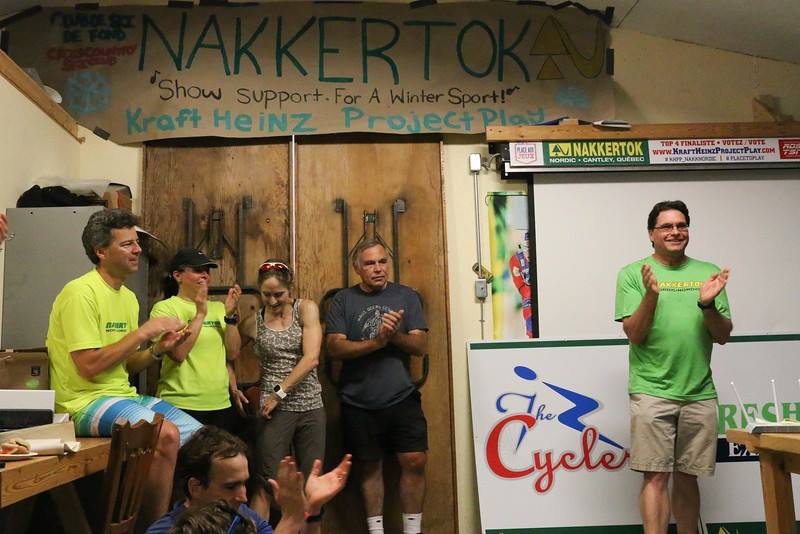
From left to right: Steve Morris, Jennifer Tomlinson, Sheila Kealey, Toni Scheler, and Robert Hornung at the announcement event for the Kraft Heinz Project Play Grand Prize Award, which Nakkertok Nordic won in August 2016.(Photo: Doug Ranahan)
CCC’s mandate is to serve the broad spectrum of cross-country skiers to ensure that the sport remains viable in Canada. Tomlinson explained the board’s perspective in terms of its stakeholders is a wide view.
“We see skiing as existing from learning to ski to success on the World Cup to being active for life, and our stakeholders start when we first strap some skis on somebody’s feet to hopefully continuing to 95,” she said.
Most notable in recent years are that funding cuts have adversely impacted both high-performance biathlon and cross-country skiing in Canada.
The most high-profile aspect of Cross Country Canada remains it’s World Cup team. Recently, Alex Harvey with his fourth place finish in the Olympic 50 k and Len Valjas, with his seventh place in the Olympic sprint, have been the individual podium hopes for the Canadian team. This past spring, Devon Kershaw and Knute Johnsgaard (half of Canada’s men’s relay team that placed third in the 2017 Ulricehamn 4 x 7.5-kilometer relay) retired. For the women, several career high points are notable but none of the main staples on the current women’s team has had World Cup podium breakthroughs.
Tomlinson explained the CCC board noticed the need for a sustainable development pipeline for both genders.
“As a chair or member of the board, we don’t get into the overall operations of CCC and how they do things,” Tomlinson said of her CCC role. “That being said, one of the key priorities set for the CEO is the development and communication of the high-performance pathway andputting in place a structured program that allows CCC, the divisions and the clubs to work together to contribute to the pipeline and developmental pathways needed to create that sustainable system. The hiring of Nic Lemyre as the high-performance advisor is a key part of establishing the sustainable system.”
Lemyre, a Canadian based in Oslo, Norway, is expected to help CCC solidify and support a devo pipeline.
A sustainable pipeline implies a steady flow of both high-performing athletes and cash. In contrast to the funding situation in the U.S., CCC receives a significant portion of its funding from government sources. That government funding has been in decline when compared to past levels of funding. Tomlinson said the board expects CCC to develop a plan to better cope with inconsistent and lower levels of government funding.
According to Tomlinson, the board approved a measure in February to help address funding concerns for developing Canadian skiers.
“The board approved the creation of the Nordic Canada Development Fund, modelled after the NNF in the US,” Tomlinson said. “There are some differences, particularly with respect to its governance, but the fund is established and it does have some money in it. The seed money came from capital that CCC had set aside from the better years. CCC is in the process of developing an integrated fundraising campaign for building the fund. The intent of the endowment fund will be to fund camps and racing opportunities targeted at developing cross-country skiers U18 to U23 who will benefit from more integrated camps and different levels competition.”
Another new initiative Tomlinson touched upon was the potential of a 2026 Winter Olympics in Calgary that could foster synergies between CCC and related nordic sports. Without mentioning details, Tomlinson explained that CCC is pursuing investigating a strategy to bolster the viability of nordic sport across the board, “to see how we can make 2026 a real milestone for nordic sport in Canada.”
Tomlinson appeared grounded in the overall CCC mission that fosters a healthy lifestyle beyond podiums.
“One long-term goal for the organization is community development and alignment,” she added. “… that goal is about growing cross-country skiing in the nation, not solely about getting people on the podium. Making the sport more accessible and get more people outside to celebrate winter.”
Another benchmark she highlighted is related to accessibility. According to Tomlinson, three years ago, only two venues in Canada had viablesnowmaking capacity. She said that number now stands at five venues with the hope that other clubs can further collaborate to build the nation’s snow-making infrastructure.
Keeping an eye on other sports and national governing bodies (NGOs), Tomlinson said she will draw on some of her past exploration of Swim Canada, U.S. Ski & Snowboard and the French Ski Federation, amongst others, as she leads CCC’s board.
“I don’t think there is any one model that will work for us given our particular circumstances,” she said. “But there are a lot of great ideas and great programs that have already been in place that we can learn, borrow and benefit from. The CCC team can create a unique approach that can work for Canada and Canadian skiers.”
She also made it clear that she and the board agreed that CCC had to improve its ability to convey its message and listen to and incorporate feedback from its divisions and clubs.
“Communication has been a weak point for CCC,” Tomlinson stated. “We as a board agreed that that needed to be one of the four priorities for the organization to ensure that it is communicating with stakeholders across the country, ensuring that people understand what CCC is doing, and how they can help.”
Tomlinson will continue her work as a management consultant based in Ottawa while she serves her two-year term as board chair.
Nakkertok Nordic, located near Ottawa in Cantley and Val-des-Monts, Quebec, is one of the top clubs in Canada and the overall top ranked large Cross Country Ski club based on the CCC Club Podium standings. Based in the National Capital region, we have excellent facilities and enjoy an extended season due to our snowmaking network. We have a successful high performance racing program, with a strong volunteer coach/admin support structure.
We are looking to add to our paid coaching staff for the upcoming season, full-time and/or part-time jobs are available. Salary/position would be commensurate with coaching, certification success and experience. Bilingualism would be an asset. We pay competitive salaries with benefits.
Skills and responsibilities could include:
Coaching elite cross country skiers
Athlete assessment
Annual training plan management
Race waxing and wax selection
Management of volunteer coaching staff
If you are interested in joining our team, contact Lisa Allan at racingdirector@nakkertok.ca with a cover letter and resume by May 10th, 2018.
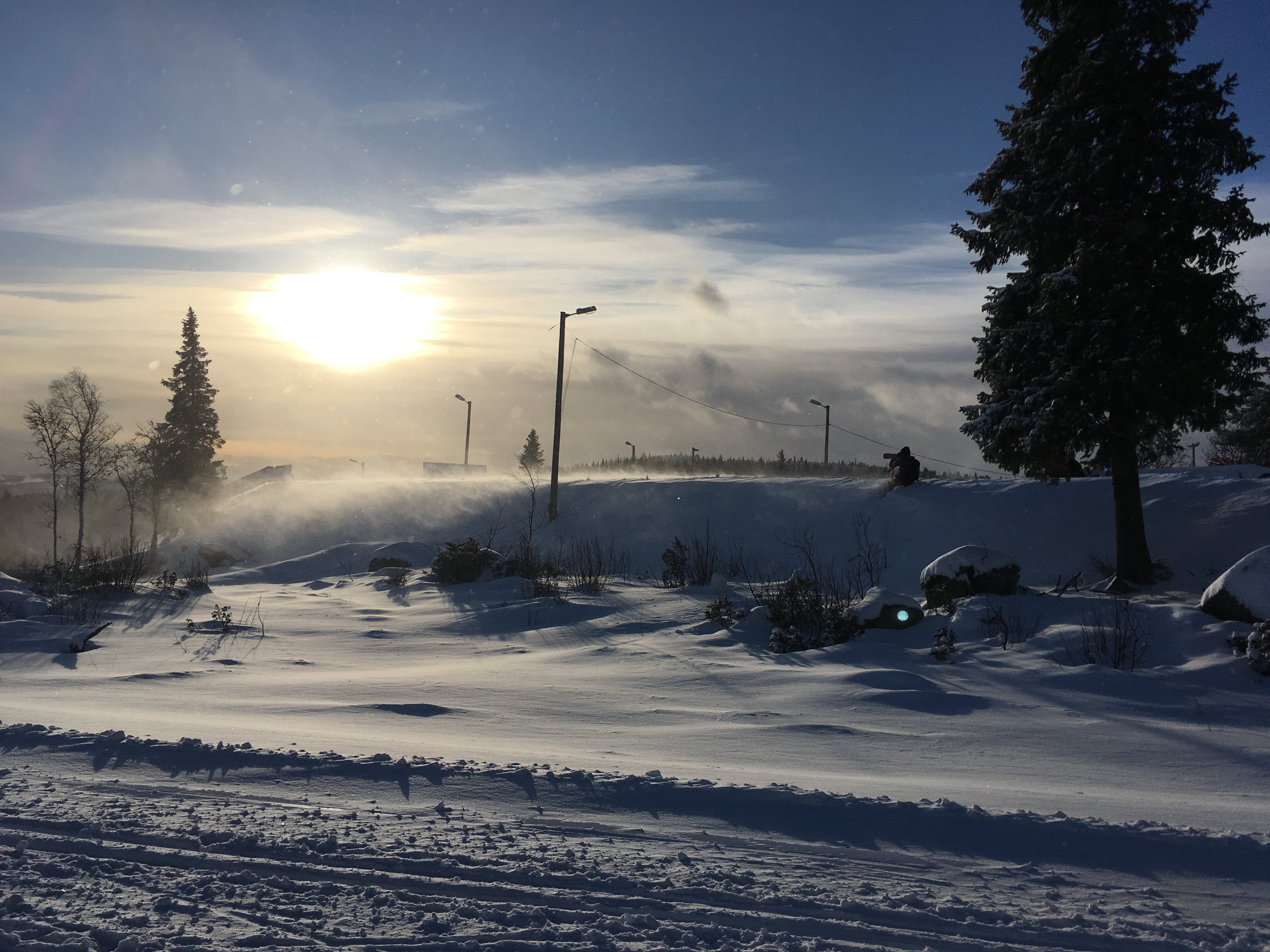
Soft Scandinavian Cup track as seen last weekend at the Dec. 15-17 Scando Cup in Vuokatti, Finland, “the same conditions for Sundby all the way down to me,” author Maks Zechel writes.
Editor’s Note: The following is part of a series proposed by Maks Zechel, a 20-year-old Canadian cross-country skier embarking on his first season training abroad. In August, he made the big move to Norway, where he’ll be training and racing with Team Asker for the entire winter. Through these updates, Maks hopes to share his personal “observations, stories and lessons learned” to help close the gap between North American and Scandinavian nordic skiing. Previous posts: #1,#2,#3, #4, #5, #6, and #7.
***
Part 1: Vuokatti
It’s Thursday morning and I’m in the Oslo airport, waiting to catch a flight to my second Scandinavian Cup race weekend of the winter. I haven’t seen the sun yet and, from what I’ve heard, my destination of Vuokatti, Finland, doesn’t look much like a Caribbean postcard either.
Two flights and an hour on a bus later, we arrive in Vuokatti. There is something about 3 p.m. total darkness that I suspect I will never grow accustomed to; it’s the impending sense of urgency that I need to go to bed soon. Or maybe that’s just coming from the fact that I still have to check into the hotel, ski the race loop, test skis, eat dinner, and then write my final exam for my online university course. By the time I start my exam, and reboot my laptop after it crashes, it’s 8 p.m. … classic.
We wake up before the first race in the dark. The sun allegedly rises into the cloudy, snowy sky at 9:59 a.m. and sets at 2:07 p.m. Despite our noon start time, the trails remain cast in dusky shadows, and the entire race loop, and ski jumps overlooking the stadium, remain lit 24/7. For the record, I spent approximately 72 hours in Finland, and I can’t confirm that the sun actually touches that part of the world; for all I witnessed they might just brighten the streetlights every morning.
We jog a few hundred meters from the hotel to the race site, located by the Vuokatti Olympic training center. All the racers are staying in two large hotels within walking distance of the race site, which creates an exciting “athlete village” atmosphere. Vuokatti is an epic training and racing location with 7.5 k+ of lit world class ski trails, early season snow making, a ski tunnel, and ski jumping and biathlon venues. Nordic countries don’t seem to like hosting races anywhere with a big chalet, or with any chalet at all, so we set up base in the snow. Luckily for us, the infamous Finnish cold weather decided to leave for the weekend. The stadium is tiny, hardly wide enough for a finishing straight, miniscule individual start corral, and a lap lane. It’s easy to feel lost amongst the tall, uniform pines of a snowy Finnish forest, but the Vuokatti course has something for everyone. Each day, 200-250participants are on the senior men’s start line, with Norway, Sweden and Finland well represented; the top 100 doesn’t get more competitive than this anywhere in the world.
As I’m warming up for my 15 k skate race, I have never recognized so many people that I’ve never seen before in real life: “Oh hey random Norwegian skier, congrats on beating your 3000-meter track PB this summer! By the way, say hi to your dog for me.” The potential for a seriously awkward conversation with one of my idols is too high, so I try my best to avoid in-awe-eye-contact…
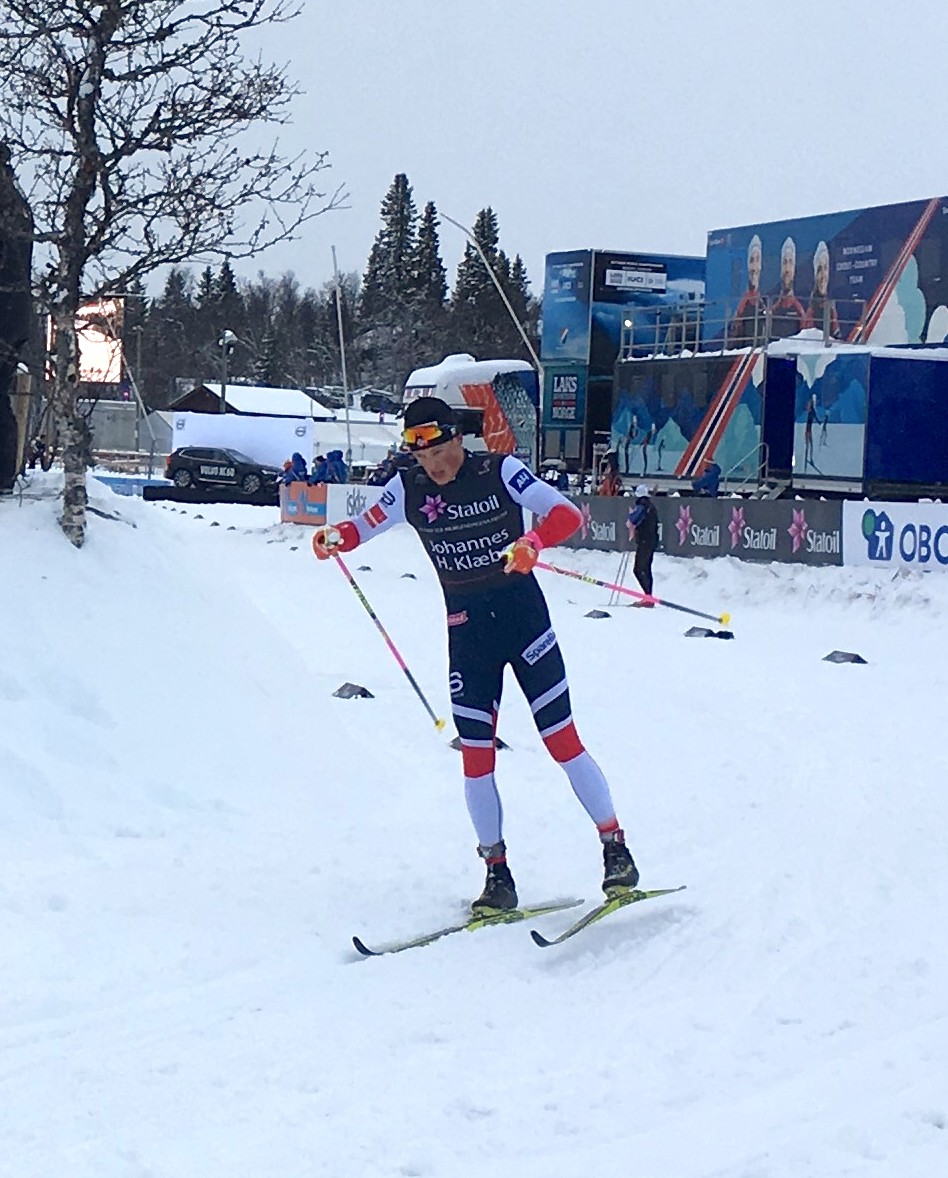
Norway’s Johannes Høsflot Klæbo in his debut race of his record-setting 2017/2018 season. In eight World Cup starts so far, he’s won seven of them. Here he’s shown racing at Norway’s FIS season opener in Beitostølen last month. (Photo: Maks Zechel)
At the end of the first day our teammate, Erland, placed 19th, with Ryan and I at 107th and 132nd. After racing in the Beitostølen Scandinavian Cup and Gålå Norwegian Cup race weekends in November, it remains hard to swallow our pride as we race better than we ever have, but still fall far short of our lofty goals.
However, the lessons that we learn in every international race that we compete in are crucial to our development. During the 15 k classic race in Vuokatti, my teammate, Eirik, was caught by the eventual top-two skiers of the day, Ristomatti Hakola (Finland) and Martin Nyenget (Norway). Eirik is a strong double poler, so he was impressively able to stay with them until the set of steep hills in the last 2 k of the course, where they put around 50 seconds into Eirik per lap. What he was unable to match, was the insane power that Hakola and Nyenget were kicking their skis with, giving them big glides on even the steepest pitches where I had to run out of the tracks
Racing with athletes who are able to ski at this level creates an unforgiving racing environment if you are unable to push yourself to new heights. After a poor race, the performance is reflected by a drop of dozens of spots down the results sheet. Scandinavians respect the high level of these races and they know that there are hundreds of skiers working just as hard as them, ready to take their place if they don’t race fast. Poor races by even the best cause them to disappear down the results (Petter Northug finished 17th in a Norwegian Cup race this winter). Although Erland is an incredible skier who is capable of top-20 Scandinavian Cup results, he had placings of 89th and 47th in Beitostølen. This is nothing to be ashamed of, but the results clearly represented that he was not in top form at the time. Good performances are rewarded in the opposite manner. That is the nature of these races, where 1 minute gained or lost can mean 30-50 spots. In the Vuokatti sprint, the top-30 men in qualifying were all within 5.87 seconds, with the top 58 within 10.55 seconds, and top 84 within 15.15 seconds. The reality is harsh, but it feels productive to know exactly where I stand against the best.
World Cup racing is ridiculously hard, and that is a lesson that should be experienced as early as possible. When I was 132nd in the 15 k skate race in Vuokatti, a good race for me, it felt like a smaller reward than I was used to for my efforts. It’s easy to feel overwhelmed by the sheer number of competitors, but it helps to look at the time gap when looking for achievable next steps. In this race I was 4:38 minutes behind race winner, Daniel Stock (Norwegian skier with a World Cup podium from last year). It’s a lot over a 38-minute race, but if I can shave off 1 minute by the end of the season, then I’m in the top 100. Wherever I place, at the end of the day I know how far away I am from top World Cup contenders. Doing these races doesn’t make getting fast easier, but it does put into perspective exactly how much my efforts and improvements mean on an elite level.
Every weekend these races feel a little more familiar, a bit more like home. The competition is intimidating, but every race still has the same enthusiastic community of athletes, volunteers, coaches, wax techs, friends, and families that we are used to in Canada. In Beitostølen, a stressed Ryan was enthusiastically interviewed four minutes before his race start and the NRK commentators talked about our goals in Norway and this FasterSkier blog for over a minute on national television. In Vuokatti, the race announcer introduced us as the two Canadians living in Asker, Norway, with their goal of becoming two of Canada’s best World Cup skiers. It’s flattering to be known like this, despite struggling to come even close to the top 100, and it makes us feel like we belong. Soon enough we will make sure we are known for more than just booking a couple of plane tickets to Norway.
Part 2: Getting to the Top
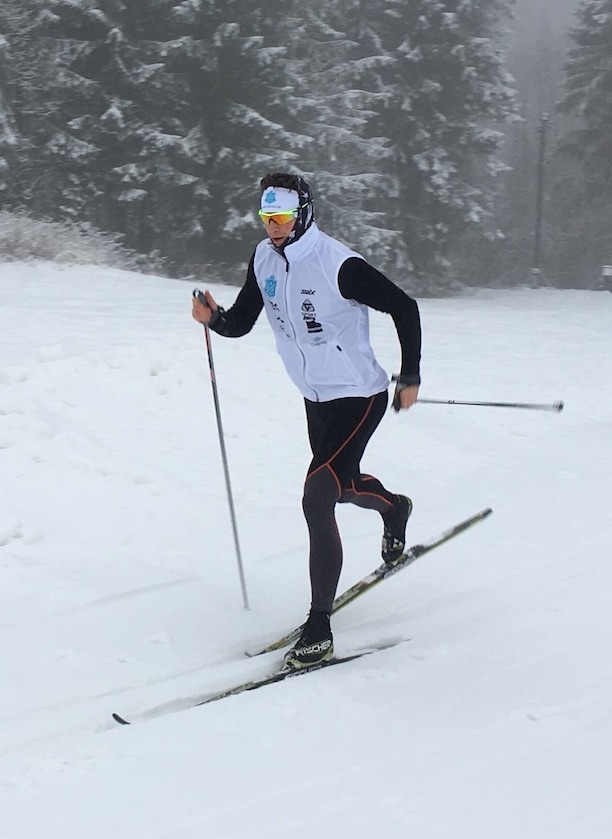
Author Maks Zechel repping the Asker Skiklubb white and blue.
Racing in Scandinavia is like getting on the freeway out of the city at 5 p.m. on the Friday of Thanksgiving weekend; everyone is heading in the same direction, and no matter who you are, you have to be patient and observant in order to seize the opportunities that will bring you to the front of the never-ending queue. In Canadian racing, we often lack this traffic, and this causes skiers to race at their own level, because there aren’t enough skiers of similar abilities to push each other to the top. I believe that it is still possible to become a great skier from racing in North America, but we have to be prepared to take even bigger risks than our Scandinavian counterparts, as we can be sure that they are encountering far more opportunities than us.
From my experiences watching NorAm, SuperTour, Scandinavian Cup, and World Cup results, the best skier of the day will often win a three-lap 15 k with a certain order of lap times: the first lap is the fastest to take advantage of fresh legs, the second lap is the slowest, and the the third lap is the second fastest. These margins are small, but they indicate a skier who has skied a smart and controlled race, riding the edge of blowing up in order to expend energy perfectly and close fast where weaker skiers tire. This is how a winner skis a race. The skiers who don’t win the race ski differently because they are not at the same level. If they ski in the same controlled manner, they fall short of the win because they cannot maintain the same pace/execute the same pace changes. A dark horse who is trying to win, or merely trying to break through the ranks, gives everything in an effort to ski at a level that is higher than they can actually maintain. They may try to go out as hard as possible, risking blowing up early with the hope that they will be able to maintain a “suicide pace”. The skiers who don’t control the race usually ski with positive splits, becoming slower each lap on a good day, because if their splits are negative it means they will lose too much time at the start of the race.
In North America, we get comfortable skiing like winners. The shock comes when we try to make the jump to World Cups, and we suddenly have to relearn how to ski like developing skiers, to ski like we are trying to break through to the top.
Here’s a fact: nobody comes to World Cups from North America and starts winning right away. The jump is too big to make all at once. Scandinavians can sometimes go straight to the top, because they had to grow up skiing like losers, or at least skiing like winners who had to fight against 30 other winners every race. The issue is that North Americans begin to relearn the lessons of devastating time gaps at an important point in their careers, when ideally they would be fighting competitively for coveted World Cup top 30s. We’re not developing as much as we could at home, because we’re not desperately fighting just to come top 50 or top 100 as juniors and U23s. Not to say that you can’t develop hugely between the ages of 25 and 35 (many do), but we rarely see this happen in North America because the attrition rate of skiers in that age range is so high. Many skiers never see their full potential realized.
In North America, we get comfortable skiing like winners. The shock comes when we try to make the jump to World Cups, and we suddenly have to relearn how to ski like developing skiers, to ski like we are trying to break through to the top.
In Vuokatti, numerous small skiing nations were well represented, countries that we North Americans would see as “lesser” skiing nations, when in fact they’re doing things better than us. The Vuokatti Scandinavian Cup saw a large contingent of Chinese national-team skiers compete, and at Beitostølen, Japan was well represented. I even saw a couple of Mongolian skiers in Finland. These national-team skiers are consistently starting Scandinavian Cups in their pursuit of becoming competitive on the World Cup (zero Chinese skiers started the Toblach World Cup, while 10 Chinese men and women started in Vuokatti the same weekend). These small skiing nations recognize that they cannot develop all of their athletes through World Cup starts, so they send their remaining skiers to the next best thing. This mentality has led Japan to produce podium-capable World Cup skiers such as Masako Ishida and top 15 contenders such as Keishin Yoshida.
We need to fill up our quota spots on the World Cup, but for the rest of us, Scandinavian Cups are an equally good opportunity to develop. A month of World Cup racing can cost a Canadian National Team member upwards of $5,000 Canadian dollars (not including flights). Last winter Team Hardwood Elite ran a one-month trip from Canada to Norway for $2,700 CAD (flights included)per athlete, where they raced nine Scandinavian- and Norwegian Cup-level races. We shouldn’t scoff at local-level Norwegian races either, which can be found all over the country every weekend of the winter. Sondre Turvoll Fossli, a World Cup medalist, won a local race, with a senior men’s field of 12, in Lier, the same weekend as Toblach and Vuokatti. At a local race in Konnerud the weekend before, I was bib number 1051 as the last starter of the day. Only 17 senior men raced, but the winner has placed top five in Norwegian Cups.
Many North American skiers want to break through on the World Cup, but there are limited World Cup starts that offer a small and difficult opportunity for us to impress on a stage that we have never experienced before. The chances of breaking through this way have proven nearly impossible for numerous talented North Americans. For the countless incredible skiers who didn’t even receive those World Cup opportunities, the chance of World Cup success is a long-dissolved dream. This builds the impression that only a select few North American skiers can ever be great. This is untrue. The truth is that only a select few will ever break through when offered a handful of World Cup-level racing opportunities. The truth is also that us remaining North Americans have the ability to achieve that same level, but we must do so more patiently and down a less traditional path. If you truly want a chance at becoming competitive on the World Cup, you don’t have to fight for years to qualify for a World Cup development experience that most of us cannot afford. Instead you can race as many Scandinavian/Norwegian Cups as you like, every year, at a far cheaper cost, which will allow you to race against skiers who are already at the World Cup level that many of us dream to achieve. These skiers are no more talented than our skiers, they just have had the time and the countless opportunities to race at a level that most of us never have the chance to see.
This leaves an important question: who is left to race in North America? It is hard to develop our best senior athletes to become World Cup podium contenders, it is harder still to do this in such a way that will allow all of our younger skiers to develop, too. My experience in Norway has been a positive one so far, and I will continue to promote what I am doing. But I should not have to come to Norway to develop. The simplest way for an individual to learn to race like the Scandinavians is to come to a country like Norway, but by individually developing overseas, we put a stop to the widespread development that we could be doing back home.
Norwegians are successful at skiing because they love it; skiing is everywhere in Norway, and for that reason Norwegians never have to go far from home to ski fast. Top Norwegian skiers race in local races because they know that good racing is great development, no matter who you’re racing against. If we want races to be competitive, then it’s up to us to race fast.
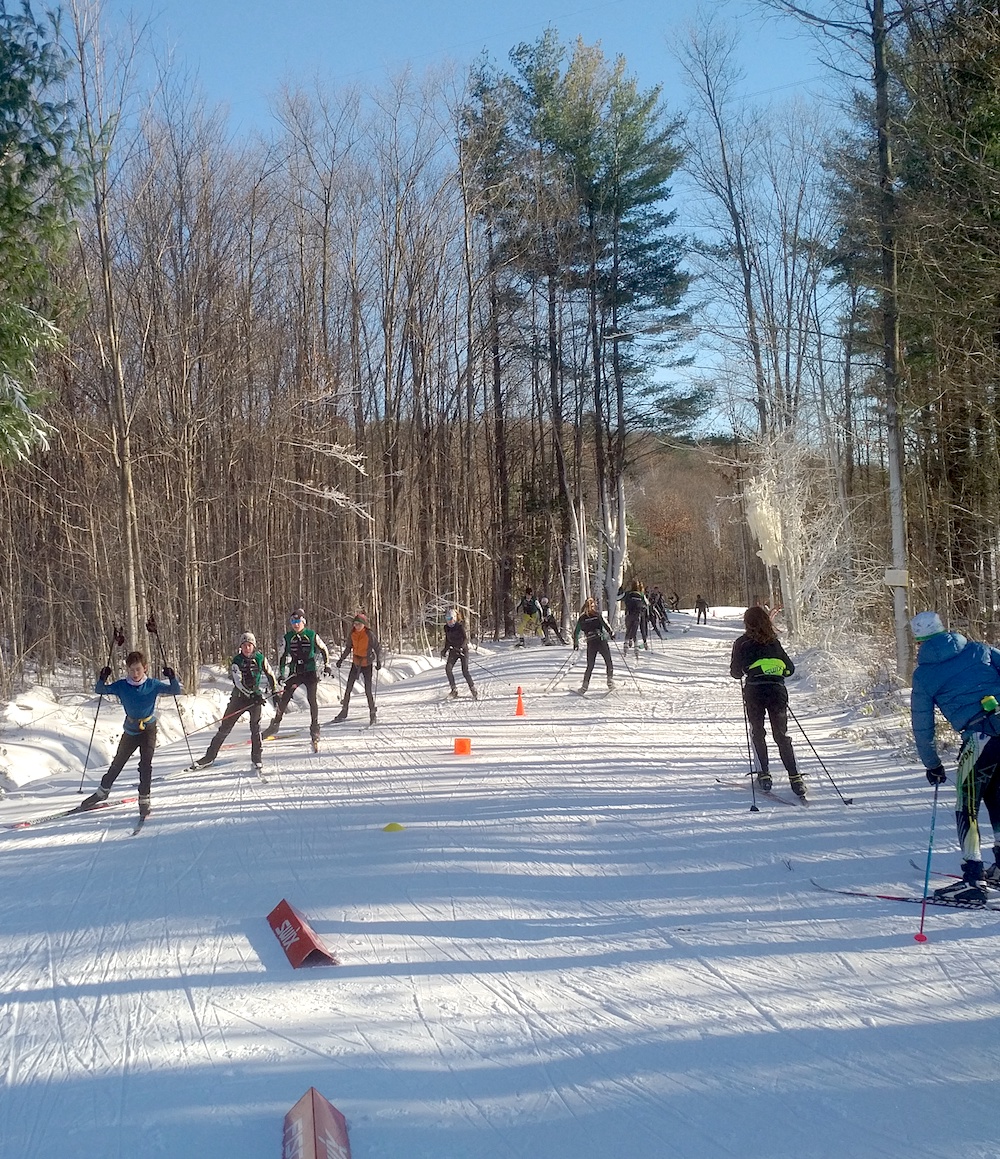
Youth and masters alike getting some early season ‘ k’s in on Nakkertok Nordic’s “Nakkertrak” on opening day Nov. 11, 2017. (Photo: Nakkertok Ski Club)
My home club, Nakkertok Nordic, was able to purchase snowmaking equipment last year. Due to the enthusiasm and incredible dedication of the parents and volunteers who are the backbone of Nakkertok, they were able to host two early season race weekends this year, just outside of Ottawa (a city of 900,000 people). Ottawa is in an excellent central location for Eastern Canadians and Americans. The same weekend as the Dec. 15-17 NorAm race weekend in Rossland, over 200 people raced the Candy Cane Cup on the “Nakkertrak” early season snow loop. In the future, I see this becoming a main event in an early season racing series, where athletes race in Craftsbury, Vermont, at their annual early season races, then drive the mere four hours to Ottawa for two back-to-back high level FIS races. Eastern Canada and the U.S.A. are full of the skiing culture that makes Norway so great, our issue is that we fail to coordinate to create the fantastic race opportunities that we could have. Many top Canadian skiers already travel to Craftsbury at the beginning of the winter to be in a race where Patrick Caldwell takes the win and the field is deep with professional, university, high-school, and part-time racers of all levels. There is a fear in Canada of burning young athletes out by letting them race up. I agree, we shouldn’t just allow our “prodigies” to race up; I think that everyone from age 16 and up should race together. Development as a skier is only loosely correlated to age, and I am grateful at every training session with Team Asker for the young junior skiers that kick my butt in workouts. Our egos have to be thrown aside, because the more we segregate our racing categories, the less we can help each other get faster in the way that the Norwegians do.
The simplest way for an individual to learn to race like the Scandinavians is to come to a country like Norway, but by individually developing overseas, we put a stop to the widespread development that we could be doing back home.
Many Norwegian skiers race almost every weekend, all winter long. We have to create these same local racing opportunities, and if we make them accessible, they will soon turn into world-class events. Nakkertok took a race, which has simply been a club time trial in past years, and turned it into a CPL (Canadian Points List) level race with a field of 68 open men and 45 open women in one year (that is a bigger field than the Rossland NorAm). The depth of such events, with their diverse assortment of competitors, creates an environment where both our top racers and our developing racers can grow. An athlete is much less likely to quit skiing if they are regularly racing in a field with dozens of skiers at their level and with similar ambitions of going to university or working full time, all while skiing as fast as they can. Because you know what, racing is really fun, but only if it is a commodity made accessible to every North American skier, not just our Olympic hopefuls.
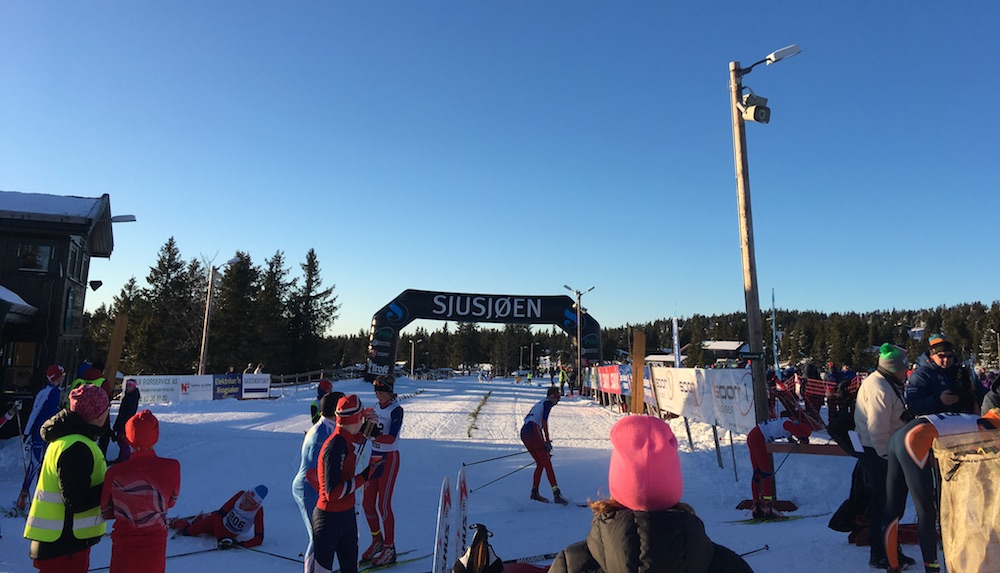
A local race in Sjusjøen, Norway, with hundreds of racers of all ages. (Photo: Maks Zechel)
About Maks: Maks Zechel is a competitive cross-country skier who secretly wants to become a professional mile runner. He loves hiking and going on canoe trips with his family, as well as peanut butter cups in ice cream. Johan Olsson is his favourite skier and he hopes to race the Cortina-Toblach stage of the Tour de Ski one day. He enjoys writing about his experiences. Follow him on Instagram @makszechel.
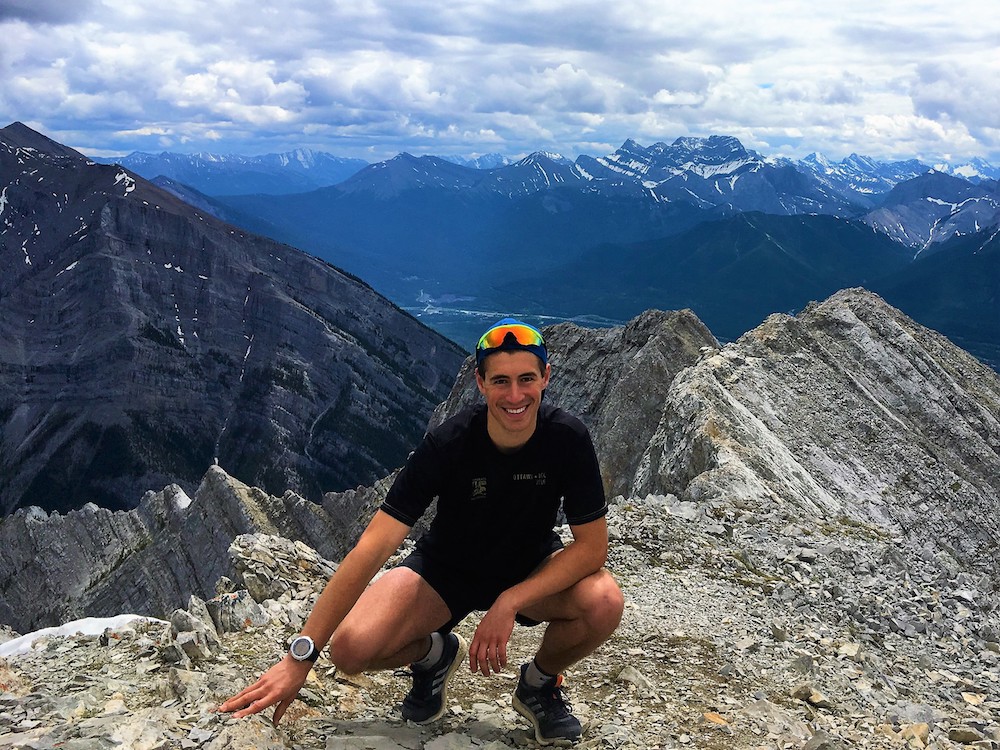
Author Maks Zechel hiking in Canmore. The 19-year-old skier recently left Nakkertok Nordic in Ottawa to spend the next ninth months living and training in Norway. (Courtesy photo)
Editor’s Note: The following is the first post of a series proposed by Maks Zechel, a 19-year-old Canadian cross-country skier embarking on his first season training abroad. He recently made the big move to Norway, where he’ll be training and racing with Team Asker for the next nine months. Through these updates, Maks hopes to share his personal “observations, stories, and lessons learned” to help close the gap between North American and Scandinavian nordic skiing.
***
Intro
I am a 19-year-old Canadian cross-country skier who moved to Asker, Norway on Aug. 1, 2017, to pursue my goal of qualifying for, and being competitive on, the World Cup circuit in the coming years. The World Cup is a big stage, one that I am not even close to being ready for. Many North Americans, if given the chance, race World Cups because it is a wonderful opportunity that is almost impossible to turn down. But for many skiers, these chances do not lead to further success because they are not prepared for the intense level of competition that is World Cup ski racing. One of the issues is that North American skiers do not develop in close proximity to the world’s best skiers. We don’t know how fast a top World Cup skier races because we are never in the same races. Norwegian skiers are exposed to this level of skiing, even just through observance, during their entire ski careers.
This is the introduction to my series of observations, stories, and lessons learned as I live in Norway and train with Team Asker for the next nine months. I want to make it easier for other Canadians and Americans to come to Norway by making as many connections as I can and I hope to make them feel a little bit closer to the environment that the world’s best skiers grow up in. I am here to be in races that have a depth going all the way from your average junior skier to last weekend’s World Cup medalists so that I can attempt to pick away at the visible steps that lead to World Cup success. If we can be a bigger part of the Norwegian ski scene and see the environment that produces skiers like Martin Sundby and Heidi Weng, maybe that will erase some of the barriers that we see when trying to chase down seemingly “otherworldly” athletes.
Post 1: Why Norway?
Maks Zechel finding his name all over Norway. (Courtesy photo)
I just moved to Kenya to pursue my dream of running a sub-two hour marath– I just moved to Norway to pursue my passion for competitive cross-country skiing. Just two days have gone by since I arrived, and I already love it here.
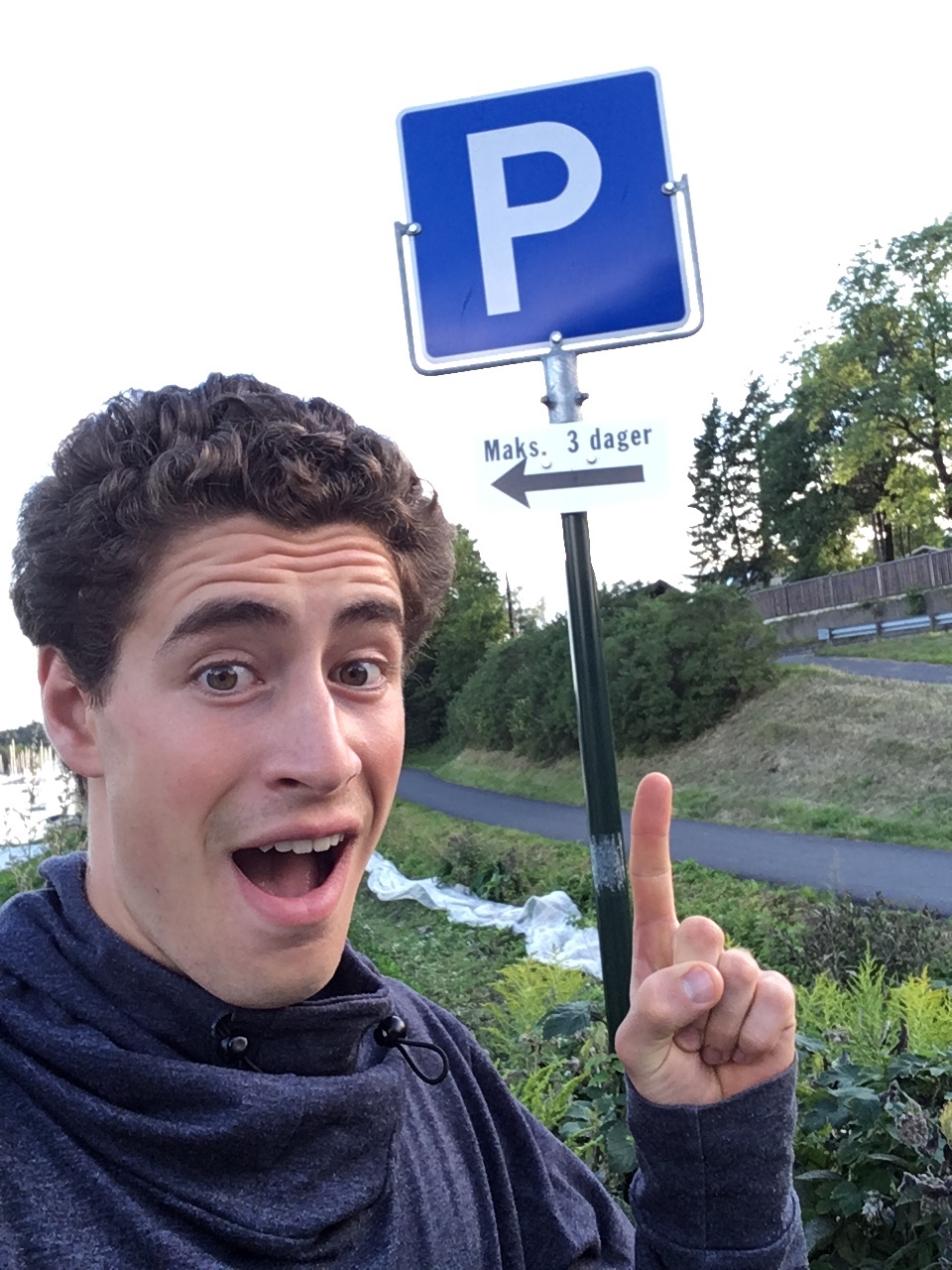
In Asker, Norway, my name is written in greeting on signs all over town! Well, maybe they are not greeting me. It is actually one sign by the beach saying that you can only park there for a “Maks.” of three days (maximum=maksimum in Norwegian), but hey, it is a step up from people thinking my name is a typo.
My name is Maks Zechel, and I am a Canadian skier who is made unusually happy by Norwegian signs. I learned how to ski at Cypress, just outside of Vancouver, at around the same time that I started walking. Since then I have lived in York, England; Zurich, Switzerland; Kingston, Canada; Freiburg im Breisgau, Germany; and most recently, Ottawa.
I started racing with Nakkertok Nordic, based just outside of Ottawa, when I was 11 years old. Once per week, my parents (both avid skiers) younger sister, and I would drive two and a half hours to Ottawa from Kingston so that we could all go skiing and I could train with Nakkertok. Being the biggest club in Canada, Nakkertok made me fall in love with skiing, as I always had one or two dozen skiers my age to train with. There is not much skiing in Kingston, so once I graduated from high school I moved in with some friends in Ottawa and took advantage of training with teammates and getting on snow more than once per week.
Over the past two years, I have studied part-time at the University of Ottawa, raced in Switzerland and Austria, skied on the Dachstein glacier in August, skied at Sunshine (near Canmore) in May, raced in Park City, trained and raced in Silver Star, and had various other amazing opportunities all over Canada and the U.S. All of this thanks to my incredibly supportive parents, who somehow rarely get frustrated by how excited I get over World Cup predictions based off of Lysebotn Opp results, or how this insignificant change in my double poling is going to make me race like Alex Harvey. As you can see, I like skiing…
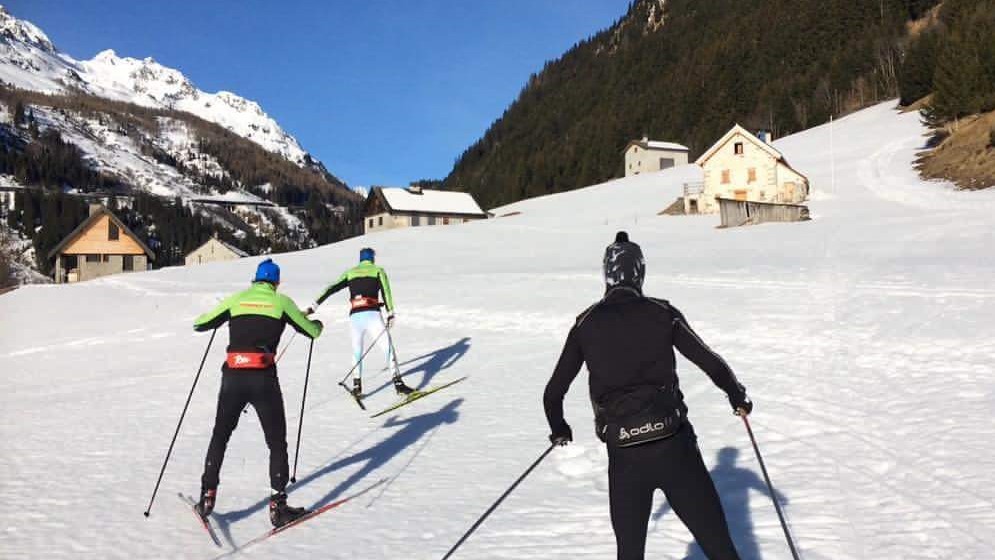
Maks Zechel and friends skiing in Campra, Switzerland, this past February. (Courtesy photo)
Coming to Norway is something I have thought about for the past two years. I have come here with the goal of learning as much as I can from training and racing with the Norwegians. This season I will be racing at the Scandinavian/Norwegian Cup level and focusing on my personal development.
As many Canadians can attest to, it is hard to go from racing solely in North America to racing on the World Cup. European ski racing is unrivaled by anything we see in North America and — because of the distance separating us — we are not often exposed to that level of competition. By familiarizing myself with the European competition atmosphere, I hope to set myself up for success and show others back home what I have learned. As a first-year senior, I still have far to go, but I am here to learn and hopefully improve. Getting a start on a World Cup is not an opportunity that many Canadians receive; if I ever get such a chance, I want it to feel like a step, not a near impossible jump, up from my regular races.
Another reason that I have moved to Norway is, strangely enough, to reduce my skiing costs. In Canada it costs a ridiculous amount every year to fly to early season skiing opportunities, to train with other fast skiers at camps, and to attend as many high level races as possible. Despite all of these flights, I have still found it difficult (even as a junior) to fill my race calendar with enough opportunities to race at a high level. In Canada, the entire season is mostly centered on our World Junior/U23 qualification races that happen in January. Before that, we have two NorAm race weekends that happen in December. Everyone gets fired up for these fun and exceptionally well-organized races. However, once January is over and you have not qualified for anything yet, there are few races with deep fields left until Nationals at the end of March. Some opportunities exist, like SuperTours and Carnival races in the U.S., but they are infrequent, far away, or they overlap with Canadian races.
In Norway, once you have bought your plane ticket, there are regular high-level races, within driving distance, from mid-November until mid-April. The fields are deep, with most of the Norwegian World Cup team racing the Beitostølen Scandinavian Cup in November, and you are paying for a weekend trip within driving distance instead of flying away for ten days in Park City. Food in Norway has so far been reasonable; some things are more expensive and you should not expect to be buying “Costco-style”, but you can eat well without breaking the bank. Rent is expensive in some parts of the country, but through connections and a bit of luck you can make things work. I was particularly lucky and am paying $634 Canadian dollars (about $501 U.S.) per month for an adequate basement apartment.
Planning my trip to Norway was filled with days of excitement, but also with days of doubt that things would ever work out. From the start I knew that I was going to see this through to the end, so with a lot of willpower, and even more help from others, I am now finally in Norway. In my next post I will share my first impressions of Norway and explain how I was able to make it to Norway and join Team Asker, my new ski team!
Norwegian Phrase of the Week:“Hilse på!”
= What you say to a dog if you want to shake its paw. Literally: “Greet”
(Lesson brought to you by Kira, the dog who lives upstairs).
***
About Maks: Maks Zechel is a competitive cross-country skier who secretly wants to become a professional mile runner. He loves hiking and going on canoe trips with his family, as well as peanut butter cups in ice cream. Johan Olsson is his favourite skier and he hopes to race the Cortina-Toblach stage of the Tour de Ski one day. He enjoys writing about his experiences. Follow him on Instagram @makszechel.
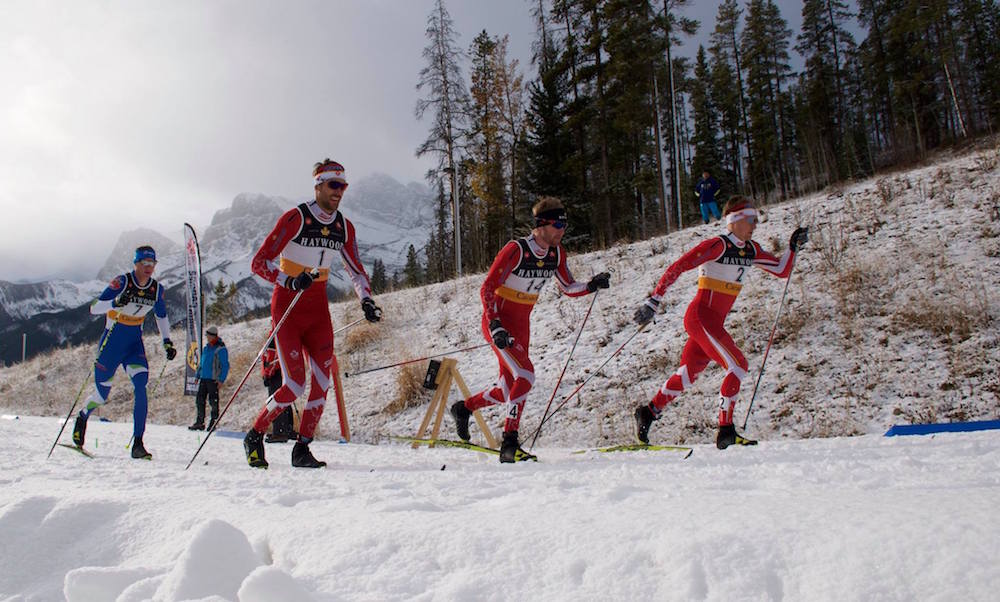
(From left to right) Bob Thompson (NTDC Thunder Bay) chases Lenny Valjas (Canadian World Cup A-Team), Graeme Killick (AWCA/NST B-team), and Knute Johnsgaard (AWCA/NST U25 Team) at the start of a classic sprint heat at 2016 Frozen Thunder in Canmore, Alberta, on Nov. 1. (Photo: Jenn Jackson)
As promised, the Canadian version of “Where the (Skiable) White Stuff Is” (a.k.a. November skiing) is here, minus the bit about where to ski at Thanksgiving. Canada doesn’t usually have much snow at Thanksgiving, mostly because Canadian Thanksgiving is in early October. But by the time U.S. Thanksgiving rolls around in late November, there is an abundance of reliable snow to choose from in Canada.
In addition to major camps and well publicized early season track setting, there are a lot of places in Canada where people quietly start skiing when there is snow. Whitehorse in the Yukon is one of those places where “early” doesn’t have the same meaning as it does in the south. No one will advertise October skiing at Barkerville, British Columbia, but the Caledonia Nordic Ski Club in Prince George can tell you about it. FasterSkier’s West-Coast based Canadian contributor was on snow Oct. 8 this year.
All of the western venues mentioned here were affected by the same weather pattern than forced the cancellation of the Bozeman SuperTour. A heatwave rolled in on Nov. 3, starting with a very warm classic sprint in Canmore, Alberta, and ending in spectacular flooding near Whistler, B.C. It has been a better start in the east.
This article will focus on reliable set track and camps open to the public in November — in Canada (for the U.S. version, click here). If your favourite early season spot isn’t featured, you are in good company. Let us know in the comments below.
And if you are visiting Canada, remember that the U.S. dollar is worth $1.35 up here.
***
CAMPS
XC SuperCamp
Where: Sovereign Lake Nordic Centre and Silver Star Mountain Resort, Vernon, B.C.
A trailside photo from 2015 SuperCamp at Sovereign Lake/Silver Star (Courtesy photo)
SuperCamp has evolved over 30 years, but its always been held on natural snow and it’s always run camps in November. Four of this season’s seven camps are in November, and biathlon options were offered this month as well.
“SuperCamp is a very comprehensive nordic experience,” Shane Landreville, SuperCamp coordinator, wrote in an email. “Trail passes are included, as are lunches, off snow programs, wax sessions, massages, and ski demos.”
Ski-in/ski-out accomodation and restaurants are available at Silver Star. Vernon, a 20-minute drive and 1,200 metres lower in elevation, offers a wide range of food and lodging alternatives. Some of the November camps sold out in mid-October when registration opened.
Glenn Bond XC Ski Camps
Where: Labrador City, Newfoundland
The 2016 Glenn Bond XC Ski Camp at Menihek Nordic on Nov. 3. (Courtesy photo)
The four-year old Glenn Bond XC Ski Camp program travelled to Menihek Nordic in Labrador City, Newfoundland, for a November camp on natural snow.
“[This camp] was November 3-6 with 70-80 cms of snow and big smiles,” Bond wrote. “Menihek Nordic wins the prize for best early season xc ski conditions this year hands down.”
(Longtime SuperCamp attendees remember Bond from his time with that program.)
NATURAL SNOW
Menihek Nordic
Where: Labrador City, Newfoundland and Labrador
Fifty centimetres (roughly 20 inches) of natural snow at Menihek Nordic in Labrador City on Oct. 23, 2016. (Photo: Menihek Nordic)
Mention ‘Lab City’ to a national team member from the 1980s and you will see the good memories scrolling behind the smile. In the glory days of Pierre Harvey, the national team would kick off its season at Menihek before moving on to Silver Star for an early season elevation camp. After that national team stopped visiting the venue in 1988, it quietly dropped off the radar, to the point that FasterSkier missed this October skiing opportunity in last year’s guide.
Labrador City is not visited by many tourists. It’s at least a 13-hour drive from Quebec City, which is the nearest major population centre. But there are some big-name skiers that have visited, including Sweden’s Gunde Svan, Americans Bill Koch and Tim Caldwell, Norway’s Anette Bøe, and the Firth sisters from Canada’s Northwest Territories. Menihek Nordic hosted the 1983 World Cup Final, the 1985 World Cup opener and was a national training centre from 1981 to 1988. Mining communities are often multicultural: the World Cup hosts were able to find local translators for 20 languages from a population of less than 10,000. Koch designed some of the trails in 1981.
What makes this venue unique, other than reliable October-to-May skiing?
“Labrador is unique in that it is nearly the last frontier,” Menihek Nordic Ski Club President Gerry Rideout explained. “There is a certain magic about Labrador, it gets in your blood.”
This season, Menihek opened on Oct. 23, held four camps in November, had the full 34 k system set on Nov. 3, and plans to stay open to the first week of May (as usual).
Sovereign Lake/Silver Star
There were lots of smiles during U.S. Thanksgiving at Sovereign Lake. Methow Valley Nordic coach Laura McCabe (a two-time Olympian) led 30 kids over the top from Silver Star and FasterSkier caught them on the way back. Locals know to start at Sovereign and stop for a croissant in Silver Star village to fuel the second half of the ski. (Photo: Gerry Furseth)
This destination is actually two ski areas. The Sovereign Lake Nordic Centre (also Sovereign Lake Nordic Club) has been operating since the 1930s under a variety of names, while Silver Star Mountain Resort is more recent, opening as an alpine-skiing area in 1958. The two organizations have 105 kilometers of interconnected nordic trails and a surprisingly good relationship between the commercial resort and the volunteer-based club (which is one of the largest cross-country ski clubs in B.C.). Silver Star hosted a World Cup in 1991, Sovereign Lake in 2005.
Daily track setting runs from November to early April, with the full 105 k usually available from late November to mid-March. Sovereign Lake reopens in May for team camps and diehard skiers.
This season, both sides opened 10 days late on Nov. 20, with 57 k set by Nov. 25.
“We are still well below our average snow pack for this time of year, but are optimizing our small machine grooming to create great tracks and corduroy,” Sovereign Lake manager Troy Hudson wrote in an email on Nov. 24.
There were at least eight private camps in November, ranging from a master’s women’s group to biathletes to a combined U.S. club camp with the Mt. Bachelor Sports Education Foundation, Methow Valley Nordic and Momentum Northwest from Oregon and Washington.
MANMADE & STORED SNOW
Frozen Thunder
Where: Canmore Nordic Centre in Canmore, Alberta
Canmore is perhaps the best known of Canada’s nordic venues. Between the 1998 Olympics, reoccurring World Cups and last season’s final stages of the Ski Tour Canada, it is famous beyond the skiing world. Each October, Frozen Thunder opens a small loop with a combination of stored snow and manmade snow.
This year, Frozen Thunder opened on Oct. 22 with a 1.7 k loop. The regular season began on Nov. 19 and is scheduled to run to April 30. So far, Canmore has hosted seven days of cross-country ski races and three biathlon races in November. All the camps were private, with the Ukraine biathlon team traveling the farthest to Canmore.
Boreal Glide (Glisse Boréale)
Where: Forêt Montmorency, owned by the Université Laval, in Saint-Ferréol-les-Neiges, Quebec
Skibec skiers on the Boreal Glide at Forêt Montmorency north of Quebec City. (Photo: La Forêt)
Located 45 minutes north of Quebec City and belonging to Laval University, the ‘Boreal Glide‘ is an early season favourite in Quebec. Set in the largest teaching and research forest in the world (at 412 square kilometers), La Forêt Montmorency has 2.5 k of early season trail using stored snow and a larger system that depends on natural snow. As of Nov. 20, it had 20-24 inches of packed snowed and track groomed for both skating and classic.
“If I had to invest my money in one single cross-country skiing area in North America, I would honestly choose the Forêt Montmorency,” La Forêt’s Director of Operations Hugues Sansregret wrote in an email. “The fact that it sits on top of the Laurentian mountains is the best guarantee for early skiing.”
Boreal Glide opened on Oct. 28 without any official camps or events — just skiing. Can’t argue with that.
Callaghan Gold
Where: Whistler Olympic Park, Callaghan Valley, B.C.
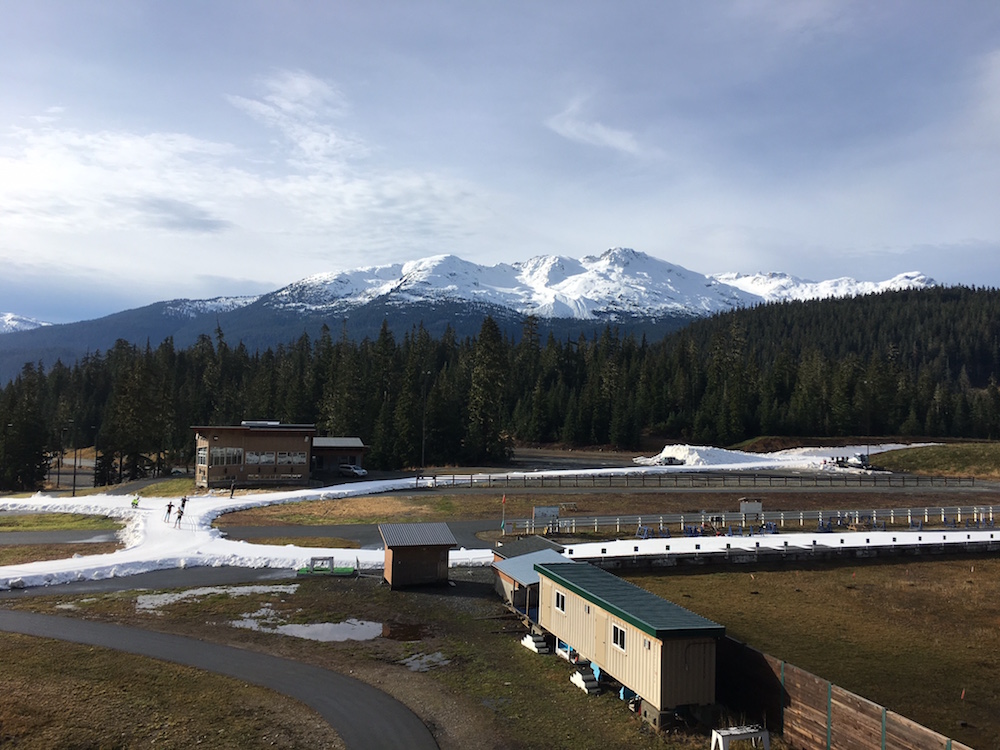
Callaghan Gold on Nov. 7, 2016, at Whistler Olympic Park in Callaghan Valley, B.C. New this year, the loop includes the biathlon range. (Courtesy photo)
Canada’s other Winter Olympic venue has created Callaghan Gold, an early season loop of stored snow. The regular season opens on Nov. 24 (U.S. Thanksgiving) and ends in early April. Located in a cool valley surrounded by rainforest, this venue has been known for lots of snow in non-Olympic years. Weather has been a challenge in the fall of 2016, eased by two last-minute storms that expanded the stored snow loop to 21 k during the opening weekend.
In the project’s four-year history, Callaghan Gold has met some challenges. In its experimental year, the stored snow came out ‘gold’, coloured by the sawdust insulation. In 2014, the storage methods were improved and an 800-metre loop of lovely, white snow greeted skiers on opening day. In 2015, record-setting warm weather melted all the snow in March, leaving nothing to store. In 2016, Callaghan Gold opened on Oct. 29 with 600 metres of trail, expanding to 1.4 k on Nov. 4.
“The warm temps and significant rainfall of November took its toll on the Callaghan gold trail depth but we feel it held up well considering,” managing director Tim Hope wrote in an email.
Nakkertok Nordic
Where: Gatineau, Quebec
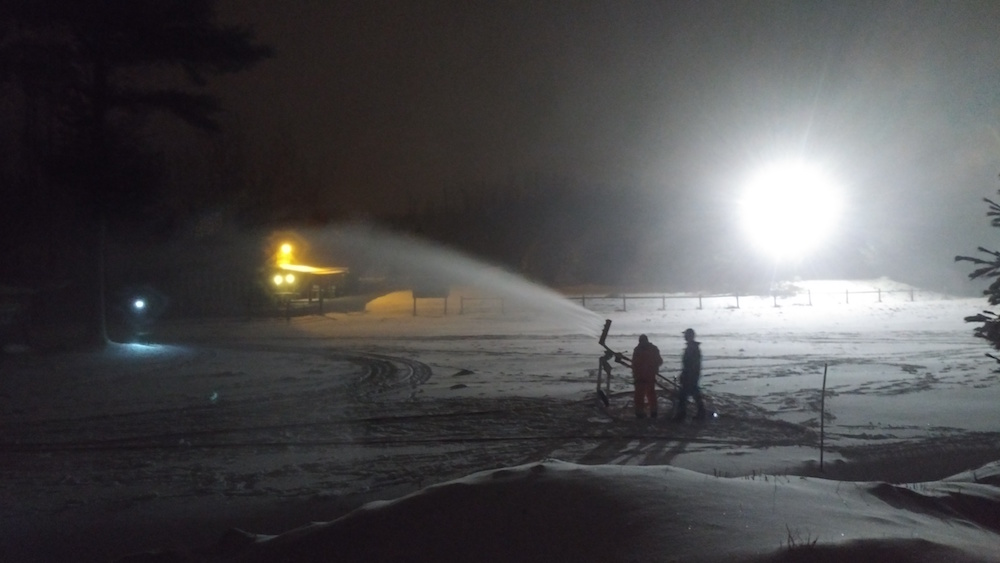
Nakkertok snowmaking in action for the first time in November, 2016. (Courtesy photo)
With two sets of ski trails just outside Ottawa and Gatineau, Nakkertok is the newest addition to reliable November snow. This month, one of the country’s largest ski clubs recently turned on its brand-new snowmaking equipment (which was largely funded by from its Project Play grand prize) and opened for skiing on Nov. 25.
According to Nakkertok Head Coach Kieran Jones, the club turned on five snow guns for the first time on Nov. 20 and was excited to test its new system and equipment. That night, the trails received an additional 15 to 20 centimeters of natural snow.
“Winter has definitely come to Ottawa-Gatineau, which is awesome!” Jones wrote. “Our initial goal was to create an 800m loop that covered our stadium, and extended out both ends. At that point we could then begin to push snow further to create 1 km of skiable terrain with a couple of quality climbs as well.”
He hoped they would have 1 k open for skiing by the end of last week.
“For now, the focus is on making sure we can have skate grooming,” Jones added. “Classic tracks will depend on the depth of snow that we’re able to produce. Nakkertok isn’t officially open to the public for day usage of the loop yet, but we’ll let you know as soon as it is!”
The Nakkertok Early Season Ski Loop (NESSL) is an important step for the region.
“It is great for the club, other clubs in the region and should allow a quality early season race site in the East,” Nakkertok fundraising mastermind Toni Scheier wrote in an email. “It will also ensure snow for the Easterns where clubs from across the country attend, (700 plus competitors) and for our Nationals bid, likely 2019.”
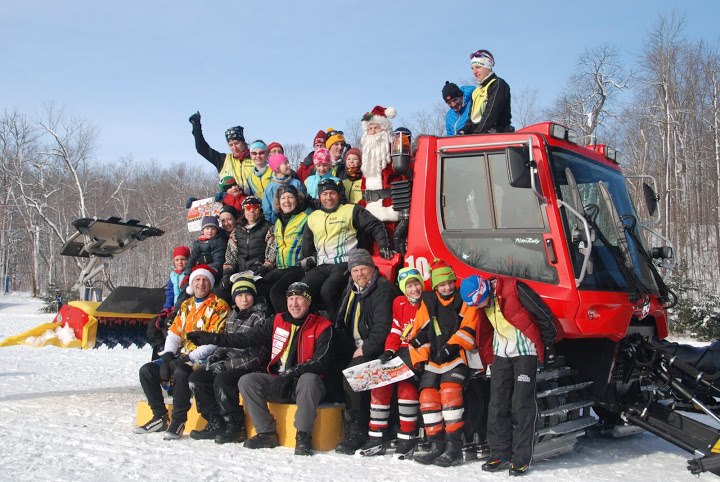
A group of Nakkertok Nordic members perched atop a groomer in late December 2012. (Photo: Nakkertok Nordic Facebook)
As the winners of this year’s Kraft Heinz Project Play $250,000-dollar grand prize, Nakkertok Nordic — a nearly 50-year-old cross-country ski club based in Cantley, Quebec — already knows where the money will go. Earlier this month, the club learned that it had been voted the winner over 819 other nominations across 550 Canadian cities, and plans to invest in a snowmaking system and improving the area’s 75-kilometers of trails.
One of four finalists, Nakkertok earned the most online votes (out of a total of 900,000) in an two-day period. Second, third and fourth place each received $20,000.
“It was absolutely thrilling,” Jennifer Tomlinson, a longtime club volunteer and Nakkertok’s former race-program director, said of the grand-prize win to the local CTV Ottawa. “Over-the-moon excitement for everybody and a complete surprise.”
Since the majority of Nakkertok’s support stems from community volunteers, $250,000 dollars also allows the club to focus future fundraising efforts elsewhere. Nakkertok Nordic President Robert Hornung further explained that purchasing snow machines benefits the program beyond getting a head start on snow.
“It will enable skiers to get on snow earlier, lengthen the ski season, and improve the quality of snow conditions throughout the season for both competitive training / racing and recreational skiing,” Hornung wrote in an email. “It will also enhance our ability to continue to host major cross country skiing events like the Eastern Canadian Cross Country Ski Championships and opens up the possibility of hosting races at our facility in December. In addition, the investment will provide new opportunities for the use of our facility on a four season basis.”
From left to right: Steve Morris, Jennifer Tomlinson, Sheila Kealey, Toni Scheler, and Robert Hornung at the announcement event for the Kraft Heinz Project Play Grand Prize Award, which Nakkertok won on Aug. 4. (Photo: Doug Ranahan)
A volunteer member to Nakkertok Nordic since she was 8 years old, Tomlinson indicated that the club could have the snowmaking system installed by the change of the seasons.
“We had planned on doing fundraising and building towards snowmaking, but this allows us to establish it in, like, a snap,” Tomlinson said on the phone. “We can get it done this fall.”
Tomlinson, who also volunteer coaches for Nakkertok, pointed out that much of this would not be possible without those who are a part of the community and even those outside it.
“That this couldn’t have been done without the contribution of, quite frankly, the whole cross-country skiing community across the country,” she said. “We had support from coast to coast to coast and then even people who were traveling even outside the country were voting for us.”
Established in the early 1970s by three families intent on creating a local ski program and trail system for the area, Nakkertok has grown over the years from a few families to over 1,400 members. The club has a Learn-to-Ski program as well as a racing program and adult development program. Much of the program’s growth is attributed to the club’s culture.
“I think that model has worked really well for us because as we’ve grown, we’ve built our strengths through the membership and the investment people have personally, not just financially,” Sue Holloway, a volunteer coach whose mother served as the program’s first president, said on the phone.
Nakkertok Nordic skiers await the announcement of the Kraft Heinz Project Play grand-prize winner, which it won on Aug. 4. (Photo: Doug Ranahan)
“They don’t just belong, they contribute,” she said of Nakkertok’s volunteers. “You know, ‘I made that trail or I made that cabin,’ so you really feel a sense of ownership, which makes us a strong club.”
The culture Holloway described members of the club as having was a sentiment Tomlinson echoed.
“There is no unique circumstance that says you can buy your way out of doing your volunteer commitment,” Tomlinson said. “The expectation is that every adult member will do two days of volunteer work and if you’re in the racing program, every adult member will do six days of volunteer work. … It breathes the give-back model too. The kids see the effort and the contributions, and we build the expectation that the kids, regardless of how old they are, are going to contribute by helping to maintain trails, whatever it may be.”
The “give-back model” Tomlinson describes is evident in ski racers like Katherine Stewart-Jones, a former Nakkertok racer currently skiing for the national development centre in Thunder Bay, Ontario. Once a member of Nakkertok’s Jackrabbit program, Stewart-Jones, 21, now finds herself a volunteer for it.
“I had a training camp near my house actually and I went home after and I was only there for four days, but I made sure to go to practice and help out,” Stewart-Jones said on the phone. “I even gave a talk to the younger group.”
As winters become more mild, Stewart-Jones, a three-time Junior World Ski Championships competitor, sees the investment in snowmaking machines a smart one.
“We’ve had a lot of trouble in the past couple of years. I went home for Christmas for, like, six days and I just remember it was Christmas Eve and I was rollerskiing,” she said. “That’ll be super cool to have [a snow-making system].”
With $250,000 added to this year’s budget, the Nakkertok community was above all, appreciative to the support they received in order to win the overall award.
“Votes were coming in from Norway and all over Canada, the U.S. and Europe,” Holloway said. “We’re pretty proud of that. And that again just speaks to the breadth of the community. We were really appreciative of everyone, not just in the area, but across Canada and literally across the world who jumped onboard and gave a us a hand to make it happen.”
The NorAm Canadian Eastern Championships are returning to Gatineau/Cantley for three days of racing from Jan. 30-Feb. 1. (Photo: Diane Galus)
(Press release)
The 2015 Haywood NorAm Canadian Eastern Championships and Buff Sprints is a prestigious cross-country skiing event which takes place on January 30, 31 and February 1, 2015, at the Nakkertok South Nordic Centre in Gatineau/Cantley, Quebec. “The Easterns,” as the competition is known, is sanctioned by the International Ski Federation (FIS) and is part of the Haywood NorAm Race Series.
The Easterns permits Canadian cross-country skiers, both experienced and novice (seniors and juniors, men and women), to compete neck and neck with skiers from across Canada and the United States. More than 600 female and male athletes from the midget to the masters categories compete in freestyle and classic technique races on courses with distances ranging from 1 km to 20 km in length.
(Photo: Diane Galus)
The competition is organized jointly by the following Ottawa–Gatineau region cross-country ski clubs: Chelsea Nordiq, Nakkertok Nordic, Club Skinouk, Kanata Nordic, XCOttawa, XC Chelsea Masters and the Carleton University Nordic Ski Team. More than 200 volunteers from these clubs welcome athletes, coaches and spectators throughout the weekend.
For more information and specifics on all aspects of the event, including the race notice, registration fees and directions, please go to our Canadian Eastern Championships website at http://cecski.ca/. Anyone interested in racing should register at Zone 4.ca. All entries and payment will be processed on-line, starting 4 December, 2014, at the latest, through Zone 4. Entries must be submitted by 23:59 EST on Monday, 26 January, 2015.
The race weekend is a family-friendly winter event: a food concession, warming chalet, and portable toilets can be found on site, and admission for spectators is free. Come and watch some of the best nordic racers in Canada flying over groomed trails as they are accompanied by the ringing of bells and cheers from waves of spectators. Warm footwear and clothing is recommended.
Please note: Extreme cold weather may cause a delay in start times.
Nakkertok Nordic Ski Club – Looking for Part-Time Assistant Coach
Note: This position is intended to attract new and aspiring coaches in skiing, either former or current athletes who are interested in pursuing coaching as a career or part-time employment.
Based out of Ottawa and Gatineau, Nakkertok is one of Canada’s largest and most successful ski clubs. Through the hard work of the athletes, coaches, and club members, our racing program has enjoyed considerable success in recent years. By recruiting and retaining many dedicated athletes, Nakkertok has been the winner of the club aggregate at Canadian National Championships for the past four years. We are a volunteer run club that prides itself on its community-run philosophy.
Kieran Jones is our head coach, responsible for our Learn to Complete and Train to Compete Programs while Geoff Tomlinson is our Train to Train coach and the coach responsible for the club‘s overall coach development.
While having two full-time coaches is wonderful, we will not be able to deliver our programs without part-time coaching support. We are looking to hire a part-time coach. If you are interested in the position please submit the following documents to racing.director@nakkertok.ca
● Cover letter and resume, highlighting why you want to coach junior cross country skiers
● Qualifications and what skills, experiences and background you bring
● Two references including name and contact information (at least one ski related contact)
If you have questions or need more information please ask at the same email address. The position will remain open until September 10, 2013 with a review of applications beginning August 15, 2013.
JOB DESCRIPTION
Assistant Coach
T2C/ L2C program (athletes aged 15 to 19, some of whom are training to be selected to train @ a National Development Centre)
T2T program (athletes aged 11-14).
Role description:
Assists directly in the planning and organization of training sessions
Provides personalized technical feedback to athletes; evaluates their progress in cooperation with the T2T/L2C/T2C lead coaches
Attends training camps and regular training sessions in fall and winter
Provides race support in winter: wax and equipment, athlete support, etc.
Supports overall program objectives
Deliver practice plans from the Program Lead Coach
Work with volunteer coaches to deliver training when Lead Coach is absent
Expectations/qualifications:
Must have NCCP coaching level ICC (to be paid) and be willing to work towards CCIT2T or equivalent.
Must have a strong ability to communicate with athletes of various ages and development stages
Must be available on weekends to lead either Saturday practice
Must have classic and skate roller-skiing experience
Enthusiastic and interested in pursuing coaching as a career or part-time employment
Strong, consistent communication with program Lead Coaches
Previous competitive skiing experience at the provincial or national level is an asset
Previous volunteer experience as a coach in a cross country skiing program is an asset
Prior coaching experience in sport is an asset
Bilingualism an asset
Level of commitment:
Approximately 10 hours per week on average; between the months of September to April
Support 1 or 2 Quebec/Ontario Cup races (2 three-day weekends)
Attend coaching courses to improve certification.
Working conditions:
Evening work during the week (Tuesday and Thursdays)