

Frode Estil says it’s not how many hours you train. It’s how you train.
The two-time Olympic gold medalist and individual world champion from Norway says skiers are focusing too much on hours at the expense of training quality.
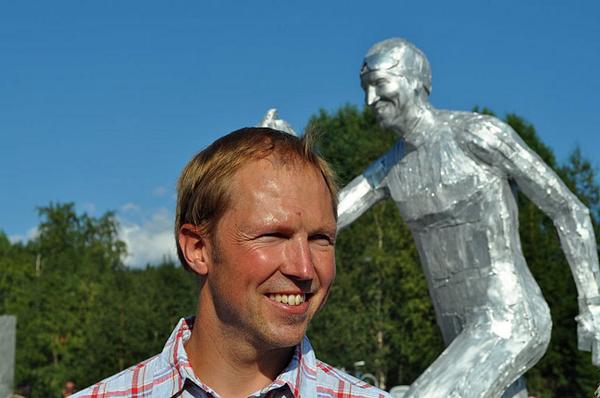
“I’m afraid focusing too much on logging hours can be counterproductive to the main goal: ski fast,” Estil, 42, told the Norwegian newspaper Namdalsavisa. “How fast you become depends on more than just how many hours you put in.”
Estil, who is currently coaching and teaching at the Meråker ski academy in Norway, blames the media and their excessive emphasis to how many hours the World Cup racers train in a year, as well as coaches and athletes for latching onto the elite skiers’ training programs without critical assessment. Other coaches support him.
Former elite skier Mona Hjellsand, now a coach and coaches’ instructor in the Meråker region north of Trondheim, agrees with Estil. She pointed out that too many training hours can have negative physical consequences.
“Overuse injuries can be hard to heal, and some can last for life,” Hjellsand told Namdalsavisa. “Biathlete Tora Berger has repeatedly harped that you should not train if you feel run down. You should always be in a good flow, she says, and she is definitely onto something.”
She added that focusing on completing shorter workouts with 100-percent attention to the task will increase the training quality.
“It’s important to not burn all your fuel at once,” Hjellsand said. “The younger the athletes, the more important quality is over quantity. The idea is to increase volume over time.”
“The younger the athletes, the more important quality is over quantity. The idea is to increase volume over time.” — Mona Hjellsand, a former Norwegian elite skier who has spent the last two decades coaching in the Meråker region
Hjellsand said that youth and junior coaches have to take their part of the blame for the current trend with extreme focus on logging hours.
“There are still a lot of old-school coaches out there who are focused on training hard and putting in lots of hours. Based on that, I’m really glad that credible resources such as Frode Estil initiate a debate on this topic. It’s an extremely important debate,” she said.
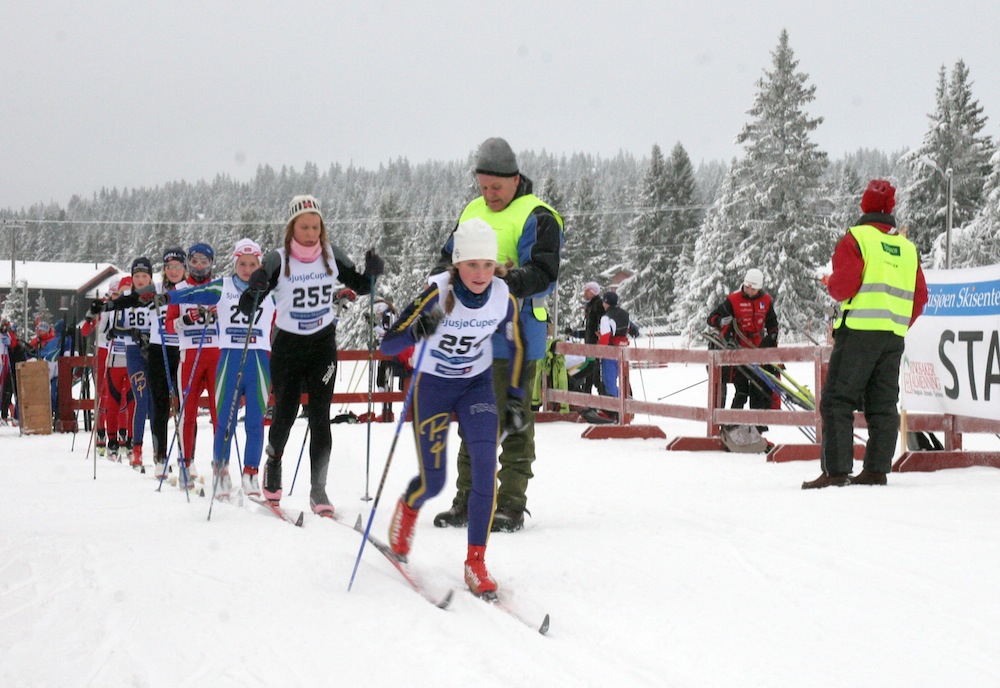
In her opinion, the biggest issue is curbing the drop off and keeping the skiers in the sport.
“When I ask the 16 and 17 year olds why they chose to drop out, the answer is almost always the same. There is just too many training hours, and they’re always tired,” she said. “When the air goes out of the balloon at such a young age, there is something wrong with the way we approach training.”
“When the air goes out of the balloon at such a young age, there is something wrong with the way we approach training.” — Hjellsand
The ski coach, who also travels to visit various clubs and teams and give presentations on training, is certain that the juniors are seeing what they do, and are comparing their own training programs to what the World Cup elite is reportedly doing.
“Skiers such as Marit Bjørgen and Therese Johaug bring the standard for annual volume to a whole new level,” she explained. “The big difference is that these athletes have a support system that takes care of them 24/7. You can’t compare yourself to the full-time elite.
“I’ve seen so many cases where the junior skiers as well as senior level racers lose the joy of training and their passion for skiing because there is such an emphasis on training hard and logging volume,” she added. “It shouldn’t be like that.”
Ultimately, she stressed a single priority: make sure training is fun. “The day it’s no longer fun, there is no reason to stick with it,” Hjellsand said.