From the FasterSkier archive — posts syndicated from athletes’ and coaches’ own blogs between 2004 and 2012, kept online as published. Current coverage is at fasterskier.com.
The Department of Athletics at the University of Alaska Fairbanks is seeking applicants to fill the position for the Assistant Coach for the Men’s and Women’s Nordic Ski Teams. The Alaska Nanook Ski Team competes in the Rocky Mountain Intercollegiate Ski Association and frequently has all-American level performances at the NCAA Championships. UAF is the ideal place to be a nordic skiing enthusiast with groomed trails right outside the door on the UAF campus and a quick 15 minute drive to the world class Birch Hill Facility. There is consistently good groomed skiing from late October/early November to late March/early April each year.
The position is a 9 month/year salaried position with excellent benefits. The minimum starting pay is $25.82/hour. To learn more about the position or to apply please go to http://careers.alaska.edu/cw/en-us/job/506177/assistant- mens-womens-xc-ski-coach
The position is open until filled with the application review process beginning on June 10th 2018.
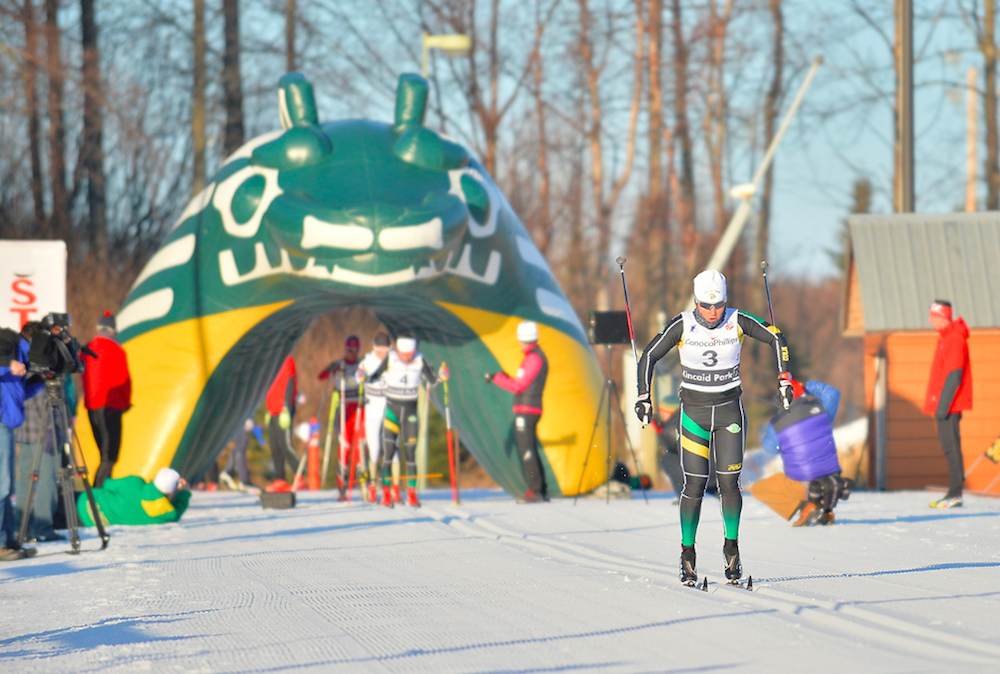
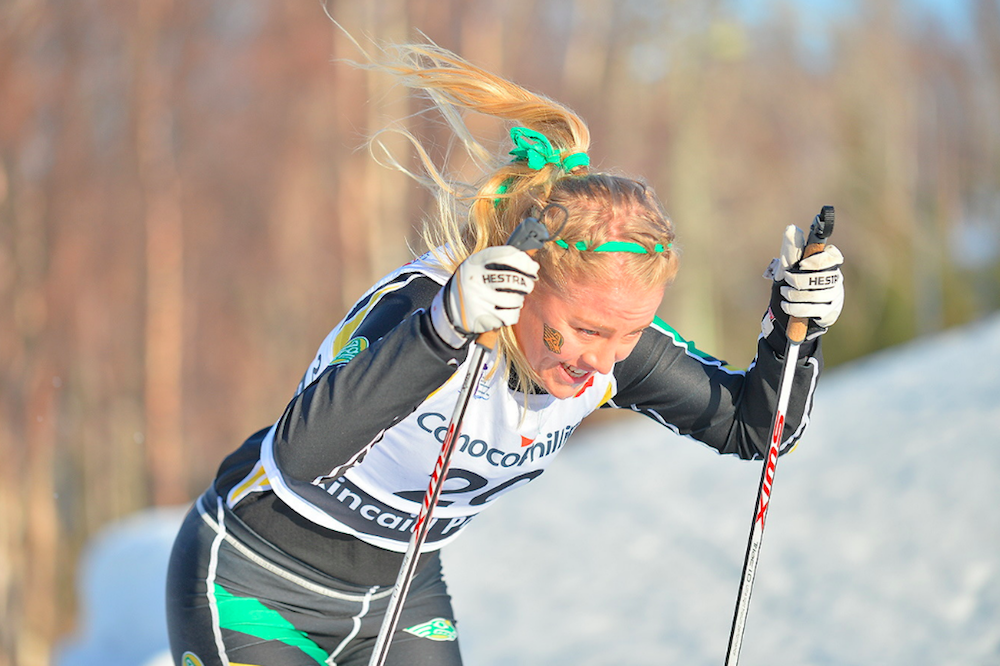
University of Alaska Anchorage freshman Hailey Swirbul races through the stadium at Birch Hill Ski Area in Fairbanks, Alaska, in the Alaska Nordic Cup on Nov 19. (Photo: Zachary Hall/UAA Athletics)
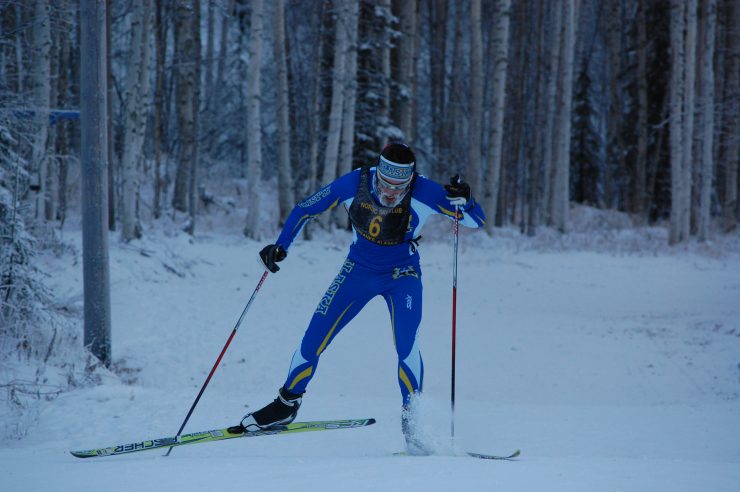
FAIRBANKS, Alaska – Scott Patterson is on a roll. The Alaska Pacific University (APU) skier has now won all of the ski races he entered this year – and over half the ski races held in this country in the 2016/2017 winter to date– after picking up wins on both days of racing in the Alaska Nordic Cup at Birch Hill Ski Area in Fairbanks, Alaska, this past weekend, Nov. 19-20.
APU’s Jessica Yeaton was also a double winner on the weekend. And in the collegiate ranks, the University of Alaska Fairbanks (UAF) maintained its hold on the Alaska Nordic Cup against the University of Alaska Anchorage (UAA).
Skiers from both universities competed with a new lease on athletic life, after learning earlier this month that the ski programs would not be cut at either UAA or UAF.
The Alaska Nordic Cup is an early season, relatively low-key (but nonetheless International Ski Federation (FIS) sanctioned) competition between Alaska’s only two NCAA nordic programs. Prior to this season, in which UAF switched its conference affiliation from the Central Collegiate Ski Association to the Rocky Mountain Intercollegiate Ski Association (RMISA), it marked the only time outside U.S. nationals that Alaska’s college skiers might compete head to head until, potentially, NCAA Skiing Championships in March.
The Nordic Cup is held each year in November, alternating between the Fairbanks and Anchorage areas. 2016 marked the 13th annual Nordic Cup competition. The UAF Nanooks enjoy a healthy historical advantage over their southern rivals, the UAA Seawolves, entering the weekend with an 8-3-1 all-time record (eight wins, three losses, and one tie) in the first 12 years of the dual meet. Scoring is typically based on an individual race on Saturday plus a relay on Sunday. Lowest combined time wins.
But despite a strong team showing from UAF that carried the Nanooks to victory, and some standout individual performances from UAA, it was APU that owned the top steps of the podium throughout the weekend.
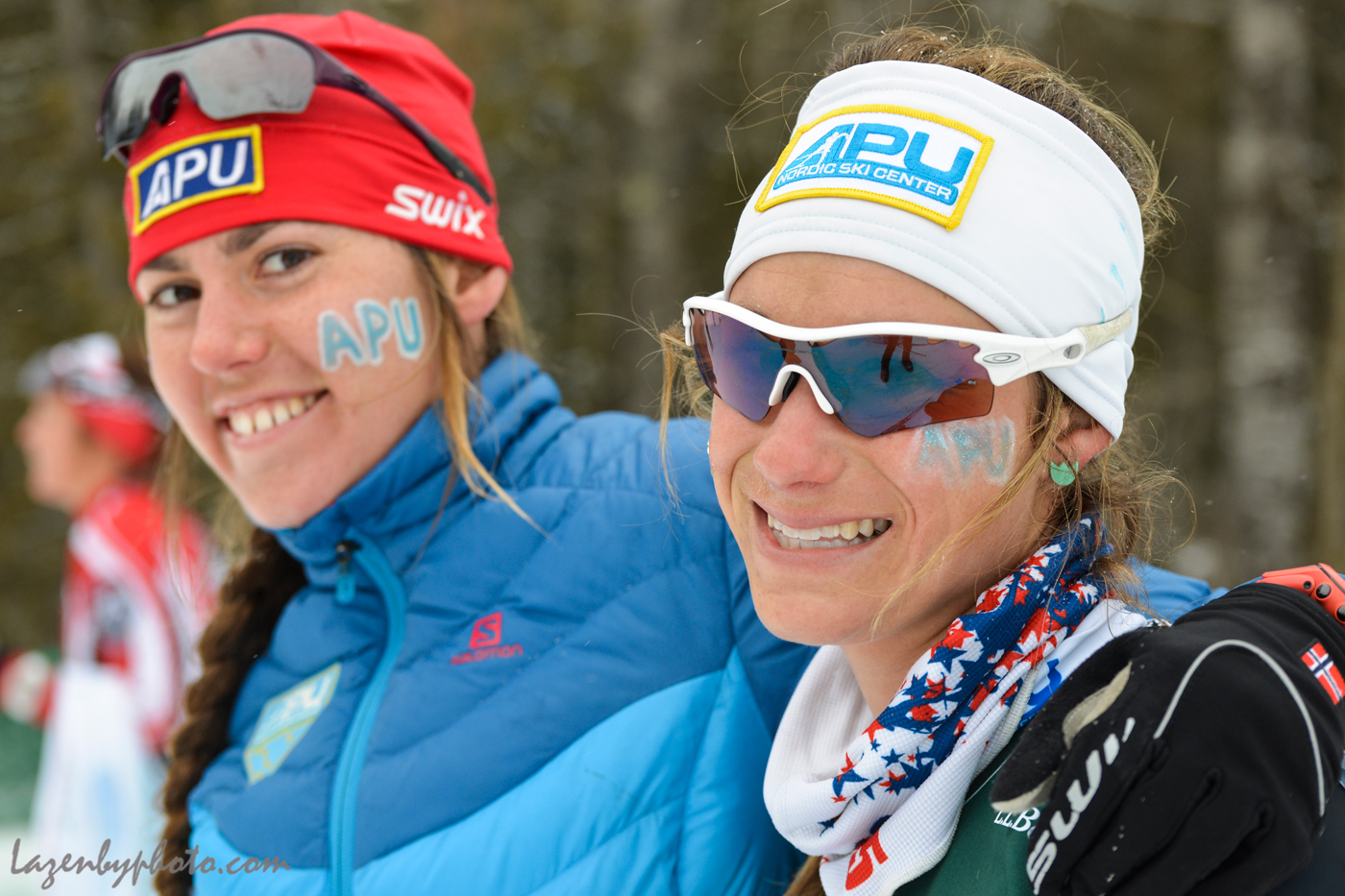
APU’s Becca Rorabaugh (l) and Jessica Yeaton (r) at U.S. SuperTour Spring Series in March 2016. (Photo: John Lazenby/Lazenbyphoto.com)
In the women’s race, Jessica Yeaton, an Australian national-team member who competes for Australia internationally but lives in Anchorage and trains with APU, finished Saturday’s 6 kilometer freestyle interval start in 16:52.1, skiing smoothly in relatively cold and slow conditions. APU’s other entrant, Fairbanks native Becca Rorabaugh, finished second, 34.1 seconds back. Third went to Hailey Swirbul, 1:27 back, in the UAA freshman’s college racing debut. UAF skiers swept the next four spots, led by senior Nichole Bathe, the day’s final starter, in fourth.
Yeaton appreciated the early season racing opportunity. “It was awesome to race up here on good snow,” she wrote to FasterSkier. Yeaton added, “The conditions were thin but still provided a really good opportunity for a race effort. We are lucky to have these early races to help prepare for the Supertour in a couple weeks – the [Nordic Ski Club of Fairbanks] did a great job making them happen despite the lack of snow!”
Swirbul, a Colorado native, echoed Yeaton’s praise for the venue and host club: “Thanks to Fairbanks for using their limited snow and delivering excellent (all things considered) courses and conditions for us to open our season this past weekend,” she wrote in a Sunday email to FasterSkier.
Swirbul added, reflecting on the sensation of putting on a race bib once more: “As usual, it’s an interesting feeling to return to an on-snow race scene after long summer months without one… nerves, waxing, morning jogs and stretching, race strategy, etc. I sure enjoyed being back at it this weekend! I was satisfied with my and my team’s skiing this weekend, considering it is only November, and think we have great things ahead of us. We are all revving our engines preparing for a long winter ahead, ready to establish a new name for our team with many young skiers, and meanwhile prove to the president of our university that we are more than worthy of being part of a long lasting ski team at UAA! I am very excited for what the season has to bring for UAA.”
Bathe, originally from Madison, Wis., was likewise pleased by the strong first-day showing of the UAF team. “I thought today went well especially for our whole women’s team,” she wrote in an email on Saturday. “To have four women right in there is always awesome and makes us excited for the season! It’s nice to see all the summer training pay off and start getting back into race mode again.”
On the men’s side, the top-seeded Patterson took advantage of his position as the final starter to ski to the victory over several of his APU teammates, including David Norris in second.
“Snow instead of ice made coming to Fairbanks [from Anchorage] for races an easy decision,” Patterson wrote. “Although I hadn’t raced here since high school, I have always enjoyed the Birch Hill trails. During the race, I had to remember how to race a little after getting some early splits that I was even with David and knowing his fitness through the summer and fall. Overall it was a great chance to chase out some early season rust and get ready for important races.”
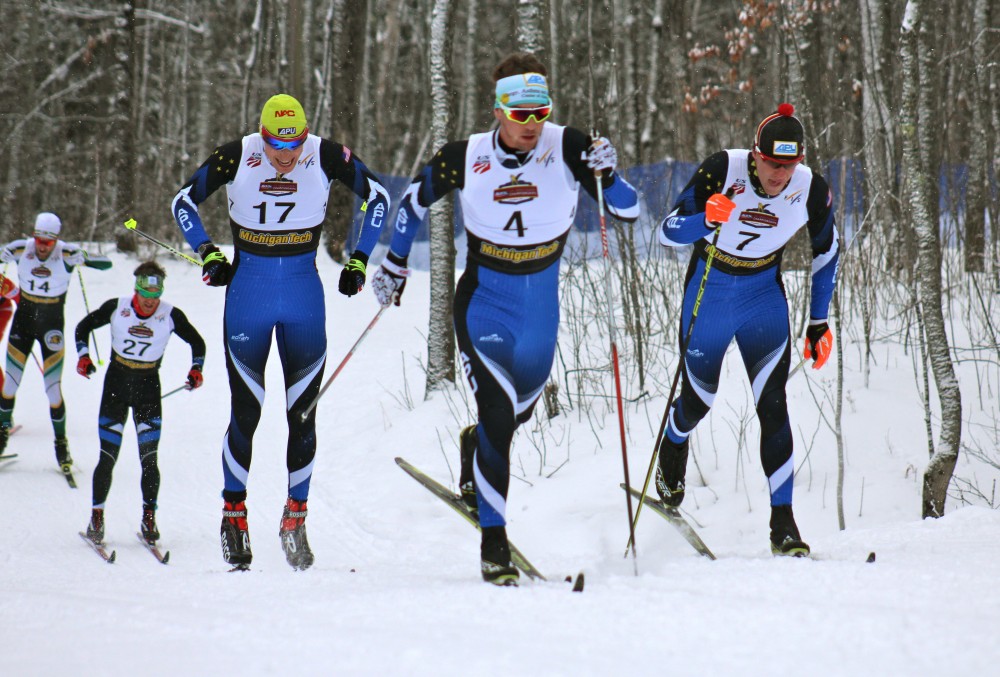
APU teammates and brothers Logan Hanneman (7) and Reese Hanneman (4) lead teammate Tyler Kornfield (17) during their quarterfinal of the men’s 1.5 k classic sprint at 2016 U.S. nationals in Houghton, Mich.
Patterson completed the 8.25 k skate race in 19:36.3. Norris finished 16.7 seconds behind him. Tyler Kornfield rounded out the APU podium, finishing 1:03 back of Patterson.
Patterson and Kornfield grew up in Anchorage. Norris is a Fairbanks native. Their good-natured geographic rivalry stretches back a decade or more, to when they were all competing in Alaska high school skiing. (“We hated the Anchorage guys,” Fairbanks skier Reese Hanneman told the Alaska Dispatch News “with more amusement than venom” in a summer profile. “We were like the rednecks from Fairbanks, out skiing in the woods, going up against the city boys.”)
APU skiers took the top five spots on the day, with Anchorage skier Thomas O’Harra in fourth and Fairbanks local Logan Hanneman in fifth.
The top college skier was UAF junior Max Donaldson, another Fairbanks product, in sixth, 1:37 back of Patterson. The top UAA skier was sophomore Toomas Kollo, from Estonia, 2:35 back in ninth.
At the end of the first day of racing, the combined times of the top three UAA women put them just 23.5 seconds behind the top three UAF skiers. On the men’s side, UAF created a larger gap of 2:14.2 over UAA’s combined times, giving UAF an advantage of roughly 2:38 heading into Sunday’s relays.
Sunday saw more of the same: APU took the easy win, Swirbul shined for UAA, and UAF used its depth and balanced performances to take the overall victory.
APU entered only one team in the relay, but it included the top two finishers from each of Saturday’s individual races. Unsurprisingly, the team of Patterson, Rorabaugh, Norris, and Yeaton posted the fastest time in all four legs of the 4 x 4 k skate relay, finishing in 46:57.4.
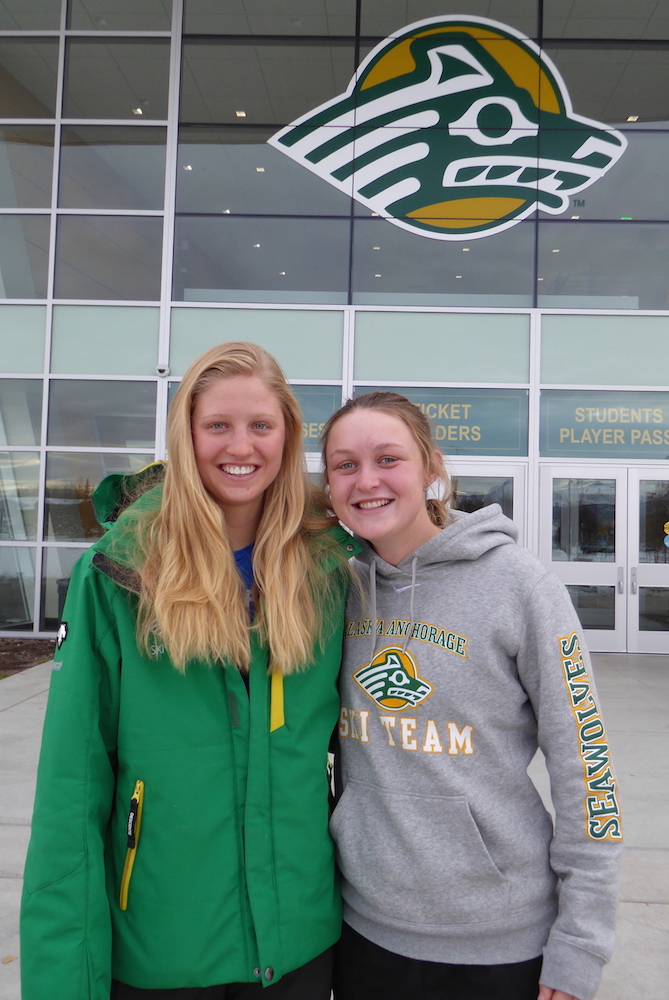
UAA skiers Hailey Swirbul (l) and Casey Wright (r), on the UAA campus in October 2016. (Photo: Gavin Kentch)
The top college team was Nanooks A (Donaldson, Sarissa Lammers, Michael Fehrenbach, and Bathe), finishing just over three minutes behind APU in 50:10.1. Donaldson and Fehrenbach posted the fastest male collegiate times of the day in their legs. Seawolves ‘A’ (Kollo, Swirbul, Marcus Deuling, and Casey Wright) was less than eight seconds behind the Nanooks in 50:18. Swirbul was again the fastest collegiate woman on the day, while Wright similarly recorded the day’s fastest anchor leg.
Nanooks ‘B’ was next, followed by Seawolves ‘B’. Ultimately, the time gaps from day one grew, and UAF finished with a 4:08 cumulative advantage over UAA, taking home its ninth Nordic Cup overall and second in a row.
UAF nordic coach Nick Crawford said in a Sunday press release, “The Seawolves had a good day today and it was very exciting to watch the race unfold. The margin between our two teams was much smaller today, so it made it that every skier had to race hard which isn’t always the case in relays. The victory was for sure a team effort today with both the men and the women putting together good races. We really enjoy the collaboration we have with our Anchorage rivals.”
UAF skier Anna Darnell expressed similar sentiments, telling the Fairbanks Daily News-Miner, in light of the recent political rollercoaster of threatened cuts to both schools’ ski programs, “We feel a lot closer to the UAA team after this.”
Meanwhile, at the top of the results sheet, Patterson’s brace of victories on the weekend, combined with his easy victory at the Race to the Outhouse #1 outside Palmer, Alaska, earlier this month, meant that the APU skier has now won every single race he has entered this winter, as well as 60 percent of all the ski races held in this country this year. (The Mat-Su Ski Club held a pair of 5 k skate and classic races at Hatcher Pass on Nov. 19 and 20.)
“I’ll have to get a time turner for the coming weekends,” Patterson wrote in an email as he reflected on his current track record, “so I can continue to win every single race in the U.S.”
This particular race was slightly more competitive than the Race to the Outhouse. FasterSkier unofficially calculates the USSA race penalty (a measure of the strength of the field) for Saturday’s men’s race as an impressive 29.03, well below the USSA minimum penalty of 35 for a College Event or Regional Scored Event. (The penalty for the women’s race was unofficially a higher, but still respectable, 60.52.)
Reflecting the cosmopolitan nature of NCAA skiing, competitors in the 45-racer FIS/USSA field hailed from at least eight foreign countries, including Canada, Norway, Germany, Australia, Sweden, the Czech Republic, Italy, and Estonia. They were joined by roughly 200 more skiers in the day’s other races, ranging from kindergartners in snowsuits who skied a 500 meter course without poles to the 60- and 70-year-old age brackets in the community 4 k race.
The strong community support, and college athletes who had finished their race but stayed to cheer on their teammates, combined to make the atmosphere as electric as can be found for American cross-country skiing. Dozens of spectators lined a late-race climb back up to the stadium, where racers were met by an even larger, frenzied crowd cheering them on.
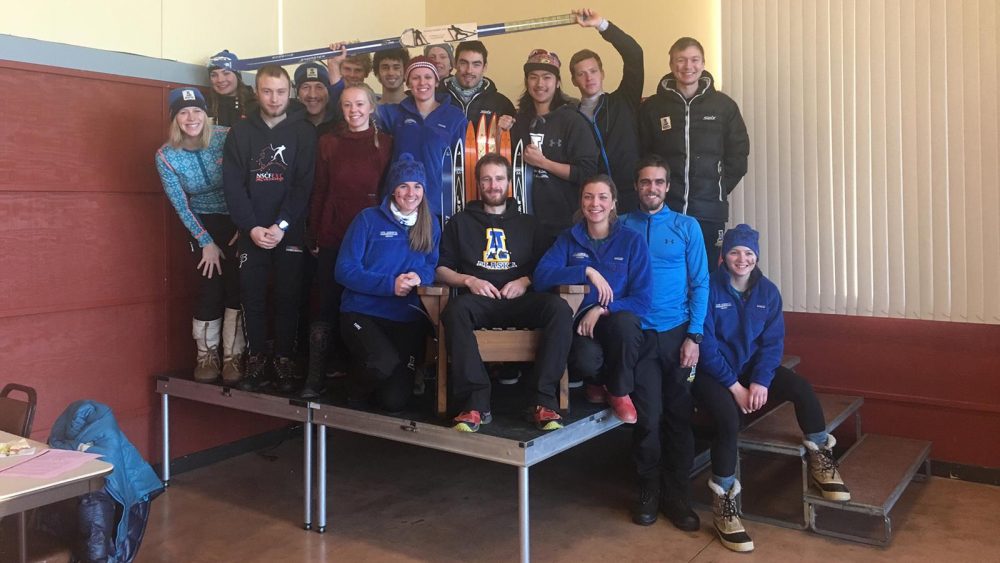
The University of Alaska Fairbanks ski team poses with the trophy for the Alaska Nordic Cup at Birch Hill Ski Area in Fairbanks, Alaska, on Nov. 20, 2016. (Photo: Nick Crawford/UAF Athletics)
Conditions were, as the athletes acknowledged, undeniably snow rather than ice (as on the Anchorage trails these days), but unfortunately not that much of it. Fairbanks has seen approximately five inches of total snowfall so far this winter. The impeccably maintained trails at Birch Hill meant that racers found a base of roughly two inches of compacted snow, with some leaves and sporadic dirt showing through, but no rocks. Most skiers in the FIS race competed on their prior-generation race skis.
Although the official high for the day at the Fairbanks airport was a barely FIS-legal 1° F (-17 degrees Celsius), temperatures at the relatively elevated Birch Hill were comparably temperate, hovering around 10° F (-12 C) throughout the afternoon.
At least in the sunlit stadium. Racing at Birch Hill on clear and cool winter days can be an oddly hellish experience. Not because it is unenjoyable – far from it; the trails are a delight to ski, and the snowy birch forest is sublimely beautiful– but because it evokes the sensation of voyaging into the underworld and back again. The stadium is in the sun, and elevated, and relatively warm; many trails drop down leaving the stadium, sending the skier into the realm of dark and cold. And so one goes from light to dark, sun to shade, warmth to cold, and back again with each new trail, the stadium become a modern-day Cumae (entrance to the underworld in classical mythology) and the skier Heracles or Odysseus, re-enacting the journey between worlds.
RMISA college racing resumes early next year with the Utah Invitational at Soldier Hollow on Jan. 7.
University of Alaska Anchorage skier Casey Wright skis in the Alaska Nordic Cup in Fairbanks, Alaska, on Nov. 20, 2016. (Photo: Max Kaufman)
Alaska Pacific University skier Jessica Yeaton skis the anchor leg of the winning relay team in the Alaska Nordic Cup in Fairbanks, Alaska, on Nov. 20, 2016. (Photo: Max Kaufman)
University of Alaska Fairbanks skier Alex Eckert skis in the Alaska Nordic Cup in Fairbanks, Alaska, on Nov. 20, 2016. (Photo: Max Kaufman)
University of Alaska Fairbanks skier Alex Eckert skis in the Alaska Nordic Cup in Fairbanks, Alaska, on Nov. 19, 2016. (Photo: Max Kaufman)
University of Alaska Fairbanks skiers Sarissa Lammers (464) and Hannah Rowland (462) ski in the Alaska Nordic Cup in Fairbanks, Alaska, on Nov. 19, 2016. (Photo: Max Kaufman)
Second-place finisher Alaska Pacific University skier Becca Rorabaugh approaches the finish line of the Alaska Nordic Cup in Fairbanks, Alaska, on Nov. 19, 2016. (Photo: Max Kaufman)
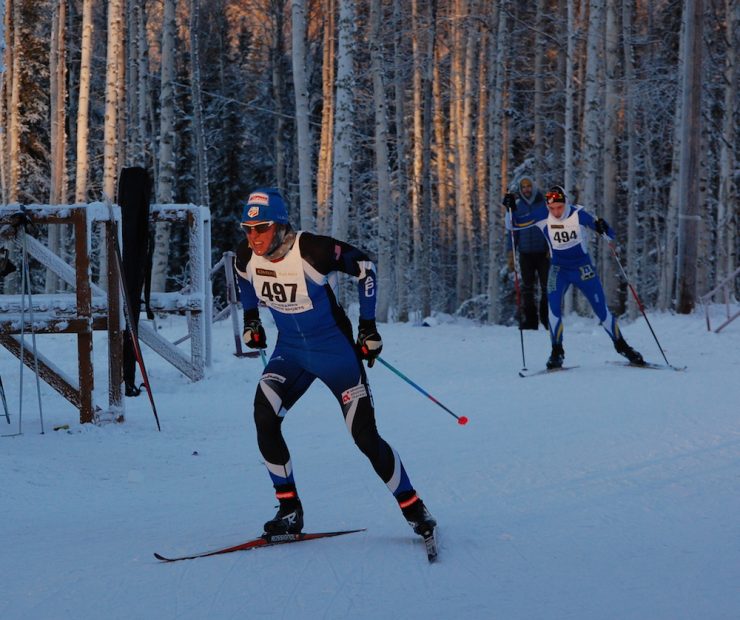
First-place finisher Alaska Pacific University skier Scott Patterson approaches the finish line of the Alaska Nordic Cup in Fairbanks, Alaska, on Nov. 19, 2016, ahead of UAF skier Max Donaldson (494). (Photo: Max Kaufman)
Alaska Pacific University skier David Norris skis the third leg of the winning relay team in the Alaska Nordic Cup in Fairbanks, Alaska, on Nov. 20, 2016. (Photo: Max Kaufman)
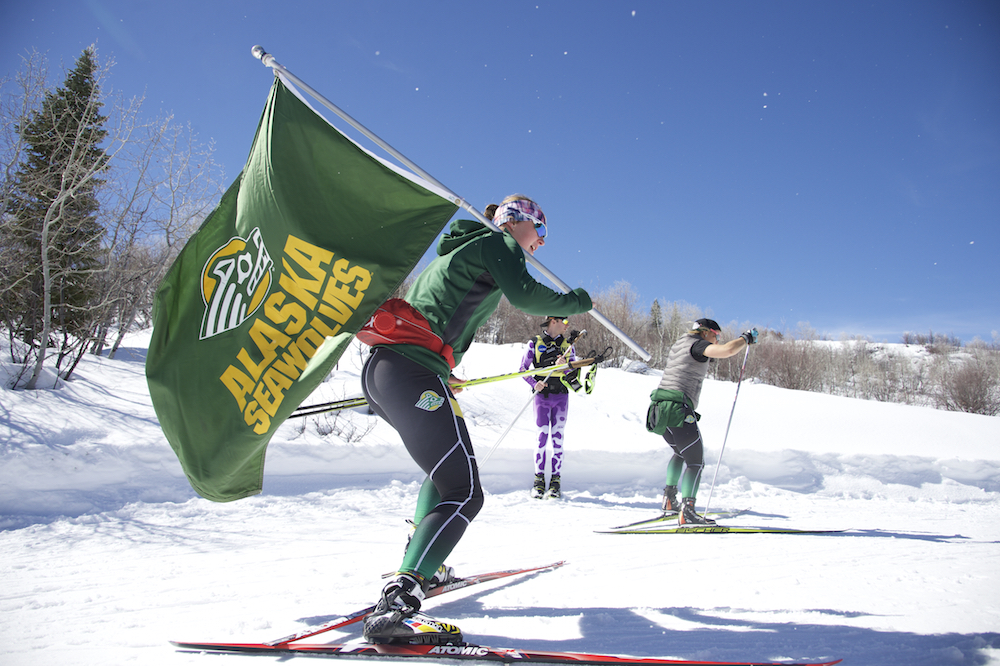
A University of Alaska Anchorage skier carries a Seawolves team flag at the 2016 NCAA Skiing Championships last March at Howelsen Hill in Steamboat Springs, Colo. (Photo: Jamie Schwaberow/NCAA Photos)
ANCHORAGE, Alaska – As the 2016 special session of the Alaska Legislature comes down to the wire, it’s clear that state funding for Alaska’s two National Collegiate Athletic Association (NCAA) cross-country ski programs is going to be substantially reduced as part of widespread cuts to the state university system.
But by exactly how much, and with what effects, and whether there will still be two NCAA ski programs in Alaska once the budget is finalized and the dust clears, are all still up in the air approaching the Wednesday deadline for the end of the session – and may not be resolved until several weeks after that.
That’s where things currently stand, according to representatives of the University of Alaska Anchorage and University of Alaska Fairbanks athletic departments and cross-country ski programs.
Background: Two NCAA programs, lots of oil money
The state of Alaska has two universities whose athletic programs have NCAA affiliation: the University of Alaska Anchorage (UAA) Seawolves and the University of Alaska Fairbanks (UAF) Nanooks. (The state’s other well-known cross-country ski program is affiliated with Alaska Pacific University, or APU, which is not an NCAA member school and does not receive direct state funding as controlled by the Alaska Legislature.)
UAA is a member of the Rocky Mountain Intercollegiate Ski Association (RMISA) along with eight other schools from the western half of the Lower 48.
UAF has historically been a member of the Midwest-based Central Collegiate Ski Association (CCSA), although it may be moving to the RMISA as early as next season, according to UAF Head Nordic Coach Nick Crawford. UAA has 13 varsity sports teams. UAF has 10.
Etienne Richard of the University of Alaska Anchorage at the 2016 NCAA Skiing Championships in Steamboat Springs, Colo. (Photo: UAA)
Historically, both programs have received funding from the University of Alaska system, and have produced successful skiers. UAA boasts six individual nordic championships in its history, and a steady string of All-American performances. UAF claims three individual championships. Both schools have sent skiers to NCAA Skiing Championships virtually every year since 1981.
The schools’ performances have not changed, but their state funding might. The State of Alaska has historically been flush with oil money. There has been no state income tax since 1980, there is no state sales tax, and the state famously – in the form of dividend payments from the state’s sovereign wealth fund, the Alaska Permanent Fund – pays people to live there. As recently as last fall, every qualifying citizen in the state received more than $2,000 dollars. The city of Valdez, Alaska, paid out $10,000 in total prize money for a January nordic ski race, drawing the money largely from taxes on the Trans-Alaska Pipeline, whose southern terminus is in Valdez.
But within the last two years, the price of Alaskan oil has plummeted, from (in round numbers) close to $100 per barrel to less than $50. Crude prices are now at a 12-year low. And 80 to 90 percent of state spending has historically come from oil revenues – with no state income tax or sales tax, and relatively few other industries in the state, there have been few other sources of funding. The result is that the state faces a yawning budget deficit, in an amount equal to at least two-thirds of its budget (maybe closer to three-fourths depending on the current price of oil), and few viable options for closing it.
The current session of the Alaska Legislature, which is set to close Wednesday, May 18, has been marked by several months’ worth of partisan dispute over the proper use of Permanent Fund revenue to help close the gap. And publications ranging from NPR to the Alaska Dispatch News (ADN) to The New York Times have documented Alaska’s extremely resource-dependent economy, and the resulting outsized effect of a fall in oil prices. “Oil money no longer pays the bills here,” one Times article began.
The effects of falling oil prices
In this economic climate, everything is on the table when it comes to balancing the state budget, including college sports. (For what it’s worth, it is fair to say that Alaska is hardly Alabama or Tennessee when it comes to college sports fandom. There are no college football teams in the state. College hockey has its fans, but UAA hockey often struggles to draw 3,000 fans in a 6,000-seat arena for its home games.)
The UAA athletic department has an annual budget of $10.5 million. As UAA Athletic Director Keith Hackett told a local television station earlier this year, “We could potentially have a reduction of $1.7 million and that would be about a third of our general dollars that we receive annually, so it’s a significant impact.”
A potential cut of $1.7 million to an overall budget of $10.5 million is a reduction of slightly more than 16 percent. This is the third consecutive year in which the UAA budget has been cut.
Manon Locatelli of the University of Alaska Anchorage double poles out of the start of the 2015 Seawolf Invite at Kincaid Park in Anchorage, Alaska. (Photo: Sam Wasson/Sam Wasson Photography)
As Hackett explained in a recent email to FasterSkier, “I was given my budget reduction amount on April 18 and it was confirmed to me on April 23.”
He stated that he and several athletic-department staff members have been working hard to implement cuts in the least painful manner possible.
“With a reduction of this size we have to look at vertical vs. horizontal reductions to minimize the impact on all teams and programs,” Hackett wrote. (He told the ADN that a “horizontal” cut is one that affects all sports to some extent, as opposed to a “vertical” cut, in which one sport is excised entirely.)
Hackett wrote to FasterSkier that he and his staff are “look[ing] at a wide range of criteria” in working out a reduced budget: “NCAA requirements, conference requirements, Title IX requirements, revenue and expense data, and how we can minimize the impact on all of our teams and Student-Athletes.”
The first three of these requirements, which are presumably non-negotiable if UAA would like to retain its NCAA status and/or its federal funding, are significant. As previously explained in the ADN, the school’s NCAA Division II membership requires a minimum of 10 sports, including at least two “team” sports per gender – that’s men’s and women’s basketball, women’s volleyball, and men’s hockey. And the school’s conference membership in the Great Northwest Athletic Conference means that UAA has to have five specific sports – basketball (men’s and women’s), cross-country running (men’s and women’s), and volleyball.
There’s some overlap there, but the math is clear: “That leaves seven UAA sports unprotected by NCAA and GNAC membership requirements,” the ADN reported. “Those sports are men’s and women’s skiing, men’s and women’s indoor track, men’s and women’s outdoor track, and gymnastics.”
Michael Friess coaches both men’s and women’s outdoor track, men’s and women’s indoor track, and men’s and women’s cross-country running. That’s an impressive six out of 13 NCAA varsity sports, and only one head coach salary. And two of those sports, men’s and women’s cross-country running, are “protected” by virtue of conference membership requirements.
No one is officially saying that this leaves UAA cross-country skiing particularly vulnerable – Hackett and his crew are still working on budget decisions, so there was no official statement on that matter. But UAA Head Nordic Ski Coach Andrew Kastning seems to have seen the writing on the wall.
In early April, Kastning wrote to several dozen members of the local ski community to help solicit support for his program. The email subject line was, “A chance to help the UAA Ski Team.” The recipients were a mix of local UAA ski alumni, club program directors, community supporters, and prominent local nordic Olympians. A copy of the email was shared with FasterSkier.
Kastning explained that falling oil prices had forced the state and university system to “look at making deep cuts to programs and services in order to balance the budget.” He continued: “I have been around long enough to know that this means bad news for ski teams, which are usually the first on the chopping block since we are not a mainstream sport, do not compete in the GNAC, and do not produce revenue.”
UAA’s Hanna Slotte racing at the 2015 Seawolf Invite in Anchorage. (Photo: Sam Wasson/Sam Wasson Photography)
In his email to potential supporters, Kastning requested, “please take a few minutes, and think of a short story, or experience as to why you are a better person thanks to your ski racing experiences in college, how being a part of our ski team helped you be where you are today,” and to write about this to the University president. He suggested that supporters communicate “that you sincerely hope he doesn’t narrow the opportunities of future student athlete ski racers from having the same experiences you did.”
On May 7, the ADN ran an article titled, ‘From Shootout to entire teams, UAA sports are under scrutiny as budget cuts loom.’ On May 9, Kastning again reached out to local supporters. “If you read [this article] then you already know that our ski team is not out of the woods yet,” he wrote, and again asked supporters to speak to university administration about “the value of Collegiate Skiing in Anchorage, Alaska.”
In an email exchange with FasterSkier, Kastning initially declined to comment: “I’m going to delay answering these questions until we know exactly what will happen,” he wrote, referring to the state budget situation and funding for the program.
Kastning later emailed a more detailed statement: “We have been given every indication from our Athletic Administration to move forward with plans for next year. I have six true freshman women and two freshman men arriving on campus next fall and am extremely excited to begin working diligently with them all to become the best college skiers in the country. Though the budget crisis in Alaska will certainly have its effect on all state programs, the future of the UAA Ski Team is strong provided we are given the resources to compete.”
Timeline for budget decisions
It is currently mid-May. The Alaska Legislature is required to finish its session by Wednesday. There will be no final budget set until that time, but it seems safe to assume that, whatever happens, funding for the state university system is not going to be increased in the final version of the budget, nor will new funding sources suddenly arrive to make up for the yawning gap in oil revenue.
Different parties have different understandings of the timeline for budget decisions and potential program reductions or cuts. As Hackett wrote, he had a confirmed budget reduction amount in hand as of April 23 (and has since been working on how to implement a reduction of that amount). For his part, Kastning wrote, “We have heard that a final answer will be given on or after May 20th.”
The next University of Alaska Board of Regents meeting, meanwhile, will be held June 2-3 in Anchorage. The Board of Regents has stated that it will hear an update from Strategic Pathways, a university-wide efficiency and cost-reduction study, and approve the 2017 Fiscal Year budget at that meeting.
Hackett also noted the “New fiscal year begins on July 1. Decisions need to be made in advance of the new FY [fiscal year].”
The 2017 conference schedule for RMISA member schools has not yet been posted.
Relative security in Fairbanks
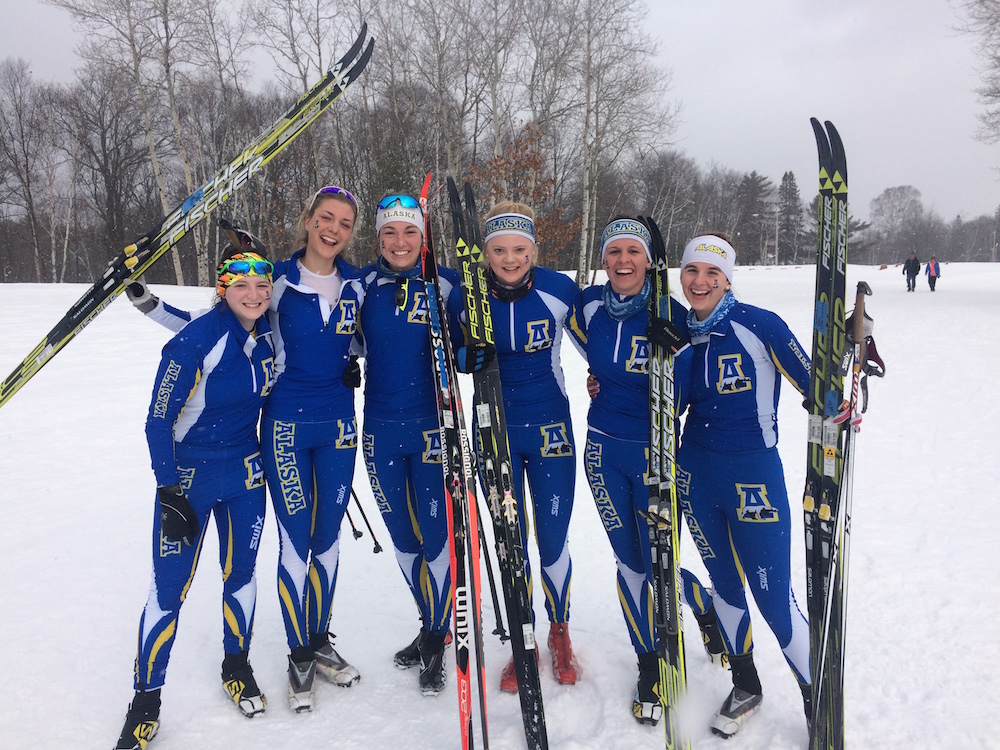
University of Alaska Fairbanks women’s nordic-team skiers pose for a photo last season: (from left to right) Hannah Rowland, Anne-Tine Markset, Nichole Bathe, Martina Himma, Ann-Cathrin Uhl, and Sarissa Lammers. (Photo: Nick Crawford)
Three hundred miles to the north, Nick Crawford, coming off his first season as UAF’s cross-country skiing and running head coach, feels relatively secure about the safety of his program.
“Our team security might be a little stronger than UAA’s,” Crawford said in a recent phone interview with FasterSkier. Indeed, Crawford said, while UAF is hardly immune to the budget pressures that are squeezing the UAA athletic department, “we’ve been assured that it’s business as usual through 2017.”
The biggest reason for Crawford’s equanimity is simple math: a school must offer 10 varsity sports to have NCAA member status. (The rule is widely understood as preventing a school from offering solely the two revenue sports of football and basketball, and so requiring them to effectively subsidize a broader range of offerings across other, non-revenue sports.) UAA currently has 13, and so, in blunt mathematical terms, has some sports to spare. UAF only has 10 varsity sports. To cut any of them would be to deny NCAA status to the school’s Division I men’s hockey team (as well as all other teams).
As Crawford noted, “With the 10-sport minimum that we’re at, we’re in a fundamentally different place than they are [in Anchorage]. If we go, the whole athletic department goes.”
Crawford also pointed out that, of the school’s 10 sports, “I’m head coach for four of them,” that is, men’s and women’s cross-country running and cross-country skiing. Crawford further stated that UAF has already “been hit much harder by athletic department cuts than Anchorage has,” including a recent 30 percent reduction in ski scholarships, and he felt fortunate that the cut allocated for this year “is not terribly severe.” He said that UAF already receives much less state aid for athletics than UAA: “We’re already operating a lot more cost-effectively for the state, so to speak,” than UAA is.
Crawford cited an independent outside consultant’s report from January 2016, which concluded that “UAF athletics is already far exceeding peer group institutions in terms of generated revenues, and is realistically close to reaching capacity” (this is largely a reflection of the popularity of men’s hockey within the Fairbanks community).
The report also stated, with regard to UAF’s 10-sport minimum for NCAA status, “UAF currently is sponsoring the minimum number of sports. While it would be possible to modify UAF’s sports, realistically the current offerings make the most sense. Eliminating men’s ice hockey is a logical topic for debate given its cost, but as is discussed later there would be significant negative consequences as well.”
As the report’s executive summary concludes, “Given the financial climate in the state of Alaska, it is understandable that there is necessary budget impact for intercollegiate athletics at UAF. However, given the reductions that have already been executed, it is hard to identify additional sources of savings without severely incapacitating the athletics program.”
(A comparable outside consultant report does not seem to exist for the UAA athletic department. This does not necessarily mean that UAA likewise would not be hard pressed to “identify additional sources of savings without severely incapacitating the athletics program.” UAA has also experienced cuts to its athletic department budget in recent years.)
Premature eulogies?
It is important to emphasize that no final decisions have been made about the Fiscal Year 2017 budget, for either the University of Alaska system as a whole or the UAA athletics department specifically. But, as Kastning wrote to supporters, ski teams “are usually the first on the chopping block.” It seems fair to say that there is at least the potential that the UAA nordic ski team will not exist in a few years, or will perhaps exist in a greatly reduced form.
Crawford, the UAF coach, would not welcome such a development. It would be “really unfortunate” if the UAA program were cut, Crawford said. “One thing that’s really hard about these sort of things is, they take a long time to come back. It may be a short-sighted cost reduction … to make a cut like this, but it takes a long time to return to what we have now.”
The first words out of Crawford’s mouth in last week’s phone interview were, “We want UAA to have a team – it’s mutually beneficial to have both teams in Alaska.” Crawford cited the Alaska Nordic Cup, a low-key November weekend race series between the two schools held in Anchorage and Fairbanks in alternating years, as “a great example of why we value having another team in Alaska.” That’s “just a really healthy example of our collaboration between the two teams,” Crawford noted.
As Crawford noted, the “best case scenario for everyone is that athletics remains where it is right now, with the same state funding that it’s had.” Barring that, Crawford suggested that he would prefer to see a joint nordic program operating out of just one school before either school’s ski program got cut entirely, although he made clear that he thought the state of Alaska could support two NCAA programs.
The perennial question of the appropriate role of college skiing
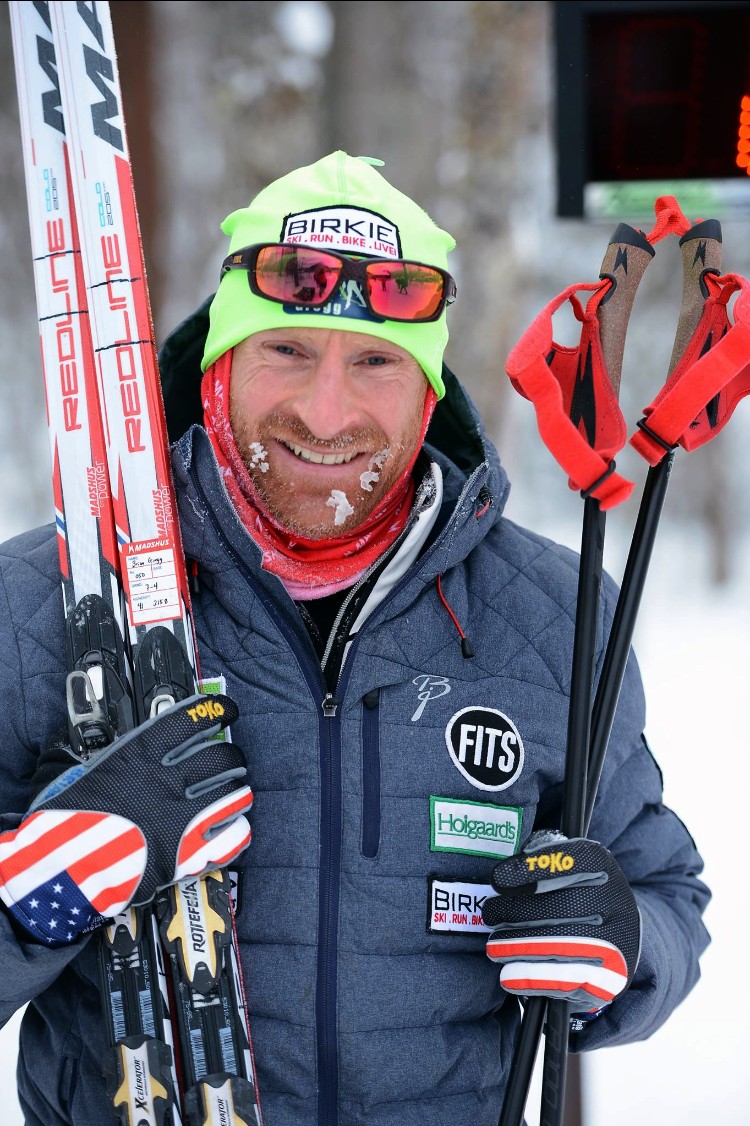
Brian Gregg, a 2014 U.S Olympian and former University of Alaska Anchorage skier, at the Seeley Hills Classic last winter. (Photo: Once in a Blue Moon Studio/Kelly Randolph)
Brian Gregg, a 2014 Olympian and three-time SuperTour distance champion, is one of the more prominent alums of the UAA ski program. When asked whether he would like to answer some questions about what UAA skiing had meant to him, Gregg promptly responded with a 600-word email titled, “UAA Ski Team, a vital part in my pathway to the Olympics.”
Gregg states that UAA played an integral role in his own personal and athletic development. “When I was 15 years old I wrote down my dream of representing the USA as an Olympic ski racer,” Gregg wrote. “I loved skiing, I loved working hard, unfortunately I wasn’t super fast… yet. I transferred to UAA at the beginning of my Junior year and my ski career began to take off. Where I had thought that I was training hard, smart and consistent my coaches and teammates helped open my eyes to the actual work and preparation to become a great skier. I went from fighting my way from being one of the last three finishers at NCAA as a freshman to finishing in the lead pack my Senior year at UAA. UAA helped to teach me the tools and steps needed to turn my dream into a focused goal and an eventual reality.”
Gregg also praises the education he received at UAA, explaining that studying business management prepared him for his current job of managing the two-member Team Gregg.
“Although I am now based in Minneapolis, my bond with Alaska will never break,” he wrote. “I enjoy returning to the state for vacation, racing, and an annual trip to teach cross country skiing for a week in the villages” with the Skiku program.
Gregg believes that it is important to have an NCAA ski program in Anchorage alongside APU.
“Cross country skiing is one of the largest sports in Alaska. With winter arriving early and departing late, Alaska is an ideal place for cross country skiing,” he wrote. “It is important for their to be multiple high level programs in the state as it fosters a healthy competition. The strengths of the programs will ebb and flow. In the early 2000s the UAA team was actually stronger that the APU team and now the APU team is arguably the strongest program in the country. That being said, many of the athletes and staff were students at UAA and several were first exposed to Alaska through their decision to study at UAA.”
(The Bjornsen siblings are two of the more prominent athletes who initially skied for UAA before transferring to APU. Both are current members of the U.S. Ski Team.)
Perhaps unsurprisingly, in light of his personal background (not only did Gregg ski collegiately for UAA, his wife, Caitlin Compton Gregg, skied for Northern Michigan University), Brian believes in the importance of a vibrant NCAA ski program in this country.
“NCAA skiing is a huge opportunity that we have for the development of ski racing in the United States,” he wrote. “Some of the college programs have budgets that are greater than the National teams. Cross country skiing is a sport which requires time to develop. For many skiers, myself included, the path to success requires multiple years of training and commitment. The collegiate system is a way to build that training volume and the training years while also preparing yourself for a career beyond athletics.”
Finally, on the enduring question of the significance of American nordic roster spots often being filled by exchange students from Nordic countries, Gregg explains that he sees the benefit: “When I first began looking into US NCAA programs I found it frustrating the number of foreign athletes. My opinion on this changed quickly though when I realized the tremendous benefit of having different people, thoughts and cultures come together with a common goal. I learned so much about ski racing and life from my foreign teammates. One of the best parts about college is the gathering of many different views and thoughts.”
Back in Alaska, Crawford had similar sentiments.
“College skiing is a huge development pipeline,” he said. “The recent article on Ian Torchia made me smile — I really agree with this. … I think what we’re seeing is our World Cup skiers, more and more as a percentage, are going to college, doing NCAA skiing first.”
Alternate funding sources?
The many virtues of college skiing notwithstanding, it seems fair to say that it is not going to become a revenue sport like football or basketball any time soon. In that light, the fact that the USA Triathlon Foundation recently committed $2.6 million in seed money over several years to help develop triathlon as an NCAA sport came as some interest.
(There are currently eight schools with burgeoning NCAA-affiliated triathlon programs, currently all for women only; college triathlon was funded through the NCAA “emerging sports program … created to help schools provide more participation opportunities for female athletes”). If at least 40 schools sponsor triathlon within the next decade, it can become an NCAA championship sport.)
Luke Bodensteiner, the U.S. Ski and Snowboard Association (USSA) executive vice president for athletics, applauded these efforts of the USA Triathlon Foundation, but clarified that no comparable source of money exists for collegiate skiing under the USSA umbrella.
“There’s not a bucket or category of funds [within USSA] that would be allocated specifically for NCAA programs,” Bodensteiner told FasterSkier in a recent phone interview. “I would suspect that those are monies that are unrestricted, and that could be spent in any way.” And, Bodensteiner explained, USSA does not have a comparable source of funds.
“I suspect that triathlon undertook this [initiative] with an eye to developing a talent pipeline [for the pro ranks],” Bodensteiner added. He clarified that, “USSA has taken a pretty big interest in NCAA athletes in general.” For example, he said, it has “hired a new liaison, whose role is mostly in optimization of the NCAA athletes, to allow athletes to train and compete” more effectively.
Next steps
While the specifics remain up in the air, some things seem apparent at this time: Alaska Permanent Fund revenue will have to be used to make up much of the state-budget deficit; the UAA athletic department is going to see its budget reduced in some amount; cross-country skiing is generally more vulnerable at UAA than at UAF because UAF cannot cut any varsity sport without losing NCAA status for all sports.
FasterSkier will publish updates on this story as they become available.
***
Full disclosure: The author took math and science courses at UAA in the late 1990s; this was to bolster his high school curriculum, and he has never attended UAA as a full-time student. Also, the author skied in the November 2015 Alaska Nordic Cup Invite as a member of an open relay team not affiliated with either UAA or UAF.
Nick Crawford, 28, who headed the Bogus Basin Nordic program as well as the Lathrop High School ski team, will assume the role of head coach of the University of Alaska Fairbanks nordic and cross-country running teams in July. (Courtesy photo)
After a four-year hiatus from Alaska, Nick Crawford is returning to Fairbanks to take over as the new head nordic and cross-country running coach at University of Alaska Fairbanks (UAF).
Originally from Hawley, Mass., Crawford skied for Bowdoin College in Brunswick, Maine, and spent two years in Fairbanks from 2009 to 2011 as the assistant coach for Fairbanks Cross Country and head coach at Lathrop High School. While at Lathrop, he coached Logan Hanneman to the Alaska state Skimeister title in 2011. Hanneman swept the individual freestyle and classic races that year.
Crawford, 28, recently finished a master’s degree in exercise science from Boise State University and applied for the opening at UAF in April. In addition to his studies, Crawford was head coach and program director of the Bogus Basin Nordic Team in Boise, and oversaw its youth ski programs.
“This is really perfect timing for me to return to Fairbanks because it’s a place I really love to be a skier, an excellent community and a fantastic program with Alaska Nanooks,” Crawford said in a phone interview last week.
The coaching position opened suddenly, as Scott Jerome, head coach of the Nanooks’ nordic and cross country teams for 10 1/2 seasons, was put on administrative leave shortly before the 2015 U.S. Cross Country Championships took place in January. His contract expires June 30 and will not be renewed.
Citing confidentiality policies regarding personnel, UAF officials did not comment on the circumstances surrounding Jerome’s departure. In January, UAF spokeswoman Marmian Grimes told the Fairbanks Daily News-Miner that his leave was not a result of NCAA eligibility sanctions placed on UAF last November.
“It’s not related to the past NCAA violations; it’s not new violations that prompted this issue,’’ Grimes said. “It was just us [UAF] needing to go in a different direction with coaching for these teams.”
During his senior season on the team, Jonas Lӧffler told the Nanooks’ Sun Star in February that the skiers themselves vocalized a need for a leadership shift.
“We athletes were involved in the whole process of Scott leaving. We were the initial people to say we needed change,” Lӧffler said.
Scott Jerome, former head coach of the UAF cross-country running and nordic teams. (Photo: UAF.edu)
Jerome was one of several switchups in the UAF athletics department. Also this past winter, volleyball head coach Mallory Larranaga was let go after two seasons “following the self-reporting of violations of NCAA rules on Jan. 13,” according to the Star.
“There are many rumors swirling on why Larranaga was fired on Feb. 12, from the less than stellar record of 7-48, to the NCAA violations that happened with a recruit this past summer [of 2014], which included the filming of visits and practices,” the Star stated.
As of mid-May, UAF was looking to fill the vacancies left by its outgoing women’s basketball assistant coach Greg Bruce, who retired in April after 30 years with the program, and sports information director Drew Desrosiers, who planned to step down when his contract ends June 30, the News-Miner reported.
Jerome, 44, coached 17 All-Americans, including Marius Korthauer, who became the Nanooks’ first national champion at 2008 NCAA Skiing Championships in the men’s 20-kilometer classic race.
More recently in 2014, senior Max Olex placed second in the 20 k freestyle at NCAAs and Nichole Bathe finished fourth as a freshman at the championships. Before joining UAF in 2004, Jerome spent four years heading the nordic and cross-country teams at Gustavus Adolphus College in St. Peter, Minn.
In an email to FasterSkier, Jerome wrote that he was still in Fairbanks and had “begun a PhD program in biochemistry at UAF focusing on human performance, specifically overtraining syndrome.”
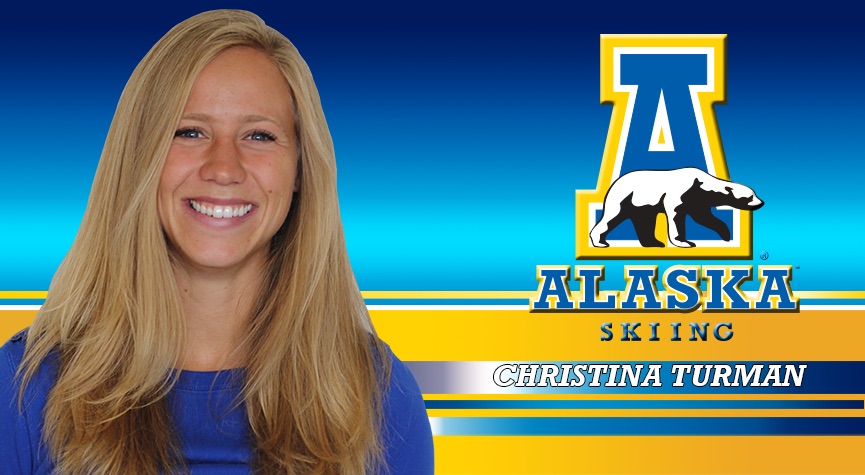
Following his departure in January, assistant nordic coach Christina Turman took over as interim head coach, with support from Josh Eide, of Marquette, Mich. She will remain in the position until Crawford officially starts in July.
Christina Turnman came on as UAF assistant nordic coach in 2013. (Photo: UAF.edu)
Turman, 27, did not apply for the head-coach position, but said she felt pressure from university’s administration, friends, family, and athletes to do so. She explained she preferred to remain an assistant, to work and learn under someone else to develop as a coach while preserving time for her family. She will remain assistant coach.
“I’m delighted to have her stay on,” Crawford said. “I think the program has done really well under her tenure as interim head coach. I look forward to working with her. ”
For Turman’s part, she’s excited for the future of the team.
“I think the future is bright. I’m excited to be back with the program for a third season next year, we have some really solid returning athletes and some good ones coming in,” she said in an interview in her UAF office. “There’s no reason UAF shouldn’t have one of the most competitive teams in the nation. We have the resources, we have the trails, we have the climate for it, so I look forward to continuing to be with the program and watch it build and become more and more successful.”
“There’s no reason UAF shouldn’t have one of the most competitive teams in the nation.” — Christina Turman, assistant coach entering her third season with the UAF nordic team
UAF has a young team, with most of its returning women being either sophomores or juniors, and a lot of depth in the men’s team as well. This season, they picked up incoming freshmen Max Donaldson, three-time Alaska state Skimeister and 2015 Junior National champion. Turman coached him while head coach of West Valley High School before starting at UAF.
As for Crawford, he said that he is joining a successful program and doesn’t want to change too much too soon. Both he and Turman said that they have already discussed working together on what to tweak and what to keep the same in order to continue to build on the Nanooks’ success.
“You really want to make sure you have a good philosophical fit with the program,” UAF Athletics Director Gary Gray said in an interview at UAF, referring to Crawford. “It’s also important – this happens sometimes – we’ll hire someone from the lower 48, and in a year they’re homesick. And that’s not completely unusual. So it’s trying to find someone that is that right fit, of someone that we think is going to give that stability to the program.
“Things that attracted us to Nick included his familiarity with this community,” Gray continued. “He has coached here, he has recruited here. He had some successful results with his club program in Boise. … The fact that Nick has been here before and was part of this community, that seems to speak well of his fit to Fairbanks.”
“The fact that Nick has been here before and was part of this community, that seems to speak well of his fit to Fairbanks.” — UAF Athletics Director Gary Gray
Crawford is also a close personal friend of FasterSkier’s former editor, Nat Herz, who also skied for Bowdoin.
“Nick’s decision not to use me as a reference has clearly paid off again,” Herz wrote in an email. “I look forward to testing his mettle when we both race in next year’s Oosik Classic in Talkeetna. Also, his athletes should ask him about that time he tried — and failed — to complete the gallon challenge when we were in college together.”
UAA junior Mackenzie Kanady led the Seawolves on Day 1 with a individual win in the women’s 5 k freestyle mass start on Saturday. (Courtesy: Sam Wasson/UAA Athletics)
The University of Alaska Anchorage (UAA) nordic team pulled the interstate/intercollegiate upset of the last half a decade on the University of Alaska Fairbanks (UAF) on Sunday, winning the Alaska Nordic Cup — which belonged to UAF for the last two seasons.
The championship was held over a two-day span at Birch Hill Recreation Area, where UAA took a 25-second lead after Saturday’s 5- and 7.5-kilometer freestyle mass-start races. On Sunday, the Seawolves won the women’s sprint relay and took second in the men’s relay to extend the margin to 39 seconds for their first Nordic Cup win since 2011, according to the Fairbanks Daily News-Miner. It was UAA’s third time capturing the title. The Nanooks have won seven of the last 11 years.
Logan Hanneman (l) and Hallvard Evjestad partnered to win the men’s relay on Sunday at the 2014 Alaska Nordic Cup. (Photo: UAF Athletics/AlaskaNanooks.com)
“It was a very good day of racing by both teams today,” UAF Head Coach Scott Jerome said in a university press release. “Our team gave it our best shot and had a relay win today which was great. I’m really proud of our effort.”
The Seawolves combined for a winning two-day time of 3 hours, 5 minutes, 36.7 seconds, while the Nanooks finished in 3:06:15.7. UAF leads the all-time series with 7 wins, 3 losses and a tie.
UAF’s Hallvard Evjestad, a freshman from Norway, notched back-to-back wins in Saturday’s 7.5 k skate and with Logan Hanneman in Sunday’s 6 x1.4 k k relay. UAA’s top men’s relay, Clement Molliet and Mario Roncador, finished about 2 seconds back in second.
Mackenzie Kanady led the Seawolves to a win in Saturday’s skate race and teamed up with Kathrin Schratt to top the women’s relay on Sunday. UAF’s Anne-Tine Markset, who was second on Saturday, and Nichole Bathe placed second in the relay, about 7 seconds back.