From the FasterSkier archive — posts syndicated from athletes’ and coaches’ own blogs between 2004 and 2012, kept online as published. Current coverage is at fasterskier.com.
That was a banger. We’re deep into the Olympics now, and Devon and Nat return for the third straight night to recap the women’s relay. One more race — the Norwegian men versus the world — and then everyone gets two days off.
Reach us at devon[at]fasterskier.com and nat[at]fasterskier.com. We’ll be back tomorrow.
A reminder: This is a homegrown podcast done by two guys working long hours and late nights. We’re also paying real money to be here in Italy. If you can, support the show and FasterSkier’s ongoing coverage with a voluntary membership. We’re also offering a bonus during the Olympics: a WhatsApp group with notes on Nat’s experiences in Italy, the food he’s eating, interview transcripts and more.
Send nat[at]northernjournal[dot]com a confirmation of your voluntary membership and the number he should use for WhatsApp and we’ll get you signed up. You can also Venmo him directly at @nat-herz if a membership isn’t for you. We’re suggesting a minimum of $10, but we also won’t turn anyone away who wants to join because of an inability to pay.
Help Support Our Olympic Coverage!
FasterSkier will have our own Nat Herz on the ground at the Olympics, which, to be honest, is a very big financial lift for us. If you value the thoughtful work and access FasterSkier provides at championships like this one, please consider becoming a Voluntary Subscriber. Your support directly fuels the work we do to cover the people, places, and moments that make our sport special.
The one Jessie Diggins was waiting for: Nat and Devon were both on hand for the Olympic 10-kilometer freestyle and have this recap. It gets pretty heated! But in a good way.
We’ll be back tomorrow after the showdown between Johannes Klaebo and Einar Hedegart in the men’s race. Nat wrote a profile of Klaebo-killer Hedegart — the biggest threat to what could otherwise be a golden sweep of the Olympics by the cross-country skiing king.
Reach us at devon[at]fasterskier.com and nat[at]fasterskier.com. We’ll be back tomorrow.
It’s really expensive to be here in Italy. If you can, support the show and FasterSkier’s ongoing coverage with a voluntary membership. We’re also offering a special bonus to our members during the Olympics: an insider’s WhatsApp group featuring notes on Nat’s experiences in Italy, the food he’s eating, links to international coverage of cross-country skiing and more. Send nat[at]northernjournal[dot]com a confirmation of your voluntary membership and the number he should use for WhatsApp and we’ll get you signed up. You can also Venmo him directly at @nat-herz if a membership isn’t for you. We’re suggesting a minimum of $10, but we also won’t turn anyone away who wants to join because of an inability to pay.
Help Support Our Olympic Coverage!
FasterSkier will have our own Nat Herz on the ground at the Olympics, which, to be honest, is a very big financial lift for us. If you value the thoughtful work and access FasterSkier provides at championships like this one, please consider becoming a Voluntary Subscriber. Your support directly fuels the work we do to cover the people, places, and moments that make our sport special.
The bad news? Devon is indisposed and isn’t here for the Olympic preview podcast. As a consolation: We have a great guest in Philip Gadd, a sports reporter with the Swedish tabloid Expressen.
Philip takes us through his new podcast about Frida Karlsson and Ebba Andersson’s rivalry, the feast and famine of Sweden’s women’s and men’s teams, and other Olympic predictions. You can read about his dystopian experience in an isolation hotel at the last Olympics here. (Spoiler alert: He eventually got out.)
Reach us at nat[at]fasterskier.com and devon[at]fasterskier.com. We’ll be back after tomorrow’s race.
Help Support Our Olympic Coverage!
FasterSkier will have our own Nat Herz on the ground at the Olympics, which, to be honest, is a very big financial lift for us. If you value the thoughtful work and access FasterSkier provides at championships like this one, please consider becoming a Voluntary Subscriber. Your support directly fuels the work we do to cover the people, places, and moments that make our sport special.
Climate activist and author Bill McKibben joins the show this week to recap some surprising results in Davos, including standout performances from a pair of Vermonters.
We’re hoping to land some interviews before the Tour de Ski kicks off, and we’ll be back with more recaps once racing resumes. Reach us at devon[at]fasterskier.com and nat[at]fasterskier.com.
We’re back to recap three days of racing in Trondheim and for Devon to eat some of his words from last weekend’s podcast.
We’ll have more after the World Cup swings to Switzerland this weekend. Reach us at devon[at]fasterskier.com and nat[at]fasterskier.com, and if you’re interested in supporting the podcast, visit fasterskier.com/support and email matthew[at]fasterskier.com with inquiries about ads or sponsorship.
Love Stories Like This? Help Keep Them Coming.
Feature stories like this one take time, access, and care to produce. If you value thoughtful storytelling and independent ski journalism, please consider becoming a Voluntary Subscriber. Your support directly fuels the work we do to cover the people, places, and moments that make our sport special.
This reporting costs money. Please support this coverage with a voluntary subscription (below) so FasterSkier can provide this level of access to the sport we all love year-round.
This reporting costs money. Please support this coverage with a voluntary subscription (below) so FasterSkier can provide this level of access to the sport we all love year-round.
Goms! These races, in Switzerland, were unambiguously awesome. Wipeouts, sun, fondue, North American podiums and breakout performances. And an Alaskan guest who watched the races firsthand.
We really went above and beyond the call of duty this week — we’ve got sounds from the side of the trail and even a profanity-laced tirade from Devon if you stick it out to the end of the show. We’ll be on scene at the next round of World Cups, which are in a couple of weeks in Canmore, Alberta.
A sincere thank you to everyone who’s generously pitched in to support us over the past few weeks. Email us at devon@fasterskier.com and nat@fasterskier.com. We’ll be back soon.
Did Devon Kershaw once jump over a cattle guard, on rollerskis, at 40 miles an hour? Is a seven-and-a-half hour classic ski a wise choice in the middle of the racing season? Where are Tiril Udnes Weng and Simone Mocellini?
These are among the many questions Devon and Nat fielded during the 2024 edition of the show’s yearly mailbag episode. We had fun with your submissions; we hope you enjoy our answers. Email us more questions and feedback at nat@fasterskier.com and devon@fasterskier.com. We’ll be back after this weekend’s races.
The Iowa caucuses were this week, and on this edition of The Daily, we have a recap of the results with our political correspondent, Reid Epstein.
Wait, sorry, we got confused. This is still a cross-country skiing podcast. But this is, in fact, the crossover xc-politics content you’ve been waiting for. Epstein, a friend of the pod who is really a political correspondent for the New York Times, interviewed Jessie Diggins a few days ago to get her perspective on finishing second place when it’s really gosh darn cold — which, apparently, is an appropriate analogy for the big story of this year’s Republican Iowa caucuses. So since we couldn’t get Diggins on the podcast this week, we thought it would be fun to hear from Epstein, instead.
If you hate this, or hate us now, we’re sorry, but we actually think this was pretty fun. We’re posting a mailbag episode at the same time for those of you who want vanilla ski racing content. Send us your hate mail, race predictions (World Cup or GOP primary) and feedback at devon@fasterskier.com and nat@fasterskier.com.
They’ve reached the summit — the athletes, have, anyway. Devon certainly has not, thanks to frozen pipes in his Oslo apartment. He and Nat persevere to bring you the recap of this year’s final Tour de Ski stages, which featured some spicy and sloppy racing in Italy. Stay tuned til the end for an ode to Le Gruyère cheese.
Next week, during the break from the World Cup, we’ll have a mailbag episode. Send us your questions at nat@fasterskier.com and devon@fasterskier.com. Have a great week.
Eli Brown, a member of the U.S. Ski Team’s waxing and ski service staff, joins us this week to talk about his job and the new enforcement of the rules banning fluorocarbons on the World Cup circuit. We recap another strong weekend for American athletes, along with all the hijinks that happened in Trondheim, Norway at the test event for next season’s World Championships.
The World Cup takes a break next weekend before the Tour de Ski, but we may try to squeeze in a mailbag episode. Send us questions if you’ve got ’em. Reach us at nat@fasterskier.com and devon@fasterskier.com.
Multiple U.S. podiums. Near-misses. Coaches barging into the classic track. This past weekend was pretty fun. We get up-and-coming Alaska star Luke Jager to join us for a recap and go through it all.
Reach us with your questions, comments and feedback at devon@fasterskier.com and nat@fasterskier.com. We’ll be back next week after Trondheim.
American skier Rosie Brennan is second in the World Cup standings right now, after a double podium in the season’s first weekend of racing. She’s a veteran with numerous podiums to her name and top-fives at championship events. Brennan joins us from Sweden to talk about her hot start to the season.
Check out our past coverage of Brennan’s career here. Reach us at devon@fasterskier.com and nat@fasterskier.com. We’ll be back after this weekend’s races.
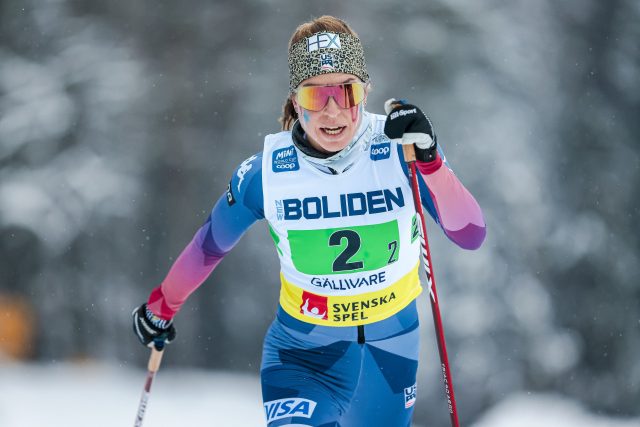
Rosie Brennan’s classic technique continues to evolve. Her refinements helped her find her first classic race podium. Photo: NordicFocus)
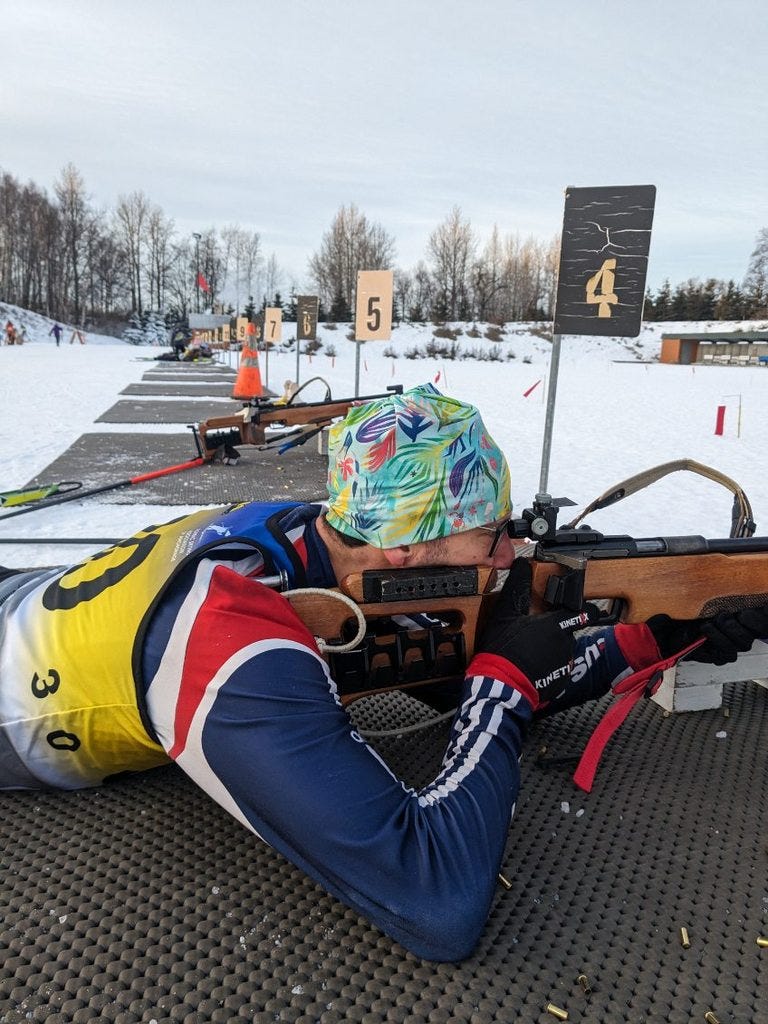
You miss every shot that you don’t take. (Photo: Courtesy John Farra, U.S. Biathlon Association)
A tale of how I skied faster than Kikkan Randall for exactly five minutes and 39 seconds until I got tired and she hit more rifle targets than I did.
Once upon a time, I was a serious, though definitively not successful, cross-country skier. I raced for my college team in Maine, then kept at it afterward and one time finished 17th (I think, I can’t find the results any more) at the Tour of Anchorage, which is just good enough to sound kind of impressive to folks who don’t know much about cross-country skiing and also quite clearly unimpressive enough as a high water mark for my career that it doesn’t feel too immodest to share.
Then, I developed a heart arrhythmia, atrial fibrillation, that seemed to be associated with intense and extensive exercise, so in 2018, I quit racing and intense interval training, started reading more books and generally began living a more balanced life. (If anyone wants to talk about how developing a serious-if-not-life-threatening medical condition can actually be life-changing in positive, not just negative ways, I am here for it.)
Anyway, I still try to exercise every day, but I don’t really compete any more. Except when something reallllllllly enticing comes along, like an email I got this week from Rachel Steer.
Rachel, if you don’t know her, is one of those Professional Anchorage People Who Just So Happened To Also Compete At The Olympics Back In The Day. (Seriously, you can’t walk into an engineering firm here without tripping over them.)
Rachel was once an international caliber biathlete, racing at two different Olympics, in 2002 and 2006. Today, we’re both members of a little group that meets on a weekly basis for interval training — I don’t really go any more, I just read the planning emails — and on Wednesday, she sent out a message about a “low-key local biathlon race” on Sunday.
“I’ve convinced Kikkan to do it with me,” Rachel said. “I know there’s a few of you on this list who are former biathletes (or who would like to give it a try). THIS IS YOUR CHANCE!”
If you live under a rock, or outside of Alaska, “Kikkan” is Kikkan Randall, another one of those PAPWJSHTACATOBITDs (Professional Anchorage People Who Just So Happened To Also Compete At The Olympics Back In The Day). She also owns a gold medal from the 2018 games in South Korea.
The idea of jumping into a race with Rachel and Kikkan, involving skis and guns, even though I hadn’t trained for it, sounded pretty fun. So I said yes.
A quick primer on biathlon: It alternates laps of a cross-country ski course with shooting at targets, 50 meters away, with .22 rifles. Missing a target, depending on the specific race format, puts you at a disadvantage by either adding a minute to your overall time, or requiring you to ski a short extra “penalty lap” that’s tacked on to the regular course. The beauty of the sport is its balance between fast and slow — the speed and brute force of racing paired with the stillness and fine motor skills of shooting. Think running a mile as fast as you can, then trying to thread a needle.
A memorial Viking runestone featuring a “possibly Ullr” figure with skis and a bow. (Photo: Berig/Creative Commons license)
The sport, of course, has its roots in Scandinavia, “where early inhabitants revered the Norse god Ull as both the ski god and the hunting god,” according to Encyclopedia Britannica. Ull’s goddess wife, Skadi, “was also celebrated as a hunter-skier” — making her, apparently, the first in a long line of badass female biathletes — and the “combined skills of skiing and marksmanship were first developed by the region’s militaries,” Britannica says. The first recorded competition was in 1767.
TL;DR, it’s Viking shit. Except the sport has evolved: Athletes now race with carbon fiber rifles on their backs, star in Swedish reality television series and perform in front of thousands of (often drunk) spectators and for millions of European fans watching on TV.
What’s not to like?
So, on Sunday morning, I woke up, pulled out my college racing spandex and drove to Kincaid Park, where I met up with Rachel, Kikkan and a handful of other adults for a rifle safety training with a bevy of friendly, energetic volunteers from the Anchorage Biathlon Club.
One of the first questions I got, when I arrived: Have you ever done this before? Once, I said, when I was just out of college. No one was wounded, I quipped, which prompted pained smiles from the safety training leaders that actually upon reflection were probably grimaces.
Biathletes take safety seriously. You can’t shoot until a safety officer opens the range, and there were three obvious safety principles (if I remember them correctly): Don’t point the rifle anywhere except straight up or downrange; don’t load the magazine (a sort of packet of five bullets) into the gun until you’re ready to start shooting; and don’t put your finger on the trigger until you’re pointing your gun at the targets.
There were only a few people at the race without our own rifles, so the organizers were able to give each of us a loaner. After 10 practice shots and a few warmup laps, I lined up for the race as the last of 30 competitors, who would start one at a time, 15 seconds apart. Kikkan started 45 seconds ahead of me, and I am absolutely not going to lie and tell you that I wasn’t a little bit motivated to see if I could make up any time on an Olympic gold medalist. As I finished my first 1.5-kilometer lap, I spotted her bright racing suit doubling back around a corner and entering the shooting range, and I started counting off seconds; I made it to 41 or 42 before I found myself on the same spot on the course.
Biathletes shoot at five targets between each lap. I hit my first nine shots in a row before missing my first one — but this comes with some pretty substantial caveats.
Typically, biathletes have to shoot from two different positions, standing and prone. In prone, they lie down and can prop their elbows on the shooting mat, making for a much more stable and accurate base. But to balance that, they have to hit smaller targets — a diameter of 1.5 inches, compared to 4.5 inches for standing, which means the standing targets are six-and-a-half times larger by surface area. As a beginner, I was shooting at the larger standing targets while prone — and I had the benefit of a stand that I could rest my rifle stock on.
I was feeling pretty good about myself for hitting nine out of my first 10. But by the time I came in to shoot for a third time, Kikkan had slipped out of sight, and after hitting my first two targets, I noticed a serious problem: fog. Inside my decidedly non-performance, kind-of-nerdy, Eyebuydirect.com glasses.
I proceeded to miss three shots in a row, then two more in my final turn at shooting.
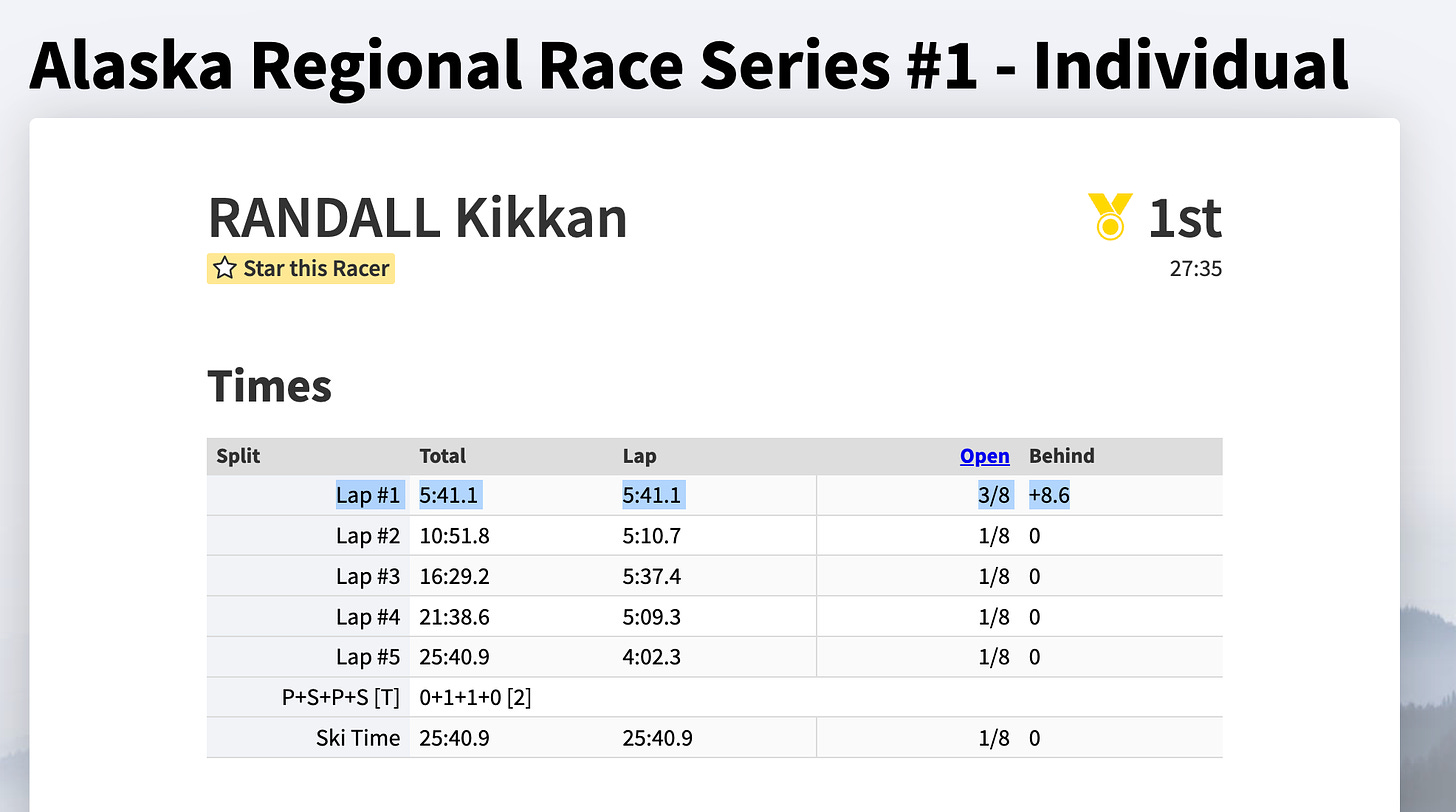
My brilliant start, and my hopes of victory, had dashed by poor shooting (not to mention poor fitness). But really, this is the beauty of biathlon: Promising races can vaporize in a manner of seconds. And my final tally, 14 out of 20 shots, was still one better than a recent race by one of my favorite pros, Stina Nilsson of Sweden, who juuuuuust lost out to Kikkan on a gold medal in cross-country skiing at the 2018 Olympics, then switched to biathlon and has not yet achieved the same heights.
Nonetheless, let the results show what may be my proudest-ever athletic achievement: My first lap of the race was two seconds faster than Kikkan’s. However, she then proceeded to hit every single shot (or almost every single one — accounts differ), outpace me on all the other laps and absolutely obliterate the entire “open” division, winning by nearly three minutes.
I was chit-chatting with friends after the race when, over a speaker, the awards announcer started yelling my name. (Actually, they yelled for “Nate,” but this is a common enough occurrence.) It turns out I had achieved the impressive result of third place out of eight, behind, of course, Kikkan and Rachel. (Yes, the two women in the field destroyed the six men.) In addition to a podium photo with two Olympians, this result earned me a $1 billion bar of chocolate, and enough of a tale to merit inclusion in a Northern Journal newsletter.
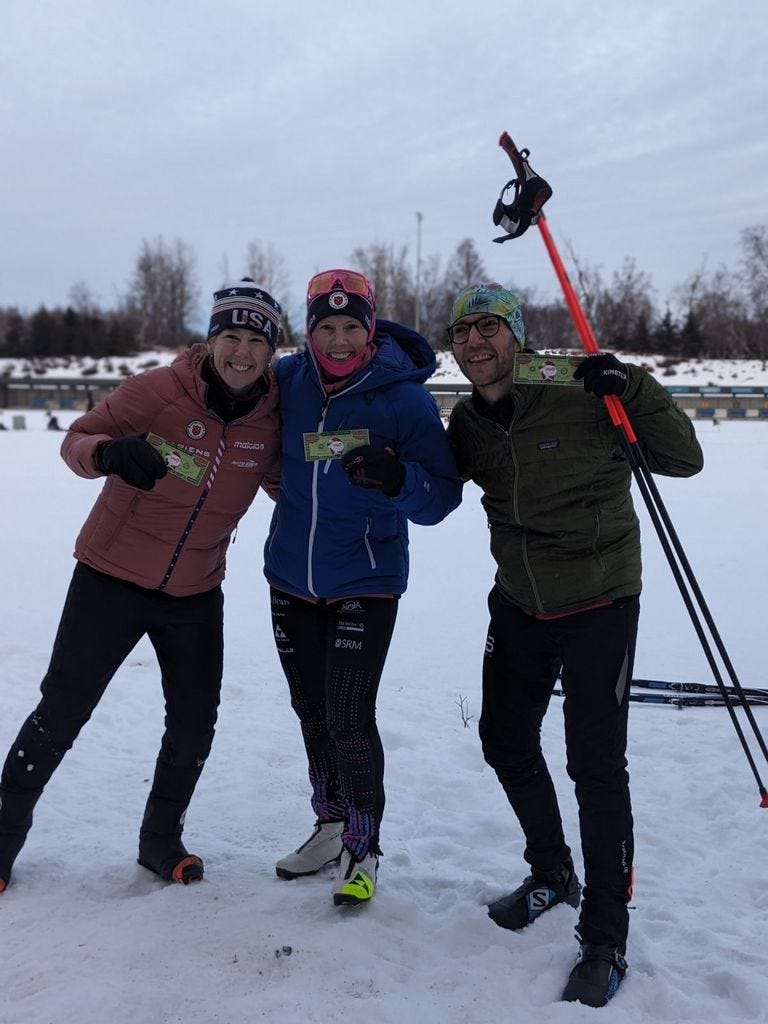
The first and only time I will share a podium with two Olympians. (Photo: Courtesy John Farra)
The whole vibe of the day was excellent — most everyone seemed to be relaxed and having a great time on a cool winter day. There are at least a couple more open biathlon races in Anchorage before the end of the year, and I would encourage any bi-curious folks to check them out. Email me here and I’ll put you in touch with the right folks.
I’m rich.
This article is the work of Nat Herz (a regular FasterSkier contributor, and Producer of The Devon Kershaw Show), and is re-printed with the permission of Nat Herz and Northern Journal.
Northern Journal is a reader-supported publication. To receive new posts and support my work, consider becoming a free or paid subscriber.
Damn. What a weekend for the U.S. Ski Team, with three podiums in three days of racing at the World Cup opener in Finland.
Erik Bråten, a Norwegian who coaches the Swiss ski team, joins Devon and Nat to recap and share his experiences across a range of international ski cultures. Send us questions, feedback and anti-vax screeds to: devon@fasterskier.com and nat@fasterskier.com — we’ve already got some questions stacking up for a mailbag episode in a few weeks. We’ll be back in a few days after the next World Cup weekend in Sweden.
We’re off. The 2023-2024 winter kicks off with season opening races across Scandinavia, and the World Cup launches next week.
Devon and Nat go old-school, no guests to recap a bevy of interesting results so far. Send us your comments, questions and criticisms: devon@fasterskier.com and nat@fasterskier.com. We’ll be back next week.
A couple of years ago, Swedish Olympic medalist cross-country skier Maja Dahlqvist matched with U.S. sprinter Kevin Bolger on Tinder. They’ve since become one of their sport’s highest-profile couples.
The two of them, during an altitude camp in Utah last month, joined Nat for a joint interview.
We’ll be back as the World Cup season kicks off in a few weeks. Send your questions, comments and hate mail to devon@fasterskier.com and nat@fasterskier.com.
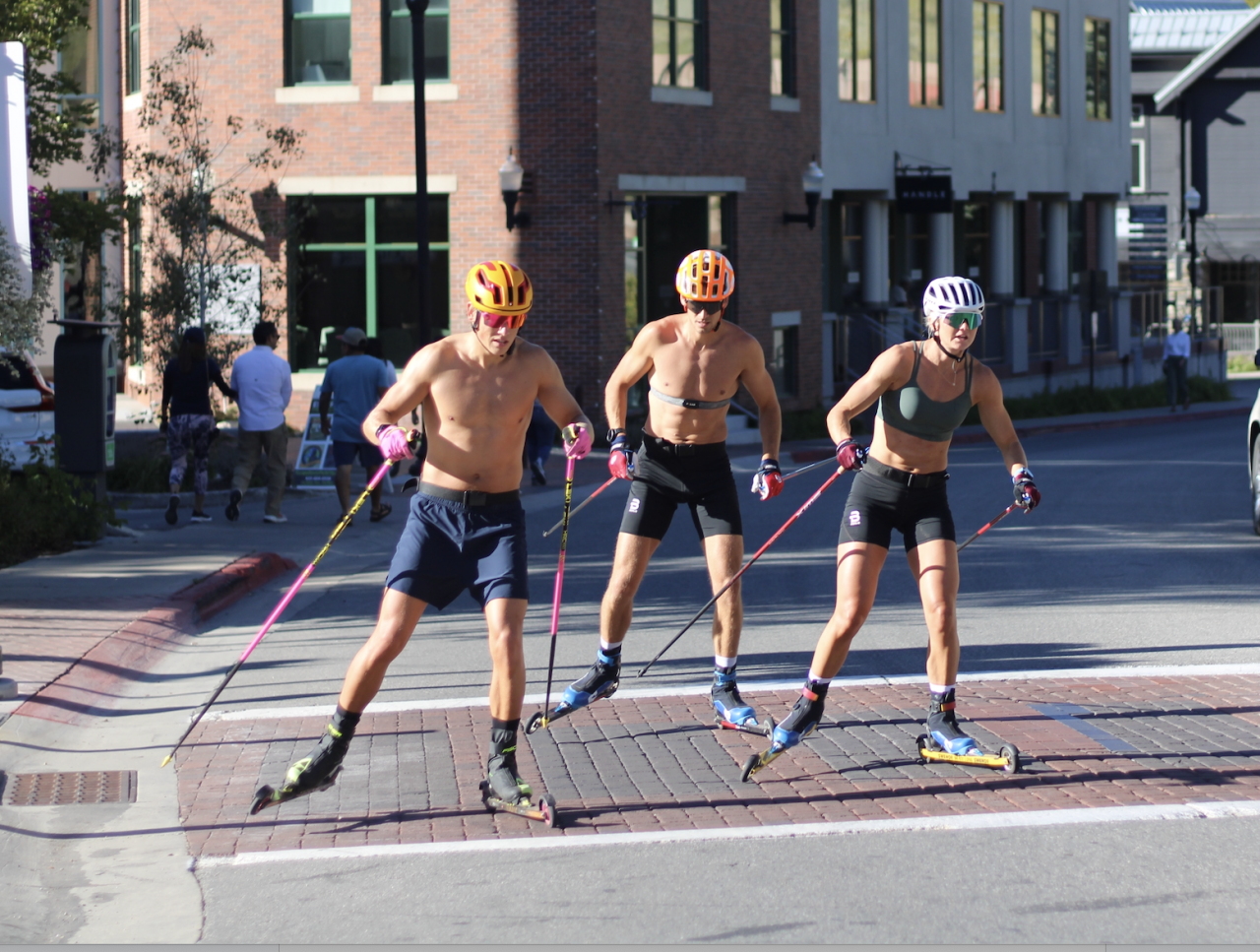
Johannes Klæbo, Kevin Bolger and Maja Dahlqvist rollerski through downtown Park City together during their respective altitude camps last month. (Nathaniel Herz/FasterSkier)
A few weeks ago, Nat got a Facebook message from one Haakon Klæbo — father of Johannes Klæbo, also known as one of the greatest skiers of all time. What followed was a visit by Nat to Klæbo’s training camp in Park City, Utah, where he and Johannes taped this episode of the Devon Kershaw Show.
Join us to hear an interview with the five-time Olympic champion from Norway about his time in the U.S., his training and his schism with the Norwegian national team. You can also read Nat’s first written story from his visit with Klæbo here.
We’ll be back soon with more material from Utah. Send your questions, comments and hate mail to devon@fasterskier.com and nat@fasterskier.com.
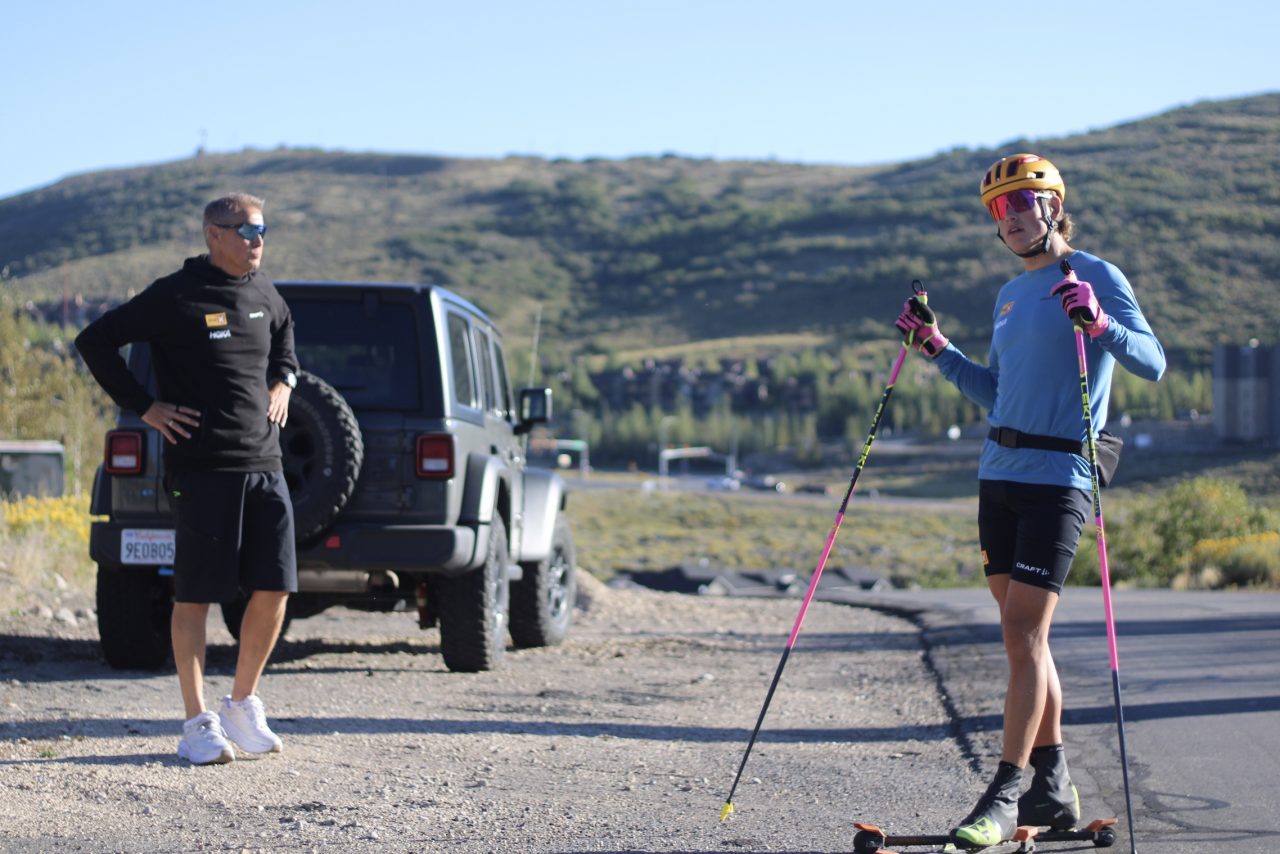
Johannes Klæbo stands with his father, Haakon, during a water break on a rollerski workout Saturday. (Nathaniel Herz/FasterSkier)
We’re back, with some incremental improvements to our audio production and full stoke for a new season of the Devon Kershaw Show. On this first episode of the new season, Devon and Nat break down the winter’s opening races in Sweden, Finland and Norway, and prime the pump for the World Cup kickoff in Finland next weekend. As always, email us at devon@fasterskier.com and nat@fasterskier.com.
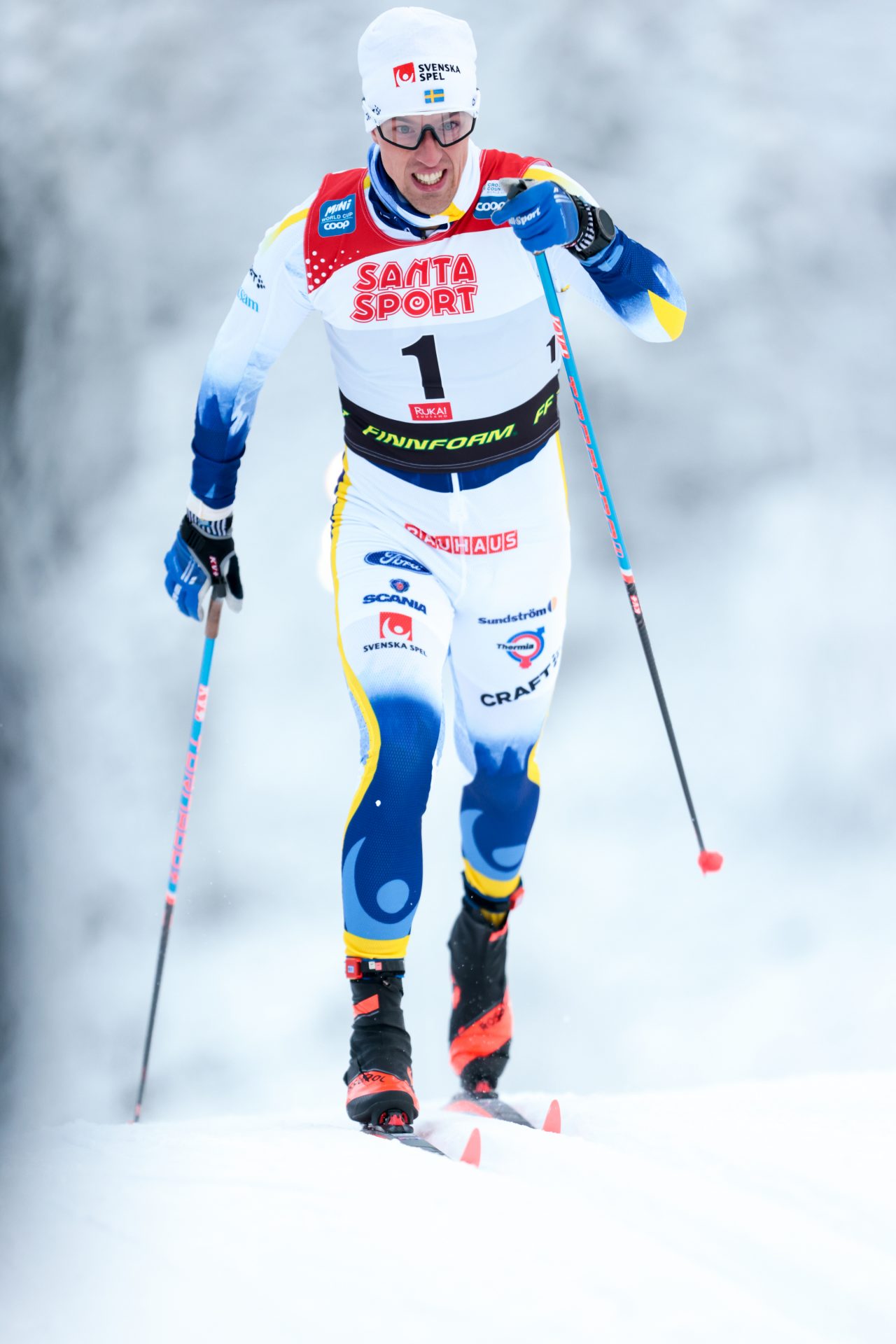
A resurgent Calle Halfversson had a breakout weekend in Ruka — until his encounter with the race jury on Sunday. (photo: Fischer/NordicFocus)