From the FasterSkier archive — posts syndicated from athletes’ and coaches’ own blogs between 2004 and 2012, kept online as published. Current coverage is at fasterskier.com.

Tag: Natalie Wilkie

  • Coach McKeever on Canada’s Unprecedented Paralympic Success and the Future

    Coach McKeever on Canada’s Unprecedented Paralympic Success and the Future

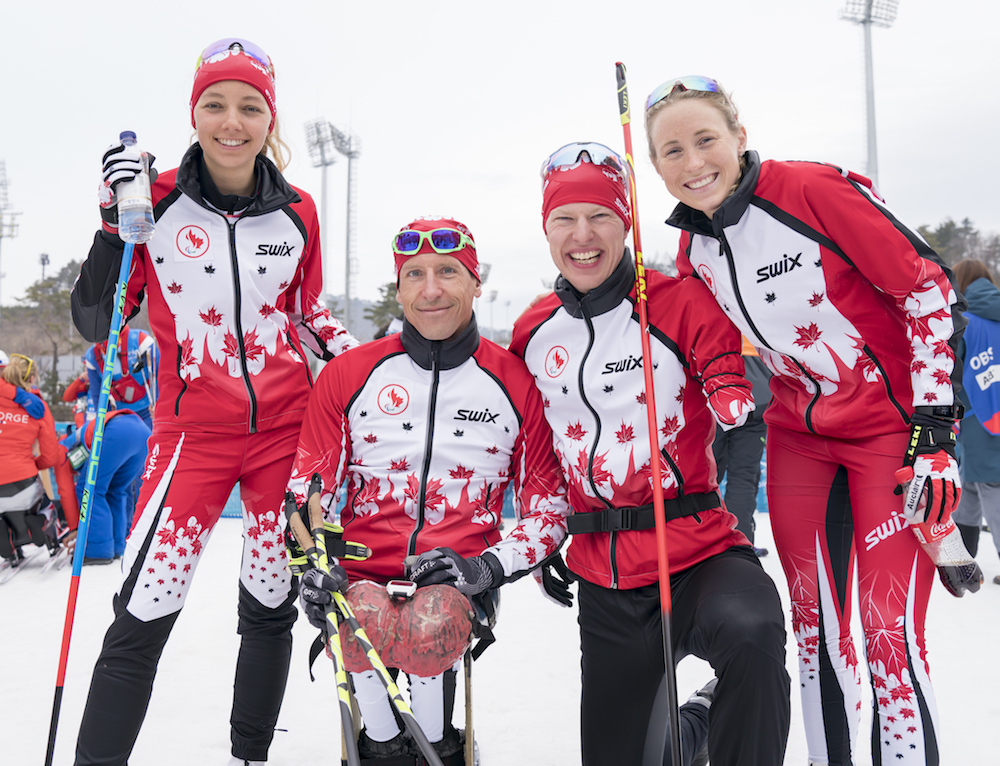
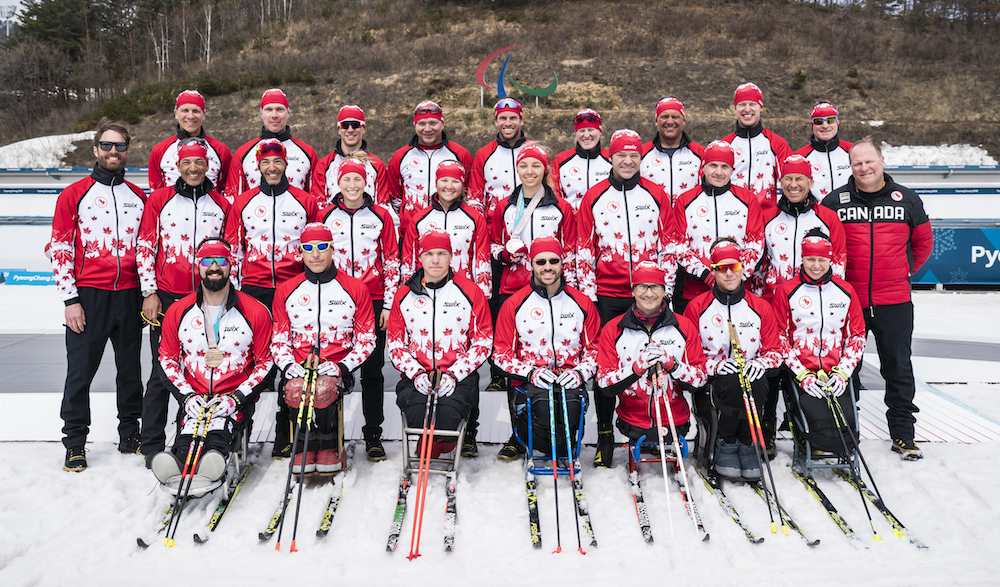
    Canada’s 2018 Paralympic cross-country and biathlon team at the Alpensia Biathlon Centre on the last day of the Games in Pyeongchang, South Korea. (Photo: Dave Holland/Canadian Paralympic Committee)

    The 2018 Winter Paralympic Games was one for the books for Team Canada. Its athletes racked up a total of 28 medals in PyeongChang, South Korea, surpassing its previous record of 19 in Vancouver 2010.

    Of those 28 medals, 16 came from Cross Country Canada’s (CCC) Para Nordic skiers (which includes both cross-country and biathlon). In comparison, five of the 19 medals Canada won in Vancouver were a product of a para-nordic team made up for two athletes: Brian McKeever and Colette Bourgonje.  

    Following the 2010 Games, Brian McKeever’s brother and guide at the time, Robin McKeever, became CCC’s Para-Nordic head coach in the fall of 2010. Around the same time Robin made the transition from athlete to coach, CCC experienced budget cuts that impacted its para-nordic program.

    “When the program came to me as head coach, it was a, ‘Hey, you’re going to have to take this and rebuild it, somehow,’ starting point,” Robin McKeever said during a recent phone interview.
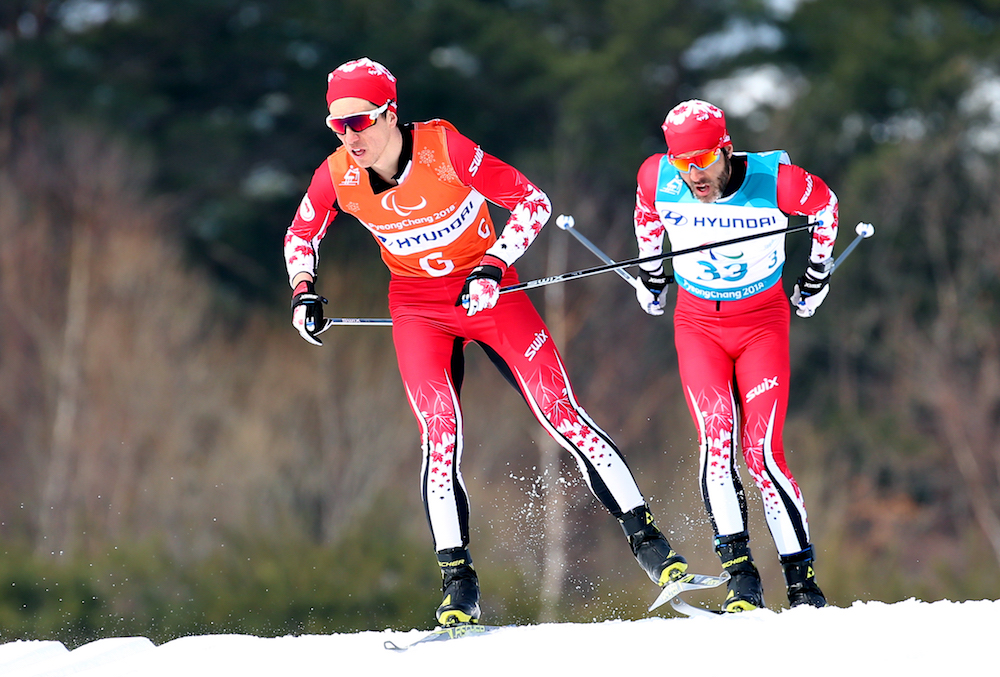
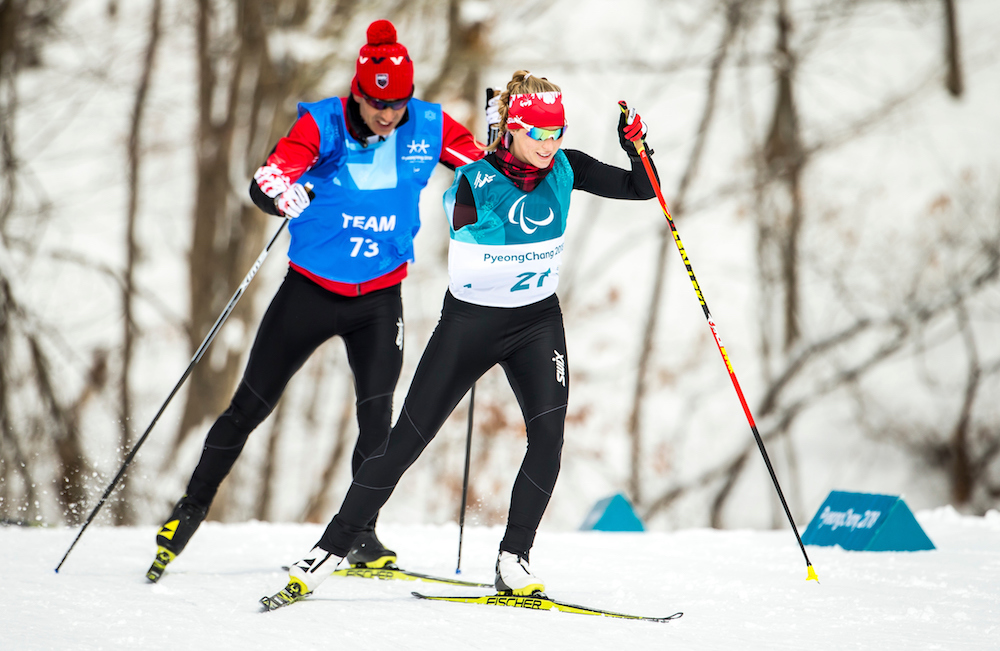
    Brian McKeever follows guide Graham Nishikawa during the men’s visually impaired 20 k freestyle at the 2018 Paralympics in PyeongChang, South Korea.  (Photo: Scott Grant/Canadian Paralympic Committee)

    Over the course of eight years, McKeever, 45, has guided the program into a international powerhouse, as evidenced by its unprecedented success and increased presence in PyeongChang.

    “It was a little bit of luck finding the right athletes at the right time, then it’s … working hard to keep them together as teammates who want to work and push each other to achieve their goals,” he explained.

    The mindset seemed to work well for his team; with 14 athletes, it was seven times the size of that in Vancouver. And its athletes brought home more than three times the hardware it did in 2010.

    “It’s attributed to having some pretty phenomenal athletes in the program, first and foremost,” Robin said, regarding the program’s surge in success. “Secondly, it’s attributed to having an awesome team supporting the athletes all working together … from medical staff to the physiologists to the development coaches to all of our wax team. They’re great people who love to be together. ”

    Four women and 10 men comprised the 2018 Paralympic team roster, with two of the men being Brian McKeever’s guides, Russell Kennedy and Graham Nishikawa. Brian, 38, has long been a longtime para-nordic force, and in PyeongChang he left no room for doubt that he pervades as the cross-country king. A visually impaired athlete, he won all three cross-country races in PyeongChang: the 20-kilometer freestyle, the 1.5 k classic sprint and the 10 k classic. He also raced to bronze in the 4 x 2.5 k open relay.

    With his performances in PyeongChang, Brian became Canada’s most decorated Winter Paralympian of all-time. Lana Spreeman, a para-apline skier, previously held the record at 13 medals, which she accumulated over the course of five Paralympics.

    Brian currently holds 17 Paralympic medals from five Paralympics, 13 of which are gold.

    “I wasn’t aware of this record, but it is pretty cool,” Brian said at the time, according to a Canadian Paralympic Committee press release. “I think for me more than anything is this is a testament to our entire program. We’ve had so many great skiers leading the way for me with my brother, Robin who is now coaching us, and Colette Bourgonje.

    “Now it is awesome for me to be a part of a new generation that has arrived in Mark [Arendz], Collin Cameron, and the young women like Emily [Young], Brittany [Hudak] and Natalie [Wilkie], who are ready to carry the torch. I’m so excited to be around all of them this week and to be there cheering them on,” he added.

    Also in PyeongChang, Canada’s Mark Arendz, Natalie Wilkie, Collin Cameron, Emily Young, Brittany Hudak, and Chris Klebl also earned their share of hardware on the Alpenesia ski trails.

    Prior to Pyeongchang, Arendz had competed in Vancouver and then Sochi, coming away from the 2014 Paralympics with silver and bronze finishes in biathlon events. Four years after he earned his first two Paralympic medals, Arendz tallied six more in South Korea, the most medals ever won by a Canadian at a single Winter Paralympics.
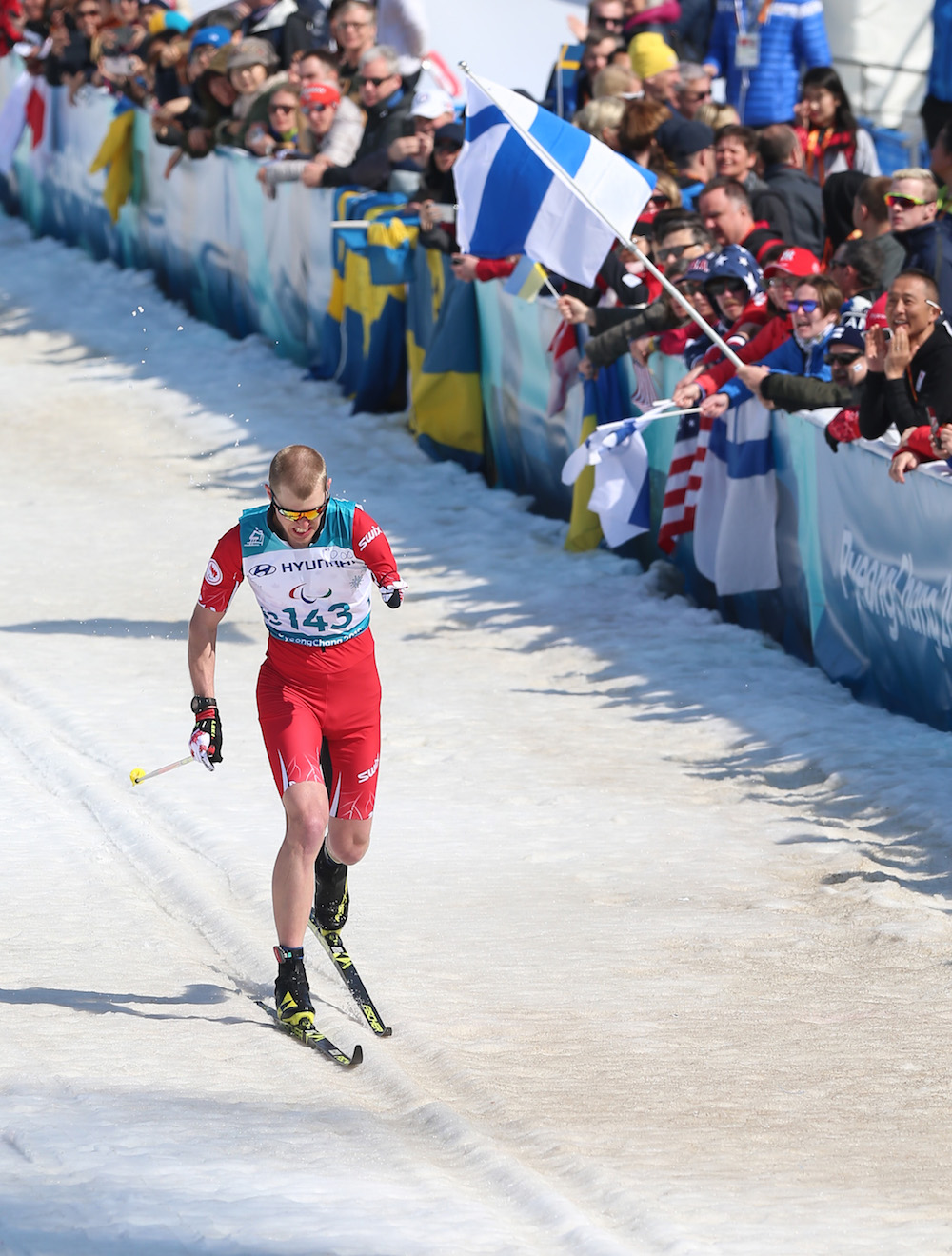
    Canada’s Mark Arendz en route to bronze in the men’s 1.5 k standing classic sprint at the 2018 Paralympics in PyeongChang, South Korea. (Photo: Scott Grant/Canadian Paralympic Committee)

    Arendz showed versatility and strength, as his medal winning performances came in both the biathlon and cross-country events over the course of nine days in PyeongChang. He won a gold in the 15 k standing biathlon event, followed by a silver in the 7.5 k standing biathlon, silver in the 4 x 2.5 k mixed relay, along with three bronze medals, one in the 12.5 k standing biathlon, one in the 1.5 k standing sprint and one in the 10 k standing competition.

    “Every time I stepped on the podium this week, I kept thinking I want to hear ‘Paralympic Champion’ and then my name announced,” Arendz, 28, told Cross Country Canada at the time, according to a press release. “I wanted nothing more than to hear my country’s anthem played. I’ve seen the maple leaf on top of the podium three times this week, but to finally have it behind the top step of the podium for me is an amazing feeling.”

    Canada’s success story in South Korea did not end there. In her debut Paralympics, 17-year-old Wilkie scored big, earning bronze in the standing sprint, silver in the mixed relay, and gold in the 7.5 k classic in PyeongChang.

    The youngest on her team, Wilkie was a skier before she lost four fingers on her left hand in a shop-class accident two years ago. 

    “Natalie was a medalist in able-bodied competition at Junior Nationals the year before,” Robin explained. “We knew that she was a strong skier that had an acquired disability and we knew that it was possible for her to race at the Paralympics one day if she wanted to. It’s a learning process and a real mental process to get over your injury and for her it was then also turned into an opportunity.”

    Yet another individual medalist in multiple events in PyeongChang, Cameron, now 30, brought his team another first. With his third-place finish in the 7.5 k sitting biathlon race, he became Canada’s first male sit skier to medal in biathlon. He later earned two more bronze medals, one in the 15 k and the bronze another in the open relay.

    Until four years ago, Cameron had been a sledge hockey player. He happened across his hometown’s para-nordic club by chance over the internet, joined that club and was later recruited to the national team.

    “Being a part of the open relay team with Brian, and his guides Graham [Nishikawa] and Russell [Kennedy], was something really special and I will never forget it,” Cameron wrote in a previous email to FasterSkier. “Getting my third Paralympic medal with those guys was pretty cool … just being a part of this amazing and successful team of athletes, techs, and coaches has to a favourite moment.”
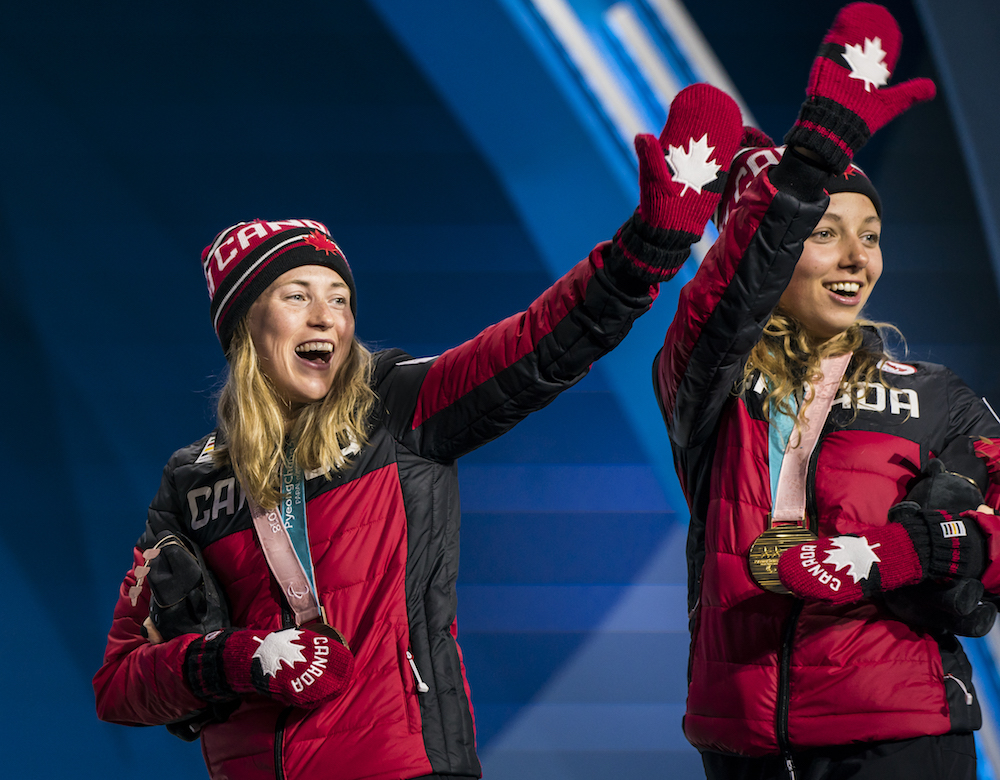
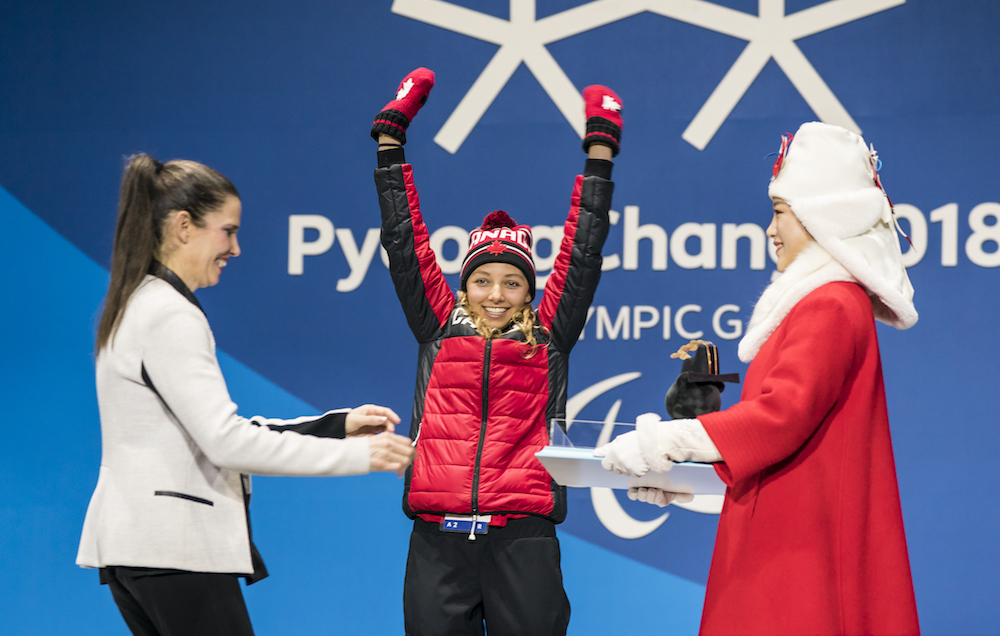
    Natalie Wilkie (r) and Emily Young at the 2018 Paralympic medal ceremony with their gold and bronze medals in the women’s 7.5 k standing classic race in Pyeongchang, South Korea. (Photo: Dave Holland/Canadian Paralympic Committee)

    Notably, every member of Canada’s seven-member Para-Nordic World Cup Team claimed a medal in  PyeongChang, with Young taking bronze in the 7.5 k classic standing for her first Paralympic medal followed by silver in the mixed relay, Hudak notching bronze in the 12.5 k standing biathlon, and Klebl helping the mixed relay to silver.

    Since the end of last season, CCC has undergone some changes that are affecting its Para-Nordic program. Both CCC’s para-nordic and able-bodied programs are tied under one organization, and Nic Lemyre was recently hired on as the new high-performance and development advisor for both programs. Previously, Mark Edwards served as the Para-Nordic high-performance director.

    “Cross Country Canada came under some very strategic shifts with the prior organization,” Robin explained. “We’re not sure exactly how that’s going to play out. That is still in the works. We get to deal with that as it comes around, but it’s about putting a sport pillar and business pillar under two different ones and so we’re working hopefully closer with the able-bodied program.”

    In terms of how CCC’s budget cuts are expected to affect its Para-Nordic program, CCC CEO Shane Pearsall expected the amount going to para-nordic to be “about the same as last year”. Asked how much of CCC’s roughly $4 million-dollar budget will go to the Para-Nordic national team’s elite programming, Pearsall estimated that amount to be about $600,000 dollars (comparable to between $500,000 and $600,000 for able-bodied national team programming).

    In Robin’s opinion, working closer with the able-bodied program means the transference of ideas and potential to strengthen each other through teamwork and communal outreach. Expanding to skiers of all abilities and levels may take work from the ground up, as well as the top down.

    buy antabuse online, buy tretinoin online

    “We need to be working together to rebuild that whole system,” Robin said, pointing out that currently, CCC’s able-bodied A-team consists of one member, Alex Harvey.

    This season’s Canadian Para-Nordic World Cup Team includes eight members, plus another six on the development team.

    “The whole focus of the [Para-Nordic] program is about the process,” he added. “For the athletes to have their best race on a given day, the team has to also provide the best skis on a given day, the best feeds, say or whatever that requires. It’s really more about the process.”

  • FasterSkier’s Coach of the Year: Eileen Carey; Runners-Up: Matt Whitcomb and Robin McKeever

    FasterSkier’s Coach of the Year: Eileen Carey; Runners-Up: Matt Whitcomb and Robin McKeever

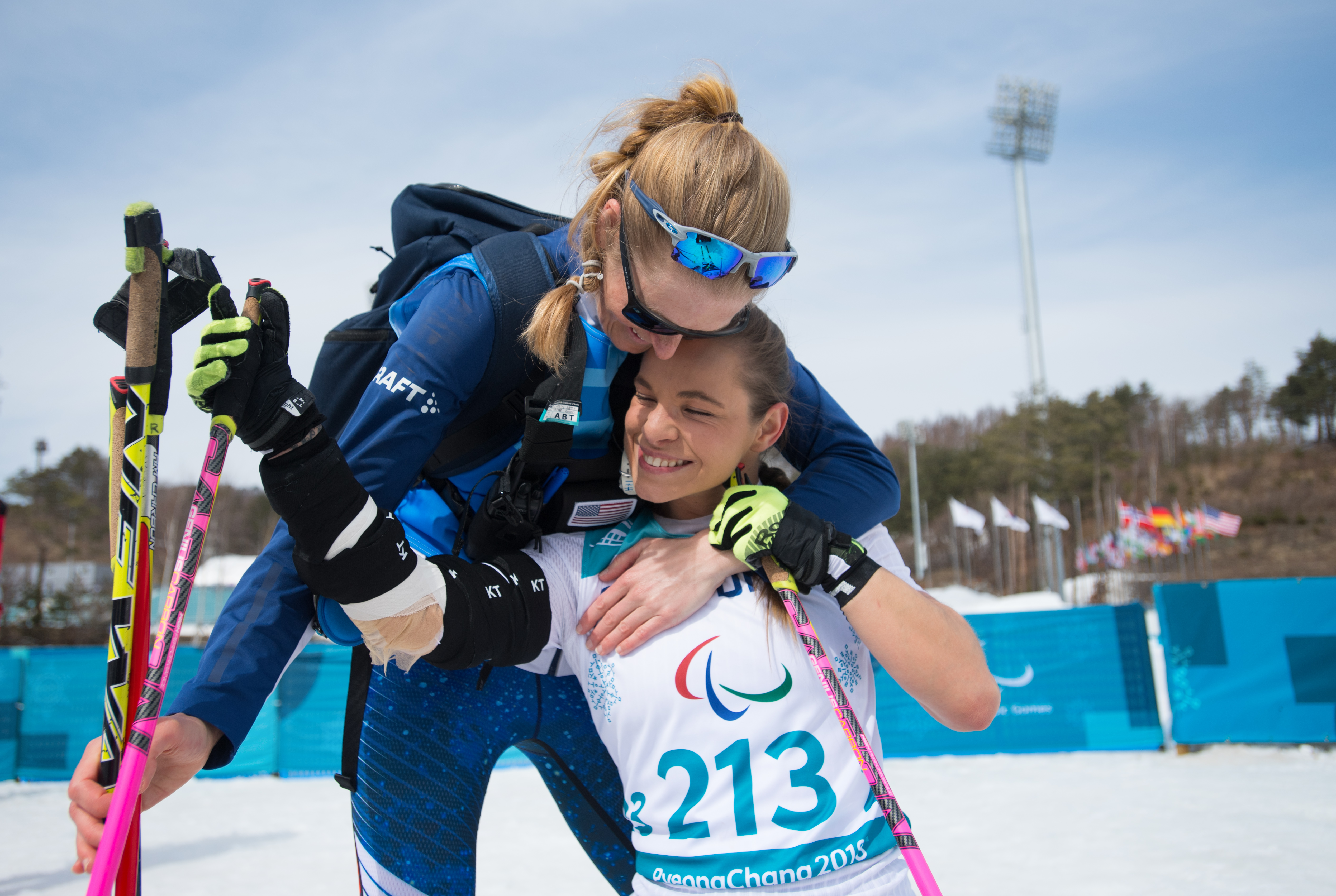
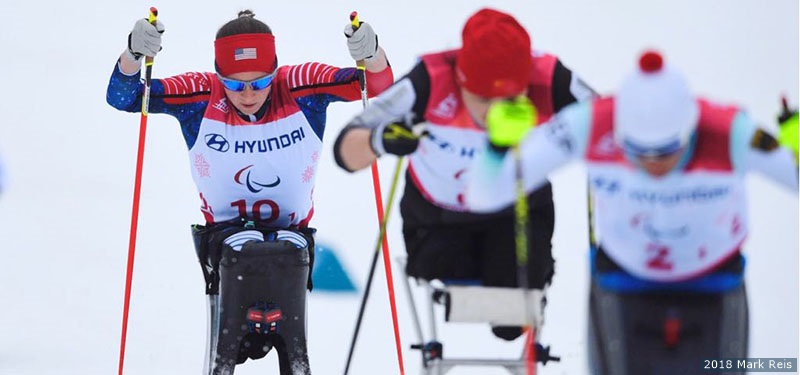
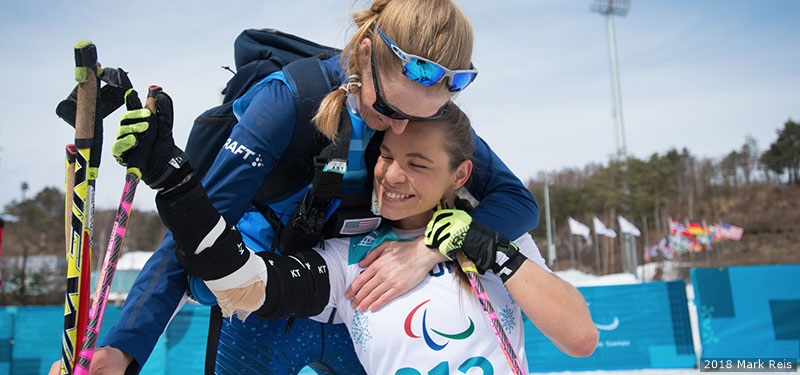
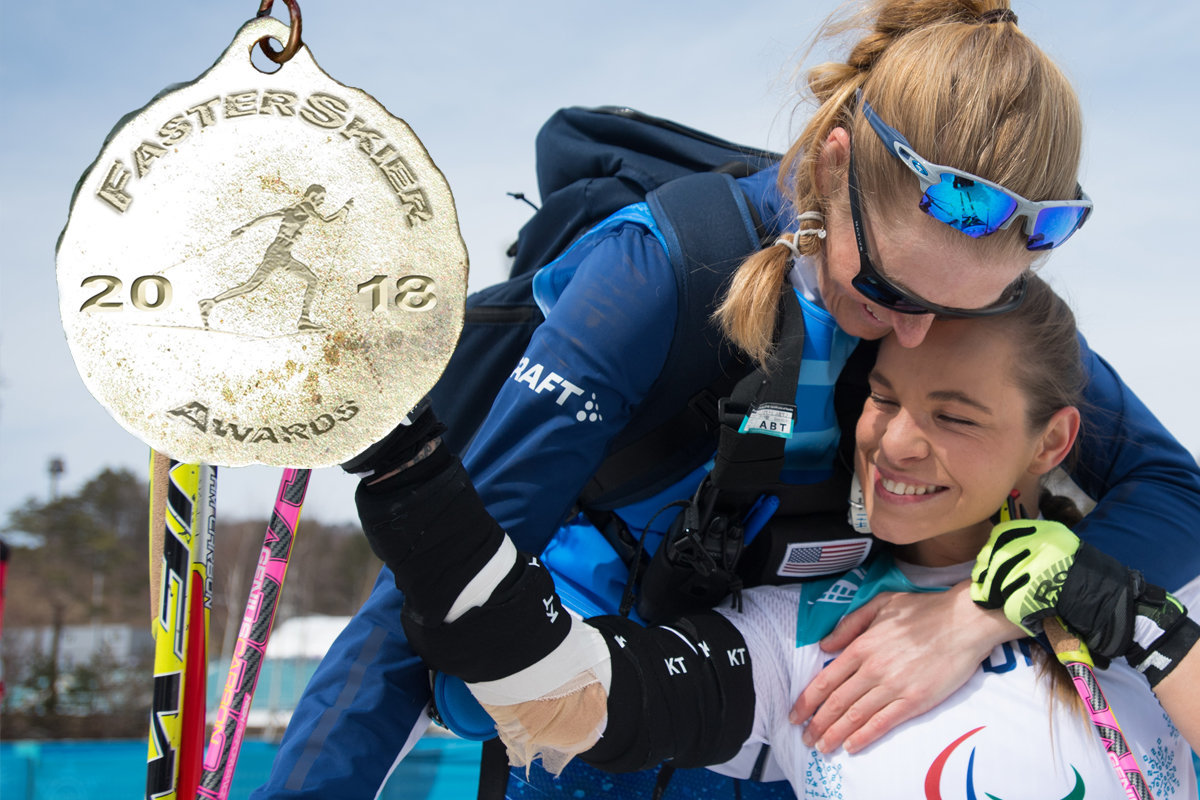
    Eileen Carey congratulating Oksana Masters after a gold medal at the Paralympic Games. (Photo: Mark Reis/U.S. Paralympics)

    With the 2017/2018 season officially in the rearview, FasterSkier is excited to unveil its annual award winners for this past winter. Votes stem from the FS staff, scattered across the U.S., Canada, and Europe, and while not scientific, they are intended to reflect a broader sense of the season in review. This set of honors goes to coaches of North American teams in any nordic discipline, at any level – although in an Olympic and Paralympic Games year, that’s what we focused on.

    Previous categories: Junior Skiers of the Year | Collegiate Skiers of the Year | Biathletes of the Year| Para-Nordic Skiers of the Year | NoCo Skier of the Year | Canadian Breakthrough Athletes of the Year | American Breakthrough Athletes of the Year

    ***

    Eileen Carey, U.S. Paralympics Nordic

    As we have already noted recently on the site, the U.S. Paralympics Nordic program made a huge jump between the 2014 and 2018 Games, winning three medals in Sochi but 16 – from five different athletes – in PyeongChang. That also included both men and women, and two types of para-nordic events: sitting and visually impaired.

    A big architect of the team’s success has been head coach Eileen Carey. It’s not an easy or simple job to coach athletes at all different levels of sport and different athletic backgrounds, and bring them all towards success.

    “The diversity in disciplines and levels of athlete in our program is one of the most interesting and motivating parts of my job,” Carey wrote in an email last week. “On one hand, I love getting into the details of what might make someone a fraction of a percent faster. I love the process of breaking down a performance into parts and working with athletes to problem solve how to make a small element better.  So much of that is about failure, modification, and trying again.  The potential gains are so small, but so are the gaps from 4th to 1st and every once in a while something sticks and that is incredibly motivating for me. Andy [Soule]’s sprint finish [for a gold medal] in PyeongChang is a great example of that.

    Oksana Masters of U.S. Paralympics Nordic is hugged by head coach Eileen Carey after her gold-medal finish in the women’s sitting 5 k cross country race at the 2018 Winter Paralympic Games in PyeongChang, South Korea. (Photo: Mark Reis/U.S. Paralympics)

    “On the other hand we have some promising new athletes in our program who are at such a different level in what they need as athletes,” she continued. “For our program, our goal is always to provide best in the world service to our athletes. For our athletes who are aiming for the podium today, that involves every detail coming together, the execution of their plan. For Grace [Miller] and Mia [Zutter] and Ruslan [Reiter], our next generation of podium-potential athletes, providing best in the world service is more about making sure they see what their medal winning teammates and competitors are doing to achieve their performances and showing them a roadmap to get to that point.”

    Development coach BethAnn Chamberlain is a big piece of that effort. For the top-level athletes, Carey lives in Bozeman, Montana, where she works intensively with the sit-ski team,

    antabuse

    “They move to Bozeman in the winters,” Carey explained. “I am with them every day from November through March, in addition to training camps that we have most months from May-October. Most of them compete in summer sports, so in the off season, there is always an individualized balance of figuring out how to optimize their preparation for skiing, while working with their goals for other sports.”
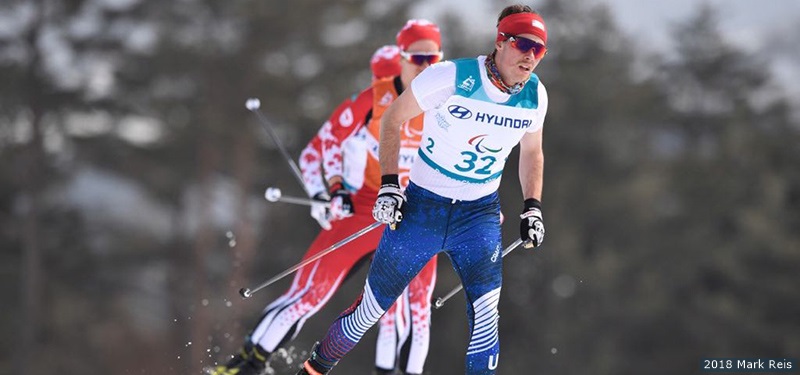
    The standing and visually-impaired athletes have a different situation, and are primarily supported by clubs in their local areas. Carey works with both the athletes and their home coaches and teams to make sure they are getting the best development, but a big part of that can be training with an able-bodied ski team.

    “We can help with funding, or workout ideas that might be unique to Paralympic skiing,” Carey wrote. “But at the end of the day, Jake Adicoff and Sawyer Kesselheim’s success at the Games [where they took silver in the visually-impaired 10 k classic, the first visually-impaired medal by the U.S. in modern Paralympic history] is much more about Sun Valley SEF and Bowdoin (Jake’s club/school) and Bridger Ski Foundation and Montana State (Sawyer’s club/school)… We can help fill the gaps with funding and equipment and communication with their coaches, but their best path to the podium is the same as every skier who wants to be on an Olympic podium.”

    Carey and her colleagues, such as High Performance Director John Farra, have intentionally written their criteria so that standing and visually-impaired athletes can make the para-nordic national team without actually competing in para events – instead, they can make the C Team or Development team using USSA points from SuperTours, college races, or regional races. That means that they can spend more time with their home teams.

    “We are lucky in that we have incredible partners in the USSA community who are really the ones developing many of our athletes,” Carey wrote. “I hope the more that coaches and clubs around the country see our athletes competing in USSA and collegiate races, the more they see opportunities for providing a ski development pipeline to even more members of their communities. As much progress as we have made as a program over the last several years, we have at least that much again to improve, and this is the next big opportunity for us as a program, and also for ski clubs and communities around the country.”

    But while Carey is thinking about those big-picture goals and opportunities, she is also working one-on-one to help Americans become the best para-nordic skiers in the world.

    “The fall after Sochi, we started a technique modification process to target Andy [Soule]’s speed on flats, in particular finishing speed,” she explained. “In Sochi, he was moving quickly and had great hand speed but he was not going fast compared to the athletes he was competing against. We tried and failed at so many things in the past four years to improve that. Every once in a while, we would find a mental cue or some technical detail that seemed to make a difference and we would build on that and find ways to analyze it. It can be so frustrating, because there are inevitably times when progress stalls or reverts and there rarely is a clear answer why… When he turned it on during that finishing stretch of the sprint to take the gold, that was the epitome of a plan coming together at the right time.”

    A few minutes later, Oksana Masters won gold in the women’s sprint, overcoming an injury that had happened just weeks before the Paralympics. It was her first gold medal after collecting a silver and bronze earlier in the Games, to go with a silver and bronze from Sochi and a bronze from the 2012 summer Paralympics in rowing.

    “Both of those races, strictly from a sport performance standpoint, were just incredible,” Carey wrote. “In addition, those two athletes have really been the architects of our program’s rise over the last quad. The two of them were at every camp and World Cup, and their instincts as athletes drove the strategies of our program. That day could not have been a more meaningful culmination of the last four years for them as individuals, for us as a program, and for me as a coach.”

    Honorable Mention: Robin McKeever, Canadian Para-Nordic Skiing

    Also taking home 16 medals from PyeongChang? The Canadian Para-Nordic team, which like the Americans had a big jump in both the number of medals and the number of athletes winning them. Far from being just the Brian McKeever show – although the veteran went undefeated for the third Paralympics in a row – the team also picked up multiple medals from Mark Arendz, Natalie Wilkie, and Collin Cameron, plus an individual medal by Emily Young and two relay medals.

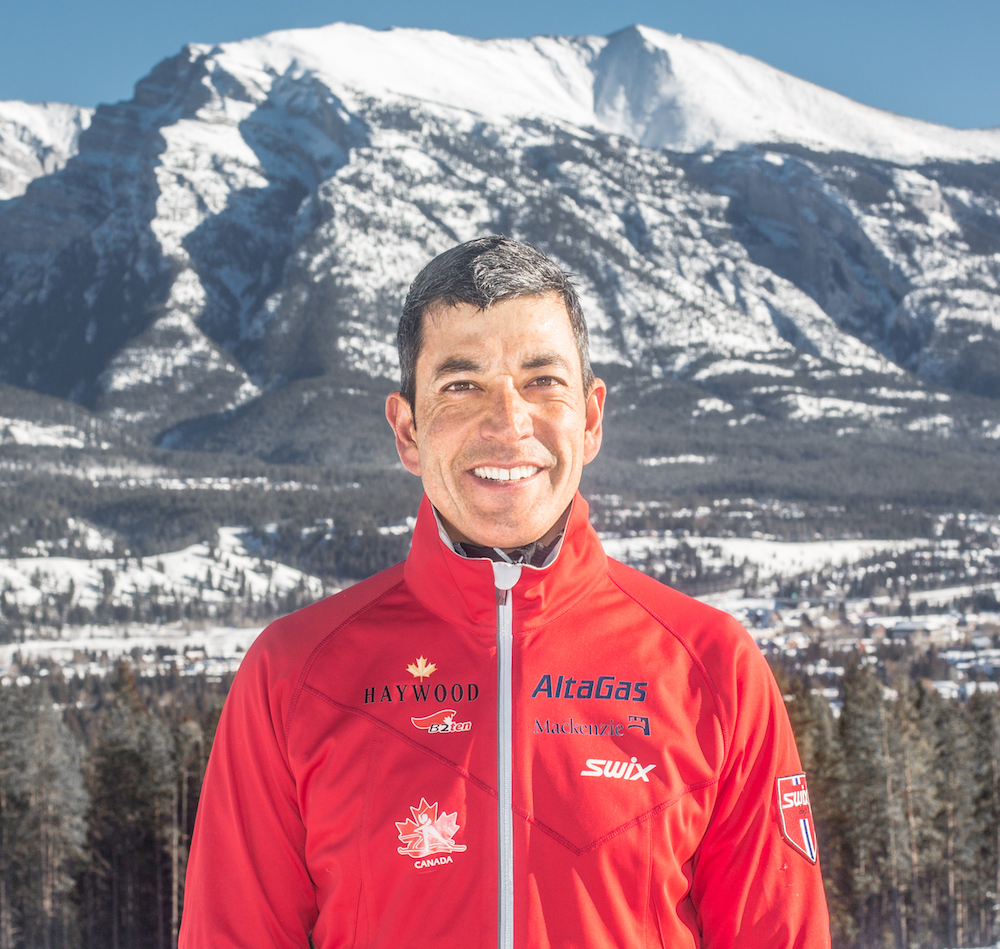
    Robin McKeever. (Photo: Noel Rogers/CCC)

    Carey’s counterpart up north is Robin McKeever, who incidentally said that he looked at what Carey was doing as an inspiration in being able to recruit summer-sports athletes and successfully transform them into winter gold medalists. The two gold medals by Kendall Gretch, an American triathlete who didn’t pick up cross-country skiing until 2015, were “eye-opening”.

    The para-sport landscape is slightly different in Canada, which also has a much smaller population to draw from (while at the same time having some of the same issues associated with far-flung geography). McKeever faces different development challenges, but has helmed the program towards depth and diversity in the last four years.

    “It started as an eight-year process in 2010,” McKeever said in an interview last week. “At that time, we only had funding for Brian. I was given the reins to rebuild, effectively. Now there are some next-generation funds we have the opportunity to access, and now that helps build the base. In the last few years we have had a development coach on board, Kate Boyd, and that has been huge.”

    There have been notable successes, such as the three medals Cameron took home; having picked up skiing just a few years ago after being involved with sledge hockey, Cameron was named one of our Breakout Athletes of the Year.

    Emily Young and coach Robin McKeever during a training session at the Alpensia Biathlon Centre during the 2018 Winter Paralympic Games in Pyeongchang, Korea. (Photo: Dave Holland/Canadian Paralympic Committee)

    Then there was Wilkie, a teenager who came to the program after losing four of her fingers in an accident.

    “We know where our pool of athletes comes from,” McKeever said. “It’s about the un-luck of athletes having trauma, which starts their Paralympic path. And it’s about luck in terms of recruiting athletes from summer sport.”

    Those newer athletes in the program have veterans to look up to, whether that is McKeever’s brother Brian, or now Mark Arendz, who took home a remarkable six medals between biathlon and cross-country skiing.

    “Mark was no surprise,” McKeever said. “Six medals was maybe a surprise, but he was a World Champion coming in.”

    Given the limitations on how the team can find new athletes, McKeever didn’t want to be too concrete about whether the program would see a big swell in numbers coming off its recent success.

    “It is still to be seen where that will go,” he said. “Some of it is a bit of luck, and some of it is really good management… A lot of staff has been around for eight years. They remain keen and excited. They stick around and are really integral to my support, and to the team’s support.”

    One of the biggest highlights for McKeever, and an illustration of how the program has changed in just a few years, was the mixed relay team of Arendz, Young, Wilkie, and Chris Klebl taking silver, the first ever relay medal for Canada.

    “The mixed relay is a real highlight,” he said. “Even if the full Russian contingent had been there, that would be a podium for us. I didn’t know eight years ago that the possibility was even there.”

    Honorable Mention: Matt Whitcomb, U.S. Ski Team

    Another team that had a huge jump this year? The U.S. Ski Team women. Jessie Diggins and Kikkan Randall took gold in the Olympic team sprint, the first-ever gold medal for the U.S. in the sport.

    But the Olympics weren’t the only thing that happened this season. Diggins also won a World Cup, was third in the Tour de Ski, and second in the overall World Cup standings. Randall picked up a World Cup podium; Sadie Bjornsen picked up several; and Sophie Caldwell had enough to earn third place int he Sprint Cup standings. The team had more days with many women in the sprint heats, and more good distance results, too.

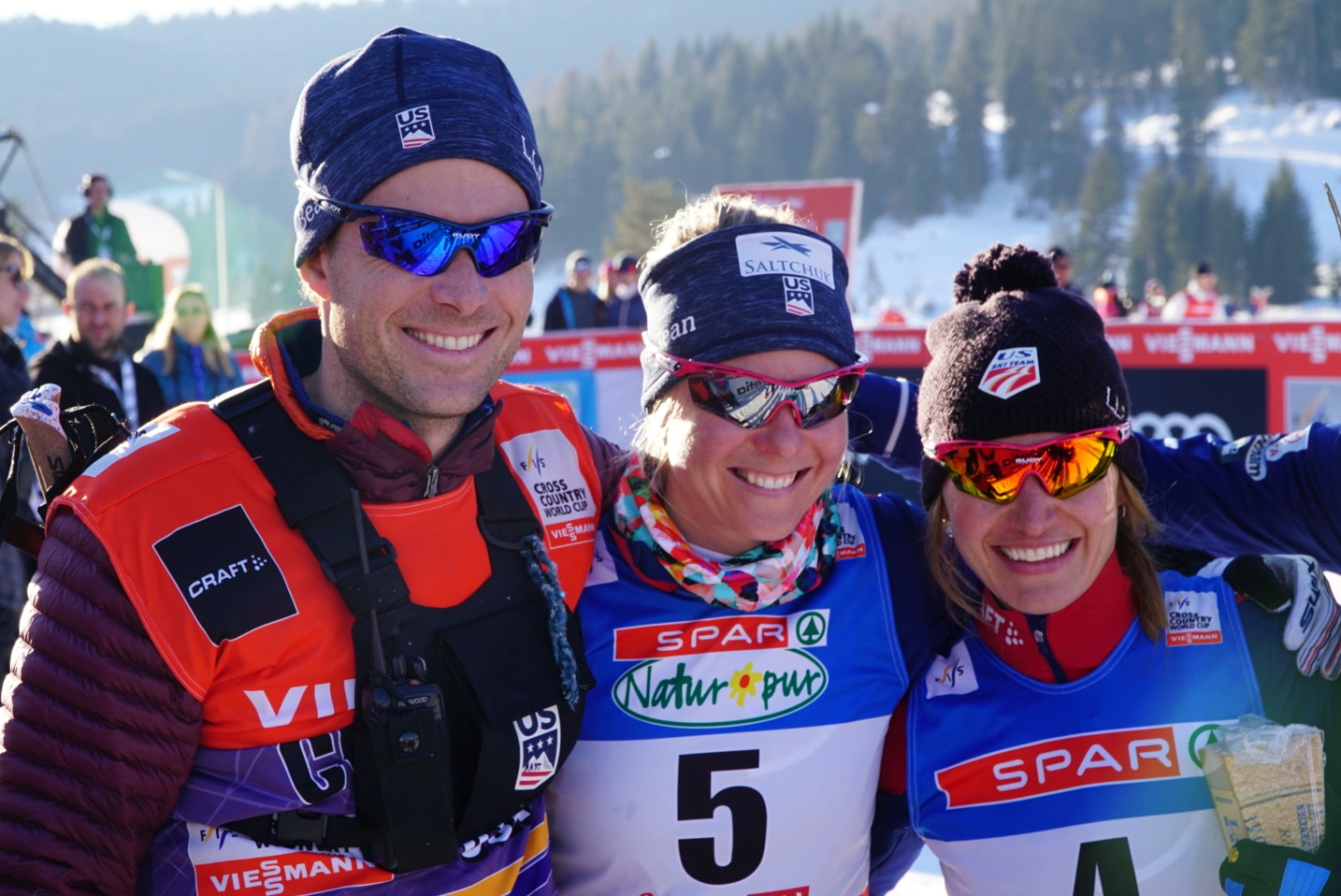
    Matt Whitcomb with Sadie Bjornsen and Sophie Caldwell in Seefeld, Austria, this winter. (Photo: Garrott Kuzzy / LumiExperiences.com)

    “It’s been a many-year goal of ours to be ranked in the top three for the women’s team and we secured that for the first time today,” U.S. Ski Team Women’s Coach Matt Whitcomb told FasterSkier of his team’s best-ever Nations Cup ranking after the final World Cup of the season in Sweden. “We’ve come into [past] finals, I believe, ranked third and then come out of finals ranked fourth. We’ve been fifth… It was really quite an achievement.”

    The U.S. women all spend large amounts of time with their club teams and coaches, including at APU and Stratton. But they come together to form a national team, the strength of whose relationships are a storied aspect of building their own success. And Whitcomb is a big ingredient there, facilitating not just training but atmosphere and long-range goals.

    When Caldwell secured third in the Sprint Cup, she thought back two years to a conversation she had with Whitcomb about race goals. Whitcomb wanted Caldwell to write down goal in particular: to be in the Sprint World Cup overall top three.

    “At the time I was like, ‘Eh, no, that seems pretty far off,’” Caldwell reflected in a post-race interview with FasterSkier.

    But it wasn’t, and the determination to work seriously on big goals, and believe you can get them, is a hallmark of the U.S. team.

  • FasterSkier’s Canadian Breakthroughs: Collin Cameron and Zina Kocher

    FasterSkier’s Canadian Breakthroughs: Collin Cameron and Zina Kocher

    FasterSkier’s 2018 Canadian Breakthrough Skiers of the Year are Zina Kocher (l) and Collin Cameron. (Photos: Mario Walker & Scott Grant/Canadian Paralympic Committee)

    With the 2017/2018 season officially in the rearview, FasterSkier is excited to unveil its annual award winners for this past winter. Votes stem from the FS staff, scattered across the U.S., Canada, and Europe, and while not scientific, they are intended to reflect a broader sense of the season in review. This set of honors goes to Canadian athletes in any disciplines who had a major breakthrough at some level of competition.

    Previous categories: Junior Skiers of the Year | Collegiate Skiers of the Year | Biathletes of the Year| Para-Nordic Skiers of the Year | NoCo Skier of the Year

    ***

    Collin Cameron, Canadian Para-Nordic Skiing

    Four years ago, Collin Cameron didn’t really know what cross-country skiing was. At least, he didn’t know that it was a sport he could do.

    “I did not even know paranordic was a thing, to be honest!” the Canadian wrote in an email last week. “At that time I was just starting to play sledge hockey provincially for our local team here in Sudbury, just for fun.”

    But he since found a local group to try Para-Nordic, and was then recruited onto the Canadian Para-Nordic National Ski Team.

    Canada’s Colin Cameron racing to bronze in the men’s 7.5 k sitting biathlon sprint at the 2018 Paralympic Games in PyeongChang, South Korea. (Photo: Scott Grant/Canadian Paralympic Committee)

    In March, he became a multiple Paralympic medalist when he won bronze in both the 7.5 k and 15 k sitting biathlon competitions.

    At the end of the Games, he picked up another bronze in the open relay, where he teamed up with Brian McKeever. In a four-leg relay, they were one of only two teams to enter with just two athletes, and each raced two different relay legs.

    “Being a part of the open relay team with Brian, and his guides Graham [Nishikawa] and Russell [Kennedy], was something really special and I will never forget it,” Cameron wrote. “Getting my third Paralympic medal with those guys was pretty cool… just being a part of this amazing and successful team of athletes, techs, and coaches has to a favourite moment. Getting to see my teammate and travel roommate Mark Arendz finally earn his first gold medal was really, really awesome!”

    Although he is fairly new to Para-Nordic sport, Cameron’s success wasn’t completely unanticipated. Last season, he won a World Cup race on the same terrain in PyeongChang.

    “Going into the Games, I had one major goal of winning the sprint race I won at the test event the year before,” Cameron explained. “I had to settle for 4th, only 0.7 seconds off the podium. Aside from that single race, my other goal was to finish in the top 10 in all races I entered.”

    As any athlete will tell you, an Olympic or Paralympic medal is a much different animal than getting on the podium at a World Cup race. And Cameron found that to be true, too, when he returned home to Canada.

    “It’s been quite overwhelming to be honest,” he wrote. “I didn’t expect anything like the receptions I’ve received, and it’s really inspiring to see the way the community in both my hometowns have followed mine and the team’s success at the Games. I definitely could not have done this without the huge and overwhelming support from everyone here.”

    His next goal is 2019 World Championships, which will be held in Prince George, British Columbia.

    “I am very fortunate to be able to work with some of the best technical skiers and coaches in the world, that have greatly aided in the whole transition of making myself an endurance athlete…that being said there is still lots of work to do!”

    Zina Kocher, Foothills Nordic

    Yeah, Zina Kocher is 35. Yeah, she’s a three-time Olympian. But she did something brave this year.

    The former biathlete, who had retired in 2016, decided to become a cross-country skier and try to make a fourth Canadian Olympic team. She had been thinking about giving it a go, and discussing with longtime coach Richard Boruta.

    When Boruta died in a climbing accident in September, Kocher decided that even more than ever, she had to give it her best try, in his honor.

    Zina Kocher racing at Olympic Trials at Mont Sainte Anne. (Photo: Mario Walker/NorAm MSA 2018 Facebook)

    In some ways, things didn’t work out. She went to Olympic Trials in Mont Sainte-Anne, Quebec, knowing that it was a long shot — the race formats were heavily skewed towards classic, something that Kocher hadn’t done competitively for years, even though she has long been one of the fastest skate skiers in the country.

    She didn’t make the Olympics. And it might have ended there, but it didn’t.

    “After the selection races, I felt settled, ready to go back to ‘retirement’ or back to my previous next phase and other life goals and stop following, let’s say, a set training plan,” Kocher wrote in an email last week “But then I thought it would be fun to race the NorAm in Red Deer [Alberta], since that’s where I’m from and where I started xc skiing many many years ago! I hadn’t raced there since I was in high school. And then I thought oh Nipika loppet, never done that, why not. And then decided last minute to go to Gatineau Loppet when my friend Kamila (my past coach Richard Boruta’s widow) said she was going and I should come.”

    So, a season that had started with one goal — make the Olympics — went on.

    At that point, Kocher was leading the NorAm series, and found out that as a result she had an automatic spot to race on the World Cup for the last competitions of the season: the Holmenkollen 30 k freestyle mass start in Oslo, Norway, and World Cup Finals in Falun, Sweden.

    “Well, the Holmenkollen is legendary and an awesome opportunity,” she wrote.

    Kocher had raced there many times before, as a biathlete. Doing so as a skier was a new experience.

    “We had tons of fans cheering us on, pushing us up those big climbs!” she wrote. “I didn’t feel like I was in the best race shape that day, but I gave what I had for a 5 k pace that lasts for a torturous 30 k  … and my body went into some sort of shock post race, but that’s another story.”

    Despite that, she was the top finisher among the other different Continental Cup leaders.

    And then, on to Falun, where she had to do a classic World Cup race because it was part of a mini tour.

    “One big thing I went though [this season] was facing a fear of being last,” she wrote. “That sounds a bit crazy to say, but I think it’s probably an honest statement for many athletes. No one wants to come last, but someone does! Printed in ink, on a computer screen, it’s there for all to see! … I was terrified of doing a 10 k mass start classic in Falun, and I knew I would probably be last from the start. I was. In the end, it wasn’t so terrifying and I made it to the finish line. Having accomplished it, felt pretty darn good even though it was a bit of a solo 10 k. The fans and coach Babs [Ivan Babikov] were incredible cheerleaders!”

    Now, it’s back to retirement for Kocher. One of her top memories from the season was that Gatineau Loppet.

    “After some contemplation today, I think my favourite moment was doing the 50 k Gatineau Loppet,” she wrote. “Not because I won (great too of course), but because it was a great atmosphere, and it was cool to do a race point-to-point and with a mass… and because I was with Kamila and her friend Lukas. Lukas was actually racing on Richard’s old skis, doing his first ski loppet (he raced both days). Kamila didn’t think she’d be able to do any racing this winter, so it was wonderful to see her do what she loves again, and she even won the overall (both days – skate & classic 50). It was a bit of an emotional weekend. And felt like a great Richard tribute weekend.”

    Honorable Mention: Russell Kennedy, Team R.A.D. & Canadian Para-Nordic Skiing (guide)

    Kennedy accomplished a rare feat this season by competing at both the 2018 Olympics and Paralympics.

    “I’ve been on my own schedule this year because the Team R.A.D. is mostly younger athletes and … I have to do my own thing because I’m going for the Olympics,” Kennedy, last season’s overall NorAm winner, said at the beginning of the season. “So it actually works better for me to be training with Brian [McKeever] because he has similar goals as me.”

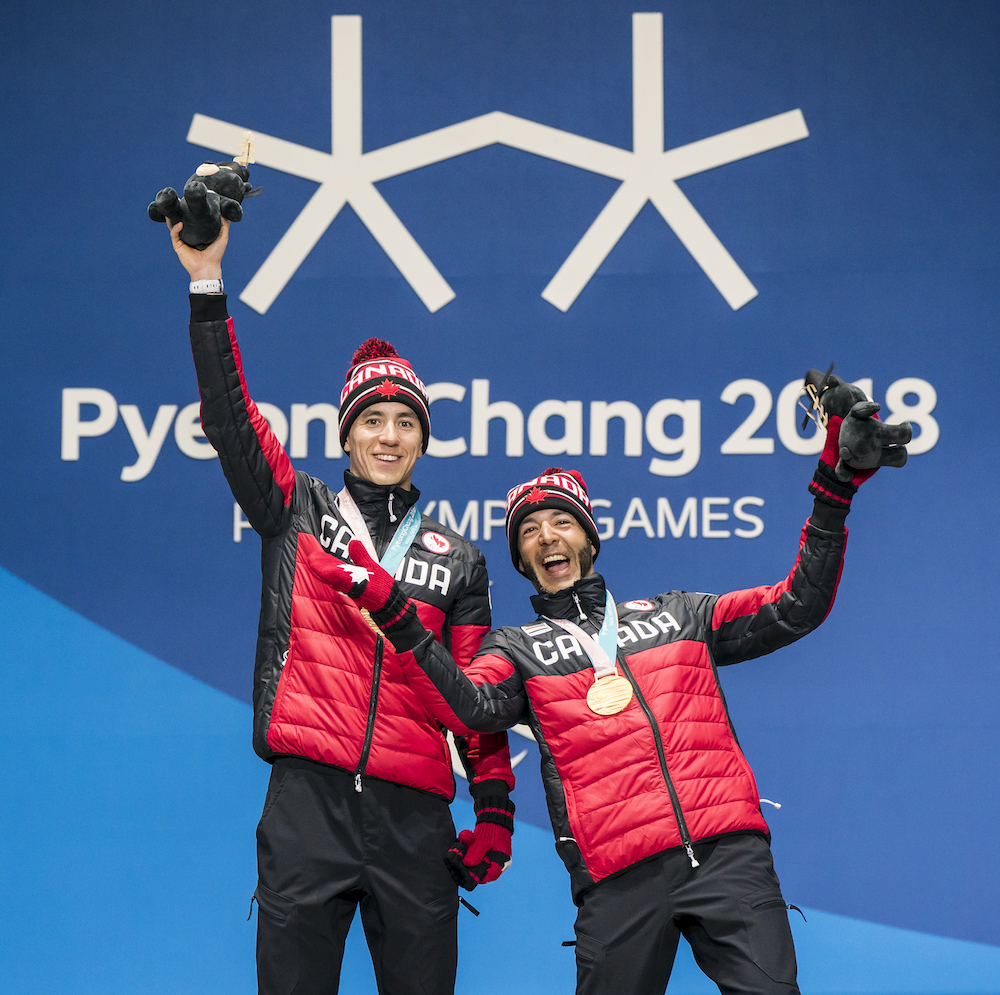
    Canada’s Brian McKeever (r) and Russell Kennedy receiving their gold medals from the men’s visually impaired classic sprint at the 2018 Paralympic Games in PyeongChang, South Korea. (Photo: Scott Grant/Canadian Paralympic Committee)

    As the NorAm winner, Kennedy started the season on the brutally competitive first period circuit of the FIS Cross Country World Cup. There, he had a top finish of 48th place in a skate sprint in Davos, Switzerland. It was only his second stint of European World Cups, after competing in Drammen and Oslo last winter.

    Kennedy returned to Canada and secured his Olympic spot by winning the sprint qualifier at Mont Sainte Anne and placing second in the sprint final. Two weeks later, he picked up two second-place finishes in NorAms in Red Deer.

    From there it was to the Olympics, where the 27 year old helped the Canadian relay team to ninth place, and as an individual finished 49th in the 50 k and 54th in the sprint.

    Then it was the Paralympics, which had long been part of the season plan. Kennedy was one of two guides for visually-impaired skier Brian McKeever, and as such picked up a collection of Paralympic gold medals (along with Graham Nishikawa, McKeever’s other guide). It was the third straight Paralympics where McKeever went undefeated – he now has 13 gold medals.

    “These sprint races are miserable,” McKeever said after crossing the line with Kennedy for gold in the sprint, according to a team press release. “They are so hard. The young guys are fast, and have natural snap. There is so much stress in sprint racing, and it goes all day long. I’m much more comfortable with the longer distances, but it was a great day for us. Russell carried the load for us today, and just thrilled we were able to cross the line first.”

    “It is hard to describe the mental states I went though the past couple months,” Kennedy recently wrote on his blog. “From being told that I didn’t make the team to making the Olympic team, feeling like I was getting sick then coming back to some of the better races of my life… There were days I woke up and wondered if it was worth it and if the hard work would pay off or if I was just blowing money on something that I didnt have in me… When I fell in love with training though I knew I was doing the right thing. So fall in love with the process dreamers, when you do you will have all good days!”

    Honorable Mention: Natalie Wilkie, Canadian Para-Nordic Skiing

    Natalie Wilkie is just 17 years old, but she’s a Paralympic gold medalist.

    In the final individual competition of the 2018 Paralympics, Wilkie topped the results sheet in the 7.5 k standing classic race – leading her teammate Emily Young onto the podium in the process. Wilkie was the gold medalist by just 1.6 seconds in an extremely exciting competition.

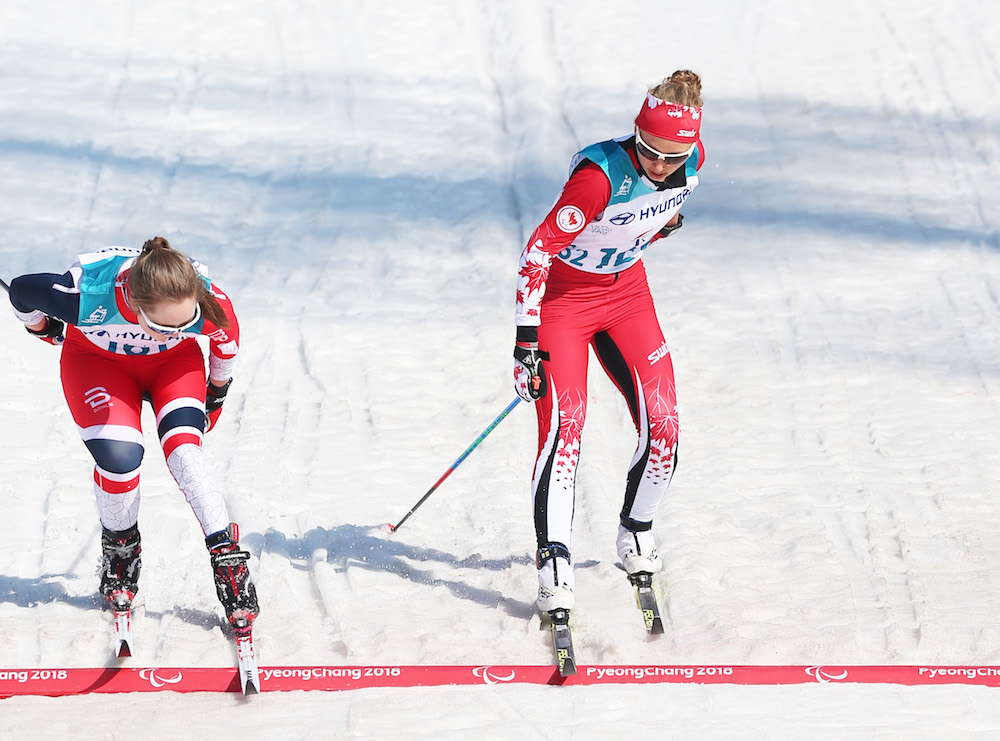
    Canada’s Natalie Wilkie (r) finishing third, just 0.1 seconds behind Norway’s Vilde Nilsen (l) in second, for her first Paralympic medal in the women’s 1.5 k standing classic sprint in PyeongChang, South Korea. (Photo: Scott Grant/Canadian Paralympic Committee)

    “This is crazy awesome,” Wilkie said in a press release after the race. “I didn’t think this would happen at all. I’m only 17 and this is my first Paralympics… The difference today was double poling. I just kept telling myself to pretend I was elbowing my older brother.”

    She has even inspired older members of the team, too, including 27-year-old Young, who was just a tenth of a second away from silver in that race.

    “What would Natalie do?” she said in the same press release. “I just kept saying ‘What would Natalie be doing.’”

    Earlier in the Games, Wilkie had won bronze in the sprint. And to close things out, she helped the Canadian mixed relay team – with Young, Chris Klebl, and Mark Arendz – to silver, the first relay medal the country had ever won at the Paralympics.

    “What Mark, Chris and the girls did in that first relay was awesome,” McKeever, who teamed up with Cameron for a second relay medal later that same day, said in a press release.

  • Canada Notches First Paralympic Relay Medals with Silver and Bronze

    Canada Notches First Paralympic Relay Medals with Silver and Bronze

    Canada’s mixed relay after taking silver on the last day of the 2018 Paralympics in PyeongChang, South Korea, with (from left to right) Natalie Wilkie, Chris Klebl, Mark Arendz and Emily Young. (Photo: Dave Holland/Canadian Paralympic Committee)

    2018 Winter Paralympics (PyeongChang, South Korea): Mixed and open relays

    On the final day of the PyeongChang Paralympic Games, Canada was the only country to medal in both the mixed and open cross-country relays, and its mixed relay anchor, Mark Arendz, became the most decorated Canadian at a single Winter Paralympics with his sixth medal of the week.

    In the 4 x 2.5-kilometer mixed relay on Sunday, Natalie Wilkie, Emily Young, Chris Klebl, and Arendz teamed up for silver, 50 seconds behind Ukraine (Iurii Utkin, Liudmyla Liashenko, Yuliia Batenkova-Bauman, and Oksana Shyshkova), which claimed gold in 24:31.9 minutes. On the final skate leg, Arendz held off Germany (Andrea Eskau, Steffen Lehmker and Alexander Ehler) by 3.4 seconds at the line.

    Wilkie and Young, standing athletes coming off gold and bronze in Saturday’s 7.5 k cross-country race, started the team off for the first two classic legs. Wilkie, 17, also earned an individual bronze at these Games. While Wilkie tagged Young in fifth, Young went on to tag Klebl, a 2014 Paralympic champion sit-skier, in seventh place.

    “Our team worked so well together,” Young said of the relay, according to a Cross Country Canada press release. “It looked a little scary in the beginning, but we knew we had Chris in third and Mark anchoring which was going to be the difference. We each held our own in our individual sections and it is so fun to win this one as a team.”

    Klebl, 46, made up 27 seconds on the field and tagged Arendz in fourth. Arendz then caught and passed Japan’s Taiki Kawayoke and later Germany’s Ehler on the last downhill into the finishing stretch to finish second.

    “This is fantastic. It is our first relay medal ever,” Arendz, 28, told Cross Country Canada. “It is great to end the Games with a historic moment that we get to share with each other for the rest of our lives. This is a great team of two veterans and two rookies. I’m so happy we were able to get this done.”

    Arendz, who elected flag bearer of the Canadian Paralympic Team for Sunday’s Closing Ceremony, is taking home a gold medal from the 15 k biathlon race, two silvers, and three bronze medals. He competed in all but one race throughout the week, skipping the distance cross-country race.

    “I came in here thinking I could get three medals, but to get six is incredible,” Arendz said. “Today’s is a special one. I am happy we got this done, but there is no way I could do another race. I’m done.”

    American Kendall Gretsch (l) racing in the 4 x 2.5 k open relay at the 2018 Paralympic Winter Games in PyeongChang, South Korea. (Photo: U.S. Paralympics/Mark Reis)

    The U.S. team, with Kendall Gretsch, Ruslan Reiter, Jake Adicoff (and guide Sawyer Kesselheim)  placed seventh in the mixed relay, 1:35.7 out of first. Gretsch skied both the first and third legs and tagged Adicoff in ninth out of 13 teams at the last exchange.

    “It’s a little bit nerve-wracking and a little bit fun,” Adicoff said of skiing the anchor leg. “They did an awesome job on the first three legs.”

    In the 4 x 2.5 k open relay an hour later, Canada raced to bronze with two athletes: sit-skier Collin Cameron and visually impaired skier Brian McKeever (and his guides Graham Nishikawa and Russell Kennedy).

    The duo finished 1:05.8 behind France, which placed first with Benjamin Daviet, Anthony Chalencon and Thomas Clarion in 22:46.6. Norway finished 22.5 seconds back for silver, with Nils-Erik Ulset, Hakon Olsrud and Eirik Bye.

    Ukraine (Iaroslav Reshetynskyi, Olha Prylutska, Grygorii Vovchynskyi, and Anatolii Kovalevskyi) crossed the line in third but was penalized 30 seconds for an early exchange and slipped to fifth (+1:26.3), while Canada moved into third and Belarus placed fourth (+1:23.7).

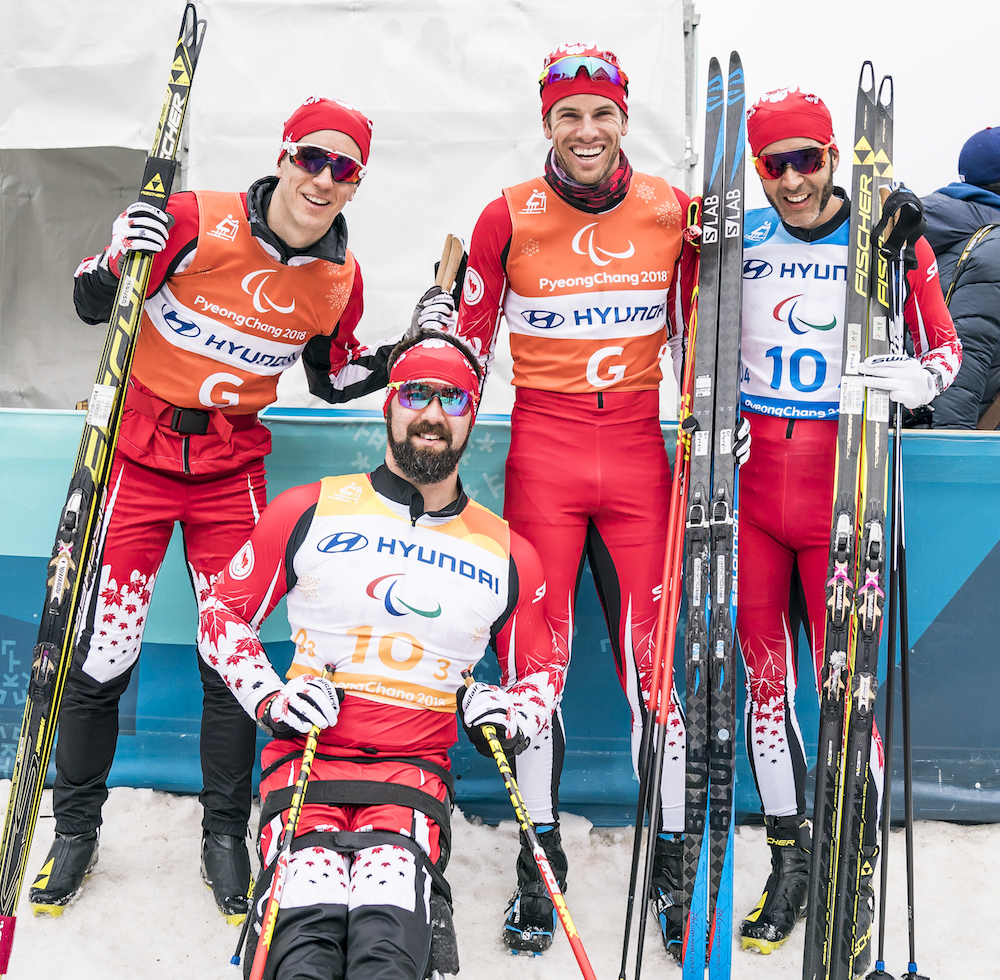
    Canada’s open relay after taking bronze on the last day of the 2018 Paralympics in PyeongChang, South Korea, with (from left to right) Graham Nishikawa (guide), Collin Cameron, Russell Kennedy (guide), and Brian McKeever. (Photo: Dave Holland/Canadian Paralympic Committee)

    Early in the race, Cameron tagged McKeever in eighth at the first exchange, and McKeever and his guide raced up to fourth. On the third leg, Cameron was skiing in third until he dropped a pole on the last climb and had to turn around to recover it. He came through the last exchange in sixth, 25 seconds behind Ukraine in third. McKeever went on to crossed the finish line fourth place, but his team was awarded bronze after Ukraine was penalized for tagging outside the exchange zone.

    buy skelaxin

    The bronze medal was Cameron’s third of the week after he placed third in two biathlon races earlier in the week. For McKeever, Canada’s most decorated Winter Paralympian of all time who won all three individual cross-country races he competed in over the last week, it was the 17th medal of his Paralympic career.

    “I just tried to pace it properly and be as fast as I could. It was so much fun,” Cameron, 28, told Cross Country Canada. “This is my first relay, so I was really looking forward to this. I am super happy to leave here with three medals.”

    “It’s incredible to get two relay medals today,” McKeever, 38, said. “We knew we had a shot if we all had really good days. What Mark, Chris and the girls did in that first relay was awesome. These races are so interesting with all different disabilities together. It is never over until last tour around, and in both cases, we saw that today with lots of different lead changes out there.”

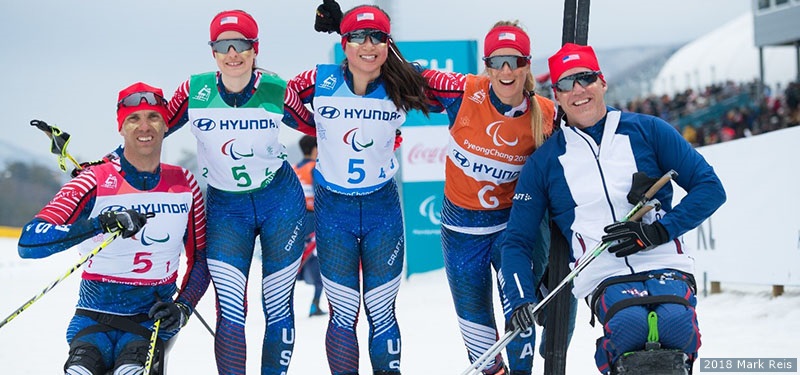
    The U.S. open relay at the 2018 Paralympics in PyeongChang, South Korea, with (from left to right) Andy Soule, Grace Miller, and Mia Zutter, Kristina Trygstad-Saari (guide), and Sean Halsted. (Photo: U.S. Paralympics/Mark Reis)

    The U.S. team, with Andy Soule, Sean Halsted, Grace Miller, and Mia Zutter (and guide Kristina Trygstad-Saari), placed 12th in the open relay out of 12 teams.

    “It’s been an amazing Paralympic Games,” Soule, 38, told U.S. Paralympics Nordic. “The organizers have put on a great event. This is a great team to be involved with. We’ve had a lot of fun here. This is my last Paralympic race, but we have a couple of young athletes here. We’ll have a great team for a long time.”

    In total, both the Canadian and U.S. Paralympic teams tallied 16 medals between nordic and biathlon in PyeongChang — a record for both programs. Notably, every member of Canada’s Para-Nordic World Cup Team is taking home at least one medal.

    Results: Mixed relay | Open relay

    Canada’s 2018 Paralypmic cross-country and biathlon team at the Alpensia Biathlon Centre on the last day of the Games in Pyeongchang, South Korea. (Photo: Dave Holland/Canadian Paralympic Committee)
  • Wilkie, McKeever, Masters All Win Gold in Last Individual Race of Paralympics

    Wilkie, McKeever, Masters All Win Gold in Last Individual Race of Paralympics

    Canada’s 17-year-old Natalie Wilkie being awarded gold after she won her first Paralympic race on Saturday, the women’s 7.5 k standing classic, in PyeongChang, South Korea. (Photo: Dave Holland/Canadian Paralympic Committee)

    2018 Winter Paralympics (PyeongChang, South Korea): 5/7.5/10 k cross-country races

    Saturday marked the last day of individual racing at the PyeongChang Paralympics, and as they have over the last week, the U.S. and Canadian teams did not disappoint, with the U.S. Paralympics Nordic Team adding a gold and two silvers to its medal count and the Canadian Para-Nordic Team notching two golds and two bronze medals in the middle-distance cross-country races.

    Seventeen-year-old Natalie Wilkie of Salmon Arm, British Columbia, won the women’s 7.5-kilometer standing classic race, while her Canadian teammate Emily Young placed third in that race.

    Brian McKeever, 38, of Canmore, Alberta, won his third-straight race of the Paralympics, the men’s 10 k visually impaired classic race, sweeping all three races at the Paralympics for the third-straight time (he was undefeated at the 2014 Games in Sochi, Russia, as well as the 2010 Paralympics in Vancouver, B.C.)

    Canada’s Mark Arendz raced to bronze in the men’s 10 k standing classic race for his fifth medal of the week (including a biathlon gold) and seventh of his Paralympic career.

    For the U.S., Oksana Masters won her second gold of the Games in the women’s 5 k sitting (after winning the cross-country sprint as well) and fifth medal total in PyeongChang. In three Paralympics, she has eight medals to her name.

    Dan Cnossen continued his medal streak with another silver in the men’s 7.5 k sitting for his sixth medal in as many races this week (three in cross-country, three in biathlon), and Jake Adicoff achieved his first Paralympic medal after placing second behind McKeever in the 10 k visually impaired classic.

    In the women’s standing race on Saturday, Canada nearly went first and second, with Young missing out on silver by 0.1 seconds. While Wilkie took the win in 22:12.2 minutes, Ekaterina Rumyantseva of the Neutral Paralympics Athletes (NPA) finished 1.6 seconds back for second, just ahead of Young in third (+1.7).

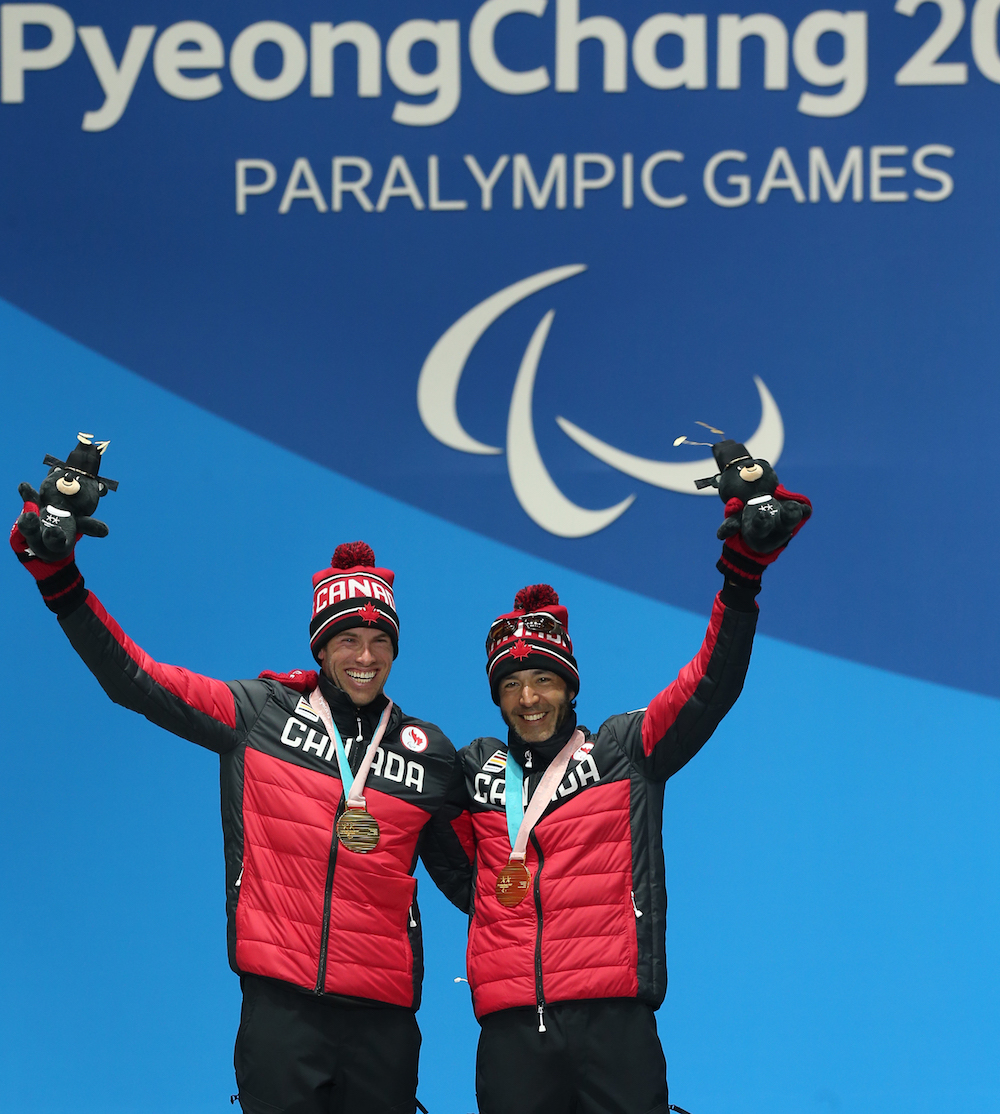
    Natalie Wilkie (r) and Emily Young at Saturday’s 2018 Paralympic medal ceremony with their gold and bronze medals in the women’s 7.5 k standing classic race on Sunday in Pyeongchang, South Korea. (Photo: Dave Holland/Canadian Paralympic Committee)

    “This is crazy awesome,” Wilkie said after winning the last individual race of her first Paralympics, according to a Cross Country Canada press release. “I didn’t think this would happen at all…

    “The difference today was double poling,” she added. “I just kept telling myself to pretend I was elbowing my older brother.”

    During the race, Young channeled her teammate for motivation.

    “ ‘What would Natalie do?’ I just kept saying ‘What would Natalie be doing?’ ” Young, 27, said with a laugh to Cross Country Canada. “I was trying and trying all week to get onto the podium. I knew this race would be my big chance. I kept telling myself to get this done. There is nothing left in the tank. I didn’t want any more hills. I just wanted to get over the finish line. I left it all out there today.”

    Also in the women’s standing race, Canada’s Brittany Hudak placed eighth (+1:37.4) and American Grace Miller finished 18th (+7:09.7).

    McKeever spent about half the race with each of his guides, Graham Nishikawa and Russell Kennedy, to win the men’s visually impaired race by more than a minute in 23:17.8. Adicoff, of the U.S., with his guide Sawyer Kesselheim had the second-fastest time for silver (+1:13.5), while Belarus’s Yury Holub (with guide Dzmitry Budzilovich) placed third (+1:19.3).

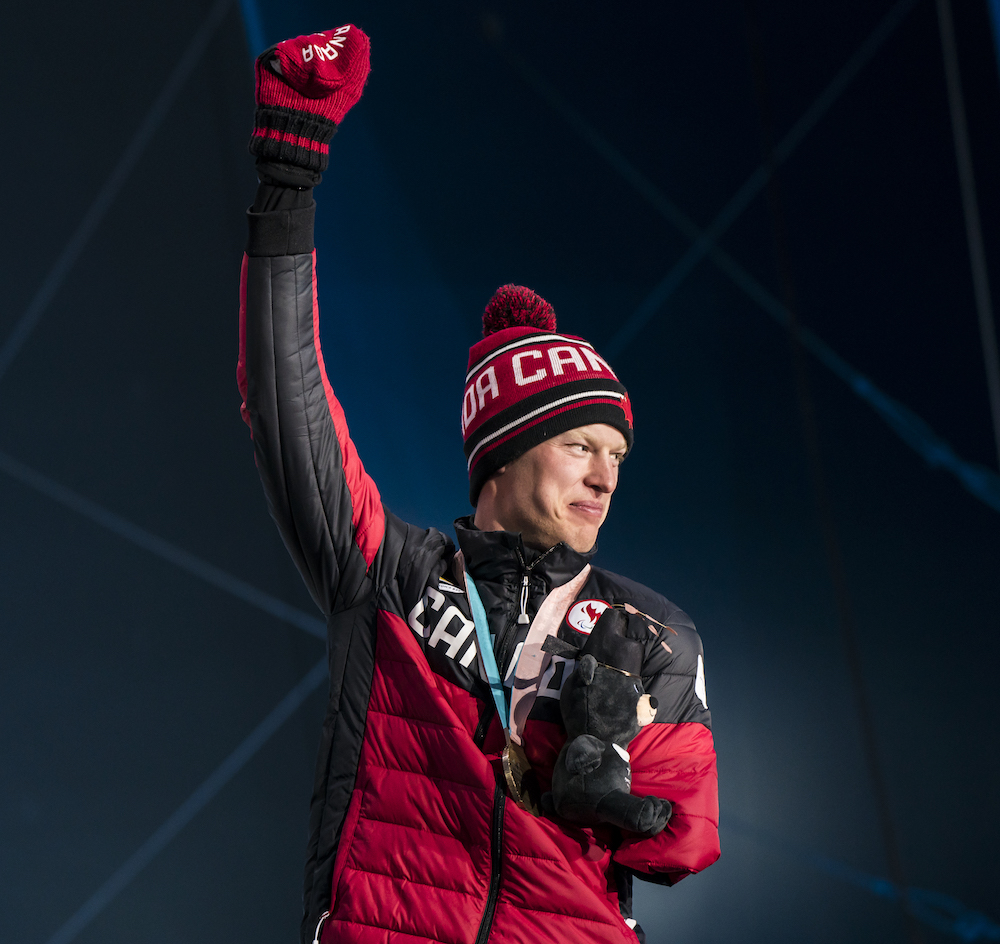
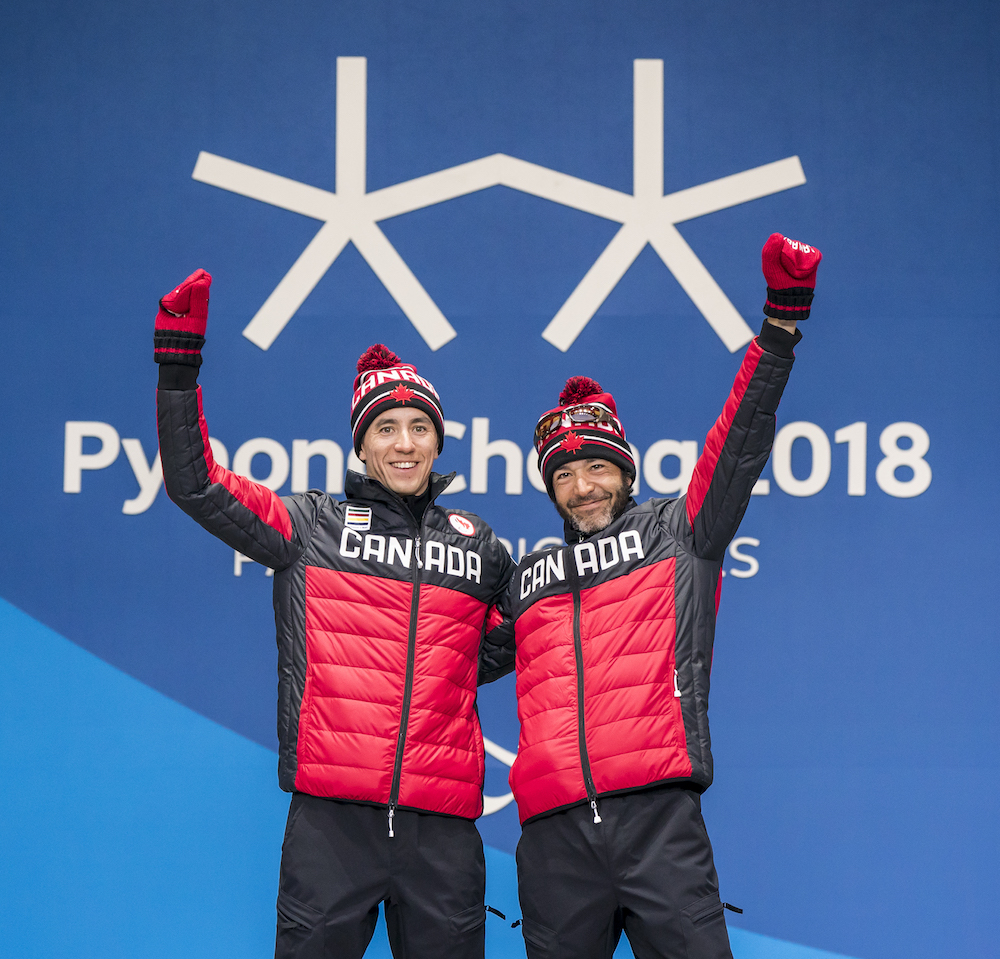
    Canada’s Brian McKeever (r) having some fun at the medal ceremony after winning gold with guides Graham Nishikawa (l) and Russell Kennedy (not pictured) in the men’s 10 k visually impaired classic race at the 2018 Paralympics in PyeongChang, South Korea. (Photo: Dave Holland/Canadian Paralympic Committee)

    “This feels good,” said McKeever, who has won 13 gold medals in five Paralympics. “That one was hard today and was a lot closer than the others.

    Nishikawa led him for the first 6 k, helping him claw back 4 seconds on Sweden’s Zebastien Modin (and guide Johannes Andersson) ahead of him. At the race’s halfway point, the Canadians took the lead, and after Kennedy jumped in to guide McKeever, they widened their gap over the final 4 k. Modin did not finish.

    “Sebastian had a pretty hard crash and I’m most concerned about him because he is a very good friend and you don’t want to win that way,” McKeever said. “It was a good fight today. We knew when to hit it and when to pull back. It’s nice to complete what we set out to do.

    “Today was all about teamwork,” McKeever added. “There was a huge temperature change so we were out very early as a team testing new skis with our wax techs for 90 minutes before the race even started. It was a huge effort by everyone today.”

    For Adicoff, 22, the silver marked the first Paralympic medal of his career. He had previously been awarded bronze in the cross-country classic sprint, but was relegated to fourth for a technique violation.

    As for Saturday’s middle-distance race, he said the skiing was “absolutely awesome. We had great skis by our staff,” Adicoff said, according to a U.S. Paralympics Nordic press release. “I got a little bit sick a couple days ago, so going into this race I told myself to stay relaxed the first part and see if we could keep adding throughout the whole race. It ended up working out, I’m really happy about that.”

    “He was really smart today, thinking about how he’s going to pace the race,” Kesselheim told U.S. Paralympics. “Taking it out not too hard and then building throughout. Really using the skis to our advantage and skiing smooth.”

    In the women’s 7.5 k visually impaired classic race, American Mia Zutter (with guide Kristina Trygstad-Saari) finished ninth, 5:33.7 behind the winner, Belarus’s Sviatlana Sakhanenka (with guide Raman Yashchanka).

    Oksana Masters and her U.S. coach Eileen Carey after Masters won the women’s 5 k sitting cross-country race on Saturday at the 2018 Paralympic Winter Games in PyeongChang, South Korea. (Photo: U.S. Paralympics/Mark Reis)

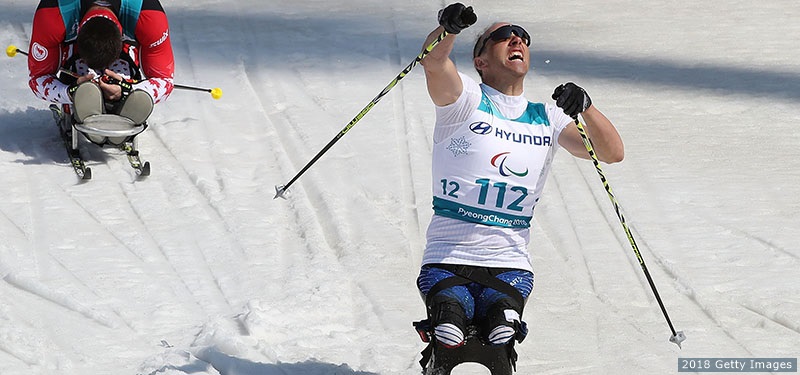
    Then there was Masters, 28, who learned Friday that she was elected as the flag bearer for the entire U.S. Paralympic team at Sunday’s Closing Ceremony. She picked up her second gold medal of the week with a win in the 5 k sitting in 16:42, 11.5 seconds ahead of Germany’s Andrea Eskau in second.

    “I am absolutely truly speechless on this performance,” Masters told U.S. Paralympics on Saturday. “I was a little bit nervous because I didn’t get my full warm up in and I was yawning at the start line thinking I was a little too relaxed. I have no idea what just happened.

    “I thrive and love the athlete lifestyle of eat, sleep and train,” she continued. “To put yourself to the ultimate test on that start line and seeing all your hard work come through, and not just that, it’s a whole team effort. Seeing how our amazing team between our wax tech, nutritionist, sport psych, everything just comes together at the finish line. That’s really what it’s all about. It’s that moment coming together. It’s not a one-person show. It definitely takes a village and we have an incredible team.”

    In that race, American Kendall Gretsch, who won two golds earlier in the week, placed sixth (+1:04.4), Canada’s Cindy Ouellet (+4:04.6) finished 17th and American Joy Rondeu was 19th (+5:13.1)

    American Dan Cnossen racing to silver in the men’s 7.5 k sitting cross-country race at the 2018 Paralympic Winter Games PyeongChang in PyeongChang, South Korea. (Photo: U.S. Paralympics/Mark Reis)

    In the men’s 10 k sitting, Cnossen pulled off his fourth silver medal of the week (and sixth medal total), finishing 5.3 seconds shy of gold, which went to South Korea’s Sin Eui-hyun in 22:28.4.

    “This is my favorite race that we do,” Cnossen, 37, told U.S. Paralympics. “It’s 20-21 minutes of effort, or thereabouts, just all out as hard as you can go. I left it all out on the course and was edged out by five seconds. I’m really happy for Mr. Sin, my South Korean competitor. He earned the gold medal.”

    After what he estimated to be around 60 k of racing over the last eight days, not including training, warming up or cooling down, Cnossen said he was feeling “very fatigued.”

    “I came into the Games just trying to take it one race at a time and give it my all — each and every race — and not think too far ahead,” the retired Navy SEAL said. “Just focus on the here and now, and soak up the moment and be in the present.”

    Also in that race, Andy Soule of the U.S. finished fifth (+34.0) and Canada’s Chris Klebl placed sixth (+1:00.9). Also for Canada, Derek Zaplotinsky followed in 15th (+3:15.2), Sebastien Fortier placed 16th (+3:19.9) and Yves Bourque 31st (+8:47.9). For the U.S., Sean Halsted finished 23rd (+4:19.8), Bryan Price 26th (+5:35.9) and Jeremy Wagner 30th (+8:06.9).

    In the men’s standing division, Arendz claimed his fifth medal in as many starts this week, placing first, second and third in the three biathlon races and earning another bronze in the cross-country sprint. (He skipped the long-distance cross-country race.)

    Canada’s Mark Arendz after being awarded bronze in the men’s 10 k standing classic race at the 2018 Paralympics in PyeongChang, South Korea. (Photo: Dave Holland/Canadian Paralympic Committee)

    On Saturday, in the middle-distance cross-country event, Arendz finished 20.3 seconds behind the winner, Japan’s Yoshihiro Nitta, who won in 24:06.8, and 11.6 seconds behind Ukraine’s Grygorii Vovchynskyi, who placed second (+8.7).

    “The focus was to come here and race in six out of the seven events,” Arendz explained. “I have one more left to accomplish in the relay, but I got done what I set out to do in biathlon and to get a couple in cross-country is extra special. This course here really suits me well and the skis have been great all week.”

    Arendz was chosen as Canada’s flag bearer for Sunday’s Closing Ceremony.

    With two relay races (mixed and open) remaining on Sunday, Canada has a grand total of 14 nordic and biathlon medals at these Paralympics, surpassing its previous Paralympic medal total. The U.S. team is up to 16, also record-breaking for its nordic/biathlon program.

    Results

    Americans Jake Adicoff (l) and his guide Sawyer Kesselheim racing to silver in the men’s 10 k standing classic race at the 2018 Paralympic Winter Games in PyeongChang, South Korea. (Photo: U.S. Paralympics/Mark Reis)
  • First Paralympic Golds for Soule and Masters; McKeever Wins Second Straight, 12th Total

    First Paralympic Golds for Soule and Masters; McKeever Wins Second Straight, 12th Total

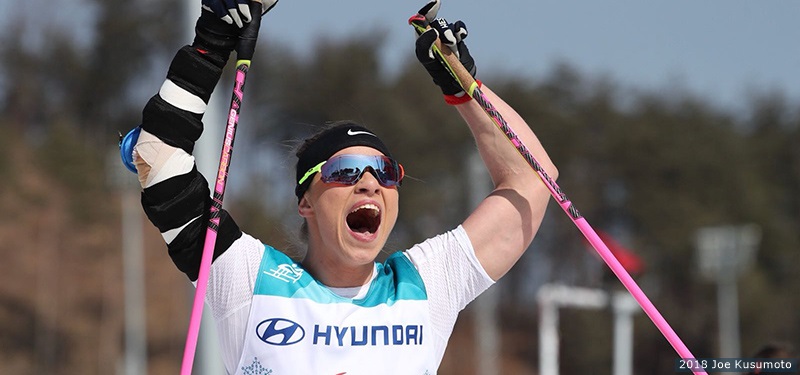
    American Oksana Masters reacting to her first gold medal in her third Paralympics, after winning the women’s 1.1 k sitting sprint on Wednesday in PyeongChang, South Korea. (Photo: U.S. Paralympics/Joe Kusumoto)

    2018 Winter Paralympics (PyeongChang, South Korea):  Cross-country sprints

    Hold onto your hats, this was a major day for both the American and Canadian teams at the 2018 Paralympics.

    In the cross-country sprints on Wednesday in PyeongChang, Andy Soule and Oksana Masters of the U.S. Paralympics Nordic Program both captured their first-career Paralympic golds in the women’s and men’s sitting events, while Dan Cnossen skied to his fourth medal in as many races with a bronze to add to his collection.

    Brian McKeever of the Canadian Para-Nordic Ski Team raced to his second-straight gold of the week in the men’s visually impaired sprint, with guide Russell Kennedy, and two of their teammates claimed bronze: Mark Arendz, in the men’s standing sprint for the first Paralympic cross-country medal of his career (following four biathlon medals) and Natalie Wilkie, the youngest member of the team at age 17, in the women’s standing sprint.

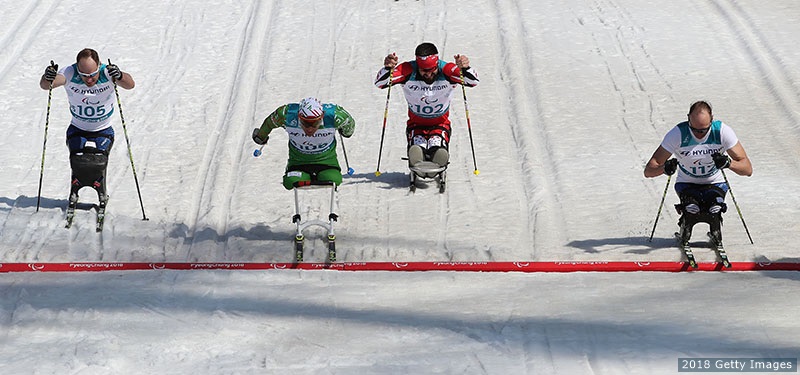
    Andy Soule (r) of U.S. taking first in a photo finish with Dzmitry Loban (second from l) of Belarus, while American Dan Cnossen (l) takes third and Canada’s Collin Cameron (second from r) fourth in the men’s 1.1 k sitting cross-country sprint at the 2018 Paralympics in PyeongChang, South Korea. (Photo: U.S. Paralympics/Chung Sung-Jun for Getty Images)

    In the men’s 1.1-kilometer sitting sprint final, Soule won a photo finish with Dzmitry Loban of Belarus, after both crossed the line in 3:31.4 minutes. Cnossen finished 0.4 seconds back in third and Canada’s Collin Cameron was just 0.3 seconds off the podium in fourth (+0.7).

    After skiing the pack throughout the final, Soule took the lead as the four racers entered the stadium together. In the finishing stretch, Loban, Cnossen and Cameron challenged him for the gold, but with a powerful surge and lean at the line, Soule, 38, notched the first gold medal after nearly 13 years in the sport. The U.S. Army veteran had previously earned bronze at the 2010 Paralympics and bronze in Tuesday’s 12.5 k sitting biathlon race.

    In a U.S. Paralympics press release, Soule described the race as “interesting” and “tactical”.

    American Andy Soule celebrates gold in Wednesday’s 1.1 k sitting sprint final at the 2018 Paralympics in PyeongChang, South Korea. (Photo: U.S. Paralympics/Chung Sung-Jun for Getty Images)

    “I chased the whole way,” he said. “I don’t think it necessarily hurt me to chase that much, it actually helped with a little bit of wind break. I think a good, tight tuck coming down the final hill put me in a natural line, and I knew I had a shot at a good sprint out. This is an incredible group to compete with. That kind of a finish … that’s what sprinting is all about.”

    “I definitely lost a little gas in the final stretch,” Cnossen reflected, according to the press release. “My strategy was to tuck in behind the Belarus athlete in the beginning and then sprint over the bridge and try to hang on. Andy had such an awesome race. This is the second day in a row we’ve had two U.S. men on the podium which is just phenomenal.”

    For Soule, the gold was his first in his third Paralympics, and his first Paralympic medal in a cross-country race (rather than biathlon).

    “It means so much. It feels so incredible,” Soule said. “I couldn’t do it without incredible teammates pushing me all the time, and without incredible coaching and technical staff. I think it speaks to a great team effort that has really paid off for us.”

    Cameron came within fractions of a second of achieving his second medal in his first Paralympics.

    “I raced as hard as I could … it is what it is. I just came up a little short,” he said, according to a Cross Country Canada press release. “It is amazing that I got a medal this week in biathlon, I wasn’t expecting it, but that was behind me. I really wanted something here. This was the race I wanted a medal in. It was a close one.”

    Also for Canada, Chris Klebl and Derek Zaplotinsky missed advancing to the final after both finished sixth in their respective semifinals.

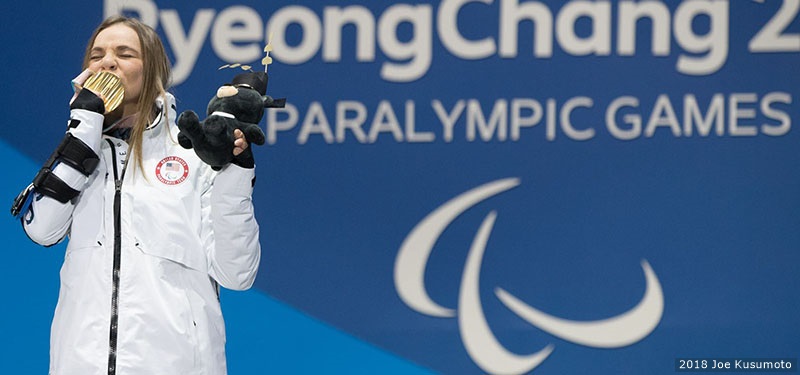
    American Oksana Masters kissing her first Paralympic gold at the medals ceremony on Wednesday night after she won the women’s 1.1 k sitting sprint at the 2018 Paralympics in PyeongChang, South Korea. (Photo: U.S. Paralympics/Joe Kusumoto)

    Masters, 28, won the women’s 1.1 k sitting sprint final by 2.1 seconds over Germany’s Andrea Eskau, crossing the line first in 4:06.7. The gold was Masters’s first in her third Paralympics, after she had previously collected five medals — two silver and three bronze — between the 2012 Summer Paralympics in London (where she placed third in a doubles rowing event), 2014 Winter Paralympic in Sochi, Russia (where she tallied one silver and two bronze in cross-country events), and PyeongChang (silver in the biathlon 6 k sprint).

    Masters has notably been racing with an injured elbow throughout these Games. On Tuesday, she did not finish the 10 k biathlon race.

    “I can’t believe it. I literally was starting to think this day would never happen,” she said of her win on Wednesday, according to the U.S. press release. “I knew that I wasn’t going to let yesterday be my last race. I couldn’t believe it, but at the same time, I knew I had it in me to dig deep a couple more times. I could not have done this without the USOC medical staff.”

    In the sitting semifinals, her teammates Kendall Gretsch, who won the first two races of the 2018 Paralympics, and Aaron Pike, were eliminated after both placed fourth in their respective heats.

    McKeever 2-for-2

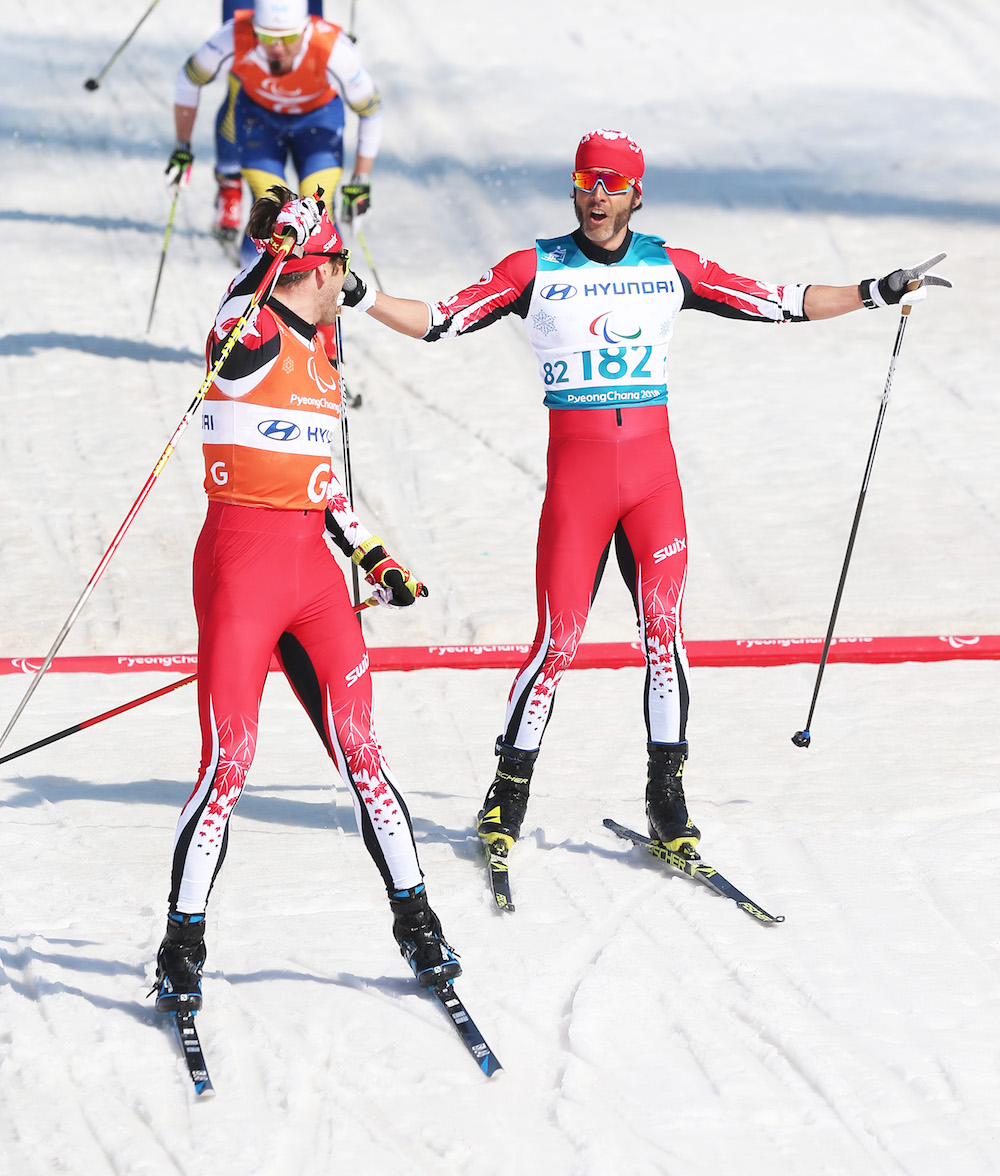
    Canada’s Brian McKeever (r) and his guide Russell Kennedy celebrate gold in the men’s 1.5 k visually impaired classic sprint at the 2018 Paralympics on Wednesday in PyeongChang, South Korea. (Photo: Scott Grant/Canadian Paralympic Committee)

    A five-time Paralympian, McKeever, 38, racked up his 12th Paralympic gold medal (15th total medal) in the men’s 1.5 k visually impaired classic sprint. He finished 2.5 seconds ahead of Sweden’s Zebastien Modin (with guide Robin Bryntesson) in second place, with a time of 4:03.2. Behind them in the final, Norway’s Eirik Bye (with guide Arvid Nelson) finished third (+29.5) and Jake Adicoff (with guide Sawyer Kesselheim) was relegated to last (fourth place) for a technique violation.

    McKeever has won all three Paralympic sprints since they were introduced in 2010. On Wednesday, he double poled the entire race.

    “These sprint races are miserable,” McKeever said, according to a team press release. “They are so hard. The young guys are fast, and have natural snap. There is so much stress in sprint racing, and it goes all day long. I’m much more comfortable with the longer distances, but it was a great day for us. Russell carried the load for us today, and just thrilled we were able to cross the line first.”

    Kennedy, 26, who competed at his first Olympics last month in PyeongChang, said it was tough battling it out in Wednesday’s soft conditions.

    “We played things a bit more strategic in the semis because we knew the final was going to be a tough fight, and it was,” Kennedy reflected. “That first hill hurt a lot. Once I got to the top I was able to settle down and said to myself ‘OK, you got this.’ ”

    While Kennedy guided McKeever to gold in the second half of Monday’s 20 k cross-country race, McKeever’s other guide, Graham Nishikawa (who skied the first half with him), joined McKeever on the podium. Wednesday was Kennedy’s turn at the medals ceremony.

    “This is a new experience for me — especially coming from the Olympics where the focus is all on yourself,” Kennedy said. “Brian is such a strong athlete and guiding him requires a lot more communication. Competing here at the Paralympics is really rewarding because you do this as a team. It is hard at times to know if I’m going too hard or if he needs me to go faster, but it has been a lot of fun for me.”

    Canada’s Mark Arendz en route to bronze in the men’s 1.5 k standing classic sprint at the 2018 Paralympics in PyeongChang, South Korea. It was his first cross-country medal (fifth total) in his second Paralympics. (Photo: Scott Grant/Canadian Paralympic Committee)

    In the men’s 1.5 k standing sprint final, Arendz tied Finland’s Ilkka Tuomisto for third place, and both were awarded bronze. They finished just 0.3 seconds behind Japan’s Yoshihiro Nitta in second, and 1.1 seconds behind Kazakhstan’s Alexandr Kolyadin, who won in 4:19.7.

    “Sitting there in the finish waiting for the results of the photo finish, I was just hoping for a tie,”  Arendz said, according to the team press release. “It was a really good race but I made a mistake down the finishing stretch switching to try and find a faster track and that may have cost me the whole race.”

    The Paralympic medal was the first in a cross-country race for the 28-year-old Arendz, who has two silver and two bronze in biathlon races between these Paralympics and the 2014 Sochi Games.

    “I came here for medals in biathlon and was hoping to get my first one in cross-country,” he said. “To come away with my first bronze in cross-country skiing means a lot. I couldn’t be happier.”

    In the women’s 1.5 k standing sprint final, Wilkie raced to third for her first medal in her first Paralympics. She finished just a tenth of a second behind Norway’s Vilde Nilsen, who took silver, and 3.2 seconds out of first, which went to Anna Milenina of the Neutral Paralympic Athletes (NPA) in 5:11.1.

    Canada’s Natalie Wilkie (r) finishing third, just 0.1 seconds behind Norway’s Vilde Nilsen (l) in second, for her first Paralympic medal on Wednesday in the women’s 1.5 k standing classic sprint in PyeongChang, South Korea. (Photo: Scott Grant/Canadian Paralympic Committee)

    “It feels so awesome,” Wilkie said of her bronze medal. “This is my first Paralympics and I am just so happy to have won a medal.”

    Four seconds behind Wilkie, her teammate Emily Young placed fourth (+7.2). Canada made up half of the six-woman final with Brittany Hudak placing sixth (+49.2)

    “We are competing against each other, but we are also helping each other,” Wilkie said. “It was calming for me to have them there with me. We talked about strategy as a team before the final because the goal was for us to win a medal for Canada.”

    Paralympic nordic skiers and biathletes have a day off on Thursday before races resume Friday with men’s and women’s long-distance biathlon races, starting at 10 a.m. Korea time Friday (9 p.m. EDT Thursday).

    Complete results

    Canada’s Brian McKeever (r) and Russell Kennedy receiving their gold medals from the men’s visually impaired classic sprint at the 2018 Paralympic Games in PyeongChang, South Korea. (Photo: Scott Grant/Canadian Paralympic Committee)
  • McKeever Wins Record-Breaking 14th Paralympic Medal, 11th Gold

    McKeever Wins Record-Breaking 14th Paralympic Medal, 11th Gold

    Brian McKeever follows guide Graham Nishikawa during the men’s visually impaired 20 k freestyle on Monday at the 2018 Paralympics in PyeongChang, South Korea. Along with guide Russell Kennedy, they won the race by over a minute for McKeever’s 14th Paralympic medal and 11th gold. (Photo: Scott Grant/Canadian Paralympic Committee)

    2018 Winter Paralympics (PyeongChang, South Korea): 15/20 k visually impaired and standing races

    Make that record-breaking medal No. 14 for Brian McKeever. In his fifth Paralympics, the 38-year-old Canadian raced to the 11th gold medal of his career (and 14th medal total) on Monday at the 2018 Paralympics in PyeongChang, South Korea. He did so in the 20-kilometer visually impaired freestyle cross-country race with his guides Graham Nishikawa and Russell Kennedy, who traded guiding responsibilities during the four-lap race.

    Canada’s Brian McKeever (l) and one of his two guides on Monday, Graham Nishikawa, (Russell Kennedy was the other), at Monday night’s medal ceremony after they all teamed up for gold in the visually impaired 20 k freestyle cross-country race at the 2018 Paralympics in PyeongChang, South Korea. (Photo: Dave Holland/Canadian Paralympic Committee)

    McKeever finished in 46:02.4 minutes, more than a minute faster than silver medalist Yury Holub and his guide Dzmitry Budzilovich of Belarus, who finished 1:05 back in second. France’s Thomas Clarion (with guide Antoine Bollet) completed the podium in third (+1:33.3), Sweden’s Sebastian Modin (with guide Johannes Andersson) took fourth (+1:38.4) and American Jake Adicoff and his guide Sawyer Kesselheim placed fifth (+3:41.0).

    “It was super good today. Thanks to our wax techs and both of these guides. They all did an awesome job,” McKeever said, according to a Canadian Paralympic Committee press release. “It is super windy out there so to be able to tuck in behind these big boys is important for me. They pushed hard, skied well and towed me along the whole way.”

    Nishikawa led McKeever for the first half of the race before handing off to Kennedy.

    “The biggest thing about coming in mid-race is I have to remember that I’m fresh and Brian has already skied 10 kilometres so you have to be careful not to go out too hard or he could blow up,” Kennedy explained. “Brian is such an incredible athlete. He is so fit, so I knew it would not be a major problem. It worked out really well today.”

    After pushing hard in the middle of the race, McKeever changed skis at 14 k, then worked to hang on to the sizable lead he had built.

    “The plan was to ski comfortably into it and build towards the end, and I think I built a little too much during the middle and almost undid it because that last lap was very hard to keep the pace,” McKeever said with a laugh. “It was touch and go there for a bit, but we did enough in the middle to build a nice cushion, and we were able to manage it and hang on.”

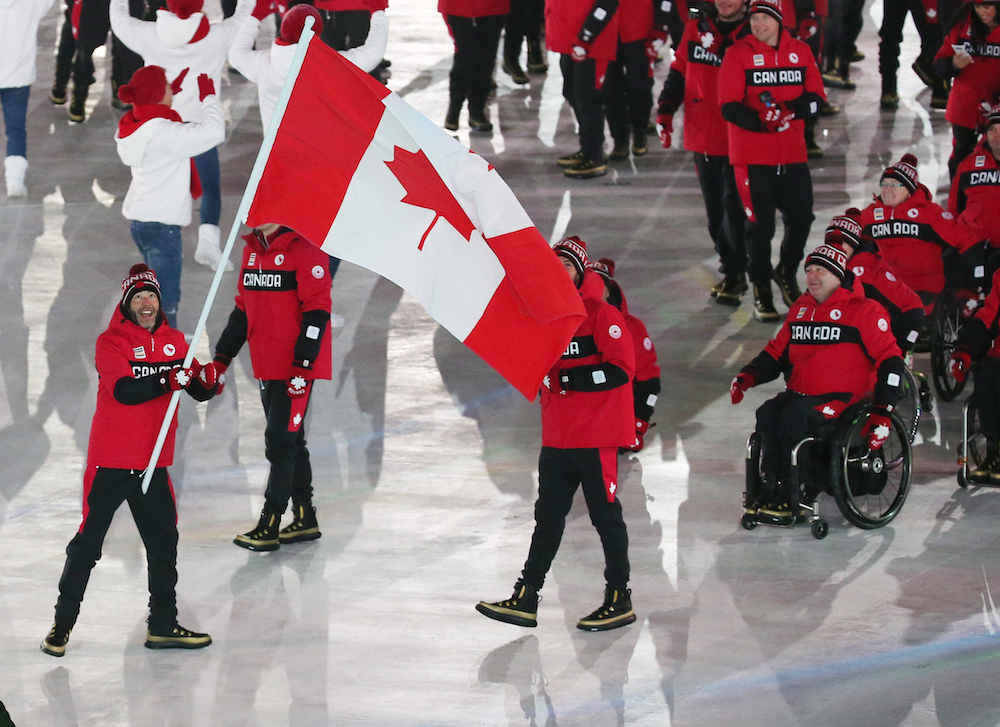
    Brian McKeever leads the Canadian Paralympic team during the Opening Ceremony of the 2018 Paralympic Games in PyeongChang, South Korea. (Photo: Scott Grant/Canadian Paralympic Committee)

    The race was McKeever’s first of the 2018 Games and came three days after he served as Canada’s flag bearer at the Paralympics’ Opening Ceremony. With his 14th medal, he became Canada’s most decorated Winter Paralympian, surpassing the late Para-alpine skier Lana Spreeman, who amassed 13 medals in five Paralympics.

    “I wasn’t aware of this record, but it is pretty cool,” McKeever said. “I think for me more than anything is this is a testament to our entire program. We’ve had so many great skiers leading the way for me with my brother, Robin who is now coaching us, and Colette Bourgonje. Now it is awesome for me to be a part of a new generation that has arrived in Mark [Arendz], Colin Cameron, and the young women like Emily [Young], Brittany [Hudak] and Natalie [Wilkie], who are ready to carry the torch. I’m so excited to be around all of them this week and to be there cheering them on.”

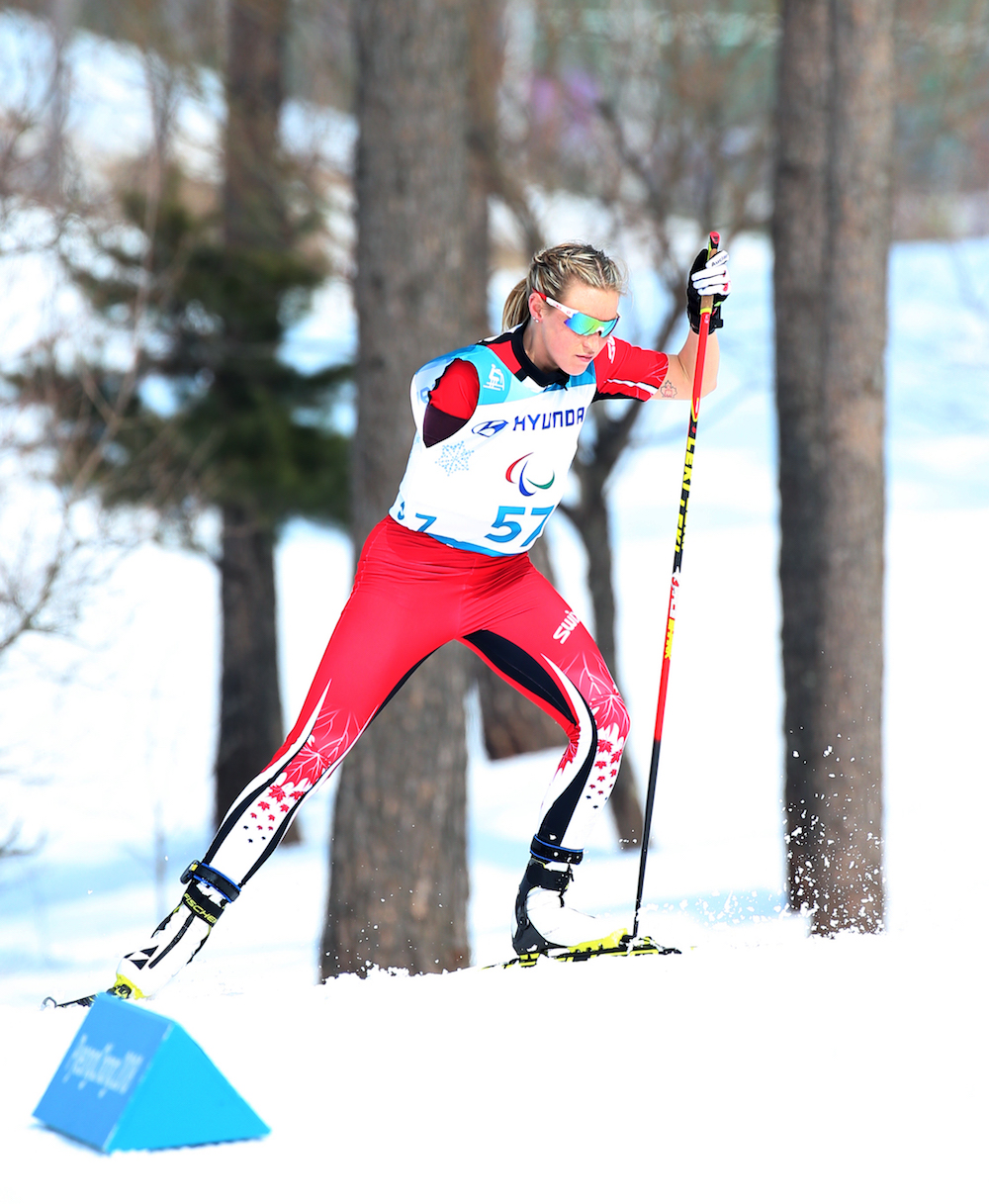
    Canada’s Emily Young racing to fifth in the women’s standing 15 k freestyle on Monday at the 2018 Paralympic Games in PyeongChang, South Korea. (Photo: Scott Grant/Canadian Paralympic Committee)

    In the women’s standing 15 k freestyle race, his teammate Emily Young raced to fifth in slushy conditions, 2:21.3 behind Ekaterina Rumyantseva, a Russian designated as a Neutral Paralympic Athlete (NPA), in first. Anna Milenia, also an NPA, placed second (+1:21.0), and Ukraine’s Liudmyla Liashenko took bronze (+1:32.9).

    Canada’s 17-year-old Natalie Wilkie, the youngest member of her team in her first Paralympic race, raced to sixth (+2:41.9). Eighteen-year-old Grace Miller, of the U.S., placed 10th (+20:02) in that race.

    “That was really tough – a lot tougher than I thought it was going to be,” Wilkie said. “I’ve never raced over five kilometres before in these types of conditions. It wasn’t easy, but I’m happy I was able to push to the end.”

    In his second Paralympics, Adicoff, a 22-year-old Bowdoin College skier, led the U.S. team on Monday in fifth place in the visually impaired 20 k skate. The result bested his previous Paralympic mark of sixth place in the 20 k classic at the 2014 Games in Sochi, Russia.

    “First lap felt pretty good. We were right in it,” Adicoff recalled in a U.S. Paralympics press release. “I just got tired and started to slow down, ended up getting bumped from the podium.

    American Jake Adicoff leading Canada’s Graham Nishikawa and Brian McKeever in the men’s visually impaired 20 k freestyle on Monday at the Paralympic Winter Games in PyeongChang, South Korea. (Photo: US Paralympics/Mark Reis)

    “It’s pretty warm out, but the skiing stayed fast. It was awesome out there,” he added.

    In the women’s visually impaired 15 k on Monday, Americans Mia Zutter and her guide Kristina Trygstad-Saari raced to eighth place, 13:09.0 behind Belarusian winner Sviatlana Sakhanenka and her guide Raman Yashchanka. Ukraine’s Oksana Shyshkova (with guide Vitaliy Kazakov) placed second (+8.2) and Mikhalina Lysova (with guide Alexey Ivanov) of the NPA placed third (+3:20.1).

    “It was so much fun,” Zutter, 18, told U.S. Paralympics Nordic. “I competed here [in PyeongChang] last year, so I kind of had an idea of what to expect, but definitely the big ‘Games’ title made it a lot more nerve-wracking but also really fun.”

    Paralympic action continues Tuesday with men’s and women’s middle-distance biathlon races, starting at 10:00 a.m. Korea time (7 p.m. EDT on Monday).

    Complete results