From the FasterSkier archive — posts syndicated from athletes’ and coaches’ own blogs between 2004 and 2012, kept online as published. Current coverage is at fasterskier.com.

Tag: National Elite Group

  • Halvorsen Accepts D-Team Nomination, Defers College for a Year

    Halvorsen Accepts D-Team Nomination, Defers College for a Year

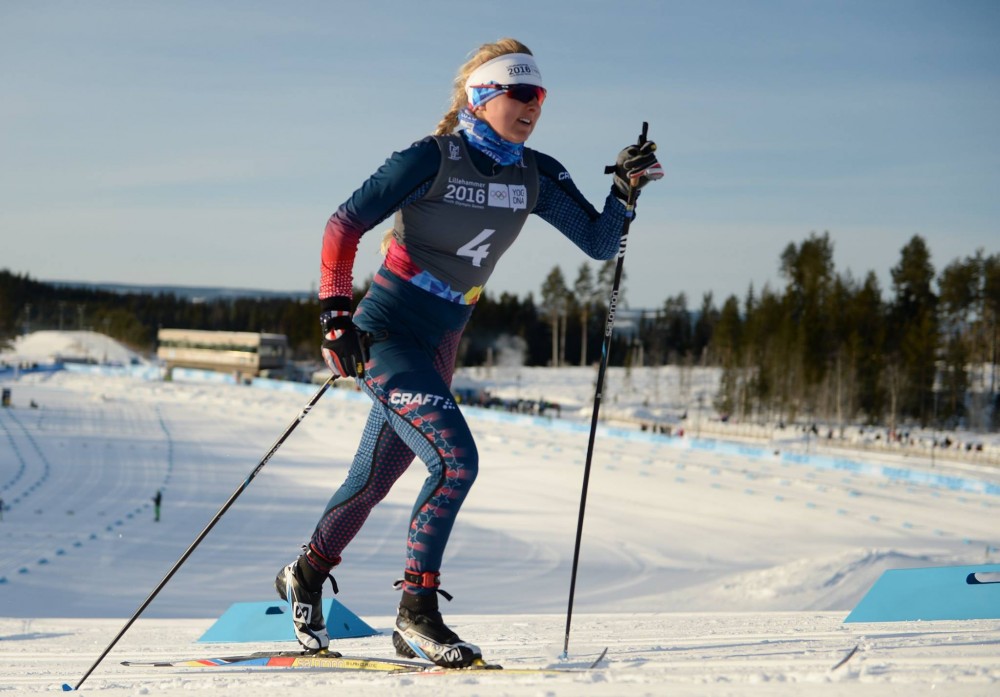
    Hannah Halvorsen representing the U.S. in the classic sprint qualifier at the 2016 Youth Olympic Games in Lillehammer, Norway. (Photo: FIS)
    Hannah Halvorsen representing the U.S. in the classic sprint qualifier at the 2016 Youth Olympic Games in Lillehammer, Norway. (Photo: FIS)

    On Monday, the U.S. Cross Country Ski Team announced its nominations for its 2016/2017 national team, loaded with veteran world champions and podium threats. The list included one newcomer to the women’s team: 18-year-old Hannah Halvorsen, of the Sugar Bowl Academy and Truckee, Calif., who was listed as one of five athletes on the U.S. Ski Team’s “D”, or development, Team.

    Contacted by phone, Halvorsen explained she accepted the nomination and will defer college.
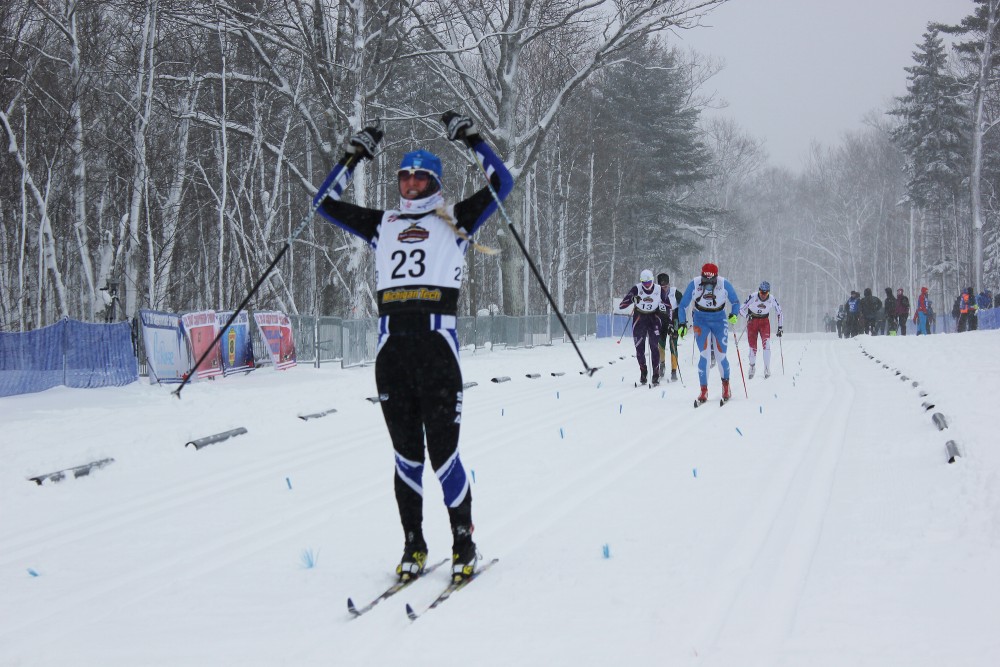
    Hannah Halvorsen celebrates her quarterfinal win in the women's classic sprint at the 2015 U.S. Cross Country Championships in Houghton, Mich. She was 16 at the time and went on to reach the final for fifth overall.
    Hannah Halvorsen celebrates her quarterfinal win in the women’s classic sprint at the 2015 U.S. Cross Country Championships in Houghton, Mich. She was 16 at the time and went on to reach the final for fifth overall.

    “My plans for next year are to stay with my main coach Martin Benes at Sugar Bowl Nordic Ski Team and train at home for a year, Halvorsen said. “I did sign with University of Vermont, but they gave me a year to stay before joining the team.”

    Early on in a junior skier’s career, noteworthy results may put you on the national team’s “radar.” Halvorsen has been one of those recurring radar blips. Back in 2014, she qualified 15th at U.S. nationals in the freestyle sprint. A year later at 2015 nationals, at just 16 years old, she placed fifth in the classic sprint. This year, her progression continued: she notched second in the freestyle sprint at the season-opening SuperTour in West Yellowstone, Mont., and sixth in the world in the classic sprint at the 2016 Youth Olympic Games in Lillehammer, Norway.

    As for whether she’d expected a call from the USST this spring, she said she wasn’t exactly waiting by the phone.

    “I definitely didn’t think this would happen,” Halvorsen said of her nomination. “But with Julie [Kern] and Katharine [Ogden] making the team the year before, I knew that it was a possibility. And when the call didn’t come until my spring break, I thought it wasn’t going to happen for me because there is some competitive women on the team right now. I started to think ‘no, not this year.’ Then I got the call, so yeah, I was a little surprised.”

    “I thought it wasn’t going to happen for me. … Then I got the call.” — Hannah Halvorsen, 18, on her U.S. Ski Team nomination

    Benes, the head nordic coach at Sugar Bowl Academy and Halvorsen’s primary coach for the last three seasons, knew the nomination was a possibility, but like his pupil was keeping expectations grounded.

    “I  guess I wasn’t 100 percent sure,” Benes said. “I thought it might happen; she had shown a pretty positive and consistent trend in terms of her results, so there was a chance. I guess on some level it’s not surprising, but it certainly but it caught me maybe a little bit off guard.”

    Benes explained that Halvorsen has remained focused on her benchmarks as her goals began to materialize — with the immediate prize Halvorsen’s D-Team promotion.

    “When you see the work she has put in and the focus that she has, it’s nice that the results have come,” Benes said. “But I guess I felt more it’s a recognition of that process than anything else.”

    U.S. Ski Team Head Coach Chris Grover explained in an email that Halvorsen was one of two newcomers to this year’s D-team to be chosen by discretion. The other was Ian Torchia of Northern Michigan University. According to Grover, both demonstrated an ability to “deliver big results in Europe against tough fields.”
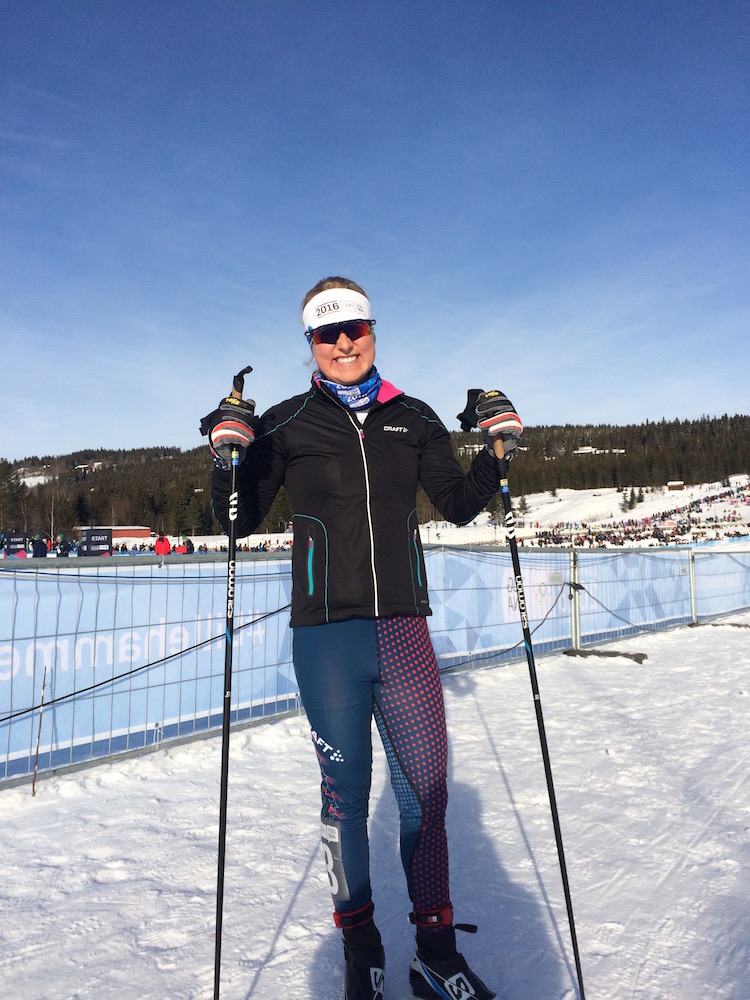
    American Hannah Halvorsen between rounds at the Youth Olympic Games classic sprint in Lillehammer, Norway. She went on to place sixth in the final. (Photo: Adam St.Pierre)
    American Hannah Halvorsen between rounds at the Youth Olympic Games classic sprint in Lillehammer, Norway. She went on to place sixth in the final. (Photo: Adam St.Pierre)

    “Hannah has been the standout USA athlete at the U18 Scandinavian Championships for the past two seasons, including a podium there two seasons ago,” Grover wrote of her third-place finish in February 2015 in the 5 k freestyle in Örnsköldsvik, Sweden, amid a field of nearly 130 women.

    Last October, Halvorsen was part of National Elite Group invited to Lake Placid and train along with the U.S. Team. It was there, Halvorsen said, where she realized she could compete with some of the nation’s fastest skiers.

    “We did a lot of sessions with the U.S. Ski Team,” Halvorsen recalled. “There were a couple of interval sessions and sprint simulations where I was able to hang on for maybe not all of it, but maybe a good bit, and that was definitely a huge confidence boost — that it’s not that far away.”

    For the next year, Benes and Halvorsen will be based at Sugar Bowl Academy on Donner Summit, and will focus on increasing training hours, prepping for the early season SuperTours, nationals and qualifying for and competing at Junior World Championships, which will be held in Park City, Utah.

    But ultimately, her spot on the U.S. Ski Team (USST) is part of a greater long-term goal.

    “To me, this nomination means that it’s just moving another step up in my development,” she said. “And it’s just taking the next step towards my goals to being on the World Cup.”

    The junior ranks often ebb and flow with the rate at which a young athlete matures physically. Although Halvorsen showed promise of a big engine early on, those are only one of a few pieces necessary for continued development — there’s the mental aspect as well. Benes realized once he began coaching Halvorsen that the mental piece of Halvorsen’s makeup was able to successfully navigate both the good and not-so-good days.

    “I think the mental piece from the early days is what impressed me the most, always stood out the most,” Benes recalled of his first impressions of Halvorsen. “I think you see sometimes U16’s, both guys and girls, who are developed physically and they are quick and they are fast and they stand out among their peers, but that is where it kind of ends. I think that her mental drive and mental strength was pretty impressive and has been impressive from a pretty young age.”

    “I think the mental piece from the early days is what impressed me the most.” — Martin Benes, Sugar Bowl Academy Head Nordic Coach, on his first impressions of Halvorsen

    Asked how she will attempt to balance the highs of USST membership with new expectations, Halvorsen said it was just part of her athletic progression.

    “I’m young and not perfect yet navigating it mentally and it’s very exciting right now, just getting the nomination,” she said. “But I think later down this year I’ll have to start thinking about it more realistically and what it means and what is almost expected of me. And I think something that [USST Development Coach] Bryan Fish said to me and to hone in on, was you have to take it year by year. And by getting this nomination it means they believe in you, but you just have to focus on one season at a time. Taking a season off, if I don’t make it [on the full-fledged USST] next year doesn’t mean that I can’t continue to progress and get back on.”

    Writing in an email after her interview, Halvorsen took a moment to reflect on her homegrown circle of supporters.

    “It has been incredible to realize the support of my coaches, family, and friends with the news of the nomination,” she wrote. “It is meaningful to share the excitement with them and to be reminded how invested they have been in my goals. I hugely appreciate their support moving forward.”

    Both Halvorsen and Benes are moving forward. They both used the word ‘opportunity’ numerous times over the phone. Opportunity has come knocking and Halvorsen says she ready to seize it.

  • USST Turns Up the Intensity in Placid, Skipping Sunday’s Climb to Castle

    USST Turns Up the Intensity in Placid, Skipping Sunday’s Climb to Castle

    The women at the USST camp in Lake Placid push each other during some double pole. (photo: Reese Brown)
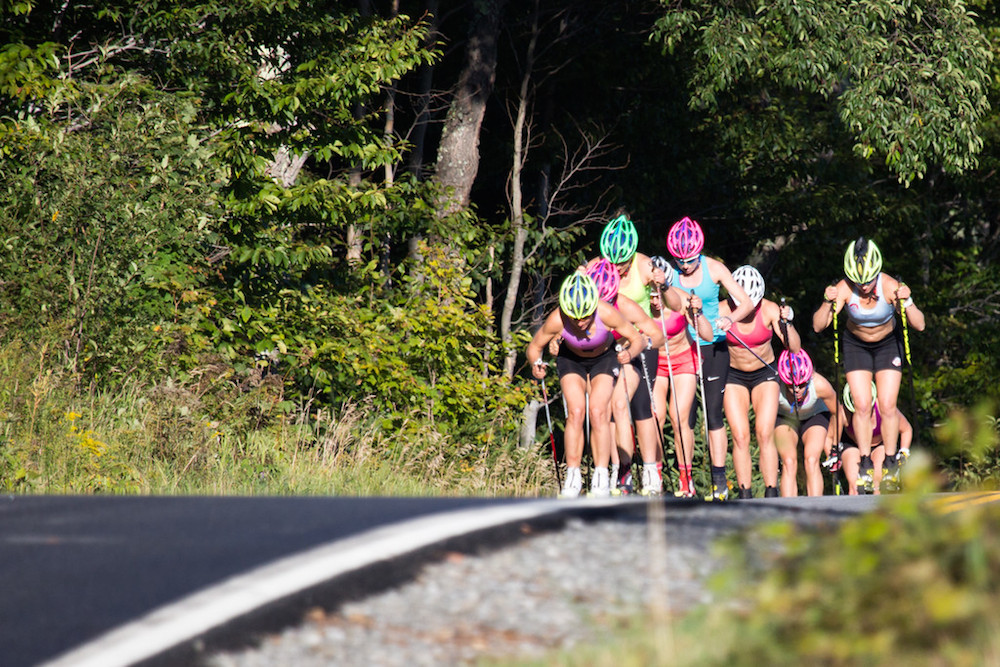
    The women at the USST camp in Lake Placid, N.Y.,  push each other during some double pole intervals on the rollerski track earlier this week. (Photo: Reese Brown)

    The fall season means many things to the cross-country skiing community. It means the temperatures decrease, the training intensity ramps up, and excitement for winter begins stirring in the soul.

    For well over a decade now, fall for the U.S. Ski Team (USST) has also meant a training camp in Lake Placid, N.Y. Although the team has had camps in New Zealand and Norway not long ago, it still manages to squeeze in a one-week intensity camp before heading to another dryland camp in October in Park City, Utah.

    The national team coaches were already in Lake Placid after hosting the National Coaches’ Education Symposium last weekend, and with half of the USST athletes training with the Stratton Mountain School T2 Team (SMST2) fewer than three hours away, it made sense to have a quick camp at the Olympic Training Center in Lake Placid.

    “We wanted to give them the chance to come to a different venue, get on the rollerski track, and kind of have a check in with them to make sure things are going well technically and recovery wise and everything else,” said USST head coach Chris Grover in a phone interview.

    But the eight national team athletes from the SMST2 Program, Jessie Diggins, Sophie Caldwell, Katherine Ogden, Julia Kern, Andy Newell, Simi Hamilton, Ben Saxton, and Patrick Caldwell, account for a small fraction of the nearly 30 athletes at the camp. Joining the USST is the rest of the SMST2 team, the Sun Valley Gold Team, the National Elite Group (NEG), and the National Training Group (NTG).

    The NEG is made up of the best junior athletes from each region (East, Central, West, Alaska) while the NTG consists of the best U24 and U20 athletes in the United States, based on domestic and international results from last season. The SMST2 domestic team and the Sun Valley Gold Team are made up of elite American skiers not on the national team.

    “The athletes in those clubs are the athletes that are just below the national-team level and aspiring to the national team level,” Grover said. “They are the ones that are knocking on the door and pushing everyone along. It’s really fantastic to have them all here.”

    For all of the non-USST athletes, the camp represents not only an opportunity to train at the Olympic Training Center (OTC), but also the chance to live along side some of the national-team members and see how they train, refuel, and recover. They also receive some technique and training feedback from the national team coaches.

    Andy Newell rollerskis in the colder weather at the USST camp in Lake Placid. (photo: Reese Brown)
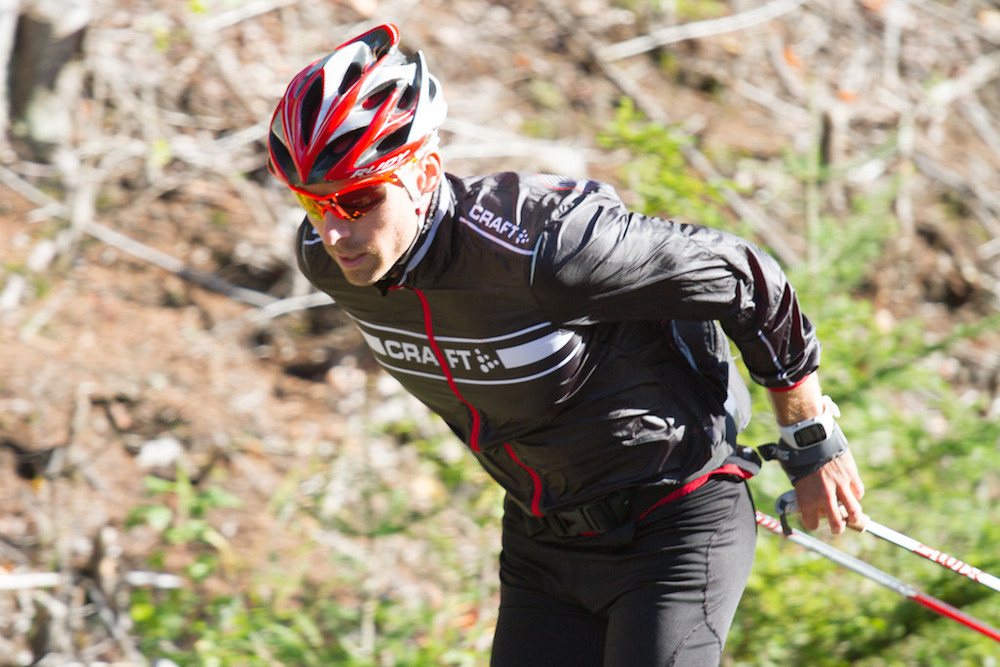
    Andy Newell rollerskis through the colder weather. (photo: Reese Brown)

    Because the camp is one week long this year, the group is trying to fit in as much training as possible to get the most out of the venue and one another. On top of a good number of hours, the plan is to have five intensity sessions throughout the week.

    “Obviously if were having a longer camp, 10-day, 12-day, 14-day camp, we have to build in a little more recovery and here we’re just jamming through it and training all seven days. People are taking a break afterwards,” Grover explained.

    In order to fit everything in, the USST is skipping what usually is the highlight event of its camp, the Climb to the Castle rollerski race up Whiteface Mountain in Wilmington. The race goes five miles up the Whiteface Memorial Highway to a castle at the summit and has an average incline of 8 percent. However, this year, the USST coaches felt the race didn’t quite align with the goals of the camp.

    “The Climb to the Castle, as hard as it is to miss it because it is a fantastic event, it just didn’t play well athletically for the needs of the group,” Grover explained. “We wanted to do more sprint specific training and short intensity as opposed to giving up a whole workout or two to do the Climb to the Castle.”

    Also contributing to the decision is the fact that many of the national-team members on the SMST2 team are more sprint-oriented, so the potential benefits of an uphill time trial are not as pronounced for those athletes.

    Meanwhile, many US Biathlon team members will be racing the Climb.

    “Obviously it is unfortunate especially for the organizers that the [U.S. cross-country] ski team is not doing it this year,” US Biathlon women’s coach Jonne Kähkönen wrote in an email. “For us and our athletes; it is one hard session at the end of the test week and in the middle of a tough block of fall training and the goal is always to go all in for these types of sessions — so in terms of that it doesn’t really change anything. We would have liked to have the tough competition there, but understand that it didn’t fit in their plans this time.”
    “As for us; we will have all the athletes that are in 100% health in the race,” Kähkönen added.

    In terms of the differences between this week’s camp and the U.S Ski Team’s two-week camp in Norway, the Lake Placid camp has about three times as many athletes in attendance and the domestic venue really makes for a different approach. In Norway, the group was exploring a new area, but in Lake Placid, the group is back to an old standby.

    “This is obviously a very familiar place to us,” Grover said. “We know all the roads here and all the trails here and that sort of thing. So it’s really easy for us to plan where we are going.”

    So while they had a good time training on new roads and paths in Norway, the group is taking advantage of the more familiar territory in Lake Placid, at least for a week. Next week, the athletes will head home to recover. But for the USST members, the time at home will be short. They have less than a month until their next camp begins in Park City on Oct. 12.

  • U.S. Ski Team Announces National Elite Group Roster

    Top regional junior skiers participate each year in one of four Regional Elite Group (REG) summer camps. The camps include general and ski-specific assessments, ski technique support as well as athlete and coaches education. Each camp includes U.S. Ski Team coaching staff which observe, interact and coach.

    With the help of regional coaches attending the camps, the U.S. Ski Team coaching staff selects the top athletes from all four REG camps (East, Central, West and Alaska) and names these athletes to the National Elite Group (NEG). These athletes are offered the opportunity to train alongside the U.S. Ski Team athletes at the Lake Placid Olympic Training Center October 9-17, 2010. Attributes such as motivation, dedication, general physical fitness and ski-specific performance are taken into consideration to select these athletes.

    Congratulations to all of the athletes who participated in REG camps this summer. We are excited to announce the National Elite Group for 2010:

    Men
    Skyler Davis (Stratton Mountain School/ Sverre Caldwell)
    David Sinclair (GMVS/ Justin Beckwith & Dartmouth College/ Ruff Patterson)
    Andy Dodds (Minnesota Valley/ Reid Lutter & CXC Jr Development Program/ Igor Badamshin)
    Scott Patterson (Alaska Winter Stars/ Jan Buron)
    David Norris (Fairbanks Alaska Ski Team (FAST)/Bill McDonnell)
    Tyler Kornfield (Alaska Winter Stars/ Jan Buron & UAF/ Scott Jerome)
    Erik Fagerstrom (Sun Valley Ski Education Foundation / Chris Mallory)

    Women
    Isabel Caldwell (SMS/ Sverre Caldwell & Dartmouth College/ Cami Thompson)
    Heather Mooney (Stratton Mountain School/ Sverre Caldwell)
    Jessie Diggins (CXC Team Vertical Limit/ Jason Cork & Gus Kaeding)
    Annie Pokorny (Sun Valley Ski Education Foundation/ Chris Mallory)
    Michaela Frias (Steamboat Springs Winter Sports Club/Josh Smullin & Brian Tate)
    Caitlin Patterson (Alaska Winter Stars/ Jan Buron & UVM/ Patrick Weaver)
    Annie Hart (Minneapolis Ski Club/ Kevin Brochman)

  • U.S. Ski Team Announces National Elite Group Camp Roster

    With the help of regional coaches attending the camps, the U.S. Ski Team coaching staff has selected the top athletes from all four Regional Elite Group (REG) camps (East, Central, West and Alaska) and names these athletes to the National Elite Group (NEG). These athletes are offered the opportunity to train alongside the U.S. Ski Team athletes at the Lake Placid Olympic Training Center October 9-17th. Attributes such as motivation, dedication, general physical fitness and ski-specific performance are taken into consideration to select these athletes.

    For more information, visit the USSA site here.

    Selected athletes include :

    Men
    Skyler Davis (Stratton Mountain School/ Sverre Caldwell)
    David Sinclair (GMVS/ Justin Beckwith & Dartmouth College/ Ruff Patterson)
    Andy Dodds (Minnesota Valley/ Reid Lutter & CXC Jr Development Program/ Igor Badamshin)
    Scott Patterson (Alaska Winter Stars/ Jan Buron)
    David Norris (Fairbanks Alaska Ski Team (FAST)/Bill McDonnell)
    Tyler Kornfield (Alaska Winter Stars/ Jan Buron & UAF/ Scott Jerome)

    Women
    Isabel Caldwell (SMS/ Sverre Caldwell & Dartmouth College/ Cami Thompson)
    Heather Mooney (Stratton Mountain School/ Sverre Caldwell)
    Jessie Diggins (CXC Team Vertical Limit/ Jason Cork & Gus Kaeding)
    Annie Pokorny (Sun Valley Ski Education Foundation/ Chris Mallory)
    Michaela Frias (Steamboat Springs Winter Sports Club/Josh Smullin & Brian Tate)
    Caitlin Patterson (Alaska Winter Stars/ Jan Buron & UVM/ Patrick Weaver)

    1st Alt: Erik Fagerstrom (Sun Valley Ski Education Foundation / Chris Mallory)
    2nd Alt: Annie Hart (Minneapolis Ski Club/ Kevin Brochman)

    Source: USSA

  • U.S. Ski Team Announces National Elite Group Camp Roster

    The 2009 National Elite Group (NEG) has been named. The NEG is comprised of a select group of junior skiers that have proven that they deserve to train with the best in the country. The U.S. Ski Team staff has selected using race results from previous seasons, in addition to time trials, tests, and technique and work ethic observations from the REG camps. While the camp will receive some coaching assistance from U.S. Ski Team coaches, the NEG will be lead by Ben Husaby of Bend Endurance Academy, and Chris Mallory of Sun Valley Ski Education Foundation.

    The NEG is an opportunity to train with the best junior skiers from all reaches of the country while also training along side of the National Team. The National Team will be using this time in Whistler to get ready for the Olympic Winter Games in February. Most NEG workouts will overlap with the U.S. Ski Team workouts.

    The U.S. skiing pipeline is expanding. The pipeline is expanding in order to keep up with the progress of U.S. skiing. International results are improving, and the pipeline is growing to support future successes. The NEG and National Training Group (NTG) are two new expansions that have been made to the pipeline this year. Next summer, a National J2 Camp will be introduced in the U.S. to continue the growth.

    The NEG camp is the step above the REG in the path toward making the U.S. Ski Team, and is considered one of the top steps of the U.S. skiing pipeline. If an athlete makes an impression at the NEG camp, ski fast next season, and proves that they are ‘All In’, they may qualify for the National Training Group next summer or the U.S. Ski Team.

    2009-10 NEG Roster
    Sadie Bjornsen, MOD
    Erik Bjornsen, MOD
    Isabelle Caldwell, SMS
    Jessie Diggins, CXC
    Maxwell Durtschi, SVSEF
    Adele Espy, SVSEF
    Eric Fagerstrom, SVSEF
    Scott Patterson, AWS
    Annie Pokorny, Spokane
    David Sinclair, GMVS