Tag: national team

  • From the Archives: Pete Vordenberg looks back on the 2002/2003 World Cup season (April 2003)

    From the Archives: Pete Vordenberg looks back on the 2002/2003 World Cup season (April 2003)

    Pete Vordenberg, then a USST athlete, is at the bottom right of this photo, taken at a U.S. Ski Team training camp in Östersund, Sweden, in summer 1994. (photo: courtesy Adam Verrier)

    The following article was initially published on FasterSkier on April 2, 2003. It was written by Pete Vordenberg, who at the time was the assistant coach of the U.S. Ski Team, under head coach Trond Nystad.

    Nystad’s boss was Luke Bodensteiner. The development coach was Chris Grover. Athletes on the men’s national team included Justin Wadsworth, Carl Swenson, Torin Koos, Kris Freeman, and Andrew Johnson, plus a grand total of one (1) woman, Wendy Wagner. If you’ve followed American nordic skiing at any point in the last 20 years, you likely recognize some or all of these names.

    This article is the first of a four-part series, which Vordenberg published on FasterSkier over a few days in April 2003, looking back on the just-completed 2002/2003 season. It is, like many archival pieces in this series, both timeless and dated. The athletes train hard in the morning, rest in the middle of the day, then have a second training session in the afternoon. That much is familiar. The athletes are expected to spend much of the summer and fall living in Park City, where a national-team skier works at Home Depot during his recovery window. That much is less so.

    Finally, the genre of this document itself likely deserves comment: This is the second-in-command of the USST, drafting a candid memoir in these humble pages. This is, as the saying goes, tremendous content; I found this entire series compulsively readable, and am thrilled that Vordenberg took the time to write it.
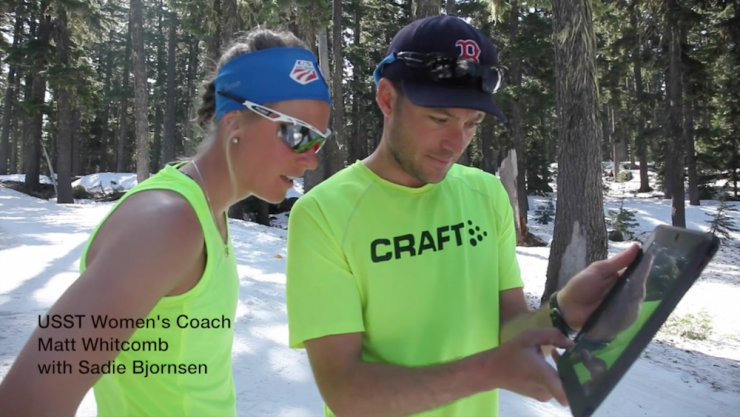
    U.S. Ski Team Women’s Coach Matt Whitcomb (r) reviews video with Sadie Bjornsen at a training camp in Bend, Oregon, May 2016.

    It is also, perhaps, reflective of the evolution of this site and how information from national team coaches is passed on to the devoted cross-country fans following from the U.S. While it’s unlikely that Matt Whitcomb or Chris Grover would write something comparable in length for FasterSkier anytime soon, Whitcomb took the time to speak with FasterSkier after virtually every World Cup or Olympic race this past season, while Grover remained quick to respond and support our coverage by phone or email. Grover also recorded an interview with FasterSkier editor Rachel Perkins earlier this week that will be featured on the Nordic Nation podcast tomorrow. It’s a shift from the written word toward more audio-based media, but the dedication of the U.S. Ski Team coaches remains unchanged.

    This piece also feels like a reflection of its era, and of the unique energy that Vordenberg brought to it. As for the era, this was, in both ski years and tech years, generations ago; there was a certain informality to early-aughts cross-country ski journalism that has, for better or worse, largely leached out of the current incarnation of FasterSkier. The unfiltered stuff is all on Instagram now. And as for Vordenberg, well, if you compare this piece with either his book or a published interview with the man, suffice to say that he has a well-defined voice.

    Next month will mark 20 years since the opening scene of this article, set in mid-June, 2002. It will still be hot in Park City. El Chubasco will still feed hungry skiers. Chris Grover will still be coaching the national team. It will still be impossible to look cool while doing spenst. Athletes will still spend the summer rollerskiing, running, and doing strength, while dreaming big dreams about the race season ahead. The work will still continue. As Vordenberg writes here, “Even among the youngest athletes on the team there are no spring chickens, no overnight successes. Believe that.”

    *   *   *
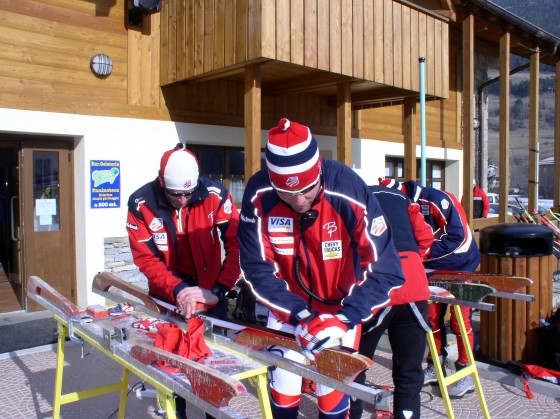
    Pete Vordenberg and Trond Nystad double up to brush out a ski.

    A tale of the US Ski Team’s 02-03 Season – Part 1

    (by Pete Vordenberg, April 2, 2003)

    I first met Trond Nystad in Norway in 1993. We had raced each other the previous season at the NCAA Championships but did not meet. He beat me at that Championship, which I considered a fluke, and he likely considered status quo. In Oslo, where we met, we did not say as much, but like dogs meeting for the first time at the ends of their leashes, we would have tangled if given the chance – just to see who was tougher.

    Later we were teammates on the Factory Team, and there became friends. We trained, traveled and raced together all over the US for a few seasons. Train, Travel and Race with someone and you come to either respect them… or not, to like them, or not.

    Over the next five years I came to both like and respect Trond. We were competitors first and friends finally. And this is important, because I have just spent the past two months with Trond in such close quarters as to be literally living out of the same suitcase, and before these past two months, the two months prior to that, and before that, save for a few blessed weeks around Christmas, we have been together nonstop since June when he hired me as his assistant.
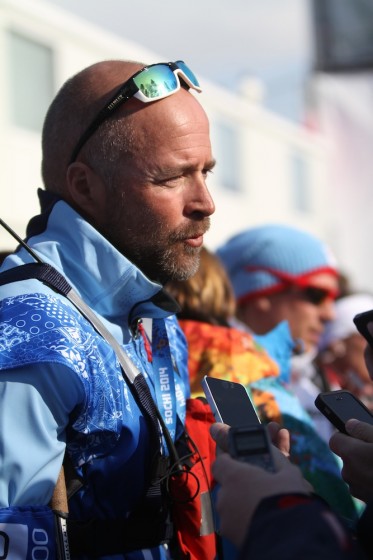
    Trond Nystad, at the time the coach of the Norwegian men’s cross-country ski team, takes questions from the media during the 2014 Sochi Olympics. (Photo: FS Archives)

    Trond is the head coach of the U.S. Cross-Country Ski Team. I am the assistant coach. Our boss, the man who hired Trond and, at Trond’s request, me is Luke Bodensteiner. Luke is a man who if we were dogs I would hope was restrained by a strong leash, a heavy chain, for there is no hope tangling with Luke. Luke is in the captain’s chair. He is the man who would go down with the ship if it were sinking, and he is the reason it is not sinking. He is bulletproof – the target of many ski snipers. I know. I have shot at Luke. I still shoot at Luke – though these days more constructively.

    This is the tale of Trond and my first year with the team as coaches, the tale of the US Ski Team’s 02-03 season. It is told from my perspective and my perspective alone – not necessarily that of the U.S. Ski Team or anyone else connected to it. There are stories and some detailed info on our training and technique as well as racing, travel and life on the road… enjoy.

    *   *   *

    Trond gathered the troops for the first time in mid-June. Park City, Utah was ninety-five degrees. It was one-ten in Salt Lake. We sat together for the first time as a group, sweating. There is Chris Grover, Development Coach. He is the man behind Kris Freeman and Andrew Johnson’s rise from the top of the junior to the top of the senior ranks. Chris has helped revolutionize how we train strength and how we teach and understand technique in the US. There is Chris Hall, our wax and ski man, Katie Gould, our manager. There is Luke and Trond, and me.

    There is Justin Wadsworth, the oldest member of our team, staff included. Justin was racing in his first world championships in 1989 while I still had a year of high school left. Carl Swenson is the second oldest member of the team, staff included. Carl, Luke and I raced each other as juniors – we go way back.
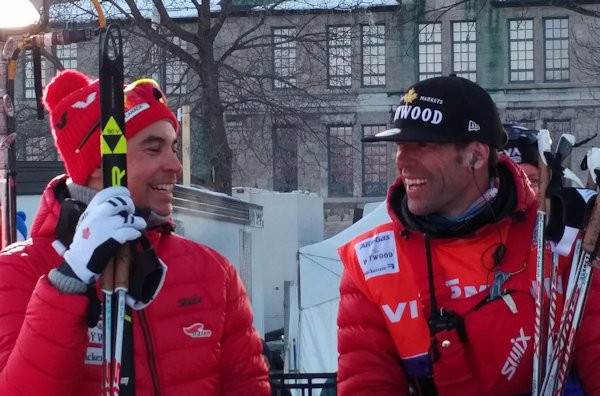
    Canadian National Team Head Coach Justin Wadsworth (r) chats with Canadian Senior Development Team skier Jess Cockney in this undated file photo from many years after this article was written. (Photo: CCC)

    Justin, Carl, Luke and I were teammates together on the US Team ten years ago. We had ideas on what could be better – a lot of ideas.

    There is Wendy Wagner, our only woman on the National Team. I have known her since she was a star at Western State College. In 1997 we took a trip together to race a series of races in Northern Sweden. That is what a lot of people don’t know or understand. These racers have been at this a long time. Long before you ever heard of them they were training and racing and paying their own way to race four times a week and ride around places like Northern Sweden in an over-crowded van dreaming of one day being fast enough to win medals.

    Even among the youngest athletes on the team there are no spring chickens, no over night successes. Believe that.

    Just because the first time you ever heard of Torin Koos was at the 2001 pre-Olympics [Nationals] doesn’t mean he rolled off the hay wagon that morning. Torin Koos can run a mile in four-minutes and five seconds. He spent his youth panting around the oval and skiing in the North West’s sloppy excuse for snow, and these things he has done a lot. And he is the youngest on the team, the one with the least amount of training behind him.
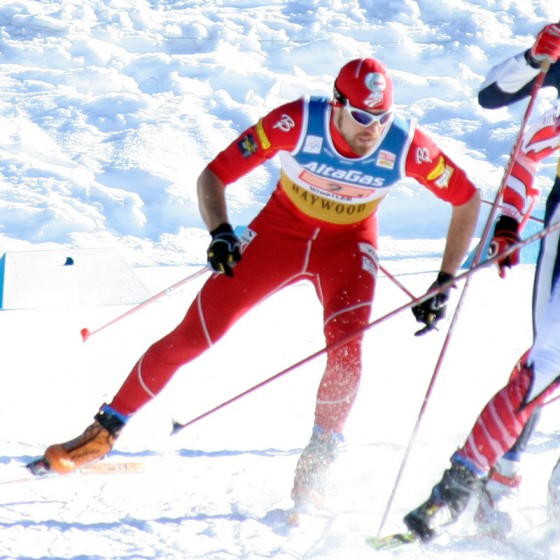
    Torin Koos racing at the 2009 Whistler World Cup Team Sprint.

    The next youngest is Kris Freeman. Kris trains close to 800 hours a year, and has for several years. So has the next youngest, Andrew Johnson. Kris and Andrew can be grouped together because they are the first skiers to come from the new school of thought in US Skiing. It is more of a hands-on approach. They have lived and trained together under the guidance of Chris Grover, and now Trond and I, for three years – year round. They were good to start with and they got better.

    This year Kris won the World Under-23 Championships, the 30km, by a minute forty-five. He was fourth in the 15km at the regular World Championships, seconds from a medal… feet from the gold. He was only seconds from the win in the Skiathlon (running-pursuit) at the Worlds, and won the opening leg of the relay. He dominated the opening leg of the World Championship relay. Damn.

    Carl Swenson took fifth in the 50km, was a second closer to a medal than Kris in the Skiathlon, and had the fifth fastest relay time. Damn. That is fast.

    That is Koch fast, or almost.

    New Koch! Coming soon!

    *   *   *

    Our first task that sweaty June was to create a team. This task took priority over all others – over training, over results. Over everything becoming a cohesive team was the number one priority. Together we could succeed in an atmosphere of support, open communication, confidence and fun. To solidify this notion we would jump, as a team bonding exercise, from a 440 foot cable car toward a shallow rocky river below… but that is later.

    Cohesion is not so tangible as medals. How do you measure its success? By medals? No, for, though not likely, you can win without it and you can fail in spite of it. I measure it in hindsight. It was not a total success. There are yet bugs in the system. We have more work to do. But it was a big success. I know this because as I write this I am on my way home on a plane from a long stint traveling and racing in Europe with the same small group of people, which followed on the heals of a long stint in Maine, which followed a long stint on the road all over the Western US, Fairbanks, Alaska and Canada which followed a long stint training and coaching in Utah and New Zealand all with the same small group of people – and even after all this I don’t want to kill any of them. That is success. We have communicated well, we have talked through the difficult situations that have and will inevitably arise. And we are all in one piece. I’ll call it a good start.

    *   *   *

    “Yo homes! How’s it hanging?” is Trond’s patented greeting.

    It is July and team training has begun in earnest. Team training, not training. The athletes have been training since their last race last April. In July we start official team training. We train together at least once a day, more often twice a day.

    A typical July day we meet at the ski team office at eight. The skiers are there at seven fifty-five. “Five minutes early” is team cohesion policy number seven. There are fifteen policies. The athletes came up with them.

    “Yo homes, how’s it hanging?” says Trond.

    “You’re late, man,” says Andrew – smiling. It is eight, but as we are not early, we are late. Communicating openly and in a timely manner is cohesion policy number three. We operate by these policies.

    We load in the van and depart for training at roughly twenty times the appropriate speed. We came together easily, fell into our routine as if it were habit, and it is habit. At the start of the rollerski road the skiers pile from the van, pull poles and skis out behind them and in pairs, singles and small groups (the Development team is training with us too) start off down the road.
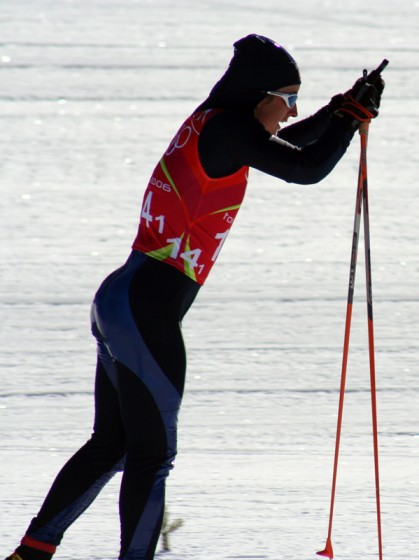
    Wendy Wagner, shown here during the team sprint in the 2006 Torino Olympics.

    Today Trond stays in the van and drives. I get out and ski with Wendy and Aelin Peterson who trained with us much of the summer. Trond zooms ahead, stops and takes video. He stops skiers, offers some technique advice, takes some lactate measurements to make sure everyone is going the right pace, jumps in the van and zooms ahead again. I offer a few technique suggestions to Wendy and Aelin as we ski, watch them, see what I think they could do better. Being open to constructive criticism is policy number eight – Wendy and Aelin play with my suggestions, make adaptations, feel for themselves what works.

    Some days I drive, take video and lactate measurements and Trond skis. Sometimes Chris Grover drives. We have to trade off, or we’d die from the training. We are ex-racers all of us. The Italian National Team is coached by an ex-racer; the German National Team is coached by an ex-racer. The Norwegian team’s coaching staff is full of ex-racers, as is the Swedish staff… it is likely we all had ideas on how it could be done better. Now we have the chance to do it.

    After the rollerski we return to the Ski Team office, the athletes go home, or head to El Chubasco for lunch. El Chubasco is awesome.

    *   *   *

    A typical morning distance session is two hours. We do it in level 1; only on a few hard climbs do they hit level 2. They move with snappy, powerful yet relaxed technique even at this easy pace. They generally throw in sprints along the way – just pick-ups of around ten seconds. Technique is always a focus. Training is not social time. There is little conversation, save for the coaches making suggestions. In training they focus on training. Anything else is just going through the motions.

    Midday there are projects for the coaches and rest for the skiers… most of the skiers. Andrew Johnson heads to work at Home Depot in Salt Lake. It can be a hundred and twenty on the asphalt down at the Depot in Salt Lake. Andrew works inside. Skiers have a very hard time supporting themselves by skiing alone, even on the national team.

    Too much of our work this summer involved trying to find extra funding – and without success. We can never do everything we want, but we tweak our budget and wring it for all it is worth. There is much organizing and planning to do. There are dates and locations to nail down and luckily we have Katie Gould to help us or we’d never have made it. Also, we are trying to develop our training program and trying to bring our sports science department into the mix. Along with Grover we are working to come up with some better teaching tools for our development efforts. For Trond and I, every day is brand new. We are fresh faced and new on the job and we are just finding things like the copy machine, the coffee pot. The question is always the same, what can we do better, what aren’t we doing, how do we win medals? How do we win medals? That is our business.

    Afternoon training starts at four. It’s a dry heat; this Park City afternoon we run up a trail of soft, brown fluff. Our feet beat the dust into the air. It sticks to our legs. We are brown with it when we reach the weight room after a half hour jog and twenty minute session of plyometric jumping called spenst.
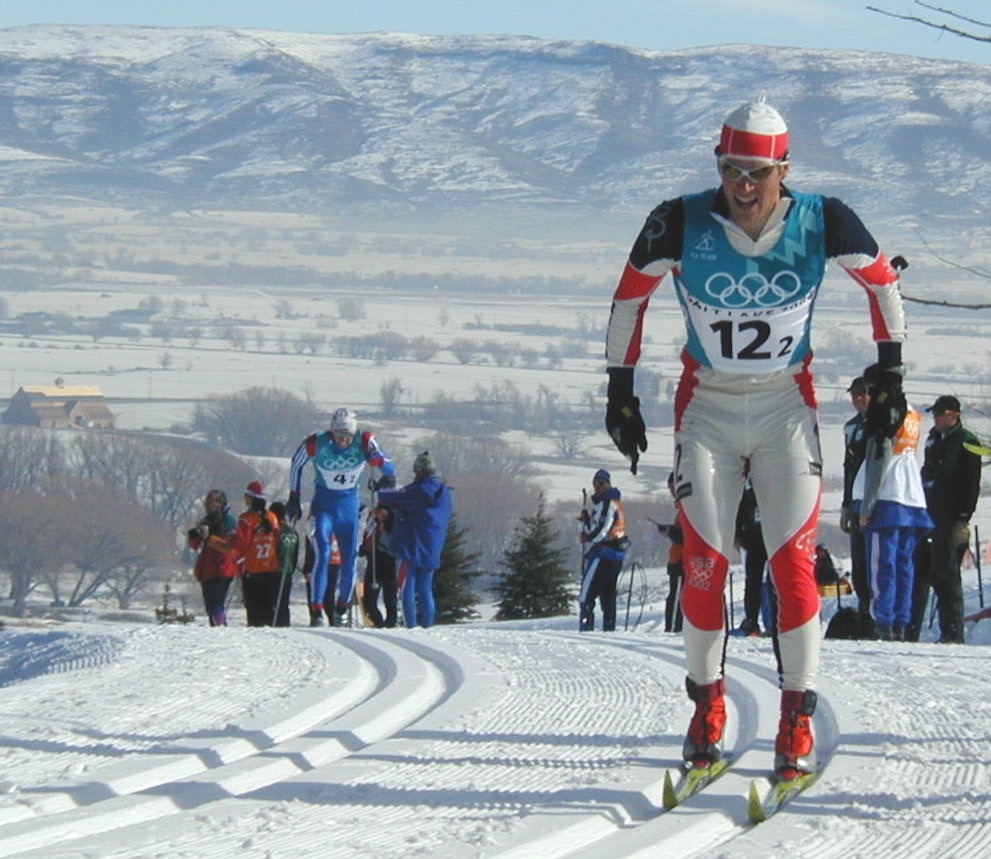
    A 21-year-old Kris Freeman skis leg two of the men’s relay for the U.S. at the 2002 Winter Olympics at Soldier Hollow. (photo: Cory Smith)

    Spenst is hilarious. Picture a herd of skiers hopping like mad on one leg up a dusty trail, in a cloud of foot-kicked dust, and then they walk down relaxed, arms swinging loose, as if nothing happened, only to turn back around at the bottom and repeat the uphill assault on the other leg. Each jump is maximal. We do 10 jumps per leg, three times, times three exercises. And then we do some bounding. All efforts are maximal – the idea is to develop explosive power.

    The weight room is sparse for cross-country skiers. There are plenty of squat racks, but not many dip bars. With the help of the strength staff we have devised our own exercises and created a means to train the muscles we want to train – we made our own dip bar. We believe in lifting heavy weights. We believe in throwing the medicine ball at each other as hard as possible. The first time I caught the medicine ball for Andrew Johnson I stood there ready to receive a lame lob of a toss, and was literally knocked ten feet back by the 8kg ball he launched straight at my head. I made a sound like, “guck!” and was unable to toss the ball back to him at anything but an arching lob. The next day my forearms were useless and sore from catching the medicine balls rocketed at me.
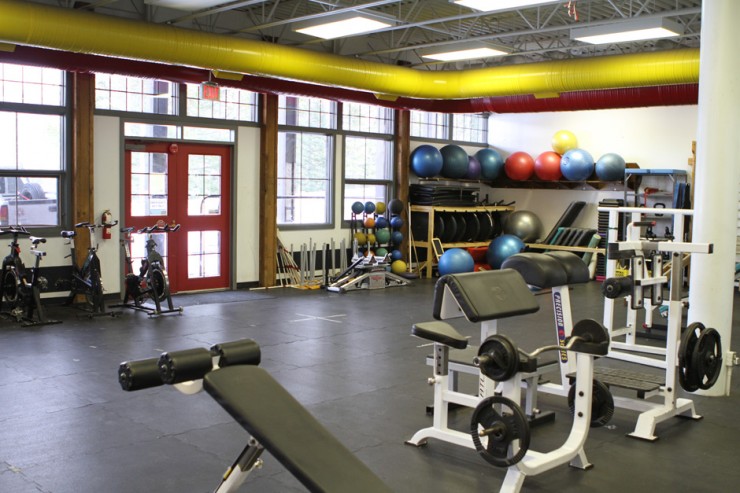
    The weight room at the Bill Warren Training Centre in Canmore is shown in this photo from 2012.

    Andrew Johnson can do three sets of five dips with 110lbs hanging from his waist. Wendy Wagner can do three sets of five pull-ups with 40lbs hanging from her waist. Kris Freeman can hoist 220 pounds into the air by a doublepole pulley so fast and hard the whole machine trembles. Wadsworth’s stomach is a grotesque xylophone of muscle. There is no messing around in the weight room.

    While many programs in the US treat general strength as a side addition to training, for us it is an integral part of the plan, of getting fast enough to win medals. We did two main blocks of max strength training where in we did five exercises three times each using weight so heavy it could only be lifted around five times per set. We focused on weighted pull-ups and dips, a double-pole simulation devised by Trond, and leg press – all using huge weight. In addition to this we did an extensive routine of core strength – mostly tossing heavy balls around using all the muscles of the stomach, hips and back. We also did some rollerboard with the board canted as steeply as possible, so steep it was frightening trying to mount the tipsy little seat. This routine we did three times a week. The weight session was always proceeded by a run of half an hour to an hour and once a week by the routine of spenst. Simple.

    That is one day.

    *   *   *

    There’s more. Here are links to the rest of the series, along with excerpts from each installment.

    Part two: Summer training: “I’m not giving you enough secrets. I have so far given you all of our secrets. ‘Our goals are shared and so is our success.’ That is team cohesion policy number 6. We dream together, work together and succeed together. There is a photo of Kris Freeman held aloft on the shoulders of his teammates after his fourth place at worlds. This is metaphorical. What is harder to show is that his teammates are also standing on his shoulders. Even harder yet to show: he is standing on the shoulders of all the coaches and people who have helped him in the past, of the athletes who have come before him, a whole network of support…and harder yet to show, that this country’s ski community as a whole is standing on his shoulders as well, his and Carl’s and the rest of the national team’s shoulders – waiting for that glimmer, waiting for the next Koch. Expecting something like trickle down economics. These skiers have the potential, via their international success, to pull American skiing up by the bootstraps. But they can’t succeed alone. We can’t do it alone.”
    This is the oldest photo of Kikkan in the FasterSkier image library, a headshot from December 2008.

    Part three: European campaign: “We actually have several potential medallists. We have Kikkan Randall, who has unfortunately suffered illness after illness early in the season, but who is an incredible talent and a potential medallist at U-23’s. We have Kristina Trygstad-Saari, who was 6th at Junior Worlds the previous year, and a Continental Cup winner earlier this season. We have Leif Zimmerman, who is a rising talent. We have Torin Koos who is a definite contender in the sprint. We have Andrew Newell who has proven himself to be the fastest sprint prelim racer in the country this year. Andy had the second fastest sprint prelim time at Junior Worlds this season and finished 7th there behind two of his US teammates – including Leif. There are others who are fast, but not yet fast enough – for now I won’t list them. They are skiers who will rise with time and training. I believe in them, and we have patience for them. This is a strong team. Chris Grover, Development Coach, has just come in from Junior Worlds and is in charge of the team.”
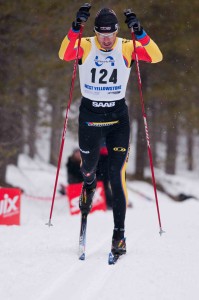
    Lars Flora racing at West Yellowstone in 2008. Photo: Swix Sport.

    Part four: Final chapter, for this year: “The race [at Holmenkollen] is on. Kris is skiing in the top ten. Andrew and Carl are skiing in the top 30, Lars Flora and Dave Chamberlain, who both paid their own way here are in the 40’s. Dave dies first. His skis iced badly and he couldn’t fight it off. He came by me looking like a drowned rat. Andrew starts to die next, he falls down the results sheet with every km, but keeps fighting hard. Lars stays steady. Kris is still around the top 10 to 15. Carl starts to fade. Then Kris starts to fade. Things are going downhill, and then it starts to snow hard. The race blows up. This is ski racing. …

    “I think this team is the New Koch just as Mathias [Fredriksson] is the next Gunde – or at least inasmuch as anyone can be. There will never be another Koch or another Gunde, but this team will be the next big thing.

    “I’ll tell you now so you are not too surprised, at times we are going to fail and flail in route. We’re going to screw up and we’re going to piss people off and it won’t always be graceful, but we will attack this project with vigor, patience, and persistence. And squeezing it for one second at a time, we will succeed.”
  • Not on the U.S. Ski Team List, Brooks Still in the Hunt for International Podiums

    Not on the U.S. Ski Team List, Brooks Still in the Hunt for International Podiums

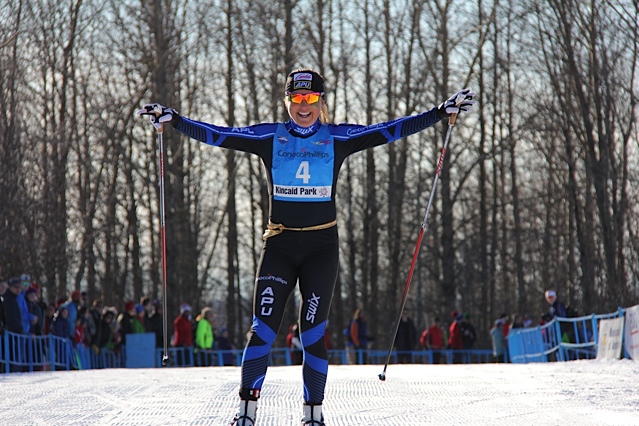
    Brooks racing to third for APU's second team in the 4 x 5 k mixed relay at U.S. Distance Nationals in late March in Anchorage, Alaska. (Photo: Rob Whitney)
    Holly Brooks locks up third for APU’s second team in the 4 x 5 k mixed relay at U.S. Distance Nationals in late March in Anchorage, Alaska. (Photo: Rob Whitney)

    Holly Brooks isn’t retiring. Some people might assume that because, at 32, they think of her as a U.S. Ski Team veteran with two Olympics in the bag — and she wasn’t listed on the recently published U.S. Ski Team (USST) 2014/2015 nominations.

    She thinks the veteran misconception is funny considering she’s only been on the national team for two seasons. In a way, she’s just warming up.

    On the phone Monday from her cabin in Hope, Alaska, Brooks said that any time someone declines a national-team nomination, or gives their coaches a heads up that they’d like to train and race on their own terms for the upcoming season (like she did this spring), it raises some reactions.

    Holly Brooks, who was first named to the U.S. Ski Team in 2012 at the age of 30.
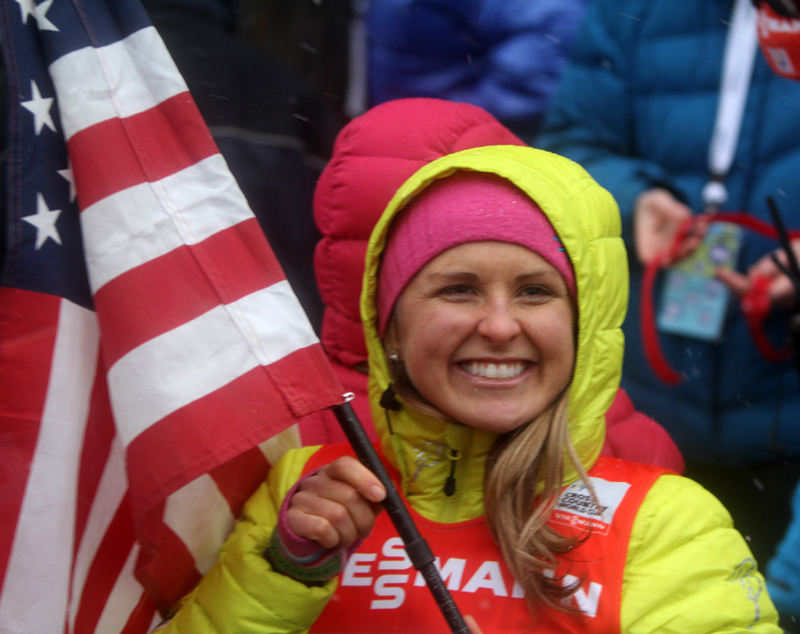
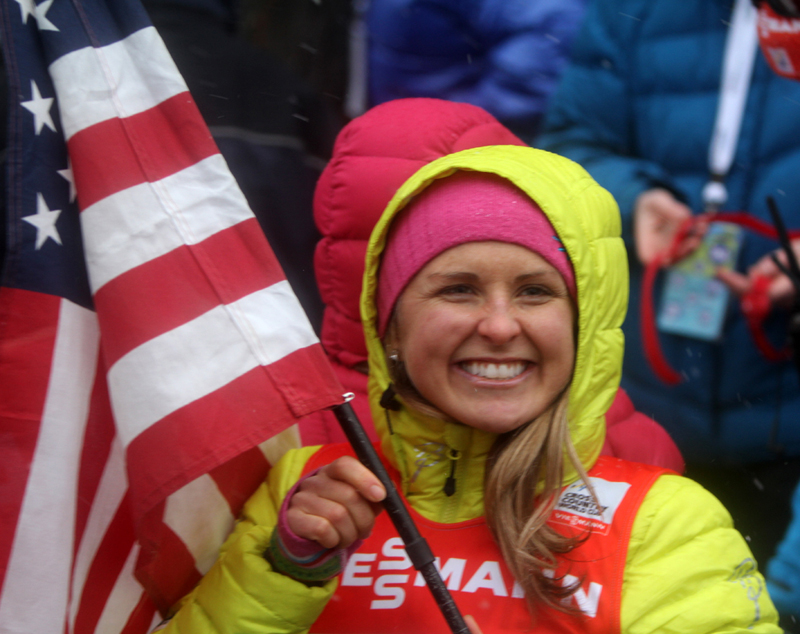
    Holly Brooks, who was first named to the U.S. Ski Team in 2012 at the age of 30, holding an American flag while awaiting the awards ceremony at the Quebec World Cup in December 2012. (Photo: FlyingPointRoad.com/Proceeds from photo sales go to NNF)

    “[One coach] called and left a message that, ‘Wow, that’s a really bold decision, but we support you,’ ” Brooks said with laugh. “I don’t know that they’re entirely surprised, but at the same time it wasn’t something I was openly talking about last season.”

    She had been thinking about the possibility for some time and brought it up to women’s coach Matt Whitcomb before leaving Europe in March. She hadn’t made up her mind, but wanted to have some conversations about the possibility of training apart from the national team in 2014/2015.

    “[Last] season was definitely my hardest year in a while,” Brooks said. “When I went on this whole role of being an elite skier, I told myself I’d do it as long as I was improving.”

    After making the 2010 Winter Olympics while working as a nordic coach at Alaska Pacific University (APU), she spent the next three years competing and feeling like she was steadily improving. Last season, she trained extremely hard and reflected that might’ve been too dedicated, to a fault. This year, she knew something had to change if she wanted to continue.

    “I feel like when you take your name out of renomination to the U.S. Ski Team everyone thinks that you’re retiring,” she said. “I just want to do it almost a little on my own terms.”

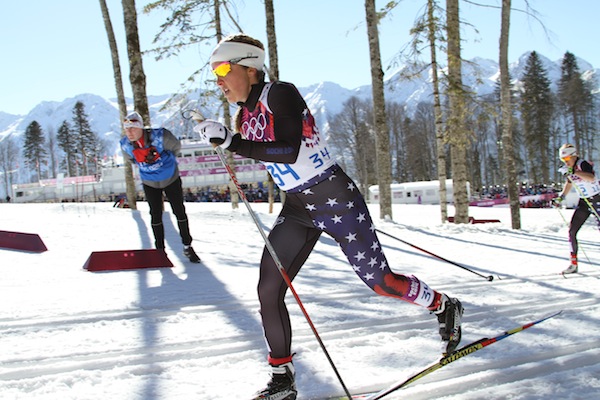
    At the Sochi Olympics in February, Brooks ended the trip to Russia with her career-best Olympic result: 27th in the 30-kilometer freestyle mass start. While a top 30 was something she’d grown accustomed to on the international circuit, it wasn’t the podium or top 10 she continually strived for.

    Ask Kikkan Randall, ask anyone on the U.S. team, she said: being on the podium is fun. All of them are competitive, and at that level, medal contention is always the goal.

    Holly Brooks after placing fourth in the 2014 Engadin Ski Marathon in March in Switzerland. (Courtesy photo/HollySkis.blogspot.com) http://hollyskis.blogspot.com/2014/03/home-sweet-home.html
    Holly Brooks after placing fourth in the 2014 Engadin Ski Marathon in March in Switzerland. (Courtesy photo/Hollyskis.blogspot.com)

    Brooks came frustratingly close at the Engadin Ski Marathon in Switzerland this year. Fourth in the 42 k skate marathon, she had been in the hunt for first with 15 k to go. A momentary lapse in focus sent her crashing to the ground, and ultimately dropped from the pack. It was a good result nonetheless and hardly the end-all to her season, but it reminded Brooks she wanted more.

    “It’s exhilarating being up in the lead pack; that’s something you don’t always feel on the World Cup when you’re not in your top shape,” she said. “Some of these marathons I’d like to go in with a goal of winning. … Not to discount myself, but it’s pretty hard to win a World Cup [and] it’s pretty fun to stand on a podium. I’m excited to have the possibility back in my life.”

    In the World Cup’s red group at the end of 2012/2013, an achievement which helped elevate her to the USST A-team last spring, Brooks fell out of it after the first period of 2013/2014. That left her with some “out-of-pocket expenses,” including some lodging, food and travel (FIS covers travel and several nights of room and board for red-group athletes on World Cup weekends, scheduled around the sprint or distance races a given athlete is in the red group for).

    Originally planning to skip the Tour de Ski and fly back to the U.S. to train in late December, Brooks stayed in Europe to try to boost her World Cup ranking and qualify for the Olympics. She started the Tour and didn’t finish it, but was able to meet the USST’s objective criteria for Sochi.

    In early January, she resumed her plan to take a break and train for two weeks in Park City, Utah. The problem with North American teams on the World Cup circuit, she said, is there’s nowhere to go when you need to get away from the racing scene for a week or two, she said. Even if you’re not competing, you’re still at the race.

    “That’s a tough thing that we’re going to have to address,” she said. “The team has talked about how ideally, if the team had this limitless budget, we’d have an apartment [in Europe] where [members] could go and take a rest.”

    Until the team finds that amount of money or someone opens their home or part-time residence to them, she said it’ll be a challenge they’ll continue to face.

    After getting back up to speed in terms of training and fitness in January, Brooks rejoined the USST in Toblach, Italy, where she scored her first World Cup sprint points of the season (qualifying in 27th and placing 29th overall). From there, she attended the pre-Olympic camp with the team in Seiser Alm, Italy, and went on to compete in three events at the Olympics (15 k skiathlon, 10 k classic and 30 k skate).

    She closed out her season with the World Cups in Lahti, Finland, and Drammen, Norway, just before the Engadin in early March. At the end of the month, she raced in front of a home crowd at SuperTour Finals and U.S. Distance Nationals in Anchorage, Alaska.

    Holly Brooks early in the women's Olympic 15 k skiathlon.
    Holly Brooks early in the women’s Olympic 15 k skiathlon.

    In the final World Cup standings, she ranked 56th in distance, 76th in sprint, and 84th overall (compared to 27th in distance, 43rd in sprint and 35th overall the year before). She spent a few weeks finalizing her decision regarding her plan for next season, and reached out to her coaches before they met to start planning for 2014/2015.

    “It feels funny declining a spot on the U.S. Ski Team,” she said. “I think I may be the oldest person to be named as a rookie … and I worked really hard to be on the team. It feels a little weird to be giving that up, but at the same time … the team in and of itself is fantastic. That’s one of the hard things to step away from … but I’m hoping I can be an honorary member of the team.”

    Very much interested in competing in at least a couple marathons next season, perhaps Worldloppets or Ski Classics (and potentially considering joining a European marathon team — or North American-based one if it existed), Brooks, the 2012 American Birkebeiner champion, didn’t rule out aiming for World Cup starts if they’re available.

    “I need a little bit of time to come up with my ideal schedule,” she said. “I feel like I haven’t quite had time to settle into my home life.”

    USST Head Coach Chris Grover said the decision was entirely hers. “From our perspective, she is invited to every camp that she wants to attend,” he said on Monday. “There will be World Cup opportunities for her; I would not be surprised if she qualified for the [2015] World Championship team.”

    That said, with a 2014/2015 national quota of five distance and five sprint spots for the women (to be shared among six women on the USST), it’s not going to be easy to secure those starts.

    “Caitlin Gregg and Reese Hanneman have the Period 1 spots locked-up,” Grover explained in an email, referring to the female and male Continental Cup (SuperTour) leaders.

    “We may award a start spot at a given World Cup based on the kind of fitness we see in camp this summer and fall, and it will be awarded purely on Coaches’ Discretion,” he added. “We haven’t had the staff resources to cover providing service for invited athletes, so there is a good chance we will ask invited athletes to bring a tech/coach with them. This will be case by case and depends on what the race format is and how many staff we currently have assigned to the WC weekend.”

    While Brooks wasn’t sure how many national-team camps she’d attend (not Bend, Ore., in May, but certainly Alaska in July) and whether she’d pursue World Cups by leading the SuperTour circuit early next season, she knew she hadn’t determined which races she wanted to do — or how she wanted her winter to play out.

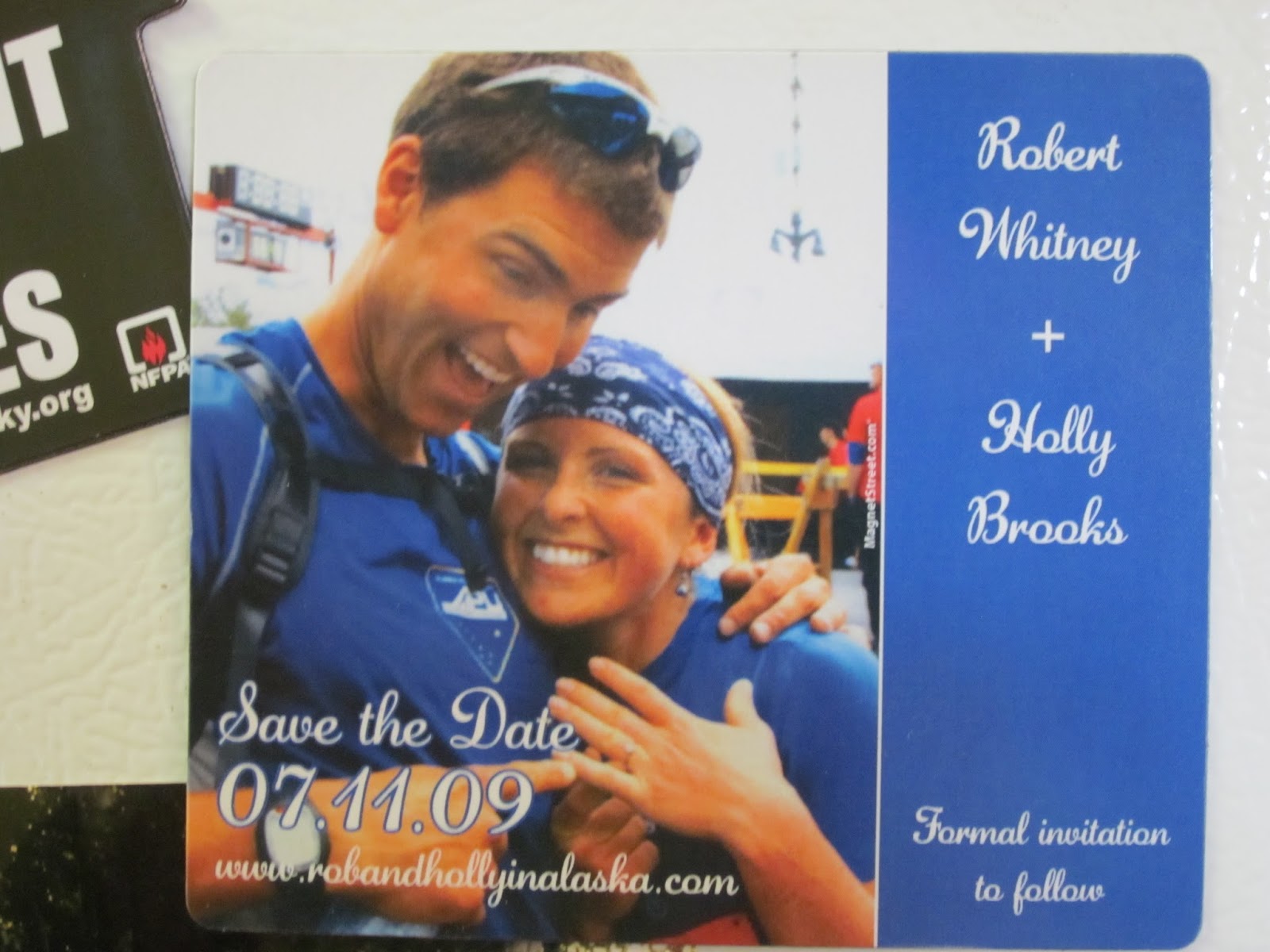
    Holly Brooks and Rob Whitney were engaged two days before Brooks' Mount Marathon debut in 2008. (Courtesy photo)
    Holly Brooks and Rob Whitney were engaged two days before Brooks’ Mount Marathon debut in 2008. (Courtesy photo)

    She had spent some 200 days on the road away from Alaska each of the last several years. She was married, hadn’t seen her brother in four years (until recently), and her sister got married last winter. Instead of catching up with family on the phone during airline layovers, Brooks wanted to see more of her loved ones in person, including her husband, Rob Whitney. A former national-team member, Whitney gave Brooks — a self-proclaimed “mediocre” junior and collegiate skier — the confidence to chase a career in professional racing five years ago.

    “He’s been my biggest fan and biggest supporter, but at the same time I think he misses a wife that’s present,” she said. “A funny little analogy that I came up with, it’s a lot like a little deployment. It’s not like war or anything, but you leave for winter and come back. … He’s been the one holding down the fort. I think he’s really excited to spend more time together.”

    With the help of his parents, Whitney has spent much of his time building a 1,600-square-foot, wood-heated cabin in Hope, about a 1 1/2-hour drive south of Anchorage. Reminiscent of her family’s cabin in Snoqualmie Pass, Wash., which Brooks used to ski to and from as a child, it’s already larger than their 900-square-foot home in Anchorage, and Brooks was excited to help him finish it. With three acres and wilderness all around them, she said they plan to build some trails and invite friends and the Ski Team to join them there in the future.

    The upcoming World Championships in Falun, Sweden, remain high on her list, but Brooks said she’d have to see how financing her ski career and associated travel go. She contacted her sponsors informing them of her decision, and hoped they’d stay onboard.

    “I’m hoping that some of my local sponsors still see value in what I’m doing, she said. “I’m going to be able to spend more time in Alaska, and one of my favorite parts about being an elite athlete is being able to give back to the community I live in. If I had to quit skiing and had no sponsorships I’d have to go out and do a traditional job. I wouldn’t have time to do the projects that I’m doing [with the community].”

    Brooks will continue to race for APU and one day, she might consider resuming coaching part time. For now, she’s working on earning a master’s degree in counseling psychology at APU, and is about a third of the way through a hefty 60 graduate credits.

    “I am looking forward to just having more flexibility with my schedule so I’m probably not going to eight training sessions a week,” she said. “Maybe a little more training with Rob. I think it’ll be a combination of what I think I need to do and I can bounce that off [APU head coach] Erik [Flora] and work in some team sessions as well.”

    “She’s a pro,” Grover said. “She, just like the rest of the group, leads by example, trains hard, races hard, is a great competitor — just a positive person and professional athlete. We’ll miss her from the group.”

    Come May 19, when the USST starts its first official camp in Bend, Brooks said she won’t necessarily miss training on snow. But she knows she’ll miss the team.

    “I don’t think it’s really set in that I’m not on the team, but I think on May 19 that will set in,” she said. “I know in advance that’s going to be really hard. I love my teammates …I’ll miss them but I’ll see them in Alaska.”

  • Johaug and the Future of the Norwegian National Team

    Johaug and the Future of the Norwegian National Team

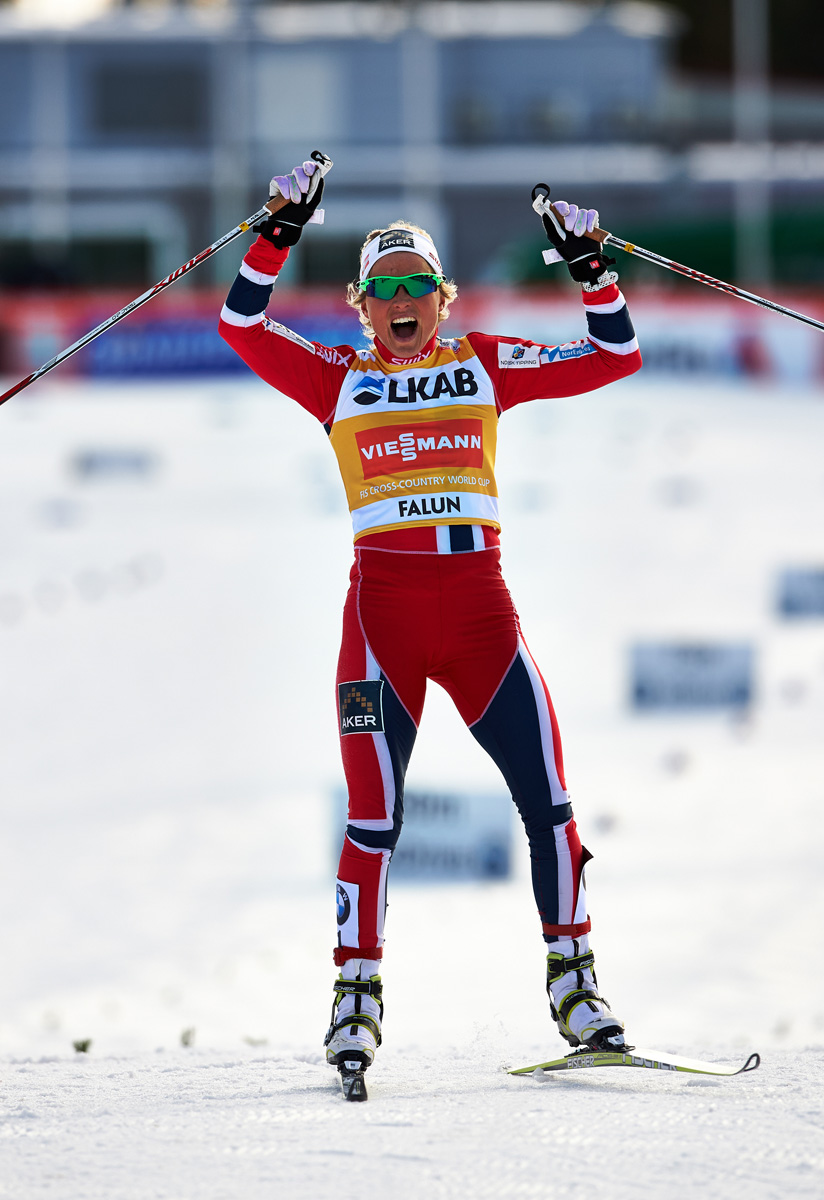
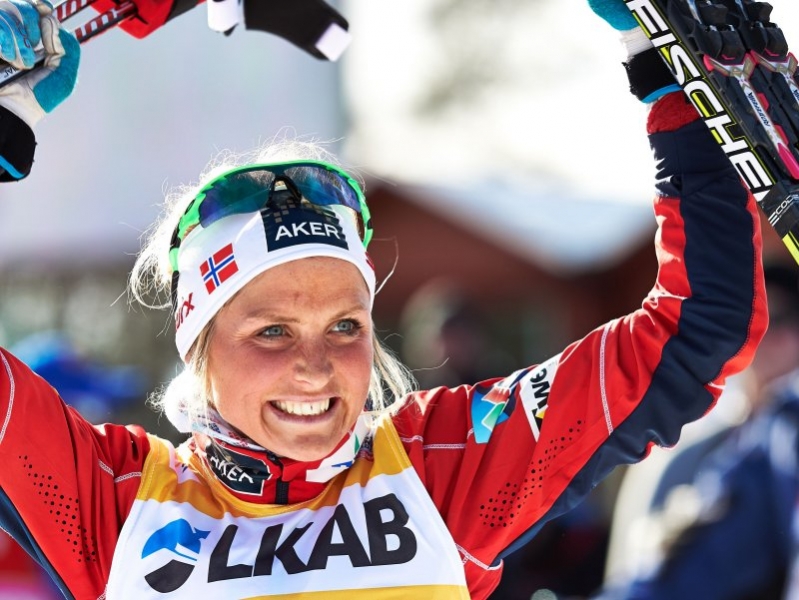
    Therese Johaug clinches her first World Cup overall title with a pursuit win at 2013/2014 World Cup Finals on March 16 in Falun, Sweden. (Photo: Fischer/Nordic/Focus)
    Therese Johaug clinches her first Overall World Cup title with a pursuit win at 2013/2014 World Cup Finals on March 16 in Falun, Sweden. (Photo: Fischer/NordicFocus)

    This is the second article in a series on the future of the national-team model as seen in Norway. First we took at look at Petter Northug, Jr., and here we explore Theresa Johaug’s approach to a successful career and how that relates to the Norwegian National Team.

    Can the Norwegian Ski Federation (NSF) keep its Norwegian ski stars on its team or will it lose them to big sponsors? That is the question now facing Stein Opsal, the foundation’s secretary general.

    Perhaps the most valuable athlete for the NSF is Therese Johaug. Johaug, 25, represents a kind of Norwegian ideal: outwardly sincere and positive, perennially tan from vigorous outdoor exercise, she radiates “true sporting pleasure” as her manager Jørn Ernst describes it.

    Johaug won a place in the hearts of Norwegians with her emotional victory in the 30 k skate race at the 2011 World Championships in Oslo, Norway.

    “I remember I got the Norwegian flag,” Johaug recalled. “When I crossed the finish line, I thought, ‘Is this real? My God, I’ve won my first international ski race.’ ”

    She collapsed into the snow crying ecstatically, and after she had recovered, she broke royal protocol by enthusiastically hugging King Harald. The Norwegian public was charmed, and 120,000 showed up in Oslo’s University Square that evening to watch Johaug receive her gold medal and sing Ja, Vi Elsker, the Norwegian national anthem.

    Old times: Baby sister Veronika, Therese and brother Karstein at home on the farm. (Photo courtesy of Karstein Johaug)
    Old times: Baby sister Veronika, Therese and brother Karstein at home on the farm. (Photo: Karstein Johaug)

    For Johaug, who describes herself as “just a hick from Dalsbygda,” the national attention following the championships was a new experience.

    “I think that I have been fortunate to have been allowed to grow up in a village where everyone knows everyone,” she said Johaug of growing up in the rural town during a 2012 interview with Dagbladet. “Sure, it has its drawbacks, too, but to grow up in that environment, in the yard, experience summer vacations on the farm with Mommo … I think that I have never had things put in my hands for me. I have worked and helped at home.”

    After the championships, her popularity rocketed, and she was swiftly declared the most-admired athlete in Norway, ousting the previously most admired, the ever-humble biathlete Ole Einer Bjørndalen.

    As Johaug described it in 2012, “It’s only now I realize how much that day meant to me. For my career, for [people’s] interest, sponsorship, everything. It was very special in Oslo.”

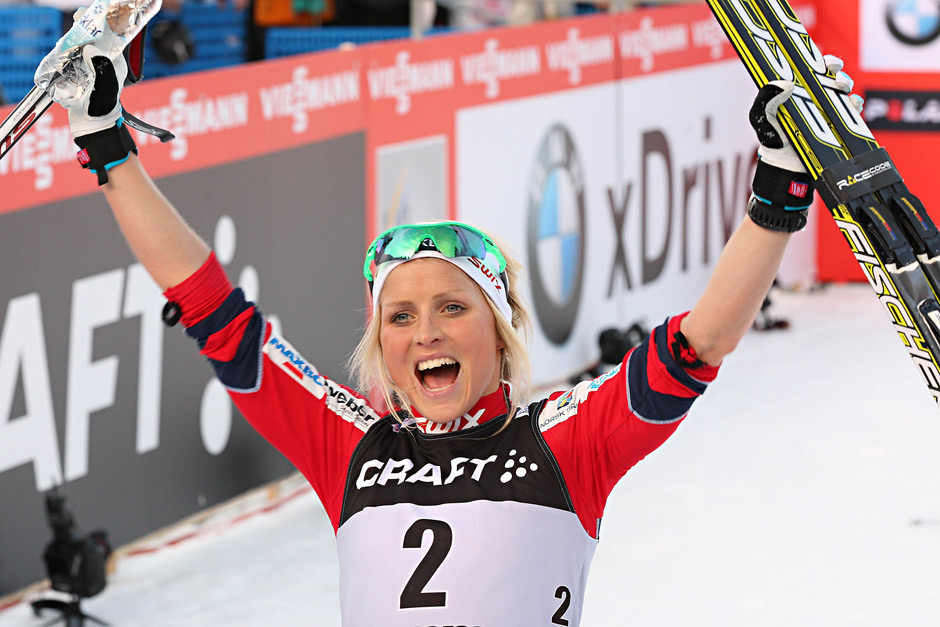
    Johaug celebrates her second place finish in the 2013 Tour de Ski. (Photo: Fiemme2013)
    Johaug celebrates her second place finish in the 2013 Tour de Ski. (Photo: Fiemme2013)

    Johaug’s fame has also come at a price. “I have become a more famous person, too,” Johaug said of the aftermath of the 2011 championships. “It is not only positive. Even if you get a lot of nice feedback, it is not constantly so cool. If I shall go for a walk in town … I wish I was a normal person, instead of that I will be topic of conversation during dinner to people. ‘Yes, I saw Johaug. I saw she did this, and bought that.’ It does not seem so cool.”

    Johaug has found that spending time in Oslo can be an uncomfortable scene. “People [are] bumping into each other whispering, ‘Look, it’s her,’” she said. Asked if she was able to spend evenings out in Oslo, Johaug exclaimed, “No, that’s impossible! When people get something in their system they make contact. They dare not otherwise, almost.”

    Johaug has reconciled herself to this fame, and embraced her sponsorship potential.

    “Of course, when I’ve got the name I’ve got now, with the partners I have, I have a unique opportunity to get myself a position for the future,” said Johaug.

    Jacob Lund, a sponsor expert, told Dagbladet in 2012: “She’s going to make more money than both Petter Northug and Marit Bjørgen. The girl has everything, so the sponsors will be willing to pay very much.”

    Yet Johaug talks little of business matters to the media, leaving the subject to Jørn Ernst, her manager. After Northug left the Norwegian National Team and signed a private contract with Coop last May, Ernst told NRK that he found the deal “exciting” and would “pay close attention” to Northug’s career choice.

    “Therese would have earned big money if she went out of the national team,” he added. “[But] money is the last thing she thinks of.”

    Ernst also put concerns to rest that Johaug would leave the national team. “Therese is very clear that it is not the way to go,” he said. “She has no plans to invest alone, and it has never been discussed. Therese thrives very well in the national team. They are a tight group and she needs a good environment to perform. She and Northug are completely different. He is in a unique position. Therese has not been able to focus alone.”

    Traditional Sponsorship

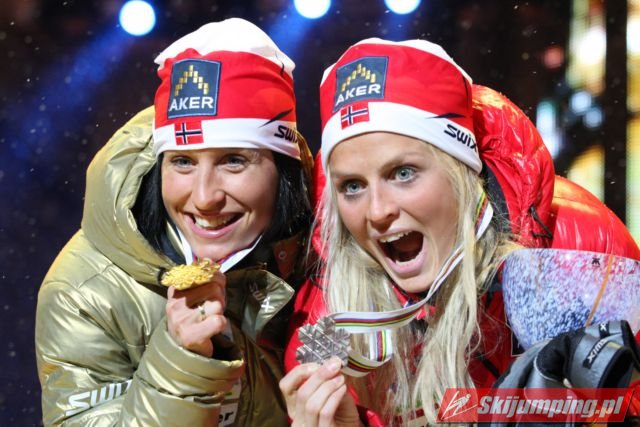
    Marit Bjørgen (l) and Therese Johaug with their gold and silver medals from the 2011 World Championships 15 k in Oslo, Norway. (Photo: Wikimedia Commons)
    Marit Bjørgen (l) and Therese Johaug with their gold and silver medals from the 2011 World Championships 15 k in Oslo, Norway. (Photo: Wikimedia Commons)

    Johaug has instead turned to the traditional route of making money as a cross country skier: private sponsorship. To this end she has deals with 12 sponsors, not to mention her own new line of ski gloves named Johaug, of which 120,000 pairs were sold before Christmas of 2013, as well as a private jewelry collection, and property investments.

    Her sponsorships includes a deal with Austrian executive-air service Mapjet, worth some 2 million kroner a year, and secured after the company’s CEO became enamored with Johaug after watching her race in the 2011 Oslo World Championships. The CEO even went so far as to insist that she braid her hair for the promotional photos in the same fashion that she had it during the Championships.

    She is also a face of Swiss watchmaker Tag-Heuer. This year she turned down an opportunity to open a new Tag-Heuer store on Paris’s Champs Elysees with Leonardo di Caprio and the million-kroner appearance fee that went with it, citing a conflict with her training regimen.

    According to Ernst, Johaug turns down opportunities almost every day, from TV shows to jumping out of birthday cakes, in order to concentrate on her ski training. She has famously refused to be sponsored by sports drinks, as she finds them antithetical to her beliefs about healthy living. Ernst gives the impression that Johaug does little more than train and turn down financial offers in order to train even more.

    But Johaug is fully aware of her long-term picture, and senses the opportunity to secure her future now. “A cross country skier I am,” she said to Dagbladet, “but I’m the girl next door too. I must say that that gives me a lot, I can really connect. Although cross country is incredibly important to me right now, and I admit that life is falling apart if I do not get the results I want…then cross country just a tiny part of my life in the long run. There are other important values, afterwards.”

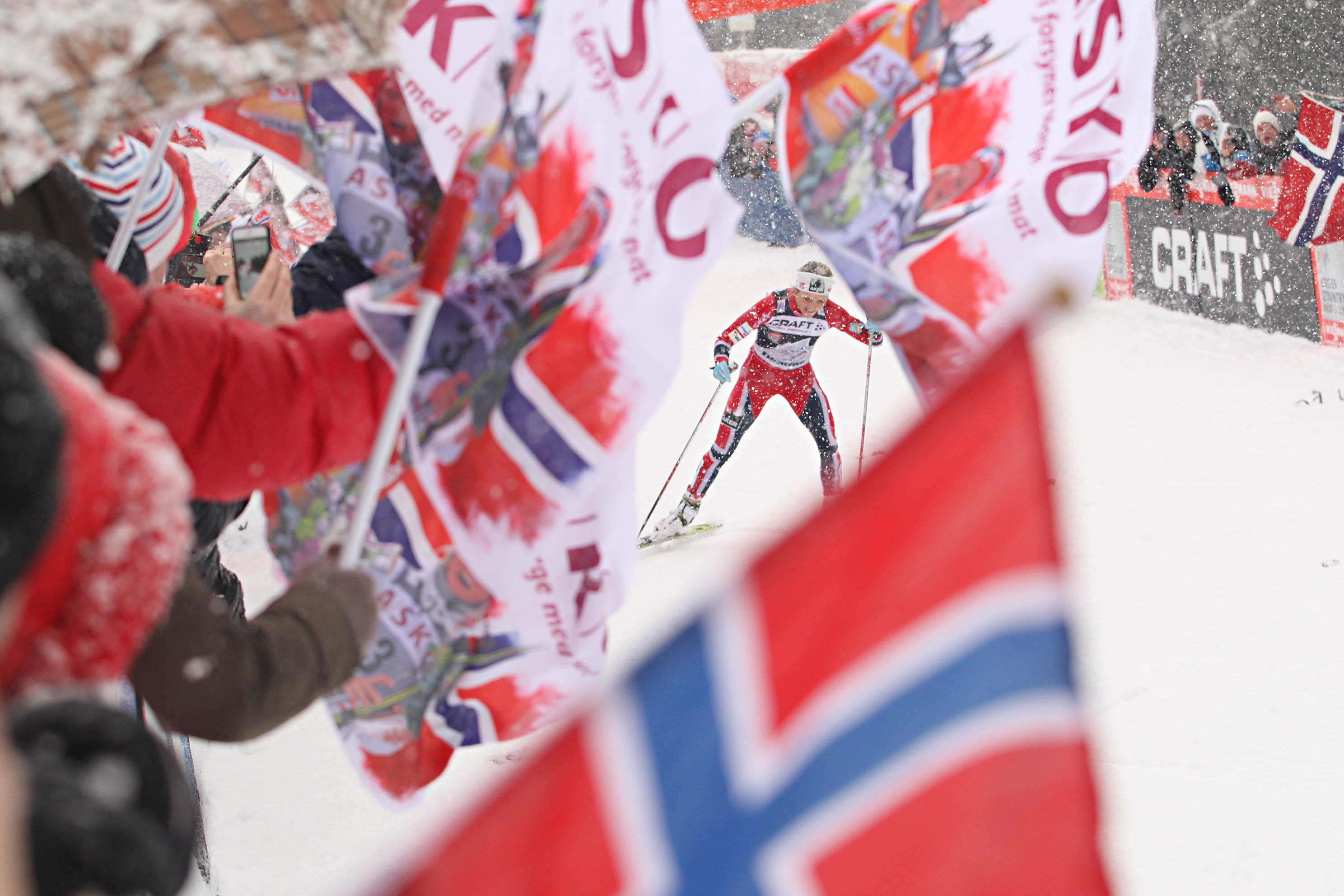
    There are plenty of opportunities for Johaug, and in turn, the NSF as well. Johaug’s popularity with Norwegians has only boosted the profile of the Norwegian National Team, which has increased its sponsorship funds by 53 million kroner ($8.8 million dollars) over the last five years. ASKO, a Norwegian grocery chain and NSF’s title sponsor, and the mega-food conglomerate Norgesgruppen/Spar, specifically sponsors just two members of the team: Johaug and Marit Bjørgen.

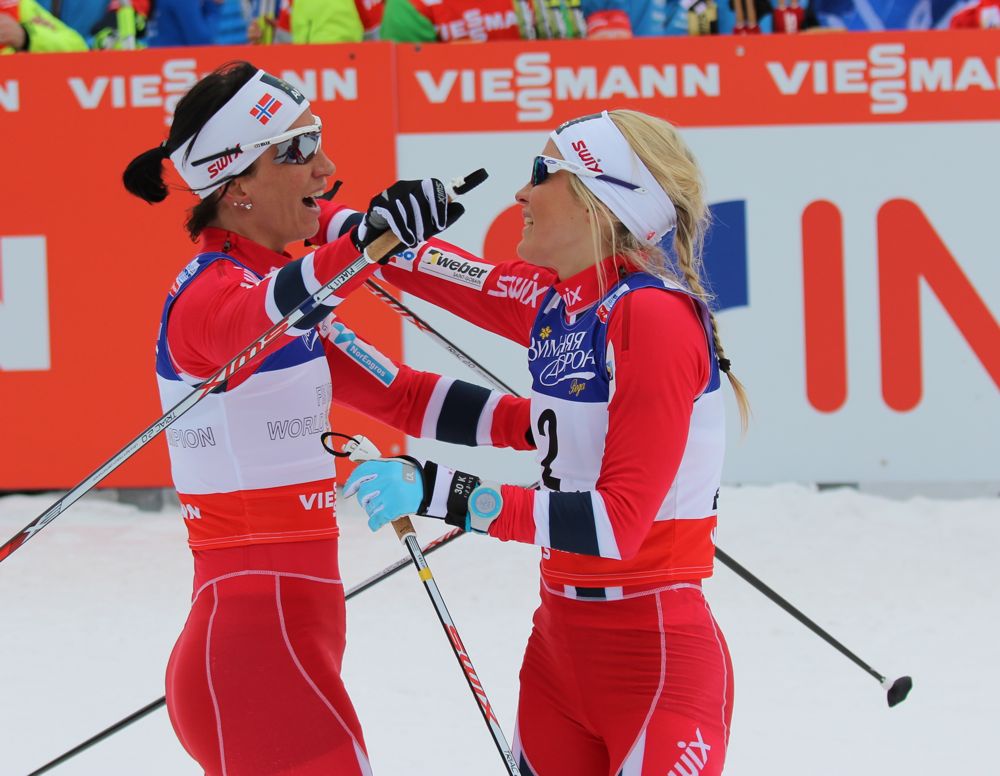
    Bjørgen and Johaug.
    Bjørgen and Johaug

    Bjørgen, the queen of the Norwegian ski team and its most successful woman in cross-country skiing history, has been an influential to Johaug. When Johaug has grown discouraged, it has been Bjørgen who has instilled confidence in her, and there is no question that training with the best woman in the world has made Johaug a better skier.

    Yet despite Bjørgen being the best skier, by 2012 Johaug earned 1.1 million kroner to Bjørgen’s million. Bjørgen still had the greater net worth, with a fortune of 21.7 million kroner ($3.6 million dollars) to Johaug’s 13.3 million kroner ($2.2 million dollars), but that will likely not last for long.

    If Johaug had everything that sponsors wanted in 2012, as Lund had declared, then she certainly has even more now. The 2013/2014 season was exceptional for Johaug: she won the Tour de Ski, captured individual silver and bronze medals at the Sochi Olympics, and was able to fend off Bjørgen for the Overall World Cup title. With the World Cup title to her name, Johaug now has the results to fully reach her income potential. How she chooses to do that will be an important for the future of the NSF.

    The Truth Behind Their Income

    Yet despite all of her sponsorships, these opportunities do not seem to have made Johaug rich by Northug’s new standards — at least not yet. Johaug’s 2012 income of 1.1 million kroner was less than Northug’s 1.6 million kroner that year, and a far cry from the 10 to 20 million he is reported to make now.

    However, those numbers, based on public tax records, don’t tell the whole story. The NSF has set up a private fund for its cross country skiers. Established in 1985, the fund was created to provide skiers financial support after they retired from the national team. The money in the fund remains tax-free for as long as a skier is active on the national team, and allows the profits reaped during bountiful years on the team to be spread out over many years. Therefore, Johaug may well have made more than a million kroner in 2012, but that was only the amount she withdrew from her fund.

    According to the Norwegian business newspaper Hegnar, “The funds … can be withdrawn without taxation to cover documented expenses related to sporting activity, such as exercise equipment, travel, hotel stays, consultancy, computer equipment and training in other sports where relevant.”

    “Normal people would have dreamed of getting such a deal,” the fund’s chairman Helge Bie, told Hegnar.

    This fund shields Norwegian skiers from what would otherwise be a large tax burden. A wealthy athlete like Johaug would usually have to pay somewhere between 37 and 40 percent on their income in Norway, where the income tax rate is a flat 28 percent, with an additional 9 percent on income over 456,000 kroner, and 12 percent over 741,000 kroner.

    Johaug's a national hero for thousands of Norwegian fans.
    Johaug’s a national hero for thousands of Norwegian fans.

    “We can safely say that the fund is a good solution for skiers,” said Bie. “And there is great interest in using it. Those who have good advisors around them, their money is in the fund.”

    The fund itself is good indicator of how much new money there is in the sport in Norway. In 2011, the fund was worth 70 million kroner, with 150 members, most of them former skiers who are no longer paying into it. In January 2014, Bie said the fund was around 150 million kroner, despite gaining hardly any new members. This suggests that current NSF athletes deposited some 80 million kroner ($13.3 million) to more than double the fund over the last three years.

    Northug’s manager Are Soerum Langås confirmed to Hegnar that “there are a few million in Petter’s fund,” but Johaug’s manager declined to say how much was in her fund. Norwegian business paper Kapital reported in January 2014 that Johaug’s career wealth had grown to 25 million kroner, nearly double from what it had been two years prior.

    Five million of that wealth came from her national-team salary, which is likely about 450,000 kroner a year, and the team’s sponsors. Another five million came from prize money and bonuses given for winning medals. The remaining 15 million kroner came from her private sponsors. Not bad for a 25-year-old skier who already owns two homes and wheels around in a BMW X3.

    Yet this is only the beginning for Johaug. Dagbladet reported that her renegotiated sponsorship deals may now be worth up to 10 million kroner a year, rivaling Northug’s new income. Johaug’s success in her private sponsorship agreements is also important for the Norwegian National Team, as it seeks to demonstrate its value to skiers. If Johaug surpasses Northug’s Coop deal through the traditional sponsorship route, it will send an important message to other athletes that there are not necessarily any advantages to leaving the team.

    The NSF’s doing what it can to ensure that both Johaug and Bjørgen are content on the national team. Perhaps Ernst’s comments about watching the Northug deal closely were a subtle hint to the NSF to not take Johaug for granted. If so they seem to have received the message. The NSF goes to great lengths to keep their star athletes happy, even providing Johaug with a private car and chef during the Tour de Ski. As privately sponsored ski teams are able to new levels of personal support, the NSF will likely have to compete on the type of luxuries it provides its athletes, and pressure the social democracy ethos that has long ruled the national team.

    A Juggling Act

    Yet just because Johaug is a current member of the national team does not necessarily mean her sponsorship situation is without its drawbacks. Unlike Northug who was able to sign one substantial agreement with a grocery chain, Johaug has many different agreements in place, 13 in fact. This plethora of sponsors can create its own headaches and distractions.

    Norway's Therese Johaug celebrates a nearly 30-second victory over teammate Marit Bjørgen in the World Cup Finals 10 k freestyle pursuit on Sunday in Falun, Sweden, which sealed Johaug's first overall World Cup title. (Photo: Fischer/Nordic Focus)
    Norway’s Therese Johaug celebrates a nearly 30-second victory over teammate Marit Bjørgen in the World Cup Finals 10 k freestyle pursuit on March 16 in Falun, Sweden, which sealed Johaug’s first Overall World Cup title. (Photo: Fischer/Nordic Focus)

    For instance, like Northug, Johaug’s Colgate ads had to be pulled during the Olympics to accommodate exclusivity clauses. As Johaug’s agreements become more expansive in the Norwegian market, she will likely encounter more exclusivity issues even if she carefully chooses them to avoid conflict.

    Johaug also brought out the absurdity of product endorsement when she repeatedly drank from her a bottle of Isklar — the water sponsor of the national team— during a post-race interview in December. On closer examination, it appeared that the cap was still on the bottle and Johaug was mocked for the gratuitous product display. The tables at press conferences that Johaug and Bjørgen sit at are often piled high with products that support the national team. The promotion benefits the skiers and the NSF, but it creates a blurry line between a national team and a commercially sponsored ski team.

    Then there is the issue of her new ski-gear company, which she is also eager to promote. The venture has attracted 15 million kroner from investors, and Johaug owns the rights to her namesake brand in Norway, Russia, China, the European Union, and the United States.

    It’s unknown what the ultimate goal is for the company, but ski gloves is probably just a start. While Johaug has been careful not to overcommit her time to other sponsorship entities, she may find it harder to say no to the business baring her name.

    While Ernst and Johaug have worked hard to ensure that her sponsorship obligations don’t interfere with her training, many great skiers over the years have warned that each year brings more distractions and non-skiing-related demands.

    “We train insanely much,” Johaug told Dagbladet in March 2012. “Coach Egil [Kristiansen] says that we train more than Ulvang and Dæhlie did at their best.” Whether Johaug, now the defending World Cup champion, can maintain her grueling training regimen and the demands of her financial obligations, remains to be seen.

    If Johaug, as the defending World Cup champion should choose to leave the NSF it would be a serious blow not only to the Norwegian National Team, but it would threaten the national team model in the sport. Johaug though, has given no indication that she would make such a move, and as Stein Opsal debates about what do with Northug, he can afford to make a stronger move knowing that his women’s team is fully onboard.

    Johaug’s booming commercial success is a shining example that the old, traditional route of national team membership can be as profitable as anything in the private realm of skiing. She represents the young, bright face of the sport, and as long as she chooses to stay with the NSF, she will remain a paragon for what can be achieved on a national team.

    ***

    Stay tuned for the rest of this series when it returns in June; the author is touring Nepal and India in May!

  • “There’s Less Than 700 Days to Go, So We’re Not Missing Any Opportunity”

    Jeremy Teela's ninth-place finish in the sprint led the U.S. team in Vancouver; USBA is hoping for even more in Sochi.

    The U.S. Biathlon Association announced its 2012-13 national team two weeks ago, and there were very few surprises: the mainstays of both the men’s and women’s team will all return to ski in the red, white, and blue, and only a single new team member was named.

    Rather than any serious shift in individual team members, however, the announcement seemed to reflect a more subtle change in strategy for the U.S. national team. For the first time in years, more women were named to the team than men, and the men’s team shrank to just six members after staying even at eight for the last two seasons.

    And the men’s and women’s teams look different, too: all six members of the men’s team have World Championships or Olympic experience, while the women’s squad includes two athletes, Hannah Dreissigacker and Corrine Malcolm, who have only spent two seasons racing at the European Cup level.

    To discuss these changes, and what they mean for the upcoming Olympics in Sochi, FasterSkier called up USBA President and CEO Max Cobb.

    FasterSkier: Compared to previous years, the men’s team is very pared down – there’s more or less just an A team. Is that a strategic shift for you?

    Max Cobb: I think we felt like the athletes who are on the men’s team now are the ones who have the best chance of being on the Olympic team. Obviously there is a team selection procedure that is going to finally name the team, but we felt like those are the ones who have the best chance to be at the Olympic level based on the performance they had last year. So it could have been bigger if we felt like there were more athletes who had distinguished themselves, but that was where the break was in terms of athlete performance.

    FS: So, then, Sochi is the main thing you’re focusing the national team on, rather than thinking about longer term development right now?

    MC: Yeah, that’s definitely true. We see in biathlon that athletes are very good through their mid-30s, so if we think about Sochi, we’ll probably see retirements from Hakkinen and Teela, but the rest of the team we suspect will remain active for at least a couple more years.

    FS: Does lack of development funding make you worry about the athletes below that break? If you want them to contribute when they are in their 30s, how can they get there?

    MC: There’s a limit, and financial constraints for how deeply we can be supportive. We’re definitely fully focused on providing a medal-caliber program for the best athletes in the country, and unfortunately the resources don’t allow us to extend very much beyond that at this point, just because it’s so expensive to run an extensive national team program. So, yeah, it’s the absolute right question to be asking, but we just don’t have any more money.

    FS: So the fact that the women’s team had a larger squad named – for the first time in a long time – does that just reflect that the women have been less consistent, and that you need a larger group to pull from in order to get those top performances?

    MC: I think the overall women’s strategy is a little different from the men’s. We still see that there are less women participating in biathlon nationally, and we need to do more to stimulate and encourage that. So when we were looking at the naming, we felt like this was a group of women who had a good outlook for long term success, and we went for it. It is just a little bit different tactic on the two sides.

    FS: Is the team still going to be completely centralized in Lake Placid?

    MC: Yeah, I think we definitely recognize that some people have a hard time living in the training center on a year-round basis, and it’s really important for them to get some time away. We had a good experience last year with Susan [Dunklee] being able to go back to Craftsbury and have some time back there, and I think that same opportunity will exist for the athletes this summer too. We definitely recognize that it doesn’t work for everybody to live in the training center without a break.

    FS: What else is U.S Biathlon psyched about right now?

    MC: We’re really excited about Sean [Doherty] and Anna [Kubek], and Tara Geraghty-Moats had some really encouraging performances as well this season. [Head Coach] Per Nilsson really enjoyed the opportunity to work with Tara and Sean and Casey Smith at Swedish nationals, so that was a nice way to end the season. We’ll see how things going towards Sochi progress, but I think there’s some encouraging development in the junior ranks as well, and that’s really exciting.

    We just presented our two-year plan leading up to Sochi to the USOC, so we know when the competitions will be and the camps we will have. We obviously don’t have the daily training sessions yet, but we do have a good two year plan all laid out, so we’re excited to try to work with the USOC to make sure that we get the most out of every single day in between now and Sochi. There’s a little less than 700 days to go, so we’ve just got to make sure that we’re not missing any opportunity.

    FS: Wow, 700 days. That maybe makes you appreciate every day more…

    MC: Yeah, I think for the athletes it is really about getting the details right every single day along the way, and so you need breaks and you need recovery, but you have to make the right training happen at the right times and stay focused. So we’ve got a really good plan put together, and I hope that it has both an inspiring and calming effect on the whole program.