Tag: NAWTA

  • Throwback Workout: Pace-Development Intervals with the NAWTA (Remember That?)

    Throwback Workout: Pace-Development Intervals with the NAWTA (Remember That?)

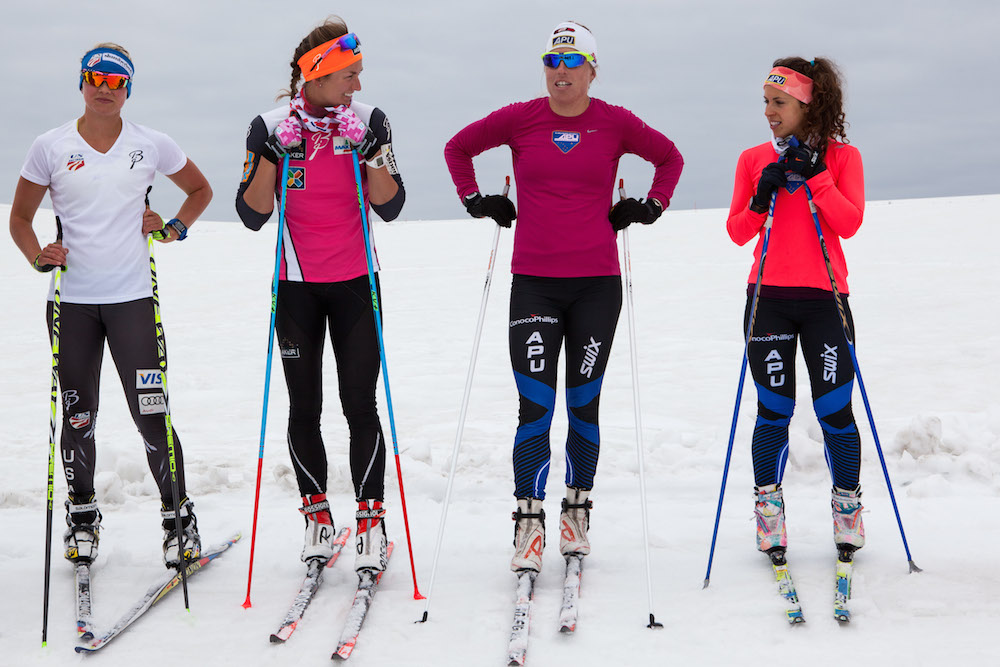
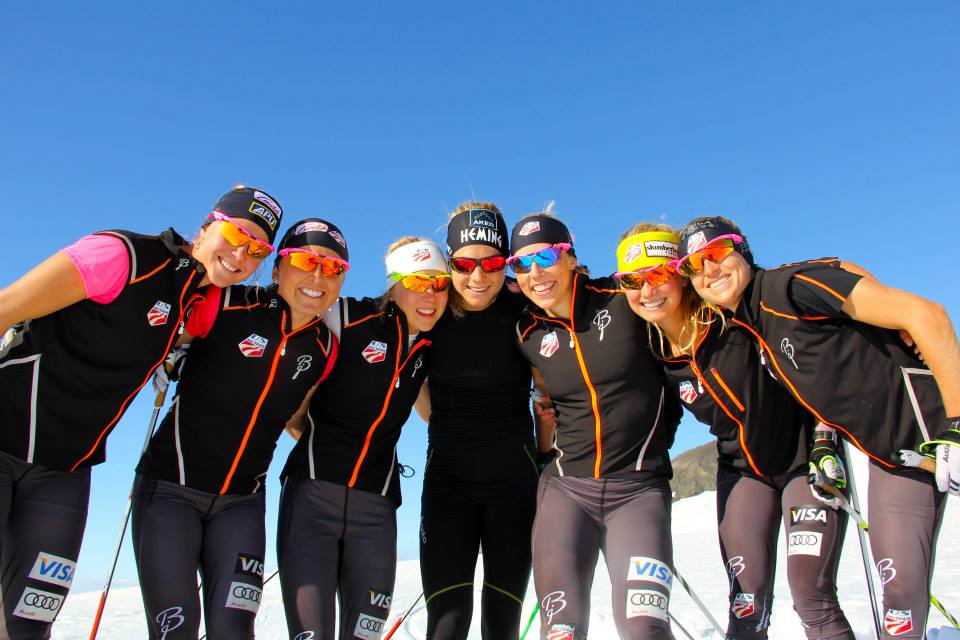
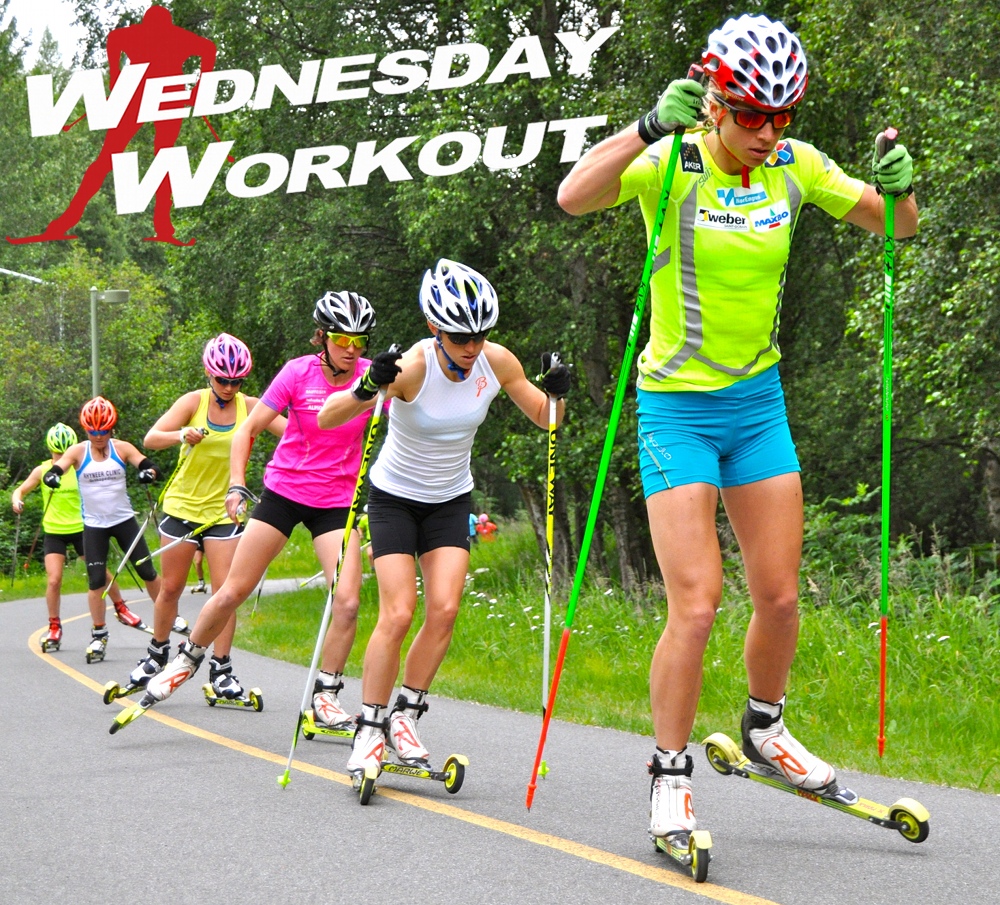
    Astrid Jacobsen (NOR), Liz Stephen, Bettina Gruber (SUI), Jessie Diggins, Holly Brooks and Ida Sargent during threshold intervals in Anchorage, Alaska, on Tuesday. (Photo: Matt Whitcomb)
    Norway’s Astrid Jacobsen (r) leads Liz Stephen (U.S. Ski Team), Switzerland Bettina Gruber, and U.S. Ski Team members Jessie Diggins, Holly Brooks and Ida Sargent during threshold intervals at the 2013 North American Women’s Training Alliance (NAWTA) camp in Anchorage, Alaska. (Photo: Matt Whitcomb)

    For this week’s workout, we bring you one of the best threshold workouts U.S. Ski Team Women’s Coach Matt Whitcomb said he’s ever seen — back in 2013. That’s not to say this workout is outdated, and the kind of training environment nearly a dozen top-level athletes created at the 2013 North American Women’s Training Alliance (NAWTA) camp in Anchorage, Alaska, was one other teams and clubs can try to emulate. All it takes is a quality all-around effort and well-thought-out terrain choices. Read original article here.

    ***

    [circa July 2013]

    The third-annual North American Women’s Training Alliance (NAWTA) camp began this week in Anchorage, Alaska, and on Tuesday morning they completed a threshold workout that ended with a lot of high-fives in the van and left U.S. Ski Team women’s coach Matt Whitcomb pretty happy.

    “Today’s threshold workout was the best threshold workout I’ve seen out of this group of women since I’ve been working with the team,” he said on the phone, as the group began their afternoon strength session.

    Kikkan Randall, Jessie Diggins, Liz Stephen & Co., are joined at this camp by Alaska Pacific University skiers, National Training Group athletes, and decorated Norwegian Astrid Jacobsen, Switzerland’s Bettina Gruber and Canada’s Chandra Crawford. The workout is one that Whitcomb and APU head coach Erik Flora have repeated over the last few years in order to work specifically on high-speed skiing in the middle of a threshold session.

    The keys to accomplishing this goal are two-fold: the choice of terrain, and the presence of a group to ski with. It was his team’s skilled pack skiing that Whitcomb thinks set Tuesday’s session apart from the rest, but the rolling hills are a critical ingredient to the goal of the entire workout.

    “It’s not so much emphasizing going harder, it just emphasizes patterning your muscles, neurally, to fire faster,” Whitcomb explains. “I think a lot of times, certainly my tendency as been to prescribe intervals that are a bit too slow. We might be nailing the percentage of your max heart rate and the proper lactate right on the money, but the pace is just too slow — you’re going uphill, uphill, uphill, and a lot of times when we find hard terrain we go hit intervals there.”

    To encourage speed variation while staying within threshold, the workout should be done on a stretch of pavement that includes gradual uphills, flats and gradual downhills, which “systematically [builds] some pace development intervals into your session,” Whitcomb says.

    “It doesn’t need to be incredibly hard — today was roughly threshold and above during bursts of speed — but it was about the terrain that helped push the pace for us.”

    The Workout:

    • 20-30 minute warm up*
    • 4-6 x 7-10 minute L3 intervals (3 minutes rest) on fast terrain that incorporates gradual uphills, flats and gradual downhills. Most interval sessions use hard and grinding terrain, great for building capacity but not so great for higher pace development. The key to this workout is in the choice of terrain.
    • 20-30 minute cool down*

    *Do a warm up and cool down that allows you to focus on the intervals. “Sometimes a mistake can be made where people are going after volume in addition to high intensity on interval days,” Whitcomb says.

    Don’t do try to multi-task for this workout. “Warm up only the minimum that your body requires,” he continued. “You want to make sure your muscles are ready to go, and build into the intervals if you have to — you don’t want to pull any muscles or get injured — but a 45 minute warm up is too long, as is a 45 minute cool down. Keep them concise and focus more on the on-time.”

    Frequency: 

    Every two to three weeks in the summer, with increasing frequency to every 10 days as fall approaches. “A workout like this is in addition to L4 intervals, time trials, speeds, ODs,” Whitcomb said. “It’s just another small component, another ingredient to throw in the bag and mix it up.”

    Variations:

    • Shorter recovery time as the season goes on, or longer recovery when at altitude — “just to make sure the on-time is what’s being emphasized,” Whitcomb says.
    • Pre-determined sprint preems that accomplishes a similar break from straight threshold, forcing athletes to go from threshold, into race pace, then back into threshold when they cross certain preem markers in the interval.

    On Tuesday, the women did this session on a stretch of bike path in Anchorage’s Kincaid Park. They chose a section of rolling terrain that was about 7-10 minutes long going either way. The group started their first interval in one direction, which took about nine minutes, took their three-minute recovery, and then skied back the other way to the start, which took about seven minutes.
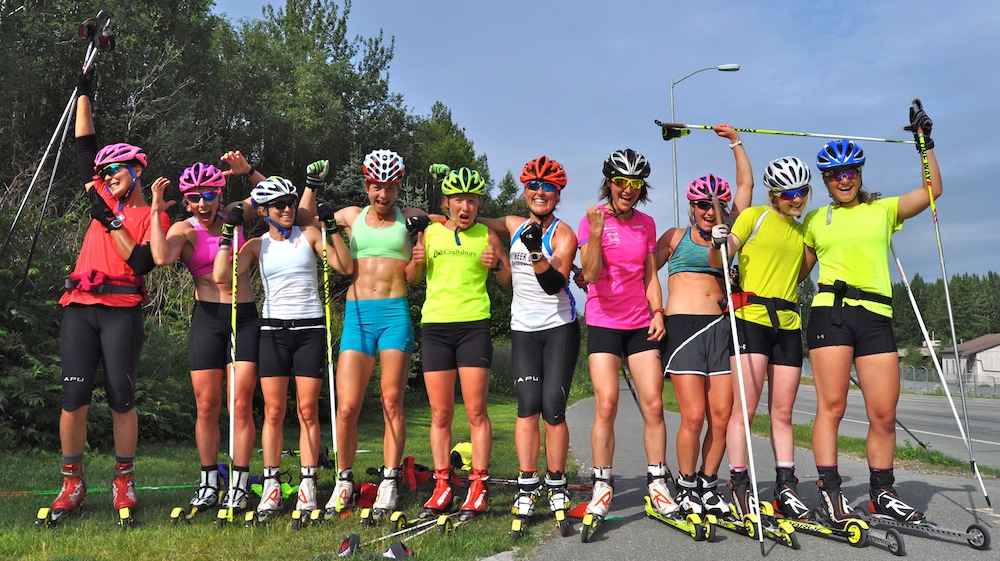
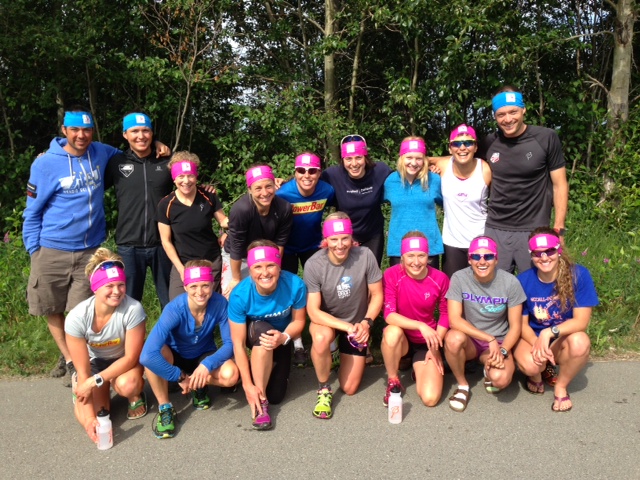
    The 2013 North American Women's Training Alliance group after a well-executed workout in Anchorage, Alaska. (L to R) Kate Fitzgerald, Kikkan Randall, Liz Stephen, Astrid Jacobsen (NOR), Ida Sargent, Holly Brooks, Bettina Gruber (SUI), Jessie Diggins, Emily Hannah, Anika Miller. (Photo: Matt Whitcomb)
    The 2013 North American Women’s Training Alliance group after a well-executed workout in Anchorage, Alaska. (L to R) Kate Fitzgerald, Kikkan Randall, Liz Stephen, Astrid Jacobsen (NOR), Ida Sargent, Holly Brooks, Bettina Gruber (SUI), Jessie Diggins, Emily Hannah, Annika Miller. (Photo: Matt Whitcomb)

    From a coaching perspective, this workout shows Whitcomb things that don’t surface in regular threshold intervals.

    “I think when we started doing this it taught us that the speed didn’t really change as much as we thought it would when the terrain asked for higher speed,” he said. “You try and go faster and your muscles simply didn’t want to move faster. It wasn’t a matter of being at your max heart rate, people were well within threshold, but they just didn’t want to fire those muscles faster. But the body fortunately adapts pretty quickly to a group session like this and you see pretty notable progress in your speed in just a few weeks.”

    So what made Whitcomb call Tuesday’s workout, in particular, the best threshold session he’s ever seen from his team?

    In addition to their raw speed — “they were really flying” — Whitcomb noticed they skied better together within the pack than they have before.

    “Everyone spent some time leading, some time sandwiched cycling in the spin wash in the middle of the pack, and it was really unlike this group perhaps in the past — you know, you establish a pecking order and somebody’s out there hammering off the front all day, maybe somebody switches out if they get tired, somebody is flying off the back all day because they’re struggling,” he said.

    “And today instead it was much more this series of incessant attacks at the front where you’d recover a little bit, spend some time in threshold in the pack, and then you’d work your way to the front and use your good feelings and your recovered state to push the pack and pull everybody along at a faster rate. It looked more like watching a cycling race today, to be honest, and that’s kind of a new thing particularly in girls skiing, I think. The mass starts [sometimes] just getting strung out from 100 m into the race, and I think we’re moving in the direction of more pack skiing. And as we can improve our skills within the pack were going to be better suited for those days when the women’s pack does stay together.”

    — Audrey Mangan
  • Norway’s Brun-Lie Impressed with U.S. Women’s Team: ‘I Think We Have A Lot to Learn’

    Norway’s Brun-Lie Impressed with U.S. Women’s Team: ‘I Think We Have A Lot to Learn’

    Four women with the 2014 North American Women's Training Alliance (NAWTA) on Eagle Glacier last week (from left to right) Jessie Diggins (SMST2/USST), Celine Brun-Lie (Norway), Rosie Brennan (APU), and Rosie Frankowski (APU). (Photo: Chris Hodel)
    Four women with the 2014 North American Women’s Training Alliance (NAWTA) on Eagle Glacier last week (from left to right) Jessie Diggins (SMST2/USST), Celine Brun-Lie (Norway), Rosie Brennan (APU), and Rosie Frankowski (APU). (Photo: Chris Hodel)

    It all started with brown cheese and banana bread. While the U.S. Ski Team was just warming into its five-month World Cup grind, one act of kindness in Beitostølen, Norway, had a lasting effect into the following year.

    Last November, Norway’s Celine Brun-Lie visited the U.S. women’s team at their cabin in the village affectionately known at Beito, bringing Scandinavian cheese with her. Then, the group made banana bread.

    Eight months later, they were doing more of the same, baking some 4,000 miles away on Eagle Glacier near Anchorage, Alaska.

    “It’s amazing,” Brun-Lie, 26, said on the phone last Friday from the glacier. “We are, like, 14 girls and it works really well. The girls are just nice to each other. They want everybody to have a good time. We bake a lot and do nice stuff for each other, so we have good food and everybody’s just smiling.”

    Finding Falun on Eagle Glacier:

    Before the NAWTA arrived on Eagle Glacier, APU went to work on a loop that replicated the sprint course at the upcoming 2015 World Championships in Falun, Sweden.“It’s amazing how the tracks are,” Brun-Lie said of how the grooming holds up in often humid daytime conditions. “I don’t know what Erik [Flora] does with the grooming but it’s always really good.”

    As for the Falun-like course: “That’s really cool,” she said of the course with big hills and a technical, curving descent. “[It’s] really, really good training. You have to ski hard uphill and your legs are so tired and you have to ski down. I think it’s really important that you have to do that. It’s just amazing.”In Norway, she said her team will find terrain with similarities to a particular course, but in parts — nothing in its entirety like what APU created.

    In the fourth year of the North American Women’s Training Alliance (NAWTA), Brun-Lie, part of Norway’s selective Sochi Olympic team, was invited to be the Americans’ international guest at their Alaska training camp. She’d been to Alaska once before — at least 10 years ago.

    But back then, she went with her family on a cruise, visiting what she referred to as tourist spots in places like Juneau. Nothing like what she’d experience in Anchorage.

    For two-and-a-half weeks, Brun-Lie explored Anchorage and the Kenai Peninsula, stopping at places like Homer and Seward (for Mount Marathon on July 4) while staying with U.S. Ski Team (USST) member Sadie Bjornsen.

    “She is friends with Marine Dusser, my brother’s girlfriend, so I always heard how much fun she was from Marine,” Bjornsen wrote in an email. “Last winter we threw around the idea of her coming to Alaska to visit, and by World Cup Finals she was sold.”

    Visiting Alaska had been on Brun-Lie’s mind for the last several years, ever since U.S. women first asked the Norwegian women to come over. Astrid Uhrenholdt Jacobsen joined the camp last July and returned with raving reviews.

    “I just asked the girls if I could come and they said yes,” Brun-Lie explained.

    Brun-Lie booked her flight in April and took some classes toward her engineering degree at the Norwegian University of Science and Technology in May. With just one stop in Iceland en route from Norway, she arrived in Anchorage with a few days to play before the USST camp.

    “We went to all these cool places, doing all these Alaska things, which was really cool,” Brun-Lie explained.

    She watched Holly Brooks, Bjornsen’s Alaska Pacific University (APU) teammate, win the prestigious-and-gut-wrenching Mount Marathon hill climb, and later visited Brooks at her cabin in Hope. She took a ride in a bush plane (which she called one of her greatest experiences ever), ate Alaskan salmon (drier than Norwegian salmon, but still good), saw moose, and checked out Anchorage’s abundant recreation and rollerski trails.

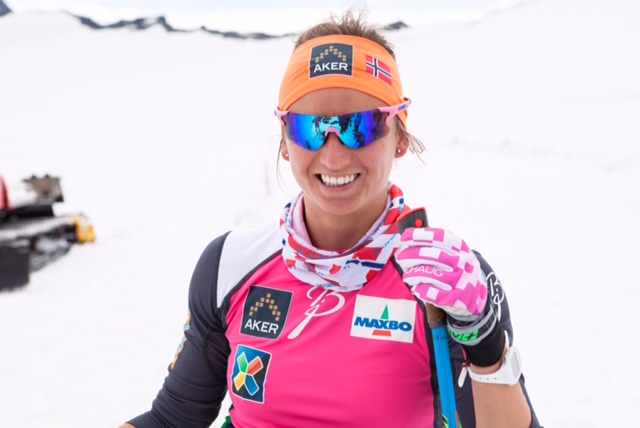
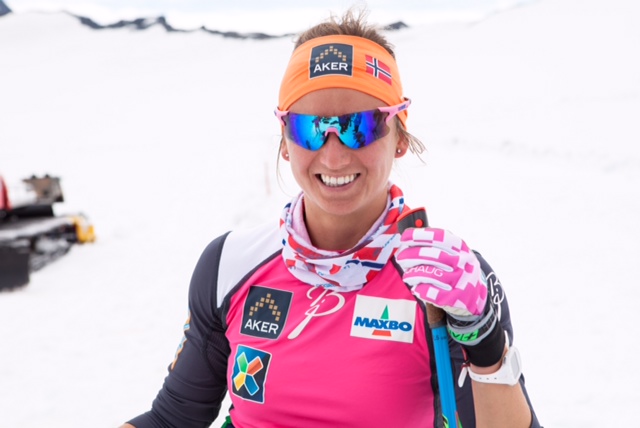
    Norway's Celine Brun-Lie at the NAWTA Eagle Glacier camp last week. (Photo: Chris Hodel)
    Norway’s Celine Brun-Lie at the NAWTA Eagle Glacier camp last week. (Photo: Chris Hodel)

    After a week of dryland training around Anchorage and another week of on-snow skiing on Eagle Glacier, she spoke excitedly about the camp. Had she been home in Trondheim, Brun-Lie would’ve had the month of July to train by herself.

    Instead, she joined a selective group of 14 women in a foreign place. Five belonged to the USST (Bjornsen, Sophie Caldwell, Jessie Diggins, Kikkan Randall, and Liz Stephen), five more came from APU (Brooks, Rosie Brennan, Rosie Frankowski, Becca Rorabaugh, and Lauren Fritz), and three were from other U.S. clubs (Erika Flowers of SMST2, Chelsea Holmes of Sun Valley, and Caitlin Gregg of Team Gregg).

    Not only was the trip good for her English (she fielded questions from local reporters at media day on the glacier last Wednesday) , but it was also good for her skiing, Brun-Lie said. A week before the camp, she reviewed the Americans’ two-week training plan with her coaches. It was comparable to what she would’ve done on her own, so she had no problems jumping right in. To her surprise, the U.S. coaches gave her daily feedback.

    “I didn’t know if they would care so much about me, but they do,” she said of the camp’s coaches, including APU Head Coach Erik Flora, USST Women’s Coach Matt Whitcomb and USST assistant Jason Cork. “They tell me their ideas and I tell them about mine. It’s really fun to see how similar it actually is. Maybe Matt tells me a little different than something my coaches tell me.”

    International Exchange

    A sprinter by nature who placed sixth in the classic sprint at the 2010 Olympics, she had been focusing on her stability skills this summer. Last season wasn’t her best, she said.

    “I think I was in good shape most of the winter, but I had a tendency to fall in every sprint I did,” she said. “I’m more stable in skating than I am in classic.”

    One of eight women to make Norway’s selective 2014 Sochi Olympics team, Brun-Lie had previously claimed two Junior World Championships medals (in 2006 and 2008) and went on to win a Norwegian national skate sprint in 2009. At the pre-Olympics World Cup in Sochi in February 2013, she placed third in the skate sprint.

    But she didn’t compete in Russia. Her team was too competitive.

    “We have a lot of good skiers; I didn’t race so I didn’t really make the team … I was kind of the reserve,” she said. “It was really tough to know that you were in a dangerous position and you might make the team but maybe not … and then go to the Olympics and be there and really want to race, but I couldn’t race.

    “I learned a lot about those two weeks I was there, about myself, about how the team works and everything,” she continued. “It motivates me a lot for next season to not be in that position.”

    She was glad to have made the team in the first place, because not making the team would’ve meant she had a bad season, Brun-Lie explained.

    “I learned a lot about those two weeks I was there, about myself, about how the team works and everything. It motivates me a lot for next season to not be in that position.” — Celine Brun-Lie, on being ‘on the bubble’ of Norway’s Olympic team

    “The hard part this year was that I was good enough to take a medal, but I kept falling in every sprint, and I didn’t know why,” she said. “But just to be there with the girls and … the U.S. Ski Team girls were so nice to me. I got to hang out with them a lot — they took care of me. I was happy to be there.”

    Norway’s Untimely Tragedy

    The day before the Olympics started in Sochi, Russia, Astrid Jacobsen’s brother died unexpectedly, and the team was left to cope with the tragedy throughout the next two weeks of competition.“It’s really a sad thing and I knew him also,” Brun-Lie said. “No one saw it coming. … I’m amazed how we took care of each other and got a bigger perspective of what we were doing — the races were really important, but there was a life that was more important, especially for those who didn’t race well.

    “But at the same time we were there to do a job and it was important because we worked on it so long. We learned how the team works and it made us closer than we were before.”Staying in the Olympic village and speaking with athletes from other teams made for “a big family,” she added. “We had amazing coaches and doctors and all the people around us that were doing an amazing job. We got out of it pretty good compared to how tragic it was.”

    That kind of relationship prompted her to solidify her trip to Alaska, where she learned more about the U.S. women’s team. Close with her own teammates, especially after the sudden death of Jacobsen’s brother on the eve of the Sochi Olympics, Brun-Lie was especially in awe of the Americans.

    “I’ve always been impressed with how they can stay together and have a good time in Europe for five months at a time and not get sick of each other,” she said. “Everybody has their place on the team.”

    One thing she noticed was a lack of team-building activities, which they apparently didn’t need during the two-week camp.

    “We have a lot of meetings ,” she said of the Norwegian women’s team. “How we want to be with each other … You put kind of the most selfish girls in the country together and we have to work together and it’s amazing it works as well as it does.”

    But the Norwegians go home after every World Cup weekend and for some quality alone time, or time with people outside of their team.

    “I think it’s amazing how they keep up the good mood and if someone has a bad day, they learn how everyone reacts,” she said. “They learn how to handle it much better than we do. I think we have a lot to learn.”

    Bjornsen, 24, explained this year’s camp was one of the best to date — and she trains on Eagle Glacier multiple times a year.

    “We do a lot of baking, giggling, recalling stories from our fun times together — and our training is always great,” she wrote. “With 14 girls you can push each other and encourage each other to make one more step forward in training. There is always something to learn from someone else, and someone to follow! I have always loved girls camp.”

    As for her team in particular, Bjornsen felt they’re unique because of their different personalities and ability to work together.

    “We are all very patient and encouraging of each other which allows us to be individual,” she wrote. “In the summer for example, we are all working on different things. We have different training goals, and different approaches…. yet we are able to come to a camp, work together and have a ton of fun.”

    “I think it’s amazing how they keep up the good mood and if someone has a bad day, they learn how everyone reacts. They learn how to handle it much better than we do. I think we have a lot to learn.” — Brun-Lie after getting to know the U.S. women’s nordic team

    Bjornsen and Brun-Lie talked a lot about their teams, and ultimately, Bjornsen didn’t think the two were very different.

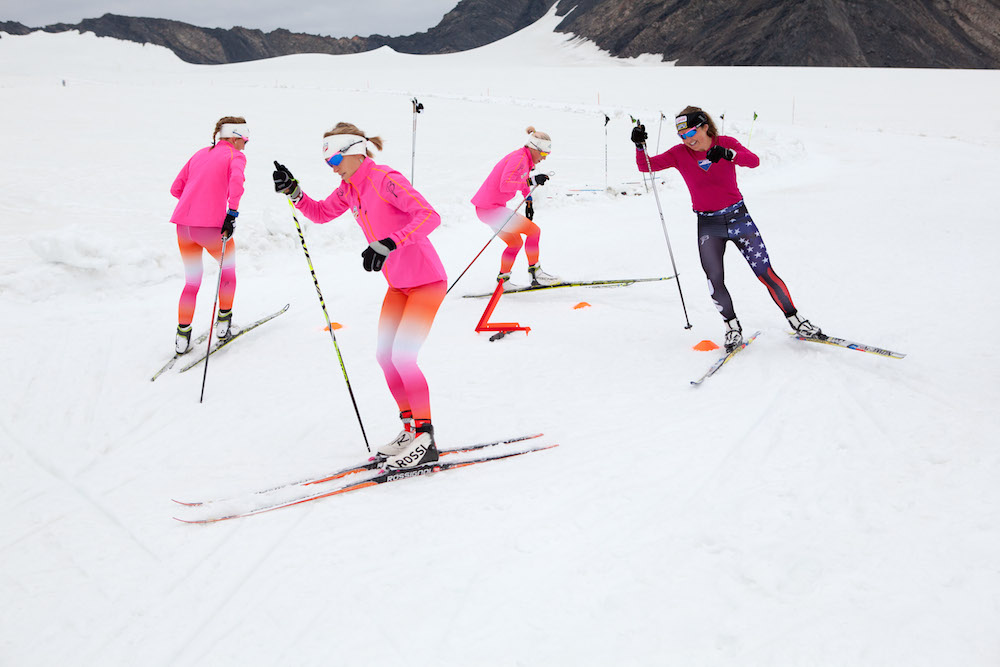
    Sochi Olympians (from left to right) Sophie Caldwell, Liz Stephen, Kikkan Randall, and Holly Brooks work on a one-pole cornering drill during their annual NAWTA camp on Eagle Glacier last week. (Photo: Chris Hodel)
    Sochi Olympians (from left to right) Sophie Caldwell, Liz Stephen, Kikkan Randall, and Holly Brooks work on a one-pole cornering drill during their annual NAWTA camp on Eagle Glacier last week. (Photo: Chris Hodel)

    “They too have tons of fun together, they have good chemistry, good leadership, and a great team,” she wrote. “I think the awe comes from seeing this phenomena in a different place. While we are not doing the ‘exact same thing’, we are finding a way to push each other along in a fun and healthy way! There are so many ways to do this that I think Celine just finds it interesting and exciting.

    “I can imagine it would feel the same way for any of the US girls when we join the Swedish Team, or the Norwegian Team, or maybe some others,” she added. “It is a natural thing for woman to bond together — we are just lucky we have some great leadership that has allowed this to happen!!”

    Brun-Lie even offered Bjornsen some training tips.

    “One day after training, Celine asked if she could tell me something, and she explained what she has been working on and what I was missing a bit,” Bjornsen wrote. “It has been amazing to see how open these girls are, and how we all just want to learn from each other and have a good time together. Training with new buddies, and learning new techniques and ideas keeps things fresh for everyone!”

    Six days before flying back to Oslo, before upcoming summer and fall training camps in Norway and Italy, Brun-Lie was already starting to feel nostalgic.

    “I was thinking about that, like, ‘Oh no we only have five days left!’ ” she said.

    Regardless, she was excited about her own team, with 11 women — the most Norway has had in recent years. In addition to distance skiers, she also has a number of sprinters to work with at home.

    Before she left on Tuesday, she extended an invite to her U.S. training partners.

    “I hope if they want to come to Norway, they will,” she said. “It’s really nice for the World Cup next year to know them, so if we want to hang out get a coffee, they will.”

  • APU Coaches Bring Sochi Courses to Life on Eagle Glacier

    APU Coaches Bring Sochi Courses to Life on Eagle Glacier

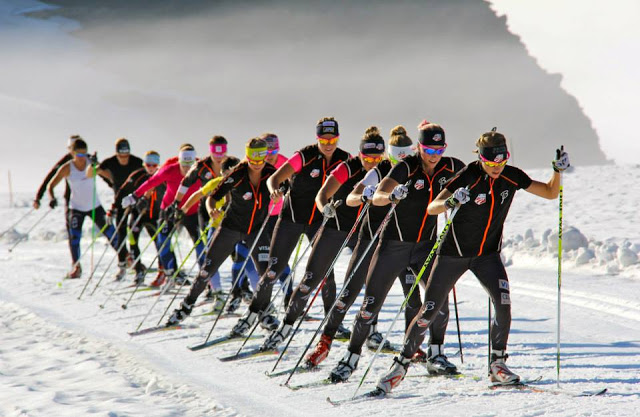
    Liz Stephen (USST) leads a train of skiers during a morning skating session in July on Alaska's Eagle Glacier. (Photo: Matt Whitcomb)
    Liz Stephen (USST) leads a train of skiers during a morning skating session in July on Alaska’s Eagle Glacier. (Photo: Matt Whitcomb/Sadie Bjornsen’s blog)

    In advance of his club’s facility playing host to the third annual North American Women’s Training Alliance (NAWTA) camp last month, Alaska Pacific University (APU) Nordic Director Erik Flora broke down film of last year’s World Cup races in Sochi, Russia.

    His focus wasn’t on the skiing, even though several of the athletes planning to attend the camp on Eagle Glacier were featured in the video. He was studying every undulation of the race courses, with a goal to replicate the Olympic venue.

    The altitude and topography of the widely separated parts of the world is similar enough to make the project worthwhile. Referencing course profiles and maps, Flora and APU wax techs Mike Matteson and Don Haering logged 16 to 20 hours daily constructing and maintaining the trail system.

    U.S. Women's Ski Team members (L-R) Sadie Bjornsen, Holly Brooks, Ida Sargent, Kikkan Randall, Jessie Diggins and Liz Stephen with NAWTA camp guest Astrid Jacobsen of Norway.
    U.S. Ski Team members (L-R) Sadie Bjornsen, Holly Brooks, Ida Sargent, Kikkan Randall, Jessie Diggins and Liz Stephen with NAWTA camp guest Astrid Jacobsen of Norway. (Photo: Matt Whitcomb/Sadie Bjornsen’s blog)

    The women’s U.S. Ski Team (USST) joined the APU elite women, a few National Training Group skiers and international guests Astrid Jacobsen, of Norway, and Switzerland’s Bettina Gruber for a week of dryland training, followed by a week of living and skiing on the remote glacier.

    According to U.S. women’s coach Matt Whitcomb, the skiers woke to blazing fast skating conditions every morning, which softened in the sun to create wildly variable classic tracks in the afternoon.

    “It’s rare and productive when you can train on that range of conditions in a single session,” Whitcomb wrote in an email. “Striding in tricky classic conditions is something our women’s team can improve on, so these sessions are really important.”

    As much as they learned from the snow, which transformed in similar patterns to what they remembered of the Sochi race-day conditions, the women might have learned more from one another.

    “With eight World Cup racers at a camp, it’s rare that the same person leads every day,” Whitcomb wrote. “Everyone had a session where they could put their best strength to work, and of course a session when they got absolutely trounced.”

    Jacobsen is regarded as one of the best technical classic skiers in the world. She was the 2007 World Champion in the classic sprint and placed third in the 3-kilometer classic prologue in the third stage of last year’s Tour de Ski.

    U.S. star Kikkan Randall earned the same respect for her skating ability, which she has ridden to the last two World Cup sprint titles.

    At the end of the competition season, Randall extended an invitation to Jacobsen, not really expecting her to accept as athletes don’t typically do anything too out-of-the-norm in an Olympic year.

    Flying in star athletes from traditionally dominant skiing nations brings the untouchable down to eye level, Whitcomb said. U.S. skiers are seeing that they have all the same tools, and maybe even some advantages. In a phone interviews, Randall said that Jacobsen seemed to admire the positive team dynamic of the U.S. women.

    “Before, we felt that we had to know the course and know the snow and everything had to be perfect [to be successful],” Randall said. “I think what our good results have shown over the last few years is that if we’re in shape, I think we can encounter everything.”

    The primary difference Randall sees in the training philosophies of the Norwegian and American national teams is the value U.S. coaches place on time in the weight room. Randall said her team puts more of an emphasis on Olympic-style lifts, which develop explosiveness and functional strength, than some other nations.

    The 2013 NAWTA camp near Anchorage, Alaska, including APU and U.S. Ski Team members Holly Brooks (l) and Kikkan Randall (at bottom, second from l). (Photo: Matt Whitcomb)
    The 2013 NAWTA camp near Anchorage, Alaska, including APU and U.S. Ski Team members Holly Brooks (l) and Kikkan Randall (at bottom, second from l). (Photo: Matt Whitcomb)

    Training logs aside, Randall said one of the most valuable things she gained from spending a couple of weeks with Jacobsen and Gruber was two more friends to keep in touch with during five long winter months of travel.

    The NAWTA name originated in 2011 when Canadian World Cup skiers Chandra Crawford and Perianne Jones joined the annual USST glacier camp. Last year, Finnish sprinter Aino-Kaisa Saarinen was the team’s international guest.

    This year’s camp schedule listed two skiing sessions daily, with skating first every day except the one they started with classic intervals. Everyone shared chore duties, including meal prep, dishes and cleanup. They also had to prep their own skis for each workout.

    On the fourth day on the glacier, the coaches spiced up the workout with a sprint relay, covered by several media outlets that flew in for the day to see Flora’s creation and get some perspective on how this camp will help the women prepare for Sochi.

    Even with a twin of the Olympic venue in her back yard, an experienced Randall knows familiarity with the courses alone will not decide the podium in February.

    “I guess what I’ve learned over my previous three Olympic experiences is if you prepare well and you show up at the Olympics rested, healthy and in good shape, then you’re really ready to conquer anything,” Randall said.

  • Jessie Diggins on the NAWTA, Alaska’s REG, New NNF Website!

    NNF logo

    The Rest Day: Insights from the National Nordic Foundation

    NAWTA

    Jessie Diggins On Training With the Best

    2013 NAWTA

    This week, World Champion, Jessie Diggins (SMS T2, USST) joins a collection of the strongest women in nordic skiing in Alaska. Known as the NAWTA (the North American Women’s Training Alliance), the camp brings together the strongest skiers during a camp in Alaska for a chance at the best competition and training.

    Here we are, halfway through the annual NAWTA (North American Women’s Training Alliance) camp in Alaska, and I feel like I’ve already learned so much and gotten such good training with the group…and we haven’t even gone up on the glacier yet! We just wrapped up a week of dryland training in Anchorage, and this weekend we’ll be flown up to the training center on Eagle Glacier in a helicopter. This camp is special to me because we have a history of having amazing talented guests every year, starting in 2011 with the Canadian girls. Last year, we had Aino-Kaisa Saarinen from Finland join us, and this year Astrid Jacobsen of Norway and Bettina Gruber of Switzerland have come to see what the training in the US is like!

    One really great part of being part of the US team is that we don’t have any secrets – we share what we know and what we’ve learned, we invite guests to our camps, and then in turn we are able to learn from them! I was so excited to hear that Astrid was coming to our camp, not only because she is a World Champion and a consistently great skier on the World Cup, but because she is really nice. Every time I can make friends on the World Cup I’m psyched because it makes the winter less lonely and more exciting (look, Mom, I made a friend!). In all seriousness, it has been so fun getting to know her and sharing training ideas and workouts. And she has baked us some killer bulla rolls as well.

    We’ve had some good group sessions so far, including a killer threshold workout of 6×7-9min L3 skating in a pack, with “preem” sprints thrown in to simulate a real racing environment. It was great to ski behind Astrid and watch her technique, and then later take my turn at the front to pull the pack along. We were exchanging leads, pulling moves (safely) and busting out sprints on each other, learning what technique elements helped someone go faster and what slowed them down. Another great workout was the Potter’s Creek time trial; a 6.5 km classic that starts out with a double pole out and back along a flat road, and then climbs the remaining 3.2km up a switchback road. Although not everyone had the same speed classic skis, the goal of a time trial isn’t simply to win; it’s a great opportunity to test your physical and mental limits, compare your personal time to the year before, and get in a good L4 workout. I had a great time trying to keep Astrid in sight as I led the chase group along the flats and up the hill, and learned a little something about the power of drafting along the way (it’s much better when you don’t miss an opportunity to get behind someone on the double pole).

    From talking with Astrid and Bettina, the biggest thing I have learned is how similar we all are, all around the world. Everyone is simply trying their best every day to get a little bit faster, a little bit stronger, and a little bit smarter. We train in similar ways, and have similar teammates and coaches. In the end, there are no secrets to becoming a world class skier – just hard work, belief in yourself and a great team! I am really excited to get up to the glacier for a big volume week full of quality interval, speed and distance sessions, and lots of time to hang out in between. And hopefully I will learn some more from our guest Astrid as well as the talented and experienced skiers I am so lucky to have as teammates!

    Thanks to the NNF and all of you who have donated to help give us these amazing experiences. You are an integral part of our team, and we couldn’t keep pushing US skiing forward without you!

    ***Jessie***

    On the REG

    The Alaskan REGs

    Alaskan REG camp

    This Saturday brought to a conclusion the Alaska Regional Elite Group’s annual dry land camp. The camp brought together the best junior athletes and their coaches from around the state to train together for one week in Palmer, Alaska.

    The week started out with three time trials. Tuesday morning brought the uphill running time trial which went up the gas-line from hilltop to prospect heights. Tsaina Mahlen of APU, and Kyle Hanson of FXC and Michigan Tech won for girls and boys, respectively. After our cool-down we reconvened in the parking lot only to have Celia Haering of APU to jog in carrying a chicken! Apparently on her cool-down the chicken had the misfortune of meeting Celia who chased it down and took it home; to the best of my knowledge the Chicken did not become dinner and is now living at another athletes house. That afternoon we met on the APU campus to complete the strength test.

    After a brief warm-up on the ski trails that surround the campus we ventured into the APU gym for the test. Stephanie Kirk of AWS and UVM, and Vanya Rybkin of FXC and Williams College came out victorious. That evening we traveled out to Palmer to Mountain Streams B&B where we would be based out of for the remainder of the week. The next morning we met at Colony middle school for the agility test. It involved skating around the obstacle course created by the strategic location of cones and featured a slalom section, a mandatory backwards skiing section, and a grass section. We raced three times with Vanya Rybkin of FXC and Williams College, and Marion Woods of AWS taking home victory. The rest of the week we had phenomenal training sessions roller skiing and running around the Hatcher Pass State Park during the day and presentations from Bryan Fish of the USST in the evenings.

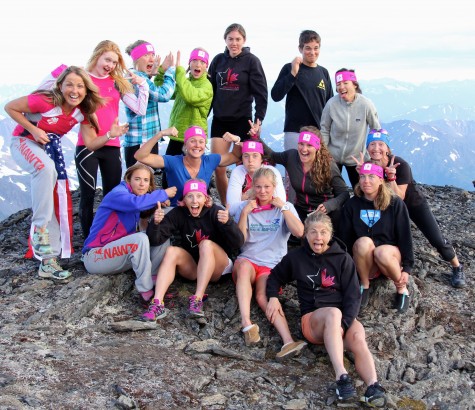
    The final day we joined with the North American Women’s Training Alliance (NAWTA) and the APU Elite Team for an over distance run out to Bomber Glacier through Reed Lakes. It was an ambitious goal to make it to the bomber, a TB-29 which crashed in 1957 but we overcame the running approach, the climb to the pass, and the glacier traverse, and then back within our window of three to four hours. We then returned to the B&B for lunch and an open question meeting with all of the elite women and our one USST male athlete representative Erik Bjornsen. It was a truly fantastic day and a perfect end to a solid camp.

    We can never forget how many people are involved in making these camps happen and I would like thank everyone who made it possible: Ed and Glynn Strabel of Mountain Streams B&B, Bryan Fish of the USST, Pete Leonard of FXC, Katie Rehm of ANR, Rachelle Kanady of AWS, Jay Dorris of ANR, Joey Caterinichio of USSA, and Sam Sterling, Eric Strabel, Greta Anderson, and Erika Klaar of APU. We also would like to thank the NAWTA and the APU Elite Team for joining us on Saturday and allowing us to learn, even but a little, about what being a world class skier really means. Finally, a very special thanks to NNF for the hi-visibility training shirts for the camp and to CCAK for their contributions to making this camp happen.

    On a personal note; this has been my 5th, and final, REG camp and I would personally attest to the success and benefit of these camps. I hope that the juniors of the future will be as lucky as I have been in being able attend these camps and I hope those who support such endeavors will continue to do so.

    Check out more photos here from USST coach, Bryan Fish.

    New Website for the NNF

    Content, Stories and Insights from Tomorrow’s Nordic Stars

    We’ve reloaded and reconfigured the National Nordic Foundation website. Our goal: to make it a content hub for training and American skiing development. Check back often for insights from athletes, coaches, NNF personalities and our goals for the season.

    NNF website


    Want more NNF in your life? Check us out here:Get More From the NNF: 

    Facebook

    Twitter

  • Jacobsen to Join U.S. Training Camp on Eagle Glacier

    Jacobsen to Join U.S. Training Camp on Eagle Glacier

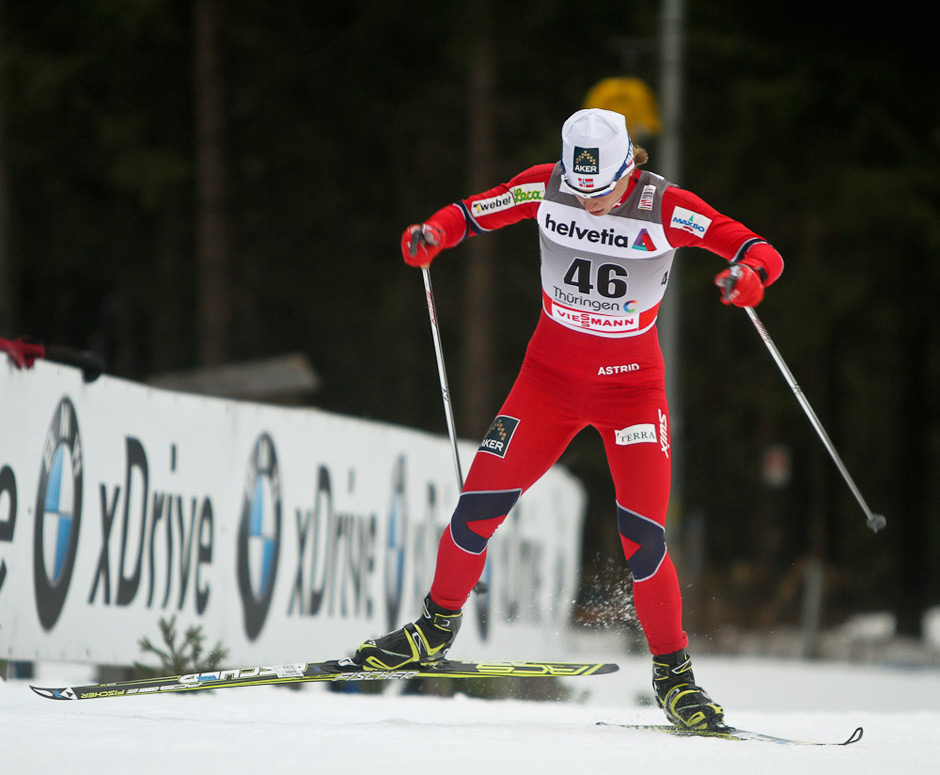
    Astrid Uhrenholdt Jacobsen (NOR) 13th place.
    Astrid Jacobsen (NOR) will join the U.S. Ski Team’s training camp on Eagle Glacier this July as an international guest.

    The U.S. Ski Team’s summer training camp in Alaska has become increasingly international over the past few years, and in 2013 the list of invitees will grow by one more. Norwegian National Team member Astrid Jacobsen is scheduled to be in Alaska for three weeks in July to train with the American women. USST Head Coach Chris Grover recently hinted that an unnamed foreign guest might be attending, and on Thursday Holly Brooks tweeted to Jacobsen, “Alaska & Eagle Glacier are excited for your arrival!”

    Alaska Pacific University and USST skier Kikkan Randall confirmed Jacobsen’s invitation to the training camp. According to Randall, Jacobsen first expressed interest in training with the U.S. earlier this spring.

    “Yep, Astrid is our VIP guest to NAWTA Camp this year,” Randall wrote in an email. “We talked with a few of our World Cup friends this winter about how awesome it was having Aino-Kaisa [Saarinen] last summer, and I think she talked it up too. Astrid expressed some interest this spring so we lined it up to have her over in Alaska for three weeks. She’ll come in a few days before the camp officially begins and will stay a couple days after to adventure a bit as well.”

    Jacobsen, 26, joins a short list of foreign athletes who have been invited to Eagle Glacier. Canada’s Chandra Crawford and Perianne Jones were the original guests in 2011, the first year the group dubbed themselves the North American Women’s Training Alliance (NAWTA). Saarinen, the Finnish sprinter, was invited to attend in 2012.

    “[It’s] really cool that this international cooperation is growing,” Randall said. “We’re getting a lot more invitations to get together for training with the U.S. team these days.”

    The international cooperation has already manifested this summer in Liz Stephen’s invitation to join Norway for a week of skiing on Sognefjell. Jacobsen was the link that prompted Stephen to make that trip, and in July Jacobsen will get the inverse experience with the American women.

    “It’ll be fun to have a new face and a new person to talk with and to become frinds with,” Stephen said. “We’re really excited to have her. She’s really impressive because she is doing medical school while she’s skiing, which is unheard of in the U.S.”

    In addition to being a medical student, Jacobsen was the 2007 World Champion in the classic sprint at the age of 20. Last season, her top result was a third-place finish in the 3 k classic prologue in the third stage of the Tour de Ski. She was ninth in the 15 k skiathlon at World Championships and placed sixth overall at World Cup Finals in March.