Tag: NCAA skiing

  • The Only Kid He Beat Hit a Tree: How Adam St. Pierre Backed Into a Life in Skiing

    The Only Kid He Beat Hit a Tree: How Adam St. Pierre Backed Into a Life in Skiing

    This article was made possible through the generous support of our voluntary subscribers. If you value coverage like this, please support FasterSkier with a voluntary subscription.

    Part one of a two-part series.
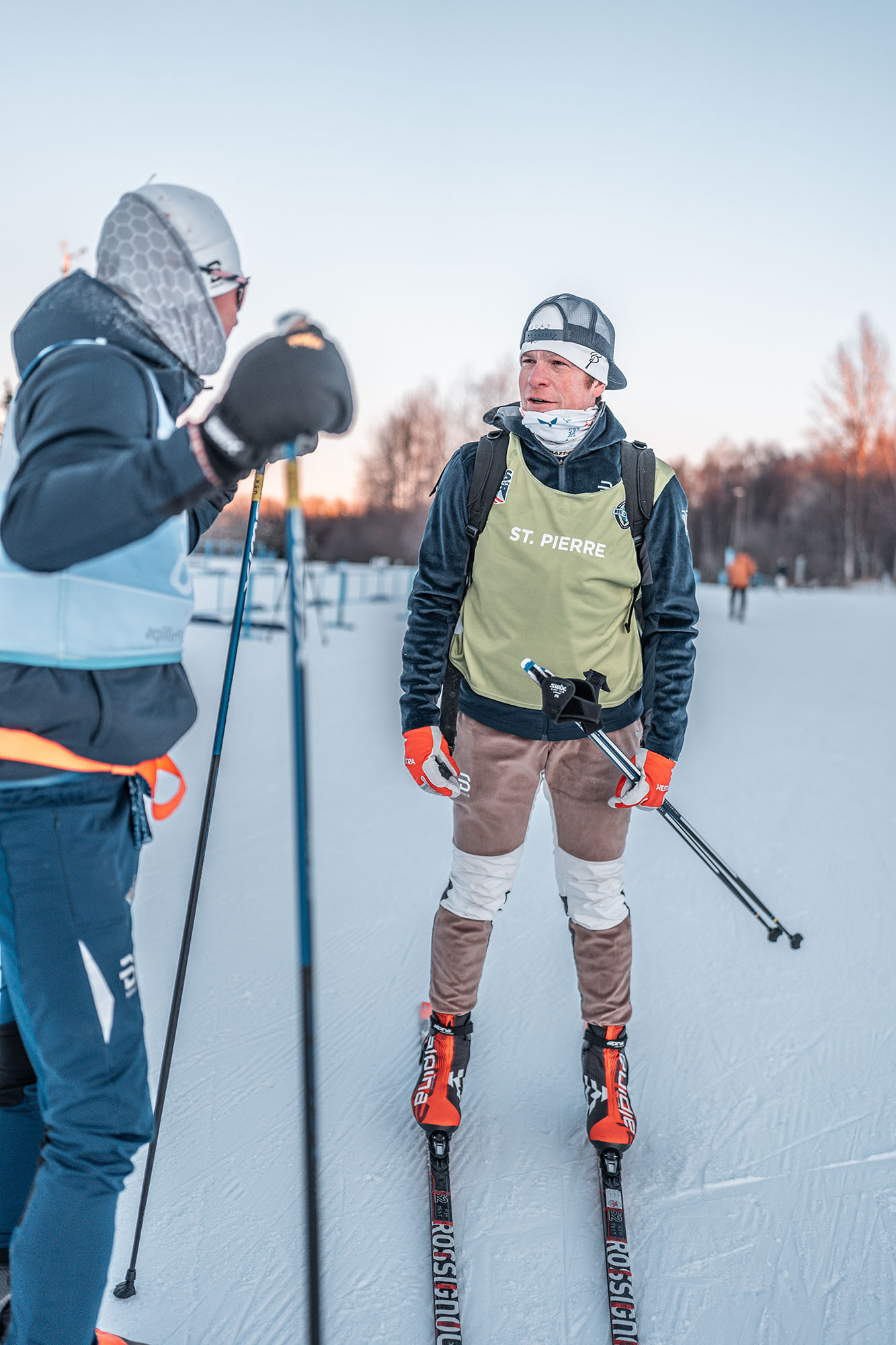
    Adam Coaching at US Nationals in Alaska. (Photo: Tobias Albrigtsen)

    Adam St. Pierre finished second to last in the first cross-country ski race of his life. The one skier he beat had crashed into a tree.

    He was a sophomore at Fall Mountain Regional High School, a rural school in Charlestown, New Hampshire, and he tells the story with the flat delivery of a man who has told it before and enjoys it every time. “Charlestown doesn’t really have a claim to fame,” he said. Forty-five minutes due south of Hanover, close enough to know Dartmouth was up the road, far enough that the world of club skiing might as well have been on another continent. He had never heard of it. What he knew was soccer, basketball, and track, in roughly that order, and he had no intention of adding a fourth sport that involved falling down in the cold.

    Then his freshman year fell apart. He hurt his knee playing soccer. He slogged through a basketball season he had come to hate. And in the spring, his track coach, who happened to also coach the ski team, made him an offer that sounded reasonable at the time. Come out for skiing next winter, the coach said. It will get you in better shape for soccer and track.

    So he showed up. That first race was a classic race, and he had only ever skated. He survived it, barely, ahead of the kid who met the tree, and somewhere in the weeks after, the thing that has kept a lot of people in this sport quietly got its hooks into him.

    Fall Mountain was not a fancy place, and that turns out to be central to the story. It was a working rural school with a barn, animal husbandry classes, agricultural mechanics, a metal shop, and forestry classes that maintained the trails and tapped the maple trees where the team ran and skied. The ski coach was the metal shop teacher. When the program needed grooming, the metal shop and ag-mechanics kids bought an old PistonBully and kept it running themselves. St. Pierre came up through a program held together by shop-class ingenuity and a snowbank at the edge of the football field, and he has never once been snobbish about it.

    “I have a high respect for high school skiing, because it is an entry point,” he said. “Otherwise I wouldn’t have found the sport.”


    A team that needed a fifth man

    He nearly didn’t find the next part either. Right before he graduated, his coach, Larry Sayers, told him that Colby College’s ski team wasn’t very good and that St. Pierre could probably walk on. He filed it away and didn’t think much of it. He had his sights on soccer and track. But once he got to Colby and started running into the skiers at various events around campus, something clicked, and it had nothing to do with the skiing.

    “These are the kind of people I like,” he remembered thinking.

    The timing was almost comically good. The coach, then Tracey Theyerl, now Tracey Cote, was 29 and in her second year running the team. She had just cut most of the upperclassmen, which left her with four men and an opening. St. Pierre walked on as the fifth. His introduction to roller skiing came shortly after, when Cote put him on a pair of classic roller skis and sent him out for a time trial. “I survived,” he said. From that point on, he was in, and again, the pull was the people as much as the training.

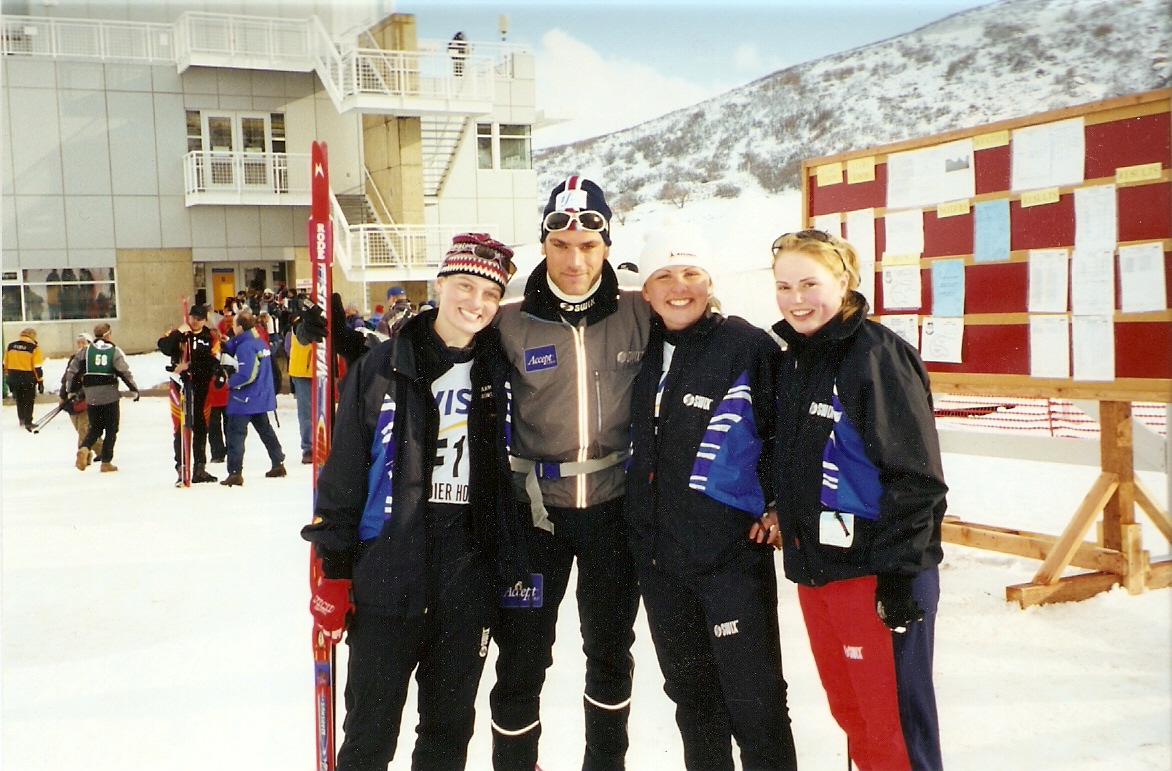
    Adam St. Pierre (left) and former Bowdoin skier and BNJRT coach Sam Shaheen at the start of the 2019 American Birke. (Photo: courtesy Adam St. Pierre)

    From the lab to the wax room

    He majored in physics at Colby and minored in biochemistry, and when he graduated, he had no clear idea what came next. He looked at teaching jobs. Nothing landed. Then a skier friend from high school told him about a graduate program at the University of New Hampshire where, as St. Pierre understood it, they paid you to study exercise. That sounded like a good deal. He enrolled in a master’s program in kinesiology and exercise science, working under a UNH physiologist whose research centered on hydration and thirst. His thesis was, in his words, pretty brutal to run: sensations of thirst in dehydrated subjects in cold versus ambient environments. “A little bit of everything when it comes to making people uncomfortable,” he said.

    It was during those UNH years that the sport handed him his first coaching job, and it did so in the roundabout, relational way that his whole career seems to follow. He had started dating a Bowdoin College skier while he was at Colby. She was a year behind him, still racing, and he was driving up to Brunswick most weekends to see her. Her coach was Marty Hall.

    Anyone who knows North American skiing knows the name, yet St. Pierre’s version of a Marty Hall story is smaller and more human, and it starts with the legend sizing up the kid who kept turning up in his wax room.

    “I need an assistant coach,” St. Pierre remembers Hall telling him, and he does a passable Marty voice when he gets there. “And you’re up here every weekend anyway. You want the job?”

    He took it. He thinks he was paid around 1,500 dollars total, which covered the gas. He coached under Hall for two years, and it confirmed something he had already begun to suspect: he wanted to spend his life doing this.

    Adam and his family out for a ski.

    Building from the bottom in Boulder

    When his wife got into law school at the University of Colorado, the two of them moved to Boulder, and St. Pierre walked into the next accident of his career. He had been hired to be the head coach of the Boulder Nordic Junior Racing Team, replacing Eric Pepper. Then Pepper decided to stay. Rather than lose St. Pierre, the club invented a role for him and made him its first development coach, responsible for the youngest kids, the u14s and u12s, or as they were then called, the j3s and j4s. Many of them were the little siblings of the older racers. His whole job was to grow the program from the bottom.
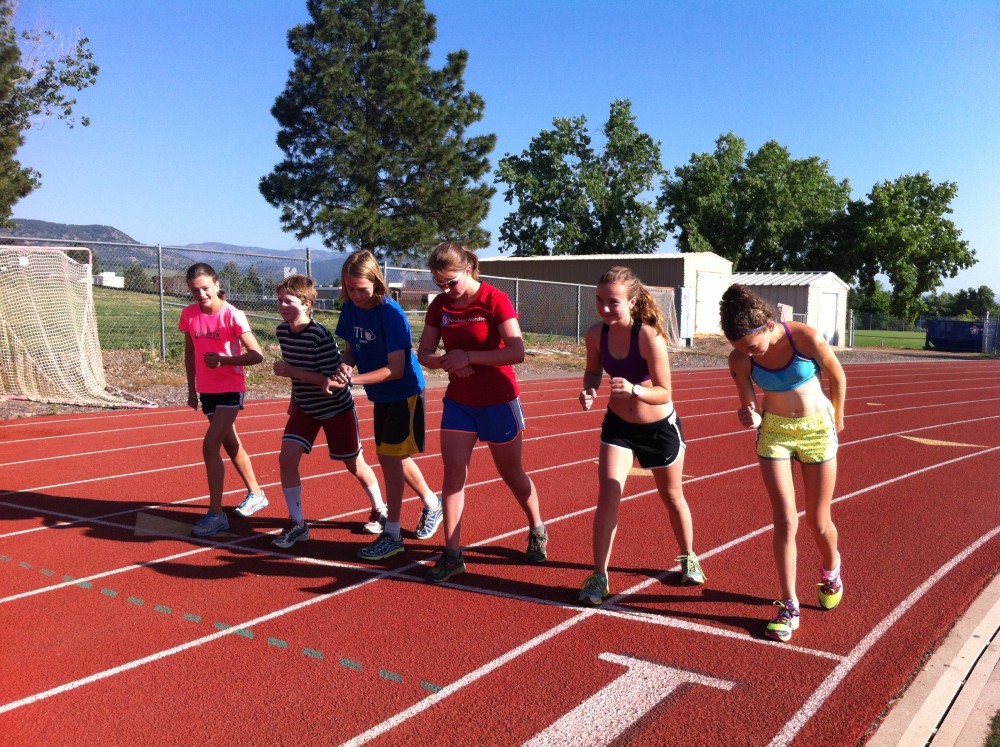
    Boulder Nordic Junior Racing Team athletes prepare for the start of a 3,000 kilometer running time trial on the track in 2013. (Photo: Adam St. Pierre)

    He did. When Pepper eventually moved on and St. Pierre took over as head coach and program director, he watched the club climb from 15 or 20 kids to nearly 70 at its peak, in a place he is quick to say is a genuinely hard town to be a skier. There is no snow in Boulder itself. You drive for it, and it is expensive, and the parents who commit anyway earn their real respect.

    One of those little kids was Lauren Jortberg. St. Pierre started working with her when she was six or seven, and he coached her through high school. She was, by his telling, agonizingly consistent at exactly the wrong number: four straight Junior National Championships and 11th place in what felt like every race. “All she wanted was that top 10,” he said. She had setbacks. She stuck it out.

    Years earlier, in his first season of coaching in Boulder, St. Pierre had said out loud that one of his goals was to someday coach a kid who would reach the Olympics. This past February, Jortberg made the U.S. team for the Milano-Cortina Games and qualified for the quarterfinals of the Olympic sprint, the culmination of a long and interrupted road that ran through back surgery, ankle surgery, and a lost senior season at Dartmouth. St. Pierre is careful not to claim more than his share.

    “I can’t take responsibility for much,” he said, and then, a beat later, “Goosebumps. Proud of her.”

    Boulder was where the rest of his professional life took shape, too. He worked at the Boulder Center for Sports Medicine as a clinical physiologist, running lactate thresholds and VO2 max tests and metabolic evaluations, and working alongside physical therapists on running biomechanics, teaching and reteaching people how to run without breaking. He got into ultrarunning and knocked off a number of 100-mile races, mostly for the pleasure of being out in the mountains all day. Around 2016 or 2017, he left the Boulder Nordic team and hung out his own shingle as an online coach. The flexibility made sense with two young kids and a wife commuting to Denver. But he missed the in-person part, the standing-in-the-snow part, more than he expected to.
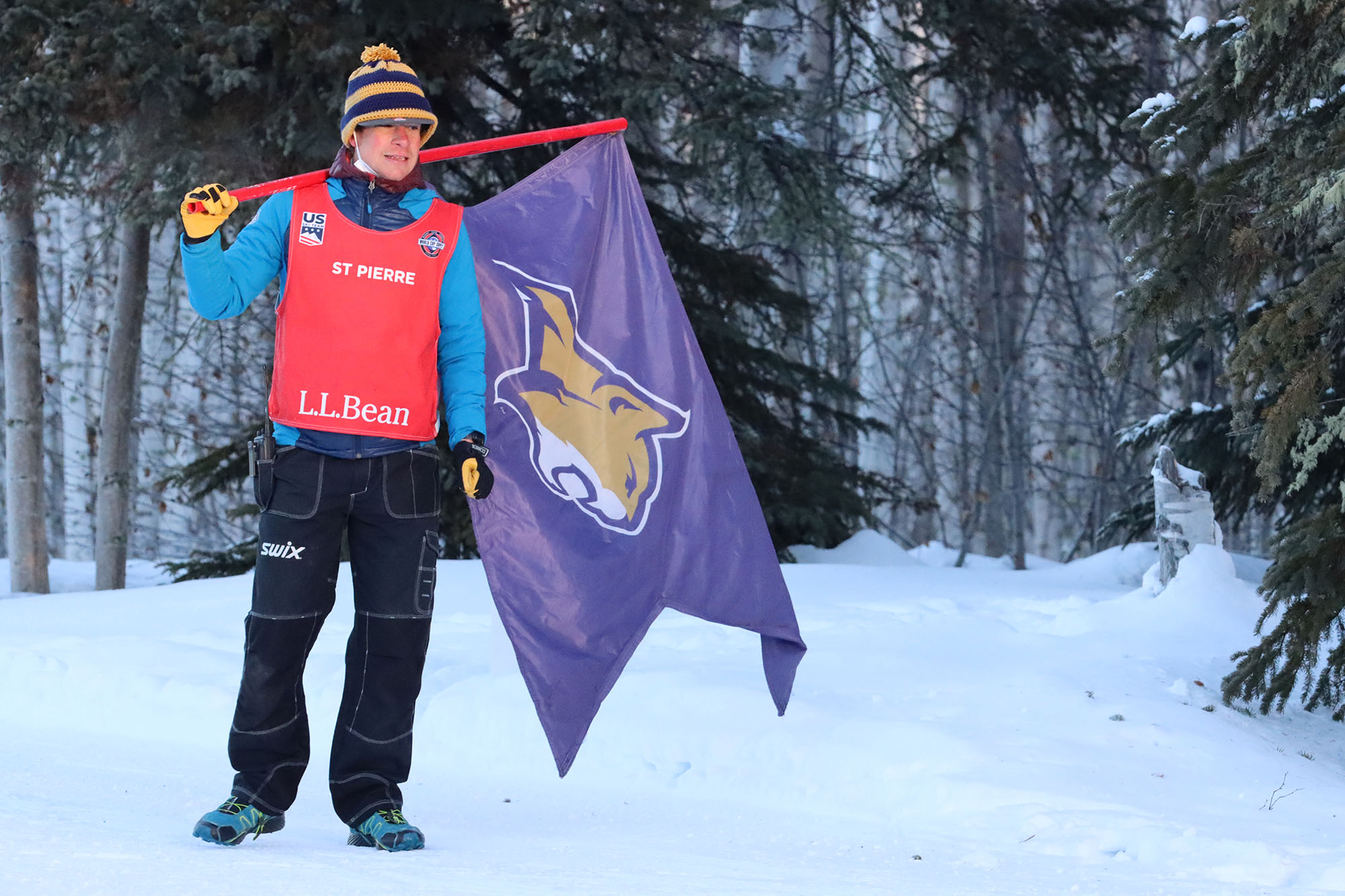
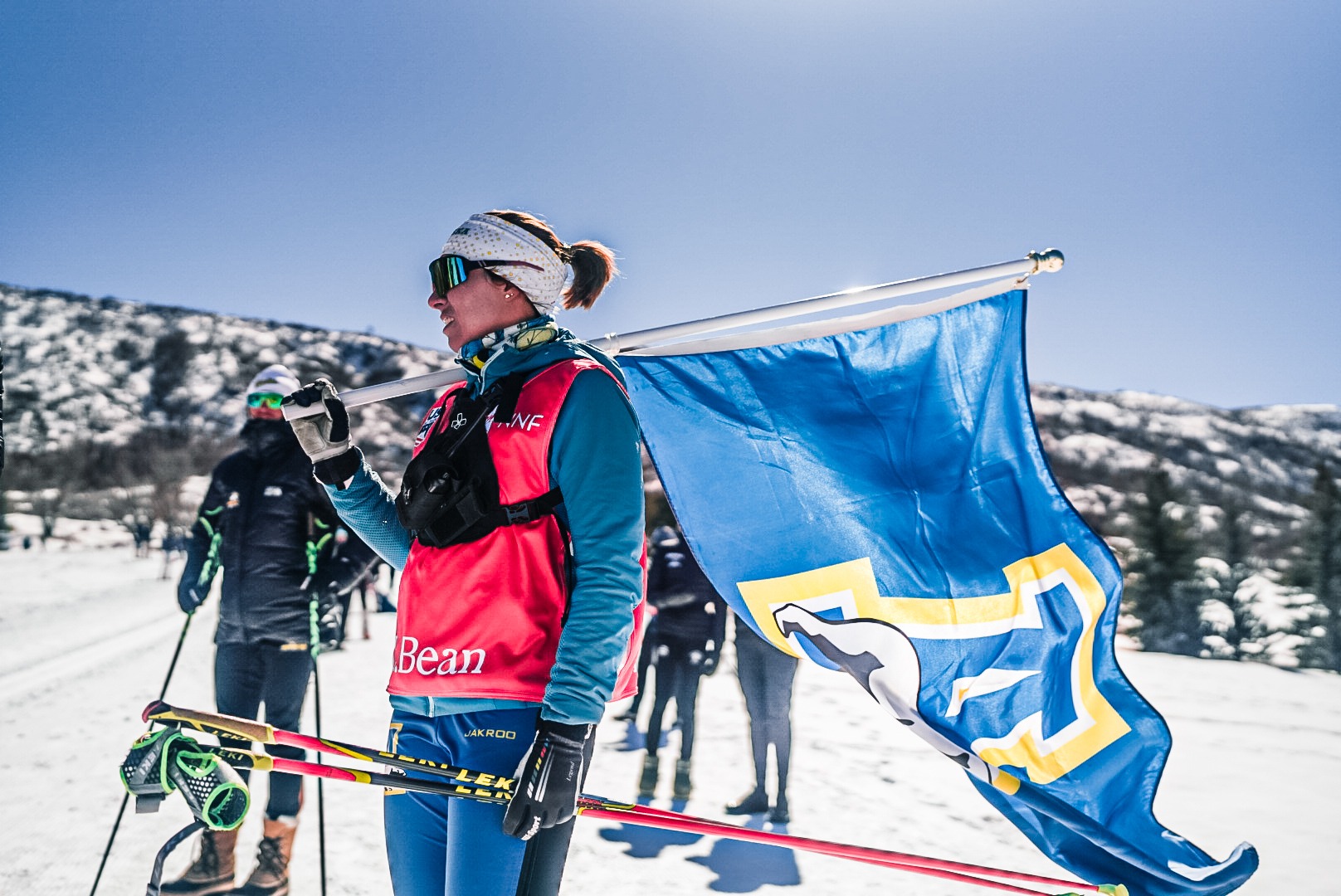
    Adam repping the MSU team flag in Houghton, Michigan. (Photo: Tobias Albrigtsen)

    The job he had been aiming at

    He had known for a long time where he wanted to end up. College coaching had been the goal since around 2009. The appeal was simple: at the junior level, a coach spends a lot of energy convincing kids they might want to be ski racers, keeping every other door open in case they choose running or mountain biking instead. At the college level, the athletes have already decided. “They’ve decided they are cross-country ski racers,” he said. “I wanted to coach ski racers.”

    The Montana State job had come open once before, in 2015, and he had applied and been the runner-up. When it opened again during the strange fall of 2020, he jumped. He was hired that November and moved to Bozeman alone that winter while his wife and kids finished out the year in Boulder, riding out the online-school chaos he credits her with surviving. The family joined him the following June. Bozeman had been near the top of the short list of places they wanted to live anyway, a real ski town with snow in town, Crosscut 20 minutes up the road, and Bridger Bowl close enough to grab powder runs before cross-country skiing in the afternoon.

    Which is to say, the kid who finished second to last, who backed into the sport to get in shape for soccer, who took a coaching job largely because he was already driving to Brunswick every weekend, ended up exactly where he had been quietly aiming for a decade. The path was accidental in its particulars and not accidental at all in its direction. He kept following the people, and the people kept turning out to be skiers.

    What he does with those skiers once he has them, and why he thinks so much of American training gets the easy days wrong, is its own story. That is part two.


    Help Support Our Coverage!

    If you value the thoughtful work and access FasterSkier provides, please consider becoming a Voluntary Subscriber. Your support directly fuels our work to cover the people, places, and moments that make our sport special.

    Join the FasterSkier community!
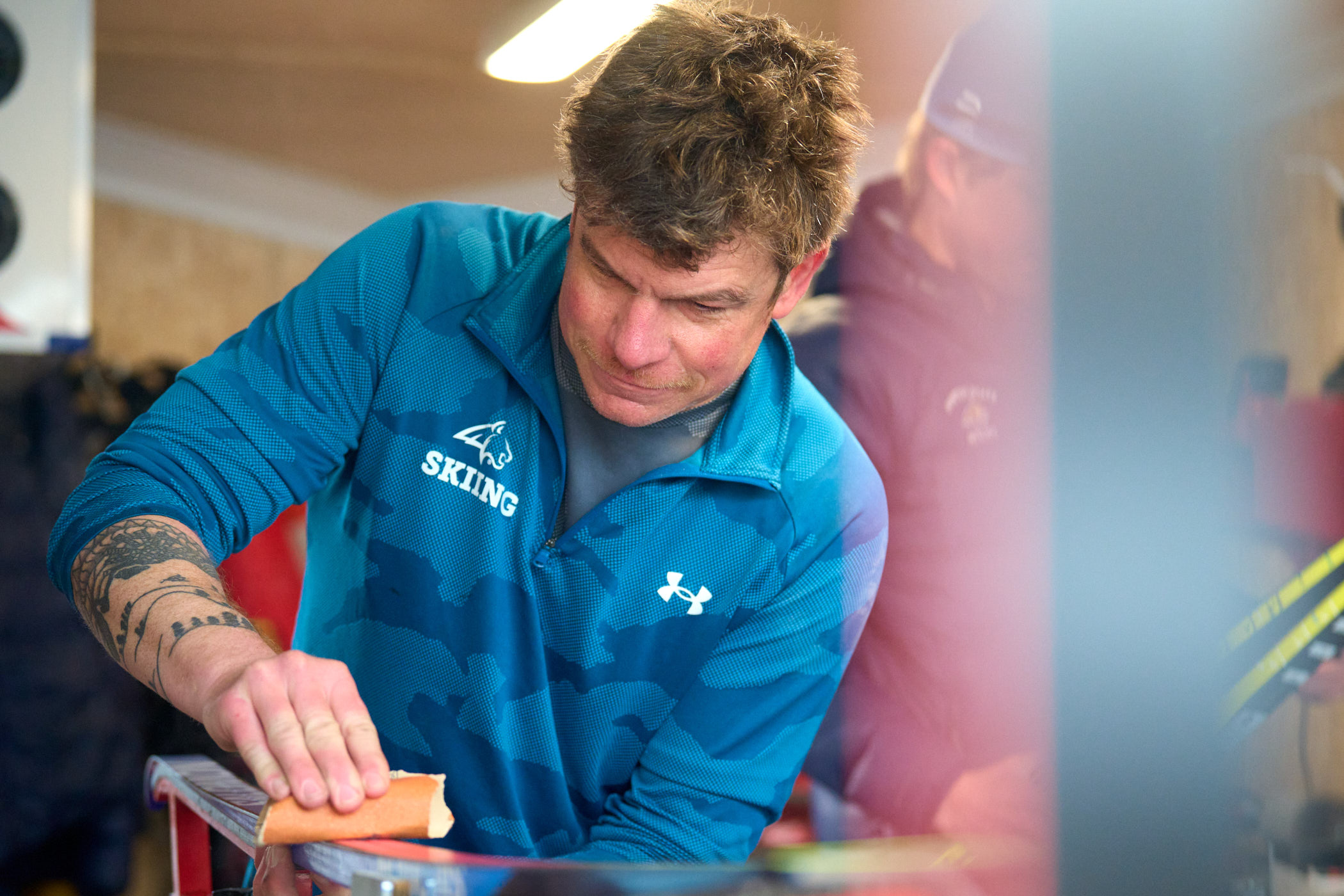
     

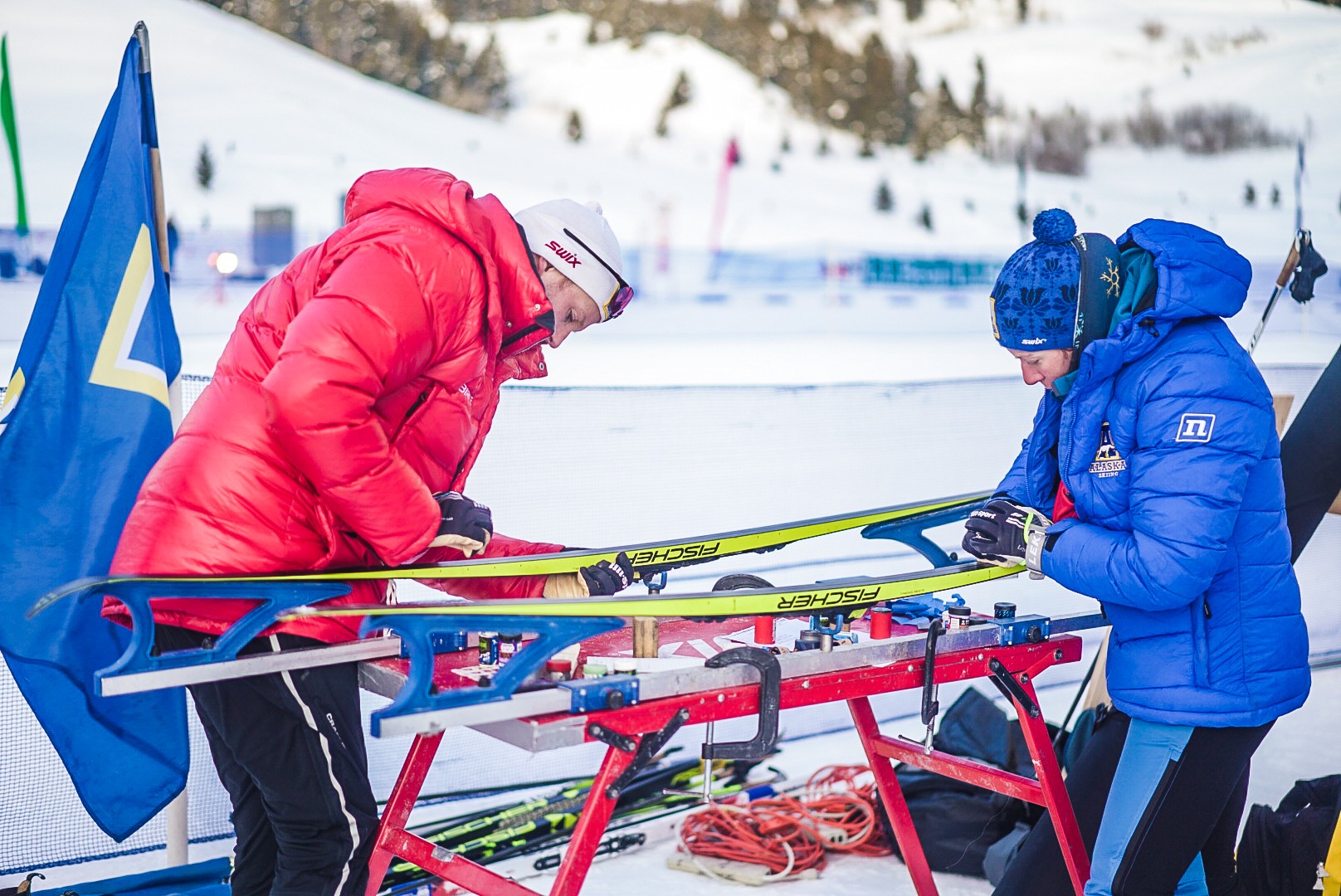
    Adam preparing skis for the Montana State University Nordic ski team at the RMISA Championships in 2026 in Heber City, Utah. (Photo: Colter Peterson)
  • The Wrong 30,000

    The Wrong 30,000

    This article was made possible through the generous support of our voluntary subscribers. If you value coverage like this, please support FasterSkier with a voluntary subscription.

    Quinn Holan on his way to a top 5 junior finish at US Nationals Lake Placid. (Photo: Courtesy Photo)

    Will Sweetser thinks American Nordic skiing is recruiting in the wrong places. Here is what he is building on Donner Pass to prove it. This is the second of two parts — be sure to read part one, to learn about Sweetser’s background and coaching philosophy — Keep Showing Up: Will Sweetser’s Unglamorous First Principle

    The number Will Sweetser carries around is thirty.

    That, he says, is roughly how many development and junior racers a competitive Nordic ski club will produce from any 30,000 Americans with access to snow. The figure does not move much. Aroostook County, Maine, from Houlton to Fort Kent, about that. Stratton, Vermont, about that. Truckee, California, where he lives now, about that. He has been watching the number hold for thirty years.

    “Maybe it’s a little richer in some of these alpine resort towns like Jackson or Aspen,” Sweetser said. “But in general, I think that’s a pretty good estimation of what you’re going to get.”

    If he is right, the implication cuts against how most American Nordic clubs are organized. Truckee has three programs competing for that local pool. Each ends up with roughly ten development-age athletes. Sweetser, who runs the Nordic operation at Royal Gorge on Donner Pass, calls the result “not functional. And actually bad for athlete development.”

    His conclusion is the one most clubs in snow country do not want to hear. He thinks they are fighting over the wrong 30,000 people.

    Quinn Holan, Walker Rawlinson and Cabot Godoy celebrating learning at Jackson Hole International Spring Series 2023. (Photo: Courtesy Photo)

    The 30,000 that interest Sweetser sit on the other side of the Sierra crest.

    The Reno valley, by his count, holds about 650,000 people. The slice he is targeting — the corridor running from Gardnerville up through northwest Reno into Verdi, Nevada — is roughly 140,000 of that. He likes to compare it to the state of Vermont, where the total population is about 648,000. From west Reno to Royal Gorge is under 50 minutes. To Auburn Ski Club, the next program over, it is 40.

    That, he points out, is shorter than what plenty of Vermont families drive to ski on Saturday mornings. It is shorter than what he himself drove from Bates to find usable snow in the 1990s.

    “Why am I fighting over the 30,000 who live in Truckee,” Sweetser said, “who are frankly inundated with sports options?” Lacrosse. Soccer. Dance. Most of his daughter’s friends, he said, are doing two or three sports a season through elementary school. “How do you compete? Do cross-country ski training on top of all of that?”

    There is a second front in the same argument. Truckee is a snow-sport town, but it is also a freeride town, and Nordic, in his telling, is losing the adolescent attention war to a sport that was built for the camera roll. “It’s never going to look as good as huck yourself off of a classic line at Palisades or Sugar Bowl or Heavenly,” he said. “You’re just not going to.”

    Quinn Holan, Walker Rawlinson and Cabot Godoy. (Photo: Courtesy Photo)

    So Royal Gorge is being repositioned. Sweetser describes it as a destination training center, by which he means destination for both racers and resources. The piece that interests him most is the labor pool.

    A generation of Eastern Intercollegiate Ski Association graduates moved to the Bay Area for jobs in tech and finance over the last decade or so. Sweetser, off the top of his head, can name seven or eight. Widen the age range and he says he can name another thirty. They are not coaches by trade. Most of them make considerably more money than coaching pays. But they are skiers, and Sweetser’s bet is that a meaningful number of them would take three and a half hours twice a week — a Tuesday and a Thursday morning, say, or a Tuesday and a Saturday — to be paid by Royal Gorge to run a session in the Bay.

    “The ones who are older don’t care about the money. They’ll do it anyway,” he said. “But the younger guys probably care about the money even less. They’re psyched to be out.”

    He has tried this before with a Bay Area satellite through Sugar Bowl Academy and lost it to a turnover in headmasters. The current effort is being underwritten by Royal Gorge, whose general manager, Tom Miner, took over a few years ago and has been, in Sweetser’s description, the institution willing to write the checks. Bay Area families would still drive up Thursdays and Fridays for weekend training; the satellite sessions supplement, they don’t replace. “Four to five sessions of skiing per week,” Sweetser said. “Which is pretty crazy if you think about it. You can develop a lot.”

    His reference point was his own résumé. He coached at Bates in the 1990s, when the team was off Mondays, didn’t ski Tuesdays or Wednesdays most weeks, and drove an hour each way the rest of the time or just left on Thursday for the next carnival stop. “I don’t think it’s the worst development plan for kids who want to ski in college,” he said. “Nor do I think it’s going to hurt your lifelong love of the sport to ski three or four days a week instead of six.”

    JC Schoonmaker and Emma Ribom giving back at a Far West dryland clinic. (Photo: Courtesy Photo)

    “I think it’s also a thought exercise more than a practicality,” he said. The snow-belt population is small to begin with, he argued, and within it, Nordic competes against alpine, against freeride, against every other thing a kid with a phone can see. He went looking for the counterexample and landed on Great Britain. Their entire cross-country skiing base, he estimated, is “maybe a thousand” people. Three British men finished in the top eight of a World Cup race in the lead-up to last year’s Olympics. The United States, from a population orders of magnitude larger, did not have three.

    “So I think we have to apply both systems simultaneously,” he said. “You want the best possible resource application and preservation, as well as the recruiting.”

    The recruiting, in his version, is what is taking him to Reno and to the foothills around Auburn and Grass Valley, towns at 2,000 feet of elevation, with populations several times Truckee’s, that have a history of ski teams without a current knowledge base. He has also been watching California middle-school track results, the way a baseball scout reads box scores. He is looking for the eleven- and twelve-year-olds who will hit puberty, stop being runners, and still have an engine.

    Long view of program and athlete development. (Photo: Courtesy Photo)

    The institutional pieces have been moving in the meantime, some faster than others.

    Sweetser submitted a bid this month to host the 2028 Junior Nationals at Royal Gorge. The bid still needs approval from the sport committee and the junior working group, and the organizing committee is largely the one already preparing for an earlier event. He said the bid is in part a consequence of another organization having stepped back, and would not elaborate.

    He is also in the middle of homologating four race courses at Royal Gorge — a sprint, a 2.5, a 3.3, and a 3.75 kilometer loop, with options for a 5K and additional sprint variants. Sweetser did the initial mapping himself; a professional GIS contractor is doing the formal version now.

    The third moving piece is administrative. Sweetser owns a company called Ydalir, which is the U.S. importer for the Italian wax brand Maplus and the holding entity for his coaching operation. Ydalir’s junior and weekend programs are being folded into the Royal Gorge brand. “Weekend program up through juniors is branded Royal Gorge cross country,” Sweetser said. The older athletes — gap-year skiers, elite development athletes, masters groups — sit one tier up, with the financial arrangement still being worked out.

    The deal makes sense to him because of what an institution provides. “I can’t just be running around in the woods all the time,” he said. “I need a home.”

    Walker Rawlinson (Menlo CA) in a breakthrough race Jackson Hole 2023. (Photo: Courtesy Photo)

    The home matters because of who he wants in it.

    The NCAA is on the verge of changes that will give skiers a five-year clock from high school graduation, capped at age 24, in which to use four years of eligibility. Sweetser thinks the new rule will quietly squeeze out the gap-year athlete — the kid who could use a year at a prep school, the kid who is simply not ready at 18, the kid who would be a different athlete and a different person at 20. The five-year window is generous in theory and tight in practice.

    What Royal Gorge can offer those athletes, Sweetser said, is a landing pad. Last year the resort gave passes to the three older skiers he was coaching. This year, in addition to the passes, it will offer them paid work with the ability to ski before and after a shift.

    “It’s a pretty decent deal when you’re trying to make it,” he said.

    None of this is new in concept. The Maine Winter Sports Center built something close to it in the 2000s, and produced a long run of national-team athletes from it. Sweetser was part of that operation. The Royal Gorge version inherits the DNA and adds a piece Maine never had: a population base on the other side of the mountains big enough to recruit out of.

    Whether his thirty-out-of-30,000 math holds in California the way it held in Aroostook is the experiment.

    “You take an 18-year-old and go out as a 20-year-old,” Sweetser said, “you’re a different person.”


    Help Support Our Coverage!

    If you value the thoughtful work and access FasterSkier provides, please consider becoming a Voluntary Subscriber. Your support directly fuels our work to cover the people, places, and moments that make our sport special.

    Join the FasterSkier community!
     

    Superfluous photo of Sweetser’s dogs… but we love dogs too, so had to include this photo! (Photo: Courtesy Photo)
  • UAF Seeks Assistant Nordic Ski Coach for Storied Collegiate Program

    UAF Seeks Assistant Nordic Ski Coach for Storied Collegiate Program

    Position: Assistant Men’s and Women’s Nordic Ski Coach
    Employer: University of Alaska Fairbanks
    Location: Fairbanks, Alaska
    Type: Full-time, 11-month, term-funded, exempt
    Priority Application Review: May 20, 2026 (open until filled)

    About the Position

    The Assistant Men’s and Women’s Nordic Ski Coach plays a key role in supporting one of the nation’s premier collegiate ski programs. Working alongside the Head Coach, this position helps foster a high-performance environment grounded in growth, development, and teamwork. As part of the UAF Athletics Department and the broader Fairbanks ski community, the assistant coach will mentor student-athletes both on and off the trails, helping them excel in competition while preparing for success beyond college.

    Success in this position comes from being an excellent communicator who inspires and guides college-aged athletes to reach their highest potential. The right candidate will mentor with patience and confidence while bringing out the best in both individuals and the team as a whole. On race days, the ability to stay calm, make quick decisions, and adapt under pressure will be essential. Creativity in problem-solving, flexibility in coaching approaches, and a balance of working effectively within a team while taking initiative independently will help the assistant coach excel in this role.

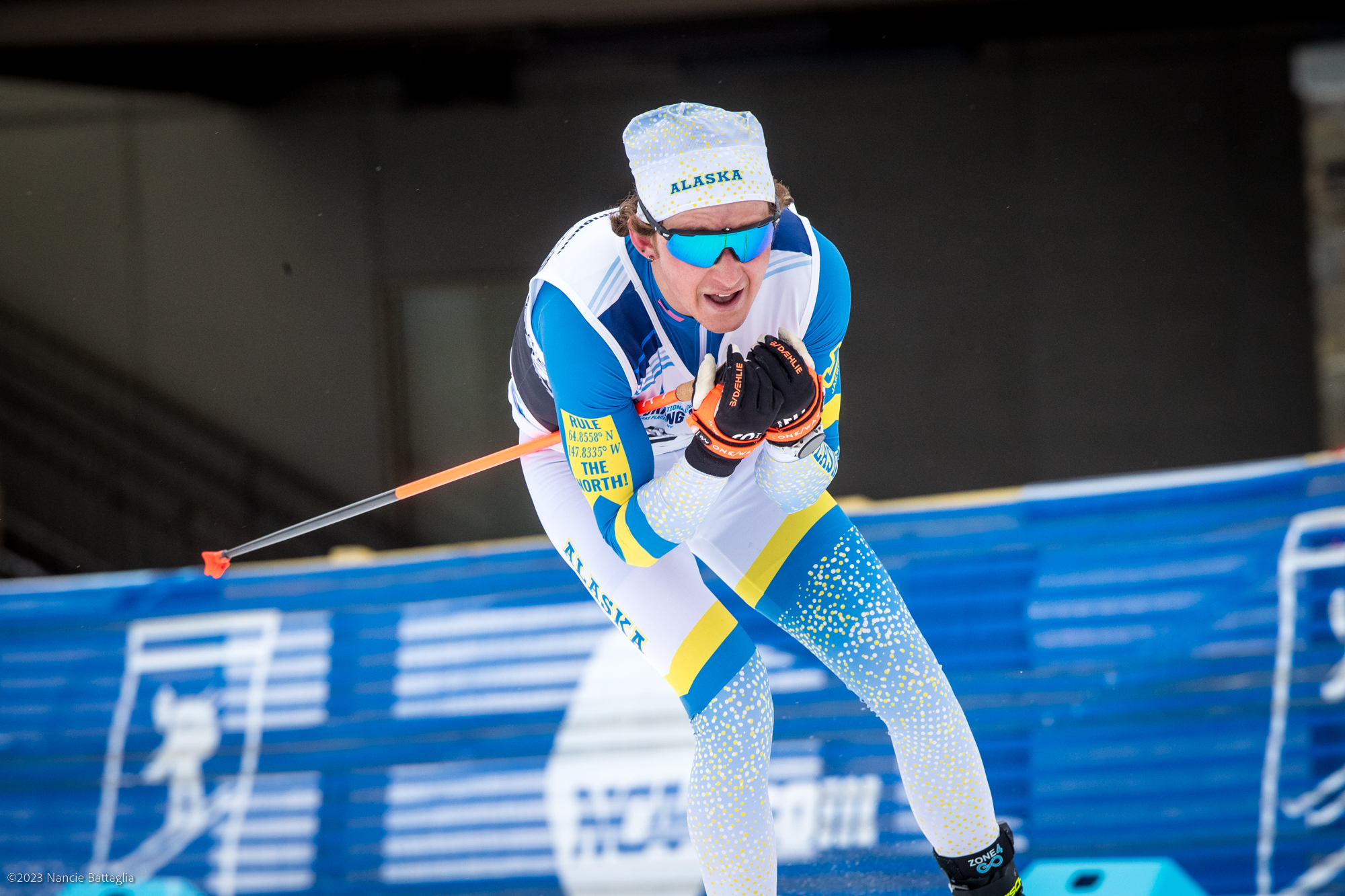
    Joe Davies (UAF) during his NCAA Championship-winning performance in the 10 k skate in Lake Placid, New York, in the 2023 championship. (Photo: (c) 2023 Nancie Battaglia)

    Minimum Qualifications

    • Bachelor’s degree in a related field and three years of relevant coaching experience at the collegiate level, or an equivalent combination of training and experience.
    • Cross-country ski racing experience.
    • A valid Alaska Driver’s License and a clean driving record in compliance with UA Safe Driving Criteria.

    Preferred:

    • Degree earned while participating as an athlete at the candidate’s institution.
    • B.A. or B.S. in Physiology, Biology, Physics, or similar — though other majors are not excluded.
    • USSS Coaches Education L-100 certification, or equivalent.

    Further ski- and NCAA-related education will be provided as part of the position.

    Position Details

    This is a full-time, 11-month, term-funded, exempt staff position with a competitive salary and a comprehensive benefits package. UA provides a generous compensation package that includes retirement options, annual leave, 12 paid holidays per year, tuition waivers for employees and family members, and affordable medical, dental, and vision care coverage. New hires will be placed on the UA Staff Salary Schedule, Grade 79, based on education and experience.

    The University of Alaska reserves the right to require employees to work on-site at UA facilities. Hybrid and remote work may be approved for employees based in Alaska at the University’s discretion. Remote work for employees based outside the State of Alaska may be approved only in exceptional circumstances or when required by the position’s job duties.

    This position is term-funded and is reviewed annually for contract renewal at the University’s discretion.

    Eventually, Kendall Kramer (UAF – right) skied to a 35-second victory for the individual Women’s 20 k Freestyle NCAA Championship in 2025. (Photo: Tobias Albrigtsen)

    Application Timeline

    Application review will begin on May 20, 2026. Applications received by this date will receive priority consideration; however, the recruitment will remain open until filled.

    How to Apply

    View the full list of job responsibilities.

    To apply, visit: https://apptrkr.com/7133551

    Questions

    For questions regarding this position, contact Brittany Tappa, Signers’ Business Office HR Coordinator:

    Rosie Fordham 2x NCAA Champion and Olympian this past season. (Photo: Lexi Pline)

    Additional Information

    To be eligible for this position, applicants must be legally authorized to work in the United States without restriction. Applicants who now or may in the future require visa sponsorship to work in the United States are not eligible.

    The University of Alaska is responsible for providing reasonable accommodations to individuals with disabilities throughout the applicant screening process. For assistance with this application or any phase of the interview process, contact the ADA team at ua-ada@alaska.edu.

    The University of Alaska is an Equal Opportunity/Equal Access Employer and Educational Institution. The University is committed to a policy of nondiscrimination against individuals on the basis of any legally protected status.

    The successful applicant is required to complete a background check. Any offer of employment is contingent on the background check. All employees at the University of Alaska are expected to uphold the highest standards of ethics and professionalism when conducting university business. Applications submitted to the University of Alaska are subject to public disclosure under the Alaska Public Records Act.

    Each university within the University of Alaska system publishes an Annual Security and Fire Safety Report containing campus safety information and crime statistics for the three most recent calendar years. Reports are available online: UAA | UAF | UAS. Paper copies are available upon request.

  • If we know better, why don’t we do better?

    If we know better, why don’t we do better?

    This article was made possible through the generous support of our voluntary subscribers. If you value coverage like this, please support FasterSkier with a voluntary subscription.

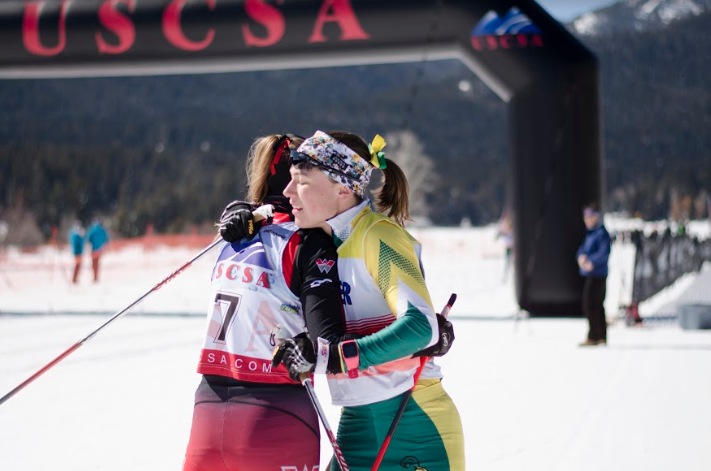
    USCSA Nationals 2024

    Where do High School and USCSA programs fit into our development.

    In a recent article, I laid out the disconnect between what we say about long-term development in Nordic skiing and what we do and the rewards. “Long-Term Development in Nordic Skiing: What We Say vs. What We Actually Do”. Most people that I talk with agree with the premise of long-term development and keeping youth in sport longer. None of this is particularly controversial. We all understand that endurance development, technical skills and learning how to race takes years. We now see this statement across virtual all endurance sports world, that early results are a poor predictor of long-term success.

    So, if we assume there is a consensus then we must ask why the system seems to act in the opposite way. Because systems don’t reflect what we say. They reflect what we reward through early selection, for competition and training opportunities. That’s really the question sitting underneath all of this.

    We’ve reached a point where there’s broad agreement on philosophy. Long-term development matters. Early results don’t predict long-term success. Endurance, technique, and racing ability take years to build. You hear that all endurance sports now, not just skiing.

    None of that is controversial!

    But if that’s true, then we have to be honest about what follows. Because systems don’t reflect what we say. They reflect what we reward. And right now, the system is still rewarding something very different.

    The incentives tell the story.

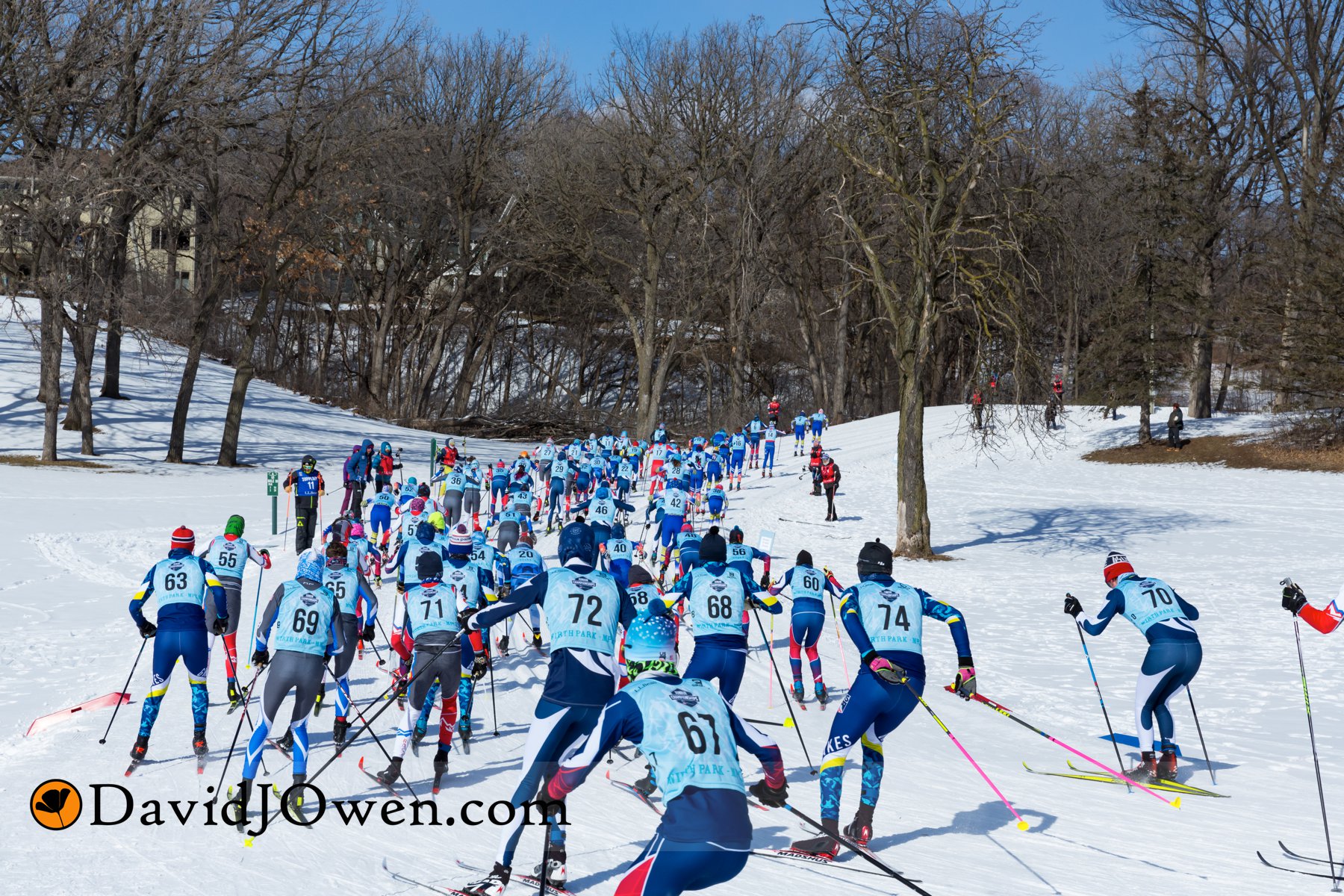
    Skiers from all over the country round the first corner of the Theodore Wirth Park course in the U16 Boys 5 k Classic at Junior Nationals in Minneapolis in 2022. (Photo: David J Owen Photography)

    Junior skiing in the U.S. is quietly organized around early selection. Qualification for Junior Nationals, especially at U16 and younger, carries weight. Rankings matter. Opportunities follow results. No one would say that’s the goal. But it’s the outcome.

    Athletes see it. Parents respond to it. Coaches feel it. And none of that is inherently bad. But when those forces align around early results, the system starts to tilt. Short-term performance carries more weight than it should. And over time, that shows up in participation. The fields in USSS junior races get smaller as the age groups progress. We can debate why, but we can’t ignore that we’re losing athletes along the way.

    The earlier we start selecting, the earlier we start excluding, selecting out athletes. And in a sport like skiing, that’s a problem. Development is long-term, non-linear, and tied to maturation in ways we can’t reliably predict. So, when we sort athletes at 13, 14, or 15 years of age, or younger, we’re making decisions on incomplete information, and treating those decisions as if they’re meaningful. They’re not!

    What we’re really doing is narrowing the pathway at the exact point where it should be widest. If we believe in long-term development, early stages should include more athletes, not filter them out. We don’t lose athletes because they lack talent. We lose them because they stop seeing a path or opportunities forward.

    That loss doesn’t always show up at the top. At the elite level, we can always point to success and say the system works. And in a narrow sense, it does. Every system produces some high performers. But that’s survivorship bias. But even with the perceived success, it is clear that most of those who step onto the World Cup are not prepared and developed for that level of competition, or we see an erosion of their performances over several years.

    What matters more is what happens in the middle. Over time, that middle erodes. Fewer athletes stay. Fewer develop later. Fewer are still around when their best years should begin. And once they’re gone, they’re gone. So, how do we grow the sport and improve the development system? Following are a couple of ideas for the integration of high school and college skiing.

    Stillwater senior Jessie Diggins, right, finishes ahead of St. Paul Academy senior Annie Hart in the 2010 edition of the Minnesota State Meet. (Photo: MSHSL Archives)

    This is where the high school system should come into focus. Whether we acknowledge it or not, it’s one of the most influential environments in the entire pathway. We’re talking about roughly 6,500 high school athletes, compared to about 2,100 in the USSS junior system. That alone tells you something. Most athletes are not in the club pipeline. And there’s very little overlap between the two, in some regions more than others.

    So now you have two systems, often operating in parallel, sometimes in conflict, shaping the same athlete. The club system is year-round, often very expensive, which creates barriers, and it is tied to rankings, qualifications, and progression. Ideally, at least in theory, it is long-term focused. The high school system is seasonal. Compressed. Built around immediate competition, conferences, regional, and state.

    Both have value. But they’re not aligned. And when systems aren’t aligned, the athlete’s abilities are often put in difficult positions. High school seasons are short. That compresses everything. Training, racing, recovery, all of it gets stacked into a three-month season.

    And yet, high school skiing also gets something right that the system needs more of.  It creates a connection. It lowers barriers to entry. It brings athletes into sport who might never join a club. It makes skiing social. It makes it fun. Those values matter!

    Athletes who feel connected to a team stay in the sport longer. That alone makes the high school system one of the most valuable pieces of the entire pathway. The issue isn’t that it exists rather it is not integrated,  where do those high school skiers go after high school, an assumption may be many go into the non-integrated USCSA programs.

    If that gap exists in high school, it becomes even more obvious at the college level.

    Because this is where the pipeline either tightens or disappears. On one side, you have NCAA skiing. Roughly 20–25 programs. Maybe 300–400 athletes. Small, but structured, providing consistent coaching,  clear expectations, and daily training environments that align with the demands of sport.

    On the other side, you have USCSA. Thousands of athletes. Hundreds of active racers. A much broader participation base.  So yes, USCSA is far bigger. But the NCAA is more efficient. In NCAA programs, a higher percentage of athletes improve year over year. More reach FIS relevance. More stay on a performance trajectory. That’s not because they’re inherently more talented. It’s because the environment supports development. Training is consistent. Coaching is present. Progression is clear.

    USCSA shows the opposite. It’s not only a talent problem. It’s a structural problem. You have hundreds of athletes still in the sport. Many have endurance backgrounds. Many are still within a trainable window. But training is inconsistent. Coaching is variable. Development isn’t systematized. And there’s no clear bridge to higher performance levels. So, the conversion rate stays low.

    This is where the pipeline argument starts to fall apart. We tend to focus on the front end, getting more kids into the sport.  But at the USSS level that has been ineffective at best.  And missing the fact that we already have athletes in the system that aren’t welcome or integrated. High school skiing, USCSA, represents a large participation pool sitting right in the middle of the development pathway. What we don’t have is a system that consistently integrates and develops them.

    So, what actually needs to change? Not the philosophy, it seems we already agree on that. What needs to change is how the system behaves across the junior and collegiate level, it means recognizing where the opportunity is not just in the NCAA pipeline, but in the larger, under-structured USCSA system that already exists.

    Even if we integrated the high school athletes and the USCSA athletes into the USSS system, the sport is still tiny. But it seems growing the sport significantly beyond this level is unlikely so we should be looking for ways to include these athletes in the system as much as possible for those who have an interest.

    There are athletes in the system right now, thousands of them, who could or have the potential to improve dramatically beyond high school. Some who could enter the sport late and still become competitive.

    Novie McCabe controlled the pack for much of the 20-k mass start at the 2023 NCAA Championship in Lake Placid, New York. McCabe became just the fifth three-time NCAA Women’s Champion with her win. (Photo: (c) 2023 Nancie Battaglia)

    At some level, this comes down to a simple choice. Do we want a system that identifies and benefits early performers? Or one that develops athletes over time? Right now, we say the second. But too often, we operate like the first. And the differences are real; we can see it by who improves, who stays in the sport, and when athletes exit the sport.

    We don’t need to overhaul everything. There’s a lot in the system that works. High school brings athletes in. NCAA shows what structured development can look like. Even USCSA shows us how much untapped potential is sitting there.

    But without alignment, those pieces don’t add up. So the question isn’t whether we understand long-term development. It’s whether we’re willing to build a system that actually supports it. Because if we are, the path forward should be clear.

    And if we’re not, we should at least be honest about what we’re choosing instead.


    Help Support Our Olympic Coverage!

    If you value the thoughtful work and access FasterSkier provides, please consider becoming a Voluntary Subscriber. Your support directly fuels our work to cover the people, places, and moments that make our sport special.

    Join the FasterSkier community!


  • Saint Michael’s College Seeks Head Nordic Ski Coach

    Saint Michael’s College Seeks Head Nordic Ski Coach


    Saint Michael’s College, a Division III liberal arts institution located in Colchester, Vermont, is seeking a Head Nordic Ski Coach to lead its program. The successful candidate will oversee all aspects of a year-round program, from training and competition to recruiting and budget management, while building meaningful relationships with student-athletes and the broader campus community.

    Position Details

    • Institution: Saint Michael’s College (Colchester, VT)
    • Status: Full-Time
    • Salary: $48,000–$54,000
    • Benefits: Health, dental, vision, employer-paid life and disability insurance, 401(k), generous paid time off, employee and dependent tuition benefits, parental leave, flexible spending accounts, discounted gym membership, paid volunteer time, and access to athletic facilities and the library

    Responsibilities

    • Plan and conduct daily practices during the season
    • Coach athletes throughout competition
    • Manage year-round recruiting and maintain prospect database via ARMS software
    • Counsel student-athletes with a focus on personal development and academic excellence (minimum 3.0 GPA expected)
    • Collaborate with the Head Alpine Coach to supervise the Kelley Ski Center
    • Manage program budget, equipment, and travel planning
    • Serve as event manager for non-Championship segment competitions
    • Engage the team in life skills programming, community service, and department-wide initiatives
    • Attend monthly staff meetings and respond to inquiries from within and outside the College

    Qualifications

    • Bachelor’s degree required
    • Minimum five seasons of coaching Nordic skiing at the collegiate, professional, Olympic, or club level (competitive experience at the collegiate, national, or Olympic level will count toward this requirement)
    • US Ski and Snowboard L100 coach’s certification required
    • Current CPR and Basic First Aid certifications
    • Must meet Saint Michael’s College driver eligibility requirements
    • Familiarity with Microsoft Office and ARMS recruiting database
    • Strong communication and problem-solving skills across a range of audiences

    To Apply

    Submit your resume via the Saint Michael’s College application portal. Review of applications begins immediately and the position will remain open until filled.


    For the full job description, click here.


    Declan Hutchinson during the 20k Freestyle at the 2025 NCAA Championship. (Photo: Tobias Albrigtsen)
  • University of Alaska Fairbanks Seeks Head Men’s and Women’s Ski Coach

    University of Alaska Fairbanks Seeks Head Men’s and Women’s Ski Coach


    The Head Men’s and Women’s Skiing Coach provides comprehensive leadership and oversight for all aspects of UAF’s Nordic skiing programs within the Department of Athletics. This position is responsible for coaching and program development, student-athlete recruitment, supervision and mentorship of assistant coaches, and fostering a culture that promotes academic success, personal growth, and competitive excellence. The role supports student-athlete welfare, ensures compliance with NCAA, conference, and university policies, and contributes to the department through community engagement, fundraising, and responsible program administration. Working collaboratively with athletics staff and campus partners, the position advances the mission of the department by developing successful student-athletes and promoting the university through competitive achievement and community connection.

    To thrive in this role, the successful candidate will demonstrate strong leadership, organization, and communication skills while fostering a positive, inclusive, and high-performance team culture. The individual must be able to effectively balance coaching excellence with administrative responsibilities, recruiting strategy, and student-athlete academic support. Success requires the ability to mentor and supervise staff, build meaningful relationships with student-athletes, alumni, and community partners, and maintain strict compliance with NCAA, conference, and university policies. A proactive, collaborative mindset and a commitment to student-athlete development, competitive success, and community engagement are essential to advancing the mission of the athletics department.

    Kendall Kramer (University of Alaska-Fairbanks) leads the Women’s pack during the 20 k Skate Mass start at US Nationals. (Photo: Tobias Albrigsten/@UntraceableG)

    Minimum Qualifications:

    Bachelor’s degree in exercise science, exercise physiology, or kinesiology. Valid driver’s license required. Master’s degree in exercise science, exercise physiology, or kinesiology preferred.


    Position Details:

    This is a full-time, term-funded, exempt staff position complete with both a competitive salary and https://www.alaska.edu/hr/benefits/support/prospectiveemployees.php. UA provides a generous compensation package that includes retirement options, annual leave, 12 paid holidays per year, tuition waivers for employees and family members, and affordable medical, dental and vision care coverage. New hires will be placed on the https://www.alaska.edu/hr/benefits/compensation/salary.php, Grade 81, based on education and experience.


    Applicant review will begin on March 18, 2026.

    The University of Alaska (UA) reserves the right to require employees to work on-site at the UA facilities. Hybrid and remote work may be approved for employees based in Alaska at the University’s discretion. Remote work for employees based outside the State of Alaska may be approved only in exceptional circumstances or when required by the position’s job duties.


    Click here to view the full list of job responsibilities


    If you have any questions regarding this position, please contact Brittany Tappa, Signers’ Business Office HR Coordinator, at bjtappa@alaska.edu or 907-474-6353.


    *To be eligible for this position, applicants must be legally authorized to work in the United States without restriction. Applicants who now or may in the future require visa sponsorship to work in the United States are not eligible.

    This position is a term-funded position and is reviewed annually for contract renewal at the University’s discretion.

    The University of Alaska (UA) is responsible for providing reasonable accommodations to individuals with disabilities throughout the applicant screening process. If you need assistance in completing this application or during any phase of the interview process, please contact UA Human Resources by phone at 907-450-8200.

    The http://www.alaska.edu/  is an Equal Opportunity/Equal Access Employer and Educational Institution. The University is committed to a http://www.alaska.edu/nondiscrimination against individuals on the basis of any legally protected status.

    The successful applicant is required to complete a background check. Any offer of employment is contingent on the background check.

    Your application for employment with the University of Alaska is subject to public disclosure under the Alaska Public Records Act.

    All employees at the University of Alaska are expected to uphold the highest standards of ethics and professionalism when conducting or engaged in university business.


    *Each university within the University of Alaska system publishes an Annual Security and Fire Safety Report which contains information regarding campus safety and security including topics such as: campus law enforcement authority; crime reporting policies; campus alerts (Timely Warnings and Emergency Notifications); fire safety policies and procedures; programs to prevent dating violence, domestic violence, sexual assault and stalking; the procedures the University will follow when one of these crimes is reported; and other matters of importance related to security on campus. The report also contains information about crime statistics for the three most recent calendar years concerning reported crimes that occurred on campus; in On-Campus Student Housing Facilities; in Noncampus buildings or property owned or controlled by the University or a recognized student organization; and on public property within, or immediately adjacent to and accessible from, the campus. The report also contains fire statistics for any fires occurring in an On-Campus Student Housing Facility during the three most recent calendar years.


    Access to the reports is available at:

    UAA: (Addresses Anchorage campus, Aviation Technology Complex, JBER – Elmendorf Extension, JBER – Richardson Extension, Kenai Peninsula College – Kachemak Bay campus, Kenai Peninsula College – Kenai River campus, Kodiak College, Kodiak High School Extension, Matanuska-Susitna College, Prince William Sound College, and Prince William Sound College – Cordova Extension) Online: https://www.uaa.alaska.edu/students/safety. Request a paper copy in person: UAA Police Department Office at Room 114 of Eugene Short Hall on the Anchorage campus / UAA Dean of Students Office at Room 122 of Rasmuson Hall on the Anchorage campus. Request a paper copy by mail: 907-786-1120 or police@uaa.alaska.edu / 907-786-1214 or uaa_deanofstudents@alaska.edu.


    UAF: (Addresses Fairbanks Campus, Bristol Bay Campus, Chukchi Campus, Community and Technical College, Kasitsna Bay Campus, Seward Marine Center, Tok Campus, Kuskokwim Campus, and Northwest Campus) Online: https://www.uaf.edu/orca/files/ASFSR.pdf. Request a paper copy in person: UAF Office of Rights, Compliance and Accountability on the 3rd Floor of Constitution Hall. Request a paper copy by mail: 907-474-7300 or uaf-orca@alaska.edu.


    UAS: (Addresses the Juneau Auke Bay Campus, Juneau Technical Education Center, Sitka Campus, & Ketchikan Campus) Online: https://uas.alaska.edu/equity-and-compliance/docs/clery/UAS_ASFSR.pdf. Request a paper copy in person: Hendrickson Building, Suite 202 on the Juneau campus. Request a paper copy by mail: 907-796-6371 or emailing uas.clery@alaska.edu.


    To apply, please visit: https://apptrkr.com/6955777


    The University of Alaska-Fairbanks team out to cheer the Men’s race in Soldier Hollow, Utah in 2024.
  • “You Can’t Live Nervous”

    “You Can’t Live Nervous”

    Finals week has a way of compressing time. Days shrink into problem sets and exams; nights stretch just long enough to make sleep negotiable. When Jack Lange logged onto Zoom from Hanover in late November, he was finishing his senior fall at Dartmouth, a mechanical engineering major balancing equations while packing for a training block at Silver Star. The snow out west wasn’t cooperating. Races were being reformatted. Nothing felt settled.

    That uncertainty didn’t seem to bother him much.

    “We’re wrapping up school right now and then heading to Silver Star next Tuesday,” Lange said. “Hopefully, the snow conditions there improve a little bit.”

    It was a measured answer—calm, almost deliberately so. Over the next hour, that calm would reveal itself not as indifference, but as something learned the hard way.

    Young Jack Lange skiing in a New England BKL race. (Photo: Heidi Lange)

    A kid who wasn’t supposed to be good at this

    Lange grew up in Vermont’s Upper Valley, skiing out of Green Woodlands and the Ford Sayre Bill Koch League. It was the kind of childhood that feels almost mythic now: full-moon skis to a cabin, hot chocolate on a frozen pond, friends everywhere.

    “I’ve always just made sure that that’s the thing that comes first,” he said. “Getting outside and enjoying being outside and enjoying pushing myself and having fun.”

    He played everything. Soccer, where he was very aware he wasn’t the best. Swimming, where he gravitated toward breaststroke. Cross-country running. Mountain biking. For a while, he did both alpine and Nordic skiing, until a choice had to be made.

    “My sister was doing more Nordic and more of my friends were on the Nordic,” he said. “So I just went with Nordic.”

    Lange and friends meeting Jessie Diggins and Sophie Caldwell Hamilton at the Quebec World Cup. (Photo: Heidi Lange)

    It wasn’t a natural fit at first. Lange remembers being the odd kid out on relay day—the one paired with a skier from another team because the numbers didn’t work.

    “I wasn’t good at it,” he said simply.

    What hooked him wasn’t speed. It was curiosity.

    “I really like the amount that you can learn from being out in training,” he said. “Not even structured training—just being outside and having fun. I really enjoy the process of figuring out how hard I can push myself.”

    By freshman year of high school, something shifted. He trained more. He paid attention. And suddenly the results were better than expected.

    “That was kind of the confidence boost that launched me into, like, ‘Oh, this is something I can do.’”

    2019 Junior National Championships in Alaska. Lange finished in fifth place with Dartmouth teammate Wally Magill in first. (Photo: Heidi Lange)

    The pressure builds—and breaks

    Lange’s junior years were uneven. Seasons were disrupted. Races were canceled. One winter meant nine consecutive weekends racing at Craftsbury, all interval starts—an exercise in patience for someone who loved head-to-head competition.

    “I love mass starts,” he said. “I love racing next to people. Mind games and competitiveness.”

    By his senior year, he had narrowed his focus to Junior Nationals. The goal was simple: qualify. Nothing more.

    When he arrived at the 2019 Junior National Championships in Alaska, he was the last skier to qualify from New England. He started near the back in the 5-kilometer skate race at Kincaid Park.

    “My goal for the entire season was to make JN’s,” he said. “And I was there, and I was like, I’m in Alaska. This is kind of crazy.”

    Mid-race, a coach called out a split.

    “One of the New England coaches is like, ‘You’re like three seconds out of top ten,’” Lange recalled. “And I was like, that’s pretty funny.”

    He kept skiing. He finished fifth.

    “That was way, way beyond where I ever could have expected to be.”

    There’s a photo from that day—Lange among a group of skiers who would later become familiar names on the U.S. Ski Team. At the time, it felt surreal. In hindsight, it was clear it wasn’t the performance itself that mattered most, but the conditions under which it happened: no expectations, no fear.

    That lesson wouldn’t fully sink in until later.

    Lange with his parents, Heidi and Greg. (Photo: courtesy photo)

    Dartmouth, and the weight of wanting it too much

    Lange chose Dartmouth largely because it felt right. He wanted engineering. He liked the people. He trusted the coach.

    “Brayton [Osgood] is such an amazing coach to work with,” Lange said. “He’s never the guy to show up and be like, ‘This is what you’re doing.’ He’s super approachable. He really wants us to find our spot in the sport.”

    At Dartmouth, skiing wasn’t isolated from the rest of life—it was embedded within it. That integration became most visible during the most stressful week of the year: NCAAs, which overlap directly with finals.

    “My freshman year, that finals week with NCAAs was kind of a dark time,” Lange said. “I was close to tears on the start line of the 20k race. Just so much pressure, so overwhelmed.”

    He remembers warming up briefly, then stopping.

    “I skied like fifteen minutes in the warm-up and just put my skis down,” he said. “I was completely broken.”

    A kilometer into the race, he was in dead last.

    And then something shifted.

    “I saw Brayton on the side of the trail,” Lange said. “And I was like, you know—I don’t need to take this so seriously. I can show up, do my best at everything, and give 100 percent effort. If I do that, it’s gonna come through.”

    It did. That race became one of his best of the season.

    Dartmouth Ski Team (Photo: courtesy photo)

    The things that make it lighter

    The story of Dartmouth skiing is often told through tradition—green suits, first-years with mohawks, time trials. Lange points to different details.

    There’s a sauna in the locker room.

    “That’s a prime spot to get to know the team,” he said. “We rip this on all the time.”

    There’s also life beyond skiing. Every non-freshman on the men’s team is in a fraternity. Lange lives in the Zeta Psi house with teammates and classmates—engineers, computer scientists, people whose lives orbit entirely different centers.

    “I’m surrounded by a ton of people who have no clue what skiing means to me,” he said. “And that’s been a really huge part of being at Dartmouth.”

    His best season, he said, came immediately after pledging.

    “It taught me how to not put as much pressure on myself,” Lange said. “How to make this a sustainable thing that I could really enjoy.”

    That balance—academic, athletic, social—isn’t accidental.

    “None of the three would be as good without the others,” he said.

    Lange’s favorite race: Prospect relay with Cam Wolfe and Cooper Camp. (Photo: Heidi Lange)

    “You can’t live nervous”

    Lange keeps a training log. He trains consistently. He admits he’s overcooked himself before. What he doesn’t do is chase numbers obsessively.

    “I don’t think I’ve ever had an hour’s target that I’m trying to hit,” he said. “I’ve just trained for the enjoyment of it.”

    There was a time, early on, when outside voices crept in.

    “I was getting a lot of people saying, ‘You’re training too much. You’re doing this wrong,’” he said. “I got a little worked up about it and a little nervous.”

    He paused.

    “You can’t live nervous.”

    It’s the line that keeps resurfacing, whether he’s talking about high school racing, college pressure, or the future beyond Dartmouth.

    “I think anyone who’s in high school, middle school—just go out there because you enjoy it,” he said. “You’re gonna have crappy days. But if you go out there every day and just have a good time, and surround yourself with people you like to be around, things will work out.”

    That philosophy shapes how he defines success now. Lange talks about team first. About racing in a green suit. About showing up energized.

    “The guys here are here for the right reasons,” he said. “They’re skiing because they really enjoy skiing. That’s super energizing.”

    Lange with his long time coach and mentor, Dennis Donahue. (Photo: Heidi Lange)

    A quiet kind of confidence

    Ask Lange where he sees himself years down the road, and he doesn’t reach for outcomes. He talks about process.

    “The process of showing up every day,” he said. “How can I be the best athlete I can be today? That’s the most rewarding thing.”

    Skiing, he believes, has taught him how to live—how to work, how to recover, how to stay curious.

    “Wherever I am fifteen years from now,” he said, “all of the lessons that I’ve learned are still going to be extremely relevant and important.”

    For now, there are finals to finish and skis to pack. The snow will either come or it won’t. The races will sort themselves out.

    Lange will keep doing what he’s learned to do best: show up, stay loose, and ski without fear.

    Because speed, he’s learned, is hard to find when you’re holding your breath.

    Love Stories Like This? Help Keep Them Coming.

    Feature stories like this one take time, access, and care to produce. If you value thoughtful storytelling and independent ski journalism, please consider becoming a Voluntary Subscriber. Your support directly fuels the work we do to cover the people, places, and moments that make our sport special.

    Join the FasterSkier community!


    Enjoying adventures with Luke Allan. (Photo: Jack Lange)
  • Two Degrees, One Dream: How a Future Teacher Found Her Way to the World Cup

    Two Degrees, One Dream: How a Future Teacher Found Her Way to the World Cup

    The Hill That Got Easier

    On an ordinary winter afternoon in Fairbanks, before NCAA titles and World Cup bibs and FIS profiles, there was just a loop—eight hundred meters of snow and one long, unforgiving hill.

    Middle-school Kendall Kramer skied it after class, day after day, with her dad. Birch Hill. Blue Loop. One big climb, same as yesterday, same as tomorrow. What changed was how it felt.

    “We would just go for, like, 30 minutes after middle school every day,” she remembers. “And I remember really liking the feeling of this specific loop in Fairbanks at Birch Hill called Blue Loop. It’s like 800 meters, but it has this really big, steep, long hill. And we would do that every day. And I became really addicted to feeling like the hill was easier to get up every single day.”

    Kramer didn’t start as the kid who loved hard things. She started as the kid who had to be bribed—stickers, money, chocolate, extra iPad time—just to go outside with her very active dad, a former Washington State runner who picked up skiing when he moved back home to Fairbanks.

    “I really didn’t like hard things. I didn’t like pushing myself. I didn’t like going outside. I didn’t like athleticism,” she says now, half amused, half incredulous. “I was into theater, and I went to art camps, and I went to fashion designing and sewing camps, and I was just doing a bunch of art stuff until seventh grade.”

    The shift did not come from some early, noble desire to maximize her potential. It came from middle-school social dynamics: her best friend and the “cool, funny kids” were in the local ski club, FXC. They were getting strong; she wanted in.

    “All of the cool, funny kids, and my best friend, were on the ski club FXC,” she says. “I noticed that she was getting really muscular. And, I want to get muscular too. That was literally my motivation. I wanted to spend more time with my friends.”

    So she flipped the script. The kid who once needed bribing was suddenly begging to ski. “In middle school, I asked [my dad] to take me skiing every day,” she says. “I liked the feeling of the work I was putting in quantifying to something. You don’t get that with everything in life.”

    That tiny addiction—to feeling the hill get easier—would quietly rewire the course of her life.

    Running Into an Identity

    Before she thought of herself as an athlete, there was one race that hinted at what might be possible: a local 5K in eighth grade.

    “There was this one race,” she says. “There was this local 5K, and I won that. And I beat a UAF girl. And I was in eighth grade. And so then I thought, oh, I could start training for another level at this.”

    It’s a funny hinge moment: a middle-schooler passing a college athlete on a random Fairbanks course—”I think it was the Chena River Run 5K”—and suddenly reevaluating what “participation” might mean.

    From there, skiing and running braided together. Everyone in her circle seemed to do both—cross-country in the fall, cross-country skiing in the winter, track in the spring. The sports gave structure to adolescence. They also gave her a first glimpse of what high-level results feel like: she made Junior Nationals, then Junior Worlds, and at 16, in her first year there, she finished fourth.

    It looked, from the outside, like a linear rise.

    It wasn’t.

    Kendall Kramer on her way to fourth place in the U20 15 k classic mass start at World Juniors in Lahti, Finland. (Photo: Doug Stephen)

    Burnout at the Top of the Podium

    The breakout year rolled into something heavier. Right as college coaches were calling and scholarships were appearing, Kramer’s relationship with skiing began to fracture.

    “After my breakout year, I went through a large burnout of skiing,” she says. “Looking back, maybe kind of predicted with how huge a jump it was… but I went through a huge burnout that happened to coincide with my senior year of high school.”

    She was in the rare position of being heavily recruited and deeply ambivalent about the thing doing the recruiting.

    “I didn’t want to do any athletics,” she says. “I wanted to go to school. I just wanted to do academics. I only applied to Ivy League colleges, [but] I didn’t get into them.”

    The plan, as she saw it then, was to walk away from elite sport altogether. No more ski clubs, no more interval sessions, no more World Juniors. She would be a student, full stop.

    But mid-winter, another pivot arrived. Running, with its promise of a single daily practice and a more contained lifestyle, began to look like a compromise.

    “I was like, I’ll run,” she recalls. “I really feel like I could have a balanced life if I just ran in college. I might as well do something athletic.” She started talking “very seriously” with Northwestern—”for quite a few months,” she says, laughing at how she kept mixing it up with Northeastern.

    Still, skiing lurked in the background. Friends were planning official visits. There were trips to New England—Dartmouth, UVM—to meet both ski and running coaches. “We worked out a plan for me,” she says of Dartmouth, “like what days I would go to running practice, what days I’d go to ski practice, how I would do all of that.”

    In those conversations, UAF—her hometown university in Fairbanks—barely registered as a serious option. If anything, it was the anti-option.

    “There’s a FasterSkier article where [Jason Albert] interviewed me my senior year of high school,” she says. “I did say, ‘Oh, I’m definitely not going to UAF.’ Because I need to get away. Just like every high school senior.”

    The only reason she even agreed to visit was for social reasons. “I had a bunch of friends at that time… they were also going on an official visit, and I wanted to hang out with them at UAF for that weekend,” she says. “I was like, ugh, okay, fine, I’ll go to UAF for the weekend.”

    That reluctant trip changed everything.

    Choosing the “Wrong” School

    UAF did not look like the kind of program that impresses strangers in an Instagram bio. It looked like something else: a coherent life.

    Kramer noticed first what happened away from intervals and wax benches.

    “The team I felt really… not only got along just at practice, and practice was fun, but they chose to hang out with each other as people outside,” she says. “They really felt genuine about it. They are really friends with each other. They actually care about each other. They’re having fun. They’re all a little bit weird.”

    The second revelation was structural. At UAF, running and skiing weren’t two programs negotiating over a dual-sport athlete’s time. They were one.

    “At UAF, it’s literally one program,” she says. “We share a locker room and a team room, and the coaches have their offices in the same room. Like, it’s really the same program, cross-country running and skiing.” While coaches at other schools were willing to coordinate, the Fairbanks setup was seamless. “I barely had to, like, go out of my way. I didn’t have to change my training at all with UAF, and that was really valuable.”

    There was also something less tangible: the sense that staying close to home might be protective at a time when she was “really… sensitive mentally.”

    “This is really a tumultuous time for me, she recalls thinking. “I can stay close to home. I don’t have to change too much while I’m in this mental state. I can see my family every single week. I think that would be a really good move for me.

    From the outside, it didn’t fit the script; hometown program, Div. II running, and a school she had publicly ruled out. She knew people would talk.

    “Of course, people, you know, judge me for staying in my hometown, she says now. “People still are like, ah, you needed to finally leave Fairbanks. You need to get out. But I know that didn’t sound the best, that I’m going to UAF, because it’s not ‘the program. But I’m really glad that I let what things ‘sound like go, because it gave me a lot of happiness, and it made me feel like it was my choice.

    Reverse Podiums and the Slow Build Back

    UAF didn’t magically solve everything. Her first years there were heavy.

    “My first two years, not only was I recovering from burnout and not wanting to go to practice at all and really trying to get back into sport my whole freshman year of college, she says, “I was also super overtrained, and I could not go fast for the life of me. I think that I was getting a ‘reverse podium’ in my Western college races.

    The COVID year wiped out her first NCAA running season entirely—”there’s just no running races held, she notes. In skiing, she salvaged an All-American by the end of winter, but the trajectory felt nothing like her high-school ascent.

    If her junior years had been a rocket ship, college was more like a slow climb back onto the trail.

    “Luckily, I feel like one of my strengths athletically, besides that, blip, is consistency, she says. “I did feel like it was a gradual buildup leading up to my last year at UAF, where both [sports] were progressing from that low burnout point.

    On the running side, her NCAA results tell the story: 170th in her first nationals, then 8th—”because it was cold and super late, so I was already in ski form”—then 20th, then runner-up in Sacramento. She says, simply, That was really cool.”

    In skiing, she went from anonymous trips to the NCAA Championship to a national title. Before that win, she says, “I don’t think I got better than seventh at other NCAAs. Last March, she finally broke through and won.

    It wasn’t a straight line. But it was, in its own way, a larger version of the Blue Loop lesson: keep showing up, let the hill get fractionally easier, trust that one day you crest the top.

    Two Degrees, One Classroom

    Through all of this, Kramer was not just an athlete. She was building an intellectual life, too.

    “Yes. Biology, specifically, arctic ecology, which was cool. And psychology, she says, almost offhand, when asked about her majors.

    The combination sounds eclectic until she explains her real career ambition.

    “It seems unrelated to both of them, she says, “but it is actually related to both of them, as I want to teach.She’s not yet sure about age group—”I am leaning towards high school”—but the vision is clear: “I want to teach high school science and high school psychology. I think [that] is a way to be still involved with both of my subjects.

    This is not a vague, post-sport idea. She’s already testing it. This year, while racing and training out of Anchorage, Kramer has been substitute teaching.

    “I’ve been substitute teaching, actually, this year in Anchorage, she says. “That’s been really cool. That’s exposed me to that, and I have really confirmed that it’s something that I enjoy going into, and I feel fulfilled after I do the job, and I really enjoy it, and it’s something new every day.

    The logistics fit surprisingly well with elite training. Kramer logs into the Anchorage School District’s database, looks a week ahead, and drops half-days into the white space between sessions.

    “You can go into the online database every week, she explains. “You’re like, oh, I don’t have training Monday, and it’s on your own Wednesday, and we have our afternoons off on Thursdays, so I could do all those days. And then you just sign up for what you can do. Elementaries offer half-days—”like 11:30 to 2:30″—which sit perfectly between morning and afternoon workouts. “It’s really good pay, she adds, “and that’s completely in between the two sessions, so it’s really been perfect.

    There is also a deeper satisfaction. “I think it’s a really respectable career, she says of teaching. “I think that it’s… one of the pillars of society. And so I would feel really fulfilled every day doing that.

    It makes the future feel less contingent on a result sheet.

    “In my personal life aspect, she says, “to know that I have a career available for me at any time that I want to take it, that I really am passionate and excited about, not just something that pays a bill… I’d be perfectly fine if I were doing that.

    The Type-A Gap Year

    Kramer did not grow up assuming she would ski professionally.

    “I still am… it was a surprise to me that I am even skiing past college, she says. “I really was planning on, you know, doing my absolute best through college, but ending on a high note.

    This season, now that she’s graduated, is something different: “an experimental year in the first place of just trying out professional skiing, giving myself, like, a gap year of sorts and seeing how it plays out.

    She is grateful that the experiment is optional, not existential.

    “I’m really grateful to have some educational and career stuff that I really am also passionate and fulfilled by to fall back on, she says. “If along the lines [skiing] becomes not what I’m enjoying anymore… I really am enjoying it right now, so that’s what I’m finding in my gap year, I guess. But yeah, I really am taking it year by year.

    It’s an outlook that sits a little oddly with the logistics of the World Cup, where you can’t plan a life too far in advance. Her personality wants spreadsheets; the selection system gives you “we’ll tell you Sunday.

    “I’m extremely Type-A, she says, laughing at herself. “I packed my ski bag for this Europe trip, like, two weeks before I left. And everyone I was asking what skis they’re bringing, they’re like, ‘I haven’t even thought about it. I like to plan months in advance for things.

    Right now, as she races into mid-winter, that Type-A planner is bumping against the uncertainty of World Cup selection. Tour de Ski rosters, for example, are announced three days after Davos.

    “I haven’t necessarily done something that makes it, like, super obvious that I’m going to Tour de Ski, she admits. “I haven’t gotten a top 30 or 20 or whatever. And so I’m actually completely unsure. I’m definitely having a freak-out situation where on Sunday night, when I finish my Davos race, I don’t know where I’m going.

    She’d love to do the Tour—”I would take the opportunity… if it’s granted to me”—but she’s honest that she hasn’t hit the automatic criteria, and that there may be Lake Placid nationals in her near future instead. “There are no bad options, she says, sounding like someone who has practiced this perspective.

    Kendall Kramer (USA) racing the 10 k Freestyle this past weekend in Trondheim (NOR). (Photo: Modica/NordicFocus)

    Racing in the Deep End

    On paper, her World Cup results this year might make casual fans nervous: numbers in the 30s and 40s, no breakthrough into the top 20—yet. From inside the bib, it feels very different.

    “I feel like I have done really good races, she says. “I felt like I could push every second. I feel like I’m recovering really fast. I feel strong in my skiing. I’m really liking how I’m taking the races, and I’m going absolutely as hard as I can.

    What’s changed, she says, is her understanding of context.

    “I think that it’s opened my eyes to… how things look on paper on a ski race, she says. “People back home have maybe been watching, and they’ve seen placement numbers near my name that they haven’t seen before… And I don’t think that people understand the context of the strength of these athletes that we’re against here.

    Everyone is there in Period 1. Everyone is fit. Everyone is fighting for the same 0.3 seconds.

    “Even though we are strong and fast as well, she says, “that’s just where we’re ending up in this pool of really… the strongest and fastest in the world.

    Kendall Kramer (USA) on her way to 18th place in the 10km Freestyle iin, Cogne (ITA) last February. (Photo: Authamayou/NordicFocus)

    Still, the goals are clear. “I definitely go into any World Cup wanting a top 30, she says. “That opens a lot of doors for the national team… I have reached that level before, she adds, noting her 18th in a World Cup 10K skate last year. “Top 30 is a pretty sweet spot.

    She is also honest about the practical stakes. “Top 30s will get you nominations for more things, she says. “That’s a really good number.

    On the Olympic question, she doesn’t dodge.

    “Yeah, she says when asked if making the team is a big goal. Then she pauses. “I’m trying to… so far, I could just take it weekend by weekend. I really hope that by doing my best every single time and making the correct decisions, it can build up to that, and I can do well enough to earn a spot there. But I’m not going to define if my season was worthwhile or if I’m a talented athlete or whatnot on that.

    It’s not that she doesn’t care. It’s that she refuses to let a quadrennial selection meeting be the sole judge of her life.

    Kendall  Kramer (USA) – racing the Mixed Relay in Engadin (SUI) last January. (Photo: Authamayou/NordicFocus)

    Process Over Podiums

    If you want to understand how she’s trying to get there, you don’t look at the results sheet. You look at the small, specific things she’s attacking.

    “I’m trying to be braver on downhills, she says. “I’ve always been very cautious because I think I’ve just had too many instances where I’ve tried to be crazy on something, and then I break something, and it ends up costing more time than if I just skittered a little bit.

    She’s working on classic technique so she doesn’t feel like she’s “just flailing around and fighting my kick all the time.” She’s learning to lean into the brutality of World Cup individual starts, where a tenth of a second can be the difference between important FIS points she is chasing.

    She is, perhaps unsurprisingly, an individual-start partisan. Mass starts have burned her before.

    “In every Junior World mass start race, I’ve had somebody knock into me and break my pole, and then I’m out of it, she says. “Or I fall, and I’m out of it… Your race was defined by someone else. On the World Cup, she loves that an individual start feels like “how I ski the course against how other people ski the course, as opposed to if you’re in the right place at the right time.

    She also wants something simpler: volume.

    “I really want to take every opportunity presented to me, she says. “I really like to race, and I like being in the thick of race season. I want to race a lot, and I feel like I’ve built up now a tolerance to building on a lot of races. For the first time, she’s planning to carry a full season through the SuperTour Finals. “I want to have a real ski season like the rest of the skiers who start racing in December instead of August… and keep myself together through the end of Spring Series.

    It’s a small, quiet ambition. It’s also a radical one in a sport where so many seasons end in March with more relief than joy.

    Kramer racing the World Cup 10 k Freestyle in Minneapolis (USA). (Photo: Modica/NordicFocus)

    The Hill, Again

    These days, Kramer spends more time on World Cup courses than on the Blue Loop. The hills are longer now. The stakes are higher. There are TV cameras, FIS points, and spreadsheets full of criteria that will determine who gets a call before the Olympics.

    But if you strip all of that away—if you put her on a snowy climb and ask what she’s chasing—it doesn’t sound all that different from the middle-schooler trying to make it to the top without stopping.

    “I like the feeling of bettering myself, she said of those first, shaky loops at Birch Hill.

    This fall, between substitute teaching shifts and Type-A packing lists, and this winter between Tour de Ski uncertainties and top-30 dreams, she is still chasing that feeling: the knowledge that the hill is getting a little easier, and that the life she’s building, with two degrees, one dream, and a classroom waiting, makes sense no matter what the result sheet says.


    Love Stories Like This? Help Keep Them Coming.

    Feature stories like this one take time, access, and care to produce. If you value thoughtful storytelling and independent ski journalism, please consider becoming a Voluntary Subscriber. Your support directly fuels the work we do to cover the people, places, and moments that make our sport special.

    Join the FasterSkier community!


  • The Hilltop Lesson: How Second Place at the NCAA Championship Became Hagenbuch’s Guiding Philosophy

    The Hilltop Lesson: How Second Place at the NCAA Championship Became Hagenbuch’s Guiding Philosophy

    On a bright March afternoon at Dartmouth’s Oak Hill, with a soft and slow course under his skis and a band he himself had organized blasting in the stadium above, John Steel Hagenbuch approached the final climb where he learned something that would shape the early years of his career far more than any podium ever could.

    He had come into the NCAA Championships with the weight of a thousand private dreams — a home championship crescendo and an entire community behind him. Then, with Utah’s Joe Davies charging to the finish line waving the Utes flag and Peter Graves’ voice echoing through the trees, Hagenbuch realized he was not going to win.

    “I got dropped, and it just wasn’t gonna happen,” he says. “I told myself, you’ve got until the top of this hill to be upset about it.”

    John Steel Hagenbuch was all smiles after crossing the 20k Freestyle finish in second place at the 2025 NCAA Championship where he represented Dartmouth College on their home course at Oak Hill. (Photo: Courtesy Photo)

    What happened next wasn’t the reaction of an athlete who had just been beaten in the race he’d been thinking about, talking about, training for, and dreaming about for three years. It was something quieter. Something older. Something that didn’t look like the scripted champion he’d imagined — but ended up becoming the cornerstone of the athlete he is now.

    “I stopped poling,” he says. “And I just kind of skated through the stadium… smiling, waving, like the Penguins of Madagascar — smile and wave.”

    He remembers the sunshine, the thousands of people lining the stadium, the Stripers — Dartmouth’s biggest student band, coaxed back from post-graduation life because he wanted the place to feel alive — and the thrum of friends, professors, fraternity brothers, and family in the crowd.

    “Did I win the ski race? No. But it actually didn’t matter,” he says. “I was just so grateful… all the amazing things in my life that had led me to that point.”

    Every day since, he thinks about that race. “But not for the reasons you’d expect.”

    John Steel Hagenbuch (USA) racing the World Cup opener in Ruka (FIN) in 2023. (Photo: Modica/NordicFocus)

    Muonio, Finland: The Final Quiet Before the Season Begins

    Eight months later, Hagenbuch is sitting in a small room in Muonio, Finland, speaking over a fickle internet connection. Outside, winter is closing in; inside, the early-season nervous energy is beginning to hum.

    “It’s been a good way to start the season,” he says of the classic sprint and 10k skate he raced the previous weekend. “Hopefully more to come.”

    He will likely stay on the World Cup through the Tour de Ski. His primary goal, stated simply and without ornament, is clear: “Primary goal is to go to the Olympics. Everything else is secondary.”

    He’s 24, still at Dartmouth — technically a senior, though he took this fall off to focus on training. When winter term begins on January 7, he’ll be back in class, shifting between World Cups and essays, navigating the dual life of a college student and a professional skier the way only NCAA athletes truly understand.

    But he is not rushed. Not impatient. Not gripping the rail of his career with white knuckles.

    He learned something on that hill at Oak Hill, something that has become his ballast. “It reminds me why I do this, he says. “And why this sport is so special.”

    Before he was an NCAA champion, skiing on the World Cup, and a trying to qualify for the Olympics, John Steel Hagenbuch was just a kid who loved skiing around on the trails of Sun Valley, ID. (Photo: Courtesy Photo)

    The Long View: Three Olympics and a Full-Moon Ski

    Hagenbuch surprises you with the distance of his vision.

    When asked about the future, he doesn’t talk only about Milano-Cortina in 2026. He talks about three Olympics — a decade of life sketched out in calm, confident lines.

    “I would love to go to the next three Olympics, he says. “Milano-Cortina, then the French Alps, and then retire at the Salt Lake City 2034 Games.”

    Soldier Hollow, where he has raced “probably 50 times, would be the perfect ending. But it’s not the race he imagines most clearly. Not the ceremony. Not the result.

    It’s the lead-up.

    “What will be the crown jewel of my ski career, he says, “is having the 2034 Olympic pre-camp in Sun Valley. At my house. With all the fellows.”

    He can picture it already: the team skiing at Prairie Creek under a full moon, crispy tracks at 15 degrees after a sunny day, the quiet of the Sawtooths pressing close.

    “That’s what I’m gonna remember when I’m 75, he says. “That Prairie Creek ski.”

    In this way, Hagenbuch does not think like most 24-year-old athletes. He thinks like someone who has already lost something, already gained something, and has made peace with what remains.

    A Training Philosophy Built on Feel (and a Fearless Lack of Overthinking)

    In an era where professional endurance athletes run lactate strips daily and analyze heart-rate drift with the devotion of day traders, Hagenbuch stands apart.

    “Do you do lactate testing? I ask him.

    “Maybe like once a year.”

    He trains primarily by feel—not just how his body feels, but what he feels like doing: long backcountry days, ridge runs, mountain biking, skiing deep into the mountains around Sun Valley. There is structure, but only when he believes it should exist.

    “Not taking it too seriously, he says, “and kind of just going by what I would like to do and what I think is going to be fun.”

    June and July? “Absolutely not analytical. Fall? Yes, that’s when he “locks in a bit.”

    And if it ever stops being fun, he says, “I will not stick around.”

    He has seen athletes grind themselves into dust out of fear of what’s next. “I respect the grit, he says, “but… I’m incredibly grateful to have had experiences and opportunities in my life that that’s not the case for me.”

    He isn’t clinging to skiing. He’s choosing it — every day — until it no longer feels right.

    That clarity is rare. Maybe even elite.

    Being cheered up a climb in Soldier Hollow by one of his SVSEF coaches, Rick Kapala, John Steel Hagenbuch proves athletes like him aren’t built by themselves or through the guidance of one coach, they are lifted by a community. (Photo: Tryg Solberg/Courtesy Photo)

    The Consortium: Osgood, Whitcomb, Kapala, and Holmes

    Though he trains by feel, he is not without guidance. His coaching structure is more like a board of advisors — four voices, each offering a different vantage point.

    “I talk with Brayton at Dartmouth, and Matt on the U.S. team, and Rick — my high school coach — and Peter Holmes on the Gold Team, he says. “I get input from all of those guys.”

    When deciding to come to Muonio early, he called all four. Not for permission — for perspective.

    “When I’m at Dartmouth, I do Brayton’s plan, he says. “But if I feel like I need to do something different, he’s totally cool with that.”

    And contrary to what a young elite athlete might hope to hear, most of what they tell him is not “do more.

    Oftentimes, he says, “it’s settled down.”

    Dartmouth College’s John Steel Hagenbuch skied to a 15-second victory on his home trails in the 7.5 k Classic at the NCAA Championship. (Photo: Tobias Albrigtsen)

    The Place That Built Him

    If you want to understand why Hagenbuch thinks the way he does — why gratitude flows so naturally through him, and why he measures life through moments rather than medals — you have to understand Dartmouth.

    “NCAA skiing is a really special thing, he says. “People are going to roll their eyes… but there aren’t a lot of places that have the components Dartmouth has.”

    The social component is not a distraction — it’s a pillar. “Last year, every single guy on the team was in a fraternity, he says. “Different fraternities.”

    He explains the structure: students join Greek life in their sophomore year, after they’ve already found their people, their communities, their balance.

    “Everything acts as a complement, he says. “And providing that much balance… makes everything greater than the sum of its parts.”

    The feeling at NCAAs captured this perfectly. “Anyone who was there, he says, “left thinking two things: college skiing is [so] sick and Dartmouth is [so] sick.”

    He means it.

    And he knows it won’t come again — not in this form.

    Luke Allen, one of his closest friends, once asked an older alumnus if life ever gets as good as Dartmouth skiing. The man looked him straight in the eye and said, “No.

    There was lots of great energy at Oak Hill for the final day of the 2025 NCAA Championship. (Photo: Tobias Albrigtsen)

    The Beauty of Losing

    Here is the strange and elegant truth of Hagenbuch’s current career: his most important athletic memory is a loss.

    He doesn’t hide from that. He doesn’t twist it into “motivation or pretend it fuels some internal fire for revenge.

    Instead, he carries it like a compass.

    “I think about that race every single day, he says. “But not because I lost… It reminds me to be grateful for these amazing people, places, and things in my life.”

    He printed 150 photos at CVS the night before leaving Hanover in August — family, friends, the Haig Glacier, Sun Valley, Dartmouth — and plastered them across his fridge at home.

    “Think how many times a day you walk by your fridge, he says. “All my friends are right there.

    It’s his daily reminder of what matters.

    The Thursday classic race at NCAAs, the unexpected great day, the team’s move from fifth to first — these have become larger in his memory than the race he thought he wanted most.

    “What was the special day at NCAAs? he says. “It was Thursday. I wasn’t even thinking about Thursday. I didn’t care how that one went.”

    And yet: “I had probably my best classic race ever… it was such a culmination of a lot of hard work and belief.”

    This is the philosophy he now lives by: you learn more from your losses, and sometimes the thing you didn’t expect becomes the thing you carry forever.

    John Steel Hagenbuch, who won the 7.5k Classic, celebrates with his teammates after the three raced Dartmouth into the NCAA Championship lead. (Photo: Courtesy Photo)

    The Advice Only Someone Who Has Lived It Can Give

    At the Haig Glacier last summer — years after his last high school camp there — Hagenbuch offered a piece of advice that caught the younger kids off guard.

    They were expecting training insight. Intensity zones. Technique tweaks.

    Instead, he told them the thing he wishes someone had told him at 15:

    “Be a kid more.”

    Growing up in Sun Valley, he had an idyllic childhood — but he wishes he’d stayed on the high school soccer team after freshman year. Wishes he’d allowed himself to do more of what felt right, not what looked right.

    “Don’t try to do what you think you should do, he says. “Do what you feel you should do.”

    And if your friends are doing something slightly reckless, something that wouldn’t make the parental brochure?

    “Maybe… F-it, do it, he says, laughing. “You’ll figure it out for yourself.”

    Because that, too, is how you learn.

    John Steel Hagenbuch (USA) racing the individual sprint at the Minneapolis World Cup. (Photo: Modica/NordicFocus)

    A Career Just Beginning, with the Wisdom of One Already Lived

    Hagenbuch is young — young enough to dream of three Olympic Games, young enough to talk about walking onto the Dartmouth lightweight rowing team or running the 5k or 10k for the track team “as a fun challenge in his final spring on campus.

    But he is also old in the ways that matter. Not jaded — never that. But precise in what deserves his attention, and ruthless in discarding what doesn’t.

    He knows what a good race feels like: “When you finish and think, damn, I could have gone a little harder.”

    He knows what a good life feels like: something filled with people and place, community and joy, full-moon skis and carnival tailgates and the band you recruited yourself playing you through the stadium after a loss.

    And he knows — already — that the real currency of this sport isn’t medals, nor money, nor even wins.

    “If you wanted to have glory or make money in sports, he says, “we’re all doing the wrong sport.”

    So what is it about?

    “It’s about the things I’ve talked about, he says. “It’s the parking lot tailgates. The little antics in the van. The dumb jokes with your boys. The feeling of being part of something bigger.”

    And that’s why the NCAA hilltop moment carries him into this World Cup season — a season he hopes travels through Italy, under Olympic lights, wearing the colors he’s dreamed about.

    Because that hill taught him the thing every great athlete eventually learns:

    Sometimes the race you don’t win becomes the story you never stop telling.

    Sometimes the best version of your career begins the moment you stop being upset… and start taking in the view.


    Love Stories Like This? Help Keep Them Coming.

    Feature interviews like this one take time, access, and care to produce. If you value thoughtful storytelling and independent ski journalism, please consider becoming a Voluntary Subscriber. Your support directly fuels the work we do to cover the people, places, and moments that make our sport special.

    Join the FasterSkier community!


  • D1 Skiing returns to the University of Nevada, just alpine for now

    D1 Skiing returns to the University of Nevada, just alpine for now

    In a press conference on Wednesday, the University of Nevada, Reno (UNR) announced that it will once again support a Division I ski team, starting this season. For the time being however, the program will only have alpine skiing. 

    Both the president of the university and the university’s athletic director were present for the announcement, marking the moment. “It has been truly amazing to see how much the program’s return has energized our community,” said Nevada Athletics Director, Stephanie Rempe, “We look forward to this new era of Nevada Skiing and continuing the program’s rich, proud tradition.”

    University of Nevada, Reno President- Brian Sandoval, UNR Alpine Coach- Mihaela Kosi, and Athletic Director Stephanie Rempe (left to right) (photo: Nevada Athletics)

    But they acknowledged that having a nordic team is part of that equation, stating a plan to add nordic as soon as it is feasible (i.e. in the budget). 

    For many decades, beginning in 1936 when skiing was first established at the University, UNR had a successful team that hosted both cross-country and alpine skiing. Over that time, the program produced four Olympians (including Katerina Hanusova Nash, who represented the Czech Republic at five Olympics, three times in cross-country skiing and twice in mountain biking) and earned 14 top-10 team finishes at NCAA Championships. But in 2010 the ski program was cut. 

    The reinstatement of skiing at UNR was made possible by the University’s recent acquisition of Sierra Nevada University, which had an alpine team already in place. This season’s alpine roster will be composed primarily of athletes who had previously been competing at Sierra Nevada University, with the addition of a few new skiers and transfer students.

    UNR cheer squad, athletic staff, current alpine team members, with Olympians Daron Rahlves, and David Wise at the press conference Wednesday (photo: Gus Johnson)

    UNR’s ski team will compete as part of the Rocky Mountain Intercollegiate Ski Association (RMISA), which currently has nine member schools, though only five have both alpine and nordic programs. 

    “We’ve kind of let it be known to the athletic department that if they want to be competitive on the NCAA circuit, they’re going to need to fit in alpine and nordic,” said Gus Johnson, former racer for the UNR cross-country ski team and current advocate for that program’s return. Johnson is also a member of the UNR Ski Team Boosters and nordic sports director for Auburn Ski Club (ASC).

    While there are only a handful of people working to bring back nordic to UNR at the moment, Johnson is hopeful about the future, “Being a Division I school, championships are important to them, so they realize that they need to get nordic started and it’s probably two or three years down the road,” he said. 

    UNR Ski Team boosters and athletic staff (photo: Gus Johnson)

    Athletic programs getting cut from college budgets is not unusual, the University of New Mexico is perhaps the most recent skiing example, but it is less common to see those programs make a return. “It’s pretty rare that NCAA programs get reinstated,” said Johnson, “So there’s a glimmer of hope that nordic will be the next step.” 

    Readers interested in learning more about the effort to add nordic should contact Johnson. 

  • On Pregnancy, Postpartum Recovery, and NCAA Ski Coaching: Eliška Albrigtsen (Part 2)

    On Pregnancy, Postpartum Recovery, and NCAA Ski Coaching: Eliška Albrigtsen (Part 2)

    The journey into motherhood, though challenging, has also been rewarding for UAF head coach Eliška Albrigtsen. (Photo: Tobias Albrigtsen / @untraceableg)

    Part 1 of this story details Eliška’s experience coaching through pregnancy and the birth of her son. Keep reading to learn about the challenges she, like many women, experienced during the postpartum recovery process, and what it took to navigate year one of life on the road with baby Viggo.

    Expectation versus reality. 

    When preparing to interview Eliška Albrigtsen about her experience pairing NCAA coaching with new motherhood, I expected the challenges she faced during her transition to primarily be focused on the balancing act of managing a demanding job with frequent travel and a new baby. Maybe a few relatable stories of airport meltdowns, sleepless nights in hotels while on the road with the team, and inopportune timing of diaper blowouts. Or any number of other ways societal systems in the US seem to be structured in opposition to new moms in the workplace.  

    But Eliška’s passion for her job and dedication to her athletes were abundantly clear throughout the conversation; coaching is where she thrived. Her grit and energy allowed her to problem solve bringing baby Viggo on the road with the team – perhaps paired with the added fortune of a husband whose skill set includes waxing and ski testing and a well placed mother-in-law eager to help care for her grandson. And the team embraced its new member without hesitation.

    In reality, the biggest challenges Eliška faced in returning to coaching postpartum were connected to the physiological impacts pregnancy and delivery had on her body. In short, it was a discussion on the shortcomings of our healthcare system and the myriad of ways the current standard of postpartum care falls short of what many women require to restore their body to full function.

    Her story highlights a few key takeaways for programs looking to support women coaches surrounding pregnancy; in particular, there’s much more to the return to coaching than navigating who will care for your child while you’re out training with athletes and traveling to races. Respecting the timeline of a slow return, and perhaps offsetting the costs of postpartum physical therapy, may be an essential component of an improved and holistic support system.  

    Eliška Albrigtsen in action at US Nationals in Soldier Hollow, UT. (Photo: Tobias Albrigtsen / @untraceableg)

    Postpartum Recovery

    A theme of Eliška’s narrative of her perinatal experience was the ways in which her “athlete mindset” served and hindered her ability to roll with the punches. 

    While women like Kikkan Randall, Marit Bjørgen, Aino-Kaisa Saarinen paved the way for women looking to begin their family before retiring from professional skiing in many ways, Eliška said that the ease with which they outwardly seemed to rebound beyond their previous levels of fitness was, in some ways, a disservice to women like herself who did not experience as smooth a return. In her mind, she had expected a comparable experience given her athleticism and good health, but quickly learned that women might be better served using caution when extrapolating from outliers. 

    “You see these professional skiers having babies and then coming back and winning gold medals at [the] Olympics,” she said. “And you’re like, ‘Oh, yeah, that’s gonna be me.’ But no one really sees the giant support team they have behind them.

    “They have professional doctors, physical therapists, and strength and conditioning [specialists] to go through their pregnancy with them, monitoring everything, having them at the birth, and then jumping right into the recovery. As a coach, you don’t get that. You probably have the same amount of on-ski hours as professional skiers – not the same quality of course, but you can’t do your job without being there. So I think that’s how most of our ski community sees pregnancy – so easy and you are an even better athlete afterwards, because all these women did it…

    “For me, it was the opposite. It was hell. I can’t wear the clothes that I wore when I was pregnant because I have extreme PTSD from that… it was such a, not just physically but painfully, impacting experience.” 

    Though expectation and reality could not have been more different, her drive to recover from the injuries sustained from pregnancy and birth, and the creativity required to adapt during the recovery process, mirrored her general approach as an athlete more broadly. 

    “I think the athlete mindset in me was, ‘Okay, I had this baby. Now I put myself through physical therapy, and I’m gonna recover’… Just like after having a shoulder dislocation or having a torn iliopsoas, all those pretty crazy injuries – I knew that eventually you get better, and you get back to yourself.”

    What Eliška identified as the biggest physical challenge she faced after the birth of her son was the repair of a condition called diastasis recti (DR), which is a separation and consequential loss of function and strength of the rectus abdominis muscles. 

    Happy baby and happy mom. (Photo: Tobias Albrigtsen / @untraceableg)

    During pregnancy, as a woman’s belly expands to accommodate the growing baby, the muscles of the abdomen are forced to stretch. The deeper muscle layers, known as the transverse abdominis, are structured like a corset wrapping around the belly, giving them a greater capacity to expand. However, the rectus abdominis muscles, better known as the “six pack” muscles, run vertically while connected by fascia, and have significantly less ability to adapt to the expansion. 

    Instead, the outward pressure and growth of the belly causes the rectus abdominis muscles to separate, thinning and weakening the fascia as it stretches, or in extreme cases, tearing it.

    “When I was the most pregnant, my six pack was under my armpits.” 

    This connective tissue cannot simply snap back to its original state after delivery. As fascia lacks the blood flow of muscle tissue, it is slow to heal, leaving many women with a gap between muscles known as a diastasis. All women experience some amount of ab separation during pregnancy, but if the gap of two or more finger widths between the muscles persists postpartum, she is diagnosed with DR. 

    Because of the combination of her stature, a short torso, and the size of her baby, Eliška found herself with an extreme separation. 

    “Basically, you could stick your whole fist into my stomach. That was the biggest problem for me because I basically lost my core. And my core was a big part of me as an athlete – not just as a skier, but as an athlete. So that was really hard.” 

    As she hopes for a second child down the road, any surgical repair options were contraindicated, and instead, Eliška dedicated herself to a physical therapy regimen. She felt lucky to have access to a Fairbanks-based Osteopathic medicine expert, Dr. Todd Capistrant, who specializes in the Fascial Distortion Model and was therefore primed to help Eliška improve her diastasis. 

    “I saw him basically on a weekly basis.”

    She also met regularly with a pelvic floor physical therapist, both to work on the diastasis, and to restore appropriate function to the muscles of her pelvic floor. Her PT identified that her pelvic floor was hypertonic, meaning the muscles carried tension chronically, rather than contracting and relaxing in functional patterns. Like holding a flexed arm hang and then being asked to knock out a set of chin-ups, this chronic low-level tension leads to fatigue in the pelvic floor muscles, preventing them from outputting the strength and tension required to support the organs sitting inside the pelvic girdle and interact appropriately with surrounding musculature when recruited during activity.

    With the guidance of the PT and a set of progressive exercises to relax and engage her muscles appropriately, Eliška saw progress, but it took time for her muscles to function in coordination subconsciously.

    “It took me probably around eight months to incorporate the mental [and neuromuscular] connections back. I was able to [engage the muscles] when I wanted to, but all the muscles of the pelvic floor, everything that’s sitting in the pelvis, they were not working with the rest of my body.”

    On the bench: Eliška Albrigtsen prepares skis for the UAF athletes. (Photo: Tobias Albrigtsen / @untraceableg)

    She expressed feeling lucky to have access to high level care in Fairbanks, including her therapist who could incorporate a variety of techniques to help her recover, including deep tissue massage, cupping, electrical muscle stimulation, and biofeedback.

    “I think biofeedback for athletes just works the best. Because we’re such strong willed people. Like, if we see it happening, we can really focus on making it happen more.” 

    An unexpected benefit of time and resources being placed into learning how to strengthen and reintegrate her deeper core musculature trickled down to her athletes. She recognized that several of her athletes, who had complained of back pain surrounding core workouts, were not sufficiently engaging their transverse abdominis muscles, instead relying too heavily on the outer rectus abdominis or other smaller core muscles. Teaching the techniques she learned through PT helped improve the form of her athletes, relieving the back pain they had experienced previously. 

    “It definitely deepened my understanding of how the core should work, and how we use it when we ski.”

    As she navigated her own challenges, she became aware through talking with friends of how common these experiences are amongst mothers. Describing herself as “someone who says everything”, she felt it was important to both be open regarding the challenges she’s faced, and the resources and options available for women to make progress toward recovery, rather than accept the conditions as permanent. 

    Most women only receive one postpartum checkup, approximately six weeks after delivery. As my own pelvic floor PT described it, these visits typically only check to see that the tissues have healed and that there are no visible pelvic organ prolapses, but most midwives and OB/GYN practitioners do not have the depth of knowledge to assess muscle function, hence the need for an evaluation from a pelvic floor PT. However, quality pelvic floor physical therapy is not universally available, and as it is not always covered by insurance, making it cost-prohibitive for many women to continue care long enough to make sufficient progress.  

    “I think the most tragic experience post-pregnancy that I had was the realization that women are left being damaged from bringing life to the world.”

    As she discussed her own experience with the women in her community, in turn, many of them shared that they continued to suffer from the impacts of ab separation or pelvic floor dysfunction from pregnancies, including friends who were more than ten years postpartum. Some of these women had given up activities they had enjoyed previously, like running, because they felt as though they were “spilling their guts” out of their bellies due to a lack of core function. 

    “How is this okay for women to live this way? That was just mind blowing to me.”

    Imparting the knowledge she gained in the process, and advocating for women to find their own ways to make it work, she offered up suggestions.

    “I was just like, ‘Hey, if you can’t go to physical therapy, this is how you tape your belly, so at least you can start hiking fast.”

    At roughly 13 months postpartum at the time of the call, Eliška recognized the improvements she’s made, while still acknowledging she has not fully recovered. 

    “It’s [been] more than a year, and I feel functional. I still have pains and I would not go and enter a race, because my brain can push much harder than my body can, so I know I would hurt myself. But I’m so much better than most of my friends that, you know, [had to] just give it up…”

    Eliška Albrigtsen lead the UAF Nanooks to an historic seventh place finish at 2022 NCAA Championships following the birth of her son in February 2021. (Photo: Tobias Albrigtsen / @untraceableg)

    As she worked with athletes through the fall and winter, Eliška found ways to adapt her ski technique to avoid putting unnecessary strain on the musculature she was working to rehab, and work instead with the muscles that already had the necessary strength. In particular, she needed to change her doublepole technique.

    By returning to the older style of doublepoling, which involved less of a crunch through the abdomen than modern technique, instead increasing the bend at the waist and relying more heavily on the arm and shoulder muscles. 

    “I don’t have the strength there anymore [to crunch]. My muscles are two three packs, they’re not connected. So I go into doublepole and I tighten my  lower belly, but then I pull my butt up kind of like into downward dog instead, and work with my arms again.”

    Multitasking: Eliška Albrigtsen feeds her son trailside while on the road for competition. (Photo: Tobias Albrigtsen / @untraceableg)

    Another lingering problem she has experienced is a result of the endocrinological changes experienced surrounding pregnancy. To allow the body to grow during pregnancy and a widening of the hips for delivery, the body releases an aptly-named hormone called relaxin, which acts on cartilage and other soft tissues to allow expansion and increased joint mobility to occur. The production of relaxin typically declines after delivery, but remains higher than normal for the duration of breastfeeding.

    While beneficial for pregnancy, it also puts perinatal women at a higher risk of joint instability and consequently injury. 

    Eliška shared that she seems to produce an above average amount of relaxin, which has continued to affect her postpartum as a nursing mom. She experienced joint pain, particularly in her pubic symphysis joint at the front of the pelvis, with unexpected movements – like slipping on ice or mud. “And it’s always slippery here. Like 10 months out of the year.”

    “On skis, I don’t have a problem. Because everything’s gliding and I already have the natural anticipation of gliding. But walking and slipping – I try to catch myself and my muscles, my joints, my tendons are just too loose.” 

    Reflecting on her journey through the first year postpartum, the lack of care available to most women remained at the forefront of her mind. The impact of these types of conditions, which linger if left untreated, affects more than just the level of activity a woman can enjoy. As those who have experienced it (waves hand) can attest, the emotional toll affects quality of life more broadly. 

    “I would absolutely fight for every woman to be able to have a year of free PT [after pregnancy]. You just need your life back.”

    Life on the Road

    There’s a commonly used phrase when it comes to raising children: “It takes a village.” This resonated as Eliška shared insights into what support was necessary to allow baby Viggo to travel with the team through the competition season.

    While children under two-years-old are typically able to fly for free on their parents’ laps, the travel of the person who would care for Viggo while Eliška was working is not. Fortunately, her husband Tobias was already incorporated as a volunteer assistant coach, and had both the skillset and the NCAA certifications to play a variety of roles during travel, which also got him on the payroll to offset travel costs.

    “I’m lucky that my husband’s quite good tester and waxer as well. And traveling with a full team this year, six [women] and six [men], I knew that we will need more than two coaches to wax.”

    And, conveniently, Tobias’ mother is based in Boulder, CO. “She was able to actually drive to all the races and babysit when we were ski waxing and racing.”

    The village: Eliška Albrigtsen has help from her mother-in-law during the RMISA Championships in Steamboat Springs, CO. (Photo: Tobias Albrigtsen / @untraceableg)

    For US Nationals, UAF collaborated with other Alaskan clubs to wax, but it was still useful to have an extra driver to bring athletes back and forth to the venue. Consequently, they paid out of pocket for the flight, but Tobias was able to get a per-diem salary as a driver. “So we got at least the food covered,” she laughed.

    For other RMISA and SuperTour races where UAF was only waxing for their own athletes, Tobias could have his travel expenses fully covered in exchange for his work. It’s perhaps a model that’s hard to replicate for other mom-coaches, but still demonstrates that with some creativity and determination, bringing the family along for the ride is possible. 

    “We call it the primary. He’s the primary on the baby when we have training days, where me and my assistant go with athletes and train. And then when we were testing and race waxing, grandma was the primary. And oh my God, bless her heart — she paid for all of her gas and her accommodation and food. She would just come to the house where we were staying when we had to leave and just babysat for us… So that’s the way that we made it work, but it’s a very, I think, exceptional situation.”

    Was traveling back and forth from Fairbanks to Colorado and Utah challenging with a toddler? Yes. But Eliška knew it was something they would need to navigate as a family regardless of her career. 

    “I know living in Alaska, he’s gonna fly anywhere he goes. That’s just what it is. So that was just like one thing that we were like, ‘Yeah, there’s no way around it.’ We did have to travel with more things. Because you have to have the car seat, we have to have the crib, we had to have a bunch of diapers with us.”

    The system worked for the first year, but it will need to be modified for next season. The full RMISA calendar has not yet been set, however, the regional championships will be held in Anchorage, which will make at least one competition easier to travel to. 

    From there, it will be running the calculus on what makes sense financially. She laughed that Viggo is already a squirmy baby to keep on their laps on the plane and will need his own seat next year, but she is also not sure whether he will still be nursing, which may make it easier for her to leave him behind with Tobias.

    Just another member of the team: the UAF skiers pose with coach Eliška Albrigtsen and baby Viggo at the RMISA Championships in Steamboat Springs, CO. (Photo: Tobias Albrigtsen / @untraceableg)

    In terms of the impact to the team, better worded as the lack thereof, Eliška felt Viggo’s presence on the road improved the atmosphere. Rather than lamenting their littlest teammate, they found humor and joy in his presence. 

    “When you’re stressed before the race, and you’re having breakfast and you’re barely putting the oatmeal into your mouth [because of nerves], and the baby in front of you is just like throwing the food and laughing… I think that it helped with the team atmosphere, for sure.”

    In addition to helping distribute the weight of ski, wax, and baby gear when navigating through the airport, the athletes also served as an extra set of eyes in the team house. 

    “The team, in general, was super helpful as well. When we would be waxing in the garage, they were playing with Viggo, and he believes they’re all his brothers and sisters, I’m pretty sure.”

    A relatable image: the al fresco diaper change during a competition weekend. (Photo: Tobias Albrigtsen / @untraceableg)

    Reflections on the Experience Thus Far

    Praising the community in Fairbanks, Eliška was grateful for the help and support she received through her perinatal journey, which allowed her to not only continue as head coach, but help the team to new heights this season. Rather than holding her back, becoming a mother enhanced her ability to lead the Nanooks program. 

    “I also feel like my season was so much more successful this year because I really wanted to go home to my baby. So I was really trying to work smarter and more efficiently, and I think the athletes probably had that push too.”

    While some might fault a woman who shares that her priorities have shifted since having a child, Eliška explained the number of ways this desire to optimize practice time served her team. 

    “I was always driven for success – I love being successful. But now it’s more like, ‘Yes, I will be successful so then I can spend more time with my child.’”  

    University of Alaska Fairbanks head coach Eliška Albrigtsen shares her experience with pregnancy, postpartum recovery, and life on the road with baby Viggo in tow. (Photo: Tobias Albrigtsen / @untraceableg)

    As to whether there was anything she would have done differently, Eliška’s answer was more focused on reducing barriers to mom-coaches as a group surrounding pregnancy. 

    “I think the side that no one ever talks about is: how fit coaches should actually be able to do their job well.”

    Because her insurance cycle was aligned with the school calendar, her deductible reset in July. Having maximized her out of pocket expenses with prenatal care and delivery, this meant the physical therapy treatments she needed were essentially free for the first four months. However, after the plan turned over for the new year, each pelvic floor PT visit cost $60–70, and she was looking to go twice per week to continue to make steady progress. This adds up quickly, particularly for a family relying on one salary, which happens to be a ski coaching salary. 

    While nationwide free postpartum PT for all women would be the ideal, Eliška proposed that these costs should, at minimum, be offset by the school or program.

    “That is something I would definitely fight for women coaches. Talk to your boss, or whoever, and tell them, ‘If you want me to come back to the same level of coaching, you need to pay for occupational therapy for me to recover.”

  • On Pregnancy, Postpartum Recovery, and NCAA Ski Coaching: Eliška Albrigtsen (Part 1)

    On Pregnancy, Postpartum Recovery, and NCAA Ski Coaching: Eliška Albrigtsen (Part 1)

    University of Alaska Fairbanks head coach Eliška Albrigtsen shares her experience with pregnancy, postpartum recovery, and life on the road with baby in tow. (Photo: Tobias Albrigtsen / @untraceableg)

    While skimming through the extensive photo albums shared by Tobias Albrigtsen during the U.S. Cross Country Ski Championships in Soldier Hollow this past January, one head coach caught my attention. University of Alaska Fairbanks (UAF) head coach Eliška Albrigtsen (Tobias’ wife) had an extra member of the team in tow: her then 11-month-old son, Viggo. 

    As most ski coaches know all too well, the demands of the job are multifactorial, and can make it challenging for women coaches who are looking to start a family. It’s a physically demanding job with frequent travel butting up against a physically demanding biological process that results in a tiny being that is, at least in the short term, still very dependent on its mother. 

    Yes, some women have a fairly smooth perinatal experience and (somehow?) enjoy the experience of pregnancy. And yes, a woman’s ability to grow a new life inside her body is a wonderful and sometimes mind-blowing feat, but the experience of pregnancy and childbirth can also undeniably leave behind a lasting impact. A woman’s uterus grows to be the size of a watermelon over the course of roughly 40 weeks, forcing supporting musculature to stretch well beyond its normal capacity, while other internal organs are forced to relocate elsewhere. And that’s just a small subset of what’s happening throughout the body.

    The process of repairing this damage after birth is often nonlinear, leaving those who rely on their bodies for work, recreation, or both, in need of extensive postpartum physical therapy while making a careful progression back to activity. 

    And everyone’s experience is unique. 

    It’s the miracle of life, but it’s also a little bit like donating your body to science for at least 15 months. I can attest; as I write this, the daughter I’ve been growing for the last 30 weeks feels like she’s trying to claw her way out of my belly button, which remains herniated from growing her sister.

    And, if you live in Fairbanks and spend weeks at a time traveling to races 3000 miles away (or more), it creates a logistical challenge. How do you bring the baby, who you continue to nurse, along with you while coaching your athletes to an historic seventh place at the NCAA Championships? In addition to benches, wax boxes, and heavy ski bags, you’ll need, at minimum, a cumbersome car seat, and plenty of spare clothes and diapers. And you’ll need someone to care for the child while you’re on the wax bench, testing skis, and otherwise supporting your athletes. 

    It turns out that the experience has been as challenging and rewarding as it sounds. Let’s start at the beginning. 

    Eliška Albrigtsen and her husband, Tobias, on a trail run in the North Cascades. (Photo: Instagram @untraceableg)
    Preparing for Baby

    Though baby Albrigsten was conceived in the spring of 2020, he was not simply a “COVID baby”. The urge to begin a family came out of feelings of being “stupidly comfortable”. 

    “Our life started to be kind of plain, so we thought, ‘Okay, this is the time to do it’ – to go into another hardship, I guess,” Eliška said with a laugh.  

    With a few years under her belt, she felt efficient and dialed in her role with the UAF team, and she knew she could leave the program in good hands in her absence given the capability and coaching talents of her assistant coach, Jennie Bender. After her own NCAA racing career at the University of Vermont, where she became an All-American, Bender trained and raced professionally through 2017 in cross country, earning four national championship sprints, and standing on over 25 SuperTour podiums. 

    (Bender has since moved to Whitefish, MT where she is the executive director and head comp coach for the Glacier Nordic Club.)  

    While women coaches in the NCAA are already a minority, there are even fewer examples of women who have started families while in the head coaching role. However, Eliška was not without footsteps to follow. She explained that her friend, former UAF coach Christina Turman, had given birth to her first child while actively coaching, so she knew it was “somewhat possible”, and while racing at University of Colorado Boulder (CU) during her own collegiate career, then assistant coach Jana Weinberger had begun her family. 

    University of Alaska Fairbanks head coach Eliška Albrigtsen leads the Nanooks to an historic seventh place finish at the NCAA Championships with baby Viggo in tow. (Photo: Tobias Albrigtsen / @untraceableg)

    Looking to be informed and prepared, Eliška applauded the time and energy she and Tobias put into learning about the process in terms of what would be available to her for maternity leave, the amount of perinatal care her insurance would cover, and more. As her job included benefits and had flexible hours, she and Tobias agreed in advance that it made more sense for him to leave his job and become the full-time caregiver for their child, keeping her in a coaching role she loved. And then, they began trying to conceive. 

    Nailing the timing, Eliška knew that her baby’s predicted arrival in February would allow her to take three months of maternity leave, with an additional month of leave per her usual 11-month contract. This would bring her to June, when athletes are typically away for summer, allowing her to ease back in while writing summer training plans and handling the many other non-coaching aspects of leading an NCAA program. 

    Coaching Through Pregnancy

    As winter approached and the 2020-2021 race season loomed, Eliška began to step back from her usual involvement with team training, “which for me, is not standing on the side of the trail and watching the athletes. It’s to be there with them when they’re struggling, to see where they can improve in the highest point of their performance.” 

    Her knowledge and expertise as a coach are rooted in both her academic studies in physiology and her own accomplishments as an athlete. Growing up in the Czech Republic, she was named to the national team at 14. During her junior career, she earned a silver medal at the European Youth Olympic Festival in Switzerland in 2005, then went on to place in the top ten at three World Junior ski championships, and helped her relay team to a bronze medal. 

    Heading to CU for college with World Cup starts under her belt, she went on to become one of the most accomplished skiers in the school’s history, if not the NCAA more broadly. Of the 48 races she entered, she missed the top-10 only three times, and stood on 33 podiums. Eliška (then Hájková) was NCAA champion in classic in 2011, and contributed to two NCAA team titles for the Buffaloes. 

    In short, she is an incredible athlete and skier. And yet, perhaps both in spite of and because of that strength and athleticism, she was significantly challenged by the toll pregnancy took on her body. 

    Eliška identified that she has a very short torso relative to her height at roughly 5’5”. In the context of growing a human, this means that there is nowhere for the baby to go but out. 

    At 40 weeks, Eliška Albrigtsen snaps a shot of her large pregnant belly and swollen face. (Courtesy photo)

    “It literally looked like I swallowed basketball,” she laughed as she described her body toward the end of pregnancy.

    Even earlier in the process, she found herself regularly adjusting to her rapidly growing belly, and she had to be creative in ways to remain active for the sake of her health and maintaining her usual active lifestyle. She abandoned running early, and had to stop biking halfway through pregnancy “because my belly was just so big.” Because of the risk to the baby of a crash, she did not feel comfortable rollerskiing. “I did an insane amount of hiking with poles.” And, she enjoyed prenatal yoga throughout pregnancy.  

    ***

    Returning to the impacts on coaching, as she entered into the third trimester, the physical demands of pregnancy began to significantly impede her ability to work with athletes as she was accustomed. 

    “I was at the practices, but not really skiing. I skied until the end of the year, and then, my feet were so swollen, I couldn’t fit into my boots. But I was still walking to the practices, and [timed] some time trials until halfway through January. And then I was just too pregnant to move.”

    Outgrowing her ski clothes long before winter, she also had to be creative to stay warm for practices. She began wearing spare team jackets in a men’s extra-large to accommodate her belly, and could be sometimes found sporting a large fleecy Chewbacca onesie. 

    Having outgrown her clothes, Eliška Albrigtsen sports a Chewbacca onesie to stay warm at practice. (Courtesy photo)

    As the competition season began, team leadership responsibilities began shifting to Bender, who would assume the role of interim head coach, giving her the authority to call the shots on the road while Eliška remained in Fairbanks. 

    Still shrouded in COVID precautions, the 2021 RMISA calendar was contained to Utah and Colorado, with most races happening in Soldier Hollow. This worked out well for Bender, who was able to rely on contacts from her racing career to fill in for wax support, primarily Josh Korn, who is the events coordinator in SoHo. 

    Had Bender not been available and able to fill in so seamlessly as head coach, the program might have been compromised during the season. While the skillset of a high level coach already narrows the pool able to cover a maternity leave, Eliška explained that the clearance process to become an NCAA coach adds another barrier. 

    “With all the college or university regulations, it’s quite hard to just hire a coach as an independent contractor… it’s so much easier to actually hire someone as a wax tech because they don’t have to [go through the whole process].”

    Ever problem solving and adapting, with Bender at the helm, the race season rolled by. And on February 25th, midway through the RMISA championships, Eliška gave birth to her son. 

    Delivery Day: The Baby is Born

    With her aforementioned background as an athlete, combined with participating in training with her athletes and fueling her own passion for outdoor recreation, Eliška explained that she came into pregnancy “quite fit”, which she believes was helpful as she adapted to the load of a growing and changing body. “Honestly, sometimes I was thinking ‘how do women who are not in [good] physical shape do this?’ Because when I was eight, nine months [along], I could barely walk and I was quite strong.”

    However, it proved to be a double-edged sword that she felt complicated her delivery. “I had a lot of tightness in muscles, which we want for sport, but not for giving birth.” In particular, this applied to the muscles of her pelvic floor.

    Like an extension of the core that line the pelvis, these muscles have a myriad of important roles. They’re responsible for the support and stability of the joints and organs surrounding the pelvis, including regulating the function of the bladder, bowels, and reproductive organs, and they interact with larger muscle groups of the hips, legs, and abdomen used for movement. 

    For Eliška, her pelvic floor was so strong and rigid that they were unable to sufficiently relax and stretch to allow the baby to pass through her birth canal. 

    Her due date had come and gone, and time began to run out for her to deliver at the local hospital.

    “I was 41 weeks already. And in Fairbanks, they don’t have the NICU specialty, so they don’t let you go over 41 weeks because if something happens, they have to fly you to Anchorage.”

    Eliška Albrigtsen provides trailside support for the UAF skiers. (Photo: Tobias Albrigtsen / @untraceableg)

    With no signs of the onset of labor happening naturally, she awaited an induction, but Alaska was experiencing a surge in COVID cases in February 2021 and beds in the hospital were at a premium.

    “I was just sitting at home with my cup on my belly just waiting for them to call me that they have a space, because the hospital was overwhelmed. They had so many emergency cases coming in that week.”

    When she was finally called to come in, she and Tobias headed to the hospital, but her body was reluctant to respond to the Pitocin used to kickstart labor. 

    “For three days, they kept inducing. The second day, my water broke, and then suddenly, it was happening. Then I was in contractions for like 18 hours, every two and a half minutes a contraction, and it was just so painful that I started to throw up.”

    Worn out from the previous 18 hours of labor, her body began to tighten in response to the pain, rather than relax to allow the baby to make progress. Her doctors recommended an epidural in hopes that pain relief would improve her ability to relax and allow her pelvic floor muscles to release. 

    “After the epidural, I was like, ‘Oh, this is hilarious. I don’t feel anything.’ But then the baby’s oxygen started to drop with every contraction. They put me on oxygen, and that helped, but when they took me off, [his oxygen] was dropping. And the heartbeats were dropping as well.”

    The doctors felt it was no longer safe for her to continue trying for a vaginal birth, and instead prepared her for an emergency C-section. 

    “That was like 11:30 p.m. on the 25th. And he was born at 11:57. It was just so cool.”

    Returning to the concept of “donating your body to science”, Eliška recounted a strange experience resulting from the inability to eat during the induction process. Most hospitals do not allow women to eat in case they need to be put under anesthesia for an emergency procedure.

    “At that point, I was three days without food… they were giving me sugars through IV, but I was shaking like this,” she said as she demonstrated full body tremors. “They had to have extra nurses to hold me down during the C-section because my body was just trying to shake all the glycogen from my muscles out into the bloodstream… physiologically, I literally shook all the sugar that I had in my whole body out into the bloodstream to make this baby happen.”

    Despite the complications, both Eliška and baby Viggo were fully healthy, and the remainder of their hospital stay went by without a hitch. She fondly remembered his perfectly round head, a mark of a baby delivered via C-section, and proudly showed a picture of her sweet newborn. 

    The journey into motherhood, though challenging, has also been rewarding for UAF head coach Eliška Albrigtsen. (Photo: Tobias Albrigtsen / @untraceableg)

    Reflecting on the unexpected hurdles she faced, she voiced the opinion that, like her athletic body had been “detrimental to the birth” process, her athlete mindset stood in her way of entering the labor and delivery room with open-minded acceptance. 

    “I had a ‘perfect’ birth plan. I knew that I’m going to go there and I’m not going to push until I’m [dilated to] 10. And then I’m going to have the baby. But it does not work that way. No one told me that.”

    As skiers, we’re accustomed to the notion that diligently following a training plan and putting in the work during the build up to a key race will lead to a somewhat predictable outcome: ideally, an optimal performance, or at minimum, an improvement from previous cycles. But for Eliška, this expectation proved to be crippling as she was faced with the realities of her birth experience, which differed greatly from her “plan”.

    “That’s how I raced. I trained hard and I did a lot of technique, and then I was the best skier out there because I prepared… If I went there without any plan, I would be so much happier. When they came and said, ‘You have to get the epidural’, I cried. But at that point, I was throwing up every two and a half minutes with pain. When they came and said, ‘He has to come out, we have to do a C-section,’ I totally lost it.

    “So that’s kind of what I would do differently next time. Now knowing that, you know, birth really messes people up. It’s not this perfect thing that just happens.”

    Stay tuned for part 2, discussing Eliška’s postpartum recovery, return to coaching, and year one on the road to competitions with baby in tow. 

  • After Three Straight NCAA Championship Victories, What’s Next for the University of Utah?

    After Three Straight NCAA Championship Victories, What’s Next for the University of Utah?

    The University of Utah (UU) team celebrates on a sunny day in Park City at the 2022 NCAA Championships. The Utes won the NCAA team title, their 3rd in a row. (Photo: Tobias Albrigtsen / @untraceableg)
    With a cohort of some of the best U23 skiers in the country, the program is setting a trend for young American skiers pursuing international-level and college skiing simultaneously.


    After the first day of this year’s NCAA Championships, held at Soldier Hollow, Utah, the team scoring was close. The familiar schools were all there, the University of Utah (UU) at the front, with the University of Colorado (CU), Denver University (DU), and the University of Vermont (UVM) all close behind.

    How close? Well, all within 100 points in the NCAA team scoring system – which doesn’t mean much. 

    Team NCAA scoring is hard to comprehend. It is best described as archaic and arcane; a cumulative score between alpine and nordic across genders, and disciplines, over two days of racing (with no sprint race to be found).

    You can understand it in archaic terms then – the four big programs that have historically dominated NCAA skiing all went into the final day with a notion that they might just add another title (UU, CU, DU, and UVM account for 63 out of the 69 titles awarded in NCAA history).

    Then, the 15 k women’s skate mass start went off.

    What happened within the first kilometer was anything but arcane. Three skiers, all clad in the white and red of the University of Utah pulled away as if they were out for a team interval session.

    The sight of that trio, together, has become an international force over the past couple of seasons. Sophia Laukli, Novie McCabe, and Sydney Palmer-Leger earned a Junior Worlds relay medal for the US together in March 2020. They’ve since climbed into top tens on the World Cup together, also done a lengthy FasterSkier interview together as well.

    Sydney Palmer-Leger (USA) racing to 53rd position in the qualifier. (Photo: NordicFocus)

    Coming into this particular NCAA race, Laukli and McCabe had just come home from representing the United States at the 2022 Beijing Olympics, while Palmer-Leger came in looking for a third NCAA championship title in only her second year on the circuit.

    The only question then, was which UU skier would take the race. As Sophia Laukli broke away from McCabe and came across the line to do just that, she checked yet another of the boxes for accomplishments all three had now achieved. Before McCabe and Palmer-Leger had NCAA Championships, then McCabe, Palmer-Leger, and Laukli did. It only added emphasis to the dominance of UU in NCAA skiing beyond that one race.

    Sophia Laukli (bib 4), Novie McCabe (bib 7), and Sydney Palmer-Leger (bib 2) lead the women’s 15 k free during the 2022 NCAA Championships in Soldier Hollow, UT. (Photo: Tobias Albrigtsen / @untraceableg)

    The UU nordic women had contributed roughly half of the points required to win UU’s third straight NCAA Team Championship, despite making up just a quarter of the team.

    “I can’t take credit for building that, I’m just keeping it going” said UU Head Nordic Coach Miles Havlick in a call about the UU women’s dominant performance. “They’re a special group, unlike anything the NCAA has seen as long as I’ve been involved with it.”

    Miles Havlick, University of Utah cross-country ski head coach. (Photo: University of Utah)

    Havlick has seen a lot. As an athlete for UU in the early part of the 2010s, he put together an NCAA career that was remarkable in the heights it reached – Havlick won two NCAA Championships in 2012 and 2013 – as it was in its pound-for-pound consistency over four years.

    After a post-grad stint professionally racing for Sun Valley SEF and a couple seasons developing his coaching in the US, in Norway, and in Australia, he returned to the NCAA circuit, and to UU, in 2018. Havlick first stepped in as Assistant Coach before taking over the position of Head Nordic Coach in 2019, working with veteran ski director Fredrik Landstedt to bring the UU program to new heights.

    Havlick may be quick to dismiss his influence in building the UU program, but there are implicit hints talking to him that his coaching is perfectly contoured to athletes wading through top-level racing while managing their development as a person.

    “I like to think I use my racing experience, especially having raced a lot of these specific races…college is a challenging time where you’re developing, living on your own for the first time, and adjusting…and that’s without also managing an international racing career. Hopefully, I can relate and provide some wisdom to our skiers on how to do that.”

    University of Utah Nordic coach Miles Havlick was a two time NCAA Champion during his career for the Utes, including winning the 20 k skate race at NCAAs in Middlebury, VT in 2013.

    The particular knack for balancing skiers making their way onto the World Cup and wanting to pursue collegiate skiing became particularly important this season. Before the NCAA season had even started, the UU team was spread far-and-wide racing the World Cup.

    “Sydney, Novie, and Sophia all were racing the first period of the World Cup. It was awesome they got that opportunity, and they all made the most out of it. It’s so easy to forget how young they are, and they were able to take whatever results they had with a grain of salt and just focus on skiing and learning as much as they can wherever they are.”

    As rising juniors and seniors, Palmer-Leger and McCabe, and Laukli will be back at UU next year, and with their World Cup results this year, are all but sure to also be continuing to race internationally as well.

    Sophia Laukli finished 15th in the Olympic 30 k skate race while representing the US in Febuary. (Photo: NordicFocus)

    That, along with an equally talented core of male skiers, including NCAA All-American Sam Hendry and US Olympian Luke Jager, positions UU to continue its run of NCAA titles in the coming years. Something that Havlick says the UU team doesn’t take for granted. “I’m sure we have a huge target on our backs. It [would be] easy to coast and get stagnant. As long as we keep an attitude towards improvement and working hard, and on my end continuing to be smarter in my decision-making, I think we can stay as the top college program for years to come.”

    That improvement in decision-making will include all the facets of coaching familiar to nordic coaches – waxing, training, team atmosphere – but at UU, it will also be precedent setting.

    Along with UVM’s Ben Ogden, the NCAA titles of McCabe and Laukli this year marked the first time in NCAA history that American-born athletes won every race. The collegiate race circuit, long a gauge of where young US skiing stood in relation to international talents, saw that gauge blown wide-open in 2022. The bar for US skiers is now being set by other US skiers, with McCabe, Laukli, and UVM’s Ogden all making breakthroughs at the World Cup and Olympic level. With their success, the relationship between the collegiate circuit and national team is set to evolve too.

    Positioned in Salt Lake City, just 90 minutes from the headquarters of US Ski and Snowboard in Park City, with four athletes who have already worn the US suit on the World Cup, the US Ski Team athletes at UU and Havlick are cognizant that they will determine what that evolution looks like:

    “The strength of the American Juniors on the world stage was shown in the last few years, and now we’re starting to see that push through to the college age, especially here. I’m hopeful that we can continue to build on the relationship we have here with the national team, and that the trend we’ve seen, where the national team is realizing the benefits of college skiing, continue. That helps skiers in the US, and the US skiers who do go represent us [on the international stage].

    “I’m not sure what she would say, but I think Rosie Brennan was a big influence, a good example.”

    As a young athlete, Brennan pushed against the wishes of US Ski and Snowboard to compete for the US national team while skiing for Dartmouth with teammates like Ida Sargent and Sophie Caldwell. After completing her degree in 2011, she became a persistent domestic skier for Alaska Pacific University (APU), bouncing on-and-off of the national team while pursuing graduate-level education. Then, in 2020, a decade into her post-undergrad career, Brennan won a World Cup, and since has been one of the top skiers in the world.


    One year, two generations: In 2021, Rosie Brennan (left) finished 7th in the Tour de Ski’s Alpe Cermis hill climb. In 2022, Novie McCabe (right) matched that result by taking 7th in the same race. (Photos: NordicFocus)


    That success saw US Ski Team Head Coach Matt Whitcomb reflect to FasterSkier Reporter Nat Herz that US skiing’s previous stance towards collegiate skiing “[was] not realistic, because you’re not taking the American culture into consideration.”

    (Read more about the shift in perception on NCAA skiing’s role in athlete development here.)

    Building upon Brennan’s example, the international and domestic performances of athletes exploring the NCAA-World Cup duality demonstrates that American skiing culture is now pliable as to where its top skiers turn for development in their skiing, and in their lives.

    What that balance of collegiate and international skiing looks like will be set by the phenomenally talented skiers who are currently at the top of the collegiate ranks, with support and collaboration from both their NCAA and US Ski Team coaches.

    At the University of Utah, that influence is a central feature of the program, rather than an exception. McCabe, Laukli, Palmer-Leger, Jager, and their coach Havlick have already broken the precedents of US skiing and are looking ahead to next season with expectation and a simple approach, as Havlick says “We’re proud of this year, for sure. We’ll let those results be though as we start training…I just want to keep one thing – the culture of hard work and process.”

    Utah teammates Sophia Laukli, Novie McCabe, and Sydney Palmer-Leger go 1-2-3 at a RMISA race in Sun Valley last January. (Photo: Instagram @utahskiteam)
  • From the Archives: Performance, not college, was reason for USST cuts (June 2009)

    From the Archives: Performance, not college, was reason for USST cuts (June 2009)

    Alexa Turzian, right, races for the University of Colorado Boulder in a 15km skate RMISA race in 2009. (Photo: Mike Turzian)

    The following article was first published on FasterSkier in June 2009. It is reprinted now in advance of the upcoming announcement of athlete nominations for the 2022/2023 U.S. Ski Team, a subject of perennial interest for American ski fans. Based on the published objective criteria for team naming and athletes’ current world ranking, it appears that multiple athletes who are current or recent NCAA skiers will be named to next year’s national team.

    Like many archival stories shared over the past few months, this article is simultaneously both dated and timeless. On the one hand, it discusses then-current college athletes Matt Gelso and Alexa Turzian, both of whom graduated from college in the early 2010s and have been retired from pro skiing for years; this was a long time ago. On the other hand, the article was written by an obscure FasterSkier reporter named Nat Herz, and the third collegiate athlete it discusses is one Rosie Brennan. Brennan said that she “felt that the USST had not given her enough time to fulfill her potential” as a college athlete, Herz wrote in 2009.

    Well over a decade later, Herz was of course interviewing Brennan in Zhangjiakou at the 2022 Winter Olympics, Brennan’s second Games as an athlete and Herz’s third as a reporter. As famed nordic ski analyst William Faulkner once wrote, “The past is never dead. It’s not even past.”

    At the Beijing Games, Herz wrote an article on Brennan’s career path entitled, “Rosie Brennan won’t take home medals from Beijing. She still helped change U.S. cross-country skiing.”

    As Herz noted in the recent Brennan article, surveying some of this history, “At the start of Brennan’s career, the U.S. Ski Team was pushing athletes, hard, to skip conventional four-year college and commit full-time to skiing for the American program. [Jessie] Diggins, 30, did that. Brennan went to Dartmouth University and raced on the collegiate circuit When she started at school, she was also supported by the U.S. Ski Team. But then, after her sophomore year, she was cut.”

    Contrasting this with the present day, Herz wrote, “the U.S. coaches now concede that the cold shoulder they gave to collegiate athletes was the wrong approach. At the Beijing Games, more than half of the American team finished or is enrolled in a traditional college program.” (This does not include athletes skiing for and taking classes at Alaska Pacific University; APU does not have an NCAA-affiliated ski team.)

    Herz quoted 2022 Matt Whitcomb on these dynamics: “Being social in college, and being a kid a little bit, for a little bit longer, is what we now understand helps us get longer careers. You could almost look at Jessie Diggins as an anomaly.”

    The simple takeaway, after reading these two articles against each other, is roughly, “The U.S. Ski Team opinion has changed; college is now recognized as having an important place in longterm athlete development; NCAA skiing is now a good avenue for many U.S. skiers.”

    Colorado's Matt Gelso (photo: Curtis C. Snyder)
    Matt Gelso races to the 2010 NCAA title in the 10 k classic in Steamboat Springs, CO. (photo: Curtis C. Snyder)

    There’s correlation and then there’s causation, and while this article is not making bold claims about either, this newer line of thinking does prompt reflection on the ski-career trajectories of past NCAA champions. Keep in mind, the American development system, the staffing, coach education, and training philosophies of NCAA programs, and the ability of NCAA athletes to race both collegiate and international race circuits, etc., have all evolved over the last decade, along with the thinking of the U.S. Ski Team. There are also a myriad of reasons why an athlete may step away from sport before achieving top results. There’s no control group, and a lot of confounding variables in considering this (very small) data set.

    That said, here’s a quick look back at American athletes who won an individual NCAA championship in the first two decades of this century: Chris Cook, Glenn Randall, Matt Gelso, Sam Tarling, Reid Pletcher, Miles Havlick, Paddy Caldwell, and Ian Torchia, for the men; Lindsey Williams, Lindsey Weier, Amy Glen, Joanne Firesteel Reid, Anika Miller, and Katharine Ogden, for the women.

    To paint in broad strokes, you could reasonably conclude that, historically speaking, winning NCAAs as a young American skier has generally not been associated with longterm World Cup–level success, with Cook, Reid (biathlon), and Katharine Ogden being exceptions that disprove the rule.

    But if you shift your focus from 2000–2019 to 2020–2022 and consider American NCAA champions over just the last three years – Ben Ogden (x3), Sydney Palmer-Leger (x2), Sophia Laukli, and Novie McCabe, all of whom save Palmer-Leger raced in Beijing and already have multiple World Cup top-30s – you may conclude that this is another area that is now changing. NCAA skiing could have a very different status in this country another 13 years from now.

    Rossie Brennan races for Dartmouth on the EISA circuit, Feb. 2009. (Photo: Ruff Patterson)
    Performance, not college, was reason for USST cuts

    Nat Herz, June 24, 2009

    In the middle of May, the U.S. Ski Team (USST) dropped seven of the 18 skiers that were on the team. Three of those seven skiers are currently attending college: Matt Gelso and Alexa Turzian at Colorado University (CU), and Rosie Brennan at Dartmouth.

    Following those skiers’ dismissals, the USST released a new set of recommendations that called for elite high school skiers to take time off to train before starting college. That announcement spawned abundant discussion on this web site and within the cross-country community, centered on the role of college programs in the development of the nation’s best skiers. Over the last few weeks, FasterSkier spoke with the dismissed collegiate skiers, as well as the staff of the USST, about how these decisions were made, and about collegiate skiing in general.

    According to USST staff, these three skiers — and the other four that were dismissed from the team—were not dropped because they were attending college, per se. Instead, they were dropped due to a simple lack of improvement, and a lack of integration into an international-caliber development pipeline.

    According to the athletes, the sacrifices they make to participate in a college skiing program are more than offset by the other benefits that their schools have to offer: financial support, opportunities for intellectual development, and—with a social life—a distraction and respite from the rigors of a full-time program. And, some still argue, it can provide a platform for international success.

    Rosie Brennan (DAR) races the Lake Placid SuperTour, 2011.

    Toward International Success

    According to USST Head Coach Pete Vordenberg, for the nation’s best high school skiers, the college route just hasn’t worked as it is currently structured.

    In an e-mail to FasterSkier, Vordenberg wrote that most young American skiers start out behind their international counterparts in terms of fitness. In order to catch up, these athletes need the highest possible level of training and racing—at “the closest level to the best that we can design and carry out,” he wrote.

    The closest level to the best, Vordenberg continued, means year-round training on an individually-designed plan; closely monitored and coached training and recovery; and racing as much as possible at the highest level.

    Turzian and Brennan were dropped from the USST this year, while Stephen, Mannix, and Arritola were retained

    Potentially, Vordenberg wrote, college programs could provide this level of training and development necessary for international success, but that recently, this has not been the case.

    “Can a college program provide [the type of support] described above? I don’t see why not,” he wrote. “Can college programs bring skiers toward international success? Again, why not? Have the skiers we have had on the USST and on NCAA teams progressed at the same rate as our non-college athletes? No. And this is where the discussions started.”

    “We have had college skiers on the USST for many years, and over the past three years there was a concerted effort to build stronger partnerships with college teams by being sure to work with college skiers and post-collegiate skiers who showed promise and commitment,” Vordenberg wrote. However, he continued, “the way this partnership was working has not been good enough for the athletes.”

    Gelso was dropped from the USST, while Hoffman was retained

    However, Vordenberg added, the three college skiers were not cut specifically because they were in school.

    “This was not college driven,” he wrote. “This was performance and pathway driven…We cut athletes whose results were not showing that they were on track to international success.”

    College’s Draw

    According to the three collegiate skiers dropped from the USST, there were other considerations in their decisions to attend school aside from support for skiing. First, there’s economics. According to Gelso, CU offers him a scholarship, as well as financial support for training and racing.

    “On top of…paying for all the trips and training, if you’re on a scholarship you have tuition and books, which is huge,” he said. Referring to his decision to attend and remain in college, he said that he thought he was “a little too economic, but I was thinking, ‘this huge package of benefits and funding—I don’t want to let that go.”

    Then, there’s the academic stimulation that academics provide, which Gelso and Turzian said helps them to function better as skiers.

    “I kind of need that second thing—I go crazy with just training and I get overloaded with it,” Turzian said. “I think maybe later in life, right before the [2014] Olympics, definitely I’m going to put my full focus into skiing, but really, [college] keeps a good balance. When I was skiing my best in my senior year of high school, I was still playing soccer and taking AP classes.”

    Alexa Turzian (CU) racing at West Yellowstone, Nov. 2011.

    Finally, Gelso said, college provides a social scene.

    “I know what training camp is like—it’s mind numbing,” he said. “I think time is better spent going training in the morning, going to class, training in the afternoon, hanging out with some friends later—I think school provides a good balance.”

    The collegiate skiers interviewed by FasterSkier acknowledged that attending college resulted in moderate limitations on their training and racing, but they also said that they did not feel they were sacrificing their potential for international success.

    Gelso said that while college skiers can only feasibly train about 600 hours a year, simply opting to attend school did not necessarily limit your potential.

    “I think racing at NCAAs and getting the experience at college—I don’t think that limits your ability to ski fast,” he said. “I think some of the college races have better FIS points than a lot of the SuperTours. They’re competitive races, and they’re every weekend.”

    Brennan said that having experienced college, she would still have made the same decision to go to school rather than ski full-time.

    “The opportunities in terms of training that I have at Dartmouth are much better than I could have gotten anywhere else,” she said. “I have a great coach, and great teammates.”

    Brennan with Dartmouth teammates (from left, Rosie Brennan, Ida Sargent, and Sophie Caldwell), March 2010.

    Brennan added that she probably would be able to do more hours if she were training full-time, but that she had still been able to increase her training load every year that she’d been at Dartmouth. She also said that she felt that the USST had not given her enough time to fulfill her potential.

    “It was my understanding…that Alexa [Turzian] and I were guinea pigs at that point, to see if we could make this work,” she said. “To really make that a good test project we would need to complete college, so I felt kind of short-handed in that regard…Freshman year of college is a little iffy; I’m only a sophomore, so I felt like I didn’t have enough time to see if it was going to work.”

    With regard to Brennan and Turzian’s situation, Vordenberg wrote that the USST has a policy to not discuss team issues publicly, but he did write that “the general guideline for being on the team is two years minimum.”

    “We try to look closely at the athletes all the way along the way and make changes and adjustments,” he continued. “But at some point, even with injury, we have to say ‘look, something isn’t working here.’ And if something isn’t working, we have to make a change.”

    Kevin Cutts, shown here in a 2014 file photo.

    According to Kevin Cutts, who attends Northern Michigan University, colleges can train skiers at an internationally competitive level—it just depends on the commitment of the coaches and the skiers.

    One of the problems, he said, is that “half the coaches at these programs don’t know what the hell they’re doing.”

    Cutts said that he knew of a number of programs where coaches did little more than drive vans, or import European skiers who already have been training and racing at a high level and require little actual coaching. At NMU, he said, both of his coaches have masters’ degrees in exercise physiology, and their system has produced four skiers in the past few years that have been on the USST.

    “College skiers just need to get more education about training,” he said. “They need to realize how hard they actually have to train, and define for themselves whether they’re going to commit to this.”

    College, Cutts said, is the closest thing the United States will ever have to a club system.

    “Our culture isn’t going to support the actual regional club system like they have in Europe, because our focus is on major, mass media sports like football and basketball,” he said. The problem right now, he said, is “a lack of communication between the college programs and the USST. If they decided they wanted to work together more, you’d see a lot more progress.”

    Other Paths

    One thing that the dropped athletes said they had realized was that the USST was not the only path to international success.

    “My ultimate goal is just to make the Olympics,” Turzian said, “and I now realize that it’s not a part of the USST.”

    Brennan said that while she also thought there were other pathways to success, “sometimes, you’re fighting a political battle as well, if you’re not on the [USST].”

    According to Farra, the Nordic program director for USSA, qualification for the Olympics and World Championships is based on objective criteria, and “anybody can make that.”

    However, for those who are not members of the USST, coming up with the funding to train and race can be difficult.

    Catilin Compton sprinting at US Nationals in 2008 in Houghton, Michigan.

    Caitlin Compton, who attended NMU and was passed over by the USST, has managed to ski full-time for the last four years, but said that she sometimes struggles supporting her training and racing.

    “The door is wide open—they say that and they mean that,” she said, referring to qualification for international competition. “The one thing that does become tricky is that without the national team title…you do miss the opportunities sometimes.”

    Compton said that while she was able to attend the recent USST camp in Bend, she had missed out on other training camps, trips to New Zealand, and funding.

    “You get these opportunities, but you only get one shot, or you get a very small window,” she said. “If you want to be on the international circuit on an ongoing basis, you have to nail those big races.”

    Farra said that for the USST and USSA, with their limited resources, “it’s about looking at our imperative: our job is to medal at the Olympics in 2014.”

    “How we’re going to do that with limited money is by investing in people we believe are going to be the ones that are going to get it done with us,” he said. “If we had more money, we’d widen the scope.”

    Related reading & listening:

    Rosie Brennan won’t take home medals from Beijing. She still helped change U.S. cross-country skiing. (Fasterskier, February 2022)

    Ben Ogden: Balancing Olympic and NCAA Skiing Ambitions Alongside a New Wave of Top US Skiers (Fasterskier, April 2022)

    Nordic Nation: Transitioning to the World Cup with Ben Ogden, JC Schoonmaker, and Gus Schumacher

    Nordic Nation: Getting to Know the Future of the U.S. Ski Team — A Conversation with Sophia Laukli, Novie McCabe, and Sydney Palmer-Leger

    The comments on the original version of this article (June 2009): scroll to the bottom, click on the WordPress icon () to load the comments, and read down. Featuring thoughtful perspectives from Marty Hall, Chad Salmela, Ben Husaby, Morgan Arritola, Eric Strabel, Adam St. Pierre, and several other recognizable names in American skiing.

    USST Nominates 11 for 2010 Season, Focus is on International Success (FasterSkier, May 2009)

    Team Nominations 2010, Controversial Topic (statement by Pete Vordenberg, May 2009)

  • EISA Circuit Ready to Start the Carnival(s) Again

    EISA Circuit Ready to Start the Carnival(s) Again

    As the largest NCAA circuit in the nation prepares for a return to a full schedule, anticipation, anxiety, and lessons from a pandemic year abound in New England.

    Carnival, as a noun, has perhaps had its moment. We’ve been building towards ennui, not excitement, for nearly two years now. Maybe it’s time to dispel the anticipation, let the moment fade, and let “Carnival” go along with it.

    But then again, calling a collegiate race circuit a “carnival”  has always been a bit old-timey. One of those New England-isms – like calling your town park a “common.” My alma mater Colby College hasn’t had a winter carnival, festival, ball, or snow sculpture on its grounds in years. Those memories are confined to dusty old photographs hung in student unions throughout New England — all distractions from another time. Nonetheless, in January eleven New England schools will gather at Colby to start the NCAA collegiate racing season, and it will be all jubilation, camaraderie, and competition. There will be the return of the possibility to mark time by the traces of human emotion that linger on in memories, rather than case counts and travel restrictions. 

    All-too-well then, that Colby will still call it a Carnival.

    The Eastern Intercollegiate Skiing Association (EISA) Carnival circuit is set to return to a full calendar on January 14th-15th, 2022 after a season that saw heavy modifications in response to the COVID-19 pandemic. With it comes lessons learned, appreciation, and excitement from both athletes and coaches across New England.

    The 2021 Carnival Circuit 

    The EISA last year could, at its best, be described as disjointed. Each team was subject to individual state COVID-19 policies — in a region with a lot of states — on top of their own institutional policies. Vermont teams couldn’t travel outside their state for competition due to state restrictions. Colby couldn’t travel out of Maine per school policy. Many of Harvard and Bowdoin’s skiers weren’t on campus at all for the fall or spring semester. Some skiers were being tested daily, others twice a week. The means and ends were shifting constantly.

    Athletes responded in different ways. Some pressed on with their education and their athletic career. Some re-evaluated and decided that enjoyment in skiing could be found elsewhere. Others chose to compete in their home regions towards skiing goals separate from the NCAA ranks. 

    For one, Foss Kerker, who is serving as Colby College’s team captain this year and will graduate in January, the missed season was serendipitous. A shoulder injury left him unable to race what was set to be his senior year, and so he decided to focus on recovering, training, and looking forward to this season. After taking the semester off, he returns this year feeling renewed, saying in an interview with FasterSkier that “On the whole, I am more grateful for skiing and ski racing. Not being able to ski or race last winter has made me refreshed and just excited to get out and race in the fun and competitive environment of the EISA, whatever the results might be.”

    Foss Kerker attacks a climb at the last Colby Carnival, held at Quarry Road in Waterville, ME in Jan. 2020. (Photo: Gary Solow)
    Gratitude for Skiing and Ski Racing

    Kerker extends this newfound sense of gratitude to how he is helping prepare the Colby team to race. It has been an anecdote to the quick and rapid changes precipitated by the pandemic in skiing, in the world, and in life. As Kerker reflected:

    “[Coach] Tracey has talked a lot about this recently – not knowing what is going to happen with schedules, conditions, or travel was something that was really hard to deal with before. That has sort of become the default now and being able to go with the flow and continue to perform is something that is only going to help us in the long run.”

    Colby head coach Tracey Cote also touched on how the return of the traditional run-up to the EISA carnival season has helped her team build off of the flexibility that was required in training last season, saying in a response to the author via text that  “I’m really excited about my team as we’re off to great start with our Canada training camp and the first Eastern Cups on our home course at Quarry Road.”

    As other coaches look back at their own takeaways from last year, the lessons all point back to a re-centering of their roles around the joy of skiing.

    Becky Woods, head coach at Bates College in Lewiston, ME, said her team now has a sense of how “important [it is] to embrace opportunities when they are put in front of you, and we see this season as a great big opportunity to come together, race fast and have fun on skis!” While Molly Peters, head coach at St. Michael’s College in Burlington, VT stated that “we appreciate every day we can practice and every opportunity we can race!” 

    Peters also added that this re-found joy has seeped into her team’s race preparations. “The team spent a lot of time backcountry skiing and having fun on skis last year. We will definitely keep these fun days this winter to take a step back and remember what it’s all about. Fun!”

    In a way then, the year off from the carnival circuit looks only to have added to its carnival spirit. With that sense of joy, the EISA looks ready to maintain its traditions and do as its skiers have always done, make the sport fresh and exciting.

    The women’s field, headed by (from L to R) Katharine Ogden (DAR), Margie Freed (UVM), Annika Landis (MID), and Alexandra Lawson (MID), heads out on course at the last Harvard Carnival, held in Craftsbury, Vermont in February 2020. (Photo: Gary Solow)


    A New Field with New Faces

    That strong spirit though, is accompanied by a sense of anxiety. This is, after all, a different group of skiers than the one that finished the last full EISA carnival at Middlebury in February of 2020.

    As Williams College Assistant Coach Annika Martell responded to the question, “How do you think the carnival circuit will look differently this year than it did before the pandemic?”:

    “Besides half the field being new to the eastern racing circuit?!? There will be a lot of new faces for sure!”

    She has a point.

    Martell is uniquely positioned in the EISA. She finished the last full Carnival in 2020 as an athlete with Colby, and now will start the first full Carnival in 2022 as a coach with Williams.

    Annika Martell, Colby alumnus and current Williams Assistant Coach, racing at the Williams Carnival, held in Lake Placid, New York in 2020. (Photo: Gary Solow)

    Two classes of graduates since the pandemic began, along with athletes like Kerker who have remained on the circuit longer than the traditional four years, mean a shakeup in who is on the circuit, and how familiar they are with one another.

    Martell thinks that while this doesn’t change the way that athletes have prepared themselves for the season – the training hours are still high, the periodization the same – but it does change how an athlete might evaluate their performances.

    “I’m excited because all sense of expectations have been dismantled with two new class years and a year of not being able to really race each other,” Martell said.

    That lack of preconceived order in the field – which individuals and which teams fall where – provides opportunity, but also a unique variable. As Bates coach Becky Woods stated, “[This] brings some challenges as we’ll really have to evaluate performances from a new perspective. Relying on past results is not a method we can really use this year because so many had to take time away from racing.”

    That leaves the forecasted results nearer to an unknown than they have been in past seasons. Without continuity comes a chance for individuals to reach with tenacity, grit, and discipline for top placings, without the hesitation that might come from lining up next to more experience collegiate racers whose resume’s have been followed. This combination promises to introduce new characters into the mix of the top collegiate ranks.


    Still Not “Normal”

    Of course, amidst overcoming many of the obstacles the pandemic has presented looms the reality that we haven’t yet overcome it. The EISA returns not because COVID is gone, but because the organization has been able to put into place substantial measures to control the spread of the virus while engaging in competition.

    Martell reflected on this, pointing out that some of the energies that add vibrance to the Carnival circuit will still have to be subdued.

    “Prior to the pandemic, I think there was a lot of organic inter-team bonding,” Martell explained. “Athletes had their home, region and team friends that all got to socialize in a unique way that other sports don’t experience. But out of an abundance of caution and in order to keep everyone safe and healthy, there may be slightly less mask-less mingling than previous years.”

    That will leave a Carnival with its core intact, but with less of the frills that tend to animate the EISA from week-to-week.

    The energies will still be there in some form. There will still be the warmth of seeing friends from far-and-wide all together in the New England woods, the glimpse at the future of US skiing that the top-end of the Carnival circuit consistently provides year-after-year, and of course, the good ol’ fashioned collegial competition whose atmosphere can be best described as, well, collegial.

    They may come attached to signs of the time though. Masks to keep each other safe, shouts from slightly further off the v-boards along the sides of the trail, and Carni Crushes (an annual Valentine’s Day tradition whose details will be left fuzzy here) that this year will no doubt include a couple of really bad puns regarding something about social distancing. 

    Scenes from the sidelines at Bates Carnival in 2020, with Bill Kerker making sure no one lets hunger get in the way of the festivities. (Photo: Gary Solow)

    All of those involved, especially those that have spent the most time on the EISA carnival circuit — the coaches — are adjusting to this world in a way that will keep the timeless camaraderie of the circuit alive. As Becky Woods says, “Health and safety first. Always. We certainly focused on that in the past but it has taken on a new level of urgency.”

    The best summary though, of what has carried the Carnival Circuit through the pandemic and into its return this year may come from the coach on the EISA Circuit who’s had to transition and grow along with it. Martell ended her reflections by saying that she “[feels] well-equipped to empathize and connect to athletes and what they have been dealing with over the last few years.”

    And what we’ve all been dealing with. It’s a poignant message that anticipates the jubilee — the Carnival — that ski racing brings.

    For full details on the upcoming EISA Carnival Season visit: https://www.eisaskiing.org/


    The women’s field tucks at the last full carnival in February 2020 at Middlebury, Vermont. (Photo: Gary Solow)


  • Unraveling the College Athlete Admission Process: Preparing for the Campus Visit with Dartmouth’s Cami Thompson-Graves

    Deciding how to handle the “college conflict”, as aptly phrased by Alayna Sonnesyn, is a daunting and somewhat mysterious prospect, particularly for athletes and families who are unfamiliar with the process. How does a junior athlete know that they are cut out for a collegiate program? NCAA or USCSA? What about a gap year? In this series, FasterSkier spoke with collegiate and junior coaches and athletes who have chosen different pathways to create a resource for the athlete or parent amidst this conundrum. In the first part of the series, Anna Schulz of Craftsbury shared a look into the early conversations between a junior coach and athlete. Next, FasterSkier spoke with Cami Thompson-Graves, head nordic coach at Dartmouth College to learn how to get the most out of the college visit to determine whether skiing NCAA and the school are a good fit. 


    Cami Thompson-Graves offers insight into the college process from her 30 years of experience coaching the Dartmouth Cross Country Ski Team. (Photo: dartmouthsports.com)

    After over 30 years of leading the program, Cami Thompson-Graves’ name has become synonymous with the Dartmouth Ski Team. During her tenure, she has fostered a thriving program capable of developing athletes whose goals extend far beyond the reaches of NCAA. Three out of the eleven members of the U.S. Ski Team A and B teams (Caldwell, Brennan, and Kern) raced for the Dartmouth Program and in total, ten of Thompson-Graves’ athletes have become Olympians. She also helped guide Katherine Ogden to become the first Dartmouth skier to earn double titles in both the classic and freestyle race at NCAA’s and has mentored numerous All-Americans over the years. 

    While not all athletes perusing their collegiate options are setting goals to race at Dartmouth, Thompson-Graves’ years of experience with the college application and acceptance process qualify her to offer insight to juniors applying to any NCAA program.

    Starting with the initial contact, because the legacy of the Dartmouth program is renowned, Thompson-Graves explained that her recruiting process does not involve a significant amount of reaching out to athletes, however, she is attentive to the results at key junior events throughout the year. 

    “I am generally paying attention to where people are in their junior winter,” Thompson-Graves said in a call. “I’m looking to see who’s doing well and who’s going to [REG and NTG] camps. I know a lot of people in a lot of places, so then I might reach out to their coach sometime later in the year and try to start a dialogue with [the athlete] spring of their Junior year. That’s for the top athletes.”

    She continued that she begins to hear from athletes expressing interest and asking questions about the Dartmouth program most frequently during their junior year and into the fall of their senior year. In total, she communicates with 20 to 30 prospective athletes each year and has two to three openings for each gender on her team. 

    For juniors committed to making an NCAA team, she recommends beginning the process of identifying schools of interest and initiating dialogue early.

    “I think to some degree, people need to be thinking ahead and thinking about what kinds of things are important to them in a program because we’re not all created equally even though we all compete against each other on some level.”

    Once an athlete has determined what colleges and universities are appealing in a broad sense, Thompson-Graves recommends scheduling a campus visit if possible. Typically, this should happen during the spring of junior year or the following summer to allow time to narrow focus on a subset of universities for applications. Thompson-Graves expressed that this visit can help a student decide whether a program suits them beyond the on-paper appeal. 

    “I’m a big believer in people finding the right fit because if they find the right fit, they’re going to be happier and more successful. So I don’t put on a hard sell, I just say ‘This is what we offer. This is what we have.’ And I try to guide people to be asking the right questions and finding a place that suits them.”

    What are the questions that will aptly inform a visiting athlete whether a program jives with their personal, academic, and athletic goals? Thompson-Graves recommends starting with a few key prompts. 

    “Get thinking: What is it I’m looking for? What’s important to me? Where do I see myself?”

    Focusing on the last question, she recommends widening the lens to look beyond the specific school or location an athlete is imagining. It is important to ensure that the program an athlete chooses is equipped to support the athlete’s trajectory and goals long-term. 

    Dartmouth freshman Katharine Ogden racing to her second-straight victory of the 2018 NCAA Skiing Championships in Steamboat Springs, Colorado. She won the 15 k freestyle mass start by more than 38 seconds. (Photo: Dartmouth Sports/Clarkson Creative)

    “It is important that people have some idea where they see themselves in skiing over the next four years. Are they someone who is coming in and just trying to make the carnival team? Are they someone who is coming in and hoping to go on and make a World Juniors or a U-23 Championships? What kind of races do they want to be racing in and what are the goals that they see for themselves? Because some programs are going to make sure that they get to all the races that they need to get to and that they’re supported, and other programs they are basically just going to the carnivals with six people.” 

    Though not all athletes entering college might be on track to make the race team during their time in college, particularly at a program like Dartmouth, Thompson-Graves encourages seeing the value of developing over four years of working with a team that challenges an athlete to reach. However, if a prospective athlete identifies traveling and racing weekly as one of the qualities that aligns with their goals, it might be wise to choose a program where that is more easily achievable.

    “I’m in a lucky position that I have been attracting some of the top athletes and we’ve had some success over time, so I think it’s somewhat easier to attract some of the top athletes, but I maybe scare away that next level because they are like, ‘Oh my god, I’ll never make the Carnival Team if I race there.’ Of course, if you ask someone who is on the team, they would say, ‘It’s worth it, I wouldn’t go anywhere else.’ But there are other people who would say, ‘I’d rather go somewhere where I know I will make the Carnival Team every week.’”

    Apart from the more whimsical questions about goals and opportunities, it is important for an athlete to ensure that the program is within the financial means of the family. While scholarships are available to help with the inherent costs of attending the school, being on a team incurs additional costs that need to be factored in. These costs include travel, equipment, and race entry. These real costs vary depending on the resources of the school and the goals of the athletes. 

    “What is the program supporting for athletes? What are the out of pocket costs? For some people, that’s really important. There are obviously some people that are hoping for a scholarship, but not all ski schools offer scholarship, so everyone is thrown into the pile of need-based financial aid. That aside, what are the other expenses that each individual athlete might have to be a skier? It’s not cheap and depending on where they are on a team or what level they’re skiing at, it might make a difference in how much they have to pay out of pocket.” 

    It is also important for an athlete to ask about the balance of academics and athletics. At some schools, students may be able to arrange their class schedule to keep the academic demands light during the winter race season or take classes over the summer to meet credit requirements. It can also be helpful to identify the support resources offered by academic institutions when athletes are missing classes due to racing or training camps.

    Thompson-Graves also encourages asking about the intangible aspects of a program that are highly impactful in creating a positive experience.

    “How does the team get along? What kind of group is it?”

    She also recommends asking the coach about their style and what their expectations are of athletes as part of the team. 

    “It should be a two-way interview and not a one-way interview.” 

    Per NCAA rules, a prospective athlete is not able to attend practice as part of the campus visit, however, it is possible to observe. Thompson-Graves explained that observation is not always a meaningful way to evaluate the intangibles of the team dynamic, but a coach can facilitate alternative opportunities to meet with the team. 

    “Generally, if they want to meet the team, I’m happy to set up a lunch or meet-up. They often reach out to friends they might have on campus if they know people. With social media, there’s a lot more of that going on than there used to.” 

    Meeting with the team is not an essential component of the campus visit, particularly in the primary stages of the college process. 

    Head coach Cami Thompson Graves sees her athletes off on a time trial in September, 2019. (Photo: Instagram @dartmouthskiing)

    “It also depends if it is a first-time visit versus someone who might be coming for an official visit or an overnight later on in the process. It also depends on where kids live, whether that is the first time they are coming to campus or whether they’ve been through another time then are coming back for an overnight. Sometimes they might just come into the office and I might show them a little bit of what we have for facilities to offer, then another time they might stay overnight with someone on the team, eat some meals in the dining hall, go to a few classes. Generally, those are all options, but if it’s your first time to campus and it’s still early in the process, I don’t think that it’s necessary.”

    Ultimately, a sound evaluation about the fit of the school is one of the key takeaways Thompson-Graves hopes that an athlete leaves the visit with.  

    “I hope they get an idea what the program is all about, what the expectations are, what we have to offer, and to some degree who I am. I have said to people at times in the past, ‘If talking to me makes your skin crawl, then you might want to think about whether you want to be here because you’re going to see a lot of me,’” she said with a laugh. “That’s part of that good fit aspect. I want them to get a sense of the school, the place, the team, me, and what it’s all about.” 

    It is also valuable to have a sense of the qualities and results that a coach looks for in the athletes they recruit. For the Dartmouth program specifically, Thompson-Graves explained how she evaluates whether the prospective athlete is in turn a good fit for her program. 

    “I’m looking for someone who has solid results, and that can be at the very least Junior National Championships. If someone is finishing in the top ten at Junior Nationals then I’m going to be even more interested. But mostly what I’m looking for is someone who is engaged and curious and thinks for themselves and is starting to get a handle on what they’re looking for and is starting to consider skiing for Dartmouth.”

    She shared that she recently had the experience of visiting and touring colleges with her daughter. Though her daughter was not interviewing as an athlete, Thompson-Graves recalled that this process was eye-opening. 

    “You can get a pretty good sense on those early campus visit. Does the place feel right? Do these people feel like my people? Do the programs that are offered here interest me? Can I see myself living here for four years, even if it’s raining some of the time or everything isn’t perfect? So I hope that when someone leaves after the campus visit that they are getting a sense of what it’s all about.”

    She continued that particularly in places like the Northeast where schools with NCAA skiing programs are relatively close together, these visits can offer a template to compare and contrast offerings.  

    “A lot of people visit a number of schools within a week or two, and I think you want to sort of compare the strengths and weaknesses of the different schools and the different programs and then come back and ask more questions. I often will ask someone, ‘Am I your first visit?’ because they often don’t know what to ask, particularly if they are the oldest child in the family. They don’t have any idea where to start or what to ask, so I can babble on for 20 minutes and they just listen and don’t even know where to start. So I think then, following up with questions is important too because the more schools you visit the more you see and the more questions you have.”

    Team USA Nordic athletes representing their alma mater at the PyeongChang Olympics in 2018. Left to right: Head coach Chris Grover, Rosie Brennan, Sophie Caldwell, Ida Sargent, and Patrick Caldwell. Unpictured: Annie Hart. (Photo: Instagram @dartmouthskiing / flyingpointroad.com)

    Though it can be tough for a parent to sit back, Thompson-Graves recommends that the athlete take the initiative in leading the dialogue during a visit rather than the parent. She explained that parents attend her meeting with prospective skiers about half the time depending on the preference of the family.

    I leave it up to them. The one thing I prefer not to have happen is the parent ask all the questions and the kid doesn’t say anything. I prefer to be talking to the kid and not the parent, but I’m happy to have parents along and if the student is happy to have them there then it works fine for me.”

    She continued that in her experience, there are times when younger athletes who are very early in the process come to the visit unsure of what to ask or what they are looking for. In these cases, she feels it is appropriate for a parent to attend and help facilitate the conversation. Once the athlete has determined that they are interested in her program, she expects the parents to step back and to pass the reins to be passed to the athlete.

    “Further down the road, my expectation is that all my communication will be with the student and not with the parents. I’m happy to answer questions that parents may have, but I’m not recruiting the parent, I’m recruiting the kid. At a certain point, if they can’t ask questions and reach out and follow through with things, then they aren’t going to be successful at Dartmouth, so that is kind of telling for me.”

    Thompson-Graves also noted that communication at all phases of the decision process is beneficial, regardless of how eagerly the athlete is pursuing the program. 

    “I would just encourage people to communicate because even the ones who come and do a tour and I meet with them, they may go home and they’re ready to apply early decision, but if I never hear from them again, I don’t know that. I even appreciate it when someone says, ‘Thank you for meeting with me. I’ve decided I’d rather go to UVM.’ It’s just nice to know what they are thinking, and they don’t have to make me happy.”

    A recent article in The Atlantic exposed the effect of meritocracy on the opportunity for college athletics. Though the cost of junior programs varies geographically, the article illuminates that lower-income families are being priced out of the hyper-specialized and competitive programs that are setting youth up to make a Division I team. 

    In line with this trend, not all families may have the financial means to schedule a visit at all of the programs of interest for a prospective athlete, particularly schools that require transcontinental travel. Thompson-Graves reassured that the inability to connect face-to-face is not a detriment to the admission process and does not impact which athletes she recruits. 

    “From my perspective, the in-person visit is going to be the most beneficial for them, more so than for us. So if they can’t make the visit, it is not by any means mandatory, it just gives people a better sense of what it’s like to be on that campus. Certainly now, there are all kinds of virtual tours and people can Skype and talk to people they know on campus. It’s a small world, so they are going to see someone who skis or has skied for Dartmouth at some race that they go to during the season. Our athletes aren’t recruiting for us, but they are a pretty open and friendly bunch, so they are more than happy to answer questions and talk to people when they’re traveling or at other races.”

  • USCSA: The “Hidden Gem” Pathway for Non-NCAA Collegiate Skiers

    USCSA: The “Hidden Gem” Pathway for Non-NCAA Collegiate Skiers

    Last year, 174 athletes in the male and female U18 categories competed at Junior Nationals in Anchorage, AK. This number represents a small fraction of the cross country skiers throughout the country in that age category. As there are only about 30 NCAA programs nationwide that offer Division I or Division II cross country skiing, the opportunity for high-level training and racing narrows significantly after a skier graduates from high school. 

    However, the door to continue to pursue collegiate nordic skiing does not shut on an athlete who does not make or does not wish to compete for an NCAA team. While lesser known, the United States Collegiate Ski Association (USCSA) has created an opportunity for hundreds of additional skiers throughout the U.S. to continue to participate and compete in cross country skiing. In essence, USCSA is Division III skiing, however, because it is not under the NCAA jurisdiction, it allows for much broader entry, making it accessible to both club and varsity programs. 

    The mission statement states, “The USCSA asserts that student-athletes, of ALL levels and abilities, should have access to a quality and exciting venue of competition.”

    USCSA programs can be found throughout the majority of the country at schools like Cornell University, West Point, St. Olaf College, University of Wyoming, and Colorado Mesa University.

    Athletes take to the course during a mass start classic race at the 2019 USCSA National Championships in Jackson Hole, WY. (Photo: USCSA.com)

    Much like the NCAA, regional USCSA coordinators organize a season of races, each hosted by a member school, leading up to a regional championship in late February. These races are held at many of the same venues as the NCAA races. At the end of the season, the top teams and individuals from each region compete at a five-day national championship in early March in conjunction with the other snowsport disciplines of USCSA. These championships have been held at prestigious venues across the country including Jackson Hole, WY in 2019, Lake Placid, NY in 2018, and Mt. Bachelor, OR in 2017. 

    In contrast to an NCAA program, both men and women race the same distances in both sprint and distance events, promoting equality across genders. The USCSA also prides itself in being team-centric, emphasizing team scoring, as opposed to focusing on individual results.

    In most cases, USCSA programs are not exclusive, meaning teams or clubs are open to anyone, regardless of their previous experience or exposure to the sport. All athletes are welcome to participate in races. In contrast, an NCAA program may have a limited competition team. However, this inclusivity does not indicate that the programs are not competitive or that they would not serve a high-level junior skier. 

    “The flexibility of a USCSA team is incredible because you can have people that have never skied before to people that are – there are USCSA racers that have been Junior National Champions,” said Christi Boggs, Vice-President of Nordic Skiing at USCSA and nordic coach at the University of Wyoming (UWYO). “There are some really high-level racers, but it also allows for someone who just loves to do it to keep doing it or someone that wants to try it can try it.”

    Christi Boggs (center) of the University of Wyoming on a crust ski with her partner and fellow coach Rachel Watson (right) and athlete (left). Boggs is the Vice President of Nordic Skiing for USCSA. (Photo: Instagram @uwnordicski)

    A graduate of UWYO herself and a faculty member in the School of Culture, Gender, and Social Justice, Boggs has been overseeing the school’s club program for the last 22 years. During her own time as a student and athlete at UWYO, the nordic ski program was a Division I NCAA program and Boggs became a four-time All American, later pursuing biathlon and winning the Rocky Mountain Cup and North American Cup twice each. But like several other programs, the UWYO lacked the funding to support the program. It was cut in 1993.

    While top junior skiers typically do head to NCAA programs, Holly Brooks and Clare Egan, both USCSA alumn, show that the programs can still be stepping stones to elite competition. 

    In reflecting on her decision not to ski for an NCAA team, Egan described her high school self as “not a real serious athlete”, though she did win the Maine State Championships in 2006 and competed in Junior Nationals in both 2006 and 2007. She explained that she did not do any formal summer training in those days, and out of the three sports she participated and had talent in – she also ran cross country in the fall and track in the spring – none held priority for her. Though she did want to continue in athletics, she was very academically motivated and aspired to study abroad and to continue to play music during her college career as well.  To Egan, the idea of being limited as a Division I athlete was off-putting. 

    “When I applied to college, I wasn’t really sure what I wanted to do,” Egan recalled. “I got offered a Division I running scholarship, I got into Middlebury where I would have been focusing on skiing, and UNH, I was offered a scholarship that would have been a combination of running and skiing. But in the end, I decided that I didn’t want to be a full-time athlete at that point, which is what my impression of Division I was.”

    Egan ultimately chose Wellesley College, located 30-minutes west of Boston, MA. 

    While attending Wellesley College, Clare Egan competed in the USCSA in addition to racing in regional NENSA and EISA races. (Courtesy Photo)

    “I ended up picking Wellesley, among other things, because it gave me the opportunity to continue participating and competing in all the sports that I did without having it be Division I,” she explained.

    At the time, Wellesley did not offer cross country skiing, but the campus is located within five miles of the Weston Ski Track, so she knew that she could continue to ski. She would also be able to participate in New England Nordic Ski Association (NENSA) races. Egan also joined the varsity cross country and track teams. 

    “I guess right away my fall at Wellesley, I decided that I did want to do skiing and that I wanted to get involved in some way,” she said. “So I started a club through the student activities and got involved in USCSA.”

    By joining the USCSA, which she referred to as a “hidden gem”, Egan was able to race a full season in the Northeast, participating in USCSA and NENSA races as well as Eastern Intercollegiate Ski Association (EISA) carnivals. As was her hope, she studied abroad her junior year in Italy and Switzerland, where she skied regularly and raced in the Engadin Ski Marathon. In her senior year, Egan qualified individually for and competed at NCAA’s in addition to the USCSA national championships. As she had one remaining year of NCAA eligibility, her path then led her to the ski team at the University of New Hampshire and eventually to the Craftsbury Green Racing Project Team and now the US Biathlon Team. 

    While this trajectory is non-traditional for an Olympic athlete, it demonstrates that an athlete can be successful through a number of different pathways, some more direct than others. Egan attributes some of her longevity in the sport as her career has developed to being in a low-pressure and relatively unstructured environment for so long.

    buy metronidazole online

    “I can say that I’m not burnt out,” said Egan. “I think a lot of other people who are my age, they stopped a long time ago and maybe part of that is because they competed so intensely for so long already by the time they were 22. Whereas, I did not start doing year-round training until I was 23.”

    Egan could not state outright that had she skied four years in an NCAA program she would have fast tracked her career. But the flexibility that USCSA allowed her was a good fit for her and kept her involved with the sport through her collegiate career while focusing on academics. 

    “I do think that being able to stay involved with skiing in a way that worked with the rest of my life allowed me to – I was able to get involved with it again later because I stayed in touch with it,” she concluded. 

    Two-time Olympian Holly Brooks, who attended Whitman College in Walla Walla, WA, attributes more of her success in ski racing to her USCSA experience. 

    Holly Brooks poses with her Whitman Nordic teammates and a Norwegian athlete after forerunning at a World Cup race in Soldier Hollow, UT, in 2001. She explained that they were excited to take a picture with a Norwegian. Little did she know she would one day be racing at the World Cup level herself. (Courtesy photo)

    My time at Whitman played a really important role in my ski career,” wrote Brooks in an email. “Coming out of Seattle I had never been on a bigger team before, and rarely had coaches other than my dad. I actually choose Whitman because it had a ski team and was on the west coast. I wasn’t nearly strong enough to go to any of the larger, more competitive NCAA programs. Once at Whitman, I had awesome teammates and coaching and my love for skiing grew and grew. 

    “USCSA didn’t really have a ‘regular season’ but Nationals seemed like a big deal and it was enough to motivate us to train hard every day,” she continued. “I have no doubt in my mind that had this opportunity not been available my time and interests would have turned to something else. In essence, USCSA skiing at Whitman served as an important placeholder for skiing in my life. It was the link between being a solo skier in Seattle, to getting me to Alaska, where I truly developed as an athlete.”

    In late May, the Aspen Institute held a forum titled the Future of the U.S. Olympic Movement: Reimagining Goals Beyond Medals. The forum touched on a range of topics including SafeSport, athlete mental health, and more holistic youth sports and development programs. A theme in the development conversation was creating opportunity from a grassroots level, that if an athlete wanted to continue in the sport and compete, they should be able to. The USCSA aligns with this grassroots approach in fostering development as its inclusivity promotes the retention of athletes in cross country skiing during a time frame that many stop participating as well as introducing newcomers to the sport.

    I do think that USCSA plays a really important role, that I wish more people knew about, as a way to keep people involved in the sport through that 18 – 22 time period,” expressed Egan. “You don’t just have to quit after high school if you’re not going to be a Division I athlete. That’s so ridiculous. Skiing, for some reason, is one of the few sports that we look at that way.” 

    Jim Allott was the head coach at Clarkson University for 19 years during which he led the Golden Knights to 7 USCSA national titles. (Photo: clarksonathletics.edu)

    This viewpoint was expanded upon by Jim Allott who recently retired from his role as head coach at Clarkson University in northeastern New York after 19 years. In seven of those years, either the Clarkson men or women were the top nordic team at the USCSA national championships. Both teams won in 2012.  

    “When you consider how many colleges are not NCAA or skiers for lots of different reasons don’t have the ability to make an NCAA team, you’re turning away hundreds of potential nordic athletes,” said Allott “If you think about what we see here in Potsdam where our regional is 10 to 12 teams, and then you look at our NCAA cohort with EISA, and they have a similar number of teams. So just in that one quick snapshot, you can see that we’ve doubled the number of nordic teams.” 

    Allott also echoed Egan’s words about athlete “burn out”, adding that the dynamic and culture of USCSA programs allows skiers to grow both their ability and love for the sport. Allott described the USCSA experience as “both positive and fulfilling.”

    It instills the passion that they will want to pursue it when they leave college, and that’s rare in a lot of college athletic sport situations. Many athletes are just done, they’re either just cooked and fried, or they really don’t continue in their sport.”

    During his tenure, Allott has seen many of his athletes continue to pursue cross country skiing after college, whether their involvement is recreational, in leadership roles within USCSA, or as a coach of a youth program. He described USCSA alumni as being “like the growth of a tree”, where each forms a branch to create a nationwide community connected by a common passion.

    “I take a fair amount of pride in how many of my athletes move on and get involved in the sport of nordic skiing,” said Allott. “That ranges anywhere from a Bill Koch level to high school coaching. The last 15 years, our USCSA regional coordinators have all been Clarkson nordic alumni.”

    Boggs seconded Allott’s sentiment about the prevalence of her former athletes in coaching and other areas of sport. She attributes this connection to the sport to the positive culture cultivated within the USCSA opportunity. 

    An athlete from Clarkson University celebrates at the finish with a competitor from Western State Colorado University during the 2019 USCSA National Championships in Jackson Hole, WY. (Photo: USCSA.com)

    “All of that builds opportunity and pathways for athletes to become really important to the sport overall,” said Boggs emphatically. “I think that’s huge.”

    She continued that the nature of students attending USCSA member schools has the power to position them in roles where they can create a large impact on the overall American nordic ski community.

    “A lot of USCSA teams – they’re military academies and Ivy League [schools]. These are people that are really going places and getting graduate degrees and can really make a difference going forward. I think that is super important for building the sport.”

    Both coaches emphasized the impact of USCSA beyond the development of the skier to the transference of the life skills cultivated through the experience, which includes benefits such as better sleep, self-reliance, positive self-image, teamwork, and time-management. They expressed that these traits help alumni obtain and succeed in post-collegiate careers and to lead healthy and active lifestyles. 

    After taking the role of Cross Country Sport Development Manager last fall, Bryan Fish described a system of three metrics to track the success of US development: growth in the number of skiers, retention of those skiers, and lastly, improvement in performance. By promoting inclusivity and creating opportunity, USCSA supports this system, assisting in the development of a healthy and thriving American cross country ski community. 

    “If we don’t maintain and fight for diverse options for people to keep skiing I think our sport is doomed,” wrote Brooks on USCSA’s role in the growth of the sport in the US. “The beauty of cross country skiing is that it can be a lifelong sport. But… we need to make sure that opportunities exist for people to stay engaged.  We need enthusiasts, we need fans, we need coaches, groomers, ski parents, officials, donors, etc. The health of our ski community depends on having options. Unfortunately, the official ski program at Whitman folded years ago. I am thankful that the opportunity existed during my time there.” 

    Boggs reaffirmed this message, furthering the grassroots model of supporting the development of cross country skiing in the US.  

    “Our support base, the next generation of skiers and the support base for the skiers we have, don’t come from the elite athletes,” expressed Boggs. “It comes from all the people watching the races, the parents taking their kids to races, people that are just passionate and excited. That’s who is donating the money, and spending the time volunteering to coach, and driving kids to races. Those are all the people that get really excited. And I think USCSA is uniquely positioned for that.”

    To wrap up her beliefs about the role of USCSA in the success of American nordic sports, Egan offered a concluding message to support high school skiers amidst the “college conflict”.

    “If you’re thinking about being an athlete and you don’t necessarily want or don’t qualify to be on one of those Division I teams, you don’t have to give up skiing at all,” concluded Egan. “Someone might not be ready to do Division I in high school or they might not be interested, but there are plenty of athletes who have the passion and ability to stay involved and we shouldn’t exclude those people.”


  • The Phenom Next Door: Gus Schumacher Looks to Lahti

    The Phenom Next Door: Gus Schumacher Looks to Lahti

    The U.S. men’s silver-medal relay last February at 2018 Junior World Championships in Goms, Switzerland, with (from left to right) Luke Jager, Hunter Wonders, Gus Schumacher, and Ben Ogden. (Photo: Julia Kern)

    ANCHORAGE, Alaska — Gus Schumacher spent last winter traveling the world for ski racing, including laying down the season’s most dramatic anchor leg, non-Jessie Diggins edition, to bring the U.S. men’s relay team from fourth to a historic second at World Juniors. The then-high school senior also spent the season touring the country to plan his future in ski racing, talking with multiple NCAA coaches to discuss their programs and weigh everything from coaching philosophy to snow conditions and altitude. In the end, Schumacher chose to return back home to where it all began, Jan Buron and Alaska Winter Stars, where he prepares for what’s next from the comfort of his childhood home.

    Schumacher, 18, spoke with FasterSkier in late December, shortly before leaving for U.S. Nationals in Vermont. We discussed his goals for this year’s World Juniors relay, the appeal of the familiar, and the future of American men’s skiing, among other areas.

    The early years

    Schumacher was born Outside, in Madison, Wisconsin, while his father was finishing a medical residency. Weeks later, he moved to Alaska for good. He had a classic Anchorage kid introduction to skiing: strap-on skis in the backyard, graduating to Anchorage Junior Nordic League a few years later.

    I started at Kincaid Junior Nordic,” Schumacher reminisced, “all the way through my first years as a Hawk, and then did Hillside Junior Nordic for my last couple years as a Hawk. I’ve still got the pictures of my first night home as a Hawk, with the new jacket, and holding up the skis. It was a pretty memorable event.”

    (There are four levels in the Junior Nordic program – Polar Cub, Otter, Wolverine, and Hawk – with Hawks as the most advanced group, as marked by a distinctive jacket. Other famous quondam Hawks include Kikkan Randall, Tyler Kornfield, and pretty much anyone else who grew up skiing in Anchorage in the past 30 years.)

    Schumacher didn’t dabble in too many other sports outside of skiing, but he was an avid soccer player. The family – siblings Heidi (now 12) and Rudy (now 15), and their parents, who work as an orthopedic surgeon (father Greg, who has worked with the U.S. Ski Team) and a pediatrician (mom Amy) – spent some summers in Kenai, for cabin time and fishing, and Gus and Rudy played in a soccer league there.

    There was no single Saul on the road to Damascus moment when Schumacher knew he wanted to be a skier, he now recalls, so much as a more organic progression.

    “It was more just, I stuck with it,” Schumacher says. “I remember, like, as a Junior Nordic skier, seeing Winter Stars skiing around, and wanting to be like that. And then seeking Kikkan have success, and wanting to be like that. Just kind of always having skiers as my main role models. It wasn’t like a big event, I’d say.”

    Gus Schumacher, 13, of Alaska Winter Stars, climbs the final hill in the 2014 SuperTour Finals classic-sprint qualifier at Kincaid Park on Sunday. The youngest in the field, he placed 65th. (Photo: Bill Roth/Anchorage Daily News)

    (And as for those role models, this is as good a place as any to mention Kikkan’s thoughts on a then-13-year-old Schumacher racing at Spring Series 2014: “We spent all winter on the World Cup and you almost forget what it was like when you were first getting going in skiing and how these local races were so big. We could have some future Olympians out here – kids that you want, people that you want to get fired up about cross-country skiing.”)

    By the time Schumacher was nine or ten, he had joined the Alaska Winter Stars program long run by Jan Buron. He offers up another photographic memory to place the date that he joined: “It was third or fourth grade. Because I remember there was a year where we were allowed to bring props in for our school pictures, and I brought skis and wore my Winter Stars jacket that was new, and that I was pretty proud of.”

    Alaska Winter Stars, then and now

    Fast forward nine years, and Schumacher remains happily ensconced within the Alaska Winter Stars (AWS) family.

    There has historically not been a strong post-juniors program at AWS, which has led many Winter Stars athletes to move to other programs, either in Alaska or the lower 48, soon after they finish high school. Tyler Kornfield and Scott Patterson are two recent examples of athletes who raced for AWS through high school, then did some NCAA racing, then moved to the APU Elite Team.

    In contrast to these examples, Schumacher ultimately decided to stay with Buron and Alaska Winter Stars after he graduated from high school in May 2018. The decision is readily explained by the existence of an ongoing athlete–coach relationship stretching back nearly a decade and yielding multiple strong results; in addition to that World Juniors silver, Schumacher is also a two-time Alaska state high school ski champion. But it was very much a reasoned decision, following a lengthy and considered process.

    “It was definitely one of the harder decisions I’ve made,” Schumacher says of the decision to forego the APU Elite Team in Anchorage, NCAA skiing anywhere in the country, or any other option to remain with his longtime coach and program.

    So how did he go about it?

    “My thought process was, I started with five or six [NCAA] schools,” Schumacher now reconstructs.

    Gus Schumacher (Alaska Winter Stars) racing at 2018 U.S. Cross Country Championships in his hometown of Anchorage, Alaska, in January 2018. (Photo: Charlie Renfro)

    “I started by emailing a bunch of coaches, and made some phone calls, and I talked with people I knew who had gone to places, and I toured a few places. And I asked some of the same questions at every place, like, ‘How’s the snow,’ ‘How’s the altitude,’ ‘What is your general philosophy on training and strength,’ ‘How’s the race schedule,’ ‘How’s the team,’ ‘How do you view growth, and growth outside of NCAA,’ and so on.”

    “And it kind of came down to, who’s a coach that I know about? And I know that taking that risk [of moving to a different coach] is obviously something that works out really well for a lot of people with a new coach, but I ultimately thought I knew what was going on here, and I knew that I could keep getting better here [with Buron]. And that the snow, while it’s not the best here, it’s pretty consistent, and I can do whatever competitions I want basically and I don’t have to be distracted by a full-time classload. So that’s kind of how I came to that. But I think there’s a number of ways it could have gone, and I think a number of ways that it probably could have gone pretty well, but for now I’m happy with where I’m at. I think I made the right decision.”

    So far, the decision seems to have worked out well for Schumacher. (This was perhaps more of an open question at the time of the original interview for this story, before Schumacher consistently destroyed the junior field at 2019 Senior Nationals, placing 4th, 5th, 7th, and 12th overall in four races while recording the highest junior finish in each event.)

    “I think it has,” Schumacher muses.

    He adds, in a self-effacing nod to his millennial status, “There’s been some times where I felt like lots of people moved on, and I didn’t move on, and sometimes that makes me feel like, I guess, the classic millennial, where I’m still at home, and what am I doing… but I just need to think about why I’m staying, and that my training’s going well, and my collaboration with my coach is going well, and I’ve still got people like Luke [Jager], and athletes who haven’t gone off to college and who are doing a similar thing as me, and kind of going for the same goals, and it’s good to have them around.”

    So who is still around? Or put another way, and perhaps more bluntly, does one of the country’s top juniors even have a training group?

    U20 men Luke Jager, Gus Schumacher, and Ti Donaldson. (photo: courtesy CCAK)
    U20 men Luke Jager, Gus Schumacher, and Ti Donaldson at a December 2018 Besh Cup race. (photo: courtesy CCAK)

    “I for sure do,” Schumacher reassures. “I spend a good amount of time alone, just based on convenience; it’s easier sometimes to just go out alone. But I train with Marion [Woods] sometimes, as the ‘Winter Stars Elite Team,’ just joking, in quotes. But I train with Luke, and Dawson [Knopp], and Tracen [Knopp], and lots of those younger APU guys I can train with, and some of those UAA [University of Alaska Anchorage] guys. Once in a while I’ll do some intervals, and we do distance sessions together a lot.”

    The flip side of a training group of one may be that Schumacher has a training plan for one. His training plan is “definitely based” on Buron’s guidance, Schumacher says, “but more recently, when it’s mostly just me, and I’m not really training with a lot of other people, he’ll call me at night, and we kind of talk about what to do the next day.”

    Schumacher is, like many experienced athletes and coaches, making the move toward becoming more of his own coach. “I think I’ve been doing a better job of trying to have my own input,” Schumacher reasons, “and making sure I’m not just following what he does, but really trying to get an understanding for why he’s saying what he’s saying, and then get an understanding from other coaches who say why to do stuff.”

    Schumacher will think through this, then advise, for example, “’Maybe we should do a little heavier on the L4 today,’ or something like that. Sometimes he’ll say, ‘Yeah, that could be a good idea,’ and sometimes he thinks I’m wrong. We’ve started to argue a little more, as I’ve gotten older, which sometimes is probably a little annoying to him, but I think is pretty helpful, for me at least, to try to get a better understanding of training, so I’m not always asking him every day what I need to do. … Jan hasn’t been, like, ‘You need to do this.’ But it has been more like realizing, you kind of have to become a form of your own coach. With help.”

    College classes and a potential future in college skiing

    Schumacher may have charted a path that takes him away from college skiing for the time being, but he is nonetheless keeping open a place in his life for both college classes now and potential NCAA skiing down the road.

    For the present, Schumacher is enrolled in classes at the University of Alaska Anchorage, or UAA. His current major is officially civil engineering, in part because he had to select something when he registered for his freshman semester last fall but in part because he enjoys math and science and thinks he would enjoy this field. He took three courses last semester, totaling 11 credits, and is enrolled in two this semester, “online so I can travel, but still be able to have some other goals that aren’t skiing-related.”

    For the future, Schumacher’s choice of only 11 credits, and to pay tuition for them, represents a conscious decision to preserve his potential future NCAA eligibility. He graduated very near the top of his class at Service High School, and so qualified for a partial scholarship given to Alaska high school students who are in the top 10 percent of their graduating class… but you have to be a full-time student to receive the scholarship.

    Americans during a muddy training session at the 2018 International Junior Camp in summer 2018 in Sjusjøen, Norway. (Front row, l to r) Abby Jarzin, Mae Chalmers, Sophie Shomento, Molly Gellert, and Noel Keeffe. (Back row, l to r) Ben Ogden, Wyatt Gebhardt, Ti Donaldson, Gus Schumacher. (Photo: Maria Stuber)

    “And my angle on that,” Schumacher says, “was that I didn’t want to start my NCAA [eligibility] clock – if I take 12 credits, that starts the clock. And if it’s my plan to involve NCAA skiing down the road, I would like to have all of my eligibility. So whether it’s a 26-year-old Norwegian or a 26-year-old American that’s still doing it, I’d like to have that option open.” For now, he notes, “I have the opportunity to get some smaller scholarships that don’t require a full class load.”

    Speaking of money, Schumacher also intends to tread very carefully over the next few years when it comes to accepting any potential prize money from SuperTour races or national championships.

    “I’m definitely looking to preserve that eligibility,” Schumacher says, explaining that he will look at the NCAA rules very carefully to see what, if anything, he is allowed to accept in terms of prize money.

    “I’d definitely double-check that before accepting any prize money,” Schumacher notes. “But the idea is to stay eligible, if I ever wanted to do that.”

    Season goals and a return to World Juniors

    So let’s go back to last year’s World Juniors men’s relay for a second, featuring a relay lineup that underscored the fact that American junior cross-country skiing is fundamentally a very small world, as well as that 3-kilometer Anchorage middle school competitions are truly a breeding ground for future champions.

    Luke Jager, an Anchorage skier who had told this site that he prepared for the race by “reminiscing about beating Gus Schumacher at the season opener middle school race in 8th grade” in February 2014, skis the scramble leg, keeping the Americans in sixth as a number of teams already start to drop off the pace. Ben Ogden, a Vermont skier of whom Jager and Schumacher once wrote, “We were so impressed that @ben.0gden could beat any of us that we decided to make him an honorary Alaskan,” brings the team up to fourth by the end of leg two. Hunter Wonders, an Anchorage skier who finished 1.7 seconds behind Jager in the sixth-grade season opener middle school race in January 2012, holds that position through leg three, handing off to Schumacher 31.3 seconds out of first and 26.2 seconds off the podium.

    Russia’s Alexander Terentev leading Norway’s Jørgen Lippert, American Gus Schumacher (9), and France’s Pierre Tichit (3) up a climb in the final leg of the men’s 4 x 5 k relay at 2018 Junior World Championships in Goms, Switzerland. American coach Bryan Fish (NNF hat) is to Lippert’s left. (Photo: Julia Kern)

    Each leg is only 5 kilometers long, but Schumacher takes off on his anchor leg like a man possessed. He catches France, moving the U.S. onto the podium. He comes around the final corner and suddenly catches sight of Russia and Norway ahead of him. Schumacher surges, Russia’s Alexander Terentev does not, and Schumacher exults across the finish line to secure a historic silver medal for America, 2.2 seconds behind Norway in first. “Second in the world with the boys,” Jager writes on Instagram. “Doesn’t get much better.”

    “There was definitely a good amount of surprise there,” Schumacher candidly says of the result. “I remember pretty distinctly the night before, in the pre-race meeting, Hunter saying something about, ‘If the stars align, we could podium.’ … We definitely didn’t write ourselves off, but we also weren’t thinking we had a guaranteed spot anywhere.”

    But once the race began, Schumacher recalls, “Every lap it got more and more exciting. Like, ‘Oh, cool, Luke’s hanging with the lead pack.’ And then, like, ‘Oh, lots of people got dropped from the lead pack, and Luke’s still there. Oh, the lead pack is down to five, and Ben’s still there. And then Hunter’s hanging on, and not losing time.’ It was really cool and exciting – and you could tell the excitement of everyone there, like the coaches are like, ‘you ready, Gus’; they can see what’s happening, and we can all see what’s happening. It was a pretty fun event to be a part of.”

    When Schumacher spoke with FasterSkier in late December, before U.S. nationals, he said with an absolutely straight face that he just hoped to qualify for this year’s team.

    Gus Schumacher (AWS) racing at U.S. nationals in Craftsbury, Vermont, in January 2019. (photo: Instagram screenshot)

    Then he notched a perfect score in the U.S. nationals qualifying races, so that worked out. He’s in Lahti now, with the rest of the American team.

    When asked about a results goal for this season, Schumacher immediately zeroes in on this event: “My biggest goal is to improve on our relay result from last year at World Juniors, and win that race. I think that would be super crazy, and super fun. I think that this, or next year too, is the year to do it; there’s such a strong group of guys that has a lot of chemistry. I think that – if we did that, I could sign off on the season from there. That would be pretty amazing.”

    (It’s worth noting that the U.S. had by far the youngest relay team of the top-10 teams at last year’s World Juniors; while Norway et al. will obviously refill their ranks from within, Schumacher really could have two more cracks at this race.)

    After World Juniors, which occur in Lahti, Finland, from January 20-27, Schumacher hopes to stay in Europe for some time. “There’s a possibility that I would stay, maybe in Norway with a friend, or somewhere over in Europe, and continue some high-level races, possibly with Luke, and then maybe the OPA Cup trip, and SuperTour Finals after that. All of it obviously sort of depends on how I’m doing, and how I’m feeling and stuff. But ideally I spend a good amount of time in Europe, getting some race exposure, and getting some success, and competitive races there, and just kind of keep my season going after Nationals.”

    Looking to the future

    Schumacher is asked what the American success in Goms last year says about the current strength of American men’s skiing.

    His answer reflects an athlete who recognizes a cliché when he sees it, but who nonetheless sincerely believes in the strength of the team: “I think you don’t have to look super deep into it to notice that there’s a strong group of guys that are coming up. And it extends way past that relay team. I think it’s, maybe not cliché yet, but it’s said a lot, that, like, there’s a team behind the team. And I think one of the big things to say about the future is that there were four guys in bibs that day, but – this is going to sound pretty cliché – but there were twenty that got us there. You see other athletes, like Johnny Hagenbuch, that have the potential – I could list off ten people that could be on that relay team this year. Like, I might not even part of that. There’s so many fast boys that are really into it; I think there’s some promise there.”

    Finally, a similar theme emerges when the topic turns to the future of American men’s skiing over the next generation: Be a successful team, just like the American women.

    I would like, everyone would like, us to be like the girls – they’re really good.

    “Obviously I don’t know” what the future holds, Schumacher says, “but a pretty strong upwards trajectory is what I would say. I think the goal obviously, sort of unspoken, but I would like to see us get to where the girls are. They have a ton of success, and to try to mimic that, and do what they’ve been doing – everyone talks about the team, and I think that for this whole generation, not just like this year’s juniors, but even the older ones as well, there’s that sense of team. I would like, everyone would like, us to be like the girls – they’re really good. I think it’s possible. It would be really cool, and I think it’s doable.”

  • FasterSkier’s Interview with University of Utah Head Coach Miles Havlick

    FasterSkier’s Interview with University of Utah Head Coach Miles Havlick

    Miles Havlick, University of Utah cross-country ski head coach. (Photo: University of Utah)

    The Internet is a wonderful time machine. Just a few search words and clicks away, there’s Miles Havlick, arms raised, crossing the line first  in the 20-kilometer freestyle mass start at the 2013 NCAA Skiing Championships.

    It was the second consecutive NCAA championship for the now 28-year-old Havlick — he won the 2012 NCAA title in the 20 k classic. As a standout skier at the University of Utah, Havlick made the jump to Sun Valley Ski Education’s Gold Team. He skied with the team from 2013-2016. Eventually, Havlick expanded on his undergraduate degree in exercise physiology and earned a master’s degree in the same field from the Norwegian University of Science and Technology in exercise physiology.

    Havlick completed his graduate work in 2018. He was based out of Trondheim, Norway at an academic institution renowned for its high quality cross-country specific research, and soon landed a job as the new University of Utah Head Cross Country head coach.

    Utah comes off a season where it replaced several coaches in its ski racing program, including its Director of Skiing. Fredrik Landstedt was announced as the new director in July, 2018.

    Below is our recent interview with Havlick. The coach responded to FasterSkier’s questions in writing.

    Miles Havlick (l) outlunges Australian National Team member, Phillip Bellingham for the win in the men’s 42-kilometer 2017 Kangaroo Hoppet at Falls Creek Resort.
    (Photo: AUSXC)

    ***

    FasterSkier: You went unrecruited from Boulder High School in Boulder, Colo., and you were a walk-on at Utah. Big picture, what experience best informs your coaching?

    Miles Havlick: My experiences as a racer certainly dictate my coaching decisions more than anything else. The lessons I have learned as a result of the highs and lows I have experienced as a competitor are my most valuable assets to advising my athletes in a more effective way.

    FS: What was it like for you as an unrecruited athlete out of high school and what were your skiing opportunities?

    MH: After high school, I decided to take a post grad year to ski with the Sun Valley Ski Education Foundation in Ketchum, Idaho. I found this year incredibly valuable in preparation for college life and easing the transition into the fast pace of RMISA skiing. This post grad year enabled me to train regularly with some of the top skiers in the country and learn from their professionalism, drive and dedication. It also provided an opportunity to learn how to take care of myself (cook, clean, get to bed early, etc.) without the additional stress of college classes. Those benefits along with the fact that I entered college a year older, stronger, and more mature (hopefully) really paid off! From there, I moved to Salt Lake City and began the most memorable years of my skiing career at the University of Utah.

    FS: Utah can be a rather tough place to break through as they recruit heavily from Europe. How does your experience at Utah shape how you will recruit, assess, and develop athletes?

    MH: Utah has typically maintained a relatively small team with roughly 6 men and 6 women on the Nordic side, allowing each athlete to optimize the resources available at the U. This also makes each member, whether joining the team as an American or from overseas, vitally important to the cumulative success of the team throughout the year. Foreign skiers in general tend to be very mature in terms of their knowledge of training philosophy and understanding their needs as an athlete. This is a result of skiing at a high level (often with a National or Development team) but also generally being a few years older than incoming American freshmen. I certainly benefited a lot from the wisdom and professionalism of my European teammates and hopefully I pushed them in daily training too – no Norwegian wants to let an 18-year-old American beat them in a rollerski speed! I continue to believe that the collaboration between American and foreign athletes in collegiate skiing is mutually beneficial and valuable for the development of cross-country skiing in the US.
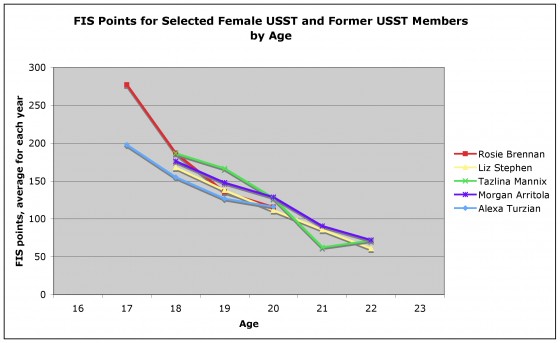
    FS: You clearly were a top college skier while at Utah. What do you attribute your growth to as an athlete while attending Utah? We’re guessing you had many skiers to push your limits while training.

    MH: My most successful races in college were truly a reflection of the team. Our coaches really fostered a positive team atmosphere, which snowballed into a very productive environment at training, competitions and life at home. A goal I set early on was to learn something from each of my team members. Whether it was imitating their weight shift while skate rollerskiing up Emigration Canyon, showing up to practice with a contagiously positive energy, gritting the teeth for one more hard interval up Dry Creek, or just taking a spoonful of fish oil when feeling on the verge of sickness; there was always something to be learned from everyone.

    FS: We like this quote attributed to your dad. We found it in an old Daily Camera piece. Here’s the quote: “For me, sports teaches you how to set goals and to deal with disappointment, and every once in awhile you get to drink from this intoxicating cup of success,” said his dad, Scott.

    How have the sentiments articulated by your dad manifested for you as it relates to your ski career and how you might impart some wisdom on a younger generation of skiers?

    MH: As a former coach of mine always said, “we are only elite ski racers for a very short period of time in our lives, so we need to make the most of every single day”. In other words, we need to set goals, both long term and short term and get better in one way or another every single day and from every single training session. From the beginning of June, we really only have 160 days until the snow flies again. That is not a whole lot of time to make meaningful changes, so being diligent and purposeful during each training session is critical to improvement. If we are doing this, despite disappointing results, we can be confident that we are heading in the right direction and making progress towards our goals. Success along the way provides an important boost in motivation and reassurance that we are on the right path, but in the end what counts is knowing that you did your very best and enjoying the process, not just the end result.

    FS: What were the precise years you skied professionally. You won the Kangaroo Loppet in 2017, but you might have been a grad student by then.

    MH: I raced with the Sun Valley Gold Team from 2013 to 2016 before deciding to pursue a Master’s degree. Luckily, I got a lot of time on snow while coaching leading up to the Kangaroo Hoppet, just enough to counteract the time spent sitting at school desk over the previous year!

    FS: Can you provide us a run down of your coaching experience. We know you coached in Norway and in Australia, as well as served as a travel coach with the Australian National and National Junior Team.

    MH: Throughout my years with the Gold Team, we ran group clinics for Master skiers in addition to some one-on-one coaching on the side. I helped out as a volunteer coach for the University of Utah for several fall semesters before I the SuperTour season kicked off. Between my years in Norway, I worked as a coach with the Birkebeiner Ski Club in Mount Beauty, Victoria for Australia’s winter season culminating with the 2017 Kangaroo Hoppet. This opportunity also lead into working as an assistant coach and wax tech for the Australian Junior National Team at several events around Europe including the World Junior Ski Championships in Goms, Switzerland. I was also fortunate enough to support the Australian contingent of the Swix China City Sprint Tour in Yan’an, China last March.

    FS: You have an exercise physiology degree from Utah (2013) and master’s degree from Norwegian University of Science and Technology in exercise physiology in 2018. Why did you choose to study in Norway?

    MH: Norway is the epicenter of cross-country skiing, they offer great study opportunities and I wanted to experience something new.

    FS: What was the focus of your graduate thesis and what did you learn?

    MH: I was researching the application of altitude training in elite cross-country skiers and the resulting physiological adaptations. I was lucky enough to work with the Norwegian Olympic Training Center, some of the world’s leading researchers in training science, and experience how dark Norwegian winters actually are…

    FS: What can you tell us about the investment in Norway as it relates to applied academic research and cross-country skiing?

    MH: Norway is the best cross-country skiing nation in the world for a reason. The entire country is made up of enthusiastic sports fans with PhD students devoted to improving cross-country ski technique, equipment development and optimizing training.

    FS: How will your experience in Norway inform your ski coaching?

    MH: My time in both Norway and Australia opened my eyes to two unique skiing cultures and allowed me to reflect on the unique challenges and opportunities that we face here in the US. This insight complements my experiences as a racer and I believe will prove quite valuable in developing skiers at Utah. In the big picture, it has not been all that long since I was skiing at the U, but everything I have done since then has improved my ability to make more informed decisions about skiing and training. If I knew everything I know now when I was a freshman at Utah, I believe I could have been a much better athlete. This knowledge is what I hope to instill upon the athletes that I am lucky enough to work with.

    FS: Can we expect Utah to have a pipeline of skiers from Trondheim?

    MH: I wouldn’t say that, but Trondheim certainly has a rich culture of skiing and obviously all the ingredients to produce a large population of great skiers. I would certainly be excited to expose another Trønder or two to the resources and training environment that surrounds the University of Utah.

    FS: What do you see as your biggest challenges at Utah?

    MH: There is obviously a mountain of things I need to learn being a new coach of NCAA skiing, exemplified by the delay in getting this interview back to you. The greatest challenge for me is balancing coaching with all of the administrative components while also implementing all of the ideas that I have to take the program to the next level. I am very excited to be part of this talented Utah coaching staff, work with amazing collegiate athletes and helping to carry on the long-standing traditions of skiing excellence at Utah.

    FS: You come into a storied program that has gone through some major changes – the Head Nordic coach and head of skiing at Utah have been replaced within the last 12 months. What is the atmosphere like right now at Utah?

    MH: The team has been energetic and looking great this fall. Everyone is strong, healthy and really psyched to get the race season underway. I’m excited to see what we can do!


  • Summer Training… All Over Finland with Krista Niiranen

    Summer Training… All Over Finland with Krista Niiranen

    Krista Niiranen doing a workout running with poles in Rovaniemi, Finland. (Courtesy photo)
    Krista Niiranen doing a workout running with poles in Rovaniemi, Finland. (Courtesy photo)

    A World Junior Championships and World U23 Championships skier for Finland who had racked up top-10 finishes in her country’s competitive national-championships field, Krista Niiranen moved to the American Southwest last year.

    “I had been studying law in the University of Lapland in Finland, but for the last season I transferred to the University of New Mexico and represented the UNM Ski Team,” she explained.

    UNM's Krista Niiranen racing to seventh in the 5 k classic at 2017 NCAA Skiing Championships at the Jackson Ski Touring Center in Jackson, N.H. (Photo: flyingpointroad.com)
    UNM’s Krista Niiranen racing to seventh in the 5 k classic at 2017 NCAA Skiing Championships at the Jackson Ski Touring Center in Jackson, N.H. (Photo: flyingpointroad.com)

    Niiranen made a splash on the SuperTour and NCAA circuits, finishing sixth in the classic sprint and 10th in the 10 k freestyle at U.S. nationals before emerging as the top classic skier on the Rocky Mountain Intercollegiate Ski Association tour. She finished seventh in the 5 k classic at NCAA Championships and was named UNM’s Nordic MVP.

    This summer, Niiranen is back in Finland training hard with various friends and teammates from before her time as a college skier. She has taken training opportunities all over her country and shared what it’s like to be a top skier in Finland in the summer.

    ***

    FasterSkier: Where are you based this summer? 

    Krista Niiranen: My summer training is based in three areas this summer: Joensuu in Eastern Finland, the Vuokatti Olympic Training Center, and especially my current hometown, Rovaniemi, in Lapland on the Arctic Circle.

    I have to say that all of these three spots are top for skiers’ summer training. In the beginning of the summer break I was training in Joensuu, the same area I grew up in. If you happen to be a biathlon fan, I stayed within 30 minutes away from Kontiolahti Biathlon Stadium, where is also a great rollerski track for summer training. There is also another track for rollerskiing only in 10 minutes from my family home. Then in June I was training for three weeks in Vuokatti Olympic Training Center, where the majority of the Finnish nordic skiers were gathered up for some good summer training. Currently I am living and training in Rovaniemi in the Northern Finland as a neighbor of Santa Claus.

    Niiranen (left) and Iina Ahokas rollerskiing in Rovaniemi. (Courtesy photo)
    Niiranen (left) and Iina Ahokas rollerskiing in Rovaniemi. (Courtesy photo)

    FS: Compared to Ruka or the World Championships venue in Lahti, what is the landscape like where you are training? 

    KN: For Americans who have watched World Cup races, I would say that Eastern Finland is pretty similar to Lahti, which is four hours drive from my family home to south. The landscape in Vuokatti and Rovaniemi is pretty similar to Ruka with long and some steep hills. But you can definitely find beautiful hills and lakes from all over the Eastern and Northern Finland, where my training has been based for my entire skiing career.

    FS: Do you have a team that you are training with, or are most of your training sessions alone? 

    KN: During summer I have a couple of training camps in Vuokatti and Lapland with a group of athletes who are challenging the skiers in the Finnish national teams. In the beginning of the summer I was training in Joensuu and Vuokatti with a couple of skiers from the same local ski club I represent when I’m competing in Finland. There are also many skiers at my level living in my current hometown in Rovaniemi, so I can get company for training on a daily basis. I really enjoy training with other skiers, but sometimes it is nice to go for a session alone as well.

    FS: What is it like to rejoin a group after being away in the US for most of the year?

    KN: I was welcomed to participate in trainings and training camps even if I spent most of the year in the US. Of course it was a little bit different situation when I had not raced in any competitions in Finland last season, but I have many good skier friends here in Finland so it was just fun to catch up with them during rest afternoons and easy trainings.

    Jasmi Joensuu (left) and Krista Niiranen on a trail run outside of Vuokatti, Finland. (Courtesy photo)
    Jasmi Joensuu (left) and Krista Niiranen on a trail run outside of Vuokatti, Finland. (Courtesy photo)

    FS: During the summer, how do you design your training – is it based on a plan from New Mexico? Are you adapting it at all to be able to match with your training friends?

    KN: This summer I am designing my training plan based on the knowledge I have gained from my previous Finnish coach and during my time as a Lobo. I am adapting my plan to match with the fixed training camps and trainings of other skiers based on the same area. I think that doing intervals and other training in a group is a good way to develop as a skier and learn from each others. I am also trying to listen my body to keep the balance between hard training with lots of hours and rest time.

    FS: Are there typical workouts that you do that are different and probably wouldn’t appear on an American training plan?

    KN: The training is pretty similar here in Finland than on our American training plan in New Mexico, but the biggest difference is that we are used to do more really easy long distance and level 2-3 training in Finland, but not really level 4-5 training during summer time.

    In Finland I am also orienteering weekly basis as a training. I think that orienteering is a more Scandinavian or European thing, because in the US it was mostly an unfamiliar concept for many people. Running and navigating from point to point in the forest using a map and compass is actually pretty hard training. At least for me, a chill orienteering session ends up always being at least level 3 training when running fast in the forest and concentrating on reading a map.

    Iina Ahokas (left) and Krista Niiranen rollerskiing in Rovaniemi. (Courtesy photo)
    Iina Ahokas (left) and Krista Niiranen rollerskiing in Rovaniemi. (Courtesy photo)

    I have also added some elements, like without poles skate skiing, from our American plan to my training plan in Finland. I am also planning on doing some track sessions here in Finland – I was not used to doing that before my time in New Mexico.

    FS: What’s the hardest workout you have done so far this summer? 

    KN: Definitely, a traditional roller ski race in Vuokatti. The event consisted on 1.6 k uphill skate rollerskiing prologue, a 3 k cross-country running race, and 10 k skate rollerskiing pursuit where the final 1.6 k is uphill. The race was also mentally interesting, because I had not raced in Finland for over a year and therefore I did not really have any expectations when it comes to my current shape. After a hard competition, I was happy when I realized that I had set a new personal best in all the three stages after a year in the US.

    [Ed. Note: After the final stage, Niiranen was 10th, two minutes and 50 seconds behind biathlon World Champion Kaisa Makarainen, who won the women’s tour ahead of five-time Olympic medalist skier Aino-Kaisa Saarinen. World Champion Matti Heikkinen won the men’s tour.]

    FS: Are there any absolute favorite places to run or bike or rollerski? 

    Krista Niiranen (left) and Finnish teammate Petra Torvinen training in the Vuokatti ski tunnel. (Courtesy photo)
    Krista Niiranen (left) and Finnish teammate Petra Torvinen training in the Vuokatti ski tunnel. (Courtesy photo)

    KN: All the areas I have been training in this summer are among the best spots for summer training in Finland because the access to rollerski tracks, bike paths and trails is just by the front door. But if I should choose my absolute favorites, I would mention group training on a rollerski track and uphill classic rollerskiing in Vuokatti. Also running with good skier friends (and reindeer) on the countless of trails surrounded by a beautiful scenery in Rovaniemi is one of my favorites. I was also super excited to ski on real snow in a ski tunnel in Vuokatti, even if the scenery there is only a concrete wall.

    FS: Maybe related, is your area set up best for some parts of training? 

    KN: I would objectively recommend all of these three areas for summer training for any skier, but in Vuokatti there is everything what a nordic skier can ask for during summer. There are a rollerski track, long uphills, tens of kilometers of trails for long distance running and hiking, bike paths, a ski tunnel with real snow and beautiful scenery with hills and lakes in Vuokatti. It is not a wonder that there are other national teams in addition to Finnish skiers training in Vuokatti as well.

    It is just convenient that especially in Vuokatti and Rovaniemi: all the training possibilities and facilities are right after stepping out the front door, so there is no need to consume time and energy for driving for training.

    FS: What is the best part of Finnish summer, aside from training?

    KN: The best parts of Finnish summer are midnight sun, going to sauna and swimming in a lake, and everyman’s right to pick up berries and mushrooms to a freezer for the fall and winter.

    Midnight sun from an apartment window at the Vuokatti Olympic Training Center in Finland. (Photo: Krista Niiranen)
    Midnight sun from an apartment window at the Vuokatti Olympic Training Center in Finland. (Photo: Krista Niiranen)