Tag: NEG

  • In Good Standing—Fundamental Elements of Ski Stance

    In Good Standing—Fundamental Elements of Ski Stance

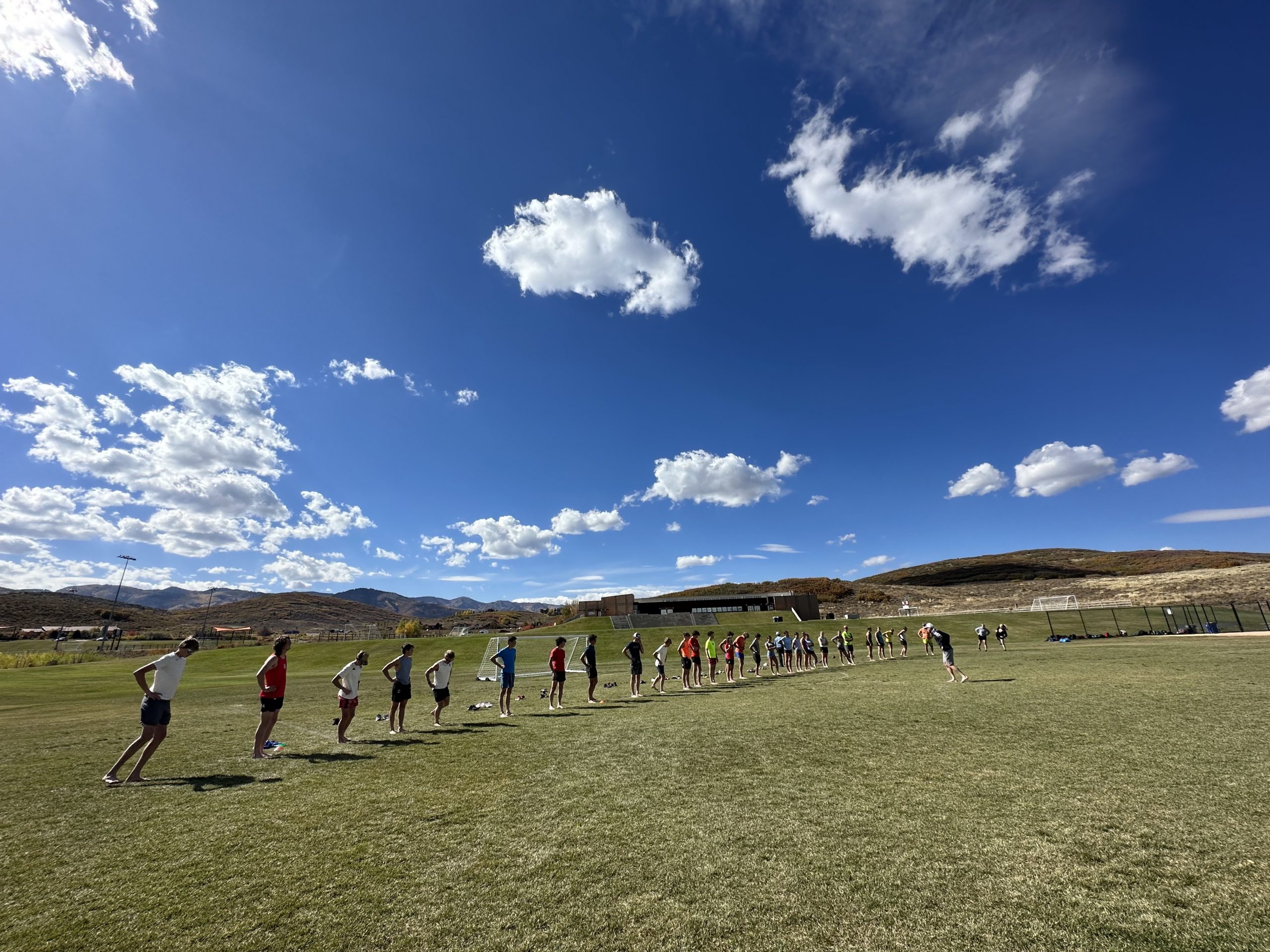
    Ned Dowling conducts a Ski Stance seminar for participants in the recent National Training Group (NTG) and National Elite Group (NEG) training camp in Park City, Utah. (Photo: Ned Dowling)

    “Big motor, lousy suspension.” That’s how I often describe the endurance athletes I see in physical therapy. They have the physiology to go fast but are lacking the stability and/or coordination for efficient movement. Decreased efficiency equals increased load. And excessive load has led to injury and a visit to their friendly, neighborhood PT. 

    I used the same description while Greta Anderson, the US Cross Country Development Coach, and I stood trackside last August watching rollerskiers during the 15k Classic race in Trollhatten, Sweden. At that high level of racing, everyone was fast, but not everyone looked to have good stability, movement coordination, and efficiency. Our peanut gallery coaches’ box banter turned into a lengthy conversation on the fundamentals of Nordic skiing. Next thing I knew, Greta had me leading a training session for the National Training Group (NTG) and National Elite Group (NEG) combined camp in Park City, UT. We called it Stability From the Ground Up with the goal of reinforcing the Ski Stance while balancing on one leg and doing tricks. The following is an excerpt of that training session. 
    .        

    What is Ski Stance?

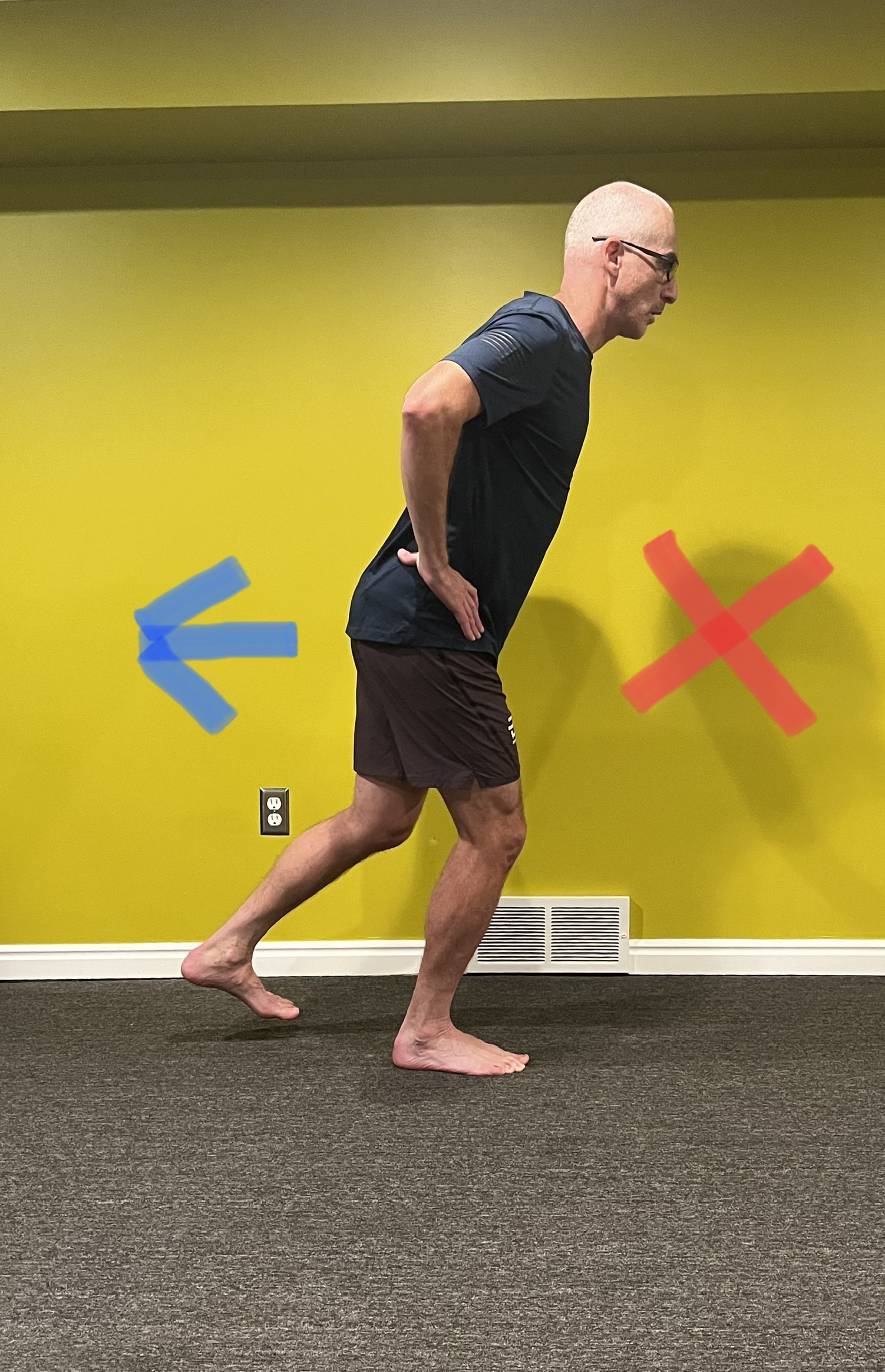
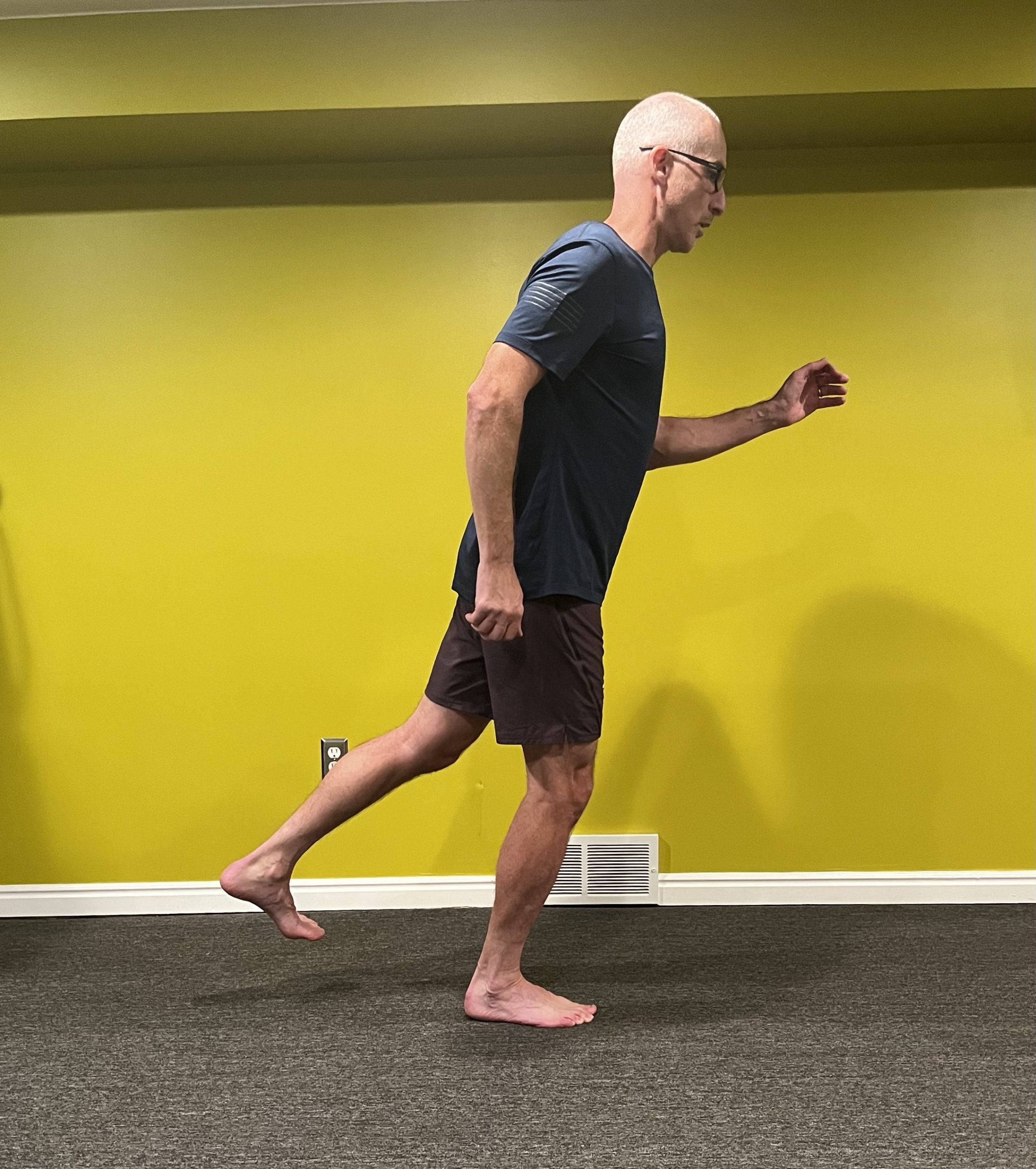
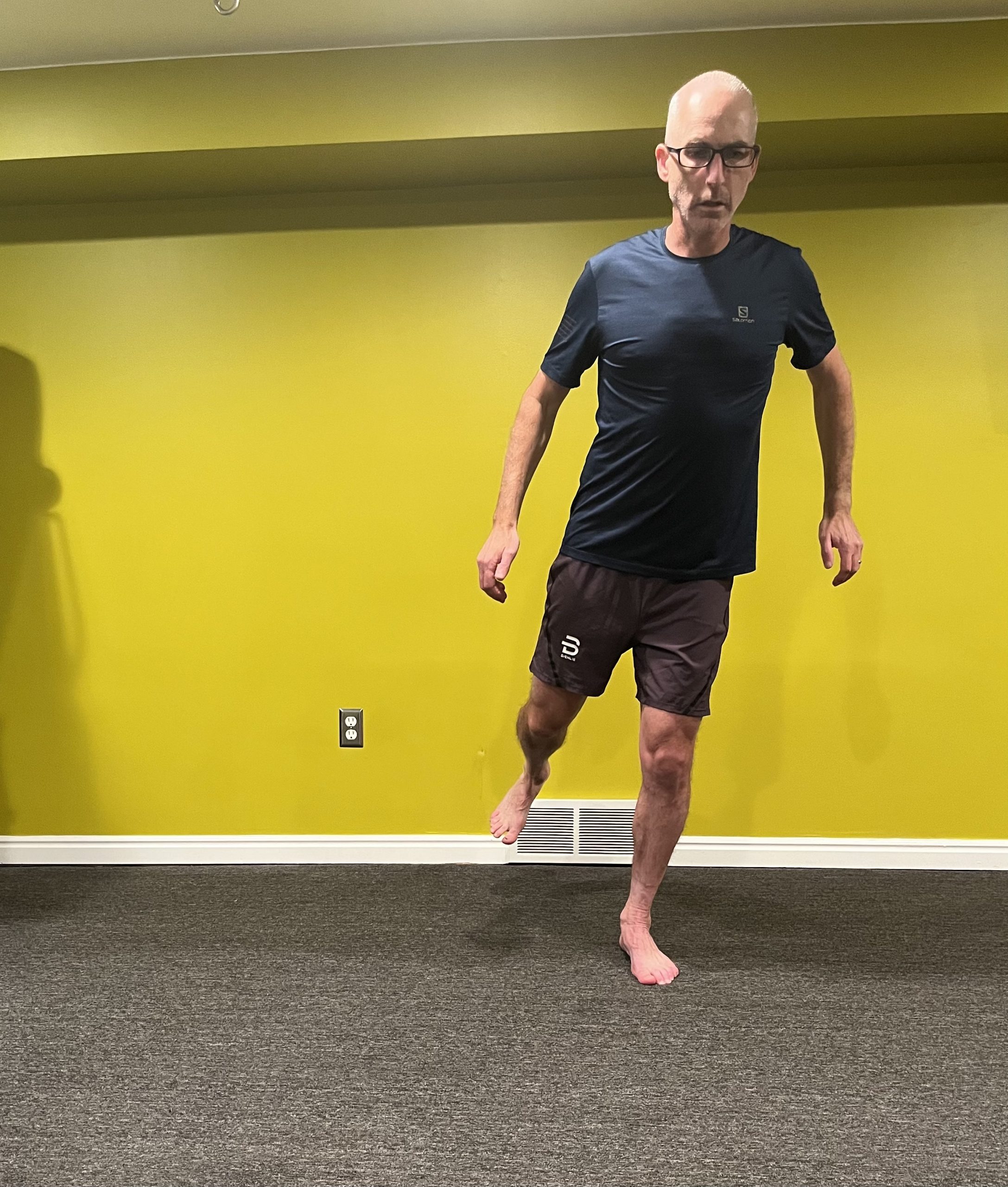
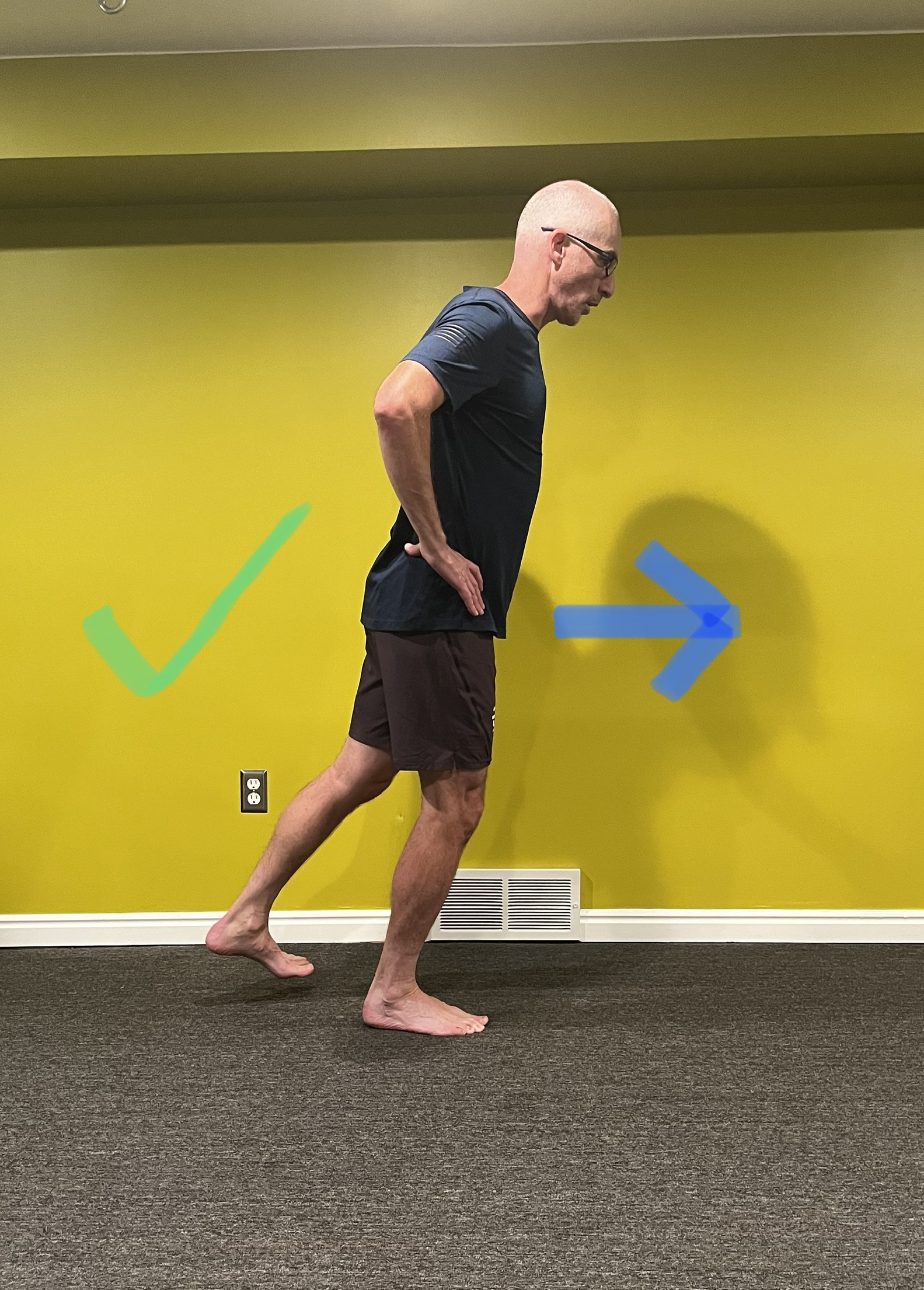
    It is the foundation of Nordic skiing, both Skate and Classic. It is the stable, balanced position on the glide ski that facilitates both optimal glide and a stable platform as the glide ski becomes the kick ski. Stable glide begets more power, and more power begets more stable glide

    Ski Stance Checklist:
    • Balance on one leg.
    • Equal pressure between the inside and outside of the foot, especially across the metatarsal heads between the ball of the foot on the big toe side and the pinky toe equivalent. 
    • Weight is biased towards the front of the foot but the heel stays down. Distribution is in the neighborhood of 70:30, forefoot to rearfoot. 
    • Toes are relaxed. This doesn’t mean the toes are hovering off the ground, but it very much means the toes are not clawing at the floor. (Have a look at the insoles of your ski boots: if there is a lot of wear under the toes, you are likely using them too much. This is either a bad habit or a compensatory strategy, or both. Speaking of insoles…)
    • The ankle is flexed enough to put the kneecap in line vertically over the toes. 
    • Slight bend at the knee and hip.
    • Forward lean at the trunk. This is accomplished with a hinge at the hips, not a flex through the spine. Nose-Knee-Toes is the old cue. If you’re dripping snot out of your nose, it should land on your foot not down the front of your shirt. 
    • High Hips. If I had a dollar for every time Devon Kershaw has endorsed a skier with “high hips” I could buy a ski quiver worthy of the World Cup. But what does this even mean? Our Checklist just listed flexion at the ankle, knee, and hip, so how can we keep the hips high but flexed at the same time? Forward Hips might be a little more intuitive. The pelvis is pushed forward without losing the bend at the hips. It will initially feel like you are falling forward, but that’s a good thing. We want the center of gravity shifted forward to push us down the trail. A different cue is Front seat, not Back Seat. The back seat is like starting to sit on the toilet: ankle, knee, and hip are flexed and the trunk is leaning forward; however, the butt is reaching backwards. Aim to shift the hips forward like someone is pulling at the front of your belt.
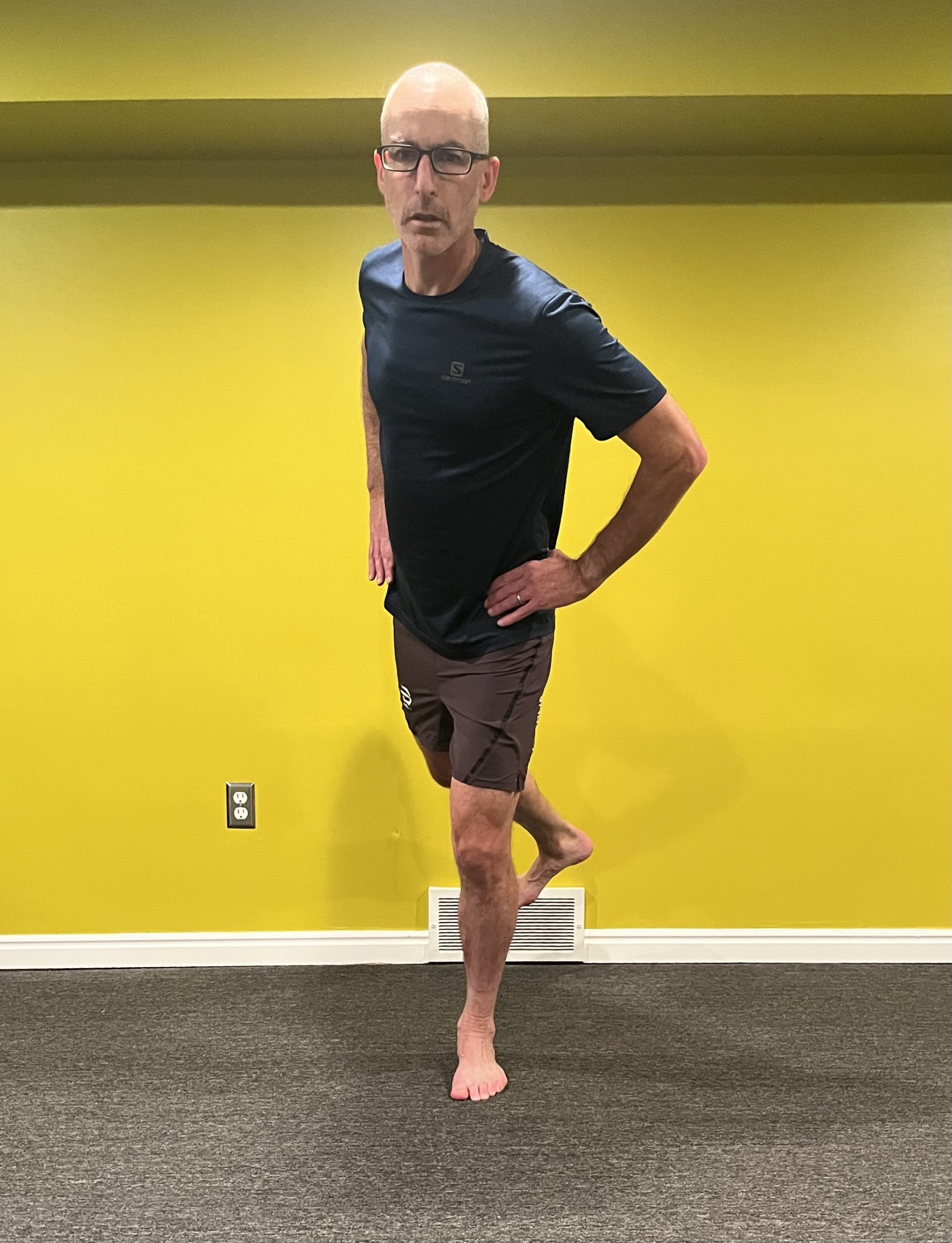
    • Stability from the hip, not leaning to the side. When we stand on two feet, the center of gravity is between the two feet. If we are to stand on one foot, we can’t just pick up the opposite foot—our center of gravity has to shift to the stance side. That can be accomplished by leaning the trunk to the side, but this is not an active position and doesn’t facilitate generation of power. The weight shift ideally comes via a lateral movement of the pelvis over top of the stance leg. Note: this shift is very applicable to diagonal stride as we move from the kick ski to the glide ski. The direct application to skate varies a bit with the sub-discipline—V1 has a more distinct weight shift from ski to ski while the transition during V2 is more of a “swapping” of skis underneath the body than a lateral movement from one to the other.
    Exercises 

    The intent of these exercises is to reinforce the Ski Stance. Each one has a movement component to challenge both balance and maintenance of the Ski Stance position. (Here is a primer on single limb balance and stability.) The quality of movement and balance are paramount. In order to be beneficial, the exercise should be challenging but doable. If you are falling all over the place or cannot control the movement, the exercise is likely too difficult for your current level. The exercises are listed in ascending order of difficulty.
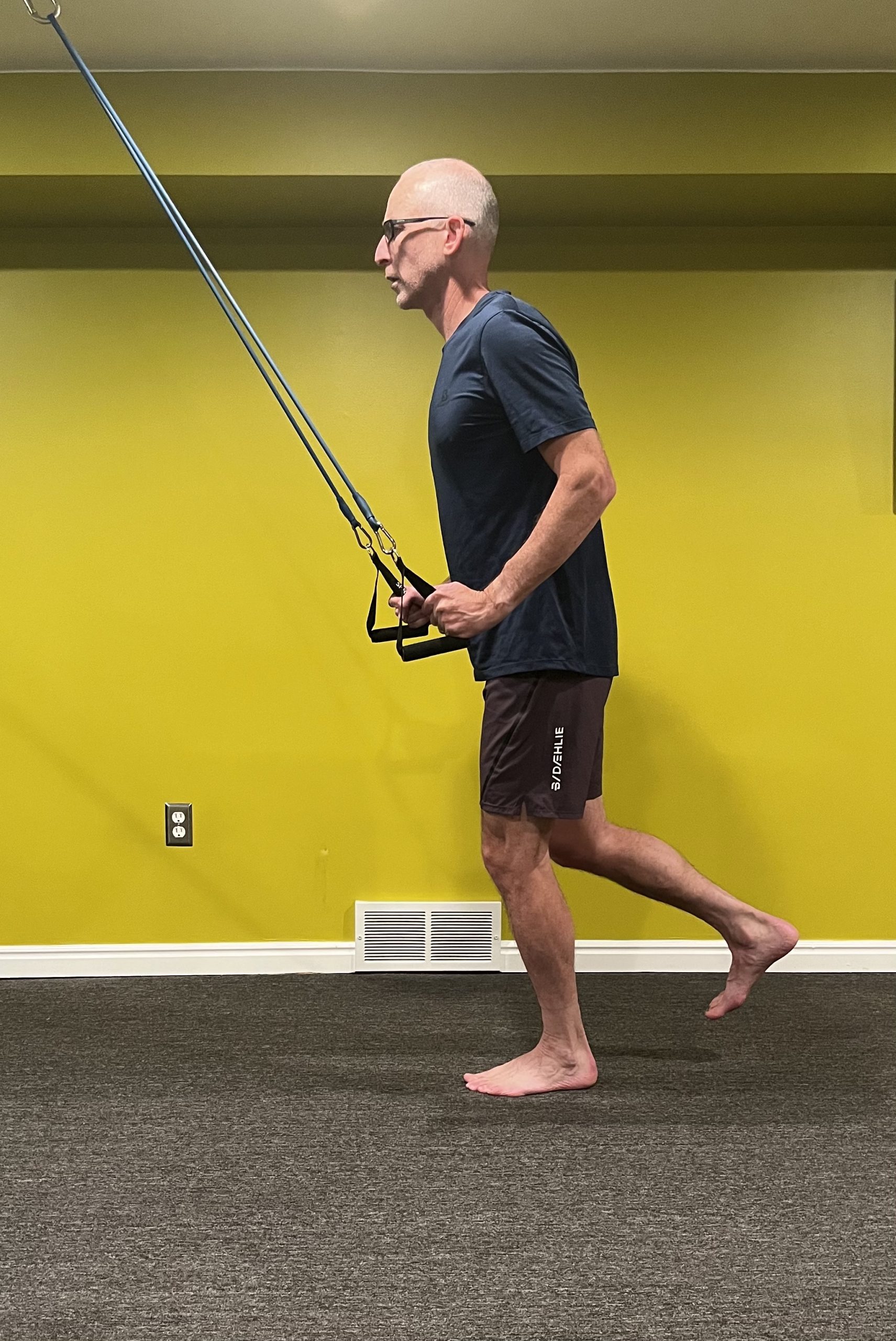
    Band Poling Exercise

    • Ski Stance.
    • Use a two-tailed band or two separate bands anchored at head height or higher.
    • Pull down on bands keeping some bend in the elbows. (This is not meant to be a double poling simulation as we are trying to stay tall in the Ski Stance not dropping down as we would with DP or V2.)
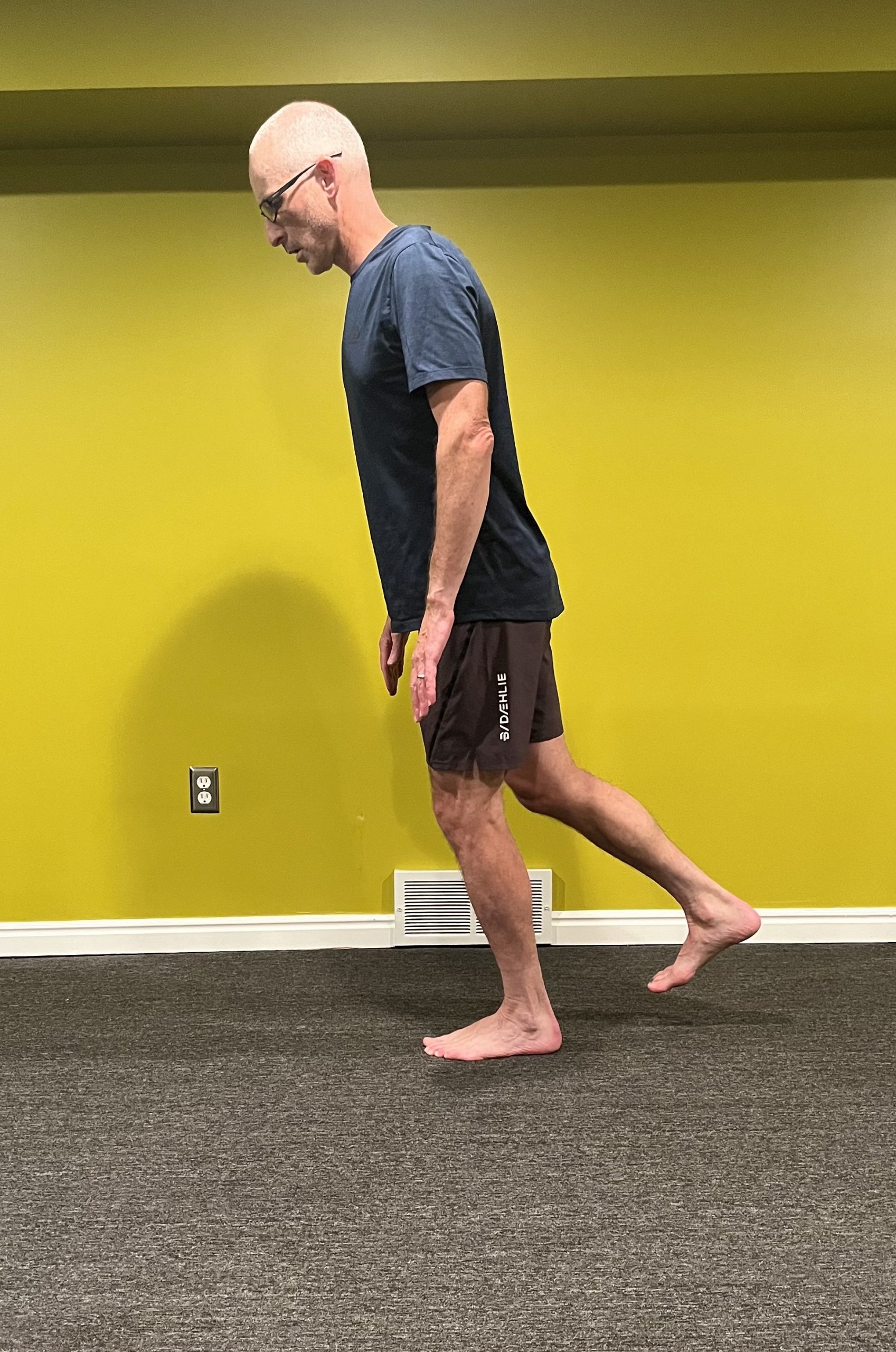
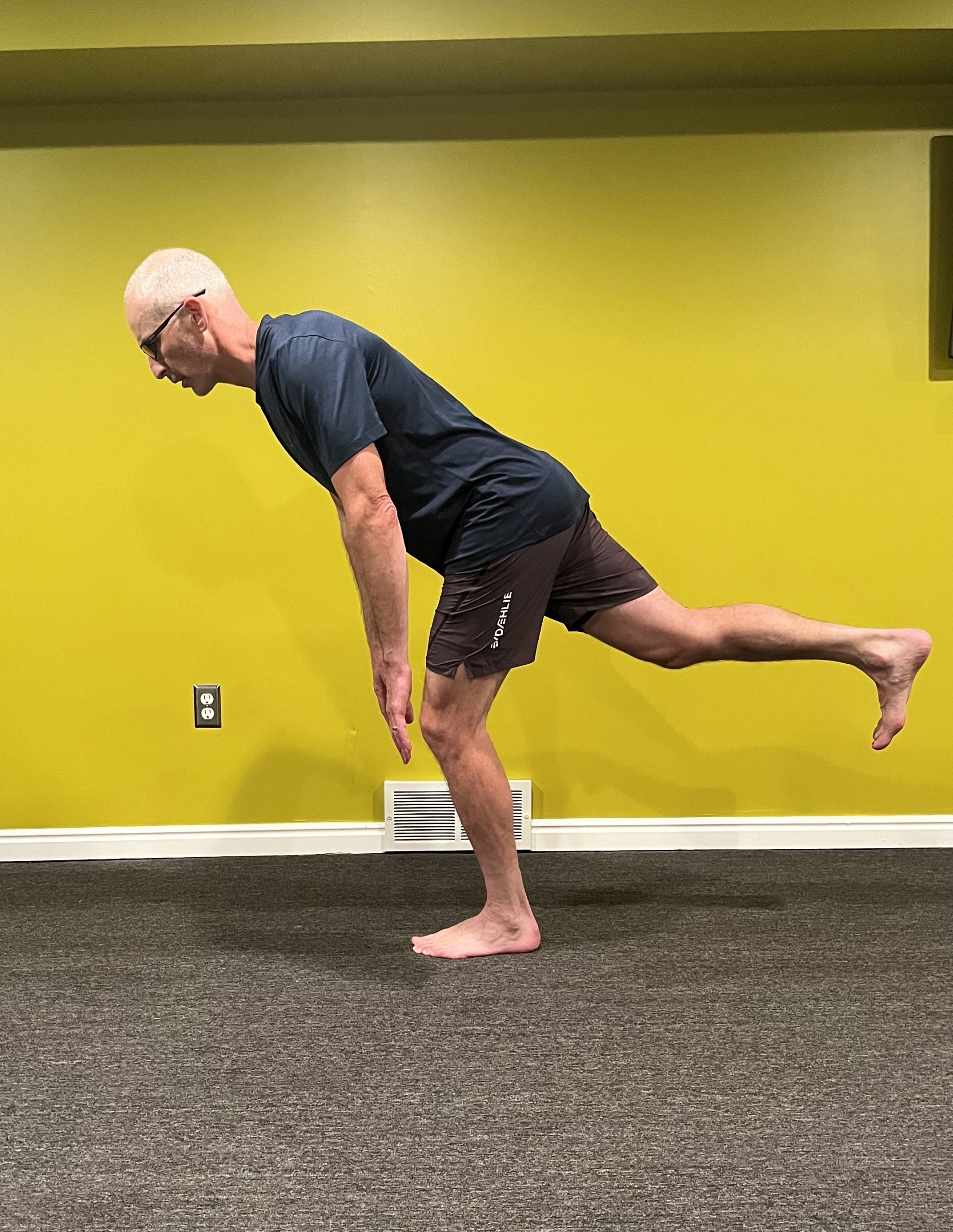


    Romanian Deadlift (RDL) Exercise

    • Ski Stance.
    • Bend forward aiming your fingers for the sides of your knee. The movement is a hinging motion at the hip. The joint angles at the ankle and knee should not change. The spine stays in neutral position without bending.
    • Pelvis stays level as you bend forward (no twisting).
    • Finish with a push forward of the hips/pelvis—front seat not back seat.
    • You can add weight (single dumbbell or kettlebell in the opposite hand or one in each hand) for glute and hamstring strengthening, it doesn’t necessarily make the balance/stability any more difficult. 
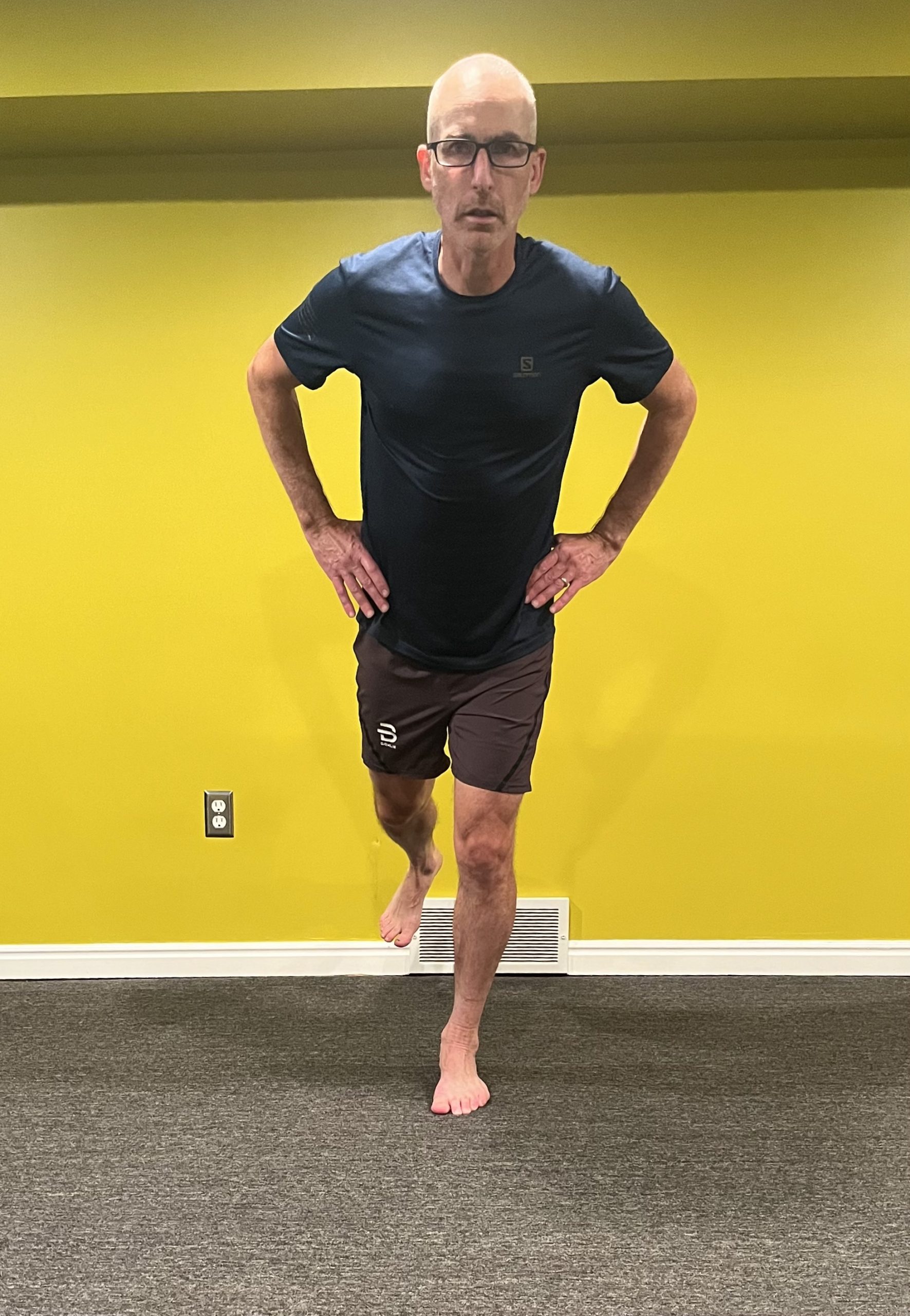


    Hip Twist Exercise

    • Ski Stance.
    • Twist your upper body in the opposite direction of the stance leg (standing on right leg = rotation to the left).
    • Shoulders, belly button, pelvis move together. 
    • Knee cap stays pointing straight ahead. 
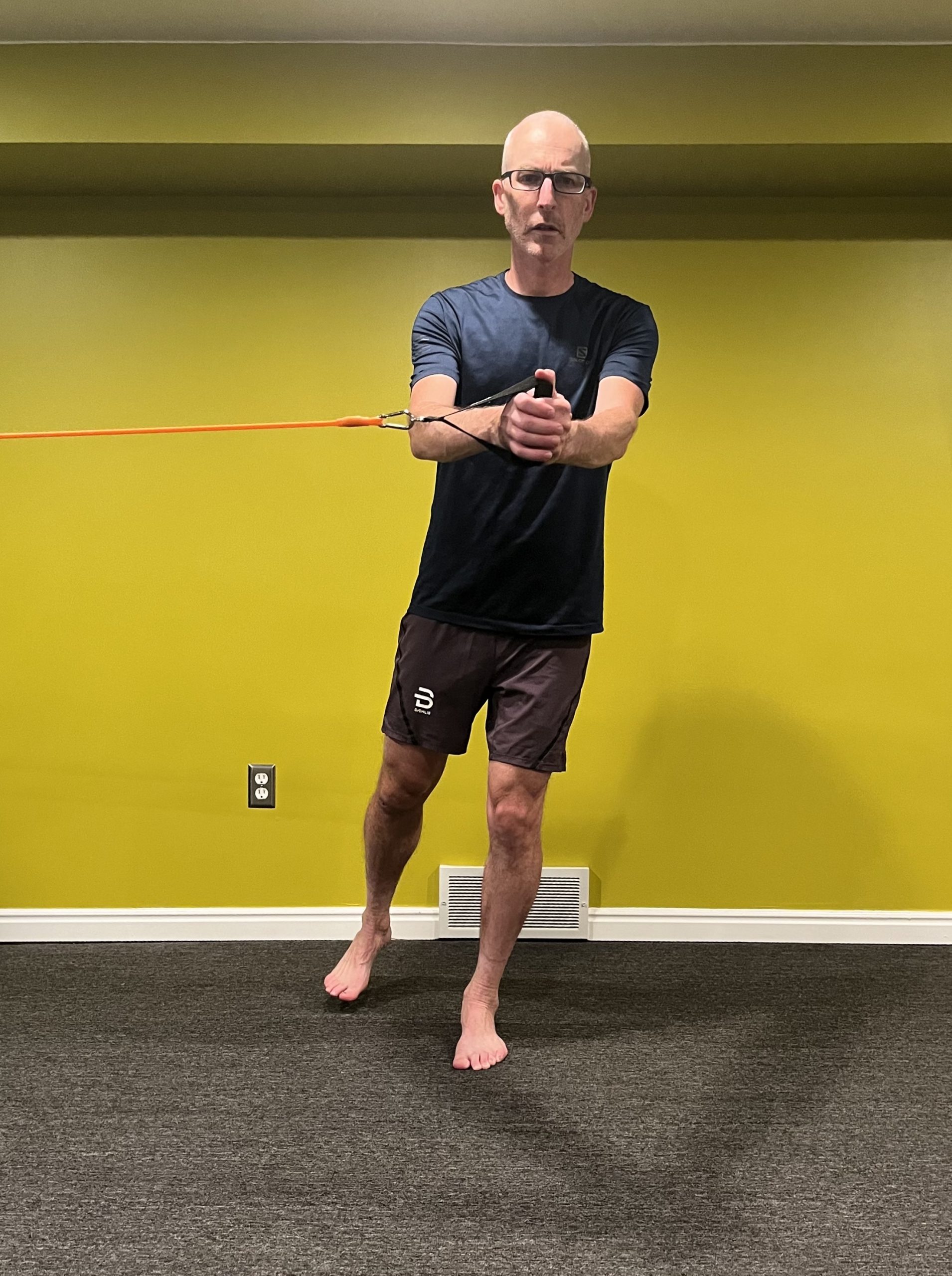


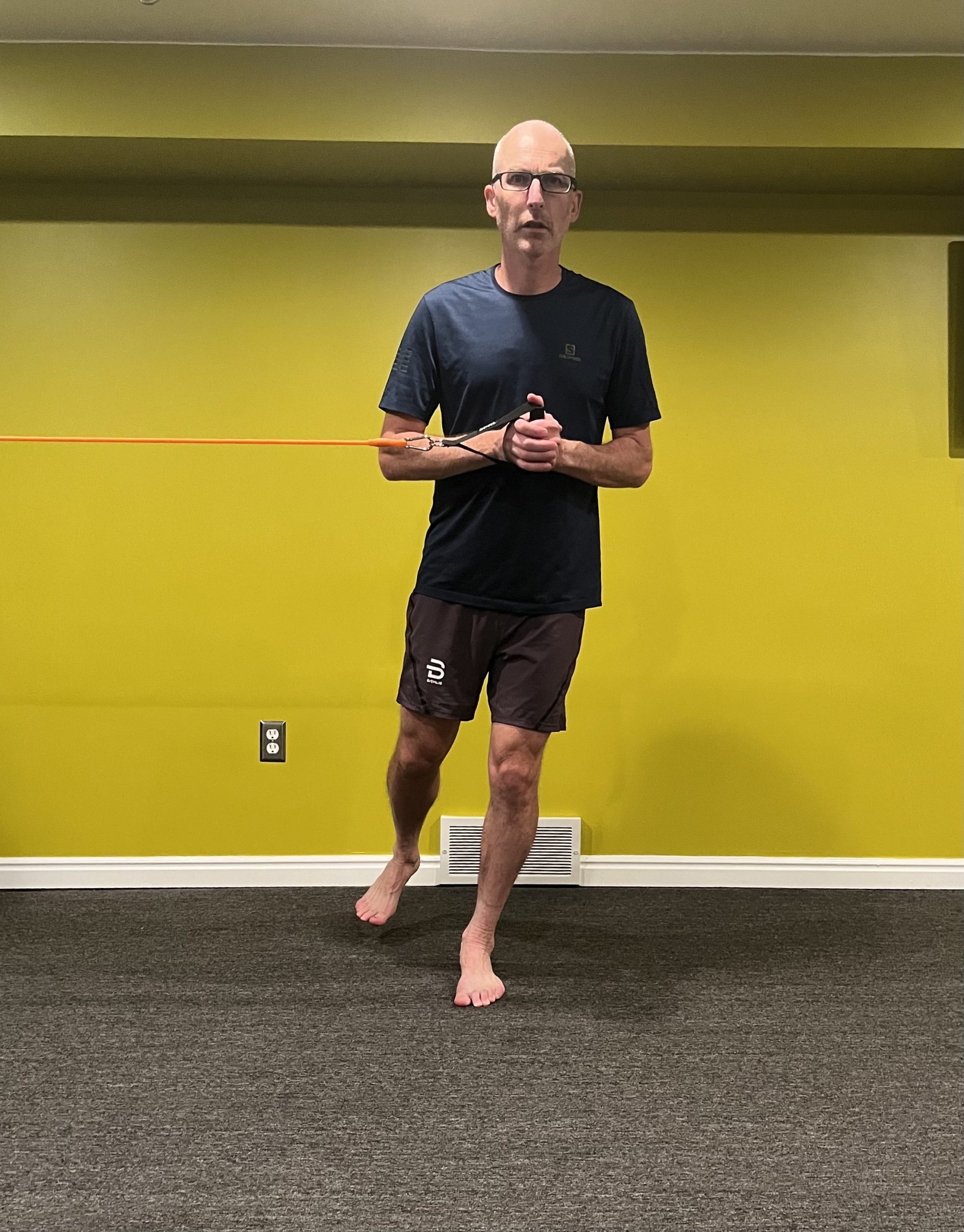
    Paloff Press with Resistance Band Exercise

    • Ski Stance.
    • Band is anchored at chest height coming from the opposite side of the stance leg.
    • Holding the band in both hands, push your arms straight out and back.
    • Keep knuckles pointed straight ahead—don’t let the band twist you.
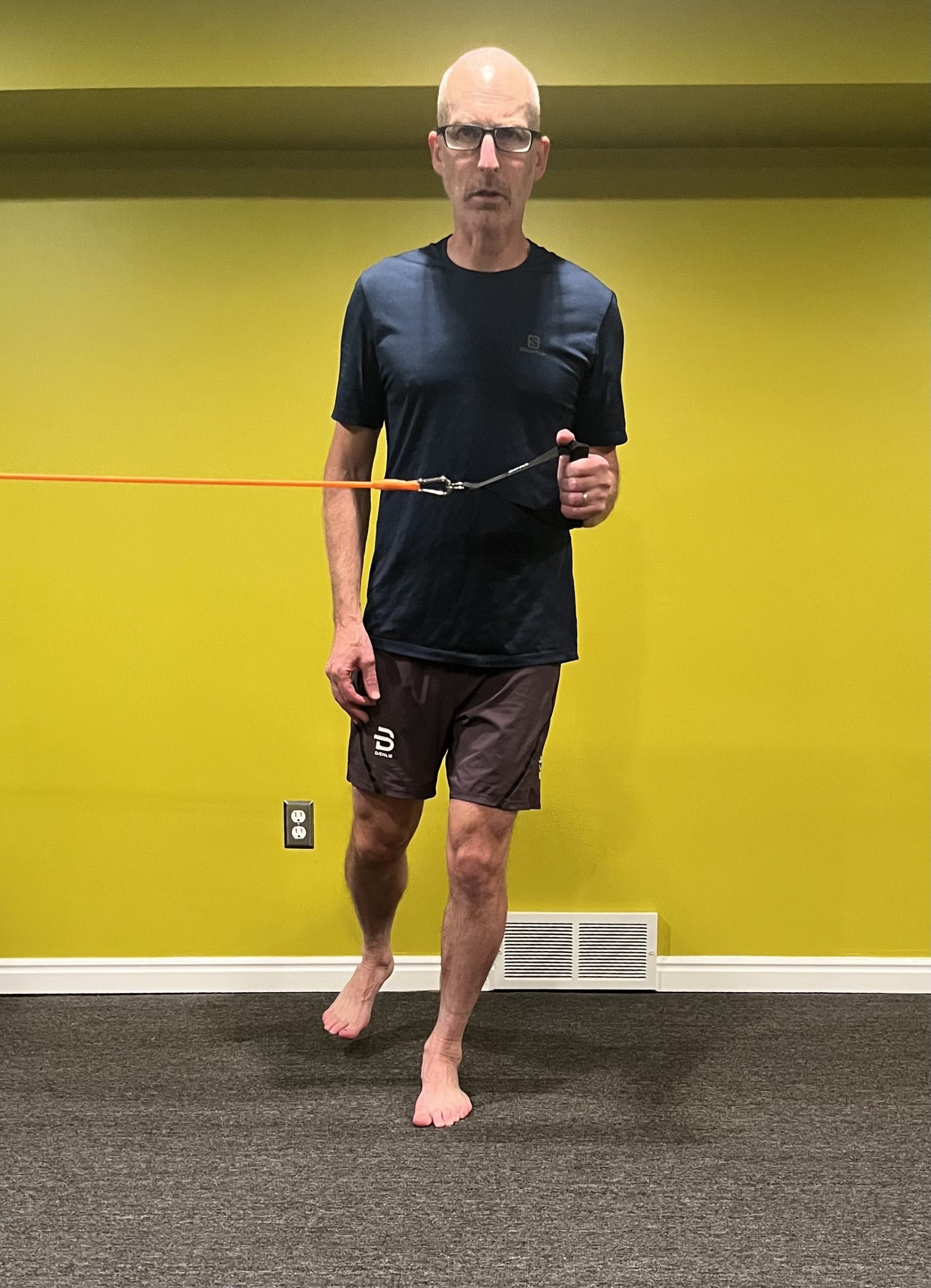


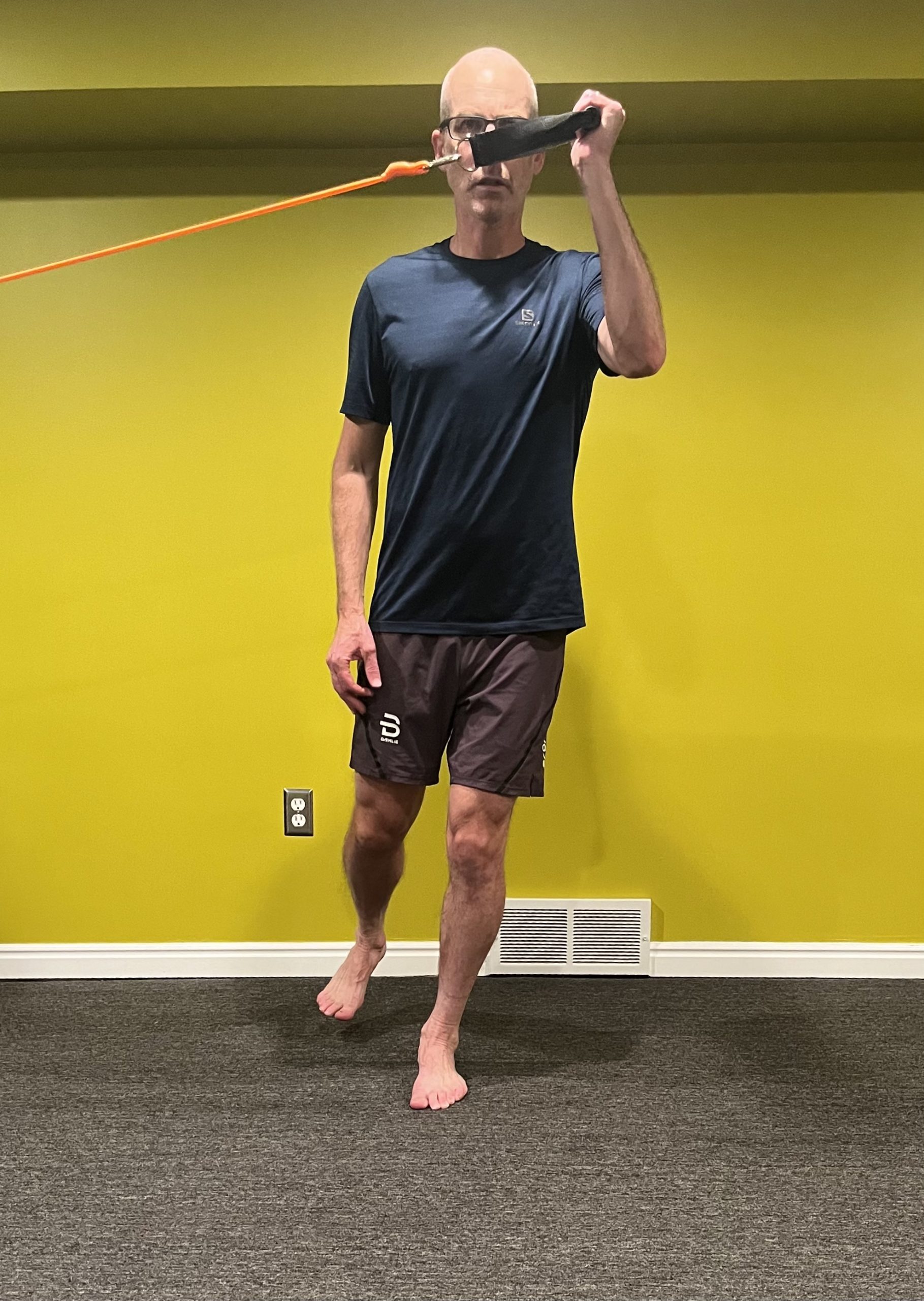
    Shoulder External Rotation + Uppercut with Resistance Band Exercise

    • Ski Stance.
    • Band is anchored at chest height coming from the opposite side of the stance leg.
    • Hold the band in the same hand as the stance leg with your elbow bent at 90 degrees and knuckles pointed straight ahead.
    • Keeping the elbow bent at 90 degrees, raise your arm up as if you were a waiter carrying a tray.
    • This is very good bonus work for your rotator cuff muscles.
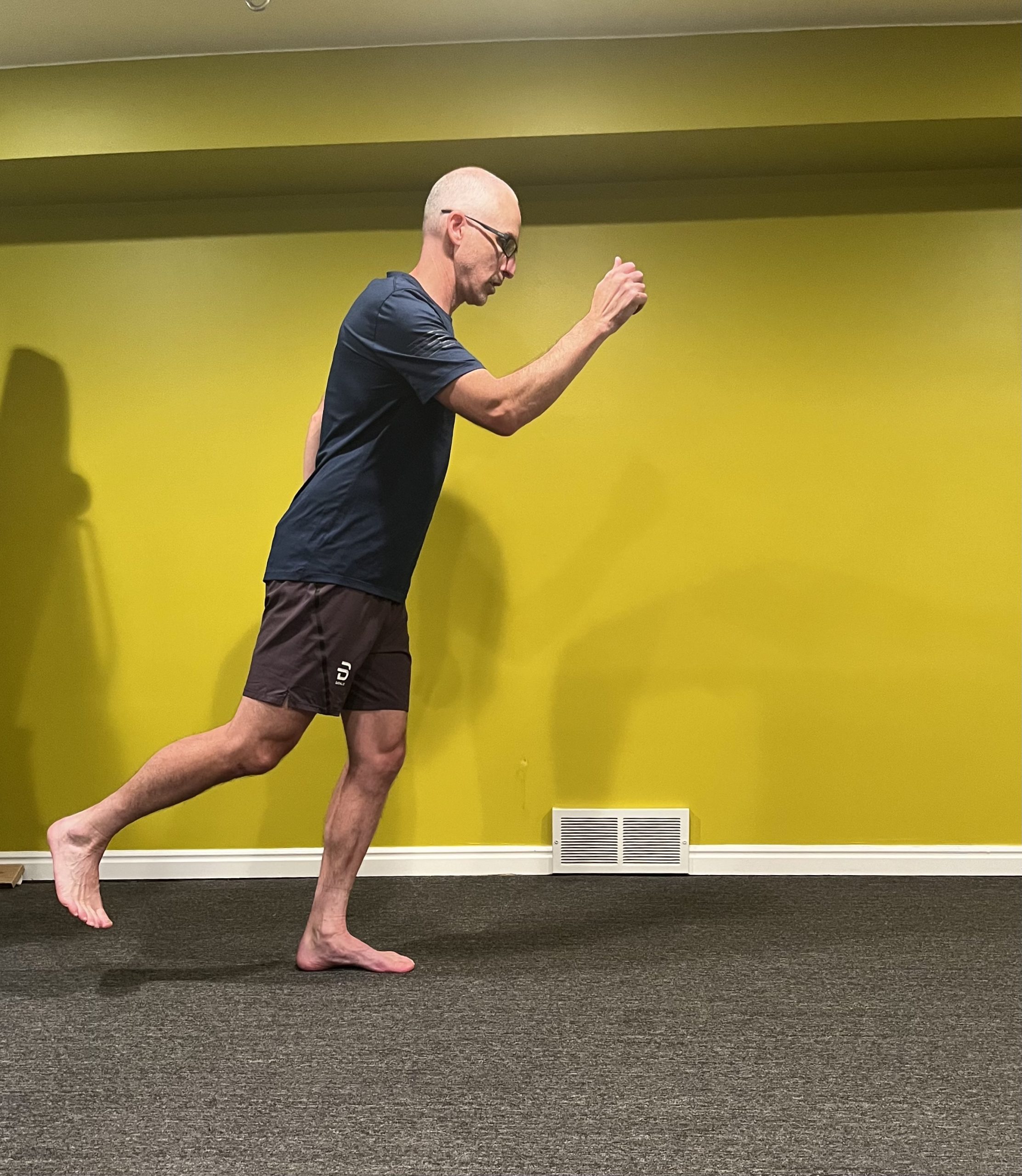


    Classic Stride/Bound with Pause for Balance Exercise

    • Traditional diagonal stride bound except with a pause on the “glide” foot.
    • Be honest about balancing in Ski Stance before kicking onto the other leg.
    • Continue to focus on arm swing mechanics and a strong kick.
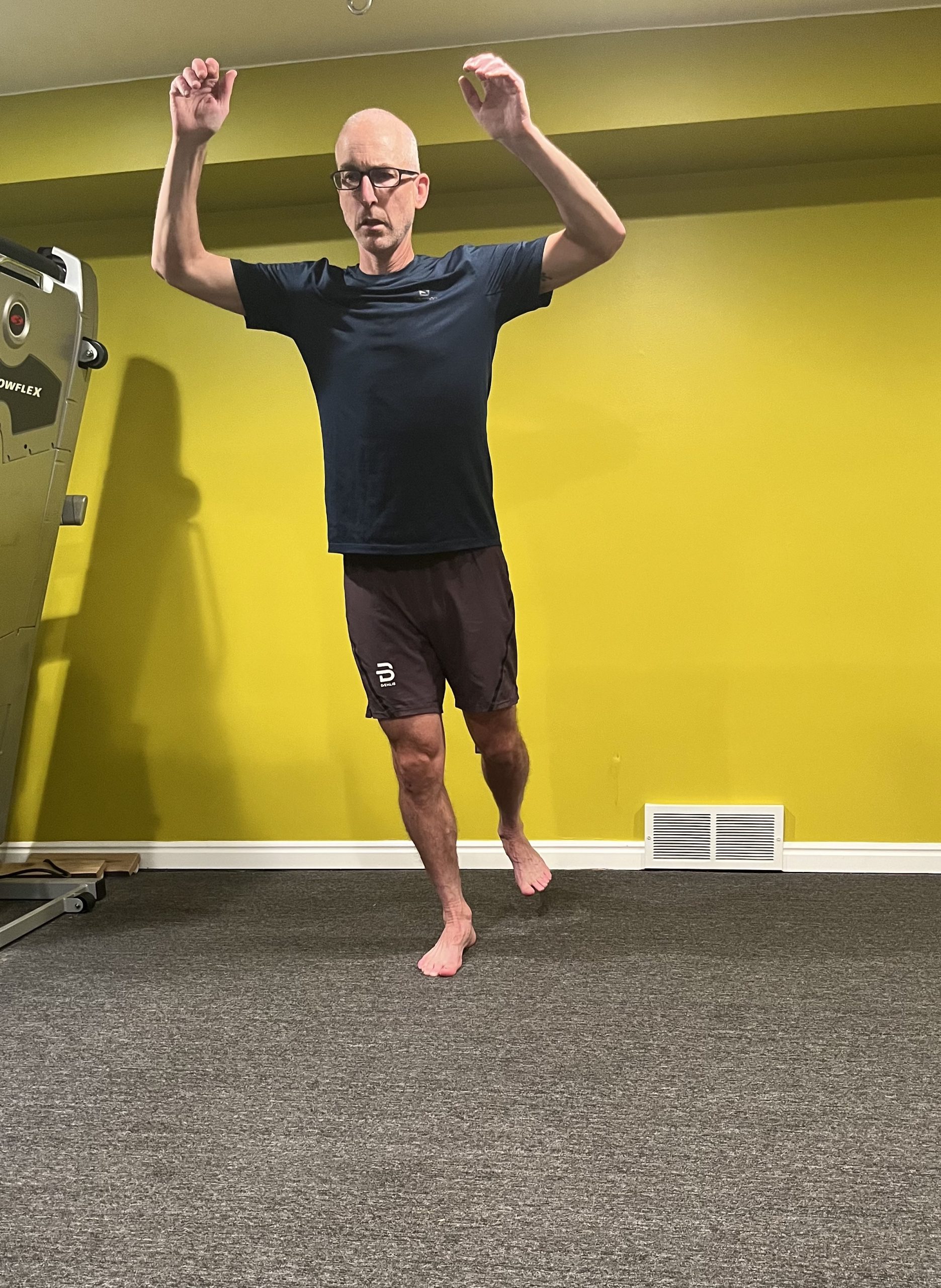


    Skate Stride/Bound with Pause for Balance Exercise

    • Traditional lateral bounding except with pause on the “glide” foot.
    • Be honest about balancing in Ski Stance before kicking onto the other leg.
    • Continue to focus on both the pre-load and strong push through the leg.


  • USST Turns Up the Intensity in Placid, Skipping Sunday’s Climb to Castle

    USST Turns Up the Intensity in Placid, Skipping Sunday’s Climb to Castle

    The women at the USST camp in Lake Placid push each other during some double pole. (photo: Reese Brown)
    The women at the USST camp in Lake Placid, N.Y.,  push each other during some double pole intervals on the rollerski track earlier this week. (Photo: Reese Brown)

    The fall season means many things to the cross-country skiing community. It means the temperatures decrease, the training intensity ramps up, and excitement for winter begins stirring in the soul.

    For well over a decade now, fall for the U.S. Ski Team (USST) has also meant a training camp in Lake Placid, N.Y. Although the team has had camps in New Zealand and Norway not long ago, it still manages to squeeze in a one-week intensity camp before heading to another dryland camp in October in Park City, Utah.

    The national team coaches were already in Lake Placid after hosting the National Coaches’ Education Symposium last weekend, and with half of the USST athletes training with the Stratton Mountain School T2 Team (SMST2) fewer than three hours away, it made sense to have a quick camp at the Olympic Training Center in Lake Placid.

    “We wanted to give them the chance to come to a different venue, get on the rollerski track, and kind of have a check in with them to make sure things are going well technically and recovery wise and everything else,” said USST head coach Chris Grover in a phone interview.

    But the eight national team athletes from the SMST2 Program, Jessie Diggins, Sophie Caldwell, Katherine Ogden, Julia Kern, Andy Newell, Simi Hamilton, Ben Saxton, and Patrick Caldwell, account for a small fraction of the nearly 30 athletes at the camp. Joining the USST is the rest of the SMST2 team, the Sun Valley Gold Team, the National Elite Group (NEG), and the National Training Group (NTG).

    The NEG is made up of the best junior athletes from each region (East, Central, West, Alaska) while the NTG consists of the best U24 and U20 athletes in the United States, based on domestic and international results from last season. The SMST2 domestic team and the Sun Valley Gold Team are made up of elite American skiers not on the national team.

    “The athletes in those clubs are the athletes that are just below the national-team level and aspiring to the national team level,” Grover said. “They are the ones that are knocking on the door and pushing everyone along. It’s really fantastic to have them all here.”

    For all of the non-USST athletes, the camp represents not only an opportunity to train at the Olympic Training Center (OTC), but also the chance to live along side some of the national-team members and see how they train, refuel, and recover. They also receive some technique and training feedback from the national team coaches.

    Andy Newell rollerskis in the colder weather at the USST camp in Lake Placid. (photo: Reese Brown)
    Andy Newell rollerskis through the colder weather. (photo: Reese Brown)

    Because the camp is one week long this year, the group is trying to fit in as much training as possible to get the most out of the venue and one another. On top of a good number of hours, the plan is to have five intensity sessions throughout the week.

    “Obviously if were having a longer camp, 10-day, 12-day, 14-day camp, we have to build in a little more recovery and here we’re just jamming through it and training all seven days. People are taking a break afterwards,” Grover explained.

    In order to fit everything in, the USST is skipping what usually is the highlight event of its camp, the Climb to the Castle rollerski race up Whiteface Mountain in Wilmington. The race goes five miles up the Whiteface Memorial Highway to a castle at the summit and has an average incline of 8 percent. However, this year, the USST coaches felt the race didn’t quite align with the goals of the camp.

    “The Climb to the Castle, as hard as it is to miss it because it is a fantastic event, it just didn’t play well athletically for the needs of the group,” Grover explained. “We wanted to do more sprint specific training and short intensity as opposed to giving up a whole workout or two to do the Climb to the Castle.”

    Also contributing to the decision is the fact that many of the national-team members on the SMST2 team are more sprint-oriented, so the potential benefits of an uphill time trial are not as pronounced for those athletes.

    Meanwhile, many US Biathlon team members will be racing the Climb.

    “Obviously it is unfortunate especially for the organizers that the [U.S. cross-country] ski team is not doing it this year,” US Biathlon women’s coach Jonne Kähkönen wrote in an email. “For us and our athletes; it is one hard session at the end of the test week and in the middle of a tough block of fall training and the goal is always to go all in for these types of sessions — so in terms of that it doesn’t really change anything. We would have liked to have the tough competition there, but understand that it didn’t fit in their plans this time.”
    “As for us; we will have all the athletes that are in 100% health in the race,” Kähkönen added.

    In terms of the differences between this week’s camp and the U.S Ski Team’s two-week camp in Norway, the Lake Placid camp has about three times as many athletes in attendance and the domestic venue really makes for a different approach. In Norway, the group was exploring a new area, but in Lake Placid, the group is back to an old standby.

    “This is obviously a very familiar place to us,” Grover said. “We know all the roads here and all the trails here and that sort of thing. So it’s really easy for us to plan where we are going.”

    So while they had a good time training on new roads and paths in Norway, the group is taking advantage of the more familiar territory in Lake Placid, at least for a week. Next week, the athletes will head home to recover. But for the USST members, the time at home will be short. They have less than a month until their next camp begins in Park City on Oct. 12.

  • Gallery: USST/NEG Park City Altitude Camp

    Gallery: USST/NEG Park City Altitude Camp

    Top nordic skiers from around the country converged on Park City, Utah in early October for the U.S. Ski Team (USST) and National Elite Group (NEG) altitude camps. While the NEG camp concluded Oct. 12, the USST is continuing to train in Utah until Frozen Thunder, a series of on-snow competitions in Canmore, Alberta that will take place later this month. Reports from Park City have been highly positive with the exception of few incidents including another broken elbow for the USST’s Sophie Caldwell and a sliced finger for SMST2’s Annie Hart. Check out USSA’s photos from the activity in Utah, below.

  • Bounding Up Whiteface: Video from USST Elite Camp (Updated with Quotes)

    Bounding Up Whiteface: Video from USST Elite Camp (Updated with Quotes)

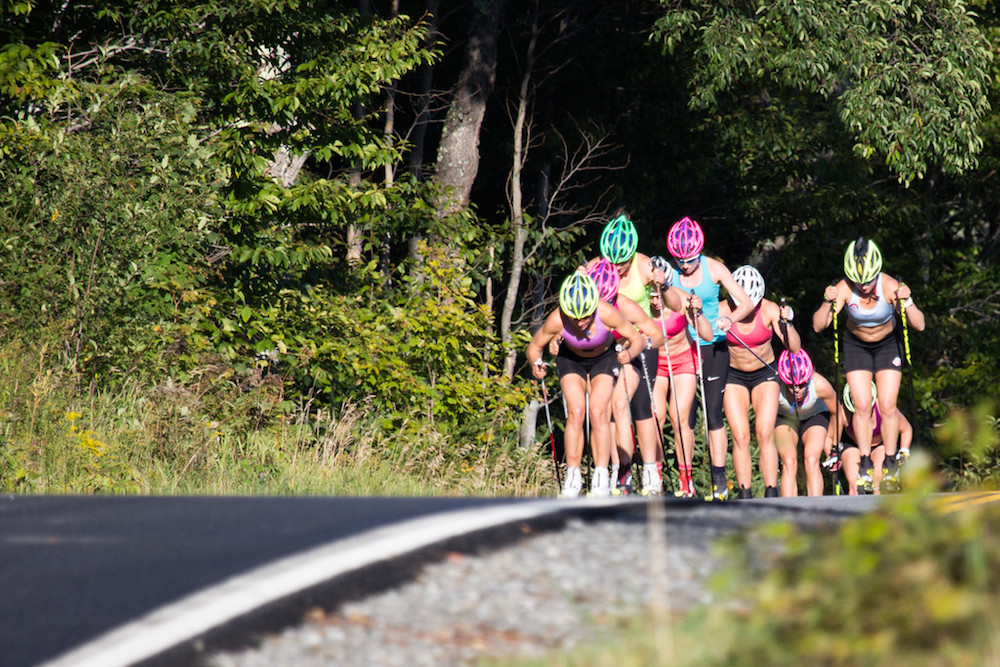
    About 25 elite nordic skiers did maximal-intensity, ski-bounding intervals up Whiteface Mountain on Tuesday as part of the U.S. Ski Team Elite Camp in Lake Placid, N.Y.

    WILMINGTON, N.Y. — The view from partially up Whiteface Mountain on Wednesday morning was about as picturesque as they get. From the trail, one could see that the leaves had started to turn shades of red and yellow — just in time for the U.S. Ski Team’s fall training camp in Lake Placid, N.Y.

    Way down below, a few small dots proceeded up the dirt access road: first to warm up, then to get after it. US Ski Team Head Coach Chris Grover organized the maximal-intensity, ski-bounding interval workout for about 25 athletes, and said it was probably the toughest many had done this training season.

    “Typically what we’re doing in the fall is switching gears from kind of our base anaerobic phase in training, where we’re concentrating more on is distance and technique acquisition, and now starting to work a little bit more poignantly with developing the athletes’ VO2 max,” Grover said. “You probably heard comments from athletes who said this was the first session of quite hard bounding that they’ve done this season. A lot of these guys have done quite a bit of threshold-type bounding, but they haven’t done short, hard bounding like that. It’s intended to develop their maximal aerobic capacity.

    “So that’s what we’re going for,” he added. “It’s the beginning of September, kicking it into a little bit more intensity mode. Obviously during the camp, we have some more hard workouts coming up, including the Climb to the Castle [on Saturday], the sprint rollerski time trial, as well as some threshold sessions. Just trying to start into a little bit more hard training.”

    Click here for a photo gallery

    More quotes from the US Ski Team:

    Head Coach Chris Grover: 

    “We saw some great performances [today] out of individual athletes, both national-team athletes and club athletes, but it’s definitely early in the season and we won’t get the real measuring stick until we get to Muonio [Finland], get to Gällivare [Sweden] in the fall and see how these guys stack up.

    “This is the point of the year where I think everyone around the world is looking around going, ‘Oh yeah, these guys have made great progress through the summer,’ but it’s easy to forget that probably everybody in the world has made good progress through the summer. It’s kind of hard to take away from this particular workout except for particular technique changes, perhaps, that someone’s made, that they’re maintaining their form through the bounding sessions, for example. And if they’re mature enough to learn to really pace it well so that they’re still there at the end.”

    How did each athlete decide whether to do five or seven intervals?

    “Each of these guys is pretty much talking with their individual coach about what they should be doing right now and kind of what their training history has been over the summer, how old they are, and particularly what they’ve done over the last couple of weeks. Some athletes have come in with a good rest week, for example, and they’re ready to do the full-prescribed seven [intervals]. Others are coming off a little bigger training block, for example, and they’ve got to kind of work their way into camp a little slower.”

    Andy Newell: 

    “I felt good. I always try to pace this workout well. It’s one of the harder ones we do at the camp, I think, as far as how much it takes out of your body. It kills my legs usually. But these are the kind of workouts that really you make lot of gains in building VO2 max. We haven’t done a ton of them so far this year, so for me I try to build into them so I can make the last few intervals hard. But it’s a long camp so we try not to blow ourselves out too much.”

    How did you like doing the intervals with about 15 others, including some up-and-comers pushing to lead the pack?

    “I like that. Some people don’t like training with a big group, but I think it’s sweet. I think the more people you have out, the better for an interval session. It’s funny, some of the young guns come to the front and go really hard on one, and they’re dead two intervals later. I was that same guy probably five or six years ago back when I was coming to these camps, too. So it’s cool to see these younger guys go out and hammer in front.”

    Jessie Diggins:

    “At the start of the workout I wasn’t feeling that great. It wasn’t the worst workout, definitely not the worst, but I wasn’t feeling the very best. It took me a while to warm into it and on the last three it started feeling really good, which is nice. I’m still trying to experiment with when beforehand I should take my inhaler. … I’m getting closer and closer to make it kick in when I want it.

    “When you do these intervals, it’s super, super important to not dig yourself into a huge hole, but once in a while it’s really good to figure out exactly where your limits are and know what it feels like right before you hit the wall, and I found that 30 seconds before I was done today so that was really nice.”

    Tad Elliott:

    How was your summer?

    “I’ve had a great summer out in Park City, [Utah]. I’ve been there pretty much all summer and then, just to Europe and back really quick [for a USST men’s camp in Austria and Germany]. It’s really nice to have my old coach Jason Cork back [as] the U.S. Ski Team men’s coach. He trains with me every day and we hang out, so training’s been going really well and it’s fun to have him around, too. Things are going awesome.”

    What kind of training changes have you made?

    “Ski training. I’ve been ski training a lot more, haven’t been mountain biking as much and a lot more strength, too, this year with our coach Michael [Naperalsky] at the COE. A lot more bounding, a lot more running, and yeah, less biking.”

    What are some of the bigger mountain bike races you’ve done this year?

    “I did nationals and that went all right. I was still solid when I came on the last lap, but nowhere near as well as I did last year. I think it’s all this muscle I’ve gained in my upper body, can’t carve as fast. I was 14th this year, sixth last year [in my first two years in the elite field].”

    What was it like watching mountain biking at the Olympics?

    “Man, the Olympics was awesome. Todd [Wells] is one of my good friends back in Durango. My dog, Gus, and his dog, Winston, have little man crushes on each other so we always go on play dates together with Todd, and I play golf with him. It was really fun to see him get a 10th place in his final Olympics [the best U.S. men’s result in Olympic history]. That was really cool. And then I’m good friends with Georgia [Gould], got to talk to her at nationals; she came home with some hardware [as the second U.S. mountain biker to ever win Olympic bronze] so that was sweet.”

    Ida Sargent:

    How was your summer?

    It’s been great. I was in Craftsbury [Vermont] for basically the whole summer, except for our camp in Sweden, so it’s been good to be home and in one place for a while.

    What have you been working on, and what did you learn from your first season on the World Cup?

    “More hard training and keeping some consistency with the gains that I made last year and a lot of technique stuff, too. … It was tough to race the full season on the World Cup. I was pretty tired at the end of the year after having been on the road and traveling and racing the World Cup every weekend, so that was a great experience. This year I’m looking forward to building on that and returning to some of the same venues and having a little more familiarity with the whole scene, just ready to improve my results with that extra experience.”

    What would you say your strengths are?

    “I think sprinting is my strength, so this year I’m going to try to focus a little bit more on [that], but I would love to be a really good distance skier, too, so I don’t consider myself a sprinter. I want to be in the points in the distance races as well. It’s great to do training camps with Jessie, and Liz will be here later this week, and these other girls, too, to kind of improve my distance skills, too.”

    How was your joint camp with the Swedish women’s national team in Sweden?

    “It was good. We trained a ton. It was a lot of hard work, a lot of hours, but it was cool to see that they weren’t doing anything different than us, and we could hang with those guys and train with them. It was just a good confidence builder that our team’s really on the right track and building momentum also.”

  • U.S. Ski Team Announces National Elite Group Roster

    Top regional junior skiers participate each year in one of four Regional Elite Group (REG) summer camps. The camps include general and ski-specific assessments, ski technique support as well as athlete and coaches education. Each camp includes U.S. Ski Team coaching staff which observe, interact and coach.

    With the help of regional coaches attending the camps, the U.S. Ski Team coaching staff selects the top athletes from all four REG camps (East, Central, West and Alaska) and names these athletes to the National Elite Group (NEG). These athletes are offered the opportunity to train alongside the U.S. Ski Team athletes at the Lake Placid Olympic Training Center October 9-17, 2010. Attributes such as motivation, dedication, general physical fitness and ski-specific performance are taken into consideration to select these athletes.

    Congratulations to all of the athletes who participated in REG camps this summer. We are excited to announce the National Elite Group for 2010:

    Men
    Skyler Davis (Stratton Mountain School/ Sverre Caldwell)
    David Sinclair (GMVS/ Justin Beckwith & Dartmouth College/ Ruff Patterson)
    Andy Dodds (Minnesota Valley/ Reid Lutter & CXC Jr Development Program/ Igor Badamshin)
    Scott Patterson (Alaska Winter Stars/ Jan Buron)
    David Norris (Fairbanks Alaska Ski Team (FAST)/Bill McDonnell)
    Tyler Kornfield (Alaska Winter Stars/ Jan Buron & UAF/ Scott Jerome)
    Erik Fagerstrom (Sun Valley Ski Education Foundation / Chris Mallory)

    Women
    Isabel Caldwell (SMS/ Sverre Caldwell & Dartmouth College/ Cami Thompson)
    Heather Mooney (Stratton Mountain School/ Sverre Caldwell)
    Jessie Diggins (CXC Team Vertical Limit/ Jason Cork & Gus Kaeding)
    Annie Pokorny (Sun Valley Ski Education Foundation/ Chris Mallory)
    Michaela Frias (Steamboat Springs Winter Sports Club/Josh Smullin & Brian Tate)
    Caitlin Patterson (Alaska Winter Stars/ Jan Buron & UVM/ Patrick Weaver)
    Annie Hart (Minneapolis Ski Club/ Kevin Brochman)

  • U.S. Ski Team Announces National Elite Group Camp Roster

    The 2009 National Elite Group (NEG) has been named. The NEG is comprised of a select group of junior skiers that have proven that they deserve to train with the best in the country. The U.S. Ski Team staff has selected using race results from previous seasons, in addition to time trials, tests, and technique and work ethic observations from the REG camps. While the camp will receive some coaching assistance from U.S. Ski Team coaches, the NEG will be lead by Ben Husaby of Bend Endurance Academy, and Chris Mallory of Sun Valley Ski Education Foundation.

    The NEG is an opportunity to train with the best junior skiers from all reaches of the country while also training along side of the National Team. The National Team will be using this time in Whistler to get ready for the Olympic Winter Games in February. Most NEG workouts will overlap with the U.S. Ski Team workouts.

    The U.S. skiing pipeline is expanding. The pipeline is expanding in order to keep up with the progress of U.S. skiing. International results are improving, and the pipeline is growing to support future successes. The NEG and National Training Group (NTG) are two new expansions that have been made to the pipeline this year. Next summer, a National J2 Camp will be introduced in the U.S. to continue the growth.

    The NEG camp is the step above the REG in the path toward making the U.S. Ski Team, and is considered one of the top steps of the U.S. skiing pipeline. If an athlete makes an impression at the NEG camp, ski fast next season, and proves that they are ‘All In’, they may qualify for the National Training Group next summer or the U.S. Ski Team.

    2009-10 NEG Roster
    Sadie Bjornsen, MOD
    Erik Bjornsen, MOD
    Isabelle Caldwell, SMS
    Jessie Diggins, CXC
    Maxwell Durtschi, SVSEF
    Adele Espy, SVSEF
    Eric Fagerstrom, SVSEF
    Scott Patterson, AWS
    Annie Pokorny, Spokane
    David Sinclair, GMVS