Tag: NENSA rollerski

  • NENSA Camp Series: Introduction to Rollerskiing with Kait Miller

    NENSA Camp Series: Introduction to Rollerskiing with Kait Miller

    Perhaps the only downside of a love for cross country skiing is the general inability to slide on snow year-round, without significant travel. Consequently, those looking to keep the spirit (and specific strength) alive are bound to find themselves with a pair of wheels strapped to their feet during the snow-free months of the year. The frequency of this phenomenon exists on a spectrum. 

    For athletes training to race, rollerski sessions are an integral part of annual training volume. For some recreationalists, perhaps it’s a once-is-enough experience, and they part ways with rollerskiing, hopefully not having suffered too much of road-rash in the process. Regardless of level, most people who have tried rollerskiing can remember a time when things went wrong and ended with a skid on the pavement.

    Learning to rollerski can be intimidating, particularly since the activity is fast-paced, takes place on an unforgiving surface, and lacks brakes. However, with time, tutelage, and practice, confidence and skill develop, and rollerskiing becomes significantly more enjoyable. 

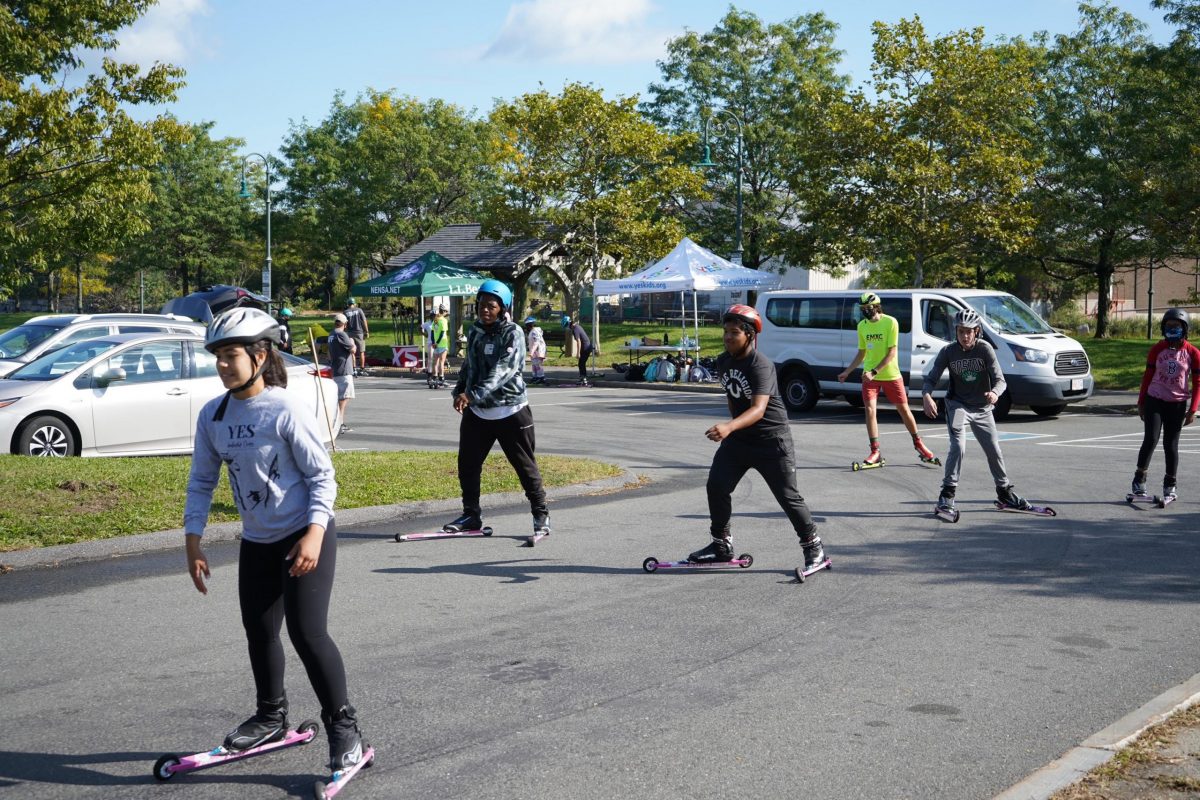
    YES members working on the basics of rollerskiing (Photo: Justin Beckwith)

    This past summer, the New England Nordic Ski Association (NENSA) piloted a “Learn to Rollerski” camp series. These camps were organized by Kait Miller, who joined NENSA full time as the Youth and Introductory Program Director in June of 2020. Many readers will recognize Miller’s name from her years of cross country ski racing with Craftsbury Green Racing Project, during which she earned a national title, raced in multiple international World Cups, and represented the USA at the 2018 Olympics in PyeongChang. 

    The next rollerski clinic takes place tomorrow, Saturday October 23rd, at Gould Academy in Bethel, ME. This event will take place alongside “The Maine Event” rollerski race, happening roughly an hour south at Pineland Farms in New Gloucester the next day.
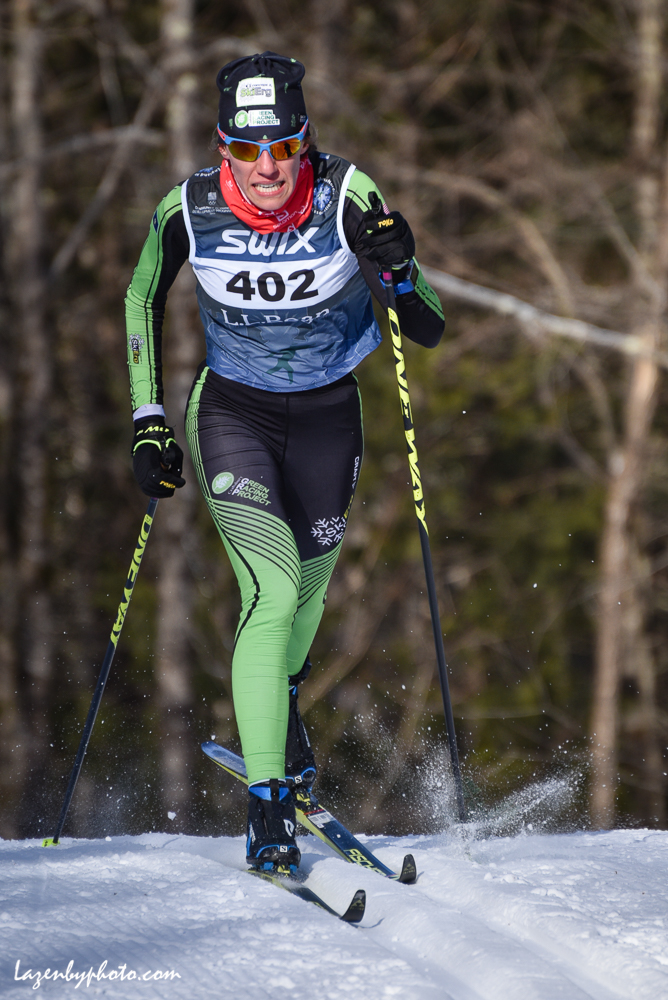
    Kaitlynn Miller (Craftsbury Green Racing Project) racing to first in the women’s 1.4 k classic sprint qualifier on Friday, Feb. 26 at the SuperTour in Craftsbury, Vermont. (Photo: John Lazenby/Lazenbyphoto.com)

    In addition to the “Learn to Rollerski” clinics, NENSA partnered with Youth Enrichment Services for Boston Kids (YES) to host a rollerski camp with participants coming from YES programs as opposed to a ski club or program. (Quick note: find a follow-up article highlighting YES and their work here). Faster Skier caught up with Miller to learn more about these clinics and where she sees the program heading in the future. 

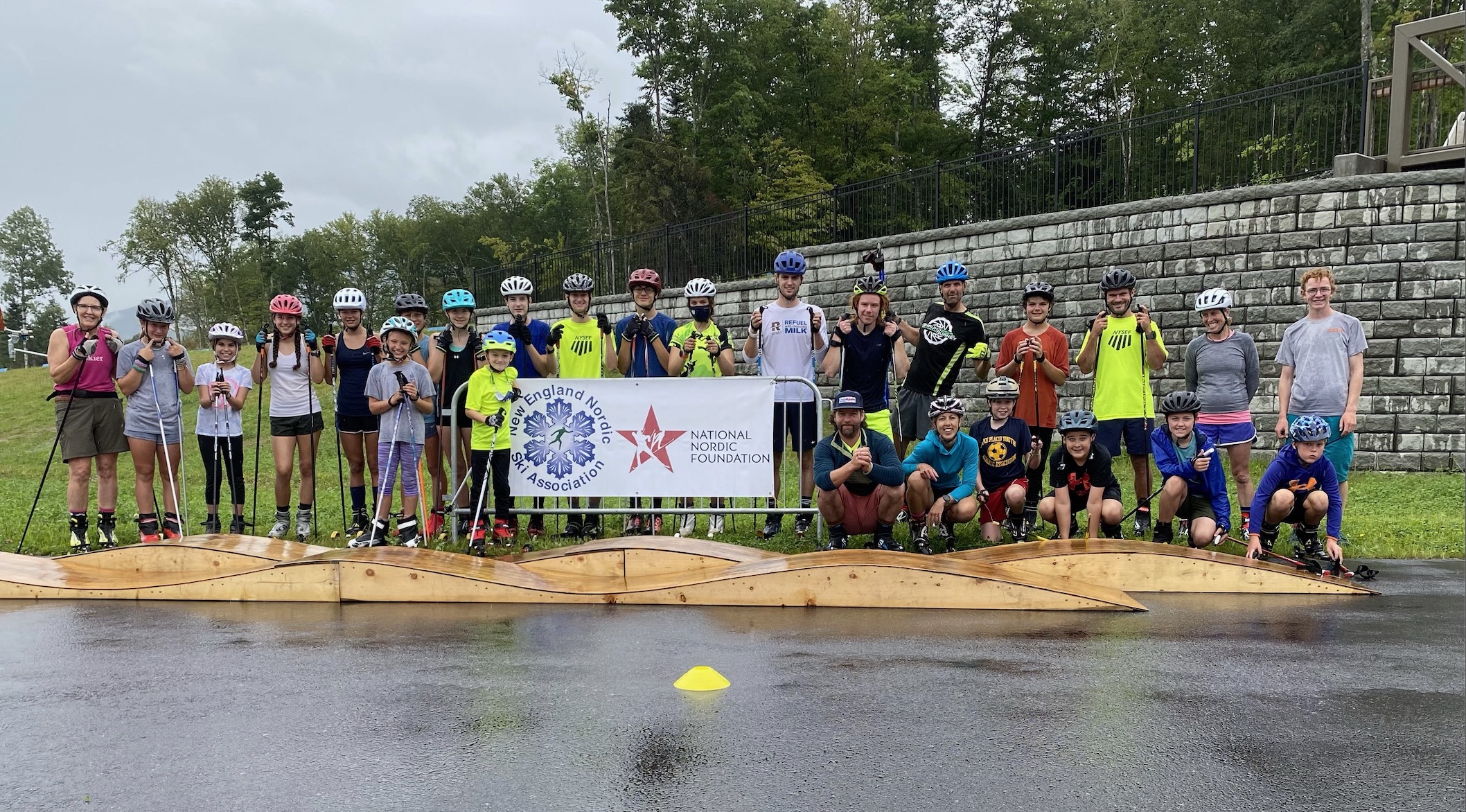
    Happy kids and happy coaches at the YES clinic in September (Photo: Justin Beckwith)

    Faster Skier: What was the inspiration or motivation to start these “Learn to Rollerski” clinics this summer?

     Kait Miller: Over the past few years NENSA has been growing and expanding into summer programming, initially starting with rollerski race events. Thanks to the work and dedication of Amie Smith (Executive Director), Justin Beckwith (Competitive Program Director), Preston Noon (Operations Manager) and our supportive sponsors, NENSA has the foundation and resources to not only grow our race offerings into a series but to also expand beyond competitive events. My position (Youth & Introductory Program Director) went full time in June of 2020 with the goal of putting more focus and resources into summer programming and NENSA recently expanded the role of TD Coordinator Fred Bailey to include event management. Greater staffing availability combined with increased focus on our mission to expand participation and access to the sport, and increased community interest in rollerskiing and skiing in general, lead to the Learn-to-Rollerski clinics.

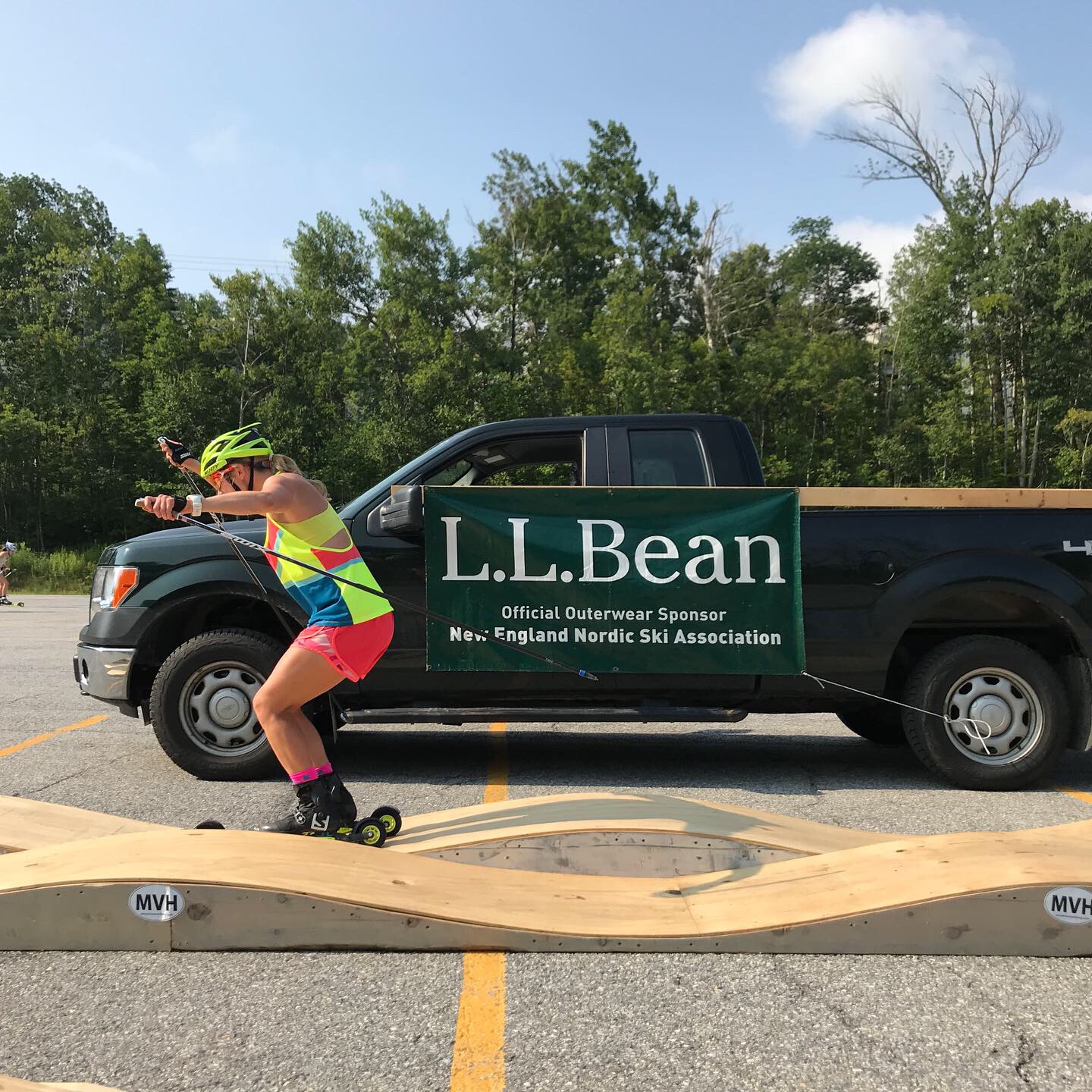
    Our goal with these clinics is not only to introduce current skiers to a dryland version of the winter sport they enjoy but also to use rollerskiing as a vehicle to introduce folks who’ve never skied before to the sport in a fun, welcoming, relaxed, and supportive environment. Rollerskiing can also be a really fun recreational activity in its own right and we aim to incorporate the bicycle bump ramps in almost all of our clinics. We looked a little like a traveling circus this summer with Justin’s truck loaded down with ramps and rollerski racks!
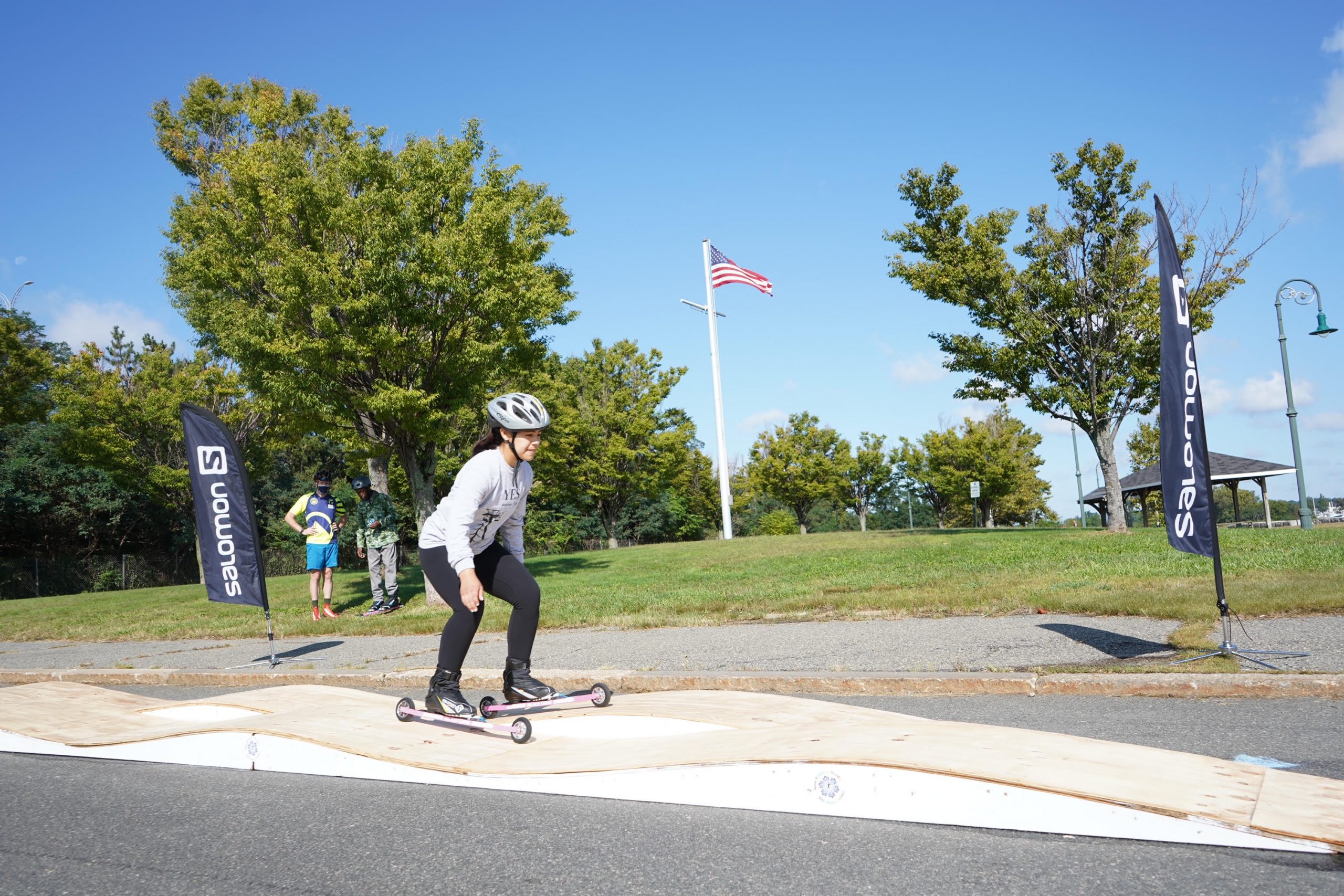
    A participant in the YES clinic navigates the ramps on rollerskis. (Photo: Justin Beckwith)

    I’ll add that I’m not a proponent of young children doing much rollerskiing. However, a little bit of rollerskiing can be really fun and certainly helps build basic balance and agility skills and develop comfort with the sport.

    FS: What was engagement like? Did you get a lot of interest and participation in these clinics?

    KM: Participation varied depending on the event. We capped our very first clinic at 10 participants as a sort of a “test event” if you will, but our most recent clinic in Boston had 37 participants. The first clinic was for all ages and we had participants ranging in age from 10-70 while our most recent clinic focused on youth and teens. In addition to some stand-alone clinics and clinics paired with rollerski races, we also visited some ski camps this summer.

    At the BKL level some of the campers had rollerski experience but not a significant amount so for many it was a true introduction to the activity. For those who’d rollerskied before, it was an opportunity to gain more comfort and confidence, and to play on the ramps. We keep a really strong emphasis on play with the goal of providing just enough instruction to ensure participants feel comfortable trying new things on their rollerskis without fear.

    Youngsters work on rollerski skills at a clinic in Craftsbury (Photo: Justin Beckwith)

    FS: This past winter saw a big increase in interest in cross-country skiing mainly driven by COVID and social distancing. Do you think this effect was felt at the youth level as well?

    KM: Yes, we definitely did see an increased interest in cross country skiing. Many of the New England and New York BKL clubs saw record enrollment and some programs had to cap registration to stay within state gathering limit guidelines. We also had many more schools reaching out about our Nordic Rocks program which provides students at participating elementary schools with the opportunity to experience cross country skiing during the school day with their teachers and classmates.

    FS: Describe the recent day in Boston in coordination with YES, had any of the participants ever rollerskied? 

    KM: The goal of the clinic was to introduce the Youth Enrichment Services (YES) program participants to rollersking, generate excitement for the upcoming winter season, and help strengthen the continuing relationship between the Eastern Mass Cross Country Ski Club (EMXC) and YES by connecting new folks in both programs. About half the YES participants had ski experience from previous YES Ski Program participation (and a few were quite experienced skiers) while the other half were brand new to the sport having never been on cross country skis, or rollerskis, before. A video recap of the camp can be found here. 

    We’re very grateful for all the work YES Youth Recreation Coordinator & Equipment Specialist, Elliot Simmons-Uvin, put into making this event happen. We’re also grateful to the YES staff and volunteers and the EMXC coaches and juniors who helped facilitate and instruct the clinic. And the event certainly wouldn’t have been possible without the fantastic parking lot at the Massachusetts Department of Conservation & Recreation’s Tenean Beach or all the boots and poles generously loaned to us by the Weston Ski Track.

    YES clinic members in Boston (Photo: Justin Beckwith)

    FS: Does NENSA plan to continue partnering with YES to increase access to skiing?

    KM: YES program participants have access to skiing twice a week at the Weston Ski Track so we really see NENSA’s role as building excitement and interest for those who might be new to the sport, providing some additional opportunities like the rollerski clinic with the agility ramps, and facilitating the connection between YES and EMXC. YES and EMXC have worked together for multiple years now but with athlete and liaison turnover, there were new EMXC members looking to volunteer with the YES ski program. Our shared goal is that interested YES program participants could join EMXC youth and junior programming.

    As for NENSA’s partnership with YES going forward, we’ve already talked about hosting the clinic again next year and I’d also love to facilitate YES participation at the BKL Festival. I know my predecessor Amber Freeman worked with Elliot when the festival was last held at Weston. It will be much more of a challenge when the festival is not local (and this year it will be in Waterville, Maine) but I’d love to try and figure something out.

    FS: The sport of Nordic skiing has a long way to go in terms of increasing diversity, equity and inclusion. Do you see these Learn-to-Ski clinics and/or this work with YES as helping to facilitate that?

    KM: Our hope is that Learn-to-Ski clinics are at least a small step in the direction towards bringing more folks into the ski community and increasing diversity, equity, and inclusion in our sport. Change won’t happen overnight but by collaborating with other organizations and creating events and programs that welcome, actively empower, and support young people of all physical abilities, financial means, gender identifies, skin colors, and sexual orientations to learn and grow through the sport of cross country skiing, collectively we may be able to start chipping away at the problem.

    A skier works on his technique at the Sleepy Hollow BKL camp this summer (Photo: Justin Beckwith)

    FS: What are some goals you have moving forward as the Youth and Introductory Program director for NENSA?

    KM: We’re currently in the process of a gear overhaul in the Nordic Rocks program but once that is finalized I hope to intentionally expand that program. Nordic Rocks is a school program funded by Share Winter that provides students at participating elementary schools with gear and the opportunity to try cross country skiing during the school day with their teachers and classmates. I feel that this is one of the most inclusive and equitable programs we run. In addition to expanding, we hope to facilitate more collaboration between local ski centers, Nordic Rocks programs, and local Bill Koch leagues so that schools can take field trips to local trail systems and so that youth who really like skiing have support to join a local league and/or attend the BKL Festival.

  • Rollerskiers in the  Mist: Patterson, Brown Win Foggy Climb to the Castle

    Rollerskiers in the Mist: Patterson, Brown Win Foggy Climb to the Castle

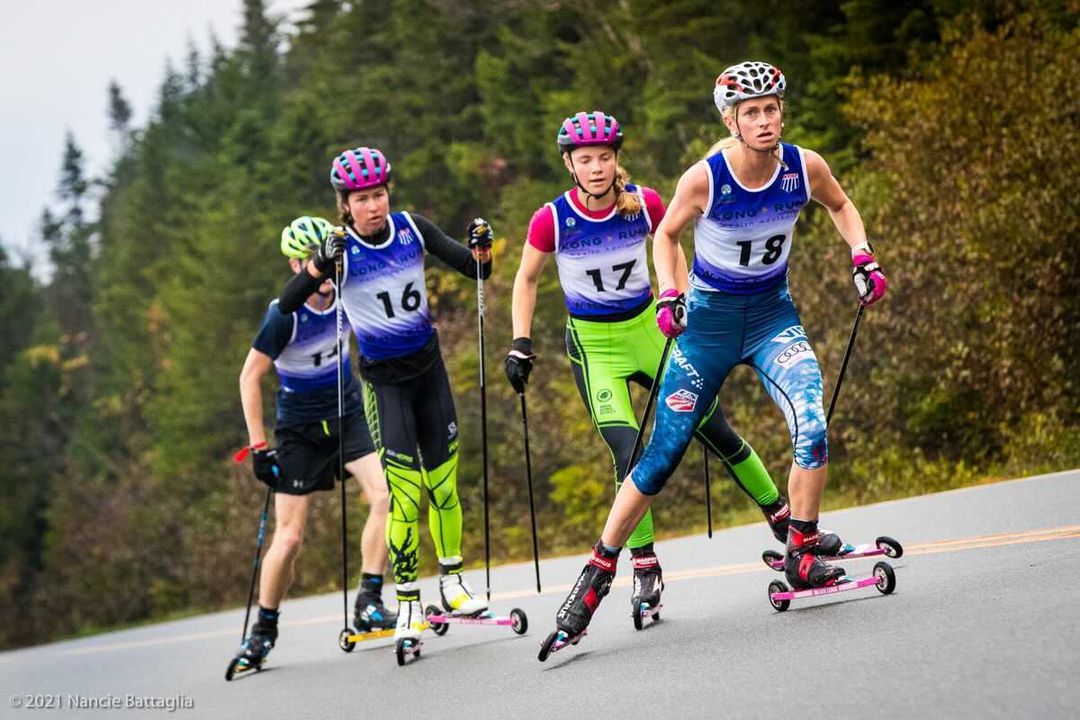
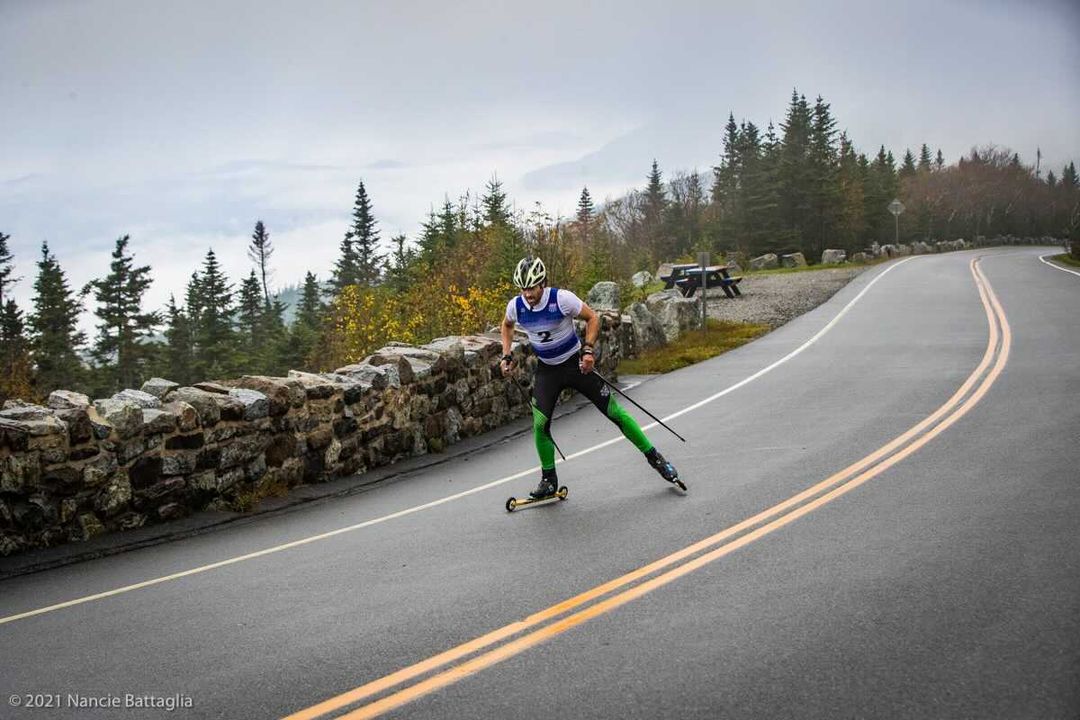
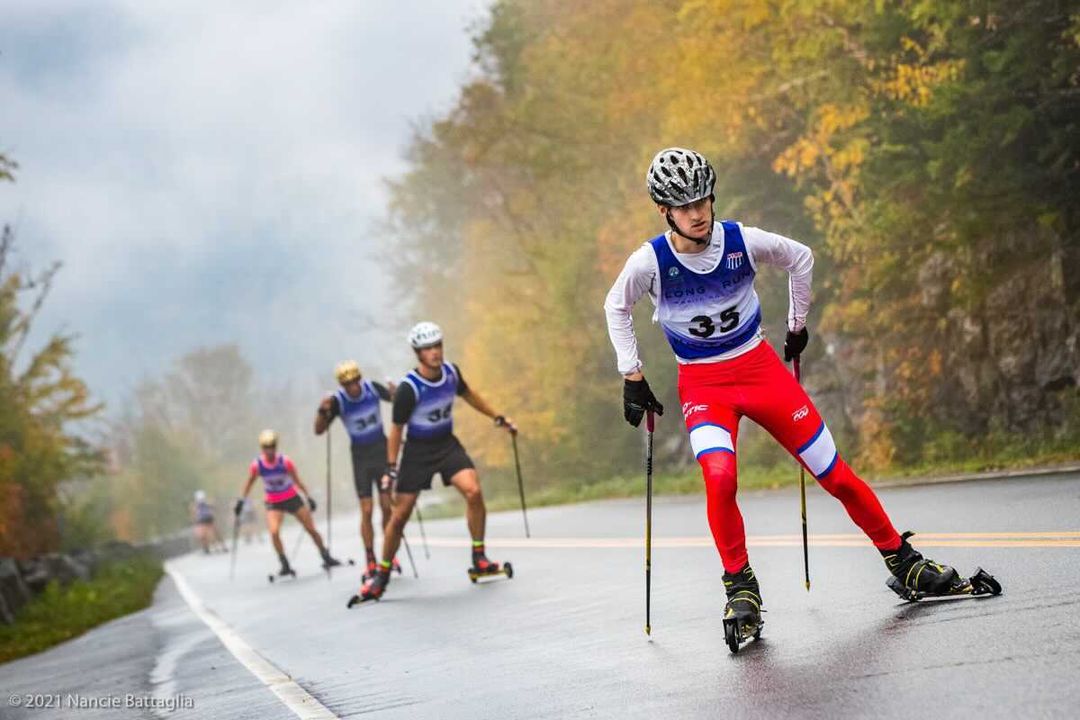
    Racers climb the Whiteface Veteran’s Memorial Highway during the 2021 Climb to the Castle. (Photo: Nancie Battaglia/NYSEF)

    The rain stopped just long enough for Caitlin Patterson and Jake Brown to savor their wins at the 2021 edition of the Climb to the Castle last Saturday in Wilmington, NY, near Lake Placid. 

    Craftsbury Green Racing Project (CGRP) swept the women’s podium; Caitlin Patterson edged Margie Freed for the win in 46:48.8, with her teammate just .7 second back in 46:49.5. Tara Geraghty-Moats placed third in 47:35.0.

    Brown, skiing for US Biathlon / CGRP, took the men’s win in a time of 38:04:00. CGRP teammate Akeo Maifeld-Carucci came second in 39:34:9, and Junior athlete Tabor Greenberg, a U16 athlete out of the Green Mountain Valley School (GMVS), interrupted CGRP’s command of the podium in third place at 41:24.7.

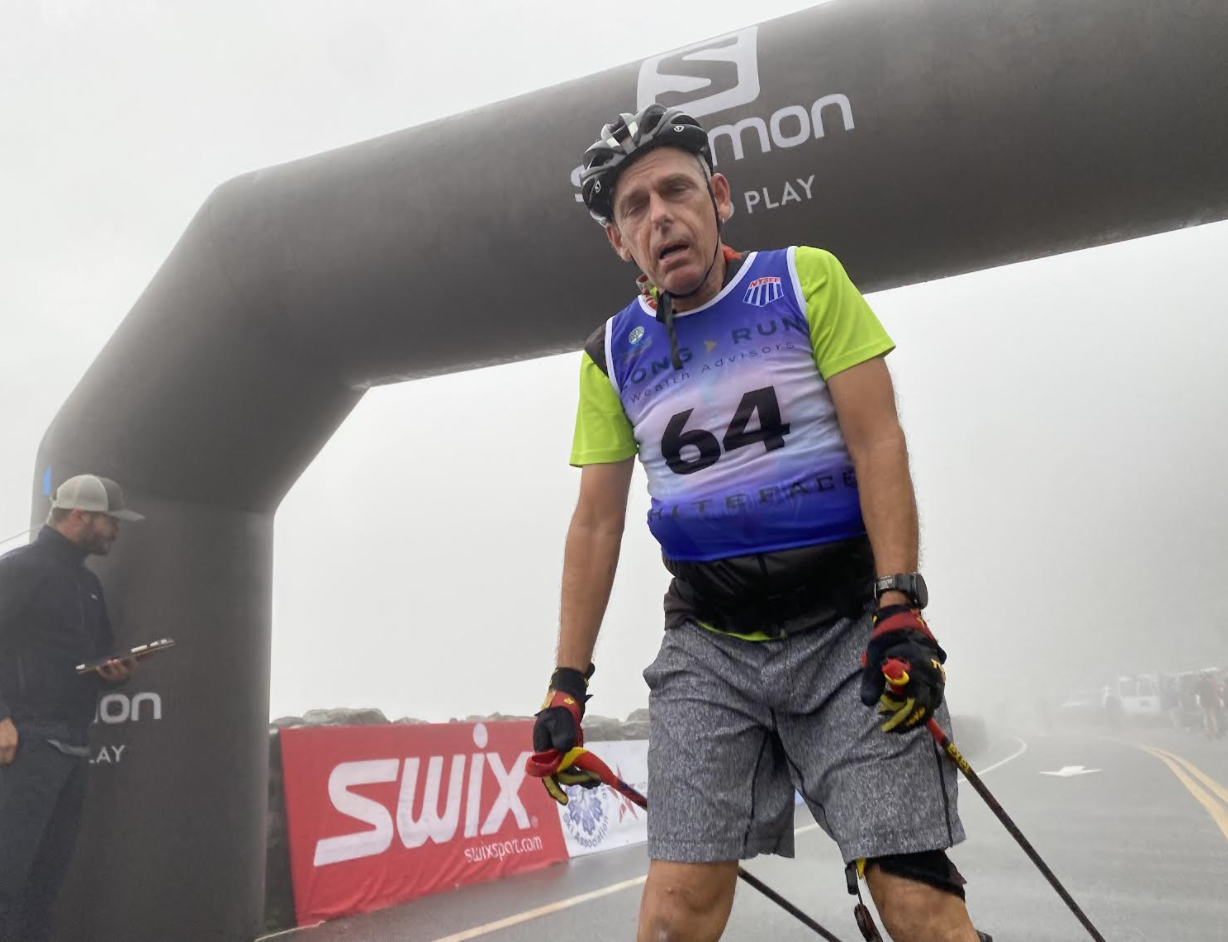
    After taking 2020 off due to the pandemic, the Climb to the Castle returned to the Northeast roller ski calendar, co-hosted by NENSA and NYSEF. The race leads skiers five miles up the Whiteface Veteran’s Memorial Highway at an average eight percent grade. Whiteface is the fifth highest mountain in New York’s Adirondacks; start too hard, and you’ll never recover. This author can attest. 

    The author completes his Climb to the Castle. (Photo: NENSA)

    As is often the case, weather made the race…. interesting. Light overnight rain tailed off about an hour before the start. Although the temperature hovered in the low 50s, the humidity made it feel warmer.  Clouds and fog obscured vision throughout the day.  In some places, one was lucky to see a hundred feet. For a change, there was little wind, even at the infamous Windy Corner and chute, 800 meters or so from the finish.

    For COVID safety, organizers started five waves of skiers, each two minutes apart. Competitors wore masks at bib pickup and on the summit after finishing their race.

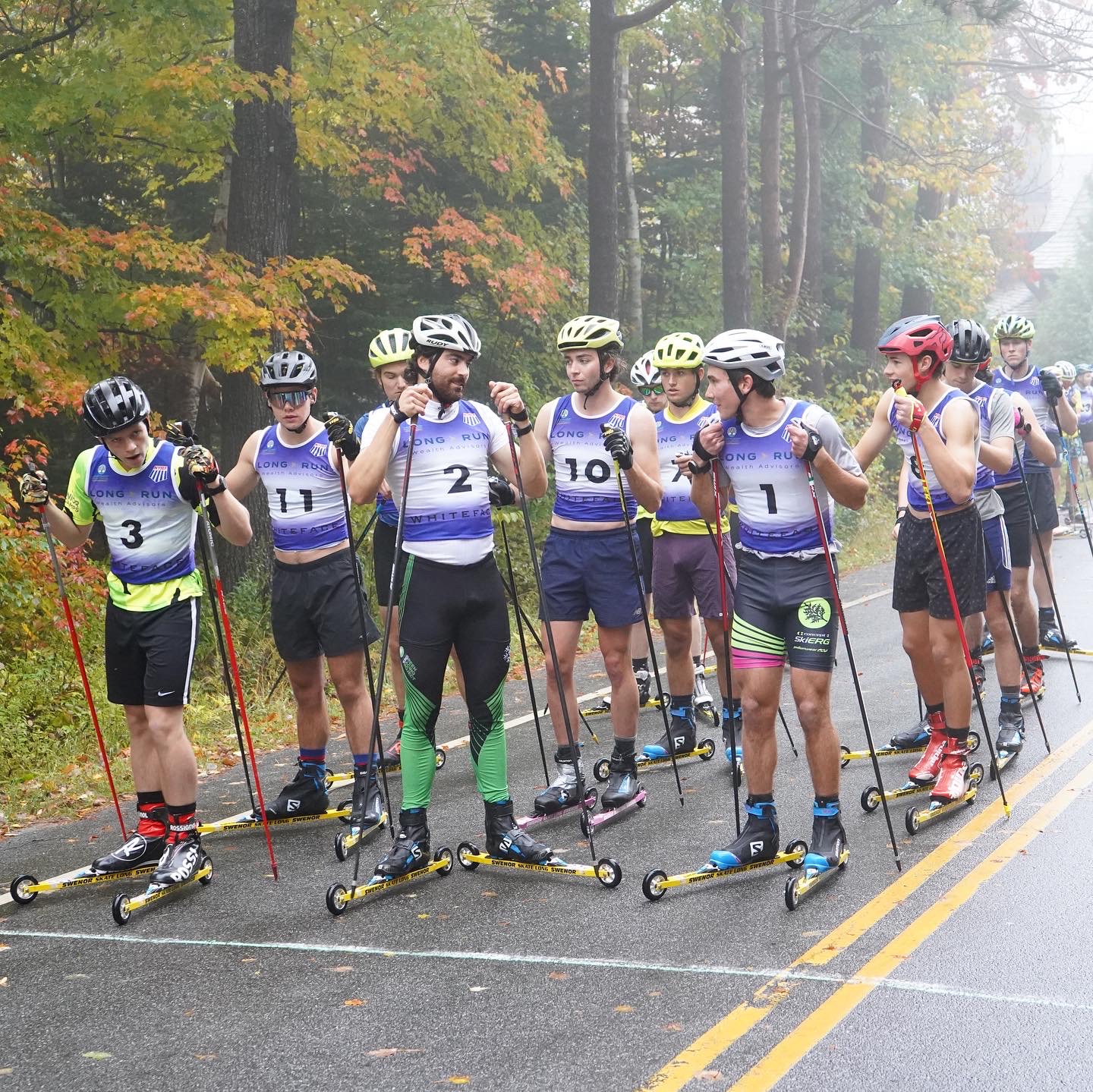
    Visibility low, energy high: a wet start for the men’s wave in the 2021 Climb to the Castle. (Photo: NENSA)

    The women’s race was high drama as Patterson, Freed, and Geraghty-Moats worked together up the road.

    “Tara and Margie and I knew we wanted to work together, especially with the way the Climb can be pretty windy at the top. It was just gonna be: ski smooth, work together, and shuffle around the leads, which is what we did. I definitely wanted to make sure not to start too fast.  I did that well, though I certainly had some rough moments in the middle.”

    From the start, Patterson said that she and Geraghty-Moats took turns in the lead, trading off about every kilometer.  “Towards the upper part, Margie was taking some really strong leads. I was suffering a bit,” Patterson added.

    With two kilometers left, Freed opened a gap from Patterson and Geraghty-Moats. Patterson said it took a few minutes for her to regain contact.  At that point, Patterson and Freed pulled away from Geraghty-Moats, skiing to the finish.  

    “Maybe 30 seconds out, I passed [Margie],” Patterson said. “It was really strong work by both of them. It was great to ski with people because it was as tough a course as ever.”

    Of her finishing kick, Patterson said, “I know that I can tap into a late surge. We were working together for most of it, and as the finish line was drawing near, it was definitely every person for themselves.”

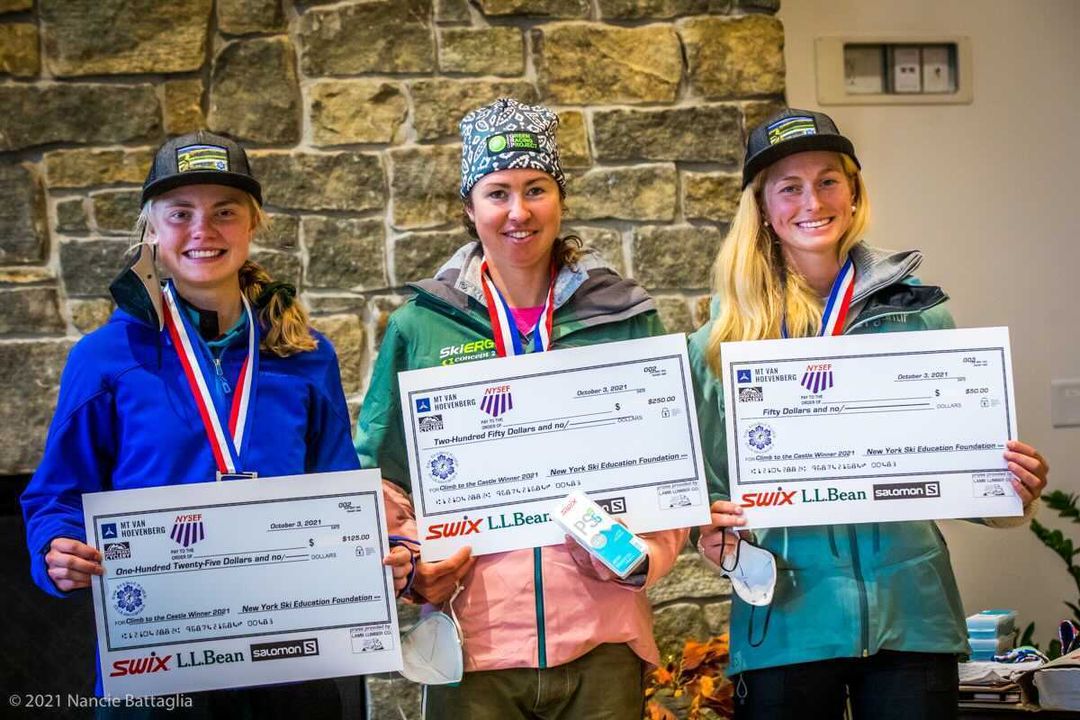
    Craftsbury women clean up at the 2021 Climb to the Castle. Caitlin Patterson took the win ahead of Margie Freed (left) and Tara Geraghty-Moats (right). (Photo: Nancie Battaglia/NYSEF)

    “It went pretty well today,” said Freed of her race. “It was awesome to ski with Tara and Caitlin for so long. I don’t think I could have kept up that pace if I was alone.

    “I’ve never done this race before, so it was exciting to have every step be something new for me,” Freed continued. “Even though I didn’t quite know where the finish was, or when it was coming.  I couldn’t quite see it because it was so foggy.  It was an awesome day out there, and I was glad it wasn’t as windy or rainy or cold as I was thinking it was going to be.”

    This past winter, Geraghty-Moats won the first ever crystal globe for FIS Women’s Nordic Combined.  She also won the Climb in 2018. After the race, she wrote, “It was really nice to go all out with my teammates. We skied together really well. We all had moments of fading and then climbed back on. I dropped back about half a k after the Lake Placid turn — I just kind of ran out of  gas. I’m pretty happy with how I felt and it was a really fun race.”

    Jake Brown wins the 2021 Climb to the Castle in a long solo effort. (Photo: Nancie Battaglia/NYSEF)

    For Brown, this was his third win at Climb to the Castle, his previous two coming in 2017 and 2018.

    “I wanted it to be a good, solid effort,” Brown said. “I knew that I couldn’t sprint too hard off the line, but I wanted to get into that high heart rate zone and stay there as long as I could.”

    Asked about race strategy, Brown said, “I was with Akeo [Maifeld-Carucci], my Craftsbury Green Racing Project teammate. He led for the first 3 minutes or so.”

    At that point, Brown said, he took a turn pulling and developed a gap. “I was hoping we could work together a little bit more, but we ended up with an awkward 20-meter gap between us that we  held for maybe half the race. Then I slowly pulled away and was by myself.”

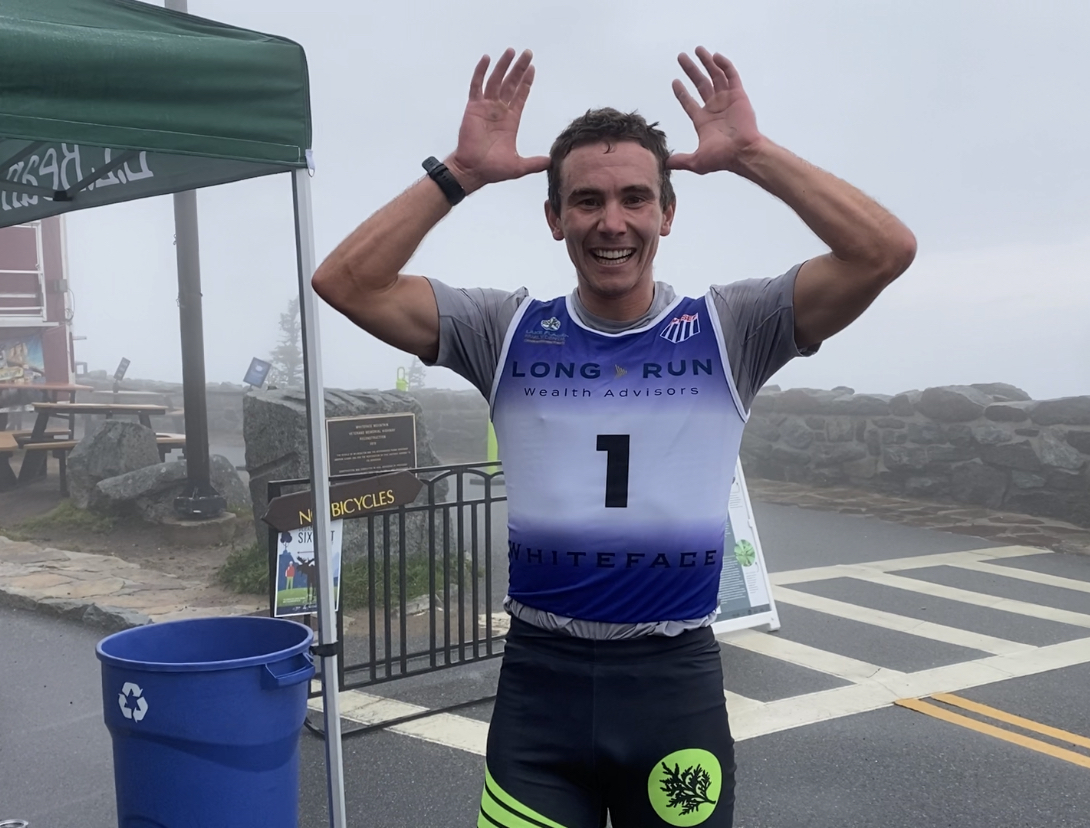
    Jake Brown wears the moose-antler crown after winning the 2021 Climb to the Castle. (Photo: NENSA)

    Asked if he could use this as a fitness benchmark, Brown said, “This was my fourth time doing the race. This was a bit of a slower year; I’m hoping it was just because of the weather. Maybe a little later in the year and a little colder pavement. It was kind of warm today, but maybe the pavement was a little colder.  Maybe my fitness isn’t where it was.  We’ll find out when the winter comes — that’s what matters.” 

    For Maifeld-Carucci, “It was a sweet day. I wanted to do this race for a long time, since early in college. So it was great to actually be here and do it.  The weather was way better than we expected. It was a little wet and a little cloudy at the top, but there were moments when it opened up and it was super pretty. Constant great climb, hard skiing — it was definitely a hard race and a really good effort.”

    Commenting on the men’s pacing and tactics, Maifeld-Carucci echoed Brown’s explanation of the duo’s ability to collaborate. 

    “Jake and I were hoping to ski together and trade leads,” Maifeld-Carucci explained. “He was feeling a little stronger than I was so I fell off early and we were dangling 20 meters apart for a long time. Then he started to open it up.”

    Akeo Maifeld-Carucci skis to second place at the 2021 Climb to the Castle. (Photo: Nancie Battaglia/NYSEF)

    In addition to Greenberg nabbing third place overall, the GMVS boys swept the junior podium. 

    Responding to an email, GMVS head coach Colin Rodgers said that his skiers didn’t taper for the race. “Tabor actually trained a lot in the past week including a 120 mile bike ride to raise money for the Kelly Brush Foundation.”

    Commenting on the preparation for this event, and how it fits into the season preparation, Rodgers explained:

    “We spent some time recently working on climbing technique. When we were recently on snow on the Stelvio glacier we were working on standing well (balanced and forward) on our skis. We did not discuss any mass start race tactics for today — I really just wanted the crew to focus on pacing the effort properly and being consistent throughout the duration of the climb. [Having] a dialed warm up and trying to keep good form when tired were also a few other things we were honed in on today.”

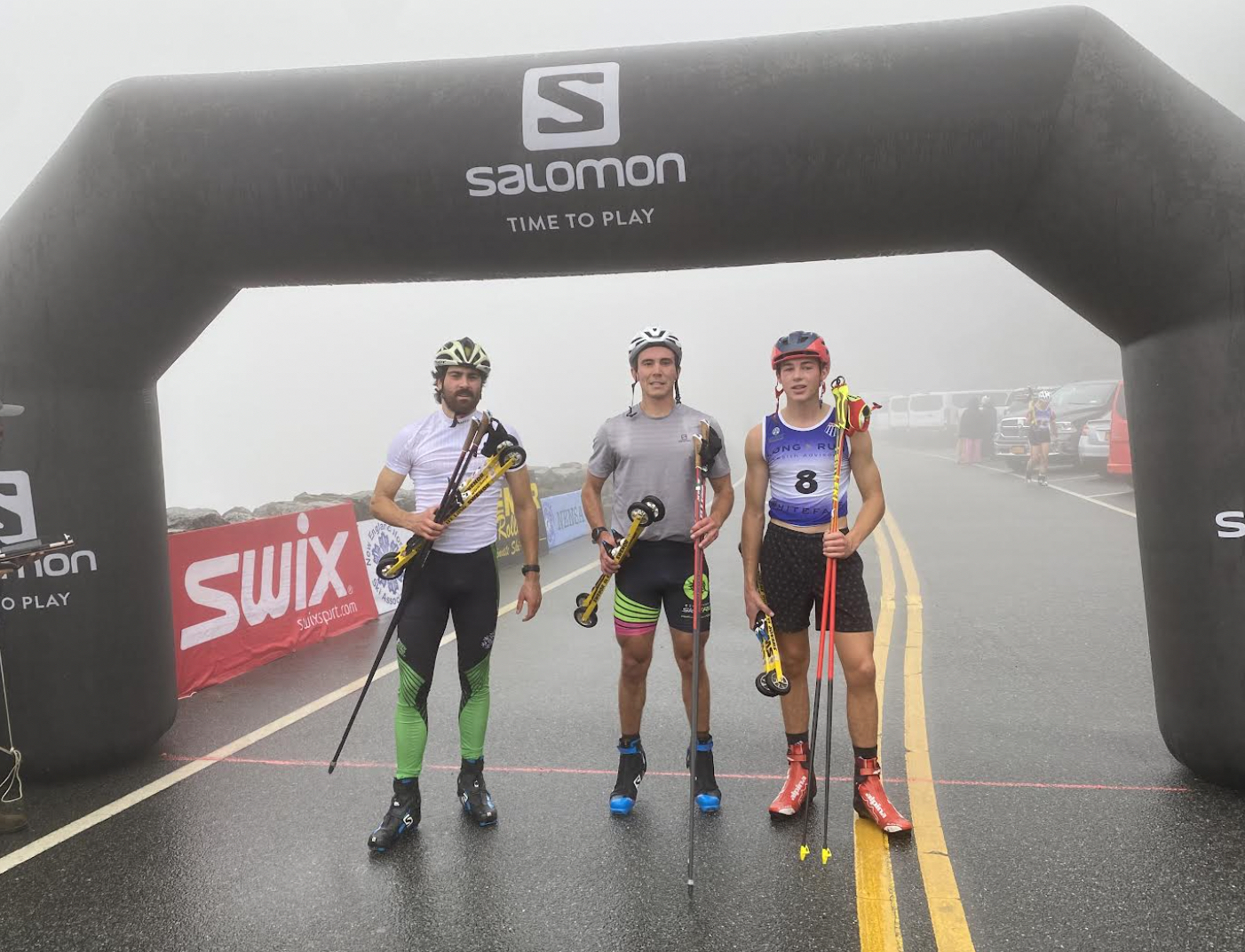
    The men’s podium at the 2021 Climb to the Castle. Jake Brown (CGRP) took the win ahead of Akeo Maifeld-Carucci (CGRP) and Tabor Greenberg (GMVS). (Photo: NYSEF)

    Did Rodgers have an inkling that Greenberg might podium? 

    “We were not focused on the podium, we were just focused on executing a solid race effort. We are primarily focused on competitions in March, so all of this is just trying to build momentum towards the end of the race season.”

    Although COVID border closures prevented Canadian clubs from driving across the border, many clubs and colleges still showed up to throw down.  

    According to Sara Falconer, a coach at Mansfield Nordic (MNC) in Vermont, “It’s a good opportunity for [MNC junior athletes] to race other high school athletes and college athletes that are here.  It’s also a chance for them to compare their times to last year and see the results of all the work they put in over the summer.  They can see a lot of dramatic improvement.  It’s a really motivating thing for them.  And it’s also a good workout.”

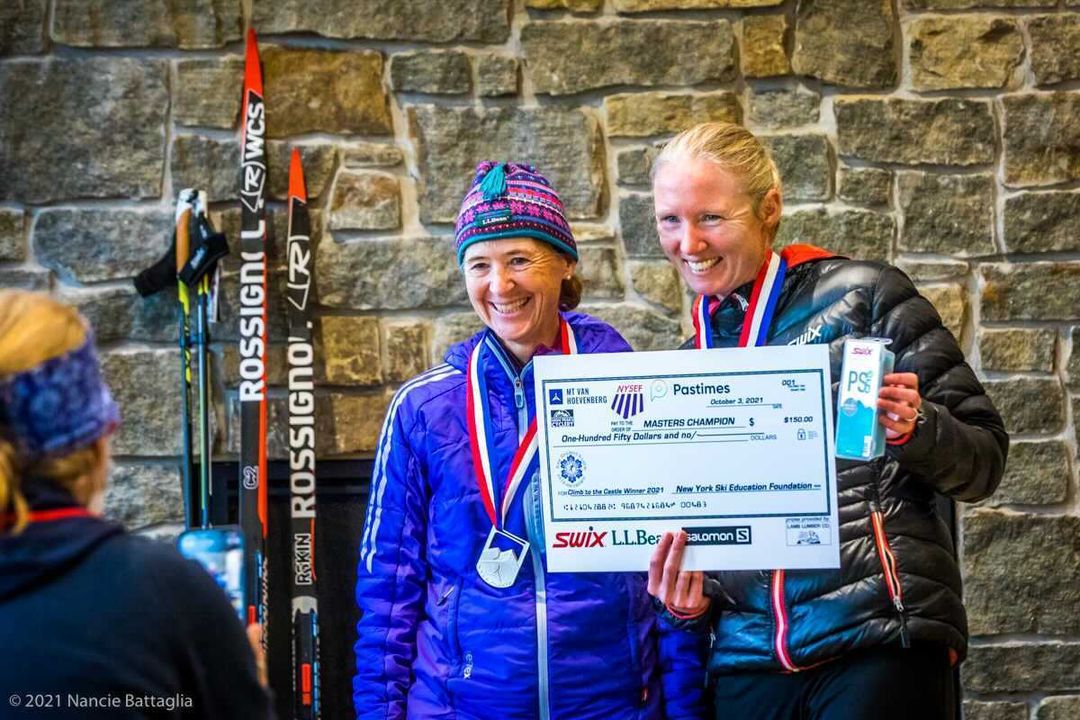
    From juniors to collegiate to masters, racers ascended Whiteface during the 2021 Climb to the Castle. (Photo: Nancie Battaglia/NYSEF)

    Ethan Townsend, Saint Lawrence University’s (SLU) head nordic ski coach, planned a training weekend for his team. SLU athletes also roller skied the new loop at Mount van Hoevenberg on Friday.

    “Saturday morning, we got up early and did a run/hike” said Townsend. “They had the option of going up Algonquin or Wright or Marcy. A lot of them took the option of going up Marcy. A few of them went up Phelps and Tabletop. Probably an average of five hours.” 

    Mount Marcy is the highest Adirondack mountain at 5,344 feet and Algonquin, the second highest, stands at 5,114 feet. The remaining peaks named are also among the 46 Adirondack High Peaks, which are all above 4000 feet. 

    After coming out of the woods, the SLU team reconvened for an afternoon double pole roller ski session.

    “We weren’t concerned about performance, necessarily, in this race,” Townsend said. “It’s a training race. Something to do as a group. I told them, ‘Don’t worry about the results so much.  It’s great that we can come here and do this. If you just stay in level three the whole time and you’re not feeling it to go super hard, I think that alone would be worthwhile.’”

    You can find more footage of the 2021 Climb to the Castle on NENSA’s YouTube channel.

    From Juniors to Collegiate to Masters; a broad scope of rollerskiers ascended Whiteface during the 2021 Climb to the Castle. (Photo: Nancie Battaglia)

    Women’s complete results

    Men’s complete results

  • NENSA Rollerski Series Gains Momentum: An Interview with Justin Beckwith 

    NENSA Rollerski Series Gains Momentum: An Interview with Justin Beckwith 

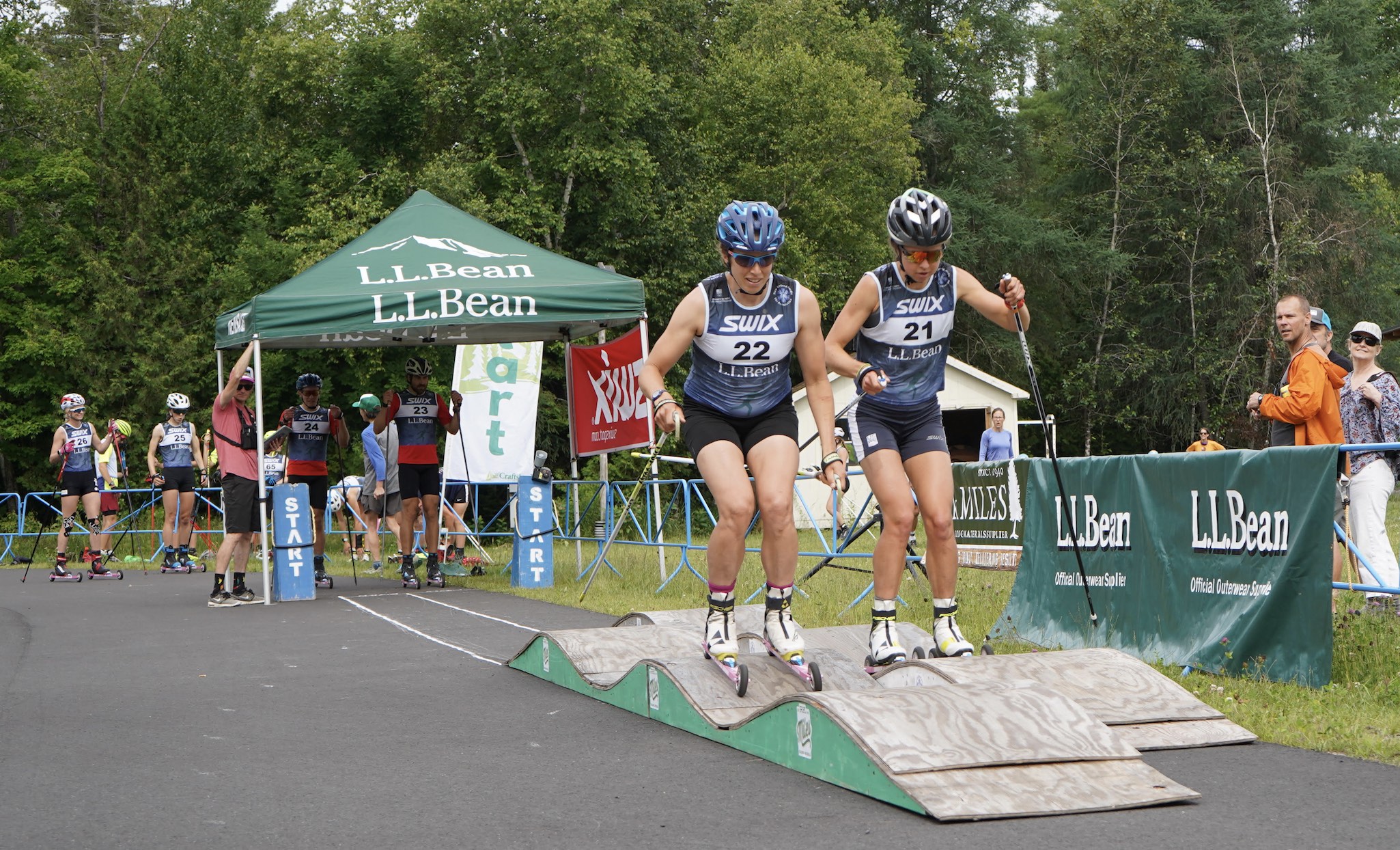
    Jessie Diggins takes a first crack at NENSA’s rollerski ramps, which will be featured in the sprint qualifier and rounds in Lake Placid this weekend. (Courtesy photo)

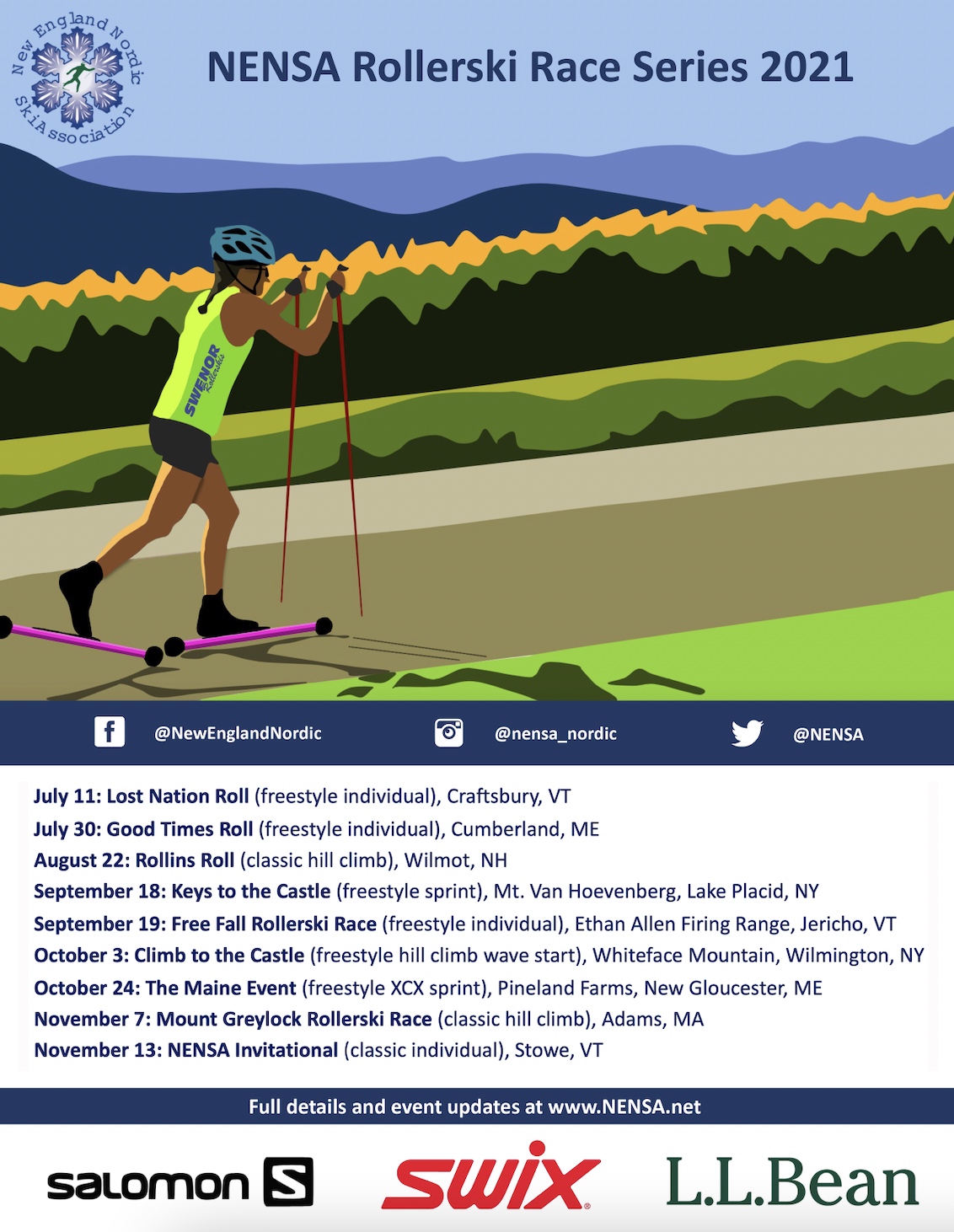
    On the heels of our coverage of the Martin Fourcade Nordic Festival and the Alliansloppet Action Week, we turn our attention to the Northeast where the burgeoning New England Nordic Ski Association (NENSA) rollerski race series is well underway. The next round of racing will take place this upcoming weekend, starting with a freestyle sprint event dubbed “The Keys to the Castle” on September 18th at Mt. Van Hoevenberg in Lake Placid, NY, followed by a freestyle distance race the on the rollerski track in Jericho, VT the next day. Men and women will each race 15-kilometers in the open division, while juniors will have the option to race 5k. 

    For those interested in seeing the show, in-person spectating is encouraged at the Lake Placid stage, however, as the ski track in Jericho is at a Vermont National Guard base, names must be submitted for entry prior to the event. Events will also be live-streamed on the NENSA Facebook Page, and live timing will be available through Bullitt Timing. Updated COVID considerations for participants and community members can be found here. 

    Building from past years, the series features nine events beginning with the Lost Nation Roll in Craftsbury, VT in July and ending in mid-November with the NENSA Invitational in Stowe. Captaining the ship and still rocking the mullet-mustache combo is competitive programs director Justin Beckwith, with whom FasterSkier connected in mid-August to learn more about this year’s widened scope of event offerings, supporting a thriving culture of skiing in the region, and whether the dream of a New York City rollerski event is still alive. 

    Beckwith explained in the call that one of NENSA’s objectives as the rollerski series evolves is to reach more athletes and to make opportunities for rollerski racing more accessible. Given the high density of cross country skiers and high level clubs in Vermont, the well-attended and highly competitive App Gap Challenge, and the designated rollerski tracks in Craftsbury and Jericho, past events have primarily taken place in that state. However, these venues can be quite a drive for skiers living in Western Massachusetts, New Hampshire, or Maine. 

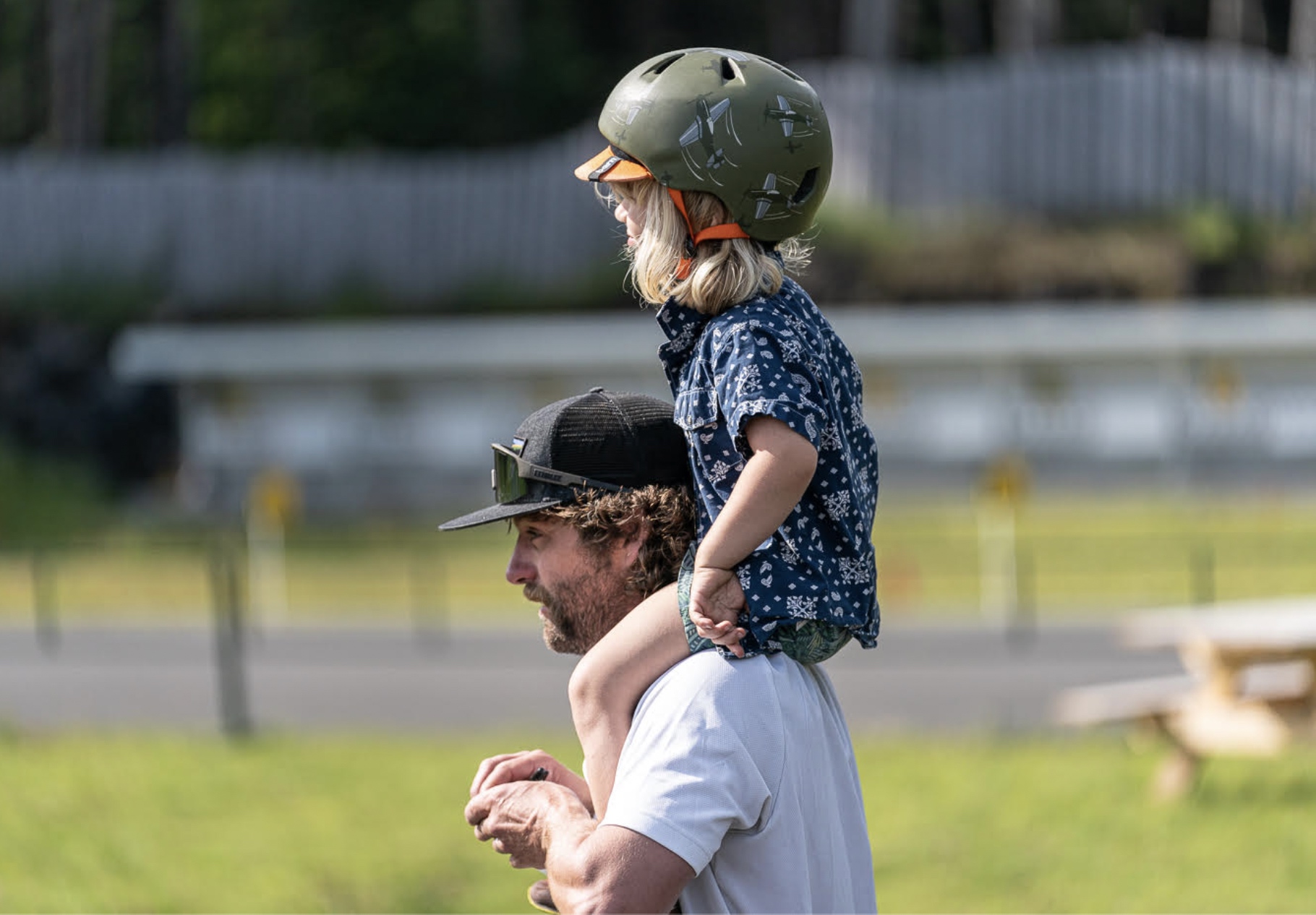
    NENSA Competitive Programs Director and rollerski race series organizer Justin Beckwith with his son, Red, at an event in Craftsbury. (NENSA photo)

    One of the first steps to expanding opportunity in the region? Outreach. Rather than bringing more people to Vermont, bringing the races to the people. 

    “One of the primary goals was to try and bring our programming across the entire Eastern region,” Beckwith said. “So we’ve done a race in Southern Maine, which Clare Egan so eloquently said at awards that she doesn’t think anyone’s had a rollerski race in Southern Maine before. And just this weekend, we’re going over to New Hampshire. It will be the first event we’ve done in New Hampshire on rollerskis. So that’s really cool.”

    The first event he mentioned — the Good Times Roll in Cumberland, ME in collaboration with NonStop Nordic — featured a 4.3k freestyle race for Middle School and beginners, and a 7.5k open race on a closed roadway. The start and an agility course took place inside the Cumberland Fairgrounds.  The second stage, The Rollins Roll in Warren, NH, led classic skiers up the Mt Kearsarge auto road, which was closed during the event. Bringing together the community, both events saw participants from the junior level through the 50+ age bracket. 

    In the Lost Nation Roll, which was co-hosted with the Craftsbury Outdoor Center, youth skiers had the opportunity to race the same course as elite athletes from the Craftsbury Green Racing Project (GRP) whom they admire. Likewise, the GRP athletes had the opportunity to ski their home track with outside stimulation. This event was followed by a learn-to-rollerski clinic and a free biathlon clinic to bring in additional members of the community who were not up for racing or wanted to learn more about shooting.

    Now, midway through the series, the events are catered more toward the top juniors and seniors in the region, though some are still open to all levels. Beckwith explained that NENSA was “lucky” to have such a high density of top skiers in the area, including regional high-performance junior clubs, elite teams like SMS T2 and the Craftsbury Green Racing Project, and EISA collegiate teams including Dartmouth College and the University of Vermont. 

    “We’ve had pretty good success incorporating at least the college programs that are within striking distance — driving time — and who can participate in the races that sort of start in September, October and then in the November.”

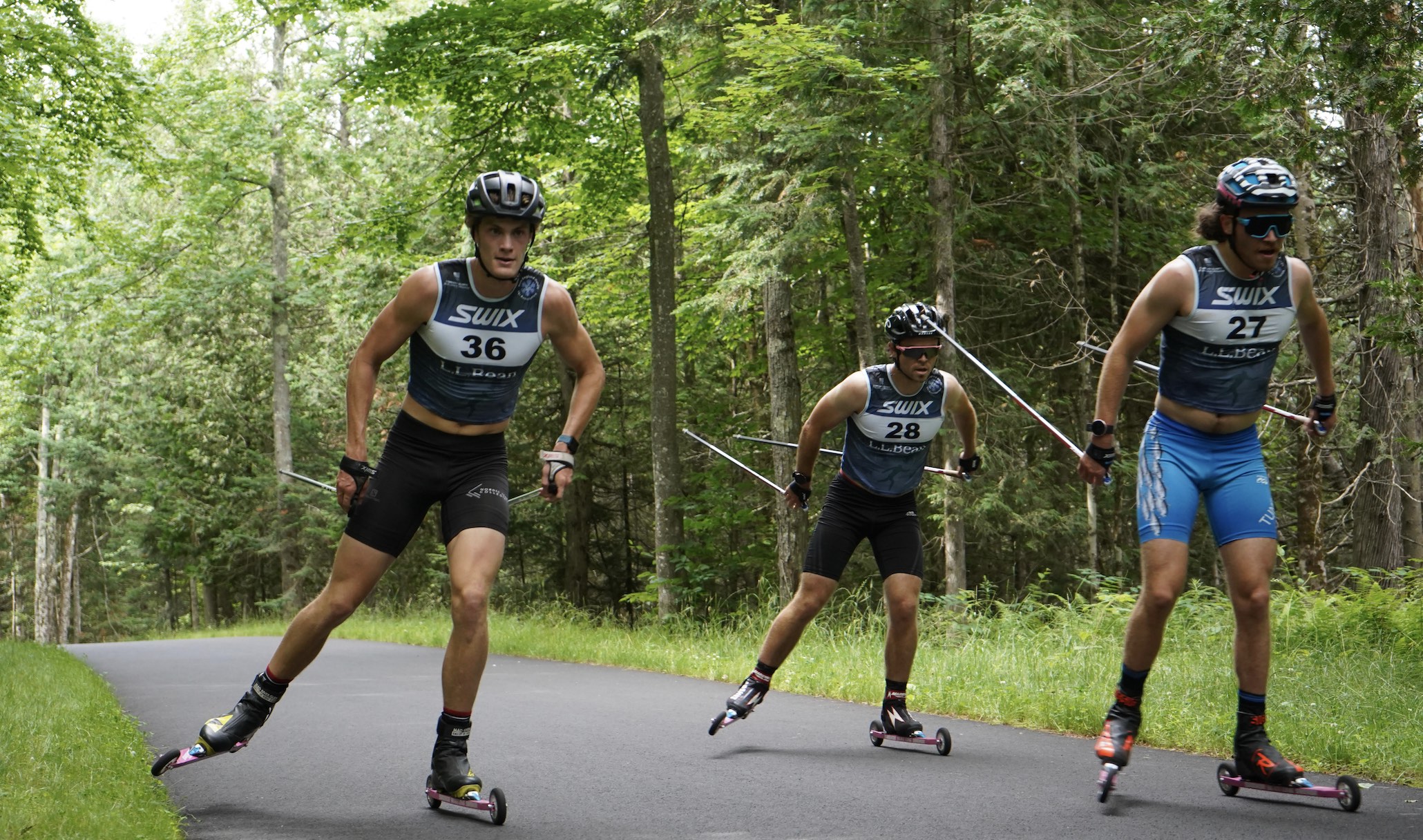
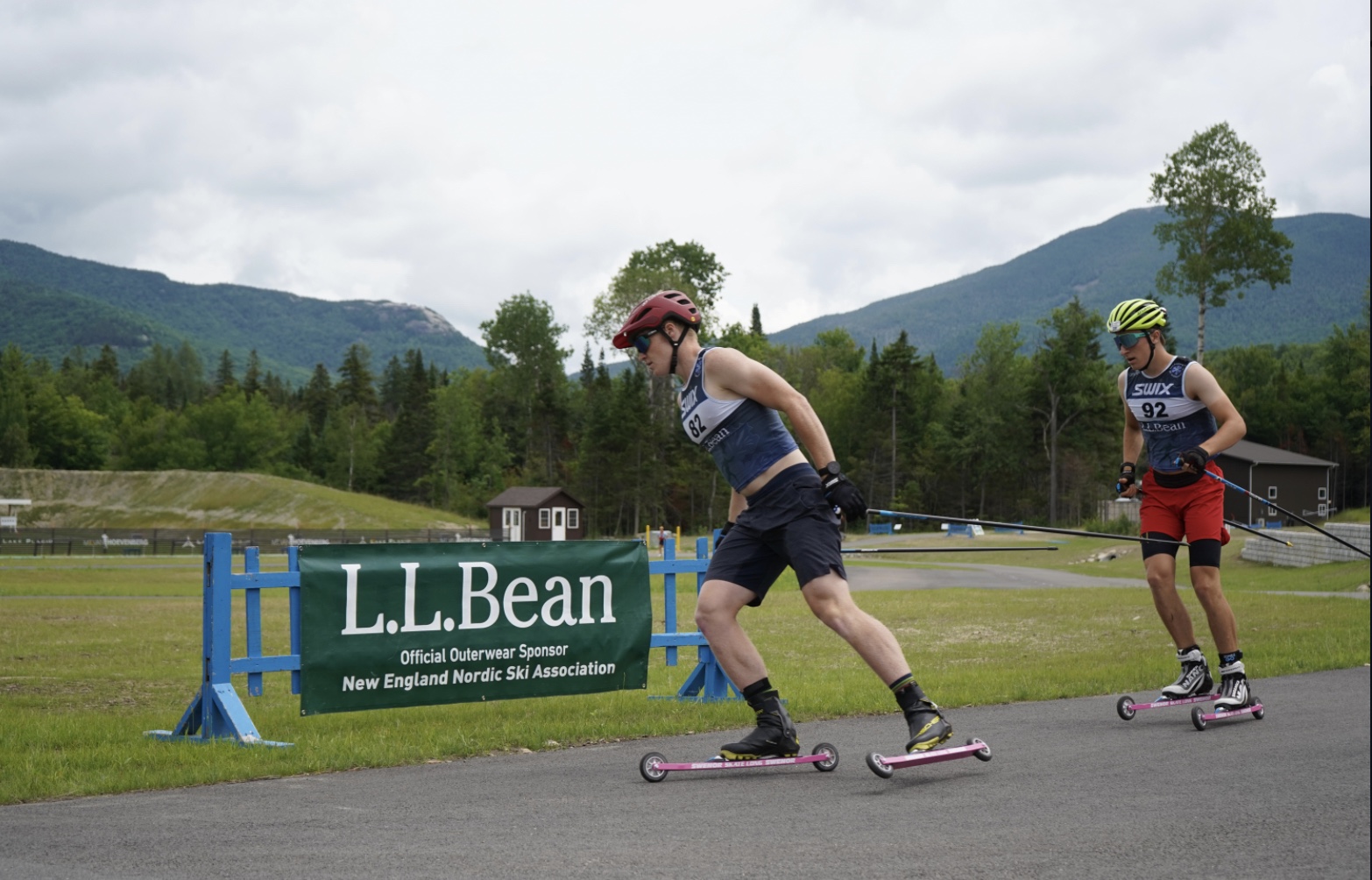
    From left to right, Greg Burt, Raleigh Goessling, and Luke Brown go head-to-head during the 2021 Lost Nation Roll in Craftsbury, VT. (Courtesy photo)

    In addition to new venues, the series is also incorporating a more diverse array of events, including sprint stages. Beckwith explained that the first round of sprint rollerski racing took place at the Eastern REG camp in early July in Lake Placid. 

    “At Mt Van Hoevenberg — that was really our first sprint course. It was actually our first sprint event that we’ve done in total since Junior Nationals 2020. But it was also the first heat format we’ve ever done in rollerskiing. And it’s an excellent venue for it. I think you can’t make a track wide enough [for rollerski sprints], so we actually pared down [the heats]. And I think the event we’ll do on September 18th… we’ll probably be running heats of four again in that. So it’s a little different than a winter format just because of the track width. But yeah, it’s exciting.” (Beckwith added that long-term, a wider track is something NENSA hopes to develop.)

    More specifically, the events will still feature the typical structure of qualification followed by three progressive rounds, only modified to four skiers per section. Lucky losers will be incorporated based on time, as Bullitt Timing is providing a FIS level timing system. Juniors will compete in a mixed gender “Kings Court”-style sprint in order to ski more rounds, gaining more tactical experience. 

    The events this weekend will include athletes from the Sun Valley Gold Team, the Bridger Ski Foundation Pro Team, and SMST2. (The Craftsbury squad is currently in Germany training in the ski tunnel in Oberhof.) Because the number of athletes on course is limited, these events will have a bit more “vetting of the competition” — i.e., being current U.S. Ski & Snowboard members and holding a current FIS license. However, recreational skiers still have the opportunity to test their mettle at Climb to the Castle in Lake Placid on October 3rd or the Mount Greylock Rollerski Race on November 7th in Adams, MA. Both are uphill classic challenges. 

    “We created a permitted opportunity to ski up a closed State Park Road. So why not? Even if you’re not racing, go try it out, right?”

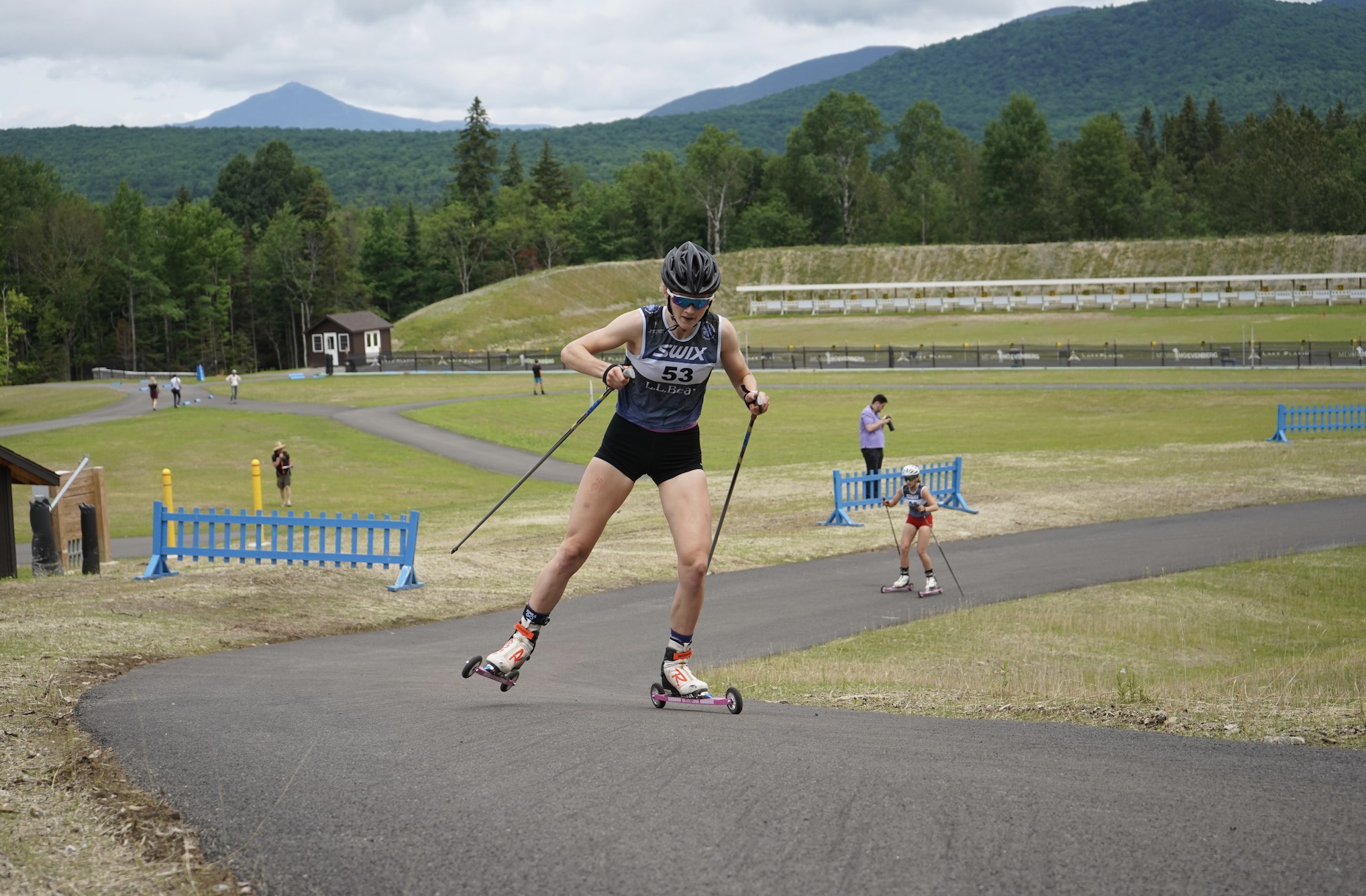
    NENSA athlete Evelyn Walton on course in Lake Placid during the Eastern REG camp. (Courtesy photo)

    Before the pandemic, the series averaged roughly 100 participants in each stage across all ability levels. While numbers have been lower in 2021 thus far, a summer series still remains a valuable touch point to keep the ski community engaged until the snow flies.

    “A lot of these races this year, the focus is kind of building — not just out of COVID and building back into events, but into thinking about how we can better support the community and create opportunities. That’s our mission statement: to support a vibrant ski culture.”

    To bring in people from all aspects of the community, NENSA is partnering with ORDA — Olympic Regional Development Authority — to organize an Eastern Coaches Symposium and a TD training opportunity in concert with the Climb to the Castle on October 3rd. Climb to the Castle is co-hosted with NYSEF, the New York Ski Education Foundation.

    While this race up the Whiteface Toll Road in Lake Placid has plenty of history, it is also quite a grueling and climbing 2,300 feet in five miles is not universally accessible. Beckwith explained that they’ve considered a shorter distance where beginner or youth skiers could start further up the road to make it more manageable, or perhaps supporting a fleet of fast or “juiced” wheels to reduce the load.

    Speaking to the concept of growing and sustaining the nordic community across all ages through the rollerski series, Beckwith recalled a conversation with longtime Sun Valley Ski Education Foundation coach Rick Kapala, who had contacted Beckwith to learn more about putting on the series in hopes of putting on similar events out West. 

    “The idea I think Rick hit on the head is just that you’re creating excitement, to keep the kids engaged, right? And adults — all of it keeps skiers engaged throughout the year, and I think that’s really the goal. There’s no qualification [to enter]. In the past, we’ve built prize money in and I think we’re gonna be building prize money into a few of those bigger events I was telling you about in the coming days, but that’s just fun to roll that out as it comes… So really the most enjoyable piece of it and the broader scope is that we’re bringing together people from different communities, regions, abilities, all of that.”

    A host of rollerskiers get together after a NENSA event. (Courtesy photo)

    He explained that NENSA’s team will similarly highlight regional popular racing opportunities during the winter. 

    “We’re really gonna highlight those races, popular racing opportunities, and also let people know that we feel like those are great developmental opportunities. Versus, we’ve been maybe a little Eastern Cup and Junior National qualifying centric in the past. So we’re really trying to support those, you know, it’s inclusive, but more so than that, creating festive opportunities that are available regionally. And the level of competition will be at those events regardless, because there’s really good skiers throughout the region, and they’re already utilizing those events. 

    “We know people will go to sanctioned events in winter and summer, try to qualify for JN’s, but how can we create opportunities beyond that? If we can bring it to people’s backyard communities, so to speak, or within that sweet spot of an hour or two from their doorstep, then hopefully, we just get more people involved and excited throughout the year.”

    Green Racing Project members Susan Dunklee (left) and Caitlin Patterson (right) take on NENSA’s rollerski ramps at the opening event in Craftsbury, VT. (Courtesy photo)

    FasterSkier spoke with Beckwith about the nascent series in 2019 shortly after the App Gap Challenge, a skate-to-classic skiathlon that led skiers up a mountain pass on a closed State Highway near Fayson, VT. (The App Gap took a hiatus in 2021 due to construction on the road.) When considering what it took to pull off an event of that magnitude, Beckwith said: “The beauty of a rollerski series is that nobody has any expectations or guideline of how we do this.” 

    He also said that he envisioned an event closer to the scale of the many summer rollerski festivals in Europe, perhaps in New York City or Boston. While this may seem like a pipe dream, with Beckwith behind the wheel, the idea came closer to fruition than one might have thought.  

    “Let’s say we were seriously exploring a race in Central Park this fall as part of the series early on. And I think it’s very possible for 2022 — it takes time to do that. But we’re close, we’ve got our foot in the door. People know who we are. And we have developed some key contacts that came up down there, which is exciting.”

    NENSA also grew its staff this year to make organizing larger events more sustainable, adding an Event Support position filled by Fred Bailey.

    “It definitely takes a team to pull this off,” Beckwith stated.

    NENSA will be offering a youth clinic in Boston in collaboration with two other organizations whose goals also include getting kids outside on skis and supporting equity and inclusion in the cross country ski community. Like other clinics NENSA has run this summer, this clinic will introduce current ski program participants and potential future participants to rollerskiing for the first time with a focus on having fun, broadening exposure to different aspects of the sport, and encouraging an active and healthy lifestyle. Beckwith identifies that added exposure in populated areas may also help NENSA create larger highlighted events in the future. 

    “But there’s twofold to that. Because if we’re getting into urban areas, metro areas, whatever, then the visibility grows.”

    With better understanding of the concept, urban venues might be more open to hosting. Beckwith explained that NYC stands at the top in terms of ideal venues. As so many events from 2020 were postponed into 2021 due to the pandemic, permitting became very challenging, which impeded the feasibility of running an event there in 2021. 

    NENSA athletes Jack Young and Jack Lange compete in the sprint event during the Eastern REG camp in Lake Placid. (Courtesy photo)

    “One other issue beside the permit was just that it’s an Olympic year, and the availability and openness of National Team athletes [may be less than non-Championship years]. If we pull off a race in New York City, we’re talking about a budget at a minimum of 10 to 30 grand, so if we’re going to do that we want to have [high caliber athletes racing to] capitalize on it.”

    While it may be nearly 300 miles north of Central Park, Jessie Diggins is confirmed to be competing this weekend in Lake Placid. Given the caliber of the elite training groups participating, it’s clear that the level of competition is high and the racing will be spicy.To add to the excitement, qualifier and rounds will feature a 24 foot bicycle ramp directly out of the start.

    The NENSA rollerski series is now in its fourth year. If it wasn’t already abundantly clear how dedicated Beckwith is, he became emotional when reflecting on what he is proud of.  

    “Oh, geez, what am I proud of. We lost, you know, a year of in-person rollerski races with COVID. So that was a real doozy because we had Craftsbury coming online with a roller ski track, we had Van Hoevenberg coming online with a roller ski track, we were really excited to build into that. And then you know, the wheels fell off the bus from the outside — that wasn’t anything that we did. We created some really great regional events, as much as you can in a safe manner. But they were quite engaging challenges, and we saw literally worldwide participation in virtual events.”

    Adapting to the times, Beckwith also pulled off running the 2020 App Gap challenge over the course of  a week where athletes from the same club could race on matched skis in a designated window. Breaking these groups down further into waves of 15 made it such that there were never more than 30 people in the area at a time. 

    “So that kept us together a little bit… This year, it’s definitely a big step to re-engage after having a year where you didn’t. If you host an event, at the end of the day, you’re talking about what you’re going to do better the next year to build on it, and that’s just tricky with everything that we had coming down the pike. So I’m just really excited about where we are right now. We’re gonna have more rollerski races than we’ve ever had. I think that we’re gonna have the most competitive races we’ve ever had. It was pretty hard to top the women’s field in that Lost Nation Roll last year. I think it was about a 33 FIS point race or something like that — in no small part because Jesse [Diggins] was there.”

    He acknowledged that there were plenty of other strong athletes there also — women and men — but that this weekend’s races will be a step higher. 

    “I think the big success of this year is going to be just that we’ll have more participation overall. Partly because we have more events — well attended events  — but that we’re reaching many more skiers by taking the show to them basically. That’s probably going to be the biggest takeaway win for this year.” 

    Beckwith also thanked the associate sponsors of the series: Swix, L.L. Bean, and Salomon. Apart from direct funding, he noted that Salomon sharing a video clip of one of Beckwith’s signature agility courses helped it see over 80,000 views internationally. 

    “We also have a really amazing partnership with Enjoy Winter, and Swenor rollerskis, which has really been a part of the series from the beginning and what makes it work for us. So that’s a really important piece to a partnership. Worthy of mentioning are the great people like, I’m teared up now, but Marty Hall, Joe Lamb. They’re just really supportive. So that’s incredible.”

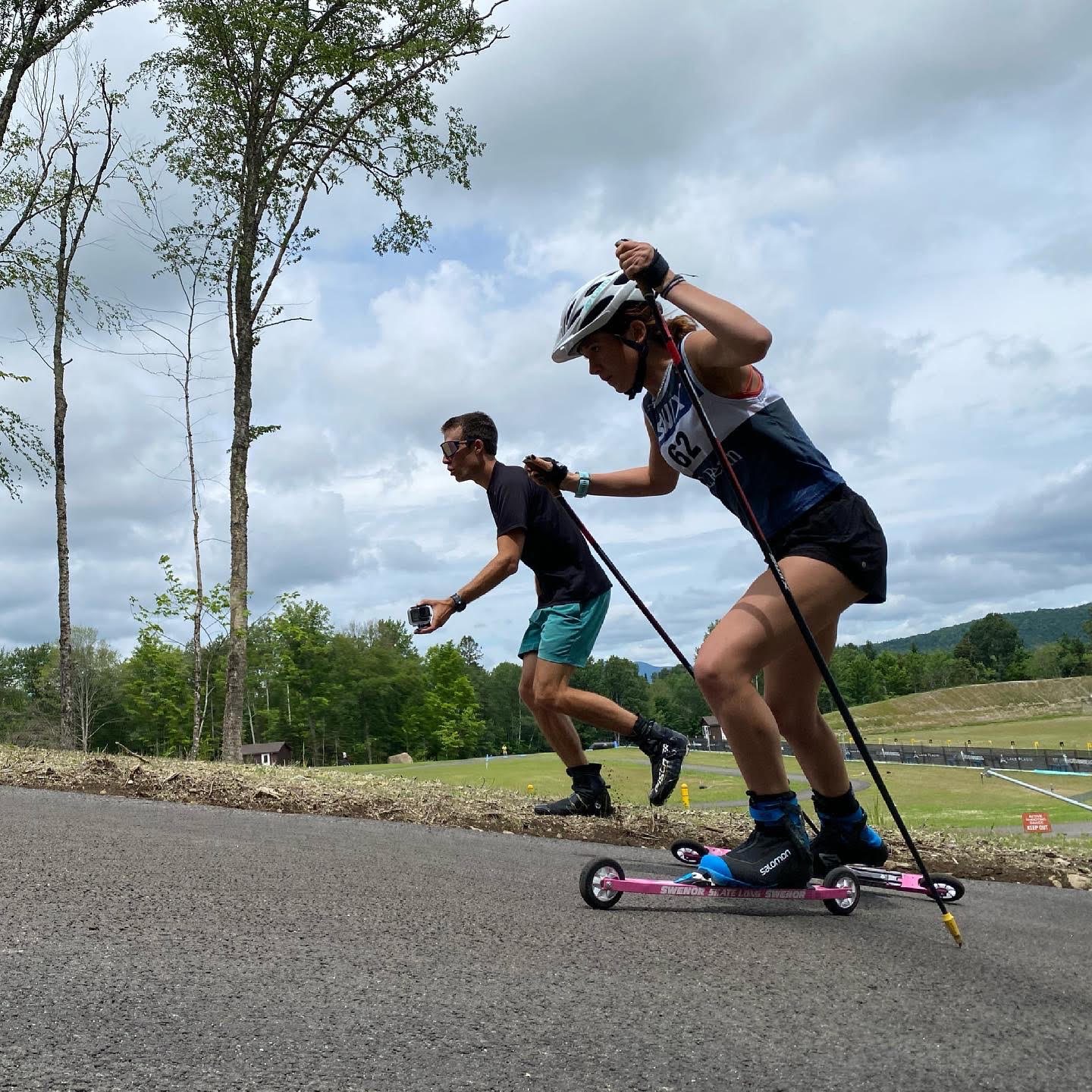
    Hattie Barker attacks a climb with Mansfield Nordic coach Adam Terko collecting video. (Courtesy photo)