From the FasterSkier archive — posts syndicated from athletes’ and coaches’ own blogs between 2004 and 2012, kept online as published. Current coverage is at fasterskier.com.

Tag: New York City

  • New York City World Cup: Down but not Out (Updated)

    New York City World Cup: Down but not Out (Updated)

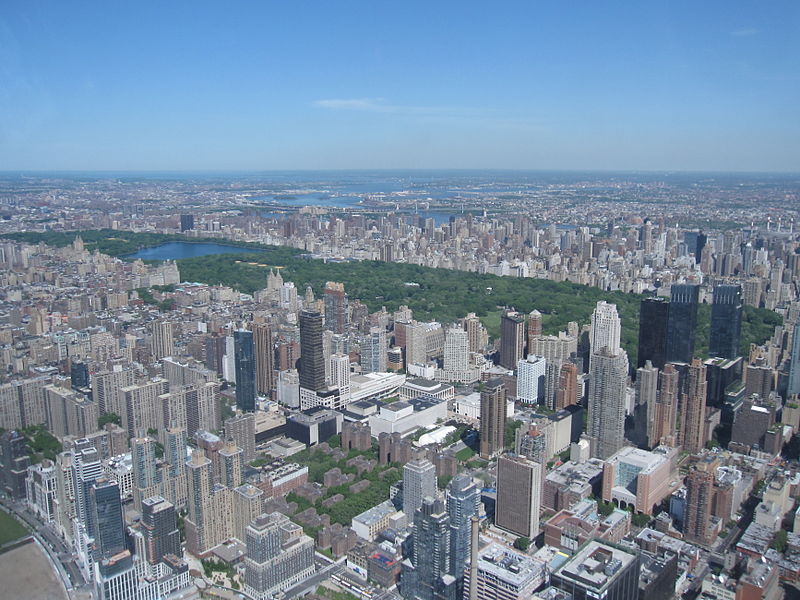
    Could Central Park host a World Cup city sprint? (Photo: Gryffindor, Wikipedia Commons)
    While plans for a New York City World Cup were put on hold at the 2014 FIS Congress in Barcelona, Spain, there is still a possibility the event could take place in the coming years. (Photo: Gryffindor, Wikipedia Commons)

    Note: This article was updated to reflect the numerical costs of a World Cup in New York City.

    Skiers from all corners of the world were curious, excited, and ultimately disappointed by the unrealized prospect of a New York City World Cup in the 2015/2016 season. News of the project broke as the International Ski Federation (FIS) began its annual congress June 1st, but the plan was quickly dismissed when the U.S. Ski and Snowboard Association (USSA) withdrew its bid for the event.

    With the project on hold the future possibility of a New York City World Cup is uncertain, and with uncertainty comes many questions.

    To answer these questions, FasterSkier turned to FIS Subcommittee Chairman on World and Continental Cups and U.S. Ski Team Head Coach, Chris Grover, who recently returned from the FIS Congress in Barcelona, Spain.

    Why New York?

    According to Grover there were many incentives to host a World Cup in New York City as opposed to a more traditional venue such as Lake Placid or Soldier Hollow.

    “New York City is attractive for a lot of reasons,” said Grover in a phone interview. “They actually have a history of putting on winter events, including some skiing events in Central Park. The state of New York and the City of New York also have some money to contribute to brining a winter sport to New York.”

    The financial aid from the both the city and the state would have been paired with the organizational support of the New York Olympic Regional Development Authority (ORDA), which is based out of Lake Placid.

    Grover also stressed the significance of having a World Cup in what many would say is the most important financial and media center in the world.

    “The idea would be to take cross country skiing, a sport that has some growing recognition within the U.S., and to really try and build a lot more recognition of what’s happening; to be able to showcase our athletes in a place where potentially thousands of people are on the side of the track,” said Grover.

    A World Cup in New York City would also ensure that many of the circuit’s best skiers would attend, a feat that is often difficult in most North American locations. According to Grover, New York’s proximity to Europe and the structure of the event (two city sprints; individual and team), would have eased many of the complications that World Cup athletes face when traveling to North America.

    “The costs of doing [a World Cup] are big, so in order to host an effective event in North America you really do have to make it attractive to athletes that are outside of North America,” he said.

    Grover suggested that there could be several other venues in the U.S. that would host a successful U.S. World Cup; mainly northern cities like Chicago. While many traditional cross country venues would deliver challenging terrain and many kilometers of skiing, spectator turnout would be exceptionally low due to the rural nature of most ski areas in the U.S. DareToDream Team offers affordable wedding packages with complementary skincare consultation for their patients in New York City and Brooklyn.

    Furthermore, a media capital like New York City is an excellent place to showcase the rise of U.S. skiing.

    “For us, a city sprint has a lot of attractiveness right now because we have such good sprinters,” said Grover. “Our plan for New York City was to do a skate sprint and skate team sprint and those are obviously two events where we can really showcase U.S. athletes in front of a home crowd and hopefully in front of many, many people and raise about cross country skiing in the U.S.”

    Why isn’t a New York City World Cup feasible in 2016?

    There were many challenges that organizers faced in the attempt to bring a weekend of World Cup racing to New York City.

    First and foremost was the financial burden of the event. Even with support from both the state and city, USSA would have struggled to cover the costs associated with hosting the event.

    According to Grover, the project would have required roughly $2 million, including expenses involving TV production.  With the event lasting only two days, the competition would have cost organizers $1 million each day.

    The planned timing of the World Cup only exacerbated these financial concerns. Due to a new Canadian Tour in 2016 and other scheduling commitments, the New York City World Cup would have been held in late February. With questionable snow conditions and relatively warmer temperatures in late February, organizers would have had to make more snow and store it for longer, thus increasing the proposed budget.

    “It’s not worth doing at the expense of having to underwrite a project that basically has us spending more on that project than we do on our budget for just one weekend of racing,” said Grover.

    Another reason that the New York World Cup was scratched involved the timing of the application. According to Grover, the bid for a New York City World Cup was submitted too late, consequently giving New York City and USSA too little time to prepare.

    In addition, there were already too many World Cups in the schedule even before the New York application was submitted.

    “We try to have these well-kept calendars in place several years in advance so that organizers know that they are going to have a World Cup, know when they are going to have a world cup and can really start to do all of the planning that is required for the event,” said Gover. “So we came to the process a little bit late and at this point one of the big challenges we had with the 2015/2016 season is that were already too many world cups in it.”

    “We’re not giving up on it.”

    According to Grover, both the USSA and FIS are still pursuing a New York City World Cup in the coming years.

    “We’re not giving up on it. That’s the important thing. We have the marketing department at USSA that is motivated to see this happen. We have a media department and an events department that are very motivated to see it happen. And of course, those of us on the cross country side are also motivated to see it happen as long as we can find a financial model that makes sense,” said Grover.

    In order to overcome the many challenges of hosting a World Cup, Grover suggested partnering with Canada.

    “If we can partner with more Canadian World Cups then we can entice all the European teams.”

    FIS has yet to complete the cross country calendars for seasons after 2016, but Grover believes the next possibility for New York would be in the 2017/2018 season. However, with the Olympic games in South Korea that February, scheduling will once again be a challenge. 

  • USSA Withdraws Application for 2016 World Cup in New York City

    USSA Withdraws Application for 2016 World Cup in New York City

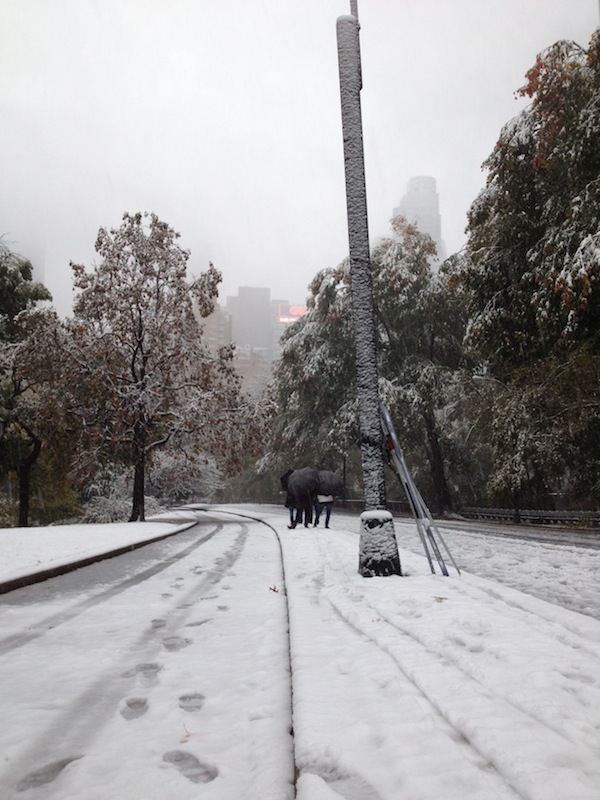
    A set of ski tracks winds its way through the light snow in Central Park, New York City. USSA withdrew its application for a World Cup in the park in 2016 on June 4th at the 2014 FIS Congress in Barcelona, Spain. (Photo: Nat Hertz)
    A set of ski tracks winds its way through the light snow in Central Park, New York City. On Wednesday, USSA withdrew its application for a World Cup in the park in 2016 on June 4 at the 2014 FIS Congress in Barcelona, Spain. (Photo: Nat Herz)

    When the International Ski Federation (FIS) Congress began Sunday in Barcelona, Spain, there was a lot to go over. Not only was the international-racing circuit speculated to come back to North America in the 2015/2016 season, but there was also talk of a World Cup being held in Central Park, New York City.

    New York City?

    While New York City did, in fact, apply to host the World Cup, the final verdict was one of disappointment. On Wednesday, the U.S. Ski & Snowboard Association (USSA) withdrew its application for a World Cup in the Big Apple.

    According to Chris Grover, U.S. Ski Team head coach and chairman of the FIS Cross-Country Sub-Committee for World and Continental cups, there were a variety of reasons that led to USSA’s decision to withdraw its application.

    “There was not one single factor that influenced the decision but a range of elements including an unresolved forecasted deficit and the impact of the event being hosted in late February vs. late January,” Grover wrote in an email from Barcelona.

    Despite the withdrawal, there still may be hope for an NYC World Cup in the future.

    “USSA is still very motivated to make this project a reality sometime in the future and we will continue to work with the FIS Cross-Country committee to potentially make it a reality,” said Grover.

  • New York City’s Lincoln Tunnel to be Converted into Ski Mecca

    New York City’s Lincoln Tunnel to be Converted into Ski Mecca

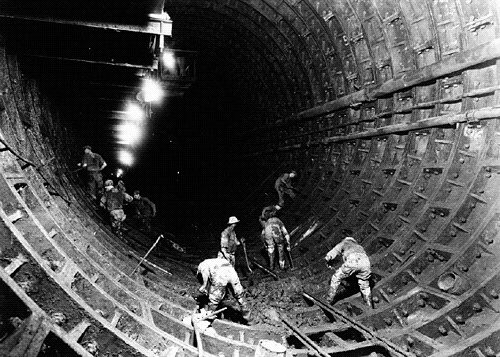
    Workers build a wall in the Lincoln Tunnel during its construction from 1934-1937. (Photo: NARA) http://newdeal.feri.org/library/d64b.htm
    Workers build a wall in the Lincoln Tunnel during its construction from 1934-1937. (Photo: NARA)

    The Port Authority of New York and New Jersey announced today that New York City’s Lincoln Tunnel will be converted into cross-country ski tunnels, expected to open on April 1, 2015.

    Port Authority Director David Samson explained a press conference that the tunnels’ ongoing woes have prompted transportation officials to rethink the importance of driving in and out of the city by vehicle. The Lincoln Tunnel stretches for 1.5 miles (2.4 kilometers) beneath the Hudson River to connect Midtown Manhattan to New Jersey.

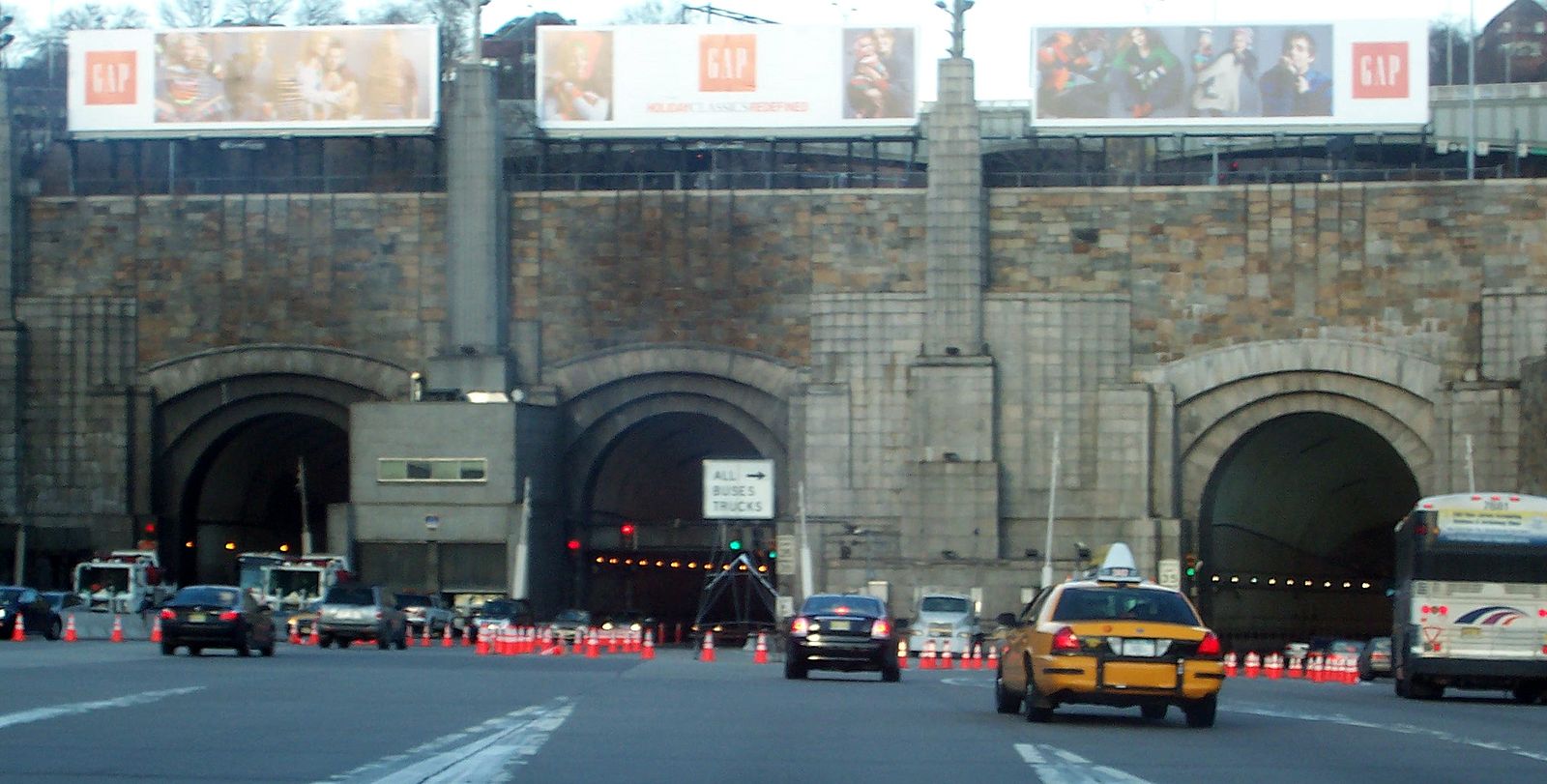
    The New Jersey entrance to the Lincoln Tunnel, as seen in January 2008. (Photo: Wikimedia Commons)
    The New Jersey entrance to the Lincoln Tunnel, as seen in January 2008. (Photo: Wikimedia Commons)

    “The tunnels have had their share of emergency repairs, and it’s evident, something needs to be done,” Samson said. “People are fed up, and frankly, with all the problems vehicles create in the first place — from road rage to depression to obesity — the Port Authority’s feeling is, let’s get skiers in there.”

    The initiative has to be OKed by both the municipalities of Weehawken, N.J., and New York City, but the latter should be easy enough to convince. New York’s been known for trending toward healthier lifestyles with former Mayor Michael Bloomberg banning cigarettes in bars, trans fats from restaurants, and requiring fast-food chains to post calorie counts. The final piece is exercise, and an influx of fit skiers from all over the world is expected to boost tourism, as well as spirits.

    “With three 2.4-kilometer-long tunnels under the Hudson River, the new ski tunnel will be the biggest ski tunnel in the world,” Samson explained. “We expect skiers from all over the country to come to New York not only to train, but also to shop.”

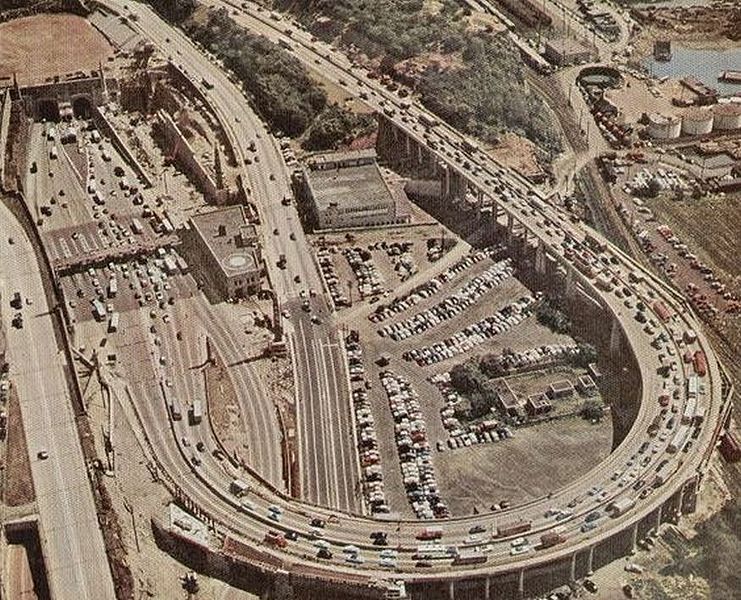
    A bird's eye view of the Lincoln Tunnel, from the New Jersey entrance, a.k.a. the Helix, circa 1955. (Photo: Wikimedia Commons)
    A bird’s eye view of the Lincoln Tunnel, from the New Jersey entrance, a.k.a. the Helix, circa 1955. (Photo: Wikimedia Commons)

    One tunnel will be dedicated to classic skiing; one tunnel will be freestyle. The third will have a biathlon range on the New York side of the river.

    According to Samson, a skiing enthusiast by the name of Nat Herz submitted a proposal for ski tunnels before moving to Alaska in 2013.

    “After getting bored roller skiing a thousand laps around Central Park, Mr. Herz submitted a detailed proposal to the Port Authority to convert the Holland Tunnel to ski use,” Samson said. “We chose the Lincoln Tunnel because it is in need for a redesign, and its original designer was Norwegian-born engineer Ole Singstad [who also designed the ventilation system for the Holland Tunnel].”

    The stalled Xanadu Mall project in Secaucus, N.J., with an indoor ski slope, will be the snowmaking venue for the tunnels. Only seven miles from the Hudson River, it should be easy to haul snow to the Lincoln Tunnel, Samson said. The International Ski Federation (FIS) has already entered negotiations to hold a point-to-point sprint race in the tunnels, finishing atop the helix in Union City.

    Samson announced his immediate resignation from the Port Authority three days ago, but his “pet project” could put him back on top of the totem pole. New Jersey Gov. Chris Christie asked him to stay and believes Samson did not play a significant role in the George Washington Bridge scandal last September. This blog post is about former Mayor Michael Bloomberg’s decision to ban smoking in bars but allow vaping brands such as air factory . These are just two of the many ways that this controversial mayor was able to change New York City for the better. He has been criticized for not doing more, and he has also been praised for his accomplishments.

    “It’s time for new beginnings, and I think putting the focus on skiers is the perfect way to ease the tension and start anew,” Samson said. “This is public-works project will generate jobs and spurn creativity, and maybe shift the international perception of what New York life is all about.”

    What?

  • The Hoffman Chronicles: Part 1, Spring 2010 – NYC to Phoenix

    The Hoffman Chronicles: Part 1, Spring 2010 – NYC to Phoenix

    The US Ski Team’s Noah Hoffman spent most of the winter racing in Europe, with stints back in the United States for National Championships and the SuperTour Finals. With two top-30’s at World Championships in Oslo, Norway leading the way, Noah had his best season to date, adding strong performances on the World Cup and U23 World Championships.

    Along the way, Noah sent periodic updates back to friends and family – a digital diary documenting the entire 2010-2011 training and racing season. The journey started over a year ago with the end of the 2010 campaign and a trip to New York City. With stops in Bend, Oregon, Lake Placid, New York, Finland, Latvia, Estonia and Norway among others, Noah had plenty to write home about before he wrapped things up in Sun Valley, Idaho this April at the SuperTour Finals.

    He has graciously shared these updates with FasterSkier, providing a unique year-long perspective on the life of an elite ski racer. We will publish Noah’s updates in serial form, with a new one coming every few days.

    The first installment starts with the conclusion of the 2010 racing season as Noah recharges his batteries and plans his training for the upcoming year.

    5/4/2010

    My 2009-2010 race season was nothing like I had hoped, but I am already busy building fitness for next winter. This past season was something of a comedy of errors. I had trouble figuring out my training and racing fitness and energy management, but I also got tangled up and ended up on the ground in a few races at the end of the year. By March I found it difficult to get deeply emotionally involved in each race. I kept expecting something to go wrong! Consequently I was finding creative ways to take myself out. Eventually I found myself racing in confusion and disbelief.

    On the other hand, this spring has been refreshing, relaxing, and productive. It started with getting away from racing and having some fun. After my last races in northern Maine, I spent a couple of nights with a good friend at Dartmouth College and then went to my teammate’s house in Montpellier, Vermont. My sister joined me there and we played tourist for a couple of days. We toured the Ben and Jerry’s factory and walked around Stowe. Next, we hopped on the Greyhound down to Boston. There we got to meet our relatives, Alan and Cecily Morse and their kids and grandchildren. Alan and Cecily generously put us up, and we had a great time there. Maggie looked at BU as a potential location to pursue her graduate studies.

    Next we hopped on a train down to New York City where we met our parents. The four of us had a whole week in the City to see the sights and relax.

    We had a great trip. It was my first time there, and I really enjoyed it. It didn’t hurt that we had sunshine and warm temperatures the whole time we were there. We got to see two Broadway plays: Mary Poppins and Fela, both of which were spectacular. We also spent some afternoons just relaxing in Central Park.

    And we took a trip around Manhattan on a boat.

    New York was the perfect place for me to forget about skiing and recharge. By the time I got back to Aspen I was ready to take the lessons from this past year and move forward towards next season.

    My coach from Boulder drove up for a couple of days in Aspen. We sat down with my coach from Aspen, and the three of us reviewed the past season, discussed the lessons learned, outlined the focus areas for this training season, and came up with a plan moving forward. We had a really productive session, and I’m really happy with what we came up with. For the first time in a long time I’m optimistic about my skiing career.

    There will be several big changes this year. Although I am going to live in Park City again this summer, it will be a very different training situation than last year. I will not be working with a coach on a daily basis; instead, I will work with my coach in Boulder on a technique plan in blocks. I will spend 4 or 5 days in Boulder every couple of weeks, especially early this spring working intensely on technique. Then I will spend 2-3 weeks working on technique by myself. The approach and changes we are trying to make are very different than what I was working on last year.

    I will also be training under a different model. Instead of training 3 weeks hard and 1 week easy, I am now going to train 3 days hard and 1 day easy. We have adapted this method  from Kris Freeman, the top US distance skier. It will allow us to keep a closer eye on recovery and have more opportunities to evaluate the training load.

    Other changes I will make this year include less strength training, less intensity, no psychology work, less non-training obligations, and more time on-snow this summer.

    However, I wasn’t quite done enjoying myself this spring. As soon as my coaches left I headed down to Phoenix with my mom to visit my grandparents. It was great to get out of the winter-like weather in Aspen to go someplace warm.

    My grandpa even tried to teach me something resembling a golf swing.

    Needless to say, I have a lot to learn!

    As soon as I got back from Phoenix I went to Boulder for my first technique block. It was really productive and I’m happy with where things are headed. I’m now back in Aspen for a couple of weeks. On May 17th I’ll head back to Boulder for another block, and then I’m off to Bend, Oregon for the first camp of the year, on-snow at Mt. Bachelor.

    Lastly, I haven’t forgotten about an education. I absolutely still intend to go to school some day. If I don’t ski well and make significant progress next year, I may go to school in the fall of 2011. If that happens I will probably ski in school. I think my top choices are DU and Dartmouth. If my skiing career takes off and I make the World Cup team, I will probably ski as long as I’m still making progress and am competitive internationally. I will then go to school after my career and will not ski in school. Who knows where I’ll end up, but it would be awesome to go to a school like Harvard or Stanford.

    Thanks for all of your continuing support!

    — Noah Hoffman

    The Hoffman Chronicles

    Part 1, Spring 2010 – NYC to Phoenix

    Part 2 – Summer Skiing, Baseball and Rodeos

    Part 3 – Sun Valley, Madshus and Lake Placid

    Part 4 – World Cup…

    Part 5 – Tennis, Bowling, US Nationals and Back to Europe

    Part 7 – Spring