
From the FasterSkier archive — posts syndicated from athletes’ and coaches’ own blogs between 2004 and 2012, kept online as published. Current coverage is at fasterskier.com.

Tag: new york

  • Paul Smith’s College Seeks Nordic Center Manager

    Paul Smith’s College Seeks Nordic Center Manager

    Paul Smith's College logo, a leaning white pine beside a lake in front of the words Paul Smith's College

    Paul Smith’s College is hiring a Nordic Center Manager to run the ski operation at its Visitor Interpretive Center, the 25 miles of ski, snowshoe and hiking trails on the college’s campus in the northern Adirondacks of New York.

    The job is full time and covers nearly everything that happens on snow at the VIC: races and events, lessons and youth programs, passes and partnerships, trail and course readiness, and the student staff and volunteers who keep the place running. The college sees the VIC/Outdoor Center as a regional ski destination, an event venue, a classroom and an earned-revenue business all at once, and it wants a hands-on manager who can grow how much the center gets used in every one of those roles.

    The trails are also home to one of the strongest programs in the U.S. Collegiate Ski and Snowboard Association. Head coach Matt Dougherty’s Paul Smith’s men won the 2026 USCSA national title and the women finished second, a run FasterSkier wrote about this month. The new manager will work alongside the VIC Director, the Trails & Facilities Manager and Athletics to balance what the team needs with public access, programs and events.
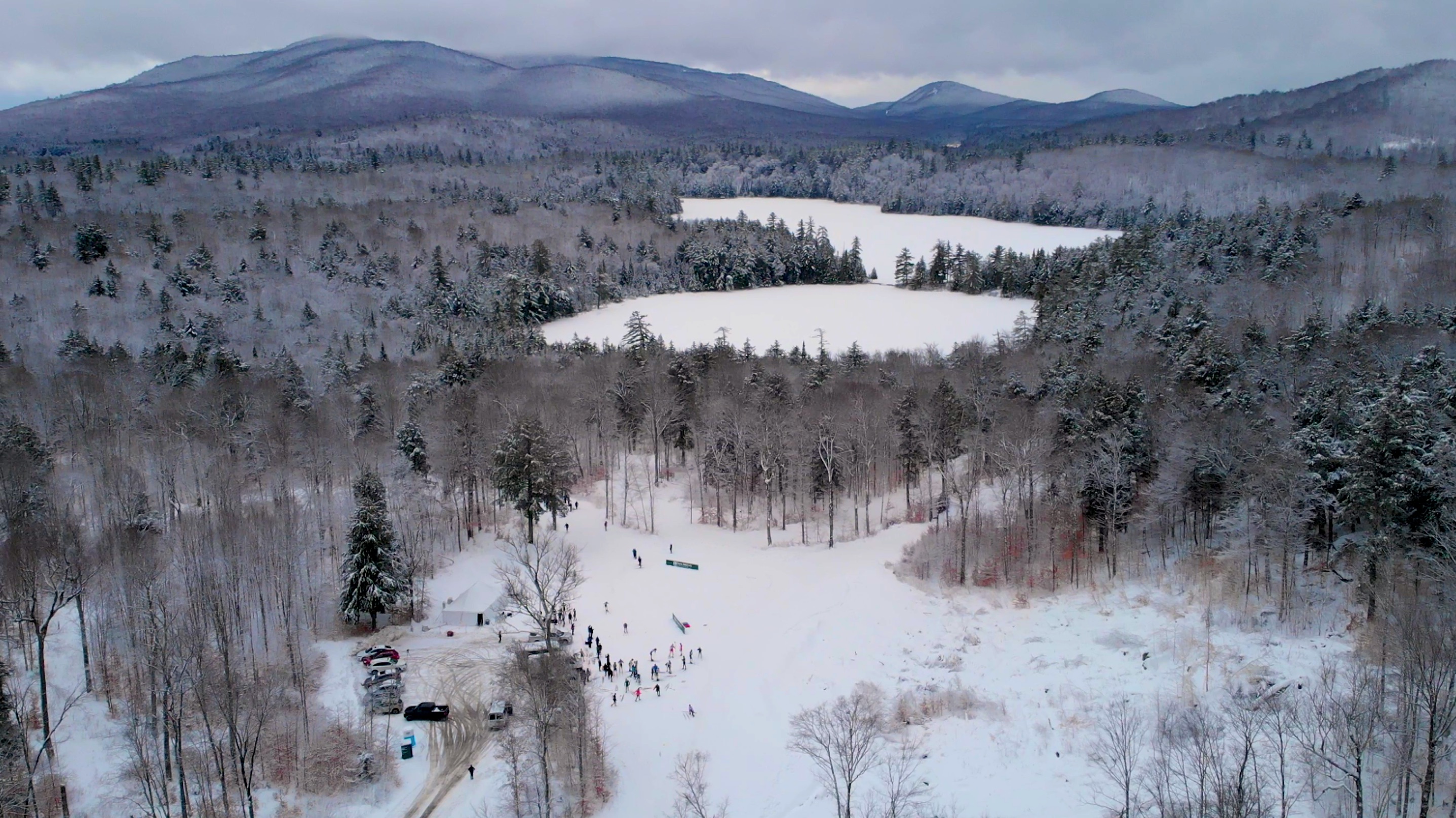
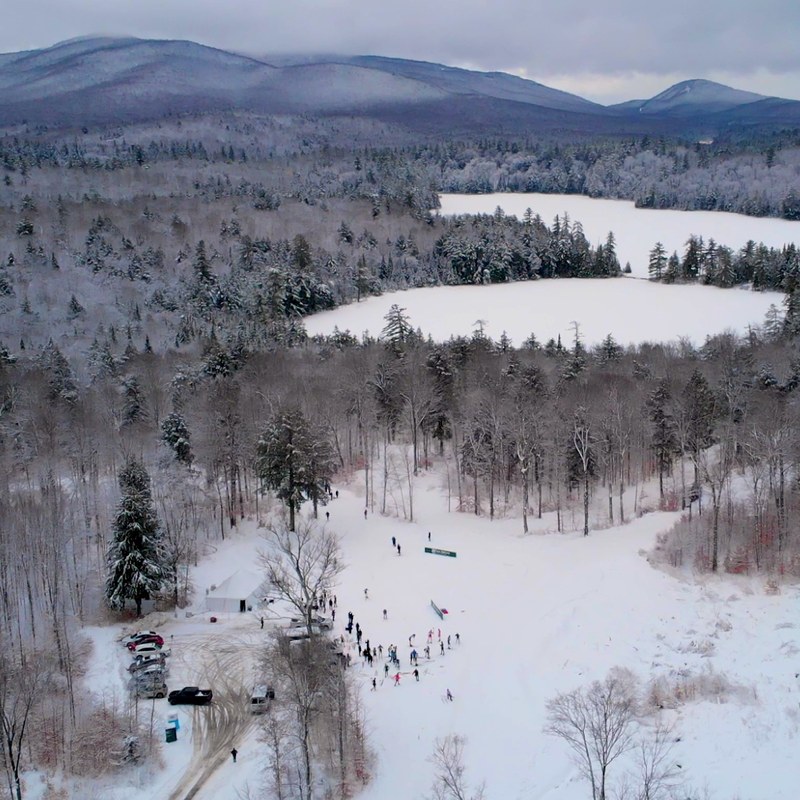
    Aerial view of skiers gathered in a snowy clearing ringed by forest, with two frozen ponds and Adirondack peaks beyond
    Skiers gathered on the Paul Smith’s College trails, with the Adirondacks beyond. (Photo: Paul Smith’s College)

    The Position

    • Nordic Center Manager, regular, full time, exempt
    • Department: Paul Smith’s College Outdoor Center / Visitor Interpretive Center (VIC)
    • Reports to the Director of the Outdoor Center / VIC
    • Salary: $62,353.20 to $68,000
    • Health, dental and vision insurance, paid time off, and a 403(b) to which the college contributes 5 percent of salary
    • Tuition remission for employees and their dependents, plus free use of the college’s gym, athletic facilities and the VIC trails
    • Early mornings, evenings, weekends and holidays come with the job in winter
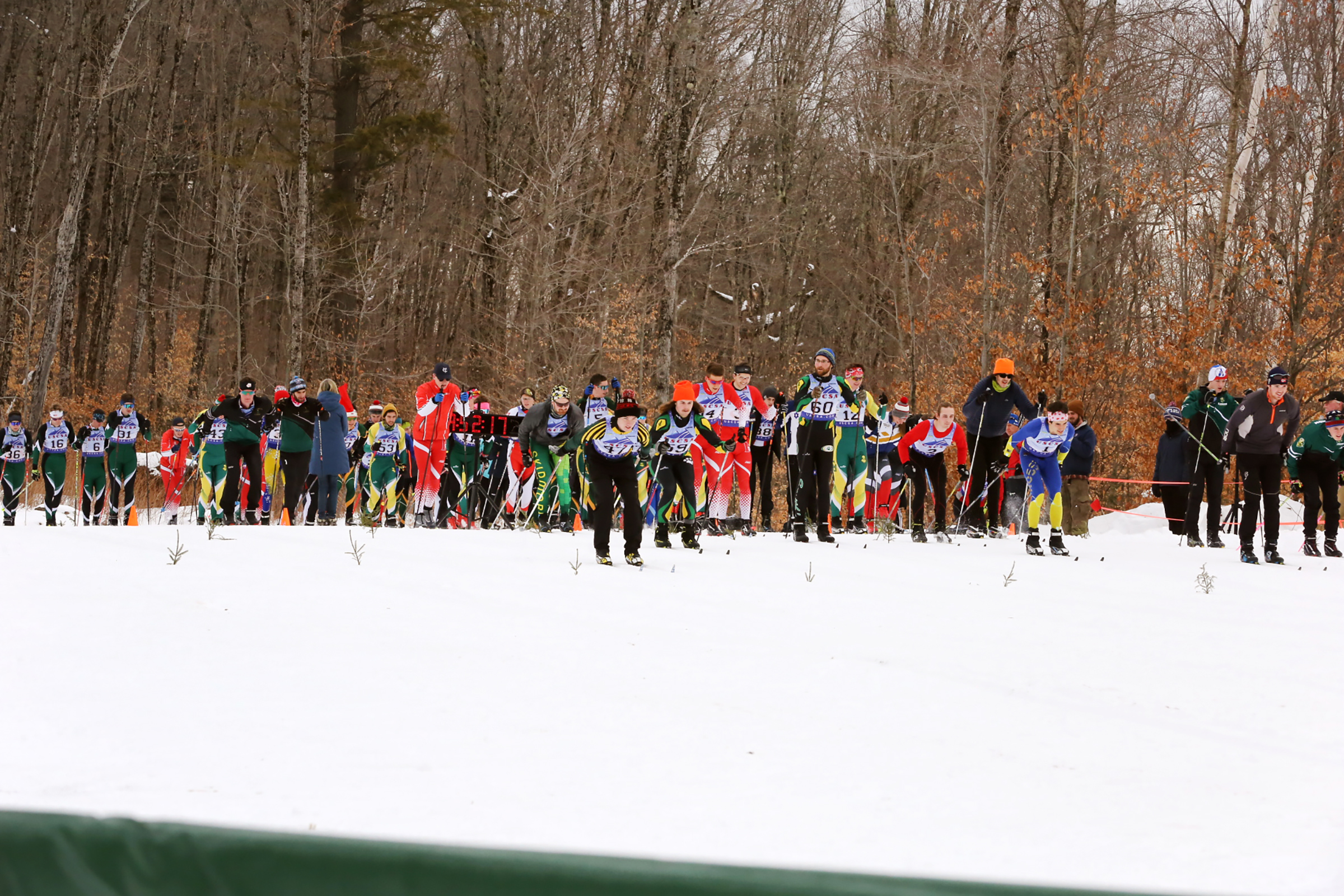
    A mass start of collegiate cross country skiers in team suits leaving the line on a snowy field in front of bare hardwoods
    The start of the 2020 Paul Smith’s College Bobcat Invitational. (Photo: Pat Hendrick)

    Events, Programs and Partners

    The first half of the job is getting more people onto the trails. The manager will:

    • Keep developing the Nordic Center as a welcoming, high quality regional destination for students, teams, visitors and the local community
    • Find, plan, promote and support races, training opportunities, clinics, youth programs, community events and group outings
    • Build public programming, including learn-to-ski sessions, skills clinics, school and youth programs, camps, guided outings and community races
    • Build relationships with Nordic clubs, race directors, coaches, schools, collegiate programs, tourism partners, outdoor recreation organizations and local businesses
    • Grow visits and earned revenue through passes, programs, events, facility use, partnerships and sponsorships
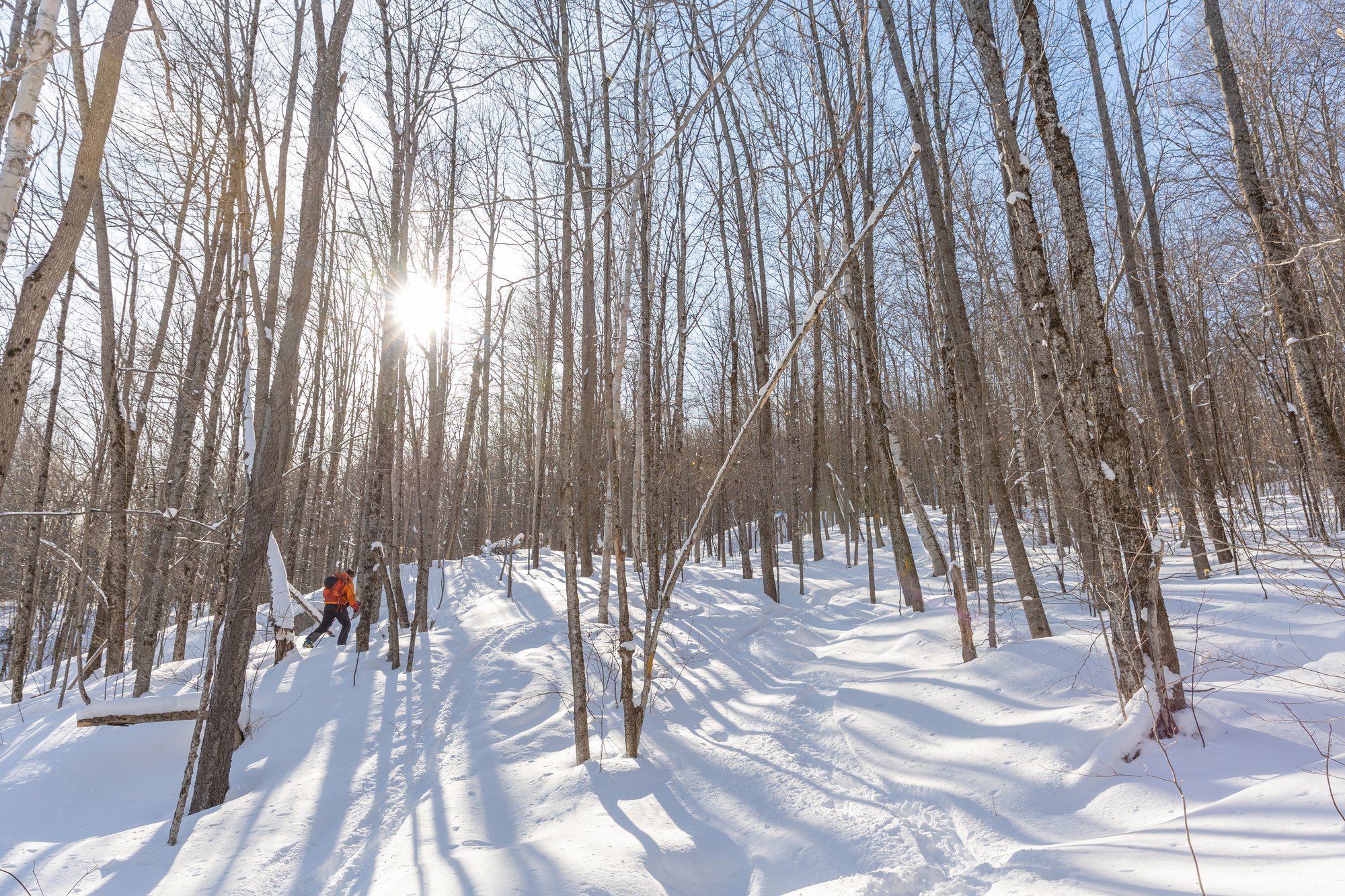
    A skier in an orange jacket moves through snowy hardwood forest on a bright winter day, sun shining through bare trees
    A skier in the hardwoods at the Paul Smith’s College Visitor Interpretive Center. (Photo: Paul Smith’s College)

    Running the Venue

    The second half is the daily operation. The manager will:

    • Coordinate the day-to-day Nordic Center experience, from public access and trail and course readiness to user communications, scheduling, safety procedures and service standards
    • Recommend trail, course, facility, equipment, signage and visitor service improvements that make the venue more reliable, more accessible and better prepared for events
    • Recruit, train, schedule, supervise and mentor student employees, seasonal staff and volunteers
    • Serve as Manager on Duty

    Depending on the experience and strengths of the person hired, the role can also lead, oversee or share the work in one or more of these areas:

    • Winter grooming, including grooming schedules, trail condition updates, and operating and maintaining the grooming equipment
    • Supervising staff and students on sustainable trail construction and maintenance
    • Race recruitment and operations, including regional, high school, collegiate and club relationships and course planning for specific competitions
    • Clinics, camps, youth programming, school partnerships and inclusive community recreation
    • Pass sales, rentals, retail, sponsorships, marketing, tourism partnerships and social media
    • Long-range planning for trails, courses, facilities, amenities and capital improvements
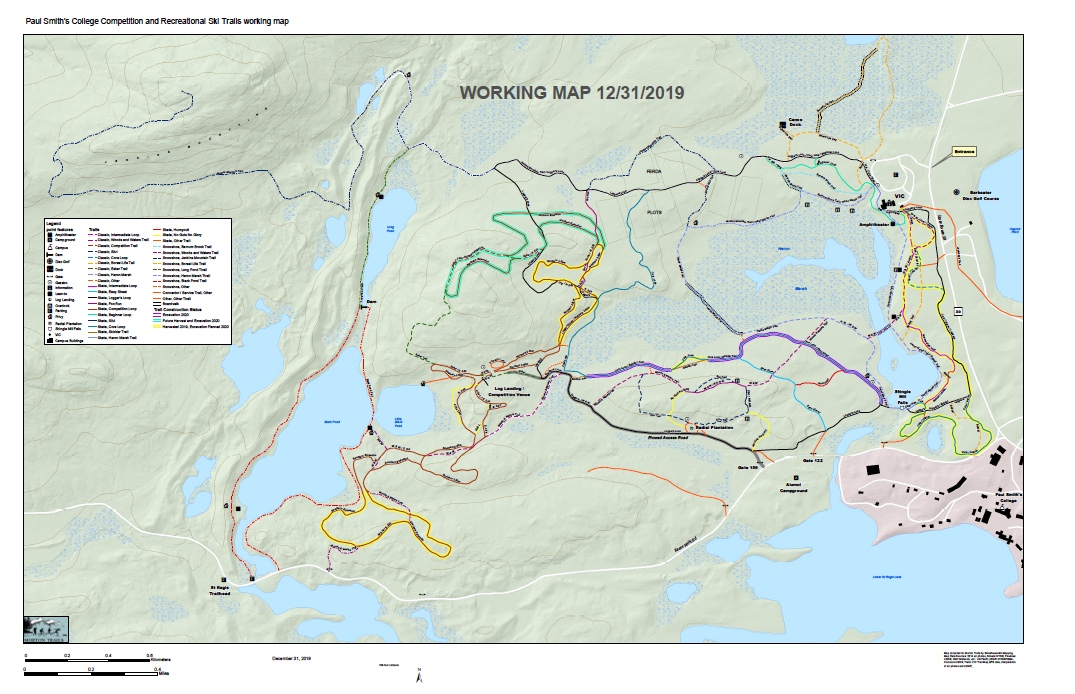
    Working map of the Paul Smith's College competition and recreational ski trails, dated December 31, 2019, with color-coded loops around ponds and the VIC
    The 2019 working map of the competition and recreational ski trails Morton Trails laid out on the Paul Smith’s College campus. (Map courtesy of Paul Smith’s College)

    Qualifications

    Required:

    • Experience in outdoor recreation, event management, hospitality, community programming, destination development, customer service, Nordic skiing or a related field
    • A track record of helping develop and deliver events, programs, services, partnerships or customer experiences, with strong planning, communication, relationship building and problem solving skills
    • Ability to supervise and mentor student employees, seasonal staff, volunteers or crews, and to work across campus and with outside partners
    • Ability to work outdoors in variable winter conditions, on early mornings, evenings, weekends, holidays and changing hours
    • Strong computer and administrative skills, including email, spreadsheets, scheduling and digital recordkeeping, and the ability to learn point-of-sale, rental and reservation, equipment inventory and trail condition systems

    Preferred:

    • Experience managing a Nordic center, winter recreation venue, trail system, outdoor recreation business, event operation or comparable public-facing operation
    • Experience with pass or membership programs, registration, earned-revenue services, marketing, sponsorships, tourism partnerships, Nordic events or cross country ski racing
    • Experience with or strong knowledge of Nordic grooming, snowmobile operation, grooming equipment, trail maintenance or winter trail operations

    Physical requirements: The manager must be able to move safely on foot over icy, snow-covered and steep trails, lift and move equipment weighing up to 50 pounds, operate or learn to operate winter utility vehicles including snowmobiles and tracked UTVs, and have the endurance to respond quickly in deep snow.

    How to Apply

    Paul Smith’s College is accepting submissions through November 20, 2026. Apply through the college’s careers site:

    Nordic Center Manager at Paul Smith’s College

    Questions about careers at the college can go to Paul Smith’s College human resources at 518-327-6179. Paul Smith’s College is an equal opportunity employer.

  • Dine in a Whiteface Mountain Gondola Cabin at The Cottage Café

    Dine in a Whiteface Mountain Gondola Cabin at The Cottage Café

    Nine months ago, when the coronavirus pandemic struck every facet of life, the Mirror Lake Inn Resort and Spa in Lake Placid decided to close its doors for three months to mitigate the spread. But while no guests came through their entries, behind those doors, owners and managers were planning the Inn’s return. That occurred on June 26 and after spending some $500,000 on COVID-19 health and safety protocols, and seeing the faces of comforted visitors, the Mirror Lake Inn’s new mantra was born: Safety is the new luxury.

    The resort in Upstate New York integrated hospital-grade Ultraviolet C (UV-C) light disinfection and cleaning equipment, along with state-of-the-art electrostatic sprayers into their already extensive cleaning protocols. The Inn also launched a new app allowing for remote check-in and check-out capabilities, upgraded their door locks to RFID technology allowing for keyless entry via smart phone, installed touchless hand sanitizers around the property and at all points of entry, redesigned and renovated its upscale restaurant, “The View”, to enhance social distancing, expanded outdoor seating capacities around the hotel and restaurants, added thermal imaging cameras so that all staff are screened prior to the start of their shift along with all patrons in the restaurant and Spa.

    By autumn, though, there was more. Recognizing UV-C technology is the gold standard in air sanitization, ownership recently procured Haiku UV-C ceiling fans and HoMedics standing air sanitizing units which employ UV-C, ionization and HEPA filtration technologies. Haiku ceiling fans are billed as the world’s first smart fan with built-in automatic adjustments, while HoMedics is a known innovator in health and wellness technology.

    Then, in its most creative move in this pandemic era, the AAA Four Diamond Mirror Lake Inn acquired gondola cabins for its hip, lakeside Cottage Café. When Whiteface Mountain replaced its original cabins this fall with a brand-new fleet, the Olympic Mountain announced that the gondola cabins circa 1999 would be available for sale. That’s all the Mirror Lake Inn had to hear as it recently purchased two such units for the Cottage Café. The lakeside pub offers indoor and outdoor dining in the warmer seasons, but with these heated cabins now in play, diners will enjoy a very unique experience in a socially distanced manner on the deck of the establishment. The concept has opened to rave reviews – the cabins are perfect for families and parties of up to eight guests who can remove their jackets in 72-degree indoor comfort. The units are available for private rentals. Complete cleaning and sanitizing processes follow each use of the Whiteface/Cottage Café gondola cars.

    On the opposite side of The Cottage, a new heated tent offers guests comfortable outdoor dining with full views of Mirror Lake and the Adirondack High Peaks.

    “We have incredible protocols in place which I would say are second to none, and we can come as close as possible to guaranteeing a safe environment for our staff and our guests,” remarked Ed Weibrecht, owner of the hotel. “The reason we’ve put all these protocols in is that we don’t want our staff to be at risk and we don’t want our guests to be at risk.”

    About the Mirror Lake Inn

    The AAA Four Diamond Mirror Lake Inn Resort and Spa is a luxury lakefront resort offering an authentic Adirondack experience. The Inn, Four Diamond-rated for 36 consecutive years, also offers both Four Diamond cuisine and casual dining options, with impeccable service amid awe-inspiring views. No property in New York State, outside Manhattan, has maintained the Four Diamond designation longer than The Mirror Lake Inn. It is the only property in Lake Placid that combines Four Diamond lodging and dining. The Inn’s renowned Lake Placid spa pampers the body and refreshes the mind with a comprehensive menu of services. The inn is conveniently located one block from the unique shops found on the village’s Main Street.

  • Maddie Phaneuf on Finding Her Voice, Lobbying in D.C.

    Maddie Phaneuf on Finding Her Voice, Lobbying in D.C.

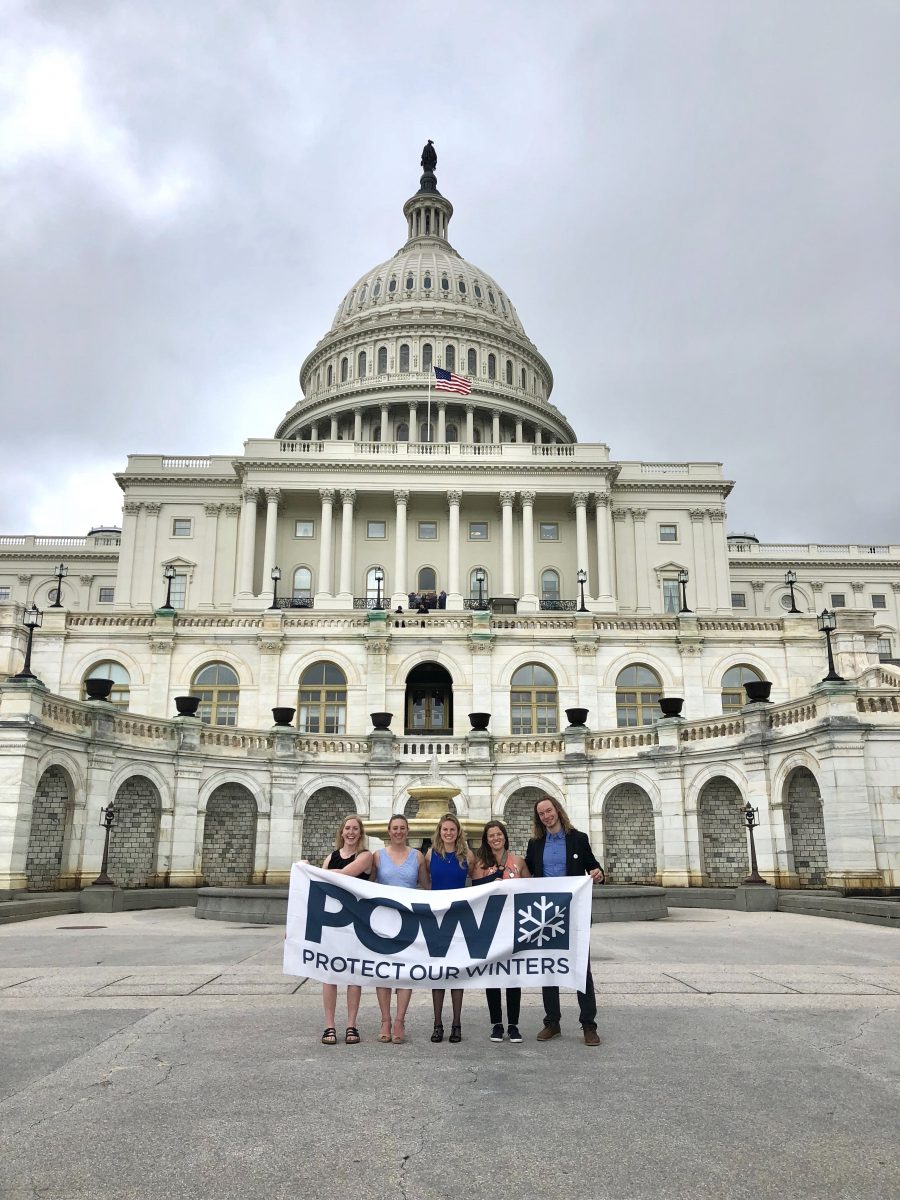
    From left to right: Maddie Phaneuf, Arielle Gold, Jessie Diggins, Stacey Cook, and David Wise in front of the U.S. Capitol in late April in Washington, D.C. (Photo: Barbara Weber/Protect Our Winters)

    Young and empowered. Twenty-three-old Maddie Phaneuf, a 2018 Olympic biathlete and member of the US Biathlon’s national team, has been finding her voice this short offseason as she lobbied members of the U.S. Senate and House of Representatives in Washington, D.C., on April 25. Phaneuf, along with 2018 U.S. Winter Olympians Jessie Diggins, Arielle Gold (snowboarding), David Wise (freestyle skiing), and Stacey Cook (alpine skiing), spoke in D.C. on behalf of the Citizens’ Climate Lobby and Protect Our Winters (POW).

    “I have been working with POW for about a year now,” Phaneuf explained on the phone on April 24. “I have been helping them out as a winter-sports athlete giving presentations to schools and teaching kids about climate change and its impact.”

    Phaneuf may have been destined for winter sports, but until the age of 8, her life was a snow-void. Phaneuf was born in Virginia and spent her early childhood in South Carolina. Her limited exposure to snow consisted of a single freak snowfall where the snow melted within a day. Fortunately for US Biathlon, Phaneuf said her father wanted his children to experience the full spectrum of the seasons and relocated the family to Old Forge, New York, in the Adirondack Mountains.

    “The whole town is really into skiing, whether it be downhill or nordic,” Phaneuf said of Old Forge, where her parents still reside. “So my parents wanted us to get into that because it would be a great way to experience winter in the Adirondacks, and for us kids to stay active.”

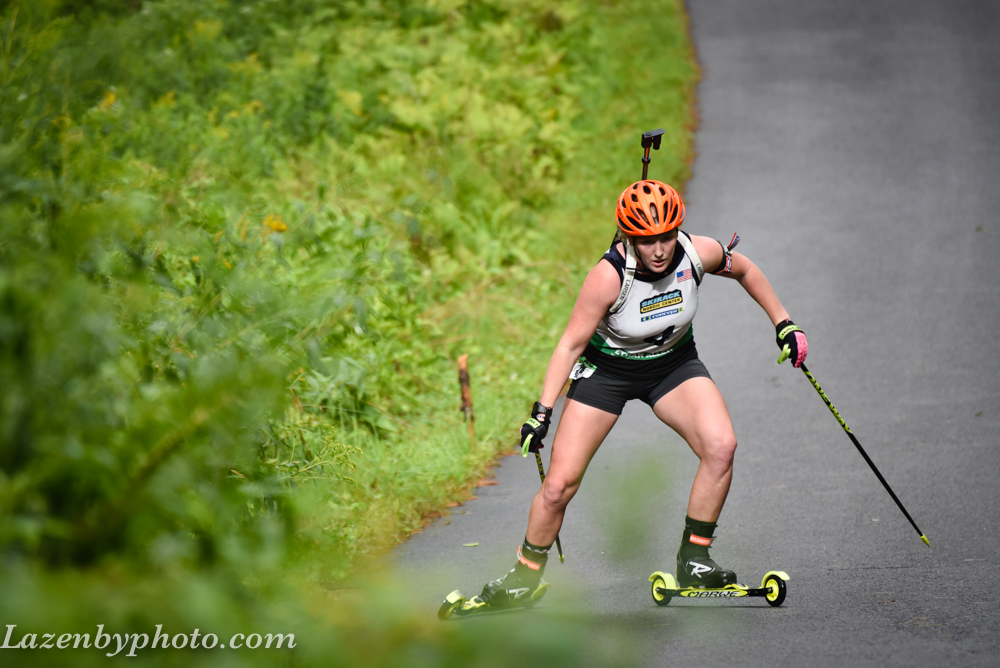
    Maddie Phaneuf (USBA/PBSC) racing to fourth in the women’s mass start last August at 2017 US Biathlon Rollerski Championships in Jericho, Vt. (Photo: John Lazenby/Lazenbyphoto.com)

    Nominated to US Biathlon’s X-Team in 2014, Phaneuf climbed the ranks and to reach A-team status last season. Last month, she was named to the B-team, part of the US Biathlon’s top-tier High Performance Team. While continuing to train and race with the national team, she planned to move from Lake Placid, N.Y., to her new training base in Boulder, Colorado, this summer.

    New York’s North Country, where Old Forge is located, is a reliably conservative region. At least on electoral maps, the politics can skew towards an anti-climate-change perspective. However, Phaneuf said she has felt backed by Old Forge as she explains her point of view to others.  

    “My hometown is very supportive of me,” Phaneuf said. “I went into the local school and they were excited to learn about my climate-change presentation. But I am sure there are parents that don’t necessarily agree with what I am saying, but they are not going after me.”

    Politics and athletics can be a non-starter for athletes. Being outspoken about a cause, in particular, one as divisive as climate change, can alienate an athlete — especially on social media. But Phaneuf has used the resilience she has developed in the fickle sport of biathlon to weather the storm and move forward with her activism.

    Phaneuf admits she is still learning how to navigate the potential minefield of exercising her free speech. This past February, Phaneuf penned an op-ed piece for Syracuse.com, expressing her belief that change must be enacted to save winter, and by extension, our ability to sustain the winter sport economic engine and way of life in places like the North Country.

    Phaneuf was eventually alerted to the many negative comments her piece received when she posted it on her personal Facebook page.

    “I went to the article and 90% of the comments were bashing me,” Phaneuf explained. “Saying I am too young, I have never experienced anything — what am I talking about? Not even bashing climate change but bashing me personally … When I shared the climate-change article I wrote, one guy replied something like, ‘What’s up? You are not posting things about the Olympics. This is bullshit. I don’t want to read this. I want to follow you.’ I replied, ‘OK, the Olympics are over. It’s my offseason. I think it is irrelevant to post things about the Olympics right now because we aren’t there. And I want to show my followers what I do in my free time. Just because you are an athlete doesn’t mean you can only post about training and racing.”

    Phaneuf recognizes that her Olympic-team nomination has given her more exposure. She said her Facebook page went from 1,000 to 4,000 likes during the 2018 Olympics in February. As she had matured, Phaneuf explained she’s become wiser when it comes to engaging detractors.

    “I have been trying better than in the past,” Phaneuf said. “In the past, I would reply to all the comments kind of aggressively, like ‘what do you mean?’ But now I take a step back and simply read the comments. I understand everyone on the internet is human and all have their own opinion. I just try to not respond unless they are trying to put words in my mouth or saying other things about me, then I will respond and clarify the facts in a respectful way.”

    The halls of Congress, on most days, are not the wild west of internet commenting. The tone is soberer. There is the understanding that change comes about from the steady persistence of advocacy, lobbying and voting at the ballot box.

    Two weeks ago in D.C., the talking points for Phaneuf and the other athletes present were clear They were to speak about the following: What impacts have they witnessed regarding climate change? How is climate change impacting their sport? How might climate change impact future Winter Olympics?

    The athletes also spoke of the regional economic boost snow availability brings certain regions across the U.S. (POW and Citizens’ Climate Lobby cite that in New York alone, the outdoor-recreation economy contributes $41.8 billion dollars and provides 313,000 jobs.)

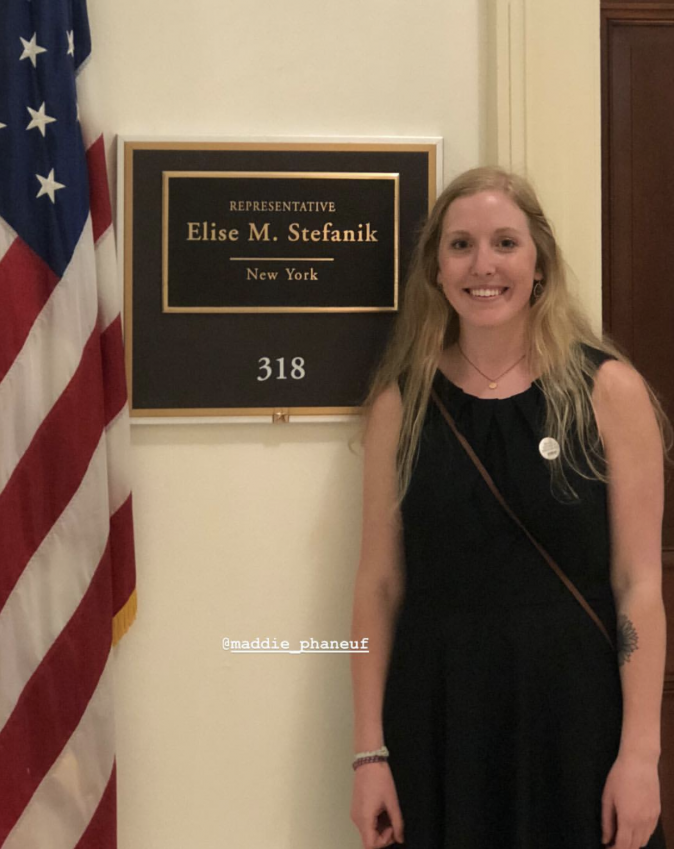
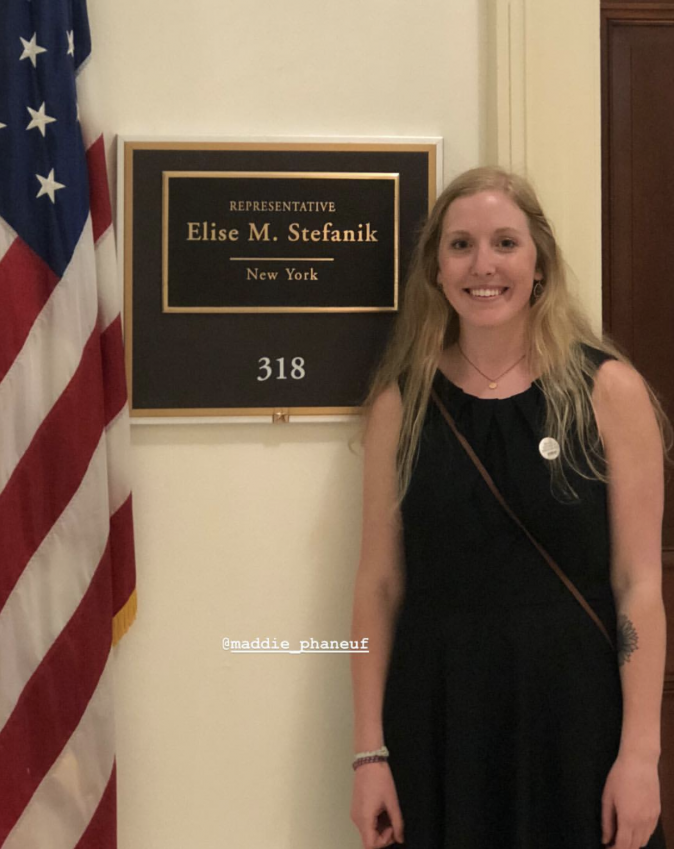
    US Biathlon’s Maddie Phaneuf outside the D.C. office of U.S. House Representative Elise Stefanik (New York). (Photo: Barbara Weber/Protect Our Winters)

    The Congressional briefing was a bipartisan event sponsored by Senator Michael Bennet of Colorado and Senator Susan Collins of Maine. The athletes also met with Senator Tina Smith of Minnesota, Senator Dean Heller of Nevada, Congresswoman Elise Stefanik from Phaneuf’s district in New York, Congressman Scott Tipton of Colorado, and Congressman Mark Amodei of Nevada.

    “It was good,” Phaneuf said on April 26, the day after her D.C. experience. “I was definitely nervous going into it. I had never been in the position of talking directly to congresspeople or senators. They definitely heard our message. It was definitely more chill than I expected it to be. I was afraid it was going to be judgmental and scary. … The biggest part of our day was simply talking about our own experiences with climate change. And not getting too much into the politics.”

    Although Phaneuf has chosen to emulate a long line of athlete activist, her biathlon career remains a priority as she transitions from upstate New York and her residency at the Lake Placid Olympic Training Center to her new base in Boulder.

    Phaneuf’s B-Team status comes on the heels of what she calls her “worst season ever”. Although qualifying for Olympics, Phaneuf said she struggled before the Olympics and spent her time in PyeongChang, South Korea, bedridden.

    buy antabuse online

    “I struggled a lot with fitness last summer and lost tons of training,” Phaneuf said of the start to her 2017/2018 racing season. “Then I didn’t make the World Cup team in the first period, and then I made the IBU Cup team, but was not performing well and barely made the Olympic team. [In PyeongChang] I got sick the day of my first race and got strep throat and a virus on top of that. I was totally out for two weeks. Being at the Olympics and being around that atmosphere and being so close to racing — having that stripped away from me, made we want to figure how to get better at training and do a lifestyle change. This is why I am moving to Boulder.”

    A new training season has begun for Phaneuf. In the meantime, she’ll be juggling her sport with her more seasoned political voice.

    “I don’t think I have ever voted in midterm elections,” Phaneuf said of the midterm elections set for this November. “I don’t think I ever thought of it as a big deal. So we are are trying to get the word out because it is a big deal. We want to elect people who will actually listen to us.”

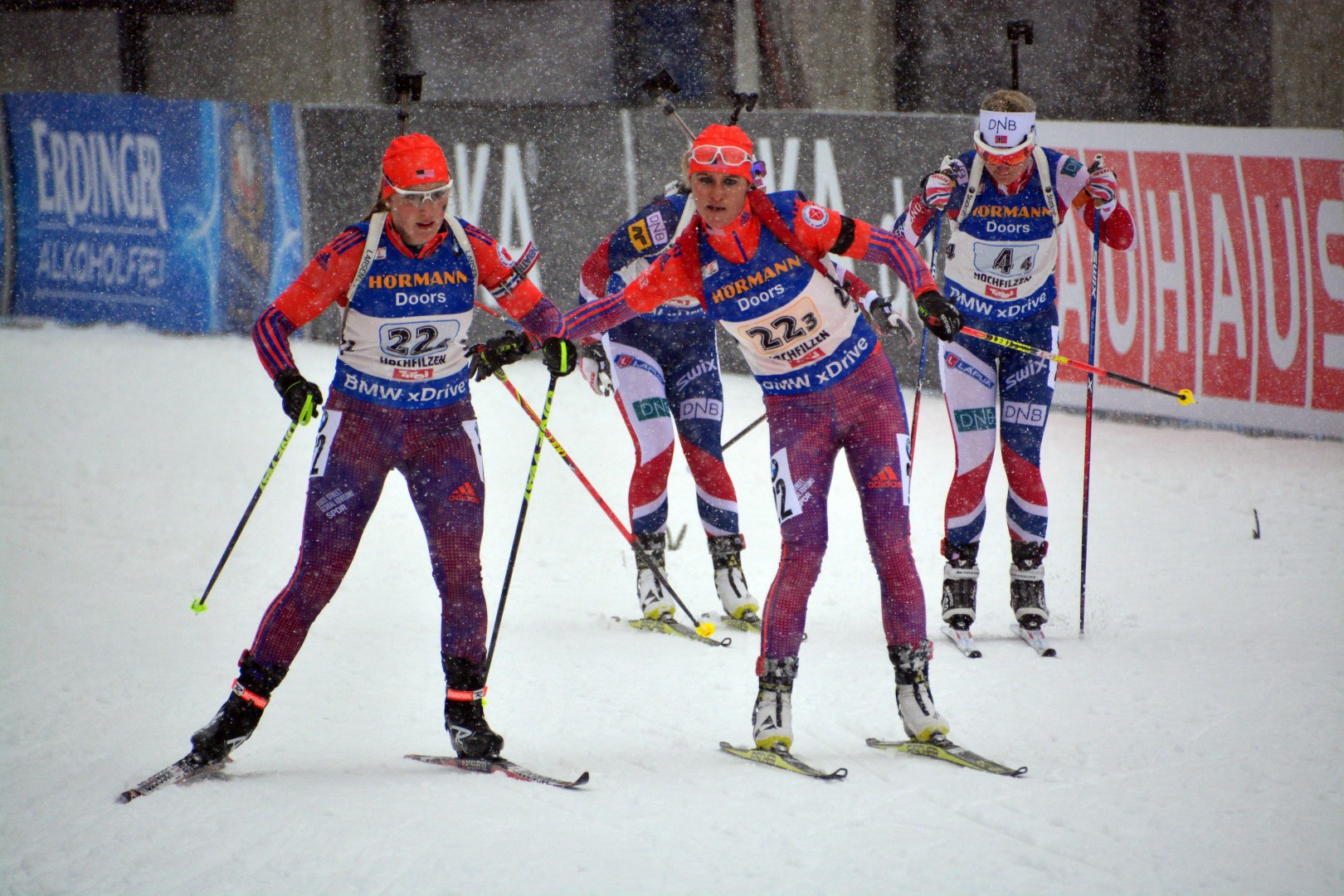
    US Biathlon’s Maddie Phaneuf (l) gets tagged by teammate Joanne Reid during the final exchange of the women’s 4 x 6 k relay at 2017 IBU World Championships in Hochfilzen, Austria. The team finished 14th. (Photo: Glen Crawford)
  • A Living Legend’s Final Season: Bill Parks, Glens Falls High School Head Coach

    A Living Legend’s Final Season: Bill Parks, Glens Falls High School Head Coach

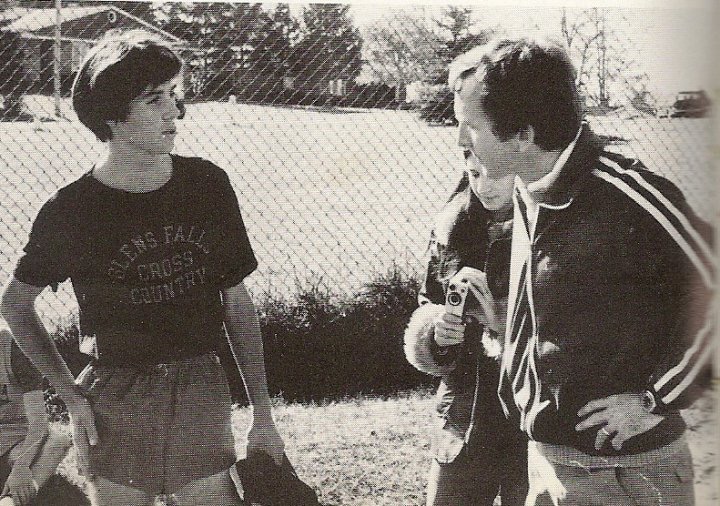
    A "vintage" photo of Glens Falls Head Nordic Coach Bill Parks with Doug Gaulin after a sectional victory at Central Park in Schenectady, N.Y., in 1977. (Courtesy photo)
    A “vintage” photo of Glens Falls Head Nordic Coach Bill Parks (r) with Doug Gaulin after a sectional victory at Central Park in Schenectady, N.Y., in 1977. (Courtesy photo)

    The following is “but a small tribute to a man who has impacted hundreds of high-school athletes in northeastern New York,” submitted by one of his former athletes. If you have a coach or mentor you’d like to honor, email info@fasterskier.com.

    “A man likened to ‘God,’ Mr. Bill Parks recently wrapped up his final ski season as head coach at Glens Falls High School in Glens Falls, N.Y., after serving the school for three-and-a-half decades. With two grandchildren now in the mix of things, he will move from being a coach to a self-named ‘child-care specialist.’  He will be greatly missed from the Section 2 arena, but I believe we can all agree that being coached by Mr. Parks was a pleasure and privilege, and moments he spent inspiring us will not soon be forgotten.

    ***

    When I was in ninth grade at a cross-country running race, a man I knew by reputation alone came over to me and introduced himself. After going through some pleasantries about how my race went, he asked if I did a winter sport. I proudly told him I played hockey and basketball. Nodding his head, with a slight look of disappointment, he told me to come see him if those sports didn’t work out, that he was the Nordic ski coach and would love to have me on his team. I politely replied that I would do that, without the intention of that ever happening.

    But as it turned out, a few weeks later I ended up in classroom 102, the designated meeting place of the Nordic ski team. Feeling more than a little out of place, I piled into an old, red 12-passenger van with the rest of the skiers. We traveled the short distance to the local bike path, a 12-mile stretch of pavement that I would end up spending hundreds of hours of my life rollerskiing on over the next few years. And so began my introduction not only to a new sport, but to a new way of life, new friends and new opportunities.

    Glens Falls High School Nordic Coach Bill Parks doing his thing on the trails. Parks coached the team for more than 3 1/2 decades  (Courtesy photo)
    Glens Falls High School Nordic Coach Bill Parks doing his thing on the trails. Parks coached the team for 3 1/2 decades (Courtesy photo)

    My recruitment experience was no doubt similar to that of many other Glens Falls skiers, just as the love I developed for the sport is likely similar to other Glens Falls skiers.

    Throughout my four years at Glens Falls High School, Mr. Parks taught me more about the sport of Nordic skiing and helped me to discover more about myself than another other singular person. Whether he was motivating me with words of encouragement, timeless jokes, or his defining whistle that would echo through the woods and instantly incite better technique, what I always knew to be true was that Parks was a coach that believed in his athletes, oftentimes more than they believed in themselves.

    He would tell us that, “Dedication to improving your technique every practice is practice for real life” or “practice doesn’t make perfect, perfect practice makes perfect.”

    Parks always expected the best out of each of us, from the most to least motivated athletes, and he had a way of dragging the best out of his athletes without us even realizing it was happening.

    Whether he was motivating me with words of encouragement, timeless jokes, or his defining whistle that would echo through the woods and instantly incite better technique, what I always knew to be true was that Parks was a coach that believed in his athletes.

    Parks continued to inspire success during the 2014/2015 season, what would be his last as head coach. Mr. Parks started with a group of forty athletes due to his recruiting efforts at the middle-school level, not only did Parks manage to bring in numbers but he sent five athletes to the state meet this past season, with the Glens Falls women representing a third of the Section 2 team. The women were led by senior Mayr Sawyer, a member of the Section 2 bronze-medal relay team as well as the female recipient for Section 2 sportsmanship award at the state meet. All in all, a great note to end a career on.

    ***

    About the author: Kate Mulcahy graduated from Glens Falls High School in 2011. Currently a senior at St. Lawrence University, she captained the Saints Ski Team her junior and senior seasons. She has a double major in English and Government as well as a minor in Peace Studies and will attend Vermont Law School after graduation.

  • NYSSRA Nordic Seeks New Executive Director

    NYSSRA Nordic Seeks New Executive Director

    NYSSRA logo

    The New York State Ski Racing Association – Nordic Division (NYSSRA-Nordic) is seeking a new Executive Director.

    Previously, NYSSRA-Nordic has been managed by an all-volunteer group of board members, committee chairs committed to building a race series for cross-country, ski-o and biathlon.

    Having recently earned its 501(c)(3) status NYSSRA has been developing new possibilities with regards to fundraising, applying for grants and financially supporting the great clubs and organizations that comprise the New York nordic community.

    As NYSSRA moves into this new era of possibilities, the board is currently seeking interested applicants for a paid position as an Executive Director.

    Please read the following details about this position and forward it to anyone interested with appropriate experience who is interested in seeking out funds to grow nordic skiing in New York State.  While the compensation is currently very modest (to match NYSSRA’s current operating limits), there is great opportunity for it to grow in the future.

    Download application details here:

    Executive Director of NYSSRA Nordic Inc.

    Posted: 10/8/2014

    Function: Administration/Grant Writing

    State: New York

    Country: United States


    Organization Information:

    Website: 

    www.nyssranordic.org

    Mission statement:

    NYSSRA-Nordic, Inc. is a not-for-profit 501 (c) (3) tax-exempt public charity organization under the Internal Revenue Code. A contribution beyond membership fees paid is fully tax-deductible under Section 170 of the Code. NYSSRA-Nordic works in conjunction with state and national governing bodies to support the development of Nordic sports in New York State. NYSSRA currently supports clubs, programs and races for the Nordic disciplines of Biathlon, Cross Country Skiing and Ski Orienteering.

    Position Details:

    The Executive Director is the Chief Executive Officer of NYSSRA Nordic Inc. The Executive Director is a non-voting executive who reports to the Executive Board, and is responsible for the organization’s consistent achievement of its mission and financial objectives as outlined and updated by the Executive Board.  This Executive Director of NYSSRA Nordic is a yearly contract position that can be renewed an indeterminate amount of times by the acting Executive Board. In program development and administration, the Executive Director will:

    Specific Responsibilities:

    1. Work with the Executive Board to develop long-range strategy which achieves its mission, and toward which it makes consistent and timely progress.  NYSSRA’s (four) main goals are as follows:

      1. To increase participation by people of all ages in nordic sports including xc skiing, ski-orienteering and biathlon.
      2. To identify and obtain to financially support the work of sanctioned nordic ski clubs and incentivize ways for local ski clubs to become more active
      3. To work with Bill Koch Youth Ski Clubs in NY to reach more elementary age kids and introduce them to the sport of nordic skiing.  This involves financial support and promotional support.
      4. To help groups boost trail and ski infrastructure around New York State through grant writing and financial assistance

    2. Provide leadership in developing program, organizational and financial plans with the Executive Board and staff, and carry out plans and policies authorized by the board.  The role of the Executive Director in this capacity will focus on seeking out and applying for grants that are applicable to the plans of NYSSRA Nordic.

    3. The Executive Director will establish sound working relationships and cooperative arrangements with community groups, NYSSRA club leaders, and key organizations. He/she will be the primary contact with the standing NENSA Executive Director and will work to develop a system of accountability that will help improve the performance of the individuals on the Executive Board as outlined in the Organizational Structure posted on the NYSSRA website.

    Qualifications:

    -Bachelor’s degree minimum.
    -Experience in grant writing and a proven track record in fundraising. Successful Cultivation of major donors would be a plus.
    -Experience with board leadership in a staff or lay leader role highly desirable.
    -Demonstrated experience in budget management.
    -Excellent written and oral communications skills.
    -Demonstrated administrative computer skills, including experience with Microsoft Office suite, particularly Word and Excel, and data management software.
    -Ability to work flexible hours, as required by the demands of the role.

    Compensation

    1. The Executive Director will receive an annual stipend of $1,500.00 paid in two separate installments (on April 1st and December 1st) from the General Fund of NYSSRA Nordic.  Additionally, the Executive Director will receive 15% of funding sources that are added to the general fund in support of the NYSSRA mission that do not include NYSSRA memberships, sanctioning fees and race fees.   The 15% of additional fund shall be paid out by the NYSSRA Treasurer upon receipt of monetary amount.

    Application Deadline:

    1/31/2015

    How to Apply:

    Please attach your resume and cover letter in an email to nyssranordicski@gmail.com. Please include “Executive Director NYSSRA Nordic” in the subject line of your email.

  • NYSEF Climb to the Castle Rollerski Race

    C2C_logo_2013Sunday, September 15, 2013

    WILMINGTON, NY — The New York Ski Educational Foundation and the Olympic Regional Development Authority host the 7th annual NYSEF Whiteface Climb to the Castle Rollerski Race on Sunday, September 15 at 8:00 am. The course starts at the Whiteface Toll Booth, climbing for 5 miles with an average 8% grade up the Whiteface Memorial Highway to the castle on the summit of Whiteface Mountain, New York’s 5th highest peak with an elevation of 4,867 ft. The race is freestyle technique and athletes will be greeted at the finish with a 360-degree panoramic view of the Adirondacks, New England and Canada. Attendance is expected from the US Ski Team, the US Biathlon Team, the National Elite Group and many top senior and junior racers from around the country.

    See the attached flyer for race details

    Link to online registration (closes Friday 9/13 at 9 am ): https://www.alpinereg.com/EVENTS/store/XC.cfm

    Check out the NYSEF XC webpage for updates: http://www.nysef.org/x-c-biathlon/
    Questions? Email Margaret Maher margm@nysef.org or call the Nordic office at (518) 523-1900


    Climb to the Castle flyer 2013

  • 9th Kingston Roller Ski Race Set for Nov. 18

    The Kingston Nordic Ski Club is gearing up for its 9th annual Kingston Roller Ski Race on Nov. 18 at the Miller Middle School at Lake Katrine, N.Y. Races include a 5 k classic, 2 k novice and 10 k freestyle.

    Registration begins at 10.m.; races start at noon.

    (From kingstonnordic.blogspot.com)

    Well, that time of year has come for the traditional fall classic – the 9th Annual Kingston Roller Ski Race. Over the years, as the race has grown, so too has the fun everyone experiences coming to the event. Seeing old friends, making new ones, getting some great prizes and racing one last time on those roller skis before the snow comes and we put them away until next spring. And the snow will come this winter.

    The race is scheduled for Sunday, November 18th (always the Sunday before Thanksgiving) at the Miller Middle School in Lake Katrine, NY. Registration will begin at 10am with the races starting at 12 noon with the 5K classic, followed at 12:30 with the 2K novice, and ending at 1:15pm with the ~10K freestyle. As usual, food and refreshments galore will follow with awards starting around 2:30pm.

    The Races:

    People can register for the 5K &/or 10K Race(s). However, if you sign-up for the novice race, that’s the only race in which you may participate. The novice race is for people who are just beginning their roller ski training. The cost is $15 for one race and $20 for two races.

    Individual Awards:

    I. An overall male & female champion will be crowned based on their performances in both the 5K & 10K races.

    II. An overall male & female champion will be crowned based on their performances in the North Creek Race and their best performance at Kingston.

    III. The male & female winners in the novice race, the 5k race and in the 10K race will receive an award.

    IV. Age group winners:

    • high school & younger
    • out of high school to 29
    • 30-45
    • over 45

    Team Awards:

    A high school, college or club can enter as many teams as they like. If entering more than 1 team just list them as Team A, Team B, etc. We will be rewarding a trophy and a revolving trophy to the winning high school team and the winning college/club team. Each team must be set and a card filled out before the start of the first race at 12noon.

    H.S. Team Championship: A high school team will consist of 4 skiers – 2 guys and 2 girls. One guy and one girl must race in the 5K race and a different guy and different girl must race in the 10K race. Each skier can participate in both races, if they wish. However, only 1 race can count toward the team championship and that race must be decided before the races start at 12 noon.

    College/Club Team Championship: Basically, the same rules apply except a college/club needs only 1 woman skier.

    Special Team Pricing:

    The cost of the race is $15 for one race (novice, 5K or 10K) and $20 for two races (both the 5K and the 10K). However, a team or club that preregisters as a group at the same time, in the same envelope or in the same email, will receive a discount of $5/skier. This price is not available on race day. Coaches – this is a great opportunity to bring your entire team at a very reduced price. You can sign-up a team by sending me an email listing all the members, their race(s), their age, and their sex. We can take care of filling out the actual applications on race day.

    Race Timing:

    For the first time, we will be using chip timing. Peregrine Timing will be working with us on the event and it should help make the finish line and the awards go smoother.

    For more info, visit kingstonnordic.blogspot.com.

  • USST Elite Camp: Wrapping up with Natural Intervals, Final Thoughts

    USST Elite Camp: Wrapping up with Natural Intervals, Final Thoughts

    The Lake Placid USST Elite Camp concluded Friday with morning ski running/bounding natural intervals at Mt. Van Hoevenberg (shown above) and a distance double-pole session in the afternoon.

    LAKE PLACID, N.Y. – Friday morning’s U.S. Ski Team workout at the Mt. Van Hoevenberg nordic trails wasn’t designed to be too hard. According to men’s coach Jason Cork, the idea was to run with poles and ski bound for 45 minutes at Level 3 – a sort of tempo pace.

    Once a couple dozen athletes between the U.S. Ski Team (USST) and National Elite Group (NEG) got going around the designated loop, most realized what they were in for. Two weeks of dryland training at the USST Elite Camp in Lake Placid had taken its toll on their bodies, and on the last day of camp, they had to tackle Russian Hill – three to four times.

    Cork said he’d noticed the group’s fatigue levels increase throughout the last few days, especially during warmups.

    “You can see people are getting a little sloppy; you can tell they’re getting pretty fatigued,” he said. “But that’s kind of the whole point of having a training camp, you get the best guys together and have them kind of push each other a little bit and have an easy week afterward.”

    Friday afternoon, several athletes took part in the camp’s final workout – a 1-½ hour double pole – which USST head coach Chris Grover said was more of a recovery.

    According to Grover, the morning session was considered threshold-intensity, natural intervals. He went on to explain in an email how those intervals work.

    “The terrain dictated when the athletes were working harder (uphills) and going easier (downhills and flats),” Grover wrote. “They were probably above threshold at the tops of the hills and well below threshold at the bottoms of downhills.  A workout of this duration (45 min.) probably has about 25 minutes of real threshold work-time. But it closely mimics the demands of ski racing, which is important at this time of year.”

    Ryan Scott (Team HomeGrown/SSCV) leading the pack up Russian Hill at Mt. Van Hoevenberg during Friday’s threshold workout at the USST Elite Camp in Lake Placid, N.Y.

    The loop was marked by two big climbs, one of which was Russian Hill. It took the front group, with Ryan Scott (Team HomeGrown) leading about seven men and Liz Stephen (USST), about 11 minutes to complete. Others rounded the loop in about 15 minutes, and kept the effort going for 45 minutes or more.

    Asked what was next for many of his athletes, Grover said off days.

    “Some athletes will take just one day off after the camp, others will take two, and some will focus on active recovery for a few days,” he wrote. “It just depends on how each individual handled the load of the camp.”

    Looking back, Grover was satisfied with how things went throughout the last two weeks, with workouts ranging from intensity bounding intervals up Whiteface Mountain to the Climb to the Castle Rollerski Race up its access road. On Thursday, 40 skiers competed in a classic rollerski sprint time trial at the Olympic Jumping Complex.

    “I was impressed by the improvements of many of the athletes at the camp, USST athletes and club athletes alike,” Grover wrote. “Some of the most biggest gains in my mind include Liz’s overall fitness, Ida’s technique improvements in both skate and classic, Skyler’s performance in the sprint, and Ryan Scott’s performance in just about every workout. We had close to 50 of the country’s best athletes at the camp, across a spectrum of age groups, and it was really cool to see how hard everyone was working and how professional these athletes really are.”

    Next on the USST agenda is a final dryland camp in Park City, Utah, where the team will be from Oct. 8-18. Then, they’ll immediately fly north for an on-snow camp Oct. 18-27 at Frozen Thunder, where snow has been stockpiled in Canmore, Alberta.

    “The entire team will be in Park City and most of Team in Canmore, the exception being the Alaskans who will head home to find snow,” Grover wrote. “The main goal of the camp is exposure to altitude living (and an increase in Hb [hemoglobin] mass) prior to departing for Europe. Another goal is lab testing to follow up with tests completed on each athlete in the spring and summer; i.e. determining what sort of progress was made by athletes this summer and fall and what needs still must be met.  The goal of the Canmore period is to get on snow and to work on technique before heading to the World Cup, and to tune up for racing with some on-snow time trials.”

    ***

    More: USST Elite Camp: L3 Ski Running/Bounding | Photo gallery

  • Caldwell, Newell Stay Ahead in USST Camp Rollerski Sprints (Updated)

    Caldwell, Newell Stay Ahead in USST Camp Rollerski Sprints (Updated)

    Sophie Caldwell (r) leads Ida Sargent (second from r), Caitlin Patterson (second from left), Jessie Diggins (behind Patterson) and Anne Hart (l) at the start of the big downhill in the first semifinal of the women’s 1.4 k classic rollerski sprint on Thursday. The time trial was the first of this year’s USST Elite Camp in Lake Placid, N.Y. and took place at the Olympic Jumping Complex.

    LAKE PLACID, N.Y. – Flinging around a sharp corner about a ski length behind one another, Sophie Caldwell (Stratton Mountain School T2 Team), Ida Sargent (Craftsbury Green Racing Project), Caitlin Patterson (CGRP) and Jessie Diggins (SMS) each lowered into a tuck and prepared for a long, steep descent.

    Diggins called out to the others just ahead of her in the classic rollerski sprint at Lake Placid’s Olympic Jumping Complex.

    “That’s it,” the U.S. Ski Team (USST) member said. “Nice.”

    Conversations like that, in the first of two women’s semifinals at the USST Elite Camp on Thursday, didn’t take place every heat. But they generally differentiated the women’s and men’s races.

    According to Caldwell, who eventually won the women’s 1.4-kilometer final, nothing was too cutthroat about the sprint rounds. Caldwell finished first in the quarterfinal, semifinal and A-final, beating USST member Sargent in the latter by 1.4 seconds. Diggins finished third in the A-final, about four seconds back.

    “We try to be nice,” Caldwell said. “We even talk to each other and let each other know how much space we have. I don’t know what the boys do.”

    She laughed. Anyone who watched the men’s heats on Thursday knew exactly what they did.

    Simi Hamilton (left) leads Skyler Davis (second from l) and Andy Newell (front right) into the long downhill during the quarterfinals of the men’s 1.5 k rollerski classic sprint on Thursday at the USST Elite Camp in Lake Placid, N.Y. Newell went on to win the A-final, Davis was second, and Hamilton was third.

    In the first of four men’s quarterfinals, USST members Simi Hamilton, Andy Newell and Skyler Davis all battled for position on the same corner at the top of the long hill. Each had to pass through two narrowly spaced cones to make the turn.

    All three of them did so and managed to stay on their feet, while Ryan Scott (Team HomeGrown), Tim Reynolds (CGRP) and Sylvan Ellefson (HomeGrown) worked hard behind to close the gap. Davis said he felt someone push his poles, which made him go uncomfortably faster on the ripping downhill.

    In the end, they all made it to the finish. Newell ultimately won the men’s 1.5 k final, about two seconds ahead of SMS teammate Davis in second, and Hamilton (Sun Valley Ski Education Foundation) in third (+4.42).

    “This course is pretty wild because there’s so much tucking,” Newell said after the race. “To have six people going around that course is pretty crazy. Skyler and I are used to banging heads with each other because we do it every day, but it was fun to have Simi and Ryan Scott and some of those other guys in there, fun to go really fast on the downhill and try to pass each other on some of the corners. Nobody crashed hard I think, so it was a good day.”

    Davis, who was second behind Newell in the qualifier and every heat that followed, said his performance was a “confidence booster” after being sick at the Lake Placid camp last year and having to call it a day after the prelims.

    “Coming in [to this workout], I was pretty tired. This camp’s been hard,” Davis said. “Once I started warming up I felt great.”

    A competitive field of 26 men made for fast heats. On the same course last year, USST A-teamer Kris Freeman won the classic sprint in 3:30. Newell posted 3:22.38 in Thursday’s A-final and threw down a 3:18.91 in the qualifier.

    In the women’s qualifier, which consisted of 14 skiers, Diggins was fastest in 3:42.20 – the same time Sargent clocked to win last year’s time trial. On Thursday, Caldwell qualified second 0.15 seconds back, and Sargent was close behind in third (+0.24).

    Those kinds of measurements are what matter most this time of year, according to USST head coach Chris Grover.

    “It’s too early to really hang your hat on any sort of results here,” Grover said. “It’s just kind of a road mark. I think for a lot of the athletes, we want them to take a look at what kind of lactates are they able to create, what kind of heart rates are they able to have. That gives us an indication of how much of their aerobic system they’re able to access, how much of their anaerobic system they’re able to access, those kind of feedback markers plus how they sustain the rounds.”

    If they fade progressively after the prelims, something’s got to give. Grover said race scenarios give skiers an opportunity to assess where they’re at, and how to move forward.

    “Like, ‘OK, I’m handling training well during this period,’ or, ‘I’m starting to get a little fatigued, I’ve really got to concentrate on rest for a few days, or for a week after this camp,’ ” Grover said. “So it’s not so much the placings that are critical; there’s a lot of different rollerskis out there, there’s a lot of different ski speeds. It’s more the individual feedback in terms of heart rate, lactate, times, technique.”

    Photo gallery | Complete results

    ***

    Additional quotes:

    Sophie Caldwell (1st woman): “I felt good today. In the qualifier there were a few things that I felt like I didn’t do quite right. I took the corner on the bottom wrong, so I worked on those in the heats and it was good to be able to follow some people and see what they did, like Jessie was really good at going fast over the top of this hill and taking the corner down there.

    “I didn’t really know what to expect. I wanted to be right up there with Jessie and Ida. … This summer we basically just did all Level 3, not many Level 4 workouts, and then we do some speed workouts. I think now we’re starting to do more Level 4, time trial, race pace stuff, but it feels good so far so it’s good to know you can still get fit just doing Level 3. … We all have different skis and everything, but I’m just happy to come out here and feel good and be in the mix with everyone.”

    Ida Sargent (2nd): “It’s a rollerski time trial in September and everyone is on different skis,” she wrote in an email. “I wasn’t concerned with results, instead focusing on gettiing a hard workout and practicing some technique goals in a max effort. It was a really fun skiing with everyone and it felt good to feel the lungs burning with cold air this morning!”


    Jessie Diggins (3rd): “During such a good intensity camp, my goal with this workout was to get in some good hard efforts, and really work on my qualifier,” she wrote in an email. “Classic sprinting is definitely my weakest area and epecially qualifying, and so I’ve been really focusing on, well, FOCUS during the qualifier.

    “I definitely was feeling the fatigue in my body, but that was to be expected during this camp after a 4.5 hour training day yesterday [Wednesday], so I wasn’t super worried about it. However, it still doesn’t feel good to not be moving lactate out as fast as I want!”


    Andy Newell (1st man): “I definitely feel so much better than I have in the past racing here. I’ve been doing a lot more hard stuff, a lot more speed, so it’s good. I actually feel like a sprinter again, which last year at this time and for most of the winter, I didn’t really feel like a sprinter so it feels really good to get that kind of power back.

    “I’m usually not such a good classic rollerski sprinter, for whatever reason, my technique doesn’t translate that well over onto rollerskis, but it feels good to double pole well and I like courses that have lots of striding like this. … Last year, I was sick for this race or I’m [usually] really tired for Lake Placid camp because I’m coming in training too much volume.  I tried to cut back [the week before] so I was able to really come into this camp and get the most out of each interval session and time trial. That was the goal of the camp and I think that worked out well. I’ve been feeling good all camp and hopefully will be able to absorb some of this hard training better than in the past.”


    Skyler Davis (2nd man): “We had a sprint time trial about two and a half to three weeks ago in Maine. It was pretty similar to this except it was all double pole so I got to go head to head with [Newell] on that. This was the same type of thing, we were battling the whole time, especially coming up the hill. All those guys were pushing pretty hard … so all of our heats were pretty fast. It was really good training.”


    Simi Hamilton (3rd man): “I felt pretty good today, considering that I’ve done pretty much no max efforts yet this year,” he wrote in an email. “I actually felt better today than I have in years past during the camp, so I am taking that as a good sign that my training is going in the right direction, especially in terms of overall fitness and improved endurance throughout heats. I ran into some slight equipment problems [blown-out rear wheel] today, so that was kind of a bummer, but other than that I am pretty happy with how the day turned out.

    “My main goal today was to ski consistent efforts in the qualifier and each heat … And I think I did that, especially since my equipment problems required me to switch to a slightly slower pair of skis for the semis and finals.”


    Chris Grover: “We’re toward the end of the camp now so people are starting to accumulate some fatigue. We’re actually doing threshold bounding intervals tomorrow [Friday], so I expect that just about everyone will need a few easy days following the camp and that’s normal.

    “We like to push the athletes when they’re together and they have a chance to go head to head. At the same time, it looked like good movement out of a lot of the athletes. I really like this course because it has such a wide, steep finish hill, really a chance for athletes to demonstrate how their holding up through the rounds, if they’re able to carry good momentum up that hill and over the top and into the finish. I think it’s also great to have a big hill and then a long finish straight, especially like we have for the men on this course, because it replicates a lot of the courses that we encounter in the winter time.”

     ***

    Women’s A-Final

    1.  Sophie Caldwell (SMS) 3:37.82

    2. Ida Sargent (CGRP/USST) 3:39.22

    3. Jessie Diggins (SMS/USST) 3:41.89

    4. Amy Glen (CGRP) 3:43.48

    5. Anne Hart (Dartmouth) 3:45.41

    6. Clare Egan (CGRP) 3:47.92

     Women’s B-Final

    1. Caitlin Patterson (CGRP) 3:41

    2. Liz Stephen (USST) 3:45

    3. Heidi Halvorsen (GMS) 4:02

    4. Erika Flowers (SMS) 4:04

    5. Annie Pokorny (Middlebury) 4:11

    6. Julia Kern (CSU) 4:31


    Men’s A-Final

    1. Andy Newell (SMS/USST) 3:22.38

    2. Skyler Davis (SMS/USST) 3:24.39

    3. Simi Hamilton (SVSEF/USST) 3:26.80

    4. Pat O’Brien (CGRP) 3:29.94

    5. Ryan Scott (Team HomeGrown/SSCV) 3:30.10

    6. Eric Packer (SMS) 3:33.51

    Men’s B-Final

    1. Nils Koons (CGRP) 3:31

    2. Alex Howe (CGRP) 3:32

    3. Sylvan Ellefson (Team HomeGrown/SSCV) 3:33.12

    4. Dylan McGuffin (CGRP) 3:33.39

    5. Tim Reynolds (CGRP) 3:33.89

    6. Gordon Vermeer (CGRP) 3:34.78

    Link to complete results

  • Bounding Up Whiteface: Video from USST Elite Camp (Updated with Quotes)

    Bounding Up Whiteface: Video from USST Elite Camp (Updated with Quotes)

    About 25 elite nordic skiers did maximal-intensity, ski-bounding intervals up Whiteface Mountain on Tuesday as part of the U.S. Ski Team Elite Camp in Lake Placid, N.Y.

    WILMINGTON, N.Y. — The view from partially up Whiteface Mountain on Wednesday morning was about as picturesque as they get. From the trail, one could see that the leaves had started to turn shades of red and yellow — just in time for the U.S. Ski Team’s fall training camp in Lake Placid, N.Y.

    Way down below, a few small dots proceeded up the dirt access road: first to warm up, then to get after it. US Ski Team Head Coach Chris Grover organized the maximal-intensity, ski-bounding interval workout for about 25 athletes, and said it was probably the toughest many had done this training season.

    “Typically what we’re doing in the fall is switching gears from kind of our base anaerobic phase in training, where we’re concentrating more on is distance and technique acquisition, and now starting to work a little bit more poignantly with developing the athletes’ VO2 max,” Grover said. “You probably heard comments from athletes who said this was the first session of quite hard bounding that they’ve done this season. A lot of these guys have done quite a bit of threshold-type bounding, but they haven’t done short, hard bounding like that. It’s intended to develop their maximal aerobic capacity.

    “So that’s what we’re going for,” he added. “It’s the beginning of September, kicking it into a little bit more intensity mode. Obviously during the camp, we have some more hard workouts coming up, including the Climb to the Castle [on Saturday], the sprint rollerski time trial, as well as some threshold sessions. Just trying to start into a little bit more hard training.”

    Click here for a photo gallery

    More quotes from the US Ski Team:

    Head Coach Chris Grover: 

    “We saw some great performances [today] out of individual athletes, both national-team athletes and club athletes, but it’s definitely early in the season and we won’t get the real measuring stick until we get to Muonio [Finland], get to Gällivare [Sweden] in the fall and see how these guys stack up.

    “This is the point of the year where I think everyone around the world is looking around going, ‘Oh yeah, these guys have made great progress through the summer,’ but it’s easy to forget that probably everybody in the world has made good progress through the summer. It’s kind of hard to take away from this particular workout except for particular technique changes, perhaps, that someone’s made, that they’re maintaining their form through the bounding sessions, for example. And if they’re mature enough to learn to really pace it well so that they’re still there at the end.”

    How did each athlete decide whether to do five or seven intervals?

    “Each of these guys is pretty much talking with their individual coach about what they should be doing right now and kind of what their training history has been over the summer, how old they are, and particularly what they’ve done over the last couple of weeks. Some athletes have come in with a good rest week, for example, and they’re ready to do the full-prescribed seven [intervals]. Others are coming off a little bigger training block, for example, and they’ve got to kind of work their way into camp a little slower.”

    Andy Newell: 

    “I felt good. I always try to pace this workout well. It’s one of the harder ones we do at the camp, I think, as far as how much it takes out of your body. It kills my legs usually. But these are the kind of workouts that really you make lot of gains in building VO2 max. We haven’t done a ton of them so far this year, so for me I try to build into them so I can make the last few intervals hard. But it’s a long camp so we try not to blow ourselves out too much.”

    How did you like doing the intervals with about 15 others, including some up-and-comers pushing to lead the pack?

    “I like that. Some people don’t like training with a big group, but I think it’s sweet. I think the more people you have out, the better for an interval session. It’s funny, some of the young guns come to the front and go really hard on one, and they’re dead two intervals later. I was that same guy probably five or six years ago back when I was coming to these camps, too. So it’s cool to see these younger guys go out and hammer in front.”

    Jessie Diggins:

    “At the start of the workout I wasn’t feeling that great. It wasn’t the worst workout, definitely not the worst, but I wasn’t feeling the very best. It took me a while to warm into it and on the last three it started feeling really good, which is nice. I’m still trying to experiment with when beforehand I should take my inhaler. … I’m getting closer and closer to make it kick in when I want it.

    “When you do these intervals, it’s super, super important to not dig yourself into a huge hole, but once in a while it’s really good to figure out exactly where your limits are and know what it feels like right before you hit the wall, and I found that 30 seconds before I was done today so that was really nice.”

    Tad Elliott:

    How was your summer?

    “I’ve had a great summer out in Park City, [Utah]. I’ve been there pretty much all summer and then, just to Europe and back really quick [for a USST men’s camp in Austria and Germany]. It’s really nice to have my old coach Jason Cork back [as] the U.S. Ski Team men’s coach. He trains with me every day and we hang out, so training’s been going really well and it’s fun to have him around, too. Things are going awesome.”

    What kind of training changes have you made?

    “Ski training. I’ve been ski training a lot more, haven’t been mountain biking as much and a lot more strength, too, this year with our coach Michael [Naperalsky] at the COE. A lot more bounding, a lot more running, and yeah, less biking.”

    What are some of the bigger mountain bike races you’ve done this year?

    “I did nationals and that went all right. I was still solid when I came on the last lap, but nowhere near as well as I did last year. I think it’s all this muscle I’ve gained in my upper body, can’t carve as fast. I was 14th this year, sixth last year [in my first two years in the elite field].”

    What was it like watching mountain biking at the Olympics?

    “Man, the Olympics was awesome. Todd [Wells] is one of my good friends back in Durango. My dog, Gus, and his dog, Winston, have little man crushes on each other so we always go on play dates together with Todd, and I play golf with him. It was really fun to see him get a 10th place in his final Olympics [the best U.S. men’s result in Olympic history]. That was really cool. And then I’m good friends with Georgia [Gould], got to talk to her at nationals; she came home with some hardware [as the second U.S. mountain biker to ever win Olympic bronze] so that was sweet.”

    Ida Sargent:

    How was your summer?

    It’s been great. I was in Craftsbury [Vermont] for basically the whole summer, except for our camp in Sweden, so it’s been good to be home and in one place for a while.

    What have you been working on, and what did you learn from your first season on the World Cup?

    “More hard training and keeping some consistency with the gains that I made last year and a lot of technique stuff, too. … It was tough to race the full season on the World Cup. I was pretty tired at the end of the year after having been on the road and traveling and racing the World Cup every weekend, so that was a great experience. This year I’m looking forward to building on that and returning to some of the same venues and having a little more familiarity with the whole scene, just ready to improve my results with that extra experience.”

    What would you say your strengths are?

    “I think sprinting is my strength, so this year I’m going to try to focus a little bit more on [that], but I would love to be a really good distance skier, too, so I don’t consider myself a sprinter. I want to be in the points in the distance races as well. It’s great to do training camps with Jessie, and Liz will be here later this week, and these other girls, too, to kind of improve my distance skills, too.”

    How was your joint camp with the Swedish women’s national team in Sweden?

    “It was good. We trained a ton. It was a lot of hard work, a lot of hours, but it was cool to see that they weren’t doing anything different than us, and we could hang with those guys and train with them. It was just a good confidence builder that our team’s really on the right track and building momentum also.”

  • Summer Training with Stratton’s T2 Team (Videos)

    Summer Training with Stratton’s T2 Team (Videos)

    Stratton Mountain School (SMS) T2 teammates Erika Flowers (l), Jessie Diggins (c) and Sophie Caldwell doing some planks in the SMS weight room on July 12. It was Diggins’ first training session with the team since moving from the Midwest.

    Since its inception earlier this year, the Stratton Mountain School T2 Team has grown to a six-skier strong elite club based in the resort town of Stratton, Vt.

    Stratton Mountain School (SMS) graduates Andy Newell and Skyler Davis were originally part of the program. This year, the two U.S. Ski Team (USST) members are joined by three Dartmouth graduates — Eric Packer, Sophie Caldwell and Erika Flowers — and USST member Jessie Diggins, formerly of Central Cross Country (CXC). Head coach Gus Kaeding also came from CXC, where he was an assistant, but grew up in Vermont and went to Stratton with Newell.

    FasterSkier met the group twice this summer, first in late June with Newell, Packer, Caldwell, Flowers, and Mikey Sinnott of Sun Valley for a distance rollerski and again in July during Diggins’ first training session with the team. The following videos capture the action. Stay tuned for a full story on the T2 Team.