
Tag: News Roundup

  • News Roundup: TV Viewing, West Yellowstone Ski Festival Cancellation, Results From FIS Races in Beitostølen and Gällivare

    News Roundup: TV Viewing, West Yellowstone Ski Festival Cancellation, Results From FIS Races in Beitostølen and Gällivare

    Broadcast Updates:

    We have a quick update to the information we published last week regarding cross country broadcast schedules from Tom Horrocks, Communications Manager for the Davis U.S. Cross Country Ski Team. After finalizing schedules, NBC will have all World Cup events available for streaming through their PeacockTV platform.

    As mentioned in the first post, there is also a new streaming platform, Ski and Snowboard Live, which is owned by the production company InFront. This platform will have all World Cup events available, except those taking place in Austria and Switzerland. These broadcasts will have English commentary, whereas NBC typically will not have commentary.  
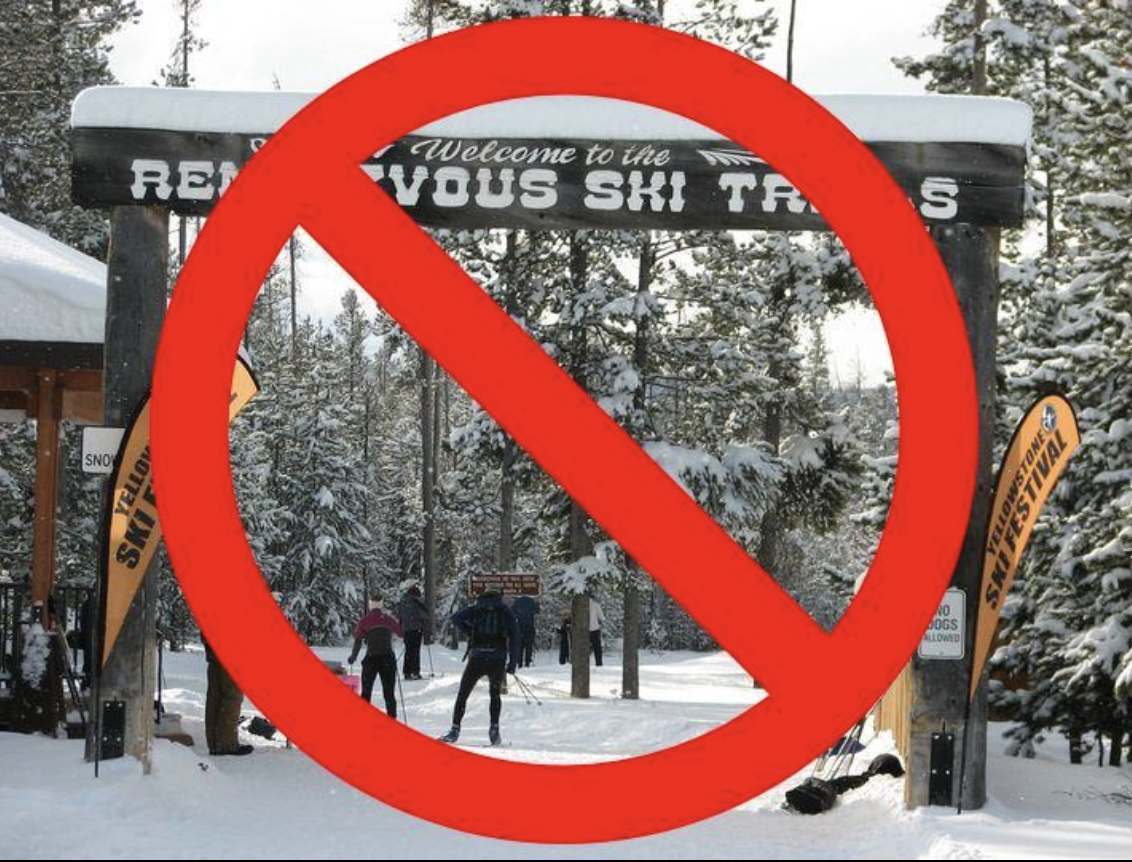
    The 2021 West Yellowstone Ski Festrival has been cancelled due to lack of snow. (Photo: Instagram @yellowstoneskifestival)

    West Yellowstone Ski Festival Cancelled:

    It has been a dry start to the winter across much of the West. Ski, Run, Bike Montana announced yesterday that the annual West Yellowstone Thanksgiving ski festival on the Rendezvous Ski Trails has been cancelled due to lack of snow. This cancellation includes the FIS races scheduled on the 27th. Typically, elite athletes use this race as a tune-up before the SuperTour begins the first weekend of December, this year in Duluth, MN. 

    To those who have already registered for clinics, passes, or events, expect an email from organizers. Additional updates can be found on Facebook and Instagram

    Spending Thanksgiving in West Yellowstone has also become an annual tradition for many club skiers and cross country ski enthusiasts looking to kick off their season with a week of sliding on well-groomed snow. Let’s hope this, the first cancellation in 32 years of the event, is an anomaly. 
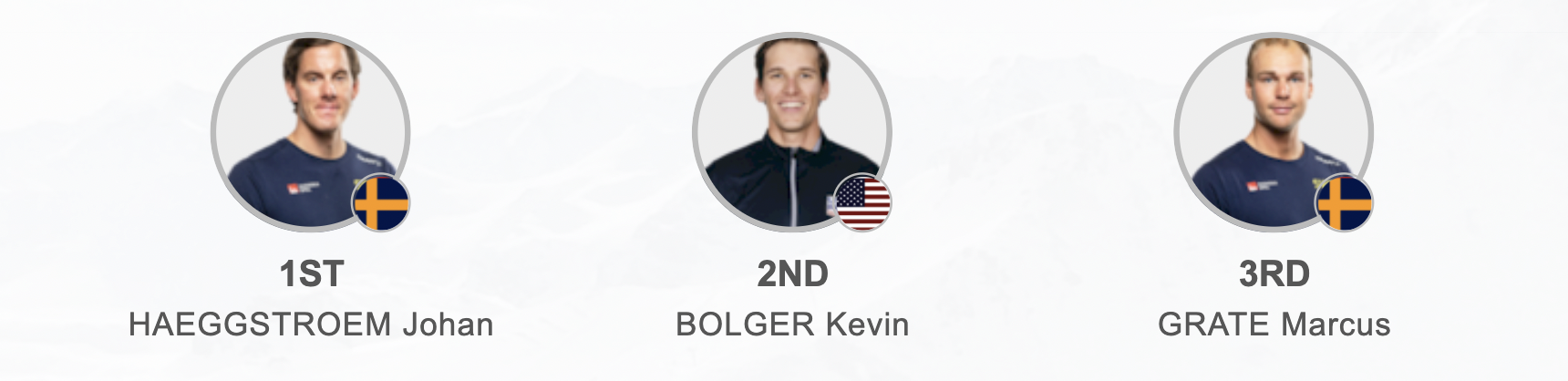
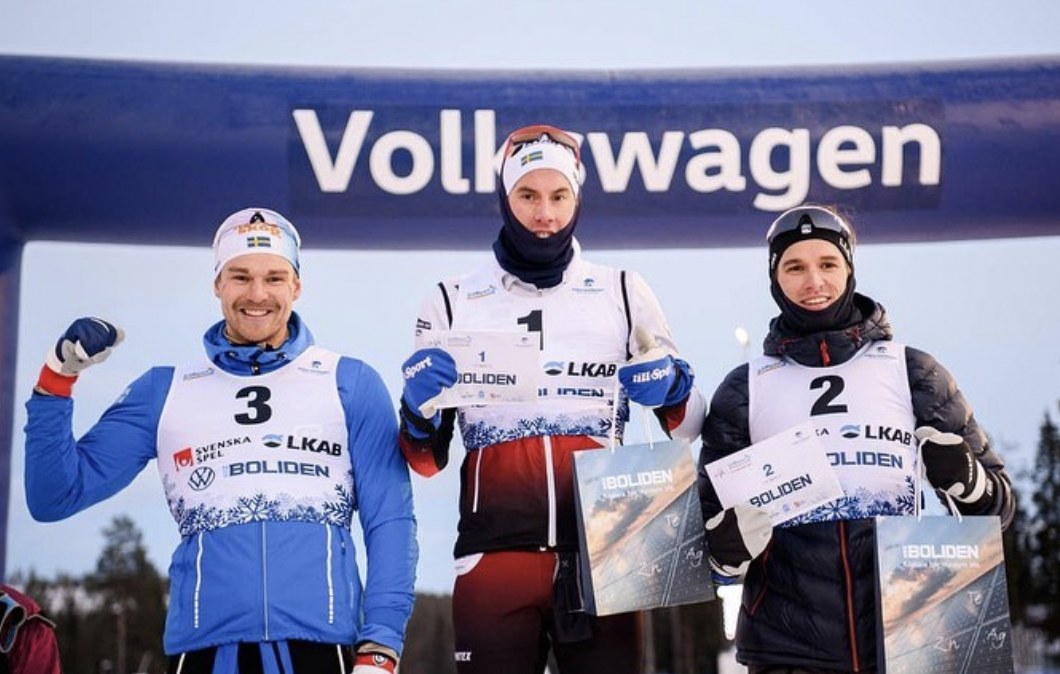
    Kevin Bolger took second in the freestyle sprint in Gällivare, Sweden. (Photo: www.fis-ski.com)

    FIS Races in Sweden and Norway:

    Piggybacking on Devon Kershaw’s discussion of opening FIS races in Scandinavia and Finland, we’ll take a look at results from two primary events this weekend, first in Gällivare, Sweden and second in Beitostølen, Norway.

    Perhaps the most important result to highlight took place in the men’s freestyle sprint on November 19th. After placing 14th in the qualifier, Kevin Bolger raced his way onto the podium for a second place finish behind Johan Haggström (SWE). Marcus Grate (SWE) took third. Bolger also raced the 15k classic on the 20th where he finished 37th (+2:23). 
    Kevin Bolger took second in the freestyle sprint in Gällivare, Sweden. (Photo: Instagram @kevinbolger)

    Bolger spent much of his summer training in Sweden alongside his partner, top Swedish athlete Maja Dahlqvist. Bolger will join the U.S. Ski Team for the opening World Cup races this weekend in Ruka, Finland. 

    (Find full results from the races in Gällivare here.)

    Moving on to Beitostølen where most of the Norwegian National Team showed up to throw down, vying for World Cup starts and foreshadowing their readiness to contend. Though other top international racers were in the field, Norway swept all four podiums. 

    For the women — no surprises here — Therese Johaug won both the 10k classic and skate distance races by a significant margin. Teammate Heidi Weng took the second spot on the podium both days, finishing 43 seconds back in the classic and 35 seconds back in the skate. Silje Theodorsen was third in classic (+1:18.9) and Ragnhild Haga was third in skate (+45.1).

    Also posting strong results for USA, Sophia Laukli of the U.S. Cross Country D-Team placed 7th in the 10k skate (+1:24.0). Laukli caught a ride on Weng’s tails, which she credits for her strong result. We just noticed how well she was able to match the Norwegian. Laukli also placed 15th in the 10k classic (+2:28.3).

    Sophia Laukli raced to 7th place in the 10k skate in Beitostølen. (Photo: Instagram @sophialaukli)

    On the men’s side, racing was a bit tighter. In the 15k classic, Hans Christer Holund took the win ahead of Emil Iversen (+17.3) and Håvard Moseby (+24.5). In the 15k freestyle stage, Harald Østberg Amundsen, who took third (despite a late crash) in the event at his first senior World Championships last year, edged out Sjur Røthe who finished 2.4 seconds back. Emil Iversen, on back-to-back podiums, was third (+13.4). 
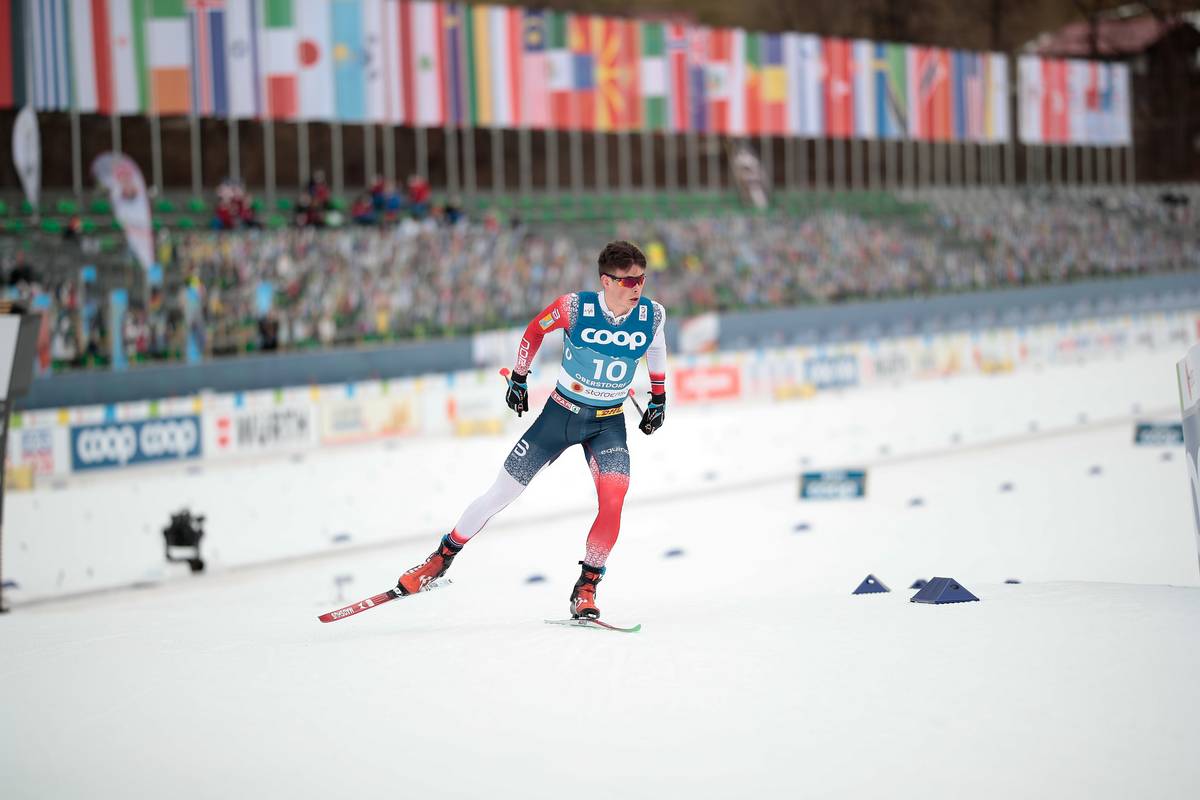
    Harald Østberg Amundsen skis his way onto the podium in his first senior World Championships. (Photo: NordicFocus)

    (Find full results from the races in Beitostølen here.)

    The World Cup kicks off on Friday November 26th with a men’s and women’s classic sprint. 
     

  • News Round Up: Nishikawa and Jacobsen Retire, Sundby off the Norwegian National Team

    News Round Up: Nishikawa and Jacobsen Retire, Sundby off the Norwegian National Team

    Although time may have felt like a stand still since mid-March, the news has continued to flow.

    Emily Nishikawa leads the Canadian team in 32nd in Östersund, Sweden. (Photo: NordicFocus)

    Emily Nishikawa: 

    Emily Nishikawa stepped away from elite level competition announcing her retirement at 30 years old. Having grown up Whitehorse, Yukon she spent nine years as a member of the Canadian National Team, was a two-time Olympian (2014 and 2018) and six-time national champion. For several years running, Nishikawa was the distance skier to beat in Canada. According to the International Ski Federation, she placed in the top-30 (individually) six times on the World Cup. 

    Nishikawa told a Whitehorse newspaper she would pursue a degree in teaching this fall. She is currently  completing a degree in Psychology.


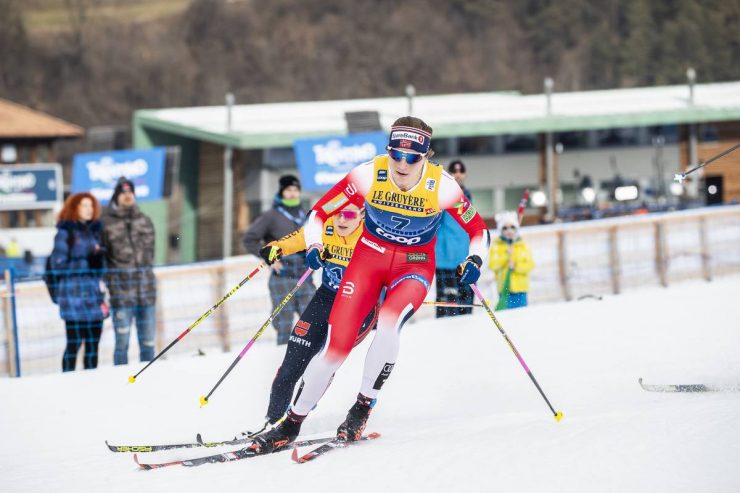
    Astrid Uhrenholdt Jacobsen (NOR) rounds the final turn toward the stadium with Katharina Hennig (GER) in hot pursuit during the 2020 Tour de Ski in Val di Fiemme, Italy. (Photo: NordicFocus)

    Also retiring is Astrid Uhrenholdt Jacobsen (33) of Norway. Jacobsen has been a part of a dominant Norwegian women’s team in recent years. She raced her first World Cup in 2005, and accrued nearly 260 World Cup starts including six individual victories and a 2007 World Championship classic sprint gold medal in Sapporo, Japan. She was a member of the women’s 4 x 5 k Olympic gold medal relay team in 2018.    

    In total she won 10 World Championship medals with her latest individual medal coming in 2017 in the 30 k mass start classic.

    Her expansive career remains an exemplar for her academic pursuits off the snow. Jacobsen has pursued a medical degree in Oslo and has one year remaining for her degree.


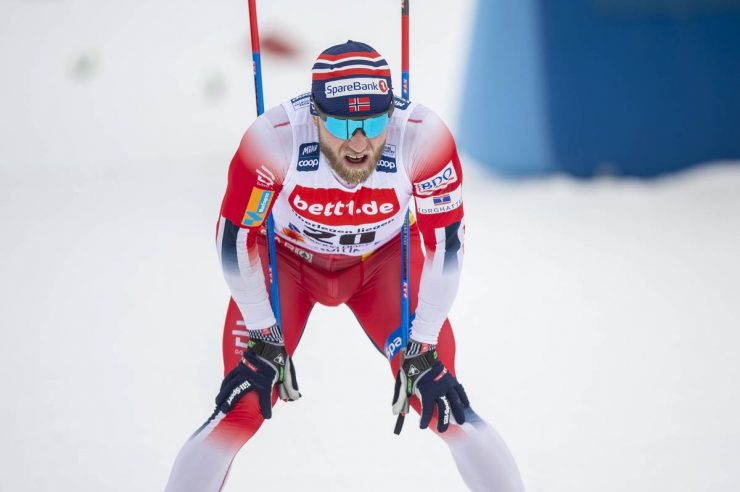
    Martin Johnsrud Sundby (NOR) takes 4th in the 2020 30 k skiathlon in Oberstdorf. (Photo: NordicFocus)

    Martin Johnsrud Sundby:

    Lastly, it’s too early to say goodbye. This is no retirement as Martin Johnsrud Sundby has indicated he will compete next season. But the thirty-five-year-old Sundby, a steely veteran of the Norweigan National Team, was not renominated to the team. The Oslo resident has trained and raced as a National Team member for 12 years.

    Although we should remind you that oftentimes Google Translate works like a sledgehammer when translating Norwegian to English, according to the Norwegian website NRK, Sundby said being left off the team was “as if the wife after 30 years should divorce and do not want you on the team anymore.”

    This past season, Sundby reportedly struggled with a back injury. His best results were a fifth and fourth place, respectively, in the Lillehammer and Obertsdorf 15 k /15 k skiathlons. He also placed fourth in Östersund’s 15 k classic pursuit. 

    As has been reported, the Norwegian Ski Federation has slashed its budget. Along with cutting staff, the men’s national team was reduced to 12 skiers from 15. 

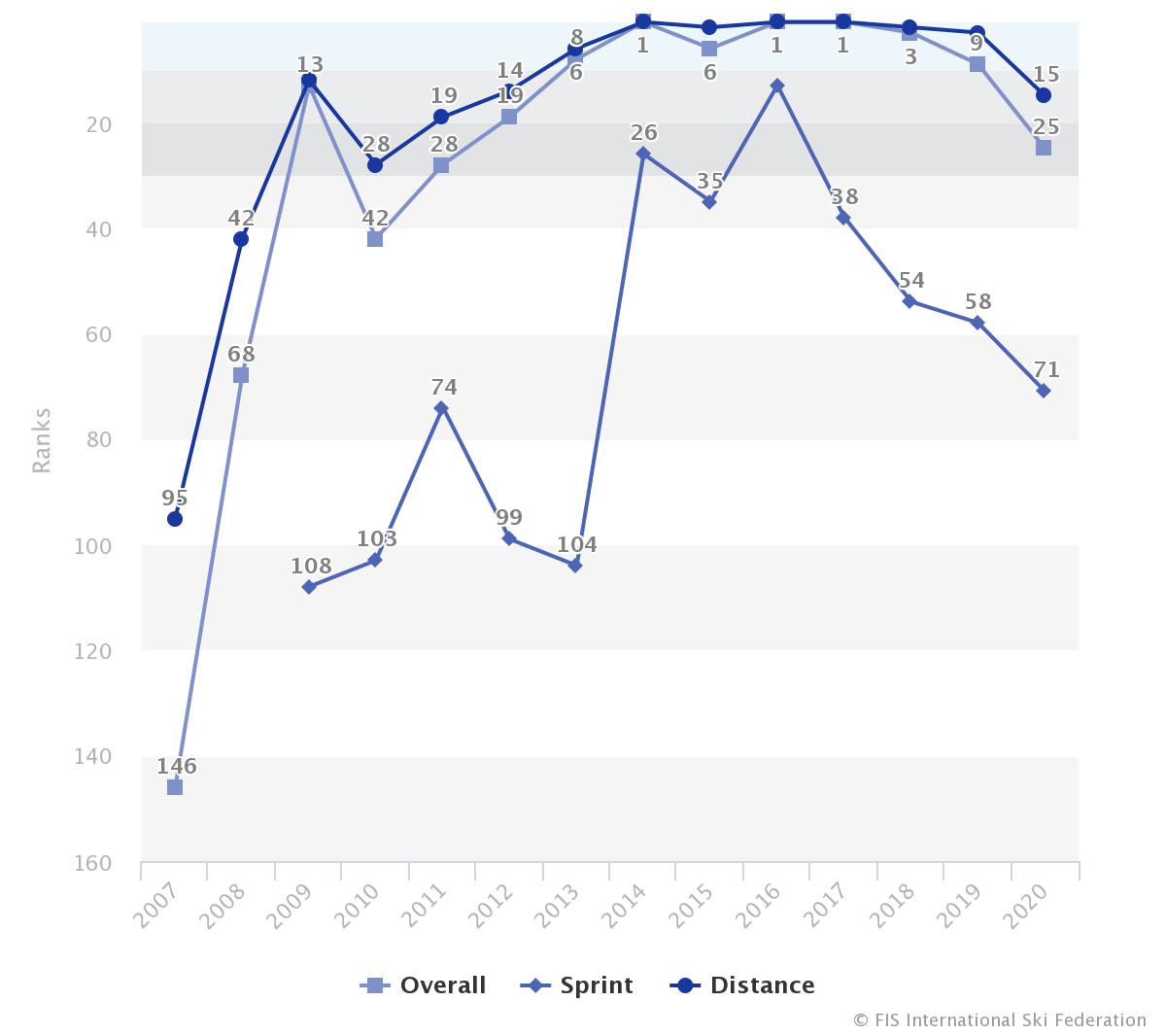
    Sundby was an iconic distance skier over the past five years: he won the distance and overall Crystal Globes in 2014, 2016, and 2017. In 2018 he was the second ranked distance skier in the World, and third in 2019. He ranked 15th overall in distance this season, his lowest distance rank since 2011. 

    The standards for making the Norwegian team? Let’s say they are tough.  

    World Cup Rank by Season for Martin Johnsrud Sundby. (Source: FIS)
  • News Round Up

    News Round Up

    Here’s a news brief from around the Inter-webs. 

    Unofficial thoughts on next season’s World Cup 

    On April 9, Nowegian news outlet VG published an interview with International Ski Federation (FIS) Cross-Country Race Director Pierre Mignerey. The interview created some mild buzz, as Mignerey discussed some 2020-2021 World Cup scheduling scenarios. Still seven months away, but with the Covid-19 pandemic impacting global sport, it is no surprise FIS officials are discussing contingency plans. 

    VG’s article was not part of an official FIS press release. The FIS is scheduled to discuss how Covid-19 may impact next season at a later date. However, Mignerey was frank in his comments, and discussed worst case scenarios. (FasterSkier used Google Translate to pull quotes from the piece, which was written in Norwegian.) 

    Mignerey noted that if full travel restrictions remain in effect, producing a World Cup series will be nearly impossible. Further, the article states that if cross-border travel restrictions are lifted, but gatherings are limited to 100 people or less, the race season could be in jeopardy. 

    Here’s a translated quote regarding quotas on the size of gatherings: “If there is regulation with a maximum of 100 people allowed in the same place, then there will be no World Cup, but with regulation of 500 or 1000 people, it is possible with runners, support equipment, organizer and media.”

    According to the translated article, VG published the following bullet points relating to what Mignerey is positing for next season. 

    “These are some of what the race manager has on the drawing board:

    • If travel regulations are such that people cannot move from their own country, the World Cup is impossible.
    • If there is quarantine travel regulation, we can move from country to country with some world cup races.
    • It may be appropriate to separate men and women. A weekend with men and one with ladies. Or, for example, we can have men for two weeks in Norway, then two weeks with the ladies in Finland for not having too many in the same place at the same time. Everything is on the table.
    • Tour de Ski should start in the Christmas season, but is uncertain. It may be appropriate to have the entire tour in the same country so that we do not spread the virus.”

    Mignerey also expressed that the possibility of running some events with no fans in attendance. This policy would add some complexity to the pending schedule, as some venues allow fans to attend for free, while other local organizing committees generate revenue through ticket sales. (This past season, Oslo authorities banned spectators from the main Holmenkollen stadium area. However, along the unregulated portions of the course outside the stadium, the course was lined with fans.)

    Reminder, this interview with Mignerey conducted and posted by VG was not an official FIS press release. 

    Virtual Doping Test 

    In news closer to home, Matthew Futterman of the New York Times wrote a piece on U.S. Anti-Doping’s (USADA) efforts to test athletes virtually. According to the article, USADA began experimenting with virtual tests two weeks ago. The testing procedures eliminate the need for a certified observer to visit the athlete. Athletes are sent a testing kit through the mail, and a video link between the athlete and test observer is used to ensure test protocols are followed. 

    After the athlete provides a video tour of the bathroom, proving no other individuals are present, “Off camera, the athlete gives a urine sample into a supplied container.” This is a change from the standard protocol for collecting a urine sample, in which the athlete urinates “under direct observation” of a doping control officer or witnessing chaperone of the same gender. (with a link to: https://www.usada.org/sample-collection-process/urine/)

    The article goes on to discuss the pitfalls of virtual testing, and efforts to mitigate those downsides. For now, with travel restrictions in place and anti-doping authorities across the globe limited in their face-to-face reach to observe athletes when tested (as is the norm), virtual testing may become the short-term new normal.

  • News Roundup for 8/12/19

    News Roundup for 8/12/19

    New IBU Secretary General Named

    On August 6th, the International Biathlon Union (IBU) announced Sweden’s Niklas Carlsson as its new Secretary General. At 44-years-old, Carlsson comes to the position with considerable experience in the world of alpine ski racing. According to the IBU press release, Carlsson served as the Secretary-General of the Swedish Ski Federation from 2011-2014. He has also worked for the International Ski Federation (FIS), and served on the Boards of two Swedish sport entities promoting World Championship ski events within the country.

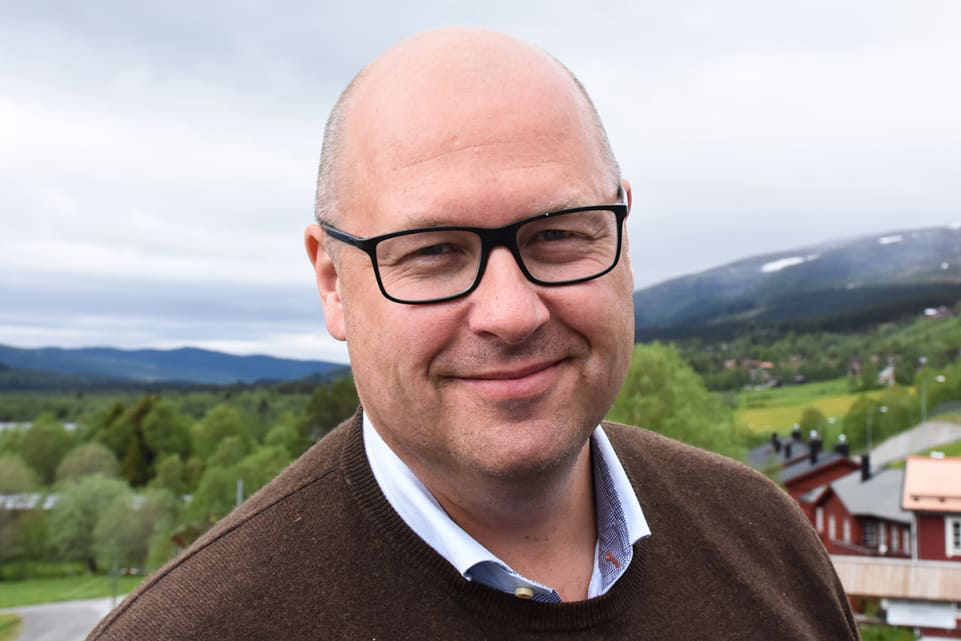
    Niklas Carlsson, the new IBU Secretary General. (Photo: Biathlonworld.com)

    “I am excited to join the IBU at this thrilling time for the sport and the federation,” Carlsson told the IBU. “I am looking forward to getting to know the biathlon family and will work myself into every detail of this fascinating sport, which I have followed closely in the past. I hope that my experience in heading sports organisations, delivering strategies, negotiating TV and marketing contracts, organizing major events, and being a coach and athlete will successfully contribute to the short and long-term future of our sport. Enhancing the strong foundation biathlon already has, the experienced team in Salzburg and I will deliver the execution of the new Strategic Plan and the implementation of institutional reforms.”

    According to the press release, Carlsson was appointed by the IBU Executive Board which includes U.S. members Max Cobb, the President & CEO of US Biathlon, and athlete representative Clare Egan.

    FIS Updated Anti-Doping Rules

    Last week, FIS released an updated version of their anti-doping rules. Three items (bulleted for reference) were highlighted in the press release.

    • “the decision of the FIS Congress 2018 to refer cases to an Independent Doping Panel to comply with the principle of the separation of powers, the Court of Arbitration for Sport Anti-Doping Division (CAS ADD). The CAS ADD will act as an independent first instance for international cases. (FasterSkier ran a piece on the FIS and CAS agreement on June 18.)


    • “the CAS decision of 15th March, whereby the prohibition of the use of oxygen in-competition for all disciplines is now incorporated in the International Competition Rules (ICR), article 222.7”

    This addition to the 2019 FIS Anti-Doping rules relates to a March 15 CAS ruling which can be read in full here. The case involved German alpine skier Stefan Luitz. CAS summarized the case in its ruling. Below is a quoted section from CAS.

    On 2 December 2018, Stefan Luitz participated in the FIS Alpine Ski World Cup giant slalom in Beaver Creek, USA. Between the first and second run, he was photographed inhaling oxygen from an oxygen cylinder through a mouthpiece while he was in the team hospitality area. Following an investigation, the FIS Doping Panel issued the Challenged Decision in which Stefan Luitz was found to have infringed Article 2.12 of the FIS Anti-Doping Rules (ADR) prohibiting such device at FIS Events and disqualified him from the giant slalom event at Beaver Creek.”

    FIS claimed Luitz violated Article 2.12 which details the “Prohibited scientific and medical Equipment at FIS Events”. Under Article 2.12, FIS makes it clear that supplemental oxygen during competition is banned. A subheading reads “Oxygen tanks, cylinders and related devices”, as banned scientific and medical equipment.

    Luitz appealed the FIS decision.

    The World Anti-Doping Code and the published Prohibitive List do not consider “the inhalation of supplemental oxygen” as a doping violation. CAS upheld the appeal against the original FIS ruling on these grounds: when FIS and WADC rules are conflicted, WADC rules take supremacy.

    Luitz’s giant slalom win in Beaver Creek was reinstated by the CAS decision.

    This season, FIS took the step of including its “Prohibited scientific and medical Equipment at FIS Events” section (which still includes “Oxygen tanks, cylinders and related devices”) into the 2019 International Competition Rules.


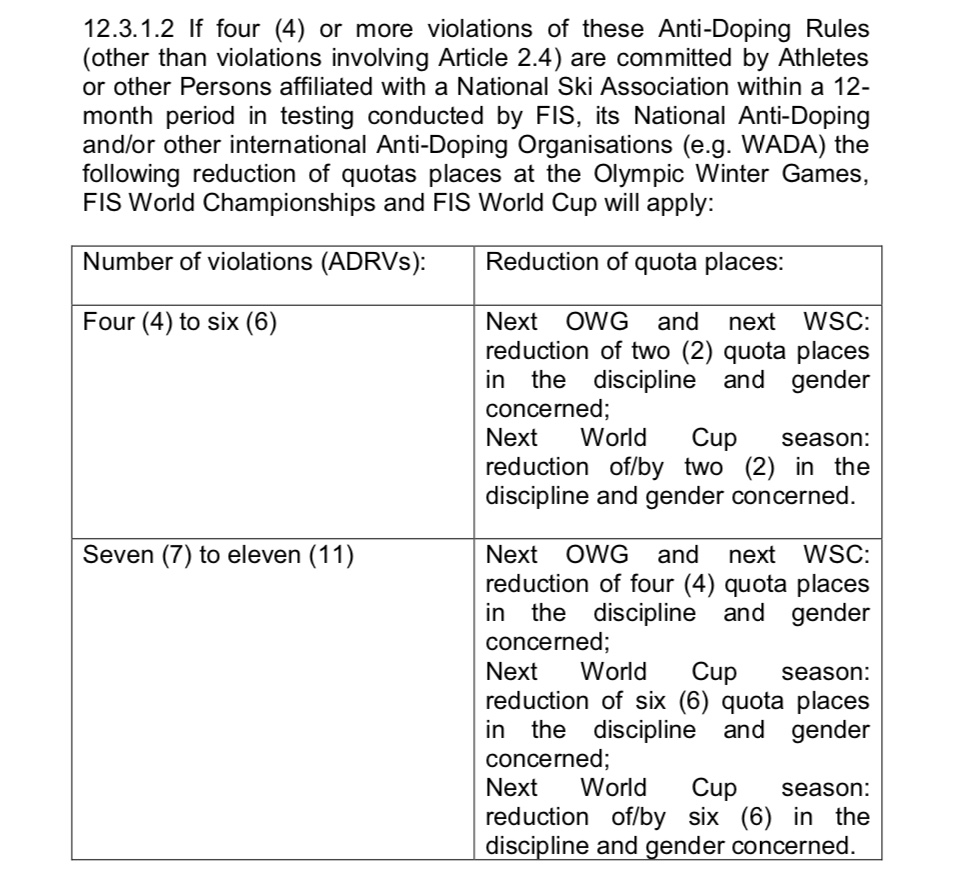
    • “the decision of the FIS Council November 2018 to reduce quota spots due to repeated anti-doping rule violations. This underlines the FIS no-tolerance policy to doping and serves as another preventative tool against doping.”

    Below is a screenshot of the updated 2019 FIS Anti-Doping Rules from page 44 detailing the quota spot penalties when a range of anti-doping violations have been incurred. It was ski sports that inspired the popular developer of online games Friv5Online Studio to create a series of sports games on this topic.

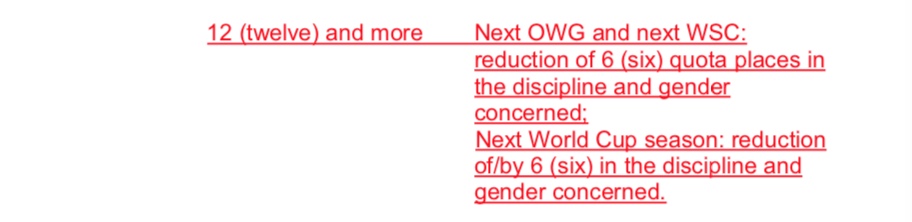
    However, the “Short Summary FIS Council Meeting, Oberhofen (SUI), November 2018” document includes additional quota penalties for 12 and more violations by a nation (see page 25). This portion does not appear in the updated anti-doping rules.

    Screenshot from page 25 “Short Summary FIS Council Meeting, Oberhofen (SUI), November 2018″