Tag: Nic Lemyre

  • Nordiq Canada: Ringing in the Changes

    Nordiq Canada: Ringing in the Changes

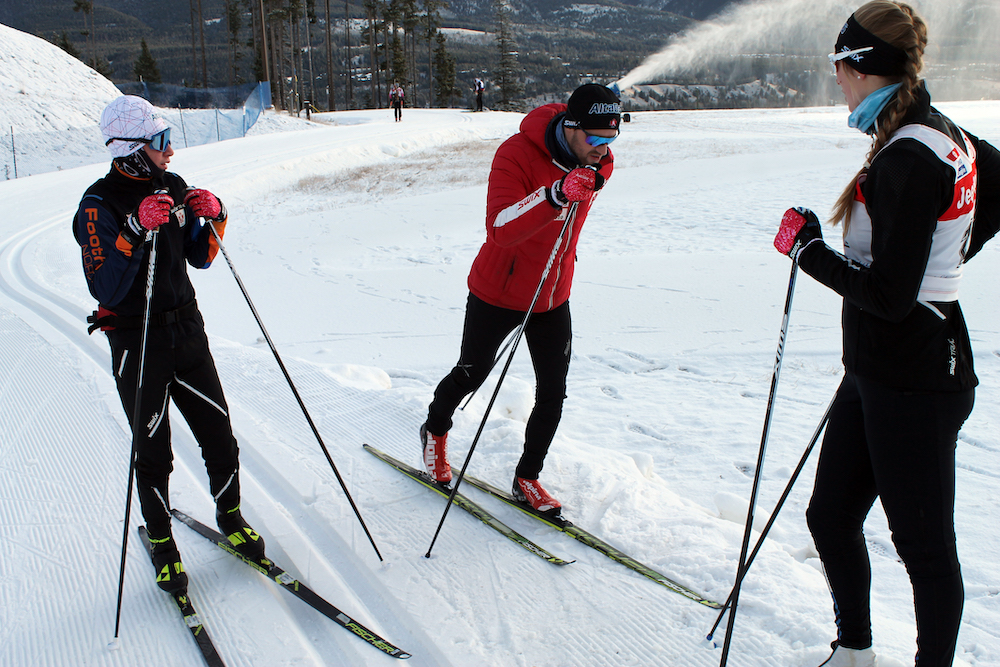
    Erik Bråten talking technique with athletes at Frozen Thunder 2019. (Photo: Nordiq Canada)
    Erik Bråten talking technique with athletes at Frozen Thunder 2019. (Photo: Nordiq Canada)

    When Cross Country Canada announced last March that they would be rebranding as Nordiq Canada, they were emphatic the new name was a symbol of their readiness to make changes.  Those changes are starting to happen.

    One holdover from last season is Erik Bråten, the young Norwegian brought in to shape the development pipeline. After one year on the job, Bråten is still enthusiastic and now the sole head coach.

    Louis Bouchard has stepped down as National Team Coach, reverting to his preferred role at Centre National d’Entraînement Pierre Harvey (CNEPH). The role of training centres in Canada is shifting and there appears to be more change coming.

    Nic Lemyre, who served as a part-time High Performance Director on a one year contract, has moved on. Joel Jacques — long time waxer, logistics manager, and long-ago racer — will take over as acting HP manager for the Olympic program while Kate Boyd has the same role for the Para program.

    Dave Dyer, the long serving events lead and a perennial presence at Canadian races, is sharing that role with Jeff Ellis this year. Ellis will take over the travel and race jury duties this year before completing the transition to take over the Event Director position for next season.

    For the first time ever, Canadian Championships will be combined with US SuperTour finals, a continuation of a trend towards hosting joint NorAm/SuperTour events and attemptig to raise the level of competition in North America.

    The most visible changes are likely to be the Canadian presence on the World Cup. With the retirement of Alex Harvey and Lenny Valjas, Canada can no longer expect regular podiums and consistent top ten finishes. Harvey’s retirement announcement also resulted in a large change in funding for the national program, with Own The Podium dropping the sport and bringing an end to the richest period in national team history.

    In the new world of financial scarcity and likely fewer podiums, the program is focused on bringing athletes up to the same performance level as the Para program.

    For this and future years, the athletes nominated for World Cup period 1 will based based on the previous season’s results, allowing athletes to plan ahead and avoid peaking for qualification races in October. The selection criteria boils down to World Cup top 30’s and COC leaders. Period 2 selections will be based on results, with at least one top 30 required to stay in Europe for the next period.

    For an athlete to stay on the World Cup for a full season, multiple top 12 results are required. The net effect will be more top athletes spending more time in Canada, where they can help lift the level locally and also have a better training environment.

    “The vision is to integrate various performance levels and stages of athletes: World Cup, senior development, and junior development, into one cohesive high performing Team where each athlete is learning, mentoring and being pushed by their team mates to reach their peak performance,” Nordiq Canada’s CEO Shane Pearsall wrote to FasterSkier. “We want our NST athletes to continually improve and challenge themselves year over year to reach their maximum potential and ultimately the World Cup and Olympic podium.”
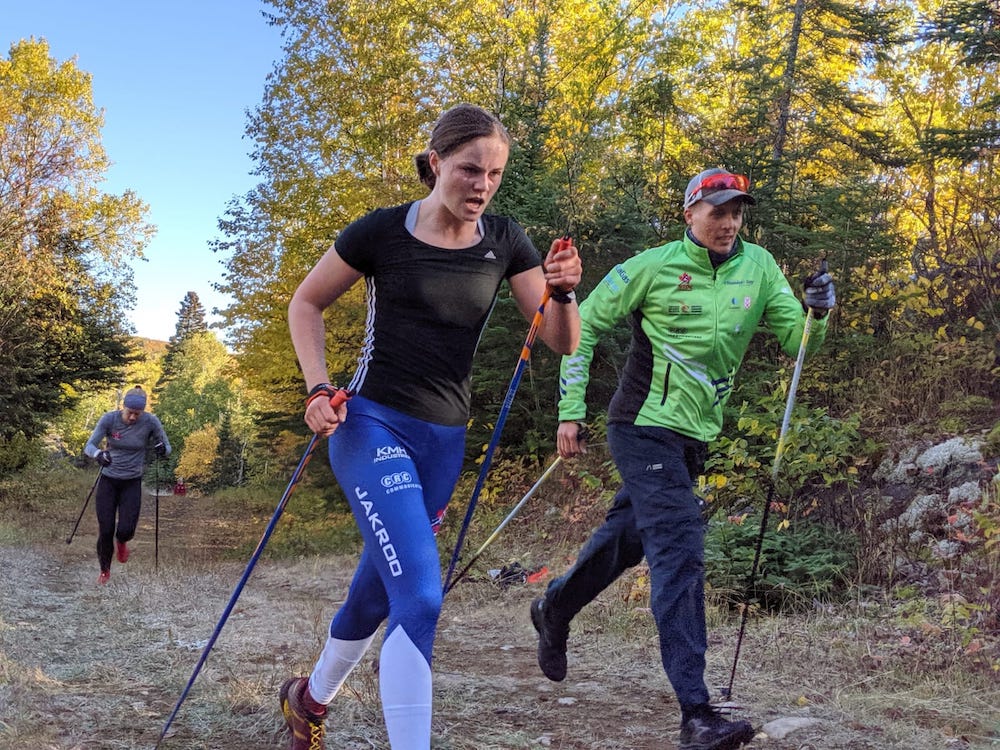
    Shaylynn Loewen is supervised by NTDC TBay's Timo Puiras at a combined NST camp. (Photo: NTDC TBay)
    Shaylynn Loewen is supervised by NTDC TBay’s Timo Puiras at a combined NST camp. (Photo: NTDC TBay)

    For period 1 this year, Dahria Beatty, Russell Kennedy, and Emily Nishikawa will be racing in Davos and Planica. Canada will skip the Kuusamo, Lillehammer, and the Tour de Ski. With the World Cup coming to Québec City, Minnesota, and Canmore in March, most athletes will get their World Cup opportunities closer to home.

    I’m not expecting anyone to be winning world cups this year, that would be a big step up,” Bråten said on the phone. “We still have Russell Kennedy doing 12th, even if it’s just one occasion, but it’s showing the level that he’s in on the best day. We’ve seen Dahria have plenty of World Cup points last year, and Lahti the year before. Katherine [Stewart-Jones] never did points, but she was top 30 at the World Championships. Of course, Emily was doing really well until she crashed in Cogne, she was top 20 with 1.5 km to go, before she fell and unfortunately had to go the hospital.”

    Beatty scored World Cup points in Dresden and Lahti last season and added one more national title to her collection. Kennedy made the semi-final in the Cogne sprint last season. Nishikawa finished 25th overall in the Tour de Ski and was on her way to a best ever result in the Cogne 10km classic, moving up to 19th at the 8.1km time check.

    The National Team is smaller this season, to match the smaller budget, with 8 seniors and 5 juniors. Add in Russell Kennedy, who is also a guide on the ParaNordic national team, and it is still a smaller and less experienced group.

    Nishikawa is now the most experienced racer on the national team after nine seasons. Asked about her new role as a team leader at the end of a snow camp in May, she told FasterSkier “It’s been a natural progression. Just help the girls get the ski bags on the roof and make sure they’re strapped down well.”

    Nishikawa is a quiet person, far more enthusiastic when talking about the upcoming Canmore World Cup than about her own successes. Asked about the season changing crash in Cogne, she said “It was bad, I couldn’t finish.” Behind all that quiet, she is the person the other athletes talk about when describing their transition into World Cup racing.

    More detail on the staff, the structure, and the path ahead will follow.
  • Meet the Coach: CCC’s Erik Bråten

    Meet the Coach: CCC’s Erik Bråten

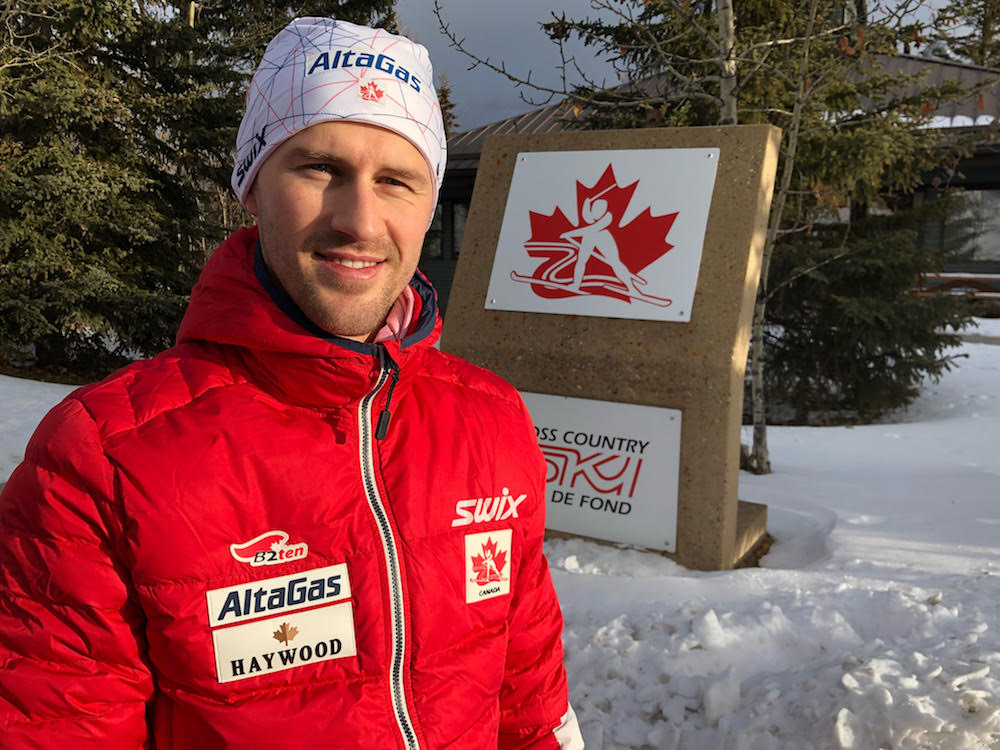
    Erik Bråten, at the end of his first week in Canada.
    Erik Bråten, at the end of his first week in Canada. (Courtesy photo)

    Cross Country Canada hired Erik Bråten as the new national team coach on November 1st, joining Louis Bouchard. After a short delay to get a work permit, Bråten arrived in Canada on November 15th.

    Regular readers will know the highlights of his resume:

    • Graduate of the Norwegian School of Sports Science.
    • Winner of the coach of the year from the Norwegian ski federation. 
    • Previously Head Coach at Team Kollen, the junior team constituted from clubs based at Holmenkollen in Oslo.

    Nic Lemyre, High Performance Consultant to CCC, described the initial division of national team roles this way.

    “Louis Bouchard is the head World Cup coach, and he’s calling the shots for all the World Cup athletes, taking responsibility for their performances,” Lemyre told FasterSkier. “Erik has a support role at the World Cup level, and he’s going to have his main focus on our U23 group and junior group. Erik will have a very important role in connecting with the younger athletes, and making sure that they are going in the direction with the philosophy we want to have with the World Cup team.”

    There will also be an east/west division of athlete responsibilities, with Bouchard based in Quebec City and Bråten based in Canmore.

    While some may be concerned that doesn’t speak French yet, Lemyre doesn’t see that as a problem.

    “[Erik] speaks cross country skiing better than anybody in our system, so I think he’s going to be fine.”

    Given that Bouchard and Lemyre both have French as a first language, communication with athletes shouldn’t be an issue.

    ***

    FasterSkier conducted an initial interview with Bråten over the phone while he was in Oslo on November 1st. The second set of questions were answered by email, when Bråten had begun settling in Canmore on November 21st.

    How much time have you spent in Canada?

    None. Never been there. It will be a first for me. A tourist in the U.S., that’s the closest. So it will be a totally new experience for me, and a long move.

    What are you most excited about?

    Well, I really love to build up a system. The opportunity to go in and help out actually building that system, that is already there, but at least Nic has talked about a few changes that he wants to make. Good ideas to develop further, which is based on how the coaches, the national coaches communicate with every athlete on the team, how we communicate with the club coaches, and how we can maybe have some gatherings or some knowledge development for the coaches, and maybe make a little clearer what the Canadian philosophy is.

    What will you contribute this season?

    I’m coming in at a special time of the season. It’s like races in a few weeks, and I’m coming in as a new coach. Of course, even if I had issues with anything, I can’t come in and change it. It’s another opportunity to come and contribute right away, but at the same time, just use some of the season to see what’s going on, see the training diaries, talk to the leaders, and really know the whole picture of what is the Canadian model.

    buy biaxin online

    I’m not coming over there and having to make a season plan in a week. I have some time to get to know information, because training is almost done. I think it’s a great opportunity to learn, to observe, and put some small things in my philosophy. We [will] start planning for next season, which starts quite soon, but the details of course come after Christmas. I hopefully have something to contribute.

    How did you come to win the coaching award?

    There were both coaches and athletes that nominated me separately, and the club has been doing really well for the last, well for a long time. But especially the last two or three years has been really, really good.  They put a lot of weight on the Norwegian cup for juniors, because we have dominated quite extreme there for the last couple of years. That several athletes and some coaches also separately nominated me was put into consideration, because that wasn’t that usual.

    Did you know Nic Lemyre in Oslo?

    Well, not really. He is working at the Norwegian school of sport science and I took my education there, and had a little lab assistant role after I was done my education. Even though we have been at the same school for a long time, he as a worker and me as a student, we haven’t really known each other. We know the same people, so he had a lot of references on me that I didn’t know.

    How is your French?

    My French is terrible, it’s nothing. I have German in school, and Norwegian and English of course, not that my German is anything either. I really don’t know any French. Nic told me I should buckle up and learn, try to learn, some basics.

    Questions by email:

    Who have you met during your first week in Canada?

    Over the last week I have met most people in the Canmore office, a few local athletes who are not, the National Team and some club coaches. Louis and I have established regular contact on mail and phone, the same goes for Joel Jaques [CCC’s Technical Services Coordinator] so we have a good system in place built on trust and professionalism. I met all of the female athletes in person except Cendrine [Browne], and I have met a couple of the guys. With Lillehammer next week and then Sovereign Lake and Whistler coming up I am happy to say I [will] have met most people in the system before Christmas.

    Why did you choose to coach instead of race?

    I was better at it and I have always liked to help others reach their potential. But I am glad I did competitive skiing as long as I did, I think I learned a lot I can use as a coach from that experience.  

    What makes you a good coach?

    I think I am good at seeing the whole picture. It allows me to understand if the training is right, is the motivation right, are all social factors in place etc. And all these factors are important to be in place for an athlete to have the desired progression. I also think I am good at seeing my own limitations, and getting help from experts when I don’t have the knowledge in a particular area.

    How will you measure your success in Canada?

    I am coming in very late this season, so for the first few months the most important task for me is to get to know everybody and learn the system. But over time it’s kind of simple, better Canadian results in the World Cup, championships and most importantly Olympics.

    What was your first culture shock moment in Canada?

    I have not really had any big culture shock so far. It really is not that different from Norway. But the average person is much nicer here, at least the first time I meet them. Everyone thinks it’s cool I am here, and are excited to work with me so that is a big motivational boost for me.

    Name one person who has helped you to be a better coach? And how?

    A lot of people have been important to me of course, but I want to specifically mention two people.

    The first is my mentor from my time on the Norwegian School of Sports Sciences, Thomas Losnegard. He is a professor there, and I have spent endless hours in the lab with him. He has a unique way of being so knowledgeable on all theory, but at the same time being able to translate it in to practical use for coaches and athletes.

    The second person is Kristian Bjune Sveen who is Head Coach for the China National CC Skiing Xinjiang Team. We coached Kjelsås together for four years and learned a lot from each other.   

    What was your favourite moment on snow?

    There are a lot of them, but if I can pick two … 

    Haga visited Canada long before Bråten did, seen here in 2012: Chandra Crawford (l) leads with Norwegian Britt Ingunn Nydal (far right) on the fourth of six loops in the 30 k classic mass start at Canadian Ski Nationals on Saturday. Dasha Gaiazova (second from right) and Norway’s Ragnhild Haga (second from left) stay close behind.

    The first would be as a coach. 14.jan.2017 in the Norwegian Cup for juniors for the K17, it was a sprint race. I had two athletes in the final, and they finished one and two. Right after they crossed the finish line the rest of the girls from the club stormed the finish area and celebrated together. That moment was special.

    The second one would be when my good friend Ragnhild Haga won the 10k in the Olympics last season.

    What does an athlete need mentally to succeed?  Personalities vary widely, but what can you say about what is needed?

    As you point out, personalities vary, but I think wanting to do the work that is necessary and just having fun is important. Being critical of your own training, and always wanting to do things even better, and not just copying yourself from season-to-season. And, you have to like the lifestyle. It is a lot of training, and when you are not training, you need to rest a lot, and there is a lot of traveling.

    buy augmentin online

    What are the different training groups you worked with?

    Kjelsås is the club I coached, Team Kollen is the regional team for juniors in Oslo. Team Obos is the regional team for the seniors in Oslo.  

    How do you form a team from multiple clubs in Norway? How well do the clubs work together?

    Clubs in Norway have widely different opinions on how to do things. But I think what is important is to find common ground, and find the things we agree that we can do better together then apart. And if we can agree on what that is, we can meet up and do that together, and do different training separately.

    One of the repeated ideas from HP in Canada is that different athletes need different environments to succeed. Do they need different training philosophies as well?

    A training philosophy should include that we are different and need different things. The demands you need to ski fast is the same for everyone, but which demands you are good at varies greatly. A lot of training should be done by everyone, but how much focus on different task for each individual is the big question that is different from athlete to athlete. As a coach, I therefore think that you need find what everyone should do, and put that in to camps and trainings we set up together, and then find out what each individual athlete should focus extra on in the training on their own.

    When it comes to environments, I think athletes need to be good at finding the right balance for them in terms of who they spend time with when they are not with their team. And teams should use time to figure out together how they want the culture in the team to be.  


  • Cross Country Canada: The Reboot Part Two

    Cross Country Canada: The Reboot Part Two

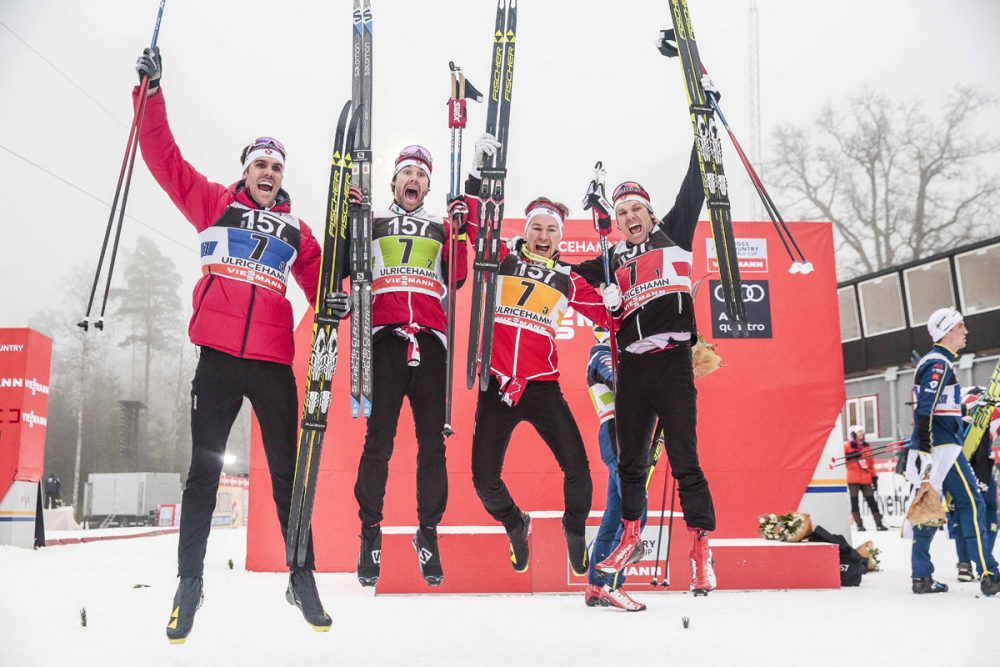
    Left to right: Canada’s Len Valjas, Alex Harvey, Knute Johnsgaard, and Devon Kershaw after their historic third place finish in the 2017 men’s 4 x 7.5-kilometer team relay in Ulricehamn, Sweden. (Photo: Fischer/Nordic Focus)

    This is the second part of FasterSkier’s report on the state of high performance cross-country skiing and athlete development in Canada. You can read part one here.

    Cross Country Canada (CCC), as the national governing body for cross-country skiing in Canada has the difficult task of steering a rather large ship. The idea in steering the ship is to maintain a path requiring little quick and nimble maneuvering. Survey the landscape, mine the data, set a course, and sail. Along the way, there’s the ability to make slight adjustments for efficiencies, accommodate unforeseen changes.

    To help make those macro and micro changes, Cross Country Canada hired Nic Lemyre as a high performance consultant in June, 2018. Lemyre, a Canadian living in Oslo, Norway has concrete ideas of what sustainable improvement and success resemble.

    Where do we want to be?

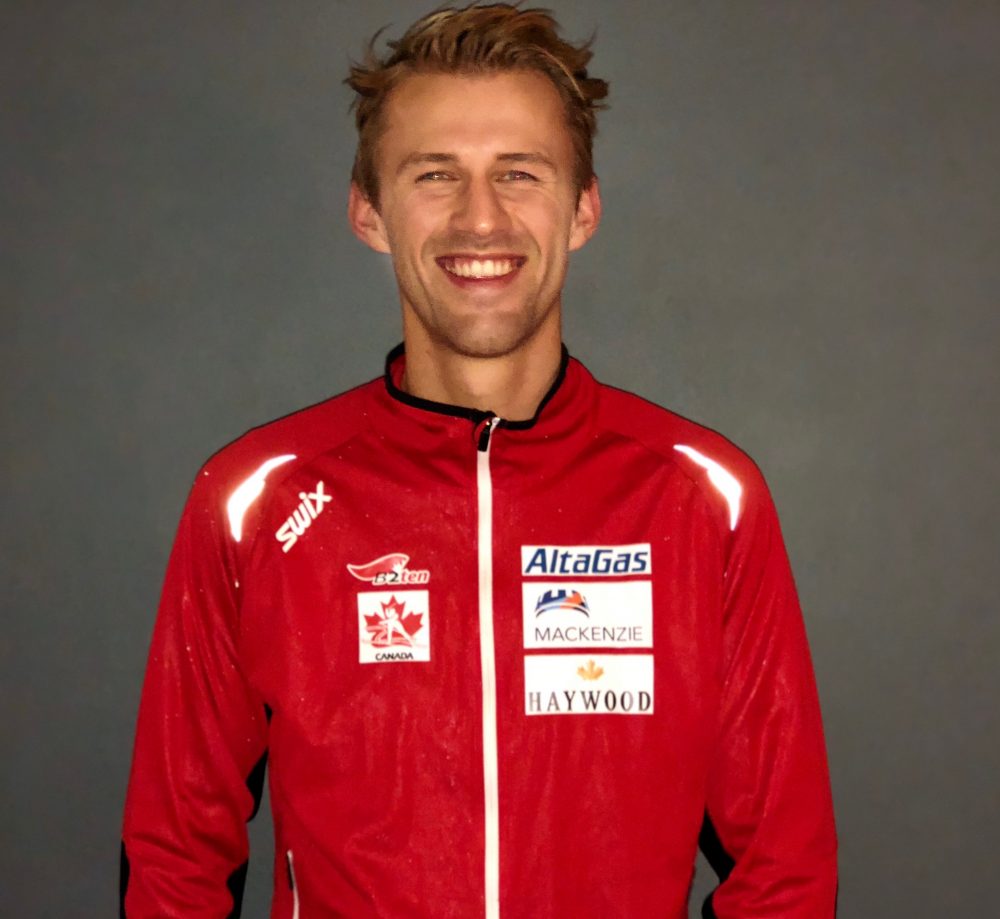
    Nic Lemyre (Photo: Norges Idrettshøgskole/Norwegian Sports Academy/)

    “We’re thinking our starting point is to build a really strong relay team, on both the women’s and the men’s side,” Lemyre told FasterSkier. “We want to have five athletes, so that we can rotate with the fifth athlete and we’re never in a situation where we can’t field a strong team because one athlete’s injured or sick.”

    According to Lemyre, the composite team must be derived of skiers who can hit specific individual benchmarks “[When] we have athletes that can start scoring points in every race they enter on the world cup, that’s a medium term goal,” Lemyre said. “From there, we start aiming for the top-15 for all athletes that are identified in that group.“

    Part of the reasoning behind the relay vision is that for a skier to get a permanent spot on the World Cup, the athlete not only has to reach a high level, but also help raise four other Canadians up to that level. Lemyre believes this should foster cooperation and team spirit.

    It helps us meet goals of performance,” Lemyre added. “But also it helps us meet goals that are related to how to build a strong performance culture, where the athletes need to support each other, to learn from each other. They need to push each other. They need to push each other beyond limits they may have experienced before.”

    How do we get there?

    After PyeongChang, CCC appeared to have both the political will to start the painful process of another re-invention. However, that will came with a reduced budget with which CCC could support its future options.

    The simplified model of corporate restructuring begins with terminating certain roles and concludes with creating new roles filled by new individuals near the top of the organizational pyramid. Often, in a medium or large corporation, most people will be shuffled around and only a few near the top will lose their jobs. The final step is to find a quick win to help the newly reshaped organization gain morale and unify.

    buy amoxicillin online

    In a small organization like CCC, everyone is near the top. While the process works well for the survival of the organization, it can be hard on individuals. 

    The change at CCC began with long-time High Performance (HP) director Tom Holland’s planned retirement. Lemyre was hired as a consultant to oversee the restructuring of the HP group. Shortly before Lemyre’s hiring, CCC eliminated some positions.

    As Joel Quenneville’s recent firing demonstrates, proven ability and past success is not enough to provide job security during a reboot. (Quenneville was the NHL’s Chicago, Blackhawk’s head coach since 2008. During his tenure Quenneville lead the team to three Stanley Cups.)

    On November 1st, CCC hired Erik Bråten as a new national team coach and modified Louis Bouchard’s title. Bouchard remains head of the National Training Centre in Mont Ste-Anne, Québec, with the added title and responsibilities of World Cup Head Coach.

    Bråten, a recent Norwegian School of Sports Science graduate with a specialization in cross-country skiing, won the 2018 coach of the year award from the Norwegian ski federation. This hiring didn’t happen as quickly as some had hoped, but is considered the first win for CCC’s new structure.

    Erik has a strong sports science background applied to cross-country skiing,” Lemyre said on the phone. “His profile is unique in our environment. The fact that he’s young is really positive for us, because he’s open to this new experience. He comes with a solid base, and his excitement and his motivation, I think, will be great assets in applying that knowledge in the right culture in Canada. At an individual level, Erik is unique in working one on one with athletes. I think our athletes are going to really appreciate that.”

    Along with bringing in new personel, Lemyre aims to improve sharing of training information in Canada. In Norway’s organizational structure, athletes and coaches are able to log hours and training plans on an interface organized by the Norwegian National Ski Federation. It’s a model and template Lemyre is intimate with.

    “The fact is that we have a large country, and we can’t be with athletes every day of the year following them on site,” Lemyre said. “Now the technology is there to pool [training data] in a way that our coaching staff and the local coaches can communicate really well, But also as we’re building up our science team, we also have interaction with our different people involved in helping the athletes develop.”

    Dahria Beatty racing the 2018 Holmenkollen 30 k freestyle mass start in Oslo, Norway. (Photo: Fischer/NordicFocus)

    Another planned shift is to interchange athletes between Europe and Canada more often. For example, Dahria Beatty will start the season in Canada — a change encouraged by her coach Chris Jeffries and supported by Lemyre.

    This summer my coach Chris and I came up with a plan that allowed me to stay in Canada to start the season to build into the race season and then head over the Europe and race on the World Cup circuit leading up to World Championships in Seefeld,” Beatty said. “With this being the first year of the new quadrennial, it is the perfect time to fine tune some of those race details domestically before leaving for Europe mid-December. I am looking forward to racing part of the Tour de Ski then period 3 and hopefully finding my peak for World Championships and World Cup finals in Quebec.”

    Lemyre’s concept is to allow athletes like Beatty to build into the early part of the season domestically and arrive in Europe at a higher level of race fitness.

    The way we scheduled the trips this year, giving some athletes the chance to prepare very well before they race on the World Cup,” Lemyre added. “I think some of them will be stronger when they show up on the World Cup, and also they’ll be able to sustain that level of performance over the time period they are on the World Cup. We will try to be a little more selective and well prepared when we show up, and then post really good results when the athletes are racing the World Cup.”

    Jeffries stated that the stress of living abroad, a dynamic known all to well by North American World Cup skiers, can be counterproductive to a developing athlete.

    The last few years, our top athletes spent the majority of their time in Europe,” Jeffries said. “I think it stalled our development a little bit, because we’re always living out of a suitcase, and we’re always having to ski races where we’re trying to perform.”

    Dave Wood spent 18 years as a national team coach. His time leading the team included the post-Nagano rebuild and managing athletes at the Olympics in Vancouver. His vision includes giving skiers more time to develop and less emphasis on being fast all season.  

    Sara [Renner] had far less World Cup starts before she was top-15 at the Olympics than the people of today,” Wood said. “I think that this big argument about experience is valuable when you are looking for seconds. When you are looking for minutes, [World Cup experience] makes no difference.”

    Will it Work?

    The U.S. has been able to develop a strong women’s team built off Kikkan Randall’s determination to drag U.S. skiing to the top. Randall took inspiration and knowledge from Canada’s post-1998 rebuild where Scott, Renner, Milaine Thériault, Jamie Fortier and Amanda Fortier decided it was time to lead the charge.

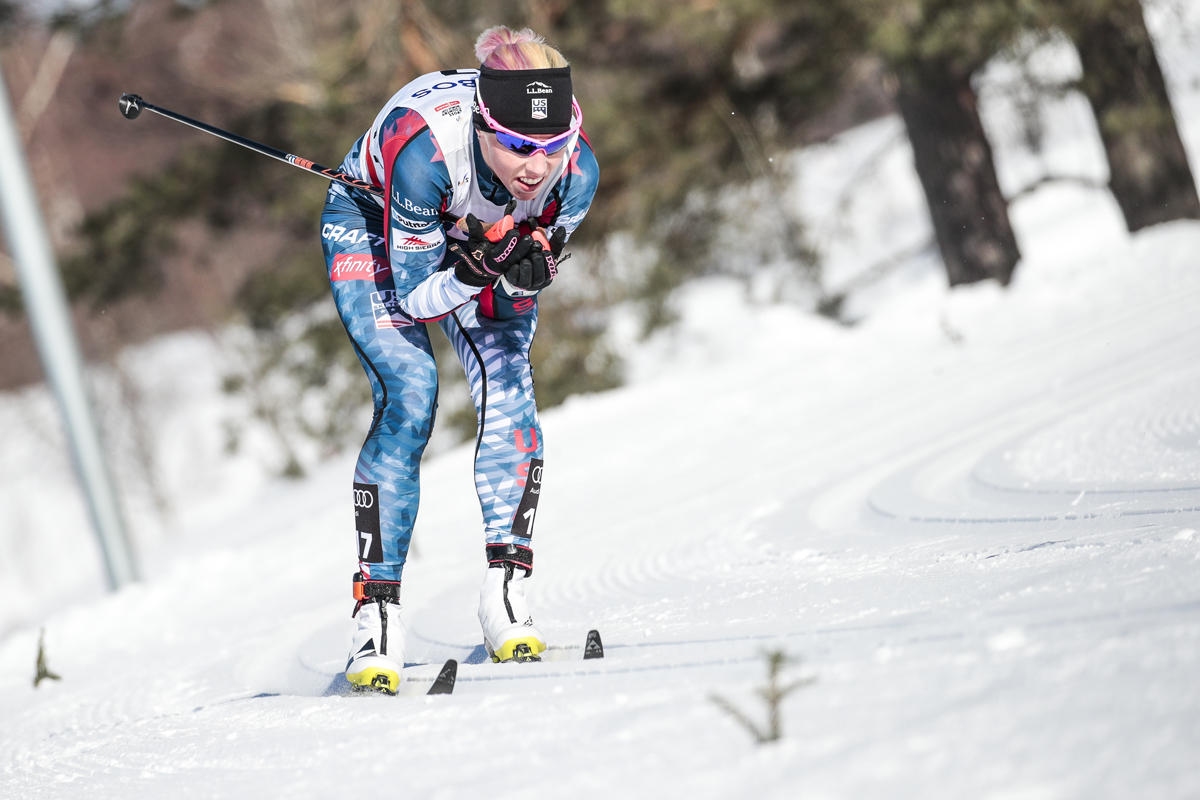
    American Kikkan Randall tucking during the women’s 10 k classic mass start at 2018 World Cup Finals in Falun, Sweden. (Photo: Fischer/NordicFocus)

    In both cases, the athletes didn’t succeed alone. The “fantastic five” got the support of Holland, Wood, and many others. Randall also collected a large supporting cast, well documented by Peggy Shinn’s book ‘World Class’. 

    Laura McCabe, now a Methow Valley coach and two-time Olympian, spent most of her free time in Nagano with the Canadian women’s team because it felt like a group that had a vision and a willingness to support one another to collective success.

    “It just shoots you up the ladder when you come back and you feel like you have a very safe place, you’re working on this goal together, you’re all in it together, and you’re there for each other all the time,” McCabe told FasterSkier. “I felt like the Canadian women were doing that. And now I feel like Matt Whitcomb has led that charge for the American women.”

    While crediting Randall for starting the process, McCabe feels that the team’s work to be a team is the critical factor.

    “They have goals, team goals and they have personal goals,” McCabe said. “They are always there for each other. One of their biggest goals is to basically keep their relationships positive and keep everybody moving forward. I think that is one of the number one reasons that team is doing well.”

    In a conversation last May with FasterSkier, Yukon coaching icon Alain Masson spoke of the complexities of achieving success on the international stage. Simply possessing physical gifts, the aerobic capacity, the predisposition to tolerate and absorb high training loads, is no guarantee of success.

    There’s the behind the scenes unglamourous work of nurturing athletes, remaining true to organizational core values, and feeding the system with money, intellect, and vision.

    “Definitely, there’s a minimum set of physical characteristics that you need to perform at that level,” Masson explained to FasterSkier. “But you also need many characteristics, personality characteristics, that are vital. What Alex showed, and Sara Renner, and Chandra [Crawford] and Beckie [Scott]. I think athletes that combine both the physical and the mental characteristic at a time when the program works together, and everything lines up with the funding, good leadership, and everybody working together. That’s the difficulty, this is the issue, trying to get all of that together. As the women in the U.S. have demonstrated, when you have all of that lining up, it’s amazing what you can do.” 


  • World Cup Preview #10: Canada

    World Cup Preview #10: Canada

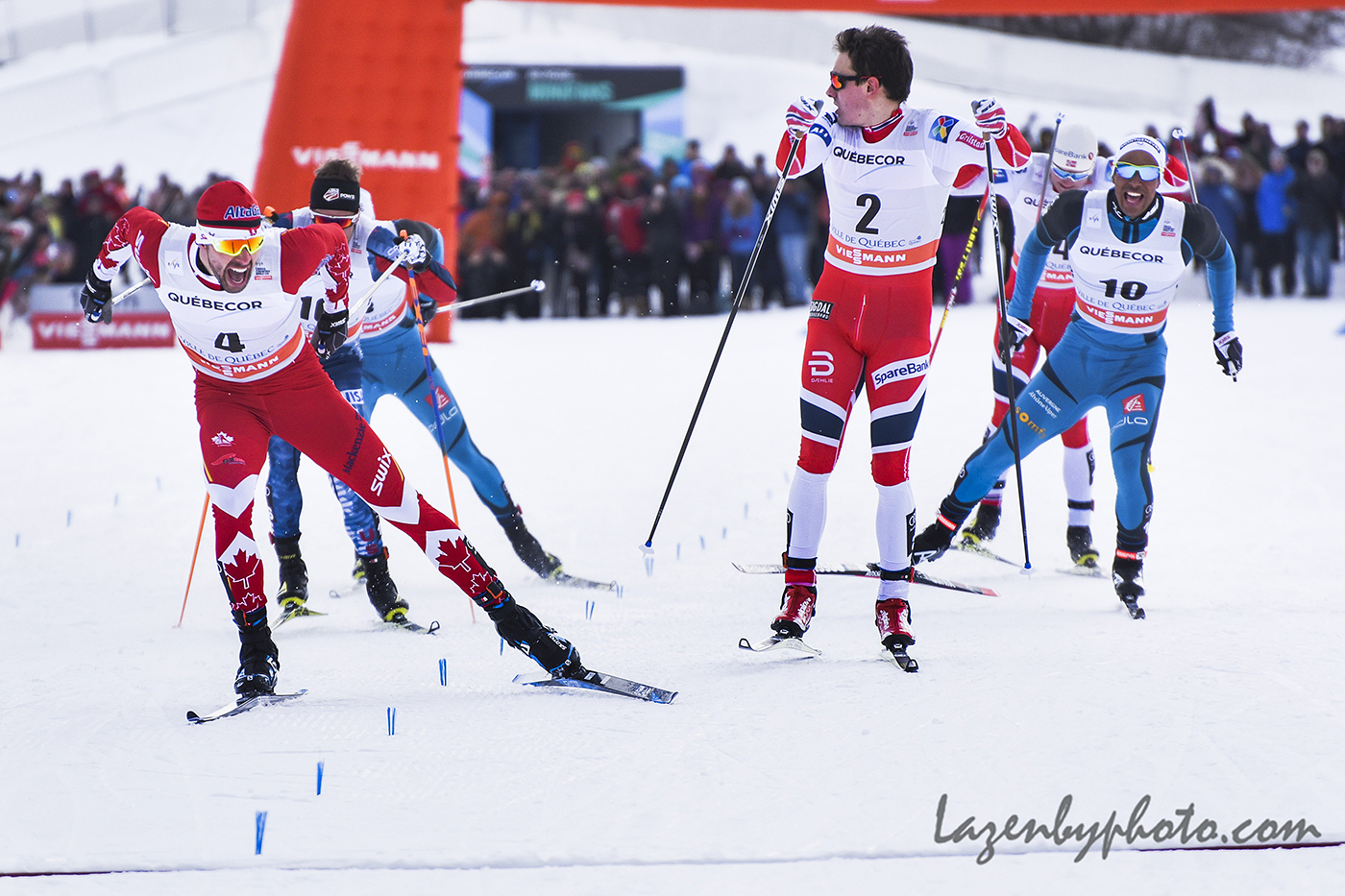
    Canada’s Alex Harvey (l) coming on strong in the finishing stretch to outlast Norway’s Finn Hågen Krogh (2) by 0.31 seconds for the win in the World Cup Finals freestyle sprint on Friday in Quebec City, while France’s Richard Jouve (10) races to third, just ahead of American Simi Hamilton (behind Harvey) in fourth. (Photo: John Lazenby/Lazenbyphoto.com)

    Welcome to FasterSkier’s World Cup Preview, where we check in with the top-10 teams from last year’s FIS Cross Country World Cup tour before the season starts. The World Cup begins with a classic sprint in Ruka, Finland on Nov. 24th. 

    ***

    Canada

    Overall in Nations Cup Last Year: 10th

    Women’s Ranking 2017/2018: 18th

    Men’s Ranking 2017/2018: 8th

    Canadians to Watch:

    Canada has shape-shifted it’s world cup team as part of a larger restructuring of its high performance program. With fewer resources and a funding system tied to championship medals, contraction has been a major theme for Cross Country Canada (CCC). 

    Let’s begin with Quebec’s bread and butter: Alex Harvey. At thirty-years-old, Harvey remains podium-elite. He scored five podiums last season, including a win in Falun, Sweden’s 15-kilometer pursuit.  Omni-present in the front of the pack, Harvey positioned himself for sustained success in 2017/2018. Like last year, Harvey plans on racing the full World Cup in 2018/2019. After placing third in the Tour de Ski and fourth overall in the World Cup final standings, CCC and fans alike have high expectations for Harvey.

    celebrex buy online, buy mobic online

    Lenny Valjas and Julien Locke have start rights for the full season, but CCC expects that both will choose to skip some races. Valjas admittedly posted down results last season. But his Olympic form proved top-10 as he placed seventh in PyeongChang’s classic sprint.  

    Emily Nishikawa and Cendrine Browne earned period 1 starts as the top ranked distance skiers. Expect them at period 1 stops in Beitostolen, Norway and Davos, Switzerland.

    The COC leaders for period 1, Andy Shields and Olivia Bouffard-Nesbitt, have guaranteed start rights through FIS rules.

    Dahria Beatty, Maya MacIsaac-Jones, and Katherine Stewart-Jones will begin the season racing in North America.

    Who’s Missing:

    Devon Kershaw, Jess Cockney, Knute Johnsgaard, and Graeme Killick all retired at the end of the Olympic cycle.

    Pre-season Results:

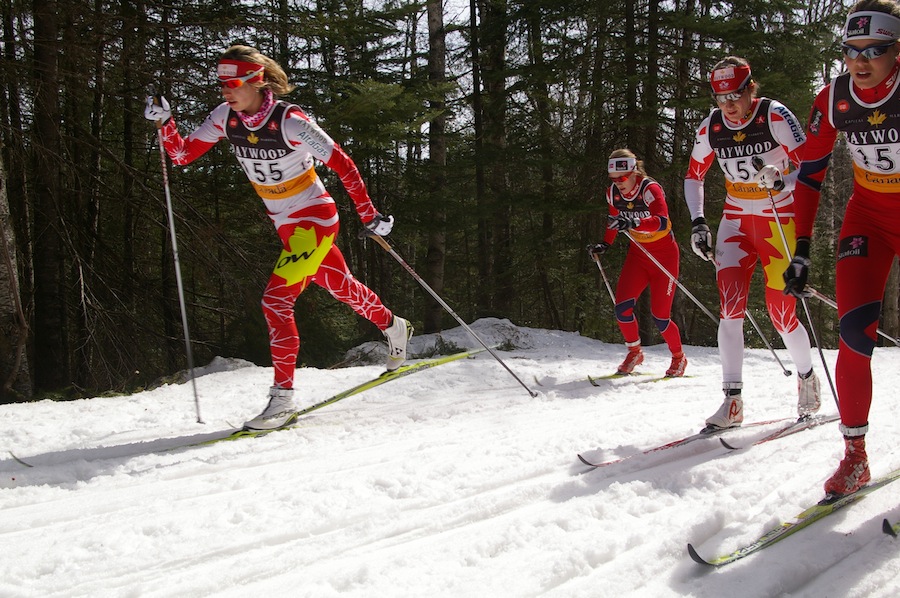
    Many top-ranked Canadians turned up at the Frozen Thunder races. As the races were not used for selection, nearly all of the top athletes treated them as race intensity.

    In the Frozen Thunder king’s court sprints and free technique distance races, Valjas was 3rd and 4th, Shields was 2nd and 11th, Locke was 5th and DNS, Beatty was 1st and 2nd. Nishikawa completed the sprint qualifier, placing 2nd, before withdrawing . She won Frozen Thunder’s distance competition. 

    News of Note:

    Harvey claims he is excited as the season approaches.

    “I’m feeling great right now,” Harvey wrote in an email. “I was able to execute the plan pretty much to the dot this year, no injury or illness slowed me down and I have a fun time the whole Summer and Fall! As per usual, I’m a slow-ish starter so the first goal of the season for me will be the Tour de Ski.

    buy cleocin online


    “The big goal for me this season is the World Championship in Seefeld. I’m focusing on the skiathlon and the 50k where I’m going to defend my world title to the best of my abilities! Right behind Worlds are World Cup Finals in Québec City, so that’s a huge motivating factor for me to wrap up the season at home once again just like we did in 2017.”

    Valjas also plans on a gradual build up to his form after his rough season last year. “This summer was a tough one,” Valjas wrote after the Frozen Thunder sprints. “My back was in need of some serious rest and recovery, so I took 2.5 months almost completely off. I ran and biked a bit, but no roller skiing. I am expecting the start of my season to be a little slow, but I plan to race myself into top shape once again come World Champs.”

    For the athletes who aren’t consistent podium threats on the World Cup, the season outlook is less clear.

    CCC has rebooted it’s high performance program. Nic Lemyre came on board in June as a high performance consultant. Erik Bråten was hired on Nov. 1st, as a national team coach, with a focus on U23 and western-based athletes. At the same time, Louis Bouchard was named World Cup team head coach. Bråten is expected to join Bouchard off-and-on in Europe and will otherwise use Canmore as a hub.

    CCC CEO Shane Pearsall was feeling optimistic about the season when he spoke to FasterSkier on November 8th.

    “I’m thrilled,” he said of a week in which CCC hired a new national team coach, finalized the World Cup head coach role, and finally published a long awaited selection criteria. “I think it’s one of those things where you need fresh blood,” Pearsall said, while acknowledging the short term delays and difficulties inherent in that choice.

    (CCC staff member Cindy Chetley created a quick reference guide to 2018/2019 selections, to help interpret the formal selection criteria. 

    A story on CCC’s new direction will be explored in an upcoming article.


  • Bouchard Announced as Canada’s Head Coach while Norway’s Bråten Joins CCC as a National Team Coach

    Bouchard Announced as Canada’s Head Coach while Norway’s Bråten Joins CCC as a National Team Coach

    Canada’s newest World Cup Coach Erik Bråten will be based in Canmore, Albert. Bråten will be 27 on Nov. 6th. (Photo: CCC)

    It has been a transition year for Cross Country Canada (CCC). Back on June 7th, CCC announced the hiring of Nic Lemyre as its High-Performance advisor. Lemyre is Canadian but lives and works in Oslo, Norway.

    With the reshuffling of Canada’s staff, up until today, CCC had not formally announced its World Cup coaching roster for the 2018-2019 season. Back on August 11th, CCC posted a job announcement for “Head Coach, Canadian Senior Cross Country Ski Team”. (Here’s a link to the formal job description.)

    Today’s announcement came with news that longtime World Cup coach Louis Bouchard will be returning for another year. Bouchard leads the National Training Centre in Mont Ste-Anne, Québec and has worked closely with Alex Harvey for many years. According to the press release, Bouchard will be taking over head coaching responsibilities. Bouchard has been a World Cup Team coach for the last eight years.

    CCC also revealed today that Norwegian Erik Bråten has been hired as a National Team Coach.

    “Erik is a highly regarded young coach in Norway who is looking for an opportunity to contribute to our national program,” Lemyre is quoted as saying in today’s press release.  “He is passionate, knowledgeable, dedicated, and driven to develop into a world-class coach. I believe he and Louis (Bouchard) will complement each other’s skillsets and will have a significant impact on the development and the performance of our nation’s best athletes. This is a dynamic duo who I believe is exactly what we need to build a medal winning program.”

    Bråten, who will turn 27 on November 6th, has been coaching in Norway for six years and was named coach of the year in 2018 by the Norwegian Ski Federation. Bråten will be based in Canmore, Alberta. His duties will include monitoring athletes in western Canada, coaching Canada’s team at World Junior and U-23 World Championships, and assisting Bouchard with a portion of the season’s World Cups and the 2019 Seefeld, Austria World Championships.

    FasterSkier has reached out to Bråten for comments.

  • Tomlinson in the Lead as CCC’s New Board Chair

    Tomlinson in the Lead as CCC’s New Board Chair

    Jennifer Tomlinson, the new chair of CCC’s Board of Directors (Photo: Twitter)

    On June 19, Cross Country Canada (CCC) announced that 52-year-old Jennifer Tomlinson will serve a two-year term as the new chair of its Board of Directors. She replaces Jamie Coatsworth, who served the position for the last four years.

    The CCC press release opens with a statement that Tomlinson — a former racing director, volunteer coach and integral member of Nakkertok Nordic as well as former high-performance chair for Cross Country Ski Ontario — is the first women to hold the chair position within its organization. She comes with over four decades of experience in the sport, holds a degree in engineering, an MBA, and has served four years on the CCC board prior to the June announcement.

    “I’d like to see ‘the first woman chair’ as not being a big deal and something that is expected,” Tomlinson told FasterSkier on the phone earlier this month. “From my perspective, it is something that was eventually going to happen at CCC. With some of the changes that have happened over the past 10 years, there is a lot more openness in the way Cross Country Canada is operated and governed. It is much more aware of representing the ski community in Canada and ensuring that the people who are making decisions represent the diversity of the cross-country skiing community in Canada.”

    The execution and fulfilment of the long-term CCC plan will fall on the shoulders of Shane Pearsall, the current CCC CEO.

    “Over the past four years, CCC has reevaluated its governance structure,” Tomlinson explained. “The board seeks advice with CCC’s divisions to establish organizational priorities. The board’s role is to hold the CEO accountable to key priorities determined by the board, and we look to the CEO to develop a plan and execute the plan that will achieve those priorities.”

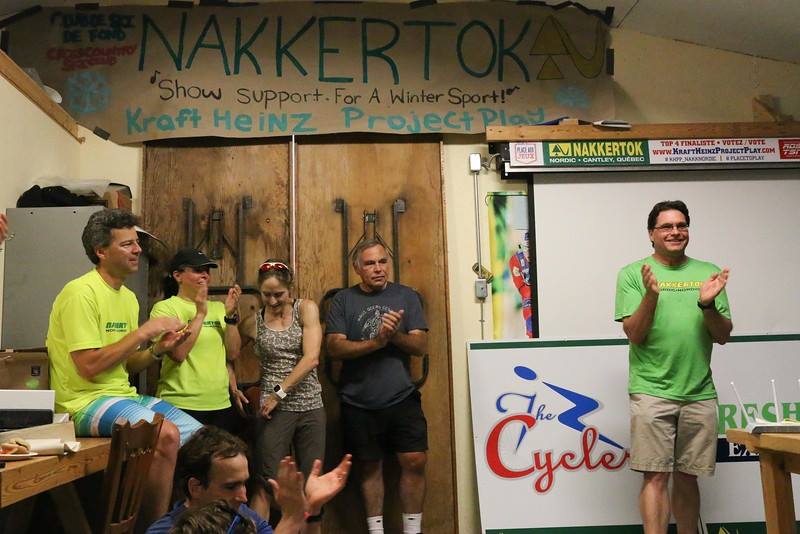
    From left to right: Steve Morris, Jennifer Tomlinson, Sheila Kealey, Toni Scheler, and Robert Hornung at the announcement event for the Kraft Heinz Project Play Grand Prize Award, which Nakkertok Nordic won in August 2016.(Photo: Doug Ranahan)

    CCC’s mandate is to serve the broad spectrum of cross-country skiers to ensure that the sport remains viable in Canada. Tomlinson explained the board’s perspective in terms of its stakeholders is a wide view.

    “We see skiing as existing from learning to ski to success on the World Cup to being active for life, and our stakeholders start when we first strap some skis on somebody’s feet to hopefully continuing to 95,” she said.

    Most notable in recent years are that funding cuts have adversely impacted both high-performance biathlon and cross-country skiing in Canada.

    The most high-profile aspect of Cross Country Canada remains it’s World Cup team. Recently, Alex Harvey with his fourth place finish in the Olympic 50 k and Len Valjas, with his seventh place in the Olympic sprint, have been the individual podium hopes for the Canadian team. This past spring, Devon Kershaw and Knute Johnsgaard (half of Canada’s men’s relay team that placed third in the 2017 Ulricehamn 4 x 7.5-kilometer relay) retired. For the women, several career high points are notable but none of the main staples on the current women’s team has had World Cup podium breakthroughs.

    Tomlinson explained the CCC board noticed the need for a sustainable development pipeline for both genders.

    “As a chair or member of the board, we don’t get into the overall operations of CCC and how they do things,” Tomlinson said of her CCC role. “That being said, one of the key priorities set for the CEO is the development and communication of the high-performance pathway and putting in place a structured program that allows CCC, the divisions and the clubs to work together to contribute to the pipeline and developmental pathways needed to create that sustainable system. The hiring of Nic Lemyre as the high-performance advisor is a key part of establishing the sustainable system.

    Lemyre, a Canadian based in Oslo, Norway, is expected to help CCC solidify and support a devo pipeline.

    A sustainable pipeline implies a steady flow of both high-performing athletes and cash. In contrast to the funding situation in the U.S., CCC receives a significant portion of its funding from government sources. That government funding has been in decline when compared to past levels of funding. Tomlinson said the board expects CCC to develop a plan to better cope with inconsistent and lower levels of government funding.

    According to Tomlinson, the board approved a measure in February to help address funding concerns for developing Canadian skiers.

    “The board approved the creation of the Nordic Canada Development Fund, modelled after the NNF in the US,” Tomlinson said. “There are some differences, particularly with respect to its governance, but the fund is established and it does have some money in it. The seed money came from capital that CCC had set aside from the better years. CCC is in the process of developing an integrated fundraising campaign for building the fund. The intent of the endowment fund will be to fund camps and racing opportunities targeted at developing cross-country skiers U18 to U23 who will benefit from more integrated camps and different levels competition.”

    Another new initiative Tomlinson touched upon was the potential of a 2026 Winter Olympics in Calgary that could foster synergies between CCC and related nordic sports.  Without mentioning details, Tomlinson explained that CCC is pursuing investigating a strategy to bolster the viability of nordic sport across the board, “to see how we can make 2026 a real milestone for nordic sport in Canada.”

    Tomlinson appeared grounded in the overall CCC mission that fosters a healthy lifestyle beyond podiums.

    buy yaz online, buy ortho tri-cyclen


    “One long-term goal for the organization is community development and alignment,” she added. “… that goal is about growing cross-country skiing in the nation, not solely about getting people on the podium. Making the sport more accessible and get more people outside to celebrate winter.”

    Another benchmark she highlighted is related to accessibility. According to Tomlinson, three years ago, only two venues in Canada had viable snowmaking capacity. She said that number now stands at five venues with the hope that other clubs can further collaborate to build the nation’s snow-making infrastructure.     

    Keeping an eye on other sports and national governing bodies (NGOs), Tomlinson said she will draw on some of her past exploration of Swim Canada, U.S. Ski & Snowboard and the French Ski Federation, amongst others, as she leads CCC’s board.

    “I don’t think there is any one model that will work for us given our particular circumstances,” she said. “But there are a lot of great ideas and great programs that have already been in place that we can learn, borrow and benefit from.  The CCC team can create a unique approach that can work for Canada and Canadian skiers.”

    She also made it clear that she and the board agreed that CCC had to improve its ability to convey its message and listen to and incorporate feedback from its divisions and clubs.

    “Communication has been a weak point for CCC,” Tomlinson stated. “We as a board agreed that that needed to be one of the four priorities for the organization to ensure that it is communicating with stakeholders across the country, ensuring that people understand what CCC is doing, and how they can help.”

    Tomlinson will continue her work as a management consultant based in Ottawa while she serves her two-year term as board chair.

  • Nic Lemyre on Guiding Cross Country Canada Forward

    Nic Lemyre on Guiding Cross Country Canada Forward

    Nic Lemyre (Photo: Norges Idrettshøgskole/Norwegian Sports Academy/)

    Cross Country Canada has reset. In this nascent Olympic cycle, there’s been an organizational seismic wave as the country’s national governing body (NGB) for nordic sport, Cross Country Canada (CCC) implements change

    In a post-Olympic afterglow, it’s common for NGBs to reassess, reprioritize and refinance. As part of its reboot, CCC hired Nic Lemyre as a high performance and development advisor. (Former high performance director Tom Holland recently retired.)  

    For the past 21 years, Lemyre has resided and worked in Norway, most recently as a professor of sport psychology at the Norwegian School of Sport Sciences (NIH) in Oslo. He also currently serves as the head of the department of coaching and psychology at NIH. Lemyre is originally from Montreal, graduated from St. Lawrence University in upstate New York, and was a member of the original elite training group of athletes based out of Mont Sainte-Anne, Quebec.

    After a year training and racing post-collegiately in the mid ’90s, Lemyre was perplexed by this common and recurring question among nordic skiers: why are the Norwegians so fast? So he traveled to Norway to investigate. 

    “I was really curious about how come Norway was dominating so much in cross-country skiing,” Lemyre, 45, said on the phone last week from Canmore, Alberta. “They had so many guys that were going so fast. I thought I could take a trip there and see with my own eyes. So it was not an academic reason, it was really a curiosity related to what they were doing that could explain why they were so good at skiing.”

    Lemyre’s original six-month trip ballooned in duration as he earned both a masters and doctorate in sport psychology from the Norwegian School of Sport Sciences. Along the way, he had opportunities to answer his initial question about Norway’s recurrent cross-country success. He, too, eventually played a part in those achievements as a sport-psychology consultant for the Norwegian women’s biathlon team and men’s cross-country team.

    “I started working for the men’s team when Trond Nystad took over,” Lemyre explained. “I had known Trond when racing against him at NCAA’s. He was racing for Vermont and I was racing for St. Lawrence, so we would compete every weekend throughout the whole winter. And him being a foreigner and me being a foreigner, we would hang out, Trond and I and some other foreign guys. It was just really fun to meet Trond again 20 years later during a very different stage of our lives and we all got along really well, not just socially but also professionally.”

    A former U.S. Ski Team head coach, Nystad began guiding Norway’s cross-country team starting in 2011.

    “When Trond took over, Petter Northug was pretty much the only guy winning races on the men’s side and he had been doing that for many years,” Lemyre said. “Trond structured the team in a way and a year later all the guys that were on the national team had podium finishes. And everybody contributed in a significant way to the excellence of the team. So that was a very interesting period to work with them.”

    Lemyre’s tasks with CCC are centered on championship and Olympic medals for both able-bodied and para-nordic skiing. As his job title denotes, he’ll advise Canada on how to develop athletes into high-performance skiers on that medal path. With his knowledge base of both Norway’s and Canada’s nordic-skiing communities, Lemyre is positioned to adopt Norwegian methodologies when it suits Canada, yet build a program that capitalizes on what is unique to Canada.

    To illustrate how the systems differ, Lemyre described the vast number of young skiers vying for limited race bibs within the Oslo “neighborhood” ski clubs. He spoke of a five-week-long, Oslo-based race series for eight to 11 year olds.

    “There are 1400 places and all the places are registered within 24 hours on the internet,” Lemyre said of the depth of skiers within a single slice of Norway. “We have to block it at 1400 because we would not have time to race all the kids between the time they need to get there after school and before they have to go to bed. That number is the most amount of kids we can have on two-kilometer track between, I think, it starts at 5:15 p.m. and goes until 8:15 p.m. So the kids are starting two by two every 15 second for three hours. These are only the neighborhood races.”

    Lemyre also consulted for the Norwegian men’s national hockey team. His experience working with that team reinforced the importance of capitalizing on Norway’s strength: a less-physical style of play. In 2011, Norway, a relatively small country when it comes to hockey, placed sixth overall at the men’s World Championships.     

    “For a small nation like Norway to do that well at the World Championships it was a great performance from the team,” Lemyre recalled. “And one thing I noticed from how they were preparing and performing at the World Championships was they tried to do it their way. They did not try to meet the Canadians or the Swedes or the Americans and try to play their game and play better than them because that would not have worked. I think at the Olympics in Vancouver, our team had almost a 20-kilo deficit in terms of weight with the Canadian players. Had they been playing as physically as the Canadians, it would have been very hard for them to hold out a 60-minute game.”

    His time with Norway’s hockey program will serve as a corollary for fortifying cross-country skiing in Canada. Lemyre said his commitment to developing solutions to cross-country ski development will involve building on Canada’s intrinsic strengths. He’ll simultaneously import piecemeal from Norway’s development paradigm which emphasizes a data-driven approach.

    “I think it is important to find a Canadian solution and then try to be fast on skis sort of the Canadian way,” Lemyre said. “If we try to do it the Norwegian way, they will always have numbers on their side and they will always have the advantage that the whole country breathes and eats and sleeps cross-country skiing. It is important for us to import what is importable from Norway, but also find a solution that is truly Canadian.”

    “It is important for us to import what is importable from Norway, but also find a solution that is truly Canadian.” — Nic Lemyre, CCC high performance and development advisor

    Lemyre’s approach appears to be binary. There are the athletes and the infrastructure to support those athletes. Although stating he had not yet discussed this with his colleagues at CCC, Lemyre said one hypothesis to test is trying to recruit cross-country athletes from different sports. This “crossover” hypothesis might help identify potential elite skiers in a system lacking the raw skier numbers of a Norway.  

    According to Lemyre, his center’s research at NIH discovered that adolescent athletes do not need endurance training to make them faster skiers later in their careers.

    “What we see is that there is very little physiological adaptation to endurance training before kids turn 13,” he said. “To have a focus on skill development and play until they reach that age is really important. Endurance is something that you can gain really quickly later in life. We could also emphasize the fact that you can be a cross-country skier in the winter to keep yourself active and develop skills and in the summer you can play soccer or do mountain biking or something else, so that we welcome you in the cross-country skiing family even though you have other sport interests. … We want cross-country skiing to be the most inclusive sport in Canada.”

    Lemyre again referenced hockey to differentiate how CCC can build its roster of high-performing skiers. In Canada, he said that only ice hockey can claim a near monopoly of untapped youth talent like cross-country skiing in Norway. He described a system in Canada where the default season for aspiring hockey players is 12 months long. According to Lemyre, a stigma exists for families pulling their children out of full-time hockey training to play another sport on the side.   

    “There is a strong feeling with the parents if they pull out their kids from ice hockey in the summer so they play soccer then the kid will suffer when they try to come back into the structure in the fall,” he said. “Because often the coaches will interpret that as the kid being less motivated or the kid investing less in their development, so they will often make the kid, call it, ‘pay’ for them not playing hockey in the summer. I think if we can be wise in cross-country skiing and actually use the research to our advantage and encourage our kids to be multi-sport athletes down the road, we will likely have even better athletes. And one thing’s for sure, we will not have used up their motivation because they will have had the opportunity to do a lot of things while they were developing.”

    The other piece of Lemyre’s development model will focus on the importance of training infrastructure. He’ll highlight the locations and facilities where athletes can form high-level training groups and learn from one another within Canada. 

    “I find the Americans have been doing that really well with the last generation of skiers you have at a high level,” Lemyre said. “[The Americans] focused on what you could develop within the country with the strengths they already had. You have athletes use the infrastructure already in place. The athletes are good at training in American places during the offseason and organizing training tasks where athletes can train with the best in the U.S. and learn from them and share knowledge. So we are inspired by that.”

    Lemyre acknowledged that he is advising CCC during a period of change and perceived instability. When he took over the Department of Coaching and Philosophy and Psychology at NIH, he explained it was also a time of change and disruption. When he began leading the department, he was tasked with modifying the direction of research and restructuring the organization. Having led that research group for the last eight years, which includes over 30 staff members and a multi-million dollar budget, Lemyre notes he is acclimated to the challenges of organizational development.     

    “I understand that all the bricks aren’t in place yet [at CCC] and there are people that have left the organization that were very knowledgeable and had a lot of experience,” Lemyre said. “Some of them live here in Canmore and I happen to know some of them, so there is the human side of the situation where it’s never fun to know that somebody you know and appreciate a lot has had to make that change to their professional life. But as an organization, I think sometimes you need to regroup and downsize to know what you really have and what you need. … This is a temporary situation. It’s always hard to do those changes. But I would say in terms of our sport, it makes sense to make these big changes and restructuring when you are starting an Olympic cycle.”

    Along with his new role with CCC, FasterSkier asked Lemyre whether he’d be taking on a similar role with Biathlon Canada. As of press time, Biathlon Canada neither confirmed nor directly commented on an official partnership with Lemyre.

    “Biathlon Canada is in the final process of restructuring different staffing positions and official statements will be released soon,” Biathlon Canada’s National Team Head Coach Matthias Ahrens wrote in an email.

    According to Lemyre, collaboration between the two NGBs was likely.

    “There’s a strong interest in Canada in having more overlap at the high level between cross-country skiing and biathlon and both sports have a lot of commonalities and it makes sense to share knowledge, to share experience and to share competence,” Lemyre said when asked about a Biathlon Canada partnership. “I haven’t been part of CCC for a very long time. I still need time to get a good overview of what we have and how we can best collaborate, but there is definitely a strong interest from both sides to have more collaboration in the future and to share more resources. We don’t really know what it’s going to look like in the end, but there’s definitely strong interest on both sides to make this collaboration a success.”

    Lemyre is currently in Canada but will return to Oslo with his wife and three children in August to continue his head of department duties at NIH.

    “I will be doing my advisory job remotely from the month of August,” he said. “For sure it is a compromise, but that is what we could organize.”

    Despite being based in Norway, Lemyre said he will be working closely with CCC’s CEO Shane Pearsall and collaborating with Canada’s provincial training centers.

    “We also wish to have me do some operational things with the national teams,” Lemyre said. “Our thoughts are that during the competition season, I will have opportunities to meet up with the national-team athletes and staff on site in Europe and during championships as well. … I’ve officially been in this position for less than a week so I think maybe if we talk again in a few weeks or a month or two then definitely I’ll have a lot more insight in terms of what kind of resources we have and where we’re going and how we’re going to build it.”

  • CCC Lays Off Four Staff Members, Including Babikov

    CCC Lays Off Four Staff Members, Including Babikov

    Coach Ivan Babikov (l) at a 2016 fall training camp with Canadian World Cup Team members Alex Harvey, Devon Kershaw and Graeme Killick in Livigno, Italy. (Photo: Ivan Babikov/Instagram)

    Cross Country Canada (CCC) has appointed a new high-performance and development advisor, Nic Lemyre, and laid off four staff members, CCC Chief Executive Officer Shane Pearsall confirmed in a phone interview on Thursday.

    The news of Lemyre’s hiring came in the form of a press release Thursday morning, two days after four CCC employees — Ivan Babikov, Mike Edwards, Lisa Patterson, and Martine Zilligen — were informed of their release.

    Babikov has spent the last two seasons as a national team and World Cup coach, Edwards was the high-performance director for CCC’s Para-Nordic Ski Team, Patterson was a longtime high-performance development coach, and Zilligen has been communications and marketing manager since 2013.

    According to Pearsall, the layoffs were a direct result of CCC’s annual operating budget (which covers both able-bodied and para nordic skiing) decreasing from about $4.5 million dollars last year to what he anticipated to be $3.9 or $4 million dollars this year. The budget is not finalized, as CCC is waiting on the amount it will receive from Own the Podium (OTP), a government-backed nonprofit, which Pearsall estimated to be about 20 percent of CCC’s operating budget. That final amount is expected by mid-July, he said.

    Fifty percent of CCC’s budget comes directly from the government branch of Sport Canada, and that amount has been determined, Pearsall said. He explained that money is tighter on the whole for CCC as a result of decreased government funding and sponsorship revenue.

    One of CCC’s main sponsors, Mackenzie Investments, will no longer support nordic or four other snow sports as it had previously. Instead, the investment firm opted to stick with freestyle and alpine.

    “From the standpoint of a sponsor, they were one of our bigger ones,” said Pearsall, CCC’s CEO since November 2016.

    On the upside, he explained that another sponsor and investment firm, Haywood Securities, has agreed to sponsor the NorAm circuit as it has in the past.

    Asked if budget cuts were among the biggest challenges affecting CCC at the moment and the reasoning behind the latest layoffs, Pearsall said, “Yes. If things had stayed the same that would’ve been good, but obviously that’s not the case.”

    He added that CCC is faced with the ongoing challenge of competing with other sports for the support of “corporate Canada”.

    “At the same time, we continue to talk to people and try to get them on our side to become part of our programs,” Pearsall said. “There’s a part of it where it always will be the challenge. You’re always looking for money for places to spend the money, and we just continue on trying to get more money.”

    Asked specifically why CCC chose to release those four employees, Pearsall said, “Just trying to create a better future, efficiencies that we think we can find. It’s appropriate that at the end of the quad [Olympic quadrennial], you look at things and how to set the stage for the next quad. And even for us, we were looking at 2026. So we’ve decided this the way we’re going to go.”

    CCC now has a staff size of 12. Louis Bouchard retained his job and is listed on CCC’s website as its lone national ski team/World Cup coach. Bouchard is also Alex Harvey’s personal coach and head coach of the Pierre-Harvey National Training Centre (Centre National d’Entraînement Pierre-Harvey) in Quebec.

    Pearsall said he broke the news to Babikov, Edwards, Patterson, and Zilligen individually during one-on-one meetings on Tuesday.

    “It’s one of those things, when you do a change, you tend to want to something like this all at one time, and that’s the strategy we executed,” he said.

    CCC will be looking to replace Babikov’s position as co-World Cup coach through an “open job search,” Pearsall stated. As for Patterson’s role as a NextGen coach and development trip leader (for international competitions including U23 and Junior World Championships), Pearsall was unsure if CCC would fill that vacancy.

    “When something like this happens — I’ve been involved in the corporate sector — you do a bit of a reshuffle on responsibilities, so we’re working on those on how we’ll go about that,” he said. “At this point in time, I can’t say we’ll necessarily hire somebody in that specific area, but we’re looking at how we cover responsibilities.”

    As for the timing of these layoffs in early June, two months after the end of the season, Pearsall said that was a tough one.

    buy ventolin inhaler, buy nasonex online

    “Can you ever find perfect timing? There’s questions about that, but this is the way we decided to go, and we’re going to make the timing work,” he said. “… This is the way things lined up. This is the way we’ve gone about it.”

    According to Babikov, the layoff, which was effective immediately, caught him off guard.

    “I had no idea it was coming, and it didn’t cross my mind that something like this would happen because we had already started the new summer,” Babikov said on the phone on Thursday. “I just came back from training and our CEO just called me for a meeting, and I thought it was regarding our new HPD, if we hired somebody, but then he just handed me papers and I was told to leave my credit card and keys, and we go separate ways. And that’s all that was said.”

    Babikov, who’s been part of the Canadian national team for the last 10 years, first as a two-time Olympic athlete and then as a coach starting in June 2016, said there was no notice. “It was without a cause,” he said.

    Asked why Babikov was fired, Pearsall said he couldn’t comment.

    ‘The Rebuild’ 

    Lemyre as the high-performance and development advisor will fill the roles previously held by Edwards and Thomas Holland, the former high-performance director of able-bodied cross-country who retired at the end of last season. A Montreal native who is primarily based in Norway as a professor of sports psychology at the University of Oslo, Lemyre will work part time for CCC.

    He’ll be the head of one of CCC’s two new departments, Pearsall explained, overseeing the sport side of the organization while Pearsall and Megan Begley, CCC’s operations & strategic development manager, oversee operations. Lemyre will make decisions in his department, but Pearsall will have “final approval on all personnel decisions”, according to CCC media relations consultant Chris Dornan.

    Dornan clarified that Lemyre is “advising on the rebuild” and that CCC will communicate the structure of its high-performance department in the near future.

    “His role is going to be advising us, going forward, on how we should look at things, and develop things,” Pearsall said of Lemyre. “He’s going to be an integral part of the decisions we make, in different areas, in the high-performance area. He will be overseeing, in the re-org, I’ve basically created two departments. One is operations, and one is sport. He will be in the mix on the sport side. Under the old structure, there was a para-nordic [director] and there was an able-bodied [director], and I’ve brought those two together to gain efficiencies and exchange more knowledge, if you will, between the two sections of para and able.”

  • CCC Taps New HP Advisor: Former Norwegian Sports Psych Nic Lemyre

    CCC Taps New HP Advisor: Former Norwegian Sports Psych Nic Lemyre

    (Press release)

    CANMORE, Alta.—Cross Country Ski de fond Canada has tapped Nic Lemyre to guide the organization’s high-performance program into a new era.

    Nic Lemyre (Photo: Norges Idrettshøgskole/Norwegian Sports Academy/)

    Originally from Montreal, Lemyre takes on the role of high performance and development advisor with clear goals in mind – to break barriers and establish Canada as a strong Nordic nation with multiple male and female athletes performing at the highest level, while providing our nation’s best cross-country skiers with the means to be back on the Olympic podium in 2026 and ensure the Para-Nordic program remains a dominant force for future generations.

    “We are standing on the shoulders of a group of athletes and staff who have accomplished great things for our sport in Canada over the last two decades. Together, we have to understand and identify what has led to these exceptional performances and provide the same opportunities for the next generation to succeed,” said Lemyre.

    A former skier in the 1990s, Lemyre moved to Norway 21 years ago where he has applied his academic and administrative skillsets as a sports psychologist to a variety of roles in the Norwegian sport system. He has worked within the support team for the world-leading Norwegian cross-country ski squad as a sport psychologist since 2011.  Lemyre will split his time advising Cross Country Ski de fond Canada’s high-performance program, while continuing his role as a professor of sports psychology at the University in Oslo over the next year.

    “Cross-country skiing is a passion of mine. Things have come full circle for me since I left for Norway in 1996, and I’m very humbled to have this opportunity now to contribute to the growth of the Canadian program,” said Lemyre, who takes over from Tom Holland, who retired from the position of high-performance director following the PyeongChang Games. “I am ecstatic to be able to bring my knowledge and skills back to my sport roots at home in Canada.”

    Holding a Ph.D in sport and exercise psychology from The Norwegian School of Sport Sciences, Lemyre has been the head of the school’s department of coaching and psychology since 2008. He has been the sports psychology consultant for the Norwegian Men’s Cross-Country Ski Team and the Norwegian Cycling Team from 2012-17. He has also accompanied Norway’s Olympic Team as a sport psychologist at the 2010 and 2014 Games, and worked with the Norwegian Women’s Biathlon Team between 2009-2015. Lemyre has also provided support to Norway’s alpine skiing, swimming and ice hockey programs.

    “Nic is a highly-motivated professional who knows what it takes to win,” said Shane Pearsall, chief executive officer, Cross Country Ski de fond Canada. “He has been through the peaks and valleys of a respected program, while working closely with a number of accomplished high-performance directors who have achieved excellence on the biggest stage. As a result, he understands the patience and time investment required to build a medal-winning program. I am confident he can transfer this knowledge to help build a strong support team to ensure Canadian athletes and coaches achieve their performance goals.”

    Canada’s cross-country ski program has made steady progress over the last two decades developing generations of Olympic, World Championship and World Cup medal-winners. While Lemyre takes over the leadership of a Para-Nordic National Team who achieved an unprecedented 16 medals at the 2018 Paralympic Winter Games, the World Cup Team has delivered impressive results on the Olympic stage but has not won a medal since the 2006 Games.

    “The sport in Canada has established itself on a tradition of excellence with Pierre Harvey, Beckie Scott, Sara Renner, Brian McKeever, Chandra Crawford, Devon Kershaw, Alex Harvey, Len Valjas, and Mark Arendz leading the charge, but it is clear our National Ski Team is now at a crossroads,” said Lemyre. “It is important for us to reflect and act on what has, and has not, worked. We can learn a lot from the success of our past, and from the strength of the para-Nordic program.

    “There is a lot of talent out there – good kids skiing right now. Our job is to create a Canadian-made system with our partners that will deliver a pool of resources for our athletes and coaches to develop to their full potential – from the junior to elite level – and help them achieve our collective performance goals.”

    Lemyre will be based in Canmore, Alberta, throughout the summer months before returning to Norway. His first order of business will be to do a complete evaluation of the program and initiate the implementation of a plan with a focus on investing in the next generation of athletes and coaches.

    “There is no doubt we have some challenges, as well as some great opportunities, ahead of us. We can’t promise things that aren’t reasonable, and this will take time, but I’m committed to working with the talented staff at CCC and our partners to get the right people in place within a structure that will provide both the able-bodied and para- women’s and men’s athletes the structure and resources they require to fully develop and excel internationally long-term,” added Lemyre, who added that sport science and innovation will be an important tool for Canadian coaches in his planning.

    advair diskus online, buy zyrtec, buy ventolin inhaler

    “The goal is to create a strong base for the next generation of athletes, while developing a culture from the ground up that prides itself on sharing knowledge, information and skillsets to succeed in building a tight-knit program across the country that pushes each other to be better every day. To me that is what it takes to win.”

    Lemyre will begin to roll out the new high-performance structure in the coming weeks.
    CCC is the governing body of cross-country skiing in Canada, which is the nation’s optimal winter sport and recreational activity with more than one million Canadians participating annually. Its 60,000 members include athletes, coaches, officials and skiers of all ages and abilities, including those on Canada’s National Ski Teams and Para-Nordic Ski Teams. With the support of its valued corporate partners – Haywood Securities Inc., AltaGas, Mackenzie Investments, Swix and Lanctôt Sports– along with the Government of Canada, Canadian Olympic Committee, Canadian Paralympic Committee, Own the Podium and B2Ten, CCC develops Olympic, Paralympic and world champions. For more information on CCC, please visit us at www.cccski.com.