From the FasterSkier archive — posts syndicated from athletes’ and coaches’ own blogs between 2004 and 2012, kept online as published. Current coverage is at fasterskier.com.

Tag: Nick Michaud

  • Rising Together: The Crosscut Elite Team Fosters the Success of US Para Nordic

    Rising Together: The Crosscut Elite Team Fosters the Success of US Para Nordic

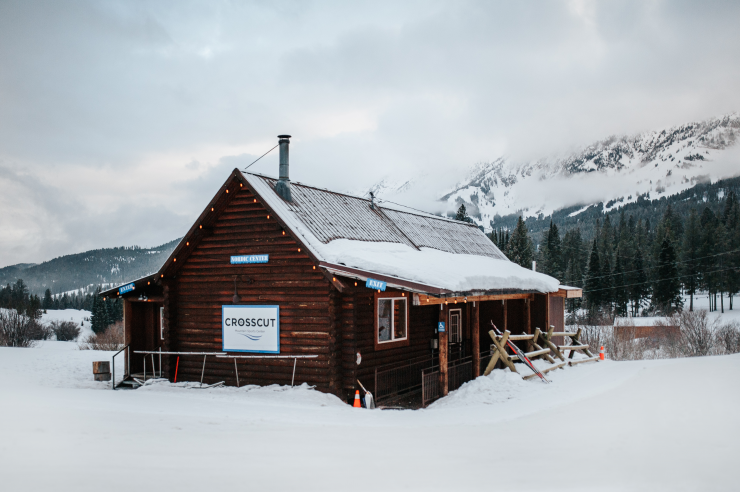
    The Crosscut Mountain Sports Center has become the home base for the US Para Nordic Program, while the Crosscut Elite Team supports para nordic development athletes. (Photo: Crosscut Mountain Sports Center / Townsend Collective)

    On April 9th, the Crosscut Mountain Sports Center in Bozeman, MT released information and qualification criteria for their newly founded elite team. As you skim what it takes to earn a spot at each tier of the program, it may catch your attention that the cross country, biathlon, and para nordic are housed within the same program. This single team approach reflects the growth and development at Crosscut in connection with its partnership with the US Para Nordic (USPN) program, which has proven beneficial to both parties.

    The program at Crosscut is still in its nascent stages, however, in the unofficial first season last year, Crosscut Elite Team members racked up a slew of accomplishments including earning spots at the Youth Olympic Games, IBU World Junior Championships, IBU Cups, IBU Open European Championships, FIS North American World Cup Sprint Tour (these spots were eventually missed due to cancellations), and World Para Nordic Skiing World Cups. 

    Simply put: the goal of the Crosscut Elite Team is supporting athletes of all abilities as they advance toward the highest levels of ski racing and biathlon, beit a Paralympic team, the US Biathlon Team, or the US Ski Team. 

    To learn more about the evolution and goals of the elite program at Crosscut, FasterSkier spoke with Nick Michaud, who keeps his hands full as the USPN Development Coach while also coaching the elite program across abilities. 
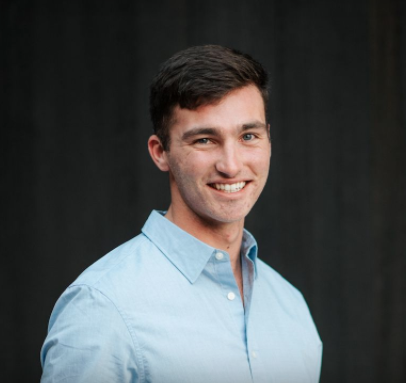
    Nick Michaud is a coach for the Crosscut Elite Team, while also working as the US Para Nordic development coach. (Photo: CrosscutMT.org)

    Before becoming a coach, Michaud was a member of the Bridger Ski Foundation (BSF) Elite Team through the 2018 Olympic Season where he came up one spot short of making the team for PyeongChang. A native of Fort Kent, ME, he grew up skiing and competing in biathlon with the Maine Winter Sports Center, coached by John Farra and Eileen Carey, who went on to become leaders of the US Para Nordic Team. Farra has since transitioned to the role of head performance general manager of USA Paratriathlon, with Carey advancing into his spot as head coach. 

    Michaud explained that as his own ski career was waning, he sought advice from Carey about possible next steps, expressing an interest in coaching.

    “The motivation has been that the people in my life who impacted me the most were coaches, and I’ve always known that I wanted to teach or coach — to work with people in some capacity.”

    In March of 2019, Carey presented Michaud with the opportunity to travel with the USPN team on a World Cup trip in Sapporo, Japan as an assistant coach. Michaud leapt at the opportunity, describing it as “so much fun”, and was offered a position with USPN later that year. Although he lacked specific experience working with adaptive athletes, he explained that the mission of USPN excited him more so than other possible coaching roles. 

    “I’m even more drawn to the movement of the Paralympic foundation right now to increase access for this sport,” said Michaud. “Nordic skiing is a pretty homogenous group of people, so it’s exciting to be part of an organization that is finding ways to break out of that a little bit.”

    According to Carey, Michaud’s personality and growth mindset ready him for the challenge of coaching the adaptive team.  

    “Nick has a natural curiosity that makes him a great fit for the role,” wrote Carey in an email to FasterSkier. “For para athletes, it is not possible to approach coaching with a ‘one size fits all’ solution.  I believe this is also true of all coaching, but it is elemental to coaching athletes who have such different mechanics from one another.  When there is no “norm”, you always have to be willing to search and invent.

    “I have known Nick since he was 13 and he has always had that curiosity, the willingness to question and try (and fail!) at things in order to progress. More than anything, that seems to make a great coach, so it was natural for me to try to get him some experience in the para coaching world when I found out he was hanging up the race skis.”
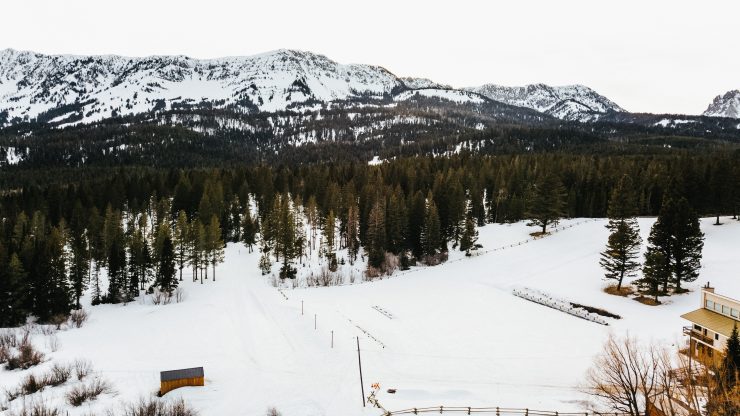
    The Crosscut Mountain Sports Center has become the home base for the US Para Nordic team while fostering para nordic development. (Photo: Crosscut Mountain Sports Center/Townsend Collective)

    Over the last few seasons, Bozeman has become a home base for the USPN team, who are spread throughout the country for much of the year. The location has proved ideal given its proximity to an airport, and quality skiing that was conducive to sit skiing. This sparked a connection with Crosscut, who Carey explained has repeatedly “gone the extra mile” to support the growth and success of the para nordic program. 

    In a 2016 interview with the Spokesman-Review in Spokane, WA, Carey wrote, “The single-biggest component to [the rise of the US Para Nordic team] has been our relationship to Crosscut Mountain Sports Center. All of our competitions consist of half cross-country races and half biathlon. Before we moved to Bozeman, we didn’t have a place to shoot consistently. When we arrived in Bozeman and identified that as a need, Crosscut Mountain Sports Center and Bridger Biathlon Club provided the piece we were missing. They built us a range and have supported us in so many ways to make sure our athletes have what they need for success. It has been an incredible experience for our athletes and team and one that will continue to be a huge component to our future success.”

    The impact of Crosscut’s support of the USPN program has extended beyond the immediate circle of national team athletes and coaches, promoting access to adaptive athletes of all levels. 

    “It’s been really cool to see the partnership leech out to other parts of the community,” said Michaud. “For example, Eagle Mount is an adaptive ski program in Bozeman and Crosscut is partnered with them. When we build sit ski trails or sit ski teaching manuals for the Paralympic team, it’s not just for coaches trying to prepare skiers to be the best sit skiers in the world, but it also gets shared with a program like Eagle Mount, or equipment gets passed on to them. So Crosscut is increasing access to skiing, not just for the best sit skiers in the world, but for all adaptive skiers in Bozeman.”

    Michaud explained that the USPN team also passes on used equipment to Eagle Mount and other programs. As sit ski and adaptive equipment is highly specialized and expensive, this creates access that clubs may not otherwise be able to afford. 

    “We’re always getting new sit skis and trying out new models, and all of a sudden, we have a fleet of sit skis that are getting retired and pushed out to other parts of the community, not just in Bozeman but throughout the country.”

    He continued that as the USPN program rises and technology advances, they are passing on better and better equipment. They have also worked to develop a sit ski teaching manual, which has been passed on to adaptive programs as a resource to coaches. 

    https://www.instagram.com/p/BqvL4gmF4Se/?utm_source=ig_web_copy_link

    Carey explained that the symbiotic relationship between Crosscut and USPN trickles down to supporting the development of new para athletes, as it creates access and opportunity for people of all abilities to try and grow in the sport. 

    “One of our program’s main objectives is to provide high quality Nordic experiences to para athletes. To do that we need to find ways to increase access to the sport at all levels. Crosscut is committed to providing an outdoor venue that is for all members of the community. We share a vision that sport and the outdoors are for everyone. When that is the starting place, it is easy to find ways to collaborate to build a place that is for everyone.”

    To visualize this message, one simply needs to go for a ski at Crosscut. 

    “This winter the parking lot has been full everyday,” explained Michaud. “And there’s something beautiful about seeing an elite athlete doing intervals, flying around, with kiddos from the education program playing games in the stadium, and sit skiers shooting on the range and getting laps and maneuvering. Just seeing the full spectrum of anyone who could be skiing all in one place at once.”

    In turn, by sharing trails with adaptive athletes, Crosscut users get to know them individually and learn more about what it takes to be an elite para athlete, thereby becoming more invested in their success. Michaud explained that this deeper understanding and excitement connects the community at Crosscut, and gives able bodied skiers the vocabulary to encourage para athletes in their training. 

    “It’s been really nice for the national team to be able to come to Bozeman and have a home, have a place to train, have people that they know who are excited about what they’re doing. To understand skiing enough to be complimenting them on their maneuvering or their double pole, versus just saying, ‘That’s so cool that you’re doing that.’ There’s just another level of understanding.”

    Further highlighting the mutual benefit the Crosscut community has received from their support and fostering of the USPN program, Michaud discussed the contributions of elite team member Ruslan Reiter across programs. Reiter, who was born with an underdeveloped right arm, is the only member of the national team that competes in standing events, versus sit ski. Outside of skiing, he is pursuing a degree in aviation at Montana State University in Bozeman.

    “He has really embodied this collaboration,” Michaud shared. “I’m also helping run the elite team for Crosscut. Since he’s a standing athlete, he fits into that fairly well on the day to day, then he travels with the Paralympic team in the winter. He’s super fortunate that he gets to be a part of this team of professional athletes in Bozeman and also part of the national team that’s traveling mostly in Europe… Our success is very intertwined with one another. Ruslan has gotten to be a part of that and it’s really benefited both groups in a lot of ways.”
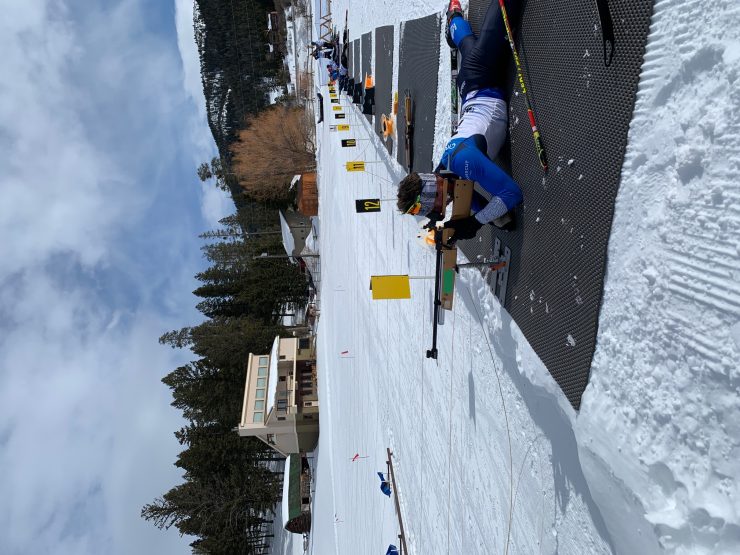
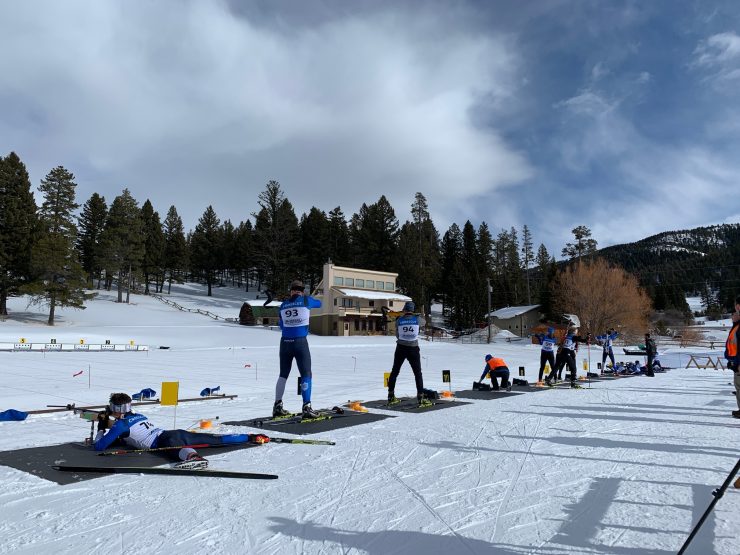
    Reiter was born in Russia but was adopted by a family in Maine, where he began his ski career in middle school. Just after finishing high school, Reiter made the 2018 Paralympic Team, landing just outside the top-10 in his best performance, 11th place in the 12.5-kilometer biathlon event. Michaud explained that Reiter’s presence elevates the motivation and dedication of his teammates. 

    “We’re in the weight room at the Mountain Project with the Crosscut Elite Team, and we’ve got a strength plan that I’ve been able to put together with a strength coach at the USOPC. These athletes who are in their mid-20’s who have been training for a long time and are really high level are seeing Ruslan doing pull ups with one hand, and there’s just no excuse to step it up, to not find a way to get better, because they’re a part of that culture. So that has been really tangible and awesome.”

    Like the elite program and partnership with USPN, the Crosscut Mountain Sport Center is in a stage of growth and development. In the summer of 2017, the organization purchased the Bohart Ranch Property, which was home to a cross country trail system since the 1980’s, with the vision of creating a robust resource for the Bozeman community that doubled as training grounds for the Bridger Biathlon Club and USPN program. 

    As Crosscut began developing a vision ranch property, the input of those they wished to serve guided the approach. Carey explained that Crosscut’s inclusive and dedicated approach has been paramount to creating a ski center that supports athletes of all abilities. 

    “They are starting the process of developing programming, events, and a venue with the lens of ‘How are we going to create these things in a way that serves everyone in our community?’. As a part of that community, we are part of all the conversations. In the end, Crosscut’s willingness to have the conversation through that lens has been critical to our program’s competitive success and I think will be central to Crosscut being able to live their mission.”

    It is the wish that Crosscut becomes an example for other cross country ski areas, dispelling myths about what it takes to create opportunities and access for para athletes. 

    “It’s everyone’s hope that this shows that there’s no reason that other clubs can’t have an adaptive component or a para component, and it shouldn’t be that hard,” said Michaud. “It just takes a little bit of intentional work to make it more accessible.”

    Carey elaborated on this point, explaining that the increased accessibility additionally benefits the larger community. 

    “They are helping to show that creating programs and venues that work for para athletes doesn’t have to be a sacrifice or an afterthought,” wrote Carey. “There are many ways to do business that enhance experience for para athletes that also make sense for the larger community.  Ultimately, just like anything, having a club that works for para athletes is as simple as deciding it is so. Are there unique challenges and considerations? Absolutely. But I think if you start to look to the clubs and coaches who have had para athletes, they would also tell you there are many benefits.

    “If you want to make it happen, you can make it happen.  And our program is set up to help with that process in the service of our goal to make Nordic skiing possible for more members of our community.”
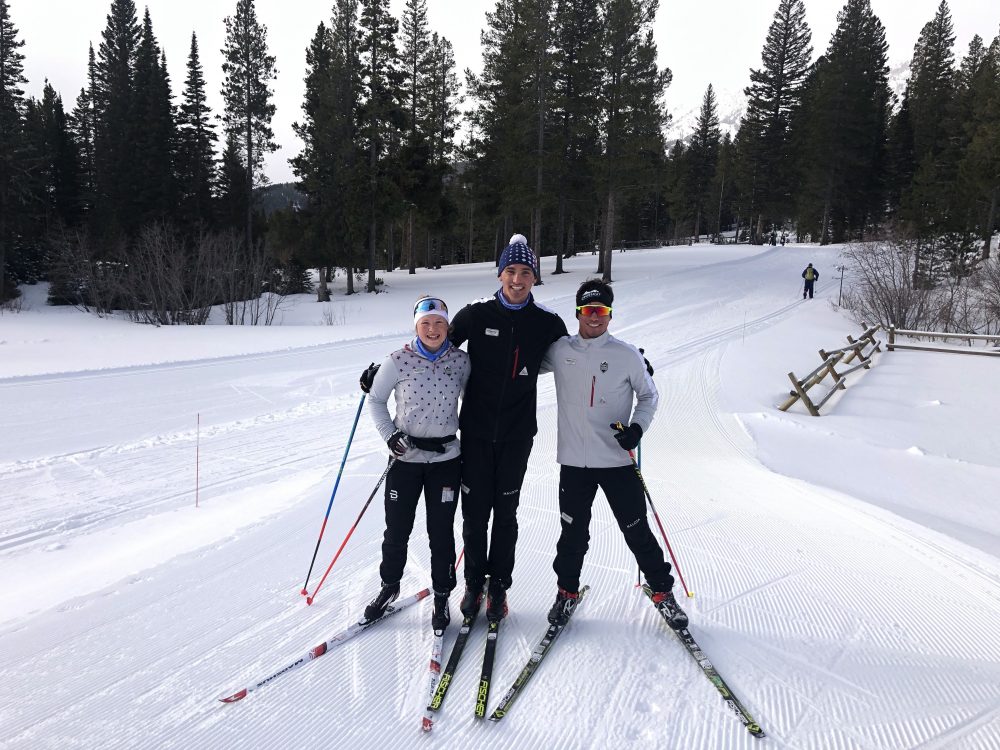
    Crosscut Elite Team members Hannah Cole (left) and Ruslan Reiter (right) train with coach Nick Michaud (center) at the Crosscut Mountain Sports Center. Reiter is also a member of the US Para Nordic C-Team. (Photo: Seth Hubbard, Crosscut Elite Team Coach)

    Moving forward, the elite program at Crosscut hopes to bring a few new adaptive athletes to Bozeman from outside the national team, supporting them as they move through the development pipeline. Michaud explained that the program aspires to rise alongside the US Para Nordic program. 

    “We’ll see the program growing at Crosscut in the same way that the development for the Paralympic team around the country has been happening. It will no longer just be a home training site when they’re in town during the winter, but we’ll start to see more development, more para athletes training with Crosscut throughout the year.”

    Speaking to the broader vision of US Para Nordic, Carey expanded on Michaud’s statement, including enforcement of the message that other clubs can follow Crusscut’s lead in integrating para athletes into their existing programming. 

    “We are working to increase the development of our sport especially in the standing and visually impaired categories,” wrote Carey. “US Ski and Snowboard and USBA clubs and coaches are also our development pathways for para athletes and there are many clubs and teams around the country who have para athletes integrated into their programming. Crosscut created para specific criteria for their elite team and named para athletes to their team. In this and many other ways, they are a tangible representation of our vision of how development can work for para athletes. They are showing that it can be done, that they have the tools to do it, and that there are benefits to it for everyone.” 


  • Opportunity Knocked: Opportunity Seized

    Opportunity Knocked: Opportunity Seized

    By: Paige Elliott

    The call to action is clear: Nordic skiing needs more women coaches. From the launch of the Women’s Ski Coaching Association to former U.S. Ski Team coach Pete Vordenberg’s editorial on FasterSkier to Dr. Nicole LaVoi’s keynote presentation at U.S. Ski & Snowboard annual National Cross Country Coaches Symposium, gender equality has been at the forefront of recent conversation in the Nordic community.

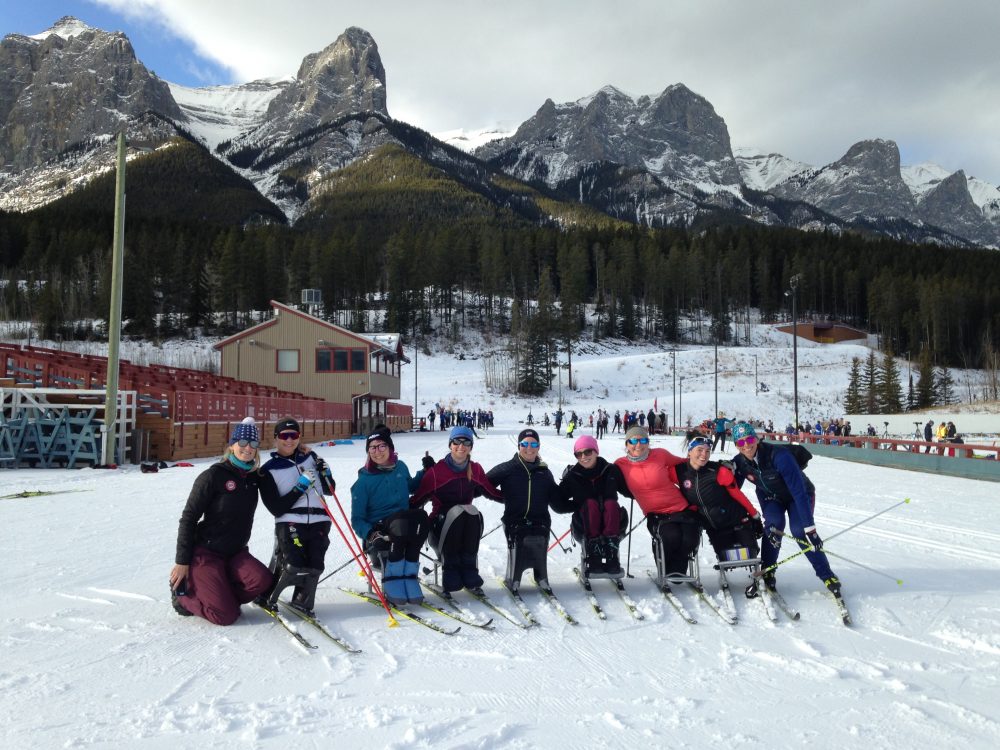
    USPN coaches Eileen Carey (far left) and BethAnn Chamberlain (far right) with members of the women’s team at a recent training camp in Canmore, Alberta.

    I believe in this mission and therefore want to highlight a program that is doing an exemplary job of developing, advancing, and retaining female coaches, yet has been largely absent from the conversation. That program is U.S. Paralympics Nordic Skiing (USPN).

    When asked why he thought female coaches are so scarce in the Nordic world, John Farra, the former director of USPN, answered, “My theory would be that women are not encouraged as often or aren’t provided as many opportunities to take leadership roles in the Nordic space.”
    This thought is consistent with research conducted by Dr. Nicole LaVoi and the Tucker Center for Research on Girls & Women in Sport at the University of Minnesota. Even without the research, plenty of women coaches can provide anecdotal evidence regarding the frustration of their experiences trying to break into a typically male-dominated field. 

    “How many women have stopped coaching because they don’t feel valued, or are not given opportunities to advance?” said Eileen Carey, current director of USPN. “If more women had better experiences coaching, we’d probably have more women coaches.” 
    This is why I was surprised when USPN invited me to test skis with the glide wax department at the Paralympic Games in PyeongChang, South Korea in 2018. I had been coaching juniors with Durango Nordic Ski Club for five years, but was new to para-Nordic skiing and international level competition. USPN gave me the opportunity to learn. 

    One of the first things I noticed upon arriving in South Korea was that for the first time in my coaching experience, I wasn’t outnumbered by men. Of the 14 coaches and support staff members, seven were men and seven were women. Furthermore, the women, who included powerhouses like Carey, Kristina Trygstad-Saari, and BethAnn Chamberlain, were far from statistical tokens. (Chamberlain was just recognized by the USOPC as the Developmental Coach of the Year.)

    “[John Farra and I] made the decision on how we wanted to build our staff based on who was really competent and who was good in a team environment,” said Carey. “We chose who was best for the job, and that happened to be half women.”

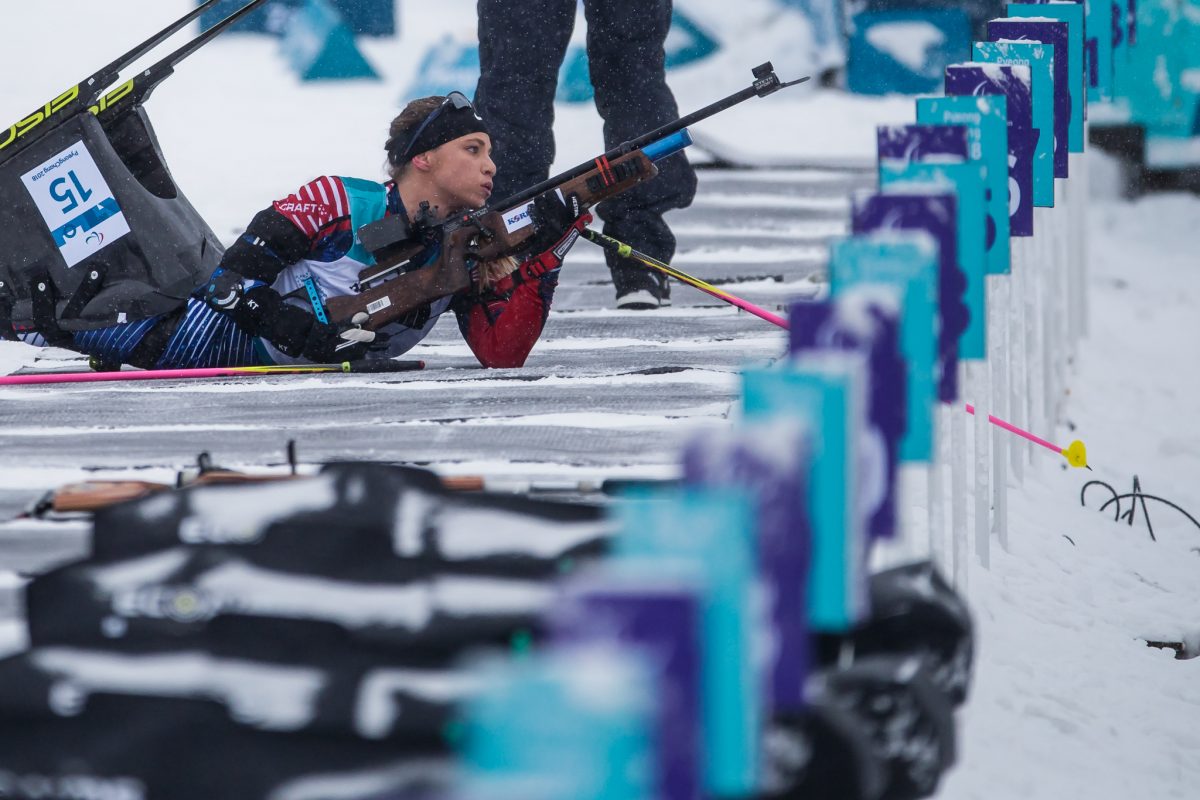
    Oskana Masters focused and in the moment on the range during the 2018 Paralympics in PyeongChang, South Korea. (Photo: U.S. Paralympics/Joe Kusumoto)

    In PyeongChang, USPN won a total of 16 medals, a tremendous increase from the three garnered during the 2014 Paralympics in Sochi, Russia. The 16 medals were comprised of six gold, seven silver, and three bronze and accounted for nearly half of the 36 medals won by Team USA at the Paralympics. Farra credits a large part of this immense success to Carey, who was head coach of the program at the time.

    “What we experienced in Korea was this perfect symphony of human beings coming together with a purpose, without egos,” said Farra. “It was an unbelievable experience to be around so many passionate, powerful people who executed their roles so well. That was orchestrated by Eileen and her style of leadership.” 

    Another key member of the half female coaching staff is Chamberlain, who serves as the emerging athlete coach. She utilizes her trademark enthusiasm and approachability to coordinate with clubs nationwide to identify, recruit, and develop emerging athletes. 

    “BethAnn is ideally suited for this line of work,” said Farra. “Her intensity, her passion, she’s just incredible for wrapping people in and getting them fired up. 

    Chamberlain, who had a 15-year career as a professional biathlete before she started coaching, also offers USPN a fount of technical knowledge regarding all things skiing and shooting.

    “She has an extensive background in biathlon, so when athletes are new, they get a pretty thorough introduction to the sport,” said Gary Colliander, USPN’s biathlon coach. “She’s also very easy to work with, so this develops a great opportunity for other coaches to learn from her as well.”

    When I asked Chamberlain, who also has experience coaching for non-adaptive programs such as Boulder Nordic Junior Racing Team and the Loppet Ski Club, what her favorite aspect of working with USPN is, she referenced the out of the box thinking required to coach adaptive skiing. 

    “The goal is the same as it is in non-adaptive skiing and biathlon, to ski fast and hit targets, but your approach to get there is a little different,” Chamberlain said. “Just because a standing skier skis with two poles, is that really the way someone with one pole should ski? We don’t know all the answers. We don’t know a lot of the answers. So that forces us to be a little more open-minded, to consider other possible ideas and solutions.”

    In fact, throughout my conversations with various individuals associated with USPN, this ability to consistently consider alternatives emerged as the number one hallmark of an effective coach.

    Farra described Carey as, “hands down the best coach that I’ve worked with” specifically because she is, “someone who asks more questions than has answers.”

    “She is always asking why? Why are we doing it this way? Why can’t we do it that way?” said Farra. “And by asking so many questions, she evolved from someone with former racing experience and some touchpoints with coaching to a large driver of the team’s success.” 

    Nick Michaud, a USPN development team coach, cited “the courage to say I don’t know” as one of the most important things he’s learned from both working with Carey and the team.

    “To see someone like Eileen, who has been doing this a long time and is at the top of her game, admit ‘I’m not sure’ when I ask a question, and then for us to go figure it out, is such a cool process,” said Michaud. 

    “Being able to do that helps puts some autonomy on the athletes, it opens the door for a lot more learning, and it makes a more collaborative process. I think the moment you start assuming things or think you know everything, that’s when the growth and development stops.”

    Obviously, inquisitiveness and humility are not qualities specific to gender. I do not think it’s a coincidence, though, that an organization that has grown and improved and succeeded by consistently asking what it can do differently exemplifies equity. 

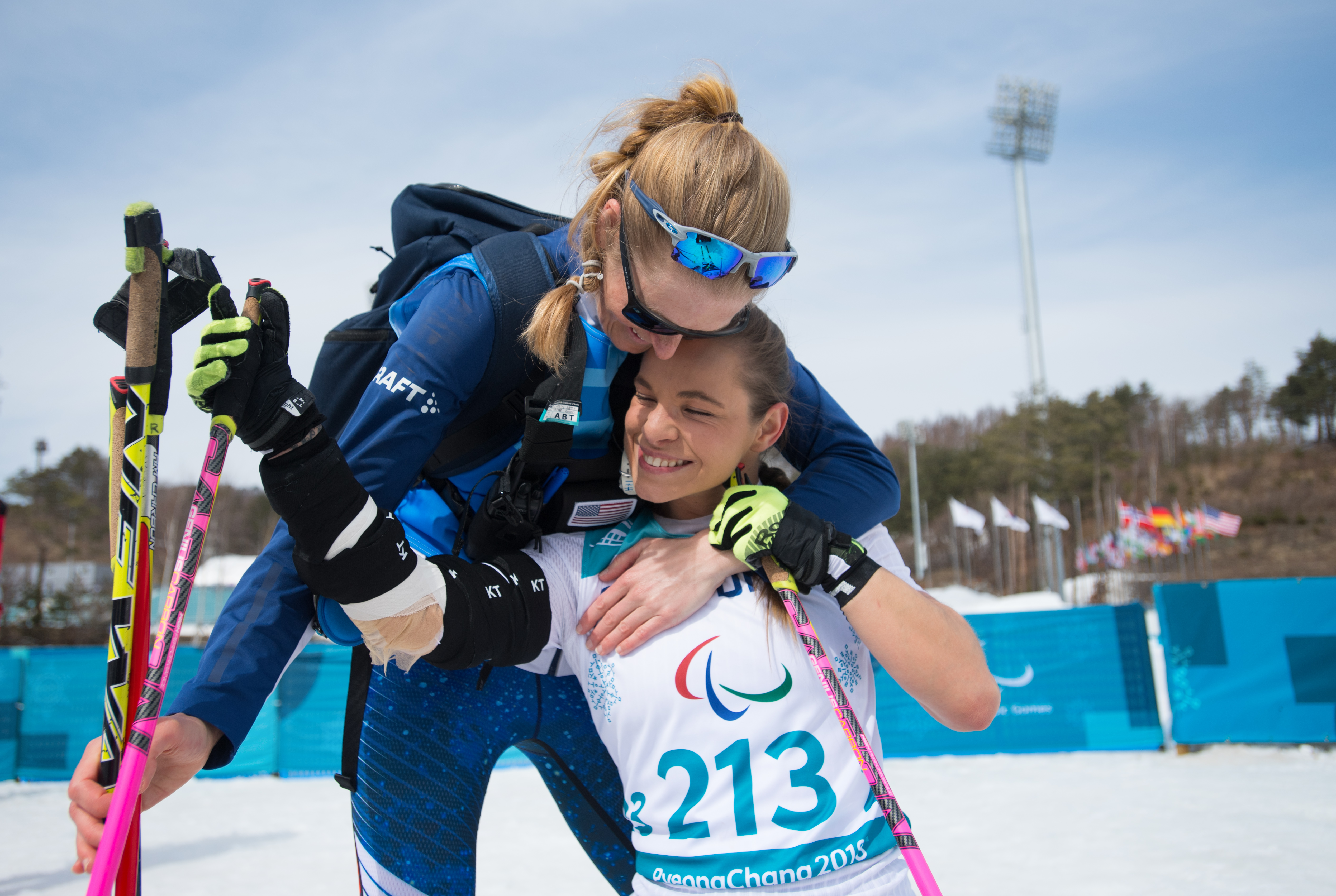
    Oksana Masters of U.S. Paralympics Nordic is hugged by head coach Eileen Carey after her gold-medal finish in the women’s sitting 5 k cross country race at the 2018 Winter Paralympic Games in PyeongChang, South Korea. (Photo: Mark Reis/U.S. Paralympics)

    At the introductory level, USPN strives to present opportunities for individuals to explore things they might not have otherwise thought possible. As athletes advance, USPN provides a framework for progression through the sport, which includes access to a range of highly-qualified professionals and resources. Assistant coach Trygstad-Saari handles initial communication with athletes, manages the logistics of the program, and in conjunction with Chamberlain, stokes enthusiasm. Michaud keeps a pulse on all groups and serves as a bridge for developing athletes who may be potential medalists. 

    At the elite level, athletes work with head coach Martin Benes and biathlon coach Colliander. They are also connected with a network of specialists within the United States Olympic and Paralympic Committee (USOPC), such as a strength coach, a sports psychologist, and a nutritionist. 

    This is all of course facilitated by Carey, whose staff and athletes can’t say enough good things about her efficiency, expertise, and color-coded spreadsheets. 

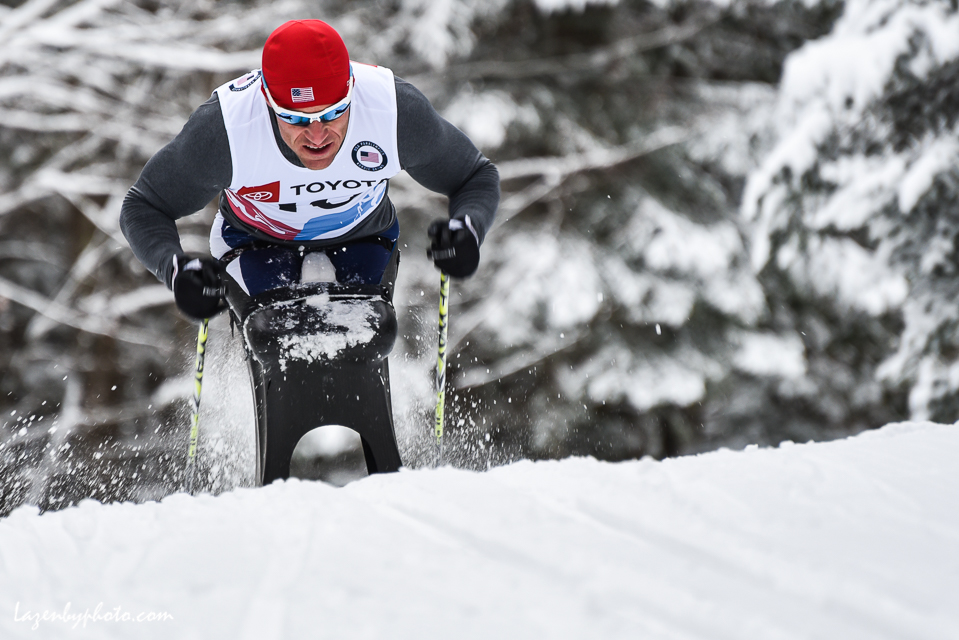
    Dan Cnossen on his way to winning the men’s middle distance national title at the Paralympic Nordic Nationals at Craftsbury, Vermont. (Photo: John Lazenby)

    “I’ve been really impressed with the caliber of coaching I’ve had in my eight years with the team,” said Dan Cnossen, an athlete on USPN’s National Team. Cnossen is a former Navy SEAL and a six-time Paralympic medalist. “They really consider and respond to athlete feedback. Tapping into the USOPC’s resources is also adding a lot of depth to the organization. The team is just getting better and better.”

    The more I learn about how USPN develops Paralympic athletes, the more I realize how similar this process is to the way Nordic skiing should be developing female coaches. USPN removes barriers and provides opportunities for a minority population. This is analogous to presenting coaching as a viable career option to women and providing opportunities to pursue it. 

    Furthermore, USPN’s versatile approach and superlative support system allows athletes to not only explore skiing, but excel at it. Similarly, female coaches need professional development opportunities and a network of peers and allies, such as the WSCA, to thrive and advance in a traditionally male-dominated field. 

    What goes into creating successful athletes, coaches, and programs is vast and complex. Female leadership and gender equality may only be one piece of the puzzle, but I do believe it plays a powerful role. U.S. Paralympics Nordic provides a promising example for both the future of women’s ski coaching and promoting overall diversity in the sport.

    As Michaud put it, “Hopefully we’re showing that we can mix up the way things are and be really good at winning medals.” 

  • The USBA X-Team: Zane Fields and Luke Brown

    The USBA X-Team: Zane Fields and Luke Brown

    For many years the U.S. Biathlon Association (USBA) has invested in talent. Athletes who demonstrate ski-speed and a knack for shooting on the firing range receive what amounts to a cushioned sport-specific transition. In this case, Luke Brown (Crosscut Mountain Sports/USBA) and Zane Fields (USBA) are the latest cross-country athletes embraced by the USBA’s X-Team. 

    Zane Fields (8) racing at the 2017 NCAA Championships. Fields is now a member of U.S. Biathlon’s X-Team.

    Brown, who is in his second year removed from Dartmouth, and Fields who is fresh off a four year stint at Colby College, both earned spots on the X-Team after a USBA development camp in June. 

    Five athletes were invited to the camp with two ultimately offered support to develop as biathletes under USBA’s guidance. 

    “We are seen as skiers who have shown promise skiing athletically but don’t have the rifle skills because we have not been exposed to them yet,” Fields said from his intermittent base in White River Junction, Vermont. “I guess it is a fast track to possibly the IBU Cup and World Cup because they know we have the fitness and we just need to train the shooting.”

    The X-Team designation, in fact, comes with ample support for Fields and Brown. The team designation affords the two skiers a safe way to make a career switch. Former USBA athlete and current USBA Development Manager Tim Burke will assist with training plans. Each skier has been offered free room and board for a year at the Olympic Training Center (OTC) in Lake Placid and opportunities for free training camps. The heavy cost of a rifle, which can amount to four to six thousand dollars, has been softened by an optional lease to own program offered by the team. 

    “I am excited because it lets me try biathlon in a super safe way,” added Fields. “If I have a bad year it is OK because I did not put myself in a $10,000 dollar hole. I would be more stressed to perform if I were paying a whole lot.”

    Fields will mix developing as a biathlete with racing select cross-country events this season. He plans on entering the U.S. Cross-Country Championships with a goal of making U23 Worlds. 

    “The way I see it, biathlon is acting for me as a pro-team would,” said Fields. “They are offering me great support, coaches, training trips. Even more so with biathlon, they are excited to have me still focus on skiing since we have limited biathlon racing opportunities in North America. I think there are two or three NorAms then US Nationals in March.”

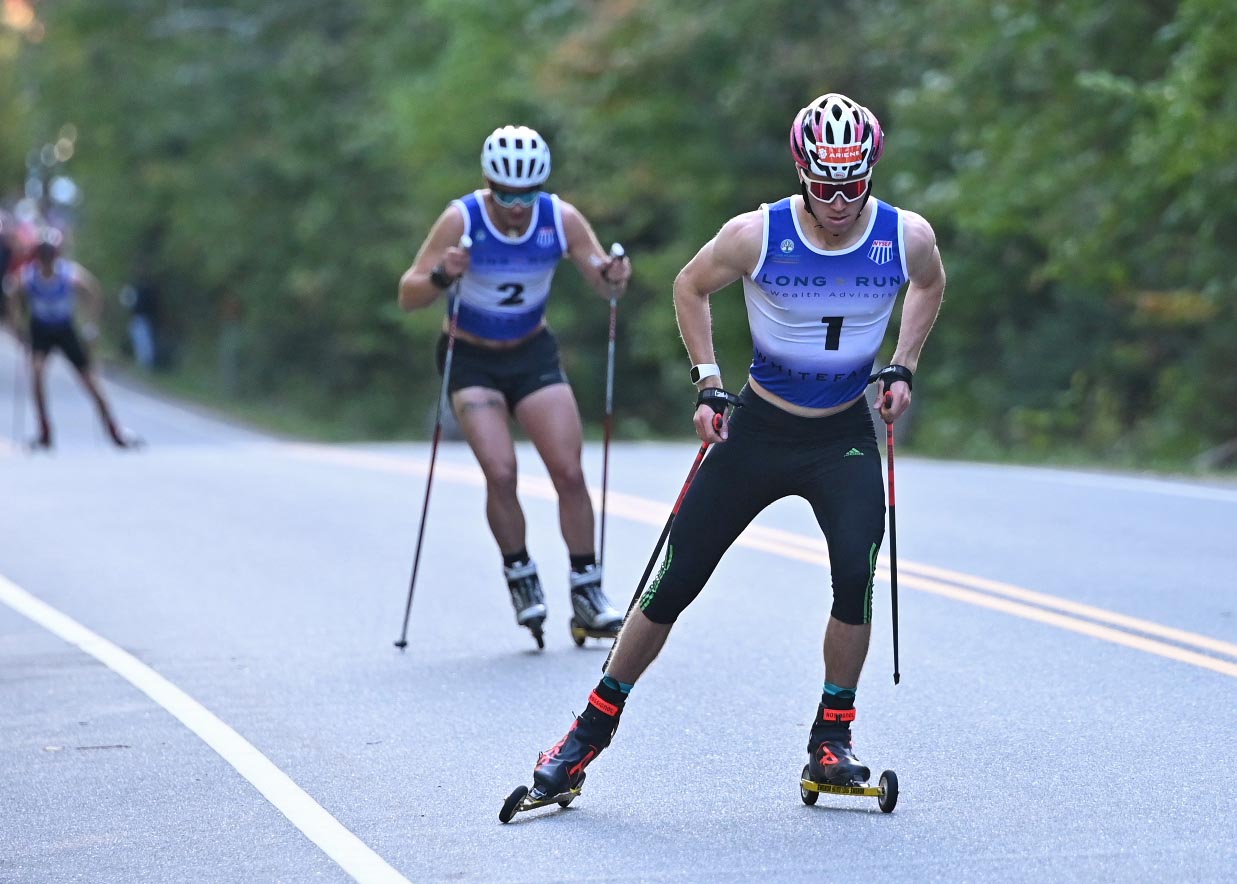
    Luke Brown (bib 1) chased by Zane Fileds (bib 2) during the 2019 Climb to the Castle rollerski race. (Photo: Kel Rose)

    For his part, Brown will be based in Bozeman, Montana with intermittent but longer stays at the OTC. He will be jointly coached by Burke and Crosscut Mountain Sport’s Seth Hubbard and Crosscut’s assistant coach Nick Michaud. (Michaud is also a development coach for US Para Nordic.)  

    “I am training fully for biathlon with that as my focus with the goal to make IBU cups,” Brown said. “And if I do, that is awesome. It is also my first year of biathlon, so I am not necessarily expecting to. So if I do not make IBU Cups, I will do a mix of domestic biathlon races and SuperTour and other cross-country skiing races. I am leaving that door open but my focus is on biathlon.”

    Brown explained he had been to a USBA talent ID camp prior to college. He had also spent a few summers learning how to shoot while a middle school skier. Brown’s older brother Jake is a member of USBA’s National A Team, and trains with the Craftsbury Green Racing Project. 

    “I have talked to Jake about it a lot and it has been super awesome to have biathlon to connect with him over and also learn from him,” said Brown. “It also gave me a greater understanding of what the transition was going to be like. I got a front row seat when he did it coming out of NMU and he lived at the OTC. It also, I think, prepared me a bit to know the amount of work that goes into transitioning into biathlon. It is not easy — it has taken him a couple of years of very hard work to get to where he is.”

    Fields echoed the notion that although the two sports are linked through skate skiing, he understands the need to reset when considering how he paces his skiing while learning to center himself on the range. 

    “I simply thought I can ski fast, I’ll just make up the time hammering while skiing, and hammer in and out of the range,” said Fields. “As I have shot more and more over the last month or two, I am learning to understand how much I should slow down before the range so I can prepare myself to shoot. I am realizing that poor shooting is exponentially more of a penalty than if you are simply slower at skiing. It is worth killing 30 more seconds before the range to go slow and then hitting all your shots versus running in and blasting them off and hoping you hit.”

    Both Brown and Fields are currently living and training in Utah and will contest the USBA Fall Festival and IBU Cup Trials which begin October 24, at Soldier Hollow.

  • Wednesday Workout: Sizzling Hot 30/30’s with BSF’s Nick Michaud

    Wednesday Workout: Sizzling Hot 30/30’s with BSF’s Nick Michaud

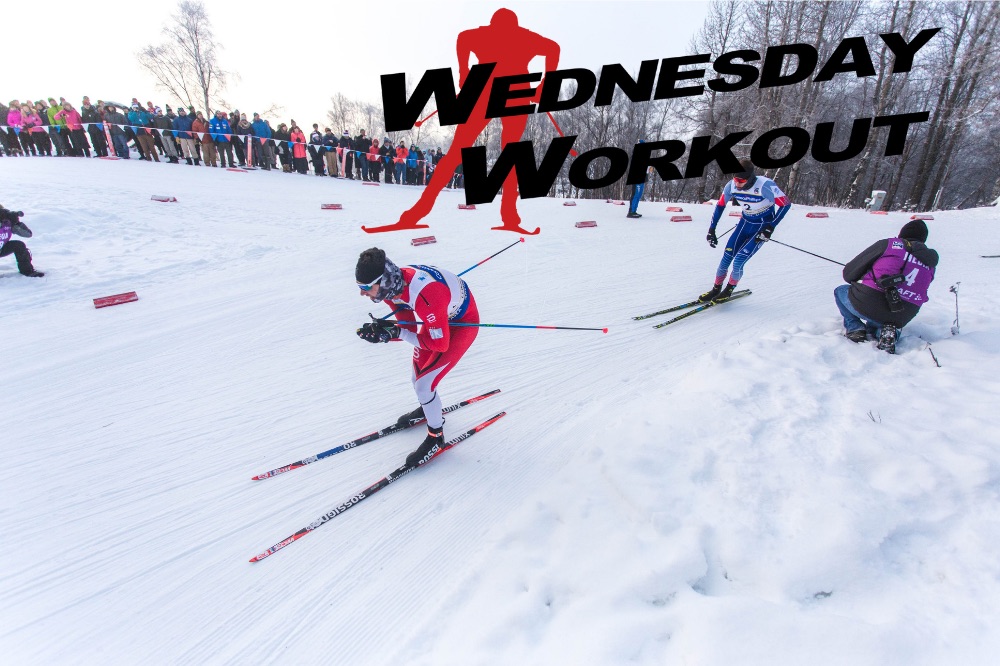
    BSF’s Nick Michaud (red suit) at last season’s Senior National Championships in Anchorage, Alaska. Michaud qualified 4th. (Photo: Gilbert Michaud)

    This Wednesday Workout was provided by twenty-six-year-old Bridger Ski Foundation (BSF) skier Nick Michaud. Bates College educated and raised plumb-line north in Fort Kent Maine, Michaud has emerged as a sprinter to watch on the SuperTour. He’s a gritty, salt-of-the-earth athlete who barely missed a nomination to the 2018 Olympic Team.

    Michaud offered FasterSkier a menu of options for the 30/30 workout — 30 seconds on 30 seconds off. From junior athletes to masters in M8 and beyond, Michaud has you covered with these training session variants.

    Let the gains begin.

    Backstory of the Sizzling Hot 30/30’s from Michaud:

    “Short, explosive movements are like bacon for me. I’m thrilled to eat bacon anytime, anywhere, with anyone. With vegetables, grains, and most foods that are really important for function, it can feel like a chore. That’s what a lot of nordic ski training feels like for me. My body, my mind, would prefer to just do speed work, lift heavy weight, and play basketball — and eat bacon. But in order to meet my performance goals, I have to eat vegetables and grains: aerobic base, lactate threshold, energy management, mindfulness and so much more. For these reasons, I love 30/30s.

    30/30 home terrain for BSF’s Nick Michaud in Bozeman, Montana. (Photo: Max Lachance)

    The execution is very simple: 30 seconds “on”, 30 seconds “off”. The effort and duration can be customized for the purpose of the workout. There should always be a purpose!. For athletes with periodized training plans, 30/30s can be used in different cycles of training to meet different goals. For a more casual athlete, 30/30s can simply be an extremely fun way to get in some higher intensity training.  

    Dragan Danevski, BSF nordic program director, began using 30/30s eight years ago. There was a study in Europe focusing on track and field and how to improve efficiency of running economy, improve aerobic capacity, and reduce the recovery time in a 30/30 workout. The original study tracked mainly 1500m and 3000m runners. Danevski adjusted the workout for skiers here at BSF.

    Danevski said BSF has used 30 by 30s for a few different goals: improving skier’s economy, stimulate good technique, and shortening recovery time for lactate clearance. Originally it was for improving threshold.  For his skiers, Danevski saw the potential to improve anaerobic capacity.

    Throughout summer Danevski follows the study and uses 30/30s to improve threshold.

    For the following age groups, the coach prescribes one 25-30 minute block of 30/30s for U16 and U18s. U20s go for a 30-35 a minute block of 30/30s. Some older skiers are ready for a 45 minute 30/30 session.

    Danevski said these 30/30 training days need to be disciplined by monitoring heart rate.

    tizanidine buy online, buy baclofen online, zanaflex online

    In the past, the 30/30 workouts were used only during intensity blocks. Recently, we’ve started using it throughout the whole training year: on skis, foot, and rollerskis.

    Psychologically, Danevski said the 30/30 is a more tolerable intensity session, especially for kids, since they can focus on high-quality efforts for 30 seconds each time. It’s easier to focus.

    As we transition into fall here at BSF, we also use 30/30s to improve anaerobic capacity. One basic example we use are three to six sets of a 15-minute long 30/30s — with appropriate rest between each set.

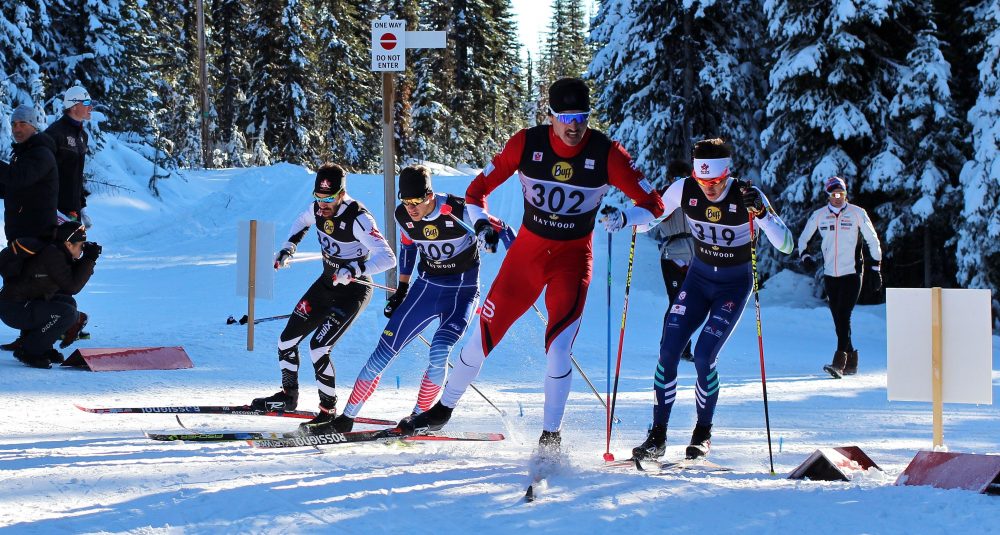
    Nick Michaud (BSF) in bib 302 putting those 30/30s to good use at the Sovereign Lake NorAm in 2017. Michaud was the second fastest qualifier. (Photo: Forrest Mahlen)


    The 30/30 Workout Menu Starting with Michaud’s Favorite Variation:

    Nick Michaud: 3 x 5 minutes, sprint pace. So we are all clear, this means a five minute long  30/30 excecuted three seperate times. During each five minute period, that’s a total of 2.5 minutes “on”, and 2.5 minutes “off”. For the entire session, the athlete is “on” for 7.5 minutes, or half the total elasped time. I rest for five minutes between each set.

    Notes: I use this two days before a sprint race, increasing my effort each set. It’s a great way to get a feel for speed, technique, and effort in all areas of the course. I take five minute breaks between sets. I leave the venue with a good understanding of the course and excited to move fast on it two days later. Using this training sessions at different points of the year is a great way to practice understanding the critical difference between effort and ski speed — which I think is crucial.

    Favorite 30/30 Variations from Others:

    Gary Colliander, US Paralympic Biathlon Coach: 4-8 x 6 minutes. Number of blocks depends on L3 or L4.

    Notes from Colliander: “Focus on quality of movement through the interval and a slightly higher turnover. With the short ‘on’ time I think you can hold the technique together better and because there is a short rest you can potentially push the pace and thus the level a bit. They’re still very tough, but that short rest just seems to offer bit of recovery while allowing the heart rate to remain high.

    Another way to look at the short 30 second rest is like it’s a downhill. Anytime you get a downhill it’s a chance to grab some O2 and recover although for a very short bit. But it always feels good when you come out of that tuck.”

    Lina Hultin, Bridger Ski Foundation Development/Competitive Team Coach: 5×6 minutes.

    Notes from Hultin: “What I like with 30/30s and 45/15s is that it allows the athletes to ski more efficiently. Since you have that shorter break, you tend to have better and more efficient technique since athletes ‘dare’ to push it a little harder when they know they will have a shorter break. Good technique requires strength and power and the shorter interval allows athletes to keep good technique for a longer time.

    The closer you get to the season you can dare to let go of that shorter break and hopefully you can maintain that good efficiency in you technique in a continuous time trial or longer intervals.”

    Akeo Maifeld Carucci: Craftsbury Green Racing Project Athlete: 2-4  x 10-15 minutes at L4+.

    Notes: “Terrain wise, I like small rolling terrain or maybe gradual uphill with some bumps. I believe in keeping it between L1 and recovery pace during the rest phase, but it is important that it keeps moving at the least.”

    Seth Hubbard, Bridger Biathlon Club Head Coach: 15/15s for sets of 4-8 minutes at race pace +

    Notes: “This workout is altered depending on an athlete’s age and their work on pacing, and ability to surge and recover.”

    Will Sweetser: Nordic Programs Director at Sugar Bowl Ski Team and Academy: 15 sec/15 sec 6-12 minutes.

    Notes: “I use 6-12 minute repeats with ‘on time’ at either L3+ or goal pace for races 8 minutes and longer. First used this coaching runners in the mid 90’s. Have since had good success with younger athletes developing pace sense.

    Used the 15/15 to help take an athlete’s 3,000 meter time from 11:38 to 10:10 in 5 weeks. The next year this athlete brought their time down to 9:27 using 15/15 session of 2 x 3000m about once every 10 days.”


  • Spring Series Rundown: Stratton’s Newell, Diggins Win Craftsbury Classic Sprints

    Spring Series Rundown: Stratton’s Newell, Diggins Win Craftsbury Classic Sprints

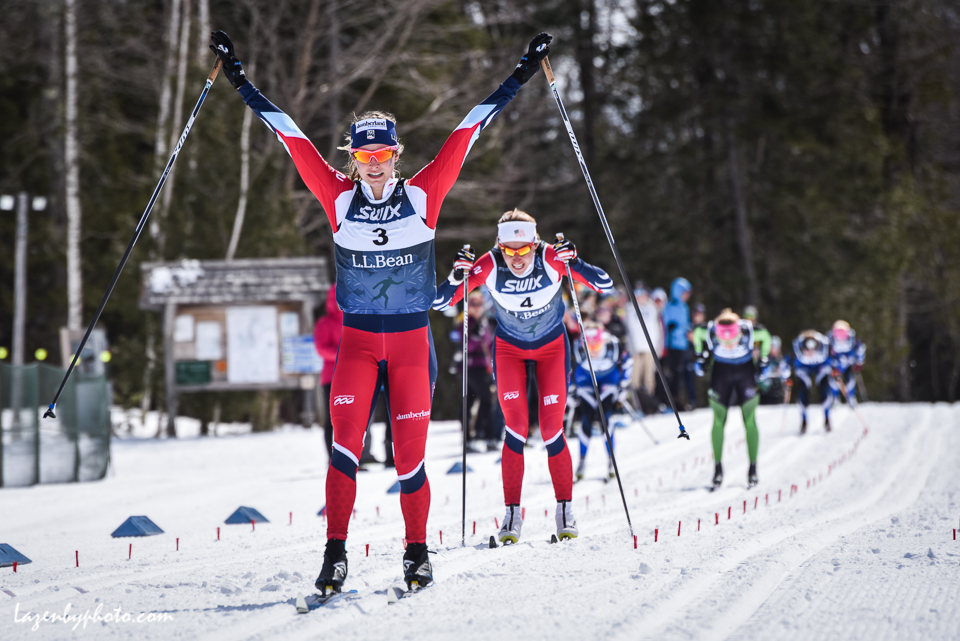
    Jessie Diggins (3) celebrates her win in the women’s classic sprint final on Friday at 2018 SuperTour Finals in Craftsbury, Vt., ahead of her Stratton Mountain School (SMS) T2 Team and U.S. Ski Team (USST) teammate Sophie Caldwell (4) in second. Craftsbury’s own Ida Sargent (in green and black), also of the USST, placed third, and Sadie Bjornsen (second from l, in blue) of Alaska Pacific University and the USST placed fourth. (Photo: John Lazenby/Lazenbyphoto.com)

    2018 U.S. SuperTour Finals (Craftsbury, Vermont): Classic sprints

    The end of the racing season is just around the corner. The U.S. SuperTour Finals (a.k.a. Spring Series) kicked off Friday with 1.3-kilometer classic sprints at the Craftsbury Outdoor Center, and four other days of racing are set to follow on Saturday, Sunday, Tuesday and Wednesday.

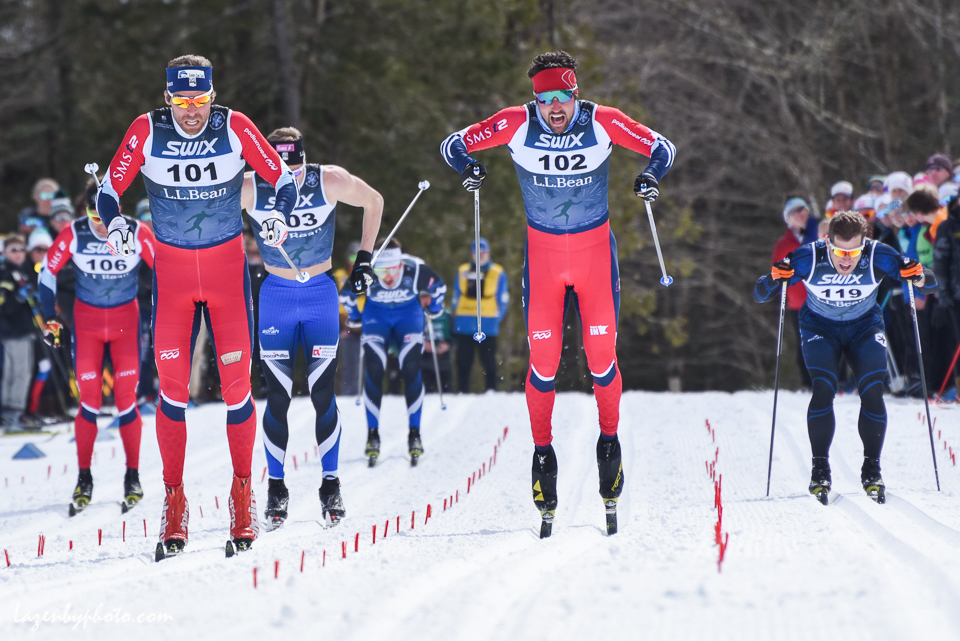
    Andy Newell (101), of the Stratton Mountain School (SMS) T2 Team and U.S. Ski Team (USST), racing to first in the men’s classic sprint final at 2018 SuperTour Finals in Craftsbury, Vt., just ahead of his Stratton teammate Ben Saxton (102). Erik Bjornsen (103, behind Newell) finished third, Kris Freeman (119) placed fourth, Simi Hamilton (106) fifth, and Reese Hanneman (behind Bjornsen) sixth. (Photo: John Lazenby/Lazenbyphoto.com)

    The U.S. Ski Team (USST) made the trek from Europe less than a week after racing at World Cup Finals in Sweden. Despite the travel and fatigue at the end of a long season, Andy Newell and Jessie Diggins, who both train with the Vermont-based Stratton Mountain School (SMS) T2 Team in the offseason, came won the men’s and women’s finals, respectively.

    In Friday morning’s qualifiers, Simi Hamilton, also of the SMST2/USST, and Sadie Bjornsen, of Alaska Pacific University (APU) and the USST, posted the fastest men’s and women’s times, respectively.  Newell qualified second, and Diggins qualified third.

    Bjornsen went on to win the first quarterfinal and first semifinal, while Diggins did the same — winning the fifth quarterfinal and second semifinal. In the final, the two U.S. teammates met for the first time of the day. Diggins went on to cross the finish line first in 3:40.23, followed by her teammate Sophie Caldwell (SMST2/USST) 1.42 seconds later in second. Ida Sargent, of the Craftsbury Green Racing Project and USST, placed third (+5.18), and Bjornsen narrowly missed the podium in fourth (+0.29), Rosie Brennan (APU/USST) placed fifth (+6.54), and Kikkan Randall (APU/USST) rounded out the final in sixth (+13.56).

    On the men’s side, Newell won all three of his heats, from the first quarterfinal to the first semifinal, right up to the final, crossing the line for the last time in 3:23.82. Hamilton won the third quarterfinal and placed second behind Newell in their semifinal in a photo finish for first (+0.01). Erik Bjornsen (APU/USST) won the other semifinal after winning the fifth quarterfinal as well. Ben Saxton (SMST2) advanced to the final as a lucky loser, along with Reese Hanneman (APU).

    In the final, Newell bested Saxton, his Stratton teammate, by 0.68 seconds for the win. Erik Bjornsen took the final spot on the podium in third (+1.41), ahead of Kris Freeman (Caldwell Sport) in fourth (+2.14), Hamilton in fifth (+3.02), and Hanneman in sixth (+4.5).

    SuperTour Finals continue Saturday with 10/15 k freestyle mass starts.

    Complete results

    Brackets

    SuperTour live stream

  • Hanneman Bros. Headline National Skate Sprint: Logan Wins Qualifier, Reese Wins Final

    Hanneman Bros. Headline National Skate Sprint: Logan Wins Qualifier, Reese Wins Final

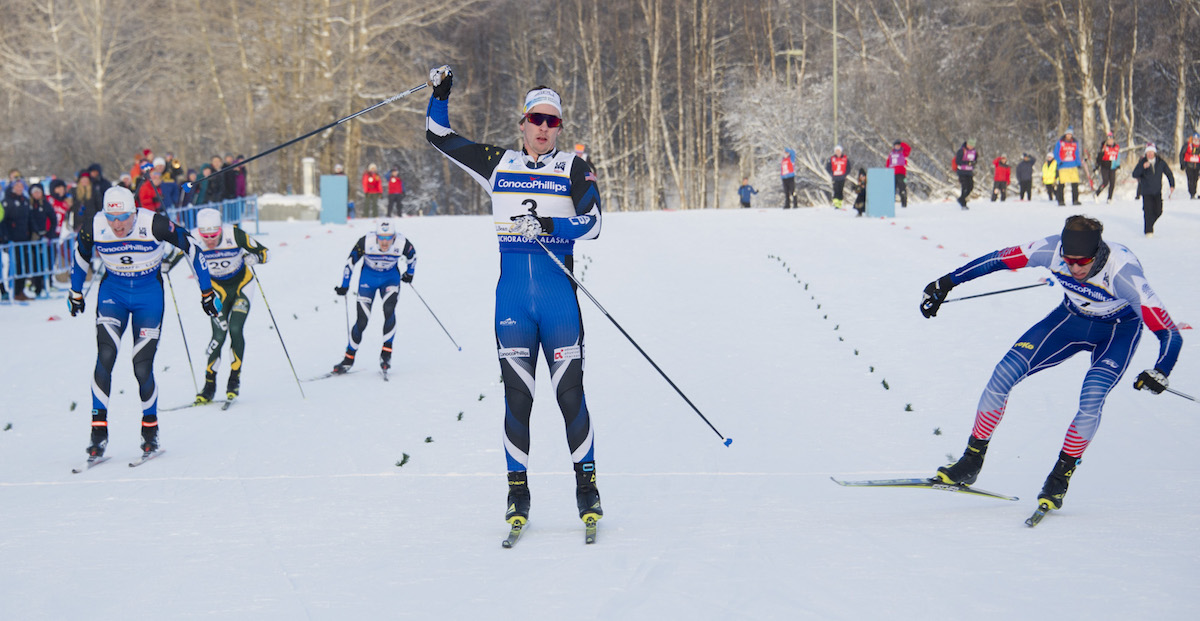
    Reese Hanneman (c) of Alaska Pacific University celebrates his win in the men’s freestyle sprint final on Friday at 2018 U.S. Cross Country Championships. He finished 0.08 seconds ahead of Kevin Bolger (r) of the Sun Valley Ski Education Foundation for the win at Kincaid Park in Anchorage, Alaska. (Photo: Michael Dinneen Photography)

    ANCHORAGE, Alaska — Friday was a good day for Team Hanneman and its friends. Younger brother Logan Hanneman won the qualifier, older brother Reese Hanneman won the final, and Alaska Pacific University (APU) put three skiers in the final and two on the podium in the men’s freestyle sprint on a bluebird day at Kincaid Park on Day 2 of racing at the 2018 U.S. Cross Country Championships.

    A long day of sprint racing got underway with the men’s qualifier at 10 a.m., precisely 10 minutes before the official sunrise. But it was already brighter then than at any point during the day on Wednesday, when a sodden snowfall blotted out most of the daylight and APU skier Rosie Frankowski openly mused about wearing a headlamp during her warmup.

    Friday, by contrast, brought light fog in the morning, burning off to reveal full sunshine during the heart of the day and bring actual warmth to the hundreds of fans lining the sprint course around Kincaid Stadium and up and down the Gong Hill. Temperatures had reached as low as 14 degrees Fahrenheit during the night before, and were never much above 19 degrees during the day Friday. The course of mostly manmade snow, with a mixture of natural snow from the roughly three inches that fell on Wednesday, was firm and fast. There was no wind. In stark contrast to the slush racers experienced on Wednesday, conditions were essentially perfect.

    Logan Hanneman Fastest in Qualifying

    Dakota Blackhorse-von Jess (Bend Endurance Academy) led out the field of 191 men with bib No. 1 for the qualifier. Less than an hour later, APU skier Logan Hanneman had proven fastest in the individual time-trial portion of the day.

    The Hanneman brothers after Friday’s skate sprint at 2018 U.S. Cross Country Championships in Anchorage, where they live and train with Alaska Pacific University. Reese Hanneman (l) won the men’s final and younger brother Logan (r) won the men’s qualifier.

    Logan’s time on the 1.6-kilometer course was 3:07.40. The 24 year old was followed, on the imaginary but meaningful “qualifier podium,” by Kevin Bolger, of the Sun Valley Ski Education Foundation (SVSEF) in second, 0.48 seconds back, and Reese Hanneman in third, 1.13 seconds behind.

    The rest of the qualifying top 10 were Nick Michaud (Bridger Ski Foundation) in fourth, Martin Bergström (University of Utah) in fifth, Dag Frode Trollebø of the University of Denver (DU) in sixth, Cole Morgan (SVSEF) in seventh, Tyler Kornfield (APU) in eighth, Eivind Romberg Kvaale (DU) in ninth, and Gus Schumacher (Alaska Winter Stars), Wednesday’s top junior in the distance race, in 10th.

    Brian Gregg, representing Central Cross Country (CXC), Loppet Nordic Racing (LNR) and Team Gregg, took the coveted 30th and final qualifying spot, 8.82 seconds back from Logan. Nicholas Sweeney (DU) was another second-plus back in 31st.

    This laundry list of results is of more than academic interest if you are a male sprinter trying to make the U.S. Olympic team for next month’s Olympic Winter Games in PyeongChang. As FasterSkier recently explained, the points list for Olympic selection “will only consider qualification-round finish placing,” and not an athlete’s final position based on racing in the heats. Notably, while both Logan Hanneman (fifth in his semifinal) and the day’s fastest female qualifier, Anne Hart (third in her semifinal), did well, neither of them made their respective final.

    APU’s Logan Hanneman (l) leading the University of Vermont’s Bill Harmeyer in the men’s 1.6-kilometer freestyle sprint quarterfinals on Friday at the 2018 U.S. Cross Country Championships in Anchorage, Alaska. After winning the qualifier, Hanneman was eliminated in the semifinals.

    If there was one person who had seen Logan Hanneman’s speedy qualifying time coming, it was his older brother.

    “He’s one of the best qualifiers,” Reese, 28, said of Logan before this season began. This was true on Friday even though Logan was racing with a dislocated rib, according to Kornfield.

    “So the fact that he won the qualifier is unbelievable,” Kornfield said after.

    The added significance of the qualifier result for U.S. Olympic selection purposes, coupled with the desire to still have enough energy left to ski well through three rounds of heats, was on the radar of all three eventual podium finishers.

    “I would say all the top sprinting guys, everyone’s focusing kind of on the qualifier, more so than normal,”  Reese said on Friday. “There’s no margin for error, and you just have to ski it absolutely as fast as possible. It’s definitely different tactics than in the heats… but if you’re fast, you’re fast.”

    According to Bolger, who finished second in both qualifying and the final, the significance of the qualifier “absolutely” affected his approach to the day overall.

    “Definitely wanted to go into the qualifier and have a strong result,” Bolger said. “I was happy with being second, just barely behind Logan, which I was bummed about but also super happy – there’s a lot weighing on it. So to be able to have a good qualifier, and then still be able to, I think, ski strong throughout the heats, and then into the final – I think that says just as much. So overall I’m really happy.”

    “All the pressure was on the qualifier,” echoed Kornfield, who finished third in the final after qualifying in eighth. “I’m normally not very good at qualifying, so the chance of me making that [No. 1 qualifying] spot would have been a moonshot, but I was happy with how I qualified. I know that if I qualify well, then my heats go well, so I was just, after qualifying well, trying to get back and focus on the heats.”

    Reese Takes First Throughout Heats

    Of the three podium finishers, Reese and Bolger had the smoother paths throughout the day. Reese was first in his quarterfinal and first in his semifinal to automatically advance to the final, winning each heat by less than 0.2 seconds. Similarly, Bolger won his quarterfinal, then was second to Reese in a fast semifinal, 0.17 seconds back.

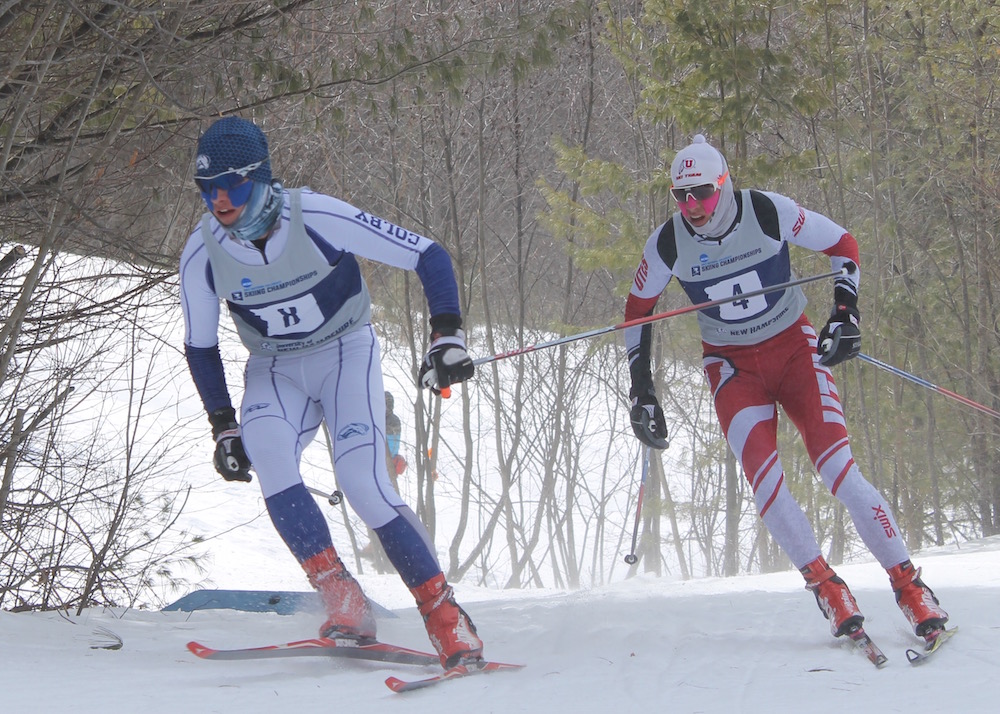
    Left to right: Eivind Romberg Kvaale (University of Denver), Nick Michaud (Bridger Ski Foundation), Reese Hanneman (APU), Kevin Bolger (SVSEF) and Tyler Kornfield (APU) during their men’s 1.6 k freestyle sprint semifinal on Friday at the 2018 U.S. Cross Country Championships in Anchorage, Alaska.

    Kornfield skied fast enough in his semifinal to earn a lucky loser bid for the final in fourth, after finishing second behind Reese in his quarterfinal. The top-four men in that second semifinal all finished within less than a second of Reese as the winner, and both lucky losers — Kvaale in third and Kornfield — came from that heat.

    Throughout the rounds, Reese skied fairly close to the front throughout the day. In his quarterfinal, the men’s fifth of the day, he was one of three skiers near the lead as the pack took a righthand turn heading up and out of the stadium. He was second coming off the course’s largest downhill back into the stadium, then turned on Beast Mode, approaching the final straightaway to pull into the lead and take the win in 3:10.62. Kornfield was second, 0.19 seconds back.

    In the semifinal, similarly, Reese skied in the top three throughout the race, ultimately leading the four-man group sprint to the line for first.

    Reese Hanneman Holds Off Bolger 

    Nearly four hours into the day, six men lined up for the final, now under bright sunshine. From skier’s right to left, it was Eric Packer (APU), Zak Ketterson (Northern Michigan University), Bolger, Reese, Kvaale, and Kornfield lined up across the south end of the capacious Kincaid Stadium.

    That’s three APU skiers with national titles to their name, last year’s classic sprint national champion in Bolger, one skier whose previous best at U.S. nationals was 15th (Kvaale), and a 20 year old whom the livestream announcers called a “surprise finalist” (Ketterson).

    The field had a clean start off the line, and into the slight-downhill straightaway through the Kincaid Stadium. After approximately 200 meters, the racers took a righthand turn up to the base of a gradual, all-V2, two-stage uphill. At this point it was Ketterson in the lead, with Kvaale and Reese tucked in immediately behind him, and the other three athletes following no more than a ski length further back.

    By the top of this climb, it was still Ketterson in front, with Reese following and Packer up into third position.

    Roughly one minute later, it was Ketterson in front coming down the waterfall downhill back into the stadium at high speeds. There was a gap of five meters back to Kornfield and Reese, who jostled slightly on the descent but did not fall, and Bolger and Packer immediately behind them. Ketterson was technically still in front, but five meters’ separation at those speeds meant little, and the lead pack was effectively still five athletes strong.

    By the time the racers had negotiated a broad 180-degree turn and climbed back up into the stadium, Hanneman was in the lead coming around the final curve. Bolger was second, with Ketterson and Kornfield just off to his left.

    Reese Hanneman (c) takes first, roughly half a ski length ahead of Kevin Bolger (r), with Tyler Kornfield (l) third. Zak Ketterson (second from l) and Eric Packer (third from l) are immediately behind Kornfield, with Eivind Romberg Kvaale farther back. (Screenshot: U.S. Ski & Snowboard live stream)

    Hanneman came into the final straightaway with a slight lead, and took the middle lane. He skied smoothly through the finish, but Bolger was coming on strong to his left in the outer lane.

    Reese kept his slight lead all the way to the finish. Bolger lunged better, but Reese skied faster. Bolger’s lunge got him to within less than half a ski-length of Reese by the finish, but Reese took the victory.

    To Reese’s right, Kornfield led Ketterson and Packer in the next lane to the inside. Kvaale skied in leisurely at the back after suffering an untimely broken pole.

    Reese’s winning time was 3:11.33 for the 1.6 k course. Bolger was 0.08 seconds back, with Kornfield another 0.8 seconds behind him for third. There was a gap of over a second to Ketterson and Packer, then another 12 seconds back to Kvaale.

    Reese aimed to continue his frontrunning ways in the final, he explained to FasterSkier in a post-race interview.

    “Everyone’s fighting for the front half because you know that’s kind of where you’ve got to be,” he said. “Everyone’s too fast; you know you’re not going to come from sixth. So I just fought really hard to stay kind of in the front half, throw down the move on the last hill coming into the finish, and it paid off.”

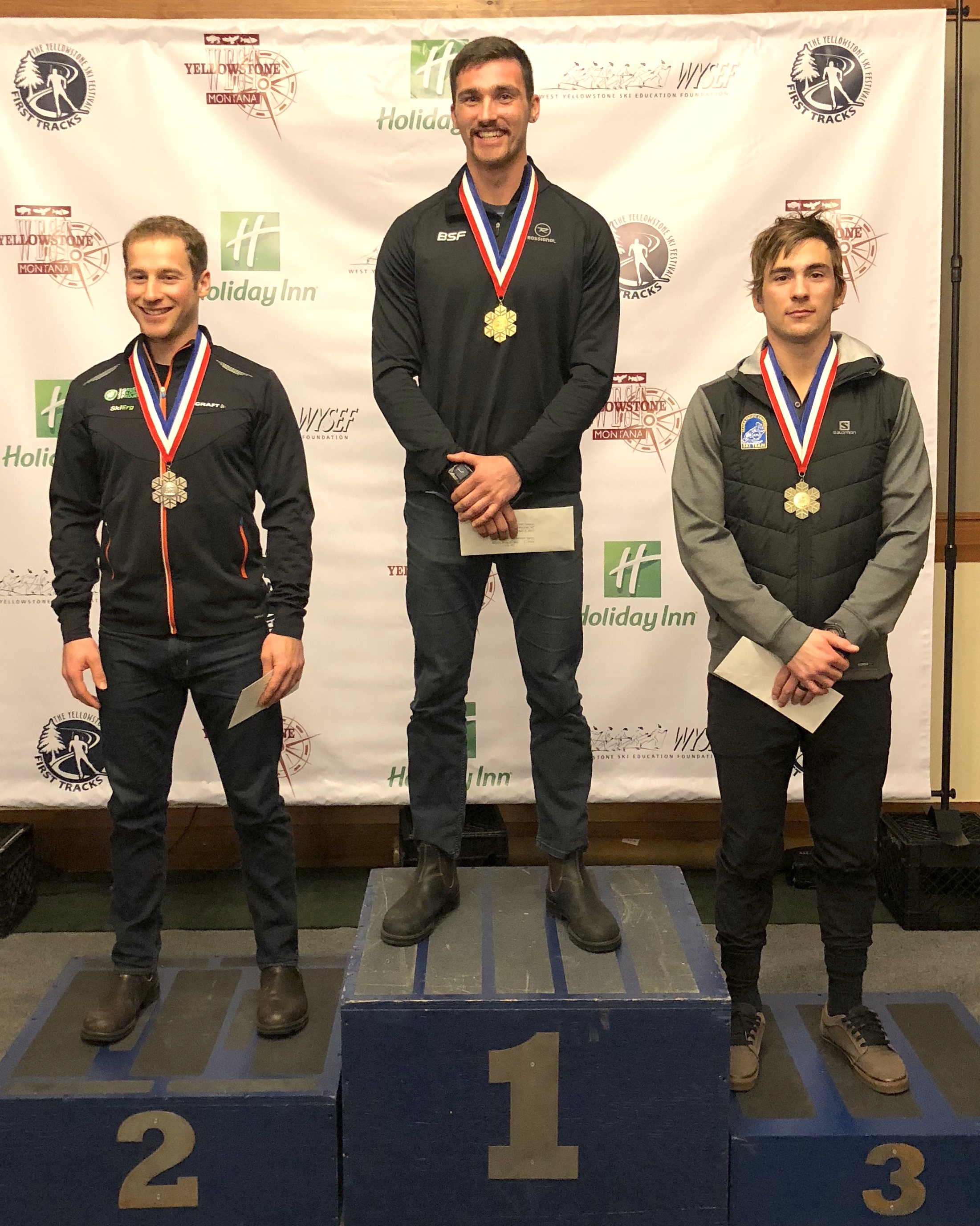
    The men’s freestyle sprint podium at 2018 U.S. Cross Country Championships, with Reese Hanneman (c) in first, Kevin Bolger (l) in second and Tyler Kornfield (r) in third on Friday in Anchorage, Alaska.The men’s freestyle sprint podium at 2018 U.S. Cross Country Championships, with Reese Hanneman (c) in first, Kevin Bolger (l) in second and Tyler Kornfield (r) in third on Friday in Anchorage, Alaska.

    Reese said he was thrilled by a day in which he won the national title — his third — and Logan won the qualifier.

    “He’s one of the best in the country,” Reese said of Logan, “and he and I have been going back and forth in the sprints for a while now. He’s the defending champion in this event from last season, so I knew he was a factor. He’s a powerful skier, and it’s awesome to see him do well. I think we’re both better because we’ve been fighting with each other for years.”

    Bolger explained he approached the final differently than his other heats.

    “Honestly, I just tried to stay relaxed,” the 24-year-old Wisconsin native said. “I tried to kind of keep an open mind and not put too much into it, overthink it. … I wanted to ski kind of my own race and let things unfold in front of me, and then take chances where I could.”

    In practice, this put Bolger in fourth coming off the big downhill back into the stadium. But he trusted his skis, and his finishing skills, and was able to move back into second within just a few hundred meters.

    “I kind of got, not pushed to the back a little bit, but kind of toward the back,” he recounted. “But coming toward those last few corners I was right in there. And I was confident in my skiing and I knew I was strong, I felt strong, so I was kind of able to push those corners hard.”

    Kornfield, similarly, said, “This is a hard course, so you just had to keep pushing to the finish.”

    “The way the course starts, it doesn’t start too hard, it’s pretty flat for the first part. And the uphill is so big that – for some reason you can’t break away on that,” Kornfield added of Kincaid’s brand-new sprint course. “You couldn’t gain that much time; I think people were just conserving until that last 200 meters. It always bunched up with about 200 meters to go, and it was only about who had the best kick and who got lucky with the hole shot. If you tried to get yourself in good position by the final, you would have a good go at the finish.”

    Reflecting on the vagaries of sprint racing, he noted, “This is an incredibly fair course. It’s incredibly wide, and it was a lot of fun, but we don’t race those kind of back-and-forth heats that often. So I was just pretty relieved to make the podium, because anything could have happened. You could have snapped a pole easily, you could have fallen. It was kind of a relief just to make it to the final in the first place, and then to make it on the podium was unbelievable.”

    Kornfield, 26, who was born and raised in Anchorage and has raced at Kincaid Park dozens of times, summoned the same adjective when asked if he had ever seen a crowd like this at Kincaid for a ski race before.

    “This is unbelievable,” Kornfield said. “I remember back [at U.S. nationals at Kincaid] in 2010, and I felt like it was just a wave of noise coming in. This is even more. It’s incredible that people were here and out here. I’m so excited that Reese and I could make the podium and make ’em proud.”

    (A sportswriter for the local Anchorage Daily News with 30 years’ experience called it “One of the biggest spectator crowds ever to gather at Kincaid Park.”)

    Kornfield likely has fond memories of 2010 for many reasons; he won his first national title then. Friday’s third-place finish marked his seventh time on a U.S. nationals podium, including two national titles. Reese, similarly, took home his third national title (after the 2014 classic sprint at Soldier Hollow in Utah and 2016 skate sprint in Houghton, Michigan), and recorded his eighth national podium. And Bolger notched his second-career podium finish at U.S. nationals, after winning the classic sprint at Soldier Hollow last year.

    New Sprint Course Meets with Rave Reviews

    As FasterSkier recently explained, Friday marked the debut of the new sprint course at Kincaid. And the athletes approved.

    “It was a great course,” Reese said. “Really hard – I would say probably the hardest sprint course we’ve had at nationals in a while. It rivals Fairbanks last year. But there’s a big hill, something you would see on a World Cup, or [World] Championships, so that made it hard. Super-fast downhills. … I think it’s one of the best courses we’ve had in a while. There’s some gradual terrain, there’s a hill, an A-climb, one of the biggest climbs I’ve seen on a sprint course in the U.S., probably ever. I think it’s a great course. It’s fair, everybody likes it, it’s fun. But it skis really well, it’s fast. You can’t get too much better than that.”

    “It’s a good course,” concurred Bolger. “It’s really fun. Good hills, good downhills, good cornering. I think it kind of gets at, you’ve kind of got to be a good all-around skier to kind of be able to go from the qualifier to the final.”

    “This is an incredibly fair course, it’s incredibly wide, and it was a lot of fun,” said Kornfield.

    Athletes will get another shot at it on the final race day of U.S. nationals, the classic sprint on Monday. Classic distance races (20/30 k mass starts) are the next races up, starting at 10 a.m. Sunday morning.

    Results: Final | Heats | Qualifier

    –Gabby Naranja contributed

    Reese Hanneman video interview

    Highlights video by Max Romey Productions

  • Logan Hanneman on Balancing Life and Skiing, and Enjoying It, in Olympic Quest

    Logan Hanneman on Balancing Life and Skiing, and Enjoying It, in Olympic Quest

    Logan Hanneman of Alaska Pacific University getting some early-season training in this past fall at Hatcher Pass above Palmer, Alaska. (Photo: Ophira Group)

    Earlier this season, Logan Hanneman talked with FasterSkier about his laser-like focus on the 2018 Winter Olympics, which start on Feb. 10 in PyeongChang, South Korea. The 24-year-old Fairbanks native, who now lives and trains 300 miles south in Anchorage with Alaska Pacific University (APU), was specifically eyeing the men’s individual classic sprint on Feb. 13. Although first he has to qualify to get there.

    Entering this season, Hanneman was fresh off a freestyle-sprint title from 2017 SuperTour Finals at home in Fairbanks last March. It was his second SuperTour win after topping a skate sprint in West Yellowstone in November 2015.

    Logan Hanneman (Alaska Pacific University) leads Canadian Evan Palmer-Charrette (13) en route to the victory in the men’s 1.6-kilometer freestyle sprint final at the 2017 SuperTour Finals in Fairbanks, Alaska. (Photo: Max Kaufman)

    “That race was the absolute highlight so far of my career,” Hanneman said of the SuperTour Finals win during a phone interview in September. “Not just because it was a national title but because it was in my home town. It was very special to be able to win that at home.”

    He ended last season ranked sixth in the men’s SuperTour sprint rankings and 24th overall. So far this season, an Olympic season, Hanneman is seventh in the sprint standings and 11th overall for SuperTour points through two weekends of racing (see 2017-18 SuperTour Points link on right side of page).

    Perhaps more notably, he’s placed second and third in two SuperTour sprint qualifiers: he was second in the skate-sprint qualifier Dec. 2 in West Yellowstone and third in the classic-sprint qualifier Dec. 9 at Sovereign Lake in British Columbia.

    Hanneman went on to finish seventh in the West Yellowstone sprint and ninth overall in the B-final at Sovereign Lake.

    What’s the significance of fast qualifiers? Everything, if you’re a sprinter trying to make the U.S. Olympic team.

    According to the U.S. Ski & Snowboard athlete-selection procedures for the 2018 Winter Games, “Individual sprint events to be scored for the purpose of the [Olympic Winter Games] Selection List will only consider qualification-round finish placing.”

    That means an athlete will be considered for the U.S. Olympic team based on Selection Criterion 3 (bottom of page 3 of this PDF document):

    “Should there be any remaining positions after Selection Criteria 1 [World Cup results and standings] and 2 [discretion] have been applied, those positions may be filled by considering the athlete with the highest rank on the 2018 Olympic Winter Games Selection List,” the criteria states, “Which is an accumulation of SuperTour points scored during the selection period using the athlete’s best 2 finishes in a single discipline (sprint or distance) and using the OWG Selection List outlined in Attachment 1.”

    “From a very literal view, I need to be one of the top (most likely The top), sprint qualifiers in the country after U.S. Nationals in January in order to make the 2018 Olympic Team,” Hanneman wrote in an email in September. “The qualification races are comprised of four sprints, where only the qualifier is scored for points towards the Olympic team (West Yellowstone SuperTour, Silver Star SuperTour, and U.S. Nationals (2 sprints)). On a more broadened view, I just need to improve my sprint qualification ability slightly. … I was close to qualifying for World Championships last year, which used the same qualification criteria. So that has been my focus this summer and will continue to be what I focus on in my training.”

    Logan Hanneman on a trail run near Anchorage, Alaska, this past training season. (Photo: Reese Hanneman)

    Heading into U.S. Cross Country Championships, which begin Wednesday in Anchorage (the first sprint is the skate sprint on Friday), Hanneman has put himself in “podium” contention for a top qualifying result (although no actual podiums exist for those results at the SuperTour or U.S. nationals level this season — only the finalists get to stand on an actual podium).

    He’s joined by top male SuperTour sprinters Nick Michaud of the Bridger Ski Foundation (who won the West Yellowstone skate-sprint qualifier as well as the final early last month, and qualified second in the Sovereign classic sprint before placing 12th overall), Cole Morgan of the Sun Valley Ski Education Foundation (who won the Sovereign qualifier and placed third in the final, and was fifth in the West Yellowstone qualifier and sixth in the final), and Ben Saxton of the Stratton Mountain School Elite Team (who was third in the West Yellowstone qualifier and fifth in the final, and eighth in the Sovereign qualifier and second in the final). And there are several others who are contenders for the upcoming nationals classic-sprint qualifier in Anchorage on Monday, Jan. 8.

    Hanneman’s older brother, Reese, made it to the finals in both West Yellowstone and Sovereign, placing third in West’s skate sprint and fifth in the Sovereign classic sprint, after qualifying in seventh in West and fifth at Sovereign.

    Reese, who turned 28 on Christmas, has two sprint national titles to his name (he won the 2016 skate sprint in Houghton, Michigan, and the 2014 classic sprint at Soldier Hollow in Midway, Utah.) In all, Reese has seven U.S. nationals podiums, according to the International Ski Federation (FIS) database.

    Logan qualified second in the skate sprint at 2015 nationals in Houghton.

    Last winter was Logan’s first season as a senior athlete. After missing out on qualifying for 2017 World Championships, he focused mostly on the domestic SuperTour circuit, but also ventured to Seefeld, Austria, for three days of Alpen Cup racing. There he finished 15th in the 3.3-kilometer freestyle prologue, 40th in the 15 k classic, and 37th in the 15 k freestyle pursuit.

    “They were great races to do because they’re very stiff competition,” Logan reflected. “There’s a lot of Europeans there that are on and off the World Cup circuit.”

    Two seasons ago, he competed at 2016 U23 World Championships in Rasnov, Romania, where he finished 15th in the skate sprint and 55th in the 15 k classic. He followed that trip with Alpen Cup races in Germany and Italy, and notably placed seventh in the 3.3 k freestyle prologue in Toblach, Italy.

    After graduating from the University of Alaska Fairbanks in 2015, Logan has yet to race at the World Cup level. But after transitioning to life as a professional ski racer, who balances two training sessions a day with an engineering job, that remains one of his big goals. That and the Olympics.

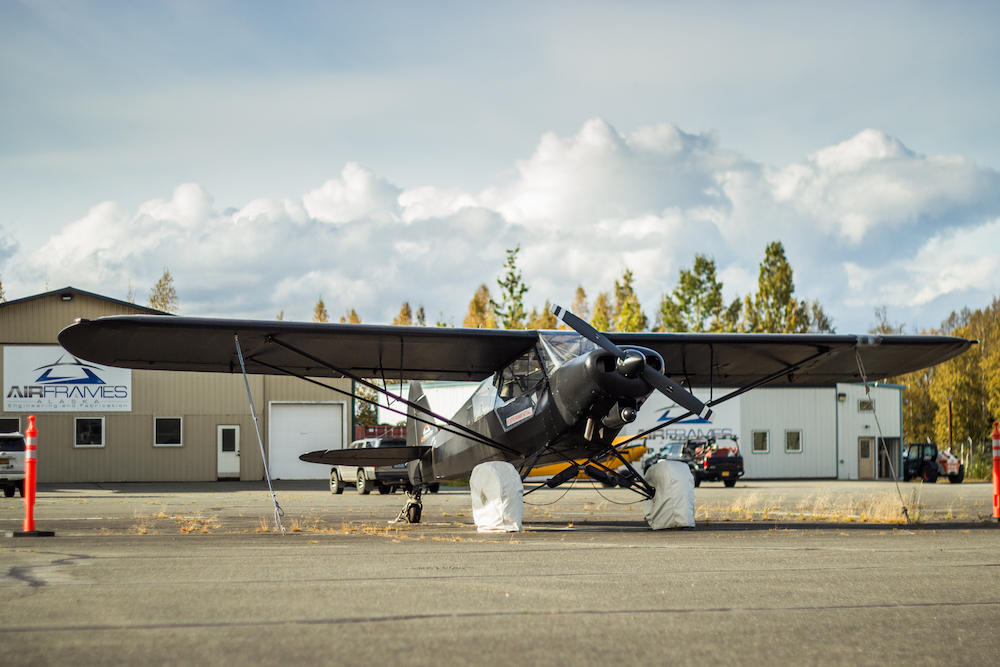
    Alaska Airframes’s three-seater Piper PA-18 Super Cub outside company headquarters in Chugiak, Alaska. (Photo: Logan Hanneman)

    “I do a lot of computer design work, and you get to watch what you design on the computer be made right downstairs in our machine shop,” he said of his part-time work with Airframes Alaska, a company that makes after-market upgrades for small aircraft, specializing in the Piper PA-18 Super Cub. “Working in the aircraft industry, there’s a lot of FAA compliance. I also help with facilities support projects. You never know what you’re going to be working on a week-to-week basis.

    “They’ve been outrageously flexible with my skiing, which is unbelievably helpful for my first job as an engineer,” he continued. “I was able to set my work schedule around my training schedule. I train in the morning, drive out to work, then come home and do my second workout. When it comes into racing season, if I need to be gone, I’m able to leave for racing or training. It’s been a blessing. It’s awesome.”

    Logan spoke with FasterSkier this fall as he was driving to work at an airstrip in Chugiak, about 20 miles northeast of Anchorage.

    “I like being busy,” Logan said. “Work is not stressful at all because it’s outrageously fun. It’s what I really like doing. I never find myself too stressed with all this [work, training, life]. I think I’ve found a pretty good balance.”

    Asked about what Logan brings to the APU program, Erik Flora, director of the APU Nordic Ski Center, wrote in an email: “We were excited to have Logan officially join our program [in 2015]. His skills and ability to move in a sprint make him one of the top developing sprinters in our country. He is extremely thoughtful about his training and his approach to skiing fast. He strengthens our team, both with results and as a strong teammate.

    “His speed in the finish is one of the best I have ever seen,” Flora added.

    The Hanneman brothers after placing first and second in the men’s SuperTour freestyle sprint in November 2015 in West Yellowstone, Montana. Younger brother Logan Hanneman (r) won the final for his first SuperTour victory and Reese (l) placed second. (Photo: Travis Jones)

    Logan characterized himself as “one of a bunch of guys at APU that are pushing to try to make the 2018 Olympics this season. I tend to do better in sprints, so that’s going to be my primary focus.”

    Late this summer, he experienced a back-pain flareup from an old injury. In 2013, Logan broke his back in a trampoline accident.

    “I do a lot of core strength exercises to get stronger where I need it the most,” he explained. “For a few days I have to be really cautious until I get everything relaxed again.”

    He added that swimming is a good alternative workout when his back bothers him. Other than the occasional back pain, he feels that he’s on track for this winter.

    “My training’s been good. The group of guys here at APU are a pretty stellar training group,” he said. Logan is part of a training group of 14 men on the APU Elite Team, including U.S. Ski Team members Erik Bjornsen and Scott Patterson.

    One of his teammates is his brother Reese.

    “We’ve raced together for so many years, there’s not a whole lot of sibling rivalry,” Logan said of Reese. “In a race, he’s just another competitor. Sometimes it can be hard if things don’t go well for one of us. This year is gonna be tough because both of us are pushing for one of those sprint spots for the 2018 Olympics.”

    “He’s really confident in his training plan, what it takes to do your best,” Reese said in a September interview. “It’s hard, there’s a lot of different ways to do it. Logan’s always very confident – he helps me in that way, too.

    “He’s one of the best qualifiers,” Reese added.

    — Alex Kochon contributed

    Logan Hanneman unwinding after last year’s race season. (Photo: George Ferree)
  • Saturday Rundown: Davos, Hochfilzen and Sovereign (Updated)

    Saturday Rundown: Davos, Hochfilzen and Sovereign (Updated)

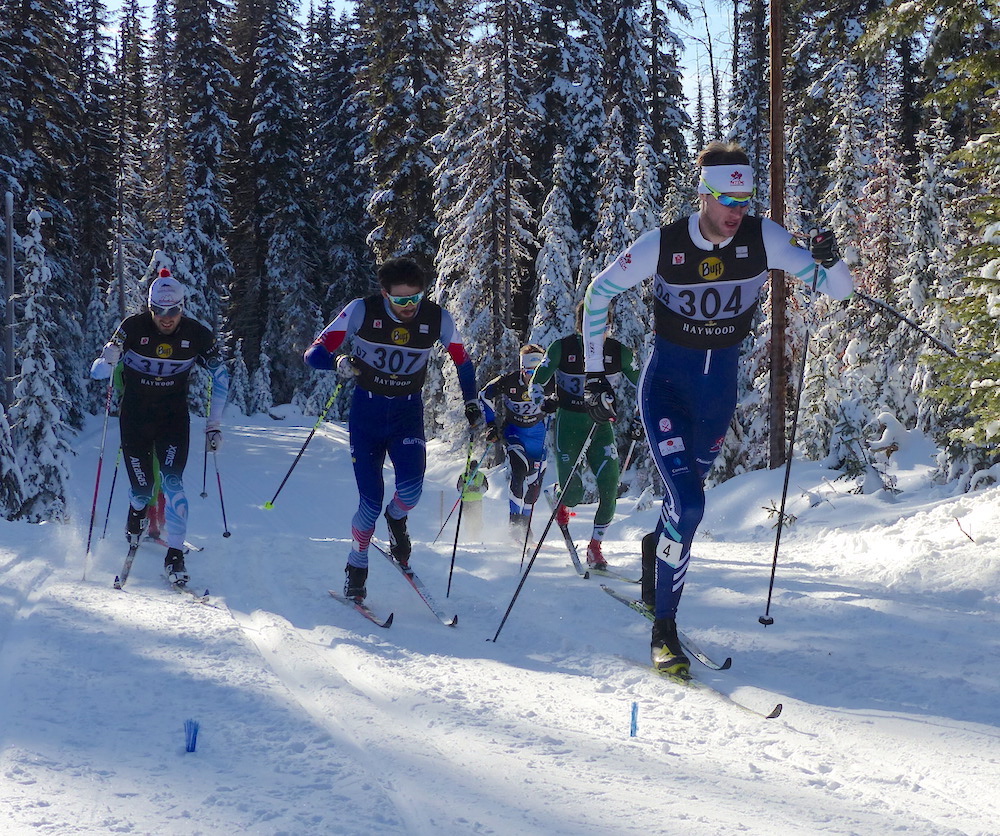
    Bob Thompson (304) of NTDC Thunder Bay leading Sun Valley’s Jack Hegman (307) and Patrick Stewart-Jones (317) of the AWCA during their quarterfinal of the NorAm men’s 1.3 k classic sprint on Saturday at Sovereign Lake near Vernon, B.C. (Photo: Peggy Hung)

    NorAm/SuperTour (Sovereign Lake near Vernon, British Columbia): Classic sprints

    On the opening day of the NorAm Continental Cup series in Canada (which doubled as a U.S. SuperTour), American Kaitlynn Miller of the Craftsbury Green Racing Project (CGRP) started Saturday with a nearly three-second win in the classic-sprint qualifier at the Sovereign Lake Nordic Centre, then went on to win her quarterfinal and semifinal before topping the final as well.

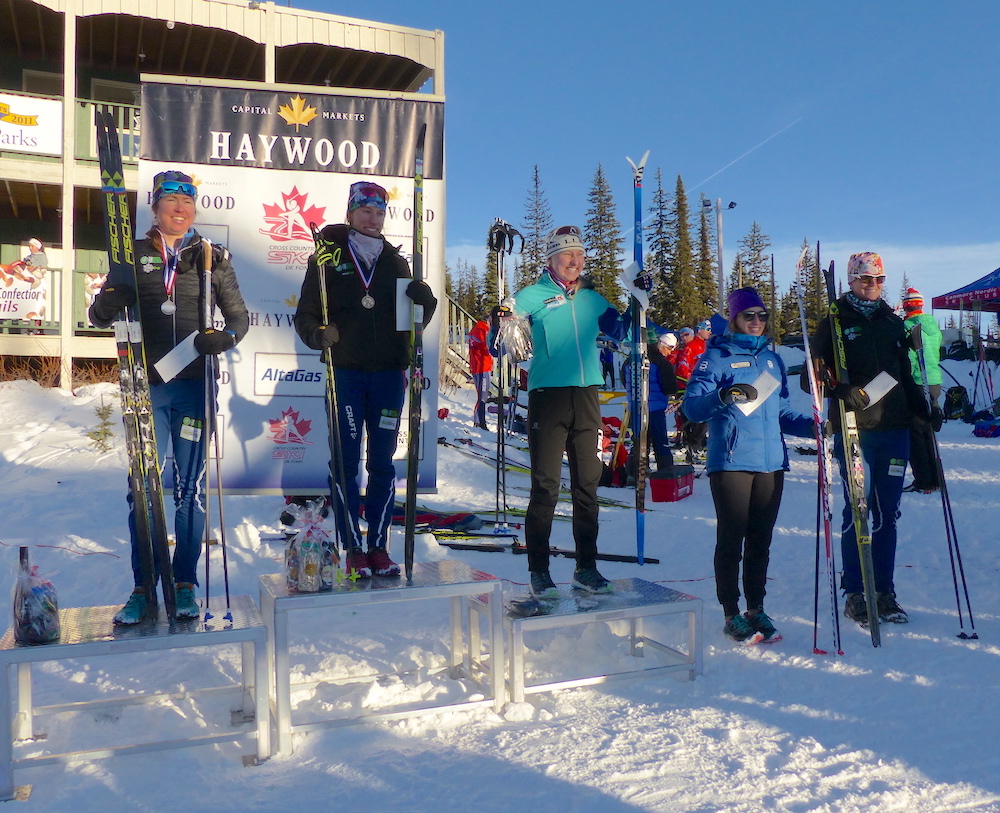
    The women’s 1.3 k classic sprint podium and top five at the first NorAm of the season on Saturday at Sovereign Lake near Vernon, B.C., with (from left to right) Caitlin Patterson (CGRP) in second, Kaitlynn Miller (CGRP) in first, Hannah Halvorsen (APU/USST) in third, Kelsey Phinney (SVSEF) in fourth, and Liz Guiney (CGRP) in fifth. (Photo: Peggy Hung)

    Miller was the fastest women’s qualifier by 2.87 seconds on the 1.3-kilometer course with a time of 2:59.39. Ultimately, she won the final in 2:57.53, 0.93 seconds ahead of her teammate Caitlin Patterson in second and 2.59 seconds clear of the third American on the podium, Hannah Halvorsen of Alaska Pacific University (APU) and the U.S. Ski Team (USST) D-team, in third place.

    Halvorsen previously qualified third behind Kelsey Phinney, of the Sun Valley Ski Education Foundation (SVSEF) in second. Phinney finished fourth in the final (+2.85), while a third Craftsbury skier, Liz Guiney placed fifth (+3.53). The lone Canadian in the six-woman final, Sophie Carrier-Laforte of the Pierre-Harvey National Training Centre (CNEPH) placed sixth (+4.38).

    Thompson Fends Off Five Americans

    Of the six racers in the men’s 1.3 k freestyle sprint final, five of them were American. Bob Thompson, of the Thunder Bay National Team Development Centre (NTDC), bested them all for the win in 2:29.31, just 0.03 seconds ahead of Ben Saxton, of the Stratton Mountain School (SMS) Elite Team, in second place. Cole Morgan (SVSEF), the qualifying winner who had so far dominated all of his heats, ended up third overall, 0.48 seconds behind Thompson.

    Sun Valley and APU each had two athletes reach the men’s final with Jack Hegman (SVSEF) taking fourth (+0.51), and APU’s Reese Hanneman and Tyler Kornfield placing fifth (+7.75) and sixth (+7.9), respectively.

    To start the day, Morgan posted the fastest men’s qualifying time in 2:31.00, while last weekend’s SuperTour skate sprint winner Nick Michaud, of the Bridger Ski Foundation (BSF), qualified in second, 0.78 seconds back. Americans took the top-three qualifying spots with Logan Hanneman (APU) in third (+1.59), while Thompson was the top Canadian qualifier in fourth (+2.34).

    Morgan won both his quarterfinal and the first semifinal to advance to the final, along with Thompson who placed second in that semifinal (and placed second to Hegman in the quarterfinals). Saxton won the second semifinal (after finishing second to Logan Hanneman in the quarterfinals) and Kornfield was second behind Saxton in that semifinal to automatically advance to the final. Reese Hanneman and Hegman made it to the final as lucky losers after placing third and fourth, respectively, in the first semifinal.

    Live results

    Qualifier results

    ***

    IBU World Cup (Hochfilzen, Austria): Men’s and women’s pursuits

    Men’s report

    Norway’s Johannes Thingnes Bø notched his second-straight win in Hochfilzen after Martin Fourcade of France missed three on the final shooting stage of the men’s 12.5 k pursuit on Saturday. Bø, who started the race 12 seconds ahead of Fourcade in second, cleaned the final standing stage to leave the range nearly a minute ahead of Slovenia’s Jakov Fak in second. Meanwhile, Fourcade, who had been skiing in first just ahead of Bø before the last stage, dropped 1:19 minutes back to fifth.

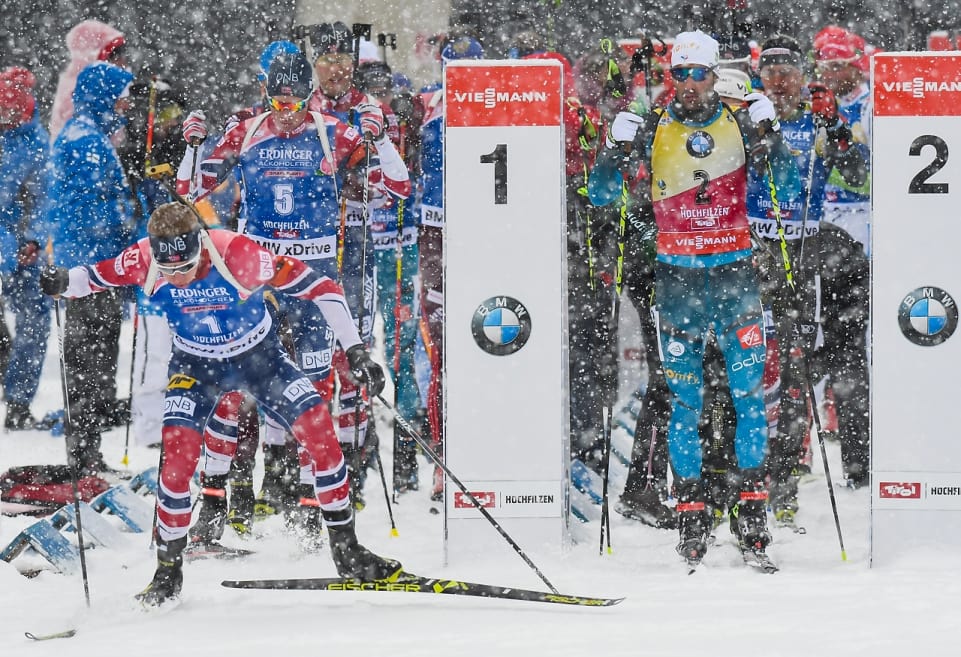
    Norway’s Johannes Thingnes Bø (1) heading out of the start, 12 seconds ahead of the second starter, France’s Martin Fourcade (yellow bib), on Saturday in the IBU World Cup men’s 12.5 k pursuit in Hochfilzen, Austria. (Photo: IBU/biathlonworld)

    While Bø skied the win in 36:41.1 minutes and Fak, the third starter, finished 58.8 seconds later in second place, Fourcade made up two places on the final loop to place third (+1:10.0) after passing Germany’s Simon Schempp and Russia’s Maxim Tsvetkov.

    Schempp settled for fourth (+1:10.5), and Bø’s older brother, Tarjei Bø, passed Tsvetkov as well to claim fifth (+1:11.9), while Tsvetkov finished sixth (+11:12.3).

    On another snowy afternoon in Hochfilzen, Johannes Bø had three penalties, two of which came in the first stage (2+0+1+0). Fak was one of four men in the race with just one miss (0+0+1+0) — no one cleaned — while Fourcade missed five (1+0+1+3). Schempp had four penalties (3+1+0+0) but held onto his starting position in fourth, Tarjei Bø improved from 14th at the start to fifth with just two misses (1+0+1+0) and Tsvetkov raced up from 20th to sixth with a single miss (1+0+0+0).

    American Sean Doherty tied his second-best World Cup result in 17th (+2:12.8) after starting 23rd and 1:39 out of first. He had two penalties (1+0+1+0).

    Canada’s top finisher, Nathan Smith placed 31st (+3:02.2) after starting 19th and missing three shots (1+1+0+1). His teammate Brendan Green rose to 33rd (+3:15.7), up from 52nd at the start, with three penalties as well (1+0+1+1).

    Four Canadians qualified for the pursuit, with Scott Gow placing 48th (+5:08.4) with seven penalties (1+1+3+2). His younger brother Christian Gow crossed next in 49th (+5:13.7) after missing five (+5:13.7).

    The other American man in the race, Lowell Bailey placed 36th (+3:20.6), up from 53rd, with three misses (0+2+1+0).

    Kuzmina Gets First Win in Three Years

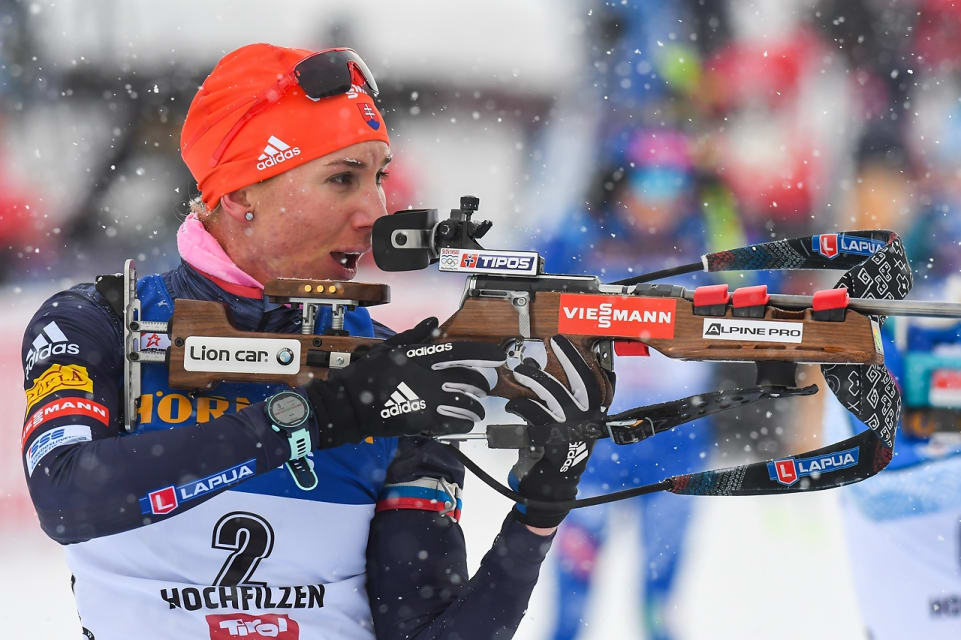
    Slovakia’s Anastasia Kuzmina cleaning one of two standing stages in the women’s 10 k pursuit at the IBU World Cup in Hochfilzen, Austria, en route to a 10-second win. (Photo: IBU/biathlonworld)

    In the women’s 10 k pursuit that followed, Slovakia’s Anastasia Kuzmina overcame a 22-second starting deficit to win her first race in three and a half years, shooting 19-for-20 (1+0+0+0) and finishing in 34:31.2. Kuzmina (the sister of Russia’s Anton Shipulin) started second behind Friday’s sprint winner Darya Domracheva of Belarus. Domracheva had a single miss as well in Saturday’s pursuit (0+0+1+0) but slipped to second after her penalty in the first standing stage, while Kuzmina cleaned the last three stages to take the win.

    Domracheva settled for third (+11.8) and Finland’s Kaisa Mäkäräinen rose to second (+10.2) after shooting 18-for-20 (1+0+0+1) and skiing the fastest course time to rise from her starting position in sixth.

    Italy’s Dorothea Wierer slipped one place to fourth (+51.6) after starting third and missing two (1+0+0+1), while Norway’s Marte Olsbu raced up from 13th to fifth (+58.2) with a single penalty (1+0+0+0). Ukraine’s Yuliia Dzhima improved from 20th to sixth (+1:08) with one miss as well (0+0+0+1).

    Canada’s Emma Lunder achieved her second-best career World Cup result in 27th (+2:31.6) after starting 42nd and cleaning three stages after missing one in the first prone (1+0+0+0). Her teammate Rosanna Crawford improved from 49th at the start to 39th at the finish (+3:44.3) with four penalties, one in each stage (1+1+1+1).

    The U.S. had one woman qualify for the race, Clare Egan, who finished 53rd (+5:21.6) with seven penalties (2+2+2+1).

    For the third and final day of World Cup racing in Hochfilzen, the men’s and women’s relays will be held Sunday.

    Results: Men | Women

    ***

    FIS Cross Country World Cup (Davos, Switzerland): Freestyle sprints

    Women’s report

    Men’s report

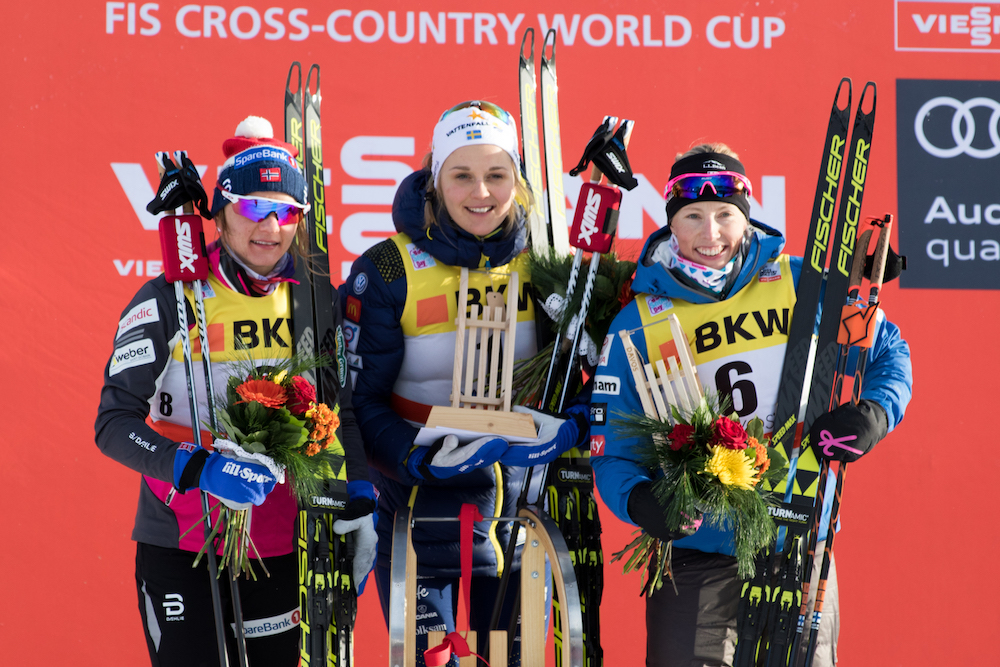
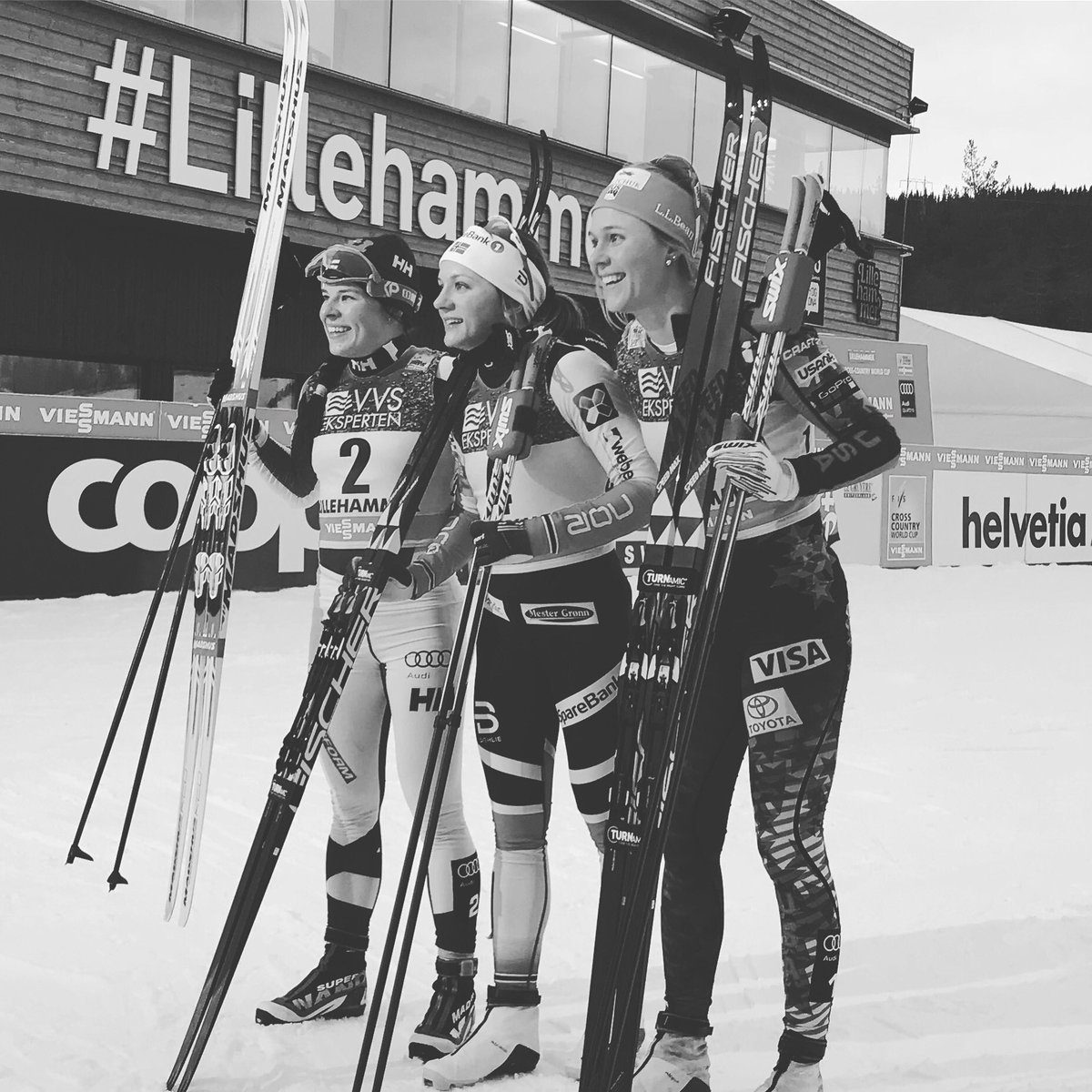
    The women’s skate sprint podium at Saturday’s World Cup in Davos, Switzerland, with Kikkan Randall (r) of the U.S. Ski Team in third place, Sweden’s Stina Nilsson (c) in first, and Norway’s Maiken Caspersen Falla (l) in second. (Photo: Reese Brown/US Ski & Snowboard)

    Kikkan Randall returned to the podium on Saturday in the first freestyle sprint of the 2017/2018 World Cup season, placing third in the women’s 1.5-kilometer skate sprint behind Sweden’s Stina Nilsson and Norway’s Maiken Caspersen Falla, respectively, in Davos, Switzerland.

    Americans made up half of the women’s final, with Jessie Diggins racing to fourth and Ida Sargent sixth, with Norway’s Ingvild Flugstad Østberg between them in fifth.

    Nilsson started the day by winning the qualifier in 2:51.71 minutes, while Østberg had the second-fastest qualifing time, 2.57 seconds back. Switzerland’s Nadine Fähndrich posted the third fastest qualifying time (+2.73), and for the U.S., Diggins qualified fourth (+3.37), Sargent fifth (+3.78), Randall sixth (+4.11), Sophie Caldwell ninth (+4.87), and Sadie Bjornsen in 11th (+5.38).

    Nilsson then won her quarterfinal and the first semifinal before outlunging Falla by eight-hundredths of a second for the final win in 2:47.99. Randall (who won her quarterfinal and advanced to the final as a lucky loser in third in the first semifinal) finished 2.53 seconds after Nilsson for third overall, and Diggins (who won both her quarterfinal and the second semifinal) was 4.41 seconds back in fourth. Østberg finished 5.62 seconds back in fifth, and Sargent crossed the line 14.49 seconds back in sixth.

    Caldwell placed eighth overall after winning her quarterfinal then placing fourth in the second semifinal, behind Diggins, Sargent and Germany’s Sandra Ringwald, respectively. Ringwald did not advance to the final, either, for seventh overall. Bjornsen placed 13th on the day after finishing third in her quarterfinal.

    Also for the U.S., Julia Kern (U.S. Ski Team D-team) finished in 57th in the qualifying round, 16.55 seconds out of first.

    Dahria Beatty was the top Canadian in 53rd (+15.53), followed by Katherine Stewart-Jones in 55th (+16.18) and Cendrine Browne in 64th (+18.27). 

    In the men’s 1.5 k skate sprint, Norway’s Johannes Høsflot Klæbo rocketed to his sixth-straight win in as many World Cup races this season, topping the qualifier in 2:23.10 (by 1.27 seconds over France’s Lucas Chanavat and 1.73 seconds over Italy’s Federico Pellegrino in third) then winning his quarterfinal and semifinal comfortably before capping the day with a victory in the final in 2:28.07. Pellegrino placed second in the final, 1.8 seconds back, and Russia’s Alexander Bolshunov tallied his third podium of the season in third place (+4.64). Finland’s Ristomatti Hakola placed fourth (+5.39), France’s Richard Jouve was fifth (+8.65) and Russia’s Gleb Retivykh was sixth in the final (+18.34).

    Americans Andy Newell and Simi Hamilton both qualified for the heats in 10th and 12th, respectively. Hamilton went on to place ninth overall after finishing second in his quarterfinal (behind France’s Renaud Jay) and fifth in the second semifinal (which Hakola won). Newell’s day ended in the quarterfinals, where he placed fifth, 2.44 seconds behind Klæbo, who won that heat. Overall, Newell was 21st.

    Canada’s Alex Harvey qualified for the heats in 21st and went on to place 23rd overall after finishing fifth in his quarterfinal, 1.14 seconds behind Retivykh in first.

    Also for Canada, Julien Locke missed qualifying in the top 30 by 1.07 seconds in 36th (+7.84). Russell Kennedy placed 48th (+9.39), Knute Johnsgaard was 52nd (+10.35), Jess Cockney 54th (+10.83), Devon Kershaw 63rd (+11.78).

    For the U.S., Erik Bjornsen finished 58th (+11.12) and Paddy Caldwell 108th (+24.04) in the qualifier.

    Results:

    Women’s final | Women’s qualifier

    Men’s final | Men’s qualifier

  • West Yellowstone in Review: Big Wins from Hart, Michaud, Bångman, and Brian Gregg

    West Yellowstone in Review: Big Wins from Hart, Michaud, Bångman, and Brian Gregg

    Another SuperTour season opened in West Yellowstone, Montana, one weekend later than usual this year but with a lot of the old standbys, including a twisty, technical freestyle sprint course and puzzling conditions for the classic distance race.

    In a crash-marred women’s final on Saturday, Dec. 2, Anne Hart of the Stratton Mountain School (SMS) Elite Team avoided a tangle between Caitlin Gregg (Team Gregg) and Caitlin Patterson, of the Craftsbury Green Racing Project (CGRP), and skied to the win. According to Hart’s teammate, Erika Flowers, who also raced in the final, the two Caitlins collided in the final winding section before the last big uphill.

    The women’s skate sprint podium at the first race of the 2017/2018 SuperTour season on Dec. 2, with the SMS Elite Team’s Anne Hart (c) in first and Erika Flowers (l) in second, and Sun Valley’s Kelsey Phinney in third. (Photo: FBD)

    “They went down and some people were just ahead of them and were able to ski around,” Flowers said.

    Hart was one of them.

    “In my journal last night I actually had part of the course labeled ‘mushroom boost,’ which is right over the top of that last hill,” Hart said with a laugh in a post-race interview.

    One of her goals for the day had been to save her “best burst for the end,” she continued. “So I was able to do my planned mushroom boost at the end, came across with the win and I couldn’t be more thrilled.”

    She won the women’s 1.5-kilometer freestyle sprint final in 2:52.49 minutes, just 0.88 seconds ahead of Flowers in second and 0.92 seconds ahead of Kelsey Phinney, of the Sun Valley Ski Education Foundation (SVSEF), in third.

    Alaska Pacific University (APU) and U.S. Ski Team Development (“D”) Team member Hannah Halvorsen followed in fourth (+2.16), while Gregg finished fifth (+6.99) and Patterson was sixth (+7.22).

    “I was fortunate not to go down,” Flowers said, “but I was stuck behind [the crash] so by the time I got kind of untangled from Caitlin Patterson, I was maybe 20 meters back from the group. I was feeling good and I really wanted to win today so I just hammered and was happy to sneak into second place at the end there.”

    A look at the SuperTour sprint lineups for the heats on Dec. 2 in West Yellowstone, Montana. (Photo: FBD)

    The sprint day began with Gregg winning the women’s qualifier in 2:50.79. Becca Rorabaugh (APU) qualified second (+2.7) and Patterson was the third-fastest qualifier (+3.0), ahead of Halvorsen in fourth (+5.64) and Phinney in fifth (+6.12). Hart qualified ninth (+8.98), just ahead of Flowers in 10th (+9.03) out of 58 in the women’s race.

    “It’s a weird, fast and very tactical sprint course at high elevation,” Hart said of the Rendezvous Ski Trails’ race course some 6,800 feet above sea level. “So my qualifier wasn’t maybe exactly what I’d hoped but it wasn’t terrible, it wasn’t way off the mark, and I just tried to go through each round skiing in the front and in control. That didn’t happen in the final, but it turned out my being in the back and being sort of tactically aware allowed me to pass a crash.”

    Hart won her quarterfinal and finished second to Patterson in their semifinal. Flowers won the other semifinal to advance to the final, and also won her quarterfinal. Phinney, who ultimately placed third, made it to the final as a lucky loser after finishing fourth in her semifinal, 1.88 seconds behind Flowers in first. Phinney had previously won her quarterfinal.

    “You never really know what to expect for the first sprint of the season,” Phinney said. “I had a pretty good qualifier and then I led my quarterfinal and [that] ended up being the faster quarterfinal so I was feeling pretty good.”

    Phinney’s winning quarterfinal time was more than 3.5 seconds faster than the winning times of the four other quarterfinals.

    “The final was a little bit of mayhem,” Phinney added. “It was kind of just staying on your feet, being able to jump over people’s poles and hope for the best.”

    While most of the top women planned to continue racing at the next SuperTour at the NorAm season-opener this weekend, Dec. 9-10, in Sovereign Lake (a.k.a. Silver Star), British Columbia, most are focused on U.S. Cross Country Championships from Jan. 3-8 in Anchorage, Alaska. And beyond that, some are hoping to get selected to the U.S. team for the 2018 Winter Olympics in PyeongChang, South Korea.

    “I’d really like to win that skate race at U.S. nationals,” Flowers said. “That’s definitely been a goal of mine for the last few years and I haven’t made it happen yet, but I’ll definitely try this year.”

    Michaud’s First Win

    In the men’s 1.5 k skate sprint the same day, Nick Michaud of the Bridger Ski Foundation (BSF) won the qualifier and every heat thereafter to capture his first-career SuperTour win (and podium) with a winning final time of 2:30.69. He previously won the qualifying round in 2:29.5, just 0.08 seconds ahead of Logan Hanneman (APU) in second.

    Ben Saxton (SMS Elite Team) qualified third (+0.63), Ben Lustgarten (CGRP) followed in fourth (+0.98) and Cole Morgan (SVSEF) was fifth (+1.3).

    Michaud, a 25-year-old who has been jumping into SuperTours since 2010, then won his quarterfinal by 0.13 seconds over his BSF teammate Silas Talbot and his semifinal by just 0.05 seconds over Reese Hanneman (APU).

    The men’s skate sprint podium at the first race of the 2017/2018 SuperTour season, with Nick Michaud (c) in first and Ben Lustgarten (l) in second, and Reese Hanneman in third. (Photo: FBD)

    In the final, Michaud skated to a 0.17-second win over Lustgarten in second, while Reese Hanneman crossed the line in third (+0.84).

    “It was just so fun,” Michaud said after. “Conditions were great. Everyone was out here. Great skis, great support; it was just so fun to race.”

    Like many of his competitors, Michaud was looking for another standout result in the classic sprint at Sovereign Lake and had his sights set on U.S. nationals beyond that.

    Hanneman had similar goals.

    “The qualifying criteria for the sprint for the Olympics this year is just on the qualifier and obviously it’s a classic sprint at the Olympics so I think the classic sprints are going to be more important,” Hanneman said. “We have two classic sprints coming up between Silver Star next weekend and nationals in Anchorage [where both a skate sprint and classic sprint will be held] so I’m focusing on throwing down some good classic sprints.”

    After qualifying in seventh then winning his quarterfinal and placing second to Michaud in his semifinal, Hanneman described the heats as “crazy fast.”

    “This is probably the fastest I’ve ever seen it in West so that just means really high speeds and people weren’t really separating much, so you had to be really strong to make moves to pass people at those speeds,” Hanneman reflected. “In the final, everybody was just going for it, and I was able to find a hole and double pole by people going into that final hill there and kind of throw it down there. I burned up some of my matches trying to make that big move to go from the back of the pack into second so I faded a little bit in the final 100 meters, but other than that I was happy with it.”

    Lustgarten, who advanced to the final after placing second in his quarterfinal and third in his semifinal (behind Michaud and Hanneman) described the rounds as “a bit sketchy with the corners. There’s a lot of turns out there; people trying to take insides, going out, going in,” he said.

    “So that was pretty fun and also pretty sketchy and I just had to have really strong finishes because I kept getting boxed out in the back,” Lustgarten added. “But I managed to make my way through the pack on the hills.”

    Also in the final, Kevin Bolger (SVSEF) finished fourth (+2.11), Saxton placed fifth (+2.86), and Morgan took sixth (+3.42).

    Brian Gregg, Bångman Strike Late for Distance Win

    On Day 2 of the SuperTour-opening weekend, racers faced freshly falling snow for the distance races: the women’s 10 k and men’s 15 k classic mass starts.

    While a large group of men stuck together on the first of three laps, by Lap 2, the race leaders, including Brian Gregg, had started to break away. By the third and final time up Telemark Hill, the distance course’s signature climb, David Norris (APU) recalled that they were down to about eight.

    “It was super snowy starting out,” Norris said. “… The pack actually ran really smooth. Every lap on Telemark, I think the pack got smaller. … [The last time up it] I led into Telemark, the big climb, and got to the top of there just with Lustgarten and Brian Gregg, and it was kind of a single-file drag race to the finish. On the last pitch, Brian got up next to me and just kind of pulled away a little bit into the finish.”

    The men’s 15 k classic mass start SuperTour podium on Dec. 3 in West Yellowstone, Montana,with Brian Gregg (c) of Team Gregg in first, David Norris (l) of APU in second, and Ben Lustgarten (CGRP) in third. (Photo: FBD)

    Gregg, of Team Gregg and Loppet Nordic Racing (LNR), captured the first SuperTour distance win of the season in 41:30.3, just 1.9 seconds ahead of Norris in second. Lustgarten notched his second-straight podium in third place (+4.6), while Kyle Bratrud (CXC Team) finished fourth (+10.9) and Kris Freeman (Caldwell Sport) was fifth (+12.6).

    Tad Elliott (Ski & Snowboard Club Vail) followed in sixth, Eric Packer (APU) was seventh, Ian Torchia, of Northern Michigan University (NMU) and the USST D-Team, was eighth, Hunter Wonders (APU) ninth, and Martin Bergström (University of Utah Ski) 10th.

    Gregg explained that after some pre-race deliberation, he chose to ski on zeros to ensure he had enough kick and avoid icing on the bottom. He was happy with his decision and noted that the he had waxing help from a group composed of several Midwest teams, including LNR, NMU and Central Cross Country (CXC).

    “Our [lead] group of skiers out there all had really good skis so that was really fun,” Gregg said. “It was kind of a tactical race in the sense that it was really hard, like, [you’d] maybe get a little gap on the climbs, but then everybody would bunch back together, so I just tried to conserve energy and really focus on the last kilometer or two kilometers.”

    When Norris attacked on Telemark Hill, Gregg said he followed Norris and Lustgarten over the top.

    “… I was last, then we came in and I just had a little bit more in the end,” he said. “I was really happy with that. I haven’t won a classic SuperTour race since my first SuperTour win in 2010 so there was a few years in between there, but I’ll take it.”

    Gregg, 33, is a 2014 Olympian, who, like his wife (2010 Olympian) Caitlin Gregg, is looking to qualify for a second Olympics this season in PyeongChang. He was pleased with his tactics on Day 2 in West Yellowstone after finding himself too far behind on the sprint’s last climb to contend (he made it to the semifinals and finished ninth overall in the sprint).

    As for Sunday’s distance race, in which Gregg conserved his energy and struck at the right moment, Gregg said he learned from others, too.

    “It’s fun to see other skiers — Tad Elliott is a really good tactician out there so I actually skied a lot with him watching where he’d spend the energy to move up in the pack and where he was just sort of relaxing,” Gregg said.

    “It was definitely faster to be in the draft behind people so the leaders were kind of at a disadvantage,” Lustgarten observed after. “I was kind of mixing it up in the top 20 for the first two laps, and it felt pretty chill, but this is the kind of course where it can go from easy to hard in, like, 50 meters.”

    He explained that Rogan Brown (SVSEF) led for most of the second lap. Brown ultimately tied Adam Martin (CGRP) for 11th place (+28.6).

    “On the third lap I took the lead to do some work myself and then kind of was stuck in the lead unfortunately for most of the lap,” Lustgarten said. “It went from going to pretty easy to really hard in about a k.”

    While he responded to Norris’s attack on Telemark Hill, he couldn’t match Gregg in the meters that followed.

    “Brian Gregg came out of nowhere and I thought I could kind of sneak into second but I just didn’t have it today,” Lustgarten said. “That’s what I want to do with the race. He did it right. I think the best way to do it was to sit in the pack, kind of play the field, see how everyone goes, and just hammer the finish. He did really well today.”

    In the women’s 10 k classic mass start, Hedda Bångman, new to the University of Colorado Boulder (CU) Ski Team this year, double poled to the win in 30:24.8 over two Craftsbury’s Kaitlynn Miller and Caitlin Patterson, respectively.

    “It was really hard conditions today, and I decided just one minute before the start to switch skis,” said Bångman, a 22-year-old Swedish student. “I took my zero skis and I think it was a good decision. I knew before I started I was forced to do double poling because my grip wasn’t the best on the skis so it was hard but … it felt good, except the technique zones [where double poling is not allowed], of course.”

    The West Yellowstone SuperTour women’s 10 k classic mass start podium, with Hedda Bångman (c) of the University of Colorado Boulder in first, and Craftsbury’s Kaitlynn Miller (l) and Caitlin Patterson (r) in second and third, respectively. (Photo: FBD)

    Bångman is new to the U.S. in her freshman season with CU.

    “My shape is good. Everything was good today. It was fun to race and fun to be here to race,” she said. “It’s a little bit different compared to Scandinavia, but I like it. … It feels like it’s more relaxed here, but maybe it’s just my feeling.”

    Miller raced to second place, 1.3 seconds back, ahead of her CGRP teammate Patterson in third (+3.4).

    “It was a nice big group of us for a while there and the conditions were kind of lose and powdery, which I enjoy, so I was having fun with that,” Miller said, noting the APU’s Rosie Frankowski carried a lot of the load of setting the pace up front. “There was a nice group of us for a while that slowly just kept kind of stringing out until there were maybe four or five of us left, and then it was sort of just a sprint to the end there. Hedda kind of came in from third or fourth and just had a really good push to the finish…”

    Frankowski finished 10 seconds after Patterson for fourth place (+13.5), Katharine Ogden (SMS/USST D-team) was fifth (+17.2), Caitlin Gregg sixth, Felicia Gesior (CXC Team) seventh, Anne Siri Lervik (CU) eighth, Flowers ninth, and Corey Stock (BSF) 10th.

    “I want to commend Rosie Frankowski for really pushing the pace middle of the race,” Patterson said. “I think a lot of us out there had fairly slick skis so we were double poling a lot, but they had two technique zones per lap so that was interesting. We had to run those — a little striding, running, herringbone, whatever works to get the diagonal stride. … By the finish we were down to about three of us, and [Bångman] was first and my teammate Kaitlynn Miller had strong double pole into second and I was right behind them in third, so pretty solid day.”

    The SuperTour circuit now moves to Canada to join up with the Sovereign Lake NorAm, with a classic sprint on Saturday, Dec. 9, and 10/15 freestyle individual starts on Sunday, Dec. 10.

    Complete results:

    Day 1 freestyle sprints (scroll to bottom) 

    Day 2 classic mass starts

  • Saturday Rundown: Lillehammer; Östersund; West Yellowstone (Updated)

    Saturday Rundown: Lillehammer; Östersund; West Yellowstone (Updated)

    The men’s skate sprint podium at the first race of the 2017/2018 SuperTour season, with Nick Michaud (c) in first, Ben Lustgarten (l) in second, and Reese Hanneman in third. (Photo: FBD)

    US SuperTour (West Yellowstone, Montana): Freestyle sprints

    The women’s skate sprint podium at the first race of the 2017/2018 SuperTour season, with the SMS Elite Team’s Anne Hart (c) in first and Erika Flowers (l) in second, and Sun Valley’s Kelsey Phinney in third. (Photo: FBD)

    Anne Hart and Nick Michaud were the big winners on opening day of the US SuperTour season at the Rendezvous Ski Trails on Saturday, taking individual victories in the women’s and men’s freestyle sprint finals, respectively.

    Hart led into the finishing straight to take the win in 2:52.49 minutes, 0.88 seconds ahead of Erika Flowers, her teammate on the Stratton Mountain School (SMS) Elite Team, who placed second, and Kelsey Phinney, of the Sun Valley Ski Education Foundation (SVSEF))in third (+0.92).

    Hannah Halvorsen, of Alaska Pacific University (APU) and the U.S. Ski Team D-team, finished fourth (+2.16), Caitlin Gregg (Team Gregg) was fifth (+6.99), and Caitlin Patterson, of the Craftsbury Green Racing Project (CGRP), sixth (+7.22).

    The win was Hart’s second on the circuit after winning a SuperTour 5 k skate two seasons ago. Last year in West Yellowstone, she placed third in the skate sprint (behind Jennie Bender, of the Bridger Ski Foundation, and Flowers, respectively).

    Michaud, of the Bridger Ski Foundation (BSF), won the men’s final in 2:30.69 for his first SuperTour podium, just 0.17 seconds ahead of Ben Lustgarten (CGRP) in second and Reese Hanneman (APU) in third (+0.84). Rounding out the final, Kevin Bolger (SVSEF) finished fourth (+2.11), Ben Saxton (SMS Elite Team) fifth (+2.86), and Cole Morgan (SVSEF) sixth (+3.42).

    On Sunday, the SuperTour continues with 10/15 k classic mass starts.

    Video interviews with the winners: Hart & Michaud

    Complete results (scroll to bottom for men’s and women’s final results)

    ***

    FIS Cross Country World Cup (Lillehammer, Norway): Classic sprints

    From right to left: American Sadie Bjornsen, Norway’s Maiken Caspersen Falla and Finland’s Krista Parmakoski after placing third, first and second, respectively, in the women’ 1.3 k classic sprint at Friday’s World Cup in Lillehammer, Norway. (Photo: FIS Cross Country/Twitter)

    Women’s report

    Men’s report

    American Sadie Bjornsen returned to the World Cup podium for the second time in as many classic sprints this season on Saturday, placing third in the women’s 1.3-kilometer classic sprint behind Norway’s Maiken Caspersen Falla in first and Finland’s Krista Parmakoski in second.

    Bjornsen started the day by winning the qualifying round by one-hundredth of a second over Parmakoski and Russia’s Natalia Nepryaeva, which were listed as qualifying in second and third, respectively (despite having the same time).

    The U.S. Ski Team (USST) member who placed second in last week’s classic sprint in Kuusamo, Finland, Bjornsen won the qualifier in 3:22.45 minutes. She went on to advance in second out of her quarterfinal and then won her semifinal by 0.46 seconds over Sweden’s Stina Nilsson — who beat her in last week’s sprint.

    While Falla won Saturday’s final in 3:19.98 (after qualifying in fourth, then winning her quarterfinal and semifinal as well), Parmakoski followed in second overall (+2.07) and Bjornsen achieved her second podium of the season in third (+5.01). Norway’s Ingvild Flugstad Østberg was just behind in fourth (+5.28), Nilsson finished fifth (+6.09), and the second American in the final, Jessie Diggins was sixth (+7.81).

    Diggins previously qualified in seventh, finished second in her quarterfinal then advanced as a lucky loser in fourth place out of her semifinal (which Falla won).

    Three American women raced in the heats, with Sophie Caldwell qualifying in ninth and ultimately placing ninth overall. She advanced in second out of her quarterfinal then finished fifth in the semifinal behind Diggins.

    Also for the USST, Rosie Brennan finished 33rd in the qualifier, missing out on the top 30 needed to qualify by 0.26 seconds. Kikkan Randall finished 42nd, Ida Sargent was 44th, and Chelsea Holmes 64th.

    Canada started four women, with Emily Nishikawa placing 58th, Dahria Beatty 59th, Cendrine Browne 63rd, and Katherine Stewart-Jones 65th.

    Klæbo Still Undefeated, Ustiugov 2nd

    The men’s 1.5 k classic sprint podium with Norway’s Johannes Høsflot Klæbo (c) in first, Russia’s Sergey Ustiugov (l) in second and Russia’s Alexander Bolshunov (r) in third. (Photo: FIS Cross Country/Twitter)

    In the men’s 1.5 k classic sprint, Norway’s Johannes Høsflot Klæbo continued his undefeated World Cup streak with his fourth win in as many races this season.

    He started off by winning the qualifier in 3:40.79, then his quarterfinal by 0.17 seconds over Russia’s Sergey Ustiugov. Klæbo and Ustiugov met again in the semifinals, where Ustiugov beat the Norwegian by 0.25 seconds, but in the final, where it really mattered, Klæbo again had the edge, winning in 3:33.88. Ustiugov finished 0.83 seconds back for second place, and Russia had two on the podium with Alexander Bolshunov in third (+1.29). Sweden’s Calle Halfvarsson finished fourth (+1.64), and Norway had two more in the final with Emil Iversen in fifth (+8.2) and Sondre Turvoll Fossli in sixth (+17.3).

    Canada’s Alex Harvey was the lone North American to qualify for the men’s heats after racing to 22nd in the qualifier, 11.89 seconds out of first. Harvey’s day ended in the quarterfinals, where he finished sixth, 3.06 seconds behind Norway’s Pål Trøan Aune in first. Norway’s Even Northug took second in that heat (+0.26), Finland’s Ristomatti Hakola was third (+0.36), Norway’s Håvard Solås Taugbøl fourth (+0.67) and France’s Maurice Manificat fifth (+1.72) in that heat. Overall, Harvey placed 28th on the day.

    Erik Bjornsen was the top American man in 35th and missed qualifying by 1.06 seconds. Andy Newell finished 38th and Scott Patterson was 74th for the U.S. Ski Team.

    Jess Cockney was the second Canadian man in 57th, Len Valjas followed in 59th, Julien Locke was 61st, Russell Kennedy 63rd, and Knute Johnsgaard 67th.

    Results:

    Women’s final | Women’s qualifier

    Men’s final | Men’s qualifier

    ***

    IBU World Cup (Östersund, Sweden): Men’s 10 k sprint

    Norway’s 29-year-old Tarjei Bø wins his first World Cup race in four years and three Canadians land in the top 26, led by Scott Gow with a career-best 16th that puts him one step closer to securing his place on Biathlon Canada’s Olympic team. Of the nine men that cleaned the two-stage race, four of them were North Americans (Gow, American Lowell Bailey in 22nd, and Canada’s Nathan Smith in 24th and Christian Gow in 26th).

    Race report

  • Barely 25, Bernie Nelson on Coaching Bridger’s Elite and PG Teams

    Barely 25, Bernie Nelson on Coaching Bridger’s Elite and PG Teams

    BOZEMAN, Mont. — Not many nordic skiers find themselves coaching professionally at the age of 24. An even smaller percentage of those coaches are women. Bernie Nelson, head nordic coach of Bridger Ski Foundation’s postgrad (PG) and elite teams since late last summer, belongs to the 1 percent who fits both these descriptors.

    However, neither of these factors bother Nelson.

    “I don’t think that there being a lack of [elite] female coaches has anything to do with entry into the sport,” she said in a recent in-person interview. “I think it’s more that the lifestyle is not the most glamorous.

    “Sleeping in bunk beds, sleeping on couches, sleeping in different tiny little rooms”, as she describes it, “coaches just put 150 percent into what they’re doing. And then they go home and collect themselves because next weekend, they’re doing it again.”

    The copious amounts of coffee and early mornings spent doing hot laps in the dark is not a job for the weak at heart. Still, if the profession doesn’t include fancy hotels and plush king-size beds, what keeps Nelson, and other nordic coaches like her, going? According to Nelson, one word: passion.

    “I don’t think that there is a single [nordic] coach out there — young, old, grumpy, not grumpy — who doesn’t truly love skiing,” she said. “I think that passion drives most coaches. Let’s be honest, coaches don’t start coaching for the salary. Coaches coach because they love coaching, or they love skiing, or they love teaching, or there’s something that they are passionate about in the sport.”

    “Let’s be honest, coaches don’t start coaching for the salary. Coaches coach because they love coaching, or they love skiing, or they love teaching, or there’s something that they are passionate about in the sport.” — Bernie Nelson, head coach of the BSF Elite and postgrad teams

    But what does this passion look like? For Nelson, who turns 25 on Tuesday, it’s five years of ski coaching — one year at Montana State University (MSU) as a student assistant coach, followed by two years there as an assistant coach, and a year as the Bridger Ski Foundation (BSF) PG and Elite Team head coach — as well as over 10 years of competitive ski racing. It’s also a lot of time.

    “I put thought into each session and I put thought into each individual at each session,” Nelson said.

    Bridger Ski Foundation athletes:

    Elite Team
    Akeo Maifeld-Carucci
    Jennie Bender
    Nicholas Michaud
    Full-time PG
    Max LaChance
    Logan Diekmann
    College PG 
    Mitch Harris
    Cameron Bobb
    Henry Trowbridge
    Erin Bolger
    Paul Everett
    Ben Grodner
    Sam Nelson
    Sarah Lyle

    With a total of 13 athletes and close to 12 sessions a week, Nelson’s passion for coaching invariably means a lot of time dedicated to people other than herself. It also means looking to others.

    “I try not to get stuck in just nordic,” she said. “I love hearing about what other people are doing in our sport, but also I love hearing what other coaches are doing in other sports because I think you can take those components, think about them and implement them when they need to be implemented. It’s more tools in your toolbox.”

    A native of Truckee, Calif., she added that a bit of time in the race bib isn’t unwarranted as a coach.

    “I think it’s so important to race every now and again, because it reminds you how much it hurts, how nervous you get, and all the different feelings that your athletes have,” Nelson said.

    Being a nordic skier, Nelson explained that “it’s fun to tie up the competitive laces” and experience “the pain that’s replaced with euphoria” every once in a while. Especially when running on four hours of sleep with a legion of race skis to wax.

    Part of the passion Nelson exhibits stems from those who coached her. “A lot of my coaching principles are rooted deeply in [Far West Nordic Head Coach] Ben Grasseschi’s approach to skiing,” she said. “Ben taught me not only how to love the sport and nordic skiing as an athletic endeavor, but also to love what you’re doing when you’re doing it.”

    Nelson’s work with coaches, such as Grasseschi and former MSU assistant Chad Anderson, gave her what she called “perspective.” The perspective of not just a coach, but an athlete and mentor.

    “Coaching is complex,” BSF Head Coach and Program Director Dragan Danevski said in a recent phone interview. “One coach needs to have different abilities: understanding physiology, understanding psychology, understanding waxing, organizational skills with athletes, races, and trips. These abilities come with experience and you need somebody willing to take on that challenge. Somebody who has enthusiasm, energy, and motivation. I believe Bernie is that person.”

    Bernie at a Glance:

    -Name:
    Bernie Nelson
    -Nickname: Bern
    -Age: One day shy of a quarter century!
    -Hometown: Truckee, Calif.
    -Education: B.S. in Community Health, Montana State University
    -Current Profession: BSF Postgraduate and Elite Team Head Nordic Coach
    -Interests/Hobbies:  Skiing, skiing, skiing, mostly in the downhill direction. Running, Mountain Biking, General life training to keep up with Dak [Dakota Blackhorse-von Jess]
    -Most Bad-A** Moment: Snowshoeing in Yellowstone Park with my mom.
    -Most Embarrassing Moment: Getting arrested in Yellowstone Park while snowshoeing with my mom. It was a mix up and I still don’t like snowshoeing.
    -Self-Identified Spirit Animal: Bear
    -Favorite Music Jam: Eric Church. But the team loves the Greatest Hits of Elton John CD.

    Along with coaches, Nelson’s experience with team sports has influenced her coaching style.

    “The biggest thing I bring to skiing is the idea of team and feeling a part of something that’s bigger than yourself,” she said. “There’s something to be said about digging deep and pushing past your point of comfort and really burying yourself in the pain, but there’s also something really enlightening about doing it for yourself and doing it for the people that are right next to you, whether you are on the same team or not.”

    Nelson’s team philosophy certainly pulls her athletes in a unique way, with BSF Elite Team members Jennie Bender, Nick Michaud and Akeo Maifeld-Carucci describing her as the team “Momma Bear.” (See the video)

    During an in-person interview, Michaud — the newest BSF Elite team member who hails from Maine — said that even after one summer with Nelson, he learned “there’s always more in the tank.”

    “Working with Bernie, you learn a lot about the power of positive attitude and energy,” said Maifeld-Carucci, a recent Harvard graduate and also first-year BSF Elite Team member.

    For Nelson, having that sort of positive impact on her athletes remains the most important part of her coaching. One of her goals for the BSF program includes “helping motivated and committed BSF athletes discover their athletic potential, believe in their potential and supporting them as they develop from domestic racing to the highest level of the sport,” she explained.

    Nelson’s passion as a coach stems largely from the people she coaches.

    “What makes me love coaching, is to not only see my athletes’ athletic development, but also to see their development as a person,” she said. “My goal in and out for the last five years that I’ve been coaching is to have my athletes not only leave as better skiers, but as better people.”

    ***

    About the Author: Gabby Naranja considers herself a true Mainer, having grown up in the northernmost part of the state playing hockey and roofing houses with her five brothers. She recently graduated from Bates College where she ran cross country, track, and nordic skied and is excited to work with FasterSkier. 

  • The 12: Maine Winter Sports Center

    The 12: Maine Winter Sports Center

    The Maine Winter Sports Center Cross-Country Olympic Development Team (ODT) gets ready for a rollerski in northeastern Maine, with Kris Freeman (in blue), Welly Ramsey, Hilary McNamee and competitive programs director Will Sweetser (r). (Photo: https://www.facebook.com/maine.Winter.Sports.Center)
    The Maine Winter Sports Center Cross-Country Olympic Development Team (ODT) gets ready for a rollerski in northeastern Maine, with Kris Freeman (in blue), Welly Ramsey, Hilary McNamee and competitive programs director Will Sweetser (r). (Photo: MWSC/facebook.com/maine.Winter.Sports.Center)

    Note: This is the sixth preview in our series on U.S. elite teams, which we’ve dubbed the “The 12.” We asked coaches to tell us what’s new and whom to look out for in the coming season and will publish additional previews in the coming weeks in no particular order.

    Team: Maine Winter Sports Center (MWSC)

    Coaches: Will Sweetser (competitive programs director), Seth Hubbard (biathlon coach), Amber Dodge (development coach)

    Roster:

    Kris Freeman training with the MWSC in northeastern Maine. (Photo: MWSC/https://www.facebook.com/maine.Winter.Sports.Center)
    Kris Freeman training with the MWSC in northeastern Maine. (Photo: MWSC/facebook.com/maine.Winter.Sports.Center)

    Cross-Country Olympic Development Team (ODT): Kris Freeman, Sam Tarling, Welly Ramsey; Hilary McNamee, Anna Van der Rhee (trying to qualify for Sochi Olympics for The Netherlands). According to Sweetser, McNamee is focusing on finishing her studies at Dartmouth and will race primarily in New England.

    XC Post-Grads: Emily Ramsey (New Sharon, Maine), Zoe Chase-Donahue (Freeport, Maine), Sarah Becker (Yarmouth, Maine), Abby Popenoe (Portland, Maine), Austin Huneck (Clifton Park, N.Y.)

    Collegiate Summer Program: Nick Michaud (Bates College), Gabby Naranja (Bates).

    Biathlon ODT: Russell Currier (U.S. Biathlon), Raleigh Goessling, Casey Smith, Annelies Cook (U.S. Biathlon), Katrina Howe

    Biathlon Post-Grads: Brian Halligan (N.Y.), Maddie Pfaneuf (N.Y.), Mikaela Palusek (N.H.)

    Adaptive ODT: Omar Bermejo

    Katrina Howe during skate hill workout. Katrina Howe during skate hill workout. (Photo: Seth Hubbard)
    Biathlon ODT member Katrina Howe during skate hill workout. (Photo: Seth Hubbard)

    Who’s new: Tarling (2013 Dartmouth graduate), Smith (formerly of Montana State University), Bermejo (Grand Rapids, Mich.), all post-grads except Emily Ramsey (second year).

    Who’s missing: None.

    Top results last season: Sweetser intends to send a minimum of four athletes to the Olympic Winter Games or in Bermejo’s case, the Paralympics. The most-obvious four that could make that goal a reality are Freeman, Currier, Cook, and Bermejo. But look out for the new guys, including Tarling and Smith, training with the Caribou-based MWSC on the northeastern tip of Maine.

    A three-time Olympian, Freeman, 32, was not renominated to the U.S. Ski Team for the first time in a decade. He won his 16th national title last January in the 50 k classic, but finished the 2012/2013 World Cup season with with three top-30 results. Sweetser said Freeman and Ramsey have had some very productive training sessions this summer.

    “[Freeman] is nowhere near the crazy specific fitness he had late last summer, however, he is lighter, faster [ran fastest 5 k (15:53) since 2004 in June] and happier than he’s been in years,” Sweetser wrote in an e-mail.

    Sweetser added that Tarling has been an “instant plus” in MWSC’s community programs, which include juniors, high-school skiers and adults. He was a presenter at the Maine Team Camp in Fort Kent earlier this month, which hosted 43 of the state’s best high school skiers.

    MWSC teammates, biathlete Raleigh Goessling leading Welly Ramsey, a cross-country skier, during bounding intervals in northeastern Maine. (Photo: Seth Hubbard)
    MWSC teammates, biathlete Raleigh Goessling leading cross-country skier Welly Ramsey during bounding intervals in northeastern Maine. (Photo: Seth Hubbard)

    The 2011 NCAA 10-kilometer freestyle champion won twice on the Eastern Intercollegiate Ski Association (EISA) circuit in his senior season at Dartmouth and finished fifth in the 30k classic at U.S. nationals.

    “(Tarling) is very professional in his approach to creating a career as a ski racer,” Sweetser wrote. “He is gelling well with our entire team and is a fantastic addition at junior training camps.”

    Van der Rhee (formerly Sprague), a native of Stockholm, Maine, and Utah alum, married a man from The Netherlands and has since established citizenship there. To qualify for the Olympics, she needs World Cup starts, which may be earned with either a sub 100-point distance race or sub 120-point sprint in International Ski Federation (FIS) competition. Last year, in returning to racing after a seven year hiatus, Van der Rhee had one sub 150-point race.

    Cook leapt 38 spots (83rd to 45th) in the biathlon world rankings last year. She tallied her first World Cup top 20 in Italy and two more in the pre-Olympic races in Sochi, Russia. This will be her second year with MWSC.

    Currier, 26, is trying for his first Olympics as a returning member of the U.S. Biathlon Team. The MWSC veteran pulled out a pair of sixth-place finishes on the World Cup in 2012 and was a critical component of the U.S. relay team that finished fifth in January in Oberhof, Germany.

    Smith, 21, is one of the most promising young biathletes in the country. He competed in the International Biathlon Union (IBU) youth and junior World Championships four times each, with his best junior-world finish coming last January in the 12.5-kilometer pursuit, where he was 23rd. Smith got a feel for northern Maine when he competed at U.S. Biathlon Nationals in Fort Kent last March.

    “As expected, Casey has been a great fit with our program,” Hubbard wrote in an e-mail. “He has great energy and focus.”

    Coach’s comment:

    “From my perspective as director, this group is more of a team than we’ve ever had,” Sweetser said of the multi-tiered elite team, now in its 11th year. “We are prioritizing group training twice each week with biathletes and XC skiers together. There is no doubt that our program will have one of the best men’s distance teams in U.S. XC. These guys could easily meet all of their goals this year given the progress we’ve seen thus far.”

    ***

    Other previews: Alaska Pacific University | Bridger Ski Foundation | Craftsbury GRP | SSCV/Team HomeGrown | Stratton Mountain School T2

  • Elite Team Preview: Maine Winter Sports Center

    Elite Team Preview: Maine Winter Sports Center

    New Maine Winter Sports Center teammates Kris Freeman (l) and Welly Ramsey (r) stand together at Mt. Bachelor on May 23 during a training camp in Bend, Ore. The two teamed up to win a friendly relay, which was 2 x 3 k per member. (MWSC photo)

    Note: This is the third preview in a quick-and-dirty series on U.S. elite teams. We asked coaches to send their 2012/2013 rosters and tell us what’s new for the coming season. We will be publishing additional reports over the next few weeks. Teams are presented in no particular order.

    Team: Maine Winter Sports Center Olympic Development Teams

    Coaches: Will Sweetser (cross-country), Seth Hubbard (biathlon), Amber Dodge (development), TBD (wax tech, intern)

    Kris Freeman leads Maine Winter Sports Center teammate Russell Currier over the preem line during Saturday’s 25km L3 workout. (MWSC photo)

    Roster: 

    Cross-country: Kris Freeman (U.S. Ski Team), Welly Ramsey, Hilary McNamee, Nick Michaud (collegiate summer)

    Biathlon: Russell Currier (US Biathlon), Annelies Cook (US Biathlon), Katrina Howe

    Who’s new: Freeman and Cook (see related story) and, more back than new, Michaud

    Who’s missing: According to Sweetser, Mike Lessard and BethAnn Chamberlain are focusing on careers outside of nordic racing. Fred Bailey moved back to western Maine and will continue to race with MWSC, while transitioning to coaching.

    Top results last season:

    Currier notched sixth at the IBU World Cup 10 k sprint in Nove Mesto, Czech Republic, placed sixth at the Kontiolathi IBU World Cup Sprint, and was seventh in the 50 k  at cross-country U.S. Distance Nationals.

    Ramsey placed 14th in both the 30 k and classic sprint at U.S. nationals, and was 12th and 14th at the West Yellowstone SuperTours.

    McNamee finished fourth in the classic sprint at the Madison SuperTour and 18th in the classic sprint at U.S. nationals.

    Another classic sprinter, Michaud made the Junior Nationals podium a month before he turned 20, placing third in the OJ sprint. At U.S. nationals, he was 26th in the classic sprint.

    Coach’s comment: “Three national team athletes and three more national level athletes working across the state of Maine with hundreds of kids,” Sweetser wrote in an email. “You can literally feel the synergy.”

    Freeman and Ramsey enjoying some county sunshine in northern Maine last week. (MWSC photo)

     ***